

Submitted:
25 June 2024
Posted:
25 June 2024
You are already at the latest version
Abstract
This paper investigates the strategic dimensions influencing the adoption of environmental inno-vations (EIs) in small and medium-sized manufacturing enterprises (SMEs) in Mexico City. The study aims to understand the fundamental strategic dimensions defining eco-innovation and ex-amine how SMEs manage the complexities of incorporating these practices. Employing a mixed methods approach with documentary analysis and expert interviews; the study identifies key factors influencing EI adoption through causal maps and the Viable System Model. Findings high-light the significance of external and internal factors such as competitive pressure, economic con-straints, technological capabilities, political support, and social influence. This integrative approach emphasizes the importance of adaptability and responsiveness, presenting eco-innovation as a source of sustainable competitive advantage for SMEs.
Keywords:
complex adaptive systems
; eco-innovations
; manufacturing
; small and medium-sized enterprises (SMEs)
; strategic dimensions
1. Introduction
The planet is facing an exponential increase in the challenges associated with climate change. This situation generates deep concern about the environmental repercussions of production and consumption activities, including the depletion of natural resources, the reduction of biodiversity and the pollution of water, soil, and atmosphere. Among the most worrisome aspects are the emissions of global pollutants that contribute to global warming [1,2]. The IPCC Special Report “Global Warming of 1.5 °C” evidence that the impact of climate change increases in line with the increase in average temperature [3]. It highlights that upon reaching 2 °C, drastic consequences could be experienced globally. According to this report, to limit the temperature increase to 1.5 °C, it is necessary to achieve net zero emissions of carbon dioxide (CO2) globally by 2050, and neutrality in terms of other greenhouse gases later in this century. However, the report “Climate Change 2022: Impacts, Adaptation and Vulnerability” points out that the effective implementation of climate measures and the management of trade-offs between mitigation, adaptation, and sustainable development demand urgent action to meet key deadlines, such as those set by the Sustainable Development Goals and the Paris Agreement by 2030 [4].
In addition, environmental awareness has been progressively gaining ground in discussions on ecological and green management. As ecological awareness has developed, environmental issues have gained significant relevance. Customers of companies, as stakeholders, show increasing concern about the ecological footprint and environmental impact of these companies [5]. But beyond highlighting the importance of sustainable development and green management, the scarcity of resources and higher levels of pollution are progressively leading to cleaner production [6]. This has generated a growing interest on the part of environmental and innovation researchers in the idea of sustainable innovation [7,8]. Academics and practitioners increasingly recognize EI as an important source of competitive advantage for companies; companies that possess unique technological competencies and resources are more likely to introduce new environmentally friendly products and processes and substantially improve their productivity [9].
SMEs, as key economic actors, play a fundamental role in the transition to a sustainable economy. To achieve this goal, it is crucial that these companies restructure and combine their resources and capabilities effectively, adapting to environmental requirements without compromising their competitiveness [10]. However, the ability of SMEs to balance environmental and economic objectives has been the subject of debate in the specialized literature. Given the resource constraints they often face, it is argued that these firms often face significant challenges when trying to develop sustainable capabilities. This is because implementing sustainable practices can generate additional costs, complicating the task of maintaining their competitiveness in the market [11].
Consequently, the adoption of eco-innovations by manufacturing SMEs is influenced by several factors. The application of EI and traditional environmental management practices can lead to performance improvements, with different effects on environmental and economic performance [12]. Hansen [13] proposed an analytical framework, the “dynamic triangle”, which emphasizes the role of competencies, network relationships and strategic orientation in driving the adoption of environmental innovations. However, it was found that a self-directed online sustainability and eco-innovation toolkit was not sufficient to drive SMEs to address environmental issues [14]. To overcome barriers to eco-innovation adoption, it is important to study demand uncertainty, financial risks, and lack of funds, and to analyze the potential benefits and risks of applying innovative products and technologies [15].
In Mexico, the implementation of EI practices has been shown to positively impact the business performance of small and medium-sized enterprises, especially in the manufacturing sector [16]. This assertion is further supported by research conducted in Oaxaca, Mexico, which identified a significant connection between eco-innovation and environmental performance in the hotel industry [17]. However, even though the topic has been examined from various levels, perspectives and interests, the integration of eco-innovation into business operations remains rare. This underscores the urgency of continuing research, not only to broaden the understanding of this process, but also for the purpose of developing tools that facilitate the incorporation of innovation as an integral part of the enterprise [18].
Derived from the above, research on SMEs, particularly those in Mexico City, has not been specifically studied, demonstrating the need for the present study. However, research in Mexico highlights significant advances and challenges in the adoption of eco-innovation, as shown in Table 1. It was found that product, process, and management eco-innovations are critical for SMEs in the automotive industry, driving sustainability and competitive advantage [19]. It was shown that technological capabilities significantly improve eco-innovation practices, indirectly driving business performance through these eco-innovative efforts [20]. Additionally, it was highlighted that recycling and waste prevention projects produce greater economic and environmental benefits compared to other cleaner production initiatives [21]. This body of research indicates that eco-innovation is becoming an integral part of the strategic operations of Mexican SMEs, contributing to both environmental sustainability and economic performance.
Furthermore, studies have emphasized the role of market pressures and external factors in driving eco-innovation. An analysis revealed that eco-innovative actions in artisanal companies lead to improved sustainability in economic, social, and environmental dimensions, often driven by market demands and customer expectations [22]. Similarly, eco-innovation in Mexican industries is often motivated by the need to comply with environmental regulations and meet consumer demands, which in turn fosters competitive advantages and opens new market opportunities [23]. These findings highlight the fundamental role of external pressures in promoting eco-innovation, suggesting that policy frameworks and market incentives are vital to support the sustainable transformation of SMEs in Mexico.
Taking all these aspects into consideration, the main objective is to understand the fundamental strategic dimensions that define the implementation of eco-innovation in small and medium-sized manufacturing enterprises (SMEs) within the context of Mexico City, conceived as an adaptive system of a complex nature. To this end, it examines how these business entities can manage the configurations and complexities inherent to the incorporation of eco-innovative practices in their operational processes, leveraging viable systems models (VSM) to ensure sustainability and competitiveness.
To achieve this objective, this research adopts a qualitative research paradigm, characterized by its in-depth, flexible, and naturalistic approach, is particularly suitable for studying human experience and meaning [25,26]. This method, frequently used in the social sciences, focuses on non-quantifiable aspects, such as attitudes and values [27]. For data collection, documentary and field tools are proposed. Documentary research is a key component of social sciences, involving the analysis of existing data within a variety of documents [28]. On its side field research, through interviews, is a crucial tool in business research, as it provides a rich insight and a deeper understanding of the subject [29]. Interviews go beyond oral communication and allow researchers to observe behavior, personality, and beliefs, as well as to verify the accuracy of information [30]. Data analysis will be explained in more depth in the methodology section.
Thus, the research question arises: How do strategic dimensions influence the adoption of eco-innovations in small and medium-sized manufacturing enterprises (SMEs) in Mexico City, and how can these enterprises manage the configurations and complexities inherent in incorporating eco-innovative practices into their operational processes?
In the initial review of 24 articles, they were classified by dimensions and categories, finding 8 categories related to eco-innovation in manufacturing SMEs: social capital and eco-innovation, knowledge and experience for eco-innovation, internal environmental capabilities, external pressures and regulations, sustainable business performance, sustainable competitive advantage, eco-innovation, and non-technological innovation. The studies, conducted in diverse locations such as Malaysia, Ghana, the Netherlands, Pakistan, Egypt, Italy and Taiwan, use both quantitative and qualitative methodologies, and many lead to the construction of models. In addition, articles related to SME resilience to COVID-19 in relation to eco-innovation were found. Causal analysis through axial mapping identified key categories and their relationships, highlighting how knowledge acquisition leads to knowledge management and strategic environmental orientation, while market demand for green products drives eco-marketing innovation.
The paper is organized as follows. Section 2 presents the theoretical background of EMC, eco-innovation, complex adaptive systems, and the relationship of eco-innovation to strategic dimensions in manufacturing SMEs. Section 3 describes each of the research hypotheses. Section 4 describes the method adopted in this study. Section 5 presents the results of the desk study, the field study, and the causal map. Section 6 discusses the theoretical implications of the results and the validation of the hypotheses. Section 7 presents conclusions and perspectives for future research.
1.2. Underpinning Theory
1.2.1. Sustainable Competitive Advantage (SCA)
The SCA is based on the resource-based view (RBV) theory. This strategic management theory holds that an organization’s competitive advantage is based on its unique and valuable resources and capabilities [31,32]. Resources are an organization’s assets, capabilities, knowledge, information, and skills. Capabilities are how the organization combines its resources to create value [33]. According to this theory, a firm’s resources must possess; valuable, rare, inimitable, and non-substitutable attributes to develop a new capability that leads to competitive advantage. The RBV recognizes two types of resources: tangible resources, such as physical assets, and intangible resources, such as organizational culture and reputation [34].
According to the Resource-Based View (RBV), the achievement of a Sustainable Competitive Advantage (SCA) is made difficult for competitors due to the complexity of imitation, attributable to factors such as the rarity, inimitability and non-substitutability of an organization’s resources and capabilities. Consequently, Chain Value Added (CVA) has been the subject of extensive discussion in strategic management and sustainability research, being considered crucial for long-term success and business survival in an environment of intense global competition and rapid change [35]. For this reason, it is argued that organizations must adopt sustainable business models that generate long-term value and contribute to the three fundamental pillars of sustainability: economic, social, and environmental [36].
Thus, the main objective of SCA is to outperform competitors in terms of decisions on the allocation of resources and capabilities to achieve an organization’s objectives [37,38]. However, achieving a competitive advantage in the marketplace is often more complex because business models and competitive patterns in the marketplace have changed dramatically due to increasingly stringent environmental regulations and stakeholders [39,40]. Some authors, such as Porter [41], predicted this trend by suggesting that companies will only gain advantages when the green idea is implemented throughout the product life cycle. For this reason, environmental sustainability has generated increased interest as a research topic and focus among practitioners to understand whether a commitment to sustainable practices creates comparative advantages from an environmental point of view [42].
Thus, in a competitive environment, where resources are scarce, innovation is an effective way to stand out from the competition [43,44]; that is, the most successful companies are those that constantly innovate their products and services to meet changing customer needs [45]. SMEs can also contribute to their competitiveness through eco-innovation through its positive effect on the market, sales, market share, sales, and profitability, including their green image [46]. However, the literature also shows that SMEs have difficulties in converting sustainable practices into competitive advantages through innovation [47]. Specific studies are still needed to understand how eco-innovation helps to promote environmentally friendly practices [48].
The relationship between environmental innovation and competitive advantage is another essential point that remains to be discussed in the current literature. A study focused on this matter and tried to explore if environmental innovations are a source of competitive advantage and vice versa. The study concluded that ecological innovations can be the source of a competitive edge for many firms, although the relationship is often bi-directional. Thus, businesses with a competitive advantage tend to invest more and more in environmental innovations, creating a reinforcing cycle [49]. Another study goes a step further to discuss the role of open innovation in managing ecological complexity. Green innovation through open innovation practices helps a business firm simplify the complicated way of environmental regulations and market demand. This integration not only increases the competitive advantage but also increases the general capability of the firm for innovation [50].
In another study, firm strategy was investigated as a mediator in the relationship between green entrepreneurship, green innovation, and competitive advantage. It emerged that the effects of green innovation upon competitive advantage are amply enhanced in the presence of a well-defined strategic orientation toward green practices. Medium- and large-sized firms whose strategies are in harmony with the objectives of the environment tend to record remarkable gains in market position and operational efficiency [51]. Another study supports these findings by pointing out that green product innovation considerations affect performance and competitive capability. It has been pointed out that managerial environmental concern moderates the process of the firm’s ecological concern with green innovation considerations and attaining a competitive advantage. This underscores the importance of leadership in driving sustainable practices and achieving a competitive edge [52]. Further research also reveals the significant influence of green supply chain integration and the perception of competitive pressure on developing environmental innovations that impact both incremental and radical innovations [53].
1.2.2. Eco-Innovation
The definition of eco-innovation has been shaped over time with the rise of sustainable development in the late 1980s as a mechanism to reconcile economic growth with environmental protection. One of the first authors to address this concept is Fussler and James, who defined eco-innovation as actions aimed at preventing environmental damage through new or modified processes, techniques, systems, and products in 1996, in his work “Driving Eco-Innovation: A breakthrough discipline for innovation and sustainability” [54]. Since then, the term has taken on a variety of definitions that focus on the “new” and, simply put, have an aim to reduce environmental impact. In the broadest sense, eco-innovations are understood as a collaborative process of many stakeholders that serves to generate new innovative solutions to environmental problems and, hence, through this, advances the process of sustainability [55,56].
According to the Eco-Innovation Action Plan [57], this concept involves any process that leads to new innovative solutions about environmental challenges. New solutions could be reducing the impact on the environment or building resilience toward environmental pressure, improved efficiency, and responsible use of natural resources [58,59]. More than that, adopting eco-innovation in business models is also emphasized as a measure to gain sustainable competitive advantage. Studies have proven that green innovation practices tend to result not only in environmental sustainability but also in a significant contribution to improving the competitive capabilities of firms [60,61].
Eco-innovations have been secured as proactive environmental strategies by two complementary functions. There are functions that promote sustainability; innovation sources fostered by eco-innovation in this aspect are regarded as a source of competitive advantage. Further research indicates that companies implementing eco-innovative practices, such as a reduction in the use of toxic substances or treatment of the supply chain as a green source, would demonstrate a better market position and operation than companies not adopting these practices [62,63] . A culture of organizational innovation is another vital key to long-term entrepreneurial development and sustaining an organization’s competitive advantage in a globalized environment [64]. This synergy between sustainability and innovation supports the environmental objectives, at the same time driving economic development and competitiveness.
1.2.3. Eco-Innovation as a Complex Adaptive System
Systems thinking, as described by Jackson [65], is an approach to analyzing and understanding complex systems. It is a way of thinking that seeks to understand the interactions between the parts of a system and how these interactions affect the system. Rather than analyzing each component in isolation, systems thinking focuses on understanding the relationships, connections, and patterns that emerge from the system. Thus, the systemic approach to eco-innovation is based on industrial symbiosis that seeks to improve the economic and environmental performance of companies through collaboration among them [66]. This strategy is based on the exchange of resources, such as materials, energy, and water, between companies in the same region.
When examining eco-innovation from the theory of complex adaptive systems (CAS), it becomes a system that adapts and evolves in an increasingly changing environment [67]. For this reason, adaptation and co-evolution of all systems is necessary for innovations to be successful [68]. Eco-innovation behaves as a complex system built on a set of IE components that involve different types of activities, resources, tools, and strategies within the company, in a clear systemic relationship with external social, environmental, socio-technical and transitional systems where the company experiences generate strategies under the influence of changes in its environment [69].
1.2.4. Relationship of eco-innovation to strategic dimensions in manufacturing SMEs
The strategic dimensions of manufacturing SMEs to adopt IE are related to both external and internal factors. External factors impact competitiveness including innovation and financial management [70]. On the other hand, internal factors play an important role in supplier collaboration, on-time delivery, and short- and medium-term strategies [71]. Thus, the combination of external and internal factors becomes a catalyst for EI integration in manufacturing SMEs.
Several studies have examined the role of external factors in stimulating eco-innovation in small and medium-sized enterprises (SMEs). According to Cecere [72], public funding and tax incentives can significantly improve a firm’s ability to implement eco-innovations, especially when combined with substantial internal or external resources. Klewitz [73] highlighted the importance of intermediaries such as local authorities and consultancies to facilitate eco-innovation in SMEs, especially those with limited absorptive capacity. Triguero [74] pointed out the relevance of collaboration with research institutes, agencies, and universities, as well as the increase in market demand for green products, as key drivers of various types of eco-innovation.
Internal strategic dimensions play a fundamental role in the development and adoption of eco-innovations [75]. These dimensions, which encompass environmental awareness, knowledge, resources, and capabilities, are shaped by corporate philosophy and culture [76]. In addition, specific capabilities that enhance eco-innovation performance in manufacturing firms focus on organizational culture, structure, and performance evaluation [77]. Also, previous experiences in eco-innovation emerge as the most influential factor, underlining the importance of learning and knowledge transfer within the firm [78].
1.3. Research Hypotheses
1.3.1. The Competitive Environment
The competitive environment plays a fundamental role in the development of eco-innovations because an eco-innovative design or process generates improved product design, increased productivity, reduced inputs, process design, and reduced product costs [79]. Consequently, an SME’s understanding of the competitive environment leads to a better understanding of the competitive capabilities that can contribute to achieving sustainable business performance and competitive advantage [80]. Companies should seek out and integrate resources with a competitive advantage, such as assets, skills, processes, information, and experience, to develop business capabilities that provide a competitive advantage [81]. Moreover, technological capabilities and the adoption of digital tools significantly improve eco-innovation practices and corporate performance [82]. Additionally, collaboration with research institutes, agencies, and universities is essential for fostering eco-innovation [83]. Overall, the role of external and internal factors in driving competitive eco-innovation cannot be overstated [84].
H1:
The competitive environment influences the adoption of eco-innovations by manufacturing SMEs in Mexico City.
1.3.2. The economic environment
The economic environment influences how SMEs acquire skills to attract financing and investment for the realization of sustainable projects. Eco-innovation can be conceptualized as a relevant instrument to make economic growth compatible with environmental protection [85]. However, to be viable investments, eco-innovative investments will need adequate financial resources not only in terms of quantity but also quality, typology, and availability [86]. Financial incentives in the form of tax credits and public funding hugely improve a firm’s capability to implement eco-innovations [87]. Besides, internal capabilities in terms of strategic planning and resource management are crucial for successfully adopting eco-innovative investments [88]. Organizational readiness and environmental awareness are significant facilitators of eco-innovation [89].
H2
: The economic environment influences the adoption of eco-innovations by manufacturing SMEs in Mexico City.
1.3.3. The Technological Environment
The technological environment is crucial for promoting the adoption and diffusion of new technologies. Companies must respond to constant technological changes and the shortening of product life cycles by increasing their investments in environmental innovations to improve their competitiveness. Justifying financial investments for developing and implementing innovative environmental solutions requires the prospect of expanding the company’s market share [90]. Studies have shown that technological capabilities and the adoption of digital tools significantly improve eco-innovation practices and corporate performance [91]. Additionally, the incorporation of eco-technologies within business operations enhances environmental and economic outcomes [92]. Intermediary organizations play a crucial role in facilitating eco-innovation by providing essential support and resources [93]. The strategic orientation of SMEs towards eco-innovation further strengthens their competitive edge [94].
H3:
Technological environment influences the adoption of eco-innovations by SMEs in Mexico City.
1.3.4. Political Environment
The political environment also strongly affects the adoption of eco-innovations through environmental policy and incentives provided by public entities. Good policy instruments in the form of economic incentives, R&D subsidies, and tax reliefs play an essential role in the fostering of eco-innovation [95]. More importantly, the role of intermediary organizations and public funding in building eco-innovation capabilities among SMEs is fully recognized [96]. Policies of governments supporting eco-innovation are a critical step in developing environmental strategies for SMEs [97]. The more defined regulations and incentives are, the more SMEs adopt eco-innovation. Collaboration with public entities also fosters the procedure of eco-innovation [98].
H4
: The political environment influences the adoption of eco-innovations by manufacturing SMEs in Mexico City.
1.3.5. Social environment
The social environment emanates from the customers and social needs. Inventions make processes efficient and ecologically performing. People become social eco-innovation catalysts when there is public awareness of the ecological need, which may cause a shift to a more circular economy [99]. The business model inspired by societal needs allows companies to attain resource efficiency and produce eco-products [100]. There is social awareness and customer pressure to drive eco-innovation efforts. They are highly relevant factors, as per Cuerva [101], making the already-public concern about the environment and demand for sustainable products work towards pressuring eco-innovation practices further. According to Doe [102], it is evident then that social and market dynamics also play a vital role in forming eco-innovation strategies among SMEs [103]. Additionally, improving the uptake of eco-innovations needs to involve various stakeholders, including customers [104].
H5
: The social environment influences the adoption of eco-innovations by manufacturing SMEs in Mexico City.
1.3.6. Strategic Orientation and Focus
Strategic orientation involves how an organization uses strategy to adjust or modify elements of its environment for better alignment, influencing profitability and business decisions through its effects on overall profitability [105] It determines choices, strategic positioning, performance, involves multiple functions, and requires significant resource commitments [106]. Strategic guidelines drive company departments toward management objectives, elevating business competence and contributing to corporate performance growth through the implementation of environmental management best practices [107,108]. Strategic green orientation involves long-term commitment to environmentally friendly products and services, fostering internal integration and external coordination with key stakeholders to improve economic success [109].
H6
: Strategic orientation influences the adoption of eco-innovations by SMEs in Mexico City.
1.3.7. Internal and Organizational Capabilities
The consideration of internal factors in companies for eco-innovation decisions has led to the concept of innovation capabilities, which include organizational routines and processes aimed at achieving innovation [110] From the dynamic capability perspective, innovation experience and capabilities are crucial for determining a firm’s innovation trajectory, with past eco-innovation experience significantly influencing future directions [111]. Entrepreneurial capabilities, when repeatedly applied, generate routines and processes that, when adapted to environmental changes, become dynamic capabilities. This is significant as employees engaged in environmental protection are prioritized as key resources, and investment in environmental certifications is viewed as organizational capability [112]. Dynamic capabilities play a crucial role in creating or transforming knowledge-based capabilities to address sustainability challenges, thereby improving environmental performance [113].
H7
: Internal and organizational capabilities influence the adoption of eco-innovations by SMEs in Mexico City.
1.3.8. Adsorption Capabilities
A firm needs an absorptive capacity to source, internalize, and use knowledge from external or internal sources to integrate innovative activities in manufacturing or service operations. The output level of green innovations, including sustainable products or services and working practices, is solely dependent on the level of absorptive capacity a firm has [114,115]. Therefore, organizations seek to obtain knowledge from outside regarding the negative linkage of their operations on the environment, such as pollution, waste, and other environmental outcomes. By integrating the new information with the existing one, organizations ease the innovation of green practices in their processes and operations [104,114]. This integration is necessary because green innovation performance is significantly affected by absorptive capacity and enhances the performance of both green product and process innovation performance [116,117]. Besides, a broad volume of research indicates that the effective implementation of these practices driven by absorptive capacity may bring sustainable competitive advantages to the firms [114,115].
H8
: Absorption capabilities influence the adoption of eco-innovation by Mexican manufacturing SMEs.
To demonstrate the hypothesis in a more integrated way, the following Figure 1 is presented:
2. Materials and Methods
2.1. The Research Design
To achieve the objective of the study, this paper focuses on the strategic dimensions of IE adoption in small and medium-sized manufacturing enterprises (SMEs) in Mexico City as a context. The research was conducted using a documentary and field methodology, i.e., literature review and interviews with experts in the field. Through this mixed approach, an in-depth understanding was obtained in integrating IE-related practices in manufacturing SMEs in Mexico City. The choice of a qualitative methodology for the study is justified by the need to explore and understand experiences, perceptions, and practices to encourage manufacturing SMEs to adopt eco-innovations. Accordingly, several studies highlight the importance of qualitative methodology to explore and understand experiences as well as perceptions and practices [118,119,120,121].
In this sense, several studies highlight the importance of qualitative methodology to explore and understand experiences, as well as perceptions and practices [122,123]. This approach is relevant to capture the complexity and richness of data in expert interviews and documentary analysis [124]. Data collected through this approach are holistic, rich, and nuanced, allowing themes and findings to emerge through careful analysis [125]. For its part, the importance of correlational research lies in its role in determining and prevalence of prevalence and relationship between variables thanks to the complex and multifaceted nature that characterizes it which allows for a nuanced understanding of the factors that influence it [126]. And field research, in organizational sciences, allows identifying correlations and variables that affect each other to contrast theoretical data with field data to determine relaxations and correct irregularities [127,128].
In field studies, interviews are social interactions in which researchers ask people questions to collect data for social research [129]. Interviews are crucial components of social research because they provide rich qualitative data and information about participants’ perspectives [130,131,132]. In this sense, the role of the interviewer is important, and more attention needs to be paid to their experiences and the support they need (Morris 2012). For this research study, 4 experts in Corporate Social Responsibility, business sustainability consulting, circular economy and clean industry who understand the dynamics of adopting environmental practices and innovations in business were interviewed. The research process is detailed below.
2.2. Data Collection
To achieve the proposed objective, documentary research was carried out with a systemic and field approach through semi-structured interviews with experts in Corporate Social Responsibility and experience in the adoption of environmental technology for SMEs. A traditional literature search was conducted in the Web of Science (WOS) and SCOPUS, following the steps described in Table 2. The 24 selected papers were simultaneously reviewed and coded with the support of the ATLA.ti version 24 program. Each causal relationship identified in the literature on strategic dimensions and EI was coded based on the criteria of functionality of the subsystems of the ESM described in the data analysis section. The systematic review is a methodological approach that seeks to identify, select, evaluate, and synthesize previous studies in an organized manner, to present the evidence in a way that allows informed conclusions to be drawn about existing knowledge, highlighting what is known and what remains to be explored [133]. For the literature review, the steps proposed by Denyer and Tranfield [134]:
- Step 1: formulation of the research question.
- Step 2: location of studies.
- Step 3: selection and evaluation of studies.
- Step 4: analysis and synthesis.
- Step 5: reporting and use of research results.
To answer the research question: what are the strategic dimensions and relationships that influence the adoption of eco-innovations by manufacturing SMEs in Mexico City as a complex adaptive system? In this, it prioritizes the literature that presents causal evidence between the relationships of eco-innovation, manufacturing, and SMEs, thereby reducing to 24 papers.
In the case of interviews, four experts were interviewed in Mexico City as shown in Table 3. These experts were selected on the basis of convenience, considering their experience and knowledge specifically in Mexico City of at least 4 years in manufacturing companies. The interviews were semi-structured, conducted in Spanish through virtual media, and comprised of 16 questions covering topics such as strategies, challenges, opportunities, strengths, business strategy, and regulations. These interviews were later translated into English. Although the number of experts interviewed is small, the depth and quality of the information obtained through semi-structured interviews provide rich and detailed data that can be highly representative of the strategic dimensions being investigated [135].
This relates to the concept of “informational power,” suggesting that the quality and relevance of the information obtained are more important than the number of participants. A small number of interviews may be sufficient if the data obtained is in-depth and relevant to the study [136]. This is evidenced by the careful selection of to ensures that the perspectives captured are meaningful and applicable. Semi-structured interviews are a valuable tool in various research fields, as they offer a conversational approach that can reveal unexpected insights [137]. They are particularly useful for exploring complex issues and allowing flexibility in data collection [138].
Textual transcripts were loaded into the data analysis program ATLA.ti version 24. All transcripts were analyzed and coded word by word using an open coding system. Then, open codes were classified, interrelated, and grouped using axial coding [139]. Thematic analysis was then applied based on the themes addressed in the semi-structured interviews. Non-participant observation was used to conduct the interviews, this refers to a research method in which the observer does not directly participate in the interaction but observes it from an outside perspective. Non-participant observation, a method of data collection, has been used in several fields, including online behavior analysis [140], nursing research [141], and classroom teaching [142]. It has been found to provide unique information about individual behaviors and mechanisms [143]. In this interview, the questions were previously asked, and the participant answered the question without intervention from the interviewer.
2.2. Data Analysis
The causal map and the model of viable systems were considered for the data analysis. A causal map consists of a network of nodes (statements) and directed arrows whose direction implies causality, i.e., “may lead to” [144]. The construction of the map must be done starting from a general question or statement. First, the objectives or gaps are written from the question, with complete statements. Second, all relationships between them are sought, resulting in a causal map. In this way, a graphical representation shows the complexity of a problem, showing, for example, how the objectives or problems are interconnected, as well as detecting emerging patterns. When interpreting a map this helps to understand the reading of information [145].
From the methodological point of view, the raw causal maps [146] are organized in three steps: The first is to identify conceptually salient coding categories. The second step consists of developing construct operationalizations that capture the coding categories. Finally, the concepts and constructs are tested for validity using the limb checking procedure recommended by Lincoln and Guba (1985). The standard causal map reflects the relationships between certain vertices of mentioned information blocks (Figure 2). The arcs between vertices should reflect the causal relationships. Concept A can be cause or effect of Concept B, Concept C, Concept D, Concept E, Concept F; Concept B can be cause or effect of Concept A, Concept C, Concept D, Concept E, Concept F and so on (presented in any form).
A causal map displays the causal relationships indicating that from any concept in any of the blocks, there is the ability to connect to at least two additional concepts from other blocks, or at least two more concepts from the same block, or at least one other concept within the same block (Figure 3).
To understand the interactions of one of the variables involved in greater depth, the Viable System Model (VSM), a tool for designing and managing complex systems used in various applications, will be used [149]. In the business field, it is used to diagnose organizational weaknesses and design management systems [150]. In creating the Viable System Model (VSM), Stafford Beer sought to establish a “science of organization” based on cybernetic and systemic principles. His goal was to understand how organizations generate viability, i.e., the ability to survive and thrive in often unpredictable and turbulent environments [151,152]. This model is based on three key principles: viability, recursiveness and autonomy. Viability implies that a company must adapt effectively to internal and external changes to ensure its continuity. Recursiveness implies organizing the organization’s systems in such a way that they reflect themselves at different levels [153]. Thus, a viable system is composed of interlocking systems that are also viable. Within this context, autonomy means that a system can operate independently if it conforms to the rules set by its higher systems [154].
The Viable System Model is described as a visual diagram representing a series of fundamental elements (five subsystems and an environment) interconnected in a specific way, all of them essential for viability (Figure 4).
System 1 is the set of activities performed by the organization that provide value to its external environment, the primary operations and comprises elementary operating units that may be divisions of a company, sub-organizations, among others. The main function of System 2 is to ensure the coordinated operation of the organizational units that make up System 1 (represented by the triangles on the right side of the diagram). System 3 is responsible for optimizing the overall functioning of System 1, i.e., management activities related to resource allocation and present and immediate operations. System 4’s main task is to monitor the organization’s environment, keeping an eye on its environment and future changes to keep it always prepared. Finally, System 5 makes policy decisions and defines the vision and identity of the organization. The environment is represented as external to the system in question and is commonly visualized as an undifferentiated mass.
Ithink version 8.0 was used to prepare the causal maps. Ithink is a business modeling and simulation application developed by isee systems. This tool is used to build business process models and scenarios for the purpose of evaluating various policies and gaining a better understanding of the operation of complex systems. Several ethical considerations were considered for the interviews. These included the need to ensure a safe environment and equal attention for all participants [155]. Principles of business ethics, such as preparedness, openness, honesty, and power relations as a guide to interviewer and interviewee behavior [156] Privacy, informed consent, and the potential for emotional harm [157].
3. Results
3.1. Literature Review
In an initial review of the 24 articles, they were classified by dimensions and categories. As shown in a Table 2, 8 categories were found that are related to the eco-innovation option in manufacturing SMEs: social capital and eco-innovation, knowledge and expertise for eco-innovation, internal environmental capabilities, external pressures and regulations, sustainable business performance, sustainable competitive advantage, eco-innovation, and non-technological innovation. These articles arise from different methodologies, both quantitative and qualitative, where most documents lead to the construction of a model. Additionally, due to the chosen period, you can find articles related to the resilience of SMEs against covid19 in relation to eco-innovation. The location where the studies were conducted is in Malaysia, Ghana, Netherlands, Pakistan, Egypt, Italy, and Taiwan.

Table 2.
General dimensions/categories of the articles studied.
| Overall dimensions/categories | Study |
|---|---|
| Social capital and eco-Innovation | Assessing the influence of social capital and innovations on environmental performance of manufacturing SMEs [158]. |
| Knowledge and expertise for eco-Innovation | Ecolabnet service packages as a response to the needs of manufacturing enterprises in the SME sector of the Baltic Sea Region [159]. |
| Eco-innovation of food processing and manufacturing SMEs [160]. | |
| Innovation in manufacturing SMEs during the COVID-19 pandemic: How does environmental dynamism reinforce employee proactive behavior [161]. | |
| Manufacturing SMEs doing it for themselves: developing, testing and piloting an online sustainability and eco-innovation toolkit for SMEs [162]. | |
| Internal environmental capabilities | Linking internal environmental capabilities to sustainable competitive advantage in manufacturing SMEs [163]. |
| The role of CSR oriented organisational culture in eco-innovation practices [164]. | |
| On the growth impact of different eco-innovation business strategies [165]. | |
| Institutional pressure and eco-innovation: The mediating role of green absorptive capacity and strategically environmental orientation among manufacturing SMEs in Egypt [166]. | |
| External pressures and regulations | Environmental pressures and eco-innovation in manufacturing SMEs [167]. |
| Effects of the Fit between Size and Environmental Uncertainty on Manufacturing SMEs’ Innovation Activity [168]. | |
| Adoption of green innovations by SMEs: an investigation about the influence of stakeholders [169]. | |
| Determinants of eco-innovation initiatives toward sustainability in manufacturing SMEs: Evidence from Bangladesh [170] | |
| Institutional pressure and eco-innovation [171] | |
| Sustainable business performance | Eco-Innovation Capabilities and Sustainable Business Performance during the COVID-19 Pandemic [172] |
| Corporate sustainability and firm performance in small and medium enterprises in Ghana: Mediating role of green innovation [173]. | |
| Green manufacturing practices and SMEs’ sustainable performance: a moderated mediation mechanisms of green innovation and managerial discretion [174]. | |
| Determinants of eco-innovation capabilities adapted by Malaysian SMEs during the COVID-19 pandemic [175]. | |
| Innovative Green Initiatives in the Manufacturing SME Sector in Poland [176]. | |
| Sustainable competitive advantage | Drivers of multiple eco-innovation and the impact on sustainable competitive advantage [177]. |
| Eco-marketing and digital innovation | An Analysis of Eco-Innovation Capabilities among Small and Medium Enterprises in Malaysia [178]. |
| Environmental and technological factor diffusion with innovation and firm performance: Empirical evidence from manufacturing SMEs [179]. | |
| Unraveling the transformation: the three-wave time-lagged study on big data analytics, green innovation and their impact on economic and environmental performance in manufacturing SMEs [180]. | |
| Digital technology and circular economy practices [181]. | |
| Non-technological Innovation | Environmental objectives and non-technological innovation in Spanish manufacturing SMEs [182]. |
3.2. Causal Map
To generate the causal map resulting from the literature review, an axial coding is performed considering the examples of Hoare (2012) and Brown (2002) emphasizing the interaction between coding and categorization. In addition, the techniques and methods of axial coding were considered [185,186]. In the initial phase an open coding was done considering the articles reviewed for the determination of the hypotheses. With a total of 164 codes, then, axial coding the codes were analyzed, resulting in 6 main categories, from which subcategories resulted as shown in Figure 5.
The figure illustrates the process of axial coding, categorization, and causal analysis in a literature review on strategic dimensions in manufacturing SMEs. In axial coding, key dimensions such as “Employee Engagement,” “Technology and Innovation,” “Organizational Capabilities,” “Market and Customer,” “Knowledge and Information,” and “Management and Strategy” were identified. Each dimension is broken down into more specific categories, for instance, under “Technology and Innovation” are “Digital Innovation” and “Technological Capabilities.” Categorization groups these codes into broader themes, showing their interrelations. For example, “Employee Engagement” includes categories like “Employee Proactivity” and “Employee Environmental/Sustainability Awareness,” crucial for “Developing New Technologies.” Causal analysis highlights the causal relationships between categories. For instance, “Knowledge Acquisition” leads to “Knowledge Management,” which in turn influences “Strategic Environmental Orientation.” Additionally, “Market Demand for Green Products” drives “Eco-Marketing Innovation,” demonstrating how market pressures influence organizational strategy. In summary, this image represents a detailed axial coding and categorization of themes identified in the literature, along with their causal relationships, providing a comprehensive view of the strategic factors affecting manufacturing SMEs.
With a total of 90 codes after translating and coding the interviews, 7 categories are generated. According to Figure 6, based on grounded theory coding, expert interviews have revealed a complex structure of strategic dimensions of eco-innovation in manufacturing SMEs in Mexico City. Information and knowledge management, regulatory compliance, organizational and managerial practices, operational efficiency and optimization, market and business strategies, sustainability and environmental practices, challenges and barriers, and stakeholder and social factors are identified as interrelated. The main causal relationships show that effective information management drives operational efficiency, regulatory compliance leads to sustainable practices, and external pressures from stakeholders and society encourage the adoption of environmental practices.
In addition, it has been highlighted that organizational and management practices influence the development of effective market strategies and that financial and operational barriers can limit access to the information needed for eco-innovation. The adoption of sustainable practices has been driven by customer demands and social pressures, underlining the need for internal management to respond to these external expectations. The quasi-map provides a comprehensive overview of how SMEs can optimize their operations and improve their sustainability through regulatory compliance, effective information management and responsiveness to stakeholder demands. Each of these considerations will be discussed further in the viable system model.
3.3. Viable System Model
For the realization of the viable system model, a conceptual model was considered, which is built from the axioms, principles, and laws of the viable organization, considering the dynamic structure that determines the adaptive connectivity of the parts of the organization or organism, which is what allows it to adapt and survive in a changing environment. For the construction of the system, represented in Figure 7, both the codes from the literature review and those from the interview were considered, with emphasis on the relationship between the variables.
System 5 or policy system in the context of eco-innovation was called management and strategies. In the context of SMEs, it is necessary to consider the willingness of management and knowledge capabilities to generate environmental awareness on the part of the organization’s managers and thus generate a corporate governance with ideals towards eco-innovation and the emergence of an organizational culture linked to corporate social responsibility. According to interviewee 1, the lack of an organizational culture linked to environmental issues is one of the main problems for SMEs to adopt eco-innovations: “The rigid structure is a disadvantage for SMEs that want to adopt environmental practices. SMEs can allocate a couple of resources, even hire someone specialized, but it takes time to change the structure with which they are doing things, if you ask an organization to implement an environmental management system, they have been operating for 20 years without formalizing environmental management, because it is part of the organizational culture”.
For interviewee number 2, he comments something similar: “It cannot be established whether it is just a fashion or an imposition, it has to be something voluntary, there has to be total awareness that this is the way to work and focus efforts to achieve that goal, as long as that does not happen, it will not work”.
Additionally, interviewee 3 emphasized that environmental awareness is not merely a strategy but a necessity dictated by regulations, especially in sectors like food, where certifications mandate specific environmental practices: “Generating environmental awareness in the organization depends a lot on the type of organizational culture they have and especially here in the companies, what has happened to us is that the position of, the regulations already oblige you, so in this part of how it is perceived is not a strategy, I see it as a director and it is not a strategy, it is already a today by today the company has to work and with an environmental awareness especially because I tell you the impacts that it already has on the issue of regularization”. Interviewee 4 highlighted the importance of consistent environmental awareness and strategic alignment with environmental institutions to gain a competitive edge and access new markets: “Managers in the SME perceive the importance of generating environmental awareness within the organization not only as a speech, but as an action that drives through all customers and suppliers. This generates an added value compared to our competitors. In addition, we are allied to institutions that promote environmental awareness, which obliges us to comply with international and national requirements”.
The literature, for its part, agrees with the authors that eco-innovation is closely related to governance orientation and a strategic vision: “In its continuous evolution, today sustainable development has adopted a governance orientation that includes the ethical and environmental implications of business choices within a strategic vision, according to a global approach that goes beyond the mandatory behaviors imposed by legislation to assume a unique and distinctive feature” ([169], p. 46) even going so far as to speak of an eco-organizational innovation: “First of all, eco-organizational innovation involves the development of a corporate culture and new organizational methods that contribute to updating management processes and managing the environmental impact of the organization, such as eco-training programs, eco-auditing and eco-learning techniques” ([177], p. 41)
The intelligence system or system 4 is given by innovation and sustainable learning. This system engages with the environment: on the one hand, with the pressures exerted by stakeholders and society in the generation of eco-friendly products and services and the financing opportunities offered by the environment. For the interviewee one, the business model responds to this demand from the environment: “There are studies on the subject that have been widely accepted worldwide because it has been seen as a business strategy that has an impact, as I mentioned, on the image of the company in the fact that we as consumers, the population in general, as consumers become more aware of the implications of a company that cares for the environment, of a company that cares for its workers and the society with which it interacts, and of a company that has responsible economic management and also, for the benefit of society.” It is also the environment that provides financing, due to the fact that SMEs have limited use of resources, according to interviewee 2: “I believe that the greatest financial incentives are this part of the guidelines for private institutions, that is, banks have an approach that if you do an environmental activity or a practice that helps solve an environmental problem, you will have a special credit, many speak of credits. with a lower rate are not clear but there is talk that they can be credits that are loans that are capital investments with a much lower rate because they seek not only a financial performance but also an environmental impact”.
Interviewee 3 noted the significant influence of environmental pressures from national and international commitments, the reality of environmental impacts, and organizational hierarchy: “Everything related to regulations and permits, such as traceability, is implicit in the standards. For example, in the food area, regulations do not directly mandate that all traceability be organized in a certain way, unless the product being sold is associated with certain organic characteristics. The management of these ecological aspects is crucial, but not necessarily explicit in current regulations. However, most of the certificates or experiences you need are often based on these implicit regulations”. Interviewee 4 emphasized the long-term strategic alliances with universities and institutions to leverage financing opportunities for environmental projects: “In our case, innovation is key. For more than three decades, we have been adopting new technologies and approaches, even before the environmental issue became a global concern. While many companies have yet to fully embrace this mindset, we have been working on it for years. This has enabled us to stand out in the marketplace and to be recognized as pioneers in the adoption of eco-friendly practices. In addition, we have sought strategic alliances with universities both nationally and internationally. These collaborations have allowed us to access funding for environmental and technological projects”.
For the literature, it is relevant to consider a business plan that considers eco-innovation: “SMEs can incorporate eco-innovation into their business plans, so that companies are able to transform environmental constraints into opportunities to improve their financial situation and their reputation in the existing or emerging market” ([175], p. 182).
System 3 or control system was called environmental monitoring, which is linked to system 4, which seeks to comply with environmental regulations and is based on compliance with environmental standards and certifications. For interviewee 1, in Mexico, there are certifications that require companies to be clean industry: “The main trend that I have been able to observe is the maintenance of certifications. In Mexico there is a certification from the Ministry of the Environment and Natural Resources, which is that of a clean industry company and at the end of the day it is a seal that companies have and carry, and there is also the part in terms of corporate social responsibility of a distinctive that is called socially responsible company”. For interviewee 2 in Mexico City there are also specific certifications: “Many are working with an emissions trading system that is also going to be important and in Mexico are also beginning to develop laws or regulations with help because in Mexico there is a certificate of sustainable building of Mexico City where if you have a building if it is considered live Edge or not”.
Interviewee 3 added that environmental certifications like ISO 22000 and ISO 14001 are essential but costly, impacting the financial and intellectual capacity of SMEs to implement and maintain these standards: “The main challenge lies in understanding how to interpret a standard and determine its relevance to your business. When you decide to obtain a certification, it all translates into numbers. For example, if you opt for ISO 14001, the initial cost can be around 45,000 Mexican pesos, with additional surveillance fees each year. In addition to these costs, you must consider the expense of consulting and training, which can be considerable. For a small business, the economic impact is significant, especially if you are not sure how certification will benefit your business”. Interviewee 4 discussed certifications like the Sustainable Development Goals (SDG) certification and their role in enhancing stakeholder perception and providing market advantages: “In the SME business context, some relevant environmental certifications may vary according to the specific needs and objectives of each company. Here are a few that we have identified as important: -Environmental and Social Impact Certification: This certification is aligned with environmental and social impact missions and can be granted by organizations specialized in impact investing. -Sustainable Development Goals (SDG) certification: This certification involves aligning ourselves with the Sustainable Development Goals set by the United Nations”.
The literature agrees with the experts regarding certifications, “To reduce environmental impacts, business owners should engage in information gathering, provide training and education programs to guide their company’s management in implementing green practices and obtain environmental certification” ([178], p. 7). Other papers in the literature consider specific certifications that improve the management and research capabilities of SMEs and boost eco-organizational innovations, such as adherence to ISO 14001 or the adoption of life cycle assessment methods [177].
System 2 or coordination system integrates the activities of System 1, ensuring the coherence and efficiency of the work and establishes communication and collaboration mechanisms between the different parts of the system. This is composed of corporate social responsibility, the transmission of knowledge that translates into absorption capabilities to ensure continuous innovation. In relation to absorptive capacities, the literature makes an extensive list of this capacity and considers it as an advantage of SMEs compared to large companies, contrary to the interviews that do not explicitly indicate it. In this sense, the adoption of eco-innovations in SMEs is closely linked to their level of understanding and processing of environmental concepts. The continuous development of knowledge through various learning processes can enhance and streamline a company’s green capabilities. Thus, the apparent superiority of large companies in implementing environmental management practices is not necessarily due to exclusive tools, but to the vast accumulation of knowledge they possess [177].
In addition, absorptive capacity serves as an internal mechanism in the connection between institutional pressures and the implementation of environmental practices. Absorptive capacity helps mediate institutional pressures through knowledge acquisition, an organizational capability that enables firms to provide and exploit knowledge in the external environment [167]. Similarly, the literature comments: “green absorptive capacity has been shown to facilitate the diffusion of environmentally friendly knowledge within firms and to help identify and prioritize key environmental initiatives” ([163], p. 3). Although the interviews do not explicitly mention absorptive capacities, they do mention the training that occurs when an SME is a supplier of a larger company that involves environmental issues, interviewer 2 comments “The SMEs probably have an external consultant who works with the multinational, they will train the SMEs on how to implement environmental activities or initiatives and at the same time the suppliers have to start generating information that the large companies have to report in their annual reports”.
Interviewer 1 highlights the importance of the knowledge given by private entities and government: “Well look, I agree, the fact that there is participation in various forums, organized by the same private initiative, by the academy, by the government, definitely helps to begin to filter these concepts, to begin to generate awareness...” However, he considers that this knowledge acquired by the members of the organization becomes useless if it is not adopted by the SME management.
Interviewee 3 emphasized the importance of training and partnerships with larger companies to enhance environmental knowledge absorption: “Training is fundamental to the growth of the company, both for owners and staff. We conduct an annual assessment of staff training needs. We identify what skills they need to improve and then send them for external or internal training as needed. Often, I, as a management systems expert, lead internal training sessions and supervise to ensure that the learning is effective”. Interviewee 4 highlighted the role of continuous training and partnerships in acquiring advanced technologies and best practices: “Training is key for SMEs to improve their capacity to absorb knowledge on environmental issues. This involves providing training opportunities for both staff and managers through courses, workshops or continuing education programs. In addition, it is essential to keep abreast of environmental issues and best practices in the field, which can be achieved by participating in conferences, specialized seminars, or even going back to school to study environment-related subjects”.
System 1 or implementation system where the basic activities of the system are performed, transforming inputs into outputs and produces the goods or services that the system offers to its environment. For the case of manufacturing SMEs in Mexico City is called sustainable production, this system relates to the environmental requirements demanded by the environment and requires the acquisition of technologies such as infrastructure for efficient energy use and process optimization, also linked to research and development and support of technology 4.0. for continuous innovation. 0. for continuous innovation of this system is important system 2 in relation to absorption capacities.
From the experts, they consider that technology acquisition is relevant, however, for SMEs it can be complex due to their financial constraints, that is why interviewer 2 considers that SMEs should perform a risk and opportunity analysis: “One way to look at it is always from a perspective of risks and opportunities, there are risks for not doing something environmental, for example legislation, change in market behavior, costs and the other way to look at it as opportunities, diversify a product or service for another market, see the incentives, changes in technology that can make it much easier to appropriate environmental practices, make this double vision of risks and opportunities for each environmental issue, then let’s talk about energy, let’s talk about water, let’s talk about emissions, let’s talk about waste and materials. Each topic will have its own risks and opportunities and then we will know where to start, what to adopt first and what will be more worthwhile”.
For interviewer 1, he considers that although for SMEs the process of moving to eco-innovation can be costly and a slow process, this can be achieved with circular economy activities: “It is not such a fast process either, you have to invest as a company, you have to invest in the dissemination part that allows the positioning of the image. Now, in fact, if you and the companies follow practices such as circular economy or other types of benefits, that is where you can measure the impact more quickly because instead of and this is more of nothing, you see it in the environment”.
The implementation of environmentally sustainable production practices in SMEs is significantly impacted by financial constraints, as highlighted by Experts 3 and 4. Expert 3 notes that the high costs associated with acquiring new machinery, materials, and necessary permits pose substantial challenges for SMEs, often forcing them to rely on manual methods that increase production risks and reduce efficiency. They suggest that SMEs must be resourceful, sometimes adjusting existing processes or resorting to more artisanal methods to comply with environmental standards despite financial limitations. Expert 4 reinforces this perspective, emphasizing that financial constraints hinder SMEs from investing in advanced technologies necessary for efficient, high-quality production. They stress that lack of financial resources can result in increased production errors and reduced efficiency, which can hinder the company’s ability to compete in the marketplace.
To optimize resource use and reduce environmental impact, both experts highlight the importance of strategic partnerships and focusing on energy efficiency. Expert 3 points out that establishing strong partnerships with suppliers, subcontractors, and certifiers who share similar environmental standards is crucial for maintaining consistency in environmental goals and meeting standards effectively. Expert 4 adds that investing in energy-efficient equipment and seeking financing for the implementation of these technologies are key strategies. They also highlight the role of Industry 4.0 technologies in facilitating continuous innovation and eco-innovation. These technologies enable SMEs to improve product visibility, understand market trends, and assess the feasibility of new initiatives through pilot projects and real-time data collection, thereby enhancing their overall environmental performance and competitiveness.
From the literature, eco-innovation for manufacturing SMEs becomes a valuable component given that “at the macro level, it has been found that green innovations, on average, are associated with a higher degree of technological novelty as they are more likely to arise from combinations of new and/or existing technologies that belong to ‘distant’ fields of knowledge” ([165], p. 660). In turn, the recent literature shows that Industry 4.0 also helps to transit towards eco-innovation: “In addition to emission deduction, digital innovation enables an optimal allocation of resources and is expected to unlock the full environmental performance potential of the firm. Based on the current sustainability trend, it is hypothesized that digital innovation can improve the environmental performance of SMEs”([158], p. 5).
4. Discussion
The presented study demonstrates that all hypotheses regarding the adoption of eco-innovations (EI) in manufacturing SMEs in Mexico City are valid. Expert interviews confirm that the competitive, economic, technological, political, social environment, strategic orientation and internal organizational capabilities significantly influence the adoption of EI. This is in line with the literature, which points out that these factors are critical in driving sustainability and competitiveness in firms [187].
Furthermore, when considering soft systems and complex systems models, it becomes clear that IE adoption depends not only on isolated variables, but also on the dynamic interaction between multiple factors within an adaptive organizational system. Soft systems models highlight the importance of understanding stakeholder perceptions and values, which is crucial for effective implementation of sustainable practices. On the other hand, complex systems highlight how SMEs must continuously adapt to external and internal changes to maintain their viability and competitiveness in a constantly changing environment. This holistic and adaptive perspective allows for a deeper understanding of how SMEs can effectively integrate eco-innovations into their daily operations and long-term strategies.
The competitive environment in Mexico City forces SMEs to comply with strict environmental standards to maintain their market share, according to experts and literature. Experts indicate that this pressure is crucial for the adoption of eco-innovations, as failure to comply with these requirements can result in the loss of important contracts. The literature supports this view, highlighting the need for adaptation to maintain competitiveness [188]. Furthermore, eco-innovation improves business performance when combined with an environmental orientation and a commitment to resources [189], offering significant opportunities despite constraints [189]. H1 is accepted.
Experts agree that Mexico City has not provided a favorable economic environment for manufacturing SMEs to adopt eco-innovative practices, due to the lack of financial incentives, the high upfront costs of implementing sustainable technologies and the scarcity of governmental financial support. In contrast, the literature shows that in other contexts, the economic environment can significantly influence eco-innovation in SMEs, highlighting the importance of economic incentives and financial support policies to encourage the adoption of ‘eco-technologies’ [190]. Despite challenges such as lack of awareness and limited resources, the literature suggests that policy makers and leading manufacturing SMEs are building financial support platforms to overcome initial barriers and maintain competitiveness [100]. Moreover, recent studies indicate that a strong financial support infrastructure can help preserve business performance and facilitate the adoption of eco-innovative practices [191]. H2 is accepted.
Experts agree that Mexico City has done little to ensure a technological environment that enables manufacturing SMEs to adapt their production processes towards eco-innovative practices, citing the lack of government support and specific financial incentives, as well as the scarcity of resources and access to information needed to upgrade their equipment and processes. In contrast, the literature shows that in other contexts, policy makers and leading manufacturing SMEs have been successful in building innovation platforms that provide the necessary support for the adoption of eco-innovations. These platforms include access to finance, training and technological resources, enabling SMEs to overcome barriers and maintain their competitiveness [192,193,194]. This disparity underlines the urgent need for public policy and institutional support in Mexico City to foster an appropriate technological environment that facilitates eco-innovation in manufacturing SMEs. H3 is accepted.
The adoption of eco-innovations in manufacturing SMEs in Mexico City is significantly influenced by the policy environment. Experts and literature agree that environmental policies and public incentives are crucial for the sustainable development of these enterprises. However, the lack of government support and specific financial incentives in Mexico City hinders the implementation of eco-innovative practices, increasing upfront costs and limiting access to necessary resources. In other contexts, strong political and economic support has significantly facilitated the adoption of ESTs, demonstrating the importance of an enabling policy environment. Recent studies indicate that a robust financial support infrastructure can preserve business performance and facilitate the adoption of eco-innovations, underlining the need for well-defined public policies and institutional support to promote eco-innovation in SMEs [72,195,196,197,198]. H4 is accepted.
El The social environment is crucial for the adoption of eco-innovations in manufacturing SMEs in Mexico City. Social pressure and public awareness of ecological necessity act as catalysts for eco-innovation, promoting a shift towards a more circular economy. Experts and literature agree that consumer demand and social pressure are determining factors in the adoption of eco-innovative practices. Literature supports that a business model inspired by social needs allows companies to achieve resource efficiency and produce eco-products, improving both environmental and economic performance [199,200]. H5 is accepted.
According to the literature, strategic orientation encourages SMEs to engage in waste management, recycling or reuse of resources, research, and development, producing sustainable products that take advantage of customer requests, and using machines. of environmental management [191]. Furthermore, market orientation and value co-creation positively affect green product innovation in the context of small and medium-sized enterprises. Regarding the interviews, the experts consider that the basis for implementing eco-innovations is that managers have a strong awareness of environmental care and thus guide the company towards sustainable practices [201]. Therefore hypothesis 6 is accepted. H6 is accepted.
Internal capabilities such as organizational learning and dynamic capabilities help overcome resource constraints and improve eco-innovation performance. Additionally, the role of competencies, network relationships, and strategic orientation in driving the adoption of environmental innovations and improving corporate performance [202]. These internal capabilities are influenced by regulatory, supply and demand factors, as well as shared vision, stakeholder management and strategic proactivity, in the promotion of different types of eco-innovation and environmental protection [203]. In the case of SMEs in Mexico City, experts agree that they must strategically consider the implications of adopting eco-innovation in their organizations to take advantage of the economic and efficiency benefits that it implies. For this reason, H7 is accepted.
Research has consistently demonstrated the important role that knowledge plays in driving eco-innovation. On the one hand, the dissemination and use of knowledge to improve process innovation, and the latter also emphasizes the role of knowledge diffusion between companies [204] or on the other, the superiority of knowledge-intensive companies in eco-innovation [205]. Therefore, SMEs must consider specific strategies to acquire and use external knowledge, the first highlighting the role of R&D cooperation and the second the importance of knowledge management [206]. Thus, H8 is accepted.
Based on the strategic dimensions that will be validated, the following incentives now should be promoted by the government to achieve eco-innovation in manufacturing SMEs: financial incentives for subsidy and tax credits as well as clear regulatory frameworks and environmental certifications. There is a need to develop capacity building with training programs on eco-innovation and to develop information platforms with networks of innovation that could connect SMEs to experts and advanced technologies. Likewise significant would be public-private collaboration in gaining access to the necessary funds explicitly earmarked for activities that include sustainability research and development. These are measures that will not just create an improvement in the environmental and economic performances of companies but enhance their competitiveness and level of public regulations in the movement towards a more sustainable economy.
Consequently, the adoption of eco-innovations in manufacturing SMEs in Mexico City can generate significant social, economic, environmental and health benefits. Socially, it fosters environmental awareness and social responsibility, improving corporate image and creating green jobs. Economically, it improves competitiveness by reducing costs and increasing resource efficiency, as well as opening new market opportunities and access to targeted financing. Environmentally, it reduces the ecological footprint through cleaner production practices and resource sustainability, contributing to climate change mitigation. In terms of health, it improves public health by reducing pollutants and creates safer working conditions. However, experts agree that Mexico City needs to improve government support and financial incentives to facilitate the adoption of these sustainable practices.
Finally, the research conducted in Mexico City on the adoption of eco-innovations in manufacturing SMEs provides valuable insights that can be generalized to other Latin American cities, integrating viable systems models and a systemic approach. The combination of external factors, such as market pressures and regulatory requirements, and internal factors, such as technological and organizational capabilities, is key to driving eco-innovation. Viable systems models underline the importance of adaptability and responsiveness of organizations to changes in the environment, stressing that SMEs need to develop flexible and resilient structures to integrate sustainable practices effectively.
5. Conclusions
This research has achieved its purpose of understanding and discerning the fundamental strategic dimensions that define the implementation of eco-innovation within small and medium-sized manufacturing enterprises (SMEs) in Mexico City, conceived as an adaptive system of a complex nature. The results highlight the influence of the competitive, economic, technological, political and social environment on the implementation of eco-innovative practices. Market pressures and consumer demand emerge as key drivers, while lack of financial incentives and high initial cost are significant barriers. In addition, lack of government support and specific incentives limit the ability of SMEs to adopt advanced technologies needed for eco-innovation.
Although all the research hypotheses in Mexico City are validated, some carry more weight. Comparing these findings with previous studies, there is a concordance with the results found in which the importance of financial incentives and tax credits as facilitators of eco-innovation is highlighted [85,86,96]. Furthermore, they underline that the adoption of digital technologies and advanced technological capabilities significantly improves eco-innovation practices and corporate performance, reinforcing the need for a favorable economic and political environment that promotes the adoption of sustainable technologies in SMEs [94,96,97,98]. In this sense, from the external perspective, manufacturing SMEs in Mexico City need financial and fiscal supports such as digital technologies and advanced technological capabilities coming from a favorable economic, technological and political environment.
From the internal perspective of SMEs, the paper also highlights the importance of absorptive capabilities and internal organizational capabilities as supported by the literature [78,110,112]. Absorptive capabilities are crucial for integrating innovative activities into manufacturing operations, while internal capabilities, such as organizational learning and dynamic capabilities, help to overcome resource constraints and improve eco-innovation performance [113]. This finding is in line with other studies [114,116,117,207]. that point out that absorptive capacity facilitates the diffusion of environmental knowledge within firms.
A distinctive feature of this study is its integrative view using the Viable Systems Model (VSM) to look at eco-innovation as a system. This approach highlights the importance of adaptability and responsiveness to changes in the environment. The VSM enables a holistic understanding of how SMEs can effectively integrate eco-innovation practices into their daily operations and long-term strategies [50]. Significant barriers, such as economic and technological barriers, and facilitators, such as social and political pressures, are identified in the adoption of eco-innovations. Furthermore, eco-innovation is presented as a significant source of sustainable competitive advantage, improving the economic and environmental performance of SMEs, both experts and literature agree [38,52,63]. To arrive at these considerations this study considers both interviews and literature to find the variables, causalities of each system, thus ensuring the quality of the research.
Finally, this research has some limitations due to the lack of quantitative data and the reliance on qualitative interviews. Areas for future research include the development of technological capabilities, the implementation of financial incentives and public policies, and the effective integration of sustainable practices into the daily operations of SMEs. In addition, future research should consider a broader and more diverse sample of participants and use quantitative methods to strengthen the findings and their applicability to different contexts.
Author Contributions
Conceptualization, A.B.; methodology, A.B..; software, A.B; validation, A.B. and M.A; formal analysis, A.B.; investigation, A.B..; resources, A.B. and M.A.; data curation, A.B.; writing—original draft preparation, A.B.; writing—review and editing, A.B. and M.A.; visualization, A.B.; supervision, M.A.; project administration, A.B.; funding acquisition, M.A. All authors have read and agreed to the published version of the manuscript.
Funding
This research received no external funding.
Data Availability Statement
The raw data supporting the conclusions of this article will be made available by the authors upon request.
Acknowledgments
We thank the Instituto Politécnico Nacional, the Secretaría de Investigación y Posgrado, and the Unidad Interdisciplinaria de Ingeniería y Ciencias Sociales y Administrativas for the facilities granted for this work. We also thank the Sistema Nacional de Investigadores del Conahcyt, the Conahcyt postgraduate scholarship and the Programa de Estímulo al Desempeño Docente, as well as the participants in this research for their collaboration and willingness. The authors are grateful to the editors and anonymous reviewers for their comments and discussions.
Conflicts of Interest
The authors declare no conflicts of interest.
References
- Nikolova-Alexieva, V.; Alexieva, I.; Valeva, K.; Petrova, M. Model of the Factors Affecting the Eco-Innovation Activity of Bulgarian Industrial Enterprises. Risks 2022, 10, 178. [Google Scholar] [CrossRef]
- Kiefer, C.P.; del Río, P.; Carrillo-Hermosilla, J. On the contribution of eco-innovation features to a circular economy: A microlevel quantitative approach. Bus. Strat. Environ. 2021, 30, 1531–1547. [Google Scholar] [CrossRef]
- IPCC. Special Report: Global Warming of 1.5 °C. 2018. Available online: https://www.ipcc.ch/sr15/ (accessed on 18 August 2022).
- IPCC, “Climate Change 2022: Impacts, Adaptation and Vulnerability.” Accessed: Jan. 25, 2024. [Online]. Available: https://www.ipcc.
- Riaz, A.; Ali, F.; Ashfaq, K.; Bhatti, A.; Rehman, S.U. Eco-innovation of food processing and manufacturing SMEs. Br. Food J. 2023, 125, 2988–3006. [Google Scholar] [CrossRef]
- Russo, D.; Bersano, G.; Birolini, V.; Uhl, R. European testing of the efficiency of TRIZ in eco-innovation projects for manufacturing SMEs. Procedia Eng. 2011, 9, 157–171. [Google Scholar] [CrossRef]
- L. Božić and V. Botrić, “Eco-innovations in Croatia: Exploring entrepreneurs’ motivation,” Journal of East European Management Studies, vol. 22, no. 4, pp. 484–510, Dec. 2017. [CrossRef]
- Kwak, K.; Kim, D.; Heo, C. Sustainable innovation in a low- and medium-tech sector: Evidence from an SME in the footwear industry. J. Clean. Prod. 2023, 397. [Google Scholar] [CrossRef]
- Portillo-Tarragona, P.; Scarpellini, S.; Moneva, J.M.; Valero-Gil, J.; Aranda-Usón, A. Classification and Measurement of the Firms’ Resources and Capabilities Applied to Eco-Innovation Projects from a Resource-Based View Perspective. Sustainability 2018, 10, 3161. [Google Scholar] [CrossRef]
- Mishra, P.; Yadav, M. “Environmental capabilities, proactive environmental strategy and competitive advantage: A natural-resource-based view of firms operating in India”. J. Clean. Prod. 2020, 291, 125249. [Google Scholar] [CrossRef]
- Hockerts, K.; Wüstenhagen, R. Greening Goliaths versus emerging Davids — Theorizing about the role of incumbents and new entrants in sustainable entrepreneurship. J. Bus. Ventur. 2009, 25, 481–492. [Google Scholar] [CrossRef]
- Geng, D.; Lai, K.-H.; Zhu, Q. Eco-innovation and its role for performance improvement among Chinese small and medium-sized manufacturing enterprises. Int. J. Prod. Econ. 2020, 231, 107869. [Google Scholar] [CrossRef]
- Hansen, O.E.; S⊘Nderga˚rd, B.; Meredith, S. Environmental Innovations in Small and Medium Sized Enterprises. Technol. Anal. Strat. Manag. 2002, 14, 37–56. [Google Scholar] [CrossRef]
- Mitchell, S.; O’dowd, P.; Dimache, A. Manufacturing SMEs doing it for themselves: developing, testing and piloting an online sustainability and eco-innovation toolkit for SMEs. Int. J. Sustain. Eng. 2019, 13, 159–170. [Google Scholar] [CrossRef]
- Ociepa-Kubicka, A.; Pachura, P. Eco-innovations in the functioning of companies. Environ. Res. 2017, 156, 284–290. [Google Scholar] [CrossRef] [PubMed]
- Castro, S.Y.P.; Guzmán, G.M. The Relationship between Eco-Innovation and Business Performance in Mexican SMEs. J. Bus. Econ. Policy 2019, 6. [Google Scholar] [CrossRef]
- M. del R. Reyes-Santiago and P. Sánchez-Medina, “Eco-Innovación en Empresas Hoteleras de Oaxaca, México,” 2016.
- P. J. R. Sánchez, M. H. P. J. R. Sánchez, M. H. González, and J. C. B. Arias, “Eco-Innovation And Sustainable Production In Developing Countries. Cases Colombia And Mexico,” Economy & Business Journal, vol. 12, no. 1, pp. 228–238, 2018, Accessed: Feb. 01, 2024. [Online]. Available: https://ideas.repec.org/a/isp/journl/v12y2018i1p228-238.
- Pinzón-Castro, S.Y.; Maldonado-Guzmán, G.; Toro, R.J.-D. Eco-innovation Types Adoption in Mexican Small and Medium Firms. J. Manag. Sustain. 2023, 13, p127. [Google Scholar] [CrossRef]
- Valdez-Juárez, L.E.; Castillo-Vergara, M. Technological Capabilities, Open Innovation, and Eco-Innovation: Dynamic Capabilities to Increase Corporate Performance of SMEs. J. Open Innov. Technol. Mark. Complex. 2020, 7, 8. [Google Scholar] [CrossRef]
- van Hoof, B.; Lyon, T.P. Cleaner production in small firms taking part in Mexico's Sustainable Supplier Program. J. Clean. Prod. 2013, 41, 270–282. [Google Scholar] [CrossRef]
- Sánchez-Medina, P.S.; Corbett, J.; Toledo-López, A. Environmental Innovation and Sustainability in Small Handicraft Businesses in Mexico. Sustainability 2011, 3, 984–1002. [Google Scholar] [CrossRef]
- Galván-Vela, E.; Ruíz-Corrales, M.; Ahumada-Tello, E.; Ravina-Ripoll, R. Eco-Innovation as a Positive and Happy Industry Externality: Evidence from Mexico. Sustainability 2023, 15, 6417. [Google Scholar] [CrossRef]
- N. Khan, M. N. Khan, M. Nafees, T. Saeed, A. Khan, and A. Bashir, “INDUSTRIAL SYMBIOSIS AND INDUSTRIAL WASTE MANAGEMENT INWOOD-BASED INDUSTRIES,” Journal of industrial pollution control, 2018.
- W. B. Stiles, “Qualitative Research: Evaluating the Process and the Product,” Handbook of Clinical Health Psychology, pp. 477–499, Jan. 2005. [CrossRef]
- Xuehong, Q. Qualitative Research. Chin. Educ. Soc. 2002, 35, 47–54. [Google Scholar] [CrossRef]
- Lichtman, M. Qualitative Research for the Social Sciences; SAGE Publications: Thousand Oaks, CA, United States, 2014. [Google Scholar]
- Kosciejew, M. Book Review: Documentary Research in the Social Sciences by Malcolm Tight. J. Appl. Soc. Sci. 2020, 15, 157–160. [Google Scholar] [CrossRef]
- Parkhe, “Interviews: A Key Data Source in International Business Research,” Handbook of Qualitative Research Methods for International Business, pp. xviii–xviii, Jan. 2004. [CrossRef]
- Sachan, A. Singh, and N. Sachan, “Interview Method in Research,” SEAJCRR July, vol. 1, no. 1, p. 2012, 2012.
- Chadwick, C.; Super, J.F.; Kwon, K. Resource orchestration in practice: CEO emphasis on SHRM, commitment-based HR systems, and firm performance. Strat. Manag. J. 2014, 36, 360–376. [Google Scholar] [CrossRef]
- Hart, S.L.; Dowell, G. Invited Editorial: A Natural-Resource-Based View of the Firm. J. Manag. 2010, 37, 1464–1479. [Google Scholar] [CrossRef]
- Cuthbertson, R.W.; Furseth, P.I. Digital services and competitive advantage: Strengthening the links between RBV, KBV, and innovation. J. Bus. Res. 2022, 152, 168–176. [Google Scholar] [CrossRef]
- Mady, K.; Battour, M.; Aboelmaged, M.; Abdelkareem, R.S. Linking internal environmental capabilities to sustainable competitive advantage in manufacturing SMEs: The mediating role of eco-innovation. J. Clean. Prod. 2023, 417. [Google Scholar] [CrossRef]
- J. I. Dirisu and O. S. Ibidunni, “PRODUCT DIFFERENTIATION: A TOOL OF COMPETITIVE ADVANTAGE AND OPTIMAL ORGANIZATIONAL PERFORMANCE (A STUDY OF UNILEVER NIGERIA PLC),” vol. 9, no. 34, pp. 1857–7881, 2013.
- Kuncoro, W.; Suriani, W.O. Achieving sustainable competitive advantage through product innovation and market driving. Asia Pac. Manag. Rev. 2018, 23, 186–192. [Google Scholar] [CrossRef]
- Na, Y.K.; Kang, S.; Jeong, H.Y. The Effect of Market Orientation on Performance of Sharing Economy Business: Focusing on Marketing Innovation and Sustainable Competitive Advantage. Sustainability 2019, 11, 729. [Google Scholar] [CrossRef]
- Alenazi, S.A.; Alanazi, T.M. The Mediating Role of Sustainable Dynamic Capabilities in the Effect of Social Customer Relationship Management on Sustainable Competitive Advantage: A Study on SMEs in Saudi Arabia. Sustainability 2023, 15, 1952. [Google Scholar] [CrossRef]
- Kesidou, E.; Demirel, P. On the drivers of eco-innovations: Empirical evidence from the UK. Res. Policy 2012, 41, 862–870. [Google Scholar] [CrossRef]
- Rusinko, C. Green Manufacturing: An Evaluation of Environmentally Sustainable Manufacturing Practices and Their Impact on Competitive Outcomes. IEEE Trans. Eng. Manag. 2007, 54, 445–454. [Google Scholar] [CrossRef]
- M. E. Porter, “America’ Green Strategy,” Business and the environment: A reader, pp. 33–35, 1996.
- Galbreath, J.; Chang, C.; Tisch, D. The impact of a proactive environmental strategy on environmentally sustainable practices in service firms: The moderating effect of information use value. Bus. Strat. Environ. 2023, 32, 5420–5434. [Google Scholar] [CrossRef]
- Thi, U.N.; Van, M.H.; Mahmud, I.; Thuy, L.V.T. Innovation and the Sustainable Competitive Advantage of Young Firms: A Strategy Implementation Approach. Sustainability 2023, 15, 10555. [Google Scholar] [CrossRef]
- C. Otero-Neira, M. T. C. Otero-Neira, M. T. Lindman, and M. J. Fernández, “Innovation and performance in SME furniture industries: An international comparative case study,” Marketing Intelligence and Planning, vol. 27, no. 2, pp. 216–232, Mar. 2009. [Google Scholar] [CrossRef]
- Severo, E.A.; Sbardelotto, B.; de Guimarães, J.C.F.; de Vasconcelos, C.R.M. Project management and innovation practices: backgrounds of the sustainable competitive advantage in Southern Brazil enterprises. Prod. Plan. Control. 2019, 31, 1276–1290. [Google Scholar] [CrossRef]
- Mady, K.; Halim, M.A.S.A.; Omar, K. Drivers of multiple eco-innovation and the impact on sustainable competitive advantage: evidence from manufacturing SMEs in Egypt. Int. J. Innov. Sci. 2021, 14, 40–61. [Google Scholar] [CrossRef]
- Rabadán, A.; Álvarez-Ortí, M.; Tello, J.; Pardo, J.E. Tradition vs. Eco-Innovation: The Constraining Effect of Protected Designations of Origin (PDO) on the Implementation of Sustainability Measures in the Olive Oil Sector. Agronomy 2021, 11, 447. [Google Scholar] [CrossRef]
- Rabadán, A.; González-Moreno, Á.; Sáez-Martínez, F.J. Improving Firms’ Performance and Sustainability: The Case of Eco-Innovation in the Agri-Food Industry. Sustainability 2019, 11, 5590. [Google Scholar] [CrossRef]
- Forsman, H. Environmental Innovations as a Source of Competitive Advantage or Vice Versa? Bus. Strat. Environ. 2013, 22, 306–320. [Google Scholar] [CrossRef]
- Meidute-Kavaliauskiene, I.; Çiğdem. ; Vasiliauskas, A.V.; Yıldız, B. Green Innovation in Environmental Complexity: The Implication of Open Innovation. J. Open Innov. Technol. Mark. Complex. 2021, 7, 107. [Google Scholar] [CrossRef]
- Skordoulis, M.; Kyriakopoulos, G.; Ntanos, S.; Galatsidas, S.; Arabatzis, G.; Chalikias, M.; Kalantonis, P. The Mediating Role of Firm Strategy in the Relationship between Green Entrepreneurship, Green Innovation, and Competitive Advantage: The Case of Medium and Large-Sized Firms in Greece. Sustainability 2022, 14, 3286. [Google Scholar] [CrossRef]
- Ar, I.M. The Impact of Green Product Innovation on Firm Performance and Competitive Capability: The Moderating Role of Managerial Environmental Concern. Procedia - Soc. Behav. Sci. 2012, 62, 854–864. [Google Scholar] [CrossRef]
- Dai, J.; Cantor, D.E.; Montabon, F.L. How Environmental Management Competitive Pressure Affects a Focal Firm's Environmental Innovation Activities: A Green Supply Chain Perspective. J. Bus. Logist. 2015, 36, 242–259. [Google Scholar] [CrossRef]
- C. Fussler and P. James, “Eco-Innovacion. Integrando el Medio Ambiente en la Empresa ‘Del Futuro’ - Claude Fussler - comprar libro 9788471147905 - Cervantes.” Accessed: Sep. 26, 2022. [Online]. Available: https://www.cervantes. 9788.
- Eco-innovation,” Encyclopedia of Creativity, Invention, Innovation and Entrepreneurship, pp. 2020. [CrossRef]
- M. Rusu, “Eco-innovation and its Contribution to Sustainable Development and Competitiveness,” Network Intelligence Studies, 2013.
- European Environment Agency, “The Eco-innovation Action Plan (Eco-AP) COM (2011) 899 final.” Accessed: Jun. 04, 2024. [Online]. Available: https://www.eea.europa.
- Ahmed, R.R.; Streimikiene, D.; Zheng, X. The Impact of Proactive Environmental Strategy on Competitive and Sustainable Development of Organizations. J. Competitiveness 2021, 13, 5–24. [Google Scholar] [CrossRef]
- Geissdoerfer, M.; Vladimirova, D.; Evans, S. Sustainable business model innovation: A review. J. Clean. Prod. 2018, 198, 401–416. [Google Scholar] [CrossRef]
- Buhl, A.; Blazejewski, S.; Dittmer, F. The More, the Merrier: Why and How Employee-Driven Eco-Innovation Enhances Environmental and Competitive Advantage. Sustainability 2016, 8, 946. [Google Scholar] [CrossRef]
- Tumelero, C.; Sbragia, R.; Evans, S. Cooperation in R & D and eco-innovations: The role in companies' socioeconomic performance. J. Clean. Prod. 2018, 207, 1138–1149. [Google Scholar] [CrossRef]
- Forsman, H. Environmental Innovations as a Source of Competitive Advantage or Vice Versa? Bus. Strat. Environ. 2013, 22, 306–320. [Google Scholar] [CrossRef]
- Dai, J.; Cantor, D.E.; Montabon, F.L. How Environmental Management Competitive Pressure Affects a Focal Firm's Environmental Innovation Activities: A Green Supply Chain Perspective. J. Bus. Logist. 2015, 36, 242–259. [Google Scholar] [CrossRef]
- N. K. Gandotra, “Innovation culture for sustainable competitive advantage,” Asia Pacific Journal of Research in Business Management, 2010.
- C. J. H. Mann, “Systems Thinking – Creative Holism for Managers,” Kybernetes, vol. 33, no. 8, Sep. 2004. [CrossRef]
- Pigosso, D.C.A.; Schmiegelow, A.; Andersen, M.M. Measuring the Readiness of SMEs for Eco-Innovation and Industrial Symbiosis: Development of a Screening Tool. Sustainability 2018, 10, 2861. [Google Scholar] [CrossRef]
- McCarthy, I.P.; Tsinopoulos, C.; Allen, P.; Rose-Anderssen, C. New Product Development as a Complex Adaptive System of Decisions. J. Prod. Innov. Manag. 2006, 23, 437–456. [Google Scholar] [CrossRef]
- E. Mitleton-Kelly, “Organisation as co-evolving complex adaptive systems,” 1997, Accessed: Nov. 20, 2023. [Online]. Available: http://www.bam.ac.
- Iñigo, E.A.; Albareda, L. Understanding sustainable innovation as a complex adaptive system: a systemic approach to the firm. J. Clean. Prod. 2016, 126, 1–20. [Google Scholar] [CrossRef]
- Hernández-Castorena, O.; Aguilera-Enríquez, L.; Pinzón-Castro, S.Y. El impacto de las estrategias, colaboración y acuerdos con los proveedores: elementos claves para el rendimiento de la Pyme manufacturera en Aguascalientes, México. Rev. CEA 2015, 1, 15–24. [Google Scholar] [CrossRef]
- Rangel-Magdaleno, J. El impacto de la innovación y las finanzas en la competitividad de las PYMEs manufactureras. Small Bus. Int. Rev. 2018, 2, 38–53. [Google Scholar] [CrossRef]
- Cecere, G.; Corrocher, N.; Mancusi, M.L. Financial constraints and public funding of eco-innovation: empirical evidence from European SMEs. Small Bus. Econ. 2018, 54, 285–302. [Google Scholar] [CrossRef]
- Klewitz, J.; Zeyen, A.; Hansen, E.G. Intermediaries driving eco-innovation in SMEs: a qualitative investigation. Eur. J. Innov. Manag. 2012, 15, 442–467. [Google Scholar] [CrossRef]
- Triguero, A.; Moreno-Mondéjar, L.; Davia, M.A. Drivers of different types of eco-innovation in European SMEs. Ecol. Econ. 2013, 92, 25–33. [Google Scholar] [CrossRef]
- P. del Río, J. P. del Río, J. Carrillo-Hermosilla, T. Könnölä, and M. Bleda, “Business Strategies and Capacities for Eco-Innovation,” SSRN Electronic Journal, Mar. 2011. [Google Scholar] [CrossRef]
- Tamayo-Orbegozo, U.; Vicente-Molina, M.-A.; Villarreal-Larrinaga, O. Eco-innovation strategic model. A multiple-case study from a highly eco-innovative European region. J. Clean. Prod. 2017, 142, 1347–1367. [Google Scholar] [CrossRef]
- Salim, N.; Ab Rahman, M.N.; Wahab, D.A. A systematic literature review of internal capabilities for enhancing eco-innovation performance of manufacturing firms. J. Clean. Prod. 2019, 209, 1445–1460. [Google Scholar] [CrossRef]
- Arranz, N.; Arguello, N.L.; de Arroyabe, J.C.F. How do internal, market and institutional factors affect the development of eco-innovation in firms? J. Clean. Prod. 2021, 297, 126692. [Google Scholar] [CrossRef]
- Antonioli, D.; Mazzanti, M. Techno-organisational strategies, environmental innovations and economic performances. Micro-evidence from an SME-based industrial district. J. Innov. Econ. Manag. 3. [CrossRef]
- Valdez-Juárez, L.E.; Castillo-Vergara, M. Technological Capabilities, Open Innovation, and Eco-Innovation: Dynamic Capabilities to Increase Corporate Performance of SMEs. J. Open Innov. Technol. Mark. Complex. 2020, 7, 8. [Google Scholar] [CrossRef]
- Triguero, A.; Moreno-Mondéjar, L.; Davia, M.A. Drivers of different types of eco-innovation in European SMEs. Ecol. Econ. 2013, 92, 25–33. [Google Scholar] [CrossRef]
- Prasanna, R.; Jayasundara, J.; Gamage, S.K.N.; Ekanayake, E.; Rajapakshe, P.; Abeyrathne, G. Sustainability of SMEs in the Competition: A Systemic Review on Technological Challenges and SME Performance. J. Open Innov. Technol. Mark. Complex. 2019, 5, 100. [Google Scholar] [CrossRef]
- Bossle, M.B.; de Barcellos, M.D.; Vieira, L.M.; Sauvée, L. The drivers for adoption of eco-innovation. J. Clean. Prod. 2016, 113, 861–872. [Google Scholar] [CrossRef]
- Buttol, P.; Buonamici, R.; Naldesi, L.; Rinaldi, C.; Zamagni, A.; Masoni, P. Integrating services and tools in an ICT platform to support eco-innovation in SMEs. Clean Technol. Environ. Policy 2011, 14, 211–221. [Google Scholar] [CrossRef]
- Bucheli-Calvache, J.M.; Zuñiga-Collazos, A.; Osorio-Tinoco, F.; Cervantes-Rosas, M.d.L. . Proposal for an Eco-Innovation Concept for Small- and Medium-Sized Enterprises (SMEs). Sustainability 2023, 15, 10292. [Google Scholar] [CrossRef]
- Cecere, G.; Corrocher, N.; Mancusi, M.L. Financial constraints and public funding of eco-innovation: empirical evidence from European SMEs. Small Bus. Econ. 2018, 54, 285–302. [Google Scholar] [CrossRef]
- Triguero, A.; Moreno-Mondéjar, L.; Davia, M.A. Drivers of different types of eco-innovation in European SMEs. Ecol. Econ. 2013, 92, 25–33. [Google Scholar] [CrossRef]
- M.-H. Weng and C.-Y. Lin, “Determinants of green innovation adoption for small and medium-size enterprises (SMES),” African Journal of Business Management, 2011.
- Koszarek-Cyra, A. READINESS OF SMEs TO IMPLEMENT ECO-INNOVATION. 46, 48. [CrossRef]
- Prasanna, R.; Jayasundara, J.; Gamage, S.K.N.; Ekanayake, E.; Rajapakshe, P.; Abeyrathne, G. Sustainability of SMEs in the Competition: A Systemic Review on Technological Challenges and SME Performance. J. Open Innov. Technol. Mark. Complex. 2019, 5, 100. [Google Scholar] [CrossRef]
- Dong, Y.; Wang, X.; Jin, J.; Qiao, Y.; Shi, L. Effects of eco-innovation typology on its performance: Empirical evidence from Chinese enterprises. J. Eng. Technol. Manag. 2014, 34, 78–98. [Google Scholar] [CrossRef]
- Bossle, M.B.; de Barcellos, M.D.; Vieira, L.M.; Sauvée, L. The drivers for adoption of eco-innovation. J. Clean. Prod. 2016, 113, 861–872. [Google Scholar] [CrossRef]
- Al-Hanakta, R.; Hungarian University of Agriculture and Life Sciences; Illés, C. B.; Dunay, A. Intermediaries motivating eco-innovation in Jordanian small and medium enterprises. Econ. Ann. 2021, 191, 88–99. [Google Scholar] [CrossRef]
- Aryanto, V.D.W.; Kondo, K.; Wismantoro, Y.; Andono, P.N. Entrepreneurship Orientation, Eco-innovation, Information and Communication Technology (ICT) Learning Adoption Capability: A case Study of Food SME’s in Central Java, Indonesia. E3S Web Conf. 2021, 226, 00046. [Google Scholar] [CrossRef]
- Hamburg, I.; Vlăduţ, G.; O’brien, E. Fostering eco-innovation in SMEs through bridging research, education and industry for building a business oriented model. Proc. Int. Conf. Bus. Excel. 2017, 11, 1050–1057. [Google Scholar] [CrossRef]
- Al-Hanakta, R.; Hungarian University of Agriculture and Life Sciences; Illés, C. B.; Dunay, A. Intermediaries motivating eco-innovation in Jordanian small and medium enterprises. Econ. Ann. 2021, 191, 88–99. [Google Scholar] [CrossRef]
- Wasiq, M.; Kamal, M.; Ali, N. Factors Influencing Green Innovation Adoption and Its Impact on the Sustainability Performance of Small- and Medium-Sized Enterprises in Saudi Arabia. Sustainability 2023, 15, 2447. [Google Scholar] [CrossRef]
- Jun, W.; Ali, W.; Bhutto, M.Y.; Hussain, H.; Khan, N.A. Examining the determinants of green innovation adoption in SMEs: a PLS-SEM approach. Eur. J. Innov. Manag. 2019, 24, 67–87. [Google Scholar] [CrossRef]
- Yang, D. What Should SMEs Consider to Introduce Environmentally Innovative Products to Market? Sustainability 2019, 11, 1117. [Google Scholar] [CrossRef]
- Klewitz, J.; Hansen, E.G. Sustainability-oriented innovation of SMEs: A systematic review. J. Clean. Prod. 2014, 65, 57–75. [Google Scholar] [CrossRef]
- Cuerva, M.C.; Triguero-Cano, Á.; Córcoles, D. Drivers of green and non-green innovation: empirical evidence in Low-Tech SMEs. J. Clean. Prod. 2014, 68, 104–113. [Google Scholar] [CrossRef]
- Doe, J.K.; Van de Wetering, R.; Honyenuga, B.; Versendaal, J. Extended contextual validation of stakeholder approach to firm technology adoption: moderating and mediating relationships in an innovation eco-system. Soc. Bus. Rev. 2022, 17, 506–540. [Google Scholar] [CrossRef]
- Geng, D.; Lai, K.-H.; Zhu, Q. Eco-innovation and its role for performance improvement among Chinese small and medium-sized manufacturing enterprises. Int. J. Prod. Econ. 2020, 231, 107869. [Google Scholar] [CrossRef]
- Thomas, A.; Scandurra, G.; Carfora, A. Adoption of green innovations by SMEs: an investigation about the influence of stakeholders. Eur. J. Innov. Manag. 2021, 25, 44–63. [Google Scholar] [CrossRef]
- C. C. Hsu, K. C. C. C. Hsu, K. C. Tan, and S. H. Mohamad Zailani, “Strategic orientations, sustainable supply chain initiatives, and reverse logistics: Empirical evidence from an emerging market,” International Journal of Operations and Production Management, vol. 36, no. 1, pp. 86–110, Jan. 2016. [Google Scholar] [CrossRef]
- Hill, A.; Cuthbertson, R. Fitness map: a classification of internal strategic fit in service organisations. Int. J. Oper. Prod. Manag. 2011, 31, 991–1021. [Google Scholar] [CrossRef]
- Tseng, C.-H.; Chang, K.-H.; Chen, H.-W. Strategic Orientation, Environmental Management Systems, and Eco-Innovation: Investigating the Moderating Effects of Absorptive Capacity. Sustainability 2021, 13, 12147. [Google Scholar] [CrossRef]
- Christmann, P. Effects of “best practices” of environmental management on cost advantage: The role of complementary assets. Acad. Manag. J. 2000, 43, 663–680. [Google Scholar] [CrossRef]
- Hong, P.; Kwon, H.; Roh, J.J. Implementation of strategic green orientation in supply chain. Eur. J. Innov. Manag. 2009, 12, 512–532. [Google Scholar] [CrossRef]
- Fernando, Y.; Jabbour, C.J.C.; Wah, W.-X. Pursuing green growth in technology firms through the connections between environmental innovation and sustainable business performance: Does service capability matter? Resour. Conserv. Recycl. 2019, 141, 8–20. [Google Scholar] [CrossRef]
- Arranz, N.; Arguello, N.L.; de Arroyabe, J.C.F. How do internal, market and institutional factors affect the development of eco-innovation in firms? J. Clean. Prod. 2021, 297, 126692. [Google Scholar] [CrossRef]
- Garcia-Quevedo, J.; Martinez-Ros, E.; Tchorzewska, K. End-of-pipe and cleaner production technologies. Do policy instruments and organizational capabilities matter? Evidence from Spanish firms. J. Clean. Prod. 2022, 340. [Google Scholar] [CrossRef]
- Valero-Gil, J.; Surroca, J.A.; Tribo, J.A.; Gutierrez, L.; Montiel, I. Innovation vs. standardization: The conjoint effects of eco-innovation and environmental management systems on environmental performance. Res. Policy 2023, 52. [Google Scholar] [CrossRef]
- Chen, Y.-S.; Lin, Y.-H.; Lin, C.-Y.; Chang, C.-W. Enhancing Green Absorptive Capacity, Green Dynamic Capacities and Green Service Innovation to Improve Firm Performance: An Analysis of Structural Equation Modeling (SEM). Sustainability 2015, 7, 15674–15692. [Google Scholar] [CrossRef]
- Albort-Morant, G.; Henseler, J.; Cepeda-Carrión, G.; Leal-Rodríguez, A.L. Potential and Realized Absorptive Capacity as Complementary Drivers of Green Product and Process Innovation Performance. Sustainability 2018, 10, 381. [Google Scholar] [CrossRef]
- Pacheco, L.M.; Alves, M.F.R.; Liboni, L.B. Green absorptive capacity: A mediation-moderation model of knowledge for innovation. Bus. Strat. Environ. 2018, 27, 1502–1513. [Google Scholar] [CrossRef]
- Du, Y.; Wang, H. Green Innovation Sustainability: How Green Market Orientation and Absorptive Capacity Matter? Sustainability 2022, 14, 8192. [Google Scholar] [CrossRef]
- Öhman, A. Qualitative methodology for rehabilitation research1. J. Rehabilitation Med. 2005, 37, 273–280. [Google Scholar] [CrossRef]
- C. Demuth and G. Mey, “Qualitative methodology in developmental psychology,” International Encyclopedia of the Social & Behavioral Sciences: Second Edition, pp. 668–675, Mar. 2015. [CrossRef]
- Fossey, E.; Harvey, C.; Mcdermott, F.; Davidson, L. Understanding and Evaluating Qualitative Research. Aust. New Zealand J. Psychiatry 2002, 36, 717–732. [Google Scholar] [CrossRef]
- Camfield, L.; Crivello, G.; Woodhead, M. Wellbeing Research in Developing Countries: Reviewing the Role of Qualitative Methods. Soc. Indic. Res. 2008, 90, 5–31. [Google Scholar] [CrossRef]
- Njie, B.; Asimiran, S. Case Study as a Choice in Qualitative Methodology. IOSR J. Res. Method Educ. (IOSRJRME) 2014, 4, 35–40. [Google Scholar] [CrossRef]
- J. Bradley, “Methodological Issues and Practices in Qualitative Research,” https://doi.org/10.1086/602620, vol. 63, no. 4, pp. 431–449, 1993. [CrossRef]
- V. Schwaighofer, “The qualitative interviews,” Tourist Destination Images and Local Culture, pp. 75–79, 2014. [CrossRef]
- Barrett, D.; Twycross, A. Data collection in qualitative research. Évid. Based Nurs. 2018, 21, 63–64. [Google Scholar] [CrossRef]
- A Curtis, E.; Comiskey, C.; Dempsey, O. Importance and use of correlational research. Nurse Res. 2016, 23, 20–25. [Google Scholar] [CrossRef]
- Jiang, H.; Cao, Y. “The Context and Evolution of Business Environment Research: Based on the Review of Foreign Literature,” Apr. 2020. [CrossRef]
- Young, S. What do researchers know about the global business environment? Int. Mark. Rev. 2001, 18, 120–129. [Google Scholar] [CrossRef]
- Crump, L. Conducting Field Research Effectively. Am. Behav. Sci. 2019, 64, 198–219. [Google Scholar] [CrossRef]
- B. Sachan, A. B. Sachan, A. Singh, and N. Sachan, “Interview Method in Research,” The Southeast Asian Journal of Case Report and Review, 2012.
- S. Mikėnė, I. S. Mikėnė, I. Gaižauskaitė, and N. Valaviciene, “Qualitative Interviewing: Field-Work Realities,” Soc Work, 2013.
- K. Roulston, “Interviews in Qualitative Research,” The Encyclopedia of Applied Linguistics, pp. 1–10, Dec. 2018. [CrossRef]
- Brereton, P.; Kitchenham, B.A.; Budgen, D.; Turner, M.; Khalil, M. Lessons from applying the systematic literature review process within the software engineering domain. J. Syst. Softw. 2006, 80, 571–583. [Google Scholar] [CrossRef]
- D. Denyer and D. Tranfield, “Producing a systematic review.,” 2009, Accessed: Mar. 24, 2024. [Online]. Available: https://psycnet.apa. 2010.
- Adeoye-Olatunde, O.A.; Olenik, N.L. Research and scholarly methods: Semi-structured interviews. Int. Int. J. Avian Wildl. Biol. 2021, 4, 1358–1367. [Google Scholar] [CrossRef]
- Malterud, K.; Siersma, V.D.; Guassora, A.D. Sample Size in Qualitative Interview Studies. Qual. Heal. Res. 2016, 26, 1753–1760. [Google Scholar] [CrossRef]
- Adams, W.C. Conducting Semi-Structured Interviews. In Handbook of Practical Program Evaluation; John Wiley & Sons: Hoboken, NJ, USA, 2015; pp. 492–505. [Google Scholar]
- C. E. Wilson, “Semi-Structured Interviews,” Interview Techniques for UX Practitioners, pp. 2014; 41. [CrossRef]
- Braun, V.; Clarke, V. Thematic analysis. In APA Handbook of Research Methods in Psychology, Vol. 2. Research Designs: Quantitative, Qualitative, Neuropsychological, and Biological; Cooper, H., Camic, P.M., Long, D.L., Panter, A.T., Rindskopf, D., Sher, K.J., Eds.; American Psychological Association: Washington, DC, USA, 2012; pp. 57–71. [Google Scholar] [CrossRef]
- N. Steils, “Non-participant observation online: using screen recording and trace analysis for collecting and analyzing individual behaviors online,” 2019.
- Abernethy, M.A.; Horne, M.; Lillis, A.M.; Malina, M.A.; Selto, F.H. A multi-method approach to building causal performance maps from expert knowledge. Manag. Account. Res. 2005, 16, 135–155. [Google Scholar] [CrossRef]
- S. E. Hopkins, “Lessons learned through reflecting on a classroom observation,” 2017. [CrossRef]
- Handley, M.; Bunn, F.; Lynch, J.; Goodman, C. Using non-participant observation to uncover mechanisms: Insights from a realist evaluation. Evaluation 2019, 26, 380–393. [Google Scholar] [CrossRef]
- Pyrko, S. Howick, and C. Eden, “Risk systemicity and city resilience.” Jun. 21, 2017. Accessed: Mar. 25, 2024. [Online]. Available: https://pureportal.strath.ac.
- Eden, C. Analyzing cognitive maps to help structure issues or problems. Eur. J. Oper. Res. 2004, 159, 673–686. [Google Scholar] [CrossRef]
- Nelson, K.; Nelson, H.; Armstrong, D. “Revealed causal mapping as an evocative method for information systems research,” Proceedings of the Annual Hawaii International Conference on System Sciences, vol. 2000-January, 2000. [CrossRef]
- Lincoln, Y.S.; Guba, E.G.; Pilotta, J.J. Naturalistic Inquiry; SAGE: Beverly Hills, CA, USA, 1985. [Google Scholar]
- Shmatkov, D. THE USE OF CAUSAL MAPS AS INTERDISCIPLINARY DIDACTIC REDUCTION METHOD. Adv. Educ. 2016, 16–21. [Google Scholar] [CrossRef]
- P. Hoverstadt, “The Viable System Model,” Systems Approaches to Managing Change: A Practical Guide, pp. 2010. [CrossRef]
- Fedotova, I. THE MODEL OF VIABLE SYSTEM OF AN ENTERPRISE INNOVATION ACTIVITY MANAGEMENT. Econ. Transp. Complex 2016, 17. [Google Scholar] [CrossRef]
- Stafford. Beer, “Diagnosing the system for organizations,” p. 152, 1985, Accessed: Apr. 03, 2024. [Online]. Available: https://search.worldcat. 1146.
- Easterbrook, J.A. Cybernetics and Management. Nature 1960, 187, 269–270. [Google Scholar] [CrossRef]
- Casey, W.L.; Beer, S. Brain of the Firm: The Managerial Cybernetics of Organization. Technol. Cult. 1974, 15, 129. [Google Scholar] [CrossRef]
- P. Gomez, “Die kybernetische Gestaltung des Operations Managements,” 1978, Accessed: Apr. 03, 2024. [Online]. Available: https://www.alexandria.unisg. 1103.
- Voltelen, B.; Konradsen, H.; Østergaard, B. Ethical considerations when conducting joint interviews with close relatives or family: an integrative review. Scand. J. Caring Sci. 2017, 32, 515–526. [Google Scholar] [CrossRef]
- Fletcher, C. Ethical issues in the selection interview. J. Bus. Ethic- 1992, 11, 361–367. [Google Scholar] [CrossRef]
- Allmark, P.; Boote, J.; Chambers, E.; Clarke, A.; McDonnell, A.; Thompson, A.; Tod, A.M. Ethical Issues in the Use of In-Depth Interviews: Literature Review and Discussion. Res. Ethic- 2009, 5, 48–54. [Google Scholar] [CrossRef]
- Ooi, S.K.; Lee, C.H.; Amran, A. Assessing the influence of social capital and innovations on environmental performance of manufacturing SMEs. Corp. Soc. Responsib. Environ. Manag. 2023, 30, 3242–3254. [Google Scholar] [CrossRef]
- Kulej-Dudek, E. Ecolabnet service packages as a response to the needs of manufacturing enterprises in the SME sector of the Baltic Sea Region. Prod. Eng. Arch. 2021, 27, 265–271. [Google Scholar] [CrossRef]
- Mitchell, S.; O’dowd, P.; Dimache, A. Manufacturing SMEs doing it for themselves: developing, testing and piloting an online sustainability and eco-innovation toolkit for SMEs. Int. J. Sustain. Eng. 2019, 13, 159–170. [Google Scholar] [CrossRef]
- Huang, Y.-F.; Lin, H.-C.; Lee, H.-M. Innovation in manufacturing SMEs during the COVID-19 pandemic: How does environmental dynamism reinforce employee proactive behavior? Technol. Forecast. Soc. Chang. 2022, 187, 122247–122247. [Google Scholar] [CrossRef]
- Mitchell, S.; O’dowd, P.; Dimache, A. Manufacturing SMEs doing it for themselves: developing, testing and piloting an online sustainability and eco-innovation toolkit for SMEs. Int. J. Sustain. Eng. 2019, 13, 159–170. [Google Scholar] [CrossRef]
- Mady, K.; Battour, M.; Aboelmaged, M.; Abdelkareem, R.S. Linking internal environmental capabilities to sustainable competitive advantage in manufacturing SMEs: The mediating role of eco-innovation. J. Clean. Prod. 2023, 417. [Google Scholar] [CrossRef]
- Ooi, S.K.; Ooi, C.A.; Memon, K.R. The role of CSR oriented organisational culture in eco-innovation practices. World Rev. Entrep. Manag. Sustain. Dev. 2020, 16, 538. [Google Scholar] [CrossRef]
- Caravella, S.; Crespi, F. On the growth impact of different eco-innovation business strategies. Econ. Politi- 2022, 39, 657–683. [Google Scholar] [CrossRef]
- Mady, K.; Halim, M.A.S.A.; Omar, K.; Abdelkareem, R.S.; Battour, M.; Wu, Y.-C.J. Institutional pressure and eco-innovation: The mediating role of green absorptive capacity and strategically environmental orientation among manufacturing SMEs in Egypt. Cogent Bus. Manag. 2022, 9. [Google Scholar] [CrossRef]
- Mady, K.; Halim, M.A.S.A.; Omar, K.; Battour, M.; Abdelkareem, R.S. Environmental pressures and eco-innovation in manufacturing SMEs: the mediating effect of environmental capabilities. Int. J. Innov. Sci. 2023, 16, 501–526. [Google Scholar] [CrossRef]
- Kim, S.-H.; Sawng, Y.-W.; Park, T.-K. Effects of the Fit between Size and Environmental Uncertainty on Manufacturing SMEs’ Innovation Activity. Entrep. Res. J. 2019, 11. [Google Scholar] [CrossRef]
- Thomas, A.; Scandurra, G.; Carfora, A. Adoption of green innovations by SMEs: an investigation about the influence of stakeholders. Eur. J. Innov. Manag. 2021, 25, 44–63. [Google Scholar] [CrossRef]
- Hasan, J.; Rahman, M.S. Determinants of eco-innovation initiatives toward sustainability in manufacturing SMEs: Evidence from Bangladesh. Heliyon 2023, 9, e18102. [Google Scholar] [CrossRef]
- Mady, K.; Halim, M.A.S.A.; Omar, K.; Abdelkareem, R.S.; Battour, M.; Wu, Y.-C.J. Institutional pressure and eco-innovation: The mediating role of green absorptive capacity and strategically environmental orientation among manufacturing SMEs in Egypt. Cogent Bus. Manag. 2022, 9. [Google Scholar] [CrossRef]
- Zulkiffli, S.N.A.; Zaidi, N.F.Z.; Padlee, S.F.; Sukri, N.K.A. Eco-Innovation Capabilities and Sustainable Business Performance during the COVID-19 Pandemic. Sustainability 2022, 14, 7525. [Google Scholar] [CrossRef]
- Adu-Yeboah, S.S.; Jiang, Y.; Frempong, M.F.; Hossin, A.; Amoako, R. Corporate sustainability and firm performance in small and medium enterprises in Ghana: Mediating role of green innovation. J. Psychol. Afr. 2022, 32, 311–318. [Google Scholar] [CrossRef]
- Omar, A.; Al-Shari, A.; Shah, S.H.A.; Bayram, G.E.; Rahman, E.Z.; Valeri, M. Green manufacturing practices and SMEs' sustainable performance: a moderated mediation mechanisms of green innovation and managerial discretion. Eur. Bus. Rev. [CrossRef]
- Determinants of eco-innovation capabilities adapted by Malaysian SMEs during the COVID-19 pandemic. Kasetsart J. Soc. Sci. 2023, 45. [CrossRef]
- Wysocki, J. Innovative Green Initiatives in the Manufacturing SME Sector in Poland. Sustainability 2021, 13, 2386. [Google Scholar] [CrossRef]
- Mady, K.; Halim, M.A.S.A.; Omar, K. Drivers of multiple eco-innovation and the impact on sustainable competitive advantage: evidence from manufacturing SMEs in Egypt. Int. J. Innov. Sci. 2021, 14, 40–61. [Google Scholar] [CrossRef]
- Sukri, N.K.A.; Zulkiffli, S.N. .; Mat, N.H.N.; Omar, K.; Mawardi, M.K.; Zaidi, N.F.Z. An Analysis of Eco-Innovation Capabilities among Small and Medium Enterprises in Malaysia. Adm. Sci. 2023, 13, 113. [Google Scholar] [CrossRef]
- Akbar, A.; Hussain, A.; Shahzad, A.; Mohelska, H.; Hassan, R. Environmental and technological factor diffusion with innovation and firm performance: Empirical evidence from manufacturing SMEs. Front. Environ. Sci. 2022, 10. [Google Scholar] [CrossRef]
- Mehmood, K.; Jabeen, F. ; Rashid; Alshibani, S.M., Lanteri, A., Eds.; Santoro, G. Unraveling the transformation: the three-wave time-lagged study on big data analytics, green innovation and their impact on economic and environmental performance in manufacturing SMEs. Eur. J. Innov. Manag. 2024. [Google Scholar] [CrossRef]
- Khan, S.A.R.; Piprani, A.Z.; Yu, Z. Digital technology and circular economy practices: future of supply chains. Oper. Manag. Res. 2022, 15, 676–688. [Google Scholar] [CrossRef]
- Cornejo-Cañamares, M.; Medrano, N.; Olarte-Pascual, C. Environmental objectives and non-technological innovation in Spanish manufacturing SMEs. J. Clean. Prod. 2021, 296. [Google Scholar] [CrossRef]
- Hoare, K.J.; Mills, J.; Francis, K. Sifting, sorting and saturating data in a grounded theory study of information use by practice nurses: A worked example. Int. J. Nurs. Pr. 2012, 18, 582–588. [Google Scholar] [CrossRef] [PubMed]
- S. C. Brown, R. S. C. Brown, R. Stevens, P. Troiano, and M. Schneider, “Exploring Complex Phenomena: Grounded Theory in Student Affairs Research,” J Coll Stud Dev, 2002.
- Mohajan, D.; Mohajan, H.K. Exploration of Coding in Qualitative Data Analysis: Grounded Theory Perspective. Res. Adv. Educ. 2022, 1, 50–60. [Google Scholar] [CrossRef]
- Walker, S.; Read, S.; Priest, H. A researcher’s experience of focused coding in grounded theory: What makes the final cut? Qmip Bull. 2013, 1, 23–32. [Google Scholar] [CrossRef]
- Hansen, O.E.; S⊘Nderga˚rd, B.; Meredith, S. Environmental Innovations in Small and Medium Sized Enterprises. Technol. Anal. Strat. Manag. 2002, 14, 37–56. [Google Scholar] [CrossRef]
- Pinzón-Castro, S.Y.; Maldonado-Guzmán, G.; Toro, R.J.-D. Eco-innovation Types Adoption in Mexican Small and Medium Firms. J. Manag. Sustain. 2023, 13, p127. [Google Scholar] [CrossRef]
- Oncioiu, “Eco - Innovation in European SMEs: between Limitation and Possibilities,” 2015.
- Temri, L. Innovations technologiques environnementales dans les petites entreprises : proposition d'un modèle d'analyse. Innovations, 34. [CrossRef]
- Sukri, N.K.A.; Zulkiffli, S.N. .; Mat, N.H.N.; Omar, K.; Mawardi, M.K.; Zaidi, N.F.Z. An Analysis of Eco-Innovation Capabilities among Small and Medium Enterprises in Malaysia. Adm. Sci. 2023, 13, 113. [Google Scholar] [CrossRef]
- L. Temri, “Environmental Technology Innovations in SMEs: An Analytical Model,” Innovations, 2011.
- L. Fei-hong, “Study of SME’s Technology Innovation Based on the Perspective of Ecology,” Technoeconomics & Management Research, 2010.
- Sukri, N.K.A.; Zulkiffli, S.N. .; Mat, N.H.N.; Omar, K.; Mawardi, M.K.; Zaidi, N.F.Z. An Analysis of Eco-Innovation Capabilities among Small and Medium Enterprises in Malaysia. Adm. Sci. 2023, 13, 113. [Google Scholar] [CrossRef]
- Cecere, G.; Corrocher, N.; Mancusi, M.L. Financial constraints and public funding of eco-innovation: empirical evidence from European SMEs. Small Bus. Econ. 2018, 54, 285–302. [Google Scholar] [CrossRef]
- Cao, X.; Bao, C. Government Subsidy, Tax Incentives and Innovation of Small andMedium-sized Enterprises in China. ICEME 2023: 2023 the 14th International Conference on E-business, Management and Economics. LOCATION OF CONFERENCE, ChinaDATE OF CONFERENCE;
- S. Parris and P. Demirel, “Innovators and Access to Finance in the UK’s Environmental Sector,” Environment for Innovation eJournal, 2012.
- Cao, X.; Bao, C. Government Subsidy, Tax Incentives and Innovation of Small andMedium-sized Enterprises in China. ICEME 2023: 2023 the 14th International Conference on E-business, Management and Economics. LOCATION OF CONFERENCE, ChinaDATE OF CONFERENCE;
- Guo, T.; Shi, Z. Systematic Analysis on the Environment of Innovative Small and Medium Enterprises. Phys. Procedia 2012, 24, 1214–1220. [Google Scholar] [CrossRef]
- Arsawan, I.W.E.; Koval, V.; Duginets, G.; Kalinin, O.; Korostova, I. The impact of green innovation on environmental performance of SMEs in an emerging economy. E3S Web Conf. 2021, 255, 01012. [Google Scholar] [CrossRef]
- Fadhilah, M. ; Andriyansah Strategic Implementation of Environmentally Friendly Innovation of Small and Medium-Sized Enterprises in Indonesia. Eur. Res. Stud. J. 2017, XX, 134–148. [Google Scholar] [CrossRef]
- Salim, N.; Ab Rahman, M.N.; Wahab, D.A. A systematic literature review of internal capabilities for enhancing eco-innovation performance of manufacturing firms. J. Clean. Prod. 2019, 209, 1445–1460. [Google Scholar] [CrossRef]
- Valdez-Juárez, L.E.; Castillo-Vergara, M. Technological Capabilities, Open Innovation, and Eco-Innovation: Dynamic Capabilities to Increase Corporate Performance of SMEs. J. Open Innov. Technol. Mark. Complex. 2020, 7, 8. [Google Scholar] [CrossRef]
- Hoppmann, J. The Role of Interfirm Knowledge Spillovers for Innovation in Mass-Produced Environmental Technologies: Evidence from the Solar Photovoltaic Industry. Organ. Environ. 2016, 31, 3–24. [Google Scholar] [CrossRef]
- Mothe, C.; Nguyen-Thi, U.T.; Triguero. Innovative products and services with environmental benefits: design of search strategies for external knowledge and absorptive capacity. J. Environ. Plan. Manag. 2017, 61, 1934–1954. [Google Scholar] [CrossRef]
- Marczewska, M. KNOWLEDGE AS A KEY RESOURCE CONTRIBUTING TO THE DEVELOPMENT OF ECO-INNOVATIONS BY COMPANIES-SUPPLIERS OF ENVIRONMENTALLY SOUND TECHNOLOGIES. CBU Int. Conf. Proc. 2016, 4, 240–247. [Google Scholar] [CrossRef]
- Albort-Morant, G.; Leal-Rodríguez, A.L.; De Marchi, V. Absorptive capacity and relationship learning mechanisms as complementary drivers of green innovation performance. J. Knowl. Manag. 2018, 22, 432–452. [Google Scholar] [CrossRef]
Figure 1.
Theoretical framework.
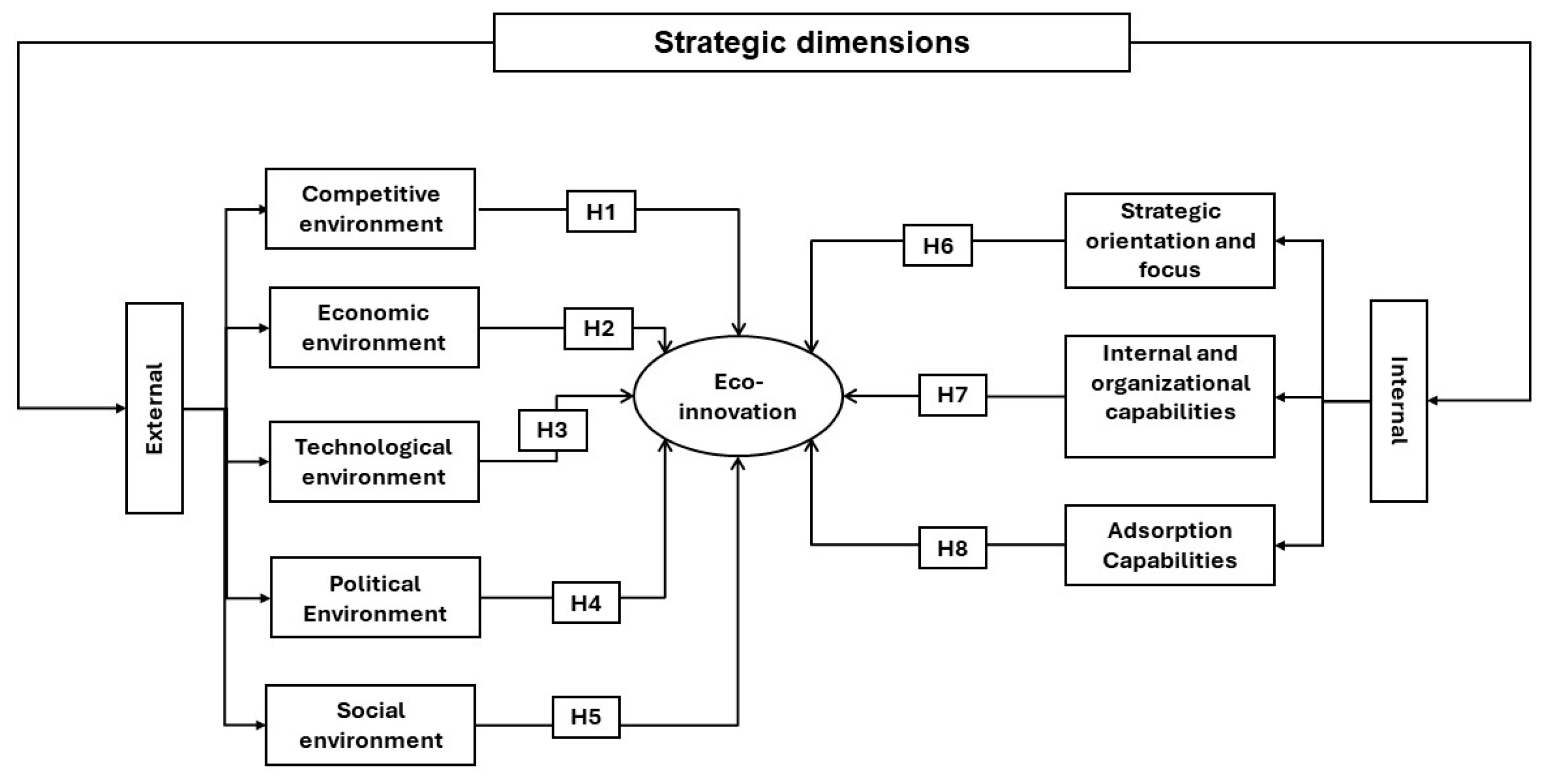
Figure 2.
A theoretical model of the causal map, adapted from Daniyil Shmakov [148].
Figure 2.
A theoretical model of the causal map, adapted from Daniyil Shmakov [148].
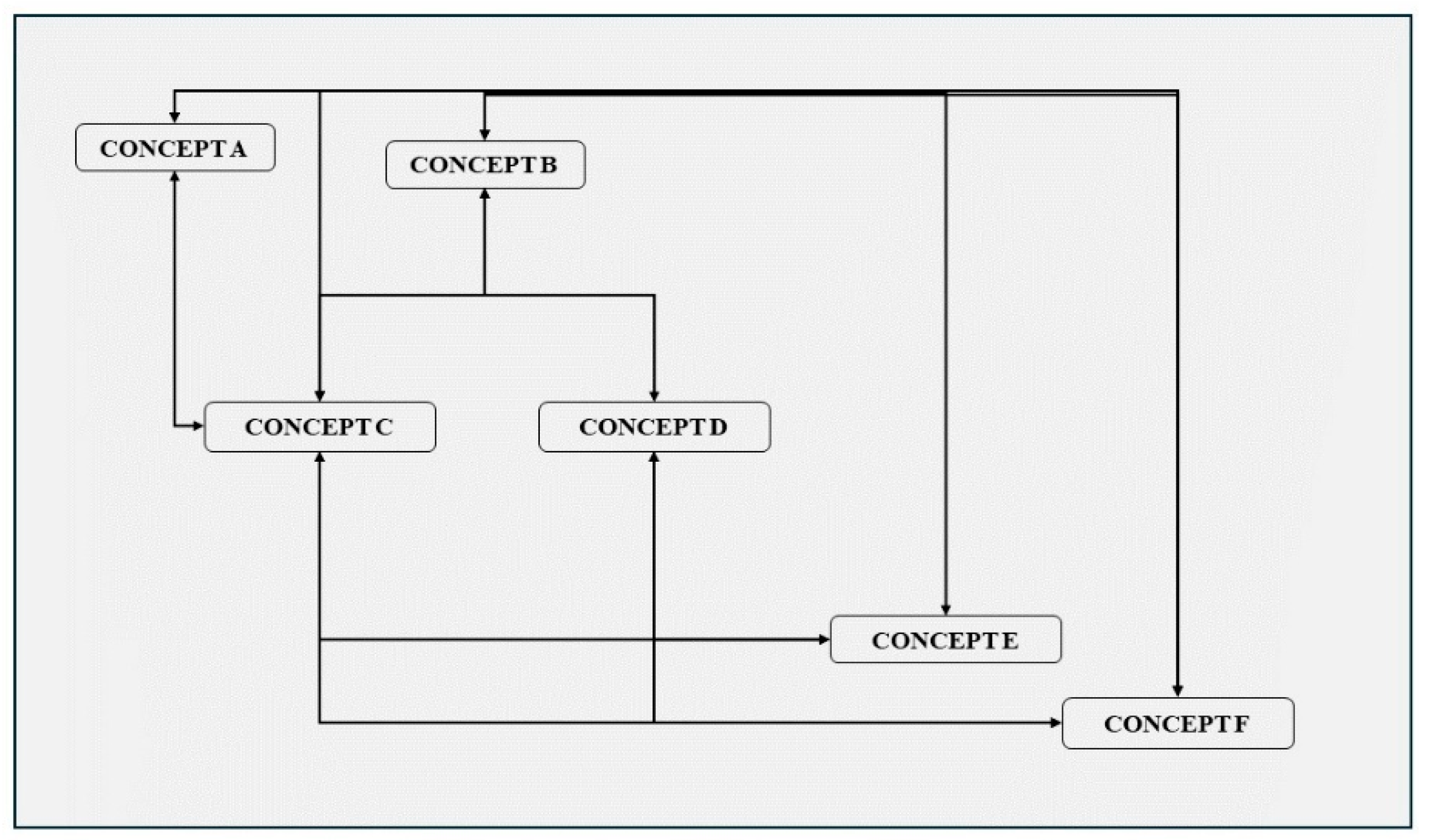
Figure 3.
Cause and effect relationship of causal maps, adapted from Daniyil Shmakov [148].
Figure 3.
Cause and effect relationship of causal maps, adapted from Daniyil Shmakov [148].
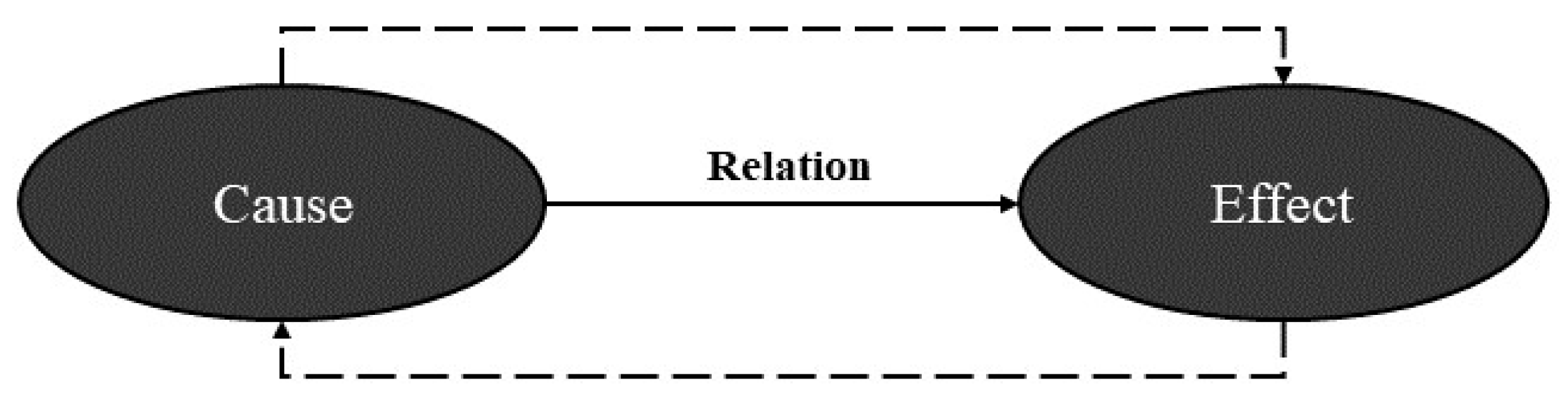
Figure 4.
Viable systems model.
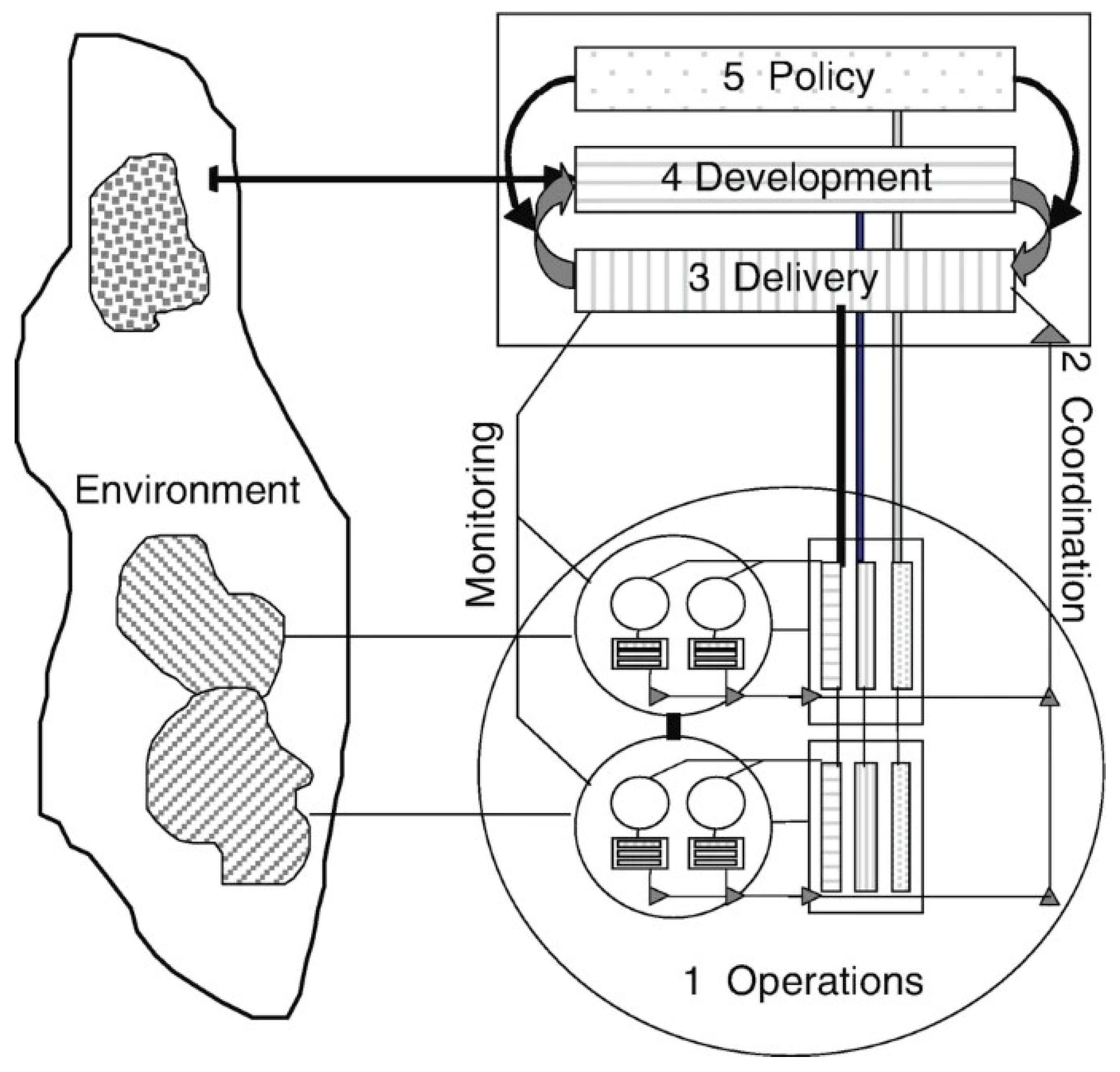
Figure 5.
Causal map of the literature review, elaborated with ATLAS.ti version 24.
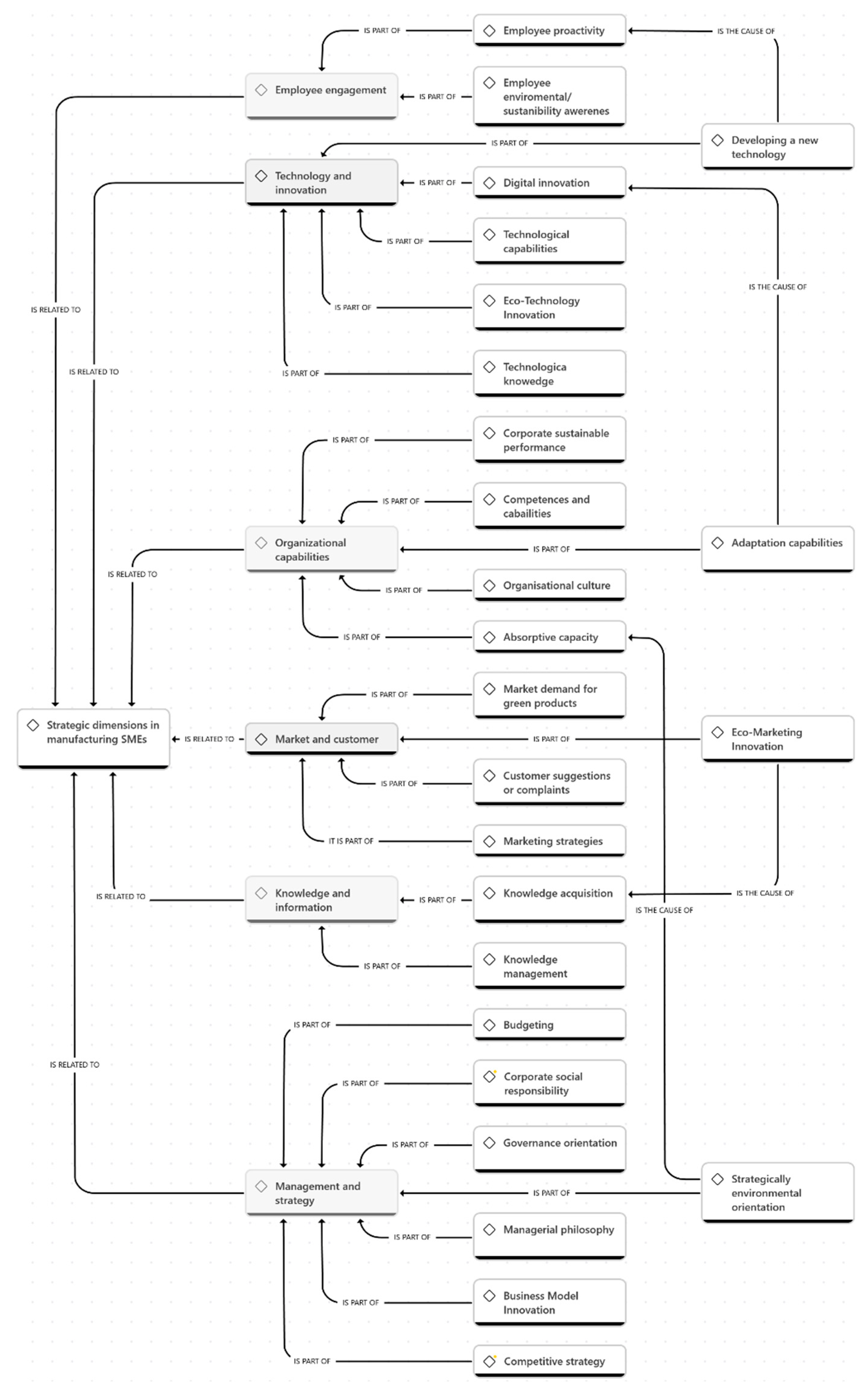
Figure 6.
Causal map of interviews, elaborated with ATLAS.ti version 24.
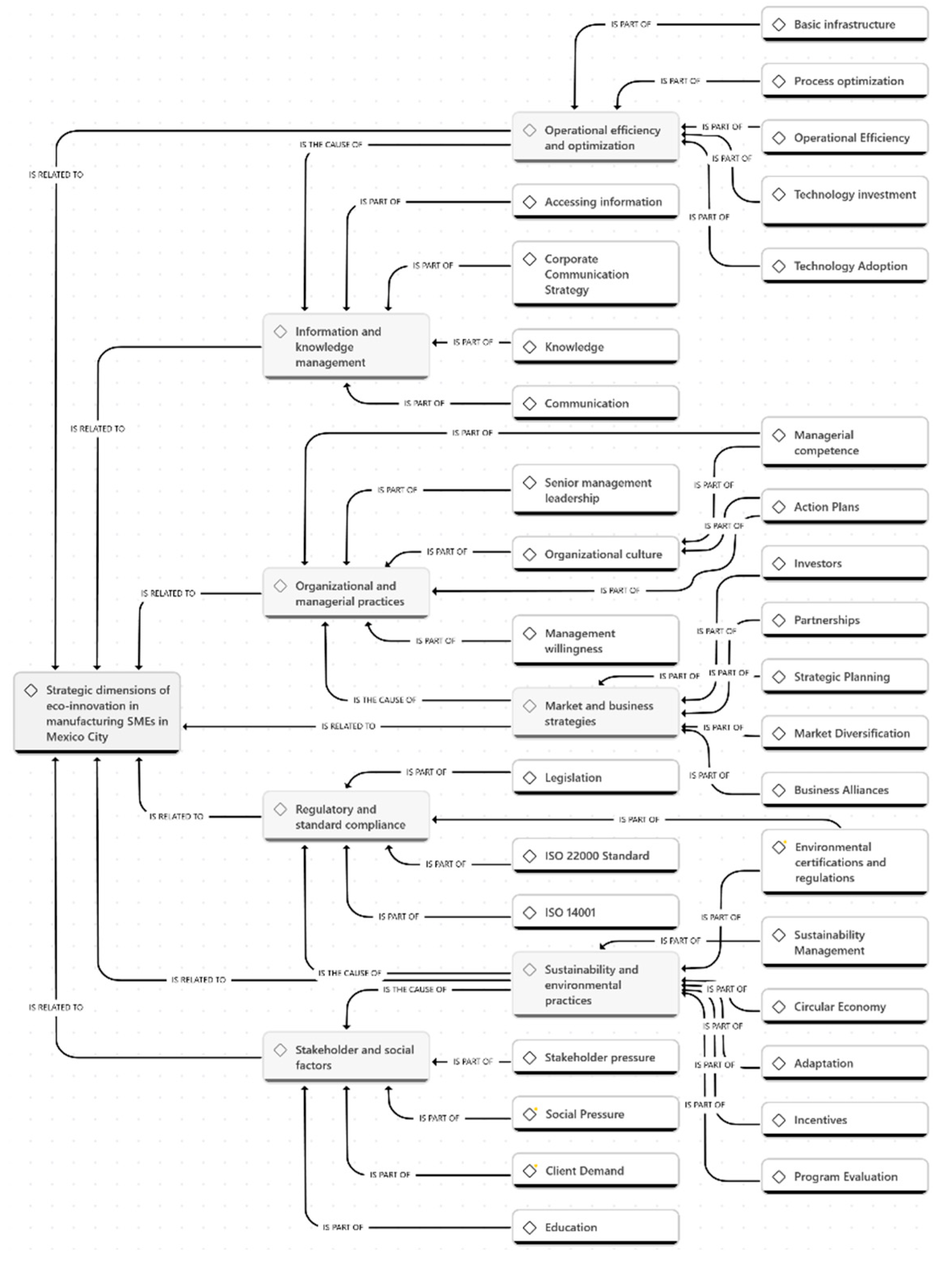
Figure 7.
Viable eco-innovation model system for manufacturing SMEs in Mexico City.
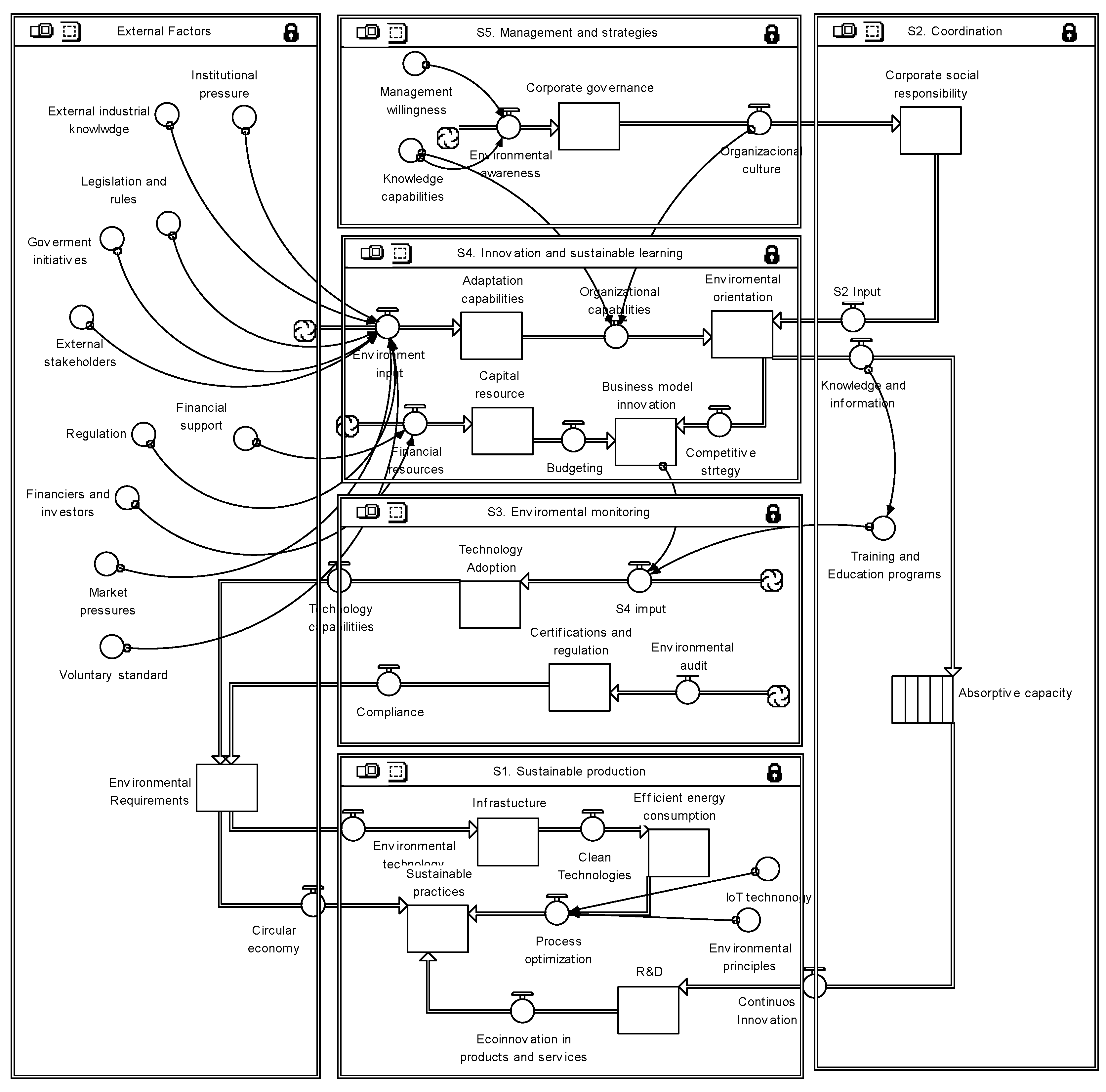
Table 1.
Research Findings on Eco-Innovation Adoption by SMEs in Mexico.
| Study focus | Key Findings | Author and year |
|---|---|---|
| Eco-innovation types adoption | Poduct, process, and management eco-innovation are key types adopted by SMEs in the automotive industry. | Sandra Yesenia Pinzón-Castro, Gonzalo Maldonado-Guzmán, R. J. Toro, 2023 [19]. |
| Technological capabilities and Eco-Innovation | Technological capability significantly influences eco-innovation and improves corporate performance. | L. Valdez-Juárez, M. Castillo-Vergara, 2020 [20]. |
| Cleaner production | Waste recycling and prevention projects yield higher economic and environmental value than other projects. | B. Hoof, Thomas P. Lyon, 2013 [21]. |
| Eco-innovation as industry Externality | Eco-innovation motivated by market pressures leads to competitive advantages and sustainable development. | Galván-Vela, E., Ruíz-Corrales, M., Ahumada-Tello, E., & Ravina-Ripoll, R, 2023 [19]. |
| Industrial symbiosis | Industrial symbiosis strategies in industrial areas reveal opportunities for systemic eco-innovation. | M. Puente, E. R. Arozamena, S. Evans, 2015 [24]. |
| Environmental innovation in handicraft businesses | Environmental innovation in handicraft businesses improves sustainability across economic, social, and environmental dimensions. | P. Sánchez-Medina, J. Corbett, Arcelia Toledo-López, 2011 [22]. |
Table 2.
Steps to search for traditional literature.
| Step. 1 | Conceptual limits for document search in WOS and SCOPUS: 1. Search equation: (eco-innovation OR ecological innovation OR environmental innovation) AND (manufacturing OR manufacture) AND (smes OR small Business). 2. Search period: the last five years from the date of the most recent publication (2019-2024), the search date was May 23, 2024. A total of 37 documents were obtained. |
| Step 2 | Definition of criteria for document search in WOS and SCOPUS: 3. Selected fields: Article title, Abstract, Keywords. 4. Documents: articles |
| Step 3 | Definition of exclusion criteria for the documents found: 5. Review articles. 6. Exclusion for duplicity. 7. For not being research in EI. 8. For not presenting causal relationships. 9. A total of 24 documents were reviewed. |
Table 3.
Summary of semi-structured interviews.
| Expert | Experience and knowledge | Date |
|---|---|---|
| 1 | Corporate Social Responsibility, corporate environmental management and sustainability. | January 24, 2024. |
| 2 | Sustainable development with experience in organizational implementation of ESG (environmental, social and governance) issues in Mexico and Latin America. | February 7, 2024. |
| 3 | Clean industry, industrial engineering, craft processes, general organizational consultancy. | May 4, 2024. |
| 4 | Biology, circular economy and ecotechnologies. | May 4, 2024. |
Disclaimer/Publisher’s Note: The statements, opinions and data contained in all publications are solely those of the individual author(s) and contributor(s) and not of MDPI and/or the editor(s). MDPI and/or the editor(s) disclaim responsibility for any injury to people or property resulting from any ideas, methods, instructions or products referred to in the content. |
© 2024 by the authors. Licensee MDPI, Basel, Switzerland. This article is an open access article distributed under the terms and conditions of the Creative Commons Attribution (CC BY) license (https://creativecommons.org/licenses/by/4.0/).
Copyright: This open access article is published under a Creative Commons CC BY 4.0 license, which permit the free download, distribution, and reuse, provided that the author and preprint are cited in any reuse.


