

Submitted:
26 April 2024
Posted:
29 April 2024
You are already at the latest version
Abstract
In the realm of construction industry, the management of claims constitutes a pervasive and multifaceted issue, with potential repercussions extending to project delays, cost overruns, work suspensions, and, in extreme cases, project termination. This challenge is a significant and unavoidable hurdle due to the unique features of construction projects, which are complex, involve many stakeholders and come with inherent risks. To address this complex issue, it becomes imperative to undertake a comprehensive appraisal of the claims management procedures employed within the industry, culminating in the presentation of findings within a risk-based framework. The overarching objective of this endeavour is threefold: firstly, to discern the pivotal attributes that affect each category of construction claims; secondly, to establish a coherent decision-making paradigm for the effective administration of such claims; and finally, to provide data that can be harnessed to either address concerns related to claims or enhance the effectiveness of the claims administration process. Keeping this in mind, this study serves to evaluate the factors associated with claim management gathered from a wide overview of literature, encompassing a range of construction projects, varying in terms of types, sizes/capacities and contractual arrangements. Hence, it advanced a refined method within the domain of fuzzy group decision-making, denoted as the Modified Fuzzy Group Decision-Making Approach (FGDMA) in addition to extensive statistical analysis using SPSS.V.25 software. They were applied to assess, analyze and prioritize claim about 108 claim management factors based on the responses obtained from the comprehensive questionnaire survey involving 104 industry professionals. This multi-faceted approach, which combines the insights from previous publications, along with the collective experience of the surveyed professionals with the analytical capabilities of the FGDMA- Statically Factor Analysis, reinforces the robustness and practical applicability of proposed methodology within the context of construction claims management.
Keywords:
construction industry
; claim management
; claim management processes group's
; modified fuzzy group decision-making approach (FGDMA)
1. Introduction
The construction sector is widely regarded as a crucial cornerstone of the economy in numerous nations across the globe. Considering Claims and disputes in construction industry should be investigated for longer time ranges, two decades at least, due to their nature of complexity and time-consuming extensions. As per the central bank's report for 2017/2018, the construction and building sector in Egypt makes a contribution of approximately 5.98% to the Total Gross Domestic Production (GDP) by economic activity. This information is further corroborated by the central bank's Monthly Statistical Bulletin 273, 12th /2019, which reported an annual Rate of Change of 11.4% for the construction and building sector. As to the Jeddah Chamber's assessment on the construction and real estate sector in Saudi Arabia, the construction industry accounts for 6.5% of the country's GDP (Abdelalim, A.M., et al.), [4,42]. Because it propels the economy to generate job opportunities and promote the economy in other linked businesses and activities, the construction sector is therefore a crucial axis of the economy and development. But, in fact many projects suffer from the claims and their negative impacts on all the parties involved in the construction and building sector, which results in increased costs, extension of planned time for completing the projects, work suspension, contract termination in many cases, and not benefiting from these projects just in time. Hegazi, conducted research entitled Delay Analysis Considering Dynamic Resource Allocation; the prevalence of construction delays in projects worldwide has been acknowledged [1].
The authors also referred to a series of global studies that were conducted to examine the effects of claims on construction projects, which were outlined in the subsequent introduction Seventy percent of projects in the United Kingdom were delivered late, according to many assessments from the National Audit Office [2]. About 40% of the projects in India were behind schedule, according to a 2004 survey done by the Ministry of Statistics and Program Implementation's Infrastructure and Project Monitoring Division. In the United Arab Emirates (UAE), half of building projects experience delays, according to a research [3]. The effects of time and cost disputes in North America, Europe, and the Middle East have been studied by Arcadia and published in the Global Construction Disputes Report 2018, [4]. The report's overall findings indicate that the global average value of disputes amounted to US$43.4 million, while the global average duration of disputes experienced a slight increase to 14.8 months. The data presented in Arcadis' 2018 report displays the Average Dispute Values (in US$ millions) and Average Length of Dispute (in months) categorized by region. This information is illustrated in Table 1, Figure 1 and Figure 2, as a reference for those periods before some exceptional conditions started in 2019 and after, that can be attributed to epidemic Covid-19 and subsequent impacts on construction projects.
Therefore, this study will deal with the problem of construction claims deeply, based on risk-based thinking methodology to avoid the occurrence of claims, by planning and exploring the factors causing claims as well as the factors mitigating claims. After reviewing the literature, a number of key factors affecting the claims management processes have been drawn up in their different stages. The claims management process has been divided into two main phases; each one involves several processes groups. The first phase (claim planning) includes two processes group (Claim Reasons & claim prevention/mitigation factors). The second phase is (Claim monitor and Control) this phase consists of six processes groups (claim identification, claim documentation, claim Quantification, claim presentation, claim negotiation, claim resolution). A list of the 108 factors influencing the claims management and included in the claims management process groups, was compiled in a questionnaire, and distributed to different parties involved in the construction industry to assess those factors. Then examine the factors affecting claims management processes groups, from the process of claim identification to the process of claims resolution. This methodology will enhance and support the claims management processes.
Therefore, this study will deal with the problem of construction claims deeply, based on risk-based thinking methodology to avoid the occurrence of claims, by planning and exploring the factors causing claims as well as the factors mitigating claims. After reviewing the literature, a number of key factors affecting the claims management processes have been drawn up in their different stages. The claims management process has been divided into two main phases; each one involves several processes groups. The first phase (claim planning) includes two processes group (Claim Reasons & claim prevention/mitigation factors). The second phase is (Claim monitor and Control) this phase consists of six processes groups (claim identification, claim documentation, claim Quantification, claim presentation, claim negotiation, claim resolution). A list of the 108 factors influencing the claims management and included in the claims management process groups, was compiled in a questionnaire, and distributed to different parties involved in the construction industry to assess those factors. Then examine the factors affecting claims management processes groups, from the process of claim identification to the process of claims resolution. This methodology will enhance and support the claims management processes.
1.1. Claim Management Planning
The claims emergence, their documenting, filing and defense of the claim is very expensive issue. Therefore, the best way to manage the claim is to prevent the claim arising completely, if it cannot be resolved at the earliest opportunity with the least cost and the least disruption of the project. To do that, Potential claim reasons, either contractual or performance-based, must first be identified, during this study, a range of significant claim causes were explored and were listed in the following sections.
1.2. Claim Reasons
The management of claims is a recognized practice that involves significant financial investment for their identification, documentation, and resolution. The primary objective of claim management is to address these issues in their entirety, preferably at the earliest feasible stage, while minimizing costs and disruptions to the project, [6]. In order to fulfil this objective, it is imperative to identify instances of prospective claims; as such awareness facilitates the identification of potential risks that may emerge due to alterations in scope or contract, Abdelalim, A.M., et.al, [6,8,37,38,39,44,45,46,47,48]. Mitropoulos [7], highlighted the significance of discerning the origins and rationales underlying construction claims as a means to limit their impact. In line with this perspective, the present study applies a systematic approach to the management of claims. In accordance with internationally recognized risk-based thinking approaches, this study compiles and analyses findings from numerous global research initiatives that had previously examined the various causes and origins of claims in the construction sector. In current extensive analysis, 34 elements have been identified and categorized that serve as the basis for claims within the sector. Each of these factors has undergone thorough analysis, scrutiny, and has been substantiated by several studies in the existing body of research. Two Parallel Techniques were conducted; the statistical analysis using SPSS, and Modified Fuzzy Group Decision-Making Approach (FGDMA).
1.3. Claims Prevention / Mitigation
Building initiatives are carried out in dynamic, complicated situations. It is nearly impossible to implement in a perfect setting without making any modifications. Therefore, the best strategy to prevent claims is to monitor issues and work to prevent them before they arise and become claims, [8]. A project's successful completion may result from early detection of potential disputes and the resolution of differences through on-site conciliation (problem solving), [9]. Removing ambiguity to maximize what is known and promptly resolving changes can help prevent claims. As a result, emphasis needs to be on following up on problems, giving them top priority, and finding solutions before they turn into claims, [10]. Many studies and scholarly journals have addressed the many protocols and safeguards that can prevent or reduce claims in building projects, Abdelalim, A.M., et al., [12, 14, 40, 41, and 43]. Table 2 displays the results of a study by Oudalloh [11] that identified the top ten strategies and tactics for lowering claims in the construction industry.
The Construction Extension to the Project Management Body of Knowledge's claims management section aids in the avoidance and resolution of claims in the building sector [10], since it clarified a lot of the factors that contribute to or obstruct the claim. The likelihood of unresolved claims will be reduced by early detection of possible contractual issues and the creation of a cooperative atmosphere [12]. It also covered a wide range of general guidelines and procedures that, if adhered to, might lessen or even completely eradicate the likelihood of claims. These are summed up in PMI as follows:
- Create a good project plan.
- Fairly drafted provisions of the contract that allowed for potential modifications.
- Create a good Risk Management Plan.
- Integrated Change Control.
- Clarity of Language: The language used in writing the contract's specifications and
- Scope should be precise and unambiguous.
- Constructability Review.
- Request for Information (RFI) Procedure.
- Project Partnering.
- Prequalification Process.
- Claim Prevention Techniques: (Dispute review board (DRB), Independent neutral,
- Intervention, partnering, Mediation.
- Good documentation.
- Joint Recognition of Change.
1.4. Claims Management Monitoring and Controlling
Planning for claim or dispute by stakeholders is rare, so the stakeholder should be prepared to determine the claim and its justification just in time. The project‘s owners must include details, regulations, policies, processes, procedures and documentation. These precautions ensure mitigation of delays and reduce claims and disputes [10]. It is important that the employer follows the project and focus on events and incidents that may result in claims. Also, He should have the completion rates of the project and accurate records or daily information that proves the facts and problems that may occur, as this procedure limits the occurrence of claims, [13,14]. Claim management throughout the life cycle of a construction project consists of the following four processes; Claim Identification, Claim Quantification, Claim Prevention and Claim Resolution.
1.5. Claims Identification and Initial Justification
If the main objective of claims management is to prevent them altogether, resolve them at the earliest opportunity with the lowest cost and lowest losses, the claimant must first have the ability to identify potential claim cases, whether contractual or performance based. Thus, the determination of the claim begins with sufficient knowledge of the scope of the project and the requirements of the contract, to discover some activities that may involve a change in scope or contract. Therefore, proper identification at the outset requires an explanation of the contract documents, followed by a documented description of the activity which is thought to exceed these requirements [15,16]. Construction claim identification involves timely and accurate recognition of a change. It is the first and critically important step, and it will be followed by a notification to the other party of a potential problem. Evidently, time limit requirements are also very crucial and critical [17], The claims process should clearly begin to identify and understand the scope and contract of the project and include a written description of the claim, time and cost implications, capacity gap analysis, documentation, Quick payments, expert judgment, pending claim file, and statement Claim as follows [10]:
- Project scope and contract.
- Description of claim.
- Time and cost impacts.
- Prompt payments.
- Capability gap analysis.
- Expert judgment.
- Documentation.
- Pending Claim file and statement of claim.
1.6. Claim Documentation
Project documentation according to an accurate system focuses on the progress of work and records any problem that may appear during the execution with all the accuracy and thoroughness. According to Hassan [19] the submission of claims depends on supporting them with supporting documents. The more accurate and complete the documentation, the easier it is to present and adjudicate, thus avoiding the harm to the provider. Accordingly, Oudalloh [11] presented the most important documents supporting the claims in construction projects, includes but not limited to the following:
- Tender and contract documentation.
- Issued for Construction set, and all subsequent revisions.
- Instructions to contractor.
- Contemplated Change Notices issued by the owner, Change Estimates, and Change Orders received.
- Sub-contractor quotes, contracts, purchase orders and correspondence.
- Shop drawings, originals, all revisions and re-submissions.
- Shop drawing transmittals, and transmittals log.
- Daily time records.
- Daily equipment use.
- Daily record of labor and plant staff, etc.
- Material Delivery and Use Records, including expediting.
- Accounting records: pay-roll, accounts payable and receivable, etc.
- Progress Payment Billings under the contract.
- Daily Force Account Records, pricing and billings.
- Contract Milestone Schedule or Master Schedule.
- Short Term Schedules and up-dates.
- Task schedules and analyses.
- Original tender estimate.
- Construction control budget.
- Actual Cost Reports, weekly or monthly, includes Exception Reports.
- Forecast-to-Complete Estimate up-dates.
- Productivity Reports/Analyses.
- Inter-office correspondence, including memos and faxes (all filed by topic).
- Contract correspondence.
- Minutes of Contractual Meetings.
- Minutes of Site Coordination Meetings.
- Requests for information.
- Notice of claims for delays and/or extra cost by contractor.
- Government Inspection Reports.
- Consultant Inspection Reports.
- Accident Reports.
- Daily diary or journal entries.
- Notes of telephone conversations.
- Progress Reports, weekly, monthly or quarterly, Progress Photographs.
And any other project documents related to schedule, cost, risk or quality including correspondence between various stakeholders can be used as detailed and extensive records in the evaluation and preparation of claim. Bakhary [18] identified the most important problems facing the process of Documentation of Claims and were ranked from the point of view of both the contractor and consultant as shown in Table 4.
As a good practice, items identified as potential claims should be kept in their own separate files that contain all related documentation, including correspondence and contract references. This ensures that relevant information and documents are collected and retained in an accessible file or database. Without this approach for organizing and indexing, managing the huge amount of project documents will become an extremely expensive component of qualifying and proving the claim. Based on this, a statement of claim can be prepared in accordance with the process and procedures set forth by the contract [10].
1.7. Claim Quantification
Once the claim has been identified and the initial justification has been prepared and reviewed, an accurate assessment of the impact of the claim on the stakeholders will be made, whether positive or negative, the next step is to determine the impact of the claim on the time span of the project or additional compensation, or both [10]. Bakhary [18] identified the most important problems facing the process of Claim Quantification and were ranked from the point of view of both the contractor and consultant as shown in Table 5.
1.8. Claim Presentation
This process is to finalize the claim documents and submit them to the client for evaluation. If there is a shortage of these documents or a failure to prepare them, this will have a significant impact on the rejection or failure of the claim [18]. Although it is difficult for the reviewer of a claim to submit the claim or the response of the claim to be impartial, on the other hand, he can do a well-structured presentation and an easy-to-use document, thus going a long way to convince the auditor to the merits of the claim, so it was very important to do everything we could to make The task of the reviewer is as easy and enjoyable as possible and in order to gain whatever sympathy it is possible to give, (Abdelalim, A.M., et.al, [13,28]. The claim should be based on two main axes, [18]:
- A full explanation of the project details identifies the effects, circumstances, and analysis of the claim, and explains the basis of any supporting documentation that exists to assist in demonstrating the effects and / or quantities claimed.
- Appendices containing documents such as programs, accounts and project records are prepared to support, clarify, or substantiate the claim.
1.9. Claim Negotiation
Negotiation in good faith is the first and best step to resolve the claim and prevent access to the stage of disputes (PMI, 2016). Since it is very difficult to find a satisfactory solution to the claim among the project participants, the purpose of the negotiation is to reach an agreement through discussion and compromise. Negotiation is the main approach to resolve such conflicts before they eventually become disputes. In fact, negotiations continue at all stages of claims management from the process of justification to settlement of the claim. A set of points that help in the good and orderly preparation of negotiations are as follows; (1) ascertaining that all information is current and complete. (2) Minimizing the scope of negotiation beforehand so that insignificant points should not precipitate a violent argument and disrupt progress, (3) Knowing one's weaknesses and trying to utilize weak points by conceding them in return from the other party. (4) Foreseeing problems and (5) anticipating the oppositions next move. It can be said that much research have revealed the views and facts regarding the negotiation as follows: firstly, Negotiation involves two parties who agree to communicate with each other and make decisions. The parties reach an agreement which is a modification to the contract. Secondly, claim negotiation plays an important role in resolving claims, preventing disputes, and keeping a harmonious relation between project participants. Most project managers consider negotiation as the most time and energy consuming activity to claim management. Thirdly, the most economical, practical, simplest and fastest method of settling claims is negotiation where in this process, the two parties involved discuss the problem and try to compromise on the claim [20]. Elghandour [21] identified the most important problems facing the process of Claim negotiations follows:
2. Claim Resolution
Resolving disputes is to find a fair way to settle disputes that arise between the contracting parties resulting from any disputes related to the contract or execution of the works or as a result of the denial or termination of the contract by one of the two parties. The contract shall include provisions for settlement methods, it is preferable to settle disputes amicably, also called (Alternative Disputes Resolution-ADR), a set of ways in which both parties retain their freedom to accept the outcome of the settlement contrary to arbitration and litigation where the arbitration award is final and binding to both parties. Some of the advantages of these methods are speed, low costs, maintaining the spirit of cooperation between the two parties, not affecting the value of the claim, and the continuation of the project. Nassar [22], several forms of balanced contracts, such as FIDIC, have been keen to impose an amicable settlement attempt as an essential step before arbitration. The most important means of amicable settlement according to the International Chamber of Commerce in Paris (ICC, 2001) are the following:
- Negotiation.
- Conciliation.
- Mediation.
- Mini-Trial.
- Dispute Adjudication Board.
- Procedure Pre-arbitral.
Unless settled amicably, any dispute in respect of which the DBA’s (if any) has not become final binding shall be finally settled by international arbitration. Unless otherwise agreed by both parties [23], Due to the nature of the construction industry and its continuous development, in order to reduce the obstruction and maximize the benefit of projects, many governments around the world have introduced arbitration’s law such as the Egyptian Arbitration Law No. 27 of 1994. In the next few lines, we will review a range of articles of the law about the arbitration agreement, the arbitration agreement may be prior to the establishment of the dispute whether it is independent of itself or contained in a specific contract concerning all or some of the disputes. In this case, the subject matter of the dispute shall be specified in the statement of lawsuit. The arbitration agreement may also take place after the dispute has arisen, even if a lawsuit has been filed against it, in which case the agreement shall specify the matters covered by the arbitration and shall not be considered void (Egyptian Arbitration Law No. 27 of 1994). The arbitrators' judgments shall have the validity of the judicial order and shall be enforceable, The President of the Court agreed upon the contract shall be competent to order the execution of the arbitrators' judgment (Egyptian Arbitration Law No. 27 of 1994), [48].
3. Materials and Methods
3.1. Research Methodology
A questionnaire was designed to discuss the factors affecting the claim management and identify the problems associated with claim process experienced by contractors, consultants, owners and the areas related to claim process that can be effectively improved. Questionnaire surveys were used to gather all the data. There are four sections in the questionnaire:
- The first section of this questionnaire explores information about respondent's profile such as their position, work experiences, types of projects that they are involved in and the types of contracts that they have used.
- The second section is planning for claims include questions related to the issues in construction claim planning such as the common types of claim in construction projects and claims prevention / mitigation.
- The third section aims to determine the problems that arise in every stage of the claim process from the first stage of identification of claim to the final stage of resolution.
- The fourth section includes questions asking the respondents to share their ideas, comments, and suggestions on how to improvise the claim management process. The aim of this section is together the expert opinions on the process of improving claim management.
- To analyze the data collected regarding the reasons of the claims from the questionnaire, we utilized the Modified Fuzzy Group Decision-Making Approach (FGDMA). This method was particularly chosen for its ability to effectively handle the uncertainties and subjective nature of the responses. By applying FGDMA, we were able to systematically prioritize the various factors and challenges identified, thus providing a solid foundation for developing more effective claim management strategies tailored to the nuanced needs of the construction industry.The distribution of the questionnaire was designed to be run through website. The respondents were requested to evaluate the attributes based on a 5-point Likert Scale (1=Very Low, 2=Low, 3=Moderate, 4= High, 5=Very High).
This study was conducted for several purposes; mainly to understand the perceptions of construction industry professionals regarding claim management, and their impact on construction projects. To achieve this, questionnaire's participants evaluated claim management attributes based on an importance and a likelihood using a 5-points Likert Scale, an importance was rated by participants in order to determine the impact of claim management on construction projects. Rating of likelihood was performed to know how often the attribute is considered in construction projects. The raw data of the questionnaire showing the importance and the likelihood values provided by participants were collected, then each attribute's value for RΠ, FI and FAΠ, were estimated and analyzed as per explained in statistical analysis section. The calculated values were provided in the tables, and all results were ranked Twice; once based on the Entire questionnaire's attributes, secondly, these attributes were ranked within their groups only. In addition, Table 8 provides the Claims Management's Groups and their codes, where the claims management process is divided into two major groups, group (X) Claim management Planning & group (Y) Problems in claim process (Monitoring and Controlling), Each major group was sub-grouped and given the code as shown in the table.
Where 104 respondents evaluated the 108 claim management attributes based on importance (the factors impact on construction project) and frequency (How often the attribute is implemented or considered).
3.2. Sample Size Determination
According to Fouad [24] when studying a particular population based on statistical evidence, the scholar uses information gathered from the survey to generalize findings from a drawn sample back to a population, therefore this type is called descriptive statistics because it is indicative of the statistical inference of this population through the statistical properties of one or more some of its samples. Accordingly, he divided the statistical samples in terms of size into two main types: A. Small samples: sample size 30 or fewer, B. Large samples: sample size greater than 30. Therefore, when the sample size exceeds 30, the statistical measures of the samples are very close to the populations which were drawn from it. Sample size determination for a survey studies, from a population has been mentioned in many books, research [25,26]. Finding a specific sample size that can yield findings for the entire population in a way that is accurate enough to draw generalizations about the population from the sample data is the goal of the sample size calculation. The minimal sample for proper usage in statistical analysis, according to (Hair, 1995), "is generally agreed to be equal to or greater than 5 times of the independent variables, but not less than" 100" P ≥100 and P ≥ 5X (where X is equal to number of variables)." Since there are 108 variables in this study, the sample size is X = 5x108 = 540. Consequently, the range of acceptable sample sizes for this methodology is 100 to 540. Another approach [26] developed a formula to calculate a representative sample and was advised by statistical expert and was used to calculate sample size for finite population [27,28] as described in Equation (1).
Where;
- SS= sample size
- Z= confidence level (the number of standard deviations a given proportion is away from the mean), Z value (e.g., 1.64 for 0.9495 ≈95% confidence level)
- P= Percentage picking a choice, expressed as a decimal (0.50 used for sample -size needed).
(The proportion of the sample that selects a specific response determines the accuracy. It is unlikely that there will be an error if 99% of the sample answered "Yes" and 1% answered "No," regardless of sample size. Nonetheless, there is a significantly higher likelihood of error if the numbers are 51% and 49%. Extreme responses are simpler to verify than those that fall somewhere in the middle. To calculate the sample size required for a specific accuracy level, you have to take the worst-case percentage, which is 50%. This percentage is also useful for figuring out the overall accuracy level of a sample that you already have. You can use the percentage of respondents who selected a certain response to estimate the confidence interval for that response.)
e= margin of error = (a percentage that describes how closely the answer your sample gave to the “true value” in your population), for this study it is considered 8 %. Thus, compensating with these values in Equation 2:
= 105
Another equation used for Correction with finite population,
The population size for this study, as it could be reached and thoroughly interviewed, is the number of engineers in Egypt and Saudi Arabia. Which are 230,000 engineers working in Saudi Arabia according to Saudi Council of Engineers statics including 70,000 Egyptian engineers, 630,000 engineers working in Egypt according to the Egyptian Engineers Syndicate. The total number of engineers is 860,000, then (pop=860,000).
Based on the previous review regarding the sample size determination, the minimum sample size required for this research should not be less than 30 and the estimated sample size is 105 while the actual sample size collected in this study is 105 in order to increase the reliability of the results of this research and get more accurate
4. Data Collection and Results Analysis
Respondents’ Profile: The profiles of the respondents are displayed according to their location, kind of organization, job title, industry, total amount of experience in the construction business, and company size.
Respondents Location: Figure 3 displays the locations of the respondents as well as the number and percentage of survey respondents based on those locations. The majority of survey respondents are from Saudi Arabia, accounting for 74% of all participants; participants from Egypt are ranked second, comprising 24% of the total, and the remaining 1.9% makes up the remaining participants.
Respondents Organization Type: Participants in Figure 4 are categorized as consultants, contractors, designers, owners, or subcontractors based on the type of organization they represent in the construction industry. Contractors make up the highest contribution, accounting for 55.8%, followed by consultants, who contribute 25%. Owners make up 11.5% of the total. Designers make up 4.8% of the total, with subcontractors contributing the least (2.9%).
Respondents Job Designation: Figure 5 shows the participants' occupational designations. Of the overall number of participants, project engineers and managers account for 39.4% of the number, followed by technical office managers at 5.8% and claimants/contract managers at 3.8%. The project control engineer/manager representing (others) and the QA/QC team leader/engineer are the remaining participants.
Respondents' Experience: Fiqure.6 represents the total years of work experience for respondents in categories as follows, 0:5, 5:10, 11:15 & more than 15 years. The largest part according to Figure 6 is respondents with experience more than 15 years they represent 51% from total participants. The smallest part is respondents with experience <05, 5:10 & 11:15 representing 1.9, 16.3% & 30.8% respectively. 6.2. Cronbach’s Coefficient Alpha.
To measure the reliability of the questionnaire between each field and the mean of the whole fields of the questionnaire, the Cronbach Alpha value of the whole questionnaire data was obtained for both impact and probability through SPSS (V-25) as Described in Table 9.
Table 9 shows the value of alpha Cronbach (0.986 for the entire questionnaire in terms of impact, 0.980 for the whole questionnaire in terms of probability, and 0.984 for the entire questionnaire in terms of both impact and probability). This indicates the excellent reliability of the entire questionnaire. Therefore, it can be said that the questionnaire was valid, and reliable.
4.2. Evaluation of Claim Management Attributes using Statistical Analysis (Ranking Approach)
To examine the consistency, reliability and validity of the questionnaire, The Data analysis will be made utilizing (SPSS- V25); the researcher would utilize the following statistical tools:
- Descriptive analysis for Respondents’ Profile.
- Cronbach's alpha for reliability statistics.
- Significant Factors’ Heat Map (Pearson Correlation Coefficient of Significant Factors).
By calculating both the relative importance index (RII), and the relative frequency index (FI) for each factor. The factors were then ranked according to frequency adjusted importance index (FAII), all as per the equations below.
4.2.1. Relative Importance Index (RII)
RII% = (∑W)/A (N)
Where;
W: weight given to each attribute by the respondent (1 to 5).
A: the highest weight (in this case is 5).
N: total number of respondents.
The value of RII ranges from 0 to 1, a higher value indicates that the attribute is more significant compared to others.
4.2.2. Frequency Index (FI)
The attributes of claims management in construction projects will be classified and ranked according to their frequency using the frequency-adjusted frequency index (FAII or FII), [29]. This technique considers both the importance and the frequency. In order to find FAII, the relative importance index and the frequency index (FI) must be measured, both to be measured and calculated to indicate the response data collected in the survey. The values of the frequency index (FI) will be calculated on the basis of the following equation:
Where;
W : weight given to each factor by the respondents (1 to 5).
A : the highest weight (in this case is 5).
N : total number of responses.
4.2.3. Frequency Adjusted Importance Index (FAII)
As mentioned earlier; based on both the FI% and the RII equations, the frequency adjusted importance index will be calculated as follows:
4.2.4. Significant Factors Heat Map
The values for FAΠ can determine the importance level of claim management attributes, so high values of FAΠ indicate highly importance level of claim management attribute and low values of indicate lower importance level of claim management attributes. The FAII values for each attribute were developed by analysis of the collected data. The FAII values, which will be displayed and explored later, were used to rank the claim management qualities in ascending order. The significance of the parameters was ascertained by ranking the frequency Adjusted indices. The same levels were also utilized by Raja Rafidah et al. (2018), who claim that five significant levels are converted from RI or values: The factors contributing to productivity improvement were ranked according to the following levels in Table 10: High (H) (0.8 ≤ RI ≤ 1), High-medium (H–M) (0.6 ≤ RI ≤ 0.8), Medium (M) (0.4 ≤ RI ≤ 0.6), medium-low (M-L) (0.2 ≤ RI ≤ 0.4), and low (L) (0 ≤ RI ≤ 0.2). (Mekky, Abdelalim, A.M, [14], also ranked the factors contributing to productivity improvement.
4.3. Evaluation of Construction Claim Management Attributes.
4.3.1. Significant Factors
In this section, the factors that carry a very high level of importance will be extracted and will be considered as significant factors. For this study, the same scale was used to classify the most important factors in the claims management process based on FAII values. Table 11 presents the values of the FAII for all factors after being ranked from largest index to smallest index, factors are classified as per importance level from very high to very low as per clarified above, the difference between highest index and smallest index is taken as a guide for factors classification, D (difference) = 34.31 & (Highest FAII) = 59.17 & (Lowest FAII) = 24.86, divided by 100 = (34.31 /100) = 0. 3431, his value is multiplied by the scale shown in Table 14 to obtain the corresponding values for each level shown in Table 12 below.
5. Pearson Correlation Coefficient of Significant Factors
The Pearson correlation coefficient was used for the 17 significant factors that had very high levels as shown in Figure 7, to examine the relationship between these factors and each other. Pearson correlation values were shown in Figure 7, indicating the red cells to a very strong correlation, the orange fill indicates a strong correlation, while the green fill indicates a moderate correlation. Correlation is significant at the 0.05 level (2-tailed), where r = Pearson correlation value, P = Sig. (2 tailed) value.
From the results of Figure 7, the following remarks can be noticed:
- All relationships between factors are positive; this reflects the Proportionality between these factors.
- All P-values are less than 0.05, which means that all relationships are statistically significant. Except for three value/ cells had been filled in Brown between factor XM3 and both factor (YN4 & YR1) as well as between factor XM7 and factor YR1, which indicated that the presence of one of these factors was not related to the existence of each other. There were 55 relationships (40.44 % of all relationships) with very strong relationship (Pearson correlation coefficient r > 0.5). There were 67 relationships (49.26% of all relationships) with a strong correlation (Pearson correlation coefficient 0.5> r> 0.3). From the previous values, it can be said that 90% of correlation coefficient values range from very strong to strong and this reflects the correlation between these factors and each other. This means that if one factor affects claim management process, other factors may have a significant impact on these processes of claim management. It is important to take into account these relationships, which must be followed through the claim management process groups. Pearson correlation coefficient values revealed that the strongest correlation between XM3 (Good communication with all stakeholders) and XM7 (Clear and balanced contract terms and conditions regarding changes, claims and disputes resolution) with r =0.762, and YN1 (Disagreement arising during negotiation.), YN2 (Unsatisfactory evidence to convince other parties) with r = 0.718, also between YR7 (balanced contracts such as FIDIC and ECC contracts are not used.), YR8 (The terms of contract don't focus on good management and effective risk distribution) with r =0.723. The results above show that the most factors associated with the 17 significant factors are YN1, YN2, YR3, where each factor was correlated with all other factors with very strong or strong relationship. This reflects the importance of negotiating skills and reaching agreement during the negotiation process to resolve the claim, as well as having adequate evidence to prove the claim; all were the most significant factors in the process of managing claims. It is clear that strong relationships between the highest factors are logical and justified, as well as the reliability of the information obtained from the questionnaire and the seriousness of the respondents in answering the questionnaire.
5.1. Pearson Correlation Coefficient for Significant Factors with Their Groups
Another Pearson correlation coefficients will be presented in the following Table 13, which were derived from person correlation coefficient calculations which conducted by SPSS software. Pearson correlation values were presented for relationships between each factor and its associated group, for the 17 significant factors. This helps to find the probability if this factor affects claim management process as the overall effect of the group on claim management.
As shown in the above table, all values of the correlation factors (R) between the significant factors and their groups reflect very strong and statistically significant correlations at p < 0.05, which indicates the importance of tracking each factor in accordance with all other related factors in the same group.
5.1.1. Significant Factors by Groups
In this section, the significant factors that carry very high and high levels of importance will be extracted and ranked for each group separately. To help claimants in the construction industry to discover these factors to support decision-making in different claims management processes.
Table 14 presents the significant factors for the claim reasons. The study found (11) significant claim reasons, that carry a high level of importance, (Poor financial arrangement, leading to late payments) ranked first, then (Lack of payment certification guarantees / bonds and cash flow). While (Payment delays on changing orders) was ranked third, then the rest of the factors ranked, as shown in the table.

Table 14.
Reasons of claims significant factors.
| Code | RII | RII Rank | RII Rank by Group | FI | FI Rank | FI Rank by Group | FAII | FAII Rank | FAII Rank by Group | Significant level |
|---|---|---|---|---|---|---|---|---|---|---|
| XR | Reasons of Claims | |||||||||
| XR19 | 0.815 | 2 | 1 | 63.85 | 22 | 31.4 | 52.06 | 19 | 1 | High |
| XR31 | 0.788 | 11 | 2 | 65.77 | 35 | 41.9 | 51.86 | 23 | 2 | High |
| XR28 | 0.748 | 41 | 8 | 67.31 | 34 | 40 | 50.35 | 33 | 3 | High |
| XR18 | 0.738 | 54 | 11 | 68.08 | 30 | 41 | 50.27 | 34 | 4 | High |
| XR1 | 0.785 | 12 | 3 | 62.69 | 20 | 47.6 | 49.19 | 38 | 5 | High |
| XR2 | 0.785 | 12 | 3 | 62.69 | 28 | 44.8 | 49.19 | 38 | 5 | High |
| XR7 | 0.721 | 68 | 16 | 65.58 | 35 | 42.9 | 47.29 | 50 | 7 | High |
| XR5 | 0.767 | 23 | 5 | 60.58 | 21 | 31.4 | 46.48 | 56 | 8 | High |
| XR27 | 0.763 | 25 | 6 | 60.77 | 28 | 43.8 | 46.39 | 57 | 9 | High |
| XR4 | 0.748 | 41 | 8 | 61.92 | 29 | 41 | 46.32 | 58 | 10 | High |
| XR8 | 0.727 | 65 | 15 | 63.08 | 28 | 41 | 45.85 | 59 | 11 | High |
5.1.2. Claims Prevention / Mitigation Significant Factors
Table 15 illustrates the significant factors of the Claims prevention / Mitigation Group. The study found (11) Significant factors. The top two factors have very high importance level, where the (Good communication with all stakeholders) is ranked first, then (Clear and balanced contract terms and conditions regarding changes, claims and disputes resolution.) in second place. While the remaining nine factors have high importance level, (Establishment of good project plan) ranked third, and the rest of the factors ranked, as shown in the table.
5.1.3. Claims Identification and Initial Justification of Significant Factors
Table 16 shows the Claims Identification and Initial Justifications Significant Factors. The study found (12) Significant factors. The top two factors have a very high importance level, where the (The impact of the claims on project schedule not documented) is ranked first, then (Lack of awareness of site staff to notice a claim) ranked second. While the remaining ten factors have high importance level, (Lack of documentation) ranked third, and the rest of the factors were ranked then.
5.1.4. Claims Documentation Significant Factors
Claims Documentation Significant Factors, were derived from this study, are indicated in Table 17, where (Verbal instruction by owner has not documented) is ranked first with a very high importance level, Then, (Ineffective record-keeping system) and (Ineffective record-keeping system) are ranked the second and third respectively, with a high importance level.
5.1.5. Claims Quantification Significant Factors
Table 18 presents the significant factors for the Claims Quantification group. The study found (4) significant factors, that carry a high importance level, (Ignorance of claims rules and contract law) ranked first, then (Poor schedule analysis to demonstrate the claim impact) in second place. While (Poor study and non-verification of claims) ranked third, last (Lack of documentation) ranked fourth, as shown in the table.
5.1.6. Claims Presentation Significant Factors
Table 19 presents the significant factors for the Claims Presentation group. The study found (3) significant factors, that carry a high importance level, (Insufficient skilled staff in preparing a claim submission) ranked first, then (Ambiguous procedures in preparation of claim presentation) in second place. Submissions of incomplete documents were ranked third, as shown in Table 19.
5.1.7. Claims Negotiation Significant Factors
Table 20 shows the significant factors for claims negotiation group. The study found (5) Significant factors. The top four factors have very high importance level, where the (Poor negotiation skills) is ranked first, then (Adversarial relationship with other parties) is ranked second. While (Lack of documentation) and (Unsatisfactory evidence to convince other parties) are ranked the third and fourth respectively, last (The difficulty of settling the claim without any litigation or arbitration) ranked fifth with high importance level, as shown in the Table 20.
5.1.8. Claims Resolution Significant Factors
Table 21 presents the significant factors for the Claims Resolution group. The study revealed that group (claims resolution) is one of the most groups of claims management processes that have factors with very high importance levels. There were ten significant factors. Eight factors had very high level of importance and the remaining two factors with high level of importance as shown in the table.
5.2. Discussion of Statistical Results
This study's primary goal is to aid in the decision-making process for construction claims management. It also intends to encourage meticulous contract drafting, contract administration, project documentation, and, where necessary, prompt claim handling.
After reviewing the previous results, as shown in Table 22, there were 17 factors of very high level of importance and 59 factors of high importance, which are the most important factors from respondents point of view , where a number of factors belonging to the negotiation group were the first, second, fourth and fifth rank respectively (weak negotiating skills , By 59.171% and adversarial relationship with other parties by 57.95% & Disagreement occurring during negotiation by 56.82% and unsatisfactory evidence to convince other parties by 56.54%. were the main problems in negotiation of claim settlement. While the negotiations throughout the whole claims management process from justification stage to the claim resolution. Negotiation is the first and best way to resolve claims and to reach a good settlement, to avoid litigation and the consequent adverse effects on both time and cost. Thus, problems related to the poor negotiation skills of construction workers are expected in many projects. As many contractors do not have a unit or individual responsible for managing claims. Typically, the claim management task is assigned to the project manager or site engineer, who may not have good negotiation skills. Also, the adversarial relationship with other parties with no regard to win- win situation of all claim parties was one of the most important obstacles to resolve the claim. Since the purpose of negotiation is to reach an agreement through discussions and compromise before reaching the dispute, the disagreement occurring during negotiation between the claim parties is a failure to resolve the claim and refer it to a dispute. Finally, as there is an urgent need for strong evidence during the negotiating stage to prove the claim and win-over the owner, in many cases, contractors lose their claim due to insufficient evidence and documentation, which affects the contractor situation during the negotiation of the claim. Successful negotiation of claims is an important element of project control through mitigating the cost due to reduce the likelihood of litigation arising from claims. Although the negotiation process group contained many significant factors influencing the claim management processes, the Claims Resolution Group also contributed with the largest number of significant factors as it participated in eight of the seventeen significant factors, as these factors occupied the sixth, seventh, eighth, eleventh, twelfth, thirteenth and sixteenth, ranks respectively; which were as follows (Balanced contracts such as FIDIC and ECC contracts are not used, By 57.701 % & Statement of claim.
5.2.1. Claims Quantifications
Claims quantification processes are not taken into consideration by 55.674% & Lack of specific litigation prevention techniques (independent natural),by 55.387% & Lack of negotiating skill, by the same percent 55.387% and Lack of expert report or Claim assessment by 54.25%, The roles and responsibilities of contracting parties are not identified by53.97%& Expert knowledge and fully documented certified claims are not taken into consideration by53.68%& The terms of contract don't focus on good management and effective risk distribution by 52.84%), aa shown in Table 22.
It can be remarked that:
- The contract remains the main baseline for resolving claims that may. Therefore, the use of balanced contracts such as FIDIC or ECC contracts largely guarantees the effective distribution of risks for the contract parties, subject to the law of the contract. Respondents also agreed on the importance of adopting a process for managing the contractual claims. As well as the inclusion of contractual clauses guarantee the use of alternative dispute resolution (ADR) methods or specific litigation prevention techniques, including the settlement of disputes such as; mediation, arbitration, mini-trials, DRBs and other global alternatives.
- The pending claim files and statement of claim are good practice to ensure that information and all relevant documents have been collected and retained in an accessible file or database, this proactive approach helps to prove the claim and perform the preliminary claim analysis, as well as preparing a statement of claim in accordance with the procedures described under the contract. Therefore, lack of the Statement of claims, contract and Claims quantifications was one of the most important factors evaluated by the respondents, which affect the claims management process.
- Communications with all parties involved in the construction process is one of the most important preventive factors that limit the occurrence of claims, the early detection of problems and communication with the concerned parties to resolve. Respondents' opinions confirmed that good communication with all stakeholders one of the key factors in the claim management process, where it ranked ninth with FAII (54.568%).
- Tracking the project schedule, analyzing and documenting project delays and determining its impact on the time and cost of the project, are key factors to estimate and prove the claim. Respondents agreed that (the impact of claims on the project table is not documented) is one of the most important factors in claims management process. Where it ranked tenth with FAII (54.384%). Since assessing the claim is not an easy matter and failure in it negatively affects the process for resolving the claim, therefore the use of experts to submit a report on the evaluation of the claim clarifying the effect of time and cost as a result of the work claimed, whether it is additional work or inconsistency in the documents is considered a positive matter to resolve the claim easily, So in this research, the experts ’opinion came in line with that fact, as the Lack of expert report or Claim assessment ranked eleventh in relation to the significant factors affecting the claims management with FAII (54.25%).
- The implication of the contract was considered unproductive in terms of its legal effect, except for identified obligations of all parties had been involved in this contract, whether a contractor, owner, consultant, or subcontractor ... etc. identifying the limits of obligations, roles and responsibilities for each party, as well as determining the type of commitment whether it is An obligation to achieve a result or an obligation to do care, because identifying such elements plays a major role in claiming compensation for default in this commitment, when it was not specified clear it became difficult to resolve this claim, it’s may loss between the claiming parties. Since this factor is a great importance, the respondents' opinion came to put this factor (The roles and responsibilities of contracting parties are not identified) in the twelfth rank within the group of seventeen significant factors covered by this research with FAII (54.25%).
- Seeking experts' advice on preparing, analyzing, supporting the claim with the required documents, evaluating them in technical and legal terms, and the feasibility of this claim.
- It has a profound impact on resolving the claim, before changing it to a dispute, this requires the fully documented certified claims for the purpose of quantifying the impact of the claim and requesting an extension of time. This document shall include all documents supporting the claim. Therefore, according to the respondents' evaluation in this research, this factor (Expert knowledge and fully documented certified claims are not taken into consideration) was considered to be very effective in the process of managing and settling claims, as it ranked thirteenth of the group of seventeen, the most significant factors with FAII (53.68%).
- The Effective distribution of risks, assigning to the party who is able to manage it, by following a win-win situation is considered one of the most important factors for the projects' success, avoiding claims, and claims' settling easily. Therefore, it is found, according to the results of this research, that (The terms of contract don't focus on good management and effective risk distribution) was ranked the sixteenth among the seventeen significant factors in the claims’ management with FAII (52.84%).
- The results shows also, that the claims prevention / mitigation group contributed by two main factors within the group of the most important seventeen factors to this research, as the attribute (Good communication with all stakeholders) ranked ninth with FAII’s percentage (54.57%), where this factor represents of great importance towards creating a collaborative work environment, effective communication among the parties, that guarantees the of problems’ solution just in time they arise , avoids changing them into a difficult solved claim , and thus turns into a dispute.
- The attribute (Clear and balanced contract terms and conditions regarding changes, claims and disputes resolution) came in the seventeenth rank with FAII’s percentage (52.34%), as clarity of the terms and conditions of the contract regarding the changes and methods of resolving claims and settling disputes ensures an agile management, allows accepted contract’s changes by all parties to avoid a dispute.
5.3. Fuzzy Group Decision Making Approach
Fuzzy logic has become an essential tool for assessing risks in construction projects, incorporating advanced models like Fuzzy-AHP and Fuzzy-TOPSIS [30]. However, challenges remain in handling subjective judgments and complex comparisons. This study focuses on analyzing factors that affect claim management in construction, highlighting the complexity of managing claims and the importance of understanding all relevant elements. The Modified Fuzzy Group Decision-Making Approach (FGDMA) is used for a detailed examination, employing the Probability-Impact method and expert evaluation to ensure reliable decision-making. This method systematically evaluates risks using a structured approach, considering expert judgment and empirical evidence to enhance decision accuracy, [31].
The FGDMA is instrumental in identifying the primary causes and sources of claims in construction projects. It solicits the expertise of professionals to assess project-related risks, utilizing linguistic terms such as "none," "very low," "low," "medium," "high," and "very high" to describe risk levels. These terms are quantified with numerical values ranging from 0 to 5, with "none" equating to 0 and "very high" to 5, facilitating the evaluation of each risk's likelihood and its potential impact, particularly on project costs [32]. Table 23 delineates the correspondence between linguistic variables, fuzzy triangular numbers (FTNs), and their Defuzzified numerical ranges, providing a clear framework for risk assessment in claim management [32].
The step-by-step procedure of FGDMA is described below:
- (a)
- Step 1 - Application of Fuzzy Triangular Numbers (FTNs): This step involves converting linguistic risk and importance assessments into quantitative fuzzy triangular numbers (FTNs), each represented as a triplet (l, m, u). These numbers capture the range of potential outcomes from pessimistic to optimistic estimates, reflecting the subjective nature of expert judgments.
- (b)
- Step 2 - Fuzzy Decision Matrix (FDM) Construction: An FDM is established for each claim reason, assessing its frequency (RF) or importance (RI) based on expert evaluations. Each element in the FDM represents an FTN associated with a claim reason:
Where; l, m, and u denote the pessimistic, most likely, and optimistic estimates, respectively, and n indicates the number of expert evaluations participated in the questionnaire.
STEP 3 – Weighted Fuzzy Decision Matrix (WFDM) Development: in this step, experts are assessed based on factors critical to their reliability and expertise, such as Organization Type (OT), Working Experience (EP), Job Designation (JD), and Firm Size (FS). Each expert (i) is assigned a competence weight () based on these factors, [33]:
To ensure equitable contribution across all experts, the individual competence weights are normalized, [34]:
Where represents the normalized weight for each expert, with n being the total number of experts. In this context, it is necessary for the overall weights of all experts to add up to a total of one. This condition ensures that the maximum fuzzy score attains a value of 1, [35].
The normalized weights are then applied to the expert evaluations within the FDM to form the WFDM. This matrix adjusts the influence of each expert's input according to their assessed competence, ensuring that more credible evaluations have a greater impact:
Step 4: Calculation of Fuzzy Score (FS) and Defuzzification: This step focuses on deriving the Fuzzy Score (FS) for each claim reason based on frequency (RF) or impact (RI), followed by the defuzzification process to translate fuzzy values into a crisp, actionable score.
The FS for each claim reason is calculated by aggregating the weighted evaluations from the Weighted Fuzzy Decision Matrix (WFDM). The aggregation is performed for each category of assessment (low, medium, high) across all experts:
The calculation of fuzzy score (FS) for either the claim reason frequency (RF) or impact (RI) involves the summation of the values in each column of the matrix depicted in following equation;
This formula (Equation 13) consolidates the lower (), most likely (), and upper () estimates, weighted by each expert's normalized competence weight (), to compute the FS for each claim reason.
After that, defuzzification is essential in order to establish the specific level of reasoning (ranging from very low to extreme). This process adheres to the method outlined by [36] as;
The,, and , represent the aggregated lower, most likely, and upper scores of the Fuzzy Reason Score (FRS) for a claim reason. This defuzzification method provides a clear, singular value that reflects the overall assessment of the claim reason's frequency or impact, ranging from very low to extreme.
Step 5 – Integration of Frequency and Impact into Claim Reason Score: In this concluding step, the Claim Reason Score (CRS) is determined by synthesizing the previously calculated Fuzzy Scores (FS) for both the frequency (RF) and impact (RI) of claim reasons. This synthesis is based on the fuzzy synthetic evaluation method, providing a comprehensive assessment of each claim reason.
The Calculation of Claim Reason Score (CRS) integrates the assessments of both frequency and impact to yield a holistic evaluation of each claim reason. The computation is guided by the following equation, which combines the FS for frequency and impact through a geometric mean, reflecting the interdependence of these two aspects, [37]:
Where, and represent the fuzzy scores for the frequency and impact of a claim reason, respectively. The geometric mean ensures that both the frequency and impact are considered in a balanced manner, providing a nuanced understanding of each claim reason's significance.
The CRS offers a refined metric that captures the combined effects of how often a claim reason might occur (frequency) and its potential consequences (impact). This dual consideration is crucial for a thorough risk assessment in construction project claim management. While the fuzzy synthetic evaluation method enables a structured approach to integrating these factors, it's essential to remain mindful of the potential for subjective biases in the initial expert evaluations. The methodology suggested by [37] provides a robust framework for addressing these challenges, ensuring that the final CRS is both comprehensive and reliable.
Subsequent enumeration displays the top 15 criteria that impact the incidence of claims in building projects, derived from the researcher's application of the aforementioned methodology and stages to the data collected from the questionnaire on reasons for claims, Table 24.
6. Conclusions
Among the objectives of this study is also to explore the problems related to the process groups of managing the claim, from the respondents’ point of view, through the study of the categories of common factors, divided into eight processes groups. The groups were (reasons of claims& Claims prevention / Mitigation & Claims Identification and Initial Justifications, Claims Documentation, Claims Quantification, Claims Presentation, Claims Negotiation, Claims Resolution), The significant factors for each group of claims management processes were presented in Tables (17-25), Pearson correlation test was found with significant correlation among these factors and their groups, that means, even if these factors are the most important, the rest of the factors presented in the questionnaire are related to them, indicating that the tool that was presented is reliable and valid and fulfills the purpose for which it was created. This study focused on the examination of the factors affecting the process of managing construction claims, was unique in providing a methodology in which claims management can be handled through two main axes: The first Axis involves Claims Management Planning which is based on risk-based thinking and includes two processes group (Reasons of claims &Claims prevention / Mitigation). The second axis involves Claims Management Monitoring and Control which examines the problems related to the various processes’ groups of the claim management from the claim’s identification to the claim resolution and includes six processes groups (Claims Identification and Initial Justifications & Claims Documentation &Claims Quantification & Claims Presentation & Claims Negotiation & Claims Resolution).
Survey questionnaire was distributed to a number of construction experts, through various statistical analysis methods, comparisons of results and recommendations were discussed. Although the research was focused on the construction industry in The MENA region, especially Egypt and Saudi Arabia as the biggest booming countries in construction, the results obtained proved the validity and stability of the tool, despite the different geographical environment, in addition, the research covered the process of managing claims at different stages. So, the proposed methodology provided can be considered as a guide to support decision-making for managing construction claims.
6.1. Concluding Remarks on Sequence of Processes for Managing Construction Claims
The construction claims management approach is based on several processes, from the claims management planning phase comprising claim causes and claim prevention groups to the next, which addresses issues related to Claims management processes and includes six groups; from claim definition group to claims settlement/ resolution groups. In addition to the factors identified in this study and finally the inclusion of professionals’ opinions to improve the claims management process in the distributed questionnaire, a claim management process model was introduced to simplify the way in which claims management processes are controlled during the lifecycle of the project. This is followed by a summarized explanation for every process and important summary of the claims management processes groups' significant factors explored from the study results, which considered from the researcher's perspective, as an effective decision support system for managing construction claims as summarized in Table 25.
7. Recommendations
It is recommended that:
- Contractors, Clients and Consultants establish an independent department for claims management, appointing qualified experienced claimants, arbitrators, jurists and specialists, and set up a mechanism to ensure effective and continuous coordination between this department and all project department throughout the project life cycle.
- Creating a database supports the claims management process, includes the factors causing the claims as well as the important factors to avoid claims and lessons learned in the different projects throughout the project life cycle, ensuring information is shared among the employees of different project sections to increase their awareness regarding claims management.
- Organizations working in the construction better develop an information and communication technology support for claim management, developer of a Web-based Construction Claims Management System, these systems provide at least (tracking status of claims & one reminder function & central data to access information about all claims from geographically dispersed offices).
- To ensure that the objectives are executed, reviewed, monitored, and controlled in order to meet the requirements of the stakeholders, a comprehensive project management plan is advised. This plan should include a clearly defined and meticulously detailed scope of work, a reasonable schedule, an appropriate method of project execution specific to the type of project, and an acceptable degree of risk involved to contribute to the elimination of claims.
- Owners and contractors are recommended to use nontraditional adaptive balanced contracts, are (flexible, clear and simple, focus on good governance, effective and fair risk distribution to the contract parties), flexible change management, have a methodology and time frames for claims and dispute management, separates of roles and responsibilities includes at least the roles of the (owner representative, designer, execution supervisor, judicial arbitrator), Alternative dispute resolution methods).
Author Contributions
Conceptualization, Ahmed Mohamed Abdelalim; Data curation, Ahmed Mohamed Abdelalim, Mohamed Badawy , AlJawharah A.AL Nasser and Mohamed Tantawy ; Formal analysis, Ahmed Mohamed Abdelalim, Mohamed Badawy , AlJawharah A.AL Nasser and Mohamed Tantawy ; Funding acquisition, AlJawharah A.AL Nasser ; Investigation, Ahmed Mohamed Abdelalim, Mohamed Badawy , AlJawharah A.AL Nasser and Mohamed Tantawy ; Methodology, Ahmed Mohamed Abdelalim, Mohamed Badawy , AlJawharah A.AL Nasser and Mohamed Tantawy ; Project administration, Ahmed Mohamed Abdelalim; Resources, Ahmed Mohamed Abdelalim, Mohamed Badawy and AlJawharah A.AL Nasser ; Software, Ahmed Mohamed Abdelalim, Mohamed Badawy and Mohamed Tantawy ; Supervision, Ahmed Mohamed Abdelalim; Validation, Ahmed Mohamed Abdelalim, Mohamed Badawy , AlJawharah A.AL Nasser , Nujud Alangari and Mohamed Tantawy ; Visualization, Ahmed Mohamed Abdelalim and Mohamed Tantawy ; Writing – original draft, Ahmed Mohamed Abdelalim and Mohamed Badawy ; Writing – review & editing, Ahmed Mohamed Abdelalim, AlJawharah A.AL Nasser and Mohamed Tantawy .. All authors have read and agreed to the published version of the manuscript.
Funding
The authors extend their appreciation to the Researchers Supporting Project number (RSPD2024R590), King Saud University, Riyadh, Saudi Arabia.
Data Availability Statement
The data presented in this study are available on request from the corresponding author.
Conflicts of Interest
The authors declare no conflict of interest.
References
- T. M. H. P. ENG and W. Menesi, “Delay analysis considering dynamic resource allocation and multiple baselines,” AACE Int. Trans., p. CD141, 2008.
- C. Linnett and S. Lowsley, About time: Delay Analysis in Construction. RICS, 2006.
- A. S. Faridi and S. M. El-Sayegh, “Significant factors causing delay in the UAE construction industry,” Construction Management and Economics. vol. 24, no. 11, pp. 1167–1176, Nov. 2006. [CrossRef]
- M. S. B. A. Abd El-Karim, O. A. Mosa El Nawawy, and A. M. Abdelalim, “Identification and assessment of risk factors affecting construction projects,” HBRC J., vol. 13, no. 2, pp. 202–216, Aug. 2017. [CrossRef]
- “2022 Global Construction Disputes Report.” Accessed: Jan. 30, 2024. [Online]. Available: https://www.arcadis.com/en/knowledge-hub/perspectives/global/global-construction-disputes-report.
- E. Yousri, A. E. B. Sayed, M. A. M. Farag, and A. M. Abdelalim, “Risk Identification of Building Construction Projects in Egypt,” Buildings, vol. 13, no. 4, p. 1084, Apr. 2023. [CrossRef]
- P. Mitropoulos and G. Howell, “Model for Understanding, Preventing, and Resolving Project Disputes,” J. Constr. Eng. Management, vol. 127, no. 3, pp. 223–231, Jun. 2001. [CrossRef]
- Sherif and Abdelalim, A. M. , “Delay Analysis Techniques and Claim Assessment in Construction Projects,” Jan. 2023. [Google Scholar] [CrossRef]
- D. Richbell, Mediation of Construction Disputes, 1st ed. Wiley, 2008. [CrossRef]
- Project Management Institute (Ed.) , Construction extension to the PMBOK guide, 3rd. Ed. Newtown Square, Pa: Project Management Institute, 2007.
- K. O. Alloh, “Investigating of factors causes claims creation in construction projects in the Gaza Strip-Palestine,” Awantipora India Islam. University, 2014.
- Abdelalim, A. M. , “Risks Affecting the Delivery of Construction Projects in Egypt: Identifying, Assessing and Response,” in Project Management and BIM for Sustainable Modern Cities, M. Shehata and F. Rodrigues, Eds., in Sustainable Civil Infrastructures., Cham: Springer International Publishing, 2019, pp. 125–154. [CrossRef]
- R. E. A. Younis, H. Abdelkhalek, and A. M. Abdelalim, “Project Risk Management during Construction Stage According to International contract (FIDIC),” Feb. 2023. [CrossRef]
- Abdelalim, A. M., E. Elbeltagi, and A. A. Mekky, “Factors affecting productivity and improvement in building construction sites,” Int. J. Productivity and Quality Management., vol. 27, no. 4, p. 2019. [Google Scholar] [CrossRef]
- Khedr, R. and Abdelalim, A.M., 2021, “Predictors for the Success and Survival of Construction Firms in Egypt”, International Journal of Management and Commerce Innovations ISSN 2348-7585 (Online), Vol. 9, Issue 2, pp.: (192-201).
- Khedr, R. and Abdelalim, A.M., 2021, “The Impact of Strategic Management on Projects Performance of Construction Firms in Egypt”, International Journal of Management and Commerce Innovations ISSN 2348-7585 (Online) Vol. 9, Issue 2, pp.: (202-211).
- P. Levin (Ed.) P. Levin, Ed., Construction contract claims, changes, and dispute resolution, Third edition. Reston, Virginia: American Society of Civil Engineers, 2016.
- N. A. Bakhary, H. Adnan, and A. Ibrahim, “A Study of Construction Claim Management Problems in Malaysia,” Procedia Econ. Finance, vol. 23, pp. 63–70, 2015. [CrossRef]
- M. A. Hassan, “CAUSES OF DELAY IN CONSTRUCTION PROJECTS,” 2016.
- Enshassi, S. Mohamed, and S. Abushaban, “FACTORS AFFECTING THE PERFORMANCE OF CONSTRUCTION PROJECTS IN THE GAZA STRIP,” J. Civ. Eng. Management, vol. 15, no. 3, pp. 269–280, Jun. 2009. [Google Scholar] [CrossRef]
- S. Elghandour, “Claims Causes and Management Process in the Construction Industry in the Gaza Strip,” Islamic University of Gaza, Palestine, 2006.
- G. Nassar, Claims, Disputes and Arbitration, Cairo Regional Center for International Commercial Arbitration (CRCICA), 2001.
- International Federation of Consulting Engineers, Ed., The FIDIC contracts guide: with detailed guidance on using the first editions of FIDIC’s; conditions of contract for construction, conditions of contract for plant and design-build, conditions of contract for EPC/ turnkey projects, First edition. Geneva: FIDIC, 2000.
- F. Al Bahi, Statistical Psychology. Measuring the Human Mins. Dar Al-Fikr Al-Arabi, 1979.
- J. F. Hair Jr, M. Sarstedt, L. Hopkins, and V. G. Kuppelwieser, “Partial least squares structural equation modeling (PLS-SEM): An emerging tool in business research,” Eur. Bus. Rev., vol. 26, no. 2, pp. 106–121, Mar. 2014. [CrossRef]
- F. H. Mustapha and S. Naoum, “Factors influencing the effectiveness of construction site managers,” Int. J. Project Management, vol. 16, no. 1, pp. 1–8, Feb. 1998. [CrossRef]
- M. Odeh and H. T. Battaineh, “Causes of construction delay: traditional contracts,” Int. J. Project Management, vol. 20, no. 1, pp. 67–73, Jan. 2002. [CrossRef]
- S. M. El Dean and A. M. Abdelalim, “A Proposed System for Prequalification of Construction Companies & Subcontractors for Projects in Egypt,” Int. J. Management and Commerce Innovations. vol. 9, no. 2, 2021.
- M. S. Islam, M. P. Nepal, and M. Skitmore, “Modified Fuzzy Group Decision-Making Approach to Cost Overrun Risk Assessment of Power Plant Projects,” J. Constr. Eng. Manag., vol. 145, no. 2, p. 04018126, Feb. 2019. [CrossRef]
- R. Tavakkoli-Moghaddam, S. M. Mousavi, and H. Hashemi, “A fuzzy comprehensive approach for risk identification and prioritization simultaneously in EPC projects,” Risk Management Environ. Prod. Econ., vol. 12, pp. 123–46, 2011.
- Y. Li and X. Wang, “Risk assessment for public–private partnership projects: using a fuzzy analytic hierarchical process method and expert opinion in China,” J. Risk Res., vol. 21, no. 8, pp. 952–973, Aug. 2018. [CrossRef]
- M. Aboshady, M. M. G. Elbarkouky, and M. M. Marzouk, “A Fuzzy Risk Management Framework for the Egyptian Real Estate Development Projects,” pp. 344–353, Apr. 2013. [CrossRef]
- E. E. Ameyaw, A. P. C. Chan, O.-M. De-Graft, and E. Coleman, “A fuzzy model for evaluating risk impacts on variability between contract sum and final account in government-funded construction projects,” J. Facilities Management., vol. 13, no. 1, pp. 45–69, 2015.
- J. H. Jung, D. Y. Kim, and H. K. Lee, “The computer-based contingency estimation through analysis cost overrun risk of public construction project,” KSCE J. Civ. Eng. , pp. 1–12, 2015. [CrossRef]
- M. Abdelgawad and A. R. Fayek, “Risk Management in the Construction Industry Using Combined Fuzzy FMEA and Fuzzy AHP,” J. Constr. Eng. Management., vol. 136, no. 9, pp. 1028–1036, 2010. [CrossRef]
- Y. Xu, J. F. Y. Yeung, A. P. C. Chan, D. W. M. Chan, S. Q. Wang, and Y. Ke, “Developing a risk assessment model for PPP projects in China-A fuzzy synthetic evaluation approach,” Automation in Construction , vol. 19, no. 7, pp. 929–943, 2010. [CrossRef]
- Abd El-Hamid, S.M, Farag, S., Abdelalim, A.M., 2023, “Construction Contracts’ Pricing according to Contractual Provisions and Risk Allocation”, International Journal of Civil and Structural Engineering Research ISSN 2348-7607, Vol.11, Issue.1, pp.11-38. [CrossRef]
- Abdelalim, A.M. and Said, S.O.M., 2021. “Dynamic labor tracking system in construction project using BIM technology”, International Journal of Civil and Structural Engineering Research ISSN 2348-7607 (Online), Vol. 9, Issue 1, pp: (10-20), Month: April 2021 - September 2021.
- Abdelalim, A.M. and Said, S.O.M., 2021.” Theoretical Understanding of Indoor/Outdoor Tracking Systems in the Construction Industry”, International Journal of Civil and Structural Engineering Research ISSN 2348-7607 (Online) Vol. 9, Issue 1, pp: (30-36), Month: April 2021.
- Abdelalim, A.M. , 2018, “IRVQM, Integrated Approach for Risk, Value and Quality Management in Construction Projects; Methodology and Practice”, the 2nd International Conference of Sustainable Construction and Project Management, Sustainable Infrastructure and Transportation for Future cities, ICSCPM-18, 16-18 December, 2018, Aswan, Egypt.
- Abdelalim, A. M. (2019). Risks Affecting the Delivery of Construction Projects in Egypt: Identifying, Assessing and Response. In Project Management and BIM for Sustainable Modern Cities: Proceedings of the 2nd GeoMEast International Congress and Exhibition on Sustainable Civil Infrastructures, Egypt 2018–The Official International Congress of the Soil-Structure Interaction Group in Egypt (SSIGE) (pp. 125-154). Springer International publishing. [CrossRef]
- Abdelalim, A.M. , El Nawawy, O.A. and Bassiony, M.S., 2016. ’Decision Supporting System for Risk Assessment in Construction Projects: AHP-Simulation Based. IPASJ International Journal of Computer Science (IIJCS), 4(5), pp.22-36. [CrossRef]
- Abdelalim, A.M. and Abo. Elsaud, Y., 2019. Integrating BIM-based simulation technique for sustainable building design. In Project Management and BIM for Sustainable Modern Cities: Proceedings of the 2nd GeoMEast International Congress and Exhibition on Sustainable Civil Infrastructures, Egypt 2018–The Official International Congress of the Soil-Structure Interaction Group in Egypt (SSIGE) (pp. 209-238). Springer International Publishing. [CrossRef]
- Shawky, K. A., Abdelalim, A. M., & Sherif, A. G. (2024). Standardization of BIM Execution Plans (BEP’s) for Mega Construction Projects: A Comparative and Scientometric Study. [CrossRef]
- Hassanen, M. A. H., & Abdelalim, A. M. (2022). Risk Identification and Assessment of Mega Industrial Projects in Egypt. International Journal of Management and Commerce Innovation (IJMCI), 10(1), 187-199. [CrossRef]
- Hassanen, M. A. H. , & Abdelalim, A. M., A Proposed Approach for a Balanced Construction Contract for Mega Industrial Projects in Egypt, 2022, International Journal of Management and Commerce Innovations ISSN 2348-7585, Vol.10, Issue.1, pp: 217-229. [CrossRef]
- Amin Sherif, Abdelalim, A.M., 2023, “Delay Analysis Techniques and Claim Assessment in Construction Projects”, International Journal of Engineering, Management and Humanities (IJEMH), Vol.10, Issue.2, 316-325. [CrossRef]
- Medhat, W., Abdelkhalek, H., & Abdelalim, A. M. (2023). A Comparative Study of the International Construction Contract (FIDIC Red Book 1999) and the Domestic Contract in Egypt (the Administrative Law 182 for the year 2018). [CrossRef]
Figure 1.
Average dispute Monetary Values by countries[5].
Figure 1.
Average dispute Monetary Values by countries[5].
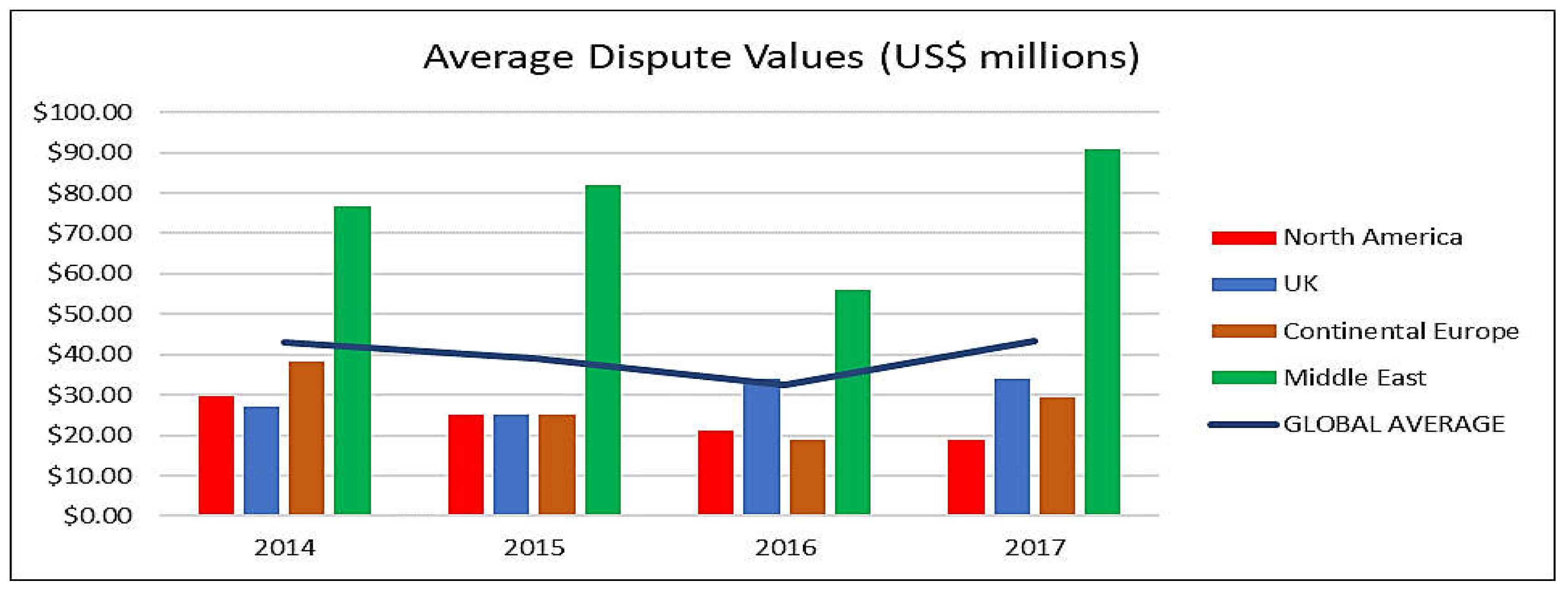
Figure 2.
Average disputes length by countries [5].
Figure 2.
Average disputes length by countries [5].
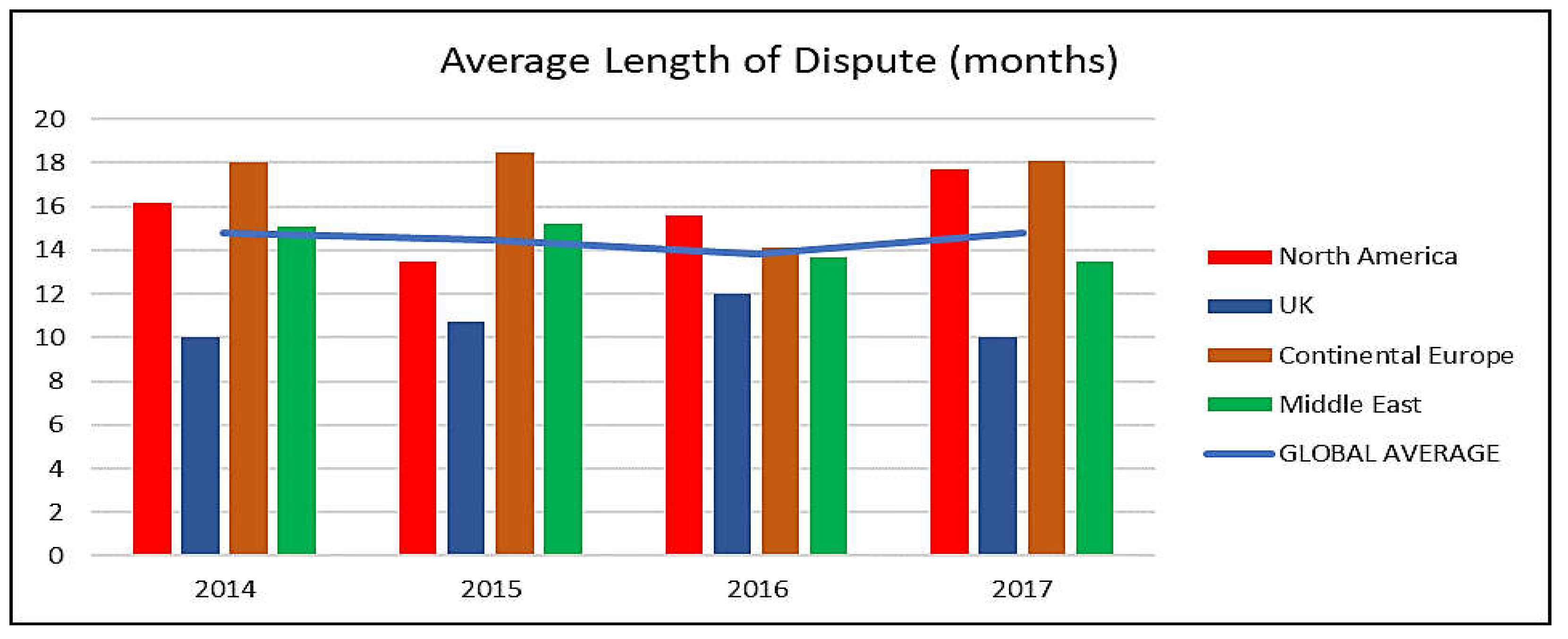
Figure 3.
Frequency of respondents based on location.
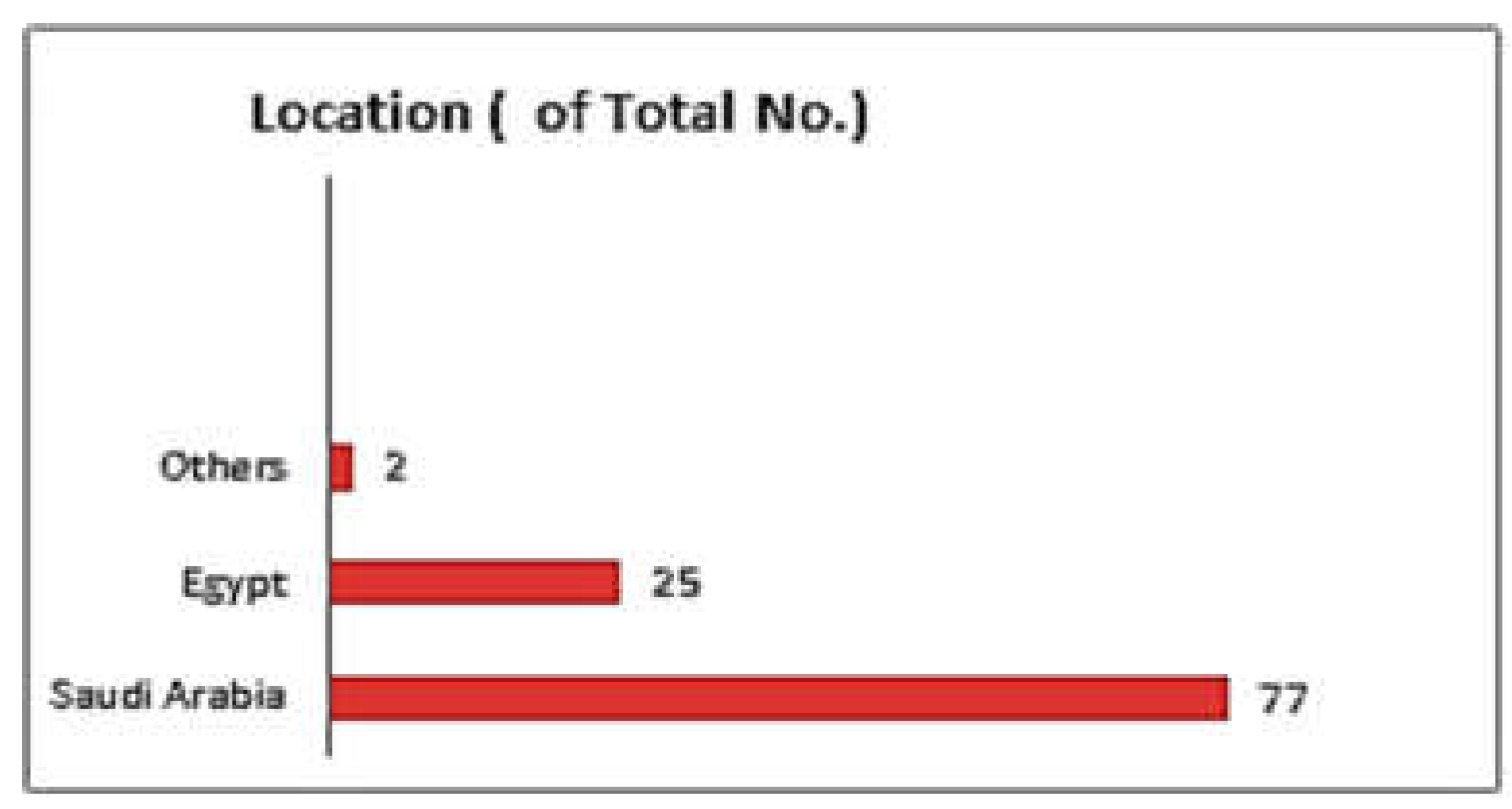
Figure 4.
Frequency of respondents based on organization type.
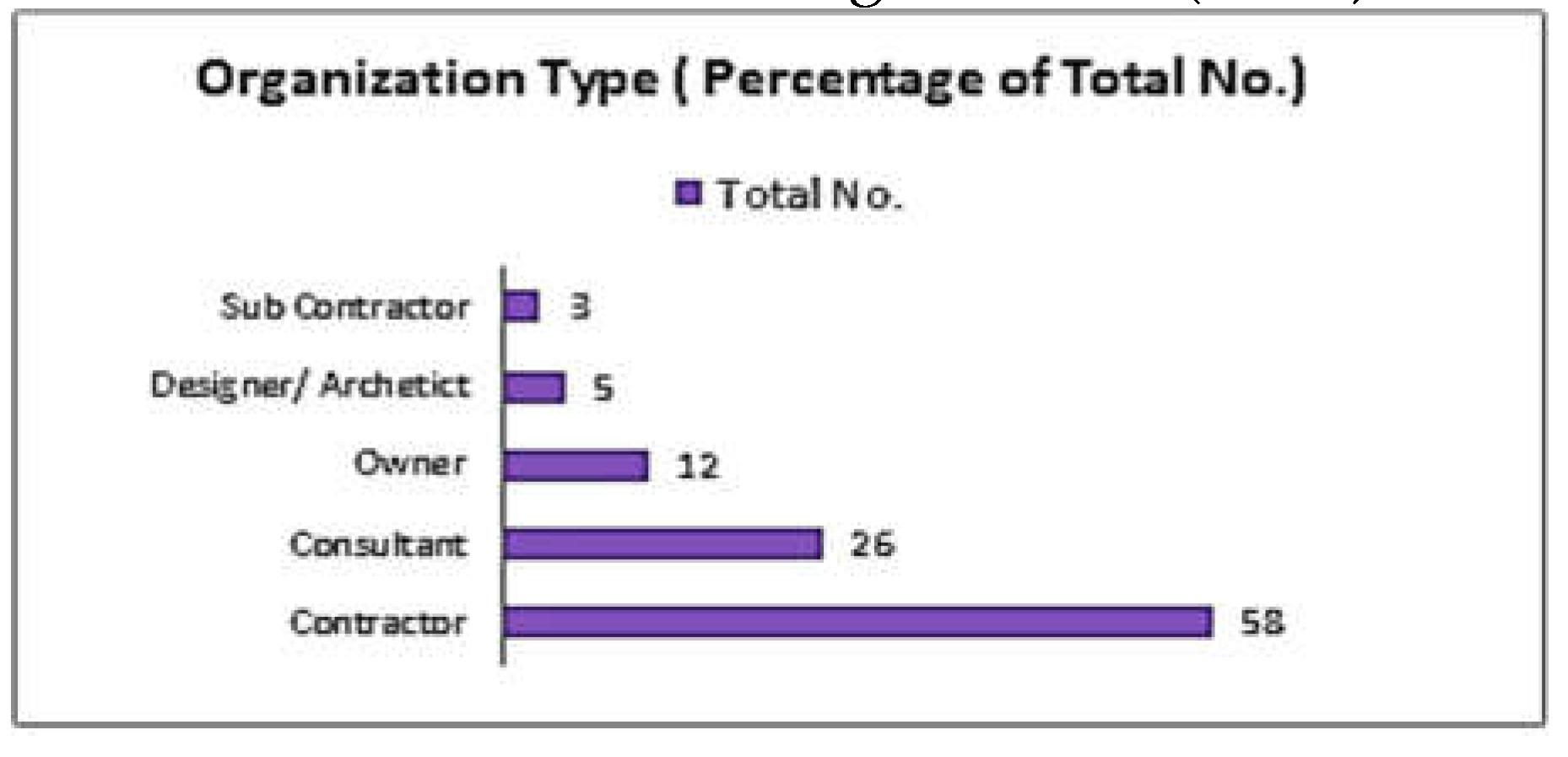
Figure 5.
Frequency of respondents based on job designation.
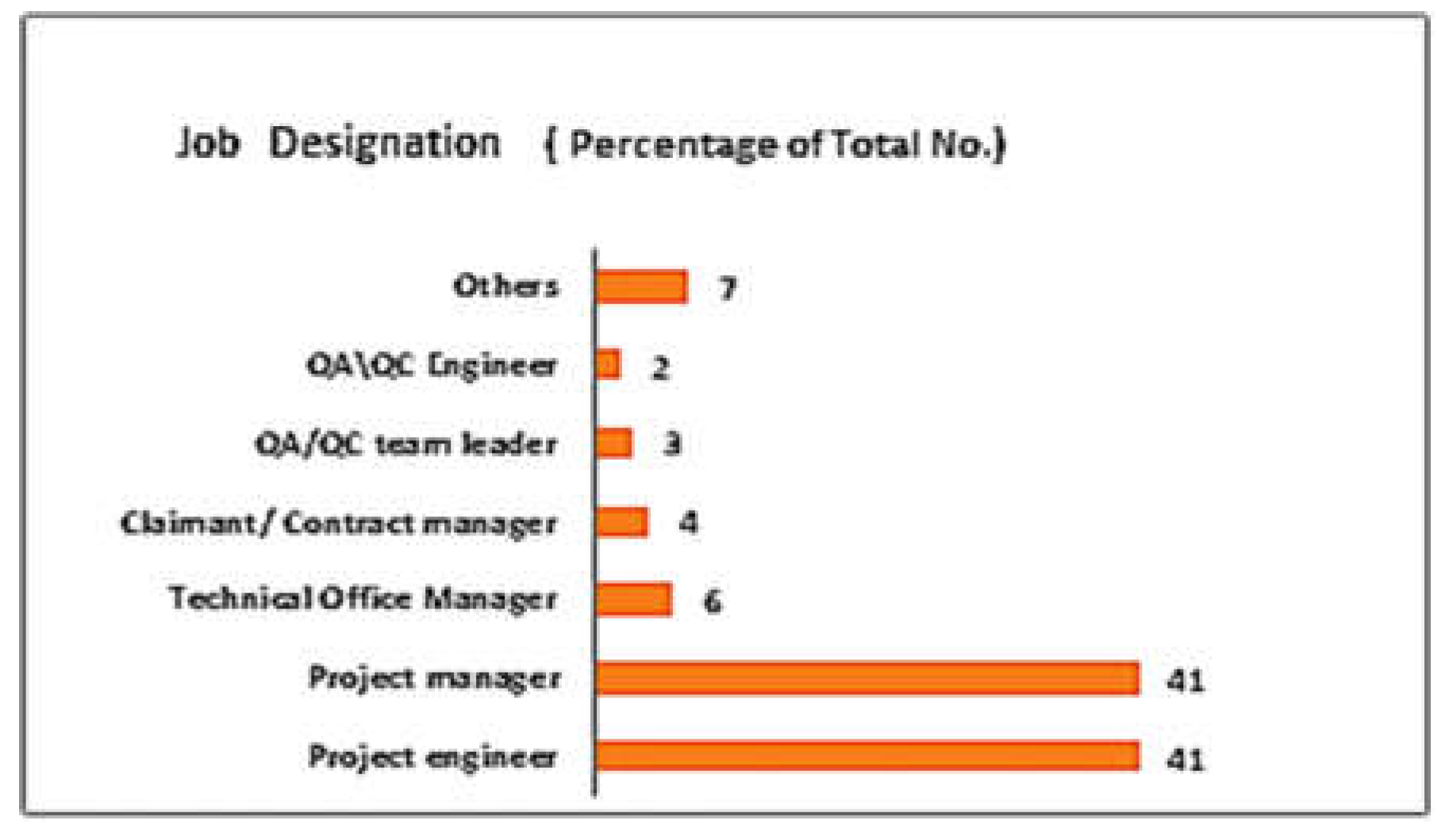
Figure 6.
Frequency of respondents by years of experience in construction.
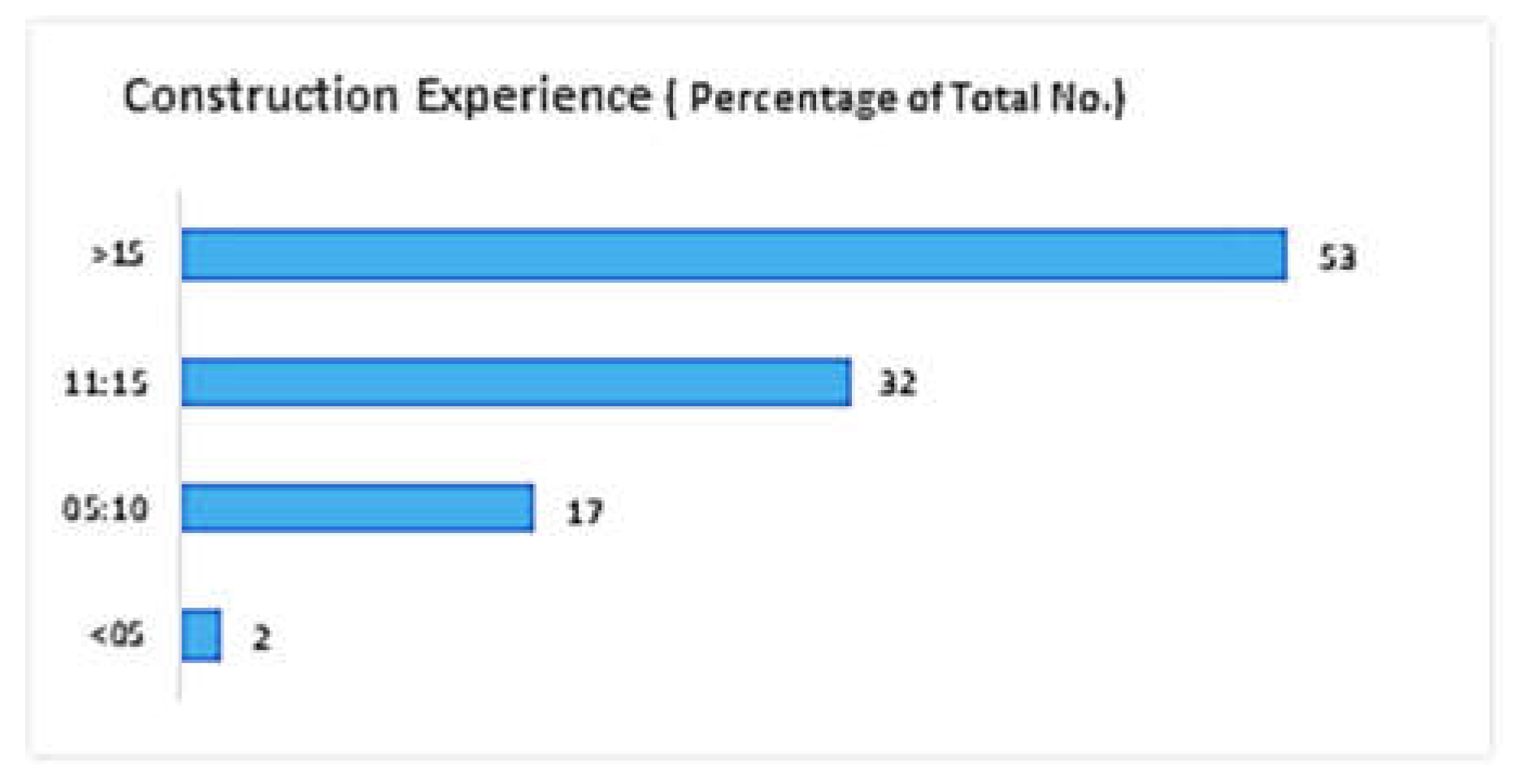
Table 1.
Average disputes value and length by countries [5].
Table 1.
Average disputes value and length by countries [5].
| Region | Average Dispute Value (US$ millions) | Average Length of Dispute (Months) | ||||||
| 2014 | 2015 | 2016 | 2017 | 2014 | 2015 | 2016 | 2017 | |
| North America | 29.6 | 25 | 21 | 19 | 16.2 | 13.5 | 15.6 | 17.7 |
| UK | 27 | 25 | 34 | 34 | 10 | 10.7 | 12 | 10 |
| Continental Europe | 38.3 | 25 | 19 | 29.5 | 18 | 18.5 | 14.1 | 18.1 |
| Middle East | 76.7 | 82 | 56 | 91 | 15.1 | 15.2 | 13.7 | 13.5 |
| GLOBAL AVERAGE | 42.9 | 39.25 | 32.5 | 43.375 | 14.825 | 14.475 | 13.85 | 14.825 |
Table 2.
Top ten methods to mitigate claims in construction projects in Gaza strip [11].
Table 2.
Top ten methods to mitigate claims in construction projects in Gaza strip [11].
| Rank | Method and Advice |
|---|---|
| 1 | Studying and reviewing all contract documents; BOQ, drawing, specification, general and special conditions to make sure no inconsistent before tendering |
| 2 | Good planning and enough studying for all project needed along project cycle |
| 3 | Preparing complete drawing and its detail professionally, and no omission or ambiguity |
| 4 | Awarding the bid to qualified contractor" financially and technically" for the specified project, not the lowest price. |
| 5 | Overcome ambiguity in contract documents, balance contract, and describing items in BOQ precisely |
| 6 | Quantities in contract must be precisely and cover all project works. |
| 7 | Possession supervision team enough experience weather technically or in management of contract in construction projects. And ability for design making in a proper time. |
| 8 | Determining the specification for the used material according to codes and proper tests, and approval alternatives equal in specification in local market. |
| 9 | Submitting a concrete time schedule for the execution of the project and making updating and documenting events on schedule parallel with issuing payments. |
| 10 | Adequate coordination between all the parties involved in construction projects in and avoiding stack holder interference. |
Table 3.
Problems in identification of claims [18].
Table 3.
Problems in identification of claims [18].
| Problems in Identification of Claims | Contractors Ranking | Consultants Ranking |
|---|---|---|
| Lack of awareness of site staff to notice a claim. | 1 | 2 |
| Insufficient contract knowledge by site staff. | 2 | 4 |
| Insufficient time due to high workload. | 3 | 5 |
| Insufficient skilled personnel for detecting a claim. | 4 | 1 |
| Difficulties in detecting any problems during the work due to high work-load. | 5 | 6 |
| Poor communication between site and head office. | 6 | 3 |
| Inaccessibility of documents used for identifying a claim. | 7 | 8 |
| Ambiguous line of responsibility as to who should detect a claim. | 8 | 7 |
| Ambiguous procedures in claim identification. | 9 | 9 |
Table 4.
Problems in Documentation of Claims [18].
Table 4.
Problems in Documentation of Claims [18].
| Problems in Identification of Claims | Contractors Ranking | Consultants Ranking |
|---|---|---|
| Verbal instruction by owner. | 1 | 2 |
| Some information/instruction is not kept in writing. | 2 | 1 |
| Ineffective record-keeping system. | 3 | 3 |
| Inaccurate recorded information. | 4 | 4 |
| Inaccessibility of documents when needed. | 5 | 6 |
| Overdue in retrieving the needed document. | 6 | 5 |
| No standard form used to record the data during construction. | 7 | 7 |
| No computerized documentation system. | 8 | 8 |
| High cost associated with retrieving required information. | 9 | 9 |
Table 5.
Problems in Claim Quantification [18].
Table 5.
Problems in Claim Quantification [18].
| Problems in Quantification of Claims | Contractors Ranking | Consultants Ranking |
|---|---|---|
| Unavailability of records used to analyze and estimate the potential recovery. | 1 | 1 |
| Insufficient time to thoroughly examine claim due to high workload. | 2 | 3 |
| Poor communication to gather the required information to analyze a claim. | 3 | 2 |
| Lack of legal/contract to establish the base on which the claim stands. | 4 | 4 |
| Ambiguous procedures for claim examination. | 5 | 6 |
| No standard formula used to evaluate the impacts and calculating damages. | 6 | 8 |
| Ambiguous responsibility as who should evaluate the amount of recovery. | 7 | 5 |
| Unrealistic formula used to calculate damages. | 8 | 7 |
| Insufficient computerized machines to facilitate the calculation. | 9 | 9 |
Table 6.
Problems in Claim Presentation.
| Problems in Presentation of Claims | Contractors Ranking | Consultants Ranking |
|---|---|---|
| Inaccessibility of relevant documents to submit along with the claim | 1 | 1 |
| Insufficient skilled staff in preparing a claim submission. | 2 | 2 |
| Poor communication in presenting a claim. | 3 | 4 |
| Insufficient time to thoroughly prepare claims due to high workload. | 4 | 3 |
| Ambiguous responsibility to the person that prepare the full report of claim presentation. | 5 | 6 |
| No standard format of a claim submission. | 6 | 7 |
| Ambiguous procedures in preparation of claim presentation. | 7 | 5 |
Table 7.
Problems in claim negotiations.
| Problems in Negotation of Claims | Contractors Ranking | Consultants Ranking |
|---|---|---|
| Disagreement arising during negotiation | 1 | 1 |
| Unsatisfactory evidence to convince other parties. | 2 | 2 |
| Poor negotiation skills. | 3 | 3 |
| Adversarial relationship with other parties. | 4 | 4 |
| Inadequate time due to high workload. | 5 | 5 |
| Difficult to settle without any litigation or Arbitration. | 6 | 6 |
Table 8.
Claim Management Process Group Codes.
| Code | Attributes |
|---|---|
| X | Claim Management Planning |
| XR | Reasons of Claims |
| XR1 | Project execution time is short with lack of (site investigation, tender and contract documents). |
| XR2 | Acceptance of imprecise tender offers with lack of (clarifications, negotiations and recording of changes). |
| XR3 | Changes arising from local authority sources. |
| XR4 | Lack of experiences for designers, contract administrators and contractors. |
| XR5 | Sudden swings in economic and market conditions. |
| XR6 | Unforeseen site conditions. |
| XR7 | Frequent changes and/or variations by the client. |
| XR8 | Poor communications between project participants |
| XR9 | Procurement problems |
| XR10 | Unbalanced risk allocation. |
| XR11 | Unrealistic planning and specifications |
| XR12 | Suspensions issues |
| XR13 | Unfavorable weather conditions |
| XR14 | Indecisive management. |
| XR15 | Separate contracts (coordination problems). |
| XR16 | Untimely approvals. |
| XR17 | Poor briefing. |
| XR18 | The owner changes his mind during construction |
| XR19 | Poor financial arrangement, leading to late payments |
| XR20 | Owner's reluctance to each decision that might be criticized |
| XR21 | Using an unstudied design and elements for the first time |
| XR22 | Misinterpretation of construction documents |
| XR23 | Lack of procedure to correct errors between owner, designer and contractor |
| XR24 | Conflict management |
| XR25 | Contractor inability for site supervision and management |
| XR26 | Engineer's satisfaction clauses |
| XR27 | Design errors, omissions and contradictions in documents |
| XR28 | Payment delays on changing orders |
| XR29 | Price determination on change order. |
| XR30 | Currency fluctuations |
| XR31 | Lack of payment certification guarantees and bonds and cash flow |
| XR32 | Unclear employer applications and responsibilities of all the other parties |
| XR33 | Constructive acceleration |
| XR34 | Non-compliance with professional ethics in construction |
| XM | Claims prevention / Mitigation |
| XM1 | Precise scope, risk allocated and well executed contract availability |
| XM2 | Establishment of good project plan |
| XM3 | Good communication with all stakeholders |
| XM4 | Identifying and managing the factors that may have negative impact on the project. |
| XM5 | Early recognition of potential problems |
| XM6 | Creating a collaborative work environment (project partnering). |
| XM7 | Clear and balanced contract terms and conditions regarding changes, claims and disputes resolution. |
| XM8 | Conducting an integrated change control |
| XM9 | Change management plan establishment |
| XM10 | Continual updating of project schedule |
| XM11 | Conducting studies for constructability and maintenance review. |
| XM12 | Clear procedure for (RFI) Request for Information. |
| XM13 | Commitment to periodic progress reports |
| XM14 | Prequalification process |
| XM15 | Good project documentation. |
| XM16 | Creating Specific Claim Litigation Prevention Techniques. |
| XM17 | Good planning of the contract and relying on a culture of win-win for all parties. |
| Y | Problems in claim process (Monitoring and Controlling). |
| YJ | Claims Identification. |
| YJ1 | Lack of methodology for claims management. |
| YJ2 | Poor communication between site and head office. |
| YJ3 | Lack of documentation |
| YJ4 | Lack of Clarity of contract provisions relating to change order, changed conditions, schedules preparation and submission, and appropriate notice requirements. |
| YJ5 | Lack of clarity of the scope. |
| YJ6 | No clear procedure for managing claim. |
| YJ7 | Claim management section /or team is not clearly assigned. |
| YJ8 | Lack of awareness of site staff to notice a claim. |
| YJ9 | Inadequate time due to high workload. |
| YJ10 | The impact of the claims on project schedule not documented. |
| YJ11 | Lack of advice from experts to see if the claim is valid or not. |
| YJ12 | Lack of preparing and submitting a complete statement of the claim in accordance with contract provision. |
| YJ13 | Inadequate care about rising claims. |
| YD | Claims Documentation |
| YD1 | Verbal instruction by owner has not documented. |
| YD2 | Ineffective record-keeping system. |
| YD3 | Inaccessibility to documents when needed. |
| YD4 | Overdue in retrieving the needed document |
| YD5 | No standard form used to record the data during construction |
| YD6 | High cost associated with retrieving required information. |
| YQ | Claims Quantification |
| YQ1 | Poor study and non-verification of claims |
| YQ2 | Lack of documentation |
| YQ3 | Ambiguous procedures in notice preparation |
| YQ4 | Lack of clarifications requests about contract documents discrepancy |
| YQ5 | Insufficient time to thoroughly prepare the notice due to high workload |
| YQ6 | Poor schedule analysis to demonstrate the claim impact |
| YQ7 | Prescribed time in the contract is too short |
| YQ8 | Quantification problems |
| YQ9 | Poor communication/instruction to proceed with submitting the notice. |
| YQ10 | Unclear responsibility for preparing the claim notice |
| YQ11 | Errors in quantities measurement for claimed work. |
| YQ12 | Errors in cost estimation for claimed work |
| YQ13 | Ignorance of claims rules and contract law |
| YQ14 | Presence of concurrent claims |
| YP | Claims Presentation |
| YP1 | Inaccessibility for relevant claim documents |
| YP2 | Insufficient skilled staff in preparing a claim submission |
| YP3 | Poor communication in presenting a claim |
| YP4 | Insufficient time to prepare claims |
| YP5 | No assignment for a responsible person for preparing the full report of claim presentation |
| YP6 | No standard format of a claim submission |
| YP7 | Ambiguous procedures in preparation of claim presentation |
| YP8 | Submissions of incomplete documents |
| YN | Claims Negotiation |
| YN1 | Disagreement arising during negotiation. |
| YN2 | Unsatisfactory evidence to convince other parties |
| YN3 | Poor negotiation skills |
| YN4 | Adversarial relationship with other parties |
| YN5 | Inadequate time due to high workload. |
| YN6 | The difficulty of settling the claim without any litigation or arbitration. |
| YR | Claims Resolution |
| YR1 | Statement of claims, contract and Claims quantifications are not taken into consideration |
| YR2 | Expert knowledge and fully documented certified claims are not taken into consideration |
| YR3 | Lack of negotiating skill |
| YR4 | Lack of specification litigation prevention techniques (independent natural) |
| YR5 | Non-availability of estimated cost of claim |
| YR6 | Lack of expert report or Claim assessment |
| YR7 | Balanced contracts such as FIDIC and ECC contracts are not used. |
| YR8 | The terms of contract don't focus on good management and effective risk distribution |
| YR9 | Contract terms are inflexible for using a wide range of contracting strategies. |
| YR10 | The roles and responsibilities of contracting parties are not identified |
Table 9.
Cronbach's Alpha for the whole items of questionnaire.
| No. | Filed | Cronbach's Alpha Value | level |
|---|---|---|---|
| 1 | For the entire questionnaire in terms of (impact). | 0.986 | High internal Consistency |
| 2 | for the entire questionnaire in terms of (probability) | 0.980 | High internal Consistency |
| 3 | for the entire questionnaire in terms of both (impact and probability) | 0.984 | High internal Consistency |
Table 10.
Relative importance of the productivity improvement factors.
| Importance | Very Low | Low | Moderate | High | Very High |
|---|---|---|---|---|---|
| From | Up to 20% | 20% | 40% | 60% | 80% |
| To | 40% | 60% | 80% | 100% |
Table 11.
FAII's factor levels and values.
| Importance | Very High | High | Moderate | Low | Very Low | |
|---|---|---|---|---|---|---|
| From | Up to 20% | 60% | 40% | 20% | 80% | |
| To | 80% | 60% | 40% | 100% | ||
| FAII Value | From | 24.86 | 45.46 | 38.59 | 31.78 | 52.32 |
| To | 31.77 | 52.31 | 45.45 | 38.58 | 59.17 | |
Table 12.
Categorize entire questionnaire factors by level of importance.
| Code | RII | RII Rank | RII Rank/ Group | FI | FI Rank | FI Rank / Group | FAII | FAII Rank | FAII Rank / Group | Factor Levels |
|---|---|---|---|---|---|---|---|---|---|---|
| YN3 | 0.77 | 21.00 | 1 | 76.92 | 46.00 | 43.80 | 59.17 | 1 | 1 | very high |
| YN4 | 0.76 | 26.00 | 2 | 76.15 | 31.00 | 29.50 | 57.99 | 2 | 2 | very high |
| YR7 | 0.76 | 30.00 | 1 | 75.96 | 38.00 | 36.20 | 57.70 | 3 | 1 | very high |
| YN1 | 0.75 | 34.00 | 3 | 75.38 | 41.00 | 39.00 | 56.83 | 4 | 3 | very high |
| YN2 | 0.75 | 37.00 | 4 | 75.19 | 41.00 | 39.00 | 56.54 | 5 | 4 | very high |
| YR1 | 0.75 | 44.00 | 2 | 74.62 | 44.00 | 41.90 | 55.67 | 6 | 2 | very high |
| YR3 | 0.74 | 46.00 | 3 | 74.42 | 43.00 | 41.00 | 55.39 | 7 | 3 | very high |
| YR4 | 0.74 | 46.00 | 3 | 74.42 | 34.00 | 32.40 | 55.39 | 7 | 3 | very high |
| XM3 | 0.80 | 5.00 | 4 | 67.88 | 24.00 | 35.20 | 54.57 | 9 | 1 | very high |
| YJ10 | 0.78 | 16.00 | 4 | 70.00 | 36.00 | 33.30 | 54.38 | 10 | 1 | very high |
| YR6 | 0.74 | 56.00 | 5 | 73.65 | 42.00 | 40.00 | 54.25 | 11 | 5 | very high |
| YR10 | 0.74 | 57.00 | 6 | 73.46 | 44.00 | 41.90 | 53.97 | 12 | 6 | very high |
| YR2 | 0.73 | 61.00 | 7 | 73.27 | 29.00 | 27.60 | 53.68 | 13 | 7 | very high |
| YD1 | 0.79 | 12.00 | 1 | 68.08 | 37.00 | 32.40 | 53.41 | 14 | 1 | very high |
| YJ8 | 0.76 | 32.00 | 7 | 70.19 | 38.00 | 38.10 | 53.05 | 15 | 2 | very high |
| YR8 | 0.73 | 65.00 | 8 | 72.69 | 41.00 | 39.00 | 52.84 | 16 | 8 | very high |
| XM7 | 0.81 | 3.00 | 2 | 64.81 | 24.00 | 29.50 | 52.34 | 17 | 2 | very high |
| XM2 | 0.81 | 3.00 | 2 | 64.62 | 29.00 | 40.00 | 52.19 | 18 | 3 | High |
| XR19 | 0.82 | 2.00 | 1 | 63.85 | 22.00 | 31.40 | 52.06 | 19 | 1 | High |
| YQ13 | 0.78 | 18.00 | 1 | 67.12 | 33.00 | 29.50 | 52.01 | 20 | 1 | High |
| YR5 | 0.72 | 68.00 | 9 | 72.12 | 34.00 | 32.40 | 52.01 | 21 | 9 | High |
| YP2 | 0.77 | 21.00 | 1 | 67.50 | 36.00 | 42.90 | 51.92 | 22 | 1 | High |
| XR31 | 0.79 | 11.00 | 2 | 65.77 | 35.00 | 41.90 | 51.86 | 23 | 2 | High |
| YR9 | 0.72 | 71.00 | 10 | 71.92 | 42.00 | 40.00 | 51.73 | 24 | 10 | High |
| YJ3 | 0.80 | 7.00 | 1 | 64.62 | 29.00 | 37.10 | 51.57 | 25 | 3 | High |
| XM1 | 0.79 | 10.00 | 7 | 65.19 | 32.00 | 37.10 | 51.53 | 26 | 4 | High |
| XM5 | 0.82 | 1.00 | 1 | 62.88 | 29.00 | 41.90 | 51.40 | 27 | 5 | High |
| XM10 | 0.77 | 20.00 | 9 | 66.15 | 41.00 | 32.40 | 51.01 | 28 | 6 | High |
| XM16 | 0.80 | 6.00 | 5 | 63.65 | 29.00 | 29.50 | 50.92 | 29 | 7 | High |
| XM15 | 0.78 | 16.00 | 8 | 65.38 | 26.00 | 38.10 | 50.80 | 30 | 8 | High |
| YP7 | 0.71 | 76.00 | 6 | 71.15 | 36.00 | 34.30 | 50.63 | 31 | 2 | High |
| YJ4 | 0.79 | 9.00 | 2 | 63.85 | 24.00 | 41.00 | 50.59 | 32 | 4 | High |
| XR28 | 0.75 | 41.00 | 8 | 67.31 | 34.00 | 40.00 | 50.35 | 33 | 3 | High |
| XR18 | 0.74 | 54.00 | 11 | 68.08 | 30.00 | 41.00 | 50.27 | 34 | 4 | High |
| YJ7 | 0.75 | 41.00 | 9 | 66.73 | 32.00 | 36.20 | 49.92 | 35 | 5 | High |
| YJ1 | 0.78 | 18.00 | 5 | 64.23 | 38.00 | 41.90 | 49.78 | 36 | 6 | High |
| YD2 | 0.76 | 26.00 | 2 | 64.81 | 26.00 | 31.40 | 49.35 | 37 | 2 | High |
| XR1 | 0.79 | 12.00 | 3 | 62.69 | 20.00 | 47.60 | 49.19 | 38 | 5 | High |
| XR2 | 0.79 | 12.00 | 3 | 62.69 | 28.00 | 44.80 | 49.19 | 38 | 5 | High |
| YJ11 | 0.74 | 57.00 | 13 | 66.92 | 34.00 | 39.00 | 49.16 | 41 | 7 | High |
| YP8 | 0.75 | 37.00 | 3 | 65.38 | 31.00 | 44.80 | 49.16 | 40 | 3 | High |
| YJ9 | 0.74 | 46.00 | 10 | 65.96 | 33.00 | 40.00 | 49.09 | 42 | 8 | High |
| YJ12 | 0.74 | 52.00 | 12 | 65.96 | 30.00 | 41.00 | 48.84 | 43 | 9 | High |
| YQ6 | 0.74 | 52.00 | 5 | 65.96 | 32.00 | 40.00 | 48.84 | 43 | 2 | High |
| YN6 | 0.69 | 92.00 | 5 | 69.42 | 29.00 | 27.60 | 48.20 | 45 | 5 | High |
| XM4 | 0.75 | 37.00 | 12 | 63.65 | 27.00 | 39.00 | 47.86 | 46 | 9 | High |
| XM6 | 0.77 | 24.00 | 10 | 62.31 | 26.00 | 48.60 | 47.69 | 47 | 10 | High |
| YJ13 | 0.76 | 32.00 | 7 | 62.69 | 24.00 | 32.40 | 47.38 | 48 | 10 | High |
| YJ2 | 0.76 | 30.00 | 6 | 62.31 | 28.00 | 35.20 | 47.33 | 49 | 11 | High |
| XR7 | 0.72 | 68.00 | 16 | 65.58 | 35.00 | 42.90 | 47.29 | 50 | 7 | High |
| YQ1 | 0.74 | 50.00 | 4 | 63.65 | 34.00 | 43.80 | 47.25 | 51 | 3 | High |
| YQ2 | 0.75 | 40.00 | 2 | 62.88 | 23.00 | 44.80 | 47.16 | 52 | 4 | High |
| XM17 | 0.79 | 8.00 | 6 | 59.23 | 29.00 | 35.20 | 47.04 | 53 | 11 | High |
| YJ6 | 0.74 | 46.00 | 10 | 63.08 | 24.00 | 35.20 | 46.94 | 54 | 12 | High |
| YD3 | 0.76 | 26.00 | 2 | 61.54 | 26.00 | 43.80 | 46.86 | 55 | 3 | High |
| XR5 | 0.77 | 23.00 | 5 | 60.58 | 21.00 | 31.40 | 46.48 | 56 | 8 | High |
| XR27 | 0.76 | 25.00 | 6 | 60.77 | 28.00 | 43.80 | 46.39 | 57 | 9 | High |
| XR4 | 0.75 | 41.00 | 8 | 61.92 | 29.00 | 41.00 | 46.32 | 58 | 10 | High |
| XR8 | 0.73 | 65.00 | 15 | 63.08 | 28.00 | 41.00 | 45.85 | 59 | 11 | High |
| XR23 | 0.73 | 62.00 | 13 | 61.92 | 23.00 | 36.20 | 45.25 | 60 | 12 | Moderate |
| XM13 | 0.72 | 73.00 | 14 | 63.08 | 33.00 | 37.10 | 45.25 | 61 | 12 | Moderate |
| YP1 | 0.75 | 34.00 | 2 | 60.00 | 24.00 | 37.10 | 45.23 | 62 | 4 | Moderate |
| YQ12 | 0.75 | 44.00 | 3 | 60.58 | 25.00 | 42.90 | 45.20 | 63 | 5 | Moderate |
| YD4 | 0.73 | 67.00 | 4 | 62.12 | 25.00 | 39.00 | 45.03 | 64 | 4 | Moderate |
| YP3 | 0.73 | 64.00 | 5 | 61.73 | 18.00 | 40.00 | 44.99 | 65 | 5 | Moderate |
| YN5 | 0.67 | 103.00 | 6 | 66.92 | 36.00 | 34.30 | 44.79 | 66 | 6 | Moderate |
| YJ5 | 0.78 | 15.00 | 3 | 57.50 | 17.00 | 38.10 | 44.78 | 67 | 13 | Moderate |
| XR20 | 0.74 | 50.00 | 10 | 60.19 | 25.00 | 50.50 | 44.68 | 68 | 13 | Moderate |
| XM9 | 0.75 | 34.00 | 11 | 59.04 | 19.00 | 29.50 | 44.51 | 69 | 13 | Moderate |
| YP5 | 0.74 | 57.00 | 4 | 60.19 | 30.00 | 34.30 | 44.22 | 70 | 6 | Moderate |
| YQ10 | 0.71 | 76.00 | 6 | 61.92 | 30.00 | 41.90 | 44.06 | 71 | 6 | Moderate |
| YD5 | 0.70 | 84.00 | 5 | 62.50 | 28.00 | 32.40 | 43.99 | 72 | 5 | Moderate |
| XR9 | 0.70 | 87.00 | 26 | 62.50 | 34.00 | 40.00 | 43.51 | 73 | 14 | Moderate |
| XR33 | 0.71 | 82.00 | 23 | 61.35 | 30.00 | 32.40 | 43.30 | 74 | 15 | Moderate |
| XR15 | 0.70 | 87.00 | 26 | 61.73 | 26.00 | 35.20 | 42.97 | 75 | 16 | Moderate |
| XR29 | 0.70 | 85.00 | 24 | 61.35 | 22.00 | 35.20 | 42.94 | 76 | 17 | Moderate |
| XR25 | 0.76 | 26.00 | 7 | 55.96 | 20.00 | 34.30 | 42.62 | 78 | 18 | Moderate |
| YQ4 | 0.71 | 82.00 | 9 | 60.38 | 26.00 | 42.90 | 42.62 | 77 | 7 | Moderate |
| XR12 | 0.74 | 54.00 | 11 | 57.69 | 24.00 | 30.50 | 42.60 | 79 | 19 | Moderate |
| XM8 | 0.74 | 57.00 | 13 | 57.88 | 21.00 | 36.20 | 42.52 | 80 | 14 | Moderate |
| YP6 | 0.68 | 98.00 | 8 | 62.50 | 29.00 | 31.40 | 42.43 | 81 | 7 | Moderate |
| XR22 | 0.72 | 73.00 | 19 | 58.27 | 24.00 | 31.40 | 41.80 | 82 | 20 | Moderate |
| YQ11 | 0.71 | 76.00 | 6 | 57.88 | 24.00 | 38.10 | 41.19 | 83 | 8 | Moderate |
| XR16 | 0.68 | 97.00 | 30 | 60.38 | 28.00 | 40.00 | 41.11 | 84 | 21 | Moderate |
| XR10 | 0.69 | 96.00 | 29 | 59.23 | 19.00 | 35.20 | 40.89 | 85 | 22 | Moderate |
| YQ5 | 0.68 | 98.00 | 11 | 60.19 | 29.00 | 38.10 | 40.86 | 86 | 9 | Moderate |
| XR24 | 0.70 | 86.00 | 25 | 58.46 | 18.00 | 38.10 | 40.81 | 87 | 23 | Moderate |
| YQ3 | 0.70 | 87.00 | 10 | 58.46 | 20.00 | 39.00 | 40.70 | 88 | 10 | Moderate |
| XR32 | 0.69 | 94.00 | 28 | 58.46 | 18.00 | 30.50 | 40.47 | 89 | 24 | Moderate |
| XM12 | 0.70 | 87.00 | 15 | 58.08 | 28.00 | 30.50 | 40.43 | 90 | 15 | Moderate |
| XR26 | 0.72 | 68.00 | 16 | 55.96 | 17.00 | 31.40 | 40.36 | 91 | 25 | Moderate |
| YQ7 | 0.71 | 80.00 | 8 | 56.92 | 21.00 | 36.20 | 40.28 | 92 | 11 | Moderate |
| YQ14 | 0.67 | 101.00 | 12 | 59.62 | 27.00 | 35.20 | 40.01 | 93 | 12 | Moderate |
| XR3 | 0.68 | 100.00 | 31 | 58.08 | 23.00 | 28.60 | 39.31 | 94 | 26 | Moderate |
| YQ9 | 0.67 | 101.00 | 12 | 58.46 | 24.00 | 34.30 | 39.24 | 95 | 13 | Moderate |
| YP4 | 0.70 | 87.00 | 7 | 56.35 | 14.00 | 39.00 | 39.23 | 96 | 8 | Moderate |
| XR14 | 0.72 | 73.00 | 19 | 54.23 | 21.00 | 32.40 | 38.90 | 97 | 27 | Moderate |
| XR21 | 0.73 | 62.00 | 13 | 52.88 | 23.00 | 35.20 | 38.65 | 98 | 28 | Moderate |
| XM14 | 0.69 | 94.00 | 17 | 55.58 | 18.00 | 36.20 | 38.48 | 99 | 16 | Low |
| XR11 | 0.71 | 80.00 | 22 | 54.04 | 17.00 | 31.40 | 38.24 | 100 | 29 | Low |
| XR34 | 0.72 | 71.00 | 18 | 53.08 | 19.00 | 39.00 | 38.17 | 101 | 30 | Low |
| XM11 | 0.69 | 92.00 | 16 | 54.62 | 19.00 | 30.50 | 37.92 | 102 | 17 | Low |
| YQ8 | 0.66 | 104.00 | 14 | 54.23 | 18.00 | 41.00 | 35.98 | 103 | 14 | Low |
| YD6 | 0.64 | 106.00 | 6 | 55.00 | 20.00 | 30.50 | 35.43 | 104 | 6 | Low |
| XR30 | 0.71 | 76.00 | 21 | 49.62 | 16.00 | 28.60 | 35.30 | 105 | 31 | Low |
| XR6 | 0.64 | 107.00 | 33 | 53.46 | 11.00 | 24.80 | 34.03 | 106 | 32 | Low |
| XR17 | 0.66 | 105.00 | 32 | 50.58 | 14.00 | 37.10 | 33.36 | 107 | 33 | Low |
| XR13 | 0.56 | 108.00 | 34 | 44.42 | 4.00 | 19.00 | 24.86 | 108 | 34 | Very Low |
Table 13.
Pearson correlation value of factors and their groups.
| Pearson correlation value of factors and their groups. | R | P | ||
|---|---|---|---|---|
| XM3 | Good communication with all stakeholders | Impact | 0.837** | 0.000 |
| Probability | 0.748** | 0.000 | ||
| XM7 | Clear and balanced contract terms and conditions regarding changes, claims and disputes resolution | Impact | 0.827** | 0.000 |
| Probability | 0.797** | 0.000 | ||
| YJ8 | Lack of awareness of site staff to notice a claim | Impact | 0.828** | 0.000 |
| Probability | 0.792** | 0.000 | ||
| YJ10 | The impact of the claims on project schedule not documented. | Impact | 0.840** | 0.000 |
| Probability | 0.750** | 0.000 | ||
| YD1 | Verbal instruction by owner has not documented. | Impact | 0.829** | 0.000 |
| Probability | 0.788** | 0.000 | ||
| YN1 | Disagreement arising during negotiation. | Impact | 0.829** | 0.000 |
| Probability | 0.703** | 0.000 | ||
| YN2 | Unsatisfactory evidence to convince other parties. | Impact | 0.805** | 0.000 |
| Probability | 0.757** | 0.000 | ||
| YN3 | Poor negotiation skills | Impact | 0.738** | 0.000 |
| Probability | 0.816** | 0.000 | ||
| YN4 | Adversarial relationship with other parties | Impact | 0.792** | 0.000 |
| Probability | 0.780** | 0.000 | ||
| YR1 | Statement of claims, contract and Claims quantifications are not taken into consideration | Impact | 0.685** | 0.000 |
| Probability | 0.702** | 0.000 | ||
| YR2 | Expert knowledge and fully documented certified claims are not taken into consideration | Impact | 0.748** | 0.000 |
| Probability | 0.709** | 0.000 | ||
| YR3 | Lack of negotiating skill | Impact | 0.797** | 0.000 |
| Probability | 0.742** | 0.000 | ||
| YR4 | Lack of specification litigation prevention techniques (independent natural). | Impact | 0.819** | 0.000 |
| Probability | 0.725** | 0.000 | ||
| YR6 | Lack of expert report or Claim assessment | Impact | 0.863** | 0.000 |
| Probability | 0.843** | 0.000 | ||
| YR7 | Balanced contracts such as FIDIC and ECC contracts are not used. | Impact | 0.800** | 0.000 |
| Probability | 0.749** | 0.000 | ||
| YR8 | The terms of contract don't focus on good management and effective risk distribution | Impact | 0.805** | 0.000 |
| Probability | 0.761** | 0.000 | ||
| YR10 | The roles and responsibilities of contracting parties are not identified. | Impact | 0.710** | 0.000 |
| Probability | 0.704** | 0.000 | ||
Table 15.
Claims prevention / mitigation significant factors.
| Code | RII | RII Rank | RII Rank by Group | FI | FI Rank | FI Rank by Group | FAII | FAII Rank | FAII Rank by Group | Significant level |
|---|---|---|---|---|---|---|---|---|---|---|
| XM | Claims prevention / Mitigation | |||||||||
| XM3 | 0.804 | 5 | 4 | 67.88 | 24 | 35.2 | 54.57 | 9 | 1 | very high |
| XM7 | 0.808 | 3 | 2 | 64.81 | 24 | 29.5 | 52.34 | 17 | 2 | very high |
| XM2 | 0.808 | 3 | 2 | 64.62 | 29 | 40 | 52.19 | 18 | 3 | High |
| XM1 | 0.79 | 10 | 7 | 65.19 | 32 | 37.1 | 51.53 | 26 | 4 | High |
| XM5 | 0.817 | 1 | 1 | 62.88 | 29 | 41.9 | 51.4 | 27 | 5 | High |
| XM10 | 0.771 | 20 | 9 | 66.15 | 41 | 32.4 | 51.01 | 28 | 6 | High |
| XM16 | 0.8 | 6 | 5 | 63.65 | 29 | 29.5 | 50.92 | 29 | 7 | High |
| XM15 | 0.777 | 16 | 8 | 65.38 | 26 | 38.1 | 50.8 | 30 | 8 | High |
| XM4 | 0.752 | 37 | 12 | 63.65 | 27 | 39 | 47.86 | 46 | 9 | High |
| XM6 | 0.765 | 24 | 10 | 62.31 | 26 | 48.6 | 47.69 | 47 | 10 | High |
| XM17 | 0.794 | 8 | 6 | 59.23 | 29 | 35.2 | 47.04 | 53 | 11 | High |
Table 16.
Claims identification and initial justifications significant factors.
| Code | RII | RII Rank | RII Rank by Group | FI | FI Rank | FI Rank by Group | FAII | FAII Rank | FAII Rank by Group | Significant level |
|---|---|---|---|---|---|---|---|---|---|---|
| YJ | Claims Identification and Initial Justifications | |||||||||
| YJ10 | 0.777 | 16 | 4 | 70 | 36 | 33.3 | 54.38 | 10 | 1 | very high |
| YJ8 | 0.756 | 32 | 7 | 70.19 | 38 | 38.1 | 53.05 | 15 | 2 | very high |
| YJ3 | 0.798 | 7 | 1 | 64.62 | 29 | 37.1 | 51.57 | 25 | 3 | High |
| YJ4 | 0.792 | 9 | 2 | 63.85 | 24 | 41 | 50.59 | 32 | 4 | High |
| YJ7 | 0.748 | 41 | 9 | 66.73 | 32 | 36.2 | 49.92 | 35 | 5 | High |
| YJ1 | 0.775 | 18 | 5 | 64.23 | 38 | 41.9 | 49.78 | 36 | 6 | High |
| YJ11 | 0.735 | 57 | 13 | 66.92 | 34 | 39 | 49.16 | 41 | 7 | High |
| YJ9 | 0.744 | 46 | 10 | 65.96 | 33 | 40 | 49.09 | 42 | 8 | High |
| YJ12 | 0.74 | 52 | 12 | 65.96 | 30 | 41 | 48.84 | 43 | 9 | High |
| YJ13 | 0.756 | 32 | 7 | 62.69 | 24 | 32.4 | 47.38 | 48 | 10 | High |
| YJ2 | 0.76 | 30 | 6 | 62.31 | 28 | 35.2 | 47.33 | 49 | 11 | High |
| YJ6 | 0.744 | 46 | 10 | 63.08 | 24 | 35.2 | 46.94 | 54 | 12 | High |
Table 17.
Claims documentation significant factors.
| Code | RII | RII Rank | RII Rank by Group | FI | FI Rank | FI Rank by Group | FAII | FAII Rank | FAII Rank by Group | Significant level |
|---|---|---|---|---|---|---|---|---|---|---|
| YD | Claims Documentation | |||||||||
| YD1 | 0.785 | 12 | 1 | 68.08 | 37 | 32.4 | 53.41 | 14 | 1 | very high |
| YD2 | 0.762 | 26 | 2 | 64.81 | 26 | 31.4 | 49.35 | 37 | 2 | High |
| YD3 | 0.762 | 26 | 2 | 61.54 | 26 | 43.8 | 46.86 | 55 | 3 | High |
Table 18.
Claims quantification significant factors.
| Code | RII | RII Rank | RII Rank by Group | FI | FI Rank | FI Rank by Group | FAII | FAII Rank | FAII Rank by Group | Significant level |
|---|---|---|---|---|---|---|---|---|---|---|
| YQ | Claims Quantification | |||||||||
| YQ13 | 0.775 | 18 | 1 | 67.12 | 33 | 29.5 | 52.01 | 20 | 1 | High |
| YQ6 | 0.74 | 52 | 5 | 65.96 | 32 | 40 | 48.84 | 43 | 2 | High |
| YQ1 | 0.742 | 50 | 4 | 63.65 | 34 | 43.8 | 47.25 | 51 | 3 | High |
| YQ2 | 0.75 | 40 | 2 | 62.88 | 23 | 44.8 | 47.16 | 52 | 4 | High |
Table 19.
Claims presentation significant factors.
| Code | RII | RII Rank | RII Rank by Group | FI | FI Rank | FI Rank by Group | FAII | FAII Rank | FAII Rank by Group | Significant Level |
|---|---|---|---|---|---|---|---|---|---|---|
| YP | Claims Presentation | |||||||||
| YP2 | 0.769 | 21 | 1 | 67.50 | 36 | 42.9 | 51.92 | 22 | 1 | High |
| YP7 | 0.712 | 76 | 6 | 71.15 | 36 | 34.3 | 50.63 | 31 | 2 | High |
| YP8 | 0.752 | 37 | 3 | 65.38 | 31 | 44.8 | 49.16 | 40 | 3 | High |
Table 20.
Claims negotiation significant factors.
| Code | RII | RII Rank | RII Rank by Group | FI | FI Rank | FI Rank by Group | FAII | FAII Rank | FAII Rank by Group | Significant Level |
|---|---|---|---|---|---|---|---|---|---|---|
| YN | Claims Negotiation | |||||||||
| YN3 | 0.769 | 21 | 1 | 76.92 | 46 | 43.8 | 59.17 | 1 | 1 | very high |
| YN4 | 0.762 | 26 | 2 | 76.15 | 31 | 29.5 | 57.99 | 2 | 2 | very high |
| YN1 | 0.754 | 34 | 3 | 75.38 | 41 | 39 | 56.83 | 4 | 3 | very high |
| YN2 | 0.752 | 37 | 4 | 75.19 | 41 | 39 | 56.54 | 5 | 4 | very high |
| YN6 | 0.694 | 92 | 5 | 69.42 | 29 | 27.6 | 48.2 | 45 | 5 | High |
Table 21.
Claims resolution significant factors.
| Code | RII | RII Rank | RII Rank by Group | FI | FI Rank | FI Rank by Group | FAII | FAII Rank | FAII Rank by Group | Significant level |
|---|---|---|---|---|---|---|---|---|---|---|
| YR | Claims Resolution | |||||||||
| YR7 | 0.76 | 30 | 1 | 75.96 | 38 | 36.2 | 57.7 | 3 | 1 | very high |
| YR1 | 0.746 | 44 | 2 | 74.62 | 44 | 41.9 | 55.67 | 6 | 2 | very high |
| YR3 | 0.744 | 46 | 3 | 74.42 | 43 | 41 | 55.39 | 7 | 3 | very high |
| YR4 | 0.744 | 46 | 3 | 74.42 | 34 | 32.4 | 55.39 | 7 | 3 | very high |
| YR6 | 0.737 | 56 | 5 | 73.65 | 42 | 40 | 54.25 | 11 | 5 | very high |
| YR10 | 0.735 | 57 | 6 | 73.46 | 44 | 41.9 | 53.97 | 12 | 6 | very high |
| YR2 | 0.733 | 61 | 7 | 73.27 | 29 | 27.6 | 53.68 | 13 | 7 | very high |
| YR8 | 0.727 | 65 | 8 | 72.69 | 41 | 39 | 52.84 | 16 | 8 | very high |
| YR5 | 0.721 | 68 | 9 | 72.12 | 34 | 32.4 | 52.01 | 21 | 9 | High |
| YR9 | 0.719 | 71 | 10 | 71.92 | 42 | 40 | 51.73 | 24 | 10 | High |
Table 22.
The top ranked factors of claim management process groups.
| Code | RII | RII Rank | RII Rank | FI | FI Rank | FI Rank | FAII | FAII Rank | No. |
|---|---|---|---|---|---|---|---|---|---|
| YN3 | Poor negotiation skills | 0.77 | 21.00 | 1 | 76.92 | 46.00 | 43.80 | 59.17 | 1 |
| YN4 | Adversarial relationship with other parties | 0.76 | 26.00 | 2 | 76.15 | 31.00 | 29.50 | 57.99 | 2 |
| YR7 | Balanced contracts such as FIDIC / ECC contracts are not used. | 0.76 | 30.00 | 1 | 75.96 | 38.00 | 36.20 | 57.70 | 3 |
| YN1 | Disagreement arising during negotiation. | 0.75 | 34.00 | 3 | 75.38 | 41.00 | 39.00 | 56.83 | 4 |
| YN2 | Unsatisfactory evidence to convince other parties | 0.75 | 37.00 | 4 | 75.19 | 41.00 | 39.00 | 56.54 | 5 |
| YR1 | Statement of claims, claims quantifications are not considered | 0.75 | 44.00 | 2 | 74.62 | 44.00 | 41.90 | 55.67 | 6 |
| YR3 | Lack of negotiating skill | 0.74 | 46.00 | 3 | 74.42 | 43.00 | 41.00 | 55.39 | 7 |
| YR4 | Lack of specified litigation prevention techniques (independent) | 0.74 | 46.00 | 3 | 74.42 | 34.00 | 32.40 | 55.39 | 7 |
| XM3 | Good communication with all stakeholders | 0.80 | 5.00 | 4 | 67.88 | 24.00 | 35.20 | 54.57 | 9 |
| YJ10 | The impact of the claims on project schedule not documented. | 0.78 | 16.00 | 4 | 70.00 | 36.00 | 33.30 | 54.38 | 10 |
| YR6 | Lack of expert report or Claim assessment | 0.74 | 56.00 | 5 | 73.65 | 42.00 | 40.00 | 54.25 | 11 |
| YR10 | Roles / responsibilities of contracting parties are not identified | 0.74 | 57.00 | 6 | 73.46 | 44.00 | 41.90 | 53.97 | 12 |
| YR2 | Expert knowledge and fully documented claims not considered | 0.73 | 61.00 | 7 | 73.27 | 29.00 | 27.60 | 53.68 | 13 |
| YD1 | Verbal instruction by owner has not documented. | 0.79 | 12.00 | 1 | 68.08 | 37.00 | 32.40 | 53.41 | 14 |
| YJ8 | Lack of awareness of site staff to notice a claim. | 0.76 | 32.00 | 7 | 70.19 | 38.00 | 38.10 | 53.05 | 15 |
| YR8 | The contract has no good management / effective risk sharing | 0.73 | 65.00 | 8 | 72.69 | 41.00 | 39.00 | 52.84 | 16 |
| XM7 | Clear and balanced contract terms and conditions regarding changes, claims and disputes resolution. | 0.81 | 3.00 | 2 | 64.81 | 24.00 | 29.50 | 52.34 | 17 |
Table 23.
Linguistic variables and corresponding Fuzzy numbers.
| Level of risk likelihood/ consequence | Fuzzy triangular number (FTN) | Defuzzied number range | Description |
|---|---|---|---|
| None | 0, 0, 0.1 | 0 | Risk event never happen, and no impact on the project. |
| Very Low | 0, 0.1, 0.3 | 0 to < 0.20 | Minimal probability to happen, and negligible impact. |
| Low | 0.1, 0.3, 0.5 | 0.20 to <0.40 | Low probability to happen, and minor impact. |
| Medium | 0.3, 0.5, 0.7 | 0.40 to <0.60 | Medium probability to happen and medium impact. |
| High | 0.5, 0.7, 0.9 | 0.60 to <0.80 | High probability to happen and notable impact. |
| Very High | 0.7, 0.9, 1.0 | 0.80 to <1.0 | Very high probability to happen, and critical impact. |
Table 24.
Top rated reasons for claims with their codes and subsequent scores.
| Rank | Factor Code | Factor Name | Score |
| 1 | XR31 | Lack of payment certification guarantees and bonds and cash flow | 0.64249 |
| 2 | XR19 | Poor financial arrangement, leading to late payments | 0.63107 |
| 3 | XR18 | The owner changes his mind during construction | 0.62232 |
| 4 | XR2 | Acceptance of imprecise tender offers with lack of (clarifications, negotiations and recording of changes). | 0.61828 |
| 5 | XR28 | Payment delays on changing orders | 0.62436 |
| 6 | XR1 | Project execution time is short with lack of (site investigation, tender and contract documents). | 0.61699 |
| 7 | XR7 | Frequent changes and/or variations by the client. | 0.60808 |
| 8 | XR4 | Lack of experiences for designers, contract administrators and contractors. | 0.59453 |
| 9 | XR5 | Sudden swings in economic and market conditions. | 0.59501 |
| 10 | XR8 | Poor communications between project participants | 0.59344 |
| 11 | XR20 | Owner's reluctance to each decision that might be criticized | 0.57468 |
| 12 | XR27 | Design errors, omissions and contradictions in documents | 0.57878 |
| 13 | XR23 | Lack of procedure to correct errors between owner, designer and contractor | 0.56856 |
| 14 | XR33 | Constructive acceleration | 0.57357 |
| 15 | XR9 | Procurement problems | 0.57504 |
| 16 | XR29 | Price determination on change order. | 0.56525 |
| 17 | XR15 | Separate contracts (coordination problems). | 0.56477 |
| 18 | XR12 | Suspensions issues | 0.55816 |
| 19 | XR10 | Unbalanced risk allocation. | 0.54852 |
| 20 | XR25 | Contractor inability for site supervision and management | 0.54657 |
| 21 | XR24 | Conflict management | 0.53972 |
| 22 | XR16 | Untimely approvals. | 0.53936 |
| 23 | XR26 | Engineer's satisfaction clauses | 0.52872 |
| 24 | XR32 | Unclear employer applications and responsibilities of all the other parties | 0.53568 |
| 25 | XR22 | Misinterpretation of construction documents | 0.54167 |
| 26 | XR3 | Changes arising from local authority sources. | 0.53339 |
| 27 | XR14 | Indecisive management. | 0.52294 |
| 28 | XR11 | Unrealistic planning and specifications | 0.51864 |
| 29 | XR34 | Non-compliance with professional ethics in construction | 0.51695 |
| 30 | XR21 | Using unstudied design and elements for the first time | 0.51286 |
Table 25.
Sequence of processes for managing construction claims.
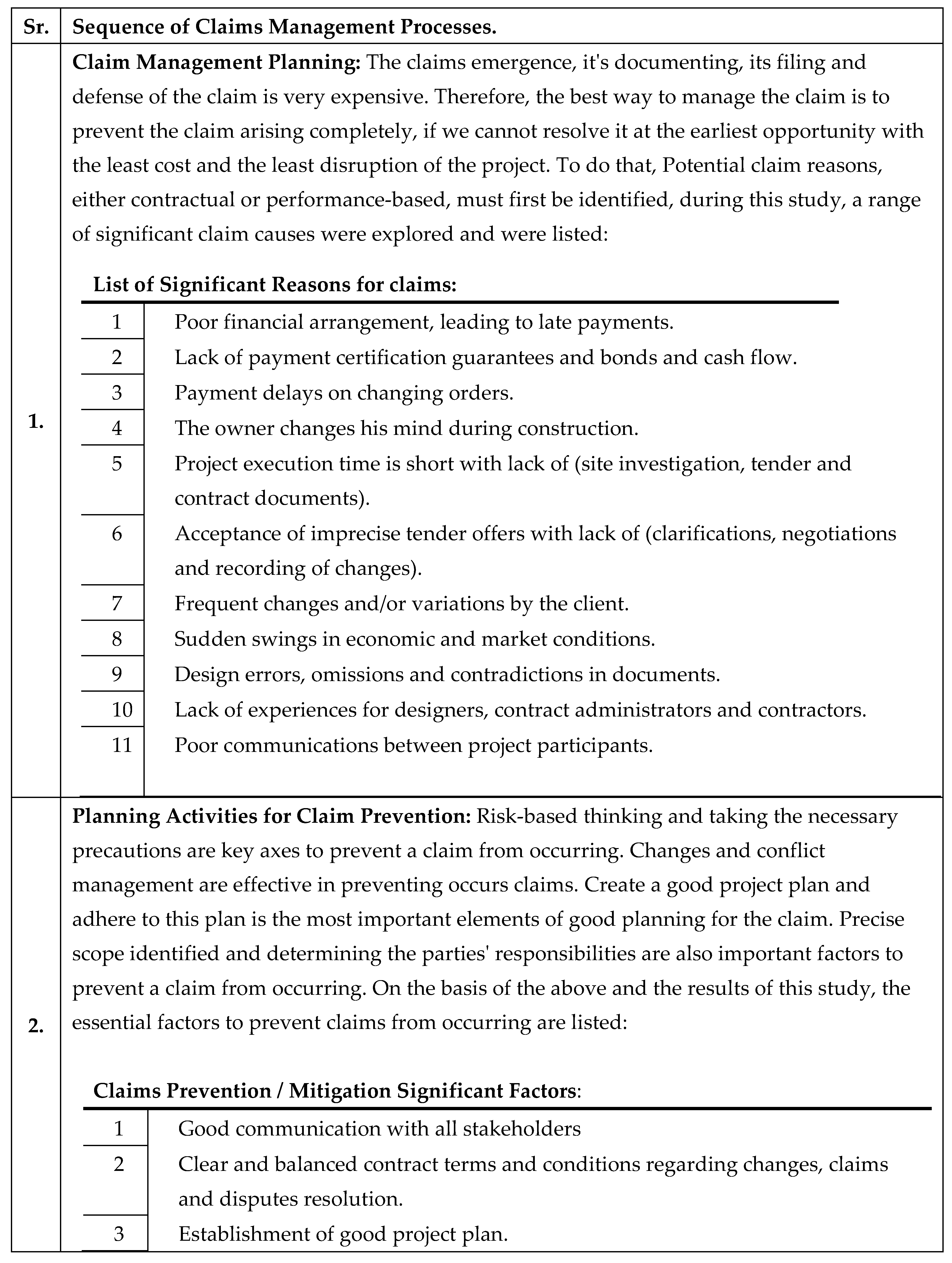
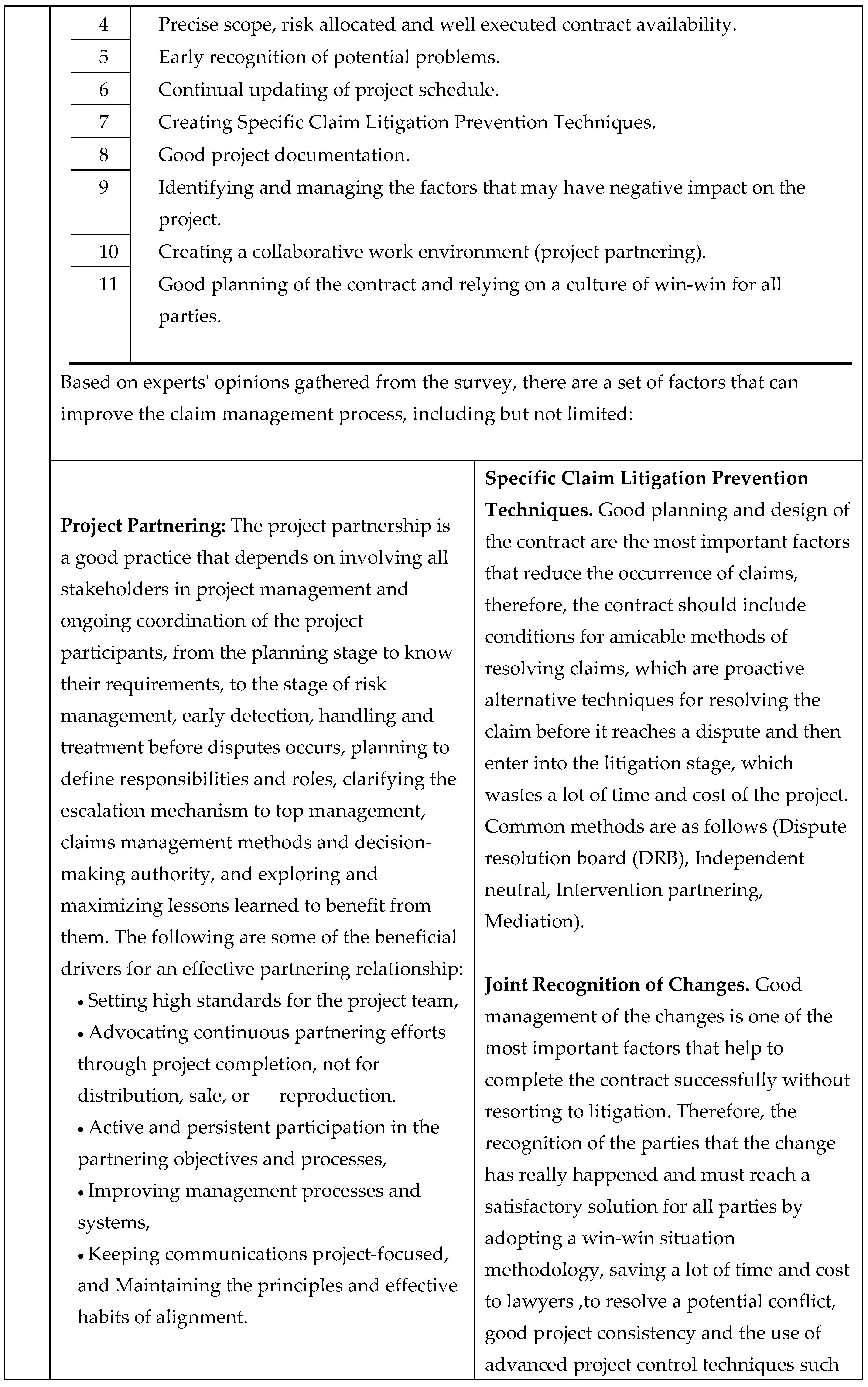
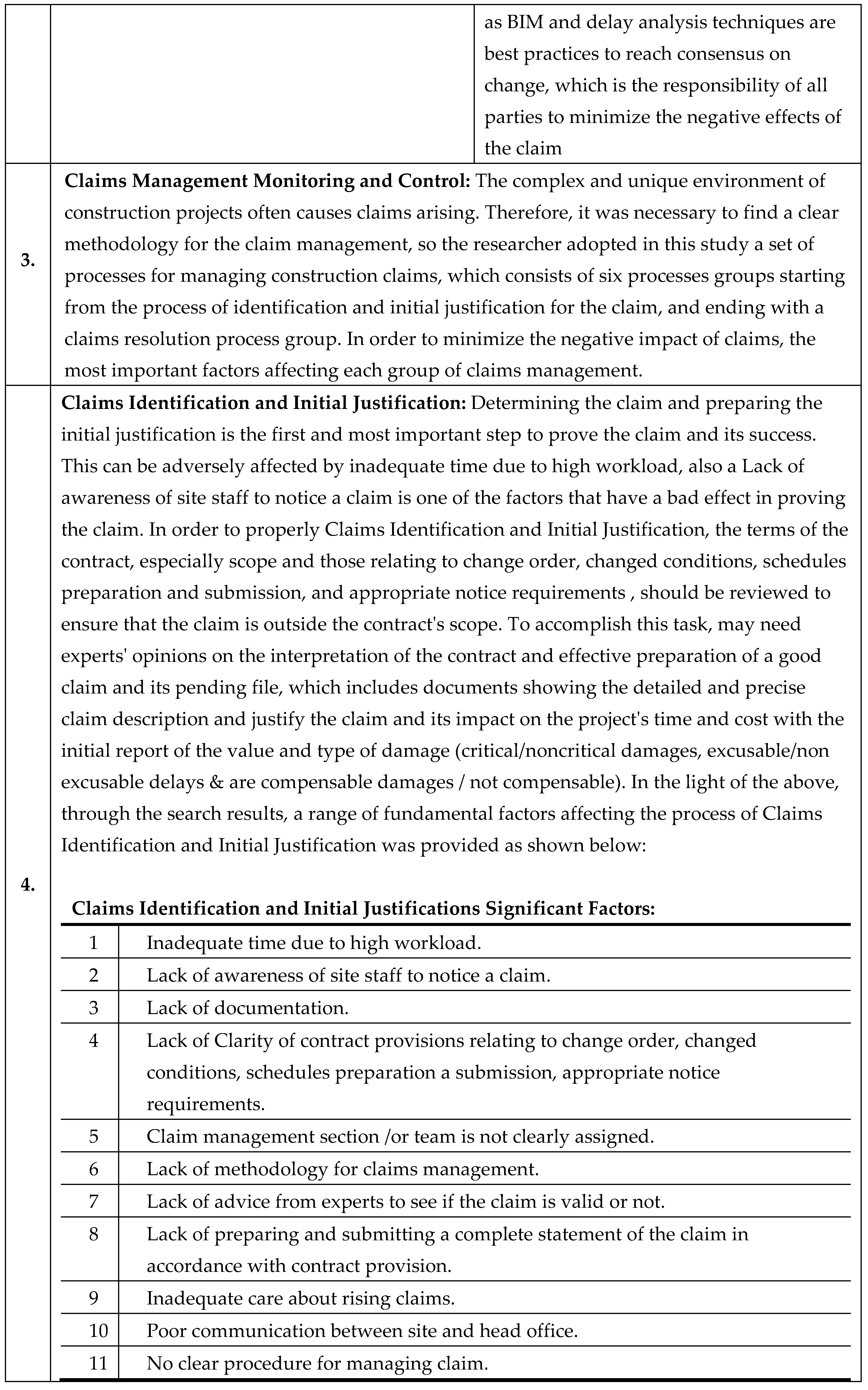
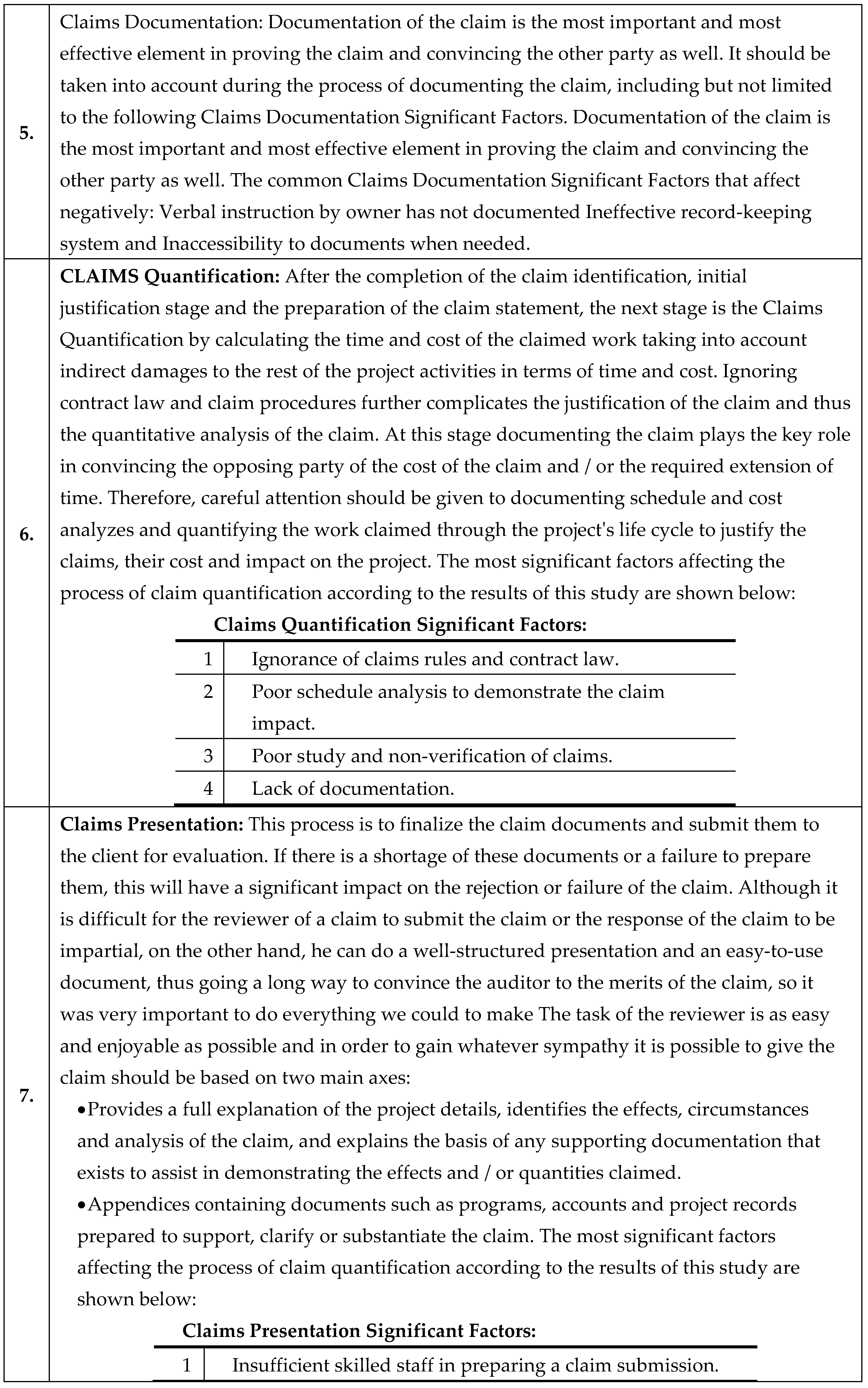
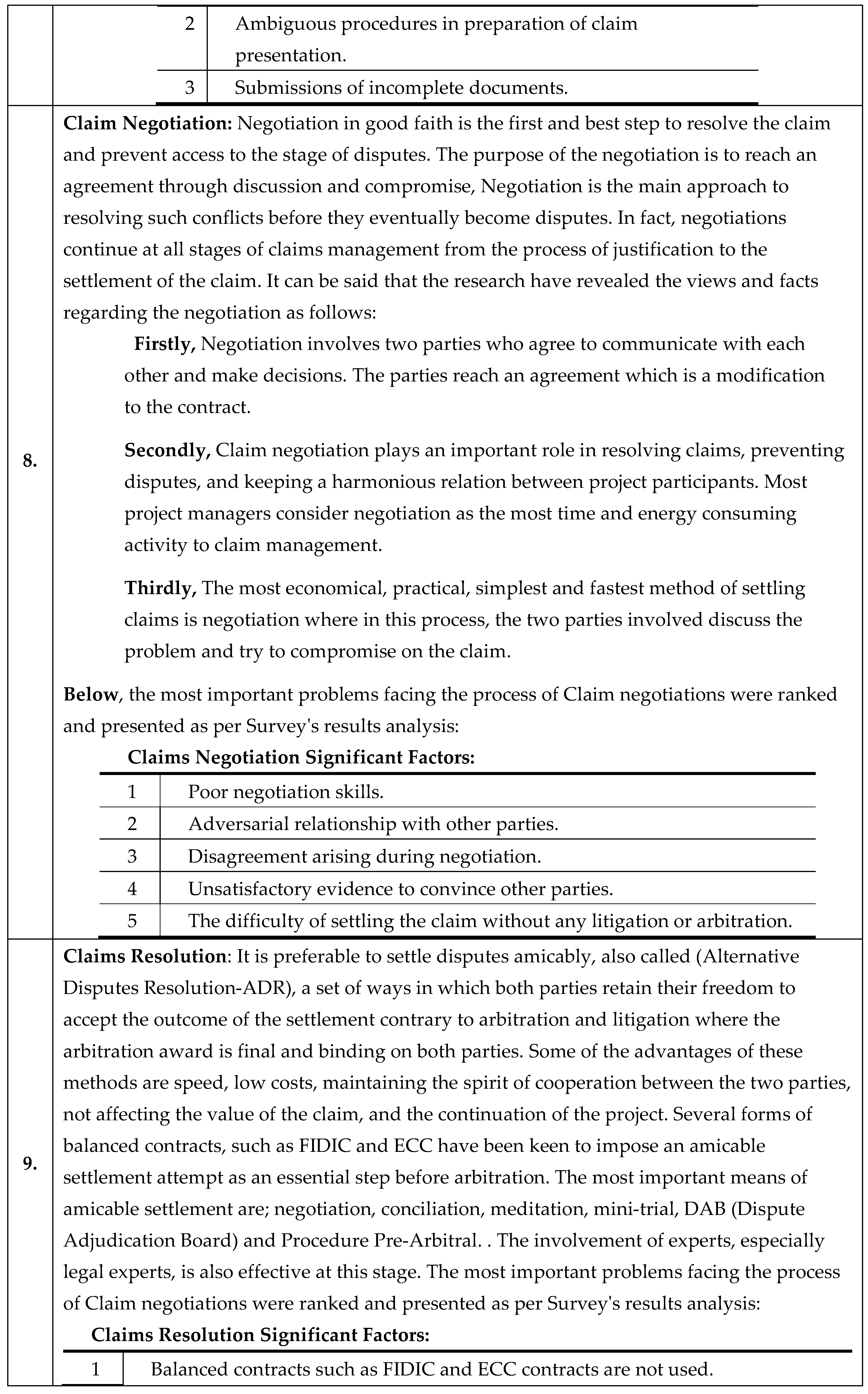
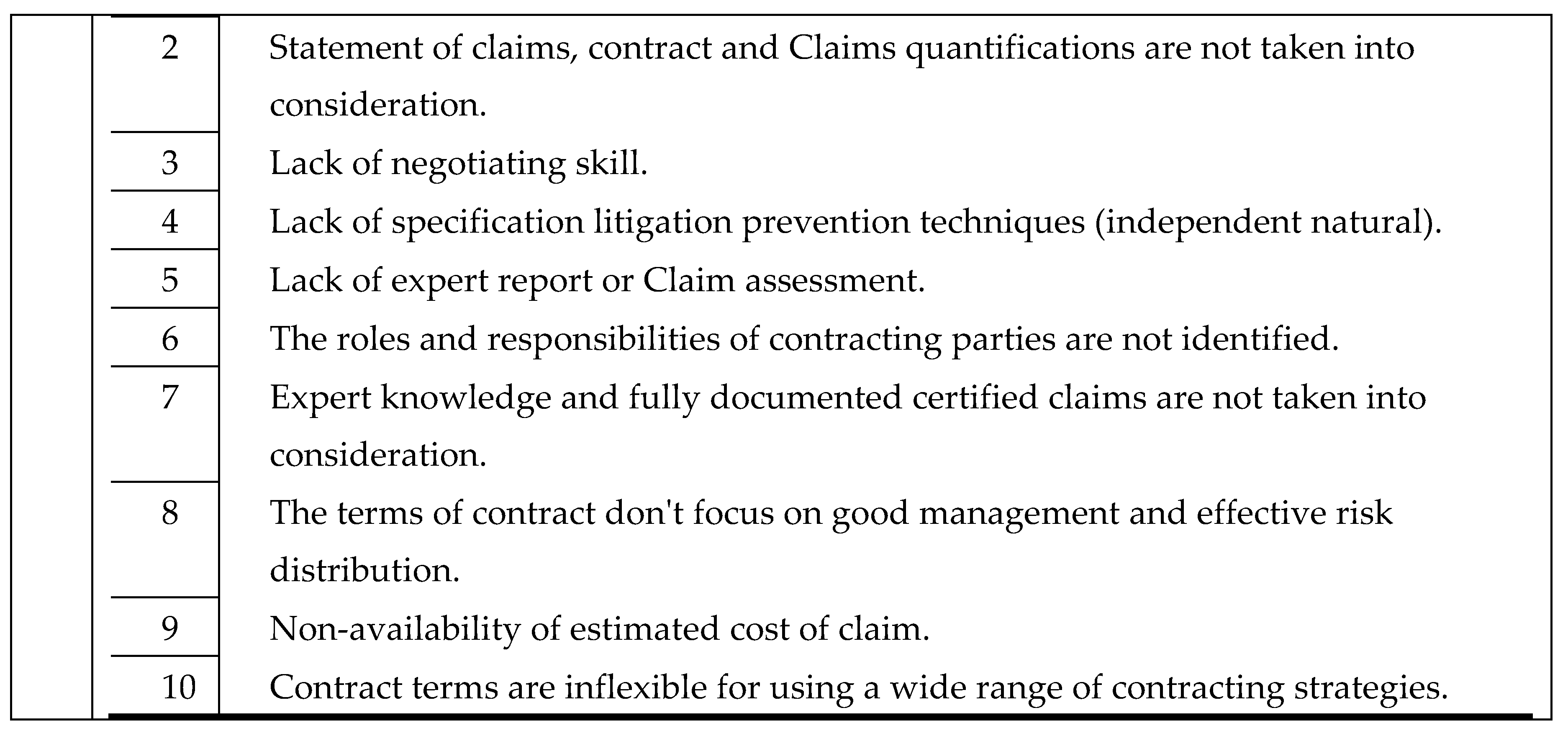
Disclaimer/Publisher’s Note: The statements, opinions and data contained in all publications are solely those of the individual author(s) and contributor(s) and not of MDPI and/or the editor(s). MDPI and/or the editor(s) disclaim responsibility for any injury to people or property resulting from any ideas, methods, instructions or products referred to in the content. |
© 2024 by the authors. Licensee MDPI, Basel, Switzerland. This article is an open access article distributed under the terms and conditions of the Creative Commons Attribution (CC BY) license (http://creativecommons.org/licenses/by/4.0/).
Copyright: This open access article is published under a Creative Commons CC BY 4.0 license, which permit the free download, distribution, and reuse, provided that the author and preprint are cited in any reuse.


