

Submitted:
18 April 2024
Posted:
19 April 2024
You are already at the latest version
Abstract
This study examines the optimization of ground source heat pump (GSHP) systems and energy piles for sustainable urban development, with a focus on Southeast Asia. GSHPs, which utilize geothermal energy for indoor HVAC needs, offer a sustainable alternative to traditional systems by utilizing consistent subsurface temperatures for heating and cooling. The study highlights the importance of understanding thermal movement within the soil, especially in soft marine clays prevalent in Southeast Asia, to improve GSHP system efficiency. Using a one-dimensional finite-difference model, the study examines the effects of soil thermal conductivity and density on system performance. The results show that GSHP systems, especially when integrated with energy piles, significantly reduce electricity consumption and greenhouse gas emissions, underscoring their potential to mitigate the urban heat island effect in densely populated areas. Despite challenges posed by the region's hot and humid climate, which could affect long-term effectiveness, the study highlights the need for further study, including field experiments and advanced modeling techniques, to optimize GSHP configurations and fully exploit geothermal energy in urban environments. The study's insights into soil thermal dynamics and system design optimization contribute to the advancement of sustainable urban infrastructure development.
Keywords:
energy pile
; finite difference method
; ground source heat pump system
; soil thermal conductivity
; sustainable urban development
; urban heat island effect
1. Introduction
In the construction of smart cities, the implementation of energy piles and the assessment of heat transfer within the ground are paramount for efficient and sustainable urban development. The use of shallow geothermal systems, also known as Ground Source Heat Pump (GSHP) system, utilizes the geothermal energy available beneath the surface to provide either heating or cooling resources. This technology meets the thermal requirements for indoor Heating, Ventilation and Air-Conditioning (HVAC) system as described by Sarbu and Sebarchievici [1]. GSHP systems can be configured in several forms, including the vertical GSHP integrated into the pile foundations-essential for energy piles in smart cities, the horizontal GSHP system, and the GSHP system that uses a reservoir for cooling. For smaller residential buildings, the closed-loop system is often recommended due to its ease of maintenance and operation, as shown in Figure 1. The shallow GSHP, defined in Eugster and Sanner [2] as operating at a depth of 3 to 100 m, uses the soil mass as a thermal reservoir. This approach provides a consistent temperature source throughout the year, in contrast to the variable air temperatures at the surface [3,4]. Shallow geothermal systems are primarily used for heating and cooling by exploiting subsurface temperatures below 25°C, making them suitable for small-scale and residential applications in various locations. Conversely, deep geothermal systems target temperatures above 25°C and can reach up to 200°C, serving different energy needs [2].
Especially in the integration of energy piles, the evaluation of thermal movement in the ground becomes crucial. This evaluation is essential for the effective operation of GSHP systems in cooling modes. The core architecture of the GSHP system consists of three essential elements: the heat source, the heat sink, and the heat exchanger. Specifically, the system's heat source is derived from the operation of the HVAC system that regulates the building's indoor environment. Conversely, the ground acts as a heat sink, absorbing excess heat. The central role of transferring heat from the source to the sink is played by the heat exchanger. The heat transfer fluid, typically a water-antifreeze solution, is circulated by a pump, facilitating heat transfer by both conduction and convection. Heat exchangers can be divided into two types: open-loop and closed-loop systems. The open-loop system uses groundwater drawn from wells for the cooling process and returns the heated water to the aquifer. In contrast, the closed-loop system uses a network of High-Density Poly-Ethylene (HDPE) pipes, either in series or parallel configuration, as shown in Figure 2 [5]. The most basic design within this system is the U-shaped exchanger, which is vertically embedded in boreholes or integrated into the building's foundation piles, providing a path for the circulating medium. To improve heat dissipation, various configurations are used, such as the double U-pipe in parallel or cross arrangement, or the spiral/coil structure, with the goal of maximizing the contact surface area for efficient heat exchange.
In the implementing energy piles, understanding and evaluating thermal movement in the ground is paramount. This understanding hinges on the concept of thermal conductivity, a material property that indicates how well heat can move through a substance. Clay soil, with thermal conductivity values ranging from approximately 1 to 2.5 W/(m·K), has a significantly higher capacity for heat transfer than air, which has a thermal conductivity of only 0.026 W/(m·K), demonstrating the superior efficiency of the ground in conducting heat by a factor of nearly 40 [6]. This characteristic underscores the environmental benefits of the GSHP system, which offers a significant reduction in electricity consumption and greenhouse gas emissions compared to traditional air source heat pump systems. The versatility of GSHPs makes them an optimal choice for a variety of settings, including residential, commercial, and industrial buildings, as highlighted by Tissen et al. [7]. Specifically, GSHP systems are distinguished by their quieter operation, longer lifespan, and lower maintenance requirements compared to their air-source counterparts. Although the initial investment for GSHP installations is generally higher than for air-source systems, the long-term energy savings achieved typically offset the upfront costs. Looking at the period from 1995 to 2020, there has been a remarkable increase in the adoption of ground source heat pumps, indicating a growing recognition of their benefits and efficiency [8]. According to the most recent data, the leading countries in terms of installed GSHP capacity include China, the United States, Sweden, Germany, and Finland, with capacities of 26450, 20230, 6680, 4400, and 2300 MWt, respectively [9]. This global trend underscores the growing appreciation of GSHP systems as a sustainable and efficient solution in the development of smart cities, and underscores the critical role of accurately assessing the potential of geothermal energy in urban planning and construction.
Focusing on the Southeast Asia region, an area that has recently begun to attract attention for its exploration of the implementation of GSHP systems, the effects of urbanization come to the fore. The region's rapid urban expansion, coupled with an influx of population into densely populated city centers, contributes to the urban heat island effect. This phenomenon results in urban areas experiencing significantly higher temperatures than their rural counterparts due to the heat-trapping properties of buildings, roads, and other infrastructure. Such conditions not only reduce the efficiency of conventional air-source HVAC systems, but also increase their energy consumption. Faced with these challenges, GSHP systems emerge as a potential solution to mitigate the adverse effects of urban heat islands. However, the tropical, consistently hot and humid climate of Southeast Asia presents a unique technical hurdle. The relatively low ground-to-air temperature differential characteristic of the region suggests that GSHPs would operate predominantly in cooling mode. As a result, the long-term effectiveness and efficiency of GSHP systems could be compromised as the ground temperature could eventually converge with the ambient air temperature, reducing the cooling potential of the system. Despite these challenges, the volume of field experiments and studies specific to GSHP performance in such climates remains limited. This gap underscores the need for comprehensive study to evaluate the viability and optimization of GSHP systems under tropical conditions. Such investigations are critical to developing strategies that effectively utilize GSHP technology, especially in high-density urban environments where the technology could significantly counteract the urban heat island effect and contribute to the sustainable development of smart cities in Southeast Asia.
Figure 3 [4] shows the geographical distribution of study on GSHP systems in the Southeast Asian region, showing a wide range of studies in Thailand [10,11,12,13,14], Indonesia [15], Malaysia [16], Singapore [17], and Vietnam. In particular, the study conducted in Kamphaeng Phet by Yasukawa et al. [14] is recognized as the first investigation of GSHP technology in the region, highlighting the potential benefits of such applications at the study site. These investigations were conducted primarily at sites underlain by soft marine clay deposits, with soil samples collected from depths ranging from 5 to 20 m below the surface. Table 1 shows that the clay samples have a similar specific gravity (Gs), liquid limit (LL), plastic limit (PL), and sand-silt-clay percentage content to Bangkok clay. As shown in Table 1 [18,19,20,21,22,23,24,25,26,27,28,29,30], a commonality among these samples is their classification as marine deposit clays. Such clays, formed by sedimentation processes in marine contexts such as deltaic and coastal plains, include notable varieties such as Ariake clay from Japan, Singapore marine clay, Hong Kong marine clay, Kuantan clay from Indonesia, and Ho Chi Minh City marine clay. The latter has significant engineering similarities to Bangkok's soft clay, characterized by high plasticity, low permeability, and significant compressibility. These soil characteristics pose significant challenges to construction efforts, particularly in urban areas where soil conditions play a critical role in ensuring the structural integrity of densely populated building projects. The inclusion of GSHP systems in such environments requires a thorough understanding of local geotechnical conditions to optimize design and functionality, underscoring the critical importance of evaluating thermal movement in the ground as part of smart city infrastructure development. The focus is on the use of energy piles and shallow GSHPs where soft marine clays are present. For example, one location that has started to gain attraction is around Bangkok, where the study of GSHP system implementation has started. If the result of the study in Bangkok is obtained, it can be used in other places with similar soil. The background temperature of the soil in the Bangkok area was studied in 2011 [13]. The temperature was obtained from 56 temperature-depth profiles throughout the central region of Thailand; the measurement is made every 2 m intervals with an accuracy of 0.01°C. The temperature at shallow depths from 0 to 50 m below the ground surface is in the range of 27°C to 30°C, which is on average 5°C lower than the monthly average maximum atmospheric temperature.
In 2020, a collaborative study effort between Japanese and Thai academics, highlighted by the work of Shimada et al. [12] was conducted at the facilities of Chulalongkorn University to conduct both experiments and simulations on an operational GSHP system. The investigation included a Thermal Response Test (TRT) to validate the simulation model within a pilot plant setup. This particular GSHP configuration included two boreholes 6 m apart, each 50 m deep and 0.23 m in diameter. The first borehole was equipped with two sets of U-tubes at depths of 10 and 15 m, connected in series, while the second borehole had U-tubes installed at the 50 m mark. Notably, this GSHP system was integrated into the air conditioning infrastructure of a compact building on the Bangkok campus known as "Parot Racha". The results of this study showed that the GSHP system was more efficient than traditional air-source heat pump systems, achieving a reduction in electricity consumption of approximately 30% until the heat pump inlet temperature reached 5°C above ambient. This result underscores the significant potential of GSHP technology to reduce long-term energy consumption in buildings, despite Bangkok's elevated daytime temperatures. Further advances in 2020 were documented by Jotisankasa et al. [11] who conducted a comprehensive energy pile study in a residential building. The study used a steel pipe pile 17.5 m long and 152 mm in diameter, equipped with a U-tube heat exchanger in a parallel configuration. The GSHP setup consisted of two distinct loops, labeled number 1 and number 2, with the former consisting of 6 interconnected piles and the latter consisting of 7. Preliminary evaluations of the GSHP efficiency, as measured by the thermal conductivity of the system, yielded values of 2.01 W/m·K for loop number 1 and 1.49 W/m·K for loop number 2. These evaluations were conducted with the piles positioned in the stiff clay layers of Bangkok, highlighting the significant impact of groundwater infiltration on the performance of the GSHP system. This study underscores the critical role of assessing the thermal dynamics within the soil for the effective implementation of GSHP technologies in smart city developments, particularly in energy pile designs.
Understanding the role of thermal movement in the soil is critical to building smart cities and integrating energy piles. Thermal conductivity, a determinant of how well heat moves through soil, varies among different soil types, even those with similar engineering properties. The main factors affecting thermal conductivity are moisture content and density. In Southeast Asia, natural soft clays at shallow depths are often completely saturated with water. High moisture content and saturation levels reduce the presence of air, which acts as an insulating layer in the voids between soil particles. In addition, the movement of water through these voids enhances heat convection, resulting in increased thermal conductivity. Similarly, the density of the soil plays an important role; denser soil allows for better contact between particles, which increases heat conduction and, consequently, thermal conductivity. The application of GSHP and energy pile technologies in Southeast Asia is still in its infancy, indicating a significant area for study and exploration. The specific effects of variations in the effective thermal conductivity of GSHP systems, as well as the thermal conductivity and density of soft clays, on temperature modulation and heat dissipation in the soil remain poorly understood. Thailand, which is at the forefront of GSHP study and has extensive data on the characteristics of Bangkok soft clay, provides an excellent opportunity for detailed case studies. Such study could provide valuable insights applicable to other Southeast Asian regions with similar geotechnical characteristics, thereby advancing GSHP feasibility studies, system designs, and performance evaluations. This effort is essential to realize the full potential of GSHP systems in supporting the sustainable infrastructure of smart cities.
This study explores the use of GSHP systems, with a focus on shallow geothermal systems for smart city development. GSHPs use the constant temperature below the earth's surface for heating or cooling, efficiently meeting indoor HVAC requirements. The study emphasizes the integration of energy piles - structures that both support buildings and function as part of a GSHP system - and highlights their potential in sustainable urban construction. By evaluating thermal movement within the soil, particularly in soft marine clays common in Southeast Asia, the study advances the understanding of how GSHP systems can be optimized for tropical climates where the urban heat island effect is a significant challenge. A notable aspect of this study is the use of a 1-dimensional finite difference model to predict the temperature distribution around energy piles over time, allowing for a simplified yet effective analysis. This approach facilitates the evaluation of the effect of soil thermal conductivity and density on GSHP system efficiency. The results indicate that soil density significantly affects system thermal performance, with denser soils improving thermal conductivity. By focusing on the practical application of GSHP systems in smart cities, especially in regions such as Bangkok with specific geotechnical challenges, this study provides valuable insights into the deployment of sustainable energy solutions. It highlights the need for further study to optimize GSHP configurations and operating parameters to fully realize the potential of geothermal energy in urban development. The study's implications for smart city construction include the reduction of electricity consumption, mitigation of greenhouse gas emissions, and improvement of HVAC system efficiency, demonstrating a promising path towards sustainable urban living environments.
2. Fundamental Theory of Heat Transfer in Soil Using Finite Difference Method
Typically, preliminary design heat transfer calculations from the energy foundation to the surrounding soil mass are evaluated based on the magnitude of temperature changes in the soil at various distances from the energy foundation. These calculations are critical for predicting the performance of ground source heat pump (GSHP) systems before the foundation design is finalized.
The analysis technique using Finite Difference Method (FDM) offers several advantages, including a relatively simple calculation procedure. It uses algebraic equations instead of the complex heat transfer differential equations typically used in other methods. In addition, this analysis can be performed using a simple spreadsheet, using a mathematical equation derived from a more complex differential equation that can be solved by entering certain parameters. Finite difference analysis allows the calculation of the time-dependent temperature evolution of the soil around the energy pile, with the scale of the time step adjustable to seconds, minutes, hours, or days, depending on the study requirements. Given the time constraints of this study, the finite difference method is identified as the most appropriate and direct approach.
In this study, the finite difference model of the energy piles is conceptualized as elongated cylindrical shapes within an infinite soil mass, simplifying the three-dimensional calculations to a one-dimensional analysis focused on radial temperature changes from the center of the energy pile outward. The general domain of the model is a vertical plane bisecting the energy pile, containing a heat exchanger that maintains a constant temperature, simulating the heating mode of the GSHP system. Heat transfer is radial, moving outward from the heat exchanger to the infinite ground mass. Before starting the calculations, it's necessary to define the reference domain of the model to outline all boundaries and define all required parameters and variables. Figure 4 illustrates the definition of a constant temperature boundary, also known as a "Dirichlet boundary," which assumes that the soil mass around the energy pile or GSHP system acts as a large, finite heat reservoir. The temperature along certain edges or surfaces of the model domain is fixed at a predetermined soil mass temperature, ignoring time-dependent temperature variations. This boundary condition ensures stability and accuracy of the calculations by preventing instability. The bottom and side boundaries of the soil mass domain (as shown in Figure 4, No. 1) are set to the natural background temperature of the soil type. Conversely, the surface of the energy piles (as shown in Figure 4, No. 2) represents the operating scenario of the GSHP by injecting a constant temperature similar to the temperature of the heat exchanger. The next step is to define the calculation node (as shown in Figure 4, No. 3) as a reference point within the domain, overlaying a grid array. The distance represents the spacing between nodes, with = 0 at the center of the energy pile. The time iterations, or time step , indicate the interval between calculation iterations, which is essential for analyzing the time-dependent changes of the soil temperature. Points , , , , and within the grid facilitate the process description.
The temperature rise () within any domain element can be calculated using the 1-dimensional transient heat balance differential equation, as shown in Eq. (1):
where is the thermal diffusivity, is the soil density, is the time, and is the radial distance.
Break down the finite differential equation Eq. (1) into Eqs. (2), (3), and (4) separately and solve for the explicit form of the functions individually, the named calculation nodes T1 to T5 referred to in Figure 4 are used to translate the differential term into a common algebraic equation.
By substituting Eqs. (2) to (3) into the heat balance equation, the final explicit solution for the temperature of point can be derived as given in Eq. (5):
where the required parameters for the calculation of the changing temperature based on Eq. (5) are the temperature of the surrounding points (, , and ), the radius of each node from the center line (), the changing radius (), the thermal diffusivity (), and the thermal time step ().
3. Finite Difference Modeling for Geothermal Temperatures in GSHP Systems
3.1. Methodology
When building smart cities, the integration of energy piles into the urban infrastructure and the evaluation of the resulting heat movement in the ground are of paramount importance. These considerations are critical for optimizing the efficiency and sustainability of GSHP systems, which play a significant role in the energy framework of smart cities. In this study, the predictive power of a one-dimensional FDM is used to estimate and project the soil temperatures around an energy pile over various distances and time periods. The input parameters, which include the detailed physical and thermal characteristics of the materials and soil, are carefully collected from an extensive literature review of GSHP systems in Southeast Asia, design manuals, and reputable textbooks [10,11,12,13,14,31]. The model formulation is further enhanced by in-depth study conducted at a physical GSHP test site and an energy pile installation at Kasetsart University, Thailand [11].
The focus of our analysis will primarily be placed on two critical parameters: the apparent thermal conductivity of the soil and its density. The model assumes that the thermal conductivity increases proportionally with the temperature increase of the heat exchanger connected to the GSHP system. Variations in soil density will reflect the different geographical locations in Southeast Asia where GSHP and energy pile systems could be deployed. This approach allows for a comprehensive examination of how soil density affects temperature rise, with further details on the different soil densities and their underlying rationale to be provided in a future section.
A distinctive feature of the finite difference model is its ability to distill complex real-world heat transfer processes into a manageable mathematical model. This simplification facilitates the analysis of the vertical heat exchanger integrated into the energy pile, underscoring the model's utility in advancing the development of smart city infrastructure.
3.2. Model Definition
As urban areas in Southeast Asian regions expand, there is an increase in the construction of small to medium sized buildings to meet the growing demand. These structures often require pile foundations to be installed in firmer soil layers to minimize settlement, especially in the soft clayey soil layer (see Table 1). The development of a 1-dimensional FDM model requires simplified inputs.
The concept of energy piles and their foundations as applied in FDM modeling is shown in Figure 5. The model assumes that the energy pile is located in a soft clay layer with an average thickness of 10 to 15 m below the ground surface. For the integration of a GSHP system into the pile, it is assumed that a suitable pile type is a spun pile with a diameter of 0.3 m and an opening width of 0.15 m along the depth of the pile. After installation of the GSHP system, the pile is filled with concrete. The length of the pile is determined to be 12 m, with a working depth of 10 m for the heat exchanger, taking into account the soil plug at the top of the pile. The U-tube heat exchanger, which is essential to the system, has a total length of 20 m, equally divided between the 10 m inlet for downward flow of the heat medium and the 10 m outlet for upward flow. Thermal input parameters for all components of the GSHP system and energy pile as referenced in American Society of Heating, Refrigerating and Air-Conditioning Engineers (ASHRAE) [32] and the Analysis and Design of Energy Geostructures [6], are provided in Table 2 for use in the numerical model.
3.3. Constant-Temperature Boundary Condition
To simulate the initial operating condition of the energy pile system, the temperature of a 20 m long heat exchanger is set as a constant temperature boundary within the analysis spreadsheet. This approach simplifies the model by ignoring the radial heat convection within the heat exchanger and the fluid medium it contains. It is important to consider the different heat contributions of the medium flowing downward through the 10 m long inlet and upward through the 10 m long outlet of the heat exchanger and treat them as independent heat sources.
Studies [10,11,14,31] have monitored the average temperatures at the inlet and outlet of the heat exchanger, showing that the inlet water temperature is 37°C, while the outlet water temperature is measured at 33°C. Direct interpolation is used to calculate the temperature at each meter along the heat exchanger, which indicates a decrease of 0.2°C/m along its length, as shown in Table 3. The operation of the GSHP is often tied to the demand of the building's air conditioning system, which requires 12 hours of operation to maintain a constant temperature range of 33 to 37°C, depending on the depth of the heat exchanger. This is followed by a 12-hour shutdown of the GSHP system during which the temperature at the constant temperature boundary is adjusted to match the ambient ground temperature.
Studies conducted in the Bangkok area [10,11,12], using Thermal Response Tests (TRT) or operational GSHP air conditioning systems, have found that the background temperature of the Bangkok clay varies between 29°C and 31°C during different seasons. On average, this is 5°C cooler than the ambient air temperature [13]. For the FDM temperature boundary calculations, the background temperature of Bangkok clay is set to 29°C.
To help understand the concept of a constant temperature boundary, Figure 6 illustrates the asymmetric temperature bulb surrounding the energy pile in the soil. This is based on direct interpolation of the constant temperature boundary one year after the simulation, using a Finite Element Model (FEM) through PLAXIS software [33,34], within a 3 m radius of the pile centers.
3.4. Variable Thermal Conductivities and Soil Densities
The thermal conductivity of the GSHP system, which is integral to the performance of energy piles, is affected by various physical factors of the system components. These include the mineralogy, dry density, water content, and gradation of the soil materials as identified in studies [35,36]. Experimental evidence from lateritic clay samples [37] indicates that thermal conductivity values for samples from the Guilin and Liuzhou areas in the Guangxi region of China are temperature dependent. In laboratory tests at temperatures ranging from 5 to 90°C, clay samples at saturation levels of 4%, 44.90%, and 83.90% exhibited a linear increase in thermal conductivity, with values ranging from 0.2 to 0.4 W/m°C, 0.6 to 1.6 W/m°C, and 0.9 to 1.3 W/m°C, respectively, as shown in Figure 7.
Assuming a linear relationship between temperature and thermal conductivity for clay samples, this relationship is applied in the FDM model. The thermal conductivity of soft clay from different locations is expressed as a linear function of the average inlet-outlet temperature of the GSHP system. Bangkok soft clay, which has been extensively studied, serves as a representative of other soft clays. Its thermal and engineering properties are similar to those of other East Asian soft marine clays, such as Ariake clay, Singapore marine clay, Hong Kong marine clay, Kuantan clay, and Ho Chi Minh City marine clay, and may provide insight into the thermal performance of similar soil types. Formed during the Holocene by sediments from the Chao Phraya River delta, Bangkok clay is characterized by high moisture content, low strength, and high compressibility, which pose geotechnical challenges. Notable studies include those by Abuel-Naga et al. [26,27], who used temperature-controlled triaxial equipment at 20°C to 90°C under undrained conditions and found thermal conductivities of 0.825, 1.1, and 1.3 W/m°C. Jotisankasa et al. [11], who implemented a full-scale energy pile system in a residential setting, found thermal conductivities for steel and spun piles of 1.49, 2.01, and 3.3 W/m°C. Another study in Hanoi, Vietnam [38] recorded heat exchanger temperatures ranging from 37°C to 40°C with resulting thermal conductivities of 1.82 and 1.97 W/m°C.
The study derives variable thermal conductivities for the GSHP system from these results, which are summarized in Table 4, which provides the data for constructing four variable thermal conductivity equations. These linear equations correlate the temperature of the heat exchanger to its thermal conductivity, with Cases no. 2 and no. 4 based on Jotisankasa et al. [11] and Widiatmojo et al. [38], and Cases no. 1 and no. 3 offering adjusted slopes to provide intermediate ranges of thermal conductivity for the model. For clarity, all four thermal conductivity equations are shown in Figure 8, starting at a temperature of 32°C and an initial thermal conductivity of 1.49 W/m°C. The upper limit of the average temperature of the heat exchanger will not exceed 40°C, according to reviews of in-situ GSHP experiments.
The variation of soil density is another key variable that correlates with the geolocation of the GSHP system. This study considers the density of soft clays varying from 1400 kg/m³ (representing Singapore marine clay and Ariake clay), 1600 kg/m³ (Bangkok clay), to 1800 kg/m³ (Hong Kong clay). Additional variables and their effect on system performance are detailed in Table 5.
4. Results and Discussion
4.1. Evaluation of Temperature Distribution around Energy Piles
The operation of GSHP and energy piles is crucial for the efficient performance of Smart Cities, with typical operating times of up to 12 hours per day. This study meticulously examines the temperature dynamics surrounding the soil adjacent to energy piles, using a detailed temporal analysis ranging from short-term (initial 7 days) to long-term (annual overview) perspectives.
During the first week of observation, temperature variations around the energy pile exhibit a cyclical pattern reminiscent of a sine wave, as shown in Figure 9. This cycle is attributed to the alternating operating phases of the GSHP system. Despite the cyclic nature, a gradual upward trend in temperature is observed, indicating an accumulation of heat within the soil mass over time. This phenomenon is primarily governed by the mechanisms of heat conduction and convection, which become more pronounced with increasing distance from the core of the energy pile. Specifically, at distances of 0.15 m, 0.30 m, 0.45 m, and 0.60 m from the pile center, the temperature variations progressively decrease, indicating a decrease in the thermal gradient due to the operating cycles of the energy pile. For example, at a distance of 0.15 m, the temperature variations range from 31.25°C to 30.25°C, showing a variation of 1°C. This variation narrows significantly at distances of 0.3 m (0.25°C fluctuation) and 0.45 m (0.17°C fluctuation), illustrating thermal diffusion and distribution patterns within the soil.
In contrast, the annual perspective shows a relatively stable temperature distribution with negligible long-term increases. At the end of the year, the maximum recorded soil temperature near the energy pile (at a radius of 0.15 m) stabilizes around 31.5°C, as shown in Figure 10. This stability underscores the equilibrium achieved between the heat input from the GSHP system and the natural heat dissipation mechanisms within the soil over an extended period of time.
Figure 11 further elaborates on the temperature dynamics by comparing the effects of alternating 12-hour operating cycles of the GSHP system over one month and one year. Within a radius of 1 m from the center of the pile, temperatures are observed to range from 29.5 to 32°C, with a wider dispersion observed within a radius of 1 to 2 m, where temperatures range from 29.0 to 30°C. These observations suggest that the effects of thermal consolidation, both primary and secondary, have minimal influence on soil volume change within the temperature range studied (25 to 90°C), referencing the work of Abuel-Naga et al. [26,27] on thermally induced volume change in soft Bangkok clay.
The methodological framework of this study employs the FDM, recognizing its inherent limitations, particularly in the spatial resolution of the temperature nodes, which are placed at 0.15 m intervals from the pile centerline. This limitation ensures model accuracy, but limits the granularity of the temperature distribution analysis. The study contrasts the results of the finite difference method with potentially more accurate modeling techniques, such as the FEM, to highlight areas for future study improvements. Specifically, the study highlights the potential benefits of including heat energy as a boundary condition within FEM analyses to capture a more accurate and realistic representation of GSHP system operation.
In addition, this study identifies a significant data gap regarding the temperature-dependent thermal conductivity of clayey soils, particularly for Bangkok clay, which is critical for refining the accuracy of temperature distribution models around energy piles. Future study directions include conducting laboratory experiments to determine specific thermal conductivity values for Bangkok clay and other similar soils to improve the predictability and reliability of temperature distribution models in the context of smart city infrastructure development.
4.2. Evaluation of Thermal Conductivity Variations on Temperature Distribution
Exploring the role of thermal conductivity variations within different time frames, 1 month, 3 months, and 1 year provides crucial insights into the thermal dynamics around energy piles, which are an integral part of smart city infrastructures. The meticulously detailed analysis, summarized in Figure 12, provides a clear visualization of the temperature profiles around energy piles, meticulously examining the potential shifts in temperature distribution attributable to changes in the thermal conductivity of the surrounding soil medium. This analysis is critical because thermal conductivity is a fundamental property that affects the efficiency of heat transfer within the soil. It directly affects the operational effectiveness of GSHP systems and energy piles, which are critical components in the sustainable energy framework of smart cities. Therefore, understanding the sensitivity of temperature distribution to variations in thermal conductivity is essential for predicting the long-term performance of these systems.
The results of the study are quite revealing, indicating that within the observed range of thermal conductivity variations, there is a remarkable stability in the temperature distribution around the energy piles over the time periods studied. This observation suggests that the thermal behavior of the system exhibits a degree of resilience to changes in soil thermal conductivity. This resilience is particularly noteworthy in the context of smart city planning and development, where energy efficiency and sustainability are paramount. Such stability in temperature distribution, despite variations in thermal conductivity, underscores a critical aspect of the thermal dynamics involved in the operation of energy piles. It suggests that the design of these systems can afford a degree of flexibility with respect to the thermal properties of the soil. This finding is invaluable to engineers and urban planners, as it implies that minor variations in soil thermal conductivity may not require adjustments to the design or operation of GSHP systems.
However, it is important to contextualize these findings within the limitations of the study. The analysis, while comprehensive, is based on the range of thermal conductivity variations observed within the scope of the study. This range is inherently related to the specific soil types, moisture content, and other environmental conditions pertinent to the study area. Consequently, extending these findings to other regions or soil conditions requires careful consideration of local soil properties and environmental factors. Furthermore, the implications of this stability go beyond the immediate operational considerations of energy piles. They touch on broader issues of sustainability and resilience in urban planning. In a world where climate variability and environmental change are of increasing concern, the ability to design energy systems that are robust to changes in underlying environmental characteristics is invaluable. The findings of this study contribute to a growing body of knowledge that supports the development of more sustainable and resilient urban environments.
4.3. Impact of Clay Density Variation on Temperature Predictions
This study explores the intricate dynamics of soil density variation and its subsequent impact on the thermal behavior around energy piles, a key component in the thermal management systems of smart cities. Using FDMs, this study categorizes soft clay into three distinct density types: Singapore marine clay and Ariake clay with a density of 1400 kg/m3, soft Bangkok clay with a density of 1600 kg/m3, and Hong Kong clay with a density of 2200 kg/m3, as contextually implied in subsequent discussions. These categorizations are critical to understanding the nuanced impact of soil density on the thermal properties and temperature regulation capabilities of the soil surrounding energy piles. Figure 13 provides a visual representation of how variations in soil density affect temperature predictions over a one-year observation period. Notably, the graph illustrates a convergence of temperature differences over time, suggesting a diminishing effect of density variations on temperature fluctuations with long-term system operation. This phenomenon underscores the complex interplay between soil physical properties and thermal dynamics, and highlights the critical role of soil density in determining the thermal efficiency of subsurface energy systems.
Further analysis, as shown in Figure 14, Figure 15 and Figure 16, systematically evaluates the temperature response to increasing soil density at different radial distances from the energy pile (0.3 m, 0.6 m, and 1.0 m) and over different time periods (3 months, 6 months, and 1 year). This multidimensional analysis reveals a consistent trend: as soil density increases from 1400 to 1800 kg/m3, a 28.57% increase, the resulting effect on soil temperature shows a decreasing trajectory. Specifically, temperature decreases of 0.02°C, 0.01°C, and 0.0025°C are observed with each density increase over the specified time periods. This trend is further quantified by noting that for every 10% increase in soil density, there is a corresponding average temperature decrease of 0.007°C at a 0.3 m radius from the energy pile. The granularity of this analysis is further expanded in Figure 14, Figure 15 and Figure 16, where the temperature effects of increased soil density are assessed at radial distances of 0.6 m and 1 m from the energy pile. These results provide a nuanced understanding of the thermal dynamics of the soil, revealing a proportional relationship between soil density and temperature modulation. For example, at a 0.6 m radius, each 10% increase in soil density correlates with an average temperature decrease of 0.003°C, while at a 1 m radius, the average temperature decrease is 0.0009°C for the same density increase.
This comprehensive study of the effects of soil density on the thermal behavior around energy piles provides valuable insights for the design and operation of geothermal systems in smart cities. It highlights the importance of soil physical properties, particularly density, in influencing thermal interactions within the soil mass, which in turn affects the efficiency and sustainability of energy pile systems. The results suggest that careful consideration of soil density can improve the predictive accuracy of thermal models, thereby facilitating optimized design strategies for subsurface energy solutions. In addition, the results of the study underscore the importance of incorporating detailed soil property analyses into the planning and implementation phases of geothermal projects. Understanding the specific effects of soil density variations on temperature regulation can lead to more effective thermal management practices, contributing to the overall resilience and sustainability of urban infrastructure. This study not only advances the scientific understanding of soil-thermal interactions, but also provides a pragmatic guide for engineers and urban planners seeking to integrate efficient geothermal technologies into the fabric of smart cities.
5. Conclusions
The study on the use of GSHP systems and energy piles in smart city development has yielded several important findings:
- (1)
- GSHP systems, especially when integrated with energy piles, have proven to be efficient and sustainable solutions for heating and cooling in urban environments, significantly reducing electricity consumption and greenhouse gas emissions.
- (2)
- The study emphasized the critical role of understanding thermal movement within the soil, particularly in soft marine clays common in Southeast Asia, for optimal implementation of GSHP systems. Soil thermal conductivity and density were identified as key factors affecting system performance.
- (3)
- Using a finite difference method (FDM), the study successfully modeled temperature distribution around energy piles and evaluated the impact of variations in soil thermal conductivity and density on system efficiency.
- (4)
- GSHP systems offer a promising solution to mitigate the urban heat island effect, especially in densely populated areas where conventional HVAC systems are less efficient.
Based on the results of this study, several avenues for future study were identified:
- (1)
- While FDM provided valuable insights, future studies could explore more sophisticated modeling techniques, such as Finite Element Method (FEM), to achieve greater accuracy in predicting ground temperature distribution and system performance.
- (2)
- Additional study is needed to determine the temperature-dependent thermal conductivity of different types of clayey soils, particularly Bangkok clay, to refine the accuracy of temperature distribution models around energy piles.
- (3)
- Investigating the effects of rapid urbanization and the subsequent increase in the urban heat island effect on the efficiency of GSHP systems could provide valuable insights for urban planning and smart city development.
- (4)
- Future work should focus on optimizing GSHP system configurations and operating parameters to maximize the use of geothermal energy in urban development.
- (5)
- Further studies could explore the integration of GSHP systems within the broader context of sustainable and resilient urban infrastructure, taking into account climate variability and environmental change.
This study contributes significantly to the growing body of knowledge on sustainable urban development and highlights the potential of GSHP systems and energy piles in smart cities. By addressing the outlined future study directions, the full potential of geothermal energy in urban environments can be realized, supporting the transition to more sustainable and energy efficient urban habitats.
Author Contributions
Conceptualization, S.I. and A.J.; methodology, A.J.; software, T.C. and S.C.; validation, A.J. and S.I.; formal analysis, T.C. and S.C.; investigation, T.C. and S.C.; resources, A.J. and S.I.; data curation, T.C. and A.J.; writing—original draft preparation, T.C.; writing—review and editing, S.I.; visualization, S.I.; supervision, A.J., S.C. and S.I.; project administration, S.I.; funding acquisition, S.I. All authors have read and agreed to the published version of the manuscript.
Funding
This research received no external funding.
Data Availability Statement
The data that support the findings of this study are available from the corresponding author, Shinya Inazumi, upon reasonable request.
Conflicts of Interest
The authors declare no conflicts of interest.
References
- Sarbu, I.; Sebarchievici, C. General review of ground-source heat pump systems for heating and cooling of buildings. Energy and Buildings 2014, 70, 441-454. [CrossRef]
- Eugster, W.; Sanner, B. Technological status of shallow geothermal energy in Europe. Proceedings European Geothermal Congress 2007 Unterhaching, Germany, 30 May-1 June 2007, 1-8.
- Liu, C.; Shi, B.; Tang, C.; Gao, L. A numerical and field investigation of underground temperatures under Urban Heat Island. Building and Environment 2011, 46(5), 1205-1210. [CrossRef]
- Ratchawang, S.; Chotpantarat, S.; Chokchai, S.; Takashima, I.; Uchida, Y.; Charusiri, P. A Review of Ground Source Heat Pump Application for Space Cooling in Southeast Asia. Energies 2022, 15(14), 4992. [CrossRef]
- Fadejev, J.; Simson, R.; Kurnitski, J.; Haghighat, F. A review on energy piles design, sizing and modelling. Energy, 2017, 122, 390-407. [CrossRef]
- Laloui, L,; Loria A.F.R. Analysis and Design of Energy Geostructures: Theoretical Essentials and Practical Application 2019. Academic Press.
- Tissen, C.; Menberg, K.; Bayer, P.; Blum, P. Meeting the demand: geothermal heat supply rates for an urban quarter in Germany. Geothermal Energy 2019, 7(9). [CrossRef]
- Lund, J.W.; Toth, A.N. Direct utilization of geothermal energy 2020 worldwide review. Geothermics 2021, 90, 101915. [CrossRef]
- Ratchawang, S.; Chotpantarat, S.; Chokchai, S.; Takashima, I.; Uchida, Y.; Charusiri, P. A review of ground source heat pump application for space cooling in Southeast Asia. Energies 2022, 15(14), 4992. [CrossRef]
- Chokchai, S.; Chotpantarat, S.; Takashima, I.; Uchida, Y.; Widiatmojo, A.; Yasukawa, K.; Charusiri, P. A pilot study on geothermal heat pump (GHP) use for cooling operations, and on ghp site selection in tropical regions based on a case study in Thailand. Energies 2018, 11(9), 2356. [CrossRef]
- Jotisankasa, A.; Chantawarangul, K.; Sittidumrong, J.; Thangkhumwong, K.; Aowphitak, P.; Laohasrisakul, P.; Chanchayanon, T.; Aonkam, S.; Satayanan, S. Investigation of the feasibility of energy piles in Bangkok and their impacts on pile behavior. Proceedings of the 2nd International Conference on Energy Geotechnics 2020, 205, 05018. [CrossRef]
- Shimada, Y.; Uchida, Y.; Takashima, I.; Chotpantarat, S.; Widiatmojo, A.; Chokchai, S.; Charusiri, P.; Kurishima, H.; Tokimatsu, K. A study on the operational condition of a ground source heat pump in Bangkok based on a field experiment and simulation. Energies 2020, 13(1), 274. [CrossRef]
- Uchida, Y.; Yasukawa, K.; Tenma, N.; Taguchi, Y.; Ishii, T.; Suwanlert, J.; Lorphensri, O. Subsurface temperature survey in Thailand for geothermal heat pump application. Journal of the Geothermal Research Society of Japan 2011, 33(2), 93-98. [CrossRef]
- Yasukawa, K.; Takashima, I.; Uchida, Y.; Tenma, N.; Lorphensri, O. Geothermal heat pump for space cooling in Kamphaengphet, Thailand. Bulletin of the Geological Survey of Japan 2009, 60(0/10), 491-501. [CrossRef]
- Jalaluddin, Miyara, A.; Tarakka, R.; Mochtar, A. A.; and Muhammad Anis, I. R. Thermal performance of shallow spiral-tube ground heat exchanger for ground-source cooling system. IOP Conference Series: Materials Science and Engineering 2019, 619(1). [CrossRef]
- Roy, D.; Chakraborty, T.; Basu, D.; Bhattacharjee, B. Feasibility and performance of ground source heat pump systems for commercial applications in tropical and subtropical climates. Renewable Energy 2020, 152, 467-483. [CrossRef]
- Liu, Y.; Qin, X. S.; and Chiew, Y. M. Investigation on potential applicability of subsurface cooling in Singapore. Applied Energy 2013, 103, 197-206. [CrossRef]
- Hanzawa, H.; Fukaya, T.; Suzuki, K. Evaluation of engineering properties for an Ariake clay. Soils and Foundations 1990, 30(4), 11-24. [CrossRef]
- Moqsud, M. A.; Hayashi, S.; Du, Y. J.; and Suetsugu, D. Assessment of thermal properties of mud of the Ariake sea, Japan. Daffodil International University Journal of Science and Technology 2007, 2, 1.
- Tanaka, H.; Locat, J.; Shibuya, S.; Soon, T.T.; Shiwakoti, D.R. Characterization of Singapore, Bangkok, and Ariake clays. Canadian Geotechnical Journal 2001, 38(2). [CrossRef]
- Arulrajah, A.; Bo, M.W. Characteristics of Singapore marine clay at Changi. Geotechnical and Geological Engineering 2008, 26(4), 431-441. [CrossRef]
- Bo, M.W.; Arulrajah, A.; Sukmak, P.; Horpibulsuk, S. Mineralogy and geotechnical properties of Singapore marine clay at Changi. Soils and Foundations 2015, 55(3), 600-613. [CrossRef]
- Song, X.; Du, G.; Wang, Z.; Wang, Z.; Zhu, M.; Bai, W.; Xie, S.; Xia, K.; Zheng, G.; Cheng, X.; Zhen, J.; Feng, L.; Wang, F. Study on engineering properties of deep marine soft clay in Guangdong-Hong Kong-Macao greater bay area. Journal of Physics: Conference Series 2021, 2021(1). [CrossRef]
- Fauzi, A.; Fauzi, U.J.; Nazmi, W.M. Engineering quality improvement of Kuantan clay subgrade using recycling and reused materials as stabilizer. Procedia Engineering 2013, 54, 675-689. [CrossRef]
- Korshunov, A.A.; Churkin, S.V.; Nevzorov, A.L. Calibration of PLAXIS frozen/unfrozen soil model according to results of laboratory tests and in-situ monitoring. Transportation Soil Engineering in Cold Regions 2020, 2, 105-120. [CrossRef]
- Abuel-Naga, H.M.; Bergado, D.T.; Bouazza, A. Thermally induced volume change and excess pore water pressure of soft Bangkok clay. Engineering Geology 2007, 89(1–2), 144-154. [CrossRef]
- Abuel-Naga, H.M.; Bergado, D.T.; Bouazza, A. Thermal conductivity of soft Bangkok clay. Proceedings of the GeoCongress 2008: Characterization, Monitoring, and Modeling of GeoSystems 2008, 1061-1068. [CrossRef]
- Horpibulsuk, S.; Shibuya, S.; Fuenkajorn, K.; Katkan, W. Assessment of engineering properties of Bangkok clay. Canadian Geotechnical Journal 2007, 44(2), 173-187. [CrossRef]
- Mairaing, W.; Amonkul, C. Soft Bangkok Clay Zoning. EIT-Japan Symposium on Engineering for Geo-Hazards : Earthquakes and Landslides-Surface and Subsurface Structures 2010, 1-10.
- Shibuya, S.; Tamrakar, S.B.; Theramas, N. Geotechnical site characterization on engineering properties of Bangkok clay. Journai of the Southeast Asian Geotechmcal Society 2001, 139-147.
- Sittidumrong, J.; Jotisankasa, A.; Chantawarangul, K. Effect of thermal cycles on volumetric behaviour of Bangkok sand. Geomechanics for Energy and the Environment 2019, 20, 100127. [CrossRef]
- American Society of Heating, Refrigerating and Air-Conditioning Engineers (ASHRAE). ASHRAE Handbook - Fundamentals. ASHRAE 2009, Atlanta.
- Korshunov, A.A.; Churkin, S.V.; Nevzorov, A.L. Calibration of PLAXIS frozen/unfrozen soil model according to results of laboratory tests and in-situ monitoring. Transportation Soil Engineering in Cold Regions 2020, 2, 105-120. [CrossRef]
- Allani, M.; Lysebetten, G.V.; Huybrechts, N. Experimental and numerical study of the thermo-mechanical behaviour of energy piles for Belgian practice. Advances in Laboratory Testing and Modelling of Soils and Shales (ATMSS) 2017, 405-412. [CrossRef]
- Alrtimi, A.; Rouainia, M.; Haigh, S. Thermal conductivity of a sandy soil. Applied Thermal Engineering 2016, 106, 551–560. [CrossRef]
- Khan, M.I. Factors affecting the thermal properties of concrete and applicability of its prediction models. Building and Environment 2002, 37(6), 607-614. [CrossRef]
- Xu, Y.; Sun, D.; Zeng, Z.; Lv, H. Effect of temperature on thermal conductivity of lateritic clays over a wide temperature range. International Journal of Heat and Mass Transfer 2019, 138, 562-570. [CrossRef]
- Widiatmojo, A.; Uchida, Y.; Fujii, H.; Kosukegawa, H.; Takashima, I.; Shimada, Y.; Chotpantarat, S.; Charusiri, P.; Tran, T.T. Numerical simulations on potential application of ground source heat pumps with vertical ground heat exchangers in Bangkok and Hanoi. Energy Reports 2021, 7, 6932-6944. [CrossRef]
Figure 1.
General overview of shallow ground source heat pump (GSHP) installations.
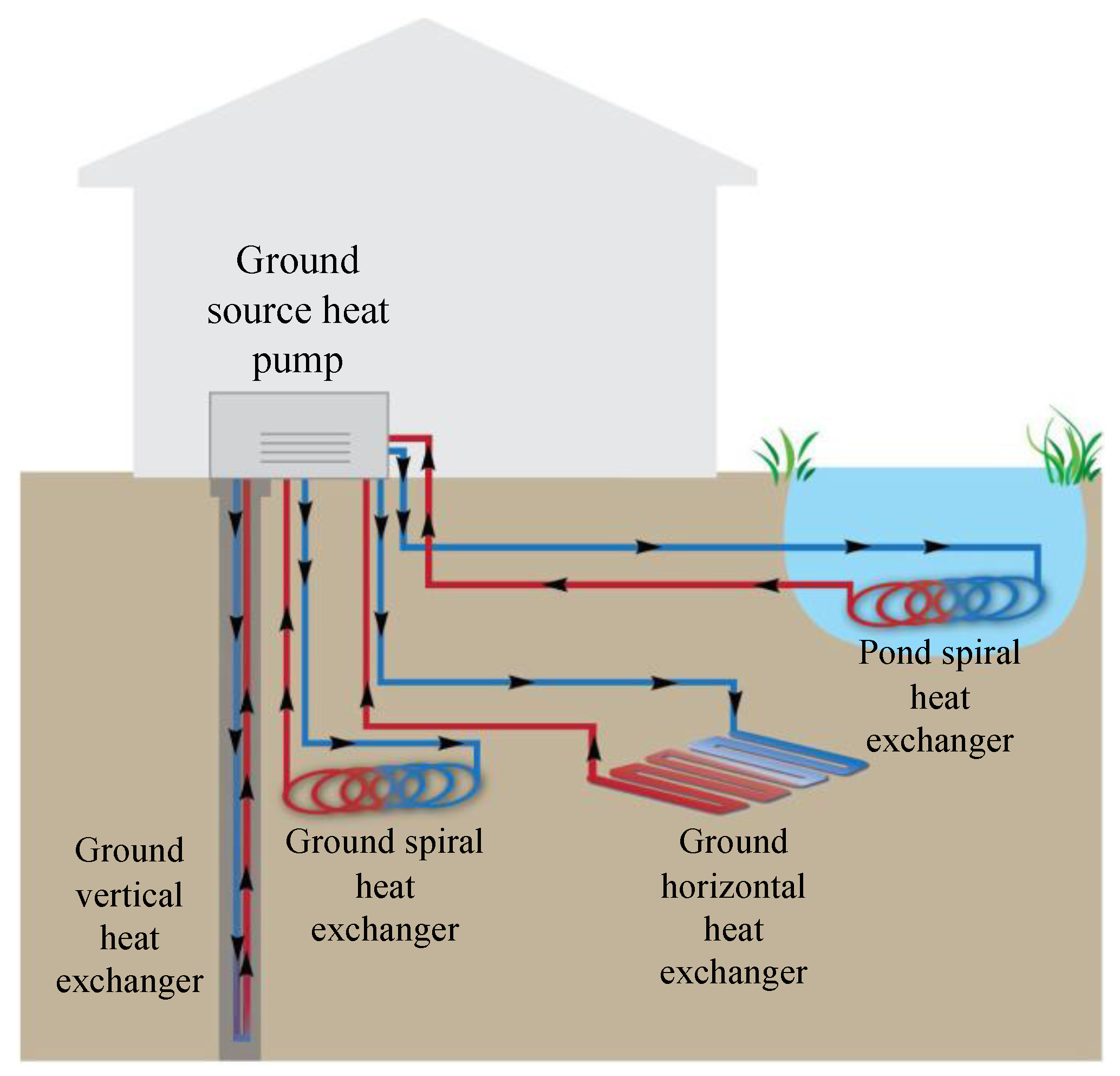
Figure 2.
Schematic mechanism of heat exchanger in energy pile [5].
Figure 2.
Schematic mechanism of heat exchanger in energy pile [5].
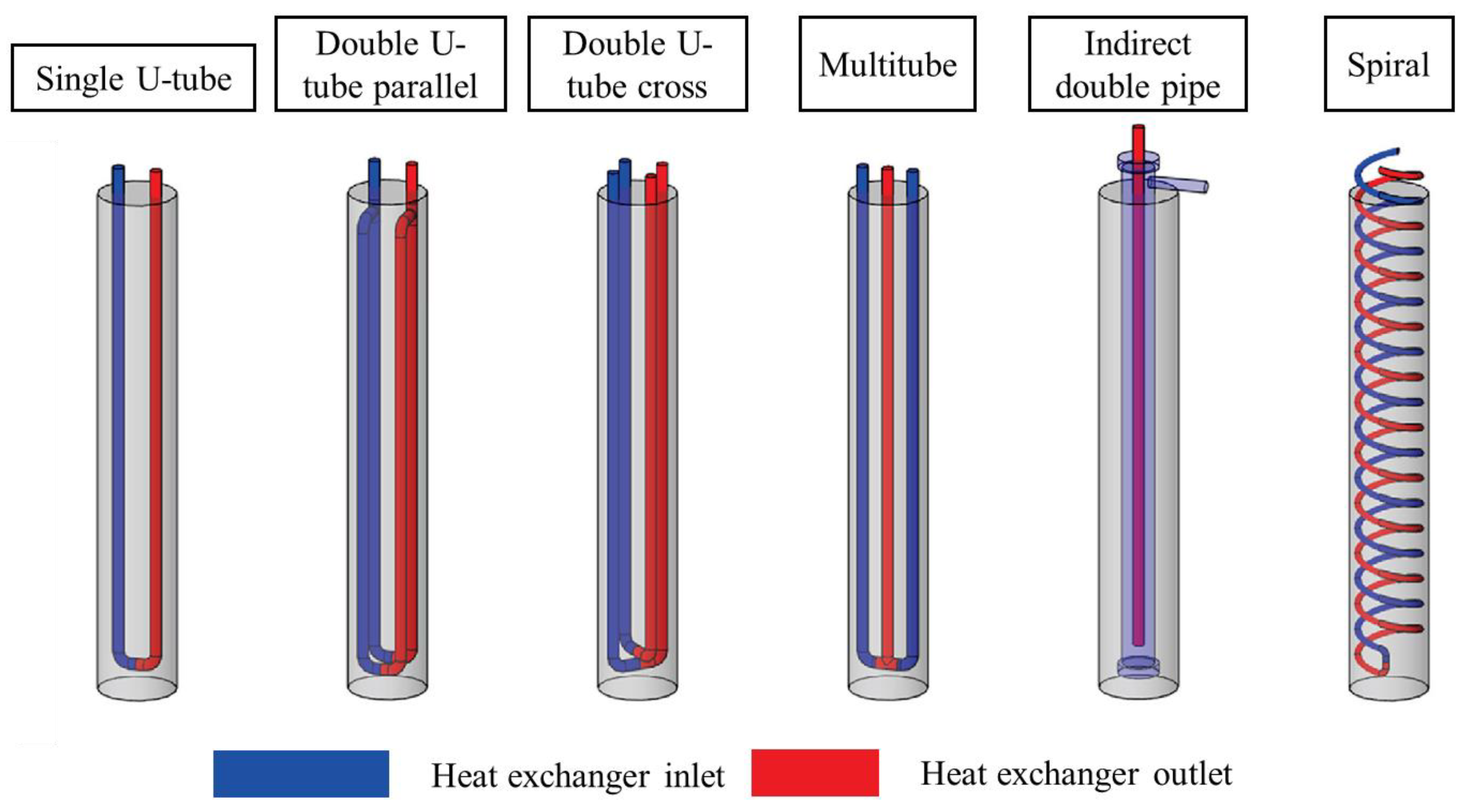
Figure 3.
Locations of GSHP experiments within Southeast Asia countries in tropical climate [4].
Figure 3.
Locations of GSHP experiments within Southeast Asia countries in tropical climate [4].
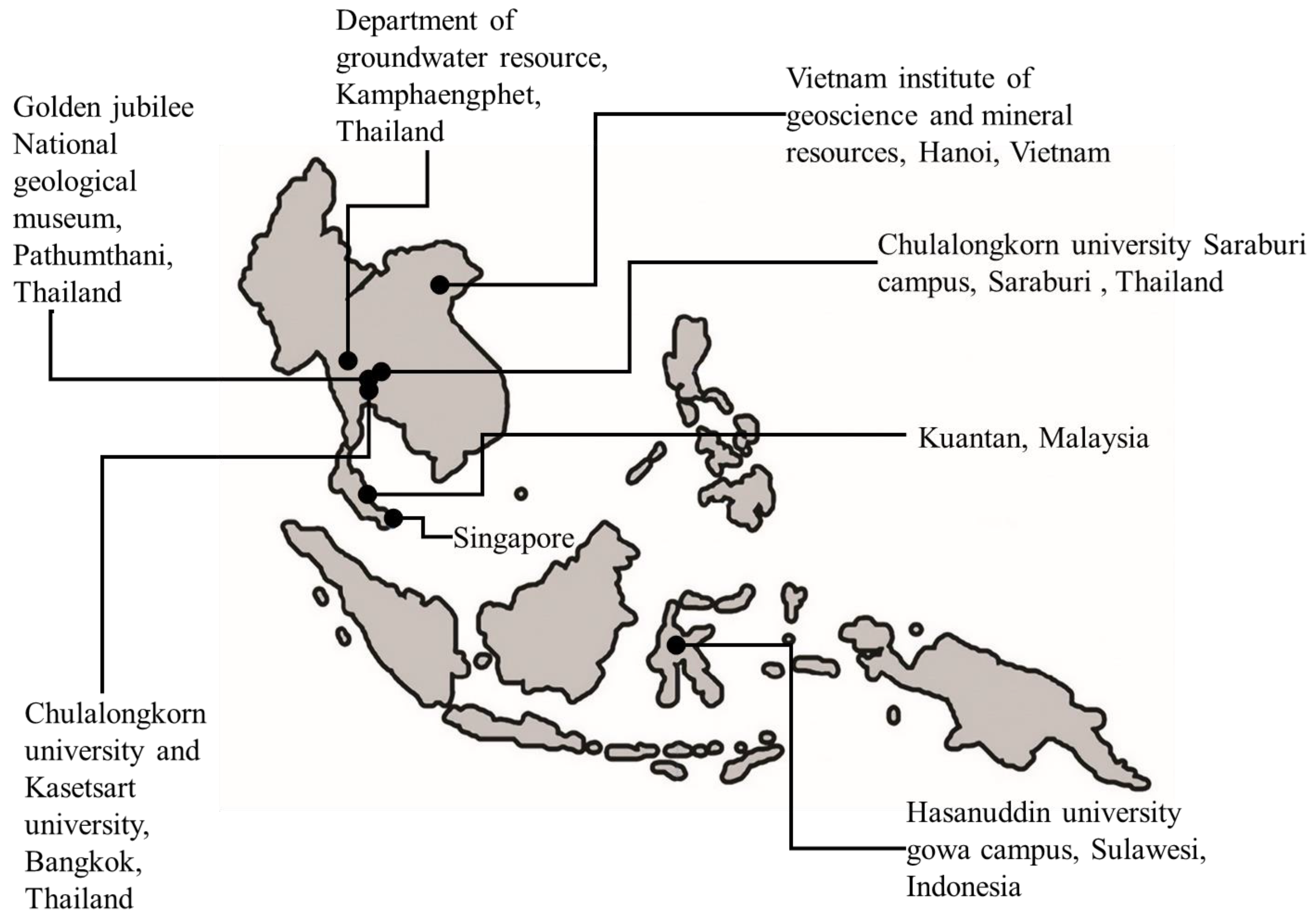
Figure 4.
Analysis domain for FDM model with calculation node and boundary conditions.
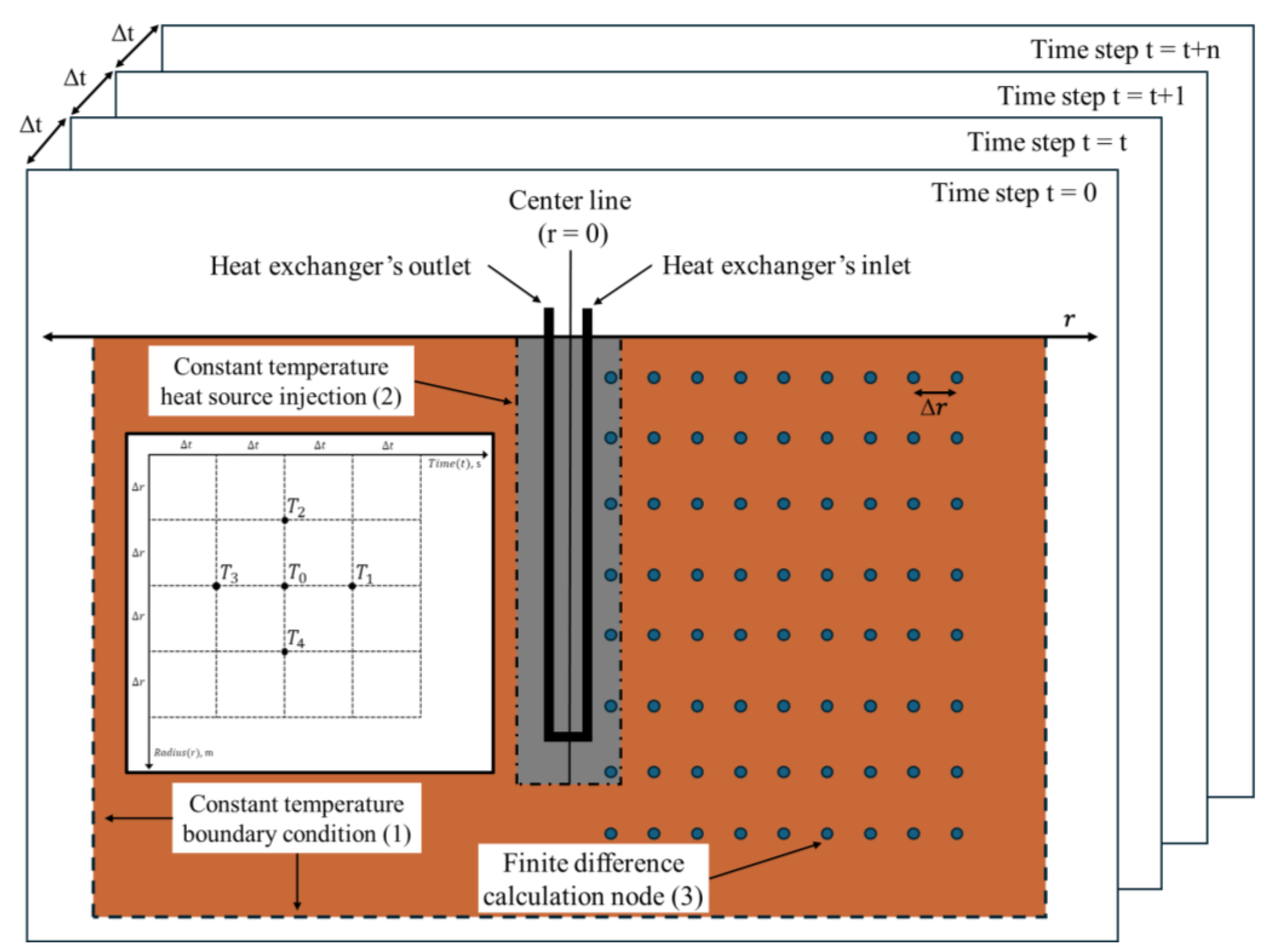
Figure 5.
General definition of energy pile in FDM model.
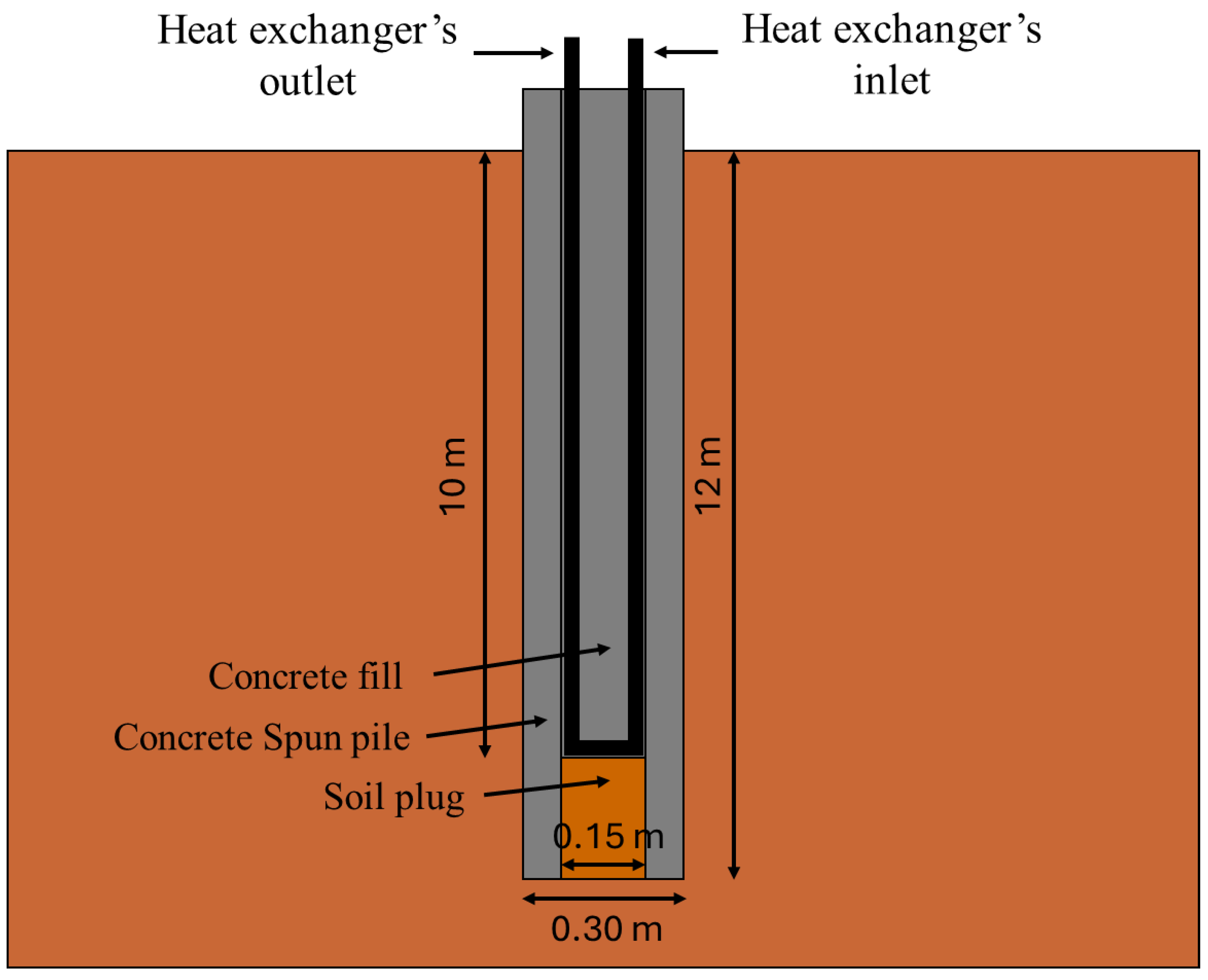
Figure 6.
Asymmetrical soil temperature around energy pile after 1 year, simulated with FEM model.
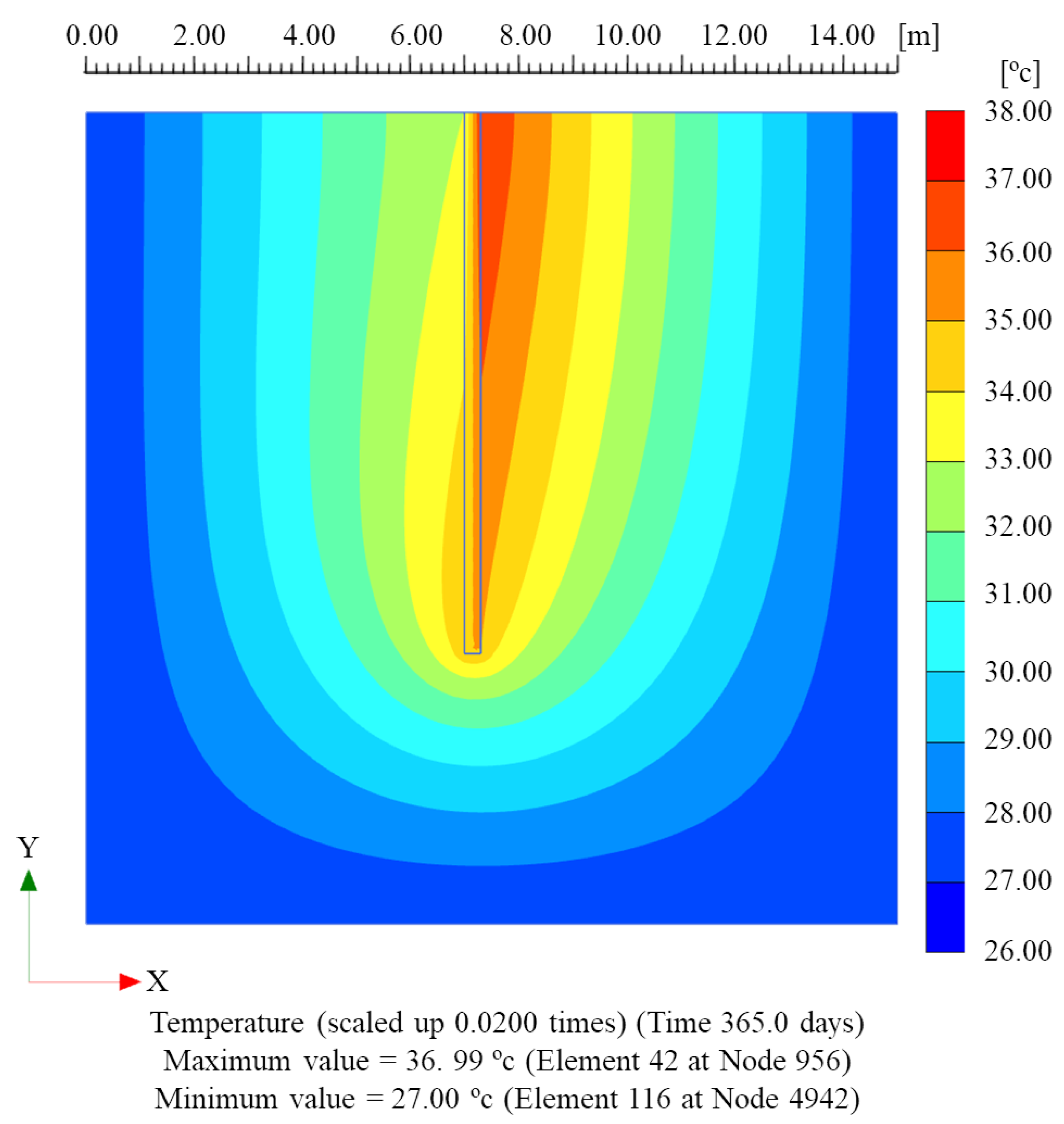
Figure 7.
Guilin lateritic clay’s Temperature-dependent thermal conductivity.
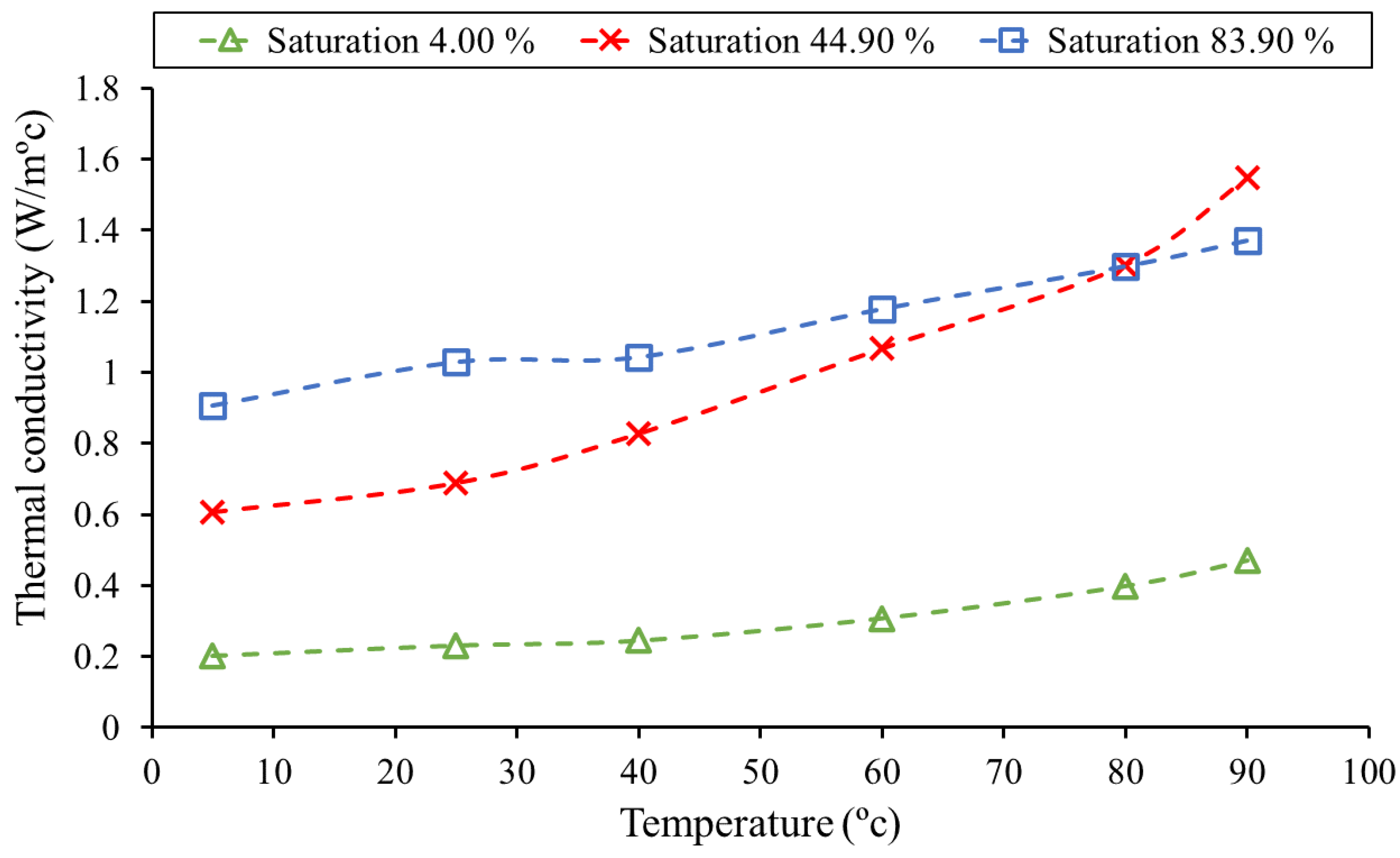
Figure 8.
Comparative thermal conductivity in GSHP operation range.
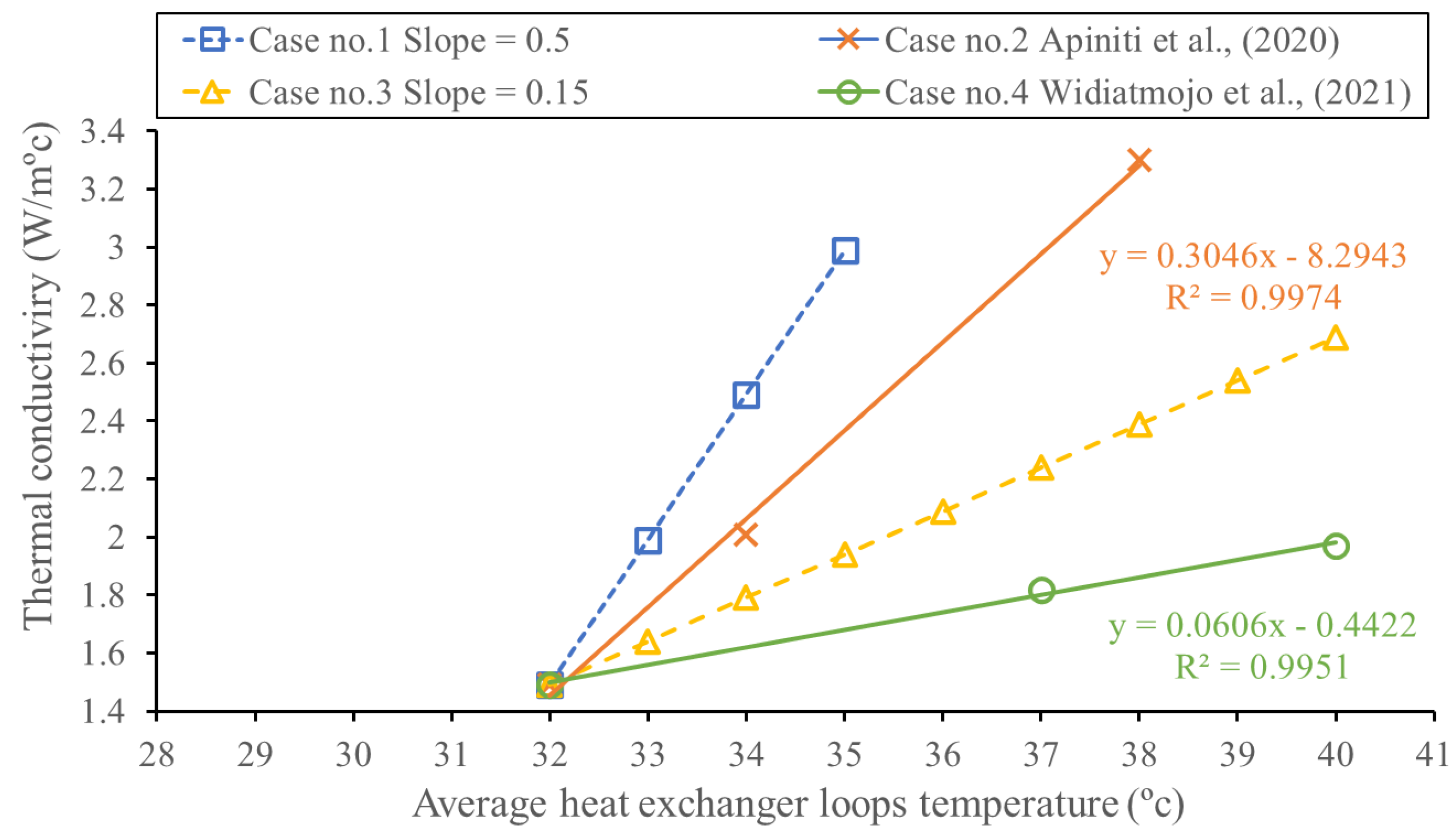
Figure 9.
7-day temperature cycle at various radius.
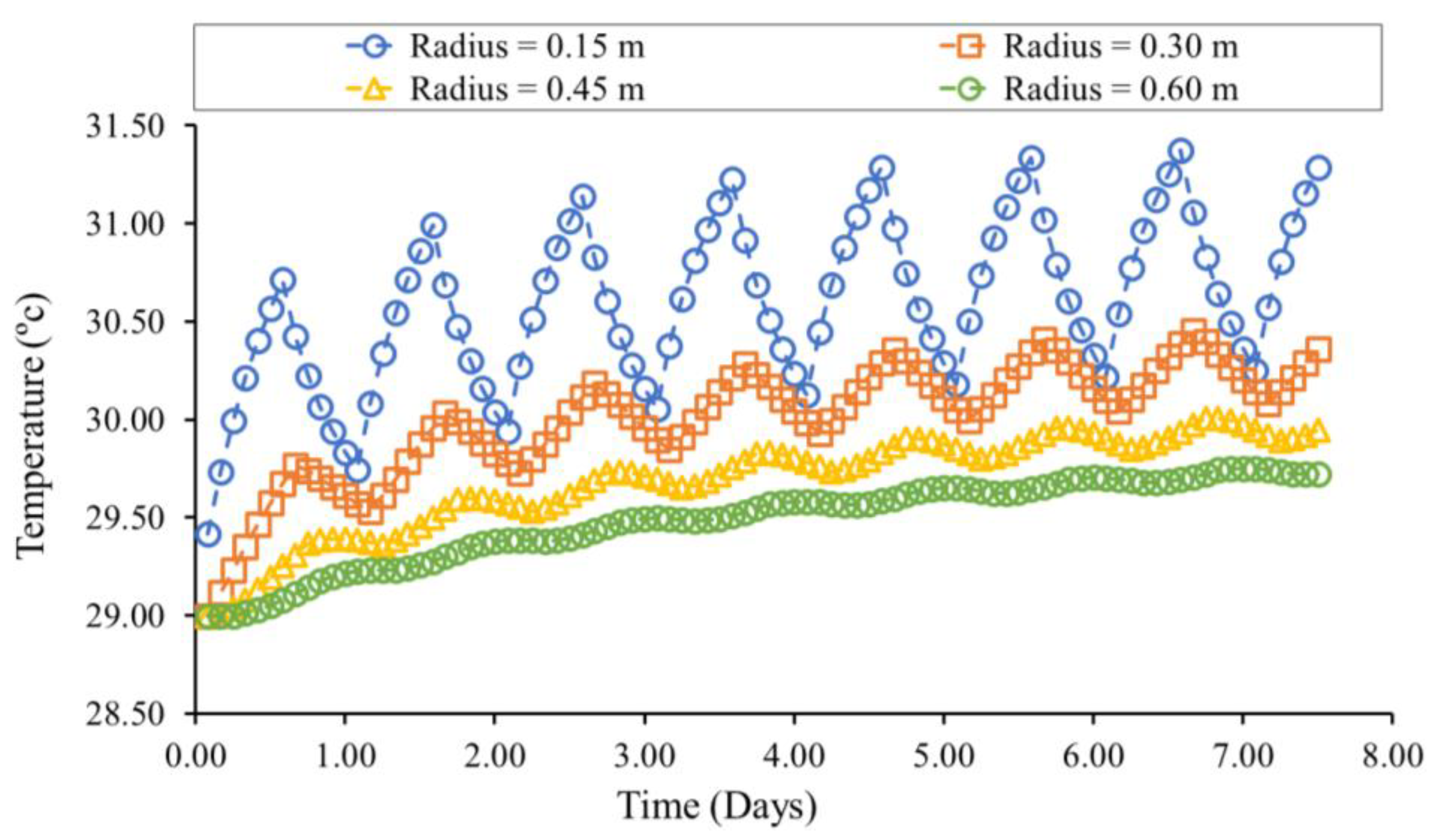
Figure 10.
1-year temperature cycle at various radius.
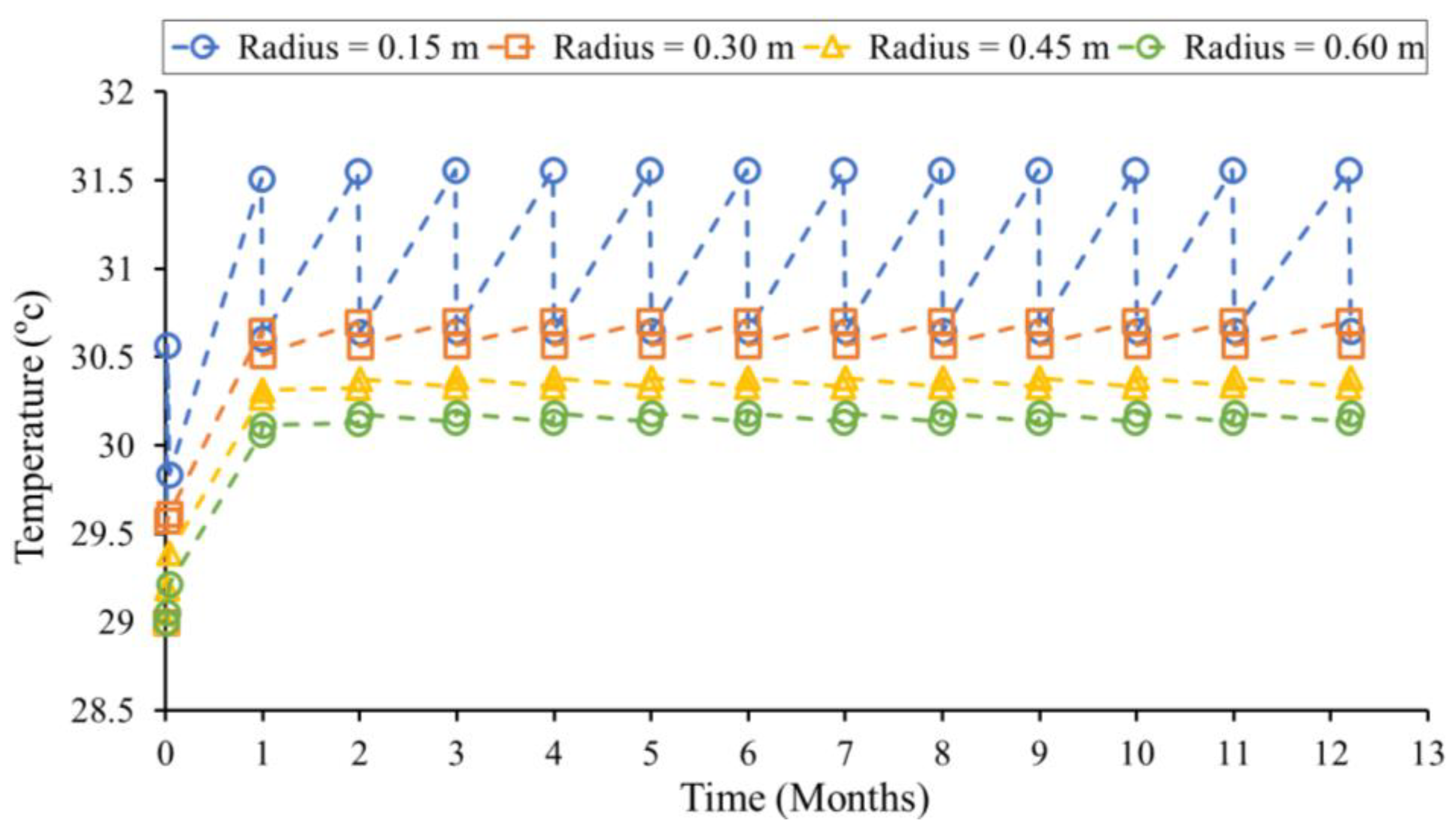
Figure 11.
Predicted temperatures at various radius for different cases of linear thermal conductivity functions (cases no. 1, 2, 3, and 4).
Figure 11.
Predicted temperatures at various radius for different cases of linear thermal conductivity functions (cases no. 1, 2, 3, and 4).
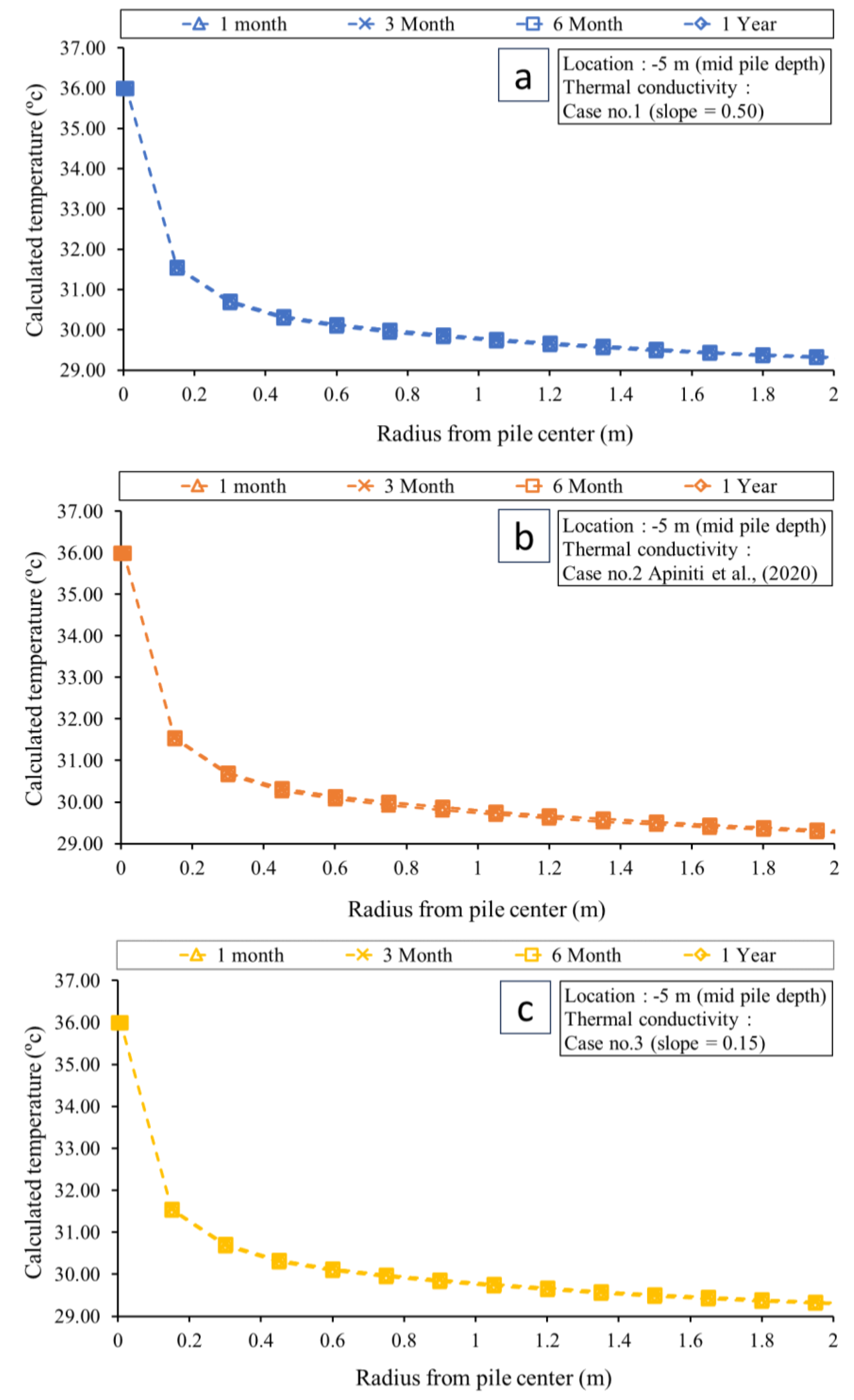
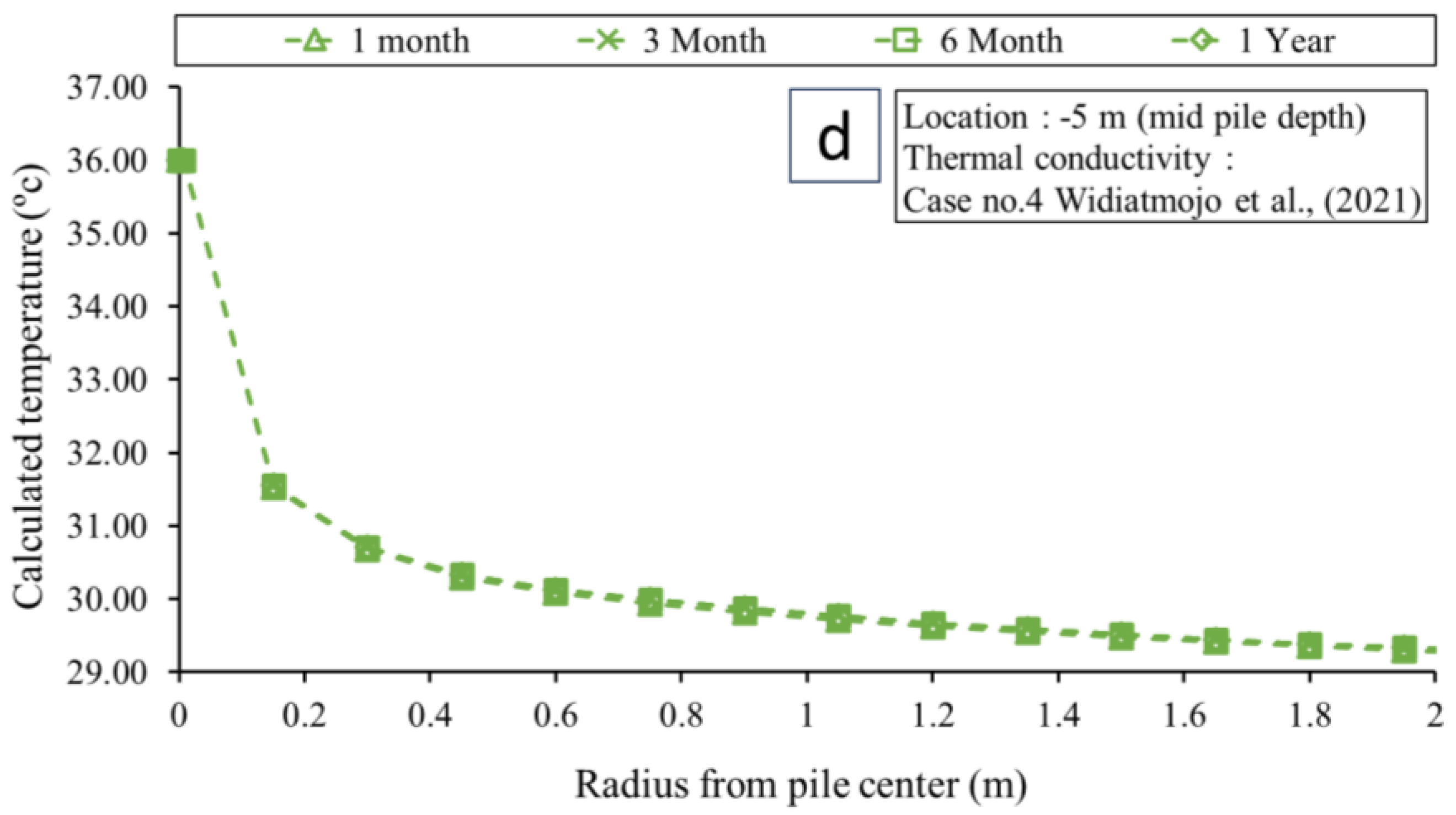
Figure 12.
1-Year predicted temperatures with different thermal conductivities.
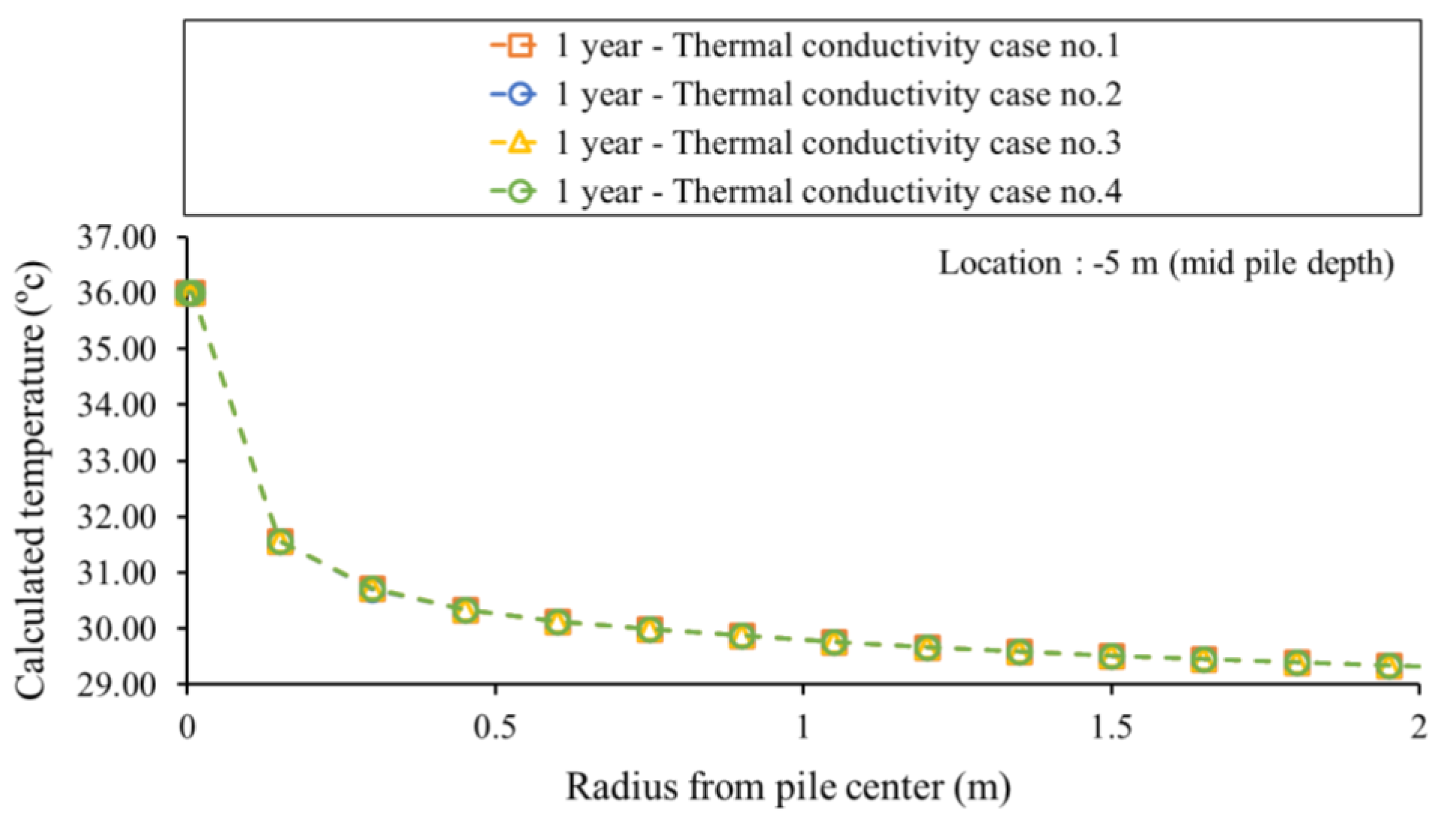
Figure 13.
1-Year predicted temperatures with different densities of Bangkok clay.
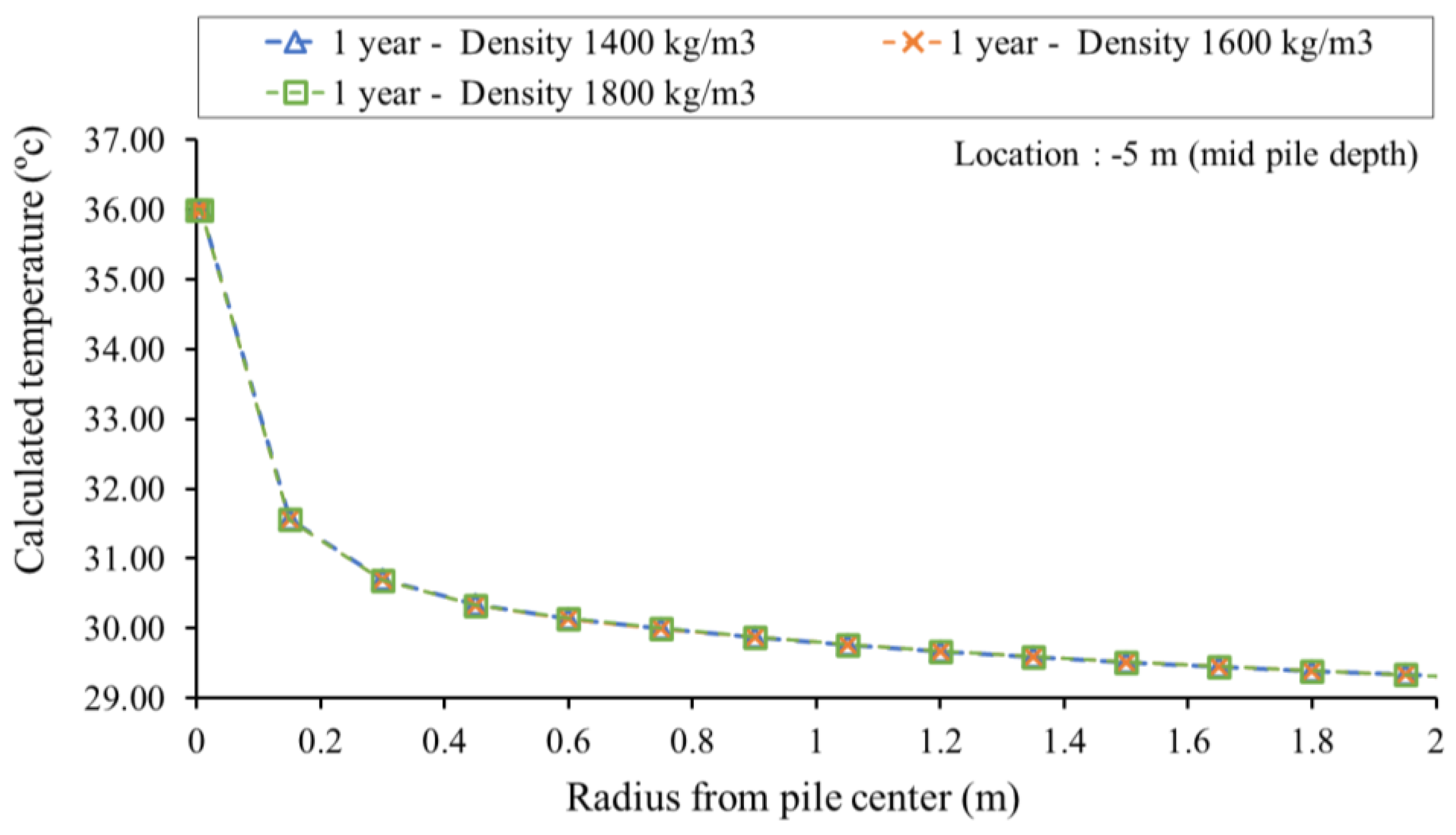
Figure 14.
Temperature prediction in 1-month, 6-month, and 1-year and Bangkok clay density correlation over time at 0.3 m radius.
Figure 14.
Temperature prediction in 1-month, 6-month, and 1-year and Bangkok clay density correlation over time at 0.3 m radius.
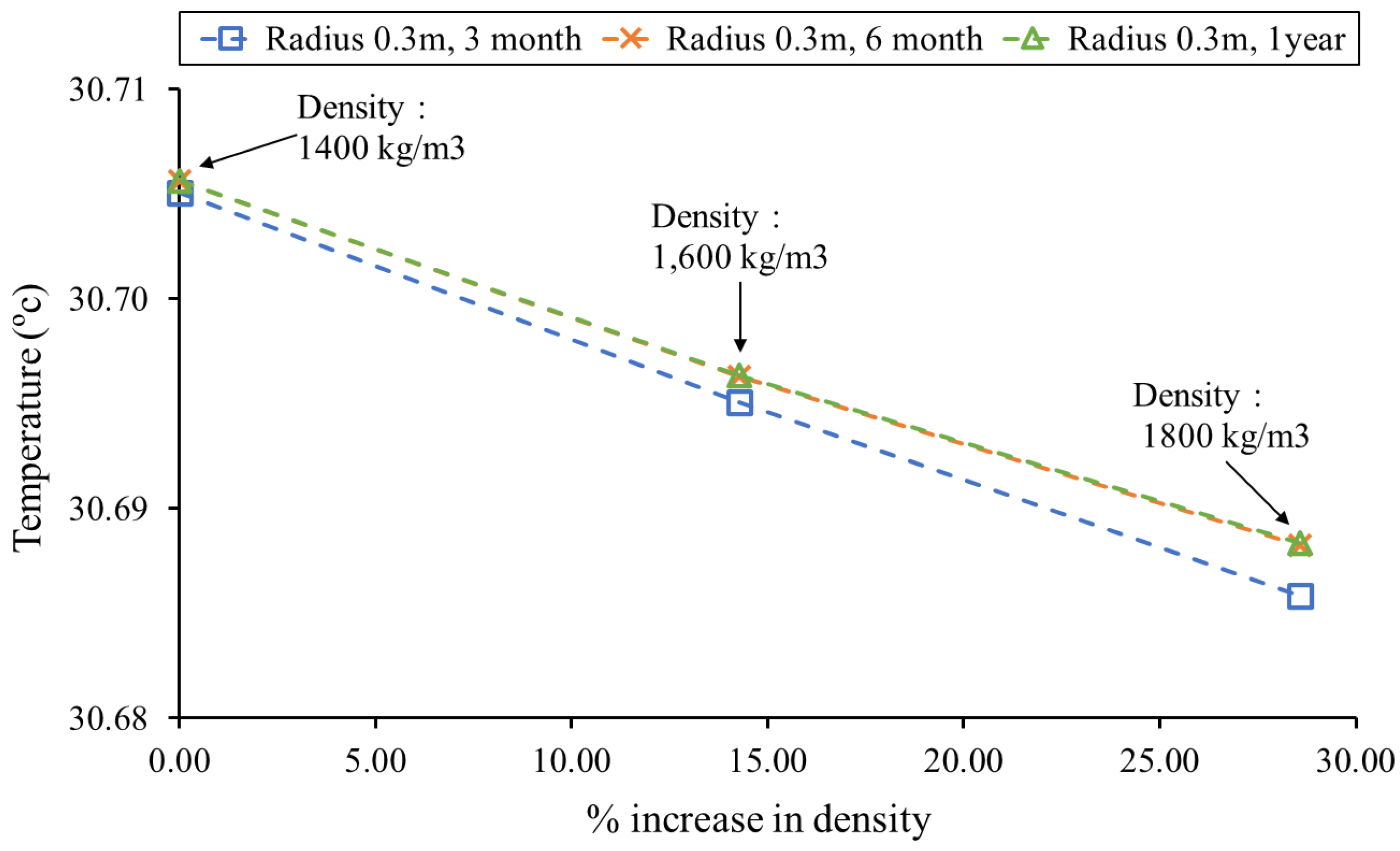
Figure 15.
Temperature prediction in 3-month, 6-month, and 1-year and Bangkok clay density correlation over time at 0.6 m radius.
Figure 15.
Temperature prediction in 3-month, 6-month, and 1-year and Bangkok clay density correlation over time at 0.6 m radius.
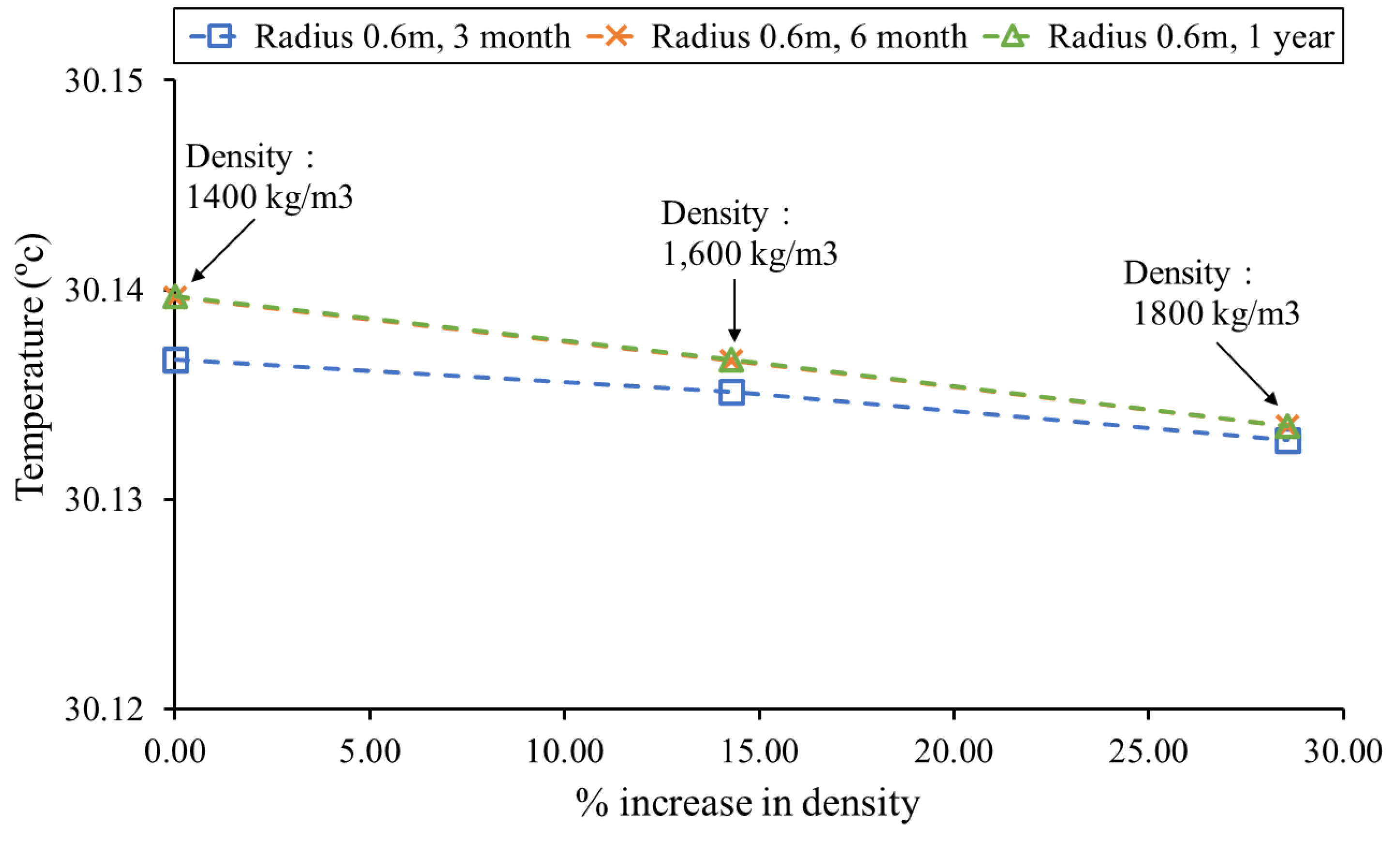
Figure 16.
Temperature prediction in 3-month, 6-month, and 1-year and Bangkok clay density correlation over time at 0.3 m radius.
Figure 16.
Temperature prediction in 3-month, 6-month, and 1-year and Bangkok clay density correlation over time at 0.3 m radius.
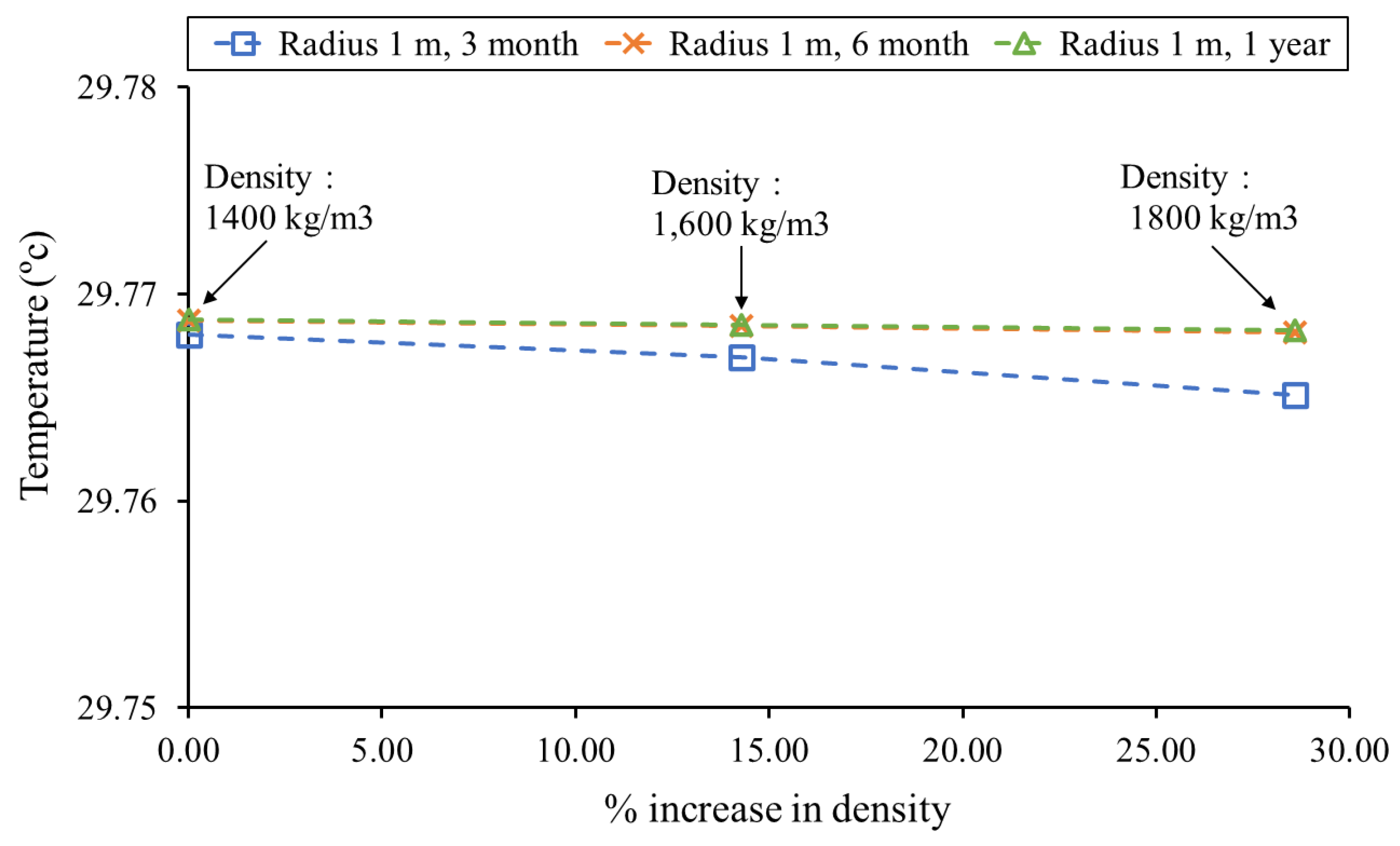

Table 1.
Basic engineering properties of clay sedimentary formations in different countries.
| Soil | Unit weight (kN/m3) | Water content (%) | Thickness(m) | Thermal conductivity (W/m·c) | Specific gravity | Plastic limit (%) |
Liquid limit (%) |
|---|---|---|---|---|---|---|---|
| Ariake clay (Japan) | 13.50-14.00 | 90.0 to 120.0 | 15.0 to 20.0 | 0.65 to 0.75 | 2.65 | 25.0 to 56.0 | 61.6 to 88.7 |
| Singapore marine clay | 14.23-15.70 | 80.0 to 95.0 | 14.0 to 17.0 | N/A | 2.60 to 2.72 | 20.0 to 28.0 | 80.0 to 95.0 |
| Hong Kong marine clay | 13.9-18.25 | 40.8 to 98.6 | 10.0 to 55.0 | N/A | 2.62 to 2.67 | 18.6 to 50.8 | 36.7 to 87.3 |
| Kuantan clay (Indonesia) |
15.00 | N/A | N/A | 0.45 | 2.64 to 2.78 | 18.9 to 25.7 | 30.5 to 63.5 |
| Bangkok clay | 15.20-16.18 | 60.0 to 80.0 | 10.0 to 14.0 | 0.80 to 1.00 | 2.56 | 95.0 to 100.0 | 60.0 to 80.0 |
Table 2.
Input parameters for FDM analysis.
| Parameters | Value | Unit |
|---|---|---|
| Global parameters | ||
| Background temperature | 29 | °C |
| Inlet U-tube temperature | 37 | °C |
| Outlet U-tube temperature | 33 | °C |
| Time step () | 7200 | second |
| Changing radius () | 0.15 | m |
| GSHP on/off time | 12 | hour |
| HDPE U-tube heat exchanger | ||
| Heat exchanger length | 20 | m |
| Thickness | 0.005 | m |
| Density () | 950 | kg/m3 |
| Specific heat capacity () | 2400 | J/(kg·K) |
| Thermal conductivity () | 0.48 | W/(m·C) |
| Thermal diffusivity () | 2.11×10⁻⁷ | m2/s |
| Concrete pile | ||
| Diameter () | 0.30 | m |
| Concrete thickness | 0.15 | m |
| Density () | 2400 | kg/m3 |
| Specific heat capacity () | 900 | J/(kg·K) |
| Thermal conductivity () | W/(m·C) | |
| Thermal diffusivity () | m2/s | |
| Marine clay soil | ||
| Density () | 1400, 1600, 1800 | kg/m3 |
| Specific heat capacity () | 800 | J/(kg·K) |
| Thermal conductivity () | varies | W/(m·C) |
| Thermal diffusivity () | 3.70×10⁻⁷ | m2/s |
Table 3.
Temperature of HDPE heat exchanger different depth of energy pile.
| Outlet side | Inlet side | ||
|---|---|---|---|
| Depth (m) | Temperture (°C) | Depth (m) | Temperture (°C) |
| 0 to 1 | 33.0 | 0 to 1 | 37.0 |
| 1 to 2 | 33.2 | 1 to 2 | 36.8 |
| 2 to 3 | 33.4 | 2 to 3 | 36.6 |
| 3 to 4 | 33.6 | 3 to 4 | 36.4 |
| 4 to 5 | 33.8 | 4 to 5 | 36.2 |
| 5 to 6 | 34.0 | 5 to 6 | 36.0 |
| 6 to 7 | 34.2 | 6 to 7 | 35.8 |
| 7 to 8 | 34.4 | 7 to 8 | 35.6 |
| 8 to 9 | 34.6 | 8 to 9 | 35.4 |
| 9 to 10 | 34.8 | 9 to 10 | 35.2 |
Table 4.
Summary of deriving variable thermal conductivities in GSHP systems for constructing four variable thermal conductivity equations.
Table 4.
Summary of deriving variable thermal conductivities in GSHP systems for constructing four variable thermal conductivity equations.
| Case | Temperature (°C) |
Thermal conductivity (w/m·c) | Thermal conductivity equation | R2 |
|---|---|---|---|---|
| no. 1 | 32 to 40 | 1.49 to 2.99 | y = 0.0500 x - 14.5100 | - |
| no. 2 [11] | 32,34,38 | 1.49, 2.09, 3.31 | y = 0.3046 x - 8.2943 | 0.9971 |
| no. 3 | 32 to 40 | 1.49 to 2.69 | y = 0.1500 x - 3.3100 | - |
| no. 4 [38] | 32, 37, 40 | 1.49, 1.82, 1.97 | y = 0.0606 x - 0.4422 | 0.9951 |
Table 5.
Difference in density for clay in different countries.
| Soil name | Density (kg/m3) |
|---|---|
| Singapore marine clay and Ariake clay | 1,400 |
| Bangkok clay | 1,600 |
| Hong Kong clay | 1,800 |
Disclaimer/Publisher’s Note: The statements, opinions and data contained in all publications are solely those of the individual author(s) and contributor(s) and not of MDPI and/or the editor(s). MDPI and/or the editor(s) disclaim responsibility for any injury to people or property resulting from any ideas, methods, instructions or products referred to in the content. |
© 2024 by the authors. Licensee MDPI, Basel, Switzerland. This article is an open access article distributed under the terms and conditions of the Creative Commons Attribution (CC BY) license (http://creativecommons.org/licenses/by/4.0/).
Copyright: This open access article is published under a Creative Commons CC BY 4.0 license, which permit the free download, distribution, and reuse, provided that the author and preprint are cited in any reuse.


