

Submitted:
13 April 2024
Posted:
15 April 2024
You are already at the latest version
Abstract
Mannosylerythritol lipids (MELs), one of the most promising biosurfactants (BS), are glycolipids produced by yeasts or fungi, with great environmental performance and a high compatibility with the human body. MELs besides working as typical surfactants, can form diverse structures when in the critical aggregation concentration (CAC), reducing the surface tension of water and other solutions, and being stable over a wide range of conditions. Among others, MELs present anti-microbial, antitumor, antioxidant and anti-inflammatory activity, skin and hair repair capacity, which opens possibilities for their use in applications from cosmetics and pharmaceutics to bio-remediation and agriculture. However, their market share is still low when compared to other glycolipids, due to their less developed production process and higher production cost. This re-view gathers information on the potential applications of MELs mentioned on the literature since 1993. Furthermore, it is also explored the current strategies being developed to enhance the market presence of MELs, in parallel with the ones developed for rhamnolipids and sophorolipids.
Keywords:
Mannosylerythritol lipids
; Glycolipids
; Biosurfactants
; Cosmetics
; Biomedical
; Food
; Bioremediation
1. Introduction
Surface active agents, also known as surfactants, are amphiphilic molecules possessing both a hydrophilic head and a hydrophobic tail. Depending on the charge of the hydrophilic domain, surfactants can be categorized as anionic, cationic, amphoteric, or non-ionic [1,2,3]. Surfactants tend to accumulate at the interface between polar and nonpolar solutions, decreasing repulsive molecular forces and, as a result, decreasing the surface/interface tension, allowing solutions to mix in each other [1,3]. Moreover, the accumulation of surfactants can lead to their aggregation in different structures, such as spherical micelles with hydrophilic groups facing an aqueous media, and apolar groups facing a sequestered hydrophobic solution. Surfactants with one polar head group and two hydrophobic tails often are also able to form molecular membrane bilayers, with heads facing the membrane surfaces and tails interacting at its interior. Cylindrical and spherical bilayers can be formed by uni- or multilamellar structures; helical ribbons and tubules are commonly formed by chiral surfactants; and bicelles or disk aggregates can be made mixing different surfactants in the same solution [1]. Such structures are formed when the surfactant concentration is above the Critical Aggregation Concentration (CAC).
Surfactants can function as wetting, foaming, or coating agents, dispersants, emulsifiers, or de-emulsifiers, and therefore, they are part and crucial for the efficiency of a wide range of products, such as cleaning products, personal care and cosmetic products, healthcare products, food and beverages, paints and coatings [2,3]. In 2023, the surfactants market value was estimated to reach US$ 45.72 billion, and it is expected to increase, at a compound annual growth rate (CAGR) of 4.7%, to a value of US$ 69.13 billion in 2032 [4].
While extremely useful, 60% (w/w) of the total surfactant produced are estimated to ends up in the aquatic environment [5], due to direct product discharge or leakage, and inefficient removal from water in wastewater treatment stations. When in the environment, synthetic surfactants persist and accumulate due to their slow biodegradability, and are toxic to microorganisms, aquatic flora and aquatic fauna. In some cases, the degradation products resulting from the biodegradation of surfactants are even more toxic than the parental molecules [2]. Regarding surfactants’ safety for human use, several surfactants are classified as irritants as, above certain concentrations, they are irritant for skin and eyes, some are classified as dangerous by the European Council, since exposure can cause skin burns and severe damage to the eyes; and some are extremely toxic to aquatic life [6].
Today, consumer awareness of the effects of chemicals on the environment and on human health is increasing, and countries’ governments are defining goals and creating new laws to avoid further contamination of the environment and to protect people’s health. In 2015, the United Nations developed the Sustainable Development Goals (SDGs) [7], among several objectives, the SDGs propose the reduction of air, water and soil pollution by hazardous chemicals (SDG 3 and 6), through a better management of the chemicals and wastes during their life cycles and by strengthening the scientific and technological capacity of countries in order to make a transition to more sustainable practices (SDG 12). As a consequence, the SDG 3 proposes a substantial reduction of number of deaths and illnesses from hazardous chemicals pollution by 2030. The European Union went further and created the Green Deal, which aims to reach zero pollution and a toxic-free environment by 2050. As part of that deal the Regulation on the registration, evaluation, authorization, and restriction of chemicals (REACH) was created [8]. This certification limits or bans the manufacturing, commercialization and use of chemicals that pose unacceptable risks for human and environmental health, and at the same time, this regulation stimulates innovation both for the development of alternative substances and the development of alternative methods for chemical testing that do not involve animals.
Surfactants are no exception, and more sustainable alternatives are already being developed. Biosurfactants (BS), defined as surfactants produced either by bacteria, yeast, fungi, or archaea [9], have low toxicity and a high biodegradability. Their hydrophilic moiety is usually made of amino acids, anionic or cationic peptides, or carbohydrates, whereas the hydrophobic moiety is composed by peptides, proteins, unsaturated or saturated fatty acids. Depending on their structure, BS are divided into different classes: glycolipids, lipopeptides, fatty acids, polymeric and particulate BS [2,3].
Among BS, the glycolipids class the one more mature in terms of their industrial application, particularly sophorolipids (SLs) and rhamnolipids (RLs). In fact, multinational companies are increasingly investing in their research and scaled-up production of BS. Evonik and Unilever announced a partnership in 2022 for the construction of a rhamnolipid-producing facility in Slovakia with a three-digit million-euro investment [10]. BASF and Holiferm also announced a partnership for SL production and secured a 21.4 M€ investment [11], while in 2020 Stepan Company acquired Natsurfact [12], a rhamnolipid-producing company. Besides those, there are more companies producing RLs and SLs on a large scale like Jeneil Biotechnology and Amphistar.
Mannosylerythritol lipids (MELs) is a third emerging glycolipid, with a technology readiness level (4) lower than SLs/RLs (8/9), but with huge potential as it will be reviewed. This paper highlights MELs’ properties and applications that are already described in the literature, assesses the advantages of MELs compared to other surfactants and BSs, as well as the steps MELs must take to thrive in the market.
2. Materials and Methods
The Google Scholar and Google Patents platforms were used for articles and patents research. The words “Mannosylerythritol lipids” were defined as mandatory, as for the words “cosmetics”, “agriculture”, “pharmaceutical”, “medical”, “food”, “feed”, “remediation”, “detergent”, “oil”, “fuel” were defined as optional, and papers for “review” were excluded. The search was done for the years between 1990 and 2024.
3. Mannosylerythritol Lipids Structure, Properties, and Production
MELs are produced by species of the yeast genera Moesziomyces (formerly known as Pseudozymas), Kurtzmanomyces and by the fungi genera Schizonella and Ustillago [13]. Although their function is still not clear, it is believed that MELs, as the triacylglycerols, act as energy storage material in the cell [13,14] and that their secretion helps in the emulsification of carbon sources, such as oils, facilitating the transport through the microorganisms’ cell wall [1].
MELs, belonging to the non-ionic BS category, are constituted by a 4-O-β-D-mannopyranosyl-D-erythritol hydrophilic moiety, and two fatty acid hydrophobic chains with variable sizes linked to the mannose. There are different MELs congeners according to number of carbons on the fatty acid chains and the acetylation of mannose’s hydroxyl groups, classified as: MEL-A (acetylation at C4 and C6); MEL-B (acetylation at C4); MEL-C (acetylation at C6) and MEL-D (no acetylations). [13]
In this regard, depending on the type and the final concentration, MELs can self-assemble in diverse structures. In 2009, Imura et al. [15] studied this phenomenon, quantifying critical aggregation concentrations (CACs) for MELs and elucidating the type of the structures formed. The authors have concluded that MEL-A and MEL-B, aggregate in large unilamellar vesicles, at CACs of 4 μM and 4.5 μM, respectively. However, when MEL-A concentration increases to above 20 μM, they form sponge structures (L3 phase) composed of a randomly connected three-dimensional network of bilayers. MEL-B forms typical multilamellar vesicles above the CAC. Importantly, above their CAC concentrations, MEL-A and MEL-B reduce the surface tension of water from 72 mN.m-1 to 28.4 and 28.2 mN.m-1, respectively. Regarding MEL-C and MEL-D, both form lamellar phases, with CACs of 4 μM and 12 μM, reducing the surface tension of water to 24.4 mN.m-1 and 24.6 mN.m-1, respectively [16,17]. These studies demonstrate the variety of structures that MELs can form, opening new possibilities for MELs in different industrial applications, as explained in the next section. Moreover, MELs activity have been reported to be stable in extreme temperatures and pHs, which can be an advantage when applying MELs according with the envisaged applications, still it is sensitive to salt concentrations above 100 mM [14].
Cell biocompatibility tests using different cell lines, such as human melanocytes, human and mouse fibroblasts and human keratinocytes, and in 3D human skin models, show that MELs do not exhibit cytotoxic activity below certain concentrations. A study, performed by Kim et al. (2002) [14], show that the reduction on mouse fibroblasts viability to 50% after 48h, requires the presence of 5 g/L of MELs, while the same decrease in cell viability is attained with only 0.05 and 0.01 g/L of SDS or LAS, respectively. For given MEL congeners and cell lines used, MELs show can even increase cell viability when below the inhibitory concentrations [14,18,19,20,21,22,23]. These studies indicate MELs safety to be used, under given thresholds, in cosmetics and personal care applications. Consider that, after their use, a large percentage of surfactants end up on aquatic bodies, it is crucial to assess their impact on the environment. A fast biodegradation rate of MELs was demonstrated in a study by Kim et al. (2002) [14], with these molecules being fully degraded by microorganisms in activated sludge in 4 days. Moreover, MELs presented low ecotoxicity to aquatic organisms, as quantified Keković et al. (2002) [24], using the model marine organism Artemia franciscana at value of L50 of about 1 g/L, up performing Rhamnolipids and Sophorolipids, with L50 reported in such study at about 0.5 g/L and 0.7 g/L, respectively.
Regarding MELs production, two different approaches have commonly reported:
1) Using only hydrophobic carbon sources (such as soybean and rapeseed oil), leading to high titres of MELs (up to 150 g/L), but with low purity (c.a 60%) [25]; or
2) Using only hydrophilic carbon sources (such as glucose), which leads to high purities (~95%), but with low titres (c.a 6 g/L).
However, a recent study by Faria et al. (2023) [26], have shown an alternative strategy, designed to reach both relevantly MELs titers and high purities by simultaneously co-feeding to the microorganisms carbon sources of opposite polarities (glucose and soybean oil). This study shows to be possible to reach higher purities using the co-substrates strategy than when using only hydrophobic carbon sources (94% vs 89%) at similar titres (14 g/L), while titres are limited to 5.1 g/L in MELs, when only hydrophilic carbon sources are used. fter fermentation, MELs are removed from the fermentation broth through liquid-liquid extraction mechanisms.
MELs can replace chemical surfactants in many applications, due to their similar performance in reducing the surface tension. However, considering MELs uncommon properties, such as low toxicity, biocompatibility, self-assembly, among others, additional possible applications of these products are envisaged. Over the previous decades, researchers suggested and tested MELs use for various applications, including applications in fields ranging from medicine and cosmetics to agriculture and bioremediation, where MELs would be used as both a specialty and a bulk chemicals. These applications of MELs are resumed in Table 1 and described in the next section.
4. Mannosylerythritol Applications Described in the Literature
Until 1993, the only function of MELs known was their surface tension-reducing capacity, since then, new functions such as antimicrobial activity, nanostructure formation capacity and interaction with certain cell types and molecules, have been discovered and consequently, new applications have been proposed.
4.1. Biomedical/Pharmaceutical Industry
In the field of medicine, MELs proposed applications are based on beneficial interactions with various cell types, antimicrobial properties, as well as their nanostructure formation capabilities (e.g. liposomes structures to transport more effectively drugs to their site of action).
In this regard, one of the first function to be explored was the antimicrobial activity, where Kitamoto et al. (1993) [27], tested the activity of MEL-A and MEL-B on gram-positive bacteria (Bacillus subtilis, Micrococcus luteus, Mycobacterium rhodochrous, Staphylococcus aureus), gram-negative bacteria (Pseudomonas aeruginosa, Pseudomonas rivoflavina, Escherichia coli), and in fungi (Candida albicans, Aspergillus niger). The researchers concluded that MELs exhibit a robust inhibitory effect on gram-positive bacteria, along with some sensitivity from the Pseudomonas strains. The antimicrobial activity was further studied in the food-borne pathogens S. aureus, Bacillus cereus and Listeria monocytogenes [28,29,30,31,68]. It was observed that MELs antimicrobial effect is linked to its capacity to damage the integrity of cell membranes. Additionally, it was observed that MELs interfere with the adhesive capacity of bacteria, inhibiting biofilm formation. Due to these properties, MELs have the potential to be used by the pharmaceutical or biomedical industry in equipment treatment and medical implants, and by the food and feed industry as food preservatives and in the treatment of diseases in farms. Additionally, in a recent conference paper [32] it was pointed out that MELs can potentiate the activity of antibiotics.
Regarding the field of medicine, different studies have stated the use of MELs for anticancerogenic applications, based on their ability to damage cancer cells, namely leukemia and melanoma cells, and cause their differentiation [33,34,35,36,37]. Isoda et al. (1999) [39], reported that MELs induce neurite outgrowth, opening the possibility of applications for neural damage repair and Morita et al. (2011) [38] observed MELs’ anti-inflammatory capabilities by inhibiting inflammatory mediators’ secretion by mast cells. The capacity to form liposomes opens a new range of possibilities for MELs. Inoh et al. (2001 and 2011) [43,44], Ueno et al. (2007) [42] and Igarashi et al. (2016) [41], generated liposomes containing 1,2-Dioleoyl-sn-glycero-3-phosphatidylethanolamine, cholesterol derivatives and MELs, and studied their effectiveness in gene and siRNA transfection in host cells. MELs were able to increase the efficiency of liposome-mediated gene transfection, through an enhancement of the interaction between the liposome and the host cell, and a reduction in the immune responses and cytotoxicity, having a rapid and direct delivery. Thus, MELs have potential as effective vectors in gene therapy.
The liposomes were further explored by Wu et al. (2022) [48], who designed a drug delivery complex liposome for antibiotic delivery, using MEL-B, soybean lecithin (SL) and cholesterol (LipoSC-MELB). These liposomes loaded with amoxicillin, an antibiotic, were tested against Helicobacter pylori (responsible for gastritis and peptic ulcer disease in humans). Similarly, Cheng et al. (2023) [49] loaded MELs nanomicelles with berberin and tested them in vivo. Remarkably, the authors have shown these liposomes and nanomicelles can be used for treatment of H. pylori infection, one of the diseases that affect most of world population. Similarly, MELs can be possibly used for drug delivery, in the form of nanoparticles formed with metals [45,46,47]. MEL-A was also found to have a high binding affinity towards immunoglobulins [51,52], opening the possibility for its application in purification processes.
Overall, due to the complexity and pre-requirements needed for in-vivo tests for medical applications, only some of the reports have results based on tests performed in realistic conditions, namely the ones that relate to MELs antimicrobial properties and drug carrying for H. pylori treatment. Nevertheless, more studies are required (clinical trials) to really enhance the use of MELs in pharmaceutical applications.
4.2. Personal Care and Cosmetics
Due to MELs biocompatibility and positive interaction with the human body, many cosmetic applications were proposed. In fact, there are already companies (Kao Corporation, DKBIO, Kanebo Cosmetics) commercializing cosmetics containing MELs.
On this field, the use of MELs can be focused on improving formulation bulk properties, where MELs can act as emulsifiers, foam stabilizers or enhancers of pigments adhesion to skin, or provide higher value function, where MELs is used on the formulations as an active compound.
Several studies show that MELs have repairing and moisturizing action on skin comparable with that of natural ceramides. Ceramides are precursor molecules for sphingolipids formation in cell membranes and are present in large amounts in the skin stratum corneum, providing the barrier property of the epidermis and playing a crucial role in the water retention capacity of the skin [81]. Research works, show that ceramides have beneficial effects on skin disorder treatment, and currently, ceramides are becoming more commonly found in dermatological products.
Yamamoto et al. (2012) [59], Morita et al. (2009) [58] and Kondo et al. (2022) [60], in different studies, induced cell damage on cultured human skin with the surfactant SDS, and then treated them with MELs. The cells treated with MELs had high recovery rates, similar with the ceramide-treated cells and increased the water content of skin and its water-holding capacity. The effect of MELs on UV-damaged cells is also protective, in fact, Bae et al. (2019) [23] indicates that MELs induce the activity of an aquaporin, a membrane protein that contributes to the water homeostasis of the epidermis, increasing therefore, skin moisture.
Two reports from Morita et al (2010) tested MELs interaction with hair and hair-growth cells, the results show that MELs have a similar reparation effect on hair damage as ceramides, as well as a stimulation effect on papilla cells, crucial for hair growth [56,57]. In the same research group, the potential of MELs as antioxidant agents was assessed using fibroblasts in oxidative stress, suggesting the use of MELs for anti-aging products. A study by Mawani et al. (2022) [62] showed that, by adding MELs to anti-dandruff shampoo, the antimicrobial activity against the Malassezia furfur, the microorganism that causes dandruff, is enhanced.
4.3. Agriculture
Agricultural applications of MELs are mostly based on its tension-activity and bioactivity. Fukuoka et al. (2015) [70] tested MELs applicability as an agro-spreading agent, due to its beneficial interaction with hydrophobic plant surfaces, where MELs had the best performance among several conventional surfactants in spreading and fixing the biopesticide in plant surfaces. Similarly, MELs applied on wheat leaf surfaces was shown to prevent conidial germination of the pathogenic fungus Blumeria graminis [72]. Thus, MELs have potential to be used as wetting, spreading agents and as pesticides in agriculture.
Moreover, MELs toxicity against mosquito larvae and pupae was tested, a LC50 between 30-60 μg/mL was obtained, depending on the stage of the larvae, which is a moderate toxicity. On the other hand, MELs-synthesised silver nanoparticles, shown to be highly toxic, with a LC50 of approximately 1 μg/mL. The authors propose that nanoparticles with silver increase the bioactivity of MELs against mosquito larvae and pupae [71]. Still in the insecticide field, MELs are being applied in compositions for nematode control [73]. A recent study by Matosinhos et al. (2023) [74], studied the effect of MELs in lettuce seed germination, plant growth and root development, concluding that MELs can have both a biostimulant and a phytotoxic effect, depending on their concentration.
4.4. Food and Feed Industry
As referred in Section 4.1, the antimicrobial activity of MELs against food-borne pathogens, opens possibilities for MELs to be applied in food and beverages preservation and in the treatment of diseases in farms. In fact, regarding the last topic, a patent application claims the use of MELs for a feed additive to prevent and treat infectious diseases caused by gram-positive bacteria in livestock, avoiding the use of antibiotics, as well as to reduce the methane emissions associated with digestion [83].
Zanotto et al. (2023) [54], evaluated the effect of MELs in essential oils activity stabilization and solubilization. Essential oils are natural and effective agents for controlling microorganisms that cause biodeterioration and disease, therefore they are good alternatives to chemical food preservatives. However, essential oils are immiscible in water and are highly volatile, so they are frequently mixed with surfactants for stabilization. MELs were able to create stable oil in water emulsions, preserving the antimicrobial activity of the essential oils and increasing the antioxidant activity.
Moreover, in two different studies, Shu et al. (2019, 2022) [28,68], observed that MEL-A has a strong antimicrobial activity against Bacillus cereus, killing 99.97% of the vegetative cells and 75.54% of spores. Besides that, MELs improved the rheological properties of frozen dough by strengthening the gluten network, enhancing the water-holding capacity of the frozen dough and reducing the free water content. In the presence of MELs, the dough had a largest volume, a more uniform and porous crumb structure [69]. These results suggest that MELs could potentially be used on flour products storage and in baking industry.
The examples of patent application [67] describe the use of MELs for the construction of nutrient carriers, together with lactoglobulins. This carrier has high encapsulation efficiency on anthocyanin, maintaining its activity.
4.5. Environmental Responses
Applications on the field of bioremediation were proposed based mainly on MELs capacity to interact with specific pollutant molecules. MELs interact positively with hydrocarbons, creating emulsions and making them more bioavailable for hydrocarbon-consuming microorganisms to biodegrade the oils, this effect was observed with n-alkanes, kerosene, diesel, petrol and light crude oil [24,63,64,84] More recently, a formulation for an oil spill dispersant, comprising MELs, was developed [65]. This formulation exhibits excellent interfacial properties and dispersibility effectiveness under different mechanical energy and temperature conditions, comparable to those of commercial chemical dispersants. On the other hand, a submitted patent claims the use of MELs as demulsifying agents to separate water and petroleum emulsions, which can also be perceived as bioremediation method, allowing the recovery of petroleum and treated water in separate streams [66]. Therefore, MELs could be applied as novel and eco-friendly solutions for bioremediation of hydrocarbon-contaminated water or soil.
4.6. Others
Although there are only a few reports assessing MELs potential to be used in detergents, this is one of their potential applications. Like other surfactants, MELs has reducing surface tension properties and emulsifying activity, therefore, they have detergent activity. Moreover, MELs are stable at high temperatures and pHs, and, in a 1:1 portion with a commercial detergent, they improve the efficiency of stain removal [78].
MELs have possible applications in the petrochemical industry and be a promising agent for enhanced oil recovery, especially due to maintaining stability and activity under extreme temperatures, pH and salt concentration values [77,85]. Besides that, MEL-A improves the fluidity of biodiesel and hydrocarbon fuels at low temperatures, opening the possibility for MELs to be applied as fuel additives [86]. The uses of MELs as precursor for fuel production, through a transesterification or hydrogenation reactions, and used in air, marine or land transportation has been patented [76]. Moreover, Kitamoto et al. (2001) [80] concluded that MELs prevent ice particle growth, making them a promising ice agglomeration control agent.
The diversity of applications in which MELs can be used, suggests that there could be additional, yet undiscovered, potential uses for this BS. The studies here highlight position MELs as multifunctional molecules with exceptional properties, with the potential provide technical advantages over chemical agents and other BS, on envisaged applications mentioned above. All these properties open possibilities for MELs, not only as substitutes for existing compounds, but the development of novel products where multiple features of this biomolecule can be utilized.
5. Current and Future Perspectives About MELs in the Market
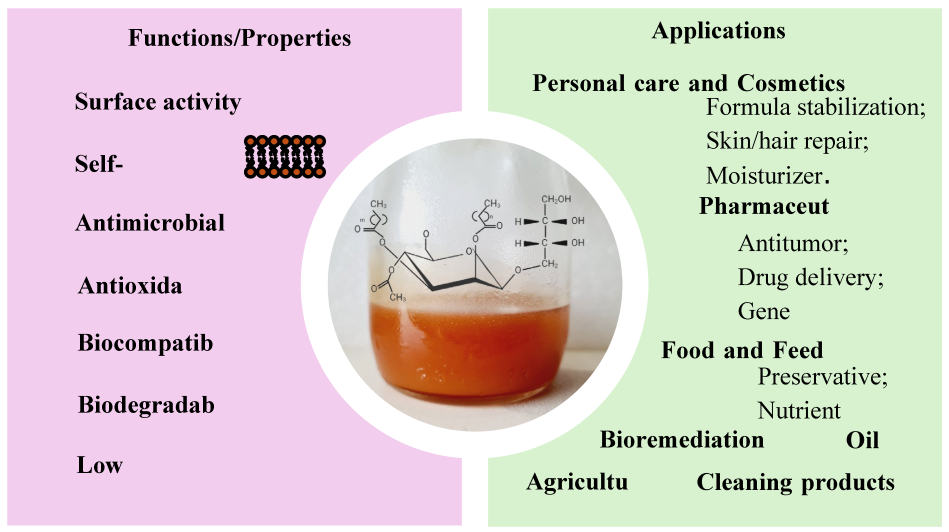
Undoubtedly, MELs present advantages over other surfactants, from their environmental performance and biocompatibility with the human body to their effectiveness, conferred by their low CAC and surface activity stability. Moreover, unlike chemical surfactants, MELs present several different bioactivities described in the previous chapter, such as antioxidant, antimicrobial, cell reparation and antitumor activity, widening their potential applications, fitting into areas where chemical surfactants and even BS do not. Figure 1 summarises the main properties of MELs and their fields of action. However, MELs still occupy a small share of the BS glycolipids market, with a market value estimated at 3.3 M USD in 2022 [87] and this may be attributed to several factors.
Compared to other surfactants and BS, MELs are relatively recent molecules, the first studies with MELs were reported in beginning of the ’90s [88], as for RLs and SLs, the first studies are from 1949 [89] and 1961 [90], respectively. The chemical and bio-based chemically synthesized surfactant production is very well established. Historically, the earliest evidences of soap manufacturing are so old as 2800 BC (ISSN 0973-1792). Thus, there is less knowledge about MELs, and that is reflected on the number of MELs-producing companies, which are Toyobo Corporation, Biotopia, Damy chemicals, and very recently SurfACTinnov. Additionally, to the formulations mentioned in the Section 4.2, Ecover and CJ CheilJedang have also incorporated MELs on their formulations. While, it is possible that more companies may be using MELs in their formulations, such identification is challenging due to the lack of public available information and difficulties to identify MELs in the products ingredients list.
Concerning bioprocess development, which detailed review is out of the scope of this manuscript, while SLs and RLs reported maximum productivities are 3.7 and 1.54 g/L/h, respectively, MELs production productivities are significant lower at values of 0.59 g/L/h [91]. Additional to lower productivity and consequent needs on CAPEX investment, other important cost-drivers are related with the use of pure substrates and the downstream process, which represents approximately 60% of the total production costs [3]. These factors contribute to production cost of MELs that are not low enough to facilitate their commercialization. An economic analysis on MELs production is not yet available in the literature. However, considering titres of 100 g/L, SLs and RLs production cost was estimated to be US$ 2.95/kg [92] and US$ 20-25/kg [93], respectively, thus it is expected that MELs have an higher production cost than the two glycolipids. Despite the efforts to reduce glycolipids costs production, costs for BS production are still more expensive than the ones for chemical surfactants (US$ 1-3/kg) [93]. In addition, the production scale of MELs has been reported to be validated only at 1 m3 scale [94], meaning that it is still not possible to produce MELs in industrial quantities, creating problems of availability and potentially lowering the interest from potential formulation companies, which can use for SLs or RMs for preparation of their BS based products.
Therefore, lowering manufacturing costs and scaling up the process are necessary strategies to increase MELs’ market share. In this regard, there are already studies aiming to reduce MELs production costs from the substrate point of view, by replacing the carbon and nitrogen sources with industrial by-products. Glycerol [95], lignocellulosic materials [96], sweetwater from the fat-splitting industry [97], cassava wastewater [98] and cheese whey [99] and are some of the substrates that have been used to replace the hydrophilic carbon source, as for the hydrophobic carbon source, studies with waste cooking oils have been done [99,100,101]. Contributing to costs reductions, Nascimento et al. (2022) [99] successfully replaced the use of yeast extract and mineral supplementation in the fermentation medium with cheese whey.
To increase productivity is an important strategy to decrease production costs, which relays on optimization of fermentation conditions, namely quantities and type of nitrogen sources and of hydrophilic and hydrophobic carbon sources; air supply and agitation; and microorganism strained used, as different organisms have different productivities [102]. The fermentation modes currently reported for MELs production are batch, fed-batch and repeated fed-batch fermentations [102]. However, other fermentation modes could be explored, such as solid-state fermentations, which are being used for SLs production [103]. The choice of the microorganism is relevant not only for increasing productivity, but also to define MELs congeners mixtures obtained. A review paper by Saika et al. (2018) [104] compiles the studies made that have recurred to genetic engineering to modify MELs producers, with some of the strains described being able of more selective production of specific MEL congeners and other stains able to produce novel derivatives of MELs. Additional studies may result on increase
MELs productivity and to expand MELs’ possible industrial applications. Such studies can take a process approach or focus on genetic modification of MELs producers and creation of recombinant strains, with hosts other than the original species, as it is being performed for RLs [105]. On the other hand, fermentation conditions used can also affect the final product purity and downstream process intensity, namely concerning the steps needed to remove hydrophobic carbon source, when used in excess. Note that may reports use high concentration of vegetable oils as substrates, which leads to the accumulation of unconsumed and/or residual lipids, and therefore, decreased MELs purity [25,26]. For some high-grade applications, like pharmaceuticals, the high downstream costs are justified, since a highly pure product is required [3,26]. However, for applications of lower grade, like bioremediation or agriculture, the purity of the product is not so important, and the crucial factor is to ensure that the product is cost-effective, without compromising the final performance. For example, is most of cosmetic formulations, lipids are also used, so the impurities present in MEL’s crude extract, can be a benefit.
A strategy to decrease downstream costs is through solvent recycling. Most of the techniques described recur to solvents such as ethyl acetate, chloroform, and n-hexane. When some of these solvents are mixed, they may form azeotropes, and thus making more challenge efficient solvent recycling by distillation [106]. Careful selection of the solvents used or using a single one solvent, rather than mixtures, may avoid this problem [107]. In addition, the downstream processes can be time-consuming, depending on the solvent, liquid-liquid extraction and evaporation are estimated to take 2h per 100 mL and a silica-gel column chromatography can take from 1 day to 2 weeks [108]. Single solvent liquid-liquid extraction was reported to obtain MELs crudes with 66-75% purity [26,109], which may be enough for low-grade applications and even for the cleaning and personal care sectors. However, other downstream processes have been suggested on the basis of heat differences [109], mesh separations [110] or membrane filtration [26,111], which can provide alternative routes for cost efficient harvesting and purification of the MELs from the fermentation broth.
In resume, the reports presented illustrate the potential of MELs in terms of their properties and applications. Such features may foster MELs possible ability to capture interesting market shares and create a global traction, in particular using as entry markets niche sectors, willing to pay premium prices, where there is a particular fit between MELs properties and activities and envisage product features, as is the case of cosmetic market. In particular, due to environmental concerns and the rising awareness of the dangers of hazardous compounds present in cosmetic products, the personal care market is increasingly searching for biological and organic products with similar performance as chemical ingredients [112]. Namely, in 2023, the natural beauty products market size was estimated to be US$ 37.9 billion, and expected to reach US$ 58.8 billion in 2032, growing at a 5.1% CAGR [112]. However, to increase MELs market share, it is important to strength actions towards: 1) scale and improve productivity, which is essential to lowering production costs, to compete with SLs or RMs; 2) use residual raw materials as substrates, fostering circular economy approaches and optimize downstream for added value applications, and 3) Validate target application, leveraging on the specific properties of given mixtures of MELs congeners, thus enabling the creation of demand for MELs production.
Author Contributions
Conceptualization, JA; writing—original draft preparation, JA; writing—review and editing, All the authors; supervision, NF, FCF; funding acquisition, NF, FCF. All authors have read and agreed to the published version of the manuscript.
Funding
Thanks for funding to Fundação para a Ciência e Tecnologia through CleanFish project (2022.07677.PTDC), iBB (UIDB/04565/2020, UIDP/04565/2020); and i4HB, LA/P/0140/2020.
Institutional Review Board Statement
Not applicable.
Informed Consent Statement
Not applicable.
Data Availability Statement
Not applicable.
Conflicts of Interest
The authors declare no conflicts of interest, other than the interest on the field, including partnering with interested stakeholders and fostering start-up initiatives. FCF regularly updates the disclose of his collaborations at https://www.cienciavitae.pt/portal/4C18-FD61-0596.
References
- Ghosh S, Ray A, Pramanik N. Self-assembly of surfactants: An overview on general aspects of amphiphiles. Biophys Chem. 2020;265:106429. [CrossRef]
- Johnson P, Trybala A, Starov V, Pinfield VJ. Effect of synthetic surfactants on the environment and the potential for substitution by biosurfactants. Adv Colloid Interface Sci. 2021;288:102340. [CrossRef]
- Banat IM, Thavasi R, eds. Microbial Biosurfactants and Their Environmental and Industrial Applications. CRC Press; 2019. [CrossRef]
- Precedence Research. Surfactants Market (By Type: Anionic Surfactants, Non-ionic Surfactants, Cationic Surfactants, Amphoteric Surfactants, Others; By Origin: Synthetic Surfactants, Bio-based Surfactants; By Application: Home Care, Personal Care, Oilfield Chemicals, Food & Beverage, Agrochemicals, Textiles, Plastics, Industrial & Institutional Cleaning) - Global Industry Analysis, Size, Share, Growth, Trends, Regional Outlook, and Forecast 2023 – 2032. Accessed February 28, 2024.
- Pradhan A, Bhattacharyya A. Quest for an eco-friendly alternative surfactant: Surface and foam characteristics of natural surfactants. J Clean Prod. 2017;150:127-134. [CrossRef]
- Madsen T, Boyd HB, Nylén D, Pendersen R, Petersen G, Simonsen F. Environmental and Health Assessment of Substances in Household Detergents and Cosmetic Detergent Products; 2000.
- United Nations. Sustainable Development Goals. Available online: https://www.undp.org/sustainable-development-goals (accessed on 28 February 2024).
- European Comission. REACH Regulation. Available online: https://environment.ec.europa.eu/topics/chemicals/reach-regulation_en (accessed on 28 February 2024).
- Eras-Muñoz E, Farré A, Sánchez A, Font X, Gea T. Microbial biosurfactants: A review of recent environmental applications. Bioengineered. 2022;13(5):12365-12391. [CrossRef]
- Krauter, J. Evonik and Unilever team up for large-scale production of world’s first “green” biosurfactant. Evonik. Published December 2019. Available online: https://household-care.evonik.com/en/news/press-releases/evonik-and-unilever-team-up-for-large-scale-production-of-worlds-first-green-biosurfactant-121470.html (accessed on 1 October 2023).
- Wesche, B. BASF strengthens its position in bio-surfactants for Personal Care, Home Care and Industrial Formulators with two distinct partnerships. BASF. Published March 2021. Available online: https://www.basf.com/vn/en/media/news-releases/global/2021/03/p-21-148.html (accessed on 14 October 2023).
- Stepan. Stepan Company Completes Acquisition of NatSurFact® Business from Logos Technologies. Published , 2020. Available online: https://www.stepan.com/content/stepan-dot-com/en/news-events/news---events/stepan-company-completes-acquisition-of-natsurfact.html (accessed on 1 March 2024).
- Arutchelvi JI, Bhaduri S, Uppara PV, Doble M. Mannosylerythritol lipids: A review. J Ind Microbiol Biotechnol. 2008;35(12):1559-1570. [CrossRef]
- Kim HS, Jeon JW, Kim SB, Oh HM, Kwon TJ, Yoon BD. Surface and physico-chemical properties of a glycolipid biosurfactant, mannosylerythritol lipid, from Candida antarctica. Biotechnol Lett. 2002;24(19):1637-1641. [CrossRef]
- Imura T, Ohta N, Inoue K, et al. Naturally engineered glycolipid biosurfactants leading to distinctive self-assembled structures. Chemistry - A European Journal. 2006;12(9):2434-2440. [CrossRef]
- Fukuoka T, Yanagihara T, Imura T, et al. Enzymatic synthesis of a novel glycolipid biosurfactant, mannosylerythritol lipid-D and its aqueous phase behavior. Carbohydr Res. 2011;346(2):266-271. [CrossRef]
- Morita T, Konishi M, Fukuoka T, et al. Identification of Pseudozyma graminicola CBS 10092 as a Producer of Glycolipid Biosurfactants, Mannosylerythritol Lipids. J Oleo Sci. 2008;57(2):123-131. [CrossRef]
- Ceresa C, Hutton S, Lajarin-Cuesta M, et al. Production of Mannosylerythritol Lipids (MELs) to be Used as Antimicrobial Agents Against S. aureus ATCC 6538. Curr Microbiol. 2020;77(8):1373-1380. [CrossRef]
- Jing C, Guo J, Li Z, et al. Screening and Research on Skin Barrier Damage Protective Efficacy of Different Mannosylerythritol Lipids. Molecules. 2022;27(14). [CrossRef]
- Feuser PE, Coelho ALS, de Melo ME, et al. Apoptosis Induction in Murine Melanoma (B16F10) Cells by Mannosylerythritol Lipids-B; a Glycolipid Biosurfactant with Antitumoral Activities. Appl Biochem Biotechnol. 2021;193(11):3855-3866. [CrossRef]
- Takahashi M, Morita T, Fukuoka T, Kitamoto D. Glycolipid Biosurfactants, Mannosylerythritol Lipids, Show Antioxidant and Protective Effects against H 2 O 2-Induced Oxidative Stress in Cultured Human Skin Fibroblasts. Vol 61.; 2012. http://mc.manusriptcentral.
- Bae I, Lee ES, Yoo JW, et al. Mannosylerythritol lipids inhibit melanogenesis via suppressing ERK-CREB-MiTF-tyrosinase signalling in normal human melanocytes and a three-dimensional human skin equivalent. Exp Dermatol. 2019;28(6):738-741. [CrossRef]
- Bae IH, Lee SH, Oh S, et al. Mannosylerythritol lipids ameliorate ultraviolet A-induced aquaporin-3 downregulation by suppressing c-Jun N-terminal kinase phosphorylation in cultured human keratinocytes. The Korean Journal of Physiology & Pharmacology. 2019;23(2):113. [CrossRef]
- Keković P, Borges M, Faria NT, Ferreira FC. Towards Mannosylerythritol Lipids (MELs) for Bioremediation: Effects of NaCl on M. antarcticus Physiology and Biosurfactant and Lipid Production; Ecotoxicity of MELs. J Mar Sci Eng. 2022;10(11):1773. [CrossRef]
- Rau U, Nguyen LA, Roeper H, Koch H, Lang S. Fed-batch bioreactor production of mannosylerythritol lipids secreted by Pseudozyma aphidis. Appl Microbiol Biotechnol. 2005;68(5):607-613. [CrossRef]
- Faria NT, Nascimento MF, Ferreira FA, Esteves T, Santos MV, Ferreira FC. Substrates of Opposite Polarities and Downstream Processing for Efficient Production of the Biosurfactant Mannosylerythritol Lipids from Moesziomyces spp. Appl Biochem Biotechnol. Published online February 22, 202. [CrossRef]
- Kitamoto D, Yanagishita H, Shinbo T, Nakane T, Kamisawa C, Nakahara T. Surface active properties and antimicrobial activities of mannosylerythritol lipids as biosurfactants produced by Candida antarctica. J Biotechnol. 1993;29(1-2):91-96. [CrossRef]
- Shu Q, Niu Y, Zhao W, Chen Q. Antibacterial activity and mannosylerythritol lipids against vegetative cells and spores of Bacillus cereus. Food Control. 2019;106. [CrossRef]
- Shu Q, Wei T, Lu H, Niu Y, Chen Q. Mannosylerythritol lipids: Dual inhibitory modes against Staphylococcus aureus through membrane-mediated apoptosis and biofilm disruption. Appl Microbiol Biotechnol. 2020;104(11):5053-5064. [CrossRef]
- Yamauchi S, Furukawa M, Kawahara A, et al. Roles of mannosylerythritol lipid-B components in antimicrobial activity against bovine mastitis-causing Staphylococcus aureus. World J Microbiol Biotechnol. 2022;38(3). [CrossRef]
- Liu X, Zhang L, Pang X, et al. Synergistic antibacterial effect and mechanism of high hydrostatic pressure and mannosylerythritol Lipid-A on Listeria monocytogenes. Food Control. 2022;135. [CrossRef]
- Dempster C, Marchant R, Banat IM. Antimicrobial Potential of Biosurfactants as a Novel Combination Therapy Against Bacteria that Cause Skin Infections. In: ; 2019.
- Isoda H, Shinmoto H, Kitamoto D, Matsumura M, Nakahara T. Differentiation of human promyelocytic leukemia cell line HL60 by microbial extracellular glycolipids. Lipids. 1997;32(3):263-271. [CrossRef]
- Isoda H, Kitamoto D, Shinmoto H, Matsumura M, Nakahara T. Microbial Extracellular Glycolipid Induction of Differentiation and Inhibition of the Protein Kinase C Activity of Human Promyelocytic Leukemia Cell Line HL60. Vol 61.; 1997.
- Isoda H, Nakahara T. Mannosylerythritol lipid induces granulocytic differentiation and inhibits the tyrosine phosphorylation of human myelogenous leukemia cell line K562. Cytotechnology. 1997;25(1/3):191-195. [CrossRef]
- Feuser PE, Coelho ALS, de Melo ME, et al. Apoptosis Induction in Murine Melanoma (B16F10) Cells by Mannosylerythritol Lipids-B; a Glycolipid Biosurfactant with Antitumoral Activities. Appl Biochem Biotechnol. 2021;193(11):3855-3866. [CrossRef]
- Zhao X, Wakamatsu Y, Shibahara M, et al. Mannosylerythritol lipid is a potent inducer of apoptosis and differentiation of mouse melanoma cells in culture. Cancer Res. 1999;59(2):482-486.
- Morita Y, Tadokoro S, Sasai M, Kitamoto D, Hirashima N. Biosurfactant mannosyl-erythritol lipid inhibits secretion of inflammatory mediators from RBL-2H3 cells. Biochim Biophys Acta Gen Subj. 2011;1810(12):1302-1308. [CrossRef]
- Isoda H, Shinmoto H, Matsumura M, Nakahara T. The Neurite-Initiating Effect of Microbial Extracellular Glycolipids in PC12 Cells. Vol 31.; 1999.
- Shibahara M, Zhao X, Wakamatsu Y, et al. Mannosylerythritol Lipid Increases Levels of Galactoceramide in and Neurite Outgrowth from PC12 Pheochromocytoma Cells. Vol 33.; 2000.
- Igarashi S, Hattori Y, Maitani Y. Biosurfactant MEL-A enhances cellular association and gene transfection by cationic liposome. Journal of Controlled Release. 2006;112(3):362-368. [CrossRef]
- Ueno Y, Hirashima N, Inoh Y, Furuno T, Nakanishi M. Characterization of Biosurfactant-Containing Liposomes and Their Efficiency for Gene Transfection. Biol Pharm Bull. 2007;30(1):169-172. [CrossRef]
- Inoh Y, Kitamoto D, Hirashima N, Nakanishi M. Biosurfactants of MEL-A increase gene transfection mediated by cationic liposomes. Biochem Biophys Res Commun. 2001;289(1):57-61. [CrossRef]
- Inoh Y, Furuno T, Hirashima N, Kitamoto D, Nakanishi M. Rapid delivery of small interfering RNA by biosurfactant MEL-A-containing liposomes. Biochem Biophys Res Commun. 2011;414(3):635-640. [CrossRef]
- Bakur A, Elshaarani T, Niu Y, Chen Q. Comparative study of antidiabetic, bactericidal, and antitumor activities of MEL@AgNPs, MEL@ZnONPs, and Ag-ZnO/MEL/GA nanocomposites prepared by using MEL and gum arabic. RSC Adv. 2019;9(17):9745-9754. [CrossRef]
- Bakur A, Niu Y, Kuang H, Chen Q. Synthesis of gold nanoparticles derived from mannosylerythritol lipid and evaluation of their bioactivities. AMB Express. 2019;9(1):62. [CrossRef]
- Bakur A, Hongyun L, Elshaarani T, Albashir D, Mohammed A, Chen Q. Antioxidant and Anticancer Properties of Biosynthesized GA/Ag-Fe3O4@ Nanocomposites. J Clust Sci. 2022;33(3):903-911. [CrossRef]
- Wu Y, Geng J, Cheng X, et al. Cosmetic-Derived Mannosylerythritol Lipid-B-Phospholipid Nanoliposome: An Acid-Stabilized Carrier for Efficient Gastromucosal Delivery of Amoxicillin for In Vivo Treatment of Helicobacter pylori. ACS Omega. 2022;7(33):29086-29099. [CrossRef]
- Cheng X, Geng J, Wang L, et al. Berberine-loaded mannosylerythritol lipid-B nanomicelles as drug delivery carriers for the treatment of Helicobacter pylori biofilms in vivo. European Journal of Pharmaceutics and Biopharmaceutics. 2023;193:105-118. [CrossRef]
- Yu G, Wang X, Zhang C, Chi Z, Chi Z, Liu G. Efficient production of mannosylerythritol lipids by a marine yeast Moesziomyces aphidis XM01 and their application as self-assembly nanomicelles. Mar Life Sci Technol. 2022;4(3):373-383. [CrossRef]
- Yu G, Wang X, Zhang C, Chi Z, Chi Z, Liu G. Efficient production of mannosylerythritol lipids by a marine yeast Moesziomyces aphidis XM01 and their application as self-assembly nanomicelles. Mar Life Sci Technol. 2022;4(3):373-383. [CrossRef]
- Ito S, Imura T, Fukuoka T, et al. Kinetic studies on the interactions between glycolipid biosurfactant assembled monolayers and various classes of immunoglobulins using surface plasmon resonance. Colloids Surf B Biointerfaces. 2007;58(2):165-171. [CrossRef]
- Kim MK, Jeong ES, Kim KN, Park SH, Kim JW. Nanoemulsification of pseudo-ceramide by molecular association with mannosylerythritol lipid. Colloids Surf B Biointerfaces. 2014;116:597-602. [CrossRef]
- Zanotto AW, Kanemaru MYS, de Souza FG, Duarte MCT, de Andrade CJ, Pastore GM. Enhanced antimicrobial and antioxidant capacity of Thymus vulgaris, Lippia sidoides, and Cymbopogon citratus emulsions when combined with mannosylerythritol a lipid biosurfactant. Food Research International. 2023;163:112213. [CrossRef]
- Kitagawa M, Nishimoto K, Tanaka T. Cosmetic pigments, their production method, and cosmetics containing the cosmetic pigments. Published online 2015.
- Morita T, Kitagawa M, Yamamoto S, et al. Activation of Fibroblast and Papilla Cells by Glycolipid Biosurfactants, Mannosylerythritol Lipids. J Oleo Sci. 2010;59(8):451-455. [CrossRef]
- Morita T, Kitagawa M, Yamamoto S, et al. Glycolipid Biosurfactants, Mannosylerythritol Lipids, Repair the Damaged Hair. J Oleo Sci. 2010;59(5):267-272. [CrossRef]
- Morita T, Kitagawa M, Suzuki M, et al. A Yeast Glycolipid Biosurfactant, Mannosylerythritol Lipid, Shows Potential Moisturizing Activity toward Cultured Human Skin Cells: The Recovery Effect of MEL-A on the SDS-damaged Human Skin Cells. J Oleo Sci. 2009;58(12):639-642.
- Yamamoto S, Morita T, Fukuoka T, et al. The Moisturizing Effects of Glycolipid Biosurfactants, Mannosylerythritol Lipids, on Human Skin. J Oleo Sci. 2012;61(7):407-412. [CrossRef]
- Kondo T, Yasui C, Banno T, et al. Self-Assembling Properties and Recovery Effects on Damaged Skin Cells of Chemically Synthesized Mannosylerythritol Lipids. ChemBioChem. 2022;23(2). [CrossRef]
- Tokudome Y, Tsukiji H. Mannosylerythritol Lipid B Enhances the Skin Permeability of the Water-Soluble Compound Calcein via OH Stretching Vibration Changes. Colloids and Interfaces. 2020;4(1):10. [CrossRef]
- Mawani JS, Mali SN, Pratap AP. Formulation and evaluation of antidandruff shampoo using mannosylerythritol lipid (MEL) as a bio-surfactant. Tenside Surfactants Detergents. 2023;60(1):44-53. [CrossRef]
- Hua Z, Chen Y, Du G, Chen J. Effects of biosurfactants produced by Candida antarctica on the biodegradation of petroleum compounds. World J Microbiol Biotechnol. 2004;20:25-29.
- Kitamoto D, Ikegami T, Suzuki GT, et al. Microbial conversion of n-alkanes into glycolipid biosurfactants, mannosylerythritol lipids, by Pseudozyma (Candida antarctica). Biotechnol Lett. 2001;23(20):1709-1714. [CrossRef]
- Farooq U, Szczybelski A, Ferreira FC, Faria NT, Netzer R. A Novel Biosurfactant-Based Oil Spill Response Dispersant for Efficient Application under Temperate and Arctic Conditions. ACS Omega. Published online 2023. [CrossRef]
- Barreau S, Packet D, Couleon P, Fouquet M. Petroleum Demulsifier. Published online January 12, 2021.
- 范琳琳, 王英, 刘小莉, 周剑忠, 李亚辉. Anthocyanin nutrition carrier and preparation method thereof. Published online March 31, 2020.
- Shu Q, Wei T, Liu X, Liu S, Chen Q. The dough-strengthening and spore-sterilizing effects of mannosylerythritol lipid-A in frozen dough and its application in bread making. Food Chem. 2022;369. [CrossRef]
- Liu S, Gu S, Shi Y, Chen Q. Alleviative effects of mannosylerythritol lipid-A on the deterioration of internal structure and quality in frozen dough and corresponding steamed bread. Food Chem. 2024;431. [CrossRef]
- Fukuoka T, Yoshida S, Nakamura J, et al. Application of Yeast Glycolipid Biosurfactant, Mannosylerythritol Lipid, as Agrospreaders. J Oleo Sci. 2015;64(6):689-695. [CrossRef]
- Ga’al H, Yang G, Fouad H, Guo M, Mo J. Mannosylerythritol Lipids Mediated Biosynthesis of Silver Nanoparticles: An Eco-friendly and Operative Approach Against Chikungunya Vector Aedes albopictus. J Clust Sci. 2021;32(1):17-25. [CrossRef]
- Yoshida S, Koitabashi M, Nakamura J, et al. Effects of biosurfactants, mannosylerythritol lipids, on the hydrophobicity of solid surfaces and infection behaviours of plant pathogenic fungi. J Appl Microbiol. 2015;119(1):215-224. [CrossRef]
- Farmer S, Zorner P, Alibek K, et al. Materials and Methods for the control of Nematodes. Published online November 28, 2019.
- Matosinhos RD, Cesca K, Carciofi BAM, de Oliveira D, de Andrade CJ. The Biosurfactants Mannosylerythritol Lipids (MELs) as Stimulant on the Germination of Lactuca sativa L. Agriculture. 2023;13(9):1646. [CrossRef]
- Madihalli C, Sudhakar H, Doble M. Mannosylerythritol Lipid-A as a Pour Point Depressant for Enhancing the Low-Temperature Fluidity of Biodiesel and Hydrocarbon Fuels. Energy & Fuels. 2016;30(5):4118-4125. [CrossRef]
- Ferreira F, Faria N, Fonseca C. Production of fuels from microbial glycolipids with lipid chains comprising 6 to 14 carbons. Published online November 19, 2015.
- José de Andrade C, Maria Pastore G. Comparative study on microbial enhanced oil recovery using mannosylerithritol lipids and surfactin. International Journal of Scientific World. 2016;4(2):69. [CrossRef]
- Sajna KV, Sukumaran RK, Jayamurthy H, et al. Studies on biosurfactants from Pseudozyma sp. NII 08165 and their potential application as laundry detergent additives. Biochem Eng J. 2013;78:85-92. [CrossRef]
- Hellmuth H, Bode N, Dreja M, Buhl A. Detergent with mannosylerythritol lipid. Published online April 28, 2016. Available online: https://patents.google.com/patent/DE102014221889A1/en (accessed on 26 October 2023).
- Kitamoto D, Yanagishita H, Endo A, Nakaiwa M, Nakane T, Akiya T. Remarkable antiagglomeration effect of a yeast biosurfactant, diacylmannosylerythritol, on ice-water slurry for cold thermal storage. Biotechnol Prog. 2001;17(2):362-365. [CrossRef]
- Coderch L, López O, de la Maza A, Parra JL. Ceramides and Skin Function. Am J Clin Dermatol. 2003;4(2):107-129. [CrossRef]
- Yoo JW, Hwang YK, BIN SA, Kim YJ, Lee JH. Skin whitening composition containing mannosylerythritol lipid. Published online February 17, 2021.
- Ito S, Suzuki M, Suzuki K, Kobayashi Y. Feed additive and feed. Published online September 30, 2010.
- Sajna KV, Sukumaran RK, Gottumukkala LD, Pandey A. Crude oil biodegradation aided by biosurfactants from Pseudozyma sp. NII 08165 or its culture broth. Bioresour Technol. 2015;191:133-139. [CrossRef]
- Cavalcante Fai AE, Resende Simiqueli AP, de Andrade CJ, Ghiselli G, Pastore GM. Optimized production of biosurfactant from Pseudozyma tsukubaensis using cassava wastewater and consecutive production of galactooligosaccharides: An integrated process. Biocatal Agric Biotechnol. 2015;4(4):535-542. [CrossRef]
- Madihalli C, Sudhakar H, Doble M. Mannosylerythritol Lipid-A as a Pour Point Depressant for Enhancing the Low-Temperature Fluidity of Biodiesel and Hydrocarbon Fuels. Energy and Fuels. 2016;30(5):4118-4125. [CrossRef]
- Mannosylerythritol Lipids Market, By End-use Industries (Household Detergent (Laundry, Dish Wash, Personal Care & Cosmetics (Skincare, Hair Care), Pharmaceuticals, Food, Others)), and By Region (North America, Latin America, Europe, Asia Pacific, Middle East & Africa) - Size, Share, Outlook, and Opportunity Analysis, 2023 – 2030. Coherent Market Insights. Published June 2023. Available online: https://www.coherentmarketinsights.com/market-insight/mannosylerythritol-lipids-market-3692 (accessed on 14 October 2023).
- Kitamoto D, Fuzishiro T, Yanagishita H, Nakane T, Nakahara T. Production of mannosylerythritol lipids as biosurfactants by resting cells ofCandida antarctica. Biotechnol Lett. 1992;14(4):305-310. [CrossRef]
- Jarvis FG, Johnson MJ. A Glyco-lipide Produced by Pseudomonas Aeruginosa. J Am Chem Soc. 1949;71(12):4124-4126. [CrossRef]
- Gorin PAJ, Spencer JFT, Tulloch AP. Hydroxy Fatty Acid Glycosided of Sophorose from Torulopsis Magnoliae. Can J Chem. 1961;39(4):846-855. [CrossRef]
- Miao Y, To MH, Siddiqui MA, et al. Sustainable biosurfactant production from secondary feedstock—recent advances, process optimization and perspectives. Front Chem. 2024;12. [CrossRef]
- Ashby RD, McAloon AJ, Solaiman DKY, Yee WC, Reed M. A process model for approximating the production costs of the fermentative synthesis of sophorolipids. J Surfactants Deterg. 2013;16(5):683-691. [CrossRef]
- Lang S, Wullbrandt D. Rhamnose lipids - biosynthesis, microbial production and application potential. Appl Microbiol Biotechnol. 1999;51:22-32.
- Yang Q, Shen L, Yu F, et al. Enhanced fermentation of biosurfactant mannosylerythritol lipids on the pilot scale under efficient foam control with addition of soybean oil. Food and Bioproducts Processing. 2023;138:60-69. [CrossRef]
- Morita T, Konishi M, Fukuoka T, Imura T, Kitamoto D. Microbial conversion of glycerol into glycolipid biosurfactants, mannosylerythritol lipids, by a basidiomycete yeast, Pseudozyma antarctica JCM 10317T. J Biosci Bioeng. 2007;104(1):78-81. [CrossRef]
- Faria NT, Santos M, Ferreira C, Marques S, Ferreira FC, Fonseca C. Conversion of cellulosic materials into glycolipid biosurfactants, mannosylerythritol lipids, by Pseudozyma spp. under SHF and SSF processes. Microb Cell Fact. 2014;13(1):155. [CrossRef]
- Mawani J, Jadhav J, Pratap A. Fermentative Production of Mannosylerythritol Lipids using Sweetwater as Waste Substrate by Pseudozyma antarctica (MTCC 2706). Tenside Surfactants Detergents. 2021;58(4):246-258. [CrossRef]
- Andrade CJ de, Andrade LM de, Rocco SA, Sforça ML, Pastore GM, Jauregi P. A novel approach for the production and purification of mannosylerythritol lipids (MEL) by Pseudozyma tsukubaensis using cassava wastewater as substrate. Sep Purif Technol. 2017;180:157-167. [CrossRef]
- Nascimento MF, Barreiros R, Oliveira AC, Ferreira FC, Faria NT. Moesziomyces spp. cultivation using cheese whey: New yeast extract-free media, β-galactosidase biosynthesis and mannosylerythritol lipids production. Biomass Convers Biorefin. Published online June 2, 2022. [CrossRef]
- Niu Y, Wu J, Wang W, Chen Q. Production and characterization of a new glycolipid, mannosylerythritol lipid, from waste cooking oil biotransformation by Pseudozyma aphidis ZJUDM34. Food Sci Nutr. 2019;7(3):937-948. [CrossRef]
- Nascimento MF, Coelho T, Reis A, Gouveia L, Faria NT, Ferreira FC. Production of Mannosylerythritol Lipids Using Oils from Oleaginous Microalgae: Two Sequential Microorganism Culture Approach. Microorganisms. 2022;10(12):2390. [CrossRef]
- Beck A, Werner N, Zibek S. Mannosylerythritol Lipids: Biosynthesis, Genetics, and Production Strategies. In: Biobased Surfactants. Elsevier; 2019:121-167. [CrossRef]
- Roelants S, Solaiman DKY, Ashby RD, Lodens S, Van Renterghem L, Soetaert W. Production and Applications of Sophorolipids. In: Biobased Surfactants. Elsevier; 2019:65-119. [CrossRef]
- Saika A, Koike H, Fukuoka T, Morita T. Tailor-made mannosylerythritol lipids: Current state and perspectives. Appl Microbiol Biotechnol. 2018;102(16):6877-6884. [CrossRef]
- Suh SJ, Invally K, Ju LK. Rhamnolipids: Pathways, Productivities, and Potential. In: Biobased Surfactants. Elsevier; 2019:169-203. [CrossRef]
- Shephard JJ, Callear SK, Imberti S, Evans JSO, Salzmann CG. Microstructures of negative and positive azeotropes. Physical Chemistry Chemical Physics. 2016;18(28):19227-19235. [CrossRef]
- Gunther, M. Mikrobielle Synthese, Aufarbeitung, Modifizierung Und Tensideigenschaften von Mannosylerythritollipinden Und Cellobioselipiden (Microbial Synthesis, Processing, Modification and Surfactant Properties of Mannosylerythritol Lipids and Cellobiose Lipids). Fraunhofer IGB; 2015.
- Smyth TJP, Perfumo A, Marchant R, Banat* IM. Isolation and Analysis of Low Molecular Weight Microbial Glycolipids. In: Handbook of Hydrocarbon and Lipid Microbiology. Springer Berlin Heidelberg; 2010:3705-3723. [CrossRef]
- Rau U, Nguyen LA, Roeper H, Koch H, Lang S. Downstream processing of mannosylerythritol lipids produced by Pseudozyma aphidis. European Journal of Lipid Science and Technology. 2005;107(6):373-380. [CrossRef]
- Goossens E, Wijnants M, Packet D, Lemière F. Enhanced separation and analysis procedure reveals production of tri-acylated mannosylerythritol lipids by Pseudozyma aphidis. J Ind Microbiol Biotechnol. 2016;43(11):1537-1550. [CrossRef]
- Nascimento MF, Keković P, Ribeiro IAC, Faria NT, Ferreira FC. Novel Organic Solvent Nanofiltration Approaches for Microbial Biosurfactants Downstream Processing. Membranes (Basel). 2023;13(1):81. [CrossRef]
- Global Market Insights. Natural Cosmetics Market Size - By Product Type (Skin Care and Sun Care, Hair Care, Body Care, Men’s Grooming, Makeup, Fragrance), By Packaging Type, By Price Range, By Consumer Group, By Distribution Channel, & Global Forecast 2024 – 2032. Published December 2023. Available online: https://www.gminsights.com/industry-analysis/natural-cosmetics-market (accessed on 12 March 2024).

Table 1.
Summary table of MELs potential applications reported in the literature. NA- Not Available.
Table 1.
Summary table of MELs potential applications reported in the literature. NA- Not Available.
| Application Area | Specification | Brief Description of the Results | MELs Used | References |
|---|---|---|---|---|
| Biomedical/ Pharmaceutics | Anti microbial activity |
▪ Both MELs were strongly active against gram-positive bacteria (Bacillus subtilis, Micrococcus luteus, Mycobacterium rhodoochrous, Staphylococcus aureus). | MEL-A 99% and MEL-B 99% |
[27] |
| ▪ MELs had antimicrobial activity against S. aureus and biofilm disruption activity. | MELs mixture | [18] | ||
| ▪ MEL-A inhibited the germination of Bacillus cereus spores. | MEL-A 80% | [28] | ||
| ▪ MEL-A inhibited planktonic cells and biofilm of S. aureus. | MEL-A 80% | [29] | ||
| ▪ MEL-B inhibited the growth of bovine mastitis causative S. aureus. | MEL-B | [30] | ||
| ▪ The combination of MEL-A with high hydrostatic pressure led to a higher bactericidal effect against Listeria monocytogenes (than the hydrostatic pressure alone). | MEL-A 80% | [31] | ||
| ▪ MELs inhibited the growth of E. coli and P. aeruginosa. The combination of MELs and antibiotics potentiated antibiotics’ efficiency. | NA | [32] | ||
| Application area | Specification | Brief description of the results | MELs used | References |
|
Biomedical/ Pharmaceutics (continuation) |
Antitumor |
▪ MELs induced the differentiation of Human Promyelocytic Leukemia cells HL60 and inhibited Protein Kinase C activity. | MELs mixture |
[33,34] |
| ▪ MELs inhibited Tyrosine Kinase activity, inhibiting proliferation and inducing the differentiation of Human Myelogenous Leukemia cells K562. | MELs mixture |
[35] | ||
| ▪ MEL-B reduced cell viability and induced death by apoptosis of B16F10 Mouse Melanoma cells. | MEL-B 95% Toyobo | [36] | ||
| ▪ MELs stimulated Tyrosinase activity and melanin production, leading to apoptosis and cell-differentiation of B16 Mouse Melanoma cells. |
NA | [37] | ||
| Anti- inflammatory |
▪ MELs inhibit the secretion of inflammatory mediators by Rat Basophilic Leukemia RBL-2H3 cells (a mast cell line). |
MEL-A and MEL-B | [38] | |
| Neural repair | ▪ MELs induce the outgrowth of neurites from and enhance the activity of acetylcholinesterase in PC12 pheochromocytoma cells. | MEL-A | [39,40] | |
| Genetic material transfection or drug- carrying |
▪ MEL-A increased the efficiency of gene transfection by cationic liposomes with a cholesterol derivative or DC-Chol. | MEL-A | [41,42,43] | |
| ▪ MEL-A-containing cationic liposome was able to deliver siRNA rapidly and directly. | MEL-A | [44] | ||
| ▪ MELs were used as stabilizing agents for silver and zinc oxide nanocomposites, gold nanoparticles and for silver and magnetic iron oxide nanocomposites synthesis, to be used in human liver cancer cells inhibition (HepG2). | NA | [45,46,47] | ||
| ▪ Nanoliposomes made of soybean lecithin and cholesterol, when incorporated with MEL-B, have enhanced stability to pH 3-7 and deliver amoxicillin for Helicobacter pylori infection treatment in vivo. | MEL-B, Toyobo | [48] | ||
| ▪ MEL-B nanomicelles successfully carried berberine for H. pylori biofilm disintegration and infection eradication. | MEL-B, Toyobo | [49] | ||
| Drug Delivery |
▪ Preparation of MELs nanomiceles for drug delivery (clarithromycin). It was shown that, by varying the pH, it is possible to control clarithromycin delivery (pH 1.2, in 2 h, 37.1% of drug was delivery, while, at pH 7.4, only 9.7% was released). | MELs mixture |
[50] | |
| Immunoglobulin purification |
▪ MEL-A shows high binding affinity towards HIgG, HIgA and HIgM. | MEL-A | [51,52] | |
| Application area | Specification | Brief description of the results | MELs used | References |
|
Cosmetics and personal care |
Formulation stabilization | ▪ Emulsification of pseudo-ceramide is stabilized by molecular association with MELs. | Damy chemicals | [53] |
| MELs stabilize the foaming, emulsification, and wetting properties of Sodium Lauryl Sulphate. | MELs mixture |
[54] | ||
| ▪ Coating cosmetics (lip primer, foundation and sunscreen) pigments with MELs, enhance their skin adhesion. | NA | [55] | ||
| Skin whitening |
▪ MELs inhibit melanogenesis via suppressing ERK-CREB-MiTF-tyrosinase signalling in human melanocytes and a three-dimensional human skin equivalent. | MELs from DKBIO, MEL-B 85% | [22] | |
| Hair growth promotion | ▪ MEL-A produced from soybean oil increases cultured Fibroblast cells and 3D Human Skin model cells viability and activates Human Papilla cells. | MEL-A 80.1% | [56] | |
| Damaged hair repair | ▪ MEL-A and MEL-B shown similar activity as ceramides for hair damage repair, and increase of hair flexibility. | MEL-A 99% MEL-B 90% | [57] | |
| Skin repair and moisturization |
▪ MELs ameliorate UVA-induced aquaporin-3 downregulation by suppressing c-Jun N-terminal kinase phosphorylation in cultured human keratinocytes. | MELs from DKBIO | [23] | |
| ▪ MEL-A had a recovery effect on SDS damaged skin cells | MEL-A | [58] | ||
| ▪ MEL-A and MEL-B produced with olive oil show activities similar to natural ceramides on the cell viability and SDS-induced damage repair of cultured human skin cells; MEL-B increased the water content in the stratum corneum and reduced water loss by perspiration. | MEL-A 100% MEL-B 100% |
[59] | ||
| ▪ MELs with carbon chains with 10 or more carbons exhibit better cell damage repair than a natural C18 ceramide, particularly MEL-D C10 (MELs purified by acetylation level and carbon chain size, see original paper) | MELs purified |
[60] | ||
| ▪ MEL-B protected both HaCaT and 3D skin cell models from UVB- and SDS-induced damage by up-regulating the expression of the skin barrier damage-associated key mRNA genes and proteins LOR, FLG, and TGM1 (MELs mixture 34.94% MEL-A, 28.46% MEL-B and 11.32% MEL-C). | MELs mixture. |
[19] | ||
| ▪ MEL-B liposomes increase skin permeability to water-soluble compounds (calcein) in mice. | MEL-B, Toyobo | [61] | ||
| Antioxidant | ▪ MEL-C has antioxidant activity through DPPH radical and superoxide anion scavenging and protection of cultured human fibroblast cells against H2O2-induced oxidative stress | MEL-C 80.7-92.5% | [21] | |
| Anti microbial |
▪ MELs have antimicrobial activity against Malassezia furfur, the yeast that causes dandruff. A shampoo formulated with MELs and SLS had increased anti-dandruff activity | NA | [62] | |
| Application area | Specification | Brief description of the results | MELs used | References |
| Bioremediation | Oil spills | ▪ MELs increase the bioavailability and biodegradation rate of n-alkanes, diesel, kerosene and crude oil (MELs mixture: 68% MEL-A, 28% MEL-B and -C and 4% MEL-D). | NA MELs mixture |
[63,64,65] |
| ▪ Patent using MELs as petroleum demulsifier agents | NA | [66] | ||
| Food | Nutrient carriers |
▪ MELs were used in the formulation of a stable anthocyanin nutrient carrier | NA | [67] |
| Food preservation |
▪ MEL-A enhances the rheological properties and water holding capacity of frozen dough, minimizing the freezable water content, while killing B. cereus cells and spores | MEL-A | [28,68,69] | |
| ▪ Emulsification of essential oils with MEL-B (Thymus vulgaris, Lippia sidoides and Cymbopogon citratus), leads to an enhance of essential oils’ antioxidant activity and preservation of antimicrobial activity. | MEL-B | [54] | ||
| Agriculture | Agro-spreader | ▪ MEL used as agrochemical spreader for biopesticides for hydrophobic plant surfaces (MELs mixture: 58% MEL-A, 25% MEL-B and 10% MEL-D). | MEL mixture | [70] |
| Wetting agent | ▪ MEL solutions showed good wetting ability on poorly wettable Gramineae plant surfaces. | MEL-A, MEL-B, MEL-C | [70] | |
| Biocide | ▪ MEL-Ag nanoparticles; activity against mosquito larvae and pupae | MELs mixture |
[71] | |
| Powdery mildew was suppressed on MEL-treated leaves. | MEL-A | [72] | ||
| ▪ MELs, combined with other ingredients, are used for nematodes control. | NA | [73] | ||
| ▪ MEL-B, biostimulant and phytotoxic effect on lettuce plant germination and growth for given concentrations. | MEL-B 95% Toyobo | [74] | ||
| Fuels additive |
▪ MEL-A enhances the fluidity of fuels at low temperatures. | MEL-A | [75] | |
| Others | Jet biofuel | ▪ MELs are used as precursors for fuel with lipid chains comprising 6 to 14 carbons production. | NA | [76] |
| Enhanced oil recovery | ▪ MEL-B can create emulsions with heavy oils. | MEL-B | [77] | |
| Detergent | ▪ MELs had stability over wide pH and temperature ranges and improved detergent efficiency in removing stains from fabric in a proportion of 1:1 (w detergent/w MELs) | MELs mixture |
[78,79] | |
| Ice prevention | Suppression of agglomeration and growth of ice particles | MEL-A | [80] |
Disclaimer/Publisher’s Note: The statements, opinions and data contained in all publications are solely those of the individual author(s) and contributor(s) and not of MDPI and/or the editor(s). MDPI and/or the editor(s) disclaim responsibility for any injury to people or property resulting from any ideas, methods, instructions or products referred to in the content. |
© 2024 by the authors. Licensee MDPI, Basel, Switzerland. This article is an open access article distributed under the terms and conditions of the Creative Commons Attribution (CC BY) license (https://creativecommons.org/licenses/by/4.0/).
Copyright: This open access article is published under a Creative Commons CC BY 4.0 license, which permit the free download, distribution, and reuse, provided that the author and preprint are cited in any reuse.


