

Submitted:
12 April 2024
Posted:
12 April 2024
You are already at the latest version
Abstract
Currently, there is a tenacious need to find new ways to purify water by eliminating bacterial biofilms, textile dyes, and toxic water pollutants. These contaminants pose significant risks to both human health and the environment. To address this issue, in this study, we have developed an eco-friendly approach that involves synthesizing Cobalt-doped Cerium Iron Oxide (CCIO) nanocomposite (NC) using an aqueous extract of Gossypium arboreum L. stalks. The resulting nanoparticles can be used to effectively purify water and tackle the challenges associated with these harmful pollutants. Nanoparticles excel in water pollutant removal by providing high surface area for efficient adsorption, versatile design for simultaneous removal of multiple contaminants, catalytic properties for organic pollutant degradation, and magnetic features for easy separation, offering cost-effective and sustainable water treatment solutions. CCIO nanocomposite has been synthesized by green co-precipitation method due to biomolecules and co-enzymes present in the aqueous extract of Gossypium arboreum L. stalk; a single-step procedure completed in 5 h reaction time. Further, the synthesis of nanocomposites was confirmed by various characterization techniques such as Fourier-transform infrared (FT-IR) spectroscopy, X-ray diffraction (XRD), Field emission scanning electron microscopy (FE-SEM), Transmission electron microscopy (TEM), Thermogravimetric analysis (TGA), Dynamic light scattering (DLS), and Energy Dispersive X-Ray (EDX). CCIO NCs were discovered to have a spherical shape and an average size of 40 nm. Based on DLS zeta potential analysis, CCIO NCs were found to be anionic. Also, CCIO NCs showed significant antimicrobial and antioxidant activity. Overall, considering the physical and chemical properties, the application of CCIO NCs in the adsorption of various dyes (~91 %) and water pollutants (chromium = ~ 60 %) has been considered since they exhibit great adsorption capacity owing to their microporous structure which can be a step forward in water purification.
Keywords:
green synthesis
; co-precipitation
; adsorption
; dye removal
; pollutant removal
; cotton stalk
; wastewater treatment
; adsorption capacity
1. Introduction
Water pollutants pose significant environmental and public health concerns. Environmental consequences include the degradation of aquatic ecosystems, loss of biodiversity, and disruption of ecological balance. Simultaneously, the contamination of water sources raises public health risks, contributing to waterborne diseases, developmental issues, and long-term health problems for communities reliant on compromised water quality. Water streams can be contaminated with a variety of toxic pollutants that include halogenated hydrocarbons, heavy metals, dyes, surfactants, organic compounds, salts, soluble bases, pesticides, and agricultural fertilizers [1]. Synthetic dyes, extensively employed in textiles, pharmaceuticals, and numerous other industries, exhibit remarkable color stability and versatility. Hexavalent chromium is a highly toxic heavy metal released into water bodies through industrial processes, including metal plating, leather tanning, and textile manufacturing [2]. The ubiquity of these synthetic colorants and metals in water bodies raises alarming concerns as once introduced into aquatic ecosystems, resist natural degradation processes, leading to their persistence in water bodies, and can be toxic depending on their chemical composition and concentration[2,3].
Exposure to significant levels of organic/inorganic pollutants has been associated with endocrine disruption, mutagenicity/genotoxicity, and cancer [3,4]. Consequently, nanoparticles emerge as a transformative frontier in the quest for sustainable solutions, holding promise for revolutionizing the landscape of synthetic dye and heavy metal removal [5,6,7,8,9]. Pollutant removal techniques such as flocculation [10,11], ozonation [12], membrane filtration [11,13], activated carbon adsorption [14], electrocoagulation [15,16], sorption techniques [17,18], UV radiation [19], and biological treatment [20], their limitations in terms of efficiency, selectivity, and environmental impact underscore the need for innovative approaches.
The subsequent focus shifts to the expanding field of nanoparticle-mediated pollutant removal, addressing the mechanisms by which nanoparticles interact with pollutants and the factors influencing their effectiveness [21]. By reviewing the current state of knowledge, this study aims to underscore the urgency of adopting environmentally benign approaches for pollutant remediation, additionally highlighting the promising role of nanoparticles in mitigating this global environmental challenge[7,22,23]. Au NPs[24], Ag NPs[25,26], TiO2 NPs[27], SiO2 NPs[28,29], Fe2O3 NPs[30], and graphene oxide NPs (GO) [31,32] are some of the prime examples of nanomaterial mediated pollutant remediation technologies.
Nanomaterials, with their increased surface area per unit mass, offer enhanced adsorption capacity. This mechanism involves the physical binding of pollutants to the surface of nanomaterials. The attractive forces between the nanomaterial surface and the pollutant molecules lead to their immobilization. This process is particularly effective for the removal of organic pollutants, heavy metals, and even nanoparticles from water. Certain nanomaterials possess catalytic properties, enabling them to facilitate chemical reactions that transform pollutants into less harmful substances. This mechanism is prominent in the degradation of organic pollutants. For instance, photocatalytic nanoparticles, like titanium dioxide (TiO2)[27] or zinc oxide (ZnO) [33], can absorb light energy and generate reactive oxygen species, initiating oxidation reactions that break down organic contaminants.
Nanomaterials can induce the precipitation of pollutants by acting as nucleation sites. This is particularly relevant for the removal of heavy metals and ions from water. Functionalized nanoparticles may promote the coagulation of suspended particles, facilitating their removal through sedimentation or filtration processes [34]. Nanomaterials can undergo ion exchange, where certain ions on the material's surface are replaced by ions from the surrounding water. This mechanism is effective for the removal of specific ions, such as heavy metal ions. Ion exchange properties are often enhanced through surface functionalization, allowing nanomaterials to selectively capture target ions[35,36,37].
Magnetic nanoparticles, endowed with magnetic properties, can be easily separated from water using external magnetic fields. This mechanism allows for the recovery and reuse of nanomaterials, contributing to their cost-effectiveness. Magnetic separation is particularly advantageous for the removal of nanoparticles and other magnetic-responsive pollutants. Nanomaterials with redox-active surfaces can participate in redox reactions, either facilitating the reduction or oxidation of pollutants. This mechanism is significant for the removal of contaminants susceptible to redox transformations. Redox reactions can be harnessed for the removal of various pollutants, including organic compounds and certain heavy metals [30,38].
Some nanomaterials exhibit inherent antibacterial properties, contributing to the removal of pathogenic microorganisms in water. The disruption of microbial cell membranes or interference with cellular functions by nanomaterials can effectively mitigate waterborne diseases[39,40]. In conclusion, nanomaterials offer a versatile toolkit for pollutant removal in water, employing mechanisms such as adsorption, catalysis, precipitation, ion exchange, magnetic separation, redox reactions, and antibacterial properties. The choice of nanomaterial and the optimization of its properties play a crucial role in designing effective and sustainable water treatment strategies [9]. This study deals with the green synthesis of Cobalt-doped Cerium Iron Oxide (CCIO) nanocomposite (NC) using the cotton stalk, a waste material from agriculture that serves as a highly useful, low-cost, and abundantly available material. Green chemistry is a method that aims to reduce waste products and prevent environmental pollution with the aid of sustainable and environmentally friendly materials [8]. It entails the usage of natural resources, such as vegetation, microorganisms, enzymes, and other renewable sources to synthesize various compounds and materials [40,41].
The goal of green synthesis is to develop processes that are secure, green, as well as eco-friendly [26]. In this study, we have utilized the cotton stalks as a substrate because it is a complete waste that cannot be utilized by cattle or for any application due to its hard nature. Hence, we tested this material for synthesis of CCIO NCs which proved its effective role in the adsorption of various dyes and toxic metals suggesting its application in the removal of dyes and toxic metal pollutants from contaminated water sources. To our knowledge, this is the first study about synthesizing CCIO NCs from cotton stalks and its exceptional ability to adsorb contaminants (approximately 91%) on the surface of NCs. The overall work performed in this study is summarized as shown in Figure 1.
2. Materials and Methods
2.1. Materials
Cerium nitrate [Ce(NO3)3], Cobalt chloride [CoCl2], Potassium dichromate [K2Cr2O7], 2,2-diphenyl-1-picrylhydrazyl [DPPH], Malachite Green (MG), and Safranin (SF) were purchased from Himedia, Pune, India. Ferric chloride [FeCl3] was obtained from SD Fine Chem, Mumbai, India. Methylene Blue (MB) was bought from SISCO Research Laboratories, India. All other reagents and chemicals were purchased locally.
2.2. Synthesis of Cobalt-Doped Cerium Iron Oxide Nanocomposites (CCIO NCs)
The stalks of Gossypium arboreum L. were collected from Nagpur, Maharashtra, India. After washing and heat-drying, the stalks were crushed into small pieces. A 50 gm of the crushed stalks were soaked in 500 mL of distilled water and kept in the water bath at 80 °C for 3 hours[42]. All the wooden residues were removed by filtration using a muslin cloth and centrifugation of the extract[8,26,43]. The synthesis of CCIO nanocomposites was done by co-precipitation, a green synthesis method. In the prepared aqueous extract of Gossypium arboreum L. stalk (500 mL), 200 mM Ce(NO3)3, FeCl3, and CoCl2 were added stepwise in the same mentioned order and kept for stirring at 50 ºC for 30 min and overnight stirring at 30 oC. A dark-colored solution appeared after overnight stirring and the mixture was further centrifuged at 10,000 rpm for 10 min to obtain the precipitate. The obtained precipitate was further washed in distilled water thrice, followed by ethanol washing. The obtained brown-black colored pellet was kept for drying at 50 ºC.
2.3. Characterization of Synthesized CCIO NCs
Fourier-transform infrared (FT-IR) spectroscopy was conducted to observe functional groups, stretching vibrations, and absorption peaks present on the surface of nanocomposites. Field-emission scanning electron microscopy (FE-SEM) analysis was performed to study the morphology of the CCIO NCs. Further, the sizes of CCIO NCs were estimated using Transmission electron microscopy (TEM) (Carl Zeiss, Libra 120) at a voltage of 120 kV[44,45,46]. The elemental composition of the NCs was determined using EDX (Thermo Fisher Scientific) analysis. X-ray diffraction (XRD)[47] pattern of CCIO NCs was obtained with Cu-Kᵦ radiation along with a scintillation counter detector. For smoothening the data Savitzky-Golay (SG) digital filtering method was applied. To study the thermostability of the synthesized NCs, thermogravimetric analysis (TGA) was performed. Malvern Panalytical zeta sizer Nano Z instrument was used to study the zeta potential of the nanocomposites [48].
2.4. Preparation of Cationic Dyes
The catalytic properties of CCIO nanocomposites (NCs) for dye decolorization were assessed as follows: Different concentrations (1, 2,3, 4, 5, and 10 mg) of CCIO NCs 10 mL of 100 ppm safranin, malachite green, and methylene blue dyes were added to. The solution was stirred for 6 h to check the degradation rate. The dye decolorization process was analyzed by UV–vis spectrophotometer (Thermo Scientific Multiskan EX) [49]. The prepared dye solution (0.1 mg/mL) was used as the control. Eventually, the treatment solution was centrifuged at 7000 rpm for 5 min, and the absorbance (200 nm – 800 nm) was measured by the (Thermo Fisher Scientific) microplate reader. Experiments were done in triplicates and the mean percentage value was recorded[50,51].
2.5. Preparation of Hexavalent Chromium Solution
Analytical grade K2Cr2O7 was dissolved in 10 mL of distilled water to prepare 0.25 mg/mL of chromium sample solution [52]. Based on the standardized concentration of CCIO NCs for dye adsorption, 4 mg/mL concentration was selected for checking its adsorption performance against hexavalent chromium ions.
2.6. Adsorption Analysis
To investigate the effect of CCIO NCs on dye as well as heavy metal removal, the samples were checked for any residual dye/metal at neutral pH and room temperature using absorbance spectra. The adsorption capacity (Q0) and % removal (RE) were calculated using the following formulas:
where Di and Df are the initial and final absorbance; W is the weight of the adsorbent in g; and V is the volume of the dye solution in liters (L)[53].
2.7. Antioxidant Activity
DPPH assay was employed to measure the scavenging activity of the synthesized NC antioxidants[26,54] . For the same, 50 mL of 0.1 mM DPPH in methanol was prepared. Then, 0.5 mL of DPPH solution and 0.25 mL sample solution were mixed, and incubated for 30 min at 37 ºC. (Additionally, the assay was done in triplicates; hence the mean value was considered.) After 30 minutes, absorbance was measured at 517 nm using the spectrophotometer as seen in Figure. 1 (d). Also, the radical scavenging activity was measured using the following equation:
where, As = Absorbance of sample, and Ac = Absorbance of control, at 517 nm each.
2.8. Antimicrobial Activity
The antibacterial activity of CCIO NCs was assessed against Staphylococcus aureus, and Escherichia coli bacteria using the agar well diffusion method. CCIO NCs were sterilized under UV light for about 30 minutes. Then 10 mg/mL of suspension was prepared in sterile distilled water and sonicated for 5 mins to prepare homogeneous suspension. Then 100 µL of bacterial culture was spread over nutrient agar plates. Wells were prepared on both plates using a sterile borer and 50 and 100µL of CCIO NCs suspension was added in well. Then all the plates were incubated for 24 h at 37 °C. The diameter of the zone of inhibition was then determined to calculate the rate of bacterial growth.
2.9. Recycling and Reuse of Used CCIO NCs.
The NCs were recovered from the reaction mixture using sonication and Buchner filtration with Whatman filter paper, and then washed with ethanol, double distilled water, and further kept for heat drying [55]. The used NCs were washed 3 times with 70% ethanol. The samples were then dried in a hot air oven for further use. The reusability experiments were carried out using MB dye (5 mg/mL) for four succeeding cycles. [53].
3. Results and Discussion
3.1. Characterization of the Synthesized CCIO NCs.
To understand the structural and morphological characteristics of the CCIO NCs, SEM and TEM imaging were done. As shown in Figure 2A, SEM analysis demonstrated that the particles were spherical in shape and mostly in aggregated form. The average size of CCIO NCs was found to be 40 nm using TEM analysis confirming that CCIO NCs have been synthesized as shown in Figure 2B.
Further, EDX analysis was conducted to find out the percentage of elements present in synthesized CCIO NCs. The position of the peaks from the EDX analysis confirms the elemental composition of the CCIO NCs. As depicted in Figure 2C, the peak at 4.8 keV, 6.2 keV, and 7.1 keV confirms the presence of cerium, iron, and cobalt elements. In addition, carbon (44.22%) and oxygen (35.48%) were detected as (Figure 2C). EDX analysis substantiated that CCIO NCs consist of cerium, cobalt, and iron, with a higher mass percentage of iron than cerium and cobalt.
To validate the successful formation of the CCIO NCs, FT-IR spectroscopy was administered as seen in Figure 2D. The FT-IR spectra of CCIO showed an absorption peak at 1373.65 cm-1 associated with phenol O–H stretching. The peaks rising at 1235.79 and 2116.79 cm-1were attributed to the C–N and C≡C vibrations respectively. The broad band appearing at 3384.08 cm-1 corresponds to alcohol O–H stretch. The peak at 1988.46 and 2920.32 cm-1 was ascribed to the presence of aromatic compound and alkane due to C–H stretch, whereas, the peak arising at 1606.99 cm-1 was linked to an alkene (conjugated or cyclic) [43,45,56,57]. The zeta potential indicates the stability of the colloidal system and was observed to be -16.8 mV (Figure 2E). The synthesized NCs are anionic and stable which concludes that it has sufficient repulsive force to avoid flocculation [45].
XRD was used to analyze the degree of crystallinity of the synthesized nanocomposites. The samples were scanned in the 2θ range of 15 to 80º and the crystallite size was determined using data obtained during XRD analysis [58]. It is evident from Figure S2A that all the peaks showed similarity with the standard pattern, indicating that the synthesized material was pure. The crystallite size was calculated by the using Scherrer’s formula which was around 35-40 nm range indicating high crystallinity of CCIO NCs.
TGA was performed to investigate the thermostability of the CCIO NCs. As illustrated in Figure S2B, the thermogram showed primary degradation at around 70 ºC and further, degradation at around 200 ºC. The weight loss percentage at the second stage of degradation was observed to be higher than the initial one.
3.2. Adsorption Studies
3.2.1. Adsorption Performance of CCIO NCs for Cationic Dyes
A green co-precipitation method was arrayed to synthesize CCIO NCs and assessed for the adsorption of different cationic dyes such as safranin (SF), malachite green (MG) and methylene blue (MB) from aqueous solutions. CCIO NCs exhibited a maximum adsorption capacity to be 34.3 mg g−1 using SF followed by MB and MG respectively, thus confirming its possibility for application in the remediation of dyes [59]. The adsorbent was added to the aqueous solution of the dye and kept at room temperature with constant stirring, which allowed the cationic dye to adsorb on the anionic binding site of the CCIO NCs due to electrostatic forces as seen in Figure 3. Different concentrations of CCIO NCs were added to the aqueous dye solution and UV-vis spectroscopy was done at the 4th hour. The maximum dye removal was observed when 5 mg/mL concentration of CCIO NCs was used in case of all three dyes as presented in Figure 3A, B and C. Amongst the dyes used, CCIO NCs exhibited the maximum RE (%) using SF (92.87%) as compared to MB (90.55%) and MG (89.34 %) as shown in Figure 3D. Overall, the Chitosan based Fe3O4 NCs were used as adsorbents for MB removal which showed adsorption capacity of 0.62 to 0.95 mg/g [60]. Li et al. used silica-based chitosan NCs for studying adsorption behavior of NCs MB which demonstrated adsorption capacity of 43.03 mg g−1 for MB [61]. Sadiq et al. synthesized magnetic chitosan deep eutectic solvents (MNCDES) for investigating its adsorption ability for MG. These studies showed that MNCDES can adsorb 92.69% of MG dye [62]. In this study, the CCIO NCs showed almost similar adsorption performance as previously reported studies. However, most of the studies have been conducted using chemically synthesized nanomaterials whereas in this study, CCIO NCs have been prepared using plant waste extract through green synthesis process. Hence, green synthesized NCs can have a significant application in removal of dyes from waste water sources.
3.2.2. Adsorption Performance of CCIO NCs for Chromium
Hexavalent chromium is one of the tremendously toxic metal of great concern found in water bodies. Several kinds of nanomaterials have been tested as adsorbent for the removal of chromium (VI) from polluted water. Though, traditional adsorbents usually have a limited adsorption capacity which limits its use for real application. In this study, CCIO NCs has been synthesized and studied for chromium (VI) removal from wastewater owing to its functionality, stability, and redox property. As shown in Figure 4, the absorbance peak for hexavalent chromium (VI) was observed at 350 nm. The sharpness of the said peak decreased significantly when the sample solution was incubated for 6 h at room temperature in the presence of CCIO NCs. CCIO NCs unveiled excellent adsorption capacity for chromium (VI) removal (~ 59.60%) from solution as displayed in Figure 4. From FTIR analysis, it can be stated that adsorption effect was due to electrostatic interaction between the surface of CCIO NCs and Chromium (VI). The reduction from chromium (VI) to (III) was ascribed to all the functional groups (e.g. –OH, –COOH, and –NH–) present on CCIO NCs. These results corroborated that CCIO NCs can have a tremendous potential as an economical and efficient adsorbent of chromium (VI) from polluted water.
3.2.3. Comparative Analysis
On the basis of obtained results, the maximum adsorption was obtained till 4h of incubation period. The comparative analysis was performed for all three dyes i.e. SF, MB and MG using 10 mg/mL of CCIO concentration. The RE % for dye adsorption onto the adsorbent CCIO NCs in 4 hours followed the following order of SF > MB > MG as seen in Figure 5. The feasibility of using CCIO NCs in wastewater treatment was investigated by preparing a reaction mixture of dye (10 mg/mL) and the adsorbent (. For the adsorption capacity test, the sample was centrifuged and the supernatant was collected to determine the residual dye concentration. Taking into consideration the concentration of CCIO NCs utilized for the experiment, the results are highly promising when compared to other studies [52,53,62].
3.3. Radical Scavenging Activity
The odd electron of the nitrogen atom in DPPH is reduced by the hydrogen atom received from the antioxidants which reduces the color (violet) intensity (Figure 6). The degree of color reduction was measured spectrophotometrically. As shown in Figure 6, among the different concentrations of NCs the higher antioxidant activity (44%) was observed at 1.0 mg/mL concentration of CCIO NCs.
3.4. Antimicrobial Activity
As shown in Figure 7, the agar diffusion method was used to determine the antimicrobial activity of CCIO NCs. As shown in Table 1, the antimicrobial activity of CCIO NCs has been measured against E. coli and S. aureus. Antimicrobial activity of CCIO NCs were found to slightly higher in S. aureus (19mm) as compared to E. coli (16.5 mm). Once a clear zone formed around the well containing NCs on the media plate, it exhibited proof of inhibition against a particular bacterium.
CCIO NCs. As per reported studies till date, in addition to well-known antimicrobial AgNPs, other metal oxides (e.g. MgO, TiO2, Cu2O, ZnO and CoFe2O4) have been found to be effective against microorganisms[63,64]. The doping of CeFe2O5 NPs with cobalt aided in improving the antimicrobial activities against both Gram positive and Gram negative organisms which is evident from previous studies [65]. The excellent antimicrobial activity of CCIO NCs against E. coli and S. aureus microbes was attributed to the size, functional groups, and charge present on NCs surface [66]. The obtained results obviously validate the application of a small amount CCIO NCs in wastewater treatment which can reduce various types of organisms within short period of time.
3.5. Reusability of CCIO NCs
In addition to good adsorption performance, reusability is a crucial parameter to provide an efficient, scalable, and economical system. To regenerate the adsorbent ethanol and methanol were found to be good eluents. The effect of four consecutive regeneration cycles was investigated for reused CCIO NCs using SF dye as described in method section 2.9. The reusability data is expressed with respect to regeneration efficiency (RE). As shown in Figure 8., CCIO NCs retained almost 85-90% of adsorption capacity even after its 4th recycling. After each successive cycle, barely 3.5-4% decrease in adsorption performance was observed indicating that the obtained CCIO NCs had excellent stability, regenerability, and adsorptive properties. Therefore, CCIO can easily be recycled, and act as an excellent cost-effective material for rapid removal of cationic dyes from the aqueous solution.
4. Conclusions
In this study, green synthesis of CCIO NCs was performed via the co-precipitation method in a short reaction time of 4h. As the synthesized CCIO NCs are free of secondary pollution, cost-effective, and easier to scale up, they can prove to be a better alternative to conventional waste-water treatment techniques. The characteristic features of NCs were studied by using various methods including, FT-IR, XRD, TGA, FE-SEM, TEM and DLS. The results obtained from FT-IR spectra revealed the presence of phenolic compounds in the CCIO NCs which establishes its antioxidant activity. The dynamic light scattering (DLS) graph for zeta potential confirms the CCIO NCs to be anionic, which justifies their ability to adsorb cationic dyes like SF, MB, and MG. TGA curve demonstrates that the synthesized CCIO NP offers dry heat resistance up to ± 200 ºC. The maximum adsorption capacity of CCIO NCs was found to be 34.3 mg/g against SF dye. Also, reused NCs retained the maximum 85-90% of its adsorption capacity even after 4 successive recycling indicating its reusability. An adsorption capability of CCIO NCs against cationic dyes such as SF, MG, and MB along with the removal of hexavalent chromium was determined by using UV-Vis spectroscopy. The results demonstrated ~91 % adsorption of various dyes and ~ 60 % of water pollutants. Hence, considering environmental factors, CCIO NCs can provide a cost-effective solution against multiple pollutants.
Supplementary Materials
The following supporting information can be downloaded at the website of this paper posted on Preprints.org.
Author Contributions
Conceptualization, M.S; methodology, M.S., S.K., and B.S.K.; software, M.S. and S.K.; validation, M.S. formal analysis, M.S., S.K., and B.S.K.; investigation, S.K.; resources, M.S.; data curation, M.S. and S.K..; writing—original draft preparation, S.K..; writing—review and editing, M.S..; visualization, M.S..; supervision, M.S..; project administration, M.S..; funding acquisition, M.S. All authors have read and agreed to the published version of the manuscript.
Funding
This work is funded by the Ramalingaswami Re-entry Fellowship (BT/RLF/Re-entry/27/2021) Department of Biotechnology (DBT), Government of India.
Institutional Review Board Statement
Not applicable.
Data Availability Statement
The raw data supporting the conclusions of this article will be made available by the authors upon request.
Acknowledgments
The authors thank Ms. Ayesha Shafiq (from Chungbuk National University, Republic of Korea) for assistance with the EDX and TEM analysis.
Conflicts of Interest
The authors declare no conflicts of interest.
References
- Loux, N.T.; Su, Y.S.; Hassan, S.M. Issues in Assessing Environmental Exposures to Manufactured Nanomaterials. International Journal of Environmental Research and Public Health 2011, 8, 3562–3578. [CrossRef]
- Balali-Mood, M.; Naseri, K.; Tahergorabi, Z.; Khazdair, M.R.; Sadeghi, M. Toxic Mechanisms of Five Heavy Metals: Mercury, Lead, Chromium, Cadmium, and Arsenic. Frontiers in Pharmacology 2021, 12.
- Ahmad, W., Khursheed; Kumari, J., Nirmala; Rashid, B., Ajmal Impact of Textile Dyes on Public Health and the Environment; IGI Global, 2019; ISBN 978-1-79980-313-3.
- Mudgal, V.; Madaan, N.; Mudgal, A.; Singh, R.B.; Mishra, S. Effect of Toxic Metals on Human Health. The Open Nutraceuticals Journal 2010, 3.
- Anastopoulos, I.; Hosseini-Bandegharaei, A.; Fu, J.; Mitropoulos, A.C.; Kyzas, G.Z. Use of Nanoparticles for Dye Adsorption: Review. Journal of Dispersion Science and Technology 2018, 39, 836–847. [CrossRef]
- Baig, N.; Kammakakam, I.; Falath, W. Nanomaterials: A Review of Synthesis Methods, Properties, Recent Progress, and Challenges. Materials Advances 2021, 2, 1821–1871. [CrossRef]
- Hlongwane, G.N.; Sekoai, P.T.; Meyyappan, M.; Moothi, K. Simultaneous Removal of Pollutants from Water Using Nanoparticles: A Shift from Single Pollutant Control to Multiple Pollutant Control. Science of The Total Environment 2019, 656, 808–833. [CrossRef]
- Hussain, I. Green Synthesis of Nanoparticles and Its Potential Application.
- Savage, N.; Diallo, M.S. Nanomaterials and Water Purification: Opportunities and Challenges. J Nanopart Res 2005, 7, 331–342. [CrossRef]
- Lee, C.S.; Robinson, J.; Chong, M.F. A Review on Application of Flocculants in Wastewater Treatment. Process Safety and Environmental Protection 2014, 92, 489–508. [CrossRef]
- Leiknes, T. The Effect of Coupling Coagulation and Flocculation with Membrane Filtration in Water Treatment: A Review. Journal of Environmental Sciences 2009, 21, 8–12. [CrossRef]
- Wang, J.; Chen, H. Catalytic Ozonation for Water and Wastewater Treatment: Recent Advances and Perspective. Science of The Total Environment 2020, 704, 135249. [CrossRef]
- Hube, S.; Eskafi, M.; Hrafnkelsdóttir, K.F.; Bjarnadóttir, B.; Bjarnadóttir, M.Á.; Axelsdóttir, S.; Wu, B. Direct Membrane Filtration for Wastewater Treatment and Resource Recovery: A Review. Science of The Total Environment 2020, 710, 136375. [CrossRef]
- Perrich, J.R. Activated Carbon Adsorption For Wastewater Treatment; CRC Press, 2018; ISBN 978-1-351-07791-0.
- Shahedi, A.; Darban, A.K.; Taghipour, F.; Jamshidi-Zanjani, A. A Review on Industrial Wastewater Treatment via Electrocoagulation Processes. Current Opinion in Electrochemistry 2020, 22, 154–169. [CrossRef]
- Butler, E.; Hung, Y.-T.; Yeh, R.Y.-L.; Suleiman Al Ahmad, M. Electrocoagulation in Wastewater Treatment. Water 2011, 3, 495–525. [CrossRef]
- Rashid, R.; Shafiq, I.; Akhter, P.; Iqbal, M.J.; Hussain, M. A State-of-the-Art Review on Wastewater Treatment Techniques: The Effectiveness of Adsorption Method. Environ Sci Pollut Res 2021, 28, 9050–9066. [CrossRef]
- Rajendran, S.; Priya, A.K.; Senthil Kumar, P.; Hoang, T.K.A.; Sekar, K.; Chong, K.Y.; Khoo, K.S.; Ng, H.S.; Show, P.L. A Critical and Recent Developments on Adsorption Technique for Removal of Heavy Metals from Wastewater-A Review. Chemosphere 2022, 303, 135146. [CrossRef]
- Brahmi, M.; Hassen, A. Ultraviolet Radiation for Microorganism Inactivation in Wastewater. Journal of Environmental Protection 2012, 2012. [CrossRef]
- Oller, I.; Malato, S.; Sánchez-Pérez, J.A. Combination of Advanced Oxidation Processes and Biological Treatments for Wastewater Decontamination—A Review. Science of The Total Environment 2011, 409, 4141–4166. [CrossRef]
- Prasse, C.; Ternes, T. Removal of Organic and Inorganic Pollutants and Pathogens from Wastewater and Drinking Water Using Nanoparticles – A Review. In Nanoparticles in the Water Cycle: Properties, Analysis and Environmental Relevance; Frimmel, F.H., Niessner, R., Eds.; Springer: Berlin, Heidelberg, 2010; pp. 55–79 ISBN 978-3-642-10318-6.
- Aragaw, T.A.; Bogale, F.M.; Aragaw, B.A. Iron-Based Nanoparticles in Wastewater Treatment: A Review on Synthesis Methods, Applications, and Removal Mechanisms. Journal of Saudi Chemical Society 2021, 25, 101280. [CrossRef]
- Mondal, P.; Nandan, A.; Ajithkumar, S.; Siddiqui, N.A.; Raja, S.; Kola, A.K.; Balakrishnan, D. Sustainable Application of Nanoparticles in Wastewater Treatment: Fate, Current Trend & Paradigm Shift. Environmental Research 2023, 232, 116071. [CrossRef]
- Theerthagiri, J.; Lee, S.J.; Karuppasamy, K.; Park, J.; Yu, Y.; Kumari, M.L.A.; Chandrasekaran, S.; Kim, H.-S.; Choi, M.Y. Fabrication Strategies and Surface Tuning of Hierarchical Gold Nanostructures for Electrochemical Detection and Removal of Toxic Pollutants. Journal of Hazardous Materials 2021, 420, 126648. [CrossRef]
- Singh, J.; Kumar, V.; Singh Jolly, S.; Kim, K.-H.; Rawat, M.; Kukkar, D.; Tsang, Y.F. Biogenic Synthesis of Silver Nanoparticles and Its Photocatalytic Applications for Removal of Organic Pollutants in Water. Journal of Industrial and Engineering Chemistry 2019, 80, 247–257. [CrossRef]
- Melkamu, W.W.; Bitew, L.T. Green Synthesis of Silver Nanoparticles Using Hagenia Abyssinica (Bruce) J.F. Gmel Plant Leaf Extract and Their Antibacterial and Anti-Oxidant Activities. Heliyon 2021, 7, e08459. [CrossRef]
- Gopinath, K.P.; Madhav, N.V.; Krishnan, A.; Malolan, R.; Rangarajan, G. Present Applications of Titanium Dioxide for the Photocatalytic Removal of Pollutants from Water: A Review. Journal of Environmental Management 2020, 270, 110906. [CrossRef]
- A Novel and Facile Green Synthesis of SiO2 Nanoparticles for Removal of Toxic Water Pollutants | Applied Nanoscience Available online: https://link.springer.com/article/10.1007/s13204-021-01898-1 (accessed on 29 December 2023).
- Jadhav, S.A.; Garud, H.B.; Patil, A.H.; Patil, G.D.; Patil, C.R.; Dongale, T.D.; Patil, P.S. Recent Advancements in Silica Nanoparticles Based Technologies for Removal of Dyes from Water. Colloid and Interface Science Communications 2019, 30, 100181. [CrossRef]
- Bhateria, R.; Singh, R. A Review on Nanotechnological Application of Magnetic Iron Oxides for Heavy Metal Removal. Journal of Water Process Engineering 2019, 31, 100845. [CrossRef]
- Wang, J.; Zhang, J.; Han, L.; Wang, J.; Zhu, L.; Zeng, H. Graphene-Based Materials for Adsorptive Removal of Pollutants from Water and Underlying Interaction Mechanism. Advances in Colloid and Interface Science 2021, 289, 102360. [CrossRef]
- Yap, P.L.; Nine, M.J.; Hassan, K.; Tung, T.T.; Tran, D.N.H.; Losic, D. Graphene-Based Sorbents for Multipollutants Removal in Water: A Review of Recent Progress. Advanced Functional Materials 2021, 31, 2007356. [CrossRef]
- Sanjeev, N.O.; Valsan, A.E.; Zachariah, S.; Vasu, S.T. Synthesis of Zinc Oxide Nanoparticles from Azadirachta Indica Extract: A Sustainable and Cost-Effective Material for Wastewater Treatment. Journal of Hazardous, Toxic, and Radioactive Waste 2023, 27, 04023027. [CrossRef]
- Shabani, N.; Javadi, A.; Jafarizadeh-Malmiri, H.; Mirzaie, H.; Sadeghi, J. Potential Application of Iron Oxide Nanoparticles Synthesized by Co-Precipitation Technology as a Coagulant for Water Treatment in Settling Tanks. Mining, Metallurgy & Exploration 2021, 38, 269–276. [CrossRef]
- Bashir, A.; Malik, L.A.; Ahad, S.; Manzoor, T.; Bhat, M.A.; Dar, G.N.; Pandith, A.H. Removal of Heavy Metal Ions from Aqueous System by Ion-Exchange and Biosorption Methods. Environ Chem Lett 2019, 17, 729–754. [CrossRef]
- Ebrahimi, M.; Van der Bruggen, B.; Hosseini, S.M.; Askari, M.; Nemati, M. Improving Electrochemical Properties of Cation Exchange Membranes by Using Activated Carbon-Co-Chitosan Composite Nanoparticles in Water Deionization. Ionics 2019, 25, 1199–1214. [CrossRef]
- Hosseini, S.M.; Sohrabnejad, S.; Nabiyouni, G.; Jashni, E.; Van der Bruggen, B.; Ahmadi, A. Magnetic Cation Exchange Membrane Incorporated with Cobalt Ferrite Nanoparticles for Chromium Ions Removal via Electrodialysis. Journal of Membrane Science 2019, 583, 292–300. [CrossRef]
- Farahbakhsh, J.; Vatanpour, V.; Ganjali, M.R.; Saeb, M.R. 21 - Magnetic Nanoparticles in Wastewater Treatment. In Magnetic Nanoparticle-Based Hybrid Materials; Ehrmann, A., Nguyen, T.A., Ahmadi, M., Farmani, A., Nguyen-Tri, P., Eds.; Woodhead Publishing Series in Electronic and Optical Materials; Woodhead Publishing, 2021; pp. 547–589 ISBN 978-0-12-823688-8.
- Naseem, T.; Durrani, T. The Role of Some Important Metal Oxide Nanoparticles for Wastewater and Antibacterial Applications: A Review. Environmental Chemistry and Ecotoxicology 2021, 3, 59–75. [CrossRef]
- Jamzad, M. Green Synthesis of Iron Oxide Nanoparticles by the Aqueous Extract of Laurus Nobilis L. Leaves and Evaluation of the Antimicrobial Activity | SpringerLink Available online: https://link.springer.com/article/10.1007/s40097-020-00341-1 (accessed on 20 May 2023).
- Ying, S.; Guan, Z.; Ofoegbu, P.C.; Clubb, P.; Rico, C.; He, F.; Hong, J. Green Synthesis of Nanoparticles: Current Developments and Limitations. Environmental Technology & Innovation 2022, 26, 102336. [CrossRef]
- Mittal, A.K.; Chisti, Y.; Banerjee, U.C. Synthesis of Metallic Nanoparticles Using Plant Extracts. Biotechnology Advances 2013, 31, 346–356. [CrossRef]
- Manogar, P.; Esther Morvinyabesh, J.; Ramesh, P.; Dayana Jeyaleela, G.; Amalan, V.; Ajarem, J.S.; Allam, A.A.; Seong Khim, J.; Vijayakumar, N. Biosynthesis and Antimicrobial Activity of Aluminium Oxide Nanoparticles Using Lyngbya Majuscula Extract. Materials Letters 2022, 311, 131569. [CrossRef]
- Joudeh, N.; Linke, D. Nanoparticle Classification, Physicochemical Properties, Characterization, and Applications: A Comprehensive Review for Biologists. Journal of Nanobiotechnology 2022, 20, 262. [CrossRef]
- Das, P.; Das, M.K. Chapter 4 - Production and Physicochemical Characterization of Nanocosmeceuticals. In Nanocosmeceuticals; Das, M.K., Ed.; Academic Press, 2022; pp. 95–138 ISBN 978-0-323-91077-4.
- Petcharoen, K.; Sirivat, A. Synthesis and Characterization of Magnetite Nanoparticles via the Chemical Co-Precipitation Method. Materials Science and Engineering: B 2012, 177, 421–427. [CrossRef]
- Ali, M. Qualitative Analyses of Thin Film-Based Materials Validating New Structures of Atoms; 2023.
- Kim, M.; Singhvi, M.S.; Kim, B.S. Eco-Friendly and Rapid One-Step Fermentable Sugar Production from Raw Lignocellulosic Biomass Using Enzyme Mimicking Nanomaterials: A Novel Cost-Effective Approach to Biofuel Production. Chemical Engineering Journal 2023, 465, 142879. [CrossRef]
- Ghanbary, F.; Jafarnejad, E. Removal of Malachite Green from the Aqueous Solutions Using Polyimide Nanocomposite Containing Cerium Oxide as Adsorbent. Inorganic and Nano-Metal Chemistry 2017, 47. [CrossRef]
- Tkaczyk, A.; Mitrowska, K.; Posyniak, A. Synthetic Organic Dyes as Contaminants of the Aquatic Environment and Their Implications for Ecosystems: A Review. Science of The Total Environment 2020, 717, 137222. [CrossRef]
- Hammad, E.N.; Salem, S.S.; Mohamed, A.A.; El-Dougdoug, W. Environmental Impacts of Ecofriendly Iron Oxide Nanoparticles on Dyes Removal and Antibacterial Activity. Appl Biochem Biotechnol 2022, 194, 6053–6067. [CrossRef]
- Behera, S.K.; Sahni, S.; Tiwari, G.; Rai, A.; Mahanty, B.; Vinati, A.; Rene, E.R.; Pugazhendhi, A. Removal of Chromium from Synthetic Wastewater Using Modified Maghemite Nanoparticles. Applied Sciences 2020, 10, 3181. [CrossRef]
- Singh, N.; Riyajuddin, S.; Ghosh, K.; Mehta, S.K.; Dan, A. Chitosan-Graphene Oxide Hydrogels with Embedded Magnetic Iron Oxide Nanoparticles for Dye Removal. ACS Appl. Nano Mater. 2019, 2, 7379–7392. [CrossRef]
- Kedare, S.B.; Singh, R.P. Genesis and Development of DPPH Method of Antioxidant Assay. J Food Sci Technol 2011, 48, 412–422. [CrossRef]
- Singhvi, M.S.; Deshmukh, A.R.; Kim, B.S. Cellulase Mimicking Nanomaterial-Assisted Cellulose Hydrolysis for Enhanced Bioethanol Fermentation: An Emerging Sustainable Approach. Green Chem. 2021, 23, 5064–5081. [CrossRef]
- IR Spectrum Table Available online: https://www.sigmaaldrich.com/IN/en/technical-documents/technical-article/analytical-chemistry/photometry-and-reflectometry/ir-spectrum-table (accessed on 3 June 2023).
- Mourdikoudis, S.; M. Pallares, R.; K. Thanh, N.T. Characterization Techniques for Nanoparticles: Comparison and Complementarity upon Studying Nanoparticle Properties. Nanoscale 2018, 10, 12871–12934. [CrossRef]
- N. Thorat, M.; G. Dastager, S. High Yield Production of Cellulose by a Komagataeibacter Rhaeticus PG2 Strain Isolated from Pomegranate as a New Host. RSC Advances 2018, 8, 29797–29805. [CrossRef]
- Experimental Design, Modeling and Mechanism of Cationic Dyes Biosorption on to Magnetic Chitosan-Lutaraldehyde Composite - ScienceDirect Available online: https://www.sciencedirect.com/science/article/pii/S0141813019303010 (accessed on 28 March 2024).
- Rahmi; Ishmaturrahmi; Mustafa, I. Methylene Blue Removal from Water Using H2SO4 Crosslinked Magnetic Chitosan Nanocomposite Beads. Microchemical Journal 2019, 144, 397–402. [CrossRef]
- Azari, A.; Noorisepehr, M.; Dehghanifard, E.; Karimyan, K.; Hashemi, S.Y.; Kalhori, E.M.; Norouzi, R.; Agarwal, S.; Gupta, V.K. Experimental Design, Modeling and Mechanism of Cationic Dyes Biosorption on to Magnetic Chitosan-Lutaraldehyde Composite. International Journal of Biological Macromolecules 2019, 131, 633–645. [CrossRef]
- Burakov, A.E.; Galunin, E.V.; Burakova, I.V.; Kucherova, A.E.; Agarwal, S.; Tkachev, A.G.; Gupta, V.K. Adsorption of Heavy Metals on Conventional and Nanostructured Materials for Wastewater Treatment Purposes: A Review. Ecotoxicology and Environmental Safety 2018, 148, 702–712. [CrossRef]
- Naik, C.C.; Gaonkar, S.K.; Furtado, I.; Salker, A.V. Effect of Cu2+ Substitution on Structural, Magnetic and Dielectric Properties of Cobalt Ferrite with Its Enhanced Antimicrobial Property. J Mater Sci: Mater Electron 2018, 29, 14746–14761. [CrossRef]
- Abou Hammad, A.B.; Abd El-Aziz, M.E.; Hasanin, M.S.; Kamel, S. A Novel Electromagnetic Biodegradable Nanocomposite Based on Cellulose, Polyaniline, and Cobalt Ferrite Nanoparticles. Carbohydrate Polymers 2019, 216, 54–62. [CrossRef]
- Vitta, Y.; Figueroa, M.; Calderon, M.; Ciangherotti, C. Synthesis of Iron Nanoparticles from Aqueous Extract of Eucalyptus Robusta Sm and Evaluation of Antioxidant and Antimicrobial Activity. Materials Science for Energy Technologies 2020, 3, 97–103. [CrossRef]
- Ramanavičius, S.; Žalnėravičius, R.; Niaura, G.; Drabavičius, A.; Jagminas, A. Shell-Dependent Antimicrobial Efficiency of Cobalt Ferrite Nanoparticles. Nano-Structures & Nano-Objects 2018, 15, 40–47. [CrossRef]
Figure 1.
Illustration of application of synthesized CCIO NCs in water pollutant removal.
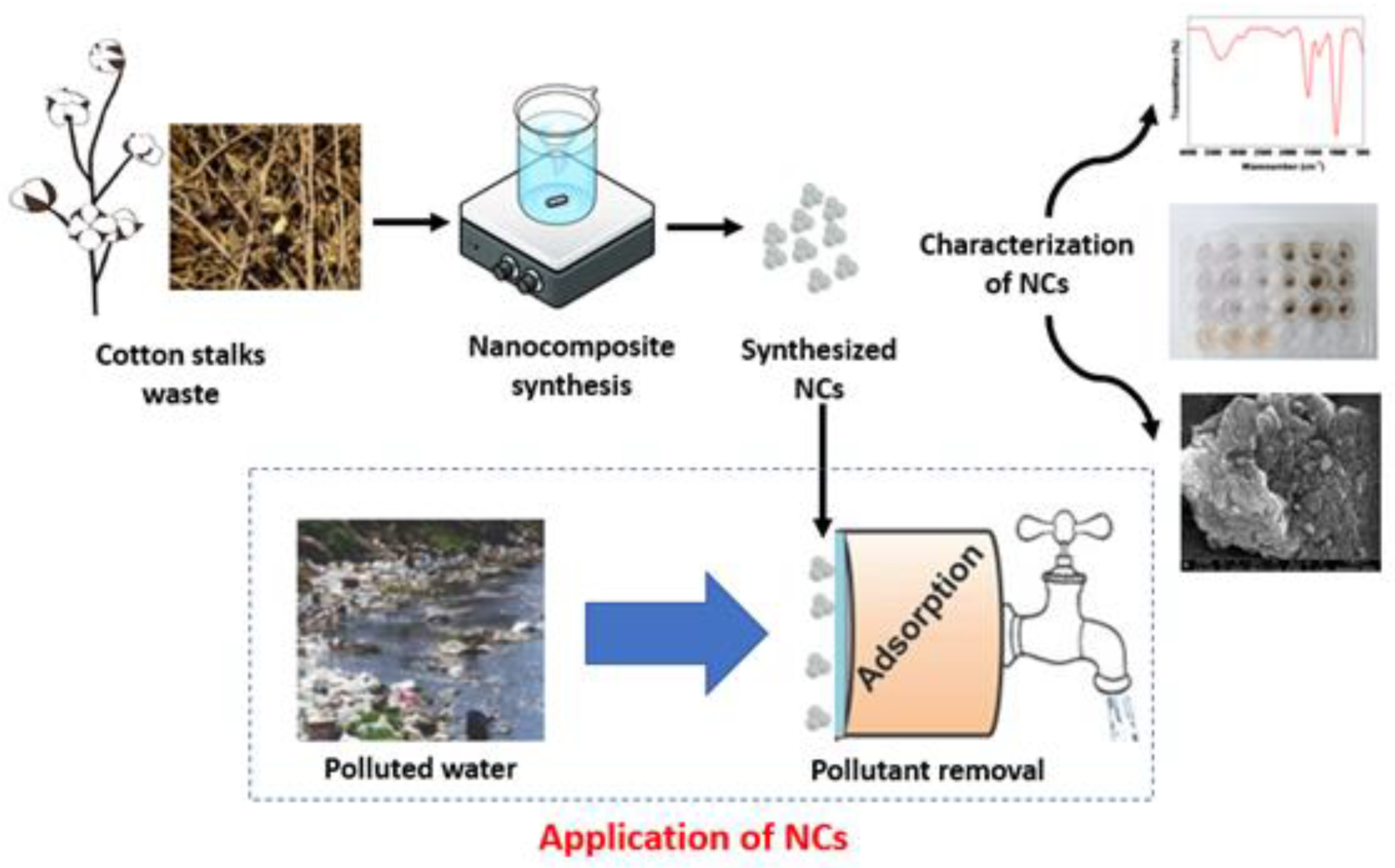
Figure 2.
Characterization of CCIO NCs using (a) SEM (b) TEM (c) EDX (d) FTIR and (e) zeta potential.
Figure 2.
Characterization of CCIO NCs using (a) SEM (b) TEM (c) EDX (d) FTIR and (e) zeta potential.
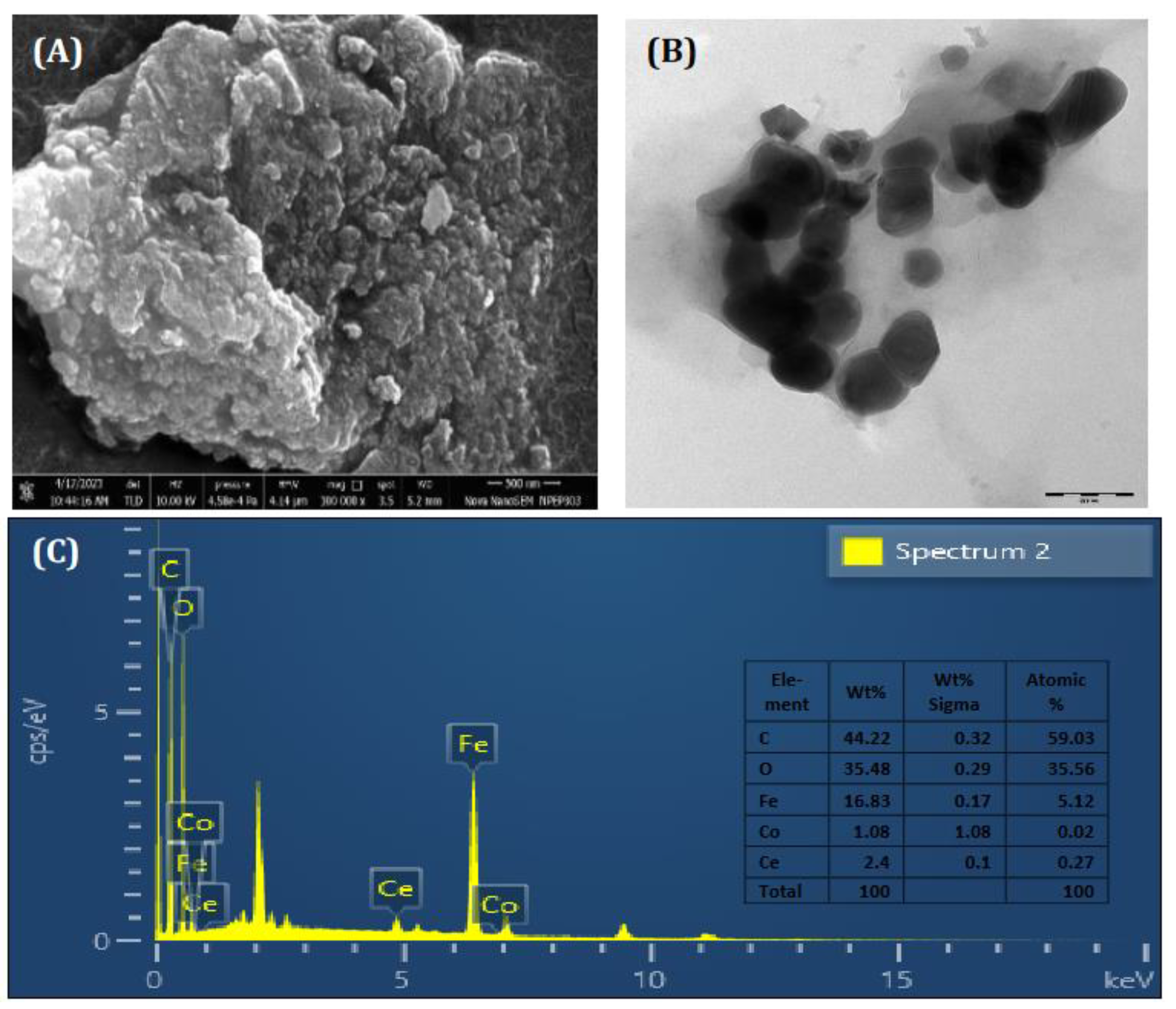
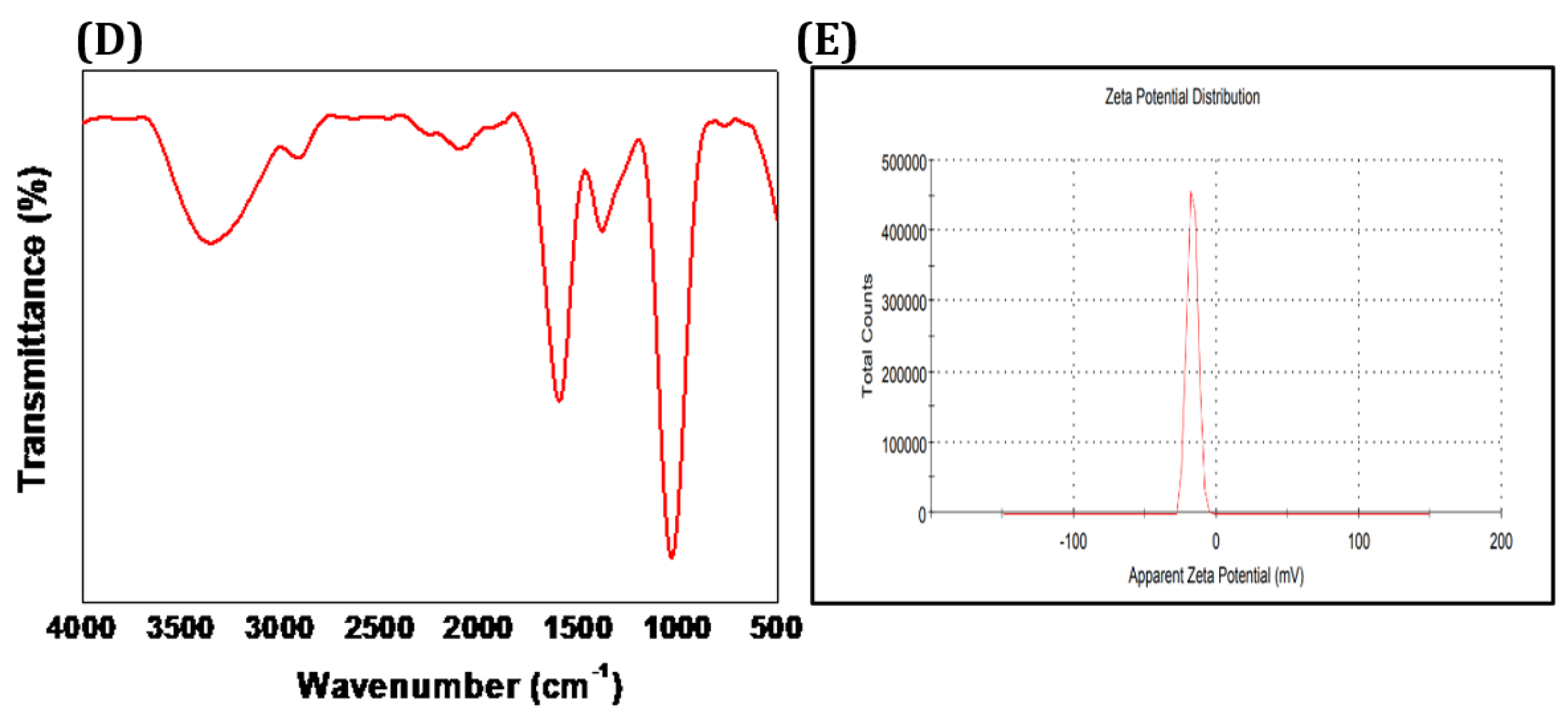
Figure 3.
UV-Vis spectra of: (a) SF at different concentrations (1-5 mg/mL) (b) MG at different concentrations (1-5 mg/mL) (c) MB at (1-5 mg/mL) and (d) Regeneration efficiency (%) of CCIO NCs using SF, MG and MB dyes.
Figure 3.
UV-Vis spectra of: (a) SF at different concentrations (1-5 mg/mL) (b) MG at different concentrations (1-5 mg/mL) (c) MB at (1-5 mg/mL) and (d) Regeneration efficiency (%) of CCIO NCs using SF, MG and MB dyes.
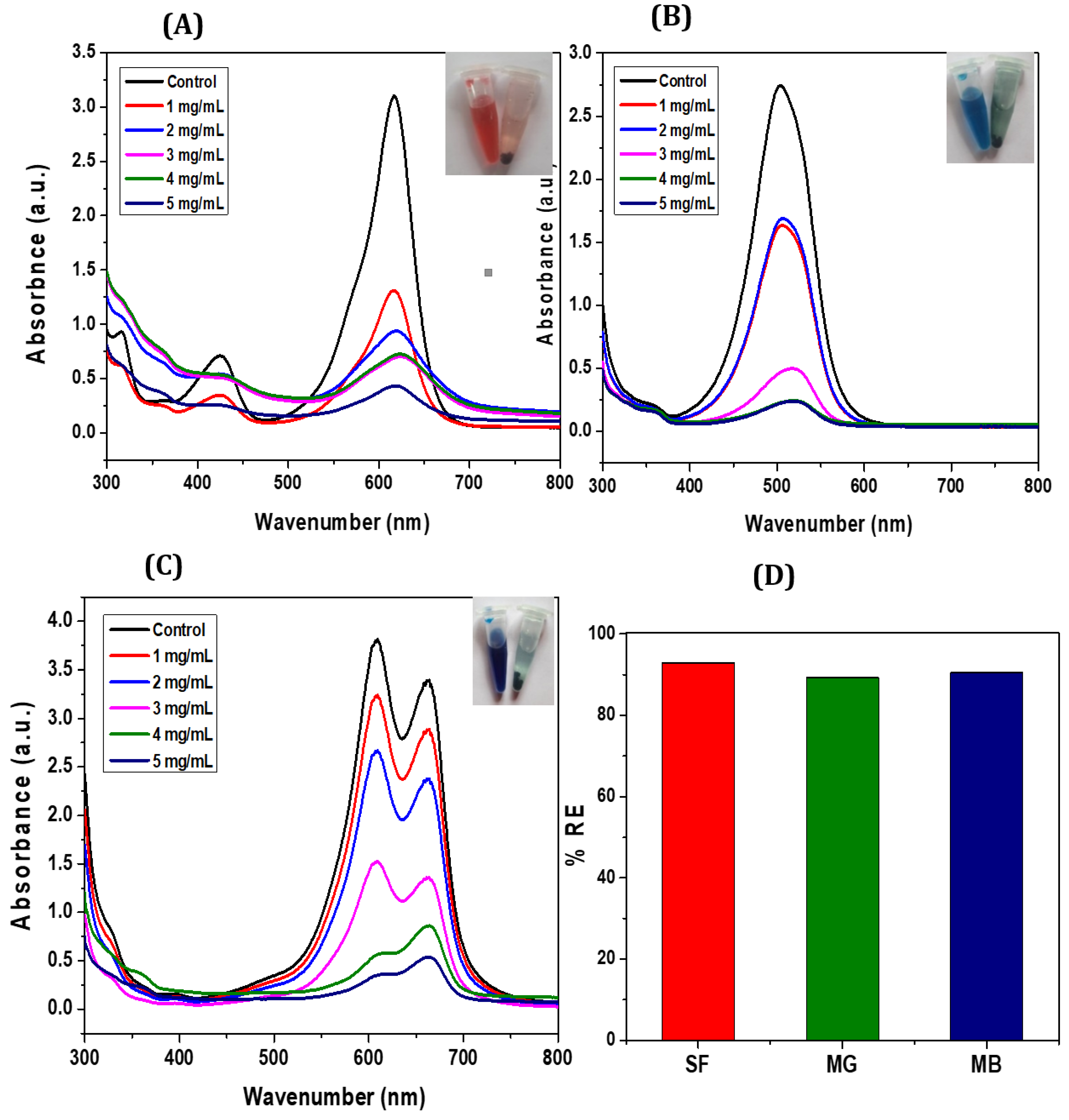
Figure 4.
UV-Vis spectra for analyzing adsorption capacity of CCIO NPS against Chromium ((VI).
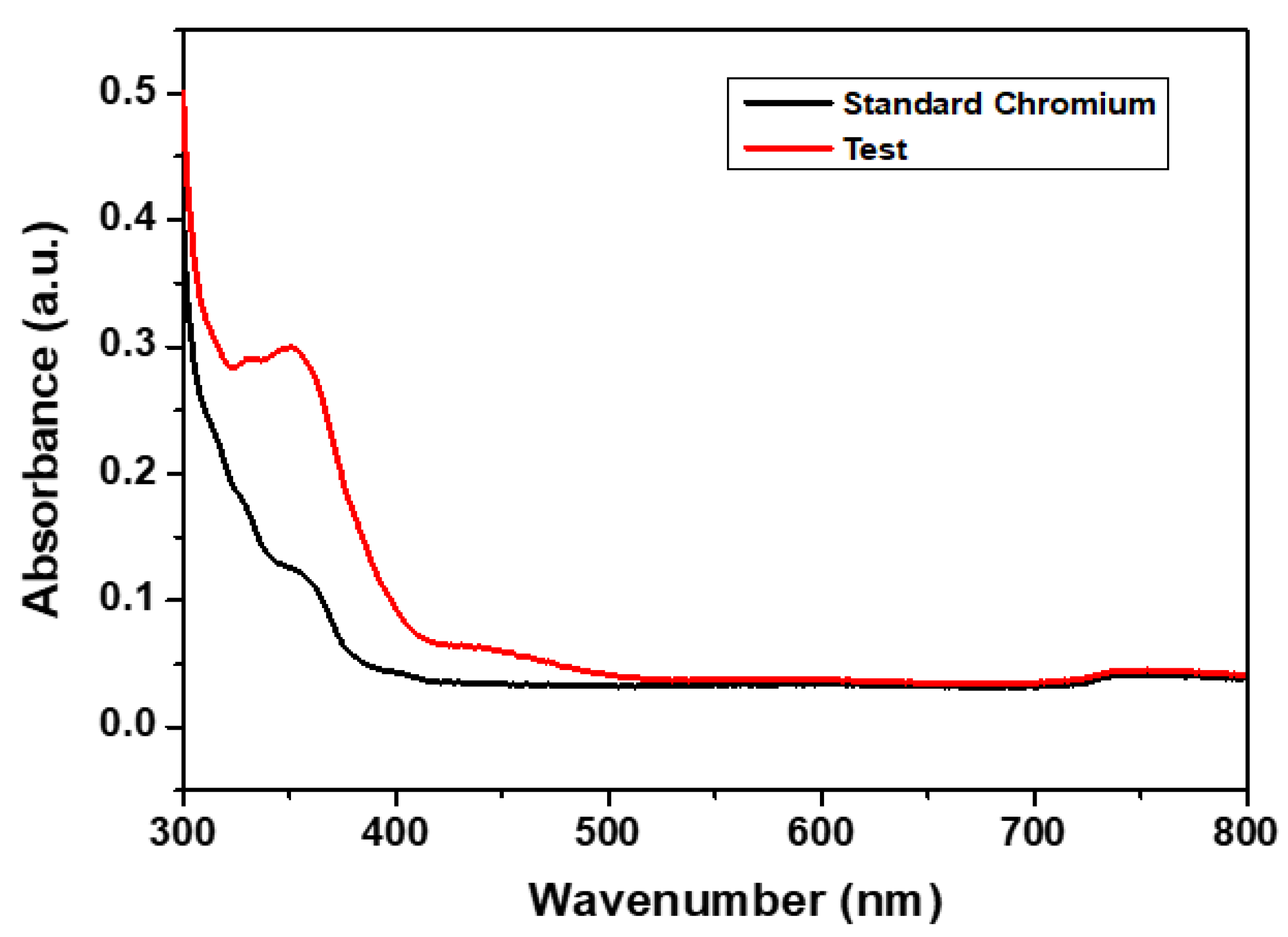
Figure 5.
UV-Vis spectra of SF, MG, MB at 10 mg/mL concentration.
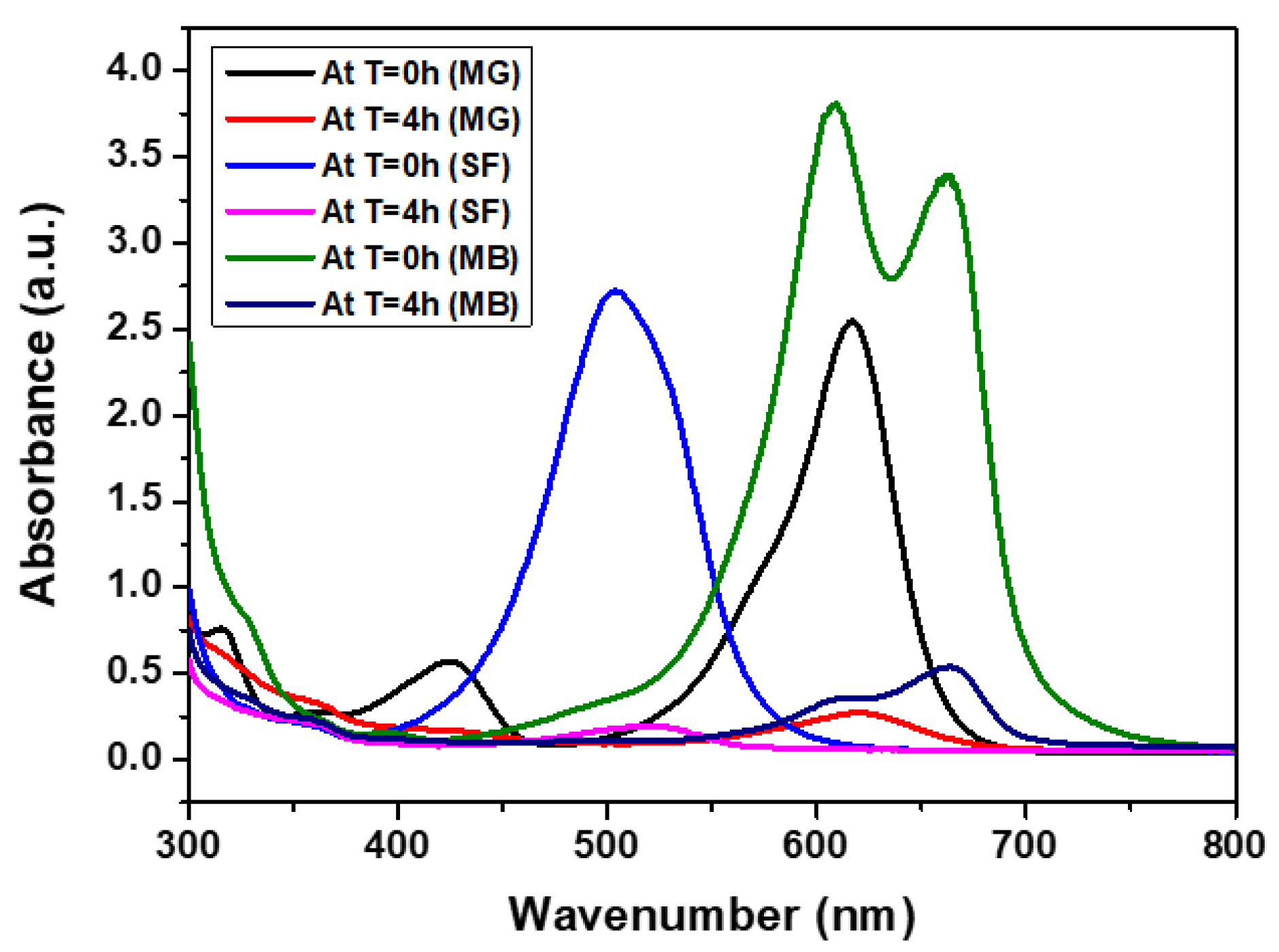
Figure 6.
Antioxidant activity of CCIO NCs at different concentrations (1-5 mg/mL).
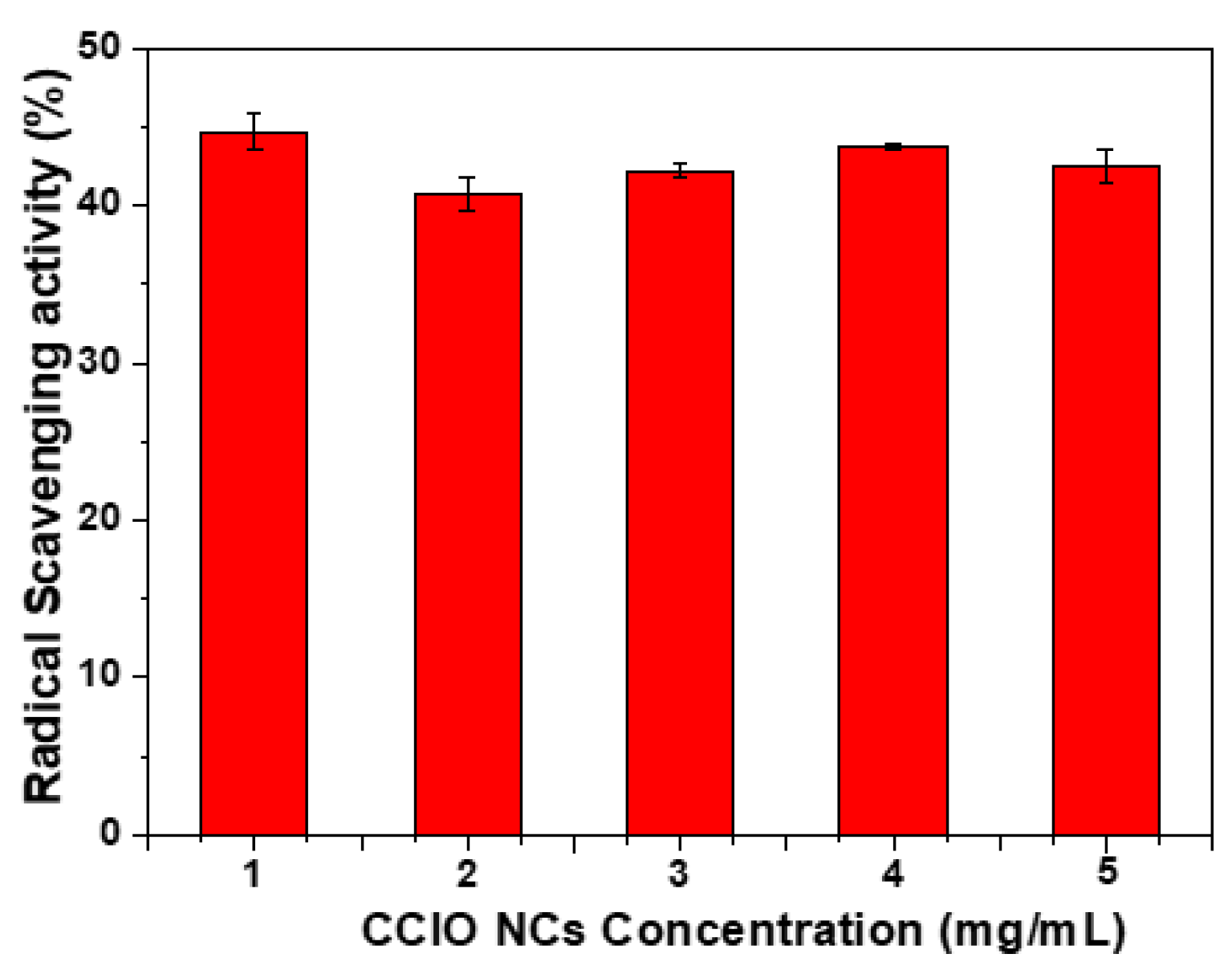
Figure 7.
Antimicrobial activity of synthesized CCIO NPs against E. coli and S. aureus.
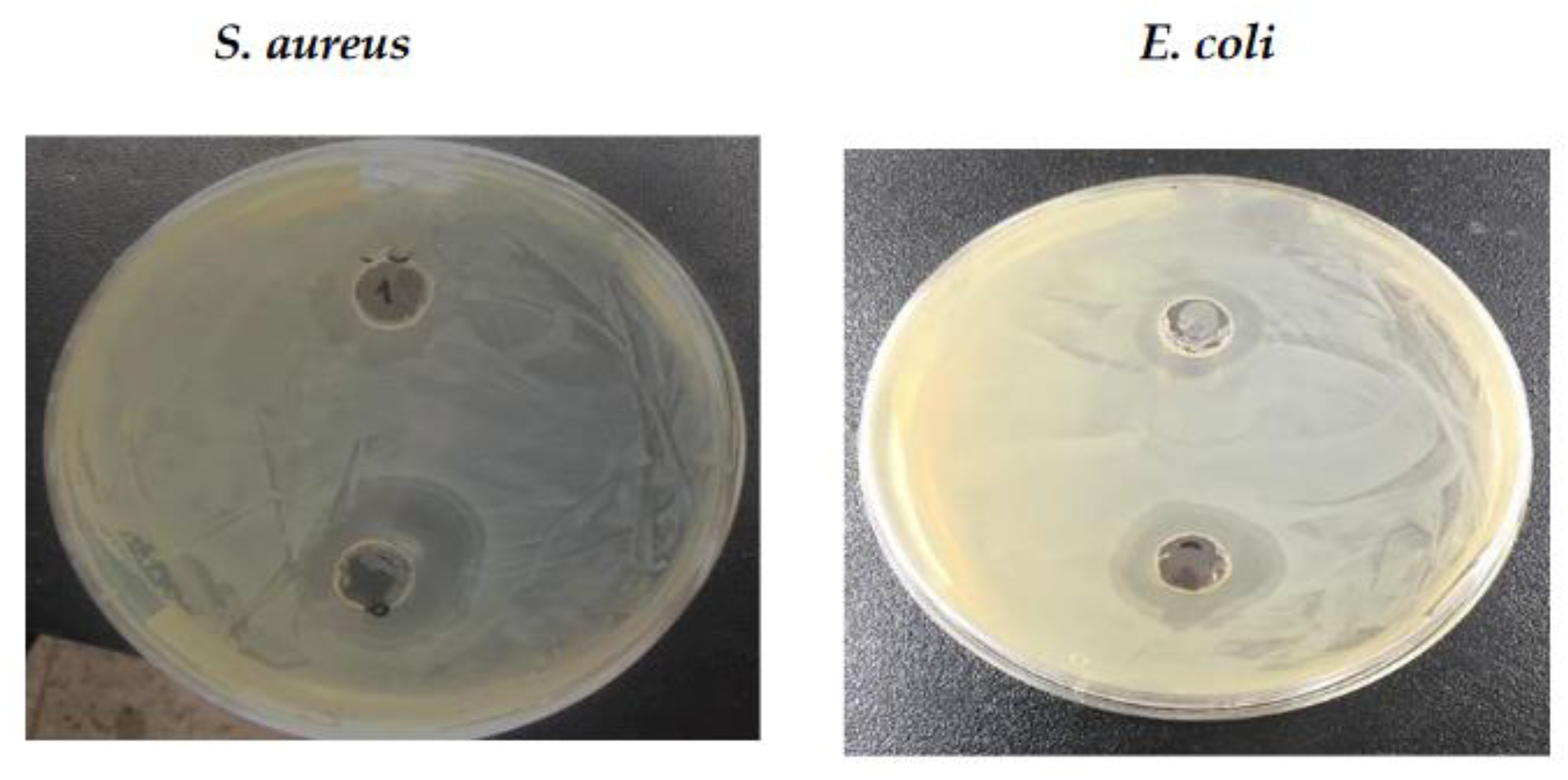
Figure 8.
Regeneration efficiency of reused CCIO NCs using SF dye.
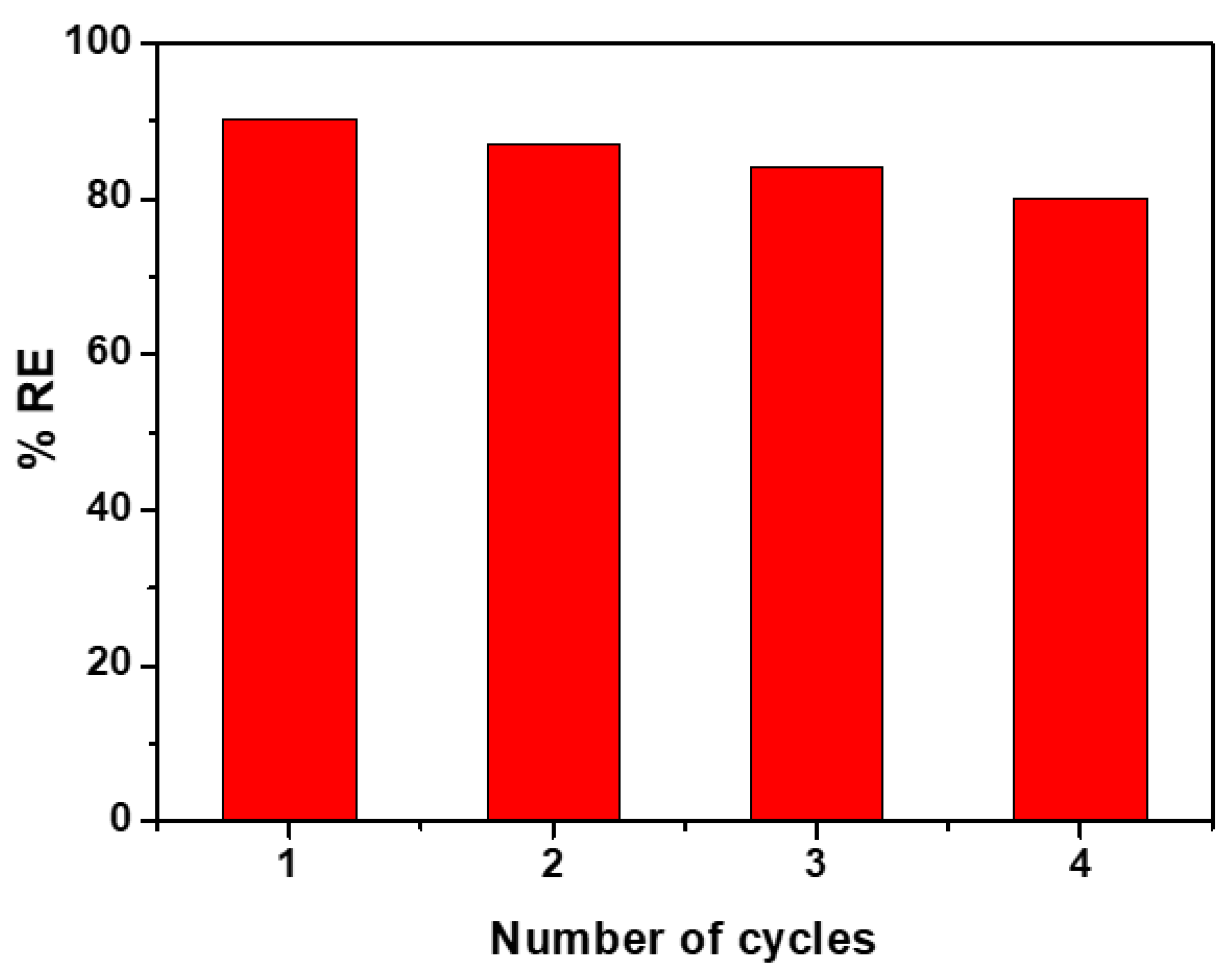

Table 1.
Antimicrobial effect of CCIO NCs using agar well diffusion method.
| Microorganisms/ sample |
Antimicrobial activity [zone of inhibition (dia. in mm)] |
|
| 50 µL | 100 µL | |
| E. coli | 11 | 16.5 |
| S. aureus | 13.5 | 19 |
Disclaimer/Publisher’s Note: The statements, opinions and data contained in all publications are solely those of the individual author(s) and contributor(s) and not of MDPI and/or the editor(s). MDPI and/or the editor(s) disclaim responsibility for any injury to people or property resulting from any ideas, methods, instructions or products referred to in the content. |
© 2024 by the authors. Licensee MDPI, Basel, Switzerland. This article is an open access article distributed under the terms and conditions of the Creative Commons Attribution (CC BY) license (http://creativecommons.org/licenses/by/4.0/).
Copyright: This open access article is published under a Creative Commons CC BY 4.0 license, which permit the free download, distribution, and reuse, provided that the author and preprint are cited in any reuse.


