
Submitted:
02 April 2024
Posted:
03 April 2024
You are already at the latest version
Abstract
Ambrosia trifida is a kind of malignant invasive plant, which has very high reproductive and en-vironmental adaptability. Through strong resource acquisition ability and allelopathy, it could inhibit the growth and reproduction of surrounding plants, destroy the stability of an invasive ecosystem. It is very important to predict the change of suitable distribution area of Ambrosia trifida with climate change before implementing scientific control measures. Based on 106 Ambrosia trifida distribution data and 14 environmental data, the optimal parameter combination (RM = 0.1, FC = LQ) was obtained by using the MaxEnt model optimized by Kuenm package, the potential suit-able areas of Ambrosia trifida in Northeast China under three different climate scenarios (RCP2.6, RCP4.5, RCP8.5) with different emission intensities in the future (2050,2070) were predicted. The changes of Ambrosia trifida suitable area in Northeast China under three climate scenarios were compared, and the relationship between the change of suitable area and emission intensity was analyzed. In general, the suitable area of Ambrosia trifida in Northeast China will expand gradually in the future, and the area of its highly suitable area will also increase with the increasing emission intensity, which is unfavorable to the control of Ambrosia trifida.
Keywords:
Ambrosia trifida
; MaxEnt
; Kuenm
; Preventive measures
1. Introduction
Alien invasive plants (AIPS) are defined as the rapid growth, propagation and diffusion plants, which change the structure and composition of native plants, affect, threaten, or destroy local ecosystems [1]. In recent years, the continuous changes of global climate have led to the increase of global temperature and frequent occurrence of extreme weather, which weakened the resistance of some ecosystems and directly or indirectly promoted the invasive ability of some alien plants, had serious impacts on local life, production and ecology [2,3]. Invasive alien species have threatened many countries and regions around the world, seriously affecting the production of agriculture, forestry, animal husbandry and fisheries, as well as the stability of ecosystems, and it is one of the major drivers of current global biodiversity loss and ecosystem degradation [4], therefore, the prevention and control of invasive species has become the key work of biodiversity protection and agricultural green development in many countries and regions. In recent years, China has become one of the countries suffering the most serious biological invasion in the world, and biological invasion has caused great harm to the domestic ecological environment and agricultural production, which continuously intensify with the development of climate change and international trade. Invasive weeds such as Solidago Canadensis, Alternanthera philoxeroides and Ambrosia artemisiifolia have become well-known invasive species, which has caused great harm to people's health, economic development, ecological environment.
The species distribution model (SDMS) uses the distribution data of species and the environment data, and combines the geographic map information, according to the specific algorithm to obtain the species' niche, reflect the species' preference degree to the habitat in the form of probability, which used to predict potential and future suitable distribution areas of species [5]. The development of species distribution models began with the development and application of BIOCLIM models, and over the next 20 years, HABITAT, DOMAIN, Ecological Niche Factor Analysis (ENFA) , MaxEnt, Generalized Linear Model (GLM) , Generalized Additive Model (GAM) , Classification and Regression Tree (CART) , Boosted Regression Tree (BRT) , Artificial Neural Network (ANN) , and other ai-based Niche models have emerged [6]. In recent years, species distribution models have been widely used in conservation Biology and invasion Biology, it provides a lot of scientific basis and theoretical guidance for the protection of endangered animals and plants, the prevention and control of invasive species, biodiversity and ecosystem stability. MaxEnt model is the most popular, which has been proved to be the best model in species distribution modeling. Elith et al. [7] simulated the spatial distribution of 226 species in six different regions of the world and evaluated the prediction results of multiple species distribution models based on measured sample data, it is concluded that MaxEnt model has good performance. The MaxEnt model can scientifically predict the potential and future suitable distribution areas of species based on only the distribution data of species and environmental data, and even if the distribution data of species are small, MaxEnt model can also get good prediction results. At present, MaxEnt is widely used to predict the potential niche of invasive alien plants, for example: Sorrel invasion in China [8], giant pigweed invasion in Europe [9], compositae invasive plants in China suitable area [10].
Ambrosia trifida, also known as mugwort leaf rag grass, American mugwort, is an annual herbaceous plant in the Asteraceae family, native to Southwestern United States and northern Mexico, circa the 1930s, through the import of goods and agricultural products into China's southeast coastal areas. The results showed that Ambrosia trifida had high reproductive ability, dispersal ability and seed germination rate, and could be planted rapidly in the invasion area, and through its own strong resource acquisition ability and allelopathy to inhibit the growth and reproduction of surrounding plants, thus forming a single plant community, destroy the diversity and stability of invasive ecosystems. Ambrosia trifida pollen is also a source of allergies to hay fever, allergic rhinitis and other diseases [11], and severe allergies can lead to concurrent emphysema, cor pulmonale and even death, which is a great threat to human health. Therefore, in various climate change scenarios, it is of particular importance to predict the future adaptive distribution of species on relevant spatiotemporal scales for the management of invasive alien species [12]. Based on the optimized MaxEnt niche model, the potential and future suitable distribution areas of Ambrosia trifida in Northeast China were forecasted by using the distribution data of Ambrosia trifida in China, the environmental data of current and 2050,2070 climate scenarios with different emission intensities (RCP2.6, RCP4.5, RCP8.5) , it is of great significance to clarify the potential distribution and suitable rank of Ambrosia trifida in Northeast China, to formulate the control strategy, and to protect agriculture and forestry production and biodiversity.
2. Materials and Methods
2.1. The Study Area Profile
The Northeast China region covers an area of about 1.52 million square kilometers and is made up of China's Liaoning, Jilin and Heilongjiang provinces, as well as the five alliances in eastern Inner Mongolia Province. From south to north, the north-east region spans two temperature zones, namely the mid-temperate zone and the cold temperate zone. The north-east region belongs to the temperate monsoon, with four distinct seasons, warm and rainy in summer and cold and dry in winter. Due to its proximity to the Bohai Sea and the Yellow Sea, and the prevalence of monsoon in the southeast, the precipitation in the northeast gradually decreased from the southeast to the northwest, formed a humid region, semi-humid region, semi-arid region, arid region. In addition, the northeast region is rich in forest resources, high forest coverage, extended the time of snow and ice melting, which provides sufficient water conditions for rich vegetation resources in the northeast region. At the same time, the northeast region is closer in latitude to the origin of Ambrosia trifida, North America, and the two regions have similar hydrothermal conditions, leading to Ambrosia trifida being able to adapt quickly to local conditions after it first invaded into Liaoning Province. Ambrosia trifida, with its large seed number and light weight, can be spread by wind, and Liaoning province is located in the temperate continental monsoon area, where the southeast wind prevails in summer and the northeast wind prevails in winter, Ambrosia trifida forms a corresponding propagation path that varies according to the wind direction in each season.
2.2. Data Acquisition and Processing
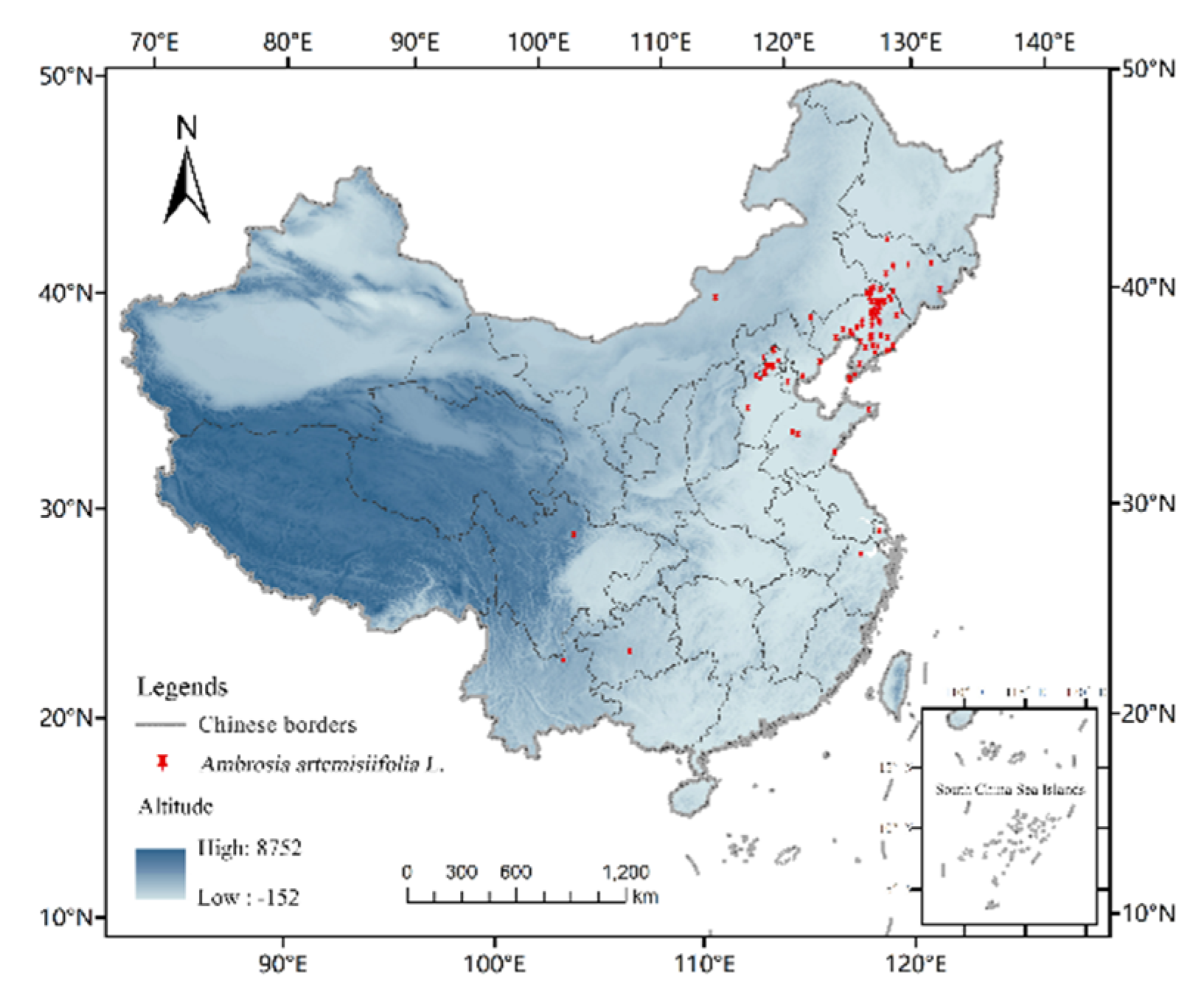
MaxEnt model needs both species distribution data and environment data to simulate the distribution area of species, and the distribution data is the longitude and latitude information of the“Existing” points of species. The distribution data of Ambrosia trifida were obtained in two ways: (1) field investigation, using two-step software (outdoor assistant) and the website of natural herbarium to determine the detailed longitude and latitude coordinates of Ambrosia trifida distribution; To organize records; (2) through the Chinese Virtual Herbarium of the web resource platform (http://www.cvh.ac.cn/,accessed on April 20,2022) and the China Nature Reserve specimen resource sharing platform (http: www.papc. cn/, accessed on April 20,2022) and the Global Biodiversity Information Network Gbif (http://data. Gbif.org , accessed on April 25,2022) for more detailed latitude and longitude information on the distribution of Ambrosia trifida. The longitude and latitude coordinates of the distribution points of the species were obtained, and according to the requirements of MaxEnt software, the fuzzy, error and repeated data were removed. In order to reduce the sampling deviation, reduce the spatial correlation and avoid over-fitting to the model results, it was necessary to screen the species distribution points. Using ENMTools tool to filter and correct distribution points directly. The advantage of using the ENMTools tool is that the species distribution data can be accurately matched to the environment data grid, ensuring that there is only one distribution point in an environment grid, the processed distribution data is automatically corrected to the grid's center point coordinates. In this study, ENMTools was used to screen the distribution data, and 106 Ambrosia trifida distribution data were obtained to participate in the modeling and prediction of Ambrosia trifida.
Figure 1.
Distribution plot of Ambrosia trifida in China.
The current Climate Data used (1970-2000) and future Climate Data for different Climate scenarios, CMIP5(2050s and 2070s) , were available on the WorldClim Global Climate Data Version 1.4 (http://www.WorldClim.org,accessed on November 23,2022),The spatial resolution is 2.5 arc-minutes, which consists of 19 Bio-climatic factors such as annual average temperature and annual average precipitation. Because the invasion and spread of Ambrosia trifida are closely related to human activities, the human impact index (HII) is considered to participate in the prediction modeling of Ambrosia trifida. The human impact index Data was downloaded from the Socioeconomic Data and Applications Center, part of NASA's National Aeronautics and Space Administration (https://sedac.ciesin.columbia.edu, accessed on April 1,2023) [13]. The downloaded human impact index data were converted into ASC data format by using ArcGis and 19 climatic factors to unify the coordinate system, resolution and spatial range.
Since there is some correlation between each environmental factor, if used directly for modeling predictions, there may be overfitting that affects the accuracy of the maximum entropy model predictions [14]. Therefore, it is necessary to carry out collinearity analysis among various groups of environmental variables before developing geographical distribution prediction modeling. If the correlation coefficient between two environmental variables |r| > 0.8, the selection principle is to consider the use of distributed data and environmental data combined with the maximum entropy model for pre-experiment, the Percent contribution and Permutation importance of each environmental factor were obtained, and the environmental factors were screened by combining the literature and the actual environment of plant growth, finally, the effective environmental variables were selected to predict the potential distribution of Ambrosia trifida using MaxEnt model. In this study, 19 environmental factors in ASC format were analyzed by using ENMTools, and the correlation coefficients between environmental factors were obtained. This method is not affected by the data of distribution points and is more convenient to operate. This research carried on the collinearity analysis to the environmental factor, at the same time, the Bio1, Bio2, Bio3, Bio4, Bio6, Bio8, Bio10, Bio11, Bio13, Bio14, Bio15, Bio17, Bio18 and other environmental factors were selected to participate in Ambrosia trifida modeling.
Figure 2.
Correlation heatmaps of 19 environmental factors were generated by R.
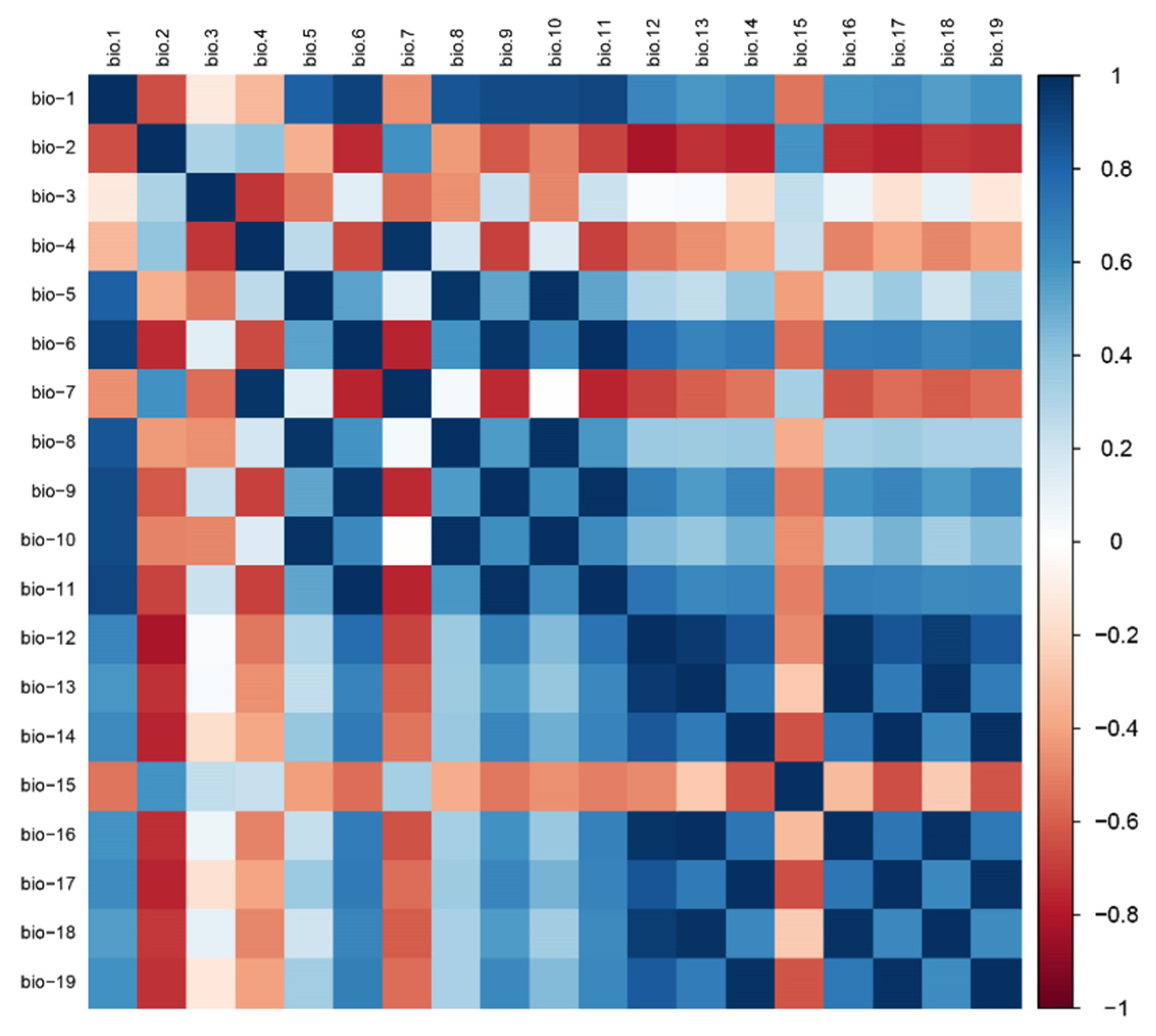
Figure 3.
The percent contribution and permutation importance of environmental factors obtained by pre-experiment.
Figure 3.
The percent contribution and permutation importance of environmental factors obtained by pre-experiment.
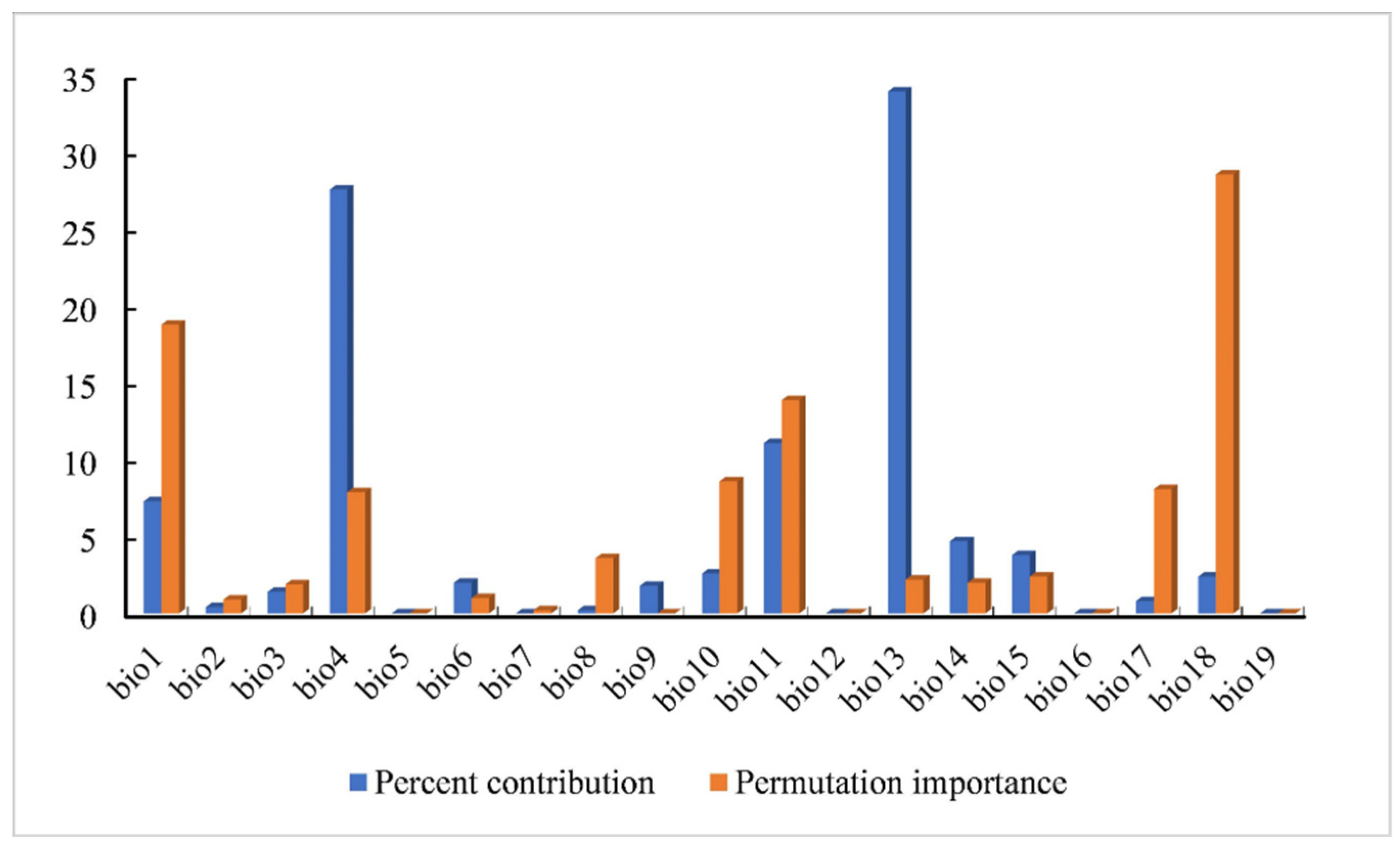

Table 1.
A brief introduction to the environment variables that participate in the modeling.
| Title 1 | Title 2 | Title 3 |
|---|---|---|
| 19 Bio-climatic factors | Bio1 | Average Annual Temperature |
| Bio2 | Mean Diurnal Range | |
| Bio3 | Isothermality | |
| Bio4 | Temperature Seasonality | |
| Bio6 | Min Temperature of Coldest Month | |
| Bio8 | Mean Temperature of Wettest Quarter | |
| Bio10 | Mean Temperature of Warmest Quarter | |
| Bio11 | Mean Temperature of Coldest Quarter | |
| Bio13 | Precipitation of Wettest Month | |
| Bio14 | Precipitation of Driest Month | |
| Bio15 | Precipitation Seasonality | |
| Bio17 | Precipitation of Driest Quarter | |
| Bio18 | Precipitation of Warmest Quarter | |
| Human factors | HII | Human Impact Index |
2.3. MaxEnt Model Optimization and Result Evaluation
Relevant research shows that when the default parameters of MaxEnt model are used to build the model, there may be serious overfitting. This can lead not only to misassessment of species niches, but also to misdirection of corresponding conservation and control policies [15]. Therefore, it is necessary to optimize feature combination (FC) and regularization multiplier (RM) in the MaxEnt model to build the optimal MaxEnt Model [16]. By testing the combination of different FC and RM parameters, AIC values of different parameter models were obtained to evaluate the complexity of the model, and the model with the lowest complexity was selected to build the optimal model [17]. In this study, the parameters of the Ambrosia trifida prediction model were optimized by calling the Kuenm package in R, setting the RM parameter interval [0.1 ~ 4] , each interval 0.1, and 29 FC feature function combinations. The Kuenm package will import 1160 parameter combinations of the above two parameters into the maximum entropy model for modeling, testing the Degree of fit and Complexity of the model. When the AIC value was the minimum, the AIC value is the lowest (delta AICc = 0), the model parameters were the best, the distribution prediction model of Ambrosia trifida was established by using the optimal parameters [18].
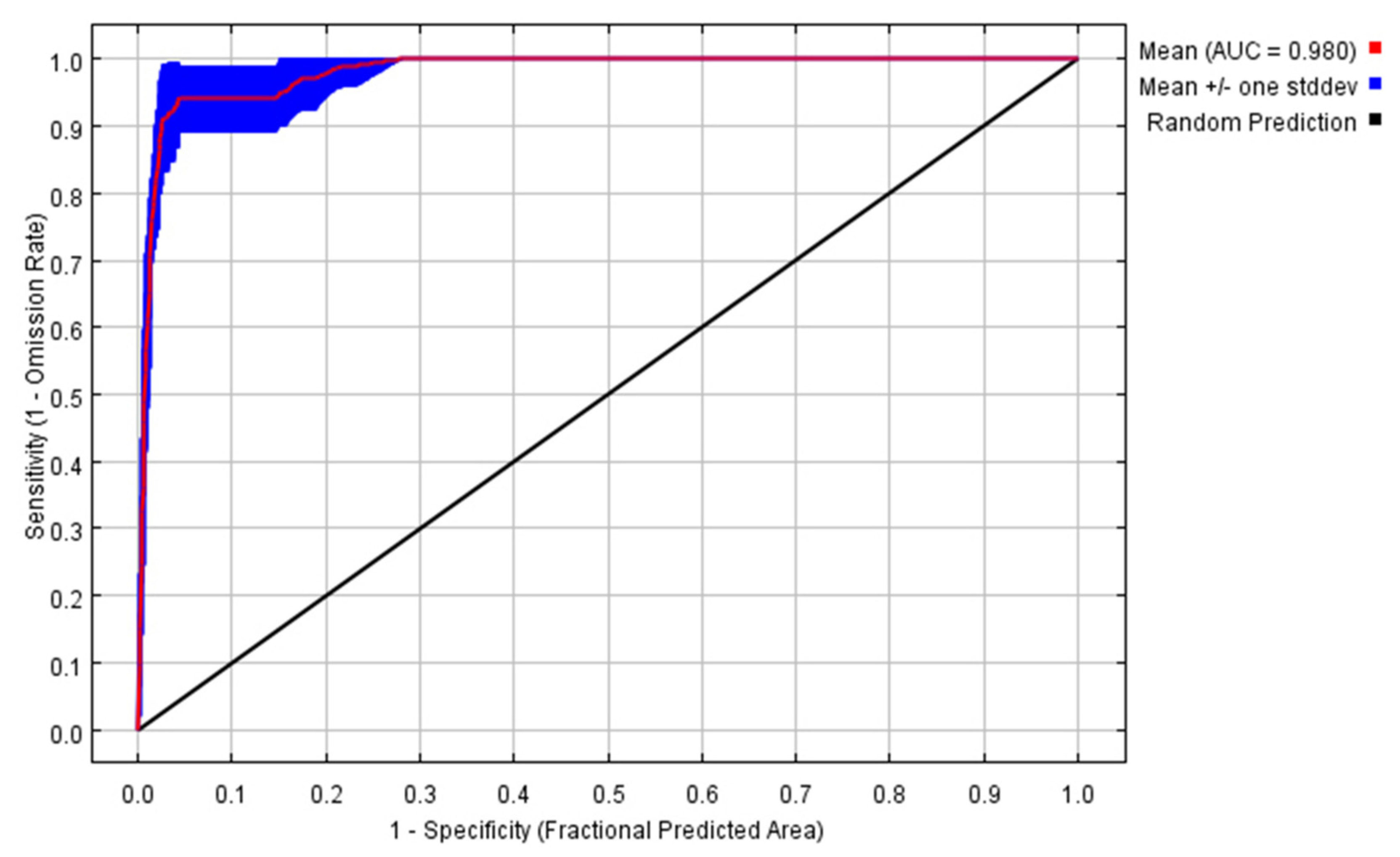
The distribution point data and environment variable data of Ambrosia trifida were imported into MaxEnt model, and the optimal RM and FC parameters were set for modeling and forecasting. The software ticked the Jackknife, the output format selected the Logistic form, the percentage of random tests was set to 25%, the test was repeated 10 times, and the repeat mode selected Crossvalidate [19]. The accuracy of the model was generally verified by the receiver operating characteristic curve (ROC). The area enclosed by the ROC curve and the horizontal axis was the AUC value, represented the higher accuracy of the model's predictions [20]. When AUC < 0.5, the predicted outcome was unavailable; when 0.5≤ AUC < 0.7, the model predicted outcome was poor; when 0.7≤ AUC < 0.9, the model predicted outcome was good; when AUC ≥0.9, the model predicted outcome was very good; Only when the model has good accuracy, the prediction result had reference value and scientific value [21].
2.4. Classification and Area Statistics
The distribution data and environment data of Ambrosia trifida were loaded into the optimized MaxEnt model to get the ASC format file of the suitable distribution area of Ambrosia trifida under the current and future climate scenarios, then the ASC format data of the distribution area was imported into ArcGis, and the raster value indicated the probability of Ambrosia trifida existence in the raster area. The larger the grid value, the greater the fitness coefficient of Ambrosia trifida in the region; the smaller the grid value, the smaller the fitness coefficient of Ambrosia trifida in the region. Then using the reclassification tool in ArcGis, using manual classification method, the habitat suitability of Ambrosia trifida was divided into four zones: high suitable zone (0.50 ~ 1.00) , middle suitable zone (0.25 ~ 0.50) , low suitable zone (0.12 ~ 0.25) and non-suitable zone (0 ~ 0.12). By calculating the ratio of the grid number of each suitable grade to the total grid number, the actual area of each suitable grade in the northeast area was calculated.
2.5. The Change of Spatial Pattern of Suitable Habitat
Using the SDMtoolbox in ArcGIS, the average files of the 10 run results of MaxEnt model under different climate scenarios were reclassified. The Ambrosia trifida spatial cell with distribution probability less than 0.12 was defined as non-adaptive area, and the Ambrosia trifida spatial cell with distribution probability greater than or equal to 0.12 was defined as adaptive area, and the Ambrosia trifida spatial cell with distribution probability greater than or equal to 0.12 was defined as adaptive area, and the Ambrosia trifida spatial cell with distribution probability greater than or equal to 0.12 was assigned a value of 1, generated binary Ambrosia trifida grid files suitable or not suitable for Ambrosia trifida growing in a certain space unit under different climate scenarios in the future. Among them, 0→1 is the future expansion area of Ambrosia trifida, 1→0 is the future contraction area, 1→1 is the stable invariant area. The future expansion area is the area where the Ambrosia trifida is not suitable for growth but will invade gradually with the change of the future climate. The future contraction zone is the area where the Ambrosia trifida is suitable for the current climate but will gradually become unsuitable for the future climate scenario; the stable invariant zone is the area where the Ambrosia trifida is suitable for both the current and future climate scenarios.
2.6. Center-of-Mass Transfer in Suitable Habitat
In ecology, the center of mass usually refers to the location of individual species or the coordinate point of concentration trend, which describes the spatial location of species. By calculating the change of the centroid position of some species in different periods, we can reflect the developmental characteristics of the species on the space-time scale. The center-of-mass migration can reflect their developmental characteristics on the space-time scale. Before analyzing centroid migration, it is assumed that the species is capable of complete migration, regardless of uncontrollable factors such as interspecies interactions, human intervention, and geographic barriers, set the change of species spatial pattern as the environmental condition of complete migration. The center of mass of Ambrosia trifida was in the area where the distribution probability of Ambrosia trifida was greater than 0.12. Based on the center-of-mass transfer tool in SDMtoolbox of ArcGIS, the center-of-mass positions of Ambrosia trifida in different climate scenarios were calculated and compared, the characteristics of temporal and spatial changes under future climate scenarios are analyzed.
3. Results
3.1. Model Optimization Results and Accuracy Evaluation
The default settings for the MaxEnt model were the regularization multiplier RM = 1 and the default feature function combination FC = LQPH. According to the optimization results of Ambrosia trifida model and AIC information criterion, when RM = 0.1, FC = LQ, the Delta-AICc =0 of Ambrosia trifida distribution model, and the model complexity was the lowest, table 2 showed that the Ambrosia trifida optimization model was better than the distribution model with the default parameter settings, the ratio of the optimal model AUC value to the Random Prediction AUC value (1.9642) and the missing rate of test data (0.0385) were significantly better than the model with default parameters (1.829,0.0769). Therefore, RM = 0.1, FC = LQ were used to predict the distribution area of Ambrosia trifida, and the prediction results were more accurate. Using the optimal parameter setting for Ambrosia trifida modeling to predict the geographic distribution of the two species, it can be seen from the predicted results of the modeling that the AUC value of the Ambrosia trifida modeling prediction was 0.98, which was greater than 0.9; The result showed that the model had good accuracy and had certain reference value and scientific significance.
Table 2.
MaxEnt model optimization results of Ambrosia trifida.
| Type | RM | FC | Mean-AUC-ratio | Omission-rate-at-5% | Delta-AICc |
|---|---|---|---|---|---|
| Default | 1 | LQPH | 1.8290 | 0.0796 | 110.112 |
| Optimization | 0.1 | LQ | 1.9642 | 0.0385 | 0 |
Figure 4.
ROC curve of the prediction results of the MaxEnt model of Ambrosia trifida.
3.2. The Main Environmental Factors Affecting the Distribution of Ambrosia trifida
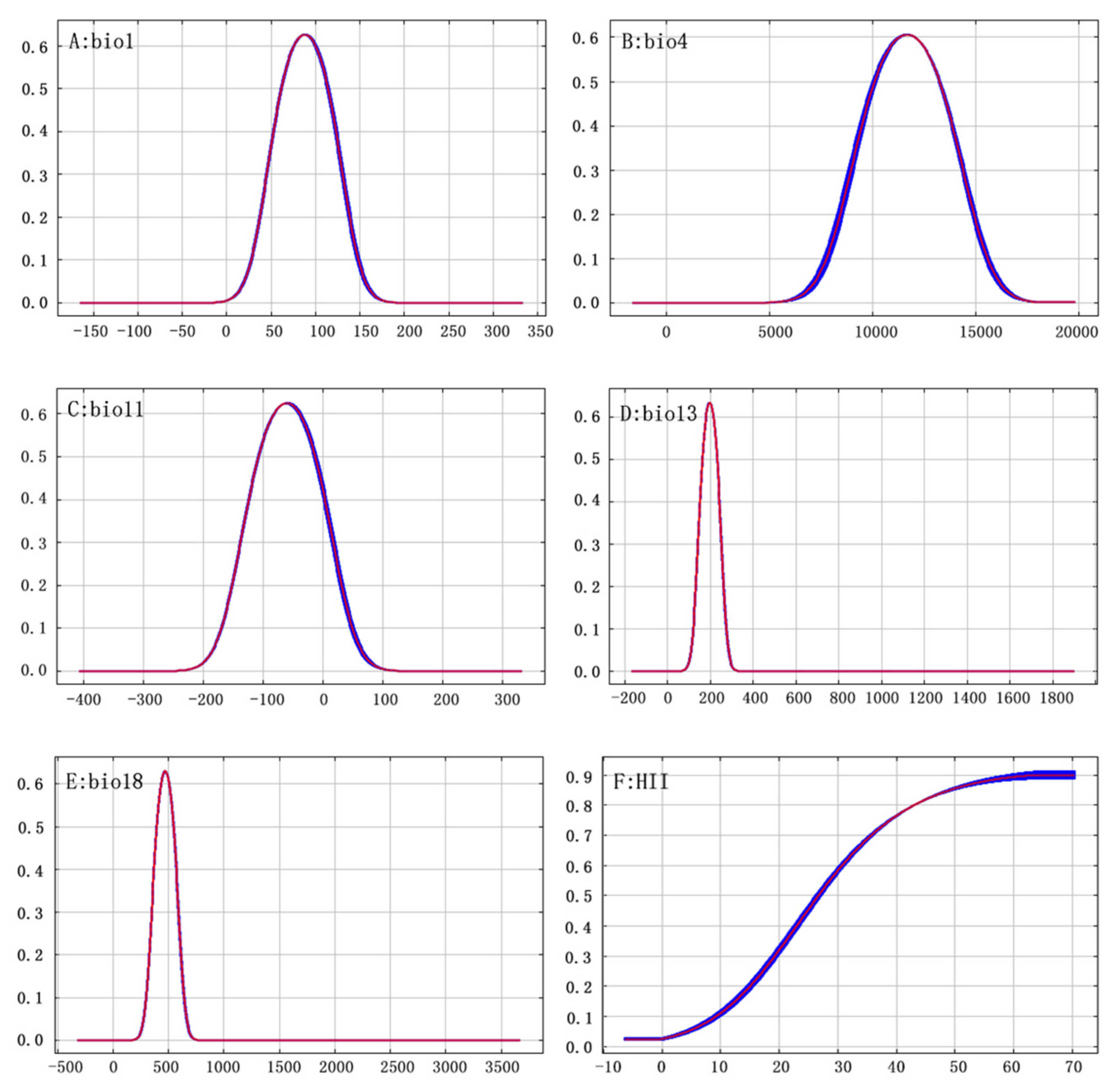
The main environmental factors affecting the geographical distribution of Ambrosia trifida were analyzed, including the contribution rate of each environmental factor, the important value of permutation and the environmental factors were generated by the cutting method of MaxEnt software. According to the contribution rate of each environmental factor, HII (22.8%) , Bio11(19.5%) and Bio1(13.5%) were the three environmental factors that had the greatest contribution rate to the distribution of Ambrosia trifida. From the permutation importance values of environmental factors , it could be seen that Bio11(35.3%) , Bio18(24.6%) and Bio4(11.2%) had the highest permutation importance, permuted significant values were random substitutions of values for each environmental factor present on the data trained by the background, with larger values indicating greater dependency on this particular variable [22]. It was indicated that these three environmental factors played the most important role in the modeling and prediction of Ambrosia trifida. Based on the environment variable, Jackknife cutter graph was generated by the MaxEnt software, the red band in the graph represents the gain that was modeled using all environment factors, the blue band represented the gain that was modeled using only that environment variable, and the blue-green band represented the gain that was modeled using the remaining environment variable after removing that variable. According to the Figure 5, Bio1, Bio13 , and Bio18 had the largest gain when they participated in the modeling alone, this indicated that these environment factors contained information that was not included in other environment factor variables. The environmental variables that dominated the distribution of Ambrosia trifida were analyzed by generating the response curves of each environmental factor during the running of MaxEnt model. When the probability value of grid points was greater than 0.5, it was considered that the environmental variable value was more suitable for the growth of Ambrosia trifida.
Figure 5.
Jackknife test of environmental variables in which Ambrosia trifida participates in modeling.
Figure 5.
Jackknife test of environmental variables in which Ambrosia trifida participates in modeling.
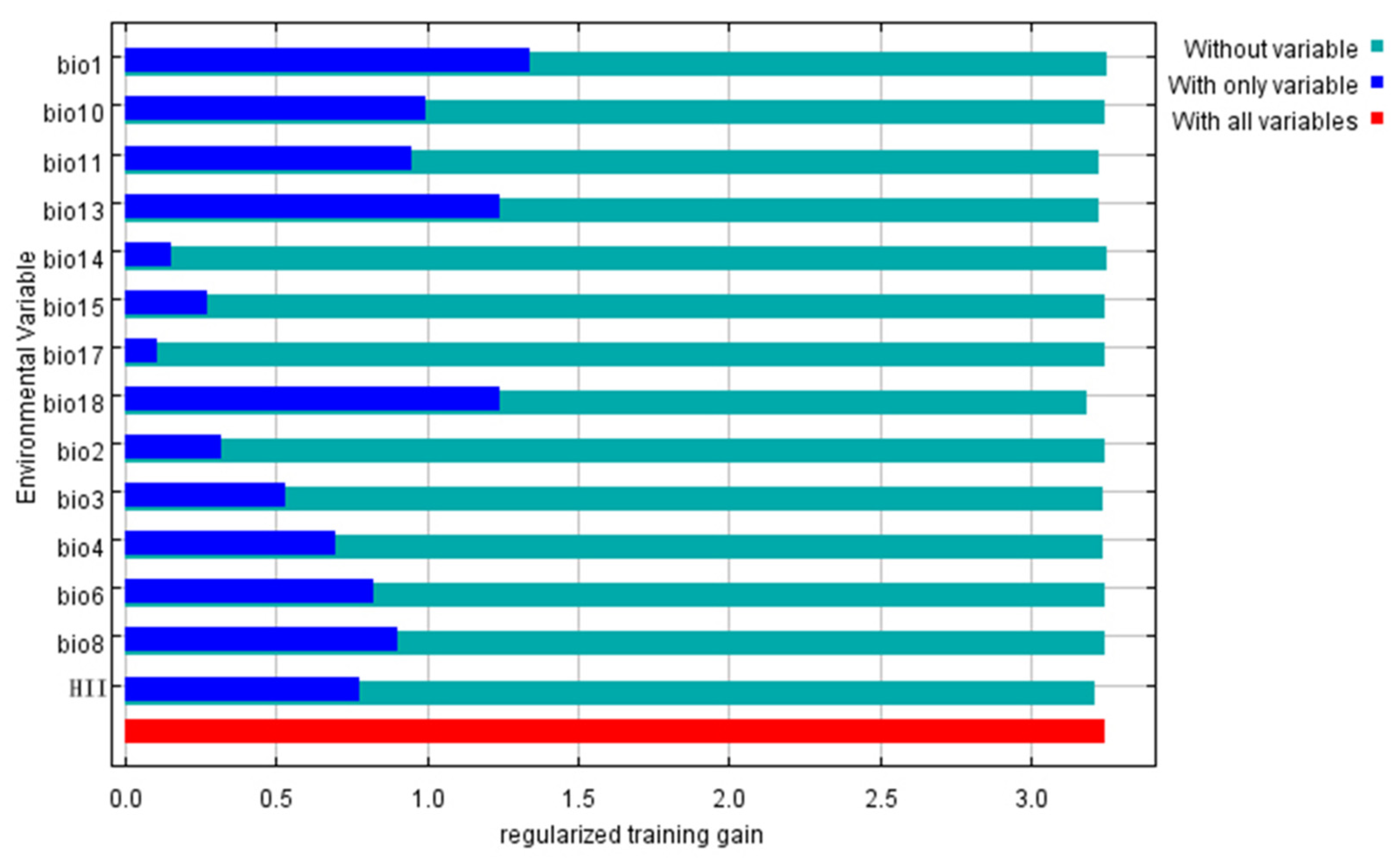
Table 3.
Percent contribution and permutation importance of major environmental variables of Ambrosia trifida.
Table 3.
Percent contribution and permutation importance of major environmental variables of Ambrosia trifida.
| Variable | Percent contribution | Permutation importance |
|---|---|---|
| HII | 22.8 | 0.2 |
| Bio11 | 19.5 | 35.3 |
| Bio1 | 13.5 | 3.3 |
| Bio18 | 10.8 | 24.6 |
| Bio4 | 6.7 | 11.2 |
| Bio13 | 9.7 | 2.5 |
Figure 6.
Response curve of Ambrosia trifida presence probability to major environmental factors.
3.3. Distribution of Ambrosia trifida Habitat under Different Climate Patterns
In this study, RCP2.6(low emission scenario) , RCP4.5(medium emission scenario) and RCP8.5(high emission scenario) were selected as three climate scenarios with significantly different impacts on future land use planning, to provide scientific basis and reference for the control of Ambrosia trifida, an invasive plant in Northeast China, the suitable distribution area of Ambrosia trifida in 2050 and 2070 was studied [23]. Ambrosia trifida is mainly distributed in Liaoning province (Figure 7). The suitable area was 30.61 × 10⁴ km2, accounting for 20.14% of the total area (152 × 104 km2) in Northeast China. The low suitable area was 9.85 × 10⁴ km2, the middle was 11.24 × 10⁴ km2, and the high was 9.52 × 10⁴ km2. Under the influence of the northeast monsoon and other factors in the future, the area of the low suitable area would expand northward.
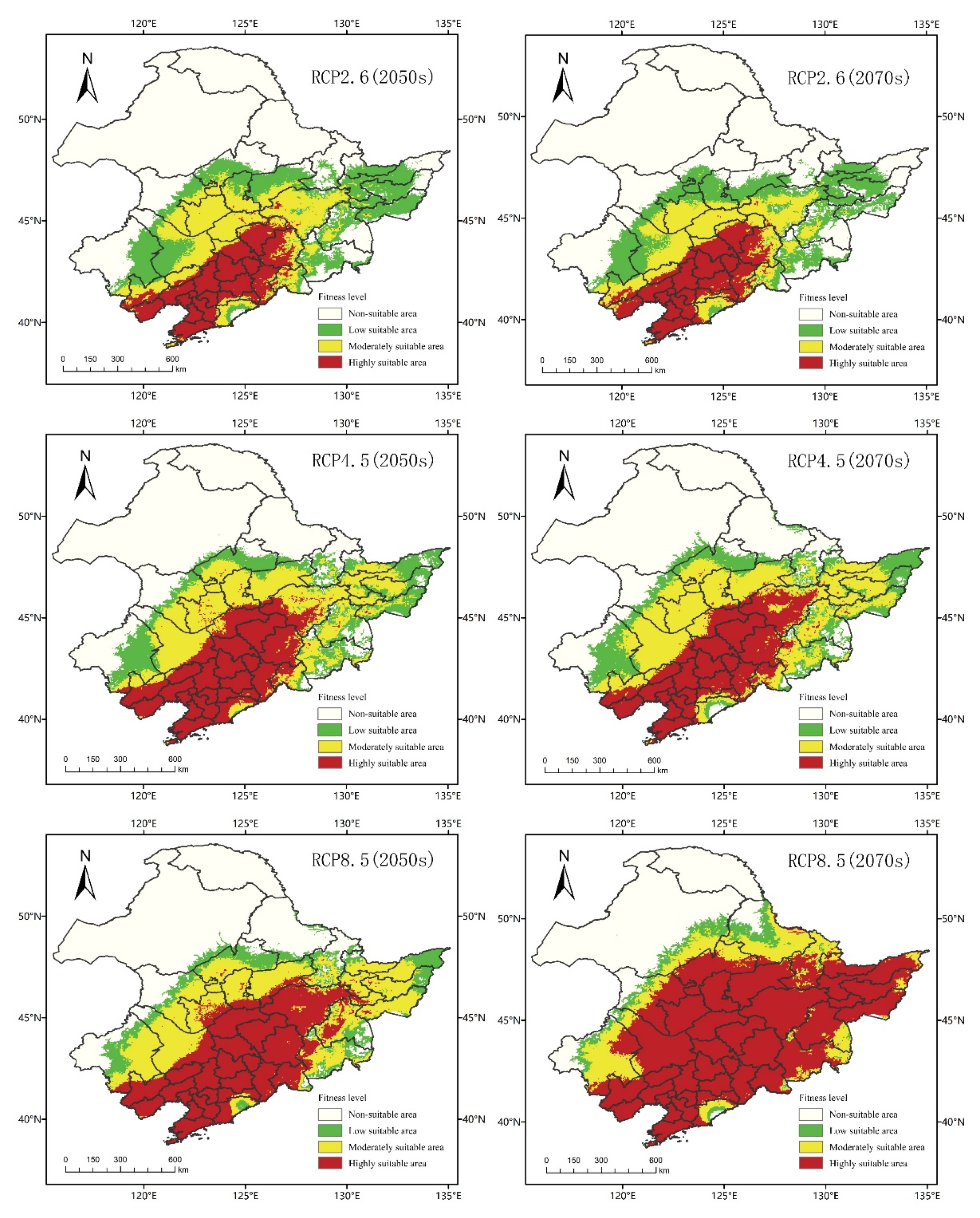
As shown in Figure 8: in 2050, there was no significant difference in the total suitable area of Ambrosia trifida in three different climate scenarios. However, with the increasing of emission intensity, the difference between medium and high suitable area of Ambrosia trifida became significant. Under the three climate scenarios of RCP2.6, RCP4.5 and RCP8.5, the area of low-suitable habitat of Ambrosia trifida increased by 190.58% , 109.03% and 52.33% , and the area of medium-suitable habitat increased by 137.33% , 199.82% and 218.18% , respectively, the area of high suitable area increased by 109.99% , 227.46% and 337.92% respectively. From 2050 to 2070, under RCP2.6, the suitable area of Ambrosia trifida decreased by 6.64% in low suitable area, 17.24% in medium suitable area and 4.05% in high suitable area. Under the climate scenario of RCP4.5, the area of high and low suitable habitat of Ambrosia trifida decreased by 2.33% and 1.06% , respectively, and the area of medium suitable habitat increased by 13.06% , the area of medium and low suitable area decreased by 51.07% and 42.79% , but the area of high suitable area increased by 94.14%.
Table 4.
Ambrosia trifida suitable area statistics under three different climate scenarios in the future.
Table 4.
Ambrosia trifida suitable area statistics under three different climate scenarios in the future.
| Period | Climate patterns | Area of non-suitable habitat (104 km2) | Area of low suitable habitat (104 km2) | Area of medium suitable zone (104 km2) | High Area of suitable habita (104 km2) |
|---|---|---|---|---|---|
| 2050s | RCP2.6 | 76.71 | 28.61 | 26.67 | 20.01 |
| RCP4.5 | 66.52 | 20.58 | 33.70 | 31.20 | |
| RCP8.5 | 59.51 | 15.00 | 35.76 | 41.73 | |
| 2070s | RCP2.6 | 84.02 | 26.71 | 22.07 | 19.20 |
| RCP4.5 | 63.07 | 20.36 | 38.10 | 30.48 | |
| RCP8.5 | 42..83 | 7.34 | 20.82 | 81.10 |
Figure 7.
MaxEnt model predicts the potential suitable area for Ambrosia trifida in Northeast China under current climatic conditions.
Figure 7.
MaxEnt model predicts the potential suitable area for Ambrosia trifida in Northeast China under current climatic conditions.
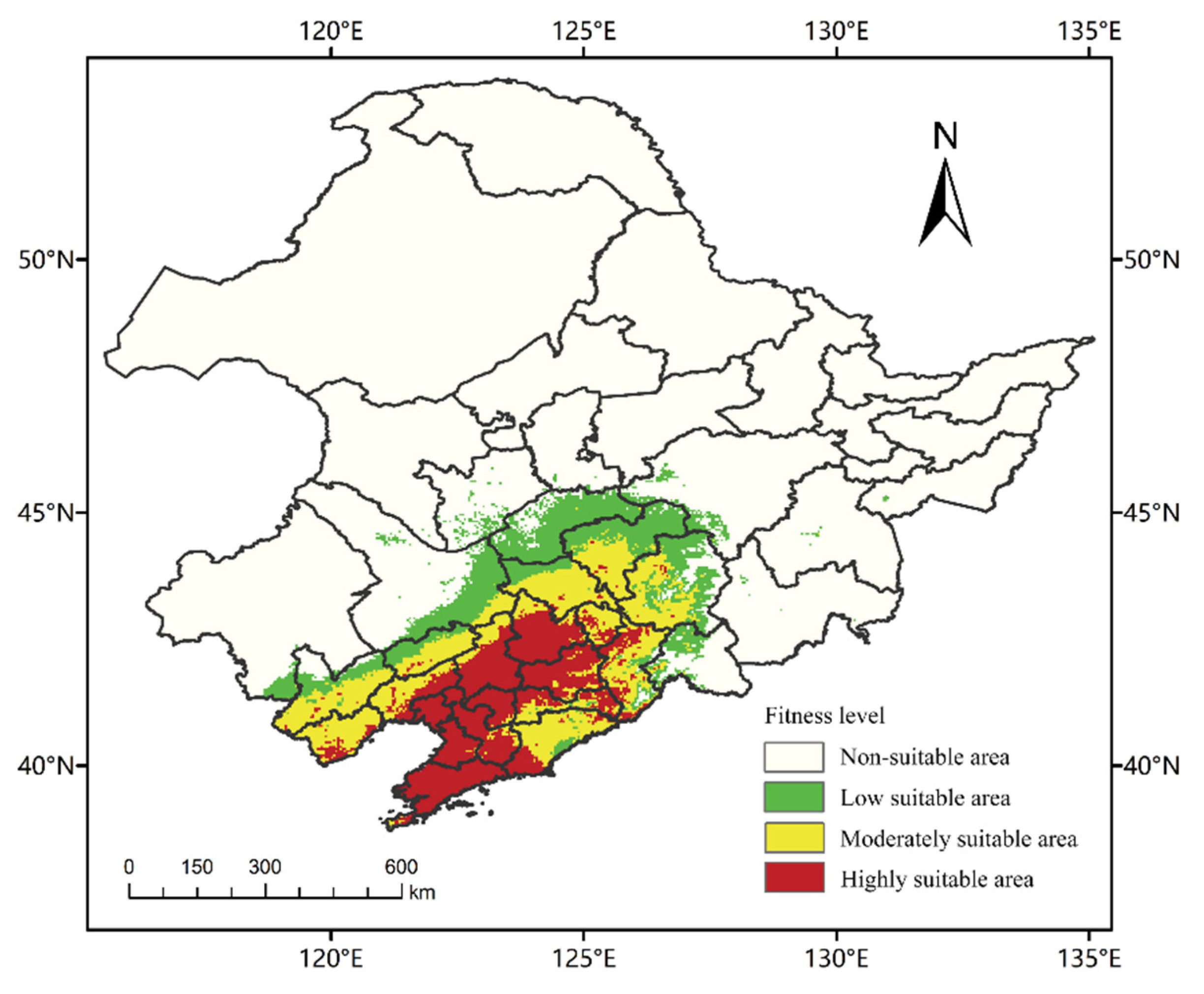
Figure 8.
The MaxEnt model predicts the potential habitat of Ambrosia trifida in Northeast China under future climatic conditions.
Figure 8.
The MaxEnt model predicts the potential habitat of Ambrosia trifida in Northeast China under future climatic conditions.
3.4. Spatial Pattern Changes of Ambrosia trifida Habitat under Different Climate Patterns
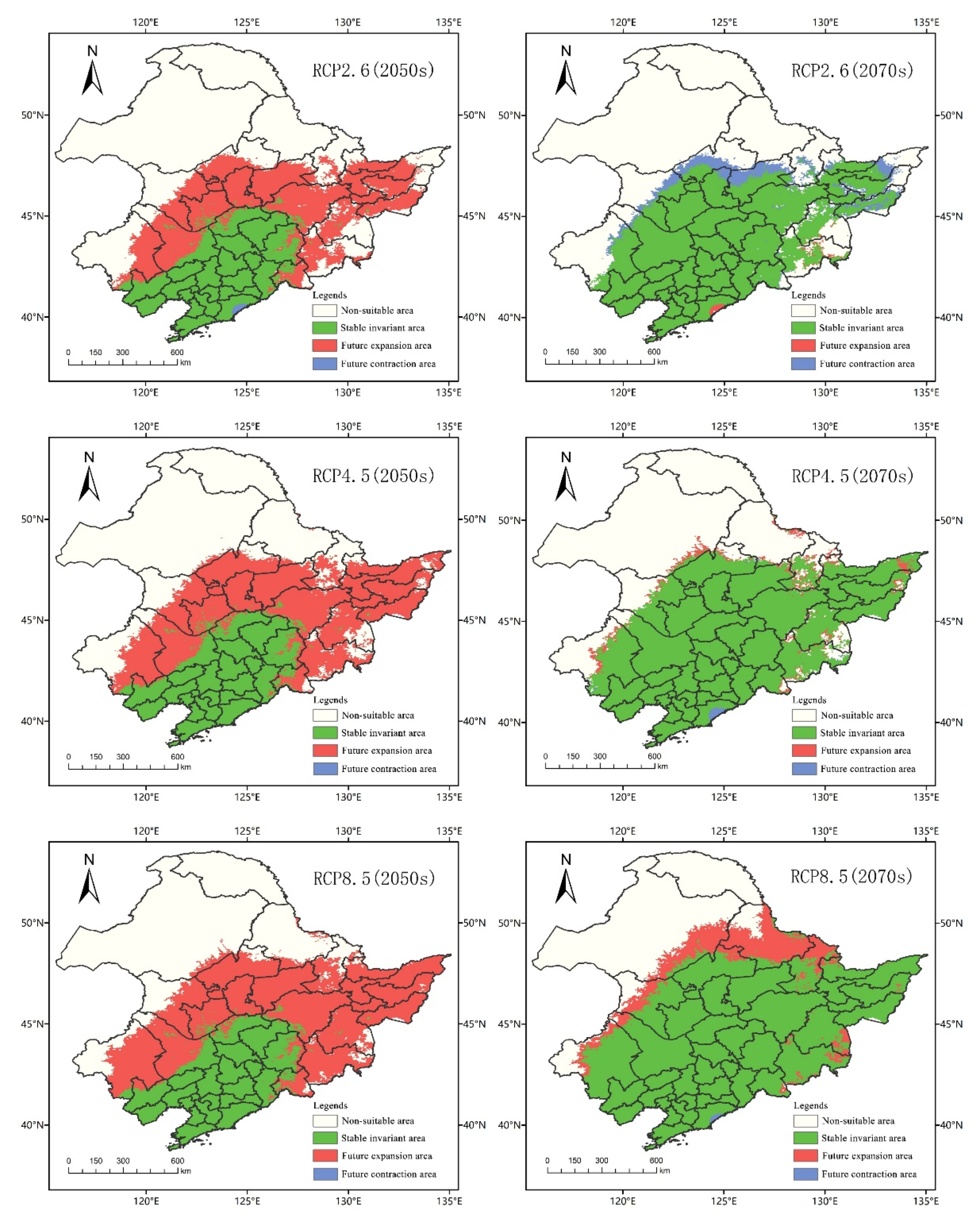
The threshold value of suitable area and unsuitable area was 0.12. The suitable area of Ambrosia trifida was the grid area whose suitable area coefficient was greater than 0.12, and the non-suitable area was the grid area whose suitable area coefficient was less than 0.12. The spatial patterns of Ambrosia trifida in different periods and different climate scenarios were generated by ArcGIS tools, so as to display the expansion and contraction of Ambrosia trifida suitable area. As can be seen in figure 9, the proportion of the expansion area to the contraction area in each climate scenario was significantly larger than that in the current-2050 period. The expansion area of RCP2.6, RCP4.5 and RCP8.5 was 44.93 ×10⁴ km2, 54.87 ×10⁴ km2 and 61.88 ×10⁴ km2, respectively, which indicated that with the increase of emission intensity, the invasion and expansion of Ambrosia trifida were more advantageous. Between 2050 and 2070, the proportion of newly expanded areas in Ambrosia trifida habitat decreased significantly, indicating that the rate of Ambrosia trifida invasion slowed down. In the climate scenario of RCP2.6, the area of contraction (7.87 ×10⁴ km2) was larger than that of expansion (0.57 ×10⁴ km2) , which indicated that the total area of Ambrosia trifida suitable distribution had a declining trend. Under the climate scenario of RCP4.5 and RCP8.5, the total acreage and suitable acreage of Ambrosia trifida increased by 3.46 ×10⁴ km2 and 16.68 ×10⁴ km2, respectively. From the above data, it could be concluded that with the increase of emission intensity, environmental conditions were more favorable for Ambrosia trifida invasion, and RCP8.5 was the most favorable scenario for Ambrosia trifida invasion.
Figure 9.
Spatial variation pattern of Ambrosia artemisiifolia in Northeast China under different climatic conditions in the future.
Figure 9.
Spatial variation pattern of Ambrosia artemisiifolia in Northeast China under different climatic conditions in the future.
3.5. Centroid Migration in Ambrosia trifida Habitat under Different Climate Patterns
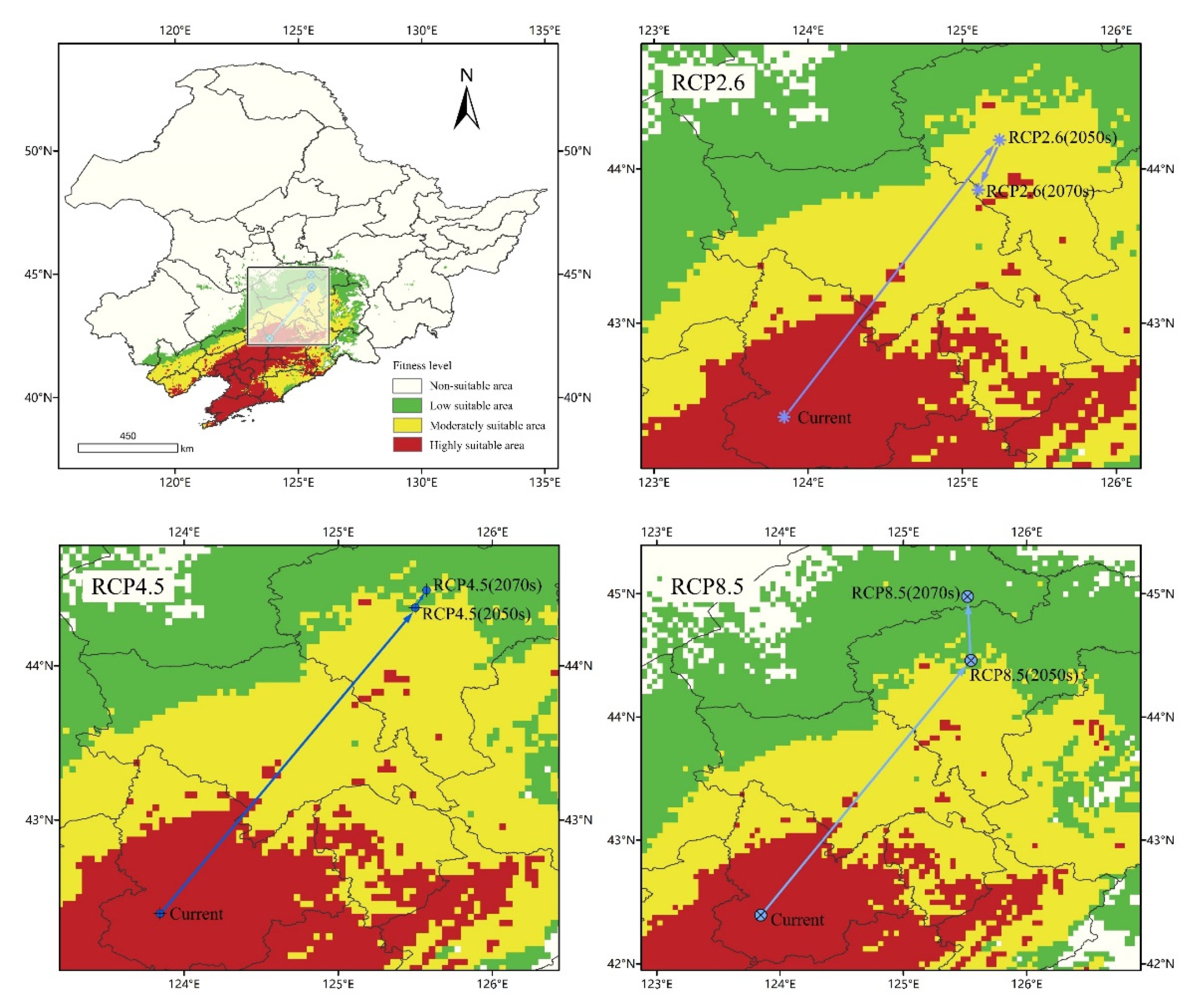
According to Figure 10, the center of mass of Ambrosia suitable area was located in Tieling County, Tieling Province, Liaoning province (123.845,42.3912). Under the RCP2.6 climate scenario, the suitable area of Ambrosia trifida in 2050 was located in Nong'an County, Changchun Province, Jilin province (125.242,44.1875) , and moved 229.51 km to the northeast compared with the current period. The suitable area of Ambrosia trifida in 2070 was located in Gongzhuling, Changchun Province (125.104,43.8657) , compared with that in 2050, it moved 37.44 km to the southwest, in 2050, the center of mass was located in dehui city, Changchun City, Jilin province (125.501,44.3772) , moving 258.2 km to the northeast compared with the current period, and in 2070, the center of mass was located in dehui city, Changchun City, Jilin province (125.573,44.4905) , it moved 6.75 km to the northeast compared with 2050. Under the RCP8.5 climate scenario, the 2050 centroid was located in dehui city, Changchun City, Jilin province (125.549,44.4575) , moving 267.81 km to the northeast compared with the current period, while the 2070 centroid was located in Fuyu City, Songyuan province (125.521,44.9768) , compared with 2050, the center of mass moved 57.79 km to the northwest. On the whole, from the current period to 2070, the suitable center of mass of Ambrosia trifida moved gradually from low latitude to high latitude in three climate scenarios, and the distance of Ambrosia trifida migration was the furthest in the RCP8.5 climate scenario, it indicated that the high intensity emission scenario had the greatest influence on the future suitable area of Ambrosia trifida.
Figure 10.
Potential distribution and centroid transfer of Ambrosia trifida in Northeast China under current climatic conditions.
Figure 10.
Potential distribution and centroid transfer of Ambrosia trifida in Northeast China under current climatic conditions.
4. Discussion
4.1. Model Rationality Evaluation
The results showed that the distribution prediction with the default parameters of MaxEnt model was prone to over-fitting, which affected the accuracy of the prediction results. Cobos designed the Kuenm package for the detailed calibration and construction of the MaxEnt niche model [24] and is widely used in optimizing the MaxEnt niche model [25]. At present, when using the MaxEnt model to predict the adaptive distribution of species in the future, there are different experimental methods. One method is to import the environmental data from different periods into the MaxEnt software separately, multiple modeling was performed to predict its future adaptive distribution area and the accuracy and scientific nature of its prediction results were indicated by multiple AUC values [26,27]. However, the rationality and scientificity of this experimental method are questionable, because the prediction model generated by MaxEnt model every time is random, so there is a slight difference between the multiple models used to predict the distribution when modeling multiple times. Even though the model predicted results with higher accuracy per modeling session (AUC ≥0.9) , it is worth considering whether the predicted results over different periods are comparable. The other method is to use MaxEnt model to predict the future adaptive distribution of species in different time and climate scenarios at one time and repeat it ten times, take the average of 10 predictions [28,29]. We can store future environmental data from different periods and different climate scenarios in different plain English paths, and then copy and paste the saved paths into notebooks, the environmental data of different periods and different climate scenarios were separated by“,” in English and pasted into MaxEnt software, which was used to model and forecast the suitable distribution area of different periods. In this way, we fully follow the principle of controlled variables in the control experiment, to ensure that a group of only one variable, improve the experimental results of scientific and reasonable.
Based on the optimized MaxEnt model and ArcGIS software, the potential distribution of Ambrosia trifida, an invasive alien plant, and its potential distribution under different climate scenarios were predicted and repeated ten times, taking the average of the results of ten runs, the AUC of the predicted results under the ROC curve is 0.98, greater than 0.9, which proved that the optimized MaxEnt model had higher prediction accuracy, it could reflect the potential distribution of Ambrosia trifida in our country and the change of suitable area in the future, and provide theoretical support and technical guidance for the control of Ambrosia trifida in northeast China.
4.2. The Dominant Environmental Variable Limiting the Distribution of Ambrosia trifida
Table 3 shows that human factors contribute to the distribution of Ambrosia trifida, accounting for 22.8% of the contribution of Ambrosia trifida. Therefore, the intensity of human activities in the Ambrosia trifida invasion and diffusion process plays a very important role. At the beginning of the study, field investigation of Ambrosia trifida distribution points also confirmed this conclusion, Ambrosia trifida is mostly distributed in cultivated land, both sides of roads, both sides of rivers, and so on, which is consistent with the field survey results of Ma Qianqian et al. on Ambrosia trifida [30]. At the same time, Huang Qiaoqiao et al. [31] also pointed out that human activities have a significant role in promoting the spread and distribution of alien invasive plants, whether on a large-scale or a small-scale, its impact is also higher than the natural environmental factors [32]. In addition to the human factors, the temperature and humidity factors in this study also have an important impact on the distribution and diffusion of Ambrosia trifida. Among the temperature factors, Bio11 , Bio1 , and Bio4 were the top contributors. Ambrosia trifida seeds have the characteristics of secondary dormancy, Ambrosia trifida seeds will enter the primary dormancy after maturity, when the primary dormancy is broken or other factors are not suitable for germination, the seeds will enter the secondary dormancy, this mechanism facilitates the germination of Ambrosia trifida seeds under a wide range of conditions [33]. The dormancy of seeds will break after low temperature treatment, seed germination, the higher the latitude of the breeding site, the higher the proportion of seeds into dormancy after maturity, the longer the cryogenic treatment time required to break dormancy [34]. In the study of dormancy and germination of Ambrosia trifida, Kang Fenfen et al. found that the germination rate of Ambrosia trifida seeds stored at 3-5 °C increased with the increase of storage time. However, low temperature (-20 °C) did not improve seed germination rate [35]. This conclusion is also consistent with the environmental factor response curves for Bio11 in Figures 6C. In addition, seasonal changes in temperature play an important role in Ambrosia trifida seed germination, and long-term constant temperature is not conducive to Ambrosia trifida seed germination, and appropriate temperature changes will increase seed germination rate [36]. In Figures 6, the response curves of two environmental factors, Bio18 and Bio13 , the distance between the lowest point and the highest point indicates the tolerance range of Ambrosia trifida to this environmental factor. Therefore, the narrow ecological range of Ambrosia trifida to Bio18 and Bio13 indicates that Ambrosia trifida is more sensitive to humidity, which may be the main limiting factor affecting the distribution of Ambrosia trifida. This conclusion is also consistent with that of Ding Shiqiang in the study of ecological factors limiting the distribution and growth of Ambrosia trifida [37].
4.3. Control Measures and Strategies of Invasive Plants
The Ambrosia trifida expansion areas in the study indicate a high risk of future Ambrosia trifida invasion and should be monitored and controlled. The government should establish and improve the prevention and control mechanism of alien species invasion, strengthen the quarantine of forage grass and animals, reduce and avoid the invasion of alien species and cut off their transmission path. At the same time, we should strengthen the propaganda, raise the public's awareness of the seriousness of the invasive plant harm, for the public to popularize the morphological characteristics and the invasive harm of Ambrosia trifida, and mobilize the whole society to participate in the prevention and control of Ambrosia trifida. Encourage relevant scientific research institutions and technical personnel to explore and study the biological substitution of Ambrosia trifida in different areas and other new eradication methods and measures. Relevant departments should actively seek financial support at all levels and set up special funds for exotic invasive plants to provide financial support for the control of Ambrosia trifida and other invasive plants. Once the harmful invasive plants such as Ambrosia trifida are found in the future expansion areas, the physical control, chemical control, biological control or other new control measures should be considered according to the actual situation, control it in a timely manner to avoid its continued large-scale invasion caused more serious losses.
For the areas where Ambrosia trifida has invaded successfully, we should take into account the actual situation of the invaded areas and choose appropriate control measures. In the early stage of population establishment, artificial and physical removal can be used to control the population by cutting, burning, ploughing and root fragmentation [38]. When choosing artificial or physical measures to remove Ambrosia trifida, it is necessary to properly deal with its roots and other parts, so as to prevent its roots from sprouting and producing adventitious roots, and to survive and spread again, causing a new round of plant invasion [39]. When the population is large, the above methods need to invest a lot of human and material resources, not applicable, at this time we can take chemical and biological means to control. Chemical control mainly refers to the spraying of chemical pesticides, which has the advantages of quick effect, labor-saving and easy operation, but it is easy to cause environmental pollution and make invasive species produce resistance, the subsequent control effect gradually decreased [40]. When the Ambrosia trifida population is large, 75% Fenouracil Glyphosate WG 900.0 g·hm-2,30% Glyphosate AS 5250.0 g·hm-2,48% Clopidoacetic Acid EC 4170.0 g·hm -2,21% Chlorampicillin Acid AS 300.0 g·hm-2 could be used alternately between mid-may and late June, avoid resistance of Ambrosia trifida to a drug [41]. Biological control mainly refers to interfering with the normal growth and reproduction process of invasive plants by using their natural enemies or microorganisms, a method of reducing the population density of harmful invasive plants below the hazard level [42]. At present, the biological control of Ambrosia trifida in our country is mainly through the joint release of Ambrosia canadensis and Diplocarpus gmelini, for the Ambrosia trifida population in the middle and late stages of growth, need to increase the release densities of Ambrosia canadensis and Diplocarpus gmelini. Prior to the introduction of biological control agents, it is necessary to know in advance the environmental and climatic conditions, fecundity and living habits of the native habitat, so as to enable it to establish a stable population in the invasive area, but there are constraints to control its population, will not develop into new invasive species [43]. In the prevention and control of invasive plants, there is usually no single method or measure to be used. We should adopt a comprehensive approach based on the situation of the invasive seek truth from facts.
5. Conclusions
At present, Ambrosia trifida is mainly distributed in Liaoning province in Northeast China, and the suitable area accounts for 20.14% of the total area in Northeast China, under the three climate scenarios of RCP2.6(low emission scenario) , RCP4.5(medium emission scenario) and RCP8.5(high emission scenario) , there are significant differences in future land use planning, the potential suitable distribution area of Ambrosia trifida expanded northward obviously. In conclusion, the total suitable area of Ambrosia trifida under three different climate scenarios was similar, but the proportion of medium suitable area and high suitable area of Ambrosia trifida increased significantly with the increase of emission intensity. The results showed that under the climate scenario of RCP2.6, the increase rate of Ambrosia trifida suitable distribution area was the lowest, and the area of Ambrosia trifida suitable distribution area would decrease slowly after reaching a certain peak, under the climate scenario of RCP8.5, the area of Ambrosia trifida highly suitable for cultivation has increased exponentially, and by 2070 most of the three northeastern provinces will be highly suitable for cultivation, it is unfavorable to the control of Ambrosia trifida in northeast China. The main environmental factors affecting the distribution of Ambrosia trifida were HII, Bio11 , Bio1, Bio18,Bio4,and Bio13. Among them, humidity may be the main limiting factor affecting the distribution of Ambrosia trifida. MaxEnt model provides a scientific basis for the accurate assessment of the potential distribution of Ambrosia trifida in Northeast China, and also provides a reference for the relevant government departments to work out the control and management measures of Ambrosia trifida.
Author Contributions
Conceptualization, S.C. and X.B.; methodology, J.Y.; software, S.C. and W.C.; validation, S.C. and G.X.; formal analysis, S.C.; investigation, S.C.; resources, S.C.; data curation, X.B.; writing—original draft preparation, S.C.; writing—review and editing, S.C.; visualization, X.B.; supervision, project administration and funding acquisition, X.B. and J.Y. All authors have read and agreed to the published version of the manuscript.
Funding
This research was funded by National Key R&D Program of China, grant number 2022YFF1300500.
Data Availability Statement
If you need this part of the experimental data, you can send an email to 2021240796@stu.syau.edu.cn to obtain it.
Conflicts of Interest
The authors declare that they have no known competing financial interests or personal relationships that could have appeared to influence the work reported in this paper.
References
- Wake, I.A.M.S.;Soeprobowati, T.R.;Jumari. The invasive alien plants threatened the balance of ecosystem in conservative area in Ontoloe Island, Flores-Indonesia Journal of Physics: Conference Series.2018, 1025, 012033-012033. [CrossRef]
- Celine, B.;Wilfried, T.;Boris, L.;Piero, G.;Michel, B.;Franck, C. Will climate change promote future invasions? Global change biology.2013, 19, 3740-3748. [CrossRef]
- Monika, W.;D, J.A.;Ralph, M.N. Synergies between climate anomalies and hydrological modifications facilitate estuarine biotic invasions. Ecology letters.2011, 14, 749-757. [CrossRef]
- Rai, P.K.;Singh, J.S. Invasive alien plant species: Their impact on environment, ecosystem services and human health Ecological Indicators.2020, 111, 106020. [CrossRef]
- Li, G.Q.; Liu, C.C.; Liu, Y.G.; Yang, J.; Zhang, X.S.; Guo, K. Advances in theoretical issues of species distribution models. Acta Ecologica Sinica.2013, 33 (16), 4827-4835. [CrossRef]
- Xu, Z.L.;Peng, H.H.;Peng, S.Z.The development and evaluation of species distribution models.Acta Ecologica Sinica.2015, 35( 2), 557-567.
- Elith, J.;Phillips, S.J.;Hastie, T.;Dudík, M.;Chee, Y.E.;Yates, C.J. A statistical explanation of MaxEnt for ecologists Diversity and Distributions.2011, 17, 43-57. [CrossRef]
- Qin, X.;Li, M. Predicting the Potential Distribution ofOxalis debilisKunth, an Invasive Species in China with a Maximum Entropy Model. Plants.2023, 12. [CrossRef]
- A, A.Q.;K, D.M.;M, J.A. Predicted range shifts of invasive giant hogweed (Heracleum mantegazzianum) in Europe.. The Science of the total environment.2022, 825, 154053-154053. [CrossRef]
- Wenjun, Y.;Shuxia, S.;Naixian, W.;Peixian, F.;Chao, Y.;Renqing, W.;Peiming, Z.;Hui, W. Dynamics of the distribution of invasive alien plants (Asteraceae) in China under climate change. The Science of the total environment.2023, 903, 166260-166260. [CrossRef]
- Rasmussen, K.;Thyrring, J.;Muscarella, R.;Borchsenius, F. Climate-change-induced range shifts of three allergenic Ambrosia trifidas (Ambrosia L.) in Europe and their potential impact on human health PeerJ.2017, 5, e3104. [CrossRef]
- Mushtaq, S.;Reshi, Z.A.;Shah, M.A.;Charles, B. Modelled distribution of an invasive alien plant species differs at different spatiotemporal scales under changing climate: a case study of Parthenium hysterophorus L. Tropical Ecology.2021, 62, 1-20. [CrossRef]
- Wildlife Conservation Society - WCS, and Center for International Earth Science Information Network - CIESIN - Columbia University. 2005. Last of the Wild Project, Version 2, 2005 (LWP-2): Global Human Footprint Dataset (Geographic).
- Sillero, N. What does ecological modelling model? A proposed classification of ecological niche models based on their underlying methods Ecological Modelling.2011, 222, 1343-1346. [CrossRef]
- Kong, W.Y.;Li,X.H.;Zhou,H.F. Optimizing MaxEnt model in the prediction of species distribution. Chinese Journal of Applied Ecology.2019, 30, 2116-2128. [CrossRef]
- Morales, N.S.;Fernández, I.C.;Baca-González, V. MaxEnt’s parameter configuration and small samples: are we paying attention to recommendations? A systematic review PeerJ.2017, 5, e3093. [CrossRef]
- Rong, S.;Luo, P.;Yi, H.;Yang, X.;Zhang, L.;Zeng, D.;Wang, L. Predicting Habitat Suitability and Adaptation Strategies of an Endangered Endemic Species,Camellia luteofloraLi ex Chang (Ericales: Theaceae) under Future Climate Change Forests.2023, 14. [CrossRef]
- Miao, G.;Zhao, Y.;Wang, Y.;Yu, C.;Xiong, F.;Sun, Y.;Cao, Y. Suitable Habitat Prediction and Analysis ofDendrolimus houiand Its HostCupressus funebrisin the Chinese Region Forests.2024, 15. [CrossRef]
- Qin, Z.;Xiangbao, S.;Xiaolong, J.;Tingting, F.;Xiaocui, L.;Wende, Y. MaxEnt Modeling for Predicting Suitable Habitat for Endangered Tree Keteleeria davidiana (Pinaceae) in China. Forests.2023, 14, 394-394. [CrossRef]
- Liu, W.;Meng, H.;Dong, B.;Fan, J.;Zhu, X.;Zhou, H. Predicting potential distribution of the Rhinoncus sibiricus under climatic in China using MaxEnt. PloS ONE.2024, 19, e0297126-e0297126. [CrossRef]
- Hamdi, A.;Hassane, M.;Issam, T.;Juan, B.;Abdelhamid, K. Observed and Predicted Geographic Distribution of Acer monspessulanum L. Using the MaxEnt Model in the Context of Climate Change Forests.2022, 13, 2049-2049. [CrossRef]
- Yunlin, H.;Jiangming, M.;Guangsheng, C. Potential geographical distribution and its multi-factor analysis of Pinus massoniana in China based on the maxent model. Ecological Indicators.2023, 154. [CrossRef]
- Hurtt, G.C.;Chini, L.P.;Frolking, S.;Betts, R.A.;Feddema, J.;Fischer, G.;Fisk, J.P.;Hibbard, K.;Houghton, R.A.;Janetos, A., et al. Harmonization of land-use scenarios for the period 1500–2100: 600 years of global gridded annual land-use transitions, wood harvest, and resulting secondary lands Climatic Change.2011, 109, 117-161. [CrossRef]
- E, C.M.;Townsend, P.A.;Narayani, B.;Luis, O.-O. kuenm: an R package for detailed development of ecological niche models using Maxent. PeerJ.2019, 7, e6281. [CrossRef]
- Yexu, Z.;Chao, Y.;Norihisa, M.;Chunlan, L.;Qifang, G. Analysis of the distribution pattern of the ectomycorrhizal fungus Cenococcum geophilum under climate change using the optimized MaxEnt model.. Ecology and evolution.2023, 13, e10565-e10565. [CrossRef]
- Zhang,T.;Hu,W.;Jia,T.J.;Zhao,S.Z;Kong,D.Y.;Liu,Y. Prediction of potential distribution of Sophora flavescens in China under climate change. Guihaia.2022, 42, 349-362. [CrossRef]
- Ma,J.J.;Li,Y.Y.;Wang,H.Z.;Fan,R.R.;Li,M.;Yan,J.P.;Zhu,Y.;Duan,Y.F. Geographical Distribution and the Prediction of the Potential Distribution of Keteleeria. Journal of Northwest Forestry University.2022, 37, 158-165.
- Fu,Y.;An,H.J.;Gao,M.L.;Li,H.X.;Zhang,R. Prediction of Potential Distribution Area of Empetrum nigrum var.japonicum Based on Climate Change Background. Journal of Northwest Forestry University.2023, 38, 49-56.
- Liu,W.;Zhao,R.N.;Sheng,Q.Q.;Geng,X.M.;Zhu,Z.L. Geographical distribution and potential distribution area prediction of Paeonia jishanensis in China. Journal of Beijing Forestry University.2021, 43, 83-92. [CrossRef]
- Ma,Q.Q.;Liu,T.;Dong,H.G.;Wang,H.Y.;Zhao,W.X.;Wang,R.L.;Liu,Y.;Chen,L. Potential geographical distribution of Ambrosia trifida in Xinjiang under climate change. Acta Prataculturae Sinica.2020, 29, 73-85. [CrossRef]
- Huang,Q.Q.;Shen,Y.D.;Li,X.X.;Cheng,H.T.;Song,X.;Fan,Z.W. Research progress on the distribution and invasiveness of alien invasive plants in China. Ecology and Environment Sciences.2012, 21, 977-985.
- Feng,J.M.;Xu,C.D.Spatial Distribution Pattern of Alien Plants in Yunnan Province and Its Relationship with Environmental Factors and Human Activities. Journal of Southwest University(Natural Science Edition).2009, 31, 78-83. [CrossRef]
- Silvia, F.;Marco, M.;Fernando, D.P.;Francesco, V. The effect of various after-ripening temperature regimens on the germination behaviour of Ambrosia artemisiifolia Plant Biosystems - An International Journal Dealing with all Aspects of Plant Biology.2020, 154, 165-172. [CrossRef]
- Wu,H.R.;Qiang,S.;Duan,H.;Lin,J.C.Ambrosia artemisiifolia L.Weed Science.2004, 52-54.
- Kang,F.F.;Wei,Y.D.;Yang,F.;Zhang,R.F.;Cheng,Y.;Liu,Y.;Yin,L.P. Effects of different treatments on seed dormancy and germination of Ambrosia artemisiifolia L. Plant Quarantine.2010, 24, 14-16.
- Liu,X.Y.;Li,J.S.;Zhao,C.Y.;Quan,Z.J.;Zhao,X.J.;Gong,L. Prediction of potential suitable area of Ambrosia artemisiifolia L.in China based on MAXENT and ArcGIS. Acta Phytophylacica Sinica.2016, 43, 1041-1048.
- Ding,S.Q. Study on the occurrence and distribution of Ambrosia trifida, growth limiting ecological factors and chemical control technologies, Master's thesis, Xinjiang Agricultural University,Xinjiang,2021.
- Tang,S.C.;Li,X.Q.;Wei,C.Q.;Pan,Y.M.;Lv,H.S. Current Status and Research Progress of Alien Invasive Plants in Guangxi. Journal of Guangxi Academy of Sciences.2023, 39, 146-155.
- Liang,W.M.;Wang,S.W. Damage and Prevention and Control Measures of Ambrosia trifida. XianDai NongYe KeJi.2010, 160-161.
- Guo,C.L.;Ma,Y.F.;Qin,J.L.;Ma,Y.L. Chemical control effects of 30 kinds of herbicides on Ambrosia artemisiifolia and Mikania micrantha. Plant Protection.2014, 40, 179-183.
- Ding,S.Q.;Fu,K.Y.;Ding,X.H.;He,J.;Tuerxun,A.;Zhang,G.L.;Fu,W.D.;Wen,J.;Jiamaliding,W.;Guo,W.C. Screeing of herbicides for controlling Ambrosia artemisiifolia L.in Xinjiang,China. Journal of biosafety.2021, 30, 126-131.
- Wilgen, B.W.v.;Raghu, S.;Sheppard, A.W.;Schaffner, U. Quantifying the social and economic benefits of the biological control of invasive alien plants in natural ecosystems Current Opinion in Insect Science.2020, 38, 1-5. [CrossRef]
- Morais, E.G.F.;Pican, M.C.;Ccedil;Seme, A.A.;Atilde;Barreto, R.W.;Rosado, J.F.;Martins, J.C. Lepidopterans as Potential Agents for the Biological Control of the Invasive Plant, Miconia calvescens Journal of Insect Science.2012, 12, 1-17. [CrossRef]
Disclaimer/Publisher’s Note: The statements, opinions and data contained in all publications are solely those of the individual author(s) and contributor(s) and not of MDPI and/or the editor(s). MDPI and/or the editor(s) disclaim responsibility for any injury to people or property resulting from any ideas, methods, instructions or products referred to in the content. |
© 2024 by the authors. Licensee MDPI, Basel, Switzerland. This article is an open access article distributed under the terms and conditions of the Creative Commons Attribution (CC BY) license (http://creativecommons.org/licenses/by/4.0/).
Copyright: This open access article is published under a Creative Commons CC BY 4.0 license, which permit the free download, distribution, and reuse, provided that the author and preprint are cited in any reuse.


