

Submitted:
01 April 2024
Posted:
02 April 2024
You are already at the latest version
Abstract
In order to study the key factors that induce green travel among urban residents under the carbon inclusive mechanism, analyze the formation mechanism of green travel intention and reduce urban transportation carbon emissions. First, an SEM model of urban residents’ green travel under the carbon inclusive mechanism was constructed (the 8 latent variables including Subjective Norms (SN), Attitude (ATT), Perceived Behavioral Control (PBC), Habits (HAB), Perceived Usefulness (PU), Perceived Ease of Use (PEU), Continuous Intention of Carbon Inclusive Platform application (CI), Behavioral Intention (BI)). Then, based on the data analysis and path analysis results of 354 valid sample data obtained through online surveys, the interrelationships and corresponding parameters between latent variables and manifest variables were obtained. The results show that SN, ATT, PBC, HAB, PU, PEU and CI all have varying degrees of effects on BI. Among them, in the direct influence relationship, the influence path coefficients of CI, PBC and ATT on BI are 0.529, 0.299 and 0.146 respectively; The influence coefficient of HAB on BI is 0.152, but P>0.05, it fails the test, so the influence of HAB on BI is Not significant; in the indirect impact relationship, the coefficient of HAB indirectly affecting BI through ATT is 0.102, and the coefficient of PU indirectly affecting BI through CI and SN is 0.450. It can be seen that under the carbon inclusive mechanism, useful methods such as increasing the value of carbon points and the breadth of application, improving perceived behavioral control, increasing publicity and social awareness, and cultivating green travel attitudes can promote the willingness of urban residents’ green travel behavioral intention.
Keywords:
green travel
; carbon inclusive mechanism
; carbon credit
; factor analysis
1. Introduction
With the rapid development of urbanization, cities account for less than 3% of the earth’s land area, but account for 78% of man-made carbon emissions. The transportation sector accounts for more than 1/5 of global carbon emissions, second only to electricity and thermal power generation (Pan Xiaohong et al., 2023)[1]. Statistics from the International Energy Agency (IEA) show that the transportation industry accounted for 26% of global carbon emissions in 2020, and the carbon emissions generated by urban transportation accounted for more than 50% of the total carbon emissions in the transportation industry. Carbon emission reduction in the transportation sector is urgent. (Sun Xiaohui et al., 2023) [2]. With the continuous growth of residents’ income levels, the substantial increase in private car ownership, and the continuous improvement of travel demand, the level of public transportation services in most cities is difficult to meet the growing personalized travel needs of residents to a certain extent (Ye Zhangyi, 2023) [3]. The transportation industry is considered to be one of the main sources of global carbon emissions, and urban road transportation is a top priority. The “National Statistical Yearbook” shows that as of the end of 2022, my country’s car ownership will be 311.84 million, of which private cars will be approximately Accounting for 90%. There are 464.34 million car drivers, and there will be 23.19 million newly registered cars in 2022. The rapid growth of cars has caused the growth rate of CO2 emitted by transportation to be higher than that of other sectors in the past few decades. Therefore, effective ways are sought to guide the urban residents’ It is urgent to use travel methods to reduce carbon emissions. At the same time, residents’ travel problems have brought increasingly serious negative externalities, such as traffic congestion, noise pollution, air pollution, etc., which have caused obstacles to urban life. Therefore, research on guiding urban residents to travel green and giving priority to public transportation such as buses and subways, environmentally friendly vehicles, shared transportation, cycling, walking and other sustainable transportation methods will help reduce urban energy consumption, alleviate urban traffic congestion, and mitigate carbon emissions. critical path.
In recent years, the combination of low-carbon green travel and the carbon inclusive mechanism has provided new emission reduction scenarios for the low-carbon transformation of urban transportation. Carbon Inclusion is an innovative voluntary emission reduction mechanism that uses the platform, algorithm and method of “Internet + Big Data + Carbon Finance” to build a set of residents’ carbon emission reductions that are “recordable, measurable, profitable and recognized” mechanism, thereby establishing a positive guidance mechanism for carbon emission reduction trading with economic incentives, policy encouragement, and verification and quantification. It is a power incentive mechanism that drives the production side from the consumer side and promotes technological innovation on the supply side through the demand side. It is one of the effective ways for travelers to choose low-carbon green modes has gradually become a focus of work across the country and a research hotspot of scholars’ attention.
Many scholars have conducted extensive research on travel mode selection, including proposing corresponding countermeasures and suggestions based on heterogeneity such as travel economic costs, travel time costs, and travel mileage. Under the carbon inclusive mechanism, the factors inducing green travel for urban residents await further systematic analysis and empirical research [1]. This article combines the Theory of Planned Behavior (TPB) and the technology acceptance model to study the inducing factors of urban residents’ green travel intention under the carbon inclusive mechanism, conducts a survey on urban residents’ green travel intention, and empirically analyzes the impact of the inclusive mechanism on urban residents.
2. Literature review and Methods
2.1. Carbon Inclusive Mechanism
In order to guide urban residents to proactively implement green travel action plans, mainstream carbon inclusive mechanism carriers such as Carbon Credit (CC) have become green travel incentive methods and one of the economic stimulus means for public participation in energy conservation and emission reduction in the transportation industry. Wang et al.[4]compared the impact of carbon points and monetary rewards on people’s willingness to choose carpooling, and found that carbon points are more effective in promoting green travel.
2.2. Theory of Planned Behavior
The Theory of Planned Behavior (TPB) was proposed by Ajzen[5] (1988). TPB believes that human behavior is not completely voluntary, but is a rational choice under a certain mechanism. Ajzen & Fishbine (1975) added an examination of individual “Perceived Behavior Control” to further enrich Theory of Reasoned Action (TRA). It is helpful to judge the process of individual decision-making affected by mechanisms and other external environments. TPB contains five elements: Attitude (ATT), Subjective Norm (SN), Perceived Behavioral Control (PBC), Behavior Intention (BI), and Behavior (B).
2.3. Technology Acceptance Model
Technology Acceptance Model (TAM) was proposed by Davis[6] to study individuals’ acceptance and use of new technologies. It is currently widely used in information technology-related fields and is also suitable for analyzing the acceptance and usage intention of green travel platforms. . However, the variables that influence individuals’ behavioral intentions to use new technologies are not limited to the functional aspects of technology or platforms. Many scholars have combined TAM with other theories in their research (Marangunic & Granic, 2015)[7], including the information system success model (Yang et al. , 2017)[8], Expectation Confirmation Theory ECT (Tawafak, 2021[9]), Theory of Planned Behavior, Social Cognitive Theory and Motivation Theory, etc., in order to use TAM combined with other theoretical models to analyze new problems caused by new mechanisms and information technology innovation.
Domestic and foreign scholars have conducted extensive research on urban residents’ green travel issues, mainly focusing on factors affecting green travel, travel characteristics, and travel behavior choices. For example, traffic guidance language has a positive impact on green travel intention (Chen Kai et al., 2017)[10]. Spiritual satisfaction and a good green travel culture are conducive to improving residents’ green travel willingness (Zheng Junjun et al., 2019)[11]. Based on TPB theory, He Zhanqiong (2021)[12] revealed the impact of urban travel environment on green travel intentions from the individual psychological level. Gime nez-Nadal (2019)[13] and others found that higher gasoline tax policies can encourage people to choose green travel methods such as walking or bus. Sharab (2012)[14] and others pointed out that the reduction of public transportation fares has a positive impact on the growth of the number of residents traveling by public transportation. Regarding carbon point induction, Zhou Xianqing (2022)[15]and others innovatively proposed carbon coin rewards to encourage residents to travel green. Liu Hang (2018)[16] pointed out that carbon points can guide users to form green travel modes while improving user satisfaction and stickiness.Yang Jianxun et al. (2018)[17] believe that the emergence of the carbon GSP has increased residents’ motivation for green travel. Liu Biaoyi et al. (2023)[18] studied the key factors of carbon points in inducing green travel among urban residents, and believed that the effect of carbon points in inducing green travel is significantly related to the urban environment and facilities, carbon points functions, and carbon points applet usage experience. Zhang Yiwen et al. (2003)[19] analyzed users’ willingness to ride-hailing online under different low-carbon incentives and concluded that the value of carbon points can effectively promote online ride-hailing users to choose carpooling.
In summary, research on promoting urban residents’ participation in green travel mainly focuses on connotation, influencing factors, travel characteristics, etc. There is no in-depth study on the nature of residents’ green travel, and there is a lack of understanding of the carbon inclusive mechanism of residents’ participation in green travel. Research on combined green travel induction strategies. Based on the structural equation model, this paper conducts an empirical analysis on the factors inducing green travel for urban residents under the carbon inclusive mechanism and puts forward targeted suggestions.
3. Model Design and Research Hypotheses
Specific to green travel, this article is based on TAM and TPB, combined with the characteristics of the carbon inclusive mechanism, to determine the latent variables and research models that predict the factors inducing green travel for urban residents.
3.1. ”Attitude-Intension” Psychological Influence Path: TPB Theory
TPB theory believes that behavioral attitude, subjective norms and perceived behavioral control will have a positive impact on behavioral intention, and behavioral intention is the most direct factor affecting behavior. TPB theory is one of the most commonly used and representative theories for studying green travel [20].
- Attitude (ATT). It refers to an individual’s assessment of how positive or negative he or she is about implementing green travel behaviors.
- Subjective Norm (SN)/social norm. Residents will choose to adjust their green travel intentions due to social policy propaganda, low-carbon mechanisms, social regulations and the expectations or influences of people around them on their behavior (Fang Xiaoping, 2019)[21].
- Perceived Behavioral Control (PBC). Behavioral subjects perceive the feasibility of green travel due to mechanism constraints. When individuals perceive that green travel is economical, feasible, and recognized by society, they will strengthen their behavioral intention (Behavior Intention, BI) for green travel, have a positive attitude, and produce continuous practice in green travel attitude. Based on this, the following hypotheses are put forward:
H1:ATT has a significant positive impact on BI
H2: SN have a significant positive impact on BI
H3: PBC has a significant positive impact on BI
3.2. “Habit- Intension” Inertial Influence Path
The choice of travel mode is affected by travel satisfaction, as well as long-term travel Habits(HAB), travel mode choice and loyalty to a certain travel mode. Since public transportation has the advantage of low prices, if it can improve the perception of travel quality and improve its cost-effectiveness, it can attract private car users to try to change their travel attitudes and choose more competitive green travel modes.Based on this, the following hypotheses are put forward:
H4: Habits(HAB) has a significant positive impact on Attitudes(ATT)
H5: HAB has a significant positive impact on BI
3.3. The Impact Path of the “Mechanism- Intension” Carbon Inclusive Mechanism: Integrated Application of the Technology Acceptance Model
Perceived Usefulness(PU) refers to the degree to which individuals believe that using information technology can improve work performance (Davis, 1989). This study can choose perceived usefulness to reflect whether residents’ choice of green travel can improve their perception of travel experience. At the same time, PU can affect Social propaganda and the choices and attempts of people around them affect subjective norms and encourage them to choose green travel; Perceived Ease of Use(PEU) can directly affect carbon inclusiveness through the perception of the difficulty of applying new technologies on the carbon inclusive platform. Willingness to continue using the platform. Based on this, the following hypotheses are put forward:
H6: PU has a significant positive impact on SN
H7: PU has a significant positive impact on CI
H8: PEU has a significant positive impact on CI
Figure 1 shows the interaction between travel habits, attitudes, perceived behavioral control, and willingness to continue using the carbon inclusive platform, and their impact on the psychological transmission mechanism affecting urban residents’ green travel willingness under the carbon inclusive mechanism.
Structural Equation Modeling (SEM) is an integration of Joreskog’s theory and model hypothesis analysis in Path Analysis (PA) and Confirmatory Factor Analysis (CFA). It is currently used to deal with latent variables, The main model of manifest variables and measured variables as well as complex correlations has wide applications in many fields such as urban transportation. SEM equations include measurement and structural equations. The measurement equation mainly reflects the relationship between observed variables and latent variables, while the structural equation mainly reflects the internal relationship between latent variables.
3.4. Measurement Model and Structural Model
- Measurement model
The measurement equation model describes the relationship between each observation indicator and its corresponding latent variable, such as equations (1) and (2), and the structural equation model is equation (3):
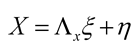
In formulas (1) and (2), and are observable indicator variables of psychological latent variables, where are exogenous indicators, are endogenous indicators, and are coefficient matrices of psychological latent variables, and are measurement errors related to observed variables matrix.
- Structural model
The internal relationship between latent variables is expressed as follows:
In formula (3), and are the correlation coefficient matrices of exogenous latent variables and endogenous latent variables respectively; are the normally distributed residual matrix with an expected value of 0.
Since latent variables such as green travel attitude, perceived behavioral control, subjective norms, perceived ease of use, perceived usefulness and behavioral intention cannot be measured directly and need to be measured indirectly through observed variables, this study uses a structural equation model to analyze the relationship between the above latent variables. quantitative analysis of the relationship.
4. Questionnaires and Inspections
4.1. Questionnaire Design and Data Sources
The study used questionnaires to obtain primary data. The questionnaire is divided into three parts: First, the psychological latent variables that cannot be directly quantified, such as the respondent’s attitudes and beliefs, are set as matrix scale items. Including SN, ATT, PBC, TH, BI; the second is the carbon inclusive scenario and technology acceptance survey, which is set as a matrix scale question item. Including PU, PEU and CI; The third is the respondent’s personal information (including gender, age, education, Occupation, monthly income and occupation, etc.) The individual social attributes part belongs to the actual survey part and is set as multiple-choice items, with a total of 5 multiple-choice questions. The initial questionnaire was compiled and adjusted based on the mature scales in related fields. Authoritative scholars in the field of questionnaire research believe through empirical research that large-scale scales are better than small-scale scales in terms of reliability and validity (Dawes, 2002; Brown, 2011), the latent variable measurement items in the questionnaire were designed using a seven-level Likert scale, with a total of 41 scale items for the 8 latent variables in the questionnaire. Finally, 46 questions were set.
Respondents’ question options were divided into “strongly agree”, “agree”, “somewhat agree”, “neutral”, “somewhat disagree”, “disagree” and “strongly disagree”, with the scores for each option ranging from high to the low order is “7,6,5,4,3,2,1”. Before the formal survey, the research team first conducted a test test on the questionnaire, collected 57 test data for pre-survey, and deleted 14 items that did not meet the standards and had low factor loadings based on the reliability and validity analysis results. Finally, a formal questionnaire with 32 items was formed. See Table 1 for specific items and sources.
4.2. Data Collection and Descriptive Statistical Analysis
The questionnaire was mainly released through the Questionnaire Star platform. The survey period was in Jan. - Mar. 2024, and a total of 363 responses were received. In order to ensure the quality of the sample and data, the questionnaire was screened through two indicators (Wu, Vassileva & Zhao, 2017). First of all, when the questionnaire was distributed, the answering time recording function of the Questionnaire Star platform was enabled. According to the practice during the test, it took more than 2 minutes to complete the questionnaire. Questionnaires submitted within 2 minutes were regarded as invalid questionnaires; secondly, the questionnaire design was added for a rhetorical question, if the participant gives a non-opposite answer, the data will also be considered invalid. After strict screening, 9 invalid questionnaires were eliminated, leaving 354 valid questionnaires for formal data analysis, with a valid questionnaire rate of 97.5%.
Among the 354 valid questionnaires, women accounted for 49.20% and men accounted for 50.80%, and the gender ratio was basically consistent; among them, those aged 18-60 accounted for more than 90%, who are the main independent choices and participants in travel; more than 50% had a bachelor’s degree, Followed by junior college, master’s degree and above, accounting for 14.21 and 13.16 respectively; in terms of occupation and monthly income, office workers accounted for 68.36%, with incomes mostly between 3,000 and 10,000 yuan, accounting for more than 68%; among the number of private cars, 58.76% owned 1 private car (Table 2). Judging from the statistical descriptive data of gender, age, education, occupation, monthly income and number of private cars owned, the distribution of various items is relatively even. Comply with basic population information, socioeconomic status and requirements for survey samples.
4.3. Reliability Analysis
Reliability can be used to analyze the reliability, stability and consistency of the questionnaire, including the most basic testing methods and the most commonly used methods to determine whether the questionnaire items are reasonable. The Alpha coefficient formula is as follows Formula (4).
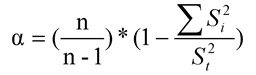
In the reliability analysis, the α coefficient result of the questionnaire scale is in the (0.7, 1) interval, indicating that it is suitable for factor analysis; when the result is less than 0.5, it indicates that the data is not suitable for factor analysis. For the 354 data collected from this questionnaire The data were tested for internal consistency, and the results are shown in Table 3.
SPSS27.0 was used to calculate the questionnaire data and obtain the results of the evaluation scale (Table 3). SN, ATT, PBC, HAB, PU, PEU, CI, the Alpha coefficients of BI are 0.879, 0.900, 0.918, 0.903, 0.861, 0.955, 0.947, 0.944 and 0.974 respectively, all greater than 0.80, with good reliability. Therefore, the reliability of all subscales meets the requirements, which can prove that the questionnaire used in this study has high reliability and can be analyzed for validity.
4.4. Validity Analysis
Validity analysis is a common method to measure the validity of questionnaire data, which can ensure the availability and accuracy of questionnaire data.
4.4.1. KMO Detection and Bartlett Sphere Detection
It can effectively ensure the authenticity and accuracy of the questionnaire data, and conduct comprehensive analysis through KMO value, common degree, variance explanation rate value, factor loading coefficient and other indicators to verify the validity level of the data and the number of factor extractions to set latent variables. Among them, the questionnaire scale KMO value above 0.80 is considered excellent and is very suitable for factor analysis. If the KMO value is lower than 0.50, it is unqualified, indicating that the data is not suitable for factor analysis.
Table 4 shows that the KMO value of the scale is 0.962 (>0.80), and the significance p value of the Bartlett sphere test is 0.000, indicating that the data collected in this questionnaire is real and effective, and the questionnaire data is suitable for factor analysis.
4.4.2. Convergent Validity Test
Before testing the measurement model, in order to analyze the convergence of the questionnaire, it is necessary to conduct a convergent validity test. It can be judged by observing the composite reliability (Composite Reliability, CR) and average variance extracted (AVE) indicators. When CR>0.7 and AVE>0.5, it means that the consistency between the measurement variable items is acceptable. (Fornell & Larcker[27], 1981).
Through statistical calculation, it was found that the CR was greater than 0.7 and the AVE was greater than 0.5 (see Table 5), indicating that the internal consistency of the measurement items was good and the latent variable had good convergent validity.
4.4.3. Discriminant Validity Analysis
The discriminant validity test mainly analyzes the discrimination between low correlations and significant differences between latent variables. It mainly uses the Fournell-Lark criterion for measurement, which can effectively detect the coefficients of latent variables in the questionnaire that are different from other variables. If the correlation coefficient between a variable and other variables is less than the mean root of the average variance extracted by the variable, it means that the variable has good discriminant validity (Fomell & Larcker[27], 1981).
The bold words on the cross diagonal in Table 6 are the results of the root sign of the average extracted variation, subjective norm (SN), attitude (ATT), perceived behavioral control (PBC), travel habit (TH), perceived usefulness (The square roots of Perceived Usefulness), Perceived Ease of Use (PEU), Continuous Intention to Use (CI), and green travel intention (Inten) are 0.778, 0.894, 0.917, 0.925, 0.849, 0.890 respectively. ,0.869,0.878, the values are all greater than the correlation coefficient between each variable. Therefore, the measurement model of this questionnaire can be considered to have good discriminant validity.
4.5. Model Fitting Analysis
4.5.1. Model Fitting Indicators and Results
To evaluate the fitting effect of the SEM model, the reported indicators include chi-square minimum difference (CMID), degree of freedom (DF), normed chi-square value (CMD/DF), fit index (GFI), and adjusted fit. Index (AGFI), comparative fit index (CFI), non-normative fit index (TLI), root mean square error of approximation (Root Mean Square Error of Approximation, RMSEA) and standardized root mean square residual value (RMSR) ). However, as the sample size increases, the standard of the model fitting index value will expand sharply, affecting the reference value of the chi-square value. In addition, due to different specific research contents, the standards implemented by different disciplines are different. . Referring to the recommendations of authoritative scholars in the field of structural equations (Hayduk[28],1987;Bagozzi & Yi[29], 1988; Scott,1994; Hu & Bentler,[30]1998). Table 7 provides the index numerical results and recommended standards of the research model.
CMID/DF<5 indicates that the model complexity is acceptable, the root mean square error of approximation RMSEA=0.082<0.1, the comparative fit index CFI=0.929>0.9, and the non-standard fitting coefficient NNFI=0.920>0.9, indicating that the model fitting condition is acceptable. accept. Comparative analysis can conclude that the test goodness index meets the recommended standard value, indicating that the model has sufficient adaptability to the collected data.
4.5.2. Path Hypothesis Testing
Path coefficient analysis can use structural equation software to calculate the path coefficient of each path of the urban residents’ green travel model and the variance variation (R2) jointly explained by each variable. Its significance can be judged by the p value to determine whether the hypothesis is true.
Analysis of Table 8 shows that travel habits (β=0.696, p<0.001) have a significant positive impact on green travel attitudes; perceived usefulness (β=0.662, p<0.001) has a significant positive impact on subjective norms; perception Usefulness (β=0.723, p<0.001) and perceived ease of use (β=0.200, p<0.001) have a significant positive impact on the intention to continue using carbon points; green travel attitude (β=0.146, p<0.001) , willingness to use carbon points (β=0.529, p<0.001) has a significant positive impact on green travel intention; perceived behavioral control (β=0.299, p<0.01) and subjective norms (β=0.103, p<0.05) have a significant positive impact on green travel intention. Green travel intention has a positive impact, while travel habits (β=0.152, p>0.05) have an insignificant impact on green travel intention. Therefore, the null hypotheses H1-H7 are accepted and the null hypothesis H6 is rejected.
In terms of explained variance, travel habits explained 48.5% of the variance of green travel attitudes; perceived usefulness explained 43.8% of the variance of subjective norms; the two variables of perceived usefulness and perceived ease of use explained a total of 79.7% of carbon points. The variance of willingness to continue using; five variables, travel habits, green travel attitude, perceived behavioral control, subjective norms and willingness to continue using carbon points, explained a total of 84.2% of the variance of green travel willingness. It shows that the model constructed in this article, except for hypothesis 6, is suitable for the study of factors affecting urban residents’ green travel, and the model has good adaptability.
4.6. Empirical Results Verification
Structural model verification uses Amos26.0 software to calculate the path coefficient and the variance variation (R2) jointly explained by each variable (Figure 2). The model verification results show that all indicators meet expectations, and the carbon inclusive mechanism induces green travel. The path coefficient of the effect passed the significance test.
5. Discussion
The standardized path coefficient was obtained from the structural equation model test. It can be seen that green travel attitude, perceived behavioral control, subjective norms and willingness to continue using the carbon inclusive platform all have a certain positive impact on urban residents’ green travel.
5.1. Discussion and Analysis of the Carbon Inclusive Mechanism
Perceived usefulness and perceived ease of use have a direct impact on the continued use intention of the Carbon Inclusive Platform, and jointly explain 79.7% of the variance in intention to use. Further analysis of the path coefficients found that perceived usefulness has a direct impact on the continued use of the Carbon Inclusive Platform. The impact of intention is greater than the perceived ease of use, with a path coefficient of 0.723, that is, if the traveler’s perceived usefulness increases by 1 unit, the willingness to continue using the carbon inclusive platform increases by 0.72 units, which is higher than the 0.200 unit of perceived ease of use. . It shows that in the scenario of using the carbon inclusive platform, green travelers pay more attention to the usefulness of the carbon points obtained by the carbon inclusive platform, and pay relatively less attention to the convenience and difficulty of using it.
5.2. Discussion and Analysis of Urban Residents’ Willingness to Go Green
Amos analysis results show that travel attitude, perceived behavioral control, subjective norms and willingness to continue using the carbon inclusive platform jointly explain 84.2% of the variance in residents’ green travel intentions. Further analysis of the path coefficient found that the intention to continue using the carbon inclusive platform (β=0.529) has a greater impact on residents’ green travel intention than their green travel attitude (β=0.146), perceived behavioral control (β=0.299) and subjective norms (β= 0.103). It can be seen that in the context of the use of carbon inclusive platforms, urban residents’ green travel willingness is more concerned about the continued use of carbon inclusive platforms. A more reasonable carbon inclusive mechanism can make urban residents more willing to participate in green travel. In the scenario without a carbon inclusive mechanism, perceived behavioral control has a higher impact on urban residents’ green travel intentions than travel attitudes and subjective norms.
In this study, although the impact of travel habits on green travel intention is not significant, it has a significant impact on travel attitude (β=0.696), thereby affecting green travel intention, and explains 48.5% of the variance in travel habits. The usefulness of carbon points has an indirect effect on green travel intention through subjective norms (β=0.662). The effect value is 0.662*0.103=0.068; at the same time, the usefulness of carbon points has an indirect effect on willingness to continue using the carbon inclusive platform (β=0.723). The effect value of the indirect impact of green travel intention is 0.723*0.529=0.382. Therefore, the sum of the two indirect effects of perceived usefulness on residents’ green travel intention is 0.068+0.382=0.450. From the observation of the total effect, it is found that the total impact of perceived usefulness on residents’ green travel intentions cannot be ignored. Therefore, the value of carbon points is a very important influencing factor, which operators of the carbon inclusive platform need to pay attention to.
6. Conclusions
In the innovative context of the carbon inclusive mechanism, this study applies the technology acceptance model and planned behavior theory to the empirical analysis of the continued use intention of the carbon inclusive platform and the green travel intention of urban residents, constructing and validating the carbon inclusive mechanism. A research model on urban residents’ green travel intention. The conclusions include:
6.1. The Usefulness of Carbon Credits Is One of the Key Indirect Influencing Factors under the Carbon Inclusive Mechanism
The willingness to use carbon inclusive platforms in the technology acceptance model and perceived behavioral control in the theory of planned behavior are the core factors that affect urban residents’ green travel intentions. Under the carbon inclusive mechanism, the impact of the carbon inclusive platform on urban residents’ green travel intentions is greater than the impact of perceived behavioral control. However, when the carbon inclusive platform is not popular or immature, the impact of perceived behavioral control is more important.
6.2. The Usefulness of Carbon Credits Is Greater than the Ease of Use under the Carbon Inclusive Mechanism
The impact of carbon points usefulness on the intention to use the carbon inclusive platform is greater than the ease of use of the carbon inclusive platform. At the same time, the usefulness of carbon points has a positive impact on subjective norms, and this variable has no direct impact. The willingness of urban residents to go green indirectly affects the willingness of urban residents to go green through subjective norms and willingness to continue using the carbon inclusive platform. This variable plays a decisive role under the carbon inclusive mechanism.
6.3. TAM Continues to Complement TPB under the Carbon Inclusive Mechanism
Through the analysis of model fitting indicators, the model of urban residents’ green travel intention under the carbon inclusive mechanism constructed by combining the technology acceptance model and the theory of planned behavior has a significant impact on the impact of perceived behavioral control, travel attitudes and subjective norms on urban residents’ green travel intention. The predictions and explanations are valid, indicating that the technology acceptance model’s willingness to continue using the carbon inclusive platform complements the theory of planned behavior.
The above conclusion provides theoretical support for the development and construction of the carbon inclusive mechanism and the active guidance of urban residents’ green travel willingness. That is, when the carbon inclusive mechanism is imperfect or the penetration rate is not high, it is necessary to pay attention to perceived behavioral control; in the case of carbon inclusive In the process of improving or promoting the preferential mechanism, the usefulness of carbon points should be taken into consideration, the value and application scope of the points should be fully explored, and the role of the carbon inclusive mechanism in urban residents’ green travel should be better regulated.
Author Contributions
For research articles with several authors, a short paragraph specifying their individual contributions must be provided. The following statements should be used “Conceptualization and methodology, Chunmei Liu; software and validation, Mideth Abisado and Avonn Nova; formal analysis, Chunmei Liu; investigation, resources and data curation, Mideth Abisado; writing—original draft preparation, Chunmei Liu; writing—review and editing, Avonn Nova; visualization, Mideth Abisado; supervision and project administration, Mideth Abisado and Avonn Nova; All authors have read and agreed to the published version of the manuscript.”
Data Availability Statement
Website address of research data: https://pan.baidu.com/s/1rWHanpfGzai4TB2jqr7xPQ?pwd=950l
Acknowledgments
This research is the phased achievement of Social Science Planning and Research Project of Shandong Provice (22CJJJ30).
Conflicts of Interest
Declare conflicts of interest or state “The authors declare no conflicts of interest.”
References
- Pan X H, Huang L Q. Empirical Analysis of Influencing Factors of Carbon Inclusive Policy on Residents’ Green Travel Behavior—Taking Chongqing as an Example[J]. Sustainable Development,2023,13(6):1923-1935.
- SUN X H, WANG F Y. The Intention to Choose Shared Electric Vehicles Considering Psychological Latent Varables[J]. Highway Engineering, 2023,48(5):174-180,191.
- YE Zhangyi. Development Model of Public Transport in the Main Urban Area Under the Cluster Layout [J]. Traffic & Transportation. 2023,39 (04):95-99.
- WANG Y, WANG F, WANG Z. How Carbon Allowance Allocation Rule Affects Manufacturing Remanufacturing Decisions Under the Carbon credits buyback policy[J]. Energy Reports, 2022, 8: 14061-14071.
- Ajzen, I. The Theory of Planned Behavior[J]. Organizational Behavior and Human Decision Processes, 1991, 50(2): 179-211.
- Davis, F. D. , Bagozzi, R. P., & Warshaw, P. R.. User Acceptance of Computer Technology: A Comparison of Two Theoretical Models. Management Science, 1989, 35(8), 982-1003.
- Marangunić, N. , & Granić, A.. Technology Acceptance Model: A Literature Review From 1986 to 2013. Universal Access in the Information Society, 2015, 14(1), 81–95.
- Yang, M. , Shao, Z., Liu, Q., & Liu, C.. Understanding the Quality factors that Influence the Continuance Intention of Students toward Participation in MOOCs. Educational Technology Research and Development, 2017,65(5), 1195-1214.
- Tawafak, R. , Malik, S., Mathew, R., Ashfaque, M., Jabbar, J., AINuaimi, M., & Alfarsi, G.. A combined model for continuous intention to use e-learning system. International Journal of Interactive Mobile Technologies, 2021,15(03):113–129.
- CHEN Kai;DENG Ting. Research on Environmental Attitudes, Guide Information and Green Commuting Intentions[J]. Journal of Arid Land Resources and Environment, 2017,31(03):191-196.
- ZHENG Junjun;ZHANG Bing. Group Choice Behavior in Green Travel Based on Scale-free Network[J]. Chinese Journal of Management Science, 2019,27(10) :198-208.
- HE Zhanqiong;YIN Xiao. Research on the Impact of Urban Travel Environment on Green Travel Behavior[J]. Ecological Economy, 2021, 37(07):88-96.
- Gimenez-Nadal, J.I.; Molina, J.A. Green Commuting, and Gasoline Taxes in the United States[J]. Energy Policy, 2019,(132) :324-331.
- Sharaby, N. , Shiftan Y. The Impact of Fare Integration on Travel Behavior and Transit Ridership[J]. Transport Policy, 2012,(21) :63-70.
- ZHOU Xian-qing;JIA Da-zhao. Study of Carbon Emission Trading Mechanism for Residents’ Green Traffic in Xiong’an New Area[J]. Highway, 2022, 67(4):271-275.
- Liu Hang. Commonly Benefiting Carbon Institution:Theoretical Analysis,Referential Experience and Framework Design[J]. Studies on Socialism with Chinese Characteristics, 2018,(5):86-94,112.
- Yang Jianxun, Liu Yifan. The Challenges and Countermeasures for City-level Low-carbon Transportation Development in the Internet Era[J]. Environmental Protection, 2018,46(11):43-46.
- Liu Biaoyi, Li Dong. Research on Factors Inducing Green Travel among Urban Residents based on Structural Equation Model[J]. Economic Research Guide, 2023,(15):32-35.
- Zhang Yiwen, Li Wenxiang. Ridesplitting Intentions of Online Ride-Hailing Users under Carbon Inclusion Scheme[J]. Transport Research, 2023, 9 (05): 83-96.
- Panter J R, Jones A. Attitudes and the Environment as Determinants of Active Travel in Adults: What Do and Don’t We Know? [J]. Journal of Physical Activity and Health, 2010, 7(4): 551-561.
- FANG Xiaoping;ZHOU Qianran. The Research of Low-carbon Transportation Mode based on TPB[J]. Journal of Railway Science and Engineering, 2019,16(3):804-811.
- Stern P, C. New Environment Theories: Toward a Coherent Theory of Environmentally Significant Behavior [J]. Journal of Social Issues, 2000,56(3): 407-424.
- Unal A B, Steg L, Granskaya J. “To Support or not to Support, That is the Question’’. Testing the VBN Theory in Predicting Support for Car Use Reduction Policies in Russia [J]. Transportation Research Part A: Policy and Practice, 2019, 119: 73-81.
- Bamberg S, Ajzen I, Schmidt P. Choice of Travel Mode in the Theory of Planned Behavior: The Roles of Past Behavior, Habit, and Reasoned Action [J]. Basic&Applied Social Psychology, 2023,25(3): 175-187.
- Verplanken B, Aarts H, Van Knippenberg A, et al. Habit versus planned behaviour: A field experiment [J]. British Journal of Social Psychology, 1998,37: 111-128.
- ZHANG Y, LI W, LIU X, et al. Ridesplitting Intentions of Online Ride-hailing Users under Carbon Inclusion Scheme[J]. Transport Research, 2023,9(5): 83-96.
- Fornell, C. ,& Larcker, D. F. Evaluating Structural Equation Models with Unobservable Variables and Measurement Error. Journal of Marketing Research, 1981,18(1),39-50.
- Hayduk, L. A.. Structural Equation Modeling with LISREL: Essentials and Advances. Jhu Press. 1987.
- Bagozzi, R. P. , & Yi, Y. On the Evaluation of Structural Equation Models. Journal of the Academy of Marketing Science, 1988, 16(1),74-94.
- Hu, L. T. , & Bentler. P. M.. Fit Indices in Covariance Structure Modeling: Sensitivity to Underparameterized Model Misspecification. Psychological Methods, 1998, 3(4),424.
Figure 1.
SEM model of factors inducing green travel under the carbon inclusive mechanism.
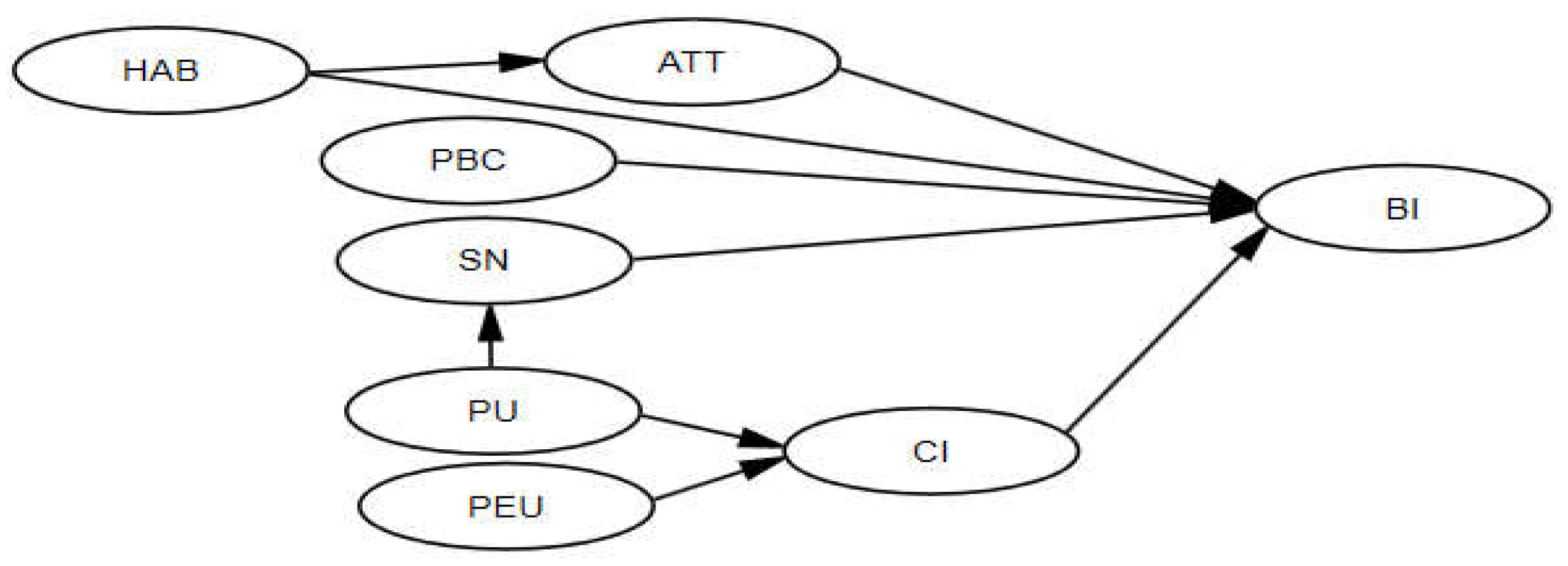
Figure 2.
Structural model.
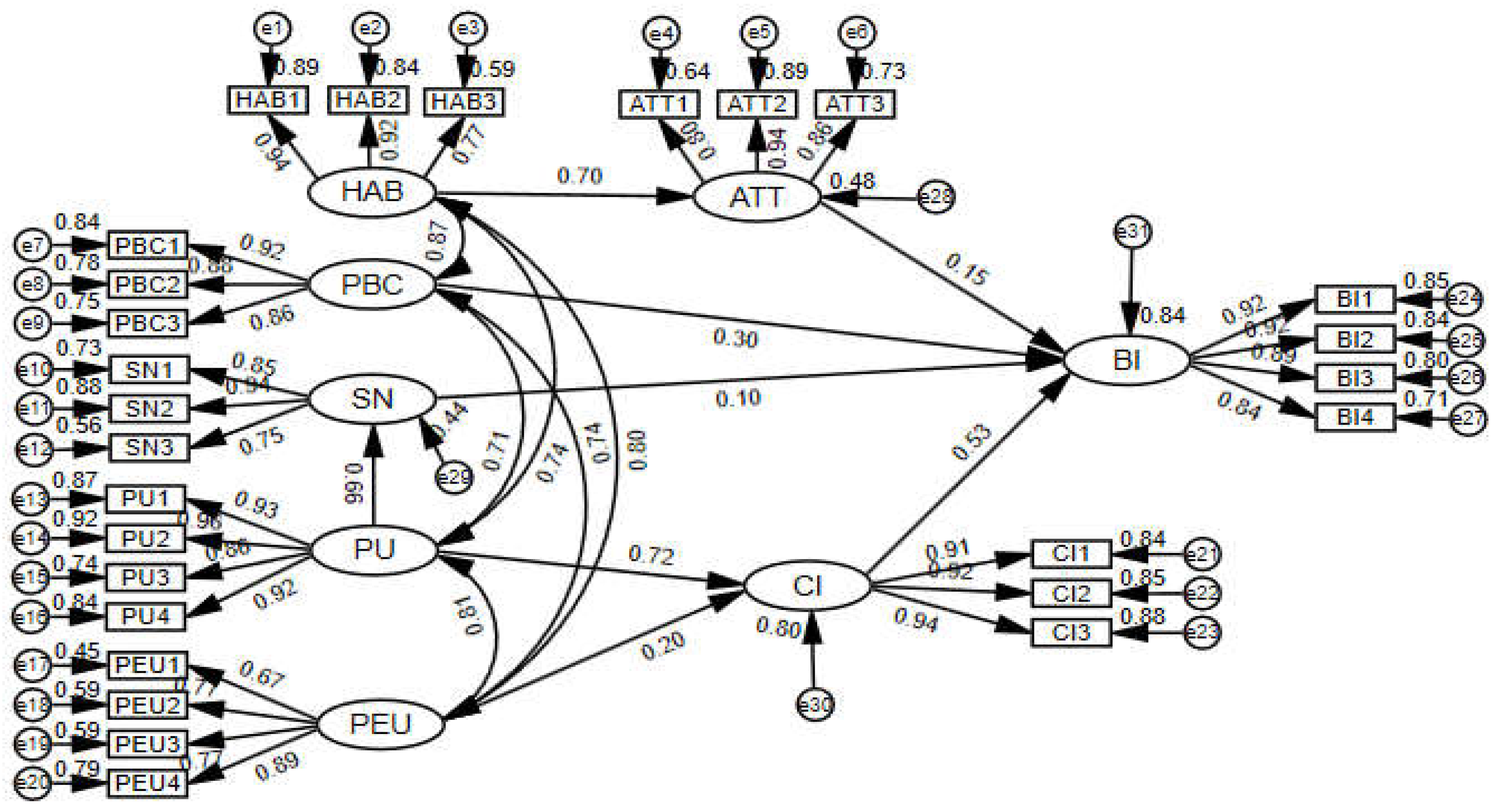

Table 1.
Measurement items and sources.
| Latent variable | coding | Questionnaire items | Literature source |
|---|---|---|---|
| SN | SN1 | People around usually choose green and low-carbon travel modes | Stern, 2000[22] |
| SN2 | People around suggest you adopt green and low-carbon travel modes | ||
| SN3 | The concepts of green environmental protection the society advocated, guide you to choose green and low-carbon travel modes | ||
| ATT | ATT1 | Walking or cycling is good for your health? | Unal, 2019[23] |
| ATT2 | Green and low-carbon travel modes is the right choice | ||
| ATT3 | Green and low-carbon travel modes can reduce environmental pollution | ||
| PBC | PBC1 | Green and low-carbon travel modes can meet daily travel needs | Bamberg,Ajzen,Schmidt,2003[24] |
| PBC2 | You have enough time and energy to choose green and low-carbon travel modes | ||
| PBC3 | There are many opportunities to choose green and low-carbon travel modes in your city | ||
| HAB | HAB1 | Green and low-carbon travel modes are part of your life | Verplanken, 1998[25] |
| HAB2 | You often choose green and low-carbon travel modes without thinking | ||
| HAB3 | green and low-carbon travel modes is convenient and comfortable | ||
| PU | PU1 | The value of carbon credits will increase along with environmental protection policies advance, | Zhang,Li,Liu, 2023[26] |
| PU2 | Carbon credits can be redeemed for more products | ||
| PU3 | Carbon credits can be redeemed for cash in the future | ||
| PU4 | Carbon credits should participate in carbon trading | ||
| PEU | PEU1 | You can accept new applications | Sukendro et al.,2020 |
| PEU2 | You have learned about carbon inclusive information | ||
| PEU3 | Using Carbon credits app doesn’t take much effort | ||
| PEU4 | You are willing to spend time and energy to use carbon credits applications if carbon credits are widely used | ||
| CI | CI1 | It is a wise choice to use the Carbon Inclusive Platform App if green and low-carbon travel can earn carbon credits | Zhang,Li,Liu, 2023[26] |
| CI2 | You are willing to continue to use the Carbon Inclusive Platform App if carbon points can generate revenue, | ||
| CI3 | You are willing to recommend the carbon inclusive platform App to people around under the improvement of the carbon inclusive system and reward mechanism | ||
| BI | BI1 | You will choose green travel methods instead of taxis or private cars in daily life | Zhang,Li,Liu, 2023[26] |
| BI2 | you will recommend people around to travel green? | ||
| BI3 | You will choose green travel behaviors when going to work | ||
| BI4 | You will choose green travel behaviors when not at work | ||
| Individual Information | 1. Gender A.Male B.Female | ||
| 2. Age A.<18 B.18-25 C.26-35 D.36-45 E.46-60 F.>=61 | |||
| 3. Education level A.College,high school, technical secondary school and below B.Bachelor degree C.Master degree and above | |||
| 4. Monthly income A.<=3000 B.3001-5000 C.5001-10000 D.>=10001 | |||
| 5. Occupation A.Student B.Office worker C.Retired D.Others | |||
Table 2.
Sample characteristics statistics.
| categories | Items | frequency | Proportion |
|---|---|---|---|
| Gender | male | 180 | 50.80% |
| female | 174 | 49.20% | |
| Age | <18 | 28 | 7.91% |
| 18-25 | 86 | 24.29% | |
| 26-30 | 77 | 21.75% | |
| 31-35 | 71 | 20.90% | |
| 36-45 | 59 | 16.67% | |
| 46-60 | 23 | 6.50% | |
| >60 | 10 | 1.98% | |
| Education | Junior high school and below | 4 | 1.12% |
| High school | 15 | 3.51% | |
| College and below | 83 | 24.14% | |
| Bachelor | 207 | 59.19% | |
| Master and above | 45 | 13.16% | |
| Career | Students | 48 | 13.56% |
| office workers | 242 | 68.36% | |
| Freelance | 33 | 9.32% | |
| Retire | 20 | 5.65% | |
| Other | 11 | 3.11% | |
| Monthly income | <=3000 | 56 | 15.82% |
| 3001—5000 | 116 | 32.77% | |
| 5001—10000 | 125 | 35.31% | |
| 10001—20000 | 39 | 11.02% | |
| 20000-50000 | 15 | 4.24% | |
| >=500001 | 3 | 0.85% | |
| Private car ownership | 0 | 47 | 13.28% |
| 1 | 208 | 58.76% | |
| 2 | 84 | 23.73% |
Table 3.
Cronbach’s coefficient.
| Dimensions | Alpha | items |
|---|---|---|
| SN | 0.879 | 3 |
| ATT | 0.900 | 3 |
| PBC | 0.918 | 3 |
| THA | 0.903 | 3 |
| PEU | 0.861 | 4 |
| PU | 0.955 | 4 |
| CI | 0.947 | 3 |
| BI | 0.944 | 4 |
| sum | 0.974 | 27 |
Table 4.
KMO detection and Bartlett sphere detection.
| Kaiser-Meyer-Olkin(KMO) | .962 | |
| Bartlett sphericity test | Approximate chi-square | 10538.291 |
| Degrees of freedom | 351 | |
| P-Significance | .000 | |
Table 5.
Convergent validity test.
| Dimension | Items | Significance Estimation | Item reliability | |||||||
|---|---|---|---|---|---|---|---|---|---|---|
| Unstd. | S.E. | Z-value | P | Std. | SMC | CR | AVE | |||
| SN | SN1 | 1.000 | 0.852 | 0.726 | 0.884 | 0.721 | ||||
| SN2 | 1.060 | 0.049 | 21.556 | *** | 0.936 | 0.876 | ||||
| SN3 | 0.842 | 0.051 | 16.457 | *** | 0.749 | 0.561 | ||||
| ATT | ATT1 | 1.000 | 0.802 | 0.643 | 0.902 | 0.755 | ||||
| ATT2 | 1.366 | 0.067 | 20.421 | *** | 0.942 | 0.887 | ||||
| ATT3 | 1.228 | 0.066 | 18.599 | *** | 0.857 | 0.734 | ||||
| PBC | PBC1 | 1.000 | 0.919 | 0.845 | 0.919 | 0.792 | ||||
| PBC2 | 1.045 | 0.041 | 25.712 | *** | 0.885 | 0.783 | ||||
| PBC3 | 0.909 | 0.037 | 24.367 | *** | 0.865 | 0.748 | ||||
| HAB | HAB1 | 1.000 | 0.941 | 0.885 | 0.909 | 0.771 | ||||
| HAB2 | 1.016 | 0.033 | 30.840 | *** | 0.917 | 0.841 | ||||
| HAB3 | 0.699 | 0.035 | 19.837 | *** | 0.767 | 0.588 | ||||
| PU | PU1 | 1.000 | 0.932 | 0.869 | 0.954 | 0.841 | ||||
| PU2 | 1.035 | 0.028 | 37.209 | *** | 0.959 | 0.920 | ||||
| PU3 | 1.011 | 0.039 | 25.839 | *** | 0.859 | 0.738 | ||||
| PU4 | 1.003 | 0.032 | 31.317 | *** | 0.916 | 0.839 | ||||
| PEU | PEU1 | 1.000 | 0.674 | 0.454 | 0.859 | 0.605 | ||||
| PEU2 | 1.255 | 0.098 | 12.870 | *** | 0.767 | 0.588 | ||||
| PEU3 | 1.219 | 0.094 | 12.926 | *** | 0.771 | 0.594 | ||||
| PEU4 | 1.260 | 0.087 | 14.456 | *** | 0.886 | 0.785 | ||||
| CI | CI1 | 1.000 | 0.915 | 0.837 | 0.947 | 0.856 | ||||
| CI2 | 1.000 | 0.034 | 29.619 | *** | 0.922 | 0.850 | ||||
| CI3 | 1.005 | 0.032 | 31.279 | *** | 0.939 | 0.882 | ||||
| BI | BI1 | 1.000 | 0.924 | 0.854 | 0.941 | 0.800 | ||||
| BI2 | 1.029 | 0.034 | 29.849 | *** | 0.916 | 0.839 | ||||
| BI3 | 1.013 | 0.037 | 27.717 | *** | 0.893 | 0.797 | ||||
| BI4 | 0.921 | 0.039 | 23.903 | *** | 0.843 | 0.711 | ||||
Note: ***p<0.001.
Table 6.
Discriminant validity.
| Dimensions | Discriminant validity | ||||||||||
|---|---|---|---|---|---|---|---|---|---|---|---|
| AVE | SN | ATT | PBC | TH | PU | PEU | CI | BI | |||
| PEU | 0.605 | 0.778 | |||||||||
| BI | 0.800 | 0.704 | 0.894 | ||||||||
| PU | 0.840 | 0.712 | 0.816 | 0.917 | |||||||
| CI | 0.856 | 0.775 | 0.863 | 0.878 | 0.925 | ||||||
| SN | 0.721 | 0.701 | 0.744 | 0.641 | 0.641 | 0.849 | |||||
| PBC | 0.792 | 0.732 | 0.808 | 0.696 | 0.693 | 0.794 | 0.890 | ||||
| ATT | 0.755 | 0.621 | 0.738 | 0.627 | 0.672 | 0.697 | 0.700 | 0.869 | |||
| THA | 0.771 | 0.768 | 0.792 | 0.709 | 0.685 | 0.775 | 0.853 | 0.660 | 0.878 | ||
Note: The bold numbers on the diagonal are the root values of AVE, and the lower triangle is the facet Pearson correlation coefficient.
Table 7.
Model fitting index.
| index | model indicator value | recommended standard value | conclusion | standard source | |
| CMID | 1049.573 | The smaller the better | |||
| DF | 309 | The smaller the better | |||
| CMID/DF | 3.397 | <3 Excellent; <5 Acceptable | Acceptable | Hayduck,1987 | |
| GFI | 0.815 | >0.8acceptable; >0.9 good fit | Acceptable | Bagozzi & Yi, 1988 | |
| AGFI | 0.874 | >0.8acceptable; >0.9 good fit | Acceptable | Scott,1994 | |
| CFI | 0.929 | >0.9 | Excellent | Bagozzi & Yi, 1988 | |
| TLI | 0.920 | >0.9 | excellent | ||
| RMSEA | 0.082 | <0.08Excellent;<0.1 Acceptable | acceptable | Bagozzi & Yi, 1988 | |
| SRMR | 0.072 | <0.08 | Excellent | Hu & Bentler,1998 | |
Table 8.
Model path hypothesis test results.
| path | Unstd. | S.E. | C.R. | P | Std.(β) | R2 | result |
| HAB→ATT | 0.436 | 0.033 | 13.24 | *** | 0.696 | 0.485 | Acceptable |
| PU→SN | 0.707 | 0.055 | 12.972 | *** | 0.662 | 0.438 | Acceptable |
| PU→CI | 0.709 | 0.058 | 12.151 | *** | 0.723 | 0.797 | Acceptable |
| PEU→CI | 0.241 | 0.071 | 3.387 | *** | 0.200 | Acceptable | |
| HAB→BI | 0.136 | 0.068 | 2.001 | 0.055 | 0.152 | 0.842 | Rejectable |
| ATT→BI | 0.210 | 0.052 | 4.046 | *** | 0.146 | Acceptable | |
| PBC→BI | 0.259 | 0.038 | 6.801 | ** | 0.299 | Acceptable | |
| SN→BI | 0.094 | 0.032 | 2.934 | * | 0.103 | Acceptable | |
| CI→BI | 0.527 | 0.044 | 11.913 | *** | 0.529 | Acceptable |
Note: ***=p<0.001;**=p<0.01;*=p<0.05.
Disclaimer/Publisher’s Note: The statements, opinions and data contained in all publications are solely those of the individual author(s) and contributor(s) and not of MDPI and/or the editor(s). MDPI and/or the editor(s) disclaim responsibility for any injury to people or property resulting from any ideas, methods, instructions or products referred to in the content. |
© 2024 by the authors. Licensee MDPI, Basel, Switzerland. This article is an open access article distributed under the terms and conditions of the Creative Commons Attribution (CC BY) license (http://creativecommons.org/licenses/by/4.0/).
Copyright: This open access article is published under a Creative Commons CC BY 4.0 license, which permit the free download, distribution, and reuse, provided that the author and preprint are cited in any reuse.


