

Submitted:
18 March 2024
Posted:
21 March 2024
You are already at the latest version
Abstract
Shared public buildings have become centers of innovation, integrating advanced technologies to meet evolving societal needs. With a heightened emphasis on occupants’ health and well-being, these buildings serve as hubs for technological convergence, facilitating seamless connectivity and intelligent data analysis and management. Within this context, environmental monitoring emerges as a foundational element, pivotal to all aspects of building management. This article provides findings from the nationally funded RE-START project, which focuses on shared public buildings, with special regard to educational and medical facilities. The project explores enhanced indoor air quality monitoring, focusing in particular on CO2 concentration that is directly correlated with occupancy, as a fundamental element for developing health and safety protocols, energy efficiency strategies, integration of smart building technologies, and data-driven energy management. The intersection of environmental monitoring, energy efficiency, security, and IoT technologies in in indoor spaces are relevant. The outcomes of the study reveal the delicate nature of all the involved components, that need to be carefully developed in an integrated manner.
Keywords:
Environmental Monitoring
; CO2 concentration
; Energy Efficiency
; Technological Integration
; Digital Technologies
; Occupant Health
; IoT Environments
; Sensor Technologies
; Machine Learning
; Building Management
1. Introduction
In today’s urban landscape, shared public buildings have evolved into hubs of innovation, blending advanced technologies with evolving societal needs. From environmental monitoring and energy efficiency to security and access control, these spaces have become focal points for integrating diverse technological solutions. With the rise of digital technologies and heightened emphasis on occupants’ health and well-being, these buildings have emerged as centers of technological convergence. Leveraging Internet technologies, they facilitate instant information sharing and streamlined coordination, epitomizing our commitment to shaping a sustainable and cutting-edge future: environmental monitoring stands as the foundational keystone, pivotal to all aspects.
In recent years, there has been a significant surge in technical-scientific literature focusing on the monitoring of environmental parameters such as temperature, humidity, light, and concentrations of various pollutants. Several recent studies collectively contribute to advancing understanding and strategies for maintaining high-quality indoor air across diverse settings. There are numerous scientific articles related to the monitoring of environmental parameters, forming an extensive and comprehensive literature that encompasses various contexts. This literature spans from individual houses and residential buildings to shared public structures of diverse types, which are currently receiving considerable attention, not only concerning healthy but also in terms of energy consumption patterns. However, in many of these articles, the true objective of data collection is often unclear. Today, this type of data holds significant importance, extending beyond generic environmental parameter monitoring. It proves highly valuable for facility management and, crucially, for controlling environments, addressing aspects such as occupancy and optimizing system operations. Today, the availability of substantial data from environmental monitoring, facilitated by advancements in computer systems, could be highly beneficial for developing building models based on this data.
This enables the implementation of various strategies for optimized building management, potentially in combination with artificial intelligence and machine learning models. This growth is attributed, on one hand, to the widespread availability of diverse sensor technologies and the increasing need for precise control over environmental conditions. Initially driven by comfort considerations, the emphasis has shifted towards environmental safety, especially in the wake of events such as the Covid-19 pandemic.
In a comprehensive review of indoor air quality, European legislation, and Italian research (Settimo et al., in [1]) highlight key considerations.
Baqer et al. in [2] address IoT sensory technology’s development for optimal indoor air quality in hospitals, emphasizing taxonomy, challenges, motivations, and recommended solutions. Alonso et al., propose a methodology using de-trended cross-correlation for pollutant selection to ensure excellent indoor air quality [3]. Shen et al. in [4] conduct a literature review focusing on creating a satisfactory indoor environment for healthcare facilities’ occupants.
The evolution of environmental monitoring has taken on a renewed significance, particularly in tandem with the advancements in Internet of Things (IoT) environments, shaping a transformative paradigm that integrates seamless connectivity and intelligent data insights into our understanding and optimization of ambient conditions.
In an extensive exploration of environmental monitoring, Butt et al., [5] provide a comprehensive review focusing on optical waveguide and fiber-based sensors. Broday and Gameiro da Silva, [6], examine the pivotal role of IoT in evaluating and communicating indoor environmental quality (IEQ) in buildings. Anik et al. in [7] propose a cost-effective, scalable, and portable IoT data infrastructure for indoor environment sensing. Soheli et al., [8] present a smart greenhouse monitoring system utilizing IoT and artificial intelligence, demonstrating the integration of advanced technologies in agricultural environments. These studies collectively contribute valuable insights into the evolving landscape of environmental monitoring and IoT applications.
Additionally, the integration of data-driven models, now commonplace, plays a pivotal role, particularly in applications like crowd management in commercial buildings.
However, a closer examination of the literature reveals that data collection often serves diverse and not always clearly defined purposes. Generic references to “comfort” are common, necessitating a critical analysis of the multifaceted landscape of environmental monitoring.
The present work provides a series of topics developed in a nationally funded RE-START project, initially conceived amidst the Covid-19 pandemic to address immediate challenges in shared public buildings, with specific attention to educational and healthcare facilities. The project was a consequence of the urgent need to address challenges posed by the pandemic after initial re-openings of shared facilities, but its implications extend far beyond the immediate crisis. By delving into such critical themes, the project aims to lay the groundwork for sustainable and resilient building management practices that will endure well into the future, as summarized below:
- (i)
- Enhanced Indoor Air Quality Measures: In the wake of Covid-19, there’s been a heightened emphasis on managing shared spaces to ensure both energy efficiency and compliance with stringent safety regulations. This involves reevaluating ventilation systems and implementing measures to enhance indoor air quality, which is crucial for the well-being of occupants;
- (ii)
- Health and Safety Measures: With a renewed focus on occupant health and safety, understanding and managing occupant density and flow within buildings has become paramount. This includes considerations for optimizing indoor air quality and ventilation systems to mitigate health risks;
- (iii)
- Energy Efficiency: Heating, Ventilation and Air Conditioning (HVAC) systems stand out as significant energy consumers in buildings. Balancing the imperative of indoor air quality and safety with the need for energy efficiency poses a significant challenge, as evidenced by Franco and Schito in [9]. The project aims to explore strategies for optimizing HVAC systems to achieve a balance between energy conservation and occupant comfort;
- (iv)
- Integration of Smart Building Technologies: Leveraging on advancements in smart building technologies, particularly the proliferation of various sensors like Z-Wave wireless sensors, offers new opportunities for monitoring indoor parameters. These sensors provide invaluable insights into building performance and comfort, facilitating informed decision-making regarding system operation and maintenance;
- (v)
- Data-Driven Energy Management: The data acquired from monitoring indoor parameters requires careful analysis to extract meaningful high-level insights. Through the application of machine learning and data-driven modeling techniques, the project seeks to unlock the full potential of monitoring data, enabling more effective energy management strategies;
The overarching goal of this paper, inspired by a reassessment of commercially available sensor technologies and their reliability, is to showcase the potential of environmental data monitoring. Emphasis is placed on CO2 and movement sensors, their network integration, and the management and analysis of collected data, potentially employing advanced machine learning methods. An integral aspect of environmental monitoring is the connection to human presence within shared spaces. Parameters such as CO2 concentration, obtained through sensors, offer valuable anonymous insights. Elevated CO2 levels become a formidable indicator of crowded environments, as well explained by Franco and Leccese in [10].
The utilization of movement data, available from some modern sensors, poses challenges, as the direct correlation between movement and the actual number of people in an environment is not always straightforward. The utility of these insights lies in the optimal management of diverse structures, aiming not only for sustained environmental comfort but, more importantly, for energy conservation. The article concludes by presenting results from a long-term monitoring effort spanning various facilities, including educational and outpatient healthcare settings. A detailed monitoring with the acquisition of data unveils substantial value in crafting advanced data-driven building models, entirely bypassing the need for traditional physical models. This data-driven approach provides a more flexible and efficient perspective in understanding and optimizing building dynamics.
1.1. Motivation of the Work
The work is developed in the framework of the RE-START project supported by Tuscany Region. The project involves academic structures, in particular the Department of Energy, Systems, Territory and Constructions Engineering and the Department of Information Engineering of the University of Pisa, and a medical structure, Fondazione Gabriele Monasterio (FTGM). The Monasterio Foundation is a Research Center of the Regional Health Service. The Foundation was established by the National Research Council and the Tuscany Region for the management and development of specialized healthcare activities and medical research. There are two locations for the activities: the San Cataldo-CNR Hospital in Pisa and the “Heart Hospital” in Massa, both of which are in Tuscany, Italy.
The project’s scope transcends the emergency context, as it delves into issues with lasting relevance and positive impacts well beyond the pandemic. In fact, as already mentioned, RE-START delves into different key themes concerning the sharing of public buildings, with different functions and occupants that embody a nexus of competing priorities, where the imperatives of environmental stewardship, energy efficiency, and occupant safety converge.
Our project, originated from two original publications of some of the authors of the present papers, [11,12,13], searches to navigate this complexity by devising a comprehensive framework that addresses these multifaceted challenges in an aggregate manner. By harmonizing different elements—such as environmental monitoring, energy management, and IoT infrastructure—we endeavor to unlock synergies that yield tangible benefits across diverse domains. Starting from the theme of environmental monitoring and the availability of various monitoring data, these can be used for different purposes, all aimed at improving facility management. Among the various parameters, CO2 concentration is considered as a fundamental one. Within educational facilities, the availability of monitoring data can enable effective regulation of energy systems (lighting, heating, and ventilation), thus achieving energy-saving objectives. In healthcare facilities, on the other hand, managing monitoring data can be useful for maintaining safety conditions, particularly in areas with hospitalized patients, and for analyzing the functioning of patient reception and management protocols, especially in the case of caregivers and accompanying person attending outpatient spaces. Currently, the management of medical visits and instrumental examinations is handled through the Booking Centers (CUP), which orchestrates flows managing in a global patient and persons safety perspective trying to mitigate the possible occurrence of peaks of occupants, which may occur anyway under unexpected circumstances.
2. Environmental Monitoring: Sensors and Facilities
Environmental measurements inside shared buildings are common and widely conducted for different purposes. Monitoring and measuring different parameters within indoor spaces provide valuable insights into the performance, comfort, and safety of the built environment. Common measurements include Temperature, Humidity, CO2 Levels, other Air Quality Parameters such as volatile organic compounds (VOCs) or particulate matter (PM), Light Levels, Energy Consumption and Occupancy Monitoring. Figure 1 provides a scheme in which the importance of environmental sensors in building. Among the various measurements that environmental sensors can provide, one with significant relevance is the concentration of CO2. This parameter serves not only as a general indicator of thermal and humidity comfort but also, due to its correlation with human occupancy, can be utilized for other purposes where the building occupancy is essential, and other occupancy sensors (such as cameras) are inappropriate (e.g., for privacy reasons). However, it is worth noting that CO2 measurements are more intricate and complex compared to other metrics. In the following section, we delve into the diverse array of sensors employed in shared public buildings, examining their functionalities, and assessing their suitability for the unique requirements of universities and healthcare facilities.
2.1. Analysis of Sensor Types and Functionalities
The evolution of sensor technology over the past 50 years has been characterized by miniaturization, integration, digitalization, increased accuracy, energy efficiency, and enhanced connectivity, as summarized in Table 1. These advancements have significantly expanded the range of applications and capabilities of sensors in industrial and civil sector. The evolution of sensor technology has been extended to environmental monitoring sensors, initially focused on indoor air quality but progressively expanding to encompass energy efficiency, safety, and disability support concerns.
We now survey sensors that may be used for CO2 monitoring. For simplicity, we examine three classes of sensors that could cater to three different technological advancements. First, we consider reliable analog sensors whose performance has been already documented in previous evaluations and reported in scientific papers. As a second class, we have also considered conventional commercial home automation sensors capable of network integration. Finally, we have evaluated the ability of self-built sensors by evaluating the market’s offerings for those that could be network-enabled through simple communication protocols.
In detail, we have first considered the Chauvin Arnoux 1510 sensor: this device allows for simultaneous detection of temperature, relative humidity, and CO2 concentration in ppm (Figure 2). The sensor is quite reliable in terms of measurement and has been tested in numerous contexts [10]; data can be retrieved from the instrument either by downloading or by connecting via Bluetooth to the device. In the second class, we have tested the Z-Wave sensor from Smart-D-Home [17], and in particular the 4-in-1 sensor and the 9-in-1 sensor (Figure 3). These sensors have also proved to be quite reliable in terms of measurement and upload data to an external network connected to an external gateway. While the method is conceptually interesting, it is weak from a cybersecurity standpoint as the gateway could be susceptible to cyber-attacks. In addition, mesh networks as in the Z-Wave communication protocol require a gateway for every cluster of sensors, which implies that at least one gateway is required for every building. As a third example, we have tested a self-assembled sensorized platform, constructed by connecting different digital sensors to a specific Arduino ESP32 board. In this case, the server collecting data from the several sensors and the communication protocols may be devised in order to achieve desired cyber-security levels. Also, a single server is required to gather all the data across different buildings served by the same wireless network. However, particular care should be dedicated to selecting the most appropriate sensors, since they usually require long calibrating procedures, and usually suffer from less accurate measurements, compared with the other commercial products. In some cases, we have also noticed that the measured values fail also to follow the trend of actual values (i.e., they measure decreasing values of CO2/temperature, when CO2/temperature is actually increasing).
As an example, Figure 5 compares the temperature measurements of the first and of the last sensor, placed in the same position. In this case, although the two sensors qualitatively appear to provide the same measurements, yet, the first sensor registers a total increase of temperature of approximately 2 °C, while the second sensor registers an increase of approximately 1 °C.
Figure 4.
Multicomposed sensor obtained with Arduino ESP connected with specific sensors.
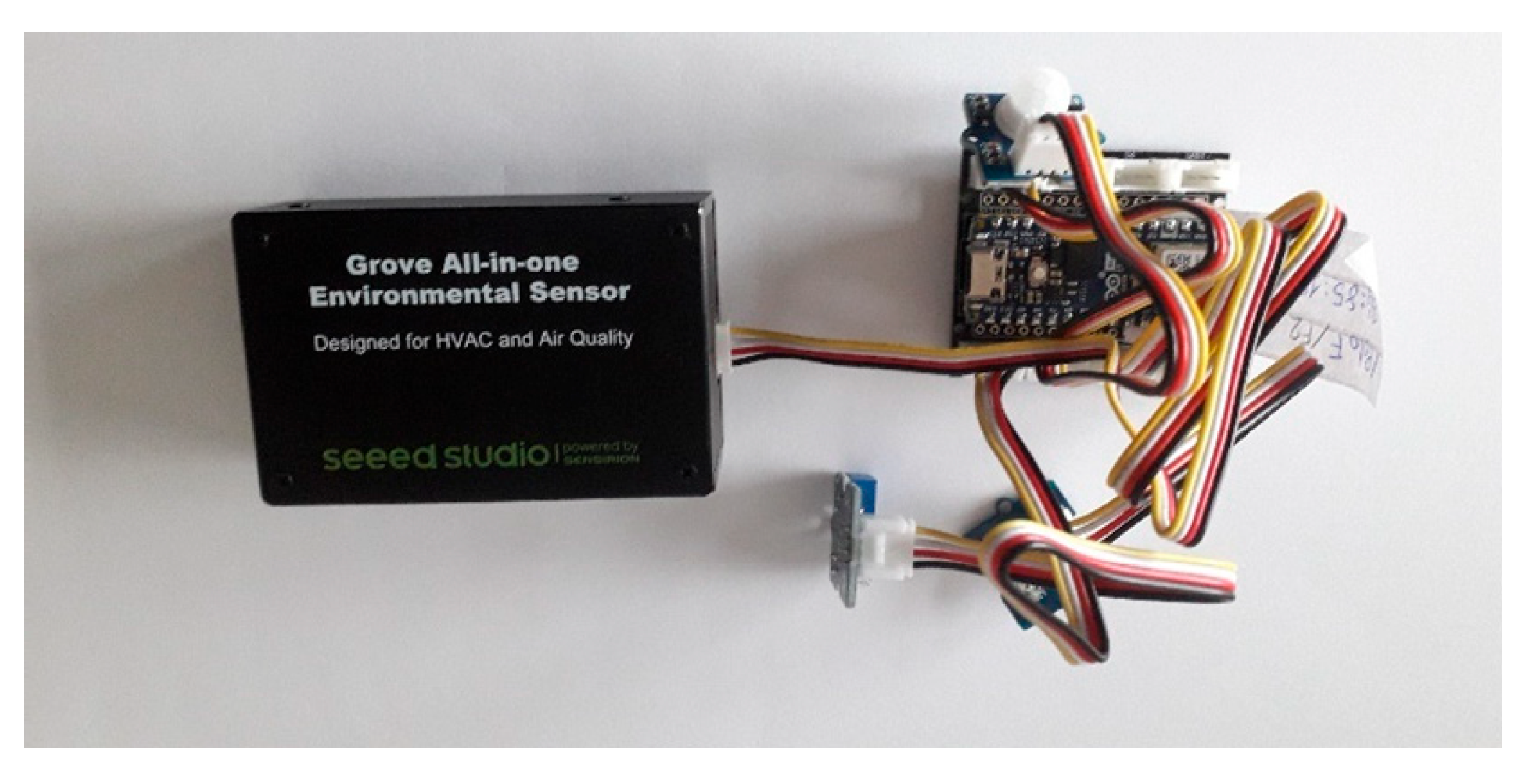
Table 2 below compares the accuracy of the sensors of the three classes in terms of measurements of CO2 concentration. In this case as well, not all sensors are equally accurate, and the self-built sensorized platforms using sensors dedicated to IoT networks tend to be less accurate in detection, both for reasons related to the electronics and also due to the indirect methodology adopted for measuring CO2 concentration.
2.2. Characteristics of Examined Facilities: Universities and Healthcare Settings
The study focused on two types of structures, academic structures and healthcare facilities; in both, the post-pandemic re-opening phase has been critical and linked to direct monitoring of occupancy. While concerns regarding occupancy of indoor spaces have been recently relaxed, yet it is still convenient to maintain certain best practices that were established during the pandemic period, including environmental parameter monitoring, which can still enable indirect anonymous detection of occupancy. Both healthcare facilities, especially those with low-intensity of care, and educational institutions share common traits as shared public buildings, with occupancy patterns that are not always uniform but suffer from predictable peak times. At the same time, they also exhibit significant differences, as their users and objectives vary considerably. In the case of university didactic facilities, the focus of the energy optimization may primarily concern the management of plant operation and the consequent energy use, whereas in healthcare settings, the priority is to minimize unforeseen overcrowding issues leading to risky exposure of transmissible diseases. Interestingly, similarities can be observed between these two types of structures in terms of this aspect. In the context of our research, universities and healthcare facilities present unique characteristics and operational requirements that necessitate tailored approaches to environmental monitoring and safety protocols even if the anonymous aspect of the data collection process was mandatory in the healthcare settings, due to the sensitive data management capable to, theoretically, uncover the presence of a certain individual in the acquisition range. Figure 6 and Figure 7 show respectively a typical teaching structure of the University of Pisa and the two healthcare structures of the Gabriele Monasterio Foundation (FTGM).
Universities, as centers of education and research, typically accommodate diverse populations with varying schedules, leading to fluctuating occupancy levels throughout the day. In contrast, healthcare facilities, particularly those providing continuous care, require stringent safety measures and precise environmental control to ensure patient well-being and regulatory compliance. Both settings prioritize factors such as indoor air quality, temperature regulation, and occupant comfort. A summary of the main descriptive characteristics of the considered structures is reported in Table 3 and Table 4.
The structures that have been taken into consideration have a further common feature, which is that they are characterized by a significant level of energy consumption, due to the operation of mechanic ventilation systems, and the winter and summer heating/air conditioning systems. For this reason, it is important to monitor the occupancy of rooms in the buildings, to modulate the operation of HVAC systems based on actual occupancy levels, as this would allow for significant advantages in terms of energy savings.
In the following section we now investigate and compare the abilities of the aforementioned three classes of sensors for environmental monitoring. While commercial sensors appear to provide more accurate measurements, self-assembled sensors are still attractive because they provide cost-effective solutions which may be more convenient for large-scale deployment in university campuses and medical facilities. By evaluating the performance and applicability of the sensors in the different settings, our research aims to inform decision-making processes regarding the implementation of environmental monitoring systems in universities and healthcare facilities. Through targeted sensor deployment and data-driven insights, stakeholders can enhance occupant comfort, improve safety protocols, and optimize resource allocation to meet the unique needs of each environment.
3. Environmental Parameter Control for Indoor Air Quality and Possible Use for Energy Efficiency Purposes
This structured approach allows for a comprehensive exploration of the monitoring and control challenges in university and healthcare facilities, while also providing a detailed analysis of methodologies and insights derived from measurement campaigns, with a specific focus on CO2 monitoring. As previously mentioned, environmental parameter control can serve various objectives. Firstly, it serves as informative data for users of the facilities. Secondly, it can help highlight any operational anomaly within the structure, such as unexpected overcrowding, reduced occupancy, or other noteworthy situations related to safety concerns (e.g., the presence of toxic or harmful substances) or other anomalies. Recently, there has been growing interest in integrating environmental control with energy management systems. Following the Covid-19 pandemic, many states have implemented stringent regulations regarding air circulation and HVAC system operation, leading to significant energy wastes in some cases. In this context, the monitoring of CO2 levels becomes particularly relevant, serving as an indirect indicator of occupancy within enclosed spaces, although not sufficient to precisely define a contagion hazard in the healthcare facilities, but can be considered as a fair proxy information. In this section, based on the analysis of data collected from the analyzed structures, we aim to evaluate current situations deserving attention and the potential energy-saving benefits achievable. We present insights gleaned from measurement campaigns conducted within university and healthcare facilities, with a particular focus on CO2 monitoring, already discussed by Franco, Crisostomi and Hammoud in [14,15].
3.1. Monitoring and Control Challenges
In this subsection, we examine the unique challenges encountered in monitoring and controlling environmental parameters within university and healthcare facilities under analysis. Factors such as fluctuating occupancy levels, diverse user requirements, and regulatory compliance pose significant challenges that must be addressed to maintain indoor environmental quality, considering the different specifications and the different use of the different structures under analysis. Among the environmental monitoring parameters, the detection of CO2 concentration stands out as particularly significant. Elevated CO2 levels inherently signify poor air quality, especially indoors, posing not only comfort issues but also the risk of pathogen transmission, highlighted by the recent Covid-19 experience. Acceptable CO2 levels vary based on activity and environment. A healthy environment maintains CO2 concentrations below 800 ppm, while acceptable levels may be under 1200 ppm, with levels exceeding 1500 ppm (as for example 1900 ppm) warranting attention and brief exposure (Figure 8). Ventilation, whether natural or mechanical, maintains health standards. Distinctions are crucial based on building usage and occupants, notably in healthcare and educational settings catering to diverse demographics. In Figure 9, monitoring data from two areas of the “hospital wards” section of the facility depicted in Figure 6(b) are presented. Each monitoring session lasts approximately 1 hour. As shown, CO2 concentration levels consistently remain well below 800 ppm, with minimal fluctuations linked to specific situations. The monitoring of environmental parameters is inherently significant, but there are variables whose specific monitoring can provide valuable insights and serve as an indirect indicator of occupancy levels.
In Figure 10 and Figure 11, measurements taken in a specific room of the building in Figure 4. are presented. The characteristics of the room are in Table 5. The data reflect monitoring experiences conducted under two different conditions with significantly varied occupancy levels and ventilation conditions. Figure 10 displays temperature and CO2 concentration data in an environment where a three-hour examination took place, focusing on the second and third hours. Occupancy conditions and dynamics are outlined in the first row of Table 6, with no ventilation during operation.
Figure 11 on the other hand, depicts data from a more dynamic event in the same classroom and on the same day of the week (Saturday) but in a subsequent week. Climatic conditions were similar on both days with reduced differences. Occupancy and dynamics are further delineated in row 2 of Table 6.
As observed, while temperature data are sensitive to capacity and ventilation variations, CO2 concentration emerges as a highly reliable and sensitive indicator of human presence, thus holding greater significance for facility management.
3.2. Methodologies for Ensuring Optimal Comfort and Safety Standards
This subsection explores various methodologies employed to maintain optimal comfort and safety standards in shared public buildings. From advanced HVAC systems to strategic ventilation strategies, we analyze the effectiveness of different approaches in meeting the diverse needs of occupants while ensuring compliance with safety regulations. By analyzing the data collected during these campaigns, we uncover intriguing findings regarding indoor air quality, ventilation effectiveness, and occupant comfort.
In Figure 12 and Figure 13, the results in terms of temperature and CO2 concentration in the structure shown in Figure 7(a) are presented from a long-term trial spanning approximately 12 days (from Wednesday, September 13, 2023, to Monday, September 25, 2023). Data is collected at 10-minute intervals, resulting in 144 data points per day.
The data were collected in the most crowded area of the structure, corresponding to a waiting room for outpatient visits. Upon observing the collected data, a certain periodicity in CO2 concentration results can be noticed. Starting from nighttime values just above 400 ppm, typical of outdoor conditions, the peaks of CO2 concentrations are generally above 1000 ppm, but always remain below 1200 ppm. As evident from the CO2 concentration data analysis, the curves closely resemble each other and allow for the clear identification of the 8 weekdays (Monday to Friday), the pre-holiday days (two Saturdays), and the two holiday days (Sunday), albeit with slight differences. Similarly, it is observed that the ventilation system effectively maintains levels below the 1200 ppm threshold. The results shown in Figure 12 and 13 were detected with Smart D Home 9-in-1 type sensors. If the temperature data are significantly affected by climatic temperature fluctuations, those linked to the CO2 concentration appear to be very reliable and well identifying the crowded conditions of the structure, allowing for the detection of possible inconsistencies in the visit booking system. As can be seen, in fact, there is a fairly precise repeatability of the maximum CO2 concentration levels.
3.3. Insights from Measurement Campaigns: Focus on CO2 Monitoring and Optimization of HVAC Operation
In this section we try to explain the motivation for which CO2 concentration can be directly correlated with the occupancy. In a closed volume the rise of CO2 concentration during time , depends on the volume of the space, on the number of occupants, on their activity and on the characteristics of ventilation. In a closed room of volume V with occupants, where is the production rate of CO2 of each occupant (value depending on the type of person and on the activity) the rate of increase of CO2 concentration with time can be described by the law
The rate of CO2 increase can be also reformulated in terms of the volume available for each person (V/nocc). In general, the volume is not truly closed because of air change rate due to infiltrations, natural ventilations or mechanical ventilation, if active.
As discussed for instance in [17] by some of the authors of the present paper the CO2 concentration at a general time t, in general terms can be expressed by the following equation:
where is the concentration measured at the initial time, is the concentration in the external environment, the production rate of each occupant (value depending on the type of person and on the activity, the number of occupants, V is the volume of the room and the air change rate that considers both natural and mechanical ventilation (if present).
According to Equation (2), it is possible to compute the airflow rate required to maintain a certain level of CO2. Assuming the starting value of the CO2 concentration equal to the outdoor value (CCO2,out= CCO2,0) and that the CO2 generation rate (r) is constant, then the trend of CO2 concentration is:
When people leave the room and it remains empty, the level of CO2 concentration typically drops, proportionally to the rate of air exchange, until it reaches the external levels. This can be described by the following equation.
From a conceptual point of view, it would seem quite easy to build a physically based model of CO2 evolution. However, as can be noticed from Equation (1), concentration depends on many variables that act in a combined manner and none of them can be usually easily determined. Thus, it is clear that the monitoring data can be very useful for developing a control system for ventilation systems.
The CO2 concentration data, along with other environmental parameters, can be utilized to develop a model for the optimal control of operation. This model incorporates building characteristics, outdoor temperature, occupancy levels, and ventilation type (natural or mechanical), with airflow rate serving as input data.
The model yields trends in energy consumption, CO2 levels, and indoor temperature as output. A building model (containing information about geometrical parameters and main physical characteristics) is essential for assessing energy demands, which are contingent upon the specified input parameters. Figure 14 provides a possible structure of the system implemented in some structures, as the one represented in Figure 6.
By meticulously analyzing the methodology associated with HVAC system operation control based on real occupancy profile and using Demand Controlled Ventilation (DCV) strategy, it has been observed that adapting the HVAC system’s operation to these specific conditions can result in approximately a 44% energy saving compared to conventional pre-Covid-19 approaches, which typically relied on fixed-time scheduling (benchmark).
Conversely, operating the HVAC system at 100% capacity in all phases, as seen in the post-Covid-19 scenario, may exacerbate energy consumption. Energy savings become even more relevant if we consider the operating conditions of ventilation and air conditioning systems during the period linked to the Covid emergency, i.e., in the period 2020-2022. In that case, with reference to the building taken into consideration in Figure 6(a), an increase in energy use of up to approximately 80% was observed compared to ordinary management.
Pursuing optimization of HVAC system operation, in particular operating with three different DCV strategies, linked to CO2 monitoring, as outlined in Figure 15, can yield significant energy savings, reducing energy consumption levels from 33% up to 44% compared to operating the HVAC system in pre-Covid conditions. Energy consumption can be less than 1/3 with respect to the conditions imposed by Covid-19 pandemic emergency, when the ventilation was in operation at full capacity for the whole time of operation of the structure (from 8:00 to 24:00).
4. Utilization of Monitoring Data for management using Machine Learning Methods
The availability of environmental monitoring data is inherently valuable. Hypothetically, a facility manager equipped with such data could utilize it for control purposes and in order to regulate the operation of systems within the facility. Another avenue worth exploring is the development of machine learning models to forecast potential scenarios based on external data inputs. An intriguing aspect could involve clustering the acquired data to identify correlations between “external” variables and the facility’s operation (e.g., day of the week, time of day, external weather conditions). Essentially, this approach could empower the acquired data with predictive capabilities. While this approach may not be applicable to data concerning environmental safety, it can certainly be implemented to optimize the operation of energy systems. In addition to enhancing facility management strategies, the utilization of monitoring data coupled with machine learning methods offers significant potential for achieving energy savings and optimizing resource allocation.
By harnessing predictive analytics, facilities can develop sophisticated models that analyze historical monitoring data to identify energy consumption patterns and anticipate future trends. Through machine learning techniques such as regression analysis, decision trees, and neural networks, these models can accurately forecast energy demand and recommend proactive measures to minimize waste and optimize energy usage. For example, predictive models can identify peak usage times and suggest adjustments to HVAC systems or lighting schedules to coincide with periods of lower demand, thus reducing energy costs without compromising occupant comfort. Furthermore, by integrating real-time monitoring data with machine learning algorithms, facilities can implement dynamic energy management strategies that respond in real-time to changing environmental conditions and occupancy patterns. This data-driven approach not only reduces energy consumption and associated costs but also contributes to sustainability goals by minimizing the facility’s environmental footprint. Ultimately, the integration of predictive analytics with real-time monitoring data empowers facilities to implement proactive and energy-efficient management strategies that enhance both operational efficiency and occupant comfort. The measurement of CO2 concentration serves as an effective indicator of human presence in a public space. In various articles, the authors of this study have analysed the correlation of this value with occupancy, [9,10,16]. However, managing a public space involves several variables that contribute to complicating the scenario. Within the same context, external elements can also intervene, altering the picture even with the same level of occupancy. These variables may include climatic conditions as well as external boundary conditions related to the presence of ventilation in the environment. Ventilation systems may be active, or the windows of a room or of a space may simply be open or partially open. If it is true that the analysis and clustering of monitored data can be valid as predictive tool, the case is valid to associate machine learning methods.
To understand this, we observed the same event over an extended period, involving a very similar number of people occupying the same space at the usual times and on the usual days of a week. In [17], a dataset formed by collecting measurements over 10 different days, during the lectures of the same classes from 8:30 to 12:30 is described. The time step of the measurements is 10 min, resulting in a total of 40 h of records, and about 240 samples overall. The data were collected during classes of the same professors, with the objective of maintaining similar conditions (e.g., in terms of the number of students in the room, and their activity during the classes). During the first two hours the number of students was in the range between 100 and 120, while in the following two hours in the range from 40 and 80. The classroom is detailed in Figure 5(b), and the data are presented in the second raw of Table 5. As evident from the data analysis in Figure 16, which illustrates CO2 concentration measurements across 10 different events, there is significant variability in the collected data.
This leads to the consideration of developing a machine learning method capable of utilizing the data acquired under the 10 different days in different conditions in order to have sufficient data for developing a predictive tool. The method has been explained in detail in by Dudkina et al. in [17]. As depicted in Figure 17, rearranged from [17], the various predictive methods (four different types), calibrated on the 10 datasets, proves to be more reliable than a method based solely on physical data. This underscores the potential of machine learning methods in a predictive context. Developing a building behaviour model based on machine learning algorithms can enable the creation of prediction methods that, in addition to monitoring data, can be highly beneficial in enhancing the management of these buildings.
Predictive analytics, powered by machine learning algorithms, enables to anticipate and address issues before they escalate, leading to more proactive maintenance and cost savings. By analyzing historical data on energy consumption, equipment performance, and occupancy patterns, predictive analytics can forecast future trends for occupancy and identify potential issues, such as equipment failures or energy inefficiencies.
5. Internet of Things (IoT) Network Architecture for Innovative Sensor Management
In addition to monitoring activities and the development of methodologies for optimizing systems and defining protocols, our work has also involved the integration of monitoring data into a network. Both educational and healthcare facilities are geographically dispersed, and it would be highly beneficial to manage the data remotely.
To address this, we have developed the capability to interface the data through an internal IoT network. This allows the acquired data to be made available in real-time. Sensors equipped with an IP address communicate with the IoT network, enabling all authorized users to access the data in real-time. An IoT network is an interconnected system of physical devices, appliances, and other objects embedded with sensors, software, and network connectivity, enabling data collection and exchange. These devices communicate with each other and with centralized systems via Internet, allowing for remote control, monitoring, and automation of various activities. This approach maintains the highest level of network security. Furthermore, these data could be managed by an application, the data of which could be made available to all users with network access credentials. Essentially, all network users, by logging in with their credentials, could access this data. Figure 18 provides a possible architecture of the IoT system, developed in the present work. The architecture, provided in Figure 18 consists of three tiers: field level, control, and cloud for the data and is composed with four essential components:
- -
- Sensors and Arduino ESP32 Nano IoT Microcontrollers for transmitting environmental data via the MQTT protocol (MQTT Client/Publisher).
- -
- Server (MQTT Broker) for managing, processing, and visualizing collected data.
- -
- Hidden WPA2-Personal Local WiFi Network for communication between devices.
- -
- Remote PC for connecting to the central server to view and perform operations on data via VPN.
Figure 18.
Scheme of the IoT network for data exchange.
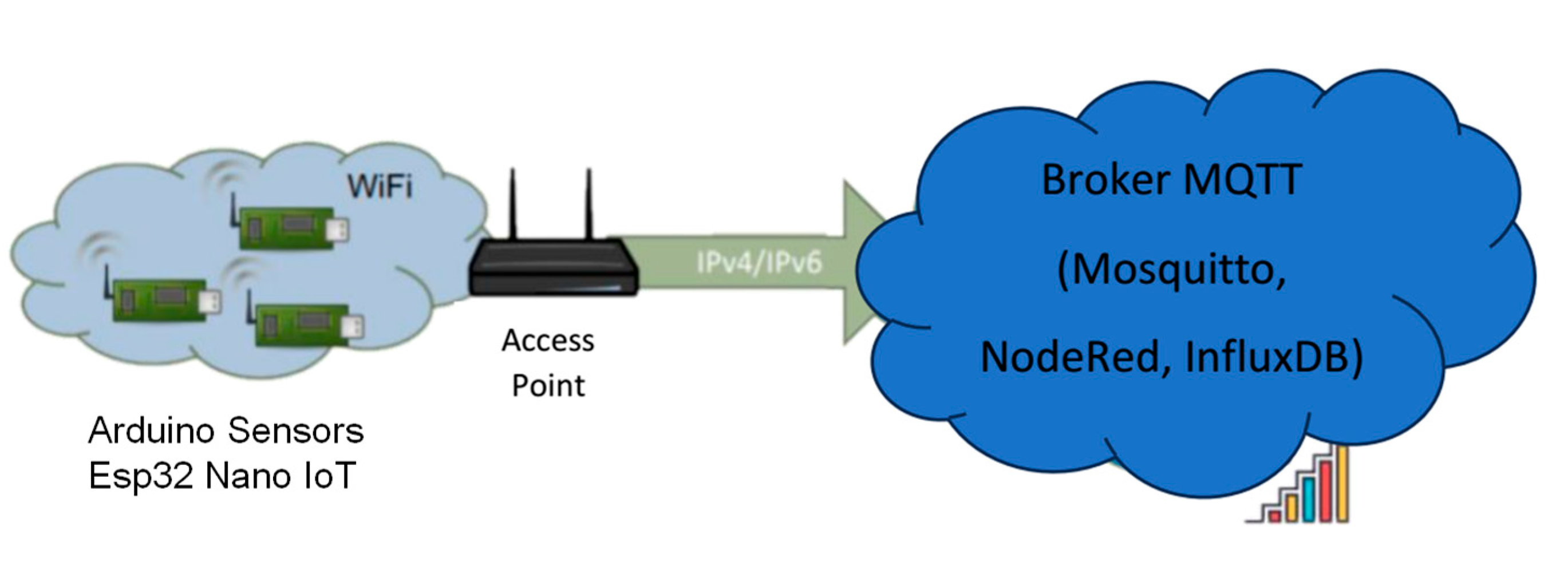
Within the server, a suite of software is installed for receiving, processing, and storing MQTT messages. The suite includes:
- -
- MQTT Broker (Mosquitto) for receiving and routing MQTT messages.
- -
- Node-RED for processing data retrieved from the broker.
- -
- InfluxDB for storing data in a local database and real-time visualization of graphs and values on a suitable dashboard.
From a computational standpoint, the IoT network appears to be a reliable system for visualizing the acquired monitoring data within the facilities. However, the issue of reliability persists, particularly concerning self-built sensors, which still exhibit quantitative unreliability. The advantage of the IoT network is that all facility monitoring systems can be controlled centrally using an internal network of the facility, which is intrinsically safer from the point of view of possible cyber-attacks, which is very relevant in the case of healthcare facilities, which are affected by a lot of sensitive data about patients. The advantage of using assembled sensors is also that of low cost, despite all the problems related to the reliability of the measurements, which we discussed in section 2. The architecture proposed in this section is only one of the possible ones capable of being implement a system like the one described in Figure 1.
6. Conclusions
The paper has presented the collaborative research between the University of Pisa and the Gabriele Monasterio Foundation addressing various aspects of smart facility management. Through comprehensive analysis, it elucidated the significance of environmental monitoring, sensor reliability, and IoT network utilization for optimizing use of public infrastructure with different purposes. The findings have broad applicability, demonstrated through testing in both university and medical facilities, highlighting the versatility of the developed methodologies. The main findings concern three specific fields of activity.
- Effectiveness of Environmental Monitoring
The study examined the efficacy of environmental monitoring and data management, highlighting the importance of CO2 concentration measurements. These metrics serve diagnostic purposes and inform building utilization protocols and energy management strategies. Notably, monitoring aids in reducing energy consumption. In a didactic structure over 40% annual energy savings in HVAC systems can be obtained using Demand Controlled Ventilation based on CO2 monitoring.
- Sensor Technology Evaluation
Three types of sensors have been evaluated, ranging from traditional environmental monitors to advanced network-compatible models. While numerous sensors are available, not all offer consistent quantitative reliability, particularly concerning CO2 concentration monitoring. Accurate calibration is crucial for using such a type of sensors.
- Predictive Modeling
The collected data serves as a valuable resource for building predictive models using machine learning algorithms, offering insights into future environmental trends and optimizing system operations.
- Potential of IoT Networks
The project assessed IoT network capabilities for centralized monitoring across peripheral facilities. Test cases demonstrated the viability of local IoT networks, though cybersecurity concerns necessitate careful consideration. External server-based data flow solutions are discouraged due to security risks. The testing of an IoT network architecture has shown promise in facilitating data monitoring and circulation, enhancing the overall efficiency of environmental management systems.
Future prospects of the activity concern the development of a user-friendly app for environmental monitoring, allowing facility managers to access real-time data and optimize system performance remotely. Another relevant element is the integration with Smart Building Technologies; further integration with smart building technologies could enhance the capabilities of environmental monitoring systems, enabling more sophisticated data analysis and system automation. The methodologies developed in this project can be extended to other sectors beyond education and healthcare, such as commercial buildings and residential complexes, contributing to broader sustainability initiatives.
From an energy analysis perspective, it’s important to highlight that the methodology developed can be valuable in defining energy-saving strategies, provided they don’t conflict with other regulations. Furthermore, it can be particularly useful in the context of creating facilities with renewable energy-based generation systems. This aligns with the aim of developing structures that approach nearly Zero Energy Buildings standards.
Author Contributions
“Conceptualization, A.F. and E.C.; methodology, A.F. and E.C; software, A.F., E.C. and S.D.; validation, A.F., E.C., S.D. and R.P.; formal analysis, A.F., E.C., S.D, R.P; investigation, A.F., E.C. and S.D.; resources, A.F., E.C. and S.D.; data curation, A.F. and E.C.; writing—original draft preparation, A.F.; writing—review and editing, A.F., E.C., S.D and R.P.; supervision, A.F., E.C. and S.D.; project administration, A.F.; funding acquisition, A.F. and S.D. All authors have read and agreed to the published version of the manuscript.
Funding
The Authors gratefully acknowledge the financial support of the Tuscany Region, in the framework of the Research Project “Riaperture in Sicurezza post-Covid: monitoraggio Ambientale e modelli organizzativi innovativi integrati nel sistema TOSCANA” financed in the program RE-START TOSCANA (BANDO RICERCA COVID 19 TOSCANA, Bando pubblico regionale per progetti di ricerca e sviluppo) CUP. I55F21002530002.
Data Availability Statement
This work is based on extensive data collected during experiments conducted in various facilities, both academic and healthcare related. In addition to the data presented graphically in this article, there are many others that the authors are committed to sharing, subject to compliance with regulations, upon specific request.
Acknowledgments
The authors of this work extend their gratitude to all those who contributed to the referenced activities, particularly Claudio Passino from the Gabriele Monasterio Foundation, for the availability during the experimental analysis in the FGTM structure, Eng. Davide Della Vista from the Department of Energy, Systems, Territory, and Constructions for the invaluable support during the assessment and procurement of the measurement devices, Antonio Mugnani of Greeen Data Center of the University of Pisa for the support in structuring the IoT network, Ekaterina Dudkina, Matilde Hammoud, Giulia Lamberti, Maurizio Notargiacomo, Giuseppe Russo and Andrea Sodini for their collaboration in developing some of the procedures outlined in this article and in collecting the data.
Conflicts of Interest
The authors declare no conflicts of interest. The funders had no role in the design of the study; in the collection, analyses, or interpretation of data; in the writing of the manuscript; or in the decision to publish the results.
References
- Settimo, G., Manigrasso, M., & Avino, P. (2020). Indoor air quality: A focus on the European legislation and state-of-the-art research in Italy. Atmosphere, 11(4), 370.
- Baqer, N. S., Mohammed, H. A., Albahri, A. S., Zaidan, A. A., Al-qaysi, Z. T., & Albahri, O. S. (2022). Development of the Internet of Things sensory technology for ensuring proper indoor air quality in hospital facilities: Taxonomy analysis, challenges, motivations, open issues and recommended solution. Measurement, 192, 110920.
- Alonso, M. J., Wolf, S., Jørgensen, R. B., Madsen, H., & Mathisen, H. M. (2022). A methodology for the selection of pollutants for ensuring good indoor air quality using the de-trended cross-correlation function. Building and Environment, 209, 108668.
- Shen, X., Zhang, H., Li, Y., Qu, K., Zhao, L., Kong, G., & Jia, W. (2023). Building a satisfactory indoor environment for healthcare facility occupants: A literature review. Building and Environment, 228, 109861.
- Butt, M. A., Voronkov, G. S., Grakhova, E. P., Kutluyarov, R. V., Kazanskiy, N. L., & Khonina, S. N. (2022). Environmental monitoring: A comprehensive review on optical waveguide and fiber-based sensors. Biosensors, 12(11), 1038.
- Broday, E. E., & Gameiro da Silva, M. C. (2023). The role of internet of things (IoT) in the assessment and communication of indoor environmental quality (IEQ) in buildings: a review. Smart and Sustainable Built Environment, 12(3), 584-606.
- Anik, S. M. H., Gao, X., Meng, N., Agee, P. R., & McCoy, A. P. (2022). A cost-effective, scalable, and portable IoT data infrastructure for indoor environment sensing. Journal of Building Engineering, 49, 104027.
- Soheli, S. J., Jahan, N., Hossain, M. B., Adhikary, A., Khan, A. R., & Wahiduzzaman, M. (2022). Smart greenhouse monitoring system using internet of things and artificial intelligence. Wireless Personal Communications, 124(4), 3603-3634. 4.
- Franco A, Schito E. (2020) Definition of Optimal Ventilation Rates for Balancing Comfort and Energy Use in Indoor Spaces Using CO2 Concentration Data, Buildings 10 (8), 135. 8.
- Franco, A., & Leccese, F. (2020). Measurement of CO2 concentration for occupancy estimation in educational buildings with energy efficiency purposes. Journal of Building Engineering, 32, 101714.
- Franco A. Balancing User Comfort and Energy Efficiency in Public Buildings through Social Interaction by ICT Systems. Systems. 2020; 8(3):29. [CrossRef]
- Anastasi, G., Bartoli, C., Conti, P., Crisostomi, E., Franco, A., Saponara, S., ... (2021). “Optimized energy and air quality management of shared smart buildings in the COVID-19 scenario.” Energies, 14(8), 2124.
- Franco, A. (2022). An ICT platform based on a multi-objective control systemic approach for reducing energy use in public buildings.” IOP Conference Series: Earth and Environmental Science, 1106(1), 012002.
- Franco, A., Crisostomi, E., & Hammoud, M. (2023). Monitoring of public buildings via energy-efficient Z-Wave wireless sensors. Journal of Physics: Conference Series, 2648(1), 012033.
- Franco, A., Crisostomi, E., & Hammoud, M. (2023). Advanced Monitoring Techniques for Optimal Control of Building Management Systems for Reducing Energy Use in Public Buildings. International Journal of Sustainable Development and Planning, 18(7), 2025-2035.
- Franco, A., & Crisostomi, E. (2023). HVAC Systems Operation Control Based on Indirect Occupant-Centric Method for Ensuring Safety Conditions and Reducing Energy Use in Public Buildings after Covid-19. Available at SSRN 4440539.
- Dudkina, E., Crisostomi, E., & Franco, A. (2023). Prediction of CO2 in Public Buildings. Energies, 16(22), 7582.
Figure 1.
Monitoring data and their possible use for smart control of the structure.
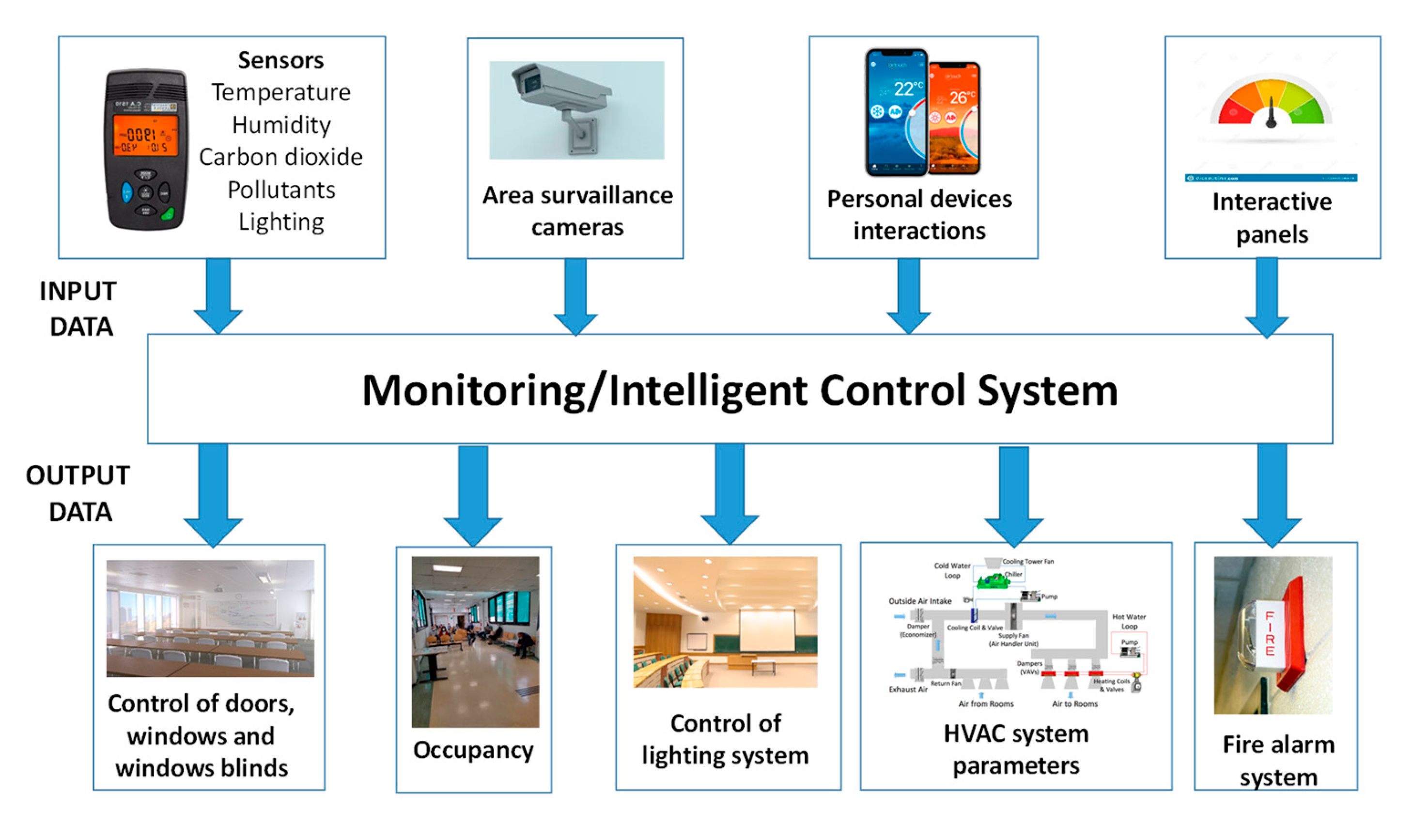
Figure 2.
Typical commercial analogic sensors for simultaneous measurement of T, RH an CO2.
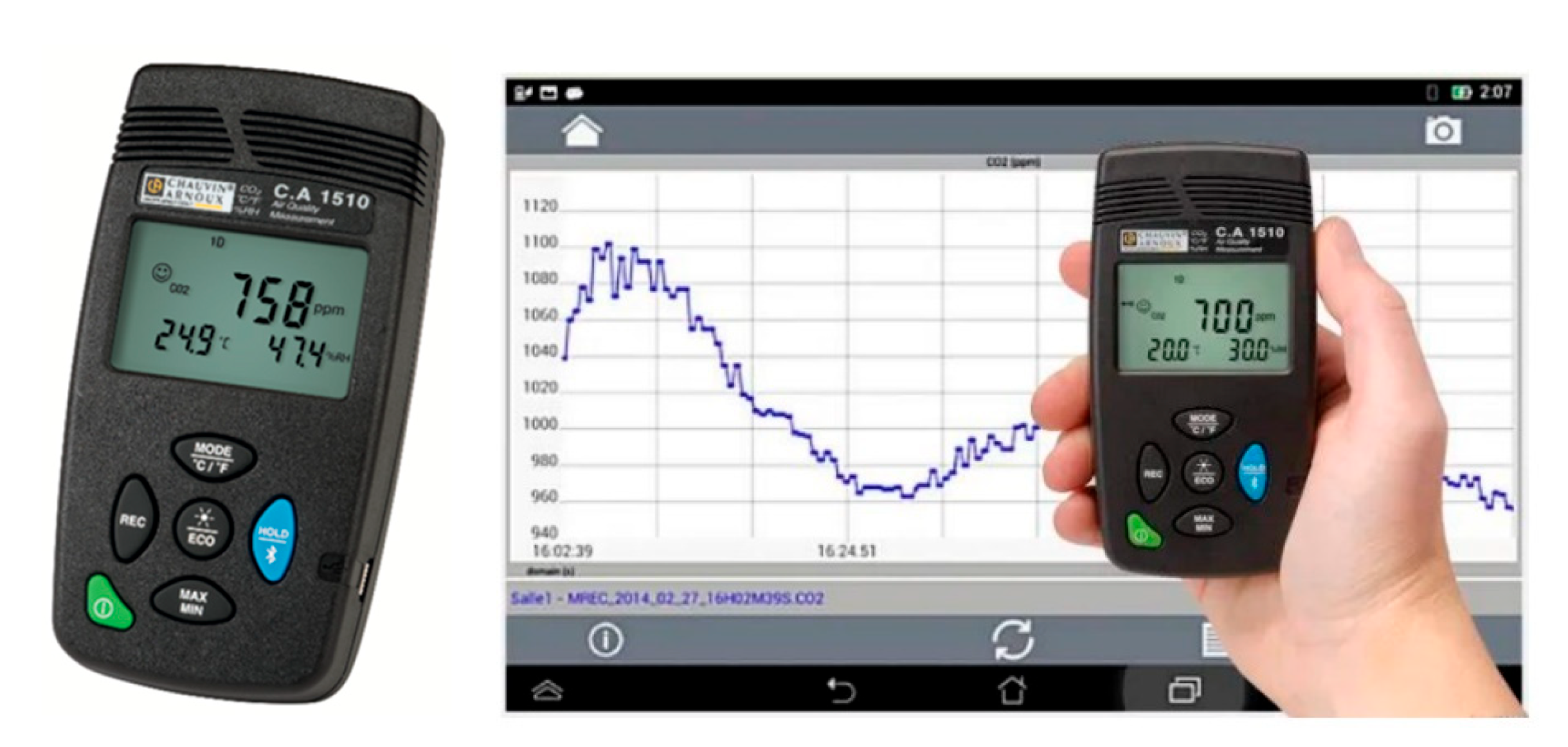
Figure 3.
Typical commercial analogic sensors based on Z-Wave Communication protocol.
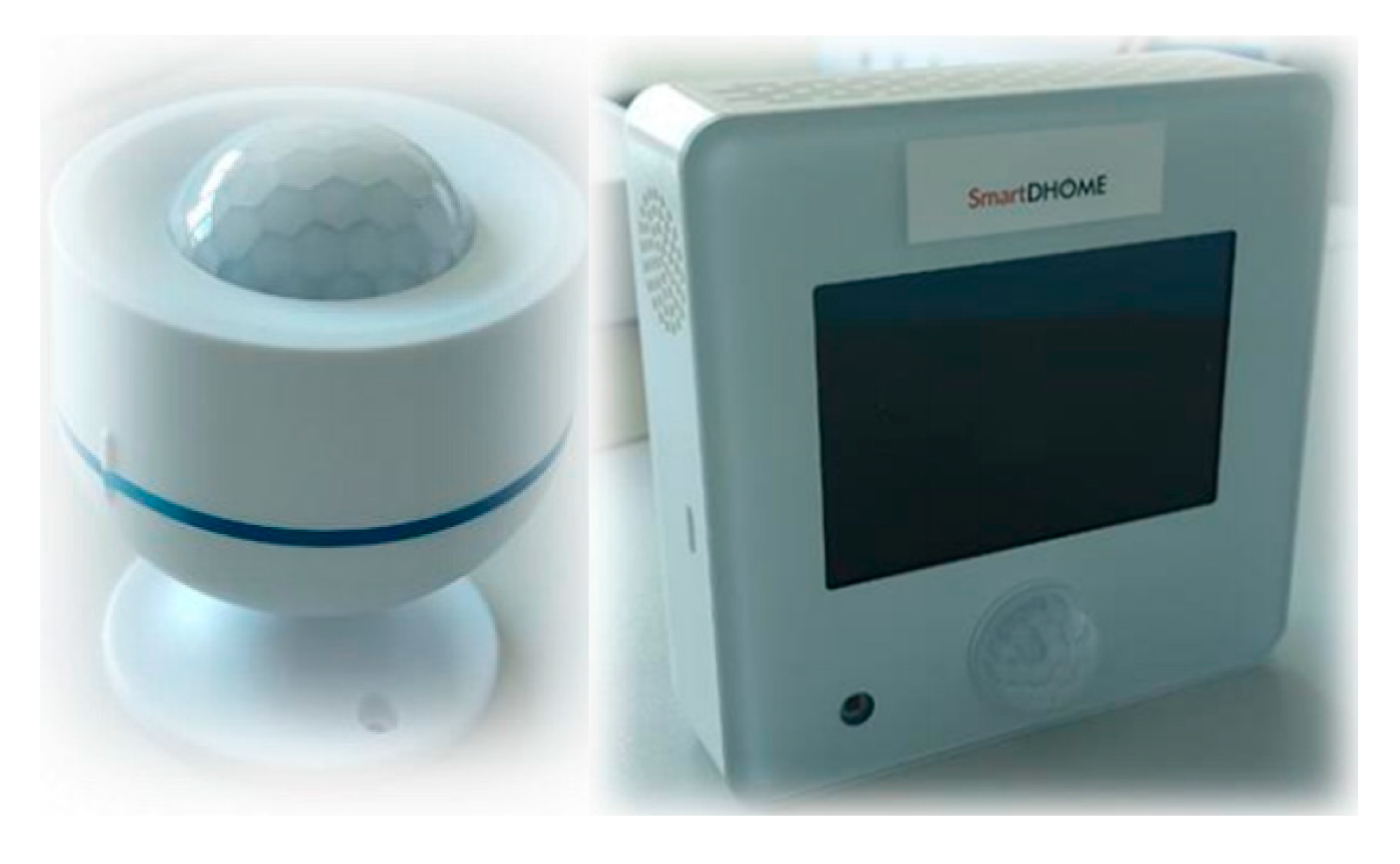
Figure 5.
Comparison of temperature measurement in the same position: data from typical analogic sensor (a) and modern sensor for IoT network (b).
Figure 5.
Comparison of temperature measurement in the same position: data from typical analogic sensor (a) and modern sensor for IoT network (b).
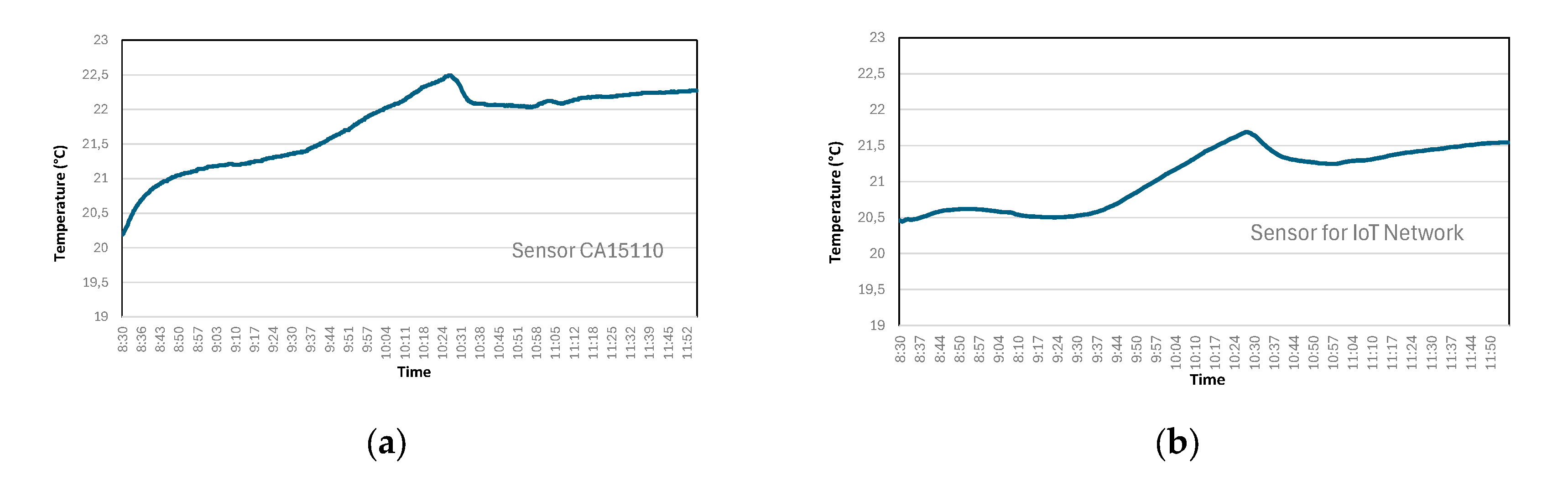
Figure 6.
One of the didactic structures of the University of Pisa object of the analysis.
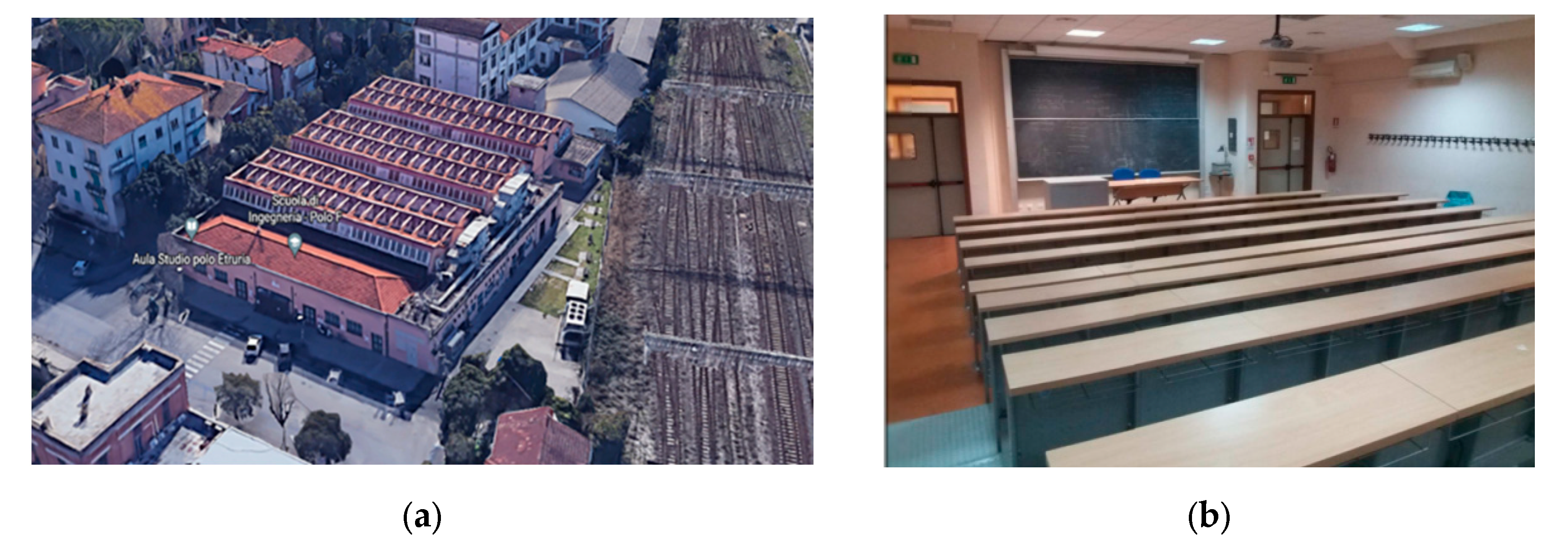
Figure 7.
The two medical structures of FTGM object of the analysis, in Pisa (a) and Massa (b).
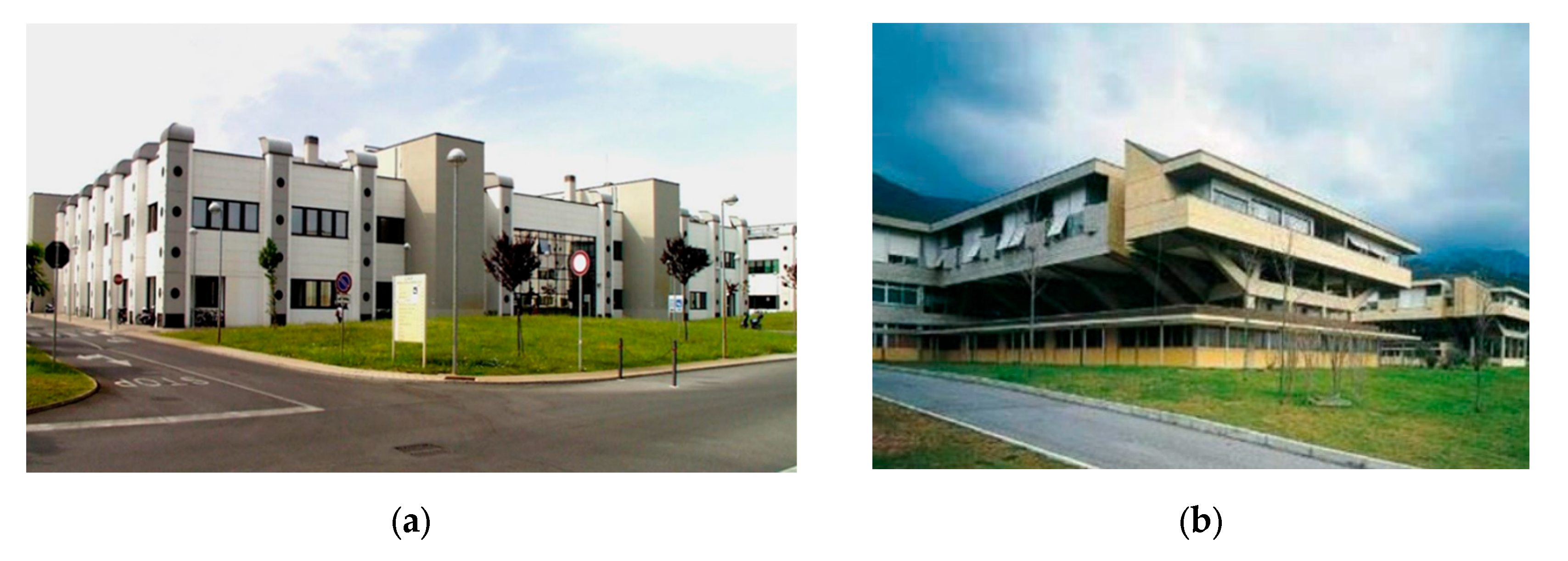
Figure 8.
Indicative level of CO2 concentration.
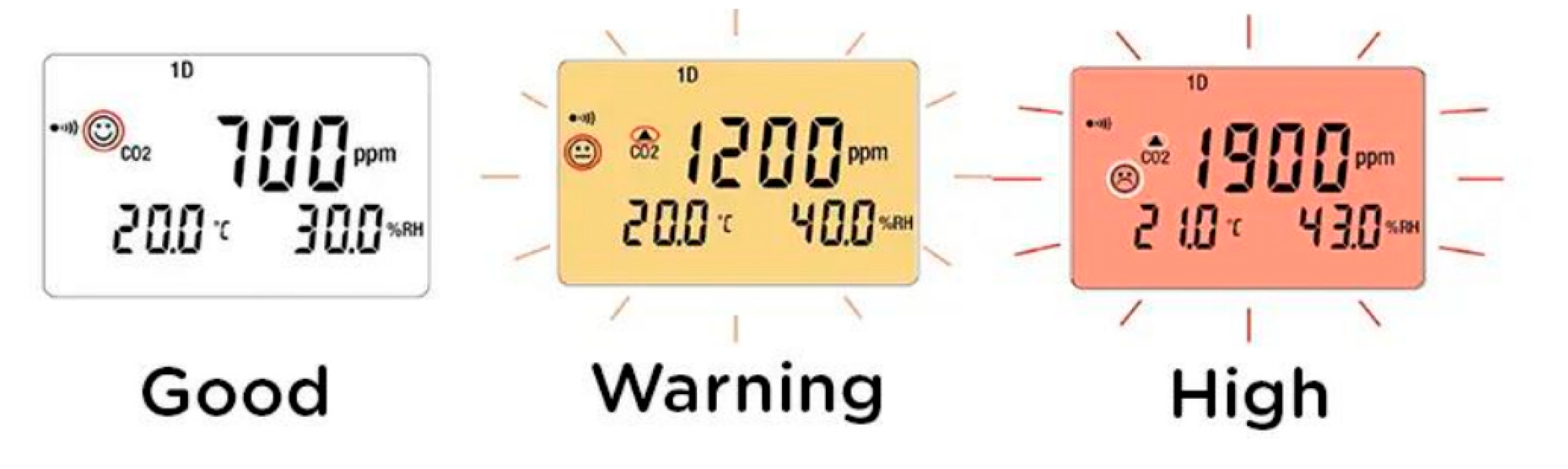
Figure 9.
CO2 concentration in two different parts of “hospital wards” of the structure in Figure 5(b).
Figure 9.
CO2 concentration in two different parts of “hospital wards” of the structure in Figure 5(b).
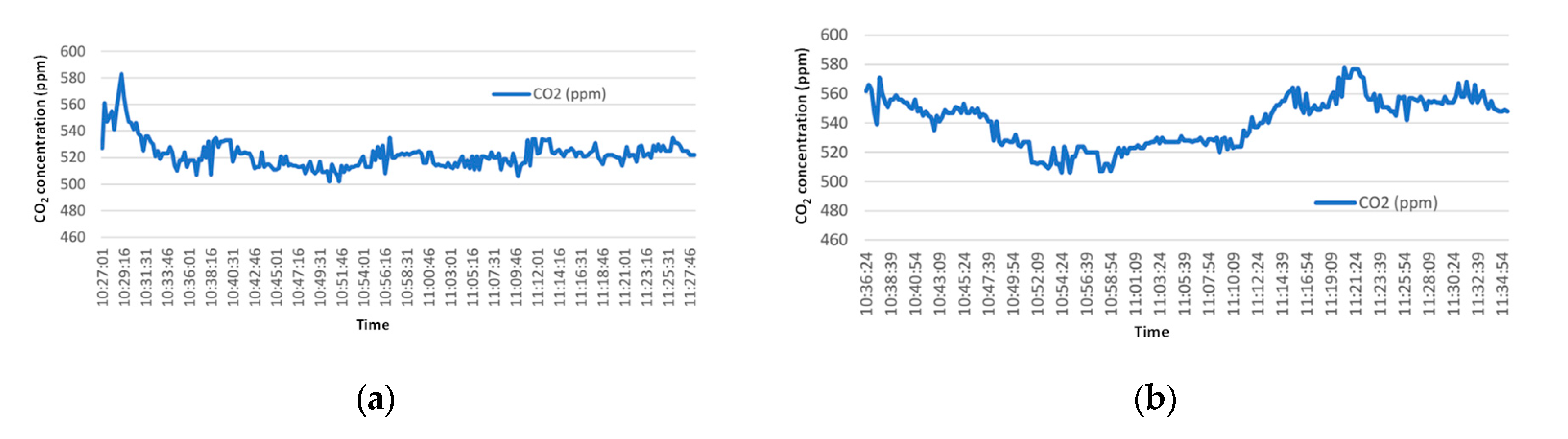
Figure 10.
Data from the monitoring analysis (temperature and CO2) of first row in Table 5.
Figure 10.
Data from the monitoring analysis (temperature and CO2) of first row in Table 5.
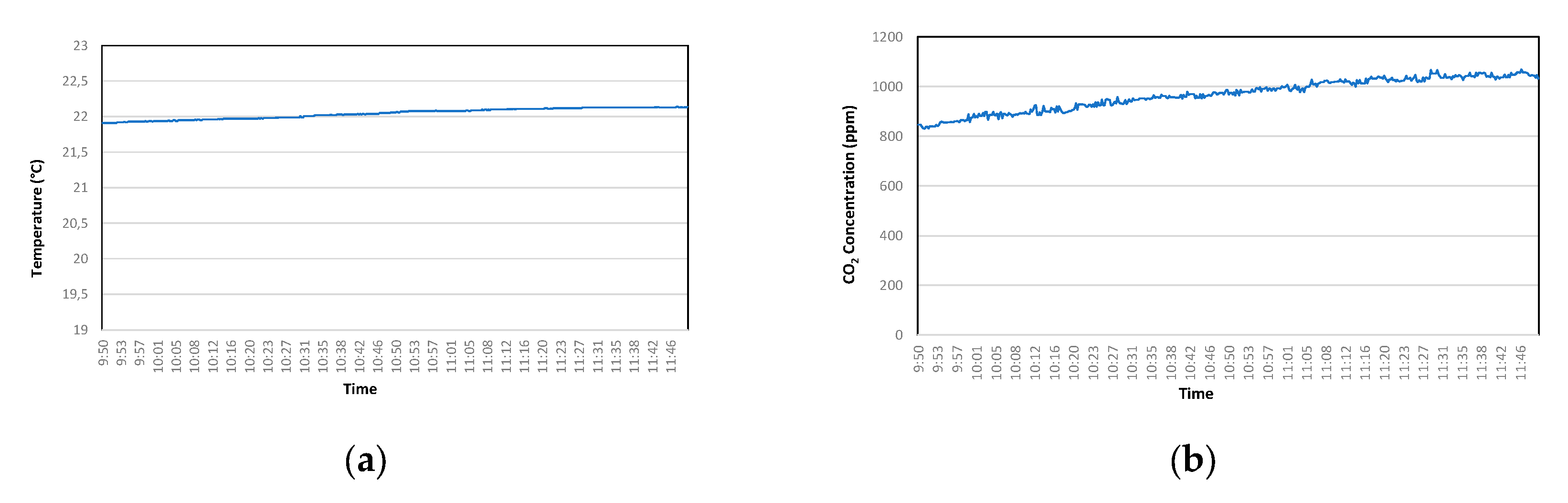
Figure 11.
Data from the monitoring analysis (temperature and CO2) of second row in Table 5.
Figure 11.
Data from the monitoring analysis (temperature and CO2) of second row in Table 5.
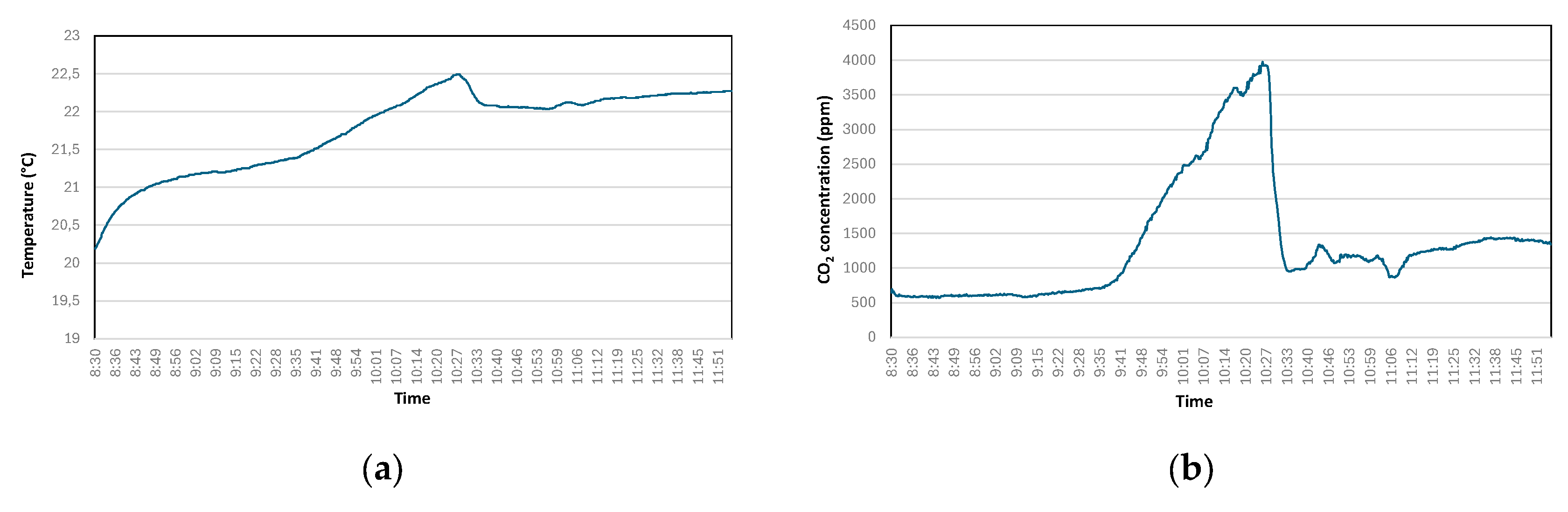
Figure 12.
Temperature trend for long period analysis (12 days) of medical structure of Figure 7(a).
Figure 12.
Temperature trend for long period analysis (12 days) of medical structure of Figure 7(a).
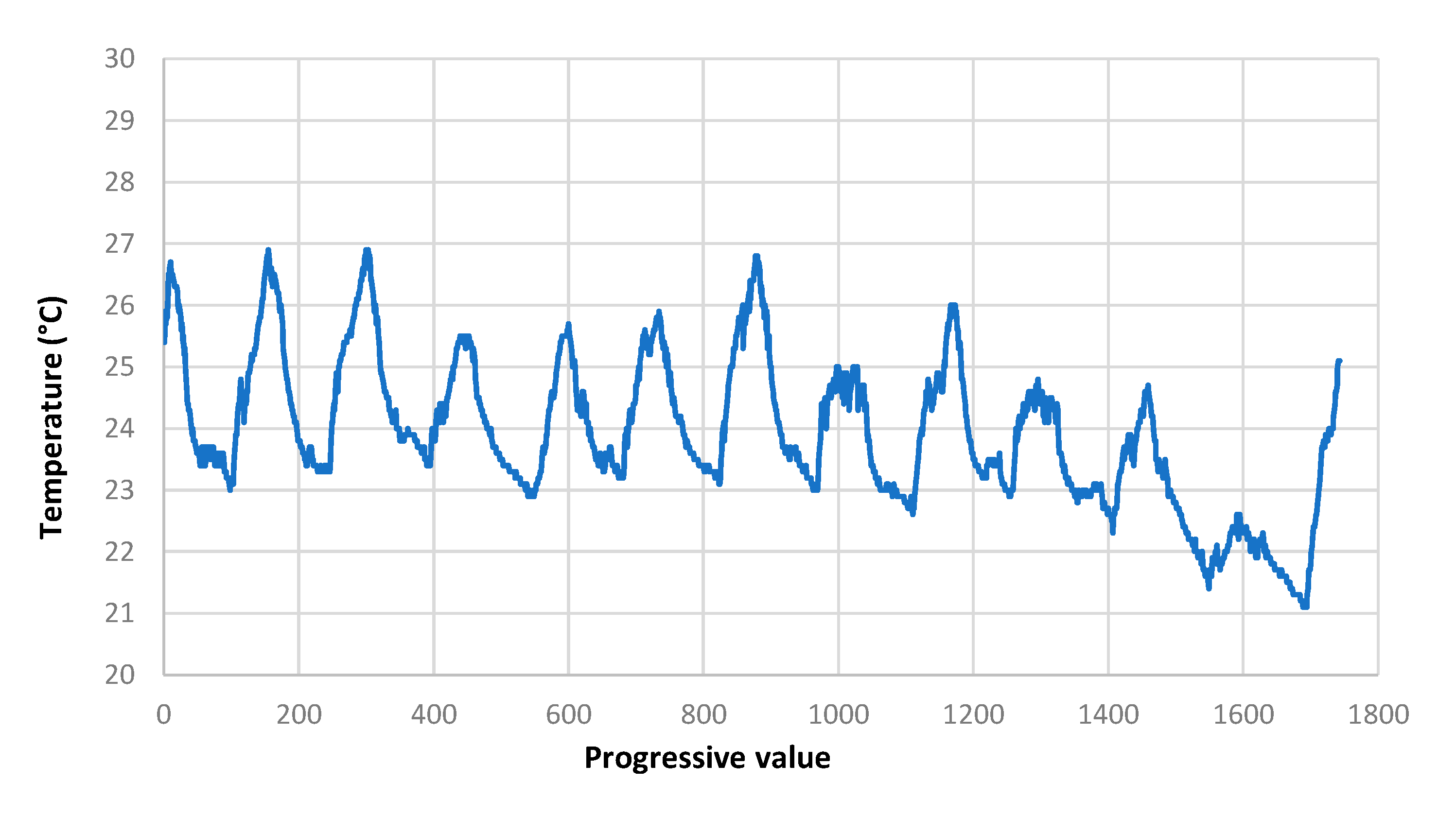
Figure 13.
CO2 concentration from a 12-days analysis of the medical structure of Figure 7(a).
Figure 13.
CO2 concentration from a 12-days analysis of the medical structure of Figure 7(a).
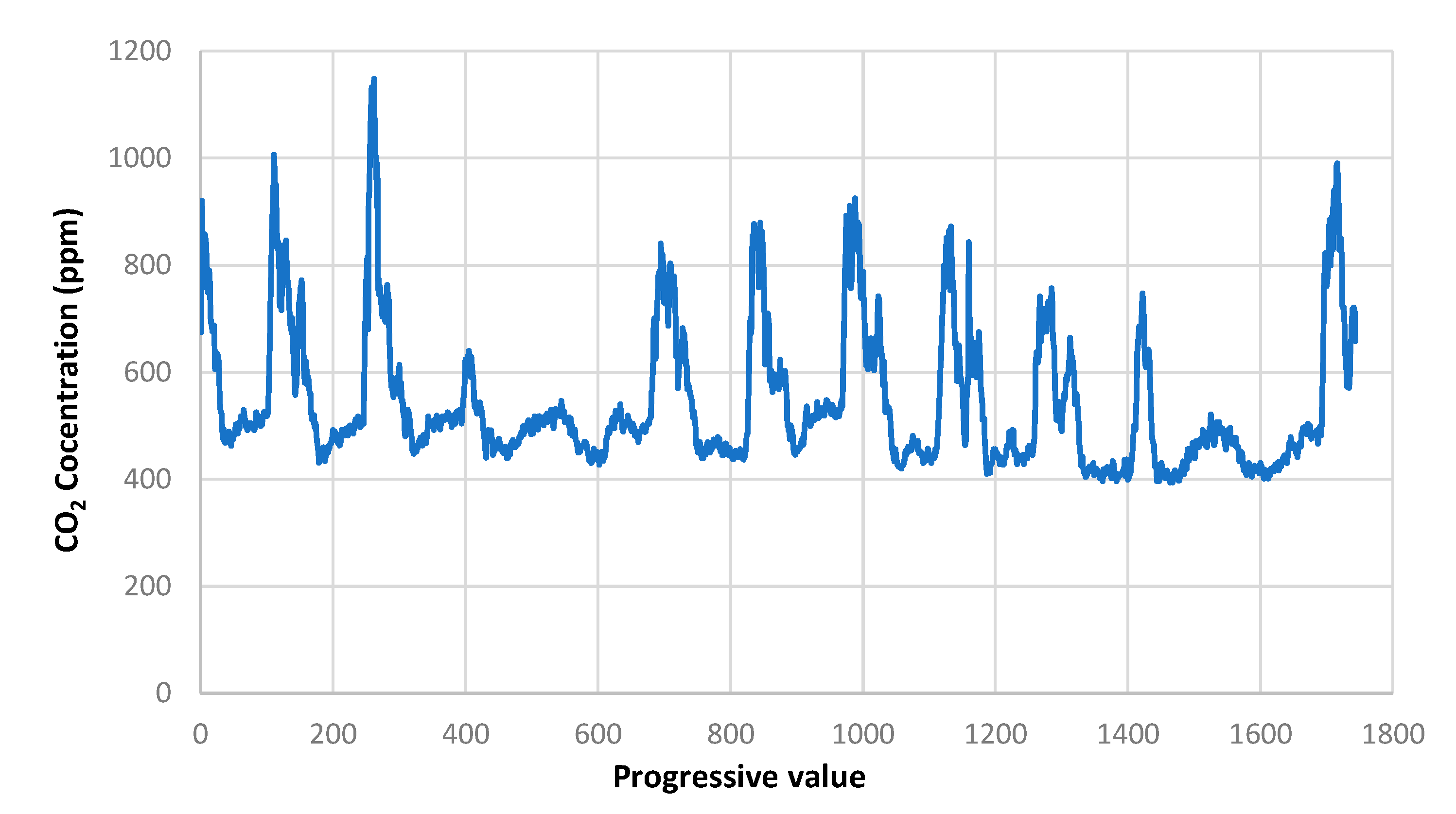
Figure 14.
A possible scheme for the control of HVAC plants based on use of monitoring data.
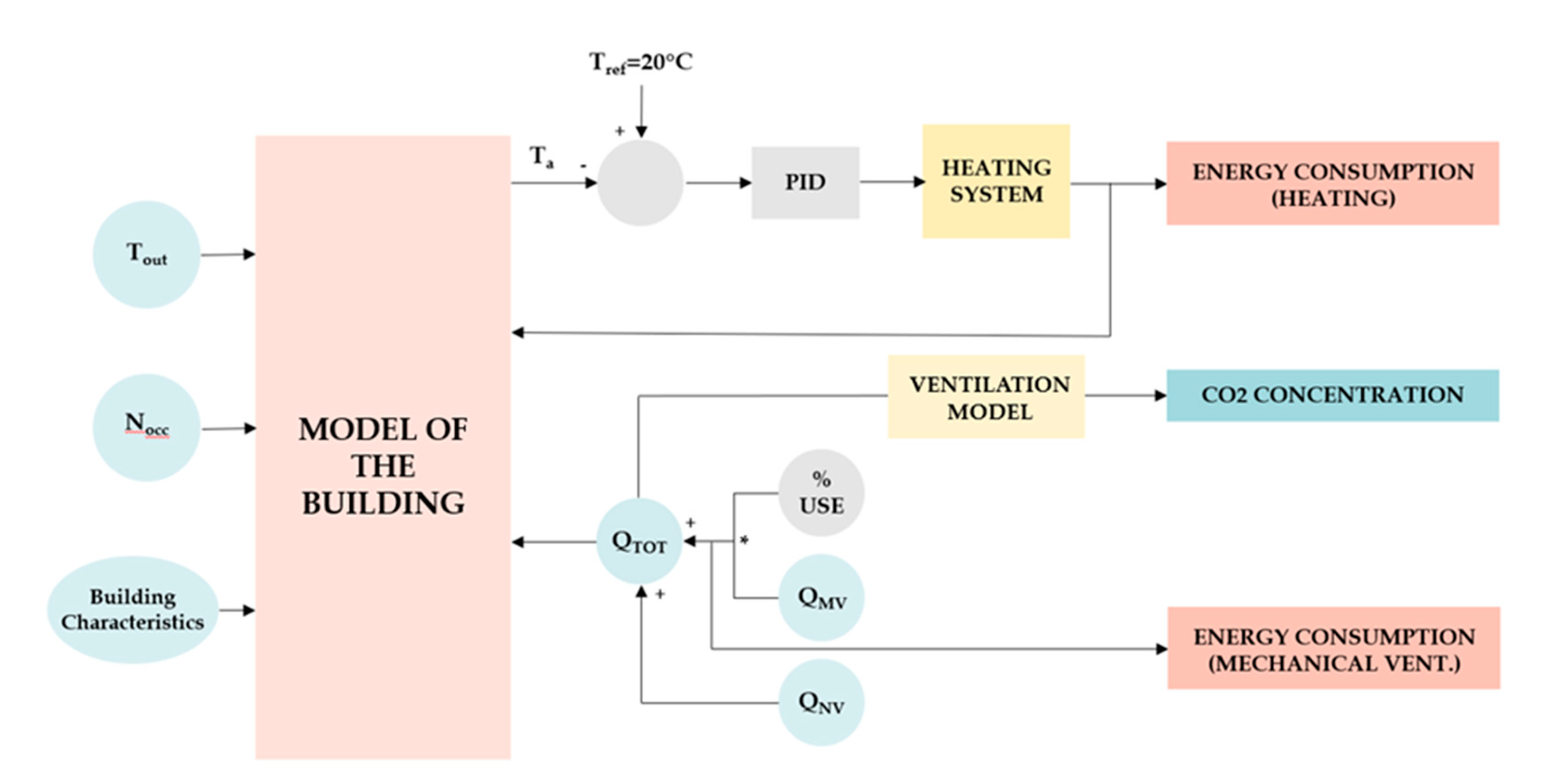
Figure 15.
Normalized energy consumption with DCV strategies (CS3, CS4 and CS5) with respect to normal strategy (CS2) based on time operation and Covid19 (CS1) in the structure of Figure 6(a).
Figure 15.
Normalized energy consumption with DCV strategies (CS3, CS4 and CS5) with respect to normal strategy (CS2) based on time operation and Covid19 (CS1) in the structure of Figure 6(a).
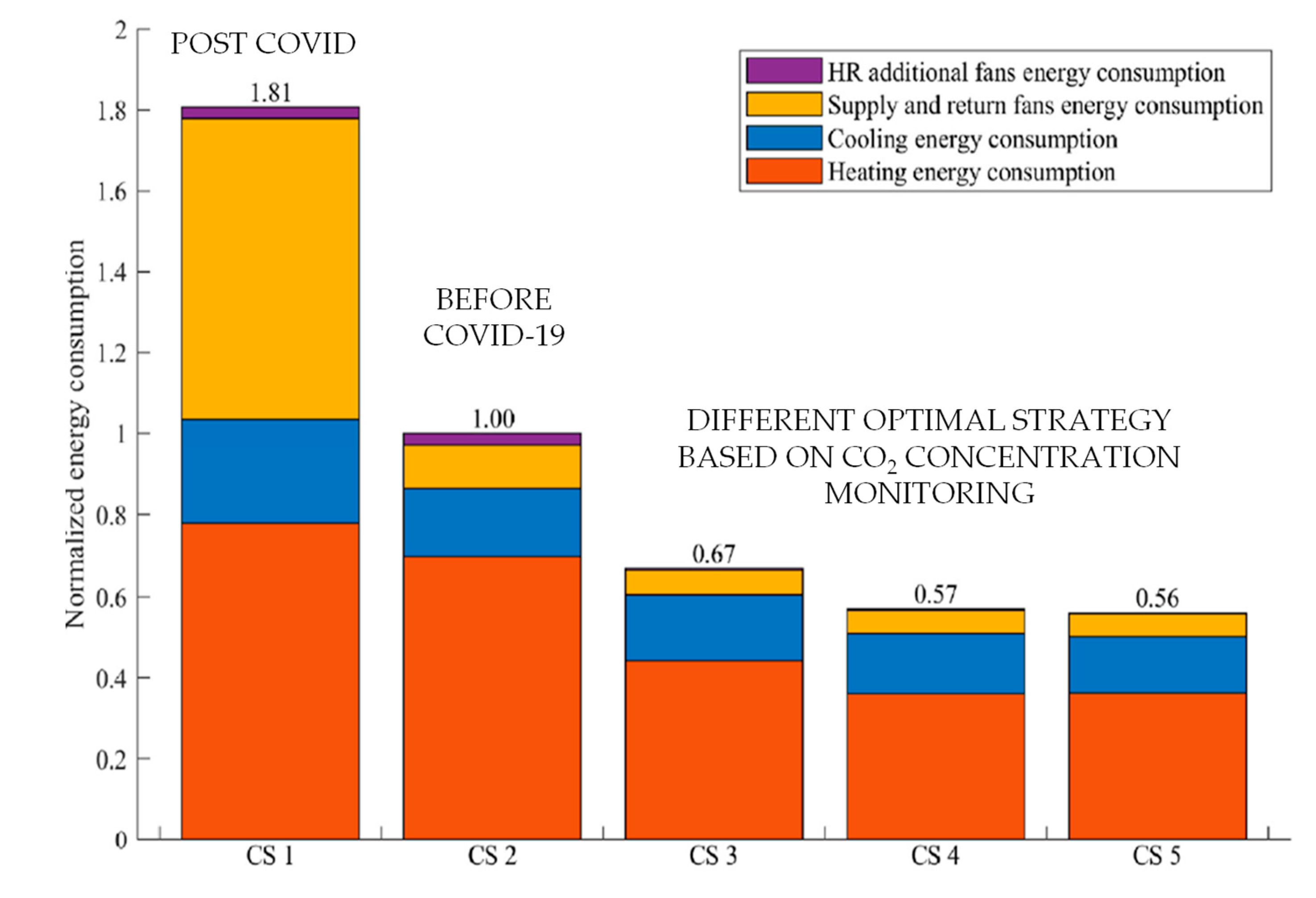
Figure 16.
Monitoring data obtained in the ten days analysis (from 18 April to 23 May) in a classroom of the University of Pisa.
Figure 16.
Monitoring data obtained in the ten days analysis (from 18 April to 23 May) in a classroom of the University of Pisa.
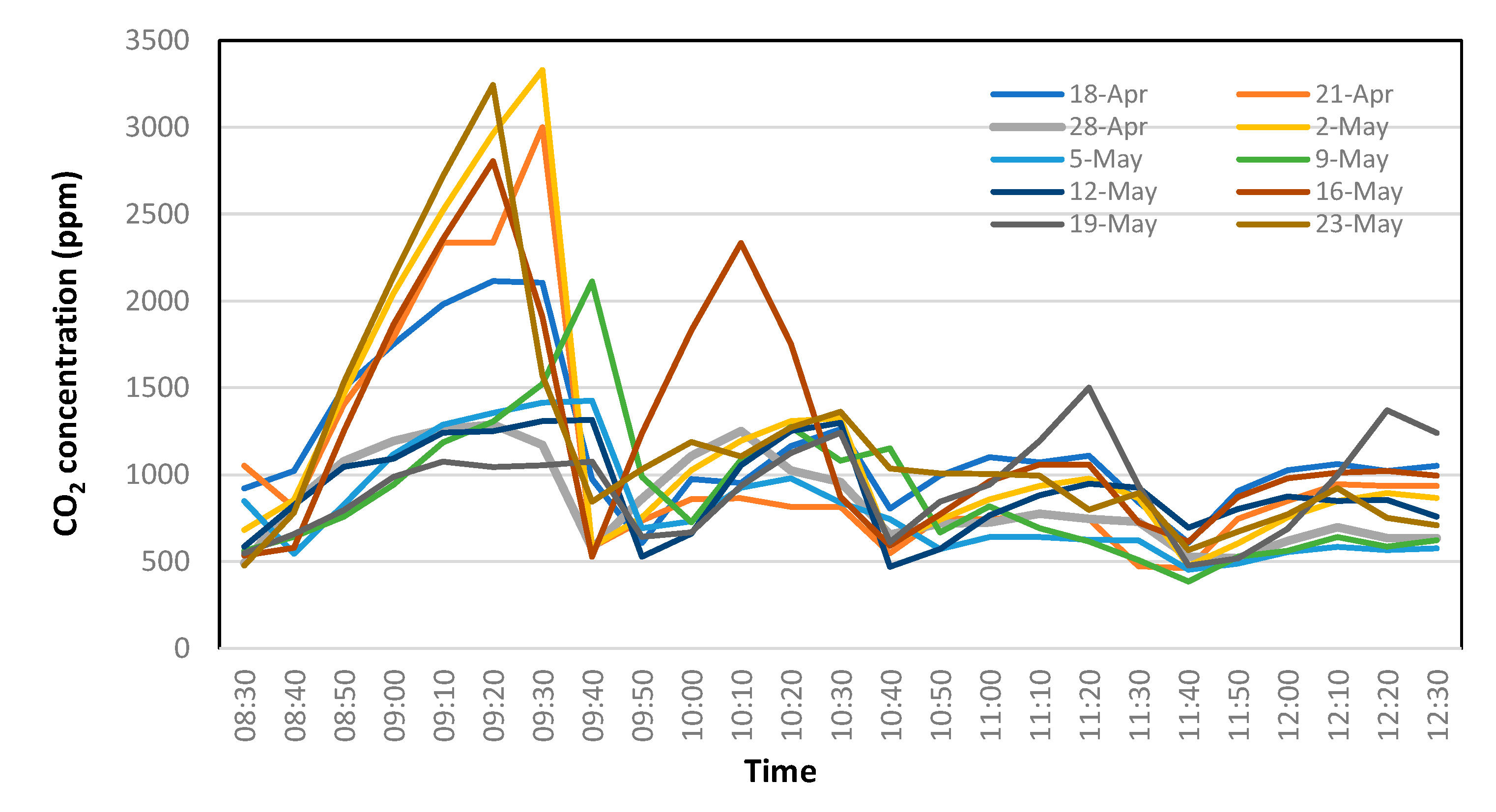
Figure 17.
Predictive profile of the CO2 concentration for the situation described in Figure 16, obtained with different machine learning methods and comparison with physically based model.
Figure 17.
Predictive profile of the CO2 concentration for the situation described in Figure 16, obtained with different machine learning methods and comparison with physically based model.
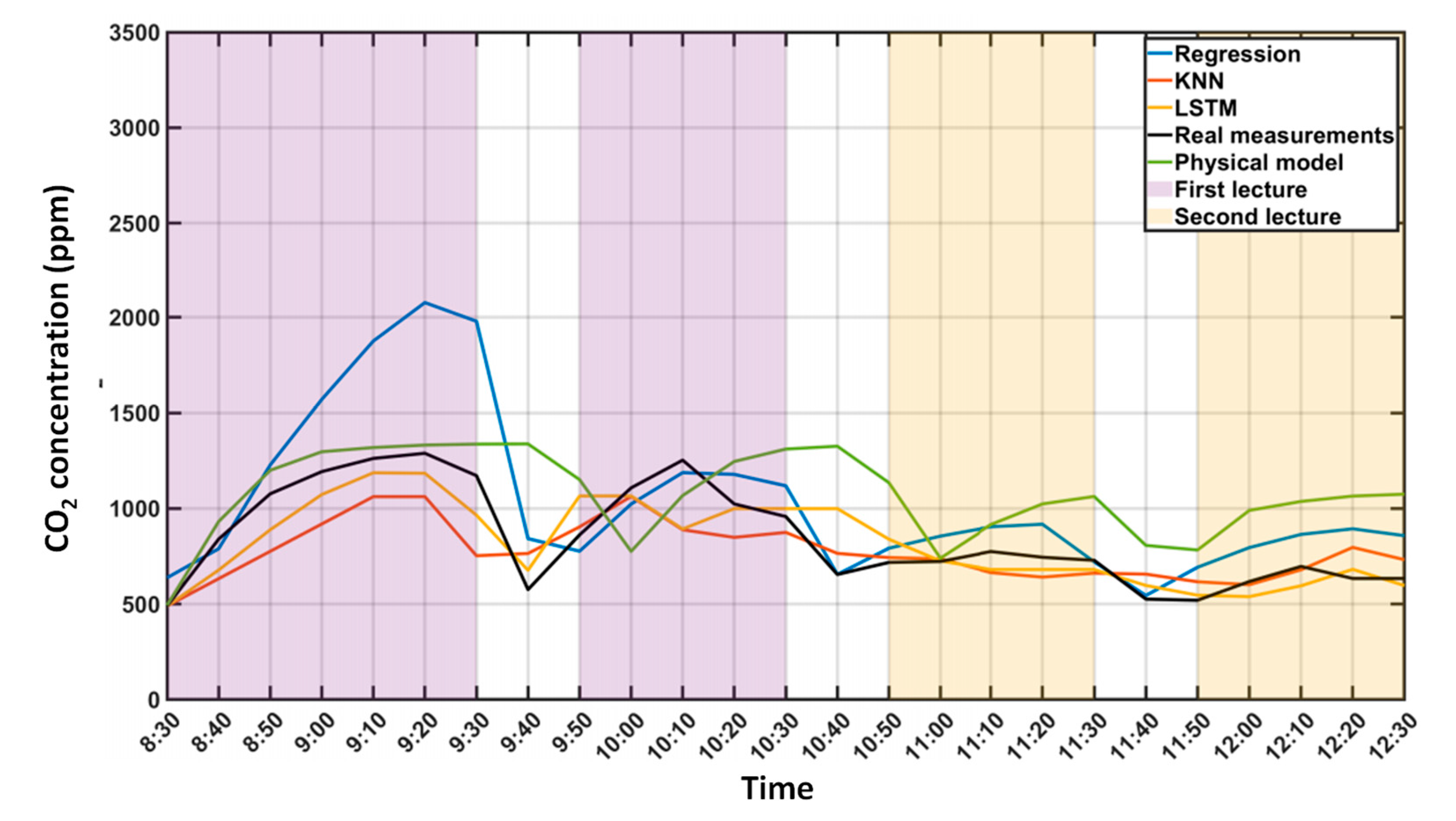

Table 1.
Evolution of sensors for building automation purposes: from classic analogic sensors to IoT modern sensors.
Table 1.
Evolution of sensors for building automation purposes: from classic analogic sensors to IoT modern sensors.
| Classic analogic sensors | Modern sensors | |
|---|---|---|
| Technology and Miniaturization | Larger and bulkier. The technology was less advanced, and sensors relied on analog signal processing. | Due to miniaturization and advancements in microelectronics (MEMS) are smaller, more compact, and capable of higher precision. |
| Integration and Multifunctionality | Stand-alone devices with limited integration capabilities. Each sensor had a specific function | Multifunctional, capable of measuring multiple parameters simultaneously. Sensors are often integrated into complex systems and networks. |
| Digital Signal Processing | Analog signal processing was predominant. The output from sensors was often analog and required additional processing for interpretation | Digital signal processing is prevalent. Modern sensors often provide digital outputs, compatible with digital systems. This allows for easier integration, data storage, and analysis |
| Wireless Connectivity | Communication between sensors and other devices often relied on wired connections | Sensors are equipped with wireless communication capabilities, allowing them to be part of the Internet of Things (IoT). This enables remote monitoring, real-time data transmission, and integration into smart systems |
| Accuracy and Sensitivity | Sensor accuracy and sensitivity were good compared to today’s standards | Advances in materials, manufacturing processes, and calibration techniques have led to sensors with good accuracy and sensitivity. |
| Cost and Accessibility | Sensor technology was often expensive, limiting widespread adoption. | Advances in manufacturing have led to reduced production costs, making sensors more affordable and accessible. |
Table 2.
Specific characteristics of the sensors used for the measurements of CO2 concentration.
| Sensor | Range | Method | Accuracy |
|---|---|---|---|
| CA 1510 | 0-5000 ppm | Non-dispersive infrared (NDIR) technology | +/- 50 ppm |
| Smart D Home 9 in 1 |
0-5000 ppm | Non declared | Average accuracy Non defined |
| Sensiron SGP30 | 400 - 60000 ppm | Indirect measurements of ethanol and hydrogen concentration | Low accuracy |
Table 3.
Some data about the relevance of the didactic buildings of the University of Pisa.
| Number of rooms | Total seats | Surfaces of structures for didactic activities (m2) | Total students |
|---|---|---|---|
| 386 | 25000 | 70000 | 45800 |
Table 4.
Some data about the activity of FTGM (Fondazione Toscana Gabriele Monasterio).
| Number of structures |
Hospital beds | hospitalized patients in one year |
Outpatient visits in a year |
|---|---|---|---|
| 2 Pisa Massa |
132 44 in Pisa 78 in Massa |
7000 | 120000 |
Table 5.
Specific characteristics of the classrooms of the University of Pisa tested in some activities.
Table 5.
Specific characteristics of the classrooms of the University of Pisa tested in some activities.
| Room | Volume [m3] |
Surface [m2] |
Max occupancy |
|---|---|---|---|
| 2 | 428 | 131 | 140 |
| 8 | 1206 | 224 | 288 |
Table 6.
Specific characteristics of the sensors used for the measurements of CO2 concentration.
| Case | Period | Max occupation | Sequency | Ventilation |
|---|---|---|---|---|
| 1 | 9:50-11:50 | 25 | All the students are present in the room for the whole time | OFF |
| 2 | 8:30-12:00 | 280 | 0-10 (8:30-9:30) 270- 280 (9:30– 10:30) 0-10 (10:30-11:00) 220-230 (11:00-12:00) |
OFF (8:30-10:30) ON (10:30-12:00) |
Disclaimer/Publisher’s Note: The statements, opinions and data contained in all publications are solely those of the individual author(s) and contributor(s) and not of MDPI and/or the editor(s). MDPI and/or the editor(s) disclaim responsibility for any injury to people or property resulting from any ideas, methods, instructions or products referred to in the content. |
© 2024 by the authors. Licensee MDPI, Basel, Switzerland. This article is an open access article distributed under the terms and conditions of the Creative Commons Attribution (CC BY) license (http://creativecommons.org/licenses/by/4.0/).
Copyright: This open access article is published under a Creative Commons CC BY 4.0 license, which permit the free download, distribution, and reuse, provided that the author and preprint are cited in any reuse.