

Submitted:
11 March 2024
Posted:
13 March 2024
You are already at the latest version
Abstract
As companies increasingly undergo digital transformation, the role of talent management pro-cesses becomes pivotal in enhancing overall organizational performance. The research addresses the significance of talent management in corporate digital transformation, examining whether variations in the digitalization of these processes can be attributed to company size. A qualitative approach was employed, utilizing a questionnaire, collecting responses from 202 organizations across diverse sectors. Findings reveal disparities in digitalization throughout the talent man-agement process, with pronounced presence in the attracting, selecting, and rewarding phases, but diminishing in deployment and development, further declining in planning. A positive cor-relation between company size and adoption of specific digital platforms was observed. Larger enterprises exhibit greater utilization of digital platforms in talent deployment and development. Moreover, corporate communication tools are consistently utilized in the rewarding phase, irre-spective of company size. These findings offer practical insights for organizations to optimize their digitalization strategies based on their scale, thereby contributing to more effective and tailored digitalization endeavors. The uniqueness of this research lies in its exploration of the in-fluence of company size on the digitalization of talent management processes and its potential to explain variations across different stages of these processes.
Keywords:
talent management process
; digitalization
; company size
; levels of digitalization
; talent management stages
Introduction
Digitalization refers to the process of utilizing digital technologies. The objective would be to transform and optimize various aspects of business, society, or individual activities [26] (p. 301-308). Across various sectors, organizations are at the forefront of embracing digital technologies, ranging from intensive to non-intensive applications [14] (p. 125-128). In specific areas such as training and education [17] (p. 1-4), extensive use of digital resources is observed, with implications for the organizational environment [13] (p. 22-39). In this dynamic landscape, the talent management process emerges as a continuous and pivotal endeavor that caters to an organization’s requirements, playing a crucial role in enhancing overall business performance and maintaining competitiveness [33] (p. 319-326).
The use of digital resources stands as a paramount paradigm, offering an extraordinary business case that encompasses various technological tools dedicated to managing talent processes [44] (p. 356-383). Technology allows human work to be complemented and enriched [40] (p. 117-134). Recognized as a key business function, human capital and talent play pivotal roles [23] (p. 123-138). However, it's worth noting that talent identification, despite its critical importance, lacks sufficient resources to attain perfection as a science [4] (p. 23-42), necessitating ongoing efforts to address existing challenges.
Despite variations, digitalization is advancing globally, and the European Union has introduced the Digital Intensity Index [15], as a key performance indicator outlining Europe's ambitious digital transformation vision. This index gauges the adoption of diverse digital technologies by European companies, portraying the overall progress in digitalization irrespective of their size.
The results of the index show that in 2020, 9% of large European enterprises reported a very high level of digitalization, followed by 2% of medium-sized companies, 0.4% of small firms, and 1% of companies with fewer than 10 employees. The trajectory indicates that 42% of large enterprises, 25% of medium-sized companies, 12% of small companies, and 14% of those with less than 10 employees are projected to attain a high level. However, 46% of companies demonstrated a low level, while 39% exhibited a very low level. Spain stands out, holding an above-average position among European countries and maintaining a leading position among major European companies in terms of digitalization.
Building on prior research testing the digitalization of the talent management process in Spanish companies and the diverse performance observed at each stage [28] (p. 2264), our research group aims to contribute by focusing on assessing how company size, as measured by the mentioned index, influences digitalization intensity. This investigation is particularly crucial considering Spain's unique position in the digital landscape.
There is a theoretical framework to explain the causes of talent management digitalization [20] (p. 188) but not to quantify the extent of digitalization across different stages and varying company sizes. While numerous sources identify reasons, drivers, and organizational culture encouraging investment in digitalization, there is a notable absence of measures to assess the degree of digitalization in the talent management process, especially in correlation to company size as a variable and segmented by stages.
The advancement of digital technologies has significantly influenced the way organizations manage talent [45] (p. 2592-2621). Talent management digitalization involves the use of digital tools and technologies for planning, attracting and sourcing, selecting, deploying, developing, rewarding and separating [28] (p. 2264). Despite the widespread adoption of these digital practices, the influence of company size on the effectiveness and outcomes of talent management digitalization remains underexplored after the disruptive irruption on investment technology after the pandemic.
This paper is divided into four sections. The first section analyses the applied research on the extent to which the size of a company has had an impact on the digitalization of the different of the talent management processes. The subsequent section outlines the research methodology and presents and analyzes the results obtained. The third section delves into the differences observed in the digitalization of the different stages of the talent management processes based on company size, exploring their relationship with the main topics of the literature review. Finally, the last section summarizes the key findings of the research and discusses their implications for supporting future research.
This research significantly contributes to understanding the relationship between company size and the adoption of digital technology for talent management within organizations, with a specific focus on the unique context of Spain. The study reveals a positive correlation between company size and the utilization of specific digital platforms across various stages of the talent management process. Furthermore, the intensity of digitalization on specific stages exhibits variations based on company size.
The primary objective of this research is to assess the extent to which greater digitalization in the talent management process is linked to company size. Additionally, we aim to explore whether company size can elucidate variations in the utilization of digitized tools across different stages of the talent management process.
1. Context and literature review
Organizations are compelled to reinvent themselves for enhanced agility, and talent management emerges as a pivotal strategic function in this endeavor. The digital transformation of talent management is a process of operational change [20] (p. 122-291) that utilizes data management to guide decision-making [43] (p. 2246-2252). Information and communication technologies can be applied across all stages of the talent cycle [19]. Randstad Research [32] reports that automation and digitalization have reshaped the organizational structure of talent management in 75% of companies, with 54% planning to experiment with novel talent management strategies. Digitalization equips organizations not only to attract the best talent [2] (p. 103765) but also to effectively manage, develop, and retain that talent [30] (p. 288-294). Investments in digitalization may correlate with an increase in the recruitment of top talent. Although Rungi [35] (p. 741-745) found no firm size differentiation in digitalization impact, Buer [5] (p. 905-928) identified significant differences between large firms and medium/small firms. The influence of firm size on digitalization remains a key aspect for this research.
There is no unique framework to define talent management. While numerous sources describe various frameworks, few differentiate the diverse stages, as noted by ([38] (p. 105108); [10] (p. 304-313); [16] (p. 31-56) and [16] (p. 31-56), though not explicitly referencing the same stages. To align with the objectives of this research, we opt for the Cascio and Boudreau model [6] (p. 494-520), as a potential driver. This model offers a detailed description of the talent cycle, making it well-suited for a comprehensive approach to talent management processes.
Additionally, there is currently no theoretical framework available to quantify the extent of digitalization across different stages and varying company sizes with respect to talent management processes [6] (p. 494-520), outline the talent lifecycle as a human resource process encompassing seven stages, starting with the planning process and concluding when the employee leaves the organization (refer to Figure 1). In contrast, Cattermole [7] (p. 258-262), proposes a six-stage employee lifecycle model, covering attraction, recruitment, onboarding, development, retention, and separation. Effective organizational management requires strategic planning for staff, attracting talented individuals, retaining them, and placing them in roles where they can maximize their performance. Thoughtful decisions must also be made when employees depart. Long-term business planning necessitates parallel human capital planning, emphasizing investment in individuals, the development of essential skills, and the prevention of skill loss, thereby ensuring a sustained competitive advantage. This research has opted for the Cascio and Boudreau model [6] (p. 494-520) for its precision in identifying all stages of the talent management process.
Technological forces have the power to drive changes in businesses and individuals ([39] (p. 399-405); [34] (p. 133-149). Digital transformation is imperative for companies seeking to increase their value added [22], provide enhanced human resources services [12] (p. 234-242), and establish a more dynamic, engaged, and autonomous management [36] (p. 84-92). The application of technology to talent management processes can streamline certain aspects management [21] (p. 118-125) and contribute to achieving talent optimization [37] (p. 281- 288).
Although a correlation between talent management processes and digitalization is expected, there is only a weak link strength [27]. The increase in the level of digitalization within an organization can be influenced by its size, as it represents a substantial investment. [41] (p. 482-501) concluded that the main factors influencing the progress of digitalization include size, work organization, workforce structure, and human resource management configuration. They emphasized the size of companies as the most determinant and consistent factor in the progress of digitalization. Furthermore, they highlighted that large companies are likely to experience greater benefits in automation, information management, and collaboration compared to small companies or those with few employees.
In relation to company size and digitalisation, Chen et al. [8] (p. 186-212) reported that digital transformation offers clear opportunities for small and medium companies to increase their success. Companies are starting to adopt technologies, which increase the standardization and automation of talent management activities [11] (p. 325-342). As a result, the talent management departments are gaining strategic importance in the company and becoming more involved in these strategic decisions. Chugunova y Danilov [9] (p. 69-90) and Talamala, [42] show that small and medium companies are showing systematically differencies related to larger companies on how use digital tools.
The use of digital tools in the attraction and sourcing process can help to save up to 30% and the cost of applying can also be significantly reduced for applicants, but more importantly, the process can be made more efficient [29] (p. 31-49) Their findings show that large organisations are more likely to use online tools more than smaller ones.
Given the absence of a framework addressing the extent of digitalization in talent management processes and its correlation with company size, particularly considering the rapid growth of Spanish companies, the subsequent phase of this research aims to empirically explore the relationship between the digitalization of talent management processes in Spanish companies and their respective sizes, segmented by stages of these processes.
Methodology
The methodology of the research has chosen the Cascio and Boudreau model for its precision in delineating the stages of the talent management process and facilitating segmentation.
The study relies on responses from managers of 202 Spanish companies who participated in a questionnaire regarding the digitalization of talent management.
The survey spanned from December 2020 to February 2021, targeting a sample of 202 companies strategically chosen by the research team to represent diverse sectors (refer to Figure 2) and varying company sizes (refer to Figure 3). Prior to the analysis of questionnaire responses, all participants provided explicit informed consent for their collaboration in the study. Data collection encompassed information on the characteristics of participating companies, the level of digitalization in talent management, digitalization levels across different stages of talent management, as well as the utilization of platforms and social networks for these purposes.
The companies in the sample operate in banking and insurance (11.9%), construction (4%), consulting, health and education (23.3%), industry, technology and engineering (33.2%) and services (27.7%) (see Figure 2). It is a convenience sample, and therefore only allows for the detection of general trends, which should then be tested by means of future random and stratified samples.
Most of the participating companies are large, with more than 1,000 employees. Specifically, 28.2% have more than 5,000 employees, and 29.2% have between 1,001 and 5,000. On the other hand, 10.9% have between 501 and 1,000 employees, 7.9% have between 251 and 500, 11.4% have between 51 and 250, and 12.4% have 50 employees or less (see Figure 3).
The data analysis answers four research questions:
- Are there any differences in the digitalization level of talent management in companies depending on their size?
- What is the digitalization level in the different phases of talent management? Does this distribution differ according to company size?
- Are there any differences in the use of talent management platforms depending on company size?
- Are there any differences in the use of social networks to attract talent depending on company size?
The indicators used to measure the digitalization of human resources management in each of the phases of the talent management cycle were as shown in Table 1.
Results
1. First question: Are there any differences in the digitalization level of talent management in companies depending on their size?
Overall, the majority of human resource managers reported that their companies were “somewhat digitized” or “fairly digitized”. The set of “fairly” or “very digitized” companies is below 50% of the sample (see Figure 4).
The highest levels of digitalization correspond to companies that have more than 500 employees (see Figure 5), while smaller companies show lower levels of digitalization. Among companies with more than 500 employees, 21% of companies with more than 5,000 employees report being highly digitized, while the group of companies with between 1,001 and 5,000 employees show the lowest level of digitalization among large companies (more than 500 employees). Meanwhile, among companies with less than 500 employees, within a context of lower levels of digitalization at these sizes, a proportion of smaller companies (between 1 and 50 employees) report higher levels of digitalization.
In order to test the statistical significance of this association, the average levels of digitalization of these groups of companies were compared (using coding between 1 for the option "Very poorly digitalized” and 5 for the option "Very digitalized”), and the differences found are statistically significant (F=2.81, p=.018, η2 =0.067). The highest means correspond to two of the largest groups of companies (3.55 in companies with between 501 and 1,000 employees and 3.67 in companies with more than 5,000 employees), and the lowest correspond to companies between 251 and 500 employees (2.94). Considering that both variables correspond to an ordinal level of measurement, the analysis was completed with the calculation of the Spearman-Brown r, which provides an index of 0.21 (p=.003). Overall, the analysis point to a general trend toward greater digitalization in larger firms. This is a small but statistically significant positive association.
2. Second question: What is the digitalization level in the different stages of talent management, and does this distribution differ according to size?
The phases of the employee lifecycle are associated with different levels of digitalization in talent management (see Table I). In order to enable a comparison between the different phases, all indicators were dichotomized. Most of the indicators were measured by differentiating the two original levels used in the questionnaire ("Yes” and "No,” while those with more than two response options were dichotomized as shown in Table 1 in the right-hand column).
The first piece of information provided is the percentage of companies that do have the indicator or have it at the first level (e.g., "Use of digital ERP"). Secondly, in order to find out the magnitude and direction of the relationship between the size of the companies and these indicators, the Spearman-Brown correlation was calculated. The differences in this index between the phases and the indicators point to the areas in which company size may be having a greater or lesser effect.
The indicators distributed across the phases of the talent management cycle are heterogeneous in nature and can only be compared in part. Overall, digitalization seems to be more widespread in the attracting, selecting and rewarding phases; in deploying and developing to a lesser extent; and even less in planning, especially when it comes to the availability of specific tools and the prediction of future talent needs through the use of workforce planning tools.
In the planning phase, most companies have ERP, but far fewer use workforce planning tools to predict future talent needs or have a dedicated talent management platform. All three indicators are positively and significantly related to company size, especially the use of ERP and the availability of a dedicated talent management platform.
In the attracting and sourcing phase, there is a predominant use of professional social networks, corporate websites and general-purpose portals. On the other hand, a minority use of general social networks and specific portals. The larger the size of the company, the higher the frequency of use of general-purpose portals, corporate websites and the most selection is done through social networks; while the use of specific portals, professional social networks and general-purpose social networks does not vary significantly depending on the size of the company.
In the selection phase, more than 90% use at least one online test. The most frequent is the use of specific selection platforms, skills tests and remote video interviews. Language and skills tests show intermediate frequencies. The least frequent is the use of group dynamics and online business cases, or asynchronous video interviews. All these indicators are more significantly used the larger the size of the company.
In the deploying phase, just over half of the companies use online onboarding systems, and almost half use specific platforms. Company size is significantly related to both indicators.
Different resources for the online development phase are used by approximately two thirds of the companies. The use of specific platforms for performance evaluation, training and development is strongly associated with larger company size, in contrast to a smaller or non-significant relationship between company size and the other indicators of the developing phase.
In the rewarding phase, approximately 80% use corporate communication tools, regardless of the size of the company; or specific payroll and social security platforms, with some significant relationship with company size.
1. Third question: Are there any differences in the use of talent management platforms depending on company size?
Company size shows a positive association with a greater use of specific digital platforms at different stages of the employee lifecycle, as seen in Figure 6. Statistical significance was tested using the Spearman-Brown r-test. The results were as follows:
- The use of specific recruitment platforms is found in 64% of companies with up to 50 employees and reaches 91% in companies with more than 5,000 employees. The increasing trend is statistically significant (r=.239**), and progressive except in companies with 251 to 500 employees, where the use of these platforms is the lowest of the series (56.3%), much lower than expected according to this progression.
- Onboarding platforms is 36% in smaller companies and 57.9% in larger companies. The low level of use of these platforms by companies with between 251 and 1,000 employees is noted. The relationship is statistically significant (r=.200**).
- A similar trend is found in the use of talent identification platforms (r=.256**).
- Greater use of training and development platforms and performance appraisal platforms is significantly associated (r=.393** and r=.401** respectively) with larger company size. The use of training and development platforms increases in companies with 500 employees or more, while the use of performance evaluation platforms increases in companies with 1,000 employees or more.
- A greater use of payroll and social security platforms is also less associated and not significantly (r=.139*), to the size of the companies, highlighting high use in companies with between 501 and 1,000 employees.
- The more frequent use of platforms for leaves and vacations is not significantly (r=.028) associated with company size. There are some increasing trends, but with some major irregularities.
4. Fourth question: Are there any differences in the use of social networks for attracting talent depending on company size?
There is a marked contrast between the vast majority use of professional social networks versus the minority use of specific portals and general-purpose social networks (see Figure 7). The use of corporate websites and general-purpose portals is related to larger company size (r=.228** and r=.241** respectively), in contrast to the use of specific portals, professional social networks and general-purpose social networks, whose use is not significantly associated with larger company size.
Discussion
This paper delves into the impact of digitalization on talent management processes in Spanish companies, with a specific emphasis on the influence of company size. Despite the perceived weak correlation between talent management processes and digitalization [27], Strohmeier and Kabst [41] (p. 482- 501), underscored the significance of company size as a key and consistent determinant in the progress of digitalization. Understanding how company size shapes the digitalization of talent management processes holds practical implications for organizations seeking to optimize strategies based on their size.
This circumstance, coupled with the lack of an available theoretical framework to quantify the extent of digitalization across different stages and varying company sizes in talent management processes, led us firstly to choose the Cascio and Boudreau model [6] (p. 494- 520) as a potential driver. Subsequently, we aim to explore the relationship between the digitalization of talent management processes in Spanish companies and their respective sizes, segmented by stages of these processes
This research aligns with the varying growth rates of organizational digitalization [15] and reveals similar findings regarding digitalization levels based on company size. The degree of importance of company size in talent management digitalization serves as the foundational axis of this research.
Results indicate that company size may explain differences in talent management digitalization levels [5] (p. 905-928). The research focuses on four specific correlations related to company size: 1) potential variations in digitalization levels, 2) digitalization across talent management phases, 3) differences in the use of talent management platforms, and 4) the utilization of social networks in the talent attraction phase
The differences between the level of digitalization of talent management ([9] (p. 69-90); [42]) and the size of the companies show evidence of this, in terms of the differential factor that exists with respect to the size of the companies in the area that it represents. It is worth highlighting the differences, which are not excessive but are significant in terms of the nuances that exist in the sizes of the participating companies. The desire to digitize would be an expression of a willingness ([8] (p. 186–212)) not only to grow but also to offer better services to its employees and a way to transform the company ([20] (p. 122-291) and gain maturity.
The stages with higher levels of digitalization include attracting, selecting, and rewarding phases. The study carried out by Williams et al., [46] (p. 4136-4162) supports the idea of that the use of digital resources on recruitment phases has increase and improves the reconfiguration of the roles and responsibilities of employees. In contrast, deploying and developing exhibit a lesser extent of digitalization, and planning, despite its strategic importance in anticipating and strategically planning key positions for the organization's immediate future based on challenges, plans, and future investments, shows even less digitalization.
The third research question aims to analyze the relationship between the use of talent management platforms and company size. The findings reveal a positive trend between the two, with a notable gap emerging between the largest and smallest companies. Large companies exhibit a robust corporate talent management structure supported by platforms across various phases, including attraction, onboarding, and compensation. The research of Krishnan and Scullion [24] (p. 431-441) also shows the differences on the management of the talent life cycle of organizations depending their size. Additionally, the usage of platforms for training and development also shows a substantial difference between company sizes, indicating distinct patterns in this aspect.
Finally, the fourth question, which examines the use of the different social networks to attract talent and the correlation with company size provides evidence on the the use of company portals and the option of using more general search media. In the first case, corporate websites are mechanisms typical of large companies and in the second case, they make it possible to reach the largest possible market of talent and to save costs: the greater the use, the better the prices. The use of dedicated portals and professional social networks does not depend on the size of the company. Companies of any size can easily access these resources. Indeed, social networks are a central axis on the process of digitalization of companies as enterprises need to adapt their measures and procedures to new digital environment, involving transformation on strategic [18] (p. 53-82).
Two requirements constitute obstacles: the price for smaller companies if they are using services of greater complexity, but also of greater reach to the profiles sought and the training of the people who use and exploit the possibilities of the networks used.
Conclusions
The aim of this research was to determine whether greater digitalization in the talent management process is associated with company size. Talent management has evolved into a strategic commitment for organizations, fuelled by technology that breaks down physical barriers and facilitates the more efficient digitization of the talent management process [20] (p. 122-291). Digitalization does not just improve internal management of enterprises but also helps strengthen their competitive advantage on the market [3] (p. 362-387). This gives opportunity to create more sustainable business models that promotes self-efficient resources, systematized project execution and operationalization [1] (p. 124-144). Employees can also benefit from this new era as the systematization of procedure can facilitate employees work on decision making and productivity [31] (p. 63-77). In other words, digitalization has direct and indirect benefits for the entity as well as for the employees based on the areas of organizational learning, digital innovation, organizational agility, business ecosystems and improvement on organizational structures [25] (p. 341-362). Indeed, the analysis of this research reveals a prevailing trend towards increased digitalization in larger firms, particularly in attracting, selecting, and rewarding phases. However, deploying, developing, and planning phases exhibit varying degrees of digitalization, with larger companies showing a stronger association.
Specifically, in the selection and deploying phases, the use of specific platforms for performance evaluation and training is strongly associated with larger company size. Interestingly, in the rewarding phase, the use of digital tools does not significantly correspond with the size of the company. Furthermore, company size exhibits a positive association with a higher utilization of specific digital platforms across various stages of the employee lifecycle. Notably, there is a stark contrast between the widespread use of professional social networks and the limited use of specific portals and general-purpose social networks. Specifically, the use of corporate websites and general-purpose portals is linked to larger company size. In contrast, the utilization of specific portals, professional social networks, and general-purpose social networks does not exhibit a significant association with larger company size. Overall, company size demonstrates a positive correlation with the utilization of specific digital platforms across various stages of the talent management process.
One limitation of this research is the asymmetry in the respondent population, with a majority of companies having more than 500 employees, accounting for 69%, which may not accurately represent the broader Spanish business landscape. However, this asymmetry does not invalidate the obtained results; instead, it emphasizes trends and the magnitude of differences in the talent management process influenced by company size.
This research contributes to demonstrating that if differences persist in the way talent management processes are handled in the future, companies may encounter challenges in effectively managing their talented personnel. In this way, organizations need to keep the track on the incorporation of digital strategies in order to maintain competitive in the market, improving their internal efficiency, facilitating a better organizational learning ecosystem and providing organizational agility through new digital resources.
Author Contributions
Conceptualization, P.C. M-M., J.M F-R. and F. D. ; Methodology, P.C. M-M., J. M. M-R., J. S. and F. D.; Validation, P. C. M-M. and F. D. ; Formal analysis, J. S. and F. D. ; Investigation, P.C. M-M. and F. D; Resources, P.C. M-M. and F. D..; Data curation, J. S..; Writing—original draft preparation, P. C. M-M., F. D and J. M. F-R.; Writing—review and editing, P. C. M-M., F. D. and E. I-I.; Supervision and Project administration, F. D.; Funding acquisition, F. D. All authors have read and agreed to the published version of the manuscript.
Funding
This research was funded by Contrato-Programa aid of the Basque Government.
Informed Consent Statement
The participants of this study did not give written consent for their data to be shared publicly, so due to the sensitive nature of the research supporting data is not available.
Data Availability Statement
The data presented in this study are available upon request from the corresponding author. The data are not publicly available because they are not available on a public domain server, but are in the private research repository of the University of Deusto.
Conflicts of Interest
The authors declare no conflict of interest.
References
- Antonucci, Y., Fortune, A. & Kirchmer, M. An examination of associations between business process management capabilities and the benefits of digitalization: all capabilities are not equal. Journal is Bus. Process Manag. J., 2021, 27(1), 124-144. [CrossRef]
- Balsmeier, B.; Woerter, M. Is this time different? How digitalization influences job creation and destruction. Res. Policy, 2019, 48 (8). 103765. [CrossRef]
- Bashir, M.; Farooq, R. The synergetic effect of knowledge management and business model innovation on firm competence: A systematic review. Int. J. Innov., 2018, 11(3), 362-387. [CrossRef]
- Blanco, M. R.; Golik, M. N. Mind the gap: line managers as effective or non-effective talent spotters. Int. J. Train. Dev., 2021, 25(1), 23-42. [CrossRef]
- Buer, S.V.; Strandhagen, J.W.; Semini, M.; Strandhagen, J.O. The digitalization of manufacturing: investigating the impact of production environment and company size. J. Manuf. Technol. Manag., 2020, 24(6), 905-928. [CrossRef]
- Cascio, W.F.; Boudreau, J.W. Talent management of non-standard employees. In The Oxford Handbook of Talent Management, D. G. Collings, K. Mellahi and W. F. Cascio (Eds.), Oxford Handbooks, 2015, pp. 494–520. [CrossRef]
- Cattermole, G. Developing the employee lifecycle to keep top talent. Hum. Resour. Manag. Rev., 2019, 18, 258–262. [CrossRef]
- Chen, Y.Y.K.; Jaw, Y.L.; Wu, B.L. Effect of digital transformation on organisational performance of SMEs: Evidence from the Taiwanese textile industry’s web portal. Internet Res., 2016, 26(1), 186–212. [CrossRef]
- Chugunova, M., & Danilov, A. Use of digital technologies for HR management in Germany: Survey evidence. CESifo Econ. Stud., 2023, 69(2), 69-90. [CrossRef]
- Collings, D.G.; Mellahi, K. Strategic talent management: A review and research agenda. Hum. Resour. Manag. Rev., 2009, 19(4), 304-313. [CrossRef]
- Da Silva, V.; Kovaleski, J.,; Pagani, R.,; Silva, J.,; Corsi, A. Implementation of Industry 4.0 concept in companies: Empirical evidences. Int. J. Comput. Integr. Manuf., 2020, 33(4), 325-342. [CrossRef]
- DiRomualdo, A.; El-Khoury, D.; Girimonte, F. HR in the digital age: How digital technology will change HR’s organization structure, processes and roles. Strat. Hum. Resour. Manag. Rev., 2018, 17, 234–242. [CrossRef]
- Dowling-Hetherington, L.; Glowatz, M.; McDonald, E.; Dempsey, A. Business students’ experiences of technology tools and applications in higher education. Int. J. Train. and Devel. 2020, 24(1), 22-39. [CrossRef]
- Eriksson, Y. Digitalization of society: what challenges will users meet? In Human Bahavoiur in Design,Y. Eriksson and K. Paetzold (Eds.), Universität der Bundeswehr München, 2019, 125-128, . [CrossRef]
- Eurostat. How digitalised are EU´s enterprises? Luxembourg: Products Eurostat News-Eurostat. 2021. https://ec.europa.eu/eurostat/web/products-eurostat-news/-/ddn-20220826-1#:~:text=In%202021%2C%2056%25%20of%20EU,total%20turnover%3B%20etc (Accessed on 31, march 2022).
- Gallardo-Gallardo, E.; Thunnissen, M. Stranding on the shoulders of giants? A critical review of empirical TM research. Employ. Relat., 2016, 38(1), 31-56. [CrossRef]
- Gegenfurtner, A.; Schmidt-Hertha, B.; Lewis, P. Digital technologies in training and adult education. Int. J. Train. and Devel., 2020, 24(1), 1-4. [CrossRef]
- Gilch, P.; Sieweke, J. Recruiting digital talent: The strategic role of recruitment in organisations’ digital transformation. Ger. J. Hum. Resour. Manag. 2021, 35(1), 53-82. [CrossRef]
- Guenole, N.; Feinzig, S. (2018). The business case for AI in HR. With Insights and Tips on Getting Started. IBM Corporation. https://www.ibm.com/downloads/cas/A5YLEPBR.
- Guerra, J. M. M.; Danvila-del-Valle, I.; Méndez-Suárez, M. The impact of digital transformation on talent management. Technol. Forecast. Soc. Change, 2023, 188, 122291. [CrossRef]
- Gupta, P.; Fernandes, S.F.; Jain, M. Automation in recruitment: A new frontier. J. Inf. Technol. Teach. Cases, 2018, 8, 118–125. [CrossRef]
- Isaksson, D.; Wennberg, K. (2016). Digitalization and Collective Value Creation. The Ratio Institute. Sweden. https://cms.ratio.se/app/uploads/2016/12/di_kw_digitalization_collective_value_creation_283.pdf.
- Kotarba, M. Measuring digitalization: Key metrics. Found. Manag., 2017, 9(1), 123-138. [CrossRef]
- Krishnan, T.; Scullion, H. Talent management and dynamic view of talent in small and medium enterprises. Hum. Resour. Manag. Rev., 2017, 27(3), 431-441. [CrossRef]
- Kuusisto, M. Organizational effects of digitalization: A literature review. Int. J. Organ. Theory Behav., 2017, 20(03), 341-362. [CrossRef]
- Legner, C.; Eymann, T.; Hess, T.; Matt, C.; Böhmann, T.; Drews, P.; Ahlemann, F. Digitalization: opportunity and challenge for the business and information systems engineering community. Bus. & Inf. Syst. Engin., 2017, 59(4), 301-308. [CrossRef]
- Marin, R. (2023). The Fusion of Talent Management and Digitalization: A Literature Review. IBIMA Publishing. [CrossRef]
- Martínez-Morán, P.C.; Fernández-Rico, J.M.; Díez, F.; Solabarrieta, J. The Digital Transformation of the Talent Management Process: A Spanish Business Case. Sustain., 2021,13(4), 2264. [CrossRef]
- Melanthiou, Y.; Pavlou, F.; Constantinou, E. The Use of Social Network Sites as an E-Recruitment Tool. J. Transnatl. Manag., 2015, 20(1), 31–49. [CrossRef]
- Panova, E.A.; Oparina, N.N; Bondareva, L.V. (2022). Talent Management: Tasks and Challenges for a Digital Tomorrow. Smart Nations: Global Trends in The Digital Economy. Ashmarina, V. V. Mantulenko, M. Vochozka (Eds.). Springer, pp. 288-294. [CrossRef]
- Parviainen, P.; Tihinen, M.; Kääriäinen, J.; Teppola, S. Tackling the digitalization challenge: how to benefit from digitalization in practice. Int. J. Inf. Syst. Proj. Manag., 2022, 5(1), 63–77. [CrossRef]
- Randstad Research (2021). ¿Qué ha cambiado con el COVID-19? Transformación y adaptación, nuevos retos y soluciones RRHH. Randstad España. https://www.randstadresearch.es/que-ha-cambiado-con-el-covid-19-transformacion-y-adaptacion-nuevos-retos-y-soluciones-rrhh/ (24, November 2023).
- Ribeiro-Navarrete, S.; Botella-Carrubi, D.; Palacios-Marqués, D.; Orero-Blat, M. The effect of digitalization on business performance: An applied study of KIBS. J. Bus. Res., 2021, 126, 319-326. [CrossRef]
- Robu, D.; Lazar, J. B. Digital transformation designed to succeed: Fit the change into the business strategy and people. Electron. J. Knowl. Manag., 2021, 19(2), 133-149. [CrossRef]
- Rungi, M. Digitalization: Size Doesn't Matter, Put Focus on Product-and-Service, Not on Process. IEEE International Conference on Industrial Engineering and Engineering Management (IEEM), Singapore, 2019, 741-745 . [CrossRef]
- Schalk, R.; Timmerman, V.; Heuvel, S.V.D. How strategic considerations influence decision making on e-HRM applications. Hum. Resour. Manag. Rev., 2013, 23, 84–92. [CrossRef]
- Schiemann, W.A. From talent management to talent optimisation. J. World Bus., 2014, 49(2), 281-288. [CrossRef]
- Scullion, H.; Collings, DG.; Caligiuri, P. Global talent management. J. World Bus., 2010, 105108. [CrossRef]
- Sousa, M.J.; Wilks, D.C. Sustainable Skills for the World of Work in the Digital Age. Syst. Res. Behav., 2018, 35(4), 399-405. [CrossRef]
- Spencer, D.; Slater, G. No automation please, we're British: technology and the prospects for work. Camb. J. of Reg., Econ. and Soc., 2020, 13 (1), 117– 134. [CrossRef]
- Strohmeier, S.; Kabst, R. Organizational adoption of e-HRM in Europe: An empirical exploration of major adoption factors. J. Manag. Psychol., 2009, 24(6), 482-501. [CrossRef]
- Talamala, S. An Analysis of the Talent Management Process's Digital Transformation in Indian Context. Int. Manag. Rev., 2023, 19(1).
- Verma, P.S.M.S.; Rana, N. (2021). A Study of HRM and Digital Transformation in Organization´s Strategy and Policies: Reshaping HR Space. Inter. J of Sci. Res. & Engi. Tr., 7(4), 2246-2252. https://ijsret.com/wp-content/uploads/2021/07/IJSRET_V7_issue4_520.pdf.
- Wehrle, M., Lechler, S., von der Gracht, H., & Hartmann, E. Digitalization and its Impact on the Future Role of SCM Executives in Talent Management–An International Cross-Industry Delphi Study. J. Bus. Logist., 2020, 41(4), 356-383. [CrossRef]
- Wiblen, S.; Marler, J. Digitalised talent management and automated talent decisions: the implications for HR professionals. Int. J. Hum. Resour. Manag. J. Hum. Resour. Manag., 2021, 32(12), 2592-2621. [CrossRef]
- Williams, P.; McDonald, P.; Mayes, R. Recruitment in the gig economy: attraction and selection on digital platforms. Int. J. Hum. Resour. Manag., 2021, 32(19), 4136-4162. [CrossRef]
Figure 1.
Talent Lifecycle. Source: Cascio and Boudreau (2015).
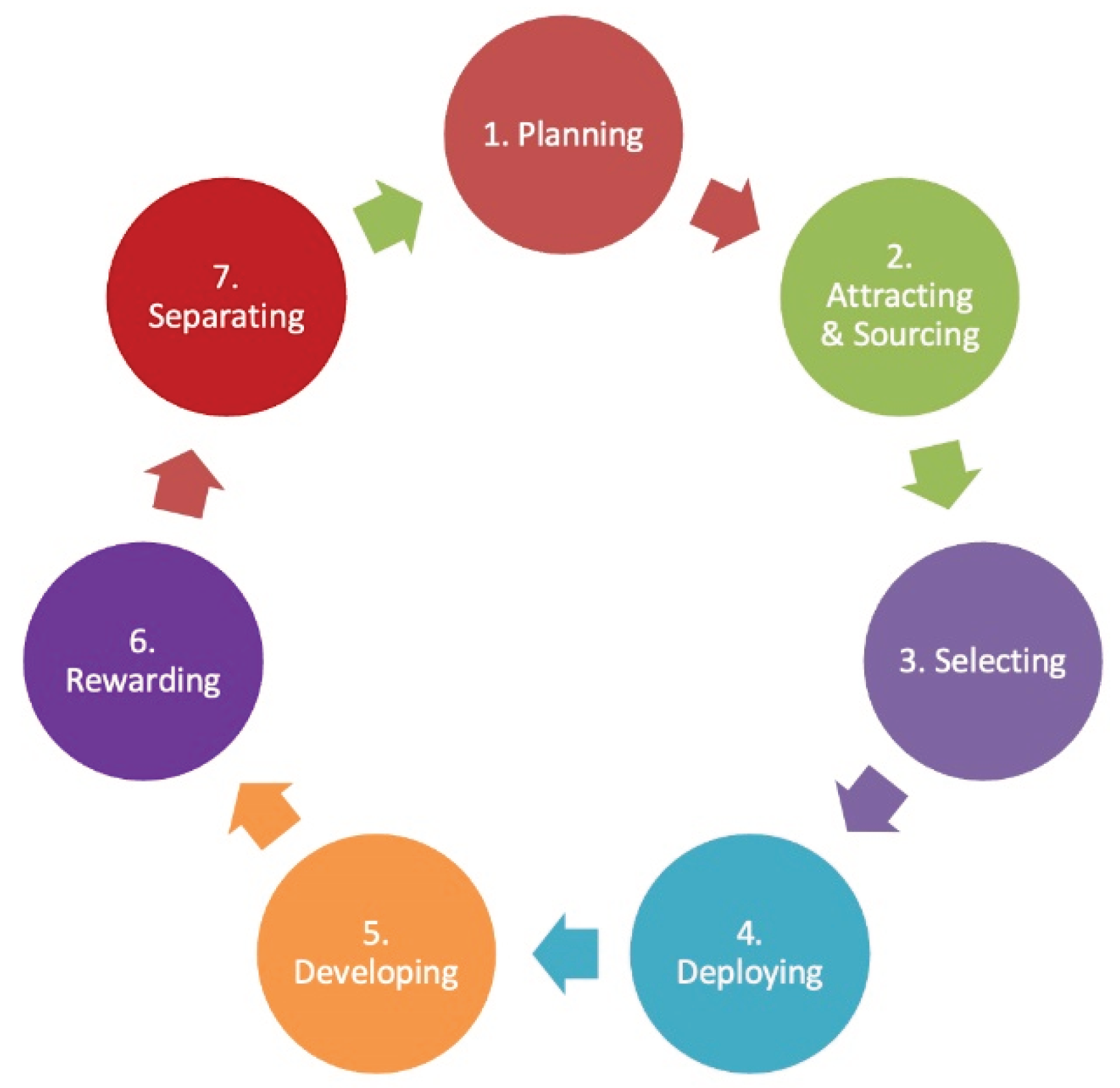
Figure 2.
Number of companies per productive sectors of the sample companies. Source(s): Authors.
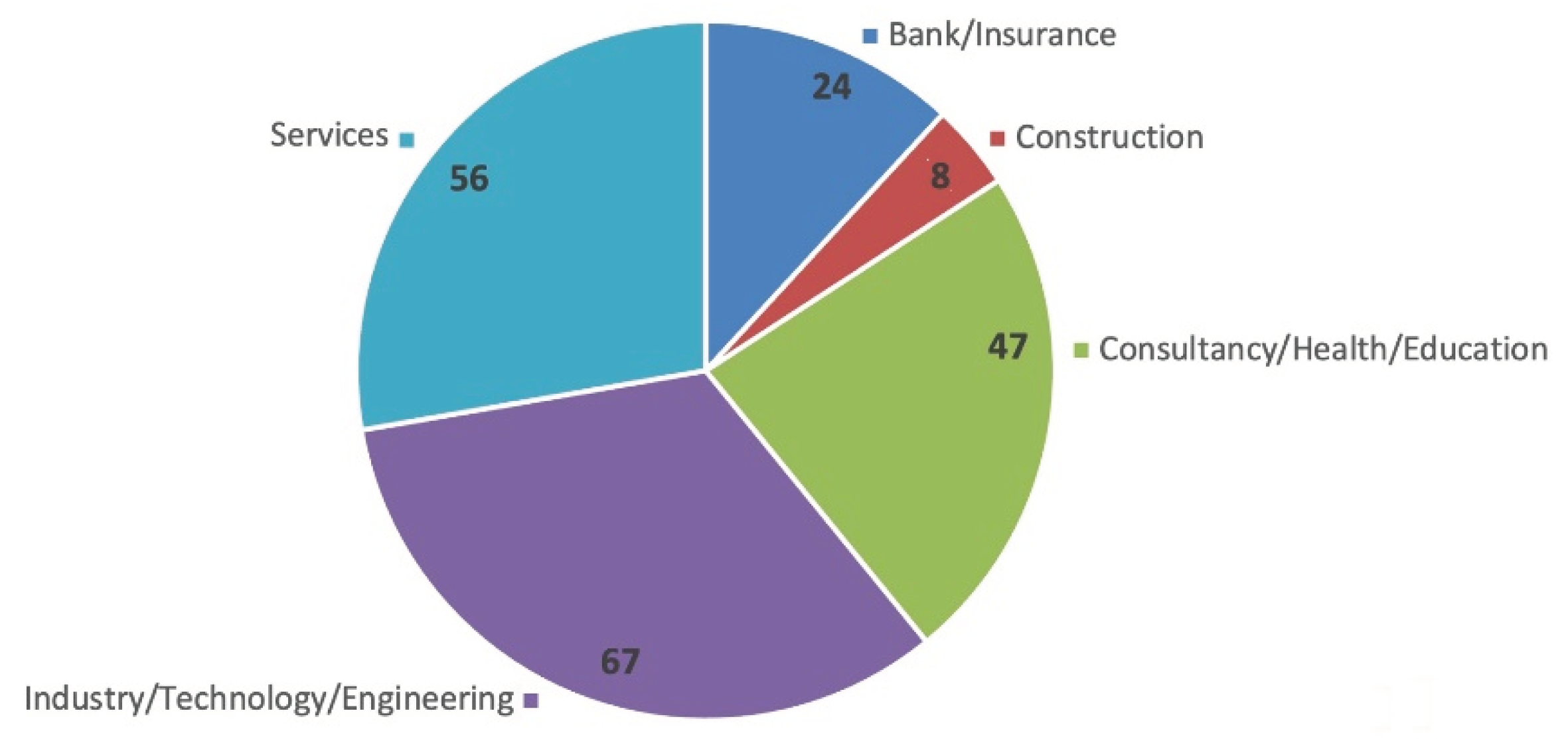
Figure 3.
Number of company employees in the sample. Source(s): Authors.
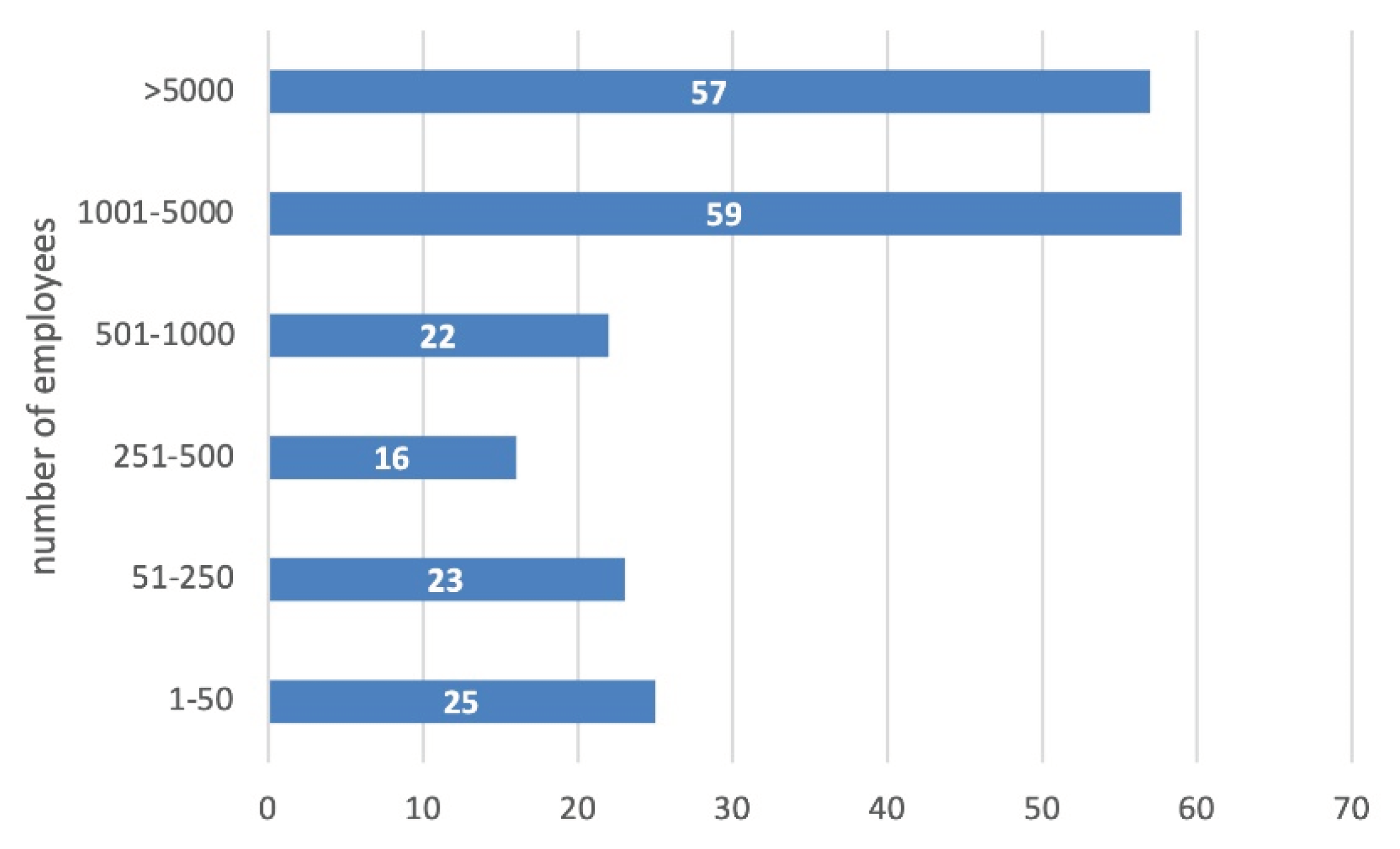
Figure 4.
Level of digitalization of talent in companies. Source(s): Authors.
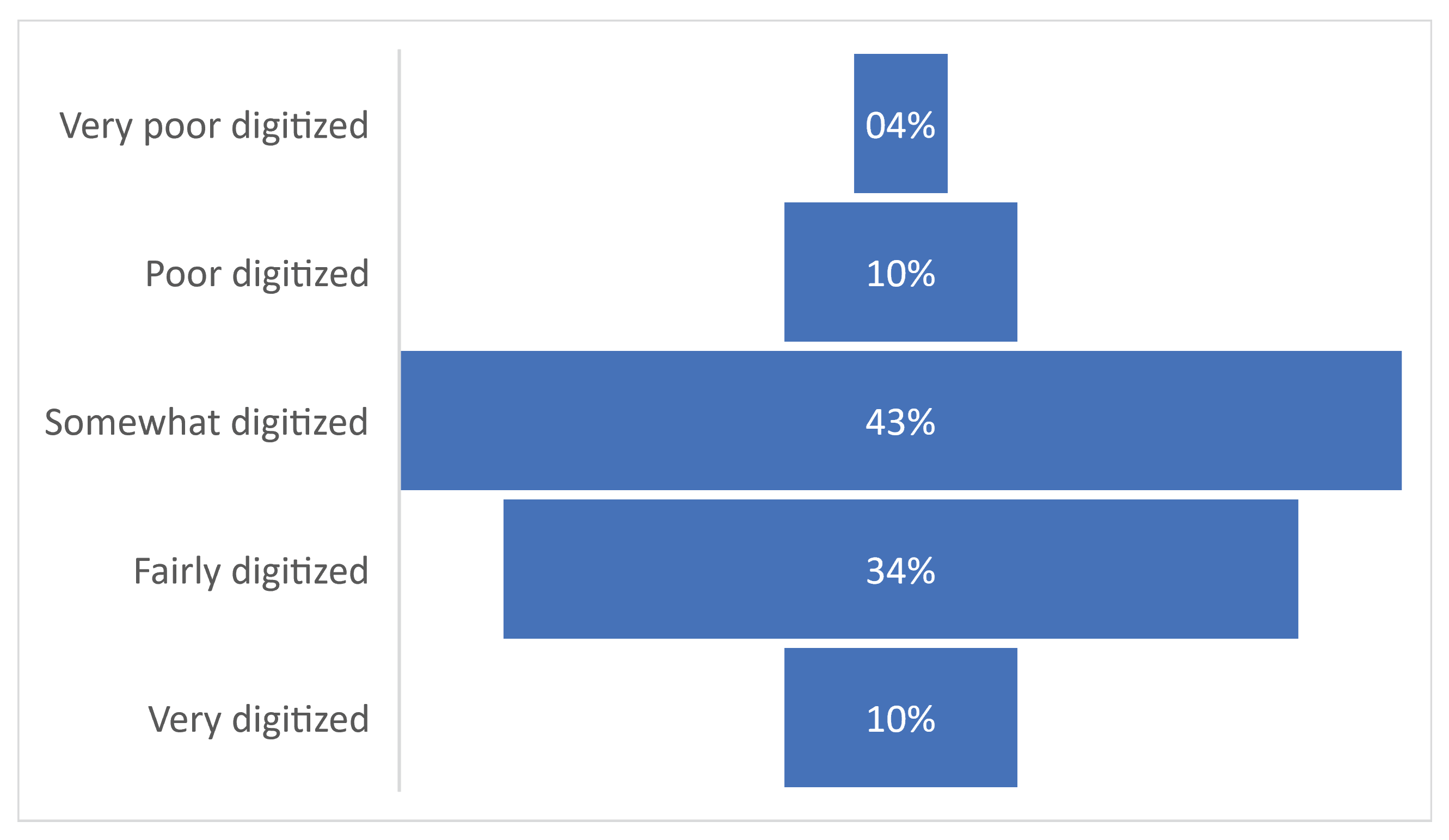
Figure 5.
Level of digitalization of talent by company size. Source(s): Authors.
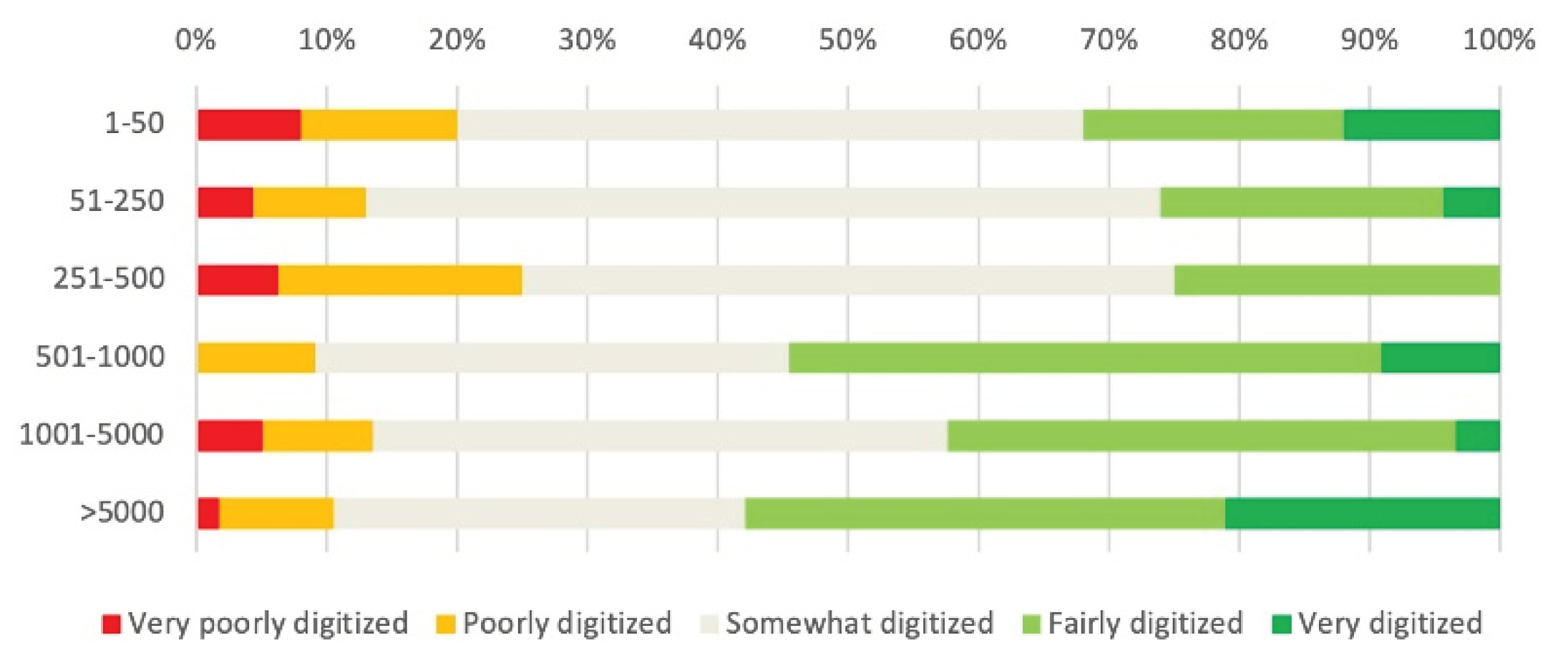
Figure 6.
Use of specific talent management platforms depending on company size. Source(s): Authors.
Figure 6.
Use of specific talent management platforms depending on company size. Source(s): Authors.
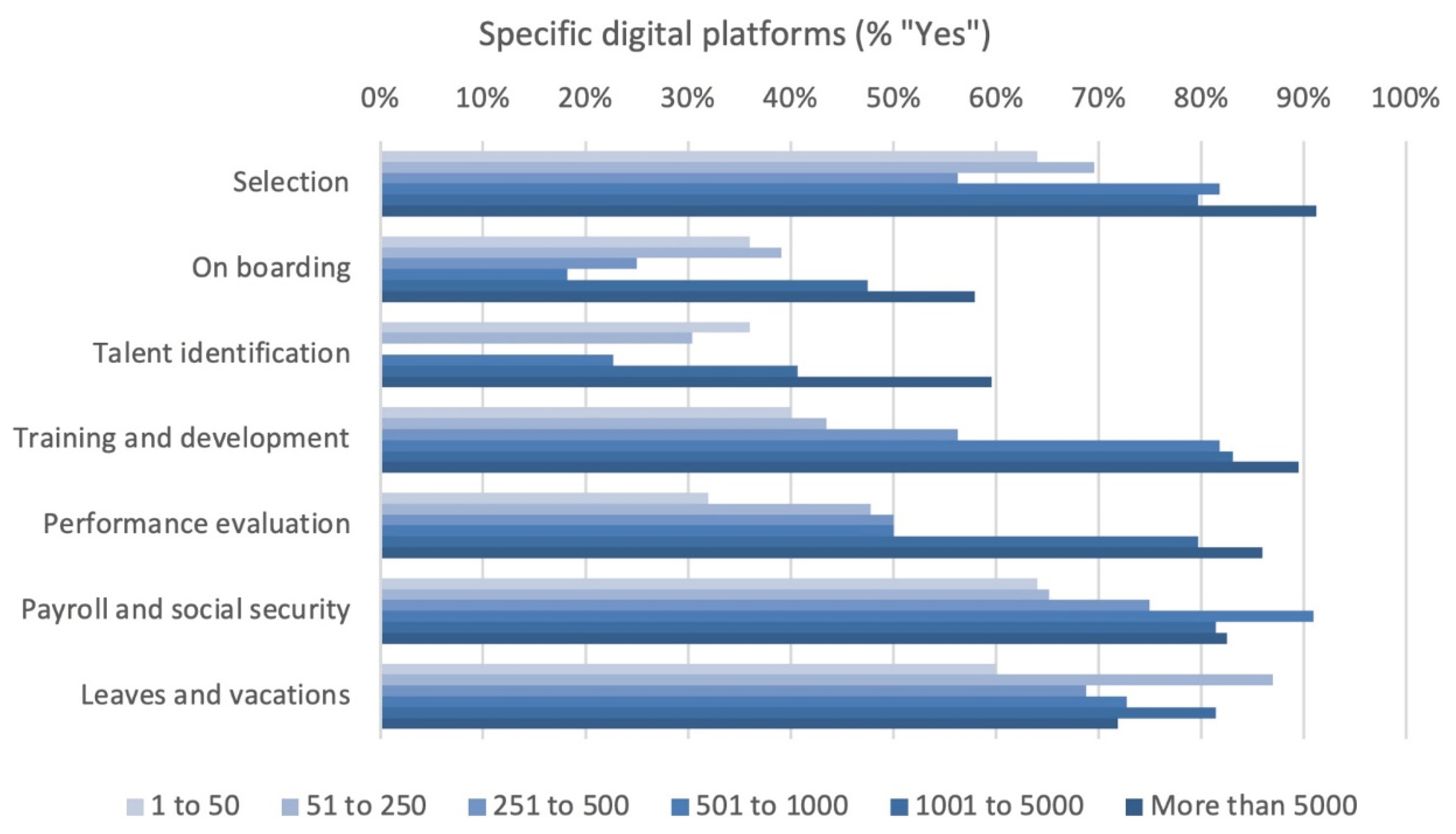
Figure 7.
Use of social networks in attracting talent according to company size. Source(s): Authors.
Figure 7.
Use of social networks in attracting talent according to company size. Source(s): Authors.
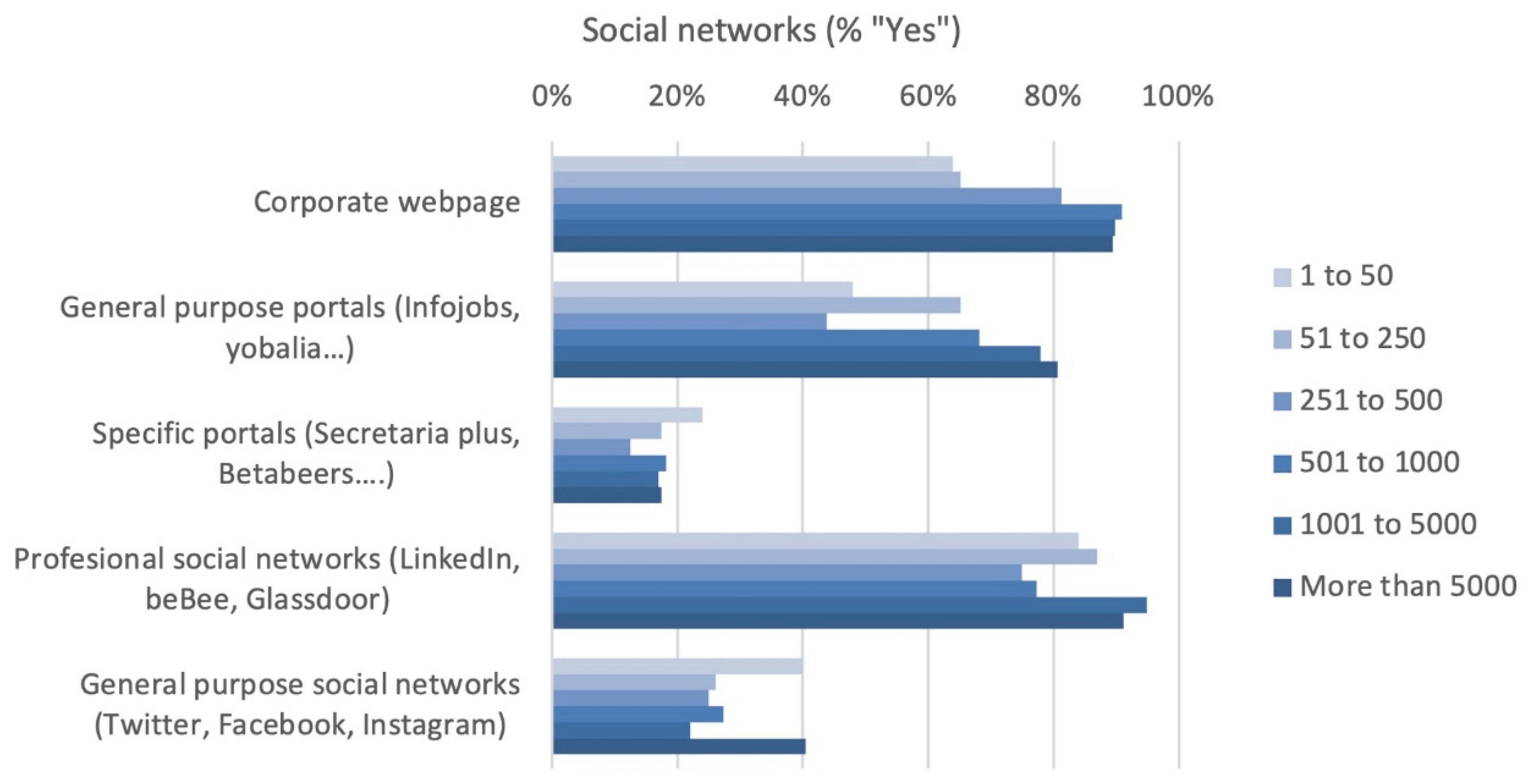

Table 1.
Level of digitalization in the talent management phases and correlation (Spearman-Brown) with company size
Table 1.
Level of digitalization in the talent management phases and correlation (Spearman-Brown) with company size
| Phases | Indicators | % Yes or 1st level |
Levels |
r with company size |
|---|---|---|---|---|
| 1 Planning |
Digital tools for workforce planning | 62.9% | Use of digital ERP vs. databases or nothing | .298** |
| Degree of availability of workforce planning tools to predict future talent needs | 30.7% | Agree vs. neutral or disagree | .151* | |
| Availability of a specific talent management platform | 39.1% | Yes vs. no | .256** | |
| 2 Attracting and sourcing |
Selection through social networks | 57.9% | Always or almost always vs. sometimes or never | .174* |
| Corporate webpage | 83.2% | Yes vs. no | .228** | |
| General-purpose portals | 69.8% | Yes vs. no | .241** | |
| Specific portals | 17.8% | Yes vs. no | -.026 | |
| Professional social networks | 88.1% | Yes vs. no | .122 | |
| General-purpose social networks | 30.7% | Yes vs. no | .047 | |
| 3 Selecting |
Specific selection platform | 78.2% | Yes vs. no | .239* |
| Online test–Skills test | 60.9% | Yes vs. no | .175* | |
| Online test–aptitude test | 44.1% | Yes vs. no | .198** | |
| Online test–languages test | 52.0% | Yes vs. no | .221** | |
| Online test–business case | 30.7% | Yes vs. no | .151* | |
| Online test–group dynamics | 31.7% | Yes vs. no | .258** | |
| Online test–asynchronous video interview | 19.8% | Yes vs. no | .211** | |
| Online test–remote video interview | 58.9% | Yes vs. no | .155* | |
| Online test–at least one | 90.6% | At least one vs. None of the previous | .247** | |
| 4 Deploying |
Online onboarding systems | 63.9% | Yes vs. no | .258** |
| Specific onboarding platform | 43.1% | Yes vs. no | .200** | |
| 5 Developing |
Online training | 60.9% | More than 50% vs. less than 50% | .107 |
| Self-study training | 69.8% | Agree vs. neutral or disagree | .189* | |
| Training and knowledge sharing | 62.9% | Agree vs. neutral or disagree | .001 | |
| Specific training and development platform | 72.8% | Yes vs. no | .393** | |
| Specific performance evaluation platform | 66.3% | Yes vs. no | .401** | |
| Managers at the ready | 45.0% | Agree vs. neutral or disagree | -.120 | |
| 6 Rewarding |
Corporate communication tool | 85.1% | Yes vs. no | .013 |
| Specific platform for payroll and social insurances | 78.2% | Yes vs. no | .139* |
Note(s): *p<0.05 **p<0.01. Source(s): Authors
Disclaimer/Publisher’s Note: The statements, opinions and data contained in all publications are solely those of the individual author(s) and contributor(s) and not of MDPI and/or the editor(s). MDPI and/or the editor(s) disclaim responsibility for any injury to people or property resulting from any ideas, methods, instructions or products referred to in the content. |
© 2024 by the authors. Licensee MDPI, Basel, Switzerland. This article is an open access article distributed under the terms and conditions of the Creative Commons Attribution (CC BY) license (http://creativecommons.org/licenses/by/4.0/).
Copyright: This open access article is published under a Creative Commons CC BY 4.0 license, which permit the free download, distribution, and reuse, provided that the author and preprint are cited in any reuse.


