

Submitted:
12 March 2024
Posted:
12 March 2024
You are already at the latest version
Abstract
Angola is vulnerable to climate change, as most of its agriculture is rain-fed and repre-sents the backbone of the people of the southern region of the country, and many peo-ple’s livelihoods depend on it. All crops can suffer from the impacts of climate change, which can lead to challenges in agricultural production and food security in different regions of the world. The work consisted of a systematic review of the impacts of climate change on agriculture in Angola, particularly in the southern region. To achieve this objective the PRISMA2020 methodology was used, using the flowcharts for the selection of studies evaluated from the databases that are: Scopus and Web Sci-ence, resulting in 431 documents published between 1996 and 2023, and of these only 63 were included in the systematic review, with inclusion and exclusion criteria. Research on the short and long-term effects of climate change impacts in agriculture in Angola and in particular the southern region is scarce and insufficient. Temperatures are pre-dicted to rise and precipitation generally decreases over time (approximately -2% by 2100), with the southern region experiencing a stronger drop in precipitation. Agri-culture in Angola will be hit hard and some models show that agricultural productiv-ity will be up to 7% lower by 2050 owing to climate change.
Keywords:
Palavras-chave: alterações climáticas
; agricultura
; Angola
; plantações
; variáveis climáticas
1. Introduction
Climate change according to the IPCC refers to a change in the state of the climate that can be identified (for example, using statistical tests) by changes in the mean variability of its properties, and that persists for a long period, usually decades or longer [1]. Among climate change researchers, there is a clear consensus on two main issues. Firstly, global climate change is happening at an extremely fast pace [2]. Earth’s average temperature has increased by approximately 0.8°C since the beginning of the 20th century.
This global warming has been accompanied, as predicted, by a steady increase in the number and severity of climate-related natural disasters, such as cyclonic storms, floods, droughts, and heat waves [1,2]. It is predicted that in the absence of active carbon mitigation global surface temperatures will likely increase by a further 2.4-6.4°C by the end of the 21st century [2,3]. Secondly, it has been recognized that agriculture (particularly food production) depends heavily on weather and climate [2,4].
Climate change affects agriculture in several ways, including through changes in average temperatures, precipitation and climate extremes with a major impact on soil erosion average temperatures, precipitation, and climate extremes with a major impact on soil erosion (i.e. floods, droughts, etc.), changes in pests and diseases, changes in atmospheric carbon dioxide, changes in the nutritional quality of some foods, or changes in the growing season. Among others [5,6]. It is known that agriculture is an economic activity highly dependent on weather and climate to produce the food and fibre necessary to sustain 34 human life [7,8] It can be irrigated agriculture, in which agricultural practices artificially apply water to the land agricultural products through tubes, pumps, and sprays. Irrigation allows crops to grow in conditions without limited water, while rainfed agriculture is one in which agricultural practices only depend on precipitation and no irrigation is supplied to crops [9].
The impact of climate change is even stronger in Africa, where agriculture is rainfed dependent and vital for daily subsistence, but where adaptive capacity is low [10,11]. It is therefore crucial to increase our understanding of the real dynamics of climate change on agricultural productivity [11]. For Southern Africa, where almost 95% of agriculture is rainfed [12], it is important to understand that there will be a decline in agricultural productivity due to increased rainfall variability and high temperatures resulting from the impacts of climate change. [13]. Most of southern Africa will be unsuitable for cereal productivity, as it is a region prone to droughts, which constitutes a threat to agriculture since too many periods of drought during the season rainy weather leads to the drying of the soil, which can cause failure of rainfed crop [14].
As mentioned above, climate change affects plant growth and agricultural crop productivity. Changes in temperature and precipitation trends influence crop yields, with negative impacts on corn and wheat. The increase in temperature directly accelerates crop development, while the decline in the seasonal amount of precipitation contributes to increased evaporation and evapotranspiration and together causes water stress in crops [15].
On the other hand, increased air temperature causes an increase in transpiration, which results in decreased productivity of food crops, accelerates the ripening of fruits/seeds, increases water consumption, decreases the quality of crop yields, and encourages the development of pests and diseases. [16,17].
Maize (Zea mays L.) is cultivated throughout the world and as such is subject to a wide variety of climates and potential climate change scenarios. For example, temperature and precipitation are the two climatic factors that will bring large impacts on corn phenology [3]. These changes are also expected to negatively impact the length of growing seasons and the yield of major crops in Africa, such as maize, sorghum, and millet [18].
Millet and sorghum are considered by many agronomists to be important climate-resilient crops [19]. Various grain food crops adapted to environments with different water availability is used throughout the world to provide food for humans (and animals).
For example, millet and sorghum have been used since ancient times because they are food crops adapted to arid lands, with high yield potential even under limited rainfall conditions [20]. They are the most widely grown grain crops in the semi-arid regions of Asia and Africa. Millet is one of the most drought-resistant food crops and is extremely susceptible to the conditions caused by waterlogged soil. Pearl millet (Pennisetum glaucum cv. Okashana 2) and sorghum (Sorghum bicolour cv. Macia), which are adapted to drought-prone semi-arid environments, were used as upland crops (hereafter referred to as ’millets’).These crops are widely cultivated in semi-arid countries of Southern Africa, as they are drought-tolerant crops [19,20].
The effect of warming will alter the hydrological cycle. A warmer planet will change the amount, intensity, frequency, and type of precipitation, and will also increase the amount of water vapour in the atmosphere, which will affect humidity [21].
Precipitation is one of the most critical factors for crop growth during germination and fruit development stages and the main source of all freshwater resources determine the soil moisture level, which is a critical factor for crop growth. Furthermore, precipitation. The main contributor to yield variability because it is much more variable than potential crop evapotranspiration, the factor that determines crop water needs [22]. Historically, low precipitation events have been attributed to many of the largest declines in crop productivity. However, even small changes in average annual precipitation have an impact on productivity [17]. According to Table 1, there are criteria for classifying the value of monthly precipitation for the agricultural sector.
Future projections for Africa, and in particular Southern Africa, indicate a reduction in precipitation [12,18] that may cause drought, which is generally defined as a "prolonged absence or marked deficiency of precipitation", or "a deficiency of precipitation that results in a shortage of water for some activity or some group", or "abnormally dry enough for the lack of precipitation to cause a serious hydrological imbalance" [24].
All definitions of drought highlight the importance of precipitation, evapotranspiration, and surface runoff, and their interactions in drought caused by climatic factors [24,25].
Although precipitation deficiency is the root cause of all types of droughts, hydrological drought generally lags behind meteorological drought. This is mainly because it takes some time for insufficient precipitation to appear in the various underground components of the hydrological system [24]. Finally, the main effects of drought on human health are caused by food insecurity and reduced access to clean water. However, the impacts of drought on livelihoods go beyond food insecurity, drought can cause substantial changes to the environment and environmental processes, increasing the severity of flooding, land degradation, aridity, and desertification [6].
Therefore, climate change is expected to impact food production and prices and potentially threaten food security. Food demand is expected to increase by around 300% by the year 2080 due to the increase in population, rising incomes, and the demand for biofuels. This increase is likely to create an imbalance between food supply and demand without the effects of the GCC [2].
Consequently, hunger is prevalent on the African continent, with around 256 million (20%) of the population considered food insecure or malnourished. The COVID-19 pandemic has further exposed the fragility of Africa’s food system, mainly due to the continent’s high dependence on food imports [10]. Climate change is expected to intensify regional differences in Africa's natural resources and worsen the continent's vulnerability due to rising temperatures and significant changes in precipitation regimes. Angola has been characterized as one of the most vulnerable countries to climate change and, more specifically, the south has suffered periods of drought [26].
1.1. Review Questions
This study is important because it helps to understand the specific threats that Angola faces, take preventive measures and develop adaptation strategies to protect food security, the economy, and the environment. This evidence-based analysis is essential for the sustainable development and well-being of the population of Angola, particularly in the southern region. Therefore, the main research question for this systematic review will be: “What are the impacts of climate change on agriculture in Angola and, particularly the southern region of the country?
During the study, we sought to answer the following research questions:
Research Question 1: How has climate change affected precipitation patterns in Angola and what has been the impact of these changes on agricultural growing cycles?
Hypothesis 1: Climate change in Angola has led to significant variability in precipitation patterns, resulting in more frequent droughts and/or intense rains in certain regions. This negatively affected agricultural cultivation cycles, leading to reduced harvests and instability in food production.
The objective of this question was to understand the impact of climate change on precipitation patterns and agricultural crop cycles in Angola and highlight the importance of adapting to climate change and developing resilient strategies for the agricultural sector.
Research Question 2: How have average temperatures increased over time in Angola and how has this increase affected crops?
Hypothesis 2: Average temperatures in Angola have increased due to climate change, resulting in more extreme heat conditions during the growing season. This has had negative impacts on crops, reducing productivity and increasing the vulnerability of crops to diseases and pests.
The objective of this question was to find out whether increases in average temperatures have also been observed over the decades in Angola and how they can negatively affect agriculture, reducing the production and quality of crops.
Research Question 3: What was the impact of climate change on the specific agroclimatic characteristics of different regions of Angola?
Hypothesis 3: Climate change has had varying regional impacts on the agroclimatic characteristics of Angola. Some regions may have experienced increases or decreases in rainfall, while others have faced more severe droughts. These regional variations have affected the adaptation of local agriculture to climate change.
The objective of this question was to understand how climate change is affecting agroclimatic characteristics and agriculture in different parts of Angola, as well as the adaptation and mitigation measures that are being taken to deal with these challenges.
Research Question 4: What are the adaptation strategies adopted by farmers in Angola to deal with the impacts of climate change on agriculture?
Hypothesis 4: Farmers in Angola are implementing adaptation strategies, such as crop diversification, the use of water conservation techniques, and the implementation of precision agriculture systems to mitigate the impacts of climate change.
The objective of this question is to seek to understand the adaptation strategies implemented by farmers in Angola to deal with the impacts of climate change on agriculture.
2. Materials and Methods
Therefore, this study’s fundamental objective is to identify the main impacts of climate change on agriculture in Angola in particular in the southern region, and to be able to help guide adaptation and mitigation policies. With this, it is possible to identify and evaluate recent climate changes in Angola, including temperature trends, rainfall patterns, and extreme weather events. Finally, analyze how these climate changes have affected food security and examine relevant climate variables. The review was conducted systematically through books (chapters), peer-reviewed articles, reports, and accredited journals.
Search strategy and inclusion and exclusion criteria
This review was conducted systematically using the flowchart structure (Figure 1) of the Preferred Reporting Items for Systematic Reviews and Meta-Analysis (PRISMA2020) protocol and consisted of four steps (1) planning how the research would be conducted, (2) defining the databases, (3) pre-selection of articles relevant to the main question, reading their titles, abstracts and keywords, (4) evaluating the quality of the studies and synthesizing the information. Search Strategy and Criteria. The Inclusion of the assessment reported below is based on a systematic review of all documents researched through Scopus and Web of Science. A search of the Scopus database resulted in 213 documents that met the search criteria. The Scopus search filter that was followed is: (TITLE-ABSKEY (impact AND climate AND change AND on AND agriculture AND southern AND Africa) AND PUBYEAR > 2000 AND PUBYEAR < 2023. A search on the Web of Science resulted in 2 18 articles periodicals and book chapters.
The inclusion criteria followed in this review considered: language (documents reported in English, those that were only considered), the thematic focus (the main topic of the impact of climate change on agriculture in Southern Africa), and the type of document (journals, reports, pairs). -revised articles and chapters of books).
Only documents that met all criteria were considered eligible and included in this review. The initial search was on November 19, 202 3 in the Scopus database and December 15, 2023, in Web of Science) which resulted in 431 documents published between 1993 to 202 3. Before screening, 13 duplicate articles were removed, leaving 418 articles remaining for screening. Of the remaining documents, 29 were excluded after careful analysis (not meeting at least one of the criteria inclusions), and 389 documents remained, and of these 254 were not recovered from the databases. Finally, 135 documents were evaluated in the full text for eligibility. As a result, 83 documents were excluded after evaluation and review of full-text articles for eligibility. Thus, 52 documents were included (eligible) in the systematic review, as well as 11 publications using other methods, namely citation searches and websites, totaling 63 eligible documents. The inclusion criteria followed in this study considered language, thematic focus, and type of document.
The search equation varied for each database in ways that allowed the identification of all studies that contain, in the title, the keywords indicated in the search equation above, as shown in Table 2.
To achieve the research objectives, some inclusion and exclusion criteria were adopted, (see Table 3). It is important to highlight that inclusion and exclusion were defined with two main objectives: (i) Achieving the main objectives/objective of identifying a complete set of documents published since 2000, accessible to the general scientific community, on the impacts of climate change on agriculture in Angola: analysis of agroclimatic and bioclimatic indicators. The equation made it possible to identify all studies that contain, in the title, the keywords indicated in the search equations above.
The PRISMA2020 methodology defines three fundamental steps for carrying out a systematic review: (i) Identification, (ii) screening, and (iii) inclusion (Figure 1). The first stage consisted of identifying publications from two databases and the exclusion of duplicate articles through screening carried out in reference management and Mendeley Desktop human intervention. The second stage included three phases: The first phase included reading and analysis of the title, abstract, and keywords of each publication, which led to the exclusion of an additional number of publications. In the second phase, publications that were not retrieved from the database were also excluded from the list. In the third phase of the second stage, the publications were read in full and the inclusion and exclusion criteria were applied (Table 3) for subsequent maintenance or rejection of the publications. The third step was the inclusion of articles selected for the systematic review.
The application of these three steps led to the final list of publications that served as the basis for the systematic review literature on the impact of climate change on agriculture in Angola: analysis of agroclimatic and bioclimatic indicators. This entire process that led to the final list of publications was carried out based on the collection and analysis in Microsoft Excel of qualitative and quantitative information extracted from publications throughout the different stages. The Excel spreadsheet allowed the inclusion and organization of information about the different topics on the impact of climate change on agriculture, temperatures, precipitation, food security, and adaptation.
3. Results and Discussion
3.1. Publications Identified with the PRISMA2020 Methodology
The application of the PRISMA2020 methodology made it possible to identify a total of 1 35 publications through database data and records, as well as 11 publications through other methods, namely citation search and website (Figure 1). All publications identified in the databases can be accessed at the website address presented in Table 4. The identification of publications through the databases included studies on climate change in agriculture in Africa and a very small number of studies on climate change in Angola, as well as some regions outside Africa. This motivated the inclusion of these 11 publications identified by citations and websites searching for articles presenting some useful information about climate change in agriculture in Angola. No article was found that addressed the impact of climate change on agriculture in Angola. One of the relevant publications was on climate change projections from joint multiple models of Regional Experiments Reduction Coordinates (CORDEX) and Multi-model sets of Coupled Model Intercomparison Projects (CMIPs) over Angola [27], Climate change scenarios for Angola: an analysis of precipitation and temperature projections using four Regional Climate Models (RCMs) [26], Drought history and vegetation response in the Angolan Highlands [28], finally a report from the World Bank Group, on Angola, country, and climate, development report [29].
All studies identified in the search were entered into the reference management software Mendeley Desktop and reconfirmed by human verification. In the first stage,13 publications were excluded duplicates, which corresponds to 3% of the total (431) publications identified via databases. On Monday stage, 29 publications corresponding to 6.7% were excluded due to: (i) year of publication (0.46%), (ii) topics outside the study context (4.85%), (iii) articles from a systematic review (1.39%) and inaccessible documents (58.93%). In the third stage, 10 articles corresponding to 2.3% focused on the greenhouse effect, pests, and pesticides, 4 articles corresponding to 0.93% focused on the effect of climate change on hydrology, and finally 69 corresponding to 16% whose contents did not respond to the objectives of this review were excluded.
Of the 431 publications initially identified in the databases and citation search and on the website. 135 remained after removing the number of articles not retrieved from the databases. The 135 documents were published between 1996 and 2023, which corresponds to an approximate average of 6 publications per year, but 98.7% of these documents were published from 2000 onwards (Figure 2). 63 documents selected for the literature review were published after 2000, which corresponds to an approximate average of 3 publications per year (Figure 2). However, 47% of the documents included in the literature review were published in the last 6 years, and 2020 and 2023 were the years in which the largest number of these documents were published (6.9%). This growing trend suggests/demonstrates that this subject has gained interest in recent years within the scientific community. Over the past decade, a growing body of economic research has projected the impacts of climate change on important facets of well-being, such as agriculture, industry, human health, energy demand, and economic growth. Given the natural relationship between climate factors and plant growth, the agricultural sector is extensively researched.
Of the articles selected for review, on the topic in question, only 5 documents talk about Angola, corresponding to 7.9%, and none of them address the impact of climate change on agriculture. Of the 22 articles related to Southern Africa, only 1 makes mention of Angola, that is, the majority of documents report/describe studies carried out in other Southern African countries, a part of the studies deals with Africa in general, other regions of Africa and part of the studies have to do with South Africa, Zimbabwe and Mali, (Figure 3).
An analysis of the study areas of the 63 documents selected for the review, records, citation searches and websites (Figure 3) reveals that the region where the most studies were carried out was Southern Africa 18 (28.57%), Africa 5 (7 .9%), West Africa 6 (9.52%), Southern and West Africa 1 (1.58%), East Africa 3 (4.76%), Sub-Saharan Africa 4 (6.34%), Africa and Latin America 1 (1.58%), South Africa 5 (7.9%), Zimbabwe 2 (3.17%), Mali 3 (4.76%), Ghana 1 (1.58%), China 1 ( 1.58%), USA 1 (1.58%), Angola 5 (7.9%) and finally 7 (11.11%), generally address climate change in agriculture, without specifying the region.
These results reveal the insufficiency of research on climate change in agriculture in Angola, and the need to acquire and/or update knowledge on this topic. This need is particularly evident and urgent for the southern region of the de country, for which there is a greater lack of more and better information about this natural disaster. Furthermore, 30% of these documents include studies focused on adaptation, which is a key factor that will determine the future impacts of climate change on crop yields and food, production, and the adaptation capacity of farmers and their communities is widely recognized. as a vital component of the response to climate change. Without adaptation, climate change will hit the sector hard.
3.2. Literature Review
In this section, the statistics presented are related to the 63 articles, book chapters, and reports selected for the literature review. This section of the article discusses in a little more detail the impacts of climate change on agriculture in Angola, with a particular focus on the southern region. Several independent studies using a variety of climate models and emissions scenarios indicate that climate change will have an overall negative impact on African agriculture. Some of the key assessments on African agriculture are discussed below.
3.2.1. Climate Change in Agriculture
Extreme weather events such as weather, heat stress, frequent droughts, floods, rising temperatures and pest invasions are all manifestations of climate change that have negative effects on Southern African agriculture [30,31].
Of the articles included in the systematic review, 20.63% (13/63) address Africa’s vulnerability to climate change. Africa is believed to be the region most vulnerable to the impacts of climate variability and change. Agriculture plays a dominant role in supporting rural livelihoods and economic growth in most of Africa [32,33]. The problem of vulnerability to climate change is particularly acute in Southern Africa, a region characterized by a low density of observations and highly dependent on rural agriculture, where the impact of precipitation changes on maize cultivation depends critically on the timing of the phenological cycle. of culture [30].
30.15% (19/63) reported that Southern Africa is vulnerable to the effects of climate change due to its rainfed agriculture [5,12,14,31,34]. These numbers expose the region to different climate shocks and their vulnerability. Of the 5 articles identified that address Angola, 80% (4/5) of them state that Angola is, according to the Notre Dame Global Adaptation Index (ND-GAIN) – an index that illustrates the relative resilience of countries compared to each other, the 49th country most vulnerable and the 15th least prepared countries to deal with the impacts of climate change and other stressors [27,29]. Angola has been characterized as one of the country’s most vulnerable to climate change and, more specifically, the south has suffered periods of drought from 2012 to 2022 and is dependent on rainfed agriculture [27,28].
3.2.2. Impact of Climate Change on Agriculture
From the literature review, 6 main factors for the impacts of climate change on agriculture were identified:
- (i)
- (ii)
- (iii)
- (iv)
- (v)
3.2.3. Impact of Agroclimatic and Bioclimatic Indicators on Crop Yields
Half of the documents included in the systematic review, which corresponds to 50.79% (32/63), state that temperatures and precipitation are important climate variables used to determine the impacts of climate change at different scales. These two climate variables have a significant effect on crops and their yield. Although rainfall affects agricultural production in terms of photosynthesis and leaf area, temperature affects the length of the growing season . [4,13,20,33,34,37,39,44,45,46,55,57,58,59,60,61,63,64,65,66,67,68,69,70,71]. It is important to highlight other indicators, which were found in some articles, such as drought 7.9% (5/63), humidity 1.5% (1/63), [21], evaporation 1.5% (1/63), [21], are consequences of temperature and precipitation. Meteorological drought is characterized by increases in temperature, prolonged absence of rain, and a concomitant decrease in humidity, which increases evapotranspiration [39,49]. For this reason, temperatures and precipitation are the most important variables in determining the impact of crops. Rising temperatures and decreasing precipitation patterns harm crop yields. crops, especially corn, which requires more water. This leads to a reduced food supply as well as overall food availability [54,66].
Maize is the staple food crop in Southern Africa and the main cereals consumed in the Community the de Development of Southern Africa (SADC) region include millet, rice, sorghum, barley, wheat, and corn. Maize production is declining in most countries in the region, mainly due to extreme droughts and floods [45,49,54,66]. Cereals occupy more than 50% of the region’s agricultural land, with corn representing more than 40% of the total harvested area [31].
One of the most studied crops in terms of temperature response is corn, for which increasing temperature shortens the life cycle and the duration of the reproductive phase, causing a reduction in grain yield [55]. On the other hand, drought impacts on agriculture by increasing:
60% (3/5) documents that talk about Angola, included in the review, recognize that climate change is not just a future threat, but already a reality in Angola. A state-of-the-art climate impact assessment confirmed that warming has accelerated significantly in recent years. The average annual temperature has increased by 1.4°C since 1951 and is expected to continue increasing Precipitation trends are more uncertain, but rainfall variability is increasing, with longer dry spells, worse droughts, and also more floods [27,28,34].
In 2002/2003, an estimated 13 million people faced food shortages as a result of severe drought in Southern Africa [36].
In Southern Africa, in the 2015/2016 season, there were widespread crop losses during the rainy season, hot days, and heat waves. As stated above, drought tends to involve both a lack of rain and high temperatures and it is the combined effect of large anomalies in these variables that damage agriculture.
The drought induced by the 2015/16 El Niño Southern Oscillation (ENSO) affected the entire region, resulting in more than 40 million people becoming food insecure, and requiring international assistance. The drought caused 643,000 livestock deaths and an overall deficit of corn (the region’s staple crop) of 5.1 million tonnes representing a 10% decrease in production compared to the previous year and a 15% drop compared with the average of 5 years, in Table 5, the particular case of Angola is shown [49,59].
In 2019, the Angola Vulnerability Assessment Committee mentioned that drought caused livestock loss and low agricultural yields in the southern provinces of Angola. It was estimated that 1.14 million people suffered from food insecurity in the southern provinces of Namibe, Cunene, Cuando Cubango, and Huíla alone, and subsistence communities in the Angolan Highlands likely experienced the same hardships [28].
Angola also suffered droughts during 2020/2021, when accumulated rainfall was 30% below the long-term average (Food and Agriculture Organization of the United Nations. The Angolan people are vulnerable during prolonged periods of drought: a total of 11.1 million people (37%) of the population live in rural regions, and the majority of them practice rain-fed subsistence agriculture [28]. The impacts of climate change also take a heavy toll: climate-related disasters (floods, storms, droughts) cost Angola around 1.2 billion US dollars between 2005 and 2017, and, on average, droughts alone affect around one million Angolans every year [29].
Southern Angola has been hardest hit and has experienced severe and prolonged drought over the past decade, with conditions described as the worst in 40 years. In 2021, about 3.81 million people in the six southern provinces had insufficient food, and more than 1.2 million people continue to face water shortages because of drought [28,29]. Table shows the succession periods of droughts in Angola:

Table 6.
Common dry periods in Angola from 1981 to 2020 according to each SPI calculation and ENSO years [28].
Table 6.
Common dry periods in Angola from 1981 to 2020 according to each SPI calculation and ENSO years [28].
| Year | Starting Monthsand End of the Drought | Duration(Months) | Dry ThroughoutYear/SeasonRainy/Dry | Max SPI Rating SPI Overlay (max=4) | ENSO (Year) Strength TS anomaly (NOAA,2021,2022) |
|---|---|---|---|---|---|
| 1981-82, | Oct-19 8 1-J an- 19 82 | 4 | Wet | Serious,3 | Neutral (1980-1982) |
| 1989-90, | Oct-1989-May-1990 | 8 | Wet | Extreme,3 | Neutral (1989–1990) |
| 1994 | Mar-199 4 -Oct-1994 | 8 | Wet+Dry | Extreme,3 | El Niño (1994–1995), moderate |
| 1995-97 | April-1995-September-1997 | 33 | Many years | Extreme,4 | La Niña (1995–1996), moderate. Neutral (1996–1997). El Niño (1997–1998), very strong |
| 1999–01 | Nov-1999-Oct-2001 | 24 | Many years | Extreme,4 | La Niña (1999–2000), strong. La Nina (2000–2001), weak |
| 2014–16 | Nov-1999-Oct-2001 | 17 | All year round | Extreme,4 | El Niño (2014–2015), weak. El Niño (2015–2016), very strong |
| 2017–18 | Jan-2017-Feb-2018 | 14 | All year round | Extreme,4 | Niño (2014–2015), weak. El Niño, very strong La Niña (2017–2018), weak |
| 2018–20 | Oct-2018-Feb-2020 | 17 | All year round | Extreme,4 | El Niño (2018–2019), weak. Neutral (2019–2020) |
3.2.4. Relationship of Agroclimatic and Bioclimatic Indicators with CROps
Of the documents identified that address Angola, 100% (5/5) state that in Angola climate change is already being observed, with increasing trends of extreme hot and extreme precipitation events have been found in many regions of Angola, accompanied by a general decrease in annual rainfall, there has also been a notable increase in the frequency of droughts in several regions, and this is expected to persist in the future, even if global warming is stabilized [25,26,27,28,47]. There is a decreasing trend of precipitation in a northeast-southwest direction over Angola. The lowest precipitation values (<400 mm) occurred in the south (southwest) [26].
Agricultural species respond differently to temperature and precipitation throughout their life cycles. Each species has a defined range of maximum and minimum temperatures within which growth occurs and an optimal temperature at which plant growth progresses at its fastest rate [55,63].
Of the 50.79% (32/63) who state that temperatures and precipitation are important climate variables used in determining the impacts of climate change at different scales and with a significant effect on crops and their yield, only 4.76% (37/63) showed a direct relationship between agroclimatic and bioclimatic indicators with crops, as shown in Table 7.
3.3. Food Safety
Food security is the condition under which all people, at all times, have physical, social, and economic access to sufficient, safe, and nutritious food that meets their dietary needs and food preferences for an active and healthy life [31,37].
Of the documents included in the literature review, they describe studies on the impacts of climate change on agriculture in Angola, analysis of agroclimatic indicators, 22.22% (14/63), concluded that there are direct consequences of global climate change on crop yields, and, therefore, in food security [19,28,31,37,40,43,45,54,63,68,72,73].
However, it is a huge task for Southern Africa to achieve food security, given the multi-stressor environment in which agriculture is practised in this region. It is a well-recognized that climate change largely contributes to poor agricultural productivity and food insecurity in Southern Africa and other developing nations.
4. Climate Change Projections in Angola
Of the 5 studies that talk about Angola, three state that the predictions of an increase in temperature and variability in precipitation is a reality. Regarding the analysis of projections of temperature and precipitation changes in Angola during the 21st century based on four regional climate models (RCMs), relevant changes in temperature and precipitation indices are projected for the different models in both emission scenarios.
These changes include an increase in maximum and minimum temperature of up to 4.9 oC at the end of the century and an intensification of droughts. Precipitation projections are highly variable—rising and falling, region-wide, and dependent on RCMs. Despite these differences, precipitation generally decreases over time (approximately -2% by 2100), with the southern region of Angola experiencing a stronger drop in precipitation [26].
In the study of climate change projections based on a multi-model set of CORDEX and 4CMIPs over Angola, the signal of climate change in temperature and precipitation for two time periods, 2020–2040 and 2040–2060 [27].
Conclusions from the observed data set indicate that the average annual temperature in Angola has increased by an average of 1.4 °C since 1951, with a warming rate of approximately 0.2 [0.14–0.25] °C per decade. However, the precipitation pattern appears to be influenced mainly by natural factors. Therefore, in terms of precipitation, projections suggest a change like the rainy season, with an increase in extreme events such as droughts that could change in all river basins in Angola and we found growing uncertainty about drought in the future. Projections of extreme temperatures show an increase, with cooler nights projected to become warmer and days warmer. [27].
The Climate and Development Report of the Country of Angola (CCDR) predicted a not-very promising future: climate models predict an increase in temperatures, with most of Angola becoming 1–1.5°C warmer in 2020–2040 about the period 1981–2010, with an increase of 1.4°C in the average annual temperature already recorded. The imperative to adapt and transition to a proactive climate risk management model is urgent [29].
Agriculture will be hit hard and the model shows that agricultural productivity would be up to 7% lower by 2050 than in a scenario without climate damage. Many Angolans who are vulnerable to falling into poverty live in areas of high exposure to climate change, which will make it more difficult for the country to achieve its poverty reduction goals [29].
For Angola, corn, beans, and peanuts, and all crops important for security food, and nutrition will be the crops most negatively impacted by climate change [29]. Cassava, millet, sorghum, and banana, which are crops more tolerant to drought, will be less impacted, and more climate-resilient crops such as cassava will see an increase in suitability, especially in the central regions. Southern regions will generally become less suitable for agricultural production [29].
5. Study Limitations and Final Considerations
It is important to mention the limitations of the results of the literature review in the sense that these results depend on the documents selected and analyzed. The research equation has been defined in the most general way possible to achieve the main objective of assessing the state of the art on the impact of climate change on agriculture: analysis of agroclimatic and bioclimatic indicators of drought regime in South Africa. The inclusion of words, Southern Africa in the search equation results from the insufficient number of articles found in the databases, when we searched for the term Angola. In the first search, using Angola, only 5 articles were available in the databases, therefore, to increase the number of articles for our systematic review, we included Southern Africa since Angola is a country that is part of Southern Africa [60].
The insufficiency/lack of papers that address the impacts of climate change on agriculture in Angola influenced the fact that some questions raised in the introduction to our review were not answered, to cite a few examples: what was left unanswered was whether farmers in Angola are implementing adaptation strategies, such as crop diversification, the use of water conservation techniques and the implementation of precision agriculture systems to mitigate the impacts of climate change. Our study cited a significant number of articles and most of these articles used in the introduction to present/describe fundamental concepts and definitions of the study.
As can be seen, there is little research into the impacts of climate change on agriculture in Angola, and this greatly influenced the preparation of this article. For example, of the 5 articles mentioned here discuss Angola, but only 1 was found in the Web of Science database [28], 2 by citation searches [27,50], and 2 on the website [27,29].
Studying climate change and its impacts in many African countries is particularly difficulty due to the lack of infrastructure and funds needed to collect data and conduct studies. One such country is Angola, where, after 1974, the quantity and quality of meteorological records were considerably reduced [26].
6. Conclusions
Of the documents identified that address Angola, 100% (5/5) state that in Angola climate change is not just a future threat, but already a reality, the average annual temperature has increased by 1.4°C since 1951 and is expected to if it continues to increase. Precipitation trends are more uncertain, but rainfall variability is increasing, with longer dry spells, worse droughts, and also more floods.
Temperatures are predicted to rise and precipitation generally decreases over time (approximately -2% by 2100), with the southern region experiencing a stronger drop in precipitation.
Agricultural species respond differently to temperature and precipitation throughout their life cycles. Each species has a defined range of maximum and minimum temperature within which growth occurs and an ideal temperature at which plant growth progresses at its fastest rate. Studies of the impacts of climate change on agriculture, the variables temperature and precipitation, and their influence on the phenological phases must be evident.
This conclusion suggests and motivates the carrying out of studies that fill this knowledge gap, regarding the impact of temperature and precipitation on germination, emergence, growth, fruiting, and maturation.
Research on climate change adaptation states that each local population (rural or urban) has numerous levels of vulnerability and resilience, making each condition unique.
The bibliographical research carried out in the Web of Science and Scopus databases made it possible to achieve the general objective of identifying 431 documents on the impact of climate change on agriculture in Angola: analysis of agroclimatic and bioclimatic indicators and the application of the PRISMA2020 methodology, including the usual criteria for inclusion and exclusion appropriate to the purpose and aiming to minimize/eliminate the risk of bias, allowed this list to be reduced to 63 documents on which the literature review was carried out. Most of these documents addressed climate change in agriculture, mainly in Southern Africa, some regions of Africa, and some countries in isolation, and there are still articles that address the subject in general, so we have only a few countries, such as Southern Africa (28.57%), West Africa (9.5%), East Africa (4.76%), Sub-Saharan Africa (6.34%), West Africa (1.5%), 7.9% speaking of Africa comprehensively, South Africa (7.9%), Angola (7.9%), Mali (4.76%), Zimbabwe (3.17%), Ghana (1.5%), China (1.5 %), USA (1.5%), Africa and Latin America (1.5%) and finally (11.11%) approached the subject in general.
The systematic review revealed that 51% of studies state that temperatures and precipitation is the most important climate variables used in determining the impacts of climate change at different scales.
References
- IPCC. Mudanças Climáticas 2007 Relatório de síntese; Intergovernamental Painel ativado das Alterações Climáticas: Genebra, 2007; pp. 1–112. [Google Scholar]
- Bandara, J.S.; Cai, Y. The impact of climate change on food crop productivity, food prices and food security in South Asia. Economic Analysis and Policy 2014, 44, 451–465. [Google Scholar] [CrossRef]
- Hatfield, J.L.; Dold, C. Climate Change Impacts on Corn Phenology and Productivity. Corn - Production and Human Health in Changing Climate. [CrossRef]
- Gornall, J.; Betts, R.; Burke, E.; Clark, R.; Camp, J.; Willett, K.; Wiltshire, A. Implications of climate change for agricultural productivity in the early twenty-first century. Philosophical Transactions of the Royal Society B: Biological Sciences 2010, 365, 2973–2989. [Google Scholar] [CrossRef]
- Mpandeli, S.; Nhamo, L.; Moeletsi, M.; Masupha, T.; Magidi, J.; Tshikolomo, K.; Liphadzi, S.; Naidoo, D.; Mabhaudhi, T. Assessing climate change and adaptive capacity at local scale using observed and remotely sensed data. Weather and Climate Extremes 2019, 26, 100240. [Google Scholar] [CrossRef]
- Hawkins, P.; Geza, W.; Mabhaudhi, T.; Sutherland, C.; Queenan, K.; Dangour, A.; Scheelbeek, P. Dietary and agricultural adaptations to drought among smallholder farmers in South Africa: A qualitative study. Weather and Climate Extremes 2022, 35, 100413. [Google Scholar] [CrossRef]
- H, Y. A Review on Relationship between Climate Change and Agriculture. Journal of Earth Science & Climatic Change 2015, 07. [Google Scholar] [CrossRef]
- Chirisa, I.; Gumbo, T.; Gundu-Jakarasi, V.N.; Zhakata, W.; Karakadzai, T.; Dipura, R.; Moyo, T. Interrogating climate adaptation financing in zimbabwe: Proposed direction. Sustainability (Switzerland) 2021, 13, 1–20. [Google Scholar] [CrossRef]
- Rosa, L. Adapting agriculture to climate change via sustainable irrigation: Biophysical potentials and feedbacks. Environmental Research Letters 2022, 17. [Google Scholar] [CrossRef]
- Forkuor, G.; Amponsah, W.; Oteng-Darko, P.; Osei, G. Safeguarding food security through large-scale adoption of agricultural production technologies: The case of greenhouse farming in Ghana. Cleaner Engineering and Technology 2022, 6, 100384. [Google Scholar] [CrossRef]
- Cudjoe, G.P.; Antwi-Agyei, P.; Gyampoh, B.A. The effect of climate variability on maize production in the ejura-sekyedumase municipality, ghana. Climate 2021, 9. [Google Scholar] [CrossRef]
- Nhemachena, C.; Nhamo, L.; Matchaya, G.; Nhemachena, C.R.; Muchara, B.; Karuaihe, S.T.; Mpandeli, S. Climate change impacts on water and agriculture sectors in southern africa: Threats and opportunities for sustainable development. Water (Switzerland) 2020, 12, 1–17. [Google Scholar] [CrossRef]
- Choruma, D.J.; Akamagwuna, F.C.; Odume, N.O. Simulating the Impacts of Climate Change on Maize Yields Using EPIC: A Case Study in the Eastern Cape Province of South Africa. Agriculture (Switzerland) 2022, 12. [Google Scholar] [CrossRef]
- Moses, O.; Blamey, R.C.; Reason, C.J. Drought metrics and temperature extremes over the Okavango River basin, southern Africa,and links with the Botswana high. International Journal of Climatology 2023, 43, 6463–6483. [Google Scholar] [CrossRef]
- Petrovic´, G.; Ivanovic´, T.; Kneževic´, D.; Radosavac, A.; Obhod¯aš, I.; Brzakovic´, T.; Golic´, Z.; Dragicˇevic´ Radicˇevic´, T. Assessment of Climate Change Impact on Maize Production in Serbia. Atmosphere 2023, 14, 110. [Google Scholar] [CrossRef]
- Eka Suranny, L.; Gravitiani, E.; Rahardjo, M. Impact of climate change on the agriculture sector and its adaptation strategies. IOPConference Series: Earth and Environmental Science 2022, 1016. [Google Scholar] [CrossRef]
- Lemi, T. Effects of Climate Change Variability on Agricultural Productivity. International Journal of Environmental Sciences & Natural Resources 2019, 17. [Google Scholar] [CrossRef]
- Belloumi, M. Investigating the Impact of Climate Change on Agricultural Production in Eastern and Southern African Countries. AGRODEP working paper 0003 2014. [Google Scholar]
- Karim, A.; Abukari, A.B.T.; Abdul-Malik, A. Testing the climate resilience of sorghum and millet with time series data. Cogent Food and Agriculture 2022, 8. [Google Scholar] [CrossRef]
- Iijima, M.; Awala, S.K.; Watanabe, Y.; Kawato, Y.; Fujioka, Y.; Yamane, K.; Wada, K.C. Mixed cropping has the potential to enhance flood tolerance of drought-adapted grain crops. Journal of Plant Physiology 2016, 192, 21–25. [Google Scholar] [CrossRef] [PubMed]
- Zhang, P.; Zhang, J.; Chen, M. Economic impacts of climate change on agriculture: The importance of additional climatic variables other than temperature and precipitation. Journal of Environmental Economics and Management 2017, 83, 8–31. [Google Scholar] [CrossRef]
- Calzadilla, A.; Zhu, T.; Rehdanz, K.; Tol, R.S.; Ringler, C. Climate change and agriculture: Impacts and adaptation options in South Africa. Water Resources and Economics 2014, 5, 24–48. [Google Scholar] [CrossRef]
- Wahyudi. ; Pramudia, A.; Salman, D.; Agustian, A.; Zulkifli.; Permanasari, M.N. Gestão da plantação de culturas na estação seca de 2020, uma adaptação ao impacto da seca para apoiar a segurança alimentar. IOP Conference Series: Earth and Environmental Science 2021, 824. [Google Scholar] [CrossRef]
- Brouziyne, Y.; Abouabdillah, A.; Chehbouni, A.; Hanich, L.; Bergaoui, K.; McDonnell, R.; Benaabidate, L. Assessing hydrological vulnerability to future droughts in a Mediterranean watershed: Combined indices-based and distributed modeling approaches. Water (Switzerland) 2020, 12. [Google Scholar] [CrossRef]
- Quandt, A. Coping with drought: Narratives from smallholder farmers in semi-arid Kenya. International Journal of Disaster Risk Reduction 2021, 57, 102168. [Google Scholar] [CrossRef]
- Carvalho, S.C.; Santos, F.D.; Pulquério, M. Climate change scenarios for Angola: an analysis of precipitation and temperature projections using four RCMs. International Journal of Climatology 2017, 37, 3398–3412. [Google Scholar] [CrossRef]
- Pinto, I.; de Perez, E.C.; Jaime, C.; Wolski, P.; van Aardenne, L.; Jjemba, E.; Suidman, J.; Serrat-Capdevila, A.; Tall, A. Climate change projections from a multi-model ensemble of CORDEX and CMIPs over Angola. Environmental Research: Climate 2023, 2, 035007. [Google Scholar] [CrossRef]
- Lourenco, M.; Woodborne, S.; Fitchett, J.M. Drought history and vegetation response in the Angolan Highlands. Theoretical and Applied Climatology 2023, 151, 115–131. [Google Scholar] [CrossRef]
- Group, T.W.B. Angola country climate and development report 2022.
- Usman, M.T.; Archer, E.; Johnston, P.; Tadross, M. A conceptual framework for enhancing the utility of rainfall hazard forecasts for agriculture in marginal environments. Natural Hazards 2005, 34, 111–129. [Google Scholar] [CrossRef]
- Mutengwa, C.S.; Mnkeni, P.; Kondwakwenda, A. Climate-Smart Agriculture and Food Security in Southern Africa: A Review of the Vulnerability of Smallholder Agriculture and Food Security to Climate Change. Sustainability (Switzerland) 2023, 15. [Google Scholar] [CrossRef]
- Thomas, N.; Nigam, S. Twentieth-century climate change over Africa: Seasonal hydroclimate trends and sahara desert expansion. Journal of Climate 2018, 31, 3349–3370. [Google Scholar] [CrossRef]
- Challinor, A.; Wheeler, T.; Garforth, C.; Craufurd, P.; Kassam, A. Assessing the vulnerability of food crop systems in Africa to climate change. Climatic Change 2007, 83, 381–399. [Google Scholar] [CrossRef]
- Meadows, M.E. Global change and southern Africa. Geographical Research 2006, 44, 135–145. [Google Scholar] [CrossRef]
- Asafu-Adjaye, J. The economic impacts of climate change on agriculture in Africa. Journal of African Economies 2014, 23. [Google Scholar] [CrossRef]
- Leichenko, R.M.; O’Brien, K.L. The Dynamics of Rural Vulnerability to Global Change: The Case of southern Africa. Mitigation and Adaptation Strategies for Global Change, 2002, p.1-18. [CrossRef]
- Tirivangasi, H.M. Regional disaster risk management strategies for food security: Probing Southern African Development Community channels for influencing national policy. Jamba: Journal of Disaster Risk Studies 2018, 10, 1–7. [Google Scholar] [CrossRef] [PubMed]
- Sheppard, J.P.; Reckziegel, R.B.; Borrass, L.; Chirwa, P.W.; Cuaranhua, C.J.; Hassler, S.K.; Hoffmeister, S.; Kestel, F.; Maier, R.; Mälicke, M.; et al. Agroforestry: An appropriate and sustainable response to a changing climate in Southern Africa? Sustainability (Switzerland) 2020, 12, 1–31. [Google Scholar] [CrossRef]
- Wei, T.M.; Barros, A.P. Prospects for long-term agriculture in southern africa: Emergent dynamics of savannah ecosystems from remote sensing observations. Remote Sensing 2021, 13. [Google Scholar] [CrossRef]
- Egbebiyi, T.S.; Lennard, C.; Crespo, O.; Mukwenha, P.; Lawal, S.; Quagraine, K. Assessing future spatio-temporal changes in crop suitability and planting season over West Africa: Using the concept of crop-climate departure. Climate 2019, 7. [Google Scholar] [CrossRef]
- Manatsa, D.; Unganai, L.; Gadzirai, C.; Behera, S.K. An innovative tailored seasonal rainfall forecasting production in Zimbabwe. Natural Hazards 2012, 64, 1187–1207. [Google Scholar] [CrossRef]
- Wang, Z.; Li, J.; Lai, C.; Wang, R.Y.; Chen, X.; Lian, Y. Drying tendency dominating the global grain production area. Global Food Security 2018, 16, 138–149. [Google Scholar] [CrossRef]
- Santini, M.; Noce, S.; Antonelli, M.; Caporaso, L. Complex drought patterns robustly explain global yield loss for major crops. Scientific Reports 2022, 12, 1–17. [Google Scholar] [CrossRef]
- Nooni, I.K.; Hagan, D.F.T.; Ullah, W.; Lu, J.; Li, S.; Prempeh, N.A.; Gnitou, G.T.; Sian, K.T.C.L.K. Projections of Drought Characteristics Based on the CNRM-CM6 Model over Africa. Agriculture (Switzerland) 2022, 12, 1–19. [Google Scholar] [CrossRef]
- Rahut, D.B.; Aryal, J.P.; Marenya, P. Understanding climate-risk coping strategies among farm households: Evidence from five countries in Eastern and Southern Africa. Science of the Total Environment 2021, 769, 145236. [Google Scholar] [CrossRef]
- Hofisi, C.; Chigavazira, B.; Mago, S.; Hofisi, M. "Climate finance issues": Implications for climate change adaptation for food security in Southern Africa. Mediterranean Journal of Social Sciences 2013, 4, 47–53. [Google Scholar] [CrossRef]
- Makate, C.; Makate, M.; Mango, N. Smallholder farmers’ perceptions on climate change and the use of sustainable agricultural practices in the chinyanja triangle, Southern Africa. Social Sciences 2017, 6, 1–14. [Google Scholar] [CrossRef]
- Leakey, R.R.; Tientcheu Avana, M.L.; Awazi, N.P.; Assogbadjo, A.E.; Mabhaudhi, T.; Hendre, P.S.; Degrande, A.; Hlahla, S.; Manda, L. The Future of Food: Domestication and Commercialization of Indigenous Food Crops in Africa over the Third Decade (2012–2021). Sustainability (Switzerland) 2022, 14. [Google Scholar] [CrossRef]
- Nhamo, L.; Mabhaudhi, T.; Modi, A.T. Preparedness or repeated short-term relief aid? Building drought resilience through early warning in southern africa. Water SA 2019, 45, 75–85. [Google Scholar] [CrossRef]
- Benhin, J.K. South African crop farming and climate change: An economic assessment of impacts. Global Environmental Change 2008, 18, 666–678. [Google Scholar] [CrossRef]
- Huntley, B.J.; Russo, V. Biodiversity of Angola; 2019. [CrossRef]
- Filho, W.L.; Mannke, F. Adapting Agriculture to Climate Change by Developing Promising Strategies Using Analogue Locations in Eastern and Southern Africa: Introducing the Calesa Project. In Experiences of Climate Change Adaptation in Africa; 2011; pp. 247–253. [CrossRef]
- Traore, B.; Descheemaeker, K.; van Wijk, M.T.; Corbeels, M.; Supit, I.; Giller, K.E. Modelling cereal crops to assess future climate risk for family food self-sufficiency in southern Mali. Field Crops Research 2017, 201, 133–145. [Google Scholar] [CrossRef]
- Diallo, A.; Donkor, E.; Owusu, V. Climate change adaptation strategies, productivity and sustainable food security in southern Mali. Climatic Change 2020, 159, 309–327. [Google Scholar] [CrossRef]
- Hatfield, J.L.; Boote, K.J.; Kimball, B.A.; Ziska, L.H.; Izaurralde, R.C.; Ort, D.; Thomson, A.M.; Wolfe, D. Climate impacts on agriculture: Implications for crop production. Agronomy Journal 2011, 103, 351–370. [Google Scholar] [CrossRef]
- Traore, B.; Van Wijk, M.T.; Descheemaeker, K.; Corbeels, M.; Rufino, M.C.; Giller, K.E. Climate Variability and Change in Southern Mali: Learning from Farmer Perceptions and on-Farm Trials. Experimental Agriculture 2015, 51, 615–634. [Google Scholar] [CrossRef]
- Akumaga, U.; Tarhule, A.; Piani, C.; Traore, B.; Yusuf, A.A. Utilizing process-based modeling to assess the impact of climate change on crop yields and adaptation options in the Niger river Basin, West Africa. Agronomy 2018, 8. [Google Scholar] [CrossRef]
- Pohl, B.; MacRon, C.; Monerie, P.A. Fewer rainy days and more extreme rainfall by the end of the century in Southern Africa. Scientific Reports 2017, 7, 6–12. [Google Scholar] [CrossRef]
- Mpandeli, S.; Naidoo, D.; Mabhaudhi, T.; Nhemachena, C.; Nhamo, L.; Liphadzi, S.; Hlahla, S.; Modi, A.T. Climate change adaptation through the water-energy-food nexus in Southern Africa. International Journal of Environmental Research and Public Health 2018, 15, 1–19. [Google Scholar] [CrossRef]
- Nhamo, L.; Matchaya, G.; Mabhaudhi, T.; Nhlengethwa, S.; Nhemachena, C.; Mpandeli, S. Cereal production trends under climate change: Impacts and adaptation strategies in Southern Africa. Agriculture (Switzerland) 2019, 9, 1–16. [Google Scholar] [CrossRef]
- Mupangwa, W.; Chipindu, L.; Ncube, B.; Mkuhlani, S.; Nhantumbo, N.; Masvaya, E.; Ngwira, A.; Moeletsi, M.; Nyagumbo, I.; Liben, F. Temporal Changes in Minimum and Maximum Temperatures at Selected Locations of Southern Africa. Climate 2023, 11. [Google Scholar] [CrossRef]
- Crespo, O.; Hachigonta, S.; Tadross, M. Sensitivity of southern African maize yields to the definition of sowing dekad in a changing climate. Climatic Change 2011, 106, 267–283. [Google Scholar] [CrossRef]
- Sivakumar, M.V.; Das, H.P.; Brunini, O. Impacts of present and future climate variability and change on agriculture and forestry in the arid and semi-arid tropics. Climatic Change 2005, 70, 31–72. [Google Scholar] [CrossRef]
- Thomas, D.S.; Twyman, C.; Osbahr, H.; Hewitson, B. Adaptation to climate change and variability: Farmer responses to intra- seasonal precipitation trends in South Africa. Climatic Change 2007, 83, 301–322. [Google Scholar] [CrossRef]
- Schlenker, W.; Lobell, D.B. Robust negative impacts of climate change on African agriculture. Environmental Research Letters 2010, 5. [Google Scholar] [CrossRef]
- Alvi, S.; Jamil, F.; Roson, R.; Sartori, M. Do farmers adapt to climate change? A macro perspective. Agriculture (Switzerland) 2020, 10, 1–12. [Google Scholar] [CrossRef]
- Tim, N.; Zorita, E.; Hünicke, B.; Ivanciu, I. The impact of the Agulhas Current system on precipitation in southern Africa in regional climate simulations covering the recent past and future. Weather and Climate Dynamics 2023, 4, 381–397. [Google Scholar] [CrossRef]
- Sultan, B.; Roudier, P.; Quirion, P.; Alhassane, A.; Muller, B.; Dingkuhn, M.; Ciais, P.; Guimberteau, M.; Traore, S.; Baron, C. Assessing climate change impacts on sorghum and millet yields in the Sudanian and Sahelian savannas of West Africa. Environmental Research Letters 2013, 8. [Google Scholar] [CrossRef]
- Brown, M.E.; de Beurs, K.; Vrieling, A. The response of African land surface phenology to large scale climate oscillations. Remote Sensing of Environment 2010, 114, 2286–2296. [Google Scholar] [CrossRef]
- Gbetibouo, G.A.; Hassan, R.M. Measuring the economic impact of climate change on major South African field crops: A Ricardian approach. Global and Planetary Change 2005, 47, 143–152. [Google Scholar] [CrossRef]
- Watson, A.; Miller, J.; Künne, A.; Kralisch, S. Using soil-moisture drought indices to evaluate key indicators of agricultural drought in semi-arid Mediterranean Southern Africa. Science of the Total Environment 2022, 812. [Google Scholar] [CrossRef] [PubMed]
- Shilomboleni, H.; Recha, J.; Radeny, M.; Osumba, J. Scaling climate resilient seed systems through SMEs in Eastern and Southern Africa: challenges and opportunities. Climate and Development 2023, 15, 177–187. [Google Scholar] [CrossRef]
- Klopper, E.; Vogel, C.H.; Landman, W.A. Seasonal climate forecasts - Potential agricultural-risk management tools? Climatic Change 2006, 76, 73–90. [Google Scholar] [CrossRef]
Figure 1.
Selection process for the systematic literature review guided by the PRISMA 2020 method- ology, adapted: Systematic review.
Figure 1.
Selection process for the systematic literature review guided by the PRISMA 2020 method- ology, adapted: Systematic review.
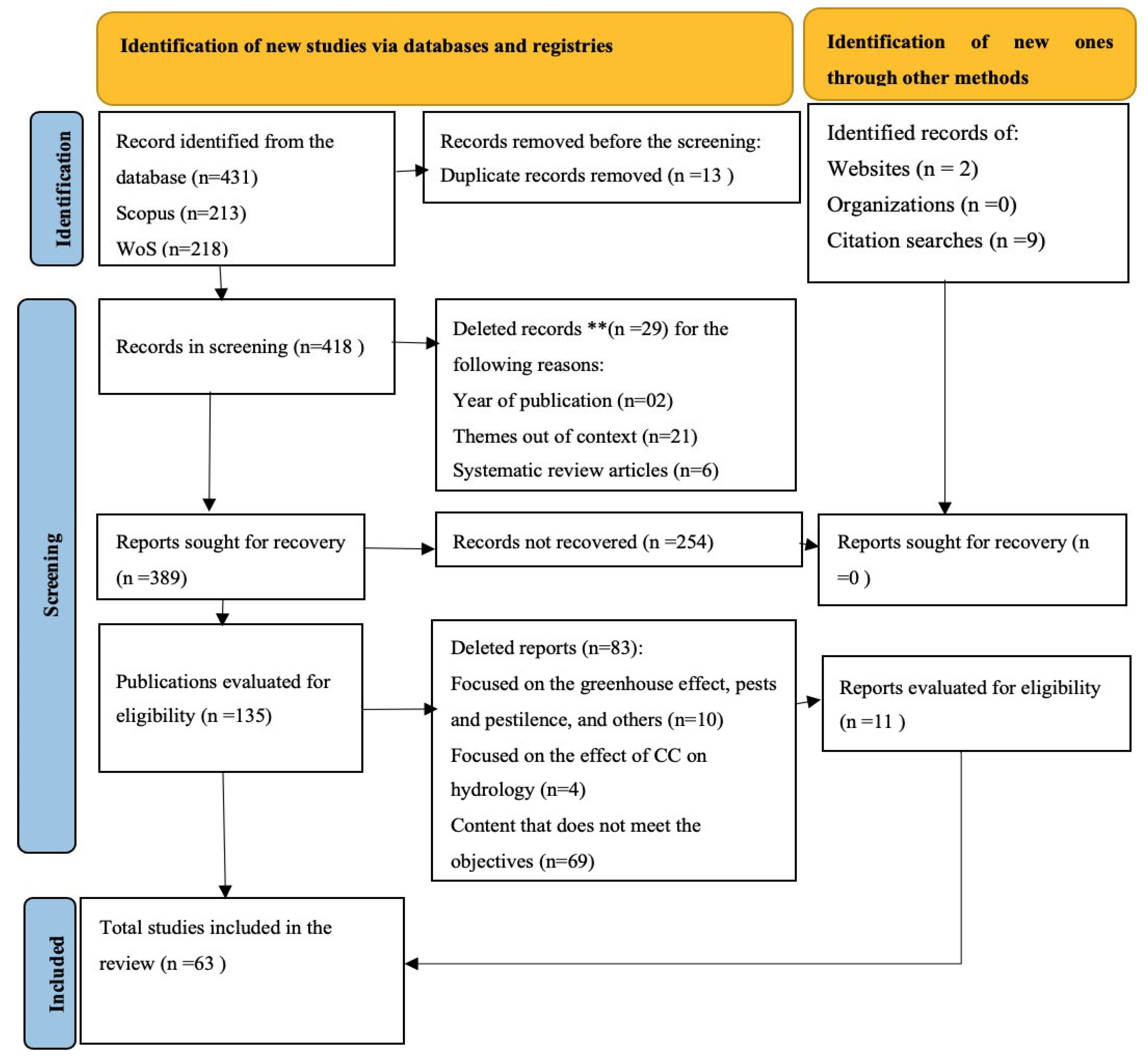
Figure 2.
Annual numbers of documents identified by literature search (1996–2023) and se- lected/included for the literature review.
Figure 2.
Annual numbers of documents identified by literature search (1996–2023) and se- lected/included for the literature review.
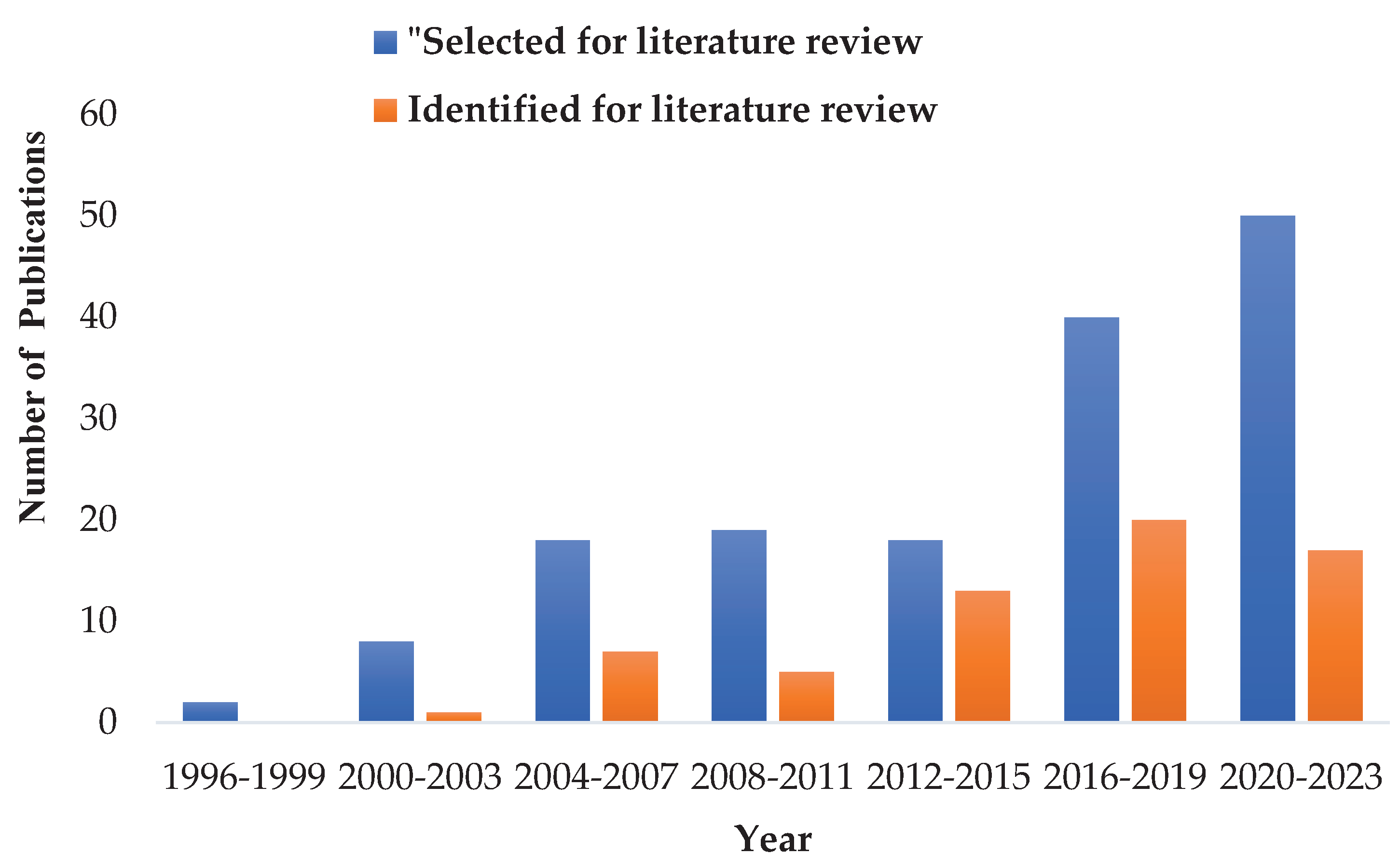
Figure 3.
Number of publications related to each country in the study region (Southern Africa) identified by the literature search and selected/included for the literature review (1996–2023).
Figure 3.
Number of publications related to each country in the study region (Southern Africa) identified by the literature search and selected/included for the literature review (1996–2023).
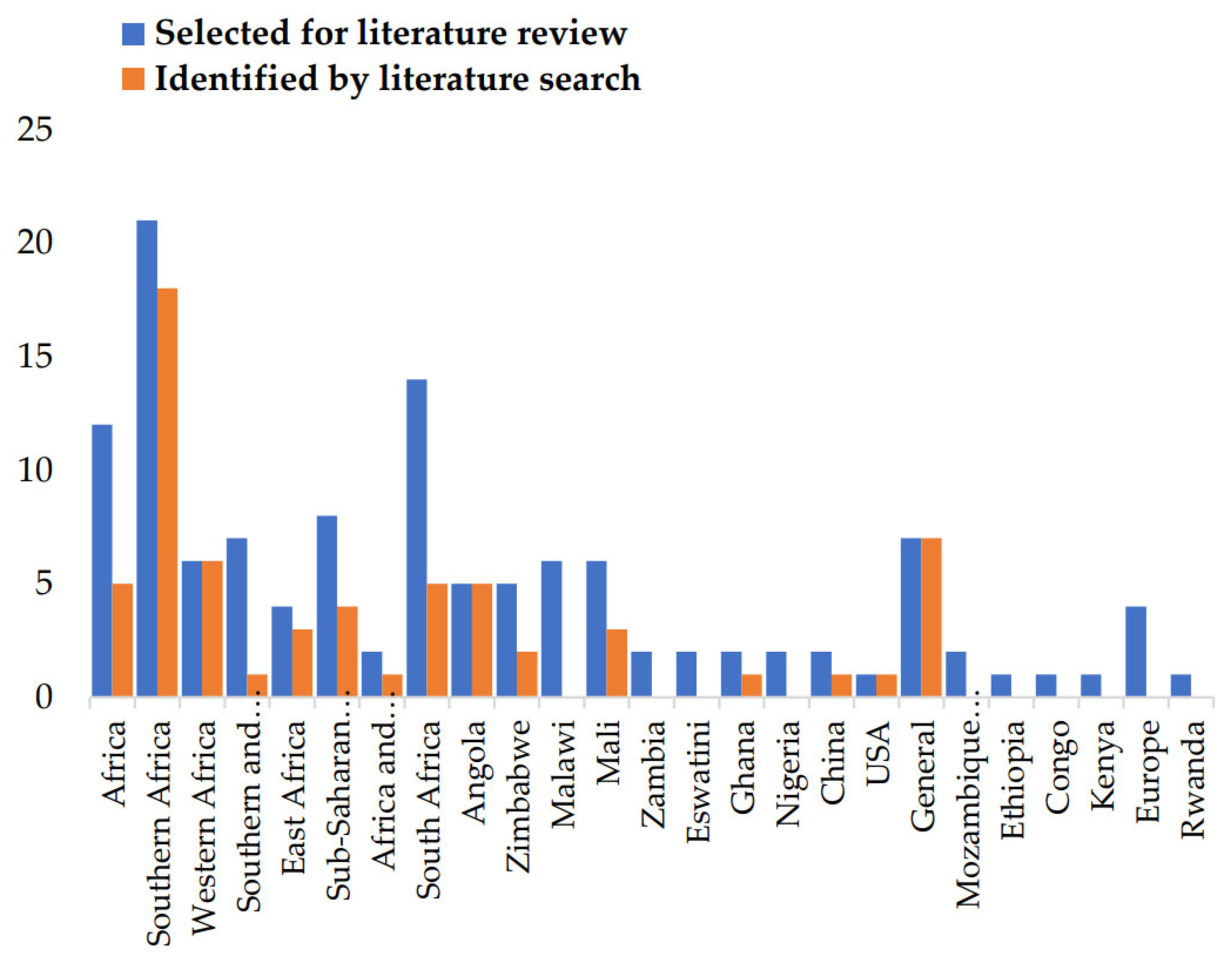
Table 1.
Classification criteria for the value of monthly precipitation for agricultural sector purposes [23].
Table 1.
Classification criteria for the value of monthly precipitation for agricultural sector purposes [23].
| No. | Precipitation Range (mm/Month) | Category |
|---|---|---|
| 1 | <60 | Very dry |
| 2 | 60 - <100 | Dry |
| 3 | 100 - <150 | Moderate (drier) |
| 4 | 150-<200 | Moderate (wetter) |
| 5 | 200-<300 | Wet |
| 6 | >300 | Very wet |
Table 2.
Search equations in databases.
| Database | Search Carried Out | Article Found | Search Date |
|---|---|---|---|
| Scopus | ( TITLE-ABS-KEY ( impact AND climate AND change AND on AND agriculture AND southern AND africa ) | 213 | 19/11/2023 |
| Web of Science | ( TITLE-ABS-KEY ( impact AND climate AND change AND on AND agriculture AND southern AND africa ) | 218 | 15/12/2023 |
Table 3.
Criteria for inclusion and exclusion of documents in the systematic search.
| Inclusion Criteria | Exclusion Criteria |
|---|---|
| Have been published between 2000 and 2023 Written in English |
Articles published outside the period 2000 to 2023 |
| Being an article on addressing climate change in agriculture | Works that did not address climate change in agriculture |
| Be an article, thesis, dissertation, or complete report | Articles not available in full and in languages other than English |
Table 4.
Bibliographic databases, website address where the search results are saved, number of publications identified (N), access date, and search procedure to identify the publications that were carried out in the systematic review.
Table 4.
Bibliographic databases, website address where the search results are saved, number of publications identified (N), access date, and search procedure to identify the publications that were carried out in the systematic review.
| Database | Website Address | Number | Access Date | Search Equation |
|---|---|---|---|---|
| Scopus | https://www.scopus.com/ | 213 | 19November2023 | Search equation |
| WoS | https://www.webofscience.com/ | 218 | 15December2023 | Search equation |
| Academic Google |
https://www.sciencedirect.com/ https://www.sciencedirect.com/ https://iopscience.iop.org/ https://rmets.onlinelibrary.wiley.com/ http://iopscience.iop.org/ https://scholar.google.com.br/ https://royalsocietypublishing.org https://www.tandfonline.com/ https://digitalcommons.unl.edu/ https://iopscience.iop.org/ https://documents1.worldbank.org/ |
1 1 1 1 1 1 1 1 1 1 1 |
30/January 2024 30/January 2024 30/January 2024 30/January 2024 30/January 2024 30/January 2024 30/January 2024 30/January 2024 30/January 2024 03/February 2024 30/January 2024 |
Citation search Citation search Citation search Citation search Citation search Citation search Citation search Citation search Citation search Website Website |
Table 5.
Maize production deficit resulting from the drought in 2015/2016 and the number of people affected, adapted [49].
Table 5.
Maize production deficit resulting from the drought in 2015/2016 and the number of people affected, adapted [49].
| Country Average |
2011-2016 | 2015 Corn Production | 2016 Corn Production | % Change 2015/2016 | Number of People Affected |
|---|---|---|---|---|---|
| Angola | 1366 | 878 | 1500 | -20 | 756000 |
Table 7.
The direct relationship between agroclimatic and bioclimatic indicators with crops.
| Agroclimatic Variable | Author(s) | Culture | Consequences |
|---|---|---|---|
| Exposure to temperatures above 35ºC | [4,55,61] | Corn | Pollen viability decreases, which negatively impacts grain set, resulting in reduced yields. Thermal stress in crops and water loss through evaporation. |
| Daytime temperatures > 35 ÿC | [61] | Cereals | They limit the growth and overall productivity of cereals. |
| Extreme daytime temperatures | [61] | Cereals | It causes rapid depletion of soil moisture through an increase in evapotranspiration. |
| Increase in minimum temperatures | [61] | Arvenses | Potentially promotes early senescence, which in turn shortens the grain-filling period, resulting in low yields |
| Lack of precipitation | [4] | Cereals | Extend growing seasons |
| Heavy precipitation | [4] | Cereals | They cause soil flooding, anaerobicity, and reduced plant growth. |
Disclaimer/Publisher’s Note: The statements, opinions and data contained in all publications are solely those of the individual author(s) and contributor(s) and not of MDPI and/or the editor(s). MDPI and/or the editor(s) disclaim responsibility for any injury to people or property resulting from any ideas, methods, instructions or products referred to in the content. |
© 2024 by the authors. Licensee MDPI, Basel, Switzerland. This article is an open access article distributed under the terms and conditions of the Creative Commons Attribution (CC BY) license (http://creativecommons.org/licenses/by/4.0/).
Copyright: This open access article is published under a Creative Commons CC BY 4.0 license, which permit the free download, distribution, and reuse, provided that the author and preprint are cited in any reuse.


