

Submitted:
08 March 2024
Posted:
11 March 2024
You are already at the latest version
Abstract
The global increase in population has placed significant pressure on food security, leading to the emergence of aquaculture as a vital source of aquatic foods. However, rising costs and the limited availability of fishmeal in aquafeeds have spurred the search for alternative protein sources. While plant-based ingredients have been integrated into commercial aquafeeds, they come with challenges, including low protein content, palatability issues, and the presence of antinutritional factors. In this context, fish silage, derived from fish waste and discarded fish, stands out as a promising alternative technology due to its cost-effectiveness and sustainability attributes. The production of fish silage involves the addition of organic/inorganic acids or lactic acid bacteria to homogenized fish waste. This process yields a valuable mixture rich in peptides, free amino acids, and partially hydrolyzed proteins, offering significant nutritional benefits for animal diets. Beyond its nutritional advantages, fish silage contributes to environmental sustainability by reducing the impact of waste disposal and enhancing the value of fish waste. The objective of this review is to promote sustainable practices in the aquaculture industry in response to the increasing demand for high-quality feed nutrients. To achieve this, it includes an analysis of research results related to silage technology, an appraisal of the advantages and disadvantages of using fish silage as a feed additive, and a focus on emerging trends in this field.
Keywords:
ensiling technology
; fish waste
; fermentation
; lactic acid bacteria
; fish silage
; hydrolysed proteins
; biotransformation
; aquafeed
; circular aquaculture
; sustainability
; food waste valorization
1. Introduction
Aquatic foods are increasingly recognized for their significant role in ensuring food security and promoting nutrition, valued not only as rich sources of protein but also as unique and highly diverse providers of essential omega-3 fatty acids and bioavailable micronutrients [1]. By 2020, per capita consumption of aquatic food (excluding algae) had reached 20.2 kg, more than double the average of 9.9 kg per capita in the 1960s. Projections indicate that by 2030, average consumption is expected to reach 21.4 kg per capita [2]. The surge in worldwide demand for seafood has driven rapid growth in the aquaculture sector. Global aquaculture production reached a record 122.6 million tonnes in 2020, comprising 87.5 million tonnes of aquatic animals worth USD 264.8 billion and 35.1 million tonnes of algae valued at USD 16.5 billion [2]. Predictions suggest that total aquatic animal production in aquaculture will reach 106 million tonnes by 2030 [2]. However, the aquaculture industry faces major challenges of high feeding costs and an inconsistent supply of fishmeal and fish oil. Feeding expenses constitute a significant portion (approximately up to 70%) of the total operational costs in aquaculture [3,4,5].
Fishmeal and fish oil sourced from wild-harvested fish (pelagic fish) have served as primary feed ingredients in aquaculture, providing high-quality, digestible proteins, a balanced amino acid composition, and serving as the main source of omega-3 fatty acids (specifically eicosapentaenoic acid (EPA) and docosahexaenoic acid (DHA)) [6]. However, this technology involves a multi-step process that demands a significant amount of energy and a continuous supply of fresh raw materials to remain economically viable [7]. In 2020, approximately 86% of fishmeal was used in aquaculture, with 9% allocated for pig farming, and 5% for other purposes (primarily pet food and poultry farming). Similarly, about 73% of fish oil in the same year was intended for aquaculture, 16% for human consumption, and 11% for other purposes [2]. Nevertheless, a clear trend is emerging towards reducing their presence in combined feed for aquaculture. This trend is primarily driven by supply fluctuations, price variations, and the continuously increasing demand from the aquafeed industry [2].
Aquaculture plays a pivotal role in global food production, but its sustainability depends on finding alternative protein sources to replace fishmeal. Therefore, it is imperative to find alternative and cost-effective ingredients while reducing dependence on fishmeal and fish oil for the environmental and economic sustainability of aquaculture [8,9]. Plant-based raw materials have undergone thorough investigation and are commonly included in commercial aquaculture feeds. However, utilizing conventional plant-based protein in aquaculture, particularly for carnivorous species, faces challenges including inadequate protein content, palatability issues, unbalanced amino acid profiles, and anti-nutritional factors. These challenges can detrimentally affect fish growth, feed utilization, digestibility, and overall health [10,11]. Furthermore, the use of terrestrial crops in aquafeeds, which directly competes with human food resources, introduces significant sustainability implications. These implications encompass concerns related to freshwater access, deforestation, habitat modification, the ecological footprint of land use, the application of pesticides and fertilizers, and the potential runoff of nutrients that can contribute to aquatic pollution [12,13].
Besides plant-based ingredients, insect meals hold significant potential to provide the necessary protein for aquafeeds [9,14,15,16]. Additionally, food waste and food loss also sustain potential as valuable feed sources for aquaculture [17,18]. Instead of using them directly as feed ingredients, alternative methods like bioconversion and biotransformation of raw waste materials can be employed to enhance their utility in aquaculture production [9]. Bioconversion involves utilizing food waste as a nutrient source for insects (such as black soldier flies, mealworms, or crickets) and algae, which can then be utilized as a feed resource [19,20]. Biotransformation employs food waste as a nutrient source for microorganisms through solid-state fermentation, thereby increasing the crude protein content and reducing the fiber content of the waste. Microorganisms break down the waste, converting it into microbial biomass, which serves as a protein-rich ingredient in aquafeed [19]. Both bioconversion and biotransformation offer sustainable approaches to utilize food waste while producing valuable feed resources for aquaculture. These approaches effectively address concerns related to food waste management while simultaneously generating nutrient-rich biomass that caters to the nutritional requirements of aquaculture species [9].
Animal-based protein sources serve as a suitable alternative to fishmeal due to their high protein content, total digestible dry matter, and lack of anti-nutritional components. Poultry by-product meal is one of the excellent nutritional value and amino acid balances among commercially available animal protein alternatives, except for the low level of lysine and methionine [21,22,23]. The fermentation process is recognized for enhancing the nutritional quality of both animal and plant protein sources. Protein sources can be treated with appropriate microorganisms to preserve their nutrients and subsequently incorporated into aquafeed, resulting in reduced feed costs and environmental pollution. Fermented meals have demonstrated improved nutrient efficiency and the potential to enhance the nutritional value of aquafeed [11,24].
By-products generated from fish and aquaculture processing industries serve as a good source of protein, lipids, and minerals. Fish waste ensiling has recently garnered significant attention as an environmentally friendly and economically efficient technology, while it is not a new method [25]. This method involves preserving and fermenting local fishery waste and trimmings, including heads, viscera, skin, bones, and scales, to produce a valuable and sustainable co-product known as fish silage. Fish silage is a protein-rich hydrolysate with high levels of essential amino acids and can serve as a cost-effective alternative to traditional fishmeal and fish oil in animal diets [7,26].
Ensilaging offers several advantages over fishmeal production. The main advantage of fish silage processing is that in areas without a fish meal factory, fish waste can be utilized instead of being discarded, thereby reducing environmental pollution. The by-products of fish processing quickly spoil and are prone to rapid decomposition due to the large number of microbes in the gastrointestinal tract. Therefore, fast preservation is necessary if the raw material is to be used as high-quality feed ingredients. The ensilaging process is likely to be successful in areas where fresh fish waste is regularly available, and the cost of transporting them to the nearest fish meal plant is excessively high. Ensilaging tanks can be placed in various locations, such as on fishing vessels where fish waste are generated. Unfortunately, older fishing vessels processing catches onboard often lack the equipment or space to store by-products. Perhaps, in the future, onboard processing vessels will need to include equipment to preserve all products, not just those intended for human consumption [7]. Ensiling can be employed with small quantities of fish waste, even in cases where establishing a fishmeal plant is not economically viable. Additionally, the ensilaging process is milder and requires less heat, which can be advantageous in avoiding negative side reactions such as protein cross-linking [27].
Since fish processing co-products can be classified as category 3 co-products, which are fit for human consumption, fish co-product silage can be utilized not only in animal feed but also in food applications. Fish silage can be incorporated into food products similarly to how fish protein hydrolysates are used, such as fortifying drinks, soups, sauces, dietary supplements, and sports nutrition products, whether in a liquid, semi-dried, or dried state [27,28,29]. Additionally, Özyurt et al. [30] investigated the lipid quality and fatty acid compositions of fish oils recovered from acid and fermented fish silages. They concluded that fish oils recovered from fermented fish silages can be used not only as food additives or supplements for animals but also for human diets.
The objective of this review is to provide valuable insights into the evolving landscape of aquafeed ingredients, addressing sustainability challenges within the industry and presenting practical solutions. Through an examination of the latest developments, this review aims to contribute to the advancement of sustainable and cost-effective aquaculture practices. Specifically, it underscores the significance of identifying alternative and cost-effective ingredients while reducing dependence on fishmeal and fish oil to ensure both environmental and economic sustainability in aquaculture. The review primarily focuses on ensiling technology, a process that transforms discarded fish and fish waste into protein-rich hydrolysates, thus offering a sustainable alternative to traditional feed ingredients. In summary, this review strives to advance sustainable and cost-effective aquaculture practices in response to the industry's urgent demands.
2. Ensiling Technology: A Brief Overview
The term “fish waste” generally refers to any material or parts of a fish that are discarded or not used for the primary purpose of human consumption or processing. Fish waste can include heads, tails, scales, bones, viscera (internal organs), skin, and other parts of the fish that are typically not consumed directly by humans. Additionally, fish waste may encompass fish that are caught but are not suitable for sale due to factors like size, quality, or species. More than 70% of the total fish caught undergo further processing before being introduced to the market, resulting in the generation of significant quantities (approximately 20–80%) of fish waste. The amount of waste produced varies depending on the level of processing, such as gutting, scaling, and filleting, and the species of fish, including composition, size, shape, and intrinsic chemistry. The residues from fish processing operations include muscle trimmings (15–20%), skin and fins (1–3%), bones (9–15%), heads (9–12%), viscera (12–18%), and scales (5%) [31]. Industrial fish waste and discarded fish, when not repurposed for other uses, create significant environmental problems and incur additional costs associated with landfilling or composting [32].
Production of fish silage is recognized as one of the most effective biotechnologies for addressing the utilization of fish waste and discarded fish in the fish processing industry, primarily due to its low energy, labor, and equipment requirements, as well as its ease of production [7,26,30]. The ensiling process transforms fish waste into a liquid mixture of hydrolyzed proteins, lipids, vitamins, minerals, and other nutrients that are easily digestible and absorbed by terrestrial and aquatic animals [26]. The liquefaction of the product results from the action of proteolytic enzymes naturally present in fish, which become available when the original raw material is milled and homogenized. Grinding the waste into particles smaller than 1mm is crucial for preserving it properly, allowing for acid penetration into all cells and preventing decay in the inner parts of the particles [26].
There are two primary methods for producing fish silages. One is known as acid silage, achieved by adding mineral and/or organic acids, while the other method involves fermented silage, created through anaerobic microbial fermentation. Fish silage production requires reasonable technological skills, and its success depends on optimizing and controlling various operating and processing, as well as environmental conditions. These factors include the fish species used as raw material, the type, strength, and amounts of acids employed, the selection of microbial strains and combinations as starter cultures, initial cell density, particle size of raw materials, the aerobic-to-anaerobic cycle, the efficiency and maintenance of anaerobic conditions, gas evacuation in the silos, temperature, pH, buffer capacity, and moisture, among others [33].
An acidic environment with a pH ranging from 3.5 to 4.0 is ideal for enzymatic degradation. The optimal ensiling temperature ranges from 5 to 40 °C. The choice of ensiling temperature will affect the time required for protein hydrolysis, with the protein hydrolysis process taking from several days to several weeks. Lower temperatures slow down the ensiling process, while excessively high temperatures deactivate the enzymes [26].
Fish silage production is not only a method of fish waste preservation but also the production of a mixture rich in hydrolyzed fish protein and micronutrients. Enzymes, primarily from the fish's digestive system, as well as enzymes from the skin and muscles that are active in an acidic pH range, break down proteins through autolysis into shorter peptide fractions, resulting in a liquid solution rich in low molecular weight nutrients. This makes the nutrients contained in the silage highly bioavailable and easily digestible by animals that receive it as feed [7,26].
Because small peptides and free amino acids can be absorbed more easily than intact proteins and do not require prior digestion by pancreatic proteases, fish silage may be more digestible than fishmeal, as suggested by several studies [34,35]. Santana et al. [35] reported that fish viscera can be converted into both acid and fermented silage, which is a well-digested energy ingredient for aquafeed due to the high fat (around 60%) content in dry matter. The fermented silages produced with different sources of carbohydrates, such as molasses, wheat bran, and cassava waste, had a high protein content of 12% in terms of dry matter and were rich in essential amino acids, eicosapentaenoic acid (EPA), and docosahexaenoic acid (DHA), along with beneficial microorganisms. Notably, the fermented wheat bran silage displayed the highest apparent digestibility coefficient (ADC) for protein at 92%, while all formulations demonstrated an ADC for gross energy exceeding 82% [35].
Fish waste contains crude lipids that are highly susceptible to oxidation due to their polyunsaturated fatty acid content and the presence of blood-derived hemoglobin. In the production of acid fish silage, the addition of acids can accelerate lipid oxidation, particularly as pH levels decrease. Low pH values promote oxidation, and when the pH drops below 6.0, iron ions become more available as initiators of oxidation. The low acidic pH converts hemoglobin from its native oxyhemoglobin to the methemoglobin state, facilitating the release of heme groups. These heme groups can then promote lipid oxidation through heme-mediated peroxide cleavage [27,36].
The adverse effects of lipid oxidation are well-known and include a reduction in sensory quality, diminished nutritional value, and, in the case of feed applications, lower feed conversion ratios and reduced carcass quality, as observed in fish and broilers [27,37]. To prevent lipid oxidation and stabilize lipids in animal feeds, the addition of antioxidants such as ethoxyquin is crucial, allowing for extended storage [7]. Additionally, butylated hydroxytoluene (BHT) is an effective antioxidant when included at a dosage of 250 mg/kg, effectively inhibiting lipid oxidation in various types of fish silages during storage. This ensures that lipid oxidation remains below the threshold value of 8 mg of malonaldehyde (MA) per kilogram (kg) [36].
Yano et al. [38] conducted an interesting study on reducing lipid content in fish meal prepared from fish waste using Yarrowia lipolytica yeast, as high lipid content in fish waste can diminish quality. During the study, microorganisms capable of recovering raw lipids from fish mince samples through solid-state fermentation were examined. A strain of Yarrowia lipolytica was identified, demonstrating the highest efficiency by reducing lipids by 29%. The effectiveness of lipid reduction was significantly influenced by the ratio of surface area to the weight of the fermented mince samples and water content, emphasizing the importance of oxygen supply. The fermentation process over a 96-hour incubation period led to an efficiency of reducing crude lipids reaching 46%, indicating an increase in protein content in the final product. Additionally, fermentation suppressed the carbonyl value, a measure of lipid oxidation. These results indicate that fermentation has the potential to improve the quality of fish meal obtained from lipid-rich fish waste [38].
2.1. Acidic Fish Silage Production
Preserving fish processing waste through acid preservation is a simple and cost-effective method suitable for various scales of operation [7,39,40]. In traditional acidic fish silage production, organic or inorganic acids, or a combination of both, are added at around 2-3% (w/w) to lower the pH to 4 or below, effectively preventing microbial growth. The choice of acid type depends on cost and availability. Organic acids like formic acid, although more expensive than mineral acids, produce less acidic fish silages that do not require neutralization before use [26,39]. Once the fish waste is acidified, temperature-dependent autolytic liquefaction takes place due to the action of endogenous proteolytic enzymes, primarily pepsins found in the viscera. Autolysis occurs at a slower rate in fish waste without stomach-containing viscera, unless acid proteases are added [7,37].
The use of formic acid in feed serves as both a simple method to preserve fish processing by-products and a potential enhancer of the well-being and growth of farmed animals and fish. Short-chain organic acids like formic acid are being explored as growth promoters in animal feed, particularly in poultry and pig diets, as alternatives to banned non-therapeutic antibiotics [7]. These organic acids exert antimicrobial effects, primarily in the upper part of the gastrointestinal tract, and can influence the microbiota in both the feed and the gut. Additionally, some organic acids possess antioxidant properties, contributing to feed safety and preservation [33]. Moreover, these organic acids may improve the absorption of specific minerals such as calcium and phosphorus, with potential benefits for animal health and growth [7].
However, the effectiveness of short-chain organic acids in aquaculture feed can vary, depending on factors like the type of acid used, the form in which they are applied (e.g., salts), the buffering capacity of the feed, and environmental microbial conditions. There are limitations on the amount of formic acid that can be used in fish feed without negatively impacting growth and health. A recent in vitro study suggested that the utilization of free amino acids and short-chain peptides derived from salmon by-product acid silage could potentially enhance the health and welfare of farmed fish during stressful periods [41].
2.2. Fermented Fish Silage Production
Fermented fish silage is produced by adding microorganisms from the lactic acid group (Lactobacillus sp. and Lactococcus sp.) or yeasts (Hansenula and Saccharomyces), along with a carbohydrate source such as molasses or fruit/vegetable processing waste [7,35,42,43,44]. During the fermentation process, under anaerobic conditions, lactic acid bacteria (LAB) produce lactic acid, leading to a decrease in pH to values of 3.5-4.5 in the fish silage, thus preventing the growth of spoilage bacteria [43]. High-quality silage is obtained when lactic acid becomes the dominant component due to its antibacterial properties and its ability to rapidly lower the pH of the fish silage [33].
The selection of LAB strains is crucial for the successful production of fish silage. Studies have indicated that using LAB isolated from the same source is the most effective approach for fermentation, as reported by Rai et al. [45] and Özyurt et al. [36]. Thus, the production of fermented fish silage holds significant potential for converting underutilized protein into a valuable hydrolyzed product. However, it's important to note that this method is more complex and requires careful monitoring throughout the entire fermentation process.
The fermentation process provides protection for the lipid and protein content of fish silage, making it a more suitable option for animal feed [45]. It has been reported that using LAB for the fermentation of fish silage can lead to the recovery of various biomolecules and enhance the stability of fat in fish silage. Lactic acid fermentation improves the stability of fat in fish silage by reducing lipid oxidation, making it a better option for animal feed. Furthermore, LAB are capable of producing compounds like bacteriocins, diacetyl, hydrogen peroxide, and organic acids, all of which play a role in preventing fat oxidation in fish silages [30]. In addition to these benefits, some LAB have the capability to degrade biogenic amines using amino oxidases [25]. However, it should be noted that oil extracted from fermented silage contains higher levels of free fatty acids, which could potentially limit its suitability for use in feed [36,45].
The fermentation process significantly enhances the nutritive value of fish silage. Numerous studies have documented that the utilization of the fermentation process leads to an increase in the crude protein content and the count of LAB in fish silage. Furthermore, incorporating fish silage into animal diets has been shown to improve both growth performance and the intestinal health of animals, making it a suitable alternative protein source to fish meal or soybean meal in animal diets [46]. Tropea et al. [42] demonstrated an effective approach to utilizing fermented fish and lemon peel waste as a value-added product for aquafeed, offering a protein-rich alternative (up to 48.55%) to conventional protein ingredients, contributing to healthier and more sustainable aquafeeds. Nonetheless, Mach and Nortvedt [47] and Özyurt et al. [48] reported that the production of acidified or fermented silages resulted in minor variations in crude protein and lipid contents compared to the raw materials.
Shigeaki et al. [49] fermented non-sterilized fish waste with a combination of starter cultures, including film-forming yeast (Candida ethanolica) and LAB (Lactobacillus casei and Lactobacillus rhamnosus), to create a liquid broth rich in amino acids and minerals. The fermentation process maintained a high level of beneficial bacteria and suppressed the growth of harmful bacteria. The fermented broth contained all 20 α-amino acids, which make up proteins, and various minerals in abundance. Mice fed with the fermented broth showed a significant weight increase compared to those without it, and their blood analysis indicated improved immune cell percentages without any observed abnormalities in organs or behavior [49].
It has been reported that proteins from fermented fish silage are more digestible than those from acid fish silage due to the autolytic action catalyzed by the enzymes present in fish waste that degrade proteins into short peptides and free amino acids [50]. Ramírez et al. [43] reported that the protein hydrolysis occurring during fermentation increased the digestibility of fish silage from 69% to 81.6%. This improvement in digestibility is attributed to the release of peptides and free amino acids resulting from protein hydrolysis, which are considered potential chemo-attractants and nutritious stimulants in carnivorous and other animal species [51].
However, fish silage contains a significant amount of free amino acids that can serve as precursors for biogenic amines. The low pH and specific conditions in fish silage favor the action of enzymes called amino acid decarboxylases, which are found in many microorganisms. High levels of amines can be found in fermented foods derived from raw materials with high protein content. The formation of biogenic amines in fermented foods depends on the availability of free amino acids (precursors), the presence of microorganisms with amino acid decarboxylase enzymes, and suitable conditions for their growth and decarboxylating activity [36,48,52,53]. Biogenic amines can pose a potential risk in fish products and fish silage, as they can be toxic to livestock animals, leading to liver damage and reduced animal performance. Therefore, it's crucial to ensure that LAB strains used as starters in the fermentation process do not produce biogenic amines. It has been reported that the most common biogenic amines in fish and fish products are putrescine, 2-phenylethylamine, cadaverine, tyramine, histamine, spermidine, and spermine [54,55,56,57,58]. In a study by Dapkevicius et al. [25], LAB cultures isolated from fermented fish pastes were examined for their ability to produce histamine, tyramine, cadaverine, and putrescine. It was found that some LAB strains, particularly Lactobacillus sakei and Lactobacillus curvatus, produced these biogenic amines. Therefore, caution should be exercised when selecting bacterial strains for fish silage production. Özyurt et al. [36] investigated the chemical, microbiological and nutritional properties of fish silages produced through acidification (3% formic acid and combination of 1.5% formic and 1.5% sulfuric acid) and fermentation (Lactobacillus plantarum and Streptococcus thermophilus). They concluded that acidified or fermented fish silage could be a valuable component in animal feeds due to its high nutritional value and appropriate microbiological and chemical quality [36]. Özyurt et al. [48] investigated the impacts of the fermentation process with acid and lactic acid bacteria strains (Lactobacillus plantarum, Lactobacillus brevis, Pediococcus acidilactici, Enterococcus gallinarum, and Streptococcus spp.) on the formation of biogenic amines in wet and spray-dried fish silage. The results indicated the potential use of fermented fish silage as a protein source and possibly as a probiotic ingredient in animal feed in both wet and dry forms [48].
2.3. Fish Silage Oil Production
The oil extracted from fish silage can serve as a valuable feed ingredient, particularly suitable for aquaculture feed [59,60,61]. Several studies have illustrated the effective utilization of the ensilaging process to recover oil from fish waste. Fermentation has been shown to successfully recover over 85% of the oil from fish viscera [45]. In a study conducted by Raeesi et al. [59], a comparison of the qualitative properties of silages prepared from rainbow trout viscera and the oils extracted from them was undertaken. Viscera fish silages were prepared using both acidic and fermentation processes and were stored at room temperature for 30 days. The results indicated that fermented silage exhibited a greater potential for producing extracted oil, while acidic silage could serve as a protein source in animal feed [59].
Özyurt et al. [30] conducted an investigation into the lipid quality and fatty acid compositions of fish oils obtained from fish waste silages produced with formic acid and five different lactic acid bacteria strains, including Lactobacillus plantarum, Pediococcus acidilactici, Enterococcus gallinarum, Lactobacillus brevis, and Streptococcus spp. Their findings suggested that the initial lipid quality of fermented fish silages was superior to that of acid-preserved fish silage. Furthermore, they concluded that fish oils recovered from fermented fish silages have the potential to serve as food additives or supplements for both animal and human diets [30].
Fish silage oil, derived from fish processing waste, holds promise as a fish feed ingredient due to its potential as a rich source of essential fatty acids, particularly polyunsaturated fatty acids, and as a cost-effective substitute for conventional fish oil in aquaculture. Moreover, it presents the advantage of being a more sustainable choice when contrasted with traditional fish oil, which relies on wild-caught fish. Incorporating fish silage oil into fish feeds not only provides essential nutrients but also contributes to promoting sustainability within the aquaculture sector [60,61].
2.4. Enhancing the Utility of Fish Silage through Encapsulation Technologies
Fish silage, typically produced and stored in a liquid state, presents challenges for transportation and storage due to its high water content, leading to increased costs [7,26,30]. The elevated water content of fish silage also restricts its direct use in dry or wet feeds. Furthermore, it necessitates storage in airtight containers to prevent oxygen ingress, which could foster the growth of aerobic pathogens and lead to spoilage [62].
Drying silage offers numerous advantages, including increased value, easier handling, reduced packaging, transportation, and storage costs, microbial growth control, and higher protein concentration for diets requiring elevated protein content. However, conventional drying methods are both expensive and environmentally unfriendly due to their high energy consumption. An alternative, eco-friendly approach that has garnered attention is solar drying. Although cost-effective, solar drying has drawbacks such as longer processing times, uneven drying, and the potential for microbial contamination [62].
Another noteworthy alternative gaining significant attention is encapsulation through spray drying. Spray drying is a commonly applied technology for reducing moisture in liquid materials and transforming them into powdered products, offering various advantages and increased stability. This method is particularly suitable for heat-sensitive materials, providing benefits such as ease of use, short drying times, cost-effectiveness, and the production of high-quality microcapsules [30,63,64,65].
The process involves utilizing high temperatures that do not exceed the wet bulb temperature range of 30-50 °C, thereby preventing damage to the product. Spray drying encapsulation entails coating the core material with a carrier agent, which plays a crucial role in preserving the bioactive properties of the product while concealing its sensory attributes. Maltodextrin is the preferred wall material in the industry due to its affordability, low cost, neutral taste and aroma, low viscosity at high solid concentrations. It acts as a robust barrier against core material oxidation and external factors. Microencapsulation using carrier agents like maltodextrin offers significant industrial advantages and facilitates the development of innovative functional foods [66]. However, its low emulsifying capacity is the biggest disadvantage of this wall material. Therefore, some researchers suggested the combination of maltodextrin with other surface-active biopolymers such as gum arabic, modified starches and proteins to provide effective microencapsulation by spray drying [66].
This approach effectively addresses the challenge of preserving bioactive properties while concealing sensory attributes. Özyurt et al. [30] reported that spray-dried fish silages have substantial potential as feed components due to their high digestibility rate and nutritional components, as confirmed by nutritional and chemical evaluations.
Spray-drying can also be employed as an effective method for microencapsulation of fish oils, particularly suitable for heat-sensitive materials like omega-3 fatty acids and phytosterols. This process offers numerous benefits, including safeguarding the encapsulated substances from undesirable reactions like lipid oxidation and nutritional degradation during various stages of production, handling, and storage. Moreover, microencapsulation helps in retaining volatile components and masking undesirable tastes [63,65]. However, for maximum protection during processing and storage, it is often necessary to include antioxidants. Citrus essential oils, derived from citrus peels rich in flavonoids and phenolic compounds, have gained attention for their potential biological properties, including antimicrobial, antioxidant, anticancer, and anti-inflammatory effects [65]. These essential oils can be used as natural preservatives and additives in food and beverage products. Microencapsulation plays a crucial role in protecting polyunsaturated fatty acids from oxidation by creating a physical barrier between the active material and the environment. Various factors influence the oxidative stability of encapsulated oils, such as the choice of wall materials, antioxidants, oil quality, particle characteristics, and storage conditions.
3. Utilization of Fish Silage in Animal Nutrition: A Valuable Feed Ingredient
The utilization of fish silage in animal nutrition as a valuable feed ingredient has gained prominence due to its high nutritional value and appropriate microbiological and chemical quality [52]. Fish silage has found successful applications in various livestock and poultry species [46,67,68,69,70], including pigs [34], quails [43,71], and lambs [72]. Typically, fat-free fish silage contains approximately 80% moisture, 15% protein, and less than 4% ash. Fish silage shares nutritional qualities with fishmeal but offers improved digestibility due to hydrolyzed proteins. Moreover, the organic acids in fish silage, as reported by Toppe et al. [26], exhibit antibacterial properties in the animal's intestine and act as natural preservatives within the silage. Kuley et al. [33] conducted a study on the organic acid contents of acidified and fermented fish silages. They concluded that various selected lactic acid bacteria strains have a good capability to produce significant amounts of organic acids, especially lactic, acetic, and propionic acids, during the 3-week fermentation of fish-based silages. In terms of food safety and quality, the production of relatively high amounts of organic acids in wet and spray-dried fish-based silages indicates their suitability for use in animal feed [33]. Furthermore, terrestrial livestock and aquaculture animals fed with organic acid-supplemented diets have demonstrated enhanced feed intake, improved growth performance, increased feed utilization effectiveness, and health-promoting effects [73,74,75]. The utilization of fish silage in animal nutrition as an alternative feed ingredient is represented in Figure 1.
Due to its relatively low acidity, fish silage can be directly fed without any prior mixing or treatment. This approach has been successfully employed by including fish silage as part of the daily pig feed. It has resulted in higher growth rates, improved health, and reduced mortality. Fish silage can also be mixed with other feed ingredients, such as grains or other dry feeds. After incorporating the silage, the mixture can be directly fed to livestock as a wet feed, retaining all the nutritional and health benefits for animals [26].
Furthermore, fish silage is recommended for partially substituting fishmeal in feeds. Its hydrolyzed proteins contain abundant free amino acids and peptides, enhancing the growth performance of animals. Incorporating fish silage into extruded feeds is an effective and well-established practice. It allows it to replace a portion of fishmeal (typically 5-15%) and some added water in the extrusion process. Additionally, the inclusion of silage has been shown to enhance the strength and durability of pellets produced by extrusion, reducing waste, such as dust, during transport and feeding [26].
Peptides and free amino acids resulting from protein hydrolysis have the potential to stimulate the non-specific immunity of aquatic animals [76,77]. Viscera silage has been demonstrated to stimulate the cellular non-specific immunity of fish species like Oreochromis mossambicus. This immune stimulation is attributed to the protein hydrolysis products present in the silage, rather than formic acid. Furthermore, viscera silage serves as a valuable source of dietary protein and essential amino acids in fish diets. The level of silage inclusion in the diet can influence both fish growth performance and the enhancement of cellular immunity. Incorporating viscera silage with protein hydrolysis products into fish diets can have positive effects on both growth and immune response in fish [76].
Besides, silage oil exhibits antimicrobial properties that benefit both the quality of feed and the gastrointestinal tract of fish. This antimicrobial effect can be advantageous for producers, as it improves feed hygiene and reduces bacterial competition for nutrients in the gastrointestinal tract [60]. In terrestrial animal husbandry, reducing intestinal microbes is a common practice to enhance production efficiency by making more nutrients available to the host animal. While the specific cause of decreased microbial numbers in the feed and gastrointestinal tract of fish remains unknown, it may be related to the presence of formic acid in silage oil. Formic acid is known for its antimicrobial properties, and similar substances have been shown to alter the composition of intestinal microflora in tilapia and reduce bacterial numbers in their feces [60,61].
The composition of fish feed plays a significant role in influencing the gut morphology and overall health of fish. Healthy fish typically exhibit longer folds and increased villus height in their intestines, reflecting efficient nutrient absorption and overall well-being. Conversely, fish with shorter folds and reduced villus height may experience decreased nutrient absorption, compromised immune function, and subsequently, reduced growth performance due to poor nutrient utilization. Therefore, the structural integrity of the fish's gut is crucial for its digestive capabilities [21,78,79]. Research demonstrates that feeding fish with fermented diets results in a higher microvilli density compared to control diets. This enhancement is attributed to the fermentation effect of the feed by the probiotic bacteria Lactobacillus casei, resulting in a more beneficial impact compared to using non-fermented feed alone [80]. Additionally, Wang et al. [81] reported an improvement in the intestinal morphology (intestinal folds, enterocytes, and microvilli) of young turbots (Scophthalmus maximus) fed soybean meal fermented by Lactobacillus plantarum, in comparison to a non-fermented diet. A study by Davies et al. [82] demonstrated that acid silage influenced gut morphology, displaying variations in mucosal fold features, while fermented silage affected the gut perimeter ratio. Despite lower dry matter digestibility in experimental diets, protein and energy digestibility remained at acceptable levels in diets enriched with lactic acid bacteria and organic acids [82]. Furthermore, fermented feeds, enriched with lactic acid bacteria and organic acids, enhance gut health and nutrient absorption in fish.
3.1. Utilization of Fish Silage in Aquafeeds
The utilization of fish silage as a feed ingredient for various fish and crustacean species offers several advantages, including cost-effectiveness and sustainability [82,83]. Fish silage is derived from local fishery waste or trimmings and/or whole landed fish with no economic value. Several studies have reported the effective utilization of acidified and/or fermented fish silage, as well as silage protein hydrolysate, when included in moderate amounts in aquafeed (Table 1).
De Arruda et al. [84] found that up to 15% acid fish silage can be used as a partial substitute for fish meal in the formulation of carnivorous fish feed. Liang et al. [85] observed enhanced growth performance in Japanese sea bass (Lateolabrax japonicus) when 15% of fishmeal was replaced with fish silage. Espe et al. [86] demonstrated that replacing less than 15% of fishmeal with silage protein hydrolysate in diets for Atlantic salmon (Salmo salar) resulted in improved growth. However, increasing the level of silage protein hydrolysate inclusion led to a reduction in growth. In situations where diets are rich in plant proteins, a concentrated protein hydrolysate from fish silage can provide essential amino acids and non-amino acid nitrogen compounds that attract fish to the feed. This hydrolysate is particularly valuable for its supply of essential amino acids and taurine, which are typically absent in plant-based ingredients [86,87]. In the study by Plascencia-Jatomea et al. [88], shrimp head silage protein hydrolysate was identified as a promising alternative protein source for feeding tilapia, demonstrating improved growth ratios even at dietary inclusion levels as high as 15%.
The study by Ridwanudin and Sheen [89] noted that combining 10% or 20% fish silage with poultry by-product meal could replace 50% of fish meal protein in the diets for orange-spotted grouper (Epinephelus coioides) without any adverse effects on growth performance. Previously, Fagbenro and Jauncey [90,91] and Fagbenro and Bello-Olusoji [92] demonstrated that when co-dried with protein feedstuffs, fermented fish silage serves as a suitable protein supplement in catfish diets. It can provide up to 50-70% of dietary protein without adversely affecting feed efficiency, fish growth, or health. Several studies have shown that fermented fish silage exhibits higher digestibility (over 80%) in tilapia and catfish diets, and fish silage pellets maintain excellent physical stability, demonstrating superior water resistance [44,93,94,95]. In the study by Soltan and El-Laithy [96], fish by-products underwent a fermentation process with Lactobacillus plantarum at 30°C. The liquid silage was blended with dried tomato by-product meal and potato by-product meal in a 40:30:30 ratio (w/w) and then sun-dried. Results suggest that replacing 30% of dietary protein with fermented silage in Nile tilapia diets could be a viable option, potentially reducing feed costs without adversely affecting growth or feed utilization parameters.
Soltan and Tharwat [97] demonstrated that replacing 25% of fishmeal in tilapia diets and 50% of fishmeal in catfish diets with dried fermented fish silage did not significantly adversely affect the growth or feed utilisation parameters of Nile tilapia and catfish. In another study, Soltan et al. [98] showed that substituting up to 50% of fishmeal with fermented fish silage (composed of 60% fish waste and 30% rice bran) did not have any negative effects on the growth and feed utilisation of tilapia. Additionally, this substitution resulted in a reduction in feeding costs for Nile tilapia and catfish diets [98,99].
Sun et al. [100] and Mondal et al. [101,102] reported that mixtures of fermented fisheries by-products and agricultural by-products could replace up to 30% of fish meal in the diets of juvenile olive flounder and catfish. Davies et al. [82] found that fish silage produced through fermentation with organic acids or LAB and carbohydrate sources, such as apple pomace or molasses, effectively served as a partial replacement for fish meal in the diet of juvenile European sea bass (Dicentrachus labrax). The fermentation processes applied to fisheries and agricultural by-products enhance their storage stability and minimize nutrient loss. The nutritive values of these by-products can be improved by the fermentation process [82,99,100,101].
The study by Goosen et al. [76] found that the inclusion of acid viscera silage at a low level increased phagocytic activity and improved the growth performance of Mozambique tilapia (Oreochromis mossambicus). Fish viscera silage can serve as a valuable source of dietary protein and essential amino acids in tilapia diets [76]. Furthermore, acidic and fermented viscera silages function as energy-rich components in aquafeed due to their high fat content in dry matter, and they are efficiently digested in the diets of juvenile tambaqui. Fish viscera silage can serve as an alternative ingredient of high biological value in fish feed production, providing nutrients and also acting as a palatability enhancer [35].
Fish silage is considered a potential substitute for fishmeal in white shrimp feed. Research conducted by Shao et al. [83] indicated that replacing fishmeal with fish silage at a 25% inclusion level resulted in superior growth performance of white shrimp (Litopenaeus vannamei) compared to higher replacement levels. Furthermore, the incorporation of dietary fish silage appeared to regulate shrimp growth through the mTOR (mammalian target of rapamycin) signaling pathway [83]. On the other hand, shrimp waste can be reused by creating silage using organic/inorganic acids or fermentation technology for long-term preservation. The research found that silaging shrimp waste with lactic acid bacteria stabilized carotenoids and promoted their recovery. The resulting product had antioxidant activity and contained carotenoids. It could be used as a nutrient ingredient in aquaculture feed formulations to achieve a positive effect [103]. The research conducted by Nwanna [104] reported that, based on the estimated economic benefits and nutrient utilization indices, shrimp head silage meal can effectively replace fish meal up to 30% in the diet of African catfish.
Research has explored the replacement of conventional fish oil with silage oil in fish diets, revealing that silage oil is a cost-effective feed ingredient with several advantages over traditional fish oils, especially in tilapia feeds [60]. It serves as a valuable source of essential polyunsaturated fatty acids and demonstrates antimicrobial properties within both the feed and the gastrointestinal tract of experimental fish. Moreover, the inclusion of silage oil in diets has been shown to significantly enhance non-specific immunity at the cellular level while simultaneously reducing overall mortality rates [60,61]. The improvement in the phagocytic activity of leukocytes, which leads to enhanced cellular non-specific immunity, is likely attributed to the optimized dietary fatty acid balance present in silage oil [60,105]. In summary, utilising fish silage and/or silage oil as feed ingredients provides a sustainable and cost-effective solution, offering essential nutrients and the potential for growth-promoting effects in farmed fish.
It is also crucial to consider the inclusion level of fish silage in aquafeeds and its impact on various aspects, including growth performance, feed efficiency, nutrient utilisation, carcass chemical composition, overall fish health, and gut morphology. Higher levels of replacement have been observed to reduce growth performance and can significantly affect fish health [82,83,86,97].
A study conducted by Goosen et al. [76] highlighted the presence of an upper limit for incorporating fish silage into fish diets. Elevated levels of fish silage had a detrimental effect on growth and led to increased tilapia mortality. This decline in growth was associated with the introduction of excessive free amino acids and short-chain peptides from extensively hydrolyzed fish silage, which could potentially affect taste quality and cause metabolic disruptions. Throughout the trial, experimental animals experienced heightened stress levels, resulting in elevated mortality rates [76].
In the research by Shao et al. [83], high replacement levels (75% and 100%) of fishmeal with fish silage depressed the growth performance of white shrimps. Feeding juvenile barramundi with diets containing high levels (50% and 75%) of tuna hydrolysate resulted in decreased growth and digestibility in the fish, along with the observation of abnormal signs in liver histopathology [106]. The optimum level of tuna hydrolysate inclusion in aquaculture diets is species-specific, with most studies reporting inclusion levels of up to 30% [106,107]. Equally important to note is that, in the case of farmed fish, feeding them with processed animal protein from the same farmed species should be avoided [26].
4. Pros and Cons of Fish Silage Production
Utilizing fish silage as a feed ingredient offers several advantages, including: (i) waste utilization – ensiling can repurpose fish waste and discarded fish that are unsuitable for human consumption or conventional fish meal production; (ii) cost-effectiveness – incorporating fish silage into aquafeed can reduce feeding costs, minimizing overall production expenses by utilizing fish waste instead of costly feed ingredients; (iii) environmental sustainability – fish silage can address environmental concerns by providing a proper disposal method for fish waste, thereby mitigating the impact of inadequate waste management practices; (iv) nutrient-rich feed ingredient – fish silage, a source of hydrolysed proteins and lipids, provides essential nutrients for animals, promoting growth and health; (v) feed availability – fish silage ensures a consistent supply of feed ingredients, especially in regions with limited or unavailable conventional fish meal production; and (vi) improved feed conversion – fish silage positively impacts feed conversion rates, leading to more efficient conversion of feed into biomass, resulting in improved production outcomes and reduced environmental impact [7,26,39,60,61,76,83].
The main disadvantages of using fish silage include: (i) transport and storage challenges – the high water content of fish silage poses difficulties during transportation and storage, leading to increased costs. Specialized handling and storage conditions may be required to maintain its quality. For example, it must be stored in airtight containers to prevent the ingress of oxygen, promoting the growth of aerobic pathogens and leading to spoilage; (ii) energy consumption – preparing dried fish silage requires additional energy, in the form of the drying or spray-drying process; (iii) processing costs – while ensiling is cost-effective compared to traditional fishmeal and fish oil production, some fish silage production methods may still entail processing costs, especially if advanced techniques like encapsulation are used; (iv) processing time – silage production can be time-consuming, involving specific steps such as acidification, liquefaction, and fermentation, which can affect production efficiency; (v) quality control – maintaining consistent silage quality can be challenging, as factors like raw material variation, environmental conditions, and fermentation processes may lead to variability in the final product; and (vi) microbial contamination – silage, especially when not properly stored or encapsulated, can be susceptible to microbial contamination, potentially affecting its safety and shelf life [7,26,30,62]. Understanding the balance of these pros and cons is essential when considering the adoption of fish silage production for specific applications.
5. Utilization of Fish Silage as a Fertilizer
If fish silage is considered unsuitable for use in feed due to quality constraints, it can still serve as a valuable fertilizer because of its nutrient-rich composition. Fish silage contains essential elements such as nitrogen, phosphorus, potassium, calcium, and magnesium, along with vital trace elements required by plants. When used as a fertilizer, fish silage can be effectively applied by adding approximately 2-5% of liquid silage to irrigation water. The nutrient composition may vary depending on the raw material, with a higher bone content resulting in increased levels of elements like phosphorus and magnesium [26]. This versatile approach aligns with the principles of the circular economy and organic farming, as it explores the potential of repurposing fish by-products and by-catch into organic fertilizers. This initiative promotes the responsible recycling of nutrients originally sourced from marine ecosystems and reintroduces them into terrestrial landscapes [108].
6. Innovative Approaches to Sustainable Protein Alternatives through Food Waste Valorization
The aquaculture industry is actively seeking innovative, cost-effective, and sustainable protein alternatives to traditional fishmeal and plant-based ingredients. There is currently a significant interest in utilizing by-products from agricultural waste streams, such as fruit and vegetable biomass, in aquaculture applications. This approach holds considerable potential as a sustainable protein source for aquafeeds [8,82]. Repurposing agricultural by-products as protein sources can alleviate the strain on land-based feed production and waste generation, promoting a closed-loop economy and fostering sustainable, eco-friendly aquaculture practices.
The fermentation of agri-food waste presents a promising avenue for sustainable development by converting these waste materials into valuable, value-added products, including animal feed. Fermentation has been recognized as a convenient, environmentally friendly, and cost-effective technique, specifically in addressing challenges related to poor digestibility and the potential for cross-contamination by hazardous microorganisms in waste materials [42,82,109,110,111,112]. Tropea et al. [42] introduced a method of food waste valorization that involves bioconversion into animal feed through a fermentation process. This method repurposes non-sterilized fish waste, supplemented with lemon peel to enhance filler content and introduce prebiotics. The process combines starter cultures of Saccharomyces cerevisiae and Lactobacillus reuteri, resulting in a high-protein supplement enriched with beneficial microorganisms suitable for aquaculture feeds. The fermented product exhibits low levels of spoilage microorganisms and a strong presence of healthy beneficial microorganisms, providing sufficient protein and lipid content to address the scarcity of protein sources in aquaculture. This innovative method encourages the conversion of fish waste and lemon peel into valuable additional feed components [42].
Furthermore, there is a growing interest in utilizing agricultural waste by-products, such as apple pomace from cider production, which is rich in fermentable sugars and pectin. Combining apple pomace with marine biomass to produce fish silage for aquafeed offers an opportunity to add value and align with sustainable raw material utilization. This concept could potentially be extended to utilize other waste sugar sources from fruit and vegetable processing, thus mitigating environmental impacts and creating additional protein sources for aquaculture [82,113].
Munekata et al. [114] conducted a comprehensive review on the utilization of pomaces, which are waste products generated during the extraction of juices and olive oil from fruits and olives. The study thoroughly investigated the valorization of pomaces and their incorporation into animal feed. The production of silages and feeds from fermented pomaces can enhance animal health and represents a viable alternative. This approach acknowledges the potential impact on growth performance while emphasizing the improvement in animal health status. Furthermore, it highlights the absence of negative effects and the enhancement of the nutritional quality of food derived from animals fed with fermented pomaces, underscoring these as favorable characteristics that support this strategy [114].
The study conducted by Panyawoot et al. [115] evaluated the effects of feed obtained through fermentation on the final consumers. Their study examined the impact of fermented discarded durian peel, a seasonal fruit widely grown in tropical countries, in the diets of growing crossbreed Thai Native–Anglo-Nubian goats. The durian peel was subjected to fermentation using a combination of molasses, Lactobacillus casei, and cellulase. Different treatments, including separate and combined applications of these components in total mixed rations, were assessed for their effects on various aspects such as feed utilization, digestibility, ruminal fermentation, and nitrogen utilization in the goats' diet. The study revealed that when the discarded durian peel was fermented with a combination of molasses and L. casei, it led to significantly higher nutrient digestibility and propionate concentration. Moreover, there were observed decreases in estimated methane production, the acetate-to-propionate ratio, and urinary nitrogen compared to untreated discarded durian peel. Therefore, using a combination-treated discarded durian peel with molasses and L. casei could contribute 25% of dry matter to the diet of growing goats without a negative impact [115].
7. Conclusions and Future Remarks
Sustainability in the aquaculture industry hinges on finding alternative protein sources to replace fishmeal, aligning with the principles of Blue Growth that emphasize sustainable marine resource development and waste reduction. Repurposing fish waste and discarded fish, often regarded as waste and pollution sources, offers an opportunity to enhance sustainability by using them in animal and aquafeed production, as well as for fertilizer. The use of organic acids, such as formic acid, to preserve fresh fish raw materials is a cost-effective and scalable technology that transforms waste into valuable products, contributing to sustainability efforts. Fish silage and protein hydrolysate derived from it are valuable ingredients in animal and fish feed when used appropriately. Additionally, the organic acids used in the production of fish silage have antimicrobial and antioxidant properties, enhancing the safety and preservation of the feed. Incorporating fish silage into fish feeds can improve feed acceptance, stimulate non-specific immunity, and enhance growth rates in fish. Although the incorporation of formic acid and short-chain organic acids in aquaculture feed holds promise, further research and optimization are necessary to maximize their benefits. Combining agricultural food waste from fruit and vegetable processing with marine biomass to produce fish silage for aquafeed presents an excellent opportunity to add value, align with sustainable raw material utilization, mitigate environmental impacts, and create additional protein sources for aquaculture.
Looking ahead, the incorporation of fish silage represents an excellent opportunity for protein replenishment, and its inclusion in aquafeeds holds significant potential for enhancing nutritional quality and overall sustainability in aquaculture. Fermentation processes not only enhance nutrient availability and digestibility but also promote the presence of beneficial microorganisms, positively impacting the health and growth of aquatic species. Furthermore, utilizing fish silage ingredients contributes to reducing the environmental footprint of aquaculture by repurposing food waste and by-products, aligning with the circular economy principles in the industry. This direction holds great promise for the future of sustainable aquaculture practices.
Unlocking the full benefits of fermented feed ingredients for aquaculture requires further research and development. Advancements in fermentation techniques, microbial culture optimization, and comprehensive nutritional assessments will be crucial in maximizing the positive effects on aquafeed formulations. Additionally, investigations into the long-term effects of fermented feed on aquatic organisms, including potential impacts on gut health, disease resistance, and product quality, remain areas of interest. As the aquaculture industry continues to evolve towards more sustainable and efficient practices, the exploration of fermented feed ingredients is poised to play a pivotal role in shaping its future.
Author Contributions
Writing—original draft preparation, A.M.; writing—review and editing, A.M.; resources, A.M. and L.B.; supervision, A.P. and L.T.; project administration, O.S. All authors have read and agreed to the published version of the manuscript.
Funding
This research received no external funding.
Institutional Review Board Statement
Not applicable.
Informed Consent Statement
Not applicable.
Data Availability Statement
Not applicable.
Acknowledgments
We thank the referees for their thoughtful comments and recommendations.
Conflicts of Interest
The authors declare no conflict of interest.
References
- Tacon, A.G.J.; Metian, M. Fish Matters: Importance of Aquatic Foods in Human Nutrition and Global Food Supply. Rev. Fish. Sci. 2013, 21, 22–38. [Google Scholar] [CrossRef]
- FAO. The State of World Fisheries and Aquaculture 2022. Towards Blue Transformation; Food and Agriculture Organization of the United Nations: Rome, Italy, 2022. [Google Scholar]
- Dossou, S.; Koshio, S.; Ishikawa, M.; Yokoyama, S.; Dawood, M.A.O.; El Basuini, M.F.; El-Hais, A.M.; Olivier, A. Effect of partial replacement of fish meal by fermented rapeseed meal on growth, immune response and oxidative condition of red sea bream juvenile Pagrus major. Aquaculture 2018, 490, 228–235. [Google Scholar] [CrossRef]
- Dossou, S.; Koshio, S.; Ishikawa, M.; Yokoyama, S.; Dawood, M.A.O.; El Basuini, M.F.; Olivier, A.; Zaineldin, A.I. Growth performance, blood health, antioxidant status and immune response in red sea bream (Pagrus major) fed Aspergillus oryzae fermented rapeseed meal (RM-Koji). Fish Shellfish Immunol. 2018, 75, 253–262. [Google Scholar] [CrossRef]
- Zakaria, M.K.; Kari, Z.A.; Van Doan, H.; Kabir, M.A.; Che Harun, H.; Mohamad Sukri, S.A.; Goh, K.W.; Wee, W.; Khoo, M.I.; Wei, L.S. Fermented Soybean Meal (FSBM) in African Catfish (Clarias gariepinus) Diets: Effects on Growth Performance, Fish Gut Microbiota Analysis, Blood Haematology, and Liver Morphology. Life 2022, 12, 1851. [Google Scholar] [CrossRef]
- Cho, J.H.; Kim, I.H. Fish meal – nutritive value. J. Anim. Physiol. Anim. Nutr. 2011, 95, 685–692. [Google Scholar] [CrossRef]
- Olsen, R.L.; Toppe, J. Fish silage hydrolysates: Not only a feed nutrient, but also a useful feed additive. Trends Food Sci. Technol. 2017, 66, 93–97. [Google Scholar] [CrossRef]
- Sampathkumar, K.; Yu, H.; Loo, S.C.J. Valorisation of industrial food waste into sustainable aquaculture feeds. Future Foods 2023, 7, 100240. [Google Scholar] [CrossRef]
- Hua, K.; Cobcroft, J.M.; Cole, A.; Condon, K.; Jerry, D.R.; Mangott, A.; Praeger, C.; Vucko, M.J.; Zeng, C.; Zenger, K.; Strugnell, J.M. The Future of Aquatic Protein: Implications for Protein Sources in Aquaculture Diets. One Earth 2019, 1, 316–329. [Google Scholar] [CrossRef]
- Colombo, S.M.; Roy, K.; Mraz, J.; Wan, A.H.L.; Davies, S.J.; Tibbetts, S.M.; Øverland, M.; Francis, D.S.; Rocker, M.M.; Gasco, L.; Spencer, E.; Metian, M.; Trushenski, J.T.; Turchini, G.M. Towards achieving circularity and sustainability in feeds for farmed blue foods. Rev. Aquac. 2022, 1–27. [Google Scholar] [CrossRef]
- Dawood, M.A.O.; Koshio, S. Application of fermentation strategy in aquafeed for sustainable aquaculture. Rev. Aquac. 2020, 12, 987–1002. [Google Scholar] [CrossRef]
- Howieson, J.; Chaklader, M.R.; Chung, W.H. Market-driven assessment of alternate aquafeed ingredients: seafood waste transformation as a case study. Anim. Prod. Sci. 2023, 63, 1933–1948. [Google Scholar] [CrossRef]
- Colombo, S.M.; Turchini, G.M. ‘Aquafeed 3.0’: creating a more resilient aquaculture industry with a circular bioeconomy framework. Rev. Aquac. 2021, 13, 1156–1158. [Google Scholar] [CrossRef]
- Rumbos, C.I.; Mente, E.; Karapanagiotidis, I.T.; Vlontzos, G.; Athanassiou, C.G. Insect-Based Feed Ingredients for Aquaculture: A Case Study for Their Acceptance in Greece. Insects 2021, 12, 586. [Google Scholar] [CrossRef]
- Sogari, G.; Amato, M.; Biasato, I.; Chiesa, S.; Gasco, L. The Potential Role of Insects as Feed: A Multi-Perspective Review. Animals (Basel) 2019, 9, 119. [Google Scholar] [CrossRef]
- Makkar, H.P.S.; Tran, G.; Heuzé, V.; Ankers, P. State-of-the-art on use of insects as animal feed. Anim. Feed Sci. Technol. 2014, 197, 1–33. [Google Scholar] [CrossRef]
- Duo, Z.; Toth, J.D.; Westendorf, M.L. Food waste for livestock feeding: feasibility, safety, and sustainability implications. Glob. Food Sec. 2018, 17, 154–161. [Google Scholar]
- Garcı́a, A.J.; Esteban, M.B.; Márquez, M.C.; Ramos, P. Biodegradable municipal solid waste: Characterization and potential use as animal feedstuffs. Waste Manag. 2005, 25, 780–787. [Google Scholar] [CrossRef] [PubMed]
- Mo, W.Y.; Man, Y.B.; Wong, M.H. Use of food waste, fish waste and food processing waste for China's aquaculture industry: Needs and challenge. Sci. Total Environ. 2018, 613–614, 635–643. [Google Scholar] [CrossRef] [PubMed]
- Cheng, J.Y.K.; Lo, I.M.C. Investigation of the available technologies and their feasibility for the conversion of food waste into fish feed in Hong Kong. Environ. Sci. Pollut. Res. 2016, 23, 7169–7177. [Google Scholar] [CrossRef] [PubMed]
- Wang, X.; Luo, H.; Zheng, Y.; Wang, D.; Wang, Y.; Zhang, W.; Chen, Z.; Chen, X.; Shao, J. Effects of poultry by-product meal replacing fish meal on growth performance, feed utilization, intestinal morphology and microbiota communities in juvenile large yellow croaker (Larimichthys crocea). Aquac. Rep. 2023, 30, 101547. [Google Scholar] [CrossRef]
- Irm, M.; Taj, S.; Jin, M.; Luo, J.; Andriamialinirina, H.J.T.; Zhou, Q. Effects of replacement of fish meal by poultry by-product meal on growth performance and gene expression involved in protein metabolism for juvenile black sea bream (Acanthoparus schlegelii). Aquaculture 2020, 528, 735544. [Google Scholar] [CrossRef]
- Chaklader, M.R.; Siddik, M.A.B.; Fotedar, R. Total replacement of fishmeal with poultry by-product meal affected the growth, muscle quality, histological structure, antioxidant capacity and immune response of juvenile barramundi, Lates calcarifer. PLoS One 2020, 15, e0242079. [Google Scholar] [CrossRef] [PubMed]
- Dawood, M.A.O.; Magouz, F.I.; Mansour, M.; Saleh, A.A.; Asely, A.M.E.; Fadl, S.E.; Ahmed, H.A.; Al-Ghanim, K.A.; Mahboob, S.; Al-Misned, F. Evaluation of Yeast Fermented Poultry By-Product Meal in Nile Tilapia (Oreochromis niloticus) Feed: Effects on Growth Performance, Digestive Enzymes Activity, Innate Immunity, and Antioxidant Capacity. Front. Vet. Sci. 2020, 6, 516. [Google Scholar] [CrossRef] [PubMed]
- Dapkevicius, M.L.N.E.; Nout, M.J.R.; Rombouts, F.M.; Houben, J.H.; Wymenga, W. Biogenic amine formation and degradation by potential fish silage starter microorganisms. Int. J. Food Microbiol. 2000, 57, 107–114. [Google Scholar] [CrossRef]
- Toppe, J.; Olsen, R.L.; Peñarubia, O.R.; James, D.G. Production and utilization of fish silage. A manual on how to turn fish waste into profit and a valuable feed ingredient or fertilizer. FAO: Rome, Italy, 2018, 1–28.
- Sajib, M.; Langeland, M.; Undeland, I. Effect of antioxidants on lipid oxidation in herring (Clupea harengus) co-product silage during its production, heat-treatment and storage. Sci. Rep. 2022, 12, 1–13. [Google Scholar] [CrossRef] [PubMed]
- Olsen, R.L.; Toppe, J.; Karunasagar, I. Challenges and realistic opportunities in the use of by-products from processing of fish and shellfish. Trends Food Sci. Technol. 2014, 36, 144–151. [Google Scholar] [CrossRef]
- Kristinsson, H.G.; Rasco, B.A. Fish protein hydrolysates: production, biochemical, and functional properties. Crit. Rev. Food Sci. Nutr. 2000, 40, 43–81. [Google Scholar] [CrossRef]
- Özyurt, G.; Özkütük, A.S.; Boğa, M.; Durmuş, M.; Kuley Boğa, E. Biotransformation of Seafood Processing Wastes Fermented with Natural Lactic Acid Bacteria; The Quality of Fermented Products and Their Use in Animal Feeding. Turkish J. Fish. Aquat. Sci. 2017, 17, 543–555. [Google Scholar]
- Coppola, D.; Lauritano, C.; Palma Esposito, F.; Riccio, G.; Rizzo, C.; de Pascale, D. Fish Waste: From Problem to Valuable Resource. Mar. Drugs 2021, 19, 1–39. [Google Scholar] [CrossRef] [PubMed]
- Martínez-Alvarez, O.; Chamorro, S.; Brenes, A. Protein hydrolysates from animal processing by-products as a source of bioactive molecules with interest in animal feeding: A review. Food Res. Int. 2015, 73, 204–212. [Google Scholar] [CrossRef]
- Kuley, E.; Özyurt, G.; Özogul, I.; Boğa, M.; Akyol, I.; Rocha, J.M.; Özogul, F. The Role of Selected Lactic Acid Bacteria on Organic Acid Accumulation during Wet and Spray-Dried Fish-Based Silages. Contributions to the Winning Combination of Microbial Food Safety and Environmental Sustainability. Microorganisms 2020, 8, 172. [Google Scholar] [CrossRef] [PubMed]
- Nørgaard, J.V.; Petersen, J.K.; Tørring, D.B.; Jørgensen, H.; Lærke, H.N. Chemical composition and standardized ileal digestibility of protein and amino acids from blue mussel, starfish, and fish silage in pigs. Anim. Feed Sci. Technol. 2015, 205, 90–97. [Google Scholar] [CrossRef]
- Santana, T.M.; Dantas, F.d.M.; Monteiro Dos Santos, D.K.; Kojima, J.T.; Pastrana, Y.M.; De Jesus, R.S.; Gonçalves, L.U. Fish Viscera Silage: Production, Characterization, and Digestibility of Nutrients and Energy for Tambaqui Juveniles. Fishes 2023, 8, 111. [Google Scholar] [CrossRef]
- Özyurt, G.; Gökdoğan, S.; Şimşek, A.; Yuvka, I.; Ergüven, M.; Kuley Boğa, E. Fatty acid composition and biogenic amines in acidified and fermented fish silage: a comparison study. Arch. Anim. Nutr. 2016, 70, 72–86. [Google Scholar] [CrossRef]
- Raa, J.; Gildberg, A. Fish silage: a review. Crit. Rev. Food Sci. Nutr. 1982, 16, 383–419. [Google Scholar] [CrossRef] [PubMed]
- Yano, Y.; Oikawa, H.; Satomi, M. Reduction of lipids in fishmeal prepared from fish waste by a yeast Yarrowia lipolytica. Int. J. Food Microbiol. 2007, 121, 302–307. [Google Scholar] [CrossRef]
- Ferraz de Arruda, L.; Borghesi, R.; Oetterer, M. Use of Fish Waste as Silage - A Review. Braz. Arch. Biol. Technol. 2007, 50, 879–886. [Google Scholar] [CrossRef]
- Tatterson, I.N. Fish silage - Preparation, properties and uses. Anim. Feed Sci. Technol. 1982, 7, 153–159. [Google Scholar] [CrossRef]
- Espe, M.; Holen, E.; He, J.; Provan, F.; Chen, L.; Øysæd, K.B.; Seliussen, J. Hydrolyzed fish proteins reduced activation of caspase-3 in H2 O2 induced oxidative stressed liver cells isolated from Atlantic salmon (Salmo salar). Springerplus 2015, 4, 658. [Google Scholar] [CrossRef]
- Tropea, A.; Potortì, A.G.; Lo Turco, V.; Russo, E.; Vadalà, R.; Rando, R.; Di Bella, G. Aquafeed Production from Fermented Fish Waste and Lemon Peel. Fermentation 2021, 7, 272. [Google Scholar] [CrossRef]
- Ramírez, J.C.R.; Ibarra, J.I.; Romero, F.A.; Ulloa, P.R.; Ulloa, J.A.; Matsumoto, K.S.; Cordoba, B.V.; Manzano, M.Á.M. Preparation of Biological Fish Silage and its Effect on the Performance and Meat Quality Characteristics of Quails (Coturnix coturnix japonica). Braz. Arch. Biol. Technol. 2013, 56, 1002–1010. [Google Scholar] [CrossRef]
- Fagbenro, O.A.; Jauncey, K. Water stability, nutrient leaching and nutritional properties of moist fermented fish silage diets. Aquac. Eng. 1995, 14, 143–153. [Google Scholar] [CrossRef]
- Rai, A.K.; Swapna, H.C.; Bhaskar, N.; Halami, P.M.; Sachindra, N.M. Effect of fermentation ensilaging on recovery of oil from fresh water fish viscera. Enzyme Microb. Technol. 2010, 46, 9–13. [Google Scholar] [CrossRef]
- Shabani, A.; Boldaji, F.; Dastar, B.; Ghoorchi, T.; Zerehdaran, S.; Ashayerizadeh, A. Evaluation of increasing concentrations of fish waste silage in diets on growth performance, gastrointestinal microbial population, and intestinal morphology of broiler chickens. Anim. Feed Sci. Technol. 2021, 275, 114874. [Google Scholar] [CrossRef]
- Mach, D.T.N.; Nortvedt, R. Chemical and nutritional quality of silage made from raw or cooked lizard fish (Saurida undosquamis) and blue crab (Portunus pelagicus). J. Sci. Food Agric. 2009, 89, 2519–2526. [Google Scholar] [CrossRef]
- Özyurt, G.; Özogul, Y.; Kuley Boğa, E.; Özkütük, A.S.; Durmuş, M.; Uçar, Y.; Özogul, F. The Effects of Fermentation Process with Acid and Lactic Acid Bacteria Strains on the Biogenic Amine Formation of Wet and Spray-Dried Fish Silages of Discards. J. Aquat. Food Prod. 2019, 28, 314–328. [Google Scholar] [CrossRef]
- Inoue, S.; Suzuki-Utsunomiya, K.; Komori, Y.; Kamijo, A.; Yumura, I.; Tanabe, K.; Miyawaki, A.; Koga, K. Fermentation of non-sterilized fish biomass with a mixed culture of film-forming yeasts and lactobacilli and its effect on innate and adaptive immunity in mice. J. Biosci. Bioeng. 2013, 116, 682–687. [Google Scholar] [CrossRef]
- Vidotti, R.M.; Carneiro, D.J.; Viegas, E.M. Acid and fermented silage characterization and determination of apparent digestibility coefficient of crude protein for Piaractus mesopotamicus. J. World Aquac. Soc. 2002, 33, 57–62. [Google Scholar] [CrossRef]
- Lian, P.Z.; Lee, C.M.; Park, E. Characterization of Squid-Processing Byproduct Hydrolysate and Its Potential as Aquaculture Feed Ingredient. J. Agric. Food Chem. 2005, 53, 5587–5592. [Google Scholar] [CrossRef] [PubMed]
- Özogul, Y.; Durmuş, M.; Kuley Boğa, E.; Uçar, Y.; Özogul, F. The Function of Emulsions on the Biogenic Amine Formation and their Indices of Sea Bass Fillets (Dicentrarchus Labrax) Stored in Vacuum Packaging. J. Food Sci. 2018, 83, 318–325. [Google Scholar] [CrossRef]
- Ten Brink, B.; Damink, C.; Joosten, H.M.L.J.; Huis in 't Veld, J.H.J. Occurrence and formation of biologically active amines in foods. Int. J. Food Microbiol. 1990, 11, 73–84. [Google Scholar] [CrossRef]
- Hu, Y.; Huang, Z.; Li, J.; Yang, H. Concentrations of biogenic amines in fish, squid and octopus and their changes during storage. Food Chem. 2012, 135, 2604–2611. [Google Scholar] [CrossRef] [PubMed]
- Zhai, H.; Yang, X.; Li, L.; Xia, G.; Cen, J.; Huang, H.; Hao, S. Biogenic amines in commercial fish and fish products sold in southern China. Food Control 2012, 25, 303–308. [Google Scholar] [CrossRef]
- Kim, M.K.; Mah, J.H.; Hwang, H.J. Biogenic amine formation and bacterial contribution in fish, squid and shellfish. Food Chem. 2009, 116, 87–95. [Google Scholar] [CrossRef]
- Özogul, F.; Gökbulut, C.; Özogul, Y.; Özyurt, G. Biogenic amine production and nucleotide ratios in gutted wild sea bass (Dicentrarchus labrax) stored in ice, wrapped in aluminium foil and wrapped in cling film at 4 °C. Food Chem. 2006, 98, 76–84. [Google Scholar] [CrossRef]
- Mah, J.H.; Han, H.K.; Oh, Y.J.; Kim, M.G.; Hwang, H.J. Biogenic amines in Jeotkals, Korean salted and fermented fish products. Food Chem. 2002, 79, 239–243. [Google Scholar] [CrossRef]
- Raeesi, R.; Shabanpour, B.; Pourashouri, P. Quality Evaluation of Produced Silage and Extracted Oil from Rainbow Trout (Oncorhynchus mykiss) Wastes Using Acidic and Fermentation Methods. Waste Biomass Valor. 2021, 12, 4931–4942. [Google Scholar] [CrossRef]
- Goosen, N.J.; de Wet, L.F.; Görgens, J.F.; Jacobs, K.; de Bruyn, A. Fish silage oil from rainbow trout processing waste as alternative to conventional fish oil in formulated diets for Mozambique tilapia Oreochromis mossambicus. Anim. Feed Sci. Technol. 2014, 188, 74–84. [Google Scholar] [CrossRef]
- Goosen, N.J.; de Wet, L.F.; Görgens, J.F. Rainbow trout silage oil as immunity enhancing feed ingredient in formulated diets for South African abalone Haliotis midae. Aquaculture 2014, 430, 28–33. [Google Scholar] [CrossRef]
- Camaño Echavarria, J.A.; Rivera Torres, A.M.; Zapata Montoya, J.E. Sorption isotherms and thermodynamic properties of the dry silage of red tilapia viscera (Oreochromis spp.) obtained in a direct solar dryer. Heliyon 2021, 7, e06798. [Google Scholar] [CrossRef]
- Özyurt, G.; Uslu, L.; Durmuş, M.; Sakarya, Y.; Uzlaşir, T.; Küley, E. Chemical and physical characterization of microencapsulated Spirulina fermented with Lactobacillus plantarum. Algal Res. 2023, 73, 103149. [Google Scholar] [CrossRef]
- Kuley, E.; Uslu, L.; Durmus, M.; Sakarya, Y.; Özyurt, G. Enhancement of Spirulina platensis bioactivity by probiotic fermentation and encapsulation by spray-drying. Int. J. Food Sci. Technol. 2023, 58, 6015–6024. [Google Scholar] [CrossRef]
- Durmus, M.; Özogul, Y.; Ozyurt, G.; Ucar, Y.; Kosker, A.R.; Yazgan, H.; Ibrahim, S.A.; Özogul, F. Effects of citrus essential oils on the oxidative stability of microencapsulated fish oil by spray-drying. Front. Nutr. 2023, 9, 978130. [Google Scholar] [CrossRef]
- Özyurt, G.; Sakarya, Y.; Durmuş, M. Chemical and physical characterization of spray dried fish oil with different combination ratios of wall component. J. Food Process. Preserv. 2022, 46, e17223. [Google Scholar] [CrossRef]
- Shabani, A.; Boldaji, F.; Dastar, B.; Ghoorchi, T.; Zerehdaran, S. Preparation of fish waste silage and its effect on the growth performance and meat quality of broiler chickens. J. Sci. Food Agric. 2018, 98, 4097–4103. [Google Scholar] [CrossRef] [PubMed]
- Shabani, A.; Jazi, V.; Ashayerizadeh, A.; Barekatain, R. Inclusion of fish waste silage in broiler diets affects gut microflora, cecal short-chain fatty acids, digestive enzyme activity, nutrient digestibility, and excreta gas emission. Poult. Sci. 2019, 98, 4909–4918. [Google Scholar] [CrossRef] [PubMed]
- Hammoumi, A.; Faid, M.; El yachioui, M.; Amarouch, H. Characterization of fermented fish waste used in feeding trials with broilers. Process Biochem. 1998, 33, 423–427. [Google Scholar] [CrossRef]
- Samuels, W.A.; Fontenot, J.P.; Allen, V.G.; Abazinge, M.D. Seafood processing wastes ensiled with straw: Utilization and intake by sheep. J. Anim. Sci. 1991, 69, 4983–4992. [Google Scholar] [CrossRef]
- Panda, S.; Babu, L.K.; Panda, A.K.S.T.; Mohanty, A.; Panigrahy, K.K.; Samal, P. Effect of dietary supplementation of fermented fish silage on serum biochemical parameters of broiler Japanese quails (Coturnix coturnix japonica). Vet. World 2017, 10, 380–385. [Google Scholar] [CrossRef]
- Tejeda-Arroyo, E.; Cipriano-Salazar, M.; Camacho-Diaz, L.M.; Salem, A.Z.; Kholif, A.E.; Elghandour, M.M.; Dilorenzo, N.; Cruz-Lagunas, B. Diet inclusion of devil fish (Plecostomus spp.) silage and its impacts on ruminal fermentation and growth performance of growing lambs in hot regions of Mexico. Trop. Anim. Health Prod. 2015, 47, 861–866. [Google Scholar] [CrossRef]
- Partanen, K.H.; Mroz, Z. Organic acids for performance enhancement in pig diets. Nutr. Res. Rev. 1999, 12, 117–145. [Google Scholar] [CrossRef] [PubMed]
- Ng, W.K.; Koh, C.B. The utilization and mode of action of organic acids in the feeds of cultured aquatic animals. Rev. Aquac. 2017, 9, 342–368. [Google Scholar] [CrossRef]
- Alp, M.; Kocabagli, N.; Kahraman, R.; Bostan, K. Effects of dietary supplementation with organic acids and zinc bacitracin on ileal microflora, pH and performance in broilers. Turk. J. Vet. Anim. Sci. 1999, 23, 451–455. [Google Scholar]
- Goosen, N.J.; de Wet, L.F.; Görgens, J.F. Rainbow trout silage as immune stimulant and feed ingredient in diets for Mozambique tilapia (Oreochromis mossambicus). Aquac. Res. 2016, 47, 329–340. [Google Scholar] [CrossRef]
- Goosen, N.J.; de Wet, L.F.; Görgens, J.F. The effects of protein hydrolysates on the immunity and growth of the abalone Haliotis midae. Aquaculture 2014, 428, 243–248. [Google Scholar] [CrossRef]
- Dimitroglou, A.; Merrifield, D.L.; Carnevali, O.; Picchietti, S.; Avella, M.; Daniels, C.; Güroy, D.; Davies, S.J. Microbial manipulations to improve fish health and production – a Mediterranean perspective. Fish Shellfish Immunol. 2011, 30, 1–16. [Google Scholar] [CrossRef]
- Dimitroglou, A.; Merrifield, D.L.; Moate, R.; Davies, S.J.; Spring, P.; Sweetman, J.; Bradley, G. Dietary mannan oligosaccharide supplementation modulates intestinal microbial ecology and improves gut morphology of rainbow trout, Oncorhynchus mykiss (Walbaum). J. Anim. Sci. 2009, 87, 3226–3234. [Google Scholar] [CrossRef]
- Siddik, M.A.B.; Chungu, P.; Fotedar, R.; Howieson, J. Bioprocessed poultry by-product meals on growth, gut health and fatty acid synthesis of juvenile barramundi, Lates calcarifer (Bloch). PLoS One 2019, 14, e0215025. [Google Scholar] [CrossRef]
- Wang, L.; Zhou, H.; He, R.; Xu, W.; Mai, K.; He, G. Effects of soybean meal fermentation by Lactobacillus plantarum P8 on growth, immune responses, and intestinal morphology in juvenile turbot (Scophthalmus maximus L.). Aquaculture 2016, 464, 87–94. [Google Scholar] [CrossRef]
- Davies, S.J.; Guroy, D.; Hassaan, M.S.; El-Ajnaf, S.M.; El-Haroun, E.R. Evaluation of co-fermented apple-pomace, molasses and formic acid generated sardine based fish silages as fishmeal substitutes in diets for juvenile European sea bass (Dicentrachus labrax) production. Aquaculture 2020, 521, 735087. [Google Scholar] [CrossRef]
- Shao, J.; Wang, L.; Shao, X.; Liu, M. Dietary Different Replacement Levels of Fishmeal by Fish Silage Could Influence Growth of Litopenaeus vannamei by Regulating mTOR at Transcriptional Level. Front Physiol. 2020, 11, 359. [Google Scholar] [CrossRef]
- De Arruda, L.F.; Borghesi, R.; Portz, L.; Cyrino, J.E.P.; Oetterer, M. Fish silage in black bass (Micropterus Salmoides) feed as an alternative to fish meal. Braz. Arch. Biol. Technol. 2009, 52, 1261–1266. [Google Scholar] [CrossRef]
- Liang, M.; Wang, J.; Chang, Q.; Mai, K. Effects of different levels of fish protein hydrolysate in the diet on the nonspecific immunity of Japanese sea bass, Lateolabrax japonicus (Cuvieret Valenciennes, 1828). Aquac. Res. 2006, 37, 102–106. [Google Scholar] [CrossRef]
- Espe, M.; Sveier, H.; Høgøy, I.; Lied, E. Nutrient absorption and growth of Atlantic salmon (Salmo salar L.) fed fish protein concentrate. Aquaculture 1999, 174, 119–137. [Google Scholar] [CrossRef]
- Espe, M.; Ruohonen, K.; El-Mowafi, A. Hydrolysed fish protein concentrate (FPC) reduces viscera mass in Atlantic salmon (Salmo salar) fed plant-protein-based diets. Aquac. Nutr. 2012, 18, 599–609. [Google Scholar] [CrossRef]
- Plascencia-Jatomea, M.; Olvera-Novoa, M.A.; Arredondo-Figueroa, J.L.; Hall, G.M.; Shirai, K. Feasibility of fishmeal replacement by shrimp head silage protein hydrolysate in Nile tilapia (Oreochromis niloticus L) diets. J. Sci. Food Agric. 2002, 82, 753–759. [Google Scholar] [CrossRef]
- Ridwanudin, A.; Sheen, S.S. Evaluation of Dietary Fish Silage Combined with Poultry by Product Meal or Soybean Meal to Replace Fish Meal for Orange-Spotted Grouper Epinephelus coioides. J. Fish. Soc. Taiwan 2014, 41, 287–297. [Google Scholar]
- Fagbenro, O.; Jauncey, K. Growth and protein utilization by juvenile catfish (Clarias gariepinus) fed dry diets containing co-dried lactic-acid-fermented fish-silage and protein feedstuffs. Bioresour. Technol. 1995, 51, 29–35. [Google Scholar] [CrossRef]
- Fagbenro, O.; Jauncey, K. Growth and protein utilization by juvenile catfish (Clarias gariepinus) fed moist diets containing autolysed protein from stored lactic-acid-fermented fish-silage. Bioresour. Technol. 1994, 48, 43–48. [Google Scholar] [CrossRef]
- Fagbenro, O.; Jauncey, K.; Haylor, G. Nutritive value of diet containing dried lactic acid fermented fish silage and soybean meal for juvenile Oreochromis niloticus and Clarias gariepinus. Aquat. Living Resour. 1994, 7, 79–85. [Google Scholar] [CrossRef]
- Fagbenro, O.A.; Bello-Olusoji, O.A. Preparation, nutrient composition and digestibility of fermented shrimp head silage. Food Chem. 1997, 60, 489–493. [Google Scholar] [CrossRef]
- Fagbenro, O.A.; Jauncey, K. Physical and nutritional properties of moist fermented fish silage pellets as a protein supplement for tilapia (Oreochromis niloticus). Anim. Feed Sci. Tech. 1998, 71, 11–18. [Google Scholar] [CrossRef]
- Fagbenro, O.; Jauncey, K. Chemical and nutritional quality of dried fermented fish silages and their nutritive value for tilapia (Oreochromis niloticus). Anim. Feed Sci. Technol. 1994, 45, 167–176. [Google Scholar] [CrossRef]
- Soltan, M.A.; El-Laithy, S.M. Evaluation of fermented silage made from fish, tomato and potato by-products as a feed ingredient for Nile tilapia, Oreochromis niloticus. Egypt. J. Aquat. Biol. Fish 2008, 12, 25–41. [Google Scholar] [CrossRef]
- Soltan, M.A.; Tharwat, A.A. Use of fish silage for partial or complete replacement of fish meal in diets of Nile tilapia (Oreochromis niloticus) and African catfish (Clarias gariepinus). Egypt. J. Nutr. Feeds 2006, 9, 299–314. [Google Scholar]
- Soltan, M.A.; Fouad, I.M.; El-Zyat, A.M.; Abou Zead, M.Y. Possibility of Using Fermented Fish Silage as Feed Ingredient in the Diets of Nile Tilapia, Oreochromis niloticus. Glob. Vet. 2017, 18, 59–67. [Google Scholar]
- Soltan, M.A.; Hanafy, M.A.; Wafa, M.I.A. An evaluation of fermented silage made from fish by-products as a feed ingredient for African catfish (Clarias gariepinus). Glob. Vet. 2008, 2, 80–86. [Google Scholar]
- Sun, M.; Kim, Y.C.; Okorie, O.E.; Devnath, S.; Yoo, G.; Lee, S. Use of Fermented Fisheries By-products and Soybean Curd Residues Mixture as a Fish Meal Replacer in Diets of Juvenile Olive Flounder, Paralichthys olivaceus. J. World Aquac Soc. 2007, 38, 543–549. [Google Scholar] [CrossRef]
- Mondal, K.; Kaviraj, A.; Mukhopadhyay, P.K. Evaluation of fermented fish-offal in the formulated diet of the freshwater catfish Heteropneustes fossilis. Aquac. Res. 2008, 39, 1443–1449. [Google Scholar] [CrossRef]
- Mondal, K.; Kaviraj, A.; Mukhopadhyay, P.K.; Datta, M.; Sengupta, C. Evaluation of fermented fish-offal in formulated diet of the Indian major carp, rohu, Labeo rohita (Hamilton). Acta Ichthyol. Piscat. 2007, 37, 99–105. [Google Scholar] [CrossRef]
- Sachindra, N.M.; Bhaskar, N. In vitro antioxidant activity of liquor from fermented shrimp biowaste. Bioresour. Technol. 2008, 99, 9013–9016. [Google Scholar] [CrossRef] [PubMed]
- Nwanna, L.C. Nutritional Value and Digestibility of Fermented Shrimp Head Waste Meal by African Catfish Clariasgariepinus. Pak. J. Nutr. 2003, 2, 339–345. [Google Scholar] [CrossRef]
- Montero, D.; Kalinowski, T.; Obach, A.; Robaina, L.; Tort, L.; Caballero, M.J.; Izquierdo, M.S. Vegetable lipid sources for gilthead seabream (Sparus aurata): effects on fish health. Aquaculture 2003, 225, 353–370. [Google Scholar] [CrossRef]
- Siddik, M.A.B.; Howieson, J.; Ilham, I.; Fotedar, R. Growth, biochemical response and liver health of juvenile barramundi (Lates calcarifer) fed fermented and non-fermented tuna hydrolysate as fishmeal protein replacement ingredients. PeerJ 2018, 6, e4870. [Google Scholar] [CrossRef]
- Kim, H.S.; Jung, W.G.; Myung, S.H.; Cho, S.H.; Kim, D.S. Substitution effects of fishmeal with tuna byproduct meal in the diet on growth, body composition, plasma chemistry and amino acid profiles of juvenile olive flounder (Paralichthys olivaceus). Aquaculture 2014, 431, 92–98. [Google Scholar] [CrossRef]
- Ahuja, I.; Dauksas, E.; Remme, J.F.; Richardsen, R.; Løes, A.K. Fish and fish waste-based fertilizers in organic farming – With status in Norway: A review. Waste Manag. 2020, 115, 95–112. [Google Scholar] [CrossRef]
- Ayan, S. A review of fish meal replacement with fermented biodegradable organic wastes in aquaculture. Int. J. Fish. Aquat. Stud. 2018, 6, 203–208. [Google Scholar]
- Hadj Saadoun, J.; Bertani, G.; Levante, A.; Vezzosi, F.; Ricci, A.; Bernini, V.; Lazzi, C. Fermentation of Agri-Food Waste: A Promising Route for the Production of Aroma Compounds. Foods 2021, 10, 707. [Google Scholar] [CrossRef]
- Wang, Q.; Li, H.; Feng, K.; Liu, J. Oriented Fermentation of Food Waste towards High-Value Products: A Review. Energies 2020, 13, 5638. [Google Scholar] [CrossRef]
- Liu, Z.; de Souza, T.S.P.; Holland, B.; Dunshea, F.; Barrow, C.; Suleria, H.A.R. Valorization of Food Waste to Produce Value-Added Products Based on Its Bioactive Compounds. Processes 2023, 11, 840. [Google Scholar] [CrossRef]
- Lyu, F.; Luiz, S.F.; Azeredo, D.R.P.; Cruz, A.G.; Ajlouni, S.; Ranadheera, C.S. Apple Pomace as a Functional and Healthy Ingredient in Food Products: A Review. Processes 2020, 8, 319. [Google Scholar] [CrossRef]
- Munekata, P.E.S.; Domínguez, R.; Pateiro, M.; Nawaz, A.; Hano, C.; Walayat, N.; Lorenzo, J.M. Strategies to Increase the Value of Pomaces with Fermentation. Fermentation 2021, 7, 299. [Google Scholar] [CrossRef]
- Panyawoot, N.; So, S.; Cherdthong, A.; Chanjula, P. Effect of Feeding Discarded Durian Peel Ensiled with Lactobacillus casei TH14 and Additives in Total Mixed Rations on Digestibility, Ruminal Fermentation, Methane Mitigation, and Nitrogen Balance of Thai Native–Anglo-Nubian Goats. Fermentation 2022, 8, 43. [Google Scholar] [CrossRef]
Figure 1.
Valorization of waste to create sustainable feed alternatives through ensilaging technology and their use in animal nutrition.
Figure 1.
Valorization of waste to create sustainable feed alternatives through ensilaging technology and their use in animal nutrition.
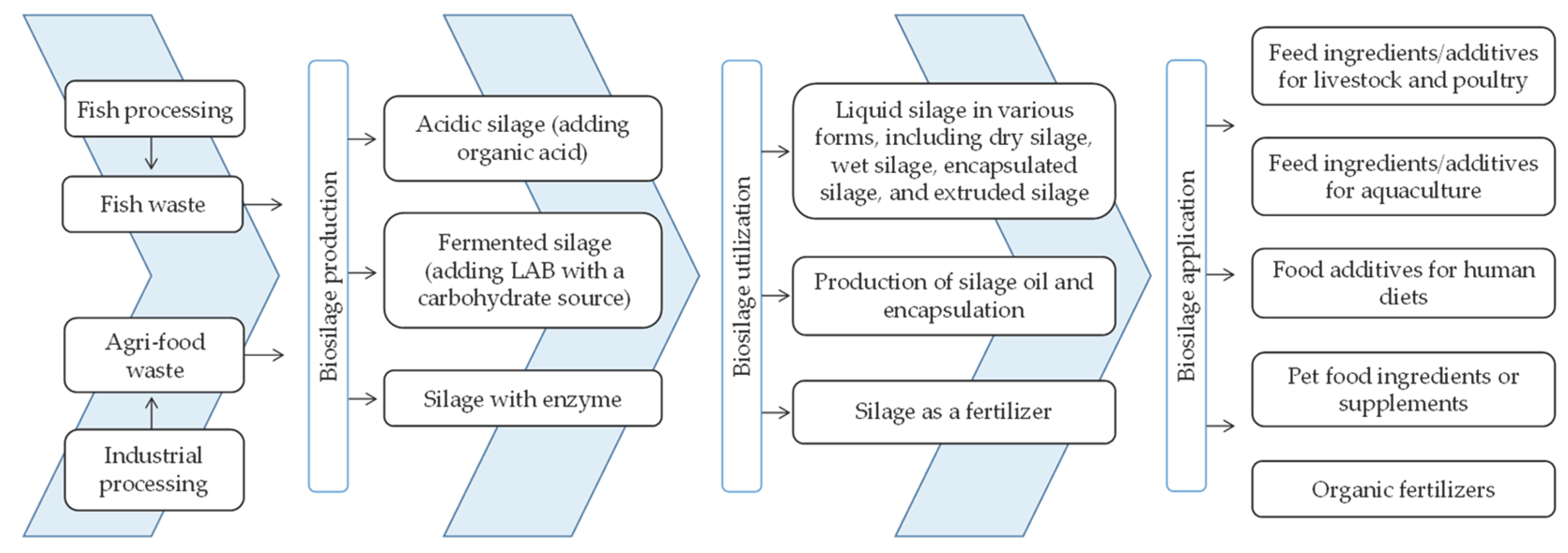

Table 1.
Utilization of acidified and/or fermented fish silage in aquafeeds.
| Aquatic animal | Feeding trial | Ensiling conditions | Results | Reference |
|---|---|---|---|---|
| Black Bass (Micropterus Salmoides) | 66 days | Acid fish silage | Up to 15% acid fish silage as a partial substitute for fish meal can be used in the formulation of carnivorous fish feed | [84] |
| Japanese sea bass (Lateolabrax japonicus) | 14 days | Fish protein hydrolysate produced from acid ensiling | Enhanced growth performance of Japanese sea bass was observed when 15% of the fishmeal was replaced with fish silage | [85] |
| Atlantic salmon (Salmo salar) | 91 days | Fish protein hydrolysate produced from acid ensiling | The best growth performance of Atlantic salmon was observed when silage protein hydrolysate was included in the diet at levels below 15% | [86] |
| Nile tilapia (Oreochromis niloticus L) | 56 days | Shrimp head silage protein hydrolysate | Shrimp head hydrolysate is a promising alternative protein source for feeding tilapia, and it can improve the growth ratio even at dietary inclusion levels as high as 15% | [88] |
| Orange-spotted grouper (Epinephelus coioides) | 42 days | Fish protein hydrolysate produced from acid ensiling | The combination of 10% or 20% fish silage with poultry by-product meal could replace 50% of fish meal protein in the diets without any adverse effects on the growth performance | [89] |
| African catfish (Clarias gariepinus) | 70 days | Fermentation by Lactobacillus plantarum using carbohydrate substrates such as molasses. Fish silage was co-dried with soybean meal, poultry by-product meal, hydrolysed feather meal, and meat and bone meal | Fermented fish silage co-dried with protein feedstuffs is a suitable protein supplement, capable of providing up to 50% of dietary protein without adversely affecting feed efficiency, fish growth, or health | [90,91] |
| Nile tilapia (Oreochromis niloticus), African catfish (Clarias gariepinus) | 70 days | Dried fermented fish silage and soybean meal blend | Co-dried fermented fish silage and soybean meal can be used as partial replacements for fish meal protein in dry aquaculture diets | [92] |
| Catfish (Clarias gariepinus) | 14 days | Raw heads of the river prawn were fermented with Lactobacillus plantarum using molasses or cassava starch as the carbohydrate source. Hydrolysed feather meal, poultry by-product meal or soybean meal, used as alternative filler, was blended with the liquid silage and solar-dried | Dried shrimp head silage meal is a suitable and promising protein feedstuff for fish diets. The digestibility coefficients of dry matter, crude protein, gross energy, and essential amino acids in the silage fed to catfish fingerlings exceeded 70% | [93] |
| Nile tilapia (Oreochromis niloticus) | 15 days | Fermentation by Lactobacillus plantarum using carbohydrate substrates such as molasses. The wet silage was combined with poultry by-product meal, a blend of soybean-hydrolyzed feather meal, or menhaden fish meal for pellet production | Moist fish silage pellets were both physically stable and highly digestible by Oreochromis niloticus, making them suitable as farm-made fish feeds | [94] |
| Nile tilapia (Oreochromis niloticus) | 30 days | Fermentation by Lactobacillus plantarum using carbohydrate substrates such as molasses, corn flour, or tapioca flour | Co-dried fermented fish silage is a suitable protein feedstuff in fish diets. The pellets produced from fermented silage demonstrated higher digestibility and excellent water stability | [95] |
| Nile tilapia (Oreochromis niloticus) | 90 days | Dried fermented fish silage was combined with tomato by-product meal and potato by-product meal in a proportion of 30:40:30 w/w | Replacing 30% of dietary protein with dried fish silage in tilapia diets did not have adverse effects on growth or feed utilization parameters | [96] |
| Nile tilapia (Oreochromis niloticus), African catfish (Clarias gariepinus) | 90 days | Fish silage was prepared by fermenting fish waste (60%), yogurt (5%) as a source of Lactobacillus plantarum, molasses (5%), and rice bran (30%) as a filler for 30 days | Replacing 25% of fish meal with dried fermented fish silage in tilapia diets and 50% of fish meal in catfish diets did not significantly adversely affect the growth or feed utilization parameters of the fish | [97] |
| Nile tilapia (Oreochromis niloticus) | 84 days | Fermented fish silage was prepared by mixing fish waste (60%), rice bran (30%), dried molasses (5%), and yogurt (5%) as a source of Lactobacillus spp. for the lactic acid anaerobic fermentation process over 30 days | Replacing up to 50% of fishmeal with dried fermented fish silage did not have any negative effects on the growth and feed utilization of tilapia. Additionally, it resulted in a 15.59% reduction in feeding costs | [98] |
| African catfish (Clarias gariepinus) | 90 days | Fermented silage was prepared by mixing fish waste (60%), orange peel (30%) as a filler, molasses (5%), and yogurt (5%) as a source of Lactobacillus spp. for the lactic acid anaerobic fermentation process | Replacing 50% of fish meal with dried fermented fish silage in diets did not significantly adversely affect the growth or feed utilization parameters of catfish, and this replacement reduced feed costs | [99] |
| Olive flounder (Paralichthys olivaceus) | 70 days | A mixture of fermented fisheries by-products and soybean curd residues | Up to 30% of fish meal can be replaced by this mixture without affecting the growth performance of juvenile olive flounder | [100] |
| Catfish (Heteropneustes fossilis), Indian major carp (Labeo rohita) | 60 days | Fish offal wastes were fermented, along with mustard oil cake and rice bran, using a mixture of a commercial suspension of microorganisms, molasses, and water | Fermented fish viscera could be included up to a 30% level as a partial replacement for fishmeal in the formulation of the fish diet | [101,102] |
| European sea bass (Dicentrachus labrax) | 63 days | Apple pomace fermented fish silage, molasses fish silage, and formic acid silages | Fish silage produced from organic acids or through fermentation with carbohydrate sources and lactic acid bacteria is an effective partial replacement for fish meal in aquaculture feeds | [82] |
| Mozambique tilapia (Oreochromis mossambicus) | 52 days | Fish viscera silage produced from acid ensiling | Fish viscera silage can serve as a source of dietary protein and essential amino acids in tilapia diets. The viscera silage can stimulate the cellular non-specific immunity of Oreochromis mossambicus, and protein hydrolysis products are responsible for this stimulation | [76] |
| Tambaqui (Colossoma macropomum) | 21 days | Acid silage and fermented silage with 5% yogurt and 15% of different carbohydrate sources (molasses, wheat bran, and cassava waste) were produced with 0.25% antifungal agent | Acidic and fermented fish viscera silages function as energy-rich components in aquafeed due to their high fat content in dry matter, and they are efficiently digested in the diets of juvenile tambaqui. Further assessment is required to determine the optimal inclusion level of viscera silages in aquafeeds | [35] |
| White shrimp (Litopenaeus vannamei) | 56 days | Acid fish silage | Replacing fishmeal with fish silage at a 25% inclusion level resulted in superior growth performance in white shrimp | [83] |
| African catfish (Clarias gariepinus) | 14 days | Fermented shrimp head waste meal by fermentation with Lactobacillus plantarum using carbohydrate substrates such as cane molasses | Replacing fish meal with 30% fermented shrimp head waste meal can be a cost-effective and sustainable option in the diet of African catfish | [104] |
| Mozambique tilapia (Oreochromis mossambicus) | 52 days | Silage oil recovered from fish processing waste | Silage oil effectively substituted the control oil without any negative effects on production performance, while improving cellular non-specific immunity and simultaneously decreasing total mortalities. Additionally, silage oil is a cost-effective alternative dietary oil for tilapia diets | [60] |
| South African abalone (Haliotis midae) | 153 days | Silage oil recovered from fish processing waste | Incorporating silage oil can enhance cellular immune function in H. midae, but it's important to optimize the inclusion level to counteract any negative effects on production efficiency | [61] |
| Barramundi (Lates calcarifer) | 56 days | Fish hydrolysate was prepared through the fermentation of tuna fish waste using baker’s yeast Saccharomyces cerevisiae (instant dried yeast) and Lactobacillus casei | Replacing fish meal with tuna hydrolysate at 50% and 75% inclusion levels negatively impacted the growth, feed utilization, and digestibility of juvenile barramundi | [107] |
Disclaimer/Publisher’s Note: The statements, opinions and data contained in all publications are solely those of the individual author(s) and contributor(s) and not of MDPI and/or the editor(s). MDPI and/or the editor(s) disclaim responsibility for any injury to people or property resulting from any ideas, methods, instructions or products referred to in the content. |
© 2024 by the authors. Licensee MDPI, Basel, Switzerland. This article is an open access article distributed under the terms and conditions of the Creative Commons Attribution (CC BY) license (http://creativecommons.org/licenses/by/4.0/).
Copyright: This open access article is published under a Creative Commons CC BY 4.0 license, which permit the free download, distribution, and reuse, provided that the author and preprint are cited in any reuse.


