

Submitted:
27 February 2024
Posted:
27 February 2024
You are already at the latest version
Abstract
Responding to changing value creation processes in the sheet metal working sec-tor, where the complexity and interchangeability of products challenge traditional dif-ferentiation strategies, this empirical analysis explores integrating service-oriented and data-driven business models as new paths to ensure competitiveness, especially for small and medium-sized enterprises (SMEs). This study aims to capture the current state and challenges associated with the implementation of these business models in this sector. The research was conducted through semi-structured interviews with SMEs in the industry. The findings indicate that service-oriented and data-driven business models are not yet widely adopted and that manufacturing companies re-quire support in their implementation. Fields of action were identified for the industry. These are "Creating awareness and understanding", "Recognizing added value", "In-creasing company maturity" and "Understanding the change process". Cooperation between science and industry is essential in tackling these fields of action to ensure the successful integration of such business models in manufacturing companies. This pa-per identifies challenges in the fields of action that companies must address through a structured approach promoting awareness, recognizing value, improving organiza-tional maturity, and understanding the change process to successfully implement ser-vice-oriented and data-driven business models.
Keywords:
service-oriented business models
; data-driven business models
; servitization
; digital transformation
; ecosystem innovation
; SME
1. Introduction
For a long time, businesses in traditional industries concentrated on their products’ technological superiority and/or physical goods [1,2]. This is closely related to product sales and the accompanying transfer of ownership and accountability to clients [2]. However, since products are growing more sophisticated, mature, and interchangeable, differentiation through product alone is no longer adequate [1,3,4,5]. As a result, fresh chances for market differentiation are needed, which should be initially linked to services connected to products [1,6]. However, basic services like product maintenance come with much competition, cost pressure, interchangeability, and imitability [1]. Hybrid service bundles, also known as integrated and individual customer solutions made up of a mix of goods and services, or product-service systems (PSS) are one way to conceptualize the solution to this issue [1,7,8,9,10]. Services can also be linked to competitive advantages when considering product-service systems. In particular, servitization is described by Vandermerwe and Rada [11] as a tool for creating competitiveness. This is corroborated by Zhang et al. [12], who argue that these service-oriented strategies essentially shape competitiveness concerning to the integration of services, specifically servitization and business model innovation. Accordingly, Kohtamäki et al. [13] contend that digital servitization in the manufacturing sector is linked to growth prospects and competitiveness.
The scope of this study refers to SMEs in the mechanical and plant engineering sector, respectively the sheet metal processing sector. In 2020, 97.7 percent of companies in the manufacturing sector in Germany were SMEs [14,15] (See also [16,17]). As such, they account for the largest share and are therefore of central importance when considering the current situation concerning service-oriented and data-driven business models in manufacturing. Considering to this facts, this paper aims to record the status and challenges in implementating service-oriented and data-driven business models for SMEs in the sheet metal processing industry to identify important fields of action based on the findings.
2. Fundamentals
The following chapter presents this paper’s theoretical foundations, covering the topics of servitization, business models, and ecosystems, which are necessary to understand the results and implications of the interviewed companies.
2.1. Servitization and digital servitization
The term “servitization” was first used in literature by Vandermerwe and Rada in 1988 [11,18,19,20]. With this in mind, they write about a movement towards. ”…“bundles” of customer-focused combinations of goods, services, support, self-service, and knowledge.” [11]. Baines et al. [19] confirm this, describing servitization as the “…innovation of an organisations capabilities and processes to shift from selling products to selling integrated products and services that deliver value in use.” Manufacturers began digitalizing their products during the servitization movement, leading to the creation of new product-service offerings [2,21,22,23,24,25,26,27]. Digital servitization is the term used to describe this phenomenon [28,29]. It is defined as “the transition toward smart product-service-software systems that enable value creation and capture through monitoring, control, optimization, and autonomous function.” [30].
2.2. Service-oriented and data-driven business models
The research literature lacks a widely accepted definition of business models, despite the fact that various approaches share certain similarities. Osterwalder and Pigneur [31] define business models as “…the rationale of how an organization creates, delivers, and captures value” (see also Osterwalder and Pigneur [32]). This is confirmed by Teece [33], who defines a business model in the same way, with the difference that he is talking about an architecture. Business models are impacted in all directions by service orientation [34,35]. According to Böhmann et al. [36], the foundation of service-oriented business models is reflected in an intense and long-term customer relationship. Accordingly, co-creation, context-based solutions, and customer relationships can all be considered attributes of service-oriented services [34,35]. Considering service-oriented business models, a subset of them is formed by data-driven business models [37,38]. Thereby, data represent the foundation of data-driven business models. Consequently, value propositions are better understood [37]. To provide a better understanding of these business models, a brief description will be given using the example of TRUMPF’s pay-per-part model. This business model is radically different from the traditional way of selling machine tools. With pay-per-part, TRUMPF remains the owner of the machine, meaning that no purchase is made. Instead, payments are made per part produced, including ancillary costs. As a result, the prices for the parts are already known before the start of production. In addition, the supplier carries out all maintenance and repairs, giving the customer an all-inclusive package. As a result, machine breakdowns are associated with a lower level of risk. At the same time, the financial risk is reduced, which translates into financial flexibility. [39]
2.3. Product-service systems (PSSs)
Tukker [9] describes Product-Service Systems (PSS) as “consisting of ‘tangible products and intangible services designed and combined so that they jointly are capable of fulfilling specific customer needs’ (see e.g., Tischner et al., 2002)” About servitization, the result of this development is referred to as PSS [40]. This is accompanied by Baines et al. [41], writing about servitization and a particular form represented by PSS. Valencia et al. [42] complement the definition of PSS with smart elements such as smart products and e-services, defining the so-called Smart Product Service Systems (Smart PSS) as “… the integration of smart products and e-services into single solutions delivered to the market to satisfy the needs of individual consumers.”
2.4. Ecosystems
Concerning digital servitization, in the literature, an important prerequisite is related to ecosystem transformation [30,43,44,45,46,47,48]. For this reason, it is also important to take a closer look at ecosystems. Jacobides et al. [49] write about “…a group of interacting firms that depend on each other’s activities.” Further, Kohtamäki et al. [30] argue: “The ecosystem as a concept emphasizes the value creation and capture between interrelated firms.” Thus pointing to the element of value creation and value proposition [50]. Following this, there are different types of ecosystems. Jacobides et al. [49] name three streams that have been analyzed: business ecosystems, innovation ecosystems, and platform ecosystems. Cobben et al. [51] also write about business and innovation ecosystems, adding knowledge, and entrepreneurial ecosystems. The different variants serve as an overview and will, therefore, not be explained in more detail (See also [52]). With regard to the application context of the present work, it is clear that business ecosystems are the best thematic fit and will be focused. The business ecosystem was introduced by Moore [51,53]. Accordingly, the following definition applies: „… companies coevolve capabilities around new innovation: they work cooperatively and competitively to support new products, satisfy customer needs, and eventually incorporate the next round of innovations.” [53]. Considering these aspects, we specify that ecosystems involve at least three actors. Otherwise, they are bilateral relationships between participants of service-oriented business models [54,55].
3. Research methodology
Research about service-oriented and data-driven business models in sheet metal processing companies relates to a very specific area for which only limited relevant literature is available. For this reason, the methodology of expert interviews was chosen as the key instrument for the data collection in this study. This methodological approach makes it possible to gain a comprehensive insight into the dynamics and challenges of service-oriented business models. In this scientific study, a qualitative, semi-structured approach was chosen, as this is a common method that ensures that relevant topics are systematically covered. The interviewer’s degree of freedom in formulating the questions is determined according to [56]. In this context, Lamnek and Krell also emphasize that it is important to be flexible and open-minded in the interview process [57]. In addition, this approach enables comparability between the interviews [58,59,60]. A quantitative, structured approach was not used to ensure “that as many aspects of content that are interesting and relevant for the research can be addressed spontaneously using open questions and a freely designable implementation” [59]. According to Adams (2015), open questions allow the respondents’ individual thoughts to be explored. However, it should not be forgotten that closed questions can serve as an effective starting point for further open questions [58]. The formulated interview questions reflect this approach. For example, the targeted use of the closed question “Have you ever heard of service-oriented and data-driven business models?” opens up the guideline and thus creates a clear starting point. It makes it possible to build on this by asking respondents to briefly describe what they understand by service-oriented and data-driven business models. This approach simplifies data collection and promotes the development of differentiated answers. The targeted combination of open and closed questions increases the diversity of the information collected and enables a deeper insight into the respondents’ perceptions and interpretations of service-oriented and data-driven business models. To obtain well-founded findings, the experts for the interviews were selected primarily on the basis of their industry and their specialist knowledge [61,62,63,64,65]. For the context of this work, an expert is defined as a person who can demonstrate special knowledge and skills in this topic through their employment in the sheet metal working industry [59,66]. Several researchers, always in pairs and via Microsoft Teams conducted the interviews. Since only representatives of German companies were partners, the interviews were conducted in German and then translated into English. 16 experts from the sheet metal working industry were interviewed. Table 1 contains a list of all the companies interviewed. The number of employees is based on the following classification of SMEs: Micro-enterprises (up to 9), small enterprises (up to 49), medium-sized enterprises (up to 249) and large enterprises (over 249) [67,68].

Table 1.
Interviewed companies.
| Industry | Positions / Roles | Employees |
|---|---|---|
| Stainless Steel Solutions | Production Manager | >249 |
| Stainless Steel Solutions | Chief Executive Officer | <50 |
| Stainless Steel Solutions | Construction | <50 |
| Metal and Tube Technology | Attorney & Division Manager | <250 |
| Construction Industry | Production Manager | >249 |
| Metal Processing Company | Chief Executive Officer | <250 |
| Metal Processing Company | Chief Executive Officer | <50 |
| Automotive Solutions | Head of Purchasing | <250 |
| Stainless Steel Solutions | Chief Executive Officer | <50 |
| Metal Processing Company | Chief Executive Officer | <50 |
| Metal Processing Company | Chief Executive Officer | <10 |
| Metal Processing Company | Chief Executive Officer | >249 |
| Metal Processing Company | Chief Executive Officer | <250 |
| Metal Processing Company | Chief Executive Officer | <250 |
| Metal Processing Company | Operating Manager | <50 |
| Solution Provider for Metal Industry | Chief Executive Officer | <10 |
The interviews were digitally recorded and then transcribed. The evaluation is based on the methodology of summarizing content analysis, according to Mayring [69]. Following Mayring’s approach, the transcripts were first shortened to the essential content to create a clear data basis. This was followed by inductive categorization, in which relevant text passages served as the starting point for forming new categories. In the next step, further content was assigned to the already identified categories, whereby the assignment was based on similarities in content and relevance to the research questions. This process ultimately led to a structure of categories that represent the diverse aspects of the topic under investigation [69].
Table 2.
Interview Questions.
| Nr. | Questions |
|---|---|
| 1 | Have you ever heard of service-oriented and data-driven business models? |
| 2 | Describe briefly what you understand by a service-oriented and data-driven business model |
| 3 | To what extent did you come into contact with service-oriented and data-driven business models and ecosystems? |
| 4 | What business models are currently used in your company’s core value creation? |
| 5 | In your opinion, what are the main reasons, why so few data-driven & service-oriented business models have been established in the market? |
| 6 | What challenges / difficulties / risks do you see as a company when offering / using service-oriented and data-driven business models? |
| 7 | What challenges / difficulties / risks do you see as a company when using / participating in ecosystems in the context of service-oriented and data-driven business models? |
| 8 | Do you see a need to change your business model? |
| 9 | Is there a need for action prior to implementation and participation in the value network (e.g., technical infrastructure, staff know-how, organization...)? |
| 10 | What skills does your company need to implement these service-oriented business models and participate in the multilateral and collaborative ecosystems? |
| 11 | Can you imagine collaborating with external partners? |
| 12 | Can you imagine bringing missing expertise into the company via external cooperations (e.g., in the business ecosystem or with start-ups)? |
| 13 | Can you currently observe changes in ecosystems? If so, how would you assess them in the future / what changes do you expect in the future? |
| 14 | In your opinion, what requirements and conditions do companies need to meet to be able to offer / use service-oriented and data-driven business models? |
| 15 | What requirements and conditions for ecosystems do you consider relevant for your company? |
4. Results
In this section, the results of the 15 interview questions are presented and discussed one after the other. The manufacturing companies answered both from the perspective of service-oriented and data-driven business model users and from the perspective of service providers for potential customers. To capture the range of characteristics and requirements, no specific perspective was adopted.
4.1. Question 1: Have you ever heard of service-oriented and data-driven business models?
This question served as an introduction to the semi-structured interview to determine the interviewees knowledge level and to structure the interview accordingly. The answers of the 16 interviewees are listed in Figure 1.
Figure 1.
Level of knowledge about service-oriented and data-based business models.
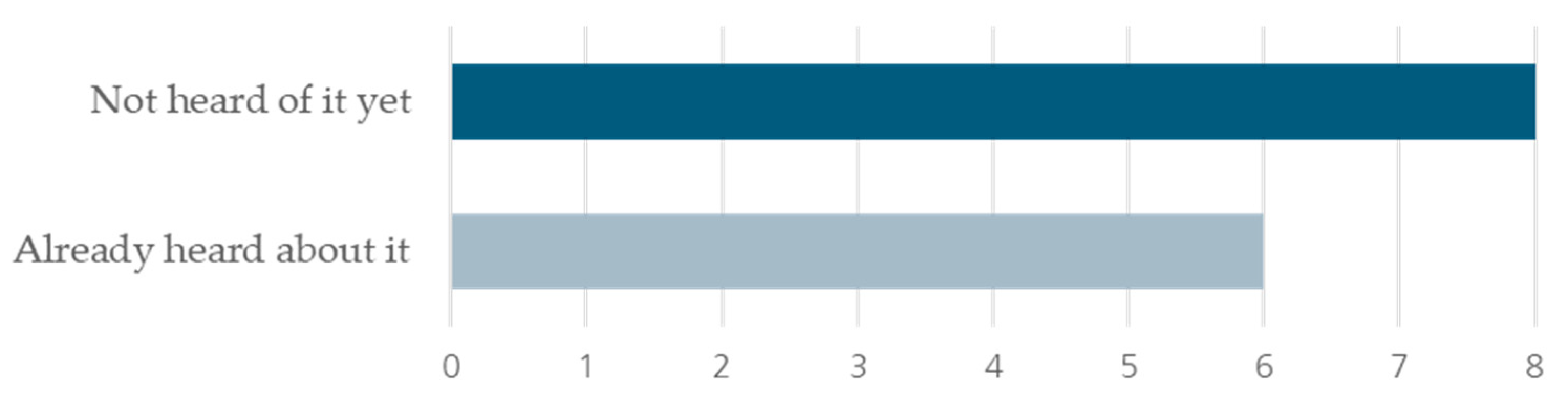
Nine interviewees stated that they are not yet familiar with service-oriented and data-driven business models. Seven of the interviewees have heard of these models but only have basic knowledge and cannot go into the topic in depth. This indicates that for small and medium enterprises service-oriented and data-driven business models are not widespread in practice and that many companies have not yet dealt with them in depth.
4.2. Question 2: Describe briefly what you understand by a service-oriented and data-driven business model
This question asks respondents who stated in question 1 that they are familiar with service-oriented and data-driven business models to describe what they understand by them. In this way, features of these business models can be identified and characterized from the understanding of the industrial companies. Figure 2 below provides an overview of the characteristics mentioned (multiple answers permitted).
Figure 2.
Characteristic features of service-oriented and data-driven business models mentioned.
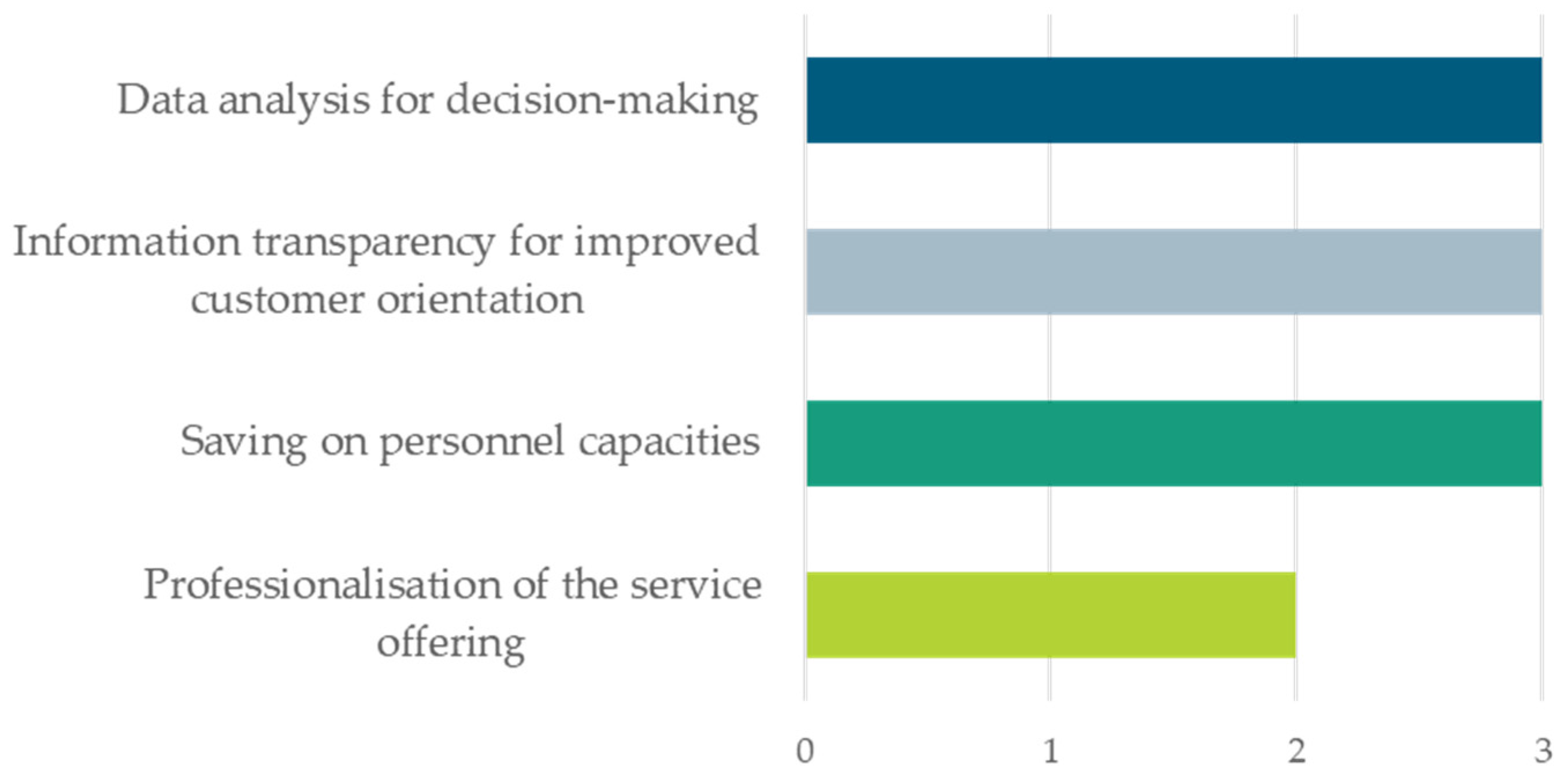
The point “data analysis for decision-making” is mentioned three times in the explanations. This involves the collection and evaluation of data as a basis for decision-making but also the derivation of optimization potential. The interviewees state that the data can be used to form key performance indicators based on which measures for entrepreneurial actions can be taken. This data provides an objective basis and helps companies to make quick and objective decisions. The information transparency gained through the implementation of service-oriented and data-driven business models can be used not only for internal processes and optimization but also in a customer-oriented manner. Three interview partners cite the feature “information transparency for better customer orientation”. The focus here is on service orientation since this gives customers access to information about stock levels, product availability, and the status of their orders at any time. This leads to increased predictability and helps to avoid follow-up questions and coordination. In addition to a reduced need for coordination, “the saving of personnel capacities” was also mentioned by three interviewees as a characteristic feature. In this context, it was noted that often there are too few contact persons available for queries and that there is often a high volume of e-mail or telephone traffic. This can be reduced by implementing these business models, especially in combination with a platform or app for the customer, which can save personnel in the operational area on both the customer and manufacturer side. Customers benefit from outsourcing competencies from their own company, as they do not bear responsibility for certain stages of the value chain and can concentrate fully on their core competencies. The last feature mentioned is the “professionalization of the service offering”. Above all, this means that services and consulting services must be optimized and automated.
4.3. Question 3: To what extent did you come into contact with service-oriented and data-driven business models and ecosystems?
This question asked about experiences with service-oriented and data-driven business models and ecosystems to identify the participants’ points of contact. Three interviewees stated that initial concepts already exist or that data-driven solutions are partially in use. Some interviewees reported that they monitor the market to identify new trends and interesting technologies and take part in relevant events on the topic. The initial aim is to understand and make the added value of such business models plausible. The interview partners report that they are already pursuing initial approaches internally and analyzing data. However, they have not yet adapted their business model and continue to handle their service business through traditional maintenance contracts. Three other experts state that they have no in-depth points of contact with service-oriented and data-driven business models and business ecosystems in their operational business.
4.4. Question 4: What business models are currently used in your company’s core value creation?
The fourth question asked about the status of value creation at companies in the sheet metal processing industry to better understand the companies’ starting position and identify business model potential. The interviewees described their value creation processes as typical for companies in this sector. The focus here is on the production of components for customer orders. A characteristic aspect of this is that the companies predominantly do not offer their own products but rather manufacture components in varying quantities for other companies as contract manufacturers. The manufacturing processes typically used in sheet metal processing, such as laser cutting, bending, welding, drilling, and milling, are used as well as other processes such as bonding and sealing. In addition to pure manufacturing, many sheet metal processors also offer assembly services for their customers. Engineering is another area that represents a large proportion of revenue in the sheet metal processing business model. Almost all interviewees state that they support their customers with design and development services and act as technology partners for them thanks to their many years of experience in sheet metal processing. A characteristic feature of the small and medium-sized manufacturing companies in the sector is that they have long-standing customer relationships with many of their customers, which is why the level of cooperation and service orientation towards many customers is very high. However, customer service is not charged additionally but is provided to customers free of charge to increase customer loyalty. Service is, therefore, an important part of the business model, even if it is not directly priced and billed.
4.5. Question 5: In your opinion, what are the main reasons, why so few data-driven & service-oriented business models have been established in the market?
In question 5, the interviewees were asked to provide an assessment of the current low prevalence of service-oriented and data-driven business models. An aggregated overview is shown in the following Figure 3 (multiple answers permitted).
One of the main reasons cited for the stagnation of services on the market is “Missing knowledge and acceptance”. The topic of service-oriented and data-driven business models is still new to many companies, which is why companies have not yet dealt with it. There is also a lack of knowledge about specific solutions and solution providers. Furthermore, one of the interview partners stated that many companies only focus on day-to-day operations and, therefore, have no clear idea of their strategic objectives or the benefits of the data. In addition, the lack of acceptance, particularly among older employees, who have been carrying out the same processes for years and are sticking to the tried and tested, is mentioned. Another key aspect is the “Missing added value” of service-oriented and data-driven business models. The experts describe that the cost of implementation is very high and that the benefits are still unknown. This raises doubts about the added value of implementation. This applies in particular to offering service-oriented and data-driven business models for the company’s customers but also using these business models as users. The question of differentiation is particularly important when offering own business models and is addressed by three of the experts. By offering services, companies want to differentiate themselves from the competition in the long term to ensure that the initial investment in business model development is amortized. In this context, the “High complexity” in implementing service-oriented and data-driven business models is mentioned. One interviewee pointed out the need to clearly understand problems and reduce them to their core. Companies must be able to understand their own processes to generate added value from process data. As processes are often complex and correlations cannot be easily recognized, there is a risk that the implementation will not generate the expected output due to the high implementation complexity, resulting in bad investments. In addition, two of the interviewees mentioned a “Lack of personnel capacities” to implement these initiatives. On the one hand, employees are heavily involved in operational business and have no free capacity for such development topics. On the other hand, employees lack the skills, as they are often trained in other areas. In addition, reliable partners for implementation are either unknown or too expensive. One interviewee mentions a “Lack of technical requirements”, particularly in infrastructure and hardware for data transmission and computing power. These aspects are necessary for the implementation of service-oriented and data-driven business models. Four interviewees disagree with the statement in the question and state that there are “Services already on the market”. They mentioned that there are already services for dedicated applications from specific providers. These are already data-driven, and larger companies, in particular, have platforms as an information and exchange interface to their customers. In addition, one interviewee stated that the competition is increasingly focusing on the development of services in general to differentiate itself. Two other interviewees were unable to answer this question.
4.6. Question 6: What challenges / difficulties / risks do you see as a company when offering / using service-oriented and data-driven business models?
In this question, the interviewees were asked about possible obstacles to the implementation of service-oriented and data-driven business models (multiple answers permitted). The results are shown in Figure 4.
Six respondents named “Technical realization” as one of the main challenges. This primarily concerns the initial implementation and the design of the technical infrastructure in terms of performance and cyber security. In particular, the topic of cyber security is emphasized by four interviewees, as companies must ensure that their data and their customers’ data are particularly protected. Furthermore, the dependence on technology and the need for high costs to minimize the security risk are described. Operation is also seen as a technical challenge, as the platform and systems need to be maintained to ensure that data exchange works. Concerns regarding the “Lack of skilled labor” were mentioned just as frequently as concerns regarding the technical implementation. The experts described the need to prepare and empower employees, who are already limited and working at the limits of their capabilities, for the implementation of a service-oriented and data-driven business model. In many cases, this requires specialist training. There is also the risk that the expertise to implement these business models is distributed among a small number of employees. One interviewee emphasized that the business model and the company’s success would be at risk if these employees were to leave the company. Another relevant challenge mentioned was the “Calculation and configuration of components”. This point is characteristic of manufacturing companies in this sector, many of which have a high proportion of revenue from manufacturing or contract manufacturing. As part of the implementation of service-oriented and data-driven business models, five interview partners believe it makes sense to provide customers with an online configurator with instant quoting. In this context, instant quoting means that the customer is given a purchase price immediately after the required component configuration is made on the platform. This reduces process costs on both sides, particularly in the development, design, and consulting departments of the manufacturer. Despite the promising idea, the interview partners see difficulties in the design of such a tool and in automated pricing. Aspects such as binding pricing, increasing price pressure, and possible payment terms are discussed in particular when it comes to pricing. Here, companies lack robust design approaches for efficient and reliable costing. Four of the respondents have concerns regarding “Order processing and loss of intellectual property”. This primarily concerns the processing of new or complex components. Furthermore, two interviewees expressed concern that their company may provide advice and calculations for a component only for the order to be awarded to a cheaper competitor. The “Lack of customer acceptance” was also mentioned by three interviewees. They point out that the loss of customer expertise is a commercial problem and that a rethink is required. It is important to involve the customer at an early stage and to create an understanding that problems can be solved with the help of data-based information. This should create acceptance among customers. Finally, the difficulty of the “Change of business model” is addressed. The two interviewees point out that it is important to convey the information understandably while complying with all market requirements for the implementation of the business model. The entrepreneurial risk of a business model change is also addressed. The biggest hurdle here is that the risk cannot be appropriately limited and assessed.
4.7. Question 7: What challenges / difficulties / risks do you see as a company when using / participating in ecosystems in the context of service-oriented and data-driven business models?
Building on question 6, this question explicitly asked about the obstacles in value creation networks (multiple answers permitted). Figure 5 shows the results.
As many of the participants are not familiar with service-oriented and data-driven business models in detail, and value networks are based on the characteristics of these business models, only five of the participants could answer this question. Due to the similarity of the question, the answers are the same as in the previous question. For example, “Technical realization” and “Lack of skilled labor” were both mentioned three times. No other additional explanations that explicitly characterize the specific features of the value creation network were mentioned.
4.8. Question 8: Do you see a need to change your business model?
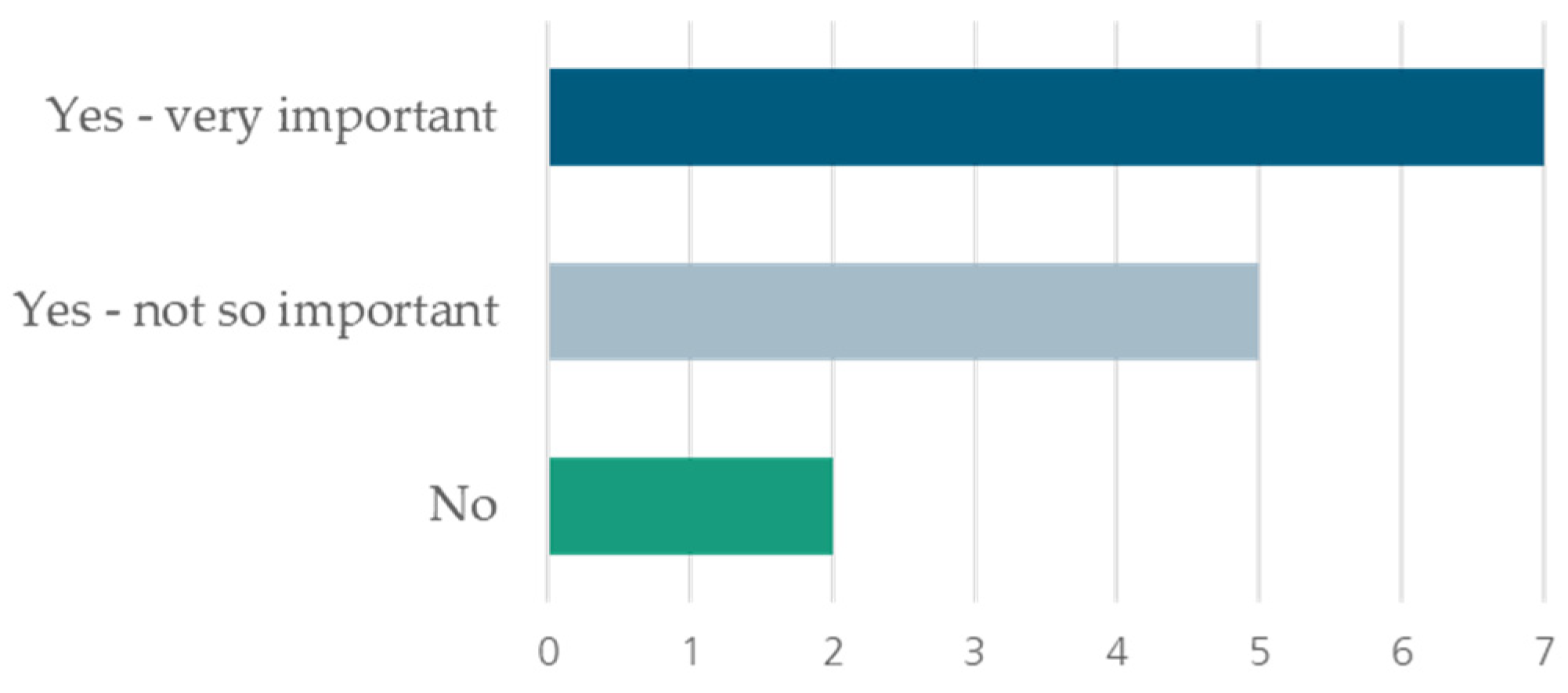
This question asked about the need for change in the business model of manufacturing companies. The participants’ answers are shown in the following Figure 6.
Seven of the experts interviewed consider adjusting the business model to be necessary and very important. Above all, they see great opportunities for growth and a consolidation of their market position through the use and utilization of service-oriented and data-driven business models. One of the interviewees emphasized that the requirements for the business model or the services must come from the customers and that their needs are not always fully known. One interviewee also mentioned that it is an advantage to be involved in new developments from the outset to have an innovative edge over competitors. In addition, the interviewees stated that a stronger focus on service and the automation of the range of services positively counteract the shortage of skilled workers. Five other interviewees consider adaptation important but would not focus on designing new business models. One interviewee stated that growth is more likely achieved by expanding existing customers than changing the business model. Furthermore, the interviewees need more expertise and experience in this area to assess the added value of data-driven and service-oriented business models compared to other alternatives for achieving corporate goals. Two of the interviewees see no need to adapt their business model.
4.9. Question 9: Is there a need for action prior to implementation and participation in the value network (e.g., technical infrastructure, staff know-how, organization...)?
The interviewees answered this question with “yes” across the board. The corresponding need for action relates primarily to the technical and organizational maturity level and can be derived from the challenges described in question 6. None of the companies surveyed currently see themselves in a position to implement or use service-oriented or data-driven business models without extensive preparatory work.
4.10. Question 10: What skills does your company need to implement these service-oriented business models and participate in the multilateral and collaborative ecosystems?
When asked about the skills needed to implement service-oriented and data-driven business models, participants primarily mentioned the skill of driving digitalization themselves. This is not primarily about technical skills but about changing the previous way of thinking and looking at things from a different perspective to develop an understanding of these new business models. One interviewee described the ability to reduce existing problems to their core to enable a data-driven solution as necessary for successful implementation. This can also ensure that effective and efficient solutions are created that are cost-effective and entail a low risk of failure.
4.11. Question 11 & 12: Can you imagine collaborating with external partners? & Can you imagine bringing missing expertise into the company via external cooperations (e.g., in the business ecosystem or with start-ups)?
Question 11 asked about the willingness to collaborate with external partners. In question 12, the topic of collaboration was expanded to include the question of involving external expertise. As many of the interviewees did not have an answer to question 12 and the questions are thematically close to each other, the results of the two questions are combined in this section. The overview shows the respondents’ assessment of question 11.
Figure 7.
Openness to cooperation with external partners.
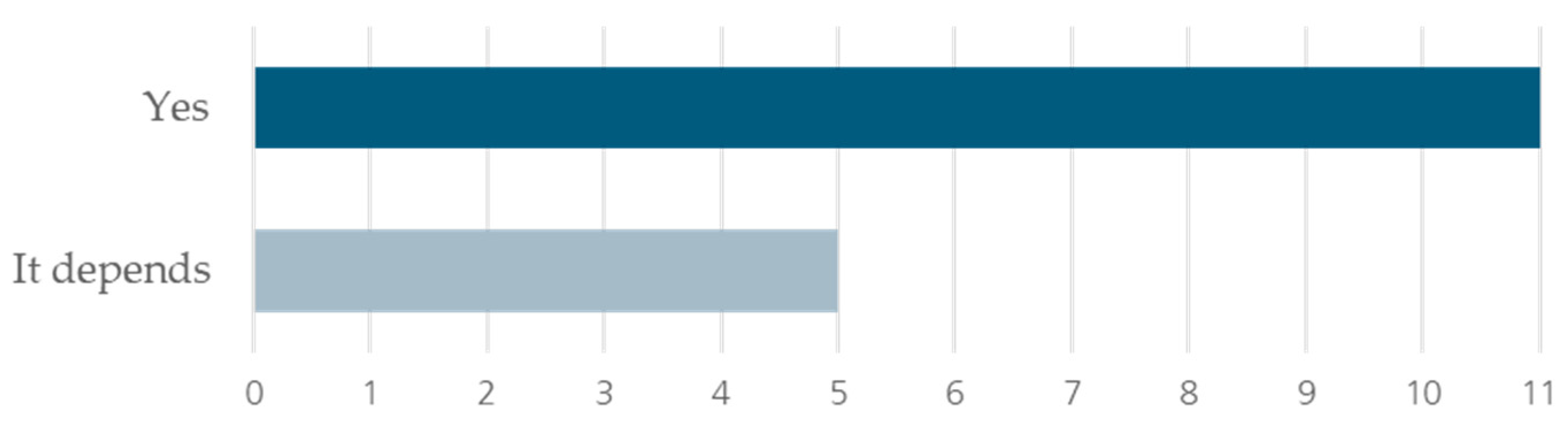
The majority of company representatives surveyed have a positive attitude towards collaboration with external partners. It is emphasized that external companies bring new impulses and break through operational blindness. In addition, external partners have specific expertise that complements the company’s skills and can be a good addition. The implementation of service-oriented and data-driven business models is interdisciplinary, which is why the interviewees emphasize that external partners should take on tasks that go beyond the company’s own domain expertise. One interviewee stated they already work with external companies on specific topics. Another interviewee stated that collaboration allows them to build up their skills better and faster. Five interviewees named conditions for cooperation with external partners. When it comes to IT topics, in-house implementation is preferred, as maintenance, operation, and security can be better guaranteed, and the company does not become dependent. Costs also play a significant role, as working with external service providers is generally more expensive, and small and medium-sized companies, in particular, cannot afford this, according to one interviewee. Another interviewee states that it is advisable to work with external partners at the beginning and then gradually take over the tasks internally again. In addition, two interviewees mention trust in the quality of the external partner’s service. For them, it is important to have a trusting cooperation on an equal footing. Question 12 explores skills and highlights the importance of exchanging experience between companies for mutual benefit. Careful selection is crucial to avoid complicating the project or implementation process.
4.12. Question 13: Can you currently observe changes in ecosystems? If so, how would you assess them in the future / what changes do you expect in the future?
Only four of the experts surveyed responded to this question. One expert emphasized that the service concept has been intensified and that companies have built closer relationships with customers and suppliers due to the difficult economic situation. Another interviewee also described the fact that ever-shorter response times are required and that companies have to adapt to this. One interviewee also perceived increased employee development through training on certain topics as a change. Another expert describes that he is seeing a diversification of skills and that the division of labor is increasing again, which means that companies focus more on their core competencies than in the past.
4.13. Question 14: In your opinion, what requirements and conditions do companies need to meet to be able to offer / use service-oriented and data-driven business models?
This question explains the requirements and framework conditions using service-oriented and data-driven business models.
Figure 8.
Mentioned requirements for the implementation and use of service-oriented and data-driven business models.
Figure 8.
Mentioned requirements for the implementation and use of service-oriented and data-driven business models.
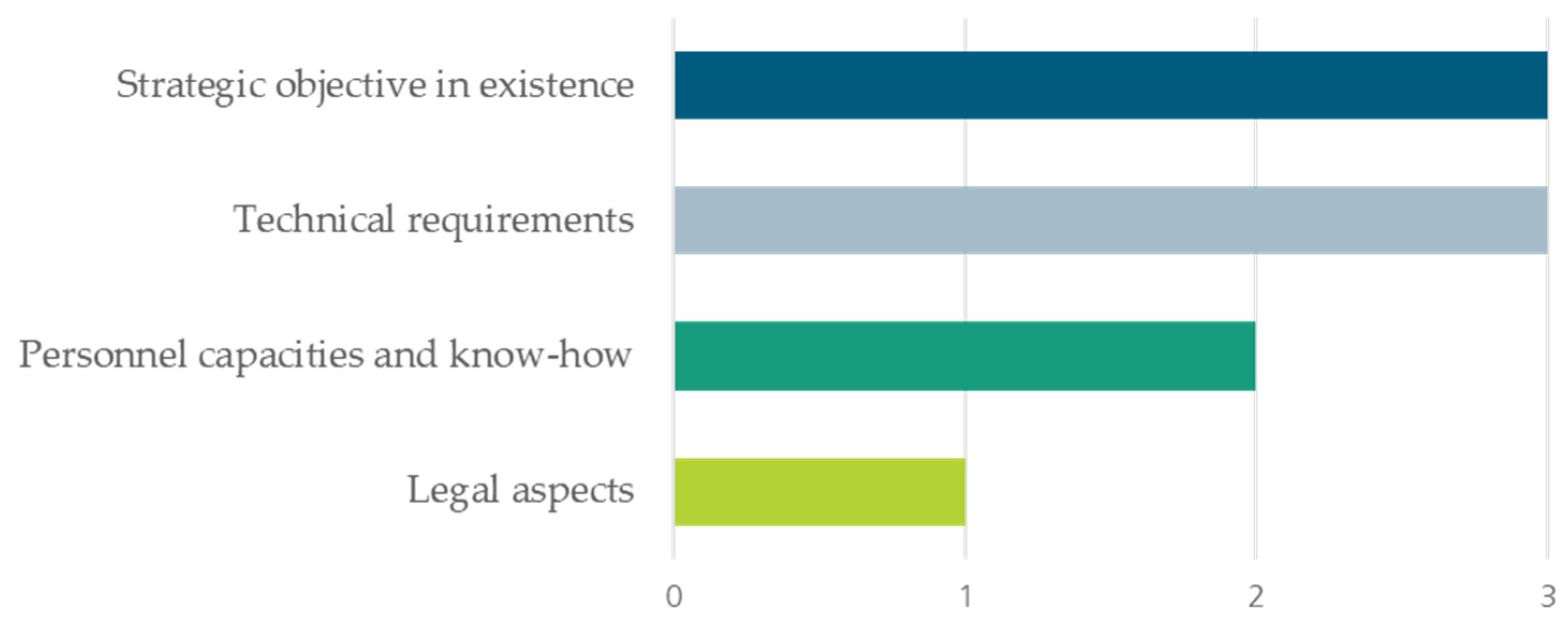
One of the critical points raised by three interviewees was the “Strategic objective in existence” that is concrete and measurable. Companies must be aware of the strategic importance and potential of service-oriented and data-driven business models. There should be advocates for the implementation of these business models at the management or CEO level. It is emphasized that companies need to act and learn flexibly when implementing and establishing their business model. In addition, “Technical requirements” such as the technical infrastructure, standardized interfaces for data exchange, and aspects of data security are of central importance and were also mentioned by three of the experts.
The topic of “Personnel capacities and know-how” was also explicitly mentioned by two of the interviewees at this point. Employees play a key role in the implementation and use of service-oriented and data-driven business models. One expert mentioned “Legal aspects”, specifically, that the contractual basis in the value creation network must be designed so that none of the participants bears an increased risk or is financially disadvantaged.
4.14. Question 15: What requirements and conditions for ecosystems do you consider relevant for your company?
The aim of this question was to capture additional aspects of the value network. To ensure that the answers are meaningful, the participants were only asked to name aspects characteristic of the value creation network. None of the interviewees could name additional aspects relating to ecosystems.
5. Conclusion
The interviews aimed to record the status and challenges in implementing service-oriented and data-driven business models in the sheet metal processing industry to identify important fields of action for the industry based on the findings. The interviews were conducted assuming that service-oriented and data-driven business models are not yet widespread in the sheet metal working industry and that manufacturing companies need support in implementing these business models. The interview results confirmed this assumption and the interviews helped to identify important fields of action. Science and practice must continue to work on these fields of action to implement these business models in manufacturing companies successfully. The four fields of action are “Creating awareness and understanding”, “Recognizing added value”, “Increasing company maturity” and “Understanding the change process”.
5.1. Creating awareness and understanding:
The terms and definitions of service-oriented and data-driven business models are very broad and interpreted differently. It is, therefore, difficult to understand the individual components, how the business models work, and to differentiate their novelty from the conventional service business. This applies in particular to value networks and the mechanisms for multilateral cooperation to implement service-oriented and data-driven business models. These value networks are more complex and less tangible than bilateral service-oriented and data-driven business models due to the higher number of partners involved. Currently, most small and medium-sized manufacturing companies provide service in a rather reactive and uneconomical manner. The service is usually a free add-on to product sales. It is important for manufacturing companies to understand how additional profits can be made through an intelligent service offering and how services can be monetized so that added value is created for the customer. In many areas, companies lack a clear understanding and knowledge of best practices or structured methodological support for implementing and using service-oriented and data-driven business models.
5.2. Recognizing added value:
Many manufacturing companies, especially small and medium-sized enterprises, are not aware of the potential offered by the use of service-oriented and data-driven business models. Due to the lack of knowledge and the high complexity, hardly any companies are starting to implement these business models. For small and medium-sized companies, this is mainly due to limited financial resources and the high investment risk. Companies need a reliable basis for deciding when investing in the implementation or use of service-oriented and data-driven business models is advantageous. This requires methods and tools that support companies in determining and evaluating the costs and benefits and thus the added value. If a company wants to offer these business models for its customers, it is necessary that both its own added value and the added value for the customer are known and can be communicated in detail. This is the only way to price the services profitably for your own company.
5.3. Increase company maturity:
The interview results show that many companies in the sheet metal processing industry do not yet meet the technical and organizational requirements to implement service-oriented and data-driven business models. This is mainly due to the fact that the prerequisites and the solution are not known. From a technical point of view, these prerequisites primarily relate to basic digitization within the company. From an organizational point of view, these are the company’s internal processes as well as cross-company processes with customers and suppliers. The central point for increasing the company’s level of maturity is its employees. They need the right skills to implement service-oriented and data-driven business models. It is important that employees undergo further professional training and that expertise is spread across several employees so that the company’s success is not dependent on individuals. External partnerships are also possible solutions for many challenges and provide fresh impetus for a company. Through partnerships, certain areas of expertise can be outsourced so the company can concentrate on important activities.
5.4. Understanding the change process:
The path to a successful implementation and use of service-oriented and data-driven business models is long and involves a lot of effort. The initial effort for conceptualization, process definition, employee development, customer onboarding, and the development of infrastructure and software components is particularly costly. The shift to these business models represents a significant change within the company. It is crucial to involve employees and customers in this process from an early stage. It is also important that the service orientation is geared towards the customer so that customer needs are satisfied, the customer receives added value and the willingness to pay is ensured. For many companies, the implementation and use of service-oriented and data-driven business models are a great opportunity for more efficient processes, better customer loyalty and thus growth and strengthening of their own market position.
6. Practical and Research Implication
6.1. Practical Implication:
Given the limited familiarity of many companies with service-oriented and data-driven business models, managers should first develop a basic understanding of these models. It is recommended that they first deal with the basic concepts internally to recognize the relevance and potential for their own company. It is then advisable to work with external experts to integrate specialized knowledge and technical skills that may be lacking internally. External partners can provide fresh impulses and help to avoid “operational blindness”. They can also provide support during the implementation phase, whereby the aim should be to incorporate the new competences into your own company gradually. It is important to establish a trusting cooperation on an equal footing and to weigh up the cost-benefit aspects carefully.
6.2. Research Implication:
The study survey results provide a concrete indication that a further in-depth analysis of the sheet metal processing industries or related sectors would expand and complement the picture presented here. In the course of this study, it became clear how important it is to deal methodically with the topic of needs assessment and a structured approach to researching one’s own value creation needs and their development in relation to service-oriented value creation. In addition, SMEs need specific implementation aids and tools for introducing and using service-oriented business models.
Author Contributions
Conceptualization, M.S.; J.W. and S.N.; methodology, K.F. and L.H.; formal analysis, M.S.; J.W.; K.F. and L.H.; writing—original draft preparation, J.W.; M.S.; L.H.; S.N. and K.F.; writing—review and editing, T.B.; J.W.; M.S.; L.H.; S.N. and K.F.; visualization, M.S.; supervision, T.B.; project administration, J.W. and M.S.; All authors have read and agreed to the published version of the manuscript.
Funding
This research was carried out as part of the X-Forge Project FABaaS and was funded by State Ministry of Baden-Wuerttemberg for Economic Affairs, Labor and Tourism and implemented by VDI / VDE.
Data Availability Statement
The data presented in this study are available on request from the corresponding author.
Conflicts of Interest
The authors declare no conflicts of interest.
References
- Backhaus, K.; Becker, J.; Beverungen, D.; Frohs, M.; Knackstedt, R.; Müller, O.; Steiner, M.; Weddeling, M. Vermarktung hybrider Leistungsbündel; Springer: Berlin, Heidelberg, 2010; ISBN 978-3-642-12829-5. [Google Scholar]
- Porter, M.E.; Heppelmann, J.E. How Smart, Connected Products Are Transforming Competition. Harvard Business Review 2014. [Google Scholar]
- Benedettini, O. Structuring Servitization-Related Capabilities: A Data-Driven Analysis. Sustainability 2022, 14, 5478. [Google Scholar] [CrossRef]
- Belz, C.; Bieger, T. Customer value: Kundenvorteile schaffen Unternehmensvorteile, 2., aktualisierte Aufl.; Thexis; mi-Fachverl.: St. Gallen, Landsberg am Lech, Heidelberg, 2006, ISBN 978-3-636-03081-8.
- Bruhn, M.; Hadwich, K. Service Business Development – Entwicklung und Durchsetzung serviceorientierter Geschäftsmodelle. In Service Business Development; Bruhn, M., Hadwich, K., Eds.; Springer Fachmedien Wiesbaden: Wiesbaden, 2018; pp 3–40, ISBN 978-3-658-22423-3.
- Nippa, M. Geschäftserfolg produktbegleitender Dienstleistungen durch ganzheitliche Gestaltung und Implementierung. In Management produktbegleitender Dienstleistungen; Lay, G., Nippa, M., Eds.; Physica-Verlag: Heidelberg, 2005; pp. 1–18. ISBN 3-7908-1567-5. [Google Scholar]
- Boehm, M.; Thomas, O. Looking beyond the rim of one’s teacup: a multidisciplinary literature review of Product-Service Systems in Information Systems, Business Management, and Engineering & Design. Journal of Cleaner Production 2013, 51, 245–260. [Google Scholar] [CrossRef]
- Goedkoop, M.J.; van Halen, C.J.; te Riele, H.R.; Rommens, P.J. Product Service systems, Ecological and Economic Basics, 1999.
- Tukker, A. Eight types of product–service system: eight ways to sustainability? Experiences from SusProNet. Bus Strat Env 2004, 13, 246–260. [Google Scholar] [CrossRef]
- VDI. Product-Service-Systeme. Available online: https://www.ressourcedeutschland. de/werkzeuge/loesungsentwicklung/strategien-massnahmen/produkt-servicesysteme/#:~: text=Ein%20Produkt%2DService%2DSystem%20(,gemeinsam%20einen%20Nutzerbedarf%20 zu%20erf%C3%BCllen (accessed on 23 October 2023).
- Vandermerwe, S.; Rada, J. Servitization of business: Adding value by adding services. European Management Journal 1988, 6, 314–324. [Google Scholar] [CrossRef]
- Zhang, J.; Sun, X.; Dong, Y.; Fu, L.; Zhang, Y. The impact of servitization on manufacturing firms’ market power: empirical evidence from China. JBIM 2023, 38, 609–621. [Google Scholar] [CrossRef]
- Kohtamäki, M.; Rabetino, R.; Einola, S.; Parida, V.; Patel, P. Unfolding the digital servitization path from products to product-service-software systems: Practicing change through intentional narratives. Journal of Business Research 2021, 137, 379–392. [Google Scholar] [CrossRef]
- Statista. Anteil der KMU in Deutschland an allen Unternehmen nach Wirtschaftszweigen im Jahr 2020. Available online: https://de.statista.com/statistik/daten/studie/731918/umfrage/anteil-der-kmu-in-deutschland-an-allen-unternehmen-nach-wirtschaftszweigen/ (accessed on 31 January 2024).
- Rudnicka, J. Anteil der KMU in Deutschland an allen Unternehmen nach Wirtschaftszweigen 2020. Available online: https://de.statista.com/statistik/daten/studie/731918/umfrage/anteil-der-kmu-in-deutschland-an-allen-unternehmen-nach-wirtschaftszweigen/ (accessed on 5 February 2024).
- IFM Bonn. Mittelstand im Einzelnen. Available online: https://www.ifm-bonn.org/statistiken/mittelstand-im-einzelnen/unternehmensbestand (accessed on 31 January 2024).
- Statistisches Bundesamt. Anteile Kleine und Mittlere Unternehmen 2021 nach Größenklassen in %. Available online: https://www.destatis.de/DE/Themen/Branchen-Unternehmen/Unternehmen/Kleine-Unternehmen-Mittlere-Unternehmen/Tabellen/wirtschaftsabschnitte-insgesamt.html?nn=208440 (accessed on 31 January 2024).
- Münch, C.; Marx, E.; Benz, L.; Hartmann, E.; Matzner, M. Capabilities of digital servitization: Evidence from the socio-technical systems theory. Technological Forecasting and Social Change 2022, 176, 121361. [Google Scholar] [CrossRef]
- Baines, T.S.; Lightfoot, H.W.; Benedettini, O.; Kay, J.M. The servitization of manufacturing. Journal of Manufacturing Technology Management 2009, 20, 547–567. [Google Scholar] [CrossRef]
- Lamperti, S.; Cavallo, A.; Sassanelli, C. Digital Servitization and Business Model Innovation in SMEs: A Model to Escape From Market Disruption. IEEE Trans. Eng. Manage. 2023, 1–15. [Google Scholar] [CrossRef]
- Lerch, C.; Gotsch, M. Digitalized Product-Service Systems in Manufacturing Firms: A Case Study Analysis. Research-Technology Management 2015, 58, 45–52. [Google Scholar] [CrossRef]
- Bustinza, O.F.; Vendrell-Herrero, F.; Baines, T. Service implementation in manufacturing: An organisational transformation perspective. International Journal of Production Economics 2017, 192, 1–8. [Google Scholar] [CrossRef]
- Chen, Y.; Visnjic, I.; Parida, V.; Zhang, Z. On the road to digital servitization – The (dis)continuous interplay between business model and digital technology. IJOPM 2021, 41, 694–722. [Google Scholar] [CrossRef]
- Stawiarska, E.; Szwajca, D.; Matusek, M.; Wolniak, R. Diagnosis of the Maturity Level of Implementing Industry 4.0 Solutions in Selected Functional Areas of Management of Automotive Companies in Poland. Sustainability 2021, 13, 4867. [Google Scholar] [CrossRef]
- Rabetino, R.; Harmsen, W.; Kohtamäki, M.; Sihvonen, J. Structuring servitization-related research. IJOPM 2018, 38, 350–371. [Google Scholar] [CrossRef]
- Grubic, T.; Jennions, I. Remote monitoring technology and servitised strategies – factors characterising the organisational application. International Journal of Production Research 2018, 56, 2133–2149. [Google Scholar] [CrossRef]
- Matusek, M. Exploitation, Exploration, or Ambidextrousness—An Analysis of the Necessary Conditions for the Success of Digital Servitisation. Sustainability 2023, 15, 324. [Google Scholar] [CrossRef]
- Simonsson, J.; Agarwal, G. Perception of value delivered in digital servitization. Industrial Marketing Management 2021, 99, 167–174. [Google Scholar] [CrossRef]
- Arioli, V.; Ruggeri, G.; Sala, R.; Pirola, F.; Pezzotta, G. A Methodology for the Design and Engineering of Smart Product Service Systems: An Application in the Manufacturing Sector. Sustainability 2023, 15, 64. [Google Scholar] [CrossRef]
- Kohtamäki, M.; Parida, V.; Oghazi, P.; Gebauer, H.; Baines, T. Digital servitization business models in ecosystems: A theory of the firm. Journal of Business Research 2019, 104, 380–392. [Google Scholar] [CrossRef]
- Osterwalder, A.; Pigneur, Y. Business model generation: A handbook for visionaries, game changers, and challengers; Wiley: Hoboken, NJ, 2010; ISBN 978-0-470-87641-1. [Google Scholar]
- Osterwalder, A.; Pigneur, Y. Business model generation: Ein Handbuch für Visionäre, Spielveränderer und Herausforderer, 1. Auflage; Campus Verlag: Frankfurt, New York, 2011; ISBN 978-3-593-39474-9. [Google Scholar]
- Teece, D.J. Business models and dynamic capabilities. Long Range Planning 2018, 51, 40–49. [Google Scholar] [CrossRef]
- Zolnowski, A.; Böhmann, T. Grundlagen service-orientierter Geschäftsmodelle. In Service-orientierte Geschäftsmodelle; Böhmann, T., Warg, M., Weiß, P., Eds.; Springer Berlin Heidelberg: Berlin, Heidelberg, 2013; pp. 1–30. ISBN 978-3-642-41624-8. [Google Scholar]
- Zolnowski, A.; Böhmann, T. Veränderungstreiber service-orientierter Geschäftsmodelle. In Service-orientierte Geschäftsmodelle; Böhmann, T., Warg, M., Weiß, P., Eds.; Springer Berlin Heidelberg: Berlin, Heidelberg, 2013; pp. 31–52. ISBN 978-3-642-41624-8. [Google Scholar]
- Service-orientierte Geschäftsmodelle; Böhmann, T. ; Warg, M.; Weiß, P., Ed.; Springer Berlin Heidelberg: Berlin, Heidelberg, 2013; ISBN 978-3-642-41624-8. [Google Scholar]
- Kühne, B.; Böhmann, T. Data-Driven Business Models - Building the Bridge Between Data and Value. European Conference on Information Systems 2019. [Google Scholar]
- Zolnowski, A.; Christiansen, T.; Gudat, J. BUSINESS MODEL TRANSFORMATION PATTERNS OF DATA-DRIVEN INNOVATIONS. Twenty-Fourth European Conference on Information Systems (ECIS) 2016.
- TRUMPF. Pay per Part – damit Ihre Kosten zu Ihrer Auslastung passen. Available online: https://www.trumpf.com/de_DE/produkte/services/services-maschinen-systeme-und-laser/pay-per-part/ (accessed on 27 January 2024).
- Frank, A.G.; Mendes, G.H.; Ayala, N.F.; Ghezzi, A. Servitization and Industry 4.0 convergence in the digital transformation of product firms: A business model innovation perspective. Technological Forecasting and Social Change 2019, 141, 341–351. [Google Scholar] [CrossRef]
- Baines, T.S.; Lightfoot, H.W.; Evans, S.; Neely, A.; Greenough, R.; Peppard, J.; Roy, R.; Shehab, E.; Braganza, A.; Tiwari, A.; et al. State-of-the-art in product-service systems. Proceedings of the Institution of Mechanical Engineers, Part B: Journal of Engineering Manufacture 2007, 221, 1543–1552. [Google Scholar] [CrossRef]
- Valencia, A.; Mugge, R.; Schoormans, J.P.L.; Schifferstein, H.N.J. The Design of Smart Product-Service Systems (PSSs): An Exploration of Design Characteristics. International Journal of Design 2015, 9, 13–28. [Google Scholar]
- Gebauer, H.; Paiola, M.; Saccani, N.; Rapaccini, M. Digital servitization: Crossing the perspectives of digitization and servitization. Industrial Marketing Management 2021, 93, 382–388. [Google Scholar] [CrossRef]
- Naik, P.; Schroeder, A.; Kapoor, K.K.; Ziaee Bigdeli, A.; Baines, T. Behind the scenes of digital servitization: Actualising IoT-enabled affordances. Industrial Marketing Management 2020, 89, 232–244. [Google Scholar] [CrossRef]
- Sjödin, D.; Parida, V.; Kohtamäki, M.; Wincent, J. An agile co-creation process for digital servitization: A micro-service innovation approach. Journal of Business Research 2020, 112, 478–491. [Google Scholar] [CrossRef]
- Sklyar, A.; Kowalkowski, C.; Tronvoll, B.; Sörhammar, D. Organizing for digital servitization: A service ecosystem perspective. Journal of Business Research 2019, 104, 450–460. [Google Scholar] [CrossRef]
- Kolagar, M.; Parida, V.; Sjödin, D. Ecosystem transformation for digital servitization: A systematic review, integrative framework, and future research agenda. Journal of Business Research 2022, 146, 176–200. [Google Scholar] [CrossRef]
- Coreynen, W.; Matthyssens, P.; Vanderstraeten, J.; van Witteloostuijn, A. Unravelling the internal and external drivers of digital servitization: A dynamic capabilities and contingency perspective on firm strategy. Industrial Marketing Management 2020, 89, 265–277. [Google Scholar] [CrossRef]
- Jacobides, M.G.; Cennamo, C.; Gawer, A. Towards a theory of ecosystems. Strategic Management Journal 2018, 39, 2255–2276. [Google Scholar] [CrossRef]
- Adner, R. Ecosystem as Structure. Journal of Management 2017, 43, 39–58. [Google Scholar] [CrossRef]
- Cobben, D.; Ooms, W.; Roijakkers, N.; Radziwon, A. Ecosystem types: A systematic review on boundaries and goals. Journal of Business Research 2022, 142, 138–164. [Google Scholar] [CrossRef]
- Benders, L. Standardsätze: Eingrenzung deiner Bachelorarbeit. Available online: https://www.scribbr.de/wissenschaftliches-schreiben/standardsaetze-eingrenzung-der-arbeit/ (accessed on 30 January 2024).
- Moore, J.F. Predators and Prey: A New Ecology of Competition. Harvard Business Review 1993, 71, 75–86. [Google Scholar] [PubMed]
- Möller, K. Wertschöpfung in Netzwerken. Zugl.: Stuttgart, Univ., Habil.-Schrift, 2006; Vahlen: München, 2006; ISBN 3800633264. [Google Scholar]
- Humbeck, P. Modell zur Analyse und Gestaltung von Business-Ökosystemen für die Entwicklung von Produkt-Service-Systemen im Maschinenund Anlagenbau. Dissertation; Universität Stuttgart, 2022.
- Mayring, P. Einführung in die qualitative Sozialforschung: Eine Anleitung zu qualitativem Denken, 6., überarbeitete Auflage; Beltz: Weinheim, Basel, 2016; ISBN 978-3-407-29452-4. [Google Scholar]
- Lamnek, S.; Krell, C. Qualitative Sozialforschung: Mit Online-Material, 6., überarbeitete Auflage; Beltz: Weinheim, Basel, 2016; ISBN 978-3-621-28362-5. [Google Scholar]
- Adams, W.C. Conducting Semi-Structured Interviews. In Handbook of Practical Program Evaluation; Newcomer, K.E., Hatry, H.P., Wholey, J.S., Eds.; Wiley, 2015; pp 492–505, ISBN 9781118893609.
- Helfferich, C. Leitfaden- und Experteninterviews. In Handbuch Methoden der empirischen Sozialforschung, 3. Aufl.; Baur, N., Blasius, J., Eds.; Springer, 2022; pp 875–892, ISBN 978-3-658-37985-8.
- Schultze, U.; Avital, M. Designing interviews to generate rich data for information systems research. Information and organization 2011, 21, 1–16. [Google Scholar] [CrossRef]
- Eisend, M.; Kuß, A. Grundlagen empirischer Forschung; Springer Fachmedien Wiesbaden: Wiesbaden, 2021; ISBN 978-3-658-32889-4. [Google Scholar]
- Gläser, J.; Laudel, G. Experteninterviews und qualitative Inhaltsanalyse als Instrumente rekonstruierender Untersuchungen, 4. Auflage; VS Verlag: Wiesbaden, 2010; ISBN 978-3-531-17238-5. [Google Scholar]
- Kaiser, R. Qualitative Experteninterviews; Springer Fachmedien Wiesbaden: Wiesbaden, 2021; ISBN 978-3-658-30254-2. [Google Scholar]
- Ivankova, N.V.; Creswell, J.W. Mixed methods. Qualitative research in applied linguistics: A practical introduction 2009, 23, 135–161. [Google Scholar]
- Mahoney, J.; Goertz, G. A tale of two cultures: Contrasting quantitative and qualitative research. Political analysis 2006, 14, 227–249. [Google Scholar] [CrossRef]
- Meuser, M.; Nagel, U. ExpertInneninterviews—vielfach erprobt, wenig bedacht: Ein Beitrag zur qualitativen Methodendiskussion. Das Experteninterview: Theorie, Methode, Anwendung 2002, 71–93.
- Statistisches Bundesamt. Kleine und mittlere Unternehmen (KMU). Available online: https://www.destatis.de/DE/Themen/Branchen-Unternehmen/Unternehmen/Kleine-Unternehmen-Mittlere-Unternehmen/Glossar/kmu.html (accessed on 29 January 2024).
- European Commission. SME definition. Available online: https://single-market-economy.ec.europa.eu/smes/sme-definition_en?prefLang=de (accessed on 29 January 2024).
- Mayring, P.; Fenzl, T. Qualitative inhaltsanalyse; Springer, 2019, ISBN 3658213078.
Figure 3.
Overview of the reasons mentioned for the stagnating implementation of service-oriented and data-driven business models.
Figure 3.
Overview of the reasons mentioned for the stagnating implementation of service-oriented and data-driven business models.
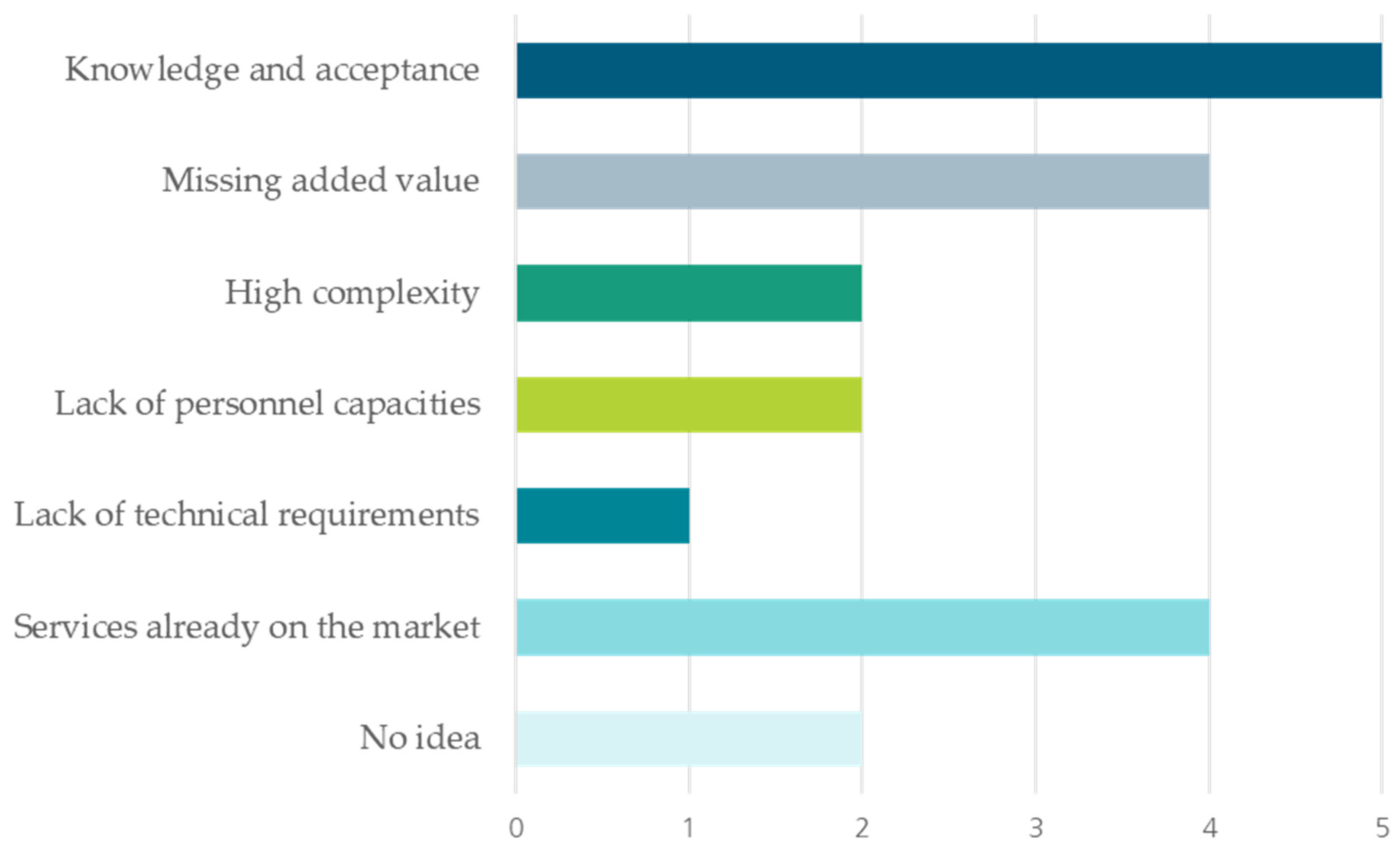
Figure 4.
Mentioned obstacles to the implementation of service-oriented and data-driven business models.
Figure 4.
Mentioned obstacles to the implementation of service-oriented and data-driven business models.
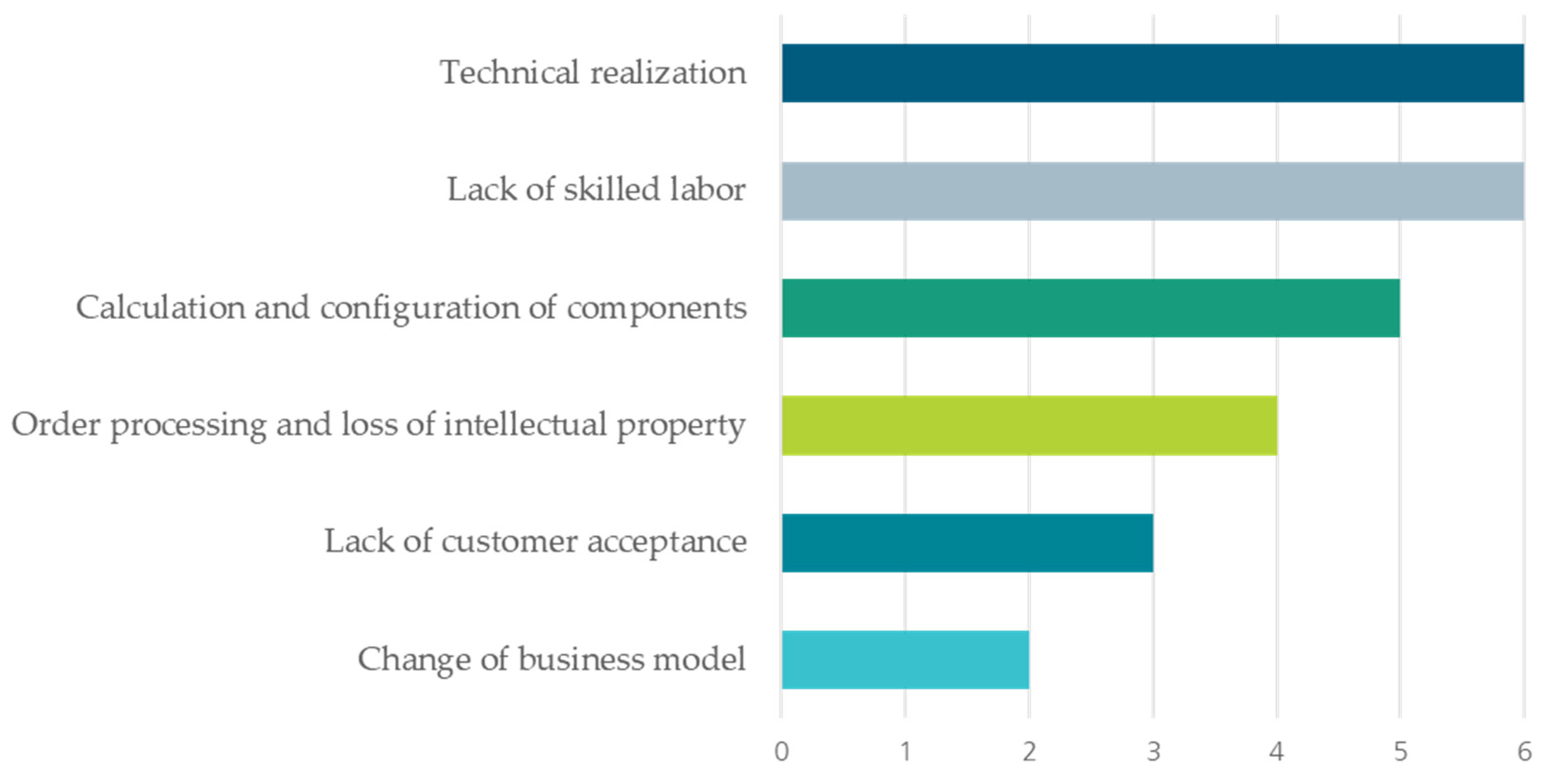
Figure 5.
Mentioned obstacles participating in ecosystems.
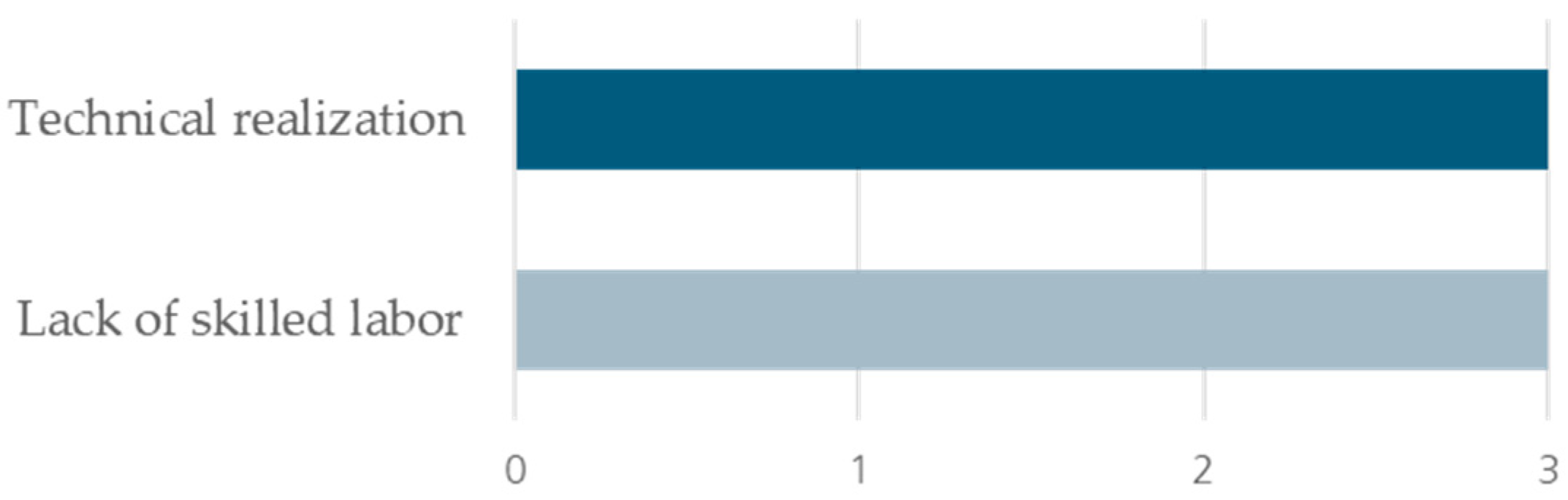
Figure 6.
Need to change business model.
Disclaimer/Publisher’s Note: The statements, opinions and data contained in all publications are solely those of the individual author(s) and contributor(s) and not of MDPI and/or the editor(s). MDPI and/or the editor(s) disclaim responsibility for any injury to people or property resulting from any ideas, methods, instructions or products referred to in the content. |
© 2024 by the authors. Licensee MDPI, Basel, Switzerland. This article is an open access article distributed under the terms and conditions of the Creative Commons Attribution (CC BY) license (http://creativecommons.org/licenses/by/4.0/).
Copyright: This open access article is published under a Creative Commons CC BY 4.0 license, which permit the free download, distribution, and reuse, provided that the author and preprint are cited in any reuse.


