

Submitted:
25 February 2024
Posted:
27 February 2024
Read the latest preprint version here
Abstract
This research concerns the virtual reconstruction and technical constructive analysis of the emblematic and disappeared Matriz church of Ambato city, whose structure was demolished after the collapse of its vaults in the 1949 earthquake, about which it was said to have had deficiencies in its construction. Through an exhaustive historical review of documents and images, its constructive hypothesis was achieved, and using photogrammetry technique, its virtual reconstruction was obtained, where, through the interpretation and understanding of the generated plans, the verification of its technical and constructive characteristics associated with its hypothetical mechanical behavior inherent to its stone construction was carried out. For the structural study, the principle of the Limit Analysis of Structures was used, where through a graphic static approach, the technical stability conditions of a masonry structure are established, in this case, to give an interpretation to the possible poor execution of the church's work, and eventual cause that could have contributed to the collapse of its vaults.
Keywords:
stone arches
; vaults
; resistance line
; line of pressure
; masonry structures
1. Introduction
On Friday, August 5, 1949, at 2:08 p.m., in the center of the Ecuadorian mountain range, an earthquake of 6.8 magnitude occurred, reported as maximum intensity X [14], which six minutes later was repeated with an intensity of 7.2 degrees [25], going down in history as the Ambato earthquake; although the earthquake had its epicenter in the town of Chacauco, near the city of Pelileo, the latter was completely devastated, with even changes in the elevation levels [24]. The destruction of Pelileo caused its survivors to establish a new city elsewhere [19]. The effects in Ambato were related to minor damage and partial collapses of structures [24]. Technical records of the time calculated an area of approximately 19,200 km2 affected, 225,000 displaced people, more than 6,000 dead, 1,000 injured, and 100,000 people homeless [25].
Perhaps the most emblematic building in Ambato until the 1949 earthquake was the Matriz church (Figure 1), designed and supervised by the German architect and Oblate and Lazarist priest Pedro Brüning, a majestic building constructed in stone, in an eclectic style with Romanesque and Renaissance influences, belonging to the Catholic Church and the bishopric of Ambato.
Of monumental character, and located on the north front of Montalvo Park, its structure was formed by five naves, with carved cornices and capitals, columns, quarry stone walls, and a characteristic local stone called Pishilata [16]; and pumice stone vaults. In the earthquake, the vaults collapsed but all the walls and its tower remained standing (Figure 2).
Cevallos (1994) suggests, "Possibly the problem arose from the original foundations predating Brüning, as well as from the issues that arose when the vault was built and the buttresses were arbitrarily removed. This last aspect bothered Brüning so much that he almost abandoned the project... time proved him right."
Physicist Alberto Semanate [24] assessed the damages of the Matriz, stating the following:
"The walls and side naves have been displaced, but the central vault has collapsed. It was destroyed not so much by the magnitude of the earthquake itself, but by the thrust, so to speak, of the reinforcement, that is, the energetic compression suffered by the side walls."
Regarding the nave and dome of the transversal chapel that started from the church tower and ran along the entire right facade, they suffered minor damage, the lantern was severely damaged, and the dome had fractured ribs [22].
After the technical evaluation of the church, it was considered that the damages were reparable [25]. However, days later, the decision was made to definitively demolish the entire building to construct the current Cathedral church, designed by architect Luis Andino [7], following the new canons of modern movement architecture, and inaugurated in 1954.
The testimonies about a possible poor execution of the Matriz church's work have led to speculation about causes that could have led to the collapse of its vaults, beyond the impact of the earthquake. Therefore, in this study, a technical approach has been used to clarify these issues.
The technical tools used were based on research for the graphic restitution of the church, and on the principle of the limit analysis of structures, through which technical stability conditions of the structure are determined based on its geometric condition using graphic statics. Therefore, after the research to obtain graphic restitution plans as faithful as possible to the originally constructed work, an analysis could be made to obtain possible answers to the alleged poor execution of the work.
2. Material and Methods
2.1. Graphic Historical Research
This work included the investigation of the church's construction history, its background, precursors, authors, designers, techniques, materials, and all human and mechanical aspects employed during its execution. The analyzed information comprised bibliographic research, cartography, plans, documents, historical photographs, and others related, as well as taking measurements of current references of the property and its surroundings for scale, location, and placement accuracy.
2.2. Constructive Hypothesis
The constructive hypothesis included the interpretation of all the graphic resources investigated to determine the constructive characteristics and organization of spaces, as well as architectural techniques, materials, and style.
2.3. Graphic Restitution
The graphic restitution of the Matriz church included the architectural survey of interpretation, supported by photogrammetry and modeling in a CAD-type drawing program, with which sufficient graphic components could be obtained for various analyses, and in this case for structural analysis with detailed plans of the floor, facades, sections, and implantation.
2.4. Structural Analysis
The structural analysis was carried out through a simplified study referring to the theory of the Limit Analysis of Structures, through which the stability conditions of brick buildings in their limit state can be known, also constituting a useful and reliable tool for the prevention of eventual collapses. In this case of the Matriz church, the study focused on the mechanical behavior of the church's central nave. With the graphic simulation carried out, this tool has been applied to understand the peculiarities of its apparent mechanical behavior and the possible causes that could have influenced the hypothesis of poor work execution.
Limit Analysis of Structures
From a technical perspective, there are several methods for evaluating structural stability based on graphic static parameters. The analysis of the safety theorem or the theory of the limit analysis of structures follows the principles developed by scientist Jacques Heyman, whose long-standing foundations can be studied through extensive bibliography [10], [11], [12]. In general, it considers the following: given a structure, if it is possible to find an equilibrium situation compatible with the loads that does not violate the limit condition, the structure will not collapse. Applied to brickworks, this means that if it is possible to draw a thrust line contained within the structure, the structure will not sink. The power of the theorem lies in the fact that the thrust line - equilibrium situation can be chosen freely. A line, or a set of lines, can apply safety conditions to each of the sections it crosses, thus obtaining a lower limit for the geometric safety coefficient: considering that all structures have at least that safety coefficient (Figure 3).
The structural analysis using graphic methods is carried out on brick arches built with composite and heterogeneous materials. The analysis assumptions are: zero tensile strength, compressive strength can be considered infinite, and there can be no displacement between the voussoirs since the friction and weight are very high [8]. It is considered that the thrust lines are the way in which the internal stresses generated travel through the structure [13].
These lines are directly affected by variations in loads, either by self-weight or additional loads. Robert Hoock in 1670 mentions that if the forces follow the shape of the inverted catenary, they are reduced to the minimum section and the arch does not collapse, meaning that the geometry of the structural element can contain the stress line and maintaining stability [5]. It is important to distinguish between the resistance line and the pressure line, which is understood as the envelope of the thrust directions [13].
To verify stability, the angle formed by the direction of the resultant in each section plane must be within the limits defined by a right cone whose axis is normal to the contact surface at the center of thrusts and whose angle is twice the angle of friction between the solids. The intersection of the resultant directions in each section is tangent to the line called the line of inclinations [5].
In the conceptual scheme presented by Moseley [21], (Figure 3), in which a distinction is made between the resistance line and the pressure line, the directions of the successive thrust forces are arbitrary and not properly proportioned according to the corresponding weights of the successive stone blocks. To know the equilibrium state of a structure, it is necessary to know both lines: the thrust line and the line of inclinations [21].
Due to the existence of an infinite number of physically admissible failure directions, the principle of stationary potential energy emerges as the most powerful tool for analyzing masonry arches in their limit state of equilibrium, where the vertical rupture is the most critical failure direction, as it results in the highest value of minimum thickness needed for an elliptical arch to support its own weight [1].
There are two distinguishable physically admissible methods regarding the minimum thrust lines, one using a polar coordinate system and the other using Cartesian coordinates. Both depend on the stereotomy applied to the arch, specifying that the response for the minimum thickness of symmetrical masonry arches is not unique and depends on the adopted coordinate system [1]).
The resolution in canonical geometric models is immediate, simple, and very intuitive. The possibility of particularizing the arches allows for an exploration of equilibrium possibilities, highlighting their direct relationship with geometry [20].
This theorem is widely used in Europe for the analysis of its many architectural monuments, although with less history in America, and has become a useful tool for understanding the structural behavior of masonry structures, aside from computer programs. It maintains the authenticity of the empirical structure, and at the same time, respects its mechanical characteristics and resistance principles [23].
In the case of the disappeared Matriz church, and once the documentation regarding the collapse of its central vault in the 1949 earthquake was analyzed, it was considered necessary to study its mechanical behavior, to eliminate the possibility of a contributing factor to the collapse of the central vault.
Therefore, the purpose of this research is to demonstrate through the graphic static method the relationship between stability, safety, and geometry of the structure, to establish a possible technical response to the collapse, beyond the impact of the earthquake.
3. Results and Discussion
3.1. Graphic Historical Research
To obtain historical information as reliably as possible for the architectural restitution survey of the Matriz church, primary and secondary sources were investigated in the city's archives and libraries, the Diocesan Curia of Ambato, the National Zonal Historical Archive of Tungurahua, academic repositories with undergraduate and graduate works, as well as photographs from private sources, and websites with old photographs [15], [3], [9]. These digital resources have provided a considerable number of unpublished photographs over time that have significantly enriched this part of the study.
To complement the exhaustive historical review, historical videos were also reviewed, interviews were conducted with historians and Ambato residents with an interest in the subject and substantial knowledge about the Matriz church.
3.2. Constructive Hypothesis
Based on the collected information, the process of image selection was carried out, and 91 photographs were chosen, which were processed into a descriptive matrix of elements and spaces to proceed with the interpretation of the structure.
The existing evidence, verified through historical images, showed a spatial rhythm that allowed the structuring of the naves; however, since complete information about the structure was not available, the reconstruction was carried out to the extent that the hypothesis allowed.
In the referential comparison of the facade plan with one of the photographs of the church in the process of demolition, considered because it was one of the clearest, it was possible to notice the addition of a mezzanine in the lower floor segment, and an addition in the upper segment.
In the lower floor segment compared to the original plan, the height of the main entrance was doubled, maintaining the alignment of the windows with the top of the entrance, with which, downwards, in the added height, two doors were added on each side of the main entrance.
While in the upper segment, a space was added above the five projected and constructed windows, where the symbol of the Lamb of God, and the coats of arms of the Cardinal and the Province of Tungurahua were placed (Figure 4).
Despite the difference between what was drawn and what was built, the graphical scale of Brüning's facade allowed for the provision of images and the implementation of photogrammetric processing to transfer measurements to the interpretive drawings (Figure 5). It is possible to observe the superimposition of axes in the original drawing to extract the dimensions of the naves. The structural configuration of the plan emerges from the axes of this facade, also considering photographs of the interior before and after the earthquake.
3.3. Graphic Restitution
The graphic restitution was carried out with the photogrammetric survey of the general plan, roof plan, and elevations of all exterior facades of the church, including all its architectural components, including its parapet, tower, and side chapel, as well as the longitudinal sections of the church's naves.
In addition, complete transverse sections of the church were made, one at the height of the narthex, another at the height of the high choir, one in the center of the church, and one in the presbytery. All plans were properly dimensioned and included a location plan relative to the block and the plan of the city's central core, with the respective graphic scale references, north direction, and other relevant markings for the correct reading of these.
The architectural survey included the graphic delineation of plans at a 1:100 scale, of the location, general plan (Figure 6), roof plan, and elevations of all exterior facades of the church as a whole, including all its architectural components, including its parapet, tower, and side chapel (Figure 7), as well as the longitudinal sections of the church's naves (Figure 8), one for each nave; and the complete transverse sections of the church, one at the height of the narthex, another at the height of the high choir; one in the center of the church; and one in the area of the presbytery.
All plans were properly dimensioned and included a location plan relative to the plan of the city's central core, with the respective graphic scale references, north direction, and other relevant markings for the correct reading of the plans.
3.4. Vault section Selection
The study consisted of analyzing a section of the central nave, based on the photographic and historical evidence mentioned above. Comments have been made regarding this central nave, suggesting that it was not built with buttresses, leading to speculation about poor workmanship. It is evident in historical photographs of the church that such buttresses were not constructed, which could put the structure at high risk of collapse. As mentioned earlier, a year before its collapse, its cracking had already been noticed:
"In a building of these characteristics, buttresses are of fundamental importance to resist the thrusts of the vaults. For example, in the same Matriz, whose slender wall of the facade in the segment corresponding to the vaults did not collapse, probably due to its configuration with lateral triangular segments, which beyond architecturally composing the facade, could also act as buttresses. Thus, the slender composition of the central nave without apparent buttresses was nothing more than a house of cards waiting for a breath to come crashing down" [18].
Therefore, during an inspection of the exterior part of the vault carried out by some ecclesiastical authorities in 1947, the presence of some deep cracks would have been noted. Upon this, the auditor of the nunciature, Monsignor Salvador Siino, instinctively exclaimed, "God willing, Ambato does not have a strong earthquake, because this construction will not withstand a strong seismic movement!" [7].
The addition of height observed in the two front segments gave the church a greater elegance, an aspect that is of interest in the structural analysis, even considering that Father Brüning was overseeing the modified work compared to the original plan when he was upset by the elimination of the buttresses.
The central barrel vault with lunettes, made of pumice stone (Figure 9), apparently had the same characteristics in seven of its eight sections, ending its head in an apse, and its foot in the narthex equivalent to the eighth section. This last section articulated the entire composition of the facade wall and the tower from where the front lateral nave of the church started, meaning finishes that remained standing after the earthquake.
Having the central nave with similar characteristics along its entire length, with the challenge of spanning the largest free span of 10.20 m, and since it was the most critical structurally for not having buttresses, a standard section was considered for analysis, corresponding to one of the seven sections with a transverse measurement of 5.80 m (Figure 10), which is the most common measurement.
The results of the Structural Limit Analysis, obtained from one of the most repeated sections of the central vault, were based on the study of the vault section in this section, which was divided in half into 13 parts, from which the area and the center of gravity were obtained (Figure 11). It should be considered that the criterion of taking half of the vault for the division into 13 parts is due to the symmetry it presents, simplifying the analysis of structural stability. With these geometric data and knowing that the specific weight of pumice stone is 9 kN/m3, it was possible to obtain the lines of action and the value of the weights of each vault section. To obtain the weight, the area is multiplied by the length of the section considered (5.80 m) and by the specific weight of the stone.
Next, the weight of the wall was added; for this, the weight of the elevation of a vault section was estimated, considering the solid areas at the start of the vault and the pillars at the bottom (Figure 12). In this figure, on the left, the hatched area in the elevation and the section that has been considered as the wall area are graphed; on the right, the area and weight considered for the wall are graphed, obtained in the same way as for the voussoirs.
With the data obtained, different thrust lines were tested on the vault, drawing the weights and lines based on a graphic scale according to their value in kN, assuming different thrust values on the central keystone, finding that there is none that can be completely drawn inside.
A thrust line was initially tested, drawn in green, which turned out to be too flat and immediately exits through the sides of the vault. Consequently, the thrust is progressively reduced with two other lines, in red and purple. The purple one corresponds approximately to the minimum thrust; it touches the upper end of the vault in the keystone area and exits through the intrados in an intermediate area (Figure 13), in this figure on the left, the cross-section of the vault is graphed with the three thrust lines and; on the right, the force polygons (voussoirs and wall) are graphed which serve as a basis for drawing the thrust lines graphed in green, red, and purple.
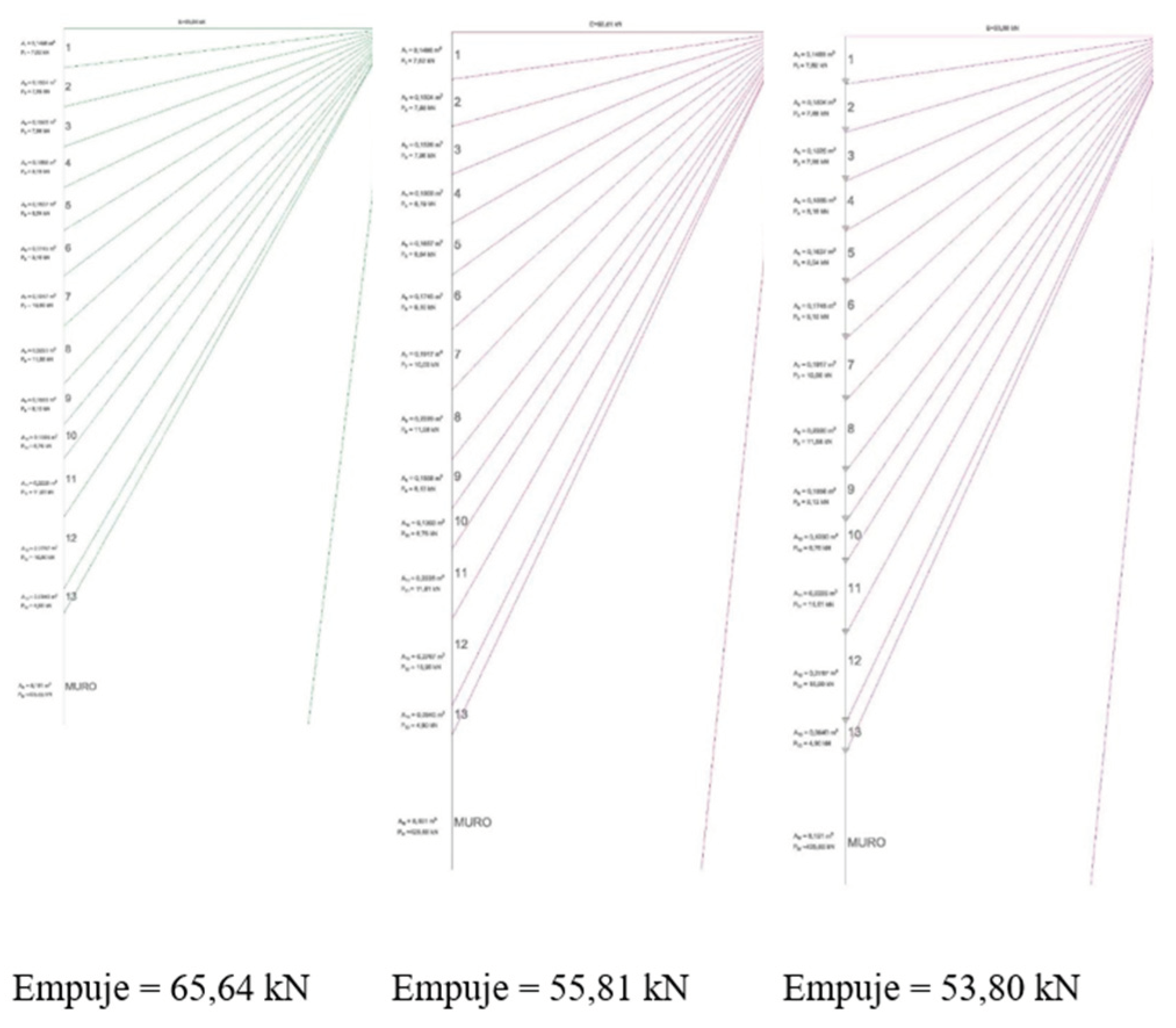
The three lines could be roughly drawn inside the vault, assuming a solid fill in the kidney area; it turned out that all of them exit at the base of the wall or pillar, thus demonstrating an insufficient thickness of this element and the need for the church to have a structural solution to provide the necessary stability to the vaults and therefore to the entire structure. The thrust lines on the cross-section of the vault, as well as the force polygons constructed to draw them, were graphed showing the detail of the force polygon (Figure 14), with the areas and weights of all the voussoirs, and the start of the wall with its data.
The structural analysis performed on the virtual reconstruction of Ambato's Matriz Church confirmed that, from a technical standpoint using the Limit Analysis of Structures tool, its apparent construction deficiency could have led to a potential collapse at any moment, as had been evidenced by its significant cracking two years before its collapse. Furthermore, if an external factor such as an earthquake could intervene, the imminent risk of collapse would increase even further.
It's also important to note that the analysis was carried out only on a segment of the church; other structural elements that work together with the central vault were not considered. It was found that there was no possibility to adjust the distribution of the force polygon in the analyzed structural configuration, causing there to be no safety margin for the central vault. Indeed, as was verified, the thrust lines in the vault, despite being built with pumice stone, generated significant compression in the supporting structure.
It was possible to determine with the force polygons and therefore with the thrust lines, how these lines exited the supporting structure, demonstrating that there was not a sufficient thickness in these elements to contain it and that it did not pose a risk of imminent collapse at any time, an issue in which the construction of buttresses would undoubtedly have greatly contributed, precisely those that were not installed, and which are fundamental for these masonry works. With the absence of buttresses, a structural element devoid of reinforcements was obtained, which could collapse at any moment, especially in the event of an earthquake.
4. Discussion and Conclusions
The historical investigation and architectural reconstruction of the Ambato Cathedral provided a basis for its structural analysis. The Limit Analysis of Masonry Structures method used to analyze the stability of arches, vaults, and domes is based on the equilibrium of forces in cross-sections of the structure. By dividing the vault or arch under loading conditions, the method allows determining the maximum forces acting on the structure and, therefore, evaluating its stability.
Despite its simplifications and limitations, this method remains a valuable tool in the analysis of these structures, often complemented by other approaches to obtain more precise and complete results. To this day, its application continues for studying the stability of historical buildings and making decisions for their restoration or structural rehabilitation.
The result of the structural analysis using the Limit Analysis method was that the thrust lines were not within the base of the structure, causing structural instability in the central vault. It should be noted that, despite the poor structuring of the Matriz church, it remained standing and in operation, apparently in optimal conditions.
Through the Limit Analysis of Structures, the opinions that served as the basis for its realization could be verified, namely, the historical assertions regarding the possible technical construction deficiencies and the fact that buttresses were not built to resist the thrusts of the central vault, a possible factor contributing to its collapse in the 1949 earthquake.
The work carried out constitutes a contribution to the history of construction in the city and to the mechanical behavior of this type of building, in view of stylistic comparative analyses, as well as preventive measures for similar existing buildings, especially in a seismic concentration zone.
Its development led to the creation of a research line for the Faculty of Design and Architecture, focusing on the early 20th-century architecture in the central sierra of Ecuador.
Author Contributions
Conceptualization, F.L.; Methodology, F.L., E.R. and I.G.; Software, E.R. and F.L.; Validation, E.R. and F.L.; Formal analysis, E.R., I.G. and F.L.; Investigation, F.L.; Resources, F.L.; Data curation, E.R., I.G. and F.L.; Writing, F.L., E.R., L.Ch. and A.G.; Original draft preparation, F.L.; Writing-review and editing, F.L., L.Ch. and A.G.; Visualization; F.L.; Supervision; F.L.; Project administration, F.L.; Funding acquisition, F.L. All authors have read and agreed to the published version of the manuscript.
Funding
This work, derived from the research project "Architectural Analysis of the Central Core of Ambato between 1895 and 1949: Styles, Types, Techniques, Losses, and Permanences" (López-Ulloa Coord., 2023), was carried out with the direct support of the Universidad Técnica of Ambato, through the Dirección de Investigación y Desarrollo, as the winning project of the 2021 call for funded projects. Grant number UTA-CONIN-2021-0233-R.
Institutional Review Board Statement
UTA-CONIN-2021-0233-R.
Informed Consent Statement
Not applicable.
Data Availability Statement
In this article, for the first time, a structural behavior simulation of the disappeared Matriz church in Ambato is conducted.
Acknowledgments
Special thanks are extended to the collaborative team, which included external researchers, interns, and assistants, as well as to the support and monitoring team of the project, composed of the managerial and administrative staff of the Universidad Técnica of Ambato, the Dirección de Investigación y Desarrollo, the research operational unit, and the Faculty of Design and Architecture.
Conflicts of Interest
The authors declare no conflict of interest.
References
- Alexakis, H., y Makris, N. (2013). Minimum thickness of elliptical masonry arches. Acta Mechanica 224(12), 2977–2991. [CrossRef]
- Alexakis, H., y Makris, N. (2015). Limit equilibrium analysis of masonry arches. Archive of Applied Mechanics 85, 1363–1381. [CrossRef]
- AAH. (2022). Facebook Ambato Ayer y Hoy. Available online: https://www.facebook.com/Ambatoayeryhoy/photos.
- Archivo Blomberg. (2022). Iglesia Matriz de Ambato después del terremoto de 1949.
- Casado, A. (2012). Análisis estructural por medio de los métodos gráficos, Trabajo de fin de grado. Barcelona: Universidad Jaume I.
- Cevallos, A. (1994). Arte, diseño y arquitectura en el Ecuador : la obra del Padre Bruning, 1899-1938, Museos del Banco Central del Ecuador. Quito: Ediciones Abya-Yala.
- Echeverría, B. (1968). La Catedral de Ambato, Ambato: Editorial Pio XII.
- Heyman, J. (1969). The safety of masonry arches. International Journal of Mechanical Sciences. 11, 363–385.
- FAA. Fotos antiguas de Ambato antiguo 1840-1980. Available online: https://www.facebook.com/groups/fotosantiguasdeambato/?locale=es_LA.
- Heyman, J. (1982). The masonry arch, (Ellis Horwood Ltd. (ed.); 1st ed.). Chichester.
- Heyman, J. (1995). Teoría, historia y restauración de estructuras de fábrica, (Instituto Juan de Herrera (ed.)).
- Heyman, J. (1999). El esqueleto de piedra. Mecánica de la arquitectura de fábrica, Madrid: Instituto Juan de Herrera.
- Huerta, S. (2004). Arcos, bóvedas y cúpulas. Geometría y equilibrio en el cálculo tradicional de estructuras de fábrica, Madrid: Instituto Juan de Herrera.
- IGPN. (2011). Instituto Geofísico. Escuela Politécnica Nacional. El gran terremoto de Pelileo: 5 de agosto de 1949. Available online: https://www.igepn.edu.ec/servicios/noticias/456-gran-terremoto-de-pelileo-5-de-agosto-de-1949.
- INPC. (2022). Fotografía patrimonial. Instituto Nacional de Patrimonio Cultural. Terremoto de Ambato Iglesia Catedral. Available online: http://fotografiapatrimonial.gob.ec/web/es/galeria/element/14227.
- López Ulloa, F. (2013). La construcción tradicional en Ambato -Ecuador, a finales del siglo XIX y principios del XX. La piedra Pishilata. Actas del Octavo Congreso Nacional de Historia de la Construcción. Madrid, 9-12 de octubre de 2013, Madrid: Instituto Juan de Herrera.
- López Ulloa, F. , Coord. (2023). Análisis arquitectónico del núcleo central de Ambato entre 1895 y 1949: estilos, tipos, técnicas, pérdidas y permanencias. Proyecto de investigación. Dirección de Investigación y Desarrollo. Universidad Técnica de Ambato.
- López Ulloa, F. (2024). La efímera existencia de la iglesia Matriz de Ambato, 1904-1949. Cuadernos del Centro de Estudios en Diseño y Comunicación, (en edición). Buenos Aires: Universidad de Palermo.
- MCE. (2010). Las voces vivas del terremoto de 1949. Pelileo: el primer Memorial Público de Conciencia del Ecuador, Ministerio de Cultura del Ecuador. Ilustre Municipio de Pelileo. Quito: Subsecretaría de Patrimonio Cultural.
- Mencías Carrizosa, D. (2017). La geometría analítica como herramienta de análisis estructural de fábricas históricas, Tesis doctoral. Universidad Politénica de Madrid. Available online: http://oa.upm.es/47167/.
- Moseley, H. (1835). On the Equilibrium of the Arch, C. P. Society.
- Poveda, L. (2020). Estudio del Repertorio Religioso Patrimonial del Centro de la Ciudad de Ambato para el desarrollo de una propuesta de reconstrucción virtual con nuevas tecnologías de visualización. Trabajo de fin de grado. Universidad Tecnológica Indoamerica. Available online: http://repositorio.uti.edu.ec//handle/123456789/1665.
- Roca, P. (2010). Fiabilidad de las estructuras patrimoniales. Fiabilidad de las estructuras patrimoniales.
- Semanate, A. (1950). Sismología del terremoto de Pelileo, Quito: Casa de la Cultura Ecuatoriana.
- Torres, J. (2021). Ambato Terremoto y reconstrucción (1949-1961), Quito: Universidad Andina Simón Bolívar.
Figure 1.
Ambato. Matriz Church. Front facade ca. 1935. Source [3].
Figure 1.
Ambato. Matriz Church. Front facade ca. 1935. Source [3].
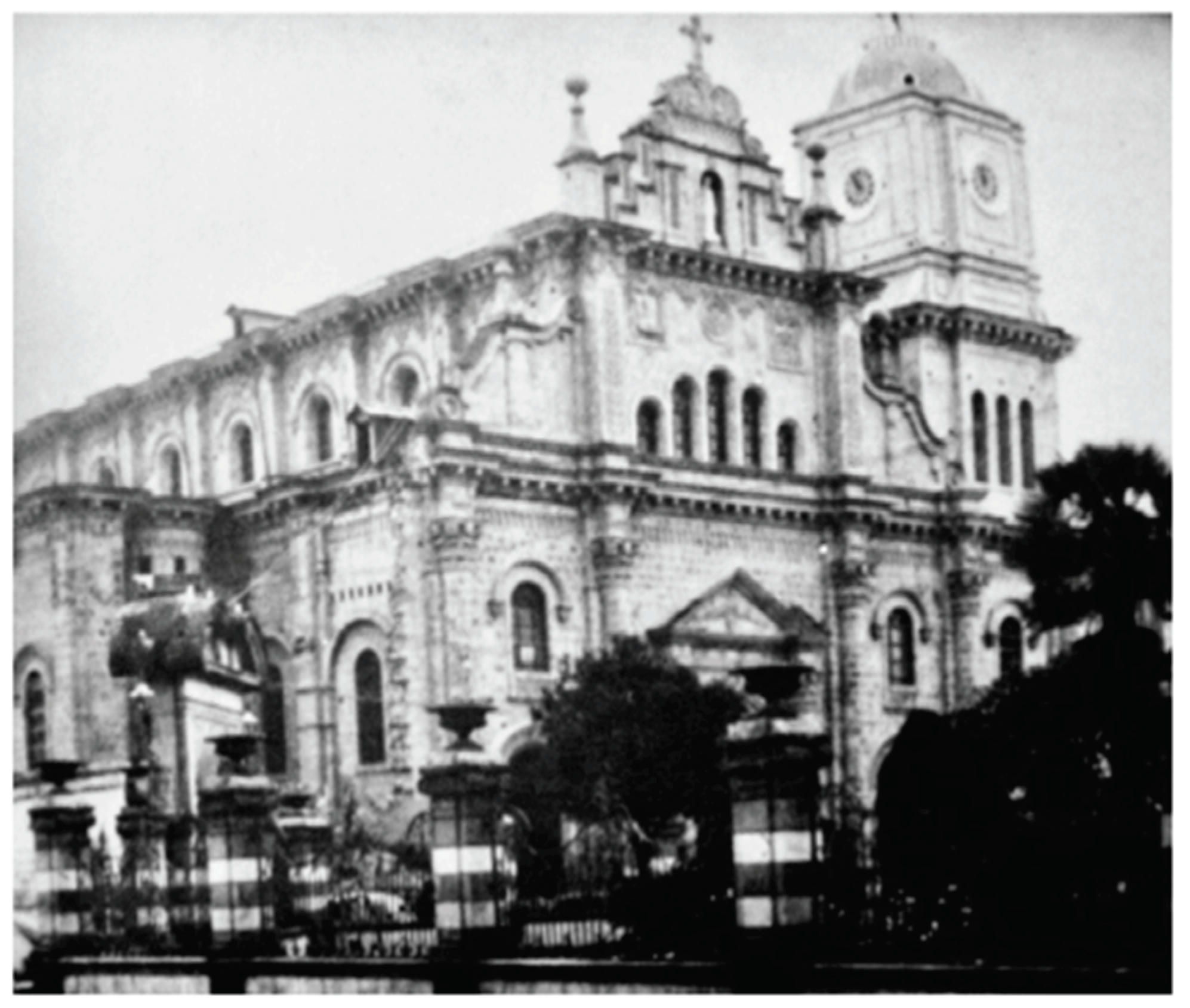
Figure 2.
Ambato. Matriz Church. Front facade and interior of the central nave after the 1949 earthquake. Source [3,4].
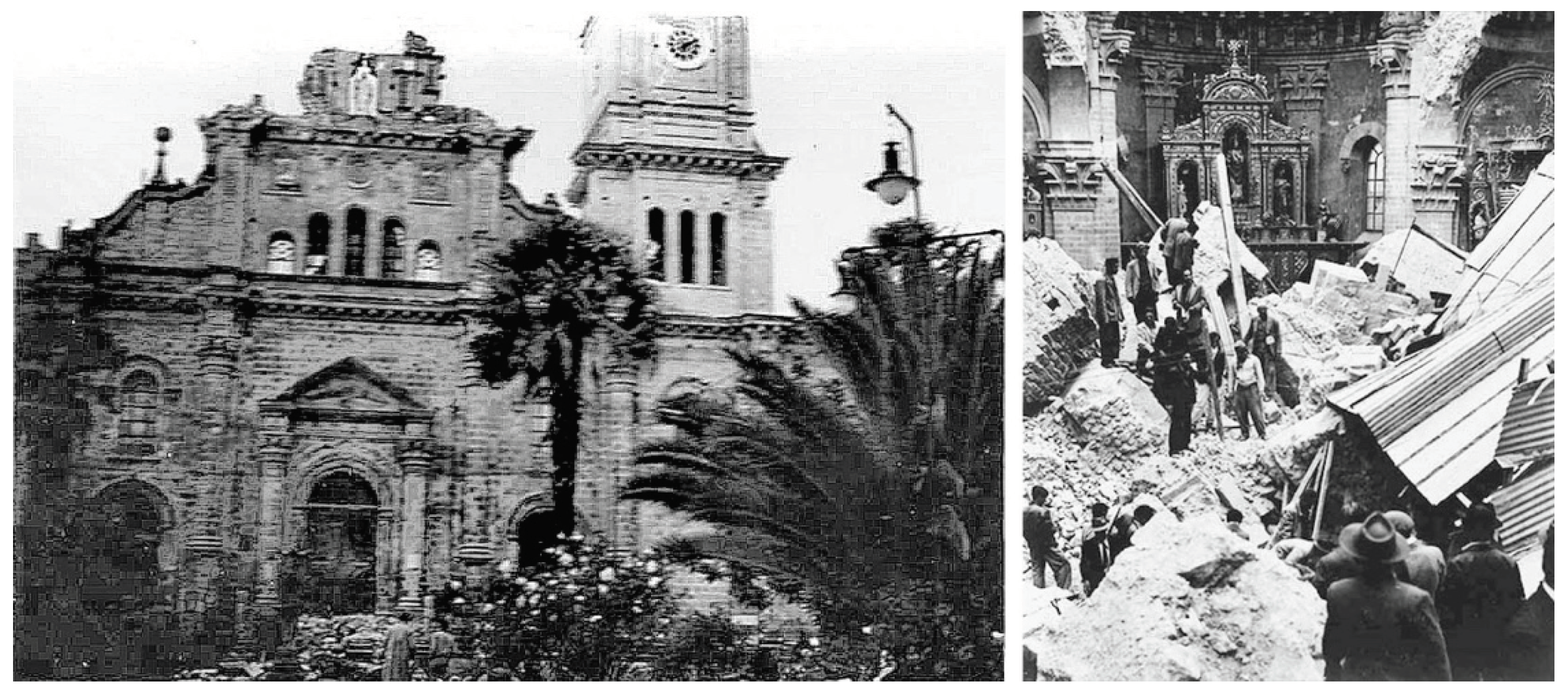
Figure 3.
Line of resistance and line of pressure. Graphic method of analysis. Source [21].
Figure 3.
Line of resistance and line of pressure. Graphic method of analysis. Source [21].
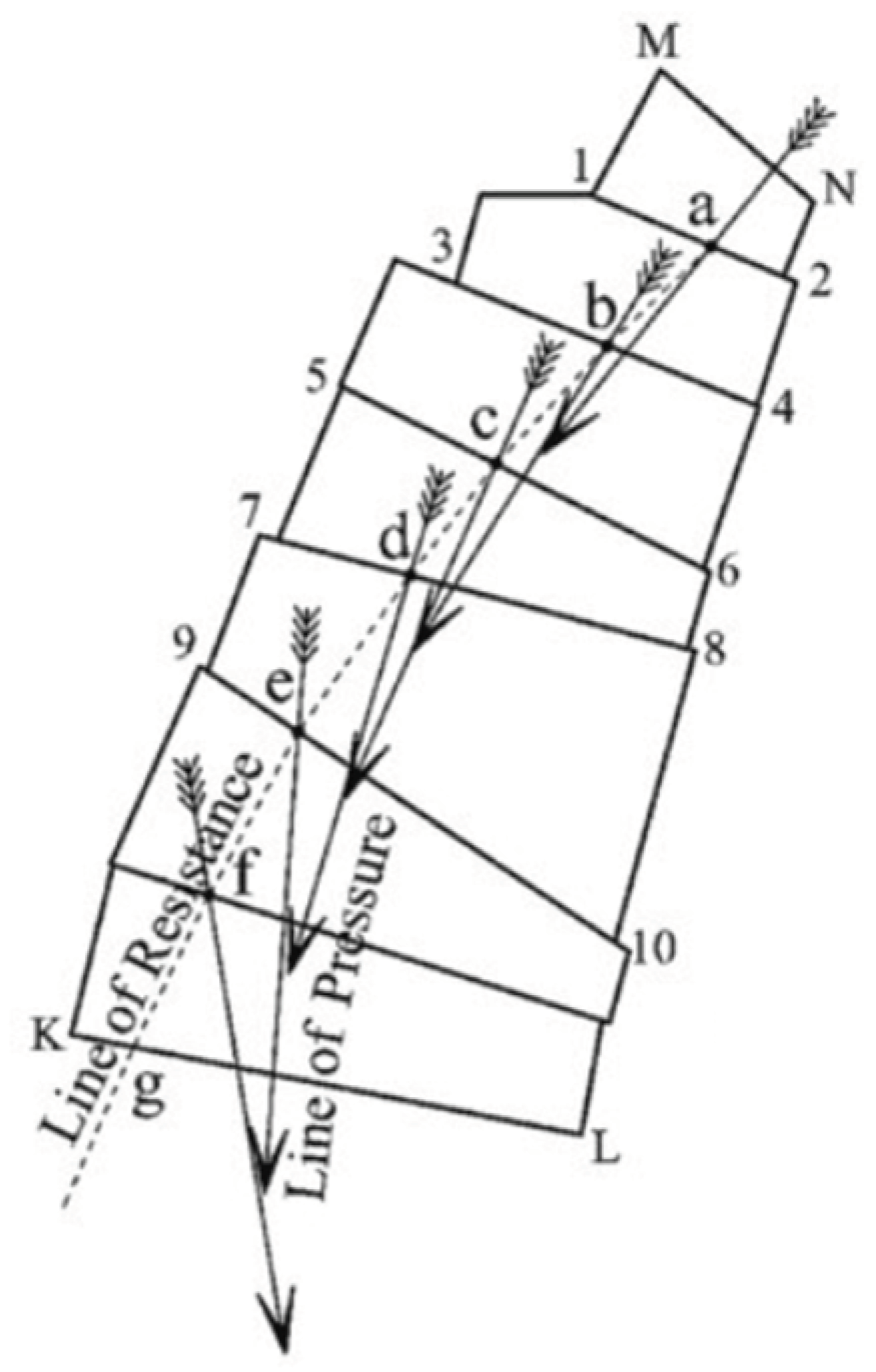
Figure 4.
Ambato. Matriz Church. a) Facade designed by Pedro Brüning, 1910. b) Facade in the process of demolition after the 1949 earthquake. Source [15].
Figure 4.
Ambato. Matriz Church. a) Facade designed by Pedro Brüning, 1910. b) Facade in the process of demolition after the 1949 earthquake. Source [15].
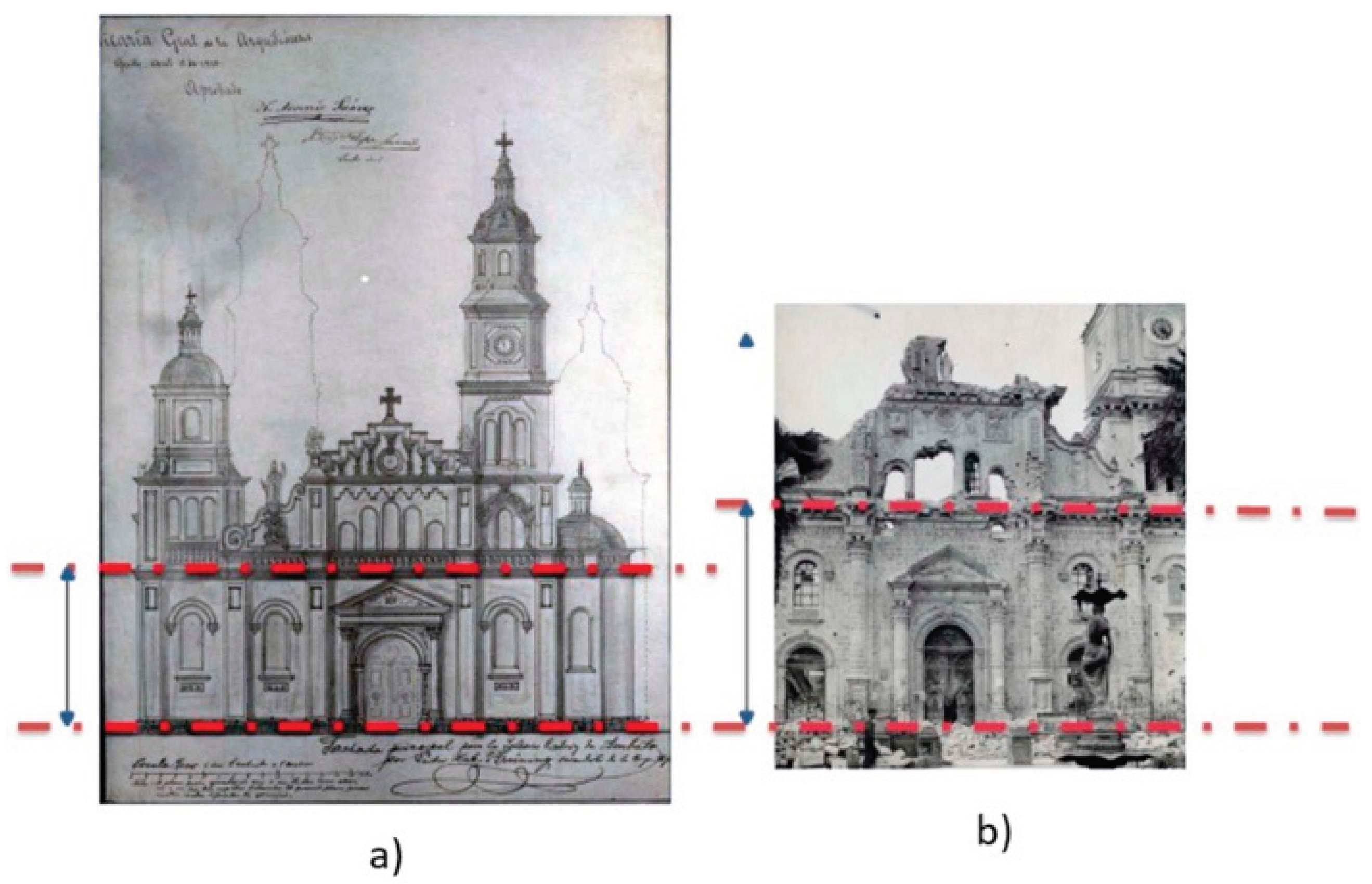
Figure 5.
Superposition of axes in the original drawing by Father Brüning to extract the dimensions of the naves. Source: Illustration by the authors. Source [15].
Figure 5.
Superposition of axes in the original drawing by Father Brüning to extract the dimensions of the naves. Source: Illustration by the authors. Source [15].
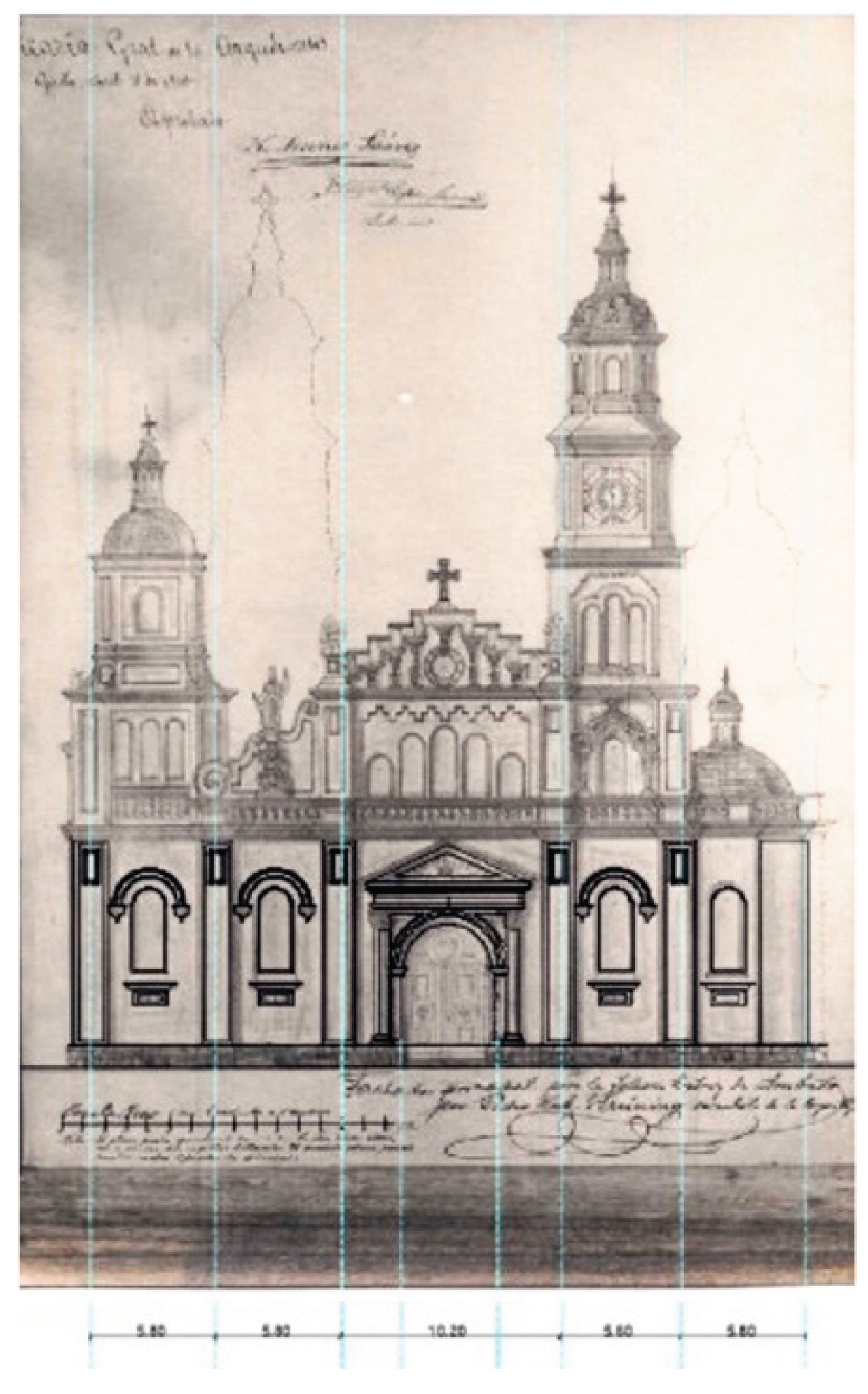
Figure 6.
Ambato. Matriz Church. Graphic restitution of the floor plan and block reference. Source [17].
Figure 6.
Ambato. Matriz Church. Graphic restitution of the floor plan and block reference. Source [17].
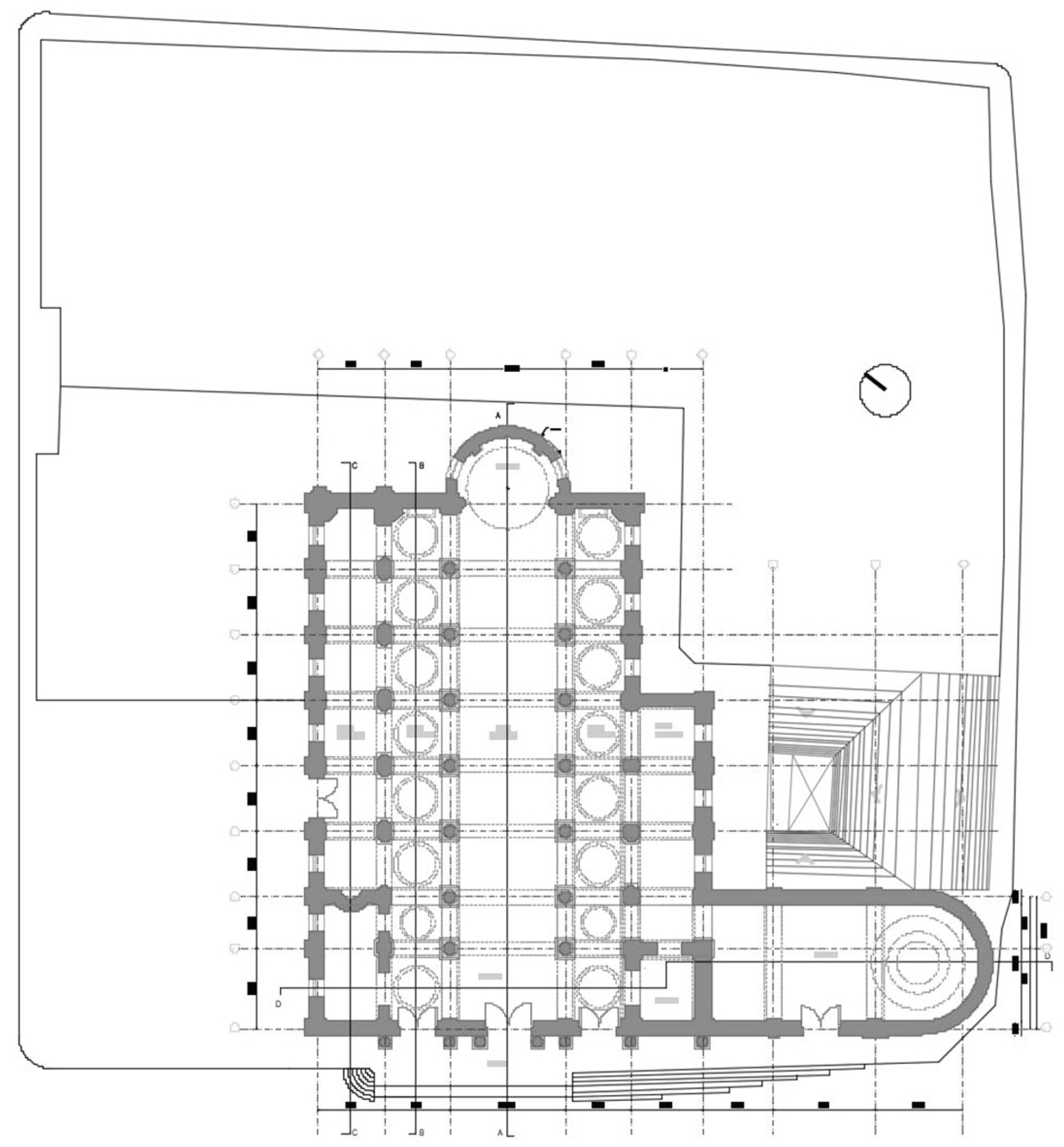
Figure 7.
Ambato. Matriz Church. Graphic restitution of the front facade. Source [17].
Figure 7.
Ambato. Matriz Church. Graphic restitution of the front facade. Source [17].
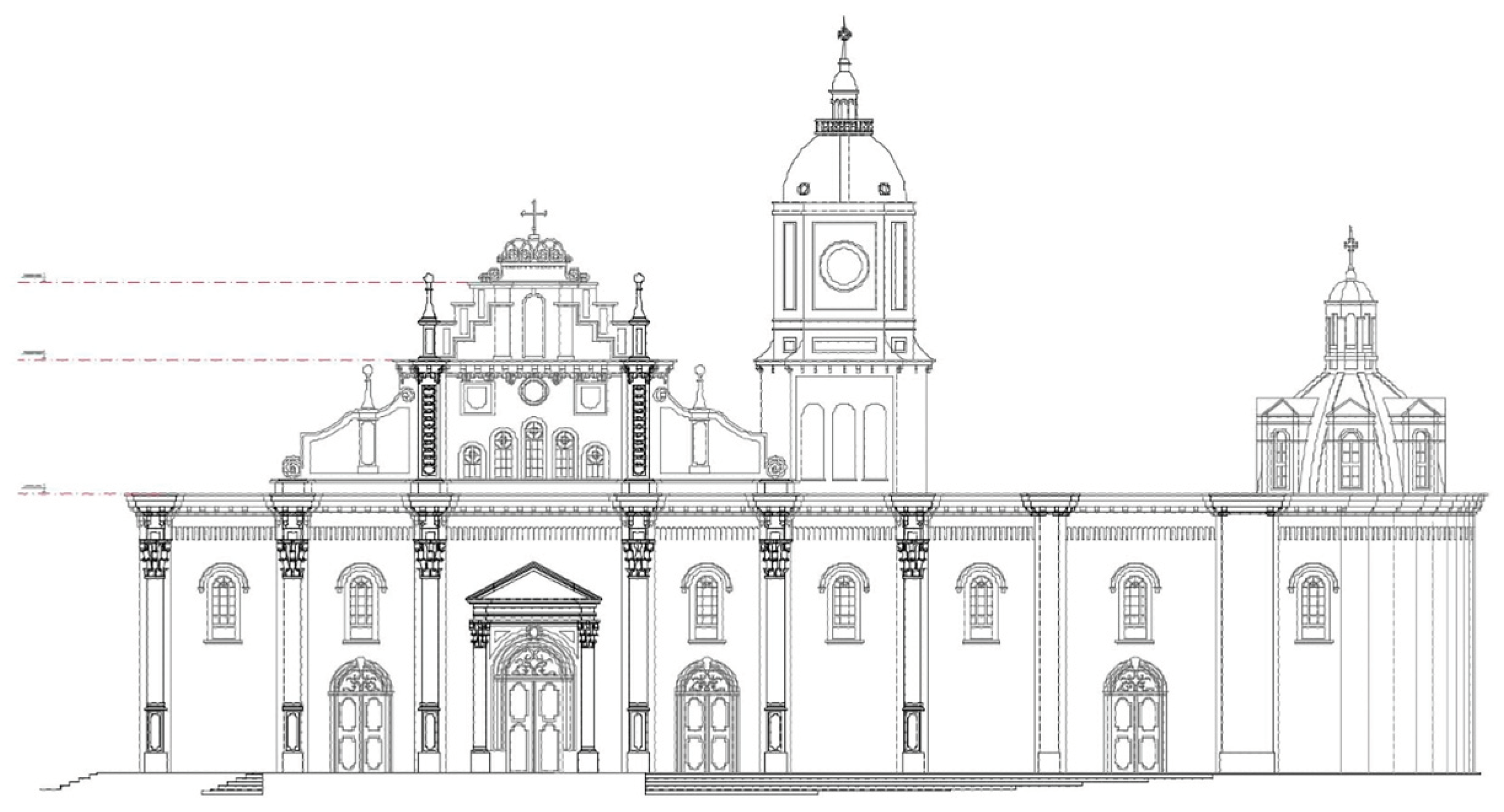
Figure 8.
Ambato. Matriz Church. Graphic restitution of the transverse section at the foot of the temple and transverse chapel. Source [17].
Figure 8.
Ambato. Matriz Church. Graphic restitution of the transverse section at the foot of the temple and transverse chapel. Source [17].
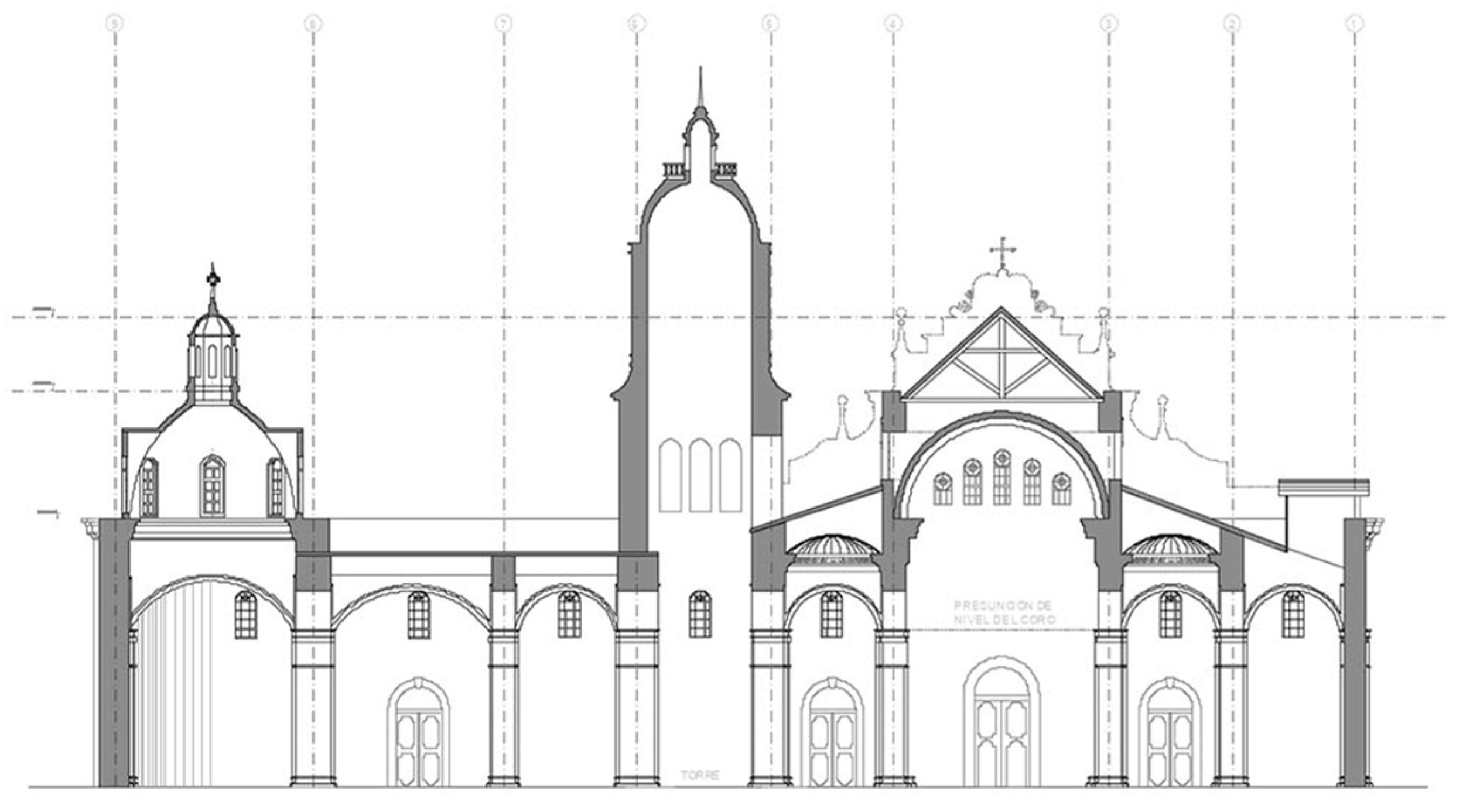
Figure 9.
Ambato. Matriz Church. Central nave and roof breakdown, and plan. Source: Photo AAH (2022). Illustration by the authors (2023).
Figure 9.
Ambato. Matriz Church. Central nave and roof breakdown, and plan. Source: Photo AAH (2022). Illustration by the authors (2023).
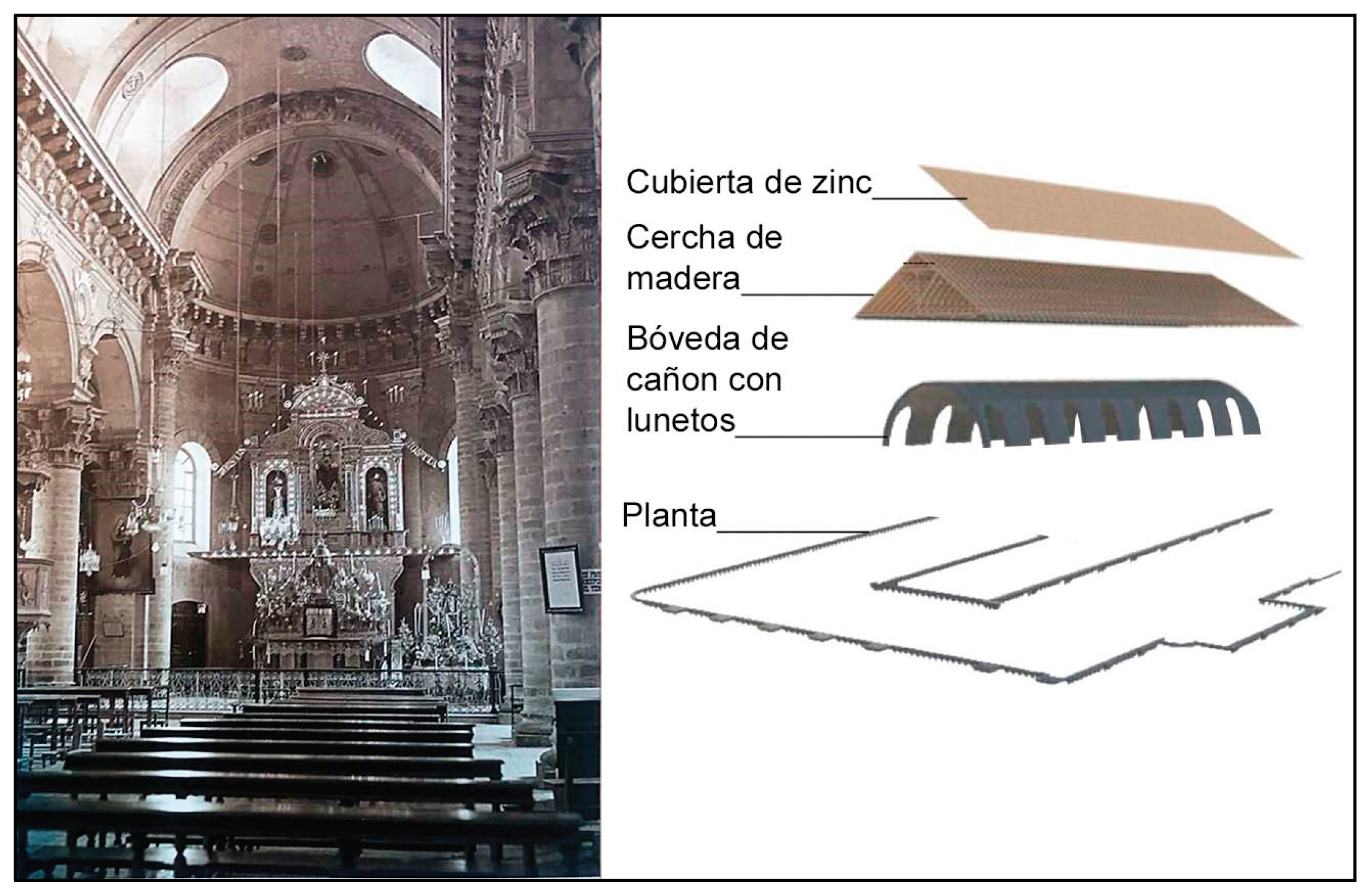
Figure 10.
Ambato. Matriz Church. Typical section of the central nave for analysis. Illustration by the authors (2023).
Figure 10.
Ambato. Matriz Church. Typical section of the central nave for analysis. Illustration by the authors (2023).
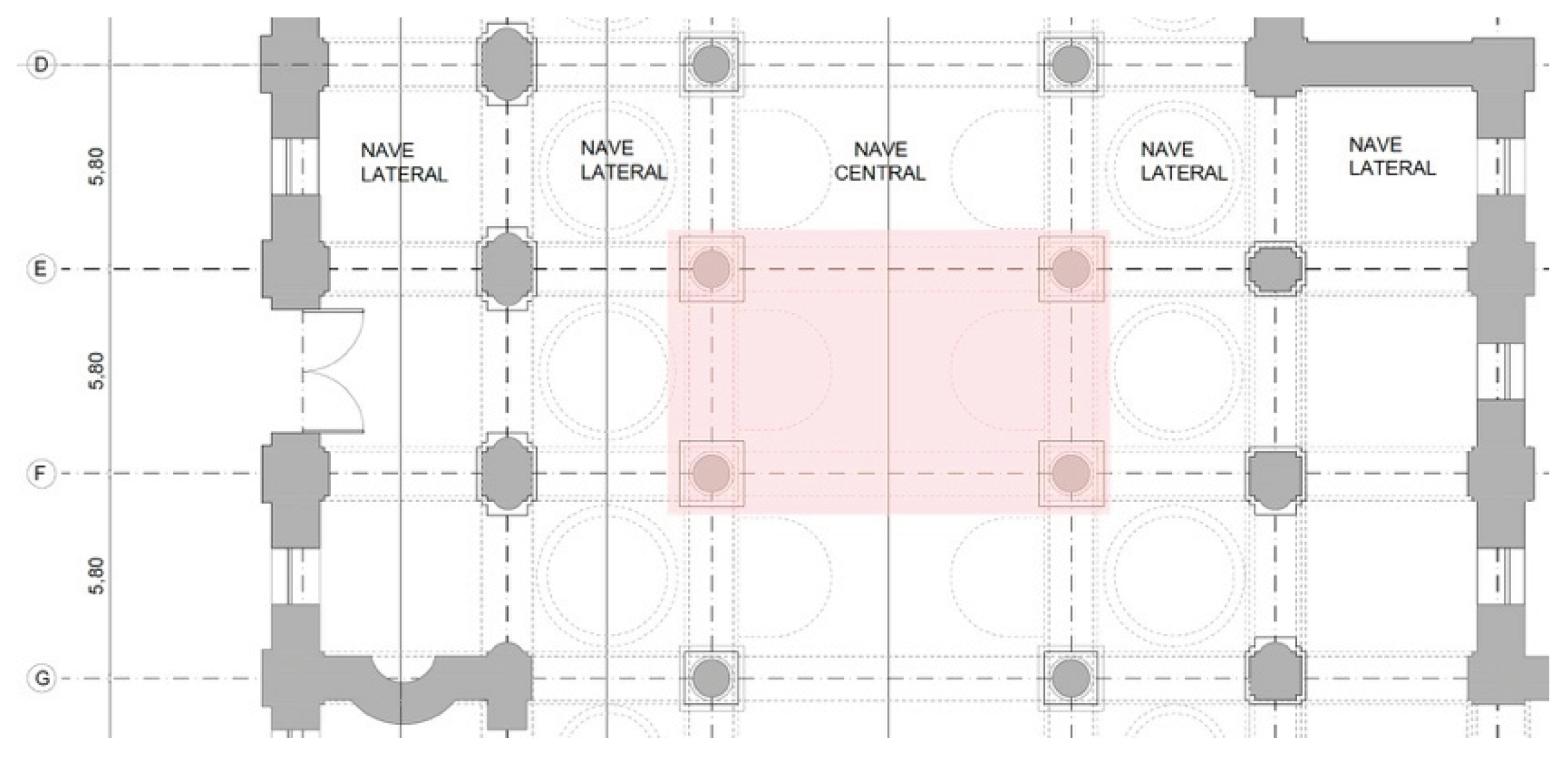
Figure 11.
Ambato. Matriz Church. Structural analysis. Section of the central vault section with the breakdown into 13 voussoirs and graph of their weights. Illustration by the authors (2022).
Figure 11.
Ambato. Matriz Church. Structural analysis. Section of the central vault section with the breakdown into 13 voussoirs and graph of their weights. Illustration by the authors (2022).
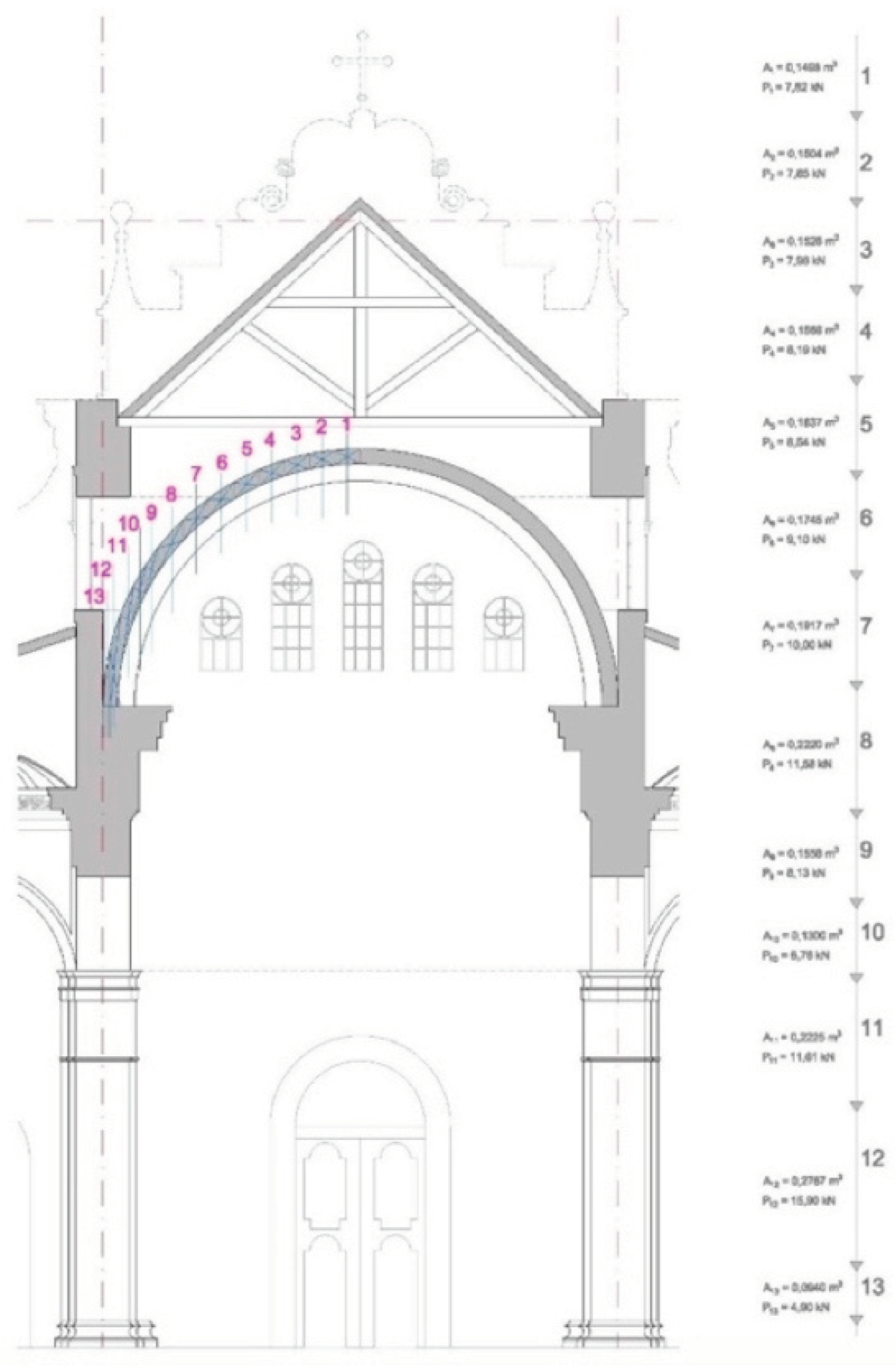
Figure 12.
Ambato. Church of the Matrix. Structural analysis. Cross-section of the vault section and graph of their weights. Illustration by the authors (2022).
Figure 12.
Ambato. Church of the Matrix. Structural analysis. Cross-section of the vault section and graph of their weights. Illustration by the authors (2022).
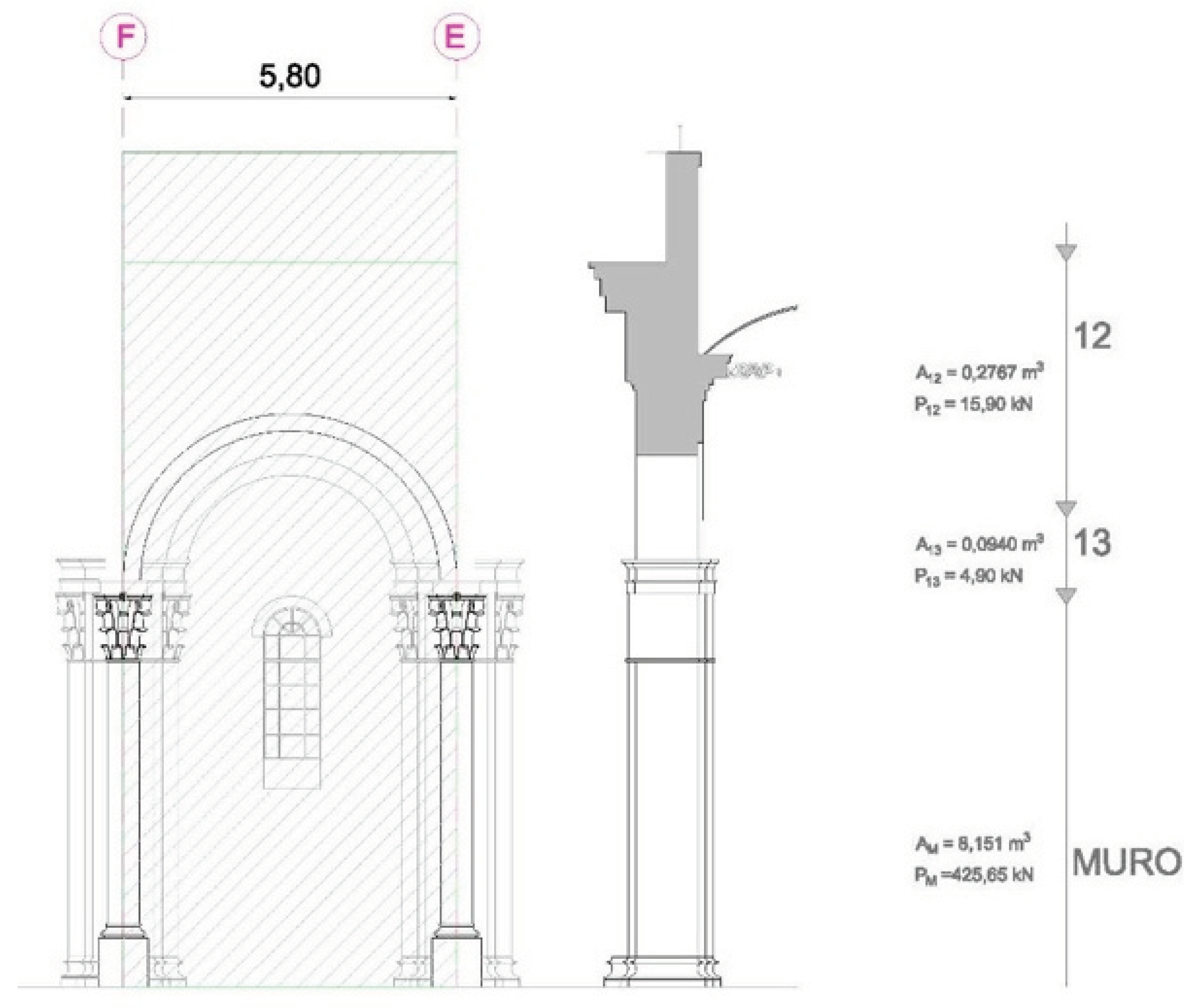
Figure 13.
Ambato. Church of the Matrix. Structural analysis. Cross-section of the vault with thrust lines. Illustration by the authors (2022).
Figure 13.
Ambato. Church of the Matrix. Structural analysis. Cross-section of the vault with thrust lines. Illustration by the authors (2022).
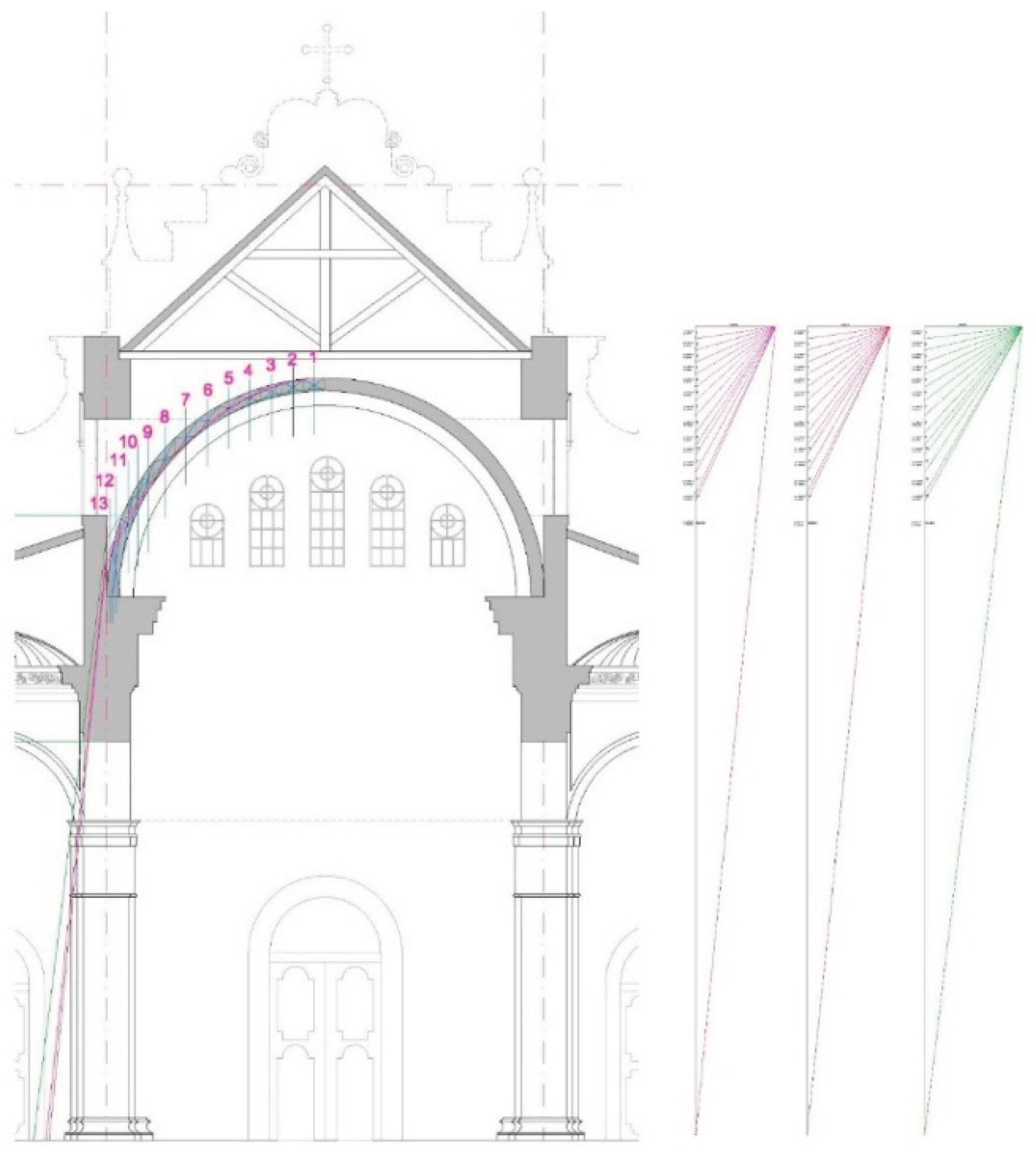
Figure 14.
Ambato. Matriz Church. Structural analysis. Detail of the force polygon for each thrust line. Illustration by the authors (2022).
Figure 14.
Ambato. Matriz Church. Structural analysis. Detail of the force polygon for each thrust line. Illustration by the authors (2022).
Disclaimer/Publisher’s Note: The statements, opinions and data contained in all publications are solely those of the individual author(s) and contributor(s) and not of MDPI and/or the editor(s). MDPI and/or the editor(s) disclaim responsibility for any injury to people or property resulting from any ideas, methods, instructions or products referred to in the content. |
© 2024 by the authors. Licensee MDPI, Basel, Switzerland. This article is an open access article distributed under the terms and conditions of the Creative Commons Attribution (CC BY) license (http://creativecommons.org/licenses/by/4.0/).
Copyright: This open access article is published under a Creative Commons CC BY 4.0 license, which permit the free download, distribution, and reuse, provided that the author and preprint are cited in any reuse.


