

Submitted:
23 February 2024
Posted:
23 February 2024
You are already at the latest version
Abstract
Vascular anomalies are a diverse group of abnormal blood vessel developments that can occur at birth or shortly afterward. Embolization and sclerotherapy have been utilized as a treatment option for these malformations but may cause moderate to severe pain. This study aims to evaluate the utilization of peripheral nerve blocks in opioid consumption, pain scores, and length of stay. A retrospective chart review was conducted at the UPMC Children's Hospital of Pittsburgh for all patients who underwent embolization and sclerotherapy between 2011 and 2020. Patient data was collected to compare opioid consumption, pain scores, and length of stay. Eight hundred fifty-four procedures were performed on 347 patients. The morphine milligram equivalent per kilogram mean ratio between groups was 0.9 (0.86, 0.95) with a p-value of <0.001. The pain score mean ratio was –1.17 (–2.2, -0.1) and a p-value of 0.027. Length of stay had a mean ratio of 0.94 (0.4, 2) and a p-value of 0.875. By decreasing opioid consumption and postoperative pain scores, peripheral nerve blocks may have utility in patients undergoing embolization and sclerotherapy while not clinically increasing the length of stay for patients. Their use should be individualized and carefully discussed with the interventional radiologist.
Keywords:
Peripheral nerve block
; Vascular malformation
; Embolization therapy
; Sclerotherapy
; Opioid consumption
; Perioperative pain
1. Introduction
Vascular anomalies are disorders of the endothelium that can affect each part of the vasculature (capillaries, arteries, veins, or lymphatics). Over the past two decades, many changes and updates have occurred in vascular anomalies, including their histopathology. A significant step was the adoption of the Mulliken and Glowacki proposal of dividing vascular anomalies into tumors and malformations by the International Society for the Study of Vascular Anomalies in 1996 [1]. Vascular tumors demonstrate endothelial proliferation and may rapidly enlarge postnatally. Malformations are errors in vascular development and have stable endothelial turnover; lesions are named based on the malformed primary vessel (capillary, arterial, venous, lymphatic) [2].
Embolization and sclerotherapy are two types of treatment and have been used for several decades to treat vascular malformations. In catheter embolization of arteriovenous malformations, medications or synthetic materials called embolic agents are placed through a catheter to eliminate abnormal connections between arteries and veins. Many types of embolic agents are used for occluding the vessels. Particulate agents, including Polyvinyl alcohol (PVA) and gelatin-impregnated acrylic polymer spheres (Embospheres), are suspended in liquid and injected into the bloodstream to block small vessels. These agents are used to block blood vessels permanently. Various-sized metallic coils or mechanical devices made of stainless steel or platinum block large arteries and arteriovenous fistulas. Liquid sclerosing agents like alcohol and sodium tetradecyl sulfate destroy blood vessels and vascular malformations. Filling a blood vessel or vascular malformation with these liquid agents causes blood clots to form, closing the abnormal vascular channels. Liquid glue is another embolic agent that hardens quickly and forms a cast when injected into the target channel that needs to be closed off.
Sclerotherapy, in which a solution is injected into a vascular malformation or lymphatic cyst percutaneously, causing it to collapse, scar, and fade, remains the primary treatment for venous malformations and lymphatic malformations. The sclerosant agents used are Sotradecol 3 % and absolute alcohol for venous malformations. Doxycycline and Bleomycin treat macrocystic lymphatic malformations and microcystic lymphatic malformations, respectively.
A concern following both therapies is pain management. Significant pain following embolization is common, often necessitating narcotic medication use [3]. One way to counter the use of narcotics in patients undergoing embolization therapy and reduce pain is through peripheral nerve blocks [4]. Using peripheral nerve blocks in pediatric patients undergoing embolization and sclerotherapy for vascular malformations can provide several potential benefits. However, there is limited data on the effect of peripheral nerve blocks on postoperative pediatric pain in patients undergoing embolization therapy.
This study investigates the utility and practicality of peripheral nerve blocks for pain control following embolization and sclerotherapy in pediatric patients with vascular malformations. We hypothesize that single-injection peripheral nerve blocks provide adequate perioperative analgesia for patients undergoing vascular malformation therapy by reducing morphine milligram equivalents (MME), postoperative pain scores, and length of stay.
2. Materials and Methods
Data Collection
This retrospective chart review study was conducted at UPMC Children's Hospital (CHP) of the University of Pittsburgh Medical Center between September 2011 and October 2020. The University of Pittsburgh Institutional Board Review approved it, waiving the written consent requirement. Electronic Medical records were reviewed for all embolization and sclerotherapy procedures performed during the study period. Patient demographics, vascular malformation procedures, perioperative opioid consumption, peripheral nerve block information and medication administered, pain scores, and duration of the hospital stay were all collected from patient charts. Patients were excluded from the review if no embolization or sclerotherapy was performed during the procedure.
Embolization and sclerotherapy procedures
Embolization and sclerotherapy procedures were performed at UPMC CHP following induction of general anesthesia. Upon obtaining vascular access, the interventional radiologist used fluoroscopy to identify the correct vessels for treatment. Embolization and sclerosing agents were used as described above. Upon completion of the therapy, patients emerged from anesthesia and recovered in the PACU.
Peripheral nerve block procedure
The Acute Pain Service identified the patients who required a vascular malformation procedure and could be candidates for nerve blocks and contacted the interventional radiologist. The decision to perform a nerve block was based on the location and size of the vascular malformation, the probability of the patient experiencing moderate to severe pain, previous patient pain experience, and opioid consumption.
The block selection was based on the malformation location. All the blocks were performed following induction of general anesthesia, under ultrasound guidance only (24 cases), a combination of ultrasound and nerve simulator (27 cases), and one ankle block without either ultrasound or nerve stimulator.
Outcome Parameters Analyzed
Embolization and sclerotherapy procedure types were classified based on anatomic locations as follows: (1) Head and Neck, (2) Thorax and Abdomen, (3) Upper Extremities, (4) Lower extremities, and (5) Multiple anatomical locations.
Pain scores were collected and recorded in the patient's chart using validated scales, including NRS, Wong BAKER, and FLACC [5,6,7]. Opioid administration was given following institutional protocol based on PACU nursing assessment and pain scores. Opioid consumption was calculated based on MME and patient weight. Intraoperatively, fentanyl was used on induction, and acetaminophen was given at the end of the procedure. In the Pediatric Anesthesia Care Unit (PACU), fentanyl, morphine, and hydromorphone were the opioids given to patients with moderate to severe pain based on their pain scores. Methadone was given to four patients following procedures for patients who did not receive a nerve block. Few patients also received ketorolac or ibuprofen.
Statistical Analysis
Descriptive statistics were calculated. Categorical variables were described using counts and percentages. Continuous variables were described using medians and inner quartile ranges. Histograms were constructed to visualize continuous distributions. Comparative testing was performed between those who received blocks and those who did not. Chi-squared tests compared categorical variables. Fisher's exact tests were performed to compare cells less than or equal to 10. Mann-Whitney U tests were performed on continuous variables. Box plots were created to visualize differences between procedure location, block usage, and outcomes of morphine milligram equivalents (MME), postoperative pain scores, and length of stay. MME and length of stay were log-transformed to help visualize differences. Log transformation removed 9% of MME records that had 0 MME.
Absolute standardized mean differences were used to compare differences between groups [8]. This analysis method was used as there were multiple records per person, and several individuals had records for embolization procedures with and without blocks. A value of >0.2 was considered a difference. Missing data was removed from all denominators, continuous summaries, and statistical testing. Data management was performed in SAS version 9.4 (SAS Institute, Cary, NC; 2016) and R software (version 4.2.1, R Core Team, 2022). Descriptive statistics, testing, and visualization were performed in R.
3. Results
Eight hundred fifty-four procedures were performed in 347 patients during the specified period (Table 1). Of the 854 vascular malformation procedures, 802 did not utilize a peripheral nerve block for postoperative pain control. Most patients had between one and three therapies, while one patient had over 20 procedures performed. Of the 347 patients, 60.5% were female. The mean age for patients undergoing therapy was 11.7 years old (sd 8.13), with a mean weight of 45.65 kg (sd 26.5). The most common location for vascular malformation therapy was the head and neck region (N=338, 39.6%), followed by lower extremity (N=286, 33.5%) and upper extremity (N=108, 12.6%).
Most patients received sotradecol 3% (64.1%) or doxycycline (24.5%) for their therapy. Other less common agents used for therapies included dehydrated ethanol and bleomycin (Table 2). One patient received Onyx liquid embolic agent, one with micron embospheres, another with an Amplazer vascular plug, and one with Hilal pushable coils. The median amount of each agent is described in Table 3, focusing on the extremities and trunk of the body.
Table 4 describes the various locations for therapy about the usage of opioids, postoperative pain, and length of stay. The abdomen and pelvis therapies had an opioid utilization of 0.26 mg/kg and a median pain score of 5. Lower extremity therapies had an opioid utilization of 0.19 mg/kg with a median pain score of 3 (Table 4). Visualization of the usage of opioids and postoperative pain scores between the groups in different regions of the body can be seen in Figure 1 and Figure 2. Table 5 describes the utilization of nerve blocks for all patients who underwent vascular malformation therapy.
The MME/kg mean ratio between the groups was 0.9 with a confidence interval of (0.86 and 0.95) with a p-value of <0.001 (Table 5). The pain score mean ratio was –1.17 with a confidence interval of (–2.2, -0.1) and a p-value of 0.027. Follow-up of patients undergoing peripheral nerve blocks showed that patient/parent satisfaction was 9.7 on a scale 10. Length of stay had a mean ratio of 0.94 with a confidence interval of (0.4, 2) and a p-value of 0.875. One patient was removed due to the LOS being over 300 days.
Figure 3.
Coronal T2-weighted image shows an extensive hyperintense slow flow vascular malformation consistent with a venous malformation involving the intramuscular and subcutaneous planes of the left lateral thigh and hip. During the specified range of dates, the child received four procedures. Each procedure was performed with a lumbar plexus nerve block for postoperative pain control. .
Figure 3.
Coronal T2-weighted image shows an extensive hyperintense slow flow vascular malformation consistent with a venous malformation involving the intramuscular and subcutaneous planes of the left lateral thigh and hip. During the specified range of dates, the child received four procedures. Each procedure was performed with a lumbar plexus nerve block for postoperative pain control. .
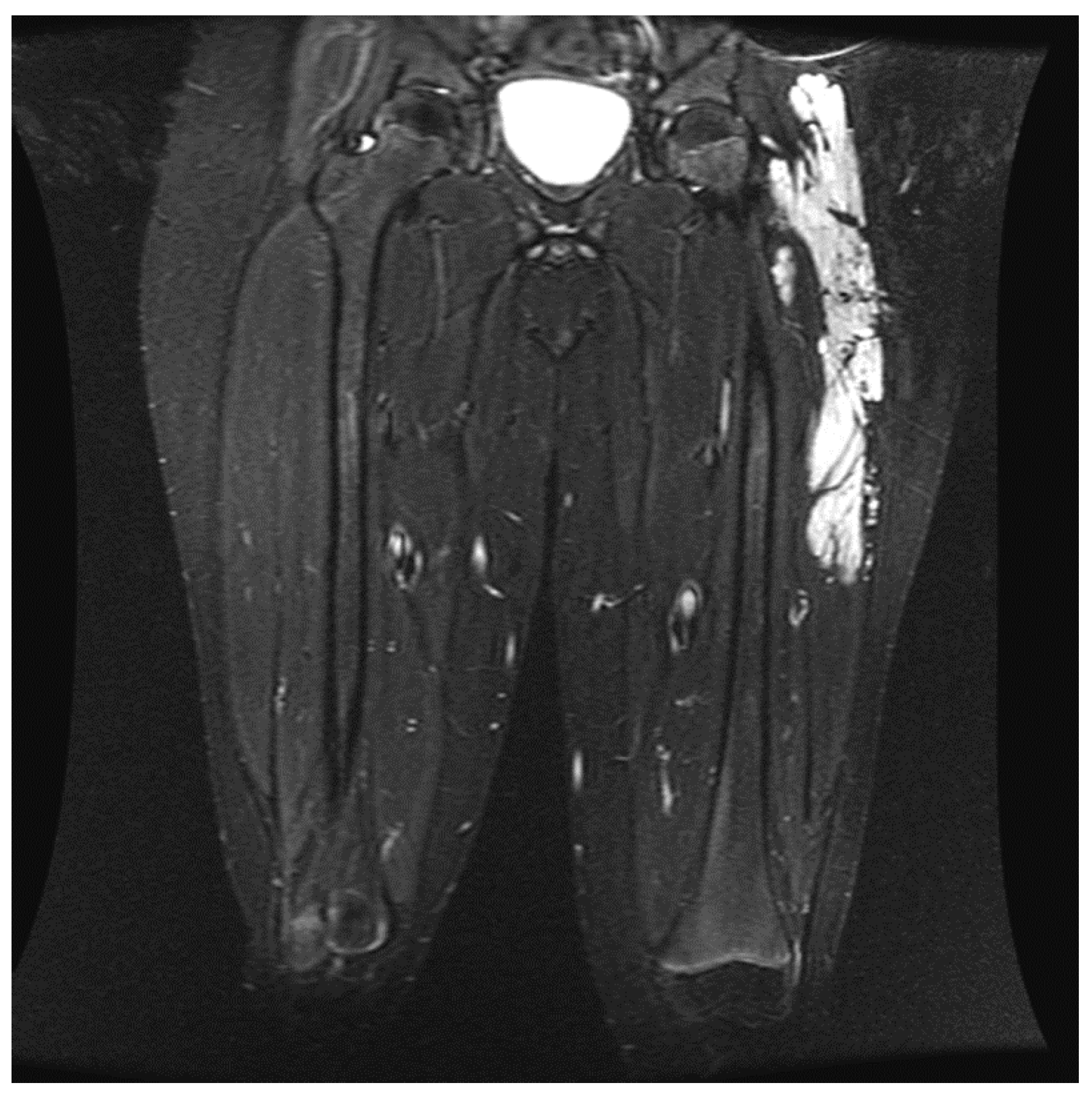
Figure 4.
A: Vascular malformation of the left foot showing the change in coloration and swelling of the limb before intervention. Peripheral nerve blocks were utilized to provide analgesia in the postoperative setting. B: Upon repeat intervention, the patient’s foot showed improvement in swelling and discoloration. .
Figure 4.
A: Vascular malformation of the left foot showing the change in coloration and swelling of the limb before intervention. Peripheral nerve blocks were utilized to provide analgesia in the postoperative setting. B: Upon repeat intervention, the patient’s foot showed improvement in swelling and discoloration. .
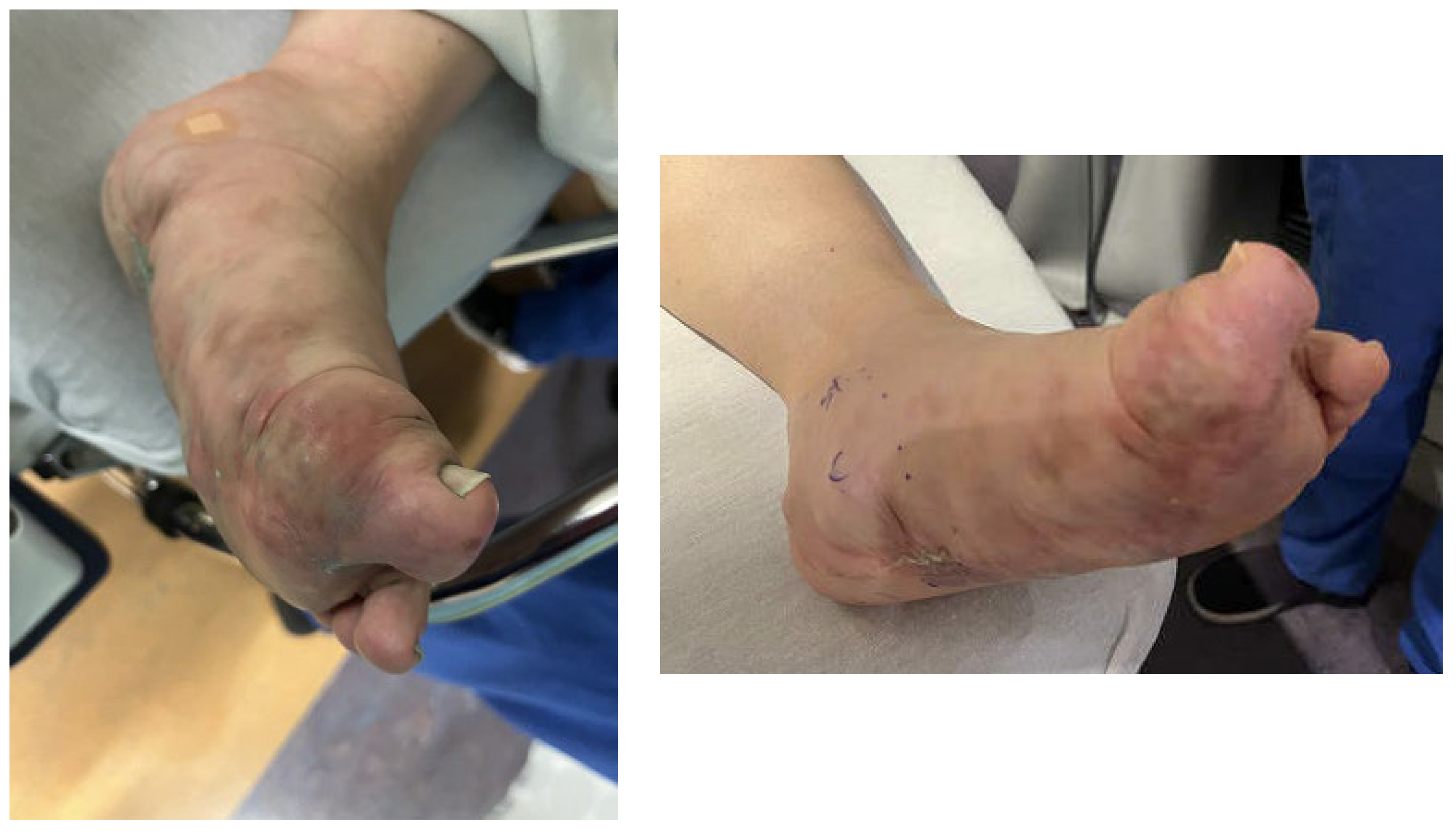
Figure 5.
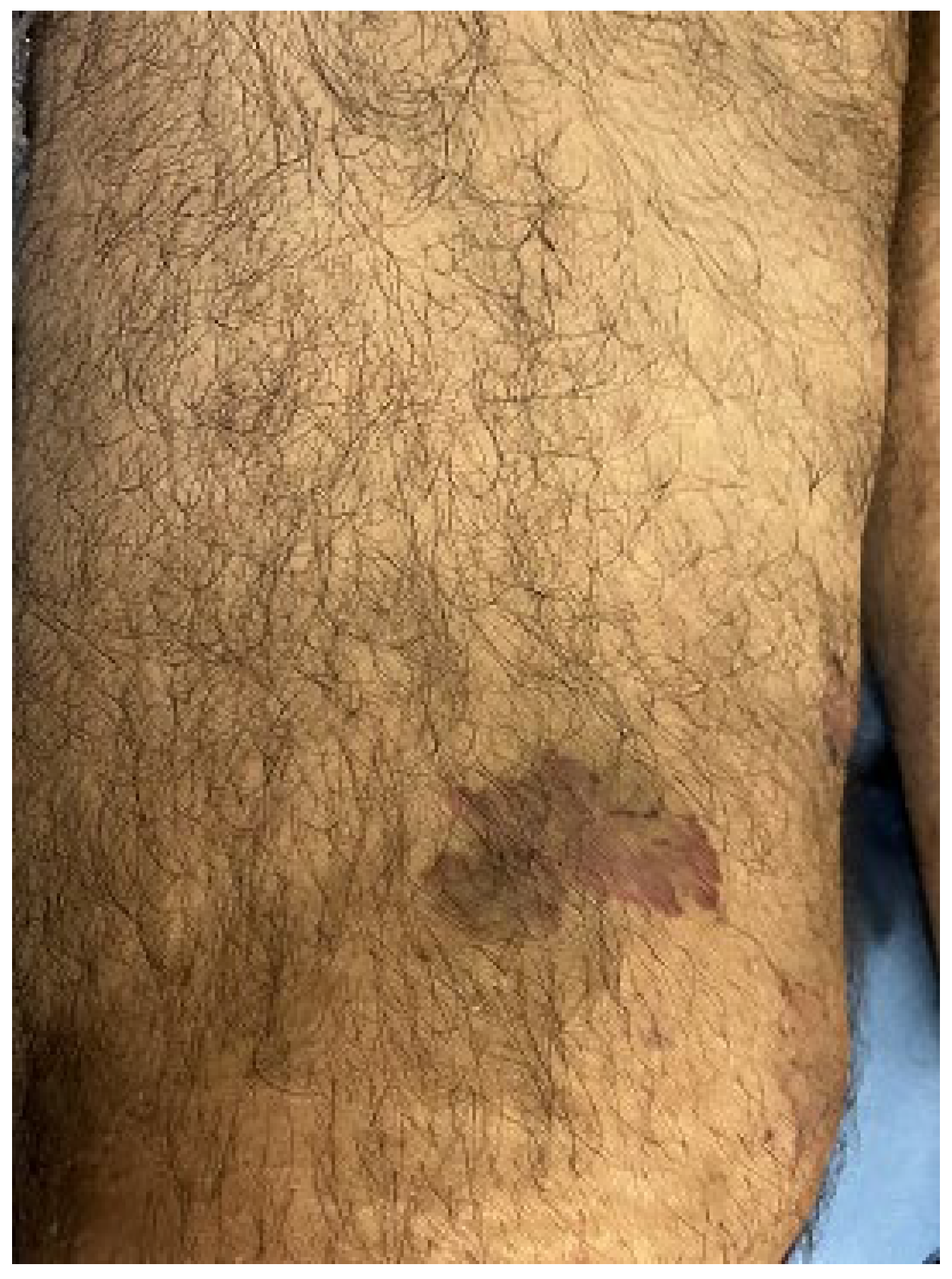
Vascular malformation of the anterior thigh. Before the procedure, the patient received a femoral nerve block for postoperative pain management.
Figure 5.
Vascular malformation of the anterior thigh. Before the procedure, the patient received a femoral nerve block for postoperative pain management.
4. Discussion
The peripheral nerve blocks in pediatric patients undergoing embolization and sclerotherapy for vascular malformations can provide several potential benefits as below:
- They can effectively relieve pain during and after vascular malformation therapy and decrease the opioids required during general anesthesia and in the immediate postoperative period. By targeting specific nerves or nerve plexuses responsible for pain perception in the affected area, peripheral nerve blocks can reduce the need for systemic pain medications, which may have side effects and potential complications, such as respiratory depression, constipation, nausea, itching, and altered mental status following surgery. [9,10]. This study showed reduced MME/kg usage and pain scores in the block group, indicating that performing nerve blocks benefits selected patients. This finding is consistent with using peripheral nerve blocks in other surgeries [11,12,13].
- Minimizing pain and discomfort can improve the child's and parents' overall experience and reduce anxiety. Almost all patients and parents who completed the satisfaction questionnaires (26) were very satisfied with the postoperative pain control provided (8-10 on a 10-point scale). Only one patient rated their satisfaction with the pain control as a 7. Many of these patients returned for repeated sclerotherapy and received another block for postoperative pain control.
- Reducing the use of opioids and general anesthesia can lead to faster recovery times and shorter hospital stays for pediatric patients. This can particularly benefit outpatient procedures, such as vascular malformation therapies. In our study, there was no difference in the length of stay between the two groups, indicating that the nerve blocks did not facilitate a faster discharge at home despite better pain control in the block group. It is essential to mention that there were no complications from the nerve blocks, and most patients could go home the same day as the procedure. However, some patients who experienced severe pain when a previous procedure was done with no nerve block were very anxious to be discharged and stay overnight on the day of surgery. In addition, in many cases, Enoxaparin therapy was initiated on the procedure's day and required hospitalization.
- When performing peripheral nerve blocks in pediatric patients undergoing embolization or vascular therapy, it is essential to consider the child's location and size of the vascular malformation. Vascular malformations are frequently seen in children, with the most common area being in the head and neck [14]. Our retrospective study had similar results, with 39.6% of the vascular malformations treated in the study in the head and neck region. Most head and neck malformations are not amenable to a peripheral nerve block due to the location of the sensory nerves in the face and neck. The upper and lower extremities were the second and third most common sites for therapy, aligning with the most common areas of malformations. These locations are much more amenable to peripheral nerve blocks as nerve blocks have proven safe and effective in treating pain in the extremities. Careful consideration must be taken when determining if a patient should receive a peripheral nerve block for therapy. In this study, the proceduralist requested a peripheral nerve block for patients based on the location of the malformation and the likelihood of the treatment causing severe pain. Some of the nerve blocks performed were done for patients who had previously received therapy without nerve blocks but developed severe pain in the postoperative setting.
- When administering peripheral nerve blocks in pediatric patients, it is essential to consider potential complications from the nerve block and injecting the sclerosing/embolizing agents. The risk of nerve injury from nerve blocks is low, around 2 to 4 per 10,000 blocks in children, but should still be considered in all patients undergoing this type of therapy [15]. One patient developed a sciatic nerve injury following therapy with a peripheral nerve block. The malformation was located in the hip and close to the sciatic nerve (Figure 6). A quadratus lumborum nerve block was performed intraoperatively for postoperative pain control [16]. The patient made a full neurologic recovery after several months. The nerve injury was likely due to the therapy and unrelated to the peripheral nerve block. However, determining if the malformation is close to a nerve should raise concerns that signs of a nerve injury may be masked initially by a peripheral nerve block. As previously reported for other blocks by Pickle et al., we encountered no bleeding complications at the block sites after Enoxaparin administration. Continuous patient monitoring during and after the procedure is vital to ensure their safety. Close observation for potential complications related to the nerve block, such as nerve injury, is necessary. At UPMC CHP, we performed home phone call follow-ups for all the patients who received peripheral nerve block follow-up. Some of our patients required pre and post-procedure anticoagulation therapy, and we investigated if any of our patients developed any hematoma at the needle injection site. In addition, some patients require a longer time to recover from peripheral nerve blockade.
This study does have some limitations. Notably, this was a single-center, retrospective chart review study. While there was some follow-up with the patients to determine how satisfied they were with their postoperative pain management, not all patients had a follow-up assessment for their pain management. Another limitation was the sample size for groups. This study had 854 therapies, but only 52 peripheral nerve blocks were performed. Blocks were performed based on proceduralist recommendation rather than randomization. While there was a difference in MME/kg between groups, a larger sample size would be needed to strengthen the results of this study. After data collection for this study, we performed an additional 83 peripheral nerve blocks on 48 patients. Unfortunately, these patients were not included in this data set. Still, it is important to mention that we did not encounter any complications, and the patients and their families reported increased satisfaction with their pain control.
It is essential to offer and educate the patient (if age-appropriate) and their family about the nerve block procedure that can be performed for vascular malformation therapy and expected pain after the procedure. This can help alleviate anxiety and improve pain control and safety after the procedure. In some cases, alternatives to peripheral nerve blocks, such as intravenous and oral opioid medication and acetaminophen, should be offered to the patient to improve post-procedure pain control.
5. Conclusions
In summary, peripheral nerve blocks can be a valuable adjunct in managing pain and reducing the need for general anesthesia in pediatric patients undergoing embolization therapy for vascular malformations. However, their use should be individualized and carefully discussed with the interventional radiologist, considering the patient's age, malformation size and location, and the need for anticoagulation therapy. The primary goal should always be to provide safe and effective pain management while minimizing risks and ensuring the child's comfort and well-being. This study hopes to be further analyzed by other institutions and strengthen these findings.
Author Contributions
Conceptualization, Mihaela Visoiu and Matthew Kocher; Methodology, Mihaela Visoiu; Formal Analysis, Dani Lavage; Data Curation, Matthew Kocher and Maria Evankovich; Writing – Original Draft Preparation, Matthew Kocher, Dani Lavage, Sabri Yilmaz and Mihaela Visoiu; Writing – Review & Editing, Mihaela Visoiu; Senthilkumar Sadhasivam, Supervision, Mihaela Visoiu.
Funding
This research received no external funding.
Institutional Review Board Statement
The study was conducted according to the guidelines of the Declaration of Helsinki and approved by the Institutional Review Board of the University of Pittsburgh (STUDY20090093 and 10/8/2020).
Informed Consent Statement
Patient consent was waived due to a retrospective chart review process. .
Acknowledgments
Anne Stevens, RN, and Annette Seelhorst, MSN, RN, CPN, for their help in promoting these blocks for embolization procedures and helping to educate the patients, families, and nurses involved in these patient's care.
Conflicts of Interest
The authors declare no conflicts of interest. Dr. Sadhasivam received NIH funding: R01HD089458 (P.I.: Sadhasivam), R21HD094311(P.I.: Sadhasivam), R01HD096800 (P.I.: Sadhasivam), R44DA055407, R44DA056280, R41DA053877 (MPI: Sadhasivam), R01DA054513 (MPI: Chelly/Sadhasivam) and U01TR003719 (P.I.: Sadhasivam). Dr. Sadhasivam received pay from UpToDate: Anesthesia for Tonsillectomy and NeurOptics, Inc. for studying opioid-induced respiratory depression in pediatric tonsillectomy. Sadhasivam is one of the inventors in the approved U.S. patents focused on opioid pharmacogenetics: U.S. Patent No. 9944985, 10662476, 16/850537, 16/946401, 16/946399, 10878939. He is the founder and chief medical officer of OpalGenix, Inc. There is no financial conflict with the current article.
References
- Gupta, A; Kozakiewicz, H. Histopathology of Vascular Anomalies. Vascular Anomalies Clinics in Plastic Surgery, 2011, Volume 38, 31-44. [CrossRef]
- Green, A; Alomari, A. Management of Venous Malformations. Vascular Anomalies Clinics in Plastic Surgery, 2011, Volume 38, 83-93. [CrossRef]
- Ben-David B, Kaligozhin Z, Biderman D. Quadratus lumborum block in managing severe pain after uterine artery embolization. Eur J Pain. 2018 Jul;22(6):1032-1034. [CrossRef]
- Murauski JD, Gonzalez KR. Peripheral nerve blocks for postoperative analgesia. AORN J. 2002 Jan;75(1):136-47. [CrossRef]
- Voepel-Lewis, Terri, Jay R. Shayevitz, and Shobha Malviya. "The FLACC: a behavioral scale for scoring postoperative pain in young children." Pediatr Nurs 23.3 (1997): 293-297.
- Good, Marion, et al. "Sensation and distress of pain scales: reliability, validity, and sensitivity." Journal of nursing measurement 9.3 (2001): 219-238. [CrossRef]
- Merkel, Sandra, and Shobha Malviya. "Pediatric pain, tools and assessment." Journal of PeriAnesthesia Nursing 15.6 (2000): 408-414. [CrossRef]
- Austin PC. An Introduction to Propensity Score Methods for Reducing the Effects of Confounding in Observational Studies. Multivariate Behav Res. 2011 May;46(3):399-424. Epub 2011 Jun 8. [CrossRef] [PubMed] [PubMed Central]
- Howard, Richard F., et al. "Nurse-controlled analgesia (NCA) following major surgery in 10 000 patients in a children’s hospital." Pediatric Anesthesia 20.2 (2010): 126-134. [CrossRef]
- Lönnqvist PA, Morton NS. Postoperative analgesia in infants and children. Br J Anaesth. 2005 Jul;95(1):59-68. Epub 2005 Jan 21. Erratum in: Br J Anaesth. 2005 Nov;95(5):725. [CrossRef] [PubMed]
- Allen, Hugh W., et al. "Peripheral nerve blocks improve analgesia after total knee replacement surgery." Anesthesia & Analgesia 87.1 (1998): 93-97. [CrossRef]
- Joshi, Girish, et al. "Peripheral nerve blocks in the management of postoperative pain: challenges and opportunities." Journal of clinical anesthesia 35 (2016): 524-529. [CrossRef]
- Cardwell, Taylor W., et al. "The effects of perioperative peripheral nerve blocks on peri-and postoperative opioid use and pain management." The American Surgeon 88.12 (2022): 2842-2850. [CrossRef]
- Kobayashi, Kenya, et al. "Vascular malformations of the head and neck." Auris Nasus Larynx 40.1 (2013): 89-92. [CrossRef]
- Neal JM, Barrington MJ, Brull R, Hadzic A, Hebl JR, Horlocker TT, Huntoon MA, Kopp SL, Rathmell JP, Watson JC. The Second ASRA Practice Advisory on Neurologic Complications Associated With Regional Anesthesia and Pain Medicine: Executive Summary 2015. Reg Anesth Pain Med. 2015 Sep-Oct;40(5):401-30. [CrossRef]
- Kocher M, Yilmaz S, Visoiu M. Sciatic nerve neuropraxia following embolization therapy in a patient receiving quadratus lumborum nerve block. J Clin Anesth. 2022 Jun;78:110601. Epub 2021 Nov 30. [CrossRef] [PubMed]
- Pickle J, Licata S, Lavage D, Visoiu M. Review of bleeding risk associated with prophylactic enoxaparin and indwelling paravertebral catheters: a pediatric retrospective study. Reg Anesth Pain Med. 2023 Jul 6:rapm-2023-104492. Epub ahead of . [CrossRef] [PubMed]
Figure 1.
Box plot of MME/kg comparison between groups that received a peripheral nerve block and those that did not for vascular malformation procedures in various body regions. The y-axis is morphine milligram equivalents per kilogram. .
Figure 1.
Box plot of MME/kg comparison between groups that received a peripheral nerve block and those that did not for vascular malformation procedures in various body regions. The y-axis is morphine milligram equivalents per kilogram. .
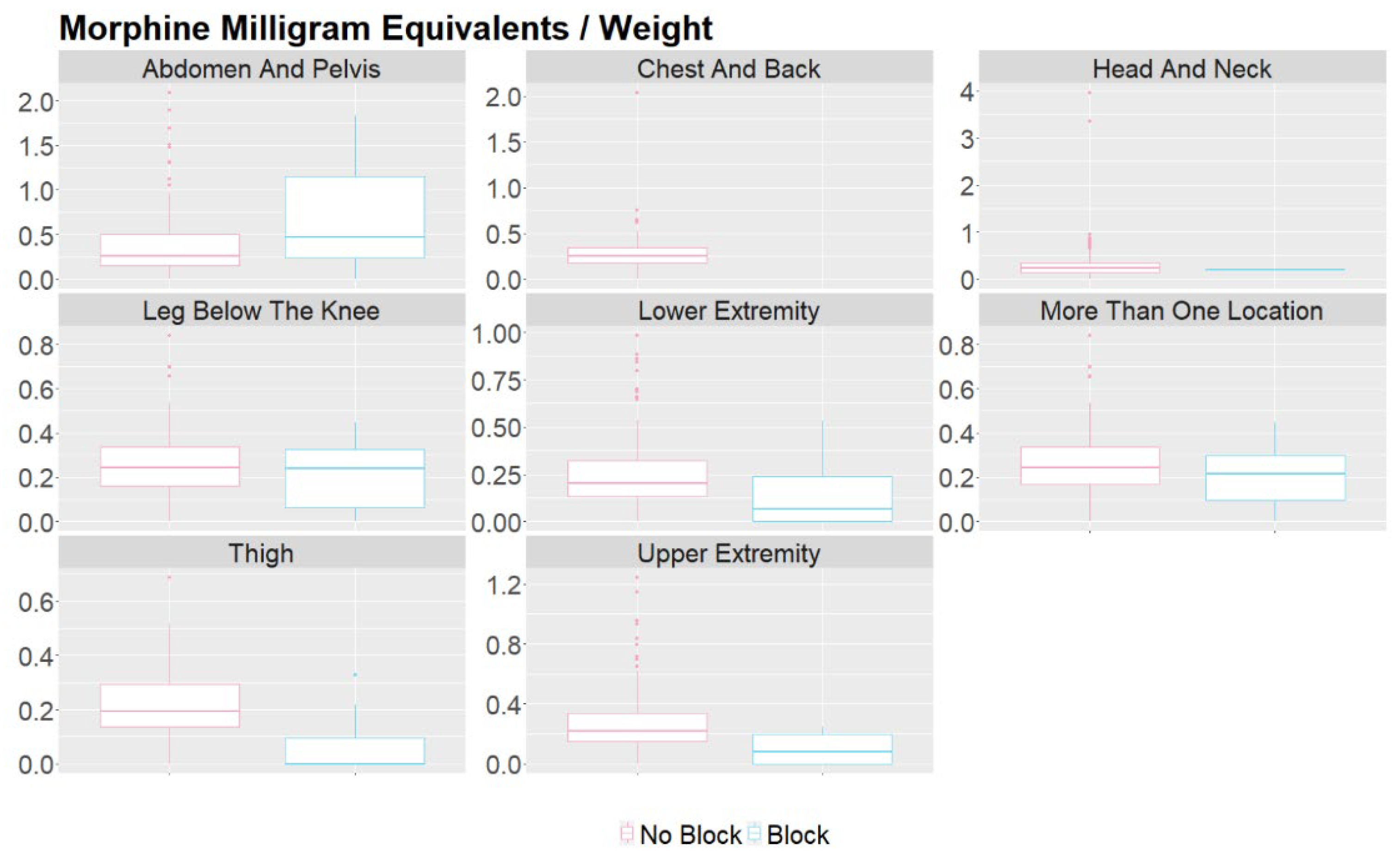
Figure 2.
Box plot of MME/kg comparison between groups that received a peripheral nerve block and those that did not for vascular malformation procedures in various body regions. The y-axis is the postoperative pain score on a scale of 0-10. .
Figure 2.
Box plot of MME/kg comparison between groups that received a peripheral nerve block and those that did not for vascular malformation procedures in various body regions. The y-axis is the postoperative pain score on a scale of 0-10. .
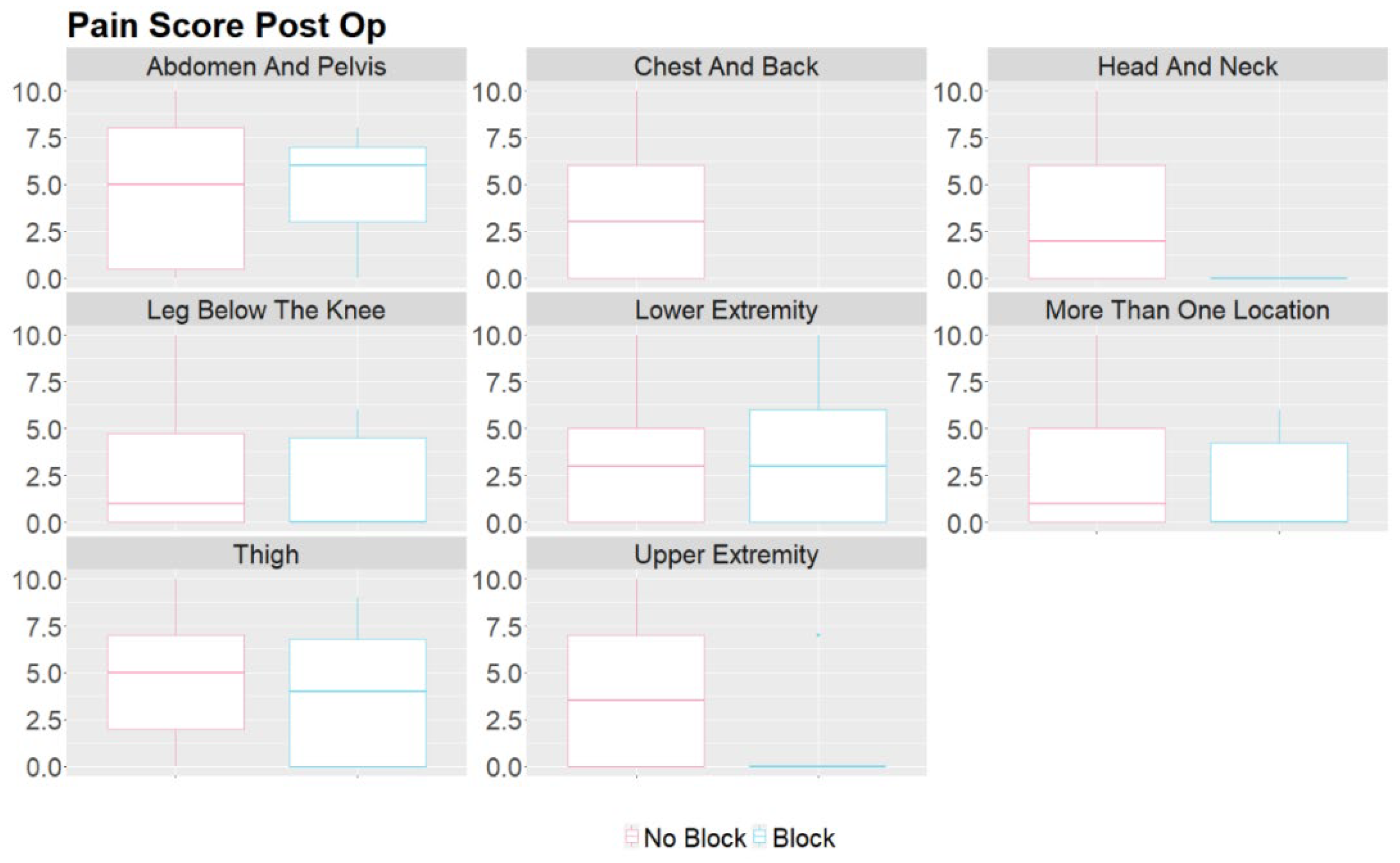
Figure 6.
CT scan imaging of a right hip arteriovenous malformation with involvement close to the sciatic nerve. This patient had undergone several sclerotherapy procedures and received a quadratus lumborum nerve block for postoperative pain management. Following one therapy, the patient was noted to have a sciatic nerve injury. .
Figure 6.
CT scan imaging of a right hip arteriovenous malformation with involvement close to the sciatic nerve. This patient had undergone several sclerotherapy procedures and received a quadratus lumborum nerve block for postoperative pain management. Following one therapy, the patient was noted to have a sciatic nerve injury. .
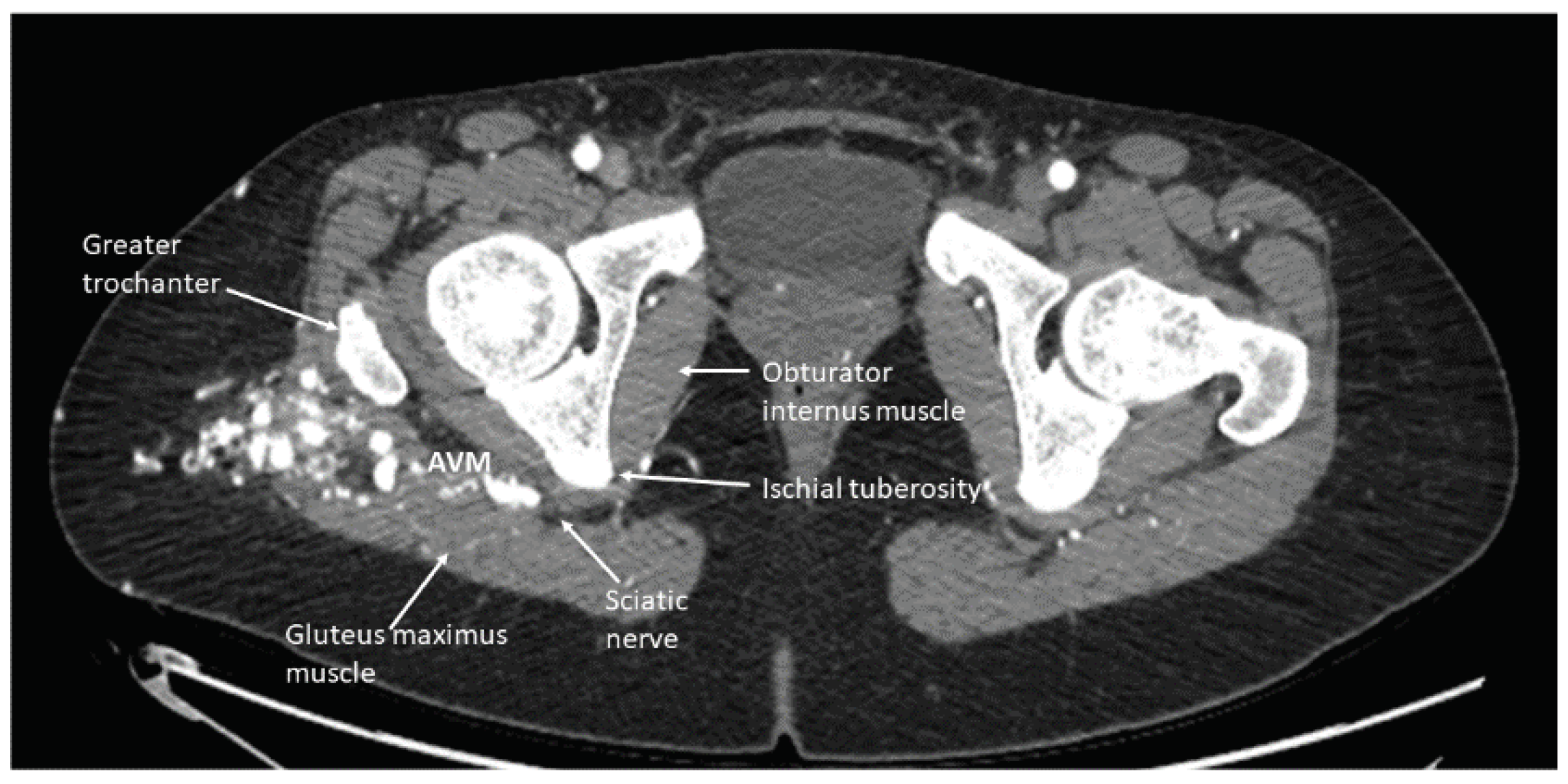

Table 1.
Patient characteristics along with general clinical findings. Absolute standardized mean differences indicated any variation between the two groups. .
Table 1.
Patient characteristics along with general clinical findings. Absolute standardized mean differences indicated any variation between the two groups. .
| Variable | Total Mean (Sd) |
No Block Mean (Sd) N = 802 (335 distinct patients) |
Block Mean (Sd) N = 52 (24 different patients) |
Absolute Standardized Mean Differences |
|---|---|---|---|---|
| Age | 11.7 (8.13) | 11.6 (8.1) | 14 (8.3) | 0.3 |
| Weight (Kg) | 45.65 (26.5) | 45.3 (26.8) | 50.7 (20) | 0.23 |
| Height (cm) | 140.71 (33.23) | 139.9 (33.7) | 153 (20.6) | 0.47 |
| BMI | 20.54 (5.52) | 20.5 (5.6) | 20.7 (5) | 0.04 |
| Female - n (%) | 517 (60.5%) | 491 (61.2%) | 26 (50%) | 0.23 |
Table 2.
Description of agents used for treatments. The percentage of each agent used in the therapies is shown with the total number (n). .
Table 2.
Description of agents used for treatments. The percentage of each agent used in the therapies is shown with the total number (n). .
| Sclerosing agent used for therapy | Percentage of sclerosing agent used for therapy (number of therapies) | Percentage of sclerosing agents used for treatment without nerve block (number of therapies) |
Percentage of sclerosing agent used for therapy with nerve block (number of therapies) |
|---|---|---|---|
| bleomycin | 5.6 (47) | 5.9 (47) | 0 (0) |
| bleomycin, doxycycline | 0.7 (6) | 0.8 (6) | 0 (0) |
| doxycycline | 24.5 (207) | 25.6 (203) | 7.8 (4) |
| ethanol | 1.5 (13) | 1.4 (11) | 3.9 (2) |
| onyx | 0.4 (3) | 0.4 (3) | 0 (0) |
| sotradecol | 64.1 (542) | 63 (500) | 82.4 (42) |
| sotradecol, bleomycin | 0.1 (1) | 0.1 (1) | 0 (0) |
| sotradecol, doxycycline | 0.8 (7) | 0.9 (7) | 0 (0) |
| sotradecol, ethanol | 2.2 (19) | 2 (16) | 5.9 (3) |
Table 3.
Quantitative analysis for the dose of sclerosing/embolizing agent used in each location. Median and IQR were utilized due to the wide range of dosing. Locations are grouped due to sample size in some places. .
Table 3.
Quantitative analysis for the dose of sclerosing/embolizing agent used in each location. Median and IQR were utilized due to the wide range of dosing. Locations are grouped due to sample size in some places. .
| Descriptive Table of Sclerosing Agent Doses by Surgery Location | |||
|---|---|---|---|
| Location | Sclerosing Agent | Procedure in Location - n | Procedure in Location - Median (IQR) |
| All Extremities | bleomycin_units | 16 | 9 (5.75 - 11) |
| doxycycline_mg | 50 | 167.5 (62.5 - 300) | |
| ethanol_ml | 3 | 5 (2.75 - 5) | |
| sotradecol_3_ml | 324 | 10 (7 - 12) | |
| Lower Extremities | bleomycin_units | 1 | 2.5 (2.5 - 2.5) |
| doxycycline_mg | 19 | 150 (47.5 - 200) | |
| ethanol_ml | 1 | 0.5 (0.5 - 0.5) | |
| sotradecol_3_ml | 137 | 10 (7 - 12) | |
| Chest, Back, Abdomen, and Pelvis | bleomycin_units | 9 | 15 (8 - 15) |
| doxycycline_mg | 80 | 200 (100 - 500) | |
| ethanol_ml | 4 | 12 (4.25 - 19) | |
| sotradecol_3_ml | 64 | 9.5 (5.88 - 12) | |
Table 4.
Evaluation of each body region about opioid usage, postoperative pain, and length of stay. Aggregate values for both groups are included. .
Table 4.
Evaluation of each body region about opioid usage, postoperative pain, and length of stay. Aggregate values for both groups are included. .
| Procedure Location | Morphine Milligram Equivalents (MME) Median (IQR) |
MME / Weight Median (IQR) |
Post-Surgery Pain Score Median (IQR) |
Length of Stay (Days) Median (IQR) |
|---|---|---|---|---|
| Abdomen And Pelvis | 9.25 (3.75 - 29.06) | 0.26 (0.16 - 0.5) | 5 (0.25 - 8) | 0.34 (0.23 - 2.16) |
| Chest And Back | 6.38 (3 - 15) | 0.25 (0.17 - 0.35) | 3 (0 - 6) | 0.25 (0.22 - 0.38) |
| Head And Neck | 7.5 (3.75 - 15) | 0.24 (0.15 - 0.34) | 2 (0 - 6) | 0.25 (0.21 - 0.97) |
| Lower Extremity | 7.5 (3.75 - 15) | 0.19 (0.11 - 0.31) | 3 (0 - 5) | 0.33 (0.25 - 1.18) |
| Upper Extremity | 7.5 (3.75 - 15) | 0.21 (0.14 - 0.32) | 3 (0 - 7) | 0.27 (0.21 - 1.18) |
| More Than One Location | 8.25 (4.5 - 15) | 0.24 (0.17 - 0.34) | 1 (0 - 5) | 0.25 (0.21 - 1.13) |
Table 5.
Peripheral nerve block characteristics for all patients who underwent nerve blocks.
| Block Performed | Age (Mean) |
Weight (Kg) (Mean) |
MME/Kg (Mean) |
Ropivacaine (mg/kg) (Mean) | Pain Score (Median) |
LOS (Median) |
|---|---|---|---|---|---|---|
| Cervical Plexus | 5 | 21.2 | 0.25 | 0.40 | 7 | 0.46 |
| Digital | 8 | 36.6 | 0 | 0.27 | 0 | 0.25 |
| Erector Spinae | 6 | 18 | 0 | 2.78 | 0 | 0.23 |
| Femoral | 13.7 | 56.83 | 0.11 | 2.60 | 0 | 0.88 |
| Femoral & Lateral Femoral Cutaneous | 17.25 | 52.68 | 0.28 | 2.55 | 3.5 | 0.29 |
| Femoral & Sciatic | 9 | 33.6 | 0.21 | 2.08 | 0 | 0.94 |
| Interscalene | 13.5 | 73.45 | 0.11 | 1.36 | 0 | 0.73 |
| Lateral Femoral Cutaneous | 12.25 | 41.54 | 0.08 | 1.63 | 3 | 0.425 |
| Lumbar Plexus | 20 | 64.56 | 0.30 | 1.12 | 7 | 1.13 |
| Sciatic | 13.1 | 51.28 | 0.16 | 1.90 | 0 | 2.17 |
| Supraclavicular | 10 | 34.33 | 0.12 | 1.45 | 0 | 0.53 |
Table 6.
Comparison of patient populations who received a peripheral nerve block before vascular malformation therapy and those who did not. (a Models adjusted by gender and height z scores. b One outlier of LOS > 300 was removed before modeling LOS). .
Table 6.
Comparison of patient populations who received a peripheral nerve block before vascular malformation therapy and those who did not. (a Models adjusted by gender and height z scores. b One outlier of LOS > 300 was removed before modeling LOS). .
| Outcome | Estimate (95% CI) | P-Value | Adjusted Estimatea (95% CI) | Adjusted P-value |
|---|---|---|---|---|
| Log-Linear Mixed Models | ||||
| Morphine Milligram Equivalents | 0.43 (0.33, 0.58) | <.001 | 0.43 (0.33, 0.56) | <.001 |
| Morphine Milligram Equivalents/ Weight | 0.9 (0.86, 0.95) | <.001 | 0.91 (0.86, 0.96) | 0.001 |
| Linear Mixed Models | ||||
| Pain | -1.17 (-2.2, -0.1) | 0.027 | -1.25 (-2.3, -0.2) | 0.018 |
| Negative Binomial Mixed Models | ||||
| LOSb (Rounded to Nearest Day) | 0.94 (0.4, 2) | 0.875 | 1.25 (0.6, 2.7) | 0.572 |
Disclaimer/Publisher’s Note: The statements, opinions and data contained in all publications are solely those of the individual author(s) and contributor(s) and not of MDPI and/or the editor(s). MDPI and/or the editor(s) disclaim responsibility for any injury to people or property resulting from any ideas, methods, instructions or products referred to in the content. |
© 2024 by the authors. Licensee MDPI, Basel, Switzerland. This article is an open access article distributed under the terms and conditions of the Creative Commons Attribution (CC BY) license (http://creativecommons.org/licenses/by/4.0/).
Copyright: This open access article is published under a Creative Commons CC BY 4.0 license, which permit the free download, distribution, and reuse, provided that the author and preprint are cited in any reuse.


