

Submitted:
20 February 2024
Posted:
21 February 2024
You are already at the latest version
Abstract
Recently, interest in STEM education has grown among researchers and educators, also considering the skills required to address the challenges of the 21st century. Supporting learning in STEM subjects is an open challenge, especially during secondary education, which is reflected in the implementation of innovative pedagogical practices, including approaches focused on Game-Based Learning (GBL). This study analyzed the main issues addressed by research on game-based educational approaches applied to STEM teaching and learning in secondary school and their evolving trends. A text analysis of abstracts published in the past decade was conducted using T-lab software. The “Word Analysis” function was used for preliminary visual mapping; then the “Specificity Analysis” and “Thematic Analysis of Elementary Contexts” functions were applied to explore changes in research directions and to map the themes covered by the most recent studies. The results showed that the implementation of games in STEM disciplines is a promising area of inquiry. A shift in research directions also emerged, currently more focused on studying how GBL can foster engagement and the emotional component of learning. Adapting to rapidly changing technology and integrating essential skills such as coding and computational thinking are additional challenges that the research community is facing.
Keywords:
Game-Based Learning
; Secondary STEM Education
; Research Trends
; Textual Analysis.
1. Introduction
The contemporary educational landscape in Science, Technology, Engineering, and Mathematics (STEM) is experiencing a substantial shift, predominantly influenced by the adoption of innovative and active pedagogical practices [1] that emphasize student-centered, collaborative, and inquiry-based approaches, moving beyond traditional lecture-based methods. This change is seen as critical to preparing students to successfully participate in a technology-centered world by extending the meaning of STEM subjects beyond technological knowledge [2]. In fact, STEM education plays a vital role in equipping students not only with essential skills, but also with the ability to engage constructively with global challenges, thereby contributing to the progress of society [3]. The integration of innovative pedagogies in STEM education, therefore, is not just a response to evolving educational needs but a proactive step towards fostering a generation capable of navigating and shaping a rapidly advancing technological landscape. Effective STEM education at this level requires a real-world, problem-based approach that integrates knowledge and skills across science, technology, engineering, and mathematics [4].
Recently, there is also a growing emphasis on promoting “scientific literacy”. This concept, as defined by the Organization for Economic Co-operation and Development (OECD) [5], refers to the ability to engage with and make informed decisions about scientific questions and concepts. A key focus for researchers and stakeholders now lies in the integration of disciplines through multidisciplinary, interdisciplinary, and transdisciplinary approaches [6]. In this context, STEM literacy, which involves applying STEM knowledge and skills to “increase students’ understanding of how things work and improve their use of technologies”, becomes critical to facing current and future challenges [7] (p.1). Consequently, science literacy should be viewed as a lifelong learning process, emphasizing participatory research and collaborative projects to design and implement innovative teaching practices [8]. Particularly, Ortiz-Revilla and colleagues [9] advocate for a pedagogical shift towards integrated STEM education that not only combines disciplines in a meaningful way but also embeds humanist values and a philosophical framework aimed at fostering citizenship and social justice.
However, despite the growing global demand for qualified STEM graduates, a disturbing trend is emerging: student interest in STEM subjects is declining [10]. This decline represents a paradox in education, as it occurs at a time when STEM skills are increasingly vital to meeting the challenges of the 21st century. To bridge this gap, it is imperative to make STEM education more engaging and relevant, ensuring that students are not only prepared for future technological advancements, but are also motivated to pursue careers in these fields. Addressing this paradox involves rethinking and revitalizing STEM curricula to align more closely with students’ interests and the demands of a rapidly evolving society. Significant changes in teaching methodologies and programs are also needed to address other critical issues in promoting scientific literacy, such as lower youth engagement in science fields, socioeconomic inequalities, limited access to quality educational resources, and gender stereotypes [11,12]. Enhancing STEM education and reducing attrition rates involves not only structural and pedagogical reforms but also a deeper understanding of the socio-psychological aspects that influence student engagement and success. Addressing the multifaceted challenges in STEM education requires a systemic approach that integrates institutional strategies, such as orientation programs, early warning systems, and faculty development [13].
Supporting learning in STEM, as well as maintaining and increasing students’ interest, is an open challenge especially during the secondary education [13,14]. In fact, it is at this stage that students build the foundation of their understanding in STEM fields. Therefore, this period is crucial for establishing core concepts and influencing future career ambitions [15]. Secondary education also plays a pivotal role in influencing students’ decisions regarding their academic future and careers. Indeed, during these educational years, different factors, including targeted interventions, peer influence and professional engagement, influence students’ interest in STEM subjects.
Targeted interventions are effective in transforming school environments and personal attitudes, thereby enhancing students’ academic performance, self-perception, and self-efficacy in STEM [16]. Peer influence is another significant variable: students are more likely to choose STEM careers when surrounded by peers with a strong interest in these subjects. This evidence suggests the importance of cultivating a STEM-focused culture within science classes to positively influence students’ career choices [17]. The involvement of STEM professionals in educational activities also plays a key role. Indeed, their participation makes STEM subjects more tangible and relatable, thus sustaining students’ interest. This interaction provides practical insights and inspiration, enriching the educational experience [18].
Given these premises, STEM learning during secondary school requires a combination of innovative and active teaching methods that convert natural curiosity into scientific literacy. Among these approaches, game-based educational strategies have emerged as a particularly effective method in STEM education [19,20]. These strategies leverage the engaging and interactive nature of games to enhance learning experiences, making complex STEM concepts more accessible and enjoyable for students. Moreover, by integrating Game-Based Learning (GBL) into the curriculum, educators can tap into students’ intrinsic motivation and curiosity, further enriching their journey in STEM education.
1.1. Game-Based Learning and STEM Education: A Brief Overview
In the last decades, the use of games in educational context is growing significantly due to their potential positive impact on learning processes. Despite the heterogeneity in the use of the game format in education, research has shown that GBL can engage students and offer a personalized learning experience, promoting long-term memory and providing practical experience [21]. Wouters and colleagues [22] found that educational games outperform traditional teaching methods in improving learning outcomes, suggesting that games offer a more engaging learning experience. Similarly, Clark and colleagues [23] demonstrated that games significantly boost motivation and engagement, essential for effective learning. These findings highlight the value of games in making educational processes more interactive and impactful.
Different forms of games are employed in learning and pedagogy, although defining GBL and differentiating between games and non-game environments in education can be challenging [24,25]. GBL refers to a type of game with clearly defined learning outcomes and requiring a design process that balances the need to cover the learning content with the enjoyment of the game [26]. Furthermore, GBL differs from gamification, which simply involves typical game elements within learning settings, such as rewards, in traditional educational activities [27,28]. Serious games (SG), defined as tools that aim to enhance entertainment with utility goals, including learning, are also recently finding wide application in the educational context [29,30].
It is usually assumed that the learning game is a digital game, but this is not always the case [25]. More precisely, Digital Game-Based Learning (DGBL) commonly refers to an instructional approach that includes any form or use of digital games in education [31] and, combined with Non-Digital Game- Based Learning (NDGBL) [32], represents the broader set of GBL. Digital games have the potential to allow users to manipulate objects and test solutions to problems without cost or risk [33,34]. DGBL merges educational content with gaming to offer versatile, engaging, and effective learning experiences, supported by constructivist theory, promising enhanced student engagement, motivation, customization, and the promotion of long-term memory and practical application of knowledge [21].
Several studies, spanning from gamification to serious games and educational simulations, have explored the impact of DGBL on educational outcomes, particularly within STEM education [35]. These investigations highlight DGBL’s potential to enhance learning achievements and comprehension across various educational levels, suggesting its efficacy in supporting the learning and teaching processes. Notably, DGBL has been credited with fostering engagement, and the development of critical thinking and problem-solving skills, which are pivotal in STEM education [36,37,38]. A recent meta-analysis by Gui and colleagues [39] identified a medium to large effect of DGBL on STEM learning outcomes compared to traditional methods, further emphasizing its educational value.
Research indicates that gamified learning environments, by simulating real-world scenarios, enable students to apply theoretical knowledge in practical contexts, thereby enhancing their understanding of STEM concepts [40]. This approach not only makes learning more relevant and engaging but also highlights the practical significance of STEM education. Despite the proven effectiveness of game-based learning in promoting educational engagement and developing essential 21st-century skills [41], recent discussions have raised questions about its qualitative impact on learning. These concerns underscore the need for ongoing research to optimize DGBL’s implementation and fully realize its benefits in educational settings.
1.2. Methodological and Theoretical Considerations in GBL Research
As mentioned above, the field of GBL in educational context has evolved significantly; nevertheless, some methodological and theoretical issues are currently a focus of interest for the scientific and scholarly community.
For example, some researchers have argued that the positive effects of educational games and game-based learning environments relate only to engagement, with negative and distracting impacts on deep processing of learning contents [42,43]. About this issue, current research aims to investigate how to integrate elements such as storytelling, feedback mechanisms and scaffolding strategies into educational games to maximize user engagement without negatively impacting learning processes [44]. Specifically, the challenge is to balance the complexity of educational content with engaging game design to prevent overwhelming students. Indeed, it has been pointed out that educational games can negatively impact the cognitive load involved in a task, although there is no unanimous agreement among researchers on this issue [45,46,47].
In response to this critical point, adaptive learning systems are being developed that adapt task difficulty based on learner performance [48]. Moreover, methods to assess cognitive load more accurately during game-based learning activities are being investigated, including physiological measures and self-assessment tools [49]. The study of GBL is also undergoing increased interest in Game Learning Analytics, an area that focuses on analyzing data from gameplay to understand students’ learning behaviors, engagement levels, and overall performance [50]. This approach is becoming progressively more important for optimizing the educational value of games.
Another factor that may have significantly influenced GBL and, more generally, of the use of educational technologies is the recent pandemic scenario. Particularly, the shift to distance education have affected school systems, leading to new research areas such as online learning effectiveness, equitable access to technology, virtual social interaction, and adapting traditional teaching methods to digital formats [51].
In addition to these points, it was also noted that many studies on the effectiveness of games in education have not used an experimental approach with pre-post-test measurements and that designing games that achieve a balance between learning and entertainment remains an open challenge [52].
The current study of the use of a gamified approach in education is therefore dealing with these newly described topics, but may also potentially be influenced by other variables, including the theoretical frameworks, and learning outcomes adopted. Additionally, the integration of emerging technologies and changes in teaching and learning environments is essential. For example, the rapid advancement in technology has made tools like Augmented Reality (AR) and Virtual Reality (VR) more accessible and affordable, enhancing their educational use and offering benefits like reducing costs for resources like laboratory equipment and creating more engaging learning scenarios.
Considering this framework, the study of the applications of games in STEM education can thus be characterized by a heterogeneity of topics that reflect a dynamic and evolving field in which technology, pedagogy, and social change intersect, shaping the future of educational practices. The purpose of this study is to explore the main research trends over the past decade on the use of games for teaching and learning in secondary school STEM education to support knowledge dissemination and discussion of future research directions, priorities, and challenges.
2. Methodology
The study aims to investigate the main themes and developments in research on the gamified approach applied to the teaching and learning of STEM subjects in secondary school through a quantitative textual analysis of scholarly publications on the topic over the past decade. Specifically, for this purpose, the following questions were used:
- Main Research Trends. What are the main research trends in the use of game-based educational approaches for learning and teaching STEM in secondary schools in recent years? This question aims to map the landscape of research in this field, identifying key areas of focus and innovative practices.
- Evolution Over the Past Decade. What changes can be identified in the application of game-based educational approaches in secondary STEM education over the past decade? This question aims to explore how approaches and research interests have evolved in the scholarly community, including with respect to changes in educational priorities and technological advances.
2.1. Study Selection
The research process began with a systematic collection of titles and abstracts from peer-reviewed papers and reviews published between 2013 and 2023. This data was sourced in March 2023 using two major academic databases: Web of Science and Scopus.
The selection criteria were carefully crafted to ensure the relevance and quality of the research material. Keywords used in the search were specifically chosen to capture the broad spectrum of game-based educational approaches and their application in STEM education. The keywords referring to STEM were “STEM”, “math”, “science”, “chemistry”, “biology”, “physics”. The keywords “gamification”, “game-based learning”, “edutainment”, “serious game”, “applied game” were used for gaming. These were combined with the keywords “secondary school” and “high school”. In addition, the keywords “vocational”, “adult education”, and “adult training” were applied to exclude contributions not relevant to the targeted learners under study.
After the initial extraction of records and the subsequent removal of duplicates and irrelevant entries, a total of 334 records were considered for detailed analysis. Lastly, contributions not relevant to the research question and related to studies of kindergarten and elementary school students were excluded, resulting in 278 eligible abstracts for analysis. These records have been organized into a structured dataset, which is publicly available for further research and analysis [53].
The selected titles and abstracts were then compiled into a single text file for analysis. The corpus was split according to the variable “year of publication”, allowing for a chronological analysis of the data. Three sub-corpus were created corresponding to the years 2013-2016 (sub-corpus “years_one”), 2017-2019 (sub-corpus “years_two”), and 2020-2023 (sub-corpus “years_three”), enabling a comparative study of the trends and developments over these periods.
2.2. Data Analysis
The analysis was carried out using T-LAB, a software with linguistic, statistical, and graphical tools specifically designed for textual analysis [54].
The early stage of the analysis involved viewing the text to remove irrelevant lemmas, such as numerical values or proper names of games. Following this, some key steps were performed: applying an automatic list of “stop worlds” (i.e., “empty” words that do not convey meanings by themselves; e.g., adverbs, auxiliary and modal verbs, and prepositions); creating a list of “multi- words” (i.e., subsets of compound nouns or locutions; e.g., “Game- Based Learning”, “Virtual Reality”, “Educational Games”); grouping words and lemmas with the same meaning (e.g., “GBL”, and “Game- Based Learning”, “AR” and “Augmented Reality”); selecting for further analysis as “key words” only those lemmas with an occurrence in the whole corpus greater than 10; removing additional items among the identified keywords that did not convey particular meanings of interest to the study (e.g., “results”, “statistical”, “aim”, “finding”).
The analysis included three steps. Firstly, for an early visual mapping of the entire text, the “Co-word analysis” function, aimed at graphically representing the occurrences of the most frequently keywords and their relationship, was applied. Secondly, the “Specificity Analysis” function was used to identify, for each subset of the corpus, the words that are typically overused (those most present) or underused (those least present) compared with the remaining text under analysis, with the corresponding chi-square (χ2) value and its significance. Finally, for the sub-corpus “years_three” (corresponding to publications in the past three years), the “Thematic Analysis of Elementary Contexts” function was applied to represent the content of the text through some thematically significant clusters. Each cluster resulted in a set of sentences (“Elementary Contexts”; CE), characterized by the same keyword patterns and described through the lemmas that most define it. Each emergent thematic cluster was thus defined by a set of words sharing the same reference contexts and seen as a “common thread” not immediately recognizable within the overall plot of the text. For each representative keyword, T-LAB provided the relative χ2 value and its significance, allowing its “weight” in the corresponding cluster to be evaluated. In the present study, an unsupervised clustering focusing on a bottom-up approach was used.
3. Results
At the end of the preliminary stages of corpus preparation, the keywords consisted of 426 lemmas and the entire text of 60016 occurrences. Application of the “Co-World Analysis” function provided an early visual representation illustrating the most frequent keywords and their relationships (Figure 1).
To examine the evolution of research trends in the application of educational games within STEM teaching and learning over the last decade, a “Specificity Analysis” was conducted. This analysis focused on identifying the lemmas that were either over-used or under-used in each sub-corpus, defined by the “year of publication” variable. The over-used lemmas in each sub-corpus represent the words that appeared most frequently in that segment of the text, statistically, in comparison to the entire corpus being analyzed. Conversely, under-used lemmas are those that occurred least frequently. For each lemma, the corresponding χ2 value and its statistical significance were calculated and reported (Table 1).
Analysis of the typical words of abstracts in different years showed significant changes in the direction of research in the field of educational games for teaching and learning STEM subjects.
2013-2016. The research was predominantly focused on tangible and interactive technologies in education, as indicated by the frequent use of lemmas such as “Robot”, “Game”, “Robotics”, and “Game Construction”, as well as on serious games and aspects of competitive game dynamics (lemma “Competition”). This result probably reflects an early interest in the basic and technical aspects of game-based learning in this period. In addition, the presence of terms such as “Simulation”, “Computing”, and “Meaningful Learning” suggests a focus on experiential and hands-on learning methods.
2017-2019. The increasing use of the terms “Student Engagement” and “Game-Based Learning” suggests an increased focus on student-centered pedagogies and the integration of game principles into learning. Moreover, the emergence of “STEAM” (integration of the arts with STEM disciplines) and “computational thinking” may reflect broader, more holistic educational approaches. Publications in these years have also been characterized by an increased focus on “competence”, which requires a deeper investigation of cognitive and skill-based engagement outcomes.
2020-2023. More recent research seems to be characterized by a trend toward studying more immersive and emotionally engaging learning experiences. In particular, the increase in the frequency of use of the lemmas “Flow”, “In Game”, and “Narrative” suggests a focus on storytelling and immersion in educational design. The decrease in the use of the term “Simulation” may also indicate a move away from traditional virtual environments toward more innovative and interactive approaches such as “Escape Rooms”.
To investigate the main research themes in the last few years, particularly from 2020 to 2023, the study used the “Thematic Analysis of Elementary Contexts” function. This analysis identified five key thematic clusters within the sub-corpus “years_three”, which encompasses abstracts published during this latest period. The process involved a preliminary exploration of the lexical units and elementary contexts of each cluster; clusters were then named based on this early investigation of their characteristics. Detailed results d is presented in Figure 2 and Table 2.
In the first thematic cluster, labeled “Experience”, the analysis revealed a focus on experimental research in game-based learning. This is evident from lemmas such as “pre-test”, “post-test”, and “measure”, which point to empirical studies that measure the impact of gaming experiences. Key lemmas such as “experience” and “flow” indicate a direct interest in player involvement in games. In addition, this group includes research on variables that influence the effectiveness of games in STEM education, including “motivation”, “mental” (related to cognitive load), and “self-efficacy”.
The second group, “Application”, is characterized by a set of words that collectively suggest a focus on practical implementation of the games. This includes the application of strategies, methodologies, and technological tools (e.g., “augmented_reality”, “KAHOOT”) in STEM teaching, with an aim to promote active learning and move beyond traditional educational methods. The presence of lemmas such as “handicaps” implies a growing research interest in inclusive education, particularly for students with disabilities. This group also reflects efforts to adapt educational games to emerging challenges related to the impact of the Covid-19 pandemic on education.
Within the “Validation“ cluster, the focus is on attempting to validate current models and theories of gaming in educational settings. This is suggested by lemmas such as “validation”, “model”, “theory”, and “expert”, with a notable focus on experimental methodologies (“experimental_group”, “control_group”). There is also emerging interest in the integration of education and entertainment (“edutainment”), which aims to improve learning effectiveness and academic achievement through games.
The fourth cluster, labeled “Emotion”, suggests a shift in research focus toward the emotional aspects of GBL. In particular, the analysis reveals a trend to explore how emotions affect academic achievement and motivation, as evidenced by lemmas such as “emotion”, “positive_emotion”, and “achivers”. The cluster lemmas also highlight the presence of studies on emotional factors and collaborative or game-based instructional strategies.
Finally, the “Programming” cluster reveals a specific interest in teaching programming language in educational settings, (lemmas such as “program”, “Scratch”, “classroom”, and “school”). This cluster also indicates that recent research is exploring the impact of programming on students’ learning processes and their interest in STEM fields, as suggested by the presence of the words “learning_process” and “interest”.
4. Discussion
The present study provides an exploratory analysis of game-based instructional approaches and technological solutions in secondary school STEM education investigated from 2013 to 2023 by the research community. The analysis aimed to uncover the main themes and evolutions in this domain, offering an overview of how these approaches have been integrated and evolved over time. Overall, the results have shown that the implementation of games in STEM for secondary education is a promising and growing area of investigation. The main findings reveal a dynamic landscape in which the application of a game-centered approach has been increasingly adopted and refined. The analysis, based on quantitative text-based methodology, pointed out several trends and changes over the past decade in investigations of the issue. Overall, these trends reflect a shift in the focus of STEM education from traditional methods to more interactive and engaging strategies embedding game elements.
Analysis of publications from the past decade has shown a shift in research over the three different periods, which probably reflects the more general evolution of the educational research landscape, from an early interest in specific technologies to the study of how these tools can foster engagement, creativity and the emotional component of learning. In fact, the results revealed that the focus of research initially was on specific game technologies and dynamics, such as educational robotics and competition; over the years, interest has moved toward understanding the factors that improve the effectiveness of games in STEM education, with a strong emphasis on student engagement and cognitive outcomes. In addition, the publications originally explored more general issues regarding the use of GBL in education before directing their efforts to topics more closely related to STEM curricula, in line with current educational policies [5].
In more recent years, there has also emerged a clear transition toward exploring the narrative dimensions of educational games, the integration of emerging technologies (e.g., VR and AR), and a growing emphasis on the emotional and experiential aspects that support learning through game approaches. With respect to emotional and narrative dimensions, the integration of storytelling into educational games has recently stimulated considerations about balancing narrative elements with educational goals. While storytelling in digital media environments can increase student motivation and support meaningful learning [55], some studies have warned of possible cognitive overload [56].
Therefore, contemporary challenges relate to managing cognitive transitions between story elements and processing other information [57], as excessive narrative complexity can have a negative impact on learning [58]. The relationship between engagement, cognitive load and play experience has emerged as a key issue in recent research, including in the teaching of STEM subjects, as evidenced by the results of this study. Properly designed learning activities and tools should reduce extraneous cognitive load and optimize working memory for knowledge development [59]. This issue is reflected in the current research exploring how game design influences cognitive and emotional aspects of learning, with the goal of understanding the interplay between game mechanics, storytelling, and educational effectiveness in GBL, which is still under development.
The thematic clusters identified in publications over the past three years provide further insight into the current state of research on the gamified approach for STEM teaching in secondary school. These clusters, which include “Experience”, “Application”, “Validation”, “Emotion”, and “Programming”, cover a range of topics from the experiential aspects of gaming to the practical application of GBL strategies in the classroom. Each group highlights a unique aspect of GBL and its potential to improve STEM education, which paints a comprehensive picture of the current research focus of the field.
One crucial dimension is the impact of digital and emerging technologies. In fact, augmented and virtual reality are significant tools to support current game-based educational strategies by providing immersive and interactive experiences that enhance the learning process. Their role in educational scenarios not only increases engagement, but also plays a key role in preparing students for a technology-driven future. Immersivity can also be a very powerful feature in STEM learning, ensuring experiences close to the real world: participation in tangible activities provides practical insights and inspiration, enriching the educational process in scientific subjects [18].
In addition to the broader trends and challenges identified in current research directions, a recent focus is on the role of coding (i.e., computer programming) and computational thinking within game-based educational strategies in STEM education. This topic reflects the growing recognition of the importance of developing these skills in students to prepare them for a rapidly changing digital world. In fact, computational thinking, a critical component of modern education, involves problem-solving skills that enable students to understand and apply basic concepts of computer science [60,61]. Integrating coding and computational thinking into GBL not only improves students’ technical skills, but also fosters logical thinking, creativity, and problem-solving competences [62]; the use of games in this field can also make learning more accessible by breaking down complex ideas into more manageable and interactive experiences. This educational potential appears particularly relevant in the teaching of STEM, considering the critical issues in promoting knowledge and skills in science, technology, engineering, and mathematics.
Regarding the methodological and theoretical frameworks of research, the results revealed the variety of influences shaping GBL research: different learning theories, such as Constructivism and Flow Theory, and technological advances have had a significant impact on research questions and on study design. Rapid advances in technology offer both opportunities and challenges in the educational landscape, necessitating a continued study of their effectiveness.
Despite many research contributions to the use of a gamified approach in STEM education, challenges remain. This study shows that issues such as the balance between instructional content and entertainment and the effectiveness of different GBL strategies are still open-ended questions under investigation.
Another significant challenge faced by more recent research concerns the need for an empirical approach to establish the effectiveness of GBL in STEM education. In fact, although there is preliminary evidence supporting the effectiveness of GBL, there is a lack of rigorous, long-term studies that provide conclusive data [52].
Finally, the rapid development of new technologies offers new possibilities for immersive learning experiences, including for distance education, but also requires continuous adaptation and training by educators and developers that is reflected in current directions of research.
In summary, the challenges facing GBL research in STEM education include balancing educational objectives with engaging gameplay, validating effectiveness through empirical research, adapting to rapidly evolving technology, and integrating essential skills such as coding and computational thinking. Addressing these issues will not only improve the quality and effectiveness of game-centered educational solutions in the broader educational context but can also help foster interest in STEM fields in secondary school students.
5. Conclusions
This exploratory study provides some insights into the evolving landscape of research on the use of gamified approaches in secondary STEM education over the past decade. The results reveal a dynamic shift in the focus and application of GBL, suggesting its potential in supporting the learning of skills that are increasingly crucial to addressing the demands of the 21st century.
However, the journey of GBL in STEM education is not without challenges. The balance between educational effectiveness and entertainment, the cognitive load associated with games, and the continuing evolution of technology raise significant questions for educators, researchers, and game developers. Addressing these challenges is critical to maintaining the effectiveness and relevance of game-based approaches in STEM education.
With respect to possible future scenarios, the study suggests that GBL can become an integrated component of STEM teaching, continuously adapting to new technologies and pedagogical theories. In fact, the potential of GBL in promoting engagement, critical thinking, problem-solving skills, and deeper understanding of STEM subjects is evident.
However, realizing this potential requires continuous research, innovation and collaboration among educators, researchers and stakeholders.
Author Contributions
Conceptualization, Chiara Fante, Fabrizio Ravicchio and Flavio Manganello; Data curation, Chiara Fante, Fabrizio Ravicchio and Flavio Manganello; Formal analysis, Chiara Fante; Funding acquisition, Flavio Manganello; Investigation, Chiara Fante, Fabrizio Ravicchio and Flavio Manganello; Methodology, Chiara Fante and Flavio Manganello; Project administration, Flavio Manganello; Software, Chiara Fante; Supervision, Flavio Manganello; Visualization, Chiara Fante; Writing—original draft, Chiara Fante, Fabrizio Ravicchio and Flavio Manganello; Writing—review & editing, Chiara Fante, Fabrizio Ravicchio and Flavio Manganello.
Funding
The work presented in this paper has been carried out with the support of the “Interactive Learning in 5G: Synchronous Immersive Content” (Didattica Interattiva in 5G: Contenuti Immersivi Sincroni, DI5CIS) project, co-funded by the MIMIT (Ministry of Enterprises and Made in Italy) (CUP: B59B22000180001).
Data Availability Statement
The data presented in this study are openly available in FigShare at 10.6084/m9.figshare.25201322, reference [53].
Conflicts of Interest
The authors declare no conflict of interest.
References
- Mora, C. Science and Technology Teaching Strategies. In Contemporary Issues in Science and Technology Education; Springer Nature Switzerland: Cham, Switzerland, 2023; pp. 209–220. [Google Scholar]
- Trilling, B.; Fadel, C. 21st Century Skills: Learning for Life in Our Times; John Wiley & Sons: Hoboken, NJ, USA, 2009. [Google Scholar]
- Liu, C. Reaching a New Generation of Innovators: Taking Action in Project Invent. Childhood Educ. 2019, 95, 10–15. [Google Scholar] [CrossRef]
- MacDonald, A.; Danaia, L.; Murphy, S. STEM Education Across the Learning Continuum; Springer: Singapore, 2020. [Google Scholar]
- OECD. PISA 2018 Assessment and Analytical Framework; OECD Publishing: Paris, France, 2019. [Google Scholar]
- English, L.D. STEM Education K-12: Perspectives on Integration. Int. J. STEM Educ. 2016, 3, 1–8. [Google Scholar] [CrossRef]
- Cavalcanti, M.; Mohr-Schroeder, M.J. STEM Literacy: Where Are We Now? In STEM Education 2.0; Brill, 2019; pp. 3–21. [Google Scholar]
- Siarova, H.; Sternadel, D.; Szőnyi, E. Research for CULT Committee–Science and Scientific Literacy as an Educational Challenge. 2019.
- Ortiz-Revilla, J.; Adúriz-Bravo, A.; Greca, I.M. A Framework for Epistemological Discussion on Integrated STEM Education. Sci. Educ. 2020, 29, 857–880. [Google Scholar] [CrossRef]
- Fajrina, S.; Lufri, L.; Ahda, Y. Science, Technology, Engineering, and Mathematics (STEM) as a Learning Approach to Improve 21st Century Skills: A Review. Int. J. Online Biomed. Eng. 2020, 16. [Google Scholar] [CrossRef]
- Tytler, R. STEM Education for the Twenty-First Century. In Integrated Approaches to STEM Education: An International Perspective; 2020; pp. 21–43.
- Xie, Y.; Fang, M.; Shauman, K. STEM Education. Annu. Rev. Sociol. 2015, 41, 331–357. [Google Scholar] [CrossRef]
- Sithole, A.; Chiyaka, E.T.; McCarthy, P.; Mupinga, D.M.; Bucklein, B.K.; Kibirige, J. Student Attraction, Persistence and Retention in STEM Programs: Successes and Continuing Challenges. High. Educ. Stud. 2017, 7, 46–59. [Google Scholar] [CrossRef]
- Kennedy, M.J.; Wexler, J. Helping Students Succeed Within Secondary-Level STEM Content: Using the “T” in STEM to Improve Literacy Skills. Teach. Except. Child. 2013, 45, 26–33. [Google Scholar] [CrossRef]
- Ayuso, A.; Merayo, N.; Ruiz, I.; Fernández, P. Challenges of STEM Vocations in Secondary Education. IEEE Trans. Educ. 2022, 65, 713–724. [Google Scholar] [CrossRef]
- Sáinz, M.; Fàbregues, S.; Romano, M.J.; López, B.S. Interventions to Increase Young People’s Interest in STEM: A Scoping Review. Front. Psychol. 2022, 13, 954996. [Google Scholar] [CrossRef]
- Hazari, Z.; Potvin, G.; Cribbs, J.D.; Godwin, A.; Scott, T.D.; Klotz, L. Interest in STEM Is Contagious for Students in Biology, Chemistry, and Physics Classes. Sci. Adv. 2017, 3, e1700046. [Google Scholar] [CrossRef]
- Gamse, B.C.; Martinez, A.; Bozzi, L. Calling STEM Experts: How Can Experts Contribute to Students’ Increased STEM Engagement? Int. J. Sci. Educ. Part B 2017, 7, 31–59. [Google Scholar] [CrossRef]
- Arztmann, M.; Hornstra, L.; Jeuring, J.; Kester, L. Effects of Games in STEM Education: A Meta-Analysis on the Moderating Role of Student Background Characteristics. Stud. Sci. Educ. 2023, 59, 109–145. [Google Scholar] [CrossRef]
- Chen, N.S.; Hwang, G.J. Transforming the Classrooms: Innovative Digital Game-Based Learning Designs and Applications. Educ. Technol. Res. Dev. 2014, 62, 125–128. [Google Scholar] [CrossRef]
- Deubel, P. Game On! The Journal 2006, 33. [Google Scholar]
- Wouters, P.; Van Nimwegen, C.; Van Oostendorp, H.; Van Der Spek, E.D. A Meta-Analysis of the Cognitive and Motivational Effects of Serious Games. J. Educ. Psychol. 2013, 105, 249. [Google Scholar] [CrossRef]
- Clark, D.B.; Tanner-Smith, E.E.; Killingsworth, S.S. Digital Games, Design, and Learning: A Systematic Review and Meta-Analysis. Rev. Educ. Res. 2016, 86, 79–122. [Google Scholar] [CrossRef]
- Al Fatta, H.; Maksom, Z.; Zakaria, M.H. Game-Based Learning and Gamification: Searching for Definitions. Int. J. Simul. Syst. Sci. Technol. 2018, 19, 41–1. [Google Scholar] [CrossRef]
- Plass, J.L.; Homer, B.D.; Kinzer, C.K. Foundations of Game-Based Learning. Educ. Psychol. 2015, 50, 258–283. [Google Scholar] [CrossRef]
- Shaffer, D.W.; Squire, K.R.; Halverson, R.; Gee, J.P. Video Games and the Future of Learning. Phi Delta Kappan 2005, 87, 105–111. [Google Scholar] [CrossRef]
- Deterding, S.; Dixon, D.; Khaled, R.; Nacke, L. From Game Design Elements to Gamefulness: Defining “Gamification”. In Proceedings of the 15th International Academic MindTrek Conference: Envisioning Future Media Environments, September 2011; pp. 9–15. [Google Scholar]
- Hamari, J.; Koivisto, J.; Sarsa, H. Does Gamification Work?--A Literature Review of Empirical Studies on Gamification. In Proceedings of the 2014 47th Hawaii International Conference on System Sciences, IEEE; 2014; pp. 3025–3034. [Google Scholar]
- Cowan, B.; Kapralos, B. An Overview of Serious Game Engines and Frameworks. In Recent Advances in Technologies for Inclusive Well-Being; 2017; pp. 15–38.
- Susi, T.; Johannesson, M.; Backlund, P. Serious Games: An Overview. 2007.
- Prensky, M. The Games Generations: How Learners Have Changed. Digit. Game-Based Learn. 2001, 1, 1–26. [Google Scholar]
- Naik, N. A Comparative Evaluation of Game-Based Learning: Digital or Non-Digital Games? In Proceedings of the European Conference on Games Based Learning, Vol. 2; Academic Conferences International Limited, 2014; p. 437. [Google Scholar]
- Thompson, M.; Tutwiler, S.; Kamarainen, A.; Metcalf, S.; Grotzer, T.; Dede, C. Examining Middle School Students’ Pathways Through Experimentation via a Virtual Simulation; National Association for Research in Science Teaching (NARST): Baltimore, MD, USA, 2016. [Google Scholar]
- Triona, L.M.; Klahr, D. Point and Click or Grab and Heft: Comparing the Influence of Physical and Virtual Instructional Materials on Elementary School Students’ Ability to Design Experiments. Cogn. Instr. 2003, 21, 149–173. [Google Scholar] [CrossRef]
- Kanematsu, H.; Barry, D.M. The Importance of STEM for Modern Education. In STEM and ICT Education in Intelligent Environments; 2016; pp. 25–30.
- Sung, H.Y.; Hwang, G.J. A Collaborative Game-Based Learning Approach to Improving Students’ Learning Performance in Science Courses. Comput. Educ. 2013, 63, 43–51. [Google Scholar] [CrossRef]
- Hussein, M.H.; Ow, S.H.; Cheong, L.S.; Thong, M.K.; Ebrahim, N.A. Effects of Digital Game-Based Learning on Elementary Science Learning: A Systematic Review. IEEE Access 2019, 7, 62465–62478. [Google Scholar] [CrossRef]
- Wang, L.H.; Chen, B.; Hwang, G.J.; Guan, J.Q.; Wang, Y.Q. Effects of Digital Game-Based STEM Education on Students’ Learning Achievement: A Meta-Analysis. Int. J. STEM Educ. 2022, 9, 1–13. [Google Scholar] [CrossRef]
- Gui, Y.; Cai, Z.; Yang, Y.; Kong, L.; Fan, X.; Tai, R.H. Effectiveness of Digital Educational Game and Game Design in STEM Learning: A Meta-Analytic Review. Int. J. STEM Educ. 2023, 10, 1–25. [Google Scholar] [CrossRef]
- Klopfer, E.; Thompson, M. Game-Based Learning in Science, Technology, Engineering, and Mathematics. In Handbook of Game-Based Learning; 2020; p 387.
- Qian, M.; Clark, K.R. Game-Based Learning and 21st Century Skills: A Review of Recent Research. Comput. Hum. Behav. 2016, 63, 50–58. [Google Scholar] [CrossRef]
- Hallinen, N.; Walker, E.; Wylie, R.; Ogan, A.; Jones, C. I Was Playing When I Learned: A Narrative Game for French Aspectual Distinctions. In Proceedings of the Workshop on Intelligent Educational Games at the 14th International Conference on Artificial Intelligence in Education, Berlin, Springer; 2009; pp. 117–120. [Google Scholar]
- Mayer, R.E.; Johnson, C.I. Adding Instructional Features that Promote Learning in a Game-Like Environment. J. Educ. Comput. Res. 2010, 42, 241–265. [Google Scholar] [CrossRef]
- Liao, C.W.; Chen, C.H.; Shih, S.J. The Interactivity of Video and Collaboration for Learning Achievement, Intrinsic Motivation, Cognitive Load, and Behavior Patterns in a Digital Game-Based Learning Environment. Comput. Educ. 2019, 133, 43–55. [Google Scholar] [CrossRef]
- Korakakis, G.; Pavlatou, E.A.; Palyvos, J.A.; Spyrellis, N. 3D Visualization Types in Multimedia Applications for Science Learning: A Case Study for 8th Grade Students in Greece. Comput. Educ. 2009, 52, 390–401. [Google Scholar] [CrossRef]
- Schrader, C.; Bastiaens, T. Learning in Educational Computer Games for Novices: The Impact of Support Provision Types on Virtual Presence, Cognitive Load, and Learning Outcomes. Int. Rev. Res. Open Distrib. Learn. 2012, 13, 206–227. [Google Scholar] [CrossRef]
- Hawlitschek, A.; Joeckel, S. Increasing the Effectiveness of Digital Educational Games: The Effects of a Learning Instruction on Students’ Learning, Motivation and Cognitive Load. Comput. Hum. Behav. 2017, 72, 79–86. [Google Scholar] [CrossRef]
- Paas, F.; van Merriënboer, J.J. Cognitive-Load Theory: Methods to Manage Working Memory Load in the Learning of Complex Tasks. Curr. Dir. Psychol. Sci. 2020, 29, 394–398. [Google Scholar] [CrossRef]
- Cowley, B.; Fantato, M.; Jennett, C.; Ruskov, M.; Ravaja, N. Learning When Serious: Psychophysiological Evaluation of a Technology-Enhanced Learning Game. J. Educ. Technol. Soc. 2014, 17, 3–16. [Google Scholar]
- Freire, M.; Serrano-Laguna, Á.; Manero, B.; Martínez-Ortiz, I.; Moreno-Ger, P.; Fernández-Manjón, B. Game Learning Analytics: Learning Analytics for Serious Games. In Learning, Design, and Technology; Springer Nature: Switzerland, 2016; pp. 1–29. [Google Scholar]
- Tadesse, S.; Muluye, W. The Impact of COVID-19 Pandemic on Education System in Developing Countries: A Review. Open J. Soc. Sci. 2020, 8, 159–170. [Google Scholar] [CrossRef]
- Aguilera, E.; de Roock, R. Digital Game-Based Learning: Foundations, Applications, and Critical Issues. In Oxford Research Encyclopedia of Education; 2022.
- Manganello, F.; Ravicchio, F.; Fante, C. Game-Based STEM Education Trends: 2013-2023 Dataset Analysis. figshare, 2023. [CrossRef]
- Lancia, F. Strumenti per l’Analisi dei Testi. Introduzione all’Uso di T-LAB; 2004.
- Mawasi, A.; Nagy, P.; Wylie, R. Systematic Literature Review on Narrative-Based Learning in Educational Technology Learning Environments (2007-2017). Educ. Technol. Res. Dev. 2020, 68, 1275–1302. [Google Scholar]
- Novak, E.; Tassell, J. Using Video Game Play to Improve Education-Majors’ Mathematical Performance: An Experimental Study. Comput. Hum. Behav. 2015, 53, 124–130. [Google Scholar] [CrossRef]
- Ross, K.M.; Pye, R.E.; Randell, J. Reading Touch Screen Storybooks with Mothers Negatively Affects 7-Year-Old Readers’ Comprehension but Enriches Emotional Engagement. Front. Psychol. 2016, 7, 1728. [Google Scholar] [CrossRef] [PubMed]
- Pilegard, C.; Mayer, R.E. Improving Academic Learning from Computer-Based Narrative Games. Contemp. Educ. Psychol. 2016, 44, 12–20. [Google Scholar] [CrossRef]
- Chandler, P.; Sweller, J. Cognitive Load Theory and the Format of Instruction. Cogn. Instr. 1991, 8, 293–332. [Google Scholar] [CrossRef]
- Pellas, N.; Vosinakis, S. Learning to Think and Practice Computationally via a 3D Simulation Game. In Interactive Mobile Communication, Technologies and Learning; Springer International Publishing: Cham, 2017; pp. 550–562. [Google Scholar]
- Pardo, A.M.S. Computational Thinking Between Philosophy and STEM—Programming Decision Making Applied to the Behavior of “Moral Machines” in Ethical Values Classroom. IEEE Rev. Iberoam. Tecnol. Aprendiz. 2018, 13, 20–29. [Google Scholar] [CrossRef]
- Dochshanov, A.M. Computational Thinking and Coding for Student Creativity and Innovation Capability. In The Future of Education 2019 Conference Proceedings; 2019.
Figure 1.
Co-world analysis: most significant keywords in the corpus.
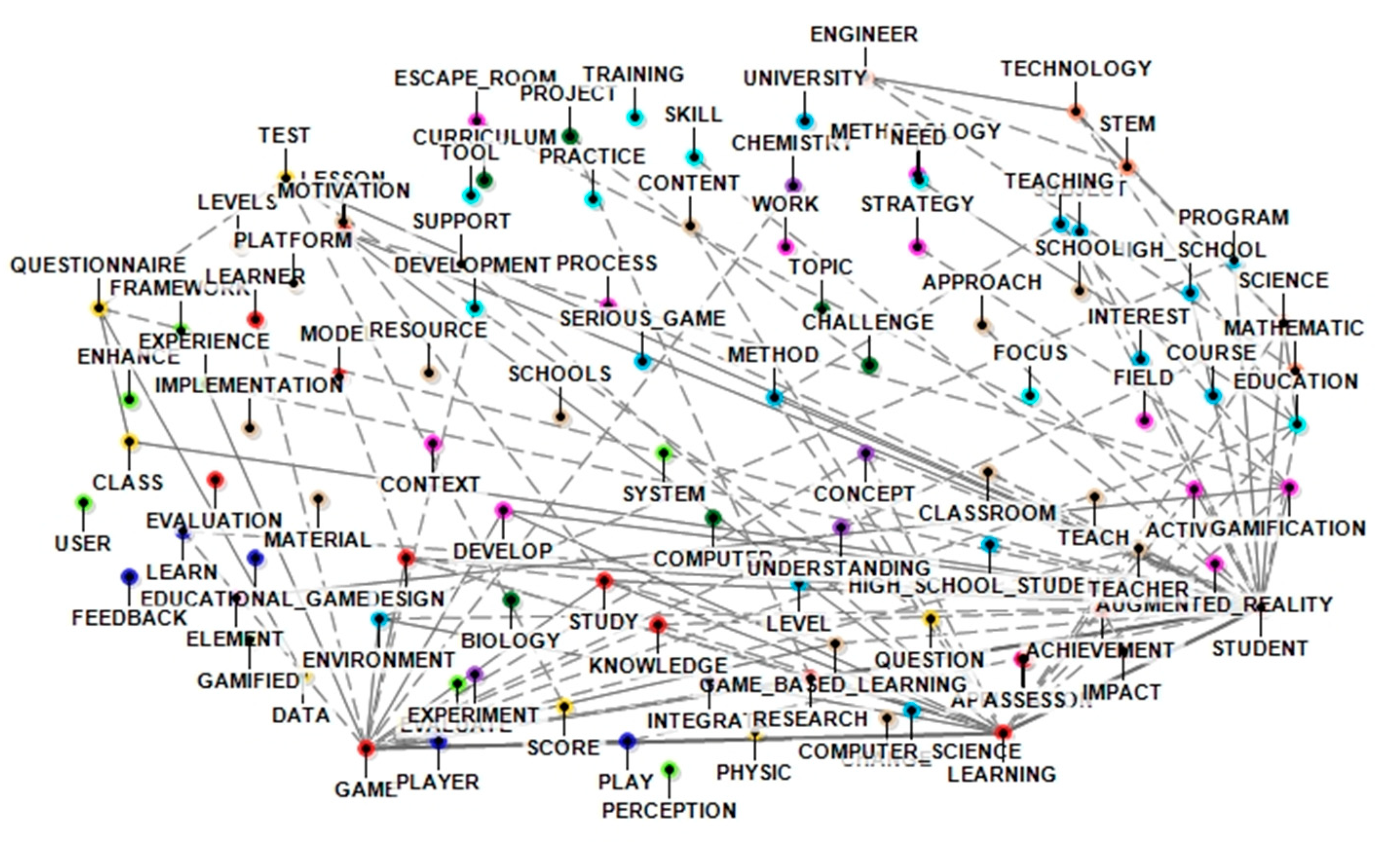
Figure 2.
Thematic Analysis of Elementary Contexts: map of identified thematic clusters.
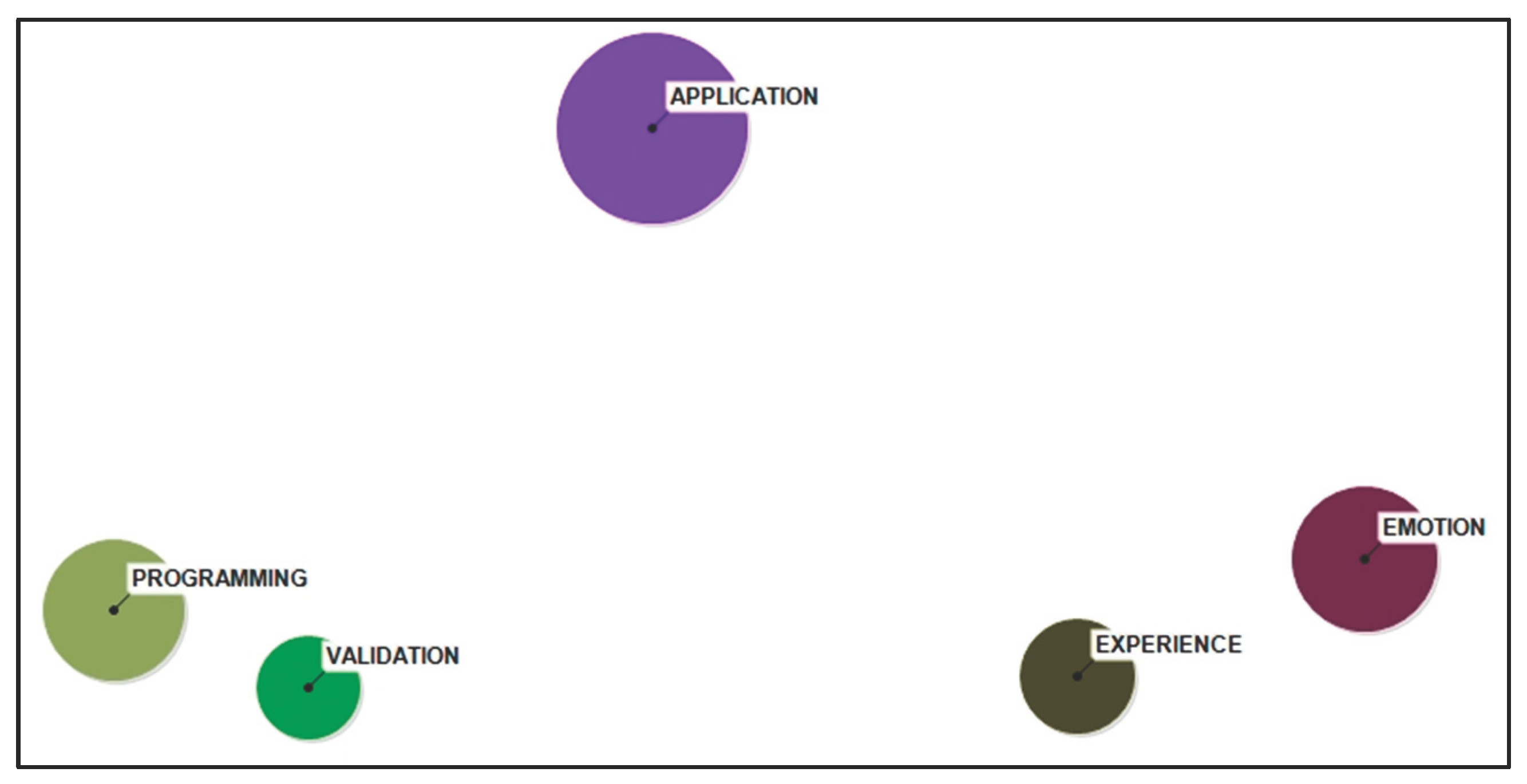

Table 1.
Under-used and over-used lexical units of each sub-corpus and its χ2 value (p≤0.05).
| OVER USED | UNDER USED |
|---|---|
| 2013- 2016 | |
| Robot (25,06); Game (23,92), robotic (17,81); game_construction (15,44); risk (15,26); peer (15,27); simulation (15,05); computing (12,89); Europe (12,73); climate (11,81); mechanism (10,54); meaningful_learning (10,27); competition (9,59); child (8,35); software (7,74); curriculum (7,47); successful (7,24); quiz (6,69); serious_game (6,49) | Activity (-6,94); periodic_table (-6,93); teaching (-6,21); Covid- 19 (-5,89); coding (-5,19); student_engagment (-5,19); STEM (-5,19; post_test (-4,5); Game_Based_Learning (-4,38); satisfaction (-4,17); pre-test (-4,15); narrative (-4,15); Earth (-4,15); teacher (-4,02) |
| 2017- 2019 | |
| Student_engagement (24,01); Game_Base_Learning (17,17); argumentation (13,31); discipline (13,31), competence (11,47); subject (11,16); art (10,95); computational thinking (10,34); creativity (9,23); inquiry_based (8,99); web (8,98); workshop (8,91); classroom (8,1); laboratory (7,82); STEAM (7,36) |
Soil (-9,6); learner (-8,88); Covid_ 19 (-8,6); platform (-7,87); robotic (-7,59); center (-7,59); emotion (-7,34); social (-7,03); flow (-6,58); genetic (-6,39); qualitative (-5,23); theory (-5,1); self- efficacy (-5,06); mental (-5,06); disability (-5,06); learning_efectiveness (-4,89) |
| 2020- 2023 | |
| escape_room (25, 02); emotion (20,16); flow (16,67); genetic (10,45); theory (9,62); narrative (9,06); factor (9,04); need (9,05); session (7,12); educational (6,46); validity (6,31); board_game (6,06); gamification (5,66); experience (5,42); in_game (4,69; intervention (4,64); virtual_reality (4,64) | simulation (-27, 49); energy (-22, 84); project (-19,46); competition (-10,13); argumentation (-8,24); peer (-8,24); framework (-7,63); green_chemistry (-7,55); mobile (-7,49); student_engagement (-7,19); computational thinking (-7,17); game_costruction (-6,86); robot (-5,75); creativity (-5,02); Game_Based_Learning (- 4,5); web (-4,04); ICT (-3,91) |
Table 2.
Overview of Key Thematic Clusters Identified in the Sub-Corpus “Years_Three”
| TYPICAL LEXICAL UNITS | ELEMENTARY CONTEXTS (CE) |
|---|---|
| experience (77,65); topic (57,12); mental (43,42); DGBL (39,05); flow (32,94); measure (32,58); game (26, 24); motivation (23,98); feeling (22,31); frustration (22,3); intention_to_play (22,3); outcome_expectancy (22,3); post_test (22,19); knowledge (21,95); pre_test (21,6) |
Flow experience and in-game performance significantly impacted students’ post test scores (…) We measured their science self- efficacy, science outcome-expectancy beliefs, flow experience, feelings of frustration, and conceptual_understanding before and after playing_the_game (…) This study examined the effects of reality-based interaction and VR on measures of student motivation and mental workload, in a mental arithmetic game (… |
| application (36,2); methodology (29,36); COVID- 19 (28,55); pandemic (20,17); usability (20,17); active (18,1); disability (17,8); teaching_and_learning (16,89); strategy (16,65); efficienty (14,48); KAHOOT (14,24); Augmented_reality (14,18); traditional (12,54) |
This phenomenological research aims to explore physics teacher strategies in conducting traditional game_based_learning in senior_high_schools during the Covid-19 pandemic (…). The proposed application has used the techniques in augmented_reality and game_based_learning (…). (…) studying with KAHOOT is believed to improve the outcomes of teaching-learning processes for instructors and students. In this study, a mobile_application was presented (…) for learners_with_intellectual disabilities by applying augmented_reality. (…) Wordwall is rarely used in learning media because there has not been socialization and application in the teaching_and_learning process for teachers. |
|
model (80,26); theory (57,6); validity (56,25); inquiry (44,71); validation (28,77); control_group (25,61); combined_with_ edutainment (23,01); traditional_games (22,99); experimental_group (22,53); expert (17,67); achievement (17,51); learning_effectiveness (14,43) |
This study_examined (…) by exploring the connections between the expectancy-value theory of achievement motivation and flow theory. Three experts in the field assessed the validity of the kit. Also, the achievements of the students from the experimental_group are compared with achievements of students (….). Based on the result, the guided inquiry_learning_model combined_with_edutainment affects increasing student learning interest compared to guided inquiry and conventional model. Some studies that have used a hybrid pedagogical model are recorded, combining gamification with other pedagogical models. |
| Emotion (51,23); educational (48,85); game (38,8); achivers (38,44); digital (36,48); opportunity (29,36); exercise (28,79); design (27,83); practice (25,43); link (18,08); scenario (17,93); collaborative (16,28); inclusive (15,36); positive_emotion (15,36); help_students (14,42) |
This study showed that conventional exercises were detrimental to middle and high achievers’ learning emotions, although their concepts improved (…). Science teachers may try innovative activities such as collaborative games to maintain students’ positive emotions (…) (…) high achievers decreased their positive emotion, and middle to high achievers increased their negative emotion. This study explores how players engage in problem solving during a cross-platform collaborative learning game about cellular biology (…) |
|
programme (73, 91); program (65,38); class (60,89); questionnaire (41,58); sample (30,15); student (25,76); achievement (24,25); survey (23,83); interest (21,73); personality (20,02); Scratch (18,81); schools (18,11); learning_process (14,05); participation (11,59); playful (11,59); digital games (11,26) |
This paper describes research introducing_students to programming concepts using a Scratch programming language (…) Students’learning interest questionnaire contains statements done by students before and after the learning_process. There are many programming environments and teaching approaches that address the learning needs of students (…) Results show different gender preferences for the three programming tools and, in some cases, different personalities (…) Moreover, all programming environments had different emotional effects on the students. |
Disclaimer/Publisher’s Note: The statements, opinions and data contained in all publications are solely those of the individual author(s) and contributor(s) and not of MDPI and/or the editor(s). MDPI and/or the editor(s) disclaim responsibility for any injury to people or property resulting from any ideas, methods, instructions or products referred to in the content. |
© 2024 by the authors. Licensee MDPI, Basel, Switzerland. This article is an open access article distributed under the terms and conditions of the Creative Commons Attribution (CC BY) license (http://creativecommons.org/licenses/by/4.0/).
Copyright: This open access article is published under a Creative Commons CC BY 4.0 license, which permit the free download, distribution, and reuse, provided that the author and preprint are cited in any reuse.


