
Submitted:
05 February 2024
Posted:
05 February 2024
You are already at the latest version
Abstract
This review article aims to delve into several aspects of sweetpotatoes and their leaves, including their nutritional composition, health benefits, culinary uses, and potential future implications as a superfood. It suggests an in-depth exploration of sweet potatoes' history, status, and prospects, highlighting their significance and potential economic value. Sweetpotatoes, often referred to as a powerhouse of nutrients, have gained popularity recently due to their remarkable nutritional composition and versatile culinary uses. This starchy root vegetable comes from the Convolvulaceae family and is consumed worldwide, playing a significant role in diverse cultures and cuisines. Besides their vibrant colors ranging from orange to purple, sweetpotatoes offer many health benefits, making them an essential addition to a well-balanced diet. Its extraordinary nutritional profile and numerous health benefits make it a superfood. Incorporating it into the diet can improve digestion, strengthen immunity, and reduce the risk of chronic diseases. With their versatility in the kitchen, there is no deficiency of charming and healthy recipes to explore. So, make room for sweet potatoes on your plate and unlock their vast potential to enhance your overall health and well-being. Overall, the future of sweetpotatoes looks bright as research and innovation aim to improve their nutritional value, adapt them to changing climate conditions, develop new varieties and products, and promote sustainable production practices. These developments can contribute to food security, economic growth, and healthier diets. Future research should focus on nutritional composition, health benefits, sustainable farming practices, cultivar development, and industrial applications to ensure sustainable and efficient production. By prioritizing research in these areas, we can enhance the utilization of sweet potatoes in various fields and secure their future for the next century.
Keywords:
superfoods
; sweetpotato
; nutrition
; bioactive compounds
; production
; industrial use
; physiological functions
; health benefits
; medicinal value
1. Introduction
The sweet potato (Ipomoea batatas L. Lam.) is the world’s seventh most important food crop [1]. This comes from the Convolvulaceae family and is consumed worldwide, playing a significant role in diverse cultures and cuisines. Besides their vibrant colors ranging from orange to purple, sweetpotatoes offer many health benefits, making them an essential addition to a well-balanced diet. The crop is gaining popularity in the United States as a healthy vegetable. Consequently, food companies must capitalize on the health aspect of this crop by producing value-added processed foodstuffs [2,3,4,5,6]. The per capita intake of the sweetpotato has increased about 56% from 2000 to 3 [7]. The increasing awareness of the health benefits of sweetpotatoes and their reputation as an alternative vegetable crop has been noticed by the food processors who have developed products that include sweet potato fries, puffs, wedges, crisps, sticks, pie, and mashed sweetpotatoes that are now available in many local stores [5,8,9,10,11,12,13,14,15,16,17,18,19,20]. Sweet potatoes are vegetatively propagated and susceptible to viruses and natural mutations that accumulate with each planting cycle (generation), leading to a decline in a variety [21]. This decline ultimately affects the yield, quality (changes in skin color, flesh color, and shape of potato roots), and crop marketability. This versatile and delicious vegetable has gained immense popularity recently due to its exceptional nutritional profile and various health benefits [2,3,6,7,8,14,15,17,19,20].
Sweetpotatoes are often considered a “superfood” due to their numerous health benefits and nutritional value. Here are some reasons why sweet potatoes are highly beneficial. They are rich in essential nutrients, including fiber, vitamins A, C, and B6, potassium, and manganese [2,3,6,19,20]. These nutrients are necessary for overall health and contribute to various bodily functions (22,23, 24,25]., Sweetpotatoes contain antioxidants like beta-carotene, which can help protect cells from damage caused by harmful free radicals [26,27,27,29,30,31.32,33,39,40]. Despite their sweet taste, sweetpotatoes have a relatively low glycemic index, meaning they do not cause a sharp increase in blood sugar levels [41,42,43,44,45,46,47,48,49,50,51,52]. The fiber content in sweet potatoes helps regulate blood sugar levels and can benefit individuals with diabetes or those looking to manage their blood sugar [53,54,55,56,57,58,59,60]. Despite their sweetness, sweetpotatoes have a moderate glycemic index due to their high fiber content. This allows for slower digestion and a gradual release of glucose into the bloodstream, preventing sudden spikes in blood sugar levels and making them suitable for individuals with diabetes or those aiming to manage blood sugar levels [53,54,55,56].
The fiber content in sweet potatoes contributes to a healthy digestive system by adding bulk to the stool, promoting regular bowel movements, and supporting the growth of beneficial gut bacteria [19,41,61,62,63,64,65]. Sweetpotatoes are an excellent source of potassium, a mineral that helps regulate blood pressure. Additionally, sweetpotatoes’ antioxidants and other compounds may help reduce inflammation and lower the risk of heart disease [19,30,65]. These compounds have been linked to reducing the risk of chronic diseases, including certain types of cancer and cardiovascular diseases, by neutralizing harmful free radicals in the body [19,22,32,33,39,40,41,42,43]. The fiber content in sweetpotatoes adds bulk to meals, leading to increased feelings of fullness and reduced calorie intake. This can aid in weight management and promote healthy weight loss. The high fiber content in sweetpotatoes also aids in promoting digestive regularity and preventing constipation. Additionally, resistant starches act as prebiotics, nourishing the beneficial gut bacteria and supporting a healthy gut microbiome [66,67,68,69,70,71,72]. Sweetpotatoes’ high beta-carotene content benefits eye and others health conditions [66,67,68]. The beta-carotene is converted into vitamin A within the body. This nutrient, critical for maintaining good vision, helps prevent age-related macular degeneration and other eye-related conditions. It may reduce the risk of age-related macular degeneration and help maintain good vision. The vitamins C, A, B, K, E content in sweetpotatoes supports immune function and helps the body fight off infections and illnesses [6,10,19,24,28,29,30,35,36,37,73,74,75]. Moreover, they have a relatively low glycemic index, making them a suitable choice for individuals looking to manage their blood sugar levels [48,49,50,51,52,76]. These vitamins in sweetpotatoes, strengthens the immune system and assists in collagen synthesis, wound healing, and fighting off infections and viruses [6,66,67,68].
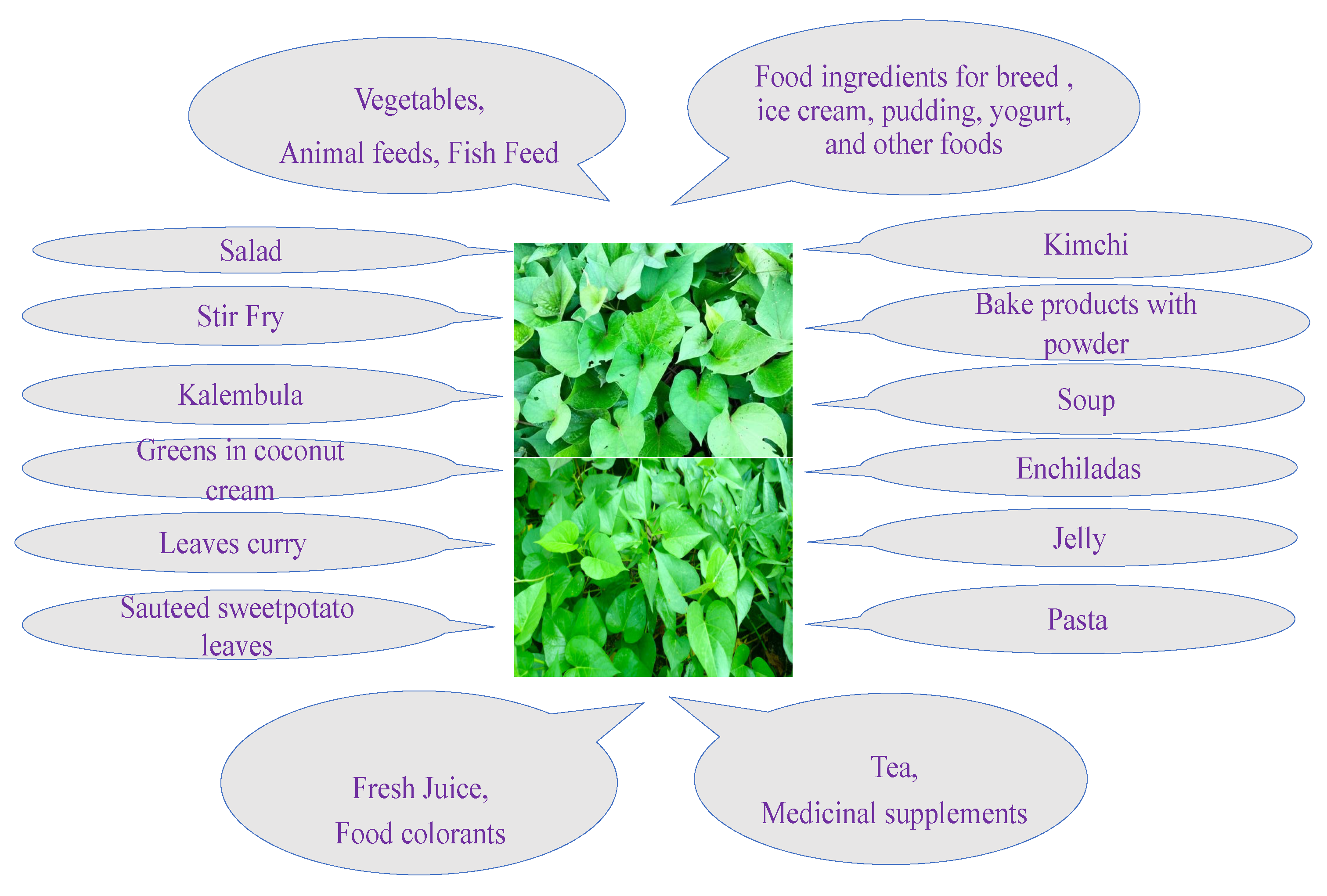
Sweetpotato leaves possess high levels of antioxidants, such as beta-carotene, lutein, and zeaxanthin. These compounds protect the body against oxidative stress caused by free radicals. They are linked to a reduced risk of chronic diseases, including heart disease, inflammation, and certain types of cancer [19,30,77,78,79,80,81,82,83,84,85,86,87,88]. The high potassium content in sweetpotato leaves promotes cardiovascular health by helping to regulate blood pressure levels. Potassium counteracts the effects of sodium, reducing the risk of hypertension, stroke, and heart disease. They are an excellent source of dietary fiber, promoting digestive health. Fiber aids in maintaining regular bowel movements, preventing constipation, and supporting a healthy gut microbiome [70,71,72]. The presence of bioactive compounds like polyphenols and flavonoids in sweetpotato leaves translates to potential anti-inflammatory effects. These compounds help reduce inflammation and may benefit individuals with arthritis, asthma, and inflammatory bowel disease [4,6,19,30,32,33,73,89,90,91,92,93,94,95,96]. Sweetpotato leaves contain unique bioactive compounds that have shown promise in regulating blood sugar levels. These compounds can improve insulin sensitivity and glycemic control, making sweet potato leaves a valuable dietary addition for individuals with diabetes or those aiming to manage blood sugar levels [23,26,48,49,50,51,52,97,98]. Sweetpotato leaves can be cooked and enjoyed in various ways [99,100,101,102,103,104,105,106]. They taste slightly earthy, like spinach or Swiss chard, and pair well with multiple ingredients. Sweet potato leaves can be used in stir-fries, sautés, soups, stews, curries, and salads. They can also be added to pasta dishes and omelets or used as a filling in pies and wraps. Sweet potato leaves can be juiced or blended into smoothies for a nutritional boost.
As awareness of sustainable food practices and the importance of plant-based diets grows, sweetpotato leaves hold significant potential [19,30,31,33,47]. They are highly nutritious and can provide a sustainable alternative to other leafy greens. Cultivating and utilizing sweetpotato leaves can diversify our food sources and help address food security issues and nutritional deficiencies in certain regions. Sweet potato leaves, often neglected, deserve recognition as a nutritional powerhouse. Packed with essential vitamins, minerals, fiber, and antioxidants, they offer a range of health benefits. Incorporating sweetpotato leaves into our diets supports heart health, digestion, and blood sugar regulation and provides anti-inflammatory benefits. With their versatility in the kitchen, sweet potato leaves can be used in various dishes, adding a delicious and nutritious touch. Moreover, their potential as a sustainable crop makes them an attractive candidate for future agricultural practices. So, let’s embrace sweetpotato leaves’ nutritional benefits and explore their culinary possibilities. Sweetpotato tops can be utilized as a sustainable food source [2,3,5,19,24,30,41,82,91,100,107,108]. With their high nutritional value, sweet potatoes can contribute to food security, especially in regions where they are grown abundantly. Moreover, their versatility and availability make them an accessible option for incorporating nutrient-rich greens into diets worldwide.
Therefore, sweetpotatoes both tuber and leaves are incredibly versatile in the kitchen and can be prepared in many ways. They can be boiled, steamed, roasted, baked, or grilled, bringing natural sweetness and enhancing flavor. Sweetpotato fries, baked sweetpotato wedges, mashed potatoes, and casseroles are famous. Sweet potatoes can also be used as a base for soups, stews, and curries, adding richness and depth of flavor. Additionally, they can be included in salads, stir-fries, and even desserts like sweetpotato pie or bread, providing a unique twist to conventional recipes. Sweetpotatoes are a versatile and delicious crop that has gained immense popularity recently due to their exceptional nutritional profile and various health benefits in leaves and tuber. It often referred to as a powerhouse of nutrients, have gained popularity recently due to their remarkable nutritional composition and versatile culinary uses. This review article aims to delve into several aspects of sweetpotatoes, including their nutritional composition, health benefits, culinary uses, and potential future implications as a superfood.
2. Origins and Varieties
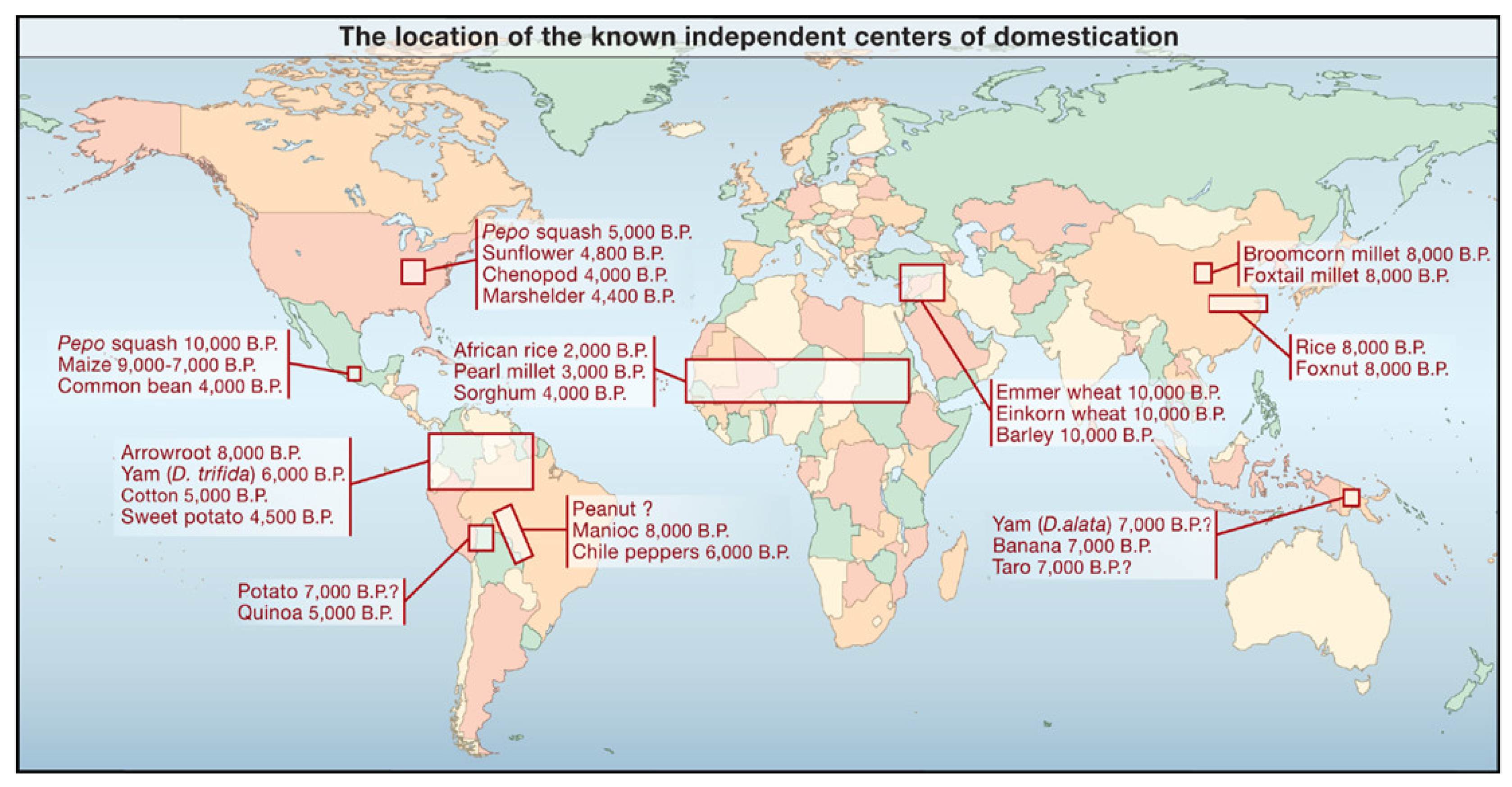
The sweetpotato (Ipomoea batatas L. Lam.) is a versatile and nutritious plant enjoyed worldwide. It is a dicotyledonous plant belonging to the Convolvulaceae family. It is a new world crop. However, there is still some misperception that exists in its origin and primary & secondary centers of diversity [109,110]. Several authors described the origin of these crops and their centers of diversity [109,110,111,112,113,114,115]. It has become increasingly popular due to its exceptional nutritional value and culinary versatility. This introduction will explore sweet potatoes’ origins, varieties, nutritional composition, and culinary uses.
Origins and Varieties: The sweetpotato is believed to have originated in Central and South America thousands of years ago. It then spread to other regions through trade and exploration. Today, it is cultivated in various countries, including China, India, Vietnam, and the United States.
Figure.
There are different varieties of sweet potatoes, each with its unique characteristics. Some common varieties include orange-fleshed sweet potatoes, which are rich in beta-carotene and vitamin A. There are also purple-fleshed sweet potatoes, which get their vibrant color from antioxidants called anthocyanins. White-fleshed sweet potatoes have a milder taste and are often used in savory dishes.
Figure.
There are different varieties of sweet potatoes, each with its unique characteristics. Some common varieties include orange-fleshed sweet potatoes, which are rich in beta-carotene and vitamin A. There are also purple-fleshed sweet potatoes, which get their vibrant color from antioxidants called anthocyanins. White-fleshed sweet potatoes have a milder taste and are often used in savory dishes.
2.1. Production Technology
When implementing sweet potato production technology, it’s crucial to consider the specific climatic conditions, soil type, and local practices. Consulting with agricultural experts or local extension services can provide valuable guidance tailored to the region. The production technology of sweet potatoes involves several key steps. Here is an overview of the process [116,117,118,119]. Growing sweetpotato leaves is relatively straightforward and can be done on a small or large scale. Following good agricultural practices, providing adequate care, and monitoring for any pests or diseases that may affect the crop is essential. The production technology for sweet potato leaves, also known as sweet potato tops or greens, involves the following steps [19.31,120].
2.2. Land Preparation
Begin by selecting a suitable site with well-drained soil rich in organic matter. Clear the land of any weeds or crop residues, and plow or till the soil to prepare a suitable seedbed [116,117,118,119]. For leaves, prepare the land by clearing it of weeds and debris. Till or plow the soil to create a well-drained seedbed. Sweetpotato leaves can be grown in both open fields and containers.
2.3. Variety Selection
When selecting sweet potatoes, consider climate, soil conditions, and market preferences. There are orange, purple, and white varieties. If you want to produce leaves, choose edible varieties like ‘Ace of Spades,’ ‘Yanomami,’ and ‘Centennial.’ Popular cultivars in the US include Beauregard, Covington, Jewel, Garnet, Japanese, and Purple. Each has unique characteristics and culinary uses [2,100,116,117,118,119,121,123]. For example, Beauregard is sweet and moist, Covington is great for baking, and Garnet is perfect for casseroles. Japanese sweet potatoes have a nutty flavor and are versatile in the kitchen. In the United States, several different cultivars of sweet potatoes are grown, each with unique characteristics and culinary uses [121,122]. Purple sweet potatoes are high in antioxidants and are used in desserts.
2.4. Types of Leaves
Sweetpotato leaves are highly nutritious and come in many varieties used in cuisines worldwide. Traditional and red-stemmed varieties are commonly used in African, Southeast Asian, and Caribbean cuisines. Japanese sweet potato leaves are popular in Japanese dishes. Like spinach, white-stemmed sweet potato leaves are used in African and Caribbean cuisines. Purple sweet potato leaves are rich in antioxidants and add color and nutrition to salads, stir-fries, and soups. Try sweet potato leaves for a delicious and healthy meal [19,30,31,107,124].
2.5. Seed Preparation
2.6. Planting
Plant the vine cuttings in prepared beds or ridges. Insert the cuttings into the soil, leaving nodes exposed above the ground. Space the cuttings about 12-18 inches apart, with rows spaced 2-3 feet apart. To produce leaves, take stem cuttings from healthy sweet potato plants or purchase them from a reputable source. Cuttings should be about 8-10 inches long and have 2-3 nodes. Insert the cuttings into the soil, burying them about 4-6 inches deep. Space the cuttings around 12-18 inches apart in rows 3-4 feet apart [116,117,118,119].
2.7. Crop Management
Provide proper care and management throughout the growing season. This includes regular irrigation to maintain soil moisture, weed control to minimize competition, and fertilization to supply nutrients based on a soil test and crop requirements. Sweetpotato leaves require regular care and management throughout the growing season to produce leaves. Irrigate the plants regularly to keep the soil consistently moist but not soggy. Weed the field to minimize competition for nutrients and sunlight. Fertilize as needed based on soil tests and crop requirements [116,117,118,119].
2.8. Harvesting
When harvesting sweet potatoes, it’s important to wait until the leaves turn yellow and begin to wither before digging them up. This usually happens around 100-140 days after planting, depending on the variety and growing conditions. Before harvesting, cut back the vines to ground level a few days before to make it easier to access the sweet potatoes. When digging, start about 12 inches away from the base of the plant to avoid damaging the tubers. Carefully lift the sweet potatoes from the ground to avoid bruising or injuring them. After harvesting, it’s important to handle the sweet potatoes with care to prevent damage and bruising. Avoid dropping or piling them on top of each other, as this can lead to bruising, rot, or excessive moisture buildup. Sweet potatoes are typically cured in a warm, well-ventilated area with high humidity (around 85-90%) for 10-14 days to improve flavor, texture, and storage life. This allows them to heal minor cuts and bruises, convert starches to sugars, and develop their characteristic sweet taste. Sweet potato leaves can be harvested throughout the growing season, starting around 4-6 weeks after planting. Harvest the young tender leaves by cutting them from the stem using a sharp knife or scissors. After harvesting, sort the sweet potatoes by size, removing any damaged or diseased tubers. If applicable, grade them based on size and quality for market or personal use [116,117,118,119].
2.9. Storage
Sweetpotatoes need proper curing and storage conditions to maintain quality. For adequate storage of sweet potatoes, cure them in a warm and well-ventilated area with high humidity for 10-14 days, then store them in a cool, dry, and dark place with a temperature between 55-60°F and relative humidity of 85-90%. To extend their shelf life, keep them in a single layer with proper ventilation, check for damaged or spoiled ones, handle them with care, and monitor regularly. Proper post-harvest handling is crucial for maintaining their quality [116,117,118,119].
2.10. Post-Harvest Handling
Sorting and grading the harvested sweet potatoes is necessary to remove damaged or diseased tubers. Pack the sweet potatoes in appropriate containers for storage or transport to the market, ensuring proper ventilation and protection against mechanical damage. In case of leaves, sort and clean the leaves to remove any debris or damaged material. Sweet potato leaves are highly perishable, so it’s best to use them fresh. If storing is necessary, store them in a cool, humid place or wrap them in damp paper towels and place them in a plastic bag in the refrigerator [105,116,117,118,120,121,124,125,126,127].
2.11. Transportation
When transporting sweetpotatoes, taking specific steps to ensure their safety and quality is essential [9,128,129,130]. Here are some guidelines to follow:
- Use sturdy containers or crates with cushioning material to prevent damage.
- Secure the load with straps or ropes and padding between layers.
- Keep sweet potatoes at the right temperature and properly ventilated.
- Handle them gently to avoid bruising.
- Monitor sweet potatoes during transit for signs of damage or spoilage
Sweet potatoes are sensitive to extreme temperatures. If transporting in hot weather, keep the sweet potatoes in a shaded or air-conditioned space to prevent them from overheating. Protect them from freezing temperatures in colder weather by insulating the containers [137,138]. These simple steps will help ensure the safe and successful transportation of sweetpotatoes [131,132,133,134,135,136].
2.12. Processing
Sweetpotatoes can be processed in various ways for different uses. These methods include cleaning and sorting, cutting or slicing, cooking or boiling, mashing or pureeing, drying, freezing, canning or preserving, roasting or frying, baking or cooking, and industrial processing. The actual process may vary based on the desired end-use or product being produced [18,39,93,105,108,118,124,125,137,138].
2.13. Packaging
Sweetpotatoes need proper packaging to maintain their quality and shelf life and protect them from damage. Standard packaging methods include mesh bags, cartons/boxes, plastic containers, plastic film wrapping, bulk packaging, modified atmosphere packaging, and labeling/branding. Packaging regulations and consumer preferences may vary based on regional or national requirements. Sustainable packaging options are also being considered to minimize environmental impact [105,106,113,132,133,140,141,142,143]
2.14. Insects and Pests
Pests commonly affecting sweet potatoes include the sweet potato weevil, wireworms, aphids, whiteflies, moths, and beetles. To control these pests, inspect and discard infested potatoes, use pheromone traps, implement cultural practices like crop rotation and deep plowing, use insecticides or biological control agents, apply insecticidal soap or neem oil, use yellow sticky traps, and maintain cool temperatures with sufficient ventilation during storage [144,145,146,147,148]. Adopting integrated pest management practices that include cultural, biological, and chemical control methods is essential to manage insect and pest infestations effectively. Regular monitoring, early intervention, and seeking guidance from agricultural experts or local extension services can help prevent infestations from becoming significant problems.
2.15. Diseases
Sweetpotatoes can be vulnerable to several destructive diseases [149,150,151,152,153]. Here are some common sweet potato diseases and assertive management strategies to control them: 1. Sweet potato wilt: This fungal disease is caused by Fusarium species that can cause wilting, stunting, and yellowing of leaves. Control it by using resistant varieties, crop rotation, and treating the seed with fungicides. 2. Sweet potato leaf curl: A viral disease spread by whiteflies that causes leaf curling, yellowing, and stunted growth. Control it by using disease-resistant varieties and aggressively controlling whiteflies. 3. Sweet potato scab: A bacterial disease that causes raised, corky lesions on the skin of sweet potatoes. Control it by using copper-based fungicides, practicing good crop rotation, and planting disease-free seed potatoes. 4. Black rot: A bacterial disease that causes black, foul-smelling decay in sweet potatoes. Prevent its spread by ensuring proper storage conditions, regularly inspecting the potatoes, and immediately removing any infected tubers. 5. Sweet potato virus disease (SPVD): Caused by a complex of viruses that result in stunted growth, distorted leaves, and reduced yields. Control it by planting virus-free seed potatoes, aggressively controlling insect vectors, and practicing thorough sanitation. 6. Stem rot: A fungal disease that causes the rotting of stem tissues, resulting in wilting and plant death. Control it by using resistant varieties, providing excellent drainage, and avoiding excessive irrigation. Prevention is crucial in managing sweet potato diseases. Use only disease-free seed potatoes, practice crop rotation, maintain impeccable sanitation, and implement cultural practices that promote plant health.
2.16. Marketing
By implementing these marketing strategies, you can increase awareness and demand for the sweetpotatoes, ultimately driving sales and building a loyal customer base [105,106,113,132,133,140]. Several strategies can help promote your product and reach the target audience when marketing sweet potatoes. Here are some marketing ideas for sweet potatoes:
- (i)
- Develop a strong brand identity.
- (ii)
- Highlight their unique qualities and health benefits.
- (iii)
- Utilize social media.
- (iv)
- Set up a booth at farmers’ markets or participate in local food events.
- (v)
- Collaborate with local restaurants, chefs, or food bloggers.
- (vi)
- Develop a professional website
- (vii)
- Offer tastings and cooking demonstrations.
- (viii)
- Create eye-catching packaging with clear information.
- (ix)
- Partner with local grocery stores or specialty food shops.
- (x)
- Encourage customer testimonials and reviews.
2.17. Cost of Production
The cost of producing sweet potatoes involves several factors that farmers need to consider. The main expenses include land and rent, seed and planting material, labor, fertilizers and inputs, irrigation, machinery and equipment, storage and packaging, nutritional analysis, pest and disease analysis, quality analysis, shelf life and storage analysis, and allergen analysis. Farmers should consult a reputable analytical laboratory and obtain a detailed quote to get an accurate cost estimation [154,155,156,157,158,159]. They should also consider market research, transportation, and marketing expenses.
3. Nutritional Composition
3.1. Vimamins
Sweet potatoes are not only delicious but also packed with essential nutrients. They are an excellent source of dietary fiber, which aids in digestion and promotes a healthy gut. They are also rich in vitamins, including vitamins A, C, E, K and B vitamins [2,3,4,19,30,35,36,37,94]. Sweet potatoes are an excellent source of potassium, magnesium, and manganese minerals. Furthermore, they contain antioxidants that help reduce inflammation and protect against chronic diseases.
3.2. Minerals
Sweet potatoes are an excellent source of essential minerals, including potassium, manganese, copper, iron, magnesium, and zinc. These minerals are vital in maintaining good health by supporting cardiovascular, nerve, and muscle function, metabolizing nutrients, and protecting cells from damage. Incorporating sweet potatoes into your diet, whether baked, boiled, or roasted, can provide a range of minerals that support overall health and well-being [94,160,161,162,163,164,165,166]
4. Physiological Functions of Sweetpotato Storage Root and Leaves
4.1. Antioxidant Capacities
The antioxidant capacities of sweet potatoes can vary depending on their color and variety. Purple-fleshed sweet potatoes have higher anthocyanin content and antioxidant activity than orange-fleshed varieties. However, all sweetpotatoes offer various antioxidants contributing to their health-promoting properties [4,19,22,24,30,33,41,45,75,85,86,91,167,168,169,170,171,172]. They are known for their high antioxidant content, attributed to their vibrant colors, particularly in purple and orange-fleshed varieties. Here are some essential antioxidants found in sweet potatoes and their benefits:
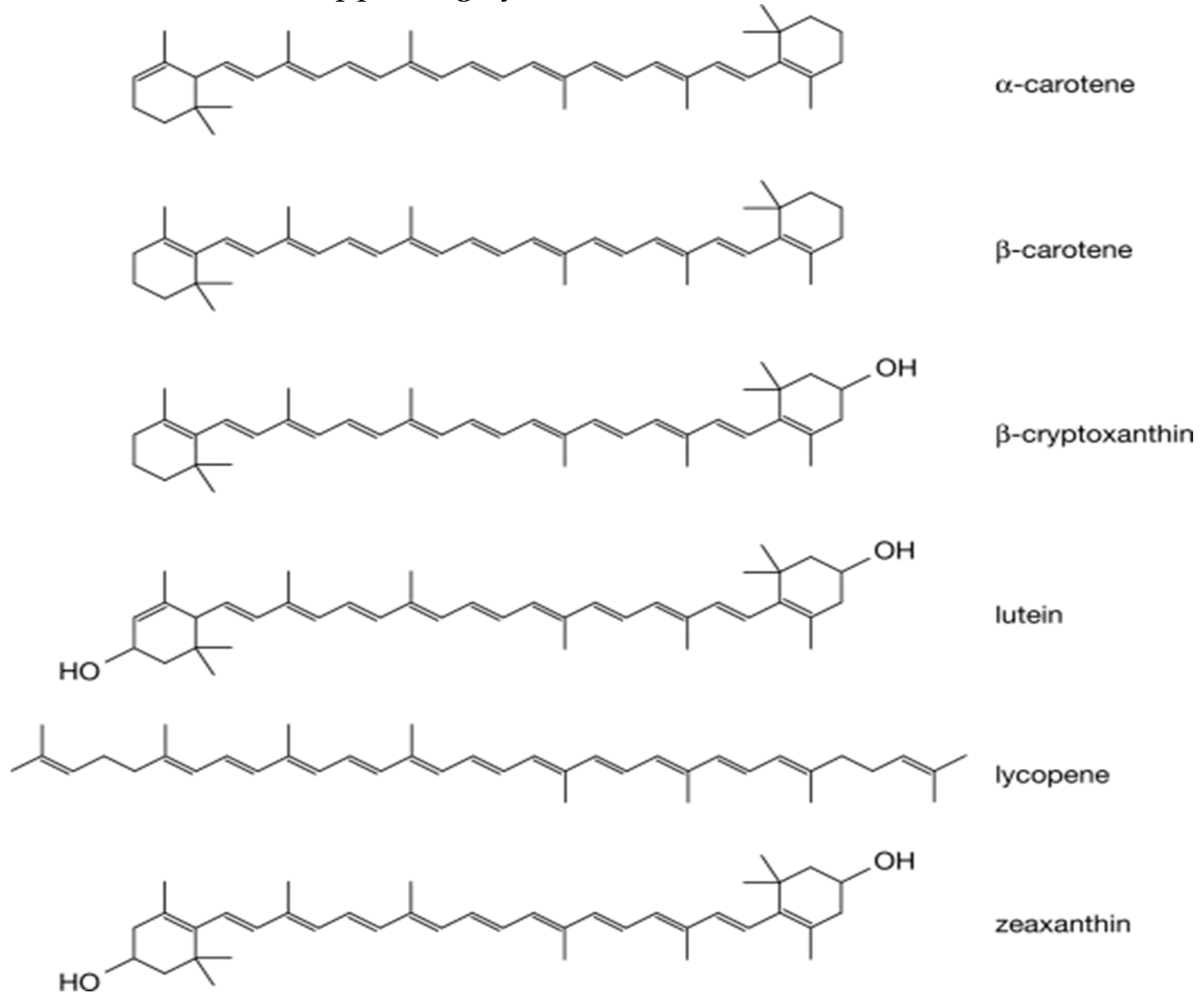
Beta-carotene: Sweet potatoes are rich in beta-carotene, a type of carotenoid that gives them their orange color. Beta-carotene is converted into vitamin A and acts as a powerful antioxidant, protecting cells from oxidative stress and supporting eye health [66,67,68,173,174,175].
Figure 1.
Chemical structures of the six most prevalent carotenoids (α-carotene, β-carotene, β-cryptoxanthin, lutein, lycopene, and zeaxanthin) in the human diet.
Figure 1.
Chemical structures of the six most prevalent carotenoids (α-carotene, β-carotene, β-cryptoxanthin, lutein, lycopene, and zeaxanthin) in the human diet.
4.2. Anthocyanins
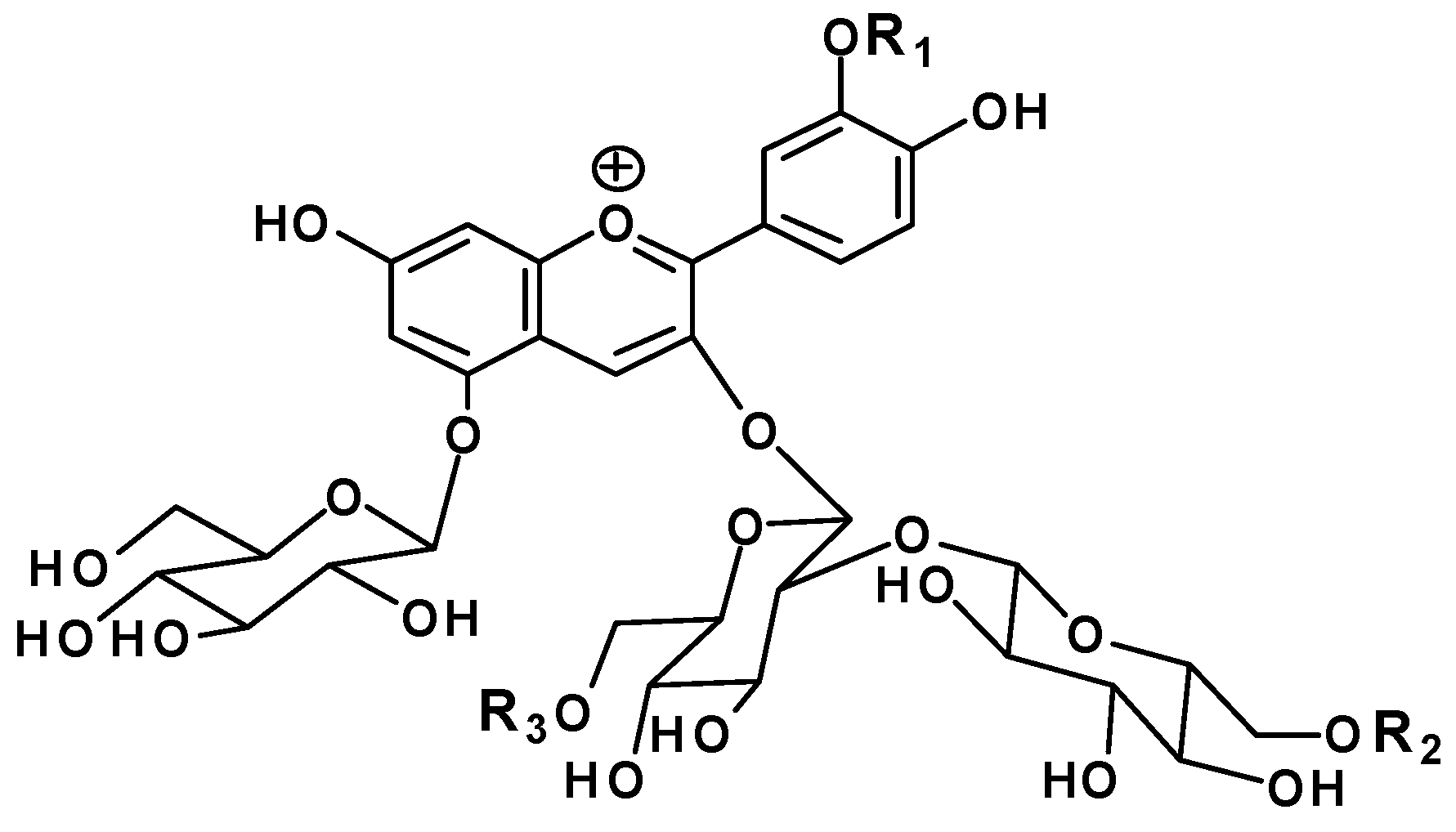
Purple-fleshed sweetpotato tubers and leaves contain anthocyanins, potent antioxidants responsible for their vibrant color. Anthocyanins have various health benefits, such as reducing inflammation, boosting cardiovascular health, and supporting brain function [33,169,171,176,177,178,179,180,181,182,183,184,185,186,187]. Sweetpotatoes, contain anthocyanins, a group of pigments responsible for their vibrant colors. The specific anthocyanin compositions in sweet potatoes can vary depending on the variety and growing conditions, but some common anthocyanins are found in purple-fleshed sweet potatoes. Sweet potato leaves also contain anthocyanins, although their specific composition may differ from that of the sweet potato tubers. The anthocyanin profiles in sweet potato leaves depend on factors such as the variety, growing conditions, and maturity of the leaves. Here are some common anthocyanins that can be found in sweetpotato leaves:
| Anthocyanin | R1 | R2 | R3 | Mf | Mw | Aglycon | ||
| YGM-0a | H | H | H | C33H41O21 | 773.67 | Cy | ||
| YGM-0b | CH3 | H | H | C34H43O21 | 787.70 | Pn | ||
| YGM-0c* | H | ND | ND | C40H45O23 | 893.78 | Cy | ||
| YGM-0d* | H | ND | ND | C42H47O24 | 935.82 | Cy | ||
| YGM-0e* | CH3 | ND | ND | C41H47O23 | 907.81 | Pn | ||
| YGM-0f* | CH3 | ND | ND | C42H49O24 | 937.83 | Pn | ||
| YGM-0g* | H | ND | ND | C43H49O24 | 949.84 | Cy | ||
| YGM-1a | H | PHB | Caf | C49H51O26 | 1055.92 | Cy | ||
| YGM-1b | H | Caf | Caf | C50H53O27 | 1085.95 | Cy | ||
| YGM-2 | H | H | Caf | C42H47O24 | 935.82 | Cy | ||
| YGM-3 | H | Fer | Caf | C52H55O27 | 1111.99 | Cy | ||
| YGM-4b | CH3 | Caf | Caf | C52H55O27 | 1111.99 | Pn | ||
| YGM-5a | CH3 | PHB | Caf | C50H53O26 | 1069.95 | Pn | ||
| YGM-5b | CH3 | H | Caf | C43H49O24 | 949.84 | Pn | ||
| YGM-6 | CH3 | Fer | Caf | C53H57O27 | 1126.02 | Pn | ||
| YGM Yamagawamurasaki; Cy, Pn cyanidin, and peonidin, respectively. PHB, Caf, Fer= p-hydroxybenzoic, caffeic and ferulic acid, respectively; ND =not determined; Mf= molecular formula of flavylium cation; Mw= molecular weight calculated as flavylium cation; *The chemical structures of these anthocyanins have been partially determined. | ||||||||
Figure 2.
Chemical structures and characteristics of the anthocyanin compositions in sweetpotato
leaves [46].
Figure 2.
Chemical structures and characteristics of the anthocyanin compositions in sweetpotato
leaves [46].
Cyanidin: Cyanidin is one of the main anthocyanins found in purple-fleshed sweet potatoes. It gives fruits and vegetables their red, purple, or blue hues. Cyanidin has various health benefits, including antioxidant and anti-inflammatory properties.
Peonidin: Peonidin is another anthocyanin commonly found in purple-fleshed sweet potatoes. It contributes to the red and purple colors of fruits and vegetables. Peonidin has antioxidant and anti-inflammatory properties and has been studied for its potential health benefits.
Delphinidin: Delphinidin is a blue anthocyanin that can also be found in purple-fleshed sweet potatoes. It is known for its antioxidant activity and has been investigated for its potential protective effects against chronic diseases.
Malvidin: Malvidin is a purple anthocyanin often present in purple-fleshed sweet potatoes. It contributes to their dark purple color and has been studied for its potential health benefits, including antioxidant and anti-inflammatory effects.
These are just a few examples of the anthocyanins in purple-fleshed sweetpotatoes. The specific anthocyanin profile may vary among different varieties and depending on factors such as growing conditions and maturity of the sweetpotatoes. Eating purple-fleshed sweetpotatoes can provide various anthocyanins associated with multiple health benefits, including antioxidant and anti-inflammatory effects. Some examples of anthocyanins can be found in sweetpotato leaves, but the specific composition may vary depending on various factors. Sweetpotato leaves are an edible green leafy vegetable rich in nutrients and antioxidants, including anthocyanins, contributing to their potential health benefits.
4.3. Caffeic Acid Derivatives
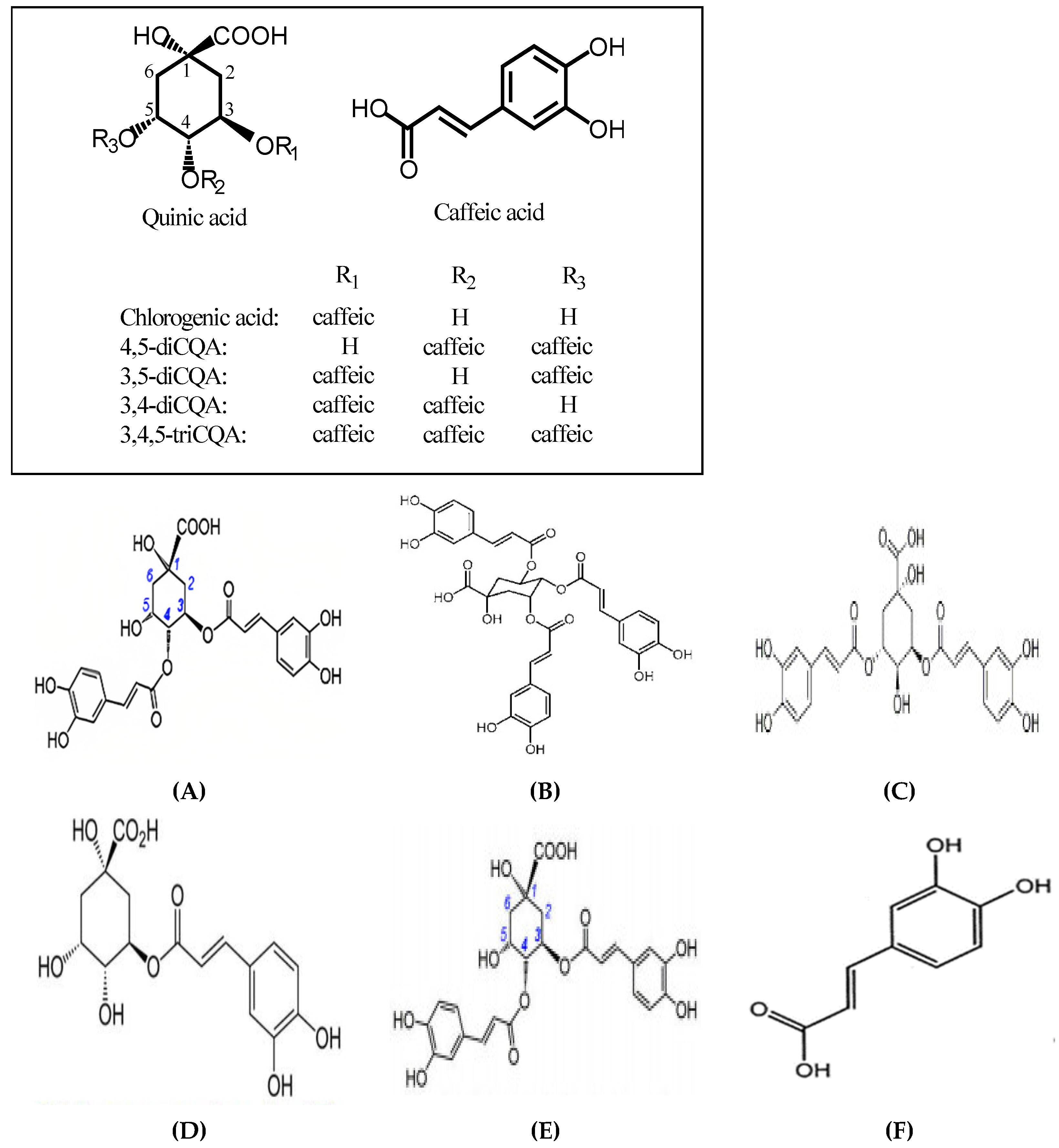
Sweet potatoes contain the phenolic compound caffeic acid, which possesses antioxidant and anti-inflammatory properties. Caffeic acid is believed to have potential benefits in combating oxidative stress and reducing the risk of chronic diseases, including heart disease and cancer [19,30,33,42,45,61,88,91,169,188,189].
Figure 3.
Chemical structures of polyphenolic compounds in sweetpotato leaves. A. Chlorogenic Acid B. 3,5-Di-caffeoylquinic acid C. 3,4-Di-caffeoylquinic acid D. 4,5-Di-caffeoyalquinic acid E. 3,4,5-tri-o-caffeoylquinic acid, and F. Caffeic acid [42].
Figure 3.
Chemical structures of polyphenolic compounds in sweetpotato leaves. A. Chlorogenic Acid B. 3,5-Di-caffeoylquinic acid C. 3,4-Di-caffeoylquinic acid D. 4,5-Di-caffeoyalquinic acid E. 3,4,5-tri-o-caffeoylquinic acid, and F. Caffeic acid [42].
It’s important to note that cooking methods can influence the antioxidant content of sweet potatoes. Boiling and steaming are recommended as they help retain more antioxidants than frying or baking at high temperatures. Incorporating a variety of sweet otatoes into your diet can provide a range of antioxidants, supporting overall health and well-being.
4.4. Anti-Diabetic Potential of Sweetpotatoes
Sweet potatoes can be advantageous for individuals with diabetes due to their anti-diabetic properties. They have a relatively low glycemic index, which helps maintain stable blood glucose levels. Sweet potatoes are also a great source of dietary fiber, especially soluble fiber, which regulates blood sugar levels and improves insulin sensitivity. They contain resistant starch, which improves insulin sensitivity and enhances overall glycemic control. Additionally, sweet potatoes are abundant in antioxidants such as anthocyanins, which reduce oxidative stress, inflammation, and insulin resistance, enhancing blood sugar control [32,48,49,50,51,52,53].
4.5. Anti-Inflammatory Activity of Sweetpotatoes
Sweet potatoes and their leaves, also known as sweet potato tops or greens, have been studied for their anti-inflammatory properties. They contain polyphenols, antioxidants, vitamins, minerals, and omega-3 fatty acids, all contributing to their anti-inflammatory effects. Polyphenols like phenolic acids and flavonoids exhibit anti-inflammatory properties by inhibiting pro-inflammatory enzymes and reducing the production of inflammatory cytokines. Antioxidants help neutralize free radicals and reduce oxidative stress, thereby reducing inflammation in the body. Sweet potato tops are rich in essential vitamins and minerals like vitamins C, E, beta-carotene, and fiber, which can help modulate the immune response and reduce inflammation. Additionally, sweet potatoes are a great source of beta-carotene, which has anti-inflammatory effects, and vitamin E, another anti-inflammatory antioxidant, helps manage inflammation [6,73,89,91].
4.6. Anticancer Potential of Sweetpotatoes
Sweet potatoes have been studied for their potential anti-cancer properties. They contain compounds such as anthocyanins and phenolic compounds that have anti-inflammatory effects. Chronic inflammation is known to increase the risk of cancer, and these compounds may help reduce inflammation and lower the risk of cancer development. Sweet potato leaves are rich in antioxidants like flavonoids and phenolic compounds that can protect cells from oxidative stress and DNA damage. This can help prevent the development of cancer. Studies suggest that sweet potato leaves contain substances that can induce apoptosis in cancer cells, potentially inhibiting their growth. They also exhibit anti-proliferative effects by slowing down cancer cell growth and division. Sweet potato leaves contain compounds that can modulate immune responses, potentially enhancing the body’s ability to recognize and destroy cancer cells. Sweet potatoes are high in dietary fiber, which can promote regular bowel movements and assist in the elimination of potential carcinogens from the body. Additionally, sweet potatoes have a lower glycemic index than other starchy foods, which can help control blood sugar levels and reduce the risk of certain cancers, such as breast, colorectal, and endometrial cancer [4,19,31,32,61,77,78,79,80].
4.7. Antimutagenic Properties in Sweetpotatoes
Sweetpotatoes have the potential to reduce mutations in DNA which can lead to cancer. This property is known as antimutagenicity. Sweet potatoes are rich in dietary fiber, antioxidants, phytochemicals, and anthocyanins, all of which have been shown to have antimutagenic properties. Additionally, they can increase the activity of detoxification enzymes in the body and possess anti-inflammatory effects, inhibiting tumor growth and reducing mutagenesis. Boiling and steaming sweet potatoes better preserve their antioxidant and antimutagenic activity than frying or baking [19,30,33,47,82,91,190].
4.8. Anti-Microbial Activity
Sweetpotatoes possess potent antimicrobial properties that can inhibit the growth of various microbes. The roots, leaves, and stems of sweetpotatoes contain antibacterial and antifungal compounds such as polyphenols, anthocyanins, and proteins that offer protection against pathogenic bacteria and fungi. Studies suggest that sweet potatoes may also possess antiviral activity against certain viruses, such as influenza and herpes simplex. However, further research is needed to understand the specific mechanisms behind this antiviral activity. Including sweet potatoes in your diet is an excellent way to enhance your health and protect against harmful microbes [19,30,77,191,192,193,194,195,196].
4.9. Cardiovascular Potential of Sweetpotatoes
Sweet potatoes are a heart-healthy food with several potential cardiovascular benefits: - Antioxidant activity: Sweet potatoes are rich in antioxidants that help reduce oxidative stress and inflammation, which are linked to cardiovascular diseases. Blood pressure regulation-sweetpotatoes are a good source of potassium, which helps maintain healthy blood pressure levels; blood sugar regulation-sweetpotatoes have a low glycemic index, making them beneficial for individuals with diabetes or those at risk of developing it, anti-inflammatory effects- it contain anti-inflammatory compounds that may protect against cardiovascular damage, fiber content- sweetpotatoes are an excellent source of dietary fiber, which can help reduce the risk of heart disease. Incorporating sweet potatoes into the diet is a tasty and simple way to support your heart health. [197,198,199,200,201,202].

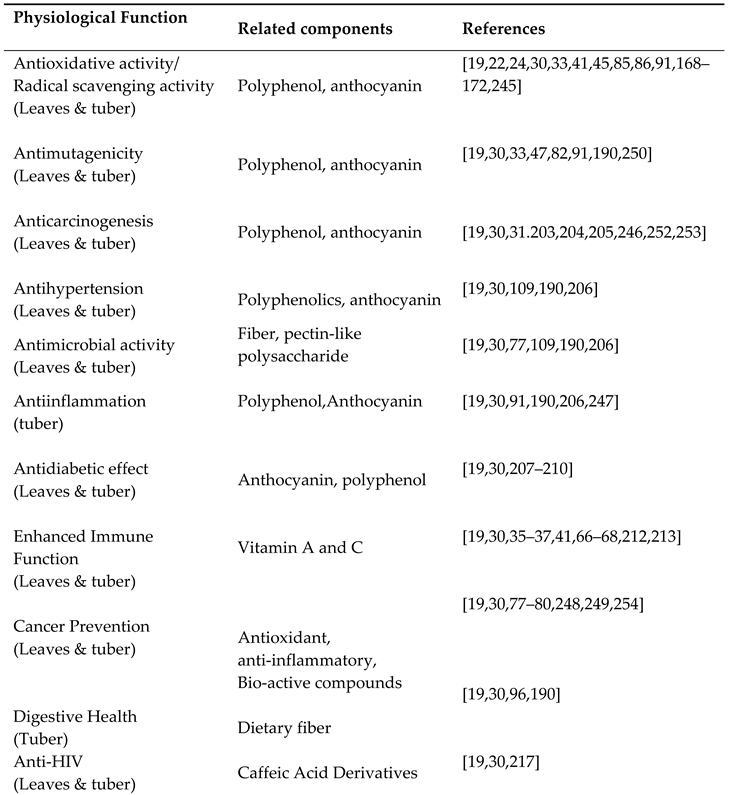
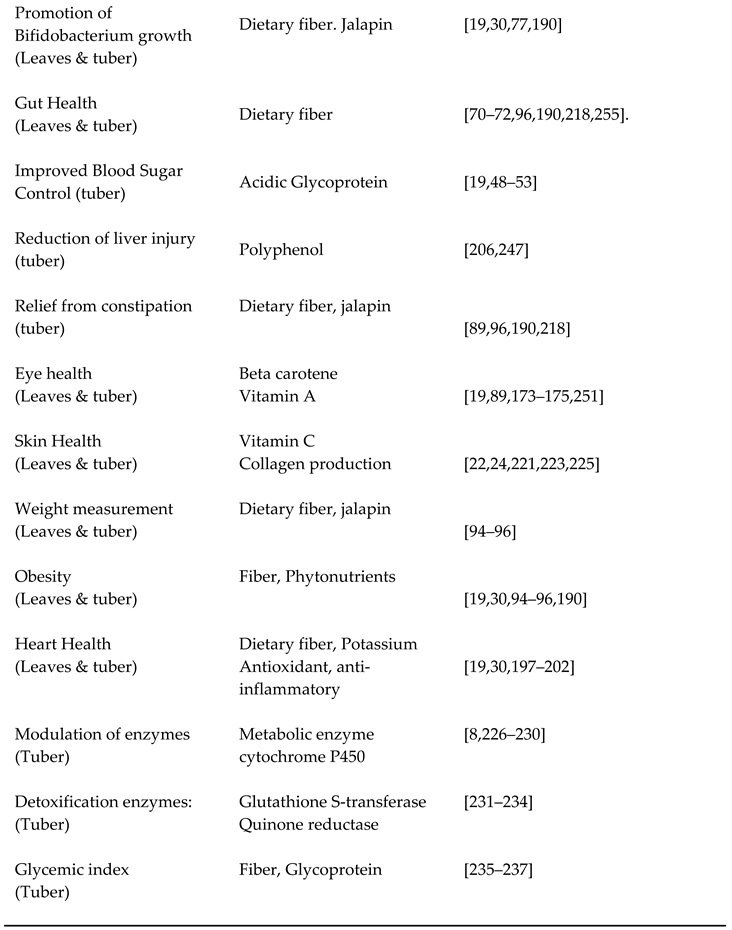
Table 1.
Individual health beneficial functions of sweetpotatoes.
4.10. Obesity
Sweetpotatoes are a great addition to a healthy weight management plan. They are rich in dietary fiber, low in calories, and have slow-release carbohydrates. They are also packed with essential vitamins and minerals. Research suggests that consuming whole, unprocessed foods like sweet potatoes can help reduce the risk of overeating. However, moderation is vital, and it’s essential to combine sweet potatoes with other nutrient-rich foods and engage in regular physical activity to achieve and maintain a healthy weight. Consult a healthcare professional or a registered dietitian for personalized advice regarding individual nutrient needs and dietary restrictions [220,221,222,223,224].
4.11. Brain Function
Sweetpotatoes are a nutritious food that can significantly benefit brain function. They contain antioxidants and anti-inflammatory compounds that protect the brain from oxidative stress, reduce inflammation, and support overall brain health. Additionally, sweet potatoes are a great source of essential nutrients like vitamins C, E, and potassium. They have a low glycemic index, so they release energy slowly and maintain stable blood sugar levels, which is crucial for optimal brain function [176,177,178]. Furthermore, they are high in fiber, which supports a healthy gut microbiome linked to cognitive function. Remember, a balanced diet and healthy lifestyle are critical for optimal brain function.
4.12. Healthy Vision
Sweetpotatoes are great for healthy vision. They contain beta-carotene, converted into vitamin A, lutein, and zeaxanthin that protect the eyes. Sweet potatoes are also rich in antioxidants and anti-inflammatory compounds and have a lower glycemic index, which all contribute to maintaining good vision. Incorporating sweet potatoes into a balanced diet can help, but overall eye health also depends on regular eye exams, protecting the eyes from UV rays, and adopting a healthy lifestyle. Consult an optometrist or ophthalmologist if you have specific vision concerns [173,174,175].
4.13. Immune System
Sweetpotatoes are great for the immune system due to their nutrient content and antioxidants. They’re rich in vitamins A and C, which boost the immune system and support the production of white blood cells. Sweet potatoes also contain antioxidants, fiber, and anti-inflammatory compounds that reduce oxidative stress and inflammation. Remember that sweet potatoes are just one part of a healthy diet. Eating a variety of fruits, vegetables, whole grains, lean proteins, and healthy fats, as well as maintaining a healthy lifestyle, is essential for overall immune health [66,67,68].
4.14. Blood Pressure Levels
Sweet potatoes can improve blood pressure levels due to their nutrient content and properties. They are a good source of potassium, fiber, and antioxidants that help regulate blood pressure, reduce inflammation, and support overall cardiovascular health. Sweet potatoes are also low in sodium and have a lower glycemic index, making them a heart-healthy food choice. However, they should be part of an overall balanced diet that includes a variety of healthy foods {237,238, 239,240,241].
4.15. Digestion
Sweetpotatoes are an excellent food for supporting healthy digestion. Here are some components available that are responsible for improving digestion [226,227,228,229,230,231,232,233,234,235,236]:
- i.
- Fiber: Sweet potatoes are rich in dietary fiber, which adds bulk to the stool, promotes regular bowel movements, and fuels beneficial gut bacteria.
- ii.
- Water content: Sweet potatoes have a high-water content, which can prevent dehydration and support proper digestion.
- iii.
- Digestive enzymes: Sweet potatoes contain enzymes that can assist in the breakdown and digestion of carbohydrates, making them easier to digest and absorb.
- iv.
- Anti-inflammatory properties: Sweet potatoes have anti-inflammatory properties due to the presence of antioxidants and other compounds, which may alleviate digestive inflammation and promote better digestion.
- v.
- Vitamin B6: Sweet potatoes are a good source of vitamin B6, which supports the production of digestive enzymes necessary for efficient digestion. Remember, individual experiences with digestion may vary.
5. Industrial Application of Sweetpotato and Its Leaves
Sweet potatoes have numerous industrial applications that go beyond their use as a food source [9,30,242,243,244]. Some of the potential industrial uses of sweetpotatoes include:
- i.
- Starch Production: Sweet potatoes can be processed to extract starch, which has various industrial applications. Sweet potato starch can be used to produce biodegradable plastics, adhesives, paper, textiles, and pharmaceuticals.
- ii.
- Ethanol Production: Sweet potatoes can serve as a feedstock for ethanol production. The starchy content of sweet potatoes can be fermented and converted into bioethanol, which can be used as a renewable fuel source or as an ingredient in the production of alcoholic beverages.
- iii.
- Animal Feed: Sweet potato byproducts, such as peelings and leaves, can be used in animal feed production to provide a sustainable and cost-effective source of energy, fiber, and nutrients for livestock.
- iv.
- Industrial Enzymes: Sweet potatoes contain enzymes that can be extracted and used in various industrial processes, such as brewing, baking, and waste treatment. These enzymes can improve process efficiency and reduce the use of harsh chemicals.
- v.
- Bioplastics: Sweet potato starch can be used to produce biodegradable and environmentally friendly bioplastics that can replace traditional plastics derived from fossil fuels and contribute to reducing plastic waste pollution.
- vi.
- Nutraceuticals: Sweet potatoes contain bioactive compounds that have potential health benefits. Extracts from sweet potatoes can be processed and used as ingredients in nutraceutical products, such as dietary supplements, functional foods, and natural additives.
- vii.
- Industrial Colorants: Sweet potatoes’ vibrant colors, particularly the purple-fleshed varieties, contain natural pigments that can be used as food colorants. These natural colorants can replace synthetic colorants and can be utilized in various food and beverage applications.
- viii.
- Industrial Fibers: Sweet potato peelings and residues can be processed to obtain dietary fibers with functional properties. These fibers can produce low-calorie and high-fiber food products, such as breakfast cereals, baked goods, and snacks.
- ix.
- Phytochemical Extracts: Sweet potato leaves contain many bioactive compounds that can be extracted and used to produce dietary supplements, functional foods, and pharmaceuticals. The phytochemical extracts from sweet potato leaves have shown potential health benefits, such as antioxidant and anti-inflammatory properties.
- x.
- Natural Colorants: Sweet potato leaves can be used to extract a vibrant green color that can be used naturally in various food, beverage, and cosmetic products.
- xi.
- Soil Revitalization: Sweet potato leaves have high amounts of organic matter and nutrients that can act as a natural fertilizer when incorporated into the soil. This helps improve soil health and productivity, making sweet potato leaves a valuable resource for sustainable agricultural practices.
- xii.
- Cosmetic Ingredients: The bioactive compounds in sweet potato leaves have potential applications in the cosmetic industry. They can be used in skincare, haircare, and cosmetics as natural ingredients for their potential anti-aging, skin-soothing, and UV-protective properties.
- xiii.
- Medicinal Uses: Sweet potato leaves have traditionally been used in some cultures for their medicinal properties. They are believed to have benefits for conditions such as diabetes, high blood pressure, and digestive disorders. Further research is needed to explore and validate their potential medicinal uses.
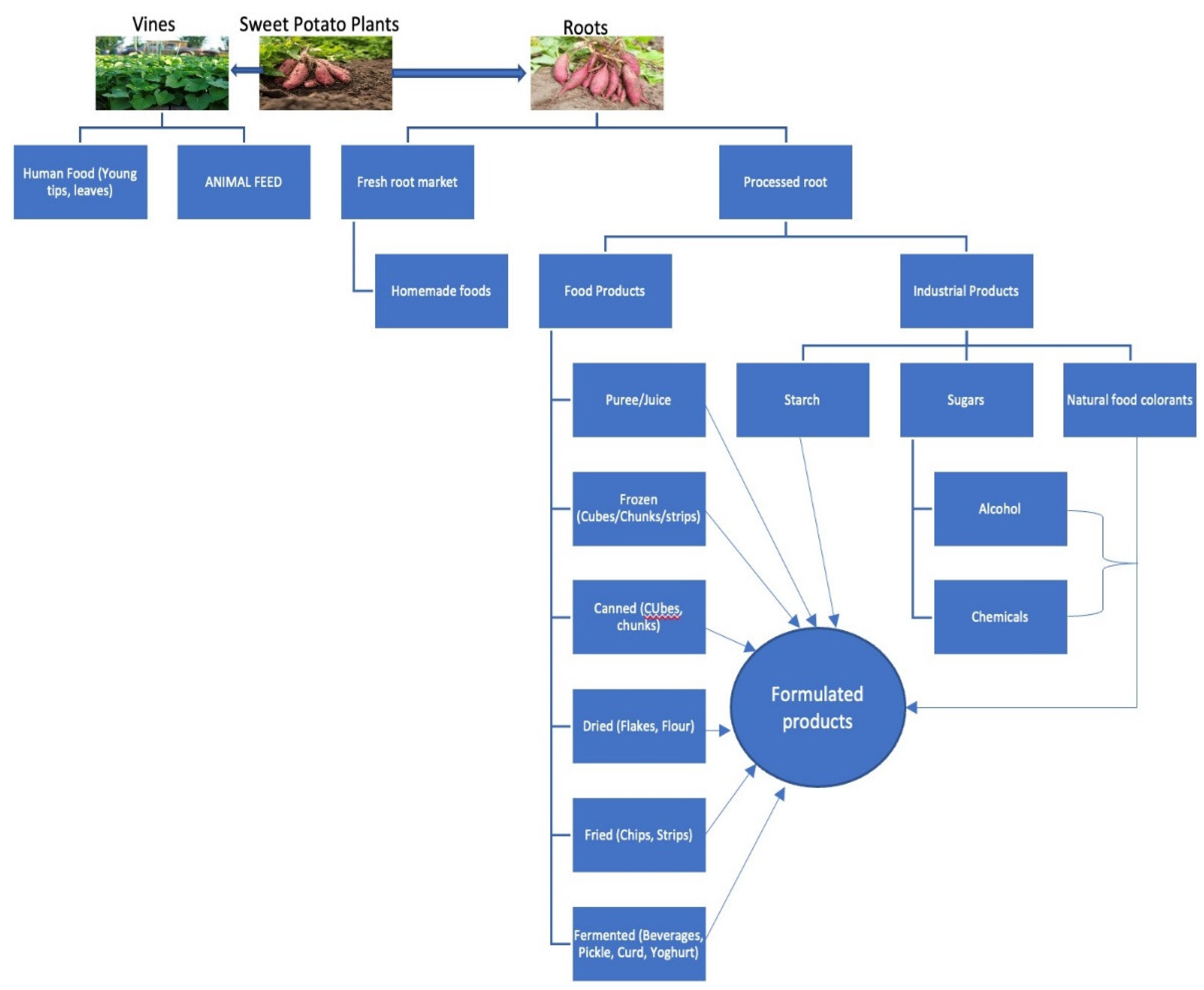
These potential industrial applications highlight the versatility and value of sweetpotato leaves beyond their culinary uses. Continued research and innovation in this field can unlock additional opportunities for using sweetpotatoes in multiple sectors, promoting sustainability and diversification of crop utilization (Figure 4).
Figure 4.
Utilization of Sweetpotato tubers and tops.
6. Foods from Sweetpotatoes Storage Roots
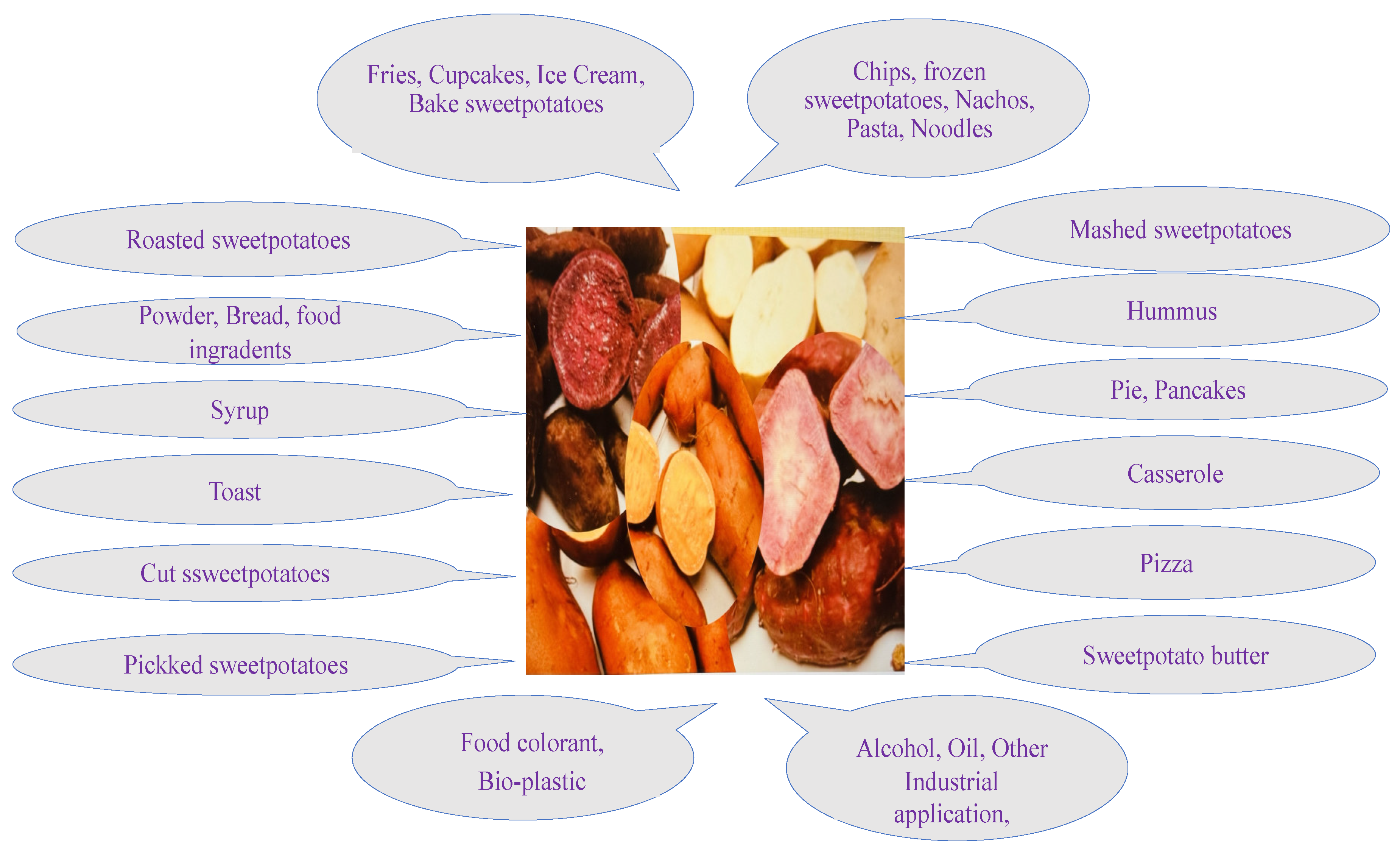
Sweetpotatoes, and their tops, are versatile and can be used to create various delicious and nutritious dishes [19,30,100,242,243,244]. Here are some popular sweet potato recipes: Baked Sweet potatoes- nutritious and flavorful; baked sweet potatoes can be enjoyed as is or topped with ingredients like butter, cinnamon, or honey. Sweetpotato fries- healthier than regular French fries, these crispy and delicious fries are made by cutting sweet potatoes into strips, tossing them with oil and seasoning, and baking or air frying until crispy. Mashed Sweetpotatoes- creamy and delightful, mashed sweet potatoes are like mashed potatoes. Boil or steam the sweet potatoes until soft, then mash them with butter, milk, and seasonings to taste. Sweetpotato Casserole- a popular holiday dish, sweetpotato casserole combines mashed sweet potatoes with a sweet and crunchy topping made of brown sugar, butter, and pecans or marshmallows. Sweetpotato Pancakes- add grated or mashed sweet potatoes to the pancake batter for a nutritious twist on pancakes. These pancakes are packed with fiber and vitamins and can be topped with maple syrup or your favorite toppings, Sweetpotato Soup- pureed sweet potatoes make a comforting and creamy soup. Combine cooked sweet potatoes with broth, seasonings, and other vegetables for a flavorful and nutritious dish. Sweet Potato Chips: For a healthier alternative to regular potato chips, thinly slice sweet potatoes, toss them with olive oil and spices, and bake until crispy, Sweetpotato Curry- adding sweet potatoes to a flavorful curry sauce can create a hearty and satisfying vegetarian or vegan meal. The sweetpotatoes add a natural sweetness to the dish. These are just a few examples, many others foods possible from sweetpotatoes (Figure 5).
Figure 5.
Different foods and other products from sweetpotato storage roots.
7. Foods from Sweetpotato Leaves
Incorporating sweet potato tops, also known as sweet potato greens, into your meals can be nutritious [19,30,31,100,242,243,244]. Here are some quick ideas: (i) Stir-Fried Sweetpotato tops- stir-fry with garlic and onions, (ii) Sauteed Sweetpotato tops- saute with olive oil, garlic, and herbs, (iii) Sweetpotato top salad- use as a base for a salad. (iv) Sweetpotato top smoothie- blend with fruits and liquids, (v) Sweetpotato top pesto- use it as a sauce for pasta, spread for sandwiches, or dip for vegetables., (vi) Sweetpotato top soup- combine with other vegetables to make a hearty soup. Many other foods are possible from sweetpotato top (Figure 6).
Figure 6.
Different foods and other products from sweetpotato tops.
8. Use of Sweetpotatoes as Food Ingredients
Sweetpotatoes are a versatile and nutritious food ingredient that has recently gained popularity. These crops, i.e., tuber and leaves, are packed with essential vitamins, minerals, and dietary fiber, making them a healthy addition to any meal. They can be prepared in numerous ways, from baking and roasting to boiling and mashing. The natural sweetness of sweet potatoes adds a delightful flavor to dishes, whether used in savory recipes like soups and stews or in sweet treats like pies and puddings. Sweet potatoes are also a great gluten-free and vegan option, making them suitable for various dietary preferences. With their vibrant colors, delicious taste, and nutritional benefits, sweet potatoes have become a beloved food ingredient in traditional and innovative culinary creations. [19,30,31,100,242,243,244].
9. Sweetpotato Leaves as Ornamentals
Sweet potato leaves can be a beautiful addition to gardens, landscapes, and containers [225,226]. They come in various cultivars with colorful and variegated patterns, such as green, purple, burgundy, and pink combinations. The leaves have an attractive heart or palate shape and can be lobed or profoundly cut, depending on the cultivar. The textured foliage provides a visually appealing element to colorful ornamental displays. Sweet potato vines are known for their trailing and vining growth habit, which makes them ideal for hanging baskets, containers, or cascading elements in flower beds and borders. They are versatile, adaptable, and can be grown as standalone specimens or combined with other plants in mixed containers or landscape beds. Sweet potato plants are low-maintenance and easy to grow, requiring full sun to partial shade and well-drained soil. They need regular watering and occasional fertilization for optimal growth. Sweet potato plants provide seasonal interest throughout the growing season, starting with lush, vibrant foliage in spring and summer, which may change color in fall, adding to the autumn display. Additionally, some cultivars can produce edible tubers, making them a dual-purpose plant.
Picture 1.
Sweetpotato leaves as ornamentals.
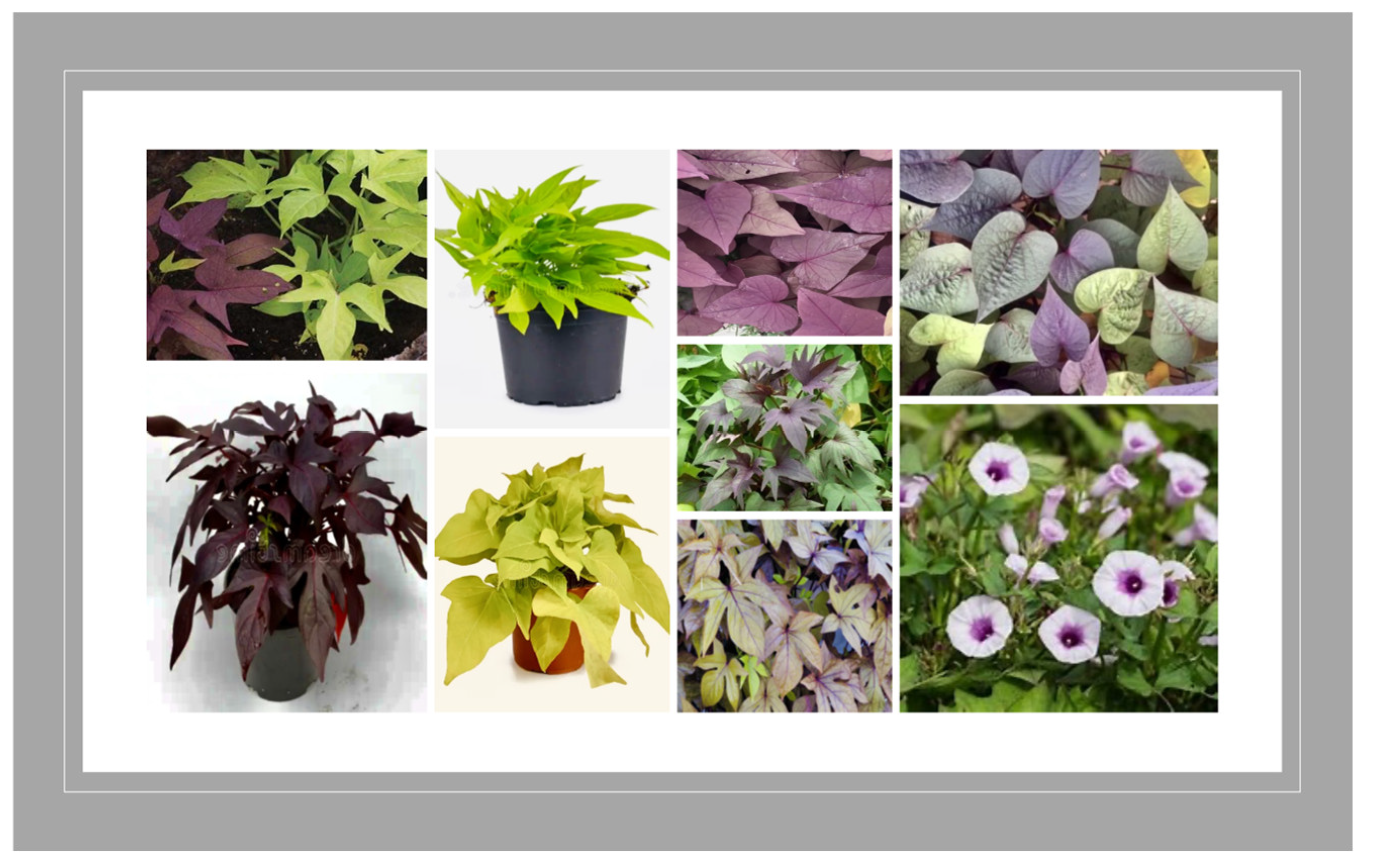
Sweetpotato leaves are colorful, textured, and versatile plants that can add beauty to gardens, landscapes, and containers. With their trailing and vining growth habit, they are ideal for hanging baskets, containers, or mixed with other plants. They are low-maintenance and easy to grow, providing seasonal interest throughout the growing season. Additionally, some cultivars can produce edible tubers.
10. Future of Sweetpotatoes for the Next Century and Recommendation for Future Research
Research on sweetpotato and its leaves has a lot of potential benefits and applications that can be explored further. Future studies can focus on various areas such as nutritional composition, health benefits, culinary and functional applications, food safety, sustainable farming practices, cultivar development, and industrial applications to understand the potential of sweet potato leaves and enhance their utilization in various fields. Scientists and researchers are interested in biotechnology research on sweet potatoes to improve the crop’s quality and yield and develop resistance to pests and diseases. Biotechnology research can significantly improve sweet potato crops by enhancing nutritional content, resistance to pests and diseases, and increasing productivity. There are many diverse areas of biotechnology research related to sweet potatoes, and these are just a few examples. In the last decade, extensive research has been conducted on sweet potatoes, contributing to ongoing efforts to enhance sweet potato production, nutritional value, and overall sustainability in various regions worldwide. Here are some areas that are needed for future investigations:
- Conduct a study on sweetpotato leaves’ nutritional composition and bioactive compounds to identify their potential health benefits and culinary applications.
- Explore sustainable farming practices for sweet potato production, including irrigation strategies, integrated pest management, and soil management techniques to optimize yield, quality, and sustainability.
- Investigate the potential of sweet potatoes as a staple crop in regions with food security challenges to enhance food security and combat malnutrition.
- Develop innovative sweet potato-based products to meet consumer demands for healthier and more diverse options, such as snacks, baked goods, beverages, and other processed food products.
- Research the potential industrial applications of sweetpotato leaves, such as the production of phytochemical extracts, functional food ingredients, or natural colorants.
- Conduct breeding programs and genetic studies to develop sweetpotato and its leaf varieties with enhanced nutritional profiles, disease resistance, and improved agronomic traits.
- Investigate the safety aspects of sweet potato leaves, including pesticide residues, microbial contamination, and post-harvest handling practices.
- Develop guidelines and recommendations for proper cultivation, harvesting, processing, and storage to ensure the safety and quality of sweet potatoes and its leaves.
- Utilize genetic engineering techniques to improve various traits of sweet potatoes, such as increasing resistance to diseases, pests, or environmental stressors.
- Investigate the effects of climate change on sweet potato production and explore strategies to enhance its resilience, such as developing heat and drought-tolerant varieties.
The future of sweetpotatoes is bright, with endless potential in various fields. To explore their benefits and applications, it is essential to conduct extensive research on sweetpotatoes and their leaves. To achieve this, researchers must focus on various areas such as nutritional composition, health benefits, culinary and functional applications, food safety, sustainable farming practices, cultivar development, and industrial applications. Biotechnology research is also crucial in developing the crop’s quality and yield, enhancing nutritional value, and increasing productivity. It is vital to prioritize research in these areas to ensure that sweet potato production remains sustainable and efficient for the coming century. Further analysis of the nutritional composition of sweet potatoes and their leaves is necessary to identify any potential health-promoting compounds in different varieties. It would be best to focus on developing sweet potatoes with enhanced dietary profiles through breeding programs, which can help identify specific nutrients, bioactive compounds, and potential health-promoting properties. More studies are needed to explore the specific health benefits of sweet potatoes, including their possible effects on cardiovascular health, cognitive function, gut health, and immune system support. Investigating the underlying mechanisms of these benefits can provide a better understanding of their impact on human health. Investigating sustainable farming practices, crop management techniques, and post-harvest storage methods is crucial to optimize the yield, quality, and sustainability of sweet potato production. This includes exploring irrigation strategies, integrated pest management, and soil management techniques. Genetic improvement efforts are directed toward developing sweet potato varieties with desirable traits such as high yield, disease resistance, improved flavor, and extended shelf life. This involves using advanced breeding techniques, molecular markers, and genetic engineering to accelerate breeding and introduce new traits into commercial varieties. In summary, there is a need for extensive research in the above areas to optimize their utilization across different fields. It is vital to prioritize research in these areas to ensure that sweet potato production remains sustainable and efficient for the coming century.
11. Conclusion
Sweet potatoes are a great addition to any meal. They are not only delicious but also offer various health benefits. Their high nutritional value, including vitamins, minerals, fiber, and antioxidants, makes them an essential part of a healthy diet. Incorporating sweet potatoes into our meals can help reduce the risk of chronic diseases, improve digestive health, regulate blood sugar levels, and enhance vision. With their versatility in the kitchen, sweet potatoes offer endless possibilities and can play a significant role in addressing future nutritional and environmental challenges. Therefore, we should embrace the power of sweet potatoes and enjoy their nutrient-rich goodness. Furthermore, sweet potatoes are a versatile and nutrient-rich vegetable that should be a part of every kitchen. They are a nutritional powerhouse, containing high amounts of vitamins, minerals, and antioxidants, and have a low glycemic index, making them great for promoting gut health. Their natural sweetness and ability to be incorporated into various dishes make them a favorite among consumers. Effective marketing strategies such as creating a solid brand identity, communicating their unique qualities and benefits, and utilizing social media platforms, participating in farmers’ markets and local events, collaborating with chefs and food bloggers, and establishing partnerships with retailers can generate awareness and drive sales. By implementing these marketing strategies and tapping into the growing market of health-conscious consumers, growers and sellers of sweet potatoes can attract a loyal customer base. Moreover, sweet potato leaves, often neglected, are a nutritional powerhouse themselves. They are packed with essential vitamins, minerals, fiber, and antioxidants. Incorporating sweet potato leaves into our diets supports heart health, digestion, and blood sugar regulation and provides anti-inflammatory benefits. With their versatility in the kitchen, sweet potato leaves can be used in various dishes, adding a delicious and nutritious touch. In addition, sweet potato leaves can be a sustainable crop, making them an attractive candidate for future agricultural practices. Therefore, we should recognize sweet potato leaves’ nutritional benefits and explore their culinary possibilities to reap their full potential.
Author Contributions
Islam, S.: writing, original manuscript draft preparation, writing and review and final editing.
Funding
USDA -NIFA. Grant number: GR019237.
Institutional Review Board Statements
Not applicable.
Informed Consent Statements
Not Applicable.
Availability Statements
The data presented in these manuscripts are available on request from the author. The data are not publicly available due to privacy restrictions.
Conflicts of Interest
The author declares no conflict of interest.
References
- FAO. 2016. Crop Production Data. Available at http://www.fao.org/faostat/en/#data/QC.
- Bovell-Benjamin, A.C. Sweet Potato: A Review of Its Past, Present, and Future Role in Human Nutrition. Adv. Food Nutr. Res. 2007, 52, 1–59. [Google Scholar]
- Mohanraj, R.; Sivasankar, S. Sweet Potato (Ipomoea batatas [L.] Lam)-A Valuable Medicinal Food: A Review. J. Med. Food 2014, 17, 733–741. [Google Scholar] [CrossRef]
- Shandilya, U.K.; Sharma, A. Functional Foods and Their Benefits: An Overview. J. Nutr. Health Food Eng. 2017, 7, 2–5. [Google Scholar] [CrossRef]
- Steed, L.E.; Truong, V.D. Anthocyanin Content, Antioxidant Activity, and Selected Physical Properties of Flowable Purple-Fleshed Sweetpotato Purees. J. Food Sci. 2008, 73, S215–S221. [Google Scholar] [CrossRef]
- Jung, S.; Shin, J.; Kim, J.Y.; Kwon, O. Shinzami Korean Purple-fleshed Sweet Potato Extract Prevents Ischaemia–Reperfusioninduced Liver Damage in Rats. J. Sci. Food Agric. 2015, 95, 2818–2823. [Google Scholar] [CrossRef]
- Statista, 2024. U.S. sweetpotato production from 2000 to 2023. https://www.statista.com/statistics/193218/us-sweet-potato-production-since-2000/.
- Hoover MW, Harmon SJ. Carbohydrate changes in sweetpotato flakes made by the enzyme activation technique. Food Technol 1967, 21, 1529–1532.
- Grace MH, Truong AN, Truong VD, Raskin I, Lila M. Novel value-added uses for sweetpotato juice and flour in polyphenol- and proteinenriched functional food ingredients. Food Sci & Nutr 2015, 3, 415–424. [CrossRef]
- Kotecha PM, Kadam SS. 1998. Sweetpotato. In: Handbook of Vegetable Science and Technology. Production, Composition, Storage and Processing (Salunkhe DK, Kadam SS, editors). New York: Marcel Dekker, Inc., pp. 71–97.
- Kays, SJ. 1985. The Physiology of yield in the sweetpotato. In: Sweetpotato Products: A Natural Resource for the Tropics (Bouwkamp JC, editor). Boca Raton, FL: CRC Press, pp. 79–132.
- 12. Lim PK, Jinap S, Sanny M, Tan CP, Khatib K. 2014. The influence of deep frying using various vegetable oils on acrylamide formation in sweetpotato (Ipomoea batatas L. Lam) chips. J Food Sci 79: T115–T212. [CrossRef]
- Owori C. and Hagenimana V. Quality evaluation of sweetpotato flour processed in different agroecological sites using small scale processing technologies. Afr Potato Assoc Conf Proc 2000, 5, 483–490. [CrossRef]
- Schwartz SJ, Walter WM, Carroll DE, Giesbrecht FG. 1987. Chemical, physical and sensory properties of a sweetpotato French-fry type product during frozen storage. J Food Sci 52:617–619, 633. [CrossRef]
- Truong VD, Walter WM Jr. 1994. Physical and sensory properties of sweetpotato purée texturized with cellulose derivatives. J Food Sci 59:175–1180.
- Truong AN, Simunovic J, Truong VD. 2012. Process development for producing pasteurized anthocyanin-rich juice and recovering starch from purple-fleshed sweetpotatoes. Abstract and Poster Presentation # 230-24, Annual Meeting, Institue of Food Technologists, Las Vegas, NV, June 25–28, 2012.
- Van Hal, M. 2000. Quality of sweetpotato flour during processing and storage. Food Rev Int, 16:1–37.
- Walter WM Jr, Wilson PW. 1992. Frozen sweetpotato products. In: Sweetpotato Technology for the 21st Century (Hill WA, Bonsi CK, Loretan PA, editors). Tuskegee, AL, pp. 400–406.
- Islam, S. Sweetpotato (Ipomoea batatas L.) Leaf: Its Potential Effect on Human Health and Nutrition. Journal of Food Science. 2006, 71, R13–R21. [Google Scholar] [CrossRef]
- Smith, Tara P., S. Stoddard, M. Shankle, and J. Schultheis. 2009. Sweetpotato in the United States, p. 287-323. In G. Loebenstein, G. Thottappilly [eds], pp. 522, The Sweet Potato. Springer Netherlands.
- Abidin, P.E. 2004. Sweetpotato breeding for northeastern Uganda: Farmer varieties, farmer-participatory selection, and performance stability. Ph.D. Thesis, Wageningen University, The Netherlands. 152 pp. ISBN¶ 90-8504-033-7..
- Tang, Y.; Cai, W.; Xu, B. Profiles of Phenolics, Carotenoids and Antioxidative Capacities of Thermal Processed White, Yellow, Orange and Purple Sweet Potatoes Grown in Guilin, China. Food Sci. Hum. Wellness 2015, 4, 123–132. [Google Scholar] [CrossRef]
- Kurata, R.; Sun, H.N.; Oki, T.; Okuno, S.; Ishiguro, K.; Sugawara, T. Sweet Potato Polyphenols. In Sweet Potato Chemistry, Processing and Nutrition; Elsevier Inc.: Amsterdam, The Netherlands, 2019: pp. 177–222.
- Luo, D.; Mu, T.; Sun, H. Profiling of Phenolic Acids and Flavonoids in Sweetpotato (Ipomoea batatas L.) Leaves and Evaluation of Their Anti-Oxidant and Hypoglycemic Activities. Food Biosci. 2021; 39, 100801. [Google Scholar]
- Kim, H.; Koo, K.A.; Park, W.S.; Kang, D.; Kim, H.S.; Lee, B.Y.; Goo, Y.; Kim, J.; Lee, M.K.; Woo, D.K. Anti-obesity Activity of Anthocyanin and Carotenoid Extracts from Color-fleshed Sweet Potatoes. J. Food Biochem. 2020, 44, e13438. [Google Scholar] [CrossRef] [PubMed]
- Naomi, R.; Bahari, H.; Yazid, M.D.; Othman, F.; Zakaria, Z.A.; Hussain, M.K. Potential Effects of Sweet Potato (Ipomoea batatas) in Hyperglycemia and Dyslipidemia—A Systematic Review in Diabetic Retinopathy Context. Int. J.Mol. Sci. 2021, 22, 10816. [Google Scholar] [CrossRef]
- 27. Mohanraj R, Sivasankar S. Sweetpotato (Ipomoea batatas [L.] Lam)—A valuable medicinal food: A Review. J Med Food 2014, 17, 733–741. [CrossRef] [PubMed]
- Padmaja, G. 2009. Uses and nutritional data of sweetpotato. In: The Sweetpotato (Loebenstein G, Thottapilly G, editors). Dordrecht, Netherlands: Springer, pp. 189–233.
- Tsou SCS, Hong TL. 1992. The nutrition and utilization of sweetpotato. In: Sweetpotato Technology for the 21st Century (Hill WA, Bonsi CK, Loretan PA, editors). Tuskegee, AL: Tuskegee University, pp. 359–366.
- Islam, S. 2008. Potential Chemo-preventative properties isolated from Ipomoea batatas leaves. pp. 96-109. In: Functional Foods and Chronic Diseases. ISBN 978-0976753544. Publisher: Functional Food Center at D & A Inc., TX, USA.
- Islam, S. 2014. Medicinal and Nutritional Qualities of Sweetpotato Tips and Leave. Cooperative Extension Service. FSA6135. p. 1-4.
- Islam, S. 2016. Potential Antidiabetic & anticancer activities in the leaves of sweetpotatoes. Int. J Adv. Sci., Eng. Tech., 4.2: 135-138.
- Islam, S. Some bioactive constituents, antioxidant, and antimutagenic activities in the Leaves of Ipomoea batatas Lam. Genotypes. American Journal of Food Science & Technology. 2016, 4.3, 70–80. [Google Scholar]
- Wang, H.; Cao, G.; Prior, R.L. Oxygen Radical Absorbing Capacity of Anthocyanins. J. Agric. Food Chem. 1997, 45, 304–309. [Google Scholar] [CrossRef]
- Bradbury JH, Singh U. Ascorbic and dehydroascorbic acid content of tropical root crops from the South Pacific. J Food Sci 1986, 51, 975–978. [CrossRef]
- Low JW, Arimond M, Osman N, Cunguara B, Zano F, Tschirley D. A food-based approach introducing orange-fleshed sweetpotatoes increased vitamin A intake and serum retinol concentrations in young children in rural Mozambique. J Nutr 2007, 137, 1320–1327. [CrossRef]
- Tanumihardjo, SA. Food-based approaches for ensuring adequate vitamin A nutrition. Compr Rev Food Sci & Food Safety 2008, 7, 373–381. [Google Scholar]
- Van Jaarsveld PJ, Faber M, Tanumihardjo SA, Nestel P, Lombard CJ, Spinnler Benade AJ. 2005. β-carotene rich orange-fleshed sweetpotato improves the vitamin A status of primary School Children associated with the modified relative dose response test. Amer J. Clin. Nutr. 81: 1081-1087. [CrossRef]
- Teow, C.C.; Truong, V.-D.; McFeeters, R.F.; Thompson, R.L.; Pecota, K.V.; Yencho, G.C. Antioxidant Activities, Phenolic and beta-Carotene Contents of Sweet Potato Genotypes with Varying Flesh Colours. Food Chem. 2007, 103, 829–838. [Google Scholar] [CrossRef]
- Li, L.; Aldini, G.; Carini, M.; Chen, C.-Y.O.; Chun, H.-K.; Cho, S.-M.; Park, K.-M.; Correa, C.R.; Russell, R.M.; Blumberg, J.B. Characterisation, Extraction Efficiency, Stability and Antioxidant Activity of Phytonutrients in Angelica Keiskei. Food Chem. 2009, 115, 227–232. [Google Scholar] [CrossRef]
- Nguyen, H.C.; Chen, C.-C.; Lin, K.-H.; Chao, P.-Y.; Lin, H.-H.; Huang, M.-Y. Bioactive Compounds, Antioxidants, and Health Benefits of Sweet Potato Leaves. Molecules 2021, 26, 1820. [Google Scholar] [CrossRef] [PubMed]
- Islam, S Yoshimoto, M., Yahara, S., Okuno, S., and Yamakawa, O. 2002. Identification and characterization of foliar polyphenolic compositions in sweet potato (Ipomoea batatas). J. Agricultural and Food Chemistry. 50(13): 3718-3722.
- Islam, S. , Yoshimoto, Ishiguro, K. and Yamakawa, O. 2003. Bioactive and Functional properties of Ipomoea Batatas L. Leaves. Acta Horticulturae, 628: 693-699.
- Islam, S. , Yoshimoto, Y. Okuno, S., Ishiguro, Yamakawa. 2003. Effect of artificial shading and temperature on radical scavenging activity and polyphenolic compositions in sweetpotato leaves. J American Society for Horticultural Science. 128 (2): 182-187.
- Islam, S. Yoshimoto, Y. and Yamakawa, O. 2003. Distribution and physiological function of caffeoylquinic acid derivatives in sweetpotato genotypes. Journal of Food Science, 68 (1): 111-118.
- Islam, S. , Yoshimoto, M., Terahara, N. and Yamakawa, O. 2002. Anthocyanin compositions in sweetpotato leave. Bioscience, Biotechnology, and Biochemistry. 66: 2483-2486.
- Islam, S. 2019. Antimutagenicity of the water extracts, radical scavenging activity, and phenolic acids in the tops of diverse Ipomoea batatas (L.) Lam. Advances in Biomedical Sciences.4: 46-51.
- Ooi CP, Loke SC. Sweet potato for type 2 diabetes mellitus. Cochrane Database Syst Rev. 2013 Sep 3;2013(9):CD009128. PMID: 24000051; PMCID: PMC6486146. [CrossRef]
- Arisanti CIS, Wirasuta IMAG, Musfiroh I, Ikram EHK, Muchtaridi M. Mechanism of Anti-Diabetic Activity from Sweet Potato (Ipomoea batatas): A Systematic Review. Foods. 2023 Jul 24;12(14):2810.PMID: 37509903; PMCID: PMC10378973. [CrossRef]
- Willcox ML, Elugbaju C, Al-Anbaki M, Lown M, Graz B. Effectiveness of Medicinal Plants for Glycaemic Control in Type 2 Diabetes: An Overview of Meta-Analyses of Clinical Trials. Front Pharmacol. 2021 Nov 26;12:777561. PMID: 34899340; PMCID: PMC8662558. [CrossRef]
- Ludvik BH, Mahdjoobian K, Waldhaeusl W, Hofer A, Prager R, Kautzky-Willer A, et al. The effect of Ipomoea batatas (Caiapo) on glucose metabolism and serum cholesterol in patients with type 2 diabetes: a randomized study. Diabetes Care 2002, 5(1):239-40.
- Ludvik B, Neuffer B, Pacini G. Efficacy of Ipomoea batatas (Caiapo) on diabetes control in type 2 diabetic subjects treated with diet. Diabetes Care 2004, 27(2):436-40. [CrossRef]
- Ludvik B, Hanefeld M, Pacini G. Improved metabolic control by Ipomoea batatas (Caiapo) is associated with increased adiponectin and decreased fibrinogen levels in type 2 diabetic subjects. Diabetes Obesity and Metabolism 2008, 10(7):586-92. [CrossRef]
- El Sheikha, AF & Ray, RC. 2017. Potential impacts of bioprocessing of sweet potato: Review. Crit Rev Food Sci Nutr. 57(3), pp.455-71. https://pubmed.ncbi.nlm.nih.gov/25975980/. [CrossRef]
- Laurie, SM; Faber, M & Claasen, N. 2018. Incorporating orange-fleshed sweet potato into the food system as a strategy for improved nutrition. Food Res Int. 1(104), pp.77-85. https://pubmed.ncbi.nlm.nih.gov/29433786/¶. [CrossRef]
- Wang, S; Nie, S & Zhu, F. 2016. Chemical constituents and health effects of sweetpotato. Food Res Int. 89(1), pp.90-116. https://pubmed.ncbi.nlm.nih.gov/28460992/¶. [CrossRef]
- Dewi NKSM, Ramona Y, Saraswati MR, Wihandani DM, Wirasuta IMAG. The Potential of the Flavonoid Content of Ipomoea batatas L. as an Alternative Analog GLP-1 for Diabetes Type 2 Treatment-Systematic Review. Metabolites. 2023,14(1):29. PMID: 38248832; PMCID: PMC10819535. [CrossRef]
- Ogurtsova, K. , da Rocha Fernandes J.D., Huang Y., Linnenkamp U., Guariguata L., Cho N.H., Cavan D., Shaw J.E., Makaroff L.E. IDF Diabetes Atlas: Global estimates for the prevalence of diabetes for 2015 and 2040. Diabetes Res. Clin. Pract. 2017,128:40–50. [CrossRef]
- Al-Ishaq, R.K. , Abotaleb M., Kubatka P., Kajo K., Büsselberg D. Flavonoids and their anti-diabetic effects: Cellular mechanisms and effects to improve blood sugar levels. Biomolecules. 2019, :430. [CrossRef]
- Sen Tseng, P. , Ande C., Moremen K.W., Crich D. Influence of Side Chain Conformation on the Activity of Glycosidase Inhibitors. Angew. Chem.-Int. Ed. 2023, 62:2–6. [CrossRef]
- Sasaki, K.; Oki, T.; Kai, Y.; Nishiba, Y.; Okuno, S. Effect of Repeated Harvesting on the Content of Caffeic Acid and Seven Species of Caffeoylquinic Acids in Sweet Potato Leaves. Biosci. Biotechnol. Biochem. 2015, 79, 1308–1314. [Google Scholar] [CrossRef]
- Miketinas DC, Bray GA, Beyl RA, Ryan DH, Sacks FM, Champagne CM. Fiber Intake Predicts Weight Loss and Dietary Adherence in Adults Consuming Calorie-Restricted Diets: The POUNDS Lost (Preventing Overweight Using Novel Dietary Strategies) Study. J Nutr. 2019 Oct 1;149(10):1742-1748. PMID: 31174214; PMCID: PMC6768815. [CrossRef]
- Extend Longevity (Zhao, LG., Zhang, QL., Zheng, JL. et al. Dietary, circulating beta-carotene and risk of all-cause mortality: a meta-analysis from prospective studies. Sci Rep 6, 2016, 26983. [CrossRef]
- Bie N, Duan S, Meng M, Guo M, Wang C. Regulatory effect of non-starch polysaccharides from purple sweet potato on intestinal microbiota of mice with antibiotic-associated diarrhea. Food Funct. 2021,12(12):5563-5575. [CrossRef] [PubMed]
- Brown L, Rosner B, Willett WW, Sacks FM. Cholesterol-lowering effects of dietary fiber: a meta-analysis. Am J Clin Nutr. 1999, 69(1):30-42. [CrossRef] [PubMed]
- Islam SN, Nusrat T, Begum P, Ahsan M. Carotenoids and β-carotene in orange fleshed sweet potato: A possible solution to vitamin A deficiency. Food Chem. 2016, 15;199:628-31.Epub 2015 Dec 12. PMID: 26776017. [CrossRef] [PubMed]
- Huang Z, Liu Y, Qi G, Brand D, Zheng SG. Role of Vitamin A in the Immune System. J Clin Med. 2018 Sep 6;7(9):258. PMID: 30200565; PMCID: PMC6162863. [CrossRef]
- de Medeiros PHQS, Pinto DV, de Almeida JZ, Rêgo JMC, Rodrigues FAP, Lima AÂM, Bolick DT, Guerrant RL, Oriá RB. Modulation of Intestinal Immune and Barrier Functions by Vitamin A: Implications for Current Understanding of Malnutrition and Enteric Infections in Children. Nutrients. 2018 Aug 21;10(9):1128. PMID: 30134532; PMCID: PMC6164597. [CrossRef]
- Yoshimoto, M. 2001. New trends of processing and use of sweetpotato in Japan.Farming Japan, 35: 22-28.
- Zeng H, Lazarova DL, Bordonaro M. Mechanisms linking dietary fiber, gut microbiota and colon cancer prevention. World J Gastrointest Oncol. 2014 Feb 15;6(2):41-51. PMID: 24567795; PMCID: PMC3926973. [CrossRef]
- McNabney SM, Henagan TM. Short Chain Fatty Acids in the Colon and Peripheral Tissues: A Focus on Butyrate, Colon Cancer, Obesity and Insulin Resistance. Nutrients. 2017 Dec 12;9(12):1348. PMID: 29231905; PMCID: PMC5748798. [CrossRef]
- Ray D, Alpini G, Glaser S. Probiotic Bifidobacterium species: potential beneficial effects in diarrheal disorders. Focus on “Probiotic Bifidobacterium species stimulate human SLC26A3 gene function and expression in intestinal epithelial cells”. Am J Physiol Cell Physiol. 2014 Dec 15;307(12):C1081-3. Epub 2014 Sep 10. PMID: 25209264; PMCID: PMC4269664. [CrossRef]
- Majid, M.; Nasir, B.; Zahra, S.S.; Khan, M.R.; Mirza, B.; Haq, I.u. Ipomoea batatas L. Lam. Ameliorates Acute and Chronic Inflammations by Suppressing Inflammatory Mediators, a Comprehensive Exploration Using In Vitro and In Vivo Models. BMC Complement Altern. Med. 2018, 18, 216. [CrossRef]
- Park, S.Y.; Lee, S.Y.; Yang, J.W.; Lee, J.S.; Oh, S.D.; Oh, S.; Lee, S.M.; Lim, M.H.; Park, S.K.; Jang, J.S.; et al. Comparative Analysis of Phytochemicals and Polar Metabolites from Colored Sweet Potato (Ipomoea batatas L.) Tubers. Food Sci. Biotechnol. 2016, 25, 283–291. [CrossRef]
- Oki, T.; Masuda, M.; Furuta, S.; Nishiba, Y.; Terahara, N.; Suda, I. Involvement of Anthocyanins and Other Phenolic Compounds in Radical-scavenging Activity of Purple-fleshed Sweetpotato Cultivars. J. Food Sci. 2002, 67, 1752–1756. [Google Scholar] [CrossRef]
- Cordeiro, N.; Freitas, N.; Faria, M.; Gouveia, M. Ipomoea batatas (L.) Lam.: A Rich Source of Lipophilic Phytochemicals. J. Agric. Food Chem. 2013; 61, 12380–12384. [Google Scholar] [CrossRef]
- Islam, S. 2008. Antimicrobial activities of Ipomoea batatas L. Leaf. J Food Agric. Env. 6:16-21.
- Li WL, Yu HY, Zhang XJ, Ke M, Hong T. Purple sweet potato anthocyanin exerts antitumor effect in bladder cancer. Oncol Rep. 2018 Jul;40(1):73-82. Epub 2018 May 8. PMID: 29749527; PMCID: PMC6059756. [CrossRef]
- Sugata M, Lin CY, Shih YC. Anti-Inflammatory and Anticancer Activities of Taiwanese Purple-Fleshed Sweet Potatoes (Ipomoea batatas L. Lam) Extracts. Biomed Res Int. 2015;2015:768093. Epub 2015 Oct 5. PMID: 26509161; PMCID: PMC4609785. [CrossRef]
- Hsu HY, Chen BH. A Comparative Study on Inhibition of Breast Cancer Cells and Tumors in Mice by Carotenoid Extract and Nanoemulsion Prepared from Sweet Potato (Ipomoea batatas L.) Peel. Pharmaceutics. 2022 May 2;14(5):980. PMID: 35631566; PMCID: PMC9144854. [CrossRef]
- Asadi K, Ferguson LR, Philpott M, Karunasinghe N. Cancer-preventive Properties of an Anthocyanin-enriched Sweet Potato in the APCMIN Mouse Model. J Cancer Prev. 2017 Sep;22(3):135-146. Epub 2017 Sep 30. PMID: 29018778; PMCID: PMC5624454. [CrossRef]
- Islam,, S. Adam, Z. Ishrar, I. 2020. Comparative study on some in vitro biological activities of freeze-dried leaf extracts of six advanced accessions of Ipomoea batatas (L.) Lam. Nutrition & Food Science. 10 (1): 1-7.
- Islam, S., Z. Adam and H. Sorker. 2018. Assessing the morphological properties of the new accessions of Ipomoea batatas Lam leaves. J. agricultural, environmental & consumer sciences Journal. 18: 29-33.
- Islam, S. Ehiorobo, I and Garner, J. 2012. Lipid and Fatty Acid Compositions of Chilling Tolerant Sweet potato (Ipomoea batatas L.) Genotypes. American Journal of Plant Physiology, 7: 252-260.
- Jace, E. , Adam, Z. Walker, R. and Islam, S. 2012. Antioxidant activity and phenolic contents of orange-fleshed Sweetpotatoes. Arkansas Environ. Agric. & Conns. J., 11: 34-38.
- Islam, I. et al. 2009. Antimutagenic & antioxidative phytochemicals from Ipomoea batatas L. Int J. Cancer Research. 5: 83-94.
- Islam, S. 2009. Polyphenol contents and caffeic acid derivatives from leaves of Ipomoea batatas. Acta Horic, 841: 527-530.
- Islam, S. et al. 2009. Development of selection procedures of sweetpotato genotypes according to chilling tolerance. Journal of Food, Agriculture, & Environment. 7: 237-245.
- Ciccone MM, Cortese F, Gesualdo M, Carbonara S, Zito A, Ricci G, De Pascalis F, Scicchitano P, Riccioni G. Dietary intake of carotenoids and their antioxidant and anti-inflammatory effects in cardiovascular care. Mediators Inflamm. 2013, 2013:782137. Epub 2013 Dec 31. PMID: 24489447; PMCID: PMC3893834. [CrossRef]
- 90. Mei X, Mu T-H, Han J-J. 2010. Composition and physicochemical properties of dietary fiber extraction from residues of 10 varieties of sweetpotato by a sievign method. J Agric & Food Chem, 58: 7305–7310.
- Cho, H. , Cindi, B., Islam, S., and Lee, S, O. 2021. Sweetpotato Leaves Inhibit Lipopolysaccharide-Induced Inflammation in RAW 264.7 Macrophages via Suppression of NF-κB Signaling Pathway. Foods. 10 (9): 2051(1-16). [CrossRef]
- Peng Z, Li J, Guan Y, Zhao G. 2013. Effect of carriers on physicochemical properties, antioxidant activities and biological components of spray-dried purple sweetpotato flours. LWT— Food Sci Technol 51: 348–355. [CrossRef]
- 93. Suda I, Ishikawa F, Hatakeyama M, Miyawaki M, Kudo T, Hirano K, Ito K, Ito A, Yamakawa O, Horiuchi S. 2008. Intake of purple sweetpotato beverage effects on serum hepatic biomarker levels of healthy adult men with borderline hepatitis. Eur J Clin Nutr, 62:60–67.
- Islam. S., Chowdhury, A. and Akanda, J. 2023. Nineral, Vitamin C, and Oxalate Contents of the 26 Sweetpotato (Ipomoea batatas [L.] Lam) Aceessions Grwoing in the Southern United States. Journal of Agricultural, Environmental and Consumer Science, 23:49-54.
- Sun, H.; Zhang, P.; Zhu, Y.; Lou, Q.; He, S. Antioxidant and Prebiotic Activity of Five Peonidin-Based Anthocyanins Extracted from Purple Sweetpotato (Ipomoea batatas (L.) Lam.). Sci. Rep. 2018, 8, 5018.
- Behera, S.; Chauhan, V.B.S.; Pati, K.; Bansode, V.; Nedunchezhiyan, M.; Verma, A.K.; Monalisa, K.; Naik, P.K.; Naik, S.K. Biology and Biotechnological Aspect of Sweet Potato (Ipomoea batatas L.): A Commercially Important Tuber Crop. Planta 2022, 256, 40. [CrossRef]
- Massi-Benedetti, M.; Federici, M.O. Cardiovascular Risk Factors in Type 2 Diabetes: The Role of Hyperglycaemia. Exp. Clin. Endocrinol. Diabetes 1999, 107, S120–S123. [Google Scholar] [CrossRef] [PubMed]
- Onat, D.; Brillon, D.; Colombo, P.C.; Schmidt, A.M. Human Vascular Endothelial Cells: A Model System for Studying Vascular Inflammation in Diabetes and Atherosclerosis. Curr. Diab. Rep. 2011, 11, 193–202. [Google Scholar] [CrossRef] [PubMed]
- Nicoletto, C.; Vianello, F.; Sambo, P. Effect of Different Home-Cooking Methods on Textural and Nutritional Properties of Sweetpotato Genotypes Grown in Temperate Climate Conditions. J. Sci. Food Agric. 2018, 98, 574–581. [Google Scholar] [CrossRef]
- Rabbani, M.B. , Islam, S. and Lee, S. 2023. Effect of Cooking Methods on the Bioactive Compounds and Physiological Function of Sweetpotato Leaves. (Ipomoea batatas [L.] Lam). Journal of Agricultural, Environmental and Consumer Science, 23:55-63.
- Murador, D.C.; da Cunha, D.T.; de Rosso, V.V. Effects of Cooking Techniques on Vegetable Pigments: A Meta-Analytic Approach to Carotenoid and Anthocyanin Levels. Food Res. Int. 2014, 65, 177–183. [Google Scholar] [CrossRef]
- Cakrawati, D.; Srivichai, S.; Hongsprabhas, P. Effect of Steam-Cooking on (Poly) Phenolic Compounds in Purple Yam and Purple Sweet Potato Tubers. Food Res. 2021, 5, 330–336. [Google Scholar] [CrossRef] [PubMed]
- Carrera, C.; Zelaya-Medina, C.F.; Chinchilla, N. ; Ferreiro-González,M.; Barbero, G.F.; Palma,M. How Different CookingMethods Affect the Phenolic Composition of Sweet Potato forHuman Consumption (Ipomea batata (L.) Lam) Agronomy 2021,; 11, 1636.
- Hong, K.H.; Koh, E. Effects of Cooking Methods on Anthocyanins and Total Phenolics in Purple-fleshed Sweet Potato. J. Food Processing Preserv. 2016, 40, 1054–1063. [Google Scholar] [CrossRef]
- Hou, F.; Mu, T.; Ma, M.; Blecker, C. Optimization of Processing Technology Using Response Surface Methodology and Physicochemical Properties of Roasted Sweet Potato. Food Chem. 2019, 278, 136–143. [Google Scholar] [CrossRef]
- Burgos, G. ; Amoros,W.; Muñoa, L.; Sosa, P.; Cayhualla, E.; Sanchez, C.; Díaz, C.; Bonierbale, M. Total Phenolic, Total Anthocyanin and Phenolic Acid Concentrations and Antioxidant Activity of Purple-Fleshed Potatoes as Affected by Boiling. J. Food Compos. Anal. 2013, 30, 6–12. [CrossRef]
- Johnson, M, Pace RD. 2010. Sweetpotato leaves: properties and synergistic interactions that promote health and prevent disease. Nutr Rev, 68: 604–615.
- Sun H, Mu T, Xi L, Zhang M, Chen J. 2014. Sweetpotato (Ipomoea batatas L.) leaves as nutritional and functional foods. Food Chem, 156: 380–389. [CrossRef]
- Roullier C, Duputié A, Wennekes P, Benoit L, Bringas VMF, Rossel G, Tay D, McKey, D and Lebot, V 2013a. Disentangling the Origins of Cultivated Sweetpotato (Ipomoea batatas (L.) Lam.). PLoS ONE, 8(5): e62707.
- Roullier C, Benoit L, McKey DB, and Lebot V. 2013. Historical collections reveal patterns of diffusion of sweetpotato in Oceania obscured by modern plant movements and recombination. PNAS, 110: 2205–2210.
- Bohac JR, Dukes PD, Austin DF. 1995. Sweetpotato Ipomoea batatas (Convolvulaceae). In: Evolution of Crop Plants (Smartt J, Simmonds NW, editors). Essex: Longman Scientific and Technical, pp. 57–62.
- B. Ludvik, M. Hanefeld, G. Pacini. 2008. Improved metabolic control by Ipomoea batatas (Caiapo) is associated with increased adiponectin and decreased fibrinogen levels in type 2 diabetic subjects. Diabetes, obesity and Metabolism. [CrossRef]
- 113. Xu J, Su X, Lim S, Griffin J, Carey E, Katz B, Tomich J, Smith JS, Wang W. 2015. Characterization and stability of anthocyanins in purple-fleshed sweetpotato P40. Food Chem. 186: 90–96.114.
- Austin, DF. 1988. The taxonomy, evolution, and genetic diversity of sweetpotato and related wild species. In: Exploration, Maintenance, and Utilization of the Sweetpotato Genetic Resources. Lima, Peru: International Potato Center, pp. 27–60.
- Steed LE, Truong VD. 2008. Anthocyanin content, antioxidant activity and selected physical properties of flowable purple-fleshed sweetpotato purées. J Food Sci 73:S215–S221. Steed LE, Truong VD, Simunovic J, Sandeep KP, Kumar P, Cartwright GD, Swartzel KR. 2008. Continuous flow microwave-assisted processing and aseptic packaging of purple-fleshed sweetpotato purées. J Food Sci, 73:E455–E462. [CrossRef]
- Islam, S. , Porter, O, Izekor, S. and Garner, J. O. 2007. Quality characteristics and yield attributes of sweetpotato genotypes grown under sustainable cultural conditions. Journal of Food, Agriculture & Environment, 5:220-224.
- Antonio GC, Alves DG, Azoubel PM, Murr FEX, Park KJ. 2008. Influence of osmotic dehydration and high temperature short time processes on dried sweetpotato (Ipomoea batatas Lam.). J Food Eng, 84:375–382.
- Arancibia, R. A. , Smith, C. D., LaBonte, D. R., Main, J. L., Smith, T. P., & Villordon, A. Q. 2014. Optimizing Sweetpotato Production for Fresh and Processing Markets through Plant Spacing and Planting-harvest Time. HortTechnology hortte, 24(1), 16-24. [CrossRef]
- Ezeano, C. I. 2010. Technology use in sweetpotato production, consumption, and utilization among households in southeastern Nigeria. Journal of Agriculture and Social Research. 10 (1): 36-42.
- Ravi V, Indira P. 1999. Crop physiology of sweetpotato. In: Horticultural Reviews, Vol. 23 (Janick J, editor). Amers, IA: John Wiley & Sons, pp. 277–284.
- Truong, V.D.; McFeeters, R.F.; Thompson, R.T.; Dean, L.L.; Shofran, B. Phenolic Acid Content and Composition in Leaves and Roots of Common Commercial Sweetpotato (Ipomea batatas L.) Cultivars in the United States. J. Food Sci. 2007, 72, C343–C349.
- Antonio, G. C. , Takeiti, C. Y., Oliveira. R., A., and Park, K. J. 2011. Sweetpotato: Production, Morpholological and physicochemical characteristics, and technological Process. Fruit, Vegetable and Cereal Science and Biotechnology, 5 (special issue): 1-18. 11.
- Islam, S. , Rabbani, B., and Sorker. 2020. Exploration on the unconventional accessions of sweetpotato tops as leafy greens. J. Agril. Environ. Consumer Sci. 20: 33-37.
- Selokela, L.M.; Laurie, S.M.; Sivakumar, D. Impact of Different Postharvest Thermal Processes on Changes in Antioxidant Constituents, Activity and Nutritional Compounds in Sweet Potato with Varying Flesh Colour. South Afr. J. Bot. 2022, 144, 380–388. [Google Scholar] [CrossRef]
- Aditya Parmar, Sascha M. Kirchner, Barbara Sturm & Oliver Hensel. 2017. Pre-harvest Curing: Effects on Skin Adhesion, Chemical Composition and Shelf-life of Sweetpotato Roots under Tropical Conditions. East African Agricultural and Forestry Journal 82:2-4, pages 130-143. [CrossRef]
- Aditya Parmar, Oliver Hensel & Barbara Sturm. 2017. Post-harvest handling practices and associated food losses and limitations in the sweetpotato value chain of southern Ethiopia. NJAS: Wageningen Journal of Life Sciences 80:1, pages 65-74. [CrossRef]
- R.C. Ray & V. Ravi. 2005. Post Harvest Spoilage of Sweetpotato in Tropics and Control Measures. Critical Reviews in Food Science and Nutrition, 45:7-8, pages 623-644. [CrossRef]
- Tomlins K, Owori C, Bechoff A, Menya G, Westby A. 2012. Relationship among the carotenoid content and sensory attributes of sweetpotato. Food Chem, 131: 14–21.
- Amagloh, Francis Kweku, Alhassan, Sampson, Nyarko, George, Atuna, Richard Atinpoore, Carey, Edward Ewing and Low, Jan W. “Packaging containers for long-distance transport of sweetpotato [Ipomoea batatas (L) Lam] storage roots in Ghana” Open Agriculture, vol. 3, no. 1, 2018, pp. 596-608. [CrossRef]
- George, J.B. (1988). Postharvest, handling, transporting and losses during the marketing of sweetpotatoes. Acta Hortic. 218, 369-374. [CrossRef]
- Wang, S.; Nie, S.; Zhu, F. Chemical Constituents and Health Effects of Sweet Potato. Food Res. Int. 2016, 89, 90–116. [Google Scholar] [CrossRef] [PubMed]
- Abalos, R.A.; Naef, E.F.; Aviles, M.V.; Gómez, M.B. Vacuum Impregnation: A Methodology for the Preparation of a Ready-to-Eat Sweet Potato Enriched in Polyphenols. LWT 2020, 131, 109773. [Google Scholar] [CrossRef]
- Kr˛ecisz, M.; Kolniak-Ostek, J.; St˛epie ’ n, B.; Łyczko, J.; Pasławska, M.; Musiałowska, J. Influence of Drying Methods and Vacuum Impregnation on Selected Quality Factors of Dried Sweet Potato. Agriculture 2021, 11, 858. [Google Scholar] [CrossRef]
- Sarah Chilungo, S. , Muzhingi, T., Truong, V. D., and Allen, J. C. 2019. Effect of Storage and Packaging Materials on Color and Carotenoid Content of Orange-Fleshed Sweetpotato Flours. International Journal of Innovative Science and Research Technology. 4 (9): 363-369.
- Erturk, E. and Picha, D.H. 2002. Modified atmosphere packaging of fresh-cut sweetpotatoes (Ipomoea batatas L.). Acta Hortic. 583: 223-230. [CrossRef]
- Vannini, Micaela, Paola Marchese, Laura Sisti, Andrea Saccani, Taihua Mu, Hongnan Sun, and Annamaria Celli. 2021. Integrated Efforts for the Valorization of Sweet Potato By-Products within a Circular Economy Concept: Biocomposites for Packaging Applications Close the Loop. Polymers 13, no. 7: 1048. [CrossRef]
- Krochmal-Marczak, Barbara, Barbara Sawicka, Barbara Krzysztofik, Honorata Danilčenko, and Elvyra Jariene. 2020. “The Effects of Temperature on the Quality and Storage Stalibity of Sweet Potato (Ipomoea batatas L. [Lam]) Grown in Central Europe” Agronomy 10, no. 11: 1665. [CrossRef]
- Chakraborty, C. , Roychowdhury, R. Chakraborty, S., Chakravorty, P. and Ghosh, D. 2017. A Review on Post-Harvest Profile of Sweet Potato. International Journal of Current Microbiology and Applied Sciences. Volume 6 (5): 1894-1903. [CrossRef]
- Abong’, G.O.; Muzhingi, T.; Okoth, M.W.; Ng’ang’a, F.; Emelda Ochieng, P.; Mbogo, D.M.; Malavi, D.; Akhwale, M.; Ghimire, S. Processing Methods Affect Phytochemical Contents in Products Prepared from Orange-fleshed Sweetpotato Leaves and Roots. Food Sci. Nutr. 2021, 9, 1070–1078. [Google Scholar] [CrossRef]
- Betoret, E.; Betoret, N.; Rocculi, P. ; Dalla Rosa,M. Strategies to Improve Food Functionality: Structure–Property Relationships on High Pressures Homogenization, Vacuum Impregnation and Drying Technologies. Trends Food Sci. Technol. 2015, 46, 1–12 -140.
- Sarah Chilungo, S. , Muzhingi, T., Truong, V. D., and Allen, J. C. 2019. Effect of Storage and Packaging Materials on Color and Carotenoid Content of Orange-Fleshed Sweetpotato Flours. International Journal of Innovative Science and Research Technology. 4 (9): 363-369.
- Erturk, E. and Picha, D.H. 2002. Modified atmosphere packaging of fresh-cut sweetpotatoes (Ipomoea batatas L.). Acta Hortic. 583: 223-230. [CrossRef]
- Vannini, Micaela, Paola Marchese, Laura Sisti, Andrea Saccani, Taihua Mu, Hongnan Sun, and Annamaria Celli. 2021. “Integrated Efforts for the Valorization of Sweet Potato By-Products within a Circular Economy Concept: Biocomposites for Packaging Applications Close the Loop” Polymers 13, no. 7: 1048. [CrossRef]
- Talekar, N.S. 1987. Influence of cultural pest management Technology on the infestation ofsweet potato weevil. Insect sci Applic 8: 815 – 817.
- R B Chalfant,, R K Jansson,, D R Seal, and, and J M Schalk, 1990. Ecology and Management of Sweet Potato Insects. Annual Review of Entomology, 35:1, 157-180.
- K. C. Igwe, A. A. Osipitan, C. G. Afolabi O. I. Lawal (2023) Assessment of insect pests of sweet potato (Ipomoea batatas L.) and control with botanicals, International Journal of Pest Management, 69:4, 315-323,. [CrossRef]
- Delete, KM, and Brecht, JK. 1989. Quality of Tropical Sweetpotato Exposed to Controlled Atmosphere Treatments for Postharvest Insect Control. Journal of the American Society for the Horticultural Science, 114 (6): 963-968.
- Himuro C, Kohama T, Matsuyama T, Sadoyama Y, Kawamura F, Honma A, et al. 2022. First case of successful eradication of the sweet potato weevil, Cylas formicarius (Fabricius), using the sterile insect technique. PLoS ONE 17(5): e0267728.
- D. L. Gutiérrez, S. Fuentes, and L. F. Salazar, 2003. Sweetpotato Virus Disease (SPVD): Distribution, Incidence, and Effect on Sweetpotato Yield in Peru. Plant Diseases. 87(3): 297-302.
- Hegde, V. , Misra, R. S., and Jeeva, M. L. 2012. Sweetpotato Diseases: Diagbnosis and Management. Fruiit, vegetable and Cereal Science and Biotechnology. 6 (special Issue 1): 65-78.
- Cadena-Hinojosa, M. A. , and Campbell, R. N. 1981. Serologic detection of feathery mottle virus strains in sweet potatoes and Ipomoea incarnata. Plant Dis. 65:412-414.
- Carey, E. E. , Gibson, R. W., Fuentes, S., Machmud, M., Mwanga, R. O. M., Turya-mureeba, G., Zhang, L., Ma, D., Abo El-Abbas, F., El-Bedewy, R., and Salazar, L. F. 1999. The causes and control of virus diseases of sweetpotato in developing countries: Is sweetpotato virus disease the main problem?. Pages 241-248 in: Impact on a Changing World. CIP Program Report 1997–98. CIP, Lima, Peru.
- Di Feo, L. , Nome, S. F., Biderbost, E., Fuentes, S., and Salazar, L. F. 2000. Etiology of sweet potato chlorotic dwarf disease in Argentina. Plant Dis. 84:35-39.
- Estes, EA. 2009. Marketing sweetpotatoes in the United States: A serious challenge for small-tomoderate volume growers. In The Sweetpotatoes (Loebenstein G, Thottappily G, editors). Dordrecht, Netherlands: Springer. pp. 269–283. FAO. 2015. Food and Agriculture Organization Statistical Production YearbookRome: FAO.
- Uzoigwe, D. A. , Muoneke, C. O., Nwokoro, C. C., & Ene, C. O. 2019. Benefit Cost Analysis of Orange Fleshed Sweet Potato (Ipomoea batatas L.) Varieties under Varying Planting Density. Notulae Scientia Biologicae, 11(1), 145–148. [CrossRef]
- Lu, Yuzhen, Lorin Harvey, and Mark Shankle. 2023. “Survey and Cost–Benefit Analysis of Sorting Technology for the Sweetpotato Packing Lines” AgriEngineering 5, no. 2: 941-949. [CrossRef]
- Merga Boru. 2019. Cost Effectiveness of Sweet Potato Production Using Farmyard Manure and Inorganic Phosphorus Fertilizer at Assosa Western Ethiopia. Journal of Plant Sciences. Vol. 7, No. 1, 2019, pp. 1-4. [CrossRef]
- Tang, Chaochen, Yusheng Lu, Bingzhi Jiang, Jingyi Chen, Xueying Mo, Yang Yang, and Zhangying Wang. 2022. “Energy, Economic, and Environmental Assessment of Sweet Potato Production on Plantations of Various Sizes in South China” Agronomy 12, no. 6: 1290. [CrossRef]
- Afzal, Nouman, Stavros Afionis, Lindsay C. Stringer, Nicola Favretto, Marco Sakai, and Paola Sakai. 2021. “Benefits and Trade-Offs of Smallholder Sweet Potato Cultivation as a Pathway toward Achieving the Sustainable Development Goals” Sustainability 13, no. 2: 552. [CrossRef]
- Fossen, T.; Andersen, Ø.M. Anthocyanins from Tubers and Shoots of the Purple Potato, Solanum tuberosum. J. Hortic. Sci. Biotechnol. 2000, 75, 360–363-183.
- Picha, D. H. 1985. Crude protein, minerals, and total carotenoids in sweetpotatoes. Journal of Food Science. 50 (6): 1768-1769.
- Sanoussi, A. F, Adjatin, A., Dansi, A., Adebowale, A. Sanni, L. O. and Sanni, A, 2016. Mineral Composition of Ten Elites Sweet Potato (Ipomoea batatas [L.] Lam.) Landraces of Benin, International Journal of Current Microbiology and Applied Science. 5 (1): 103-115. [CrossRef]
- Ana, M.P. dos Santos, Jeane S. Lima, Ivanice F. dos Santos, Emmanuelle F.R. Silva, Fernanda A. de Santana, Dominique G.G.R. de Araujo, Liz O. dos Santos. 2019. Mineral and centesimal composition evaluation of conventional and organic cultivars sweet potato (Ipomoea batatas (L.) Lam) using chemometric tools, Food Chemistry, 273, 166-171. [CrossRef]
- P.R Warman, K.A Havard, 1998. Yield, vitamin and mineral contents of organically and conventionally grown potatoes and sweet corn, Agriculture, Ecosystems & Environment, 68, 3, 207-216,.
- Ranteallo, Y. , Ahmad, M., Syam, A., and Nilawati, A. 2023. Identification and quantification of minerals and vitamins of purple sweet potato (Ipomoea batatas) leave IOP Conf. Ser.: Earth Environ. Sci. 1230 012134. [CrossRef]
- Awol, A. 2014. Phytochemical Screening, Proximate and Mineral Composition of Sweet Potato Leaves Grown in Tepi Provision, South- west of Ethiopia Sci. Technol. Arts Res. J. 3 112.
- Everette, J. , and Islam, S. 2012. Effect of Extraction Procedures, Genotypes, and Screening Methods to Measure the Antioxidant Potential and Phenolic Content of Orange-fleshed Ipomoea batatas L. American Journal of Food Technology, 7: 50-61.
- Jung, J.-K.; Lee, S.-U.; Kozukue, N.; Levin, C.E.; Friedman, M. Distribution of Phenolic Compounds and Antioxidative Activities in Parts of Sweet Potato (Ipomoea batata L.) Plants and in Home Processed Roots. J. Food Compos. Anal. 2011, 24, 29–37.
- Zhu, F.; Cai, Y.Z.; Yang, X.; Ke, J.; Corke, H. Anthocyanins, Hydroxycinnamic Acid Derivatives, and Antioxidant Activity in Roots of Different Chinese Purple-Fleshed Sweetpotato Genotypes. J. Agric. Food Chem. 2010, 58, 7588–7596. [Google Scholar] [CrossRef] [PubMed]
- Oluyori AP, Shaw AK, Olatunji GA, Rastogi P, Meena S, Datta D, Arora A, Reddy S, Puli S. Sweet Potato Peels and Cancer Prevention. Nutr Cancer. 2016 Nov-Dec;68(8):1330-1337. Epub 2016 Sep 27. [CrossRef] [PubMed]
- 171. Hu Y, Deng L, Chen J, Zhou S, Liu S, Fu Y, Yang C, Liao Z, Chen M. 2016. An analytical pipeline to compare and characterise the anthocyanin antioxidant activities of purple sweetpoatto cultivars. Food Chem, 194: 46–54.
- Edmunds B, Boyette M, Clark C, Ferrin D, Smith T, Holmes G. 2008. Postharvest Handling of Sweetpotatoes. NC Cooperative extension Service. AG-413–10-B.
- Khoo HE, Ng HS, Yap WS, Goh HJH, Yim HS. Nutrients for Prevention of Macular Degeneration and Eye-Related Diseases. Antioxidants (Basel). 2019 Apr 2;8(4):85. PMID: 30986936; PMCID: PMC6523787. [CrossRef]
- Johra FT, Bepari AK, Bristy AT, Reza HM. A Mechanistic Review of β-Carotene, Lutein, and Zeaxanthin in Eye Health and Disease. Antioxidants (Basel). 2020 Oct 26;9(11):1046. PMID: 33114699; PMCID: PMC7692753. [CrossRef]
- Sun M, Lu X, Hao L, Wu T, Zhao H, Wang C. The influences of purple sweet potato anthocyanin on the growth characteristics of human retinal pigment epithelial cells. Food Nutr Res. 2015 Jun 11;59:27830. PMID: 26070791; PMCID: PMC4464420. [CrossRef]
- Li J, Shi Z, Mi Y. Purple sweet potato color attenuates high fat-induced neuroinflammation in mouse brain by inhibiting MAPK and NF-κB activation. Mol Med Rep. 2018 Mar;17(3):4823-4831. Epub 2018 Jan 17. [CrossRef] [PubMed]
- Widyastuti K, Mahadewa TGB, Suprapta DN, Sudewi AAR. Effect of providing purple sweet potato water extract on tumor necrosis factor-α levels, protein 53 expression, glial fibrillary acidic protein expression, brain-derived neurotrophic factor levels, and spatial working memory in rats with d-galactose induction. Dement Neuropsychol. 2022 Apr-Jun;16(2):228-236. Epub 2022 Jun 6. PMID: 35720655; PMCID: PMC9173786. [CrossRef]
- Cao L, Tan L, Wang HF, Jiang T, Zhu XC, Lu H, Tan MS, Yu JT. Dietary Patterns and Risk of Dementia: a Systematic Review and Meta-Analysis of Cohort Studies. Mol Neurobiol. 2016 Nov;53(9):6144-6154. Epub 2015 Nov 9. [CrossRef] [PubMed]
- Islam, S. , Jalaluddin, M., Garner, G., Yoshimoto, Yamakawa, O. 2005. Artificial shading and temperature influenced on anthocyanin composition of Ipomoea batatas. HortScience: 40: 176-180.
- 180. Lim S, Xu J, Kim J, Chen T-Y, Su X, Standard J, Carey E, Griffin J, Herndon B, Katz B, Tomich J, Wang W. 2013. Role of anthocyanin-enriched purple-fleshed sweetpotato p40 in colorectal cancer prevention. Mol Nutr & Food Res, 57: 1908–1917.
- Shimozono H, Kobori M, Shinmoto H, Tsushida T. 1996. Suppression of the melanogenesis of mouse melanoma B 16 cells by sweetpotato extract. Nippon Shokuhin Kagaku Kogaku Kaishi. 43: 313-317.
- Kim, H.W.; Kim, J.B.; Cho, S.M.; Chung, M.N.; Lee, Y.M.; Chu, S.M.; Che, J.H.; Kim, S.N.; Kim, S.Y.; Cho, Y.S.; et al. Anthocyanin Changes in the Korean Purple-Fleshed Sweet Potato, Shinzami, as Affected by Steaming and Baking. Food Chem. 2012, 130, 966–972. [Google Scholar] [CrossRef]
- Xu, J.; Su, X.; Lim, S.; Griffin, J.; Carey, E.; Katz, B.; Tomich, J.; Smith, J.S. ;Wang,W. Characterisation and Stability of Anthocyanins in Purple-Fleshed Sweetpotato P40. Food Chem. 2015; 186, 90–96. [Google Scholar]
- He, W.; Zeng, M.; Chen, J.; Jiao, Y.; Niu, F.; Tao, G.; Zhang, S.; Qin, F.; He, Z. Identification and Quantitation of Anthocyanins in Purple-Fleshed Sweet Potatoes Cultivated in China by UPLC-PDA and UPLC-QTOF-MS/MS. J. Agric. Food Chem. 2016, 64, 171–177. [Google Scholar] [CrossRef]
- Lee, M.J.; Park, J.S.; Choi, D.S.; Jung, M.Y. Characterization and Quantitation of Anthocyanins in Purple-Fleshed Sweet Potatoes Cultivated in Korea by HPLC-DAD and HPLC-ESI-QTOF-MS/MS. J. Agric. Food Chem. 2013, 61, 3148–3158. [Google Scholar] [CrossRef]
- Neela S, Fanta SW. Review on nutritional composition of orange-fleshed sweet potato and its role in management of vitamin A deficiency. Food Sci Nutr. 2019 May 17;7(6):1920-1945. PMID: 31289641; PMCID: PMC6593376. [CrossRef]
- Matsufuji, H.; Kido, H.; Misawa, H.; Yaguchi, J.; Otsuki, T.; Chino, M.; Takeda, M.; Yamagata, K. Stability to Light, Heat, and Hydrogen Peroxide at Different PH Values and DPPH Radical Scavenging Activity of Acylated Anthocyanins from Red Radish Extract. J. Agric. Food Chem. 2007, 55, 3692–3701. [Google Scholar] [CrossRef]
- Padda, M.S.; Picha, D.H. Quantification of Phenolic Acids and Antioxidant Activity in Sweetpotato Genotypes. Sci. Hortic. 2008, 119, 17–20. [Google Scholar] [CrossRef]
- Shih, P.-H.; Yeh, C.-T.; Yen, G.-C. Anthocyanins Induce the Activation of Phase II Enzymes through the Antioxidant Response Element Pathway against Oxidative Stress-Induced Apoptosis. J. Agric. Food Chem. 2007, 55, 9427–9435 - 33.
- Cui, R.; Zhu, F. Effect of Ultrasound on Structural and Physicochemical Properties of Sweetpotato and Wheat Flours. Ultrason. Sonochem. 2020, 66, 105118 -125.
- Wang, et al., 2011. Antimicrobial Activity of Sweet Potato (Ipomoea batatas L.) Leaf Extracts against Foodborne Pathogens.Jourrnal of Food Safety, 2011. [CrossRef]
- Gan, et al. 2015. Antimicrobial Activity of Sweet Potato (Ipomoea batatas L.) Leaf Extracts against Pathogenic Bacteria. Food Science and Human Wellness. 2015. [CrossRef]
- Wang J, et al. 2012. Antibacterial Activity of Sweet Potato (Ipomoea batatas L.) Extracts against Foodborne Pathogens. Food Control, 2012. [CrossRef]
- Wang J, et al. 2012. Antimicrobial Activity of Sweet Potato Vine Extracts against Foodborne Pathogens. Foodborne Pathogens and Disease, 2012. [CrossRef]
- et al. , 2014. Antimicrobial Activity of Sweet Potato (Ipomoea batatas L.) Extracts against Periodontal Pathogens. Journal of Bacteriology and Virology, 2014. [CrossRef]
- Oyebode OA, et al. 2014. Evaluation of the Antimicrobial Properties of Sweet Potato (Ipomoea batatas) Leaf Extracts against Some Clinically Important Bacterial Pathogens. Journal: Journal of Medicinal Food, 2014. [CrossRef]
- Zhang Y, et al. 2019. Cardiovascular Benefits of Sweet Potato Anthocyanins: A Review. Nutrients, 2019. [CrossRef]
- Oloyede OO, et al. 2019. Sweet Potato (Ipomoea batatas L.) and its Health Benefits: A Review. European Journal of Medicinal Plants, 2019.
- Wang L, et al. 2020. Sweet Potato (Ipomoea batatas L.) Bioactive Compounds and Health Benefits: A Review. Food Chemistry, 2020. [CrossRef]
- Kaur M, et al. 2021. Sweet Potato (Ipomoea batatas L.) Leaves as a Potential Source of Bioactive Compounds: A Review. Food Chemistry, 2021. [CrossRef]
- Hou DX, et al. 2021. Effects of Sweet Potato (Ipomoea batatas L.) on Cardiovascular Disease: A Review. Nutrients, 2021.
- Ukpabi UJ, et al. 2021. Sweet Potato (Ipomoea batatas L.) and Its Health Benefits: A Review. Journal of Food Science and Technology, 2021. [CrossRef]
- Hou, DX. 2003. Potential mechanisms of cancer chemoprevention by anthocyanins. Current Mol Med 3:1-10.
- K-Islam, Yoshinaga M, Hou DX, Terahara N, Yamakawa.O. 2003. Potential chemopreventive properties of anthocyanin-rich aqueous extracts in vitro produced tissue of sweetpotato (Ipomoea batatas L.). J Agric Food Chem 51:5916–5922.
- Peluso G, Feo VD, Simone FD, Bresciano E, Vuotto ML. 1995. Studies on the inhibitory effects of caffeoylquinic acids on monocyte migration and superoxide anion production. J Natu Prods 58: 639-646.
- Suda I, Yamakawa O, Matsugano K, Sugita K, Asuma K, Irisa K, Tokumaru F. 1998.Changes of serum γ–GTP, GOT and GPT levels in hepatic function-weak in subjects by ingestion of high anthocyanin sweetpotato juice. Nippon Shokuhin Kagaku Kogaku Kaishi 45:611–617. [CrossRef]
- Toeller, M. 1994. -Glucosidase inhibitors in diabetes: efficacy in NIDDM subjects. European J. Clinical Investigation, 24: 32-35.
- 208. Matsui T, Ueda T, Oki T, Sugita K, Terahara N, Matsumoto K. 2001. α-glucosidase inhibitory action of natural acylated anthocyanins. 1. Survey of natural pigments with potent inhibitory activity. J Agric Food Chem 49: 1948–1951.
- 209. Matsui T, Ueda T, Oki T, Sugita K, Terahara N, Matsumoto K. 2001. α-glucosidase inhibitory action of natural acylated anthocyanins. 2 α-glucosidase inhibition by. isolated acylated anthocyanins. J Agric Food Chem 49: 1952–1956.
- Matsui T, Ebuchi S, Kobayashi M, Fukui K, Sugita K, Terahara N, Matsumoto K. 2002. The Antihyperglycemic effect of diacylated anthocyanin derived from Ipomoea batatas cultivar Ayamurasaki can be achieved through the α-glucosidase inhibitory action. J Agric Food Chem 50:7244–7248.
- Matsui T, Ebuchi S, Fujise T, Abesundara KJM, Doi S, Yamada H, Matsumoto K. 2004. Strong antihyperglycemic effects of the water-soluble fraction of Brazilian propolis and its bioactive constituent, 3,4,5-tri-O-caffeoylquinic acid. Biol Pharm Bull 27:1797-1803.
- Bovell-Benjamin, AC. 2007. Sweetpotato: a review of its past, present, and future role in human nutrition. Adv Food & Nutr Res, 52:1–48.
- Sunan Wang, Shaoping Nie, Fan Zhu. 2016. Chemical constituents and health effects of sweet potato. Food Research International. Volume 89 (1): 90-116. [CrossRef]
- Jiang, P.; Han, B.; Jiang, L.; Li, Y.; Yu, Y.; Xu, H.; Li, Z.; Zhou, D.; Jia, X.; Li, X.; et al. Simultaneous Separation and Quantitation of Three Phytosterols from the Sweet Potato, and Determination of Their Anti-Breast Cancer Activity. J. Pharm. Biomed. Anal. 2019, 174, 718–727. [Google Scholar] [CrossRef] [PubMed]
- Kato, K.; Nagane, M.; Aihara, N.; Kamiie, J.; Miyanabe, M.; Hiraki, S.; Luo, X.; Nakanishi, I.; Shoji, Y.; Matsumoto, K. Lipid-Soluble Polyphenols from Sweet Potato Exert Antitumor Activity and Enhance Chemosensitivity in Breast Cancer. J. Clin. Biochem. Nutr. 2021, 68, 193–200 - 215.
- Li, Z.; Yu, Y.; Wang, M.; Xu, H.; Han, B.; Jiang, P.; Ma, H.; Li, Y.; Tian, C.; Zhou, D. Anti-Breast Cancer Activity of SPG-56 from Sweetpotato in MCF-7 Bearing Mice in Situ through Promoting Apoptosis and Inhibiting Metastasis. Sci. Rep. 2019, 9, 146 - 216.
- Mahmood, N.; Moore, P. S.; Tommasi, N. D.; Simone, F. D.; Colman, S.; Hay, A. J.; Pizza, C. 1993. Inhibition of HIV infection by caffeoylquinic acid derivatives. Antiviral Chem. Chemother. 4, 235-240. [CrossRef]
- Yamakawa, O. and Yoshimoto M. 2002. Sweetpotato is a new food material with physiological functions. Food and health for the future. In ‘Proceedings 1st International Conference on Sweetpotato, Food and Health for the Future. Acta Horticulture 583, 179–185. [CrossRef]
- Jones, A. 1986. Sweetpotato heritability estimates and their use in breeding. HortSci, 21:14–17. [CrossRef]
- Zhang Y, et al. 2020. Effects of Sweet Potato Consumption on Obesity and Related Metabolic Disorders: A Systematic Review and Meta-Analysis. Nutrients, 2020. [CrossRef]
- Wu T, et al. 2018. Dietary Sweet Potato (Ipomoea batatas) Attenuates High-Fat Diet-Induced Obesity and Insulin Resistance via the Regulation of Adipose Tissue Metabolism. Journal of Medicinal Food, 2018. [CrossRef]
- Li M, et al.. 2019. Sweet Potato Consumption and Risk of Obesity: A Prospective Cohort Study., Nutrients, 2019. [CrossRef]
- Hwang YH, et al. 2014. Effects of Sweet Potato on Obesity and Obesity-Related Metabolic Disorders. Journal: Nutrition Research and Practice, 2014.
- Kim K, et al. 2019. Anti-Obesity Effects of Sweet Potato Extracts on High-Fat Diet-Induced Obese Mice. Nutrients, 2019.
- Islam, S. , Porter, O. A. Corley, A. V., and Garner, J. O. 2005. Genotypic variation of fifteen sweetpotato (Ipomoea batatas L.) varieties grown in southern Arkansas. J. Arkansas Agricultural & Rural Development, 6: 16-18.
- Islam, S. , Willy, V., Jalaluddin, M. and Garner, J. O. 2005. Ornamental sweetpotato (Ipomoea batatas L.) cultivation: genotypic and phenotypic performance of different cultivars. J. Arkansas Agricultural & Rural Development, 6:5-7. [CrossRef]
- Lee H, Kim H, Jo C, et al. Modulation of Enzyme Activities in Sweetpotato (Ipomoea batatas) by Thermal Processing. J Food Sci. 2019, 84(9):2509-2515. [CrossRef]
- Kim HJ, Kim H, Kim J, Kim S. Modulation of Enzyme Activities in Sweetpotato (Ipomoea batatas) during Storage. Foods. 2020, 9(5):571. [CrossRef]
- Kim JH, Kim H, Kim HJ, Kim S. Modulation of Enzyme Activities in Sweetpotato (Ipomoea batatas) during Processing. Foods. 2021,10(4):811. [CrossRef]
- Lee H, Kim H, Jo C, et al. Modulation of Enzyme Activities in Sweetpotato (Ipomoea batatas) by Different Cooking Methods. Foods. 2021, 10(10):2385.
- Huang Y, Zhang C, Li W, et al. Identification of Glutathione S-transferase genes in sweet potato (Ipomoea batatas) and their expression under abiotic stress. PLoS One. 2019,14(1):e0209988. [CrossRef]
- Li W, Zhang C, Lu Q, et al. Glutathione S-transferase gene family in sweet potato: Genome-wide identification and expression profiling under abiotic stresses and storage. PLoS One. 2017,12(7):e0180369. [CrossRef]
- Zhang C, Li W, Liang Q, et al. Characterization of GST gene family from sweet potato in response to Phytophthora infestans infection. Int J Mol Sci. 2017, 18(7):1450. [CrossRef]
- Zhang C, Li W, Wang Q, et al. Genome-wide identification and expression analysis of the glutathione S-transferase gene family in sweet potato wild relative Ipomoea trifida. BMC Genomics. 2017, 18(1):387.
- Jenkins DJ, Wolever TM, Taylor RH, et al. 1981. Glycemic index of foods: a physiological basis for carbohydrate exchange. Am J Clin Nutr. 34(3): 362-366. [CrossRef]
- Ojo OA, and Ojo AB. 2010. Glycemic index and glycemic load of selected carbohydrate-rich foods consumed in Nigeria. International Journal of Food Sciences and Nutrition. 61(7): 653-662. [CrossRef]
- Sun Y, and Liu B. 2019. Glycemic index of staple foods in China. Asia Pac J Clin Nutr. 28(1): 59-76. [CrossRef]
- Ojo OA, Ojo AB. 2011. Effects of sweet potato (Ipomoea batatas) leaves on blood pressure and lipid profile in spontaneously hypertensive rats. Journal of Medicinal Food. 14(3): 293-298.
- Oboh G, Ademiluyi AO, and Oyeleye SI. 2012. Antioxidant and inhibitory effect of red sweet potato (Ipomoea batatas) polyphenols on Fe2+-induced lipid peroxidation in rat brain - in vitro. Neurochemical Research. 37(2): 359-369. [CrossRef]
- Oyinloye BE, Osunsanmi FO, Ajiboye BO, et al. 2018. Protective effect of phenolic-rich extracts from selected medicinal plants against hydrogen peroxide-induced oxidative damage on H9c2 cardiomyocytes. Journal of Basic and Clinical Physiology and Pharmacology. 29(6): 671-679.
- Chen JR, Yang J, Lin PH, et al. 2015. Purple sweet potato anthocyanins attenuate hepatic lipid accumulation through activating adenosine monophosphate-activated protein kinase in human HepG2 cells and obese mice. Nutrition Research. 35(5): 421-429.
- Zhang D, and Hamauzu Y. 2004. Phenolics, ascorbic acid, carotenoids and antioxidant activity of sweet potato genotypes with different flesh colours. Food Chemistry. 86(4): 527-532.
- Hou WC, Liu JF, Chen HJ, et al. 2001. Sweet potato (Ipomoea batatas [L.] Lam) trypsin inhibitor: purification, biochemical characterization, and molecular cloning. Journal of Agricultural and Food Chemistry. 49(10): 4903-4908.
- Tian S, Nakamura K, Kayahara H. 2004. Analysis of phenolic compounds in white potato, sweetpotato, and red potato tubers. Food Chemistry. 77(2): 215-221. [CrossRef]
- Matsuura H, et al. 2012. Antioxidant activity of purple sweet potato anthocyanins and its preventive effect on hepatic oxidative stress and inflammation in high fat-diet-induced obese mice. Journal of Nutritional Science and Vitaminology, 58(5), 313-321.
- Kim JH, et al. 2014. Sweetpotato extract inhibits the development of dextran sulfate sodium-induced colitis in mice. Journal of Agricultural and Food Chemistry, 62(5), 1019-1027.
- Park JH, et al. 2016. Protective effect of sweet potato extract on collagen degradation in ultraviolet B-irradiated human dermal fibroblasts. Journal of Medicinal Food, 19(1), 67-74.
- Kim JH, et al. 2014. Sweet potato extract inhibits tumor necrosis factor-alpha production via scavenging reactive oxygen species in LPS-stimulated RAW 264.7 macrophages. Food and Chemical Toxicology, 74, 262-269.
- Jeon S, et al. 2019. Sweet potato (Ipomoea batatas) leaf extract inhibits melanogenesis in B16F10 melanoma cells and zebrafish through the regulation of CREB/MITF, MAPK, and PI3K/Akt signaling pathways. International Journal of Molecular Sciences, 20(6), 1444.
- HY, Chen BH. A Comparative Study on Inhibition of Breast Cancer Cells and Tumors in Mice by Carotenoid Extract and Nanoemulsion Prepared from Sweet Potato (Ipomoea batatas L.) Peel. Pharmaceutics. 2022 May2;14(5):980. PMID: 35631566; PMCID: PMC9144854. [CrossRef]
- Sugata M, Lin CY, Shih YC. Anti-Inflammatory and Anticancer Activities of Taiwanese Purple-Fleshed Sweet Potatoes (Ipomoea batatas L. Lam) Extracts. Biomed Res Int. 2015;2015:768093. Epub 2015 Oct 5. PMID: 26509161; PMCID: PMC4609785. [CrossRef]
- K, Ferguson LR, Philpott M, Karunasinghe N. Cancer-preventive Properties of an Anthocyanin-enriched Sweet Potato in the APCMIN Mouse Model. J Cancer Prev. 2017 Sep;22(3):135-146. Epub 2017 Sep 30. PMID: 29018778; PMCID: PMC5624454. [CrossRef]
- Li WL, Yu HY, Zhang XJ, Ke M, Hong T. Purple sweet potato anthocyanin exerts antitumor effect in bladder cancer. Oncol Rep. 2018 Jul;40(1):73-82. Epub 2018 May 8. PMID: 29749527; PMCID: PMC6059756. [CrossRef]
- Oluyori AP, Shaw AK, Olatunji GA, Rastogi P, Meena S, Datta D, Arora A, Reddy S, Puli S. Sweet Potato Peels and Cancer Prevention. Nutr Cancer. 2016 Nov-Dec;68(8):1330-1337. Epub 2016 Sep 27. [CrossRef] [PubMed]
- H, Lazarova DL, Bordonaro M. Mechanisms linking dietary fiber, gut microbiota and colon cancer prevention. World J Gastrointest Oncol. 2014 Feb 15;6(2):41-51. PMID: 24567795; PMCID: PMC3926973. [CrossRef]
Disclaimer/Publisher’s Note: The statements, opinions and data contained in all publications are solely those of the individual author(s) and contributor(s) and not of MDPI and/or the editor(s). MDPI and/or the editor(s) disclaim responsibility for any injury to people or property resulting from any ideas, methods, instructions or products referred to in the content. |
© 2024 by the authors. Licensee MDPI, Basel, Switzerland. This article is an open access article distributed under the terms and conditions of the Creative Commons Attribution (CC BY) license (http://creativecommons.org/licenses/by/4.0/).
Copyright: This open access article is published under a Creative Commons CC BY 4.0 license, which permit the free download, distribution, and reuse, provided that the author and preprint are cited in any reuse.


