

Submitted:
01 February 2024
Posted:
02 February 2024
You are already at the latest version
Abstract
To enhance local culinary offerings, it is imperative to comprehend visitor behavior prior to, during, and subsequent to their visit. This study utilizes a quantitative methodology. The sample for this study consisted of 482 tourists who indulged in traditional cuisine in Yogyakarta and Solo. Data was collected between February and March 2021 through the distribution of Google forms both directly and online via WhatsApp broadcast messages. The quantitative data analysis technique employed utilizes descriptive statistics and structural equation modeling (SEM). The variables investigated in this study demonstrate a favorable impact on consumer buying choices, with intrinsic variables (individual, motivational, and gastronomic experience) accounting for 52.5% or greater than extrinsic variables (social media and socio-cultural influences), which account for 41.4%. The behavior model is structured into three sequential stages: pre-consumption, consumption, and post-consumption. Tourists place experience as their foremost incentive for engaging in local cuisine excursions. This research has theoretical implications in terms of the uniqueness of visitor consumer behavior theory, specifically in the context of local culinary tourism. The behavior model undergoes a transformation into a comprehensive approach for assessing tourist behavior. The practical implications of this research can be utilized by many stakeholders, such as destination managers and the government, to sustain local culinary tourism destinations. These implications are based on market factors and involve the incorporation of information technology.
Keywords:
Consumption behavior model
; culinary tourism
; local culinary
; destinations
; gastronomy
1. Introduction
Food is no longer just a physiological necessity, it is also an important aspect of the tourist experience. Gastronomic tourism can be defined as a modern tourism whereby a cuisine is the main attraction in tourist destinations. Many destinations, according to [1], establish gastronomic experiences for their visitors. Sánchez-Cañizares, S.M López-Guzmán [2] also stated that culinary tourism enables local economies to grow.
Local culinary is traditional food that is commonly consumed by a group of people in an area and is usually distinct from other areas due to natural and cultural resources [3]. However, its presence appears to be challenged by worldwide culinary, which is growing exponentially around the world. According to data from the Indonesian Franchise Association in 2014, the number of foreign franchises in Indonesia is three times than the domestic franchises [4]. In the meantime, Indonesia has over 3,259 local culinary delights [5]. Local culinary is frequently under-explored by tourists due to the large number of foreign culinary delights that have become popular.
However, in this period of globalization, the emergence of restaurants selling foreign culinary delights can be used to supplement local-style food menus. Mak et al. [6] refer to this as “glocalization”. This phenomenon is assumed to have an indirect influence on the localization of local culinary culture and increase tourist desire to pursue innovative and more distinctive culinary experiences (peak experiences) at destinations.
However, considering the current issues, distinctive strategies are required to increase local culinary consumption by tourists. Understanding the behavior of tourists in consuming local cuisine at the current destination is one of the most critical issues. The passage of time is certain to have influenced changes in tourist consumption behavior. Tourists today rely on the internet to plan their trips, from selecting destinations [7,8], accommodation [9], and culinary products [10,11,12].
Since culinary information from various digital media is increasingly easy to obtain, technological transformation has also had a significant impact on culinary tourism [13]. Many digital technology applications in culinary tourism are also intended at marketing tourism destinations [14,15] and finding for various tourist information [16]. YouTube vlogger content indeed exerts an influence on the brand image of food products [12]. The evolution of Business to Business to Consumer (B2B2C) models via online applications such as Gofood influences tourist consumption behavior in the digital era [17].
On the other hand, research into the behavior of tourists consuming local culinary delights is still in its early stages. Kim et al. [18] discuss the factors that influence tourists’ consumption of local cuisine. Motivational, demographic, and psychological factors are among these. Another study published in 2020 by Suntikul [19] describes the factors that influence Chinese tourists to consume local culinary delights in Hong Kong, such as pleasure, prestige, avoiding routine, seeking knowledge, and sensory satisfaction. Both studies were unable to pinpoint information technology factors. Furthermore, it tends to focus on the pre-consumption period instead of going into detail about the consumption and post-consumption periods.
As a result, through current models of tourist consumption behavior toward local culinary delights in destinations, this research is expected to provide a more comprehensive overview. This study has theoretical and practical implications for developing strategies for encouraging gastronomic tourism in destinations, particularly in Indonesia.
2. Materials and Methods
2.1. Local culinary
Local culinary refers to foods that are well-known on a national and regional scale for their iconic dishes [20]. According to Hariyanto [21], local culinary includes food and beverage, including snack food. He continued by arguing that local cuisine reflects a region’s culture and uniqueness. Local culinary is also known as indigenous food, which is cuisine that is typically consumed by a group of people and is served at particular celebrations and times, according to [3]. The food is prepared according to recipes handed up from generation to generation, requiring little or no engineering, and has distinct characteristics compared to other regions.
Traditional food is also one of each ethnic group’s efforts to maintain sustainability, based on their ability to provide locally cultured food that has been cultivated for a great many years [22]. As a result, this food represents a cultural identity in a specific geographical area [23]. Currently, food is frequently commercialized as an attraction and image of a particular tourist destination [18,24,25].
2.2. Pre-consumption behavior
Intangible tourism products, such as local culinary delights, cannot be evaluated before consumption [28,29]. Eating culture also encompasses intangibles such as eating ethics, serving methods, special compositions, and meal preparation methods [19]. The process of pre-purchasing products/services encourages customers to gather information and evaluate alternatives before making a purchase decision, according to the theory [30]. As a result, it is absolutely essential to identify the factors that influence tourists’ consumption of local cuisine in a destination.
Kim et al. (2009) conducted previous research on the factors that influence tourists to consume local culinary, including motivational, demographic, and psychological factors. Several indicators comprise the motivational factor, including (1) having a pleasant experience; (2) escaping from routine; (3) health; (4) learning knowledge; (5) looking for authentic experiences; (6) togetherness; (7) pride; and (8) sensory and physical attractiveness. Meanwhile, demographic factors such as age, gender, and education are important. Food neophilia and food neophobia (the desire or aversion to trying new foods) are psychological factors.
Then, according to Kotler & Amstrong [31], the following factors influence purchasing decisions:
- Cultural factors include culture, subculture, and social class.
- Social factors such as social groups and networks, family, and socioeconomic status.
- Individual factors such as occupation, age and stage of life, financial situation, lifestyle, and personality.
- Psychological factors such as motivation, perception, the learning process, beliefs, and attitudes.
In addition to the factors described in Kim et al. [18] and Kotler & Amstrong’s theory [31], there are other factors that are equally important in influencing local culinary purchasing decisions, namely experience. Eating unusual foods is a memorable experience for them [32]. Furthermore, the memories they recall mediate their behavioral intentions (Kim et al., 2012). According to Williams & Yuan [34], the indicators of gastronomic tourism experience are: 1) Tourist status (intentional or unintentional); 2) Travel phase (planning, traveling, seeking experience, and reflection); 3) Foodie risk taking; 4) Co-created relationships; 5) Authenticity; 6) Ability to associate and interact with the social environment (sociability); and 7) Eliciting emotions, the experience of evoking feelings while traveling.
Some of these factors are insufficient to describe tourist consumption behavior in the current environment, notably digital era. As a consequence, this study will also determine the impact of social media on local culinary purchasing decisions. This is due to tourists rely heavily on information obtained via the internet or social media. The social media indicators used are based on Taprial’s et al. theory [35], and they are classified as follows: 1) Accessibility; 2) Speed; 3) Interactivity; 4) Longevity/volatility; and 5) Reach.
Furthermore, Kotler & Amstrong [31] state that the decision-making process has several stages, which include: 1) Recognizing needs; 2) Searching for information; 3) Evaluating alternatives; 4) Purchase decision; and 5) Post-purchase behavior. The researchers divided the factors that influence local culinary purchasing decisions into two categories based on their characteristics: internal factors and external factors. Personal factors, motivation, and gastronomic experience are descriptions of internal factors, while socio-cultural factors and social media are examples of external factors. The hypothesis in this study is as follows, based on the theoretical explanation above:
- H1: There is a positive influence of personal factors on local culinary purchasing decisions.
- H2: There is a positive influence of motivational factors on local culinary purchasing decisions.
- H3: There is a positive influence of gastronomic experience on local culinary purchasing decisions.
- H4: There is a positive influence of social media factors on local culinary purchasing decisions.
- H5: There is a positive influence of socio-cultural factors on local culinary purchasing decisions.
- H6: There is an influence of internal factors on local culinary purchasing decisions.
- H7: There is the influence of external factors on local culinary purchasing decisions.
- H8: There is the influence of internal and external factors simultaneously on purchasing decisions.
2.3. On-consumption behavior
The digital era is presumed to have an impact on behavior and consumption methods. Online applications are currently widely used by culinary businesses because they can expand the marketing area. As a result, it is necessary to determine whether the delivery method of consumption has shifted the dine-in method in the travel context. Furthermore, the experience of consuming local culinary should also include: 1) Sense or experiences related to the five senses; 2) Feel or experience related to emotion; 3) Think or experience related to consumer rationality; 4) Act or experience related to lifestyle and image; and 5) Relate or experience related to the social atmosphere after visiting. Trends in information sharing, use of digital technology, and payment methods are also identified during the consumption process.
2.4. Post-consumption behavior
According to Kotler & Amstrong [31], after buying a product, customers may be satisfied or dissatisfied with their purchase. This evaluation process has the potential to influence post-consumption behavior. Tsiotsou & Wirtz [30] also stated that consumer satisfaction and the value of the service they receive will determine consumer behavior at the post-consumption stage of service products. Repurchasing, loyalty, word-of-mouth, recommendations, and appreciation of service providers are examples of these consumer behaviors. As a result, local culinary will be identified at the post-consumption stage: 1) Tourist satisfaction; 2) Repurchasing; 3) Recommendations; and 4) Share experiences on social media.
3. Methods
The purpose of this research is to construct a model of local culinary consumption behavior of tourists in destinations. This study’s theory development is based on theories such as Tsiotsou & Wirtz’s theory [30] of product/service purchasing behavior; Kim’s et al. theory of the local food consumption model [37]; consumer black box theory [31]; gastronomic experience theory [34]; and social media theory [35]. Purposive sampling was applied to the location selection phase. The Indonesian Ministry of Tourism has designated Yogyakarta and Solo as gastronomic tourism destinations. Data was gathered at each of the five popular culinary tourism destinations chosen based on local government website references.
The data collection method was quantitative, with questionnaires distributed directly to ten predetermined locations and via online questionnaires (google forms) in February-March 2021 (during the Covid-19 pandemic). The questionnaire comprises demographic questions, pre-consumption behavior, during consumption, and post-consumption questions. The questionnaire was scored on a 1-5 Likert scale. Secondary data was gathered through literature review from a number of sources, including articles in national and international journals, books, and information sources in digital media.
This study’s population consisted of Indonesian domestic tourists visiting Yogyakarta and Solo. Non-probability sampling with purposive sampling is implemented at each research location. Domestic tourists (not native to Yogyakarta or Solo); >17 years old; physically and mentally healthy; and local culinary consumers at predetermined data collection locations were the inclusion criteria in this study. The Roscoe in [38] approach was adopted to select 500 respondents for this study. He stated that the study’s sample size should be greater than 30 but less than 500 people. Descriptive statistics, Structural Equation Modeling (SEM), multiple linear regression, and coefficient of determination tests were employed in data analysis techniques.
4. Results
4.1. Tourist consumption behavior in the Pre-Consumption Stage
Tourist Demographics
Following the completion of the data collection process, there were a total of 482 valid questionnaires, which meant that the quantity of data could be migrated on to the analysis stage. Table 1 displays the results of this research project’s demographic analysis of tourists.
The majority of respondents were young people aged 17-26 years, representing up to 54.6%, with respondents aged 27-33 years reporting for up to 15.10%. Female respondents outnumbered male respondents by a percentage of up to 58.10% to 41.30%. The vast majority of respondents, 61.2%, are single. Meanwhile, the majority of respondents had a Bachelor’s degree. Students recorded for 29.25% of survey respondents, followed by entrepreneurs (26.53%). The majority of respondents have a low income because some of them still students, followed by middle-income tourists. Respondents’ domiciles were dominated by tourists from West Java and Jakarta, 23% and 22% respectively.
4.2. Factors influencing local culinary purchasing decisions at destination
4.2.1. Outer model analysis
To evaluate the indicator variables used, the measurement model or outer model evaluation is performed. To assess convergent validity, the rule of thumb follows that an acceptable loading factor value must be greater than 0.7 for confirmatory research and between 0.6 and 0.7 for exploratory research. The average variance extracted (AVE) value must be greater than 0.5 [39]. Two indicators are eliminated as a result of the analysis since their values are less than 0.6. After the elimination, all indicators have a loading factor value greater than 0.5 and an AVE greater than 0.5, indicating that the construct is valid. In this study, the value = cross loading is very good because all indicators have the highest correlation with the measured latent variables. As a result, the confirmatory factor analysis (CFA) evaluation of model measurement results has good discriminant validity.
4.2.2. Inner model analysis
The SEM-PLS bootstrapping method was employed to evaluate the inner model, which partially identified the effect of the independent variables on the dependent variable. Table 2 summarizes the findings of hypothesis testing on the PLS SEM using the bootstrapping method.
The findings of the study indicate that the value of the T-table for the level of confidence is 95%, whereas the degrees of freedom (df) equal to n-2 = 482-2 = 480 yields a value of 1.96. If the t-count is greater than the t-table, this indicates that the independent variable has a significant impact on the dependent variable which is examined. Table 2 shows several statements including:
- H1 is accepted because personal factors (PF) have a positive influence on purchasing decisions (PD).
- H2 is accepted because motivational factors (MF) have positive influence on purchasing decisions (PD)
- H3 is accepted because the gastronomic experience factor (GEF) has a positive influence on purchasing decisions (PD)
- H4 is accepted because the social media factor (SMF) has a positive influence on purchasing decisions (PD)
- H5 is accepted because socio-cultural factors (SCF) have a positive influence on purchasing decisions (PD)
- Purchase decision factor (PD) has a positive influence on consumption (CON)
- Consumption (CON) has a positive influence on post consumption (PCO)
On the other hand, multiple linear regression tests were carried out in order to test the hypotheses regarding internal factors, external factors, and both factors simultaneously. Table 3 presents the findings of the test which was also performed using multiple linear regression analysis.
Table 3 suggests that internal factors have a significance value of 0.000 < α 0.005, indicating that internal factors have a positive influence on purchasing decisions, and thus hypothesis 6 is accepted. Similarly, hypothesis 7 is accepted, implying that external factors have a positive influence on purchasing decisions. Furthermore, the coefficient of determination was measured for each factor to determine its contribution to local culinary purchasing decisions. According to the coefficient of determination test results, the order of factors that most influence purchasing decisions is Motivational factors (46.1%), gastronomic experience factors (40.2%), personal factors (34.9%), social media factors (30.0%), and socio-cultural factors (28.9%).
4.3. Tourist consumption behavior in the Consumption Stage
Several variables were examined at this stage, including reservation methods, tourist dining experiences, and behavior in sharing experiences. According to survey results, the most popular reservation method (93.3%) is dine-in. Delivery via online applications, on the other hand, accounts for only 2.9% of total sales. Meanwhile, the remaining percentage is taken up by delivery from the seller. Table 4 also demonstrates the findings of the descriptive test of tourist behavior at the consumption stage.
According to the results presented in Table 4, the majority of respondents share an agreement with the statements regarding the on-site experience variable. A favorable reaction was expressed regarding the gastronomic experience that they had while visiting the destination. The findings from the respondents’ answers concerning the on-site experience sharing activities show that respondents are in complete agreement that they share experiences live on social media. On the other hand, they are in complete accordance with the assertion that no experiences at culinary locations should be shared.
When asked about their preferences for methods of payment, the vast majority of tourists select cash payments. Debit and credit are the options for the second position, and then e-money comes in last. According to the findings of the researchers, there are still a significant number of local culinary business owners who do not provide any alternative payment methods to cash.
4.4. Tourist consumption behavior in the Post-Consumption Stage
The following step in the process involves the researcher conducting an analysis of how the local cuisine affects tourist satisfaction, the propensity of tourists to repurchase it, and recommendations for it. The results of the descriptive test of tourist behavior at the post-consumption stage can be seen in Table 5 below.
According to Table 5, the majority of respondents agree that consuming local culinary delights at the destination provides them with tourist satisfaction. This satisfaction manifests itself in behaviors such as repurchasing, recommending, and sharing dining experiences on social media.
4.5. Goodness of fit behavior model of local culinary consumption in destinations
A structural model goodness of fit test was performed on the inner model using the predictive-relevance (Q2) value to re-assure model fit. The purchasing decision is transformed into an endogenous variable that is influenced by a variety of factors. The advanced stage of the purchase decision, namely consumption and post-consumption, is another endogenous variable. All three have a Q2 value greater than zero, indicating that the model has predictive relevance. The purchase decision has a Q2 value of 0.334, consumption is 0.141, and post-consumption is 0.254.
5. Discussion
According to the survey results, generation Z tourists aged 17-26 years (54.6%) and millennials aged 27-39 years (15.10%) made up the majority of respondents. This finding is consistent with Oblinger & Oblinger [40], which states that generation Z was born between 1995 or the present, while generation Y was born between 1981 and 1995. According to Bencsik [41], generation Z was born between 1995 and 2010, and generation Y was born between 1980 and 1995. Because of their reliance on communication, media, and digital technology, the millennial generation differs from previous generations. According to [9], the millennial generation is digitally literate and relies on the internet for most of their activities, including travel.
In the meantime, women outnumbered men in terms of gender. This phenomenon demonstrates that women outnumber men when visiting Yogyakarta and Solo for culinary visits. Culinary arts are popular among women. According to [42], culinary tourism is more appealing to women than to men. Because many of them are students, low-income tourists dominate this study, followed by middle-income tourists. Tourist demographic data, on the other hand, can demonstrate the current segment of the culinary tourism market.
Based on the analysis, tourist behavior is identified from pre-consumption, consumption, to post-consumption. An analysis of the factors that influence culinary purchasing decisions at destinations is performed during the pre-consumption stage. Hypothesis testing results show that all factors in this study influence the decision to purchase local culinary delights, either partially or simultaneously. Motivational factors (46.1%), gastronomic experience factors (40.2%), personal factors (34.9%), social media factors (30.0%), and socio-cultural factors (28.9%) are listed in ascending order. According to research, the pre-consumption stage in local culinary tourism is a complex stage. Especially since there are numerous factors that influence tourists’ purchasing decisions.
The motivational factor is the one that has the greatest influence on purchasing decisions. Even when defining culinary and gastronomic tourism, Hall et al. [43] classify tourist behavior in culinary tourism destinations based on their motivation for food as tourist trips where foods and beverages are the main motivation for traveling. According to Kotler & Amstrong [31], motivation is a need that drives someone to seek satisfaction. As a result, motivation is one of the internal factors that each individual has. This study discovered that the primary motivation for tourists is to have a fine experience.
This is supported by the gastronomic experience factor, which contributes the second most. Several previous studies support the findings of this study, which state that gastronomic experience is an evaluative criterion in choosing tourism destinations [44] and a factor of tourist satisfaction [45]. The majority of respondents agreed that consumers enjoy the experience of eating local cuisine.
Personal factors, on the other hand, take third place. Travel companions influence tourists’ culinary purchases of local delicacies. This phenomenon lends support to Finkelstein [46] assertion that eating is a social phenomenon. Furthermore, the contribution of social media factors is ranked fourth. This exploration demonstrates how social media influences purchasing decisions for local culinary delights in destinations. Business actors, destination managers, and the government can use social media to develop local culinary tourism in the region by digitizing information and promotions. The majority of tourists agree that consumers seek information on social media because it is up to date, easily accessible, and freely available.
Socio-cultural factors made the least contribution, but friends, family, and social status influenced decision making. The percentage of factor contributions demonstrates that social media influences socio-cultural factors. This is due to the fact that most tourists will look for information on the internet first, then ask their friends or close relatives for local culinary recommendations. According to this study, media information is the primary source of information for tourists.
According to the findings of the analysis, internal factors outweigh external factors. Motivational factors, gastronomic experiences, and personal factors are examples of internal factors. These findings suggest that internal factors, or variables that are inherent in a person, have a greater influence on behavior or decisions. However, external factors can also influence someone’s decision to take action. In the digital era, the two factors contribute the most to purchasing decisions for local culinary delights, notably 55.1%.
Several previous studies have concluded that the influence of sensory aspects such as taste, aroma, and texture contributes to the complexity of food selection. There are also non-sensory factors such as information, environment, and social factors [47,48]. Eating out, according to Finkelnstein’s theory, is a necessary part of social life and human lifestyle [49]. For the vast majority of respondents, generation Z and millennials, eating together is a social activity.
It has a significant impact on the gastronomic experience at the next stage, which is consumption. According to the findings of the study, the majority of respondents still recommend to dine in, despite the fact that many online applications that offer delivery services have emerged. According to Finkelnstein, this phenomenon is triggered by dining-out behavior that is related to self-presentation as well as physiological needs and new experiences. According to [50], self-presentation is evidence that a person is recognised and stay updated (fashionable).
According to the findings, the majority of tourists have a favorable impression of Yogyakarta and Solo’s culinary traditions in a variety of ways. The majority of visitors agree that the local culinary flavors are interesting and delectable. They also appreciate the restaurant’s comfortable and memorable atmosphere. The service factor of restaurant employees who are pleasant and have excellent communication skills, on the other hand, is an influencing factor. They also consider that the price and service are in accordance with their expectations, and they possess a culinary reputation to be proud of.
According to [51], the gastronomic experience is closely related to tourist motivation to visit a destination. He continued to state that the level of tourist satisfaction is closely related to the local gastronomy and cultural values. To sustain in the eyes of the onslaught of foreign culinary delights that appear in many destinations, businesses must innovate and increase their creativity in offering local gastronomic products. Several strategies include product diversification to meet the gastronomic needs of tourists.
During this stage, researchers also examine how people share their eating experiences on social media. The majority of tourists are willing to share their dining experience on social media in real time as well as live. Tourists share their impressions of local cuisine, such as the atmosphere, friendliness of the employees, price, and variety of food. This phenomenon, according to [52], aims to capture moments of togetherness, documentation, and relaxation, while shaping interest in the art of photography. Furthermore, sharing photos on social media is performed as part of promotion. These findings suggest that there is a tendency for tourists to share their experiences in order to benefit business people and tourists.
In terms of payment method preferences, cash payments continue to dominate because many locales do not yet provides cashless payment options. Waini [53] discovered in previous research that many business actors, including culinary entrepreneurs, have yet to provide non-cash payments. In the meantime, consumer preferences may have shifted. According to a Visa survey published in the Visa Consumer Payment Attitudes study, 66% of respondents declared that they no longer carry cash [54]. When purchasing local culinary transactions, however, the most preferred method of non-cash payment is through OVO, debit cards, Funds, and Shopee pay, also known as e-wallets.
Researchers identify post-purchase behavior in the final stage or post-consumption, which includes product satisfaction, repurchase, giving recommendations, and post-consumption sharing via social media. According to the quantitative findings, the majority of tourists are satisfied after selecting local culinary delights in Yogyakarta and Solo. The vast majority of visitors agreed to repurchase on their following visit. This means that the likelihood of returning will have a significant impact on restaurant revenue [55,56].
The majority of tourists agree to share their experiences on social media. This is a type of self-expression or a recommendation based on a memorable culinary tourism experience. Personality and natural altruistic tendencies also influence the dimensions of tourist destinations [57]. Information disseminated through digital media can also be applied to destination branding, imaging, and local culinary marketing [58].
Figure 1 portrays how the model developed in this study was measured for compatibility with predictive relevance. On the other hand, the theory that provides as the foundation for the development of models and methods in this study has not been applied in other studies.
The model’s arrows represent continuous stages and the effect of one variable on another. For example, the pre-consumption stage illustrates the factors that influence local culinary purchasing decisions, and then moves on to the consumption stage and finally to the post-consumption stage. The straight line marks resemble a comprehensive explanation of tourist consumption behavior at each stage. For example, pre-consumption, which is closely related to factors influencing local culinary tourism consumption behavior in the digital era. While the dotted line shows the influence of variables, it still needs to be confirmed with extensive analysis.
This model comprehensively explains tourist behavior at all stages of a culinary tourism, beginning with planning, traveling, seeking experiences, and reflecting on those experiences. This model provides research novelty and is expected to serve as a reference in developing strategies for the development of gastronomic tourism in Indonesia.
6. Conclusions
The existing model of tourist consuming behavior for the local culinary offerings of the destination is comprised of three stages: pre-consumption, consumption, and post-consumption. Internal elements, such as motivation, gastronomic experience, and personal preferences, have a 52.5% greater impact on the decision to acquire local culinary pleasures compared to external factors, such as social media and socio-cultural influences, which have a 41.4% impact. Social media aspects exert a substantial influence on purchasing decisions in the current era of technology. Nevertheless, when compared to other considerations, internal factors currently exert a more significant influence on local culinary purchasing decisions. During the consumption phase, tourists still prefer to dine in order to fully appreciate the local gastronomic delights. Tourists still favor cash payments due to the limited availability of cashless payment solutions in most restaurants. The gourmet experience is established at this juncture, and the typical traveler tends to disseminate their experience on social media. Post-consumption, travel happiness is manifested through several activities such as repurchasing, discussing experiences on social media, and promoting local gastronomic delights that offer unforgettable experiences to others.
This study provides theoretical implications, namely by analyzing the existing model of tourist consumption behavior for local cuisine in the location. The practical application of this research, however, is to implement the model for local culinary entrepreneurs and managers of culinary tourism sites. This study illustrates the inherent connection between the utilization of internet technology and social media and their integration into everyday life, including the domain of local culinary tourism. Therefore, it is imperative for corporate entities to fully optimize their utilization of social media platforms for promotional purposes. Moreover, it is imperative for entrepreneurs to exhibit creativity and ingenuity in order to offer tourists an unforgettable experience by means of authentic local gastronomic pleasures.
This research is constrained by the fact that it is now being conducted exclusively on the island of Java and was conducted during the Covid-19 pandemic, resulting in a restricted research sample. Hence, it is advisable to do additional research in order to assess the validity of this theoretical framework across various geographical settings. Furthermore, future studies can reassess other variables that could impact local cuisine purchase choices in the digital age.
Author Contributions
This work was carried out in collaboration among all authors. Authors SSW, TKP, and KW designed the study, performed the statistical analysis, wrote the protocol and wrote the first draft of the manuscript. Authors M and Author DE managed the analyses of the study. Author YS managed the literature searches. All authors read and approved the final manuscript.
Funding
This research received no external funding.
Institutional Review Board Statement
Not applicable.
Informed Consent Statement
Not applicable.
Data Availability Statement
No new data were created or analyzed in this study. Data sharing is not applicable to this article.
Acknowledgments
First and foremost, we would like to thank Universitas Gajah Mada for all of their administrative, encouragement, and academic assistance in completing this paper. On this occasion, we also extend our heartfelt gratitude to all informants who participated in this study. Likewise, we would like to thank our family and friends for their moral and mental support, as well as everyone who helped us finish this paper for their endless support, as well as those who had to share their time and attention with us.
Conflicts of Interest
The authors declare no conflict conflicts of interest. The funders had played no role in the design of the study, in the collection, analyses, or interpretation of data, in the writing of the manuscript, or in the decision to publish the results.
References
- Fields K. Demand for the gastronomy tourism product: motivational factors. In: Tourism and Gastronomy. London: Routledge; 2002. p. 37–50.
- Sánchez-Cañizares, S.M López-Guzmán T. Gastronomy as a Tourism Resource: Profile of the Culinary Tourist. Curr Issues Tour. 2012;15(3):229–45. [CrossRef]
- Pieniak Z, Verbeke W, Vanhonacker F, Guererro L, Hersleth M. Assosiations between traditional food consumption and motives for food choice in six European countries. Appetite. 2009;53(1):101–8. [CrossRef]
- Rosana FR, Widyastuti RA. Asosiasi Franchise Keluhkan Asing Kuasai Waralaba di RI [Internet]. bisnis.tempo.co. 2019 [cited 2020 Jul 7]. Available from: https://bisnis.tempo.co/read/1275873/asosiasi-franchise-keluhkan-asing-kuasai-pasar-waralaba-di-ri/full&view=ok.
- Lestari M. Coba Tebak Ada Berapa Jumlah Kuliner di Indonesia? [Internet]. 2019 [cited 2022 Mar 19]. Available from: https://food.detik.com/berita-boga/d-4529131/coba-tebak-ada-berapa-jumlah-kuliner-di-indonesia.
- Mak AH., Lumbers M, Eves A, Chang RC. Factors influencing tourist food consumption. Int J Hosp Manag. 2012;31:928–36. [CrossRef]
- Damanik D, Wachyuni SS, Wiweka K, Setiawan A. The Influence of Social Media on the Domestic Tourist’s Travel Motivation Case Study: Kota Tua Jakarta, Indonesia. Curr J Appl Sci Technol [Internet]. 2019;36(6):1–14. [CrossRef]
- Damanik J, Priyambodo T., Wibowo M., Pitanatri PD., Wachyuni S. Travel behaviour differences among Indonesian youth in Generations Y and Z: pre-, during and post-travel. Consum Behav Tour Hosp [Internet]. 2023;18(1):35–48. Available from: https://www.emerald.com/insight/content/doi/10.1108/CBTH-07-2021-0184/full/html.
- Wachyuni SS, Wiweka K, Liman M. Pengaruh Online Distribution Channels (ODS) Terhadap Hotel Revenue. J Tour Econ. 2018;1(2):1–9. [CrossRef]
- Kyomba M., Spencer J., Muresherwa G. Indirect Versus Direct Bookings: Hotel Customer Motivations for Online Reservations at Travel Agencies in the Cape. Ceconomica. Acta Univ Danubius [Internet]. 2022;18(5). Available from: https://dj.univ-danubius.ro/index.php/AUDOE/article/download.
- Tandon A., Kaur P, Bhatt Y, Mäntymäki M, Dhir A. Why do People Purchase from Food Delivery apss? A consumer value perspective. J Retail Consum Serv. 2021;63. [CrossRef]
- No Liling J., Lyawati M, Lim S, Lim T, Jiang K. Pengaruh Youtube Vloggers terhadap Food Branding. J Pemasar Kompetitif [Internet]. 2022;6(1). Available from: https://openjournal.unpam.ac.id/index.php/JPK/article/view/20848. [CrossRef]
- Cleave P. Food as a leisure pursuit, a United Kingdom perspective. Ann Leis Res. 2019;1–18. [CrossRef]
- Horng J., Tsai CT. Government websites for promoting East Asian culinary tourism: a cross-national analysis. Tour Manag. 2010;31(1):74–85. [CrossRef]
- Okumus F, Kock G, Scantlebury M., Okumus B. Using local cuisines when promoting small Caribbean island destinations. J Travel Tour Mark. 2013;30(410–429). [CrossRef]
- Jia S. Measuring tourists’ meal experience by mining online user generated content about restaurants. Scand J Hosp Tour. 2019;19(4):371–89. [CrossRef]
- Sarinastiti EN, Vardhani N. Co-Branding Online Food Delivery: Perubahan Model Bisnis Wisata Kuliner Lokal Khas Yogyakarta. J Pemikir dan Penelit Bisnis dan Kewirausahaan. 2018;3(3).
- Kim G, Eves A, Scarles C. Building a model of local food consumption on trips and Holidays: A grounded theory approach. Int J Hosp Manag. 2009;28(4):423 –431. [CrossRef]
- Suntikul W, Pratt S, Chong YW. Factors that Influence Chinese Outbound Tourists’ Intention to Consume Local Food. J China Tour Res. 2020;16(2):230–47. [CrossRef]
- Bjork P, Raisanen H. Local food: a source for destination attraction. Int J Contemp Hosp Manag. 2015;28(1):177–94. [CrossRef]
- Hariyanto B. Makalah Pangan Lokal disajikan dalam Acara Kuliah Umum di Jurusan Gizi. Malang; 2017.
- Santoso U, Gardjito M, Harmayani E. Makanan Tradisional Indonesia Seri 2: Makanan Tradisional yang Populer (Sup, Mi, Set Menu Nasi, Nasi Goreng, dan Makanan Berbasis Sayur). Yogyakarta: UGM Press; 2017.
- Freidberg S. Editorial Not all sweetness and light: New cultural geographies of food. Soc Cult Geogr. 2003;4(1). [CrossRef]
- Hall CM, Sharples L. The Consumption of Experience or the Experience of Consumption? An Introduction to The Tourism of Taste In. C Food Tourism Around The World. Oxford: Butterworth-Heinemann; 2003.
- Henderson JC. Food tourism reviewed. Br Food Journa. 2009;111(4):317 –326. [CrossRef]
- Gardjito M. Gastronomi Indonesia Jilid 1. Yogyakarta: Global Pustaka Utama; 2019.
- Hall CM, Sharples L, Mitchell R, Macionis N, Cambourne B. Food tourism around the world: Development, management and markets. Oxford: Butterworth Heinemann; 2003.
- Chiou W., Wan C., Lee H. Virtual experience vs. brochures in the advertisement of scenic spots: How cognitive preferences and order effects influence advertising effects on consumers. Tour Manag. 2008;29(1):146–50. [CrossRef]
- Kruizinga L, Vries D, Gensler S, Leeflang PS. Popularity of Brand Posts on Brand Fan Pages: An Investigation of the Effects of Social Media Marketing. J Interact Mark. 2012;26(2):83–91. [CrossRef]
- Tsiotsou RH, Wirtz J. Consumer behavior in a service context. In: Handbook of developments in consumer behaviour. 2012. p. 147–201.
- Kotler P, Amstrong G. Principles of Marketing. London: Pearson Education Limited; 2018.
- Kivela J, Crotts JC. Tourism and Gastronomy: Gastronomy’s Influence on How Tourists Experience a Destination. J Hosp Tour Res. 2006;30(3):354–77. [CrossRef]
- Kim J, Ritchie J., McCormick B. Development of a scale to measure memorable tourism experiences. J Travel Res. 2012;51(1):12–25. [CrossRef]
- Williams HA, Yuan JJ. Attributes Of Memorable Gastro- Tourists ’ Experiences. J Hosp Tour Res. 2018;XX(X):1–22. [CrossRef]
- Taprial, Varinder, Kanwar P. Understanding Social Media. London: Ventus. Publishing ApS; 2012.
- Tsiotsou R., Wirtz J. The Three-Stage Model of Service Consumption. In: The Handbook of Service Business Management, Marketing, Innovation and Internationalisation. United Kingdom: Edward Elgar; 2015.
- Kim YG, Eves A, Scarles C. Building a model of local food consumption on trips and holidays : A grounded theory approach. Int J Hosp Manag. 2009;28:423–31. [CrossRef]
- Sekaran U. Metode Penelitian Bisnis. Jakarta: Salemba Empat; 2006.
- Chin WW. The partial least squares approach for structural equation modeling. In: Modern methods for business research. Lawrence Erlbaum Associates Publishers; 1998. p. 295–336.
- Oblinger D, Oblinger J. Is It Age or IT: First Steps Toward Understanding the Net Generation. In: Educating the net generation [Internet]. 2005. Available from: https://studentconduct.tamucc.edu/assets/IsItAge.pdf.
- Bencsik A, Juhász T, Horváth-Csikós G. Y and Z Generations at Workplaces. J Compet. 2016;6(3):90–106. [CrossRef]
- Harsana M. Persepsi Wisatawan Terhadap Wisata Kuliner di Kabupaten Sleman. In: Seminar Nasional 2011 “Wonderful Indonesia.” Yogyakarta: UNY; 2011.
- Hall CM, Sharples L. The Consumption of Experience or the Experience of Consumption? An Introduction to The Tourism of Taste. Food Touri. Oxford: Butterworth Heinemann; 2003.
- Bjork P, Raisanen H. Local food: a source for destination attraction. Int J Contemp Hosp Manag. 2016;28(1):177–94. [CrossRef]
- Nield K, Kozak M, LeGrys G. The role of food service in tourist satisfaction. Int J Hosp Manag. 2000;19:375–84. [CrossRef]
- Finkelstein J. Dining out : a sociology of modern manners. New Yor: University Press; 1989.
- Eertmans A, Baeyens F, Van den Bergh O. Food likes and their relative importance in human eating behavior: review and preliminary suggestions for health promotion. Heal Educ Res. 2001;16(4):443–56. [CrossRef]
- Bell R, Meiselman H. The role of eating environments in determining food choice in D.W Marshall. In: Food choice and the consumer. London: Chapman and Hall; 1995. p. 292–310.
- Sloan D. The Postmodern Palate: Dining Out in The Individualized Era. In: Culinary Taste Consumer Behavior in the International Restaurant Sector. Oxford: Elsevier Butterworth-Heinemann; 2003.
- Seymour D. The Social Contruction of Taste. In: Culinary Taste Consumer Behavior in the International Restaurant Sector. Burlington: Elsevier Butterworth-Heinemann; 2004.
- Pérez Gálvez JC, Granda MJ, López-Guzmán T, Coronel JR. Local gastronomy, culture and tourism sustainable cities: The behavior of the American tourist. Sustain Cities Soc [Internet]. 2017;32(April):604–12. [CrossRef]
- Wachyuni S, Yusuf L. Camera Eat First: Tourist Motivation in Sharing Food Photograph on Instagram. Int J Tour Hosp Rev. 2021;8(1):62–70. [CrossRef]
- Waini PS. Preferensi Enterpreneur dalam menggunakan alat pembayaran (Studi Kasus di Kota Bengkulu). Institut agama islam negeri (IAIN) Bengkulu; 2020.
- Richard M. Masyarakat Indonesia Lebih Doyan Transaksi NonTunai. Jumlahnya Tertinggi di Asean! [Internet]. 2021 [cited 2022 Apr 5]. Available from: https://finansial.bisnis.com/read/20210224/90/1360517/masyarakat-indonesia-lebih-doyan-transaksi-nontunai-jumlahnya-tertinggi-di-asean.
- Majid MA., Alias MA., Samsudin A, Chik CT. Assessing customer-based brand equity ratings in family restaurant. Procedia Econ Financ. 2016;37:183–9. [CrossRef]
- Pham LT., Do H., Phung T. The Effect of Brand Equity and Perceived Value on Customer Revisit Intention: A Study in Quick-Service Restaurants in Vietnam. Acta Oeconomica Pragensia. 2016;2016(5):14–30. [CrossRef]
- Baym NK. Personal connections in the digital age. Cambridge: Polity; 2010.
- Harmayani E, Sari P. Kebijakan, Regulasi, dan Kelembagaan Boga dan Upaboga di Indonesia. In: Ragam Makanan Kita: Gastronomi & Kuliner Nusantara [Internet]. PRISMA Jurnal Pemikiran Sosial Ekonomi Vol 40 No 1; 2021. Available from: https://prismajurnal.com/edition/29.
Figure 1.
Current Tourist Consumption Behavior Model of Local Culinary in The Destination. Source: primary data, 2023.
Figure 1.
Current Tourist Consumption Behavior Model of Local Culinary in The Destination. Source: primary data, 2023.
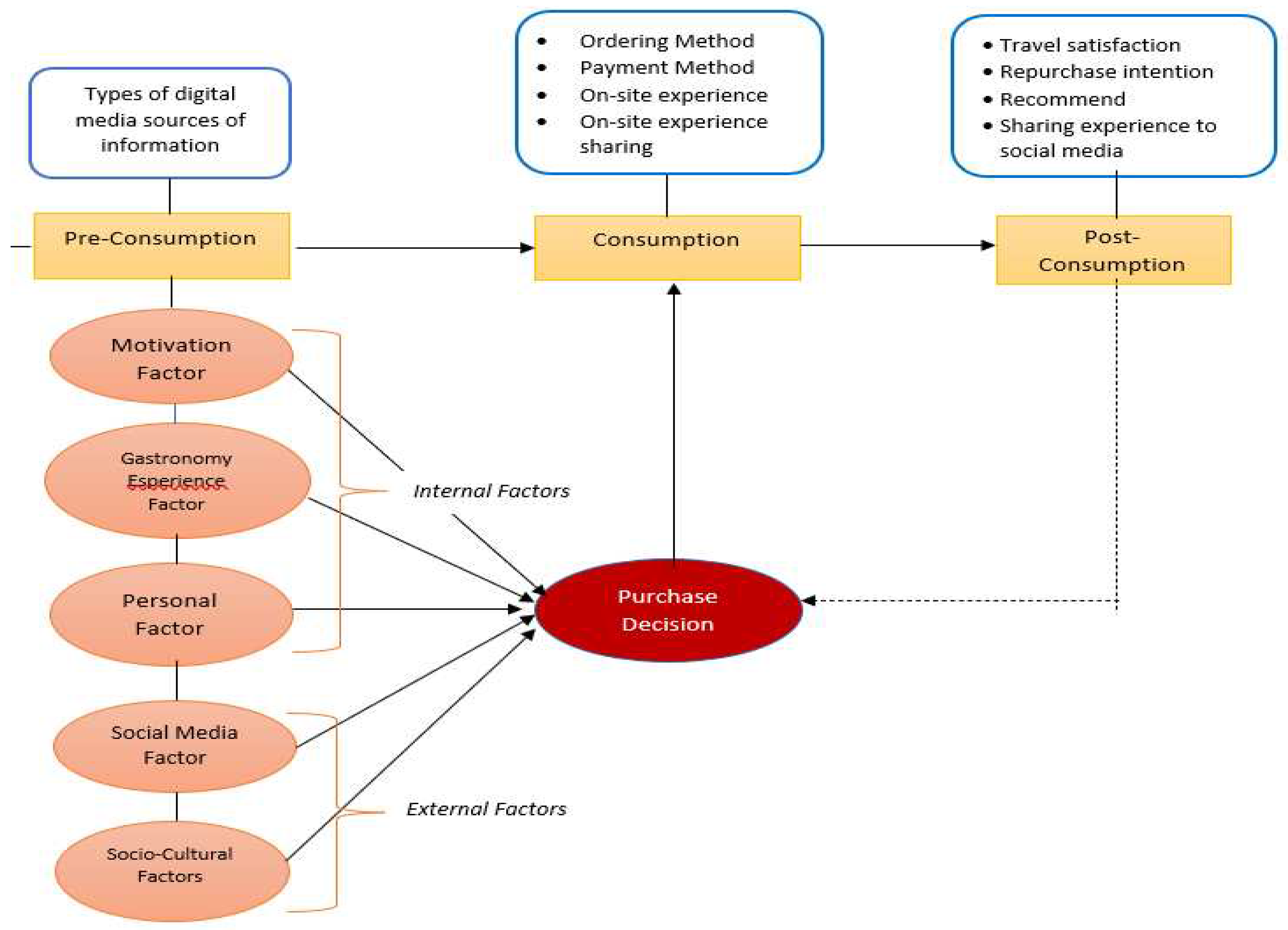

Table 1.
Demographic profile of tourists.
| Profile and Characteristics | Option | Sample | Percentage (%) |
| Age | 17-26 years old | 263 | 54.60 |
| 27-33 years old | 73 | 15.10 | |
| 34-39 years old | 50 | 10.40 | |
| 40-46 years old | 43 | 8.90 | |
| >46 years old | 53 | 11.00 | |
| Gender | Female | 280 | 58.10 |
| Male | 199 | 41.30 | |
| Choose not to answer | 3 | 0.60 | |
| Status | Married | 175 | 36.30 |
| Single | 295 | 61.20 | |
| Choose not to answer | 12 | 2.50 | |
| Education | Diploma | 151 | 31.30 |
| Bachelors | 187 | 38.80 | |
| Master’s degree | 117 | 24.30 | |
| Doctoral degree | 27 | 5.60 | |
| Occupation | Civil servant | 41 | 8.50 |
| Private employees | 111 | 23.00 | |
| Entrepreneur | 127 | 26.30 | |
| Lecturer | 15 | 3.10 | |
| Part time worker | 7 | 1.50 | |
| Student | 141 | 29.25 | |
| Other | 40 | 8.29 | |
| Revenue | Low | 212 | 44.00 |
| Middle | 97 | 40.80 | |
| High | 73 | 15.10 | |
| Domicile | DKI Jakarta | 108 | 22.00 |
| Banten | 89 | 18.00 | |
| West java | 113 | 23.00 | |
| Yogyakarta | 38 | 8.00 | |
| Central java | 18 | 4.00 | |
| East java | 11 | 2.00 | |
| Bali | 30 | 6.00 | |
| Nusa Tenggara | 2 | 0.40 | |
| Sumatra | 61 | 13.00 | |
| Kalimantan | 2 | 0,40 | |
| Sulawesi | 9 | 2.00 | |
| Papua | 1 | 0,20 |
Source: primary data, 2023.
Table 2.
Results of testing the hypothesis through bootstrapping research data.
| Original Sample (O) | Sample Mean (M) | Standard Deviation (STDEV) | T Statistics (|O/STDEV|) | P Values | |
| CON-> PCO | 0.638 | 0.641 | 0.040 | 15.828 | 0.000 |
| SMF -> PD | 0.155 | 0.154 | 0.054 | 2.872 | 0.004 |
| MF -> PD | 0.221 | 0.221 | 0.063 | 3.531 | 0.000 |
| GEF -> PD | 0.166 | 0.168 | 0.073 | 2.267 | 0.024 |
| PF-> PD | 0.222 | 0.224 | 0.048 | 4.635 | 0.000 |
| SCF -> PD | 0.150 | 0.149 | 0.051 | 2.965 | 0.003 |
| PD -> CON | 0.482 | 0.484 | 0.046 | 10.524 | 0.000 |
Source: primary data, 2023.
Table 3.
Results of testing the hypothesis of internal and external factors with multiple linear regression.
Table 3.
Results of testing the hypothesis of internal and external factors with multiple linear regression.
| Model | Unstandardized Coefficients | Standardized Coefficients | t | Sig. | ||
| B | Std. Error | Beta | ||||
| 1 | (Constant) | .092 | .164 | .561 | .575 | |
| Internal factors | .667 | .055 | .549 | 12.063 | .000 | |
| External factors | .293 | .056 | .238 | 5.228 | .000 | |
| a. Dependent Variable: Purchasing Decisions | ||||||
Source: primary data, 2023.
Table 4.
Descriptive test results of tourist behavior in the consumption stage.
| No | Variable and indicator | Average |
| A | On Site Experience | |
| 1 | The flavors (color, aroma, taste, texture) of local cuisine are interesting and delicious | 4.45 |
| 2 | The atmosphere of a local culinary restaurant is comfortable and memorable | 4.36 |
| 3 | Local culinary restaurant service is good | 4.29 |
| 4 | Local culinary restaurant employees are friendly and have good communication skills | 4.26 |
| 5 | Prices are in accordance with the local culinary products offered | 4.29 |
| 6 | The waiter gives recommendations for local culinary excellence | 4.19 |
| 7 | Local culinary image or reputation can increase consumer prestige | 4.33 |
| 8 | I feel like a family when I visit a local culinary restaurant | 4.20 |
| 9 | Local culinary restaurants have up-to-date information through social media | 4.00 |
| B | Sharing Experience On Site | |
| 1 | I share my eating experience live on social media when consuming local culinary delights at destinations | 3.38 |
| 2 | I do not share any experiences at culinary tourism locations | 2.95 |
Desc.: 1= Strongly disagree; 2 = Disagree; 3 = Quite agree; 4 = Agree; 5 = Strongly agree. Source: primary data, 2023.
Table 5.
Descriptive Test Results of Tourist Behavior in the Post-Consumption Stage.
| No | Variable and indicator | Average |
| A | Travel Satisfaction | |
| 1 | I feel satisfied traveling after consuming local culinary at the destination | 4.30 |
| B | Repurchase | |
| 1 | I will repurchase local culinary at the destination on my next visit | 4.18 |
| C | Recommendation | |
| 1 | I will give recommendations to friends and relatives about the local dishes that I have tried | 4.40 |
| D | Post-Consumption Experience Sharing | |
| 1 | I will share this local culinary experience with digital media | 3.96 |
Desc.: 1= Strongly disagree; 2 = Disagree; 3 = Quite agree; 4 = Agree; 5 = Strongly agree. Source: primary data, 2023.
Disclaimer/Publisher’s Note: The statements, opinions and data contained in all publications are solely those of the individual author(s) and contributor(s) and not of MDPI and/or the editor(s). MDPI and/or the editor(s) disclaim responsibility for any injury to people or property resulting from any ideas, methods, instructions or products referred to in the content. |
© 2024 by the authors. Licensee MDPI, Basel, Switzerland. This article is an open access article distributed under the terms and conditions of the Creative Commons Attribution (CC BY) license (http://creativecommons.org/licenses/by/4.0/).
Copyright: This open access article is published under a Creative Commons CC BY 4.0 license, which permit the free download, distribution, and reuse, provided that the author and preprint are cited in any reuse.


