
Submitted:
30 January 2024
Posted:
30 January 2024
You are already at the latest version
Abstract
The research aimed at the ecological assessment of the environment around uranium mining enterprises in the Turkestan region. The authors examined the state of the soil and vegetation for 2021-2023, their chemical composition and the effects of radiation. Excesses of background radiation were detected by alpha and beta studies. To study the structural organization of plant communities, we conducted floristic studies in the areas immediately adjacent to NAC “Kazatomprom” enterprises. The general habitus, size, number and shape of vegetative parts of plants were taken into account as comparison parameters. The flora growing in the study areas of the Suzak district of the region, which is distinguished by its uniqueness and narrow relevance to the ecological conditions of the area, was taken as biological objects of study. To determine the ecological state of the adjacent territories of NAC “Kazatomprom” and for physical, chemical and taxonomic analyses, 78 soil samples and 37 plant samples were obtained. The studied samples were taken near settlements N, B and S, which are closest to the territories of NAC “Kazatomprom”.
Keywords:
Uranium
; plants
; ionizing radiation
; environmental monitoring
; indicator
; biocenosis
Introduction
The radiation impact of technogenic origin changes over time and the issue of its aftereffect on living systems requires study, both due to the lack of a complete picture of the influence of chronic exposure on an individual organism with low and ultra-low doses of ionizing radiation, and due to poor knowledge of systemic changes in the biosphere during the long-term influence of changed and new environmental factors [1,2,3,4].
The study of mechanisms of damage and adaptation of plants at different levels of their organization (phytocenotic, population, organismal, cellular, molecular) in areas of technogenic impact is an important task, since the results obtained can serve as the basis for conducting comprehensive adequate diagnostics of the state of ecosystems and forecasting changes in their state [5,6,7,8,9,10,11,12,13].
On the territory of our Turkestan region there are large enterprises of the national atomic company (NAC) for uranium mining, which carry out an underground leaching process, which is considered environmentally safe. The process of extracting a radioactive element involves the transportation of productive solutions from long distances to a processing plant and the accumulation of used working equipment and inventory, which require subsequent utilization or disposal. Often, underground wells and routes for transporting productive solutions are located near populated areas. At the same time, the slightest contamination of the environment with radioactive elements has long-term and very dangerous consequences for all living organisms and their communities. These negative changes are adequately reflected at the cellular, organismal and coenotic levels of organization of living beings. In this regard, regular monitoring of the state of the environment is of very important environmental importance. Suzak and Otyrar districts of the region are located in close proximity to the recently organized Karatau nature reserve, the total area of which is 34300 hectares. This protected and unique ecosystem is closely adjacent to many large settlements such as Kentau city, Chulak-Korgan village and existing NAC enterprises. The uniqueness and fragility of this ecosystem lies in the fact that 1600 species of higher plants are found here, of which 76 are rare and endemic plant species. 42 species of rare and endemic plant species are listed in the Red Book. In general, the ecosystem itself, due to the aridity of climatic conditions, is considered a fragile coenotic formation.
Technogenic impacts are reflected in the violation of the functional and structural integrity of biocenoses. As a result of transformation and degradation of the species composition of biocenoses, specific communities of dominant organisms of the new ecological situation are formed, which are indicators. Currently, methods of bioindication of technogenically polluted ecosystems have found wide application only in the last decade and are successfully used in a number of developed countries to assess the ecological state of areas with increased anthropogenic load. Living objects clearly show the cumulative effect of ecotoxicants, the degree and direction of changes in the organizational structure of the community, which makes it possible to realistically assess the situation [14,15,16]. These processes, in the absence of burst doses of pollutants, proceed very slowly and their consequences can only be detected by the method of integral assessments, which justifies the need for regular research work.
One of the hazardous industrial wastes that has a long-term and irreparable impact on the sustainability of ecosystems is anthropogenic radiation waste. In studies of the influence of environmental pollution with heavy metals on tree and shrub plants [13,14,15,16,17,18,19,20,21,22,23,24], it was found that in areas of pollution, various disturbances in meiosis and, as a consequence, the formation of non-viable pollen are observed. When studying the response of crested wheatgrass (Agropyron cristatum) plants to various doses of irradiation, ascorbic acid and chlorophylls “a” and “b” were found to be higher than in control plants. By acting on the physical and chemical structure of chromosomes, radiation causes hereditary changes - mutations. Studies have shown that the effects of radioactive exposure largely depend on the radiosensitivity of organisms, on the type of radiation and on the irradiation regime, i.e. on the distribution of the dose over time or on its power [22,23,24,25,26,27,28].
At the moment [1,2,3,4,5,6,7,8,9,10,11,12,13,14,15,16,17,18,19,20,21,22,23,24,25,26,27,28,29], radiosensitivity has been studied in more than 700 species and varieties of cultivated and wild plants and they have been divided according to this property into three large groups: radiosensitive, withstanding radiation doses from 150 to 250 Gy, average sensitive - 250–1000 Gy, and radioresistant – more than 1000 Gy. According to modern concepts, radioresistance-radiosensitivity is determined by the following main factors: a) volume and structural organization of the genome; b) activity of natural protective and sensitive systems; c) level of enzyme activity; d) cell heterogeneity and the possibility of repopulation. The most important feature of all environmental pollutants is their ability to cause hereditary changes - mutations. When assessing the consequences of nuclear testing and other anthropogenic pollution, a comparative study of populations of wild and cultivated plants from clean (control) and radioactively contaminated areas of the Altai Kray was carried out. At the same time, a higher frequency of cells with chromosome rearrangements was established in peas (Pisum), wheatgrass (Agropyron), and buckwheat (Fagopyrum esculentum) collected in contaminated areas, compared with the frequency of rearrangements in the same species taken from uncontaminated areas. In addition, using polyacrylamide gel electrophoresis, a wide polymorphism in the spectrum of storage protein of seeds of wild populations of crested wheatgrass (Agropyron cristatum) was established. It was revealed that the number of storage protein variants in populations from control areas was significantly lower than in populations from contaminated areas. These data indicate an increased level of mutation in plant populations in contaminated areas. When considering the effects of pollutants, and primarily the effect of radiation on natural populations, a complex interaction between increased levels of mutation and selection aimed at eliminating newly induced mutations, which, as a rule, reduce viability, is revealed. However, the effect of selection is ambiguous. It is aimed not only at eliminating semi-lethal and lethal mutations, but also at maintaining mutations that increase the viability and resistance of organisms to the mutagenic factor. The occurrence and selection of such mutations leads to profound changes in populations exposed to pollutants [23,24,25,26,27,28,29,30]. Analysis of literature data [1,2,3,4,5,6,7,8,9,10,11,12,13,14,15,16,17,18,19,20,21,22,23,24,25,26,27,28,29,30,31,32,33] shows that there are significant differences between plant species in their ability to concentrate radionuclides. In field and laboratory analyzes carried out with various types of wild plants, the presence of intraspecific polymorphism in the ability to concentrate strontium-90 was established. It was also found that populations consist of plants that effectively and ineffectively concentrate this radionuclide, with the former concentrating 2–37 times more than the latter. The proportion of plants with high concentrating ability can reach 10%. All this suggests the need and possibility of selection for resistance to environmental pollutants. On the other hand, the ability of some forms to concentrate large amounts of pollutants, and primarily radionuclides, gives rise to hope for the possibility of creating forms of plants that purify the environment from active isotopes, heavy metals and other pollutants. This assumption has theoretical justification. The chemical composition of organisms can be the same species characteristic as their morphological features, and distinguished between types of organisms rich in a given element and ordinary ones. In other words, the ability to concentrate various elements in large quantities is determined by the genetic system of the species, population and individuals and, therefore, they can be subjected to artificial selection. Today, the task of studying the genetics of traits of resistance to environmental pollutants, searching for and preserving the gene pool of resistance and creating varieties resistant to high concentrations of “pollutants”, as well as varieties capable of absorbing large quantities of toxic substances, is becoming urgent [26,27,28,29,30,31,32,33].
The negative impact of anthropogenic factors affected the number of rare and valuable species of flora and fauna of desert zones, which subsequently led to the creation of the Karatau nature reserve in this region. However, this measure does not completely solve the environmental problem of the region, created as a result of long-term anthropogenic impact. Currently, regular study of the impact of new and dangerous factors on the environment will determine the degree of their influence and changes in the ecosystem and the necessary measures to resolve it, which is especially important for Kazakhstan.
The accumulation of radionuclides depends on the agrochemical properties of the soil, the presence of exchangeable calcium, potassium carbonates, organic substances, pH indicator, exchangeable cations, and granulometric composition. The mechanism of the damaging effect of large doses and levels of pollution is largely understood and studied, but the effect of small doses, especially with chronic effects, is poorly understood and requires new approaches related to the analysis of population changes. This is an important point in the process, because chronic irradiation with small and ultra-low doses, especially with artificial radionuclides, acts not only as a factor that increases the rate of accumulation of mutations, but also as a selection factor.
The activity of anthropogenic nuclides is variable in time and space and varies significantly during the life of one or two generations of most animals and plants, which does not allow the development of adequate evolutionary protection against the effects of these factors. In the migration of nuclides in terrestrial ecosystems, the main role belongs to humic and low molecular weight acids and their compounds with chemical elements, as well as iron and aluminum hydroxides.
Materials and methods of research
The object of the study was the soils and flora adjacent to the production areas of the uranium mining enterprises of the national atomic company. On the territory of the Turkestan region there are more than 19 types and subtypes of soils, which form horizontal zones in the direction of geographic flow from the Tien Shan mountains to the Syrdarya river valley. In these horizontal zones, in reality, along with the main one, there are always many other types and subtypes of soils confined to certain elements of the terrain. In addition, in all conventional horizontal soil zones, significant areas are occupied by red ferrolitic clays, characterized by the absence of differentiated genetic profile horizons. Varieties of gray-brown, desert-sandy and takyr-like soils, solonchaks and solonetzes are widespread on the territory of the Suzak district. Gray-brown solonchakous soils are characterized by a high content of easily soluble salts (starting from 30 cm) and carbonates in the upper layer. The soil is covered with a porous crust of 3-5 cm, under which there is a layered horizon 5-7 cm thick. The humus content to a depth of 35 cm gradually decreases from 0.8 to 0.25%. The content of hygroscopic moisture in the same layer increases from 0.8 to 1.66 absorption capacity - 5-10 m.eq. per 100g of soil, which characterizes its low moisture capacity. One distinctive feature of this type of soil is the low content of nitrogen (0.05±0.001%) and phosphorus (0.11±0.01%), which, in combination with salinity conditions, serves as a limiting condition for plant growth and development. While similar to gray-brown soils in physical and chemical properties and the degree of supply of nutrients, takyr-type soils are distinguished by a special profile structure, which is due to the high content of colloidal particles and silicon oxides in their upper layer. Uliginous and colloidal particles, when dispersed by sodium ions, form a crust and layered horizon of 5-7 cm thickness. As a result of rapid drying, this soil horizon cracks greatly and becomes very dense and waterproof. A special characteristic of desert sandy soils is their low humus content - <0.5%, most of which lies at a depth of 5-15 cm, as well as a noticeable enrichment in dust particles, weak capillarity, high water permeability, low absorption capacity and intense mineralization of organic matter. These types of soils are susceptible to wind and water types of erosion. Therefore, the contaminated top layer of soil is easily washed away by surface runoff and rises into the air along with the air flow, which increases the risk of spreading pollutants over long distances.
The flora living in the study areas of the Suzak district of the region, which is distinguished by its uniqueness and narrow affinity to the ecological conditions of the area, were taken as biological objects of study.
To determine the ecological state of the adjacent territories of NAC “Kazatomprom” and for physical, chemical and taxonomic analyses, 78 soil samples and 37 plant samples were obtained. The studied samples were taken in near settlements N, B and S, which are closest to the territories of the above enterprises. All studied soil and plant samples were packed in hermetically sealed plastic bags. The research was conducted between 2021-2023.
1. Soil samples were taken along the central Shymkent-Kyzylorda highway, which is used for transporting productive in-situ leaching solution. The length of the route is 60 km. Soil samples were taken at a distance of 10-15 meters from the road.
Physico-chemical analyzes of soil samples were carried out in the laboratory bases of the South Kazakhstan State Pedagogical University (SKSPU) and the Research and Production Enterprise “Ekokhim”.
2. The radiation background of soil and water samples was determined using dosimeters “DP-5A” and “DP-5V”, which are designed to measure radiation levels in the area and radioactive contamination of various objects by gamma radiation. The device has the ability to detect beta radiation. The gamma radiation measurement range is from 0.05 mR/h to 200 R/h in the gamma quanta energy range from 0.084 to 1.25 MeV. The DP-5A and DP-5V devices have six measurement subranges.
3. The elemental composition of plant biomass and soil samples was analyzed by electron microscopy using a scanning electron microscope from Joel - JLP -6490 LV, equipped with an ANCA Entrgy 350 energy-dispersive microanalysis system and a texture analysis system using HKL basic reflected electron diffraction, in high-vacuum mode.
4. To assess the ecological state of the local ecosystem, floristic studies were carried out. The materials from these studies were subjected to office processing for taxonomic, morphological and anatomical analyses. The species composition of the flora was studied during route expeditions organized in May, June and July. Plant specimens were collected in herbariums, which were then analyzed in laboratory processing areas for taxonomic analysis. The species composition of the fauna was studied by taking into account the number of species and selecting experimental specimens for morphological and anatomical analysis. To determine the species composition of plants, the illustrated guide to plants of Kazakhstan, 1972 was used; Flora of Kazakhstan, in 9 volumes, 1972. Sampling of plants was carried out using the route survey method, followed by office processing of the collected herbarium material in laboratory areas.
5. Statistical processing of the results obtained was carried out by calculating the arithmetic mean and standard deviation at 0.95>P>0.80. All determinations were carried out in 3 and 5 folds replication. The data was processed using an IBM Pentium personal computer based on Excel application packages.
Results and discussion
Analysis of radiological study of soil cover contamination
In 2021-2023, radiological studies of soil contamination in zones of sustainable influence of NAC enterprises were carried out. An analysis of 78 soil samples taken from different points remote from the enterprises of NAC “Kazatomprom” was carried out. The background radiation of soil samples was measured at the sampling site using gamma and beta radiation. The results of the analyzes established that the radiation background of the soil cover of the territories of settlements N, B, S and the sides of the central highway Shymkent - Kyzylorda, adjacent to the places of dispersal of in-situ leaching wells, does not significantly exceed the MPC indicators (Table 1). Of the 78 soil samples studied, only seven samples were found to exceed the MPC value for the general background radiation (9.0 - 10.0 mR/h) by 1.0 -2.0 mR/h, this figure exceeds the MPC values in 1.13 and 1.25 times. Soil samples numbered 10; 12; 26; 28; 38; 56 and 59 were sampled along the road in 2 micro-depressions.
A comparative analysis of the results of radiological studies in 2021-2023 confirms the assumption that the established slight excesses of background radiation relate to local sampling points.
As the results of our studies in 2023 and previous years have shown, the contamination of soil samples in the vicinity of the areas of underground leaching wells of NAC uranium mining enterprises with radionuclides is not significant. Exceeding the MPC values by 1.13 and 1.25 times was found only in seven soil samples that were taken in depressions along the central Shymkent-Kyzylorda highway. The radiation background of water samples does not exceed 0.000-0.002 mR/h.
Characteristics of the radiation situation in areas adjacent to the uranium mining enterprises of NAC “Kazatomprom” without detailed data not only on the spatial, but also on the temporal dynamics of the content of natural and artificial radionuclides in various soil horizons is incomplete. Of greatest interest for the area of uranium mining enterprises are the profiles of the vertical distribution of artificial radionuclides.
The assessment of soil toxicity is given great attention among the environmental aspects of the work of uranium mining enterprises. Soils perform a huge number of functions and play a special role in ecological systems. The most important of them is ecological, providing living space for humans and living organisms. However, to date, by analytical methods it is impossible to identify the entire complex of both natural and newly synthesized substances, and, most importantly, the products of their interaction, which are sometimes more toxic and dangerous for biota. In this connection, there is a need for a holistic approach that provides an integral assessment of the toxicity of media. Since toxicity is a biological characteristic, it is necessary to use representatives of the biota to identify it. The biotesting method allows us to assess the impact of the entire complex of pollutants on representatives of biota. The biotesting method is based on the use of representative test objects of various systematic groups and trophic levels of living organisms [15].
Our studies present data on the distribution of 137Cs and some natural radionuclides that were sampled near settlements N, B and S, obtained in 2021-2023.
Points N, B and S refer to the watershed areas of the landscape-geochemical region and are located on virgin lands: the profile is flushing, the soil is gray-brown, heavy loamy, the vegetation is wormwood (Artemisia), fescue (Festuca), bluegrass (Poa), sweet clover (Melilotus).
Relative reserves in soil layers 0-15 cm and 15-45 cm are often comparable or greater at greater depths. The profile structure is very diverse. Such profiles are formed as a result of special mechanisms of 137Cs transfer along the soil profile, specific to a dry climate and the significant influence of moisture through the processes of infiltration and colmatage. In any case, the rate of 137Cs transfer increases, especially sharply during colmatage - after a long dry period, the soil is mechanically destroyed and with short, heavy subsequent precipitation, 137Cs can quickly penetrate to a significant depth. At the same time, the natural barrier to 137Cs, the solonetzic horizon at 15-20 cm, can also be overcome. Under normal conditions, due to the low density and low water impermeability, in the presence of Na ions in this horizon, accelerated sorption of 137Cs takes place. The presence of a maximum in A(h) and P(h) at these depths may be associated with solonetsity.
In a dry climate, the influence of moisture (atmospheric or ground) can manifest itself in the form of transpiration - the transfer of 137Cs to the surface with moisture evaporating from the soil surface. The region under consideration is also characterized by the presence of washed away soils.
Data on the content of natural radionuclides in soil (0-1 cm) and vegetation are given in Table 2.
For points N, B and S, the 40K content in vegetation is only 2 times higher than in the soil; 238U is absent in the vegetation.
A comparison of data for 2021 and 2023 on 137Cs distribution profiles in soils (specific activity AiBq/kg, reserves PiBq/m2) for points N, B and S is given in Table 2.
It can be seen that over 3 years (from 2021 to 2023) [2] at points N, B and S, with a constant total reserve of 137Cs in the soil profile ΣPi≅3900Bq/m2, some redistribution along its profile occurred. Relative reserves in the second layer of 1-3 cm and, especially, in the fourth layer of 5-10 cm increased noticeably, and in deeper layers at h>10cm Pi and Pi/ΣPi sharply decreased (Table 3).
Analysis of floristic studies
Analysis of floristic studies of zones of sustainable influence of uranium mining enterprises of NAC “Kazatomprom” and study of the degree of contamination of the plant organism with radionuclides and heavy metal ions
The flora of the Karatau plain of the Turkestan region is distinguished by its uniqueness. From the peaks to the plains, plant pharmaceuticals change, including various associations. At the very spurs of the mountains, the vegetation is characterized by great species diversity. However, after just 20 km. this indicator sharply decreases and to zones of saline soils, harmal-wormwood vegetation is established.
There are 76 plant species that have the status of endemic species. The total number of plant species is 1600. 42 species of rare and endemic plant species are listed in the Red Book. In this regard, to assess the ecological situation around the areas where in-situ leaching wells are located, we studied the features of the organizational structure of populations of flora and fauna species in the area. The conduct of these studies is justified by the fact that the study of the bioecological structure of coenotic formations and the morpho-biological characteristics of certain individuals will reveal the presence of transformation processes in the structural organization of communities and anomalous deviations at the organismal level.
In the territories where NAC uranium mining enterprises operate in the Turkestan region, historically formed phytocenoses of steppe and desert zones are developing, which are distinguished by the dominant role of species of xerophytic ecological group of plants. The other part of the vegetation belongs to the ephemeral and ephemeroid groups, the growing season of which lasts only one or one and a half months, from early March to mid-May. The reason for this specifically special composition of the plant community is the geographical location of these areas. In addition to special types of soil, these areas differ from neighboring ones by an acute lack of moisture, high temperatures in the summer months and very low temperatures in the winter months.
Steppe and desert phytocenoses are distinguished by their ability to undergo irreversible degradation in areas of technogenic impact. Therefore, to compile an environmental assessment of the state of vegetation communities in the study areas, in 2021-2023 we studied the species composition, phytoresources and morpho-biological characteristics of these plant communities. To study the structural organization of plant communities, we conducted floristic studies in the areas immediately adjacent to NAC enterprises. Floristic research in the Suzak district was carried out in three different areas:
1) control area - flat areas in the vicinity of Chulak-Kurgan village, which are located 50 km from the site of concentration of in-situ leaching wells;
2) experimental areas - flat areas directly adjacent to the concentration of in-situ leaching wells. This is the area of Taukent village: section No. 1; the 25th kilometer along the Shymkent-Kyzylorda highway - section No. 2; and the 35th kilometer along the same direction - section No. 3.
The results of the taxonomic analysis showed that the total number of identified species is 32, which are representatives of only five families (Table 9). The established species composition of the plant community is characteristic of the flat areas around the settlements of Sholak-Kurgan, Taukent and Suzak. In this community, the dominant group is formed by such species as Ceratocarpus, Artemisia absinthium, Artemisia santolinifolia, Salsola paulsenii, Salsola nitraria, Salsola pestіfer, Anabasis salsa and Peganum harmala. The species composition of this community, in comparison with the vegetation indicators of Baidibek district, is 41 species poorer, which is due to differences in soil and climatic conditions. Projective coverage does not exceed 46.7±2.5%. In our studies conducted in ten replications in 2021 and 2023, the average value of this indicator ranged from 39.5±2.5% to 47.3±3.4%.
The established number of species and projective soil cover with vegetation in these areas, according to the results of research in 2021-2023, varies from 42.8 to 48.9% (Figure 1), which does not differ significantly from the indicators of the control area, but the number of species is statistically significantly differs from the results of floristic studies in Baidibek district. The absence in the community of some species that were noted in the community of the control site is explained by other reasons related to the natural distribution of species in the area.
Analysis of radiation background, chemical composition and bioaccumulation of toxic elements in plants
The radiation background of plant masses was measured in 53 experimental samples using the radiometric method. Analysis of the research results showed that in 50 samples of plant mass, background radiation does not exceed 1.4-3.7 mR/h, which is significantly lower than the MPC value. Only three samples from experimental site No. 1 showed a slight excess, 1.21 times higher than the MPC value (9.52). According to existing radiation monitoring standards, these values are not very high. Therefore, the studied plant specimens of these species from experimental site No. 1 were further examined to study their morpho-anatomical features of structure and elemental composition.
The chemical composition of plant biomass was studied using X-ray spectrometric analysis to determine the presence of radioactive elements in them. Samples of plant mass from different ecological districts of the region (Ordabasy, Tortkul, Sovetskoye and experimental site No. 1) were analyzed. Selected vegetation samples were examined by X-ray spectral analysis - lead and zinc, AAA (atomic absorption analysis) - copper and chemical analysis - photometric determination of phosphorus in the Production Center “Geology of Uranium and Rare Earth Metals”, for the content of the following toxic elements - lead, zinc, copper and phosphorus.
It is known that the bioaccumulation of elements has a certain tendency, which allows them to be ordered into several groups: 1) Cd, Cs, Rb - elements of intense absorption; 2) Zn, Mo, Cu, Pb, As, Co – average degree of absorption; 3) Mn, Ni, Cr – weak absorption and 4) Se, Fe, Ba, Te – elements that are difficult for plants to access. Analytical studies of vegetation samples showed the following results:
Vegetation sample No. 1 was taken in Ordabasy village. In this sample, the values for zinc is 28.3±1.4% mg/kg and phosphorus ia 634±3.7% mg/kg. These are the minimum for all studied samples. Copper level is 10±1.4% mg/kg, which is also below the standard indicator. Lead concentration is 7.3±3.5%. mg/kg, which is 1.5 times higher than the maximum permissible concentration. The content of toxic elements in soil and vegetation samples taken in Ordabasy village is shown. Vegetation sample No. 2 was taken in a mountainous area in Sovetskoye village (Figure 10). The copper content is 15.2±1.2%mg/kg, phosphorus is 1135±13.7% mg/kg, this does not exceed the standard values. The level of lead is 5.3±0.4% mg/kg, which is 1.1 times higher than the MPC, and zinc is 55.6±2.4% mg/kg, which is also 1.1 times higher than the norm. Figure 3 shows the content of toxic elements in soil and vegetation samples taken in Sovetskoye village. Vegetation sample No. 3 was taken in Tortkul village. The values for lead (2.9±0.4% mg/kg) and copper (14.4±1.4% mg/kg) are below the MPC. The level of zinc is 64.4±1.8% mg/kg - 1.04 MAC, the concentration of phosphorus is 1443±3.4% mg/kg, this is 1.2 times higher than the standard value.
Figure 2, Figure 3 and Figure 4 show the content of toxic elements in soil and vegetation samples taken in Tortkul village.
Vegetation sample No. 4 was taken from experimental site No. 1. The copper content in this sample is 15.6±1.1% mg/kg, which does not exceed the norm. The level of lead is 3.1 times higher than the MPC (15.6±1.0% mg/kg), zinc - 77.2±2.5% mg/kg, this is 1.7 times higher than the MPC, phosphorus content - 1434 ±17.7% mg/kg – 1.2 times higher than norm (Figure 5).
Based on the research results, average contents were calculated, maximum and minimum values of toxic elements were identified for all vegetation samples. The average lead content in vegetation samples is 19.6±1.2% mg/kg, which is 3.9 times higher than the MPC, the average zinc content is 80.8±3.2% mg/kg, which corresponds to 1.6 MPC . The average copper content is 16.7±1.4% mg/kg, which is below the MPC (MPC – 20 mg/kg). The average phosphorus content is 1285.1±41.4% mg/kg, which slightly exceeds the standard value - 1.07 times (Figure 6).
Table 4 shows statistical data on the content of toxic elements in vegetation samples taken in various areas.
It has been established that the content of heavy metal ions in the biomass of plants in the experimental area does not statistically differ significantly from the indicators in ecologically favorable areas, which excludes the significant role of heavy metal ions in the ecology of plants in the study areas. Analysis of the results obtained shows that the species composition of the dominant communities in the control and experimental areas does not differ significantly. These species are characterized by high adaptability to the soil and climatic conditions of the area and high resistance to unfavorable conditions and some direct technogenic factors.
Analysis of radiometric studies for 2021-2023 showed that the radiation background of the studied 53 samples of plant phytomass is within the MPC values, with the exception of 3 samples from experimental site No. 1, where the excess was 1.19 times. These indicators were detected in the biomass of leaves and stems of Artemisia absinthium and Peganum harmala.
We conducted morphological and anatomical studies of plants, the purpose of which was to detect the presence of any anomalous deviations in the morphology and anatomy of the studied plant samples. The following plant species were selected as research material: Peganum harmala, Allium pskemense, Centaurea diffusa Lam., Psoralea drupacea Bge., Achillea millefolium and Artemisia santolinifolia, which are edificators of the local plant association. Plant samples taken from experimental sites Nos. 30,39,42,44 were compared with plants of the control variant (selected near Tamerlanovka village), where, during the study of the radiation background of the soils, we discovered a slight excess of the background radiation in alpha radiation. The general habitus, size, number and shape of vegetative parts of plants were taken into account as comparison parameters. The results of morphological studies of plant samples showed that in the plant samples we studied there were no external morphological signs of deviations, compared to plant samples of the control variant. In all variants of the experiment, no plants with signs of mutation or neoplasms were found. The study of the anatomical features of the structure of plants from the experimental and control variants of the experiment was carried out using an electron scanning microscope in a low-vacuum mode, after freeze-drying the samples, in which the integrity of the anatomical structure of tissues and cells is preserved. As the research results showed, in all the studied samples of the above-mentioned plant species, no visible deviations in the anatomical structure of the plants were found. The structure and thickness of all types of tissues, vascular bundles in the root system and stems of plants turned out to be identical to those of control plants. Figure 7 and Figure 8 show electronic images of the anatomical structure of two levels of the main roots and stems of Artemisia santonifolia and Centaurea diffusa Lam., in comparison with the structure of control plants. In the next stage of our research, the ash masses of these samples were subjected to electron microscopic analysis by reflected electron diffraction. As the results of the study showed, there were also no radioactive substances in the ash of the studied samples (Figure 9 and Figure 10). Of the heavy metal ions, in addition to lead, zinc and copper, there are titanium ions from 0.02 to 0.45 weight percent. The main share of weight percent comes from macroelements such as oxygen, calcium, potassium, magnesium, sodium, etc. The results obtained confirm our conclusions that there is no mass radionuclide contamination in the soil and vegetation of the areas we studied.
Conclusions
The results of research work carried out in 2021-2023 allow us to conclude that there are no large areas contaminated with radionuclides in the areas adjacent to the production zone of the NAC uranium mining enterprises in the Turkestan region. The existing underground method of leaching radioactive elements from core ensures the safety of environmental contamination from radionuclides. In our radiometric studies, no large foci or areas with high background radiation of alpha, beta and gamma radiation were found. The results of research and electron microscopy did not confirm the presence of radioactive elements in the plant body. The bioecological structure and organisms of the local biota for the established level of pollution cannot serve as suitable objects of bioindication.
In measurements in soil and plant samples, slight excesses of background radiation were found according to alpha and beta studies, which may be a consequence of local points that entered the area and living organisms due to wind erosion. As is known, in the production areas of uranium mining enterprises there are certain temporary storage areas for used machinery and equipment, which, as a result of long service in conditions of high background radiation, become secondary sources of environmental pollution. The possibility of these wastes serving as sources of the spread of small quantities into the environment is not excluded by the fact that a certain amount of these metal wastes are iron products, individual parts of which, due to corrosion, in the form of rusty powdery masses can enter the environment. According to our data, the total amount of such waste metal that is stored in the open air is about 200-300 tons.
References
- Holst R, Nagel D. Radiation effects on plants. Plants for Environmental Studies [Internet]. 1997 May 30;37–79. Available from: http://dx.doi.org/10.1201/9781420048711.ch2. 30 May. [CrossRef]
- Test Method for Effects of Gamma Radiation on Coatings for Use in Nuclear Power Plants. Available from: http://dx.doi.org/10.1520/d4082. [CrossRef]
- Duarte GT, Volkova PYu, Fiengo Perez F, Horemans N. Chronic Ionizing Radiation of Plants: An Evolutionary Factor from Direct Damage to Non-Target Effects. Plants [Internet]. 2023 Mar 4;12(5):1178. Available from: http://dx.doi.org/10.3390/plants12051178. [CrossRef]
- Effects of ionizing radiation on plants and animals at levels implied by current radiation protection standards. Environment International [Internet]. 1993 Jan;19(1):103. Available from: http://dx.doi.org/10.1016/0160-4120(93)90021-9. [CrossRef]
- Ahmed F, Daif MM, El-Masry NM, Abo-Elmagd M. External and internal radiation exposure of herbal plants used in Egypt. Radiation Effects and Defects in Solids [Internet]. 2010 Jan;165(1):65–71. Available from: http://dx.doi.org/10.1080/10420150903428054. [CrossRef]
- Adeleye B, Chetty N. Assessment of natural radionuclides in some prominent South African medicinal plants. Radiation Effects and Defects in Solids [Internet]. 2023 May 12;178(7–8):1056–62. Available from: http://dx.doi.org/10.1080/10420150.2023.2211192. 12 May. [CrossRef]
- Sparrow AH, Schwemmer SS, Bottino PJ. The effects of external gamma radiation from radioactive fallout on plants with special reference to crop production. Radiation Botany [Internet]. 1971 Jan;11(2):85–118. Available from: http://dx.doi.org/10.1016/s0033-7560(71)90643-0. [CrossRef]
- Charlton JS. Biological effects of radiation. Radioisotope Techniques for Problem-Solving in Industrial Process Plants [Internet]. 1986;58–70. Available from: http://dx.doi.org/10.1007/978-94-009-4073-4_5. [CrossRef]
- Lagoda PJL. Effects of radiation on living cells and plants. Plant mutation breeding and biotechnology [Internet]. 2012 Jan;123–34. Available from: http://dx.doi.org/10.1079/9781780640853.0123. [CrossRef]
- Shimalina NS, Antonova EV, Pozolotina VN. Multiannual Assessment of Quality of Plantago major L. Seed Progeny from Kyshtym Radiation Accident Area: Weather-Dependent Effects. Plants [Internet]. 2023 Jul 2;12(13):2528. Available from: http://dx.doi.org/10.3390/plants12132528. [CrossRef]
- Bolsunovsky A, Trofimova E, Dementyev D, Petrichenkov M. The long-term effects of γ-radiation on the growth of Allium cepa plants. International Journal of Radiation Biology [Internet]. 2020 Nov 16;97(2):276–81. Available from: http://dx.doi.org/10.1080/09553002.2021.1844337. [CrossRef]
- Ludovici GM, Chierici A, de Souza SO, d’Errico F, Iannotti A, Malizia A. Effects of Ionizing Radiation on Flora Ten Years after the Fukushima Dai-ichi Disaster. Plants [Internet]. 2022 Jan 15;11(2):222. Available from: http://dx.doi.org/10.3390/plants11020222. [CrossRef]
- Li F, Liu P, Wang T, Bian P, Wu Y, Wu L, et al. The Induction of Bystander Mutagenic Effects In Vivo by Alpha-Particle Irradiation in Whole Arabidopsis thaliana Plants. Radiation Research [Internet]. 2010 Aug 1;174(2):228. Available from: http://dx.doi.org/10.1667/rr2052.1. [CrossRef]
- Gudkov D, Shevtsova N, Pomortseva N, Dzyubenko E, Yavnyuk A, Kaglyan A, et al. Aquatic Plants and Animals in the Chernobyl Exclusion Zone: Effects of Long-Term Radiation Exposure on Different Levels of Biological Organization. Genetics, Evolution and Radiation [Internet]. 2016;287–302. Available from: http://dx.doi.org/10.1007/978-3-319-48838-7_24. [CrossRef]
- Grodzinsky DM. Late Effects of Chronic Irradiation in Plants After the Accident at the Chernobyl Nuclear Power Station. Radiation Protection Dosimetry [Internet]. 1995 Oct 1;62(1–2):41–3. Available from: http://dx.doi.org/10.1093/oxfordjournals.rpd.a082817. [CrossRef]
- Murphy TM. Resistance of Plants to The Effects of Ultraviolet Radiation. Mechanisms of Environmental Stress Resistance in Plants [Internet]. 2022 Feb 16;151–90. Available from: http://dx.doi.org/10.1201/9780203747803-8. [CrossRef]
- Gensemer R, Huang X-D, Duxbury C, Greenberg B, Gerhardt K, Wilson M. The effects of ultraviolet-B radiation on higher plants. Plants for Environmental Studies [Internet]. 1997 May 30;1–35. Available from: http://dx.doi.org/10.1201/9781420048711.ch1. 30 May. [CrossRef]
- Rozema J, van de Staaij JWM, Tosserams M. Effects of UV-B radiation on plants from agro- and natural ecosystems. Plants and UV-B [Internet]. 1997 Aug 14;213–32. Available from: http://dx.doi.org/10.1017/cbo9780511752346.013. [CrossRef]
- Stephan OOH. Effects of Environmental Stress Factors on the Actin Cytoskeleton of Fungi and Plants: Ionizing Radiation and ROS. 2023 Jan 4; Available from: http://dx.doi.org/10.22541/au.167286364.45653720/v1. [CrossRef]
- Nybakken L, Lee Y, Brede DA, Mageroy MH, Lind OC, Salbu B, et al. Long term effects of ionising radiation in the Chernobyl Exclusion zone on DNA integrity and chemical defence systems of Scots pine (Pinus sylvestris). Science of The Total Environment [Internet]. 2023 Dec;904:166844. Available from: http://dx.doi.org/10.1016/j.scitotenv.2023.166844. [CrossRef]
- Amiro BD, Sheppard SC. Effects of ionizing radiation on the boreal forest: Canada’s FIG experiment, with implications for radionuclides. Science of The Total Environment [Internet]. 1994 Dec;157:371–82. Available from: http://dx.doi.org/10.1016/0048-9697(94)90600-9. [CrossRef]
- Beresford NA, Barnett CL, Gashchak S, Maksimenko A, Guliaichenko E, Wood MD, et al. Radionuclide transfer to wildlife at a ‘Reference site’ in the Chernobyl Exclusion Zone and resultant radiation exposures. Journal of Environmental Radioactivity [Internet]. 2020 Jan;211:105661. Available from: http://dx.doi.org/10.1016/j.jenvrad.2018.02.007. [CrossRef]
- Bowen HJM. Radiosensitivity of higher plants, and correlations with cell weight and DNA content. Radiation Botany [Internet]. 1961 Jan;1:223–8. Available from: http://dx.doi.org/10.1016/s0033-7560(61)80030-6. [CrossRef]
- Caplin N, Willey N. Ionizing Radiation, Higher Plants, and Radioprotection: From Acute High Doses to Chronic Low Doses. Frontiers in Plant Science [Internet]. 2018 Jun 26;9. Available from: http://dx.doi.org/10.3389/fpls.2018.00847. [CrossRef]
- Esnault M-A, Legue F, Chenal C. Ionizing radiation: Advances in plant response. Environmental and Experimental Botany [Internet]. 2010 May;68(3):231–7. Available from: http://dx.doi.org/10.1016/j.envexpbot.2010.01.007. [CrossRef]
- Fesenko S, Spridonov S, Geras’kin S. Radiation effects in the forest ecosystems: Acute irradiation. Journal of Environmental Radioactivity [Internet]. 2022 Sep;250:106908. Available from: http://dx.doi.org/10.1016/j.jenvrad.2022.106908. [CrossRef]
- Geras’kin S, Evseeva T, Oudalova A. Effects of long-term chronic exposure to radionuclides in plant populations. Journal of Environmental Radioactivity [Internet]. 2013 Jul;121:22–32. Available from: http://dx.doi.org/10.1016/j.jenvrad.2012.03.007. [CrossRef]
- Jan S, Parween T, Siddiqi TO, Mahmooduzzafar. Effect of gamma radiation on morphological, biochemical, and physiological aspects of plants and plant products. Environmental Reviews [Internet]. 2012 Mar;20(1):17–39. Available from: http://dx.doi.org/10.1139/a11-021. [CrossRef]
- Caplin NM, Halliday A, Willey NJ. Developmental, Morphological and Physiological Traits in Plants Exposed for Five Generations to Chronic Low-Level Ionising Radiation. Frontiers in Plant Science [Internet]. 2020 Apr 15;11. Available from: http://dx.doi.org/10.3389/fpls.2020.00389. [CrossRef]
- Van Hoeck A, Horemans N, Nauts R, Van Hees M, Vandenhove H, Blust R. Lemna minor plants chronically exposed to ionising radiation: RNA-seq analysis indicates a dose rate dependent shift from acclimation to survival strategies. Plant Science [Internet]. 2017 Apr;257:84–95. Available from: http://dx.doi.org/10.1016/j.plantsci.2017.01.010. [CrossRef]
- Sen Mandi S. UV Acclimation Strategy in Plants. Natural UV Radiation in Enhancing Survival Value and Quality of Plants [Internet]. 2016;73–133. Available from: http://dx.doi.org/10.1007/978-81-322-2767-0_4. [CrossRef]
- Wi SG, Chung BY, Kim J-S, Kim J-H, Baek M-H, Lee J-W, et al. Effects of gamma irradiation on morphological changes and biological responses in plants. Micron [Internet]. 2007 Aug;38(6):553–64. Available from: http://dx.doi.org/10.1016/j.micron.2006.11.002. [CrossRef]
- Yasmin K, Arulbalachandran D. Gamma irradiation effects on crop plants. Research Journal of Biotechnology [Internet]. 2022 Jul 25;17(8):126–35. Available from: http://dx.doi.org/10.25303/1708rjbt1260135. [CrossRef]
Figure 1.
Indicators of species diversity and projective soil cover with vegetation of the control and experimental variants of floristic studies (based on the results of studies 2021-2023).
Figure 1.
Indicators of species diversity and projective soil cover with vegetation of the control and experimental variants of floristic studies (based on the results of studies 2021-2023).
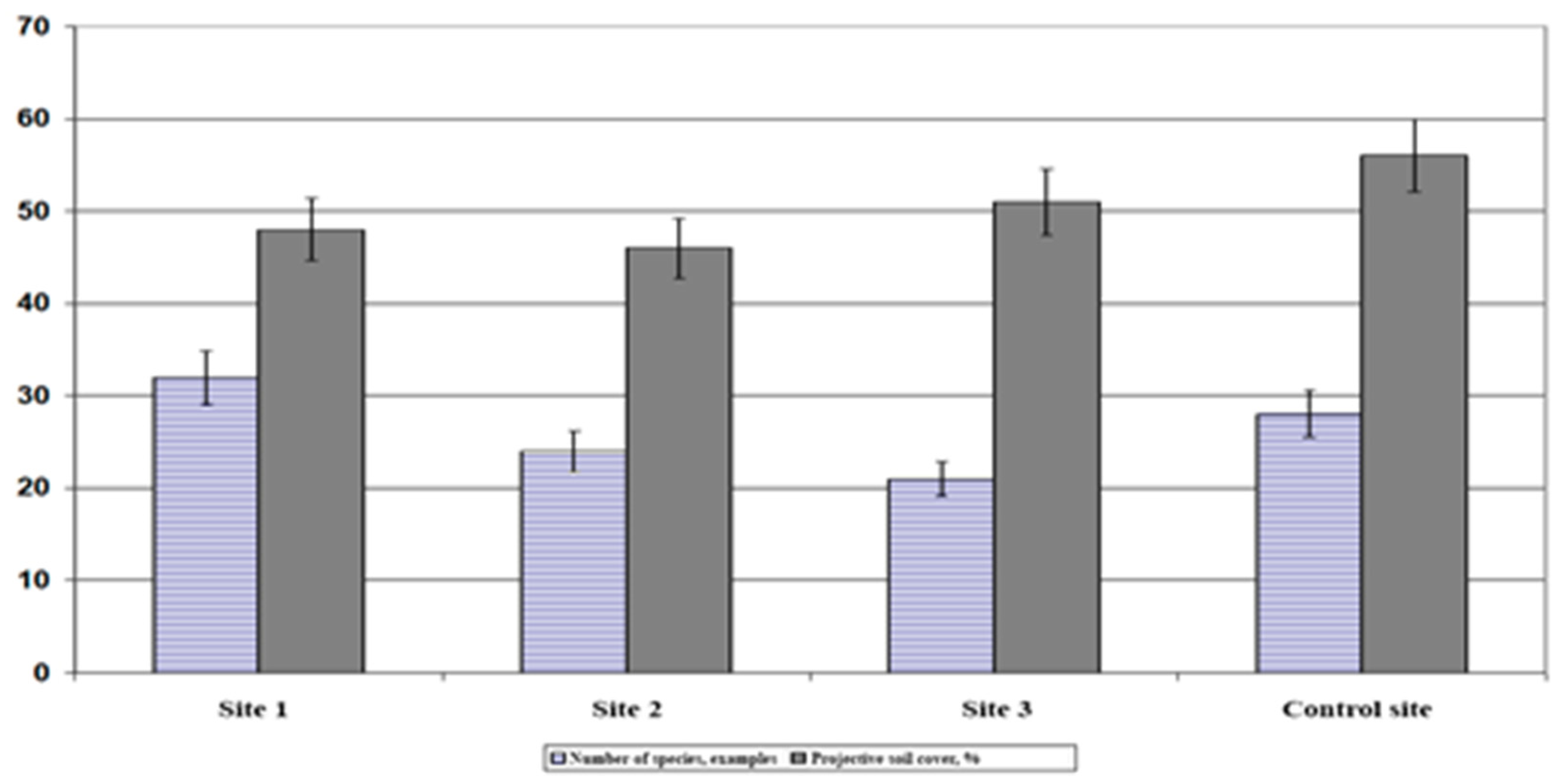
Figure 2.
Content of toxic elements in samples of vegetation and soils taken in Ordabasy village (based on the results of studies in 2021 and 2023).
Figure 2.
Content of toxic elements in samples of vegetation and soils taken in Ordabasy village (based on the results of studies in 2021 and 2023).
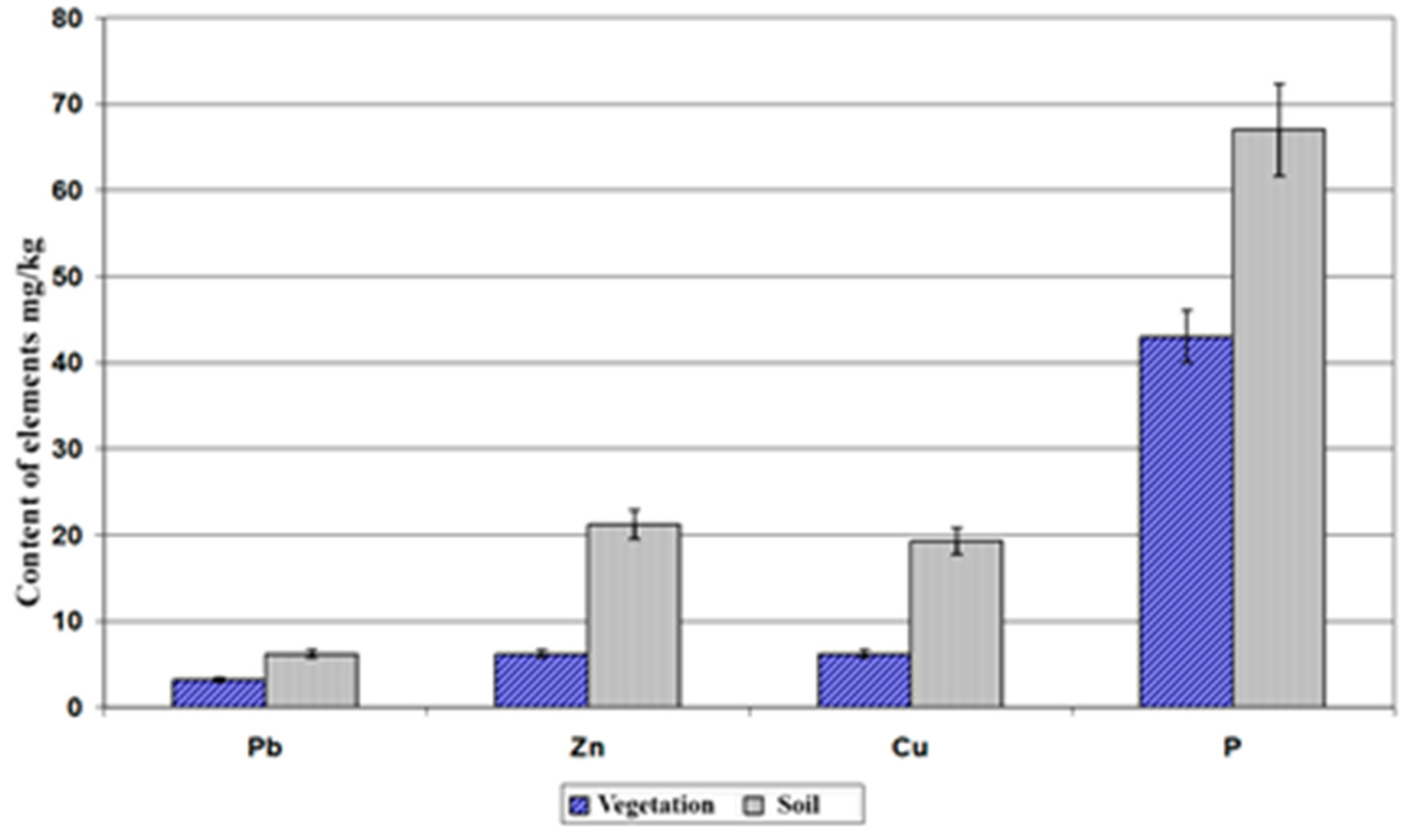
Figure 3.
Content of toxic elements in soil and vegetation samples taken in Sovetskoye village (based on research results from 2021-2023).
Figure 3.
Content of toxic elements in soil and vegetation samples taken in Sovetskoye village (based on research results from 2021-2023).
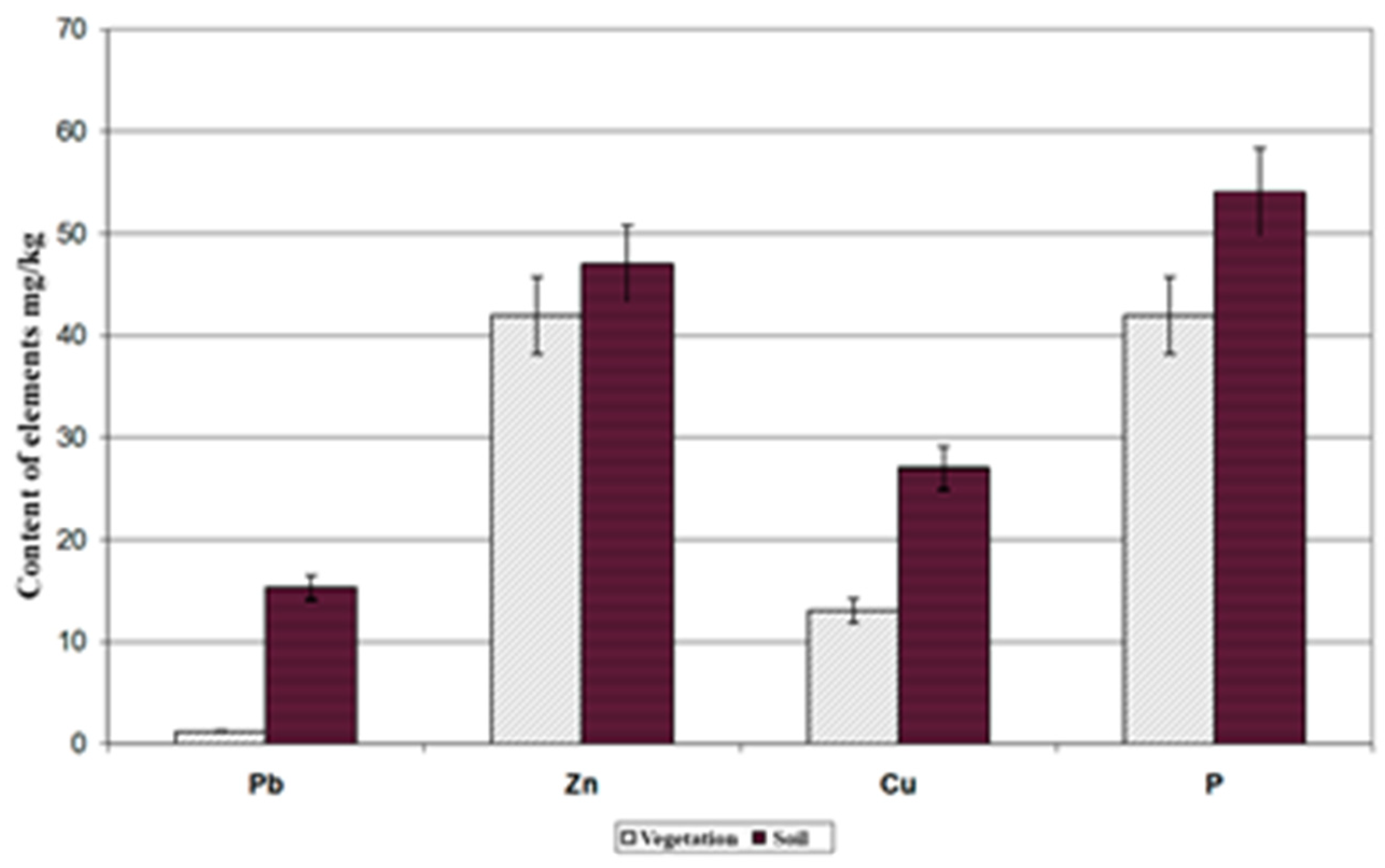
Figure 4.
Content of toxic elements in soil and vegetation samples taken in Tortkul village (based on research results of 2021-2023).
Figure 4.
Content of toxic elements in soil and vegetation samples taken in Tortkul village (based on research results of 2021-2023).
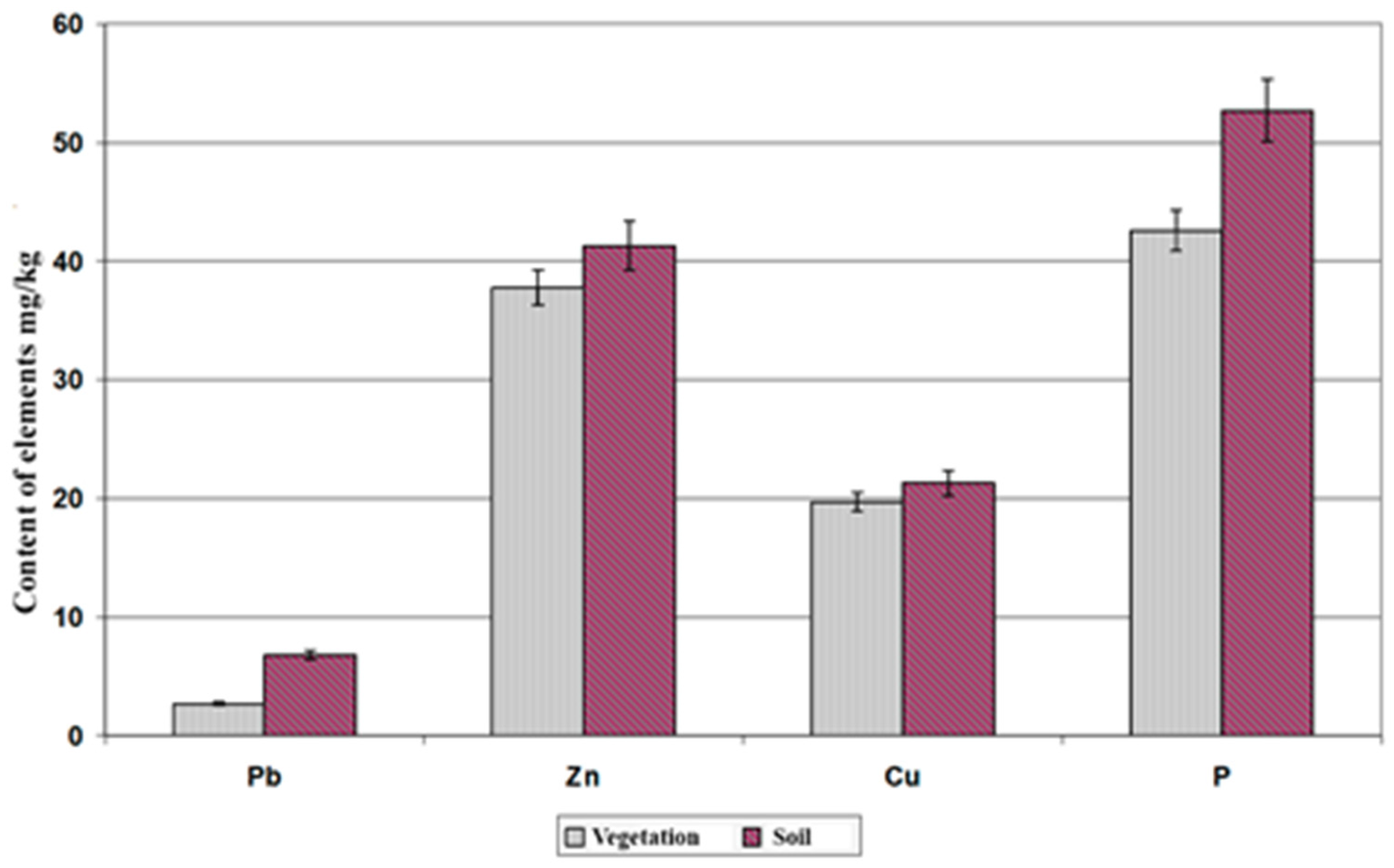
Figure 5.
Content of toxic elements in soil and vegetation samples taken in experimental site No. 1. (based on research results 2021-2023).
Figure 5.
Content of toxic elements in soil and vegetation samples taken in experimental site No. 1. (based on research results 2021-2023).
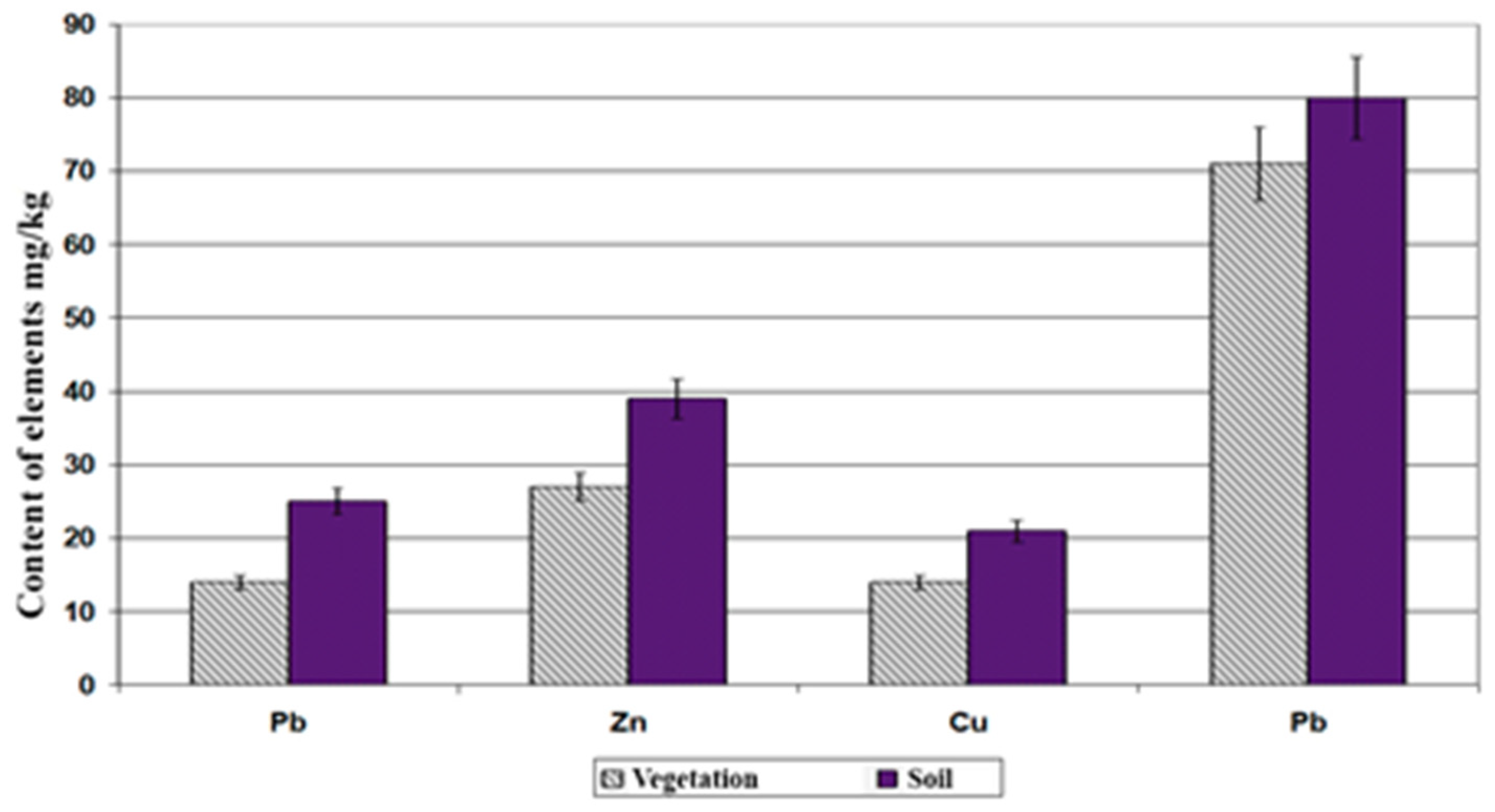
Figure 6.
Average contents of pollutant elements for all studied vegetation samples (based on research results for 2021-2023).
Figure 6.
Average contents of pollutant elements for all studied vegetation samples (based on research results for 2021-2023).
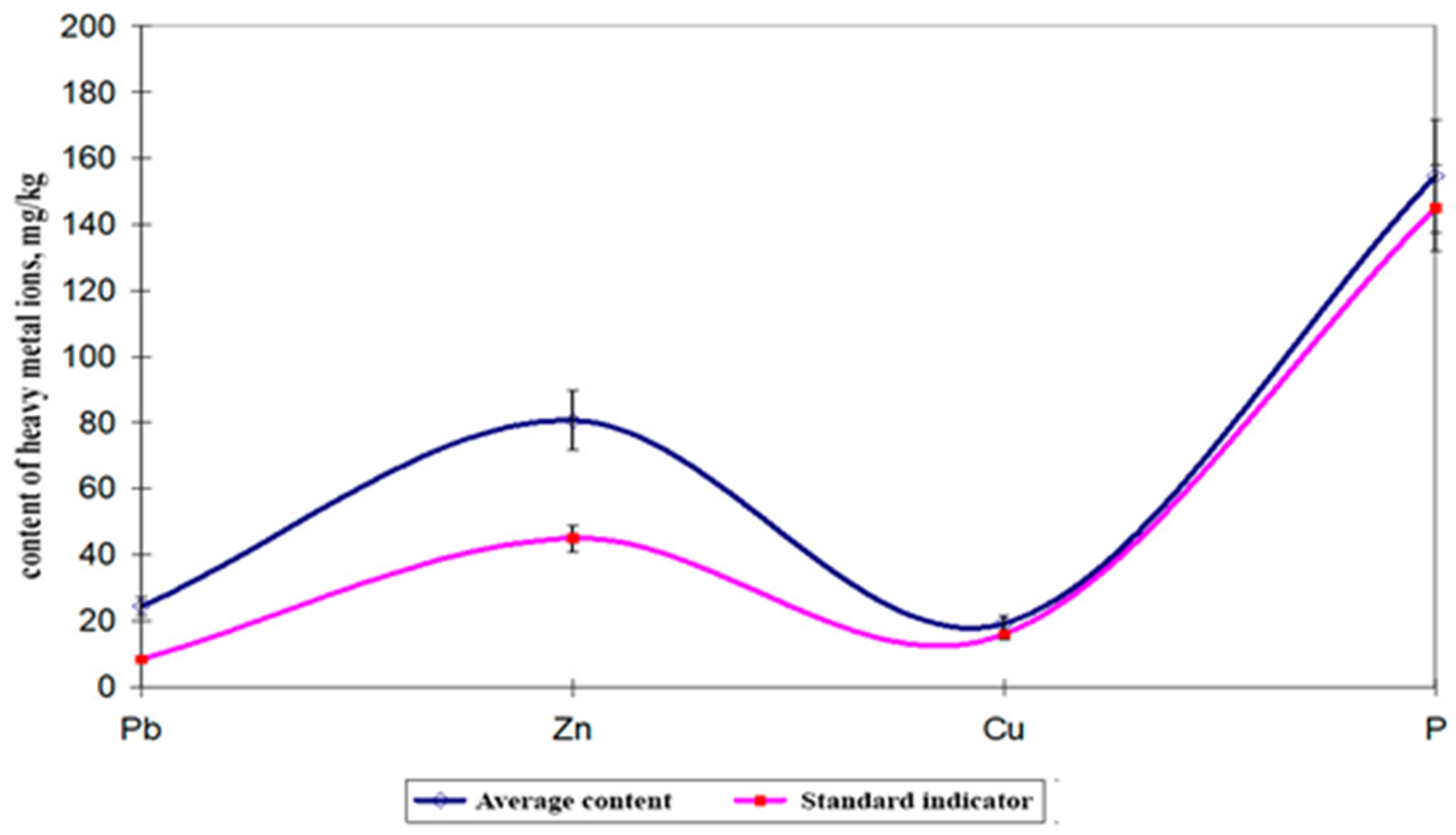
Figure 7.
Electronic image of the anatomical structure of the stems of Artemisia santonifolia and Centaurea diffusa Lam. (a and c anatomical structure of the stem of the first and second orders of Artemisia santonifolia; b and d structure of the stem of the first and second orders of Centaurea diffusa Lam.).
Figure 7.
Electronic image of the anatomical structure of the stems of Artemisia santonifolia and Centaurea diffusa Lam. (a and c anatomical structure of the stem of the first and second orders of Artemisia santonifolia; b and d structure of the stem of the first and second orders of Centaurea diffusa Lam.).
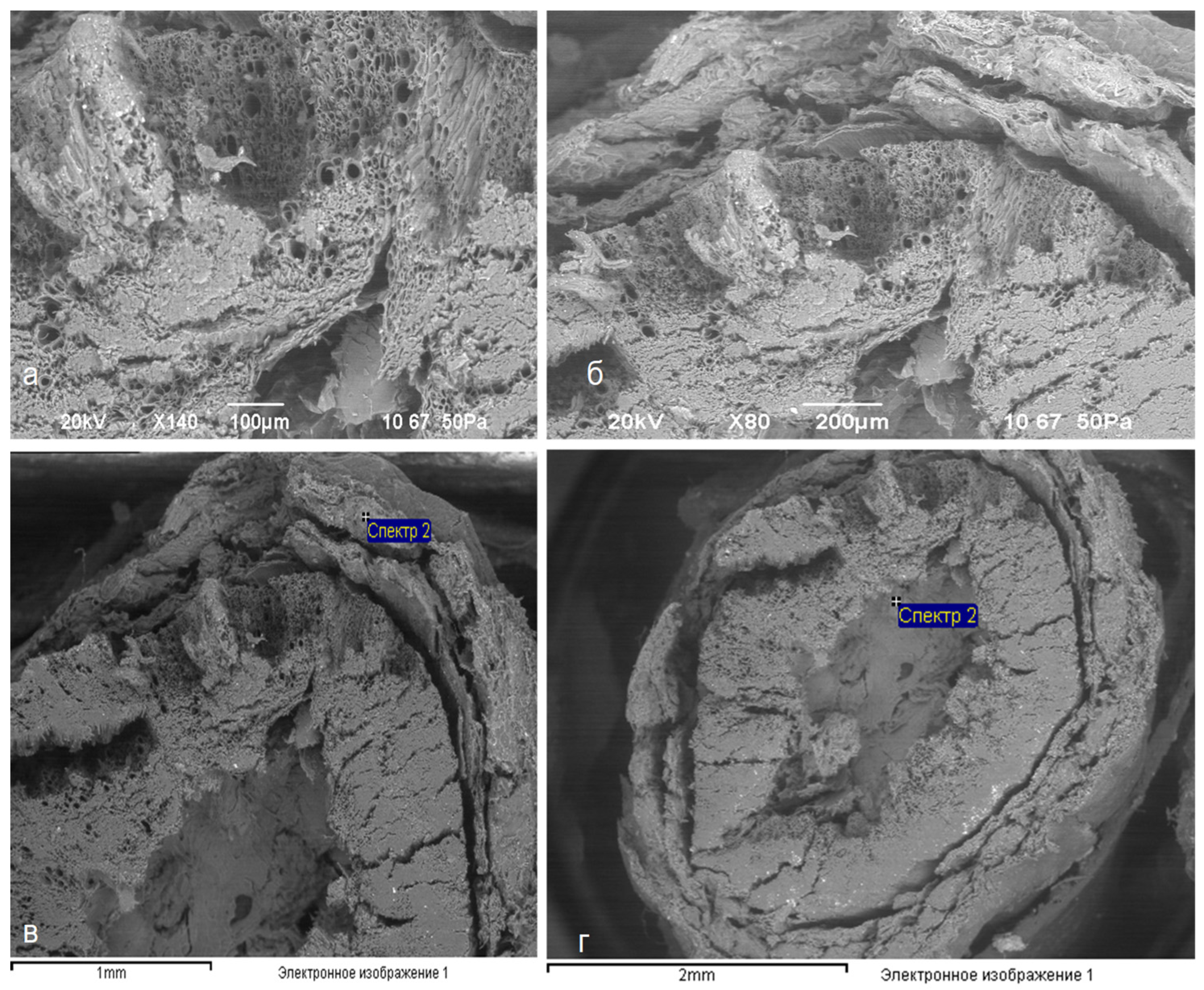
Figure 8.
Electronic image of the anatomical structure of the roots of Artemisia santonifolia and Centaurea diffusa Lam. (a and c anatomical structure of the roots of the first and second orders of Artemisia santonifolia; b and d structure of the root of the first and second orders of Centaurea diffusa Lam).
Figure 8.
Electronic image of the anatomical structure of the roots of Artemisia santonifolia and Centaurea diffusa Lam. (a and c anatomical structure of the roots of the first and second orders of Artemisia santonifolia; b and d structure of the root of the first and second orders of Centaurea diffusa Lam).
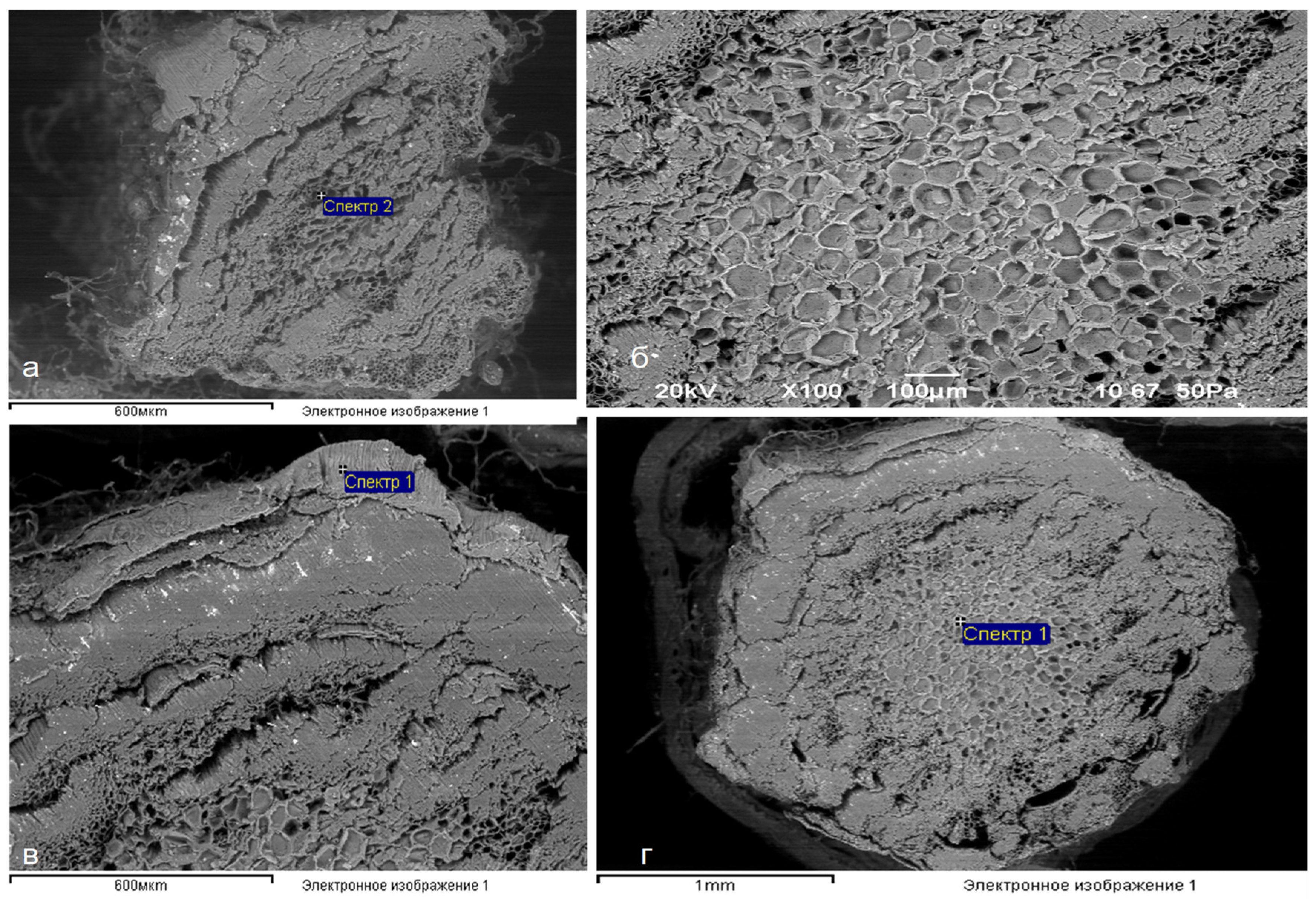
Figure 9.
Electronic image of ash masses of root systems and graphic peaks of the elemental composition of the biomass of Artemisia santonifolia and Centaurea diffusa Lam. (a and b ash masses of experimental samples for elemental analysis; c and d graphic peaks of individual elements obtained by electron backscatter diffraction).
Figure 9.
Electronic image of ash masses of root systems and graphic peaks of the elemental composition of the biomass of Artemisia santonifolia and Centaurea diffusa Lam. (a and b ash masses of experimental samples for elemental analysis; c and d graphic peaks of individual elements obtained by electron backscatter diffraction).
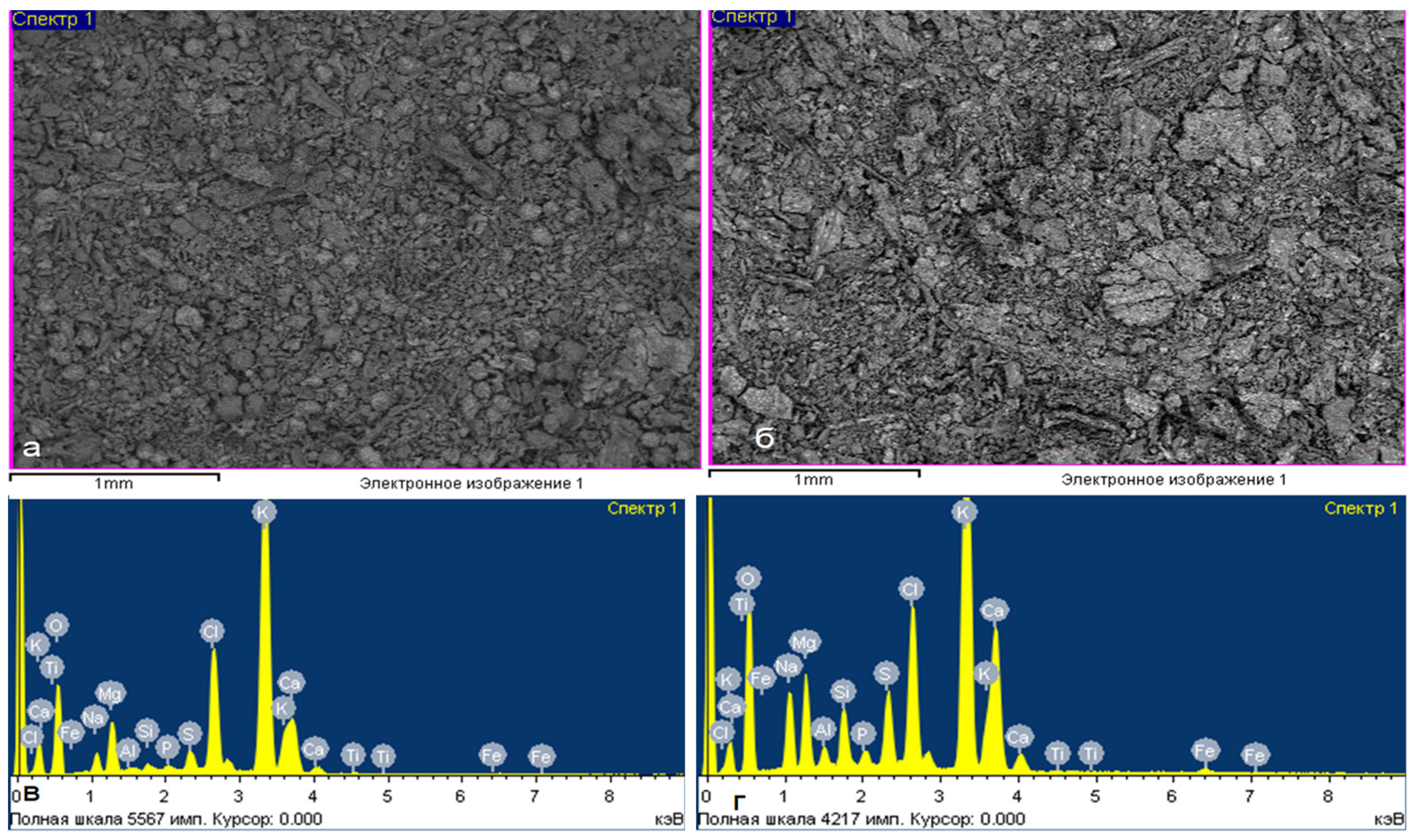
Figure 10.
Electronic image of the ash masses of stems and graphic peaks of the elemental composition of the biomass of Artemisia santonifolia and Centaurea diffusa Lam. (a and b ash masses of experimental samples for elemental analysis; c and d graphic peaks of individual elements obtained by electron backscatter diffraction).
Figure 10.
Electronic image of the ash masses of stems and graphic peaks of the elemental composition of the biomass of Artemisia santonifolia and Centaurea diffusa Lam. (a and b ash masses of experimental samples for elemental analysis; c and d graphic peaks of individual elements obtained by electron backscatter diffraction).
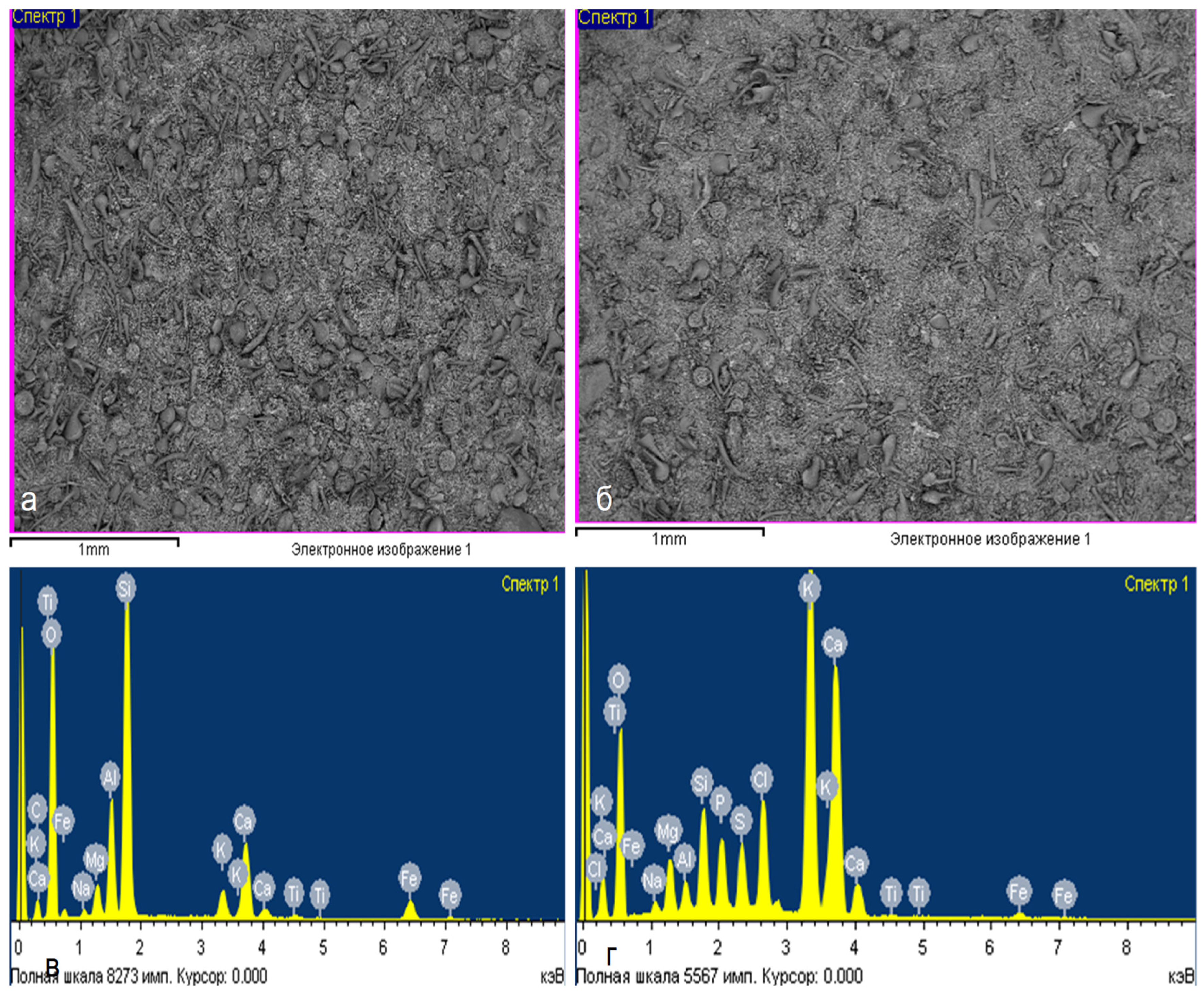

Table 1.
Indicators of background radiation in soil samples.
| No. of soil samples | Indicators (mR/h) | ||
|---|---|---|---|
| 2021 | 2022 | 2023 | |
| 1 | 2 | 3 | 4 |
| 1 | 0,001 | 0,000 | 0,98 |
| 2 | 0,100 | 0,001 | 0,101 |
| 3 | 0,020 | 0,001 | 0,035 |
| 4 | 0,001 | 0,000 | 0,19 |
| 5 | 0,010 | 0,000 | 0,78 |
| 6 | 0,010 | 0,001 | 0,09 |
| 7 | 0,020 | 0,001 | 0,28 |
| 8 | 4,001 | 0,000 | 0,112 |
| 9 | 0,110 | 0,000 | 0,124 |
| 10 | 0,001 | 0,000 | 9,001 |
| 11 | 1,001 | 0,000 | 1,001 |
| 12 | 0,001 | 0,001 | 10,001 |
| 13 | 8,000 | 0,001 | 1,000 |
| 14 | 0,020 | 0,001 | 0,024 |
| 15 | 0,020 | 0,000 | 0,001 |
| 16 | 0,001 | 0,001 | 0,001 |
| 17 | 0,010 | 0,001 | 0,010 |
| 18 | 1,10 | 0,001 | 1,10 |
| 19 | 0,300 | 0,000 | 0,300 |
| 20 | 0,012 | 0,000 | 0,012 |
| 21 | 0,020 | 0,000 | 0,020 |
| 22 | 1,001 | 0,001 | 1,001 |
| 23 | 0,100 | 0,001 | 0,100 |
| 24 | 0,001 | 0,001 | 0,001 |
| 25 | 0,0001 | 0,000 | 0,0001 |
| 26 | 2,001 | 1,001 | 8,018 |
| 27 | 0,001 | 0,002 | 0,001 |
| 28 | 1,002 | 0,901 | 9,001 |
| 29 | 0,003 | 0,001 | 0,003 |
| 30 | 9,002 | 7,001 | 1,001 |
| 31 | 3,004 | 2,002 | 1,007 |
| 32 | 0,100 | 0,001 | 0,100 |
| 33 | 0,005 | 0,000 | 0,005 |
| 34 | 7,001 | 5,125 | 2,002 |
| 35 | 0,001 | 0,002 | 0,001 |
| 36 | 2,001 | 0,856 | 2,001 |
| 37 | 2,001 | 1,025 | 2,001 |
| 38 | 0,001 | 0,002 | 9,001 |
| 39 | 9,000 | 8,025 | 2,001 |
| 40 | 0,200 | 0,000 | 0,200 |
| 41 | 0,008 | 0,004 | 0,008 |
| 42 | 10,001 | 4,001 | 1,001 |
| 43 | 0,005 | 0,001 | 0,005 |
| 44 | 10,000 | 6,005 | 1,000 |
| 45 | 1,001 | 3,214 | 1,001 |
| 0,001 | |||
| 0,001 | |||
| 0,000 | |||
| 0,000 | |||
| 0,000 | |||
| 0,000 | |||
| 0,001 | |||
| 0,001 | |||
| 0,001 | |||
| 0,000 | |||
| 10,004 | |||
| 0,001 | |||
| 0,001 | |||
| 9,004 | |||
| 0,000 | |||
| 0,000 | |||
| 0,001 | |||
| 0,001 | |||
| 0,001 | |||
| 0,000 | |||
| 1,001 | |||
| 0,002 | |||
| 0,901 | |||
| 0,001 | |||
| 1,001 | |||
| 2,002 | |||
| 0,001 | |||
| 0,000 | |||
| 0,000 | |||
| 0,000 | |||
| 0,001 | |||
| 0,001 | |||
| 0,001 | |||
Table 2.
Content of natural radionuclides in soil 0-1 cm and vegetation at points N, B and S.
| Object | U-238 | Ra-226 | Pb-210 | Th-232 | K-40 |
| Soil 0-1 cm | 36,1±3,6 | 46,1±0,9 | 218,0±16,0 | 44,0±6,0 | 427,0±11,0 |
| Vegetation | - | 20,6±6,0 | 114,0±35 | 5,3±1,2 | 885,0±14,0 |
Table 3.
Dynamics of 137Cs distribution across profiles.
| h, cm | 2021 | 2022 | 2023 | |||
| Ai,Bq/kg | Pi, Bq/m2 | Ai, Bq/kg | Pi, Bq/m2 | Ai, Bq/kg | Pi, Bq/m2 | |
| 1 | 2 | 3 | 4 | 5 | 6 | 7 |
| 0-1 | 13,1±1,3 | 173±16 | 22,7±2,3 | 282±28 | 14,7±1,3 | 1108,4±53 |
| 1-3 | 15,5±1,1 | 381±27 | 19,7±1,4 | 488±35 | 13,7±1,1 | 560,9±28 |
| 3-5 | 14,2±1,3 | 350±31 | 16,2±1,9 | 402±47 | 15,6±1,6 | 711,2±49 |
Table 4.
Indicators of the content of heavy metal ions in plant masses selected in various territories, (mg/kg) (based on research results of 2021-2023).
Table 4.
Indicators of the content of heavy metal ions in plant masses selected in various territories, (mg/kg) (based on research results of 2021-2023).
| Sample No. | Selection place | Pb | Zn | Cu | P |
| 1 | Ordabasy village | 7,3±0,10 | 27,3±1,1 | 10,2±0,12 | 654,4±12,7 |
| 2 | Sovetskoye village | 5,3±0,05 | 53,6±1,2 | 15,2±0,11 | 1175,7±58,6 |
| 3 | Tortkul village | 2,9±0,01 | 52,4±2,1 | 13,4±0,13 | 1443,6±56,7 |
| 4 | experimental site No.1 | 5,3±0,02 | 53,6±3,1 | 15,2±0,54 | 1174,1±78,2 |
Disclaimer/Publisher’s Note: The statements, opinions and data contained in all publications are solely those of the individual author(s) and contributor(s) and not of MDPI and/or the editor(s). MDPI and/or the editor(s) disclaim responsibility for any injury to people or property resulting from any ideas, methods, instructions or products referred to in the content. |
© 2024 by the authors. Licensee MDPI, Basel, Switzerland. This article is an open access article distributed under the terms and conditions of the Creative Commons Attribution (CC BY) license (http://creativecommons.org/licenses/by/4.0/).
Copyright: This open access article is published under a Creative Commons CC BY 4.0 license, which permit the free download, distribution, and reuse, provided that the author and preprint are cited in any reuse.


