

Submitted:
25 July 2024
Posted:
26 July 2024
You are already at the latest version
Abstract
Neurodevelopmental disorders are characterised by an amalgam of genetic and epigenetic faults implicating neuronal protein-related loss-of-function and gain-of-function respectively, hence their inclusion into the category of complex diseases. Neurodevelopmental disorders are regarded as autism spectrum disorder due to this reason; that the risk factors and phenotype constitute a spectrum of faults and protein overactivity. One example of an epigenetic factor leading to the onset of neurodevelopmental delays constitutes a set of immune response-based dysregulations, as well as the excessive growth of the adaptive immune memory of the foetus or the baby following significant infectious disease during pregnancy, as well as in babies aged 0-2, given the existence of profound links between developmental immunity and developmental neurology. Given that genetic information very likely represents a form of energy, the intake of excessive pathogen-related information may transiently overload the adaptive immune memory similarly to the manner functional pathogens do whilst inducing significant illness, and if events as such occur during important stages of neuro-immunological development, then there could often be irreversible effects upon the rate of development in neurological networks that normally have a major importance in the modulation of the related cognitive and behavioural phenotype. The full extent of evidence may only be obtained via a thorough study of the applications of physical laws into biology and medicine, given the foundational role of the physical matter in the development and maintenance of life. A common misconception is that neurodevelopmental delays are characterised solely by an accumulation of protein loss-of-function incidences in the central nervous system area, rather than a disruption of neuronal region developmental rates. For example, an overexpression of neuronal proteins related to cognition factors that is accompanied by an underexpression of proteins related to social behaviour is phenotypically manifested in people with sharper rational thinking and poorer communication skills, with an impact on the abilities of decision-making as well, and this tends to be regarded as a classical example of the clinical manifestation of neurodevelopmental delays. More severe forms of autism spectrum disorder tend to implicate a more generalistic impact upon the developmental rates of key human behaviours, including those related with the development and maintenance of social and intimate relationships. Likewise, more severe implications upon regular developmental rates tend to bring a major impact upon the healthy function of related functions. As a result, lower functioning forms of neurodevelopmental delays bring fresh concerns with regards to a possible uncanny increase of incidences of deviated sexuality during years of adulthood, and in the worst cases, such deviations may lead to the planning and development of criminal activity, particularly in individuals who are or become prone to breaking the moral code that established the civilised society. What holds the concerns valid is the exponential increase in the number of lower functioning autism cases throughout the world and the major signs that such an increase will continue with a full force. One major solution to this potential future problem would be a much higher investment into awareness of the exact genetic and environmental factors that directly or indirectly result in the onset of lower-functioning autism and of the current research efforts to develop the matching support for people found in situations as such. The most important aim of future research with regards to such a scenario would be a separation of disease and disability with choices made to step into more severe forms of disease and into areas that are outside of the established moral circle.
Keywords:
central nervous system
; neurogenesis
; early childhood
; neurodevelopmental delay
; neuro-immunological bridge
; immunity
; innate immunity
; cytokines
; chemokines
; natural lymphocytes
; adaptive immunity
; adaptive lymphocytes
Introduction
Autism spectrum disorder, which is clinically abbreviated as ASD, represents a complex disorder that currently does not have a cure, but that can be managed via a large series of behavioural and chemical therapeutic regulations. It represents one of the least clinically understood disorders that have a significant degree of association with other mental health conditions for which a definitive therapeutic approaches do not presently exist, for which there is currently no viable treatment option available, such as attention-deficit hyperactive disorder, obsessive-compulsive disorder, bipolar disorder, as well as Schizophrenia and Alzheimer’s to a lesser extent. Serious and more generalised delays of major neuronal region development brings a risk of a long-term impact of the important neuronal functions that make people able to have a normal and completely functional lifestyle. As a result, serious and widespread neuronal developmental delays may sometimes favour the onset of other mental health conditions and fewer times, the onset of neurodegenerative impairments as well, due to the weaker stability of the overall neuronal web of structure. Whilst it currently may not be the time for the clinical communities to express concerns with regards to a possible rise in the number of neurodegenerative diseases in the future, we may at least be approaching the time in which we require to seek novel methods of prophylaxis and treatment to prevent a probable sharp rise in the number of impairing secondary neuronal disorders. The overall lifestyle promoted in First-World nations does not seem to be in accordance with the health demands for the overall neuronal networks to develop in harmonious rates during the critical stages of encephalic growth. Serious consequences might take time to be expressed clinically, but it is often the time when such consequences become visible when it will be late for the scientific and medical communities to innovate novel methods of prophylaxis and treatment.
Risk factors of autism spectrum disorder are diverse and are both genetic and environmental in nature. One epigenetic factor of induced neurodevelopmental delays represents a form of immune dysregulation following exposure to one or more pathogenic agents of concern, during pregnancy as a living embryo or foetus, or during the first two years of postnatal life, as dysregulations of the immune development results in significant implications in the healthy growth rates of important neurological networks in the encephalon. Likewise, the links between developmental immunology and developmental neurology look to be very profound, and it may be that epigenetic factors of neurodevelopmental delays as such are still being underestimated in the clinical realm. It may also be that the existence of such a link between the development of the two bodily systems may bring significantly negative implications for the development of repeated infant immunisation processes, given the fact that the transfer of genetic information to the adaptive immune memory very likely represents the transfer of a similar extent of energy as the intake of the genetic information of a living and fully-functional pathogen. The problem mostly covers the process of immunisation using dozens of diverse pathogenic agents, as well as immunisation approaches implicating the transfer of information regarding multiple diverse antigens simultaneously. Normal immunisation is associated with the opposite of neurodevelopmental diseases, but excessive immunisation during critical stages of neurological growth and distribution may lead to a higher incidence of various forms of neurodevelopmental disorders, despite previous claims that immunisation is never associated with this spectrum of diseases. Any excess of medical dosages, as well as misattribution of context may often result in an unexpected development of significantly negative consequences, and it is this combination that is sometimes shown to lead to the development of fatal errors in the medical world.
Changes in the human immune system may represent major epigenetic contributions to the pathogenesis of autism spectrum disorder, particularly if the central nervous system and the immune system are undergoing major stages of development, and the fact that maternal infectious disease represents a primary environmental factor favouring the onset of the neurodevelopmental disease in the offspring is a major indication of this. The next potential stages of immunotherapeutic and vaccinological innovation could implicate the adaptation of immunisation by including the primary elements of natural immunity into the equation and by restricting the overall number of doses to the limit that the significantly developing neuronal system of the baby or the young child permits, as the profound link between developmental immunity and developmental neurology makes the developing brain more sensitive to degrading, environmental factors that operate via significant or excessive changes in the immune memory.
Methodology
A comprehensive review of approved scientific literature has been performed, via the access of various scientific databases, including PubMed Central, Europe PMC, bioRxiv, medRxiv and ResearchGate. Various scientific journals were then explored for further related articles and experimental studies. The following keywords have been used in the due process; “autism spectrum disorder”, “neuronal development”, “complex disease”, “neuro-endocrine system”, “central nervous system”, “pituitary gland”, “behaviour“, “prophylaxis”, “therapy”, “secondary neurological disease” and “neurodegenerative disorder”. The principal focus of the overall study was the investigation of the proportionality between the severity of neurodevelopmental delays, the area of distribution of such neurodevelopmental delays and the implication upon the integrity of other organ systems, and the central theory of the nervous system being the prime co-ordinator of all organ systems has been referenced, as it looks to be relevant on both microscopic and macroscopic levels. The present study has also assessed the relationship between the investment of specific medical approaches of the day and the risks of short- and long-term adverse events, mentioning the “Primum, non nocere.” model built by Hyppocrates, and the present stages of microbial evolution have been deemed as primary factors influencing the context of medical and scientific research in immunopathology. The role of the direct stimulation of natural immunity in the healthy stimulation of neurological development has also been investigated thoroughly. Throughout the process of literature review, it has been proposed that the nervous and the immunological systems are two strongly interdependent components of neuroimmunology and that significant changes in developmental immunity could result in major changes in the neurological system, with certain risks deserving an extensive discussion. The current version of vaccinology could be more dependent upon the model behind maternal infectious diseases than previously projected, as the domain of immunology is still situated in a substantial phase of development.
Discussion
The strong and interdependent union of the neuro-endocrine system is characterised via the development of the hypothalamus, of the pituitary gland, which connects neuronal development with the relevant stages of endocrinological secretion, which then activates and develops the glands related to the reproductive system. Human intimate interaction and reproduction represents the central element that keeps humanity alive via her perpetuation. The values of the democratic society as the wide human population of the Earth know them are based upon the created family unit, and likewise, the perpetuation of humans is not based upon the exploration and excessive fulfilment of physical pleasures, some of which being flawed and even harmful for the individual and for people around, but for the survival and evolution of humanity over the centuries and millennia. In a manner that is at least somewhat relevant, humans do not exist and live for alimentation, but humans use alimentation for existence and survival. The very fine line between the two concepts separate the preservation of a mindful and strong human society from the embrace of a consumerist society that ultimately results in the natural de-selection and even in the eradication of humanity. And it is consumerism that ultimately tends to normalise abnormal and possibly harmful sexual behaviours, given that a prioritisation of such activity affects the normal development and function of the neuronal system, given the existence of the strong, interdependent relationship between the endocrine and the central nervous systems. Healthy progress has recently been confused often with an increased extent of compliance that has little to no condition behind it, despite the distribution of the “Frog in the boiling water” analogy throughout a large proportion of the urban population. And it may be a lack of condition and sensitivity as such that poses an unprecedented risk to the integrity of scientific research, by gradually and subtly losing its oxygen; independent thinking. An increased sensibility to change that is actually necessary may also be a marker of the excessive prior exposure to environmental factors decreasing the extent of human independence, a phenomenon that is most likely prevalent in urban space. A return to the highly important value of critical thinking may be the only factor allowing scientists and non-scientists alike to become rebound to the process of healthy progress.
Figure 1.
The developmental rate of three important sub-sections of the brain during the first stages of postnatal life (Lutein, Brain and Neurological Functions, 2015).
Figure 1.
The developmental rate of three important sub-sections of the brain during the first stages of postnatal life (Lutein, Brain and Neurological Functions, 2015).
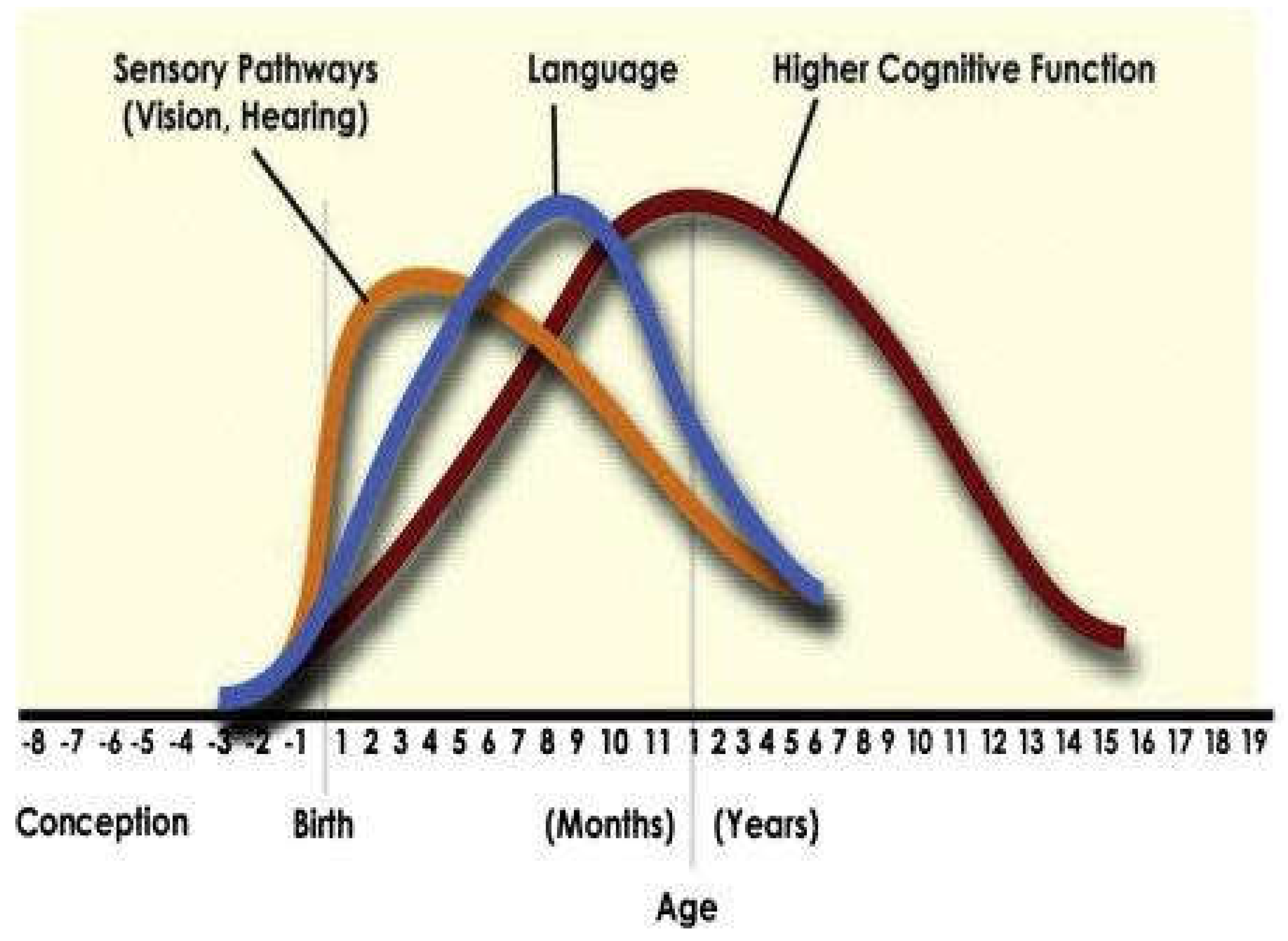
It is possible that the infection of babies any time within their first few years of life could also considerably increase the risk of the onset of neurodevelopmental disease, and this may include a sharper increase of adaptive immune memory without the development of physical disease. It is important to note that the highest developmental rate of the higher cognitive function takes place at around one year of age, whilst the highest developmental rate of language takes place at around eight months of age. If maternal infection during pregnancy already constitutes a risk factor for neurodevelopmental disease in the offspring, then it could be more likely that the intake of pathogens and antigens by the host cells of babies aged 0-2 leads to the onset of diverse forms of neurodevelopmental disease. The higher cognitive function could also become particularly affected on a long-term basis as a result, and a situation as such may not implicate a linear deficiency of intellectual abilities, but rather a collection of excessive and deficitary functions comprising an unbalanced set of intellectual preoccupations and capabilities, which would often ultimately mark a decreased ability of the patient to perform high quality and balanced intellectual activity, unless there is a significant behavioural and sometimes physiological therapeutic intervention, which would also require major innovation due to the early stages of research into the complex disease of autism. Individuals who are situated on a higher functioning spectrum of the disease often develop outstanding intellectual skills in the long run. The principal aim of this study is to analyse the immunological factors leading to the onset of substantial forms of neurodevelopmental delays, as well as the specific neuronal networks that may tend to be particularly affected by epigenetic factors that use the host immune system as an intermediary pathway. Furthermore, it may be important to mention that an exponential increase of the number of clinical ASD cases has been accompanied by a sharp increase of the number of cases of personality-related weaknesses, diseases and disabilities, with an increasing number of people experiencing more elastic types of personality. One sign of such a situation is the positive aspect that people are more subject to changes in the natural environment, thereby ultimately becoming more prone to reconnect with Nature. Another aspect of considerable importance to bring into discussion is the fact that the number of people considering themselves to be under the LGBTQ+ umbrella particularly also increased substantially since the number of clinical ASD cases began to rise sharply. Namely, this increase is similar to the approximate increase of at least 32000% of clinical ASD cases from the 1960s until recent years, which could bring a similar percentage of the increase of severe ASD cases, and the exponential trend of increase is expected to continue in both situations. Given the fact that there had been numerous clinically undetected cases of autism spectrum disorder and Asperger’s Syndrome before the 1960s, it is possible that there are currently many more cases that are more subtle in nature and consequently, clinically undetected. Often, adults with milder forms of neurodevelopmental delays will have at least one member of the offspring that will develop a more significant form of the disease, indicating overall that the number of significant clinical cases is in the course of a substantial rise, with collective effects that are thoroughly displayed only after multiple generations of genetic distribution and development of phenotypic characteristics. Whilst correlation does not imply causation, it may be important to discuss that many past cases of transgender wishes were followed by regret of transition and an increased intensity of mental health disease, such as depression and anxiety. Likewise, it could be necessary to assess whether there is any association between an uncontrolled rise of the number of moderate and severe ASD cases, and the rise of confusion of young people about whether they feel their identity matches their heterosomal chromosome type. Furthermore, it is only important to note that, in several developed nations and states, government officers and/or vocal members of parliament, have added into the discussion proposals to legalise certain forms of hebephilia and even of ephebophilia, provided that the difference of the age between two people would not exceed 9 or 10. This may reflect an unspoken rise of cases of ephebophilia and hebephilia, and this could also be associated with a sharp increase of the number of mental health diseases, as well as of intellectual and social disability, with numerous epigenetic and genetic factors being behind such phenomena. The overall tendency seems to imply a progressive disregard of the necessity to preserve human diversity, as currents dominating the public opinion of First-World Countries are monopolising upon equality of outcome. The ultimate objective of such ideologies is to make humans microscopically equal, thereby eliminating political, religious and even biological differences at both levels of gender, name and age. Paraphilia and pedophilia could eventually affect a large proportion of the world’s population. And names could be replaced with numbers, as they would sound offensive to indoctrinated people. It seems that the creation of perceived 64 gender identities is the first major attempt of making the truth relative before the step of eliminating gender differences altogether, by means of artificially-induced psychological and biological alterations. The possible outcome of the overall process would be the sinking of mankind into a complete darkness of anarchy, which would lead to the development of unprecedented civil conflicts and genocide, before the remaining humans would attempt to make a change and elect a leader that would have a hidden intention of completely antagonizing the origins of human life and healthy hierarchy, whilst coming across as caring for the wellbeing of humanity. Christian people would regard this leader as the Antichrist, as humanity would sadly continue to deny their divine-inspired origins in the attempt to progress life. Just as the road to hell is often paved with good intentions, so is it with perceived progress proving ultimately to be a regress leading to mass destruction.
A More Widespread Incidence of Neurodevelopmental Delays Places an Impact upon the Average Age of Full Brain Maturity and Discernment
Scientists have recently argued that young adults aged 18-20 still undergo significant stages of neurological development and that only people aged 25-30 experience an apogeum of such development. What may have not been added to the equation is the fact that neurodevelopmental delays automatically bring a delay of the moment the brain experiences full maturity, and it may be that severe forms of autism could lead to the patient not ever experiencing full maturity or discernment. As a result, many people experiencing autism spectrum disorder have hardly been registered as fully discerning with regards to their response in front of the law. A significant number of offenders who are on the autistic spectrum were either dismissed or had their prison sentences substantially shortened, especially if the nature of their offence was not major. Instead, many offenders as such were placed on psychological and/or psychiatric care, being legally required to undergo diverse forms of therapy. The problem may be that an exponential growth of the number of cases of severe autism may result in an exponential growth in a number of significant legal cases in which people committed an offence they did not discern, caused harm they had not particularly wished to commit, and likewise, a significant number of people would require therapy to aid in a faster and more balanced rates of neurodevelopment. For example, in the United States of America, only 1 in 10,000 people had been estimated to have autism spectrum disorder and, in only about 40 years, the rate was estimated to be at 1 in 34 people. Clinically substantial cases of autism spectrum disease may sometimes result in the onset of neurodegenerative diseases later in life due to the incomplete development of neuronal networks that are responsible for neuronal maintenance for decades. It is likely that, the bigger the discrepancies of developmental rates in diverse neuronal networks and subnetworks, the more frequent the incidences of and the larger the extent of neuronal damage are. Moreover, such cases of autism often implicate the development of secondary illnesses that may occur in various systems of organs indiscriminately, given the fundamental role of the central nervous system to coordinate all bodily development and functions. For example, patients with serious forms of autism also experienced digestive syndromes, and in less common cases, muscular atrophies and bone-related diseases, such as osteoporosis. It is trivial to emphasise upon the closer relationship between neuronal and musculo-skeletal development and, any serious forms of neurodevelopmental delay may result in the incomplete development of important muscular and bone-related networks, which in turn results in a higher incidence of muscular and bone-related decay from the second half of adulthood onwards, and sometimes even earlier. It is important to mention the major association between autism and diseases related to the gut microbiome, as the under-development of major encephalic networks is linked with the under-development of the bacterial wall in the large intestine, thereby making the patient more prone to developing either inflammatory bowel disease or irritable bowel syndrome in milder cases. Likewise, it is this fact of dependency that makes the development of relevant and long-term treatment for clinically significant cases of autism rather urgent, given the manner its effects lead to the subtle onset of other clinically significant illnesses in the organism. There are numerous genetic and epigenetic factors that led to the onset of autism spectrum disorder. Nevertheless, it is now mainly epigenetic factors that have been increasing the incidence of autism spectrum disorder and, over a significant period of time, it is the epigenetic factors as such that develop genetic factors of ASD as well, given the high complexity of the “Nature vs Nurture” argument in Science.
The modern epigenetic factors of neurodevelopmental delays are numerous, mainly of biological and psychological nature, and include the following:
- Gradual separation of hundreds of millions of people from their natural origins, through a mass relocation into hyper-industrialised megalopolises, mostly by international means.
- Increasing technology abuse and dependence in young children. Risking a gradual, but certain replacement of manual work with automated, robotics-mediated work, leading gradually to a general loss of human workforce.
- The performance of genetic “plagiarism” against natural origins, through increasingly widespread clinical practices of molecular cloning and creation of GMOs, with the good intention of minimising human and animal suffering.
- Malthus versus Dr. Verhulst: Disregarding the other side of the scientific debate regarding the theme of overpopulation and projected inevitability of reaching resource insufficiency. Namely, Dr. Pierre Verhulst, a mathematician who obtained his PhD University diploma at the age of 25, stated that the natural environment is fully capable of self-regulation and self-preservation, including human and animal population management. Such a theory seemingly demolishes the foundations feeding unnecessary anxiety regarding projected insufficiency of vital resources, as well as efforts to develop methodologies that may be considerably controversial in nature, made under the heretical perception that it would be less risky than allowing the human population to solely rely upon resources that have not undergone artificially-induced replication.
- Direct and indirect manipulation of the human genome, such as gene therapy using foreign genetic information, as well as an increasing manipulation of the environment respectively.
- Widespread consumption of junk food, fast food and unhealthy beverages by young children. Fast food often contains various hormones, which may play a considerable role in creating or amplifying delays in neurogenesis and neurological development in children, potentially affecting them for many years after.
- A significant decrease of social interest in civilizational values and unspoken rules that primarily contributed to the establishment and maintenance of society.
- Incomplete availability of resources and logistical pathways to offer immunomodulatory treatment for pregnant mothers experiencing moderate and severe infectious diseases. Insufficient clinical focus upon the importance of natural immunity in prophylaxis and early treatment of infectious diseases of concern.
- Potentially major factor: The administration of 28-32 vaccine doses or more, including one or more doses of the experimental COVID-19 vaccine using the genetic information of a viral protein with potential characteristics of a superantigen, in babies aged 0-2, who are in critical stages or neuro-immunological development. Moreover, the increase of infant vaccine doses, from 12-15 in the 1980s, to about 30 or locally 35 by 2015, and to 40-45 doses and locally more from 2022, has been accompanied by an insufficient focus upon the potential roles of early innate immune activation in the vaccinological combat against infectious diseases of individual and public health concern, and applications of early innate immune activation into vaccinology would promote neurogenesis and neuroprotection more substantially. The number of administered childhood vaccine doses has recently risen from 45 in 2015 to 76 in 2022, in the United States of America. The administration of vaccines that contain multiple antigens each may strengthen the pressurising effects upon the brain to develop, thereby raising the possibility and extent of the ulterior onset of neurodevelopmental delays. The addition of heavy metals, including mercury, as a vaccine adjuvant in rather many cases can only further amplify such effects of neuro-immunology-related developmental delays and damages.
- Hyper-automation and lack of healthy work and study environments, leading to privation from essential human contact and direct instruction and mentorship during key stages of neuronal growth.
- Increased repetitive patterns in the individual and collective thinking and behaviour caused by the gradual, but certain separation of humankind from her natural roots.
- Polarisation of resource-based, economic, financial, academic and professional power, turning the world, not even into a bipolar arena, where the disadvantaged matter in society, but outright into a unipolar arena, where the disadvantaged are treated like they are nonexistent, reducing the extent of middle class to its extinction and separating society into the poor class, consisting of over 99% of the world’s population, and the rich class, consisting of less than 1% of the world’s population. Placing much of the blame of the corrupt leadership on the poorer segments of society, instead of using the gained multi-billion financial resources to support the poor in conducting themselves adequately to support the reconstruction of Nature and simultaneously the reunification of humankind with Nature, instead of punishing her by separating her into hyper-industrialised environments by means of psychological and financial force.
- Manipulation of healthy educational patterns, by allowing children and teenagers to be exposed to environmental factors that would induce delays in the development of healthy cognitive function and behaviour.
- Manipulation of imagery via social media and television. Prioritisation of unhealthy thinking and behaviours.
- Manipulation of frequencies (i.e. the change of the music frequency from 432 Hz to 440 Hz in 1938), making people more irritable, angrier and more aggressive, thereby increasing levels of testosterone, which will increase the incidence of excess testosterone, which in turn will ultimately increase the incidence of serious neurodevelopmental delays.
- Manipulation of music, including the usage of negative subliminal messages, indirectly or directly increasing the epigenetic stimulation of testosterone synthesis and ultimately leading to an excess of aggression, anger and hopelessness.
- An exponential increase of the incidences of serious early childhood trauma, causing neurological damage and often major neurodevelopmental delays.
- The widespread usage of genetically-modified organisms (GMOs), which is promoted by the currents of Malthusianism and Cornucopianism. Notably, Dr. Pierre Verhulst, who obtained his PhD in biology at the age of 25, theorised that the natural environment is fully capable of self-regulation, meaning that the human population is equally manageable by Nature. Likewise, any artificial attempt of population growth control may represent a scientifically heretical approach, leading to increased risks of inducing unprecedented harm to major fragments of the human civilization in the end.
- Manipulation of the climate, such as an attempt to block ultraviolet light from the sun in the atmosphere in the name of combating heat waves during the summer.
- A substantially decreased use and availability of natural remedies in healthcare settings with a progressively heavier reliance on pharmaceuticals instead.
- An increasingly widespread administration of medical drugs that often bring controversial health outcomes.
- Sedentary lifestyle induced by many, if not all listed factors above.
The scenario in which more than half of the world population will experience various forms of ASD by 2050 the latest has become possible due to the powerful roles that each of the factors described above play in pathogenesis, let alone them altogether. As world leaders have suggested, the year 2030 seems to be situated around a major repertoire of change with regards to the frequency of ASD as well, at least in First World countries, given the rather aggressive development and distribution of technology and automation within the younger generations. The current direction of events seems to implicate the distribution of innate or acquired genes implicated in the onset of autism spectrum disorder by means of a central evolutionary pattern in humans. Nevertheless, the nature of such evolutionary direction is ultimately highly questionable. A significant number of scientists tend to argue that such a distribution of genes mark a sharp ascension in the human evolutionary pattern, whilst many others tend to argue it will ultimately mark a sharp evolutionary decay in humans, given that some important elements bring humans into an inferior relationship with a byproduct of human intelligence, which is automatism (i.e. dependence to artificial intelligence from a fragile age). A few researchers may even argue that a pressure as such may lead to the natural selection of a new human (sub-)species that would present updated skills in relation to an ever-evolving natural environment. Some may refer to such a (sub-)species “superhumans”, given the projected combination of evolved specialism and evolved flexibility, which would make them capable to perform any kind of professional activity at a level proximal to perfection. In philosophical terms, such humans would be deemed as gods. Nevertheless, it is probably known Universally that any scientific, philosophical or religious projection as such is deceptive, given that no living human or animal has ever reached the level of perfection, and any attempt to give humans the nature of a Universal creator will very likely result in a major failure for almost the entire human civilization. Eastern Orthodox Christian philosophy states that perfection may only be reached with God’s help, once the physical life of a human being ends, and also that positive elements cannot become associated with negative elements, regardless of the extent of efforts to make the elements of darkness one with the elements of light, and such a current indicates that good progress cannot sustain elements of negativity that antagonise the very elements of positivity in their default nature. Some academic voices stated that Albert Einstein referred to darkness as an absolute lack of light. In such a case, the presence of light cannot be associated with the lack of light. Light will always eliminate the lack of light from its presence, just like heat eliminates cold in the same fashion and water eliminates dryness from its presence in the same fashion. And darkness cannot have power over light, just as numbers smaller or equal to zero will never be equal or greater than numbers greater than zero, meaning that there is no area of “neutrality” between good and evil, and also that the presence of evil in the world is caused by the allowance of evil to reside within the premises of human beings. Elements of negativity and decay can only be “used” from an external point for the stimulation of an improvement of progress, and never in mixing with positivity; else, deception will start playing a major role in ensuring an irreversible evolutionary decay. Healthy progress ought not to be confused with exacerbated development that is induced and pressurised artificially, whether such an action is performed accidentally or intentionally. One major factor of errors caused in past scientific innovation could be political interference in specific academic circles of influence, whether such interference is direct or indirect, even if the interference had been performed with philanthropic intentions of improving overall living conditions in all spheres of human civilization. The ultimate effects of such overall methods could prove to be quite the opposite: a severe autisation of many people. This sort of autisation may be equivalent to an abortion of human free will and thinking, thereby inhibiting emotional intelligence as well and eventually eliminating unconditional love from many areas of human civilization. And it would be such a general lack of love that would constitute a primary factor for disrupted human relationships, socially and romantically. A lack of love could represent a major predecessor of lack of knowledge, causing people to become lost in a “darkness” of void in knowledge. Ultimately, such a lack would cause people to cease maintaining interpersonal relationships and even cease healthy practices of self-acceptance and self-love. Given that love represents the ultimate state of energy that creates and sustains the living world as mankind is aware of, a gradual elimination of unconditional love, until the reach of a total “eclipse” of the light of love, will only lead to the elimination of the world’s stability, with states of social and natural destruction gradually dominating the Earth, even if such an “eclipse” is “temporary”, given that love is eternal. If such a scenario comes to existence, then human civilization may actually head towards its extinction with a colossal speed, given that the entire mankind was conceived and given birth through significant extents of unconditional love, whilst they may still have differed from case to case.
Furthermore, there are potential applications of Albert Einstein’s Theory of Relativity into human and animal psychology, as the perception of time speed varies based upon states of emotion, as well as states of mind. Namely, states of emotion involving diverse levels of joy and suffering represent primary, short-term calibrators of perception of time speed, whilst intelligence and wisdom represent secondary, long-term calibrators of such nature. Suffering is known to slow down the perceived speed of time, and joy is known to increase it. Simultaneously, it is suffering that stimulates the human psyche to adapt to major changes in the environment, as well as to tasks of increasing complexity, thereby aiding the process of human adaptation to activities that are increasingly demanding with regards to expenditure of emotional and intellectual resources. Likewise, it is the emotional state that ultimately plays a major role in the extent of perceived increased speed of time. An increasing level of academic intelligence is generally associated with an increased perceived speed of time. Wisdom, on the other hand, decreases the level of monotony and as a result, helps man perceive life as long and full of substance. Presently, the average level of intelligence has skyrocketed around the world, yet the average level of wisdom has not experienced significant increases. As a result, it may be hypothesised that the average human lifespan is perceived as shorter. Likewise, if there is an existing, gradual process of human robotisation, then it means the perception of lifespan is also altered, with life seemingly fading away as rapidly as a high-speed train traversing a station with many people present there. Henceforth, it is not only the physical average lifespan of humans that may have been experiencing a decrease as a result of higher levels of human disease, increased extent of microbial evolution, as well as higher demands for metabolic energy consumption, but it is also the perception of own lifespan that may have been altered, with life seeming shorter than it actually is. Simultaneously, it has been observed that younger generations tend to physically age more slowly, and such a process may be a result of the accelerated perceived lifespan by the various modern factors, such as excessive automation and increased dependency upon technology observed among younger human populations, which has become a widespread catalyst of major forms of human activity. Such a process may represent a human counter-adaptive response against such accelerated perceived lifespan. Nevertheless, such a response of physical adaptation to such changes in the link between the Theory of Relativity and Human Psychology is unlikely to decrease the perception that “time passes at least as quickly as the speed of sound”. Overall, the average psychologically perceived human life duration may have decreased by 30 to 40 years, with the exponential increase of time speed having become more polarised than before. In other words, it may be that human life comes across as dangerously short, and that the end of the human robotisation process would bring a perception of human lifespan that would perhaps not exceed a few decades. As a result, humans would experience a general natural de-selection process, as animals perceive their few decades of physical lifespan like humans perceive their 80 years of lifespan. Existing projects aimed to merge human biology with robotics, and even human genetics with nanotechnology, could represent the final step of “sucking life” out of the human flesh, and as a result, the human being would risk becoming a mere passenger in the organism, with the technological automation becoming the driver, despite the intention of technology to merely constitute a catalyst of major human tasks. Such unification would therefore be completely detrimental to the integrity of the human race on Earth, just as several other forms of unification would cause a major detriment to the natural environment and her living inhabitants. Whilst utilising and becoming accustomed to technology does not represent a challenge, but part of a normal process of human adaptation, risks for mankind to become dominated whilst utilising it exist and it is possible that they require significant mitigation, particularly in the recent context where a remote Microsoft security update caused a general, worldwide disruption of essential activities that involved medical treatment, supply of food and drinks, bank services, as well as national and international movement. Whilst it is essential to maintain a strong relationship with scientific and technological progress, it is at the same time crucial to ensure that people do not forget their powerful natural roots.
Diversity represents the aspect of the human race that truly unifies her, and not clonal similarities, and it covers societal aspiration, culture, gender and maturity. Such aspects of human differentiation should not be affected by efforts to eliminate all human differences, including the ones vital for the maintenance of human unity. Perhaps, the recent patterns in which all differential aspects of humanity and her surrounding environment have been undergoing various degrees of polarisation and unification constitute a part of unprecedented changes occurring in areas of the Universe that may be proximal or distal from the Earth. Namely, factors including collision between various planetary systems neighbouring to the Solar System, unprecedented planetary and/or stellar geometrical alignments toward the Earth, as well as a subtle, gradual and almost-undetectable approach of the Solar System to areas of influence by a certain black hole or wormhole, may represent astronomical factors for modern-day unprecedented problems, including climate change through a gradual unification of the climate seasons, increased frequency and extent of geological incidences, increased risks of novel epidemic or pandemic outbreaks, the emergence of mysterious, incurable human and animal illnesses, socio-political instability, globalisation, the political interest to form one government for the entire world, as well as create and propagate one world religion that would contain major elements from all existing world religions, minimisation of national and cultural differences, as well as of the importance of matching states of physical and emotional maturity between friends and partners, economical polarisation and major threats of a new World War onset. In other words, through an existing intention of uniting mankind and her natural environment, human and natural diversity has been lowered and even aimed to be eliminated, given that there has been a mixing process of major elements from within distinct human and natural categories. Through such a process, unity on Earth may never be reached due to the fact that a significant threshold level of diversity is crucially needed for the world to experience balance and stillness. Unity can only occur through diversity. There may only be one energetic force that is more powerful than the gravitational force of black holes; unconditional love. It is through unconditional love that the primary form of physical energy - light - came into existence, meaning that unconditional love exceeds the temporal and distance-related boundaries of the physical realm. As a result, it may only be the acquisition of such love that would save mankind and the Earth in case astronomical phenomena as such would target the Solar System. It was scientifically shown that all aspects of human society, including religious belief, have been influenced by astronomical events for millennia, though simultaneously not targeting the Universal force of free will-based decision-making. Likewise, it could be that the fortification of one’s willpower preserves their true identity in the world, and such fortitude can only be fed by unconditional love, which brings and sustains mental and emotional clarity and balance. Given the existence of some scientific theories that black holes are in fact wormholes, it could be that, if a black hole would “swallow” the Solar System, causing the Sun to explode and burn the Earth during such a process, a new one could be created afterward, fitting in the theory that the Earth would be destroyed by fire, that all mankind would face divine judgement, before a new Heaven and a new Earth would be formed (Carp T., 2024). A general change of course with regards to therapeutic research and improvement of human relationship with the natural origins, as well as of self-acceptance skills and interpersonal relationships, may substantially, albeit gradually, reverse such a process, helping people feel life more abundantly, increase the levels of wisdom and perceive life as much longer, perhaps aligning the psychological perception of time speed with the actual speed of time in the process.
Perhaps, the next aims in medical and clinical research implicates a general reverse of such patterns, to sharpen human evolution over disease and to restore the original connection between human beings and between humans and their life-long, invisible “umbilical cord” with nature. One major step favouring such an outcome would involve the assembly of an immunological “highway” between first-line immunity, which constitutes a “road” filled with “holes” at the periphery of the “megalopolis” of adaptive immunity, created by microbial agents capable of undergoing molecular self-camouflaging, and third-line immunity, which constitutes a broad “road” that would become jammed with “cars” as a result of delayed “traffic” from the “periphery” of first-line immunity. Given the recent scientific discoveries involving major intersections of characteristics between innate and adaptive immunity, with regards to the existence of “specific memory”, there are now considerable reasons to suggest that the innate and adaptive immunity are interdependent and that innate immunity-based or at least related vaccine candidates may be developed. Some options could even implicate the treatment of adaptive immune cells with innate immune elements during the development of adaptive immune system-based vaccine candidates, and such an approach could particularly match the context of the HIV-induced AIDS pandemic. Namely, helper CD4+ and cytotoxic CD8+ T-lymphocytes could be treated with a fairly low dose of Type I and Type III Interferons before testing their efficacy as immunising candidates against AIDS, which would be administered either in prophylactic or in early therapeutic stages, and such an approach could constitute a proportional immunological “punch of self-defence” against the advanced evolutionary state of HIV, which involves the direct infection and induced apoptosis of such adaptive lymphocytes. It could be that HIV is the most evolutionarily advanced microbe against human and animal immunity, given that it is the only microbial agent with direct capabilities of lysing central elements of the immune system, thereby directly suppressing the host immune system (Carp T. et al., 2024).
Figure 2.
Comparison between the balanced, linear ratio of decision-making competence and emotional intelligence in neurotypical people versus the severely imbalanced, curved, ratio of decision-making competence and emotional intelligence in people with substantial forms of autism.
Figure 2.
Comparison between the balanced, linear ratio of decision-making competence and emotional intelligence in neurotypical people versus the severely imbalanced, curved, ratio of decision-making competence and emotional intelligence in people with substantial forms of autism.
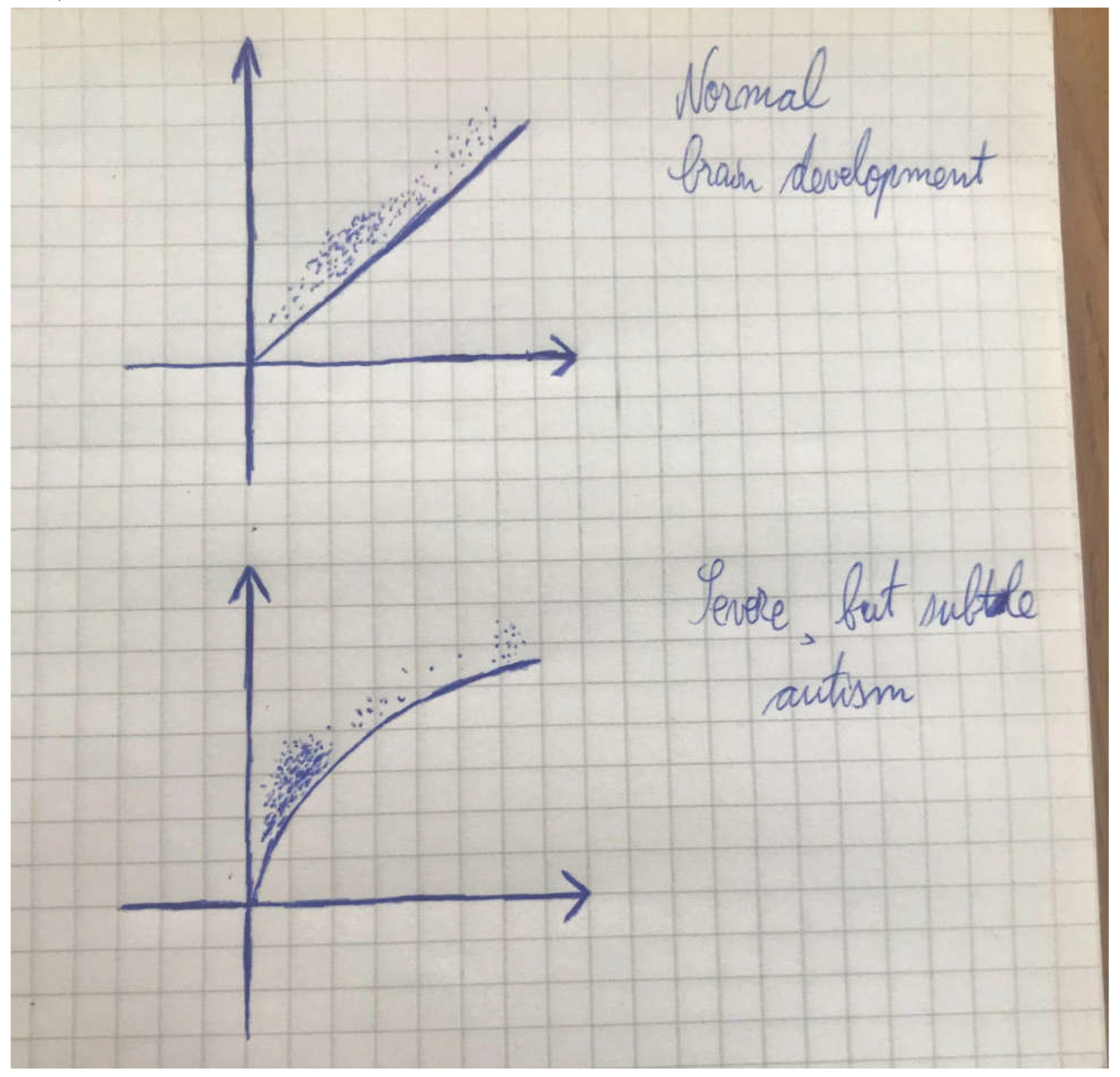
Many people may be suffering from serious forms of autism, despite their neurodevelopmental disorder appearing as mild or even inexistent. The principal manifestation of such impairments occur in a subtle manner, and likewise, the disease could appear as “silent”, even if it displays severe symptomatology. Decision-making skills are often seriously impacted, with often occurrences of poor life decisions and of incidents when other people take advantage of such weaknesses. Due to the serious polarisation of IQ and EQ in people with severe autism, it may be highly difficult for the majority of them to reach a middle side of emotional and cognitive intelligence, unlike neurotypical people. Although there may be still validity behind the made poor life decisions, few of which possibly bringing life-long consequences, people found on the severe side of autism spectrum disorder may have among the best of intentions at heart. It may even be often that their immorality behind a number of poor choices may not count as an actual immorality, but entirely as a form of impairment, given the fact that discernment was practically nonexistent. According to an Orthodox theological perspective of chess, the mind is regarded as the queen and the entire chess board as the entire human being. If a severe form of autism had been induced before the age of minimal discernment was reached, then it would be as if the queen of a chess player had been stolen by the opponent, and the player is now left also with the necessity to use the best emotional and intellectual forces to bring the queen back to himself/herself. Likewise, it may be feared that the ultimate outcome of a collectively and severely induced autisation in human society may lead to the entire elimination of human free will, consciousness and choice of decision making, which means that humans may be turned into beings with no free thought, decision making and even freedom to express unconditional love. Wise people said that the elimination of unconditional love would bring an eventual, but certain outcome of an extinction of all humanity.
Autism and schizophrenia may both represent spectrums of neurological disease. Whilst autism is generally caused by neurodevelopmental delays, schizophrenia is generally caused by premature neuronal ageing. Both are responsible with an increase in the number of clinical cases of other major neurological disorders, such as obsessive-compulsive disorder, attention-deficit hyperactivity disorder, bipolar disorder, Tourrette’s Syndrome, substance-induced schizoaffective disorder, which is generally transient in nature and treatable by antipsychotics, anxiolytics and other neuromodulatory agents. Given that neurodevelopmental delays also affect the intelligence of adaptive immunity, it may be that an increased number of autistic cases will lead to an increase in the number of certain autoimmune conditions, which in turn could have an occasional impact on mental health, particularly if high fevers are caused in the process, as certain antibodies would often push through the blood-brain barrier and reach important neuronal networks, favouring the onset of diseases like Paediatric Autoimmune Disorder Associated with Streptococcus Infection (PANDAS), which involves the onset of autoimmunity-based OCD and even Tourrette’s Syndrome. People on the autistic spectrum may find themselves at higher statistical probability of developing schizophrenia at a later stage of their lives, given that autism not only implies a delayed development of key neuronal networks, but also a premature development of other key neuronal networks. As a result, given that young people are often more prone to consuming psychoactive substances, which play an active role in catalysing important processes of neuronal ageing, it may be that a legalisation of such substances may be coupled with an increased number of schizophrenic cases, particularly in people with diverse forms of neurodevelopmental delays. As a result, it seems increasingly probable that the future of mental health challenges may itself be highly challenging for human civilization, even in areas where Science, Medicine and the catalysis of clinical research by the online domain are prioritised in society.
A substantial pressure for the selection of genetic profiles implicated in serious neurodevelopmental delay could first lead to a seemingly strong natural selection of a reduced number of humans with hyper-specialised skills; only to then lead to a severe natural de-selection of all humans and possibly, to an ultimate human extinction. There may be a fine line between a general stimulation of humans to better adapt to changes in the environment and to improve the general skills directly and indirectly associated with better life sustainability, and the infiltrative association of human evolution with elements that are directly antagonising such evolution, which would highly likely result in an evolutionary catastrophe. It may be important to state that natural selection cannot implicate a direct artificial intervention that is intended as a support for development, despite the existence of concepts implying that a domination of artificial intelligence would only come as a result of it being part of human evolution. Such an argument is likely scientifically poor because it places a far insufficient focus upon the critical need of moderating excesses and repairing imbalances in all aspects of human existence. Ultimately, the theory of evolution does not imply that humans will evolve to become gods and perhaps shows that it is not an absolute, just as other theories fall in spots closer or farther from the point all physical matter started to exist. Just because 99.9% of concepts developed as a result of comprehensive scientific observations are in accordance with natural phenomena, it does not ultimately guarantee that certain theories are ultimately factual, meaning that scientific theories should still be subject to verifications on a rather long-term basis. In case of an ultimate dispute of the theory of evolution by natural selection as it is currently known, we could regard the group of currents involving social darwinism and artificial intelligence-oriented future scenarios as “a scientific heresy developed within a scientific heresy”, given also the misinterpretation of the theory of evolution by groups of people seeking to excessively focus upon competition. This could be possible due to the fact that, recently, scientists discovered that the Universe is not real in location, in spite of the evidence that time, space and matter are relative.
Given the fact that two evidence-based theories seem to completely contradict each other (the Universe being real versus the Universe not being real in location) and still exist as evidence-based theories, it may be human perception that remains vastly relevant to the truth, regardless of its tremendous diversity, as long as such perception is connected to the surrounding reality. The problem society may have been facing for centuries is the fact that dangerous lies usually constitute small proportions, when it may take 0.1% of a truthful information to be altered for its entire message to become tremendously, yet still subtly, different, no matter the origins of such alterations. And, particularly during the recent decades, it was shown that even scientific messages could be received differently by perspectives that are partly distorted, showing the tremendously subtle nature of many of such errors. The theory that would never be disputed is a theory of the existence of free will and choice, and positive and negative effects are both resulted from smaller or larger extents of free choice. Other theories are not as evident and Universally recognised as a scientific and philosophical law as a theory as such. With regards to the Theory of Evolution through natural selection, it is important to acknowledge that scientific theories may be brought to question or disproved even after centuries of approval using evidence-based scientific measurements. Mankind has directly come across phenomena like competition and adaptation to environmental changes, but has not come across processes like speciation and natural selection. Moreover, whilst it was demonstrated that the DNA of humans and apes are 98% identical, future challenges to the theory that humans and apes have a direct common ancestor may still occur, given that statistics, which is the common ground of scientific analysis, represents a highly complex discipline that implicates unexpected discoveries of new constellations that seem not just to disprove, but to outright contradict previously observed constellations in order to create a more relevant and precise configuration. For example, bacteria in the soil being the common ancestor of humans and apes constitutes conclusive evidence, as all life emerged from the ground and that water played an essential role in this process. It could also be that the genetic similarities between humans and apes represent a mere coincidence, and not a causational link after all, that a Universal Creator wished for some animals to look more alike to man so man would not feel alone, before Eve would be made from Adam’s rib. For an extra-dimensional Creator, an intervention into time, space, matter and life is as easy as a game developer is to edit the realms and the participating characters of it. The same may be with the classification of humans as (primate) mammals, as any extent of similarity or coincidence does not ultimately imply there is causation in the process. There are structures and organisms that are more or less common, and sometimes, attempts of explanation are excessive and lead to a departure from the required perspective of human reality, particularly when there is a separation of certain, remote and dominating scientific currents from common sense. Many similarities are meant to be considered coincidental and not causational because misinterpretation leads to a perception that humans are animals without whole reasoning and emotion. In perception, there is a fine line between the determination of truth and the relativization of truth, perhaps even by random application of the Theory of Relativity.
Humans existed for several thousands of years without believing they emerged from animals, and that included the bright minds of the Ancient and Medieval times. Not to mention that the history of the world’s population seems to contradict scientific projections and theories that humans first existed more than 100,000 years ago. Namely, two thousand years ago, there were around 150-170 million people on Earth, compared to 8 billion in the current times. Orthodox Christian teachings state that the eight people who survived a Universal Flood were placed back on dry ground 3,263 years before Christ was born, according to the Chronograph written by Chedrinos. It is scientifically sound to state that it took 3,263 years for three couples to reproduce and lead to the birth of around 150-170 million people worldwide, especially in the scenario when the first people survived for several hundred of years and contributed to the birth of tens of children in each family in the first thousand of years after the Flood. Not to mention that polygamy was also practised widely in the world in the times before Christ, leading to a sharper increase in the populations at that time, compared to the times after, when polygamy became a far less common practice. Furthermore, primary cousins were allowed to marry and reproduce in the world, and this was permitted even among the descendants of patriarch Abraham until righteous Moses wrote the Ten Commandments on stone by divine inspiration. The Chronograph by Chedrinos states that there are 2,243 years from the time of Adam until the start of the Universal Flood, and it is written in the Bible that the Earth became filled with people in the process and that the level of immorality in society became insufferable in the end. Interestingly, a trend of moral decay that is at least slightly relevant has been happening whilst the world population increased from 1 to 8 billion only in 200 years, meaning that there is a possible association between moral decay, perhaps through the abusive development of a unipolar leadership, and excessive reproductive rate, particularly in the parts of society affected financially. Observing this pattern of natural events through a different temporal lens, one may suggest that the Biblical definition of Creation matches this sequence of events as observed in Eastern Orthodox Christianity, provided that there is a different kind of temporal observation (for example, looking at millions of years as looking at seconds, given that, the perspective of a divine creation of the Earth implies that time itself was being created before the birth of life, and that the year did not count as a full year beforehand). Perhaps, during the first stages of the Universal existence, a year would count as less than a microsecond, and the fact that astronomical studies indicate that the Earth barely revolved around the Sun in the first stages of its existence suggests that the created extent of time in that situation only counted as a tiny proportion of the extent of time as mankind is aware of today. Interestingly, it is written in Scripture that, in the last days, time will be made shorter for the [Orthodox] faithful, given that, during the days of creation, time seemed as if it was longer. The definition of an Orthodox Christian is the Christian who keeps all the commandments and the verbal traditions given by the Holy Apostles and Church Fathers. Many events in the Universe are related to one another. But, for a Universal Creator, the process of Creation can be perceived as days because He would be very much capable of building up an entire physical realm, despite resting on the seventh day. It is important to also acknowledge the Theory of Relativity in the matter.
With regards to the analysis of profound links between developmental immunity and developmental neurology, it is important to bring into an impartial discussion the increasingly probable scenario that the intake of dozens of various pathogens and antigens within the first two years of life is be associated with a higher risk of the onset of neurodevelopmental delays, just as there is a significant higher risk for the onset of neurodevelopmental delays in foetuses whose mothers experienced more significant infectious diseases. Regardless of the past peer-reviewed scientific papers and journalistic coverage of the errors a few clinicians displayed in their scientific literature, the contributory role that the repeated infant and early childhood doses of inoculation and immunisation (which increased to at least few dozen times) has been playing in the sharp increase of the number of clinical cases of neurodevelopmental delays seems to become not only evident, but also substantial. A few approaches as such implicate the intramuscular insertion of multiple kinds of antigens simultaneously, which could duplicate the extent of demand for the adaptive immune system to produce the adequate long-term memory. A normal process of immunisation does not seem to constitute a concern, but a much sharper process of immunisation over the first stages of life in case of an exposure to one dangerous pathogen or more numerous kinds of pathogens and antigens that normally cause moderate disease morbidity. Normal processes of immune response to infection in foetuses, as well as of inoculation and immunisation in infants actually stimulates a healthy and balanced development of all brain regions. The more dangerous the pathogenic agent and its antigens are, the sharper the development of the adaptive immune memory will be due to the extent of genetic information that is transferable to the immune memory, as well as the fact that information likely constitutes a form of energy, and the same happens in the case of an increased number of infectious pathogens and antigens that have infected the cells of the mothers and the foetuses in cause, and this may, in the majority of the situations, still be the case even if the pathogens are already significantly weakened or lifeless, given that the gain of adaptive immune memory alone constitutes an important factor of neurogenesis and an increased rate of neurological development, and that the infant will become almost or fully protected against the pathogens in cause, despite not having experienced the disease beforehand. In this case, neurodevelopmental delays are not caused by an impaired neurogenesis, but by an excessive one. It is important to mention that a dose of infant immunisation does bring significantly lower risks of adverse neurological events than the onset of a significant maternal infectious disease during pregnancy. Likewise, this seems to be more like a matter of quantity and repetition, whose necessity looks valid, given the far less mature stages of infant immunity. At this point, we can see there is a possibility that one or a few sessions of interferon-based and interferon-oriented immunisation could be safer for babies aged 0-2 than the administration of dozens of pathogen-based vaccines, some of which stimulate the adaptive immune system to simultaneously develop responses and memory against multiple pathogens. Certainly the truth is situated somewhere in the middle, and likewise, it would be a smaller number of doses implicating inactivated versions of pathogens and natural immunity-based approaches that would tremendously support the vaccinology-related efforts to protect the lives of vulnerable babies and children in the face of life-threatening infectious diseases. Could it also be that such nasal/oral interferon-based and interferon-oriented vaccines, which sharpen the innate immune system and shape qualitative adaptive immune responses if used within the right early timing, represent the vaccines of the future? Perhaps, the medical world is approaching a stage of progress in which the usage of needles would no longer be required either. Moreover, it could be that significant forms of neurodevelopmental delays impact the overall quality of immunological functions, thereby raising the risks of the development of uncontrolled local and systemic inflammatory responses in various types of infectious diseases, which would in turn lead to a more frequent incidence of autoimmune disorders. Indirectly and on a long-term basis, this could result in a higher incidence of Paediatric Autoimmune Disorder Associated with Streptococcus infections (PANDAS) - given the frequent occurrence of silent throat infection with Streptococcus spp. during childhood - forming an additional link with a higher incidence of epigenetically-induced obsessive-compulsive disorder (OCD), as the onset of PANDAS often results in the crossing of autoantibodies into various central nervous system networks through the blood-brain barrier (BBB). An increasingly widespread phenomenon of autoantibody leakage through the BBB may further cause harm in various areas of the neuronal system of patients on the autistic spectrum, thereby further decreasing their ability to function in society with balance. Overall, an exaggerated uniformization or prevalence of a specific medical approach to prevent the onset of significant public health problems could ultimately contribute to their onset and distribution, implying therefore the need to attain research and clinical discernment prior to the development of a general strategy of disease prevention and mitigation. The present phenomenon of wealth distribution imbalance among the Three Worlds could constitute a substantial marker of the present crisis in the immunological and public health sectors of First World countries and could make the argument of the existence of major imperfections within the leading vaccine industry widely or entirely plausible, in spite of the persistent efforts to develop peer-reviewed scientific studies and dispute such arguments, which in turn mark the presence of subjectivism in the scientific world.
Figure 3.
A significant link between the adaptive immune system and brain development shows there is a need for caution in immunological innovation, just as there is a need for caution in all aspects of medicine (Morimoto K. and Nakajima K., 2019).
Figure 3.
A significant link between the adaptive immune system and brain development shows there is a need for caution in immunological innovation, just as there is a need for caution in all aspects of medicine (Morimoto K. and Nakajima K., 2019).
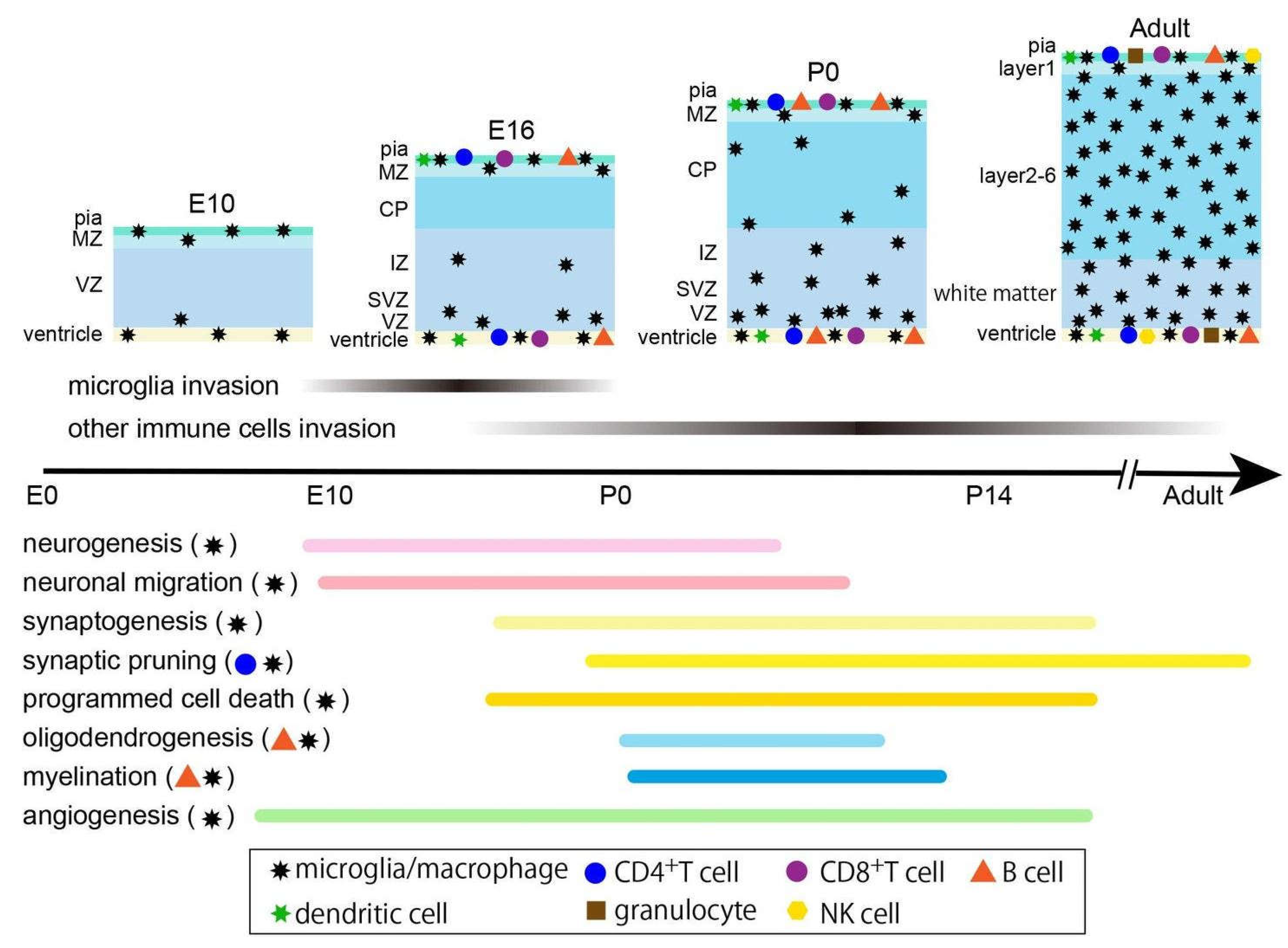
The biomedical scientific community should be aware that there is no difference between infection and vaccination when it comes to the extent of the gained memory of the adaptive immune system. Directly offering the genetic information of a few dozen microbes, regardless of their living status (i.e. live-attenuated, inactivated or neutralised), rather than placing a substantial focus upon increasing the sensitivity of first-line immunity during the first two years of extra-uterine life, seems to overload the adaptive immune memory with new information. This will, of course, have implications upon the neurological memory, and as a result, there will often be major delays in the developmental rates of both the immune and the neurological systems ultimately. It is interesting to note that the adaptive immune system seems to contain its own intelligence and that important information contained by the genome of live-attenuated, inactivated and dead pathogens is eventually transferred to its memory for the purpose of defence, and then further information is passed to the neurological system, which in turn may often overload fewer or more regions of the encephalon with information as well, leading to diverse extents of delays in development. Information seems to lie within the foundational layers of all matter alongside energy, including the matter that covers and sustains life. Living organisms experience a constant exchange of energy and information, and it may be that information directly precedes energy with regards to the core foundation of the physical matter. Information seems to fit very well under the First Law of Thermodynamics (with regards to the constant exchange of energy within a system), and some may argue that information itself represents a form of energy. Likewise, when it comes to the developmental rate of the adaptive immune system and the brain, there is actually little or even no difference at all between giving babies dozens of vaccines and infecting them with dozens of pathogens in the end.
Imagine if the foetus can have smaller or greater implications upon their overall brain developmental rate if the mother is infected during pregnancy, then we can be rest assured that giving babies many vaccines will raise their probability to develop smaller or greater issues with regards to the overall brain development. The truth is always in the middle, and influential figures from the functional body of society have sadly played a significant role in suppressing the truth by excessively focusing on the other extreme to combat an extreme.
Interferons represent innate immune proteins that were discovered by Alick Isaacs and Jean Lindenmann in 1957, and it was immediately suggested that they play considerable roles in antiviral and anti-oncogenic therapy. Interferons are classed into three types; Type I, Type II and Type III. Interferons (IFNs) are produced by many kinds of animal and human cells and they are widely bioavailable. Based on function quality, they are classed into glycosylated (whether on their Nitrogen terminus or Oxygen terminus) or non-glycosylated, with the first group being regarded as the most competent and relevant in antiviral therapy, as the glucose molecules present in the plasma membrane of the target cell play a role in cell-to-cell or molecule identification, thereby catalysing the process of the interferon glycoprotein binding to its target receptor. Type I and Type III IFNs are known to predominantly provide with activated anti-inflammatory pathways, whilst Type II IFNs produce wider extents of pro-inflammatory immune responses. Type I IFNs consist of numerous groups, such as IFN-alpha, IFN-beta, IFN-epsilon, IFN-omega and IFN-zetta; Type II IFNs consist of IFN-gamma, whilst Type III IFNs consist of IFN-lambda. In turn, the listed IFN groups are further divided into more numerous subgroups. For example, IFN-alpha consists of IFN-alpha 1, 2, 5, 6 and IFN-lambda consists of IFN-lambda 1, 2, 3 and 4. Some of the IFN subgroups are N-/O- glycosylated, whilst others are not, and this explains why certain subgroups are widely used in prophylaxis and therapy (i.e. IFN-alpha 2b). Type I and Type III IFNs are synthesised more abundantly in primary dendritic cells, whilst Type II IFNs are synthesised more prevalently in natural lymphocytes (i.e. Natural Killer Cells). Once translated and exocytosed successfully, Type I IFNs bind to the IFNAR1/2 receptor class; Type II IFNs bind to IFNGR1/2 and Type III IFNs bind to IFNLR1/IL10R2 receptor class (M. W. Taylor, 2014). Microbial agents have been shown to directly and indirectly hijack diverse stages of interferon production and signalling, from the moment various Pattern Recognition Receptors (such as Toll-Like Receptors and RIG-1-Like Receptors) detect the Pathogen-Associated Molecular Patterns (PAMPs) and Damage-Associated Molecular Patterns (DAMPs), through the stages where the cGAS-STING is activated, leading to the expression of IFN-encoding genes, where the IFN-encoding mRNA is being translated, where the IFNs bind to their target receptor complexes, where the JAK/STAT pathway is being activated, leading to the expression of Interferon-Stimulated Genes (ISGs) and finally, to the final stages where ISG products, such as ISG6 and ISG15, are effectively exocytosed and transported to their target molecules and cells, typically resulting to the balanced synthesis of pro- and anti-inflammatory immune signals. It was clinically suggested through extensive trials that all three classes of IFNs play major roles in prophylactic and early therapeutic immunomodulation, and recently, it has been indicated that particularly Type I and Type III IFNs could constitute natural immunity-based vaccine candidates for several infectious diseases of concern, such as SARS-CoV-2-induced COVID-19, H1N1 and H5N1 Influenza A-induced flu, HIV-1 and HIV-2-induced AIDS and oncological diseases induced by infectious pathogens, as they display substantial infection-simulatory effects at a local level (i.e. tissue-dependent), helping cells catalyse their immune activation and better support the build-up of host immune memory once viruses actually enter them via receptor-mediated endocytosis (Carp T. et al., 2023). Indirect and direct approaches of microbial self-camouflaging against the first-line immune defence line have long been deemed as concerning methodologies through which pathogenic agents induce pathogenesis. Nonetheless, concerns have particularly increased with the H1N1 Influenza A Virus-induced, HIV-induced and finally SARS-CoV-2-induced pandemics, and during the recent few years, it has been observed, not only that vaccine-based research requires more intellectual and clinical effort, but that it requires a change of course in its approach, given that it has become likely that the evolutionary context with regards to the struggle between immunity and microbial hijacking of its first-line elements has changed rather drastically. During recent epidemics and pandemics, it has been shown that microbes became pronouncedly adapted to human host cells and proteins. Throughout most of the history of immunology, it was stated with firmity that only adaptive immunity exhibits the property of a “memory”, given the displayed non-specific and broad roles played by human and animal innate immunity. Nevertheless, the recent years of immunological research has experienced new discoveries that shifted perceptions, as major components of the innate immune system were after all shown to display substantial characteristics of a “memory”, such as via the activity of PRRs (E. R. Sherwood et al., 2022). Interestingly, central elements of adaptive third-line immunity - CD4+ and CD8+ T-lymphocytes - as well as of innate second-line immunity - Natural Killer Cells - contain central elements of innate first-line immunity - Type I and Type III IFNs - within them, which further indicates the core foundational roles that first-line innate immunity plays in the overall buildup of bodily defences and ultimately of a definitive immune memory against concerning pathogens, despite it not being part of the adaptive immune circle. As a result, even such elements of second-line and third-line immunity could be treated with Type I and Type III IFNs by means of enhancing the effects of natural immunity-based vaccination and supporting the overall immune system to overcome all infectious pathogens of individual and public health concern (Carp T., 2023).
A wider inclusion of natural immune elements, such as Type I and Type III Interferons with natural lymphocytes, which are also known as Natural Killer cells, may result in a more promising effect of immunisation against infectious diseases of major concern. Both natural and adaptive lymphocytes could also be treated with N-glycosylated or O-glycosylated Type I and Type III IFNs prior to their administration into humans and animals for the purposes of immunisation, prophylaxis and therapy. To profoundly apprehend the patterns that public health solutions are situated upon, the research community may require to apprehend the poetic nature of human and animal immunity; how the foundations of immune structure and function lie within its edges, as well as how highly interdependent the innate and adaptive immune systems actually are. In other words, the relationship and relatedness of major immune compartments seems to be based upon artistic patterns that are ever situated outside of scientific expectations, thereby indicating that Science is not complete without Art, in spite of its tremendous importance in the efforts of seeking solutions to unprecedented health problems. Furthermore, IgA immunoglobulins could also be specialised to tackle specific pathogens of public health concern and further tackle weaknesses in the modern-day health systems (Carp T., 2023). Early activation of innate immune pathways were shown to have not only simultaneous immunostimulatory and immunomodulatory effects, but also both stimulatory and modulatory effects in neuronal development in babies and young children. On the other hand, delayed and exaggerated innate immune activation, implicating a systemic production of innate immune proteins, such as alpha-interferons, is associated with poorer neurogenesis, alongside a steep decline in the optimal activity of the encephalon, with increased incidences of post-infectious disease depression (Su K. et al., 2019). Namely, Type I Interferons were found to be prevalently synthesised and secreted by neurons, microglial cells and astrocytes, and like in the immunological roles, the nature of “double-edged sword” is not only shared by IFN I, but by other major elements of the innate immunity, such as NK cells and Complement elements C3a and C5a, and such a nature further and almost equally applies to the neurological effects of the principal elements of innate immunity according to the extent of IFN synthesis over a specific amount of time. Interestingly, it was shown in vivo that mice and rats are more prone to neuroinflammation if they were exposed to poor diet and fitness-related epigenetic factors beforehand and on a longer term basis (Mäkinen, E et al, 2021). It is important to note that, as a result of this phenomenon, significant dysregulations in the production rate of Type I, and possibly Type II and Type III IFNs could lead to disruptions in the stability and integrity of specific networks in the white matter and grey matter indiscriminately. The same most likely applies to Type III IFNs, although the ratio of anti-inflammatory to pro-inflammatory roles may slightly vary.
Interestingly, Type III IFNs, which are also known as lambda interferons, were found to display substantial anti-microbial activity and, the particularly high number of studies indicating or confirming effects as such may suggest that it is lambda IFNs that play a bigger role in shaping antiviral immune responses. Interestingly, during the due clinical investigatory processes of a study implicating the evaluation of the roles Type I and Type II IFNs play in relation to major neuronal networks, it was found that beta-IFNs shape neurogenesis, that the overall Type I IFN responses do not affect the balanced rate of neurogenesis if the immune activation occurs in early stages of the infection, that gamma-IFNs shape neurogenesis and astrogliogenesis if they occur in a restricted extent, during early stages of the illness, and that gamma-IFNs do play a significant role in the induction of neuronal damage if the stages of the disease are latent (M. N. Chandwani et al., 2019). Expecting mothers suffering from significant forms of infectious diseases could be offered a temporary immunosuppressive therapeutic pathway, which could consist of agents such as a relatively low dose of zinc ionophores, corticosteroids and of antihistamines, as well as a medium dose of anti-inflammatory minerals and drug-like compounds, prior to the administration of various approaches implicating immunostimulation and the neutralisation of distributed microbes, such as recombinant glycosylated IFN I and III, specialised plasmacytoid dendritic cells as factories of glycosylated IFN I and III, specialised natural and adaptive lymphocytes, as well as primary dendritic cells, treated with glycosylated IFNs I and III beforehand, alongside IgA immunoglobulins and antimicrobial agents, such as broad-spectrum antivirals, such as favipiravir and umifenovir in the case of a viral infectious illness. In case the disease is respiratory in nature and reaches a latter stage, anti-asthmatic compounds, including ventolin and clarithromycin, could also be considered as part of the therapeutic scheme (M.D. Flavia Grosan., 2021). It has also been suggested the consideration of a human-adapted, low dose of the ivermectin antiprotozoal agent as a potential therapeutic approach against novel respiratory diseases, like COVID-19, as there have been several clinical trials that indicated significant results of safety and efficacy in various adult human populations. It is not recommended for pregnant women to receive therapeutic agents, such as low-dose ivermectin, quinine, or immunosuppressants, given the powerful effects of such drug-like components, which may cause physiological damage in the embryonic or foetal organism, as well as a harmful extent of immune suppression in the expecting embryo or foetus.
Lambda IFNs were also found to better prepare the host immune system in front of the challenge of symptomatic rabies with regards to its record mortality rate, by stimulating the enclosing of tight junctions and by making the blood-brain barrier less permeable. As a result, there could be a considerable relationship between early and local lambda IFN activation, and a lower implication upon neurogenesis and neuroprotection, alongside a probable increased rate of neurogenesis in young children (Yingying Li et al., 2020). In other words, a healthy rate of neuronal development was found in the cases of healthy immune responses that had powerful antimicrobial effects. The most proximal method of immunisation with a scenario as such may constitute the BCG vaccination, as it was found to stimulate the development of innate immune responses most directly and in the widest manner. The BCG vaccine was also found to have immunising effects against SARS-CoV-2, which indicates that, the more the natural immune system is stimulated, the more multi-valent the immunisation approach becomes. Paraphilia is characterised by a set of abnormal sexual orientations, behaviours and preoccupation, and whilst many forms are generally harmless for other individuals, some are dangerous and cross the established moral circle. As a result, there exists a sense of urgency for such alterations to be inhibited, particularly for individuals who become prone to breaking the established legislation. Three examples of paraphilic tendencies whose effects break the law are pedophilia, which represents an attraction of an adult or a teenager to children aged below 14; hebephilia, which represents an attraction of an adult or, in some cases, of a late teenager to young teenagers, aged 14 or 15, and ephebophilia, which represents an attraction of an adult to older teenagers, aged 16 or 17, with the worst cases involving the first two categories in the majority of the world countries, although there are several countries where ephebophilia is also a very serious offence. Whilst there is no association with the character of law-abiding people suffering from severe forms of neurodevelopmental diseases, it is important to acknowledge the likelihood that significant forms of neurodevelopmental delays have an impact upon the healthy developmental rates of the neuro-endocrine system, via the pituitary glands and beyond, meaning that children with discovered significant and severe forms of autism may turn to be more prone to developing abnormalities in their neuro-endocrinological activation later in their teenage and early adult life.
The hypothalamus activates the anterior pituitary gland via the synthesis and secretion of GnRH, and it is this chemical that acts as a hormone and activates the anterior pituitary gland, which then produces its own hormone lipid molecules, the luteinizing hormone (LH) and the follicular-stimulatory hormone (FSH), which are then transported to the gonads to stimulate them to produce testosterone, oestrogen and progesterone. Once the initial activatory event has occurred, there will be different extents of hormone production according to the stage of the overall development of the organism (Briken P. et al., 2000). Significant neurodevelopmental delays may tamper with the normal steps of activation and hormone secretion extents, leading to the development of signs and symptoms characteristic of paraphilia. Substantial neurodevelopmental delays are often so serious that they affect areas of personality and identity, which means that potentially induced neurodevelopmental delays may cause brain sub-regions involved in attractions to have a delayed growth more often than we may think, and likewise, the problem could unfortunately include a significant increase the incidences of pedophilia long-term. Speaking in terms of a lower complexity, it could be stated that a number of people experiencing significant neurodevelopmental delays will have a mental age that would be ten years lower than the physical age. A scenario as such would sadly have an effect upon attraction, as the person would feel like 10 or 15 years younger, for example. That would mean a 25 year old would feel like a 15 year old or even less, and find himself/herself orientated to teenagers of such age. This would be among the worst case scenarios, and concerns are intended to cover future decades and the lack of changes with regards to the increase of understanding with regards to the possible impact of severe neurodevelopmental delays upon the developmental rates of other major organ systems. Otherwise, completely undesired and potentially dangerous effects may occur, both short- and long-term. An important sign of a link between significant neurodevelopmental delays and higher risks of pedophilia is that leuprolide acetate with tibolone, pregnenolone and even potassium chloride are therapeutic agents that help both people on the autistic spectrum and people with pedophilic tendencies. Whilst it is unethical to administer sterilising components to people due to their future inability to reproduce and sustain their family, authorities decided to administer such drugs to sex offenders and paedophiles to prevent them from harming others and particularly children. A deficiency of pregnenolone is caused by a deficiency of neurosteroids, and this deficiency is significantly associated with a reduced conversion of cholesterol to pregnenolone in the mitochondria of oligodendrocytes, which are cells in the brain. Neuro-steroid deficiency is also associated with a higher incidence of autism and epilepsy.
Vitamin D3 represents an important example of neuro-steroids. Moreover, the topiramate anticonvulsant agent showed efficacy against autism and, in combination with carbamazepine, against paraphilia and ultimately pedophilia as well. It may be important to mention that relativity represents the most fundamental unit of measuring time in accordance with every differing context. For example, age is experienced differently in each species, according to the stage of intelligence-based evolution. A pet may live only 10-15 years, but it probably perceives such a number of years the way humans perceive their 90-100 years of life, probably meaning that, the more advanced intelligence is, the faster time is perceived and, as a result, the body simply adapts to the fundamental unit of relativity that is in accordance to the level of intelligence. Nevertheless, it is important to acknowledge that an enhancement of factors that may pressurise the development of the structure and function of the brain may ultimately result in a decay of functioning, just as evolution cannot be forced onto a species. And furthermore, although human intelligence is subject to the Theory of Relativity, morality and the truth are completely independent of it, and an induced human de-evolution would bring humans to bear the guilt of its unimagined effects of destruction, both within and around. Essentially, weakness-related ignorance may not cancel out the moral implications of an accidentally-induced natural de-selection of humans, and the scientific community has an increasing duty to reverse such effects and restore the integrity of human civilization, even if the stages of regress were to be much advanced. With regards to the modern-day tools developed in vaccinology, the trend of progress seems to be descendent in nature, given the fact that microbes have used principal elements of innate immunity in their evolutionary strategy to overpower the immune system in the end, meaning that the classical tools used in vaccinology are becoming less relevant by the day in relation to the stages of microbial evolution. Furthermore, the continuation of a regress as such would result in a higher incidence of induced neurodevelopmental delays, which would be resulted from an increased investment of energy via neuroimmune information intake that would accompany the increasing number of administered doses and pathogenic genomes whose information would be directly offered to the host adaptive immunity. Ultimately - after several decades and generations of an exponential growth of the number of clinical ASD cases - the number of clinical cases of autism will exceed half of the population of several major world countries, and the likely effect of this will be a pronounced decrease of emotional intelligence, where patterns will not be possible to be seen using the rational mind alone, despite its tremendous intellectual progress. Philosophically speaking, it may be much more important to be capable of observing patterns using developed emotion, as wisdom arises from the heart. An excessive growth of the number of ASD cases may ultimately bring humans to behave more similarly to robots, as the discrepancy between rational and emotional intelligence would become tremendous. It seems that the solution is a robust update of the discipline of vaccinology in the manner of making such a trend ascending is the stimulation of the immune system to “learn” about each pathogen of individual and public health concern without directly offering it its genetic information and also without allowing the disease to cause further human and animal casualties. There seems to be a pronouncedly narrow window of opportunity to reach such an outcome, but the positive aspect is the fact that the resources required to build them are vastly bioavailable.
Figure 4.
A comprehensive scheme involving the activation steps of the human reproductive hormones, from the adrenal glands to the gonads (Andrabi S. et al., 2017).
Figure 4.
A comprehensive scheme involving the activation steps of the human reproductive hormones, from the adrenal glands to the gonads (Andrabi S. et al., 2017).
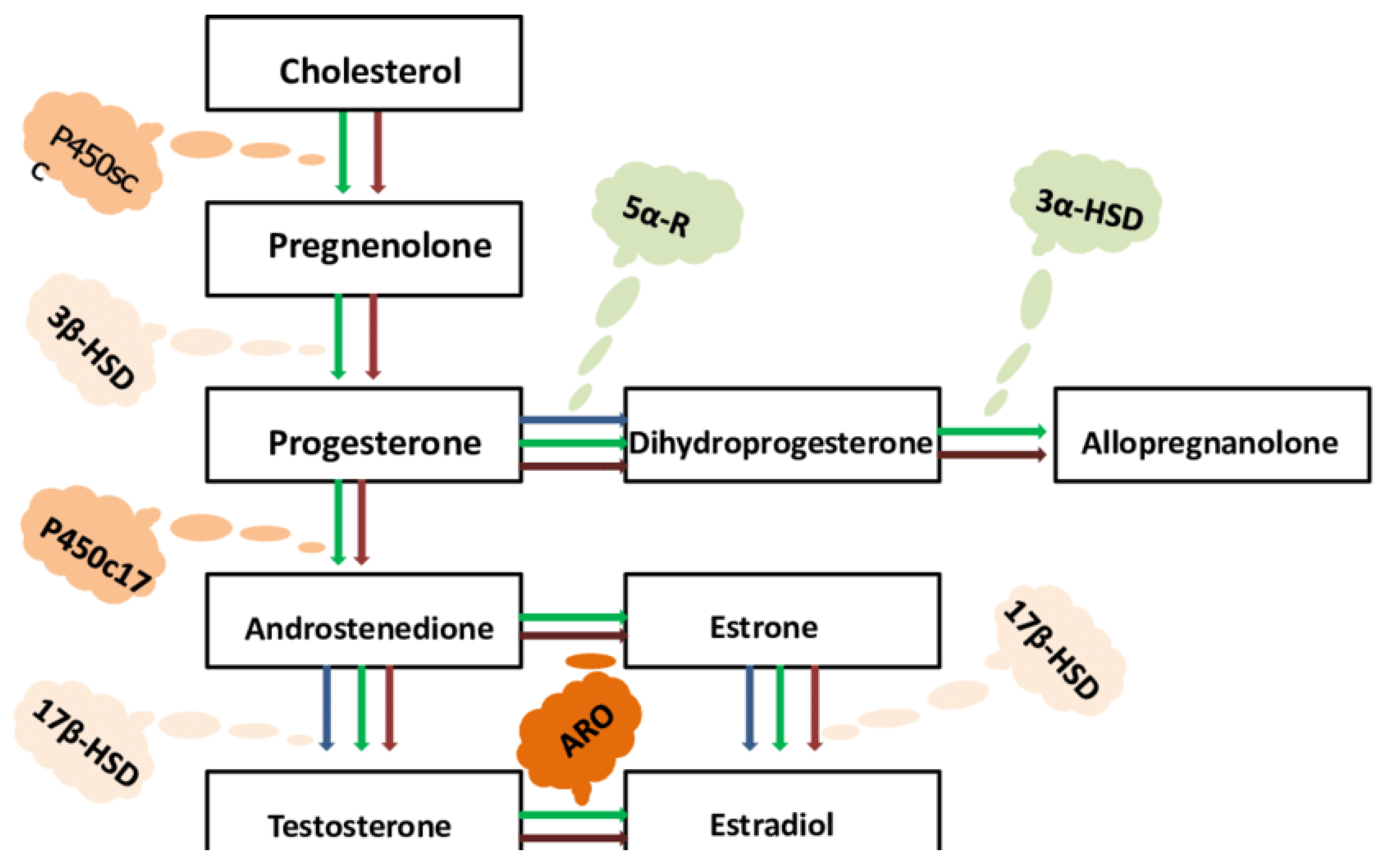
There is an extensive and complex process leading to the production and secretion of a threshold level of testosterone and oestrogen, and the balanced secretion rate of such hormones not only marks predisposition to healthy behaviour and human interactions, but may also represent a major marker of a normal rate of prior neurodevelopmental rates. Disruptions of critical stages of development may result in the under-secretion or over-secretion of specific activators of steroid hormones, which in turn could considerably and sometimes severely affect the rates to which the final hormone products are synthesised. It is perhaps no coincidence that young men on the moderate and severe side of the autistic spectrum were shown to have overexpressed testosterone in their organism. An excess expression of testosterone has often been associated with higher extents of irritability, anger, aggression and with an increased incidence of romantic and sexual deviations, and this is partly explained by the link between excess testosterone and stronger animalistic instincts and inclinations. Both the structure and the function of the encephalon are highly complex and it may be wise to project that any form of neurodevelopmental delays that is more generalistic in nature will likely result in either the under-expression or the over-expression of at least a few of the factors that are in turn responsible with the adequate synthesis of gonadal hormones. As a result, it may be important to begin addressing the subtle, but significant risks that a potentially exponential growth of the number of clinically detected cases of autism spectrum disorder present in the long run for the stability of the healthcare and social systems, in spite of the tremendously benefactory roles high functioning autism, which is also known as the Asperger’s Syndrome, has played in shaping human intelligence, innovation, as well as moral and financial growth throughout society, particularly during the second half of the 19th century, when the number of people experiencing high functioning autism started to increase more sharply. It may be crucial to expose the potential fact that autism may also represent a “double-edged sword” with regards to the relationship between the functionality spectrum and the quality of cognitive and behavioral traits of the person in question. An unprecedented growth of the number of clinical cases may also result in a significant growth of the number of more severe cases, in which patients may not just display a decreased discernment, but also abnormalities in social, romantic and physical affinities that certainly require clinical attention.
It is known that teenagers normally are orientated towards teenagers and adults are oriented toward adults; a delay of such a perception would be catastrophic, particularly if this were combined with induced promiscuity-related impairments by severe neurodevelopmental delays, which are very often associated with the oversecretion of gonadal hormones as well. A higher rate of neurosteroid activity is associated with a higher ability of neurogenesis and neuroregeneration following brain injury. Promiscuity is a major byproduct of induced gonadal hormone hypersecretion, and represents a primary contributory factor leading to the progressive damage and destruction of the family, and it is also a primary contributory factor to the widespread phenomenon of abortions, which involve the loss of embryonic and foetal life, although in approximately 78% of the cases worldwide, the mothers are fully capable of leading the pregnancy to the moment of birth, having not been affected by disease or crime. The potential problem does not address the approximate 22% of the cases in which the life and integrity of the mother are in danger, but parts of the approximate 78% of the cases, in which responsibility is not practised with care, avoiding unwanted pregnancies either by medical precaution or even by abstinence, given that medical measures of prevention may not always bring 100% results. The argument that the world cannot house many children is not only invalid, but actually inaccurate and inconsiderate, given the existence of widespread natural areas that are hardly populated by humans, and given the fact that many people wish to have a family, but are medically incapable of having children, respectively. Conclusive scientific evidence shows that human life begins at the moment of fertilisation, which means that the loss of the living organism after that moment is the same as the loss of a baby’s life, if not even worse, as the foundation of human life would be much more directly targeted in the procedure of abortion, whether it would be done more or less consciously. One unethical act cannot make another unethical act any more ethical, despite the high genuine need of empathy and compassion in society. There can be no intersecting points between empathy and unethical acts, especially if such an unethical act involves the loss of a child’s life, lest such “empathy” is insufficient, superficial and false. Despite the evident existence of good intentions, there is no assurance that such an “empathy” is ultimately profound and genuine, given the well-known saying that “The road to hell is often paved with good intentions.”. And finally, the argument that “abortion is solely healthcare” can be disputed, given the primary purpose of medicine of not doing any harm, and the fact that abortion directly harms and destroys in-vivo human life, which is whole from the moment of conception, and often harms the mother as well. Abortion may only represent healthcare if it does not implicate more damage than benefit. Nevertheless, the ultimate objective of medicine is to save all forms of life whilst performing clinical procedures, given the primary objective of medicine not to cause harm. Perhaps, the next steps of medical research would involve projections of womb transplants. Serious neurodevelopmental issues are often associated with a deficiency of pregnenolone. Applications of Nikola Tesla’s principles into electricity-based therapy, high frequency-based therapies using a number of models presented by Dr. Rife, Transcranial Magnetic Stimulation (TMS), UV light-based therapies, the maintenance of a healthy diet, filled with minerals, as well as behavioural therapies, such as Cognitive Behavioural Therapy and Exposure and Response Prevention, seem to be significant starting candidates for the treatment of significant forms of neurodevelopmental delays. Light-based therapies may prove to be successful given that it is UV light that upregulates the synthesis of cholecalciferol (Vitamin D3), which in turn performs a sharper and more widespread neurosteroid function in its increased concentration. Interestingly, Dr. Rife had invented a machine that would transmit radiological frequencies into the human body, targeting the frequency of microbes infecting it, such as the Human Immunodeficiency Virus (HIV) to induce their death by means of biophysical micro intervention (The ALSUntangled Group, 2014). It is important to bring into discussion concerns with regards to increased risks of adverse events caused by the Rife machine for the purpose of experimental improvements, given a particularly high projected rate of benefit that the therapeutic method displayed during its initial stages of clinical trials. Of course, there are other important and equally effective approaches, such as Ultraviolet B radiation-based therapies, the administration of injectable compounds and supplements, such as cerebrolysin, and the addition of Prevotella bivia bacteria into the gut microbiota of the affected people. A potential solution to the problems that humanity may be facing in the future is a larger extent of exposure to natural factors that modulate key functions of both the central nervous system and the immune system. Furthermore, such a re-exposure of the human body to its natural origins may also open new windows of opportunity into nature-based innovations into medical research, given the tremendous biodiversity of the natural environment and the high probability of the existence of plants that contain ingredients of future therapies that humanity may have not imagined of yet.
Conclusion
The truth may not always be in a thorough accordance with the perception of the academic and non-academic bodies of the society alike. During the past several decades, the First World society has experienced a constant and persistent decay, rather than an overall progress. Society did experience a scientific apogeum between the 1970s and the 1980s, when successful therapies against life-threatening illnesses were distributed throughout the world and when high speed aircrafts had been successfully developed and brought into the military market. A potentially major factor of a long-term scientific decay may represent the gradual subordination of mankind to technology, when technology is actually the by-product of the human imagination, which supported mankind in living in the fullness of the community without the help of advanced automation mechanisms. Sadly, journalism has not played a perfect role in shaping the domain of neuroimmunological research and innovation and certain mainstream platforms may sadly also have drifted public attention toward opposite extreme perspectives, instead of helping the audience focus on the balanced clinical and socio-political perspective. A possible solution to this dilemma is a transparent discussion about the matter, involving head scientific researchers and doctors from all sides of the argument. Only through an extensive and uncensored discussion, the truth can be reached and distributed widely. It is likewise important to emphasise upon the fact that solutions should be prioritised over problems and antagonistic approaches, just as the purpose of medicine is to repair wounds and faults within the human body, and not to create separation and factions, whether in the clinical world or in the general society. Vaccinology represents an unprecedented form of innovation in the medical world, and the high number of saved lives ought to be given credit to the inventions of Dr. Louis Pasteur. This paper does not endorse claims that have not been or that simply cannot be substantiated by scientific theories, principles and evidence, but aims to filter the evident benefits of immunisation from the possible significant risks that are prevalently present in the cases of excessive immunising doses given to children in critical stages of neuroimmunological development, suggests the performance of a risk assessment process with regards to an unrestricted number of traditional vaccine doses for other age groups and proposes updates that may be relevant to the current level of demand according to the present stages of microbial evolution in relation to vulnerabilities located within critical areas of human and animal innate immunity, which was ultimately demonstrated to contain its own memory. An inclusion of natural immunity in the focus of vaccinology-oriented research and innovation may represent an important part of the solution to provide people of all age backgrounds the necessary prophylaxis and treatment without encouraging genuine concerns regarding impact upon healthy neurological development to grow. Alongside the reverse of the effects hyper-industrialization has brought large proportions of the world population, a potentially major solution to the possible problem of long-term neurological adverse events following excessive immunisation is the administration of fewer doses that support the production of immune memory against multiple pathogenic agents simultaneously. An inclusion of natural immunity into the domain of vaccinology could represent the missing puzzle piece the research community has seeked to find for a long extent of time. Furthermore, given the fact that natural immunity exists within adaptive immune components, the treatment of adaptive immune cells in advance could also constitute a major step of innovation to match the competence of immunisation to the modern-day demands caused by advanced microbial camouflaging leading to unprecedented immune evasion and, consequently, to the onset and spread of life-threatening infectious diseases. Through such a change of course in vaccinology, the “holes” created on the roads of innate immunity by microbial self-camouflaging-related evolutionary patterns may be filled and then an immunological “highway” between the innate and the adaptive departments may be built successfully. The solution to the modern problems is not throwing out the baby with the bath water, by eliminating the risks with the benefits, and nor is it the administration of therapeutic agents with powerful clinical effects in a mismatching context, but promoting the separation of the risks from the benefits with the best intellectual abilities and by reaching a high state of discernment during the process of scientific applications into decisions by the executive powers. Finally, intellectual abilities require to be in a harmonic relationship with emotional abilities and communication skills or else, the overall decision making system that is defined by the executive function of the brain may often become significantly impaired on a long term basis, and a continuous growth of the incidence curve in society may eventually lead to its low functionality and finally even to its implosion.
References
- Pollard, A.J.; Bijker, E.M. A guide to vaccinology: from basic principles to new developments. Nat. Rev. Immunol. 2020, 21, 83–100. [Google Scholar] [CrossRef]
- Yang, J.; Qi, F.; Gu, H.; Zou, J.; Yang, Y.; Yuan, Q.; Yao, Z. Neonatal BCG vaccination of mice improves neurogenesis and behavior in early life. Brain Res. Bull. 2016, 120, 25–33. [Google Scholar] [CrossRef]
- Morimoto, K.; Nakajima, K. Role of the Immune System in the Development of the Central Nervous System. Front. Neurosci. 2019, 13, 916. [Google Scholar] [CrossRef]
- Baines, K.J.; Hillier, D.M.; Haddad, F.L.; Rajakumar, N.; Schmid, S.; Renaud, S.J. Maternal Immune Activation Alters Fetal Brain Development and Enhances Proliferation of Neural Precursor Cells in Rats. Front. Immunol. 2020, 11, 1145. [Google Scholar] [CrossRef]
- Denes, A.; Miyan, J.A. Brain-immune interactions in health and disease. Front. Neurosci. 2014, 8, 382. [Google Scholar] [CrossRef]
- Kamimura, D.; Yamada, M.; Harada, M.; Sabharwal, L.; Meng, J.; Bando, H.; Ogura, H.; Atsumi, T.; Arima, Y.; Murakami, M. The gateway theory: bridging neural and immune interactions in the CNS. Front. Neurosci. 2013, 7, 204. [Google Scholar] [CrossRef]
- Geenen, V.; Bodart, G.; Henry, S.; Michaux, H.; Dardenne, O.; Charlet-Renard, C.; Martens, H.; Hober, D. Programming of neuroendocrine self in the thymus and its defect in the development of neuroendocrine autoimmunity. Front. Neurosci. 2013, 7, 187. [Google Scholar] [CrossRef]
- Goyal, D.K.; Miyan, J.A. Neuro-Immune Abnormalities in Autism and Their Relationship with the Environment: A Variable Insult Model for Autism. Front. Endocrinol. 2014, 5. [Google Scholar] [CrossRef]
- Sherwood, E.R.; Burelbach, K.R.; McBride, M.A.; Stothers, C.L.; Owen, A.M.; Hernandez, A.; Patil, N.K.; Williams, D.L.; Bohannon, J.K. Innate Immune Memory and the Host Response to Infection. J. Immunol. 2022, 208, 785–792. [Google Scholar] [CrossRef]
- Wendeln, A.-C.; Degenhardt, K.; Kaurani, L.; Gertig, M.; Ulas, T.; Jain, G.; Wagner, J.; Häsler, L.M.; Wild, K.; Skodras, A.; et al. Innate immune memory in the brain shapes neurological disease hallmarks. Nature 2018, 556, 332–338. [Google Scholar] [CrossRef]
- Netea, M.G.; Quintin, J.; van der Meer, J.W. Trained Immunity: A Memory for Innate Host Defense. Cell Host Microbe 2011, 9, 355–361. [Google Scholar] [CrossRef]
- Kloc, M.; Kubiak, J.Z.; Zdanowski, R.; Ghobrial, R.M. Memory Macrophages. Int. J. Mol. Sci. 2022, 24, 38. [Google Scholar] [CrossRef]
- Taylor, M. W. (2014). Interferons. Viruses and Man: A History of Interactions, 101–119. [CrossRef]
- Chandwani, M.N.; Creisher, P.S.; O'Donnell, L.A. Understanding the Role of Antiviral Cytokines and Chemokines on Neural Stem/Progenitor Cell Activity and Survival. Viral Immunol. 2019, 32, 15–24. [Google Scholar] [CrossRef]
- Borsini, A.; Cattaneo, A.; Malpighi, C.; Thuret, S.; A Harrison, N.; A Zunszain, P.; Pariante, C.M. MRC ImmunoPsychiatry Consortium Interferon-Alpha Reduces Human Hippocampal Neurogenesis and Increases Apoptosis via Activation of Distinct STAT1-Dependent Mechanisms. Int. J. Neuropsychopharmacol. 2017, 21, 187–200. [Google Scholar] [CrossRef]
- Borsini, A.; Pariante, C.M.; Zunszain, P.A.; Hepgul, N.; Russell, A.; Zajkowska, Z.; Mondelli, V.; Thuret, S. The role of circulatory systemic environment in predicting interferon-alpha–induced depression: The neurogenic process as a potential mechanism. Brain, Behav. Immun. 2019, 81, 220–227. [Google Scholar] [CrossRef]
- Su, K.-P.; Lai, H.-C.; Peng, C.-Y.; Su, W.-P.; Chang, J.P.-C.; Pariante, C.M. Interferon-alpha-induced depression: Comparisons between early- and late-onset subgroups and with patients with major depressive disorder. Brain, Behav. Immun. 2019, 80, 512–518. [Google Scholar] [CrossRef]
- Lin, J.-Y.; Kuo, R.-L.; Huang, H.-I. Activation of type I interferon antiviral response in human neural stem cells. Stem Cell Res. Ther. 2019, 10, 1–17. [Google Scholar] [CrossRef]
- Bhat, H.; Lang, K.S.; Hardt, C.; Lang, J. Interferon in the CNS. Neurosignals 2019, 27, 44–53. [Google Scholar] [CrossRef]
- Owens, T.; Khorooshi, R.; Wlodarczyk, A.; Asgari, N. Interferons in the central nervous system: A few instruments play many tunes. Glia 2013, 62, 339–355. [Google Scholar] [CrossRef]
- Blank, T.; Prinz, M. Type I interferon pathway in CNS homeostasis and neurological disorders. Glia 2017, 65, 1397–1406. [Google Scholar] [CrossRef]
- Raftopoulou, S.; Rapti, A.; Karathanasis, D.; Evangelopoulos, M.E.; Mavragani, C.P. The role of type I IFN in autoimmune and autoinflammatory diseases with CNS involvement. Front. Neurol. 2022, 13, 1026449. [Google Scholar] [CrossRef] [PubMed]
- McDonough, A.; Lee, R.V.; Weinstein, J.R. Microglial Interferon Signaling and White Matter. Neurochem. Res. 2017, 42, 2625–2638. [Google Scholar] [CrossRef] [PubMed]
- Giacobbe, J.; Pariante, C.M.; Borsini, A. The innate immune system and neurogenesis as modulating mechanisms of electroconvulsive therapy in pre-clinical studies. J. Psychopharmacol. 2020, 34, 1086–1097. [Google Scholar] [CrossRef] [PubMed]
- Nettis, M.A.; Pariante, C.M. Is there neuroinflammation in depression? Understanding the link between the brain and the peripheral immune system in depression. International review of neurobiology 2020, 152, 23–40. [Google Scholar] [CrossRef]
- Marques, A.H.; Cizza, G.; Sternberg, E. Interações imunocerebrais e implicações nos transtornos psiquiátricos. Rev. Bras. de Psiquiatr. 2007, 29, s27–s32. [Google Scholar] [CrossRef]
- Li, X.X.; Lee, J.D.; Kemper, C.; Woodruff, T.M. The Complement Receptor C5aR2: A Powerful Modulator of Innate and Adaptive Immunity. J. Immunol. 2019, 202, 3339–3348. [Google Scholar] [CrossRef]
- Yu, S.; Wang, D.; Huang, L.; Zhang, Y.; Luo, R.; Adah, D.; Tang, Y.; Zhao, K.; Lu, B. The complement receptor C5aR2 promotes protein kinase R expression and contributes to NLRP3 inflammasome activation and HMGB1 release from macrophages. J. Biol. Chem. 2019, 294, 8384–8394. [Google Scholar] [CrossRef]
- Hernandez, M.X.; Namiranian, P.; Nguyen, E.; Fonseca, M.I.; Tenner, A.J. C5a Increases the Injury to Primary Neurons Elicited by Fibrillar Amyloid Beta. ASN Neuro 2017, 9. [Google Scholar] [CrossRef]
- Pamies, D.; Sartori, C.; Schvartz, D.; González-Ruiz, V.; Pellerin, L.; Nunes, C.; Tavel, D.; Maillard, V.; Boccard, J.; Rudaz, S.; et al. Neuroinflammatory Response to TNFα and IL1β Cytokines Is Accompanied by an Increase in Glycolysis in Human Astrocytes In Vitro. Int. J. Mol. Sci. 2021, 22, 4065. [Google Scholar] [CrossRef]
- Dhungana, H.; Rolova, T.; Savchenko, E.; Wojciechowski, S.; Savolainen, K.; Ruotsalainen, A.-K.; Sullivan, P.M.; Koistinaho, J.; Malm, T. Western-type diet modulates inflammatory responses and impairs functional outcome following permanent middle cerebral artery occlusion in aged mice expressing the human apolipoprotein E4 allele. J. Neuroinflammation 2013, 10, 102–102. [Google Scholar] [CrossRef]
- Mäkinen, E.; Lensu, S.; Honkanen, M.; Laitinen, P.; Wikgren, J.; Koch, L.G.; Britton, S.L.; Kainulainen, H.; Pekkala, S.; Nokia, M.S. Rats bred for low intrinsic aerobic exercise capacity link obesity with brain inflammation and reduced structural plasticity of the hippocampus. Brain, Behav. Immun. 2021, 97, 250–259. [Google Scholar] [CrossRef] [PubMed]
- A Rudick, R.; Ransohoff, R.M. Biologic effects of interferons: relevance to multiple sclerosis. Multiple sclerosis 1995, 1 (Suppl 1), S12–S16. [Google Scholar] [PubMed]
- Javed, A.; Reder, A.T. Therapeutic role of beta-interferons in multiple sclerosis. Pharmacol. Ther. 2006, 110, 35–56. [Google Scholar] [CrossRef] [PubMed]
- Li, Y.; Zhao, L.; Luo, Z.; Zhang, Y.; Lv, L.; Zhao, J.; Sui, B.; Huang, F.; Cui, M.; Fu, Z.F.; et al. Interferon-λ Attenuates Rabies Virus Infection by Inducing Interferon-Stimulated Genes and Alleviating Neurological Inflammation. Viruses 2020, 12, 405. [Google Scholar] [CrossRef] [PubMed]
- Qi, F.; Zuo, Z.; Yang, J.; Hu, S.; Yang, Y.; Yuan, Q.; Zou, J.; Guo, K.; Yao, Z. Combined effect of BCG vaccination and enriched environment promote neurogenesis and spatial cognition via a shift in meningeal macrophage M2 polarization. J. Neuroinflammation 2017, 14, 1–17. [Google Scholar] [CrossRef] [PubMed]
- Qi, F.; Zuo, Z.; Hu, S.; Xia, Y.; Song, D.; Kong, J.; Yang, Y.; Wu, Y.; Wang, X.; Yang, J.; et al. An enriched environment restores hepatitis B vaccination-mediated impairments in synaptic function through IFN-γ/Arginase1 signaling. Brain, Behav. Immun. 2018, 71, 116–132. [Google Scholar] [CrossRef] [PubMed]
- Yang, J.; Qi, F.; Yang, Y.; Yuan, Q.; Zou, J.; Guo, K.; Yao, Z. Neonatal hepatitis B vaccination impaired the behavior and neurogenesis of mice transiently in early adulthood. Psychoneuroendocrinology 2016, 73, 166–176. [Google Scholar] [CrossRef] [PubMed]
- Wang, X.; Yang, J.; Xing, Z.; Zhang, H.; Wen, Y.; Qi, F.; Zuo, Z.; Xu, J.; Yao, Z. IL-4 mediates the delayed neurobehavioral impairments induced by neonatal hepatitis B vaccination that involves the down-regulation of the IL-4 receptor in the hippocampus. Cytokine 2018, 110, 137–149. [Google Scholar] [CrossRef] [PubMed]
- Qi, F.; Yang, J.; Xia, Y.; Yuan, Q.; Guo, K.; Zou, J.; Yao, Z. A(H1N1) vaccination recruits T lymphocytes to the choroid plexus for the promotion of hippocampal neurogenesis and working memory in pregnant mice. Brain, Behav. Immun. 2016, 53, 72–83. [Google Scholar] [CrossRef]
- Xia, Y.; Qi, F.; Zou, J.; Yang, J.; Yao, Z. Influenza vaccination during early pregnancy contributes to neurogenesis and behavioral function in offspring. Brain, Behav. Immun. 2014, 42, 212–221. [Google Scholar] [CrossRef]
- Han, V.X.; Patel, S.; Jones, H.F.; Nielsen, T.C.; Mohammad, S.S.; Hofer, M.J.; Gold, W.; Brilot, F.; Lain, S.J.; Nassar, N.; et al. Maternal acute and chronic inflammation in pregnancy is associated with common neurodevelopmental disorders: a systematic review. Transl. Psychiatry 2021, 11, 1–12. [Google Scholar] [CrossRef]
- Zhang, Z.; van Praag, H. Maternal immune activation differentially impacts mature and adult-born hippocampal neurons in male mice. Brain, Behav. Immun. 2015, 45, 60–70. [Google Scholar] [CrossRef] [PubMed]
- Meyer, U.; Nyffeler, M.; Yee, B.K.; Knuesel, I.; Feldon, J. Adult brain and behavioral pathological markers of prenatal immune challenge during early/middle and late fetal development in mice. Brain, Behav. Immun. 2007, 22, 469–486. [Google Scholar] [CrossRef] [PubMed]
- Han, V.X.; Patel, S.; Jones, H.F.; Dale, R.C. Maternal immune activation and neuroinflammation in human neurodevelopmental disorders. Nat. Rev. Neurol. 2021, 17, 564–579. [Google Scholar] [CrossRef] [PubMed]
- Han, V.X.; Patel, S.; Jones, H.F.; Nielsen, T.C.; Mohammad, S.S.; Hofer, M.J.; Gold, W.; Brilot, F.; Lain, S.J.; Nassar, N.; et al. Maternal acute and chronic inflammation in pregnancy is associated with common neurodevelopmental disorders: a systematic review. Transl. Psychiatry 2021, 11, 1–12. [Google Scholar] [CrossRef]
- Lombardo, M.V.; Moon, H.M.; Su, J.; Palmer, T.D.; Courchesne, E.; Pramparo, T. Maternal immune activation dysregulation of the fetal brain transcriptome and relevance to the pathophysiology of autism spectrum disorder. Mol. Psychiatry 2017, 23, 1001–1013. [Google Scholar] [CrossRef]
- Haddad, F.L.; Patel, S.V.; Schmid, S. Maternal Immune Activation by Poly I:C as a preclinical Model for Neurodevelopmental Disorders: A focus on Autism and Schizophrenia. Neurosci. Biobehav. Rev. 2020, 113, 546–567. [Google Scholar] [CrossRef] [PubMed]
- Trifonova, E.A.; Mustafin, Z.S.; Lashin, S.A.; Kochetov, A.V. Abnormal mTOR Activity in Pediatric Autoimmune Neuropsychiatric and MIA-Associated Autism Spectrum Disorders. Int. J. Mol. Sci. 2022, 23, 967. [Google Scholar] [CrossRef]
- Han, V.X.; Patel, S.; Jones, H.F.; Nielsen, T.C.; Mohammad, S.S.; Hofer, M.J.; Gold, W.; Brilot, F.; Lain, S.J.; Nassar, N.; et al. Maternal acute and chronic inflammation in pregnancy is associated with common neurodevelopmental disorders: a systematic review. Transl. Psychiatry 2021, 11, 1–12. [Google Scholar] [CrossRef]
- Meltzer, A.; Van de Water, J. The Role of the Immune System in Autism Spectrum Disorder. Neuropsychopharmacology 2016, 42, 284–298. [Google Scholar] [CrossRef]
- Beversdorf, D.Q.; Stevens, H.E.; Jones, K.L. Prenatal Stress, Maternal Immune Dysregulation, and Their Association With Autism Spectrum Disorders. Curr. Psychiatry Rep. 2018, 20, 1–12. [Google Scholar] [CrossRef]
- McLellan, J.; Kim, D.H.J.; Bruce, M.; Ramirez-Celis, A.; Van de Water, J. Maternal Immune Dysregulation and Autism–Understanding the Role of Cytokines, Chemokines and Autoantibodies. Front. Psychiatry 2022, 13, 834910. [Google Scholar] [CrossRef]
- Jones, K.L.; Van de Water, J. Maternal autoantibody related autism: mechanisms and pathways. Mol. Psychiatry 2018, 24, 252–265. [Google Scholar] [CrossRef] [PubMed]
- Beversdorf, D.Q.; Shah, A.; Jhin, A.; Noel-MacDonnell, J.; Hecht, P.; Ferguson, B.J.; Bruce, D.; Tilley, M.; Talebizadeh, Z. microRNAs and Gene–Environment Interactions in Autism: Effects of Prenatal Maternal Stress and the SERT Gene on Maternal microRNA Expression. Front. Psychiatry 2021, 12. [Google Scholar] [CrossRef]
- Boktor, J.C.; Adame, M.D.; Rose, D.R.; Schumann, C.M.; Murray, K.D.; Bauman, M.D.; Careaga, M.; Mazmanian, S.K.; Ashwood, P.; Needham, B.D. Global metabolic profiles in a non-human primate model of maternal immune activation: implications for neurodevelopmental disorders. Mol. Psychiatry 2022, 27, 4959–4973. [Google Scholar] [CrossRef] [PubMed]
- Abdallah, M.W.; Larsen, N.; Grove, J.; Nørgaard-Pedersen, B.; Thorsen, P.; Mortensen, E.L.; Hougaard, D.M. Amniotic fluid inflammatory cytokines: Potential markers of immunologic dysfunction in autism spectrum disorders. World J. Biol. Psychiatry 2011, 14, 528–538. [Google Scholar] [CrossRef] [PubMed]
- Abdallah, M.W.; Larsen, N.; Mortensen, E.L.; Atladóttir, H.; Nørgaard-Pedersen, B.; Bonefeld-Jørgensen, E.C.; Grove, J.; Hougaard, D.M. Neonatal levels of cytokines and risk of autism spectrum disorders: An exploratory register-based historic birth cohort study utilizing the Danish Newborn Screening Biobank. J. Neuroimmunol. 2012, 252, 75–82. [Google Scholar] [CrossRef]
- Abdallah, M.W.; Larsen, N.; Grove, J.; Bonefeld-Jørgensen, E.C.; Nørgaard-Pedersen, B.; Hougaard, D.M.; Mortensen, E.L. Neonatal chemokine levels and risk of autism spectrum disorders: Findings from a Danish historic birth cohort follow-up study. Cytokine 2013, 61, 370–376. [Google Scholar] [CrossRef]
- Abdallah, M.W.; Pearce, B.D.; Larsen, N.; Greaves-Lord, K.; Nørgaard-Pedersen, B.; Hougaard, D.M.; Mortensen, E.L.; Grove, J. Amniotic Fluid MMP-9 and Neurotrophins in Autism Spectrum Disorders: An Exploratory Study. Autism Res. 2012, 5, 428–433. [Google Scholar] [CrossRef]
- Missault, S.; Van Den Eynde, K.; Vanden Berghe, W.; Fransen, E.; Weeren, A.; Timmermans, J.-P.; Kumar-Singh, S.; Dedeurwaerdere, S. The risk for behavioural deficits is determined by the maternal immune response to prenatal immune challenge in a neurodevelopmental model. Brain, Behav. Immun. 2014, 42, 138–146. [Google Scholar] [CrossRef]
- Han, V.X.; Jones, H.F.; Patel, S.; Mohammad, S.S.; Hofer, M.J.; Alshammery, S.; Maple-Brown, E.; Gold, W.; Brilot, F.; Dale, R.C. Emerging evidence of Toll-like receptors as a putative pathway linking maternal inflammation and neurodevelopmental disorders in human offspring: A systematic review. Brain, Behav. Immun. 2021, 99, 91–105. [Google Scholar] [CrossRef] [PubMed]
- Chen, S.; Zhao, S.; Dalman, C.; Karlsson, H.; Gardner, R. Association of maternal diabetes with neurodevelopmental disorders: autism spectrum disorders, attention-deficit/hyperactivity disorder and intellectual disability. Leuk. Res. 2020, 50, 459–474. [Google Scholar] [CrossRef]
- Wiegersma, A.M.; Dalman, C.; Lee, B.K.; Karlsson, H.; Gardner, R.M. Association of Prenatal Maternal Anemia With Neurodevelopmental Disorders. JAMA Psychiatry 2019, 76, 1294–12. [Google Scholar] [CrossRef] [PubMed]
- Wang, Z.; Chan, A.Y.L.; Coghill, D.; Ip, P.; Lau, W.C.Y.; Simonoff, E.; Brauer, R.; Wei, L.; Wong, I.C.K.; Man, K.K.C. Association Between Prenatal Exposure to Antipsychotics and Attention-Deficit/Hyperactivity Disorder, Autism Spectrum Disorder, Preterm Birth, and Small for Gestational Age. JAMA Intern. Med. 2021, 181, 1332–1340. [Google Scholar] [CrossRef] [PubMed]
- Brand, J.S.; Lawlor, D.A.; Larsson, H.; Montgomery, S. Association Between Hypertensive Disorders of Pregnancy and Neurodevelopmental Outcomes Among Offspring. JAMA Pediatr. 2021, 175, 577–585. [Google Scholar] [CrossRef]
- Bergdolt, L.; Dunaevsky, A. Brain changes in a maternal immune activation model of neurodevelopmental brain disorders. Prog. Neurobiol. 2018, 175, 1–19. [Google Scholar] [CrossRef] [PubMed]
- Ryan, A.M.; Bauman, M.D. Primate Models as a Translational Tool for Understanding Prenatal Origins of Neurodevelopmental Disorders Associated With Maternal Infection. Biol. Psychiatry: Cogn. Neurosci. Neuroimaging 2022, 7, 510–523. [Google Scholar] [CrossRef] [PubMed]
- Vlasova, R.M.; Iosif, A.-M.; Ryan, A.M.; Funk, L.H.; Murai, T.; Chen, S.; Lesh, T.A.; Rowland, D.J.; Bennett, J.; Hogrefe, C.E.; et al. Maternal Immune Activation during Pregnancy Alters Postnatal Brain Growth and Cognitive Development in Nonhuman Primate Offspring. J. Neurosci. 2021, 41, 9971–9987. [Google Scholar] [CrossRef] [PubMed]
- Bauman, M.D.; Iosif, A.-M.; Smith, S.E.; Bregere, C.; Amaral, D.G.; Patterson, P.H. Activation of the Maternal Immune System During Pregnancy Alters Behavioral Development of Rhesus Monkey Offspring. Biol. Psychiatry 2013, 75, 332–341. [Google Scholar] [CrossRef]
- Zhang, J.; Yao, P.; Han, W.; Luo, Y.; Li, Y.; Yang, Y.; Xia, H.; Chen, Z.; Chen, Q.; Wang, H.; et al. Maternal Prenatal Inflammation Increases Brain Damage Susceptibility of Lipopolysaccharide in Adult Rat Offspring via COX-2/PGD-2/DPs Pathway Activation. Int. J. Mol. Sci. 2022, 23, 6142. [Google Scholar] [CrossRef]
- Li, Y.; Luo, W.; Zhang, J.; Luo, Y.; Han, W.; Wang, H.; Xia, H.; Chen, Z.; Yang, Y.; Chen, Q.; et al. Maternal Inflammation Exaggerates Offspring Susceptibility to Cerebral Ischemia–Reperfusion Injury via the COX-2/PGD2/DP2 Pathway Activation. Oxidative Med. Cell. Longev. 2022, 2022, 1–16. [Google Scholar] [CrossRef] [PubMed]
- Careaga, M.; Murai, T.; Bauman, M.D. Maternal Immune Activation and Autism Spectrum Disorder: From Rodents to Nonhuman and Human Primates. Biol. Psychiatry 2016, 81, 391–401. [Google Scholar] [CrossRef] [PubMed]
- Weir, R.K.; Forghany, R.; Smith, S.E.; Patterson, P.H.; McAllister, A.K.; Schumann, C.M.; Bauman, M.D. Preliminary evidence of neuropathology in nonhuman primates prenatally exposed to maternal immune activation. Brain, Behav. Immun. 2015, 48, 139–146. [Google Scholar] [CrossRef] [PubMed]
- Rose, D.R.; Careaga, M.; Van de Water, J.; McAllister, K.; Bauman, M.D.; Ashwood, P. Long-term altered immune responses following fetal priming in a non-human primate model of maternal immune activation. Brain, Behav. Immun. 2016, 63, 60–70. [Google Scholar] [CrossRef] [PubMed]
- Missault, S.; Van Den Eynde, K.; Vanden Berghe, W.; Fransen, E.; Weeren, A.; Timmermans, J.-P.; Kumar-Singh, S.; Dedeurwaerdere, S. The risk for behavioural deficits is determined by the maternal immune response to prenatal immune challenge in a neurodevelopmental model. Brain, Behav. Immun. 2014, 42, 138–146. [Google Scholar] [CrossRef] [PubMed]
- Tan, J.W.Y.; Lee, O.P.E.; Leong, M.C. Vitamin C deficiency as an unusual cause of pulmonary hypertension and refusal to walk. Cardiol. Young- 2020, 31, 322–324. [Google Scholar] [CrossRef] [PubMed]
- Vuillermot, S.; Luan, W.; Meyer, U.; Eyles, D. Vitamin D treatment during pregnancy prevents autism-related phenotypes in a mouse model of maternal immune activation. Mol. Autism 2017, 8, 1–13. [Google Scholar] [CrossRef] [PubMed]
- Gáll, Z.; Székely, O. Role of Vitamin D in Cognitive Dysfunction: New Molecular Concepts and Discrepancies between Animal and Human Findings. Nutrients 2021, 13, 3672. [Google Scholar] [CrossRef]
- Ong, Z.Y.; Muhlhausler, B.S. Maternal “junk-food” feeding of rat dams alters food choices and development of the mesolimbic reward pathway in the offspring. FASEB J. 2011, 25, 2167–2179. [Google Scholar] [CrossRef]
- Saurman, V.; Margolis, K.G.; Luna, R.A. Autism Spectrum Disorder as a Brain-Gut-Microbiome Axis Disorder. Dig. Dis. Sci. 2020, 65, 818–828. [Google Scholar] [CrossRef]
- Chernikova, M.A.; Flores, G.D.; Kilroy, E.; Labus, J.S.; Mayer, E.A.; Aziz-Zadeh, L. The Brain-Gut-Microbiome System: Pathways and Implications for Autism Spectrum Disorder. Nutrients 2021, 13, 4497. [Google Scholar] [CrossRef] [PubMed]
- Alharthi, A.; Alhazmi, S.; Alburae, N.; Bahieldin, A. The Human Gut Microbiome as a Potential Factor in Autism Spectrum Disorder. Int. J. Mol. Sci. 2022, 23, 1363. [Google Scholar] [CrossRef] [PubMed]
- Wang, X.; Yang, J.; Zhang, H.; Yu, J.; Yao, Z. Oral probiotic administration during pregnancy prevents autism-related behaviors in offspring induced by maternal immune activation via anti-inflammation in mice. Autism Res. 2019, 12, 576–588. [Google Scholar] [CrossRef] [PubMed]
- Haddad, F.L., Patel, S.V., & Schmid, S. (2020). Maternal Immune Activation by Poly I:C as a preclinical Model for Neurodevelopmental Disorders: A focus on Autism and Schizophrenia. Neuroscience and biobehavioral reviews, 113, 546–567. https://doi.org/10.1016/j.neubiorev.2020.04.012Delorme, T.C., Srivastava, L.K., & Cermakian, N. (2021). Altered circadian rhythms in a mouse model of neurodevelopmental disorders based on prenatal maternal immune activation. Brain, behavior, and immunity, 93, 119–131. https://doi.org/10.1016/j.bbi.2020.12.030.
- Morimoto, K.; Nakajima, K. Role of the Immune System in the Development of the Central Nervous System. Front. Neurosci. 2019, 13, 916. [Google Scholar] [CrossRef] [PubMed]
- Mueller, F.S.; Polesel, M.; Richetto, J.; Meyer, U.; Weber-Stadlbauer, U. Mouse models of maternal immune activation: Mind your caging system! Brain, Behav. Immun. 2018, 73, 643–660. [Google Scholar] [CrossRef]
- Smolders, S.; Notter, T.; Smolders, S.M.; Rigo, J.-M.; Brône, B. Controversies and prospects about microglia in maternal immune activation models for neurodevelopmental disorders. Brain, Behav. Immun. 2018, 73, 51–65. [Google Scholar] [CrossRef]
- de Cossío, L.F.; Guzmán, A.; van der Veldt, S.; Luheshi, G.N. Prenatal infection leads to ASD-like behavior and altered synaptic pruning in the mouse offspring. Brain, Behav. Immun. 2017, 63, 88–98. [Google Scholar] [CrossRef] [PubMed]
- Tsukada, T.; Shimada, H.; Sakata-Haga, H.; Iizuka, H.; Hatta, T. Molecular mechanisms underlying the models of neurodevelopmental disorders in maternal immune activation relevant to the placenta. Congenit. Anomalies 2018, 59, 81–87. [Google Scholar] [CrossRef]
- Meyer, U. Neurodevelopmental Resilience and Susceptibility to Maternal Immune Activation. Trends Neurosci. 2019, 42, 793–806. [Google Scholar] [CrossRef]
- Massarali, A.; Adhya, D.; Srivastava, D.P.; Baron-Cohen, S.; Kotter, M.R. Virus-Induced Maternal Immune Activation as an Environmental Factor in the Etiology of Autism and Schizophrenia. Front. Neurosci. 2022, 16, 834058. [Google Scholar] [CrossRef]
- Cheng, M.H.; Zhang, S.; Porritt, R.A.; Rivas, M.N.; Paschold, L.; Willscher, E.; Binder, M.; Arditi, M.; Bahar, I. Superantigenic character of an insert unique to SARS-CoV-2 spike supported by skewed TCR repertoire in patients with hyperinflammation. Proc. Natl. Acad. Sci. 2020, 117, 25254–25262. [Google Scholar] [CrossRef] [PubMed]
- Rivas, M.N.; Porritt, R.A.; Cheng, M.H.; Bahar, I.; Arditi, M. Multisystem Inflammatory Syndrome in Children and Long COVID: The SARS-CoV-2 Viral Superantigen Hypothesis. Front. Immunol. 2022, 13, 941009. [Google Scholar] [CrossRef]
- Porritt, R.A.; Paschold, L.; Rivas, M.N.; Cheng, M.H.; Yonker, L.M.; Chandnani, H.; Lopez, M.; Simnica, D.; Schultheiß, C.; Santiskulvong, C.; Van Eyk, J.; Fasano, A.; Bahar, I.; Binder, M.; Arditi, M. Identification of a unique TCR repertoire, consistent with a superantigen selection process in Children with Multi-system Inflammatory Syndrome. bioRxiv the preprint server for biology 2020, 2020.11.09.372169. [Google Scholar] [CrossRef]
- Wong, H.; Hoeffer, C. Maternal IL-17A in autism. Exp. Neurol. 2018, 299, 228–240. [Google Scholar] [CrossRef] [PubMed]
- Choi, G.B.; Yim, Y.S.; Wong, H.; Kim, S.; Kim, H.; Kim, S.V.; Hoeffer, C.A.; Littman, D.R.; Huh, J.R. The maternal interleukin-17a pathway in mice promotes autism-like phenotypes in offspring. Science 2016, 351, 933–939. [Google Scholar] [CrossRef] [PubMed]
- Li, Q.; Li, J.; Tian, J.; Zhu, B.; Zhang, Y.; Yang, K.; Ling, Y.; Hu, Y. IL-17 and IFN-γ production in peripheral blood following BCG vaccination and Mycobacterium tuberculosis infection in human. European review for medical and pharmacological sciences 2012, 16, 2029–36. [Google Scholar] [PubMed]
- Shen, H.; Wang, Y.; Chen, C.Y.; Frencher, J.; Huang, D.; Yang, E.; Ryan-Payseur, B.; Chen, Z.W. Th17-related cytokines contribute to recall-like expansion/effector function of HMBPP-specific Vγ2Vδ2 T cells after Mycobacterium tuberculosis infection or vaccination. Eur. J. Immunol. 2014, 45, 442–451. [Google Scholar] [CrossRef] [PubMed]
- Wozniak, T.M.; Saunders, B.M.; Ryan, A.A.; Britton, W.J. Mycobacterium bovis BCG-Specific Th17 Cells Confer Partial Protection against Mycobacterium tuberculosis Infection in the Absence of Gamma Interferon. Infect. Immun. 2010, 78, 4187–4194. [Google Scholar] [CrossRef] [PubMed]
- Burl, S.; Adetifa, U.J.; Cox, M.; Touray, E.; Ota, M.O.; Marchant, A.; Whittle, H.; McShane, H.; Rowland-Jones, S.L.; Flanagan, K.L. Delaying Bacillus Calmette-Guérin Vaccination from Birth to 4 1/2 Months of Age Reduces Postvaccination Th1 and IL-17 Responses but Leads to Comparable Mycobacterial Responses at 9 Months of Age. J. Immunol. 2010, 185, 2620–2628. [Google Scholar] [CrossRef]
- Freches, D.; Romano, M.; Korf, H.; Renauld, J.-C.; Van Snick, J.; Uyttenhove, C.; Huygen, K. Increased Pulmonary Tumor Necrosis Factor Alpha, Interleukin-6 (IL-6), and IL-17A Responses Compensate for Decreased Gamma Interferon Production in Anti-IL-12 Autovaccine-Treated, Mycobacterium bovis BCG-Vaccinated Mice. Clin. Vaccine Immunol. 2011, 18, 95–104. [Google Scholar] [CrossRef]
- Pitt, J.M.; Stavropoulos, E.; Redford, P.S.; Beebe, A.M.; Bancroft, G.J.; Young, D.B.; O’garra, A. Blockade of IL-10 Signaling during Bacillus Calmette-Guérin Vaccination Enhances and Sustains Th1, Th17, and Innate Lymphoid IFN-γ and IL-17 Responses and Increases Protection to Mycobacterium tuberculosis Infection. Journal of immunology 2012, 189, 4079–4087. [Google Scholar] [CrossRef] [PubMed]
- Kim, S.; Kim, H.; Yim, Y.S.; Ha, S.; Atarashi, K.; Tan, T.G.; Longman, R.S.; Honda, K.; Littman, D.R.; Choi, G.B.; et al. Maternal gut bacteria promote neurodevelopmental abnormalities in mouse offspring. Nature 2017, 549, 528–532. [Google Scholar] [CrossRef] [PubMed]
- Knuesel, I.; Chicha, L.; Britschgi, M.; Schobel, S.A.; Bodmer, M.; Hellings, J.A.; Toovey, S.; Prinssen, E.P. Maternal immune activation and abnormal brain development across CNS disorders. Nat. Rev. Neurol. 2014, 10, 643–660. [Google Scholar] [CrossRef] [PubMed]
- Bergdolt, L.; Dunaevsky, A. Brain changes in a maternal immune activation model of neurodevelopmental brain disorders. Prog. Neurobiol. 2018, 175, 1–19. [Google Scholar] [CrossRef] [PubMed]
- Bauman, M.D.; Van de Water, J. Translational opportunities in the prenatal immune environment: Promises and limitations of the maternal immune activation model. Neurobiol. Dis. 2020, 141, 104864–104864. [Google Scholar] [CrossRef] [PubMed]
- Ashe, P.C., Berry, M.D., & Boulton, A.A. (2001). Schizophrenia, a neurodegenerative disorder with neurodevelopmental antecedents. Progress in neuro-psychopharmacology & biological psychiatry, 25(4), 691–707. https://doi.org/10.1016/s0278-5846(01)00159-2Rund B. R. (2009). Is schizophrenia a neurodegenerative disorder?. Nordic journal of psychiatry, 63(3), 196–201. https://doi.org/10.1080/08039480902767286.
- Kochunov, P.; Hong, L.E. Neurodevelopmental and Neurodegenerative Models of Schizophrenia: White Matter at the Center Stage. Schizophr. Bull. 2014, 40, 721–728. [Google Scholar] [CrossRef] [PubMed]
- Stone, W.S.; Phillips, M.R.; Yang, L.H.; Kegeles, L.S.; Susser, E.S.; Lieberman, J.A. Neurodegenerative model of schizophrenia: Growing evidence to support a revisit. Schizophr. Res. 2022, 243, 154–162. [Google Scholar] [CrossRef] [PubMed]
- Chien, Y.-L.; Lin, H.-Y.; Tung, Y.-H.; Hwang, T.-J.; Chen, C.-L.; Wu, C.-S.; Shang, C.-Y.; Hwu, H.-G.; Tseng, W.-Y.I.; Liu, C.-M.; et al. Neurodevelopmental model of schizophrenia revisited: similarity in individual deviation and idiosyncrasy from the normative model of whole-brain white matter tracts and shared brain-cognition covariation with ADHD and ASD. Mol. Psychiatry 2022, 27, 3262–3271. [Google Scholar] [CrossRef] [PubMed]
- de Mooij, S.M.; Henson, R.N.; Waldorp, L.J.; Kievit, R.A. Age Differentiation within Gray Matter, White Matter, and between Memory and White Matter in an Adult Life Span Cohort. J. Neurosci. 2018, 38, 5826–5836. [Google Scholar] [CrossRef]
- Cropley, V.L.; Klauser, P.; Lenroot, R.K.; Bruggemann, J.; Sundram, S.; Bousman, C.; Pereira, A.; Di Biase, M.A.; Weickert, T.W.; Weickert, C.S.; et al. Accelerated Gray and White Matter Deterioration With Age in Schizophrenia. Am. J. Psychiatry 2017, 174, 286–295. [Google Scholar] [CrossRef]
- Fletcher, E.; Gavett, B.; Harvey, D.; Farias, S.T.; Olichney, J.; Beckett, L.; DeCarli, C.; Mungas, D. Brain volume change and cognitive trajectories in aging. Neuropsychology 2018, 32, 436–449. [Google Scholar] [CrossRef] [PubMed]
- Rao, J.; Chiappelli, J.; Kochunov, P.; Regenold, W.T.; Rapoport, S.I.; Hong, L.E. Is Schizophrenia a Neurodegenerative Disease? Evidence from Age-Related Decline of Brain-Derived Neurotrophic Factor in the Brains of Schizophrenia Patients and Matched Nonpsychiatric Controls. Neurodegener. Dis. 2014, 15, 38–44. [Google Scholar] [CrossRef] [PubMed]
- Lasoń, W.; Jantas, D.; Leśkiewicz, M.; Regulska, M.; Basta-Kaim, A. The Vitamin D Receptor as a Potential Target for the Treatment of Age-Related Neurodegenerative Diseases Such as Alzheimer’s and Parkinson’s Diseases: A Narrative Review. Cells 2023, 12, 660. [Google Scholar] [CrossRef]
- Hollander, E.; Wang, A.T.; Braun, A.; Marsh, L. Neurological considerations: Autism and Parkinson's disease. Psychiatry Res. 2009, 170, 43–51. [Google Scholar] [CrossRef]
- Dinan, T.G.; Cryan, J.F. The Microbiome-Gut-Brain Axis in Health and Disease. Gastroenterol. Clin. North Am. 2017, 46, 77–89. [Google Scholar] [CrossRef] [PubMed]
- Sung, P.-S.; Lin, P.-Y.; Liu, C.-H.; Su, H.-C.; Tsai, K.-J. Neuroinflammation and Neurogenesis in Alzheimer’s Disease and Potential Therapeutic Approaches. Int. J. Mol. Sci. 2020, 21, 701. [Google Scholar] [CrossRef] [PubMed]
- Deneubourg, C.; Ramm, M.; Smith, L.J.; Baron, O.; Singh, K.; Byrne, S.C.; Duchen, M.R.; Gautel, M.; Eskelinen, E.-L.; Fanto, M.; et al. The spectrum of neurodevelopmental, neuromuscular and neurodegenerative disorders due to defective autophagy. Autophagy 2021, 18, 496–517. [Google Scholar] [CrossRef]
- Young, H.K.; Barton, B.A.; Waisbren, S.; Dale, L.P.; Ryan, M.M.; Webster, R.I.; North, K.N. Cognitive and Psychological Profile of Males With Becker Muscular Dystrophy. J. Child Neurol. 2007, 23, 155–162. [Google Scholar] [CrossRef] [PubMed]
- Koeks, Z.; Hellebrekers, D.M.; van de Velde, N.M.; Alleman, I.; Spitali, P.; van Duyvenvoorde, H.A.; Verschuuren, J.J.; Hendriksen, J.G.; Niks, E.H. The neurocognitive profile of adults with Becker muscular dystrophy in the Netherlands. J. Neuromuscul. Dis. 2022, 9, 543–553. [Google Scholar] [CrossRef]
- Balasubramanian, M.; Fratzl-Zelman, N.; O'Sullivan, R.; Bull, M.; Peel, N.F.; Pollitt, R.C.; Jones, R.; Milne, E.; Smith, K.; Roschger, P.; et al. Novel PLS3 variants in X-linked osteoporosis: Exploring bone material properties. Am. J. Med Genet. Part A 2018, 176, 1578–1586. [Google Scholar] [CrossRef]
- Yousefi, B.; Kokhaei, P.; Mehranfar, F.; Bahar, A.; Abdolshahi, A.; Emadi, A.; Eslami, M. The role of the host microbiome in autism and neurodegenerative disorders and effect of epigenetic procedures in the brain functions. Neurosci. Biobehav. Rev. 2021, 132, 998–1009. [Google Scholar] [CrossRef] [PubMed]
- Cryan, J.F.; O'Riordan, K.J.; Sandhu, K.; Peterson, V.; Dinan, T.G. The gut microbiome in neurological disorders. Lancet Neurol. 2020, 19, 179–194. [Google Scholar] [CrossRef] [PubMed]
- Chen, Y.; Xu, J.; Chen, Y. Regulation of Neurotransmitters by the Gut Microbiota and Effects on Cognition in Neurological Disorders. Nutrients 2021, 13, 2099. [Google Scholar] [CrossRef] [PubMed]
- Fang, P., Kazmi, S.A., Jameson, K.G., & Hsiao, E.Y. (2020). The Microbiome as a Modifier of Neurodegenerative Disease Risk. Cell host & microbe, 28(2), 201–222. https://doi.org/10.1016/j.chom.2020.06.008Sasmita A. O. (2019). Modification of the gut microbiome to combat neurodegeneration. Reviews in the neurosciences, 30(8), 795–805. https://doi.org/10.1515/revneuro-2019-0005.
- Fang, X. Potential role of gut microbiota and tissue barriers in Parkinson's disease and amyotrophic lateral sclerosis. Int. J. Neurosci. 2015, 126, 771–776. [Google Scholar] [CrossRef] [PubMed]
- Peterson, C.T. Dysfunction of the Microbiota-Gut-Brain Axis in Neurodegenerative Disease: The Promise of Therapeutic Modulation With Prebiotics, Medicinal Herbs, Probiotics, and Synbiotics. J. Evidence-Based Integr. Med. 2020, 25. [Google Scholar] [CrossRef] [PubMed]
- Alfonsetti, M.; Castelli, V.; D’angelo, M. Are We What We Eat? Impact of Diet on the Gut–Brain Axis in Parkinson’s Disease. Nutrients 2022, 14, 380. [Google Scholar] [CrossRef]
- Moustafa, S.A.; Mohamed, S.; Dawood, A.; Azar, J.; Elmorsy, E.; Rizk, N.A.M.; Salama, M. Gut brain axis: an insight into microbiota role in Parkinson’s disease. Metab. Brain Dis. 2021, 36, 1545–1557. [Google Scholar] [CrossRef] [PubMed]
- Mulak, A.; Bonaz, B. Brain-gut-microbiota axis in Parkinson's disease. World J. Gastroenterol. 2015, 21, 10609–10620. [Google Scholar] [CrossRef] [PubMed]
- Gonatopoulos-Pournatzis, T.; Niibori, R.; Salter, E.W.; Weatheritt, R.J.; Tsang, B.; Farhangmehr, S.; Liang, X.; Braunschweig, U.; Roth, J.; Zhang, S.; et al. Autism-Misregulated eIF4G Microexons Control Synaptic Translation and Higher Order Cognitive Functions. Mol. Cell 2020, 77, 1176–1192. [Google Scholar] [CrossRef]
- Gonatopoulos-Pournatzis, T.; Wu, M.; Braunschweig, U.; Roth, J.; Han, H.; Best, A.J.; Raj, B.; Aregger, M.; O’hanlon, D.; Ellis, J.D.; et al. Genome-wide CRISPR-Cas9 Interrogation of Splicing Networks Reveals a Mechanism for Recognition of Autism-Misregulated Neuronal Microexons. Mol. Cell 2018, 72, 510–524. [Google Scholar] [CrossRef]
- Irimia, M.; Weatheritt, R.J.; Ellis, J.D.; Parikshak, N.N.; Gonatopoulos-Pournatzis, T.; Babor, M.; Quesnel-Vallières, M.; Tapial, J.; Raj, B.; O’hanlon, D.; et al. A Highly Conserved Program of Neuronal Microexons Is Misregulated in Autistic Brains. Cell 2014, 159, 1511–1523. [Google Scholar] [CrossRef] [PubMed]
- Quesnel-Vallières, M.; Irimia, M.; Cordes, S.P.; Blencowe, B.J. Essential roles for the splicing regulator nSR100/SRRM4 during nervous system development. Genes Dev. 2015, 29, 746–759. [Google Scholar] [CrossRef] [PubMed]
- Raj, B.; Irimia, M.; Braunschweig, U.; Sterne-Weiler, T.; O’hanlon, D.; Lin, Z.-Y.; Chen, G.I.; Easton, L.E.; Ule, J.; Gingras, A.-C.; et al. A Global Regulatory Mechanism for Activating an Exon Network Required for Neurogenesis. Mol. Cell 2014, 56, 90–103. [Google Scholar] [CrossRef] [PubMed]
- Raj, B.; O'Hanlon, D.; Vessey, J.P.; Pan, Q.; Ray, D.; Buckley, N.J.; Miller, F.D.; Blencowe, B.J. Cross-Regulation between an Alternative Splicing Activator and a Transcription Repressor Controls Neurogenesis. Mol. Cell 2011, 43, 843–850. [Google Scholar] [CrossRef] [PubMed]
- Saso, A.; Kampmann, B. Vaccine responses in newborns. Semin. Immunopathol. 2017, 39, 627–642. [Google Scholar] [CrossRef]
- Chaudhari, T. Vaccinations in the newborn. Best Pr. Res. Clin. Obstet. Gynaecol. 2020, 76, 66–82. [Google Scholar] [CrossRef] [PubMed]
- Sakala, I.G.; Eichinger, K.M.; Petrovsky, N. Neonatal vaccine effectiveness and the role of adjuvants. Expert Rev. Clin. Immunol. 2019, 15, 869–878. [Google Scholar] [CrossRef] [PubMed]
- Clemens, E.A.; Alexander-Miller, M.A. Understanding Antibody Responses in Early Life: Baby Steps towards Developing an Effective Influenza Vaccine. Viruses 2021, 13, 1392. [Google Scholar] [CrossRef] [PubMed]
- Nguyen, M.D.; Julien, J.-P.; Rivest, S. Innate immunity: the missing link in neuroprotection and neurodegeneration? Nat. Rev. Neurosci. 2002, 3, 216–227. [Google Scholar] [CrossRef]
- Lehnardt, S. Innate immunity and neuroinflammation in the CNS: The role of microglia in Toll-like receptor-mediated neuronal injury. Glia 2009, 58, 253–263. [Google Scholar] [CrossRef]
- Woods, J.A.; Vieira, V.J.; Keylock, K.T. Exercise, Inflammation, and Innate Immunity. Neurol. Clin. 2006, 24, 585–599. [Google Scholar] [CrossRef] [PubMed]
- Scheffer, D.d.L.; Latini, A. Exercise-induced immune system response: Anti-inflammatory status on peripheral and central organs. Biochim. et Biophys. Acta (BBA) - Mol. Basis Dis. 2020, 1866, 165823–165823. [Google Scholar] [CrossRef] [PubMed]
- Petersen, A.M.; Pedersen, B.K. The role of IL-6 in mediating the anti-inflammatory effects of exercise. Journal of physiology and pharmacology : an official journal of the Polish Physiological Society 2006, 57 (Suppl 10), 43–51. [Google Scholar] [PubMed]
- Hsu, C.-J.; Wong, L.-C.; Lee, W.-T. Immunological Dysfunction in Tourette Syndrome and Related Disorders. Int. J. Mol. Sci. 2021, 22, 853. [Google Scholar] [CrossRef] [PubMed]
- Leonard, H.L.; Swedo, S.E. Paediatric autoimmune neuropsychiatric disorders associated with streptococcal infection (PANDAS). Int. J. Neuropsychopharmacol. 2001, 4, 191–198. [Google Scholar] [CrossRef] [PubMed]
- Bellato, A.; Norman, L.; Idrees, I.; Ogawa, C.Y.; Waitt, A.; Zuccolo, P.F.; Tye, C.; Radua, J.; Groom, M.J.; Shephard, E. A systematic review and meta-analysis of altered electrophysiological markers of performance monitoring in Obsessive-Compulsive Disorder (OCD), Gilles de la Tourette Syndrome (GTS), Attention-Deficit/Hyperactivity disorder (ADHD) and Autism. Neurosci. Biobehav. Rev. 2021, 131, 964–987. [Google Scholar] [CrossRef] [PubMed]
- Kurlan, R. Tourette's syndrome and ‘PANDAS’ Will the relation bear out? Neurology 1998, 50, 1530–1534. [Google Scholar] [CrossRef]
- Trifiletti, R.R.; Packard, A.M. Immune mechanisms in pediatric neuropsychiatric disorders. Tourette's syndrome, OCD, and PANDAS. Child and adolescent psychiatric clinics of North America 1999, 8, 767–75. [Google Scholar] [CrossRef] [PubMed]
- Rao, N.; Suhas, S. Neurocognitive deficits in obsessive–compulsive disorder: A selective review. Indian J. Psychiatry 2019, 61, 30–S36. [Google Scholar] [CrossRef]
- Cox, D.J.; Field, R.H.; Williams, D.G.; Baran, M.; Bowie, A.G.; Cunningham, C.; Dunne, A. DNA sensors are expressed in astrocytes and microglia in vitro and are upregulated during gliosis in neurodegenerative disease. Glia 2015, 63, 812–825. [Google Scholar] [CrossRef]
- Elizalde-Díaz, J.P.; Miranda-Narváez, C.L.; Martínez-Lazcano, J.C.; Martínez-Martínez, E. The relationship between chronic immune response and neurodegenerative damage in long COVID-19. Front. Immunol. 2022, 13, 1039427. [Google Scholar] [CrossRef] [PubMed]
- Zengeler, K.E.; Lukens, J.R. Innate immunity at the crossroads of healthy brain maturation and neurodevelopmental disorders. Nat. Rev. Immunol. 2021, 21, 454–468. [Google Scholar] [CrossRef] [PubMed]
- Filiano, A.J.; Gadani, S.P.; Kipnis, J. Interactions of innate and adaptive immunity in brain development and function. Brain Res. 2015, 1617, 18–27. [Google Scholar] [CrossRef] [PubMed]
- Filipello, F.; Morini, R.; Corradini, I.; Zerbi, V.; Canzi, A.; Michalski, B.; Erreni, M.; Markicevic, M.; Starvaggi-Cucuzza, C.; Otero, K.; et al. The Microglial Innate Immune Receptor TREM2 Is Required for Synapse Elimination and Normal Brain Connectivity. Immunity 2018, 48, 979–991. [Google Scholar] [CrossRef] [PubMed]
- Al-Haddad, B.; Oler, E.; Armistead, B.; Elsayed, N.A.; Weinberger, D.R.; Bernier, R.; Burd, I.; Kapur, R.; Jacobsson, B.; Wang, C.; Mysorekar, I.; Rajagopal, L.; Adams Waldorf, K.M. The fetal origins of mental illness. American journal of obstetrics and gynecology 2019, 221, 549–562. [Google Scholar] [CrossRef] [PubMed]
- Pape, K.; Tamouza, R.; Leboyer, M.; Zipp, F. Immunoneuropsychiatry — novel perspectives on brain disorders. Nat. Rev. Neurol. 2019, 15, 317–328. [Google Scholar] [CrossRef]
- Ornoy, A.; Weinstein-Fudim, L.; Ergaz, Z. Prenatal factors associated with autism spectrum disorder (ASD). Reprod. Toxicol. 2015, 56, 155–169. [Google Scholar] [CrossRef] [PubMed]
- Gasser, B.A.; Buerki, S.F.; Kurz, J.; Mohaupt, M.G. Hyperandrogenism? Increased 17, 20-Lyase Activity? A Metanalysis and Systematic Review of Altered Androgens in Boys and Girls with Autism. Int. J. Mol. Sci. 2021, 22, 12324. [Google Scholar] [CrossRef] [PubMed]
- Figueiredo, C.P.; Fontes-Dantas, F.L.; da Poian, A.T.; Clarke, J.R. SARS-CoV-2-associated cytokine storm during pregnancy as a possible risk factor for neuropsychiatric disorder development in post-pandemic infants. Neuropharmacology 2021, 201, 108841–108841. [Google Scholar] [CrossRef]
- Xu, Z.-X.; Kim, G.H.; Tan, J.-W.; Riso, A.E.; Sun, Y.; Xu, E.Y.; Liao, G.-Y.; Xu, H.; Lee, S.-H.; Do, N.-Y.; et al. Elevated protein synthesis in microglia causes autism-like synaptic and behavioral aberrations. Nat. Commun. 2020, 11, 1–17. [Google Scholar] [CrossRef]
- Salter, M.W.; Stevens, B. Microglia emerge as central players in brain disease. Nat. Med. 2017, 23, 1018–1027. [Google Scholar] [CrossRef]
- Eberl, G. A new age for (mucosal) NeuroImmunology. Mucosal Immunol. 2022, 15, 1052–1055. [Google Scholar] [CrossRef] [PubMed]
- Guglielmi, L.; Servettini, I.; Caramia, M.; Catacuzzeno, L.; Franciolini, F.; D’adamo, M.C.; Pessia, M. Update on the implication of potassium channels in autism: K+ channelautism spectrum disorder. Front. Cell. Neurosci. 2015, 9, 34. [Google Scholar] [CrossRef] [PubMed]
- Reid, K.H.; Guo, S.Z.; Iyer, V.G. Agents which block potassium-chloride cotransport prevent sound-triggered seizures in post-ischemic audiogenic seizure-prone rats. Brain Res. 2000, 864, 134–137. [Google Scholar] [CrossRef]
- Martel, P.; Leo, D.; Fulton, S.; Bérard, M.; Trudeau, L.-E. Role of Kv1 Potassium Channels in Regulating Dopamine Release and Presynaptic D2 Receptor Function. PLOS ONE 2011, 6, e20402. [Google Scholar] [CrossRef]
- Fung, L.K.; Libove, R.A.; Phillips, J.; Haddad, F.; Hardan, A.Y. Brief Report: An Open-Label Study of the Neurosteroid Pregnenolone in Adults with Autism Spectrum Disorder. J. Autism Dev. Disord. 2014, 44, 2971–2977. [Google Scholar] [CrossRef]
- A Geier, D.; Geier, M.R. A clinical trial of combined anti-androgen and anti-heavy metal therapy in autistic disorders. Neuro endocrinology letters 2006, 27, 833–8. [Google Scholar] [PubMed]
- Palomba, S.; Orio, F.; Falbo, A.; Oppedisano, R.; Tolino, A.; Zullo, F. Tibolone reverses the cognitive effects caused by leuprolide acetate administration, improving mood and quality of life in patients with symptomatic uterine leiomyomas. Fertil. Steril. 2008, 90, 165–173. [Google Scholar] [CrossRef]
- Andrabi, S.S.; Parvez, S.; Tabassum, H. Neurosteroids and Ischemic Stroke: Progesterone a Promising Agent in Reducing the Brain Injury in Ischemic Stroke. J. Environ. Pathol. Toxicol. Oncol. 2017, 36, 191–205. [Google Scholar] [CrossRef]
- Medical article indicating a possible efficacy of leuprolide acetate against Alzheimer’s Disease; available at: https://www.neurologyadvisor.
- Schober, J.M.; Kuhn, P.J.; Kovacs, P.G.; Earle, J.H.; Byrne, P.M.; Fries, R.A. Leuprolide Acetate Suppresses Pedophilic Urges and Arousability. Arch. Sex. Behav. 2005, 34, 691–705. [Google Scholar] [CrossRef]
- Briken, P.; Berner, W.; Noldus, J.; Nika, E.; Michl, U. Therapie mit dem LHRH-Agonisten Leuprorelinacetat bei Paraphilien und sexuell aggressiven Impulshandlungen. Der Nervenarzt 2000, 71, 380–385. [Google Scholar] [CrossRef] [PubMed]
- Hu, Z.Y.; Bourreau, E.; Jung-Testas, I.; Robel, P.; E Baulieu, E. Neurosteroids: oligodendrocyte mitochondria convert cholesterol to pregnenolone. Proc. Natl. Acad. Sci. 1987, 84, 8215–8219. [Google Scholar] [CrossRef]
- Testas, I.J.; Hu, Z.Y.; Baulieuf, E.E.; Robel, P. Neurosteroids: Biosynthesis of Pregnenolone and Progesterone in Primary Cultures of Rat Glial Cells*. Endocrinology 1989, 125, 2083–2091. [Google Scholar] [CrossRef] [PubMed]
- Máčová, L.; Bičíková, M.; Ostatníková, D.; Hill, M.; Stárka, L. Vitamin D, Neurosteroids and Autism. Physiol. Res. 2017, 66, S333–S340. [Google Scholar] [CrossRef]
- Maguire, J. Neurosteroid Deficiency Associated with Epilepsy. Epilepsy Curr. 2016, 16, 108–109. [Google Scholar] [CrossRef]
- Siracusano, M.; Riccioni, A.; Abate, R.; Benvenuto, A.; Curatolo, P.; Mazzone, L. Vitamin D Deficiency and Autism Spectrum Disorder. Curr. Pharm. Des. 2020, 26, 2460–2474. [Google Scholar] [CrossRef]
- Cannell, J.J. Autism and vitamin D. Med. Hypotheses 2008, 70, 750–759. [Google Scholar] [CrossRef]
- Stubbs, G.; Henley, K.; Green, J. Autism: Will vitamin D supplementation during pregnancy and early childhood reduce the recurrence rate of autism in newborn siblings? Med Hypotheses 2016, 88, 74–78. [Google Scholar] [CrossRef] [PubMed]
- Kerley, C.P.; Elnazir, B.; Greally, P.; Coghlan, D. Blunted serum 25(OH)D response to vitamin D3supplementation in children with autism. Nutr. Neurosci. 2020, 23, 537–542. [Google Scholar] [CrossRef]
- Grant, W.B. Vitamin D and health in the Mediterranean countries. Hormones 2018, 18, 23–35. [Google Scholar] [CrossRef]
- Reddy, D.S. Neurosteroid replacement therapy for catamenial epilepsy, postpartum depression and neuroendocrine disorders in women. J. Neuroendocr. 2021, 34, e13028–e13028. [Google Scholar] [CrossRef] [PubMed]
- Carp, T.; Metoudi, M.; Brown, B.; Ojha, V. Low-Dose Interferon I and III-Based Nasal Sprays: A Good-Looking COVID-19 Vaccine Candidate and a Therapy of the Future? Preprints.org 2022, 2022120155. [Google Scholar] [CrossRef]
- Carp, T.N. Countering and tackling advanced first-line immune evasion represents the most feasible and precise approach to control and eradicate rabies.
- Carp, T.N. Applied Theory of Relativity into Human and Animal Biology and Psychology? Preprints. 2024. [Google Scholar] [CrossRef]
- Calamassi, D.; Vigni, M.L.L.; Fumagalli, C.; Gheri, F.; Pomponi, G.P.; Bambi, S. The Listening to music tuned to 440 Hz versus 432 Hz to reduce anxiety and stress in emergency nurses during the COVID-19 pandemic: a double-blind, randomized controlled pilot study. Acta bio-medica : Atenei Parmensis 2022, 93, e2022149. [Google Scholar] [CrossRef]
- Calamassi, D.; Pomponi, G.P. Music Tuned to 440 Hz Versus 432 Hz and the Health Effects: A Double-blind Cross-over Pilot Study. EXPLORE 2019, 15, 283–290. [Google Scholar] [CrossRef] [PubMed]
- Calamassi, D.; Lucicesare, A.; Pomponi, G.P.; Bambi, S. Music tuned to 432 Hz versus music tuned to 440 Hz for improving sleep in patients with spinal cord injuries: a double-blind cross-over pilot study. Acta bio-medica : Atenei Parmensis 2020, 91((12-S)), e2020008. [Google Scholar] [CrossRef] [PubMed]
- The ALSUntangled Group ALSUntangled, No. 23: The Rife Machine and retroviruses. Amyotroph. Lateral Scler. Front. Degener. 2013, 15, 157–159. [Google Scholar] [CrossRef] [PubMed]
- Carter, C.; Blizard, R. Autism genes are selectively targeted by environmental pollutants including pesticides, heavy metals, bisphenol A, phthalates and many others in food, cosmetics or household products. Neurochem. Int. 2016, 101, 83–109. [Google Scholar] [CrossRef] [PubMed]
- Carter, C. The barrier, airway particle clearance, placental and detoxification functions of autism susceptibility genes. Neurochem. Int. 2016, 99, 42–51. [Google Scholar] [CrossRef]
- Wong, C.T.; Wais, J.; Crawford, D.A. Prenatal exposure to common environmental factors affects brain lipids and increases risk of developing autism spectrum disorders. Eur. J. Neurosci. 2015, 42, 2742–2760. [Google Scholar] [CrossRef]
- Dietert, R.R.; Dietert, J.M. Potential for Early-Life Immune Insult Including Developmental Immunotoxicity in Autism and Autism Spectrum Disorders: Focus on Critical Windows of Immune Vulnerability. J. Toxicol. Environ. Heal. Part B 2008, 11, 660–680. [Google Scholar] [CrossRef] [PubMed]
- Dietert, R.R. Developmental Immunotoxicology: Focus on Health Risks. Chem. Res. Toxicol. 2008, 22, 17–23. [Google Scholar] [CrossRef] [PubMed]
- van De Sande, M.M.H.; van Buul, V.J.; Brouns, F.J.P.H. Autism and nutrition: the role of the gut–brain axis. Nutr. Res. Rev. 2014, 27, 199–214. [Google Scholar] [CrossRef] [PubMed]
- Kawicka, A.; Regulska-Ilow, B. How nutritional status, diet and dietary supplements can affect autism. A review. Roczniki Panstwowego Zakladu Higieny 2013, 64, 1–12. [Google Scholar] [PubMed]
- Hsiao, E.Y. Gastrointestinal Issues in Autism Spectrum Disorder. Harv. Rev. Psychiatry 2014, 22, 104–111. [Google Scholar] [CrossRef]
- Bellato, A.; Norman, L.; Idrees, I.; Ogawa, C.Y.; Waitt, A.; Zuccolo, P.F.; Tye, C.; Radua, J.; Groom, M.J.; Shephard, E. A systematic review and meta-analysis of altered electrophysiological markers of performance monitoring in Obsessive-Compulsive Disorder (OCD), Gilles de la Tourette Syndrome (GTS), Attention-Deficit/Hyperactivity disorder (ADHD) and Autism. Neurosci. Biobehav. Rev. 2021, 131, 964–987. [Google Scholar] [CrossRef]
- Lutein, Brain, and Neurological Functions. (2015). Bioactive Nutraceuticals and Dietary Supplements in Neurological and Brain Disease, 41–47. [CrossRef]
- The Urban Child Institute (2011), Memphis’ Education Funding Misses Best Chance For Impact. https://urbanchildinstitute.org/articles/perceptions/memphis-education-funding-misses-best-chance-for-impact.
- Daniel Garisto (2022), The Universe Is Not Locally Real and the Physics Nobel Prize Winners Proved It, available at: https://www.scientificamerican.com/article/the-universe-is-not-locally-real-and-the-physics-nobel-prize-winners-proved-it/.
- Transcranial Magnetic Stimulation: https://neuromodec.org/what-is-transcranial-magnetic-stimulation-tms/.
Disclaimer/Publisher’s Note: The statements, opinions and data contained in all publications are solely those of the individual author(s) and contributor(s) and not of MDPI and/or the editor(s). MDPI and/or the editor(s) disclaim responsibility for any injury to people or property resulting from any ideas, methods, instructions or products referred to in the content. |
© 2024 by the authors. Licensee MDPI, Basel, Switzerland. This article is an open access article distributed under the terms and conditions of the Creative Commons Attribution (CC BY) license (http://creativecommons.org/licenses/by/4.0/).
Copyright: This open access article is published under a Creative Commons CC BY 4.0 license, which permit the free download, distribution, and reuse, provided that the author and preprint are cited in any reuse.