

Submitted:
21 January 2024
Posted:
23 January 2024
You are already at the latest version
Abstract
This research raises questions about the possibilities and options of using BIM methodology for wood design and construction associated with software for structure modeling along the asset's cycle life. Likewise, several academic and research initiatives are reviewed. In this sense, this paper aims to establish an appropriate link between two agendas that the architecture, engineering, and construction (AEC) industry, academia, and governments normally handle separately. By conducting several literature reviews (book, journals, and congresses) and extensive software tests (BIM software: Revit, Archicad, Tekla, and Wood plug-ins: AGACAD, Archiframe, Timber Framing 2015, WoodStud Frame, etc.), the state-of-the-art was assessed in both fields, several cases linking BIM and wood are shown in detail and discussed, various theoretical samples are modelled and shown, and the advantages and disadvantages of each technique and stage are explained. On the other hand, although wood construction has been the most common for hundreds of years, this is not the case of BIM Modeling software developments associated with this materiality. Furthermore, since the appearance of materials such as steel and reinforced concrete, all software developments have focused on these materials, leaving aside the possibility of developing applications for use in wood projects. According to previously discussed, it can be concluded that BIM for Wood has been used more frequently in academia and that both fields have several common processes and, in many cases, only a few BIM-wood tools have been used. Thus, disregarding the high potential and high level of benefits that results with the application of these methodologies for the complete building life cycle (design, construction, and operation).
Keywords:
Building Information Modelling
; Wood construction
; Timber construction
; Architectural design
; Building construction
1. Introduction
The wood constructions were the most used infrastructure material for more than 20,000 years. Likewise, around the year 1850, when concrete began to appear, wood began to decline as a construction material. However, since the 1960s demand for wood for construction has increased due to environmental concerns [1]. In northern European nations, such as Sweden, Finland, and Norway, there has been wood construction for a long time, because the climatic conditions and the available resources promoting these wood structures. Subsequently in Western European countries, such as the United Kingdom, Austria, Italy, and Germany, in the 1980s and the last two decades, there was a growth in wood construction. The technical innovations in engineered wood products and their production processes have facilitated this growth in the construction of wooden buildings[2] and High-rise Wooden Structures [3]. The combination of these two factors means that more than 95% of private housing in this region is built with wood. In countries with high levels of forest cover, such as Canada (347 million hectares) and the United States (310 million hectares), construction in wood has grown quickly with the development of new techniques. Thus, this grown means that 90% of buildings are now built with wood [1]. The exhaustive experiences of countries in the northern hemisphere, that use wood as a valid construction material, show that it is ideal for building due to its physical and mechanical properties, in addition to its environmental advantages. Furthermore, wood offers many benefits, such as its warmth and comfort for the user, its low cost, and their fast construction hence it can be used [4]. On the other hand, regarding to environmental concerns is a renewable material, its transformation requires lower energy demands, and it allows the reduction of CO2 emissions, considered to be the main cause of climate change [4,5]. In addition, every cubic meter of wood traps around 0.9 tons of CO2 throughout the life cycle of a product [6].
Recently, the wood has increased its presence in Chilean buildings, with a growing of 16.8% in its use for 2017, and 20.8% in the same period for homes, becoming the second construction material most used in the country [5]. In this sense, Chile occupies the 12th place in the production of sawn wood in the world, with a volume of 8.3 million m3 in 2018. However, the availability of the resource is not related to the number of houses with a wooden structure that is built annually[7]. Furthermore, the common construction design and process for wood structure is based on informal construction in rural areas, thus this process is not assured and regulated.
According to previously discussed, there has been a great grown for the use of wood-frame buildings around the world. However, in Chile and other countries are built without standards and industrialization protocols. In this sense, Building Information Modeling (BIM) is presented as a solution to standardize and reorganize the design and construction process of these structures. Moreover, the implementation of BIM models properly developed will improves the key performance factors of construction in terms of quality, such as timely compliance, cost, and safety. Being more effective and reducing the effects of uncertainties that occur in projects [8,9].The intersection between BIM and wood construction is a key factor in the industrialization construction process [10,11]because when BIM tools are used accurate and detailed models of wood buildings can be created. These models help architects, engineers, and designers to achieve a better project visualization, identify potential issues, and optimize the design before actual construction[12,13]. In addition, this leads to more efficient planning and reduces errors during the construction phase [14]. On the other hand, according to [15] wood construction is experiencing a reborn due to its potential sustainable properties and its ability to reduce the environmental footprint. In this sense, with the use of BIM methodologies and tools in wood construction, materials can be optimized due to the accuracy of the material amount and other component estimations. Thus, waste is minimized and a decrease in environmental impact and construction cost is reached [16]. Moreover, existing research underscores the collaborative advantages facilitated by BIM in construction projects [17,18]. The centralized modeling approach within BIM encourages a heightened level of collaboration among key stakeholders, including architects, structural engineers, contractors, and diverse professionals. This method enables streamlined communication and more effective sharing of information, thereby optimizing the collective expertise of project contributors[19]. Notably, in the domain of wood construction, this collaborative framework assumes paramount significance. Given the intricate nature of timber elements, the demand for meticulous planning and intricate coordination among various timber-based components is accentuated, underscoring the inherent relevance and efficacy of BIM in this specialized construction sector [20]. Furthermore, the use of BIM tools enables the execution of sophisticated analyses, encompassing load simulations, evaluations of structural resilience, and assessments of performance under diverse environmental scenarios [16,21,22,23]. In this sense, the integration of these analytical tools within the realm of wood construction serves as a pivotal mechanism to evaluate the structural viability and safety of timber-based structures. This approach facilitates the identification of potential areas necessitating refinement while ensuring adherence to mandated standards[24,25,26]. Therefore, utilizing these analytical capabilities within the BIM framework, stakeholders can precisely gauge structural robustness, anticipate performance variations, consequently fortifying the overall integrity of wood construction.
In terms of developed research, publications in the Web of Sciences (WoS) represent a differentiating and quality element that is globally recognized. In this sense, the BIM methodology and wooden structures are research topics, as is showed in Figure 1. Selecting the most updated research on these two topics, in the last 5 years (2019-2023), wood as a material of construction and the BIM methodology as a tool in the construction of civil works each exceed 1,500 publications per year. Specifically, BIM exceeds 2000 publications per year, reaching a maximum of 3377 in 2022. On the other hand, wood remains more stable in the same analysis range, reaching a maximum of 2526 publications in 2021. Likewise, it is important to highlight that behind each scientific publication there are human and material resources aimed at providing knowledge, Thus, the total of 24,458 publications over these 5 years serves as a demonstration of the pressing need for research and the ample room for improvement in both themes.
However, the use or application of BIM technologies in wooden construction is relatively new and not very developed. In this research, conducting a literature search on WoS publications regarding wooden construction implementing BIM methodology resulted in 181 publications. In this regard, the first notable reference appears only in 1991, with a significant increase from 2011 onward, where a greater number of contributions is observed. In Figure 2, a bibliographic analysis of the number of shared references by country is depicted. The countries contributing the most references and therefore more combined research, based on the use of the keywords 'BIM and Wood,' are Canada, China, USA, Spain, and Portugal (see Figure 2a). Whereas, using 'BIM and Timber' as search criteria, the leading countries are China, England, Spain, and Portugal (see Figure 2b). Another noteworthy aspect is that China, USA, and Canada remain consistent across both related criteria, while Spain, Portugal, and Belgium form another consistent grouping across both criteria. This might be due to commercial factors or market facilities experienced by the technologies implemented in these countries.
On the other hand, when the search criteria combine the keywords 'Wood and Building Information Modeling' or 'Timber and Building Information Modeling,' the USA emerges with the highest concentration of publications, as observed in Figure 2c,d, respectively. Additionally, the rest of the publications are concentrated between China, Canada, England, and Spain. Finally, in the combined search for the keywords 'Wood, Timber, BIM, and Building Information Modeling,' the results are grouped and led by the USA, Canada, China, England, and Spain, with the USA notably higher than the rest. This is an indication of which countries are developing more research in these themes for its implementation.
In Figure 3, a bibliographic analysis of the number of references per journal is presented. A clustering pattern is observed between Engineering journals and Construction and Construction Technology journals. Among the Engineering journals, the highest number is concentrated in the Engineering Structures journal, while the one with the most publications is Automation in Construction. However, when the search criterion involves the use of the word 'Timber' as a construction material, the number of references is lower, and its correlation is significantly less than when the keyword is 'Wood' (refer to Figure 2a–d). Finally, when the criterion contains all the keywords 'Wood, Timber, BIM, and Building Information Modeling,' the interaction among the journals is higher, and Automation in Construction remains the journal with the highest number of references.
In Figure 4, a bibliographic analysis of the number of references per keyword is depicted. The most used keywords in conducted research, regardless of the search criteria, are Wood, BIM, Construction, Buildings, and Design. Additionally, the keyword Timber only appears as relevant when the search criterion includes Wood, Timber, BIM, and Building Information Modeling. From this bibliographic analysis of Figure 2, Figure 3 and Figure 4, it is evident the importance that the words Wood and BIM represent as keywords for achieving an effective search and dissemination of the document.
The aim of this review is to discuss the possible integration of BIM technologies with wood design and construction. A series of academic and research initiatives aimed at establishing an appropriate link between two agendas are compiled and discussed. These agendas are commonly managed separately by industry, government, and academia: Building Information Modeling (BIM) and Wood Construction. Based on this, through bibliographic reviews, interviews, and software testing, the state-of-the-art in both areas is assessed, as well as outline and discuss various cases where these agendas have acted in conjunction. After this revision, it is possible to conclude that the two processes have important points of convergence and certain pending processes and that the current case studies of BIM for design and construction in wood have only used specific aspects of BIM methodologies. Thus, a definition of BIM is "a work method in which information converges in a three-dimensional model associated with databases, which allows efficient coordination between the parties involved in the process of design and construction of projects, and in the cycle of a building's entire life". Finally, a central model that stores all the information provided by the architecture, engineering, and construction (AEC) professionals of the project is discussed, which can be fundamental for its development and the profitability of its use.
2. BIM situation
The advancements of BIM can be described in four principal areas: government, academia/research, AEC industry and BIM software industry. Nevertheless, it has been observed that BIM for wood has had a slow adoption in these four areas.
Origin of BIM
A small summary of the origin of BIM described in Figure 5 starting from Eastman in 1975 describing the first concept of a software and ending at the end of the 1990s with a clear agreement in the building as a Product Model [27]. During the first 20 years of development (70s to 90s) there was no interest in wood buildings as was for concrete and steel structures.
BIM software industry
After the creation of BIM came the creation and evolution of commercial software to apply BIM as is shown in Figure 6, where the first supplier company was Graphisoft and the first commercial product was Archicad [28] in 1982. More recently the BIM software launched was Digital Project by Gehry Technologies (a software firm of architect Frank Gehry) in 2004. Since then, until now there have been many movements in the market where the Autodesk company has bought some software like Revit and the Nemetschek company some other like Archicad. However, during the first years of selling commercial BIM software there was no interest in any software for wood constructions, Graphisoft simply promoted the use of Archiframe [29] for wood design.
Furthermore, currently the BIM software market has six main brands commonly used in the AEC industry to create Architecture, MEP and Structure models: Revit, Archicad, Vectorworks, Digital Project, Allplan and OpenBuildings [30,31], which are shown in Table 1. In addition, hundreds of small software can be added that are part of the BIM environment such as: Aveva, E3d (ex-PDMS), AutoCAD Architecture, Data Design System, DProfiler (Beck Technology), Synchro, JetStream (NavisWorks, now Autodesk), SDS/2, Solibri Model Checker, BIM Collab Zoom, ONUMA Planning System, Edificius, Briscad, etc. This analysis shows that the main businesses are distributed between the US and Germany. However, BIM implementation does not simply involve software, but also includes processes and supervision [32]. On the other hand, of the programs mentioned, only Archicad has created tools for wood from the beginning (ArchiFrame and Trussmaker).
These six main softwares have similar behavior [31] in terms of creating a building that will contain walls, floors, doors, windows, stairs, roofs, etc. Subsequently, from this 3D model it is possible to derive: plans (plans, sections, elevations), schedule (quantities), cost estimates, etc. However, only in recent years all of them have some specific functions of wood as shown in section 5.
BIM in Government
In the last years, there has been a fast increasing in use of BIM for mandates around the world [33,34,35]. The most agreed upon definitions in the academic sphere regarding the concepts and software on which BIM is based correspond to those under ISO Standard [36]. This standard speaks of a “shared digital representation of the physical and functional characteristics of a constructed object, with the goal of being a reliable basis to make decisions”. The role of the educational process is crucial to make the transition to BIM, allowing specialized personnel to be employed in various design and construction companies [37].
For public buildings in countries as United States (GSA, 3D-4D Program), The United Kingdom (Government Construction Strategy) and Singapore, it is mandatory to use BIM. In Chile it is obligatory for hospitals and certain ongoing projects of the Ministry of Public Works (MOP, Ministerio de Obras Publicas) requires it. BIM Expert (formerly BIM-Chile) Consultants was one of the first firms to support the implementation of BIM in the government in 2012 [38]. Recently, since 2016, CORFO’s Plan BIM and the CDT’s BIM Forum, which continued with this task now in the Ministry of Housing and Urban Planning (MINVU), through SERVIU (Housing and Urban Planning Service, as mentioned by [39]. Likewise, there is a programming interface (Advanced Programming Interface – API) to create new tools in each BIM [40,41,42]. Nevertheless, there are no studies about BIM and wood design and construction under government requirements.
BIM in AEC Industry
Typical use of BIM software
According to [46] there are twenty-five uses for BIM software, starting with Capture Existing Conditions in the planning stage up to Analyze Emergency Management in the operation stage. [47,48] declare usability of BIM for owners, managers, designers, engineers, and contractors. Figure 7 illustrates in more practical terms how BIM tools are used to create 3D and 4D models, as well as for the visualization and automatic generation of quantification tables and drawings, quantification and detection of interferences or design errors, [49]. These are found to be useful in all stages of a project (preliminary project, project, construction, operation, renovation) [40,50]. Nevertheless, wood design and construction represent a small part of the BIM delivery potential. In this sense, this paper summarizes BIM possibilities for architects, constructors and engineers who deals with wood design and construction.
3. Traditional design and construction in wood for modern buildings
Wood construction has proven in many cases to be more economical than that made of other materials as evidenced in, [51]. In addition, recent research [52,53,54] shows how wood construction has a lower construction times and acquisition costs compared to traditionally brick-built homes, which facilitates its implementation and emphasizing the use of solid wood and prefabricated materials with new industrial manufacturing technologies. Besides, the wood construction is highly influenced by the design construction code around the worlds. Recent research as developed by [55] compares the National Design Specification (NDS) for Wood Construction in the USA with Eurocode 5 (EU5) for wooden structure design in Europe. These codes regulate wooden structures and connection elements. However, the EU5 has more types of connections with fewer adjustment factors than NDS, even though both specifications share the same failure modes for calculating union load capacity. In other countries, investigations as the conducted by [56] presents results from the CROSTAND2 project aiming to revive traditional construction techniques in Croatian vernacular architecture. This involves developing public cabins and prefabricated wooden modular buildings, preserving Croatian construction traditions. Similarly, [57] investigates dimensional standards used in Japanese wooden members based on the Kiwari method outlined in the Dimensional Standards Manual for Wooden Elements (Kiwari-sho). This research verifies if the design techniques collected in the Construction Dimensional Standards (Kiwari-jutsu) manual were indeed used in building construction and whether they are sustainable. Likewise, other research as the developed by [58] showcases the construction technique, design, structural peculiarities, and decorative elements of traditional wooden barns, called “serenders,” from the rural Anatolia region in Turkey, aiming to document them for posterity. Moreover, [59] presents the case of American architect Neil Astle, who designed and constructed his home using small wooden beams, reinventing a non-traditional wooden structure alternative that challenged traditional residential construction paradigms. However, all previous research did not emphasize the use of BIM in wood design and constructions codes in several countries. Therefore, other recent research [60,61] are emphasizing in presents essential knowledge required to better understand the strategic development needed by companies, government, and municipalities to promote the use of sustainable materials like wood in multi-family housing projects, with the use of new technologies.
On the other hand, in terms of architectural design, the investigation conducted by [62] provides an analysis of the architectural modeling, internal structures, and construction materials of Dong-style wooden buildings. This research denoted this style is one of the classic types of Chinese minority architecture in the Guangxi region, for consideration in new constructions of this type, and its construction process is almost completely manual. Likewise, [63] assesses the performance of traditional residential structures made of wood and mud walls in Yunnan province, China, an earthquake-prone area, using simulations on a shaking table. The results showed that the performance of this sort of buildings is not suitable for Chinese design code due to damage found after testing. This damage is highly linked with the construction process of these structure. Other aspect of the wood construction process is the analyzed by [64] explores cultural and communication gaps between manufacturers of engineered wood products. This gap is typically conservative, and specifiers, usually more liberal, in the northwest USA, aiming to alleviate communication gaps and improve the cultural compatibility between these two construction value chain actors. Moreover, these differences can make it difficult to implement BIM technologies in wood construction. In this sense, [65] propose a holistic perspective on wood usage within modern architectural practices, advocating for an expanded use of Engineered Wood Products (EWP) across all construction components, not just load-bearing elements. The implementation of these practices will facilities the use of the construction technologies as part of a renovation process.
In the design stage, there are three main types of construction for wood structure: mass building (Cross Laminated Timber), beam-column (glulam) and light-frame buildings (platform frame and balloon-frame). A “protective design” is applied to wood construction, meaning that it has multiple layers that are integrated to protect various elements. Another possibility is the “design by assembly”[66], where the pieces are joined by various fastening solutions that together determine the stability of the structure. The latter is accomplished by means of a logic defined by location and dimensional parameters (dimensions, angle, etc.). A few well-known sources that go into great detail about the design and construction of wood are CTI and Think Wood. Nevertheless, “Computer-Aided Design” and “Building Information Modeling” methods (from now CAD and BIM respectively) are seldom mentioned as a core support technology for all the processes. Comprehensive design for the pre-fabrication and assembly of mass wood elements, envelope panels, and mechanical elements, as well as mechanical elements, is one of the main applications of BIM and “Virtual Design and Construction” (VDC) going forward [67]. Besides the structure there are other elements in wood like windows, exterior finishes, interior finishes. Those elements do not necessarily need a specific software or add-on. For wood structure, there are some software specific for wood like CADwork. The renowned professor Julius Natterer and his group at the EPFL Wood Construction Chair provided the inspiration for this software, which adapted the CADwork system for use in wood construction. One of the latest publications about this software is about an evaluation and improvement of vorak keyboard layout using CADwork [68]. Even though some software was created specifically for wood, other software like Revit offer the possibility to install adds-on depending on the material. This is the case of MWF Pro or Frame X, specific for wood. Abushwereb also present a portion of the research undertaken at the University of Alberta to develop FrameX, an Autodesk Revit add-on under development for the purpose of automating the framing design of light-frame wood structures [69].
Additionally, much more time and money must be spent on coordination with specialists and the BIM modeling stage of architecture when designing for the construction of wood frame construction [70]. Additionally, parameterized 3D visualizations and highly detailed drawings are helpful for organizing “additional” tasks like prefabrication, size restriction, transportation, and assembly [71]. This takes a lot of time, though, and mistakes or delays in the information flow between the design and production can have a greater negative effect on quality and raise the “Request for Information” (from now on RFI). To determine where the incentives should be placed in this case, it is worthwhile to inquire about the source of funding for the additional time spent on earlier work or construction as well as on-site modifications. As well, design can be improved with the help of BIM in relation with structural calculations. For example, there is an application of BIM technology in the seismic performance of “wood weaving” structure of wooden arcade bridges [72]. Through this research design, a workable research idea for the seismic design of contemporary wooden structure buildings is provided, along with some theoretical underpinnings for reinforcement and instructions for repairing wooden arch bridges. Furthermore, [73] studies the use of wood in the traditional architecture of Bayu, China, and its limitations in modern engineering, which include the facilities of technologies implementations limited in many cases to CAD.
Nevertheless, during the design stage, in regard with the use of CAD, most examples showed that this software is used for shop drawings to ease its fabrication after the design is finished in Revit, Rhinoceros or some other software. There is a wood, CAD and AI example, where digital modelling is seen as place of convergence of natural and artificial intelligence to design timber architecture. According to [74], in all the illustrated cases, the generative design has a central role, in an integration addressed to the need of optimization of architectural form, using genetic algorithms to analyze and to understand the relationship between form, geometry, and construction [75]. There is another example where a robotic assembly of a wooden architectural design using the plug-in Grasshopper allowed the management of the Rhinoceros 7 design environment to which it is connected to obtain information about the CAD of the robot station. Moreover, with this tool, it is possible to verify the movements of the robot through simulation and finally create a program that allows the control of the selected robot. The article describes the advantages of this design methodology, which allows a quick modification of the robot control in case of changes to the CAD project [76]. There is a third example of a reciprocal shell, a hybrid timber system for robotically-fabricated lightweight shell structures where the generation of similar but different solid elements, allowed for the development of a custom CAD data interface for the automated production of numerous pieces, where simple joint details were applied for both alignment and attachment of beams, reducing the design complexity and facilitate the construction phase [77]
In regard with tall buildings, the procedures, methods, and instruments utilized to facilitate prefabrication and assembly on the UBC Tall Wood Building project were shown [78]. These authors also demonstrated how tall wooden buildings could set an example and guide the rest of the industry in the right direction. According to the research, there is a chance that tall wood construction will meet the requirements of construction 4.0, but current methods are not consistent from project to project.
During the wood construction stage, prefabrication is necessary to minimize execution time [79], so the design must accurately represent all elements [71]. The quality of the documentation generated during the design phase is crucial for the stability of the structure and protection of the building; mistakes and omissions in this documentation are carried over to the construction phase and impair the caliber of the work [80]. The findings presented in this paper demonstrate how well the system assesses whether a machine chosen by the user can produce a building product that has been pre-designed using BIM software. Another illustration is a simulation of construction robotics using BIM that is used to assemble wood frames [81]. Anyhow, BIM is not always the perfect solution for every type of industry. For example, according to Mahmoud et al. [82]there are some barriers, strategies, and best practices for BIM adoption in Quebec prefabrication small and medium-sized enterprises (from now on SMEs). The demonstrated that previous studies show that BIM is not fully exploited in prefabrication for various reasons. One of the critical barriers concerns the effort required to develop BIM software libraries and programs to translate information from the BIM model to production equipment. They suggest the creation of a small BIM committee whose main responsibilities are management, coordination, and modeling.
Finally, due to its biological characteristics that render it susceptible to environmental demands, the wood will require maintenance during the usage stage. Nevertheless, [83] presents findings justifying the use of wood as an environmentally friendly material for designing and constructing anything from traditional houses to public buildings. In this sense, [84] proposes using wooden walls as an envelope in buildings, functioning as structure, enclosure, and thermal insulation, assembled from a specific type of solid wood construction element. However, although of this proposal, it is necessary to be clear about the “Level of Detail” (from now on LOD), as well as the purpose of the 4D model and the considerations of its implementation, defining a workflow. However, industrialization brings with it new design requirements that call for an optimal BIM model, considering both performance and production plan requirements [85], among others, claims that there are lacks in the availability of BIM software for wood buildings. However, the tools are not always sufficient for the ideal level of manufacturing detail (defining cuts and reinforcements to the wood for piping passes). Applications employ generic components to represent various project types, excluding requirements that might differ from one to the next. An instance of this would be a connection between two walls, which requires various wood formations (links in the “L” or “T”), with different numbers and configurations of parts and connectors.
After the usage of the building, comes the Life Cycle Assessment (from now on LCA). The main subject of [86] is to undertake the three methods of LCA, the environmental performance (from now on EP), and BIM to determine the environmental performance and impacts of two window frame materials: aluminum and wood. The network flow for producing one kilogram of wood and aluminum has been drawn; Autodesk Revit was used to obtain the quantity data from the BIM. BIM-based techniques are presented by Schneider-Marin as a means of analyzing the main functional components of buildings to identify embedded energy demand and potentials for reducing greenhouse gas emissions [87]. A case study demonstrates how different environmental indicators and building materials (wood or concrete) affect the results’ sensitivity and variability. For new products, it is essential to know if a machine can produce a construction product as defined by the BIM model. A BIM-based framework for automating the assessment of machine capabilities for construction-related product manufacturing is proposed [80]. These days, it is thought that using wood and engineered wood products can help reduce the damaging environmental effects of construction, like greenhouse gas emissions. In their design stages, Soust-Verdaguer compares the environmental impacts of a timber-frame single-family home in Uruguay with those of a concrete-masonry-based home using a quantitative method based on LCA [88]. Other influential work includes [89]. As well after the usage, some characteristic of the behavior of the wood can be measured thanks to improvements in BIM. An example is a pattern recognition of wood structure design parameters under external interference based on artificial neural network with BIM environment where the experimental results show that the population density has a great influence on the measurement of the dynamic parameters of the wooden structure of ancient buildings [90].
Regarding the automatization in design, construction, and usage, [91] introduce a systematic methodology for automating the drafting and design for manufacturing of wood-framed panels for modular residential buildings similar to [71]. It utilizes 2D CAD drawings to automatically generate BIM and construction manufacturing BIM; subsequently, shop drawings for the wood-framed panels are developed according to the platform framing method. In this context, the objective of Abushwereb is to automate BIM of construction details for modular construction (i.e., manufacturing-centric BIM) with a focus on the wood-framing design and modelling processes [69]. In this sense, the research developed by [92] introduces a versatile processing method for a 5-story Japanese wooden pagoda using robots equipped with a circular saw, square chisel, vibrating chisel, and milling machine. Likewise,[93] develops a method to assemble wooden panels solely using wooden joints inspired by traditional Japanese carpentry, employing a 6-axis robotic arm. Furthermore, a visual feedback circuit using fiducial markers is created to adjust the robot’s position to the actual element locations. More evidence about the automation technologies in wood construction is given from [94] which conduct a study on two wooden buildings, the 21-story IBC Ascent in Milwaukee and the to-be-built 80-story River Beech Tower. In this study is incorporated a high level of prefabrication, modularization, and automation into the wood manufacturing process. The results showed an innovative technology capable of addressing urban challenges regarding construction in a 21st-century metropolis by integrating sustainable and accessible materials. On similar way, there is a BIM-based automated design and planning for boarding of light-frame residential buildings that successfully preserves the know-how of senior trades people while also minimizing material waste in automating the boarding design and planning [95]. Also, in regard with waste material, there is a BIM-based estimation of wood waste stream, the case of an institutional building project where the comparison of the estimated wood formwork waste quantities and the actual formwork quantities manipulated from model parameters reveals a total difference of 19.7% [96]. Finally, there is an automated BIM-cased “Computer Numerical Control” (from now on CNC) file generator for wood panel framing machines in construction manufacturing that allows to generate CNC files directly from a BIM model, thus reducing the reliance on third-party CAM/CAD tools and facilitating fully automated machine operations in offsite construction [97]. The automatization in wood is transversal to many disciplines, for example in the chemistry industry, CAD tools applications are used in the development of photoluminescent translucent wood toward a photochromic smart window. Experimentation demonstrated that the produced transparent luminescent wood showed fast and reversible photochromic responses to UV light without fatigue [98]. For example, in the food industry, an automated large-scale 3D phenotyping of vineyards under field conditions. To automatize the volume and the weight of the grapes bunch, they are extracted using empirical correction factors, convex hull, as well as meshing and CAD techniques [99].
Currently, most professionals use the traditional Computer-Aided Design- (CAD) based system as a project development method, which involves various difficulties [30], such as high processing time in the design stage and errors. Thus, this affects its efficiency, and which have repercussions in the construction stage and on the quality of the final work. Given the specificity and complexity of wood design, it is essential to use work tools that ensure its quality throughout its life cycle. The final quality of a wood construction depends largely on the work tools used in the design, construction, and operation stages of a project, with new BIM technologies having the potential to improve this aspect. Some other 3D CAD/CAM technologies are widely used, mainly for digital manufacturing. More details on CAD will be discussed in section 4.
4. CAD tools for wood design
This section discusses CAD tools for wood design. Currently, most professionals use the traditional Computer-Aided Design-(CAD) based system as a project development method, which involves various difficulties [100], such as high processing time in the design stage, lack of coordination and errors [101]. Thus, this affects its efficiency, and which have repercussions in the construction stage and on the quality of the final work. Given the specificity and complexity of wood design, it is essential to use work tools that ensure its quality throughout its life cycle. The final quality of a wood construction depends largely on the work tools used in the design, construction, and operation stages of a project, with new BIM technologies having the potential to improve this aspect. Some other 3D CAD/CAM technologies are widely used, mainly for digital manufacturing. Integrating CAD and BIM technologies arises as an actual need for industry.
Computer-Aided Design (CAD) tools have ushered in a new era in wood design, offering a suite of features for crafting, visualizing, and analyzing wooden structures. Yet, the successful application of CAD tools in this realm grapples with several hurdles that profoundly influence their effectiveness and precision. Most common disadvantage relies on the need of creating new models in CAD tools, although 3d models are already done in BIM tools. In the study developed by [102] a successfully case study of the implementation of CAD tools for wood structure through the automatization is showed. This section shows CAD possibilities, their advantages, and disadvantages (see Table 1).
Material Complexity and CAD Modeling
Wood, as a natural material, boasts inherent variations in density, texture, and mechanical properties, rendering its accurate virtual representation a formidable task within CAD environments[103] (Yeh & Chang, 2020). These discrepancies often pose challenges in achieving precise models of wooden structures, impacting the accuracy of designs. Any kind of complex parametric modeling such as complex double curves and formulas for shape creation (generative design) data are not allowed in common CAD software, or not exportable to machines.
Regulatory Integration and Design Compliance
The ever-evolving landscape of regulations and codes within the wood construction industry necessitates continuous integration into CAD systems [104]. Compliance with dynamic construction standards and specific codes remains pivotal, demanding seamless alignment within CAD frameworks. Any kind of Regulation or Compliance information such Fire Rating standards or other are not accepted in common CAD software.
Sustainable Design and Optimization
The quest to optimize designs for maximum wood utilization, waste reduction, and enhanced energy efficiency stands as a paramount challenge[103] (Oberg, 2019). CAD tools must provide design alternatives that not only encompass aesthetic appeal but also embody sustainability and structural viability. Any kind of sustainable information such as LCA (Life Cycle Analysis) standards or other are not accepted in common CAD software.
Collaborative Ecosystem and Interoperability
A significant impediment lies in the lack of interoperability among diverse CAD tools and software utilized by varied professionals engaged in a project (Oberg, 2019). The seamless transfer of data across platforms remains elusive, often leading to information loss and errors during collaboration. For example, DWG and DXF formats are delivered by any CAD software but are not well interpreted by CNC machines, all must be redone in CNC proprietary software. More recently, the study conducted by [105] denoting how the use of machine learning in CAD tools will be more benefitted by sharing data between different systems in a firm will let machines of manufacturing learn the trends and patterns and will optimize the process and advance it further. This inclusion will be beneficial for wood construction projects.
The lack of rich formats such STL, IFC leads to lost information already given to the CAD tools, then arises the need of creating a new model in another software (such as BIM) that has better interoperability. Exporting formats from CAD to BIM, and from BIM to CAD leads to low productivity since increases time, creates redundancy, translation, and interpretation mistakes. CAD software is still a standard in the AEC industry, deep interoperability with BIM is pending.
5. BIM for Wood
5.1. Transversal function of BIM tool for wood
In the modelling software, the extensions have very similar functions that benefit from the basic design tools of native BIM software, for example, all the views are automatically updated after the design is made. Furthermore, a design element can be modified, unlike in 2D software where each view needs to be created and updated manually. Likewise, automatic cost estimation, interdisciplinary exchange, and automatic floor plans and sections are common functions to all BIM software. In addition, all the information in the model is saved in a database for each stage of the project life cycle, such as construction, maintenance, and use [106].
As the same time that more architects move from two-dimensional CAD to BIM, structural engineers face a similar decision on whether to adopt BIM. Certain structural engineers, particularly those focused on wood-based designs, have been hesitant to transition to Building Information Modeling (BIM) compared to their counterparts in larger projects. This hesitancy is due to the significant learning curve and time commitment associated with embracing BIM. However, it is important to note that transitioning does not require modeling every single stud or rough opening with intricate detail. In this sense, going into excessive detail consumes a significant amount of time without necessarily enhancing the overall project. Thus, to facilitate a smoother transition, it is not imperative to model every element in exhaustive detail. [107]
The digital approach benefits every stage of mass timber construction. Computer-aided design (CAD) and parametric design software are utilized in the modeling stage, along with visual programming tools [108]. Nevertheless, it has been noted in some studies that mass timber projects incur higher costs due to additional documentation and procedures required by authorities, coupled with a lack of familiarity with the systems, which is discouraging owners and developers from using mass timber as is evidenced by [109]. Moreover, one of the main challenges in the development/implementation of construction robotics is the need for precise and explicit information as input for robots to reliably perform assigned tasks. Building Information Modeling (BIM) can fill this gap by providing information to the construction phase that utilizes automated manufacturing [110]. This research emphasizes that the number of robots in the construction industry is expected to exceed seven thousand by 2025. As seen in Table 3 about Name can be seen no tendency since most of the software use “wood” “frame” and “timber”. In addition, about the Country and Maker can be seen the tendency from Europe and NorhAmerica (since they have more use of wood than other continents). Likewise, about the cost of software a similarity can be observed around 400-500USD and subscription method. However, the year of creation was no possible to inquire about in each case, nevertheless, the oldest is Archiframe. Therefore, other authors as [111] did not include CADWorks in their review, which has gained popularity in last year’s due to its simplicity and intuitiveness.
5.2. Specific functions for BIM in wood
Extensions such as Agacad, 2017 and Archiframe 2017, which hereinafter we will call BIM-Wood software, have specific tools for the design of a construction with wood, such as:
- A multilayer system: where the design of a wood construction is characterized by having a multilayer system (interior lining, sheathing, structural component, exterior siding, nailers, etc.). This allows that each of the layers to be configured, created, and generated with high precision and a certain flexibility, as well as each of its elements to be controlled, in addition to the whole.
- Configuration and automated generation of frames: where the design tools allow their components to be defined (studs, panels, siding, beams, nogging, etc.), configuring the dimensional parameters (squaring, thickness, heights, etc.) and location (distancing, angle, etc.) and then generating them automatically. In case of changes to the architectural and/or structural design, the frames and their components are automatically updated. Furthermore, it is possible also configure the connections between studs in L, T, or other connections, which allows flexible modelling and easy handling of complex situations. In a large project, including several wooden buildings, it is possible to design multiple frameworks automatically.
- Configuration and generation of documentation: where sheets are generated automatically with different views that show one or more layers of a component (vertical frame, horizontal frame, roof framework) as predefined in the design. The documentation process becomes automated and rapid, ideal for the preparation of assembly and manufacturing plans, which is usually a long and tedious process.
These tools offer additional features that allow designing with wooden logs. Furthermore, they provide the option to export a multi-layered frame model directly from the software to automated production lines for panels and prefabricates through computer numerical control (CNC) machines [100,108]. In this sense, it is possible to directly predefine different operations for each stage of the production line, including sawing, drilling, cutting, and marking for each element. Vertex BD offers a single interface for Architectural Design, Framing, Engineering, Detailing, and Production. urthermore, some existing repositories deliver thousands of generic and manufacturer BIM objects (sometimes authored and certified by experts) and following certain standards, some of them with specific collections for wood products [112,113]. Similarly, CLT panels have been parameterized by Stora Enso [114]and stored in ProdLib library for downloading. The potential of integrating BIM, computer-aided design (CAD), and the Robot Operating System (ROS) has also been explored using simulation and visualization tools such as Gazebo, MoveIt, GraspIt, and Rviz [115].
5.3. Benefits and advantages of BIM-Wood tools
All these tools can improve the design efficiency of wooden buildings, reducing the amount of time spent on the design and improving comprehension and visualization of the project. Moreover, facilitate efficient decision-making and exchange of information, definitions that coincide with what was mentioned by [116] in his study. Thus, the workflow is streamlined, productivity increases, and the quality of the final work is higher [91,111,117] and discusses the limits on the use of these tools. Indeed, one of the biggest obstacles is the significant amount of time dedicated to configuring the different parameters of the software with respect to the project, which can become discouraging. In this sense, without a proper configuration, it is very difficult to obtain an efficient design. Likewise, BIM extensions can also seem inflexible due to their parametric and automated nature, unlike CAD software tools, which are known to provide a certain freedom in design. Thus, it is essential to be very familiar with BIM software and their tools to achieve greater efficiency. Table 3 shows how the cost of BIM licenses, and the plug-ins must also be considered, as well as training and interoperability of the formats with local industry.
On the other hand, Table 4 shown that there are several Types of wood system covered by BIM-Wood Software. The most of them cover Laminated Timber, CLT Panels, Framing and Panels, while SIP Panels is seldom covered. Most of them allow parameterization, this gives a great advantage over AutoCAD or CAD users.
On the other hand, Table 5 shown the modeling capabilities of BIM-Wood software most of them are very stable in modelling slabs, walls, columns, doors and windows, roofs. Nonetheless, just a few can create special parts and some of them have a different approach or no information.
Another possibility, suitable for wooden buildings, is the development of Virtual Design and Construction (VDC), which provides an effective way to identify and test potential solutions to minimize risks in construction projects [104]. It is a method of creating a construction project virtually before initiating it in the real world, allowing it to be “dissected” by project stakeholders before mobilizing materials, equipment, and personnel. An example of this is CadMakers Inc, serving as a VDC modeler, a company that creates digital twins [118]. Currently, many research efforts are focused on implementing robotics in wood construction [119] such as the Gramazio Kohler research group at ETH Zurich known for implementing robotics in large-scale structures through digital fabrication [110].
Regarding industrialized construction, Building Information Modeling (BIM) offers new opportunities to support computerized design and manufacturing of industrialized buildings, providing increased productivity, cost-effectiveness, and industrial efficiency [120]. Table 6 shown the specific outputs of BIM-Wood Software varies among all samples. These direct BIM software exchanges are equally distributed among mayor companies such as Autodesk (USA) and Nemetschek (Germany), mainly Revit and then Archicad and Tekla, in the other side software (see Section1) such as OpenBuildings (Bentley), Vectorworks (Nemetschek) and Digital Project (Trimble) lack of special wood capabilities.
In addition, 2D drawings output is a common feature in all of them given the necessity of connecting with hundreds of common CAD tools and millions of users. Similarly, the cut lists shop floor drawings are seldom seemed, this due to specificness and complexity of the task and machine where drawings must be redone. On the other hand, exports CNC code for specific machinery is slowly starting to be a standard given the arise of manufacture area and industrialization. Finally, IFC compliance is also a new feature given the arise of interoperability needs promoted by international initiatives such as BuildingSmart. Therefore, IFC is important for the workflow of each AEC office: exchange from Architecture discipline to Structural discipline, or from Structural to MEP, export Cost or 4d/5d software such as Navisworks is a must in the current BIM world.
6. Cases around the world
According to the previously discussed, there are few cases involving with BIM and timber construction. In this sense, a brief description and analysis of documented cases around the world, where BIM is used to solve timber design and construction problems. The project conducted by [121], develop a 40-story wood tower with a concrete core based on a structural system designed by Fazlur Kahn in 1965 using BIM. The results indicates that BIM implementation facilitates the structural configuration, facility process and the management of the project even before to be constructed. On the other hand, Metsä Group illustrates how wood offers engineering using BIM, which enables coordination between design disciplines and communication of the design to the construction work [122]. In addition. Under the focus of digital engineering, BIM provides support from the planning and design stage of the project throughout the life cycle of the building, supporting processes that include cost management, construction management, project management, and operation of facilities.
On a small scale, for instance, the British Woodworking Federation (BWF), the trade association for the woodworking and joinery manufacturing industry, developed documents and guidelines that define what, when, and how information should be created, shared, and managed for a construction project. Moreover, they have also developed a BIM [123] data template.
International samples
Japan: The futuristic rental housing exhibition room, ROOFLAG, by the Japanese company Daito Trust Construction Company, showcases a beautiful centerpiece—one of Japan’s largest wooden roofs consisting of 128 cross-laminated timber (CLT) panels. The roof constructor, Tokyu Construction Co., effectively used BIM for digital communication throughout the entire construction process. Thus, the models were created using Autodesk Revit to verify the dimensions of joint work, and these models were then used to create a 1/33 scale model using a 3D printer [124]. An exterior view of ROOFLAG at night can be seen at [124]
Canada: Brock Commons Tallwood House, a student residence in Vancouver, BC, is a 54-meter-tall (18-story) building completed in May 2017. Tallwood House is distinctive for its utilization of a hybrid solid wood structure. The foundations, ground floor, second-floor slab, and stair/elevator cores are constructed from concrete. Moreover, the superstructure comprises floor assemblies of prefabricated cross-laminated timber (CLT) panels supported by glued laminated timber (GLT) and parallel strand lumber (PSL) columns with steel connections. A notable aspect of the design and construction processes for Brock Commons was the extensive application of Virtual Design and Construction (VDC) tools and methods, supported by Building Information Modeling (BIM) [125]. The VDC Brock Commons Tallwood House Model can be seen in Cadmakers Inc.
Italy: The project originated from a collaboration between the regional transport company COTRAL spa and the Department of Architecture at the University of Rome Tre. It involves a bus terminal in the town of Torrita, Amatrice. The building is constructed with modular wooden systems. The need to design a prefabricated wooden structure, involving collaboration among various professionals such as engineers and installers, led to the decision to work within the BIM environment, in compliance with the law. Italian legislation has mandated the use of BIM in public contracts since 2019, aligning Italy with European countries such as the United Kingdom, Germany, Finland, Norway, and Denmark, where this working method has been established for years. In this sense, due to its widespread use and interoperability with common CAD programs, Autodesk Revit was chosen for the project [74]. The result of this project shows the three-dimensional model extrapolated from the BIM working model, where the section in longitudinal perspective can be obtained from [74]
Germany: The BUGA Wood Pavilion, inaugurated in April 2019, heralds a new approach to digital timber construction. The segmented wooden shell is inspired by the plate skeleton of sea urchins, extensively researched by the University of Stuttgart’s Institute for Computational Design (ICD) and Institute of Building Structures and Structural Design (ITKE). As part of the developed of this project, the robotic manufacturing facilitated the assembly and automated milling of the 376 hollow wooden segments. Moreover, for the BIM methodology implementation was needed the development of co-design algorithms, creating a virtual construction of the project while meticulously preserving the form of each pavilion element [126]. A North-east view of Buga Wood Pavilion was photographed by ICD/ITKE University of Stuttgart.
Academic experiences
Few articles or scientific studies rigorously and scientifically examine mass timber in the construction industry, despite the numerous reports and company guidelines on the topic. Therefore, only a small number of research articles have specifically focused on BIM for mass timber projects [108]. In this sense, below are some academic examples of BIM and wood integration in several countries, the following cases study developed by the authors, aboard the several topics of BIM software and its functions as
Analytical Models for structural simulation. The following academic exercise developed in this research is based on the hypothesis that structural analysis similar to the one shown in 8. In this research the analytical model method is incorporated for the structural analysis and simulation in a proposed 12 story wood building. In this sense, an analytical model is a simplified 3D representation of the full engineering description of a structural physical model. Moreover, it consists of those structural components, geometry, material properties, and loads, that together form an engineering system. Thus, this is comprised of a set of structural member analytical models including one for each element in the structure. The following structural elements have structural member analytical models: Structural Columns, Structural Framing elements (such as beams and braces), Structural Floors, Structural Walls, and Structural Foundation elements. The model is organized in several stories, first starting by setting X and Y grid distance and constraints, approximately 7x7m from 1 to 8 in X axis, and A to J in Y axis. An “Entry level” is created at 0,0 elevation point and then six floors. A new view is created, and “analytical model” properties were activated (see Figure 9). Once analytical model is on (see Figure 8b) it can be easily exported to Robot Structural analysis using a simple plugin, this allows to simulate structural analysis quickly and then comeback to Revit to create more detailed drawings (see Figure 8a), cost, 3dviews.
3D modelling of parts in BIM. [127] conducted a study on innovations in wood construction in developed nations (Europe, North America, and Oceania), determining the state of the technology regarding this material and its application in housing of up to three stories. On the other hand, he researched the current potential of BIM methodologies (their processes and stages) to contrast the different stages of a building with wood (next generation, as well as with traditional methods) using BIM methods. The following case study developed by the authors, aboard the creation of single parts in BIM software as is shown in Figure 10a–c.
Custom templates. [37] created two templates in the specific resolution of the design of a two-story house in wood. According to previously observed, where he was able to observe the advantages of designing in the visualization of a parametrical 3D model (based on families and assemblies), plans, and volume calculations for construction. However, at the beginning of wood modelling, the creation of local/national templates takes a long time, and the resolution of certain special wood unions are not automatically modelled by the AGACAD tools, so it is necessary to invest more time in detailing. Subsequently, the next investigation step was using Autodesk Revit Structures to model prefabricated and modular bamboo solutions for basic housing and Autodesk Navisworks for 4D planning. The results showed that the BIM technologies were crucial and undisputedly useful tools for fast and easy design and for searching for difficulties in modular construction.
Interoperability. Based on previous topics, this research explored the interoperability provided by BIM, favoring dialogue between the designer and the client and with specialists, and at the time of construction. This research conducted a series of tests with various plug-ins for Archicad (A Graphisoft BIM tool) as is shown in Figure 11a,b. The results founded that there were substantial reductions in the time taken for processes (almost a third) and he even managed to make many more corrections within the deadline for the specific project. ArchiFrame revealed a complete set of design tools for wood structures and provides tools for the design of walls, columns and beams, intermediate floors, and roof structures. These tools made it possible to remodel panels and beams in any way to obtain the desired result, all within a single file – including 3D models and 2D elevations with semiautomatic and listed designs. Thus, individual pieces of wood (panels) can be manufactured manually using dimension drawings and cutting lists, or they are produced using CNC [100]. In addition, to connecting the entire integrated model to Mechanical Electrical and Plumbing (MEP), that is, climate, electricity, and potable water/sewerage, turning the model into a collaborative process that transcends all disciplines AEC [128].
BIM v/s CAD. [129] studied the design process of one of the modules of the extension AGACAD Wood Framing (Wall+) through the REVIT platform. In this study, it was possible to configure, design, and document all the layers of the vertical frames of a wooden house project using BIM tools. The model was configurated to be updated automatically in the event of changes to the design of the vertical frames in any parameter (distance, height, etc.). Furthermore, a comparison between the approaches in terms of the time spent on the design process of vertical frames of a housing between the tools Wall+ of Agacad Wood Framing and Autocad. The result showed a considerable difference, AGACAD being five times faster than Autocad in this exercise.
On the other hand, simulation of robotic systems for construction applications is a crucial aspect for automatization in construction. Robotic simulators serve as important tools to test control algorithms for their efficiency, safety, and robustness. They enable the emulation of operational behaviors of a physical robotic system, as noted by [110]. In a study, the use of a KINOVA JACO robot, a human-assistive robotic arm, was highlighted for simulating the installation of wooden panels and assisting the elderly in the BERTIM (building renovation project) and LISA-HABITEC (home automation project) programs, respectively [115]. Furthermore, other research conducted by [130] made the effort to develop a software package to assist builders in linking the original design (BIM) with robot controls. The package comprises four software components: BIM Exporter, Assembly Planner, Robot Simulator, and Motion Planner. Therefore, with these tools, builders are expected to modularize buildings into components, panels, and assemblies.
Simulation of timber woof buildings. As contribution to the present research, the authors developed two buildings using BIM tools, the aim was to test the simulation of the structural behavior of them (Figure 12a,b). Furthermore, it was possible to check the feasibility of a medium high rise timber building in South America (Chile), under a strong Earthquake code. The steps were: creation of axis, creation of sections, load of local code, simulation of wind, earthquake, etc. This workflow allows engineers to quickly simulate several scenarios and optimize structures (sizes, weight, response, costs). It was possible to demonstrate the use of wood for tall buildings in hazardous environments (Chile has strong earthquakes). Cost estimation was not considered in this case due to the focus on Structural behavior.
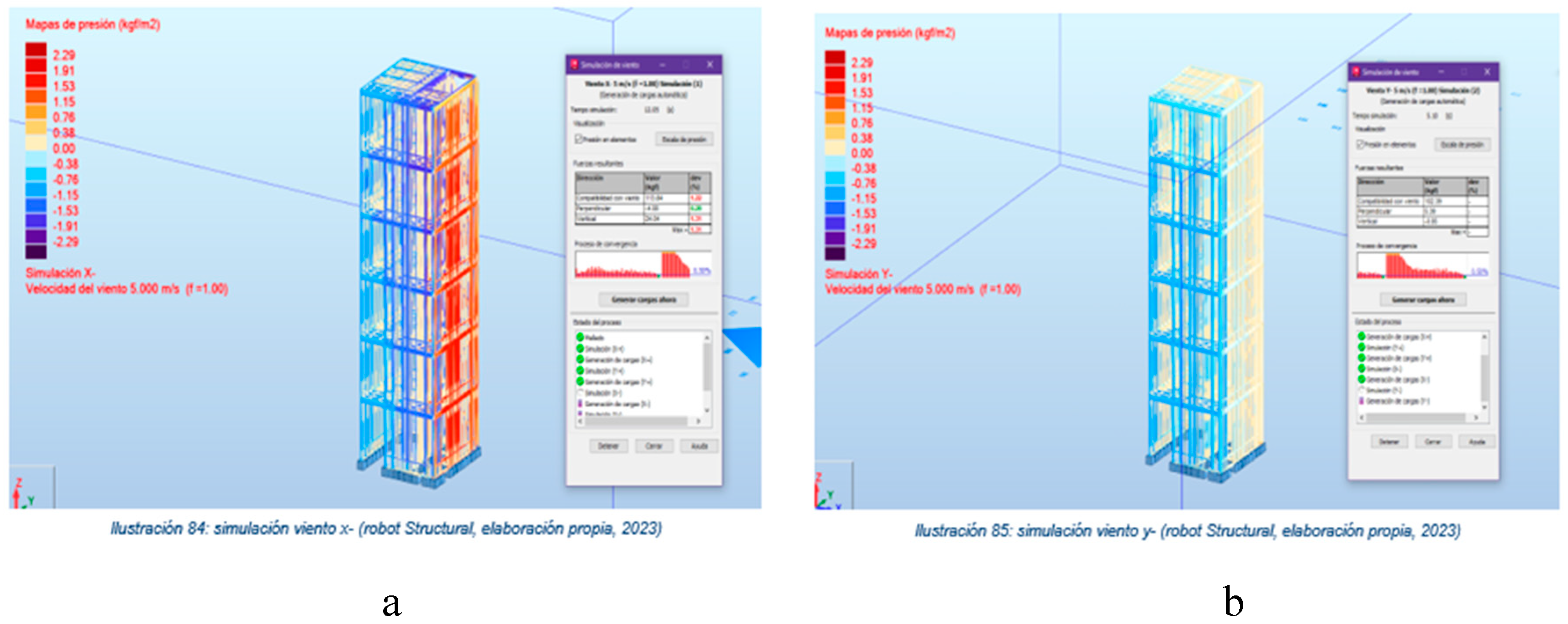
Figure 5.
On the other hand, to summarize all experiences and features using BIM and wood software Table 8 is presented. All cases show advantages of using BIM-Wood approach over traditional CAD tools.
- 3dModel: the complete building is derived from BIM-Wood Model, it has more advantages in comparison to traditional CAD approach that shows just parts of the real building.
- Visualization: automatic orthogonal views, perspective views, 3d Sections, renders, are derived from BIM-Wood Model, it has more advantages in comparison to traditional CAD approach that requires creation of another model for such view.
- Drawings: automatic floor plans, sections, elevation, details are derived from BIM-Wood Model, it has more advantages in comparison to traditional CAD approach that requires creation of each drawing separately and unconnected.
- Schedules and Cost Estimations, automatic schedule and cost estimation are derived from BIM-Wood Model, it has more advantages in comparison to traditional CAD approach that requires creation of separated spreadsheets creation, which are unconnected to drawings.
- Fabrication: automated shop drawings and machine formats are available; it has more advantages in comparison to traditional CAD approach that requires creation of new files for fabrication.
Nevertheless, the most advantages become when using BIM and Wood software combination that allows Semi-Automatization function for 3D Modeling, drawings and schedule creation, cost estimation and fabrication files. However, in many cases contracts of AEC professionals are divides and tied to certain stages of the building life cycle, this creates interruption of information flow, separated professionals do not see the necessity of sharing information since their contract are restricted, that is why arises the National mandatory use of BIM in many countries.
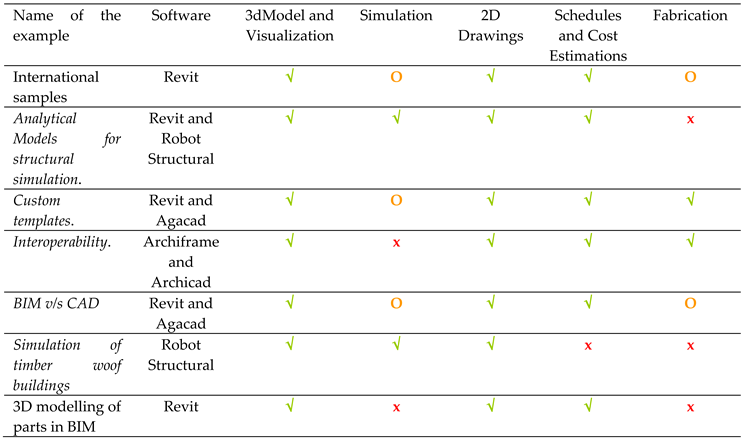

Table 8.
Summary of features of BIM software for wood. (√ = done, x = not done, O = not information).
Table 8.
Summary of features of BIM software for wood. (√ = done, x = not done, O = not information).
7. Conclusions
In this research, an exhaustive revision process of works, literature and projects of BIM and wood structures has been developed. Between this revision there is a lack of specific literature about BIM software for wood. Furthermore, there is little documentation about the use of BIM software for wood. Thus, the integration of BIM models to the wood industrialization process is discussed in several stages. Beyond the measurement of impacts and good practices, such as: “achievement of objectives, quantity and valuation of RFI, conflicts in the field, work redone, duration of the project savings in the use of materials, or improvement in quality” [129]. In this sense, it is necessary to ask (1) whether the times and costs of a methodology for design automation of this type would be profitable, as well as (2) if there are additional tools to apply it intuitively in Platform Frame projects.
Regarding the first question, internationally, StoraEnso or MetsäWood (construction in wood with CLT, LVL or Frame) already have BIM digital objects available, although studies still indicate the lack of joints and machining in CLT for example [106]. For the second question, ArchiFrame and AGACAD Wood Framing provide the necessary tools for the design of frameworks. Nevertheless, BIM applicated tools used to support design and construction in wood (such as Agacad and Archiframe) are currently uncommon. Although, these tools allow the creation of parametric construction packages, libraries of materials, rapid documentation and volumetric calculations, and support production, they are difficult to use, to pay for, and have no technical support in some countries. Likewise, such as those provided by Tekla and Autodesk, still have very little documentation and few known case studies, and work is needed to increase their development and coverage. However, the high-cost of BIM software is not a barrier to the implementation of BIM methodologies due to that the benefits are greater than implementation cost.
BIM-wood software will be essential to increase the productivity and sustainability of construction in wood-producing countries (Canada, Finland, US, and Chile) and should be integrated into wood promotion initiatives spearheaded by research centres, which have so far not included or promoted the use of these platforms. In this sense, both international practical experience and the creation of new tools contribute to indicate that profitability exists in the process of industrialization of constructive solutions in wood, also appropriating the advantages of planning and coordination based on virtual models, that is, to reduce times and costs, as well as to improve quality and performance during the entire lifecycle of the project. At present, in both academia and government plans in that field, there is no clear link between construction in wood (design, construction, operation) and the advantages of BIM software. It is recommended that the different BIM and wood agendas work together through projects that integrate both areas on all fronts. One exception is the “The Finnish Construction 2000 classification system”, which supports BIM and design procedures, as well as cost estimation, and production planning and control. Finally, all cases study analyzed demonstrate the advantages of BIM software for wood construction, not only for modelling but also for planning and execution.
Below are some recommendations and challenges for appropriate future implementation of BIM-Wood methodologies for emerging wood-producing countries:
- Use of BIM software and plug-ins in English would improve competitiveness in international markets.
- Introduction of BIM methodologies and plug-ins in the academic curricula of Architecture, Engineering, and Construction (AEC) degrees. Such as the UC and UBB Timber Certification courses.
- Creation of national standards for using BIM that include the use of wood.
- Creation of training for AEC professionals, such as workshops, courses, or certification courses.
- Partnerships with wood producers for construction, where standardizations of products for BIM platforms can be discussed.
- Dissemination seminars supported by the industry organizations involved: College/Associations of Architects, Constructor and Engineers.
Author Contributions
All authors listed have made a substantial, direct, and intellectual contribution to the work and approved it for publication.
Conflict of Interest
The authors declare that the research was conducted in the absence of any commercial or financial relationships that could be construed as a potential conflict of interest.
References
- E. Fleury and M. Chiche, “LE BOIS DANS LA CONSTRUCTION,” 2006.
- J. Hildebrandt, N. Hagemann, and D. Thrän, “The contribution of wood-based construction materials for leveraging a low carbon building sector in europe,” Sustain Cities Soc, vol. 34, 2017. [CrossRef]
- H. Sakata and Y. Yamazaki, “Challenges in High-rise Wooden Structures and the Seismic Design in Japan,” International Journal of High-Rise Buildings, vol. 11, no. 3, 2022. [CrossRef]
- K. R. Gunawardena, M. J. Wells, and T. Kershaw, “Utilising green and bluespace to mitigate urban heat island intensity,” Science of the Total Environment, vol. 584–585, 2017. [CrossRef]
- Banco Mundial, H. C. Terraza, R. Donoso, F. Victorero, and D. Ibanez, “The Construction of Timber Houses in Chile: A Pillar of Sustainable Development and the Agenda for Economic Recovery,” 2020.
- E. Hurmekoski, J. Kunttu, T. Heinonen, T. Pukkala, and H. Peltola, “Does expanding wood use in construction and textile markets contribute to climate change mitigation?,” Renewable and Sustainable Energy Reviews, vol. 174, 2023. [CrossRef]
- A. Roos et al., “Beliefs on environmental impact of wood construction,” Scand J For Res, vol. 38, no. 1–2, 2023. [CrossRef]
- P. M. Diaz, “Analysis of Benefits, Advantages and Challenges of Building Information Modelling in Construction Industry,” Journal of Advances in Civil Engineering, vol. 2, no. 2, pp. 1–11, Mar. 2016. [CrossRef]
- A. Okakpu, A. GhaffarianHoseini, J. Tookey, J. Haar, and A. Ghaffarian Hoseini, “An optimisation process to motivate effective adoption of BIM for refurbishment of complex buildings in New Zealand,” Frontiers of Architectural Research, vol. 8, no. 4, 2019. [CrossRef]
- R. M. Borjeghaleh and J. M. Sardroud, “Approaching Industrialization of Buildings and Integrated Construction Using Building Information Modeling,” in Procedia Engineering, 2016. [CrossRef]
- P. Wu, R. Jin, Y. Xu, F. Lin, Y. Dong, and Z. Pan, “The analysis of barriers to bim implementation for industrialized building construction: A China study,” Journal of Civil Engineering and Management, vol. 27, no. 1, 2021. [CrossRef]
- B. Malgıt, Ü. Işıkdağ, G. Bekdaş, and M. Yücel, “A generative design-to-BIM workflow for minimum weight plane truss design,” Revista de la Construccion, vol. 21, no. 2, 2022. [CrossRef]
- S. A. Biancardo, A. Capano, S. G. de Oliveira, and A. Tibaut, “Integration of BIM and procedural modeling tools for road design,” Infrastructures (Basel), vol. 5, no. 4, 2020. [CrossRef]
- A. Kamari, B. M. Kotula, and C. P. L. Schultz, “A BIM-based LCA tool for sustainable building design during the early design stage,” Smart and Sustainable Built Environment, vol. 11, no. 2, 2022. [CrossRef]
- T. Ahmad, A. Aibinu, and M. J. Thaheem, “BIM-based Iterative Tool for Sustainable Building Design: A Conceptual Framework,” in Procedia Engineering, 2017. [CrossRef]
- C. Llatas, R. Quiñones, and N. Bizcocho, “Environmental Impact Assessment of Construction Waste Recycling versus Disposal Scenarios Using an LCA-BIM Tool during the Design Stage,” Recycling, vol. 7, no. 6, 2022. [CrossRef]
- S. Gaur and A. Tawalare, “Investigating the Role of BIM in Stakeholder Management: Evidence from a Metro-Rail Project,” Journal of Management in Engineering, vol. 38, no. 1, 2022. [CrossRef]
- A. N.hasan and S. M. Rasheed, “The Benefits of and Challenges to Implement 5D BIM in Construction Industry,” Civil Engineering Journal (Iran), vol. 5, no. 2, 2019. [CrossRef]
- A. Z. Sampaio, P. Sequeira, A. M. Gomes, and A. Sanchez-Lite, “BIM Methodology in Structural Design: A Practical Case of Collaboration, Coordination, and Integration,” Buildings, vol. 13, no. 1, 2023. [CrossRef]
- B. Ilhan and H. Yaman, “Green building assessment tool (GBAT) for integrated BIM-based design decisions,” Autom Constr, vol. 70, 2016. [CrossRef]
- M. A. van Eldik, F. Vahdatikhaki, J. M. O. dos Santos, M. Visser, and A. Doree, “BIM-based environmental impact assessment for infrastructure design projects,” Autom Constr, vol. 120, 2020. [CrossRef]
- V. W. Tam, Y. Zhou, L. Shen, and K. N. Le, “Optimal BIM and LCA integration approach for embodied environmental impact assessment,” J Clean Prod, vol. 385, 2023. [CrossRef]
- J. K. W. Wong and J. Zhou, “Enhancing environmental sustainability over building life cycles through green BIM: A review,” Automation in Construction, vol. 57. 2015. [CrossRef]
- M. Marrero, M. Wojtasiewicz, A. Martínez-Rocamora, J. Solís-Guzmán, and M. D. Alba-Rodríguez, “BIM-LCA integration for the environmental impact assessment of the urbanization process,” Sustainability (Switzerland), vol. 12, no. 10. 2020. [CrossRef]
- R. Santos, A. Aguiar Costa, J. D. Silvestre, and L. Pyl, “Development of a BIM-based Environmental and Economic Life Cycle Assessment tool,” J Clean Prod, vol. 265, 2020. [CrossRef]
- L. Wilhelm, A. Donaubauer, and T. H. Kolbe, “Integration of bim and environmental planning: The citygml envplan ade,” Journal of Digital Landscape Architecture, vol. 2021, no. 6, 2021. [CrossRef]
- R. Junge, R. Steinmann, and K. Beetz, “A Dynamic Product Model,” Dordrecht, 1997, pp. 617–634.
- Graphisoft, ArchiCAD. 2007. [CrossRef]
- ArchiSolutions Oy/Ltd, “Archiframe”.
- B. Soust-Verdaguer, C. Llatas, and A. García-Martínez, “Critical review of bim-based LCA method to buildings,” Energy and Buildings, vol. 136. 2017. [CrossRef]
- L. Khemlani, “BIM Evaluation Study Report, For the AIA Large Firm Round Table (LFRT) CEO Committee,” 2010.
- CIC Research Group, Computer Integrated Construction Research Program, and Penn State CIC Research Team, “BIM Project Execution Planning Guide and Templates – Version 2.1,” buildingSMART alliance, 2011.
- N. Gu and K. London, “Understanding and facilitating BIM adoption in the AEC industry,” Autom Constr, vol. 19, no. 8, 2010. [CrossRef]
- C. Jobim, M. Stumpf, R. Edelweiss, and A. Kern, “Análisis de la implantación de tecnología BIM en oficinas de proyecto y construcción en una ciudad de Brasil en 2015,” Revista ingeniería de construcción, vol. 32, no. 3, 2017. [CrossRef]
- McGraw Hill Construction, The business value of BIM for construction in major global markets. 2014.
- ISO, “BS ISO 29481-1 : 2010 - Building information modelling - Information delivery manual - Part 1: Methodology and format,” ISO, 2010.
- A. Agirbas, “Teaching construction sciences with the integration of BIM to undergraduate architecture students,” Frontiers of Architectural Research, vol. 9, no. 4, 2020. [CrossRef]
- S. Levin et al., “Plan BIM Chile,” Economic History Review, vol. 73, no. 1, 2019.
- CORFO and PMG, “Hoja de Ruta PyCS 2025,” Programa Estratégico de Productividad y Sustentabilidad en la Construcción, 2016.
- C. Eastman, P. Teicholz, R. Sacks, and K. Liston, BIM handbook: A Guide to building Information Modeling for owners, managers, designers, Engineers and contractors (2nd edition ed.): Wiley Publishing. 2011.
- D. Lobos and M. Trebilcock, “Building performance information and graphs approach for the design of floor plans,” Arquiteturarevista, vol. 10, no. 1, 2014. [CrossRef]
- C. S. Ogueta and M. C. Sweden, “Object Interaction Query: A Context Awareness Tool for Evaluating BIM Components’ Interactions,” 2014. [CrossRef]
- R. and G. L. Eastman, C., Teicholz, P. Sacks, BIM Handbook - A Guide to Building Information Modelling for Owners, Designers, Engineers, Contractors, and Facility Managers. 2018.
- M. Loyola and F. Lopez, “An evaluation of the macro-scale adoption of Building Information Modeling in Chile: 2013-2016,” REVISTA DE LA CONSTRUCCION, vol. 17, no. 1, pp. 158–171, Apr. 2018. [CrossRef]
- McGraw Hill Construction, “The Business Value of BIM for Construction in Major Global Markets,” 2014.
- J. Messner et al., “BIM Project Execution Planning Guide-Version 2.2.”.
- C. Eastman, P. Teicholz, R. Sacks, and K. Liston, BIM handbook: a guide to building information modeling for owners, managers, designers, engineers, and contractors, 2nd ed. New York: John Wiley, 2011.
- C. Eastman, P. Teicholz, R. Sacks, and K. Liston, BIM Handbook. A guide to Building Information Modeling for Owners Managers, Designers, Engineers, and Contractors, 1st ed. New Jersey: John Wiley & Sons, Inc., 2008.
- P. M. Diaz, “Analysis of Benefits, Advantages and Challenges of Building Information Modelling in Construction Industry,” Journal of Advances in Civil Engineering, vol. 2, no. 2, pp. 1–11, Mar. 2016. [CrossRef]
- T. Dzambazova, G. Demchak, and E. Krygiel, Mastering TM Revit Architecture 2008, vol. 53. 1989.
- V. Y. Alpatov, A. V. Atamanchuk, and M. I. Balzannikov, “Economic effectiveness of traditional building materials in modern conditions,” in IOP Conference Series: Materials Science and Engineering, 2019. [CrossRef]
- J. Švajlenka and M. Kozlovská, “Perception of user criteria in the context of sustainability of modern methods of construction based on wood,” Sustainability (Switzerland), vol. 10, no. 2, 2018. [CrossRef]
- J. Švajlenka and M. Kozlovská, “Elements of the Fourth Industrial Revolution in the Production of Wood Buildings,” Tehnički glasnik, vol. 14, no. 3, 2020. [CrossRef]
- T. W. Pribadi, M. S. Arif, S. I. Wahidi, and I. W. Maditiara, “Modular system construction for laminated wooden fishing vessel industry,” in IOP Conference Series: Earth and Environmental Science, 2021. [CrossRef]
- H. Salamah and T. Kang, “Review of timber construction manual in designing traditional building,” in The 2022 Structures Congress (Structures22), Seoul, Korea, Aug. 2022.
- D. Domljan and L. Janković, “Design of Sustainable Modular Wooden Booths Inspired by Revitalization of Croatian Traditional Construction and New User Needs Due to COVID-19 Pandemic,” Sustainability (Switzerland), vol. 14, no. 2, 2022. [CrossRef]
- B. Kim, “Proportions of Wood Members in Japanese Traditional Architecture—A Comparison of the Kiwari-Sho and Measurements of Building Remains,” Sustainability (Switzerland), vol. 15, no. 7. 2023. [CrossRef]
- A. Erarslan, “An example of traditional timber building techniques from Anatolia. Granary structures in the region of the Eastern Black Sea, Turkey; serender,” International Wood Products Journal, vol. 12, no. 1, 2021. [CrossRef]
- B. Wrightsman, “A Critical Investigation of the Wood Frame System: The Case for the Neil Astle House,” Journal of Architectural Education, vol. 75, no. 1, 2021. [CrossRef]
- F. Lindblad, “Växjö municipality’s planning strategy to increase the construction ofwooden multi-family buildings,” Sustainability (Switzerland), vol. 12, no. 12, 2020. [CrossRef]
- Fredrik Lindblad, “A Case Study of Växjö Municipality’s Actions to Increase the Construction of Wooden Multi-family Buildings,” Journal of Civil Engineering and Architecture, vol. 16, no. 5, 2022. [CrossRef]
- X. Lu, Y. Wei, X. Hu, and J. Fang, “A Research on the Architectural Design and its Implementing of Dong Nationality in Northern Guangxi,” IOP Conf Ser Earth Environ Sci, vol. 525, no. 1, 2020. [CrossRef]
- Y. Bai, J. Gao, A. Pitts, Y. Gao, W. Bai, and Z. Tao, “Improving the sustainability of traditional dwellings in Yunnan, China: Seismic resistance testing of wood-frame and earth-built wall dwellings,” Sustainability (Switzerland), vol. 11, no. 4, 2019. [CrossRef]
- S. Fernando, E. Hansen, R. Kozak, and A. Sinha, “Organizational cultural compatibility of engineered wood products manufacturers and building specifiers in the Pacific Northwest,” Architectural Engineering and Design Management, vol. 14, no. 5, 2018. [CrossRef]
- M. K. Kuzman and D. Sandberg, “Engineered wood products in contemporary architectural use – a concise overview,” Wood Mater Sci Eng, vol. 18, no. 6, pp. 2112–2115, Nov. 2023. [CrossRef]
- T. Herzog, J. Natterer, R. Schweitzer, M. Volz, and W. Winter, Timber Construction Manual. Basel: Birkhäuser Architecture, 2004.
- A. Fallahi, E. A. Poirier, S. Staub-French, J. Glatt, and N. Sills, “Designing for Pre-Fabrication and Assembly in the Construction of UBCäó» s Tall Wood Building,” Modular and Offsite Construction (MOC) Summit Proceedings, 2016.
- U. J. Udosen, “Evaluation and improvement of dvorak keyboard layout using CADwork,” in Advanced Materials Research, 2009, pp. 585–591. [CrossRef]
- M. Abushwereb, H. Liu, and M. Al-Hussein, “A knowledge-based approach towards automated manufacturing-centric BIM: wood frame design and modelling for light-frame buildings,” Modular and Offsite Construction (MOC) Summit Proceedings, pp. 100–107, 2019.
- B. Ceranic, D. Latham, and A. Dean, “Sustainable Design and Building Information Modelling: Case Study of Energy Plus House, Hieron’s Wood, Derbyshire UK,” Energy Procedia, vol. 83, pp. 434–443, 2015. [CrossRef]
- A. Alwisy, S. Bu Hamdan, B. Barkokebas, A. Bouferguene, and M. Al-Hussein, “A BIM-based automation of design and drafting for manufacturing of wood panels for modular residential buildings,” International Journal of Construction Management, vol. 19, no. 3, pp. 187–205, May 2019. [CrossRef]
- H. Deng, “Application of BIM Technology in the Seismic Performance of ‘wood Weaving’ Structure of Wooden Arcade Bridges,” Shock and Vibration, vol. 2022, 2022. [CrossRef]
- L. L. Dong, Y. H. Lu, and G. Chen, “The Modern Green Technology Innovation of Bayu Traditional Wooden Building,” Adv Mat Res, vol. 1065–1069, 2014. [CrossRef]
- F. Bianconi and M. Filippucci, “Digital Wood Design: Innovative Techniques of Representation in Architectural Design,” Springer, vol. 24, no. January, 2019.
- F. Bianconi and M. Filippucci, “WOOD, CAD AND AI: Digital modelling as place of convergence of natural and artificial intelligent to design timber architecture,” in Lecture Notes in Civil Engineering, vol. 24, 2019, pp. 3–60. [CrossRef]
- F. Neri, R. Cognoli, G. Palmieri, and R. Ruggiero, “Robotic assembly of a wooden architectural design,” in Mechanisms and Machine Science, 2023, pp. 426–433. [CrossRef]
- A. Adelzadeh, H. Karimian-Aliabadi, K. Åhlund, and C. Robeller, “ReciprocalShell A hybrid timber system for robotically-fabricated lightweight shell structures.”.
- C. Boton and D. Forgues, “Construction industrialization and IT integration: how tall wood buildings can show the right path towards construction 4.0,” Modular and offsite construction (MOC) summit proceedings, 2017.
- E. Hurmekoski, R. Jonsson, and T. Nord, “Context, drivers, and future potential for wood-frame multi-story construction in Europe,” Technol Forecast Soc Change, vol. 99, pp. 181–196, 2015. [CrossRef]
- S. An, P. Martinez, M. Al-Hussein, and R. Ahmad, “BIM-based decision support system for automated manufacturability check of wood frame assemblies,” Autom Constr, vol. 111, Mar. 2020. [CrossRef]
- O. Wong Chong, J. Zhang, R. M. Voyles, and B. C. Min, “BIM-based simulation of construction robotics in the assembly process of wood frames,” Autom Constr, vol. 137, May 2022. [CrossRef]
- B. Ben Mahmoud, N. Lehoux, P. Blanchet, and C. Cloutier, “Barriers, strategies, and best practices for BIM adoption in Quebec prefabrication small and medium-sized enterprises (SMEs),” Buildings, vol. 12, no. 4, Apr. 2022. [CrossRef]
- H. V. Dang, “Using sustainable timber in architecture in Vietnam,” in E3S Web of Conferences, 2023. [CrossRef]
- O. Bucklin, A. Menges, F. Amtsberg, O. Krieg, H. Drexler, and A. Rohr, “Mono-Material Wood Wall : Digital Fabrication of Performative Wood Envelopes,” Journal of Facade Design and Engineering, vol. 9, no. 1, 2021. [CrossRef]
- A. Ruuska and T. Häkkinen, “Efficiency in the Delivery of Multi-story Timber Buildings,” Energy Procedia, vol. 96, pp. 190–201, 2016. [CrossRef]
- A. A. M. Ali, “An integrated analysis with life cycle assessment, building information modeling, and environmental performance for window materials: Assiut university hospital clinic as a case study,” JES. Journal of Engineering Sciences, vol. 48, no. 6, pp. 1024–1050, 2020.
- P. Schneider-Marin, H. Harter, K. Tkachuk, and W. Lang, “Uncertainty analysis of embedded energy and greenhouse gas emissions using BIM in early design stages,” Sustainability, vol. 12, no. 7, p. 2633, 2020.
- B. Soust-Verdaguer, C. Llatas, and L. Moya, “Comparative BIM-based Life Cycle Assessment of Uruguayan timber and concrete-masonry single-family houses in design stage,” J Clean Prod, vol. 277, p. 121958, 2020.
- S. R. Shukla and S. Viswanath, “Comparative study on growth, wood quality and financial returns of teak (Tectona grandis Lf) managed under three different agroforestry practices,” Agroforestry systems, vol. 88, pp. 331–341, 2014.
- Q. Zheng, K. Yang, Q. Xu, C. Zhang, and L. Wang, “Pattern recognition of wood structure design parameters under external interference based on artificial neural network with BIM environment,” Journal of Intelligent and Fuzzy Systems, vol. 39, no. 6, pp. 8723–8729, 2020. [CrossRef]
- A. Alwisy, S. Bu Hamdan, B. Barkokebas, A. Bouferguene, and M. Al-Hussein, “A BIM-based automation of design and drafting for manufacturing of wood panels for modular residential buildings,” International Journal of Construction Management, vol. 19, no. 3, 2019. [CrossRef]
- H. Takabayashi, K. Kado, and G. Hirasawa, “Versatile Robotic Wood Processing Based on Analysis of Parts Processing of Japanese Traditional Wooden Buildings,” in Robotic Fabrication in Architecture, Art and Design 2018, 2019. [CrossRef]
- N. Rogeau, V. Tiberghien, P. Latteur, and Y. Weinand, “Robotic Insertion of Timber Joints using Visual Detection of Fiducial Markers,” in Proceedings of the 37th International Symposium on Automation and Robotics in Construction, ISARC 2020: From Demonstration to Practical Use - To New Stage of Construction Robot, 2020. [CrossRef]
- J. Peronto, J. Komp, and A. Fernandez, “Tall mass timber present and future - 2 case studies,” in 20th Congress of IABSE, New York City 2019: The Evolving Metropolis - Report, 2019. [CrossRef]
- H. Liu, G. Singh, M. Lu, A. Bouferguene, and M. Al-Hussein, “BIM-based automated design and planning for boarding of light-frame residential buildings,” Autom Constr, vol. 89, pp. 235–249, May 2018. [CrossRef]
- A. Bakchan, B. C. Guerra, K. M. Faust, and F. Leite, “BIM-based estimation of wood waste stream: the case of an institutional building project,” in Computing in Civil Engineering 2019: Visualization, Information Modeling, and Simulation - Selected Papers from the ASCE International Conference on Computing in Civil Engineering 2019, 2019, pp. 185–192. [CrossRef]
- M. Darwish, F. Alsakka, S. Assaf, and M. Al-Hussein, “Automated BIM-based CNC file generator for wood panel framing machines in construction manufacturing,” in 2022 Moc Summit: Edmonton, Alberta, Canada, 2022, pp. 98–105. [CrossRef]
- S. Al-Qahtani et al., “Development of photoluminescent translucent wood toward photochromic smart window applications,” Ind Eng Chem Res, vol. 60, no. 23, pp. 8340–8350, 2021. [CrossRef]
- J. C. Rose, A. Kicherer, M. Wieland, L. Klingbeil, R. Töpfer, and H. Kuhlmann, “Towards automated large-scale 3D phenotyping of vineyards under field conditions,” Sensors (Switzerland), vol. 16, no. 12, Dec. 2016. [CrossRef]
- A. Kaiser, M. Larsson, and U. A. Girhammar, “From file to factory: Innovative design solutions for multi-storey timber buildings applied to project Zembla in Kalmar, Sweden,” Frontiers of Architectural Research, vol. 8, no. 1, 2019. [CrossRef]
- R. L. Yuvita and A. Budiwirawan, “Analysis of the Advantages and Disadvantages of Using Autodesk Revit for the Dean Building of the Faculty of Education, Universitas Negeri Semarang,” Jurnal Teknik Sipil dan Perencanaan, vol. 24, no. 2, pp. 91–98, Oct. 2022. [CrossRef]
- J. D. Manrique, M. Al-Hussein, A. Bouferguene, and R. Nasseri, “Automated generation of shop drawings in residential construction,” Autom Constr, vol. 55, pp. 15–24, Jul. 2015. [CrossRef]
- L. Loffer, “The Advantages of Wood as a Building Material,” Wagner Meters, 2020.
- R. and G. L. Eastman, C., Teicholz, P. Sacks, BIM Handbook - A Guide to Building Information Modelling for Owners, Designers, Engineers, Contractors, and Facility Managers. 2018.
- Z. Maqsood, P. S. Rao, and T. Abdullah, “CAD/CAM with New Trends and Advancements, using Machine Learning: A Review,” International Journal of Technical Innovation in Modern Engineering & Science (IJTIMES), vol. 5, no. 5, 2019.
- C. Eastman, P. Teicholz, R. Sacks, and K. Liston, BIM handbook: A Guide to building Information Modeling for owners, managers, designers, Engineers and contractors (2nd edition ed.): Wiley Publishing. 2011.
- J. Westover, P. Lam, and J. Houck, “Using BIM for Wood Framed Construction Projects,” Structure Magazine, p. 40, Sep. 2018. Accessed: Jan. 17, 2024. [Online]. Available:. https://www.structuremag.org/?p=13711.
- C. Paskoff, C. Boton, and P. Blanchet, “BIM-Based Checking Method for the Mass Timber Industry,” Buildings, vol. 13, no. 6, 2023. [CrossRef]
- S. Staub-French et al., “Building Information Modeling (BIM) and Design for Manufacturing and Assembly (DfMA) for Mass Timber Construction,” Vancouver, Nov. 2018. Accessed: Jan. 17, 2024. [Online]. Available:. https://www.naturallywood.com/resource/bim-and-design-for-manufacturing-and-assembly-for-mass-timber-construction/.
- O. Wong Chong, J. Zhang, R. M. Voyles, and B. C. Min, “BIM-based simulation of construction robotics in the assembly process of wood frames,” Autom Constr, vol. 137, 2022. [CrossRef]
- S. An, P. Martinez, M. Al-Hussein, and R. Ahmad, “BIM-based decision support system for automated manufacturability check of wood frame assemblies,” Autom Constr, vol. 111, 2020. [CrossRef]
- NBS, “What is BIM? (Building Information Modelling) - NBS National BIM Library,” NBS national library.
- NBS, “National BIM Report 2019,” National BIM Report 2019 :The definitive industry update, 2019.
- H. Wenzel, “Stora Enso baut Wellpappengeschäft aus,” Lebensmittel Zeitung, vol. 75, no. 2, 2023. [CrossRef]
- S. Meschini, K. Iturralde, T. Linner, and T. Bock, “Novel applications offered by Integration of Robotic Tools in BIM-based Design Workflow for Automation in Construction Processes,” CIB* IAARC W199 CIC 2016 Workshop, 2016.
- A. Agirbas, “Teaching construction sciences with the integration of BIM to undergraduate architecture students,” Frontiers of Architectural Research, vol. 9, no. 4, 2020. [CrossRef]
- D. Lobos, F. Pino, C. Codron, V. Nuñez, and A. Sierra, “BIM and wood integration. New possibilities for AEC industry,” in WCTE 2018 - World Conference on Timber Engineering, 2018.
- E. Souza, “Using BIM to Deliver Low-Carbon Wood Buildings,” ArchDaily. Accessed: Jan. 17, 2024. [Online]. Available:. https://www.archdaily.com/974772/using-bim-to-deliver-low-carbon-wood-buildings.
- P. Eversmann, F. Gramazio, and M. Kohler, “Robotic prefabrication of timber structures: towards automated large-scale spatial assembly,” Construction Robotics, vol. 1, no. 1–4, 2017. [CrossRef]
- R. He, M. Li, V. J. L. Gan, and J. Ma, “BIM-enabled computerized design and digital fabrication of industrialized buildings: A case study,” J Clean Prod, vol. 278, 2021. [CrossRef]
- O. Skidmore and L. Merrill, “Timber tower research project - SOM,” STRUCTURE magazine, no. May, 2013.
- S. Le Roux, F. Bannier, E. Bossanne, and M. Stieglmeier, “Investigating the interaction of building information modelling and lean construction in the timber industry,” in WCTE 2016 - World Conference on Timber Engineering, 2016.
- British Woodworking Federation Ltd (BWF), “What is BIM?.,”. https://www.bwf.org.uk/toolkit/what-is-bim/.
- Y. Matsunaka, “Stunning Wooden Architecture in Japan Exemplifies How BIM Helps Construction,”. https://www.autodesk.com/design-make/articles/how-bim-helps-construction.
- Naturaly Wood, “University of British Columbia’s, Centre for Interactive Research on Sustainability (Nov, 2017). Brock Commons: Construction Modelling Case Study,”. https://www.naturallywood.com/wp-content/uploads/brock-commons-construction-modelling_case-study_naturallywood.pdf.
- A. Menges and J. Knippers, “BUGA Wood Pavilion 2019 | Institute for Computational Design and Construction | University of Stuttgart,” ICD Research Buildings / Prototypes.
- O. Merino, “Estudio exploratorio sobre la edificación con madera en 3 pisos en Chile y su vinculación con metodología BIM Building Information Modeling. (In spanish),” Master Thesis, Pontificia Universidad Católica de Chile, Santiago de Chile, 2014.
- McGraw Hill Construction, The business value of BIM for construction in major global markets. 2014.
- C. Codrón, “Análisis de las Herramientas de las Tecnologías BIM que Permiten Mejorar la Etapa de Diseño en la Elaboración de los Proyectos de Construcción en Madera (In spanish).,” Master Thesis, Pontificia Universidad Católica de Chile, Santiago de Chile, 2018.
- C. H. Yang, T. H. Wu, B. Xiao, and S. C. Kang, “Design of a robotic software package for modular home builder,” in Proceedings of the 36th International Symposium on Automation and Robotics in Construction, ISARC 2019, 2019. [CrossRef]
Figure 1.
Number of WoS publications in the last five years.
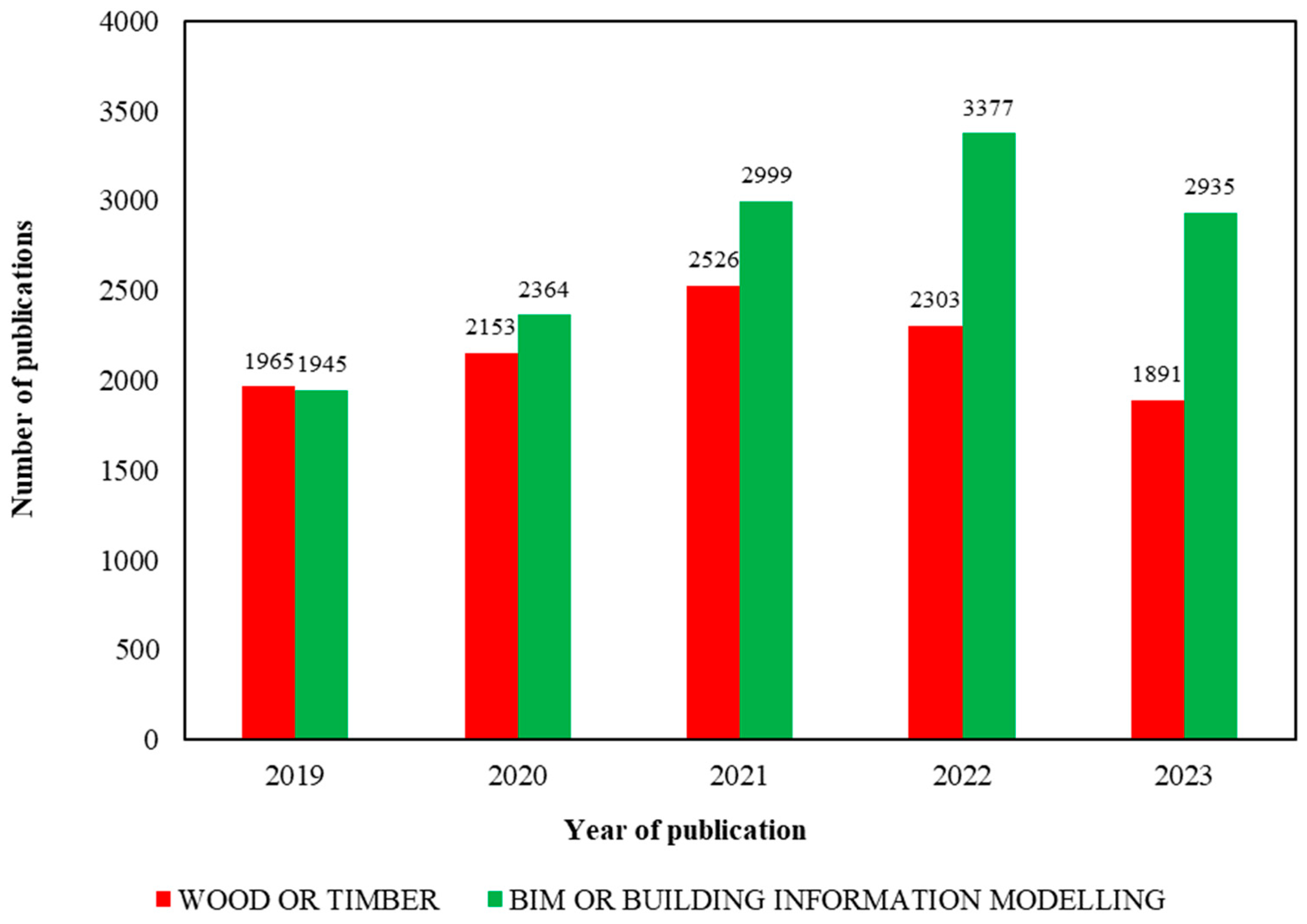
Figure 2.
Bibliographic coupling analysis per country based on the number of WoS (Web of Sciences) references shared in range 2011-2023: (a) Criterion: BIM-Wood, (b) Criterion: BIM-Timber, (c) Criterion: Building Information Modelling-Wood, (d) Criterion: Building Information Modelling-Timber, and (e) Criterion: BIM-Building Information Modelling-Wood-Timber.
Figure 2.
Bibliographic coupling analysis per country based on the number of WoS (Web of Sciences) references shared in range 2011-2023: (a) Criterion: BIM-Wood, (b) Criterion: BIM-Timber, (c) Criterion: Building Information Modelling-Wood, (d) Criterion: Building Information Modelling-Timber, and (e) Criterion: BIM-Building Information Modelling-Wood-Timber.
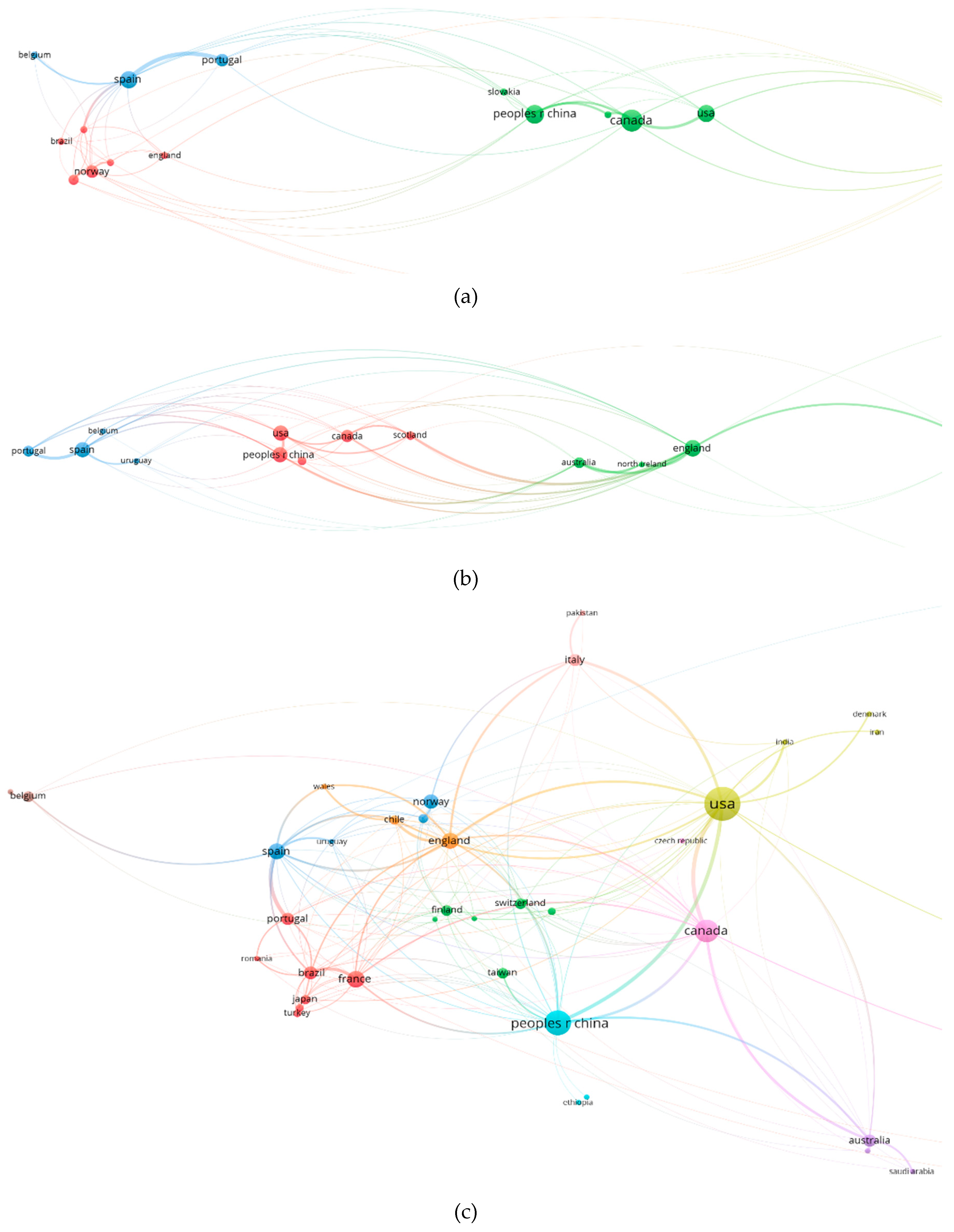
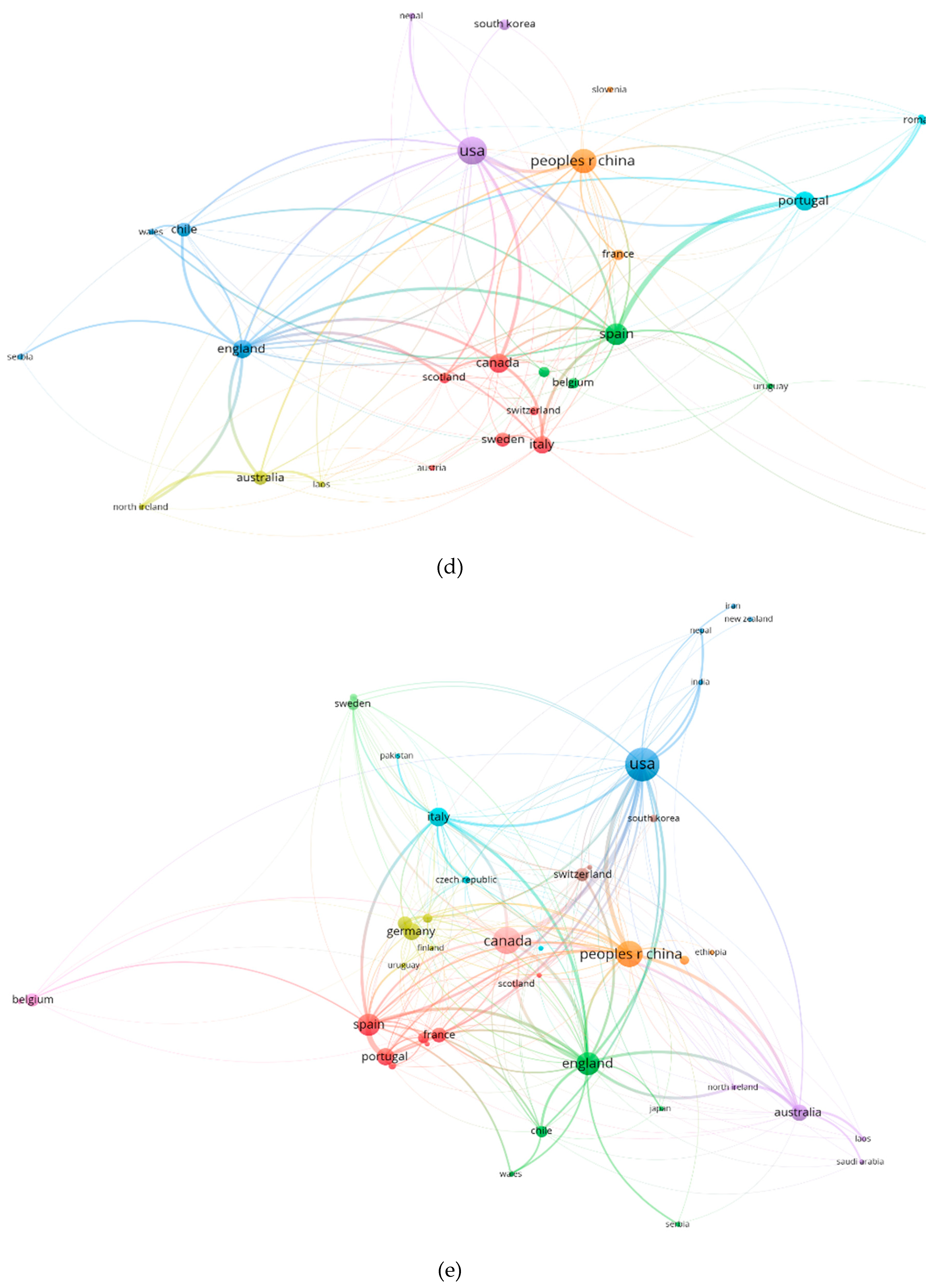
Figure 3.
Bibliographic coupling analysis per journal based on the number of WoS (Web of Sciences) references shared in range 2011-2023: (a) Criterion: BIM-Wood, (b) Criterion: BIM-Timber, (c) Criterion: Building Information Modelling-Wood, (d) Criterion: Building Information Modelling-Timber, and € Criterion: BIM-Building Information Modelling-Wood-Timber.
Figure 3.
Bibliographic coupling analysis per journal based on the number of WoS (Web of Sciences) references shared in range 2011-2023: (a) Criterion: BIM-Wood, (b) Criterion: BIM-Timber, (c) Criterion: Building Information Modelling-Wood, (d) Criterion: Building Information Modelling-Timber, and € Criterion: BIM-Building Information Modelling-Wood-Timber.
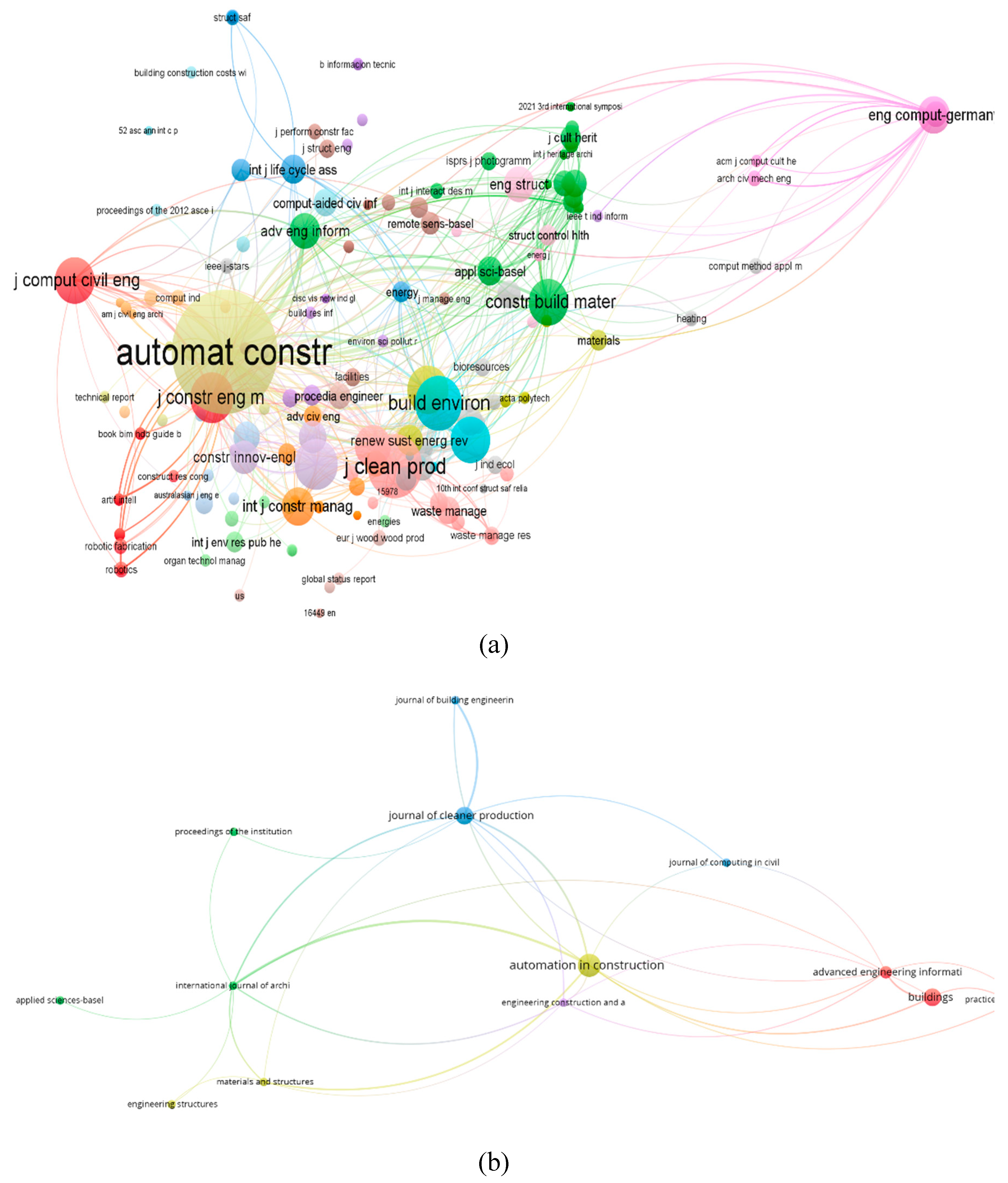
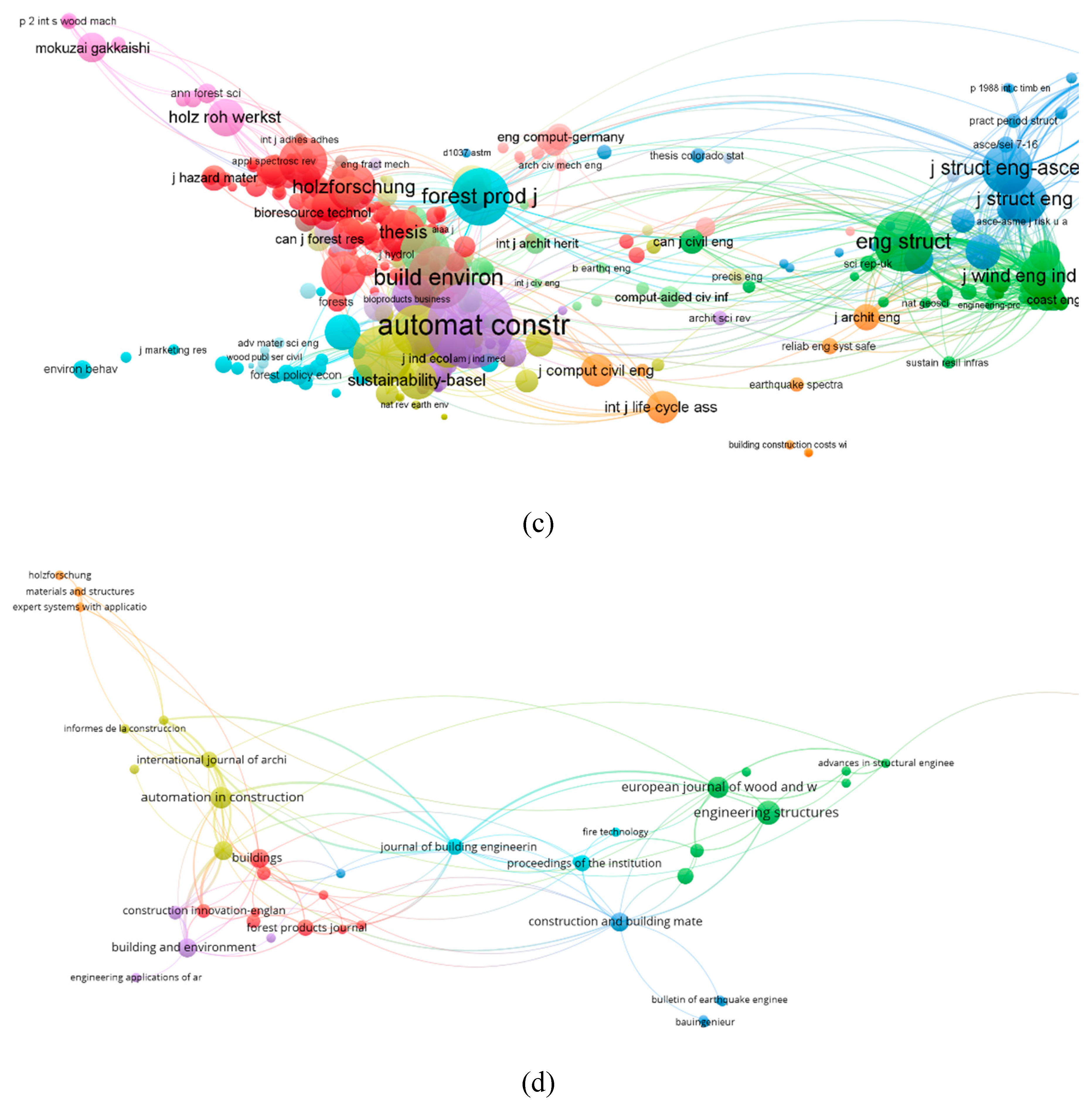
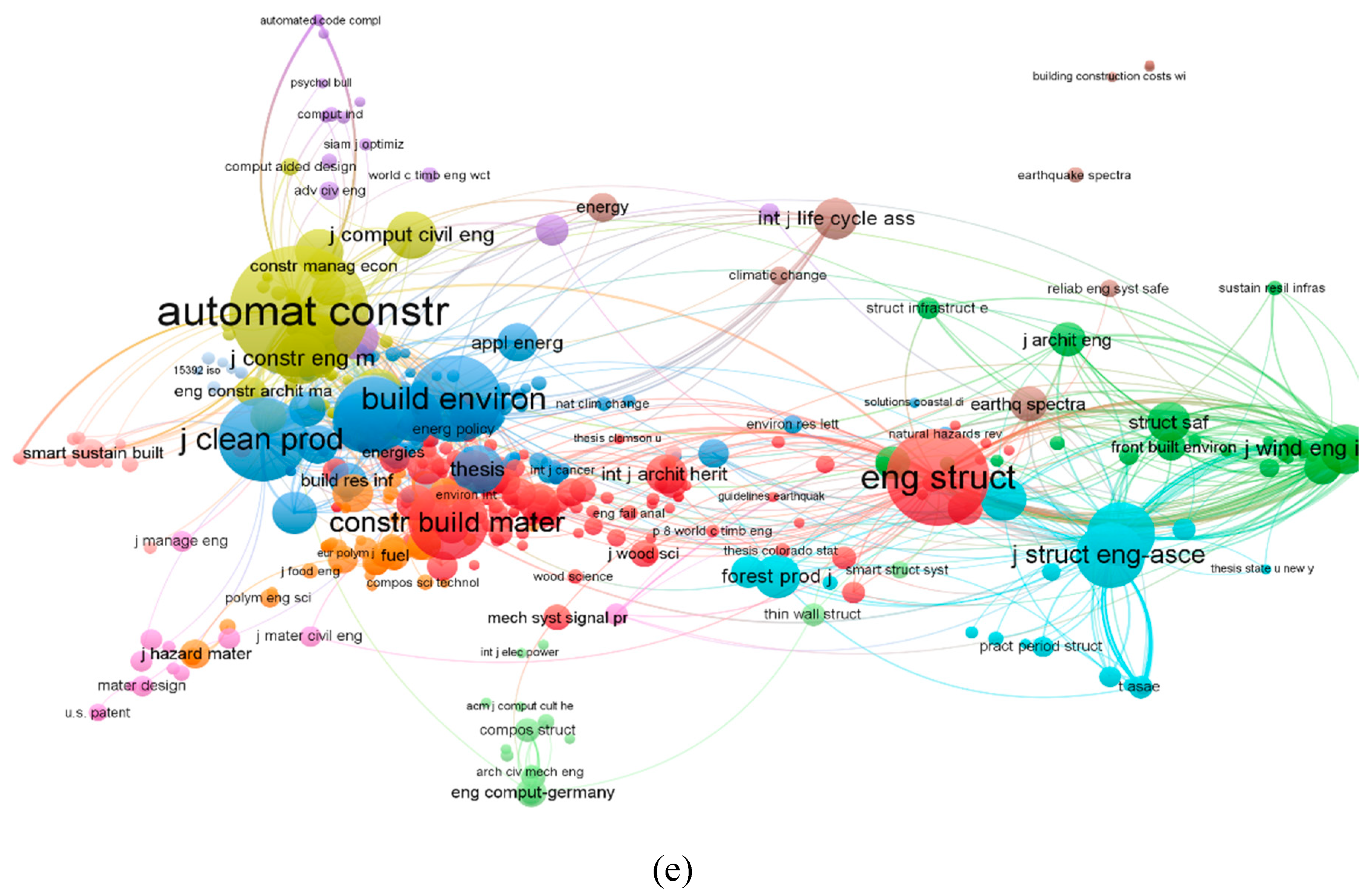
Figure 4.
Bibliographic coupling analysis per keyword based on the number of WoS (Web of Sciences) references shared in range 2011-2023: (a) Criterion: BIM-Wood, (b) Criterion: BIM-Timber, (c) Criterion: Building Information Modelling-Wood, (d) Criterion: Building Information Modelling-Timber, and (e) Criterion: BIM-Building Information Modelling-Wood-Timber.
Figure 4.
Bibliographic coupling analysis per keyword based on the number of WoS (Web of Sciences) references shared in range 2011-2023: (a) Criterion: BIM-Wood, (b) Criterion: BIM-Timber, (c) Criterion: Building Information Modelling-Wood, (d) Criterion: Building Information Modelling-Timber, and (e) Criterion: BIM-Building Information Modelling-Wood-Timber.
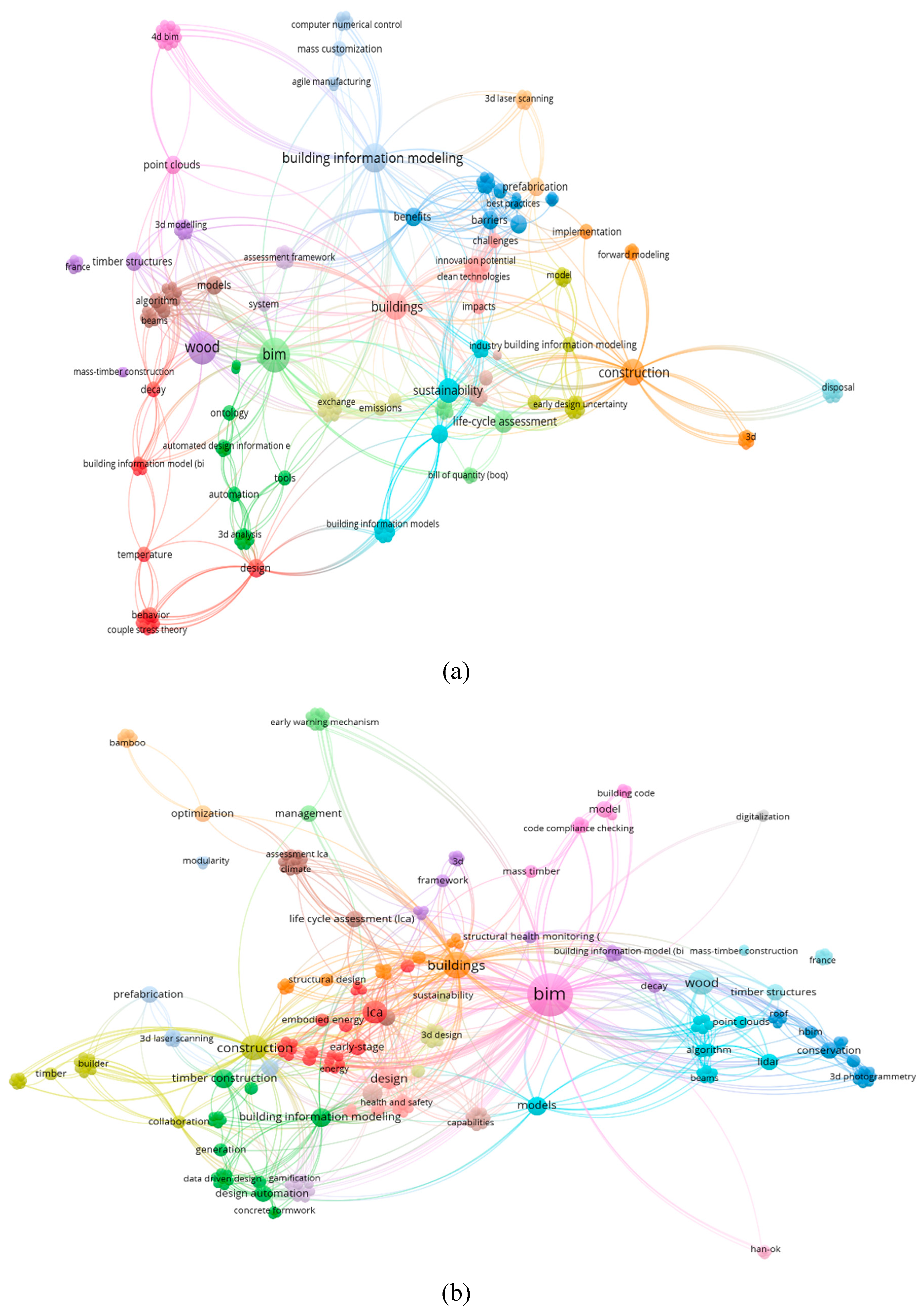
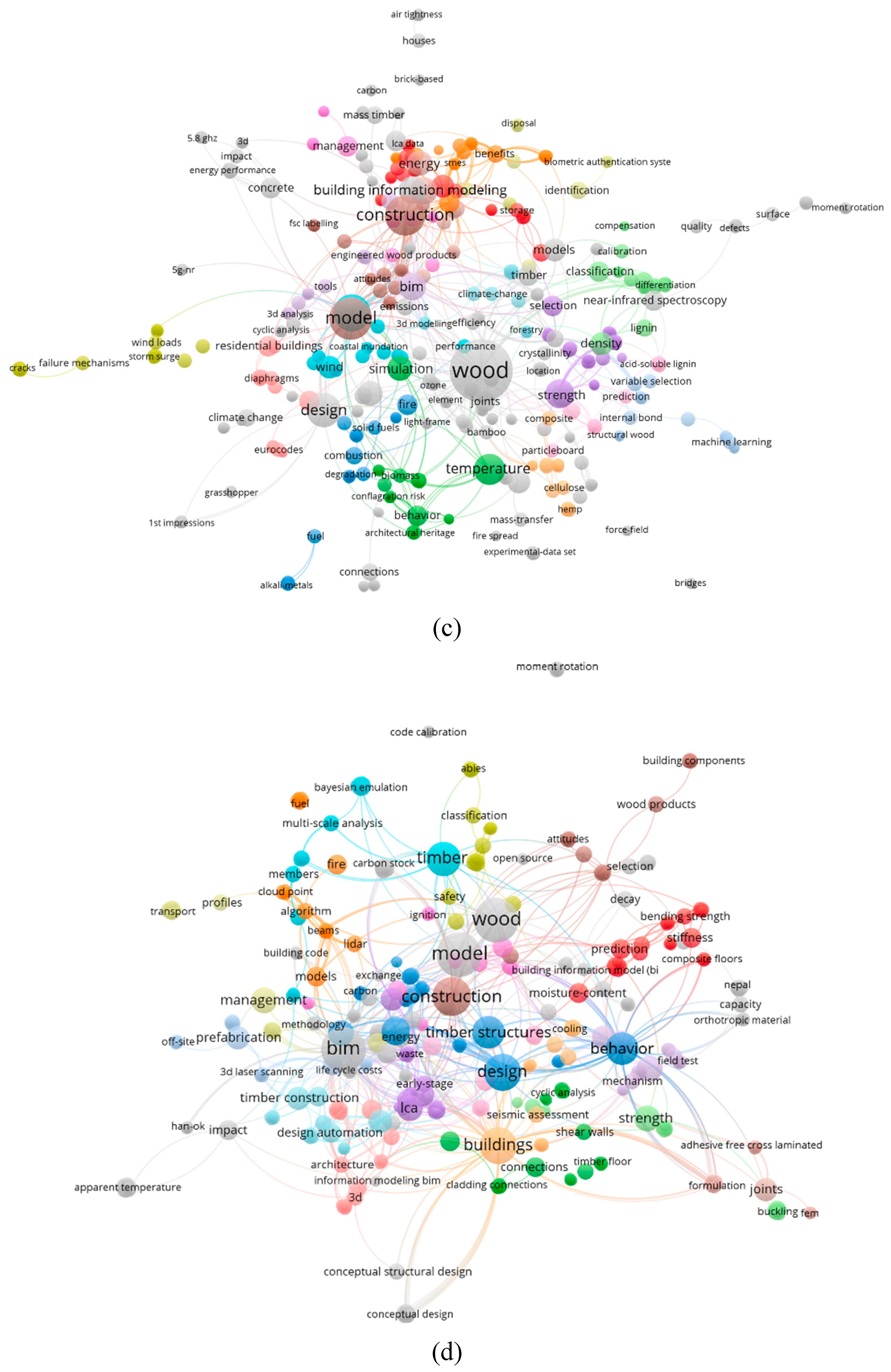
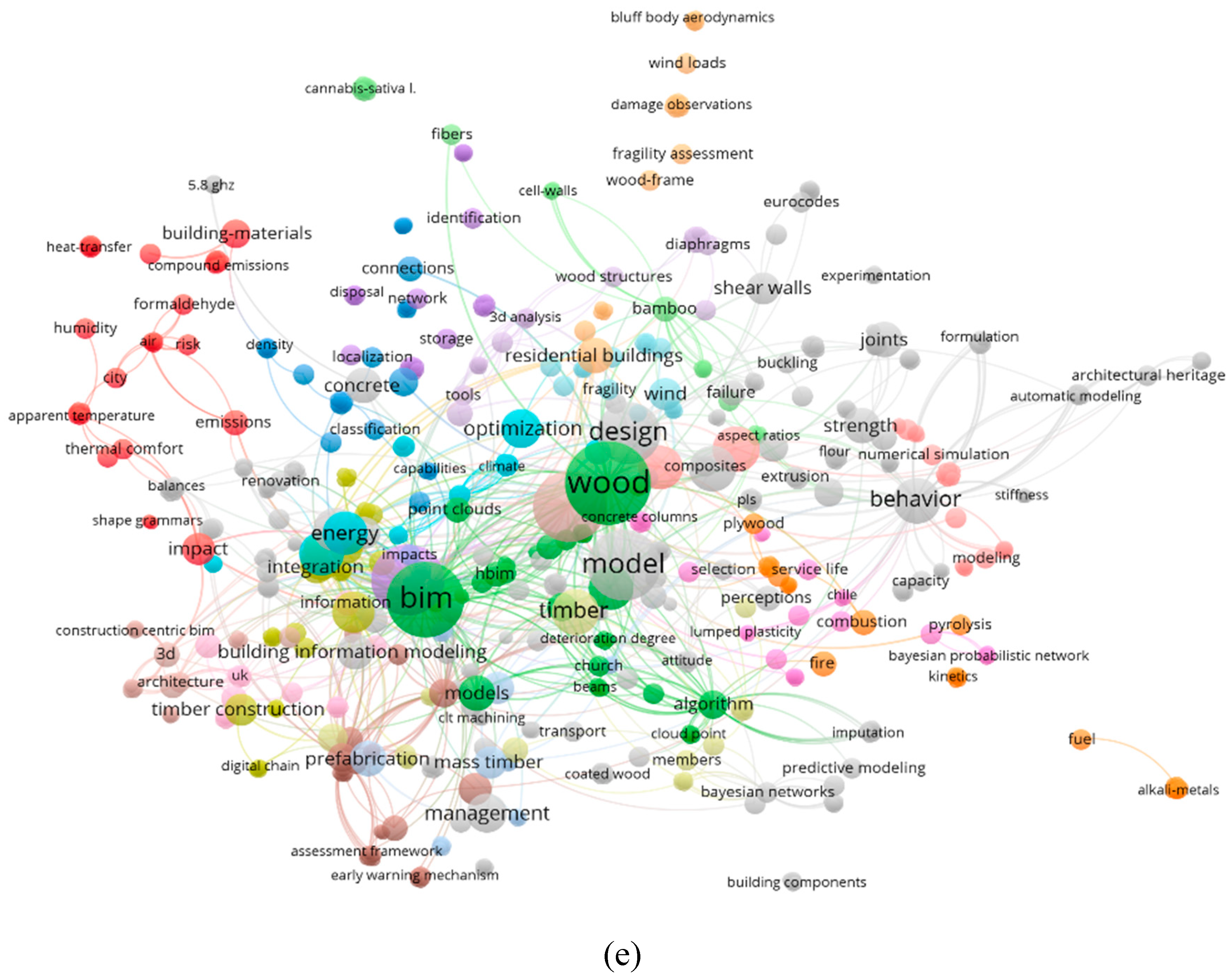
Figure 5.
Timeline for BIM concept.
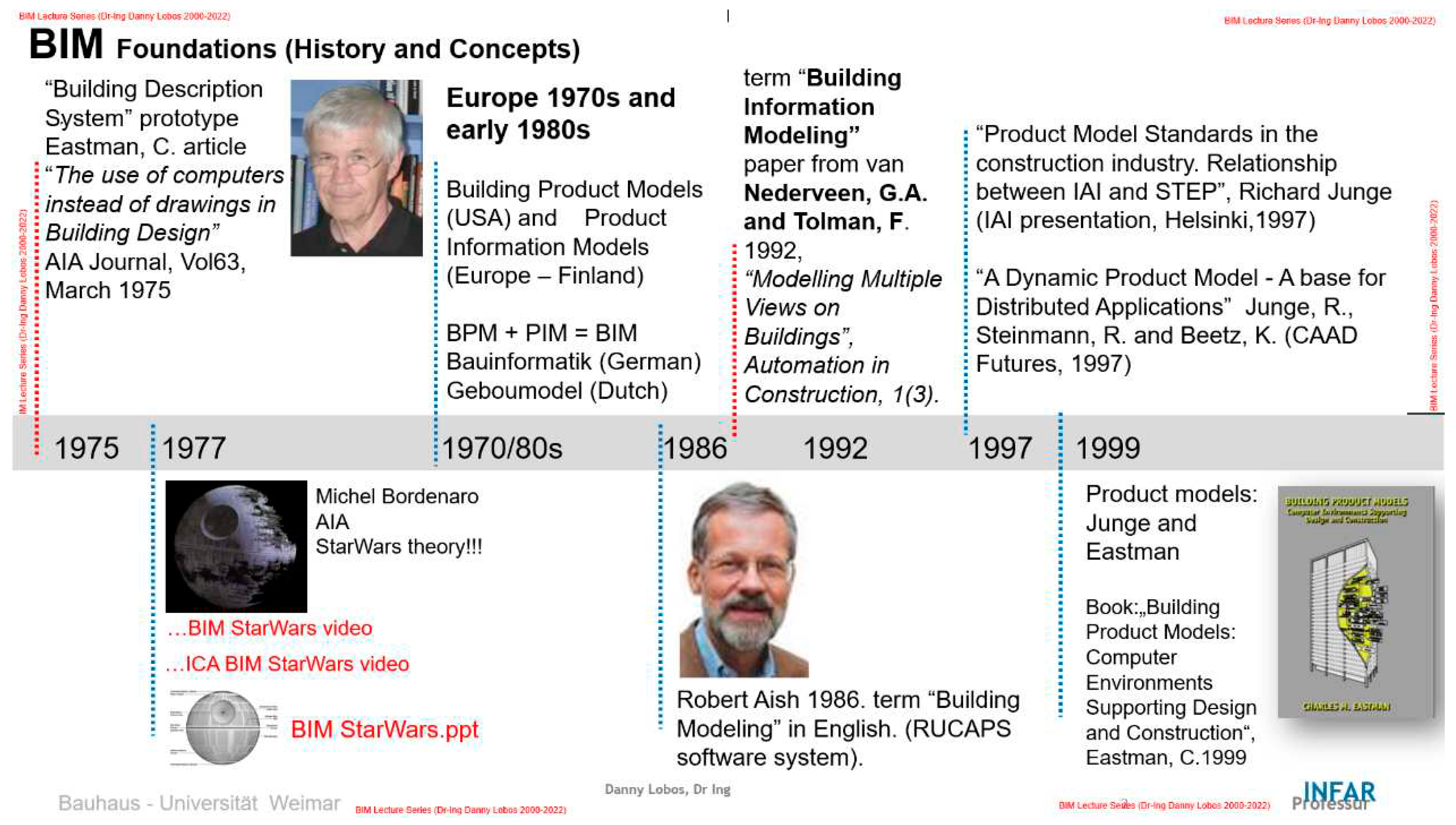
Figure 6.
Evolution of BIM commercial software.
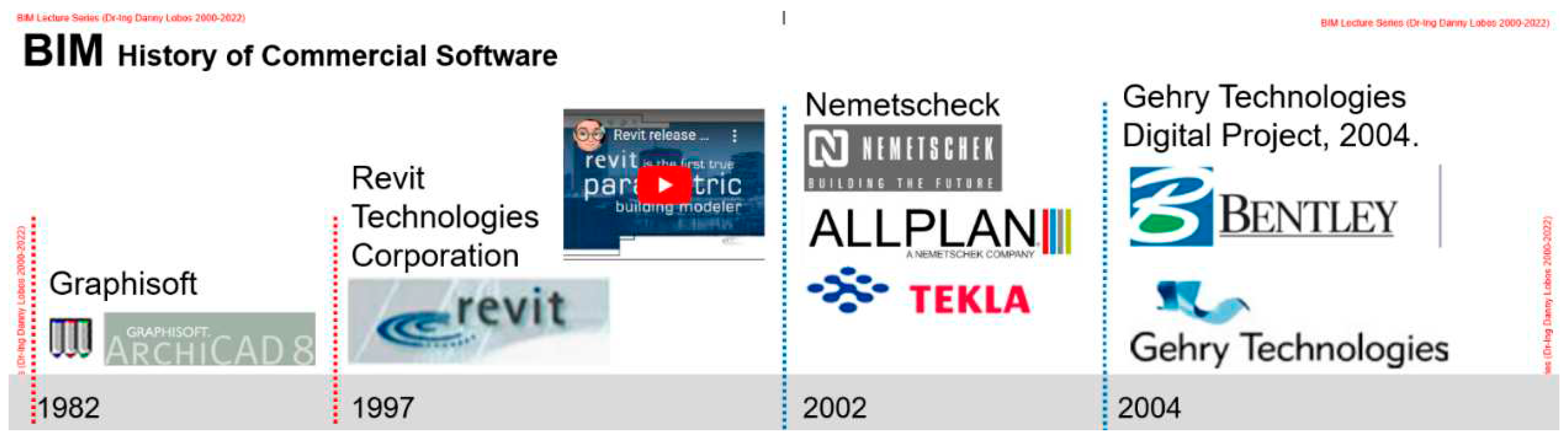
Figure 7.
A building modeled in BIM Revit. A 3D view, floorplan, cutaway, volume calculations of doors.
Figure 7.
A building modeled in BIM Revit. A 3D view, floorplan, cutaway, volume calculations of doors.
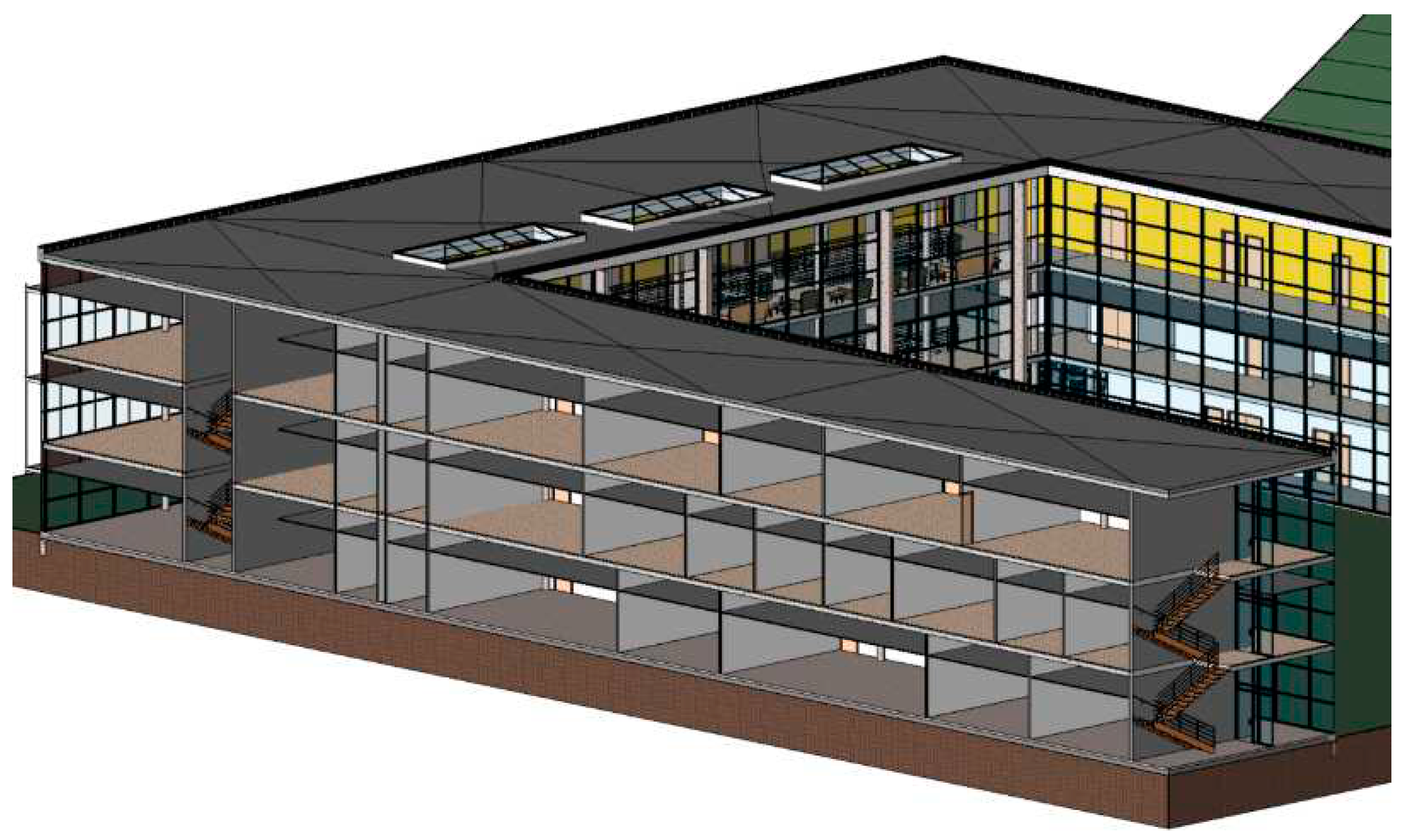
Figure 8.
(a) BIM Model of a wood Structure (b) Analytical structural model of 12-story building.
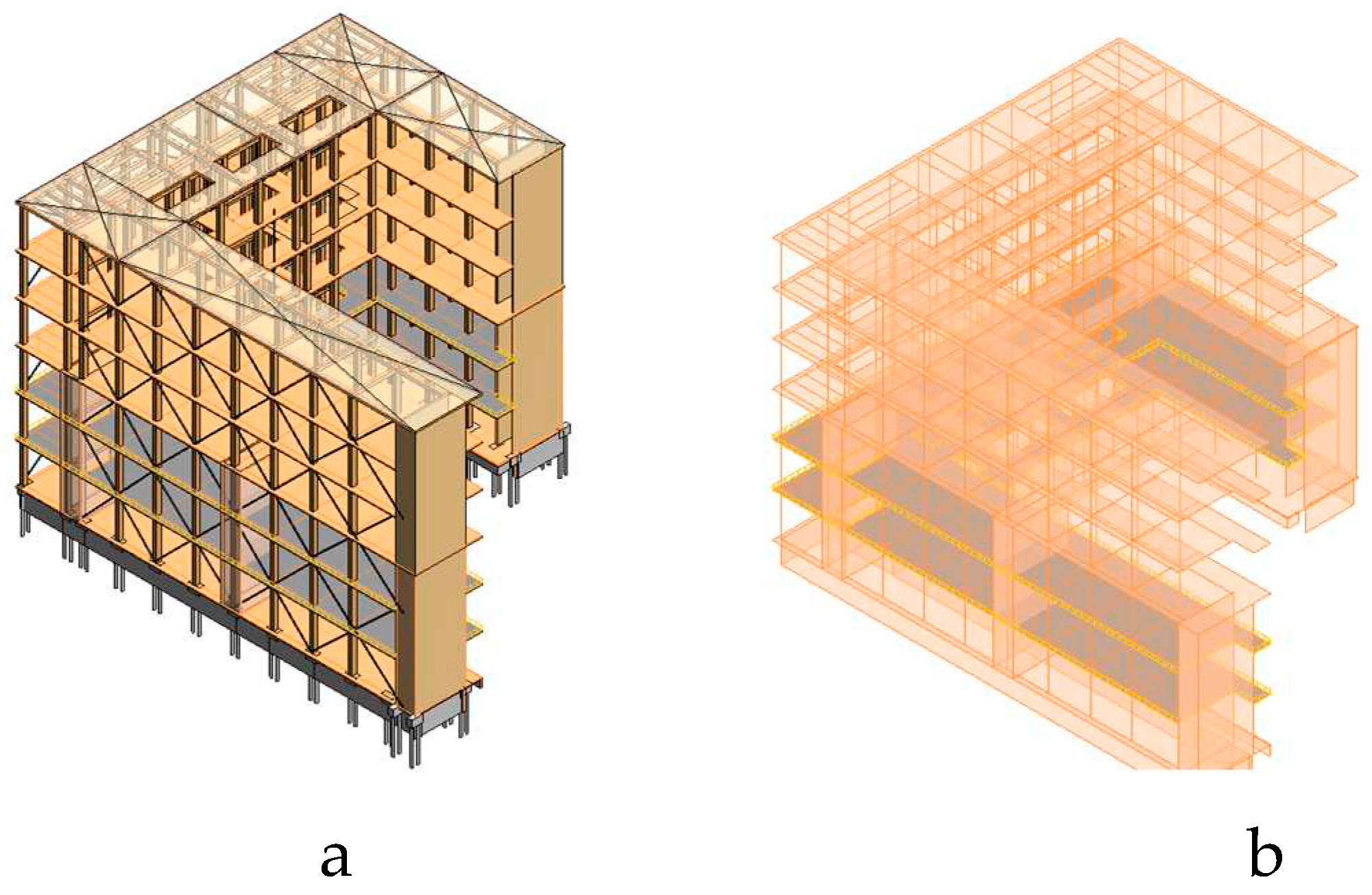
Figure 9.
Elevation from BIM Model of a wood Structure 12-story building.
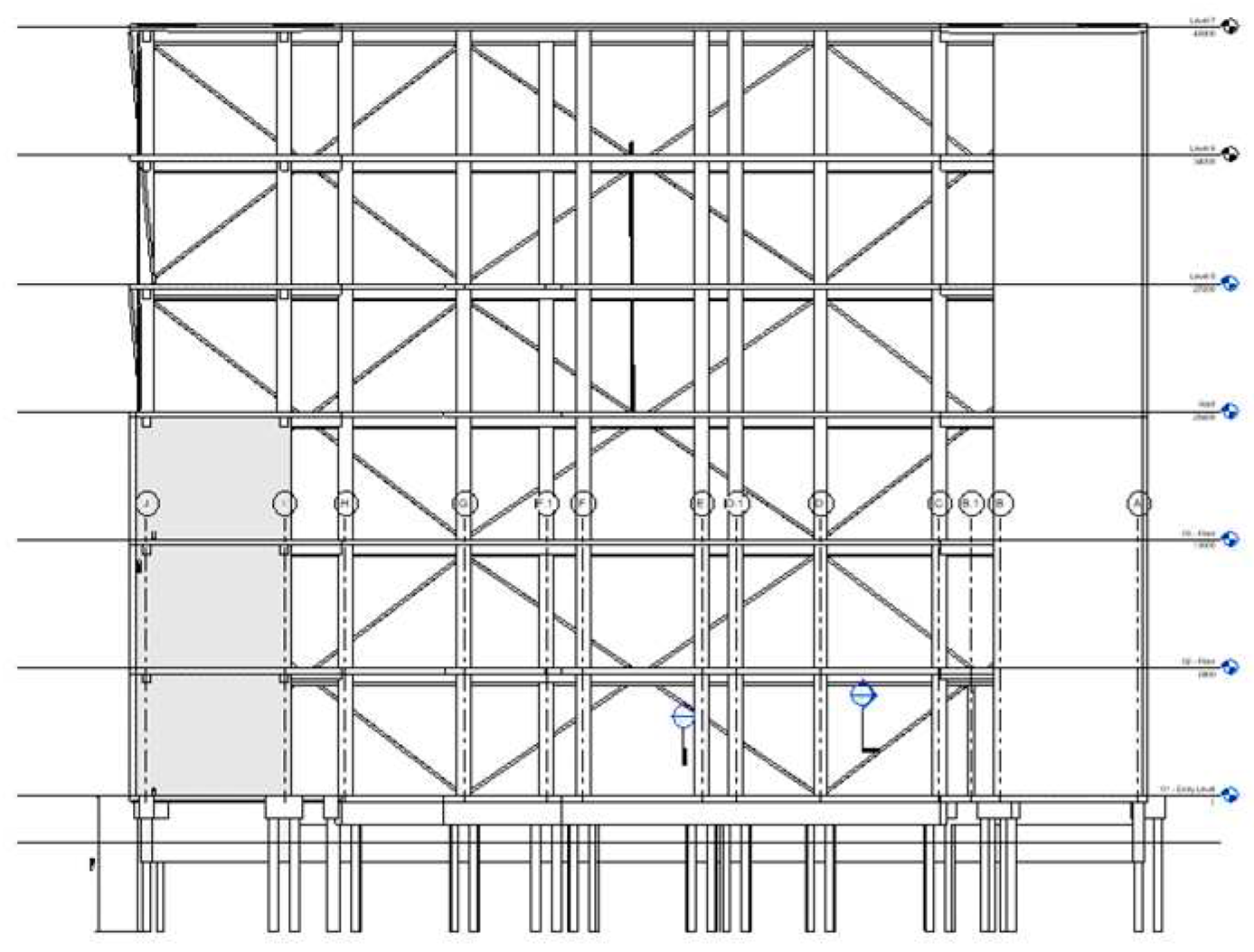
Figure 10.
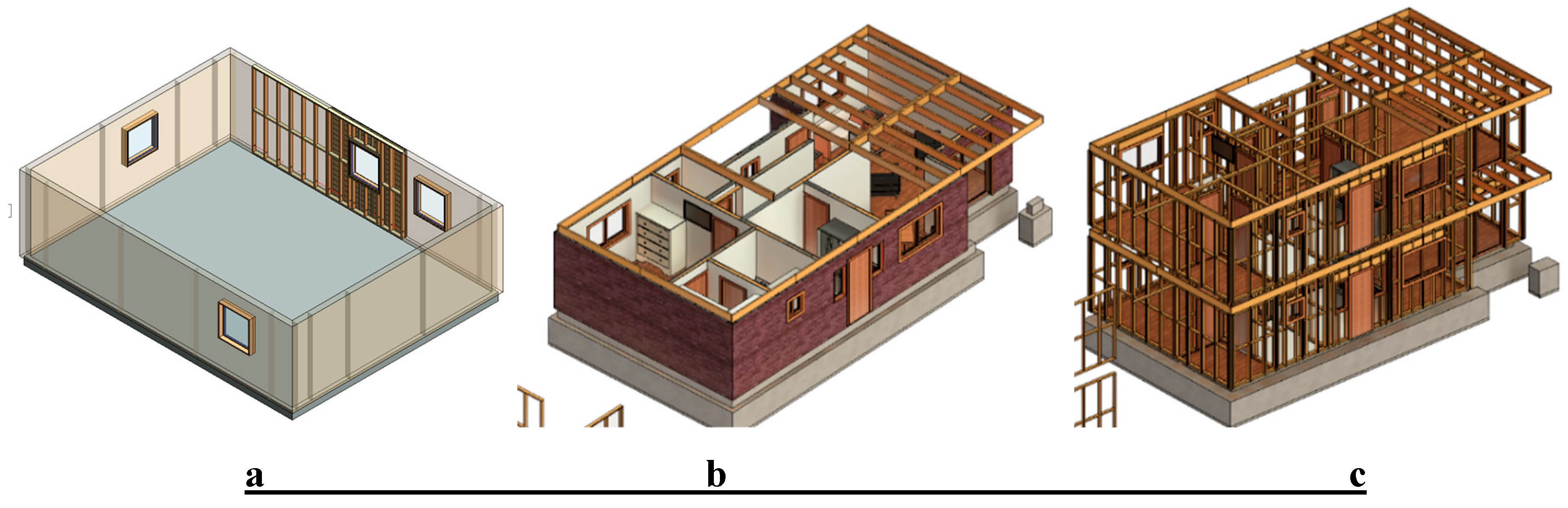
Figure 11.
a). Cladding for a house design with Archiframe for Archicad b) Interior frames for a house design with Archiframe for Archicad.
Figure 11.
a). Cladding for a house design with Archiframe for Archicad b) Interior frames for a house design with Archiframe for Archicad.
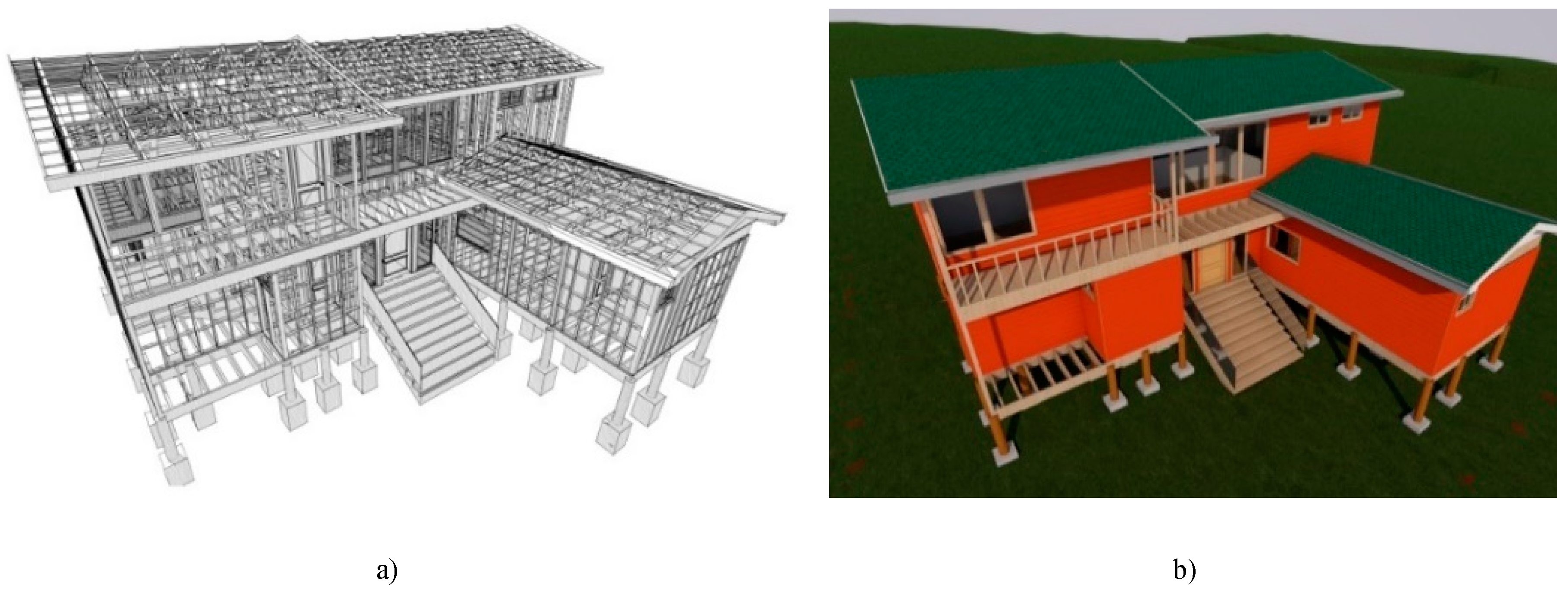
Table 1.
Most common BIM software and their companies.
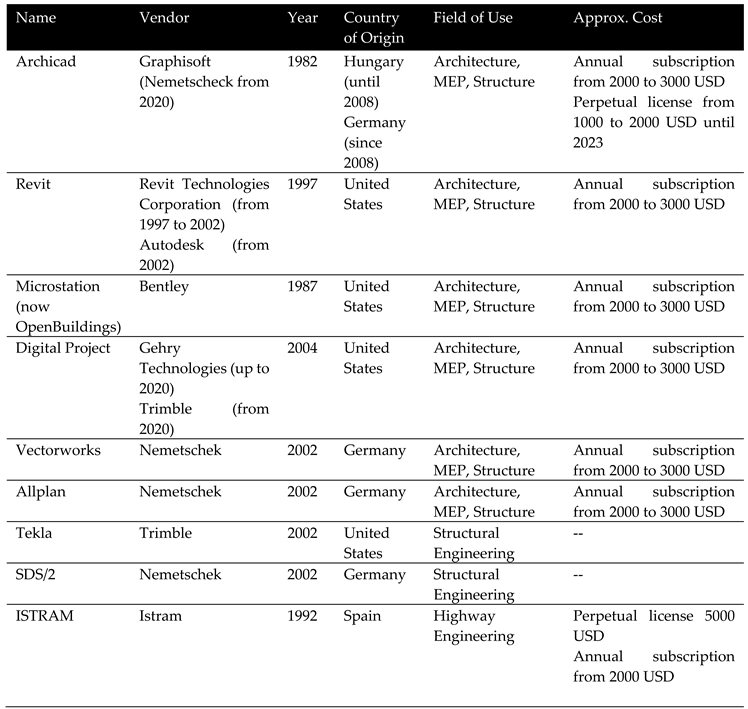
Table 2.
Comparison between different CAD software for Wood.
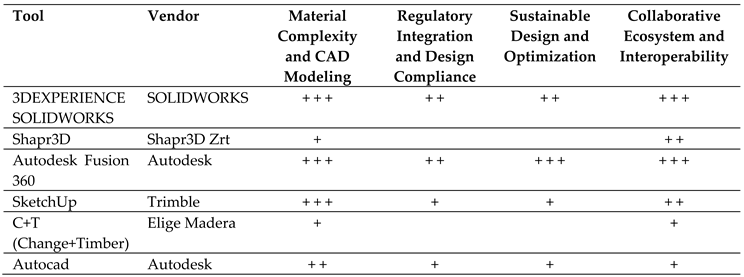
Table 3.
Name, Maker, and Costs of BIM-Wood Software.
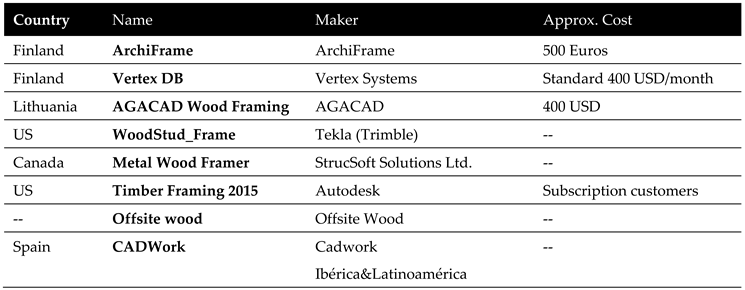
Table 4.
Types of wood system of BIM-Wood Software. (√ = done, x = not done, O = not information).
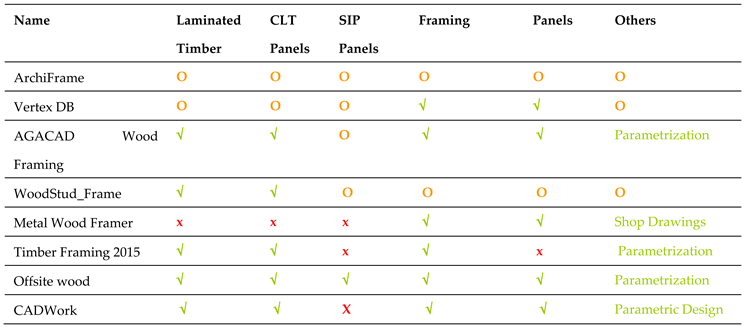
Table 5.
Modeling Capabilities of BIM-Wood Software. (√ = done, x = not done, O = not information).
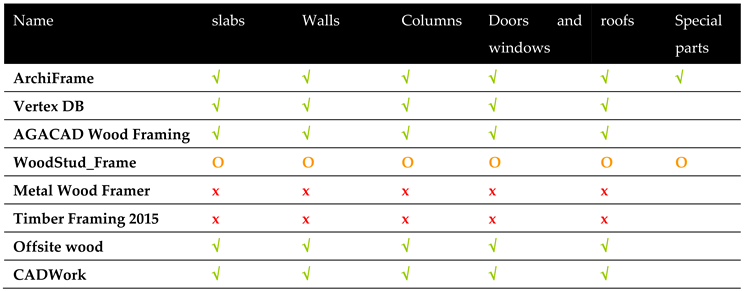
Table 6.
Specific outputs of BIM-Wood Software. (√ = done, x = not done, O = not information).
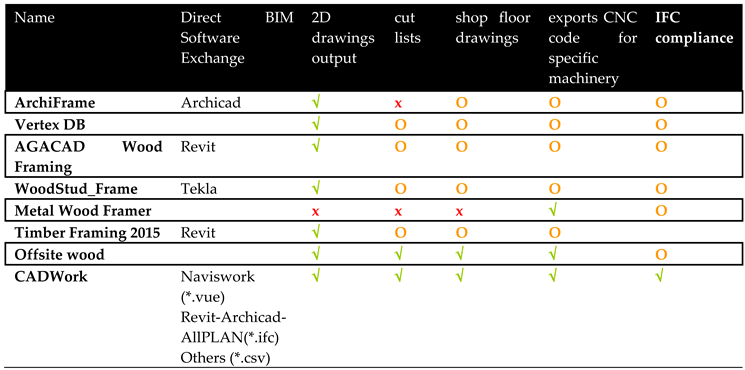
Disclaimer/Publisher’s Note: The statements, opinions and data contained in all publications are solely those of the individual author(s) and contributor(s) and not of MDPI and/or the editor(s). MDPI and/or the editor(s) disclaim responsibility for any injury to people or property resulting from any ideas, methods, instructions or products referred to in the content. |
© 2024 by the authors. Licensee MDPI, Basel, Switzerland. This article is an open access article distributed under the terms and conditions of the Creative Commons Attribution (CC BY) license (http://creativecommons.org/licenses/by/4.0/).
Copyright: This open access article is published under a Creative Commons CC BY 4.0 license, which permit the free download, distribution, and reuse, provided that the author and preprint are cited in any reuse.


