
Submitted:
19 January 2024
Posted:
23 January 2024
You are already at the latest version
Abstract
Here we explore the emerging role of NKG2D CAR-T cell therapy in the realm of solid tumor treatment. Unique capabilities of NKG2D CAR-T cells to recognize stress-induced ligands on cancer cells are discussed, highlighting the therapy's potential for targeted and precise antitumor responses. We also examine the challenges and opportunities associated with NKG2D CAR-T cell therapy, emphasizing the ongoing advancements and clinical trial progress shaping its future. Ultimately, the discussion underscores the transformative promise of NKG2D CAR-T cell therapy in revolutionizing the landscape of solid tumor treatment and enhancing the prospects for improved patient outcomes.
Keywords:
Immunotherapy
; cell therapy
; CAR-T cells
; chimeric antigen receptor
; NKG2D
Introduction
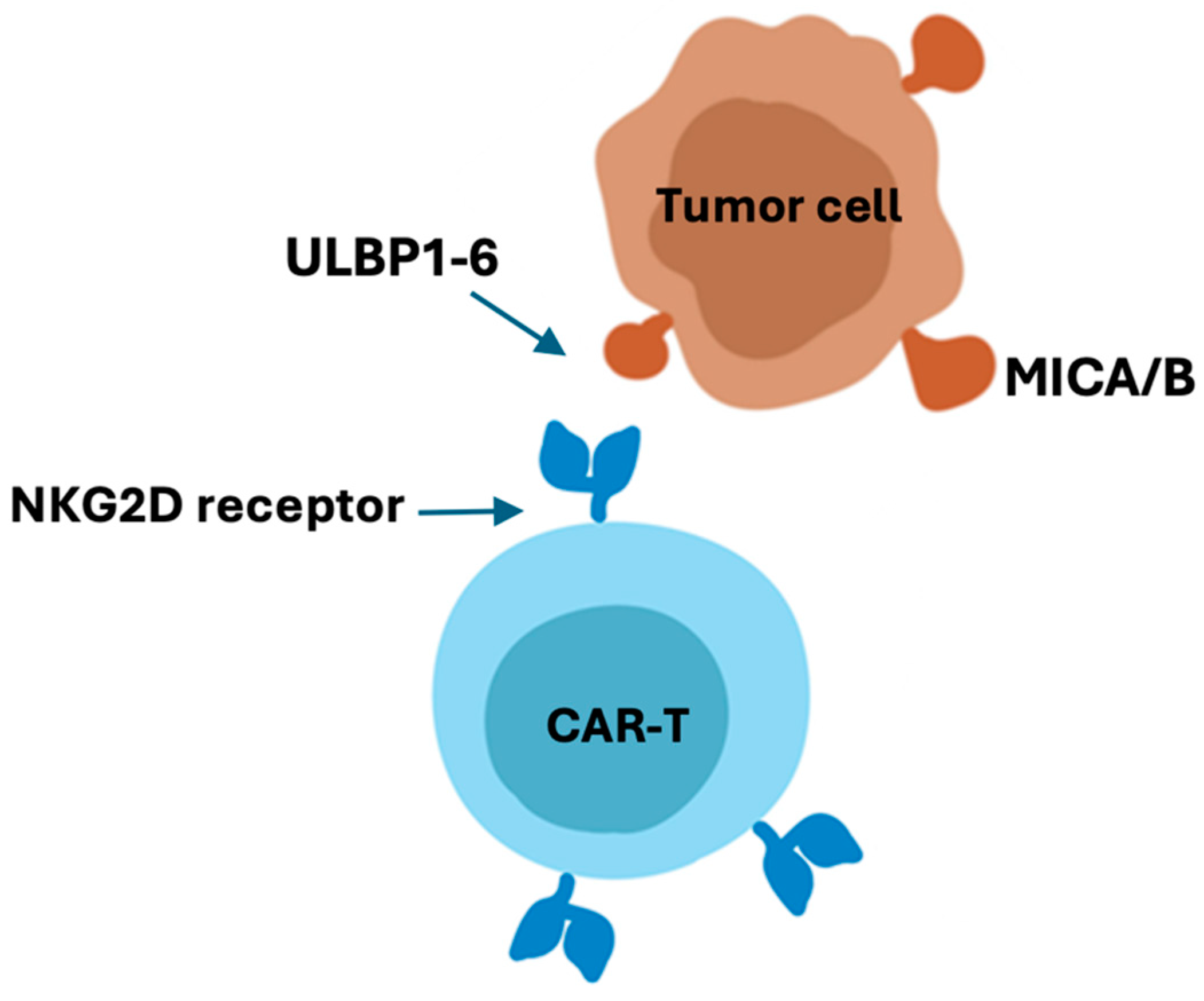
NKG2D CAR-T refers to a type of chimeric antigen receptor (CAR) T-cell therapy that involves modifying a patient's T cells to express a chimeric antigen receptor containing the NKG2D receptor. The NKG2D receptor is a natural receptor found on certain immune cells, including natural killer (NK) cells and a subset of T cells [1]. It plays a key role in recognizing and responding to stressed or infected cells, including cancer cells. When T cells are engineered to express a chimeric antigen receptor containing the NKG2D receptor, they gain enhanced ability to recognize and target cancer cells that express specific stress-induced ligands recognized by the NKG2D receptor.
NKG2D CAR-T therapy is being investigated as a potential treatment approach for various types of cancer. By incorporating the NKG2D receptor into the CAR construct, researchers aim to enhance the specificity and effectiveness of CAR-T cell therapy against cancer cells. This approach is designed to leverage the natural cancer surveillance function of the NKG2D receptor while enhancing the cytotoxic activity of T cells specifically against tumor cells. NKG2D CAR-T therapy is an active area of research and development, and preclinical and clinical studies are being conducted to assess its safety and efficacy in targeting different types of cancer. If proven effective and safe, NKG2D CAR-T therapy could potentially become a valuable addition to the evolving landscape of CAR-T cell immunotherapy for cancer treatment.
NKG2D CAR-T cell therapy against solid tumors
NKG2D CAR-T therapy against solid tumors is a promising area of research within the field of cancer immunotherapy [2,3,4]. Solid tumors present a unique challenge for CAR-T cell therapy due to the complex and immunosuppressive nature of the tumor microenvironment [5]. In the case of NKG2D CAR-T therapy, the aim is to leverage the natural cytotoxic potential of NKG2D receptor-expressing T cells to target and attack solid tumor cells. The NKG2D receptor is known to recognize stress-induced ligands that are often overexpressed on the surface of cancer cells, particularly those in solid tumors. By engineering T cells to express a chimeric antigen receptor containing the NKG2D receptor, researchers seek to enhance the ability of T cells to specifically recognize and kill solid tumor cells via the recognition of stress-induced ligands.
Several preclinical studies have demonstrated the potential of NKG2D CAR-T therapy in targeting a range of solid tumors, including but not limited to breast cancer, ovarian cancer, lung cancer, and pancreatic cancer [2,3,6]. Additionally, ongoing clinical trials are assessing the safety and efficacy of NKG2D CAR-T therapy in patients with various solid tumor malignancies. Given the unique targeting mechanism and innate ability of the NKG2D receptor to recognize stressed or malignant cells, NKG2D CAR-T therapy presents an attractive approach for combating solid tumors. However, the challenges associated with the complex tumor microenvironment and potential off-target effects necessitate further research and clinical testing to optimize the therapeutic potential of NKG2D CAR-T therapy for solid tumors.
Advantages of NKG2D CAR-T cell therapy
NKG2D CAR-T cell therapy offers several potential advantages in the field of cancer immunotherapy [7]:
- Enhanced Specificity: NKG2D CAR-T cells are engineered to express a chimeric antigen receptor containing the NKG2D receptor, which provides enhanced specificity in targeting cancer cells. The NKG2D receptor recognizes stress-induced ligands that are often overexpressed on the surface of cancer cells, thus allowing for precise targeting of tumor cells.
- Broad-spectrum Antitumor Activity: The NKG2D receptor has the ability to bind to a diverse range of stress-induced ligands expressed on various types of cancer cells. As a result, NKG2D CAR-T therapy has the potential to target a broad spectrum of solid and hematologic malignancies.
- Resistance to Tumor Immune Evasion: Solid tumors often create an immunosuppressive microenvironment that impedes the function of traditional immune cells. NKG2D CAR-T cells circumvent these evasion tactics by recognizing stress-induced ligands, enhancing their ability to target cancer cells in the immunosuppressive tumor microenvironment.
Disadvantages of NKG2D CAR-T cell therapy
While NKG2D CAR-T cell therapy shows promise in cancer immunotherapy, there are also potential disadvantages and challenges associated with this approach:
- Toxicity: Targeting stress-induced ligands expressed on many types of cells including some healthy tissues may lead to off-target effects or unintended toxicities. This could result in damage to normal cells expressing these ligands and potential adverse effects.
- Tumor Immune Evasion Mechanisms: Despite the specificity of NKG2D CAR-T therapy, cancer cells may still evolve immune evasion mechanisms to avoid NKG2D-mediated recognition, which could compromise the therapy's effectiveness over time.
- Tumor Microenvironment Complexity: Solid tumors exhibit a complex microenvironment characterized by immunosuppressive factors and cellular components that can hinder the function of immune cells, including CAR-T cells. Overcoming this hurdle to ensure effective CAR-T cell infiltration and function within the tumor remains a challenge.
- Tumor Escape Variants: While stress-induced ligands may be relatively stable, there is still the potential for tumor cells to adapt and evade NKG2D CAR-T cell recognition by downregulating or mutating the targeted antigens, posing a risk of treatment resistance.
- Cytokine Release Syndrome (CRS) and Neurotoxicity: As with other CAR-T therapies, NKG2D CAR-T cell therapy carries the risk of inducing immune-related adverse events such as CRS and neurotoxicity, which can be severe in some cases.
- Manufacturing Complexity: The engineering and production of NKG2D CAR-T cells can be technically challenging and time-consuming, limiting its widespread availability. Scalability and reproducibility of manufacturing processes are important considerations for broad clinical application.
- Cost and Accessibility: CAR-T cell therapies are resource-intensive and costly, potentially limiting patient access and healthcare system adoption. These therapies may also present logistical challenges due to the need for specialized facilities and expertise in cell processing and delivery.
- Regulatory and Ethical Considerations: The regulatory landscape for advanced cell therapies, including CAR-T, remains dynamic, and establishing frameworks for ensuring the safety and consistent quality of NKG2D CAR-T products is an ongoing concern.
Concluding remarks
In conclusion, the development of NKG2D CAR-T cell therapy marks a significant milestone in the field of cancer immunotherapy, particularly in the treatment of solid tumors. The potential of NKG2D CAR-T cells to recognize stress-induced ligands expressed on cancer cells has opened new avenues for precise and targeted anticancer treatment. This therapy's ability to harness the natural killing mechanisms of the immune system and unleash potent antitumor responses holds promise for addressing the challenges associated with solid tumor therapy, which has historically been plagued by immunosuppressive microenvironments and therapeutic resistance. Through continued research and clinical trials, the ongoing optimization of NKG2D CAR-T cell therapy may ultimately redefine the treatment landscape for solid tumors, offering patients the hope of enhanced therapeutic outcomes and prolonged survival.
As NKG2D CAR-T cell therapy progresses, it is crucial to address and mitigate the potential disadvantages and challenges associated with this approach, including off-target effects, tumor immune evasion, toxicity, and manufacturing complexity. By overcoming these hurdles and ensuring the therapy's safety and effectiveness, NKG2D CAR-T cell therapy can solidify its position as a groundbreaking tool in the fight against solid tumors. Moreover, the continued exploration of combination therapies, personalized treatment approaches, and innovative applications of NKG2D CAR-T cells holds the potential to further enhance the therapy's efficacy and expand its applicability to a broader range of solid tumor types and patient populations. Overall, as research and clinical evidence continue to accumulate, NKG2D CAR-T cell therapy stands poised to emerge as a pivotal player in the ongoing quest for more effective, targeted, and personalized cancer treatments.
Funding
This work was funded by the subsidy allocated to Kazan Federal University for the state assignment in the sphere of scientific activities (project number FZSM-2023-0011).
Acknowledgments
The study has been performed according to the Kazan Federal University Strategic Academic Leadership Program (PRIORITY-2030).
References
- Sentman, C.L.; Meehan, K.R. NKG2D CARs as Cell Therapy for Cancer. Cancer J 2014, 20, 156–159. [Google Scholar] [CrossRef] [PubMed]
- Zhang, Y.; Li, X.; Zhang, J.; Mao, L. Novel Cellular Immunotherapy Using NKG2D CAR-T for the Treatment of Cervical Cancer. Biomedicine & Pharmacotherapy 2020, 131, 110562. [Google Scholar] [CrossRef]
- Baumeister, S.H.; Murad, J.; Werner, L.; Daley, H.; Trebeden-Negre, H.; Gicobi, J.K.; Schmucker, A.; Reder, J.; Sentman, C.L.; Gilham, D.E.; et al. Phase I Trial of Autologous CAR T Cells Targeting NKG2D Ligands in Patients with AML/MDS and Multiple Myeloma. Cancer Immunol Res 2019, 7, 100–112. [Google Scholar] [CrossRef] [PubMed]
- Sun, B.; Yang, D.; Dai, H.; Liu, X.; Jia, R.; Cui, X.; Li, W.; Cai, C.; Xu, J.; Zhao, X. Eradication of Hepatocellular Carcinoma by NKG2D-Based CAR-T Cells. Cancer Immunol Res 2019, 7, 1813–1823. [Google Scholar] [CrossRef] [PubMed]
- Spear, P.; Barber, A.; Rynda-Apple, A.; Sentman, C.L. NKG2D CAR T-cell Therapy Inhibits the Growth of NKG2D Ligand Heterogeneous Tumors. Immunol Cell Biol 2013, 91, 435–440. [Google Scholar] [CrossRef] [PubMed]
- Deng, X.; Gao, F.; Li, N.; Li, Q.; Zhou, Y.; Yang, T.; Cai, Z.; Du, P.; Chen, F.; Cai, J. Antitumor Activity of NKG2D CAR-T Cells against Human Colorectal Cancer Cells in Vitro and in Vivo. Am J Cancer Res 2019, 9, 945–958. [Google Scholar] [PubMed]
- Ebrahimiyan, H.; Tamimi, A.; Shokoohian, B.; Minaei, N.; Memarnejadian, A.; Hossein-Khannazer, N.; Hassan, M.; Vosough, M. Novel Insights in CAR-NK Cells beyond CAR-T Cell Technology; Promising Advantages. Int Immunopharmacol 2022, 106, 108587. [Google Scholar] [CrossRef] [PubMed]
Disclaimer/Publisher’s Note: The statements, opinions and data contained in all publications are solely those of the individual author(s) and contributor(s) and not of MDPI and/or the editor(s). MDPI and/or the editor(s) disclaim responsibility for any injury to people or property resulting from any ideas, methods, instructions or products referred to in the content. |
© 2024 by the authors. Licensee MDPI, Basel, Switzerland. This article is an open access article distributed under the terms and conditions of the Creative Commons Attribution (CC BY) license (http://creativecommons.org/licenses/by/4.0/).
Copyright: This open access article is published under a Creative Commons CC BY 4.0 license, which permit the free download, distribution, and reuse, provided that the author and preprint are cited in any reuse.


