

Submitted:
17 January 2024
Posted:
18 January 2024
You are already at the latest version
Abstract
In this experiment, the fermented pineapple residue (FPR) was replaced with 0% (CON), 25% (T25) and 50% (T50) in the diet based on silage royal grass roxb for 30 days in the fattened fatten bulls to evaluate the effect of FPR on growth performance, serum indicators and rumen characteristics.Thirty Simmental calves were selected and divided into three groups according to a completely random design.The temperature and humidity of the cowshed shall be measured every day.Rectal temperature and blood of cattle were measured, and blood and immune markers were measured.The results showed that the rectal temperature decreased significantly when adding 25% fermented pineapple residue (P<0.05), and the rectal temperature decreased significantly when adding 50% fermented pineapple residue (P<0.01).The content of T4 and TC in serum of cattle in T50 group was significantly lower than that in the control group (P<0.01), and the content of T3 was significantly higher than that in the control group (P<0.05), and the content of CR was significantly lower than that in the control group (P<0.01). Fermented pineapple residue can indeed improve the oxidative (heat) stress resistance of finishing cattle. In the correlation experiment, bacterial genera such as Succinniclassicum, Melainabacteria, Lachnospiraceae, and Fibrobacteres all showed significant or extremely significant correlations with heat stress-related indicators.
Keywords:
Beef cattle
; Heat stress
; Fermented pineapple pomace
; Rectal temperature
; Serum biochemical indicators
; Oxidative stress indicators
; immune indexes
1. Introduction
The climate in South China is high in temperature
and humidity. The climate in South China will cause the beef cattle to produce
heat stress reaction. The heat stress will lead to a significant reduction in
the appetite and intake of beef cattle. At the same time, the digestion rate of
beef cattle will also be reduced, and even some individuals will suffer from
digestive disorders. In addition to production performance, reproductive
performance will also be reduced. After heat stress, the semen quality of bulls
will be reduced. In addition, sperm may also be deformed, significantly
reducing sperm density and motility. Heat stress in cows will affect the
conception rate and cause abnormal estrus. Heat stress can also affect immune
performance and physiological function. Generally, after heat stress, the level
of IgG and IgA in beef cattle will increase significantly, resulting in
abnormal physiological function and metabolism of the body, and may even lead
to individual pathological reactions [1] .
After heat stress in beef cattle, the heat can not be released, and the body
will suffer from heat disorder, and the respiration will be intensified.
Shortness of breath will lead to electrolyte disorder, and severe respiratory
alkalosis will occur in individuals. Many researchers are looking for ways to
reduce the heat stress response of beef cattle [2]
.
Pineapple is one of the four tropical fruits with
common, high yield and high quality in Guangdong. According to statistics, the
total output of pineapple in China reached 1718800 tons in 2019. [3] Pineapple pomace mainly refers to the pineapple
peel and residual pulp after squeezing juice, processing jam, canned fruit,
preserved fruit or wine, accounting for 50%~60% of the total fresh fruit. The
proportion of water, citric acid and total sugar in pineapple pomace is similar
to that in pulp. The content of crude protein and ash is 2.5 and 3.0 times
higher than that in pulp, but the content of crude protein and ash is
significantly higher than that in pulp [4] .
The main anti-nutritional component in pineapple residue is bromelain, which
directly affects the feeding palatability, reduces the digestibility and
utilization of animal feed, and affects the healthy growth and production
performance of animals. Therefore, through the development of pineapple residue
microbial fermentation feed, on the one hand, the crude protein level and
feeding palatability of pineapple residue can be improved, and its feeding
value can be improved. On the other hand, it can replace part of the feed to
feed animals, save breeding costs and improve economic value. The content of
pineapple is very high in Guangdong. The purpose of this experiment is to
explore whether pineapple residue can solve the heat stress problem of beef
cattle in Guangdong and provide scientific breeding experience for the beef
cattle breeding industry in Guangdong.
2. Materials and Methods
2.1. Test animals
This study was conducted in the core area of the
modern high-quality beef cattle industrial park of Baicheng Animal Husbandry
Co., Ltd. in Yunfu City, Guangdong Province. Thirty Simmental bulls with a body
weight of 546 ± 44 kg were selected for the
test, which were healthy, disease-free, glossy and in the late stage of
fattening (about 20 months old).
2.2. Pineapple residue fermentation
The fermented pineapple residue used in the test
was purchased from a biotechnology company in Leizhou, Guangdong Province. The
raw material of pineapple residue comes from the pineapple harvested in August
in Leizhou. After processing, fresh pineapple peel is collected. The raw
pineapple peel is first pressed to keep the initial water content at 78-80%,
evenly sprayed with the mixed liquid of lactic acid bacteria and yeast, and
then filled into the double-layer fermentation bag. The total weight of the fermentation
bag is about 40 kg, and it is fermented for 20 days under sealed normal
temperature.

Table 1.
Rectal temperature of cattle.
| Roughage | DM | CP | EE | NDF | ADF | ASH | Starch |
|---|---|---|---|---|---|---|---|
| Fermented pineapple residue | 21.15 | 6.66 | 1.78 | 63.46 | 33.03 | 4.33 | 3.20 |
| Silage giant fungus | 32.76 | 7.19 | 1.80 | 72.70 | 43.16 | 6.16 | 1.00 |
2.3. Experiment design and feeding management
Thirty Simmental crossbred beef cattle were divided
into three treatment groups according to the requirements of single factor
completely random design, with 10 heads in each treatment group. In the dry
matter basis of the diets of the three experimental groups, the fermented
pineapple residue replaced the silage giant fungus in the diet with the
proportion of 0, 25% and 50%, namely CON group, T25 group and T50 group. Each
treatment group was randomly given a diet treatment and received TMR diet
corresponding to the treatment. The CON group was the control group, and the
other two groups were the test group. Before the 30-day trial period, a 3-day
pre-feeding period was designed for the diet transition.
The fattening bulls in each group are raised in
groups and in pens, and the cattle shed is fully open. Each cow has an average
area of 12 m2. Before the formal test, the whole house shall be fully
disinfected, and 3 cm thick odorized sawdust shall be evenly paved as bedding.
The daily feeding time is 10:00 and 16:00, and free drinking water. The formula
of the diet is designed according to the Nutrition Needs of Beef Cattle [5] , and the TMR is manually stirred for feeding. See
Table 2 for the composition of the raw
materials and the content of nutrients in the diet. Clean the sink regularly
every day, and add multi-dimensional supplements at 0.5 g/L in drinking water.
All cattle were managed in a unified scheme. During the trial period, no
insecticide or drug treatment was carried out, and the whole herd was
disinfected with spray every three days.
Table 2.
Composition and Nutrient Levels of Test Diet (% DM).
| project | CON GROUP | PROCESSING GROUP | |
|---|---|---|---|
| T25 GROUP | T50 GROUP | ||
| Composition of raw materials | |||
| Silage giant fungus | 39.01 | 29.04 | 19.19 |
| Fermented pineapple residue | 0 | 10.93 | 21.68 |
| straw | 16.76 | 16.63 | 16.50 |
| corn flour | 24.41 | 23.81 | 23.29 |
| Soybean meal | 2.10 | 2.34 | 2.59 |
| wheat bran | 1.36 | 1.35 | 1.34 |
| Unifying chaff | 1.62 | 1.25 | 0.88 |
| Wheat flour | 5.36 | 5.32 | 5.27 |
| expanded soybean | 0.89 | 0.89 | 0.88 |
| Rice flour | 1.36 | 1.35 | 1.34 |
| Sprayed corn husk | 4.46 | 4.43 | 4.39 |
| baking soda | 1.19 | 1.18 | 1.17 |
| Stone powder | 0.47 | 0.47 | 0.47 |
| CaHPO₄ | 0.08 | 0.08 | 0.08 |
| Fattening cattle premix1 | 0.93 | 0.93 | 0.93 |
| Nutrition level | |||
| Dry matter 2,kg | 10.92 | 11.00 | 11.09 |
| Maintain net energy 3,Mcal/kg | 1.42 | 1.45 | 1.48 |
| Net energy gain 3,Mcal/kg | 0.83 | 0.86 | 0.89 |
| crude protein 2 | 9.76 | 9.75 | 9.74 |
| crude fat 2 | 2.91 | 2.89 | 2.87 |
| Coarse ash 2 | 7.87 | 7.65 | 7.43 |
| Neutral detergent fiber 2 | 48.67 | 47.99 | 47.27 |
| Acid washing fiber 2 | 27.22 | 26.29 | 25.36 |
| starch 3 | 19.73 | 19.55 | 19.42 |
| Ca3 | 0.94 | 0.86 | 0.78 |
| P3 | 0.36 | 0.36 | 0.37 |
1 Note: The premix for fattening cattle contains 191 mg of copper, 1200 mg of iron, 1393 mg of manganese, 9 mg of selenium, 250 KIU of vitamin A, 1500 IU of vitamin E, 699 mg of vitamin B1 and 1500 mg of nicotinic acid per kilogram of premix (DM basis) 2 The basic nutrient content level is the calculated value of the measured data of feed raw material composition 3 The energy, starch and calcium and phosphorus contents are the comparison values of the database after near-infrared scanning.
2.4. Temperature and humidity record
Before the pre-feeding period, a mercury
thermometer and hygrometer shall be hung at a height of 2 m from the ground in
the middle of each cage. During the trial period, check and record the
temperature and humidity data at 8:00 a.m., 14:00 p.m. and 20:00 p.m. every
day. The calculation formula of temperature and humidity index (THI) is: THI =
0.72×(Td+Tw)+40.6; [6] . Where, Td represents dry-bulb temperature and
Tw represents wet-bulb temperature.
2.5. Rectal thermography
At 14:00 p.m. on the 1st and 15th day of the trial
period, the rectal temperature data of all cattle in the three pens were
measured. Insert the mercury thermometer of the animal with a binding rope at
the tail end into the rectum of the cow, keep the temperature probe of the
thermometer at a depth of 10 cm from the anus, wrap the binding rope at the
tail end of the cow to prevent the thermometer from falling, and take out and
record the thermometer readings after 3 minutes.
2.6. Blood sample collection
The pre-feeding period was 1 day, and the trial
period was 15 days and 30 days. All the experimental cattle were collected 20
mL of blood from the tail vein. The blood was collected by using a common blood
collection vessel and placed on the ice for 6 hours. The centrifuge set the
procedure of 3000 rpm/15 minutes. The separated serum was placed in a sterile
EP tube of 2 mL and stored at - 20 ℃ for standby.
2.7. Serum index and determination method
Serum biochemical indicators: non-esterified fatty
acid (NEFA), total protein (TP), albumin (ALB), globulin (GLOB), triglyceride
(TG), total cholesterol (TC), low density lipoprotein cholesterol (LDL-C), high
density lipoprotein cholesterol (HDL-C), urea nitrogen (UREA), uric acid (UA),
creatinine (CR), glucose concentration (GLU), creatine kinase activity (CK),
alanine aminotransferase (ALT) The activities of AST, ALP and LDH were analyzed
and determined by Hitachi HITACHI7600 automatic biochemical analysis.
Triiodothyronine (T3) and total thyroxine (T4) were detected by
radioimmunoassay DFM-96r-radioimmunoassay. The reagents were purchased from
Shanghai Ketao Biotechnology Center.
Serum biochemical indicators: non-esterified fatty
acid (NEFA), total protein (TP), albumin (ALB), globulin (GLOB), triglyceride
(TG), total cholesterol (TC), low density lipoprotein cholesterol (LDL-C), high
density lipoprotein cholesterol (HDL-C), urea nitrogen (UREA), uric acid (UA),
creatinine (CR), glucose concentration (GLU), creatine kinase activity (CK),
alanine aminotransferase (ALT) The activities of AST, ALP and LDH were analyzed
and determined by Hitachi HITACHI7600 automatic biochemical analysis.
Triiodothyronine (T3) and total thyroxine (T4) were detected by
radioimmunoassay DFM-96r-radioimmunoassay. The reagents were purchased from
Shanghai Ketao Biotechnology Center.
Immune index: tumor necrosis factor (TNF- α)、
Interleukin 2 (IL-2), interleukin 4 (IL-4), interleukin 6 (IL-6), interferon
(IFN- γ)、 Immunoglobulin A (IgA),
immunoglobulin M (IgM) and immunoglobulin G (IgG). The above indicators were
determined by the enzyme-linked immunosorbent assay kit provided by Shanghai
Ketao Biotechnology Center. Refer to the detailed instructions for the specific
operation steps.
3. Results
3.1. Effect of fermented pineapple residue on heat stress of fattening cattle
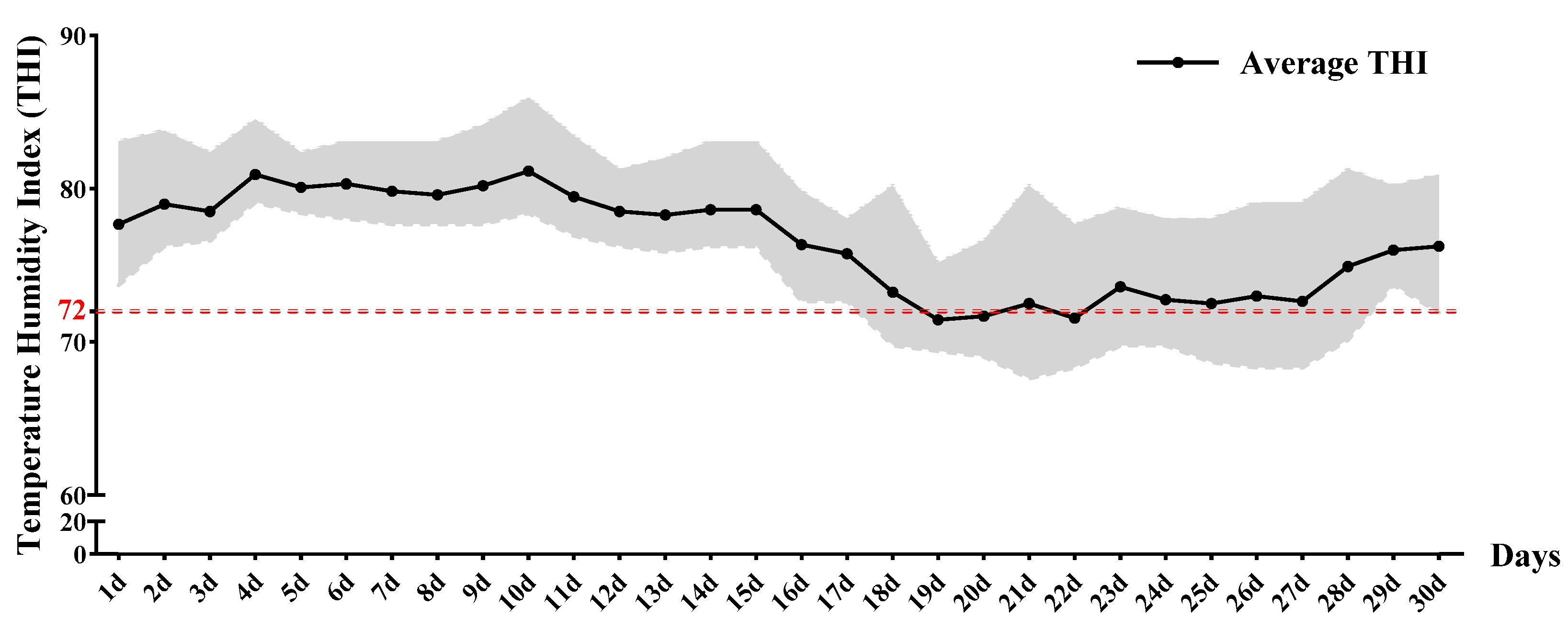
It can be seen from Figure
1 that during the whole test period, the THI index of the cowshed
environment is 76.50 ± 3.26, and the test
cattle are affected by heat compression (THI ≥
72). The THI index curve kept above the heat stress judgment standard of THI=72
on average. During the period of 1-17 days, the cowshed environment remained in
the high thermal stress period as a whole, with an average THI of 79.00, and
remained in the low thermal stress period with an average THI of 73.24 compared
with the cowshed environment of 18-30 days after the trial period. There were
significant differences in THI between the two periods, but the overall environmental
THI index indicated that the cattle were still in heat stress. This shows that
the test cattle have been exposed to high temperature and high humidity, and
are greatly affected by thermal stress.
Figure 1.
Environmental thermal stress index of cowshed.
3.2. Rectal temperature of finishing cattle under heat stress
According to Table 3,
there was no significant difference in rectal temperature among the control
group, T25 group and T50 group on the first day of the trial period
(P>0.05). On the 15th day of the trial period, compared with the control
group, the two pineapple residue test groups showed a very significant
difference (Contrast P=0.001), in which the rectal temperature of T25 group
decreased significantly (P<0.05), while the decrease was extremely
significant in T50 group (P<0.01). This shows that adding fermented
pineapple residue in the diet can significantly reduce the rectal temperature
of fattening cattle under heat stress, and the reduction of 50% addition ratio
is more obvious than that of 25%.
Table 3.
Rectal temperature of cattle.
| TRIAL PERIOD | CON GROUP | PROCESSING GROUP | SEM | P | Contrast P CON vs. T |
|
|---|---|---|---|---|---|---|
| T25GROUP | T50GROUP | |||||
| 1 d | 39.18 | 39.20 | 39.16 | 0.03 | 0.851 | 0.942 |
| 15 d | 39.23Aa | 39.02b | 38.98Bb | 0.04 | 0.004 | 0.001 |
3.3. Effect of fermented pineapple residue on serum biochemical indexes of finishing cattle
As shown in Table 4,
the contents of T4 and TC in serum of cattle in T50 group were significantly
lower than those in the control group (P<0.01), and the contents of T3 were
significantly higher than those in the control group (P<0.05), and the
contents of CR were significantly lower than those in the control group
(P<0.01). Compared with the control group, the serum ALB content in T25
group was significantly higher (P<0.05), and the CR content was
significantly lower (P<0.05). Contrast results verified that the contents of
CR, T3, T4, ALB and TC were significantly different between the control group
and the fermentation pineapple residue addition group (P<0.05). The other 14
indexes showed no significant difference among the three groups (P<0.05),
and no significant difference was found between T25 group and T50 group.
Table 4.
Effects of different proportions of fermented pineapple residue on serum biochemical indexes of finishing cattle.
Table 4.
Effects of different proportions of fermented pineapple residue on serum biochemical indexes of finishing cattle.
| PROJECT | CONTROL GROUP | PROCESSING GROUP | SEM | P | Contrast P CON vs.T |
|
|---|---|---|---|---|---|---|
| T25GROUP | T50GROUP | |||||
| ALT, U/L | 22.07 | 21.62 | 21.24 | 0.40 | 0.340 | 0.188 |
| AST, U/L | 66.97 | 68.45 | 65.31 | 2.23 | 0.831 | 0.984 |
| ALP, U/L | 88.52 | 94.24 | 92.20 | 3.88 | 0.790 | 0.524 |
| CR, μmol/L | 154.59Aa | 140.10b | 130.29Bb | 2.33 | <0.001 | <0.001 |
| T3, nmol/L | 4.37b | 4.70ab | 4.93a | 0.13 | 0.023 | 0.012 |
| T4, nmol/L | 127.02A | 115.47AB | 105.71B | 0.25 | 0.009 | 0.006 |
| ALB, g/L | 31.56a | 29.73b | 30.01ab | 0.31 | 0.033 | 0.010 |
| TP, g/L | 75.32 | 76.57 | 75.49 | 0.58 | 0.619 | 0.563 |
| GLOB, g/L | 43.77 | 46.83 | 45.48 | 0.64 | 0.148 | 0.082 |
| UA, μmol/L | 53.56 | 53.33 | 53.48 | 1.45 | 0.997 | 0.956 |
| UREA, mmol/L | 2.18 | 1.96 | 1.97 | 0.07 | 0.221 | 0.084 |
| TC, mmol/L | 1.95A | 1.82AB | 1.57B | 0.05 | 0.007 | 0.015 |
| TG, mmol/L | 0.05 | 0.06 | 0.05 | 0.003 | 0.181 | 0.359 |
| NEFA, mmol/L | 0.11 | 0.11 | 0.11 | 0.005 | 0.986 | 0.870 |
| HDL-C, mmol/L | 1.11 | 1.05 | 1.07 | 0.02 | 0.480 | 0.249 |
| LDL-C, mmol/L | 0.22 | 0.20 | 0.17 | 0.01 | 0.195 | 0.141 |
| LDH, U/L | 1163.94 | 1191.25 | 1261.53 | 33.87 | 0.377 | 0.320 |
| GLU, mmol/L | 3.22 | 3.27 | 3.49 | 0.09 | 0.167 | 0.222 |
| CK, U/L | 110.31 | 118.38 | 110.56 | 5.31 | 0.782 | 0.717 |
3.4. Effect of fermented pineapple residue on immune indexes of finishing cattle
As shown in Table 5
, the contents of immune indexes in the three groups were similar at the
beginning of the trial period (Day=0 d). With the increase of the added amount
of fermented pineapple residue, IFN of each test group- γ, The content of CRP, IgA, IgG
and IgM increased, while the content of IL-6 decreased. Compared with the
control group, IFN in T50 group- γ And IgM indexes were significantly increased
(P<0.05), and CRP indexes were significantly increased (P<0.01); The
content of CRP in T25 group increased significantly (P<0.01); In the IL-4
index, the extremely significant increase was observed in both diet treatment
groups. From the results of Contrast analysis, the IgA and IL6 indexes in the
control group were significantly higher or lower than those in the treatment
group (P<0.05).
Table 5.
Effect of different proportion of fermented pineapple residue on immune indexes of finishing cattle.
Table 5.
Effect of different proportion of fermented pineapple residue on immune indexes of finishing cattle.
| project | CONGROUP | PROCESSING GROUP | SEM | P | Contrast P CON vs.T |
|
|---|---|---|---|---|---|---|
| T25GROUP | T50GROUP | |||||
| IFN-γ, pg/mL | 521.77b | 636.28a | 651.73a | 30.64 | 0.012 | 0.003 |
| TNF-α, pmol/L | 7.04 | 7.04 | 7.01 | 0.31 | 0.998 | 0.980 |
| CRP, ng/mL | 9.10Bb | 10.22a | 10.74Aa | 0.25 | 0.003 | 0.001 |
| IgA, μg/mL | 2125.5 | 2340.51 | 2375.7 | 55.72 | 0.051 | 0.015 |
| IgG, mg/mL | 19.30 | 20.28 | 20.91 | 0.51 | 0.152 | 0.074 |
| IgM, μg/mL | 1569.05b | 1670.94ab | 1754.44a | 32.96 | 0.026 | 0.015 |
| IL-2, pg/mL | 701.19 | 636.31 | 718.63 | 18.43 | 0.131 | 0.525 |
| IL-4, pg/mL | 33.38B | 42.78A | 41.15A | 1.15 | <0.001 | <0.001 |
| IL-6, pg/mL | 151.03 | 138.84 | 136.75 | 4.36 | 0.111 | 0.038 |
3.5. Effect of fermented pineapple residue on oxidative stress index of finishing cattle
As shown in Table 6
and Figure 4, the test treatment has a
great impact on oxidative stress indicators. With the increase of pineapple
residue substitution ratio, BHBA, HSP70 and MDA decreased significantly
(P<0.05), with the lowest content in T50 group (BHBA=271.14 μ mol/L,HSP70=224.46
pg/mL,MDA=13.01 nmol/L); The activities of SOD, GSH-Px and OH-enzyme
were significantly up-regulated (P<0.05), and the activity of T50 group was
the highest among the three groups (SOD=71.40 U/mL, GSH-Px=139.87 U/mL, OH
-=689.67 U/mL). The comparison results of the above indicators showed the same
significant difference (P<0.05). CAT enzyme activity in the control group
was significantly lower than that in the two control groups (P<0.01). T-AOC
enzyme activity and COR content were not affected by dietary treatment.
Table 6.
Effects of different proportions of fermented pineapple residue on oxidative stress indexes of finishing cattle.
Table 6.
Effects of different proportions of fermented pineapple residue on oxidative stress indexes of finishing cattle.
| PROJECT | CONGROUP | PROCESSING GROUP | SEM | P | Contrast P CON vs.T |
|
|---|---|---|---|---|---|---|
| T25GROUP | T50GROUP | |||||
| BHBA, μmol/L | 332.48Aa | 289.33b | 271.14Bb | 11.33 | 0.002 | <0.001 |
| HSP70, pg/mL | 263.06a | 241.92ab | 224.46b | 8.53 | 0.017 | 0.011 |
| SOD, U/mL | 54.82B | 61.08AB | 71.40B | 2.39 | 0.006 | 0.010 |
| MDA, nmol/mL | 15.82a | 15.44a | 13.01b | 0.46 | 0.012 | 0.071 |
| CAT, U/mL | 4.93B | 6.65A | 6.63A | 0.25 | <0.001 | <0.001 |
| GSH-Px, U/mL | 121.39b | 128.80ab | 139.87a | 3.20 | 0.023 | 0.021 |
| GST, U/mL | 512.69 | 541.85 | 591.01 | 19.08 | 0.137 | 0.119 |
| T-AOC, U/mL | 0.40 | 0.43 | 0.41 | 0.01 | 0.535 | 0.352 |
| OH-, U/mL | 652.56b | 676.49ab | 689.67a | 7.66 | 0.030 | 0.013 |
| COR, ng/mL | 5.23 | 5.27 | 5.53 | 0.24 | 0.864 | 0.749 |
3.6. The correlation between rumen microbiota and heat stress correlation coefficient
To analyze the correlations of heat stress and
rumen microbiota, Pearson correlation analysis was performed and then found
that two phyla, five genera, and three species were relatedto the rumen
fermentation parameters .
Lachnospiraceae bacterium RM44 and Pirelula were
positively correlated with rectal temperature (P<0.05). Succiniclasticum was
negatively correlated with rectal temperature (P<0.05) (Figure 2).
Alcaligenes faecalis showed a significant positive
correlation with COR (P<0.01), Butyrivibrio filosolvens showed a significant
positive correlation with IL-6 (P<0.01), Melainabacteria and IFN- γ There is a significant positive correlation
(P<0.01) between Lachnospiraceae bacterium RM44 and IFN- γ There is a negative correlation (P<0.05).
Succiniclasticum is positively correlated with IL-2 and IgM (P<0.05).
Succiniclasticum is highly significantly positively correlated with IL-4
(P<0.001). Lachnospirace bacterium RM44 is negatively correlated with IL-4
(P<0.05). Succiniclasticum is significantly negatively correlated with IgG
(P<0.01). Succiniclasticum is positively correlated with IgG (P<0.05) (Figure 3).
Fibrobacteres showed a negative correlation with
MDA (P<0.05), Alcaligenes faecalis showed a positive correlation with COR
(P<0.05), Marvinbryantia showed a negative correlation with HSP (P<0.05),
Succiniclasticum showed a significant positive correlation with GSH
(P<0.01), and CAT showed a positive correlation (P<0.05). Butvrivibrio
filaments showed a significant negative correlation with GST (P<0.01) (Figure 4).
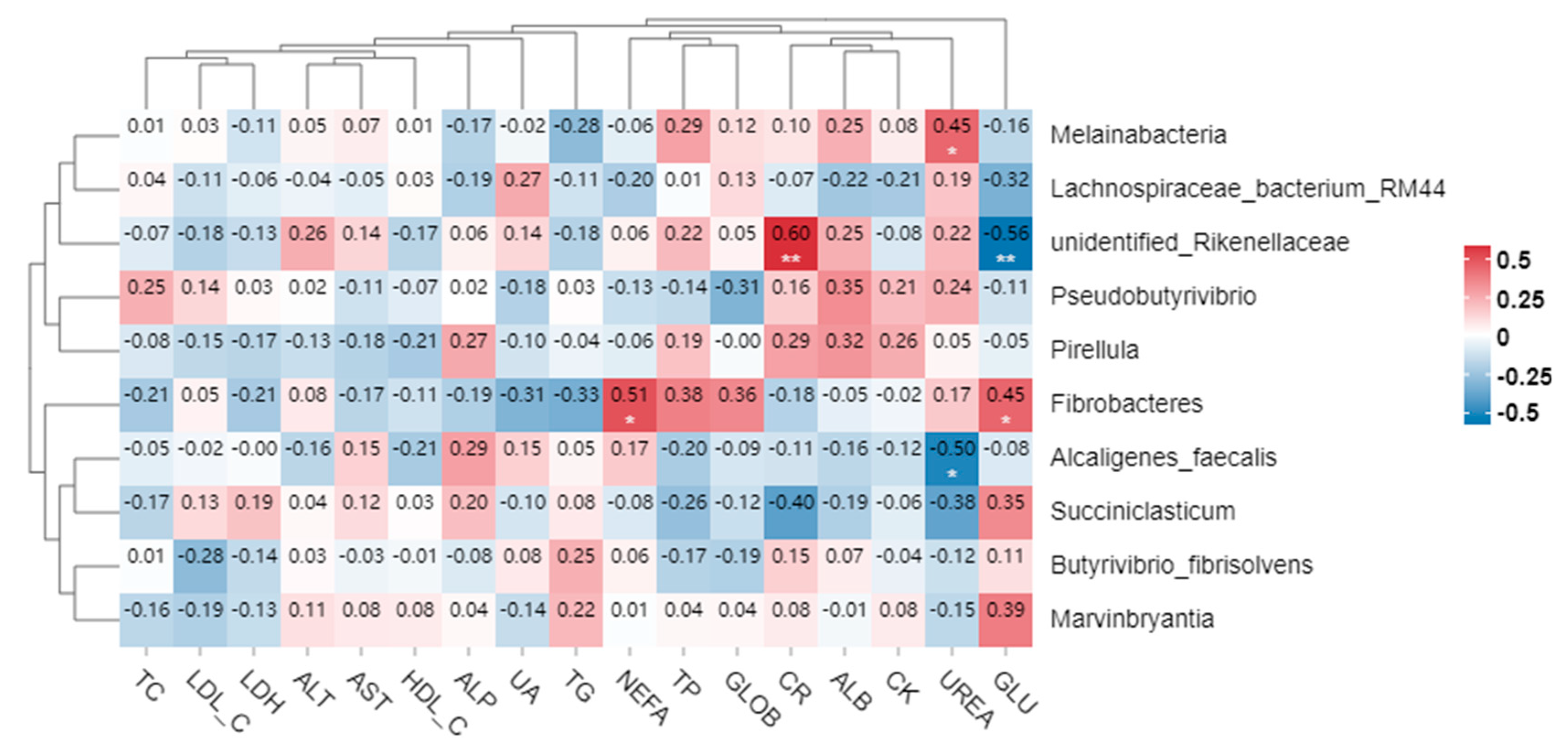
Melainabacteria was positively correlated with UREA
(P<0.05), identified Rikenella was significantly negatively correlated with
GLU (P<0.01), and was significantly positively correlated with CR
(P<0.01). Fibrobacteres was positively correlated with GLU and NEFA
(P<0.05). Alcaligenes faecalis was negatively correlated with UREA
(P<0.05) (Figure 5).
Figure 2.
A. Correlation of rectal temperature and flora. *indicates P < 0.05, and **indicates P < 0.01.
Figure 2.
A. Correlation of rectal temperature and flora. *indicates P < 0.05, and **indicates P < 0.01.
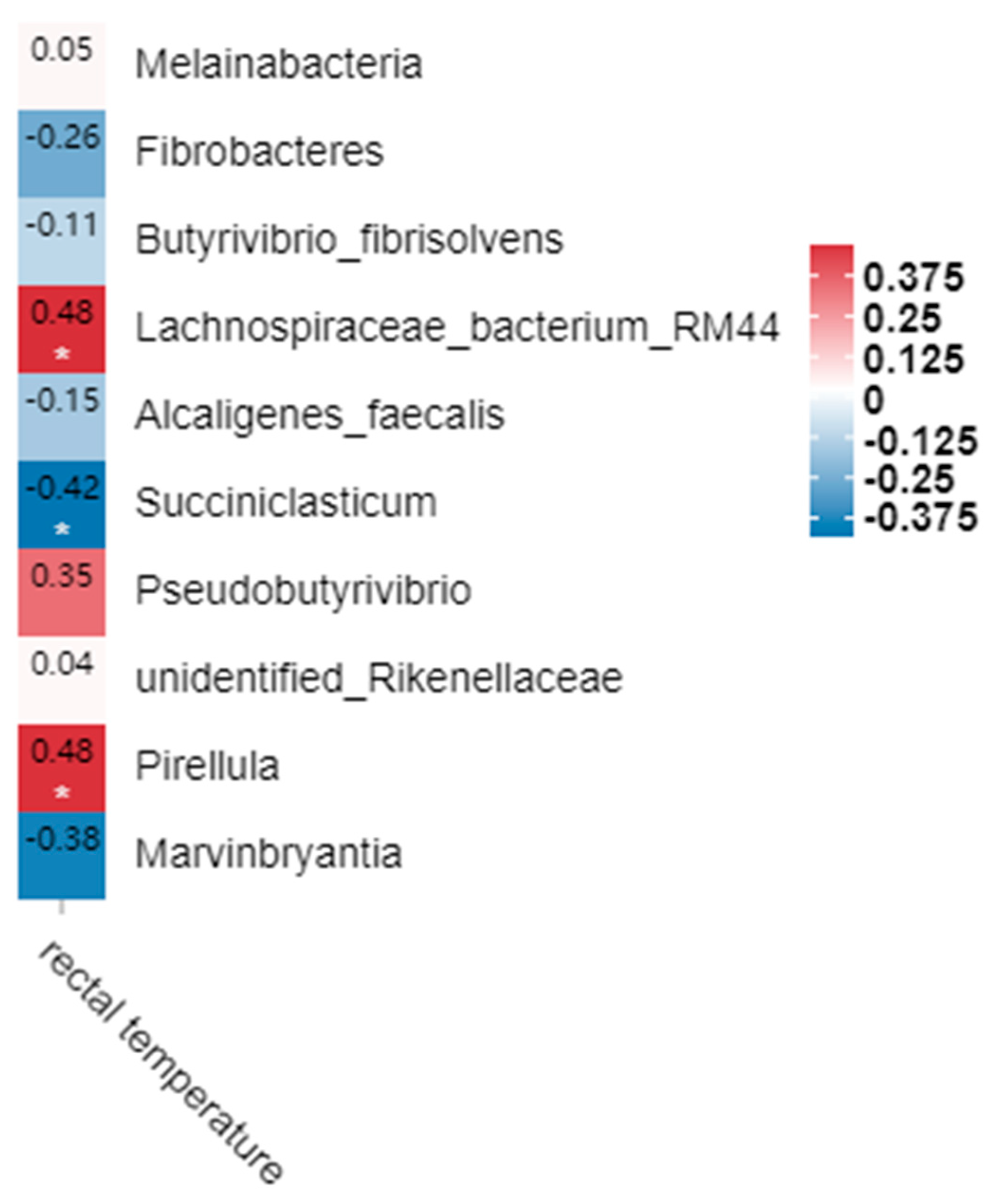
Figure 2.
B. Correlation of immune indexes a.
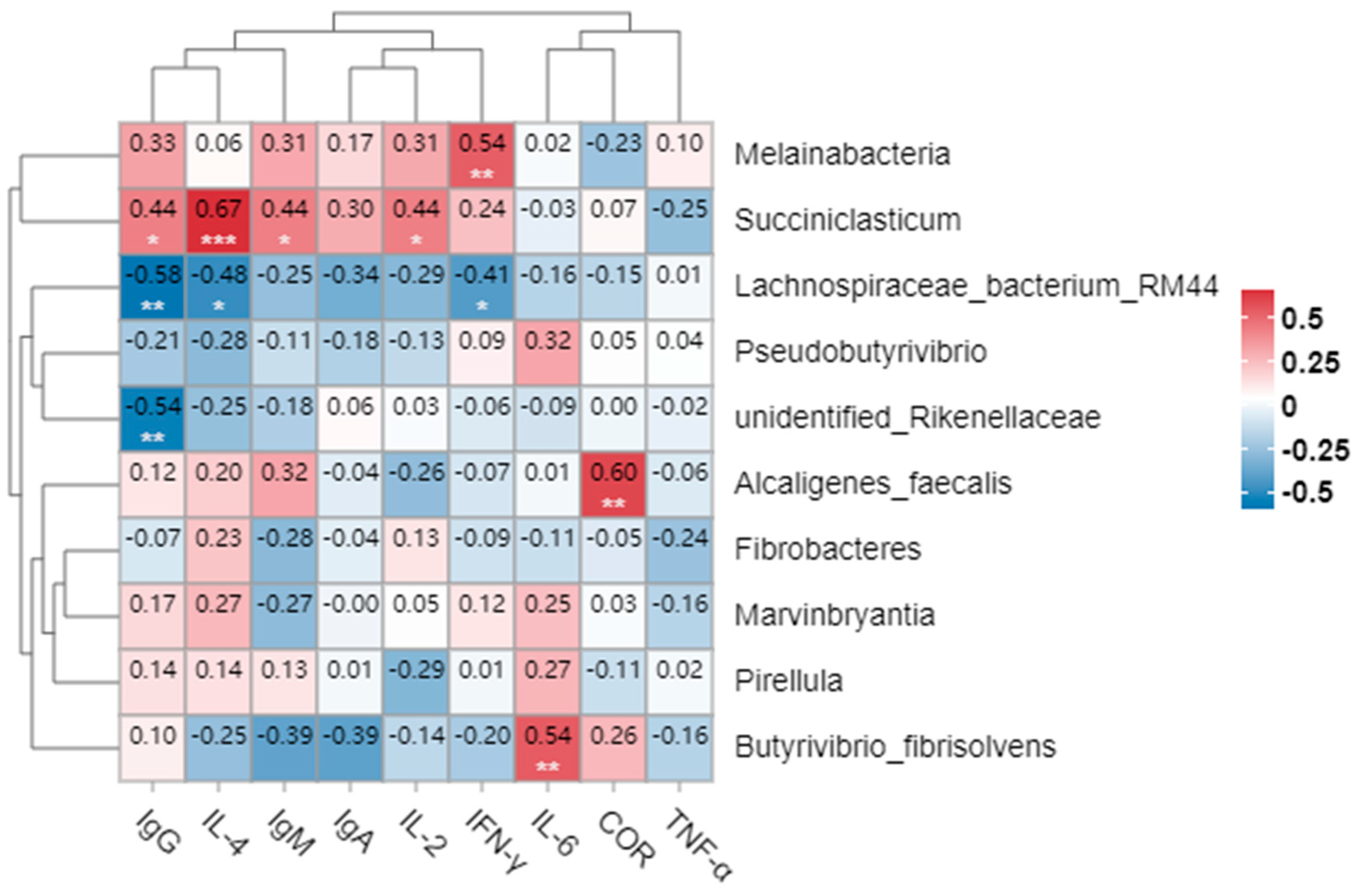
Figure 2.
C. Correlation of Oxidative stress indicators and flora. *indicates P < 0.05, and **indicates P < 0.01.
Figure 2.
C. Correlation of Oxidative stress indicators and flora. *indicates P < 0.05, and **indicates P < 0.01.
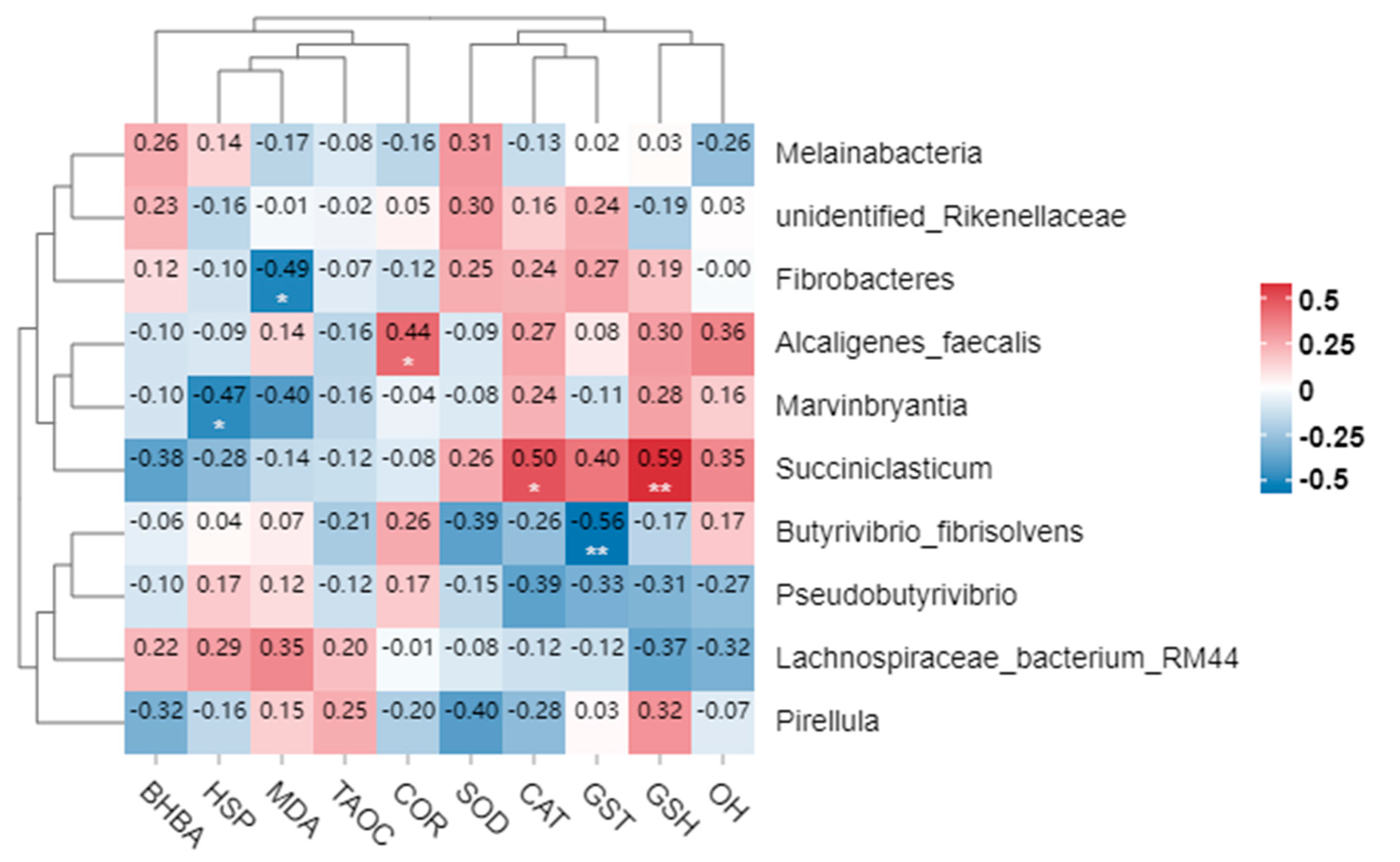
Figure 2.
D. Correlation of Physiological and biochemical indicators and flora. *indicates P < 0.05, and **indicates P < 0.01.
Figure 2.
D. Correlation of Physiological and biochemical indicators and flora. *indicates P < 0.05, and **indicates P < 0.01.
4. Discussion
4.1. Alleviation of heat stress in beef cattle by pineapple residue
In order to adapt to the environment, the rectal temperature of beef cattle will also change under high temperature. Relevant research shows that when the THI is higher than 68, cattle are in a state of heat stress. With the constant increase of external temperature, the heat in cattle can not be discharged in time, which will cause changes in the physiological characteristics of cattle, among which rectal temperature is one of the most obvious characteristics. The rectal temperature of cattle under heat stress is 39.18 °, which is significantly different from that under comfort condition of 37.5 °. In this experiment, the average THI of the cowshed is 76.5 °, which is higher than THI68, and belongs to long-term heat stress. This shows that cattle are generally affected by heat stress during the test period. In this experiment, after 15 days of feeding fermented pineapple dregs, the rectal temperature of T25 group was significantly lower than that of the control group (P<0.05), the rectal temperature of T50 group was significantly lower than that of the control group (P<0.01), and the rectal temperature of T50 group was significantly lower than that of T25 group. Therefore, it can be judged that fermented pineapple dregs has a significant effect on alleviating the heat stress of beef cattle.
4.2. Effect of fermented pineapple residue on serum biochemical indexes of finishing cattle
The metabolism of protein, lipid and energy, the homeostasis of internal environment and the damage state of internal organs of animals can be shown by serum biochemical indicators. The metabolism of the animal body is in a dynamic equilibrium state, and the indexes related to the metabolism of nutrients are maintained within the normal range under its own control. T3 and T4 are the main secretions of thyroid gland, and T4 plays its physiological role mainly by transforming into T3. Thyroxine plays an important role in the regulation of body temperature in animals with constant temperature. It can increase the oxygen consumption rate of most tissues. Generally, when cattle are under heat stress, in order to maintain the body temperature balance, they often reduce the production of heat through endocrine channels. Some hormones, such as T3 and T4, will significantly reduce the serum content, which is the self-regulation mechanism of the body to adapt to the environment [7,8] . In this experiment, T3 content gradually increased and T4 content gradually decreased with the extension of the test period; The comparison between groups showed that with the increase of pineapple residue addition ratio, the T4 content decreased significantly and the T3 content increased significantly. This may be because the T50 group in the high substitution group was less oppressed by heat (low rectal temperature), and T4 was transformed into T3 to promote heat production and growth, which was also related to its larger daily weight gain. CR represents the concentration of creatinine in the blood, which reflects the metabolic capacity of the kidney. Renal injury is often accompanied by an increase in CR concentration. In this experiment, the CR content of CON group was significantly higher than that of T25 and T50 groups, indicating that pineapple residue can maintain the normal metabolism of the kidney, avoid the damage of external heat stress on the kidney, and play a certain protective role on the body.
4.3. Effect of fermented pineapple residue on immune indexes of finishing cattle
Serum immune indicators are proteins or cytokines secreted by immune organs or cells into the blood. They participate in the body fluid circulation and can directly reflect the immunity of the body or the degree of infection and inflammation. IL-2 is secreted by T lymphocytes, which can stimulate T lymphocytes, make them proliferate and differentiate, and enhance the activity of natural killer cells. The size of IL-2 index can be regarded as the degree of cellular immune effect in vivo [9] . IL-4 is responsible for inducing the maturation of B cells and stimulating them to produce immunoglobulin, and is an inflammatory factor that responds to the body's inflammatory response [10] . IL-6 and IFN- γ Such cytokines reflect the immune status of the body to a certain extent [11] . CRP is a kind of acute phase response protein, which is mainly produced by the liver and participates in the acute response of body injury and infection [12,13] . In this test, CRP, IL-4 and IFN- γ The indexes increased with the development of the experiment, and the content in the two pineapple residue treatment groups was significantly higher than that in the control group, which showed that there were inflammatory reactions in the body of finishing cattle under high temperature and high humidity, while the pineapple residue group's response speed to inflammation and the repair speed of inflammatory damage were significantly higher than that of the control group, reflecting that pineapple residue has the effect of improving the immunity of animals under heat stress.
4.4. Effect of fermented pineapple residue on oxidative stress index of finishing cattle
In the appropriate temperature range, free radicals and other active oxygen species in animals are constantly formed in the body and are eliminated by the action of antioxidant enzymes. When the body produces heat stress, the dynamic balance of oxidation and reduction of free radicals in the body will be destroyed. The activity of NADPH oxidase will produce anionic superoxide (O2 -) during normal metabolism, which can be converted into hydrogen peroxide (H2O2) through SOD, and then into H2O through GSH-Px and CAT, thus achieving the purpose of antioxidation [14] . T-AOC represents the antioxidant capacity of the whole body when it is stimulated by the outside world. It provides a method to describe the dynamic balance between serum oxidants and antioxidants [15] . MDA is an important end product of lipid peroxidation, and its content can be used to determine the degree of lipid peroxidation damage in tissue cells [16,17] . BHBA is an incomplete metabolite of fatty acids. Research by Liu Zhaoxi [17] shows that BHBA can regulate the secretion of hormones in the hypothalamus, and high concentration in the internal environment will cause the increase of MDA, which will make animals suffer from oxidative stress. COR is a steroid glucocorticoid secreted by the adrenal cortex. It supports the rapid response ability of the body to acute stress and plays a very important role in maintaining the body's homeostasis. HSP70 represents the heat resistance ability of the body under long-term heat stress and plays an important role in maintaining cell survival and stable internal environment [18] . In this experiment, the indexes of BHBA, MDA, SOD, HSP70 and CAT related to oxidative stress all changed significantly, and the data of all indexes in T50 group showed good oxidative (heat) stress resistance. This result in pineapple residue is consistent with the phenomenon that the rectal temperature of cattle in T50 group is significantly lower than that in CON group. During the test period, the cattle were only in the state of chronic heat stress, without other diseases and stressors, which may be the reason why the COR content did not change significantly. In addition, we found that the content of OH - also increased with the increase of the proportion of pineapple residue, which is inconsistent with the report of Guo Qiaoling [19] that pineapple polysaccharide can eliminate hydroxyl radicals. Therefore, fermentation of pineapple residue can indeed improve the oxidative (heat) stress resistance of finishing cattle, which can be further applied in production practice, but it is still necessary to explore the specific substances that play a role in it.
4.4. Effect of fermented pineapple residue on oxidative stress index of finishing cattle
Anaerobic fermentation of rumen microorganisms is closely related to host productivity, and with the development of ruminants, rumen microflora regularly forms corresponding Dynamic equilibrium in different development stages. Rumen microorganisms transform nutrients for Host switch and regulate organism metabolism. The dynamic and stable rumen microbiota plays an important role in host health, feed digestibility, animal product quality, and the environment [20] .In this experiment, Succiniclassicum showed a positive correlation with IgG, IgM, and IL-2 in immune indicators, an extremely significant positive correlation with IL-4, a significant positive correlation with GSH in serum oxidative stress indicators, and a positive correlation with CAT. This is similar to the study by Wu F [21] and others that Succinniclassicum can utilize Succinate to produce propionate, which is beneficial for intestinal health. It also proved that Li Yuqi [22] , Lv Xiaokang [23] and other succinic Vibrio producing Bacteroides have high fiber decomposition activity and can degrade crystalline cellulose that can not be degraded by Rumen Whites.Studies have shown that almost all stress can produce HSP [24] , and Marvinbryantia has a negative correlation with HSP in serum oxidation indicators, which may be that Marvinbryantia is related to intestinal dysfunction and specialized cellulose decomposition [25,26] . Lachnospiraceae is positively correlated with rectal temperature and INF in immune indicators- γ It has a negative correlation with IL-4 and a significant negative correlation with IgG, which may be because Lachnospiraceae can also produce SCFAs to provide energy for the hindgut, stimulate the proliferation and differentiation of intestinal epithelial cells, maintain the intestinal barrier function and regulate intestinal motility [27,28,29] . The abundance of Lachnospiraceae was significantly increased in the heat stress group [30] . Fibrobacteres have a positive correlation with GLU and NEFA in serum physiological and biochemical indicators, similar to Li Chuan's [31] findings that the genus Fibrobacterium plays an important role in carbohydrate degradation and fiber digestion in the rumen [32] .
5. Conclusions
The results showed that fermented pineapple residue could alleviate the effects of heat stress in beef cattle, and the effect of 50% addition was more significant than that of 25% addition. Fermented pineapple residue can maintain the normal metabolism of kidney, avoid the damage of kidney caused by external heat stress, and play a certain protective role on the body. In the state of heat stress, fermentation of pineapple residue can also improve the immunity of beef cattle and the resistance of beef cattle to oxidative heat stress.After adding fermented pineapple pomace, there was a significant change in the microbiota associated with heat stress indicators in the rumen of beef cattle. Among them, Succinniclassicum, Melainabacteria, Lachnospiraceae, and Fibrobacteres all showed significant or extremely significant correlation with heat stress related indicators. Prove that fermented pineapple pomace can effectively regulate the response of beef cattle to heat stress.
Funding
This study was supported by the Guangdong Provincial Promotion Project of Modern Seed Industry, GuangDong Basic and Applied Basic Research Foundation-Enterprise (Wens) Joint Fund (2019B1515210017), Special Fund of Agricultural Development and Rural Work in Guangdong Province Beef Cattle Concentrate Feed and Roughage Research and Development, and Popularization and Application in South China.
Institutional Review Board Statement
The animal study was reviewed and approved by Administration of Laboratory Animals (CLI.2.293192, 2017 Revision, State Council, China) Institutional Animal Care and Use Committees of South China Agricultural University (Approval No. 2018-P002).
Data Availability Statement
WThe original contributions presented in the study are included in the article/supplementary material, further inquiries can be directed to the corresponding authors.
Acknowledgments
In this section, you can acknowledge any support given which is not covered by the author contribution or funding sections. This may include administrative and technical support, or donations in kind (e.g., materials used for experiments).
Conflicts of Interest
The authors declare that the research was conducted in the absence of any commercial or financial relationships that could be construed as a potential conflict of interest.
References
- Lv Guixia, Chen Lijun, Zhong Chongyue, Jiang Kangfu, Fu Yandong. Effects of summer heat stress on beef cattle breeding and prevention and control measures [J]. Agricultural Engineering Technology 2022, 42, 79–80. [Google Scholar] [CrossRef]
- Li Yilin, Li Yaokun, Guo Yongqing. The effect of heat stress on beef cattle production and its regulatory measures [J]. Guangdong Livestock and Veterinary Science and Technology 2023, 48, 68–75. [Google Scholar] [CrossRef]
- Ge Yingying, He Guoge, Zheng Jingcheng, et al. The application of pineapple pomace and sugarcane pomace in animal feed [J]. Breeding and Feed 2021, 20, 93–96. [Google Scholar] [CrossRef]
- Wang Xiaomin, Liu Peijian. Research progress on the application of pineapple residue in animal production [J]. Guangdong Feed 2016, 25, 41–42. [Google Scholar]
- NRC. Nutrient Requirements of Beef Cattle[M]. 8th Revised Edition. 2016.
- Maurer, H.R. Bromelain: biochemistry, pharmacology and medical use[J]. Cellular and Molecular Life Sciences 2001, 58, 1234–1245. [Google Scholar] [CrossRef] [PubMed]
- Li Junjie, Sang Runzi, Tian Shujun, etc Heat stress and changes of bovine blood components [J]. Livestock Ecology 2001, 56–59.
- Lin Wan, Sun Xiaohong, Luo Junyi, etc Effects of summer heat stress on beef cattle breeding and its prevention and control measures [J]. China Cattle Science 2019, 45, 58–61.
- Antony, P.A.; Paulos, C.M.; Ahmadzadeh, M.; et al. Interleukin-2-dependent mechanisms of tolerance and immunity in vivo[J]. Journal of Immunology 2006, 176, 5255–5266. [Google Scholar] [CrossRef] [PubMed]
- Cai Mingcheng Effects of heat stress on physiological and biochemical indexes and microRNA expression level in peripheral blood of beef cattle [D]. Southwest University, 2014.
- Sordillo L M, Aitken S L. Impact of oxidative stress on the health and immune function of dairy cattle[J]. Veterinary Immunology Immunopathology, 2009, 128, 104–109. [Google Scholar] [CrossRef]
- Shi Yue Clinical value analysis of the application of whole blood C-reactive protein combined with blood routine examination in pediatric infectious diseases [J]. Chinese Medical Guide 2020, 18, 130.
- Zhang Xiaohui, Li Guangtao, Zhang Zhuoli Detection and clinical significance of C-reactive protein and hypersensitive C-reactive protein [J]. Chinese Journal of Clinical Immunology and Allergy 2011, 5, 74–79.
- Simko, M. Cell type specific redox status is responsible for diverse electromagnetic field effects[J]. Current Medicinal Chemistry 2007, 14, 1141–1152. [Google Scholar] [CrossRef]
- Ghiselli, A.; Serafini, M.; Natella, F.; et al. Total antioxidant capacity as a tool to assess redox status: critical view and experimental data[J]. Free Radical Biology Medicine 2000, 29, 1106–1114. [Google Scholar] [CrossRef]
- Fan Shijun, Han Youwen, Li Defa, etc Effects of high temperature stress and superoxide treatment on the content and activity of malondialdehyde and glutathione peroxidase in the liver of chicks [J]. China Feed 2001, 11–13.
- Liu Zhaoxi Effects of NEFA and BHBA on oxidative stress status of ketosis cows [D]. Jilin University, 2013.
- Bruemmer-Smith, S.; Stüber, F.; Schroeder, S. Protective functions of intracellular heat-shock protein (HSP) 70-expression in patients with severe sepsis[J]. Intensive Care Medicine 2001, 27, 1835–1841. [Google Scholar] [CrossRef] [PubMed]
- Guo Qiaoling Study on the extraction and biological activity of pineapple polysaccharide [D]. Fujian Agricultural and Forestry University, 2010.
- Na mela, Zhang Xiaodong, Du Haidong, et al. Research progress on ruminant rumen microbiota, their functions, and colonization patterns [J/OL]. Feed Research 2023, 144-148. [CrossRef]
- Wu, F.; Guo, X.; Zhang, J.; Zhang, M.; Ou, Z.; Peng, Y. Phascolarctobacterium faecium abundant colonization in human gastrointestinal tract. Exp Ther Med. 2017, 14, 3122–3126. [Google Scholar] [CrossRef]
- Li Yuqi, Yang Jianhua, Zhang Tao, et al. The effect of adding different proportions of micro stored cotton stalks to the diet on the rumen microbiota of Hu sheep [J]. Journal of Microbiology, 2020, 60 (8): 1592-1604. LIYQ, YANGJH, ZHANGT, Etal. Effect of Different Proportion sfermented cotton stall kintake on runnmicro flora of lambs [J]. Acta Microbiologica Sinica, 2020, 60 (8): 1592-1604. (in Chinese).
- Lv Xiaokang. Effects of different diets on rumen development of 20-60 day old goat lambs [D]. Beijing: Chinese Academy of Agricultural Sciences, 2019 LYUXK. Effects of different ediets on rule development of 20-60 days old goatkids. Beijing: Chinese Academy of Agricultural Sciences, 2019. (in Chinese).
- Liu Qinghua, Yu Junjun, Liang Xuewu, etc. Correlation between HSP gene polymorphism and serum biochemical indicators in dairy cows [J]. Journal of Fujian Agriculture and Forestry University (Natural Science Edition) 2009, 38, 160–165.
- Vojinovic, D.; Radjabzadeh, D.; Kurilshikov, A.; Amin, N.; Wijmenga, C.; Franke, L.; Ikram, M.A.; Uitterlinden, A.G.; Zhernakova, A.; Fu, J.; Kraaij, R.; van Duijn, C.M. Relationship between gut microbiota and circulating metabolites in population-based cohorts. Nat Commun. 2019, 10, 5813. [Google Scholar] [CrossRef]
- Baniel, A.; Amato, K.R.; Beehner, J.C.; Bergman, T.J.; Mercer, A.; Perlman, R.F.; Petrullo, L.; Reitsema, L.; Sams, S.; Lu, A.; Snyder-Mackler, N. Seasonal shifts in the gut microbiome indicate plastic responses to diet in wild geladas. Microbiome. 2021, 9, 26. [Google Scholar] [CrossRef]
- Biddle, A.; Stewart, L.; Blanchard, J. , et al. Untangling the genetic basis of fibrolytic specialization by Lachnospiraceae and Ruminococcaceae in dverse gut communities[J]. Diversity 2013, 5, 627–640. [Google Scholar] [CrossRef]
- Du Meiyu. Effect of different TMR diets on production performance, gastrointestinal microbiome and metabolome of fattening sheep [D]. Shandong Agricultural University, 2021.
- Wu Min, Liu Zuohua, Qi Renli Intestinal microbiota regulates the growth and development of animal muscles [J]. Journal of Animal Nutrition 2019, 31, 3976–3982.
- Wuri Liga Effects of organic selenium on antioxidant and immune functions and intestinal microflora of grazing sheep under heat stress [D]. Inner Mongolia Normal University, 2022. [CrossRef]
- Li Chuan Effects of glutamic acid on production performance and gastrointestinal function of heat stressed Hu sheep and its mechanism [D]. Jiangxi Agricultural University, 2022. [CrossRef]
- Deng, M.; Xiao, Z.; Liu, G.; Sun, B.; Guo, Y.; Zou, X.; Liu, D.; Yang, Z.; Li, Y. The effects of fermented pineapple residue on growth performance, meat quality, and rumen microbiota of fattening Simmental bull. Front Microbiol. 2022, 13, 942208. [Google Scholar] [CrossRef] [PubMed]
Disclaimer/Publisher’s Note: The statements, opinions and data contained in all publications are solely those of the individual author(s) and contributor(s) and not of MDPI and/or the editor(s). MDPI and/or the editor(s) disclaim responsibility for any injury to people or property resulting from any ideas, methods, instructions or products referred to in the content. |
© 2024 by the authors. Licensee MDPI, Basel, Switzerland. This article is an open access article distributed under the terms and conditions of the Creative Commons Attribution (CC BY) license (https://creativecommons.org/licenses/by/4.0/).
Copyright: This open access article is published under a Creative Commons CC BY 4.0 license, which permit the free download, distribution, and reuse, provided that the author and preprint are cited in any reuse.


