

Submitted:
15 January 2024
Posted:
16 January 2024
You are already at the latest version
Abstract
Background: Children's environmental health encompasses a wide range of factors that impact the well-being of children, including physical, chemical, biological, and social elements in their immediate environment. Safeguarding children from harmful substances is the crucial role of nursing students. Nursing students play a vital role as valuable resources for individuals, families, communities, and policymakers. This study aims to assess the knowledge and skills of nursing students concerning children's environmental health at academic institutions delivering nursing program in Nekemte town, Ethiopia. Methods: An institutional-based cross-sectional study design was carried out from August 1–30, 2023, among nursing students in Nekemte Town, and 634 study participants were selected through simple random sampling. Data was entered into Epinfo version 6.4 and exported to STATA version 14 for analysis, and multicollinearity was checked. Finally, from the bivariate analysis, variables of < 0.2 were included in the multivariate analysis; an adjusted odd ratio with a 95% CI was computed; and variables with a P-value <0.05 in the multivariable analysis were taken as significant associated factors. Results: The overall nursing students' level of knowledge about children's environmental health was insufficient (56%). More than one-third (34%) demonstrate their skill towards children's environmental health insufficiently, and one-fourth (25%) and 27% of the learners conduct their craft to prevent children from ecological hazards to a good and better level, respectively. While gender of the participant, age of the participant, year of the study, training history of the participants, and field of study of the students were significantly associated variables with their knowledge of children's environmental health. Conclusion: The study reveals that nursing students' knowledge of children's environmental health is limited, with factors such as gender, age, training history, and field of study significantly influencing their understanding. Therefore, female students should be considered for more tutorials to be effectively knowledgeable regarding children’s environmental health.
Keywords:
Children
; Environmental health
; Nursing students
; Knowledge
; Skills
Introduction
Environmental health is vital to any comprehensive public health system that focuses on the connections between people and the environment, promotes health and well-being, and helps create healthy, safe communities(1). All things in the environment exist in solid, liquid, or gaseous form, interacting with pollution and human beings (2). The discipline of environmental health works to reduce exposure to harmful substances in the air, water, soil, and food necessary to protect children (1, 2). It focuses on environmental hazards (environmental risks, water, hazardous wastes, climate change, hygiene and sanitation, toxic metals, and chemicals) that affect children in several ways (3).
Environmental toxicants can lead our children to profound adverse health outcomes either from the parents or the environment (4). In the sequence of descriptive age periods, children are sensitive and highly affected by environmental hazards due to parental exposure before conception, exposure in the uterus, or exposure after birth (5). Biologically, although children are small, they eat more food, breathe more air and drink more water than adults per their weight (6). Children are at high risk for environmental hazards mainly due to immaturity (developmentally and immunologically); putting their hands or objects in their mouth and playing on the ground are the most common behaviors that increase their exposure to environmental hazards (7). Environmental health risks are shared mainly at home, school, and community (8).
The Sustainable Development Goals (SDG) elements: good health and well-being, clean water and sanitation, and climate actions are interconnected and imperative triangles for reducing neonatal and childhood mortality (9). Globally, the environment contributes to about 13.7 million (24%) deaths, including one in four deaths of children under five years of age and more than a quarter (23%) of disease burdens (10). The World Health Organization (WHO) reported that 1.8 billion (93%) children under 15 breathe polluted air, putting their health and development at serious risk (11). Blood lead poisoning (at or above 5micrrogram/deciliter, ≥5 µg/dL) was in about 800 million (about one in three) children mainly in low- and middle-income countries (LMICs) (12).
Children endure a disproportionate share of environmental hazards and their immediate and long-term effects, resulting in disease, impairments, and mortality (13). Environmental risk factors (foodborne toxins, poor sanitation, dirty home, poor quality cooking fuels, dirty and poor local waste disposal) contribute to stunting in children (14). Additionally, violent behaviors, poor physical growth, and incompetence in mental activities (attention deficit and poor academic performance) are among the long-term impacts of environmental hazards (9).
Preventing childhood mortality by 25% could be achieved through environmental cleanup efforts. Nearly two million deaths of children under five years old are linked to the environment each year (15). It is the responsibility of nurses to safeguard the community from the health consequences of environmental hazards (16). All nurses should be knowledgeable about the fundamental pathways of exposure to environmental hazards, prevention and control strategies, as well as effective interdisciplinary interventions (17). Nursing education is required to include information about climate change at all levels in order to equip present and future nurses with the knowledge needed to provide care (18).
Despite the increasing negative impacts of environmental health over time, there is a low level of concern regarding the inclusion of children’s environmental health in nursing education in Ethiopia. Nursing students are a valuable resource for individuals, families, communities, and policy makers, including in the development of curriculum. In Ethiopia, there is a lack of content related to children’s environmental health in nursing education, and training in this area is non-existent. Furthermore, based on our search, there is no study aimed at assessing the knowledge and skills of nursing students regarding children’s environmental health. Therefore, this study seeks to evaluate the level of knowledge and skills of future nurses in relation to children’s environmental health.
Methods
Study area, design and period
The research was conducted at Wallaga University (WU), Rift Valley University (RVU), and New Generation University College (NGUC), located in Nekemte town, Ethiopia, all of which offer degree programs in the field of Nursing. An institutional-based cross-sectional study design was implemented from August 1 to August 5, 2023, involving nursing students enrolled in degree programs at the mentioned institutions. Approximately 2780 nursing students were enrolled in the academy.
Study population
The study population consisted of nursing students who had completed at least one nursing course at a hospital.
Sample size and sampling procedure
To determine the sample size, the single population proportion formula was used, considering a 50% proportion (p), a 95% confidence level, and a 5% margin of error. The calculated sample size was 423, and after accounting for a 10% non-response rate and a design effect of 1.5, the final sample size was 634.
A sample of 634 nursing students was randomly selected from three academic institutions (WU, RVU, and NGUC) after proportional allocation to each institution. The students were identified from their respective registrar offices and selected based on inclusion criteria using simple random sampling.
Variables
The dependent variables were the knowledge and skill of the students in Children Environmental Health (CEH). Independent variables included demographic and educational factors such as age, gender, year of study, study program, and received training (lecture) about CEH.
Operational definitions
Knowledge: The knowledge questions were utilized to categorize the level of knowledge as excellent, very good, good, insufficient, or poor based on the following score ranges: ≥90%, 80-89.99%, 60-79.99%, 40-59.99%, and <40%, respectively.
Skill: The skill questions were employed to categorize the level of skill as excellent, very good, good, insufficient, or poor based on the following score ranges: ≥90%, 80-89.99%, 70-79.99%, 50-69.99%, and <50%, respectively.
Data collection tool and procedure
The study questionnaire comprised three sections: demographic and educational characteristics, 26 knowledge testing questions, and skill assessment questions. The first section captured demographic and educational characteristics, including age, gender, year of study, study program, and received training about CEH. In the second section, 26 knowledge testing questions were included, validated by five experts with experience in pediatrics nursing and nursing education. The questions were assessed for content validity and modified with locally available words where recommended. The knowledge testing involved True, False, and I don’t know options, with correct answers assigned a value of one and incorrect answers or "I don’t know" assigned a value of zero.
The third section focused on the children’s environmental health skills questionnaire, also validated by the same experts who conducted the content validity assessment for the knowledge questionnaire. The skill testing responses were captured using the five-point Likert scale, ranging from "strongly agree" to "strongly disagree." For positively stated statements, a value of five was assigned for "strongly agree," four for "agree," three for "neither agree nor disagree," two for "disagree," and one for "strongly disagree." Conversely, for negatively stated statements, the values were reversed.
Data quality control
Before the commencement of the actual study, a pretest was conducted at RVU Gimbi campus, located west of the main town (Nekemte). Minor adjustments were made based on the pretest findings. For the study, five data collectors and two supervisors were recruited and received a comprehensive two-day training on the principles of data collection and handling. The principal investigator conducted nightly checks to ensure the consistency and completeness of the data.
Data processing and analysis
Following data collection, the information was cleaned and checked for completeness and consistency using Epi Info version 4.6. Subsequently, the data was exported to SPSS version 25 for analysis. Descriptive statistics were employed to present the findings in narrative and tabular forms. The Generalized Linear Method (GLM) was utilized to identify the predictors of nursing students’ knowledge and skills about CEH. In this model, a significance level of p < 0.05 and adjusted odds ratio with a 95% confidence interval were used to identify statistically associated factors.
Results
Demographic and educational characteristics of the participants (N=589)
In this study, a total of 634 students were invited to participate, of which 589 completed the questionnaire, yielding a response rate of 93%. The mean age of the participants was 24.76 years, with a standard deviation of 4.97 years (24.76±4.97). The gender distribution was nearly equal, with approximately 50% male and 50% female participants. Moreover, 68% of the participants were in their third year of study, while 20.5% were in their fourth year. The majority of the participants were enrolled in comprehensive nursing programs, constituting over three-fourths of the sample. Additionally, 64% of the students reported not having received any training or lectures on children’s environmental health, while the remaining proportion had undergone such training (Table 1).
Knowledge of the nursing students about children’s environmental health (N=589)
The study revealed that the majority of nursing students demonstrated insufficient knowledge about children’s environmental health (56%), with an additional 23% exhibiting a poor level of knowledge, and none scoring ≥90% (Figure 1). Furthermore, a significant number of students provided correct responses to items assessing risk factors for respiratory diseases (81.7%) and asthma (81.7%). Conversely, fewer students demonstrated knowledge regarding the effects of nitrogen oxide and tobacco smoke on the skin (22.8%), and identified schools and nurseries (16.5%) and parks and gardens (12.2%) as less hazardous environments (Table 2).
Skills towards children’s environmental health
In this survey, 34% of participants demonstrated insufficient skill in addressing children’s environmental health, while 25% and 27% of the learners exhibited good and better levels of proficiency in preventing children from ecological hazards, respectively (Figure 2). The majority of students displayed a high level of skill in identifying environmental risk factors to which children are exposed (81.7%) and risk factors for diseases associated with the environment (71.2%). Similarly, nursing students expressed their preparedness to work in a Pediatrics Environmental Health Specialty Unit (Table 3).
Predictors of nursing students’ knowledge and skill in children’s environmental health
We employed the Generalized Linear Method (GLM) to identify the determinants of nursing students’ knowledge and skills in CEH. The analysis revealed that older age, male gender, receipt of training or lectures on CEH, and higher skill scores in CEH were associated with increased odds of achieving a high expertise score among nursing students. Conversely, being a senior student and studying comprehensive nursing were associated with increased odds of achieving a low knowledge result. Additionally, age and attitude scores of nursing students were significantly associated with their knowledge of CEH (Table 4).
The odds of older students achieving high knowledge results were 1.06 times greater than those of younger students, with a 51.45% probability for older students to have a high knowledge level. Furthermore, students who demonstrated high skills in CEH had 1.02 times the odds of those who demonstrated low skills in CEH (50.66%) (Table 4).
Similarly, using the same model (GLM), the odds of a higher score towards CEH skills are reported among students who are aged and male, attending their first and second year classes, studying a comprehensive course, and scoring a better result about CEH knowledge. The low scores in skills were found among the students who received training or lectures about CEH. However, a statistically significant difference is shown between the levels of skills and age, gender, and knowledge score.
In terms of nursing students’ skills, the odds of male nursing students achieving a favorable level of skill are 1.67 times higher than the same odds for female nursing students, with a 62.54% probability for male nursing students to score favorably in CEH skills. Additionally, the odds of older students achieving high skill results are 1.05 times greater than the odds for younger students, with a 51.36% probability for older students to have a high skill level. Moreover, students with a higher level of knowledge about CEH have 1.06 times higher odds of scoring better than students with a lower level of knowledge, with a 51.45% probability for students who scored high in skills (Table 4).
Discussion
Approximately 23% of worldwide deaths among children are believed to be caused by environmental factors (19). Globally, nurses recognize the importance of environmental health hazards and understand the significance of regulations in promoting health and prevention. They play a crucial role in educating and preventing environmental issues, as well as improving healthcare environments and reducing waste.
The susceptibility of children to environmental hazards demands a comprehensive education for nursing students on the subject of children’s environmental health, as it enables them to effectively prevent and mitigate the detrimental effects (20-22). Nurses possess a distinct advantage in identifying environmental hazards that impact children (23-25). Therefore, the objective of this study was to evaluate the knowledge and skills regarding children’s environmental health among nursing students in Nekemte town.
The current study reveals that nursing students have insufficient knowledge about CEH, with a prevalence rate of 56%. This finding was lower than the study conducted in the USA (79.4%) and England (77.59) of nursing student knowledge regarding children’s environmental health (CEH) (26, 27). The difference might be due to the large sample size undertaken by the counterparts. However, the findings of this study were slightly equivalent to those of the study conducted in Croatia (58.49%) (28).
The study found that the age and attitude scores of nursing students were significant predictors of knowledge about children’s environmental health. Older nursing students were 1.06 times more likely to have knowledge about CEH compared to younger students. Similarly, nursing students with higher skill scores were 1.02 times more likely to have sufficient knowledge about CEH compared to those with lower skill scores.
Furthermore, approximately one-third (34%) of the study participants had insufficient skills in relation to children’s environmental health. This finding aligns with a study conducted in England, which reported similar results (33.62%) (27). However, the finding was lower than the study conducted in USA (47.2%) (26).
In the present study, the method analysis identified significant associations between the skill of nurses in relation to children’s environmental health and certain demographic and educational factors. Particularly, male nursing students, nursing students of older age, and nursing students with a higher level of knowledge were found to be significant factors in the skill of nurses in children’s environmental health.
The likelihood of male nursing students scoring a favorable level of skill is 1.67 times greater than that of female nursing students. The probability of older students attaining high skill scores is 1.05 times higher than that of younger students. Students with a higher level of knowledge about CEH achieve a higher score, which is 1.06 times greater than that of students with a lower level of knowledge about CEH.
Limitations of the study
Since a cross-sectional study design only studies a single moment in time, our study cannot be used to analyse behaviour over a period of time or establish long-term trends. Furthermore, because the study was conducted in universities, the knowledge and skills of nursing at health care institutions weren’t evaluated, which may be a concern.
Conclusion
The study found that nursing students have insufficient knowledge about children’s environmental health. Besides, the overall knowledge of children’s environmental health was 56%. The gender of the students, age, year of their study, training history of the participants, and field of study of the students were significantly associated factors with their knowledge of children’s environmental health. Therefore, female students should be considered for more tutorials to be effectively knowledgeable regarding children’s environmental health. Providing course revision for third- and fourth-year students as they receive the related courses during their first and second years Moreover, future researchers should include health care nurses to address further significant factors of insufficient knowledge.
Funding
No fund was obtained.
Institutional Review Board Statement
Ethical clearance was obtained from the school of nursing ethical review committee at Wallaga University, the college of medicine and health sciences, and the institutional research review board. Then an official letter was written to each campus for permission and support; however, participants have the right to accept or deny participating in the study. Oral informed consent was obtained before data collection. The students’ identification information (name and ID number) was not collected, and confidentiality was maintained. All data was collected from the students in a confidential manner and used only for study purposes.
Informed Consent Statement
Not applicable.
Data Availability Statement
All data generated or analyzed during this study are included in this published article.
Acknowledgments
We would like to thank data collectors and supervisors for their patience and commitment to gathering data. Again, we want to express our heartfelt thanks to the WU, RVUC, and NGUC administrative staff for their permission to do this study without any interference. And lastly, we want to thank you for the study participants for their valuable time.
Conflicts of Interest
This manuscript maintains no competing financial interest declaration from any person or organization, or non-financial competing interests such as political, personal, religious, ideological, academic, intellectual, commercial, or any other.
Abbreviations
BSc- Bachelor of Sciences, CEH- Children’s Environmental Health, GLM- Generalized Linear KM- Kilometer, Method, ID- Identification, NGUC- New-generation University College, RVUC- Rift Valley University College, WU- Wallaga University.
References
- Goldman RH, Zajac L, Geller RJ, Miller MD. Developing and implementing core competencies in children’s environmental health for students, trainees and healthcare providers: a narrative review. BMC medical education. 2021;21(1):503. [CrossRef]
- Landrigan PJ. Environmental hazards for children in USA. International journal of occupational medicine and environmental health. 1998;11(2):189-94.
- Lilly Evie DM. Environmental Influences on Child Development. 2022.
- Ramos FM, Herrera MT, Zajac L, Sheffield PJANR. Children’s environmental health and disaster resilience in Puerto Rico and the US Virgin Islands. 2022;66:151482. [CrossRef]
- Sattler B, Davis del BA. Nurses’ role in children’s environmental health protection. Pediatric nursing. 2008;34(4):329-39.
- Engström M, Randell E, Lucas S. Child health nurses’ experiences of using the Safe Environment for Every Kid (SEEK) model or current standard practice in the Swedish child health services to address psychosocial risk factors in families with young children – A mixed-methods study. Child Abuse & Neglect. 2022;132:105820. [CrossRef]
- Marilyn J. Hockenberry DW. Wong's Nursing Care of Infants and Children - E-Book: Wong's Nursing Care of , 11th edition. 2019.
- Álvarez-García C, Álvarez-Nieto C, Sanz-Martos S, Puente-Fernández D, López-Leiva I, Gutiérrez-Puertas L, et al. Undergraduate Nursing Students’ Attitudes, Knowledge, and Skills Related to Children’s Environmental Health. The Journal of nursing education. 2019;58(7):401-8.
- Álvarez-García C, Álvarez-Nieto C, Carter R, Kelsey J, Sanz-Martos S, López-Medina IM. Cross-cultural adaptation of children’s environmental health questionnaires for nursing students in England. Health Education Journal. 2020;79(7):826-38. [CrossRef]
- Jakšić K, Sarić MM, Čulin JJJoHR. Nursing students’ knowledge and attitudes regarding brominated flame retardants from three Croatian universities. 2020;36(2):289-99. [CrossRef]
- Association APH. "Protecting the Health of Children: A National Snapshot of Environmental Health Services". 2019.
- Moeller DW. Environmental health: Harvard University Press; 2011.
- UNICEF. Health Environements for Healthy Children: Global Programme Framework. 2021.
- Wigle DT, Arbuckle TE, Walker M, Wade MG, Liu S, Krewski D. Environmental Hazards: Evidence for Effects on Child Health. Journal of Toxicology and Environmental Health, Part B. 2007;10(1-2):3-39. [CrossRef]
- Etzel RA. Environmental risks in childhood. SLACK Incorporated Thorofare, NJ; 2004. p. 431-6. [CrossRef]
- Prevention CfDCa. National Environmental Public Health Tracking. 2022.
- Medgyesi DN, Brogan JM, Sewell DK, Creve-Coeur JP, Kwong LH, Baker KK. Where Children Play: Young Child Exposure to Environmental Hazards during Play in Public Areas in a Transitioning Internally Displaced Persons Community in Haiti. International journal of environmental research and public health. 2018;15(8):1646. [CrossRef]
- Pronczuk J, Surdu S. Children’s Environmental Health in the Twenty-First Century: Challenges and Solutions. Annals of the New York Academy of Sciences. 2008;1140(1):143-54. [CrossRef]
- Goals UUNSD.
- Organization WH. Ambient air pollution: A global assessment of exposure and burden of disease. 2016.
- Organization WH. More than 90% of the world’s children breathe toxic air every day. 2018.
- Rees N, Fuller R. The toxic truth: children’s exposure to lead pollution undermines a generation of future potential: UNICEF; 2020.
- Official Records of the General Assembly F-ts, Realizing the rights of the child through a healthy, environment: Report of the United Nations High Commissioner for Human Rights AH. 2020.
- Vilcins D, Sly PD, Jagals P. Environmental risk factors associated with child stunting: a systematic review of the literature. Annals of global health. 2018;84(4):551. [CrossRef]
- Organization WH. Information sheet on children’s environmental health for clinicians: pollution-free environments for healthy generations: what every clinician needs to know about children’s environmental health. World Health Organization, 2022.
- AnAaker A, Nilsson M, Holmner A, Elf M. Nurses’ perceptions of climate and environmental issues: A qualitative study. Journal of advanced nursing. 2015;71(8):1883-91. [CrossRef]
- Sattler B, Davis ADB, Pike-Paris A. Nurses’ role in children’s environmental health protection. Pediatric Nursing. 2008;34(4).
- Leffers J, Levy RM, Nicholas PK, Sweeney CF. Mandate for the nursing profession to address climate change through nursing education. Journal of Nursing Scholarship. 2017;49(6):679-87. [CrossRef]
- Goldman RH, Zajac L, Geller RJ, Miller MD. Developing and implementing core competencies in children’s environmental health for students, trainees and healthcare providers: a narrative review. BMC medical education. 2021;21(1):503. [CrossRef]
- Landrigan PJ. Environmental hazards for children in USA. International journal of occupational medicine and environmental health. 1998;11(2):189-94.
- Lilly Evie DM. Environmental Influences on Child Development. 2022.
- Ramos FM, Herrera MT, Zajac L, Sheffield PJANR. Children’s environmental health and disaster resilience in Puerto Rico and the US Virgin Islands. 2022;66:151482. [CrossRef]
- Sattler B, Davis del BA. Nurses’ role in children’s environmental health protection. Pediatric nursing. 2008;34(4):329-39.
- Engström M, Randell E, Lucas S. Child health nurses’ experiences of using the Safe Environment for Every Kid (SEEK) model or current standard practice in the Swedish child health services to address psychosocial risk factors in families with young children – A mixed-methods study. Child Abuse & Neglect. 2022;132:105820. [CrossRef]
- Marilyn J. Hockenberry DW. Wong's Nursing Care of Infants and Children - E-Book: Wong's Nursing Care of , 11th edition. 2019.
- Álvarez-García C, Álvarez-Nieto C, Sanz-Martos S, Puente-Fernández D, López-Leiva I, Gutiérrez-Puertas L, et al. Undergraduate Nursing Students’ Attitudes, Knowledge, and Skills Related to Children’s Environmental Health. The Journal of nursing education. 2019;58(7):401-8.
- Álvarez-García C, Álvarez-Nieto C, Carter R, Kelsey J, Sanz-Martos S, López-Medina IM. Cross-cultural adaptation of children’s environmental health questionnaires for nursing students in England. Health Education Journal. 2020;79(7):826-38. [CrossRef]
- Jakšić K, Sarić MM, Čulin JJJoHR. Nursing students’ knowledge and attitudes regarding brominated flame retardants from three Croatian universities. 2020;36(2):289-99. [CrossRef]
Figure 1.
Level of knowledge of nursing students about children’s environmental health, Nekemte town, Ethiopia, 2023.
Figure 1.
Level of knowledge of nursing students about children’s environmental health, Nekemte town, Ethiopia, 2023.
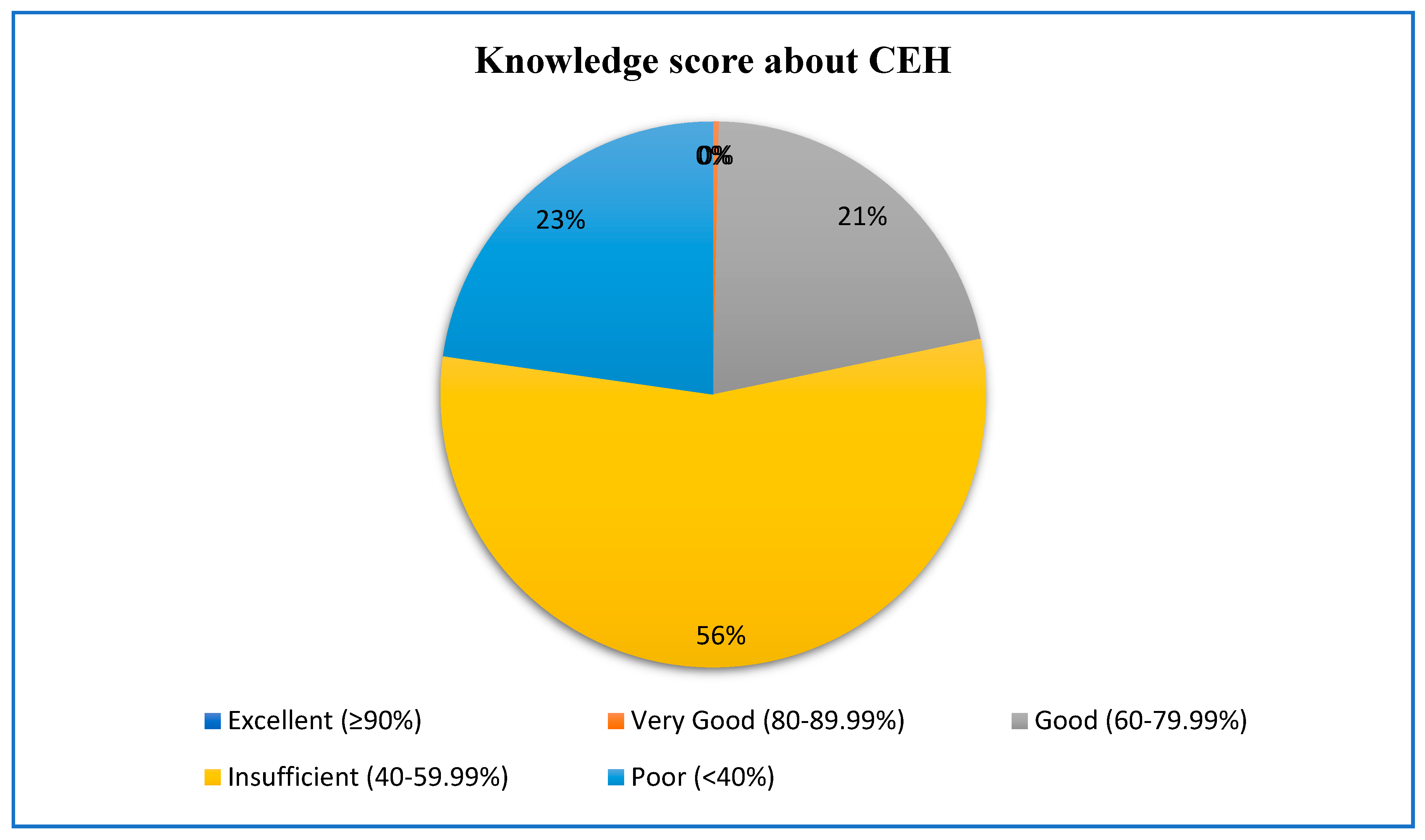
Figure 2.
Level of nursing students’ skill performance towards children’s environmental health, Nekemte town, Ethiopia, 2023.
Figure 2.
Level of nursing students’ skill performance towards children’s environmental health, Nekemte town, Ethiopia, 2023.
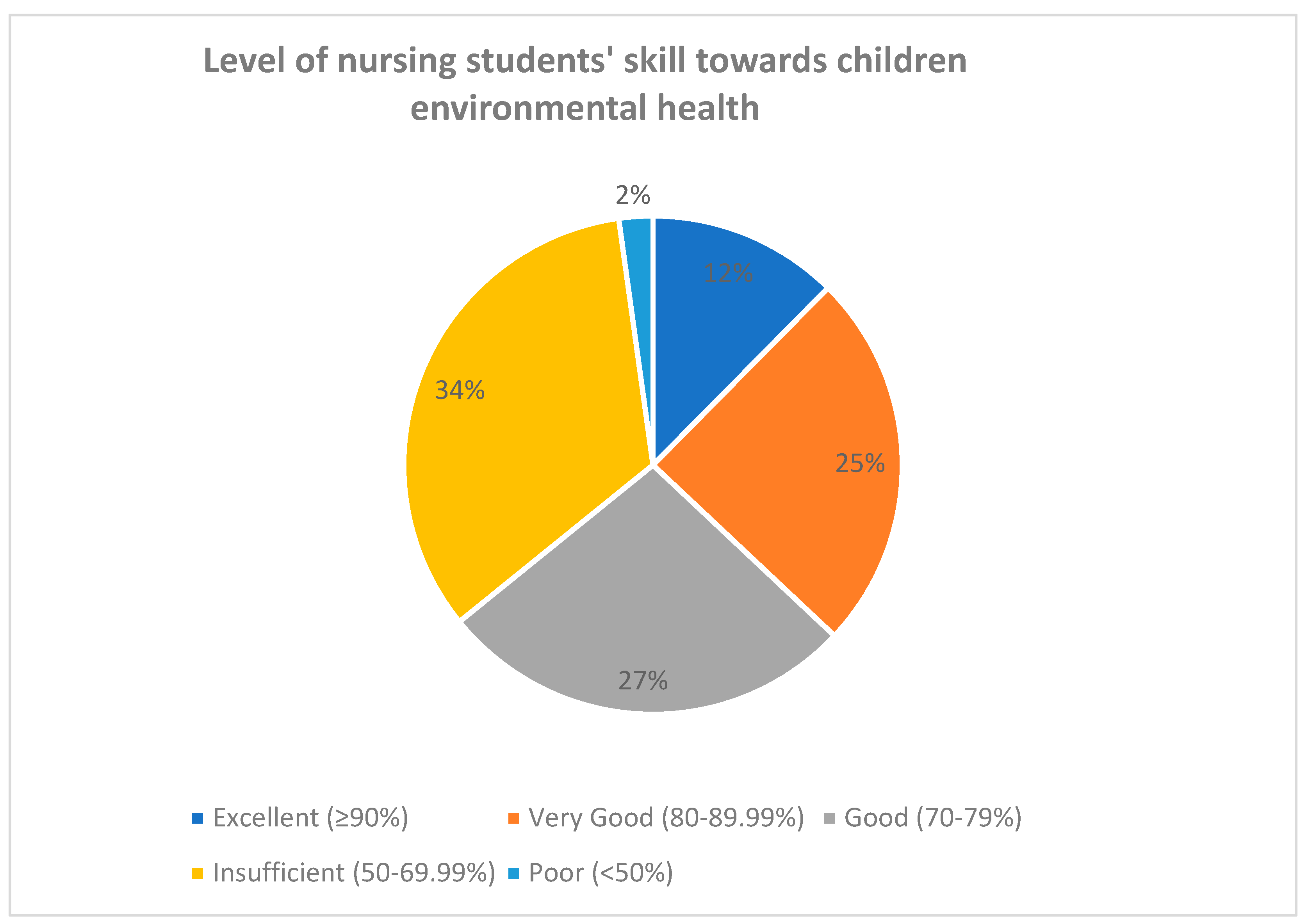

Table 1.
Characteristics of nursing students, Nekemte town, Ethiopia, 2023.
| Variables | Category | Frequency | Percentage (%) |
|---|---|---|---|
| Age (24.76±4.97) (years) | 20-26 | 440 | 74.8% |
| >26 | 149 | 25.3% | |
| Gender | Male | 311 | 52.8 |
| Female | 278 | 47.2 | |
| Study year | First-year | 54 | 9.2 |
| Second-year | 8 | 1.4 | |
| Third-year | 406 | 68.9 | |
| Fourth-year | 121 | 20.5 | |
| Study program | Comprehensive nursing | 455 | 77.2 |
| Specialty nursing | 134 | 22.8 | |
| Received training/lecture about CEH | Yes | 373 | 63.3 |
| No | 216 | 36.7 |
Table 2.
Nursing students’ knowledge about CEH, Nekemte town, Ethiopia, 2023.
| Items | Correctly answered (%) |
|---|---|
| 1. The pediatric population is more susceptible to environmental threats due to their biological immaturity*. | 167 (28.4) |
| 2. The increased energy and metabolic consumption of the pediatric population protects children from environmental hazards. | 167 (28.4) |
| 3. The higher rate of cell growth during the pediatric age increases the risk of health effects caused by environmental factors*. | 256(43.5) |
| 4. Environmental factors do not influence hormonal secretion during puberty. | 394(66.9) |
| 5. Nitrogen oxide from fossil fuels in the home and tobacco smoke causes redness and burns on the skin. | 134(22.8) |
| 6. Particles from animals exacerbate asthma crisis*. | 481(81.7) |
| 7. Increased humidity at home improves respiratory diseases in children. | 481(81.7) |
| 8. Passive smoking is associated with the development of acute leukemia in children*. | 345(58.6) |
| 9. Childhood leukemia incidence rates are higher in the areas most exposed to radon*. | 274(46.5) |
| 10. Overexposure to solar ultraviolet radiations can damage the skin of adults more severely than that of children. | 291(49.4) |
| 11. During childhood more than half of the expected lifetime solar ultraviolet radiation is absorbed*. | 326(55.3) |
| 12. Lead accumulates in the body affecting the nervous system*. | 348(59.1) |
| 13. Chronic dietary exposure to mercury (fish and shellfish) is less toxic to children’s central nervous system than to adults. | 258(43.8) |
| 14. Exposure to pesticides increases the risk of developing attention deficit problems in school-aged children*. | 356(60.4) |
| 15. Children born to smoking mothers during pregnancy are at risk of lower intellectual capacity*. | 469(79.6) |
| 16. Exposure to organic solvents during fetal development can cause learning disabilities in children*. | 351(59.6) |
| 17. Water containing nitrates can only cause intoxication during childhood. | 330(56.0) |
| 18. Chlorination of water forms sub-products from the disinfection process that have been classified as carcinogenic*. | 188(31.9) |
| 19. The major source of childhood exposure to pesticides is through ambient air. | 194(32.9) |
| 20. The main route of exposure to mercury is through cereal intake. | 295(50.1) |
| 21. Exposure to lead through diet occurs mainly through fish intake. | 287(48.7) |
| 22. Food colorings and preservatives are associated with central nervous system problems*. | 256(43.5) |
| 23. Genetically modified foods cause fewer allergic reactions in children. | 170(28.9) |
| 24. Schools and nurseries are environmentally safe places. | 97(16.5) |
| 25. Children are exposed to higher concentrations of air pollutants at home than outdoors. | 298(50.6) |
| 26. Parks and gardens are the areas with the least environmental pollutants where children can play. | 72(12.2) |
Key: * represents items whose correct answer is true.
Table 3.
Skills of nursing students towards CEH, Nekemte town, Ethiopia, 2023.
| Items | Responses for items | ||||
| SDA | DA | N | AG | SA | |
| 1. I am able to assess the main environmental risks to which a child is exposed. | 45 (7.6) | 37(6.3) | 26(4.4) | 316(53.7) | 165(28.0) |
| 2. I am NOT able to identify the environmental risks that can cause respiratory diseases in a child. | 180(30.6) | 239(40.6) | 59(10.0) | 62(10.5) | 49(8.3) |
| 3. I am able to identify the environmental risks that can cause neoplastic diseases in a child. | 60(10.2) | 108(18.3) | 89(15.1) | 238(40.4) | 94(16.0) |
| 4. I am NOT able to identify the environmental risks that can cause neurological disorders in a child. | 101(17.1) | 220(37.4) | 85(14.4) | 137(23.3) | 46(7.8) |
| 5. I am able to provide health education to parents about the main contaminants in their child’s food. | 48(8.1) | 36(6.1) | 38(6.5) | 258(43.8) | 209(35.5) |
| 6. I am NOT able to identify the environmental risks in playgrounds. | 204(34.6) | 223(37.9) | 53(9.0) | 61(10.4) | 48(8.1) |
| 7. I am able to provide health education to parents about actions to minimize environmental risks to which a child is exposed when playing outdoors. | 60(10.2) | 51(8.7) | 35(5.9) | 229(38.9) | 214(36.3) |
| 8. I am NOT able to identify the environmental risks in a child’s home. | 199(33.8) | 213(36.2) | 54(9.2) | 66(11.2) | 57(9.7) |
| 9. I am able to provide health promotion to parents about environmental risks at home. | 55(9.3) | 65(11.0) | 40(6.8) | 237(40.2) | 192(32.6) |
| 10. I am able to identify the environmental risks in a child’s school. | 48(8.1) | 53(9.0) | 34(5.8) | 244(41.4) | 210(35.7) |
| 11. I am NOT able to identify the actions needed to combat environmental risks in a child’s school. | 191(32.4) | 224(38.0) | 57(9.7) | 67(11.4) | 50(8.5) |
| 12. I do not feel able to do my job as a nurse in a Paediatrics Environmental Health Specialty Unit. | 150(25.5) | 193(32.8) | 62(10.5) | 120(20.4) | 64(10.9) |
Keys: SDA: Strongly disagree; DA: Disagree; Neither agree nor disagree (neutral); AG: Agree; SA: Strongly agree.
Table 4.
Predictors of nursing students’ knowledge and skills regarding CEH in Nekemte town, Ethiopia, 2023.
Table 4.
Predictors of nursing students’ knowledge and skills regarding CEH in Nekemte town, Ethiopia, 2023.
| Predictors of nursing students’ knowledge about CEH | ||||||
| Variables | Category | B | P-value | Exp(B) | CI 95% | |
| Lower | Upper | |||||
| Gender | Male | 0.182 | 0.269 | 1.199 | 0.869 | 1.656 |
| Female | 0a | . | 1 | . | ||
| Year of study | First-year | -0.305 | 0.412 | 0.737 | 0.355 | 1.529 |
| Second-year | 0.078 | 0.913 | 1.081 | 0.267 | 4.382 | |
| Third-year | -0.405 | 0.050 | 0.667 | 0.445 | 1.001 | |
| Fourth year | 0a | . | 1 | . | ||
| Received training /lecture about CEH | Yes | 0.112 | 0.604 | 1.119 | 0.732 | 1.710 |
| No | 0a | . | 1 | . | ||
| Nursing study type | Comprehensive | -0.275 | 0.244 | 0.759 | 0.478 | 1.206 |
| Specialty | 0a | . | 1 | . | ||
| Age | Age | 0.060 | 0.001 | 1.061 | 1.024 | 1.100 |
| Skills of students | Attitude score | 0.026 | 0.016 | 1.027 | 1.005 | 1.048 |
| Predictors of nursing students’ skills about CEH | ||||||
| Gender | Male | 0.513 | 0.001 | 1.671 | 1.236 | 2.257 |
| Female | 0a | 1 | . | |||
| Year of study | First-year | 0.496 | 0.152 | 1.642 | 0.833 | 3.238 |
| Second-year | -0.927 | 0.178 | 0.396 | 0.103 | 1.525 | |
| Third-year | 0.078 | 0.686 | 1.081 | 0.741 | 1.576 | |
| Fourth year | 0a | . | 1 | . | ||
| Received training/ lecture about CEH | Yes | -0.105 | 0.608 | 0.900 | 0.601 | 1.347 |
| No | 0a | . | 1 | . | ||
| Nursing study type | Comprehensive | 0.117 | 0.595 | 1.124 | 0.730 | 1.731 |
| Specialty | 0a | 1 | ||||
| Age | Age | 0.054 | 0.002 | 1.056 | 1.020 | 1.092 |
| Knowledge of students | knowledge score | 0.059 | 0.016 | 1.060 | 1.011 | 1.112 |
Disclaimer/Publisher’s Note: The statements, opinions and data contained in all publications are solely those of the individual author(s) and contributor(s) and not of MDPI and/or the editor(s). MDPI and/or the editor(s) disclaim responsibility for any injury to people or property resulting from any ideas, methods, instructions or products referred to in the content. |
© 2024 by the authors. Licensee MDPI, Basel, Switzerland. This article is an open access article distributed under the terms and conditions of the Creative Commons Attribution (CC BY) license (http://creativecommons.org/licenses/by/4.0/).
Copyright: This open access article is published under a Creative Commons CC BY 4.0 license, which permit the free download, distribution, and reuse, provided that the author and preprint are cited in any reuse.


