

Submitted:
10 January 2024
Posted:
11 January 2024
You are already at the latest version
Abstract
Climate warming profoundly affect vegetative growth, flowering phenology and sexual reproduction of plants, therefore the ornamental value of wild flowers. Despite this, the extent and mechanism of the impact remain unclear. Here, we conducted warming experiment for two growing seasons (1.89 ℃ in 2017 and 2.37 ℃ in 2018 increases) with infrared heaters to examine the effects of warming on ornamental value of wild flower I. oxyanthera, endemic to China, in Mount Emei. We fitted generalized linear mixed models (GLMMs) and generalized linear model (GLM) to examine how warming affected plant morphology and floral traits. We evaluated comprehensive ornamental value based on plant morphology and flowering characteristics using Analytic Hierarchy Process (AHP) and disentangled the impact of the two traits on ornamental value using principal component analysis (PCA) and partial least squares structural equation model (PLS-SEM) under the ambient and warming treatments. Warming decreased significantly plant height and crown width, while increased branch number and single leaf area. Warming also decreased vexillum length, corolla tube length, nectar spur length and pedicel length. In addition, warming shortened flowering duration per plant and reduced flower number, while there was no significant effect on flower longevity, flower color at full-bloom stage between the control and warming treatment. Therefore, comprehensive ornamental value under warming was lower than that under the control. Pedicel length, flower color, flower longevity and flowering duration per plant were the main factors of affecting comprehensive ornamental value. PLS-SEM showed that warming had an indirect negative effect on ornamental value via direct negative effects on flowering traits.
Collectively, these results indicate that although promoting vegetative growth, short-term warming decreased significantly ornamental value of I. oxyanthera due to warming-caused smaller flowers and shorter flowering duration.
Keywords:
climate change
; Impatiens L
; plant morphology
; floral traits
; ornamental value
; Analytic Hierarchy Process
Introduction
Flowering plants are the most highly diverse plant group with around 350,000 species. These plants have notably shaped terrestrial landscapes because they make up 90% of all living land plant species and their flowers color and scent the world [1]. These flowering plants are sensitive to the increase of temperatures. Nowadays, mean global surface temperature have increased by 1.25 °C since 1850 to 1900 and will exceed 1.5 °C in less than 10 years according to the current emissions trajectory of greenhouse gases [2]. Exceeding 1.5 °C global warming could trigger multiple climate tipping points [3]. Temperature, as the survival condition, affects the growth, morphology and reproduction of plants [4,5,6,7]. Therefore, climate warming will threaten the survival and reproduction of plants including wild flowers [8] and thus determine the ornamental value of wild flowers. Weather or climate factors (air temperature, precipitations) affect ornamental traits of plants [9,10]. However, it is still unclear how the increase of temperature will affect the ornamental value of these wild flowers under climate change.
Plant type and leaf shape at vegetative growth stage are important indicators to evaluate plant ornamental value. Many plants respond to temperature increase by altering their activity and metabolism [11]. Warming generally had a positive effect on plant growth due to increased photosynthesis and the accumulation of dry matters when ambient temperature is lower than optimal temperature of plant [4,12,13,14,15]. In addition, warming can affect the relative content of plant hormone [16], then influences plant morphology and growth. Higher than optimal temperature inhibits the apical dominance of plants and promote plant branching because of the vigorous activities of lateral meristem. Besides the traits of vegetative growth, reproductive traits are core indicators to evaluate the ornamental value of flowering plants [17]. Temperature profoundly affects plant flowering directly by influencing flower induction and development, indirectly by affecting resource allocation between vegetative growth and sexual reproduction [18]. Climate warming leads to a significant reduction in flowers density at the landscape level and flower number or flowering likelihood at the individual level [19,20]. Because elevated temperatures cannot meet the low temperature requirements for vernalization of flowering species or causes serious flower bud abortion. However, it was found that the model plant Arabidopsis thaliana responded to a warming environment by accelerating vegetative growth and increasing flower number [21]. Moreover, warmed plants produced smaller flowers as a result of the limitation of higher temperature on flower development [22,23]. At the individual level, temperature affects anthocyanin synthesis, color reaction and anthocyanin stability [24]. For flowering plants, flower longevity and flowering duration of individuals or groups determine the length of ornamental period and plant reproductive success [25]. Temperature affects flower longevity by changing the cost of keeping flowers open [26]. High temperature accelerates the respiration rate of flowers and water evapotranspiration, leading to accelerated senescence of flowers [26,27], thus shortening flower longevity. Altogether, the effects of warming on plant growth and sexual reproduction are often brought forward, but few comprehensive evaluations of ornamental value for wild flowers exist in responses to warming.
Impatiens L. have higher ornamental value due to diverse colors, unique flower shape and long flowering period. The genus has more than 900 known species and widely distributed all over the world [28]. There are about 220 species known in China, and it is one of the famous traditional flowers in China and even the world [29]. Wild plants of this genus can provide excellent germplasm resources for garden flowers, and have great development potential. However, only Impatiens wallerana Hook. f. and Impatiens hawkeri W. Bull were cultivated worldwide [30,31]. The ornamental characters and utilization value of 40 wild Impatiens species were evaluated comprehensively by using Analytic Hierarchy Process [32]. More while, warming delayed flowering onset, shorten flowering duration, reduce flower size of some wild Impatiens species [33]. Therefore, we predict that warming will decrease the ornamental value of Impatiens spp. To test the prediction, Impatiens oxyanthera Hook.f., a perennial herb endemic to China, was taken as study plant. We determined some traits about vegetative growth, flowering phenology and floral syndromes through two-year simulated warming experiment, and conduct a comprehensive evaluation of ornamental value based on these traits by combining Analytic Hierarchy Process and Principal Component Analysis.
1. Results
1.1. Plant Vegetative Growth
Warming changed significantly vegetative growth of I. oxyanthera in 2017 and 2018. Plant height and crown breadth were considerably restricted by warming. Plant height under warming was decreased by 12.04% in 2017 and by 18.85% in 2018 (Figure 1 a). Plants had smaller crown width (7.43% in 2017 and 11.76% in 2018 reduction) under warming (Figure 1 d). In contrast, branch number and leaf area increased under warming. For branch number, only in 2017 warming significantly promoted branching in I. oxyanthera, increasing by 17.27% (Figure 1 c). Warming improved leaf area by 15.62% in 2017 and by 11.17% in 2018 (Figure 1 e). Moreover, warming had no significant effect on basal diameter, leaf length and leaf width. Similarly, year also significantly affected the vegetative growth of I. oxyanthera except plant height, branch number and crown width. Compared with 2017, basal diameter was significantly reduced by 20.60%. However, single leaf area in 2018 increased significantly by 11.96% (Figure 1 e). And plants in 2018 had longer (7.80% increase ) and wider (3.89% increase ) leaves than those in 2017 (Figure 1 f, g). Their interaction had significant effect on crown width. In 2017, warming significantly increased the number of branches, while there was no effect in 2018.
1.2. Flower Longevity and Flowering Duration
The year had a significant effect on male phase and flower longevity but not the female phase. Male phase of flowers and single flower longevity in 2018 were significantly 19.12% and 21.68% higher than those in 2017, respectively. However, warming and the interaction of warming and year had no effect on flower longevity. At the individual level, warming significantly shortened flowering duration per plant, shortening by 9.70% in 2017 and by 19.05% in 2018. Year had significant effect on flower number per plant in the full flowering period of I. oxyanthera, and flower number per plant in 2018 was 9.81% less than that in 2017 (Table 1). Although the overall effect of warming was not significant, warmed plants had fewer flowers than the control plants in 2017 and 2018 (Table 1).
1.3. Floral Traits
Two growing-season warming had different effects on floral traits. Simulated warming caused smaller flower and shorter pedicel. Warming significantly reduced vexillum length, wing petal length, corolla tube length, nectar spur length and pedicel length, decreasing by 7.33%, 3.34%, 4.59%, 8.75% and 16.47% in 2017, respectively. In 2018, compared with the control group, wing petal length, corolla tube length decreased by 3.56% and 8.84%, respectively. Some traits of flower morphology significantly changed with year. Wing petal length, corolla diameter and nectar spur curvature in 2018 were higher than those in 2017, increasing by 2.39%, 5.41% and 9.52%, respectively. In contrast, flowers in 2018 had shorter nectar spur length and pedicel length compared to flowers in 2017, decreasing by 2.16% and 6.99%. The interaction of warming and year had significant effect on vexillum length, corolla tube length, nectar spur length and pedicel length. The four traits under warming were significantly higher than those under the control in 2017, but this patten was not founded in 2018. Warming in 2017 and 2018 had no significant effect on the relative anthocyanin content of vexillum and corolla tube(Table 2).
1.4. Comprehensive Ornamental Value
Analytic Hierarchy Process (AHP) showed the comprehensive scores of ornamental values were lower under warming (2.575 ± 0.064) compared with the control (2.896 ± 0.074) in 2017. In 2018, the comprehensive score of ornamental value under warming (2.496 ± 0.055) was also lower than that under the control (2.925 ± 0.061).Warming significantly decreased the comprehensive score of I. oxyanthera by 11.08% in 2017 ( t = 3.878, P < 0.05 ) and by 4.67% in 2018 ( t = 5.083, P < 0.05). Year and the interaction of warming and year had no significant impact on ornamental value (Figure 2).
The results of PCA showed that the variance interpretation rates of principal components 1 and 2 accounted for 16.70% and 13.80% of the total variance of all traits, respectively, with a total of 30.50% in 2017 (Figure 3 a). The variance interpretation rates of principal components 1 and 2 were 20.00% and 13.40% of the total variance of all traits, respectively, with a total of 33.40% in 2018 (Figure 3 b). In 2017, the first principal component was mainly composed of corolla tube length (CTL), pedicel length (PL), stripe number on the labellum (SN), branch number (BN) and single leaf area (SLA), which was positively correlated with CTL, PL and SN, and negatively correlated with BN and SLA. The second principal component was highly correlated with crown width (CW), plant height (PH), stripe number (SN), corolla diameter (CD) and other traits, which was positively correlated with CW and PH, and negatively correlated with SN and CD (Figure 3 a). In 2018, the first principal component was mainly correlated with PH, CW, BN, floral color (FC), nectar spur curvature (NSC) and other traits, which was positively correlated with PH, CW, BN, and negatively correlated with FC, NSC. The second principal component was mainly composed of CTL, FH, FL, BN, SLA and other traits. Among them, it was positively correlated with CTL, FH, FL, and negatively correlated with BN, SLA (Figure 3 b).
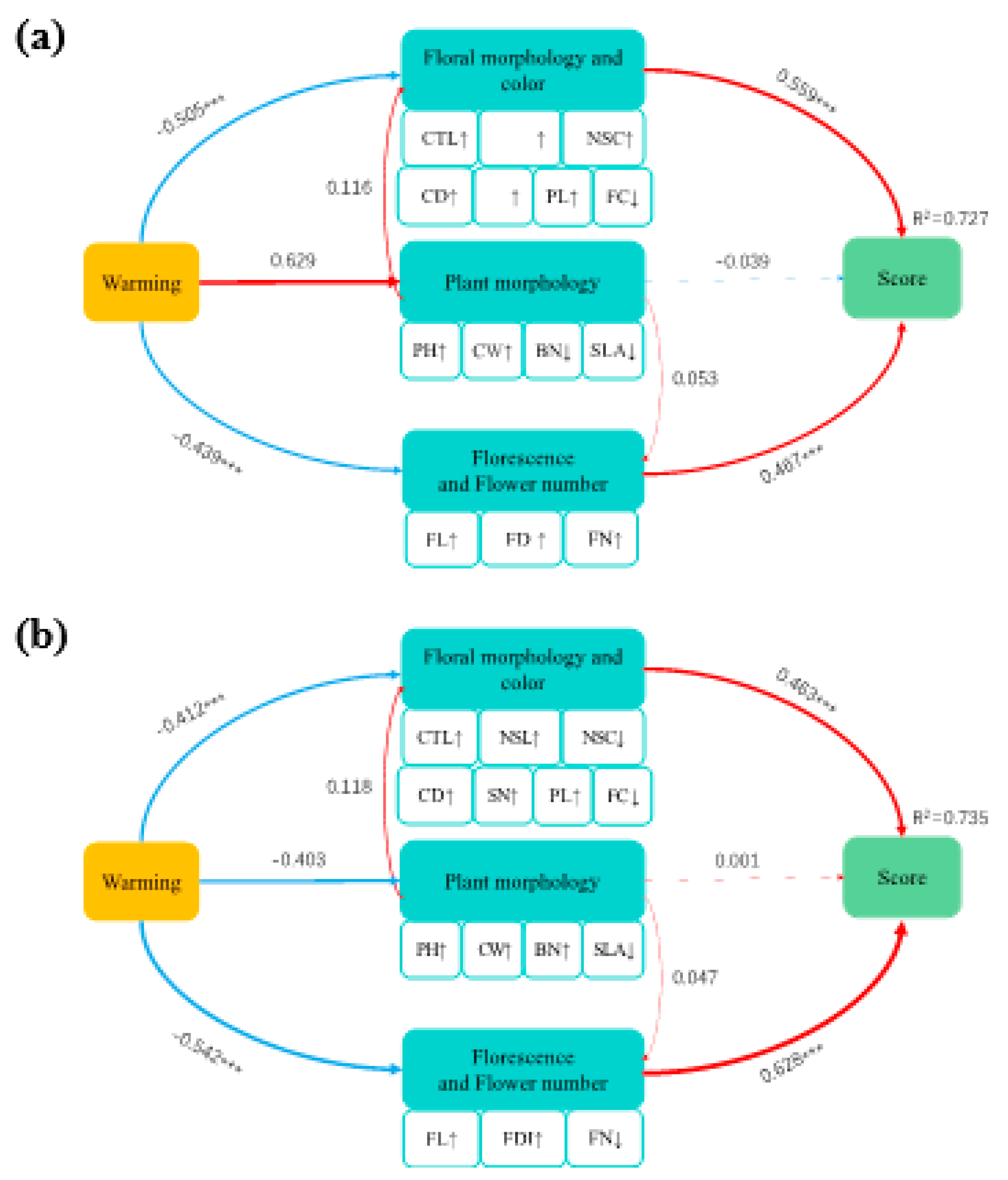
The PLS-SEM integrated the direct and indirect effects of the studied plant morphology and flowering variables on comprehensive ornamental value under warming, explaining 30.50% and 33.40% of the variation in the effects of plant morphology and flowering traits on ornamental value under warming in 2017 and 2018, respectively (Figure 4). The results of PLS-SEM in 2017 showed that warming had an indirect effect on comprehensive score of ornamental value through direct positive effects on plant morphology and direct negative on flowering traits (Figure 4 a). The results of PLS-SEM in 2018 showed that warming had an indirect effect on comprehensive score of ornamental value through direct negative effects on plant morphology and flowering traits (Figure 4 b).
2. Discussion
Our results demonstrate that warming can dwarf plants, promote branching and enlarge leaf area of I. oxyanthera at vegetative growth stages, but shorten flowering duration at the flower and individual level, decrease flower size and flower stripe number. Thus, our results indicate that short-term stimulated warming had negative effect on the comprehensive ornamental value of I. oxyanthera. These imply climate warming will decrease ornamental value of wild herbaceous flowers in the short term.
2.1. Effect of Warming on Plant Vegetative Growth
The apical meristem is responsible for main stem growth (plant height), whereas axillary meristems is responsible for lateral branching (branch number). In this study, two-year warming decreased significantly plant height and crown width, but increased the number of primary branches in 2017. Warming inhibited the growth of stem in I. oxyanthera, consistent with the responses of invasive plant Solidago canadensis to warming [34]. On the one hand, apical dominance is temperature dependent [35]. On the other hand, heat stress is usually accompanied by water deficit. Both heat and water stress influence the activities of PSII and PSI and thereby plant growth and viability [36]. In this study, warming in 2017 promoted the number of primary branches of I. oxyanthera, which may be that moderate warming increased relative content of cytokinins and promoted axillary bud growth [37]. However, warming in 2018 had no significant effect on the number of primary branches, probably because plants had adapted to warmed environments in 2018 after the first year of warming. Warming increased significantly the length, width and area of single leaf of I. oxyanthera. Studies have shown that warming in the normal season increases leaf biomass allocation, thus promotes the growth of leaves [38], which will help plants to effectively capture light energy and maintain photosynthesis [39]. Warming-caused lower stem and more branches make the plants low and dense. It will increase the difficulty of foraging for flowers and reduce the foraging efficiency of pollinators [40]. However, warming-caused dwarfing has many advantages in landscape application because of high space utilization, low pruning frequency and lodging resistance. The increase in branch number and leaf area is beneficial to the formation of a larger photosynthetic area [41], but the increase of leaf area under warming can improve the transpiration water loss, then aggravates the water deficit of plants.
2.2. Effect of Warming on the Ornamental Time and Flowering Period
In our study, warming had a significant negative effect on flowering duration at single flower and individual level in I. oxyanthera. Warming shortened male phase of flower, but not female phase of flower, thus shortened single flower longevity. Flower longevity is easy to be affected by temperature [26]. The optimum temperature range for the development of male organs is narrower than that of female organs [42], which may be the reason why the male phase is more sensitive to increased temperatures than female phase of I. oxyanthera in this study. The shortening of male phase may reduce pollen dispersal and male reproductive success [43]. It has been found that high temperature shortens flower longevity because of faster respiration rate and higher energy cost for maintaining flowers [27,44]. The delay in first flowering time together with a shortening of flowering duration in I. oxyanthera suggest negative impact on pollinators, which might pose a threat to plant reproductive success [45]. Meanwhile, the shortened flowering duration of individual plant can cause a reduction in the ornamental value of plants.
2.3. Effect of Warming on Flower Ornamental Characteristics
Warming had a significant negative effect on the floral traits of I. oxyanthera except flower color. Flowers under warming had shorter corolla tube, vexilla and wing petal of I. oxyanthera, consistent with warming-driven smaller flower in the previous study [22]. Several factors may have contributed to this result. First, higher temperature directly inhibited the development of flowers due to reduced cell division [46]. Second, reduction in flower size under heat stress could result from decreased photosynthesis and assimilate supply to flowers [47,48]. Third, when plants are under heat stress, reproductive investment will reduce as available resources decline and the probability of mortality increases [18]. Hence, decreased flower size rather than flower number occurred in I. oxyanthera. Finally, increased temperatures reduce atmospheric humidity (Figure S1), promote flower transpiration and water loss, and require more water to maintain flower display [49]. Therefore, small corolla under warming can reduce reproductive costs of plants. However, smaller corolla is not easy to be selected by pollinators [50], thereby limiting pollination success. Long pedicel facilitates flower display and pollinator’s visiting, but warming shortened significantly the pedicel length of I. oxyanthera, especially in 2017. Long and curved nectar spur is not only beautiful in shape, but also can increase the contact between pollinators and flowers, thereby improving plant reproductive success [51,52]. Warming shortens nectar spur of I. oxyanthera, especially in 2017, and had no effect on nectar spur curvature, which might reduce the difficulty of insects sucking nectar and the tightness of long-mouthed pollinators in contact with anthers or stigmas, thereby reducing pollination success [53]. The stripe number on the labellum of I. oxyanthera can increase its ornamental value, but was decreased under warming. Bright colors have strong attraction, but warming has no significant effect on anthocyanin content of flowers in I. oxyanthera. The optimal temperature for anthocyanin accumulation varies with species. In this study, warming magnitude was 1.9-2.4 °C, which may not exceed the optimal temperature for anthocyanin biosynthesis of I. oxyanthera.
2.4. Effect of Warming on Comprehensive Ornamental Value
Analytic Hierarchy Process (AHP) simplifies complex problems by using hierarchical methods, which not only contains subjective logical judgment but also makes full use of the advantages of quantitative analysis [54,55]. It plays important role in screening plant resource varieties [56,57] and evaluating ornamental value [32]. In previous studies, the ornamental value of multiple species was evaluated by using AHP [58,59]. Our study first applied AHP to evaluate and compare comprehensive ornamental value of a flowering plant between different warming conditions. And it was concluded that flowering traits were the most important limiting factor of ornamental value, which was consistent with Wang’s result [32]. Plant morphology parameters was the smallest limiting factor (Figure 3). Among the 15 selected evaluation factors, pedicel length, floral color, individual flower longevity and flowering duration per plant have the greatest effect on the ornamental value of I. oxyanthera. Most of these indexes under warming were significantly lower than those under the control, thus lead to the decrease in the ornamental value of I. oxyanthera.
PCA was used to screen out the indexes with high ornamental value, including floral color, flowering duration per plant, individual flower longevity, pedicel length, leaf area and so on. We used the outcomes of PCA for PLS-SEM to determine the relationship between vegetative growth, reproductive growth, florescence and comprehensive score of ornamental value. PLS-SEM provide strong evidence that warming had an indirect negative effect on ornamental value via direct negative effects on flowering traits. Ye [60] found that flower morphology is the core factor in evaluating the ornamental value of C.ensifolium cultivars, which is consistent with the results of our study. Warming significantly reduced flower size of I. oxyanthera, so that the ornamental value of I. oxyanthera decreased. Moreover, warming significantly reduced flower number and shortened the florescence, which will greatly reduce the ornamental value and ornamental cycle [61].
Figure 2.
Raw data, boxplots, and density of data points for comprehensive scores of ornamental values of I. oxyanthera under the control and warming treatment in 2017 and 2018. Diamonds indicate mean values.
Figure 2.
Raw data, boxplots, and density of data points for comprehensive scores of ornamental values of I. oxyanthera under the control and warming treatment in 2017 and 2018. Diamonds indicate mean values.
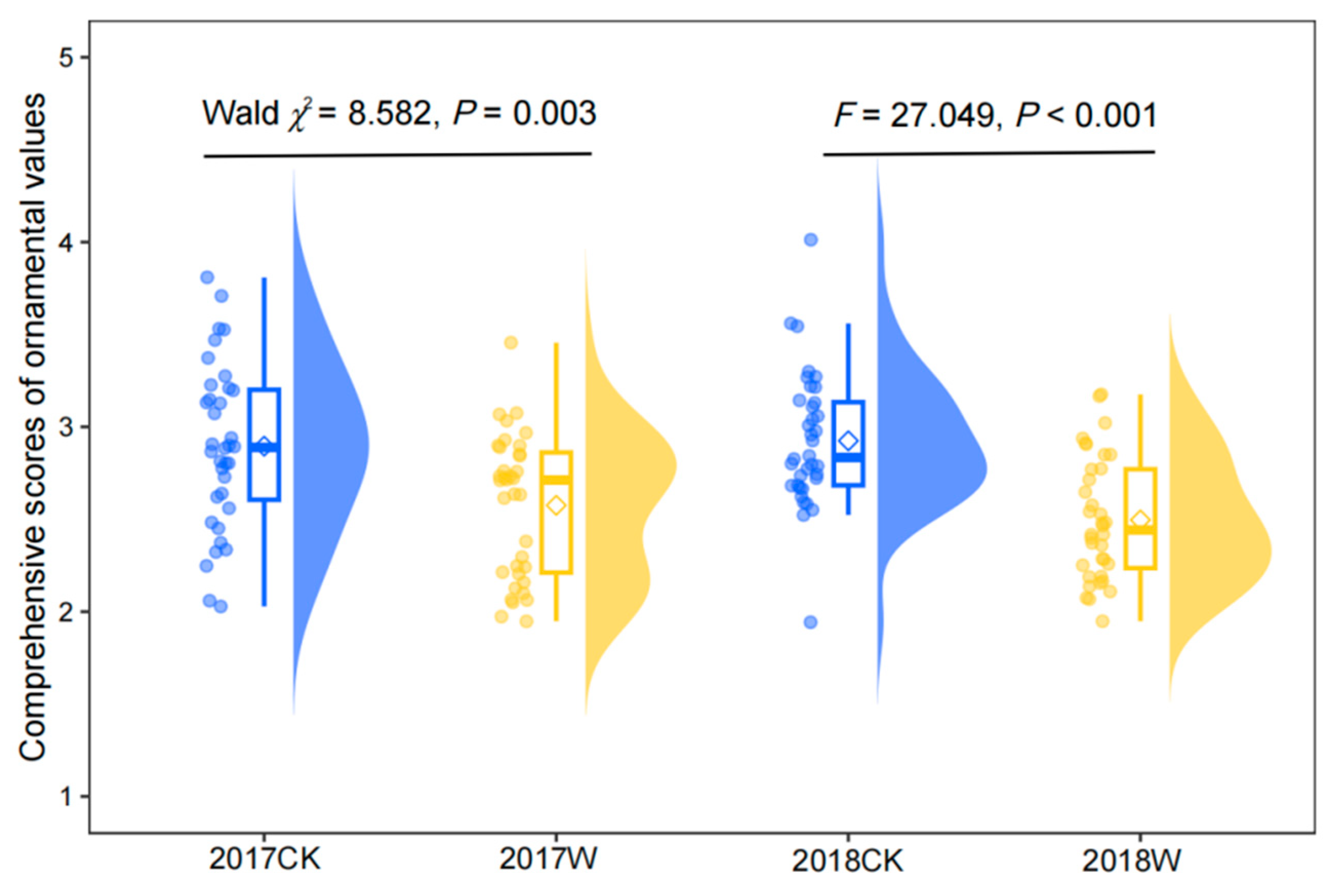
Figure 3.
Principal component analysis (PCA) of ornamental indicators in 2017 (a) and in 2018(b). PH, plant height; BN, branch number; CW, crown width; SLA,. single leaf area; FL, flower longevity; FC, floral color; FDI, flowering duration of individual; FN, flower number; CTL, corolla tube length; NSL, nectar spur length; NSC, nectar spur curvature; SN, stripe number on the labellum; PL, pedicel length; CD, corolla diameter.
Figure 3.
Principal component analysis (PCA) of ornamental indicators in 2017 (a) and in 2018(b). PH, plant height; BN, branch number; CW, crown width; SLA,. single leaf area; FL, flower longevity; FC, floral color; FDI, flowering duration of individual; FN, flower number; CTL, corolla tube length; NSL, nectar spur length; NSC, nectar spur curvature; SN, stripe number on the labellum; PL, pedicel length; CD, corolla diameter.
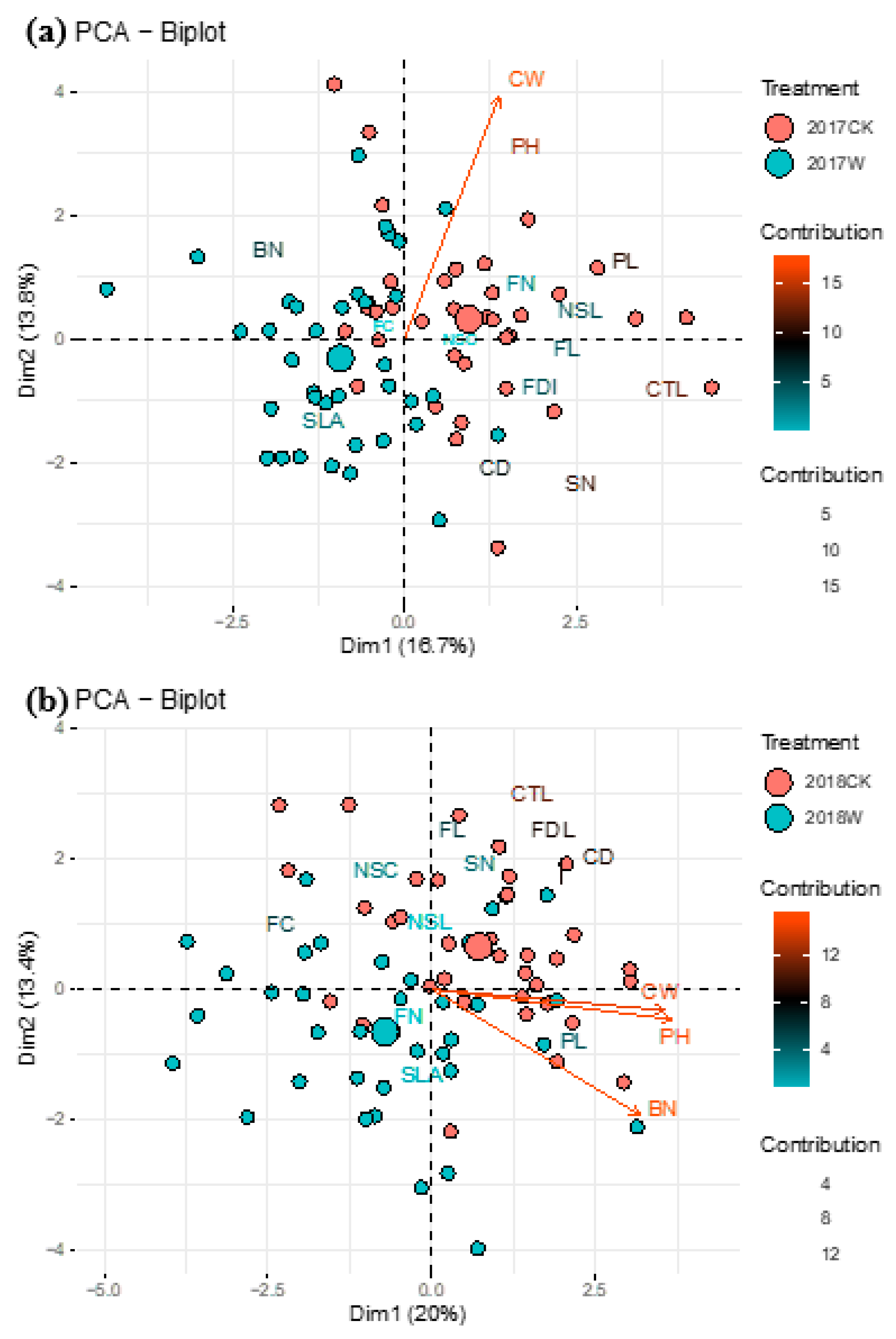
Figure 4.
Partial least squares structural equation model (PLS-SEM) in 2017 (a) and in 2018(b). Partial least squares structural equation model (PLS-SEM) depicting the effects of warming on comprehensive score of ornamental value of I. oxyanthera through direct effects on plant morphology, floral morphology and color and florescence and flower number. Single-headed arrows indicate the direction of a hypothetical causal relationship. Red and blue arrows indicate positive and negative relationships, respectively. Arrow width is proportional to the strength of the correlation. Double-layer rectangles represent the first component of PCA. The symbols ‘↑’ and ‘↓’ represent the positive and negative correlations between variables and the first component of PCA, respectively. R2, the proportion of variance. The number next to the arrow is standardized path coefficient. Significant path coefficients are marked with asterisks: *, P < 0.05; **, P < 0.01; ***, P < 0.001.
Figure 4.
Partial least squares structural equation model (PLS-SEM) in 2017 (a) and in 2018(b). Partial least squares structural equation model (PLS-SEM) depicting the effects of warming on comprehensive score of ornamental value of I. oxyanthera through direct effects on plant morphology, floral morphology and color and florescence and flower number. Single-headed arrows indicate the direction of a hypothetical causal relationship. Red and blue arrows indicate positive and negative relationships, respectively. Arrow width is proportional to the strength of the correlation. Double-layer rectangles represent the first component of PCA. The symbols ‘↑’ and ‘↓’ represent the positive and negative correlations between variables and the first component of PCA, respectively. R2, the proportion of variance. The number next to the arrow is standardized path coefficient. Significant path coefficients are marked with asterisks: *, P < 0.05; **, P < 0.01; ***, P < 0.001.
2.5. Study Site and Plant Materials
The experimental site is located in Mount Emei in China (29°36.16N, 103° 21.62′E, a.s.l. 932 m), a transition zone between the southwest edge of Sichuan Basin and the Qinghai-Tibet Plateau and a climate sensitive area [62]. It is a subtropical monsoon humid climate with distinct four seasons. The average annual temperature is 10-17 °C, and the average annual rainfall is 1593-1990 mm. The soil in the region is yellow soil [63]. The experimental site is mainly located in the evergreen broad-leaved forest belt [64], and the dominant plants belong to Lauraceae and Fagaceae. Emei Mountain is one of the important distribution and differentiation regions of Impatiens species in China. There are 24 species of wild Impatiens species, 9 of which are endemic species, mostly distributed at the altitude of 500-3000 m [65].
I. oxyanthera is a perennial herb endemic to China, distributed on forest edges and roadsides between 800 and 3000 m above sea level in Mount Emei [65]. Flowering occurs in late summer and autumn, from August to October. Flowers are big and red or reddish-lavender. The labellum of flower is funnel-shaped with some red stripes. The base of labellum has a long and curved nectar spur [28]. Thus I. oxyanthera has higher ornamental value [32,66].
2.6. Warming Treatment
In March 2017, 432 wild seedlings of I. oxyanthera with about 10 cm height were transplanted from nearby natural habitats into 10 L plastic pots filled with local soil. They were randomly assigned to twelve 2 m×2 m experimental plots (6 rows and 6 columns, a total of 36 seedlings per plot). The interval between experimental plots was 1 m. The twelve plots randomly assigned to two experimental treatments (increased temperatures and the control) with 6 plots in each treatment. The warming was achieved by hanging 165 cm × 15 cm infrared heaters (Kalglo Electronics Inc., Kalglo, PA, USA) with power of 2000 W at the height of 2 m right above the ground. In order to simulate the shading effect of the heater, wood board with the same projected area as infrared heater was hung directly above the control plot. Meanwhile, the infrared heater (or wood board) was rotated 45° clockwise every 10 days. In order to simulate relative light intensity of native habitat of I. oxyanthera, a layer of black sunshade net was covered above the experimental plot with a transmittance of (26.83 ± 0.66) % at the height of 3 m above the ground. After the plants were survival, all-day warming was carried out, lasting from April 22 to late October 26, 2017. The average daily air temperature under warming conditions (22.86 ± 0.32°C) was increased by 1.89 °C above ambient temperatures (20.97± 0.29 °C) (Figure S1a). At the end of March 2018, only one healthy branch from old stem with similar growth status was kept and other branches were removed in each flowerpot. During the second growing season from April 9 to October 25, 2018, the average daily air temperature under warming conditions (22.68±0.34 °C) was increased by 2.37 °C above ambient temperatures (20.31±0.29 °C) (Figure S1b). The magnitude of warming was set based on the predicted increase of average global temperatures in the IPCC report [67].
2.7. Determination of Air Temperature, Humidity and Soil Temperature
A temperature and humidity recorder (DS1923G, Maxim/Dallas Semiconductor Inc., USA) was installed at the middle of the second or fourth rows in each plot. It was the same height as the plant and placed symmetrically in every two plots to measure air temperature and relative humidity. Temperature sensors (DS1921G-F5, Maxim/Dallas Semiconductor Inc., USA) are used to monitor soil temperature. Because I. oxyanthera is a shallow root plant, temperature sensor is placed in the first flowerpot on the right of the temperature and humidity recorder under the soil at a depth of 10 cm. The data of temperatures and relative humidity were automatically logged every hour throughout the six-month warming experiment for each year.
2.8. Measurement of Plant Morphology
In July 2017 and 2018, before plants bloomed, 108 plants were randomly selected in the control and warming treatments, respectively. Plant height was the vertical distance from the base to top of stem, and the basal diameter of stem was the diameter of stem near the soil with a digital vernier caliper (Japan Sanfeng Mitutoyo 500-153, accuracy 0.01 mm, Shenzhen Baoan Tengyueda Electronic Tools Co., Ltd.). Crown width was represented by the average length of lateral branch coverage in two fixed directions perpendicular to each other on the sample plant. Branch number was counted for branches longer than 10 cm. At the same time, five mature leaves were randomly selected from each plant at the same direction. Leaf area was measured with leaf area analyzer (Top YMJ-C, Zhejiang Top Instrument Co., Ltd.), and the length and width of leaves were measured.
2.9. Determination of Ornamental Traits of Flower
From August to October in 2017 and 2018, 36 plants were randomly selected from these plants whose plant morphology had been measured under the two warming treatments, respectively. And the data of first and final flowering for target plants were recorded, then the flowering duration of individual plants was calculated. The number of flowers was counted during the full flowering stage. Meanwhile, three mature flower buds were randomly selected from the middle and upper part of these plants to observe the duration time of male and female phase and flower longevity. Because the flowers of I. oxyanthera keep the same size before withering, three male-phase flowers of object plants were randomly selected to measure floral traits, including corolla tube length, nectar spur length, number of stripes on labellum, nectar spur curvature, vexillum length, wing petal length and corolla diameter. The measurement standard was shown in Figure S2.
2.10. Determination of Anthocyanin Content
Relative anthocyanin content was measured with modified methanol hydrochloride spectrophotometer in October, 2017 and 2018. Flowers were collected from 72 plants which floral characteristics have been measured. We washed fresh flowers with distilled water, then drained the distilled water with a filter paper, cut the vexillum and corolla tube (including wing petal and labellum) into pieces, weighed 0.100 g petal, and added them to a vial containing 9 mL 1% methanol hydrochloride. We measured the absorbance of solution with UV visible spectrophotometer at the wavelength of 530 nm after the petal was soaked for 48 h. Relative anthocyanin content was divided the absorbance by fresh weight 0.100 g [68].
2.11. Evaluation of Ornamental Value
The ornamental value of the above-mentioned 36 plants in each treatment per year under the control and warming treatments in 2017 and 2018 was evaluated with reference to Wang’s method [32].
Firstly, a comprehensive evaluation model was established based on plant morphology and flower ornamental characteristics. The evaluation model was divided into three hierarchies. The first hierarchy was target hierarchy A, which was the comprehensive score obtained after evaluating different indexes of all target plants. The second hierarchy was constraint hierarchy C, which was the main ornamental traits involved in the evaluation, including physical properties, overall effect, quantitative traits, floral longevity, flowering duration per plant, leaf and plant morphology. The third hierarchy was standard hierarchy P, which was 15 specific evaluation indexes of each character belonging to hierarchy C (Figure 5).
Secondly, the judgement of matrix construction and the check of consistency were conducted. The relative importance of corresponding factors in two adjacent layers was quantified by the ratio scale method of 1, 3, 5, 7 and 9, and a judgment matrix was formed. The matrix consistency ratio was calculated by using the formula CR = CI / RI, where CR represented the random consistency ratio, CI is the indicator of deviation from consistency of the judgment matrix (CI =(λmax - n) / (n -1), λmax is the maximum eigenvalue of the judgment matrix, and n is the order of the judgment matrix), and RI is the average random consistency indicator of the judgment matrix (Table S1). If CR < 0.100, the judgment matrix is considered to have satisfactory consistency; otherwise, it should be adjusted. The four matrices were tested with satisfactory consistency (CR < 0.100, Table S2).
Finally, total hierarchical sort calculation was performed. The total ranking weight value of each evaluation index in the standard hierarchy P relative to the target hierarchy A is the weighted value of each index in the standard hierarchy P relative to the corresponding constraint hierarchy C, and the weight of constraint hierarchy C is weighted and integrated (Table S2).
2.12. Treatment
Statistical analyses were conducted with R version 4.3.0 (R Core Team, 2021). The residuals of air temperature, air humidity and soil temperature were not normally distributed. Accordingly, we assessed the two growing-season warming using GLMMs (Gamma distribution with a log link), and the random effect was date ID (day of year). To examine how the plant morphology and floral traits differed between the warming and the control, we fitted generalized linear mixed models (GLMMs) (Gamma or Poisson distribution with a log link) using the fixed effects of treatments (i.e. warming and year) and the random effect of plant ID nested in plot ID. We performed a generalized linear model (GLM) with Poisson and log-link function to determine the effects of warming and year on flower longevity (include male phase and female phase). To assess the effects of warming treatment on comprehensive scores of ornamental values, we fitted GLMM (Gamma distribution) using plant ID as a random effect for the data of 2017 and fitted liner regression model for the data of 2018. The GLMMs and GLM were performed using the R package of lme4 [69] and statistical data, respectively. The type III Wald χ2 ANOVA test was used in the R package of car to determine the statistical significance of the effect [70]. In order to compare the different treatment combinations in the analysis, the contrast of the estimated marginal mean (adjustment method: Tukey) was calculated in the R package of emmeans [71].
We used the FactoMineR package to perform principal component analysis (PCA) on the indicators with higher weights and more comprehensive scores in the AHP in order to increase the reliability of chromatographic evaluation results. To examine the direct and indirect effects of warming on the score of comprehensive ornamental value, partial least squares structural equation model (PLS-SEM) was conducted based on the results of principal component analysis using Smart PLS 3.3.9 (SmartPLS GmbH, Germany, HH).
3. Conclusions
The results of this study suggested that it’s better for I. oxyanthera not to be introduced directly to some areas with low altitude and high temperature unless plants are covered by shading net and are supplied with sufficient water. It is difficult to predict the long-term impact of warming based on only the results for two years in I. oxyanthera. The long-term response of I. oxyanthera to warming needs to be explored in the future so as to make more accurate prediction and better explain the long-term adaptation of I. oxyanthera to future climate change. Impatiens L. has rich species and high ornamental value, thus comparative study of multiple species should be conducted due to species-specific responses of these wild flowers to warming. Meanwhile, it is also necessary to screen species that are more adaptable to warming, providing reference for introduction and cultivation.
Supplementary Materials
The following supporting information can be downloaded at the website of this paper posted on Preprints.org.
Author Contributions
J.Y. Tao analyzed the data and wrote the manuscript. Y.Q. Yang performed the experiment and collected the data. Q.Wang designed the experiment and revised the manuscript. All authors have read and agreed to the published version of the manuscript.
Funding
This study was supported by the National Natural Science Foundation of China (31600391), Natural Science Foundation of Science & Technology Department of Sichuan Province (23NSFSC1698), and Scientific research innovation team project of China West Normal University (CXTD2020-4).
Data Availability Statement
Original data is available upon request from the corresponding author.
Acknowledgments
The authors thank Dong Wang for his assistance with drawing statistical graphs.
Conflicts of Interest
The authors declare no conflicts of interest.
References
- Pennisi, E. On the origin of flowering plants. Science, 2009, 324(5923): 28-31. [CrossRef]
- Matthews HD, Wynes S. Current global efforts are insufficient to limit warming to 1.5°C. Science, 2022, 376(6600): 1404-1409. [CrossRef]
- Mckay DA, Staal A, Abrams FJ, et al. Exceeding 1.5°C global warming could trigger multiple climate tipping points. Science, 2022, 377(6611): 1171-1171. [CrossRef]
- Patil RH, Laegdssmand M, Olesen JE, et al. Growth and yield response of winter wheat to soil warming and rainfall patterns. Journal of Agricultural Science, 2010, 148(5): 553-566. [CrossRef]
- Wigge, P.A. Ambient temperature signalling in plants. Current opinion in plant biology, 2013, 16(5): 661-666. [CrossRef]
- Mcclung CR, Lou P, Victor H, et al. The importance of ambient temperature to growth and the induction of flowering. Frontiers in Plant Science, 2016, 7: 1266. [CrossRef]
- Quint M, Delker C, Franklin KA, et al. Molecular and genetic control of plant thermomorphogenesis. Nature Plants, 2016, 2(1): 15190. [CrossRef]
- Panetta AM, Stanton ML, Harte J. Climate warming drives local extinction: evidence from observation and experimentation. Science Advances, 2018, 4(2): eaaq1819. [CrossRef]
- Kirillova IA, Kirillov DV. Impact of weather conditions on seasonal development, population structure and reproductive success on Dactylorhiza traunsteineri (Orchidaceae) in the Komi Republic (Russia). Nature Conservation Research, 2020, 5(Suppl.1): 77-89. [CrossRef]
- Jiang HY, Chen JJ, Liu GY, et al. Screening of early flowering lotus (Nelumbo nucifera Gaertn.) cultivars and effects of different cultivars on flowering period. Plants, 2023, 12(8): 1683-1683. [CrossRef]
- Awasthi R, Bhandari K, Nayyar H. Temperature stress and redox homeostasis in agricultural crops. Frontiers in Environmental Science, 2015, 3:11-11. [CrossRef]
- Harsant J, Pavlovic L, Chiu G, et al. High temperature stress and its effect on pollen development and morphological components of harvest index in the C3 model grass Brachypodium distachyon. Journal of Experimental Botany, 2013, 64(10): 2971-2983. [CrossRef]
- Djanaguiraman M, Prasad PVV, Schapuagh WT. High day-or nighttime temperature alters leaf assimilation, reproductive success and phosphatidic acid of pollen grain in Soybean [Glycine max L. Merr.). Crop Science, 2013, 53(4): 1594-1604.
- Prasad PVV, Djanaguiraman M. Response of floret fertility and individual grain weight of wheat to high temperature stress: sensitive stages and thresholds for temperature and duration. Functional Plant Biology, 2014, 41(12): 1261-1269. [CrossRef]
- Singh V, Nguyen CT, Oosterom VEJ, et al. Sorghum genotypes differ in high temperature responses for seed set. Field Crops Research, 2015, 171: 32-40. [CrossRef]
- Devireddy A R, Tschaplinski T J, Tuskan G A, et al. Role of reactive oxygen species and hormones in plant responses to temperature changes. International Journal of Molecular Sciences, 2021, 22(16):8843-8843. [CrossRef]
- Monder MJ, Bbelewski P, Szperlik J, et al. The adjustment of China endemic Heptacodium miconioides Rehd. to temperate zone of Poland. BMC Plant Biology, 2023, 23(1): 184-184. [CrossRef]
- Meineri E, Skarpaas O, Spindelbock J, et al. Direct and size-dependent effects of climate on flowering performance in alpine and lowland herbaceous species. Journal of Vegetation Science, 2014, 25(1): 275-286. [CrossRef]
- Nicole EMS, Jennifer CG, James D.F, et al. Functional mismatch in a bumble bee pollination mutualism under climate change. Science, 2015, 349(6255): 1541-1544. [CrossRef]
- Haeuser E, Dawson W, Kleunen MV. The effects of climate warming and disturbance on the colonization potential of ornamental alien plant species. Journal of Ecology, 2017, 105(6): 1698-1708. [CrossRef]
- Springate DA, Kover PX. Plant responses to elevated temperatures: a field study on phenological sensitivity and fitness responses to simulated climate warming. Global change biology, 2014, 20(2): 456-465. [CrossRef]
- Hoover SE, Ladley JJ, Shchepetkina AA, et al. Warming, CO2, and nitrogen deposition interactively affect a plant-pollinator mutualism. Ecology Letters, 2012, 15(3): 227-234. [CrossRef]
- de Manincor N, Fisogni A, Rafferty NE. Warming of experimental plant-pollinator communities advances phenologies, alters traits, reduces interactions and depresses reproduction. Ecology Letters, 2023, 26(2): 323-334. [CrossRef]
- Dela G, Or E, Ovadia R, et al. Changes in anthocyanin concentration and composition in ‘Jaguar’ rose flowers due to transient high-temperature conditions. Plant Science, 2003, 164(3): 333-340. [CrossRef]
- Dai WK, Ochola AC, Li YQ. Spatio-temporal variations in pollen limitation and floral traits of an alpine lousewort (Pedicularis rhinanthoides) in relation to pollinator availability. Plants, 2022, 12(1): 78. [CrossRef]
- Arroyo MTK, Dudley LS, Jespersen G, et al. Temperature-driven flower longevity in a high-alpine species of Oxalis influences reproductive assurance. New Phytologist, 2013, 200: 1260-1268. [CrossRef]
- Seymour RS, Gibernau M, Pirintsos SA. Thermogenesis of three species of Arum from Crete. Plant, Cell & Environment, 2009, 32(10): 1467-1476. [CrossRef]
- Chen, Y.L. Floral of China. Volume 47 (Second Division). Beijing Science Press, 2001.
- Dan Y, Baxter A, Zhang S, et al. Development of efficient plant regeneration and transformation system for impatiens using agrobacterium tumefaciens and multiple bud cultures as explants. BMC Plant Biology, 2010, 10(1): 165-165. [CrossRef]
- Jin XF, Ding BY. The impatiens of zhejiang wild flower resources and development. Chinese Wild Plant Resources, 2000, 19(4): 27-29.
- Bronson DR, Gower ST, Tanner M, et al. Effect of ecosystem warming on boreal black spruce bud burst and shoot growth. Global Change Biology, 2009, 15: 1534-1543. [CrossRef]
- Wang, Y. Collection and preservation of Impatiens spp. PhD Thesis. Beijing: Beijing Forestry University, 2008.
- Wang, Q. Biological effects of experimental warming on pollination in Impatiens oxyanthera (Balsaminaceae). PhD Thesis. Beijing: The University of Chinese Academy of Sciences, 2013.
- Cui MM, Yang B, Ren GQ, et al. Effects of warming, phosphorous deposition, and both treatments on the growth and physiology of invasive Solidago canadensis and native Artemisia argyi. Plants, 2023, 12(6): 1370-1370. [CrossRef]
- Marlène A, François O. Growth temperature affects inflorescence architecture in Arabidopsis thaliana. Botany, 2013, 91(9): 642-651. [CrossRef]
- Lysenko EA, Kozuleva MA, Klaus AA, et al. Lower air humidity reduced both the plant growth and activities of photosystems I and II under prolonged heat stress. Plant Physiology and Biochemistry, 2023, 194: 246-262. [CrossRef]
- Nagarathn TK, Shadakshari YG, Jagadish KS, et al. Interactions of auxin and cytokinins in regulating axillary bud formation in sunflower (Helianthus annuus L.). Helia, 2010, 33(52): 85-94. [CrossRef]
- Li YB, Hou RX, Tao FL. Wheat morpho-physiological traits and radiation use efficiency under interactive effects of warming and tillage management. Plant, Cell & Environment, 2020, 44(7): 2386-2401. [CrossRef]
- Chen BM, Gao Y, Liao HX, et al. Differential responses of invasive and native plants to warming with simulated changes in diurnal temperature ranges. AoB PLANTS, 2017, 9(4): plx028. [CrossRef]
- Aspi J, Jakalaniemi A, Tuomi J, et al. Multilevel phenotypic selection on morphological characters in a metapopulation of Silene tatarica. Evolution, 2003, 57: 509-517. [CrossRef]
- Zeng Z, Huan HH, Liu G, et al. Effects of elevated temperature and CO2 concentration on growth and leaf quality of Morus alba seedlings. Chinese Journal of Applied Ecology, 2016, 27(8): 2445-2451. [CrossRef]
- Sage TL, Bagha S, Lundsgaard-Nielsen V, et al. The effect of high temperature stress on male and female reproduction in plants. Field Crops Research, 2015, 182: 30-42. [CrossRef]
- Ishii HS, Sakai S. Effects of display size and position on individual floral longevity in racemes of Narthecium asiaticum (Liliaceae). Functional Ecology, 2001, 15(3): 396-405. [CrossRef]
- Itagaki T, Sakai S. Relationship between floral longevity and sex allocation among flowers within inflorescences in Aquilegia buergeriana var.Oxysepala (Ranunculaceae). American Journal of Botany, 2006, 93(9):1320-1327.
- Bock A, Sparks TH, Estrella N, et al. Changes in first flowering dates and flowering duration of 232 plant species on the island of Guernsey. Global Change Biology, 2014, 20: 3508-3519. [CrossRef]
- Sood A, Duchin S, Adamov Z, et al. Abscisic acid mediates the reduction of petunia flower size at elevated temperatures due to reduced cell division. Planta, 2022, 255(1): 18. [CrossRef]
- Wang Li, Yang Youqin, Wang Qiong. Photosynthetic physiological response of Impatiens oxyanthera to Simulated Warming. Journal of China West Normal University (Natural Sciences), 2019, 40(4): 339-345.
- Suraweera DD, Groom T, Nicolas ME. Nicolas. Exposure to heat stress during flowering period reduces flower yield and pyrethrins in Pyrethrum (Tanacetum cinerariifolium). Journal of Agronomy and Crop Science, 2020, 206(5): 568-578. [CrossRef]
- Lambrecht, S.C. Floral water costs and size variation in the highly selfing Leptosiphon bicolor (Polemoniaceae). International Journal of Plant Sciences, 2013, 174: 74-84. [CrossRef]
- Gómez JM, Bosch J, Perfectti F, et al. Association between floral traits and rewards in Erysimum mediohispanicum (Brassicaceae). Annals of Botany, 2008, 101(9): 1413-1420. [CrossRef]
- Ellis AG, Johnson SD, Conner JK. Gender differences in the effects of floral spur length manipulation on fitness in a hermaphrodite orchid. International Journal of Plant Sciences, 2010, 171(9):1010-1019.
- Sletvold N, Ågren J. Nonadditive effects of floral display and spur length on reproductive success in a deceptive orchid. Ecology, 2011, 92(12): 2167-2174. [CrossRef]
- Boberg E, Ågren J. Despite their apparent integration, spur length but not perianth size affects reproductive success in the moth-pollinated orchid Platanthera bifolia. Functional Ecology, 2009, 23: 1022-1028. [CrossRef]
- Jia Y, Zhao JL, Pan YZ, et al. Collection and evaluation of Primula species of western Sichuan in China. Genetic Resources and Crop Evolution, 2014, 61(7): 1245-1262. [CrossRef]
- Shen Gangxu, Wang WeiLung. Circlize package in R and Analytic Hierarchy Process (AHP): Contribution values of ABCDE and AGL6 genes in the context of floral organ development. PloS one, 2022, 17(1): e0261232. [CrossRef]
- Wang YS, Chen LJ, Yang XJ, et al. A comprehensive evaluation of the wild ground cover plants resources in Yunshan, Hunan. Acta Prataculturae Sinica, 2015, 24((07): 30-40. [CrossRef]
- Cicevan R, Sestras AF, Plazas M, et al. Biological traits and genetic relationships amongst cultivars of three species of tagetes (Asteraceae). Plants, 2022, 11(6):760-760. [CrossRef]
- Xing GM, Qu LW, Zhang YQ, et al. Collection and evaluation of wild tulip (Tulipa spp.) resources in China. Genetic Resources and Crop Evolution, 2017, 64(4):641-652. [CrossRef]
- Yang Z, Meng TF, Bi XY, Lei JJ. Investigation and evaluation of wild Iris resources in Liaoning Province, China. Genetic Resources and Crop Evolution, 2017, 64(5): 967-978. [CrossRef]
- Ye A, Chen L, Lan SR, et al. Comprehensive evaluation of the ornamental value of Cymbidium ensifolium cultivars using analytical hierarchy process method. Journal of Fujian Agriculture and Forestry University (Natural Science Edition), 2019, 48(6): 736-741.
- Anjali C, Meenakshi T, Anjali R, et al. Exogenous applications of gibberellic acid modulate the growth, flowering and longevity of calla lily. Heliyon, 2023, 9(5): e16319. [CrossRef]
- Yang K, Wu H, Qin J, et al. Recent climate changes over the Tibetan Plateau and their impacts on energy and water cycle: A review. Global and Planetary Change, 2014, 112:79-91. [CrossRef]
- Liu L, Wu W, Zheng YL, et al. Variations on the chemical components of the volatile oil of Houttuynia cordata Thunb. populations from different valleys and altitudes of Mt. Emei. Acta Ecologica Sinica, 2007, 27(06): 2239-2250.
- Gu HY, Li CH. Biodiversity and flora of the mixed evergreen and deciduous broadleaved forest in Emei. Bulletin of botanical research, 2006, 26(5): 618-624.
- Li ZY and Shi L. Plants of Mount Emei. Beijing Science and Technology Press, 2007.
- Zhao QY, Zhang X, Cao MH, et al. Investigation and evaluation on plant resources of Impatiens in southwest Sichuan. Seed, 2023,42(2): 64-71,82.
- IPCC(2014) Summary for Policymakers. Climate Change 2014: Impacts, Adaptation, and Vulnerability. Part A: Global and Sectoral Aspects. Contribution of Working Group II to the Fifth Assessment Report of the Intergovernmental Panel on Climate Change (eds C.B. Field, V.R. Barros, D.J. Dokken et al.). World Meteorological Organization, Geneva, Switzerland: 1-190.
- Chen DF, Zhang Y, Fang Z. Study on the content of anthocyanin and related biochemical substances during the petal development in Impatiens hawkeri. Journal of Agricultural University of Hebei, 2008, 31(3): 28-32.
- Bates D, Maechler M, Bolker B, et al. 2019. lme4: linear mixed-effects models using ‘eigen’ and s4. R package version 1.1-21. https://cran.r-project.org/package=lme4/ (28 June 2021).
- Fox J, Weisberg S. An R companion to applied regression. Thousand Oaks, CA: Sage Publications, 2011.
- Lenth, R., Singmann H, Love J, et al. 2020. Emmeans: estimated marginal means, aka least-squares means. R package ver. 1. 5. 1. https://CRAN.Rproject.org/package=emmeans. (28 June 2021).
Figure 1.
Effects of simulated warming (W: control and warming) and year (Y:. 2017 and 2018) on plant morphology of I. oxyanthera. W, the effect of warming; Y, the effect of year; W ×Y, the interaction effect of warming and year. Different lowercases respresent significant difference among four experimental treatments. NS, no significance; *, P < 0.05; **, P < 0.001; ***, P <0.001.
Figure 1.
Effects of simulated warming (W: control and warming) and year (Y:. 2017 and 2018) on plant morphology of I. oxyanthera. W, the effect of warming; Y, the effect of year; W ×Y, the interaction effect of warming and year. Different lowercases respresent significant difference among four experimental treatments. NS, no significance; *, P < 0.05; **, P < 0.001; ***, P <0.001.
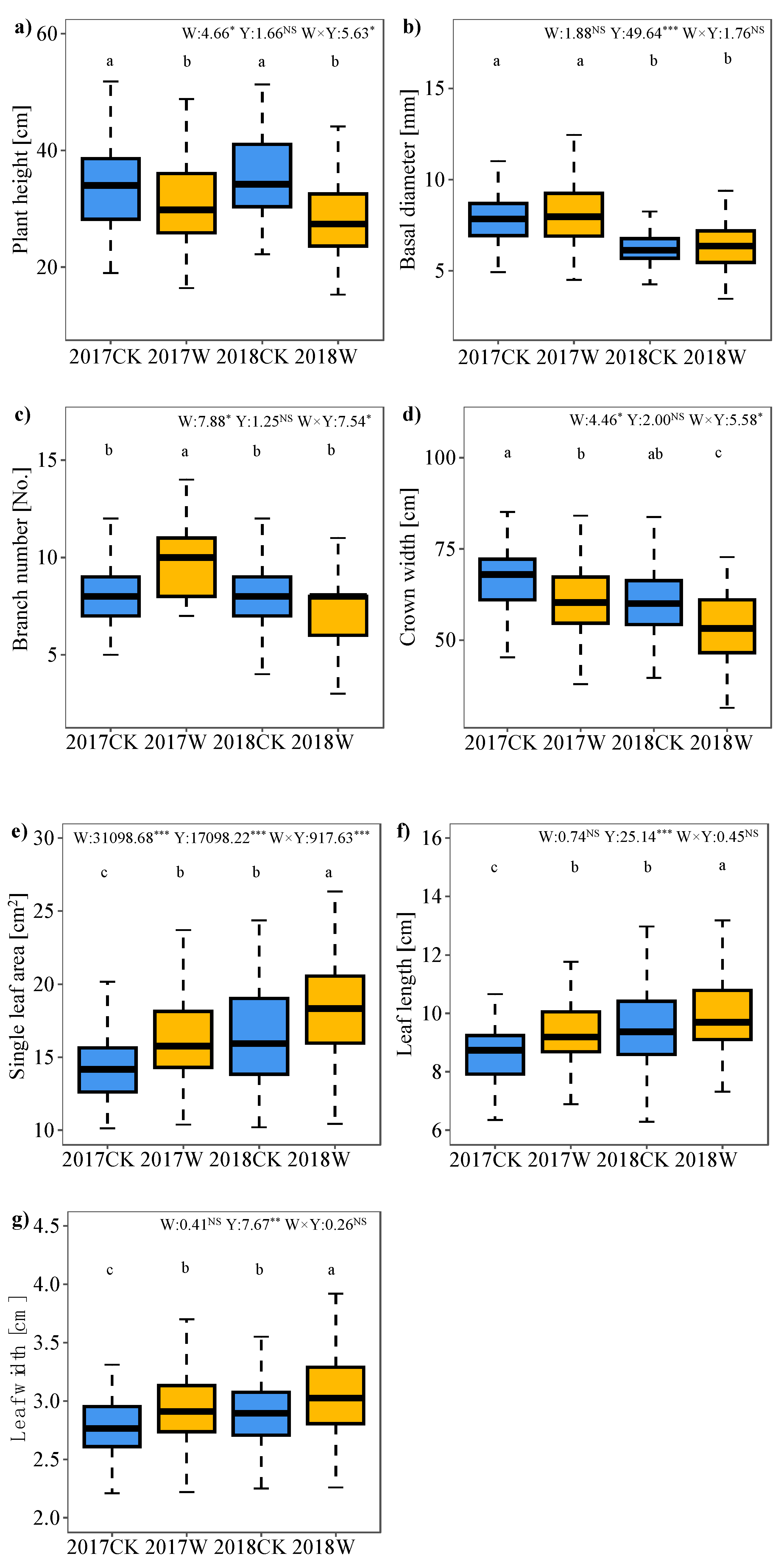
Figure 5.
Hierarchy evaluation model for evaluation of comprehensive ornamental value of oxyanthera under the control and warming.
Figure 5.
Hierarchy evaluation model for evaluation of comprehensive ornamental value of oxyanthera under the control and warming.
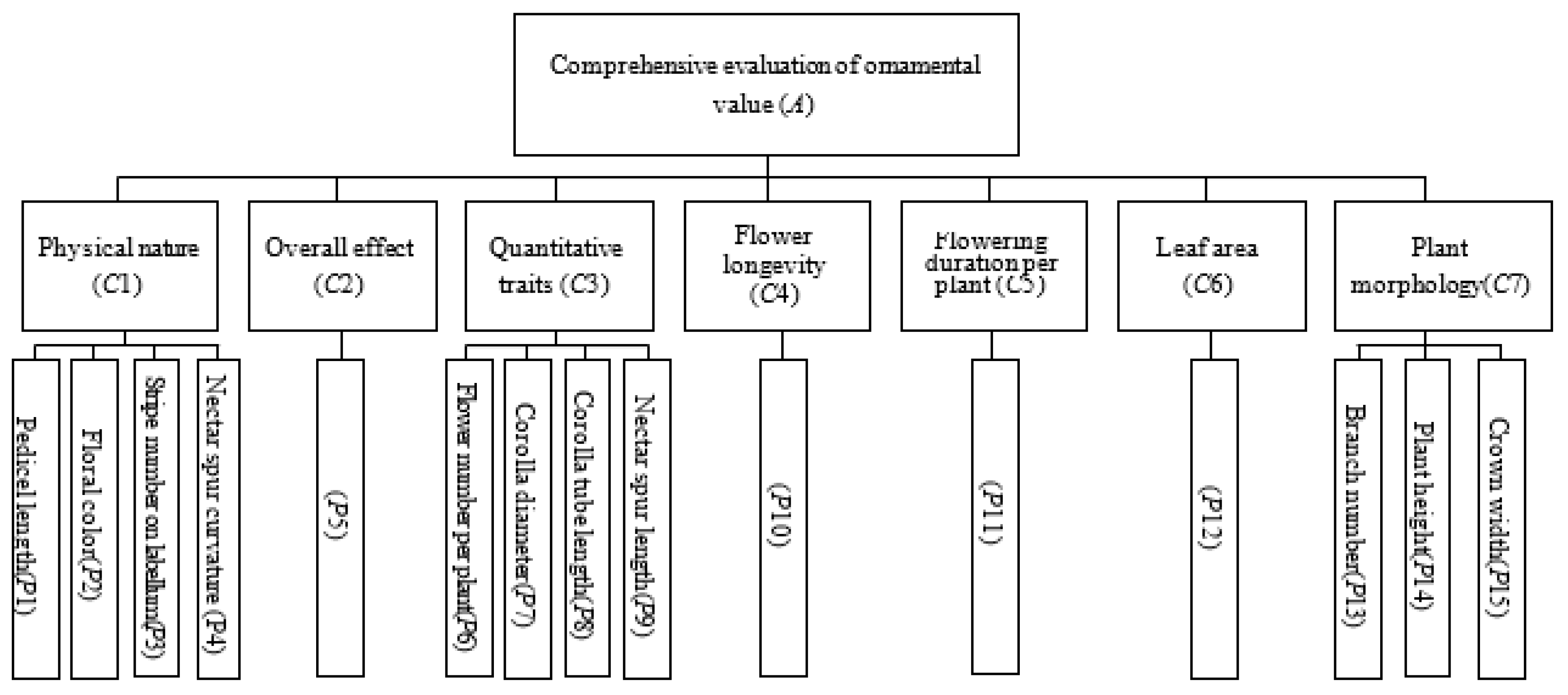

Table 1.
Individual flower longevity, flowering duration and flower number per plant of I. oxyanthera under the control and warming treatment in 2017 and 2018. W, the effect of warming; Y, the effect of year; W×Y, the interaction effect of warming and year. Different lowercases represent significant difference among four experimental treatments. NS, no significance; *, P < 0.05; **, P < 0.01;***, P < 0.01.
Table 1.
Individual flower longevity, flowering duration and flower number per plant of I. oxyanthera under the control and warming treatment in 2017 and 2018. W, the effect of warming; Y, the effect of year; W×Y, the interaction effect of warming and year. Different lowercases represent significant difference among four experimental treatments. NS, no significance; *, P < 0.05; **, P < 0.01;***, P < 0.01.
| Trait | 2017 | 2018 | W | Y | W × Y | |||
|---|---|---|---|---|---|---|---|---|
| Control | Warming | Control | Warming | |||||
| Male phase (d) | 2.417 ± 0.072 a | 2.185 ± 0.068 b | 2.898 ± 0.093 a | 2.583 ± 0.085 a | NS | * | NS | |
| Female phase (d) | 1.065 ± 0.051 a | 1.028 ± 0.051 a | 1.333 ± 0.068 a | 1.213 ± 0.052 a | NS | NS | NS | |
| Flower longevity (d) | 3.481 ± 0.083 b | 3.213 ± 0.076 b | 4.231 ± 0.085 a | 3.796 ± 0.070 ab | NS | ** | NS | |
| Flowering duration per plant (d) | 65.278 ± 1.474 a | 58.944 ± 1.330 b | 65.917 ± 1.899 a | 53.361 ± 1.840 c | * | NS | ** | |
| Flower number per plant (No.) |
80.778 ± 5.155 a | 73.306 ± 4.251 b | 73.472 ± 4.357 b | 65.500 ± 5.361 c | NS | *** | NS | |
Table 2.
Floral morphology and relative anthocyanin content of I. oxyanthera under the control and warming treatment in 2017 and 2018. W, the effect of warming; Y, the effect of year; W×Y, the interaction effect of warming and year. Different lowercases represent significant difference among four experimental treatments. NS, no significance; *, P < 0.05; **, P < 0.01;***, P < 0.01.
Table 2.
Floral morphology and relative anthocyanin content of I. oxyanthera under the control and warming treatment in 2017 and 2018. W, the effect of warming; Y, the effect of year; W×Y, the interaction effect of warming and year. Different lowercases represent significant difference among four experimental treatments. NS, no significance; *, P < 0.05; **, P < 0.01;***, P < 0.01.
| Trait | 2017 | 2018 | W | Y | W × Y | |||
|---|---|---|---|---|---|---|---|---|
| Control | Warming | Control | Warming | |||||
| Vexillum length (mm) | 12.776 ± 0.245 a | 11.840 ± 0.213 b | 12.546 ± 0.101 a | 12.181 ± 0.152 ab | *** | NS | *** | |
| Wing petal length (mm) | 23.058 ± 0.240 b | 22.289 ± 0.258 c | 23.650 ± 0.263 a | 22.807 ± 0.217 bc | NS | ** | NS | |
| Corolla diameter (mm) | 21.916 ± 0.407 b | 21.626 ± 0.360 b | 23.434 ± 0.361 a | 22.465 ± 0.384 ab | NS | ** | NS | |
| Corolla tube length (mm) | 20.202 ± 0.310 a | 19.275 ± 0.220 b | 20.444 ± 0.215 a | 18.637 ± 0.252 b | *** | NS | *** | |
| Stripe number on the labellum (No.) | 11.167 ± 0.232 a | 10.713 ± 0.193 ab | 10.667 ± 0.183 ab | 10.222 ± 0.186 b | NS | NS | NS | |
| Nectar spur length (mm) | 30.079 ± 0.399 a | 27.447 ± 0.536 b | 28.458 ± 0.410 b | 27.820 ± 0.314 b | *** | *** | *** | |
| Nectar spur curvature (°) | 303.333 ± 12.626 a | 300.000 ± 10.992 a | 334.352 ± 10.114 a | 326.389 ± 9.408 a | NS | * | NS | |
| Pedicel length (mm) | 46.285 ± 1.725 a | 38.664 ± 1.292 b | 40.055 ± 1.107 b | 38.960 ± 1.379 b | ** | ** | * | |
| relative anthocyanin content of vexillum (A. g-1 FW) |
5.624 ± 0.136 a | 5.867 ± 0.159 a | 5.563 ± 0.120 a | 5.851 ± 0.114 a | NS | NS | NS | |
| relative anthocyanin content of corolla tube (A. g-1 FW) |
3.659 ± 0.078 a | 3.722 ± 0.095 a | 3.560 ± 0.056 a | 3.723 ± 0.112 a | NS | NS | NS | |
Disclaimer/Publisher’s Note: The statements, opinions and data contained in all publications are solely those of the individual author(s) and contributor(s) and not of MDPI and/or the editor(s). MDPI and/or the editor(s) disclaim responsibility for any injury to people or property resulting from any ideas, methods, instructions or products referred to in the content. |
© 2024 by the authors. Licensee MDPI, Basel, Switzerland. This article is an open access article distributed under the terms and conditions of the Creative Commons Attribution (CC BY) license (http://creativecommons.org/licenses/by/4.0/).
Copyright: This open access article is published under a Creative Commons CC BY 4.0 license, which permit the free download, distribution, and reuse, provided that the author and preprint are cited in any reuse.


