
Submitted:
04 January 2024
Posted:
05 January 2024
You are already at the latest version
Abstract
The world population increased from 1 billion in 1800 to around 8 billion today. The Population Division of the United Nations predicts a global population of approximately 10.4 billion people by the end of the century. That represents over 2 billion more people. Moreover, the global community is currently experiencing a precarious state due to the enduring repercussions of the COVID-19 pandemic across all sectors, including energy. Given the rising global population and the limited availability of primary energy resources, we must reach a balance between the demands of a growing human population and the planet’s carrying capacity. The dreadful conflict in Ukraine has precipitated an enormous energy crisis. This crisis served as a warning to the world population of how much they depend on this resource to survive. In France, building sectors (i.e., residential and tertiary) alone consume 45% of the final energy disposable. It is the first energy consumer of the country and one of the most polluting (i.e.; about 34% of CO2 emitted by France). Consequently, we must consider alternative energy resource forms (i.e.; substitution energy forms). Harvesting energy from the building envelope may be a viable technique for partially satisfying the electricity demands of building users. In this context, scientific research offers considerable potential for developing more innovative and efficient systems. This article aims to review the state of the art of advances on the subject to orient and further optimize energy production systems, particularly electricity. This work will address several points of view: Discusses the overall backdrop of the present study and introduces the subject ; details the research strategy and procedures used to produce this paper ; develops state of the art on the potential for generating or recovering power from the building envelope ; presents the SWOT analysis of the earlier-described systems. And finally, it concludes by offering findings and viewpoints.
Keywords:
systems
; power
; building enveloppe
; innovation
; assembly
; technology
1. Introduction
In the face of a rapidly expanding global population and the finite nature of primary energy resources, it is imperative to reconcile the burgeoning human demands with the Earth’s energy production capacity. Principal concerns arise from the inadequacy of energy supplies to meet the escalating global demand and the accompanying environmental ramifications associated with fossil fuel utilization. The data from the Agence de la Transition Écologique (ADEME) and the Ministère de la Transition Écologique in FRANCE reveal that the building sector, encompassing residential and tertiary structures, singularly accounts for 45% of final energy consumption in France [1] [2]. Furthermore, the United Nations Environment Programme (UNEP) reports that this sector contributes 38% of carbon dioxide (CO2) emissions, positioning it as the primary energy consumer and one of the most environmentally harmful sectors in the country. In light of contemporary environmental expectations and objectives for sustainable development, concrete measures are imperative to curtail energy consumption within the building sector. These measures necessitate a dual approach to reducing energy consumption and incorporating more renewable and sustainable energy sources. Given its prominent position among the most polluting and energy-intensive sectors, the building sector represents a focal point for potential improvements. Addressing the need for enhanced energy efficiency in buildings and the obligation to meet the energy demands of a burgeoning global populace underscores the relevance of bolstering our infrastructures and innovations. Central to this endeavour is integrating energy production systems, particularly those generating electricity, into the building envelope. Within this context, scientific research emerges as a formidable avenue for developing innovative and efficient systems. This article comprehensively reviews state-of-the-art advancements in this domain to guide funders and designers in optimizing electrical production systems integrated into the building envelope. An exhaustive search and selection process was undertaken to conduct this review, encompassing all scientific articles about the study of direct electricity generation systems within buildings and any form of energy potentially convertible into electricity. The inquiry spanned prominent publication platforms, including Elsevier, ResearchGate, Google Scholar, MDPI, and Taylor & Francis. Additionally, a scrutiny of patents filed for relevant technologies was conducted through Google Patents.
2. State of art
The literature search was conducted with only focus on the three components forming a building envelope: glazing, walls, and roofing. The ground component will not be considered in the bibliography due to the absence of any electricity-generating system utilizing it. The technologies, according to consideration, can generate electricity through either direct or indirect means (e.g., with the conversion of thermal energy to electrical energy). As a result, we exclude technologies that generate energy other than electricity from the bibliography.
2.1. Roofs technologies
2.1.1. Photovoltaic and thermal panels integrated in the roof
Solar thermal systems (STSs) have significantly improved efficiency compared to their earlier versions. The driving force behind the advancement of STSs lies in the expanding research on alternative energy sources, recognized as an integral component of low-carbon energy systems essential for generating affordable and reliable electricity [3]. This section delves into the latest developments in STS applications, mainly focusing on PV/T or "photovoltaic/thermal" systems—currently the most widely employed green energy technology for power production. This hybrid system seamlessly integrates the output of both thermal and electrical energy. The PV/T system capitalizes on the photovoltaic (PV) effect, which generates electric energy through solar irradiation [4]. It finds applications in BIPV (building-integrated photovoltaic), replacing traditional construction materials [4,5]. PVs can be incorporated as BIPV or building-attached photovoltaic (BAPV) systems. Although BAPV systems yield more electricity, BIPV systems excel in overall building performance due to better control over solar gain. The standard definition for available roof space in BIPV deployment is 40% of the ground-level size. Most solar cells are suitable for BIPV roof applications [6]. Beyond photovoltaic (PV) energy, which directly converts solar radiation into electrical energy, thermal energy can also be harnessed for electricity generation. One promising method involves using thermoelectric generators (TEG) [7]. Utilizing the Seebeck effect, thermoelectric generators (TEGs) demonstrate their capability to convert thermal energy directly into electrical energy. Consequently, combining PV and TE to enhance electricity production becomes a viable option [8]. This hybrid system incorporates thermoelectric generators attached to a solar panel. Notably, the photovoltaic panels absorb heat and store thermal energy during operation. Applying this technique to the opposite face of the thermoelectric generators on solar panels efficiently recovers the underutilized thermal energy in conventional panels [7]. It constitutes a hybrid photovoltaic and thermoelectric (PV-TE) module that concurrently leverages the photovoltaic and Seebeck effects.
2.1.2. Photobioreactors roofs
In the pursuit of advancing renewable and sustainable energy sources, the cultivation of algae presents intriguing possibilities. Due to their rapid growth compared to most other plants, algae can yield substantial biomass. Two primary facilities for algae cultivation exist: open ponds and photobioreactors. Open ponds, which do not apply to buildings, are excluded from this study. Photobioreactors, though more costly, boast superior yields and consist of transparent closed tanks filled with water. Microalgae within these reactors can thrive in various water sources, including seawater, wastewater, and harsh water. The cultivation process involves harnessing daylight, carbon dioxide, and organic carbon simultaneously for energy production [9]. A pump circulates water by introducing CO2-enriched air bubbles into the system. While laboratory studies typically enrich the air with CO2 using gas canisters, real-world applications aim to capture CO2 from the surrounding air or recover on-site combustion gases, as demonstrated by the BIQ building and its cogenerator [10]. Regular stirring is essential for proper distribution [11]. An automated anaerobic digestion (AD) unit meets nutrient requirements [12]. The resulting microalgae biomass can be valorized as biomass and/or oil. Microalgae strains also hold potential as a source of H2 energy, as they can split water into H2 and O2 using solar energy [13]. In the AD unit, algae biomass is converted into biogas, such as methane, which powers a biogas generator for electricity and heat production [11]. This biomass can alternatively be transformed into pellets, generating power through combustion [9], or processed to extract lipids for biofuel production, subsequently used in a biofuel generator for electricity [9] [14]. Building rooftops can be effectively utilized by integrating these photobioreactors. The choice between tubular and flat panel PBRs (see Figure 1) within both horizontally and vertically oriented buildings presents options. Vertical tubular PBRs, due to their geometry, don’t require a specific orientation for optimal solar exposure, while flat panels slightly outperform vertical tubular PBRs [11]. Innovative designs like I. Berzin’s triangular airlift PBR blend bubble column principles with built-in static mixers [15]. Despite the technical viability of such systems, the economic aspect raises concerns. A. Bender’s findings suggest that producing electricity from algae biomass on a building’s roof may not be economically feasible [11]. While the energy production potential from microalgae remains promising, efficiency improvements are essential, given the myriad factors influencing performance [16]. S. Wilkinson and colleagues delve into the various challenges associated with algae building technology, offering perspectives for enhancement [17,18].
2.1.3. Building-integrated wind turbines
The development of photovoltaic and wind fields has become evident in recent years. While the feasibility of integrating photovoltaic (PV) panels into building envelopes is well-established, the same cannot be said for wind turbines. Public acceptance of wind turbines is hindered, primarily due to concerns about visual and auditory disturbances they may cause. Unlike rural areas where wind energy systems are commonplace, harnessing wind as an energy source in urban settings is challenging. Studies have revealed that urban wind flows are predominantly characterized by low speeds, particularly in city centers [20]. Nevertheless, specific urban locations, such as rooftops of large buildings less susceptible to turbulence, exhibit significant potential for wind energy production [21]. Integrating wind turbines with the aerodynamic designs typical of rural areas is often impractical or impossible. Two main types of wind turbines exist classic horizontal axis wind turbines (HAWTs) and vertical axis wind turbines (VAWTs). A study by M. Casini delves into various VAWTs, exploring their advantages, disadvantages, and potential applications in urban building contexts [22]. In the context of building integration, wind turbines can be strategically placed on rooftops, between buildings, within through-building openings, or incorporated into the building skin (see Figure 2) [23]. Rooftop installations are standard, capitalizing on unused space where wind speeds are often optimal at higher elevations. Installing turbines between two buildings requires careful planning during the design phase, ensuring structure compatibility. Integration within building openings and envelopes represents relatively unexplored territory. Noteworthy advancements in building-integrated wind turbines have emerged. 2015, Park et al. proposed a wind wall turbine system integrated into facades, incorporating guide panels and small rotors for electricity generation. Computational fluid dynamics (CFD) analyses were conducted to optimize rotor shapes, and the system demonstrated the capability to meet 6.3% of a residential structure’s electricity demands [24]. Subsequently, in 2017, Hassanli et al. introduced a double skin facade (DSF) wind turbine system, proving its feasibility through CFD simulations [23]. Although research in this area is limited, recent studies present promising prospects for advancing building-integrated wind turbine technology.
2.1.4. Hybrid solar-wind systems
This section proposes a distinctive hybrid system that synergizes thermoelectric materials, wind turbines, and solar collectors. Initially, solar heat is absorbed by the collector’s absorber plate above the thermoelectric generators. The temperature difference between the hot absorber plate and a stream of fresh air is harnessed to produce energy. The thermoelectric generators heat the fresh air, causing it to ascend due to buoyancy force and the chimney effect, passing through the vertical chimney and slanted collector. Upon reaching the turbine blades, the rising air induces rotation, generating electricity generation [25]. This system encompasses a solar air collector, solar chimney, thermoelectric generators, and a Savonius wind turbine. Its integration occurs in a near-zero energy building in St. Petersburg, Russia [26]. Another employed hybrid system involves a combination of a wind turbine, PV solar panels, a tank, a compressor, a PEMEC (Proton Exchange Membrane Electrolyzer Cell) for hydrogen production with excess electricity, and a PEMFC (Proton Exchange Membrane Fuel Cell) for converting produced hydrogen into power during production deficiencies [27]. In the PEMEC, the consumption of power facilitates the conversion of water into hydrogen and oxygen. The hydrogen and oxygen generated undergo a reaction, producing water and electricity. Yet another hybrid system utilizes both photovoltaic (PV) and wind technologies. This system automatically switches between photovoltaic and wind production modes based on weather conditions. It functions as a 2-in-1 wind system, featuring a device with two flexible photovoltaic panels managed by a bending mechanism. This mechanism enables the device to have two profiles [28]. In its flat and extended rectangular shape, the device maximizes sunlight absorption during the sun’s dominance, producing clean electricity in PV mode. Conversely, in a half-cylindrical shape (concave and convex), it emulates the Savonius wind turbine blades’ structure during wind dominance, continuing electricity production in wind mode. The device operates autonomously through an embedded electronic and artificial intelligence system. When the wind is favourable, the electro-mechanical system flexes the PV panels to transition to a semi-cylindrical mode. The PV panels extend to a flat shape in the presence of sunlight. This invention pertains to a renewable energy bi-converter system that enhances electricity generation.
2.2. Facades technologies
2.2.1. Solar paint wall
Hydrogen presents a compelling solution to the current energy crisis and environmental challenges due to its high energy density and eco-friendly nature as a carbon-free energy source [29]. One promising method for hydrogen production is photocatalytic hydrogen evolution (PHE), a process that utilizes solar energy to split water molecules [30,31,32]. In this light-assisted catalysis, a newly developed solar paint exhibits the capability to split and absorb water vapor, producing hydrogen [31]. The innovative substance within the paint, synthetic molybdenum-sulfide, functions akin to silica gel but with added benefits. Unlike traditional silica gel, this novel substance acts as a semiconductor, catalyzing the separation of water molecules into hydrogen and oxygen. The subsequent step involves converting hydrogen into electricity using hydrogen fuel cells, which generate electrical energy through the combination of hydrogen and oxygen atoms [30]. The emerging class of inorganic coordination polymers, sulfur-rich molybdenum sulfides MoSx(x=32/3), holds significant promise for catalytic applications [30], particularly in hydrogen production. Researchers have explored the material’s potential as an electrocatalyst, leveraging its quick moisture uptake and high conductivity. A catalytic ink was developed for electrolyte-free hydrogen production, avoiding the need for external power sources or complex fluid-handling machinery. To enhance water splitting efficiency, MoSx’s was combined with TiO2(P25) due to the former’s small band gap [30]. Additionally, well-defined photocatalysts, including Al-doped SrTiO3(SrTiO3:Al) loaded with a RhCrOxand CoOyco-catalyst, were employed in a batch phase reactor using actual air samples or water vapor dosed into N2gas [31]. Zinc indium sulfide (ZnIn2S4) has garnered attention in PHE applications [32] owing to its outstanding semiconductor features, such as non-toxicity, a reasonable band gap, and high stability. Through electrochemical processes, fuel cells facilitate the conversion of hydrogen and oxygen’s chemical energy into direct current electrical energy.
2.2.2. Photobioreactors facade panels
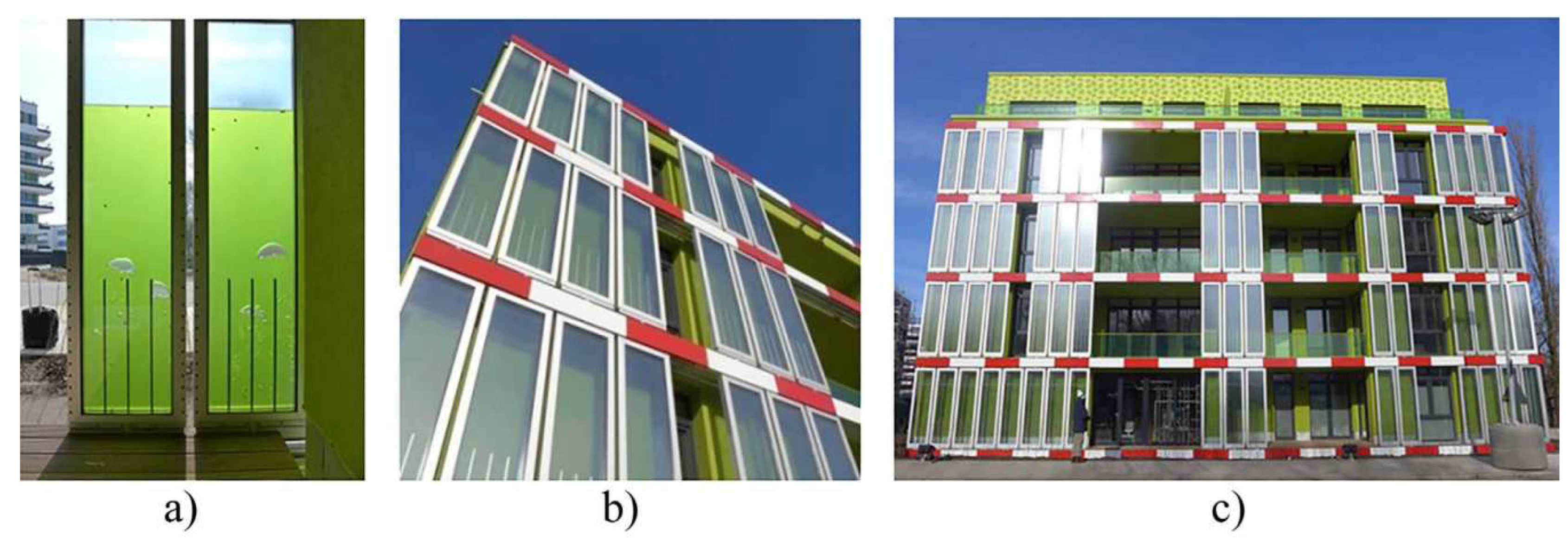
Previously, we discussed the utilization of photobioreactors (PBRs) employing microalgae for electricity production. This technology can be seamlessly integrated into building facades and even windows, as outlined in [18]. The technology resembles rooftop PBRs and can manifest in various forms, as indicated in [33]. Numerous studies have highlighted the additional benefits of incorporating PBRs into facades, serving purposes such as glazing panels [16], thermal insulation, sun-shading [10], and significantly contributing to air purification by converting CO2 into O2Ṫhe vertical flat panels serve as a double skin facade and facilitate natural ventilation, as noted in [33]. Despite theoretical models and simulations, the practical application of this technology is challenging due to inherent problems described in [34] and [10]. However, there is a noteworthy real-scale application—the BIQ (Bio-Intelligent Quotient) Building, constructed in 2013, stands as the first microalgae-powered building (see Figure 3) [17,33]. By installing vertical flat panels on two facades, the BIQ Building partially meets its energy needs [18]. Additionally, research by G. M. Elrayies et al. indicates that the Process Zero project covers 9% of the GSA office building’s requirements by installing tubular PBR front panels [10]. Furthermore, integrating PBRs on both roofs and facades presents an opportunity to enhance energy production [10]. Hybrid PBRs, combining the strengths of different types, offer another avenue for maximizing benefits, as discussed in [13].
2.2.3. Microbial biophotovoltaic wall technology
Microalgae have demonstrated significant potential in biotechnologies, yet they are not the sole contributors to electricity generation. Cyanobacteria, a type of bacteria, have proven to possess the ability to generate power. A specific type of microbial fuel cell, a Biophotovoltaic (BPV) cell, harnesses this capability. Using water as an electron source, BPVs can convert light energy into electrical output. Unlike traditional photovoltaic (PV) systems, BPV devices can produce electricity in light and darkness, making them more sustainable. Typically, the production of BPVs involves collecting cells in a liquid culture and then applying them to an electrode. However, this approach has drawbacks, primarily associated with the liquid phase. Some cyanobacterial and microalgal species, as indicated in previous studies [35], have demonstrated the ability to grow on a conducting anode without needing any organic substrate for electron transfer. The work of M. Sawa et al. highlights a breakthrough in the field by showcasing the feasibility of fully printing a bioelectrode using a conventional inkjet printer [36]. The prototype featured a thin-film paper-based biophotovoltaic cell composed of a layer of cyanobacterial cells on a carbon nanotube conducting surface. A unit of nine BPVs successfully powered a digital commercial clock, cycling between 30-minute "ON" periods and 30-minute "OFF" intervals to recover BPV devices. Additionally, the prototype demonstrated the ability to power an LED for 60 seconds with one pulse every 2.5 seconds, providing sufficient electricity to illuminate the LED. This innovative technology is promising as a bio-solar panel during daylight hours and transforms into a bio-battery at night. The potential applications could be expanded through large-scale printing, such as creating wallpapers that generate electricity by harnessing solar energy captured during the day.
2.3. Windows technologies
2.3.1. Photovoltaic glasses
The potential of fenestration systems can be significantly heightened by integrating photovoltaic (PV) technology into windows. Modern technologies utilize semi-transparent thin-film solar cells on windows, a recently developed technique that enhances daylight and thermal performance while augmenting energy generation capacity [6]. A new type of photovoltaic shutter system, known as the louvred photovoltaic window, has been introduced. This system allows for adjusting inclination angle and spacing based on solar altitude angle and weather conditions in different months [37]. Building Integrated Photovoltaics (BIPVs) can also be implemented on Windows, offering the advantage of electricity generation [5]. Another potential strategy for enhancing the power output of solar cells incorporated into building windows is the Building Integrated Concentrating Photovoltaic (BICPV) window. An innovative concept, the BICPV smart window generates energy and regulates the entry of solar heat and visible light into buildings. It features an optically switchable thermotropic layer with integrated PV cells [38]. A novel Concentrating Photovoltaic/Thermal Glazing system (CoPVTG), developed at the University of Ulster’s Center for Sustainable Technologies in Belfast, UK, presents cutting-edge technology. This system consists of two glazed panels, one externally shaped to create lenses that focus solar energy onto photovoltaic cell lines. The unique characteristics of these lenses allow solar radiation to enter interior spaces during winter and be directed onto photovoltaic cells during summer, reducing solar gains while providing electricity to the building. The double-glazed panel structure of CoPVTG and CoPEG devices makes them versatile components for building glazing. The external glass panel is designed to create concentrating lenses that focus solar energy onto PV cell stripes built into the windows. Notably, the CoPVTG system facilitates heat recovery through air flowing through the air cavity, simultaneously cooling down the PV temperature and enhancing its electrical performance. Additionally, the thermal energy produced by PVs can be converted into electrical energy, with thermoelectric generators (TEG) being one possible strategy [7].
2.3.2. Triboelectric nanogenerators glasses
Solar energy is commonly harnessed for electricity generation through renewable sources. Yet, an alternative approach involves tapping into mechanical energy generated by rain, mainly through utilising triboelectric nanogenerators (TENGs). The research on TENGs, incredibly transparent ones that can be integrated into Windows, has gained significant traction. In the single-electrode mode, the friction between positively charged raindrops and the negatively charged TENG surface creates an electric current by establishing a potential difference between the system’s two electrodes [39]. This technology can be coupled with a contact-mode TENG, assembled with elastic springs, to convert wind energy into electricity. This innovative approach results in a dual-mode TENG comprising a raindrop-TENG and a wind-powered-TENG, enhancing efficiency in terms of operating conditions and electrical output [40]. Two interfaces are considered: solid/solid or solid/liquid. Water (positive charge) directly contacts the SLIPS surface (negative charge) in the solid-liquid structure. On the other hand, the solid-solid system involves a triboelectric material (positive charge) getting the SLIPS (negative charge) when waterdrops interface with it. The liquid-solid TENG boasts a simple structure but tends to have a lower friction coefficient than the solid-solid system, which uses water as the friction material [41]. Z. Chen et al.’s work [42] demonstrates that incorporating a slippery lubricant-infused porous surface (SLIPS) into the system enhances its resilience, allowing the TENG to withstand humidity and extreme temperatures better, contributing to prolonged durability. Although the power generated by this system remains relatively low, Q. Zhou et al.’s study revealed that it can produce enough energy to light eight LEDs in series. Furthermore, after tapping on the translucent TENGs for 2.5 hours, a 1000 µF capacitor was charged with a working voltage of 3 V—sufficient to power an electronic transducer for a single temperature/humidity test [43]. This transparent TENG could be a self-powered raindrop detection sensor, automatically controlling window closure during inclement weather.
3. Discussion: SWOT analysis systems coupling in the building envelope
To summarize the outcomes of this extensive literature review, we conducted a meticulous analysis employing SWOT analyses for each system under investigation. This strategic methodology offers an insightful view of the existing research landscape and enables a nuanced representation of both progress and obstacles. As a result, it yields valuable perspectives on the complexities essential for future studies, be they related to internal dynamics or external factors impacting the system.

Table 1.
S.W.O.T. analysis of the photovoltaic and thermic panels.
| Strengths | Weaknesses | Opportunities | Threats |
|---|---|---|---|
| Multi-purpose: Both the electricity and heat energy can be obtained from the same system [44] PVT system has better efficiency than the PV system [8] Flexible and efficient [44] Can help reduce fossil fuel consumption [3] Has wide application area [44] Inexpensive and convenient [44] It keeps the architectural uniformity on roofs [45] Installation cost may be reduced for the need of only one system to be installed instead of two systems [45] Lower space utilization than the two systems alone [45] Reduce the temperature of the photovoltaic panels and take advantage of the excess heat [8] Abundance of raw materials [46] |
The cost of installation can be relatively high [44] The absence of the sun at night and cloudy days [47] PV/T systems have a intermittent energy production depending on weather [3] Need for an energy storage system to address the issues of intermittency and meet local energy needs [4] Accumulated dust can reduce power output and therefore system efficiency [4] |
Improving the optical properties of the working fluid can improve efficiency [8] The better the performance of the PVT system, the higher the transmittance of visible light and solar infrared rays absorbed. [8] The thermal energy generated by the system can be convert to electrical energy by the Peltier effect [33] It can be integrated into a building and forms a part of the building (BIPVT) [48] PV/T systems integrated into the building envelope avoid additional land use [5] Can be integrated with other energy sources for enhanced efficiency [3] Can be coupled to another electricity production system [33] Applying PV systems to the roof can markedly decrease the heat flux through the roof [6] |
Planning of site and orientation [4] Exposure to the elements and risk of premature deterioration [46] The efficiency of the modules varies significantly depending on weather conditions, climate, and the presence of shading effects. [6] and [46] Thermal losses within the photovoltaic panel [33] Overproduction of electricity [46] |
Table 2.
S.W.O.T. analysis of the photobioreactors.
| Strengths | Weaknesses | Opportunities | Threats |
|---|---|---|---|
| Generate energy [9] Algae can grow in seawater, wastewater, or harshwater [9] Algae have a high rate of growth (higher than most other productive crops) [9] More microalgae species can be developed (compared to an open pond) [9] Can produce 5 to 10 times higher yields per aerial footprint (than open pond) [9] Biogas production [9,33] Significantly decrease the building’s energy demands [33] Biomass production high-efficiency (compared to open pond) [9,33] Preventing culture evaporation [33] Effective light distribution [33] Climate change resistance [33] Tubular PBRs do not need a specific orientation for good exposure to solar light [10] Lower environmental impact than solar panel [9] Need less area (compared to an open pond)Lower water consumption (compared to an open pond)Less weather dependent (compared to an open pond)Work also during the nightAvoid bacterial and dirt contamination [49] PBR design permits more effective use of light (compared to open ponds) [49] |
An ideal temperature range is required for algae to bloom (being 16 to 27°C) [9] Required indirect, middle-intensity light levels [9] Nutrients required (salinity, CO2, ammonia, phosphate...) [9] Specific pH required (7-9 is ideal) [9] Air circulation need (harvest CO2) [9] Initially require a higher investment (compared to an open pond) [49] Required a high control of algae cultivation [49] Lack of experience in building applications [18] Negative net present values (NPV) after 15 years [11] |
Algae production can be used for wastewater treatment [50] Oxygen production [50] CO2 capture capacity (absorbing as much as 85% of CO2 content) [50] The yield of oil production far exceeds that of soybeans (by 60 times) or palm (by 5 times) [50] Heat production (biogas-to-electricity conversion in the generator) [11] Recovering waste heat as steam supply [11] Able to produce food grade biomass (compared to open pond) [9] Able to produce by-products [33] Can produce light energy [33] Provide thermal insulation [33] |
A necessity to adapt algae species according to climate and location [18] Specific and tight regulations for real-life building [18] Need to study the lifetime of the system [18] Need to study the maintenance and cleaning requirements [18] Higher investment and production costs (compared to an open pond) [18] Not economically viable for the moment [18] Oxygen in the water affect directly the cultivation [9] Excessive light intensity can inhibit the photosynthesis process [33] Face a lack of natural light during the night that causes biomass losses (25%) [33] Risks of poor, or, non-performance [17] Other renewables produce more energy [17] Human health risks with some algae species [17] |
Table 3.
S.W.O.T. analysis of the building-integrated wind turbines.
| Strengths | Weaknesses | Opportunities | Threats |
|---|---|---|---|
| Reduced wind farms needs (off-grid system) [9] Limiting cables connection and infrastructure for electricity delivery [9] Decrease energy losses (off-grid system) [9] Wind wall are flexible systems (wind harvesting panels are demountable) [51] VAWTs wind walls are able to capture incoming wind from any direction (unlike HAWTs) [22] VAWTs wind walls do not need to be oriented [22] VAWTs wind walls can take advantage of turbulences [22] The noise is almost zero for normal winds and even for low winds with VAWTs [22] For VAWTs no yaw mechanisms are needed [22] VAWTs have lower wind startup speeds than typical HAWTs [22] |
Vibration and noise problems [22] Classic HAWTs need to be always aligned to the wind direction [22] VAWTs have decreased efficiency (than common HAWTs) [22] VAWTs have rotors located close to the ground where wind speeds are lower [22] VAWTs cannot take advantage of higher wind speeds above [22] Intermittent energy production depending on weather [22] |
Small wind turbines may be coupled to street lighting systems (smart lighting) [22] Can be paired with a photovoltaic system Can contribute to aesthetic design for the buildings (in double skin facade for instance) [22] VAWTs can be located nearer the ground [22] VAWTs may be built at locations where taller structures are prohibited [22] Wind walls minimizing glare circulating air [51] Wind walls control radiation [51] Wind walls provide insulation [51] Wind walls collection of heat [51] Wind walls generate energy [51] Wind walls sequester emissions [51] Wind walls provide aesthetic [51] Wind walls increase property value [51] |
Wind turbines have a negative response from the public [52] Visual pollution [52] Turbulent and low-velocity wind conditions in urban areas [52] Adjacent buildings can cause wind shadow [53] Urban terrain roughness is high [53] If close to the ground, turbines between 2 buildings may cause discomfort for pedestrians (high wind speed) [23] Heat effects may affect the turbine (buoyancy needs to be considered) [23] Turbines between 2 buildings need early urban planning in the design of neighboring buildings [23] |
Table 4.
S.W.O.T. analysis of the hybrid solar-wind systems.
| Strengths | Weaknesses | Opportunities | Threats |
|---|---|---|---|
| Produce electricity [25,26,27] Does not require any fossil fuel [25] Has greater potential to reduce carbon dioxide emissions than the 2 systems alone [25,26,27] Lower climate condition dependence than the 2 systems alone [27] Need less area than 2 separated systemsBetter LCOE (Levelized cost of electricity) [27] More environmental-friendly than the 2 systems alone [25,26] Better in terms of payback time than the 2 systems alone [27] More efficient than the 2 separated systems [27] The wind turbine can also rotate during the nighttime and improve the economics of the system by more electricity generation [25] |
Require a larger initial investment than a unique system (solar panels, wind turbines and energy storage) [27] Climate condition dependence[27] Intermittent production [27] Need more area than a unique solar or wind system [27] |
Coupled with a solar chimney, using mirrors can increase the heat gain of the system [25] Add a wind turbine and a solar chimney to a PV/T panels system reduce payback period [25] Add a wind turbine and a solar chimney to a PV/T panels system increase the potential to reduce CO2 emissions [25] Low operation and maintenance cost [25] Produce low noise [25] Can be equipped with a storage system for electricity and heat [25] Excess power can be sold [26] |
May not be sufficient to cover all needs [26] May not fit into areas with limited space [27] |
Table 5.
S.W.O.T. analysis of the solar paint.
| Strengths | Weaknesses | Opportunities | Threats |
|---|---|---|---|
| High conversion efficiency [54] Produce clean energy [31] Gas phase water splitting is predicted to require less energy [31] Efficient light absorption with minimal light scattering [30] Adaptable to many surfaces [30] [55] Provide aesthetic integration into the building envelope [30] [55] Easy and quick application with a simple brush [56] Low cost technology [55] It deliver an adjustable electrochemical performance [57] Environmentally friendly and emits no ozone-depleting substances after use [55] |
Very low efficiency [58] Doubt regarding the sustainability of this technology [55] |
A large moisture adsorption capacity for binding water molecules [30] It should be a semiconductor with good conductivity [30] Providing light adsorption capabilities [30] Feature high catalytic activity [30] Utilize the standard inverter technology employed by traditional solar cells for connecting to the electricity grid network [55] |
Competition with more efficient and reliable traditional solar cells [58] Very recent technology that necessitates additional studies to ascertain its viability [58] |
Table 6.
S.W.O.T. analysis of the photobioreactors facade panels.
| Strengths | Weaknesses | Opportunities | Threats |
|---|---|---|---|
| Generate energy [9] Algae can grow in seawater, wastewater, or harsh water [9] Algae have a high rate of growth (higher than most other productive crops) [9] Several levels of valorization (biogas, biofuel, bioethanol) [9] Work also during the night [33] Biomass production [33] Biogas production [33] Significantly decrease the building’s energy demands [33] Preventing culture evaporation [33] Effective light distribution [33] Climate change resistance [33] Lower environmental impact than a solar panel [9] |
Higher facade costs (multiplied by 10 for the BIQ Building) [33] An ideal temperature range is required for algae to bloom (being 16 to 27°C) [9] Required indirect, middle intensity light levels [9] Nutrients required (salinity, CO2, ammonia, phosphate...) [9] Specific pH required (7-9 is ideal) [9] Air circulation need (harvest C2) [9] Required a high control of algae cultivation [49] Lack of experience in building applications [18] |
Slidable PBR panels create a thermally controlled microclimate around the building [17,51] Slidable PBR panels reduce unwanted external sound transmission [17,51] Provide dynamic shading [17,51] Increase the energy-saving potential of the building [59] Maximizing daylight [51] Providing view [51] Circulating air [51] Control radiation [51] Rejection of heat [51] Sequestrating emissions [51] Absorbing emissions [51] Provide aesthetic [51] Increase property value [51] Bioluminescent algae can replace artificial lighting by night [59] Reduce wind effects [33] |
Need to study its adaptability to face natural and fire hazard [33] Design affects the microalgae growth and productivity (orientation, thickness, material, temperature, light intensity, CO2, nutrient, and water) [10] Real performances likely unknown (only one experimental application: BIQ Building) |
Table 7.
S.W.O.T. analysis of the microbial biophotovoltaic technology.
| Strengths | Weaknesses | Opportunities | Threats |
|---|---|---|---|
| Very great capacity for growth [36] Work in the dark (for several hours even if the range is lower) [36] Improving water-use efficiency (considering the minor volume of starting culture) [36] Using a gel (which replaces the liquid reservoir normally used in conventional BPV devices [36] Great power output compared with conventional liquid culture-based BPV devices [36] Electrical output can be sustained for more than 100 hours (paper-based MFCs can only operate for 1 h) [36] Can provide a short burst of power [36] Disposable and environmentally friendly power [36] |
Low electricity production [36] Damage possibility of cyanobacteria cells during printing [36] Power output is less in the dark that in the light [36] Printed CNT cathode is a limiting factor in microbial fuel cell performance [36] |
Feasibility of using an inexpensive commercial inkjet printer without (really) affecting cell viability [36] Paper is an inexpensive widespread material and biodegradable [36] The potential of miniaturization for cyanobacteria culture [36] Use of high-performance CB could increase the power output [36] Use of desert CB might reduce the material and energy costs of scale-up [36] Could be developed for bioenergy wallpaper [36] Hydrogel between anode and cathode would improve the power output (by exposing the cathode to more air) [36] |
Solar energy is an intermittent energy source (inevitably drops in low light) [36] Production depends greatly on external conditions (location, weather, time of the day, and seasons of the year) [36] Optimizing cell design [36] |
Table 8.
S.W.O.T. analysis of the photovoltaic glasses.
| Strengths | Weaknesses | Opportunities | Threats |
|---|---|---|---|
| It obtains clean electric energy [37] Realizing active energy saving of windows [60] The implementation of PV glazing and shading devices has the potential to decrease lighting loads and electricity consumption [6] Sustainable electricity production system [6] Integrated glazing reduces the environmental and economic impact of buildings [5] The CoPVTG device results to provide always the highest energy yield [61] Provide a uniform daylight distribution [6] Provide solar contribution control [6] Economically feasible [6] It can meet the needs of natural lighting while satisfying architectural aesthetics [37] CoPVTG devices provide higher energy yield than CoPEG [61] CoPVTG systems provide exploitable hot air [61] |
The performance of BIPV depends highly on the climate and location site [6] Intermittent electricity production depending on weather conditions [6] Building orientation affect performances of the system [6] |
Providing adequate ventilation (BIPV windows) [4] Reduce building cooling load or heat load [6,60] Can be installed as a facade window and balustrade or sloped as an exterior element [5] They are capable to insulate the building [61] PV windows demonstrated superior energy-saving performance compared to conventional insulating glass windows [62] PV insulating glass units have greater energy saving potential than PV double skin facades [62] Low-E coatings have the potential to minimize heat transfer through radiation [6] |
Colored modules can lead to significant efficiency losses depending on the materials and colors used [5] The timeframe for recovering energy investment and the associated uncertainty in greenhouse gas emissions remains unclear [5] Competition with traditional roof PV systems |
Table 9.
S.W.O.T. analysis of the triboelectric nanogenerators.
| Strengths | Weaknesses | Opportunities | Threats |
|---|---|---|---|
| Convert ambient mechanical energy (from wind impact and water droplets) into electricity [39] Can be used for a self-powered smart window system [39] TENGs are transparent (don’t cover or sacrifice surface area window) [39] High transmittance of over 60% [39] Low water contact angle hysteresis with SLIPS addition [41] More efficient energy conversion with SLIPS addition [41,42] Anti-fouling, anti-icing, and drag reduction with SLIPS addition [41,42] Sustainable and renewable energy [63] Low cost [63] Lightweight [63] Take advantage of both wind and rain [39] Solid–solid/liquid–solid convertible TENG increases the conditions under which energy can be produced [40] |
Very low power output compared to conventional systems such as PV panels and wind turbines [41] Climate conditions dependence [39] Temperature and humidity may affect the performances of this system [39] |
Act as a rain-sensor to prevent rainwater from entering the house [41] Integrating an electrochromic device (ECD) (change color or opacity) [39] Can be paired with other electricity production system such as PV glasses [64] Can be used as a sensor for self-powered window closing system [41] |
Lower durability [65] Limited short circuit output current [65] Competition with more efficient and reliable systems |
Table 10.
S.W.O.T. analysis of the photovoltaic and triboelectric nanogenerator hybrid system.
| Strengths | Weaknesses | Opportunities | Threats |
|---|---|---|---|
| Energy production on sunny days and rainy days [64] PV/TENG hybrid systems represent a great potential to complement vulnerable aspects of individual PV and TENG components [64] Good transparency (visible light transmittance (VLT) of 23.49%), color rendering (CRI of 92), and window insulation [64] Convert ambient mechanical energy (from water droplets) into electricity [39] Low water contact angle hysteresis with SLIPS addition [41] More efficient energy conversion with SLIPS addition [41] Anti-fouling, anti-icing, and drag reduction with SLIPS addition [41] Sustainable and renewable energy [63] Low cost [63] Lightweight [63] |
Very low power output [41] Specific transmittance (blue layer) [64] |
Shading effects [64] Hampered the heat transfer [64] Decreased the air temperature [64] Greenhouse applications (high plant growth factor of 25.3%) [64] |
Climatic conditions dependence [65] Lower durability [65] Limited short circuit output current [65] |
4. Conclusions
The building envelope element ensures structural stability, resilience, and protection from external elements. Despite its primary functions, an opportunity exists to enhance the building’s energy balance without additional surfaces. Often overlooked, the roof presents untapped potential, offering ample space and optimal exposure to harness various energy sources such as solar, rain, and wind. This makes it ideal for incorporating energy recovery devices like PV/T panels, wind turbines, and PBRs for algae cultivation. In specific contexts, hybrid systems prove advantageous, generating more energy, optimizing space, and mitigating the limitations of standalone systems. Beyond energy production, specific systems offer additional functionalities; for example, algae-based systems exhibit prowess in wastewater treatment and carbon dioxide capture. Conversely, facades and windows are susceptible to climatic factors, necessitating modulating and regulating systems. Technologies like PBRs facade panels and wind walls generate electricity and provide thermal and acoustic insulation, shading effects, and ventilation, contributing to reduced energy consumption. However, many of these systems require refinement and further development to validate their viability and effectiveness. Some technologies discussed in this study generate limited electrical currents, pose implementation challenges, or exist only in theoretical or simulated forms. In summary, integrating electricity production systems into the building envelope taps into the potential of existing surfaces and aligns with the imperative of meeting growing energy needs sustainably. The combination of building envelopes and energy production holds promise for creating more resilient, efficient, and environmentally conscious structures.
References
- Agence de l’Environnement et de la Maîtrise de l’Énergie. Climat Air et Énergie; ADEME Editions, 2018. https://librairie.ademe.fr/changement-climatique-et-energie/1725-climat-air-et-energie-9791029712005.html.
- Ministères Écologie Énergie Territoires. Energie dans les bâtiments, 2021. https://www.ecologie.gouv.fr/energie-dans-batiments.
- Olabi, A.G.; Shehata, N.; Maghrabie, H.M.; Heikal, L.A.; Abdelkareem, M.A.; Rahman, S.M.A.; Shah, S.K.; Sayed, E.T. Progress in Solar Thermal Systems and Their Role in Achieving the Sustainable Development Goals. Energies 2022, 15, 9501. [Google Scholar] [CrossRef]
- Vodapally, S.N.; Ali, M.H. A Comprehensive Review of Solar Photovoltaic (PV) Technologies, Architecture, and Its Applications to Improved Efficiency. Energies 2023, 16, 319. [Google Scholar] [CrossRef]
- Kuhn, T.E.; Erban, C.; Heinrich, M.; Eisenlohr, J.; Ensslen, F.; Neuhaus, D.H. Review of technological design options for building integrated photovoltaics (BIPV). Energy and Buildings 2021, 231, 110381. [Google Scholar] [CrossRef]
- Taşer, A.; Koyunbaba, B.K.; Kazanasmaz, T. Thermal, daylight, and energy potential of building-integrated photovoltaic (BIPV) systems: A comprehensive review of effects and developments. Solar Energy 2023, 251, 171–196. [Google Scholar] [CrossRef]
- Farhani, R.; Ennawaoui, C.; Hajjaji, A.; Boughaleb, Y.; Rivenq, A.; El Hillali, Y. Photovoltaic-thermoelectric (PV-TE) hybrid system for thermal energy harvesting in low-power sensors. Materials Today: Proceedings 2022. [Google Scholar] [CrossRef]
- Maythem, A.; Al-Shamani, A.N. Using Hybrid System Photovoltaic Thermal/Phase Change Materials/Thermoelectric (PVT/PCM/TE): A Review. Forest Chemicals Review 2022, pp. 1365–1400. http://www.forestchemicalsreview.com/index.php/JFCR/article/view/1241.
- Biloria, N.; Thakkar, Y. Integrating algae building technology in the built environment: A cost and benefit perspective. Frontiers of Architectural Research 2020, 9, 370–384. [Google Scholar] [CrossRef]
- Elrayies, G.M. Microalgae: prospects for greener future buildings. Renewable and Sustainable Energy Reviews 2018, 81, 1175–1191. [Google Scholar] [CrossRef]
- Bender, A. Cost and Benefit Analysis of Implementing Photobioreactor System for Self-Sustainable Electricity Production from Algae. Master work 2017. [Google Scholar] [CrossRef]
- Bohutskyi, P.; Bouwer, E. Biogas production from algae and cyanobacteria through anaerobic digestion: a review, analysis, and research needs. Advanced biofuels and bioproducts 2013, 873–975. [Google Scholar] [CrossRef]
- Sirohi, R.; Pandey, A.K.; Ranganathan, P.; Singh, S.; Udayan, A.; Awasthi, M.K.; Hoang, A.T.; Chilakamarry, C.R.; Kim, S.H.; Sim, S.J. Design and applications of photobioreactors-A review. Bioresource technology 2022, 126858. [Google Scholar] [CrossRef]
- Schenk, P.M.; Thomas-Hall, S.R.; Stephens, E.; Marx, U.C.; Mussgnug, J.H.; Posten, C.; Kruse, O.; Hankamer, B. Second generation biofuels: high-efficiency microalgae for biodiesel production. Bioenergy research 2008, 1, 20–43. [Google Scholar] [CrossRef]
- I. Berzin. Photobioreactor and process for biomass production and mitigation of pollutants in flue gases, 2002. https://patents.google.com/patent/US20050260553A1/en?oq=+patent+US+20050260553.
- Araji, M.T.; Shahid, I. Symbiosis optimization of building envelopes and micro-algae photobioreactors. Journal of Building Engineering 2018, 18, 58–65. [Google Scholar] [CrossRef]
- Wilkinson, S.; Biloria, N.; Ralph, P. The technical issues associated with algae building technology. International Journal of Building Pathology and Adaptation 2020, 38, 673–688. [Google Scholar] [CrossRef]
- Öncel, S.; Köse, A.; Öncel, D. Façade integrated photobioreactors for building energy efficiency. In Start-Up Creation; Elsevier, 2016; pp. 237–299. [CrossRef]
- Schott, A. Tubular Glass Photobioreactors: Bringing Light to Algae. SCHOTT, Mitterteich 2015. https://media.schott.com/api/public/content/3975a579843c4251a9d4777201b19fb2?v=b60e4a2c&download=true.
- Drew, D.; Barlow, J.; Cockerill, T. Estimating the potential yield of small wind turbines in urban areas: A case study for Greater London, UK. Journal of Wind Engineering and Industrial Aerodynamics 2013, 115, 104–111. [Google Scholar] [CrossRef]
- Yang, A.S.; Su, Y.M.; Wen, C.Y.; Juan, Y.H.; Wang, W.S.; Cheng, C.H. Estimation of wind power generation in dense urban area. Applied Energy 2016, 171, 213–230. [Google Scholar] [CrossRef]
- Casini, M. Small vertical axis wind turbines for energy efficiency of buildings. Journal of Clean Energy Technologies 2016, 4, 56–65. [Google Scholar] [CrossRef]
- Hassanli, S.; Hu, G.; Kwok, K.C.; Fletcher, D.F. Utilizing cavity flow within double skin façade for wind energy harvesting in buildings. Journal of Wind Engineering and Industrial Aerodynamics 2017, 167, 114–127. [Google Scholar] [CrossRef]
- Park, J.; Jung, H.J.; Lee, S.W.; Park, J. A new building-integrated wind turbine system utilizing the building. Energies 2015, 8, 11846–11870. [Google Scholar] [CrossRef]
- Kazemi, K.; Ebrahimi, M.; Lahonian, M.; Babamiri, A. Micro-scale heat and electricity generation by a hybrid solar collector-chimney, thermoelectric, and wind turbine. Sustainable Energy Technologies and Assessments 2022, 53, 102394. [Google Scholar] [CrossRef]
- Deymi-Dashtebayaz, M.; Baranov, I.V.; Nikitin, A.; Davoodi, V.; Sulin, A.; Norani, M.; Nikitina, V. An investigation of a hybrid wind-solar integrated energy system with heat and power energy storage system in a near-zero energy building-A dynamic study. Energy Conversion and Management 2022, 269, 116085. [Google Scholar] [CrossRef]
- Shahverdian, M.H.; Sohani, A.; Pedram, M.Z.; Sayyaadi, H. An optimal strategy for application of photovoltaic-wind turbine with PEMEC-PEMFC hydrogen storage system based on techno-economic, environmental, and availability indicators. Journal of Cleaner Production 2023, 384, 135499. [Google Scholar] [CrossRef]
- Lahlou, Y.; Abdelghani, H.; Mohammed, A.; Mohammed, I. Système compact de production d’énergie renouvelable hybride PV-Eolien, 10, 2021. https://patentscope.wipo.int/search/fr/detail.jsf?docId=WO2021137680.
- Elçiçek, H. Determination of critical catalyst preparation factors (cCPF) influencing hydrogen evolution. International Journal of Hydrogen Energy 2023, 48, 3824–3837. [Google Scholar] [CrossRef]
- Daeneke, T.; Dahr, N.; Atkin, P.; Clark, R.M.; Harrison, C.J.; Brkljaca, R.; Pillai, N.; Zhang, B.Y.; Zavabeti, A.; Ippolito, S.J.; others. Surface water dependent properties of sulfur-rich molybdenum sulfides: electrolyteless gas phase water splitting. ACS nano 2017, 11, 6782–6794. [Google Scholar] [CrossRef] [PubMed]
- Shearer, C.J.; Hisatomi, T.; Domen, K.; Metha, G.F. Gas phase photocatalytic water splitting of moisture in ambient air: Toward reagent-free hydrogen production. Journal of Photochemistry and Photobiology A: Chemistry 2020, 401, 112757. [Google Scholar] [CrossRef]
- Zheng, X.; Song, Y.; Liu, Y.; Yang, Y.; Wu, D.; Yang, Y.; Feng, S.; Li, J.; Liu, W.; Shen, Y.; others. ZnIn2S4-based photocatalysts for photocatalytic hydrogen evolution via water splitting. Coordination Chemistry Reviews 2023, 475, 214898. [Google Scholar] [CrossRef]
- Talaei, M.; Mahdavinejad, M.; Azari, R. Thermal and energy performance of algae bioreactive façades: A review. Journal of Building Engineering 2020, 28, 101011. [Google Scholar] [CrossRef]
- Talaei, M.; Mahdavinejad, M. Probable cause of damage to the panel of microalgae bioreactor building façade: Hypothetical evaluation. Engineering Failure Analysis 2019, 101, 9–21. [Google Scholar] [CrossRef]
- McCormick, A.J.; Bombelli, P.; Scott, A.M.; Philips, A.J.; Smith, A.G.; Fisher, A.C.; Howe, C.J. Photosynthetic biofilms in pure culture harness solar energy in a mediatorless bio-photovoltaic cell (BPV) system. Energy & Environmental Science 2011, 4, 4699–4709. [Google Scholar] [CrossRef]
- Sawa, M.; Fantuzzi, A.; Bombelli, P.; Howe, C.J.; Hellgardt, K.; Nixon, P.J. Electricity generation from digitally printed cyanobacteria. Nature communications 2017, 8, 1–10. [Google Scholar] [CrossRef]
- Chen, H.; Cai, B.; Yang, H.; Wang, Y.; Yang, J. Study on natural lighting and electrical performance of louvered photovoltaic windows in hot summer and cold winter areas. Energy and Buildings 2022, 271, 112313. [Google Scholar] [CrossRef]
- Liu, X.; Wu, Y. Design, development and characterisation of a Building Integrated Concentrating Photovoltaic (BICPV) smart window system. Solar Energy 2021, 220, 722–734. [Google Scholar] [CrossRef]
- Yeh, M.H.; Lin, L.; Yang, P.K.; Wang, Z.L. Motion-driven electrochromic reactions for self-powered smart window system. ACS nano 2015, 9, 4757–4765. [Google Scholar] [CrossRef] [PubMed]
- Chung, J.; Cho, H.; Yong, H.; Heo, D.; Rim, Y.S.; Lee, S. Versatile surface for solid–solid/liquid–solid triboelectric nanogenerator based on fluorocarbon liquid infused surfaces. Science and technology of advanced materials 2020, 21, 139–146. [Google Scholar] [CrossRef] [PubMed]
- Zeng, Y.; Luo, Y.; Lu, Y.; Cao, X. Self-powered rain droplet sensor based on a liquid-solid triboelectric nanogenerator. Nano Energy 2022, 98, 107316. [Google Scholar] [CrossRef]
- Chen, Z.; Lu, Y.; Li, R.; Orlando, R.J.; Manica, R.; Liu, Q. Liquid-solid triboelectric nanogenerators for a wide operation window based on slippery lubricant-infused surfaces (SLIPS). Chemical Engineering Journal 2022, 439, 135688. [Google Scholar] [CrossRef]
- Zhou, Q.; Park, J.G.; Kim, K.N.; Thokchom, A.K.; Bae, J.; Baik, J.M.; Kim, T. Transparent-flexible-multimodal triboelectric nanogenerators for mechanical energy harvesting and self-powered sensor applications. Nano Energy 2018, 48, 471–480. [Google Scholar] [CrossRef]
- İlhan Volkan, Ö.; YEŞİLYURT, M.K.; YILMAZ, E.Ç.; ÖMEROĞLU, G. Photovoltaic thermal (PVT) solar panels. International journal of new technology and research 2016, 2, 13–16. Available online: https://www.academia.edu/ 30641980/Photovoltaic_Thermal_PVT_Solar_Panels.
- Jia, Y.; Alva, G.; Fang, G. Development and applications of photovoltaic–thermal systems: A review. Renewable and Sustainable Energy Reviews 2019, 102, 249–265. [Google Scholar] [CrossRef]
- Segura, E.; Belmonte, L.M.; Morales, R.; Somolinos, J.A. A Strategic Analysis of Photovoltaic Energy Projects: The Case Study of Spain. Sustainability 2023, 15, 12316. [Google Scholar] [CrossRef]
- Allouhi, A.; Rehman, S.; Buker, M.S.; Said, Z. Recent technical approaches for improving energy efficiency and sustainability of PV and PV-T systems: A comprehensive review. Sustainable Energy Technologies and Assessments 2023, 56, 103026. [Google Scholar] [CrossRef]
- Yu, G.; Yang, H.; Yan, Z.; Ansah, M.K. A review of designs and performance of façade-based building integrated photovoltaic-thermal (BIPVT) systems. Applied thermal engineering 2021, 182, 116081. [Google Scholar] [CrossRef]
- SCHOTT. Open Raceway Pond, Plastic Bags or Glass Tube Photobioreactor, 2018. https://knowledge.schott.com/art_resource.php?sid=qhwy.2rri80a.
- Proksch, G. Growing sustainability-integrating algae cultivation into the built environment. Edinburgh Architectural Research Journal 2013, 33, 147–162. [Google Scholar] [CrossRef]
- Habibi, S.; Valladares, O.P.; Peña, D.M. Sustainability performance by ten representative intelligent Façade technologies: A systematic review. Sustainable Energy Technologies and Assessments 2022, 52, 102001. [Google Scholar] [CrossRef]
- Yi, Y.K.; Kang, B. Integrating a wind turbine into a parking pavilion for generating electricity. Journal of Building Engineering 2020, 32, 101471. [Google Scholar] [CrossRef]
- Walker, S.L. Building mounted wind turbines and their suitability for the urban scale—A review of methods of estimating urban wind resource. Energy and Buildings 2011, 43, 1852–1862. [Google Scholar] [CrossRef]
- Ravi, P.; Noh, J. Photocatalytic Water Splitting: How Far Away Are We from Being Able to Industrially Produce Solar Hydrogen? Molecules 2022, 27, 7176. [Google Scholar] [CrossRef]
- Sharma, S.; Baral, R. Solar Photovoltaic Paint for Future: A Technical Review. Advanced Journal of Engineering 2022, 1, 18–23. [Google Scholar] [CrossRef]
- Abbas, M.A.; Basit, M.A.; Yoon, S.J.; Lee, G.J.; Lee, M.D.; Park, T.J.; Kamat, P.V.; Bang, J.H. Revival of solar paint concept: air-processable solar paints for the fabrication of quantum dot-sensitized solar cells. The Journal of Physical Chemistry C 2017, 121, 17658–17670. [Google Scholar] [CrossRef]
- Saleem, M.; Albaqami, M.D.; Bahajjaj, A.A.A.; Ahmed, F.; Din, E.; Arifeen, W.U.; Ali, S. Wet-Chemical Synthesis of TiO2/PVDF Membrane for Energy Applications. Molecules 2022, 28, 285. [Google Scholar] [CrossRef]
- Genovese, M.P.; Lightcap, I.V.; Kamat, P.V. Sun-believable solar paint. A transformative one-step approach for designing nanocrystalline solar cells. ACS nano 2012, 6, 865–872. [Google Scholar] [CrossRef]
- Kim, K.H. A feasibility study of an algae façade system. International Conference on Sustainable Building Asia, 2013, pp. 8–10. https://www.irbnet.de/daten/iconda/CIB_DC26782.pdf.
- Wang, H.; Lin, C.; Hu, Y.; Zhang, X.; Han, J.; Cheng, Y. Study on indoor adaptive thermal comfort evaluation method for buildings integrated with semi-transparent photovoltaic window. Building and Environment 2023, 228, 109834. [Google Scholar] [CrossRef]
- Barone, G.; Buonomano, A.; Chang, R.; Forzano, C.; Giuzio, G.F.; Mondol, J.; Palombo, A.; Pugsley, A.; Smyth, M.; Zacharopoulos, A. Modelling and simulation of building integrated Concentrating Photovoltaic/Thermal Glazing (CoPVTG) systems: Comprehensive energy and economic analysis. Renewable Energy 2022, 193, 1121–1131. [Google Scholar] [CrossRef]
- Wang, M.; Peng, J.; Li, N.; Yang, H.; Wang, C.; Li, X.; Lu, T. Comparison of energy performance between PV double skin facades and PV insulating glass units. Applied energy 2017, 194, 148–160. [Google Scholar] [CrossRef]
- Walden, R.; Kumar, C.; Mulvihill, D.M.; Pillai, S.C. Opportunities and challenges in triboelectric nanogenerator (TENG) based sustainable energy generation technologies: a mini-review. Chemical Engineering Journal Advances 2021, 100237. [Google Scholar] [CrossRef]
- Liu, T.; Zheng, Y.; Xu, Y.; Liu, X.; Wang, C.; Yu, L.; Fahlman, M.; Li, X.; Murto, P.; Chen, J.; others, *!!! REPLACE !!!*. Semitransparent polymer solar cell/triboelectric nanogenerator hybrid systems: Synergistic solar and raindrop energy conversion for window-integrated applications. Nano Energy 2022, 103, 107776. [Google Scholar] [CrossRef]
- Singh, S.; Tripathi, R.K.; Gupta, M.K.; Dzhardimalieva, G.I.; Uflyand, I.E.; Yadav, B. 2-D self-healable polyaniline-polypyrrole nanoflakes based triboelectric nanogenerator for self-powered solar light photo detector with DFT study. Journal of Colloid and Interface Science 2021, 600, 572–585. [Google Scholar] [CrossRef]
Figure 1.
Tubular PBR (to the left) and Flat panel PBR (to the right) Source : Schott, 2015 [19]
Figure 1.
Tubular PBR (to the left) and Flat panel PBR (to the right) Source : Schott, 2015 [19]
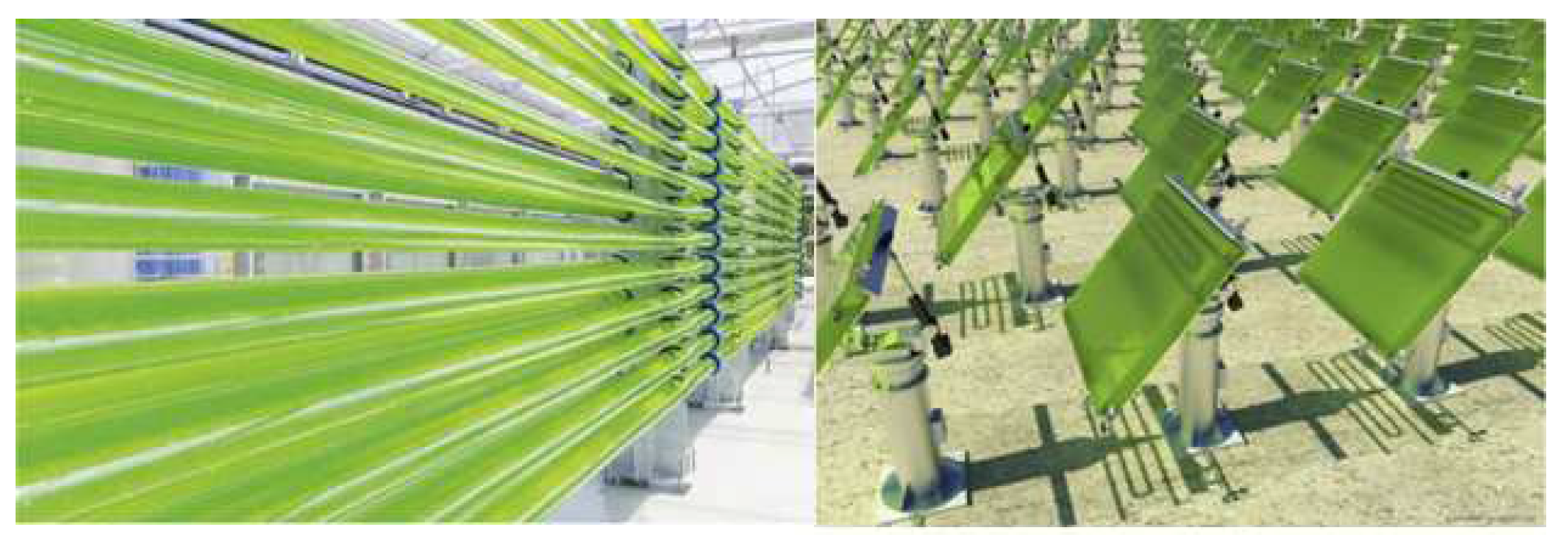
Figure 2.
Different wind turbine systems : (a) on the roof, (b)between two buildings, (c) inside through-building openings, (d) into building’s skin Source : Hassanli and al. 2017 [23]
Figure 2.
Different wind turbine systems : (a) on the roof, (b)between two buildings, (c) inside through-building openings, (d) into building’s skin Source : Hassanli and al. 2017 [23]
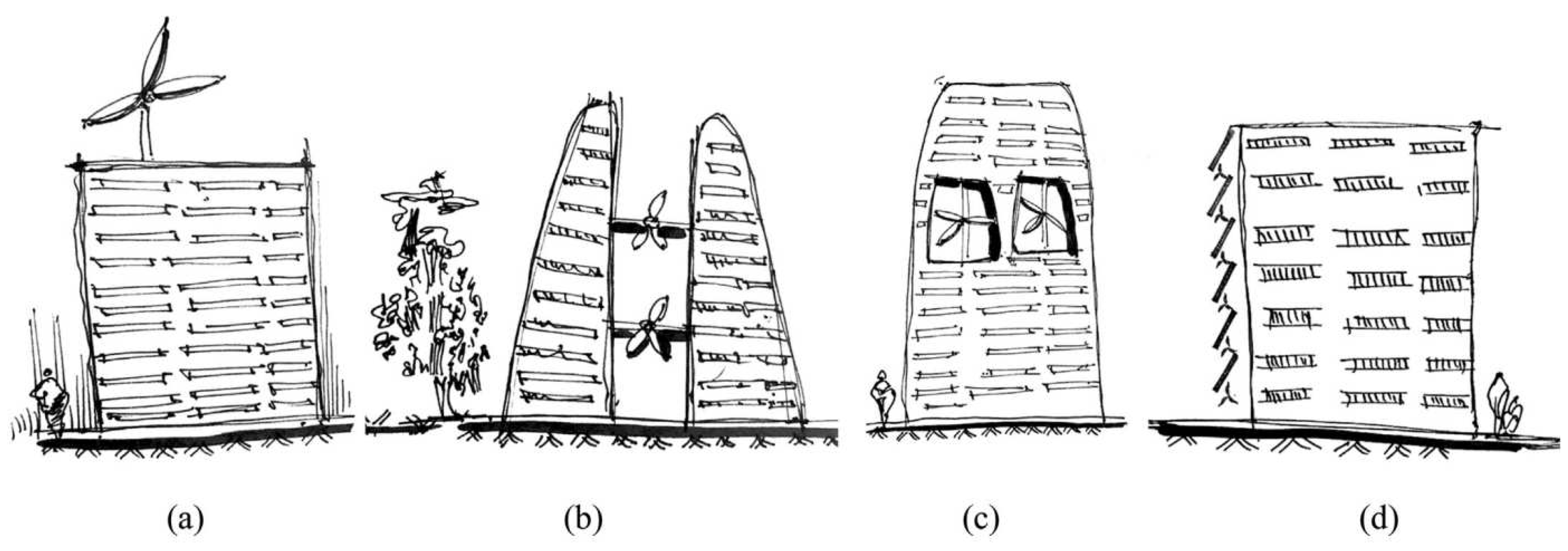
Figure 3.
The BIQ Building by Arup (Colt International, Arup Deutschland, SSC GmbH) Source : Elrayies and al. (2018) [10]
Figure 3.
The BIQ Building by Arup (Colt International, Arup Deutschland, SSC GmbH) Source : Elrayies and al. (2018) [10]
Disclaimer/Publisher’s Note: The statements, opinions and data contained in all publications are solely those of the individual author(s) and contributor(s) and not of MDPI and/or the editor(s). MDPI and/or the editor(s) disclaim responsibility for any injury to people or property resulting from any ideas, methods, instructions or products referred to in the content. |
© 2024 by the authors. Licensee MDPI, Basel, Switzerland. This article is an open access article distributed under the terms and conditions of the Creative Commons Attribution (CC BY) license (http://creativecommons.org/licenses/by/4.0/).
Copyright: This open access article is published under a Creative Commons CC BY 4.0 license, which permit the free download, distribution, and reuse, provided that the author and preprint are cited in any reuse.


