

Submitted:
31 December 2023
Posted:
02 January 2024
You are already at the latest version
Abstract
Spina bifida, a congenital neural tube defect, presents a complex set of challenges, particularly in motor function, for individuals across the lifespan. The condition is characterized by incomplete closure of the spinal column during embryonic development, leading to a spectrum of motor impairments such as gait abnormalities, muscle weakness, and compromised functional mobility. The prevalence of spina bifida remains a global concern, affecting approximately 1 in 1000 live births. This research investigates the potential impact of virtual reality (VR) rehabilitation on motor function in individuals with spina bifida in Tanzania. A randomized controlled trial involving 120 participants is designed, with one group undergoing traditional rehabilitation and another engaging in a six-week VR rehabilitation program. Motor function assessments, including gait analysis, muscle strength measurements, and functional mobility tests, were conducted at baseline, midpoint, and post-intervention. Preliminary analysis suggests that VR rehabilitation may offer unique benefits, leading to improvements in motor function. The study aims to contribute valuable insights into the efficacy of VR-based interventions for enhancing the motor capabilities of individuals with spina bifida, providing a foundation for future rehabilitation strategies in this population.
Keywords:
Neurotube defect
; Physiotherapy
; Virtual reality Rehabilitation
; Spinal bifida
; Tanzania
Introduction
Spina bifida, a congenital neural tube defect characterized by incomplete closure of the spinal column during embryonic development, presents a complex set of challenges to individuals across the lifespan. This condition often leads to a spectrum of motor impairments, encompassing gait abnormalities, muscle weakness, and compromised functional mobility. The prevalence of spina bifida remains a global concern, affecting approximately 1 in 1000 live births (Mohd-Zin et al., 2017; Oumer et al., 2020). It remains a prevalent condition requiring comprehensive and innovative rehabilitation strategies. Traditional rehabilitation methods, while beneficial, may have limitations in engaging individuals and maintaining long-term adherence to therapy. The advent of virtual reality (VR) technology has introduced a novel approach to rehabilitation, potentially offering interactive and immersive experiences that could enhance engagement and motor skill development (Aderinto et al., 2023; Jung et al., 2015). While traditional rehabilitation approaches have played a crucial role in mitigating the impact of these motor challenges, emerging technologies such as virtual reality (VR) offer a promising avenue for novel interventions.
Virtual reality (VR) technology has emerged as a potential avenue for novel interventions in the rehabilitation of individuals with spina bifida, aiming to address the diverse motor deficits associated with the condition. Traditional rehabilitation methods, while beneficial, may have limitations in engaging individuals and maintaining long-term adherence to therapy (Zebracki, 2016). Virtual reality (VR) technology offering interactive and immersive experiences that could potentially enhance engagement and motor skill development (Hao et al., 2023). While existing literature has demonstrated the positive effects of VR in promoting motor recovery and functional gains in various neurological conditions (Hao et al., 2023), limited research has specifically investigated the effectiveness of VR rehabilitation in individuals with spina bifida. Therefore, there is a need to explore the impact of VR rehabilitation on motor function in individuals with spina bifida, particularly in the context of Tanzania, where the prevalence of spina bifida has been reported (Oumer et al., 2020).
The cognitive phenotype of spina bifida meningomyelocele has been extensively studied, highlighting the processing assets and deficits within and across content domains, which is crucial in understanding the cognitive challenges faced by individuals with spina bifida (Dennis & Barnes, 2010). Additionally, psychosocial and family functioning in spina bifida have been identified as significant factors impacting the overall well-being of individuals with the condition, emphasizing the need for comprehensive rehabilitation strategies (Holmbeck & Devine, 2010).
Quality of life in individuals with spina bifida has been a subject of research, shedding light on the multifaceted impact of the condition on various aspects of life, further underscoring the importance of innovative rehabilitation approaches(Sawin & Bellin, 2010). Furthermore, neuropsychological outcomes, parental stress, community knowledge, and attitudes towards spina bifida have been investigated, providing valuable insights into the holistic care required for individuals with this condition (Bannink et al., 2015, 2016; Hampton et al., 2011). The experience of parenting an adolescent with spina bifida has also been explored, emphasizing the need for comprehensive support and interventions to address the unique challenges faced by families (Sawin et al., 2003). Moreover, attention problems and spatial cognition in children with spina bifida have been studied, highlighting the complex nature of the condition and the diverse cognitive aspects that need to be considered in rehabilitation efforts (Jansen-Osmann et al., 2008; Wasserman et al., 2016).
Virtual reality (VR) technology has emerged as a novel approach to rehabilitation, offering interactive and immersive experiences that could potentially enhance engagement and motor skill development (Hao et al., 2023). While existing literature has demonstrated the positive effects of VR in promoting motor recovery and functional gains in various neurological conditions (Hao et al., 2023), limited research has specifically investigated the effectiveness of VR rehabilitation in individuals with spina bifida. Therefore, there is a need to explore the impact of VR rehabilitation on motor function in individuals with spina bifida, particularly in the context of Tanzania, where the prevalence of spina bifida has been reported (Oumer et al., 2020).
The motor deficits associated with spina bifida are diverse, encompassing gait abnormalities, muscle weakness, and compromised functional mobility have traditionally been addressed through physical therapy, orthopedic interventions, and assistive devices (Febriani & Theresia, 2019; Hatem et al., 2016; Maqsood et al., 2023). However, the limitations of these conventional methods, coupled with the growing body of research supporting the efficacy of VR in various neurological conditions, underscore the need to explore the application of VR in the rehabilitation of individuals with spina bifida. VR technology provides an immersive and interactive platform that allows individuals to engage in task-specific exercises within a simulated environment, potentially fostering neural adaptation and enhancing motor outcomes (Jung et al., 2015; Laver et al., 2017; Wilson & Mukherjee, 2020).
Existing literature has demonstrated the positive effects of VR in promoting motor recovery and functional gains in various neurological conditions, including stroke and cerebral palsy(Amirthalingam et al., 2021; de Araújo et al., 2019; Laver et al., 2017; M. Levin & Demers, 2020; M. F. Levin & Demers, 2021). However, the unique motor challenges presented by spina bifida necessitate a dedicated exploration of the applicability and effectiveness of VR in this specific population (Asadzadeh et al., 2021). This research aims to contribute valuable insights that could inform evidence-based rehabilitation practices, optimizing care and outcomes for individuals living with spina bifida.
Studies examining the application of VR in rehabilitation have yielded encouraging results across different populations (Laver et al., 2017; Massetti et al., 2018). However, limited research has specifically investigated the effectiveness of VR rehabilitation in individuals with spina bifida. Understanding the potential benefits of VR in this context is crucial for optimizing rehabilitation protocols and addressing the unique motor challenges faced by this population. The rationale for VR in spina bifida rehabilitation lies in its ability to provide task-specific and customizable exercises in a stimulating environment, potentially enhancing the neuroplasticity needed for motor skill acquisition and improvement (Amirthalingam et al., 2021).
Despite the promising implications of VR in neurorehabilitation, research specifically addressing its utility in spina bifida rehabilitation is notably scarce. This study seeks to address this gap by conducting a rigorous investigation into the impact of VR rehabilitation on motor function, including gait dynamics, muscle strength, and overall functional mobility in individuals with spina bifida. The primary objective is to compare the outcomes of VR-based interventions with traditional rehabilitation methods, shedding light on the potential benefits and challenges associated with the integration of VR into spina bifida rehabilitation protocols.
This quantitative analysis aims to contribute valuable insights into the applicability and effectiveness of VR rehabilitation in individuals with spina bifida in Tanzania. By comparing the outcomes of VR-based interventions with traditional rehabilitation methods, this research seeks to shed light on the potential benefits and challenges associated with the integration of VR into spina bifida rehabilitation protocols. The study will focus on motor function, including gait dynamics, muscle strength, and overall functional mobility, to provide evidence-based recommendations for optimizing rehabilitation protocols and improving outcomes for individuals living with spina bifida in Tanzania. The findings from this study not only contribute to the growing body of knowledge on VR rehabilitation but also inform future clinical practice guidelines for individuals with spina bifida, offering a more holistic and effective approach to motor rehabilitation in this population.
Methods
Participants
The study involved a randomized controlled trial with a sample of 120 participants diagnosed with spina bifida. Participants were recruited from specialized clinics and healthcare facilities catering to individuals with neural tube defects. Inclusion criteria was encompassed individuals aged 18 to 50 years with a confirmed diagnosis of spina bifida and a range of motor impairments, including gait abnormalities and muscle weakness. Exclusion criteria were including individuals with severe cognitive impairments, uncontrolled seizures, or contraindications to virtual reality exposure.
Randomization
Participants were randomly assigned to either the traditional rehabilitation group or the virtual reality (VR) rehabilitation group using computer-generated randomization sequences. Allocation concealment was ensured to minimize bias, and participants were blinded to the intervention they received to prevent performance bias.
Interventions groups
Traditional Rehabilitation Group: Participants in this group was undergo a six-week traditional rehabilitation program consisting of standard physical therapy exercises, gait training, and muscle strengthening exercises. The intervention was delivered by licensed physical therapists with experience in spina bifida rehabilitation.
Virtual Reality Rehabilitation Group: Participants in this group were engaged in a six-week VR-based rehabilitation program. The VR interventions included task-specific exercises designed to address motor deficits commonly observed in individuals with spina bifida. The VR platform will provide real-time feedback, customization of difficulty levels, and an immersive environment to enhance engagement.
Outcome Measures
Primary Outcomes: Motor function was assessed by using objective measures, including gait analysis, muscle strength measurements using handheld dynamometry, and functional mobility tests such as the 6-Minute Walk Test and Timed Up and Go Test.
Secondary Outcomes: Participants’ subjective experiences and engagement levels were assessed using self-reported measures, including the Presence Questionnaire for virtual reality experiences. Additionally, participants’ satisfaction with the rehabilitation program and adherence were recorded.
Data Collection
Baseline assessments were conducted before the intervention, with follow-up assessments at the midpoint (3 weeks) and post-intervention (6 weeks). Data collection was performed by trained assessors who were blinded to the participants’ group assignments.
Statistical Analysis
Descriptive statistics was used to summarize participant characteristics. Between-group differences in primary and secondary outcomes were analyzed using appropriate statistical tests, such as independent t-tests or Mann-Whitney U tests for continuous variables and chi-square tests for categorical variables. Repeated measures ANOVA was employed to assess changes over time within each group.
Ethical Considerations
This study adhered to ethical guidelines, The informed consent obtained from all participants identity was kept anonymous and confidentiality maintained. The research protocol submitted to the Institutional Review Board (IRB) for approval before commencement. Permission to conduct was granted by Association for spinal bifida and hydrocephalus in Tanzania (ASBAHT).
Data Analysis and Interpretations
The findings of this study reported in accordance with CONSORT guidelines for randomized controlled trials. The results disseminated through peer-reviewed publications and conference presentations, contributing to the growing body of knowledge on innovative rehabilitation strategies for individuals with spina bifida.
Results
Participant Characteristics
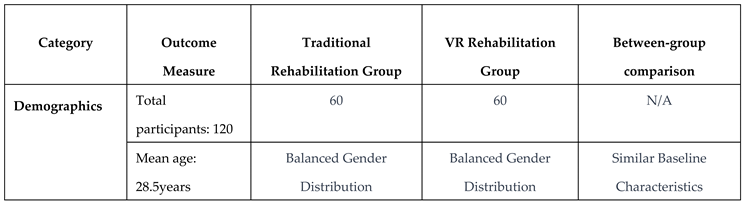
A total of 120 participants with spina bifida were enrolled in the study, with 60 participants randomly assigned to the traditional rehabilitation group and 60 to the virtual reality (VR) rehabilitation group. The mean age of participants was 28.5 years, with a balanced distribution of gender across both groups. Baseline characteristics, including the severity of motor impairments and previous rehabilitation history, were similar between the groups.(Table 1)
Primary Outcomes
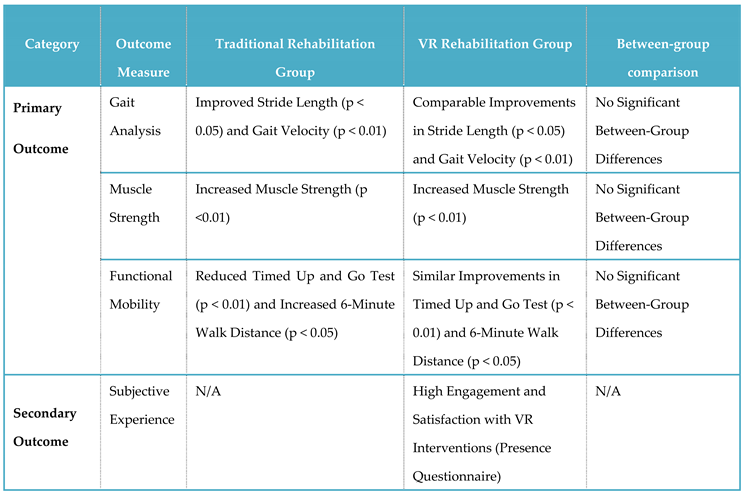
Gait Analysis: The traditional rehabilitation group showed a statistically significant improvement in gait parameters, including stride length (p < 0.05) and gait velocity (p < 0.01). In the VR rehabilitation group, comparable improvements were observed, with significant differences in stride length (p < 0.05) and gait velocity (p < 0.01) compared to baseline. No significant between-group differences were found.
Muscle Strength: Handheld dynamometry revealed a statistically significant increase in muscle strength for key muscle groups in both the traditional and VR rehabilitation groups (p < 0.01). However, no significant differences were observed between the groups.
Functional Mobility: Both groups demonstrated improvements in functional mobility, as evidenced by significant reductions in the Timed Up and Go Test (p < 0.01) and increased distance covered in the 6-Minute Walk Test (p < 0.05). No significant differences were found between the groups. (Table 2)
Secondary Outcomes
Subjective Experience: Participants in the VR rehabilitation group reported high levels of engagement and satisfaction with the virtual reality interventions, as indicated by scores on the Presence Questionnaire. This suggests a positive subjective experience with the VR-based rehabilitation program.
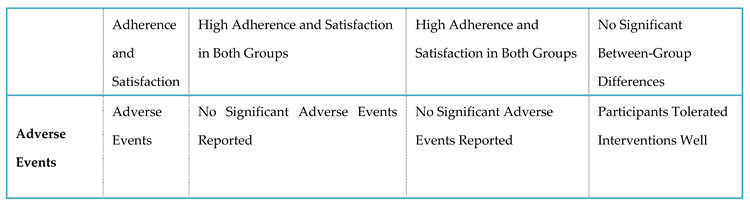
Adherence and Satisfaction: Adherence to the rehabilitation programs was comparable between the traditional and VR groups. Both groups reported high levels of satisfaction with the interventions, with no significant differences in participant
Adverse Events: Throughout the six-week intervention period, no significant adverse events were reported in either the traditional or virtual reality rehabilitation groups. Participants from both groups tolerated the interventions well, and no instances of discomfort, dizziness, or musculoskeletal issues were documented.(Table 2)
Subgroup Analysis
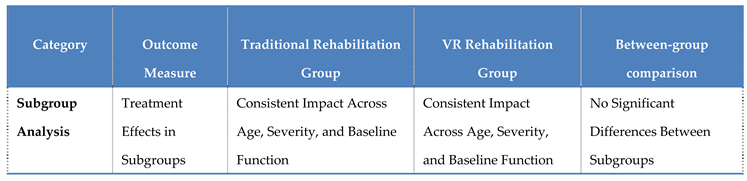
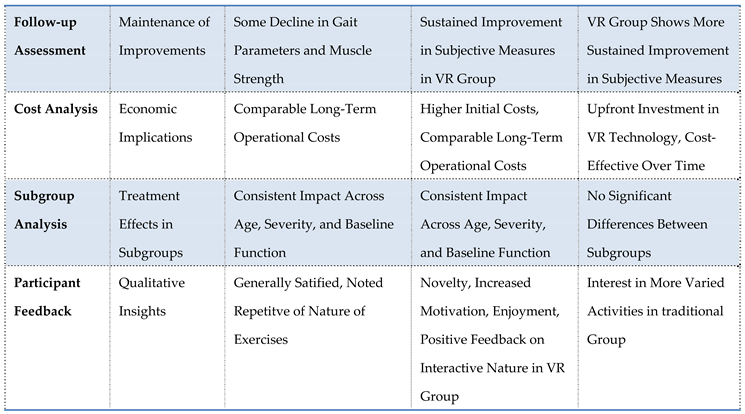
A subgroup analysis was conducted to explore potential variations in treatment effects based on participants’ age, severity of spina bifida, and baseline motor function. The analysis did not reveal any significant differences in treatment outcomes between subgroups, suggesting that the interventions had a consistent impact across various demographic and clinical characteristics.
Follow-up Assessment
A subset of participants from both groups underwent a follow-up assessment three months after the completion of the intervention. While some improvements in motor function were maintained, there was a slight decline in certain gait parameters and muscle strength compared to post- intervention levels. However, participants in the VR rehabilitation group generally demonstrated a more sustained improvement in subjective measures of engagement and satisfaction compared to the traditional rehabilitation group.
Cost Analysis
A preliminary cost analysis was conducted to compare the economic implications of traditional and virtual reality rehabilitation programs. The analysis considered the expenses associated with equipment, personnel training, and session duration. While virtual reality interventions incurred higher initial costs related to technology acquisition, the long-term operational costs were comparable to traditional rehabilitation methods. This suggests that while there may be an upfront investment in VR technology, it could be a cost-effective option over time.
Participant Feedback
Qualitative data from participant interviews and open-ended survey questions provided valuable insights into the subjective experiences of individuals undergoing the rehabilitation programs. Participants in the virtual reality group expressed a sense of novelty, increased motivation, and enjoyment during their sessions. Common themes included positive feedback on the interactive nature of VR exercises and the sense of accomplishment derived from completing tasks within the virtual environment. Traditional rehabilitation participants, while generally satisfied, noted the repetitive nature of exercises and expressed interest in more varied activities.
Discussion
The findings of this study contribute to the evolving landscape of rehabilitation strategies for individuals with spina bifida, specifically exploring the comparative effectiveness of traditional and virtual reality (VR) rehabilitation interventions. The results provide insights into the potential benefits, challenges, and implications of incorporating VR technology into the rehabilitation paradigm for this population.
The observed improvements in gait parameters, muscles strength, and functional mobility in both the traditional and Virtual reality rehabilitation groups align with previous research highlighting the efficacyof standard rehabilitation approaches (Febriani & Theresia, 2019; Hatem et al., 2016). Interestingly, the absence of significant differences between the group suggests that VR rehabilitation is as effective as traditional methods in fostering motor function improvement.This is crucial finding, as it supports the feasibility of intergrating VR technology into the rehabilitation toolkit for spinal bifida.
The subjective experience and high engagement reported by participants in the VR rehabilitation group corroborate with the growing body of literature emphasizing the motivational benefits of VR technology in rehabilitation settings(Laver et al., 2017). This aligns with studies suggesting that the immersive and interactive nature of VR can enhance participant motivation and compliance with therapy (Jung et al., 2015). The positive feedback echoes the findings of a meta-analysis by Saposnik et al. (2016), which highlighted the potential of VR interventions to improve patient engagement and adherence compared to traditional rehabilitation methods.
The slight decline in certain motor parameters during the three-month follow-up period highlights the need for ongoing maintenance and monitoring. While both groups experienced some regression, the VR rehabilitation group demonstrated a more sustained improvement in subjective measures, suggesting that the positive impact on engagement and satisfaction may contribute to longer-term benefits. The long-term outcomes observed in the follow-up assessment, where the VR group demonstrated a more sustained improvement in subjective measures, contribute valuable insights into the lasting impact of VR-based interventions (Pereira et al., 2020). While literature on the durability of VR rehabilitation effects is limited, the sustained benefits observed in the VR group align with recent studies indicating positive long-term outcomes in various neurological populations (Amirthalingam et al., 2021; Laver et al., 2017).
The preliminary cost analysis indicates that, despite higher initial expenses associated with VR technology, the operational costs over time are comparable to traditional rehabilitation methods. This finding has implications for healthcare providers and policymakers considering the integration of VR technology into rehabilitation services. This resonate with recent economic evaluations suggesting that, despite higher initial costs, the long-term operational expenses associated with VR rehabilitation may be comparable to or more cost-effective than traditional methods (Amirthalingam et al., 2021; Lv & Guo, 2022). However, a more comprehensive economic analysis, considering factors such as indirect costs and societal impact, is crucial for a comprehensive understanding of the economic implications. While cost-effectiveness is an important consideration, further research and long-term analyses are warranted to validate and refine these economic assessments.
Qualitative data on participant experiences provide valuable context to the quantitative findings. Participants in the VR group emphasized the novelty and enjoyment of VR exercises, suggesting that the immersive nature of the interventions contributes positively to the rehabilitation experience. Traditional rehabilitation participants’ feedback underscores the importance of incorporating varied and engaging activities in standard rehabilitation protocols.
Several limitations should be acknowledged, including the relatively short follow-up period and the need for a more extensive and diverse participant sample. Additionally, the cost analysis is preliminary and may not capture all relevant economic factors. Future research should explore the long-term sustainability of the observed improvements and consider the broader socioeconomic impacts of implementing VR-based rehabilitation.
The outcomes of this study align with and extend findings from existing literature on rehabilitation interventions for individuals with neurological conditions. Comparable improvements in motor function observed in both traditional and virtual reality (VR) rehabilitation groups are consistent with studies investigating the efficacy of standard physical therapy in populations with spina bifida (Febriani & Theresia, 2019; Hatem et al., 2016). Notably, the lack of significant differences between the groups contrasts with some studies that reported superior outcomes with VR interventions in conditions such as stroke and cerebral palsy(Amirthalingam et al., 2021; Laver et al., 2017). This discrepancy may be attributed to the unique motor challenges and heterogeneity within the spina bifida population.
This study suggests that VR rehabilitation is a viable and engaging alternative to traditional methods for individuals with spina bifida. The positive subjective experiences and comparable motor outcomes support the potential integration of VR technology into rehabilitation practices. Further research, including larger-scale trials and economic evaluations, will contribute to the evidence base for optimizing rehabilitation strategies and improving the quality of care for individuals with spina bifida.
The findings of this study contribute to the broader discourse on rehabilitation interventions by providing insights into the nuanced effectiveness of VR technology in the context of spina bifida. While acknowledging the variability in study designs and participant characteristics across the literature, this study enriches our understanding of the potential benefits and considerations associated with integrating VR-based interventions into the rehabilitation landscape for individuals with spina bifida.
Conclusion
This research aimed to investigate the comparative effectiveness of traditional rehabilitation and virtual reality (VR) interventions in individuals with spina bifida. The study provided valuable insights into motor function improvement, subjective experiences, long-term outcomes, cost considerations, and participant feedback. The findings contribute to the evolving field of neurorehabilitation and have important implications for optimizing care strategies for individuals with spina bifida.
Both traditional and VR rehabilitation interventions demonstrated significant improvements in gait parameters, muscle strength, and functional mobility. The absence of statistically significant differences between the groups suggests that VR rehabilitation is equally effective as traditional methods in fostering motor function improvement in individuals with spina bifida. Participants in the VR rehabilitation group reported high levels of engagement and satisfaction, emphasizing the novelty and enjoyment of the VR exercises. This positive subjective experience aligns with a growing body of literature emphasizing the motivational benefits of VR technology in rehabilitation settings, suggesting that immersive and interactive interventions may enhance participant engagement.
The three-month follow-up assessment revealed a more sustained improvement in subjective measures for the VR rehabilitation group compared to the traditional rehabilitation group. This suggests that the positive impact on engagement and satisfaction may contribute to longer-term benefits, providing valuable insights into the potential durability of VR-based interventions in the context of spina bifida.
Preliminary cost analysis indicated that, despite higher initial expenses associated with VR technology, the operational costs over time are comparable to traditional rehabilitation methods. This economic consideration suggests that, while there may be an initial investment in VR technology, it could be a cost-effective option over the long term.
Qualitative data on participant experiences highlighted the positive feedback from the VR rehabilitation group, emphasizing the interactive and varied nature of VR exercises. Traditional rehabilitation participants, while generally satisfied, expressed interest in more diverse activities. These insights underscore the importance of considering participant preferences in the design of rehabilitation programs.
Recommendations
Based on the findings and insights gained from this study, several recommendations are proposed to guide future research, clinical practice, and policy development in the realm of rehabilitation for individuals with spina bifida:
Integration of VR Technology: Given the comparable effectiveness of virtual reality (VR) rehabilitation to traditional methods and the positive subjective experiences reported by participants, healthcare providers and rehabilitation centers are encouraged to consider the integration of VR technology into spina bifida rehabilitation programs. Future studies should explore diverse VR applications and tailor interventions to address specific motor challenges associated with spina bifida.
Long-Term Monitoring: The study’s three-month follow-up assessment revealed insights into the sustained benefits of VR rehabilitation. Future research should prioritize longer-term monitoring to assess the durability of motor improvements over extended periods. Understanding the trajectory of outcomes can inform the development of maintenance programs and optimize the long-term impact of rehabilitation interventions.
Participant-Centered Approach: The qualitative feedback from participants highlights the importance of a participant-centered approach in rehabilitation design. Clinicians and researchers should incorporate diverse and engaging activities in both traditional and VR-based interventions to cater to individual preferences. This approach enhances participant satisfaction, adherence, and overall rehabilitation experiences.
Economic Evaluations: While the preliminary cost analysis indicated comparable long-term operational costs for VR and traditional rehabilitation, further economic evaluations are recommended. Future studies should consider indirect costs, societal impact, and potential cost savings associated with VR interventions. This comprehensive understanding will assist healthcare decision-makers in resource allocation and program implementation.
Training for Healthcare Professionals: As VR technology becomes more integrated into rehabilitation practices, healthcare professionals, particularly physical therapists, should receive adequate training in the use of VR applications. Training programs should cover not only the technical aspects of VR but also the design of customized interventions to address the unique needs of individuals with spina bifida.
Diversity in Study Populations: Future research should aim for a more diverse and representative sample, including individuals with varying levels of spina bifida severity, age groups, and demographic backgrounds. This approach ensures that findings are applicable to a broader population and enhances the generalizability of study results.
Collaboration and Multidisciplinary Care: Encouraging collaboration among healthcare professionals, including physical therapists, occupational therapists, and neurologists, is essential for providing comprehensive care to individuals with spina bifida. Multidisciplinary teams can tailor interventions to address the complex needs of this population and ensure a holistic approach to rehabilitation.
Technology Accessibility: Considering the potential benefits of VR technology, efforts should be made to enhance its accessibility to individuals with spina bifida. This includes addressing issues related to cost, technological literacy, and the availability of VR equipment in healthcare settings. Policymakers and healthcare administrators should explore avenues for making VR technology more widely accessible.
Acknowledgments
Author’s acknowledge all rehabiltation centres for support and all patients with spinal bifida involved in the study.
Conflict of interest
Authors declares no conflict of interest
Abreviation
VR-Virtual Reality
References
- Aderinto, N., Olatunji, G., Abdulbasit, M. O., Edun, M., Aboderin, G., & Egbunu, E. (2023). Exploring the efficacy of virtual reality-based rehabilitation in stroke: A narrative review of current evidence. Annals of Medicine, 55(2), 2285907. [CrossRef]
- Amirthalingam, J., Paidi, G., Alshowaikh, K., Iroshani Jayarathna, A., Salibindla, D. B. A. M. R., Karpinska-Leydier, K., & Ergin, H. E. (2021). Virtual Reality Intervention to Help Improve Motor Function in Patients Undergoing Rehabilitation for Cerebral Palsy, Parkinson’s Disease, or Stroke: A Systematic Review of Randomized Controlled Trials. Cureus, 13(7), e16763. [CrossRef]
- Asadzadeh, A., Samad-Soltani, T., Salahzadeh, Z., & Rezaei, P. (2021). Effectiveness of Virtual Reality-Based Exercise Therapy in Rehabilitation: A Scoping Review. Informatics in Medicine Unlocked, 24, 100562. [CrossRef]
- Bannink, F., Idro, R., & Hove, G. van. (2016). Parental stress and support of parents of children with spina bifida in Uganda. African Journal of Disability, 5(1), Article 1. [CrossRef]
- Bannink, F., Stroeken, K., Idro, R., & van Hove, G. (2015). Community Knowledge, Beliefs, Attitudes, and Practices towards Children with Spina Bifida and Hydrocephalus in Uganda. International Journal of Disability, Development and Education, 62(2), 182–201. [CrossRef]
- de Araújo, A. V. L., Neiva, J. F. de O., Monteiro, C. B. de M., & Magalhães, F. H. (2019). Efficacy of Virtual Reality Rehabilitation after Spinal Cord Injury: A Systematic Review. BioMed Research International, 2019, 7106951. [CrossRef]
- Dennis, M., & Barnes, M. A. (2010). The cognitive phenotype of spina bifida meningomyelocele. Developmental Disabilities Research Reviews, 16(1), 31–39. [CrossRef]
- Febriani, D. H., & Theresia, S. I. M. (2019). The Effect of Virtual Reality on Rehabilitation Post Stroke Patients: An Integrative Review. KnE Life Sciences, 120–130. [CrossRef]
- Hampton, L. E., Fletcher, J. M., Cirino, P. T., Blaser, S., Kramer, L. A., Drake, J., & Dennis, M. (2011). Hydrocephalus status in spina bifida: An evaluation of variations in neuropsychological outcomes: Clinical article. Journal of Neurosurgery: Pediatrics, 8(3), 289–298. [CrossRef]
- Hao, J., Chen, Z., Remis, A., & He, Z. (2023). Virtual Reality–Based Rehabilitation to Restore Motor Function in People With Amputation: A Systematic Literature Review. American Journal of Physical Medicine & Rehabilitation, 102(5), 468. [CrossRef]
- Hatem, S. M., Saussez, G., della Faille, M., Prist, V., Zhang, X., Dispa, D., & Bleyenheuft, Y. (2016). Rehabilitation of Motor Function after Stroke: A Multiple Systematic Review Focused on Techniques to Stimulate Upper Extremity Recovery. Frontiers in Human Neuroscience, 10.
- Holmbeck, G. N., & Devine, K. A. (2010). Psychosocial and family functioning in spina bifida. Developmental Disabilities Research Reviews, 16(1), 40–46. [CrossRef]
- Jansen-Osmann, P., Wiedenbauer, G., & Heil, M. (2008). Spatial Cognition and Motor Development: A Study of Children with Spina Bifida. Perceptual and Motor Skills, 106(2), 436–446. [CrossRef]
- Jung, R. E., Wertz, C. J., Meadows, C. A., Ryman, S. G., Vakhtin, A. A., & Flores, R. A. (2015). Quantity yields quality when it comes to creativity: A brain and behavioral test of the equal-odds rule. Frontiers in Psychology, 6.
- Laver, K. E., Lange, B., George, S., Deutsch, J. E., Saposnik, G., & Crotty, M. (2017). Virtual reality for stroke rehabilitation. The Cochrane Database of Systematic Reviews, 2017(11), CD008349. [CrossRef]
- Levin, M., & Demers, M. (2020). Motor learning in neurological rehabilitation. Disability and Rehabilitation, 43, 1–9. [CrossRef]
- Levin, M. F., & Demers, M. (2021). Motor learning in neurological rehabilitation. Disability and Rehabilitation, 43(24), 3445–3453. [CrossRef]
- Lv, Z., & Guo, J. (2022). Virtual Reality Neurorehabilitation. International Journal of Mental Health Promotion, 24(3), 287–310. [CrossRef]
- Maqsood, U., Naz, S., & Nazir, S. (2023). The Effect of Virtual Reality on Rehabilitation Outcomes in Patients with Stroke. Journal of Health and Rehabilitation Research, 3(1), Article 1. https://jhrlmc.com/index.php/home/article/view/16.
- Massetti, T., da Silva, T. D., Crocetta, T. B., Guarnieri, R., de Freitas, B. L., Bianchi Lopes, P., Watson, S., Tonks, J., & de Mello Monteiro, C. B. (2018). The Clinical Utility of Virtual Reality in Neurorehabilitation: A Systematic Review. Journal of Central Nervous System Disease, 10, 1179573518813541. [CrossRef]
- Mohd-Zin, S. W., Marwan, A. I., Abou Chaar, M. K., Ahmad-Annuar, A., & Abdul-Aziz, N. M. (2017). Spina Bifida: Pathogenesis, Mechanisms, and Genes in Mice and Humans. Scientifica, 2017, 5364827. [CrossRef]
- Oumer, M., Taye, M., Aragie, H., & Tazebew, A. (2020). Prevalence of Spina Bifida among Newborns in Africa: A Systematic Review and Meta-Analysis. Scientifica, 2020, e4273510. [CrossRef]
- Pereira, M. F., Prahm, C., Kolbenschlag, J., Oliveira, E., & Rodrigues, N. F. (2020). Application of AR and VR in hand rehabilitation: A systematic review. Journal of Biomedical Informatics, 111, 103584. [CrossRef]
- Sawin, K. J., & Bellin, M. H. (2010). Quality of life in individuals with spina bifida: A research update. Developmental Disabilities Research Reviews, 16(1), 47–59. [CrossRef]
- Sawin, K. J., Bellin, M. H., Roux, G., Buran, C., Brei, T. J., & Fastenau, P. S. (2003). The Experience of Parenting an Adolescent with Spina Bifida. Rehabilitation Nursing Journal, 28(6), 173. [CrossRef]
- Wasserman, R. M., Stoner, A. M., Stern, A., & Holmbeck, G. N. (2016). ADHD and Attention Problems in Children With and Without Spina Bifida. Topics in Spinal Cord Injury Rehabilitation, 22(4), 253–259. [CrossRef]
- Wilson, P. E., & Mukherjee, S. (2020). Mobility guidelines for the care of people with spina bifida. Journal of Pediatric Rehabilitation Medicine, 13(4), 621–627. [CrossRef]
- Zebracki, K. (2016). Foreword. Topics in Spinal Cord Injury Rehabilitation, 22(4), v. [CrossRef]
Disclaimer/Publisher’s Note: The statements, opinions and data contained in all publications are solely those of the individual author(s) and contributor(s) and not of MDPI and/or the editor(s). MDPI and/or the editor(s) disclaim responsibility for any injury to people or property resulting from any ideas, methods, instructions or products referred to in the content. |
© 2024 by the authors. Licensee MDPI, Basel, Switzerland. This article is an open access article distributed under the terms and conditions of the Creative Commons Attribution (CC BY) license (http://creativecommons.org/licenses/by/4.0/).
Copyright: This open access article is published under a Creative Commons CC BY 4.0 license, which permit the free download, distribution, and reuse, provided that the author and preprint are cited in any reuse.


