

Submitted:
28 December 2023
Posted:
29 December 2023
You are already at the latest version
Abstract
This article presents an experimental study focused on the impact of supplementing pure gasoline (E0) with bioethanol, gradually increasing the biofuel concentration up to 70% (E10, E50, and E70). The research was conducted in two phases: In the first phase (Part I), the engine's operation involved varying engine speeds (n = 2000 rpm, n = 2500 rpm) and adjusting throttle openings (15%, 20%, 25%) to analyze changes in brake torque, thermal efficiency, and ecological indicators. The second phase (Part II) aimed to complement and clarify the study data. Here, the engine was maintained at a constant speed (n = 2000 rpm) and brake torque (MB = 80 Nm) while altering ignition timing. The findings revealed that increasing the bioethanol concentration up to 70% led to modest enhancements in engine brake torque and thermal efficiency. However, the most significant impact was observed in the reduction of greenhouse gas emissions and incomplete combustion byproducts. The study also established that achieving higher thermal efficiency requires compensating for the extended ignition delay phase resulting from bioethanol addition by advancing ignition timing. Nevertheless, this approach is constrained by the escalating emissions of carbon dioxide and hydrocarbons. These findings provide valuable insights into optimizing the balance between bioethanol supplementation, engine performance, and environmental sustainability in spark ignition engines.
Keywords:
engine
; spark ignition
; bioethanol
; gasoline
; fuel mixture
; throttle opening
; ignition timing
; engine performance
; emissions
1. Introduction
The Paris Agreement, a landmark agreement in the global fight against climate change, has set out an imperative: countries must develop and implement strategies to reduce emissions across all sectors, with transport under particular scrutiny [1]. As nations strive to meet their commitments under this agreement, the spotlight is increasingly on the transport industry. This sector is not only a significant contributor to global emissions, but also a critical focus for pioneering sustainable and environmentally responsible solutions [2,3]. In this context, the use of cleaner and more sustainable fuels [4,5,6], increased energy efficiency [7,8], and the incorporation of cutting-edge technologies to reduce the environmental impact of transport have emerged as central pillars in the transition to a greener future. Among these solutions, bioethanol stands out as a keystone, offering a multi-faceted approach to addressing the common challenges of sustainable transport [9,10,11].
The use of ethanol in transport can significantly reduce CO2 emissions. The use of 15-30% ethanol petrol blends can reduce CO2 emissions by between 7.2 and 13.4% [12]. Increasing the ethanol content of petrol is therefore necessary to increase the CO2 neutrality of transport, but unfortunately it is currently limited to 10% in many countries.
Ethanol can be used in both spark-ignition and compression-ignition engines [13]. However, while spark-ignition engines use a wide range of petrol/ethanol blends, from very low percentages to pure ethanol, compression-ignition engines can only add a relatively small percentage of ethanol [14,15,16].
The other scientists from China present an innovative method for bioethanol production using apple wood residue [17]. Their research not only demonstrates the potential of apple wood residue as a sustainable source of bioethanol, but also the adaptability and versatility of bioethanol in different production contexts.
As the global movement towards sustainable fuels continues to gain momentum, scientists in the US are looking at the escalating emissions from the transport sector [18]. Their comprehensive analysis assesses the environmental impact of producing bioethanol from different feedstocks, with a focus on global availability. The results paint a compelling picture for the use of waste-based feedstocks, which have minimal environmental impact and offer a potential solution to the perennial food versus fuel debate. Not only do waste feedstocks reduce material consumption and land use compared to agricultural feedstocks, they also fit seamlessly with the broader goals of sustainability and emissions reduction.
The addition of ethanol as a gasoline additive in spark-ignition engines, where the air-fuel mixture is prepared in the carburettor, leads to a slight reduction in engine power and torque due to the air-fuel mixture becoming leaner [19]. However, engines equipped with a multi-point fuel injection system exhibit the opposite effect, resulting in a slight increase in engine torque and brake power [20]. The brake specific fuel consumption increases in both cases due to the lower calorific value of ethanol. Nevertheless, when taking into account the fuel mass and calorific value, the energy consumption among all mixtures and pure petrol appears to be remarkably similar [21].
Otto engines with a carburettor show a significant reduction in NOx emissions that is directly proportional to the percentage of ethanol in the ethanol/petrol mixture. This is influenced by the decreasing combustion temperature [19]. However, this leads to increased emissions of CO and HC. Engines equipped with a multi-point fuel injection system, utilizing an ethanol/petrol mixture, demonstrate diminished emissions of CO and HC. Notably, the emissions of CO2 exhibit an increase in this context. NOx emissions in such engines remain relatively stable at lower revs and torque levels; however, under elevated loads, there is a discernible rise in NOx emissions [20].
The aim of this paper is to highlight the potential of bioethanol in the widest possible transport context, including aviation. Some work has shown that ethanol can affect the spray characteristics of fuels [22]. For example, a blend of 20% ethanol and aviation kerosene is an ideal alternative fuel for aircraft engines that improves atomisation performance and therefore has a high potential for use in aircraft engines. Bioethanol (or bioethanol/kerosene blends) can be used not only in jet engines, but also in pulse engines for aerospace applications [23].
The work of Liu and others illustrates how ethanol biofuel uniquely addresses two pressing challenges: oil security and CO2 emissions [24]. Given the aviation industry's heavy reliance on imported kerosene, securing a stable and sustainable supply of oil is of paramount importance. At the same time, reducing carbon emissions is of paramount importance to meet stringent environmental sustainability targets. Biofuel ethanol, derived from renewable biomass, is emerging as a viable solution that offers a twofold remedy by reducing dependence on finite petroleum resources and reducing greenhouse gas emissions. These findings are equally promising for the road transport sector, where ethanol-based fuels can serve as a viable option to reduce reliance on fossil fuels and reduce emissions from spark ignition engines.
Research by scientists at Tianjin University presents innovative ethanol-to-jet fuel processes that combine corncob gasification, syngas fermentation and ethanol conversion. A life cycle assessment underlines the benefits of corncob gasification combined with fermentation, highlighting the potential for reduced emissions and cleaner production methods [25].
As we embark on this journey towards sustainability, it is crucial to consider the compatibility and feasibility of different bioethanol concentrations within existing systems. The use of different bioethanol concentrations provides an opportunity to identify optimal blend ratios that balance performance, fuel economy and emissions [26]. This knowledge is crucial not only for developing guidelines for the use of higher bioethanol blends, but also for optimising engine performance, ultimately contributing to improved overall efficiency in sustainable transport.
In conclusion, despite previous research in this area, ongoing testing with different bioethanol concentrations remains relevant and critical. Such investigations provide the basis for a deeper understanding of combustion processes with alternative fuels, compatibility assessments with existing systems and the development of cleaner and more sustainable transport solutions. Collectively, these studies are influencing the ongoing development of bioethanol as a viable and environmentally friendly fuel source, offering a promising future for sustainability in sustainable transport.
Nevertheless, notwithstanding the enumerated favorable attributes of ethanol and its positive impact on fuel emissions and efficiency, recent scientific review articles reveal inconsistencies in the findings of certain studies [26,27]. Therefore, the objective of our study is to reassess and substantiate the influence of ethanol-gasoline mixtures on emissions, brake thermal efficiency and other parameters in spark ignition engines.
2. Research methodology
The influence of bioethanol on the performance of an internal combustion engine was evaluated by conducting bench tests on the HR 16DE spark ignition engine from Nissan Qashqai (refer to Table 1). Experimental tests were conducted in two distinct stages, each designed to evaluate various engine performance parameters under controlled conditions: Stage I: During this phase, the engine's throttle opening was fixed at three different positions (15%, 20%, 25%). The engine's shaft rotation speed (n) and ignition timing (Θ) were set to specific values. Specifically, when the engine speed was set to n = 2000 rpm, the ignition timing was maintained at Θ = 20° Crank Angle (CA) before Top Dead Center (bTDC). Similarly, when the engine speed was adjusted to n = 2500 rpm, the ignition timing was set at Θ = 24° CA bTDC. This allowed for the assessment of key parameters, including Brake Torque (MB), Brake Specific Fuel Consumption (BSFC), and both energy and ecological indicators, while keeping the throttle opening constant. Stage II: In the second stage of testing, the engine operated at a consistent engine load, maintaining a Brake Mean Effective Pressure (BMEP) of 0.62 MPa by adjusting the Brake Torque (MB) to 80 Nm. Within this stage, the ignition timing (Θ) was systematically altered, ranging from Θ = 16° CA bTDC to Θ = 32° CA bTDC. This phase enabled the assessment of the engine's energy and ecological performance indicators while keeping the engine load fixed.
The engine testing setup, as illustrated in Figure 1, comprises essential components for precise control and measurement. The engine is under the command of the MoTeC M800 programmable electronic control unit (ECU). Engine load is generated using an eddy current-type AMX 200/100 load stand, boasting a maximum speed of 6000 rpm and a peak torque capacity of 480 Nm, with a remarkable accuracy of ±0.9 Nm. Fuel consumption is meticulously quantified using an electronic-gravitational fuel consumption weight, the AMX 212F, which provides measurement capabilities within the range of 0.01 to 50 kg/h and ensures precision at ±0.1%. To measure air consumption accurately, an air mass meter of the BOSCH HFM 5 variety is employed, capable of measuring within limits of 8 to 370 kg/h, with an accuracy of ±2%. The temperature of exhaust gases is precisely monitored through the utilization of a K-type thermocouple sensor, offering measurement capabilities ranging from 0 to +1250°C and delivering results with an accuracy of ±0.5%. Emissions analysis is performed using the AVL DiCom 4000 emission analyzer, offering accurate measurement limits for CO2 (0 to 20%, with an accuracy of ±0.1%), CO (0 to 10%, with an accuracy of ±0.01%), HC (0 to 20000 ppm, with an accuracy of ±1 ppm), NOx (0 to 5000 ppm, with an accuracy of ±1 ppm), and O2 (0 to 25%, with an accuracy of ±0.01%). This comprehensive suite of instrumentation ensures rigorous and precise data acquisition for this type of research.
Throughout both stages of testing, a range of fuels was employed, including pure gasoline (E0) and various gasoline-bioethanol mixtures (E10, E30, E50, E70). It's important to note that a stoichiometric mixture with an excess air ratio of λ = 1.0 was consistently maintained to ensure standardized conditions and reliable data collection during the bench tests. In the formulation of fuel mixtures E10, E30, E50, and E70, gasoline was blended with bioethanol and the properties of the pure fuels are presented in Table 2. Bioethanol sets itself apart with a significantly lower carbon content, resulting in a reduced carbon-to-hydrogen (C/H) ratio compared to gasoline. This unique biofuel also contains a notable amount of oxygen, serving as an effective oxidizer during combustion, ultimately enhancing combustion efficiency. Bioethanol exhibits a considerably lower heating value compared to gasoline, burning at slightly lower temperatures but with an accelerated rate. Moreover, when bioethanol is introduced into the intake manifold, it imparts a heightened cooling effect within the cylinder during the evaporation process, owing to its significantly higher latent heat of evaporation (2 – 3 times greater). Additionally, bioethanol exhibits greater resistance to detonation during combustion, contributing to improved engine safety and performance.
The primary properties of the experimentally used mixtures (E10, E30, E50, and E70) were determined with careful consideration of the bioethanol concentration. It's worth noting that the properties of E70 closely resemble those of E0, as outlined in Table 3.
3. Results and Discussion
Following the initial stage of our study, which involved varying throttle openings, we observed a marginal increase in engine brake torque (MB) and Brake Mean Effective Pressure (BMEP) as we heightened the bioethanol concentration in the fuel mixture (Figure 2). Specifically, when the engine ran on the E70 fuel blend, MB and BMEP exhibited a consistent rise of up to 1% compared to E0. This outcome stems from multiple factors. On one hand, the introduction of bioethanol lowers the Lower Heating Value (LHV) of the fuel mixture, delivering approximately 27% less energy per unit of fuel mass to the cylinder, as indicated in Table 3. Conversely, biofuels contain a substantial oxygen content that actively participates in combustion, and bioethanol requires significantly less air per 1 kg. Our tests maintained a stoichiometric mixture, leading to approximately 27.6% more fuel injection for the same volume of intake air with the increased concentration of bioethanol. Another noteworthy factor is the latent heat of evaporation—bioethanol enhances the cooling effect on intake air, increasing its density and intake mass during the cycle, thereby facilitating an additional boost in fuel mass and energy. In summary, the rise in MB and BMEP is due to better cylinder filling with fuel energy, but is also influenced by more efficient combustion of bioethanol. It's worth noting that when we elevated the engine's rotational speed from 2000 rpm to 2500 rpm, we observed a decrease in both MB and BMEP due to reduced volumetric efficiency. However, this phenomenon became less pronounced with wider throttle openings, as the mixture of intake air and fuel gained greater inertia, ultimately improving volumetric efficiency. In the second phase of our study, we varied the ignition timing (Θ), while maintaining constant engine load (MB = 80 Nm) and consistent BMEP (0.62 MPa).
Significant variations in performance indicators become evident when analyzing specific fuel mass consumption (BSFC_m). In initial phase, gradually increased the bioethanol concentration to 10%, 30%, 50%, and 70%, resulting in consistent BSFC_m increases of approximately 3.5%, 11%, 19%, and 26% compared to E0 (Figure 3). The primary driver behind these changes is the diminishing LHV of the fuel mixture. Moreover, expanding the throttle, specific fuel consumption gradually decreased, a consequence of enhanced engine power output and improved efficiency. In the second stage, it was determined that BSFC_m for all tested fuels reached its minimum when the ignition timing Θ was set between 24 – 26° CA bTDC. Despite bioethanol's faster combustion characteristics (Table 2.), there was no necessity to delay combustion when incorporating bioethanol as an additive. This is attributed to bioethanol's cooling effect on the fuel-air mixture, accounting for one of the longer ignition delays within the gasoline-bioethanol blend [28].
Specific fuel volume consumption (BSFC_V) holds significance, especially considering fuel procurement is based on volume measurement. In the initial study phase, the incremental increase in bioethanol concentration (E10, E30, E50, and E70) consistently resulted in BSFC_V increments of approximately 3.1%, 9.3%, 15.8%, and 22.5% compared to E0 (Figure 4). Notably, with higher bioadditive concentrations, the specific volume consumption exhibited a more moderate increase due to the higher density of pure bioethanol, which surpasses that of gasoline by approximately 7.3%.
The results from Phase II of the study reaffirm the differences in fuel consumption and the combustion characteristics of bioethanol-enhanced fuels discussed earlier. Importantly, the higher combustion speed of ethanol does not necessitate a reduction in ignition timing, as it leads to an increase in ignition delay [29].
Break Thermal Efficiency (BTE) serves as a key indicator of fuel thermal energy conversion into engine mechanical energy. (Figure 5) illustrates the notable enhancement in overall performance achieved by introducing higher bioethanol concentrations into fuel mixtures. This improvement is primarily attributed to the heightened oxygen concentration, facilitating a more efficient combustion process within the cylinder. In the initial stage of the study, a gradual increase in bioethanol concentration in the fuel yields incremental BTE improvements of approximately 0.6%, 0.9%, 1.3%, and 1.7% when compared to E0. In the second phase of the study, it becomes evident that fuel mixtures with elevated bioethanol content exhibit higher BTE values when ignition timing is advanced. This adjustment likely compensates for the prolonged ignition delay associated with the higher auto-ignition temperature of bioethanol (Table 2).
Exhaust Temperature (Tex), as depicted in (Figure 6), demonstrates a noticeable decrease (~0.27%, ~0.72%, ~1.2%, and ~1.9%) with the introduction of bioethanol into the fuel blend. This reduction in exhaust gas temperature is associated with higher Break Thermal Efficiency (BTE), indicating improved energy conversion. The lower exhaust temperature is primarily attributed to bioethanol's slightly faster burning rate compared to E0, as well as its lower flame temperature, as outlined in Table 2.
During the initial test phase, an increase in Tex is observed with wider throttle openings, but this does not imply reduced thermal efficiency. Instead, it reflects the larger energy content within the cylinders. In all cases, the bioethanol additive consistently lowers Tex across various throttle openings and engine speeds. During the second test phase, advancing ignition timing results in Tex reduction, signifying an earlier combustion completion and greater conversion of combustion energy into useful work. However, excessively early ignition (Θ > 24 – 26° CA bTDC) leads to diminishing BTE as a significant portion of fuel combustion energy dissipates through the cooling system. In this scenario, the ethanol additive, which lowers combustion temperatures, becomes more influential [30].
As the bioethanol concentration gradually increases to 70%, specific CO2 emissions decrease by approximately 0.5%, 0.7%, 0.8%, and 1.1%, respectively (Figure 7). It's worth considering that with the rise in bioethanol concentration to 70%, the E70 C/H ratio diminishes by around 25% (Table 2). One might expect a more substantial decrease in CO2 emissions; however, the 26% increase in fuel consumption (Figure 3) exerts a counteractive effect. It's important to note that CO2 is a product of complete combustion, and its emission increases as combustion efficiency improves. Understanding the intricate relationship between fuel composition and emissions is pivotal for optimizing both environmental sustainability and engine performance. In the initial phase of the study, a notable increase in specific CO2 emissions is observed when the throttle opening is set at 15% and n = 2500 rpm. This can be attributed to reduced brake torque (Figure 2) owing to the engine's poorer volumetric efficiency. In such cases, the addition of bioethanol yields a more pronounced positive effect. During Phase II of the study, it becomes apparent that the lowest CO2 emissions coincide with achieving the highest BTE. For E70, advancing ignition timing by approximately 2° CA compared to E0, due to the extended ignition delay phase, results in a more effective reduction in CO2 emissions. Additionally, it's noteworthy that bioethanol qualifies as a renewable fuel, and in terms of its life cycle, E100 CO2 emissions are approximately 60% lower compared to fossil-based gasoline [6].
Carbon monoxide (CO) specific emissions, as illustrated in (Figure 8), serve as indicators of partial combustion. An inverse relationship is observed between bioethanol concentration in the mixture and CO production. Gradual increases in bioethanol concentration up to 70% yield reduced CO emissions of approximately 3.8%, 8.9%, 13.7%, and 16.7%, respectively. This correlation can be attributed to bioethanol's oxygen content, which enhances combustion efficiency as oxygen levels rise in the mixture. Additionally, a lower C/H ratio plays a role (Table 3). In the results of test I, it is evident that as the throttle opening increases, resulting in higher MB and BTE, the specific CO emissions of E0 decrease more significantly compared to the reduction in CO emissions of the E70 mixture. E70's higher BSFC and lower combustion temperature are likely contributing factors in this context. Test II demonstrates that, regardless of the bioethanol concentration in the fuel, the lowest CO specific emissions are achieved at the same ignition timing, corresponding to the point of maximum BTE.
Hydrocarbons (HC) are byproducts of incomplete combustion, typically arising from uneven fuel-air mixing and the extinguishing of the flame front in various zones of the combustion chamber. Bioethanol plays a crucial role in enhancing oxygen delivery during the combustion process, thereby optimizing combustion outcomes and reducing the emission of incomplete combustion products. With an increase in bioethanol concentration to 70%, specific HC emissions exhibit a significant decrease of approximately 8.2%, 19.7%, 32.0%, and 43.5% (Figure 9).
During the first stage of the tests, it became evident that as the throttle opening and engine brake torque increase, the specific HC emissions decrease more pronouncedly in fuels with lower bioethanol concentrations. This observation correlates with CO emissions, suggesting that the greater reduction in emissions of these incomplete combustion products at higher throttle openings is constrained by the higher BSFC and lower combustion temperature of E70 fuel. In the second stage of the tests, it was established that when altering the ignition timing, the behaviour of specific HC emissions differs from that of CO emissions. Advancing the ignition timing from Θ = 16° CA bTDC to Θ = 32° CA bTDC leads to a gradual increase in HC emissions. Early combustion initiation results in elevated HC emissions, as combustion starts before the fuel-air mixture is fully homogenized. This pattern holds for all investigated fuel mixtures, but it is observed that with a higher concentration of bioethanol, the increase in HC emissions occurs with lower intensity, affirming bioethanol's role in facilitating the preparation of a more uniform and complete burning mixture [31].
Nitrogen oxide (NOx), a significant pollutant known for its contribution to smog formation and its impact on tropospheric ozone and acid rain, is a byproduct of the combustion process. NOx formation becomes particularly pronounced in engines operating at higher loads and elevated temperatures within the cylinder. Notably, the exclusive use of bioethanol tends to reduce NOx emissions due to its lower flame temperature, as indicated in Table 2. Additionally, bioethanol exhibits a substantially higher latent heat of evaporation, leading to enhanced cooling of the intake air-fuel mixture when compared to pure gasoline. This cooling effect results in reduced temperatures in the cylinder during the intake and compression strokes, consequently lowering combustion temperatures and, in turn, the formation of NOx compounds. Upon replacing pure gasoline (E0) with gasoline-bioethanol blends such as E10, E30, E50, or E70, specific NOx emissions exhibited notable reductions of approximately 4.5%, 8.8%, 18.2%, and 23.5%, respectively (Figure 10). This significant decrease underscores the potential of bioethanol in mitigating NOx pollutants, thus addressing environmental concerns related to combustion-related emissions. An examination of the first stage of the study reveals that while increasing the throttle opening from 15% to 25% and the engine speed from 2000 rpm to 2500 rpm tends to elevate specific NOx emissions, the addition of bioethanol consistently counteracts this increase, resulting in reduced NOx emissions across all tested conditions.
The results of the II phase of the study demonstrate that advancing the ignition timing leads to a clear increase in specific NOx emissions. This is primarily due to the intensified combustion occurring within a smaller volume and at higher temperatures. However, even in this scenario, the bioethanol additive continues to play a significant role in reducing NOx emissions. Notably, at an ignition timing of approximately Θ ≈ 24° CA bTDC, when the E70 fuel mixture reaches its maximum BTE, NOx emissions remain lower compared to E0, especially when compared to situations with delayed ignition (Θ = 16° CA bTDC). This showcases the effectiveness of bioethanol in mitigating NOx emissions even under conditions that typically promote their increase.
4. Conclusions
In conclusion, this extensive exploration into the impact of varying bioethanol concentrations (10%, 30%, 50%, and 70%) on both the energetic and ecological parameters of an engine operating under stoichiometric air-fuel conditions, as compared to using pure gasoline, has yielded valuable insights. The research encompassed two distinct phases: the first involving consistent engine speeds (n = 2000 rpm and n = 2500 rpm) and varying throttle positions (15%, 20%, 25%), and the second focusing on maintaining a constant engine brake torque of 80 Nm while investigating the influence of different ignition timing settings on engine performance. These findings provide crucial guidance for the optimization of engine performance and enhancement of environmental sustainability through the utilization of bioethanol/gasoline blends:
- When bioethanol concentration in gasoline blend reaches 70%, the engine's MB and BMEP increase by approximately 1%. This rise is influenced by factors like a 27.1% reduction in LHV, a 27.6% increase in fuel mass per 1 kg of air, and improved volumetric efficiency due to lower intake mixture temperatures from bioethanol's higher latent heat of evaporation. This also enhances BTE by around 1.7% by aiding hydrocarbon oxidation. However, bioethanol's lower LHV causes a 26% increase in BSFC_m and a 22.5% increase in BSFC_V compared to pure gasoline (E0).
- The exhaust temperature of E70 decreases by approximately 1.9% due to lower initial combustion temperatures resulting from enhanced intake mixture cooling and the lower flame temperature of bioethanol. While bioethanol has a faster burning rate than gasoline, it experiences a longer ignition delay phase. To achieve maximum BTE and minimum BSFC, the ignition timing for E70 needs to be advanced by around 2° CA compared to the optimal timing for E0.
- Increasing bioethanol concentration in gasoline blends leads to a reduction in greenhouse gas emissions, particularly CO2 and NOx. The decrease in specific CO2 emissions when bioethanol concentration reaches 70% is approximately 1.1%, despite a 24.8% reduction in the fuel's C/H ratio. However, it's important to note that increased BSFC has a negative impact in this context. The reduction in CO2 emissions, while not substantial, should be considered alongside the fact that bioethanol is a renewable fuel, with E100 having approximately 60% lower CO2 emissions during its life cycle compared to E0. With the introduction of bioethanol, NOx emissions decrease due to the lower combustion temperature, resulting in reductions of approximately 4.5%, 8.8%, 18.2%, and 23.5% when switching from E0 to E10, E30, E50, and E70, respectively. However, it's crucial to limit ignition timing as increasing it leads to higher NOx emissions. The oxygen content in bioethanol reduces the emission of incomplete combustion products, resulting in decreases of approximately 3.8%, 8.9%, 13.7%, and 16.7% in CO emissions and 8.2%, 19.7%, 32.0%, and 43.5% in HC emissions when transitioning from E0 to E10, E30, E50, and E70, respectively. Advancing the ignition timing by +2° CA, which optimizes BTE, reduces specific CO emissions but increases HC emissions as combustion initiates before the air-fuel mixture is fully mixed.
Author Contributions
Conceptualization, A.R., G.M. and S.P.; methodology, A.R. and G.M.; software, A.R. and G.M.; formal analysis, A.R. and S.N.; validation, A.R. and S.N.; writing—original draft preparation, A.R., G.M.; writing—review and editing, S.P. and S.N.; supervision, A.R. and S.P.; project administration, A.R. All authors have read and agreed to the published version of the manuscript.
Funding
This research received no external funding.
Conflicts of Interest
The authors declare no conflicts of interest.
Abbreviations
| A/F | Air to fuel ratio |
| BMEP | Brake mean effective pressure |
| BSFC_m | Specific fuel mass consumption |
| BSFC_V | Specific fuel volume consumption |
| bTDC | Before top dead center |
| BTE | Break thermal efficiency |
| C | Carbon |
| C/H | Carbon-to-hydrogen ratio |
| CA | Crank angle |
| CO | Carbon monoxide |
| CO2 | Carbon dioxide |
| E | Ethanol |
| ECU | Electronic control unit |
| H | Hydrogen |
| HC | Hydrocarbons |
| LHV | Lower heating value |
| MB | Brake torque |
| n | Engine speed |
| NOx | Nitrogen oxides |
| O | Oxygen |
| Tex | Exhaust Temperature |
| Θ | Ignition timing |
| λ (lambda) | Excess air ratio |
References
- UNFCCC The Paris Agreement.; Paris, November 29 2018.
- European Environment Agency. Transport and Environment Report 2022: Digitalisation in the Mobility System : Challenges and Opportunities.; Publications Office: LU, 2022. [Google Scholar]
- Campbell, P.; Zhang, Y.; Yan, F.; Lu, Z.; Streets, D. Impacts of Transportation Sector Emissions on Future U.S. Air Quality in a Changing Climate. Part II: Air Quality Projections and the Interplay between Emissions and Climate Change. Environ. Pollut. 2018, 238, 918–930. [Google Scholar] [CrossRef]
- Xin, Y.; Xing, X.; Li, X.; Hong, H. A Biomass–Solar Hybrid Gasification System by Solar Pyrolysis and PV– Solid Oxide Electrolysis Cell for Sustainable Fuel Production. Appl. Energy 2024, 356, 122419. [Google Scholar] [CrossRef]
- Gupta, P.; Protim Das, P.; Mubarak, M.; Shaija, A. Performance and Emission Analysis of Single Cylinder SI Engine Using Bioethanol-Gasoline Blend Produced from Salvinia Molesta. IOP Conf. Ser. Mater. Sci. Eng. 2018, 297, 012005. [Google Scholar] [CrossRef]
- Puricelli, S.; Cardellini, G.; Casadei, S.; Faedo, D.; Van Den Oever, A.E.M.; Grosso, M. A Review on Biofuels for Light-Duty Vehicles in Europe. Renew. Sustain. Energy Rev. 2021, 137, 110398. [Google Scholar] [CrossRef]
- Shere, A.; Subramanian, K.A. Effects of Hydrogen and EGR on Energy Efficiency Improvement with Ultra Low Emissions in a Common Rail Direct Injection Compression Ignition Engine Fueled with Dimethyl Ether (DME) under HCCI Mode. Int. J. Hydrog. Energy 2024, 52, 1447–1474. [Google Scholar] [CrossRef]
- Yang, Z.; Du, Y.; Geng, Q.; He, G. Energy Loss and Comprehensive Performance Analysis of a Novel High-Efficiency Hybrid Cycle Hydrogen-Gasoline Rotary Engine under off-Design Conditions. Energy Convers. Manag. 2022, 267, 115942. [Google Scholar] [CrossRef]
- Li, J.; Xiong, F.; Fan, M.; Chen, Z. The Role of Nonfood Bioethanol Production in Neutralizing China’s Transport Carbon Emissions: An Integrated Life Cycle Environmental-Economic Assessment. Energy Sustain. Dev. 2022, 70, 68–77. [Google Scholar] [CrossRef]
- Holmatov, B.; Schyns, J.F.; Krol, M.S.; Gerbens-Leenes, P.W.; Hoekstra, A.Y. Can Crop Residues Provide Fuel for Future Transport? Limited Global Residue Bioethanol Potentials and Large Associated Land, Water and Carbon Footprints. Renew. Sustain. Energy Rev. 2021, 149, 111417. [Google Scholar] [CrossRef]
- Mohammed Shahinsha, N.; John, J.A.; Singh, K.; Kumar, N. Reduction in Automotive Emissions by Ethanol Blending in SI Engine: A Review. Mater. Today Proc. 2023, S2214785323018801. [Google Scholar] [CrossRef]
- Milovanoff, A.; Posen, I.D.; Saville, B.A.; MacLean, H.L. Well-to-Wheel Greenhouse Gas Implications of Mid-Level Ethanol Blend Deployment in Canada’s Light-Duty Fleet. Renew. Sustain. Energy Rev. 2020, 131, 110012. [Google Scholar] [CrossRef]
- Najafi, G.; Ghobadian, B.; Yusaf, T.; Safieddin Ardebili, S.M.; Mamat, R. Optimization of Performance and Exhaust Emission Parameters of a SI (Spark Ignition) Engine with Gasoline–Ethanol Blended Fuels Using Response Surface Methodology. Energy 2015, 90, 1815–1829. [Google Scholar] [CrossRef]
- Park, S.H.; Cha, J.; Kim, H.J.; Lee, C.S. Effect of Early Injection Strategy on Spray Atomization and Emission Reduction Characteristics in Bioethanol Blended Diesel Fueled Engine. Energy 2012, 39, 375–387. [Google Scholar] [CrossRef]
- Butkus, A.; Pukalskas, S. THE RESEARCH INTO THE INFLUENCE OF ECOLOGICAL PETROL ADDITIVES IN THE AUTOMOBILE LABORATORY. TRANSPORT 2004, 19, 24–27. [Google Scholar] [CrossRef]
- Pikūnas, A.; Pukalskas, S.; Grabys, J. Influence of Composition of Gasoline-Ethanol Blends on Parameters of Internal Combustion Engines. 2003.
- Zhang, J.; Liu, J.; Kou, L.; Zhang, X.; Tan, T. Bioethanol Production from Cellulose Obtained from the Catalytic Hydro-Deoxygenation (Lignin-First Refined to Aviation Fuel) of Apple Wood. Fuel 2019, 250, 245–253. [Google Scholar] [CrossRef]
- Shakelly, N.; Pérez-Cardona, J.R.; Deng, S.; Maani, T.; Li, Z.; Sutherland, J.W. Comparative Life Cycle Assessment of Bioethanol Production from Different Generations of Biomass and Waste Feedstocks. Procedia CIRP 2023, 116, 630–635. [Google Scholar] [CrossRef]
- Renzi, M.; Bietresato, M.; Mazzetto, F. An Experimental Evaluation of the Performance of a SI Internal Combustion Engine for Agricultural Purposes Fuelled with Different Bioethanol Blends. Energy 2016, 115, 1069–1080. [Google Scholar] [CrossRef]
- Yusoff, M.N.A.M.; Zulkifli, N.W.M.; Masjuki, H.H.; Harith, M.H.; Syahir, A.Z.; Khuong, L.S.; Zaharin, M.S.M.; Alabdulkarem, A. Comparative Assessment of Ethanol and Isobutanol Addition in Gasoline on Engine Performance and Exhaust Emissions. J. Clean. Prod. 2018, 190, 483–495. [Google Scholar] [CrossRef]
- Zhai, H.; Frey, H.C.; Rouphail, N.M.; Gonçalves, G.A.; Farias, T.L. Comparison of Flexible Fuel Vehicle and Life-Cycle Fuel Consumption and Emissions of Selected Pollutants and Greenhouse Gases for Ethanol 85 Versus Gasoline. J. Air Waste Manag. Assoc. 2009, 59, 912–924. [Google Scholar] [CrossRef]
- Song, L.; Liu, T.; Fu, W.; Lin, Q. Experimental Study on Spray Characteristics of Ethanol-Aviation Kerosene Blended Fuel with a High-Pressure Common Rail Injection System. J. Energy Inst. 2018, 91, 203–213. [Google Scholar] [CrossRef]
- Pecho, P.; Hrúz, M.; Sitar, M.; Bugaj, M. Possibilities of Using Bioethanol as an Alternative Fuel in the Conditions of Jet Engines. Transp. Res. Procedia 2021, 59, 183–192. [Google Scholar] [CrossRef]
- Liu, Y.; Gu, W.; Wang, J.; Rao, D.; Chen, X.; Ma, H.; Zeng, W. Study on the Laminar Burning Velocity of Ethanol/RP-3 Aviation Kerosene Premixed Flame. Combust. Flame 2022, 238, 111921. [Google Scholar] [CrossRef]
- Wang, X.; Guo, L.; Lv, J.; Li, M.; Huang, S.; Wang, Y.; Ma, X. Process Design, Modeling and Life Cycle Analysis of Energy Consumption and GHG Emission for Jet Fuel Production from Bioethanol in China. J. Clean. Prod. 2023, 389, 136027. [Google Scholar] [CrossRef]
- Göktaş, M.; Kemal Balki, M.; Sayin, C.; Canakci, M. An Evaluation of the Use of Alcohol Fuels in SI Engines in Terms of Performance, Emission and Combustion Characteristics: A Review. Fuel 2021, 286, 119425. [Google Scholar] [CrossRef]
- Mendiburu, A.Z.; Lauermann, C.H.; Hayashi, T.C.; Mariños, D.J.; Rodrigues Da Costa, R.B.; Coronado, C.J.R.; Roberts, J.J.; De Carvalho, J.A. Ethanol as a Renewable Biofuel: Combustion Characteristics and Application in Engines. Energy 2022, 257, 124688. [Google Scholar] [CrossRef]
- Sanap, P.P.; Diwan, A.G.; Mahajan, Y.S. Ethanol Blending in Petrol: A Techno - Commercial Overview. Mater. Today Proc. 2023, S2214785323019508. [Google Scholar] [CrossRef]
- Verma, A.; Dugala, N.S.; Singh, S. Experimental Investigations on the Performance of SI Engine with Ethanol-Premium Gasoline Blends. Mater. Today Proc. 2022, 48, 1224–1231. [Google Scholar] [CrossRef]
- Inbanaathan, P.V.; Balasubramanian, D.; Nguyen, V.N.; Le, V.V.; Wae-Hayee, M.; R, R.; Veza, I.; Yukesh, N.; Kalam, M.A.; Sonthalia, A.; et al. Comprehensive Study on Using Hydrogen-Gasoline-Ethanol Blends as Flexible Fuels in an Existing Variable Speed SI Engine. Int. J. Hydrog. Energy 2023, 48, 39531–39552. [Google Scholar] [CrossRef]
- Suresh, D.; Porpatham, E. Influence of High Compression Ratio on the Performance of Ethanol-Gasoline Fuelled Lean Burn Spark Ignition Engine at Part Throttle Condition. Case Stud. Therm. Eng. 2024, 53, 103832. [Google Scholar] [CrossRef]
Figure 1.
Engine test scheme: 1 – air meter; 2 – throttle control; 3 – fuel mass meter; 4 –injector; 5 – engine; 6 – spark plug; 7 – pressure sensor; 8 – temperature sensor; 9 – oxygen (lambda) sensor; 10 – exhaust gas analyser; 11 – engine ECU; 12 – crankshaft encoder; 13 – crankshaft sensor; 14 – in-cylinder pressure data processing module; 15 – engine load stand; 16 – load stand data processing module.
Figure 1.
Engine test scheme: 1 – air meter; 2 – throttle control; 3 – fuel mass meter; 4 –injector; 5 – engine; 6 – spark plug; 7 – pressure sensor; 8 – temperature sensor; 9 – oxygen (lambda) sensor; 10 – exhaust gas analyser; 11 – engine ECU; 12 – crankshaft encoder; 13 – crankshaft sensor; 14 – in-cylinder pressure data processing module; 15 – engine load stand; 16 – load stand data processing module.
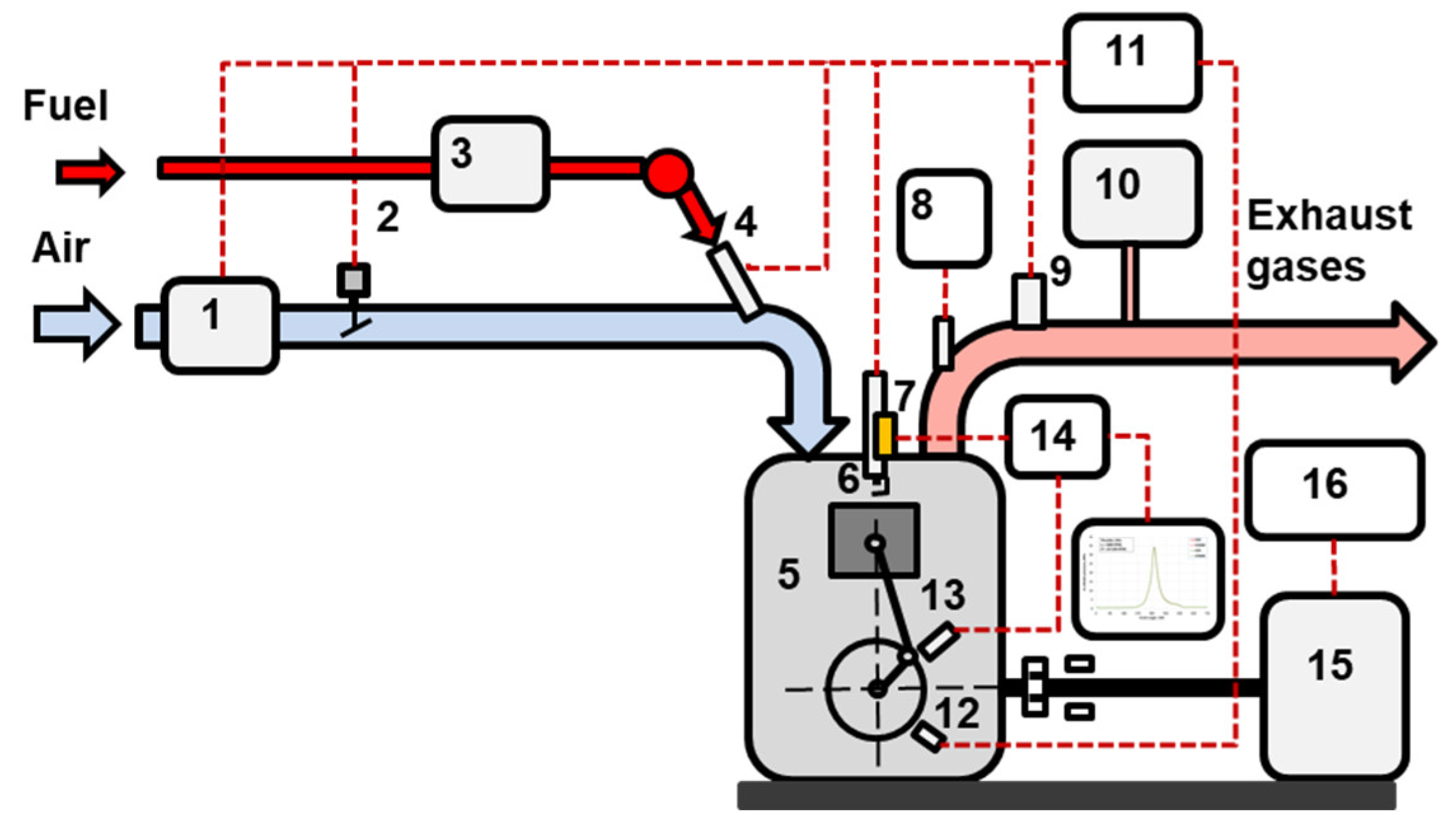
Figure 2.
Dependencies of MB (I) and BMEP (II) on fuel type, throttle opening and engine speed.
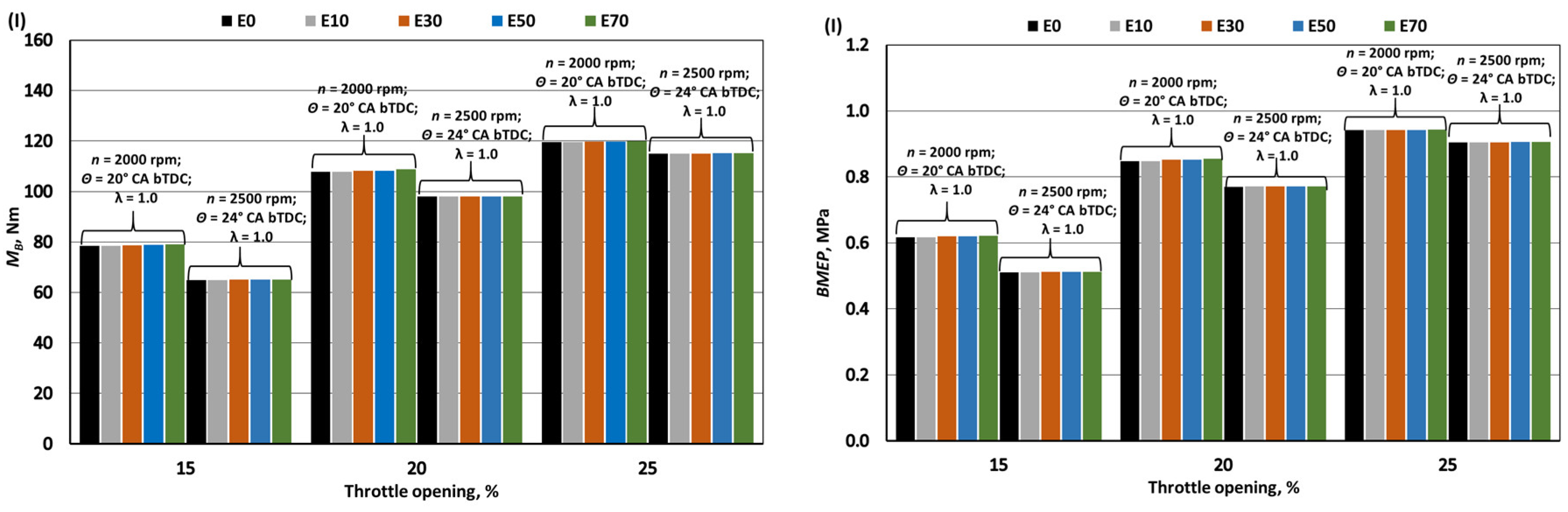
Figure 3.
Dependencies of BSFC_m on fuel type and: I – throttle opening and engine speed; II – ignition timing.
Figure 3.
Dependencies of BSFC_m on fuel type and: I – throttle opening and engine speed; II – ignition timing.
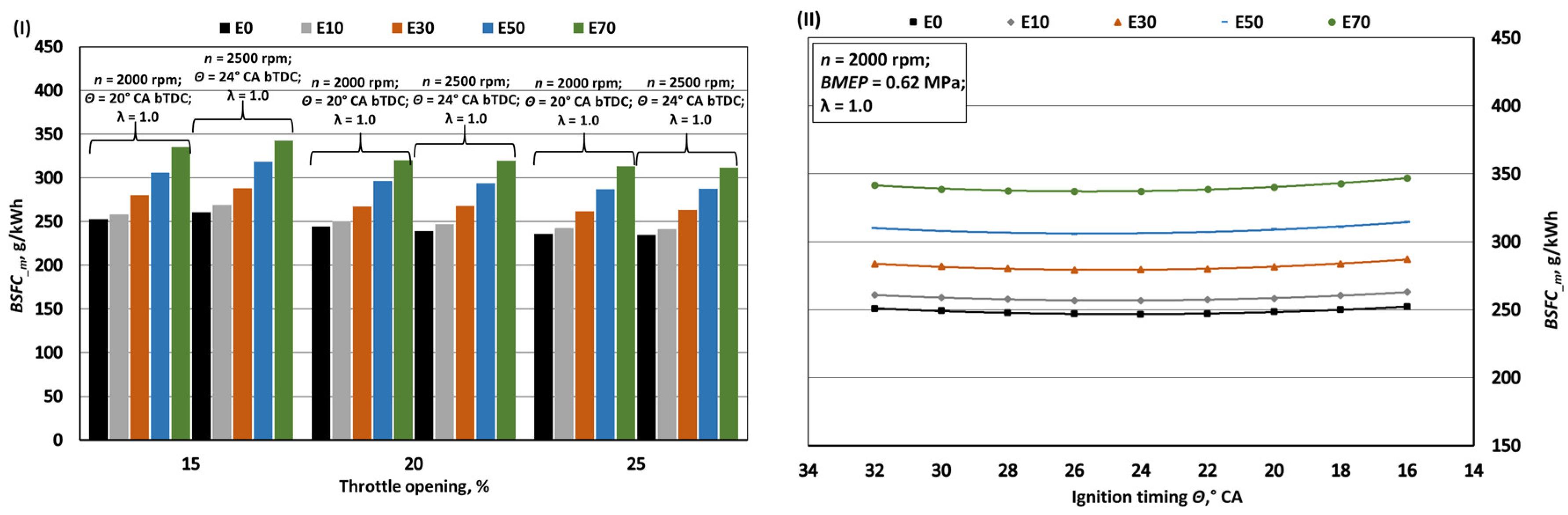
Figure 4.
Dependencies of BSFC_V on fuel type and: I – throttle opening and engine speed; II – ignition timing.
Figure 4.
Dependencies of BSFC_V on fuel type and: I – throttle opening and engine speed; II – ignition timing.
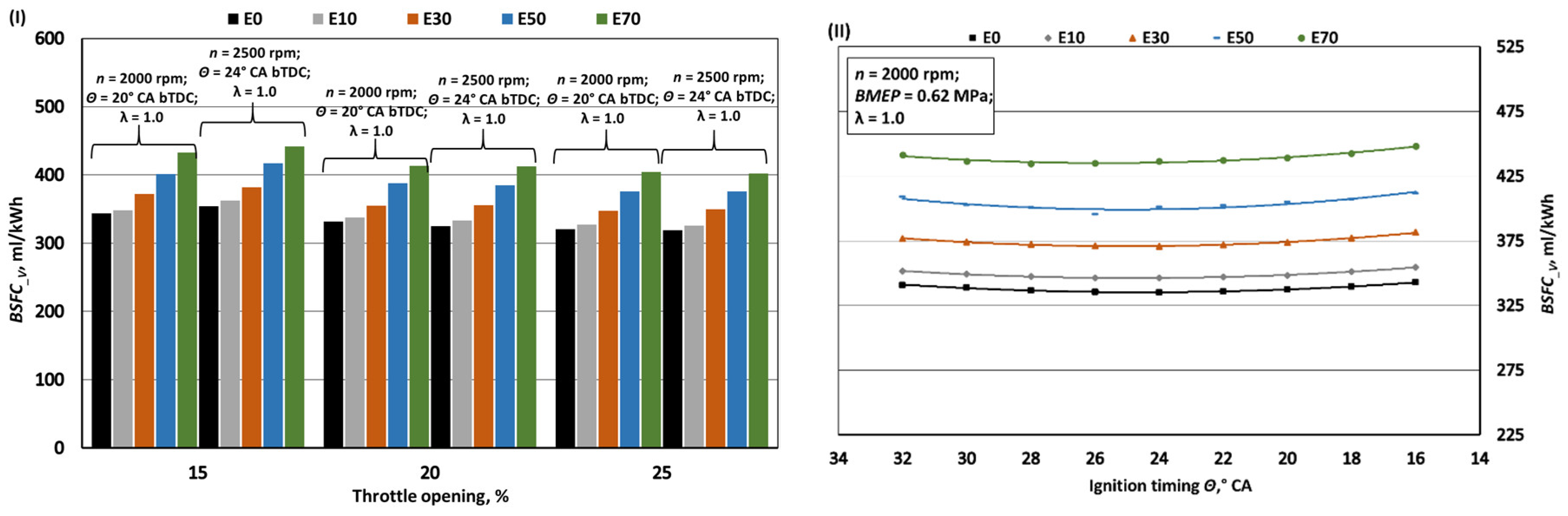
Figure 5.
Dependencies of BTE on fuel type and: I – throttle opening and engine speed; II – ignition timing.
Figure 5.
Dependencies of BTE on fuel type and: I – throttle opening and engine speed; II – ignition timing.
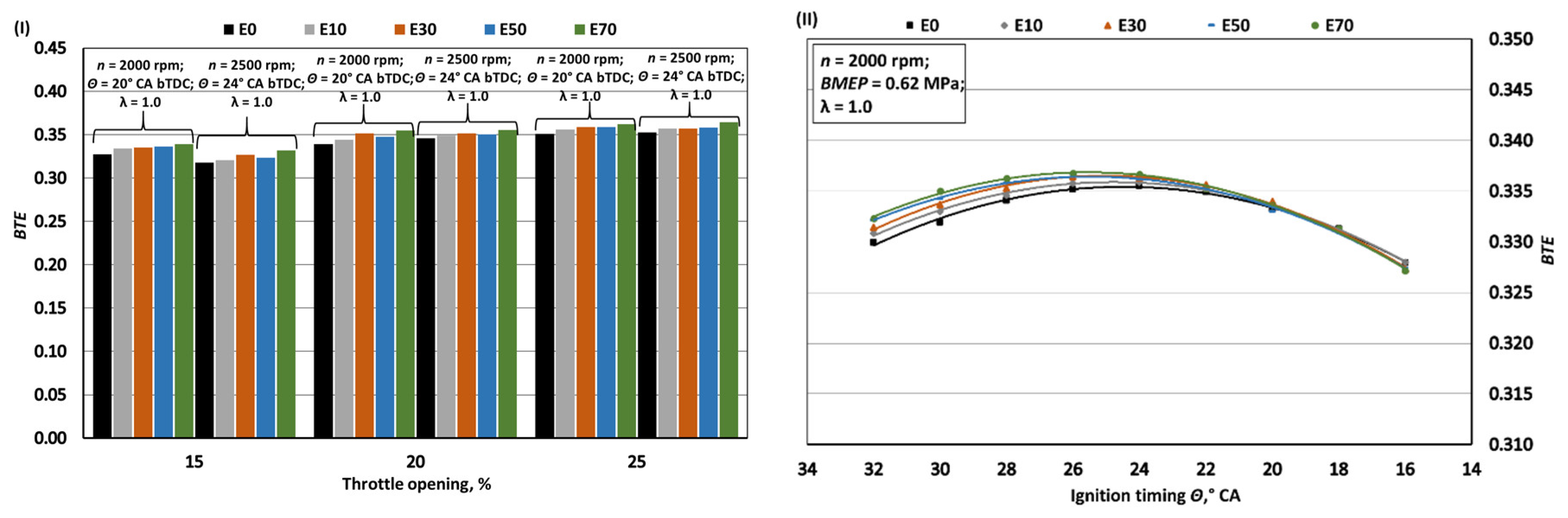
Figure 6.
Dependencies of Tex on fuel type and: I – throttle opening and engine speed; II – ignition timing.
Figure 6.
Dependencies of Tex on fuel type and: I – throttle opening and engine speed; II – ignition timing.
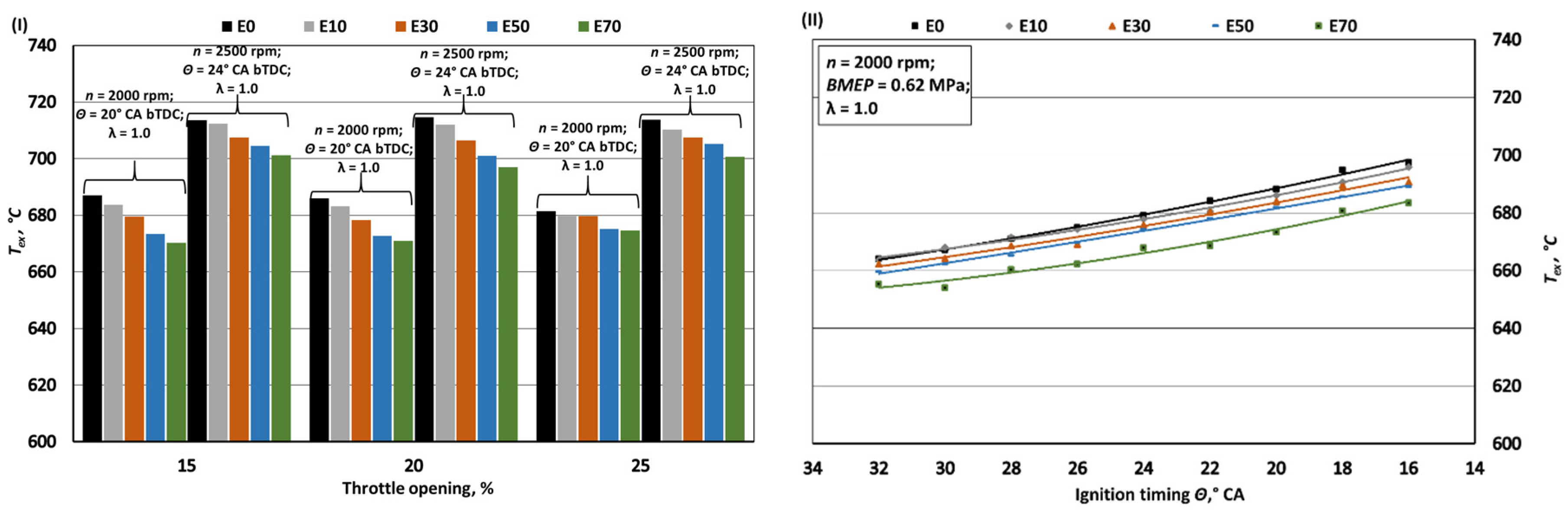
Figure 7.
Dependencies of CO2 on fuel type and: I – throttle opening and engine speed; II – ignition timing.
Figure 7.
Dependencies of CO2 on fuel type and: I – throttle opening and engine speed; II – ignition timing.
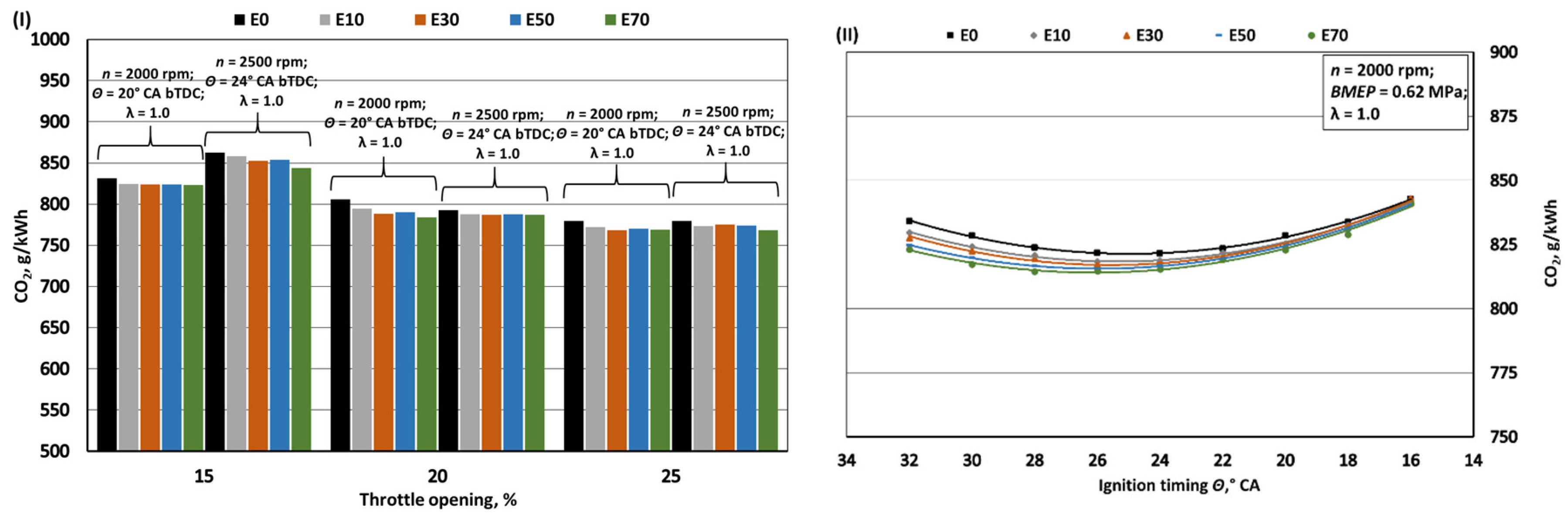
Figure 8.
Dependencies of CO on fuel type and: I – throttle opening and engine speed; II – ignition timing.
Figure 8.
Dependencies of CO on fuel type and: I – throttle opening and engine speed; II – ignition timing.
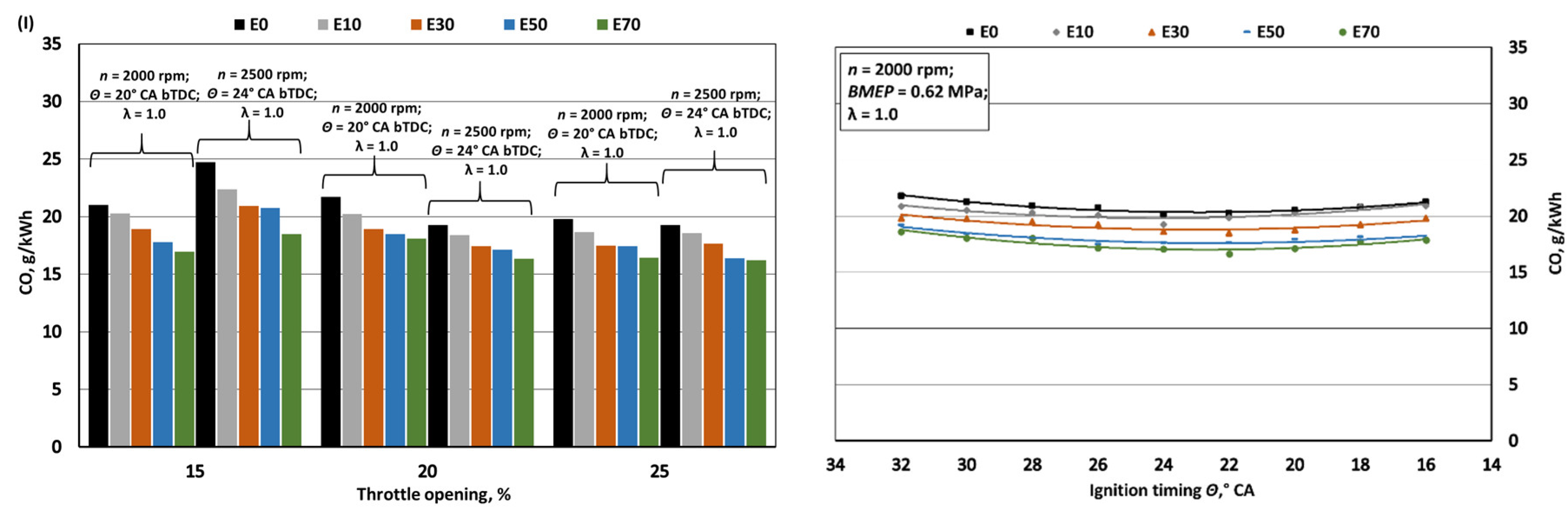
Figure 9.
Dependencies of HC on fuel type and: I – throttle opening and engine speed; II – ignition timing.
Figure 9.
Dependencies of HC on fuel type and: I – throttle opening and engine speed; II – ignition timing.
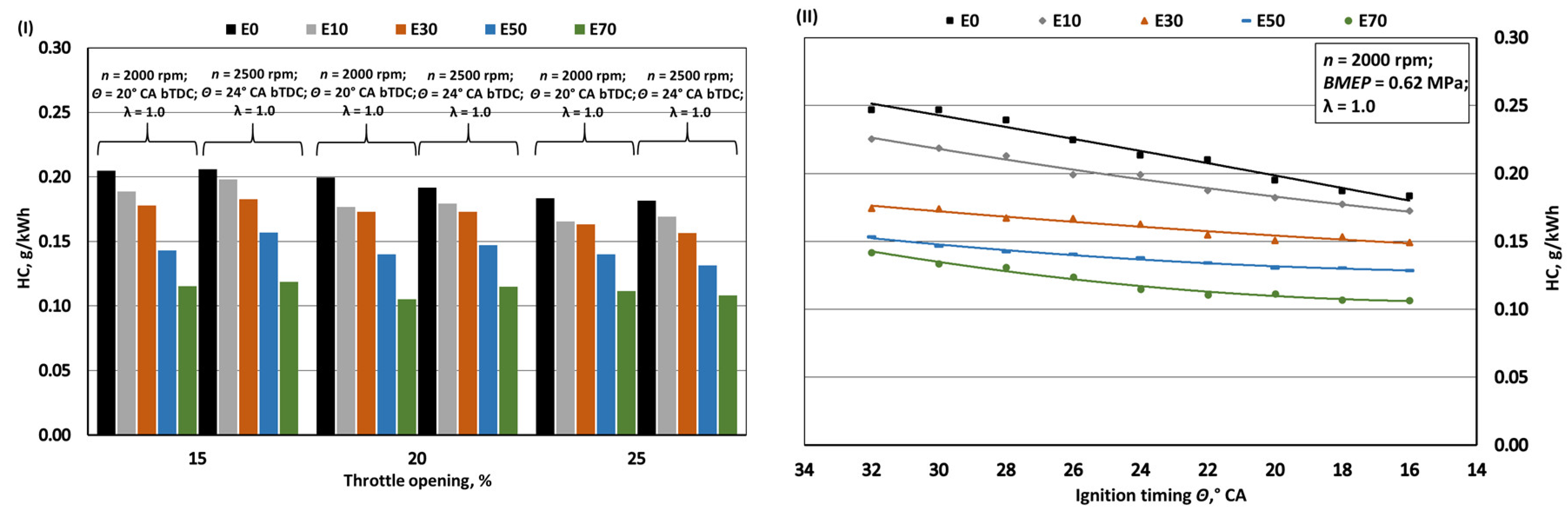
Figure 10.
Dependencies of NOx on fuel type and: I – throttle opening and engine speed; II – ignition timing.
Figure 10.
Dependencies of NOx on fuel type and: I – throttle opening and engine speed; II – ignition timing.
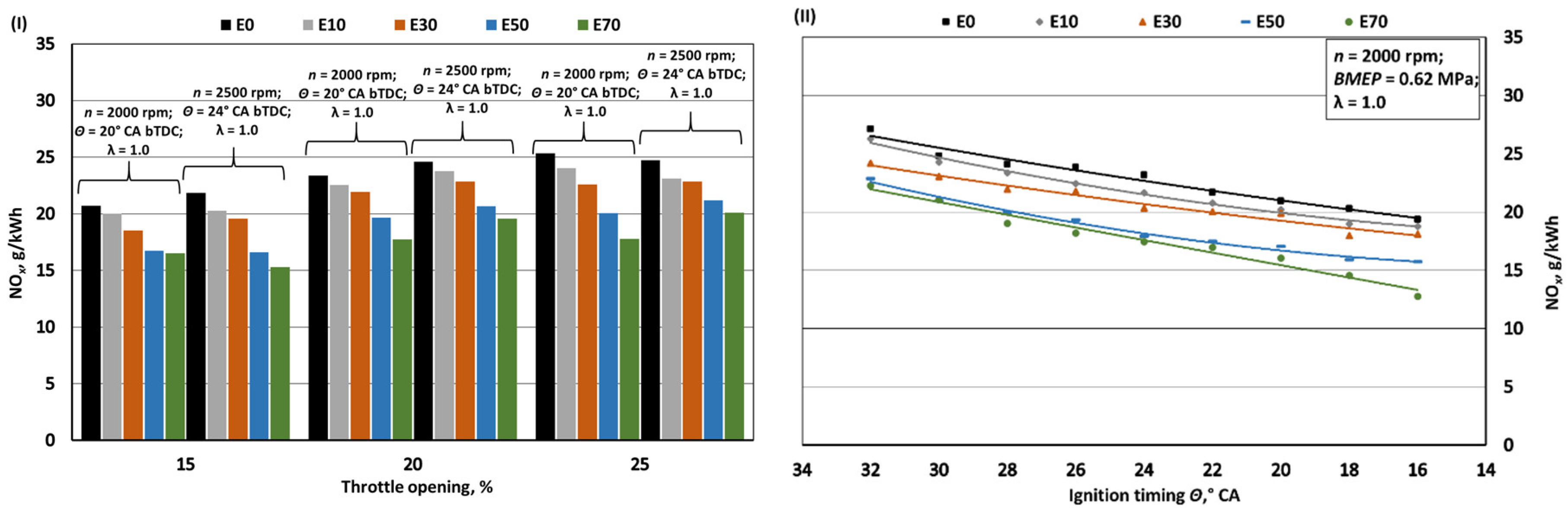

Table 1.
Engine data.
| Specifications of the Nissan HR 16DE engine | Value |
|---|---|
| Number of cylinders | 4 |
| Piston stroke | 83.6 mm |
| Cylinder bore | 78 mm |
| Number of valves per cylinder | 4 |
| Displacement | 1598 cm3 |
| Compression ratio | 10.7 |
| Nominal power | 84 kW at 6000 rpm |
| Maximum engine torque | 156 Nm at 4400 rpm |
Table 2.
Fuel properties.
| Indicator |
Fuel | |
|---|---|---|
| Gasoline (100%) | Bioethanol (100%) | |
| Chemical formula | CnH2n+2 (C4 … C12) | C2H5OH |
| Molecular weight | 100 … 105 | 46.07 |
| Elemental composition %: Carbon (C) Hydrogen (H) Oxygen (O) |
86.00 13.98 0.02 |
52.14 13.13 34.73 |
| C/H | 6.15 | 3.97 |
| Density (20°C), kg/m3 | 736 | 790 |
| Viscosity (40°C) (mm2/s) | 0.4 … 0.8 | 1.13 |
| Boiling point, °C | 27 … 225 | 78 |
| Latent heat of evaporation, kJ/kg | 364 | 840 |
| Auto-ignition temperature, °C | 257 | 422 |
| Laminar flame speed, cm/s | 51 | 63 |
| Adiabatic flame temperature, °C | 2307 | 2247 |
| Freezing point, °C | -40 | -114 |
| Stoichiometric air to fuel ratio (A/F), kg air/1 kg fuel |
14.84 | 9.10 |
| Flammability limits by volume in air, %: lower limit upper limit |
~ 0.6 ~ 8 |
~ 3.5 ~ 15 |
| Octane number | 88 … 98 | 109 |
| Lower heating value (mass) (LHV_m), MJ/kg | 43.5 | 27.0 |
Table 3.
Bioethanol and gasoline mixture properties.
| Mixture | E0 | E10 | E30 | E50 | E70 | ΔE70, % |
|---|---|---|---|---|---|---|
| Density, kg/m3 | 736.00 | 741.75 | 753.01 | 763.96 | 774.59 | 5.24 |
| C | 86.00 | 82.39 | 75.33 | 68.47 | 61.80 | -28.14 |
| H | 13.998 | 13.91 | 13.73 | 13.55 | 13.38 | -4.41 |
| O | 0.002 | 3.70 | 10.94 | 17.98 | 24.82 | 1240900 |
| C/H | 6.14 | 5.92 | 5.49 | 5.05 | 4.62 | -24.76 |
| A/F | 14.84 | 14.23 | 13.03 | 11.87 | 10.74 | -27.63 |
| LHV, MJ/kg | 43.50 | 41.74 | 38.30 | 34.96 | 31.71 | -27.10 |
Disclaimer/Publisher’s Note: The statements, opinions and data contained in all publications are solely those of the individual author(s) and contributor(s) and not of MDPI and/or the editor(s). MDPI and/or the editor(s) disclaim responsibility for any injury to people or property resulting from any ideas, methods, instructions or products referred to in the content. |
© 2023 by the authors. Licensee MDPI, Basel, Switzerland. This article is an open access article distributed under the terms and conditions of the Creative Commons Attribution (CC BY) license (http://creativecommons.org/licenses/by/4.0/).
Copyright: This open access article is published under a Creative Commons CC BY 4.0 license, which permit the free download, distribution, and reuse, provided that the author and preprint are cited in any reuse.


