

Submitted:
27 December 2023
Posted:
27 December 2023
You are already at the latest version
Abstract
Along with the rapid development and wide application of Artificial Intelligence (AI), discussions regarding AI Sustainability have emerged. Employing a systematic mapping study, this paper reviews research about AI Sustainability from diverse fields and viewpoints, including three dimensions economic, social, and environmental. Our analysis indicates a transformative shift in research focus, evolving from fragmented approaches to a more holistic understanding of AI Sustainability. This maturation is reflected in the interplay between multiple dimensions and the integration of both "AI as a tool for sustainability" and "Sustainability of AI" perspectives. As the field continues to mature, researchers should embrace a comprehensive and unbiased exploration of AI Sustainability across all dimensions and approaches, ensuring a well-rounded foundation for future advancements in this rapidly evolving domain.
Keywords:
Artificial Intelligence
; AI
; Sustainability
; Systematic Mapping Study
1. Introduction
In the past decades, seminal advancements have been made in the field of Artificial Intelligence (AI) [1]. AI has the potential to transform various markets and industries, driving unforeseen change [2,3]. Sectors such as healthcare [4], transport [5], agriculture [6], energy [7], and media [8] have seen major changes implemented as a result of AI systems. As these systems develop faster than ever before with almost immediate adoption and implementation, researchers are increasingly interested in examining their impacts on sustainability. Comprehending the effects and transformative potential AI can drive, specifically on sustainability, requires a critical review of the topic.
Sustainability is often analyzed by focusing on one of the following three dimensions: economic, social, and environmental [9]. Furthermore, when surveying the current body of literature on AI Sustainability, research is often divided between AI as a tool for achieving sustainable goals and the impacts of AI on sustainability [10]. Looking only at a certain dimension might oversimplify the issue at hand, creating a narrow view of what AI Sustainability truly entitles.
Given the current fractured state of the research outlined above, the primary objective of this paper is to create a systematic mapping study that allows for the compilation and analysis of the available literature on the topic, unifying both perspectives across all three dimensions of sustainability. By doing so, this paper intends to identify knowledge gaps and inspire future research endeavors. Moreover, our Systematic Mapping Study (SMS) will allow researchers, policymakers, as well as businesses to have a concise overview of the current findings in the field.
The paper is structured as follows: Section 2 presents our initial literature review where the fundamental concepts as well as current reviews of research on AI Sustainability are introduced. Section 3 elaborates on the methodological approach of the paper by going through the main steps of our SMS. In Section 4, our main research questions are analyzed and answered along with visualizations based on our data sets. In Section 5, we discuss the limitations of our study, and Section 6 provides the conclusion.
2. Initial Literature Review
The Oxford dictionary defines Artificial Intelligence as "the theory and development of computer systems able to perform tasks normally requiring human intelligence, such as visual perception, speech recognition, decision-making, and translation between languages." Here we see the emergence of AI as a system that can act similarly to humans. John McCarthy, widely known as one of the fathers of Artificial Intelligence, defined AI as "the science and engineering of making intelligent machines, especially intelligent computer programs. It is related to the similar task of using computers to understand human intelligence, but AI does not have to confine itself to methods that are biologically observable" [11]. Though in McCarthy’s definition, the idea of human-like behavior is present, he goes further by defying the limits of the possibility of AI, differentiating it from human intelligence, and highlighting its boundaries are not limited by biology.
When it comes to sustainability, we can see an evolution of the concept. Early on, in 1987, the United Nations Brundtland Commission defined sustainability as “meeting the needs of the present without compromising the ability of future generations to meet their own needs.” Authors have since added depth to the concept breaking it down into three different dimensions or pillars: social, economic, and environmental [9]. [10] points out the dichotomy of using AI to achieve sustainability and sustainability of utilizing AI systems, and hence, the term "Sustainable AI" has been introduced that also addresses the whole socio-technical system of AI.
To portray the big picture of AI Sustainability, we next summarize the related previous literature reviews done by other researchers in this field along the two aspects described above, i.e., AI for Sustainability and Sustainability of AI.
2.1. AI for Sustainability
The study by [12] argues that AI has the potential to facilitate the development of culturally suitable organizational processes and individual practices that can effectively reduce the ecological footprint of human activities. However, the true significance of AI lies not solely in its capacity to diminish energy, water, and land usage intensities within society, but rather in its ability to enhance and nurture environmental governance at a higher level.
However, according to their review, those applications also face a variety of challenges: (1) reliance on historical data in machine learning models, (2) uncertain human behavioral responses to AI-based interventions, (3) increased cyber-security risks, (4) adverse impacts of AI applications and (5) difficulties in measuring the effects of intervention strategies. This indicates that the future research on AI for sustainability should embrace various approaches, including: (1) multilevel views, (2) systems dynamics approaches, (3) design thinking, (4) psychological and sociological considerations and (5) economic value considerations so that the long-term threats to environmental sustainability by AI can be inhibited [12].
Another literature review of AI for Sustainability by Kar et al. [13] focuses on diverse applications across sectors such as construction, transportation, healthcare, manufacturing, agriculture, and water management. The paper highlights the approaches, difficulties, and obstacles regarding adopting AI for sustainable development. The primary objective is to address the subsequent research inquiries: 1. What is the range of methods used in AI and sustainability? 2. What are the issues, opportunities, and barriers deemed significant for sustainable development while using AI? 3. How does AI impact sustainable development and what is the nature of such impact? [13]
This literature highlights the various methods used to improve sustainable practices on a small to large scale using AI and various future research directions for academic researchers [13].
2.2. Sustainability of AI
The review paper by Verdecchia et al. [14] on Green AI refers to the environmentally sustainable nature of AI. Although there is an increasing interest in Green AI, this topic has received relatively limited attention with just a few review studies. The existing study primarily explores this area as a convergence of AI and environmental sustainability or categorizes it as a distinct sub-field within the domain of software engineering.
The main aim of the study by Natarajan et al. [15] is to discern the ongoing research trajectories within the intersection of AI and sustainability. Additionally, the article employs the affordance theory as its conceptual framework, intending to pinpoint the affordances within the realm of Sustainable AI. The identification of these affordances holds the potential to equip researchers and practitioners with insights essential for the design and effective utilization of Sustainable AI systems [14]. This study focuses on the sustainability of AI, including a comprehensive survey of the Green AI literature. This review delivers a detailed overview of the main aspects of state-of-the-art research in Green AI, such as topics covered, domains addressed, study types, targeted artifacts, energy-saving insights, tool provisions, and industry engagement.
Prior literature reviews have mostly explored Green AI research through a narrow lens, concentrating only on specific AI subdomains and application realms within Software Engineering, such as deep learning [16], information retrieval [17], or embedded systems[18]. This study, however, is oriented towards conducting a comprehensive evaluation of the entire Green AI landscape.
The work conducted by Xu et al. [16] centers around a systematic review of the evolution of Green deep learning technologies. The authors categorize these methodologies into four distinct groups: (1) compact networks, (2) energy-efficient training strategies, (3) energy-efficient inference methodologies, and (4) efficient data usage.
Notably, the field has exhibited significant growth since 2020. The majority of studies focus on monitoring AI model footprints, fine-tuning hyperparameters to enhance model sustainability, or conducting model benchmarking. Consequently, the findings suggest that the time is ripe to explore alternative research strategies in Green AI and transition the multitude of promising academic findings into real-world industrial applications [14].
2.3. Combining AI for Sustainability and Sustainability of AI
The evolution of technology plays a vital role in driving scientific and economic breakthroughs [19]. Its transformative potential extends to shaping global sustainability endeavors [20]. As human activities continue to exert pressure on the biosphere and the climate system, there is growing anticipation that AI and related technologies, including robotics and the Internet of Things (IoT), can significantly enhance societies’ capabilities to detect, adapt to, and counteract climate and environmental changes [21]. Several reports such as [22,23] state how AI and automation applications have the potential to contribute to addressing climate change and biodiversity loss, facilitating improved monitoring and utilization of natural resources, and advancing the progress towards attaining the Sustainable Development Goal (SDG).
While the applications of AI and related technologies have the potential for more efficient utilization of land and seascapes, heightened capabilities in environmental monitoring, and enhanced transparency within supply chains, there could also be systemic sustainability challenges emerging as these AI technologies extend to novel social, economic, and ecological domains. Although some recent compilations briefly acknowledge these risks, e.g. Van Wynsberghe [10], Wearn et al. [24], they often provide only brief elaboration on the potential harms and unanticipated social and ecological consequences [25]. In many cases, influential reports outlining the societal impacts of AI either disregard the dimensions of sustainability entirely or downplay the conceivable social, economic, and ecological risks they might pose [21].
In contrast, the article by Galaz et al. [26] offers a more holistic overview of the evolvement of those technologies in fields, which have a relatively greater influence on sustainability in an environmental sense. The study also addresses potential challenges that could jeopardize the sustainability of AI. Besides the unfolding of these underlying challenges, the authors also discuss the limitations of existing research frameworks in effectively tackling sustainability-related AI risks within these sectors [26].
3. Research Methodology
Our paper employed a Systematic Mapping Study (SMS) as the research methodology to explore the topic of AI Sustainability. Compared to a Systematic Literature Review (SLR), which collects and summarizes the findings of primary studies addressing a shared research question, an SMS compiles and categorizes studies that examine a particular subject of interest, often with varying research questions [27].
We followed the “input-processing-output” approach by Levy and J. Ellis [28], which states the three stages of the effective literature review process. Then we further broke them down into the following steps shown in Figure 1.
3.1. Definition of scope and objective
To formulate the scope of the research, we conducted some preliminary research on AI Sustainability, across the following three dimensions – environmental, economic, and social. We found out that using AI is accompanied by some major drawbacks as well. For example, many research papers raise a concern about the harmful impacts of accompanying computational processes on the environment. Specifically, training AI uses large data sets and consumes a tremendous amount of energy which comes with tremendous greenhouse gas and other emissions [29]. After an examination of existent literature reviews within the research field of AI Sustainability, we found that most papers investigate this topic by only summarizing either AI’s contribution toward sustainability goals or AI’s impact in a specific field. Thus, aiming to provide novel insights and to address aspects that have potentially remained under-explored in the academic discourse, we formulate the research questions of this paper as follows:
RQ1: How does the existing literature capture AI Sustainability?
While AI Sustainability has become an emerging topic in recent years, there seems to be a lack of precise definition of this term. Inspired by Heilinger et al. [30], whose paper analyzes the ends and means of “sustainable AI” in social and environmental contexts, we therefore aim to explore in our paper two fundamental facets of AI Sustainability, i.e., AI as a tool to achieve sustainability as well as the sustainability concerns of AI itself. Within each aspect, we further investigate three dimensions encompassing environmental, social and economic.
RQ2: What is the maturity level of the research field of AI Sustainability?
This research question tries to evaluate the different approaches across the existing literature. What degree of empirical evidence can be observed in the existing literature? Are the majority of research papers on this topic still evaluating the associated problems? Are some solutions regarding the issues currently being implemented?
RQ3: What is the future research agenda of the research field of AI Sustainability?
Here we observe the research gaps in the existing literature, as well as identify the possible road-map for potential research. By answering this question, we try to deliver some insights to guide researchers and practitioners in further contributing to this field.
3.2. Search for relevant literature
A comprehensive and extensive literature search is guaranteed by utilizing diverse sources and employing suitable keywords and search operators.
As the next step in our methodology, we needed to find and analyze relevant literature on our topic. To have a thorough process, we defined our search strategy and also identified sources to find the relevant literature. In our search strategy, we defined a list of keywords that we used to find the relevant literature on our target sources. We used both advanced and manual search techniques to find the relevant literature on our topic. List of databases used:
- Google Scholar
- Science Direct
- IEEE
- Springer Link
- Elicit.org
- ACM Digital Library
- AIS eLibrary
This choice of databases made our list of resources quite holistic, ranging from general platforms like Google Scholar and Science Direct to more information systems-oriented platforms such as ACM Digital Library and AIS eLibrary. Furthermore, we supplemented our research strategy with forward and backward searches. The former requires reviewing all research papers citing the targeted research paper, providing a good overview of its contribution, and the latter requires finding all cited references in this targeted research paper. To check the quality of the results, we also tried using different queries on each database. This step also helped us to narrow down our choice of databases.
Search Strategy: The keywords used during our literature research were:
- AI Sustainability
- Artificial intelligence sustainability
- Sustainable AI
- AI environmental impact
- AI economic impact
- AI social impact
- Artificial intelligence environmental impact
- Artificial intelligence economic impact
- Artificial intelligence social impact
- AI ethics
The mandatory condition for the keywords was that each keyword had to cover our review scope. Further, before including it, every keyword was also tested on each database. This step helped us double-check if the keyword used gave relevant results or not. Moreover, during this test, we also took care that if a keyword generated results that had already been covered before, that specific keyword was not included in our analysis. From the initial list, the keywords that did not produce relevant results or represented any sort of search bias were also excluded. While searching for papers on every database with our set of keywords, we looked at the papers up until the point when the relevant papers were coming up to a certain extent. We observed that the relevance of papers was decreasing, the further behind the papers were located in the search results.
To make our process more comprehensive, we stored all the useful information from the relevant literature in the form of a Notion database (https://www.notion.so).
3.3. Screening and selection of literature
To ensure transparency and establish the credibility of the review, we refined the literature selection by employing explicit inclusion and exclusion criteria.
3.3.1. Inclusion Criteria:
- I1: Abstract explicitly highlights the topic of AI Sustainability. This criterion helped us to only choose research papers having both components and to remove the papers talking about AI in some other context, and not explicitly stating either AI for sustainability or the impact of AI on sustainability.
- I2: The paper’s focus aligns with the chosen research focus. While going through the paper, if the research paper did not cohesively talk about AI Sustainability, then that paper was not included in our analysis.
- I3: Abstract and keywords contain key terms related to the topic. Using this, we eliminated papers that contained the keywords of AI Sustainability, but whose content was outside the scope of our research.
3.3.2. Exclusion Criteria:
- E1: Content focuses only on a specific niche sub-field of research regarding AI Sustainability. To have an overall understanding of our topic, papers corresponding to a niche-specific sub-field of research with AI Sustainability were not included.
- E2: Publication date before 2000 (or after the first half of 2023). This criterion is useful because very few papers on this topic exist in the year range 2010-2018. Further, the year range 2000-2010 did not give any significant results. Hence, keeping the threshold at 2000 helped us to make our analysis extensive and at the same time a bit more efficient. The cut-off of our search and analysis is the first half of 2023.
- E3: Abstract does not cover AI Sustainability. To ensure that the analysis is strictly within the scope of our research, we excluded those papers whose abstracts exhibited a complete absence of any reference to AI Sustainability.
- E4: Full paper not accessible. Papers that looked relevant from the title and first information, but were not accessible, were also excluded from our analysis.
- E5: Language not in English. The papers that were not available in English, were simply excluded from our analysis.
Out of 148 candidate papers collected by using the list of keywords, a total of 60 were subjected to exclusion by the exclusion criteria, 46 of which were excluded through E3: Abstract does not cover AI Sustainability. On the other hand, only one paper was excluded because of E5: Language not in English.
In the end, we included 88 papers, which served as the effective corpus of our literature analysis (see Table 1).
3.4. Classification scheme and systematic map
We read abstracts and extracted the useful information from the selected papers. We also looked for key points and concepts that reflect the contribution of the paper. Then the information was documented in our Notion database and combined to develop a high-level understanding of the nature and contribution of the research. This helped us define a set of categories that is representative of the underlying population. When abstracts alone could not deliver enough information, we also studied the introduction or conclusion sections of the papers. When a final set of information is chosen, they are clustered and used to form the categories for the map [113].
3.5. Interpretation of findings and review output
The findings are one of the main priorities in SMS, which offer an explanation and understanding of the results so that researchers can proceed with their literature study after confirming all these criteria. The analysis of the database is mainly based on the frequencies of publications for each category. By doing so, we were able to discover which categories have gained heightened attention and research endeavors, which also made it possible for us to identify potential for prospective research. The results will be more explicitly presented in the following sections of this paper.
4. Results and Visualization
4.1. RQ1: How does the existing literature capture AI Sustainability?
Upon completing our literature review certain categories emerged from the literature enabling us to further dissect and understand the field. On one hand, some authors interpret the concept of AI sustainability based solely on the impacts AI poses on sustainability. The literature varies from trying to quantify, mitigate, or understand these impacts. On the other hand, we found papers using the concept of AI Sustainability to address how the existing AI can aid us in achieving sustainable development. We categorized these papers under the category of AI for Sustainability. This categorization framework emerges from the work of Van Wynsberghe [10]. Finally, we encountered some papers that had a more comprehensive view, accounting for both aspects when addressing AI Sustainability.
In the first category, Sustainability of AI, we found 38 papers representing around 43.2% of our total library (88 papers), see Figure 2. Interestingly, the second category has the same amount, indicating that both angles are deemed equally important. Finally, a minority of papers take a more holistic approach addressing both aspects of AI Sustainability together. We found 12 papers in this category published mostly in recent years, from 2019 onward. This might imply further popularization of this approach in the recent and upcoming years.
When addressing the concept of sustainability, we were able to further dissect the literature based on the sustainability dimensions outlined in [9]. Some papers focused on only one niche field or specific aspect while others targeted two or three dimensions. Figure 3 shows the breakdown of the papers per category.
As shown in Figure 3, the most common dimension is Environmental. Moreover, environmental damage and protection has been one of the most debated topics in the past five years, making it a very interesting topic for researchers to work on. The dimension Environment encompasses the papers that relate to the interaction of AI with the natural environment. Common topics in this category involve measuring carbon emissions of AI models, AI used for energy consumption optimization, or energy costs of running large ML models. The second most addressed dimension is the Social one. This dimension addresses topics such as AI ethics, education as well as equality with regard to AI. Finally, the Economic dimension is the smallest and addresses papers that deal with economic growth, labor market, and business models.
The papers that integrate all three dimensions examine sustainability through a more comprehensive lens, aiming to address its complexity by encompassing a broader perspective.
Within categories that tackle multiple dimensions, the largest number of papers is observed in the category that encompasses all three dimensions of sustainability. Shown in Table 2, this category underscores a higher focus on AI for Sustainability, showcasing that papers delving into the exploration of AI’s potential to contribute to sustainability spans across all three dimensions.
Here, we illustrate the three sub-dimensions of “AI for Sustainability”, “Economic”, “Environmental” and “Social”, by referring to three published works in these areas. In the modern world, many firms have already invested in AI and are readily investing in it because it is recognized as an important driver in the modern economy. AI is considered a critical factor for the success of enterprises because it is not constrained by humans’ cognitive limits. On the contrary, many firm owners and managers share that they have not yet received the benefits from their AI investments. The primary goal of this study is to address this issue and provide views on how AI can actually produce competitive advantages and also to identify the key challenges that impede AI from reaching its maximum potential [87].
The paper by Hang and Chen [87] also mentions the impacts of AI on businesses in the digital economy, in terms of increasing revenues and reducing costs. In a nutshell, AI results in additional value for every user through individualized services because it helps digital platforms extract more information from the collected user data. Hence, AI can help increase income through a wide range of methods that vary from enhanced worker efficiency to the creation of distinctive resources [87].
Research also shows that as AI systems are not restricted by human cognitive limits and inflexibility, they can produce more precise predictions as compared to humans.
In their paper covering the “Environmental” aspect of “AI for Sustainability”, Ahmed and Asadullah [48] mention that to understand the situation that a significant amount of garbage created in large cities has the potential to be recycled, there must be awareness regarding the recycling technologies and the advantages provided by them. To dispose of such items properly, it is vital to have waste removal technologies readily available. According to Ahmed and Asadullah [48], it is highly convenient and time-efficient to deploy smart automation methods for waste management practices such as AI-based sorting techniques for recyclables.
[56] covers the “Social” aspect of “AI for Sustainability” and focuses on the integration of ethics into the education and development of artificial intelligence-based technologies raising the issue regarding the ethics of AI.
Nourbakhsh [56] further mentions that it is the responsibility of AI researchers to assist in the innovation and development of regulations that support the development of AI innovations and promote business transparency for the benefit of everyone.
From the "Sustainability of AI" perspective, we also investigated several symbolic studies. The rapid development of AI is significantly shaping the world economy. Solos and Leonard [104] offers a systematic review of AI’s impact on economic sustainability, specifically in improving productivity and economic growth. It also analyzes how AI affects job opportunities and considers whether it might lead to more severe income inequality. Based on these insights, the paper proposes future public policies that can minimize the potential adverse effects of AI on employment distribution and income inequality.
Several studies have used economic growth models to theoretically explore how AI impacts economic growth. Within this framework, Hanson [114] proposes that technology can either supplement or replace human labor, depending on the characteristics of the tasks. Acemoglu and Restrepo [115] identifies two effects of automation: a substitution effect that reduces labor demand and a productivity effect that enhances overall productivity by substituting labor with more cost-effective capital and increasing labor demand for non-automated tasks [104].
As theoretical models have steadily evolved, and data has become more accessible, empirical studies focusing on the impact of AI on productivity have grown substantially. Most of the existing empirical research investigates specific areas, e.g., the impact of computer capital or industrial robots on productivity. These studies typically measure productivity using metrics such as multi-component productivity, total factor productivity, or labor productivity. Nearly all these studies provide evidence that AI has a positive impact on productivity [104].
Political factors could impede or even prevent the adoption and progress of AI technology if a method for generating shared prosperity remains ambiguous. Consequently, the role of public policy in addressing the possible adverse impacts of AI on employment and safeguarding overall social well-being has become a subject of discussion among various scholars. Confronted with the possible adverse outcomes of AI, the literature examines a range of policy tools, with the most common ones being: improving worker education and training, implementing a universal basic income policy, and imposing taxes on robots [104].
Nwafor [58] examines the impact of AI from a social perspective. One of the most relevant examples of social sustainability is resolving issues of racism as well as dealing with discrimination. In recent times, researchers have underscored AI technology’s shortcomings regarding visible minorities, women, youth, seniors, and indigenous communities. This has brought ethical dilemmas surrounding AI and the lack of diversity in the industry into light, resulting in unjust and unlawful discrimination [116]. Consequently, Nwafor [58] in this paper suggests a cautious implementation of AI vigilantism to oversee AI technology usage and prevent harm brought by AI system operations. Vigilantes, in this context, are groups aiming to ensure justice through unauthorized methods. The proposed AI vigilantes would mainly consist of individuals or groups at increased risk of disproportionate rights resulting from AI.
The recent calls-to-action on weighing costs and risks associated with ML models, and in particular Large Language Models (LLMs), [117,118] are echoed in the work of Wu et al. [71], which explores the Sustainability of AI from an environmental perspective. Despite the great benefits brought by the wide application of AI [119], the relentless pursuit of achieving higher model quality has led to the exponential growth of AI, resulting in notable energy consumption and environmental impact. This paper investigates such impacts of AI computing and explores strategies for alleviating them. Taking a comprehensive perspective, it quantifies AI’s carbon footprint by evaluating the model development cycle, encompassing extensive ML applications. The authors demonstrate how a cooperative approach to hardware-software co-design can bring about substantial reductions in the operational carbon footprint. Additionally, the study conducts a holistic analysis of both the operational and embodied carbon footprint for AI training and inference. Based on industry insights and knowledge, the authors outline opportunities and development directions in critical sub-fields of AI such as data, algorithms, systems, metrics, standards, and best practices.
When taking into account the availability of renewable energy in different locations, the distribution between the embodied carbon footprint and the operational carbon footprint is approximately 30% : 70% for large-scale ML tasks. When carbon-free energy sources are included, such as solar power, the operational carbon footprint can decrease significantly. This emphasizes that manufacturing-related carbon costs play a major role in AI’s overall carbon footprint.
While there are opportunities to improve energy efficiency and minimize the environmental impacts through large-scale optimization, environmentally sustainable scaling of AI is still of great importance. The growth of AI goes beyond existing industrial applications, demonstrating even more growth potential. Although domain-specific architectures notably enhance the operational energy efficiency of AI model training by over 90% (Patterson, 2021), the trade-off is that these architectures need greater system resources, resulting in more embodied carbon footprints [71].
To mitigate the environmental consequences of AI’s rapid growth, it is necessary for ML practitioners and researchers to adopt a sustainability-oriented mindset. While significant efforts are focused on optimizing AI systems and infrastructure efficiency, there exists a broader space that demands attention. This includes enhancing efficiency in AI data handling, experimentation, and training algorithms—areas like data utilization efficiency and efficiency in experimentation and training. These domains go beyond system design and optimization, such as creating efficient and environmentally sustainable AI infrastructure and system hardware [71].
Wilson and Van Der Velden [91] addresses both AI for Sustainability and Sustainability of AI in the social dimension. This study aims to examine whether the concept of sustainable AI, rooted in the principles and application of sustainable development, could offer a more suitable framework for shaping decisions regarding the regulation and implementation of AI. While seemingly abstract at first sight, aligning with the Sustainable Development Goals (SDGs) framework enables the concept of sustainable AI to be adopted into the established policies and practices associated with the SDG. These have been refined, tested, and integrated into public sector decision-making over the years.
It adopts the idea of five distinct boundary conditions for social sustainability as outlined in the Framework for Strategic Sustainable Development (FSSD): diversity, capacity for learning, capacity for self-organization, common meaning, and trust [99]. These conditions are closely related to the key concepts in the discourse about AI and its impact on society. What the authors come up with is a conceptual framework including five “boundary conditions”, which is an important theoretical background of this paper. The FSSD translates the concept of sustainability into more concrete terms by establishing "boundary conditions" and defining limits that must not be surpassed to ensure that "fundamental prerequisites necessary to prevent systematic degradation of ecological and social systems" [99]. This interpretation of sustainability, formed negatively as imperatives that cannot be compromised, differentiates largely from most positive interpretations of sustainability as a goal within the public sector [120], including those embodied by the SDGs. More specifically, these boundary conditions include Diversity, Capacity for Learning, Capacity for Self-Organization, Common Meaning, and Trust. They are intended to facilitate decision-making in the public sector concerning AI governance.
To summarize, this study aimed to define and operationalize the concept of sustainable AI as a guiding principle for public sector decision-making. The primary objective was to offer support for the practical implementation of ethical AI within the public sector. It is also shown through the review that despite its growing prominence in research discussions, an universally accepted definition of sustainable AI is lacking. Conceptualizations of sustainable AI consistently draw upon the sustainable development framework that aligns with the SDGs, which is in line with using such a paradigm to elaborate on the concept within the context of public sector governance.
The paper by Perucica and Andjelkovic [89] seeks to further call out the need for a better approach when dealing with the relationship between artificial intelligence and environmental sustainability. It does so specifically focusing on the existing policy framework, especially in the European Union, and whether it properly accompanies the fast growth of artificial intelligence technologies. The paper reviews how policy addresses the issue of AI Sustainability [89]. Similarly to other papers, the authors explore the dual relationship between artificial intelligence and sustainability. They discuss the results of the Van Wynsberghe [10] paper, adopting their definition of AI Sustainability and Sustainability of AI choosing to rename the latter Sustainability by design.
As seen in the papers discussed, the more qualitative approach reflects the same layout of the field as the one shown in our quantitative analysis. There is a fragmentation of the field across the different dimensions of sustainability and approaches to AI Sustainability, that some papers have been able to unify, while others are still focusing on only a fragment of it.
4.2. RQ2: What is the maturity level of the research field of AI Sustainability?
To assess the maturity of the field of “AI Sustainability”, we referred to the paper by Keathley-Herring et al. [121], to understand how they defined maturity. The idea of the maturity of any research field is difficult to formalize and is most often subjectively evaluated. Despite this, many researchers include maturity analysis in their assessments. What makes the maturity classification more challenging is the fact that the research domains do not mature in a predictable manner. However, it is believed that by including the maturity analysis of a research field, significant insights can be drawn, and the development stage of the research field’s literature can be assessed [121].
To address RQ2, we base our analysis mainly on five elements: publication years, contribution types, citations, authorship and breadth of methods.
4.2.1. Publication Years
Our initial focus is directed toward the temporal progression in existing studies, with the objective of elucidating the emergence of research on AI Sustainability. Specifically, we aim to answer the first sub-question: When did research on AI sustainability become active in the artificial intelligence field?
As depicted in Figure 4, within the corpus of 88 papers constituting our data set, only a small portion was published before 2019. The year 2020 witnessed a substantial surge in research on AI Sustainability, and this trend persisted with a continued increase in the number of publications in 2021. It is important to note that the lower count of papers published in the year 2023 can be attributed to our cut-off at the first half of 2023 and possibly also procedural delays in the review and publication processes.
4.2.2. Contribution Types
The second sub-question is: What are the different approaches across the existing literature?
In pursuit of answering this query, we employ a classification scheme based on the contribution types of the papers. This classification scheme draws upon the comprehensive framework originally propounded by Wieringa et al. [122], which provides a robust conceptual underpinning. Additionally, we integrate the explicit evaluation criteria summarized by Petersen et al. [113] in Table 3. By adopting both seminal perspectives, we divide all the included papers into six categories in total.
This classification framework is chosen because it is interpretable and applicable. For example, evaluation research can be excluded from consideration if it lacks real-world implementation. Additionally, the framework enables the classification of non-empirical research into distinct categories, including solution proposals, philosophical papers, opinion papers, and experience papers [113]. Papers are allowed to be categorized in more than one type provided they meet the criteria. Instead of allocating each paper with a single type of contribution, the primary aim of this classification scheme is to facilitate a comprehensive depiction of each paper’s contribution within the landscape of this research domain.
Within the research field of AI Sustainability, validation, and evaluation research are regarded as possessing a higher level of maturity, whereas non-empirical types exhibit a lower level of maturity.
This is because validation and evaluation research papers typically rely on empirical evidence and data-driven analysis. They involve conducting experiments, surveys, or collecting data to test hypotheses and validate their findings. This empirical foundation lends them a higher level of credibility and maturity. What’s more, validation and evaluation papers are often more rigorous in terms of methodology and analysis. They follow a structured approach, detailed research design, data collection, statistical analysis, and interpretation of results. This level of objectivity and rigor enhances the maturity of the paper. Validation and evaluation research also often aims to generalize findings to broader contexts. This requires careful consideration of sample selection, control variables, and statistical significance of papers so that they successfully demonstrate generalizability. Lastly, these two types of papers tend to have a higher potential for impacting the field by providing insights that can inform practice, policy, or further research. Their emphasis on evidence-based conclusions contributes to the overall advancement of knowledge, which contributes to their maturity.
On the other hand, solution proposal, philosophical, opinion, and experience papers might have a lower maturity level because these papers may involve personal opinions, viewpoints, or experiences that are inherently subjective and not as grounded in empirical evidence. They may not require the same level of rigorous methodology and empirical validation as validation and evaluation papers but focus more on conceptual or narrative content. While these types of papers can offer valuable insights and perspectives, they might not always contribute as significantly to the broader scientific knowledge base as research papers grounded in empirical evidence and rigorous analysis.
To better explain the approach of classification, three examples are shown as follows: The paper by Wu et al. [71] falls under the category of Evaluation Research as it assesses the environmental sustainability of AI by quantifying the carbon footprint and identifying associated challenges; the study by Skiter et al. [101] identifies crucial challenges in the sustainable development of enterprises and puts forth strategies to address these challenges. Consequently, it falls within the Solution Proposal category; the article by Galaz et al. [26] offers a global overview of the progress of AI technologies in sectors with high-impact potential for sustainability and identifies possible systemic risks in these domains. Thus, this review is categorized as a philosophical paper.
Based on our findings, the existing literature on AI Sustainability predominantly encompasses three types of studies: evaluation research, solution proposal, and philosophical papers. As depicted in Figure 5, out of the 88 papers examined in this review, the most prevalent category is philosophical papers, accounting for 29 entries, followed by evaluation research with 23 entries, and solution proposal with 21 entries.
In Figure 6, we illustrate the contribution types by year. This bubble plot depicts clusters of papers of diverse categories emerging in the research field of AI Sustainability. Notably, solution proposals, validation research, and philosophical papers came into public starting in 2019. The number of philosophical papers and evaluation research gradually expanded in the following years whereas the other types fluctuated.
4.2.3. Citations
To further integrate the citation into our analysis of maturity level, we then used Litmaps, which is a platform that generates interactive literature maps. The literature maps are essentially groupings of the articles on the research topic.
Procedure
To generate a map from our final set of papers, we needed to create a library in Litmaps with all of our 88 papers. To find the papers in Litmaps, we used the “Add Articles” feature. The paper by Szczepanski [42]: “Economic impacts of artificial intelligence (AI)” was unavailable in the Litmaps database, whereas all other papers were available. Hence, this paper was excluded from the Litmaps analysis and the final analysis consisted of 87 papers.
After creating our literature database, we used the “Maps” feature in Litmaps, to generate a map from our literature. In the 2-dimensional map, we get the flexibility to choose the favorable parameters on the independent X and Y axes. In our analysis, we choose “Cited-by” on the Y-axis and “Date” on the X-axis. “Cited-by” arranges the papers in the increasing order of their “total number of citations”. This means that the paper with the most total citations is placed on the end of the axis and vice-versa for the paper with the least total citations. “Date” arranges the papers in the increasing order of their recency. This means that the paper which is the most recent is placed on the end of the axis and vice-versa for the oldest paper.
Litmaps Analysis
By referring to Figure 7, we see that the paper “The global landscape of AI ethics guidelines” by Jobin et al. [35] has the greatest number of total citations in our database (1,024 citations). Hence, it is represented as the topmost paper on our map. Furthermore, the paper, “Shaping the future of sustainable energy through AI-enabled circular economy policies” by Danish and Senjyu [107], is the most recent and is located at the extreme right of our map.
Maturity Quotient
To provide insights about the field’s maturity, we would like to consider the graph in “Contribution Types by Year”, as well as the graph from our Litmaps analysis. By looking at the contribution types by year, we observe that “Solution Proposals”, which is a relatively mature research type category, started to come up in the year 2020 and onwards. Furthermore, we also see an increase in the frequency of the categories, “Evaluation Research” and “Validation Research”. The rise in the visibility of these three categories can be considered a positive contribution toward this research field’s maturity. Furthermore, if we again consider the Litmaps analysis, we can observe that most of the literature in the field of AI Sustainability is visible from the year 2019 and onwards. Moreover, very few papers are visible before.
Due to a very low number of available papers before 2019, we can infer that this research field might have been immature up until this year. A connection between two papers in Litmaps indicates that one of the papers has been cited by the other one. We see a dense cluster of papers in our map between 2019 and 2023.
To further consolidate our maturity analysis of this research field, we took inspiration from the maturity analysis framework provided by Keathley-Herring et al. [121] who also devised a set of parameters that should be fulfilled by a mature research field, such as a diverse range of research methods, a significant number of studies having deployed mixed methods, a substantial number of research papers that perform statistical hypothesis testing, and authors from a diverse set of backgrounds [121]. Correspondingly, we adopted their maturity analysis framework to our set of literature, i.e., “Authorship” and “Breadth of Research Methods”. Literature reviews often use authorship analysis as a prevalent feature [121]. Maloni et al. [123] state that when a research field is immature, few people are writing on the specific area. These people might even be connected by universities or professional connections. Over time, a research field starts to expand and gather more attention. As a result of this, a diverse set of authors started to research in this field. Moreover, this can be a positive sign of the field’s maturity [121]. Furthermore, prevalence of a diverse set of research methods in the literature, as well as studies deploying a mixed set of methods, contribute positively to a field’s maturity. Moreover, the prevalence of empirical analysis in a research field, such as statistical hypothesis testing, can act as another indicator of a research field’s maturity [121].
4.2.4. Authorship Analysis
Procedure: To check the background of the authors, we first created our database. To do so, we went through all of our 88 selected papers and noted down the names, as well as the background details of all the authors from all the papers. We tried to be as detail-oriented as possible while capturing the background details of the authors, like their position, department or work sector, university or working institution, etc. The department or work area was pivotal in our data synthesis process because these information pieces served as the basis for us to define the research fields. After implementing this process, our author database consisted of 317 authors, with the background details of two authors unavailable. The background details of some authors were directly available in the research paper or on the website where the research paper was available. While for others, we had to do further research to extract these details.
Figure 8.
Author Background Database.
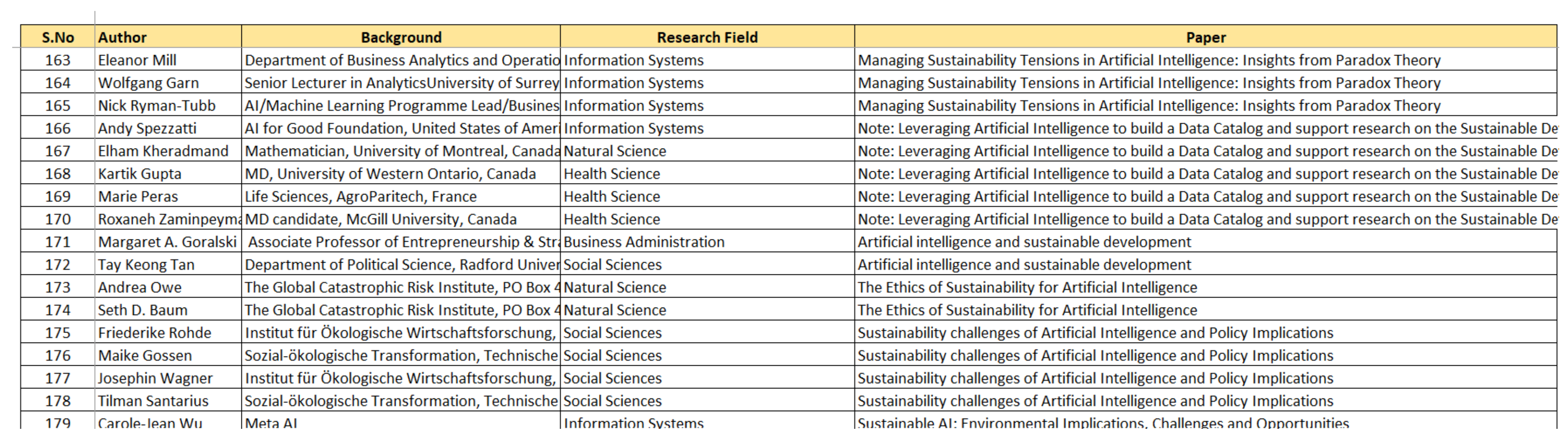
After completing the data set of author names and their background, our next step was to create categories for “Research Field”. For creating research field categories, we had to manually go through all the background entries and write appropriate research field categories specific to a background. For example, the background detail, “Doctor of Philosophy”, was placed in the research field, “Social Sciences”. Furthermore, we did some secondary research to get a better idea regarding different research fields and which background belongs to which field. By finishing this procedure for all 317 authors, the following research fields are relevant:
- Banking and Finance: This field consists of backgrounds like finance, accounting, working in a bank, etc.
- Business Administration: The authors in this field have backgrounds related to economics, business administration, management, entrepreneurship, etc.
- Engineering and Technology: This field comprises backgrounds such as software engineering, computer engineering, electrical engineering, industrial engineering, information technology, civil engineering, environmental engineering, biomedical engineering, etc.
- Health Science: This field consists of authors from backgrounds like health labs, medical institutes, health research centers, Doctor of Medicine candidates, life sciences, etc.
- Information Systems: The authors in this field have backgrounds related to artificial intelligence, machine learning, data science, etc. Furthermore, some authors had job titles more suited to the research field of “Engineering and Technology”, however, their work profiles were more suited to information systems. Hence, they have been placed in this field.
- Law: The authors in this research field are mostly working in departments such as the faculty of law.
- Natural Science: This field comprises backgrounds such as sustainability, freshwater ecology, energy, climate change, etc.
- Social Sciences: The authors in this field have backgrounds related to philosophy, theology, religion and culture, public affairs, social studies, internal and regional studies, etc.
Figure 9.
Number of Authors in Different Fields.
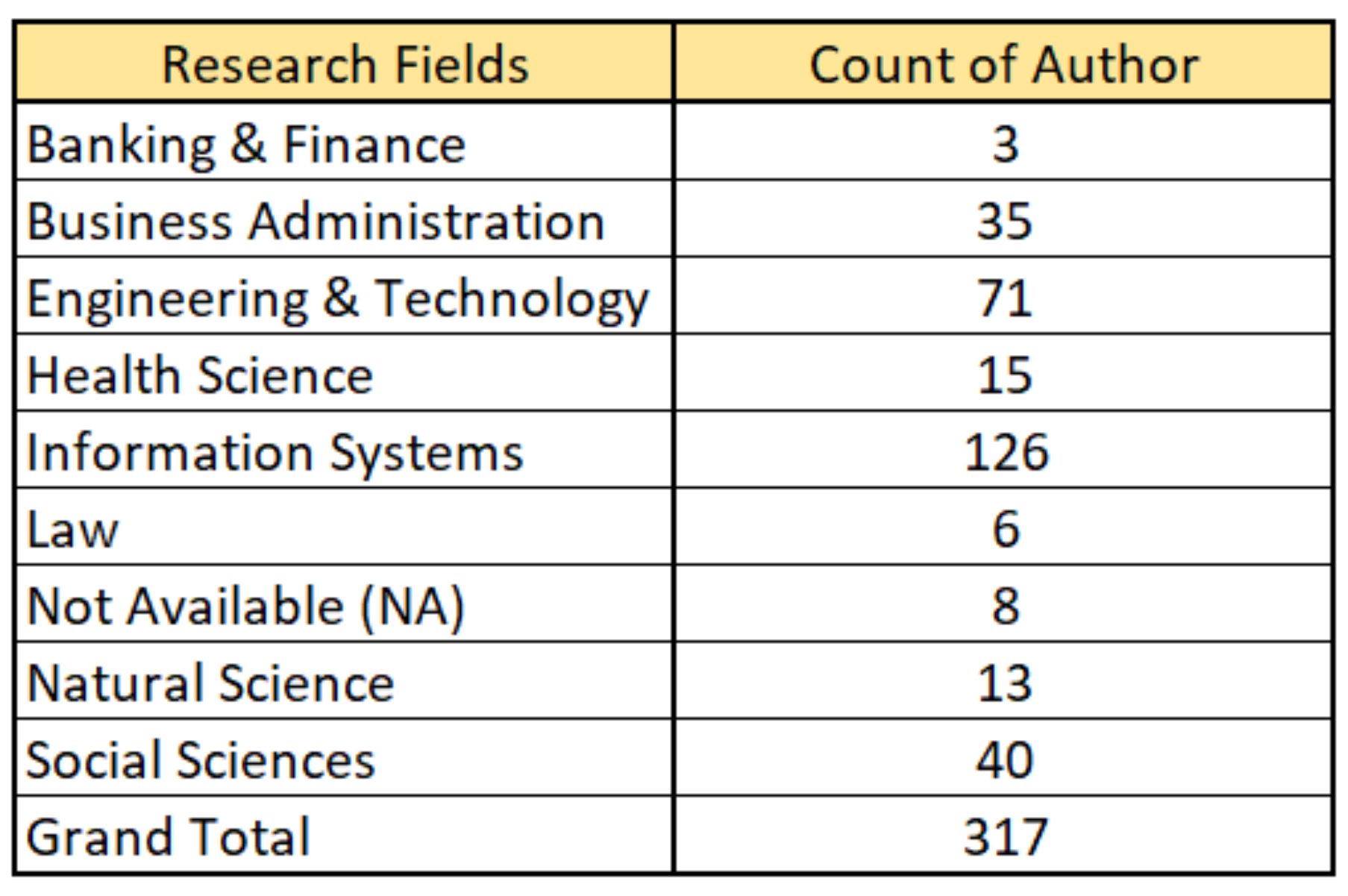
Similar to the expectations regarding the background of authors, we find that 62% of authors have a background either in “Information Systems (40%)” or “Engineering and Technology (22%)”. However, we can also observe the diversity in author backgrounds, with authors coming from backgrounds such as “Social Sciences (13%), Business Administration (11%)”. Furthermore, authors from fields such as “Healthcare, Natural Science, Law, and Banking and Finance” are also writing about this topic. This diversity in author backgrounds, which is depicted in Figure 10, indicates that people from different research fields are interested in this topic and it contributes positively to the field’s maturity [121].
4.2.5. Breadth of Methods Analysis
In the selected literature, we observe that the papers have adopted various kinds of methods on this topic. This is also reflected by the various kinds of paper types in the selected literature, for example, validation research, evaluation research, solution proposal, philosophical papers, opinion papers, and experience papers. Furthermore, our selected literature shows a mix of papers among all the above categories. Moreover, by looking at the “Contribution Type by Year” graph, we can observe the distribution of different types of papers over the years.
To cover the next part of this domain and link it to maturity, we performed a check on the presence of empirical studies in our selected literature [121]. To do so, we went through all the selected 88 papers and checked whether they fall into the category of empirical papers or not. For some papers, it was recognizable fairly easily but for others, we had to go through the papers in detail, and also do some secondary research about the methodologies adopted to evaluate them. After this exercise, we classified 17 papers out of the selected 88 articles as empirical papers. This contributes to around 19% of the selected literature.
Figure 11 shows the distribution of the empirical papers by year. From this, we can observe that in our selected literature, the first empirical paper appeared in the year 2018 and before that no empirical papers were present. Furthermore, we can see that in the subsequent years, the number of empirical papers increased, except for the year 2020, which might be due to the manual literature synthesis process. As mentioned before, most literature on this topic started to appear in the year 2019 and onward, supported by the prevalence of empirical studies in the literature. Considering the presence of empirical papers as another indicator of the research field’s maturity, we can observe a positive effect, given that empirical papers can be seen in the literature mix, especially in recent years.
In a nutshell, when we bring together all the components of maturity analysis, including – publication by year, contribution type (and by year), citations, and the maturity analysis framework with authorship and the prevalence of empirical papers, we can say that this research field was relatively new around the year 2019, but afterward, it has been maturing relatively quickly and undergoing rapid development.
4.3. RQ3: What is the future research agenda of the research field of AI Sustainability?
When looking at the field of AI Sustainability, we can see it evolving from a more fragmented one towards a more integrated and holistic field. Approaches of authors evolved, trying to address the full complexity of the topic, and not only restricting it to a niche sub-field.
Earlier papers in the field tend to focus on one aspect of AI Sustainability, though no single approach was significantly more prominent than the other. As shown in Figure 12, there was a notable surge in research volume around 2019. Importantly this period also witnessed an emergence of new papers starting to incorporate both approaches.
The number of papers following this trend increased significantly in 2021, and although there was a decrease in 2022, they still represented a significant portion of the papers in our library. Considering the current trajectory, more papers following this approach are likely to be published before the end of this year. As the approach gains popularity, it will become more important for researchers to consider both approaches, as not doing so might lead to inaccurate conclusions concerning the sustainability of AI.
When looking at the sustainability dimensions, we see a similar story shown in Figure 13. Initially, papers primarily focused on a single dimension. Around 2019, a shift towards a more comprehensive approach became apparent. In 2021 and 2022, papers considering more than one dimension of sustainability constitute the most substantial category of published papers. A similar situation is also already evident in 2023.
Future researchers can go beyond the simple comprehension of the potential impacts of AI only within a specific field and comprehend both the positive and negative consequences across social, environmental, and economic dimensions. The United Nations’ Sustainable Development Goals (SDGs) could serve as a comprehensive framework to steer this evaluation, offering a multidisciplinary perspective to inform this discourse.
From RQ1 we also observe that there is little research on AI Sustainability from an economic perspective. On one hand, the interests of the stakeholders propelling the development of AI applications and markets will significantly influence whether and how much AI can contribute to sustainable development. On the other hand, the interests and safety of consumers should also be protected. Because it’s challenging to track potentially problematic decisions made by AI systems, individuals who experience harm from AI might lack access to essential evidence required for legal proceedings. [70] Thus, we envision more studies on the policy-making and regulation of market power and monopolies in future research.
In the next few years, the research agenda will likely continue to move in the direction of a more holistic approach. Future researchers of the field should consider this trend when developing their new work, to be able to provide a comprehensive and complete outlook. Not doing so might lead to research that is inconclusive or not accurate enough, especially when intending to conclude the sustainability of AI. If researchers want to focus on a specific approach or dimension, it is important that they are aware of it and make it explicit, to assess the body of work appropriately without leading to biases.
From RQ2, we can say that the field of AI Sustainability is maturing at a fast rate. However, going forward, to have a higher maturity level, several other conditions should be fulfilled by future research. As we previously observed in RQ2, before 2019, the number of publications was very few and then increased rapidly. Going forward, the number of publications should increase even more. Furthermore, the publications should come from a variety of highly-ranked journals and organizations.
The selected literature in our research consists of various types of research papers, as covered in the section contribution types, ranging from philosophical and opinion papers to evaluation research, validation research, and solution proposals. For the field to keep maturing in the future, the number of research papers in every research type should increase, followed by an increase in the contribution type per year.
Moreover, we also observed a rise in the number of empirical papers over the past years. This trend should continue, complemented by the increase in the number of papers that conduct their analysis using statistical hypothesis testing and variable testing.
These factors can further contribute positively to the field’s maturity [121]. On observing the authorship analysis in RQ2, we observe diversity in the background of authors, with authors writing from research fields such as Banking and Finance, Law, Social Sciences, and Health Science. To head in the direction of more maturity, the diversity in author backgrounds should increase along with an increase in the number of authors in various research fields. We expect to see this evolution of the field present in the future research agenda as the field grows.
5. Discussion and Limitations
In this section, we will discuss the limitations of our paper. We mainly consider two types of validity that are potentially affected: construct validity and conclusion validity.
5.1. Construct Validity
Quality and depth of papers: An important consideration in this paper is the quality and depth of the academic papers selected and analyzed. Given that the field of AI Sustainability is relatively new, many papers might not comprehensively cover complex topics. As a result, there may be a lack of in-depth analysis or exploration of certain critical aspects within the research.
Strict and focused analysis: To maintain external validity, a relatively wider inclusion of papers would be more powerful. However, due to limited time and research capacity, the inclusion and exclusion criteria we employed while selecting the papers are strict, e.g., E1: Contents only on a specific niche sub-field of research regarding AI Sustainability. While this approach enhances the rigor of the study, it might also limit the generalizability of findings to the broader field of AI Sustainability. Another limitation is the necessary and strict cut-off date for our systematic study. For example, a very recent study [124] that proposed a systematic comparison of inference costs of various categories of ML systems, covering both task-specific and general-purpose models with a focus on Natural Language Processing (NLP) and Computer Vision (CV), could not be included in our main results section.
Qualitative assessment: The process of categorizing papers based on their content involves a certain degree of impreciseness. The absence of explicit criteria and bounded expertise in the specific sub-field of AI Sustainability may introduce some bias into the categorization process.
5.2. Conclusion Validity
Subjectivity of Authorship Analysis: The assessment of the maturity of the research field of AI Sustainability within the included papers involves a certain degree of subjectivity. While efforts were made to maintain objectivity, variations in interpretation might affect the accuracy of conclusions drawn. Within the frame of Authorship Analysis, one debate that we also had during the writing process was whether there is a correlation between popularity and maturity, i.e., whether a higher number and inter-disciplinarity of authors and their backgrounds are an indicator of the maturity level of the research field. Despite that, after consulting other similar studies about such assessment, we adopted the framework by Keathley-Herring et al. [121].
Despite the above-mentioned limitations, this research contributes to a broader understanding of AI Sustainability and highlights areas for future exploration in this field.
6. Conclusion
The goal of our research was to create a Systematic Mapping Study (SMS) to analyze the topic of “AI Sustainability”. During our analysis, it became evident that to analyze sustainability, researchers focus on the economic, social, and environmental dimensions. Furthermore, we also observed that the research on AI Sustainability is divided between “AI as a tool for sustainability” and “AI’s impact on sustainability”. Hence, to have a holistic understanding of AI Sustainability, both approaches and their combination with the dimensions – economic, social, and environmental, should be observed. To analyze how the existing literature captures AI Sustainability, we looked at it both from quantitative and qualitative perspectives, across social, environmental, and economic dimensions. Furthermore, the field evolved from a more fragmented one, where the researchers used to focus on one dimension (social, economic, environmental) or one approach (AI for sustainability vs. AI’s impact on sustainability), towards a more holistic one, where they focused on more than one dimension and both approaches.
To understand the maturity level of this research field, we performed several analyses like, looking at the publications (also by year), observing the different types of approaches in the existing literature, looking at diversity in the author backgrounds, and checking the presence of empirical papers. Before the year 2019, the field might have been relatively immature due to the low number of publications available. After this timeline, the number of publications increased, combined with an increase in the number of publications in the categories, “Evaluation Research, Validation Research, and Solution Proposals”. These factors contributed positively to the maturation of this field. The increasing maturity quotient is corroborated by the diversity in author backgrounds and the increase in the number of empirical papers. Going forward, if the number of publications per year increases, coming from a diverse set of highly ranked journals, we can expect it to contribute to the field’s maturity. Another positive factor for maturity can be a greater number of authors from a diverse set of backgrounds looking into this topic.
Going forward, researchers and practitioners should ensure that they are not being short-sighted by their perceived notion of AI Sustainability, but should ensure that they have a comprehensive view across all of its dimensions and approaches.
Author Contributions
Conceptualization, R.D., S.M., Y.W. and Sh-C. M.; methodology, R.D., S.M., Y.W. and Sh-C. M.; software, R.D., S.M. and Y.W.; validation, Sh-C. M., R.A. and B.F.; writing—original draft preparation, R.D., S.M. and Y.W.; writing—review and editing, Sh-C. M., R.A. and B.F.; supervision, Sh-C. M. and B.F.; project administration, Sh-C. M., R.A. and B.F.; funding acquisition, R.A. and B.F. All authors have read and agreed to the published version of the manuscript.
Funding
The pro_digital European Digital Innovation Hub (EDIH) has received a co-funding from the European Union’s DIGITAL EUROPE Programme research and innovation programme grant agreement No 101083754.
Informed Consent Statement
Not applicable.
Data Availability Statement
Not applicable.
Conflicts of Interest
The authors declare no conflict of interest.
Abbreviations
The following abbreviations are used in this manuscript:
| AI | Artificial Intelligence |
| CV | Computer Vision |
| FSSD | Framework for Strategic Sustainable Development |
| IoT | Internet of Things |
| LLMs | Large Language Models |
| ML | Machine Learning |
| NLP | Natural Language Processing |
| SDGs | Sustainable Development Goals |
| SLR | Systematic Literature Review |
| SMS | Systematic Mapping Study |
References
- Russell, S.; Norvig, P. Artificial Intelligence: A Modern Approach, fourth ed.; Pearson Education Limited; United Kingdom, 2021.
- Davenport, T.H.; Ronanki, R.; et al. Artificial intelligence for the real world. Harvard business review 2018, 96, 108–116. [Google Scholar]
- Enholm, I.M.; Papagiannidis, E.; Mikalef, P.; Krogstie, J. Artificial Intelligence and Business Value: a Literature Review. Information Systems Frontiers 2022, 24, 1709–1734. [Google Scholar] [CrossRef]
- Lee, D.; Yoon, S.N. Application of Artificial Intelligence-Based Technologies in the Healthcare Industry: Opportunities and Challenges. International Journal of Environmental Research and Public Health 2021, 18. [Google Scholar] [CrossRef] [PubMed]
- Abduljabbar, R.; Dia, H.; Liyanage, S.; Bagloee, S.A. Applications of Artificial Intelligence in Transport: An Overview. Sustainability 2019, 11. [Google Scholar] [CrossRef]
- Jha, K.; Doshi, A.; Patel, P.; Shah, M. A comprehensive review on automation in agriculture using artificial intelligence. Artificial Intelligence in Agriculture 2019, 2, 1–12. [Google Scholar] [CrossRef]
- Ahmad, T.; Zhang, D.; Huang, C.; Zhang, H.; Dai, N.; Song, Y.; Chen, H. Artificial intelligence in sustainable energy industry: Status Quo, challenges and opportunities. Journal of Cleaner Production 2021, 289, 125834. [Google Scholar] [CrossRef]
- Chan-Olmsted, S.M. A Review of Artificial Intelligence Adoptions in the Media Industry. International Journal on Media Management 2019, 21, 193–215. [Google Scholar] [CrossRef]
- Purvis, B.; Mao, Y.; Robinson, D. Three Pillars of Sustainability: In Search of Conceptual Origins. Sustainability Science 2019, 14, 681–695. [Google Scholar] [CrossRef]
- Van Wynsberghe, A. Sustainable AI: AI for Sustainability and the Sustainability of AI. AI and Ethics 2021, 1, 213–218. [Google Scholar] [CrossRef]
- McCarthy, J. WHAT IS ARTIFICIAL INTELLIGENCE? http://www-formal.stanford.edu/jmc/whatisai/, 2007.
- Nishant, R.; Kennedy, M.; Corbett, J. Artificial Intelligence for Sustainability: Challenges, Opportunities, and a Research Agenda. International Journal of Information Management 2020, 53, 102104. [Google Scholar] [CrossRef]
- Kar, A.K.; Choudhary, S.K.; Singh, V.K. How Can Artificial Intelligence Impact Sustainability: A Systematic Literature Review. Journal of Cleaner Production 2022, 376, 134120. [Google Scholar] [CrossRef]
- Verdecchia, R.; Sallou, J.; Cruz, L. A Systematic Review of Green AI, 2023, [arxiv:cs/2301.11047].
- Natarajan, H.K.; de Paula, D.; Dremel, C.; Uebernickel, F. A Theoretical Review on AI Affordances for Sustainability. AMCIS 2022 Proceedings 2022. [Google Scholar]
- Xu, J.; Zhou, W.; Fu, Z.; Zhou, H.; Li, L. A Survey on Green Deep Learning, 2021, [arxiv:cs/2111.05193].
- Mittal, S. A Survey on Optimized Implementation of Deep Learning Models on the NVIDIA Jetson Platform. Journal of Systems Architecture 2019, 97, 428–442. [Google Scholar] [CrossRef]
- Scells, H.; Zhuang, S.; Zuccon, G. Reduce, Reuse, Recycle: Green Information Retrieval Research. In Proceedings of the Proceedings of the 45th International ACM SIGIR Conference on Research and Development in Information Retrieval, Madrid Spain, 2022; pp. 2825–2837. [CrossRef]
- Tonn, B. [No Title Found]. Futures 2010, 42, 1032–1033. [Google Scholar] [CrossRef]
- Westley, F.; Olsson, P.; Folke, C.; Homer-Dixon, T.; Vredenburg, H.; Loorbach, D.; Thompson, J.; Nilsson, M.; Lambin, E.; Sendzimir, J.; et al. Tipping Toward Sustainability: Emerging Pathways of Transformation. AMBIO 2011, 40, 762–780. [Google Scholar] [CrossRef] [PubMed]
- Joppa, L.N. The Case for Technology Investments in the Environment. Nature 2017, 552, 325–328. [Google Scholar] [CrossRef] [PubMed]
- Earth, F. Digital Disruptions for Sustainability (D^2S) Agenda– Cross-Cutting Actions Agenda. Environment: Science and Policy for Sustainable Development 2020, 62, 30–41. [Google Scholar] [CrossRef]
- Vinuesa, R.; Azizpour, H.; Leite, I.; Balaam, M.; Dignum, V.; Domisch, S.; Felländer, A.; Langhans, S.D.; Tegmark, M.; Fuso Nerini, F. The Role of Artificial Intelligence in Achieving the Sustainable Development Goals. Nature Communications 2020, 11, 233. [Google Scholar] [CrossRef]
- Wearn, O.R.; Freeman, R.; Jacoby, D.M.P. Responsible AI for Conservation. Nature Machine Intelligence 2019, 1, 72–73. [Google Scholar] [CrossRef]
- Galaz, V.; Mouazen, A.M. `New Wilderness’ Requires Algorithmic Transparency: A Response to Cantrell et Al. Trends in Ecology & Evolution 2017, 32, 628–629. [Google Scholar] [CrossRef] [PubMed]
- Galaz, V.; Centeno, M.A.; Callahan, P.W.; Causevic, A.; Patterson, T.; Brass, I.; Baum, S.; Farber, D.; Fischer, J.; Garcia, D.; et al. Artificial Intelligence, Systemic Risks, and Sustainability. Technology in Society 2021, 67, 101741. [Google Scholar] [CrossRef]
- Gonçales, L.J.; Farias, K.; Da Silva, B.C. Measuring the Cognitive Load of Software Developers: An Extended Systematic Mapping Study. Information and Software Technology 2021, 136, 106563. [Google Scholar] [CrossRef]
- Levy, Y.; J. Ellis, T. A Systems Approach to Conduct an Effective Literature Review in Support of Information Systems Research. Informing Science: The International Journal of an Emerging Transdiscipline 2006, 9, 181–212. [Google Scholar] [CrossRef]
- Strubell, E.; Ganesh, A.; McCallum, A. Energy and Policy Considerations for Modern Deep Learning Research. Proceedings of the AAAI Conference on Artificial Intelligence 2020, 34, 13693–13696. [Google Scholar] [CrossRef]
- Heilinger, J.C.; Kempt, H.; Nagel, S. Beware of Sustainable AI! Uses and Abuses of a Worthy Goal. AI and Ethics 2023. [Google Scholar] [CrossRef]
- Bostrom, N.; Yudkowsky, E. The Ethics of Artificial Intelligence. In The Cambridge Handbook of Artificial Intelligence, 1 ed.; Frankish, K.; Ramsey, W.M., Eds.; Cambridge University Press, 2014; pp. 316–334. [CrossRef]
- Zeng, D. AI Ethics: Science Fiction Meets Technological Reality. IEEE Intelligent Systems 2015, 30, 2–5. [Google Scholar] [CrossRef]
- Aghion, P.; Jones, B.; Jones, C. Artificial Intelligence and Economic Growth. Technical Report w2 3928, MA, 2017. [Google Scholar] [CrossRef]
- Khakurel, J.; Penzenstadler, B.; Porras, J.; Knutas, A.; Zhang, W. The Rise of Artificial Intelligence under the Lens of Sustainability. Technologies 2018, 6, 100. [Google Scholar] [CrossRef]
- Jobin, A.; Ienca, M.; Vayena, E. The Global Landscape of AI Ethics Guidelines. Nature Machine Intelligence 2019, 1, 389–399. [Google Scholar] [CrossRef]
- Mittelstadt, B. Principles Alone Cannot Guarantee Ethical AI. Nature Machine Intelligence 2019, 1, 501–507. [Google Scholar] [CrossRef]
- Vakkuri, V.; Kemell, K.K.; Abrahamsson, P. AI Ethics in Industry: A Research Framework. ArXiv 2019, abs/1910.12695.
- van der Loeff, A.S.; Bassi, I.; Kapila, S.; Gamper, J. AI Ethics for Systemic Issues: A Structural Approach, 2019, [arxiv:cs/1911. 0 3216.
- Kennedy, M.L. What Do Artificial Intelligence (AI) and Ethics of AI Mean in the Context of Research Libraries? Research Library Issues 2019, pp. 3–13. [CrossRef]
- Johnson, S.A. Technology Innovation and AI Ethics. Research Library Issues 2019, pp. 14–27. [CrossRef]
- Thwal, C.M.; Thar, K.; Hong, C. Edge AI Based Waste Management System for Smart City 1. 2019.
- Szczepanski, M. Economic Impacts of Artificial Intelligence (AI) 2019.
- Morley, J.; Floridi, L.; Kinsey, L.; Elhalal, A. From What to How: An Initial Review of Publicly Available AI Ethics Tools, Methods and Research to Translate Principles into Practices 2019. [CrossRef]
- Siau, K.; Wang, W. Artificial Intelligence (AI) Ethics: Ethics of AI and Ethical AI. Journal of Database Management 2020, 31, 74–87. [Google Scholar] [CrossRef]
- Bruneault, F.; Laflamme, A.S. AI Ethics: How Can Information Ethics Provide a Framework to Avoid Usual Conceptual Pitfalls? An Overview. AI & SOCIETY 2021, 36, 757–766. [Google Scholar] [CrossRef]
- Lawrence-Archer, A. AI Ethics: A Strategic Communications Challenge. Defence Strategic Communications 2020, 8, 189–202. [Google Scholar] [CrossRef]
- Morley, J.; Machado, C.C.; Burr, C.; Cowls, J.; Joshi, I.; Taddeo, M.; Floridi, L. The Ethics of AI in Health Care: A Mapping Review. Social Science & Medicine 2020, 260, 113172. [Google Scholar] [CrossRef] [PubMed]
- Ahmed, A.A.A.; Asadullah, A. Artificial Intelligence and Machine Learning in Waste Management and Recycling. Engineering International 2020, 8, 43–52. [Google Scholar] [CrossRef]
- Lahsen, M. Should AI Be Designed to Save Us From Ourselves?: Artificial Intelligence for Sustainability. IEEE Technology and Society Magazine 2020, 39, 60–67. [Google Scholar] [CrossRef]
- Tanveer, M.; Hassan, S.; Bhaumik, A. Academic Policy Regarding Sustainability and Artificial Intelligence (AI). Sustainability 2020, 12, 9435. [Google Scholar] [CrossRef]
- Goralski, M.A.; Tan, T.K. Artificial Intelligence and Sustainable Development. The International Journal of Management Education 2020, 18, 100330. [Google Scholar] [CrossRef]
- Di Vaio, A.; Palladino, R.; Hassan, R.; Escobar, O. Artificial Intelligence and Business Models in the Sustainable Development Goals Perspective: A Systematic Literature Review. Journal of Business Research 2020, 121, 283–314. [Google Scholar] [CrossRef]
- Santor, E. The Impact of Digitalization on the Economy: A Review Article on the NBER Volume "Economics of Artificial Intelligence: An Agenda". International Productivity Monitor 2020, 39, 81–90. [Google Scholar]
- Cao, L. Application of Artificial Intelligence on the CO2 Capture: A Review. Journal of Thermal Analysis and Calorimetry 2021, 145, 1751–1768. [Google Scholar] [CrossRef]
- Chen, X.; Wu, X.; Lee, K.Y. The Mutual Benefits of Renewables and Carbon Capture: Achieved by an Artificial Intelligent Scheduling Strategy. Energy Conversion and Management 2021, 233, 113856. [Google Scholar] [CrossRef]
- Nourbakhsh, I.R. AI Ethics: A Call to Faculty. Communications of the ACM 2021, 64, 43–45. [Google Scholar] [CrossRef]
- Kazim, E.; Koshiyama, A.S. A High-Level Overview of AI Ethics. Patterns 2021, 2, 100314. [Google Scholar] [CrossRef] [PubMed]
- Nwafor, I.E. AI Ethical Bias: A Case for AI Vigilantism (AIlantism) in Shaping the Regulation of AI. International Journal of Law and Information Technology 2021, p. eaab008. [CrossRef]
- Heo, J. Ethical Review in the Age of Artificial Intelligence. AI Ethics Journal 2021, 2. [Google Scholar] [CrossRef]
- Ciobanu, A.C.; Meșniță, G. AI ETHICS IN BUSINESS – A BIBLIOMETRIC APPROACH. Review of Economic and Business Studies 2021, 14, 169–202. [Google Scholar] [CrossRef]
- Corea, F. Artificial Intelligence: ethical and social considerations. BioLaw Journal - Rivista di BioDiritto 2021, pp. 307–313 Paginazione. [CrossRef]
- Chen, J.; Huang, S.; BalaMurugan, S.; Tamizharasi, G. Artificial Intelligence Based E-Waste Management for Environmental Planning. Environmental Impact Assessment Review 2021, 87, 106498. [Google Scholar] [CrossRef]
- Reif, S.; Herzog, B.; Hemp, J.; Schröder-Preikschat, W.; Hönig, T. AI Waste Prevention: Time and Power Estimation for Edge Tensor Processing Units: Poster. In Proceedings of the Proceedings of the Twelfth ACM International Conference on Future Energy Systems, Virtual Event Italy, 2021; pp. 300–301. [CrossRef]
- Sharma, P.; Vaid, U. Emerging Role of Artificial Intelligence in Waste Management Practices. IOP Conference Series: Earth and Environmental Science 2021, 889, 012047. [Google Scholar] [CrossRef]
- Bijos, J.C.B.F.; Queiroz, L.M.; Zanta, V.M.; Oliveira-Esquerre, K.P. Towards Artificial Intelligence in Urban Waste Management: An Early Prospect for Latin America. IOP Conference Series: Materials Science and Engineering 2021, 1196, 012030. [Google Scholar] [CrossRef]
- Hermann, E.; Hermann, G. Artificial Intelligence in Research and Development for Sustainability: The Centrality of Explicability and Research Data Management. AI and Ethics 2022, 2, 29–33. [Google Scholar] [CrossRef]
- Sætra, H.S. AI in Context and the Sustainable Development Goals: Factoring in the Unsustainability of the Sociotechnical System. Sustainability 2021, 13, 1738. [Google Scholar] [CrossRef]
- Gupta, S.; Langhans, S.D.; Domisch, S.; Fuso-Nerini, F.; Felländer, A.; Battaglini, M.; Tegmark, M.; Vinuesa, R. Assessing Whether Artificial Intelligence Is an Enabler or an Inhibitor of Sustainability at Indicator Level. Transportation Engineering 2021, 4, 100064. [Google Scholar] [CrossRef]
- Owe, A.; Baum, S. The Ethics of Sustainability for Artificial Intelligence. In Proceedings of the Proceedings of the 1st International Conference on AI for People: Towards Sustainable AI, CAIP 2021, 20-24 November 2021, Bologna, Italy, Bologna, Italy, 2021. [CrossRef]
- Rohde, F.; Gossen, M.; Wagner, J.; Santarius, T. Sustainability Challenges of Artificial Intelligence and Policy Implications. Ökologisches Wirtschaften - Fachzeitschrift 2021, 36, 36–40. [Google Scholar] [CrossRef]
- Wu, C.J.; Raghavendra, R.; Gupta, U.; Acun, B.; Ardalani, N.; Maeng, K.; Chang, G.; Behram, F.A.; Huang, J.; Bai, C.; et al. Sustainable AI: Environmental Implications, Challenges and Opportunities, 2022, [arxiv:cs/2111.00364].
- Saheb, T.; Dehghani, M. Artificial Intelligence for Sustainable Energy: A Contextual Topic Modeling and Content Analysis 2021. [CrossRef]
- Yigitcanlar, T. Greening the Artificial Intelligence for a Sustainable Planet: An Editorial Commentary. Sustainability 2021, 13, 13508. [Google Scholar] [CrossRef]
- Palomares, I.; Martínez-Cámara, E.; Montes, R.; García-Moral, P.; Chiachio, M.; Chiachio, J.; Alonso, S.; Melero, F.J.; Molina, D.; Fernández, B.; et al. A Panoramic View and Swot Analysis of Artificial Intelligence for Achieving the Sustainable Development Goals by 2030: Progress and Prospects. Applied Intelligence 2021, 51, 6497–6527. [Google Scholar] [CrossRef] [PubMed]
- Isensee, C.; Griese, K.M.; Teuteberg, F. Sustainable Artificial Intelligence: A Corporate Culture Perspective. Sustainability Management Forum | NachhaltigkeitsManagementForum 2021, 29, 217–230. [Google Scholar] [CrossRef]
- Yigitcanlar, T.; Mehmood, R.; Corchado, J.M. Green Artificial Intelligence: Towards an Efficient, Sustainable and Equitable Technology for Smart Cities and Futures. Sustainability 2021, 13, 8952. [Google Scholar] [CrossRef]
- Manzoor, B.; Othman, I.; Durdyev, S.; Ismail, S.; Wahab, M. Influence of Artificial Intelligence in Civil Engineering toward Sustainable Development—A Systematic Literature Review. Applied System Innovation 2021, 4, 52. [Google Scholar] [CrossRef]
- Pigola, A.; Da Costa, P.R.; Carvalho, L.C.; Silva, L.F.D.; Kniess, C.T.; Maccari, E.A. Artificial Intelligence-Driven Digital Technologies to the Implementation of the Sustainable Development Goals: A Perspective from Brazil and Portugal. Sustainability 2021, 13, 13669. [Google Scholar] [CrossRef]
- Verma, I.; Singh, G.; Tiwar, A.; Kumar, A.; Prasad, H. Impact of AI on Environment. Turkish Journal of Computer and Mathematics Education (TURCOMAT) 2021, 12, 1928–1933. [Google Scholar] [CrossRef]
- Schoormann, T.; Strobel, G.; Möller, F.; Petrik, D. Achieving sustainability with artificial intelligence-a survey of information systems research. In Proceedings of the Proceedings of the 42nd International Conference on Information Systems (ICIS 2021), 2021.
- Kumar, A.; Madaan, G.; Sharma, P.; Kumar, A. Application of Disruptive Technologies on Environmental Health: An Overview of Artificial Intelligence, Blockchain and Internet of Things. Asia Pacific Journal of Health Management 2021, 16, 251–259. [Google Scholar] [CrossRef]
- Khan, A.A.; Badshah, S.; Liang, P.; Khan, B.; Waseem, M.; Niazi, M.; Akbar, M.A. Ethics of AI: A Systematic Literature Review of Principles and Challenges 2021. [CrossRef]
- Christoforaki, M.; Beyan, O. AI Ethics—A Bird’s Eye View. Applied Sciences 2022, 12, 4130. [Google Scholar] [CrossRef]
- Hallamaa, J.; Kalliokoski, T. AI Ethics as Applied Ethics. Frontiers in Computer Science 2022, 4, 776837. [Google Scholar] [CrossRef]
- Andeobu, L.; Wibowo, S.; Grandhi, S. Artificial Intelligence Applications for Sustainable Solid Waste Management Practices in Australia: A Systematic Review. Science of The Total Environment 2022, 834, 155389. [Google Scholar] [CrossRef]
- Rajalakshmi, J.; Sumangali, K.; Jayanthi, J.; Muthulakshmi, K. Artificial Intelligence with Earthworm Optimization Assisted Waste Management System for Smart Cities. Global NEST Journal 2023. [Google Scholar] [CrossRef]
- Hang, H.; Chen, Z. How to Realize the Full Potentials of Artificial Intelligence (AI) in Digital Economy? A Literature Review. Journal of Digital Economy 2022, 1, 180–191. [Google Scholar] [CrossRef]
- Budennyy, S.; Lazarev, V.; Zakharenko, N.; Korovin, A.; Plosskaya, O.; Dimitrov, D.; Arkhipkin, V.; Oseledets, I.; Barsola, I.; Egorov, I.; et al. Eco2AI: Carbon Emissions Tracking of Machine Learning Models as the First Step towards Sustainable AI 2022. [CrossRef]
- Perucica, N.; Andjelkovic, K. Is the Future of AI Sustainable? A Case Study of the European Union. Transforming Government: People, Process and Policy 2022, 16, 347–358. [Google Scholar] [CrossRef]
- Chen, Z.; Wu, M.; Chan, A.; Li, X.; Ong, Y.S. A Survey on AI Sustainability: Emerging Trends on Learning Algorithms and Research Challenges 2022. [CrossRef]
- Wilson, C.; Van Der Velden, M. Sustainable AI: An Integrated Model to Guide Public Sector Decision-Making. Technology in Society 2022, 68, 101926. [Google Scholar] [CrossRef]
- Mill, E.; Garn, W.; Ryman-Tubb, N. Managing Sustainability Tensions in Artificial Intelligence: Insights from Paradox Theory. In Proceedings of the Proceedings of the 2022 AAAI/ACM Conference on AI, Ethics, and Society, Oxford United Kingdom, 2022; pp. 491–498. [CrossRef]
- Spezzatti, A.; Kheradmand, E.; Gupta, K.; Peras, M.; Zaminpeyma, R. Note: Leveraging Artificial Intelligence to Build a Data Catalog and Support Research on the Sustainable Development Goals. In Proceedings of the ACM SIGCAS/SIGCHI Conference on Computing and Sustainable Societies (COMPASS), Seattle WA USA; 2022; pp. 579–584. [Google Scholar] [CrossRef]
- Pachot, A.; Patissier, C. Towards Sustainable Artificial Intelligence: An Overview of Environmental Protection Uses and Issues 2022. [CrossRef]
- Salas, J.; Patterson, G.; De Barros Vidal, F. A Systematic Mapping of Artificial Intelligence Solutions for Sustainability Challenges in Latin America and the Caribbean. IEEE Latin America Transactions 2022, 20, 2312–2329. [Google Scholar] [CrossRef]
- Si, D. A Framework to Analyze the Impacts of AI with the Sustainable Development Goals. Highlights in Science, Engineering and Technology 2022, 17, 313–323. [Google Scholar] [CrossRef]
- Robbins, S.; Van Wynsberghe, A. Our New Artificial Intelligence Infrastructure: Becoming Locked into an Unsustainable Future. Sustainability 2022, 14, 4829. [Google Scholar] [CrossRef]
- Van Wynsberghe, A.; Vandemeulebroucke, T.; Bolte, L.; Nachid, J. Special Issue “Towards the Sustainability of AI; Multi-Disciplinary Approaches to Investigate the Hidden Costs of AI”. Sustainability 2022, 14, 16352. [Google Scholar] [CrossRef]
- Goralski, M.A.; Tan, T.K. Artificial Intelligence and Poverty Alleviation: Emerging Innovations and Their Implications for Management Education and Sustainable Development. The International Journal of Management Education 2022, 20, 100662. [Google Scholar] [CrossRef]
- Isabelle, D.A.; Westerlund, M. A Review and Categorization of Artificial Intelligence-Based Opportunities in Wildlife, Ocean and Land Conservation. Sustainability 2022, 14, 1979. [Google Scholar] [CrossRef]
- Skiter, N.N.; Rogachev, A.F.; Ketko, N.V.; Simonov, A.B.; Tarasova, I.A. Sustainable Development of Enterprises in Conditions of Smart Ecology: Analysis of The Main Problems and Development of Ways to Solve Them, Based on Artificial Intelligence Methods and Innovative Technologies. Frontiers in Environmental Science 2022, 10, 892222. [Google Scholar] [CrossRef]
- Baqi, A.; Abdeldayem, M.M.; Aldulaimi, S.H. Embedding Artificial Intelligence and Green Ideology in Formulating Corporate and Marketing Strategies. In Proceedings of the 2022 ASU International Conference in Emerging Technologies for Sustainability and Intelligent Systems (ICETSIS), Manama, Bahrain; 2022; pp. 1–4. [Google Scholar] [CrossRef]
- Kopka, A.; Grashof, N. Artificial Intelligence: Catalyst or Barrier on the Path to Sustainability? Technological Forecasting and Social Change 2022, 175, 121318. [Google Scholar] [CrossRef]
- Solos, W.K.; Leonard, J. On the Impact of Artificial Intelligence on Economy. Science Insights 2022, 41, 551–560. [Google Scholar] [CrossRef]
- Sanderson, C.; Douglas, D.; Lu, Q.; Schleiger, E.; Whittle, J.; Lacey, J.; Newnham, G.; Hajkowicz, S.; Robinson, C.; Hansen, D. AI Ethics Principles in Practice: Perspectives of Designers and Developers. IEEE Transactions on Technology and Society 2023, 4, 171–187. [Google Scholar] [CrossRef]
- Nasir, I.; Aziz Al-Talib, G.A. Waste Classification Using Artificial Intelligence Techniques:Literature Review. Technium: Romanian Journal of Applied Sciences and Technology 2023, 5, 49–59. [Google Scholar] [CrossRef]
- Danish, M.S.S.; Senjyu, T. Shaping the Future of Sustainable Energy through AI-enabled Circular Economy Policies. Circular Economy 2023, 2, 100040. [Google Scholar] [CrossRef]
- Fang, B.; Yu, J.; Chen, Z.; Osman, A.I.; Farghali, M.; Ihara, I.; Hamza, E.H.; Rooney, D.W.; Yap, P.S. Artificial Intelligence for Waste Management in Smart Cities: A Review. Environmental Chemistry Letters 2023, 21, 1959–1989. [Google Scholar] [CrossRef] [PubMed]
- Leal Filho, W.; Yang, P.; Eustachio, J.H.P.P.; Azul, A.M.; Gellers, J.C.; Gielczyk, A.; Dinis, M.A.P.; Kozlova, V. Deploying Digitalisation and Artificial Intelligence in Sustainable Development Research. Environment, Development and Sustainability 2023, 25, 4957–4988. [Google Scholar] [CrossRef]
- Farahani, M.S. Applications of Artificial Intelligence in Social Science Issues: A Case Study on Predicting Population Change. Journal of the Knowledge Economy 2023. [Google Scholar] [CrossRef]
- Piya, S.; Lennerz, J.K. Sustainable Development Goals Applied to Digital Pathology and Artificial Intelligence Applications in Low- to Middle-Income Countries. Frontiers in Medicine 2023, 10, 1146075. [Google Scholar] [CrossRef]
- Zhang, Z. Research on the Impact of Artificial Intelligence Technology on Green Innovation. In Proceedings of the International Conference on Electronic Information Engineering and Computer Communication (EIECC 2021); Zhu, Z.; Cen, F., Eds., Nanchang, China; 2022; p. 13. [Google Scholar] [CrossRef]
- Petersen, K.; Feldt, R.; Mujtaba, S.; Mattsson, M. Systematic Mapping Studies in Software Engineering. In Proceedings of the 12th International Conference on Evaluation and Assessment in Software Engineering (EASE); 2008. [Google Scholar] [CrossRef]
- Hanson, R. Economic Growth given Machine Intelligence. Journal of Artificial Intelligence Research - JAIR 2001.
- Acemoglu, D.; Restrepo, P. Automation and New Tasks: How Technology Displaces and Reinstates Labor. Technical Report w2 5684, MA, 2019. [Google Scholar] [CrossRef]
- Borgesius, Z. Discrimination, Artificial Intelligence, and Algorithmic Decision-Making. 2018.
- Bender, E.M.; Gebru, T.; McMillan-Major, A.; Shmitchell, S. Proceedings of the Proceedings of the 2021 ACM Conference on Fairness, Accountability, and Transparency, New York, NY, USA, 2021; FAccT ’21, p. 610–623. [CrossRef]
- Strubell, E.; Ganesh, A.; McCallum, A. Energy and Policy Considerations for Deep Learning in NLP. In Proceedings of the Proceedings of the 57th Annual Meeting of the Association for Computational Linguistics; pp. 20193645–3650. [CrossRef]
- Tomašev, N.; Cornebise, J.; Hutter, F.; Mohamed, S.; Picciariello, A.; Connelly, B.; Belgrave, D.C.M.; Ezer, D.; Haert, F.C.V.D.; Mugisha, F.; et al. AI for Social Good: Unlocking the Opportunity for Positive Impact. Nature Communications 2020, 11, 2468. [Google Scholar] [CrossRef] [PubMed]
- Zeemering, E.S. Sustainability Management, Strategy and Reform in Local Government. Public Management Review 2018, 20, 136–153. [Google Scholar] [CrossRef]
- Keathley-Herring, H.; Gonzalez Aleu, F.; Orlandini, P.; Van Aken, E.; Deschamps, F.; Leite, L. Proposed Maturity Assessment Framework for a Research Field; 2013.
- Wieringa, R.; Maiden, N.; Mead, N.; Rolland, C. Requirements Engineering Paper Classification and Evaluation Criteria: A Proposal and a Discussion. Requirements Engineering 2006, 11, 102–107. [Google Scholar] [CrossRef]
- Maloni, M.J.; Carter, C.R.; Carr, A.S. Assessing Logistics Maturation through Author Concentration. International Journal of Physical Distribution & Logistics Management 2009, 39, 250–268. [Google Scholar] [CrossRef]
- Luccioni, A.S.; Jernite, Y.; Strubell, E. Power Hungry Processing: Watts Driving the Cost of AI Deployment? ArXiv 2023, 6863. [Google Scholar]
Figure 1.
Research Methodology Framework.
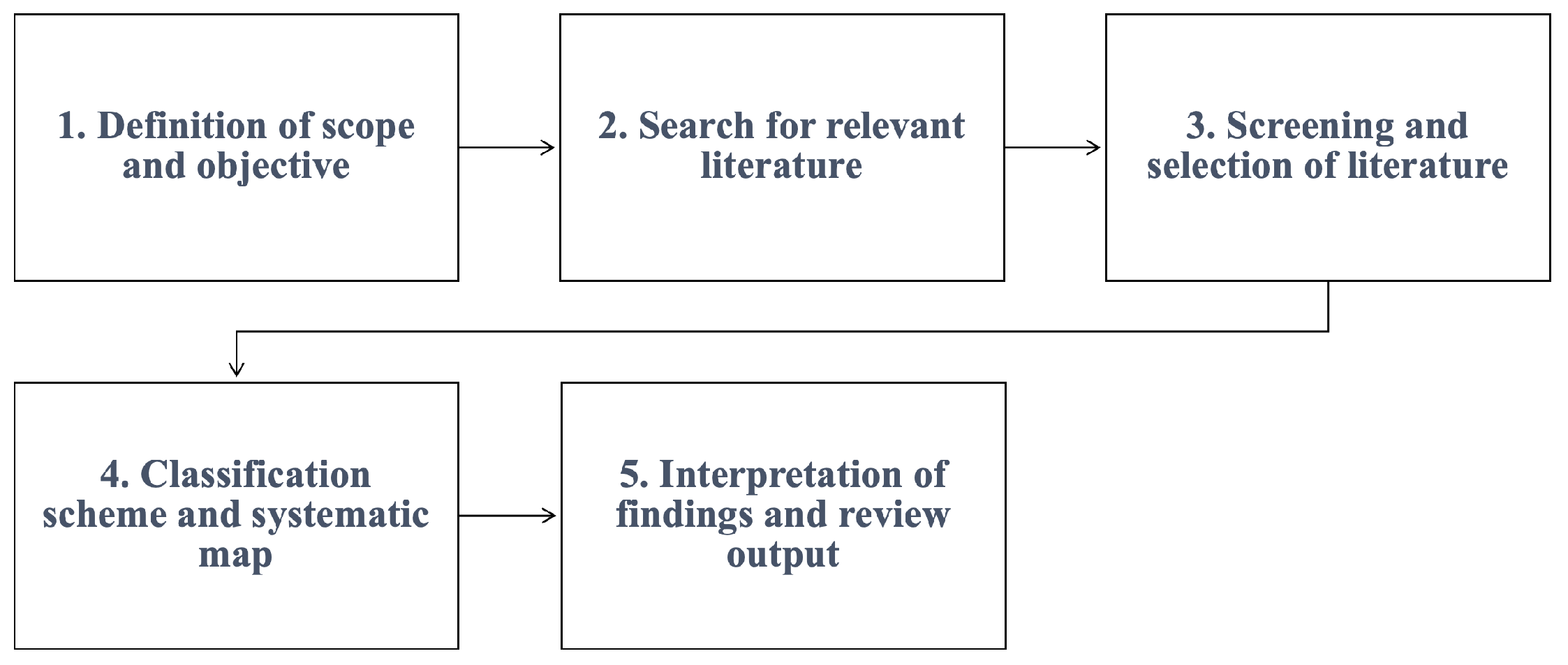
Figure 2.
Sustainability of AI vs. AI for Sustainability.
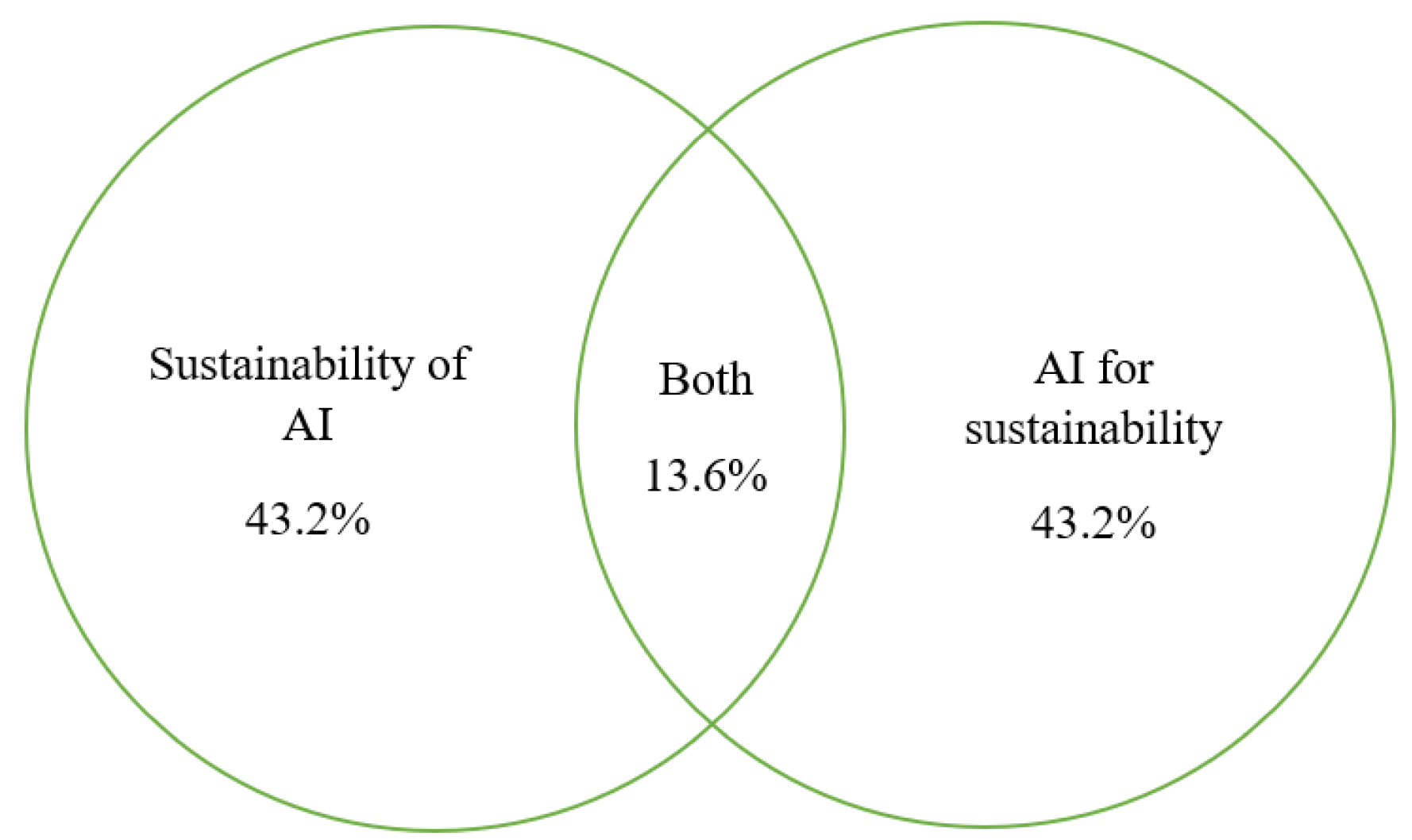
Figure 3.
Literature survey on AI Sustainability.
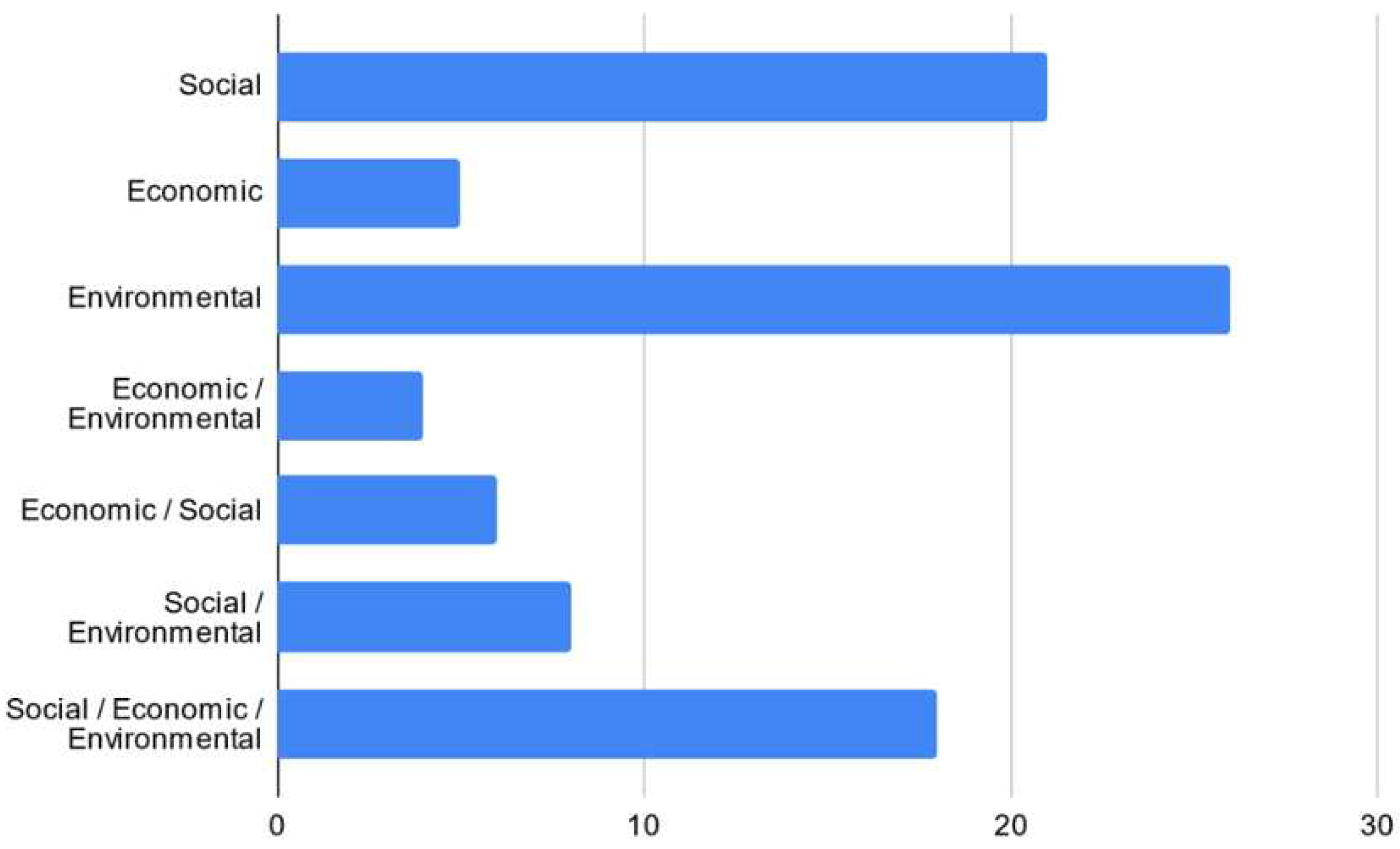
Figure 4.
Publications by Year (cut-off at the first half of 2023).
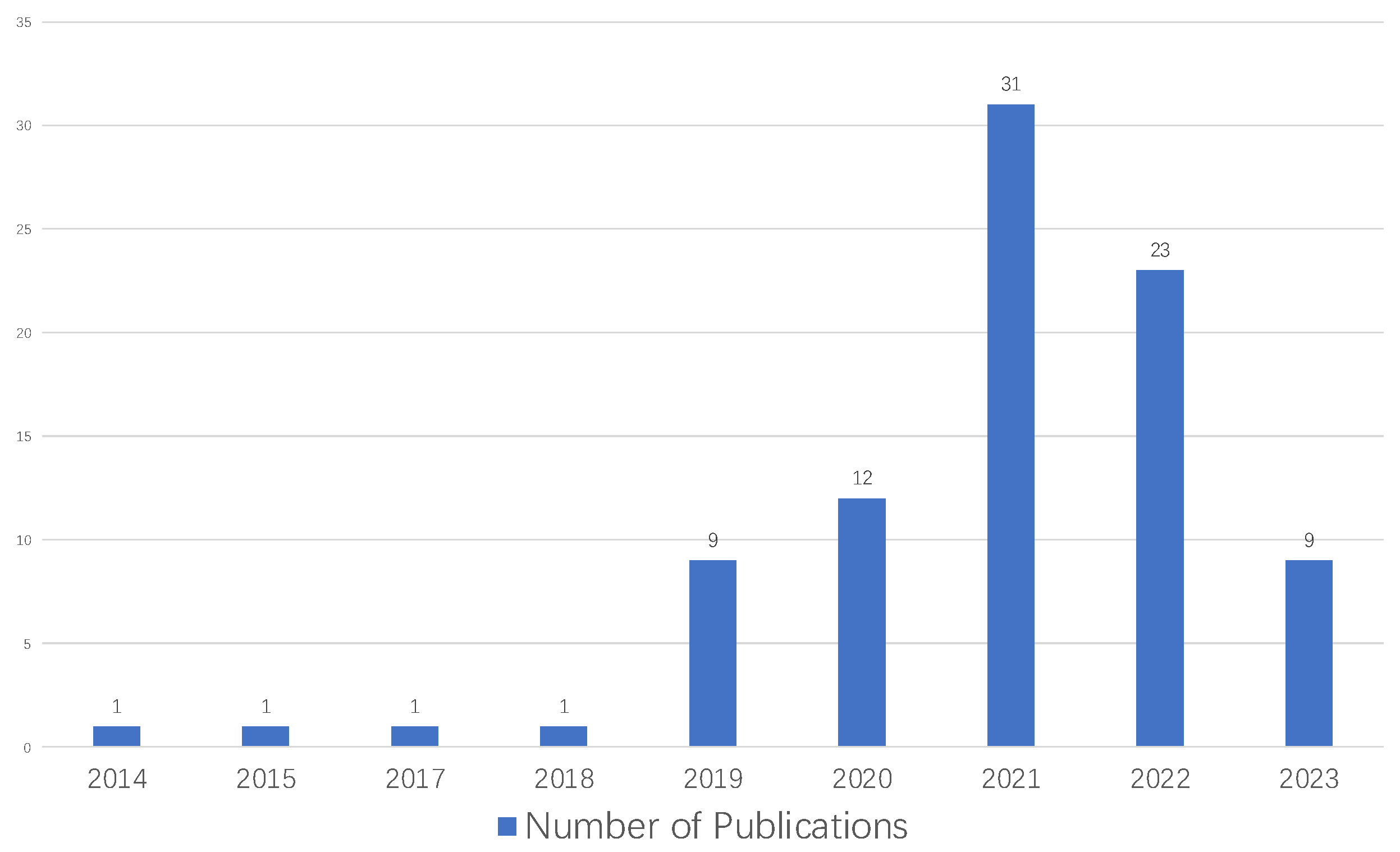
Figure 5.
Contribution Types.
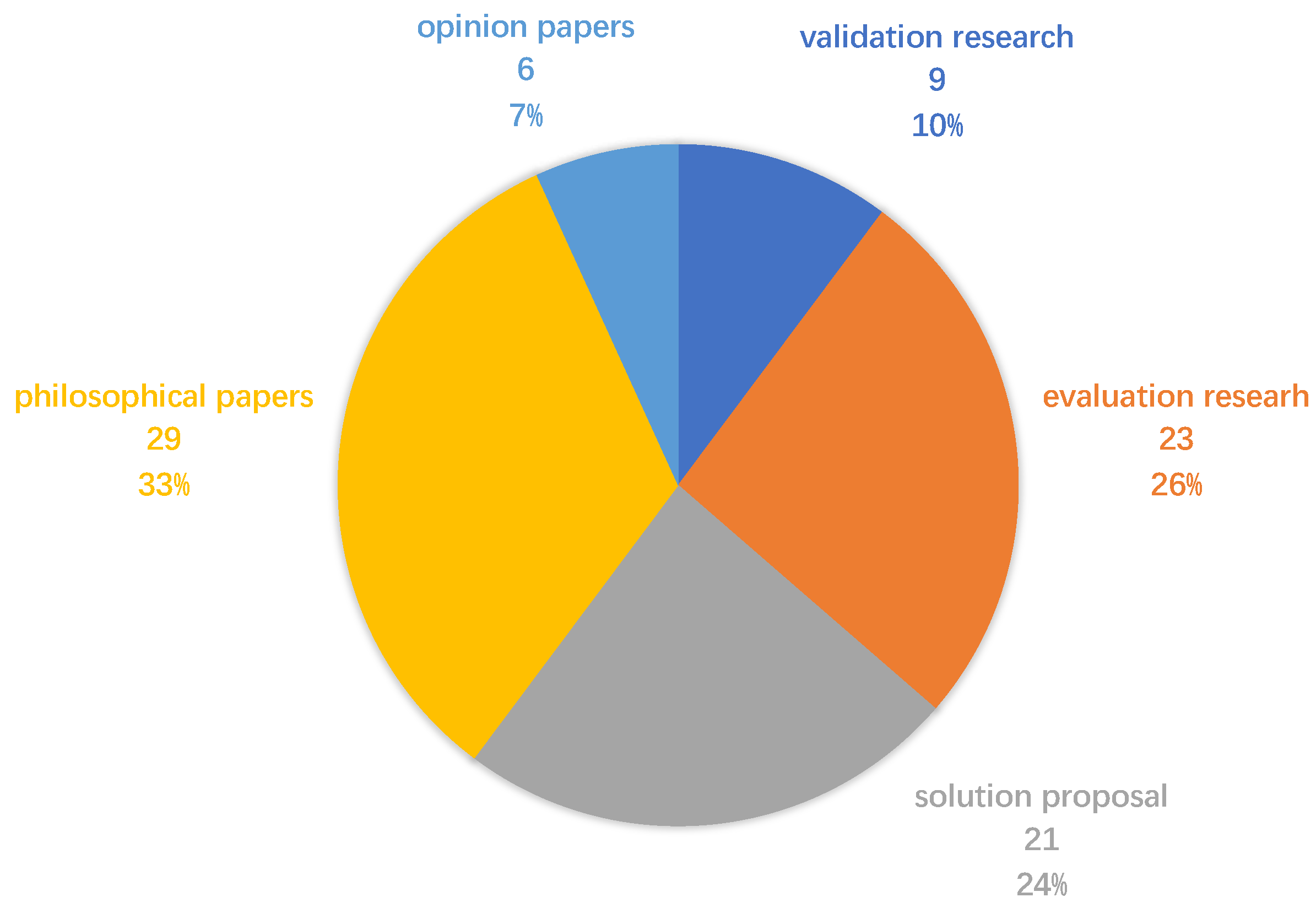
Figure 6.
Contribution Type by Year.
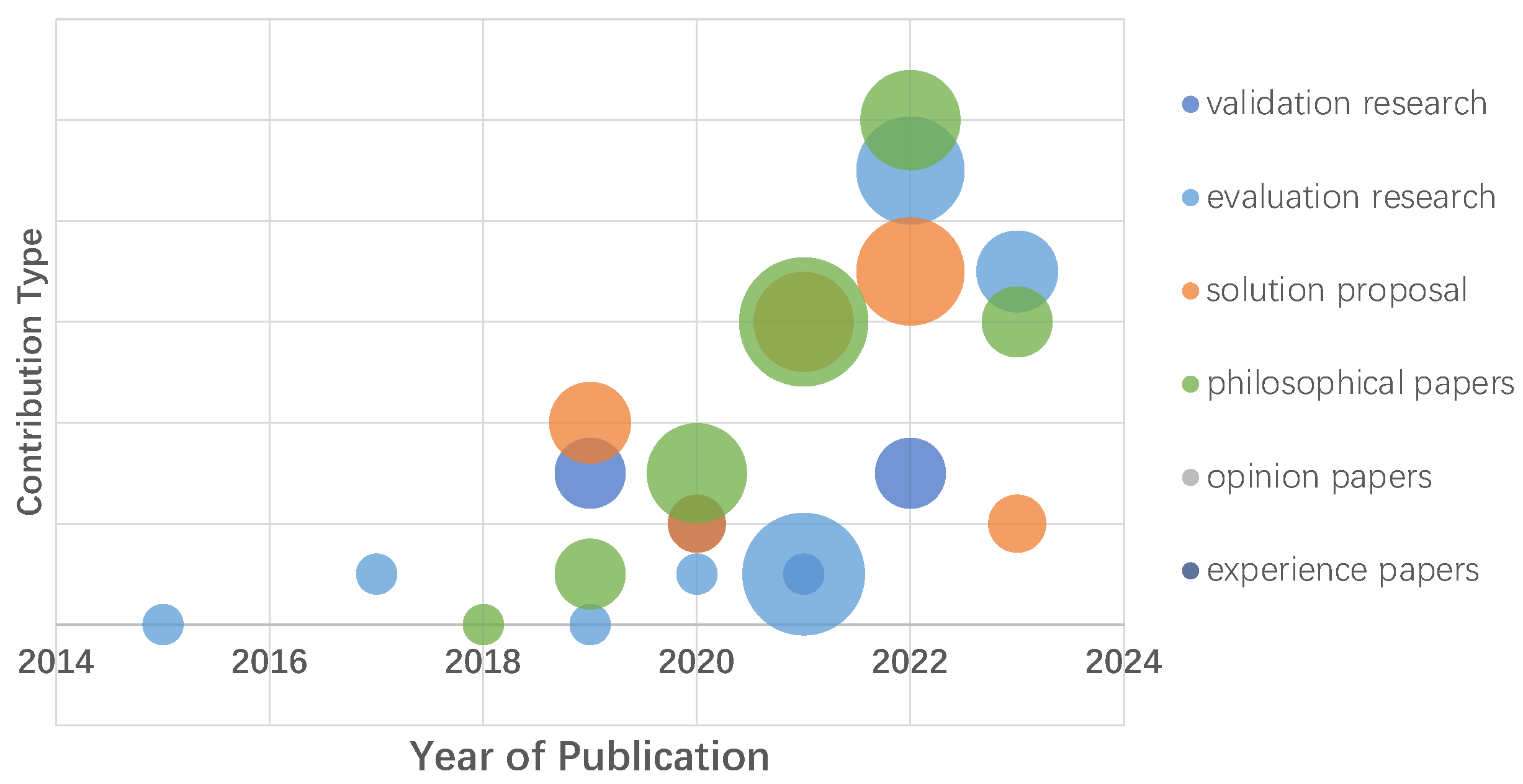
Figure 7.
Litmaps Analysis.
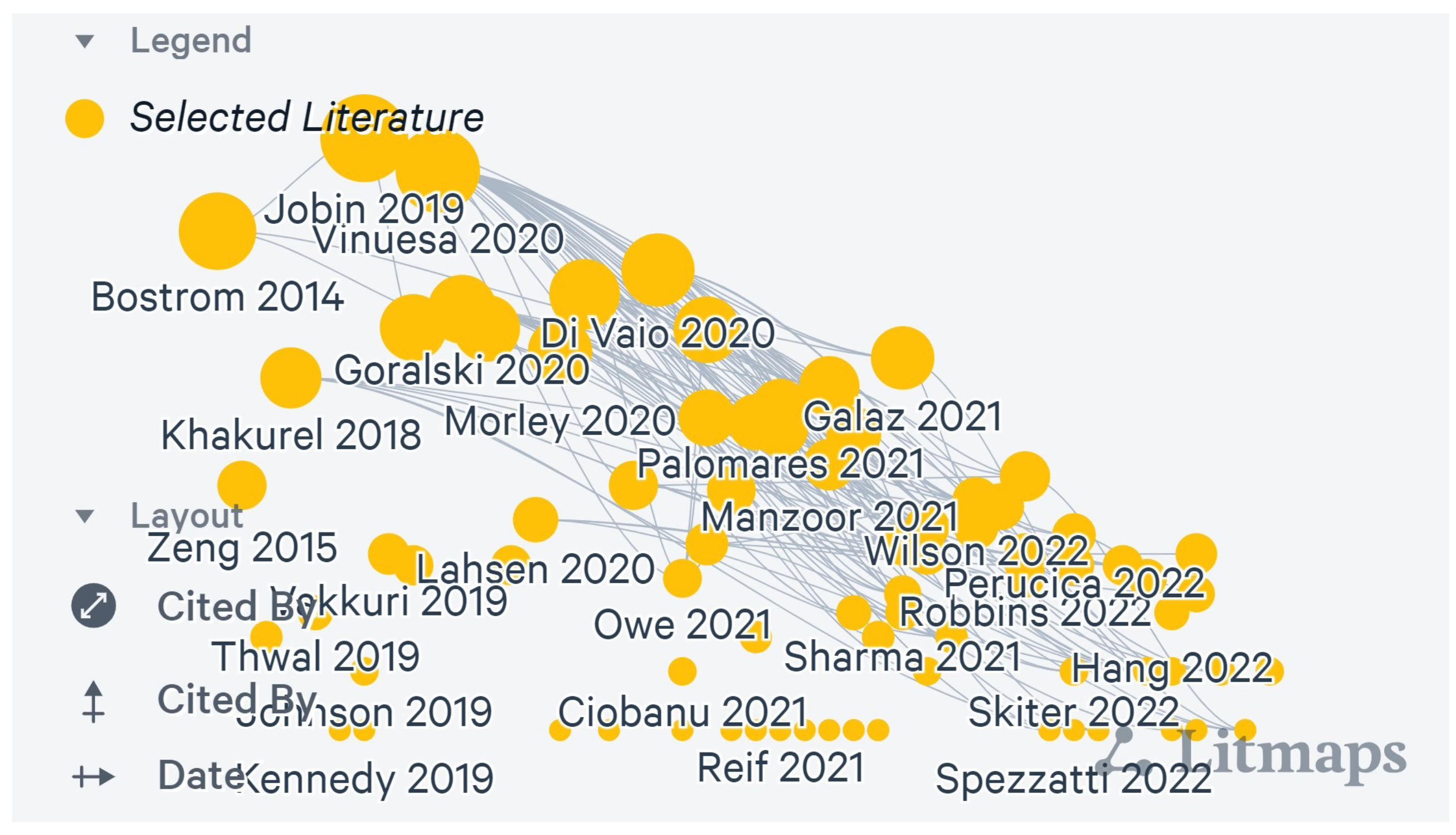
Figure 10.
Percentage Distribution of Authors in Different Research Fields.
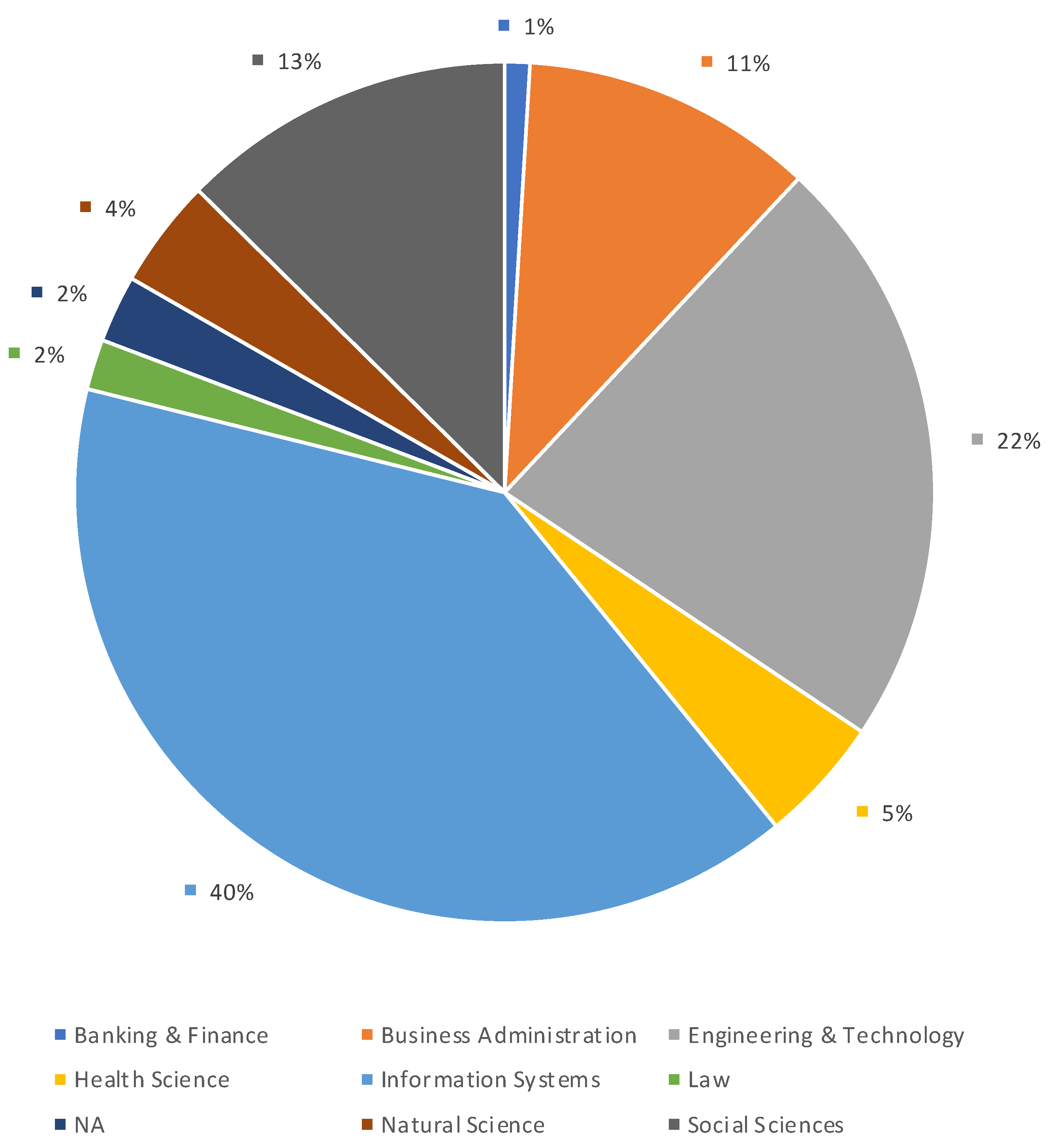
Figure 11.
Distribution of Empirical Papers by Year.
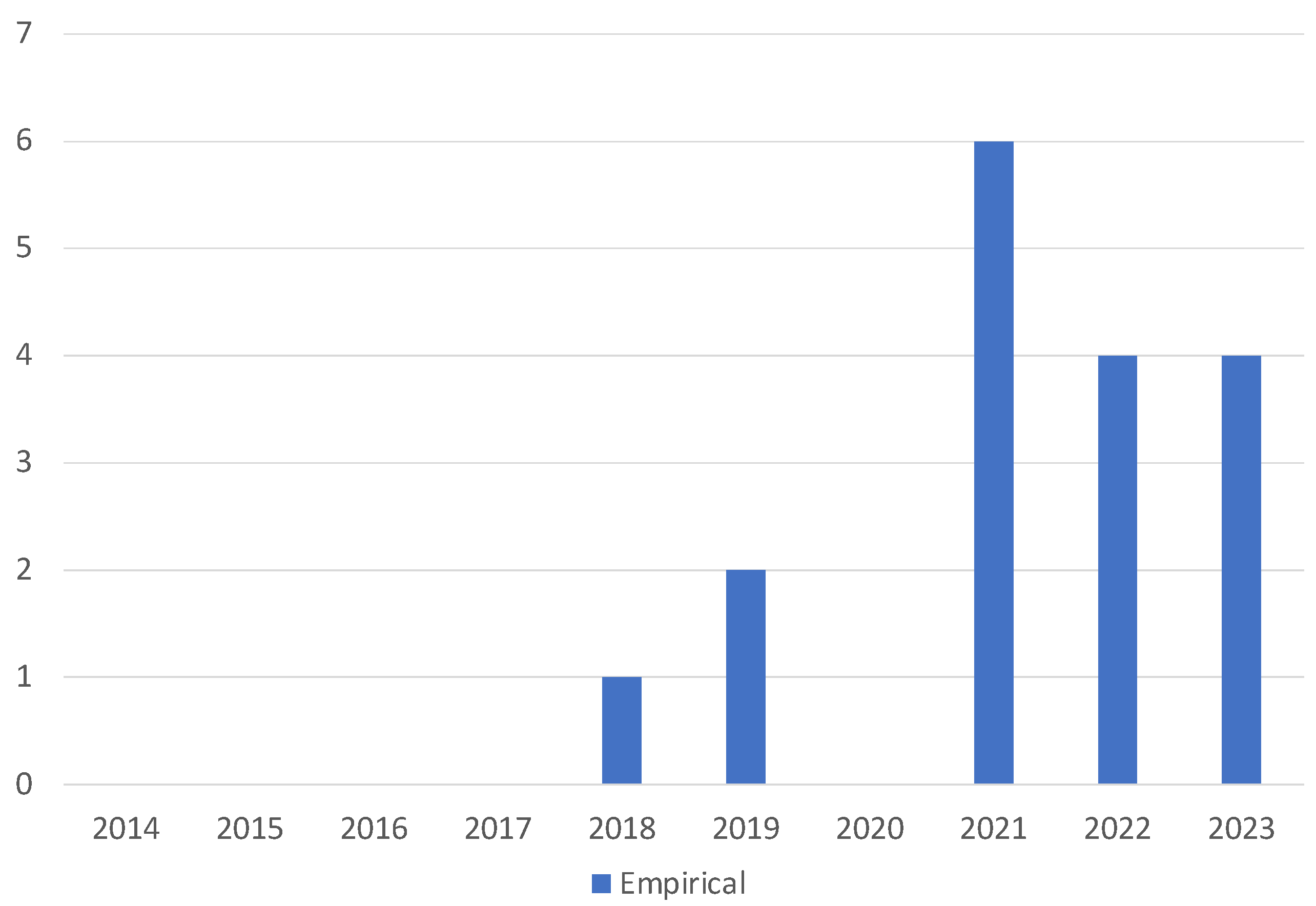
Figure 12.
Number of Papers by Year per Approach.
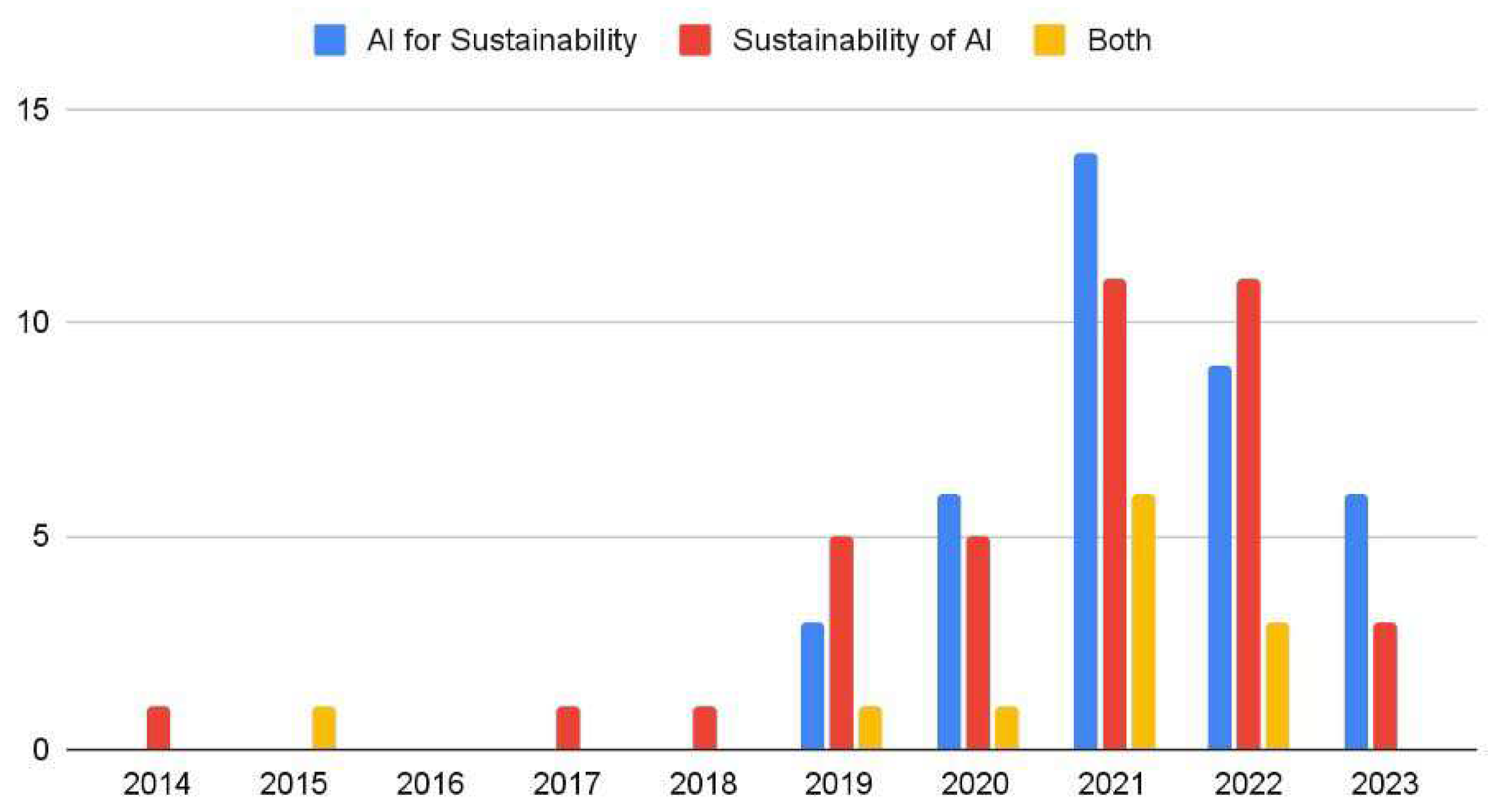
Figure 13.
Number of Papers by Year per Dimension.
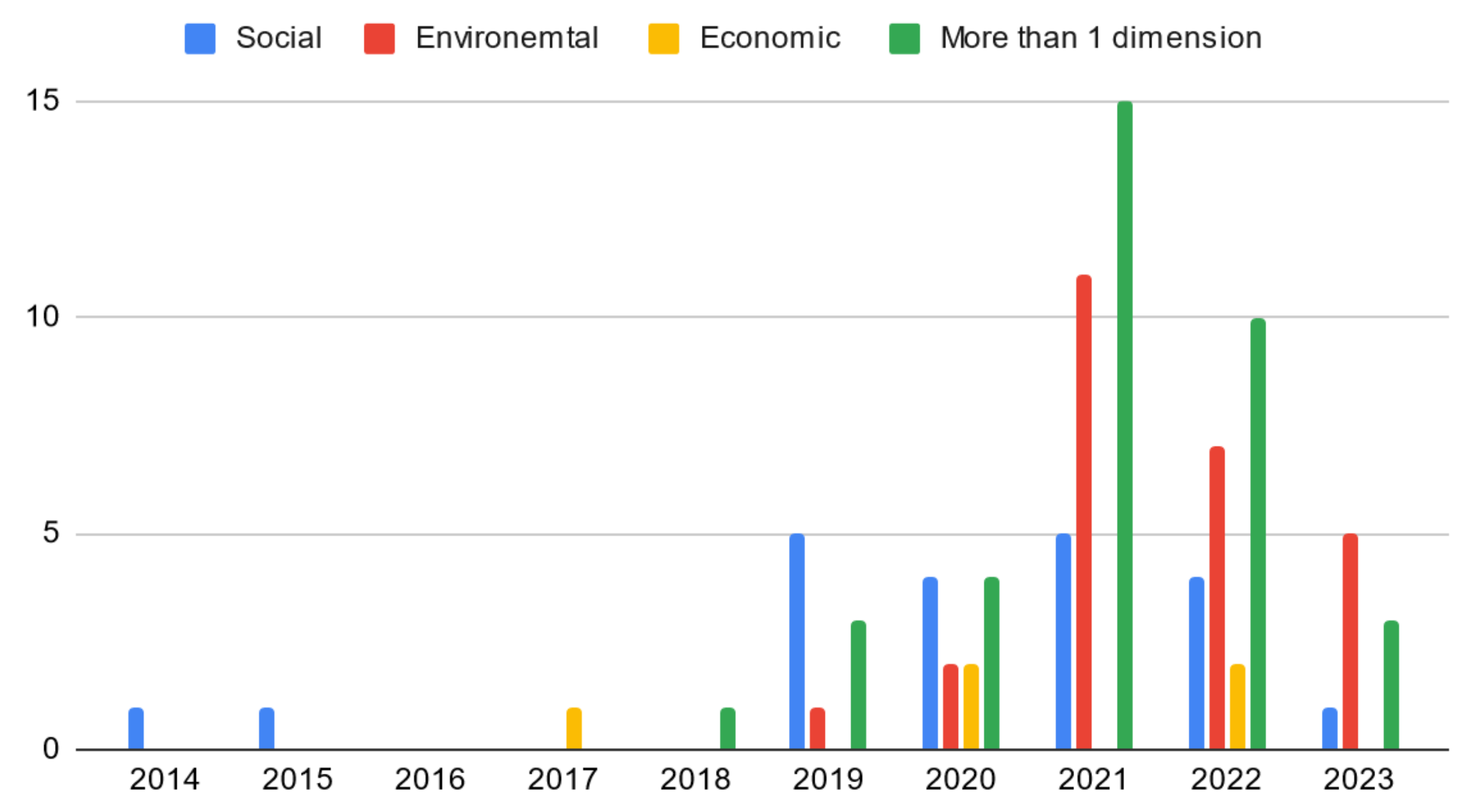

Table 1.
List of Selected Literature.
| No. | Title | Year | Author |
|---|---|---|---|
| 1 | The Ethics of Artificial Intelligence | 2014 | Bostrom and Yudkowsky [31] |
| 2 | AI Ethics: Science Fiction Meets Technological Reality | 2015 | Zeng [32] |
| 3 | Artificial Intelligence and Economic Growth | 2017 | Aghion et al. [33] |
| 4 | The Rise of Artificial Intelligence under the Lens of Sustainability | 2018 | Khakurel et al. [34] |
| 5 | Artificial Intelligence: the Global Landscape of Ethics Guidelines | 2019 | Jobin et al. [35] |
| 6 | Principles Alone Cannot Guarantee Ethical AI | 2019 | Mittelstadt [36] |
| 7 | AI Ethics in Industry: A Research Framework | 2019 | Vakkuri et al. [37] |
| 8 | AI Ethics for Systemic Issues: A Structural Approach | 2019 | van der Loeff et al. [38] |
| 9 | What Do Artificial Intelligence (AI) and Ethics of AI Mean in the Context of Research Libraries? | 2019 | Kennedy [39] |
| 10 | Technology Innovation and AI Ethics | 2019 | Johnson [40] |
| 11 | Edge AI based Waste Management System for Smart City | 2019 | Thwal et al. [41] |
| 12 | Economic impacts of artificial intelligence | 2019 | Szczepanski [42] |
| 13 | From What to How: An Initial Review of Publicly Available AI Ethics Tools, Methods and Research to Translate Principles into Practices | 2019 | Morley et al. [43] |
| 14 | Artificial Intelligence (AI) Ethics: Ethics of AI and Ethical AI | 2020 | Siau and Wang [44] |
| 15 | AI Ethics: How Can Information Ethics Provide A Framework To Avoid Usual Conceptual Pitfalls? An Overview | 2021 | Bruneault and Laflamme [45] |
| 16 | AI Ethics: A Strategic Communications Challenge | 2020 | Lawrence-Archer [46] |
| 17 | The Ethics Of AI In Health Care: A Mapping Review. | 2020 | Morley et al. [47] |
| 18 | Artificial Intelligence and Machine Learning in Waste Management and Recycling | 2020 | Ahmed and Asadullah [48] |
| 19 | Artificial Intelligence For Sustainability: Challenges, Opportunities, And A Research Agenda | 2020 | Nishant et al. [12] |
| 20 | The Role Of Artificial Intelligence In Achieving The Sustainable Development Goals | 2020 | Vinuesa et al. [23] |
| 21 | Should AI Be Designed To Save Us From Ourselves? | 2020 | Lahsen [49] |
| 22 | Academic Policy Regarding Sustainability and Artificial Intelligence (AI) | 2020 | Tanveer et al. [50] |
| 23 | Artificial Intelligence And Sustainable Development | 2020 | Goralski and Tan [51] |
| 24 | Artificial Intelligence And Business Models In The Sustainable Development Goals Perspective: A Systematic Literature Review | 2020 | Di Vaio et al. [52] |
| 25 | The Impact of Digitalization on the Economy: A Review Article on the NBER Volume "Economics of Artificial Intelligence: An Agenda" | 2020 | Santor [53] |
| 26 | Application Of Artificial Intelligence On The CO2 Capture: A Review | 2021 | Cao [54] |
| 27 | The Mutual Benefits Of Renewables And Carbon Capture: Achieved By An Artificial Intelligent Scheduling Strategy | 2021 | Chen et al. [55] |
| 28 | AI Ethics: A Call To Faculty | 2021 | Nourbakhsh [56] |
| 29 | A High-Level Overview of AI Ethics | 2021 | Kazim and Koshiyama [57] |
| 30 | AI Ethical Bias: A Case For AI Vigilantism (Ailantism) In Shaping The Regulation of AI | 2021 | Nwafor [58] |
| 31 | Ethical Review in The Age of Artificial Intelligence | 2021 | Heo [59] |
| 32 | AI Ethics In Business – A Bibliometric Approach | 2021 | Ciobanu and Meșniță [60] |
| 33 | Artificial Intelligence: Ethical And Social Considerations | 2021 | Corea [61] |
| 34 | Artificial Intelligence Based E-Waste Management For Environmental Planning | 2021 | Chen et al. [62] |
| 35 | AI Waste Prevention: Time and Power Estimation for Edge Tensor Processing Units | 2021 | Reif et al. [63] |
| 36 | Emerging Role Of Artificial Intelligence In Waste Management Practices | 2021 | Sharma and Vaid [64] |
| 37 | Towards Artificial Intelligence In Urban Waste Management: An Early Prospect For Latin America | 2021 | Bijos et al. [65] |
| 38 | Sustainable AI: AI for Sustainability And The Sustainability Of AI | 2021 | Van Wynsberghe [10] |
| 39 | Artificial Intelligence, Systemic Risks, And Sustainability | 2021 | Galaz et al. [26] |
| 40 | Artificial Intelligence In Research And Development For Sustainability: The Centrality Of Explicability And Research Data Management | 2022 | Hermann and Hermann [66] |
| 41 | AI in Context and the Sustainable Development Goals: Factoring in the Unsustainability of the Sociotechnical System | 2021 | Sӕtra [67] |
| 42 | Assessing Whether Artificial Intelligence Is An Enabler Or An Inhibitor Of Sustainability At Indicator Level | 2021 | Gupta et al. [68] |
| 43 | The Ethics of Sustainability for Artificial Intelligence | 2021 | Owe and Baum [69] |
| 44 | Sustainability Challenges of Artificial Intelligence and Policy Implications | 2021 | Rohde et al. [70] |
| 45 | Sustainable AI: Environmental Implications, Challenges and Opportunities | 2022 | Wu et al. [71] |
| 46 | Artificial Intelligence for Sustainable Energy: A Contextual Topic Modeling and Content Analysis | 2021 | Saheb and Dehghani [72] |
| 47 | Greening the Artificial Intelligence for a Sustainable Planet: An Editorial Commentary | 2021 | Yigitcanlar [73] |
| 48 | A Panoramic View And Swot Analysis Of Artificial Intelligence For Achieving The Sustainable Development Goals By 2030: Progress And Prospects | 2021 | Palomares et al. [74] |
| 49 | Sustainable Artificial Intelligence: A Corporate Culture Perspective | 2021 | Isensee et al. [75] |
| 50 | Green Artificial Intelligence: Towards an Efficient, Sustainable and Equitable Technology for Smart Cities and Futures | 2021 | Yigitcanlar et al. [76] |
| 51 | Influence of Artificial Intelligence in Civil Engineering toward Sustainable Development—A Systematic Literature Review | 2021 | Manzoor et al. [77] |
| 52 | Artificial Intelligence-Driven Digital Technologies to the Implementation of the Sustainable Development Goals: A Perspective from Brazil and Portugal | 2021 | Pigola et al. [78] |
| 53 | Impact of AI on Environment | 2021 | Verma et al. [79] |
| 54 | Achieving Sustainability with Artificial Intelligence-A Survey of Information Systems Research | 2021 | Schoormann et al. [80] |
| 55 | Application of Disruptive Technologies on Environmental Health: An overview of artificial intelligence, blockchain and internet of things | 2021 | Kumar et al. [81] |
| 56 | Ethics of AI: A Systematic Literature Review of Principles and Challenges | 2021 | Khan et al. [82] |
| 57 | AI Ethics—A Bird’s Eye View | 2022 | Christoforaki and Beyan [83] |
| 58 | AI Ethics as Applied Ethics | 2022 | Hallamaa and Kalliokoski [84] |
| 59 | Artificial Intelligence Applications For Sustainable Solid Waste Management Practices In Australia: A Systematic Review. | 2022 | Andeobu et al. [85] |
| 60 | Artificial Intelligence with Earthworm Optimization Assisted Waste Management System for Smart Cities | 2023 | Rajalakshmi et al. [86] |
| 61 | How Can Artificial Intelligence Impact Sustainability: A Systematic Literature Review | 2022 | Kar et al. [13] |
| 62 | How To Realize The Full Potentials Of Artificial Intelligence (AI) In Digital Economy? A Literature Review | 2022 | Hang and Chen [87] |
| 63 | ECO2AI: Carbon Emissions Tracking Of Machine Learning Models As The First Step Towards Sustainable AI | 2022 | Budennyy et al. [88] |
| 64 | Is the future of AI Sustainable? A Case Study of the European Union | 2022 | Perucica and Andjelkovic [89] |
| 65 | A Survey on AI Sustainability: Emerging Trends on Learning Algorithms and Research Challenges | 2022 | Chen et al. [90] |
| 66 | Sustainable AI: An Integrated Model to Guide Public Sector Decision-Making | 2022 | Wilson and Van Der Velden [91] |
| 67 | Managing Sustainability Tensions in Artificial Intelligence: Insights from Paradox Theory | 2022 | Mill et al. [92] |
| 68 | Note: Leveraging Artificial Intelligence To Build A Data Catalog And Support Research On The Sustainable Development Goals | 2022 | Spezzatti et al. [93] |
| 69 | Towards Sustainable Artificial Intelligence: An Overview of Environmental Protection Uses and Issues | 2022 | Pachot and Patissier [94] |
| 70 | A Systematic Mapping of Artificial Intelligence Solutions for Sustainability Challenges in Latin America and the Caribbean | 2022 | Salas et al. [95] |
| 71 | A Framework to Analyze the Impacts of AI with the Sustainable Development Goals | 2022 | Si [96] |
| 72 | Our New Artificial Intelligence Infrastructure: Becoming Locked into an Unsustainable Future | 2022 | Robbins and Van Wynsberghe [97] |
| 73 | Special Issue “Towards the Sustainability of AI; Multi-Disciplinary Approaches to Investigate the Hidden Costs of AI” | 2022 | Van Wynsberghe et al. [98] |
| 74 | Artificial Intelligence and Poverty Alleviation: Emerging Innovations and Their Implications for Management Education and Sustainable Development | 2022 | Goralski and Tan [99] |
| 75 | A Review and Categorization of Artificial Intelligence-Based Opportunities in Wildlife, Ocean and Land Conservation | 2022 | Isabelle and Westerlund [100] |
| 76 | Sustainable Development of Enterprises in Conditions of Smart Ecology: Analysis of The Main Problems and Development of Ways to Solve Them, Based on Artificial Intelligence Methods and Innovative Technologies | 2022 | Skiter et al. [101] |
| 77 | Embedding Artificial Intelligence and Green Ideology in Formulating Corporate and Marketing Strategies | 2022 | Baqi et al. [102] |
| 78 | Artificial intelligence: Catalyst or Barrier on the Path to Sustainability? | 2022 | Kopka and Grashof [103] |
| 79 | On the Impact of Artificial Intelligence on Economy | 2022 | Solos and Leonard [104] |
| 80 | A Systematic Review of Green AI | 2023 | Verdecchia et al. [14] |
| 81 | AI Ethics Principles in Practice: Perspectives of Designers and Developers | 2023 | Sanderson et al. [105] |
| 82 | Waste Classification Using Artificial Intelligence Techniques:Literature Review | 2023 | Nasir and Aziz Al-Talib [106] |
| 83 | Shaping the Future of Sustainable Energy through AI-Enabled Circular Economy Policies | 2023 | Danish and Senjyu [107] |
| 84 | Artificial Intelligence for Waste Management in Smart Cities: a Review | 2023 | Fang et al. [108] |
| 85 | Deploying Digitalisation and Artificial Intelligence in Sustainable Development Research | 2023 | Leal Filho et al. [109] |
| 86 | Applications of Artificial Intelligence in Social Science Issues: a Case Study on Predicting Population Change | 2023 | Farahani [110] |
| 87 | Sustainable Development Goals Applied to Digital Pathology and Artificial Intelligence Applications in Low- to Middle-Income Countries | 2023 | Piya and Lennerz [111] |
| 88 | Research on the Impact of Artificial Intelligence Technology on Green Innovation | 2022 | Zhang [112] |
Table 2.
Overview of Papers on AI Sustainability.
| AI for Sustainability | Sustainability of AI | Both | Total | |
|---|---|---|---|---|
| Social | 3 | 15 | 3 | 21 |
| Economic | 2 | 2 | 1 | 5 |
| Environmental | 16 | 7 | 3 | 26 |
| Economic / Environmental | 3 | 1 | 0 | 4 |
| Economic / Social | 1 | 5 | 0 | 6 |
| Social / Environmental | 4 | 4 | 0 | 8 |
| Social / Economic / Environmental | 9 | 4 | 5 | 18 |
| Total | 38 | 38 | 12 | 88 |
Table 3.
Categorization Framework by Petersen et al. [113]
Table 3.
Categorization Framework by Petersen et al. [113]
| Category | Description |
|---|---|
| Validation Research | Techniques investigated are novel and have not yet been implemented in practice. Techniques used are for example experiments, i.e., work done in the lab. |
| Evaluation Research | Techniques are implemented in practice and an evaluation of the technique is conducted. That means it is shown how the technique is implemented in practice (solution implementation) and what are the consequences of the implementation in terms of benefits and drawbacks (implementation evaluation). This also includes identifying problems in the industry. |
| Solution Proposal | A solution for a problem is proposed, the solution can be either novel or a significant extension of an existing technique. The potential benefits and the applicability of the solution are shown by a small example or a good line of argumentation. |
| Philosophical Papers | These papers sketch a new way of looking at existing things by structuring the field in the form of a taxonomy or conceptual framework. |
| Opinion Papers | These papers express the personal opinion of somebody on whether a certain technique is good or bad, or how things should be done. They do not rely on related work and research methodologies. |
| Experience Papers | Experience papers explain what and how something has been done in practice. It has to be the personal experience of the author. |
Disclaimer/Publisher’s Note: The statements, opinions and data contained in all publications are solely those of the individual author(s) and contributor(s) and not of MDPI and/or the editor(s). MDPI and/or the editor(s) disclaim responsibility for any injury to people or property resulting from any ideas, methods, instructions or products referred to in the content. |
© 2023 by the authors. Licensee MDPI, Basel, Switzerland. This article is an open access article distributed under the terms and conditions of the Creative Commons Attribution (CC BY) license (http://creativecommons.org/licenses/by/4.0/).
Copyright: This open access article is published under a Creative Commons CC BY 4.0 license, which permit the free download, distribution, and reuse, provided that the author and preprint are cited in any reuse.


