

Submitted:
12 December 2023
Posted:
12 December 2023
You are already at the latest version
Abstract
Mineral extraction is one of the most important for the economies of different countries, and Brazil is one of the world's primary iron ore producers. Unfortunately, the dams are still the main problem, mainly in Minas Gerais, especially after the Fundão Dam rupture happened in 2015. Additionally, there is still a massive presence of buildings produced on earth throughout the Minas Gerais mining region, built from the 18th century to today. Investigating the potential of IOT to be incorporated into traditional earthen construction techniques in regions affected by dam ruptures presents a relevant and innovative research approach. In addition, the local reuse of these sediments should be the priority. Thus, the main objective of this work was to collect, characterize, and analyze the possibilities of application of these tailings to produce RE. XRD, XRF, granulometry, porosity, specific density, toxicity, and MEV/EDS were performed on the samples collected at three points. To analyze the soil-IOT compatibility, representative mixtures of RE were produced, and the specific mass, compaction, and compressive strength were performed. It was observed that the IoT samples have a high silica content and that the mixtures of IOT-soil, even without cement, reached compressive strength values above the current international standards.
Keywords:
mining wastes
; rammed earth
; toxicity
; mechanical analysis
1. Introduction
The mineral extraction activity is one of the most important for the economy of different countries. In this context, Brazil, Australia, and China are among the world's main iron ore producers [1]. According to data from IBRAM [2], Brazil's mining sector revenue reached R$ 209 billion in 2020. Iron ore was responsible for 66% of total revenue, with R$ 138 billion.
A significant portion of the occupation of Minas Gerais emerged in the 17th century due to gold exploration, which continued until the second half of the 18th century. The extraction of iron ore, starting in the 20th century, was the main factor that led industries such as Vale, Samarco, and Alcan to establish themselves in the region and intensely urbanize and occupy various municipalities.
For every ton of iron ore processing in Brazil, around 400 kg of tailings is generated [3]. One possible use of these tailings is the construction of mining dams, where these materials are disposed of as pulp or mud [4]. In Brazil, there are about 870 mining dams; of these, only 50% are included in the national dam safety policy [5].
Minas Gerais is a state in Brazil where the iron ore extraction industry is essential to economy. Starting in the 20th century, iron extraction in the state was the main factor that led industries such as Vale, Samarco, and Alcan to establish themselves in the region and intensely urbanize and occupy various municipalities. As a result of the operation of these companies in Minas Gerais, there are several tailings’ dams. Some dams have been uncharacterized in Minas Gerais since the last accident occurred in Brumadinho/MG, in 2019. Currently, 12 dams have already been uncharacterized [6].
1.1. Iron Ore Tailings
Unfortunately, the dams are still the main problem which mining companies face, especially after the rupture of the Fundão Dam, happened in 2015, in Bento Rodrigues (a sub-district of the municipality of Mariana, MG). This rupture caused the displacement of tailings and mud through the Gualaxo do Norte, Carmo, and Doce Rivers for 663 km. Thirty-nine municipalities were affected, most in Minas Gerais and three in Espírito Santo state [7]. The mud splashed for nearly 17 days [8] until it reached the Atlantic Ocean. Tailings strongly change the rivers' sediment composition and can lead to long-term contamination of biological specimens. Even after seven years, it is important to quantify changes in the ecosystem by observing the environment and characterization of sediment and soil samples in places that had had contact with the mud.
A large part of the tailings displaced by the Rio Doce was retained in the Risoleta Neves hydroelectric plant, also known as Candonga, located 113 km away from the Fundão dam, thus paralyzing its operation. The process of dredging, compaction, and transport to the stacking areas has been carried out by the Renova Foundation, since 2016, in the Gualaxo do Norte River and Risoleta Neves hydroelectric plant [9]. However, only in February 2023 the hydroelectric plant activities were resumed in the testing phase and may be released for commercial functions after this phase has been concluded. Another part of the tailings accumulated where the mud passed has transformed the relief, landscape, and local soil composition.
In this scenario, the search for new ways of tailings disposal from the iron mining process has been the focus of different research. Some studies point to the feasibility of inserting these samples in construction materials [10], such as applying iron ore tailings (IOT) as a substitute for natural fine aggregate [11]. Iron ore tailings have also been applied as a partial substitute for cement in concrete [12,13], in colored mortars [14] in the production of pigments for paints [15], in the manufacture of bricks [16,17], and the production of micro concretes [18] and as a precursor in the synthesis of geopolymers [19,20,21,22].
A deeper concern about their physicochemical properties is necessary before understanding how to use them and develop technologies using these wastes. The accumulated tailings in rivers, dredged and stocked, have been changed and can no longer be treated as dam tailings. It is important to understand that this material is a tailing sediment, so it is not possible to compare it with iron ore tailings taken from the dam [23].
Since the rupture that occurred in Mariana, characterization studies of the sedimented tailings have been carried out [24,25,26,27,28,29,30]. New characterization studies must be carried out because of the time that the material is in the environment, deposited in the soil and at the bottom of rivers as sediments. In addition, the local reuse of these sediments should be the priority, as it eliminates the environmental and economic impact of transporting this material and strengthens income generation with new products that can be consumed locally.
1.2. The Use of Wastes in Earthen Components
Earth has been a building material for thousands of years due to its abundance and widespread availability. It is found worldwide and can be utilized in different forms and consistencies. In addition to traditional use, the earth is a promising material that can offer sustainable solutions due to significant reductions in environmental impact, as well as economic benefits for building construction, as material extraction and transportation costs are minimized due to wide availability at construction sites. Furthermore, building with earth presents environmental benefits by requiring less energy, producing less waste, and reducing fossil fuel burning during production, reducing greenhouse gas emissions such as carbon [31].
However, using earth as a building material may present challenges, especially regarding strength and durability. This is being overcome by incorporating other materials, which may be used as stabilizers to improve the properties of earth components and not affect the environmental impact, such as cement. Concerning contemporary earthen construction techniques, rammed earth stands out internationally [32]. Rammed earth (RE) is a construction technique with the earth of a monolithic nature, which consists of setting up wooden forms called rammed earth, similar to what is done with concrete, where soil is placed and must be compressed with a pestle or with the help of feet. This mixing process aims to obtain greater dough consistency. It is also known that the soil chosen must have a mixture of sand and clay to obtain greater agglutination and less chance of disintegration of the material [31,32].
For this construction type, the earth must be stabilized using binders, fibers or through mechanical efforts. Soil stabilization, in the case of architecture, means improving structural parameters, such as compressive strength and durability of the building [33]. Traditionally, farmyard manure, clay, or animal hair mixtures were used to produce more significant binding to the mixture [31].
When rammed earth is not stabilized, the walls may suffer damage caused by erosion and water ingress, which can cause cracks if not adequately protected. On the other hand, incorporating additives into the earth mixture makes the material more resistant. Some of them are lime, cement, or biopolymers, reducing the need for maintenance and repairs [32].
Several residual materials have been researched as soil stabilizers to produce rammed earth [32,34,35] and adobe [36,37] but not yet a sediment of IOT. Cementitious stabilization in rammed earth has been widely employed in recent years to improve its durability. Adding cement or lime as stabilizers increases the rammed earth's strength and reduce shrinkage and wall disintegration [32]. This has also been found to be more effective in reinforced rammed earth walls [38] preventing corrosion of the structural reinforcement. According to Kariyawasam and Jayasinghe [39], contents above 4% of cement are desirable for rammed earth construction in tropical climates, and they also suggest that the use of up to 10% cement as a stabilizer still results in lower embodied energy compared to ceramic brick construction.
Rammed earth construction stabilized with cement achieves values of one-third of the embodied energy of conventional masonry construction and less than one-quarter of the embodied energy of reinforced concrete construction [40]. Thus, rammed earth construction with low cement addition is considered sustainable [39]. According to Arrigoni et al. [32], incorporating cement as a stabilizer has increased the durability of rammed earth. However, life cycle analysis can be used to measure the environmental impact of this construction technique, particularly with the addition of clinker to rammed earth. Therefore, the author recommends using alternative materials to cement as stabilizers for rammed earth to achieve even lower embodied energy values [32].
Regarding waste materials, some studies indicate that the environmental impacts can be similar between unstabilized rammed earth and rammed earth stabilized with waste materials when the local soil is not suitable on its own [32]. Kosarimovahhed and Toufigh [41] and Giuffrida, Camponetto, and Cuomo [42] pointed out the importance of using waste materials to stabilize soil for rammed earth construction so that the technique continues to be considered low impact. Moreover, the use of waste materials to improve the properties of rammed earth has already been presented by several authors, including fly ash, calcium carbide, and steel slag.
Investigating the potential of IOT sediment as a material to be incorporated into traditional earth construction techniques in regions affected by dam ruptures presents a relevant and innovative research approach. Such relevance is justified by the possibility of reconstructing damaged buildings using the same previous techniques, thus preserving the region's traditional construction.
The region of Mariana and Ouro Preto is connected to the origin of the occupation of Minas Gerais, and the architecture of the colonial period was widely based on earth constructions. Of the 20 buildings present in the architectural collection of the urban complex of Mariana, listed by IPHAN [43], at least 14 buildings were built with earthen techniques, with the most prevalent of them being adobe and rammed earth. Regarding the buildings damaged by the collapse of the Fundão dam, approximately 50% were constructed using earth as a building material, employing techniques such as rammed earth, wattle and daub, and adobe [44].
Thus, earth architecture has always been present in cities still linked to iron ore production. Furthermore, the use of IOT has not been analyzed yet in association with the earth, such that examining its characteristics to support its use in earth components remains a gap that researchers in the field of iron ore waste reuse have not filled. So, the present work aimed to characterize the tailings sediment collected around Mariana, Barra Longa and Rio Doce seven years after the failure of the Fundão dam.
2. Materials and Methods
To investigate the possible application of the IOT sediments in the production of rammed earth, the experimental design of this work was divided into three steps: i) collection of IOT sediment and soil samples; ii) characterization of the materials; and iii) soil-IOT compatibility analysis for rammed earth production.
2.1. Materials Collection
The first step consisted of collecting IOT sediment samples in the three municipalities in Minas Gerais that suffered the worst effect from the Fundão dam rupture: Mariana, Barra Longa, and Rio Doce (Figure 1).
In Mariana, the samples (MA sample) were collected on the Gualaxo do Norte river’s bank, just below the municipality of Bento Rodrigues, the first to be affected by the mud. The second collection was carried out in the municipality of Barra Longa (BL sample), where the mud arrived through the Gualaxo do Norte River and invaded part of this city. Part of this sediment was dredged and stored at Alta Floresta Farm, located on the river’s bank, which became a surplus deposition and management area. The sediment was covered with a layer of soil for revegetation. Because of this, the samples were collected at a depth between 60 and 80 cm. The third collection point was in the Rio Doce (RD sample) municipality, where the mud reached the Carmo River (continuation of the Gualaxo do Norte) and the Risoleta Neves Hydroelectric Plant. The sediments dredged from that place were deposited at Floresta Farm, a surplus deposition and management area (Figure 2).
All three IOT samples were placed in closed containers for transport. Soil samples were collected in the same region of Minas Gerais to analyze soil-IOT mixtures for rammed earth production. Soil samples were taken from areas belonging to deposits of clayey soil, the same soil characteristic of the region where the sediment samples were collected. This soil was chosen because of its proximity to the sediment collection site. The intention is to understand the viability of rammed earth production with this sediment once the soil-IOT geographic proximity is an important aspect of the investigation. Before the analysis, the soil and IOT sediment samples were dried in an oven for 24 hours to remove moisture and quartered for better representation.
2.2. Materials Characterization
In the second step, the samples of IOT sediment were analyzed by chemical, physical, and mineralogical tests to assess the sediment's characteristics, which is important to set after seven years of permanence in the environment.
The material samples' particle size was analyzed using the laser granulometry test to evaluate the behavior of IOT sediment samples in possible applications in earth components. The measurement range is from 0.04 to 2500 µm, using a laser granulometer, model Cilas 1190 Particle Size Analyzer. The specific surface and porosity analyses were performed using the BET method (adsorption of N2 at 77 K), which consists of determining the volume of adsorbed gas from the physical adsorption isotherm, determined experimentally. The surface area was obtained from the nitrogen adsorption curve (BET method), while the distribution and pore size can be obtained from the desorption isotherm. The equipment used was a BET model Autosorb IQ Quantachrome. The unit weight and air-void content tests were also carried out according to the Brazilian technical standard NM 45 [45], the density according to the Brazilian technical standard NM 23 [46] and the water absorption, according to the Brazilian technical standard NM 30 [47].
The identification and quantification of minerals and chemical components in IOT sediment samples were performed by X-ray Fluorescence (XRF) with the WDS Spectrometer, Philips PANalytical, PW-2404, with a 4 kW Rh tube. Tests were carried out to determine the inorganic constituents and evaluate the toxicity in the raw material, in addition to the analysis of the leached and solubilized extracts, in accordance with the recommendations of the Brazilian technical standards 10004, 10005 and 10006 [48,49,50], respectively.
X-ray Diffraction (XRD) analysis was performed to identify the mineral phases in the sediment samples. The equipment used was a Philips Panalytical diffractometer, system 1710. The conditions used were: CuKα radiation (𝝀 = 1.54), step of 0.06°/s between scanning ranges 10° to 90° at 2-theta angle (θ). The data obtained in X-ray Diffraction were processed using the Search Match software. In this software, the phases were identified, observing the characteristic diffraction patterns of each mineral and the relative intensity using the PDF-2 database of the International Center for Diffraction Data (ICDD).
The surface morphology of the IOT sediment samples was visualized by scanning electron microscopy (SEM) using the scanning electron microscope used as an FEG with FIB Nanofabrication System - Quanta FEG 3D FEI. Energy Dispersive X-ray spectrometry (EDS) was used to identify the elements present. For this, the samples were fixed on a carbon tape.
Soil samples were characterized using Atterberg limits tests (plasticity index), X-ray Diffraction, X-ray Fluorescence, and granulometry. For the determination of the soil liquidity limit, the parameters of the Brazilian NBR 6459 standard [51] were used, and the determination of the limit and the plasticity index followed the NBR 7180 [52] both with the previous drying of the samples in an oven.
In the particle size test carried out by simple sieving, it was observed that the maximum characteristic dimension was 2.40 mm and a fineness modulus of 2.90 mm. For particles smaller than 0.5 mm, a laser analysis was carried out using the equipment of a particle size analyzer at the Nuclear Technology Development Center at the Federal University of Minas Gerais. The laser granulometry results showed that the soil contains 3.95% clay and silt, with 80.65% sand. According to NBR 17014 [53] the values found are lower than ideal. However, a new granulometric analysis was carried out by sedimentation, following the NBR 7181 [54] through the combination of the sieving and sedimentation methods. First, 1.5 kg of each sample was separated, passed through a 2.0 mm sieve, washed, and dried in an oven at 105 ºC. After that, 70 g of the soil sample was taken for the test. The deflocculant used in this test was sodium hexametaphosphate.
2.3. Soil-IOT Compatibility Analysis
The IOT collected in Barra Longa (BL sample) was used to produce mixtures of soil-IOT aiming to produce RE. The BL sample was chosen because of its availability and the ease of collection, once this material is available to be used in any applications. Eight mixes were produced to analyze the mixture of IOT sediment and soil in the mixture for the rammed earth: one mix only with soil (T0-0); three mixes with soil and IOT sediment; and four mixes with cement CP II E (Portland composite cement, like CEM-III/A [55]) and IOT sediment. Cement was used in a fixed proportion of 5% in addition to the total mass.
The reference is related than the recommendations in the literature [56,57,58] which present the contents of 4% to 10% of cement as the most suitable for the stabilization of rammed earth or soil-cement blocks. Thus, it was possible to analyze mixtures with and without a binder addition. The sediment replaced the soil in groups G1 and G2. The water content varied due to the natural soil and sediment moisture and the ideal moulding consistency (Table 1).
The mixtures were moulded in cylindrical moulds with 10 cm in diameter and 20 cm in height, adapted to increase the height to obtain a greater number of layers, in a proportion of 1:2 (diameter/height). Therefore, the number of layers applied to mould the specimens was five. After preliminary analysis, 10 blows per layer were used for correct compaction, a value adapted from NBR 7182 [59] which presents 12 as the number of blows for the large cylindrical mould (proctor). All layers were scarified before starting the next layer.
The metal socket was adapted from NBR 12024 [60] and NBR 7182 [59] to standardize the compaction energy. The mass of the socket was 2500 ± 10 g in a height control device of drop (guide) of 305 ± 2 mm. After weighing, the mixture was carried out in a 60 L industrial mortar mixer. Water was added gradually, initially starting from an amount referring to the immediately previous moulding (with less sediment content), visually and tactilely analyzing the mixture until it reached the optimum humidity for moulding. After moulding, the specimens were immediately demoulded and placed on shelves in the open air, in a laboratory environment (open shed), under real conditions of local temperature and humidity (outdoors, only protected from rain). The specimens were not taken to chambers or greenhouses to not alter the analysis and to be as close to the curing of rammed earth under real production conditions [61].
Six specimens were moulded for each mixture, and the curing period was 28 days. At 21 days, the specimens had their mass measured and were capped with a homogeneous mixture of cement and water to obtain smooth and uniform tops for the compressive strength test, according to NBR 12025 [62]. It was carried out with a semi-automatic hydraulic press, with a loading speed of up to 1,00 KN/min. The analysis of results was based on the Brazilian technical standard NBR 7215 [63]. The average of the individual strength values of the specimens was calculated in MPa. After finding an average, it was necessary to calculate the maximum relative deviation (MRD). When it is greater than 6%, it is necessary to calculate a new average, disregarding the outlier and persisting the calculated value until reaching the MRD value ≤ 6% [63].
3. Results
3.1. IOT Samples Characterization and Analysis
In this item, the results of the sample characterization test. Figure 3 shows the granulometric curves of the IOT sediment samples from Mariana (MA sample), Rio Doce (RD Sample), and Barra Longa (BL Sample).
Through the curves obtained, it is possible to observe that both samples have sandy characteristics with an insignificant portion of clay. According to Figueiredo et al. [28], this fact is associated with the composition of the tailings from the Fundão Dam, which was a mixture of sandy tailings and mud. The diameters varied between 1 and 200 μm, with greater predominance in a range close to 15 μm and 100 μm. Such values are consistent with those obtained in other works of characterization of the tailings from the rupture of the Fundão dam carried out by other authors [24,25,28].
Figure 4 shows the isotherm curves of the sedimented tailings samples, obtained by the analysis of nitrogen adsorption and desorption. According to other works found in the literature, the isotherms obtained have a type II profile. According to IUPAC (International Union of Pure and Applied Chemistry), these curves are characteristics of non-porous or macroporous materials [64].
It is possible to see the presence of narrow and inclined hysteresis, classified as H3 type, indicative of non-rigid aggregates of lamellar particles, mainly mesopores/macropores in the form of slits or parallel plates [65,66]. Table 2 presents the specific surface area and porosimetry and it is possible to observe all the samples are similar regarding the pore volume and diameter values. As expected for this type of sample, the specific surface area values were low and similar. Such results are compatible with other studies carried out with ore tailings. Almeida et al. [25] found specific surface area (SSA), and silt and clay size values, of 5.25, 5.66 and 20.77 m2 g−1, respectively.
Table 3 shows the results obtained in the specific mass, unit mass, void index and water absorption tests. Comparing the specific mass values found with the other results [67,68] it is possible to attest that they are compatible with silica-rich tailings with lower concentrations of iron due to the density closest to sand, which is 2.65 g/cm3. These results are consistent with those found in the mineralogical analysis, which showed quartz as the most present mineral in the samples, directly interfering with the specific mass results. The values obtained for the void ratio were similar. Relating to the characteristic granulometry of iron ore tailings, which presents a high concentration of particles of the same size, representing a uniform granulometric curve, a relatively high void volume index might be expected.
The values obtained in the water absorption test showed that the tailings from Mariana (MA sample) and Rio Doce (RD sample) have a low rate of water absorption, which is expected for tailings composed mainly of silica. The Barra Longa tailings (BL sample) showed a higher water absorption rate than the other samples, which may be related to clay minerals in the sample. Additionally, the BL sample showed a lower value of specific mass, which attests to the higher presence of clay minerals in the sample. According to Taiz et al. [69], clayey soils retain a higher water content than sandy soils due to the larger surface area and smaller pores between particles. This statement can be confirmed by the specific surface area results obtained and shown in Table 2.
Table 4 presents the results obtained from the XRF analyses. The oxides found in the samples match the mineralogical phases obtained by XRD. Furthermore, among the oxides found in the sedimentary tailings samples, the highest concentrations are quartz (SiO2) and hematite (ɑ-Fe2O3). According to other authors [29,70], quartz and hematite are the main mineral components of tailings from the Fundão dam. Traces of manganese oxide, zinc, chromium, and sodium were also found.
Due to the possibility of contamination of these samples in the environment, since the rivers Gualaxo do Norte, Carmo, and Doce have been used, over the decades, for gold mining during the colonial period in Brazil, assays for the determination of inorganic constituents in the raw material, in addition to analysis of the leached and solubilized extracts are shown to be extremely important. The possibility of contamination was raised at the time of the accident [8,24,71] but after five years, the pollutant load of these rivers may have been concentrated or dispersed, which may have impacted on the composition of these sediments.
Through the data obtained by the tests of determination of heavy metals in raw material and obtaining of leached and solubilized extracts, it was observed that the leaching and solubilization tests of metals (inorganic) presented results with values below the maximum limits prescribed by NBR 10004 standard [48]. The leaching and solubilization tests of volatile and semi-volatile organics showed null results, i.e., below the detection limits of the technique adopted and below the maximum limits prescribed by NBR 10004 [48]. Because of that, the data indicates that all the collected sediment tailings samples can be classified as Class II B - Non-Hazardous Inert [48].
The X-ray diffractograms obtained from the sedimented tailings samples can be seen in Figure 5. It was possible to observe the great similarity between the diffractograms of the analysed samples, with a predominant presence of Quartz phases, SiO2 (ICDD - 46-1045); Hematite, α - Fe2O3 (ICDD - 33-664); Goethite, α - FeO(OH) (ICDD - 74-2195); and Kaolinite, Al2Si2O5(OH)4 (ICDD - 80-885). Although the intensity of the peaks of each mineral does not represent the amount, it can indicate which mineral is more present in the sample.
This result is consistent with those found in the literature [25,29,67,72,73,74] confirming the results obtained in the X-ray Fluorescence analysis. XRD analysis also allows to evaluate the amorphicity of the samples, which would make this material suitable for use as a pozzolanic mineral addition, which would increase the durability of cementitious matrices [75] or as a precursor in alkali-activated materials [19,22,76]. A crystalline material, as shown in the sedimented tailings samples, however, may have its reactivity improved through grinding and calcination [77,78,79] depending on its use.
The images obtained through scanning electron microscopy (SEM) analysis may be seen in Figure 6. Through the images, it was possible to observe that the particle size is compatible with the results obtained by laser granulometry, with a maximum diameter close to 200 μm. These results agree with other researchers [24,25] who found these same characteristics for sedimented tailings from the Fundão dam failure.
It is also possible to identify the presence of prismatic particles with sharp edges, presenting edges and vertices, and the presence of tabular and granular particles. According to Shettima et al. [12] and Zhao et al. [80], the particles of the first type may be associated with quartz particles. Particles of the second type may indicate the presence of hematite particles [72,75] According to Dedavid et al. [81], the contrast of the images is related to the atomic number of the elements present in the sample. Thus, through the images obtained, it can be affirmed that quartz particles have larger granulometry when compared to ferrous mineral particles.
In the picture generated for the samples from Rio Doce and Mariana, it is possible to observe particles with rough and angular surfaces, which is expected for a material obtained during mineral processing, with comminution steps [28]. In BL sample, it was possible to perceive a smaller number of particles of ferrous minerals represented by the light gray color. This can also be seen with the help of EDS images. It also shows predominantly dark-colored particles characteristic of quartz.
In general, the sedimented tailings samples were similar. Traditionally, however, Brazilian IOT, collected in dams, still has a high amount of iron [72,75] due to the still inefficient extraction processes practiced 30-40 years ago.
Through the characterization, it can be observed that this material, when exposed to the weather, underwent significant changes over time. Even so, it is a material stored for future use, as its permanence in the places where it is found changes the landscapes, the soil, and the waters, as reported by Brazilian researchers in post-accident publications [8,29,30,70,82].
3.2. Soil-IOT Compatibility to Produce RE
Table 5 shows the soil samples characteristics. It was found that the clay contents and sand were quite different, with soil with a high clay content and fine particles. In this way, the need to correct the soil with the IOT-S became even more evident.
As it was carried out before the launch of the Brazilian rammed earth standard [53] the results of the physical characterization of the soil were based on the parameters of the soil-cement standards and adobe, as well as recommendations from scientific literature, which determine values between 35% and 45% for the liquidity limit and between 7% and 30% for the plasticity index [83]. In this sense, the results demonstrate that the soil analysis could benefit from stabilization since its value for the liquidity limit exceeds the recommendation.
The results of the compressive strength test are presented in Table 6. From the values obtained, it is possible to infer that the addition of 5% cement to the soil and the stabilization with IOT proved to be adequate in comparison to the reference values (T0-0), which do not have the addition of any component. For the mixtures without the addition of cement, only with IOT, it was observed that the compressive strength values increase as there is an increase in the replacement of soil by sedimented tailing, in proportions of 10%, 20%, and 40%.
Regarding the compressive strength values found in the literature, it is important to say that the reference trace (T0-0), only with unstabilized soil, is outside the parameters of what is considered satisfactory for rammed earth, while the values of samples stabilized with IOT are within the recommended range. The adopted values range from 1.0 MPa to 2.0 MPa [61,84] for the compressive strength of rammed earth and earth constructions. In other research [85] the results were between 1.0 and 2.5 MPa, consistent with the present study.
With the addition of cement, Eusébio [86] used a content of 7% of the stabilizing material and obtained compressive strength greater than 2.0 MPa. Jayasinghe & Kamaladasa [87] analyzed the compressive strength of rammed earth walls stabilized with cement contents in the range of 6.8 and 10% and observed that the stabilizing action of cement is more effective for sandy soils. However, they still obtained high resistance values for clayey soils.
It is important to point out that the highest values were for the mix with the highest amount of IOT (T40-0), which reached 1.80 MPa, followed by the mix with IOT and cement (T40-5). Because of that, there is a tendency to adequately stabilize with only IOT, without the addition of cement, which has been more effective, especially at higher levels of IOT addition (40%).
Finally, the Peruvian technical standard E.080 [88] and the NZS 4297 standard [89] present values of 1.0 MPa and 0.50 MPa, respectively, for compressive strength. In other words, the results found in this research are superior to the recommendations, including the Brazilian standard [53] even though this study was developed before its launch.
The study showed a positive interaction between the soil, collected at MRBH, and the IOT collected in the Mariana region. This is probably due to the rocky origin common to both materials. The advantages can be seen, especially concerning the compressive strength of the rammed earth stabilized with IOT, without cement, compared to the rammed earth cylindrical specimens without any stabilization.
4. Discussion
Characterizing iron mining waste disposed in the environment is of fundamental importance for its correct use and recovery. The analysis carried out with samples of sedimented tailings from the three cities most impacted by the accident made it possible to see that the IOT is a crystalline material with a high silica content. The quartz content and specific surface area/grain size vary depending on the collection site. The compressive strength initial results indicate the possibility of using this material as a physical stabilizer to produce earthen components, as RE, without cement or lime addition, which may contribute to a less environmental impact. Furthermore, since the samples collected were classified as non-hazardous materials, IOT can be used by communities to reconstruct their buildings. Using IOT as an inert material to produce traditional earthen constructions can be aligned with social sustainability and innovation of the earth's construction techniques.
Author Contributions
Conceptualization, SB, and MTA; methodology, SB, MTA, FL, RL, and APT; investigation, MD, GL, IM, RG, RL, FL, and APT; writing - original draft preparation, SB, GL, and MD; writing - review and editing, MTA; visualization, MTA; project administration, SB, and MTA. All authors have read and agreed to the published version of the manuscript.
Funding
This research was funded by Minas Gerais Research Support Foundation - FAPEMIG [process APQ05495-18].
Data Availability Statement
Data on which this paper is based is available from the authors upon reasonable request.
Acknowledgments
The authors would like to express their gratitude to Minas Gerais State Research Foundation (FAPEMIG APQ05495-18), the National Council for Scientific and Technological Development (CNPq), to the Brazilian Federal Agency for Support and Evaluation of Graduate Education (Coordenação de Aperfeiçoamento de Pessoal de Nível Superior - CAPES) for their financial support in scientific initiation and master’s degree scholarships (Finance Code 001).
Conflicts of Interest
The authors declare no conflict of interest.
References
- U.S. GEOLOGICAL SURVEY. Mineral Commodity Summaries; U.S. Geological Survey, 2020; p. 89.
- IBRAM – Instituto Brasileiro de mineração. Riscos e Oportunidades de Negócios em Mineração e Metais no Brasil. 2021. Available online: https://ibram.org.br/wp-content/uploads/2021/04/Estudo-Mineracao-e-Metais_EY-e-IBRAM_Versao-050421.pdf. (accessed on 2 November 2021). (in portuguese).
- IPT - Instituto de Pesquisas Tecnológicas. Rejeitos de mineração. Available online: http://www.ipt.br/noticias_interna.php?id_noticia=1043%3E. (accessed on 11 June 2021). (in portuguese).
- IPEA – Instituto de Pesquisa e Economia Aplicada. Diagnóstico dos Resíduos Sólidos da Atividade de Mineração de Substâncias Não-Energéticas. Available online: https://repositorio.ipea.gov.br/bitstream/11058/7702/1/RP_Diagn%C3%B3stico_2012.pdf. (accessed on 2 November 2021).
- ANM – Agência Nacional de Mineração. Classificação de Barragens de Mineração. 2020. Available online: http://www.anm.gov.br/assuntos/barragens/plano-de-seguranca-de-barragens.
- O TEMPO. Vale começa obra para descaracterizar mais uma barragem a montante em MG. O Tempo, 17 mar. 2023. Available online: https://encurtador.com.br/gEHO8 (accessed on 25 April 2023).
- LACAZ, F. A. C.; PORTO, M. F. S.; PINHEIRO, T. M. M. Tragédias brasileiras contemporâneas: o caso do rompimento da barragem de rejeitos de Fundão/Samarco. Revista Brasileira de Saúde Ocupacional 2017, 42, 1–12. [Google Scholar] [CrossRef]
- GOMES, L. E. O.; CORREA, L. B.; SA, F.; NETO, R. R.; BERNARDINO, A. F. The impacts of the Samarco mine tailing spill on the Rio Doce estuary, Eastern Brazil. Marine Pollution Bulletin. 2017, 120, 28–36. [Google Scholar] [CrossRef] [PubMed]
- FUNDAÇÃO RENOVA. Retomada das Atividades na Fazenda Floresta. Available online: https://www.fundacaorenova.org/noticia/retomada-das-atividades-na-fazenda-floresta/ (accessed on 5 November 2021).
- ASSIS, D. M.; QUEIROGA, F. O. C. S.; MENDES, J. C. Utilização de rejeito de barragem de minério de ferro na fabricação de tijolos maciços. A revista científica da FaSaR 2018, 3, 191–200. [Google Scholar]
- CARRASCO, E. V. M.; MAGALHAES, M. D. C.; SANTOS, W. J. D.; ALVES, R. C.; MANTILLA, J. N. R. Characterization of mortars with iron ore tailings using destructive and nondestructive tests. Construction and Building Materials 2017, 131, 31–38. [Google Scholar] [CrossRef]
- SHETTIMA, A. U.; HUSSIN, M. W.; AHMAD, Y.; MIRZA, J. Evaluation of iron ore tailings as replacement for fine aggregate in concrete. Construction and Building Materials 2016, 120, 72–79. [Google Scholar] [CrossRef]
- YUNHONG, C.; FEI, H.; WENCHUAN, L.; RUI, L.; GUANGLU, L.; JINGMING, W. Test research on the effects of mechanochemically activated iron tailings on the compressive strength of concrete. Construction and Building Materials 2016, 118, 164–170. [Google Scholar] [CrossRef]
- MORAIS, C. F.; BELO, B. R.; BEZERRA, A. C. S.; LOURA, R. M.; PORTO, M. P.; BESSA, S. A. L. Thermal and mechanical analyses of colored mortars produced using Brazilian iron ore tailings. Construction and Building Materials 2021, 268, 121073. [Google Scholar] [CrossRef]
- GALVÃO, J. L. B.; ANDRADE, H. D.; BRIGOLINI, G. J.; PEIXOTO, R. A. F.; MENDES, J. C. Reuse of iron ore tailings from tailings dams as pigment for sustainable paints. Journal of Cleaner Production 2018, 200, 412–422. [Google Scholar] [CrossRef]
- LI, R.; ZHOU, Y.; LI, C.; LI, S.; HUANG, Z. Recycling of industrial waste iron tailings in porous bricks with low thermal conductivity. Construction and Building Materials 2019, 213, 43–50. [Google Scholar] [CrossRef]
- MENDES, B. C.; PEDROTI, L. G.; FONTES, M. P. F.; RIBEIRO, J. C. L.; VIEIRA, C. M. F.; PACHECO, A. A.; AZEVEDO, A. R. G. Technical and environmental assessment of the incorporation of iron ore tailings in construction clay bricks. Construction and Building Materials 2019, 227, 116669. [Google Scholar] [CrossRef]
- BESSA, S. A. L.; MIRANDA, M. A.; ARRUDA, E. A. M.; BEZERRA, A. C. S.; SACHT, H. M. Produção e avaliação de microconcretos com rejeito de minério de ferro para a fabricação de componentes construtivos. Materia-Rio de Janeiro 2022, 27, 1–14. [Google Scholar] [CrossRef]
- DEFÁVERI, K. C. S.; SANTOS, L. F.; CARVALHO, J. M. F.; PEIXOTO, R. A. F.; SILVA, G. J. B. Iron ore tailing-based geopolymer containing glass wool residue: A study of mechanical and microstructural properties. Construction and Building Materials 2019, 220, 375–385. [Google Scholar] [CrossRef]
- DUAN, P.; YAN, C.; ZHOU, W.; REN, D. Development of fly ash and iron ore tailing based porous geopolymer for removal of Cu (II) from wastewater. Ceramics International 2016, 42, 13507–13518. [Google Scholar] [CrossRef]
- KURANCHIE, F. A.; SHUKLA, S. K.; HABIBI, D. Utilization of iron ore mine tailings for the production of geopolymer bricks. International Journal of Mining, Reclamation and Environment 2016, 30, 92–114. [Google Scholar] [CrossRef]
- OBENAUS-EMLER, R.; FALAH, M.; ILLIKAINEN, M. Assessment of mine tailings as precursors for alkali-activated materials for on-site applications. Construction and Building Materials 2020, 246, 118470. [Google Scholar] [CrossRef]
- LAGE, G. T. L.; VIMIEIRO, J. I. C.; MATIAS, L. M.; COSTA, J. M.; BATISTA, G. E. F.; BESSA, S.A.L. Caracterização do sedimento de rejeito de minério de ferro para uso como estabilizante da taipa de pilão. In 4º Congresso Luso-Brasileiro de Materiais de Construção Sustentáveis, 2022, Salvador; Anais do 4º CLBMCS. Salvador: UFBA; 2022; pp. 620–633. [Google Scholar]
- SEGURA, F. R.; NUNES, E. A.; PANIZ, F. P.; PAULELLI, A. C. C.; RODRIGUES, G. B.; BRAGA, G. U. L.; PEDREIRA, W. D.; BARBOSA, F.; CERCHIARO, G.; SILVA, F. F.; BATISTA, B. L. Potential risks of the residue from Samarco's mine dam burst (Bento Rodrigues, Brazil). Environmental Pollution 2016, 218, 813–825. [Google Scholar] [CrossRef] [PubMed]
- ALMEIDA, C.A.; OLIVEIRA, A.F.; PACHECO, A.A.; LOPES, R.P.; NEVES, A.A.; QUEIROZA, M.E.L.R. Characterization and evaluation of sorption potential of the iron mine waste after Samarco dam disaster in Doce River basin – Brazil. Chemosphere 2018, 209, 411–420. [Google Scholar] [CrossRef]
- LI, R.; ZHOU, Y.; LI, C.; LI, S.; HUANG, Z. Recycling of industrial waste iron tailings in porous bricks with low thermal conductivity. Construction and Building Materials 2019, 213, 43–50. [Google Scholar] [CrossRef]
- MACHADO, M. S. M. M.; SANTOS, A. M. M.; FREIRE, C. B.; GUIMARÃES, A. C. P. D.; LAMEIRAS, F. S. Blocks for civil construction made with the sediment deposited in the Candonga Dam. Metallurgy and Materials 2019, 72, 105–111. [Google Scholar] [CrossRef]
- FIGUEIREDO, M. D.; LAMEIRAS, F. S.; ARDISSON, J. D.; ARAÚJO, M. H.; TEXEIRA, A. P. C. Tailings from Fundão Tragedy: Physical–Chemical Properties of the Material That Remains by Candonga Dam. Integr. Environ Assess Management 2020, 1–7. [Google Scholar] [CrossRef]
- COUTO, F. R.; FERREIRA, A. M.; PONTES, P. P.; MARQUES, A. R. Physical, Chemical and Microbiological Characterization of the Soils Contaminated by Iron Ore Tailing Mud After Fundão Dam Disaster In Brazil. Applied soil ecology 2021, 158, 103811. [Google Scholar] [CrossRef]
- DUARTE, E. B.; NEVES, M. A.; DE OLIVEIRA, F. B.; MARTINS, M. E.; DE OLIVEIRA, C. H. R.; BURAK, D. L.; ORLANDO, M. T. D.; RANGEL, C. V. G. T. Trace metals in Rio Doce sediments before and after the collapse of the Fundão iron ore tailing dam, Southeastern Brazil. Chemosphere 2021, 262, 127879. [Google Scholar] [CrossRef] [PubMed]
- MINKE, G. Manual de construção com terra: uma arquitetura sustentável; B4 Editores: São Paulo, 2015; (in Portuguese). 225p. [Google Scholar]
- ARRIGONI, A.; GRILLET, A.C.; PELOSATO, R.; DOTELLI, G.; BECKETT, C. T. S.; WOLOSZYN, M.; CIANCIO, D. Reduction of rammed earth’s hygroscopic performance under stabilization: an experimental investigation. Building and Environment 2017, 115, 358–367. [Google Scholar] [CrossRef]
- HOFFMANN, M. V.; MINTO, F. C. N.; HEISE, A. F. Taipa de Pilão. In Técnicas de construção com terra; NEVES, C., FARIA, O. B., Eds.; FEB-UNESP / PROTERRA: Bauru, 2011; pp. 46–60. (in Portuguese) [Google Scholar]
- DA ROCHA, C. G.; CONSOLI, N. C.; DALLA ROSA JOHANN, A. Greening stabilized rammed earth: Devising more sustainable dosages based on strength controlling equations. Journal of Cleaner Production 2014, 66, 19–26. [Google Scholar] [CrossRef]
- SIDDIQUA, S.; BARRETO, P. N. M. Chemical stabilization of rammed earth using calcium carbide residue and fly ash. Construction and Building Materials 2018, 169. [Google Scholar] [CrossRef]
- MUNOZ, P.; LETELIER, V.; MUNOZ, L.; BUSTAMANTE. Adobe bricks reinforced with paper e pulp wastes improving thermal and mechanical properties. Construction and Building Materials 2020, 254, 119314. [Google Scholar] [CrossRef]
- OLACIA, E.; PISELLO, A. L.; CHIODO, V.; MAISANO, S.; FRAZZICA, A.; CABEZA, L. F. Sustainable adobe bricks with seagrass fibres. Mechanical and thermal properties characterization. Construction And Building Materials 2020, 239, 117669. [Google Scholar] [CrossRef]
- MEEK, A. H.; BECKETT, C. T. S.; ELCHALAKANI, M. Reinforcement corrosion in cement and alternatively stabilised rammed earth materials. Construction and Building Materials 2021, 274. [Google Scholar] [CrossRef]
- KARIYAWASAM, K. K.G.K.D.; JAYASINGHE, C. Cement stabilized rammed earth as a sustainable construction material. Construction and Building Material 2016, 105, 519–527. [Google Scholar] [CrossRef]
- VENKATARAMA REDDY, B.; LEUZINGER, G.; SREERAM, V. S. Low embodied energy cement stabilised rammed earth building - A case study. Energy and Buildings. 2014, 68, 541–546. [Google Scholar] [CrossRef]
- KOSARIMOVAHHED, M.; TOUFIGH, V. Sustainable usage of waste materials as stabilizer in rammed earth structures. Journal of Cleaner Production 2020, 277. [Google Scholar] [CrossRef]
- GIUFFRIDA, G.; CAPONETTO, R.; CUOMO, M. An overview on contemporary rammed earth buildings: Technological advances in production, construction, and material characterization. In IOP Conference Series: Earth and Environmental Science; Institute of Physics Publishing, 2019. [Google Scholar]
- IPHAN. Inventário nacional de bens imóveis e sítios urbanos tombados; IPHAN: Brasília, v. 82 E-book; 2007; Available online: https://livraria.senado.leg.br/inventarionacional-de-bens-imoveis-e-sitios-urbanos-tombados-vol-82. (accessed on 22 January 2023).
- LAGE, G. T. L.; NOGUEIRA, J. A. W.; SARAIVA, S. H. M.; BESSA, S. A. L. Arquitetura de terra em regiões afetadas pelo rompimento da barragem de Fundão. In TerraBrasil 2022 - Congresso de Arquitetura e Construção com Terra no Brasil, 8., 2022, Florianópolis. Anais [...]; (in Portuguese). TerraBrasil: UFSC: Florianópolis, 2022; pp. 232–244. (in Portuguese) [Google Scholar]
- ABNT - Associação Brasileira de Normas Técnicas. NBR NM 45; Aggregates - Determination of the unit weight and air-void contends. Rio de Janeiro, 2006. (In Portuguese)
- ABNT - Associação Brasileira de Normas Técnicas. NBR NM 23; Portland cement and other powdered materials - determination of specific gravity. Rio de Janeiro, 2000. (In Portuguese)
- ABNT - Associação Brasileira de Normas Técnicas. NBR NM 30; Fine aggregate - Test method for water absorption. Rio de Janeiro, 2000. (In Portuguese)
- ABNT - Associação Brasileira de Normas Técnicas. NBR 10004; Solid waste – Classification. Rio de Janeiro, 2004. (In Portuguese)
- ABNT - Associação Brasileira de Normas Técnicas. NBR 10005; Procedure for obtention leaching extract of solid wastes. Rio de Janeiro, 2004. (In Portuguese)
- ABNT - Associação Brasileira de Normas Técnicas. NBR 10006; Procedure for obtention leaching extract of solid wastes. Rio de Janeiro, 2004. (In Portuguese)
- ABNT - Associação Brasileira de Normas Técnicas. NBR 6459Solo - Determinação do limite de liquidez, Rio de Janeiro, 2016. (In Portuguese)
- ABNT - Associação Brasileira de Normas Técnicas. NBR 7180; Solo - Determinação do limite de plasticidade. Rio de Janeiro, 2016. (In Portuguese)
- ABNT - Associação Brasileira de Normas Técnicas. NBR 17014; taipa de pilão: requisitos, procedimentos e controle. Rio de Janeiro, 2022. (In Portuguese)
- ABNT - Associação Brasileira de Normas Técnicas. NBR 7181; Solo – Análise granulométrica. Rio de Janeiro, 2018. (In Portuguese)
- BRITISH STANDARD. EN 197-1; Cement Composition, Specifications and Conformity Criteria for Common Cements. European Committee for Standardization: Brussels, 2011.
- GUETTALA, A., ABIBSI, A., & HOUARI, H. Durability study of stabilized earth concrete under both laboratory and climatic conditions exposure. Construction and Building Materials, 20, 119-127. [CrossRef]
- GRAMLICH, A. N. A concise history of the use of the rammed earth building technique including information on methods of preservation, repair, and maintenance. Tese. Eugene: University of Oregon.
- KHADKA, B. Rammed earth, as a sustainable and structurally safe green building: a housing solution in the era of global warming and climate change. Asian Journal of Civil Engineering, 21, 119–136. [CrossRef]
- ABNT - Associação Brasileira de Normas Técnicas. NBR 7182; Solo – Ensaio de compactação. ABNT: Rio de Janeiro, 2022. (In Portuguese)
- ABNT - Associação Brasileira de Normas Técnicas. NBR 12024; Solo-cimento - moldagem e cura de corpos-de-prova cilíndricos - Procedimento. Rio de Janeiro, 2012. (In Portuguese)
- CIANCIO, D.; JAQUIN, P.; WALKER, P. Advances on the assessment of soil suitability for rammed earth. Construction and Building Materials 2013, 42, 40–47. [Google Scholar] [CrossRef]
- ABNT - Associação Brasileira de Normas Técnicas. NBR 12025; Solo-cimento - Ensaio de compressão simples de corpos de prova cilíndricos - Método de ensaio. Rio de Janeiro, 2012. (In Portuguese)
- ABNT - Associação Brasileira de Normas Técnicas. NBR 7215; Cimento Portland - Determinação da resistência à compressão de corpos de prova cilíndricos. Rio de Janeiro, 2019. (In Portuguese)
- THOMMES, M.; KANEKO, K.; NEIMARK, A. V.; OLIVIER, J. P.; RODRIGUEZ-REINOSO, F.; ROUQUEROL, J.; SING, K. S. W. Physisorption of gases, with special reference to the evaluation of surface area and pore size distribution (IUPAC Technical Report). Pure and Applied Chemistry 2015, 87, 1051. [Google Scholar] [CrossRef]
- PENA, E. Q.; VIEIRA, C. B.; SILVA, C. A.; SESHADRI, V.; ARAÚJO, F. G. S. Caracterização de parâmetros de porosidade de concentrados de minérios de ferro pelo método de adsorção de nitrogênio. Tecnologia em Metalurgia e Materiais. 2008, 4, 53–57. [Google Scholar] [CrossRef]
- SING, K. S. W.; EVERETT, D. H.; HAUL, R. A. W.; MOSCOU, L.; PIEROTTI, R. A.; ROUQUÉROL, J.; SIEMIENIEWSKA, T. Reporting physisorption data for gas/solid systems with special reference to the determination of surface area and porosity. Pure Applied Chemistry 1985, 57, 603–619. [Google Scholar] [CrossRef]
- FONTES, W. C.; MENDES, J. C.; SILVA, S. N.; PEIXOTO, R. A. F. Mortars for laying and coating produced with iron ore tailings from tailing dams. Construction and Building Materials 2016, 112, 988–995. [Google Scholar] [CrossRef]
- SILVA, R. A.; SOARES, E.; OLIVEIRA, D. V.; MIRANDA, T.; CRISTELO, N. M.; LEITÃO, D. Mechanical characterisation of dry-stack masonry made of CEBs stabilised with alkaline activation. Construction and Building Materials 2015, 75, 349–358. [Google Scholar] [CrossRef]
- TAIZ, L.; ZEIGER, E. Plant Physiology, The Benjamim/ Cummings Publishing Company, Inc.: Redwood City, CA, USA, 1991.
- ORLANDO, M. T. D.; GALVÃO, E. S.; CAVICHINI, A. S.; RANGEL, C. V. G. T. R.; ORLANDO, C. G. P.; GRILO, C. F.; SOARES, J.; OLIVEIRA, K. S. S.; SÁ, F.; JUNIOR, A. C.; BASTOS, A. C.; QUARESMA, V. S. Tracing iron ore tailings in the marine environment: An investigation of the Fundão dam failure. Chemosphere 2020, 257, 127184. [Google Scholar] [CrossRef] [PubMed]
- HATJE, V.; PEDREIRA, R. M. A.; REZENDE, C. E.; SCHETTINI, C. A. F.; SOUZA, G. C.; MARIN, D. C.; HACKSPACHER, P. C. The environmental impacts of one of the largest tailing dam failures worldwide. Scientific Reports London: Nature Publishing Group. 2017, 7, 10706. [Google Scholar] [CrossRef]
- DAUCE, P. D.; CASTRO, G. B.; LIMA, M. M. F.; LIMA, R. M. F. Characterisation and magnetic concentration of an iron ore tailings. Journal of Materials Research and Technology 2019, 8, 1052–1059. [Google Scholar] [CrossRef]
- ANDRADE, L. C. R. de. Caracterização de rejeitos de mineração de ferro, in natura e segregados, para aplicação como material de construção civil. 2014. 96 f. Tese (Doutorado em Engenharia Civil) - Universidade Federal de Viçosa, Viçosa. 2014 (In Portuguese).
- BASTOS, L. A. C.; SILVA, G. C.; MENDES, J. C.; PEIXOTO, R. A. F. Using Iron Ore Tailings from Tailing Dams as Road Material. Journal of Materials in Civil Engineering 2016, 28, 04016102. [Google Scholar] [CrossRef]
- ZHANG, N.; TANG, B.; LIU, X. Cementitious activity of iron ore tailing and its utilization in cementitious materials, bricks and concrete. Construction and Building Materials 2021, 288, 123022. [Google Scholar] [CrossRef]
- YANG, M.; SUN, J.; DUN, C.; DUAN, Y.; MENG, Z. Cementitious activity optimization studies of iron tailings powder as a concrete admixture. Construction and Building Materials 2020, 265, 120760. [Google Scholar] [CrossRef]
- BENEZET, J. C.; BENHASSAINE, A. Grinding and pozzolanic reactivity of quartz powders. Powder Technology 1999, 105, 167–171. [Google Scholar] [CrossRef]
- FERNANDEZ, R.; MARTIRENA, F.; SCRIVENER K., L. The origin of the pozzolanic activity of calcined clay minerals: A comparison between kaolinite, illite and montmorillonite. Cement and Concrete Research 2011, 41, 113–122. [Google Scholar] [CrossRef]
- TAN, X.; WANG, W.; LONG, S.; YANG, C.; XU, F. Effects of calcination on mineralogical properties and reactivity of acidic aluminum sulfate residue. Materials Letters 2020, 258, 126810. [Google Scholar] [CrossRef]
- ZHAO, S.; FAN, J.; SUN, W. Utilization of iron ore tailings as fine aggregate in ultra-high performance concrete. Construction and Building Materials 2014, 50, 540–548. [Google Scholar] [CrossRef]
- DEDAVID, B.A.; GOMES, C. I.; MACHADO, G. Microscopia eletrônica de varredura: aplicações e preparação de amostras: materiais poliméricos, metálicos e semicondutores; EDIPUCRS: Porto Alegre, 2007. (In Portuguese) [Google Scholar]
- BOTTINO, F.; MILAN, J. A. M.; CUNHA-SANTINO, M. B.; BIANCHINI, I. Influence of the residue from an iron mining dam in the growth of two macrophyte species. Chemosphere 2017, 186, 488–494. [Google Scholar] [CrossRef] [PubMed]
- GOMES, M.I.; GONÇALVES, T. D.; FARIA, P. Unstabilized Rammed Earth: Characterization of Material Collected from Old Constructions in South Portugal and Comparison to Normative Requirements. International Journal of Architectural Heritage 2013, 8, 185–212. [Google Scholar] [CrossRef]
- PACHECO-TORGAL, F. & JALALI, S. Earth construction: Lessons from the past for future eco-efficient construction. Construction and Building Materials 2011, 29, 512–519. [Google Scholar] [CrossRef]
- AVILA, F.; PUERTAS, E.; GALLEGO, R. Characterization of the mechanical and physical properties of unstabilized rammed earth: A review. Construction and Building Materials 2021, 270, 121435. [Google Scholar] [CrossRef]
- EUSÉBIO, A.P.J. Reabilitação e Melhoramento de Paredes de Terra Crua-Taipa. Tese de Mestrado em Construção; Universidade Técnica de Lisboa, Instituto Superior Técnico: Portugal, 2001. [Google Scholar]
- JAYASINGHE, C.; KAMALADASA, N. Compressive strength characteristics of cement stabilized rammed earth walls. Construction and Building Materials. 2007, 21, 1971–1976. [Google Scholar] [CrossRef]
- Norma E.080 (2017). Diseño y construcción con tierra reforzada. Perú: Ministerio de Vivienda, Construcción y Saneamiento. Available online: https://www.sencico.gob.pe/descargar.php?idFile=3478.
- NZS 4297; Engineering design of earth buildings. Earth Building Association of New Zealand: Nova Zelandia, 1998.
Figure 1.
Location of the municipalities in Minas Gerais that had the greatest destructive effect due to the impact of the Fundão dam. Source: modified by the authors.
Figure 1.
Location of the municipalities in Minas Gerais that had the greatest destructive effect due to the impact of the Fundão dam. Source: modified by the authors.
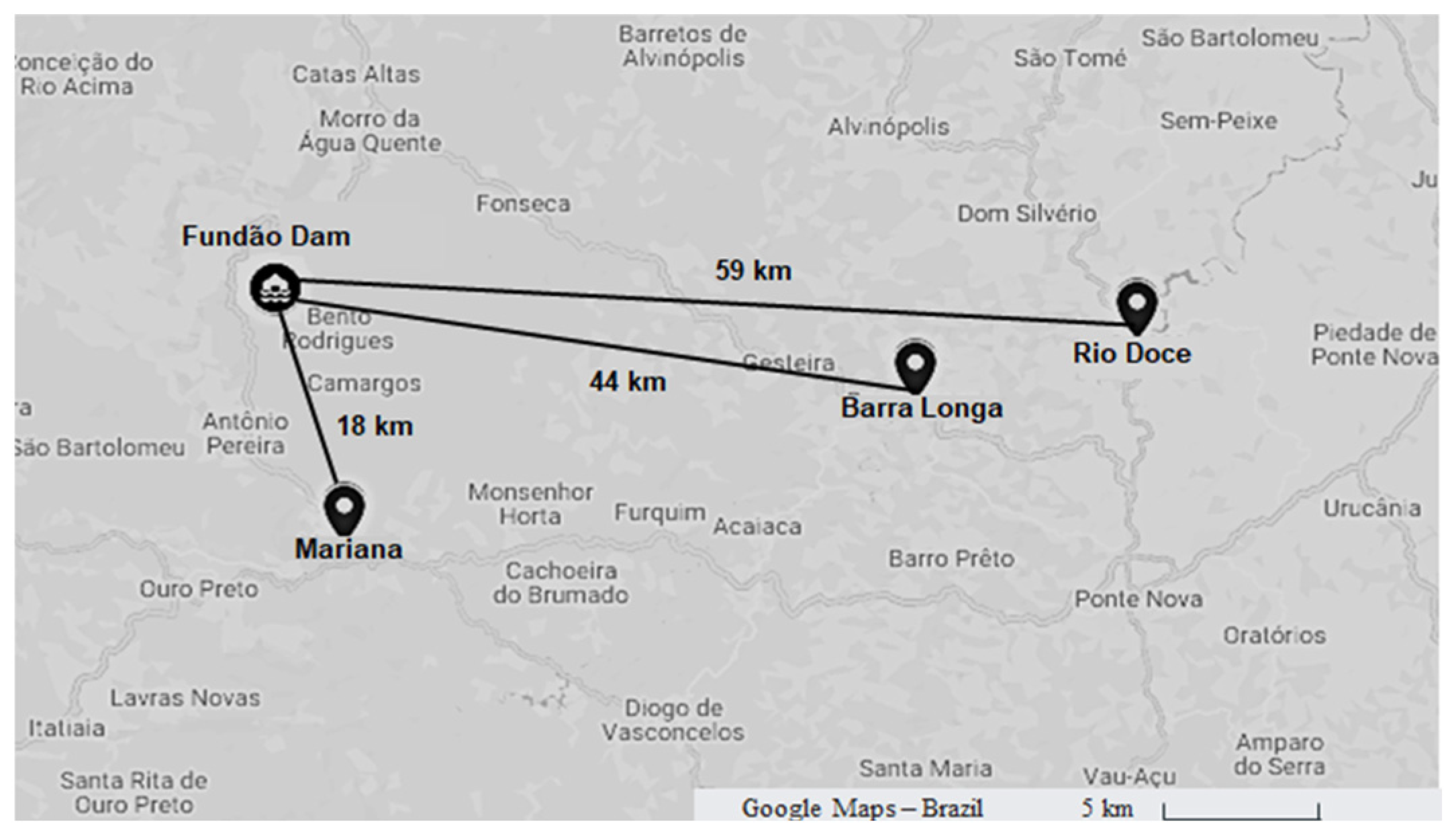
Figure 2.
Location of collection points along the Rio Doce. Source: Google Maps (modified).
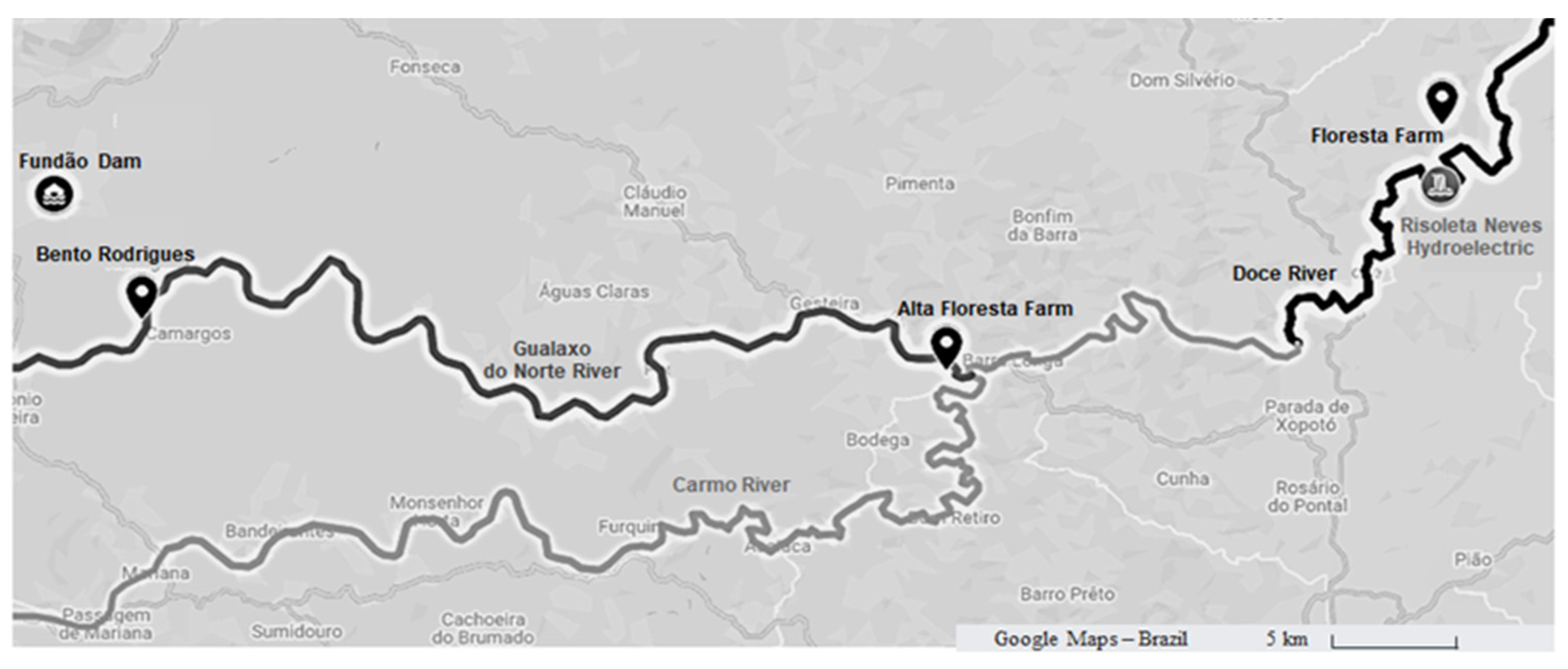
Figure 3.
Granulometric curves of sedimented tailings samples.
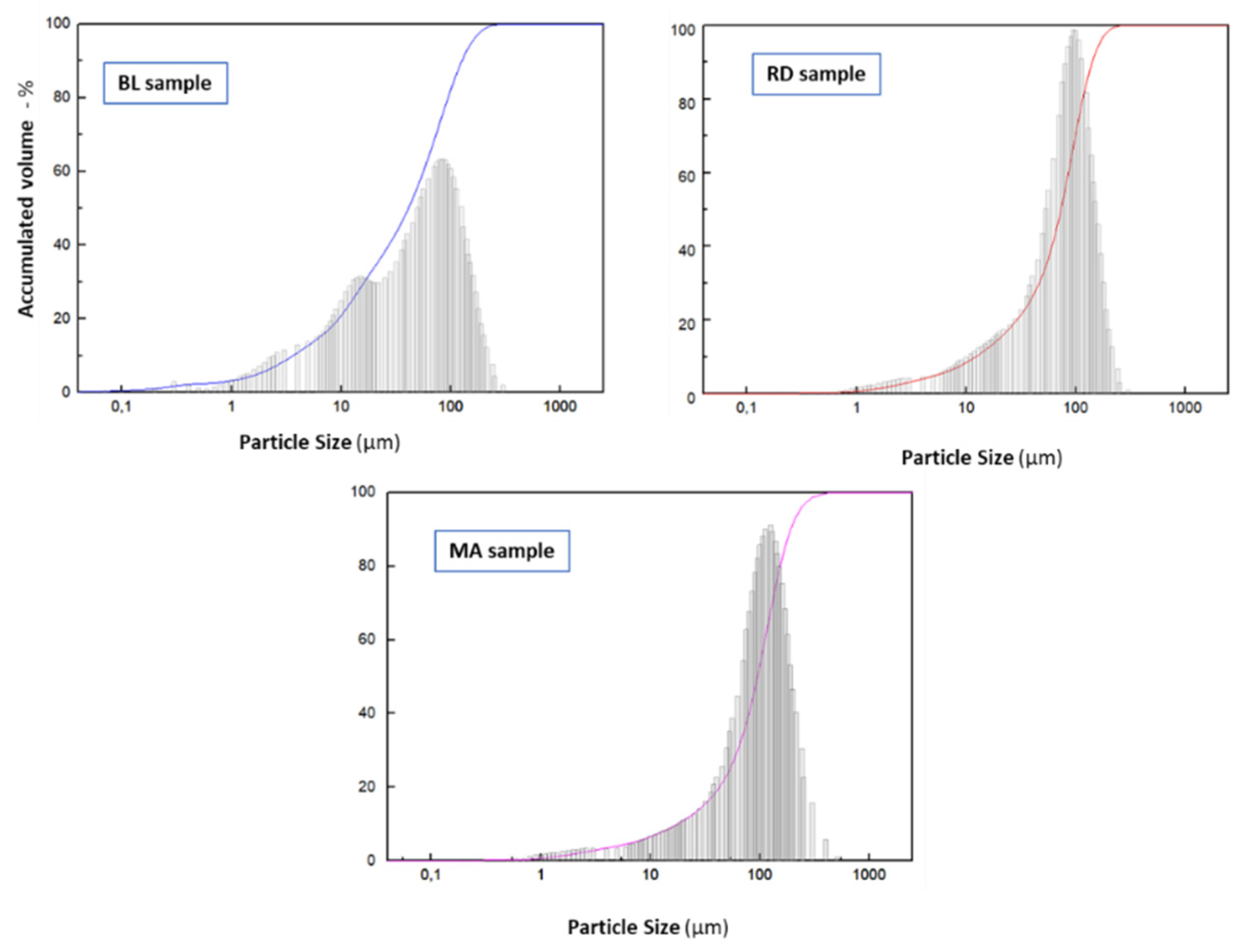
Figure 4.
N2 sorption isotherms for the sedimented tailings samples.
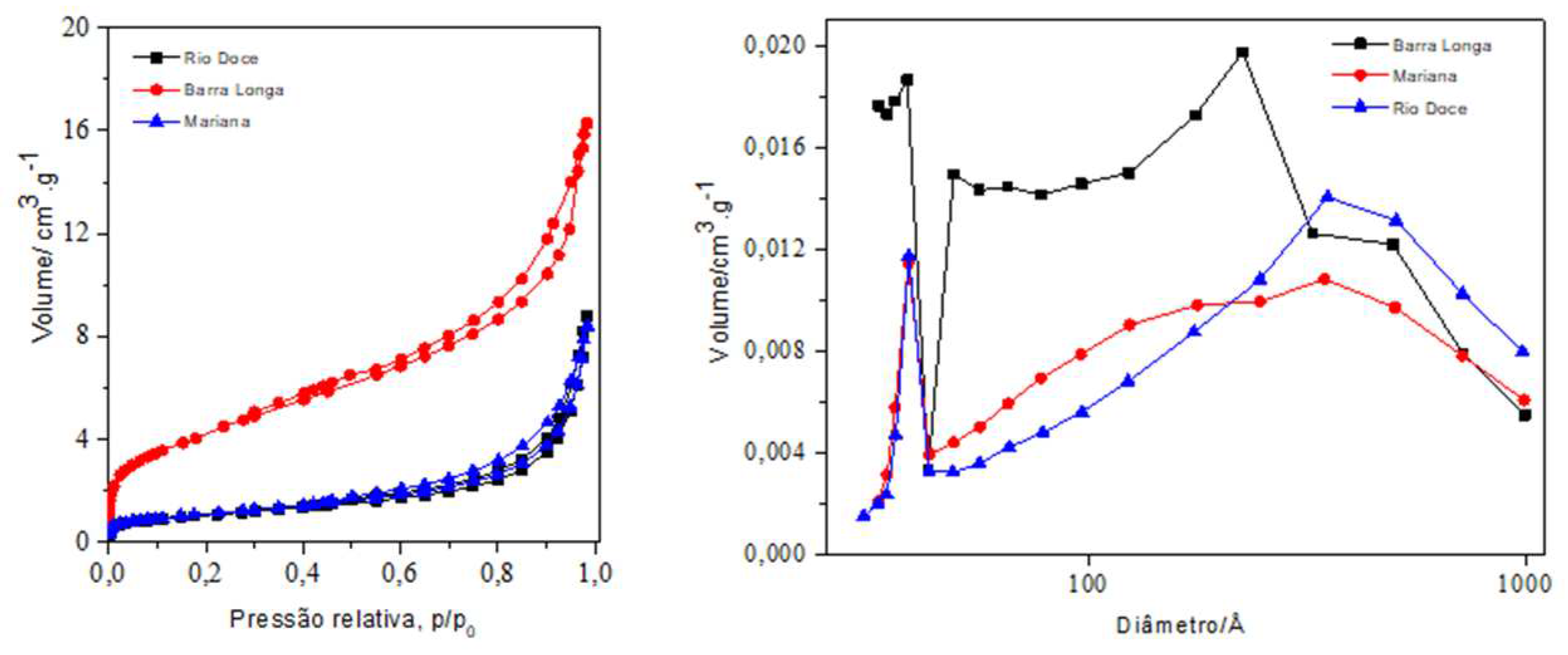
Figure 5.
X-ray diffractograms of the sedimented tailings samples.
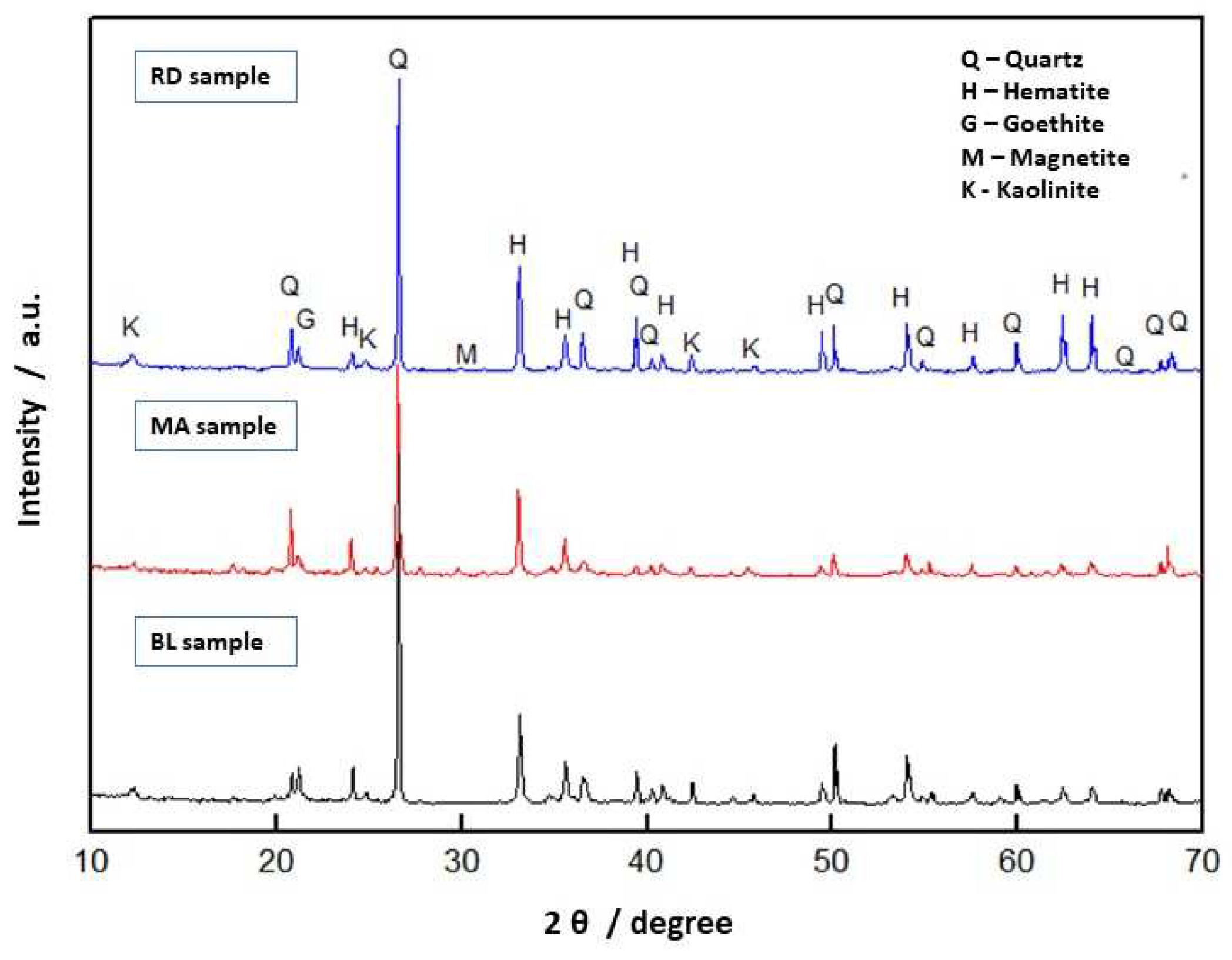
Figure 6.
Scanning electron microscopy images of sedimented tailings samples.
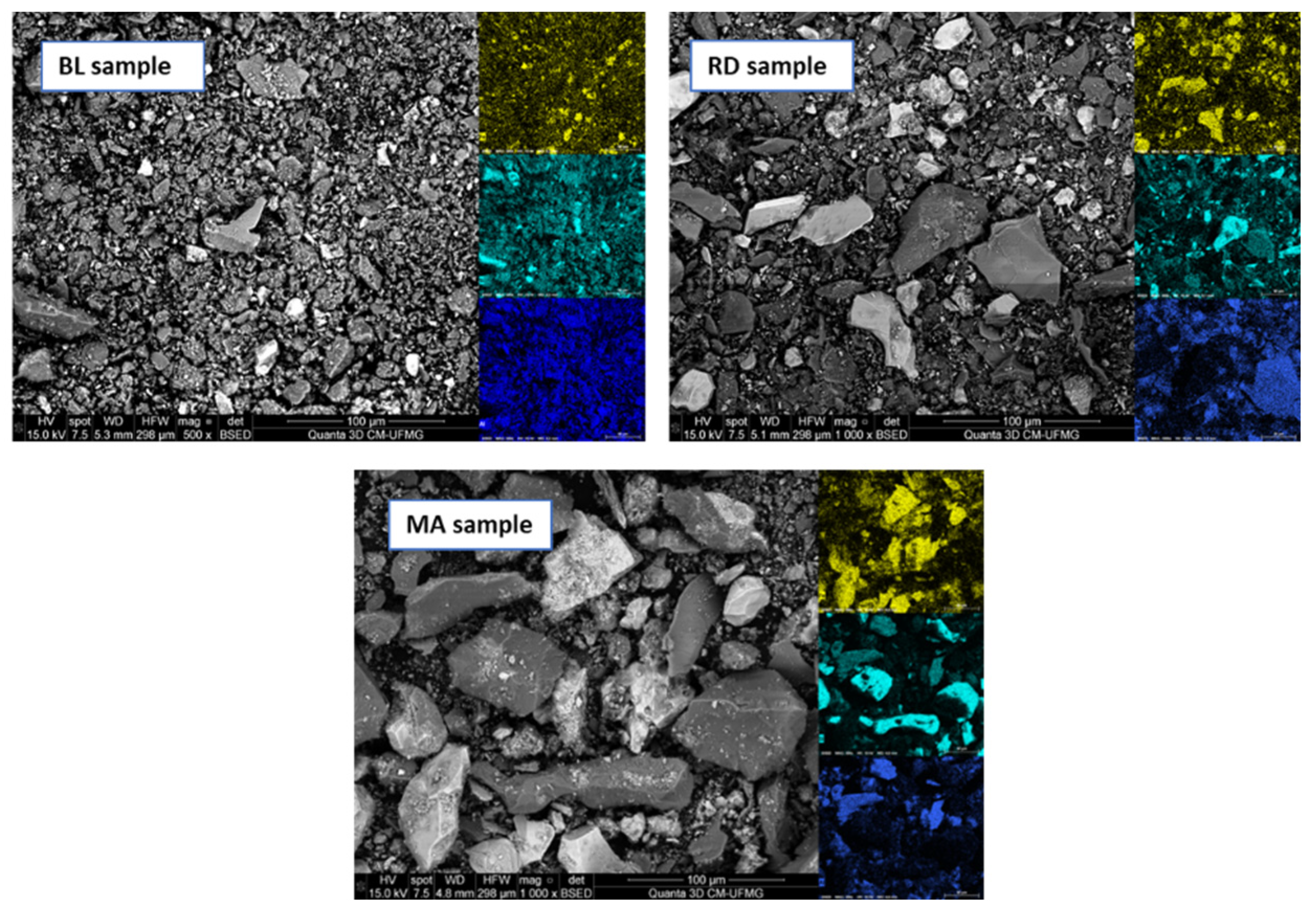

Table 1.
Mixes and IOT content.
| Group | Mix | Soil (%) | IOT sediment (%) | Portland Cement (%) |
| G1 | T0-0 | 100.0 | - | - |
| T10-0 | 90.0 | 10.0 | ||
| T20-0 | 80.0 | 20.0 | ||
| T40-0 | 60.0 | 40.0 | ||
| G2 | T0-5 | 100.0 | - | 5.0 |
| T10-5 | 90.0 | 10.0 | ||
| T20-5 | 80.0 | 20.0 | ||
| T40-5 | 60.0 | 40.0 |
* PC - Portland Cement.
Table 2.
Specific surface area and porosimetry of sedimented tailings samples.
| Samples | Specific surface area (m²/g) | Pore volume (cm3/g) | Pore diameter (mm) |
| MA Sample | 3.60 | 0.013 | 3.864 |
| RD Sample | 3.26 | 0.013 | 3.873 |
| BL Sample | 7.28 | 0.020 | 3.300 |
Table 3.
Specific mass, unit mass, void ratio, and water absorption of sedimented tailings samples.
| Samples | Physical tests | |||
| Specific mass (g/cm³) | Unit mass (kg/m3) | Ev (%) | Water absorption (%) | |
| MA Sample | 2.93 | 1526.50 | 66.9 | 2.97 |
| RD Sample | 2.82 | 1498.70 | 64.5 | 3.33 |
| BL Sample | 2.79 | 1368.47 | 64.2 | 7.52 |
Table 4.
Chemical analysis of samples by X-ray Fluorescence.
|
Samples |
Composition (%) | ||||||
| SiO2 | Fe2O3 | Al2O3 | TiO2 | K2O | MnO | CaO | |
| MA Sample | 78.13 | 8.88 | 1.09 | 0.21 | 0.20 | 0.28 | 0.04 |
| RD Sample | 76.85 | 8.46 | 2.49 | 0.27 | 0.34 | 0.06 | 0.24 |
| BL Sample | 67.05 | 9.57 | 6.39 | 0.67 | 0.62 | 0.07 | 0.21 |
Table 5.
Soil characterization.
| Specific mass (kg/m³) | 2340 | Liquidity Limit (%) | 53 |
| Unit mass (kg/m³) | 1012 | Plasticity Limit (%) | 31 |
| Volume of voids (%) | 57.50 | Plasticity Index (%) | 22 |
| Granulometry (%) | |||
| Clay | 55.5 | ||
| Sand | 28.0 | ||
| Average diameter (μm) | 26.4 | ||
Table 6.
Compressive strength – Soil-IOT samples.
| Mixture | Compressive strength (MPa) | Standard deviation | Coefficient of variation (%) |
| T0-0 | 0.72 | 0.08 | 11.55 |
| T10-0 | 1.12 | 0.13 | 11.90 |
| T20-0 | 1.24 | 0.05 | 4.07 |
| T40-0 | 1.80 | 0.15 | 8.53 |
| T0-5 | 1.35 | 0.14 | 10.63 |
| T10-5 | 1.07 | 0.11 | 9.91 |
| T20-5 | 1.27 | 0.15 | 12.20 |
| T40-5 | 1.57 | 0.08 | 4.98 |
Disclaimer/Publisher’s Note: The statements, opinions and data contained in all publications are solely those of the individual author(s) and contributor(s) and not of MDPI and/or the editor(s). MDPI and/or the editor(s) disclaim responsibility for any injury to people or property resulting from any ideas, methods, instructions or products referred to in the content. |
© 2023 by the authors. Licensee MDPI, Basel, Switzerland. This article is an open access article distributed under the terms and conditions of the Creative Commons Attribution (CC BY) license (http://creativecommons.org/licenses/by/4.0/).
Copyright: This open access article is published under a Creative Commons CC BY 4.0 license, which permit the free download, distribution, and reuse, provided that the author and preprint are cited in any reuse.


