

Submitted:
05 December 2023
Posted:
06 December 2023
You are already at the latest version
Abstract
This paper identifies preschool teachers' sources of stress, the times they experience high stress, and their ways of coping with stress levels. The study was conducted using a phenomenological design, one of the qualitative research models. The data were collected through semi-structured interviews with 36 preschool teachers working with children aged 0-6 in state and private schools. As a result of the content analysis, stressors were identified primarily at both interpersonal (positive, and effective interactions), and organizational levels (school management, and leadership style). It was also found that intense stress was experienced when children were difficult to control, such as during sleeping, eating, and cleaning. Finally, these results confirmed that the teachers used active/active behavioral, and passive/avoidant coping strategies. However, it was understood that preschool teachers perceived stress negatively, and did not see stress as a personal development situation. These results are discussed in terms of their ramifications for preschool education.
Keywords:
stress
; job stress
; preschool teachers’ stress
; preschool education
Practitioner points
- Study results show that preschool teachers externalize sources of stress, including children’s families, interactions with children, and administrative implications.
- Teacher narratives highlight a strong link between teacher stress and its detrimental impact on effective child support.
- Preschool teachers reported using active/behavioral and passive/avoidant strategies to cope with stress.
Introduction
Stress is an emotional state that can be experienced by individuals in almost any occupation. It is a universal emotion that arises when the limits of the body are exceeded. Stress manifests itself through a broad range of physical, and mental symptoms, resulting from maladaptive conditions that push the boundaries of the individual (Balcıoğlu & Savrun, 2001; Cüceloğlu, 1994; Erşan et al., 2013). From a physiological perspective, experimental evidence supports the notion that stress amplifies the susceptibility to coronary heart disease and stroke in adulthood (Kivimäki & Steptoe, 2018). In addition, studies by Lupien et al. (2009) have demonstrated the impact of stress on brain structures involved in cognition and mental health, both early and later in life. Furthermore, subsequent research by Lupien et al. (2005, 2009, 2018) consistently showed that stress induces memory deficits and structural differentiation in key neuroanatomical regions: hippocampus, amygdala, and frontal cortex. In terms of psychology, research on women has shown that stress is significantly associated with more frequent thoughts of suicide (Lin et al., 2020). It disrupts the harmony of the individual for a short or long period (Balcıoğlu & Savrun, 2001; Erşan et al., 2013). Olpin and Hesson (2016) propose that stress encompasses three key aspects. Firstly, it involves the individual’s subjective perception of stressors, which can have both positive and negative effects on their life. Secondly, the experience of stress depends on how individuals react to life events rather than the events themselves. Finally, stress represents a challenge to the body’s capacity to adapt, where a strong and healthy coping ability leads to positive outcomes, while a weak ability results in negative outcomes. In conclusion, stress is a multifaceted construct that exerts an influence on employees’ performance outcomes (Hindle, 1998).
Job stress is defined as experiencing negative emotions related to working (Klassen & Chiu, 2010). It is often associated with emotional exhaustion and burnout (Jennings & Greenberg, 2009). Teacher stress, a growing concern worldwide and part of job stress, can be defined as conditions that negatively impact physiological, psychological, and social well-being in the school/classroom (Curbow et al., 2000; Feltoe et al., 2016; Zhai et al., 2011). The theoretical framework for the study of teacher stress in this study was the Transactional Stress Model (Lazarus & Folkman, 1984). The model suggests that the components identified as environmental stressors, individual perceptions, organizational roles, and individual characteristics should be treated as having a multidirectional causal relationship. It has also been suggested that these components impact individuals’ short, medium, and long-term responses (Lazarus & Folkman, 1984; Lazarus, 2006; Schuler, 1982). It is considered to be one of the most important variables of educational institutions, and it affects teachers (Aslan & Ağıroğlu Bakır, 2018), and it is fed by different sources such as the physical environment, the family, the children, and the administration. Job stress arises from the detrimental impact of the work environment on an individual’s well-being and resources (Nur, 2011). Individuals experience varying levels of stress, characterized by the expression of negative emotions such as frustration, anxiety, work anxiety, impaired emotional regulation, fatigue, and sleep disorders (Kim et al., 2020; Kyriacou, 2001; Redín & Erro-Garcés, 2020). Contemporary research presents substantial empirical evidence underscoring the impact of stress on both teachers, as well as the broader ramifications on students and school outcomes (Ansari et al., 2022; Herman et al., 2018; Jeon & Ardeleanu, 2020; Sönmez & Betül Kolaşınlı, 2021; von der Embse et al., 2019).
Stating that stress should not always be perceived as a bad situation, researchers emphasized the level of stress and stated that low levels of stress could motivate teacher. In contrast, high stress levels can reveal negativities (Nagel & Brown, 2003). Teachers who experience high levels of stress may experience increased burnout and decreased job performance (Caulfield & Kataoka-Yahiro, 2001; Herman et al., 2020). In teaching, which is one of the stressful professions (Tsai et al., 2006), stress can be exacerbated by the limited time available to fulfill additional tasks other than teaching, such as planning, preparation, accountability for average student performance, supervisory role, extracurricular activities, and monitoring (Qayyum, 2019). At the same time, demands on the teaching profession, lack of resources, difficulties with financial planning, burdens of responsibility, challenging behaviors of children, characteristics of parents, and curriculum expectations are factors that contribute to stress in the profession (Lynn, 2019; Aslan & Ağıroğlu Bakır, 2018; Barabanshchikova et al., 2014; Grundy & Blandford, 1999; Kelly & Berthelsen, 1995; Klassen & Chiu, 2010). Moreover, it is emphasized that students’ learning, and discipline problems (Clayback & Williford, 2022; Friedman-Krauss et al., 2014a; Friedman-Krauss et al., 2014b; Jeon & Ardeleanu, 2020; Stormont & Young-Walker, 2017), time pressure, low-income level, and low social status, excessive workload, trends or developments in education, and problems related to school management are also effective (Akpınar, 2008; Haydon et al., 2018; Travers & Cooper, 2018).
Managing stress is important for preschool teachers so that their traumas do not interfere with achieving their academic goals and having a better quality of life personally, and professionally (Guglielmi & Tatrow, 1998; Hepburn & Brown, 2001). Research supports this theoretical perspective, and suggests that being a preschool, and kindergarten teacher, one of the teaching professions, can be stressful, especially when working with low-income children, children at risk, and/or children with behavioral problems (Curbow et al., 2000; Zhai et al., 2011). As preschool teachers’ stress increases due to children’s behavioral problems, the emotional climate in the classroom may be negatively affected. For example, teachers assigned to classrooms with more children with behavioral problems may experience more stress and may not be able to manage the group effectively in the absence of collaboration (Friedman-Krauss et al., 2014b). Research in early childhood education suggests that teachers play a critical role in creating and sustaining high-quality learning environments (Rhodes & Huston, 2012). These environments are important for children’s cognitive, language, and social-emotional development (Burchinal et al., 2000; Mashburn et al., 2008; Peisner-Feinberg et al., 2001; Vandell & Wolfe, 2000). However, it can be assumed that the ability of teachers to provide a high-quality learning environment may be adversely affected by the stress they are experiencing (Friedman-Krauss et al., 2014b).
Several studies have been carried out in Turkey to investigate the stress experienced by teachers in general. These studies have been conducted with teachers at the elementary, middle, and high school levels and have been mostly quantitative in design. They examined variables such as sources of stress (Akpınar, 2008; Argon & Ateş, 2007), organizational stress (Aslan & Ağıroğlu Bakır, 2018), stress and job satisfaction (Günbayı & Tokel, 2012; Özdayı, 1990), stress and self-efficacy (İpek et al., 2018), stress, and self-esteem (Sönmez, 2017), and stress as occupational health (Yetim & Demirdizen Çevik, 2018). However, few studies have been conducted regarding the stress experienced by preschool teachers in Turkey. These studies investigated variables such as management process problems (Bayar, 2021), stress symptoms, sources, and organizational stress (Ömeroğlu, 2015), stress and classroom climate (Sönmez & Kolaşınlı, 2021), and professional burnout (Yaşar Ekici, 2017). These studies are quantitative in nature. Similarly, the international studies reflect the results of the research on Turkey as described above (see Chou et al., 2016; Clayback & Williford, 2022; Clipa & Boghean, 2015; Curbow et al., 2000; Li et al., 2022; Zhai et al., 2011; Stormont & Young-Walker, 2017).
Preschool teachers encounter stress as a result of their engagement with children in the younger age group (Sönmez, 2017). Teachers experiencing emotional burnout are less likely to interact with children, which can lead to lower-quality interactions with children (Ansari et al., 2022). Teachers’ psychological well-being impacts children’s development and the nurturing and learning classroom climate in early care and education (Jeon et al., 2018). Therefore, a better understanding of the sources of stress for preschool teachers is critical to creating a classroom climate that will reduce stress and ultimately support young children’s development. In this regard, research based on examining different variables and using qualitative methods is considered necessary (see Clayback & Williford, 2022).
Preschool Education and Preschool Teacher Education in Turkey
Preschool education is not compulsory, and it varies according to the age group, and the type of institution. There are independent kindergartens (36 to 69 months), kindergartens in primary schools (57 to 69 months), and nursery schools (3 to 36 months) in a variety of educational institutions. There are also private children’s clubs (mixed age) and religious kindergartens (36-68 months). The Turkish Preschool Education Program was updated in 2013. Its goals are to support all areas of children’s development, help students acquire good habits, prepare them for primary school, provide a common educational environment for children from different backgrounds, and support their Turkish language development. The program is child centered. It is flexible, eclectic, balanced, play-based, and spiraling. It also promotes creativity and learning by providing a stimulating environment appropriate to children (learning centers, etc.). Family involvement, education, and guidance are emphasized in the program. In addition, the program asks teachers to use a multidimensional approach to assessment (e.g., portfolio). Finally, the program encourages teachers to organize a large group (whole class), small group (collaboration), and individual (individual differences) activities in a balanced manner, plan activities in an integrated manner and implement activities adapted for children with disabilities (if any) (Ministry of National Education-[MoNE], 2013).
Universities carry out initial teacher training programs for preschool education in Turkey. Today, the faculties of education are the main source of teacher training. All of the teacher education programs for the primary level last for four years. The Teacher Education Program for primary level was revised by the Council of Higher Education in 2018, due to some factors. Key factors that take the center stage include the Bologna Process, studies on quality and accreditation, the imperative of developing core curricula in Turkey, the escalating importance of ethical, moral, spiritual, and cultural concerns, and the goal of fostering parity in international student exchange programs. A core curriculum has been renewed and the number of elective courses has been increased to create a framework of qualifications in line with the European Qualifications Framework for Higher Education (Higher Education Council [HEC], 2018; MoNE, 2017).
Present Study
Identifying modifiable variables that contribute to the stress experienced by preschool teachers, who represent a distinct group of educators, holds significant importance (Stormont & Young-Walker, 2017). By identifying these variables, we can gain a deeper understanding of teachers’ present experiences within the classroom, thereby providing an opportunity to examine and analyze their unique dynamics. Furthermore, this study responds to the call for systematic research that includes different variables, including the differentiation between preschool teachers working in private and public/state schools, and the age range of the children they interact with, from infancy (0-36 months) to early childhood (36-72 months). This broader scope goes beyond previous research, which has mainly focused on teacher and child behaviour, and contributes to a more comprehensive understanding of the preschool classroom environment (see Clayback & Williford, 2022). Therefore, gaining insight into the underlying factors that contribute to the stress experienced by teachers working with different age groups in different institutional settings may facilitate the development of more effective coping strategies. This, in turn, has the potential to enhance the overall well-being and resilience of these teachers, ultimately benefiting both their professional practice and the educational experiences of the children in their care. Another reason for this study is that the studies conducted with preschool teachers in Turkey are organized in accordance with the quantitative method and have simple linear relationship findings and relatively few studies.
Theoretically, the stressors in the preschool teachers’ environment, the teachers’ individual characteristics, and their reactions to stress have been assessed (Schuler, 1982). Thus, in terms of organizational structure, the status of schools as private and public, nursery and kindergarten, and in terms of individual characteristics, the experience of teachers (working with young and older children) were taken into account (see Lazarus, 2006; Lazarus & Folkman, 1984). In addition, this study examines the hypotheses that teachers externalize the source of stress (see McCormick, 1997; McCormick & Solman, 1992) and that they do not use active cognitive strategies to cope with stress (Arikewuyo, 2004). For these reasons, this study of preschool teachers’ sources of stress and ways to cope with stress is considered important because it reveals preschool teachers’ views holistically.
Method
This study aims to explore preschool teachers’ perspectives on stress sources and coping strategies. The research focuses on the phenomenon of "teacher stressors." A qualitative approach called phenomenological design was chosen to gather data on preschool teachers’ stress experiences. This design is suitable for studying intense, emotional human experiences (Merriam, 2013). By using semi-structured interviews as the primary data collection method, the study aimed to uncover the experiences, perceptions, and meanings attributed by preschool teachers to the phenomenon. The phenomenological design aligns with the study’s purpose and process, as it aims to understand how participants experience the phenomenon (Christensen et al., 2015, p.408). The choice of interviews aimed to capture the essence and meaning of the experience, making it a preferred method for such studies (Merriam, 2013, p.25). Overall, this study explores how preschool teachers perceive and cope with stress, shedding light on their unique experiences.
Participants
The participants of this study were 36 preschool teachers working in Erzurum Province, Eastern Turkey. The convenience sampling method, which is one of the purposive sampling methods, was used. All of those participating in the study were voluntarily chosen to participate. The information regarding those participating is shown in Table 1.
According to Table 1, 50% of the participants work in private schools and 50% in public schools. 16.7% work with children aged 0-3, 33.3% with children aged 3-4, and 50% with children aged 5-6. 16.7 % of the teachers work in nursery schools, 66.7 % in kindergartens, and 16.7 % in preschools. 27.8% have 1-3 years of seniority, 38.9% have 4-7 years of seniority, 19.4% have 8-11 years of seniority, 13.9% have 12-15 years of seniority, and all the participants are female.
Data Collection Instruments
In data collection, the "Individual Information Form" was used to determine the demographic characteristics of the participants (gender, seniority, school type, age of the child group, etc.). In order to identify sources of stress, periods of stress, and strategies of coping with stress, a semi-structured interview form includes the questions like "What/which situations do you consider to be a source of stress while teaching? In what situations do you experience stress as an educator?" How do you deal with sources of stress?” developed by the researchers. The form was first submitted to the expert opinion, then a pre-application was made to 5 preschool teachers and finalized. Appointments were made with 36 preschool teachers before the interviews. The purpose and process of the research were explained to the participants, and the interviews were conducted face-to-face at the school. One interview lasted approximately 30 minutes. In order to prevent possible data loss during the interviews with the participants, it was stated that the answers to the questions in the interview form would only be listened to by the researchers and after the approval, the interviews were recorded with a voice recorder and were listened by the participants, and their consent was obtained. The recorded data were transferred to the computer in audio files, listened to by the researchers, and written in Word files.
Data Analysis
Content analysis, one of the qualitative data analysis techniques, was used to analyze the data. First, a symbol and number were assigned to each participant to make the data, which was transferred to a Word file anonymous. The researchers carried out a thorough reading of the data, analysing it line by line (word by word) using an inductive approach. Inductive content analysis was used to identify concepts and relationships that could effectively capture the collected data. The data were first coded to identify similarities and differences between them. Subsequently, the large data set was broken down into smaller data units for further analysis (Creswell, 2015; Miles & Huberman, 1994). Following the coding process, a reliability analysis was conducted to ensure the robustness of the findings. The reliability of the study, calculated using the Miles & Huberman formula [Reliability = 49 / (49+5)], was determined to be 90% (Miles & Huberman, 1994, p. 64).
The researchers identified commonalities among the codes developed, which led to the establishment of categories and themes that formed the basis of the findings section of the study. To ensure the validity of the themes, a careful review was conducted to assess their consistency with the theoretical and conceptual framework (Lazarus & Folkman, 1984; Lazarus, 2006; Schuler, 1982). This process facilitated the refinement and finalisation of the identified themes and strengthened the overall coherence and credibility of the study findings.
When quoting direct quotations from the interviews, these symbols, and numbers were used. An inductive approach was used in the analysis process, and similar codes were grouped under certain concepts and themes. The coding used to anonymize the data is as follows.
- P: Private
- S: State
- T: Teacher
- N: Nursery (for children ages 0 to 3)
- Pr.: Preschool (for children ages 3 to 6)
- K: Kindergarten (for children ages 4 to 6)
Results
The presentation of the findings of the study has taken into account the interview questions that were used in the data collection process, the concepts and categories that emerged from the responses to these questions, and direct quotations from the opinions of the participants have supported the concepts and categories.
The Sources of Stress
In the interviews, the teachers were asked the following question: "What/what situations do you consider to be stressful when teaching? Analyzing the responses to this question produced the results shown in Figure 1.
The analysis resulted in three stressors: Parents, children, and institutional / management. Within the initial category, all participants expressed that their encounters with ’parents’ constituted the most significant stressor in their work lives. The "parents" category was coded as follows: communication problems with family, inappropriate expectations of family, negative attitudes toward preschool education, disobedience of school rules, and use of family/teacher communication tools. Examples of quotes from the respondents for these codes are shown below:
Communication weakness: "...that’s why we usually have problems communicating with the parents. Because their mindset, and approach is that if I give you money, you must do everything perfectly. We get stressed because they project this duty onto us. We are afraid after the child experiences a negative situation. Our stress is about how the parents will react, how it will be, will this parent complain to our principal, will there be tensions." (PTN-1).
Inappropriate expectations: "... the family asking me questions about the children’s nutrition. They come to me with nurturing questions (like a nurse) like give them so much of this food, they like this, don’t give them that... This situation has made me feel very sad. First, we support the self-care skills of the younger age group (3 years old), then we support other skills. But to focus only on nutrition is something that is difficult for a preschool teacher." (STPr-3).
Negative attitude: "Parents’ behavior and attitudes are negative. They have high expectations of the school. They have expectations that are above the level of their own children. They want everything they say to be done." (PTN-5).
Resistance to obey school and classroom rules: "... behavior of the family against the rules of the school. After bringing the children to school, they want to stay with the child." (STPr-6).
Communication tools: "WhatsApp groups can make our days’ tense. These kinds of situations can be a source of stress for us. Also, we cannot convince the parents in a situation related to children. Poor cooperation and miscommunication between school and family make us feel stressed. Even after our return home, these problems are still on our minds." (STK-5).
The second category, encompassing children, was delineated through various codes, including the presence of younger-aged children, children exhibiting behavioral challenges, those who had not yet developed self-care abilities, children requiring special education, instances of infectious illnesses, attendance issues, and a wide age range of children within the classroom setting. Examples of attendee quotes for each of these codes are provided below:
Child age: "I mean, of course, little kids are a lot of stress for me. In particular, I have been working with 4-year-olds. The 5-year-olds are suitable for preschool, but the 4-year-olds are a bit more difficult. When I’m warning them and so on, it’s a little harder to control them because they’re very young. I have a hard time in that regard." (PTPr-2).
Children’s behavior problems: "... the children are hitting each other, falling down and hurting each other. It is very stressful for me." (PTPr-1).
Self-care skills of the children: "... toilet training and self-care skills stress me out. Especially feeding times of young children stress me out. Because parents have very high expectations in this area. I find it difficult to cope with statements such as "let him/her eat everything, let me prepare the food I want, let my child eat what he likes, my child is very special." (STPr-4).
Inclusion-mainstreaming: "... here are the inclusion children for example. Typically developing children can have the education you provide, but children with special needs cannot, and the whole class may be in disarray. But this is our duty, we have to." (PTPr-3).
Diseases: "... sending children to school during the infectious disease phase." (STPr-6).
Attendance: "... the lack of continuity of children’s attendance at school." (STK-4).
Age ranges of children: "... the high age range of the students enrolled. In other words, there are children of different age groups in the class. This creates chaos and causes stress. Classroom management is not effective." (STK-6).
The concluding category, pertaining to institutional/management factors, was designated through the following codes: substandard physical infrastructure of the school, lack of support staff, excessive child size, demanding full-time work responsibilities, inappropriate practices during orientation week, arrangements for special occasions (national and religious observances), organizing field trips, and conflicts arising between teachers and administrators. Examples of the participants’ views on these codes are presented below:
Physical conditions: "…We cannot buy the materials we want to use because of their prices, and there are physical inadequacies in the institution." (STK-3).
Support staff: "...I have to take care of things that are not in my job description because there is no assistant in the classroom. I neglected the classroom at that time. Do I take care of the classroom, do I go to the bathroom, and which one do I follow? Especially in the first days of school, I go through a very problematic process until order is created. (STPr-4).
The number of children: "...l has many children in my class, class size over 30 is really difficult..." (STPr-6).
Working hours: "It is exhausting because it is an entire day. It is very exhausting because we are very tired from morning to night. We are also experiencing the stress of it all." (PTN-1).
Adaptation program: "... in my professional life so far, the only thing that is a problem for me is the crying of the new students. I am afraid they will get used to it and stop crying. But we are slowly getting over it" (PTN-6).
Special days: "We get stressed out preparing for special days. For example, the 23rd of April (National Independence Day). ... Getting the children to work is stressful for them and for us. Because you have to do a show, you have to do a presentation, and you have to put a lot of effort into it. So, both the child and the teacher can be stressed out in the process of doing that." (STPr-2).
Field Trips: "...the permissions for the field trips and the worries about keeping the children under control during the field trip are a source of stress to me." (PTPr-5).
Management: "...the administration’s view of preschool education. Contrasting the teachers’ and administrators’ views on educating." (PTPr-6).
Teachers’ Ways of Coping with Stress
When interviewing the teachers, the following question was asked: "How do you cope with stressful situations? The analysis of the answers to this question produced the results shown in Figure 2.
The preschool teachers reported that they used ways of coping with stress in the following categories: Active behavioral and passive / avoiding. Teachers cope with stressful situations they experience with parents, which is the most intense stressor, using an active behavioral and passive/avoidant strategy. Examples of opinions related to these codes are presented below:
Effective communication: ".... I am always in touch with the parents and explain every situation to them. I try to explain to them: The more you cooperate with me, the more progress we can make." (PTN-1).
Positive approach: "...I think leaving the house with positive energy is necessary. Let me explain I have a positive attitude toward my children, and they give me positive energy. In this way, I try to stay away from situations that are stressful for me." (PTN-4).
Sharing: "... When the parents show negative behavior, I invite them to the school and ask them to observe us for a whole day. I ask them to take part in the events and activities that we have. By doing so, I ensure that I share all situations with them..." (STK-2).
Family involvement: "I usually go to the parents’ homes to ensure their participation. That’s why I do it because they don’t visit the school. They participate by saying "OK, teacher, we are going to do it, we are going to do it, teacher." (STPr-5).
Family education: "I try to give them information. Whenever we meet, I try to give them something they can tell their children and support them with. I send them weekly newsletters. If they have questions about childcare, I give them relevant information. I explain to them their children’s cognitive, linguistic, social-emotional, and psychomotor development. I do my best to support the parents’ lack of knowledge and skills in these areas..." (STPr-3).
Tolerance: "... I try to have a positive approach to both the children and the parents, and I try not to make a big deal out of very small things, and I try to tolerate them. At this point, I also have a lot of meetings with the parents. I try to put a positive spin on things that might happen." (PTPr-1).
Empathy: "When parents see the classroom environment when they see that education is going on and that it’s done here to educate, they understand the difficulty of working. They understand how difficult it is to deal with children. By involving the parents in this way, I try to give them a better understanding, and empathy for our work..." (STPr-3).
Drawing attention to the rules: "...I meet with the parents on a one-to-one basis, talk about the rules of the school, explain the situation at the school, and set expectations in this direction to eliminate the stressful situation." (PTN-5).
Transfer from experiences: "Experience is an important factor. Comparing the first years with the current ones, I see that I am calmer. I approach things carefully and when I see a person’s reaction, I am a little more cautious, and a little more explaining. In my opinion, that has a lot to do with experience. With every year that goes by, you definitely put a little bit on top of yourself and you move up like a steppingstone." (STPr-2).
Smiling: "... by smiling (smiles). I don’t have a lot of stress, to be honest with you. I have a relaxed attitude and I am in favor of a relaxed attitude no matter what..." (PTPr-6).
Staying calm: "I try to communicate one-on-one with parents in meetings or other gatherings. I also give out my phone number voluntarily. As I respect people, people must respect me... I don’t think I have any wrong behavior, so I am a person who follows my truth by staying calm. People regret their initial behavior when they get to know them over time..." (STPr-4).
Smoking and taking a break: "I smoke, take short breaks, and reward myself." (PTPr-2).
Ignoring: "I try to ignore many things. It’s like a kind of desensitization over time..." (PTPr-5).
There was evidence that using an active behavioral coping strategy was a response to another stressor, the institution/management. The following are examples of the opinions expressed in relation to these codes:
Communication: "After consulting other teachers and school counselors, we try to cope with stress by using methods such as finding solutions to problems that arise." (PTPr-3).
Cooperation: "We do work with friends in a planned way. We organize the hours we work. We try to avoid getting mixed up. We, for example, try to organize breakfast, dinner, and activity time (for shared areas) efficiently. Problem-solving in co-operation results in less stress for us." (PTPr-3).
Professional support: "...I get professional help…" (STK-4).
Teachers have been found to use both active behavioral and passive avoidance strategies to manage stressful situations caused by children. Examples of participants’ opinions on these codes are provided below:
Loving the children: "...constantly doing games, and activities... I hug the children, especially when I have many problems with the 0 to 3-year-olds. Skin contact is so important at this age. I hug, love, kiss, say I love you very much, I’m glad you’re here... This is how we deal with stressful situations." (PTN-2).
Spend more time with children: "...by paying more attention. Spending more time with the children ... I don’t want to get away from them at all. By making the time I spend with them more fun, I try to reduce stress." (PTPr-4).
Patience and tolerance: "... I show patience with children who are not toilet trained, who have problems such as not eating, who do not participate in activities, I tolerate their problem behavior. I spend time with them slowly, saying nice words. In this way I try to get them out of negative situations." (PTPr-5).
Strict adherence to the rules: "...it’s more about my behavior and attitudes, so I definitely don’t give up my attitudes. If it’s not going to happen, it’s not going to happen. Not in the form of hard rules, but with precise lines in a language they can understand a little more. I mean, I state it with clear and precise lines so that they understand it. Otherwise, it doesn’t work in any way." (PTPr-2).
Trying to be happy:"...trying to be happy..." (STK-1).
Taking precautions: "...we try to anticipate and prevent incidents from happening. We do our best to minimize negative attitudes on the part of parents through constant communication, and interaction with them within the framework of ethical rules." (STPr-6).
Strict control: "I prefer teacher-centered games. I give tasks to the active students. I try to keep them closed during the activity." (STK-6).
Times of Intense Stress
As a result of the interviews with the teachers, the second question asked to the teachers was "At which times of the day do you experience stress while teaching?". The findings given in Figure 3 emerged from the analysis of the responses to this question.
Preschool teachers reported that they experienced more stress during eating, cleaning, sleeping, arrival and departure times, times when parents communicate, free play times, and times when there are no activities. Examples of opinions in relation to these codes are shown below:
Eating times: "Mealtimes… Breakfast in the morning is between 8 and 9 in the morning. Lunch is between 12 and 13 in the afternoon. At that time, we were very stressed. We want them to eat, we want them to get up, and we want to do our work, but these times are long, and it is very difficult to keep control of the children." (PTN-1).
Cleaning times: "Hours for handwashing, cleaning, and toileting. In other words, the preparation for the feeding and the feeding time is the hours in which I feel the most stress." (STPr-3).
Sleeping times: "Regarding stress, the mornings come to mind. Because those are the busiest times. In any case, in the afternoon, it is time to sleep, the children do not get up early and rest at noon. There is a difference between the children who get up from their warm beds in the morning and those who rest in the afternoon. It can be more difficult for them than the hours in which they have more energy." (PTN-2).
Arrival and departure times: "... the arrival and departure times of the children at school. Some parents want to drop off their children early, some want to bring them back late and some want to pick them up early. Some parents ask for their child’s hat or scarf when they pick them up from school. Or they scold their child if they can’t find it... Or some parents ask what their child has done during the day, whether he/she has had lunch or not, and open the child’s lunch box to find out. In this situation, it stresses me a lot when they (parents) scold their children when they come to pick them up from school, even though I am so careful with my children" (STPr-4).
Communication times with the parents: "... if there is a problem, the parents actually do call or send a text message, but they do it late at night at odd times. I tell them to call at appropriate times, but it doesn’t happen." (STPr-6).
Free times to play: "... playtime and playroom, it is difficult to coordinate children there. Because children are much freer here. So, I am very afraid that something will happen to the children." (STPr-6).
Times without activities: "...I don’t have any difficulties when I am doing the activities myself, but I get more stressed when they are free. I don’t want to give the children too much freedom." (STPr-4).
Discussion
This study explored the stressors of preschool teachers, highlighting parents, children, and institutional factors as main stressors. These stressors were observed both in personal interactions and organizational aspects like school management and leadership style. However, the personnel level (the self-esteem and self-efficacy of the teachers, etc.) is not included in the variables of this study (see Prilleltensky et al., 2016). Thus, the study’s results provided evidence to support the previous assumption that teachers externalize sources of stress (McCormick & Solman, 1992; McCormick, 1997). It also supported the confirmation of the feeding of teachers’ stress from different sources such as the physical environment, family, children, and administration (Aslan & Ağıroğlu Bakır, 2018; Eskridge & Coker, 1999). Therefore, environmental factors’ impact on stress emerged in this study (Lazarus & Folkman, 1984; Lazarus, 2006; Schuler, 1982).
As an important result of this research, all participants identified parents as the first stressor at the interpersonal level. The relationship between the family, and the teacher, which is educationally important, can sometimes become an interpersonal stressor that causes teachers to become stressed. This finding was confirmed by a lot of research (Brown et al., 2002; Kelly & Bertelsen, 1995). Managing parent demands, and expectations in teacher-parent communication, and interaction for child development is challenging for teachers (Lynn, 2019). In preschool education, teachers and families require a closer relationship. Yet, issues arise due to the perception of preschools as mere child-minding places and teachers as mere caregivers. These problems, frequent in occurrence, rank among the main stressors for teachers. Furthermore, families not adhering to time and place regulations when seeking child-related information also contribute significantly to stress.
Teachers identified children as another significant interpersonal stressor. Challenges stemmed from the young age range (0-3 years), varying self-care abilities, large class sizes, inclusive student needs, and mixed-age classes. Consequently, teachers encountered difficulties in managing classrooms effectively, limiting free play, enforcing stringent rules, and offering fewer movement-oriented activities. This pattern is consistent with various national and international studies. These studies have delved into factors like challenging child behavior (Borg et al., 1991; Clayback & Williford, 2022; Jeon & Ardeleanu, 2020; Stormont & Young-Walker, 2017; Thijs et al., 2006; Zhai et al., 2011), classroom size (Grundy & Blandford, 1999; Kelly & Berthelsen, 1995; Özdayı, 1990), child age (Erdiller & Doğan, 2015; Pramling Samuelsson et al., 2016), and the presence of children with special needs (Galaterou & Antoniou, 2017; Zhai et al., 2011). All of these variables contribute to the stress experienced by teachers.
However, the study’s most striking finding is that teachers are reluctant to include child-centered play in the program for fear of losing control. In this context, it can be highlighted as an important shortcoming that the program does not include any games that the children plan, and over which they have control (MoNE, 2013). Therefore, it can be assumed that the stress experienced by teachers has resulted in teacher-centered activities becoming dominant, play-based preschool education being distracted from its purpose, fun, and active activities that children enjoy being poorly integrated into the daily schedule. Unfortunately, teachers may not be able to implement effective pedagogy, and curricula that are appropriate for the development of the children, which are important variables of the quality of early childhood education (Jalongo et al., 2004).
Preschool teachers play an important role in nurturing children’s social, emotional, and behavioural development (Jeon et al., 2019). The quality of teacher-child relationships has a significant impact on young children’s social, emotional, and academic progress. However, increasing workplace stress among teachers can escalate conflict within these relationships (Raver et al., 2012; Whitaker et al., 2015). Research suggests that escalating behavioural problems in children lead to emotionally negative interactions with teachers, which exacerbate conflicts (Patterson, 1996; Patterson & Yoerger, 2002). As a result, deteriorating teacher-child relationships can negatively affect children’s development (Palermo et al., 2007; Pianta & Stuhlman, 2004). These negative effects may extend to later stages of education (Hamre & Pianta, 2001).
Preschool teachers view a well-functioning classroom as one that is balanced in terms of gender, age, ethnicity, and class size (Pramling Samuelsson et al., 2016). However, this perspective can be criticised for a number of reasons. Firstly, the value of peer support in mixed-age groups (Pridmore & Stephens, 2000) may have been overlooked. Secondly, inclusive education benefits both special needs and typically developing children (Odom, 2000; Oh-Young & Filler, 2015), which may be undermined if teachers perceive special education settings as stressful. Finally, maximising the benefits of early education is crucial. Viewing younger age groups as stressful and pre-school education as suitable only for older children (e.g., 5 years old) contradicts the nature of early education and the scientific evidence (see Camilli et al., 2010).
The institutional context (organisational level) contributes significantly to teachers’ stress in preschool education (Sjödin & Neely, 2017). Recent studies highlight the impact of teaching conditions on stress levels (İpek et al., 2018). These include inadequately equipped classrooms (Barabanshchikova et al., 2014; Grundy & Blandford, 1999; Kelly & Berthelsen, 1995), low teacher salaries, limited opportunities for career advancement, interruptions during lessons/activities, heavy workloads, and time constraints (Barabanshchikova et al., 2014; Chan, 1998). Stressors also include negative aspects of school structure and operations (Aslan & Ağıroğlu Bakır, 2018) and strained working relationships (Chan, 1998). In addition to other research findings, this study revealed that factors such as inadequate classroom support staff, larger class sizes (ranging from 25 to 30 students), and preparations for national or religious events contribute to teacher stress.
The distinctive demands of preschool education might have contributed to the emergence of these varied stressor types. Given the young age of the children, a classroom assistant is necessary to maintain oversight. Moreover, the teacher must remain vigilant to prevent accidents and conflicts that can arise in a crowded classroom setting. As class size grows, managing the classroom becomes more intricate. Furthermore, facilitating diverse activities that align with the developmental traits of the children presents a challenge.
Administrative policies, another organizational-level stress factor, have an impact on teacher stress (İpek et al., 2018). In this regard, research has confirmed that problems in the relationship between school management, and teachers (Antoniou et al., 2006; Brown et al., 2002; Forlin, 2001; Travers & Cooper, 2018) affect the stress of early childhood, and other teachers (Haydon et al., 2018; Hu et al., 2018; McHugh & Kyle, 1993). For example, the manager’s attitude, behaviour, management skills, and the quality of communication processes, whether or not the manager is supportive, are among the stressors for teachers (Haydon et al., 2018). If teachers feel valued, and appreciated, and have confidence that the school management has their long-term self-interest in mind, they are more likely to resist negative influences. Evidence has therefore been obtained for research that expresses the power of the principal in shaping the environment and the structures that enhance or weaken teachers’ work (see Margolis & Nagel, 2006). The findings of this research are a reminder to school administrators of the importance of the role they can play in helping teachers to create a better working climate (Jeon & Ardeleanu, 2020).
In this study, preschool teachers reported using strategies such as effective communication, patience, empathy, and family involvement to manage potentially stressful scenarios with families. The research revealed their use of a coping strategy centred on effective communication and collaboration with the administration - a clear source of stress. In addition, they used coping strategies based on feelings of care, resilience, and tolerance in their interactions with the children who were the ultimate stressors. This finding confirmed that the teachers were using active/active behavioral coping strategies. These strategies can be expressed in terms of rational methods of problem-solving (communication, interaction, and training etc.,), and the seeking of support (from the supervisor, colleagues, and counseling professionals). Besides active coping strategies, passive/avoidant coping strategies were used. These strategies include trying to be happy, smiling, staying calm, and ignoring the situation. It was also confirmed that, contrary to these findings, preschool teachers do not use active cognitive strategies to cope with stress (Arikewuyo, 2004; Bayar, 2021; Chan, 1998; Holahan et al., 1996; Schaubman et al., 2011). Teachers were also found not to utilize coping strategies such as regular sleep, exercise, time management activities (Austin et al., 2005; Feltoe et al., 2016. Schuler, 1982), and meditation (Hagermoser-Sanetti et al., 2021).
In addition to sources of stress and coping strategies, it was found that the most stressful times for teachers were when children were eating, cleaning, sleeping, arriving, and leaving, and when parents were communicating. During these times, when children are active or have behavioral problems, teachers struggle to maintain control. Furthermore, teachers have meetings, and communication with parents, and school management during this time. This can be seen as a result of communicating and interacting with the sources that cause stress.
In our study, we found that preschool teachers had negative perceptions of stress and did not view it as an opportunity for personal development. In this regard, recent studies have shown that teachers’ thoughts about stress are good predictors of their psychological well-being as well as their professional development (Kim et al., 2020). We hypothesise that teachers with low levels of psychological well-being, and a lack of desire for professional development will not do well in their classrooms. This is because research shows that teaching-related stress negatively affects the quality of emotional support, and classroom organization (Penttinen et al., 2020), that emotionally exhausted teachers have lower-quality interactions with children in their classrooms (Ansari et al., 2022), and that this negatively affects many characteristics of children, including their resilience, and even their executive functioning (Boullet et al., 2014; Neuenschwander et al., 2017). For this reason, professionals working in early childhood, one of the most important periods of children’s development, need to understand how to cope with work stress and, if they cannot, how it affects children’s development.
Conclusion
In the study, the sources of stress for preschool teachers were identified at the interpersonal, and organizational levels. Evidence of the existence of negative effects of stressors externalized by preschool teachers was obtained. Specifically, we found many teacher narratives that led us to conclude that teacher stress is a significant barrier to effective child support. According to the teachers participating in the study, an effective preschool class is characterised by the following features: a small number of children, a small age range of children, the absence of children with behavioural difficulties, and children with special needs, and the presence of support staff. From another perspective, the most important implication is that stress may have undermined teachers’ activities supporting children’s development in their classrooms. Children should be provided with play-based experiences in which they can actively participate, discover by doing, and experimenting, and have fun to support their early development. However, our research showed that teachers provide fewer opportunities for children to play to avoid stress. In addition, the teachers have strict control over the children. They expect strict adherence to the rules. They are also challenged to manage behavior problems, create appropriate content and support for children with special needs, manage the classroom, and maintain routines (sleeping, cleaning, and eating, etc.). In this way, we have found many variables that negatively affect the quality of early childhood education. In summary, although teachers reported using different strategies (active/behavioral, and passive/avoidant) to cope with stress, we draw attention to the importance of the negative consequences of stress in children. We emphasize that supporting the well-being of teachers and taking steps to reduce the impact of stressors are critical to supporting children’s development in a quality manner, given the unique characteristics of preschools, which are the first institutions where children leave their families.
Limitations and Recommendations
There are some limitations of our research. The first was that the number of participants was limited. Secondly, the obtained data was devoid of observation. Finally, the self-esteem, and self-efficacy of the teachers, which are personnel-level sources of stress, were not assessed. Therefore, we recommend further research that considers all these limitations. We also believe that the impact of coping resilience intervention programs that support preschool teachers in coping with stress needs to be investigated (see Travers & Cooper, 2018). For example, we recommend examining the results of experimental studies examining the effects of cognitive behavioral programs (Richardson & Rothstein, 2008), meditation or mindfulness-based practices (Hagermoser Sanetti et al., 2021; von der Embse et al., 2019), and emotion regulation studies (Jeon & Ardeleanu, 2020) on teachers’ stress levels to determine whether they affect child outcomes. Derived from the study’s findings, we present several recommendations deemed pertinent for practical consideration. First and foremost, we advocate for administrators to institute prompt and fitting communication frameworks connecting teachers and parents. Furthermore, we underscore the significance of undertaking initiatives to enhance teachers’ professional progression and overall well-being, concurrently ameliorating their workload. Viable strategies may encompass class size reduction, allocation of support personnel, and the formulation of protocols to enable teachers to effectively manage children during periods of heightened stress.
References
- Akpınar, B. (2008). Eğitim sürecinde öğretmenlerde strese yol açan nedenlere yönelik öğretmen görüşleri. Kastamonu Eğitim Dergisi, 16(2), 359-366. https://dergipark.org.tr/tr/pub/kefdergi/issue/49100.
- Ansari, A., Pianta, R. C., Whittaker, J. V., Vitiello, V. E., & Ruzek, E. A. (2022). Preschool Teachers’ Emotional Exhaustion in Relation to Classroom Instruction and Teacher-child Interactions. Early Education and Development, 33(1), 107-120. [CrossRef]
- Antoniou, A. S., Polycchroni, F., & Vlachakis, A. N. (2006). Gender and age differences in occupational stress and professional burnout between primary and high-school teachers in Greece. Journal of Managerial Psychology, 21(7), 682-690. [CrossRef]
- Argon, T., & Ateş, H. (2007). İlköğretim okulu birinci kademe öğretmenlerini etkileyen stres faktörleri. Abant İzzet Baysal Üniversitesi Eğitim Fakültesi Dergisi, 7(2), 51-60. https://dergipark.org.tr/tr/pub/aibuefd/issue/1494/18067.
- Arikewuyo, M. O. (2004). Stress management strategies of secondary school teachers in Nigeria. Educational research, 46(2), 195-207. [CrossRef]
- Aslan, M., & Ağıroğlu Bakır, A. (2018). Sınıf öğretmenlerinin yaşadıkları örgütsel stres kaynakları. Cumhuriyet International Journal of Education, 7(4), 349–365. [CrossRef]
- Austin, V., Shah, S., & Muncer, S. (2005). Teacher stress and coping strategies used to reduce stress. Occupational therapy international, 12(2), 63-80. [CrossRef]
- Balcıoğlu, İ., & Savrun, M. (2001). Stres ve hormonlar. Türkiye Klinikleri Psikiyatri Dergisi, 2, 43-50. https://www.turkiyeklinikleri.com/article/en-stres-ve-hormonlar-34797.html.
- Barabanshchikova, V. V., Meshkova, P. R., & Surova, D. R. (2014). Comparison of stress level among school teachers in the period of organizational changes. Procedia-Social and Behavioral Sciences, 146, 375-380. [CrossRef]
- Bayar, A. (2021). Okul öncesi öğretmenlerinin görev yaptıkları kurumlarda okul yönetim sürecine ilişkin yaşadıkları sorunlar ve çözüm önerileri. Eğitim ve Öğretim Araştırmaları Dergisi, 10(4), 77-91. http://www.jret.org.
- Borg, M. G., Riding, R. J., & Falzon, J. M. (1991). Stress in teaching: A study of occupational stress and its determinants, job satisfaction and career commitment among primary school teachers. Educational Psychology: An International Journal of Experimental Educational Psychology, 11(1), 59-75. [CrossRef]
- Brown, M., Ralph. S., & Brember, I. (2002). Change-linked work-related stress in British teachers. Researh in Education, University of Manchester, 67, 1-12. [CrossRef]
- Burchinal, M. R., Roberts, J. E., Riggins, R., Zeisel, S. A., Neebe, E., & Bryant, D. (2000). Relating quality of center-based care to early cognitive and language development longitudinally. Child Development, 71, 339–357. [CrossRef]
- Camilli, G., Vargas, S., Ryan, S., & Barnett, W. S. (2010). Meta-analysis of the effects of early education interventions on cognitive and social development. Teachers college record, 112(3), 579-620. [CrossRef]
- Caulfield, R., & Kataoka-Yahiro, M. (2001). Health training needs of childcare professionals. Early Childhood Education Journal, 29(2), 119-123. [CrossRef]
- Chan, D. W. (1998). Stress, coping strategies, and psychological distress among secondary school teachers in Hong Kong. American Educational Research Journal, 35(1), 145-163. [CrossRef]
- Chou, M. J., Lee, H. M., & Wu, H. T. (2016). Emotion, psychological resilience and work stress: a study among preschool teachers. European Journal of Psychological Research, 3(1), 8-15. http://www.idpublications.org.
- Christensen, L. B., Johnson, R. B., & Turner, L. A. (2015). Research methods, design, and analysis. London.
- Clayback, K. A., & Williford, A. P. (2022). Teacher and classroom predictors of preschool teacher stress. Early Education and Development, 33(8), 1347-1363. [CrossRef]
- Clipa, O., & Boghean, A. (2015). Stress factors and solutions for the phenomenon of burnout of preschool teachers. Procedia-Social and Behavioral Sciences, 180(5), 907-915. [CrossRef]
- Cüceloğlu, D. (1994). İnsan ve davranışı: Psikolojinin temel kavramları. Remzi.
- Curbow, B., Spratt, K., Ungaretti, A., McDonnell, K., & Breckler, S. (2000). Development of the child care worker job stress inventory. Early Childhood Research Quarterly, 15, 515–536. [CrossRef]
- Erdiller, Z. B., & Doğan, Ö. (2015). The examination of teacher stress among Turkish early childhood education teachers. Early Child Development and Care, 185(4), 631-646. [CrossRef]
- Erşan, E. E., Yıldırım, G., Doğan, O., & Doğan, S. (2013). Sağlık çalışanlarının iş doyumu ve algılanan iş stresi ile aralarındaki ilişkinin incelenmesi. Anadolu Psikiyatri Dergisi, 14, 115-21. [CrossRef]
- Eskridge, D. H., & Coker, D. R. (1999). Öğretmenlerde stres: Belirtileri, nedenleri ve başa çıkma teknikleri (M. Buluş Trans.). Pamukkale Üniversitesi Eğitim Fakültesi Dergisi, 5(5), 66-70. https://dergipark.org.tr/tr/pub/pauefd/issue/11138.
- Feltoe, G., Beamish, W., & Davies, M. (2016). Secondary school teacher stress and coping: Insights from Queensland, Australia. International Journal of Arts & Sciences, 9(2), 597–608. http://search.proquest.com/docview/1858849698/.
- Forlin, C. (2001). Identifying potential stressors for regular class teachers. Educational Research, 43(3), 235-245. [CrossRef]
- Friedman-Krauss, A. H., Raver, C. C., Morris, P. A., & Jones, S. M. (2014a). The role of classroom-level child behavior problems in predicting preschool teacher stress and classroom emotional climate. Early Education and Development, 25(4), 530-552. [CrossRef]
- Friedman-Krauss, A. H., Raver, C. C., Neuspiel, J. M., & Kinsel, J. (2014b). Child behavior problems, teacher executive functions, and teacher stress in Head Start classrooms. Early Education and Development, 25(5), 681-702. [CrossRef]
- Galaterou, J., & Antoniou, A. S. (2017). Teachers’ Attitudes towards Inclusive Education: The Role of Job Stressors and Demographic Parameters. International Journal of Special Education, 32(4), 643-658. Available online. https://files.eric.ed.gov/fulltext/EJ1184123.pdf.
- Grundy, W., & Blandford, S. (1999). Developing a culture for positive behavior management. Emotional and Behavioral Difficulties, 4(3), 5-9. [CrossRef]
- Guglielmi, R. S., & Tatrow, K. (1998). Occupational stress, burnout, and health in teachers: A methodological and theoretical analysis. Review of Educational Research, 68(1), 61-99. [CrossRef]
- Günbayı, İ., & Tokel, A. (2012). İlköğretim okulu öğretmenlerinin iş doyumu ve iş stresi düzeylerinin karşılaştırmalı analizi. ODÜ Sosyal Bilimler Enstitüsü Sosyal Bilimler Araştırmaları Dergisi, 3(5), 77-95. https://dergipark.org.tr/tr/pub/odusobiad/issue/27569/290084.
- Hagermoser Sanetti, L. M., Boyle, A. M., Magrath, E., Cascio, A., & Moore, E. (2021). Intervening to decrease teacher stress: A review of current research and new directions. Contemporary School Psychology, 25(4), 416-425. doi:10.1007/s40688-020-00285-x. [CrossRef]
- Hamre, B. K., & Pianta, R. C. (2001). Early teacher–child relationships and the trajectory of children’s school outcomes through eighth grade. Child Development, 72(2), 625-638. https://www.jstor.org/stable/1132418.
- Haydon, T., Leko, M. M., & Stevens, D. (2018). Teacher stress: Sources, effects, and protective factors. Journal of Special Education Leadership, 31(2), 99-107. https://eric.ed.gov/?id=EJ1275350.
- HEC [Higher Education Council]. (2018). Öğretmen yetiştirme lisans programları. Ankara: Higher Education Council. Retrieved on 2 February, 2023 from:. https://www.yok.gov.tr/Documents/Kurumsal/egitim_ogretim_dairesi/Yeni-Ogretmen-Yetistirme-Lisans-Programlari/AA_Sunus_%20Onsoz_Uygulama_Yonergesi.pdf.
- Hepburn, A., & Brown, S. D. (2001). Teacher stress and the management of accountability. Human Relations, 54(6), 691-715. [CrossRef]
- Herman, K. C., Hickmon-Rosa, J. E., & Reinke, W. M. (2018). Empirically derived profiles of teacher stress, burnout, self-efficacy, and coping and associated student outcomes. Journal of Positive Behavior Interventions, 20(2), 90-100. [CrossRef]
- Herman, K. C., Prewett, S. L., Eddy, C. L., Savala, A., & Reinke, W. M. (2020). Profiles of middle school teacher stress and coping: Concurrent and prospective correlates. Journal of School Psychology, 78, 54-68. [CrossRef]
- Hindle, T. (1998). Reducing stress. Dorling Kindersley.
- Holahan, C. J., Moos, R. H., & Schaefer, J. A. (1996). Coping, stress resistance, and growth: Conceptualizing adaptive functioning. In M. Zeidner & N. S. Endler (Eds.), Handbook of coping: Theory, research, applications (pp. 24–43). John Wiley & Sons.
- Hu, B. Y., Li, Y., Wang, C., & Reynolds, B. L. (2018). The relation between school climate and preschool teacher stress: The mediating role of teachers’ self-efficacy. Journal of Educational Administration, 57(6), 748-767. [CrossRef]
- İpek, H., Akçay, A., Bayındır Atay, S., Berber, G., Karalık, T., & Yılmaz, T. S. (2018). The relationship between occupational stress and teacher self-efficacy: a study with EFL instructors. Anadolu Journal of Educational Sciences International, 8(1), 126-150. [CrossRef]
- Jalongo, M. R., Fennimore, B. S., Pattnaik, J., Laverick, D. M., Brewster, J., & Mutuku, M. (2004). Blended perspectives: A global vision for high-quality early childhood education. Early Childhood Education Journal, 32, 143-155. [CrossRef]
- Jennings, P. A., & Greenberg, M. T. (2009). The prosocial classroom: Teacher social and emotional competence in relation to student and classroom outcomes. Review of Educational Research, 79, 491–525. [CrossRef]
- Jeon, L., & Ardeleanu, K. (2020). Work climate in early care and education and teachers’ stress: Indirect associations through emotion regulation. Early Education and Development, 31(7), 1031-1051. [CrossRef]
- Jeon, L., Buettner, C. K., & Grant, A. A. (2018). Early childhood teachers’ psychological well-being: exploring potential predictors of depression, stress, and emotional exhaustion. Early Education and Development, 29(1), 53-69. [CrossRef]
- Jeon, L., Buettner, C. K., Grant, A. A., & Lang, S. N. (2019). Early childhood teachers’ stress and children’s social, emotional, and behavioral functioning. Journal of Applied Developmental Psychology, 61, 21–32. [CrossRef]
- Kelly, A. L., & Berthelsen, D. C. (1995). Preschool teachers’ experiences of stress. Teaching and Teacher Education, 11(4), 345-357. [CrossRef]
- Kim, J., Shin, Y., Tsukayama, E., & Park, D. (2020). Stress mindset predicts job turnover among preschool teachers. Journal of School Psychology, 78,13–22. [CrossRef]
- Kivimäki, M., & Steptoe, A. (2018). Effects of stress on the development and progression of cardiovascular disease. Nature Reviews Cardiology, 15(4), 215-229. [CrossRef]
- Klassen, R. M., & Chiu, M. M. (2010). Effects on teachers’ self-efficacy and job satisfaction: Teacher gender, years of experience, and job stress. Journal of Educational Psychology, 102(3), 741. [CrossRef]
- Kyriacou, C. (2001). Teacher stress: Directions for future research. Educational Review, 53(1), 27-35. [CrossRef]
- Lazarus, R. S. (2006). Stress and emotion: A new synthesis. Springer publishing company.
- Lazarus, R. S., & Folkman, S. (1984). Stress, appraisal, and coping. Springer publishing company.
- Li, Y., Ching, B. H. H., Wu, H. X., Chen, T. T., & He, C. C. (2022). Beneficial or debilitating: A qualitative inquiry into Chinese preschool teachers’ workload-related stress mindset. Early Years, 1-18. [CrossRef]
- Lin, W., Wang, H., Gong, L., Lai, G., Zhao, X., Ding, H., & Wang, Y. (2020). Work stress, family stress, and suicide ideation: A cross-sectional survey among working women in Shenzhen, China. Journal of affective disorders, 277, 747-754. [CrossRef]
- Lupien, S. J., Fiocco, A., Wan, N., Maheu, F., Lord, C., Schramek, T., & Tu, M. T. (2005). Stress hormones and human memory function across the lifespan. Psychoneuroendocrinology, 30(3), 225-242. [CrossRef]
- Lupien, S. J., Juster, R. P., Raymond, C., & Marin, M. F. (2018). The effects of chronic stress on the human brain: From neurotoxicity, to vulnerability, to opportunity. Frontiers in neuroendocrinology, 49, 91-105. [CrossRef]
- Lupien, S. J., McEwen, B. S., Gunnar, M. R., & Heim, C. (2009). Effects of stress throughout the lifespan on the brain, behaviour and cognition. Nature reviews neuroscience, 10(6), 434-445. [CrossRef]
- Lynn, N. E. (2019). Work-related stress in pre-school teachers and methods of assessing stress: A literature review [SUG 11/16 NEL]. Education Research Funding Programme, Final Report. National Institute of Education, Singapore.
- Margolis, J., & Nagel, L. (2006). Education reform and the role of administrators in mediating teacher stress. Teacher Education Quarterly, 33(4), 143-159. https://www.jstor.org/stable/23478876.
- Mashburn, A. J., Pianta, R. C., Hamre, B. K., Downer, J. T., Barbarin, O. A., Bryant, D.,... Howes, C. (2008). Measures of classroom quality in prekindergarten and children’s development of academic, language, and social skills. Child Development, 79, 732–749. [CrossRef]
- McCormick, J. (1997). An attribution model of teachers’ occupational stress and job satisfaction in a large educational system. Work & Stress, 11(1), 17-32. [CrossRef]
- McCormick, J., & Solman, R. (1992). The externalized nature of teachers’ occupational stress and its association with job satisfaction. Work & Stress, 6(1), 33-44. [CrossRef]
- McHugh, M., & Kyle, M. (1993). School Merger: a stressful challenge? School Organization, 13(1), 11-26. [CrossRef]
- Merriam, S. B. (2013). Nitel araştırma: Desen ve uygulama için bir rehber (S. Turan, Trans.). Nobel. (Original work published 2009).
- MoNE [Ministry of National Education]. (2017). General competencies for teaching profession. Ankara: Ministry of National Education. Retrieved on 2 February, 2023 from:. https://oygm.meb.gov.tr/meb_iys_dosyalar/2018_06/29111119_TeachersGeneralCompetencies.pdf.
- MoNE. (2013). Okul öncesi eğitim programı [Preschool education program]. T. C. Milli Eğitim Bakanlığı, Temel Eğitim Genel Müdürlüğü, Ankara.
- Nagel, L., & Brown, S. (2003). The ABCs of managing teacher stress. https://www.jstor.org/stable/pdf/30189843.pdf?refreqid=excelsior%3Ad0c0634cd209f5d4f4956f0eba077d21.
- Neuenschwander, R., Friedman-Krauss, A., Raver, C., & Blair, C. (2017). Teacher stress predicts child executive function: Moderation by school poverty. Early Education and Development, 28(7), 880-900. [CrossRef]
- Nur, D. (2011). Kamu hastanelerinde çalışan sağlık personelinde iş doyumu ve stres ilişkisi. Klinik Psikiyatri, 14, 230-240. https://klinikpsikiyatri.org.
- Odom, S. L. (2000). Preschool inclusion: What we know and where we go from here. Topics in Early Childhood Special Education, 20(1), 20-27. [CrossRef]
- Oh-Young, C., & Filler, J. (2015). A meta-analysis of the effects of placement on academic and social skill outcome measures of students with disabilities. Research in Developmental Disabilities, 47, 80-92. [CrossRef]
- Olpin, M., & Hesson, M. (2016). Stress management for life: A research-based, experimental approach (Fourth edition). Cengage Learning.
- Ömeroğlu, M. (2015). Anaokulu öğretmenlerinin okuldaki stres belirtileri, stres kaynakları, bu stres kaynakları ile başa çıkma yolları ve yaşadıkları örgütsel stresin performanslarına etkisi nedir? [Unpublished master thesis], Akdeniz University.
- Özdayı, N. (1990). Resmi ve özel liselerde çalışan öğretmenlerin iş tatmini ve iş stresinin karşılaştırmalı analizi. [Unpublished doctoral dissertation]. İstanbul Üniversitesi.
- Palermo, F., Hanish, L. D., Martin, C. L., Fabes, R. A., & Reiser, M. (2007). Preschoolers’ academic readiness: What role does the teacher–child relationship play? Early Childhood Research Quarterly, 22(4), 407-422. [CrossRef]
- Patterson, G. R. (1996). Some characteristics of a developmental theory for early onset delinquency. In M. F. Lenzenweger & J. J. Haugaard (Eds.), Frontiers of Developmental Psychopathology (pp. 81–124). Oxford University Press.
- Patterson, G. R., & Yoerger, K. (2002). A developmental model for early- and late-onset delinquency. In J. B. Reid, G. R. Patterson & J. Snyder (Eds.), Antisocial Behavior in Children and Adolescents: A Developmental Analysis and Model for Intervention (pp. 147–172). American Psychological Association.
- Peisner-Feinberg, E. S., Burchinal, M. R., Clifford, R. M., Culkin, M. L., Howes, C., Kagan, S. L., & Yazejian, N. (2001). The relation of preschool child-care quality to children’s cognitive and social developmental trajectories through second grade. Child Development, 72, 1534–1553. [CrossRef]
- Penttinen, V., Pakarinen, E., Suchodoletz, A. V., & Lerkkanen, M. K. (2020). Relations between kindergarten teachers’ occupational well-being and the quality of teacher-child interactions. Early Education and Development, 31(7), 994-1010. [CrossRef]
- Pianta, R. C., & Stuhlman, M. W. (2004). Teacher-child relationships and children’s success in the first years of school. School Psychology Review, 33(3), 444-458. [CrossRef]
- Pramling Samuelsson, I., Williams, P., Sheridan, S., & Hellman, A. (2016). Swedish preschool teachers’ ideas of the ideal preschool group. Journal of Early Childhood Research, 14(4), 444–460. [CrossRef]
- Pridmore, P., & Stephens, D. (2000). Children as partners for health: A critical review of the child to-child approach. Zed Books.
- Prilleltensky, I., Neff, M., & Bessell, A. (2016). Teacher stress: What it is, why it’s important, how it can be alleviated. Theory Into Practice, 55(2), 104-111. [CrossRef]
- Qayyum, A. (2019). Early childhood teachers’ stress and moderation and mediation effects of psycap: A comparative study. [Unpublished doctorate dissertation]. Hangzhou College of Early Childhood Teacher’s Education.
- Raver, C. C., Blair, C., & Li-Grining, C. P. (2012). Extending models of emotional self-regulation to classroom settings: Implications for professional development. In C. Howes, B. Hamre & R. Pianta (Eds.), Effective Early Childhood Professional Development: Improving Teacher Practice and Child Outcomes (pp. 113–130). Brookes.
- Redín, C. I., & Erro-Garcés, A. (2020). Stress in teaching professionals across Europe. International Journal of Educational Research, 103, 101623. [CrossRef]
- Rhodes, H., & Huston, A. (2012). Building the workforce our youngest children deserve. Society for Research in Child Development Social Policy Report, 26(1), 1-32. https://files.eric.ed.gov/fulltext/ED531540.pdf.
- Richardson, K. M., & Rothstein, H. R. (2008). Effects of occupational stress management intervention programs: A meta-analysis. Journal of Occupational Health Psychology, 13(1), 69–93. [CrossRef]
- Schaubman, A., Stetson, E., & Plog, A. (2011). Reducing teacher stress by implementing collaborative problem solving in a school setting. School Social Work Journal, 35(2), 72-93.
- Schuler, R. S. (1982). An integrative transactional process model of stress in organizations. Journal of Organizational Behavior, 3(1), 5-19. [CrossRef]
- Sjödin, F., & Neely, G. (2017). Communication patterns and stress in the preschool: An observational study. Childcare in Practice, 23(2), 181-194. [CrossRef]
- Sönmez, H. (2017). Çalışma yaşamındaki iş stresinin depresyon ve benlik saygısı ile ilişkisi: Okul öncesi, ilkokul, ortaokul ve lise öğretmenleri üzerine bir uygulama [Unpublished master thesis], Üsküdar Universty.
- Sönmez, S., & Kolaşınlı, I. B. (2021). The effect of preschool teachers’ stress states on classroom climate. Education 3-13, 49(2), 190-202. [CrossRef]
- Stormont, M., & Young-Walker, L. (2017). Supporting professional development needs for early childhood teachers: An exploratory analysis of teacher perceptions of stress and challenging behavior. International Journal on Disability and Human Development, 16(1), 99-104. [CrossRef]
- Stormont, M., & Young-Walker, L. (2017). Supporting professional development needs for early childhood teachers: an exploratory analysis of teacher perceptions of stress and challenging behavior. International Journal on Disability and Human Development, 16(1), 99-104. [CrossRef]
- Thijs, J. T., Koomen, H. M. Y., & van der Leij, A. (2006). Teachers’ self-reported pedagogical practices toward socially inhibited, hyperactive, and average children. Psychology in the Schools, 43, 635–651. [CrossRef]
- Travers, C. J., & Cooper, C. L. (2018). Mental health, job satisfaction, and occupational stress among UK teachers. In Managerial, Occupational and Organizational Stress Research (pp. 291-307). Routledge.
- Tsai, E., Fung, L., & Chow, L. (2006). Sources and manifestations of stress in female kindergarten teachers. International Education Journal, 7(3), 364-370. https://eric.ed.gov/?id=EJ847318.
- Vandell, D. L., & Wolfe, B. (2000). Childcare quality: Does it matter and does it need to be improved? (Institute for Research on Poverty Special Report No. 78). http://www.ssc.wisc.edu/irpweb/publications/sr/pdfs/sr78.pdf.
- von der Embse, N., Ryan, S. V., Gibbs, T., & Mankin, A. (2019). Teacher stress interventions: A systematic review. Psychology in the Schools, 56(8), 1328-1343. [CrossRef]
- Whitaker, R. C., Dearth-Wesley, T., & Gooze, R. A. (2015). Workplace stress and the quality of teacher–children relationships in Head Start. Early Childhood Research Quarterly, 30, 57-69. [CrossRef]
- Yang, X., Wang, S., & Yang, J. (2020). Occupational stress analysis on and suggestions for new preschool teachers. International Conference on Artificial Intelligence and Education. 363-366. [CrossRef]
- Yaşar Ekici, F. (2017). The relationship between the styles of coping with stress and the levels of hopelessness of preschool teachers. Higher Education Studies, 7(19), 78-93. [CrossRef]
- Yetim, E., & Demirdizen Çevik, D. (2018). Bir iş sağlığı konusu olarak öğretmenlerde iş stresi ve başa çıkma yolları: Alan araştırması. Journal of Awareness, 3(Special), 637-652. [CrossRef]
- Zhai, F., Raver, C. C., & Li-Grining, C. (2011). Classroom-based interventions and teachers’ perceived job stressors and confidence: Evidence from a randomized trial in Head Start settings. Early Childhood Research Quarterly, 26, 442–452. [CrossRef]
Figure 1.
Sources of stress for preschool teachers.
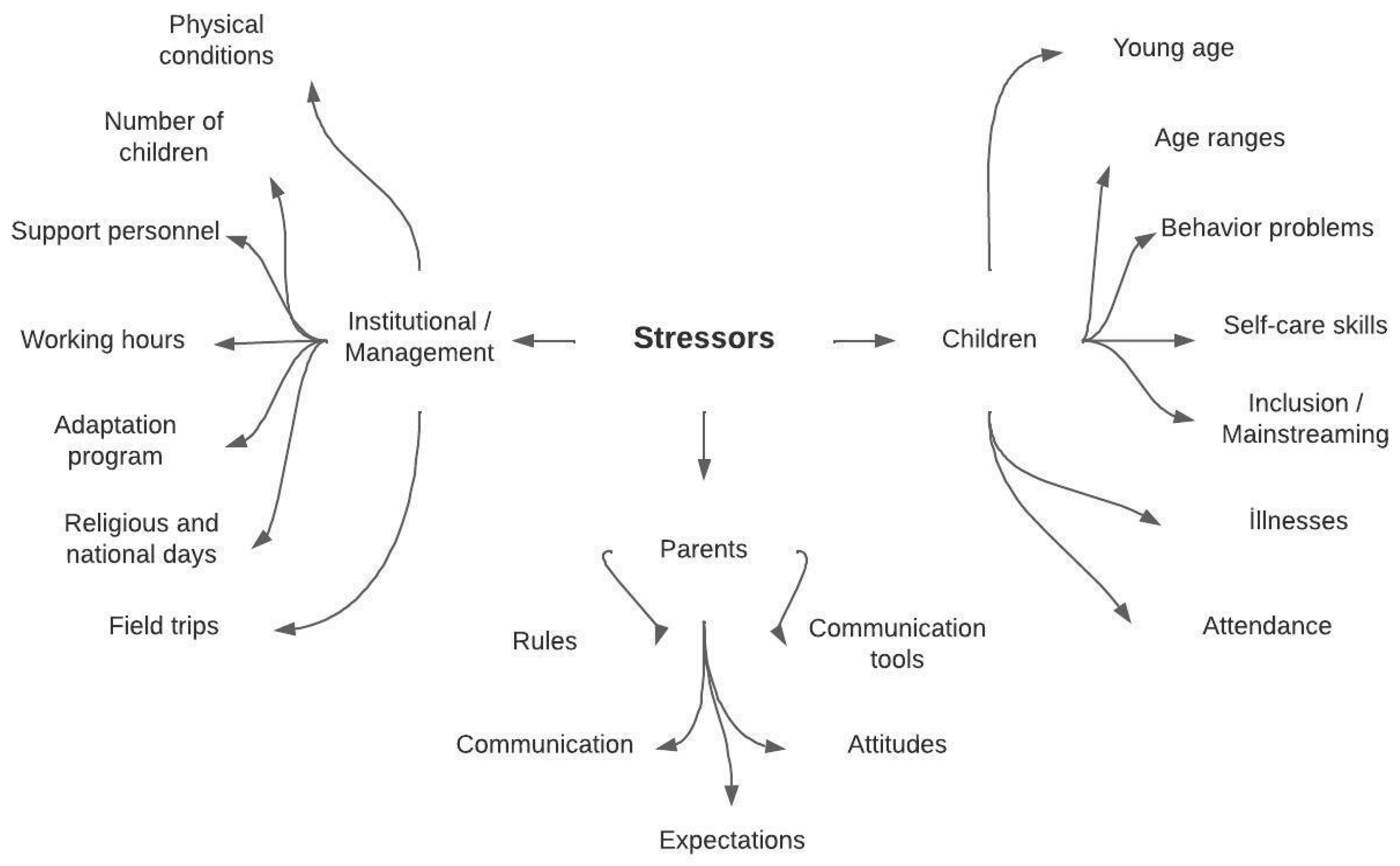
Figure 2.
How preschool teachers cope with stress.

Figure 3.
Preschool teachers’ most stressful times.
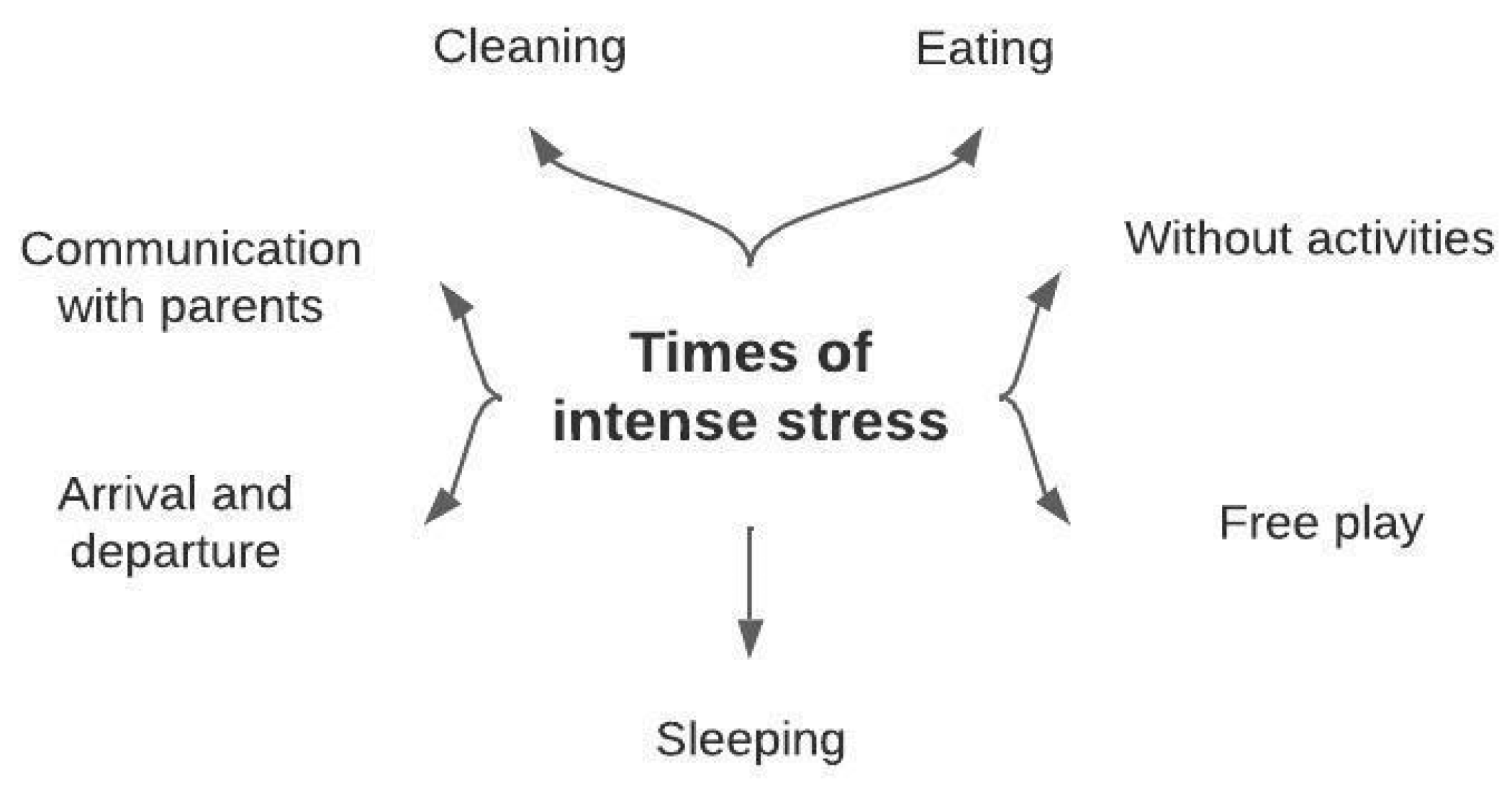

Table 1.
Information about the participants.
| Teachers | The Institution | Age group receiving education | Institution | Gender | Professional seniority (years) | Working time | Availability of a helper in the class | Inclusion student | Branch of the school principal |
|---|---|---|---|---|---|---|---|---|---|
| T1 | Private | 0-3 years | Preschool | Female | 4-7 years | Full day | Yes | None | Other |
| T2 | Private | 0-3 years | Preschool | Female | 4-7 years | Full day | Yes | None | Other |
| T3 | Private | 0-3 years | Preschool | Female | 1-3 years | Full day | Yes | None | Preschool |
| T4 | Private | 0-3 years | Preschool | Female | 4-7 years | Full day | Yes | None | Preschool |
| T5 | Private | 0-3 years | Preschool | Female | 1-3 years | Full day | Yes | Yes | Preschool |
| T6 | Private | 0-3 years | Preschool | Female | 4-7 years | Full day | Yes | None | Preschool |
| T7 | Private | 3-4 years | Preschool | Female | 4-7 years | Full day | Yes | None | Other |
| T8 | Private | 3-4 years | Preschool | Female | 1-3 years | Full day | Yes | None | Other |
| T9 | Private | 3-4 years | Preschool | Female | 12-15 years | Full day | Yes | Yes | Preschool |
| T10 | Private | 3-4 years | Preschool | Female | 1-3 years | Full day | Yes | Yes | Preschool |
| T11 | Private | 3-4 years | Preschool | Female | 1-3 years | Full day | Yes | Yes | Preschool |
| T12 | Private | 3-4 years | Preschool | Female | 4-7 years | Full day | Yes | None | Other |
| T13 | Private | 4-6 years | Preschool | Female | 12-15 years | Full day | Yes | None | Preschool |
| T14 | Private | 4-6 years | Preschool | Female | 1-3 years | Full day | Yes | None | Preschool |
| T15 | Private | 4-6 years | Preschool | Female | 1-3 years | Full day | Yes | None | Preschool |
| T16 | Private | 4-6 years | Preschool | Female | 1-3 years | Full day | Yes | None | Preschool |
| T17 | Private | 4-6 years | Preschool | Female | 4-7 years | Full day | Yes | None | Other |
| T18 | Private | 4-6 years | Preschool | Female | 1-3 years | Full day | Yes | None | Preschool |
| T19 | State | 4-6 years | Preschool | Female | 4-7 years | Half day | None | None | Preschool |
| T20 | State | 3-4 years | Preschool | Female | 4-7 years | Half day | None | None | Preschool |
| T21 | State | 3-4 years | Preschool | Female | 12-15 years | Half day | None | None | Other |
| T22 | State | 3-4 years | Preschool | Female | 4-7 years | Half day | None | None | Preschool |
| T23 | State | 3-4 years | Preschool | Female | 4-7 years | Half day | None | None | Preschool |
| T24 | State | 3-4 years | Preschool | Female | 4-7 years | Half day | Yes | None | Preschool |
| T25 | State | 3-4 years | Preschool | Female | 8- 11 years | Half day | Yes | None | Preschool |
| T26 | State | 4-6 years | Preschool | Female | 8-11 years | Half day | Yes | None | Preschool |
| T27 | State | 4-6 years | Preschool | Female | 8- 11 years | Half day | Yes | Yes | Preschool |
| T28 | State | 4-6 years | Preschool | Female | 8-11 years | Half day | Yes | None | Preschool |
| T29 | State | 4-6 years | Preschool | Female | 8- 11 years | Half day | Yes | None | Preschool |
| T30 | State | 4-6 years | Preschool | Female | 8-11 years | Half day | Yes | Yes | Preschool |
| T31 | State | 4-6 years | Kindergarten | Female | 8- 11 years | Half day | Yes | Yes | Other |
| T32 | State | 4-6 years | Kindergarten | Female | 8-11 years | Half day | None | None | Other |
| T33 | State | 4-6 years | Kindergarten | Female | 16-19 years | Half day | None | None | Other |
| T34 | State | 4-6 years | Kindergarten | Female | 1-3 years | Half day | None | None | Preschool |
| T35 | State | 4-6 years | Kindergarten | Female | 12-15 years | Half day | None | None | Other |
| T36 | State | 4-6 years | Kindergarten | Female | 4-7 years | Half day | None | None | Other |
Note: Table 1, contains demographic information of the participants.
Disclaimer/Publisher’s Note: The statements, opinions and data contained in all publications are solely those of the individual author(s) and contributor(s) and not of MDPI and/or the editor(s). MDPI and/or the editor(s) disclaim responsibility for any injury to people or property resulting from any ideas, methods, instructions or products referred to in the content. |
© 2023 by the authors. Licensee MDPI, Basel, Switzerland. This article is an open access article distributed under the terms and conditions of the Creative Commons Attribution (CC BY) license (http://creativecommons.org/licenses/by/4.0/).
Copyright: This open access article is published under a Creative Commons CC BY 4.0 license, which permit the free download, distribution, and reuse, provided that the author and preprint are cited in any reuse.


