

Submitted:
30 November 2023
Posted:
01 December 2023
You are already at the latest version
Abstract
Hybrid materials derived adsorbents have showed a great applicable efficiency in various fields including industrial uses and environmental remediation. Herein, the zinc oxide nanoparticles anchored carbon (ZnO-C) is fabricated and utilized for wastewater treatment by adsorption of Zn(II), Cd(II), Co(II) and Mn(II). The surface and structural characteristics are examined by TEM, SEM, XRD, FTIR, EDS and BET surface area. The Kinetics and equilibrium investigations are applied to optimize the adsorptive removal of Zn(II), Cd(II), Co(II) and Mn(II) onto ZnO-C. Results indicated formation of ZnO-C in crystalline spherical granules with nano-size between 29.3 and 48.8 nm. In addition, the spherical granules are gathered to form clusters. The FTIR indicated that the ZnO-C surface is rich with OH groups and ZnO. The adsorption capacity is reported as 212, 209, 200 and 230 mg/L for Zn(II), Cd(II), Co(II) and Mn(II) respectively. The optimum condition for maximum adsorption were pH between 5 and 6, contact time of 180 min and adsorbent dose of 0.1 g/L. The adsorptive removal data modeling for uptake of Zn(II), Cd(II), Co(II) and Mn(II) onto ZnO-C showed agreement with the assumption of pseudo 2nd order kinetic model and Freundlich isotherm suggesting fast adsorption rate and multilayer mechanism. The achieved adsorption capacity using the prepared ZnO-C is more effective compared to ZnO, carbon, Fe3O4 and Fe3O4-C. Real wastewater samples are applied including valley water, industrial wastewater and rain wastewater and evaluated for applicable uptake of Zn(II), Cd(II), Co(II) and Mn(II) using ZnO-C and Fe3O4-C with high efficiency.
Keywords:
hybrid materials
; zinc oxide nanoparticles
; carbon
; iron (III) oxide nanoparticle
; adsorption
; ki-netic and equilibrium studies
1. Introduction
The heavy metals polluted effluents are originated from industrial activities and cause serious environmental hazard [1]. Heavy metals such as manganese, cadmium, cobalt and zinc are naturally occurring elements. Small amounts of these elements are common in our environment and they are actually necessary for our health. But large amounts of any of them may cause acute or chronic toxicity [2]. Heavy metals in human bodies tend to bioaccumulate, which may result in damaged or reduced mental and central nervous function, and damage to blood composition, lungs, kidneys and liver. For example, cobalt, one of the common toxic metals affecting the environment, is present in the waste water of nuclear power plants and many other industries such as mining, metallurgical, electroplating, paints, pigments and electronic [3]. High levels of cobalt may affect several health troubles such as paralysis, diarrhea, low blood pressure, lung irritation and bone defects [4]. Manganese, is naturally occurring metallic element, which may contaminate groundwater as a result of weathering and the leaching of manganese-bearing rocks into the aquifers. Aquifers in certain regions of Quebec, other portions of Canada, and other countries contain naturally high quantities of manganese (including Sweden, Vietnam, Bangladesh, Morocco, and others) [5,6]. Although manganese is a vital trace element, it may be a strong neurotoxin in excess. The amount of manganese in drinking water is not regulated in the United States or Canada since it is mostly seen as an aesthetic problem. Manganese concentrations more than 100 g/L encourage the discoloration of laundry and hygienic items and provide an unpleasant flavor to drinks [7]. Zinc is extensively present in environmental components including food and water [8,9]. Zinc is a substance having a recommendation value of 5.00 mg/L in drinking water, according to the European Commission Drinking Water Directive, the World Health Organization and its Guidelines for Drinking Water Quality, and the US Environmental Protection Agency (EPA). The over-dose exposure to zinc leads to immediate symptoms such as vomiting and nausea and anemia [10]. Cadmium is one of the most harmful non-essential heavy metals in the environment, and it comes from many sources, including the wastewater from the metal plating industry, nickel-cadmium batteries, phosphate fertilizer, mining, pigments, stabilizers, alloys, petroleum refining, welding, and pulp industries, produce elevated levels of cadmium ions [31,32]. Cadmium toxicity resulted in kidney damage, cancer and lung dysfunction [11]. The cadmium recommended value for drinking water is 0.005 mg/L [12]. Therefore, many research investigations have been conducted to develop tools for wastewater purification. The removal of heavy metals pollutants from water can be achieved by many methods including chemical precipitation, flotation, biosorption, electrolytic recovery, membrane separation, removal by adsorption onto minerals or activated carbon [13,14,15,16]. Usually these methods have been restricted by many factors, such as processing efficiency, operational method, energy requirements, and economic benefit. Adsorption is an effective, straightforward, and affordable technique for removing heavy metals from water [17,18]. An effective sorbent should has a high heavy metal sorption capacity, low cost, renewable, and durable [19]. Although it is costly and ineffective for treating water, carbon materials are reported as an efficient adsorbent for heavy metals uptake [20,21]. The carbon incorporated materials have durability and poses physicochemical stability which enhance the wastewater treatment applications [22].
Recently, nanostructure-based materials have shown higher efficiencies in wastewater treatment applications compared to traditional adsorbents [23,24]. Nanostructure adsorbents such as manganese oxides and titanium oxides, iron oxides and zinc oxides have shown promising results in removal of heavy metals. Zinc oxide is reported to have been reported as proper adsorbent for organic and inorganic pollutants, however, the process suffers from many technical problems related to operating and efficiency [1,25,26,27,28]. The combination of metal oxides with carbon produce a hybrid material with superior properties compared to the single metal oxide oxides or pure carbon. In addition, the nano-adsorbent such as zinc oxide nanoparticles modified with graphene have showed an improved tendency to decompose organic pollutants [29]. The researches in this field is still continuous to improve the efficiency of nano-composite in removal of pollutants, even by adsorption or by photocatalytic degradation. Due to its outstanding optical, electrical, photonic, and microbiological capabilities among others, zinc oxide (ZnO) nanoparticles are widely employed in many new multifunctional materials. The zinc oxide nanoparticles derived materials could be utilized in various manufacturing sectors like rubber, plastics, cosmetics, pharmaceuticals, paints, soap, batteries, electrical equipment, optoelectronics, biomedical science, etc., the demand for zinc oxide is always rising [30,31]. Hybrid materials including carbon and metal oxide nanoparticles have been reported as novel category of materials with enhanced properties for catalysis, adsorption, precontraction and medical applications [32,33,34]. Thus, this work aimed to fabricate zinc oxide anchored carbon (ZnO-C) as hybrid porous adsorbent using solvothermal process to enhance the adsorption capacity for heavy metals uptake. In addition to characterized the produced ZnO-C with SEM, TEM, XRD, surface is and EDS. Furthermore, to compare the achieved adsorption capacity with other adsorbents including zinc oxide, carbon and Fe3O4-C. Moreover, to purify wastewater samples using the developed ZnO-C hybrid adsorbent materials.
2. Experimental
2.1. Materials
The materials including zinc acetate, polyethylene glycol, sodium hydroxide, zinc oxide, hydrochloric acid, zinc nitrate, cobalt nitrate, cadmium nitrate and manganese nitrate are brought with analytical grade from Sigma USA. Carbon and Fe3O4-C are obtained from our laboratory as prepared according our previously published work by Habila et al.
2.2. Fabrication of zinc oxide nanoparticles anchored carbon (ZnO-C)
The solvothermal process was applied to fabricate zinc oxide nanoparticles anchored carbon (ZnO-C). In details, 21 g of zinc acetate, 10 g of polyethylene glycol and 10 g of carbon were well mixed in 1:2 ethanol/water medium, then 100 ml of NaOH (0.1 M) was added to the mixture and stir for an hour. After that, the mixture was kept in oven at 110 °C for 17 hr. The formed precipitate was then isoleted by centrifuge and treaten in muffle furncaes at 750°C for one hour. The obtained ZnO-C was grinded in mortal and washed several times with ethanol and water, dried in oven at 105 °C for 10 hr. the produced ZnO-C was characterized by TEM, SEM, FTIR, XRD, EDS and surface area.
2.3. Optimization of adsorptive removal of Zn(II), Cd(II), Co(II) and Mn(II) for wastewater purification
0.02 g of the metal oxide nanoparticles including ZnO or Fe3O4 or their derived carbon hybrid materials including ZnO-C or Fe3O4-C was mixed with 20 mL of mixed heavy metals solution including Zn(II), Cd(II), Co(II) and Mn(II). Then the pH was optimized to pH using phosphate buffer. The mixture was kept under shaking condition at room temperature for 180 min. Then the aqueous solution was separated by centrifuge. The change in the heavy metal ions concentration was detected by ICP-MS. The adsorptive removal- capacity was evaluated from Equation 1
where qe is the adsorptive removal-capacity (mg/g) for Zn(II), Cd(II), Co(II) or Mn(II) onto the metal oxide nanoparticles including ZnO or Fe3O4 or their derived carbon hybrid materials including ZnO-C or Fe3O4-C
qe = (C0−Cf). V/M,
C0, the initial concentration of Zn(II), Cd(II), Co(II) or Mn(II)
Cf is the final concentration of Zn(II), Cd(II), Co(II) or Mn(II) after adsorption.
V is the volume of the solution of whole adsorption mixture.
M is the mass of the metal oxide nanoparticles including ZnO or Fe3O4 or their derived carbon hybrid materials including ZnO-C or Fe3O4-C
The previously described steps for adsorptive removal were operated several times to assess the effects of pH of adsorption medium, time, dose of metal oxide nanoparticles including ZnO or Fe3O4 or their derived carbon hybrid materials including ZnO-C or Fe3O4-C, as well as the influence of the concentration of Zn(II), Cd(II), Co(II) or Mn(II). The Kinetic models and the equilibrium-isotherms were investigated to study the adsorption rate and predict the adsorption behavior. In addition, wastewater samples were collected from Saudi Arabia, filtered and applied for adsorption evaluation using optimized conditions for uptake of Zn(II), Cd(II), Co(II) or Mn(II) onto including ZnO-C or Fe3O4-C.
3. Results and discussion
3.1. Characteristics of the developed ZnO-C hybrid adsorbent materials
The morphology of the fabricated ZnO-C hybrid adsorbent materials was described by SEM (Figure 1) and TEM (Figure 2) which reveal that spherical structure of the formed granules in nanoscale size of 29.3 - 48.8 nm. In addition, a cluster are notices from the spherical granules aggregate. The BET surface area was detected as 24.84 m²/g while the Langmuir surface area was 37.3470 m²/g. These results are slightly lower than that reported by Al-Rawashdeh et al., reported BET surface areas of the graphene oxide anchored zinc oxide nanoparticles (GO–ZnO) as 36.95 m²/g [35]. In addition, Gu et al., have prepared ZnO nanoparticles for removal of Cr(III) and reported a BET surface area of 26.7 m2/g [36].
The developed ZnO-C is characterized by FTIR (Figure 3) which indicated main peaks between 3300 and 3700 cm–1 due to stretching vibration of the O-H groups. Peaks around 2900 cm–1, which attributed to the aliphatic C-H. While the peak at around 1600 cm-1 is due to carbonyl groups (C═O). The peak between 1400 and 1500 is attributed to O-H binding. The peak between 400 and 470 cm–1 is attributed to the stretching vibration of Zn-O bond. The XRD analysis confirmed the crystalline nature of the formed ZnO-C due to appearance of peaks at 2 thetas of around 31°, 34°, 36°, 47°, 56°, 62° and 69° which are attributed to the planes of (100), (002), (101), (102), (110), (103), and (112), respectively. In addition, the detected high intensity peaks indicated the purity of formed hexagonal structure of ZnO (JPCDS number: 36-1451) [37]. The successful fabrication of pure zinc oxide nanoparticles anchored carbon is expected to improve the formed hybrid materials application for adsorption of heavy metals. Rodríguez et al., developed zinc oxide/graphene nanocomposite and indicated that the removal efficiency of Al and Cu were 19.9 mg/g and 33.5 mg/g, respectively, owing that the decoration of graphene with ZnO nanoparticles enhanced the adsorption capacity [38].
3.2. Utilization of developed hybrid materials for adsoprion application
The metal oxide nanoparticles including ZnO and Fe3O4 or their derived carbon hybrid materials including ZnO-C and Fe3O4-C were evaluated for adsorption of Zn(II), Cd(II), Co(II) and Mn(II) from aqueous solution as presented in Figure 5. The adsorption capacity of ZnO was 101, 116, 85, and 111 mg/g for Zn(II), Cd(II), Co(II) and Mn(II), respectively while for Fe3O4 was 125, 101.3, 116 and 83 mg/g for Zn(II), Cd(II), Co(II) and Mn(II), respectively. The adsorption capacity for carbon was 100, 91, 106 and 90 for Zn(II), Cd(II), Co(II) and Mn(II), respectively. On the other hand, the adsorption capacity of metal oxide anchored carbon hybrid adsorbent materials exhibited higher performance for removal of heavy metals due to synergic effect. In addition, the developed ZnO-C exhibited the higher adsorption capacity as 212, 209, 200 and 230 mg/L for Zn(II), Cd(II), Co(II) and Mn(II) respectively, compared to Fe3O4-C which possess adsorption capacity of 177, 173, 165 and 167 for Zn(II), Cd(II), Co(II) and Mn(II), respectively. These results agree with finding indicated by Hadadian et al., who reported that combination of zinc oxide nanoparticles with graphene improve the adsorption capacity for nickel removal [39].
3.3. Optimizing the most influencing factors
The common effective factors for adsorption efficiency during wastewater treatment are pH, adsorbent dose and time of contact. Therefore, various investigations have been applied to optimize the adsorptive removal of Zn(II), Cd(II), Co(II) and Mn(II) onto ZnO-C. The pH is studied in the range from 2 to 7 (Figure 6). The maximum adsorption capacity was achieved in the acidic medium between 5 and 6. These results agreed with previous adsorption methods using ZnO based adsorbent for removal of Cu(II) which achieved at pH between 4 and 4.8 [40]. In addition, pH is reported between 3-7 by Gu et al., for removal of Cr(III) onto ZnO nanoparticles [36]. In addition, the influence of ZnO-C dose is investigated in the range 0.1-0.6 g/L and the related adsorption capacity is presented in Figure 7. The maximum adsorption capacity is reported at dose of 0.1 g/L, reporting values of 215, 213, 206 and 231 mg/g for Zn(II), Cd(II), Co(II) and Mn(II), respectively. Then by increasing the ZnO-C dose, the adsorption capacity decreased. This could be attributed to unoccupied sites is increased by increasing ZnO-C at constant heavy metals ions concentration. The similar trend for the influence of dose on the adsorption capacity is previously reported by Habila et.al., for removal of arsenic and mercury onto CNT/SDS-Alumina nanoparticles [41]. Moreover, the influence of time of contacting of Zn(II), Cd(II), Co(II) and Mn(II) with the ZnO-C were investigated in the range between 5 and 1200 min. By increasing time from 5 to 180, a gradually improvement in the adsorption capacity is noticed (Figure 8). By further increasing the time of contact from 180 to 1200 min, the adsorption capacity remain constant due to the steady stage equilibrium in which rate of adsorption is equal to the rate of desorption processes. Herein, the reported equilibrium time of 180 min is considered as fast adsorption rate which indicate the effectiveness of the prepared ZnO-C for removal of Zn(II), Cd(II), Co(II) and Mn(II) with capacity of 183, 180, 163 and 196 mg/L.
3.4. Kinetic and Equilibrium modeling
Applying adsorption theories is important to study the characteristics of the adsorbent’s hybrid materials to enhances the performance and develop a well-controlled process for wastewater treatments [41,42]. To deeply assess the interaction between the developed ZnO-C and Zn(II), Cd(II), Co(II) and Mn(II), various models are applied such as pseudo 1st order, pseudo 2nd order, Langmuir isotherm and Freundlich isotherm as stated in the related equations provided in Table 1.
The pseudo 1st order kinetic model (Figure 9) (Table 2) reveal a calculated adsorption capacity of 227.1, 233.1, 191.7 and 258.4 mg/g for Zn(II), Cd(II), Co(II) and Mn(II), respectively, which significantly different from the experimental capacity (183, 180, 163 and 196 mg/L for Zn(II), Cd(II), Co(II) and Mn(II), respectively) mg/L for Zn(II), Cd(II), Co(II) and Mn(II), respectively. The pseudo 2nd order kinetic model (Figure 9) (Table 2) reveal a calculated adsorption capacity of 196.1, 188.7, 181.8 and 200.0 mg/g for Zn(II), Cd(II), Co(II) and Mn(II), respectively, which are near from the experimental capacity (183, 180, 163 and 196 mg/L for Zn(II), Cd(II), Co(II) and Mn(II), respectively). Therefore, the pseudo 2nd order model is the suitable model to describe the adsorption process. These results indicated that the adsorption process onto the developed ZnO-C occur over three steps (migration of Zn(II), Cd(II), Co(II) and Mn(II) in the adsorption solution, arrangement at the ZnO-C surfaces, and migration through the pores)[43]. By applying the Langmuir isotherms plot (Figure 11) for adsorption of Zn(II), Cd(II), Co(II) and Mn(II) onto ZnO-C, the calculated constant (Table 3) and the related correlation coeffcienct indicated that the isnot applicable for describing the adsorption process. While plotting the Freundlich isotherm (Figure 12), the calculated constants (Table 3) indicated strong correlation which confirm the multilayer adsorption and heterogenous surfaces according to Freundlich assumptions.
3.5. Purification of wastewater using the deviled hybrid adsorbent materials
As a result of environmental pollution, various water resources have been contaminated with toxic metals. In order to reduce their negative impacts, the treatment of effluents with high contaminate ratio is applied prior to reaching natural water system [44,45]. Various wastewater samples are brought from Riyadh city, Saudi Arabia. The developed adsorption process was utilized using ZnO-C and Fe3O4-C for adsorption of Zn(II), Cd(II), Co(II) and Mn(II) from real wastewater matrix (Table 4). The removal efficiency was not less than 91% for tested samples. These achieved adsorptive removal performance confirm that the developed hybrid materials are effective for wastewater treatment in real field with high added value. By comparing the obtained results with literature [46,47,48,49,50,51,52,53,54,55,56,57,58,59,60,61,62,63,64,65,66,67,68] (Table 5), most of applied materials exhibited the maximum adsorption capacity in the in the pH range of low acidic medium and neutral medium. In addition, the performance efficiency of the evaluated hybrid martials in this work including ZnO-C and Fe3O4 are superior compared to most of tabulated adsorbents from the literature. However, few adsorbents materials exhibited higher adsorption capacity such as f the ZnO nanoparticles [54], hydroxyapatite/pectin hybrid material [64] and Zinc oxide/ graphene oxide composite (ZnO/GO) [68].
4. Conclusion
The zinc oxide nanoparticles anchored carbon (ZnO-C) hybrid materials have been prepared with crystalline structure and spherical granules in nanoscale size of 29.3 - 48.8 nm. The prepared porous structure of ZnO-C poses surface area of 24.84 m²/g. The optimized conditions for Zn(II), Cd(II), Co(II) and Mn(II) uptake were at pH between 5 and 6, contact time 180 min and the ZnO-C dose of 0.1 g/L. For comparison, various adsorbents materials including ZnO, Fe3O4, carbon, ZnO-C and Fe3O4-C were utilized for wastewater treatment by adsorption of Zn(II), Cd(II), Co(II) and Mn(II). However, the ZnO-C exhibited the superior adsorption capacity. Real wastewater sample including valley-water, industrial wastewater and rain-water are successfully treated by adsorption of Zn(II), Cd(II), Co(II) and Mn(II) onto ZnO-C and Fe3O4-C indicating high removal efficiency (more than 91%) for evaluated samples. The results achieved in this work lead to further future investigations to develop novel transition metal oxide nanoparticles decorated carbon as hybrid porous materials for enhanced wastewater treatment applications. In addition, the investigated materials in this work could be investigated for additional applications such photocatalytic degradation of organic pollutants and/or removal of various pollutant’s categories such as radioactive waste or greenhouse gases.
Author Contributions
Conceptualization, Mohamed Habila and Zeid ALOthman; Formal analysis, Mohamed Habila, Zeid ALOthman and Ahmed Badjah-Hadj-Ahmed; Investigation, Abdullah ALanazi, Mohamed Habila and Ahmed Badjah-Hadj-Ahmed; Methodology, Abdullah ALanazi, Mohamed Habila and Ahmed Badjah-Hadj-Ahmed; Resources, Zeid ALOthman; Supervision, Zeid ALOthman and Ahmed Badjah-Hadj-Ahmed; Validation, Mohamed Habila, Zeid ALOthman and Ahmed Badjah-Hadj-Ahmed; Writing – original draft, Abdullah ALanazi; Writing – review & editing, Mohamed Habila and Ahmed Badjah-Hadj-Ahmed.
Funding: This project was funded by the National Plan for Science, Technology, and Innovation (MAARIFAH), King Abdul Aziz City for Science and Technology, Kingdom of Saudi Arabia, award No. 13-ENV1186-02.
Acknowledgments
The author acknowledges the National Plan for Science, Technology, and Innovation (MAARIFAH), King Abdulaziz City for Science and Technology, Kingdom of Saudi Arabia for its grant with award number 13-ENV1186-02.
References
- Khalafi, T.; Buazar, F.; Ghanemi, K. Phycosynthesis and Enhanced Photocatalytic Activity of Zinc Oxide Nanoparticles Toward Organosulfur Pollutants. Sci Rep 2019, 9. [Google Scholar] [CrossRef]
- Rengaraj, S.; Yeon, K.H.; Moon, S.H. Removal of Chromium from Water and Wastewater by Ion Exchange Resins. J Hazard Mater 2001, 87, 273–287. [Google Scholar] [CrossRef] [PubMed]
- Kurniawan, T.A.; Chan, G.Y.S.; Lo, W.; Babel, S. Comparisons of Low-Cost Adsorbents for Treating Wastewaters Laden with Heavy Metals. Science of the total environment 2006, 366, 409–426. [Google Scholar] [CrossRef]
- Weatherley, L.R.; Miladinovic, N.D. Comparison of the Ion Exchange Uptake of Ammonium Ion onto New Zealand Clinoptilolite and Mordenite. Water Res 2004, 38, 4305–4312. [Google Scholar] [CrossRef]
- Ljung, K.; Vahter, M. Time to Re-Evaluate the Guideline Value for Manganese in Drinking Water? Environ Health Perspect 2007, 115, 1533–1538. [Google Scholar] [CrossRef]
- Agusa, T.; Kunito, T.; Fujihara, J.; Kubota, R.; Minh, T.B.; Kim Trang, P.T.; Iwata, H.; Subramanian, A.; Viet, P.H.; Tanabe, S. Contamination by Arsenic and Other Trace Elements in Tube-Well Water and Its Risk Assessment to Humans in Hanoi, Vietnam. Environmental Pollution 2006, 139, 95–106. [Google Scholar] [CrossRef] [PubMed]
- Griffin, A.E. Significance and Removal of Manganese in Water Supplies. J Am Water Works Assoc 1960, 52, 1326–1334. [Google Scholar] [CrossRef]
- Sankhla, M.S.; Kumar, R.; Prasad, L. Zinc Impurity in Drinking Water and Its Toxic Effect on Human Health. Indian Internet Journal of Forensic Medicine & Toxicology 2019, 17, 84. [Google Scholar] [CrossRef]
- Sankhla, M.S.; Kumar, R. Contaminant of Heavy Metals in Groundwater & Its Toxic Effects on Human Health & Environment. International Journal of Environmental Sciences & Natural Resources 2019, 18, 1–5. [Google Scholar] [CrossRef]
- Porea, T.J.; Belmont, J.W.; Maboney, D.H. Zinc-Induced Anemia and Neutropenia in an Adolescent. Journal of Pediatrics 2000, 136, 688–690. [Google Scholar] [CrossRef]
- Nogawa, K.; Kobayashi, E.; Okubo, Y.; Suwazono, Y. Environmental Cadmium Exposure, Adverse Effects and Preventive Measures in Japan. BioMetals 2004, 17, 581–587. [Google Scholar] [CrossRef] [PubMed]
- Chand, P. Environmental Protection and Regulations in India: Role of the Central Pollution Control Board. Indian Journal of Public Administration 2018, 64, 645–663. [Google Scholar] [CrossRef]
- Gupta, V.K.; Gupta, M.; Sharma, S. Process Development for the Removal of Lead and Chromium from Aqueous Solutions Using Red Mud - An Aluminium Industry Waste. Water Res 2001, 35, 1125–1134. [Google Scholar] [CrossRef] [PubMed]
- Dubey, A.; Shiwani, S. Adsorption of Lead Using a New Green Material Obtained from Portulaca Plant. International Journal of Environmental Science and Technology 2012, 9, 15–20. [Google Scholar] [CrossRef]
- Järup, L. Hazards of Heavy Metal Contamination. Br Med Bull 2003, 68, 167–182. [Google Scholar] [CrossRef]
- Esalah, J.O.; Weber, M.E.; Vera, J.H. Removal of Lead, Cadmium and Zinc from Aqueous Solutions by Precipitation with Sodium Di-(n-Octyl) Phosphinate. Can J Chem Eng 2000, 78, 948–954. [Google Scholar] [CrossRef]
- Inyang, M.; Gao, B.; Yao, Y.; Xue, Y.; Zimmerman, A.R.; Pullammanappallil, P.; Cao, X. Removal of Heavy Metals from Aqueous Solution by Biochars Derived from Anaerobically Digested Biomass. Bioresour Technol 2012, 110, 50–56. [Google Scholar] [CrossRef]
- Sigdel, A.; Jung, W.; Min, B.; Lee, M.; Choi, U.; Timmes, T.; Kim, S.J.; Kang, C.U.; Kumar, R.; Jeon, B.H. Concurrent Removal of Cadmium and Benzene from Aqueous Solution by Powdered Activated Carbon Impregnated Alginate Beads. Catena (Amst) 2017, 148, 101–107. [Google Scholar] [CrossRef]
- Chen, L.; Wu, P.; Chen, M.; Lai, X.; Ahmed, Z.; Zhu, N.; Dang, Z.; Bi, Y.; Liu, T. Preparation and Characterization of the Eco-Friendly Chitosan/Vermiculite Biocomposite with Excellent Removal Capacity for Cadmium and Lead. Appl Clay Sci 2018, 159, 74–82. [Google Scholar] [CrossRef]
- Elhafez, S.E.A.; Hamad, H.A.; Zaatout, A.A.; Malash, G.F. Management of Agricultural Waste for Removal of Heavy Metals from Aqueous Solution: Adsorption Behaviors, Adsorption Mechanisms, Environmental Protection, and Techno-Economic Analysis. Environmental Science and Pollution Research 2017, 24, 1397–1415. [Google Scholar] [CrossRef]
- Bouhamed, F.; Elouear, Z.; Bouzid, J.; Ouddane, B. Multi-Component Adsorption of Copper, Nickel and Zinc from Aqueous Solutions onto Activated Carbon Prepared from Date Stones. Environmental Science and Pollution Research 2016, 23, 15801–15806. [Google Scholar] [CrossRef] [PubMed]
- Lehmann, J. COMMENTARY. 2007, 447, 10–11.
- El-Toni, A.M.; Habila, M.A.; Ibrahim, M.A.; Labis, J.P.; ALOthman, Z.A. Simple and Facile Synthesis of Amino Functionalized Hollow Core-Mesoporous Shell Silica Spheres Using Anionic Surfactant for Pb(II), Cd(II), and Zn(II) Adsorption and Recovery. Chemical Engineering Journal 2014, 251. [Google Scholar] [CrossRef]
- Habila, M.A.; Alothman, Z.A.; El-Toni, A.M.; Al-Tamrah, S.A.; Soylak, M.; Labis, J.P. Carbon-Coated Fe<inf>3</Inf>O<inf>4</Inf> Nanoparticles with Surface Amido Groups for Magnetic Solid Phase Extraction of Cr(III), Co(II), Cd(II), Zn(II) and Pb(II) Prior to Their Quantitation by ICP-MS. Microchimica Acta 2017, 184. [Google Scholar] [CrossRef]
- Raveendran, P.; Fu, J.; Wallen, S.L. Completely “Green” Synthesis and Stabilization of Metal Nanoparticles. J Am Chem Soc 2003, 125, 13940–13941. [Google Scholar] [CrossRef] [PubMed]
- Fernandes, D.M.; Silva, R.; Hechenleitner, A.A.W.; Radovanovic, E.; Melo, M.A.C.; Pineda, E.A.G. Synthesis and Characterization of ZnO, CuO and a Mixed Zn and Cu Oxide. Mater Chem Phys 2009, 115, 110–115. [Google Scholar] [CrossRef]
- Kolodziejczak-Radzimska, A.; Jesionowski, T. Zinc Oxide-from Synthesis to Application: A Review. Materials 2014, 7, 2833–2881. [Google Scholar] [CrossRef]
- Buazar, F.; Bavi, M.; Kroushawi, F.; Halvani, M.; Khaledi-Nasab, A.; Hossieni, S.A. Potato Extract as Reducing Agent and Stabiliser in a Facile Green One-Step Synthesis of ZnO Nanoparticles. J Exp Nanosci 2016, 11, 175–184. [Google Scholar] [CrossRef]
- Durmus, Z.; Kurt, B.Z.; Durmus, A. Synthesis and Characterization of Graphene Oxide/Zinc Oxide (GO/ZnO) Nanocomposite and Its Utilization for Photocatalytic Degradation of Basic Fuchsin Dye. ChemistrySelect 2019, 4, 271–278. [Google Scholar] [CrossRef]
- Hoffman, R.L. ZnO Thin-Film Transistors. Zinc Oxide Bulk, Thin Films and Nanostructures: Processing, Properties, and Applications, 2006; 415–442. [Google Scholar] [CrossRef]
- Kolodziejczak-Radzimska, A.; Jesionowski, T. Zinc Oxide-from Synthesis to Application: A Review. Materials 2014, 7, 2833–2881. [Google Scholar] [CrossRef]
- Buazar, F.; Alipouryan, S.; Kroushawi, F.; Hossieni, S.A. Photodegradation of Odorous 2-Mercaptobenzoxazole through Zinc Oxide/Hydroxyapatite Nanocomposite. Applied Nanoscience (Switzerland) 2015, 5, 719–729. [Google Scholar] [CrossRef]
- Arularasu, M. V.; Sendhil, M.; Rajendran, T. V.; Mani, G.; Aljuwayid, A.M.; Habila, M.A. Recent Advantages of Zinc Oxide/Carbon Nanotubes/Reduced Graphene Oxide Based Nanocomposite for the Visible Light Photodegradation. Inorg Chem Commun 2022, 139, 109332. [Google Scholar] [CrossRef]
- Arularasu, M. V.; Sendhil, M.; Rajendran, T. V.; Mani, G.; Aljuwayid, A.M.; Habila, M.A. Recent Advantages of Zinc Oxide/Carbon Nanotubes/Reduced Graphene Oxide Based Nanocomposite for the Visible Light Photodegradation. Inorg Chem Commun 2022, 139, 109332. [Google Scholar] [CrossRef]
- Al-Rawashdeh, N.A.F.; Allabadi, O.; Aljarrah, M.T. Photocatalytic Activity of Graphene Oxide/Zinc Oxide Nanocomposites with Embedded Metal Nanoparticles for the Degradation of Organic Dyes. ACS Omega 2020, 5, 28046–28055. [Google Scholar] [CrossRef] [PubMed]
- Gu, M.; Hao, L.; Wang, Y.; Li, X.; Chen, Y.; Li, W.; Jiang, L. The Selective Heavy Metal Ions Adsorption of Zinc Oxide Nanoparticles from Dental Wastewater. Chem Phys 2020, 534, 110750. [Google Scholar] [CrossRef]
- Khoshhesab, Z.M.; Sarfaraz, M.; Asadabad, M.A. Preparation of ZnO Nanostructures by Chemical Precipitation Method. Synthesis and Reactivity in Inorganic, Metal-Organic, and Nano-Metal Chemistry 2011, 41, 814–819. [Google Scholar] [CrossRef]
- Rodríguez, C.; Tapia, C.; Leiva-Aravena, E.; Leiva, E. Graphene Oxide–ZnO Nanocomposites for Removal of Aluminum and Copper Ions from Acid Mine Drainage Wastewater. Int J Environ Res Public Health 2020, 17, 1–18. [Google Scholar] [CrossRef]
- Hadadian, M.; Goharshadi, E.K.; Fard, M.M.; Ahmadzadeh, H.; Hadadian, M.; Goharshadi, E.K.; Fard, M.M.; Ahmadzadeh, H. Synergistic Effect of Graphene Nanosheets and Zinc Oxide Nanoparticles for Effective Adsorption of Ni (II) Ions from Aqueous Solutions. ApPhA 2018, 124, 239. [Google Scholar] [CrossRef]
- Leiva, E.; Tapia, C.; Rodríguez, C.; Palet, C.; Bastos-Arrieta, J. Highly Efficient Removal of Cu(II) Ions from Acidic Aqueous Solution Using ZnO Nanoparticles as Nano-Adsorbents. Water 2021, Vol. 13, Page 2960 2021, 13, 2960. [Google Scholar] [CrossRef]
- Habila, M.A.; ALOthman, Z.A.; Hakami, H.M.; Alanazi, A.G. Influence of Synthesis-Heating Conditions on the Porosity and Performance of a Carbon Nanotube/SDS-Alumina Nanocomposite for Effective Wastewater Treatment: Fabrication, Characterization, and Adsorption Modeling. Ind Eng Chem Res 2023, 62, 12571–12588. [Google Scholar] [CrossRef]
- Habila, M.A.; ALOthman, Z.A.; Hakami, H.M.; ALOthman, M.R.; Sheikh, M. Recyclable Carbon-Based Hybrid Adsorbents Functionalized with Alumina Nanoparticles for Water Remediation. Crystals 2023, Vol. 13, Page 598 2023, 13, 598. [Google Scholar] [CrossRef]
- Mohamed El-Toni, A.; Habila, M.A.; Abbas Ibrahim, M.; Puzon Labis, J.; ALOthman, Z.A. Simple and Facile Synthesis of Amino Functionalized Hollow Core–mesoporous Shell Silica Spheres Using Anionic Surfactant for Pb(II), Cd(II), and Zn(II) Adsorption and Recovery. CHEMICAL ENGINEERING JOURNAL 2014, 251, 441–451. [Google Scholar] [CrossRef]
- Habila, M.; Sheikh Moshab, M.; Mohamed El-Toni, A.; S. Al-Awadi, A.; A. ALOthman, Z. Facile Strategy for Fabricating an Organosilica-Modified Fe3O4 (OS/ Fe3O4) Hetero-Nanocore and OS/ Fe3O4@SiO2 Core–Shell Structure for Wastewater Treatment with Promising Recyclable Efficiency. ACS Omega 2023, 8, 7626–7638. [CrossRef]
- Chen, L.; Hu, N.; Zhao, C.; Sun, X.; Han, R.; Lv, Y.; Zhang, Z. High-Efficiency Foam Fractionation of Anthocyanin from Perilla Leaves Using Surfactant-Free Active Al2O3 Nanoparticle as Collector and Frother: Performance and Mechanism. Food Chem 2023, 427, 136708. [Google Scholar] [CrossRef] [PubMed]
- Ihsanullah; Al-Khaldi, F.A.; Abusharkh, B.; Khaled, M.; Atieh, M.A.; Nasser, M.S.; Laoui, T.; Saleh, T.A.; Agarwal, S.; Tyagi, I.; et al. Adsorptive Removal of Cadmium(II) Ions from Liquid Phase Using Acid Modified Carbon-Based Adsorbents. J Mol Liq 2015, 204, 255–263. [CrossRef]
- Liang, J.; Liu, J.; Yuan, X.; Dong, H.; Zeng, G.; Wu, H.; Wang, H.; Liu, J.; Hua, S.; Zhang, S.; et al. Facile Synthesis of Alumina-Decorated Multi-Walled Carbon Nanotubes for Simultaneous Adsorption of Cadmium Ion and Trichloroethylene. Chemical Engineering Journal 2015, 273, 101–110. [Google Scholar] [CrossRef]
- Jiang, M. qin; Jin, X. ying; Lu, X.Q.; Chen, Z. liang Adsorption of Pb(II), Cd(II), Ni(II) and Cu(II) onto Natural Kaolinite Clay. Desalination 2010, 252, 33–39. [Google Scholar] [CrossRef]
- Mubarak, N.M.; Alicia, R.F.; Abdullah, E.C.; Sahu, J.N.; Haslija, A.B.A.; Tan, J. Statistical Optimization and Kinetic Studies on Removal of Zn2+ Using Functionalized Carbon Nanotubes and Magnetic Biochar. J Environ Chem Eng 2013, 1, 486–495. [Google Scholar] [CrossRef]
- Chen, H.; Li, J.; Shao, D.; Ren, X.; Wang, X. Poly(Acrylic Acid) Grafted Multiwall Carbon Nanotubes by Plasma Techniques for Co(II) Removal from Aqueous Solution. Chemical Engineering Journal 2012, 210, 475–481. [Google Scholar] [CrossRef]
- Dal Bosco, S.M.; Jimenez, R.S.; Vignado, C.; Fontana, J.; Geraldo, B.; Figueiredo, F.C.A.; Mandelli, D.; Carvalho, W.A. Removal of Mn(II) and Cd(II) from Wastewaters by Natural and Modified Clays. Adsorption 2006, 12, 133–146. [Google Scholar] [CrossRef]
- Yaacoubi, H.; Zidani, O.; Mouflih, M.; Gourai, M.; Sebti, S. Removal of Cadmium from Water Using Natural Phosphate as Adsorbent. In Proceedings of the Procedia Engineering; Elsevier Ltd, 2014; Vol. 83, pp. 386–393. [Google Scholar]
- Naeem, M.A.; Imran, M.; Amjad, M.; Abbas, G.; Tahir, M.; Murtaza, B.; Zakir, A.; Shahid, M.; Bulgariu, L.; Ahmad, I. Batch and Column Scale Removal of Cadmium from Water Using Raw and Acid Activated Wheat Straw Biochar. Water (Switzerland) 2019, 11. [Google Scholar] [CrossRef]
- Sheela, T.; Nayaka, Y.A.; Viswanatha, R.; Basavanna, S.; Venkatesha, T.G. Kinetics and Thermodynamics Studies on the Adsorption of Zn(II), Cd(II) and Hg(II) from Aqueous Solution Using Zinc Oxide Nanoparticles. Powder Technol 2012, 217, 163–170. [Google Scholar] [CrossRef]
- Engates, K.E.; Shipley, H.J. Adsorption of Pb, Cd, Cu, Zn, and Ni to Titanium Dioxide Nanoparticles: Effect of Particle Size, Solid Concentration, and Exhaustion. Environmental Science and Pollution Research 2011, 18, 386–395. [Google Scholar] [CrossRef] [PubMed]
- Adigun, O.A.; Oninla, V.O.; Babarinde, N.A.A.; Oyedotun, K.O.; Manyala, N. Characterization of Sugarcane Leaf-Biomass and Investigation of Its Efficiency in Removing Nickel(II), Chromium(III) and Cobalt(II) Ions from Polluted Water. Surfaces and Interfaces 2020, 20. [Google Scholar] [CrossRef]
- Joshi, S.; Singh, H.; Sharma, S.; Barman, P.; Saini, A.; Verma, G. Synthesis and Characterization of Graphene Oxide-Bovine Serum Albumin Conjugate Membrane for Adsorptive Removal of Cobalt(II) from Water. International Journal of Environmental Science and Technology 2021, 18, 3915–3928. [Google Scholar] [CrossRef]
- Al-Jlil, S.A. Adsorption of Cobalt Ions from Waste Water on Activated Saudi Clays. Appl Water Sci 2017, 7, 383–391. [Google Scholar] [CrossRef]
- Dabbagh, R.; Ashtiani Moghaddam, Z.; Ghafourian, H. Removal of Cobalt(II) Ion from Water by Adsorption Using Intact and Modified Ficus Carica Leaves as Low-Cost Natural Sorbent. Desalination Water Treat 2016, 57, 19890–19902. [Google Scholar] [CrossRef]
- Qomi, M.H.; Eisazadeh, H.; Hosseini, M.; Namaghi, H.A. Manganese Removal from Aqueous Media Using Polyaniline Nanocomposite Coated on Wood Sawdust. Synth Met 2014, 194, 153–159. [Google Scholar] [CrossRef]
- Xu, R.; Zhou, G.; Tang, Y.; Chu, L.; Liu, C.; Zeng, Z.; Luo, S. New Double Network Hydrogel Adsorbent: Highly Efficient Removal of Cd(II) and Mn(II) Ions in Aqueous Solution. Chemical Engineering Journal 2015, 275, 179–188. [Google Scholar] [CrossRef]
- Khobragade, M.U.; Pal, A. Investigation on the Adsorption of Mn(II) on Surfactant-Modified Alumina: Batch and Column Studies. J Environ Chem Eng 2014, 2, 2295–2305. [Google Scholar] [CrossRef]
- Budinova, T.; Savova, D.; B.Tsyntsarski; Ania, C.O.; Cabal, B.; Parra, J.B.; Petrov, N. Biomass Waste-Derived Activated Carbon for the Removal of Arsenic and Manganese Ions from Aqueous Solutions. Appl Surf Sci 2009, 255, 4650–4657. [CrossRef]
- Ni, P.; Fox, J.T. Synthesis and Appraisal of a Hydroxyapatite/Pectin Hybrid Material for Zinc Removal from Water. RSC Adv 2019, 9, 21095–21105. [Google Scholar] [CrossRef] [PubMed]
- Ghorbani, M. Removal of Zinc Ions from Aqueous Solution Using Polyaniline Nanocomposite Coated on Rice Husk. Iranica Journal of Energy & Environment 2012, 3, 66–71. [Google Scholar] [CrossRef]
- Chou, C.M.; Lien, H.L. Dendrimer-Conjugated Magnetic Nanoparticles for Removal of Zinc (II) from Aqueous Solutions. Journal of Nanoparticle Research 2011, 13, 2099–2107. [Google Scholar] [CrossRef]
- Gu, M.; Hao, L.; Wang, Y.; Li, X.; Chen, Y.; Li, W.; Jiang, L. The Selective Heavy Metal Ions Adsorption of Zinc Oxide Nanoparticles from Dental Wastewater. Chem Phys 2020, 534. [Google Scholar] [CrossRef]
- Ahmad, S.Z.N.; Salleh, W.N.W.; Yusof, N.; Mohd Yusop, M.Z.; Hamdan, R.; Awang, N.A.; Ismail, N.H.; Rosman, N.; Sazali, N.; Ismail, A.F. Pb(II) Removal and Its Adsorption from Aqueous Solution Using Zinc Oxide/Graphene Oxide Composite. Chem Eng Commun 2021, 208, 646–660. [Google Scholar] [CrossRef]
Figure 1.
SEM characterization of ZnO-C at magnification of (A) 250 and (B) 100000.
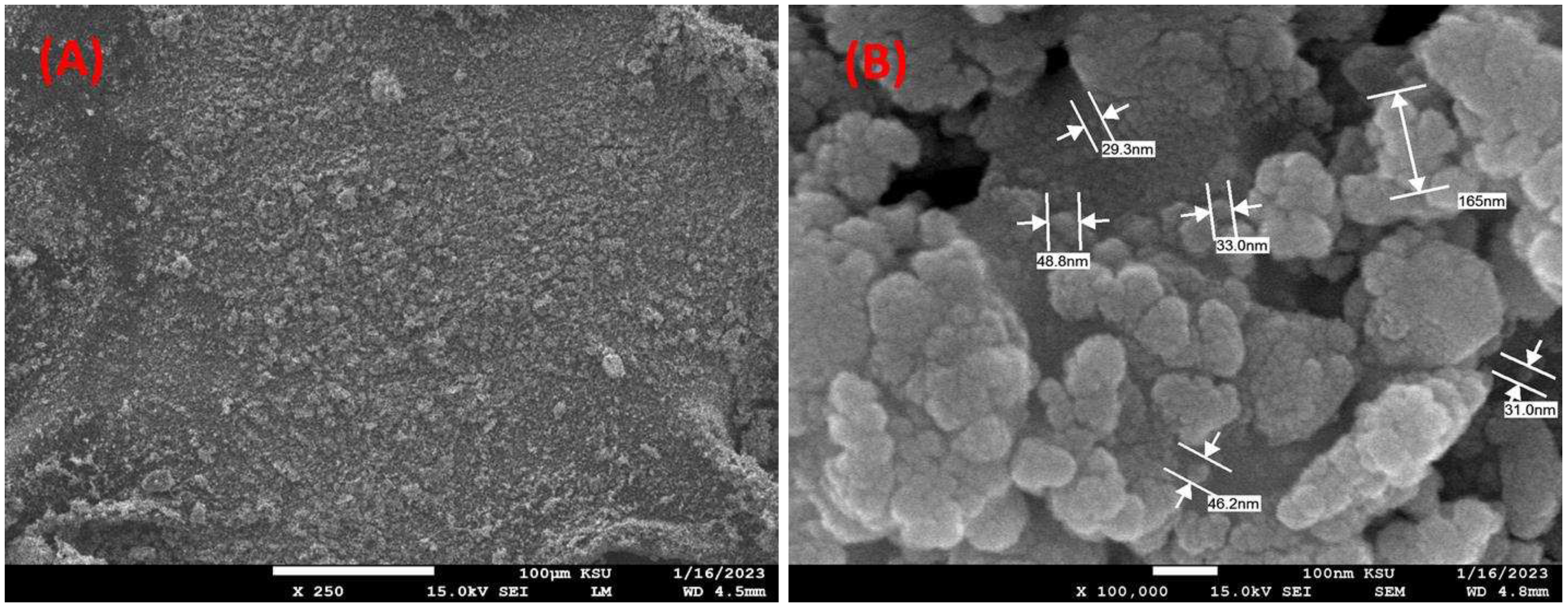
Figure 2.
TEM characterization of ZnO-C at scale of (A) 200 nm and (B) 100 nm.
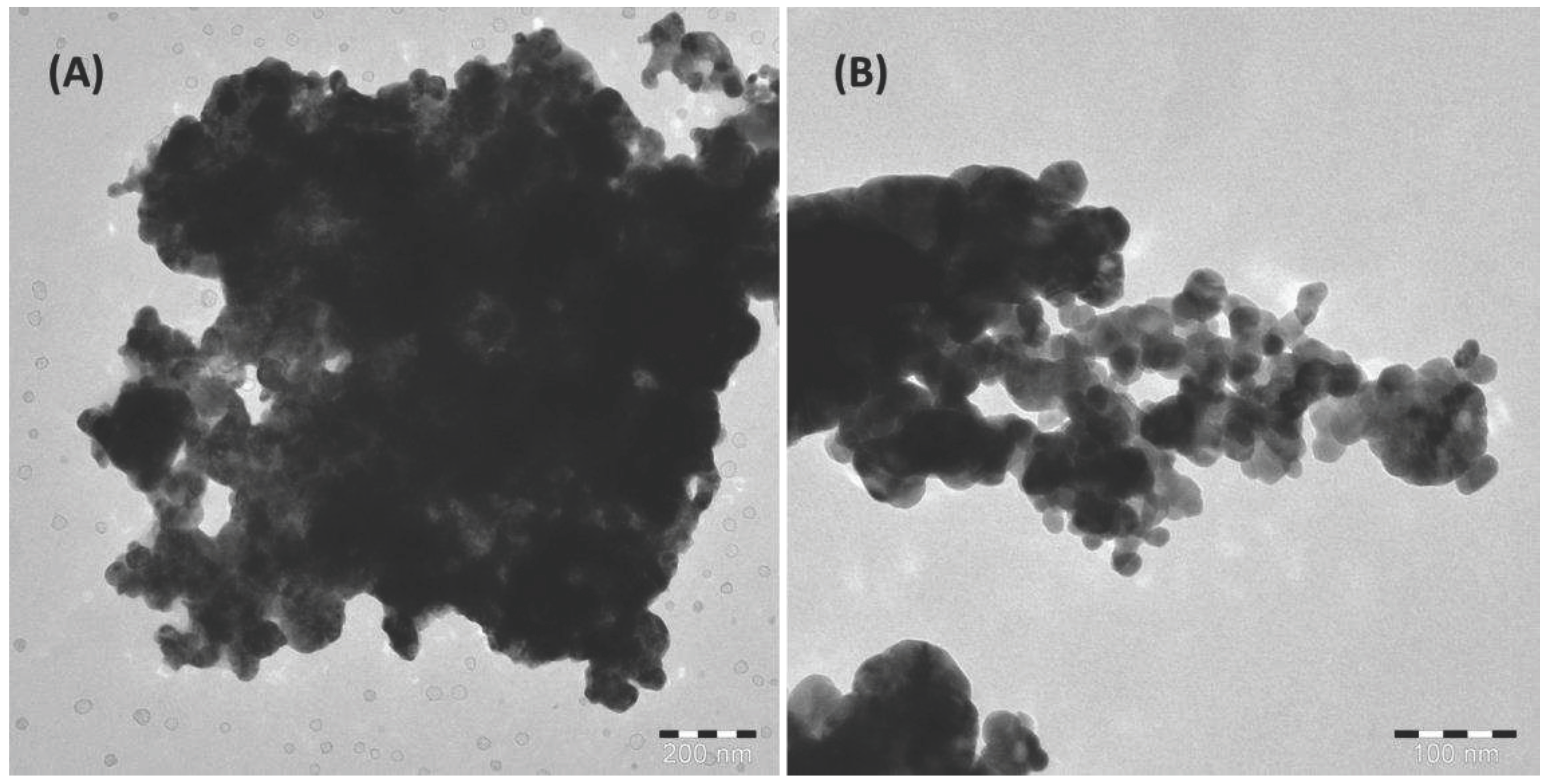
Figure 3.
FTIR of ZnO-C.
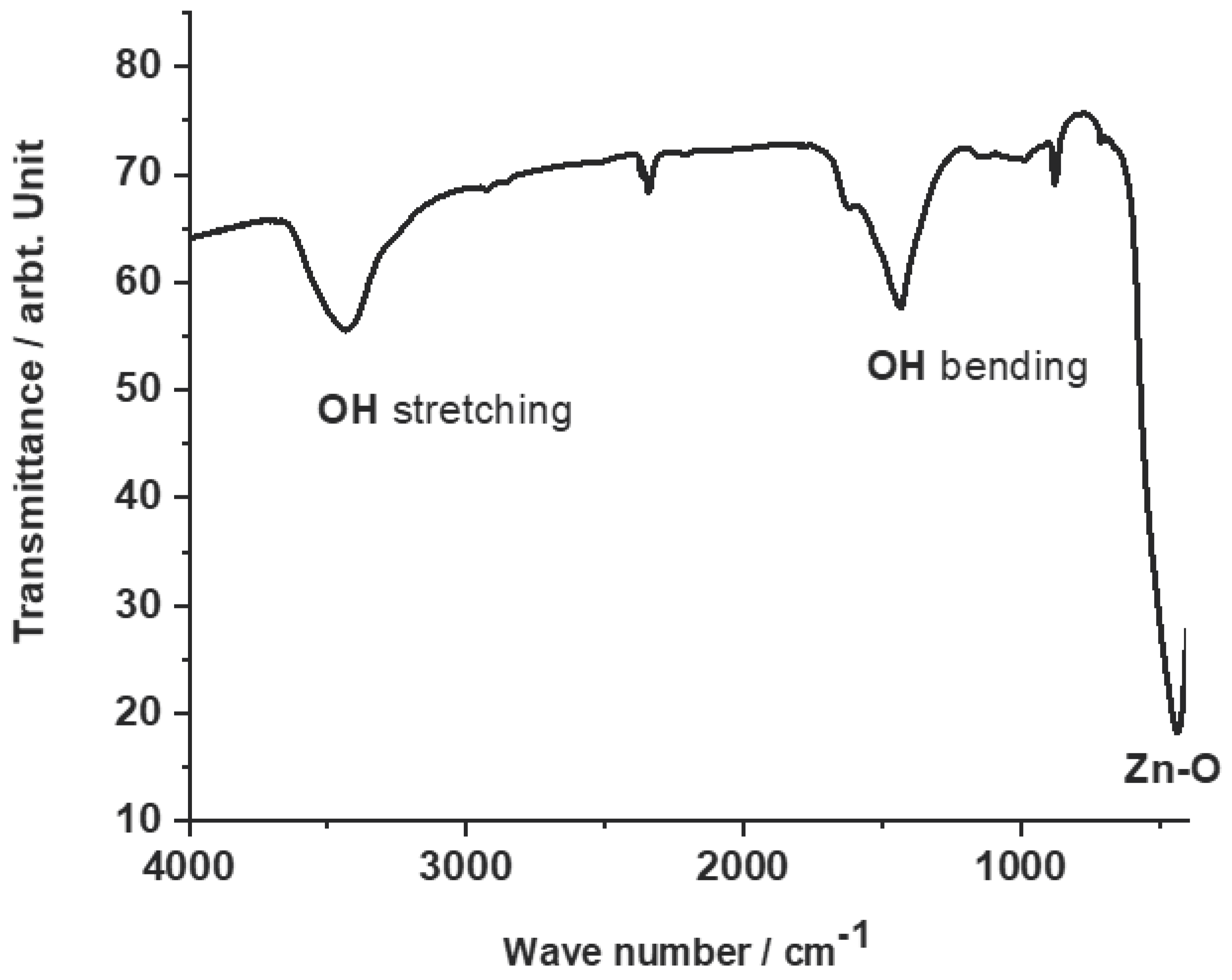
Figure 4.
XRD of ZnO-C.
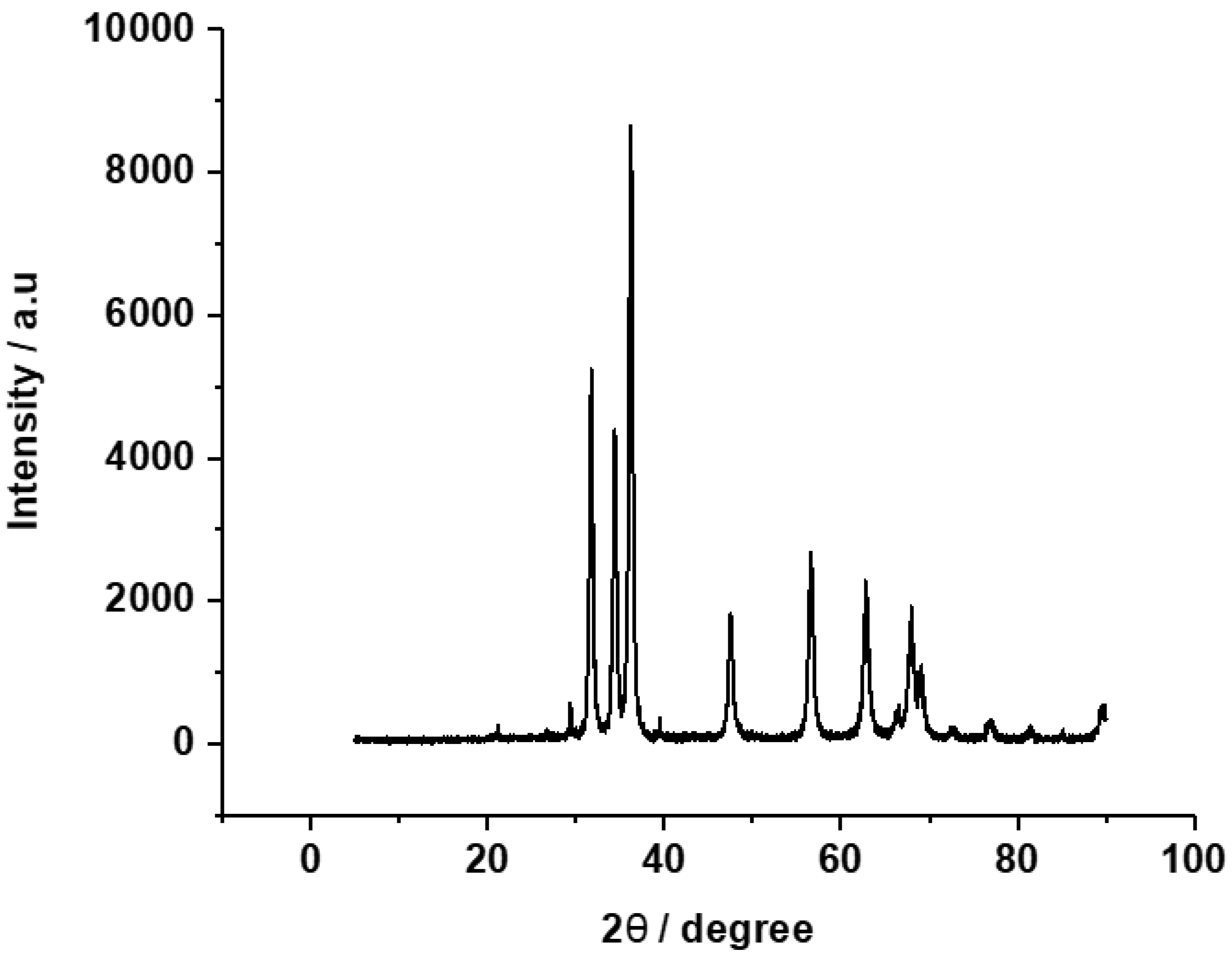
Figure 5.
investigating the adsorption capacity of varios adsorbent s for removal of Zn(II), Cd(II), Co(II) and Mn(II), pH 6, time 180 min and adsorbent dose 0.15 g/L.
Figure 5.
investigating the adsorption capacity of varios adsorbent s for removal of Zn(II), Cd(II), Co(II) and Mn(II), pH 6, time 180 min and adsorbent dose 0.15 g/L.
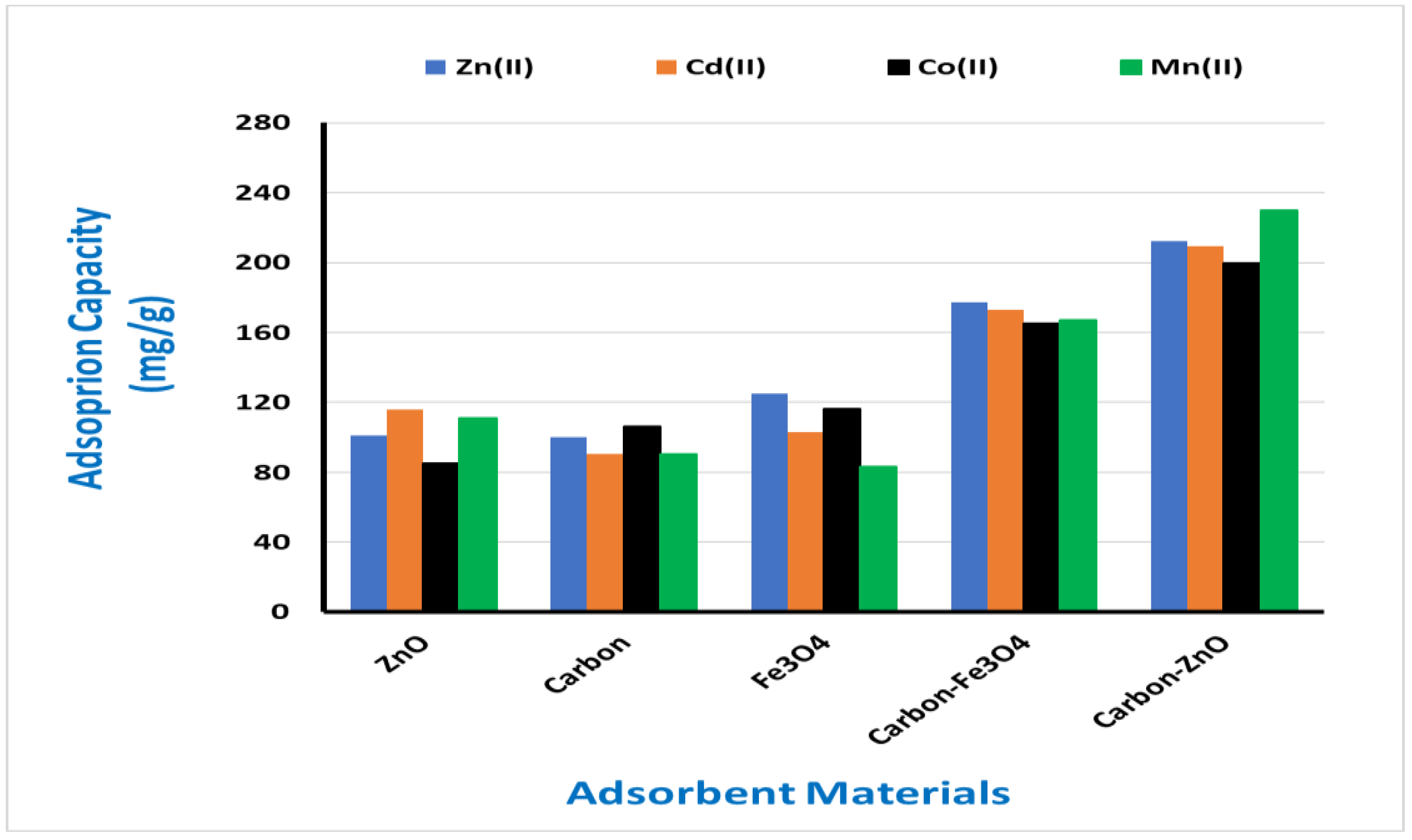
Figure 6.
influence of pH on the removal of Zn(II), Cd(II), Co(II) and Mn(II) using ZnO-C, (time 180 min and adsorbent dose 0.15 g/L).
Figure 6.
influence of pH on the removal of Zn(II), Cd(II), Co(II) and Mn(II) using ZnO-C, (time 180 min and adsorbent dose 0.15 g/L).
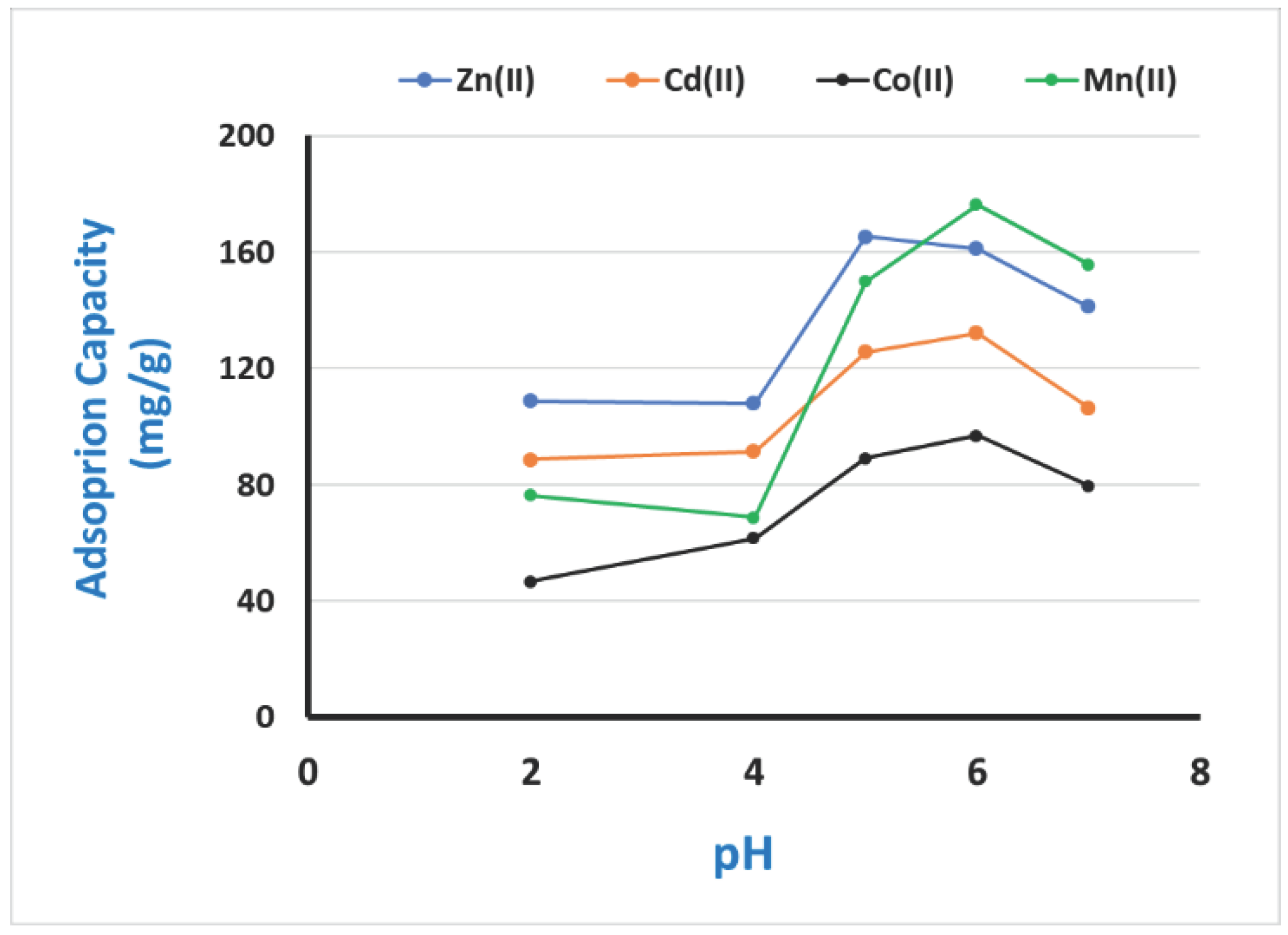
Figure 7.
influence of ZnO-C dose on the removal of Zn(II), Cd(II), Co(II) and Mn(II) using ZnO-C (pH 6, time 180 min).
Figure 7.
influence of ZnO-C dose on the removal of Zn(II), Cd(II), Co(II) and Mn(II) using ZnO-C (pH 6, time 180 min).
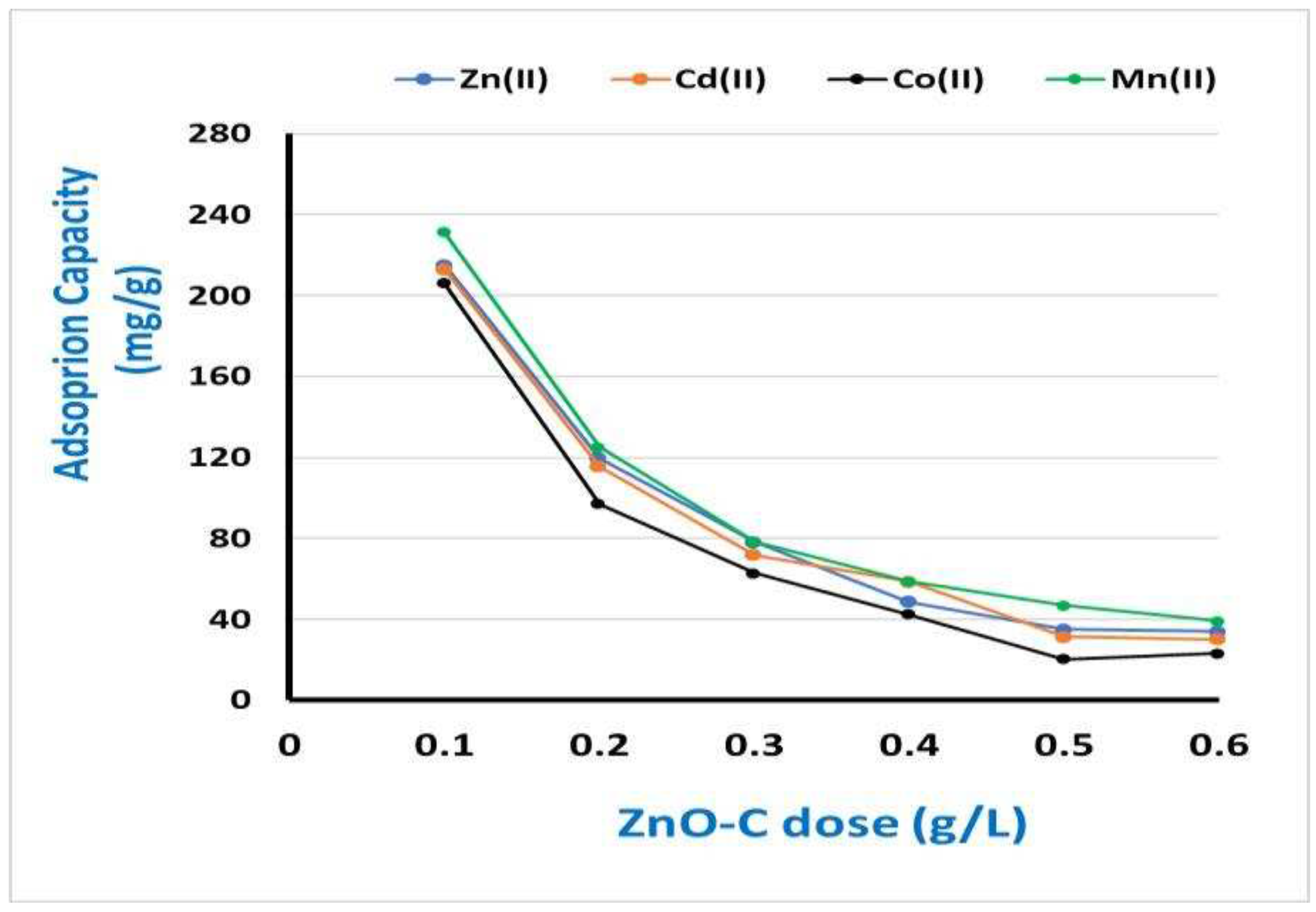
Figure 8.
influence of contact-time on the removal of Zn(II), Cd(II), Co(II) and Mn(II) using ZnO-C (pH 6 and adsorbent dose 0.15 g/L).
Figure 8.
influence of contact-time on the removal of Zn(II), Cd(II), Co(II) and Mn(II) using ZnO-C (pH 6 and adsorbent dose 0.15 g/L).
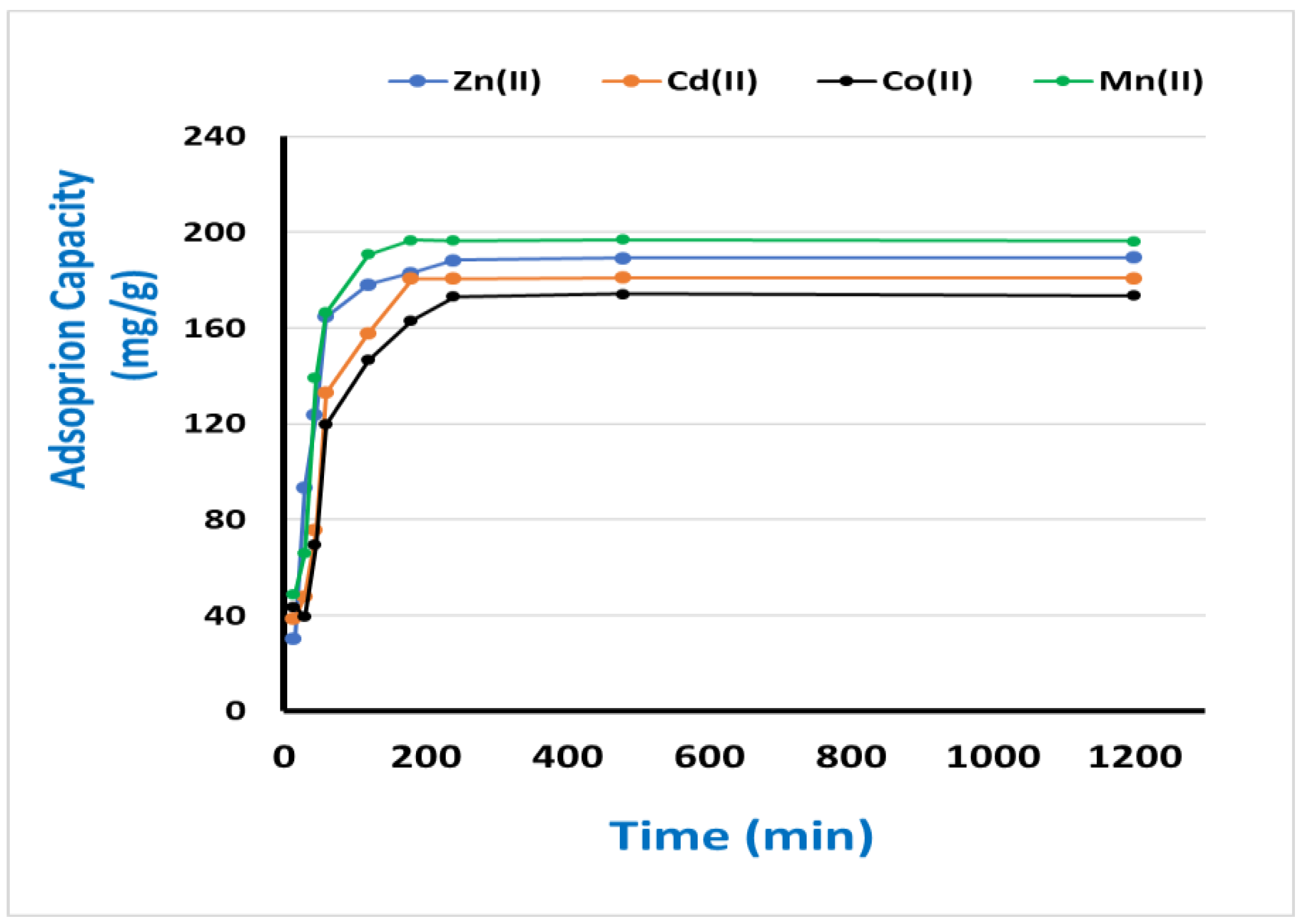
Figure 9.
the pseudo 1st order plot for adsorption of Zn(II), Cd(II), Co(II) and Mn(II) onto ZnO-C (pH 6 and adsorbent dose 0.15 g/L).
Figure 9.
the pseudo 1st order plot for adsorption of Zn(II), Cd(II), Co(II) and Mn(II) onto ZnO-C (pH 6 and adsorbent dose 0.15 g/L).
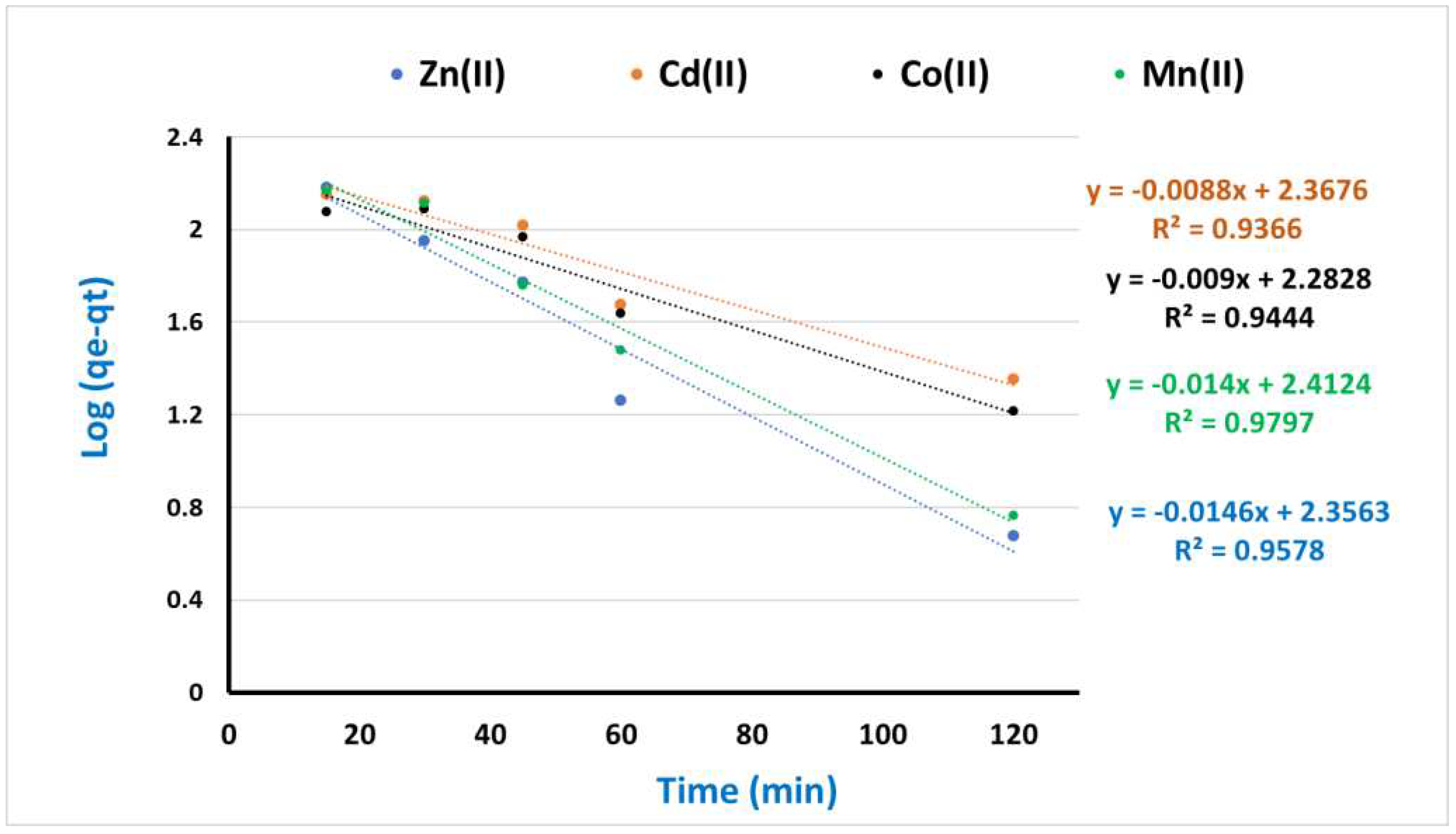
Figure 10.
the pseudo 2nd order plot for adsorption of Zn(II), Cd(II), Co(II) and Mn(II) onto ZnO-C (pH 6 and adsorbent dose 0.15 g/L).
Figure 10.
the pseudo 2nd order plot for adsorption of Zn(II), Cd(II), Co(II) and Mn(II) onto ZnO-C (pH 6 and adsorbent dose 0.15 g/L).
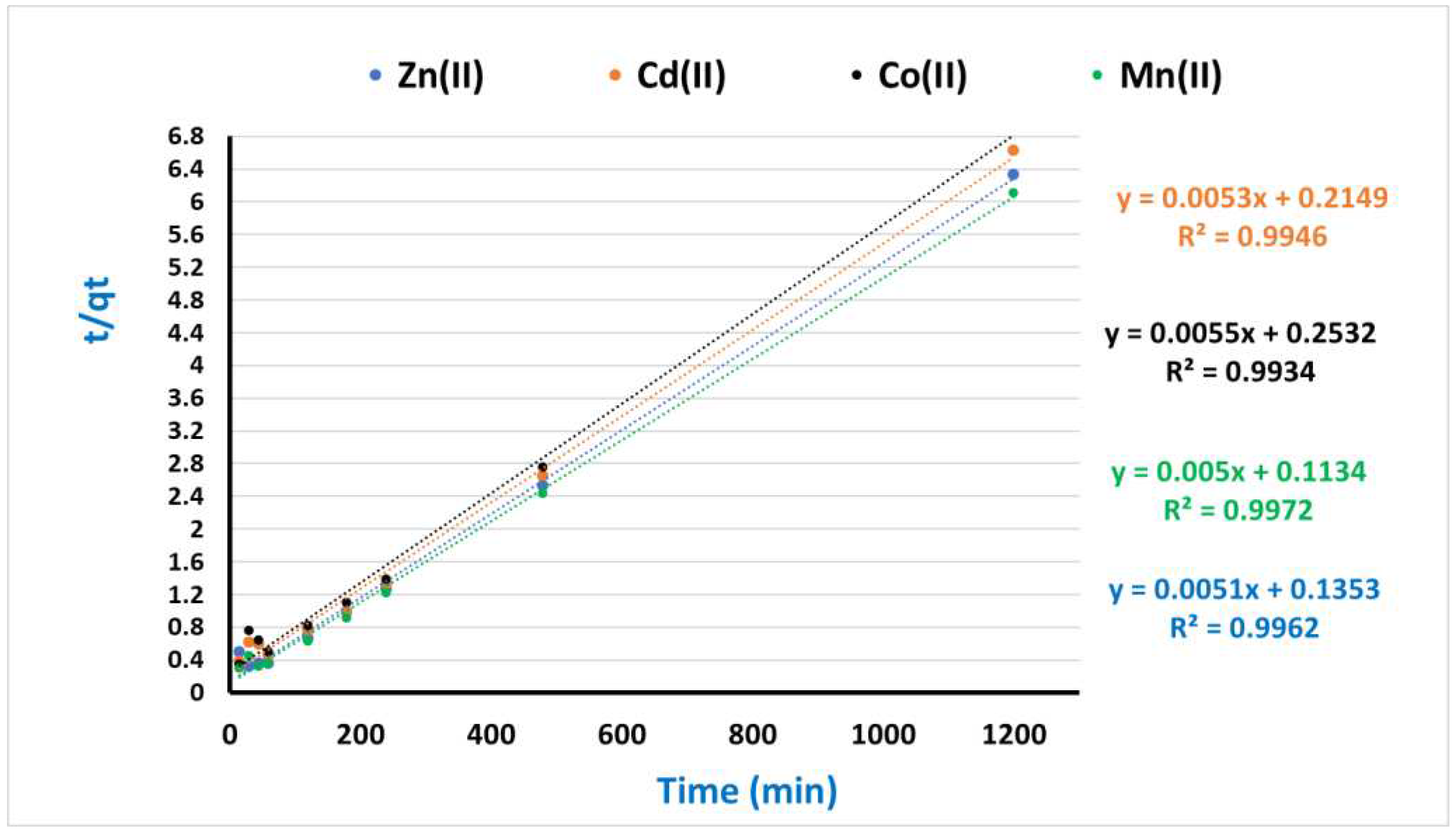
Figure 11.
the Langmuir plot for adsorption of Zn(II), Cd(II), Co(II) and Mn(II) onto ZnO-C (pH 6, 25 C˚ and co time 180 min).
Figure 11.
the Langmuir plot for adsorption of Zn(II), Cd(II), Co(II) and Mn(II) onto ZnO-C (pH 6, 25 C˚ and co time 180 min).
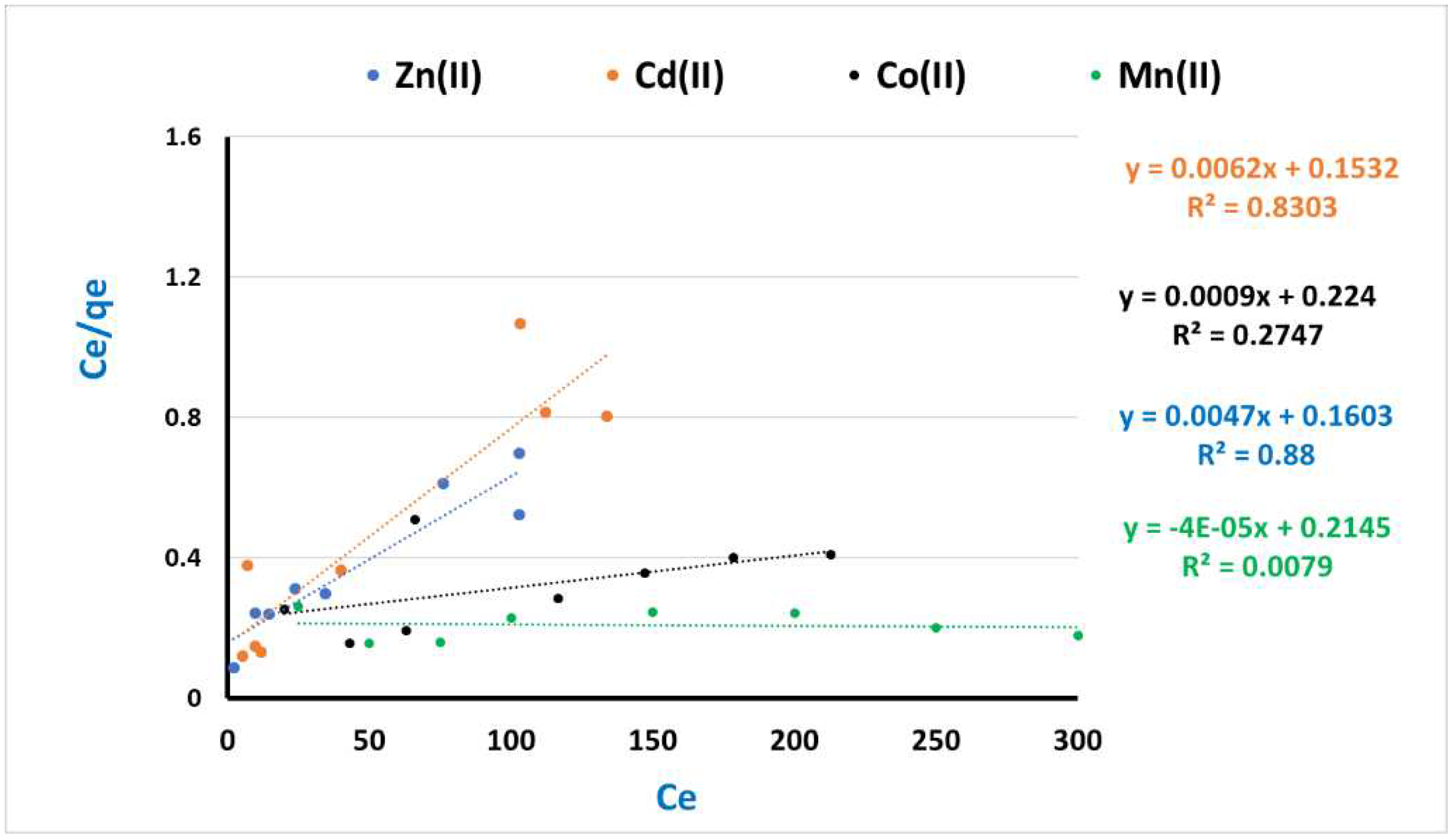
Figure 12.
the Freundlich plot for adsorption of Zn(II), Cd(II), Co(II) and Mn(II) onto ZnO-C (pH 6, 25 C˚ and co time 180 min).
Figure 12.
the Freundlich plot for adsorption of Zn(II), Cd(II), Co(II) and Mn(II) onto ZnO-C (pH 6, 25 C˚ and co time 180 min).
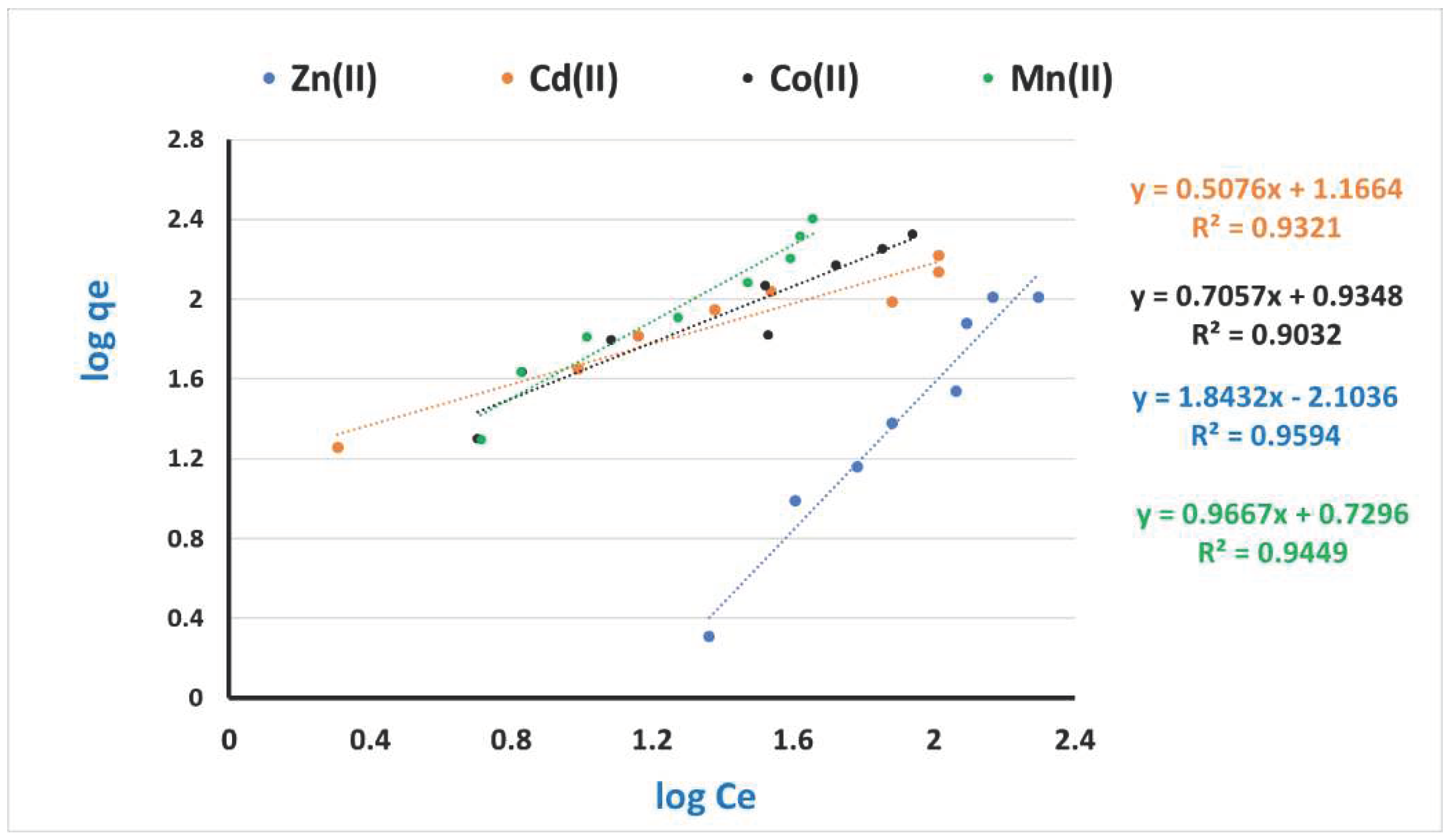

Table 1.
kinetics and equilibrium equation for the applied as pseudo 1st order, pseudo 2nd order, Langmuir isotherm and Freundlich isotherm.
Table 1.
kinetics and equilibrium equation for the applied as pseudo 1st order, pseudo 2nd order, Langmuir isotherm and Freundlich isotherm.
| Model | Equation | Constants |
|---|---|---|
| Pseudo 1st order model | k1: the rate constant of the pseudo 1st order (min−1). | |
| Pseudo 2nd order model | K the rate constant of the pseudo 2nd (min−1). | |
| Langmuir isotherms |
Qomax (mg/g): maximum adsorption capacity KL (L/mg): a constant associated with the affinity ZnO-C and adsorbed heavy metals ions |
|
| Freundlich isotherms |
KF (mg/g)/(mg/L)n: Freundlich constant;. n (dimensionless) is the Freundlich intensity parameter. |
Table 2.
the pseudo 1st order and pseudo 2nd order constants for adsorption of Zn(II), Cd(II), Co(II) and Mn(II) onto ZnO-C (pH 6 and adsorbent dose 0.15 g/L).
Table 2.
the pseudo 1st order and pseudo 2nd order constants for adsorption of Zn(II), Cd(II), Co(II) and Mn(II) onto ZnO-C (pH 6 and adsorbent dose 0.15 g/L).
| Pseudo-First-Order | Pseudo-Second-Order | ||||||
|---|---|---|---|---|---|---|---|
| qe,exp (mg/g) | K1(min−1) | qe,cal(mg/g) | R2 | k2(g/mg.min) | qe,cal(mg/g) | R2 | |
| Cd(II) | 183.0 | 0.000192 | 196.1 | 0.957 | 0.00634 | 227.1 | 0.996 |
| Ni(II) | 180.0 | 0.000131 | 188.7 | 0.936 | 0.003821 | 233.1 | 0.994 |
| Mn(II) | 163.0 | 0.000119 | 181.8 | 0.944 | 0.000391 | 191.7 | 0.993 |
| Pb(II) | 196.0 | 0.00022 | 200.0 | 0.979 | 0.006079 | 258.4 | 0.997 |
Table 3.
Equillibrium isothers constants for adsorption of Zn(II), Cd(II), Co(II) and Mn(II) onto ZnO-C.
Table 3.
Equillibrium isothers constants for adsorption of Zn(II), Cd(II), Co(II) and Mn(II) onto ZnO-C.
| Adsorbate (heavy metals ions) | Langmuir constants | Freundlich constants | ||||
|---|---|---|---|---|---|---|
| KL | Q max. | R2 | KF | n | R2 | |
| Zn(II) | 0.029 | 212.77 | 0.88 | 3.21 | 0.54 | 0.95 |
| Cd(II) | 0.040 | 161.29 | 0.83 | 2.55 | 1.97 | 0.93 |
| Co(II) | 0.004 | 1111.11 | 0.27 | 2.55 | 1.42 | 0.90 |
| Mn(II) | - | - | - | 2.07 | 1.03 | 0.94 |
Table 4.
utilization of ZnO-C and Fe3O4-C hybrid materials for real wastewater purification.
| Adsorbent | Wastewater | Initial concentration before treatment (mg/L) | Detected concentration After treatment (mg/L) | Removal Efficiency % | |||||||||
|---|---|---|---|---|---|---|---|---|---|---|---|---|---|
| Mn | Co | Cd | Zn | Mn | Co | Cd | Zn | Mn | Co | Cd | Zn | ||
| Carbon- Fe3O4 | Vally Water | 3.56 | 5.85 | 4.16 | 8.81 | 0.14 | 0.11 | 0.23 | 0.21 | 96 | 98 | 95 | 98 |
| Industrial Wastewater | 15.64 | 21.04 | 17.04 | 11.81 | 0.43 | 1.40 | 1.14 | 0.79 | 97 | 93 | 93 | 93 | |
| Rain Wastewater | 1.50 | 2.51 | 1.91 | 3.43 | 0.06 | 0.00 | 0.08 | 0.30 | 96 | 100 | 96 | 91 | |
| Cabon-ZnO | Vally Water | 3.56 | 5.85 | 4.16 | 8.81 | 0.05 | 0.18 | 0.10 | 0.14 | 99 | 97 | 98 | 98 |
| Industrial Wastewater | 15.64 | 21.04 | 17.04 | 11.81 | 1.05 | 0.08 | 0.09 | 1.07 | 93 | 100 | 99 | 91 | |
| Rain Wastewater | 1.50 | 2.51 | 1.91 | 3.43 | 0.06 | 0.05 | 0.01 | 0.11 | 96 | 98 | 99 | 97 | |
Table 5.
comparing adsoprion performance of ZnO-C and Fe3O4-C hybrid materials with materials from literature.
Table 5.
comparing adsoprion performance of ZnO-C and Fe3O4-C hybrid materials with materials from literature.
| Adsorbent | Adsorbate | Optimum | Qe | Rf |
|---|---|---|---|---|
| Acid modified carbon-based adsorbents | Cd(II) ion | pH = 7 contact time=120min |
M-CNTs= 2.02 mg/g M-AC= 1.98 mg/g M-CNFs= 1.58 mg/g M-FA= 1.22 mg/g |
[46] |
| Alumina-decorated multi-walled carbon nanotubes (MWCNTs) | Cd (II) ion trichloroethylene (TCE) |
pH = 7 contact time=240min |
Cd (II) ion= 27.21 mg/g TCE = 19.84 mg/g |
[47] |
| Natural kaolinite clay | Pb(II), Cd (II), Ni(II) and Cu(II) | pH = 5.5-7 contact time= 30 min |
Pb=2.35 mg/g Cd= 0.88 mg/g Ni= 0.90 mg/g Cu= 1.22 mg/g |
[48] |
| Functionalized carbon nanotubes and magnetic biochar | Zn(II) | pH = 10 contact time= 120 min |
functionalized CNT= 1.05 mg/g magnetic biochar= 1.18 mg/g |
[49] |
| Poly(acrylic acid) multi-walled carbon nanotubes (MWCNT-g-PAA) | Co(II) | pH = 6 contact time= 300 min |
3.55×10⁻⁴molg−1 | [50] |
| Natural and modified clay |
Mn(II) Cd(II) |
pH =1-6 contact time= 60 min |
NT-25/Cd(II)= 11.2 mg/g NT-25/Mn(II)= 6.0 mg/g |
[51] |
| Natural phosphate(NP) | Cd(II) | pH = 5 |
26mg/g | [52] |
| straw biochar (WSB)and acid treated wheat straw biochar (AWSB) | Cd(II) | pH = 6 contact time (5–180 min) |
WSB= 31.65 mg/g AWSB= 74.63 mg/g |
[53] |
| ZnO nanoparticles | Zn(II) Cd(II) Hg(II) |
pH = 5.5 |
357 mg/g for Zn(II) 387 mg/g for Cd(II) 714 mg/g for Hg(II) |
[54] |
| TiO2 nanoparticles | Pb, Cd, Cu, Ni, Zn | pH = 8 |
- | [55] |
| Sugarcane leaves (SCL) | Ni2+ Cr3+ Co2+ |
pH = 8 for Cr3+ |
51.3 mg/g for Ni2+ 62.5 mg/g for Cr3+ 66.7 mg/g for Co2+ |
[56] |
| graphene oxide-bovine serum Albumin(GO-BSA) |
Co(II) | pH = 6 |
184 mg/g | [57] |
| activated Saudi clays |
Co(II) | - | 12.9 mg/g for treated Tabbuk clay 12.55 mg/g for treated Bahhah clay |
[58] |
| intact and modified Ficus carica leaves (FCLs) |
Co(II) | pH = 6 |
33.9 mg/g | [59] |
| Polyaniline/sawdust composite | Mn(II) |
pH = 10 contact time= 30 min |
58.824 mg/g | [60] |
| Poly (sodium acrylate)- graphene oxide (PSA-GO) double network hydrogel | Mn(II) Cd(II) |
pH = 6 |
Mn(II) : 165.5 mg/g Cd(II): 238.3mg/g |
[61] |
| Surfactant Modified Alumina (SMA) | Mn(II) |
pH = 4.04-8.05 Contact time= 30 min |
2.04 mg/g | [62] |
| Activated carbon from bean pods waste | Mn(II) As (III) |
pH = 5-6 Contact time: 30 min |
Mn(II) =23.4 mg/g As (III)=1.01 mg/g |
[63] |
| hydroxyapatite/pectin hybrid material | Zn(II) |
pH = 5 |
330.4 mg/g | [64] |
| Polyaniline Nanocomposite Coated on Rice Husk(PAn/RH) | Zn(II) |
pH = 3 Contact time: 20 min |
24.3 mg/g | [65] |
| Dendrimer-conjugated magnetic nanoparticles | Zn(II) |
pH= 7 | 24.3 mg/g | [66] |
| Zinc oxide nanoparticles (ZnO-NPs) |
Cr3+ | pH = 3-7 Contact time:20 min |
88.547 mg/g | [67] |
| Zinc oxide/ graphene oxide composite (ZnO/GO) | Pb(II) | pH = 5 Contact time:160 min |
909.09 mg/g | [68] |
| ZnO-C | Zn(II), Cd(II), Co(II), Mn(II) | pH=2 Contact time: 180 min |
This work | |
| Fe3O4-C | Zn(II), Cd(II), Co(II), Mn(II) | pH=2 Contact time: 180 min |
This work |
Disclaimer/Publisher’s Note: The statements, opinions and data contained in all publications are solely those of the individual author(s) and contributor(s) and not of MDPI and/or the editor(s). MDPI and/or the editor(s) disclaim responsibility for any injury to people or property resulting from any ideas, methods, instructions or products referred to in the content. |
© 2023 by the authors. Licensee MDPI, Basel, Switzerland. This article is an open access article distributed under the terms and conditions of the Creative Commons Attribution (CC BY) license (http://creativecommons.org/licenses/by/4.0/).
Copyright: This open access article is published under a Creative Commons CC BY 4.0 license, which permit the free download, distribution, and reuse, provided that the author and preprint are cited in any reuse.


