
Submitted:
30 November 2023
Posted:
30 November 2023
Read the latest preprint version here
Abstract
Tribology is related to all studies on friction, wear and lubrication. One of the main aims of these studies is a reduction in friction and wear. Tribology is extremely vast, being also multidisciplinary and interdisciplinary. Therefore, it is very difficult to organize the several tribology subjects in an unique way and different classifications have been proposed by different authors. In this work, the several subjects treated by tribology are reviewed and organized in six branches: Fundamental Tribology, Tribology of Materials and Lubricants, Micro and Nanotribology, Industrial Tribology, Biotribology and New Frontiers of Tribology. The main subjects treated by the six branches are briefly reviewed in the paper in order to highlight the vastness of tribology and its important contribution to sustainability. Particularly friction and wear reductions are strictly related to greater efficiency and material saving, which mean less energy losses and material wastes, less pollution and therefore a more sustainable life according to the Sustainable Development Goals. The connections among the latter and the several different tribological subjects are discussed.
Keywords:
tribology
; friction
; wear
; lubrication
; materials and lubricants
; industrial tribology
; nanotribology
; biotribology
; green tribology
; Sustainable Development Goals
1. Introduction
Tribology is a multidisciplinary and interdisciplinary science that faces with all problems related to friction, wear and lubrication. Principles and applications of tribology come back up to the prehistoric epoch. The fire’s generation using friction among stones or wood and the use of rolling elements or fluids to reduce friction are just a couple of samples [1]. In spite of that, the word tribology is relatively recent, being historically connected with the so called “Jost Report” dated 1966 [2], where tribology is defined as “the science and technology of interacting surfaces in relative motion and of the practices related thereto”. In the report, the huge costs related to friction and wear, and therefore the importance of the tribological researches, are highlighted. Tribology involves today many research fields that can be considered belonging to several different domains as physics, chemistry, materials science, chemical engineering, biomedical engineering, mechanical engineering, manufacturing, mathematics and computer science, being connected to both fundamental and applied sciences. Some milestones of tribology, ranging from the practical use of a fluid for lubricating contacts and rolling bearings till to the use of new techniques as electronics, information and communications technology, passing through the fundamental studies on friction and lubrication, are schematically shown in Figure 1.
Due to the several matters investigated, the literature on tribology is huge, including books, as for instance [4,5,6,7,8,9,10,11,12,13], and a number of journals and proceedings of conferences.
The vastness of the subjects studied by tribology can be seen in particular looking at the proceedings of the World Tribology Congresses that hold every four years since 1997, that often are only books of abstracts due to the number of works included in them [14,15,16,17,18,19,20]. Tribological studies range from theoretical to experimental one as well as from basic to applied researches, covering aspects from the nano world up to the macroscopic one. Therefore, it is very complex to classify the different tribology subjects. Different classifications were proposed by different researchers with new disciplines arisen during the years when the number of studies in a specific research area became significant. The numerousness and at the same time the connections among the subjects (Figure 2) make some overlapping among the tribological disciplines unavoidable. A possible schematic classification in six branches was proposed in [21]: fundamental tribology, tribology of materials and lubricants, micro and nanotribology, industrial tribology, biotribology and ecotribology.
Tribology can give an enormous contribution to the industrial applications as well as to many common activities of our everyday life. Just to mention some samples, a correct design of new machine components must take into account tribological aspects usually in order to obtain reductions of friction and wear, friction and wear problems are also involved when washing our teeth or combing our hair, and friction between our shoes and the soil should by high enough to avoid slipping. Friction and wear reductions are strictly related to greater efficiency and material saving, which mean less energy losses and material wastes, less pollution and therefore a more sustainable life according to several of the 169 targets of the 17 Sustainable Development Goals (SDGs) [22,23].
The main aim of the paper is to highlight how vast is tribology and its important contribution to sustainability. It is not intention of the author to make an extensive review on the tribological studies, also because there is a number of review papers already available in literature (see for instance [24,25]). However, some recent reviews on specific topics are cited in the paper to which the reader can refer for more in-depth information. The classification proposed in [21] is used as a starting point for a deeper but quite schematic survey of the several subjects treated by tribological studies. The relationships between tribology and the targets of the SDGs are finally evidenced.
2. Vastness of Tribology: A Possible Classification
The vastness of the subjects treated by tribology can be deduced by some reviews of recent advances in tribology [24,25] where researches related to several different aspects of tribology performed during about the last 4–5 years are reported. In these reviews, a main subdivision is made among lubrication, wear and surface engineering, biotribology, high temperature tribology, and computational tribology. Despite the very big number of references (more than seven hundred in the first paper, and more than a thousand in the second one, over 150 pages long), the authors themselves stated that there can be limitations in the reviews because of the multidisciplinarity of tribology, that makes its results spread across various disciplines, and of the several topics of tribology so that many additional aspects are not covered in the reviews. A different classification of the tribological researches has been more recently used in [26]: tribodynamics, electro-tribodynamics of modern propulsion systems, tribology of engineered surfaces, artificial intelligence in tribology, biotribology and biomimetics, nanotribology, computational and multi-scale tribology, tribology in space and other extreme environments, measurements monitoring and tribo-sensing.
The already mentioned classification in six tribology branches (or disciplines) proposed in [21] has been revised in this work particularly by substituting Ecotribology with New Frontiers of Tribology, as reported in Table 1. The reason for this is that almost all tribological studies are intrinsically ecological being one of their main targets friction and wear reduction, which is related to energy and material savings, as evidenced in the next section. At the same time, new directions, trends and developments have arisen that can be better included in the new branch. The first three tribology branches can be considered more general (or basic) and the second three more specific (or applicative). However, it is only an indicative subdivision, being all basic branches connected to applications. There are also unavoidable intersections among the branches as it will be shown in the following. Studies of all branches can be both experimental and/or theoretical/numerical.
Tests can be performed, sometimes based on theoretical predictions, or for validation of the numerical results, also allowing the calibration of empirical constants often present in theoretical models. The main subjects treated by the six disciplines of Table 1 are described in the following.
2.1. Fundamental Tribology
This branch includes all basic studies on friction, wear and lubrication.
Theoretical models for dry friction and wear range from very simple to extremely complex involving a lot of equations. Equations for studying lubricated contacts are well established today, but their numerical solution can be not easy particularly to include some aspects usually neglected that can become important for certain lubricated pairs under severe working conditions. Typical examples are the thermal and deformation effects, the mixed lubrication conditions and the combination with the friction and wear phenomena. Contact mechanics studies are also part of this branch. The applicability of some classical formula needs sometimes to be revised, as for instance done in [27], or can be implemented in modern programs to allow a more comprehensive analysis, [28]. Molecular dynamics simulations can also be considered among the fundamental studies, but they can be included also in the Tribology of Materials and in the Lubricants and Micro and Nanotribology branches, as well as all basic studies on different materials and lubricants up to the micro-nano level.
A lot of basic experimental tests can be performed with tribometers of every kind. They are normally used for investigating friction and wear under dry and lubricated conditions, and lubricant film thickness. One of the today’s most used methodology for investigating the lubricant film shape in elastohydrodynamic contacts is optical interferometry, Figure 3.
The outcomes of the fundamental tribological studies are used in all other branches.
2.2. Tribology of Materials and Lubricants
Researches principally focused on the development of materials, surface treatments, textures and coatings, lubricants and additives can be included in this branch.
Polymers and ceramics, self-lubricating materials, surface coatings, treatments and textures are studied and their tribological behavior under both dry and lubricated conditions is investigated. Advances in additive manufacturing help in introducing new materials today. New surface coatings, particularly polymers (see for instance [29]), are investigated for a bigger reduction in friction and wear. An overview of conventional polymer matrices together with a classification of fillers and filler materials is shown in Figure 4.
A review of the effects of surface texture and coatings materials on the performance of sliding bearings is reported in [30].
Nano- and biomaterials are also investigated (obviously involved in the Micro and Nanotribology and in the Biotribology branches too). Some examples are the use of nanoparticles for increasing the resistance of the materials, new 2D materials as graphene, bioinspired materials derived from living nature (usually with less problems of toxicity).
The characteristics of commonly used lubricants as mineral oils are also improved, maybe introducing new additives, for instance to increase their durability and to reduce friction and wear in the lubricated pairs. So called smart fluids are investigated, as the electro-rheological (ER) and the magneto-rheological (MR) fluids, fluids that can vary their viscosity upon the application of an electric or magnetic field respectively.
2.3. Micro and Nanotribology
It deals with studies at micro and nano level.
Numerical studies are performed using molecular dynamics simulations. Molecular dynamics allows investigations on atomic-scale mechanisms of fluids at different temperature and stress conditions. A review of molecular dynamic simulation of some ionic lubricants is reported in [31].
Researches are performed on nano-reinforced materials, hydrogenated diamond like carbon coatings, fullerene-like hydrogenated carbon film, and on the already mentioned graphene, a two-dimensional material with a layered honeycomb structure [32]. Particularly two-dimensional materials have gained an increasing interest since the discovery of graphene in 2004. Among them MXenes, transition metal nitrides and carbides [33], and quantum dots [34], used in coatings, pure or in composites (like MXenes/polymers) and as liquid additives in lubricants. A review of nanomaterials for lubricating oils applications is reported in [35].
Hydration lubrication [36] is another subject of increasing interest today. By combining the benefits of polymer brushes with the highly hydrated nature of some monomers important advantages in designing extremely efficient boundary lubricants can be obtained, Figure 5.
Another interesting concept is the one of superlubricity. This term is used to describe the lubrication states with friction coefficient of 0.001 or lower [37]. Superlubricity of solids, as the ones of diamond-like carbon coatings or of two-dimensional materials like graphene and carbon nanotubes, and superlubricity of liquids (of acid basic solution, ionic liquids and hydration layers) are in particularly investigated.
The results of the researches of this branch can be used for the device miniaturization whose applications can be found in medicine, biotechnology, optics, aviation, electronics, etc. (see for instance [38]).
2.4. Industrial Tribology
It is focused on the applications of tribological results to industrial products and manufacturing. The world is full of various machines containing moving parts in dry or lubricated contact where tribological aspects are fundamental. Common machine components as bearings and gears, particularly related to transports, are continuously investigated in order to reduce their weight, to test new materials and lubricants, and to increase their performances. An example of research on full scale industrial components is reported in [39]. Tilting pad journal bearings for turbomachinery of big dimensions are tested using the complex test rig shown in Figure 6.
It’s worth mentioning that there are also applications where an increase of friction is requested instead of the usual reduction. Tailored surface textures for intentionally increasing friction for instance in road-tire contacts and movement transmission and control are reviewed in [40].
The contributes of tribology in manufacturing (metal forming, minimum quantity lubrication (MQL) [41]), and in maintenance, monitoring, and diagnostics [42,43] are numerous. Manufacturing activities as grinding, turning and cold/hot forming can take advantage of tribological results for extension of tool life with suitable coatings, for reduction of the amount of cutting fluids necessary, for which MQL studies are important both with conventional and nanoparticle-enriched cutting fluids (Nano Minimum Quality Lubrication, NMQL, [44]). Additive manufacturing processes are becoming more important today. A comprehensive overview of research in tribology in the field of additively manufactured components is reported in [45]. The possibility of remanufacturing worn machine components, as for instance bearings and gears, that reduces waste and emissions compared with the production of a new parts, must be taken into account since the first steps of a correct tribological design.
Condition monitoring techniques can allow an early detection of wear problems, often tanks to temperature or vibration measurements, or checking the lubricant condition, avoiding greater problems as catastrophic breakages. Smart tribological systems (sensors, actuators) are used to improve the performances of industrial machinery. The inclusion of the tribological outcomes in the maintenance procedures can play an important role in extending the lifetime of systems. New bearings, surface treatments and lubrication systems are studied for industrial applications for which reduced maintenance is requested, in particular for renewable energy systems as the wind turbines where the gearbox and some bearings are located inside the nacelle not easy to reach, Figure 7. Wind turbines can face various tribological problems related to water contamination, wear of gearbox bearings and gears and blades’ erosion (a review of wind turbine bearings’ failures also with applications of fault diagnosis methods is reported in [46]).
2.5. Biotribology
In a broad sense, Biotribology deals with all tribological aspects related to the living organism, both animal and plants, and includes biomedical tribology and biomimetics, as well as biomaterials and biolubricants.
Biomedical tribology involves all researches more focused on humans. It can be subdivided in joints tribology (natural synovial joints, articular cartilage, artificial joints), skin tribology (skin friction behavior, tactile perception, textile material, prosthesis, hard and soft tissue substitutes), oral tribology (natural teeth, tongue, saliva, implant teeth), and ocular tribology (e.g. gelatin based soft lubricants for contact lenses). Studies on the complex lubricated friction situation of the contacts among different foods entering the oral cavity and teeth, tongue and palate are reviewed in [47]. A review on dental tribology, including tribological aspects of human teeth, materials and friction, wear and lubrication aspects is reported in [48]. Several different biotribological issues can be involved in commonly used medical devices as artificial joints, dental restoration devices, skin-related devices, cardiovascular devices and fracture fixation devices [49]. The complexity of the evaluation of wear of hip prostheses due to the daily living activities is evidenced in [50]. The procedure adopted in this study is schematically shown in Figure 8.
Biomimetics is related to new materials and systems that take inspiration from nature. Bio-inspired manufacturing allows to replicate natural structures. Some samples are the generation of specially structured surfaces replicating the gecko toes for controlling adhesion, the replication of the nanostructure of cigada wings to obtain water-resistant and water-proof materials, the realization of non-adhesive surfaces simulating the lotus leaves and of bionic surface structures based on the epidermis of sandfishes, the mimicking of the special micro-textures with bumps and grooves of the surfaces used against sand erosion by the desert scorpions, and of the shark-skin’s texture for suppression of turbulence, [51].
Researches on biomaterials and biolubricants, rapidly biodegradable and non-toxic to the living organisms, are often also classified as a part of another specific discipline named ecotribology (see next section). New ecofriendly lubricants and additives, as the vegetable oil-based ones, ionic liquids, coatings made by biofilms, bio-based hydraulic and metal working fluids are under study.
Vegetable oils have interesting properties as high biodegradability, low environmental pollution, low toxicity and high viscosity indices, but low thermal stability and poor corrosion protection. Advantages and disadvantages of biolubricants, particularly on the ones generated from biomass and other wastes, are reviewed in [52]. The life cycle of biolubricants, important for the circular economy, is shown in Figure 9. Water can be also directly used as a lubricant. A review on water-lubricated bearings is reported in [53].
2.6. New Frontiers of Tribology
Some modern developments not included in the previous disciplines can be considered in this branch. They can be both subjects that have had a renewed impulse during the recent years or matters quite new for tribology.
To put a bigger focus on the effects of the tribological studies on the environment, terms as environmental friendly tribology, ecotribology, sustainable tribology and green tribology were also introduced [51,54,55]. Actually the ecological concepts are already included in almost all subjects of the previous tribological disciplines. The tribological studies are simply considered from a different point of view when speaking about green tribology.
Wear can be controlled through a good design of machine components taking into account tribological aspects as well as through condition monitoring of machines in order to be able to promptly take corrective actions by reducing energy losses and the consequent emissions related to machine malfunctioning and by avoiding catastrophic damages reducing the need for spare parts and downtime. Particularly monitoring of temperatures, vibrations and sound emissions with on-line sensors connected to suitable control units and computers is employed to check the tribological status of the systems by providing information on both lubricant and components wear condition. The contribute of electronics is also important in this case and the term tribotronics was introduced by combining tribology and electronics to characterize these particular research field [56].
Tribological database have been created from several sources, as experimental results of every kind, on field measurements, condition monitoring. They can furnish fundamental tribological data to be used for instance for extending the lifetime of machines and can be used to analyze the monitored data to modify almost in real time the working parameters through suitable actuators. The term triboinformatics has also been coined to better associate the efficient methods of the information technology for generation, collection, processing and analyses of tribological data [57]. Among the standard tribology information methods, artificial neural network (ANN) is one of the most used, Figure 10. The multiple interactions present in the tribological processes can be better understand by using artificial intelligence (AI) and machine learning (ML) techniques. Reviews showing applications in tribology of AI and of ML in tribology are in [58,59] respectively.
Extreme environments tribology includes studies about the tribological behavior of materials, lubricants and contacts in particular situations, as in space or at high temperatures. A review on solid lubricants and self-lubricating composites used particularly at elevated temperatures is provided in [60].
3. Tribology and the Sustainable Development Goals
As it should be already evident from the previous sections, tribology can give a big contribution for a sustainable development, being fundamental for energy saving and renewable energy and human health (reduced pollution, biotribological applications).
The 17 SDGs, whose icons are shown in Figure 11, push towards a better quality of life for everybody improving health, education and economic conditions. They are also strictly connected with a sustainable management of the earth’s natural resources.
Tribology is very important for a sustainable development. The environmental, economic and social impact of Tribology has been quantified in several studies, as for instance in [54,55,61,62,63]. All the SDGs are directly or indirectly influenced by the tribological outcomes. In particular, several targets of goals 3, 6, 7, 8, 9, 11, 12, 13, 14 and 15 are directly affected by tribological applications as reported in [21]. The reduction of fuel consumption and therefore of greenhouse gases emission, the increase of machines durability and the improvement of the quality of life through better artificial implants are some examples of how tribology can have impact on the SDGs. The goal 12, Responsible Consumption and Production, is probably the most affected by tribology. Its targets include efficient use of natural resources, sustainable consumption and production, and the significant reduction of release to air, water and soil.
The connections among some tribological subjects and the relevant targets of the SDGs are synthetically reported in Table 2.
The main pertinent branches are also indicated. Note that Fundamental Tribology and New Frontiers of Tribology are not included simply because they are affecting everything. It is evident that there is some overlapping among some of the targets and therefore some tribological subjects are connected with more than one target.
4. Discussion and Conclusions
Tribology has a big impact on sustainability.
Environmental effects of friction and wear are several. The more energy necessary for an inefficient machinery to operate is related to a greater use of fossil fuel, affecting the limited natural resources of the earth, and producing bigger pollution. Friction and wear can also generate crack in pipelines pouring oil into the environment. Friction and wear reduction through new materials can have influence on material footprint and efficiency, as well as on resource consumption and recycling. Not only a friction reduction can be important. In some case an increase of friction can be desirable, as the case of tires. Tribological studies on tires allow them to fit different environments for a greater safety of passengers and pedestrians.
Tribology can play a fundamental role for the continuous today’s push towards higher power density machines, machines using less energy for the same output, and machines having components lasting longer in service. The increase of the life of an oil, extending the interval between oil changes, is important for the environment, as well as the oil reconditioning. The use of ecofriendly lubricants and additives, biodegradable and with low toxicity, reduces health and pollution problems. The reuse of worn parts after remanufacturing as well as the use of biolubricants generated from biomass and other wastes is important for the circular economy.
A minor quantity of CO2 emissions is connected to friction reduction and to the extension of the products life by increasing wear resistance and reducing the energy necessary for new products. Less wear is associated also to less pollution related to the wear particles and fine dust. Tribological studies can contribute to reduce the emissions of particles from brakes, vehicles tires (microplastics, small polymer particles) and trains wheels, [64,65,66].
Tribology is essential for energy saving. In [61] it is shown that more than 20% of the energy used for the people’ activities in transportation, manufacturing, power generation and residential is due to the tribological contacts.
In conclusion, tribology is fundamental for a sustainable development and its outcomes are directly connected with several targets of the Sustainable Development Goals.
Funding
Financed by the European Union – NextGenerationEU (National Sustainable Mobility Center CN00000023, Italian Ministry of University and Research Decree n. 1033 - 17/06/2022, Spoke 11 - Innovative Materials & Lightweighting). The opinions expressed are those of the authors only and should not be considered as representative of the European Union or the European Commission’s official position. Neither the European Union nor the European Commission can be held responsible for them.
Conflicts of Interest
The authors declare no conflict of interest.
References
- Dowson, D. History of Tribology, 2nd ed.; Professional Engineering Publishing Limited: London and Bury St Edmunds, UK, 1998; 768p. [Google Scholar]
- Jost, H.P. Lubrication (Tribology) Education and Research, A Report on the Present Position and Industry’s Needs. Her Majesty’s Stationary Office, Department of Education and Science, London, 1966, 80pp.
- Ciulli, E. Tribology and Industry: From the Origins to 4.0. Front. Mech. Eng. 2019, 5:55, 1–12.
- Tabor, D.; Bowden, F.P. Friction: an introduction to tribology; Heinemann: London, UK, 1973. [Google Scholar]
- Neale, M.J. Lubrication. A Tribology Handbook, 2nd ed.; Butterworth-Heinemann: Oxford, UK, 1995. [Google Scholar]
- Halling, J. Principles of tribology; Macmillan: London, UK, 1975. [Google Scholar]
- Czichos, H. Tribology: a systems approach to the science and technology of friction, lubrication and wear; Elsevier: Amsterdam, 1978. [Google Scholar]
- Jones, M.H.; Scott, D. (Eds.) Industrial Tribology - The Practical Aspects of Friction, Lubrication and Wear; Tribology Series; 8. Elsevier: Amsterdam, 1983. [Google Scholar]
- Hutchings, I.M. Tribology: friction and wear of engineering materials; Edward: London, 1992. [Google Scholar]
- Stachowiak, G.W.; Batchelor, A.W. Engineering tribology; Elsevier: Amsterdam, 1993. [Google Scholar]
- Williams, J.A. Engineering tribology; Oxford University Press: Oxford, 1994. [Google Scholar]
- Bhushan, B. Principles and applications of Tribology; John Wiley & Sons: USA, 1999. [Google Scholar]
- Gohar, R.; Rahnejat, H. Fundamentals of Tribology; Imperial College Press: London, 2008. [Google Scholar]
- VV.AA. Abstract of papers from World Tribology Congress; London 8-12 September 1997, Mechanical Engineering Publications Limited: London, 1997, ISBN 1 86058 109 9, 913pp.
- Franek, F.; Bartz, W.J.; Pauschitz, A. (Eds.) Abstract of Papers from 2nd World Tribology Congress; Vienna, 3-7 September 2001, Österreichische Tribologische Gesellshaft: Wien, Austria, 2001; ISBN 3-901657-08-8. 870 pp. [Google Scholar]
- VV.AA. World Tribology Congress III; Washington D.C., 12-16 September 2005, ASME Conference Proceedings, 2005, ISBN 0-7918-4201-0 (Vol.1), 0-7918-4202-9 (Vol.2).
- VV.AA. Proceedings of the World Tribology Congress 2009; 4th WTC, Kyoto, Japan, 6-11 September 2009, Japanese Society of Tribologists: Tokyo, Japan, 2009, ISBN 978-4-9900139-9-8, 938 pp.
- VV.AA. WTC2013 - 5th World Tribology Congress; 8-13 September 2013, Torino, Italy, 2013, ISBN 978-88-908185, on flash pen.
- VV.AA. WTC 2017 - the 6th World Tribology Congress; Beijing, China, September 17 – 22, 2017, on flash pen.
- VV.AA. WTC 2022 - 7th World Tribology Congress; July 10-15, 2022, Lyon, France. Available online: https://www.wtc-2022.org/abstract/index.php?onglet=27 (last accessed on 26 October 2023).
- Ciulli, E. Tribology and Sustainable Development Goals. In Proceedings of I4SDG Workshop 2021. I4SDG 2021; Quaglia G., Gasparetto A., Petuya V., Carbone G., Eds., Mechanisms and Machine Science, vol 108, Springer, Cham, 2022, pp. 438–447. [CrossRef]
- United Nations General Assembly: A/RES/70/1 - Transforming our world: the 2030 Agenda for Sustainable Development, 1–35 (2015). Available online at https://sdgs.un.org/2030agenda (last accessed on 26/09/2023).
- THE 17 GOALS Homepage, https://sdgs.un.org/goals (last accessed on 26/09/2023).
- Meng, Y.; Xu, J.; Jin, Z.; Prakash, B; Hu, Y. A review of recent advances in tribology. Friction 2020, 8(2): 221–300. [CrossRef]
- Meng, Y.; Xu, J.; Ma, L.; Jin, Z.; Prakash, B; Ma, T.; Wang, W. A review of advances in tribology in 2020–2021. Friction 2022, 10, 1443–1595. [CrossRef]
- Johns-Rahnejat, P.M.; Rahmani, R.; Rahnejat, H. Current and Future Trends in Tribological Research. Lubricants 2023, 11, 391. [Google Scholar] [CrossRef]
- Ciulli, E.; Betti, A.; Forte, P. The Applicability of the Hertzian Formulas to Point Contacts of Spheres and Spherical Caps. Lubricants 2022, 10, 233. [Google Scholar] [CrossRef]
- Grabovic, E.; Artoni, A.; Gabiccini, M.; Guiggiani, M.; Mattei, L.; Di Puccio, F.; Ciulli, E. Friction-induced efficiency losses and wear evolution in hypoid gears. Machines 2022, 10, 748. [Google Scholar] [CrossRef]
- Ren, Y.; Zhang, L.; Xie, G.; Li, Z.; Chen, H.; Gong, H.; Xu, W.; Guo, D.; Luo, J. A review on tribology of polymer composite coatings. Friction 9, 429–470 (2021). [CrossRef]
- Shi, G.; Yu, X.; Meng, H.; Zhao, F.; Wang, J.; Jiao, J.; Jiang, H. Effect of surface modification on friction characteristics of sliding bearings: A review. Trib. Int., Vol. 177, 2023, 107937, ISSN 0301-679X. [CrossRef]
- Liu, T.; Panwar, P.; Khajeh, A.; Rahman, Md H. ; Meneze, P.L.; Martini, A. Review of Molecular Dynamics Simulations of Phosphonium Ionic Liquid Lubricants. Tribol Lett 2022, 70, 44. [Google Scholar] [CrossRef]
- Rahman, M.M.; Islam, M.; Roy, R.; Younis, H.; AlNahyan, M.; Younes, H. Carbon Nanomaterial-Based Lubricants: Review of Recent Developments. Lubricants 2022, 10, 281. [Google Scholar] [CrossRef]
- Lu, X.; Gu, X.; Shi, Y. A review on the synthesis of MXenes and their lubrication performance and mechanisms. Trib. Int. 2023, 179, 108170, ISSN 0301-679X. [CrossRef]
- Zhang, W.; Li, T.; An, R.; Wang, J.; Tian, Y. Delivering quantum dots to lubricants: Current status and prospect. Friction, 2022, 10(11): 1751–1771. [CrossRef]
- Duan, L.; Li, J.; Duan, H. Nanomaterials for lubricating oil application: A review. Friction 2023, 11, 647–684. [Google Scholar] [CrossRef]
- Klein, J. Hydration lubrication. Friction 2013, 1, 1–23. [Google Scholar] [CrossRef]
- Han, T.; Zhang, S.; Zhang, C. Unlocking the secrets behind liquid superlubricity: A state-of-the-art review on phenomena and mechanisms. Friction 2022, 10, 1137–1165. [Google Scholar] [CrossRef]
- Bhushan, B.; Israelachvili, J.N.; Landman, U. Nanotribology: friction, wear and lubrication at the atomic scale. Nature 1995, 374 (6523): 607–616. [CrossRef]
- Ciulli, E.; Ferraro, R.; Forte, P.; Innocenti, A.; Nuti, M. Experimental Characterization of Large Turbomachinery Tilting Pad Journal Bearings. Machines 2021, 9, 273. [Google Scholar] [CrossRef]
- Costa, H.L.; Schille, J.; Rosenkranz, A. Tailored surface textures to increase friction—A review. Friction 2022, 10, 1285–1304. [Google Scholar] [CrossRef]
- Emami, M.; Sadeghi, M.H.; Diaa Sarhan, A.A.; Hasani, F. Investigating the Minimum Quantity Lubrication in grinding of Al2O3 engineering ceramic. Journal of Cleaner Production 2014, 66, 632–643. [Google Scholar] [CrossRef]
- Kimura, Y. Tribology as a maintenance tool. In New Directions in Tribology; Hutchings, I.M. Ed., Mechanical Engineering Publications Limited, London, 1997, 299–308.
- Tung, S. C.; Paxton, C.; Liang, F. Overview and future trends of manufacturing lubrication and conditioning monitoring technologies. In World Tribology Congress III, WTC2005, ASME Conference Proceedings, Washington DC, 2005.
- Kumar, A.; Sharma, A.K.; Katiyar, J.K. State-of-the-Art in Sustainable Machining of Different Materials Using Nano Minimum Quality Lubrication (NMQL). Lubricants 2023, 11, 64. [Google Scholar] [CrossRef]
- Orgeldinger, C.; Seynstahl, A.; Rosnitschek, T.; Tremmel, S. Surface Properties and Tribological Behavior of Additively Manufactured Components: A Systematic Review. Lubricants 2023, 11, 257. [Google Scholar] [CrossRef]
- Peng, H.; Zhang, H.; Fan, Y.; Shangguan, L.; Yang, Y. A Review of Research on Wind Turbine Bearings’ Failure Analysis and Fault Diagnosis. Lubricants 2023, 11, 14. [Google Scholar] [CrossRef]
- Xu, W.; Yu, S.; Zhong, M. A review on food oral tribology. Friction 2022, 10, 1927–1966. [Google Scholar] [CrossRef]
- Zheng, Y.; Bashandeh, K.; Shakil, A.; Jha, S.; Polycarpou, A.A. Review of dental tribology: Current status and challenges, Trib. Int. 2022, 166, 107354, ISSN 0301-679X. [CrossRef]
- Zhang, X.; Zhang, Y.; Jin, Z. A review of the bio-tribology of medical devices. Friction 2022, 10, 4–30. [Google Scholar] [CrossRef]
- Mattei, L.; Tomasi, M.; Artoni, A.; Ciulli, E.; Di Puccio, F. Combination of musculoskeletal and wear models to investigate the effect of daily living activities on wear of hip prostheses. Proc. Inst. Mech.l Eng., Part J: J. Eng. Trib. 2021, 235(12), 2675–2687. [CrossRef]
- Nosonovsky, M., Bhushan, B., Eds. Green Tribology - Biomimetics, Energy Conservation and Sustainability. Springer: Berlin, 2012. 632 pp.
- Narayana Sarma, R.; Vinu, R. Current Status and Future Prospects of Biolubricants: Properties and Applications. Lubricants 2022, 10, 70. [Google Scholar] [CrossRef]
- Xie, Z.; Jiao, J.; Yang, K.; Zhang, H. A state-of-art review on the water-lubricated bearing. Trib. Int. 2023, 180, 108276, ISSN 0301-679X. [CrossRef]
- Tzanakis, I.; Hadfield, M.; Thomas, B.; Noya, S.M.; Henshaw, I.; Austen, S. Future perspectives on sustainable tribology. Renewable and Sustainable Energy Reviews 2012, 16, 4126–4140. [Google Scholar] [CrossRef]
- Zhang, S.-W. Green tribology: Fundamentals and future development. Friction 2013, 1(2), 186–194.
- Glavatskih, S.; Höglund, E. Tribotronics – Towards active tribology. Trib. Int. 2008, 41(9), 934–939. [Google Scholar] [CrossRef]
- [57] Yin, N. , Xing, Z., He, K. et al. Tribo-informatics approaches in tribology research: A review. Friction 11, 1–22 (2023). [CrossRef]
- Colantonio, L.; Equeter, L.; Dehombreux, P.; Ducobu, F. A Systematic Literature Review of Cutting Tool Wear Monitoring in Turning by Using Artificial Intelligence Techniques. Machines 2021, 9, 351. [Google Scholar] [CrossRef]
- Marian, M.; Tremmel, S. Current Trends and Applications of Machine Learning in Tribology—A Review. Lubricants 2021, 9, 86. [Google Scholar] [CrossRef]
- Ouyang, J.-H.; Li, Y.-F.; Zhang, Y.-Z.; Wang, Y.-M.; Wang, Y.-J. High-Temperature Solid Lubricants and Self-Lubricating Composites: A Critical Review. Lubricants 2022, 10, 177. [Google Scholar] [CrossRef]
- Holmberg, K.; Erdemir, A. Influence of Tribology on global energy consumption, costs and emissions. Friction 2017, 5(3), 263–284. [Google Scholar] [CrossRef]
- Shah, R.; Woydt, M.; Huq, N.; Rosenkranz, A. Tribology meets sustainability. Industrial Lubrication and Tribology 2021, 73(3), 430–435. [Google Scholar] [CrossRef]
- Woydt, M. Material efficiency through wear protection – The contribution of tribology for reducing CO2 emissions. Wear 2022, 488–489, 204134, ISSN 0043-1648. [CrossRef]
- Foitzik, M.-J.; Unrau, H.-J.; Gauterin, F.; Dörnhöfer, J.; Kochb, T. Investigation of ultra fine particulate matter emission of rubber tires. Wear 2018 , 394–395, 87–95.
- Kole, P.J.; Löhr, A.J.; Van Belleghem, F.G.A.J.; Ragas,A.M.J. Wear and Tear of Tyres: A Stealthy Source of Microplastics in the Environment. International Journal of Environmental Research and Public Health 2017, 14, 1265. [CrossRef]
- Joo, B.S.; Chang, Y.H.; Seo, H.J.; Jang, H. Effects of binder resin on tribological properties and particle emission of brake linings. Wear 2019, 434-435, 202995.
Figure 1.
Tribological milestones. From [3].
Figure 1.
Tribological milestones. From [3].
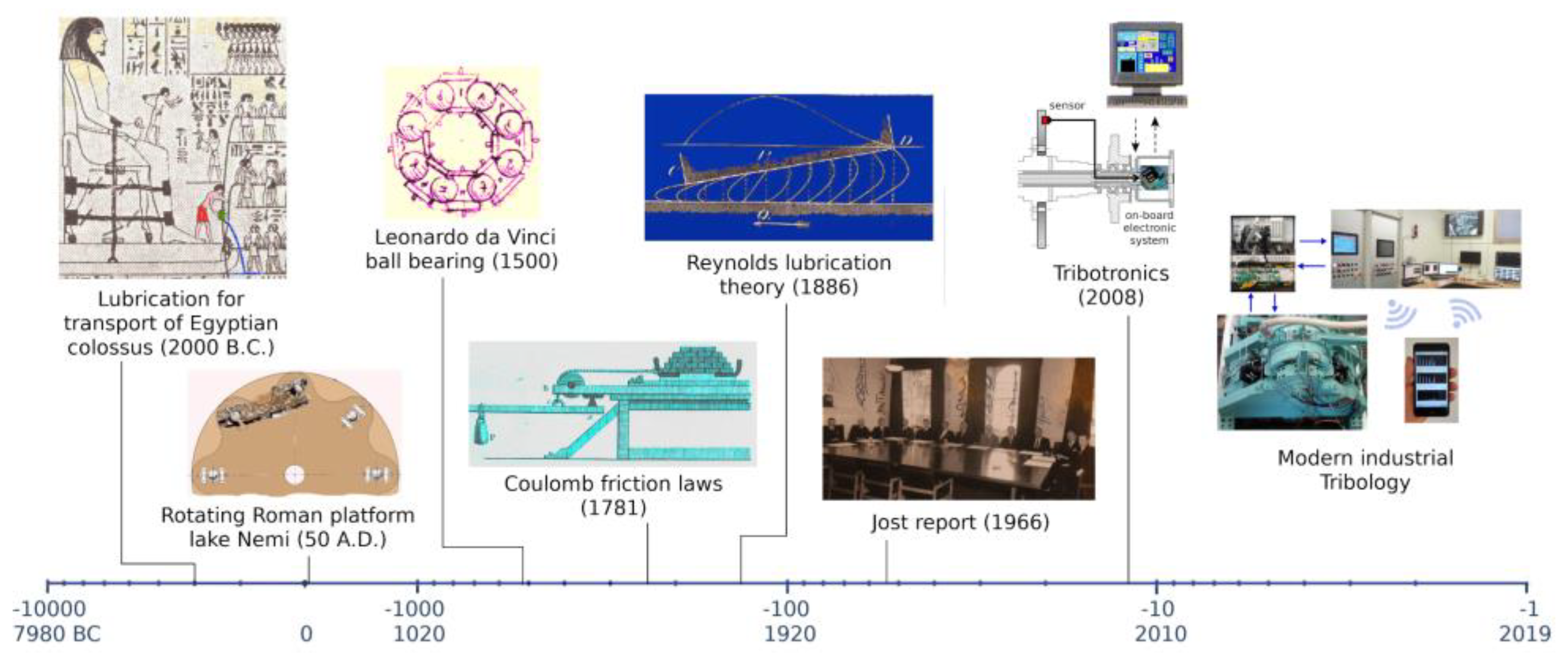
Figure 2.
Tribology subjects; an example of possible connections.
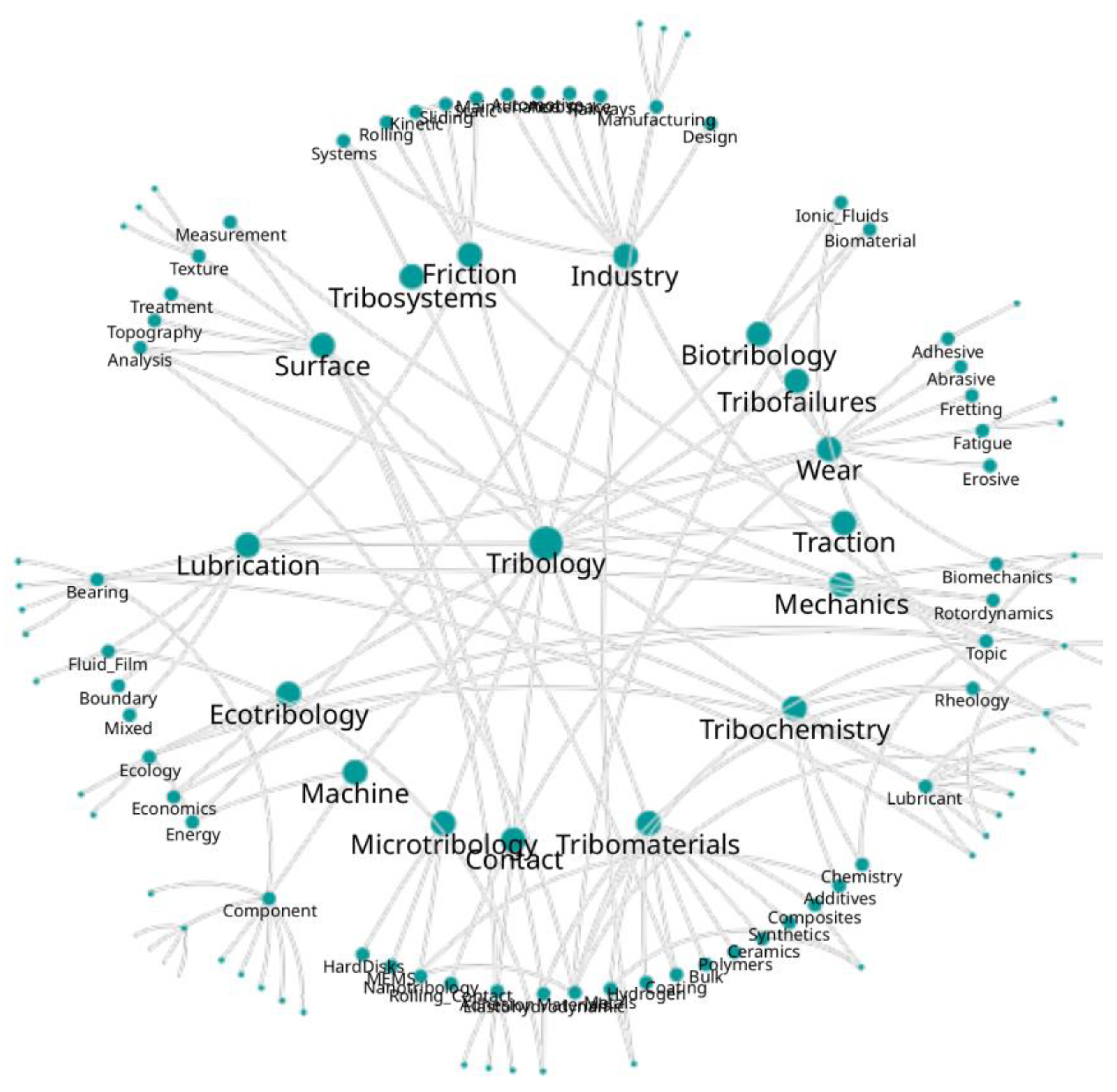
Figure 3.
Optical interferometry used for film thickness measurement: (a) Interference image of a lubricated contact between a steel ball and a glass disc obtained with monochromatic yellow light; (b) 3D reconstruction of the contact.
Figure 3.
Optical interferometry used for film thickness measurement: (a) Interference image of a lubricated contact between a steel ball and a glass disc obtained with monochromatic yellow light; (b) 3D reconstruction of the contact.
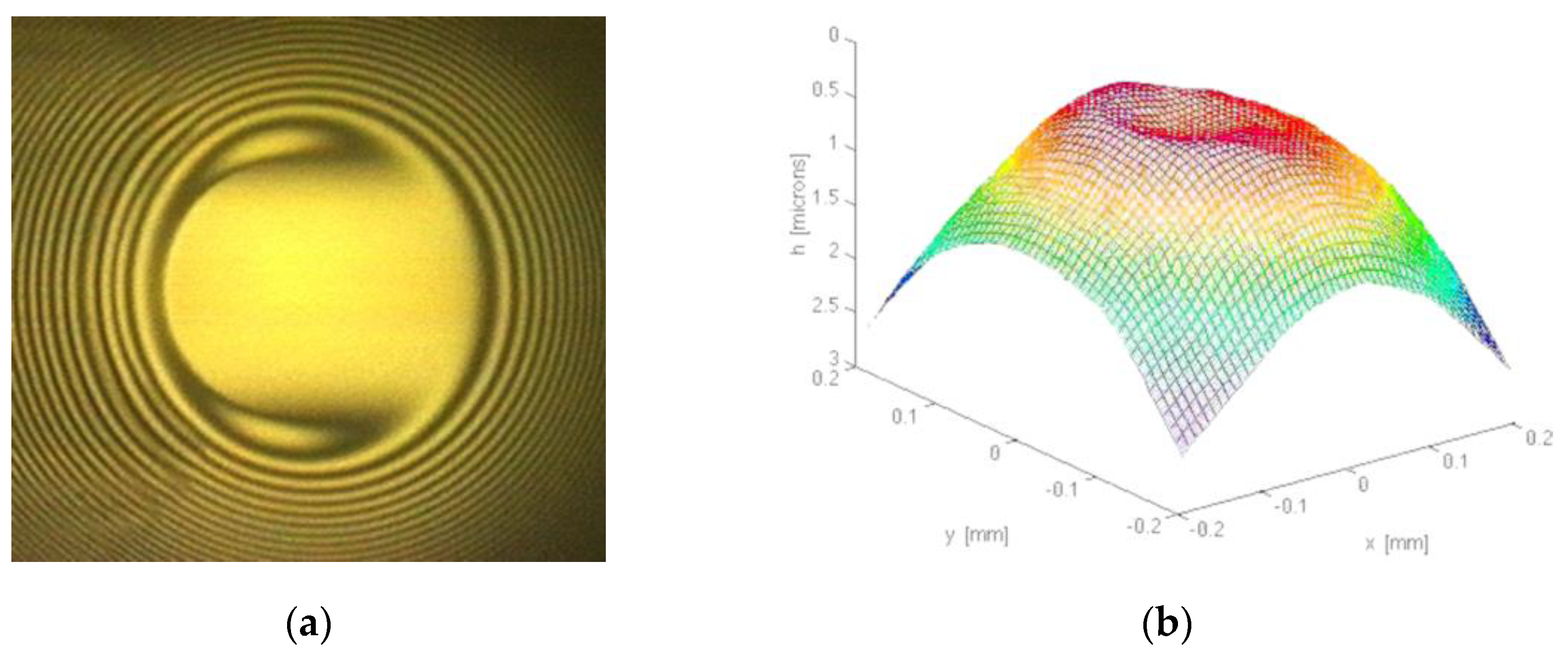
Figure 4.
Common matrices and fillers of polymer composite coating. From [29].
Figure 4.
Common matrices and fillers of polymer composite coating. From [29].
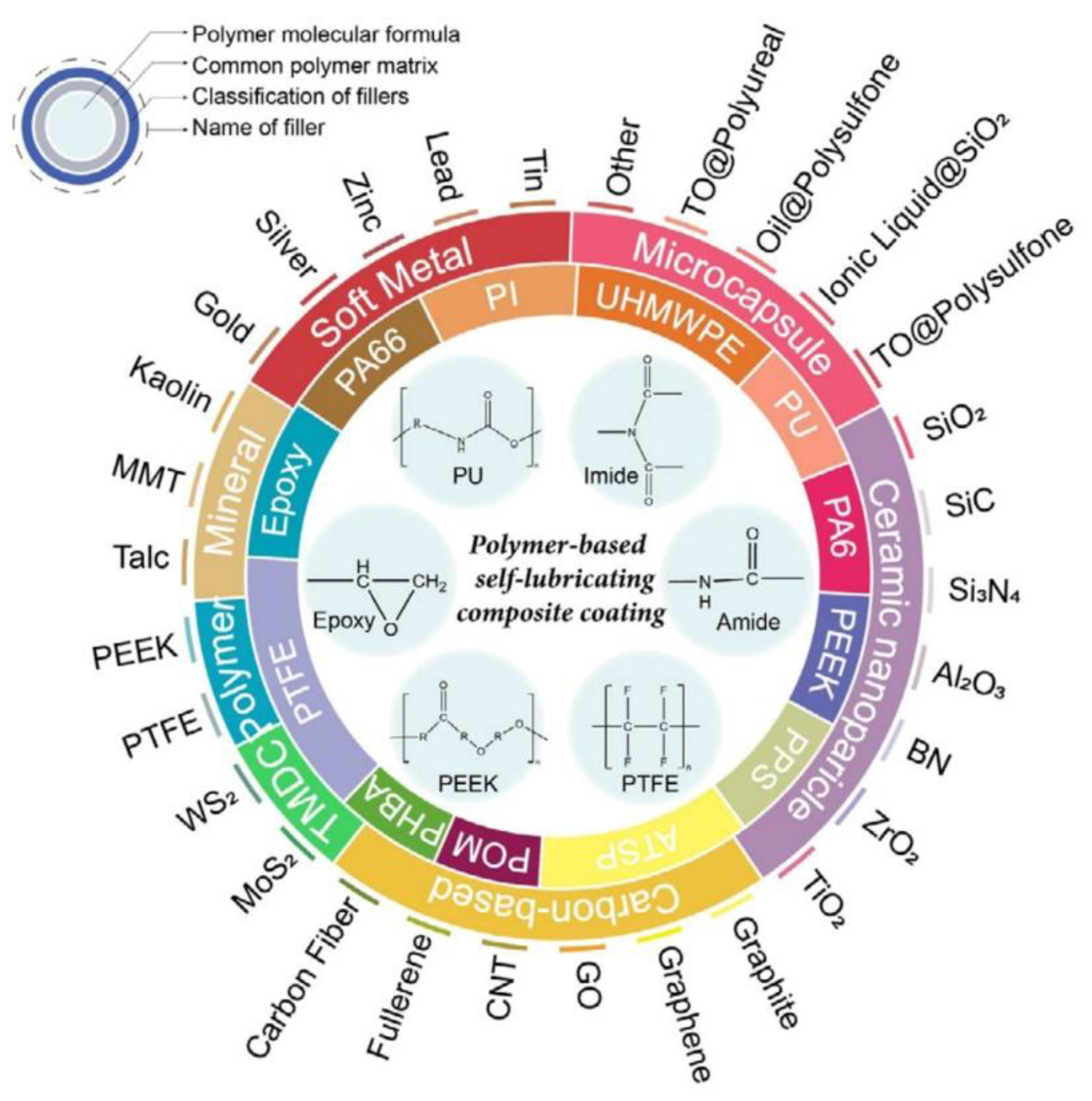
Figure 5.
Illustrating schematically the origin of the lubrication by charged brushes. From [36].
Figure 5.
Illustrating schematically the origin of the lubrication by charged brushes. From [36].
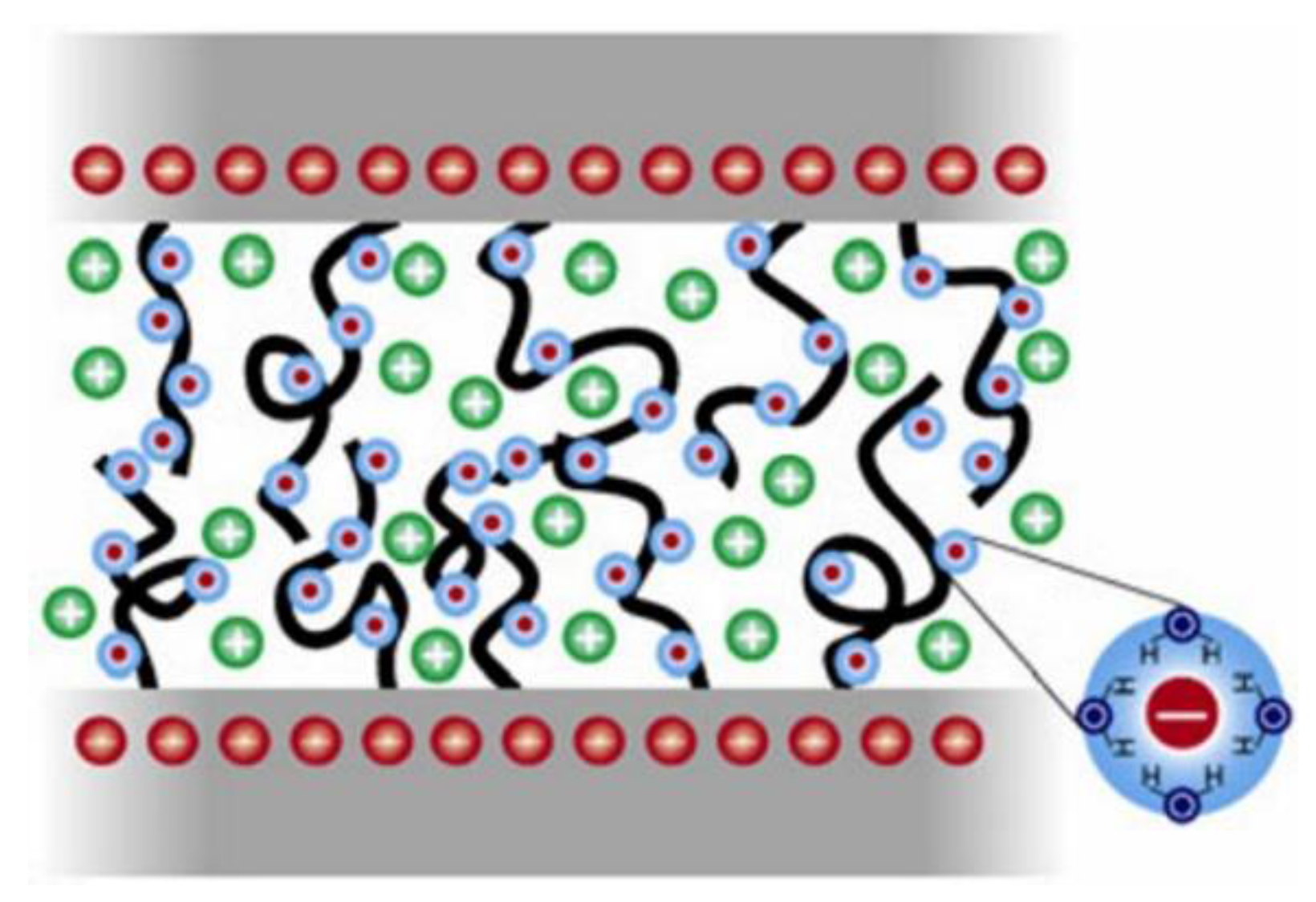
Figure 6.
Photograph of experimental apparatus for testing full scale pad journal bearings.
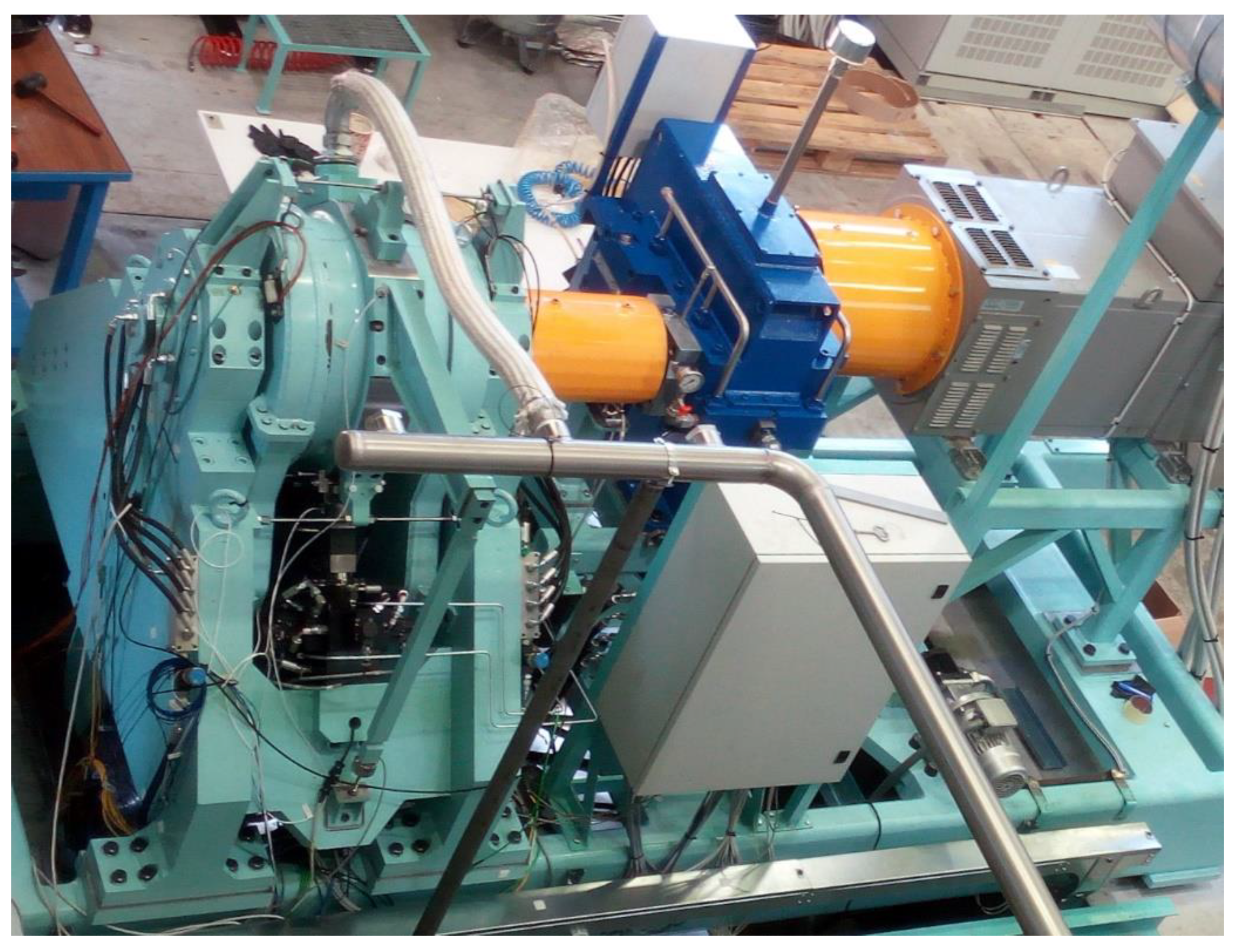
Figure 7.
Wind turbine.
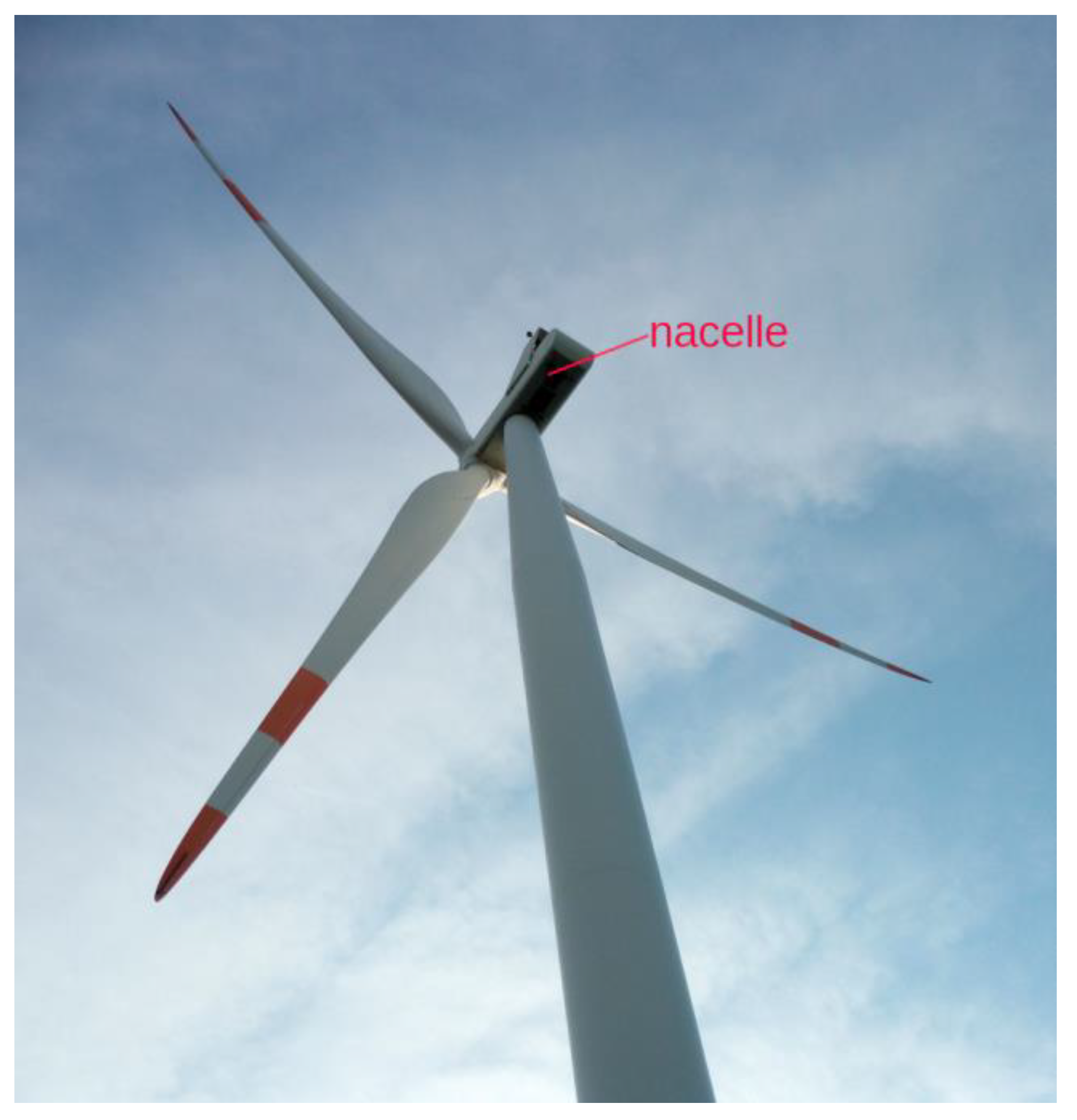
Figure 8.
General flow chart of the musculoskeletal-wear modeling procedure. From [50].
Figure 8.
General flow chart of the musculoskeletal-wear modeling procedure. From [50].
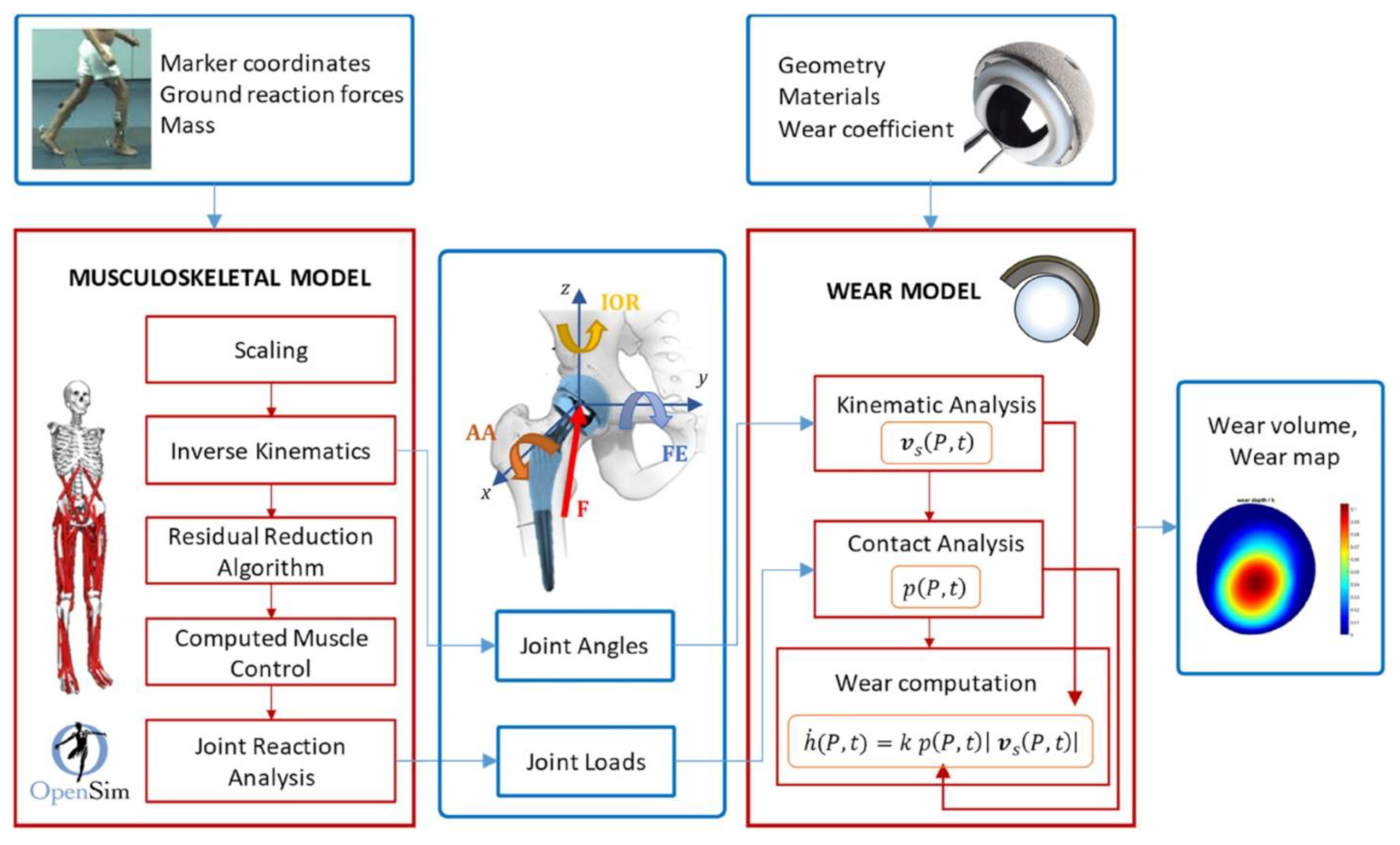
Figure 9.
Life cycle of of biolubricants. From [52].
Figure 9.
Life cycle of of biolubricants. From [52].
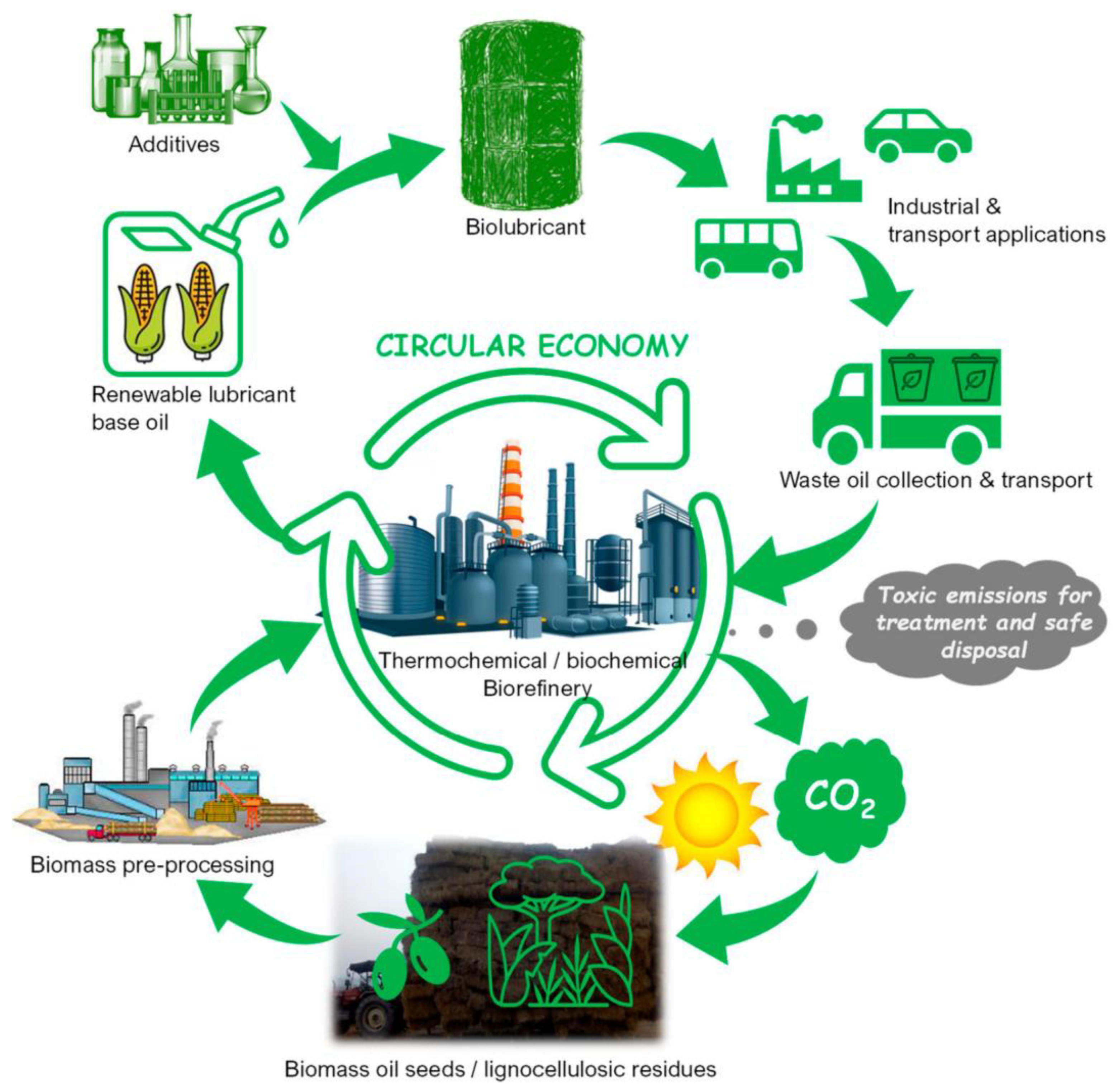
Figure 10.
Application of ANN methods in tribology research. From [57].
Figure 10.
Application of ANN methods in tribology research. From [57].
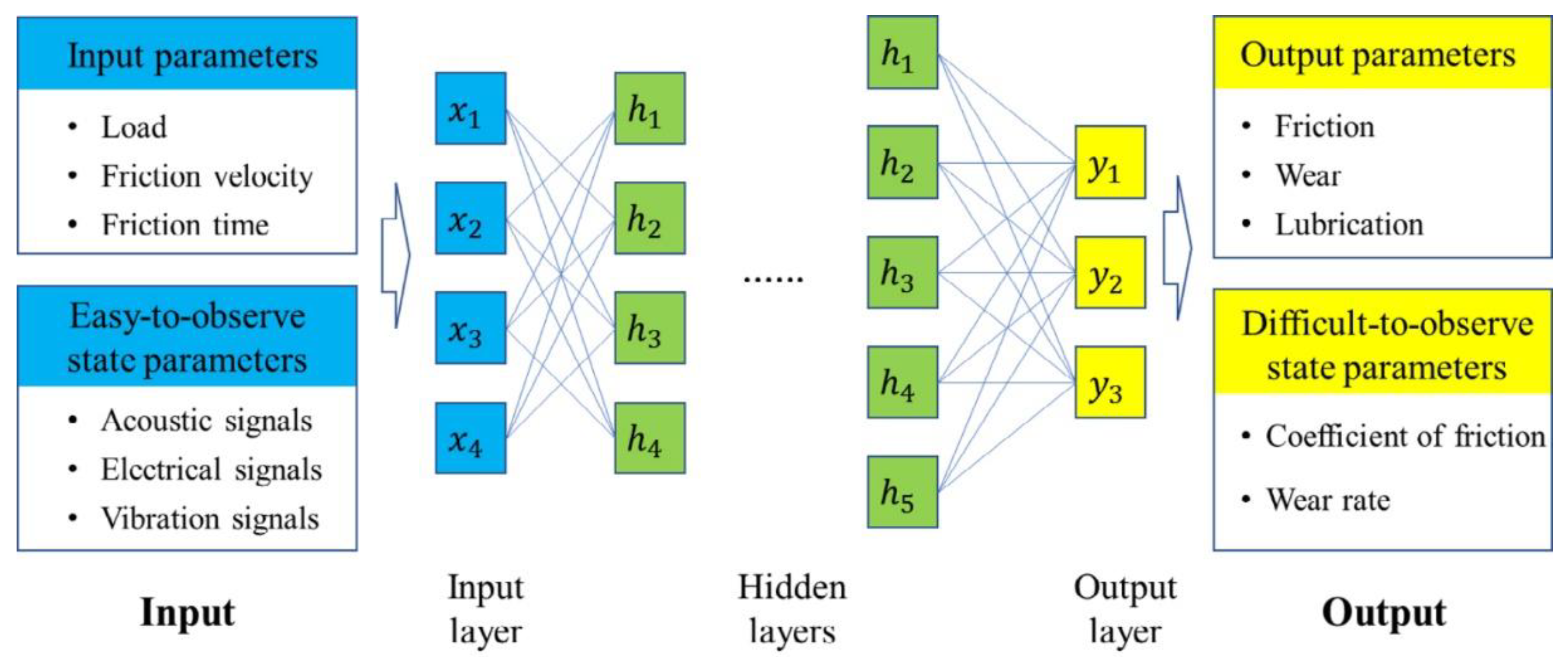
Figure 11.
The Sustainable Development Goals.


Table 1.
Classification in tribology branches.
| Tribology branches | Main subjects |
|---|---|
| Fundamental Tribology | basic studies on friction, wear and lubrication, both theoretical and experimental |
| Tribology of Materials and Lubricants | materials, surface treatments, textures and coatings, lubricants and additives |
| Micro and Nanotribology | studies at micro and nano level, molecular dynamics, nano-materials and coatings |
| Industrial Tribology | applications of tribology to industrial products, manufacturing, and maintenance |
| Biotribology | biomedical applications, biomimetics, biomaterials, biolubricants |
| New Frontiers of Tribology | green tribology, tribotronics, triboinformatic, extreme environments tribology |
Table 2.
Tribology contributions to the Sustainable Development Goals and Targets.
| Tribology subjects | Tribology branches | SDGs Targets | Sustainable Development Goals |
|---|---|---|---|
| prosthetic implants, heart valves and other medical devices device miniaturization with applications in medicine friction and wear reductions for minor energy losses and material waste minimum quantity lubrication new materials for reducing resource consumption and increasing efficiency and recycling, environmental friendly lubricants, additives, surface treatments and coatings more efficient systems with lower emissions, less material wastes through reduced dimensions, reuse, and reduced use of lubricants |
Biotribology Micro and Nanotribology Tribology of Materials and Lubricants Industrial Tribology |
3.8 ... access to quality essential health-care services … 3.9 ... reduce the number of deaths and illnesses from hazardous chemicals and air, water and soil pollution and contamination |
3 Good Health and Well-being |
| 6.3 ... improve water quality by reducing pollution, eliminating dumping and minimizing release of hazardous chemicals and materials … 6.6 … increasing recycling and safe reuse globally and to protect and restore water-related ecosystems, including mountains, forests, wetlands, rivers, aquifers and lakes 6.a ... water efficiency, wastewater treatment, recycling and reuse technologies |
6 Clean Water and Sanitation |
||
| friction reduction, wear control, tribotronics, efficiency and maintainability tribology applications to renewable energy systems as wind energy plants and hydropower |
Industrial Tribology | 7.3 ... double the global rate of improvement in energy efficiency 7.a ... facilitate access to clean energy research and technology, including renewable energy, energy efficiency ... promote investment in energy infrastructure and clean energy technology |
7 Affordable and Clean Energy |
| new lubricants, additives, surface treatments and coatings tribological design, more durable and efficient components, tribotronics, friction and wear control, reuse, minimum quantity lubrication, efficiency and maintainability reduction of friction and wear at micro- and nano level - device miniaturization with several micro and nano mechanics applications in medicine, biotechnology, optics, electronics, aviation environmental friendly lubricants |
Tribology of materials and lubricants Industrial Tribology Micro and Nanotribology Biotribology |
8.2 Achieve higher levels of economic productivity through diversification, technological upgrading and innovation … 8.4 Improve ... global resource efficiency in consumption and production and endeavour to decouple economic growth from environmental degradation ... |
8 Decent Work and Economic Growth |
| 9.4 ... upgrade infrastructure and retrofit industries to make them sustainable, with increased resource-use efficiency and greater adoption of clean and environmentally sound technologies and industrial processes … 9.5 Enhance scientific research, upgrade the technological capabilities of industrial sectors in all countries ... |
9 Industry, Innovation and Infrastructure |
||
| friction and wear reduction in transports, with several tribological components, as bearings and gears , and in buildings, with tribological contacts in common machines as electric motors, pumps and fans, and washing machines |
Industrial Tribology | 11.6 ... reduce the adverse per capita environmental impact of cities, including by paying special attention to air quality … 11.b ... increase the number of cities and human settlements adopting and implementing ... plans towards ... resource efficiency ... |
11 Sustainable Cities and Communities |
| reduction of friction (and therefore energy losses) and wear (with the related saving of materials), both in dry and lubricated contacts, with new materials and lubricants tribological design with more durable and efficient components, reuse, minimum quantity lubrication, efficiency and maintainability environmental friendly lubricants and additives |
Tribology of materials and lubricants Industrial Tribology Biotribology |
12.1 Implement ... programmes on sustainable consumption and production … 12.2 ... achieve the sustainable management and efficient use of natural resources 12.4 ... achieve the environmentally sound management of chemicals and all wastes throughout their life cycle ... and significantly reduce their release to air, water and soil … 12.5 ... reduce waste generation through prevention, reduction, recycling and reuse 12.a ... scientific and technological capacity to move towards more sustainable patterns of consumption and production |
12 Responsible Consumption and Production |
| industrial activities with reduced energy losses thanks to tribology reduced emissions related to lower friction losses, materials waste reduction, reduced pollution of small wear particles such as the ones produced by wear of tires and brakes tribology teaching - awareness of the importance of tribology for a reduced carbon footprint |
Industrial Tribology Tribology of materials and lubricants |
13.2 ... Integrate climate change measures into national policies, strategies and planning 13.3 Improve education, awareness-raising and human and institutional capacity on climate change mitigation, impact reduction |
13 Climate Action |
| reduction of exhausted lubricants e.g. through minimum quantity lubrication and oil reconditioning, wear control techniques to reduce wear particles non-toxic biodegradable lubricants, oil-free or water lubrication remanufaturing, tribological design for longer life of the components and biomimetic applications to reduce consumption of the natural resources |
Industrial Tribology Biotribology |
14.1 ... prevent and significantly reduce marine pollution of all kinds … 14.3 Minimize and address the impacts of ocean acidification, including through enhanced scientific cooperation at all levels. |
14 Life below Water |
| 15.1... ensure the conservation, restoration and sustainable use of terrestrial and inland freshwater ecosystems … 15.4 … ensure the conservation of mountain ecosystems |
15 Life on Land |
Disclaimer/Publisher’s Note: The statements, opinions and data contained in all publications are solely those of the individual author(s) and contributor(s) and not of MDPI and/or the editor(s). MDPI and/or the editor(s) disclaim responsibility for any injury to people or property resulting from any ideas, methods, instructions or products referred to in the content. |
© 2023 by the authors. Licensee MDPI, Basel, Switzerland. This article is an open access article distributed under the terms and conditions of the Creative Commons Attribution (CC BY) license (http://creativecommons.org/licenses/by/4.0/).
Copyright: This open access article is published under a Creative Commons CC BY 4.0 license, which permit the free download, distribution, and reuse, provided that the author and preprint are cited in any reuse.


