

Submitted:
28 November 2023
Posted:
29 November 2023
You are already at the latest version
Abstract
By virtue of the knowledge of the beneficial effect of the warm and dry storage, for the growth of the chincuya seed embryo, defined as morphological dormancy. The effect of the same type of storage was studied for the seed viability and germination by soaking gibberellic acid. Also, fatty acids and their kinetics were identified during the warm and dry storage. The following treatments were evaluated: storage time (0, 3, 6, 9 and 12 months), seed soaking in gibberellic acid at 350 mg L-1, and for the control, imbibition in distilled water, both for 72 h. The seed viability was evaluated through the stain test with tetrazolium chloride. The embedded seeds were germinated on absorbent paper towels and incubated at different temperatures of 30 ° C during the day and 25 ° C at night and 12 hours of photoperiod. The lipid profile was developed by gas chromatography. Seeds were held at constant temperature of 25 ± 3 ° C, in darkness, during the storage time. Results demon-strated that the high initial viability was maintained until the ninth month, when it decreases and is statisti-cally different from the other treatments. The smaller germination percentage (26.1 %) was observed in the freshly harvested seeds and, the higher one corresponded to the six months (65.6 %), with these differences being statistically significant. Regarding the identified fatty acids and their average content, it was found that 33.41 % corresponded to palmitic acid, 7.72 % to stearic acid; the arachidic acid with 1.30 %, making a total of saturated fatty acids of 42.44 %. The detected unsaturated fatty acids were: palmitoleic acid 1.52 %, oleic acid 43.37 % and linoleic acid 7.24 %, in total, 52.15 %. No significative changes were observed in the fatty acids content that are the largest part of the total seed reserves; although the higher concentrations matched with the longest germination (three months), with an average of 92.84 % total fatty acids. Specified regressions indi-cated with statistical robustness that palmitoleic and palmitic acids increased while the oleic acid decreased during the dry storage. The arachidic acid showed a slightly downward trend. Also, the concentrations of fat-ty acids were significatively different between unstored and unincubated seeds (intact) and unstored and in-cubated, but without germinating seeds (dormant), in the latter, the total fatty acids content was significantly lower. Given that the application of gibberellic acid and warm dry storage favored germination, as well as the change in fatty acid content during warm dry storage, added to the results already reported on morphological changes and embryonic growth as an effect of the same type of storage, it is established that Annona purpurea seeds present morphophysiological dormancy, also this is the first identification report of arachidic and pal-mitoleic acids in chincuya seeds and the higher germination percentage reported (65.6 %).
Keywords:
morphophysiological
; fatty acids
; life cycle
; hormonal regulators
1. Introduction
Germination involves DNA transcription, translation and repair processes, cell elongation and during radicle protrusion, cell division and participation of various metabolites such as proteins, enzymes, growth regulators and reserves among many others. It has recently been pointed out that reactive oxygen species and micro RNAs contribute to the adjustment of seed dormancy and germination [1]. During the seed formation, the early stage presents high mitotic activity and high concentrations of cytokines, gibberellins, spermines, spermidines and polyamines are presented. In the second phase, the cell elongation and auxin synthesis predominate, and the level of free and conjugated gibberellins increases, while cytokines disappear, and the abscisic acid is not detected. In the late stage, the seed is prepared to be dehydrated and for the latency acquisition, with elevated levels of abscisic acid, fresh weight decrease and here, the maximum accumulation of reserves occurs, among them LEA (Late Embryogenesis Abundant) proteins [2]. In this sense, it can be said that the seed has ripened, in other words, it has completed its development from the morphological and physiological point of view coinciding with the cessation of dry matter accumulation [3,4].
Physiological dormancy. The primary dormancy or quiescence is obtained during the seed ripeness and is overcoming by environmental and endogenous factors [5]. It is known that seeds with physiological dormancy are water permeable, and that the inhibiting mechanism is in the embryo. Seeds do not germinate because the embryo has a physiological impairment that causes a low growth potential, but as dormancy interruption occurs, the potential increases to the point that germination is possible [6].
Morphophysiological dormancy. In this case, a combination of morphological and physiological dormancy, which causes delayed germination of more than 30 days [7]. In Virola surinamensis (Rol.) Warb., it was reported that seeds germinate between 94 and 124 days after planting [8]. In A. crassiflora Mart. seeds, it was found that radicle protrusion occurs 150 days after planting and was determined that A. crassiflora shows morphophysiological dormancy, which disappears at low temperatures and/or temperature fluctuations present before the rainy season [9]. The same authors point out that the subsequent embryonic growth and endosperm digestion, are probably controlled by the gibberellins synthetized during the overcoming physiological dormancy. In the case of A. macroprophyllata Donn. Smith., different authors agree that the germination capacity increases when seeds are stored at intervals between 5 to 7 months. [10,11,12]. To release the morphophysiological dormancy, the embryo should grow and/or be differentiated and the seed should be embedded for this to be possible, this type of dormancy is common in regions with humid seasonal climates around the world [13].
Effect of the warm and dry storage. The seed dormancy is released through an extended storage period under dry conditions, after the ripe seed dispersal, a process called “after ripening”. Several studies have demonstrated that after ripening is effective in seeds with moisture contents between 5 and 18 % [14]. After ripening treatments decrease dormancy and increase the germination potential by increasing sensitivity to factors that promote germination such as light and gibberellins, and at the same time, sensitivity to factors that inhibit germination decreases [14]. That available reports seem to indicate that few changes in gene expression occur after ripening. The release of seed dormancy is the result of chemical transformations that are not related to normal cellular metabolic processes, which affect the metabolic products present in the freshly produced seeds [5]. These authors have indicated that non-enzymatic reactions play a role in the release of seed dormancy after ripening, where the production of reactive oxygen species has been involved. However, a significant decrease of the levels of abscisic and salicylic acids and increase of gibberellins, jasmonic acid and isopentenyladenine was observed by [15], when imbibing Arabidopsis seeds treated with dry storage.
Effect of gibberellins. Gibberellins stimulate cell elongation and division, their biosynthesis is present in any part of the plant, including germinating embryos and developing seeds. They can act in cells that do not have the capacity to synthetize them, subsequently, they have to move from the point of synthesis to the point of action. Endogenous gibberellins regulate their own biosynthesis by improving or inhibiting the involved genes transcription [16]. They are synthetized in the embedded seed embryos and induce the synthesis of hydrolytic enzymes that weaken the seed coat, mobilize seed nutrient storage reserves, stimulate the embryo expansion, the hypocotyl elongation, activate meristems and produce new sprouts and roots [17]. The release of seed dormancy is characterized by the capacity to degrade the abscisic acid and the gibberellins biosynthesis [14]. In A. purpurea were identified AG1, AG20 and AG53 gibberellins in seeds stored for 3-4 months [18]. In the same way, in A. macroprophyllata and A. purpurea, were founded abscisic acid and gibberellins in fresh seeds that were embedded in water, as well as in unsoaked seeds [19].
Lipids as a reserve substance. The high lipid content in seeds of some species could indicate a compensatory selection (greater energy / volume), as the lightest or smallest seeds were selected, for example, for a better dispersal [20]. It has been mentioned that storage lipids are assembled into small spheres of 0.5–2.5 μm called oil or lipid bodies [21,22], which contain a triacylglycerol nucleus covered by a phospholipid layer with proteins (oleosin, caleosin and steroleosin) that are responsible for the stability of lipid bodies and prevent the storage triacylglycerols to degrade until the seed germinates [23]. In oilseeds, triacylglycerols in lipid bodies initiate degradation by lipases, hydrolytic enzymes that produce glycerol and free fatty acids in glyoxysomes. Glycerol enters the glycolytic pathway, which at the same time can become a pyruvate and then oxidize in the mitochondrion through the Krebs Cycle. Then, fatty acids can be degraded by oxidation reactions to produce compounds containing fewer carbon atoms. The main oxidative process is the β-oxidation, although there are differences in the degradation routes of the fatty acid based on its degree of saturation, but all must be converted to forms that can be degraded to form acetyl-CoA, then, this is captured by the glyoxylate cycle, and enters the gluconeogenic pathway in cytoplasm to produce sugars [24,25]. Seeds with oil reserves such as sunflower and canola seeds, limit germination and establishment of seedlings when the isocitrate lyase activity is inhibited, an essential enzyme during the glyoxylate cycle that plays a key role in the lipid metabolism. In the case of cereals, it is known that abscisic and gibberellic acids control lipid mobilization through the inhibition or induction of the isocitrate lyase activity [1]. It has been founded that starch, protein and fat reserves of seeds of six grass species were not correlated with the germination percentage or speed, however, soluble sugars and proteins did so. In the lipid reserves there were no variations during germination. The different composition of fatty acids means different susceptibility to peroxidation. In most of the plant species that have seeds rich in oil, there is a risk of self-oxidation, where the degree of unsaturation has a considerable influence on the degree of degradation [26]. The hypothesis proposed is that due to the morphological characteristics of the embryo and phylogenetics of the species, chincuya seeds present morphophysiological latency, which will be demonstrated by the increase in germination capacity and modifications in the content of existing fatty acids caused by the storage and dry. Therefore, the objective of this study was to study the effect of warm, dry storage and the application of gibberellins on germination behavior, as well as the effect of warm, dry storage on the lipid content of chincuya seeds.
2. Materials and Methods
2.1. Seed production and storage
In the locality of Las Salinas, Chicomuselo, Chiapas (15.74539 N, -92.28321 E), the ripe fruits were collected from different trees of tolerated vegetation, in september and october throughout three consecutive years, from which the seeds were extracted. The initial moisture content was evaluated at the time of extraction, in 4 repetitions of 10 seeds, which were dried in the oven at 110 ° C for 10 days and weighted in analytical balance. Seeds were kept in the laboratory environment, partially covered with black plastic for 39 days and then, they were put into a black plastic bag and placed in an incubator under constant temperature of 25 ± 3 ° C, in darkness and without adding fungicides.
2.2. Viability test
In order to evaluate the seed viability, the stain test was conducted with 2,3,5-triphenyl-tetrazolium chloride. The seeds with the fully stained embryo and with specifically marked unstained parts, were considered viable according to the standards [27]. Because the Annonaceae seeds do not have a staining reference standard to consult and due to the response diversity in staining, the following proposal was made (Figure 1). To interpret the test with a magnifier and integrated light, only the stained proportion of the embryo was considered, and the endosperm staining was ignored because this tends to stain intensely, making the test reading difficult (Figure 1). Only the categories A, B and C together were considered as viable seeds. Data was converted to percentages. Tetrazolium (Merck®) was prepared at 0.1 %, and 4 repetitions of 20 seeds were used, which were conditioned by soaking the whole seeds in distilled water for 24 hours at room temperature. The staining preparation consisted of removing the testa with tweezers. In the cleaned seed, the first transversal cut was made to shorten the length of the seed by half and the second cut was longitudinal, starting the cut in the hilum area, without separating the halves, traying to cut deeply up to half of the seed, allowing the application of the solution and guarantying that if the embryo is alive, it will be stained. They were placed in Petri dishes with the tetrazolium solution and were kept in darkness at 30 ° C for 24 hours. Subsequently, the solution was decanted, and seeds were rinsed with distilled water, throughout the observation they were kept immersed in distilled water.
2.3. Treatments
Treatments that correspond to the storage periods were defined: the first one, when the seed was freshly extracted from the fruit, the time in 0, as well as the 3, 6, 9 and 12 months of warm and dry storage. The application of gibberellic acid in reagent grade (Merck®) at 350 mg L-1 and the control in distilled water were evaluated, both treatments in immersion for 72 hours at 25 °C with seed aeration for 10 min., each 12 hours. Immersion in gibberellic acid and the control soaked in water were applied in 4 repetitions of 20 seed each one. Before planting, seeds were soaked in sodium hypochlorite solution (Cloralex®) at 10 % (v/v) for 3 min and in ethyl alcohol at 10 % for 2 min, and finally they were rinsed in distilled water. The incubation of seeds was carried out, with modification of the protocol indicated by [27], was used by placing the seeds on absorbent paper towels, which were moistened to be saturated with distilled water, they were rolled, placed into a partially closed plastic bag and were continually irrigated with manual spray. At the same time, bags were put in a growth chamber (Shel Lab LI15 ®) with different temperatures of 30 °C during the day and 25 °C at night and 12 hours of photoperiod. Throughout the test period, which lasted 40 days, the absorbent paper towels were changed 3 times and washes in fungal preventive solutions were repeated in each change. Germination was considered when the radicle was (approx. 1 mm). Latents seeds were those that maintained the same appearance from the beginning to the end of the test, while rotten seeds showed obvious signs of rot such as loss of firmness and unpleasant odor. The considered variables were germination percentage and dormant and dead seeds percentage. To analyze lipids, three samples of each storage treatment were considered, they were deep-frozen at -20° C, then were lyophilized for 14 days and finally were milled. They were kept in amber bottles, at cool temperature and in the shade, until the analysis by gas chromatography.
2.4. Extraction of lipids
To extract oil from the seeds, the testa was removed and the analysis was developed with the “almonds” (endosperm and embryo); filter paper cartridges were prepared with 0.5 g of the seed sample, which were put in Erlenmeyer flasks of 50 mL, 20 mL of hexane were added and were kept in maceration for three days, subsequently, the hexane was decanted and another 20 mL of hexane were added, and so on each three days until obtaining three extractions, whose volume was gathered, dried with anhydrous sodium sulfate, filtered and vacuum evaporated in a rotary evaporator, until obtaining a light yellow oily residue from both the testa and the cleaned seed, and their weights were recorded.
For the analysis of fatty acid (FA) content in the seeds, FA methyl esters were prepared through a transesterification reaction in basic medium. A KOH dilution (1.0 g) was prepared in methanol (60 mL) and then, 1.0 mL of this dilution was added to approximately 0.1 g of the oil obtained by maceration, they were placed in a flat-bottomed Erlenmeyer flask with ground joint and boiling chips, a 14/22 ground joint coolant was attached to this set and was kept reflux for 2 hours, the reaction was monitored trough analytical chromatography, with the use of a mixture of Hexane/Ethyl acetate/Acetic acid (9:1:0.1) as eluent and developing in an iodine vapor chamber. At the end of the reaction, it was transferred to a separatory funnel, 3 mL of hexane were added, and it was left to rest overnight, the glycerin was separated from the oily mixture of fatty acid methyl esters (FAME). Two washes were made to the FAME with 2.5 mL of citric acid at 1 % and subsequently, two more washes of 5 mL of water at 60° C. It was dried with anhydride Na2SO4, filtered, and the weights were recorded to obtain the yield. The percentage composition of the obtained methyl esters was conducted by gas chromatography analysis, using an Agilent 6890 chromatograph, with the FAME2 Esters control method, FAME analysis method, Calculation method: area percentage. Certified by the standard ISO 9001:2000 RSGC 238 with the following conditions: column AT-FAME 30m x 0.25mm x 0.25um film thickness; injector temperature 250 °C Temperature FID 250 ° C; oven 180 ° C [15 min] 10 ° C /min to 230 ° C [3 min]; hydrogen flow 1.8 mL/min. H2 Split 100; temperature detector 275 º C and injector 250 ° C.
2.5. Statistical analysis
The statistical analysis was developed through an analysis of variance of a completely randomized design and Tukey's multiple comparison test, with a significance level of 5 %. Data on percentages were transformed before the analysis with the following equation: . The values reported in the Tables are the real values. The SAS statistical program was used [28]. Simple linear regressions were also developed between storage treatments and concentrations of fatty acids.
3. Results and Discussion
The initial moisture content of the seeds was 39.3 % and when entering oven storage 39 days after extraction, the total was 25 % of moisture.
3.1. Viability
The highest viability values corresponded to months 6 and 9, although without statistical significance, except in the twelfth month where viability suddenly decreased. However, [29] it was pointed out that with the same storage, embryos grew until the sixth month. Similarly, [11] found that the A. macroprophyllata seed viability does not change throughout the 8-month storage evaluation. However, it should be noted (Table 1) the difference in final germination percentages between freshly extracted seeds and with three months of storage, where the germination percentage is almost double after storage. The positive association between viability and germination is seen up to six months of dry storage. Probably, the exclusive observation of viability in embryos did not allow to detect deterioration (if there was any), manifested as lipid peroxidation in the endosperm [30].
3.2. Germination
Storage time favored final germination and as a consequence, dormant seeds decreased (Table 1). The coefficients of variation are high, which reflects the genetic variability of the species, given its limited domestication. The dead seeds percentage has a highly erratic behavior, it was high in the twelfth month, situation that can be explained with the limited seed viability in that moment (Figure 2). [14] say that after ripening is effective in seeds with moisture contents between 5–18 %, however, chincuya seeds exceeded these values. Table 2 confirms the positive effect of applying gibberellic acid in germination, which has been indicated in several Annona species (A. muricata, A. squamosa, A. cherimola, A. macroprophyllata, A. purpurea A. crassiflora, A. emarginata and atemoya (Annona x atemoya Mabb.), including A. purpurea [10,12,18,19,31,32]. Until now, only exogenous applications of gibberellic acid, cytokines and ethylene have been reported in Annonaceae. [32]. [9] demonstrated that in the A. crassiflora germination, gibberellin promoted production and/or reactivation of several hydrolytic enzymes involved in the utilization of endosperm reserves. The chincuya seed storage increased viability (Figure 2). The germination increase by the dry storage can be due to the increase in the sensitivity to gibberellin or the decrease in the sensibility to germination inhibitors, as it is pointed out [14]. For the chincuya, [18,19] proved the presence of gibberellins and abscisic acid in the embedded seeds. [17] mentioned that embedded seeds synthesize gibberellins. In this vein, [33] found that the release dormancy during post-ripening sunflower seeds, was associated with the free water content and molecular mobility within embryonic axes. These authors suggest that changes in the bonding properties of water, resulting from oxidative processes, enable metabolic activities. Among other mechanisms proposed to explain the effect after ripening, there are the non-enzymatic reactions that eliminate germination inhibitors, reactive oxygen species and antioxidants [34], membrane alterations [35] and specific protein degradation through the proteasome [36,37]. [16] mention that developing seeds synthetize gibberellins and due to the results found by [29], who pointed out that chincuya embryos grow during dry storage, it is possible to assume a continuum in the synthesis of gibberellins (although not exclusively) in the seed.
On the other side, the location of the species in the phylogenetic tree and the relation it has with dormancy, can be noted. According to [38], the Annonaceae family is very ancient and [39] recognized that primitive angiosperms have seeds with small embryos and abundant endosperm around them, and same as [40], they say that the morphophysiological dormancy is a plesiomorphic character. On his part [41], says that some seeds seem to have no dormant period, for example, in Annona, which after its morphological and physiological ripening, the seed may take a while to germinate. In contrast with other authors, [41] considers the absence of dormancy as a primitive character. [42] with the use of phylogenetic analysis tools for 216 000 fabaceus observations worldwide, they found that seeds without dormancy evolved in climates with long growing seasons and/or in families that produce bigger seeds. On the other side, dormancy corresponds to families of species of temperate origin with small seeds and it is noted that when the favorable growing season is short, dormancy is the only adaptation and survival strategy. Previously, [13] and [6] said that most of the species without dormancy are in tropical forests.
Considering the above, it can be seen that chincuya trees where the seeds were taken (Chicomuselo, Chis.), grow in sub-humid warm climate, with rains in the years preceding the evaluation recollections, (1 331.3-2 432.2 mm) between may and october, period in which an average of 89.2 % of the annual rainfall is concentrated. September was the rainiest month, with an average of 27.4 % of the rainy months. The large seed size is due to the habitat of the species [29] compared to other Annona species and rainfall seasonality, it is likely that the functional strategy of the seeds is to maintain metabolic activity, probably at a lower speed than when they were inside the fruit and attached to the tree, for this, dormancy they present is manifested as a germination delay, while they acquire the germination capacity as time passes and the rainy season arrives. Chincuya seeds naturally remain in the soil for seven months and when the first rains of may arrive, they germinate. Results of Table 1 pointed out that six-month storage is the best time to reach germination and in natural conditions, seeds remain for a remarkably similar time. Likewise, the temperature during the applied storage was similar (25 ° C) to that of their natural condition, where the 4-year average was 23.8 ° C.
3.3. Fatty acids content
The analysis of fatty acids revealed high lipid values in the seeds. It is known that the lipid reserves of seeds when oxidized produce more than twice as much energy as the hydrolysis of proteins or carbohydrates per volume unit [6], which results in an advantage for the germination process. Unsaturated fatty acids (UFA) resulted slightly higher than the saturated fatty acids (SFA). The concentration of oleic acid as UFA and palmitic acid as SFA are highlighted. It is known that the oleic acid plays a key role in the anabolism of plant fatty acids, as the precursor of the main unsaturated fatty acids. From there, probably, their high content. Table 3 and Table 4 show that chincuya has a greater amount of fatty acids than the other species consulted. For palmitic and stearic acids, chincuya seeds had the highest values.
In A. purpurea, [43] identified the same fatty acids found in the research, except for the arachidic acid and palmitoleic acid. The concentrations reported by these authors were: palmitic acid 26.38 %, stearic acid 3.7 %, oleic acid 43.67 % and linoleic acid 26.25 %; with the only coincidence in the oleic acid. The arachidic acid is only reported in sugar apples (Table 4) and also, the content is higher in chincuya. The palmitic acid is not mentioned in other species, except for the soursop with which it shares a remarkably similar concentration. The relation between UFA/SFA (1.22) in chincuya seeds (Table 3), demonstrates that the total of saturated and unsaturated acids is not quite different, they are balanced, in contrast to what is observed in other species of the genus Annona (Table 4). Figure 6 shows that there were no significant changes in the studied fatty acids content regarding the storage time.
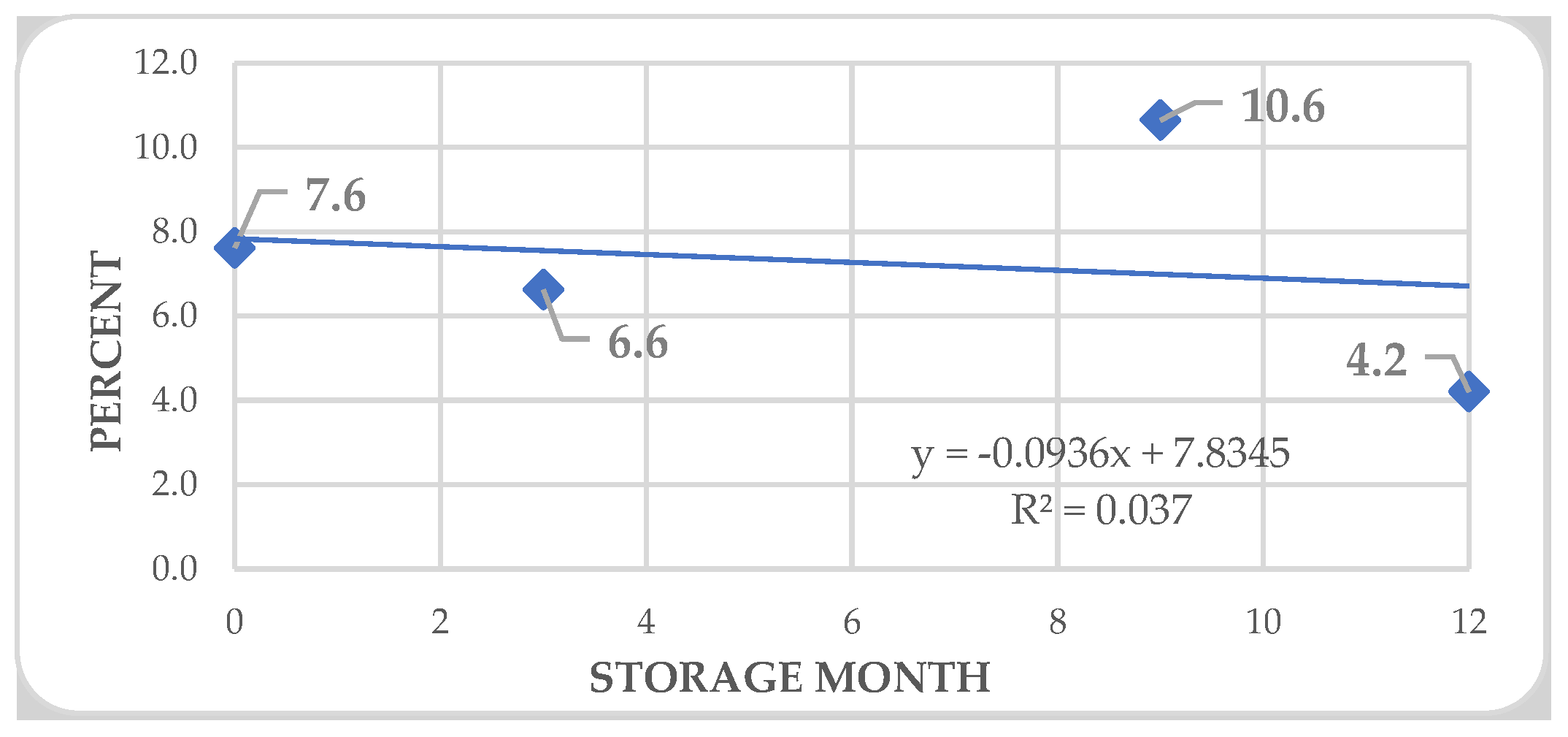
Even after 12 months (Figure 3), the fatty acid content decreased significantly, although it is known that deterioration can occur due to prolonged storage causing oxidation of the fatty acids present in the seed, as it is pointed out [44]., in Tabebuia roseoalba (Ridl.) Sandwith seeds stored for 24 months. The different composition of fatty acids means different susceptibility to peroxidation. High saturated fatty acids contents speed the deterioration process of recalcitrant seeds during their storage in American oak (Quercus rubra L.) [45] and mahogany (Swietenia macrophylla King) [42].
Table 5 shows the values of the fatty acids evaluated in the freshly extracted seeds (without storage) but without having been placed under germination conditions (intact), and freshly extracted seeds but embedded and incubated to promote germination, but in which no radicle protrusion was observed. Statistically meaningful differences are seen in the stearic acid and total of fatty acids. These data, in addition to those already mentioned, indicate that the incubated seeds, even when they did not show radicle protrusion, reactivated their metabolism using fat reserves. In the physiological dormancy, seeds are water permeable, and the inhibiting mechanism is in the embryo. Seeds do not germinate because the embryo has a physiological impairment that causes a low growth potential, but as the release of seed dormancy occurs, the potential increases to the point that germination is possible [6].
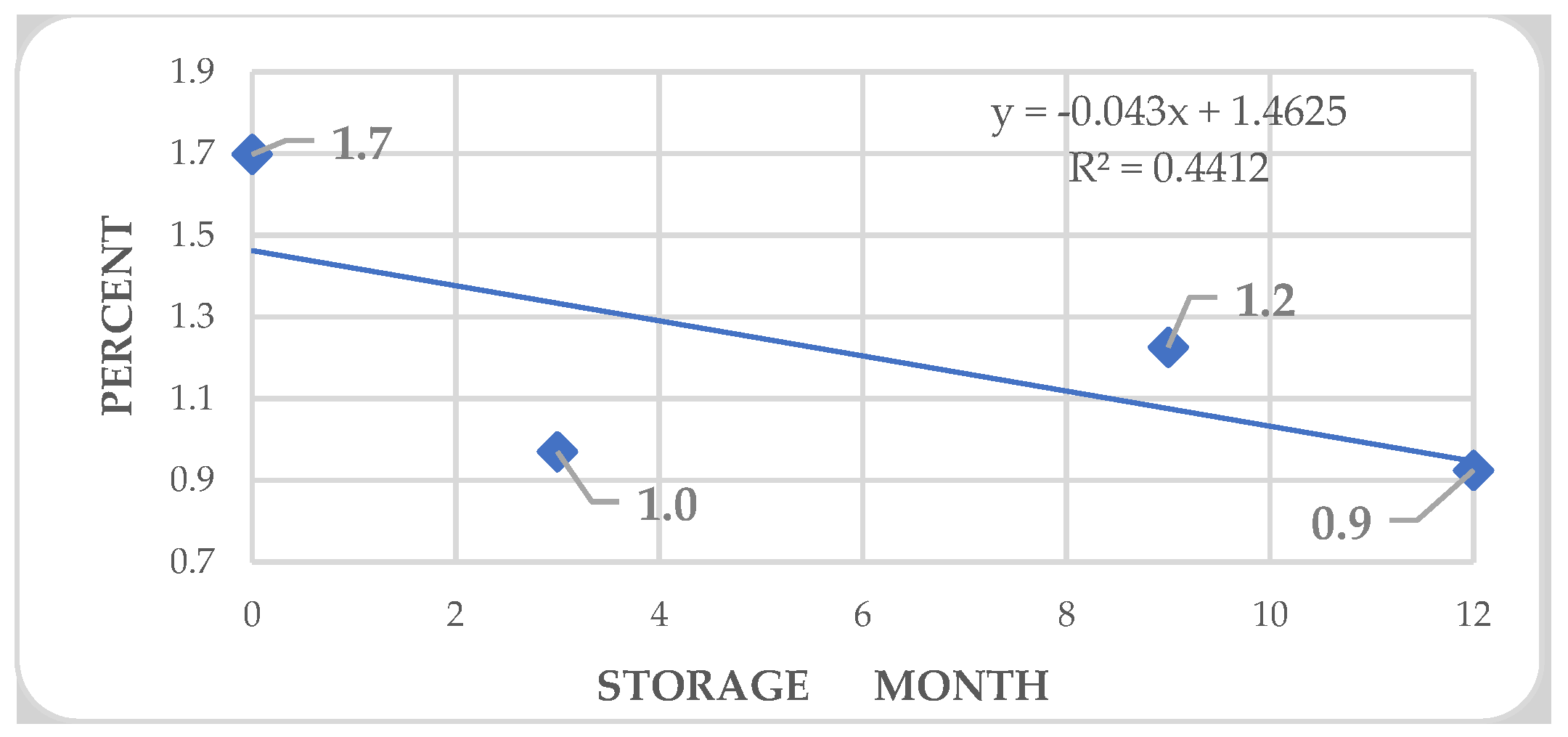
Analysis of regressions points out the trends in differential variations depending on the acid in question. It is observed in fatty acid kinetics that palmitic (Figure 4) and palmitoleic acids (Figure 6) go up as the storage time increases, while the oleic acid (Figure 5) has a different behavior. In the three cases, values of R2 offer a high reliability for these trends. Also, the stearic acid (Figure 8) shows an orientation towards increasing with respect to storage time, but the value of R2 is exceptionally low. On the other side, arachidic (Figure 7) and linoleic acids (Figure 9), show a downward trend as the storage increases, however, values of R2 also are low.
Figure 4.
Kinetics of palmitic acid in Annona purpurea (chincuya) seeds, due to the effect of warm dry storage.
Figure 4.
Kinetics of palmitic acid in Annona purpurea (chincuya) seeds, due to the effect of warm dry storage.
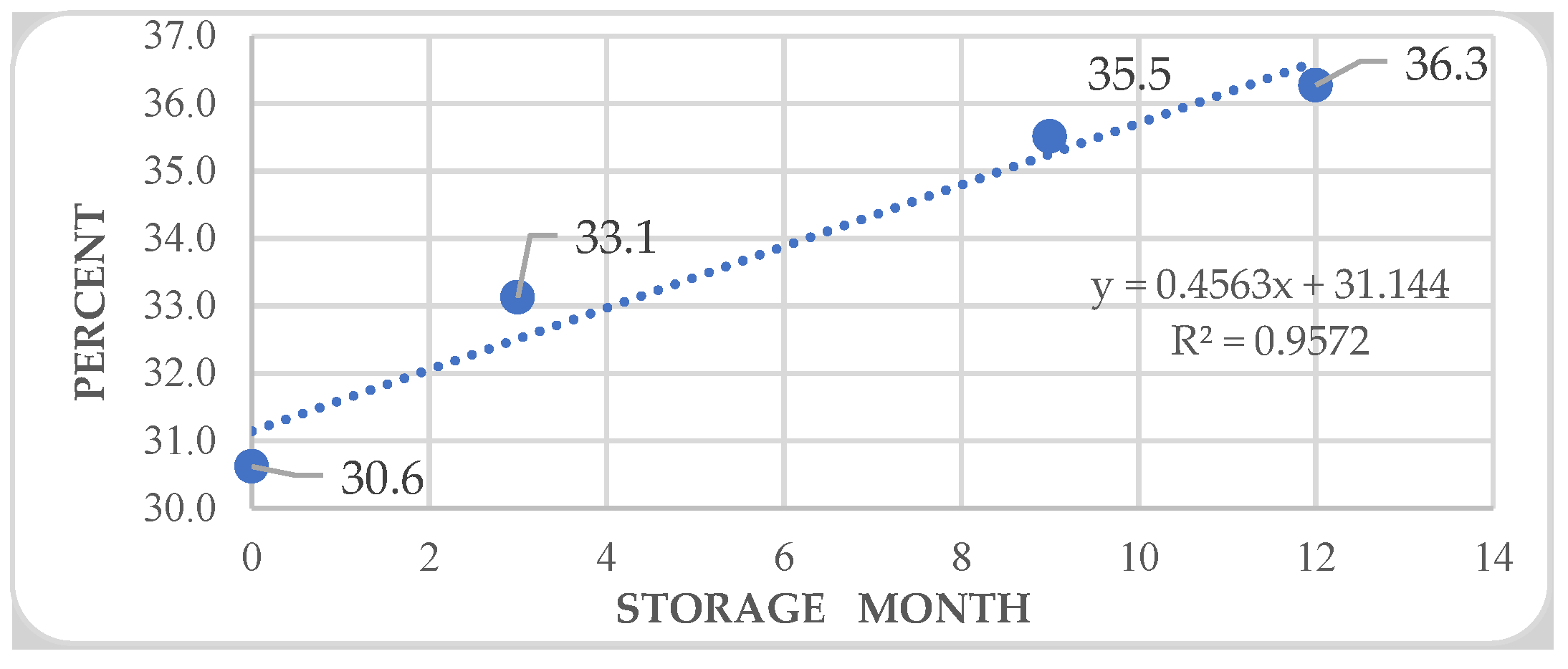
Figure 5.
Kinetics of oleic acid in Annona purpurea (chincuya) seeds, due to the effect of warm dry storage.
Figure 5.
Kinetics of oleic acid in Annona purpurea (chincuya) seeds, due to the effect of warm dry storage.
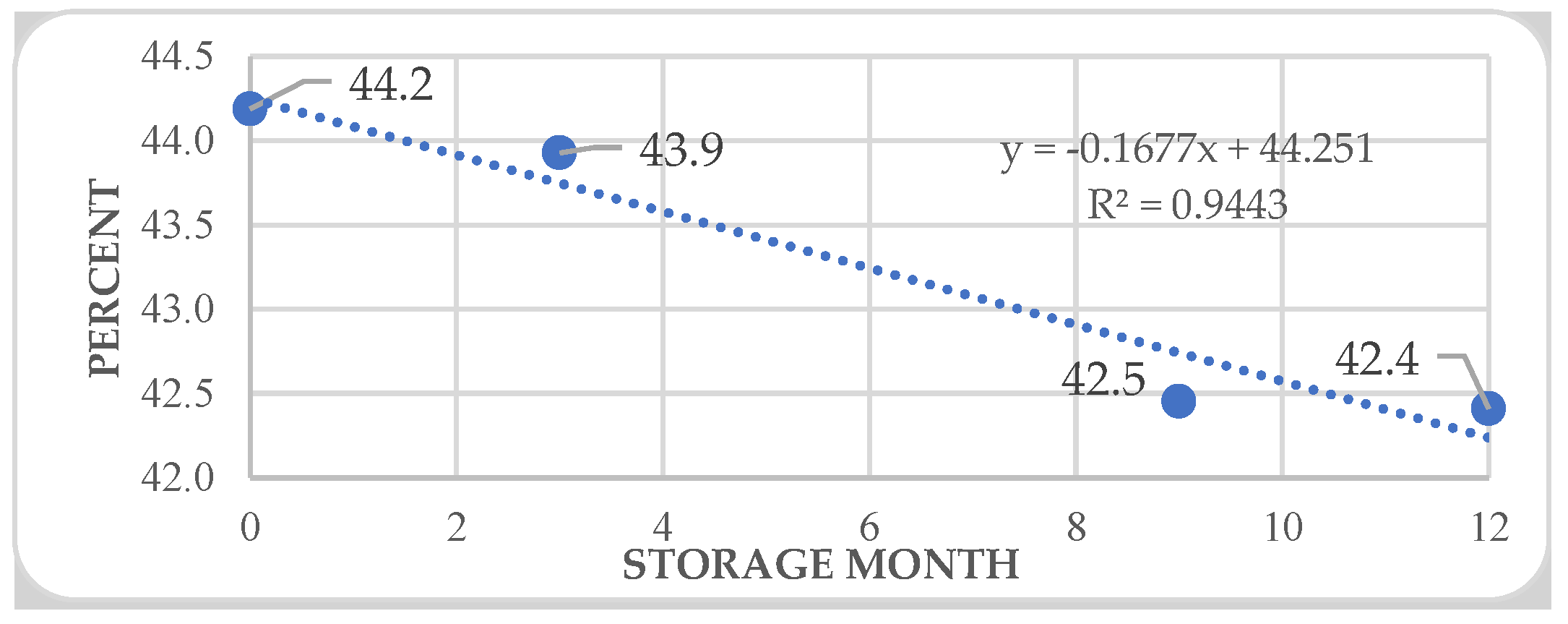
Figure 6.
Kinetics of palmitoleic acid in Annona purpurea (chincuya) seeds, due to the effect of warm dry storage.
Figure 6.
Kinetics of palmitoleic acid in Annona purpurea (chincuya) seeds, due to the effect of warm dry storage.
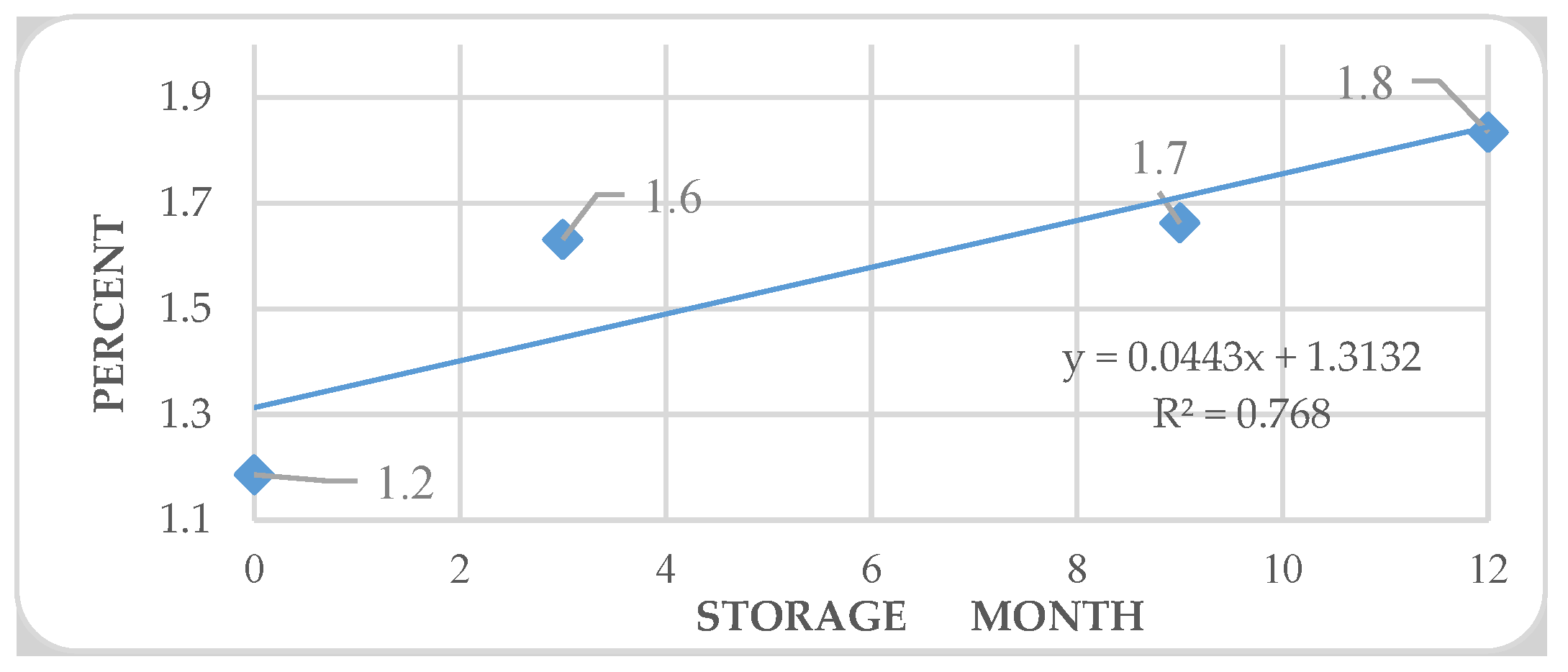
Figure 7.
Kinetics of arachidic acid in Annona purpurea (chincuya) seeds, due to the effect of warm dry storage.
Figure 7.
Kinetics of arachidic acid in Annona purpurea (chincuya) seeds, due to the effect of warm dry storage.
From the human nutrition and energy sustainability points of view, the amount of fatty acids in the chincuya seed is important because the number of seeds per fruit is high, one would think about promoting their cultivation to be used as biofuel. It is notable that the values presented by the seed, in both saturated and unsaturated fatty acids are high and given that the consumption of unsaturated fatty acids supports vascular health, consumption as a source of edible oil could be feasible. However, it is essential to develop the needed tests to determine the safety due to the acetogenins content, metabolites recognized as cytotoxic [47].
Figure 8.
Kinetics of stearic acid in Annona purpurea (chincuya) seeds, due to the effect of warm dry storage.
Figure 8.
Kinetics of stearic acid in Annona purpurea (chincuya) seeds, due to the effect of warm dry storage.
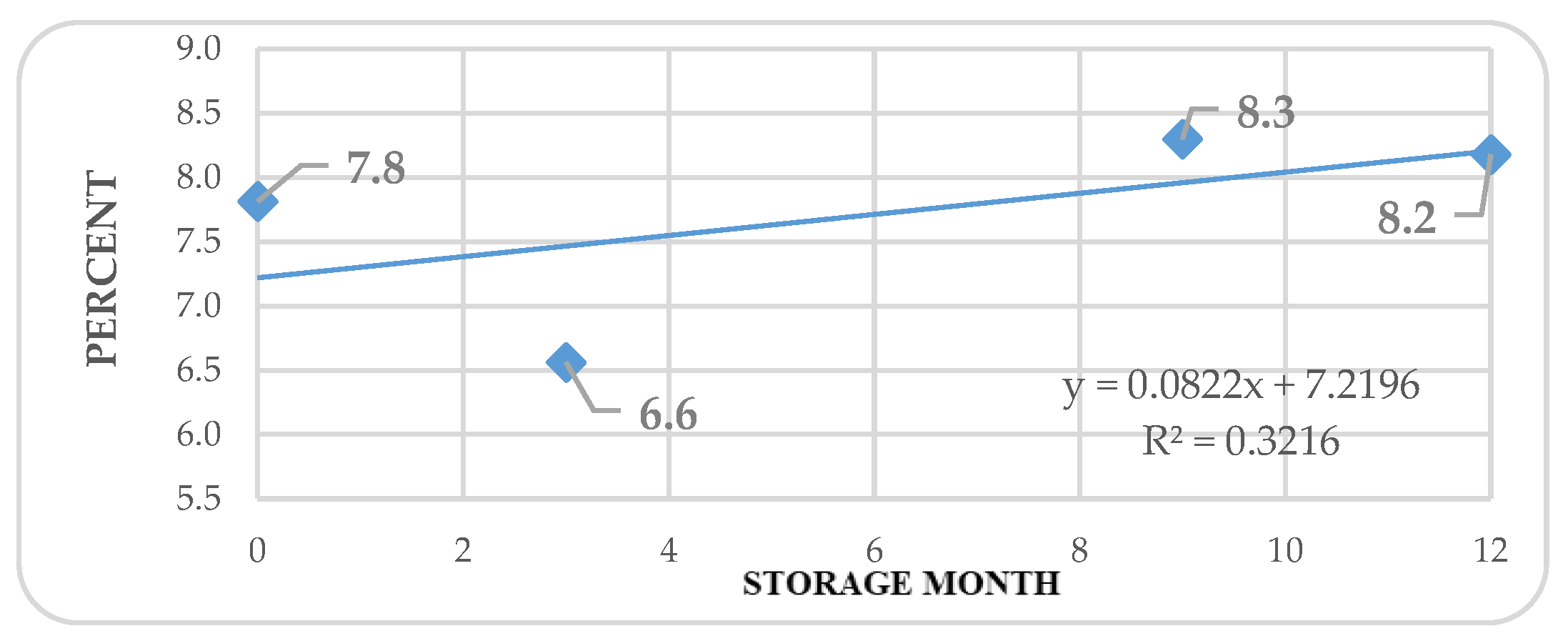
Figure 9.
Kinetics of linoleic acid in Annona purpurea (chincuya) seeds, due to the effect of warm.
4. Conclusions
The fatty acids identified were palmitic acid, stearic acid, oleic acid, linoleic acid, being the first time that arachidic acid and palmitoleic acid have been identified.
Given that the application of gibberellic acid and warm dry storage favored germination, as well as the change in fatty acid content during warm dry storage, added to the results already reported on morphological changes and embryonic growth as an effect of the same type of storage, it is established that Annona purpurea seeds present morphophysiological dormancy.
Author Contributions
Conceptualization, E.V. L.; methodology, E.V.L.; B.R.T.; A.V.M.; A.R.P.; software, H.V.V.; A.M.P.; validation, E.V.L.; A.V.M.; B.R.T.; analysis, H.V.H.; G.F.; investigation, A.M. P.; G.F.; A.M.P.; resources, E.V.L.; A.V.M.; data curation, H.V.H.; A.R. P.; writing—original draft preparation, E.V.L.; writing—review and editing, A.V.M.; B.R.T.; G.F.; visualization, A.M.P.; supervision, A.V.M.; project administration, E.V.L.; funding acquisition, A.R.P.; A.V.M. All authors have read and agreed to the published version of the manuscript.
Funding
“This research was funded by the Postgraduate College and the Autonomous University Chapingo (2016 Project. General Management of Research and Postgraduate Studies)”.
Institutional Review Board Statement
Not applicable.
Data Availability Statement
The data that support the findings of this study are available from the corresponding author upon reasonable request.
Conflicts of Interest
The authors declare no conflict of interest.
References
- LI Z.; GAO Y.; ZHANG Y.; LIN C.; GONG D.; GUAN Y.; HU J. Reactive oxygen species and gibberellin acid mutual induction to regulate tobacco seed Germination. Frontiers Plant Science, 2018, 9, 1279. [CrossRef]
- MATILLA, A. Germinación y dormición de las semillas. En Fundamentos de Fisiología Vegetal. Azcón-Bieto, J.; Talón, M.. McGraw-Hill Interamericana. Madrid, España, 2000; págs. 435-450.
- SANO, N.; RAJJOU, L.; NORTH, H. M.; DEBEAUJON, I.; MARION-POLL, A.; SEO, M. Staying alive: molecular aspects of seed longevity. Plant and Cell Physiology, 2015, 57, 660-674. [CrossRef]
- COSTA, M. C. D.; COOPER, K.; HILHORST, H. W.; FARRANT, J. M. Orthodox seeds and resurrection plants: Two of a kind. Plant physiology, 2017, 175, 589-599. [CrossRef]
- HOLDSWORTH, M. J.; BENTSINK, L.; SOPPE, W. J. Molecular networks regulating Arabidopsis seed maturation, after-ripening, dormancy and germination. New Phytologist, 2008, 179, 33-54. [CrossRef]
- BASKIN, C. C.; BASKIN, J. M. Seeds: ecology, biogeography, and evolution of dormancy and germination. 2a ed; Elsevier, 2014; 14.
- FOGLIANI, B.; GATEBLÉ, G.; VILLEGENTE, M. FABRE, L.; KLEIN, N.; ANGER, N.; BASKIN, C. C.; SEUTT, C. P. The morphophysiological dormancy in Amborella trichopoda seeds is a pleisiomorphic trait in angiosperms. Annals of Botany, 2017, 119, 581-590. [CrossRef]
- CRUZ, E.; BARROS, H. Germinação de sementes de espécies amazônicas: ucuúba [Virola surinamensis (Rol. ex Rottb.) Warb]; Embrapa: Amazônia Oriental, Brasil 2016; 4.
- DA SILVA, E. A.; DE MELO, D. L.; DAVIDE, A. C., DE BODE, N.; ABREU, G. B.; FARIA, J. M.; HILHORST, H. W. Germination ecophysiology of Annona crassiflora seeds. Annals of botany, 2007, 99, 823-830. [CrossRef]
- VIDAL-LEZAMA, E.; MARROQUÍN-ANDRADE, L.; GÓMEZ, R. S. Efecto del almacenamiento y tratamientos pregerminativos en semillas de Annona muricata L., Annona diversifolia Saff. y Annona spp. Proc. Inter. Soc. for Trop. Hort, 2008, 52, 203-209.
- GONZÁLEZ-ESQUINCA, A. R.; DE-LA-CRUZ-CHACÓN, I.; DOMÍNGUEZ-GUTÚ, L. M. Dormancy and germination of Annona macroprophyllata (Annonaceae): the importance of the micropylar plug and seed position in the fruits. Botanical Sciences, 2015, 93, 509-515. [CrossRef]
- FERREIRA, G.; DE-LA-CRUZ-CHACÓN, I.; GONZÁLEZ-ESQUINCA, A. R. Overcoming seed dormancy in Annona macroprophyllata and Annona purpurea using plant growth regulator. Revista Brasileira de Fruticultura, 2016, 38, e-234. [CrossRef]
- FENNER, M.; THOMPSON, K. The ecology of seeds. Cambridge University Press New York, 2005; 250.
- FINCH-SAVAGE, W. E.; AND LEUBNER-METZGER, G. Seed dormancy and the control of germination. New Phytologist, 2006, 171, 501-523. [CrossRef]
- YANO, R.; KANNO, Y.; JIKUMARU, Y.; NAKABAYASHI, K.; KAMIYA, Y.; NAMBARA, E. CHOTTO1, a putative double APETALA2 repeat transcription factor, is involved in ABA-mediated repression of gibberellin biosynthesis during seed germination in Arabidopsis. Plant Physiol, 2009, 151, 641-654.
- TAIZ, L. AND ZEIGER, E. Plant Physiology. 5a ed.; Sinauer Associates Inc., Sunderland, UK, 2010; 728.
- BEWLEY, J.; M. BLACK. Seeds: Physiology of Development and Germination. New York and London, Plenum Press, 1994; 445.
- GÓMEZ-CASTAÑEDA, J. A.; RAMÍREZ, H.; BENAVIDES-MENDOZA, A.; ENCINA-RODRÍGUEZ, I. Germination and seedling development of soncoya (Annona purpurea Moc & Sessé) in relation to gibberellins and abscisic levels. Revista Chapingo Serie Horticultura, 2003, 9, 243-253.
- FERREIRA, G. Reguladores vegetais na superação da dormência, balanço hormonal e degradação de reservas em sementes de Annona diversifolia Saff. e A. purpurea Moc. & Sessé ex Dunal (Annonaceae). Tese (Livre-Docência). Universidade Estadual Paulista, Instituto De Biociências. Campus de Botucatu, Sao Paulo, Brasil; 2011.
- BASKIN, C. C.; BASKIN, J. M. Seeds. Ecology, Biogeography, and Evolution of Dormancy and Germination. Academic Press: San Diego, California, 1998; 666.
- ZIENKIEWICZ, A.; ZIENKIEWICZ, K.; REJÓN, J. D.; DE DIOS ALCHÉ, J., CASTRO, A. J.; RODRÍGUEZ-GARCÍA, M. I. Olive seed protein bodies store degrading enzymes involved in mobilization of oil bodies. Journal of Experimental Botany, 2013, 65, 103-115. [CrossRef]
- MURPHY, D. J. The dynamic roles of intracellular lipid droplets: from archaea to mammals. Protoplasma, 2012, 249, 541-585. [CrossRef]
- POXLEITNER, M.; ROGERS, S. W.; SAMUELS, A. L.; BROWSE, J.; ROGERS J. C. A role of caleosin in degradation of oil-body storage lipids during seed germination. The Plant Journal, 2006, 47, 917-933. [CrossRef]
- BEWLEY, J. D.; BLACK, M. Physiology and biochemistry of seeds in relation to germination: volume 2: viability, dormancy, and environmental control. Springer Science & Business Media, 1982; 339.
- AZCÓN-BIETO, J.; TALÓN, M. Fundamentos de Fisiología Vegetal. McGraw-Hill Interamericana: Madrid, España; 2000; 522.
- ZHAO, M.; ZHANG, H.; YAN, H.; QIU, L.; BASKIN, C. C. Mobilization and role of starch, protein, and fat reserves during seed germination of six wild grassland species. Frontiers Plant Science, 2018, 9, 234. [CrossRef]
- INTERNATIONAL SEED TESTING ASSOCIATION. International Rules for Seed Testing. ISTA, Zurich, Suiza, 2013.
- SAS Institute Inc., SYSTEM 2000® Software: Product Support Manual, Version 1, First edition, SAS Institute Inc., Cary, NC; 2000; 293.
- VIDAL-LEZAMA, E.; VILLEGAS-MONTER, A.; VAQUERA-HUERTA, H.; ROBLEDO-PAZ, A.; MARTÍNEZ-PALACIOS, A.; FERREIRA, G. Morphometry of chincuya seeds (Annona purpurea Moc. & Sessé ex Dunal) and embryonic growth under dry warm storage. Revista Brasileira de Fruticultura [online], 2023, 45, e-042.
- TAVEIRA J. H. S.; ROSA S. D. V. F.; BORÉM F. M.; GIOMO G. S.; SAATH, R. Perfis proteicos e desempenho fisiológico de sementes de café submetidas a diferentes métodos de processamento e secagem. Pesq. Agropec. Bras, 2012, 47, 1511-1517.
- FERREIRA, G.; GONZALEZ-ESQUINCA, A. R.; DE-LA-CRUZ-CHACÓN, I. Water uptake by Annona diversifolia Saff. and A. purpurea Moc. & Sessé ex Dunal seeds (Annonaceae). Revista Brasileira de Fruticultura, 2014, 36, 288-295.
- FERREIRA, G.; DE-LA-CRUZ-CHACÓN, I.; BOARO, C. S. F.; BARON, D.; LEMOS, E. E. P. D. Propagation of Annonaceous plants. Revista Brasileira de Fruticultura, 2019, 41, e-500. [CrossRef]
- BAZIN, J.; BATLLA, D.; DUSSERT, S.; EL-MAAROUF-BOUTEAU, H.; BAILLY, C. Role of relative humidity, temperature, and water status in dormancy alleviation of sunflower seeds during dry after-ripening. Journal of Experimental Botany 2010, 62, 627-640. [CrossRef]
- BAILLY, C. Active oxygen species and antioxidants in seed biology. Seed Science Research, 2004. 14, 93-107. [CrossRef]
- HALLETT B. P.; BEWLEY J. D. Membranes and seed dormancy: beyond the anaesthetic hypothesis. Seed Science Research, 2002, 12, 69-82. [CrossRef]
- SKODA, B.; MALEK, L. Dry pea seed proteasome. Plant physiology,1992, 99, 1515-1519. [CrossRef]
- BORGHETTI, F.; NAKAMURA, N. F.; MARTINS DE SÁ, C. Possible involvement of proteasome activity in ethylene induced germination of dormant sunflower embryos. Brazilian Journal of Plant Physiology, 2002, 14, 125-131.
- CHATROU, L.W. The Annonaceae and the Annonaceae project: a brief overview of the state of affairs. Acta Hortic., 1999, 497, 43-58. [CrossRef]
- FORBIS, T. A.; FLOYD, S. K.; AND DE QUEIROZ A. The evolution of embryo size in angiosperms and other seed plants: implications for the evolution of seed dormancy. Evolution, 2002, 56, 2112-25.
- SAUTU, A.; BASKIN, J. M.; BASKIN, C. C.; DEAGO, J.; CONDIT, R. Classification and ecological relationships of seed dormancy in a seasonal moist tropical forest, Panama, Central America. Seed Science Research, Cambridge, 2007, 17, 127-140. [CrossRef]
- DUKE, J. A. On tropical tree seedlings I. Seeds, seedlings, systems, and systematics. Annals of the Missouri Botanical Garden, Missouri, 1969, 56, 125-161.
- RUBIO DE CASAS, R., WILLIS, C. G., PEARSE, W. D., BASKIN, C. C., BASKIN, J. M.; CAVENDER-BARES, J. Global biogeography of seed dormancy is determined by seasonality and seed size: a case study in the legumes. New Phytologist, 2017, 214, 1527-1536.
- PÉREZ-AMADOR, M. C.; GONZÁLEZ-ESQUINCA, A.; GARCÍA-ARGAEZ, A.; BRATOEFF, E.; LABASTIDA, C. Oil composition and flavonoid profiles of the seeds of three Annona species. Phyton., 1997, 61, 77-80.
- ABBADE, L. C.; TAKAKI, M. Biochemical and physiological changes of Tabebuia roseoalba (Ridl.) Sandwith (Bignoniaceae) seeds under storage. Journal of Seed Science 2014, 36, 100-107. [CrossRef]
- SUN, W. Q. State and phase transition behaviors of Quercus rubra seed axes and cotyledonary tissues: Relevance to the desiccation sensitivity and cryopreservation of recalcitrant seeds. Cryobiol., 1999, 38, 372-385. [CrossRef]
- GÓMEZ T. J.; JASSO-MATA J. J.; VARGAS-HERNÁNDEZ J. J.; SOTO-HERNÁNDEZ R. M. Deterioro de semilla de dos procedencias de Swietenia macrophylla King., bajo distintos métodos de almacenamiento. Ra Ximhai, 2006, 2, 223-239.
- VIDAL-LEZAMA, ELOÍSA; VILLEGAS-MONTER, ÁNGEL; VAQUERA-HUERTA, HUMBERTO; ROBLEDO-PAZ, ALEJANDRINA; MARTÍNEZ-PALACIOS, ALEJANDRO. Annona purpurea Moc. & Sessé ex Dunal especie nativa de México, subutilizada. AgroProductividad, 2019, 12, 9-15.
- SOLÍS-FUENTES, J. A.; AMADOR-HERNÁNDEZ, C.; HERNÁNDEZ-MEDEL, M. R.; DURÁN-DE-BAZÚA, M. C. Caracterización fisicoquímica y comportamiento térmico del aceite de "almendra" de guanábana (Annona muricata, L). Grasas y aceites, 2010, 61, 58-66.
- BRANCO, P. C.; CASTILHO, P. C.; ROSA, M. F.; FERREIRA, J. Characterization of Annona cherimola Mill. seed oil from Madeira Island: a possible biodiesel feedstock. Journal of the American Oil Chemists' Society, 2010, 87, 429-436. [CrossRef]
- MARROQUÍN-ANDRADE, L.; CUEVAS-SÁNCHEZ, J. A.; GUERRA-RAMÍREZ, D.; REYES, L.; REYES-CHUMACERO, A.; REYES-TREJO, B. Proximate composition, mineral nutrient and fatty acids of the seed of ilama, Annona diversifolia Saff. Scientific Research and Essays, 2011, 6, 3089-3093.
- YATHISH, K. V.; OMKARESH, B. R.; SURESH, R. Biodiesel production from custard apple seed (Annona squamosa) oil and its characteristics study. IJERT, 2015, 10, 2, 1938-1942.
Figure 1.
Staining pattern to assess seed viability. Where: A. Viable. The embryo is stained intensely (+++) throughout and evenly. B. Viable. The embryo is stained, but the staining in the hypocotyl root axis is more intense (+++) than in cotyledons (++). C. Viable. The embryo is stained, but the staining in the hypocotyl root axis is less intense (++), than in B. D. Not viable. The embryo is stained (++), but the hypocotyl root axis remains unstained (-). E. Not viable. The embryo is not stained (-).
Figure 1.
Staining pattern to assess seed viability. Where: A. Viable. The embryo is stained intensely (+++) throughout and evenly. B. Viable. The embryo is stained, but the staining in the hypocotyl root axis is more intense (+++) than in cotyledons (++). C. Viable. The embryo is stained, but the staining in the hypocotyl root axis is less intense (++), than in B. D. Not viable. The embryo is stained (++), but the hypocotyl root axis remains unstained (-). E. Not viable. The embryo is not stained (-).
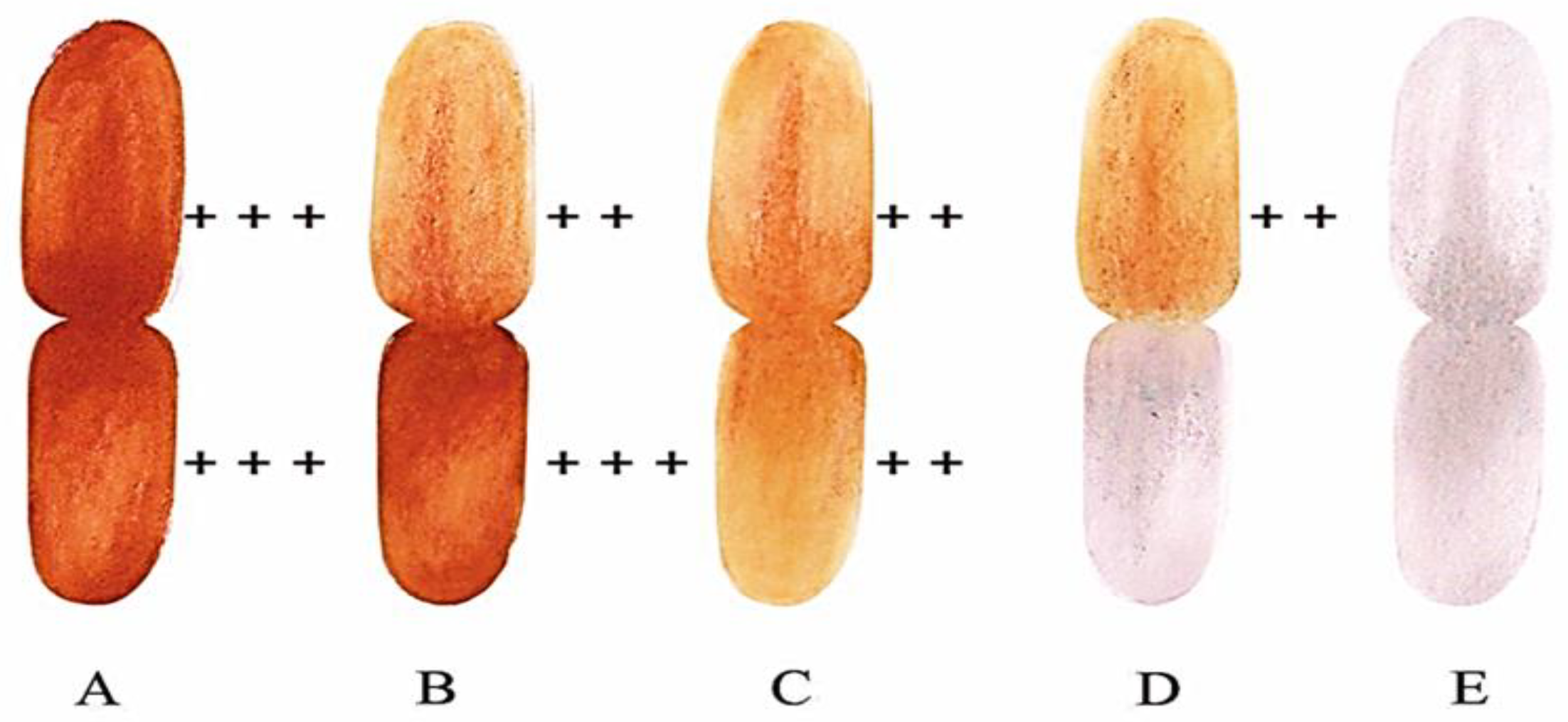
Figure 2.
Viability of Annona purpurea (chincuya) seeds, due to the effect of warm dry storage.
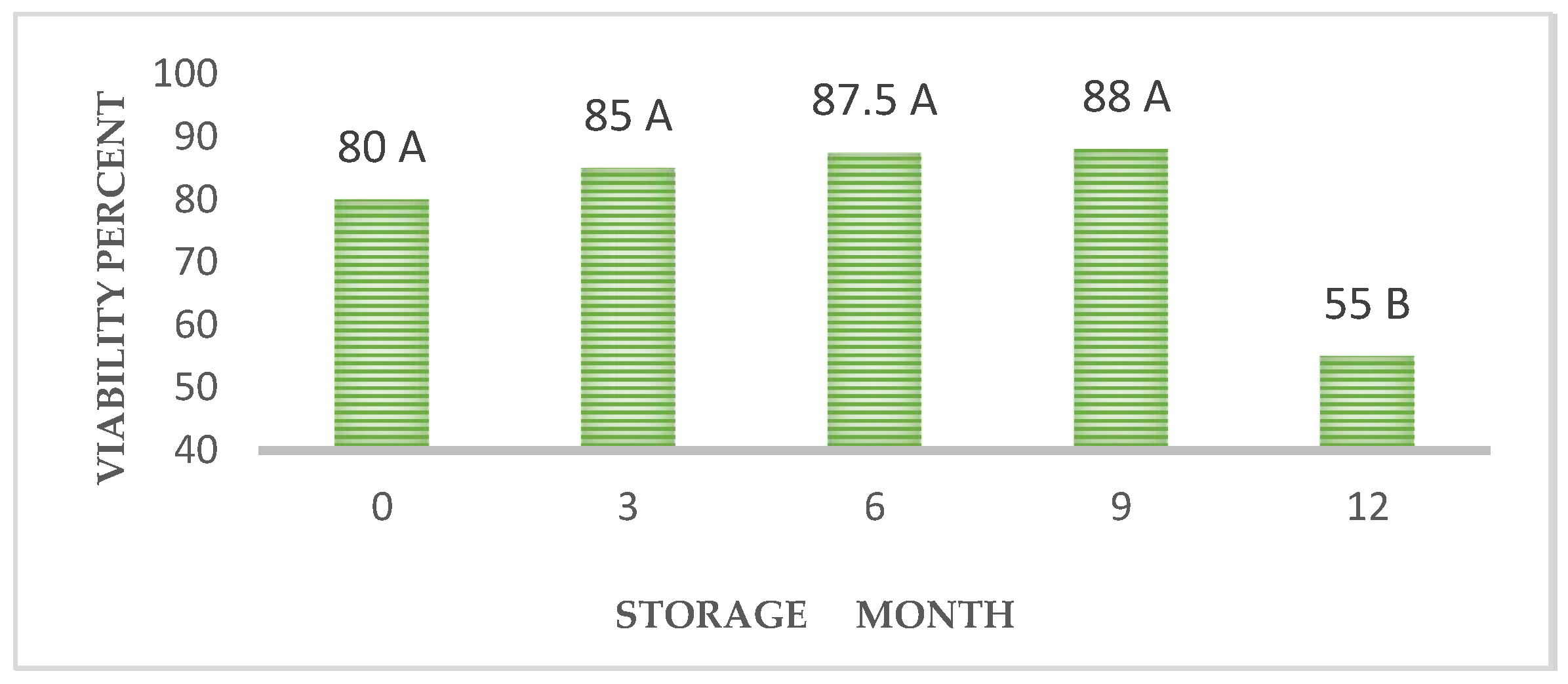
Figure 3.
Kinetics of total fatty acids in Annona purpurea (chincuya) seeds, due to the effect of warm dry storage.
Figure 3.
Kinetics of total fatty acids in Annona purpurea (chincuya) seeds, due to the effect of warm dry storage.
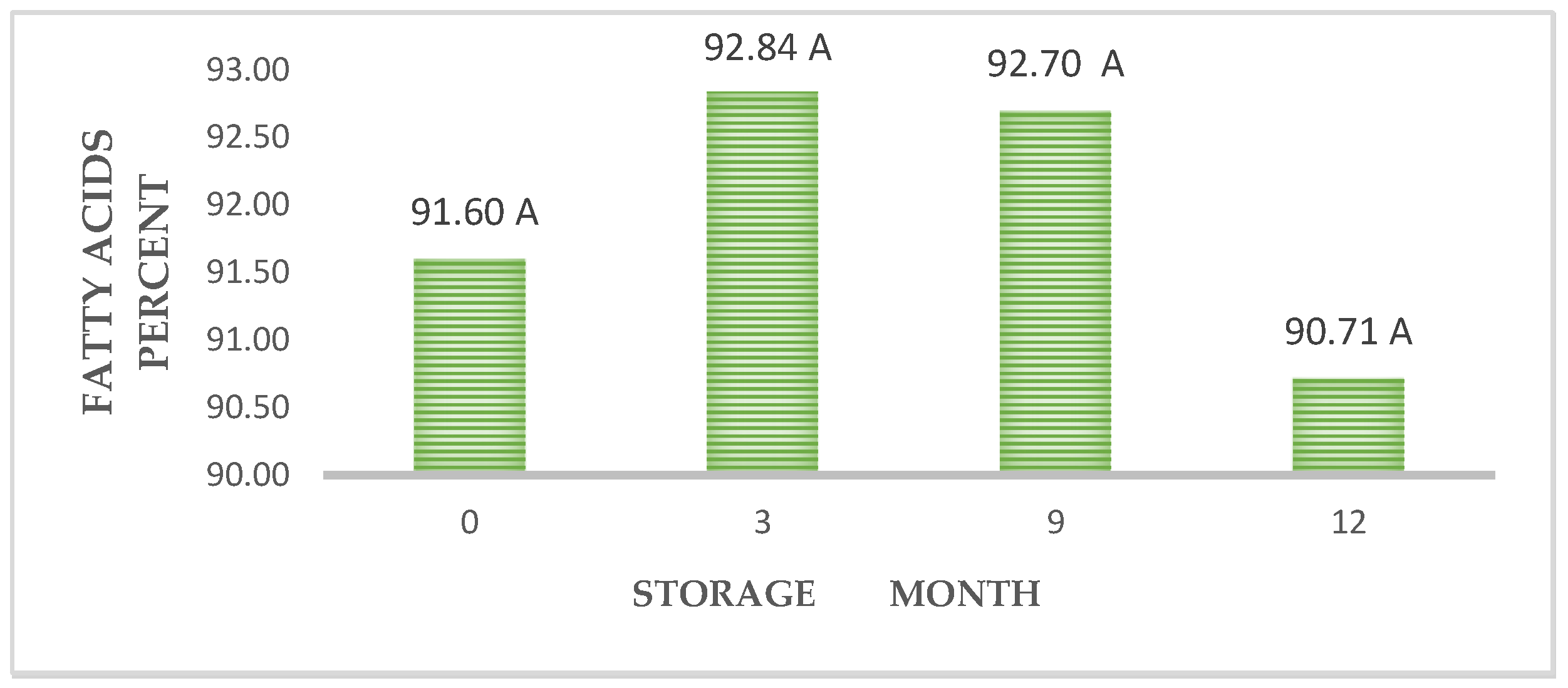

Table 1.
Effect of warm dry storage on the germination of Annona purpurea (chincuya) seeds.
| STORAGE DURATION (months) |
GERMINATED SEEDS (%) |
LATENTS SEEDS (%) |
DEATH SEEDS (%) |
|---|---|---|---|
| 0 | 26.12 B | 59.13 A | 14.75 C |
| 3 | 52.16 A | 25.50 B | 22.33 BC |
| 6 | 65.62 A | 18.13 B | 16.25 C |
| 9 | 13.75 BC | 43.13 AB | 43.12 B |
| 12 | 2.00 C | 19.50 B | 78.50 A |
| DMS | 14.48 | 28.91 | 21.52 |
Means with the same letter between columns are not significantly different, according to the Tukey Test (α = 0.05).
Table 2.
Effect of soaking in gibberellic acid, on the germination behavior of seeds of Annona purpurea (chincuya).
Table 2.
Effect of soaking in gibberellic acid, on the germination behavior of seeds of Annona purpurea (chincuya).
| TREATMENT | GERMINATION (%) |
LATENT SEEDS (%) |
DEATH SEEDS (%) |
|---|---|---|---|
| Gibberellic acid | 40.25 A | 34.54 B | 25.19 A |
| Control | 17.80 B | 52.25 A | 29.93 A |
| DMS | 5.456 | 10.896 | 8.109 |
Means with the same letter between columns are not significantly different, according to the Tukey Test (α = 0.05).
Table 4.
Fatty acid percent of four seeds of genus Annona.
| FATTY ACID | SOURSOUP (%) (A. muricata) Z |
CHERIMOLA (%) (A. cherimola) Y |
ILAMA (%) (A. macroprophyllata) X |
SUGAR APPLE (%) (A. squamosa) W |
|---|---|---|---|---|
| Palmitic | 25.5 | 19.99 | 16.4 | 17.79 |
| Palmitoleic | 1.5 | -- | --- | -- |
| Estearic | 6.0 | 4.16 | 5.22 | 4.29 |
| Oleic | 39.5 | 38.58 | 70.42 | 39.72 |
| Linoleic | 27.0 | 36.97 | 7.97 | 29.13 |
| Arachidic | ---- | -- | -- | 1.06 |
| Relation U:S U | 2.44 | 2.21 | 3.62 | 2.97 |
Table 5.
Fatty acid content of Annona purpurea (chincuya) seeds recently extracted without incubating (intact) and recently extracted incubated (embedded) latent.
Table 5.
Fatty acid content of Annona purpurea (chincuya) seeds recently extracted without incubating (intact) and recently extracted incubated (embedded) latent.
| PERCENT OF FATTY ACIDS | |||||||
|---|---|---|---|---|---|---|---|
|
SEED CONDITION |
Palmitic | Palmitoleic | Stearic | Oleic | Arachidic | Linoleic | TOTAL |
| Recently extracted without incubating (intact) |
30.62 Az |
1.71 A |
7.81 A |
47.05 A |
1.69 A |
12.75 A |
98.15 A |
| Recently extracted incubated (embedded) latent | 29.61 A | 1.18 A | 6.03 B | 44.19 A | 0.98 A | 7.62 A | 91.60 B |
| DMS | 9.00 | 0.82 | 1.60 | 6.17 | 0.77 | 11.51 | 5.92 |
Z Means with the same letter between columns are not significantly different, according to the Tukey Test (α = 0.05).
Disclaimer/Publisher’s Note: The statements, opinions and data contained in all publications are solely those of the individual author(s) and contributor(s) and not of MDPI and/or the editor(s). MDPI and/or the editor(s) disclaim responsibility for any injury to people or property resulting from any ideas, methods, instructions or products referred to in the content. |
© 2024 by the authors. Licensee MDPI, Basel, Switzerland. This article is an open access article distributed under the terms and conditions of the Creative Commons Attribution (CC BY) license (https://creativecommons.org/licenses/by/4.0/).
Copyright: This open access article is published under a Creative Commons CC BY 4.0 license, which permit the free download, distribution, and reuse, provided that the author and preprint are cited in any reuse.


