

Submitted:
28 November 2023
Posted:
29 November 2023
You are already at the latest version
Abstract
Gullele Botanic Garden was established to preserve and safeguard indigenous, rare, endemic and endangered plant species that have economic significance. A study was conducted to identify and map non-native plant species that exist in various land use types, including natural vegetation, plantation, roadside, and garden edges. The research involved placing plots at different distances in each land use type and collecting vegetation data with geo-location information for exotic and invasive species. The data was analyzed using Sorensen's similarity index to measure the similarity between plant communities. Invasive species were identified using ArcGIS, and descriptive statistical methods were employed to analyze the remaining data. The recorded a total of 80 plant species belonging to 70 genera in 44 families in the garden, with Fabaceae and Asteraceae having the most species. Acacia decurrens, Acacia melanoxylon, Cuscuta campestris, Galinsoga parviflora, Nerium oleander, and Cyathula uncinulata are the most prevalent invasive or potentially invasive species among the species that have been documented. These species are spreading quickly and may displace native plant species if not properly managed. The study found that roadside and garden edge land use types had the most diverse exotic plants, with Acacia decurrens, Nerium oleander, Acacia melanoxylon, Agave species, Cyathula uncinulata, and Eucalyptus species being the most dominant exotic species in the garden. The total density of exotic species was 2.36 plants/m2. The study provides valuable information for managing and conserving both native and exotic plant species in the garden.
Keywords:
Ex-situ conservation
; exotic species
; Gullele
; invasive species
; native species
1. Introduction
An exotic species or alien species is any non-native plant, animal or other organism introduced into a place that was never part of its natural range. The presence of exotic taxa in specific places is mostly the result of anthropogenic activities or natural processes [4,18,25]. According to [25] there are some exotic species which needs causes or cultivation to introduce to need territory or some may become naturalized and those sustain self-replacing populations. Another study [26] stated that the presence of exotic plant species as plant taxa in a particular location is due to human activities that brought them there. The manner of occurrence and introduction may either be intentionally for certain economic and other values, or it may be introduced accidentally or unintentionally with other vectors.
Many parks, gardens, and agroecosystems rely on non-native plant species for their plantation and rehabilitation activities. However, introducing these species can lead to problems when they spread to areas where they are not wanted, potentially causing invasive species issues [17,25]. In some places, issues brought on by the expansion of agroforestry plant species from sites designated for this land use represent a major threat to biodiversity, which could reduce or cancel out the benefits of the agroforestry operation for biodiversity [17]. On the other aspect, various scholars such as [4], [18] and [24] suggested that not all exotic species in a given ecosystem could have a potential adverse impact. However, before delivering it to any setting, the invasiveness characteristic should be studied.
Various definitions are given for the term invasive alien species [15] define invasive alien species as non-indigenous species that spreads from the point of introduction and become abundant from the normal range of native plant population. Notably, there are certain native species may exhibit a potential of invasiveness traits. Based on the Ascensão and Capinha,2 description, they are biological invaders most usually transported inadvertently or intentionally by man, colonize and spread into new territory some distances from their home territory. According to [17] and [26] invasive alien species pose a threat to ecosystems, habitats, or species by either (1) eluding human control, (2) extending beyond the intended physical boundaries, or (3) remaining under human control but causing harm to native ecosystems. Plant invasions have been recognized as one of the most serious global processes impacting the structure, composition and function of natural and semi-natural ecosystems. Due to their rapid growth and management difficulties, they outpace the local biota in terms of habitat occupancies and resource exploitations for food and water [13]. This damage is aggravated by climate change, pollution, habitat loss and human-induced disturbance [12].Throughout the globe, invasive alien plant species constitute a threat to native and indigenous plant communities, particularly where these communities are disrupted.6 Currently, the issue is only becoming worse at a significant cost to society, the environment, and the economy everywhere in the world, but especially in the tropics [13].
Despite the fact that Ethiopia is endowed with plant genetic resources linked to geographic diversity, macro and microclimatic variability, and existing species, unknown numbers of foreign species have been introduced over the years for a variety of objectives [9,10]. Of these, there are potentially invasive species [29]. Ethiopian studies on both invasive and alien plant species are scant and continue to receive little attention. However, numerous invasive species are currently dispersing over the country. A certain degree of attention has been devoted to invasive taxa over the past ten years. This most probably associated with the majority restoration and planting works in Ethiopia are executed without considering the source of the materials, even in diverse forest regions, national parks, and damaged ecosystems [34].
Currently, Botanic gardens are a good strategy for the ex-situ conservation of plant species by giving their native status and level of threat. Botanic gardens in Ethiopia are recently being practised to conserve indigenous, endangered, endemic and economically important plant species. Gullele Botanic Garden (GBG) is the foremost Botanic garden in Ethiopia with the main objectives of fulfilling plant conservation, research, education and eco-tourism. The conservation chores are prioritized for the indigenous, threatened, endemic, endangered, economically important plants and rare species found in the entire country. The organization is developed with different infrastructures that enable it to operate fairly with its vision and mission. The garden is conducting various in-situ and ex-situ conservation techniques through the development of a thematic garden and evolution garden with the collection of plants and seeds from different ago-ecologies of the country [11]. Those species from the distinctive area are acclimatizing to the existing automated greenhouse. At the moment, more than 1,200 species have been introduced to the naturally occurring species in the garden using the collection and in-situ management approaches accompanied by 2,100 specimen deposits.
The Gullele Botanic Garden unquestionably plays a significant role in the preservation and upkeep of the country’s plant genetic resources. It is currently working hard and succeeding in a variety of duties that help it realize its objective. One of the organization’s main goals is to conduct research and conserve the indigenous flora. However, either intentionally or not, some exotic species (including invasive species) have existed in the garden. The types, distribution, abundance and level of invasiveness of these exotic plant species (EPS) inside the Botanic garden are not known and studied yet. Hence, exploring the list of alien species, abundance, diversity and distribution of the exotic plants inside the garden will have significant importance to take appropriate technical measures and mitigate their adverse effects on the vicinity of indigenous species. The present study aims to conduct a survey of exotic and invasive/potentially invasive species, and map their local distribution.
2. Materials and methods
2.2. Study area description
The Gullele Botanic Garden (GBG) is situated between 2,540 and 3,000 meters above sea level, notably to the northwest of Addis Ababa, which is the capital of Ethiopia. It is a section of Ethiopia’s central plateau and covers 705 hectares with coordinates between 90 1’ 30’’ and 90 5’ 35’’ N and 380 41’30’’ and 380 44’20’’ E (Figure 1). The area can experience both hot and cold weather at once. The warmest month is February (20.7 ), which is followed by March and May with 20.2 and 20 ), respectively. December has the lowest average temperature (7.5 ℃). The dry season lasts from March to May, and there is an average of 1,215.4 mm of precipitation each year [1,28]. Dry afro-montane dominates the vegetation type in the study area, with a smaller amount of afro-alpine in the higher elevations. Juniperus procera is the most dominant species in the garden. Woody species including Olinia rochetiana, Jasminum abyssinicum, Osyris quadripartita, Myrsine africana, Sideroxylon oxyacanthum, Maesa lanceolata, Maytenus species, Rosa abyssinica, Jasminum stans, well as diverse herbaceous species are co-dominant next to the Juniperus procera. In the elevated areas, various Helichrysum species and Erica arborea were frequently revealed. Previously, the garden was covered by Eucalyptus species currently under removal and management of these species to give advance for the prioritized indigenous species. Silicic rocks predominate near Entoto, where the Gullele Botanic Garden is located [20]. This rock structure is named after a 21.5 million-year-old heal that borders the northern section of Addis Ababa. Trachyte and Rhyolite best characterize this type of rock. Since the area has received recognition as a Botanic garden by both national and international organizations, it has been carrying out a variety of research and development projects along with a variety of conservation efforts for threatened and endangered species gathered from around the entire nation.
2.3. Data collection
2.3.1. Vegetation data collection
Vegetation data were gathered from a total of 64 plots that were purposely laid in the selected land use types (Natural vegetation, plantation, Roadside and edges of the garden) following the sampling approach as described by [22]. The garden was stratified into three different land use types before ecological data collecting began.
1st strata: Roadside and garden edges: this includes the main roadways inside the garden, delimitation of the garden which may encroach with agriculture, residences and external main roads. In this instance, vegetation data were gathered following the footpath transects and edges.
2nd strata: Plantation: The vegetation in the landscapes that were planted at various times, as well as thematic gardens were included in this land use.
3rd strata: Natural vegetation: This included the entire Gulllele Botanic Garden’s natural vegetation.
A 5 m by 5 m plot was purposely laid out in each land use type with a flexible distance range where exotic and invasive plants were seen in profusion for the first and second stratification. For the third stratum (natural forest), four transects with comparable plot sizes to the others were laid along an elevation gradient. The distance between each plots and tansects were determined based on the targeted species abundance. Of the total plots laid, 29 of them were in the roadside and edges s of the garden, 16 of the plots were from the natural forest and the remaining 19 plots were from the plantations found in the garden.
Geospatial data, particularly altitude latitude, and longitude were recorded from each plot. Subsquently, every plot was subject to GPS tracking, which is used to map out the locations of the plants.
2.4. Data analysis
2.4.1. Vegetation data analysis
The data relating to the abundance, frequency and density of exotic species was described and analyzed XL spreadsheet. Shannon-Wiener Diversity Index and Evenness was used to compute the diversity of the species in the three land use types using R packages [23].
2.4.2. Floristic similarity analysis between land use types
Sorensen’s similarity index was used to assess the degree of floristic similarity between plant communities. It is preferred because it gives weight to species that are common to the sample plots rather than to those that only occur in either sample plot [14]. The Sorensen‟s similarity index is calculated from the equation:
where Ss = Sorensen’s similarity coefficient, a = the number of species common to both plant community types, b = the number of species present in one of the plant community types to be compared and c = the number of species present on the other plant community type. The similarity coefficient value ranges from 0 (complete dissimilarity) to 1 (totally similar).
2.4.3. Spatial data analysis
ArcGIS version 10.5 was used to map the distribution of exotic species by taking geographical points from each sample plot. Subsequently, maps that visualize the 64 spatial coordination points where the exotic as well as invasive species are located were generated.
3. Result
3.1. Exotic plant species in Gullele Botanic Garden
A total of 80 plant species (Appendix 1) belonging to 70 genera in 44 families were recorded and identified from 64 plots in Gullele Botanic Garden. The highest number of species was recorded for the families Asteraceae (7 species, 8.8%), Myrtaceae (6 species, 7.5%), and Fabaceae (5 species, 6.3%) followed by Families including, Verbenaceae, Agavaceae (4 species 5% each) Asparagaceae, Euphorbiaceae Lythraceae and Poaceae (3 species, 3.8% each). The remaining families comprise ≤ 2 species each (Figure 2).
Regarding habit distribution (Figure 3), herbs were predominant (33 species, 41%) followed by shrubs (25 species, 31%) and trees (22 species, 28%)
3.2. Exotic species abundance and density in different land use types
The three land use types (natural forest, plantation roadside and garden edges) were combined to calculate the quantity and density of exotic species. As a result, a total of 1,458 exotic species were found in the garden’s sampled area (in the 1,600 m2 total sample). Of these, 1045 species were recorded in the 725 m2 sampled area laid for the roadside and edges of the garden. The remaining species 285 species and 128 species were recorded in the sampled plots of plantations and natural forest respectively (Table 1). The roadside and garden edges had the highest density of species (1.44 species/m2), whilst the natural forest land use category had the lowest density of foreign species (0.32 m2).
3.1. Exotic and invasive/potential invasive species diversity in different land use types
The Shannon-Wiener diversity finding (Table 2) showed that the roadside and garden edge land use types (3.09) had the largest diversity of exotic plants. Plantations (0.63) and natural forests (0.06), however, scored the lowest Shannon-Wiener diversity. Similarly, the samples taken from roadside and garden edges score the highest species evenness (0.82), whereas the least species evenness were recorded in the sample taken from the plantation and natural forest which scored 0.29 and 0.05 respectively.
3.2. Floristic similarity analysis between land use types
The floristic composition similarity between the sampled land use types was compared using Sorensen’s similarity coefficient (Table 3). The highest similarity coefficient was between roadside and edges of the garden and plantation land use types, whilst the least similarity was recorded between natural forest and plantation.
3.2.1. Invasive species in Gullele Botanic Garden
Based on a study on invasive potential invasive species in Ethiopia10 as well as in the east African35 the 15 species recorded in Gullele Botanic Garden were invasive or have a potential invasive trait (Table 4). Of these shrubs, herbs and trees were represented by 7, 5, and 3 species respectively. Thirteen (86.7%) of the invasive species were found in the roadside and edges land use type whereas the least species (5 species, 35.7%) were recorded in the natural forest of the garden.
3.1.2. Invasive species distribution and land use types
More than 85% (13 species) of the invasive species were found along roadsides and garden edges (Figure 4). Only 5 invasive species were discovered in the natural forest, while 4 invasive species were recorded in the plantation. The majority of the examined land use types share various invasive species. However, some species, such as Nicotiana glauca, Argemone mexicana, and Acacia mearnsii, were restricted to the roadside and borders, while Psidium guajava and Galinsoga parviflora were restricted to the plantation. No specific species was restricted to the natural forest.
The identified 15 invasive species were found in 33 sample plots of the garden (Figure 5). Even though the majority of invasive plant species were found in the roads and garden edges, some species, such as Acacia decurrens, Acacia melanoxylon, Cuscuta campestris, Cyathula uncinulata, Galinsoga parviflora, Nerium oleander, Senna didymobotrya and Striga gesnerioides, were also widespread in plantations and natural forest.
3.3. Special distribution Exotic species in the garden
As indicated in the map below (Figure 6) the ratio of the spatial distribution of the exotic species, however, varies from one land use type to another. More than two exotic species were found in nearly every plot sampled along the roadsides and the garden edges. This land use type contained more than 76% of all exotic plants found in the garden. In the degraded area of the western garden, as well as in the vicinity of the thematic and evolution gardens, various planted species at various times were observed, including Acacia decurrens, Acacia melanoxylon, Agave species, Callistemon citrinus, Grevillea robusta, Pinuspatul, Duranta erecta, Phalaris arundinacea, Lavandula angustifolia, Tradescantia pallida, Bougainvillea glabra, Pelargonium zonale, Cuphea species and Eucalyptus species. Of the exotic species collected from the natural forest of the garden least exotic species including Acacia decurrens, Acacia melanoxylon ,Cupressus lusitanica, Osteospermum fruticosum, Melaleuca alternifolia and Eucalyptus species were recorded.
Discussion
3.4. Exotic plant species in Gullele Botanic Garden
The presence of 80 non-native plant species in the garden suggests that they were intentionally or accidentally introduced at various times and have the potential to thrive in the ecosystem. Studies conducted by [31] and [33] have shown that many Botanic gardens, which focus on ex-situ conservation, may be at risk of introducing too many non-native species. The large number of exotic species in the garden could be due to their diverse uses and adaptability in the ecosystem [36]. The families Asteraceae, Myrtaceae, and Fabaceae had the highest number of species, which is consistent with their status as species-rich families in the Flora Ethiopia and Eritrea [30] as well as the East Africa region [29]. However, the presence of exotic species in the families Asparagaceae and Lythraceae may be due to their desirability for horticultural purposes in the garden. The dominance of woody exotic species in the garden suggests that they are well suited for ex-situ conservation efforts [32].
Based on [10] survey on the list of invasive species in Ethiopia, about 15 plant species recorded in Gullele Botanic Garden belong to invasive. The introduction of these species to the garden might be either deliberately by planting for their beneficial qualities or unintentionally through imported seeds, vehicles or other vectors and pathways. The dominance of herbaceous exotic species in the garden might be associated with the expediency of the seeds of the species to spread via different actors (wind, birds, human) and compatibility to adorn gardens. Similar result was also reported by [19,32,33].
3.5. Species abundance, density and diversity in the sampled use types
High exotic species richness, density and diversity in the roadside and edge of the garden are associated with the easily accessible land use types by humans and livestock. In contrast to this the least species abundance, density and diversity was recorded in the natural forest, which implies less anthropogenic innervations. The invasive species also were on the roadside and edges of the garden than in the plantations and natural forest. This is due to the land use type is expose to paths for human, vehicles and other pollinators. In contrast to this, the least exposure of human and livestock in the natural forest might contribute to the least species. A study done by [27] revealed that roadsides, river basins, and horticultural gardens may be the primary sources of invasive species dispersal. Some of the invasive species such as Acacia decurrens, Cyathulauncinulata, Acacia melanoxylon and Eucalyptus species were aggressively dominating the indigenous species. This might have a serious ecological adverse impact on the future. A study conducted by [21] showed that a large number of species in Africa are introduced to native countries from different aspects of the world either deliberately or unintentionally from their natural habitats through human(e.g. agro-forestry, horticulture, forestry, and animal husbandry purposes) or natural (e.g. winds, birds, animals, water). Researchers such as [35] stated that few of these introduced species to a given ecosystem become problematic and a potential to invade the native species within the near coming future.
3.6. Spatial distribution Exotic species in the garden
Exotic and invasive species were prevalent along human pathways and in places that encroached on residential and agricultural areas. This is a result of the native species in these areas being exposed to logging and being replaced by other exotic species [5]. Many tropical countries practice gardening and horticulture employing non-native species without considering their ecological impacts [3,12]. Subsequently, many exotic species aggressively cover a vast area by replacing native species. Besides to this both exotic and invasive species can be introduced with crops and other mobile objectives [12,33]. Though most of the exotic showed the feature of dominance over the other native species, the high spatial distributions and occupancies were revealed in the invasive species such as Acacia decurrens, Acacia melanoxylon, Acacia saligna, Cyathula uncinulata, Senna didymobotrya and Nerium oleander. This might be associated with the nature of the aggressiveness and dominating future of invasive species [4,24]. However, the least spatial prevalence of the exotic species suggests that by considering invasiveness, plantations and human accessibility may be avoided [4,32].
3.7. Invasive species distribution and land use types
The fact that invasive species exist across all types of land use suggests that the species has an aggressive mode of dispersion [37]. Numerous invasive plants were found even inside the natural forest; they may have spread naturally or as a result of human intrusions from the garden’s edge and roadside. However, for their economic benefits, species like Sidium guajava and Ricinus communis are suggested to be introduced either through plantations or delivered in conjunction with other species. Although the majority of the invasive species found in gardens and at a global level do not have particularly bad distribution rates, species like Cyathula uncinulata, Acacia decurrens, Acacia melanoxylon, Nerium oleander, and Acacia decurrens are spreading rapidly. According to a study by [12], it will be expensive to control local invasive species once they reach their climax distribution if they are not handled in the early stages of dispersion.
Conclusion
Exotic species may have unique effects on a particular ecosystem since they always differ in some of their functional properties, such as growth rate, biomass, survival, composition, richness, dominance, and interactions among organisms. This may be because newly introduced exotic species may have unique characteristics related to structure, plant and soil biomass, soil fertility, below-ground flora, hydrology, carbon stock, and terrestrial and primary production. In Gullele Botanic Garden the existing exotic species plant species are introduced in recent times associated with plantation, unintentional spreading with other vectors and spreading in the roadsides and residences. However, their special distribution is too high and anticipated to have a high potential of dominating the native plant species. Besides, the exited 15 invasive species in the garden would have a serious adverse impact on the native plant species in particular and the forest ecosystem of the garden in general. However, the introduction, cultivation and conservation of these species is not compatible with the objective of the institution. Therefore, since this study has identified the list of invasive and exotic species with their spatial distribution, prior management techniques should be conducted to prevent the spreading of these species promptly.
Funding
This research received no external funding.
Institutional Review Board Statement
Not applicable.
Data Availability Statement
Not applicable.
Acknowledgments
The authors has acknowledges the Gullele Botanic Garden and staffs who allow to allow this research and cooperate whilst they request genuine support.
Conflicts of Interest
The authors declare no conflict of interest.
Appendix 1: list of exotic species
| No. | Species Name | Family | Habit | Status invasiveness |
| 1 | Acacia decurrens Willd. | Fabaceae | T | PI |
| 2 | Acacia mearnsii De Wild. | Fabaceae | T | PI |
| 3 | Acacia melanoxylon R. Br. | Fabaceae | T | I |
| 4 | Acacia saligna (Labill.) Wendl. | Fabaceae | S | I |
| 5 | Agapanthus africanus T.Durand and Schinz | Agapanthaceae | H | NI |
| 6 | Agave americana L. | Agavaceae | S | NI |
| 7 | Agave sisalana Perro ex Eng. | Agavaceae | S | NI |
| 8 | Aloysia triphylla (L’Herit.) Britton | Verbenaceae | S | NI |
| 9 | Aptenia cordifolia (Tenore) V. Steenis | Aizoaceae | H | NI |
| 10 | Araucaria heterophylla (Salisb.) Franco | Araucariaceae | T | NI |
| 11 | Argemone mexicana L. | Papaveraceae | H | I |
| 12 | Arundo donax L. | Poaceae | H | NI |
| 13 | Azadirachta indica A. Juss. | Meliaceae | T | NI |
| 14 | Bougainvillea glabra | Nyctaginaceae | S/C | NI |
| 15 | Callistemon citrinus (Curtis) Skeels. | Myrtaceae | T | NI |
| 16 | Callistephus chinensis (L.) Nees | Asteraceae | H | NI |
| 17 | Carica papaya L. (Caricaceae). | Caricaceae | T | NI |
| 18 | Carpobrotus edulis (L.) L. Bolus | Aizoaceae | H | NI |
| 19 | Centradenia floribunda shawl | Melastomataceae | H | NI |
| 20 | Chlorophytum comosum (Thunb.) Jacques | Asparagaceae | H | NI |
| 21 | Chrysanthemum leucanthemum L. | Asteraceae | H | NI |
| 22 | Citrus aurantiifolia (Christm.) Swingle | Rutaceae | S | NI |
| 23 | Cordyline australis (G.Forst.) Endl. | Asparagaceae | T | NI |
| 24 | Cordyline fruticosa (L.) A.Chev. | Asparagaceae | H | NI |
| 25 | Crassula ovata (Miller) Druce | Crassulaceae | H | NI |
| 26 | Cuphea hyssopifolia Kunth | Lythraceae | H | NI |
| 27 | Cuphea ignea A.DC | Lythraceae | H | NI |
| 28 | Cuphea micropetala Kunth | Lythraceae | H | NI |
| 29 | Cupressus lusitanica Mill | Cupressaceae | T | NI |
| 30 | Cuscuta campestris Yuncker | Cuscutaceae | H | I |
| 31 | Cyathula uncinulata (Schrad.) Schinz* | Commelinaceae | H | I |
| 32 | Cymbopogon citratus (DC.) Stapf. | Poaceae | H | NI |
| 33 | Dianthus barbatus L. | Caryophyllaceae | H | NI |
| 34 | Distictis buccinatoria (DC.) A.H. | Bignoniaceae | HC | NI |
| 35 | Duranta erecta L. | Verbenaceae | S | NI |
| 36 | Duranta repens L. | Verbenaceae | S | NI |
| 37 | Eucalyptus camaldulensis Dehnh. | Myrtaceae | T | NI |
| 38 | Eucalyptus citriodora Hook. | Myrtaceae | T | NI |
| 39 | Eucalyptus globulus Labill. | Myrtaceae | T | NI |
| 40 | Euonymus fortunei (Turcz.) Hand.-Mazz. | Celastraceae | S | NI |
| 41 | Euphorbia milii Des Moulins | Euphorbiaceae | S | NI |
| 42 | Ficus benjamina Linn. | Moraceae | S | NI |
| 43 | Galinsoga parviflora Cav. | Asteraceae | H | I |
| 44 | Grevillea robusta R.Br. | Proteaceae | T | NI |
| 45 | Hibiscus rosa-sinensis L. | Malvaceae | S | NI |
| 46 | Hydrangea macrophylla (Thunb.) Ser. | Hydrangeaceae | H | NI |
| 47 | Iresine herbstii Lindl. | Amaranthaceae | H | NI |
| 48 | Jacaranda mimosifolia D.Don | Bignoniaceae | T | NI |
| 49 | Jatropha curcas L. | Euphorbiaceae | T | NI |
| 50 | Lantana camara L. | Verbenaceae | S | I |
| 51 | Lavandula angustifolia Mill. | Lauraceae | S | NI |
| 52 | Ligustrum vulgare L. | Oleaceae | S | NI |
| 53 | Malus domestica Borkh. | Rosaceae | S | NI |
| 54 | Mangifera indica L. | Anacardiaceae | T | NI |
| 55 | Melaleuca alternifolia Cheel. | Myrtaceae | T | NI |
| 56 | Moringa oleifera Lam. | Moringaceae | T | NI |
| 57 | Nerium oleander L. | Apocynaceae | S | I |
| 58 | Nicotiana glauca Graham | Solanaceae | S | I |
| 59 | Opuntia ficus-indica (L.) Miller. | Cactaceae | S | NI |
| 60 | Orobanche minor Smith | Orobanchaceae | H | NI |
| 61 | Osteospermum fruticosum (L.) Norl. | Asteraceae | H | NI |
| 62 | Pelargonium asperum Willd. | Geraniaceae | H | NI |
| 63 | Pelargonium zonale (L.) L’Hér. | Geraniaceae | H | NI |
| 64 | Persea americana Mill. | Lauraceae | T | NI |
| 65 | Phalaris arundinacea L. | Poaceae | H | NI |
| 66 | Pinus patula Schiede ex Schltdl. & Cham. | Pinaceae | T | NI |
| 67 | Psidium guajava L. | Myrtaceae | S | I |
| 68 | Ricinus communis L. * | Euphorbiaceae | S | I |
| 69 | Rosa pendulina L. | Rosaceae | S | NI |
| 70 | Schinus molle L. | Anacardiaceae | T | NI |
| 71 | Senecio cineraria | Asteraceae | H | NI |
| 72 | Senna didymobotrya (Fresen.) Irwin & Barneby * | Fabaceae | S | I |
| 73 | Silybum marianum (L.) Gaertn. | Asteraceae | H | NI |
| 74 | Striga gesnerioides (Willd.) Vatke * | Scrophulariaceae | H | I |
| 75 | Tagetes minuta L. | Asteraceae | H | NI |
| 76 | Tibouchina urvilleana (DC.) Cogn. | Melastomataceae | T | NI |
| 77 | Tradescantia pallida (Rose) Hunt | Commelinaceae | H | NI |
| 78 | Vinca major L. | Apocynaceae | HC | NI |
| 79 | Vitis vinifera L. | Vitaceae | WC | NI |
| 80 | Washingtonia filifera (Linden ex Andre) H. Wendl. | Arecaceae | S | NI |
| Habit: T= Tree, S= Shrub, H= Herb, Herbacious climber, WH= woody herb, WC=Woody climber; Status invasiveness: I = Invasive, PI = potentially invasive, NI = Not invasive, * non-exotic species but included because of their invasive feature. Sources [10,29,35]. | ||||
References
- Argaw, T. Opportunities of Botanical Garden in Environmental and Development Education to Support School Based Instruction in Ethiopia. Journal of Biology, Agr. Healthca. 2015, 5(15)92-110.
- Ascensão, F.; Capinha, C. Aliens on the move: Transportation networks and non-native species. Railway ecol. 2017, 65–80. [Google Scholar]
- Burgiel, S.W.; Muir, A.A. Invasive species, climate change and ecosystem-based adaptation: addressing multiple drivers of global change, 2010.
- Carwardine, M. Alien species: what they are and why they are such a threat. Discover wildlife: From the team at BBC Wildlife Magazine, 2017.
- Castro-Díez, P.; Vaz, A.S.; Silva, J.S.; Van Loo, M.; Alonso, Á.; Aponte, C.; Bayón, Á.; Bellingham, P.J.; Chiuffo, M.C.; DiManno, N.; Julian, K. Global effects of non-native tree species on multiple ecosystem services. Biol. Revie 2019, 94, 1477–1501. [Google Scholar] [CrossRef] [PubMed]
- D’Antonio, C.; Levine, J.; Thomsen, M. Ecosystem resistance to invasion and the role of propagule supply: a California perspective. J. Medit. Ecoy. 2001, 2, 233–246. [Google Scholar]
- Castri, D. History of biological invasions with special emphasis on the Old World. Biological invasions: a global perspective, 1989, pp.1-30. Available online: https://cir.nii.ac.jp/crid/1572543025638845952.
- Ellenberg D, Mueller-Dombois D. Aims and methods of vegetation ecology. New York: Wiley, 1974.
- Engels JM, Hawkes JG, Worede M, editors. Plant genetic resources of Ethiopia. Cambridge University Press, 1991. [CrossRef]
- Fessehaie, R.; Tessema, T. Alien plant species invasions in Ethiopia: challenges and responses. In Proceedings of the International Workshop on Parthenium Weed in Ethiopia, 2014. Available online: https://ipmil.cired.vt.edu/wp-content/uploads/2014/07/10-Fessehaie.pdf.
- Gullele Botanic Garden. Organization’s website. 2022. Available online: https://gullelebotanicgarden.yolasite.com/more-info.php#! (accessed on 18 October 2023).
- Haber, E.; Network, A. Guide to monitoring exotic and invasive plants. Environment Canada, 1997.
- Hobbs, H.A. Invasive species in a changing world. Island press, 2000.
- Kent, M. Vegetation description and data analysis: a practical approach. 2nd ed. John Wiley & Sons, New York, 2012.
- Kolar, C.S.; Lodge, D.M. Progress in invasion biology: predicting invaders. Trend. Ecol. & evol. 2001, 16(4), 199-204. [CrossRef]
- Krishnan, S.; Novy, A. The role of botanic gardens in the twenty-first century. CABI Revi. 2017, 15, 1–10. [Google Scholar] [CrossRef]
- Kueffer, C.; Lavergne., C. Case studies on the status of invasive woody plant species in the Western Indian Ocean. 4. Réunion. Forest Health and Biosecurity Working Paper. 2004, (4-4E). Available online: https://www.cabdirect.org/cabdirect/abstract/20123338434.
- Kumar, A.; Prasad, S. Threats of invasive alien plant species. Int. Res.h J. Manag.t Sci. Tech. 2014, 4, 605–624. [Google Scholar]
- Mokotjomela, T.M.; Rahlao, S.J.; Vukeya, L.R.; Baltzinger, C.; Mangane, L.V.; Willis, C.K.; Mutshinyalo, T.M. The Diversity of Alien Plant Species in South Africa’s Nat. Bot. Zoolog. Gard. Div. 2023, 15, 407. [Google Scholar] [CrossRef]
- Morton, W.H. Geological Map of Addis Ababa. Addis Ababa University. Geology Department, Addis Ababa, Ethiopia, 1974.
- Moyo, H.P.; Fatunbi, A.O. Utilitarian perspective of the invasion of some South African biomes by Acacia mearnsii. Glob. J. Env. Res. 2010, 4, 6–17. [Google Scholar]
- Ellenberg, D.; Mueller-Dombois, D. Aims and methods of vegetation ecology. New York: Wiley, 1974.
- R Development Core Team. R: a language and environment for statistical computing. Vienna: R Foundation for Statistical Computing. 2021. Available online: http:// www.R-project.org/ (accessed on 10 August 2023).
- Pagad, S.; Genovesi ,P.; Carnevali, L.; Scalera, R.; Clout, M. IUCN SSC Invasive Species Specialist Group: invasive alien species information management supporting practitioners, policy makers and decision takers, 2015. Available online: https://researchspace.auckland.ac.nz/handle/2292/33532.
- Pyšek, P.; Richardson, D.M.; Rejmánek, M.; Webster, G.L.; Williamson, M.; Kirschner, J. Alien plants in checklists and floras: towards better communication between taxonomists and ecologists. Taxon. 2004, 53, 131–43. [Google Scholar] [CrossRef]
- Richardson, D.M.; Binggeli, P.; Schroth, G. Invasive agroforestry trees: problems and solutions. Agrof. Biod. Conserv. Trop. lands. 2004, 371–96. [Google Scholar]
- Richardson, D.M.; Pyšek, P.; Rejmanek, M.; Barbour, M.G.; Panetta, F.D.; West, C.J. Naturalization and invasion of alien plants: concepts and definitions. Diver distrib. 2000, 6(2), 93–107. [Google Scholar] [CrossRef]
- Seta, T.; Belay, B. BOTANIC GARDEN PROFILE Gullele Botanic Garden, Addis Ababa (Ethiopia): Current status, Challenges and Opportunities. Sibbaldia: Inter. J. Botan. Gard. Horti. 2022, 13–34. [Google Scholar] [CrossRef]
- Shiferaw, W.; Demissew, S.; Bekele, T. Invasive alien plant species in Ethiopia: ecological impacts on biodiversity a review paper. Int J Mol Biol. 2018, 3(4), 171–178. [Google Scholar] [CrossRef]
- Tadesse, M. Flora of Ethiopia and Eritrea. Addis Ababa, Ethiopia Uppsala, Sweden, 2004.
- Thomas, G.; Sucher, R.; Wyatt, A.; Jiménez, I. Ex situ species conservation: Predicting plant survival in botanic gardens based on climatic provenance. Biol. Conser. 2022, 265, 109410. [Google Scholar] [CrossRef]
- Van Kleunen, M.; Essl, F.; Pergl, J.; Brundu, G.; Carboni, M.; Dullinger, S.; Early, R.; González-Moreno, P.; Groom, Q.J.; Hulme, P.E.; Kueffer, C. The changing role of ornamental horticulture in alien plant invasions. Biol. Rev. 2018, 93, 1421–1437. [Google Scholar] [CrossRef] [PubMed]
- Vukeya, L.R.; Baltzinger, C. ; Mutshinyalo; T.M. The Diversity of Alien Plant Species in South Africa’s National Botanical and Zoological Gardens, 2023.
- Wassie, S.B. Natural resource degradation tendencies in Ethiopia: a review. Env. Syst. res. 2020, 9, 1–29. [Google Scholar] [CrossRef]
- Witt, A.; Beale, T.; Van Wilgen, B.W. An assessment of the distribution and potential ecological impacts of invasive alien plant species in eastern Africa. Transa. Royal Soc. Sout. Afr. 2018, 73, 217–236. [Google Scholar] [CrossRef]
- Wondafrash, M.; Wingfield, M.J.; Wilson, J.R.; Hurley, B.P.; Slippers, B.; Paap, T. Botanical gardens as key resources and hazards for biosecurity. Biodiversity and Conser. 2021, 30, 1929–1946. [Google Scholar] [CrossRef]
- Zhang, X.; Wang, Y.; Peng, P.; Wang, G.; Zhao, G.; Zhou, Y.; Tang, Z. Mapping the distribution and dispersal risks of the alien invasive plant Ageratina adenophora in China. Diver. 2022, 14, 915. [Google Scholar] [CrossRef]
Figure 1.
Map of the study area (Gullele Botanic Garden).
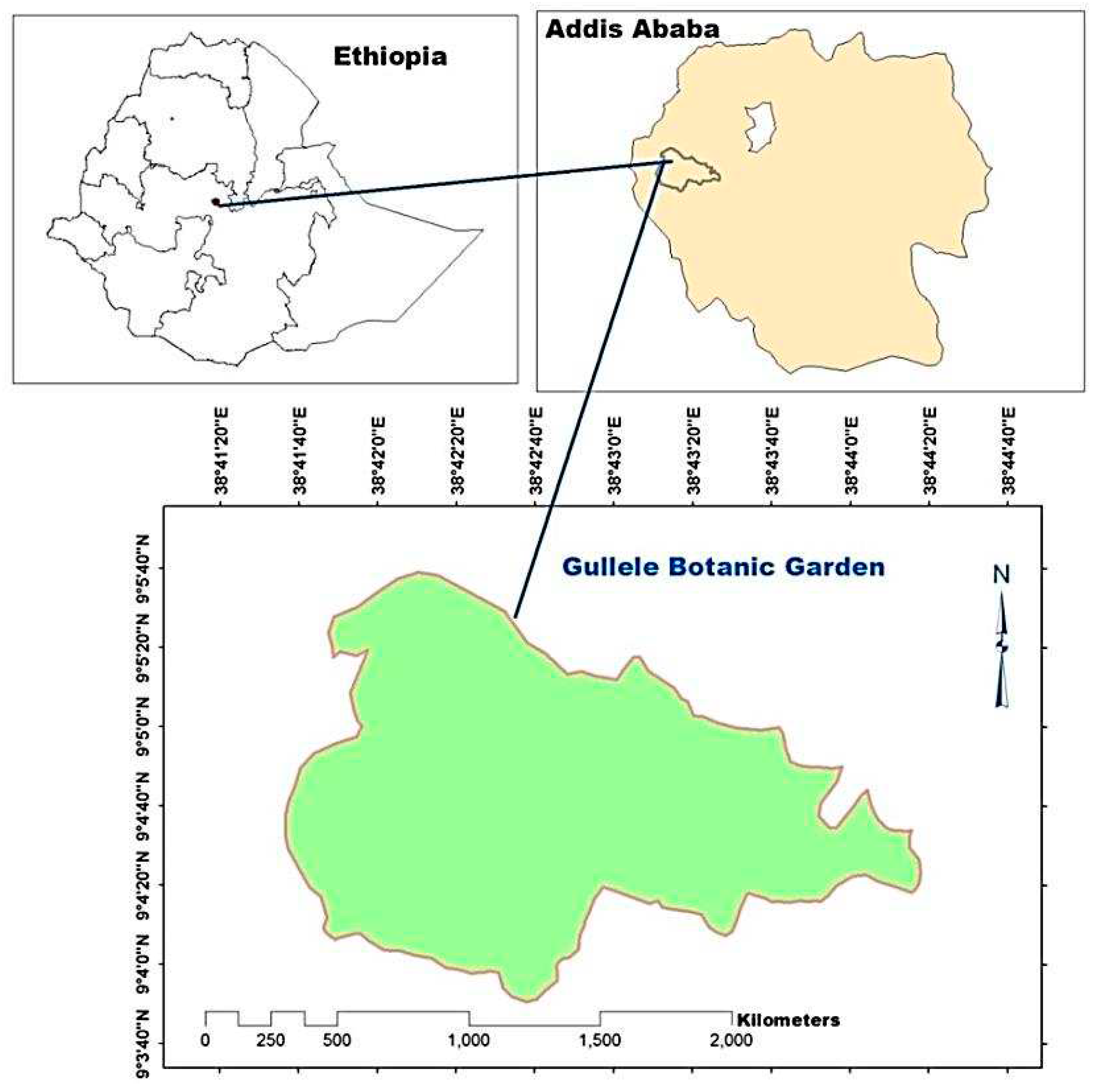
Figure 2.
list of families and their corresponding species in Gullele Botanic Garden.
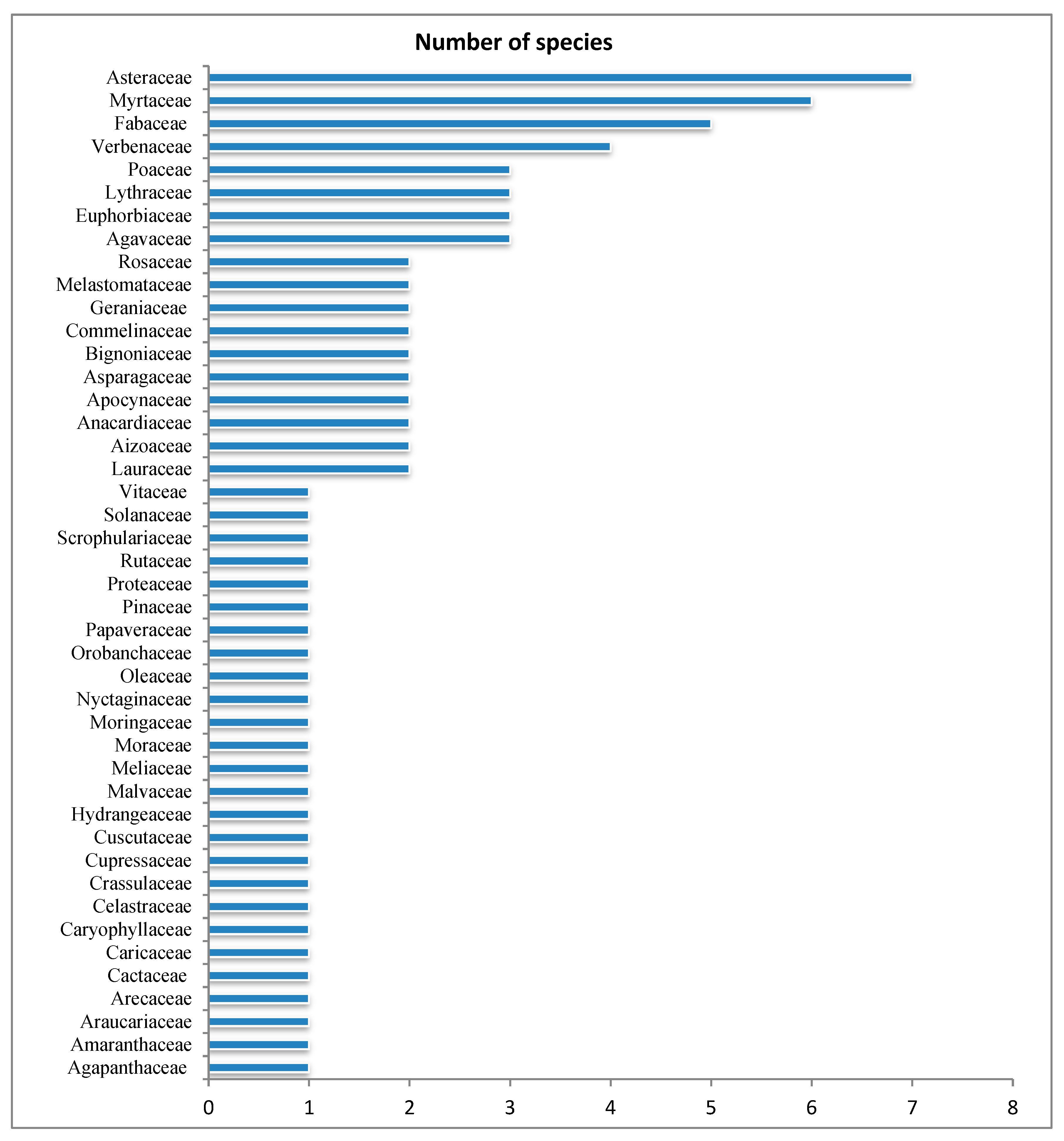
Figure 3.
Percentage distribution of exotic species in GBG.
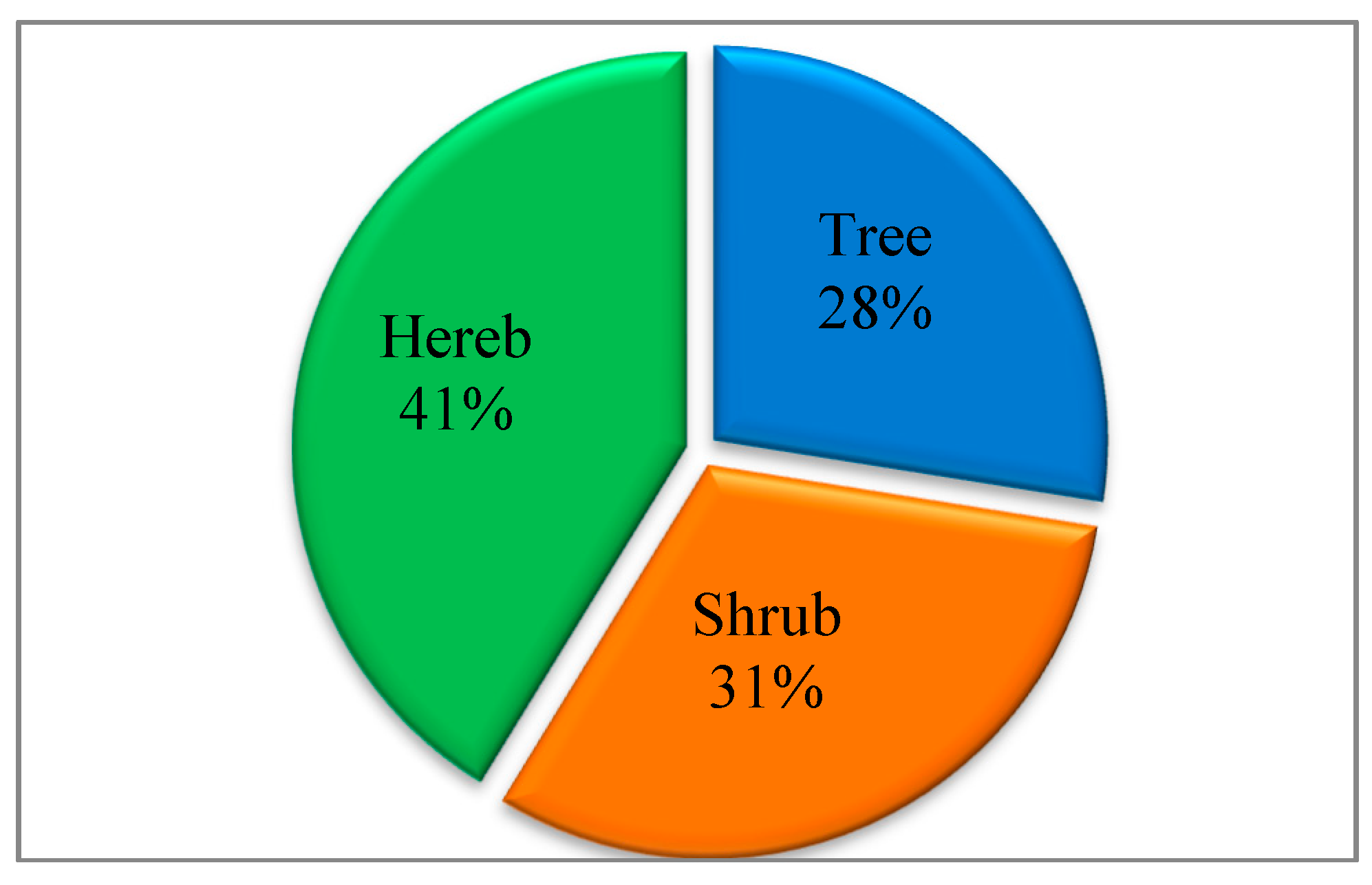
Figure 4.
Distribution of invasive species in Gullele Botanic Garden.
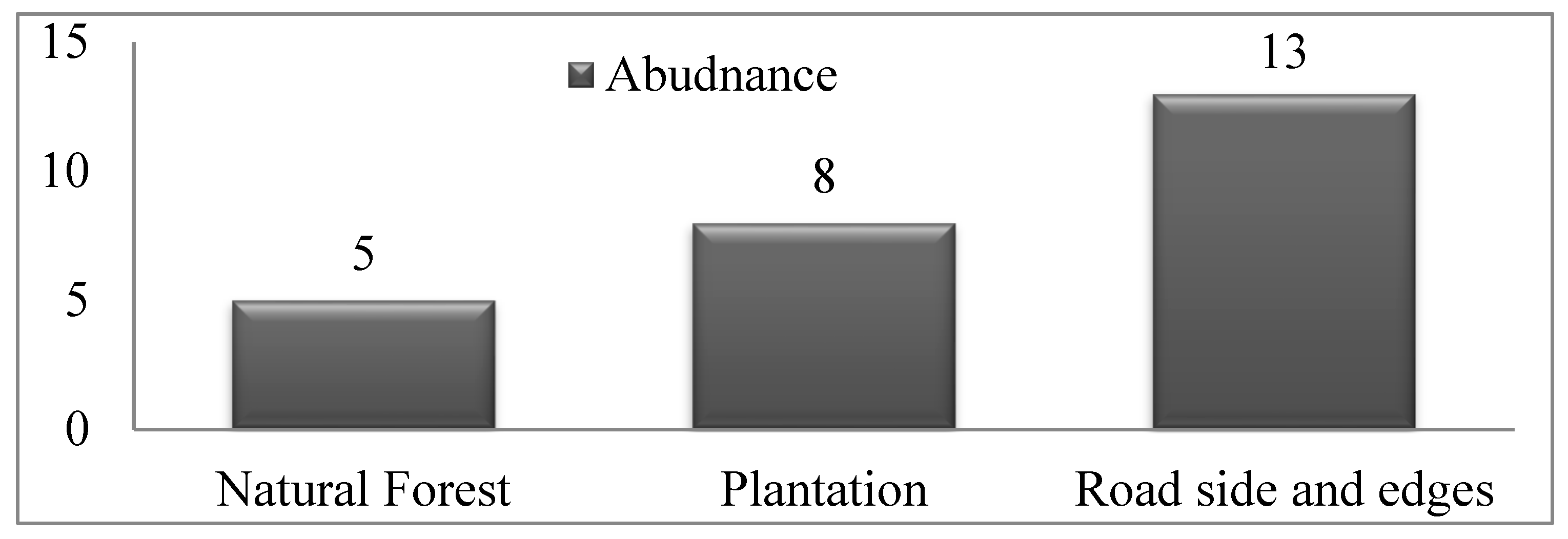
Figure 5.
The map that displays for distribution of invasive species.
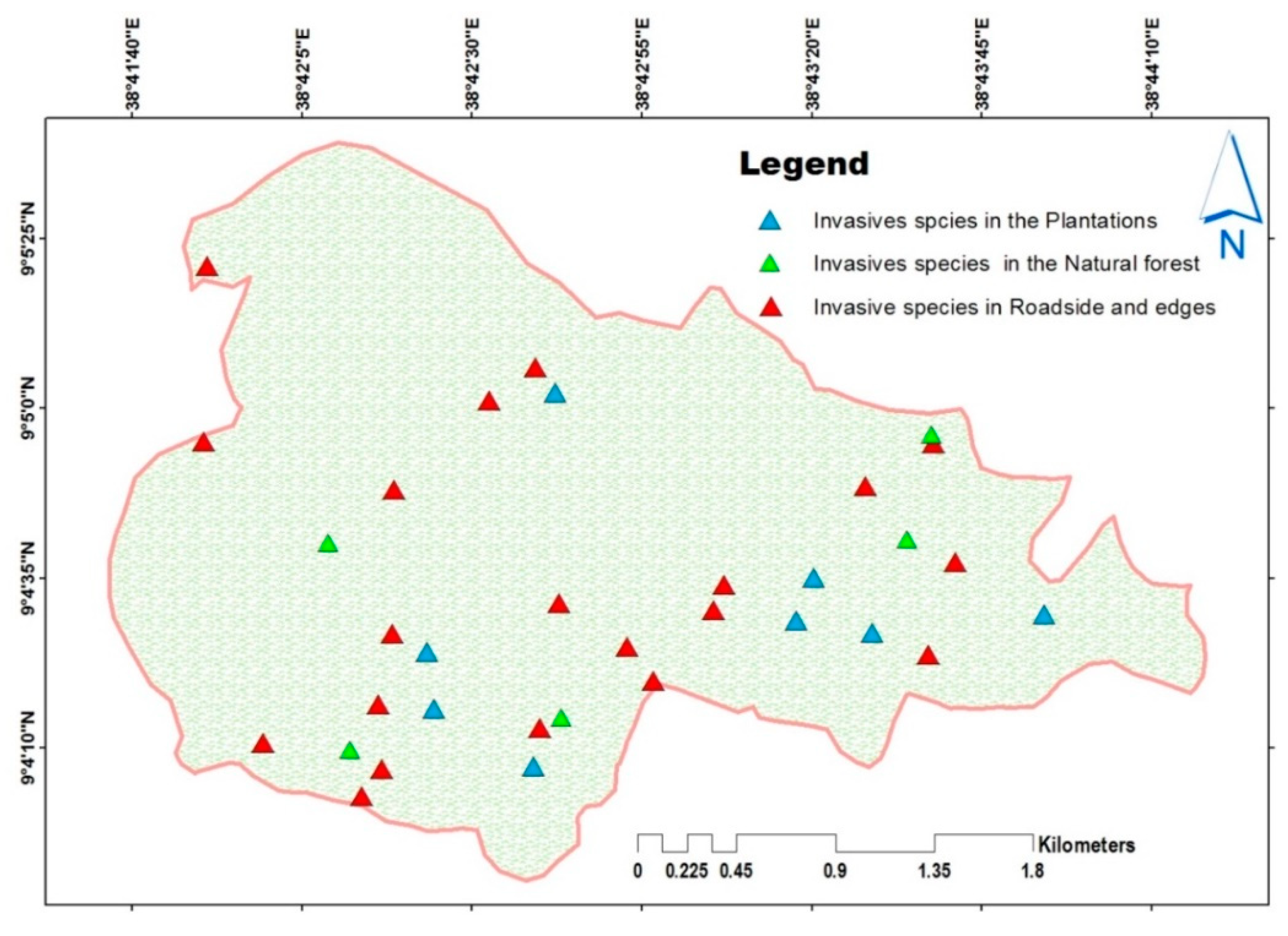
Figure 6.
Special distribution Exotic species in the garden.
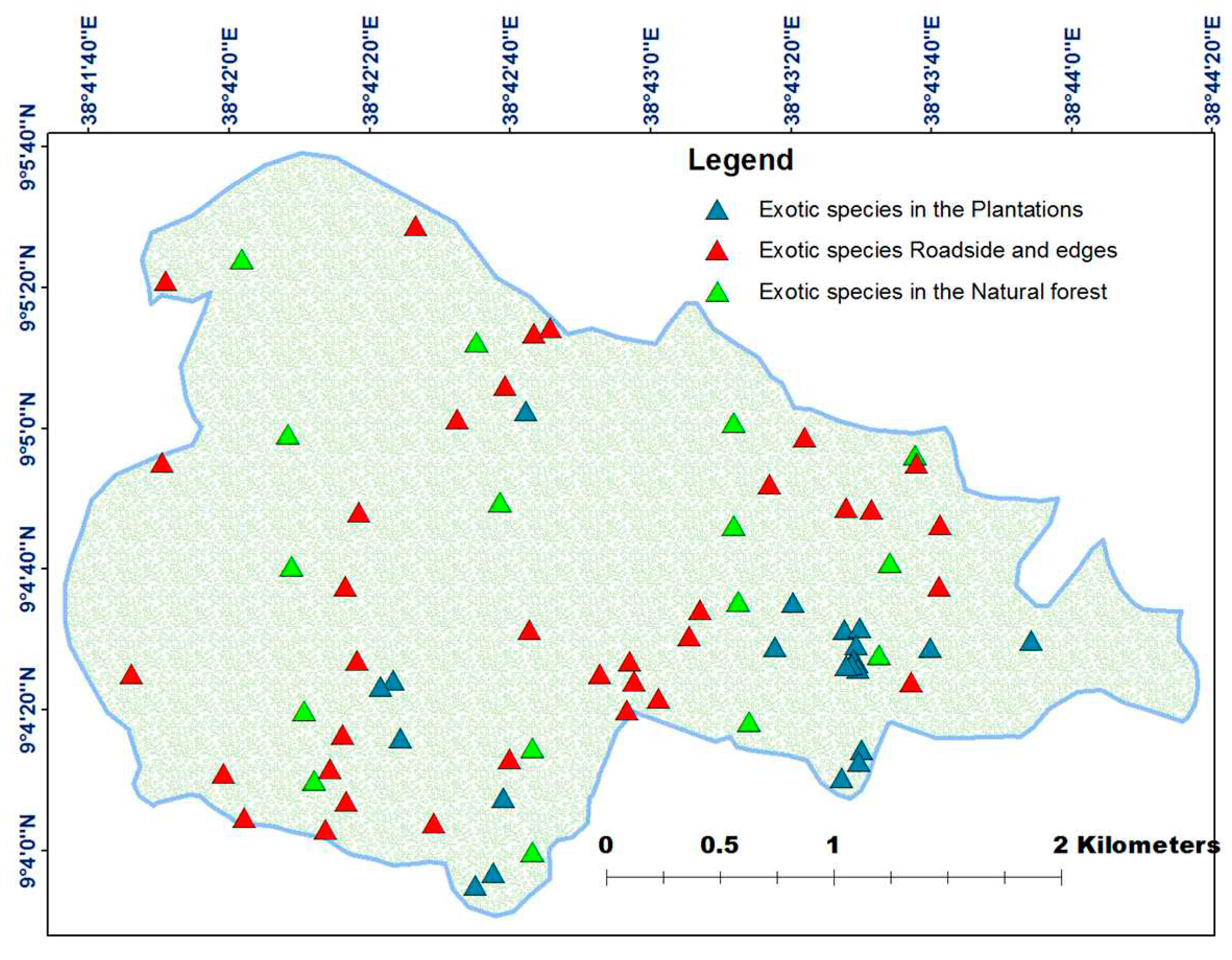

Table 1.
Exotic and invasive/potential invasive species abundance and density in different land use types of GBG.
Table 1.
Exotic and invasive/potential invasive species abundance and density in different land use types of GBG.
| Land use types | Abundance | Sampled area (m2) | Density (species/ m2) |
|---|---|---|---|
| Natural forest | 128 | 400 | 0.32 |
| Roadside and edges | 1045 | 725 | 1.44 |
| Plantation | 285 | 475 | 0.6 |
| Total | 1,458 | 1,600 | 2.36 |
Table 2.
Exotic species Shannon diversity & evenness in various land use types of Gullelle Botanic Garden.
Table 2.
Exotic species Shannon diversity & evenness in various land use types of Gullelle Botanic Garden.
| Community | Shannon-Wiener Diversity Index (H`) |
Shannon Evenness (J’) |
| Natural forest | 0.06 | 0.05 |
| Roadside and edges of the garden | 3.09 | 0.82 |
| Plantation | 0.63 | 0.29 |
Table 3.
Pair-wise comparison of Sorensen’s similarity coefficient between the land use types.
| Land use type | Natural forest | Roadside and edges of the garden | Plantation |
| Natural forest | 1 | 0.22 | 0.15 |
| Roadside and edges of the garden | - | 1 | 0.40 |
| Plantation | - | - | 1 |
Table 4.
list of invasive species, land use types found and their rate of invasiveness (LUT: land use type, NF = natural forest, RE = Roadside and edge of the garden, PL = Plantations).
Table 4.
list of invasive species, land use types found and their rate of invasiveness (LUT: land use type, NF = natural forest, RE = Roadside and edge of the garden, PL = Plantations).
| No. | Species Name | Family | Habit | LUT found |
| 1 | Acacia decurrens Willd. | Fabaceae | T | NF,RE,PL |
| 2 | Acacia mearnsii De Wild. | Fabaceae | T | RE |
| 3 | Acacia melanoxylon R. Br. | Fabaceae | T | NF,RE,PL |
| 4 | Acacia saligna (Labill.) Wendl. | Fabaceae | S | NF,RE |
| 5 | Argemone mexicana L. | Papaveraceae | H | RE |
| 6 | Cuscuta campestris Yuncker | Cuscutaceae | H | NF,RE |
| 7 | Cyathula uncinulata (Schrad.) Schinz | Commelinaceae | H | NF,RE |
| 8 | Galinsoga parviflora Cav. | Asteraceae | H | PL |
| 9 | Lantana camara L. | Verbanaceae | S | NF,RE |
| 10 | Nerium oleander L. | Apocynaceae | S | RE,PL |
| 11 | Nicotiana glauca Graham | Solanaceae | S | RE |
| 12 | Psidium guajava L. | Myrtaceae | S | PL |
| 13 | Ricinus communis L. | Euphorbiaceae | S | RE,PL |
| 14 | Senna didymobotrya (Fresen.) Irwin & Barneby | Fabaceae | S | RE |
| 15 | Striga gesnerioides (Willd.) Vatke | Scrophulariaceae | H | RE,PL |
Disclaimer/Publisher’s Note: The statements, opinions and data contained in all publications are solely those of the individual author(s) and contributor(s) and not of MDPI and/or the editor(s). MDPI and/or the editor(s) disclaim responsibility for any injury to people or property resulting from any ideas, methods, instructions or products referred to in the content. |
© 2023 by the authors. Licensee MDPI, Basel, Switzerland. This article is an open access article distributed under the terms and conditions of the Creative Commons Attribution (CC BY) license (http://creativecommons.org/licenses/by/4.0/).
Copyright: This open access article is published under a Creative Commons CC BY 4.0 license, which permit the free download, distribution, and reuse, provided that the author and preprint are cited in any reuse.


