

Submitted:
27 November 2023
Posted:
28 November 2023
You are already at the latest version
Abstract
Understanding aspects of maritime/underwater cultural heritage (MUCH) and the associated cultural values and integrating them into maritime spatial planning (MSP) endeavors, is a new global challenge, alongside the rapid increase of human activities at sea and climate change impacts on the seas and the oceans. The article highlights the significance of cultural values in shaping human interactions with the marine environments, and how MSP can address the cultural dimensions of marine resources management. To this end, a systematic literature review was carried out to address the research question on how maritime/underwater cultural heritage is incorporated into MSP and map relevant academic literature. Following, a methodology that entailed an academic database search and the application of exclusion criteria, 346 articles resulted from Scopus. These articles were classified using science mapping techniques (i.e the VOSviewer Software ) and several categories (clusters) were created. The research showed a diversity of literature addressing the relationship between MUCH and MSP with a strong focus on sustainability, the significance of cultural ecosystem services (CES) and cultural values, the role of indigenous and local communities, but also of local stakeholders, the transfer of traditional knowledge to MSP and the participatory approaches and tools. The article concludes that for MSPlans to be innovative and acceptable by local communities, the “missing layer”of socio-cultural values and data is indispensable. In the MSP process, MUCH should be understood within this broader framework of socio-cultural considerations and values.
Keywords:
Maritime Spatial Planning
; Coastal management
; Socio-cultural values
; Cultural Ecosystem Services
; participatory approach
; local communities
1. Introduction
Maritime spatial planning (hereinafter MSP), coastal planning, marine policy, and coastal policy are critical components of sustainable marine resource management. These policy and planning approaches aim to balance environmental, economic, and social considerations in decision-making concerning allocation of maritime uses. However, considering cultural and historical values in MSP and marine policy is still a relatively new area.
The present literature review explores the intersection between underwater cultural heritage, maritime cultural heritage, cultural ecosystem services, tangible and intangible heritage, cultural values, and socio-cultural values in the context of MSP. As MSP is taking off worldwide as a holistic and place-based approach to maritime planning and management and as a tool for the implementation of the renewed Blue Economy under the European Green Deal framework [1], there has been a growing need for the inclusion of socio-economic factors in this process. This is highlighted in the new, very recent Communication for a Sustainable Blue Economy in the EU, "Transforming the EU's Blue Economy for a Sustainable Future" [2]. However, there is a deficiency of socio-cultural evidence for MSP, since MSP appears to be predominantly driven by economic and environmental interests rather than by sociocultural ambitions [3]. This is also partly due to integral problems in describing and weighing cultural values and the difficulties to relate cultural values to specific places, to facilitate a place-based approach to coastal and marine planning and management.
In 2019, McKinley et al. [4] brought together the multidimensional social and cultural facets of MSP. They examined how the terms of “social” and “cultural” are used (or not) in the context of MSP both theoretically and through examples of how cultural ecosystem services (hereinafter CES), marine citizenship and well-being are considered in MSP. They also examined the challenges in developing a socio-cultural evidence base, particularly considering the political ecology of coastal space and development. Finally, they also provided evidence as to why a greater inclusion of socio-cultural elements could be significant to marine and coastal planning. As far as CES are concerned, the Millennium Ecosystem Assessment (hereinafter MEA) [5] defines them as "the “non-material benefits people obtain from ecosystems through spiritual enrichment, cognitive development, reflection, recreation, and aesthetic experiences”. Although there is excellent and voluminous input from multiple disciplinary, methodological, and theoretical perspectives, the need of a broad understanding of all aspects of CES is acknowledged. The general theoretical argument is that understanding of CES reflects and produces broader “cultural values” linked to ecosystems. Despite some constraints in assessing CES and their value, it is argued [6] that CES cannot be left out of the decision-making processes since these intangible benefits are very frequently more important to people than material profits [7].
According to the recent MSP Global International Guide on Marine/ Maritime Spatial Planning [8], Maritime/Underwater Cultural Heritage (hereinafter MUCH) is an area of interest to MSP. MUCH includes both tangible and intangible traces of human beings. Intangible cultural aspects are relevant for social and cultural identity and are essential for stakeholder engagement. Therefore, identifying compatible and non-compatible with MUCH uses is a critical priority during the planning. MSP could ensure better conservation of the tangible heritage through buffer zones or specific measures while creating synergies through tourism activities [9].
In 2017, Blake et al. [10] considered challenging the production of spatial data for cultural values, given that these values are abstract and difficult to obtain and quantify. They presented a practical manual technique for mapping cultural coastal values, using in-person interviews and public participation GIS (hereinafter PPGIS). The method identified hotspots of coastal cultural values across the Falkland Islands and independently to the distance to a settlement, in four categories: Natural Beauty, Recreation, Sense of Place, and Cultural History. The maps of coastal cultural values have been incorporated and included under the framework of MSP and in the web GIS for the Falkland Islands, promoting the integration of socio-cultural factors in the decision-making processes.
Concerning CES, an attempt is being made by Tengberg et al. [11] to provide a conceptual analysis of this kind of intangible ES and their links to the concepts of landscape, heritage, and identity. The authors discuss how these CES can be assessed and integrated into spatial and physical planning. The assessment process is tested in two case studies, among them the Arafura–Timor Seas on Southeast Asia, at the seascape scale. Ruiz-Frau et al. [12] refer to the Cultural Services provided explicitly by marine ecosystems and biodiversity, noting that studies on the importance of cultural services in terms of economic revenue concern mainly “iconic marine habitats” (e.g. coral reefs) and species (e.g.whales). They use the examples of scuba-diving in areas of coral reefs and of whale-watching that are both highly attractive for tourists, thus engendering significant income streams both at a local, regional, and national levels.
Besides, Kelly et al. [13], present the Shetland Islands' Marine Spatial Plan (SMSP) - one of the most advanced in the UK, firstly developed in 2006- as for the incorporation of the human dimension into MSP. This is understood as an inherent aspect connecting and associating offshore activities to land-based communities, livelihoods, and cultures. They highlight the interests of coastal communities that are considered together with the ecological attributes of the marine environment. In response, the SMSP included stakeholder consulted data and mapped community activities and assets with a cultural and spiritual value. Thus, cultural features were proven to play an active role in the MSP process, equally to the marine environmental and economic assets. Special policies were drafted in the SMSP for the protection of coastal communities from hostile social impacts, and so as to protect the landscape and preserve marine recreation against inappropriate developments.
Relevant to this review article is also an interesting work on the integration of Coastal Cultural Heritage in Integrated Coastal Zone Management (hereinafter ICZM). Khakza et al. [14] propose models and guidelines for defining and evaluating coastal cultural heritage to be included in Marine Spatial Planning (MSP) and ICZM. Coastal cultural heritage is seen as a resource through the application of the integrative complexity theory and learning from the experiences in management of other coastal resources. It provides guidelines for the delineation of coastal cultural areas, testing the method and tool throughout the case study of Ostend in Belgium. Kira Gee et al. [15] in a pioneering article, note the underestimation of immaterial cultural values associated with the sea, when practicing MSP. This socio-cultural evidence gap is attributed to inherent difficulties in defining and eliciting “cultural values”, but also in associating these values to specific places, which would enable a place-based approach to marine management. Three key aspects are addressed as of paramount meaning to the inclusion of marine cultural values in MSP: a. defining cultural values; b. labelling places of cultural importance; and c. establishing the relative significance of these places. The authors recognize the limited value of CES for classifying cultural values. Hence, a method is recommended to structure a community-based narrative on cultural values and spatialize them for MSP purposes, using five criteria that may lead to the definition of “culturally significant areas”. A baseline of “culturally significant areas” is suggested as an aid to planners. Obviously, they emphasize the need for participative processes.
Finally, it is worth noting the recent work of Liisi Lees at al. [16] in the light of the MSP process developed in Estonia, assessed how cultural heritage and in particular, its intangible form, can be integrated into MSP. Stakeholder engagement was used to carry out mapping of cultural values and co-create knowledge that resulted in ‘county portraits’, an original approach to foster the potential of MCH and relevant human activities and to endorse its future consideration in the MSP process. The findings validated that the EU MSP Directive {MSPD} offers significant prospects for coastal/marine Member States to tailor their MSP and follow adapted solutions for the incorporation of the MCH. The authors believe the integration of MCH into MSPlans could increase the attractiveness of MSP and its capacity to explicitly include various socio-cultural values and different communities.
The present review starts by briefly contextualizing the two main terms of this work, “Maritime Spatial Planning” and “Heritage,” and the associated “cultural ecosystem services”, and “cultural values”. Follows the presentation of the research methodology. The analysis is structured around: a) a brief quantitative presentation of the results and b) a qualitative analysis of the results based on the bibliometric analysis -using the VOS viewer software- and then on a content-based analysis. Finally, the results are discussed, followed by the conclusions.
2. Materials and Methods
2.1. A Systematic Literature Review linking MUCH and MSP
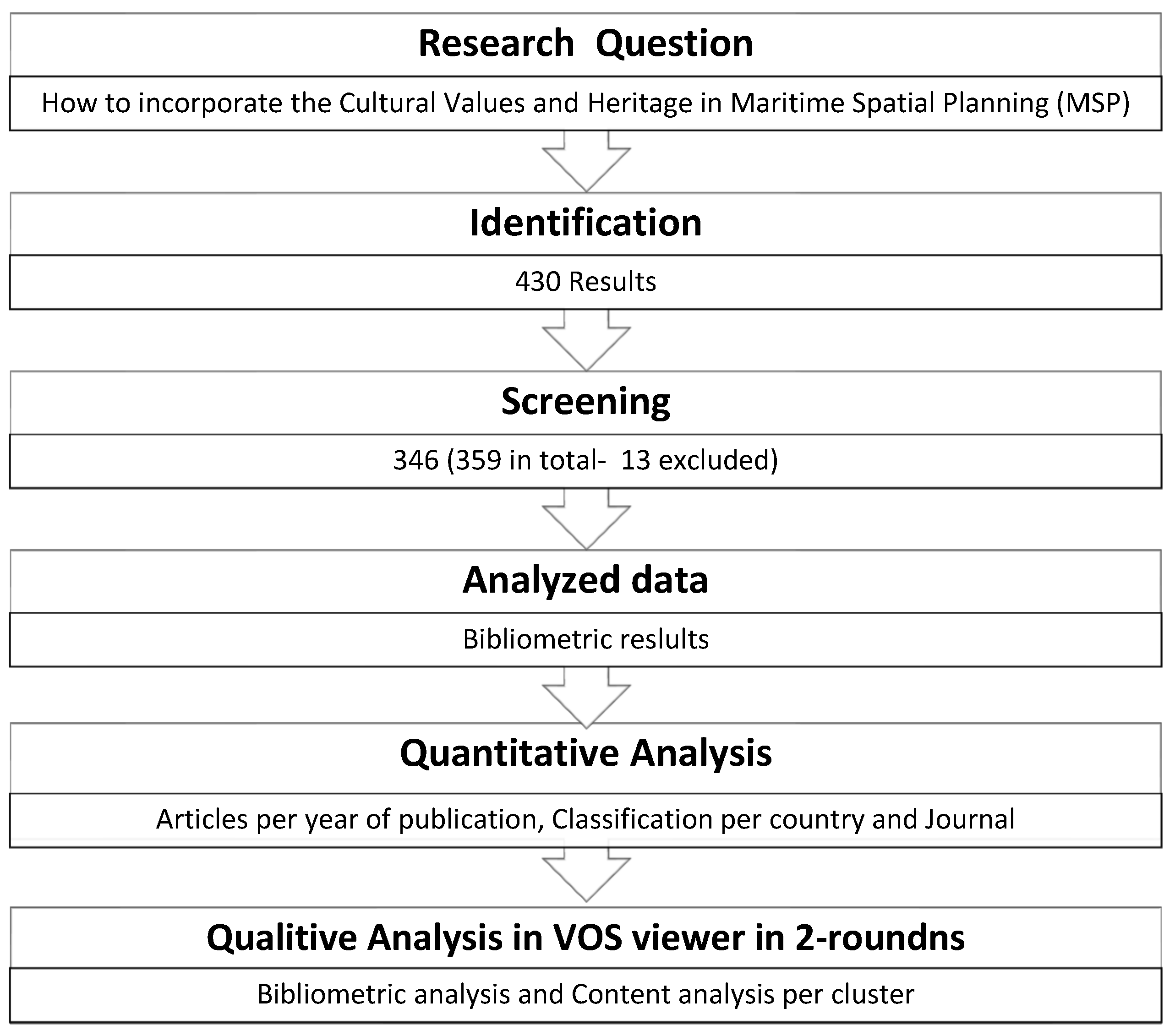
As a first step, a literature review was carried out, using a comprehensive database of documents, to identify the main studies that combined the terms of “maritime, and underwater cultural heritage” and “MSP”, including documents of all types published in the period 1996-2023. The search resulted to 430 items. Scopus was chosen as the unique database, since it has indexed most of the articles published on MSP and Cultural Ecosystem Services (CES). The aim was to collect the body of research investigating the relationship between maritime spatial planning (MSP) and maritime/underwater cultural heritage (MUCH). In the second phase, we limited the results by English language, articles journal and university access, thus reaching 346 results. The articles identified during this screening were subsequently saved and imported to the Mendeley reference management program.
To answer the key research question of this paper, the authors used a Systematic Literature Review (SLR) to ensure high quality of results, focusing on objectives and allowing the research to be replicated. The SLR maps and appraises the articles by identifying research gaps and present limits of the subject area. SLR differs from a traditional narrative review by embracing a systematic procedure that can be scientifically reproduced in a transparent manner, decreasing bias through in-depth bibliographic searches and providing concrete steps for the selection process.
It is noteworthy to mention that there is a great variety of grey literature including reports of EU or national projects, that was not considered during the bibliometric analysis. Nevertheless, this was analyzed during the discussion part. Unfortunately, the systematic literature review does not provide the possibility to screen reports, plans, conference proceedings and books or book chapters that are not peer-reviewed.
During our screening, we discovered a great number of studies dealing with «cultural values», «cultural ecosystem services», «maritime/underwater cultural heritage» and their incorporation in MSP. Once the results were classified, we concluded that concerning our scientific hypothesis, even though there is a great amount of research funded by the European Commission, the scientific literature is still quite limited.
The following Table 1 presents the Search Terms selected for the present research. As defined in the first raw, we focus both on “planning” and “policy” related terms.
Due to the 2014 EU Directive for MSP (MSPD) [17] the term “maritime spatial planning” is horizontally used in European literature. Still, in non-EU countries and Sea Basins, the terms “maritime/marine/coastal policy” is most probably met. This was evident since during the first research attempt without using the term “policy” we didn’t reached results from Australia, Asia, and the United States.
Figure 1.
Flowchart of the current systematic literature review (SLR) process.
2.2. Science mapping and visualization analysis- Bibliometric VOSviewer Analysis
Science mapping and visualization analyses have been widely used nowadays to analyze the research trends and evolutionary patterns of different research themes in several fields, including spatial planning. The present literature review based on Scopus database, proceeds to a bibliometric analysis as a tool of science mapping, setting out to investigate the thematic structure, possible interlinkages between its different themes and sub-themes, its evolution over time, the countries that have influenced most to its development and the most contributing scientific journals that have published articles on the relation between MUCH and MSP. The introductory section presents the results of a quantitative analysis of the selected scientific articles, based on a VOSviewer software.
More specifically, it sets out to present a broad overview of the published research on the relation between MUCH and MSP, aiming to identify the most contributing countries, the research evolution over time and the contributing journals.
VOS viewer visualizes the relatedness between different text-based item publications to comprehend the connections between the collected results better. For a more efficient analysis, the software achieves this by grouping the various terms into clusters. These groups are assembled using the content-based qualification method and were selected in line with the publications' keywords and main topics. Thus, clusters are formed by inventorying and bundling each publication's keywords, abstracts, and main topics. As a result, should the two items be more similar to each other according to an automatic analysis of their text, they have more powerful relatedness. Thus, the outstanding visual importance of each item delivers a graphical illustration of the significance of each group as the linkages between them.
For our analysis, we decided to implement a 2-step round on VOS viewer:
1st Round :
- Search on Scopus, within the Article, Title, and Keywords, the term "maritime spatial planning".
- The resulting articles from the search were collected.
- Running the VOS viewer software, by inserting the previous articles (Figure 5).
- Zoom in the Underwater Cultural Heritage connections (Figure 6).
2nd Round :
- Search on Scopus, "Maritime spatial planning" OR "coastal planning" OR "marine planning" OR "marine policy" OR "coastal policy" and Search in Title, Abstract, and Keywords for “Underwater cultural heritage," OR "maritime cultural heritage," OR "cultural ecosystem services," OR "intangible heritage," OR "marine cultural heritage," OR "cultural values" OR "socio-cultural values" OR "tangible heritage"( see also Table 1 above )
- The resulting articles from the search were collected.
- Excluding some of the identified articles according to several criteria ( see section 2)
- Running the VOS viewer software, by inserting the previous articles.
- Analysis of the VOS Viewer science map, per created cluster.
3. Results
3.1. Quantitative analysis through VOSviewer
After a careful screening, three hundred and forty-six (346) articles related to MUCH and MSP, were collected for analysis. Figure 2 reveals the results of the VOSviewer software analysis. The most influencing countries are United Kingdom (with 85 articles, cited 2.532 times in total and 76 linkages), United States (with 78 articles cited 1.673 times in total and 54 linkages), Australia (with 48 articles cited 1.192 times in total and 31 linkages), Canada (with 29 articles that have been cited 1.049 times in total and 24 linkages) and China (with 30 articles, cited 102 times in total and 14 linkages). Follow European countries like Spain, France, the Netherlands and Germany (Table A1 in the Appendix and Figure 2 below).
Furthermore, the analysis, as for the year of publication of the collected articles, shows that the topic is of great interest, with a continuous upward trend over the last five years (2018-2022). More specifically, while in the period 1990-2013, a single-digit number of scientific articles per year is observed, and the next period 2014-2018 counts around 10-19 scientific articles, in the more recent period 2018-2022 the number of published articles in scientific journals –and hosted in the Scopus database- increased substantially from 28 (in 2018) to 67 scientific articles (in 2022). It is worth noting that for the year 2023, articles were collected up to May 2023. The Figure 3 below illustrates the detailed results.
Regarding the journals with the greatest contribution to the topic, the VOSviewer analysis showed that the top 10 most contributing journals are “Marine Policy” (46 articles, 13,3% of the total number of articles), “Ecosystem Services” (27 articles, 7,8% of the total), “Ocean and Coastal Management” (22 articles, 6,4% of the total), “Frontiers in Marine Science” (11 articles, 3,2% of the total), “Journal of Environmental Science” (10 articles, 2,9% of the total), “Land” (9 articles, 2,6% of the total), “Ecological Indicators” (8 articles, 2,3% of the total), Environmental Science and Policy” (7 articles, 2,0% of the total), “Journal of Maritime Archaeology” (7 articles, 2,0% of the total) and finally “Maritime Studies” (7 articles, 2,0% of the total) (see Figure 4 and also Table A2 in the Appendix).
3.2. Qualitative analysis
During the depictions of the VOS viewer results (Figure 5), it was practical to make a “zoom in” on Underwater Cultural Heritage (UCH) inter-linkages that coincide with maritime spatial planning (MSP) connections. MSP is a holistic approach for managing human activities at sea, and UCH is an essential maritime resource that needs to be considered in the MSP process. Follows the analysis of the inter-linkages between MUCH and MSP (Figure 6).
Through Figure 6 one can easily distinguish the following key pillars that justify the interrelationship between MUCH and MSP :
- The place-based approach is a key principle in MSP [18]. It means that MSPplans are tailored to each marine area's particular characteristics. This is mostly important for UCH because it allows for developing tailor-made management measures that protect UCH sites and objects while supporting sustainable economic and social development. For example, a MSPlan in a marine area with high concentration of historical shipwrecks might incorporate measures (spatial and non-spatial) to restrict fishing activities or regulate diving tourism in these areas.
Tourism is another meaningful connection between UCH and MSP. UCH can be an asset for coastal communities, providing tourism and economic development opportunities. However, it is of paramount importance to manage tourism (including diving tourism) judiciously to avoid damaging UCH sites and objects. In the literature and in practice, there are often mentions about the co-existence of UCH, diving tourism and nature conservation in a multi-use setting [9]. MUCH in general provides plenty of opportunities for the development sustainable tourism [16].
- Protected areas are another vital aspect in UCH management. Protected areas can contribute to both protection and conservation of both natural and cultural heritage [19] (UCH sites and objects) against damage and disturbance from other activities. MSP is decisive in identifying and designating appropriate marine protected areas (MPAs) and zones for UCH and in developing management measures for those areas. For example, a MSPplan might define a marine area with historic shipwrecks as a protected area, with restrictive measures concerning fishing, anchoring or diving tourism.
- Stakeholder engagement is essential for the accomplishment of MSP. Stakeholders are individuals or groups interested in or affected by UCH or MSP. MSP should engage stakeholders at an early stage and during the planning itself to warrant that their specific interests and values are fully respected. During the MSP process, stakeholders can be engaged for UCH conservation in several ways, including communities of practice [20], representative stakeholders’ forums, advisory groups, public hearings, or interviews. A successful engagement of stakeholders is a critical factor that shows that values and interests of all interested parties are considered in the development of MSplans for UCH.
- Participatory mapping is a process in which community members provide their own knowledge and experience about a place, to building a map [10]. It is a tool used to engage stakeholders in the MSP process. Participatory mapping can identify and map UCH sites and objects but also collect information about beliefs, interests and values of the different stakeholders. MSplans may use this input to develop protection measures for UCH while supporting stakeholders' desires and visions.
During the second round of analysis (please see Section 2- Materials and Methods), the literature keywords were collected from Scopus and then inserted to the VOSviewer software. The Figure 7 below provides the resulting visualization scheme, from which six visual-colored groups were distinguished (Red, Green, Blue, Yellow, Purple and Light Blue Clusters) based on related content via articles’ keywords. Looking at the terms corresponding to each group, we can see that the key theme is “heritage”, which is the most general concept of our research, playing a significant role in the overall discussion.
3.2.2. Cluster analysis
According to the six colored groups of keywords, six thematic categories were created to analyze the articles per Cluster, based on each group's set of keywords. The thematic categories of the clusters must be related to the keywords used for the referenced terms. The clusters are displayed in Table A3 in the Appendix, and the number of articles per Cluster is associated with the density of keywords that the VOSviewer Map highlighted on the second round.
- Red Cluster - "Cultural Ecosystem Services, Participatory Mapping and Recreation” being a group of 87 articles
- Green Cluster - “Ecosystem services, marine biodiversity and MUCH“as a group of 49 articles.
- Blue cluster - “Fisheries, food security, conflicts over fisheries and MUCH” thematic cluster created by 61 articles.
- Yellow Cluster - "MUCH legislative and institutional framework and sustainable development “as a group of 55 articles.
- Purple Cluster - "Coastal Communities, climate change and sustainable development“, thematic cluster created by 53 articles.
- Light Blue Cluster - “Cultural values, indigenous traditional knowledge, PPGIS”, thematic cluster created by 35 articles.
Follows an extensive analysis per cluster based on the selected reviewed articles:
- 1.
- Red Cluster - "Cultural Ecosystem Services, Participatory Mapping and Recreation”
This cluster explores the multifaceted dimensions of CES in MSP, highlighting their benefits, challenges, and pivotal role in fostering sustainable coastal and marine management. As already noted, CES are the non-material benefits people receive from the ecosystems. These services foster the sense of cultural identity by connecting people to their coastal/marine heritage. Cultural sites, historic landmarks, and traditional knowledge allow both local people and visitors/tourists to engage with the unique history and cultural inheritance of coastal communities. Cultural ecosystem services (CES), specifically recreation and tourism, play an increasingly vital role in MSP. Coastal and marine environments offer a series of recreational opportunities and cultural experiences, attracting diverse stakeholders, including tourists and local communities.
According to the literature, intangible cultural values have a significant role to play in conservation and planning related decision-making [21] and non-monetary values are usually associated with wildlife, places for recreation and heritage sites. Recreation is a vital CES related to the sense of place and can foster culture, identity, and well-being. Coastal and marine recreation activities, such as swimming, boating, and wildlife watching can enhance the cultural identity of coastal communities [22,23,24]. All these activities have also an environmental education value. There are mentions in the literature, that communities greatly value several locations due to the provision of a series of CES, including either scenic qualities and outdoor recreational opportunities, or nature/biodiversity and intrinsic values, or those providing therapeutic health benefits and social relations prospects [25]. The role of recreation in MSP extends to fostering sustainable tourism. The tourism industry, closely interwoven to recreation, depends on coastal and marine environments. Participatory mapping can help identify ecotourism opportunities, minimize conflicts with other uses, and preserve natural and cultural assets [26]. In the literature, strategies for balancing recreational activities with conservation goals are discussed, as far as they are fostering visitor experiences, and minimizing negative impacts on vulnerable coastal environments [27].
Hence, MSP increasingly acknowledges CES, emphasizing their role in enhancing human well-being and community resilience [28]. Integrating CES into planning processes enhances human well-being and community resilience and promotes sustainable management of the sea and the coasts.
Furthermore, the literature makes frequent mentions to participatory mapping as a community-based mapping, using Geographic Information Systems (GIS) [29]. The participatory approach is a dynamic method to engage stakeholders in managing MSP and MUCH. Mixed-method applications of participatory mapping are used in MSP and MUCH contexts, examining its methodologies, benefits, challenges, and contributions to sustainable marine governance and cultural preservation. More specifically, the participatory mapping of CES, including recreational opportunities offers a valuable tool for stakeholders, policymakers, and researchers to collaboratively design MSP that balances economic activities with cultural values and environmental conservation. This was also the case of the ecosystem services mapping for the Maritime Spatial Plan for Internal Waters, Territorial Waters and Economic Exclusive Zone of the Republic of Latvia. [30].
As already mentioned in the Introduction, Blake et al. [10] are using a mixed method to produce spatial data about cultural coastal values and their spatial dynamics in MSP. Interestingly, areas of high cultural coastal value were defined, across four relevant categories to the Falkland Islands, as eligible hotspots for integration into the decision-making process. In this way, areas of high cultural values are better protected, and a holistic approach is achieved through the MSP framework.
CES, particularly recreation and tourism, are integral to MSP—their incorporation into MSP fosters economic and natural capital as well as cultural preservation. However, cautious management is required to alleviate challenges such as over-tourism and development of grey infrastructure. The successful integration of CES into MSP represents an opportunity to create a more sustainable and inclusive approach to coastal and marine management, ensuring the well-being of ecosystems and communities for the present and the future generations. A voluminous part of the selected articles, is dealing with CES, stimulating interdisciplinary approaches Fish [31].
- 2.
- Green Cluster – “Ecosystem services, marine biodiversity and MUCH”
The Green Cluster supports the idea that the relationship between maritime/underwater Cultural Heritage (MUCH), ecosystem services and marine biodiversity, is a dynamic and complex process, with implications for environmental sustainability, economic and social well-being, and cultural preservation. The analysis of this relationship explores how these elements intersect in maritime regions, highlighting their significance and potential challenges. All the articles included in the Green Cluster demonstrate the multifaceted nature of marine biodiversity, emphasizing the need for conservation and responsible management of marine ecosystems to ensure their long-term sustainability.
Marine biodiversity is the rich variety of life in oceans and seas, encompassing everything from microscopic plankton to massive whales. Biodiversity is crucial for ecosystem resilience, stability, and productivity and supports the delivery of various ecosystem services. For instance, healthy marine ecosystems with diverse species populations contribute to fisheries, coastal protection, and carbon sequestration [32]. Additionally, UCH sites, like shipwrecks, can serve as artificial reefs, enhancing marine biodiversity [33,34] by offering habitats for various species. Marine biodiversity and the ecosystem services this is providing, are certainly threatened by activities such as overfishing, pollution, and climate change [35,36]. However, well established and managed MPAs can help safeguard these marine assets. Moreover, preservation of MUCH often co-existing with natural heritage, brings historical value and can contribute to tourism revenue and the local economy [37].
On the other hand, the literature puts emphasis on resolving conflicts, i.e over fisheries to safeguard food security and cultural heritage. Mediation and cooperation between competing groups can ensure equitable access to resources, while preserving traditional practices. Engaging local communities in fisheries management and heritage preservation is crucial. Their intimate knowledge of the sea and its traditions can inform sustainable practices and safeguard cultural heritage.
In this cluster, it is noteworthy to mention the recent work of Azevedo et al. [38] focused on the impact of the 2019 Brazilian oil spill disaster on coastal CES that severely affected marine biodiversity. They underline the importance of safeguarding coastal ecosystems. Schuyler et al. in 2022 [39] studied plastic pollution in Australian cities, highlighting its environmental impact on marine biodiversity.
On the other hand, the literature [32] assesses the incorporation of local nature-based cultural values into biodiversity conservation strategies. The articles highlight the cultural importance of biodiversity for local communities [40]. studying the socio-cultural value of fish and fisheries, with several focuses (e.g the Baltic salmon). In general, emphasis is put on the socio-cultural dimensions of marine biodiversity conservation. Finally, marine zoning is presented as a tool to manage marine areas so as to preserve biodiversity and ecosystem services. An example is the case of British Columbia, Canada [41].
Summing up, marine biodiversity is supporting coastal communities, by providing a series of ecosystem services and providing socio-cultural values.
- 3.
- Blue cluster – “Fisheries, food security, conflicts over fisheries and MUCH”
The intricate interplay between fisheries, food security, conflicts over fisheries, and MUCH creates a rich global web of challenges and opportunities in coastal regions. This Cluster explores the multidimensional dynamics of these elements, recognizing their significant impact on coastal communities and their maritime history.
First, come the linkages between fisheries and the cultural identity and local traditions. For many communities, fishing is more than a source of livelihood; it is also a way of life that inspires a series of cultural expressions (incl. danse, music, songs etc.) closely linked with the marine ecosystems. Fishing traditions are often passed down from generation to generation and contribute to community identity and social cohesion.
Interestingly, fisheries play an important role in providing CES [42]. For example, recreational fishing is a popular leisure activity for people, providing an important income stream for coastal communities. Fisheries can be also important for global food security being essential in ensuring that people have access to nutritive food as well as a significant source of protein [43]. Sustainable fisheries management is essential to maintain fish stocks, ensuring a consistent food supply and livelihoods for these communities [44].
In coastal communities traditional fishing methods, traditional boat-building techniques, and cultural practices interwoven with the sea are a deep-rooted maritime cultural heritage that provides a sense of identity and continuity for these communities and is a source of ocean literacy.
Conflicts over fisheries can disrupt and even threaten this maritime cultural heritage. Displaced or distressed communities may leave their traditional practices in the face of resource rarity or displacement due to conflicts. Follows the extinction of cultural knowledge and experience passed down through generations [45].
Moreover, climate change is a serious threat to MUCH sites. On the coasts, erosion and inundation may damage or immerse historical structures, shipwrecks, and cultural artifacts, effacing valuable connections to the past. The impacts of climate change, i.e. high temperatures and acidity of the marine environment, can greatly increase the vulnerability of certain types of UCH (e.g., WWI and WWII vessels). This is the case of the Mediterranean, perceived as a highly exposed area to climate change impacts [9,46]. In the Baltic Sea, along with the biological degradation of wooden wrecks that occurs naturally, a specific example of a climate change related hazard can be observed [9]. Marine borers such as ship-worm, incite an acceleration of the deprivation process. As mentioned by UNESCO, good preservation of the wrecks due to the low salinity and temperature of the water and the lack of marine borers may be reversed due to the spread of marine borers, following the increase of water temperature, that brings the species to the region.
An idea for climate-smart MSP is the combination of Maritime Spatial Planning (MSP) and Climate Adaptation Planning (CAP) knowledge framework development into a single planning approach. The efficacy of this theory is empirically deployed in the Gulf of Trieste case study, located in the northern Adriatic Basin [47].
Cultural values are essential in fisheries and MSP. MSPlans should consider cultural values when deciding how to manage marine resources. [48] focusing on the Torres Strait, Australia, study the integration of Traditional Ecological Knowledge (TEK) within fisheries management. By acknowledging the cultural significance of species such as turtles and dugongs and integrating TEK into management strategies, the research highlights the importance of considering local communities and their values in managing marine resources. This kind of knowledge should in most of the cases, be incorporated into the MSP process [49]. Said and Trouillet [50] consider the “deep knowledge” of fishers themselves on issues such as the social and cultural aspects of their activities, more credible than the quantitative and bioeconomic data on fisheries. They claim that MSP usually relies on the formal data sources, leading to mapping results and planning alternatives that do not essentially demonstrate the real interests of the fishers themselves. The authors opt for a more participatory approach to mapping and planning, incorporating usually ignored kinds of knowledge and information, which also suggests a less formal production of knowledge.
In 2019, Chakraborty & Gasparatos [51] focus on the role of community values and traditional knowledge in managing coastal ecosystem services in the Satoumi seascape of Himeshima Island, Japan. Conejo-Watt et al. [52,53] research explores the perspectives of inshore fishers in U.K, regarding the obstacles they face in diversifying into aquaculture. Fishers' viewpoints are providing insights about challenges and opportunities related to fisheries diversification, highlighting the need for policies and support systems that align with the interests and needs of coastal communities. Cumberbatch & Hinds [54] investigate Barbadian bio-cultural heritage, focusing on the flying fish. They explore the cultural, ecological, and economic significance of flying fish in Barbadian communities. Depellegrin, D. et al. in 2020 [55] using the small Lithuanian sea space as a case study provide insights into the sustainable management of small marine areas by quantifying ecosystem services and identifying threats. Durán, R., Farizo, B. A., & Vázquez, M. X. (2015) [56] investigates the conservation of maritime cultural heritage in a European Atlantic Region. Using a discrete choice experiment, it explores the public's preferences and values concerning maritime heritage conservation, offering insights into cultural and heritage preservation efforts. Eckert et al. (2018) [57]. This study focuses on the yellow eye rockfish and extends historical baselines using Indigenous knowledge. By integrating traditional knowledge with scientific data, the research provides a more comprehensive understanding of historical ecosystem conditions, aiding conservation and fisheries management. Ernoul, L. et al. [58] explore the role of social values in landscape planning for a flagship species. Using several case studies, the research highlights the importance of considering cultural and ethical values when designing conservation strategies for flagship species, ultimately leading to improved conservation outcomes. Galappaththi et al. [59] focus on the intersectional character of social well-being and gender relations in dried fish value chains. By examining gender dynamics and social well-being in the context of dried fish production, the research emphasizes the need for gender-inclusive policies and sustainable practices in fisheries.
Gómez et al. [45] focus on conflicts between recreational fisheries and other maritime uses in Mediterranean MPAs. By considering cultural heritage and environmental ethical values, the research highlights the challenges of balancing different marine activities in protected areas and the importance of integrated governance models. Kyvelou & Ierapetritis [60,61] reverse the conflictual reasoning (and paradigm) and suggest a harmonious co-existence of fisheries with other marine uses (such as tourism and nature conservation) in a soft multi-use (MU) setting. They also assess the potential of the multi-use fisheries-tourism-nature conservation that is within or close to MPAs. Resolving conflicts over fisheries and promoting synergies is essential to safeguarding food security and cultural heritage. Another kind of soft multi-use identified in the literature is the ‘soft’ MU that combines tourism, underwater cultural Heritage (UCH) and nature conservation [62].
To ensure equitable resource access while preserving traditional practices, mediation and cooperation between conflicting groups is needed. Besides, engaging local communities in both fisheries management and heritage preservation is crucial. Their intimate knowledge of the sea and its traditions can inform sustainable practices and safeguard cultural heritage.
Another vital aspect is international cooperation since many fisheries and cultural heritage sites have a transboundary dimension [63]. Countries should collaborate on fisheries management, heritage protection, and climate adaptation strategies to ensure coastal communities' well-being and preserve their heritage.
In conclusion, the complex web of fisheries, food security, conflicts, and maritime cultural heritage underscores coastal communities' complex challenges [64]. Sustainable solutions that consider both the ecological and cultural aspects of these regions are essential for maintaining the well-being of these communities and preserving their unique maritime heritage for future generations.
- 4.
- Yellow Cluster - "MUCH legislative and institutional framework and sustainable development"
The preservation and management of Maritime/Underwater Cultural Heritage (MUCH) is a unique challenge, as they involve submerged archaeological sites and artifacts that bear historical, cultural, and scientific significance. This cluster analyzes the legislative and institutional frameworks governing the protection of MUCH. It also assesses their contribution to sustainable development goals, emphasizing the need for a balanced approach that safeguards these invaluable resources while promoting economic, educational, and cultural benefits.
For example, the legal framework for the protection of MUCH in the United States is based on a combination of federal laws and regulations, as well as state-level laws where applicable. The “Abandoned Shipwreck Act” (ASA) was enacted in 1987 that provides ownership of abandoned shipwrecks to the States governments. ASA protects abandoned shipwrecks from illegal disturbance, looting, and exploitation for commercial purposes. The ASA generally allows public access to abandoned shipwrecks for recreational diving and educational purposes. The act is primarily addressing shipwrecks but may indirectly protect other UCH sites associated with them.
In 2022, Andreou et al. [65] explore extensive data integration in maritime archaeology, highlighting examples in the Middle East and North Africa regions. The article emphasizes the potential of advanced technologies and data analysis in uncovering submerged historical sites and underpins the unique challenges posed by these regions. Argyropoulos [46] delves into the sustainability aspect of managing UCH particularly in the Mediterranean whilst Bashirova et al. [66] discuss the importance of engaging communities and stakeholders in preserving this kind of heritage. examines the legal status of MCH and its management in the Russian Sectors of the Baltic Sea focusing on the legal framework for managing MCH and offering insights into the situation of the above areas.
These articles provide a comprehensive overview of the challenges and prospects associated with UCH. They touch upon various aspects, from data utilization and sustainability to legal frameworks and regional considerations. The studies collectively emphasize the importance of preserving and managing this cultural heritage for future generations while addressing the complexities and hurdles involved in these efforts. Moreover, the papers underscore the significance of international cooperation and adherence to conventions [67], like the 2001 UNESCO "Convention on the Protection of the Underwater Cultural Heritage" [68] highlight the importance of engaging local communities and integrating UCH into MSP from the interdisciplinary and holistic approach, necessary for safeguarding these valuable resources.
During the study of the articles of this cluster, we defined an interest in the Chinese perspective. These articles contribute to understanding UCH in China from different angles, including regulation, impact assessments, legislation, state-led approaches, and geopolitical considerations in the South China Sea.
Recently, Li & Chang [69] discuss China's recent efforts in regulating and protecting UCH in line with the "Convention on the Protection of Underwater Cultural Heritage 2001" [70]. It likely examines the specific regulations, policies, and initiatives that China has implemented to safeguard its underwater cultural heritage. Lin (2019) [71] focuses on the challenges and issues of conducting impact assessments for UCH in China. The authors may delve into the practical difficulties and concerns associated with preserving and assessing the impact on UCH sites. Lin (2023) [72] analyzes the Chinese legislation regarding protecting UCH within the context of MSP. It may explore the legal framework, implementation challenges, and the intersection of cultural heritage protection with marine planning in China.
In 2016, Lu & Zhou [73] examine China's state-led approach to protecting UCH. It may cover the practical aspects of this model, the challenges faced, and potential solutions for addressing these challenges. Zhong (2020) [74] discusses the significance of UCH in the disputed South China Sea context. It might explore how this heritage is affected by territorial disputes and the broader geopolitical implications.
In summary, these articles collectively provide a broad perspective on the challenges and conservation of UCH, emphasizing the need for continued research, international collaboration, and sustainable practices in managing this unique aspect of our historical heritage. Understanding these challenges is essential for responsibly preserving and exploring our submerged cultural past.
Furthermore, effective governance is essential for balancing the protection of these invaluable historical resources with the promotion of SDGs, including cultural preservation, economic benefits, education, and environmental conservation. As global awareness on the significance of MUCH continues to grow, it is crucial to enhance international cooperation, strengthen national legal frameworks, and foster collaborative partnerships to ensure the sustainable management of this unique cultural heritage for future generations. This is at the heart of sustainable development.
- 5.
- Purple Cluster - "Coastal Communities, climate change, sustainable development and cultural values"
The above key topics met in the fifth Cluster, considered together with MSP or marine management constitute a complex, interconnected web of challenges and opportunities. Recent research carried out by Strand et al. (2023) [75] found that coastal communities are sensitive to climate change impacts like rising of sea levels, coastal erosion, intensified storms and other changes in marine ecosystems. All these phenomena pose imminent risks to these populations. These impacts can have significant consequences for coastal communities, including economic losses, displacement, and destruction to cultural heritage.
For making coastal communities adapt to climate change and build the necessary resilience, Lau et al. (2019) [76] conclude that sustainable development is essential. Sustainable development can increase the resilience of coastal communities to climate change impacts and can also assist more resilient economies and livelihoods. In their turn, Ounanian et al. (2021) [77,78] argue that MSP can be a powerful tool for supporting sustainable development in coastal communities. This kind of holistic and place-based planning can ensure that coastal resources are used in a sustainable way, and can also mitigate conflicts between different users of the sea.
Clarke et al. (2021) [78,80] found that cultural values are an essential consideration in MSP, as they can significantly impact the well-being of coastal communities because the context of cultural values includes traditional knowledge and practices, spiritual beliefs, and recreational and aesthetic values. Holly et al. (2022) [81] argue that MSP can protect traditional fishing grounds, promote sustainable tourism, and protect sacred sites. These can consider measures that support sustainable development in coastal communities and protect their cultural values.
Malinauskaite et al. (2021) [82] found that MSP can effectively address climate change impacts in coastal communities. This study concluded that MSP can help mitigate coastal erosion. Escamilla-Pérez et al. (2021) [83] argued that MSP can be used to build resilience in coastal communities, helping communities to adapt to climate change impacts and increase their resilience to climate change.
Overall, these articles suggest that MSP is a promising tool for supporting sustainable development and protecting cultural values in coastal communities. However, it is essential to note that MSP should be conducted in a participatory manner, with the full involvement of coastal communities.
Coastal communities worldwide face an increasing threat from climate change. In many cases, these communities are also economically reliant on sectors like fisheries and tourism, making them more vulnerable to environmental changes. Community engagement and local knowledge are also essential aspects of this equation. Coastal citizens often have valuable traditional knowledge about their environment and involving them in MSP and marine management decision-making processes enhances the success and sustainability of these initiatives.
- 6.
- Light Blue – “Cultural values, indigenous traditional knowledge, PPGIS”
Coastal indigenous communities possess deep-rooted cultural values, intricately tied to the sea, substantially influencing their relationship with marine ecosystems and resources. In the MSP context, integrating cultural values and indigenous traditional knowledge, often through participatory methods - such as through the use of Public Participation Geographic Information Systems (PPGIS)- is an innovative approach to marine and coastal management.
Marine planning has increasingly focused on CES (instead of the full scope of cultural values), as these are more commonly found in coastal zones [84], even though they remain poorly known and ultimately of limited use in planning processes (Kobryn et al., 2017) [6]. The main reason for this, is the difficulty of assessing and integrating them into scientific assessments (Bark et al., 2015) [85]. Nevertheless, researchers have occasionally tried to highlight them and assess their economic impact [9,86]. The particular interest of MSP in CES lies in the fact that the latter enrich management systems with traditional knowledge, information, local values, practices for using available resources, and enhance the involvement of indigenous communities.
Contemporary research has shown that MSP often applies interdisciplinary approaches and practices to the use of available resources, extracting knowledge and information from oral traditions and local cultural values of indigenous peoples [85,86,87,88,89,90,91]. These practices are linked to mechanisms such as flexible user rights and land tenure, adaptations for the generation, accumulation and transmission of ecological knowledge, institutional dynamics, mechanisms for cultural internalization of traditional practices and associated worldviews and cultural values that contribute to both increased community solidarity, community engagement and voluntary compliance, providing proper 'rules' for marine and coastal ecosystem management [92,93]. Lavoie et al. mention indigenous women's substantial contribution to preserving cultural values and the cross-generational transfer of traditional knowledge and practices linked with the exploitation of natural resources [94].
It has been validated that an appropriate and profound understanding of CES and their on-site mapping fosters local community trust and involves local people more effectively and representatively in spatial planning processes [95,96,97]. This is because their protection and development become the highest priority of indigenous communities [98]. The participation of local people is essential in planning and decision-making processes on issues related to the use and protection of the marine environment [88,90,96,99]. The exclusion of the local population from these processes jeopardizes the local community's trust, which is a prerequisite for an efficient implementation [97].
The value and the necessity of a more systematic involvement of the local community in the ecosystem management of the marine and coastal areas through public participatory processes and practices, integrating cultural values and cultural ecosystem services as critical parameters, is highlighted by a series of recent articles [100].
Ramma et al. and Vierros [101,102] introduce the integration of cartographic visualization of local cultural values to engage indigenous people in more effective coastal and marine planning. Herbst et al. [103] organize participatory workshops exploring the views of five local groups of marine user groups (marine transport, tourism and recreation, shipping, mining, and fishing) to highlight ecosystem management priorities for Brazil's subtropical marine and coastal ecosystems. Bark et al. [85] who reach out through participatory processes to the Aboriginal community of Brewarrina, Australia, demonstrate culture's symbolic and strategic value to represent and engage local and minority populations in marine spatial planning processes. Diggon et al. [104] present the Marine Plan Partnership (MaPP) as an example of collaborative marine planning by local and national governments aimed at protecting ecological and cultural values, while supporting sustainable economic activities in British Columbia, Canada.
Modern technologies public participation GIS (PPGIS) have recently been used to enrich information regarding CES. At the same time, strengthening the participatory processes, significantly increases the representation of the local population, thus enhancing the prospects of a successful planning in the coastal and marine areas. Kobryn et al. [6] argue that participatory mapping methods provide a means of identifying and assessing cultural ecosystem values and services. The use of PPGIS to collect spatially explicit information on the relationship of existing CES and the administrative, demographic, and physical features of large and remote coastal areas is necessary, especially when other widespread methods (interviews, workshops, etc.) are not feasible, and stakeholder interests are dispersed [6]. Typical examples are also the work of Brown and Hausner who using PPGIS applications, conclude that CES are more abundant in coastal zones [84].
Incorporating indigenous traditional knowledge into MSP through PPGIS acknowledges the wisdom held by these communities and facilitates the creation of spatially informed plans that echo their cultural beliefs. By engaging indigenous stakeholders in participatory mapping exercises and decision-making processes, MSP can embrace a holistic approach that harmonizes ecological conservation, traditional practices, and local values, leading to more sustainable and culturally sensitive coastal and marine management strategies.
4. Discussion
European seas have a variety of submerged cultural heritage sites, including shipwrecks, submerged settlements, and ancient artifacts. Each country may have unique MCH resources with varying historical and archaeological significance. The management of MCH usually falls under the national authorities, with each EU Member State responsible for its own cultural resources, through specific superintendencies. While the EU can provide overarching guidelines and recommendations, the specific implementation and enforcement of legislation related to MCH typically remains responsibility of the different countries.
EU Member States have also developed legal frameworks for protecting and managing maritime cultural heritage. These frameworks must balance the preservation of historical sites with other marine activities, such as shipping, fishing, and offshore wind parks. Conflicting interests and priorities may hinder the development of harmonized EU-wide legislation.
MCH preservation often relies on accurate documentation and data management. While EU-level legislation can promote data sharing and best practices, the recording and preservation of MUCH may vary significantly between Member States, leading to inconsistencies in heritage management.
The literature review underlined, first of all, the importance of legal frameworks in guiding the incorporation of cultural heritage into MSP (see Yellow Cluster). International conventions, such as the UNESCO Convention on the Protection of the Underwater Cultural Heritage, provide a basis for safeguarding heritage sites. However, gaps and inconsistencies in national legislation and implementation strategies must be addressed.
Another challenge that was revealed by the bibliometric analysis is the integration of Cultural Ecosystem Services (CES) into MSP (see Red Cluster). First of all MSP increasingly acknowledges CES. Secondly, the successful integration of CES into MSP should be addressed as an opportunity to create a more sustainable and inclusive approach to coastal and marine management.
Whilst this review provided insights into the state of play of incorporating MUCH into MSP, several research gaps and future directions became apparent. These encompass the need for standardization during the impact assessment, the investigation of innovative technologies for the on-site documentation, and the assessment of the socioeconomic benefits stemming from heritage preservation within diverse MSP contexts [9].
Furthermore, this article highlighted that the relationship between ecosystem services, marine biodiversity, and MUCH is a dynamic and complex process, with implications for environmental sustainability, economic and social well-being, and cultural preservation. Another essential element is the engagement of local communities in fisheries management and heritage preservation. The fishers’ intimate knowledge of the sea and the traditions of the fishing communities can inform sustainable practices and safeguard cultural heritage.
Several specific examples of the role that cultural values play when interwoven with MSP, and how MSP considers these values, are summarized in Table 2, Table 3, Table 4 and Table 5, below.
Overall, MSP is a powerful tool that can be used to support sustainable development in coastal communities and protect their cultural values. However, it is important to note that MSP should be conducted in a participatory manner, with the full involvement of coastal communities. Moreover, public awareness and engagement in preserving MUCH are critical. Some countries may have more advanced public outreach and educational programs than others, contributing to disparities in the level of protection and public appreciation of underwater cultural resources.
MUCH often transcends national borders, raising questions about international collaboration and the need for cohesive EU-wide strategies. While the EU can facilitate cooperation, coordinating efforts among different countries and stakeholders may require further attention. Meaningful stakeholder engagement is essential for the success of MSP. Legislation encourages involvement, but there may be gaps in specifying the extent and depth of engagement required, which could lead to inconsistent practices across Member States.
In conclusion, the gap in EU legislation on MUCH at the country-by-country level reflects the complexities of preserving and managing these valuable historical assets. While the EU can coordinate and advise, protecting and managing maritime heritage ultimately lies with individual Member States. Bridging these legislative gaps requires continued transnational cooperation, resource allocation, and primarily the recognition of the importance of preserving Europe's rich maritime cultural heritage for future generations.
This is an issue for future research or dedicated projects. Future research should focus more on legal and technical measures for integrating cultural values into MSPlans and coastal policy frameworks. The idea of “underwater cultural landscape” is another topic for future research especially in the spirit of the Council of Europe Landscape Convention (2000). The Convention includes land, inland water and marine areas and requires the integration of landscape into planning policies. As Barr (2013) [104] evokes, “maritime cultural landscapes” may be an influential tool for place-based management, since they symbolize not only collective contributions to sustaining and improving places in which people have given special importance, but can also lead to a better understanding of how people have contributed to what they have become, what they have learnt along the way, and how this knowledge may continue to make these places significant for future generations.
5. Conclusions and further research
A key conclusion of the review is that cultural values must be a central concern in MSP, as they can considerably impact the well-being of coastal/marine communities. Considering aesthetic values, traditional knowledge and practices, spiritual attitudes, and recreational values in MSP and more generally in coastal and marine policies, is critical to promoting sustainable development. MUCH, associated with tangible and intangible heritage, cultural ecosystem services, cultural values and more broadly socio-cultural values should be considered when conservation and planning related decision-making takes place in coastal and marine areas. Furthermore, the review highlights the importance of incorporating CES and socio-cultural values into planning frameworks. By doing so, decision-makers can consider the potential benefits that coastal ecosystems provide to local communities and how coastal development may impact these communities. This can lead to more inclusive decision-making processes and better stakeholder engagement, ultimately contributing to achieving sustainable development goals.
The diversity of literature addressing the relationship between MUCH and MSP with a focus on sustainability, revealed the role of local communities and local stakeholders, the significance of cultural ecosystem services, the necessity of indigenous knowledge transfer and the need for participatory procedures in labelling “culturally significant areas”. A basic conclusion is that for MSPlans to be innovative and acceptable by local communities and separate local stakeholders, the “missing layer” of socio-cultural values and data is indispensable. In the MSP process, MUCH should be understood within this broader framework of socio-cultural considerations.
Finally, the review emphasizes the need for future research to focus on integrating cultural and historical values into MSP and coastal policy frameworks in a harmonized way in Europe and worldwide. This research can help decision-makers of different disciplines (planners, archaeologists etc.) better understand how to balance environmental, economic, and social considerations in coastal development and ultimately contribute to sustainable development goals. Beyond the consideration of environmental, economic, and social factors, MSP should explicitly consider cultural values. These values can be seen either as an important social factor or preferably, as a separate field, but they should never be neglected in the MSP decisions.
Transforming our economies to properly consider ecological limits, overcome societal biases, learn from local and indigenous communities about traditional means of sustainable living and understanding the prominence of culture and cultural ecosystem services, will contribute to developing economies and societies that are resilient, and that are following the path of sustainable human well-being.
Author Contributions
“Conceptualization, S.K.; methodology, S.K., E.B., and D.G.I ; software, E.B. and D.G.I; validation, S.K., and E.B. ; formal analysis, S.K., E.B. and D.G.I ; investigation, S.K., E.B. and D.G.I; resources, S.K. and E.B.; data curation, E.B. and D.G.I.; writing—original draft preparation, E.B., S.K., and D.G.I.; writing—review and editing, S.K. and E.B; visualization, E.B and D.G.I.; supervision, S.K.; project administration, S.K and E.B.; funding acquisition, S.K. All authors have read and agreed to the published version of the manuscript.
Funding
This research is based on the project entitled “Developing an observation network for MCH/UCH in Greece” (HER-SEA) funded by the Hellenic Foundation for Research and Innovation, grant number A.Π. 44180/13.02.2022.
Acknowledgments
In this section, you can acknowledge any support given which is not covered by the author contribution or funding sections.
Conflicts of Interest
“The authors declare no conflict of interest.”
Appendix A

Table A1.
The most contributing Countries to the published research on the relation between MUCH and MSP, during the period 1990-2023
Table A1.
The most contributing Countries to the published research on the relation between MUCH and MSP, during the period 1990-2023
| Country | Articles | citations | linkages |
|---|---|---|---|
| United Kingdom | 85 | 2532 | 76 |
| United States | 75 | 1673 | 54 |
| Australia | 48 | 1194 | 31 |
| China | 30 | 102 | 14 |
| Canada | 29 | 1049 | 24 |
| Spain | 25 | 354 | 20 |
| Portugal | 20 | 168 | 45 |
| France | 19 | 410 | 30 |
| Netherlands | 17 | 828 | 40 |
| Germany | 16 | 388 | 32 |
| Italy | 15 | 827 | 19 |
| Greece | 13 | 130 | 14 |
| Brazil | 11 | 201 | 21 |
| Sweden | 11 | 411 | 20 |
| Finland | 10 | 142 | 21 |
| Denmark | 9 | 99 | 29 |
| Japan | 9 | 96 | 16 |
| Norway | 8 | 278 | 6 |
| Belgium | 6 | 75 | 9 |
| Estonia | 6 | 4 | 9 |
| South Africa | 6 | 81 | 7 |
| Chile | 5 | 144 | 1 |
Source: Scopus database and own elaboration, 2023.
Table A2.
Journals that have published articles on the relation between MUCH and MSP, during the period 1990-2023 (journals with three and more than three articles)
Table A2.
Journals that have published articles on the relation between MUCH and MSP, during the period 1990-2023 (journals with three and more than three articles)
| Journal | articles |
|---|---|
| “Marine Policy” | 46 |
| “Ecosystem Services” | 27 |
| “Ocean and Coastal Management” | 22 |
| “Frontiers in Marine Science” | 11 |
| “Journal of Environmental Management” | 10 |
| “Land” | 9 |
| “Ecological Indicators” | 8 |
| “Environmental Science and Policy” | 7 |
| “Journal of Maritime Archaeology” | 7 |
| “Maritime Studies” | 7 |
| “Coastal Management” | 6 |
| “Ecological Economics” | 6 |
| “Global Environmental Change” | 6 |
| “Heritage” | 6 |
| “Ocean Development and International Law” | 6 |
| “People and Nature” | 6 |
| “Sustainability (Switzerland)” | 6 |
| “Ambio” | 4 |
| “Estuarine, Coastal and Shelf Science” | 4 |
| “Landscape Ecology” | 4 |
| “Applied Geography” | 3 |
| “Conservation Biology” | 3 |
| “Ecology and Society” | 3 |
| “International Journal of Cultural Property” | 3 |
| “International Journal of Nautical Archaeology” | 3 |
| “Land Use Policy” | 3 |
| “Science of the Total Environment” | 3 |
Source: Scopus database and own elaboration, 2023
Table A3.
The six Clusters of the research, according to the Science Mapping exercise
| 1 | 2 | 3 | 4 | 5 | 6 |
|---|---|---|---|---|---|
| Red Cluster | Green Cluster | Blue Cluster | Yellow Cluster | Purple Cluster | Light Blue Cluster |
| Cultural ecosystem services, Participatory Mapping & Recreation | Ecosystem services & Marine biodiversity | Fisheries, food security & conflicts | MUCH legislation & Institutional framework | Coastal communities, climate change & Sustainable development | Cultural values, indigenous, traditional knowledge |
| big data | Baltic sea | aquaculture | 2001 Unesco Covention |
adaptation | Australia |
| cultural ecosystem | biodiversity | Black sea | cultural ecosystem services | Africa | coastal development |
| cultural ecosystem services | coastal management | choice experiment | heritage management | climate change | conservation |
| ecosystem service value | cultural ecosystem service | conflicts | law of the sea | coastal communities | cultural values |
| environmental education | cultural services | economic valuation |
legislation | coral reefs | development |
| environmental management | cultural value | ecosystem based management | maritime spatial planning | cultural heritage | Indigenous knowledge |
| human well being | discrete choice experiment | fisheries | salvage | Fiji | indigenous people |
| landscape | ecosystem services | food security | shipwreck | Madagascar | national park |
| mangrove | indicators | local knowledge | shipwrecks | marine cultural heritage | PPGIS |
| marine protected areas | mapping | marine ecosystem services | South China sea | maritime archaeology | Taiwan |
| marine protected area | marine biodiversity | marine cultural heritage | stakeholder engagement | resilience | Traditional Ecological Knowledge |
| nature based recreation | marine spatial planning | non-monetary valuation | treasure salvage | risk | Underwater cultural heritage |
| participatory mapping | natural resources | relational values | Unclos | sense of place | |
| protected areas | participatory approach |
science policy interface | underwater archaeology | sustainability | |
| small scale fisheries |
policy | social values | underwater cultural heritage | sustainable development | |
| social media | recreation | values | Unesco | ||
| social media data | sociocultural values |
||||
| social ecological system | spatial analysis | ||||
| supply and demand | valuation | ||||
| tourism | willingness to pay | ||||
| travel cost method | |||||
| user generated content | |||||
| well-being |
References
- Communication from the Commission to the European Parliament, the European Council, the Council, the European Social and Economic Committee and the Committee of the Regions, The European Green Deal, COM/2019/640 final, (accessed on 19 July 2023).
- Communication from the Commission to the European Parliament, the European Council, the Council, the European Social and Economic Committee and the Committee of the Regions on a new approach for a sustainable blue economy in the EU Transforming the EU's Blue Economy for a Sustainable Future, COM/2021/240 final (accessed on 19 July 2023).
- Pennino Maria Grazia, Brodie Stephanie, Frainer André, Lopes Priscila F. M., Lopez Jon, Ortega-Cisneros Kelly, Selim Samiya, Vaidianu Natasa, The Missing Layers: Integrating Sociocultural Values Into Marine Spatial Planning, Frontiers in Marine Science 2021, Volume 8. [CrossRef]
- McKinley, E.; Acott, T., Stojanovic, T. Socio-cultural dimensions of marine spatial planning. In Book Maritime Spatial Planning. Palgrave Macmillan, Cham, 2019, pp. 151-174.
- M.E.A. (2005) A Report of the Millennium Ecosystem Assessment. Ecosystems and Human Well-Being. Island Press, Washington DC.
- Kobryn, H.T., Brown, G., Munro, J., Moore, S.A., 2018. Cultural ecosystem values of the Kimberley coastline: An empirical analysis with implications for coastal and marine policy. Ocean & Coastal Management 162, 71–84. [CrossRef]
- Chan, K.M.A., Guerry, A.D., Balvanera, P., Klain, S., Satterfield, T., Basurto, X., ..., Woodside, U., 2012b. Where are cultural and social in ecosystem services? A framework for constructive engagement. BioScience 62 (8), 744e756. [CrossRef]
- Intergovernmental Oceanographic Commission, Directorate General for Fisheries and Maritime Affairs, MSPglobal: international guide on marine/maritime spatial planning, IOC/2021/MG/89, ISBN :148 pages, 2021.
- Stella Sofia Kyvelou, Yves Henocque, How to incorporate underwater cultural heritage into maritime spatial planning: guidelines and good practices, EUROPEAN COMMISSION, European Climate, Infrastructure and Environment Executive Agency Unit D.3 – Sustainable Blue Economy, April 2022, ISBN 978-92-95225-51-0. [CrossRef]
- Denise Blake; Amélie A.; Augé, Kate Sherren, Participatory mapping to elicit cultural coastal values for Marine Spatial Planning in a remote archipelago, Ocean & Coastal Management, 2017, Volume 148, Pages 195-203. [CrossRef]
- Anna Tengberg; Susanne Fredholm; Ingegard Eliasson; Igor Knez; Katarina Saltzman; Ola Wetterberg. Cultural ecosystem services provided by landscapes: Assessment of heritage values and identity, Ecosystem Services, 2012, Volume 2, pp. 14–26. [CrossRef]
- Ruiz-Frau; H. Hinz; G. Edwards-Jones; M.J. Kaiser, Spatially explicit economic assessment of cultural ecosystem services: Non-extractive recreational uses of the coastal environment related to marine biodiversity, Marine Policy, 2012. [CrossRef]
- Christina Kelly; Lorraine Gray; Rachel Shucksmith; Jacqueline F. Tweddle, Review and evaluation of marine spatial planning in the Shetland Islands, Marine Policy, 2014, Volume 46, Pages 152-160. [CrossRef]
- S. Khakzad and D. Griffith, ‘The Role of Fishing Material Culture in Communities’ Sense of Place as an Added-Value in Management of Coastal Areas’, Journal of Marine and Island Cultures, 2016, Vol. 5, no. 2, pp. 95–117. [CrossRef]
- Kira Gee, Andreas Kannen, Robert Adlam, Cecilia Brooks, Mollie Chapman, Roland Cormier, Christian Fischer, Steve Fletcher, Matt Gubbins, Rachel Shucksmith, Rebecca Shellock, Identifying culturally significant areas for marine spatial planning, Ocean & Coastal Management, 2017, Volume 136, Pages 139-147. [CrossRef]
- Liisi Lees, Krista Karro, Francisco R. Barboza, Ann Ideon, Jonne Kotta, Triin Lepland, Maili Roio, Robert Aps, Integrating maritime cultural heritage into maritime spatial planning in Estonia, Marine Policy, 2023,Volume 147,105337. [CrossRef]
- Directive 2014/89/EU of the European Parliament and of the Council of 23 July 2014 establishing a framework for maritime spatial planning OJ L 257, 28.8.2014. accessible at: https://eur-lex.europa.eu/legal-content/EN/TXT/?uri=celex%3A32014L0089.
- Kyvelou, S. (2017). Maritime Spatial Planning as Evolving Policy in Europe: Attitudes, Challenges and Trends. European Quarterly of Political Attitudes and Mentalities, 6(3), 1-14. https://nbn-resolving.org/urn:nbn:de:0168- ssoar-54497-5.
- Kyvelou S-S.; Chiotinis M.; Reconnecting Natural and Cultural Capital: Historical Viewpoints and Emerging Planning Strategies in the Marine Space, In Proceedings of Mo.Na: Monuments in Nature: A Creative co-existence, International Conference Athens, 7-9 July, 2021.
- Kyvelou S. “What is a Community of Practice?”, Presentation during the REGINA-MSP ( Regions to boost national Maritime Spatial Planning) Workshop, Thessaloniki 18-20 October, 2023.
- Sarah C. Klain; M.A. Chan, Navigating coastal values: Participatory mapping of ecosystem services for spatial planning, Ecological Economics, 2012, Volume 82, Pages 104-113. [CrossRef]
- Ruth Fletcher et al., “Revealing Marine Cultural Ecosystem Services in the Black Sea,” Marine Policy, 2014, Vol. 50 pp. 151–61. [CrossRef]
- Daniel A. Friess et al., Indicators of Scientific Value: An under-Recognised Ecosystem Service of Coastal and Marine Habitats, Ecological Indicators, 2020, Vol. 113 : 3. [CrossRef]
- C. Román et al., “Surfing the Waves: Environmental and Socio-Economic Aspects of Surf Tourism and Recreation,” Science of the Total Environment 826 (2022). [CrossRef]
- C.L. Martin et al., “Mapping the Intangibles: Cultural Ecosystem Services Derived from Lake Macquarie Estuary, New South Wales, Australia,” Estuarine, Coastal and Shelf Science, 2020, Vol.243. [CrossRef]
- Margarida Ferreira Da Silva et al., “Tourism and Coastal & Maritime Cultural Heritage: A Dual Relation,” Journal of Tourism and Cultural Change 2022, Vol.20, no. 6 : pp. 806–26. [CrossRef]
- Banarsyadhimi, U.R.A.M.F., P. Dargusch, and F. Kurniawan. “Assessing the Impact of Marine Tourism and Protection on Cultural Ecosystem Services Using Integrated Approach: A Case Study of Gili Matra Islands.” International Journal of Environmental Research and Public Health, 2022, 19, no. 19. [CrossRef]
- Marina Banela, Dimitra Kitsiou, Mapping cultural ecosystem services: A case study in Lesvos Island, Greece, Ocean & Coastal Management, 2023, Volume 246, 106883. [CrossRef]
- Miguel Inácio et al., “Mapping and Assessing Coastal Recreation Cultural Ecosystem Services Supply, Flow, and Demand in Lithuania, Journal of Environmental Management 2022, vol.323 : 116175. [CrossRef]
- Anda Ruskule, Andris Klepers, and Kristina Veidemane, “Mapping and Assessment of Cultural Ecosystem Services of Latvian Coastal Areas,” One Ecosystem 2018, 3 : e25499. [CrossRef]
- R. Fish, A. Church, and M. Winter, Conceptualising Cultural Ecosystem Services: A Novel Framework for Research and Critical Engagement, Ecosystem Services, 2016, Vol.21 208–17. [CrossRef]
- Griffiths V. F. et al., ‘Incorporating Local Nature-Based Cultural Values into Biodiversity No Net Loss Strategies’, World Development, 2020, 128. [CrossRef]
- Mohd Iqbal Mohd Noor et al., ‘Perspectives of Youths on Cultural Ecosystem Services Provided by Tun Mustapha Park, Malaysia through a Participatory Approach’, Environmental Education Research, 2023, Vol.29, no. 1 : pp. 63–80. [CrossRef]
- Moseley Rachel D., Hampel Justyna J., Mugge Rachel L., Hamdan Leila J. Historic Wooden Shipwrecks Influence Dispersal of Deep-Sea Biofilms, Frontiers in Marine Science, 2022, Vol.9.
- C. Hofmeester et al., “Social Cultural Influences on Current and Future Coastal Governance,” Futures, 2012, Vol.44, no. 8 : pp. 719–29. [CrossRef]
- H. Calado et al., “Multi-Uses in the Eastern Atlantic: Building Bridges in Maritime Space,” Ocean and Coastal Management, 2019, Vol. 174 : pp. 131–43. [CrossRef]
- Taryn Laubenstein et al., ‘Threats to Australia’s Oceans and Coasts: A Systematic Review’, Ocean & Coastal Management, 2023 Vol.31 : 106331. [CrossRef]
- A. Azevedo, “Using Social Media Photos as a Proxy to Estimate the Recreational Value of (Im)Movable Heritage: The Rubjerg Knude (Denmark) Lighthouse,” International Journal of Contemporary Hospitality Management 33, no. 6 (2020): 2283–2303. [CrossRef]
- Q. Schuyler et al., “Environmental Context and Socio-Economic Status Drive Plastic Pollution in Australian Cities,” Environmental Research Letters 17, no. 4 (2022). [CrossRef]
- Suvi Ignatius and Päivi Haapasaari, “Justification Theory for the Analysis of the Socio-Cultural Value of Fish and Fisheries: The Case of Baltic Salmon,” Marine Policy 88 (February 2018): 167–73. [CrossRef]
- Charlie Short et al., “Marine Zoning for the Marine Plan Partnership (MaPP) in British Columbia, Canada,” Marine Policy, 2023. [CrossRef]
- M. Stithou, M. Kourantidou, and V. Vassilopoulou, ‘Sociocultural Ecosystem Services of Small-Scale Fisheries: Challenges, Insights and Perspectives for Marine Resource Management and Planning’, Aquatic Ecosystem Health & Management 25, no. 3 (1 July 2022): 22–33. [CrossRef]
- Madu Galappaththi et al., ‘Linking Social Wellbeing and Intersectionality to Understand Gender Relations in Dried Fish Value Chains’, Maritime Studies 20, no. 4 (December 2021): 355–70. [CrossRef]
- E. Spanou, J. O. Kenter, and M. Graziano, ‘The Effects of Aquaculture and Marine Conservation on Cultural Ecosystem Services: An Integrated Hedonic – Eudaemonic Approach’, Ecological Economics 176 (2020). [CrossRef]
- S. Gómez, A. Carreño, and J. Lloret, ‘Cultural Heritage and Environmental Ethical Values in Governance Models: Conflicts between Recreational Fisheries and Other Maritime Activities in Mediterranean Marine Protected Areas’, Marine Policy 129 (2021). [CrossRef]
- Argyropoulos, V.; Stratigea, A. Sustainable Management of Underwater Cultural Heritage: The Route from Discovery to Engagement—Open Issues in the Mediterranean. Heritage 2019, 2, 1588-1613. [CrossRef]
- Maragno, Denis and dall'Omo, Francesco and Pozzer, Gianfranco, Coastal Areas in Transition. Assessment Integration Techniques to Support Local Adaptation Strategies to Climate Impacts (July 16, 2020). FEEM Policy Brief No. 14-2020. https://ssrn.com/abstract=3711345.
- J.R.A. Butler et al., ‘Integrating Traditional Ecological Knowledge and Fisheries Management in the Torres Strait, Australia:The Catalytic Role of Turtles and Dugong as Cultural Keystone Species’, Ecology and Society 17, no. 4 (2012). [CrossRef]
- Kyvelou, S.S.; Ierapetritis, D.G.; Chiotinis, M. The Future of Fisheries Co-Management in the Context of the Sustainable Blue Economy and the Green Deal: There Is No Green without Blue. Sustainability 2023, 15, 7784. [CrossRef]
- Alicia Said, Brice Trouillet. Bringing ‘Deep Knowledge’ of Fisheries into Marine Spatial Planning. Maritime Studies, 2020, 19, pp.347-357. [CrossRef]
- S. Chakraborty and A. Gasparatos, ‘Community Values and Traditional Knowledge for Coastal Ecosystem Services Management in the “Satoumi” Seascape of Himeshima Island, Japan’, Ecosystem Services 37 (2019). [CrossRef]
- H. Conejo-Watt et al., ‘Fishers Perspectives on the Barriers for the English Inshore Fleet to Diversify into Aquaculture’, Marine Policy 131 (2021). [CrossRef]
- Conejo-Watt et al.; J. Cumberbatch and C. Hinds, ‘Barbadian Bio-Cultural Heritage: An Analysis of the Flyinq Fish’, International Journal of Intangible Heritage 8 (2013): 117–34.
- Janice Cumberbatch, Crystal Drakes , Tara Mackey , Mohammad Nagdee , Jehroum Wood , Anna Karima Degia & Catrina Hinds : Social Vulnerability Index: Barbados – A Case Study, Coastal Management, 2020. [CrossRef]
- D. Depellegrin et al., ‘Assessing Marine Ecosystem Services Richness and Exposure to Anthropogenic Threats in Small Sea Areas: A Case Study for the Lithuanian Sea Space’, Ecological Indicators 108 (2020). [CrossRef]
- R. Durán, B.A. Farizo, and M.X. Rodríguez, ‘Conservation of Maritime Cultural Heritage: A Discrete Choice Experiment in a European Atlantic Region’, Marine Policy 51 (2015): 356–65. [CrossRef]
- L.E. Eckert et al., ‘Diving Back in Time: Extending Historical Baselines for Yelloweye Rockfish with Indigenous Knowledge’, Aquatic Conservation: Marine and Freshwater Ecosystems 28, no. 1 (2018): 158–66. [CrossRef]
- L. Ernoul et al., ‘Context in Landscape Planning: Improving Conservation Outcomes by Identifying Social Values for a Flagship Species’, Sustainability (Switzerland) 13, no. 12 (2021). [CrossRef]
- M. Galappaththi et al., ‘Linking Social Wellbeing and Intersectionality to Understand Gender Relations in Dried Fish Value Chains’, Maritime Studies 20, no. 4 (2021): 355–70. [CrossRef]
- Kyvelou, S.S.I.; Ierapetritis, D.G. Fisheries Sustainability through Soft Multi-Use Maritime Spatial Planning and Local Development Co-Management: Potentials and Challenges in Greece. Sustainability 2020, 12, 2026. [CrossRef]
- Kyvelou, S.S.I.; Ierapetritis, D.G. Fostering spatial efficiency in the marine space, in a socially sustainable way: lessons learnt from a soft multi-use (MU) assessment in the Mediterranean, Frontiers in Marine Science, 2021. [CrossRef]
- M. Stancheva et al., ‘Supporting Multi-Use of the Sea with Maritime Spatial Planning. The Case of a Multi-Use Opportunity Development - Bulgaria, Black Sea’, Marine Policy 136 (2022). [CrossRef]
- Papageorgiou, M., Kyvelou, S.: Aspects of marine spatial planning and governance: adapting to the transboundary nature and the special conditions of the sea European Journal of Environmental Sciences, Vol. 8, No. 1, pp. 31–37. [CrossRef]
- P.A. Loring and S.C. Gerlach, ‘Food, Culture, and Human Health in Alaska: An Integrative Health Approach to Food Security’, Environmental Science and Policy 12, no. 4 (2009): 466–78. [CrossRef]
- G.M. Andreou et al., ‘Exploring the Impact of Tropical Cyclones on Oman’s Maritime Cultural Heritage Through the Lens of Al-Baleed, Salalah (Dhofar Governorate)’, Journal of Maritime Archaeology 17, no. 3 (2022): 465–86. [CrossRef]
- Leyla D Bashirova, ‘On the Legal Status of Maritime Cultural Heritage and Its Management in the Russian Sectors of the Baltic Sea’, Journal of Maritime Archaeology, 2021.
- Sarah Dromgoole, ‘Reflections on the Position of the Major Maritime Powers with Respect to the UNESCO Convention on the Protection of the Underwater Cultural Heritage 2001’, Marine Policy, 2013, Vol. 38 : 116–23. [CrossRef]
- Sarah Dromgoole, ‘Convention on the Protection of the Underwater Cultural Heritage (2001)’, in Encyclopedia of Global Archaeology (Cham: Springer International Publishing, 2018), 1–4. [CrossRef]
- Xintong Li.; Yen-Chiang Chang; A step closer to the convention on the Protection of Underwater Cultural Heritage 2001: China’s latest efforts in regulation, Marine Policy, 2023, Volume 147, 105346. [CrossRef]
- B. Lu and S. Zhou, China’s State-Led Working Model on Protection of Underwater Cultural Heritage: Practice, Challenges, and Possible Solutions, Marine Policy, 2016, Vol. 65 : 39–47. [CrossRef]
- Z. Lin, Chinese Legislation on Protection of Underwater Cultural Heritage in Marine Spatial Planning and Its Implementation, International Journal of Cultural Policy, 2022. [CrossRef]
- Z. Lin, ‘Issues in Underwater Cultural Heritage Impact Assessments in China’, Coastal Management 47, 2019, no. 6 : 548–69. [CrossRef]
- B. Lu and S. Zhou, China’s State-Led Working Model on Protection of Underwater Cultural Heritage: Practice, Challenges, and Possible Solutions, Marine Policy, 2016, Vol. 65 : 39–47. [CrossRef]
- H. Zhong, ‘Underwater Cultural Heritage and the Disputed South China Sea’, China Information, 2020, 34, no. 3: 361–82. [CrossRef]
- M. Strand, N. Rivers, and B. Snow, ‘The Complexity of Evaluating, Categorising and Quantifying Marine Cultural Heritage’, Marine Policy 148 (February 2023). [CrossRef]
- J.D. Lau et al., ‘What Matters to Whom and Why? Understanding the Importance of Coastal Ecosystem Services in Developing Coastal Communities’, Ecosystem Services 35 (2019): 219–30. [CrossRef]
- Kristen Ounanian et al., ‘Conceptualizing Coastal and Maritime Cultural Heritage through Communities of Meaning and Participation’, Ocean & Coastal Management 212 (October 2021): 105806. [CrossRef]
- Kristen Ounanian and Matthew Howells, ‘Clinker, Sailor, Fisher, Why? The Necessity of Sustained Demand for Safeguarding Clinker Craft Intangible Cultural Heritage’, Maritime Studies 21, no. 4 (December 2022): 411–23. [CrossRef]
- Beverley Clarke, Selina Tually, and Michael Scott, ‘Social Networks and Decision-Making for Coastal Land-Use Planning, Development and Adaptation Response’, Australian Journal of Maritime & Ocean Affairs 8, no. 2 (2 April 2016): 101–16. [CrossRef]
- B. Clarke et al., ‘Integrating Cultural Ecosystem Services Valuation into Coastal Wetlands Restoration: A Case Study from South Australia’, Environmental Science and Policy 116 (2021): 220–29. [CrossRef]
- G. Holly et al., ‘Utilizing Marine Cultural Heritage for the Preservation of Coastal Systems in East Africa’, Journal of Marine Science and Engineering 10, no. 5 (2022). [CrossRef]
- Malinauskaite et al., ‘Socio-Cultural Valuation of Whale Ecosystem Services in Skjálfandi Bay, Iceland’, Ecological Economics 180 (2021). [CrossRef]
- B.E. Escamilla-Pérez et al., ‘Cultural Importance of Marine Resources Subject to Fishing Exploitation in Coastal Communities of Southwest Gulf of Mexico’, Ocean and Coastal Management 208 (2021). [CrossRef]
- G. Brown and V.H. Hausner, An Empirical Analysis of Cultural Ecosystem Values in Coastal Landscapes, Ocean and Coastal Management, 2017, Vol.142 : 49–60. [CrossRef]
- R.H. Bark et al., “Operationalising the Ecosystem Services Approach in Water Planning: A Case Study of Indigenous Cultural Values from the Murray-Darling Basin, Australia,” International Journal of Biodiversity Science, Ecosystem Services and Management 11, no. 3 (2015): 239–49. [CrossRef]
- Kamaljit K. Sangha et al., “A State-Wide Economic Assessment of Coastal and Marine Ecosystem Services to Inform Sustainable Development Policies in the Northern Territory, Australia,” Marine Policy 107 (September 2019): 103595. [CrossRef]
- A. Freitag, T. Hartley, and B. Vogt, “Using Business Names as an Indicator of Oysters’ Cultural Value,” Ecological Complexity 31 (2017): 165–69. [CrossRef]
- John McCarthy et al., “Beneath the Top End: A Regional Assessment of Submerged Archaeological Potential in the Northern Territory, Australia,” Australian Archaeology 88, no. 1 (January 2022): 65–83. [CrossRef]
- M.S. Adams et al., “Local Values and Data Empower Culturally Guided Ecosystem-Based Fisheries Management of the Wuikinuxv Bear–Salmon–Human System,” Marine and Coastal Fisheries 13, no. 4 (2021): 362–78. [CrossRef]
- S. Leonard et al., The Role of Culture and Traditional Knowledge in Climate Change Adaptation: Insights from East Kimberley, Australia, Global Environmental Change 23, no. 3 (2013): 623–32. [CrossRef]
- Carrie Oloriz and Brenda Parlee, Towards Biocultural Conservation: Local and Indigenous Knowledge, Cultural Values and Governance of the White Sturgeon (Canada), Sustainability 12, no. 18 (September 7, 2020): 7320. [CrossRef]
- Pierre-Yves Le Meur and Alexander Mawyer, “France and Oceanian Sovereignties,” Oceania 92, no. 1 (March 2022): 9–30. [CrossRef]
- J. Colding, C. Folke, and T. Elmqvist, “Social Institutions in Ecosystem Management and Biodiversity Conservation,” Tropical Ecology 44, no. 1 (2003): 25–41.
- K. Miyamoto et al., “Traditional Knowledge of Medicinal Plants on Gau Island, Fiji: Differences between Sixteen Villages with Unique Characteristics of Cultural Value,” Journal of Ethnobiology and Ethnomedicine 17, no. 1 (2021). [CrossRef]
- A. Lavoie et al., “Engaging with Women’s Knowledge in Bristol Bay Fisheries through Oral History and Participatory Ethnography,” Fisheries 44, no. 7 (2019): 331–37. [CrossRef]
- T.D. Ramm et al., “Advancing Values-Based Approaches to Climate Change Adaptation: A Case Study from Australia,” Environmental Science and Policy 76 (2017): 113–23. [CrossRef]
- Freitag, Hartley, and Vogt, “Using Business Names as an Indicator of Oysters’ Cultural Value.”.
- O. Saif, A. Keane, and S. Staddon, “Making a Case for the Consideration of Trust, Justice, and Power in Conservation Relationships,” Conservation Biology 36, no. 4 (2022). [CrossRef]
- K.L.L. Oleson et al., “Cultural Bequest Values for Ecosystem Service Flows among Indigenous Fishers: A Discrete Choice Experiment Validated with Mixed Methods,” Ecological Economics 114 (2015): 104–16. [CrossRef]
- B. Bishop et al., “How Icebreaking Governance Interacts with Inuit Rights and Livelihoods in Nunavut: A Policy Review,” Marine Policy 137 (2022). [CrossRef]
- H.O. Braga et al., “Fishers’ Knowledge on Historical Changes and Conservation of Allis Shad -Alosa Alosa (Linnaeus, 1758) in Minho River, Iberian Peninsula,” Regional Studies in Marine Science 49 (2022). [CrossRef]
- M. Vierros, “Communities and Blue Carbon: The Role of Traditional Management Systems in Providing Benefits for Carbon Storage, Biodiversity Conservation and Livelihoods,” Climatic Change 140, no. 1 (2017): 89–100. [CrossRef]
- T. D. Ramm et al., “Advancing Values-Based Approaches to Climate Change Adaptation: A Case Study from Australia,” Environmental Science and Policy 76 (2017): 113–23. [CrossRef]
- D.F. Herbst et al., “Integrated and Deliberative Multidimensional Assessment of a Subtropical Coastal-Marine Ecosystem (Babitonga Bay, Brazil),” Ocean and Coastal Management 196 (2020). [CrossRef]
- S. Diggon et al., “The Marine Plan Partnership: Indigenous Community-Based Marine Spatial Planning,” Marine Policy 132 (2021). [CrossRef]
- Barr, B. W., 2013. Understanding and managing marine protected areas through integrating ecosystem based management within maritime cultural landscapes: Moving from theory to practice, Ocean & Coastal Management, Volume 84, 2013, Pages 184-192. [CrossRef]
Figure 2.
The most influencing countries in the world, as for the published research on the relation between MUCH and MSP, during the period 1990-2023. Source: Own elaboration using the VOS viewer software analysis, 2023
Figure 2.
The most influencing countries in the world, as for the published research on the relation between MUCH and MSP, during the period 1990-2023. Source: Own elaboration using the VOS viewer software analysis, 2023
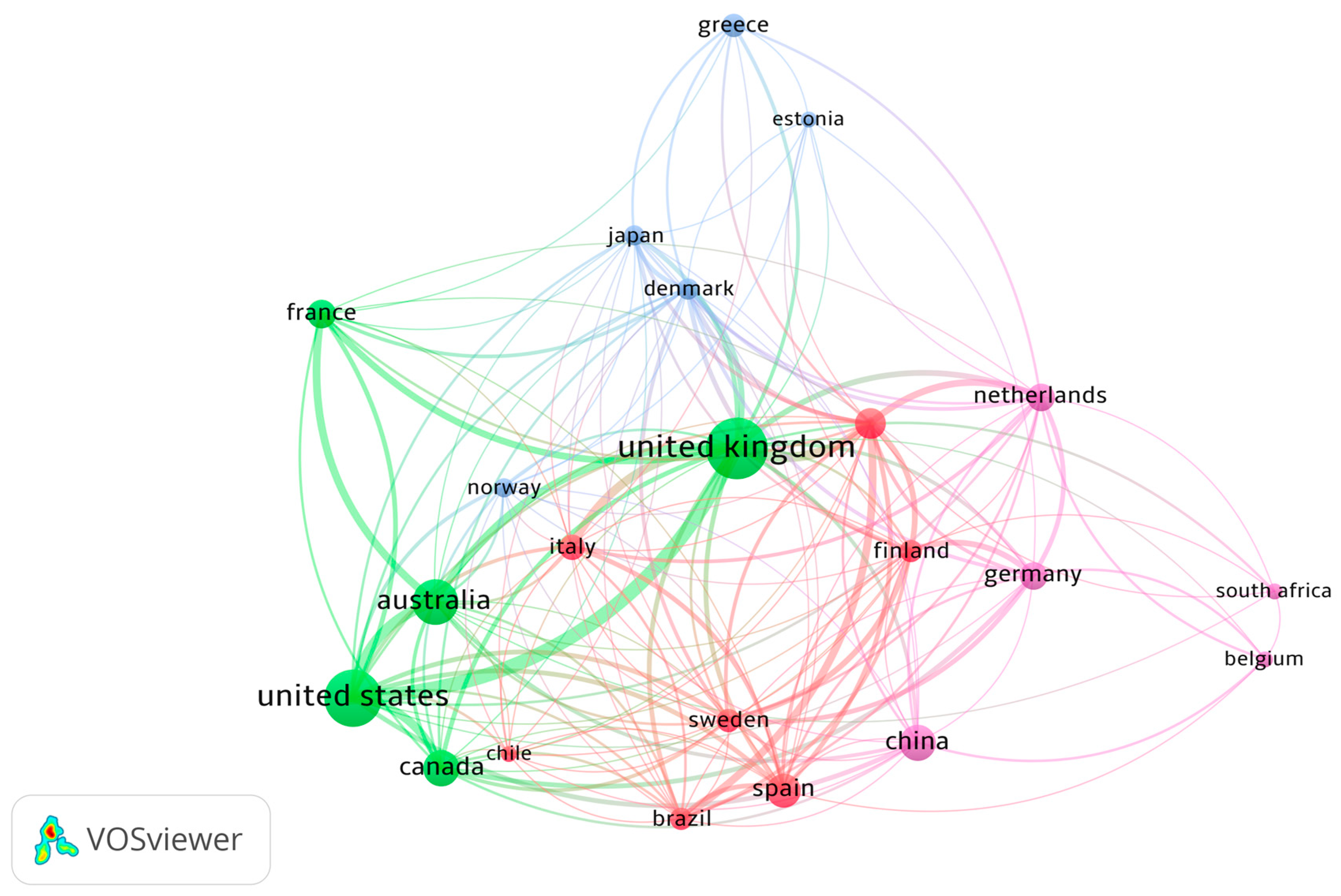
Figure 3.
Articles with research topic the interrelationship between MUCH in MSP per year of publication, during the period 1996-2023.
Figure 3.
Articles with research topic the interrelationship between MUCH in MSP per year of publication, during the period 1996-2023.
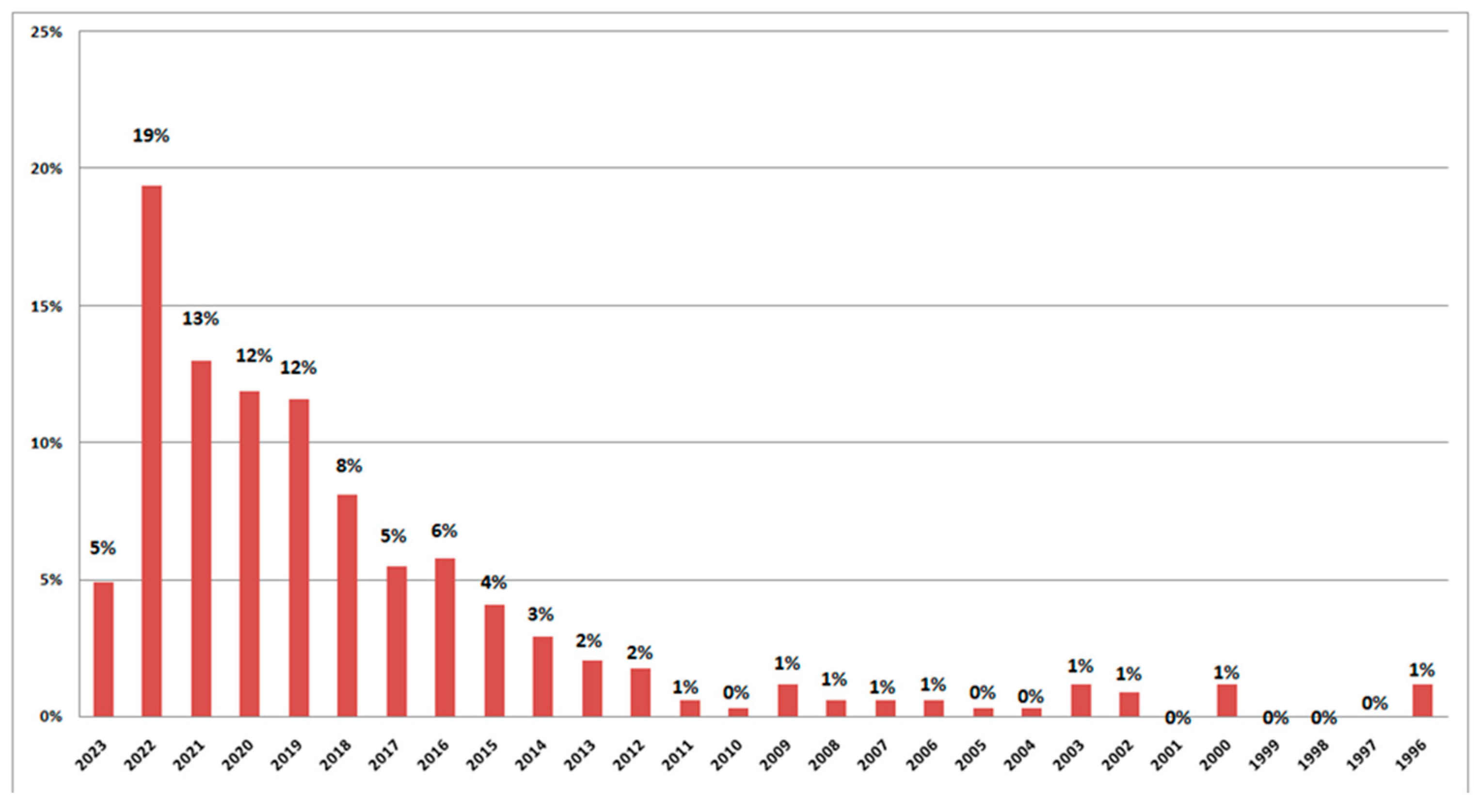
Figure 4.
The top 10 most contributing Journals, as for the published research, on the correlation between MUCH and MSP, during the period 1996-2023 (% of total articles)
Figure 4.
The top 10 most contributing Journals, as for the published research, on the correlation between MUCH and MSP, during the period 1996-2023 (% of total articles)
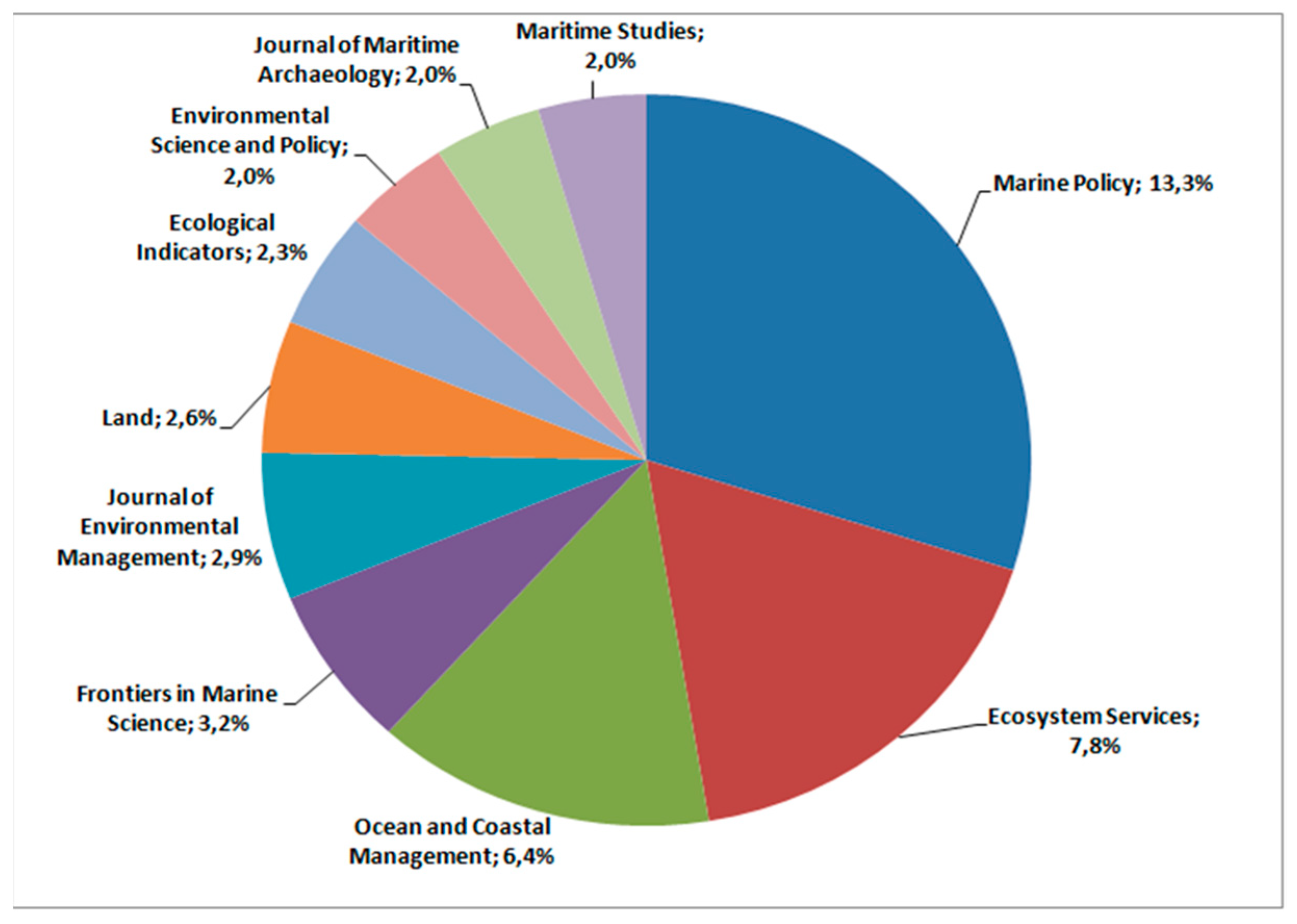
Figure 5.
VOSviewer Network Visualization Map
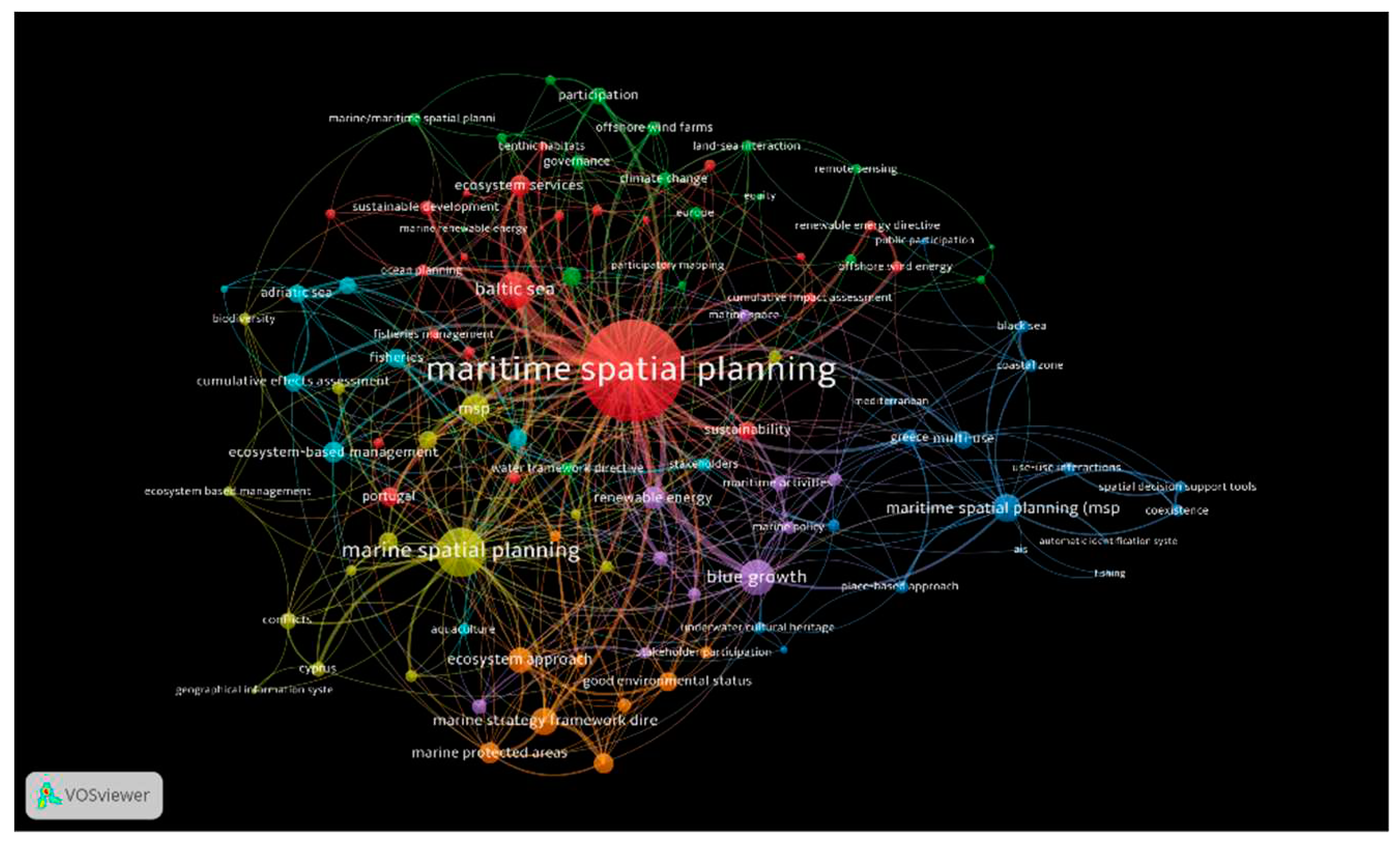
Figure 6.
VOSviewer Network Map “zoom in” on underwater cultural heritage connections.
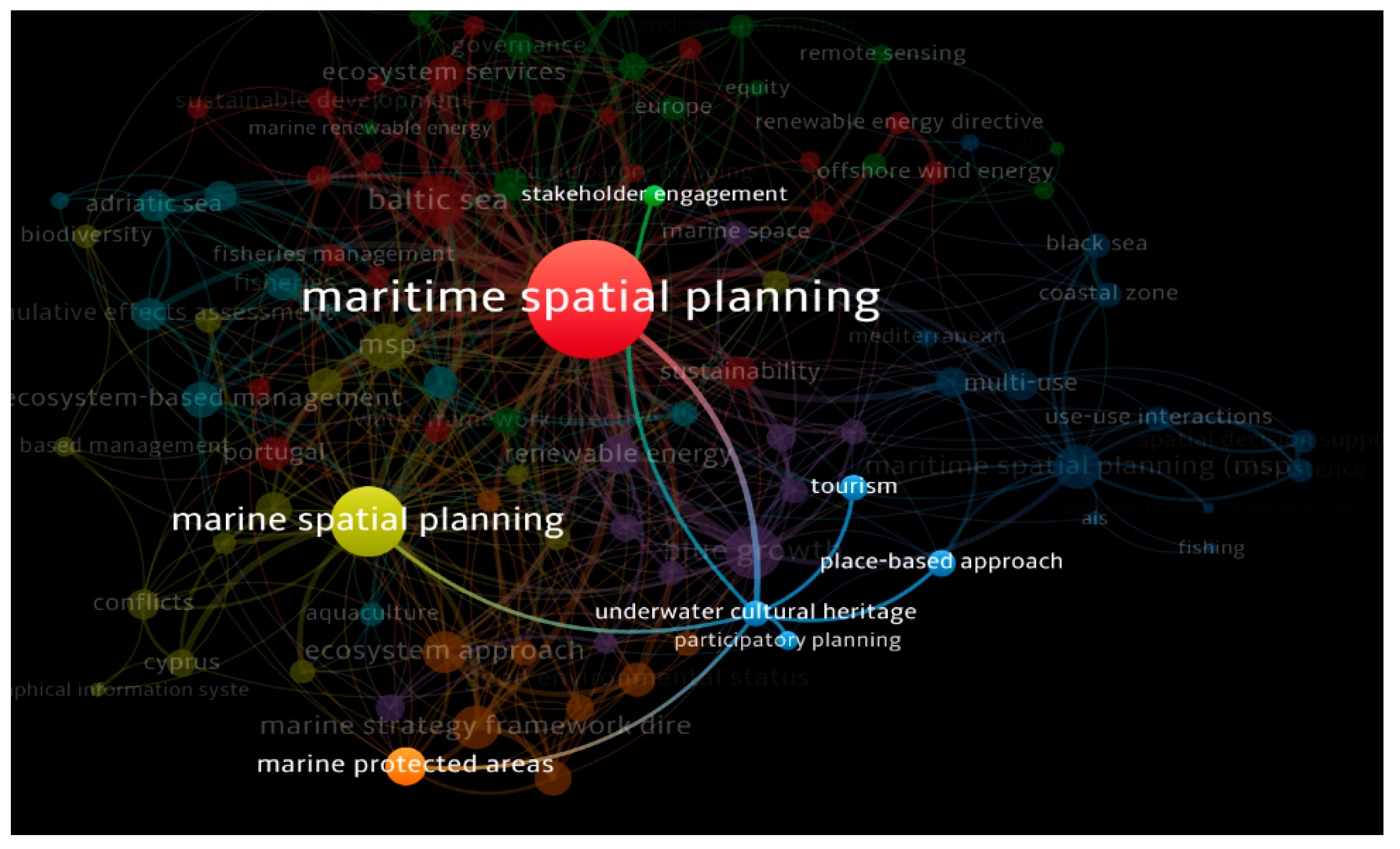
Figure 7.
The second-round VOSviewer map of the Review
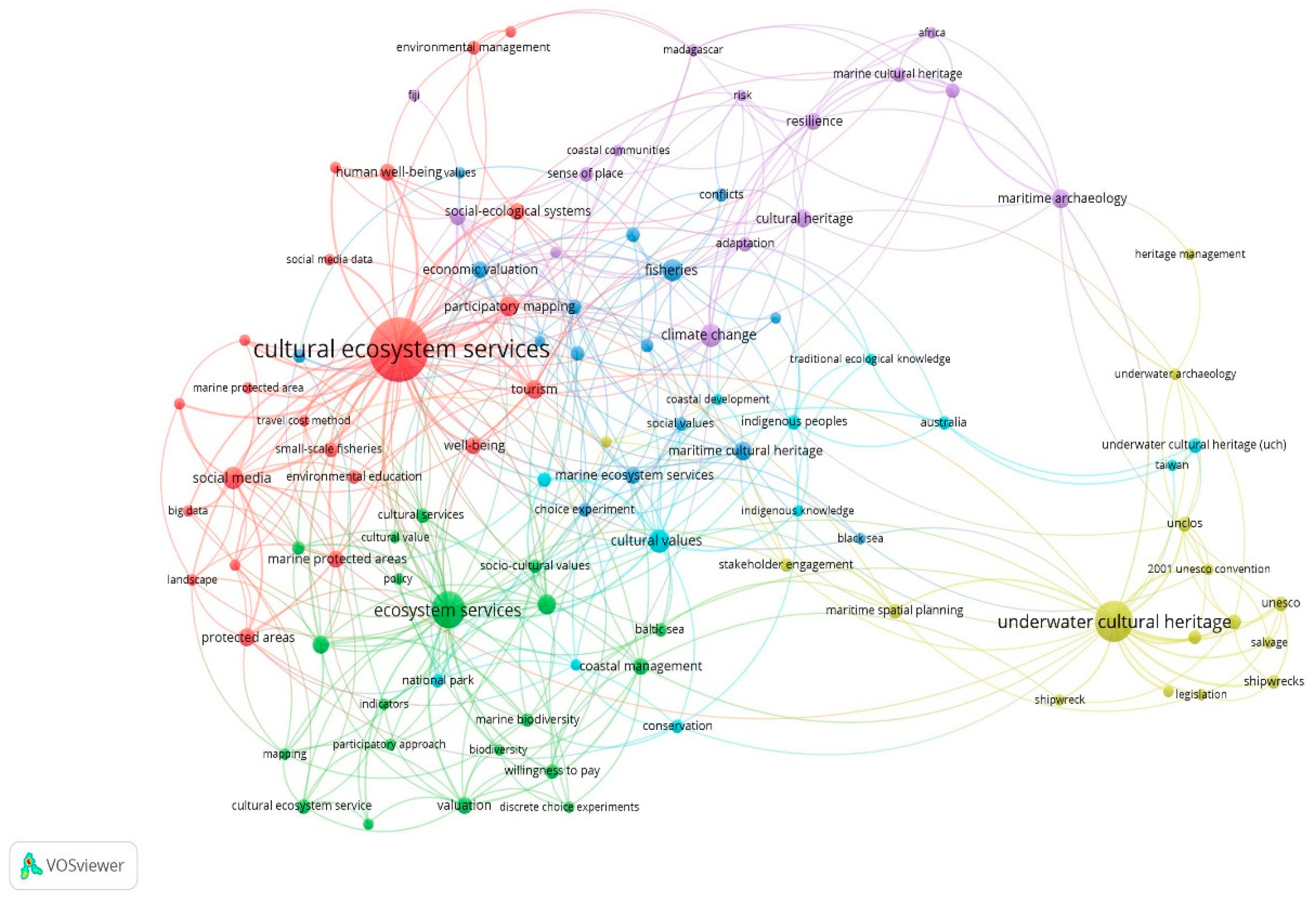
Table 1.
Search Terms.
| Find Articles with these terms | "Maritime spatial planning" OR "coastal planning" OR "marine planning" OR "marine policy" OR "coastal policy" |
| Search in Title, Abstract, Keywords for… | “Underwater cultural heritage," OR "maritime cultural heritage," OR "cultural ecosystem services," OR "intangible heritage," OR "marine cultural heritage," OR "cultural values" OR "socio-cultural values" OR "tangible heritage" |
Table 2.
Specific examples of how cultural values play an essential role in fisheries, food security, and MSP
Table 2.
Specific examples of how cultural values play an essential role in fisheries, food security, and MSP
| Case-study | Significance of cultural values | Inclusion in MSP |
|---|---|---|
| Philippines, coral reefs | Coral reefs are vital for fisheries and cultural tourism. They are home to marine species, thus contributing to food security and local livelihoods. They are also linked to cultural tourism, being popular tourist destinations. | MSP in the Philippines is considering the importance of coral reefs for fisheries and cultural tourism. |
| United States, traditional fishing grounds |
Native American communities have been fishing in the same coastal/marine areas for centuries. These places are important to their culture and way of life. | MSP in the United States is considering the importance of traditional fishing grounds for Native American communities. |
| European Union, MPAs |
MSP is being used to promote sustainable fishing practices that will help ensure future food security. | MSP designates areas where fishing is restricted or prohibited (usually MPAs). This helps to protect fish stocks and ensure that they can recover, in the medium or long term. |
Table 3.
Examples of how MSP can be used to support sustainable development in coastal communities, considering cultural values.
Table 3.
Examples of how MSP can be used to support sustainable development in coastal communities, considering cultural values.
| Action | Method | Result |
|---|---|---|
| Protecting traditional fishing grounds | MSP can designate areas as traditional fishing grounds, where only traditional fishing methods are allowed. | This can help to protect the livelihoods of coastal communities and their cultural heritage. |
| Promoting sustainable tourism | MSP can designate areas for sustainable tourism development. | This can help create economic opportunities for coastal communities while protecting the environment and cultural values. |
| Protecting sacred sites | MSP can be used to protect sacred sites important to coastal communities. | This can help to ensure that these sites are preserved for future generations. |
Table 4.
Indicative regional MSP initiatives supporting sustainable development and protecting cultural values in coastal communities.
Table 4.
Indicative regional MSP initiatives supporting sustainable development and protecting cultural values in coastal communities.
| Name of regional initiative |
General aim | Cultural values related measures |
|---|---|---|
| Baltic Sea Action Plan (BSAP) | - promote sustainable development and protect the environment in the Baltic Sea. | -measures to protect coastal communities from climate change impacts. - measures to protect cultural values, such as traditional fishing grounds and sacred sites. |
| Australia, Great Barrier Reef Marine Park Authority | -develop a marine park management plan that includes a zoning scheme to protect different reef areas for different uses, such as conservation, tourism or recreation. | - measures to protect the cultural values of the reef, such as Aboriginal and Torres Strait Islander heritage. |
| United States, Coastal Community Resilience Initiative. | - help coastal communities to develop MSPlans to adapt to climate change and build resilience. | - provision of technical assistance and financial support to communities so as to develop MSPlans that meet their needs. |
Table 5.
Good MSP related practices with socio-cultural implications
| Topic | practice | result |
|---|---|---|
| Traditional fishing grounds | In Fiji, MSP designates traditional fishing grounds for local communities. | This is helping to protect the livelihoods of these communities and their cultural heritage. |
| Sacred sites | In the Philippines, MSP is being used to protect sacred marine sites, such as coral reefs and mangroves. | This is helping to ensure that these sites are preserved for future generations. |
| Recreational and aesthetic values | In the United States, MSP is being used to protect areas important for recreation and tourism, such as beaches, surf spots, and scenic areas. | This is helping to support the local economy and protect the cultural values of these areas. |
| Community engagement | In Canada, MSP engages with coastal communities and learns about their values and priorities. Participatory mapping is used to collect this information. | Community voices are heard in the MSP process. |
| Mapping cultural ecosystem services: | In Indonesia, participatory mapping is used to map the cultural ecosystem services important to coastal communities | This information is being used to inform MSP decisions and protect these services. |
| Mapping recreational opportunities | In the United Kingdom, participatory mapping maps recreational opportunities in coastal areas. | This informs MSP decisions and ensures that recreational needs are considered. |
| Tourism | In the Mediterranean, MSP is being used to promote sustainable tourism development in coastal areas. | This is helping to create economic opportunities for coastal communities while protecting the environment and cultural values. |
| Recreational fishing | In Australia, MSP is used to designate recreational fishing areas. |
|
| Other recreational activities | In New Zealand, MSP designates areas for other recreational activities, such as swimming, surfing, and kayaking. | This is helping to reduce conflicts between different users of marine space and ensure that everyone can enjoy the coast. |
Disclaimer/Publisher’s Note: The statements, opinions and data contained in all publications are solely those of the individual author(s) and contributor(s) and not of MDPI and/or the editor(s). MDPI and/or the editor(s) disclaim responsibility for any injury to people or property resulting from any ideas, methods, instructions or products referred to in the content. |
© 2023 by the authors. Licensee MDPI, Basel, Switzerland. This article is an open access article distributed under the terms and conditions of the Creative Commons Attribution (CC BY) license (http://creativecommons.org/licenses/by/4.0/).
Copyright: This open access article is published under a Creative Commons CC BY 4.0 license, which permit the free download, distribution, and reuse, provided that the author and preprint are cited in any reuse.


