

Submitted:
22 November 2023
Posted:
23 November 2023
You are already at the latest version
Abstract
The orbital elactronic structure of Rare Earth Elements (REEs) contains many unpaired electrons which render them capable of storing large amount of magnetic energy in addition to being critical for hitech applications. Geological deposits are their conventional sources, and the current supply chain relies on production from these deposits. However, given their critical roles in the anticipated global energy transition, there is the need to explore other viable sources to supplement current and future supplies chains.
REEs occur in coal as accessory minerals and their concentration in coal ash to levels that rival those of geological deposits has been estab;ished by sophisticated analytical chemical methods. Conmventional hydrometallurgical processes rely on acid leaching, using tioxic mineral acids. Meanwhile, organosulfonic acids have pKa values that rival those of conventional minerals acid and can, therefore, be used in hydrometallurgy but their uses in this regard are not well documented in the literature. In this extensive review, we have covered geological sources of REEs exaustively in addition to showing the potential of organosulfonic acids as environmentally benign lixiviants for REEs extraction from coal ash. We have also shown how process optimization can be achieved using advance technologies while using organisulfonic acids. Moreover, we have shown current and future global market trends regarding the production of select organosulfonic acids, and the anticipated global increase in their production motivates the use of organosulfonic acids as viable lixiviants for REEs extraction from caol ash deposits.
Keywords:
Coal ash
; mineral acids
; organosulfonic acids
; lixiviants
; hydrometallurgy
; rare earth elements
1. Introduction
Rare Erath Metals (REEs) are a group of chemically similar metallic elements, usually consisting of the lanthanides series and yttrium, and the first extended row of chemical elements below the main body of the period table: cerium lutetium (Pecharsky & Gschneidner, 2023). Their characteristic unsaturated 4f electronic structure accords them such unique properties of luminescence, magnetism, and unique electronic properties suitable for the development of new hi-tech materials (Generalic, 2012). Besides, these unique properties of REEs make them universally acclaimed precursors for the manufacture of products vital for a broad spectrum of industrial uses. Europium, for instance, provides a phosphor for televisions and computer monitors, having no known substitute (Resende & Morais, 2015). Thus, REEs are vital for products related to electronics, chemical analysis, computer screens, automotive catalytic converters, glass polishing and ceramics, permanent magnets, petroleum refining and others (USGS, 2014; Balaram, 2019). Therefore, considering their vital and unparalleled uses as permanent magnets, they are critical and above all, strategic for the global energy transition to environmentally benign energy generation and unitization (IRENA, 2022). Moreover, recognition of over dependence on REEs by automakers has prompted the development of alternatives for permanent magnets (Cambridge-University, 2022) that have poor performance indices, notably a reduction in driving range which is a critical factor in automobile evaluation (Reuters, 2021).
Considering their trivalent charge and similar ionic radii, REEs naturally occur together in the geosphere not individually like gold or copper, but as either minor or major constituents (USGS,2014). However, despite being genetically associated with a wide range of minerals in the paragenetic sense (Silyanov, et al., 2022), economically important sources of REE minerals are bastnaesite, monazite, loparite, and through lateritic ion-adsorption clays. Consequently, there are over 250 minerals which contain REEs as vital constituents in their chemical formula and crystal structure (Dostal, 2017). The global mean value for REEs concentration in the Earth's crust is estimated to be between 150 to 220 parts per million, indicating a higher value than the concentration of other metals mined for industrial uses, such as Cu or Zn (Mission-2016, 2016; Long et al.2016; Sowerbutts, 2013). Normally, an economically feasible source contains at least 5 percent rare earths, except where it occurs with other minerals, such as zirconium, uranium, or iron which justify economic recovery of deposits with concentrations as low as 0.5 percent by weight (Bititannica, 2023). While magmatic rock settings are known to host averagely higher concentrations of REEs, coal deposits are also known to be geologically associated with to them, but their concentrations are relatively lower causing them not to be directly useful. For instance, Vilkavic (1983) (Valkovic, 1983) estimated the total concentration of rare earth elements in coal deposit as 46.3 µg/g, with the total concentration of rare earth elements in US coal deposits being reported as 62.1µg/g (Finkelman, 1993).
The current global supply of REEs from magmatic rock and weathered rock sources (LI & YANG, 2014) is dominated by China, accounting for 63 percent of the world's rare earth mining, 85 percent of rare earth processing, and 92 percent of rare earth magnet production with its supply of REEs alloys and magnets being critical components in missiles, firearms, radars and stealth aircraft (Seligman, 2022). Therefore, considering the enormous strategic importance of REEs, diversification of their sources is the current global focus (Canada, 2014). However, Ilankoon, et al., (2022), have identified 13 factors as constraints to develop REEs supply chains outside China which have been rated by suppliers and experts. Moreover, survey results obtained from the REEs industry experts have been thoroughly subjected to statistical analysis to ascertain key factors affecting the development of independent and supply chains beside the Chines dominance. Four statistically important factors were identified in addition to constraints relating to business uncertainties (Ilankoon, et al., 2022). Nevertheless, while magmatic deposits are the dominant sources of REEs, their concentrations in coal ash deposits due to combustion induced volume changes have, in recent times, been considered as promising for their extraction (Eterigho-Ikelegbe,2021; Park, et al., 2021; Bishop et al., 2023; Choudhary et al.,2023). In this regard, the average total REE content, consisting of lanthanides, yttrium, and scandium) from Appalachian derived coal ash sources was 591 mg kg-1, significantly greater than that from ashes in Illinois and Powder River basin coals (403 and 337 mg kg-1, respectively). Moreover, the percentage of critical REEs (Nd, Eu, Tb, Dy, Y, and Er) in the fly ashes was reported as 34−38% of the total and considerably higher than in conventional ore deposits, which typically averages 5%. Taggart et al. (2016)..
In another study, it was found that REY are concentrated in fine particle size, non-magnetic and middle density fractions, and using combined physical separation techniques, their concentration in coal fly ash was enriched from 782 μg·g-1 to 1025 μg g-1 (Pan et al., 2020). Currently, there are over 3 billion tons of coal ash in landfills and coal ash ponds facilities across the U.S. and over 100 million tons of additional coal ash generated per year (FIBERS, 2023). In Canada, 6% of electricity was generated, using coal combustion in 2020, while electricity generation consumed 18.4 Mt of coal in 2021 (Canada.ca, 2023). In addition, the first thermal power plant based on coal combustion that generated 1 million kW was established in 1954 in Toronto (-Canada, 2022). Therefore, considering the significant proportion that coal combustion accounts for global electricity generation, oscillating around 40% since 2000 (IEA, 2023), coal ash as a resource for REEs will likely be realized in several countries with coal fired power plants.
To technically and economically render global coal ash deposits resourceful for REEs, significant research input in industry and academia on a global basis is essential, and such an initiative will be a stepping stone for greener alternatives to producing REEs (Liu, et al., 2023 ), given the environmental pollution associated with conventional mining practices (Zapp et al., 2022;Yin et al., 2021;2013). Consequently, the scientific literature on the extraction of REEs from coal ash abounds (Seferinoğlu,2003; Honaker et al., 2019; Dahan, et al., 2022; Prihutami et al., 2021;Pan et al., 2020).While significant breakthrough in research and commercialization of research findings is yet to be realized, intensive research has reported the advantages and shortfalls in light of technical and economic viabilities (Huang et al., 2019;Miranda et al., 2022;Das et al., 2018;Kim et al., 2019). Moreover, the development of suitable chemical and physical extraction process for the extraction of REEs from coal ash draws on knowledge of their occurrence in these ashes. Rather than occurring as individual minerals dispersed in the ash, it has been reported that most REEs are homogeneously distributed in a glassy phases amorphous aluminosilicate matrices (Ward & French, 2005; Pan et al., 2018; Wang et al.,2019). Generally, wet leaching has been the most common technique to extract out REEs from coal ash ((Tang, et al., 2019; USDE, 2020; Honaker et al., 2019; imaz & Ottosen, 2022), where acid leaching, based on the application of strong mineral acids at elevated temperatures, is one of the most prevalent ways to extract REEs from coal ash matrix (Franus et al., 2015; Peiravi, et al., 2017). However, strong mineral acids have been found to be highly corrosive to the skin and eyes, which poses occupational health risk (VDH, 2023;National-Cancer-Institute, 2022) (VDH, 2023),. Therefore, organic acids are being researched as alternatives for acid leaching in mineral beneficiation (Belfqueh et al, 2023). For instance, Belfqueh et al., (2023) have shown that acetic acid (CH₃COOH) has the highest leaching performance of REEs, allowing leaching yields over 90% for Nd, Dy and Pr in the acid concentration range of 1.6–10 mol/L and the S/L ratio range of 0.5%–5% at a temperature of 60 °C, using from NdFeB permanent magnets from end-hard discs of end-of-life HDDs of computers. Their results demonstrated not only the efficiency of organic acids, but also their ecofriendly manner. Xiao et al. (2022) have also researched the efficiency of organic acids and mineral acids for leaching in the remediation of protogenetic lead contaminants in soils (Xiao et al., 2022). In their study, hydrochloric and citric acid produced the best results. Therefore, given the toxity of strong mineral acids, environmentally and health wise, exploring organic acids as potential substitutes is necessary but apart from a most recent research work that documents the potenatial of Methane sulfonic acid and p-tolune sulfonic acid (PTSA) for rees leaching from coal ash (Banerjee et al., 2022), the usefulness of organosulfonic acid by the research community has yet to be realized. Herein, we report the potential of organosulfonic acids, notably MSA and PTSA for the leaching of REEs from coal ash. Accordingly, we also report on the potential of these acids for heap leaching of REEs from coal ash. Currently, coal ash is a vluable resource for the construction industry, considering its use as a concrete aggregate (Karala et a., 2022; Mangi et al., 2019; Maliki, et al., 2017). Therefore, in the event of coal ash proving to be a viable resource for REEs extraction, the construction industry will be negatively impacted in terms of the concrete aggregate supply chain invloving coal ash. In this regard, our extentisve literature review has enabled us to report the applicability of REEs leached coal ash as concrete aggregate after REEs extraction, wich is an dded advantage of using Organosulfonic acid in place of environmeantlly toxic mineral acids as lixiviants.
2. Geological Resources of Rare Earth Elements
2.1. Regolith Hosted Deposits
One economically attractive geological resource of REEs is related to regolith deposits. (Borst, et al., Adsorption of rare earth elements in regolith-hosted clay deposits clay deposits, 2020), that form through ion-adsorption clay (IADs) deposits arising from subtropical weathering processes of igneous rocks, and they are the world’s primary sources for heavy rare earth elements (Weng, Jowitt, Mudd, & Haque, 2015), (Jowitt, Wong, Wilson, & Gore, 2017). In these accumulations, the REEs are thought to be weakly adsorbed onto clay minerals, consisting predominantly of kaolinite and halloysite, in addition to oxides, at variable structural sites consisting of broken edge sites, charged aluminol or siloxane groups at defects and isomorphic substitutions (Schoonheydt & Johnston, 2013). Beside these mechanisms, dissolution of nanoparticulate secondary REE-bearing phosphates is a precursor to the formation of deposits 13 (Zhou & Keeling, 2013). Major economically recoverable IADs occur in Southern China, being hosted in weathered igneous crusts associated with granitic rocks, providing about 35% of China’ total REEs production, and roughly 80% of Heavy Rae Earth Element supply on a global basis (Borst, et al., Adsorption of rare earth elements in regolith-hosted clay deposits, 2020). Compared to hard rock deposits associated with carbonatites and alkaline igneous rocks, IADs deposits consist of relatively low tonnages Smith et al., (2016). Economic exploitation of IADs is mostly carried out through low-cost in situ leaching or Heap leaching ((Sanematsu & Watanabe, 2016; Wall et al., 2017) resulting in significant environmental impact in China (Yang et al.,2013). Generally, the majority of IADs are readily leachable deposits. As mentioned earlier, hard rock deposits of primary geological origins account for sizable global production and supply (Verplanck et al., 2016) and the following section will be devoted to reviewing their origin, global production, and current supply status.
2.2. Rare Earth Elements from Carbonatites
Carbonatite-hosted rare-earth-element (REE) occurrences (Wang et al., 2020) with notable Cenozoic deposits in China constitute the most significant source of the world’s REEs supply albeit their geologic processes of origin still remains obscure (Hou et al., 2015). These deposits occur as stock-works of dykes associated with syenites, being extremely rich in Barium, Strontium and REEs (Shunda et al., 2008) and showing the ratio of the isotope of Strontium 87 to that of Strontium 86 above 0.7055n (Hou et al., 2015). Genetically, these carbonatites were likely formed by melting of the sub-continental lithospheric mantle which had previously undergone metasomatism (Chikanda et al., 2019) characterized by high-flux of REEs and carbon dioxide rich hydrothermal fluids derived from subducting marine sedimentary environments (Wang et al., 2021). Generally, monazite is the most important source of REEs in carbonatites, and this has been demonstrated in relationship to the Kangankunde carbonatite Complex (Zhou et al., 2017). Globally, carbonatite deposits have resulted in 53% of global projects while 86.5% of active mines are centered on them (Lin et al., 2023). Apart from ion adsorption clay deposits and carbonatite source related ones; there are several minor but economically important deposits on a global basis, the distribution of which can be represented by the following Figure 1., while Figure 2 shows major world producers of REEs.
It is obvious from Figure 1 that next to carbonatites resources, Alkaline /granitic types deposits provide significant resources for active mine development, followed by ion as adsorption type.
2.3. Primary sources of REEs in Geologic Systems
Similar to the concept of paragenesis (Yan, et al., 2022) in ore deposits, REEs occuring in crusts as mixtures in magmatic rocks, such as granites, gneisis, basalts and in sedimentary rocks (Krishnamurthy & Gupta, 2015). Generally, REEs have strong affinity for oxygen, which cause them to exist predominatly in the trivalent states as cations associated with carbonates, oxides, phosphates, and silicates (Hedrick, 1992). Literature show that nearly 95% of all REEs resoiuces occur in only three minerals, namely monazite (Ce, La, Nd) PO4), bastnasite ((Ce, La, Y) CO3F), and xenotime ((Y, Yb) PO4), being the main sources of REEs in the paragenetic sense (Cotton, 2006). The concetration of REES in these principal sources vary. For instance, in monazite, the rare earth oxide (REO) concetration ranges between 35 and 71%, while in xenotime and bastnasite it ranges between 52 and 54% and between 70 and 74%, respectively (Kanazawa & Kamitani, 2005; Jordens et al., 2013) (Kanazawa & Kamitani, 2005). The following text summarizes the charcateritics of each principal source of REEs.
2.3.1. Bastnasite
This is a fluorocarbonate mineral containing approximately 70% rare earth oxide in the form of Light REEs, being the principal source of most REEs. This source of REEs is easier to treat compared to other sources (Jordens et al., 2013; Ozbayoglu, 2000; Huang et al., 2005. Bastnasite is genetically associated with vein deposits, metamorphic zones, igneous carbonatites deposits, being the principal ore of the most giant REEs mines. Typical of such mines are the Mountain Pass, USA and the Bayan Obo mine in China (Gupta & Krishnamurthy, 1992; Gupta and Krishnamurthy, 2005). La, Ce, Pr and Nd are the most abundant elements of Bastnasite (See Figure 3). In the hydrometallurgical context, Bastnasite is processed by numerous operations, which include gravity and magnetic separation to produce intermediate rare earth concentrates, which are further processed through solvent extraction and selective precipitation.
2.3.2. Monazite
Monazite is a designated REE phosphate mineral. It is the principal sources of Light Rare Eearth (LREEs) (Kumari, Panda, Jha, & Kumar, Process development to recover rare earth metals from monazite mineral: A review, 2015). Monazitic sources of REEs are charactrized by high proprtions of radiaoctove thorium, normally (4–12 wt.%) with variable amount of uranium and these characteristics underscore the envionmental hazards associated with mining such deposits. Globally, beach sands are the predominant sources of manazitic sands from which REEs are sources (Saha et al., 2023; Kumari et al., 2015) (Saha, Eliason, Golui, Masud, Bezbaruah, & Iskander, 2023).
2.3.3. Xenotime
Xenotime is the principal source of REEs oxides, which are the sources of yttrium and HRREs (Alex, Suri, & Gupta, 1998). Granites, crystalline metamorphic rocks, and pegmatite deposits are the principal sources of xenotime (Amli, 1975). Ore beneficiation is carried out using flotation, magnetic or gravity separation methods followed by hydrometallurgical or pyromtallurgical processes (Dinh et al., 2022).
3.4. REEs Resources of Coal Derived Ashes
REEs occur in coal deposits (Lia et al., 2008; Scott & Kolke, 2019)), but with low concentrations for commercial exploitation (Valkovic, 1983). For instance, the concentrations found in coal deposits, on average, barely approach levels judged commercially viable when extracting the rare earths alongside another mineral (Ekmann, 2012). These elements occur in clay phases mainly as sorbed forms (by organic matter and clay particles) and fine-grained authigenic minerals (Seredin et al., 1996; Birk & White, 199; Zhang et al.,2018) associated with coal deposits. Normally, combustion of coal under different conditions results in the concentration of REEs in feed coal ash due to imminent volume changes, Taggart et al., 2016), with concentrations reaching 33 ppm Maity et al., 2022) and 400 ppm (Dugin et al., 2022). However, while coal deposits generally contain lower concentrations of REEs, coal seems containing 300 to 1000 ppm REEs have been reported in some Russian Far East deposits (Seredin et al., 1996). Geochemically, REEs can be classified into two groups, namely light (LREE, from La to Gd) and heavy (HREY, from Tb to Lu), this distinction being based on their atomic number (Jordens et al., 2013). Moreover, based on the abundance and utilization prospects, they can be further categorized as critical (Y, Nd, Eu, Tb, Dy, Er), excessive (Ce, Ho, Tm, Yb, Lu), and uncritical (La, Pr, Sm, Gd) as suggested (Seredin & Dai,2012). In the following sections, we will focus on cioal ash geochemistry, current research foe extracting technical REEs from coal ash deposits on a commercial basis and the challenges so far, using hydrometallurgical routes.
3.5. The Chemistry of Coal Ash
3.5.1. Major Oxides of Coal Ash
The major components of coal ash consist of oxides of Si, Fe, Al, and Ca, and residual carbons with bottom and fly ashes containing 185.8 mg/kg and 179.2 mg/kg of REEs, respectively (Park, et al., 2021), (USDT, 2016). The following Table 1 shows the major oxides of coal fly ash (Hauashdh et al., 2020) while Figure 4 shows trends in coal ash generation based on statistics data from six energy-intensive economies.
Three types of REY occurrences in coal ash can be identified as, Si-Al glassy association, discrete minerals or compounds, and organic association (bound with unburned carbon), with glassy association occurring through binding to the glass an also as a dispersion throughout the glassy structure (Fu et al., 2022). Discrete phases are inorganic in nature, occurring as phosphorus in coals, especially in higher rank coals (Buchill al.,1990). The phosphorus-containing mineral phases in coals include: apatite, most (Swaine, 1977); crandallite-series minerals; monazite; and xenotime (Finkelman, 1980), including phosphates, dispersed throughout the organic matrix, as important sites for trace elements in coal. Therefore, acid digestion method widely used in mineral processing for the analysis of mineral contents (Palm et al., 2015) is an ideal choice as one of the methods for determining the REEs potential of coal ash deposits as has been used for apatite/phosphate based REEs ores (Kim et al., 2016)..
3.5.2. Trace Elements of Coal Ash
Coal ash also contains minor amounts of trace elements, such as chromium (Cr), nickel (Ni), zinc (Zn), arsenic (As), selenium (Se), cadmium (Cd), antimony (Sb), mercury (Hg), and lead (Pb). uranium (U) can also be a common trace element occurring at concentrations ranging from 10 to 30 ppm, similar to the upper limit of concentrations found in a naturally magmatic rock such as granite and the sedimentary rock known as black shale (Zielinski et al., 2007). The presence of trace elements in coal ash is directly linked to their occurrence in coal during the process of its formation in the sedimentary environment (Raask, 1985; Gluskoter et al., 1997; Sorokin et al., 2019). The concentrations of these trace elements increase, following the reduction in volume accompanying the combustion process. Therefore, their concentrations, measured as parts per million (ppm) in coal derived ash are higher compared to background concentration in the original coal samples (Carlson & Adriano, 1993); Jankowski et al., 2006).
3.6. Natural Evidence of REEs Leaching from Waste
Canada, for instance, is one of the world's leading producers of economic minerals. The mining of base and precious metals results in the production of immense quantities of waste rock, mill tailings, and waste related to refining processes Moncur,2023). Consequently, the generation of acid mine drainage (AMD) and the resulting release of water containing substantial concentrations of metals from mine wastes has long been proven to pose environmental problems on a global scale (Luís, et al., 2022). AMD is caused by the oxidation of sulfide minerals in the mine waste that occurs when these materials are exposed to atmospheric oxygen oxidation processes that continue to release acid and metals to the surrounding environment for decades to millennia (Moncur et al., 2005). Therefore, evidence of natural leaching of metals from waste piles is a motivation for the drive towards the adoption of acid leaching as a potential route for the recovery of rare earth elements from coal ash as it substitutes for the waste encountered in the case of mining (Banerjee et al., 2022; Pan et al., 2021; Honaker et al., 2019; Banerjee et al., 2023).
3.7. Hydrometallurgical Profiles of Conventional Mineral Acids
In hydrometallurgy, Sulfuric acid is by far the most widely used in leaching metals from their ores, in addition to being the acid of choice in electrolytes for the electrowinning and electrorefining of metals (Free, 2013). The acid possesses several advantages that motivate its extensive use in hydrometallurgy. The following summarize its benefits ((Binnemans & Jones, 2023):
It is abundant through large scale production, which drive lower cost, rendering it the topmost chemical in terms of quantity produced by the chemical industry.
Metallurgical plants produce their own sulfuric acid from the sulfur dioxide that is released during the roasting of sulfur-based ores in hydrometallurgical units.
- Its less corrosive nature gives flexibility in the choice of materials for the building of process units.
- The use of sulfuric acid comes with no concern for odor and volatility of toxic gases. Moreover, electrowinning processes based on sulfuric acid electrolytes have the advantage that oxygen gas is formed at the anode.
While the above mentioned qualities underscore the benefits of sulfuric acid in hydrometallurgy, metal sulfate salts have a relatively low solubility in aqueous solutions compared to chlorides and nitrates salts, with lead and calcium sulfate being insoluble. This limitation in aqueous solubility poses a problem in hydrometallurgical processes related to these metals. Beside, calcium sulfate scaling is a problem. In addition, experience has revealed that the relatively low solubility of CuSO4·5H2O in sulfuric acid solutions sets a limit to the maximum copper concentration, causing an inefficient electrowinning and electrorefining of the metal (Schlesinger, King, Sole, & Davenport, 2011).
Consequently, the solubility limitations of metal sulfates in hydrometallurgy has inspired the development of nitrate (Demopoulos et al., 2008) and chloride hydrometallurgy, where the former has more solubility. However, while metal chloride salts are generally more soluble than sulfate salts, there exist poorly soluble ones like Lead and Silver. Due to the corrosive nature of chloride solutions there exists a limitation to the choice of material for hydrometallurgical units. Another shortfall of chloride hydrometallurgy stems from the fact that chloride gas evolves at the anode instead of oxygen gas, which is corrosive. Nitrate reduction at the cathode is also a problem associated with the use of nitrate salts in electrolysis.
Considering the hydrometallurgical application limitations of conventional mineral acids, viable options that come with less concern for environmental toxity and process unit corrosion are essential, and that is where Organosulfonic acids come in, and the following sections will be devoted to reviewing the potential of such acids and their salts in the recovery of REEs from coal ash. Already, evidence exists for the use of Methanesulfonic acid as a sustainable acidic solvent for recovering metals from the jarosite residue of the zinc industry (Palden et al., 2019) as for its use in hydrometallurgical processes related to several metals (Binnemans & Jones, 2023).
3.8. The Potential of Organosulfonic Acid
Organosulfonic acids are a member of organosulfur compounds of sulfonic acid ( et al., 1941) with an organic functional group substitution and it is a derivative of sulfonic acid, (Scientific, 2023). Already, the potential of Organosulfonic acid-functionalized mesoporous silicas as a catalyst for the esterification of fatty acid has been demonstrated (Mbaraka etv al., 2003; Chen et al., 2921). Sulfonic acid derivatives have also been used in cosmetics (Newsted & Jones, 2005). In petroleum production engineering, the use of ester derivatives of sulfonic acids as anti-sludge agent during acidization of petroleum reservoir formations has been reported (Looney & McDougall, 1984). In the field of mineral beneficiation, while other organic acids have been researched as potential leaching acids for coal, the use of Organosulfonic acids is less documented. Recently, Banerjee et. al. (2022) investigated the leaching efficiency and potential of Methanesulphonic acid and p-toluenesulphonic acid in the extraction of REEs from coal ash, where they showed that the optimum condition for extraction was 900C and process duration of 60 min using a liquid to solid ratio of 100 and a stirring speed of 600 rpm. Accordingly, using 0.5 M acid concentration Light REEs were leached out with extraction yield of 65-70% whereas Heavy REEs has a leaching yield of 12-20%. Their study further demonstrated, based on X-Ray diffraction analysis that Organosulfonic acids did not destroy the aluminosilicate matrix of coal ash and that the kinetics of leaching was diffusive, following the shrinking core model. They concluded that the leaching potential of Organosulphonic acid is comparable with those of mineral acids (HNO3 and HCl), demonstrating its potential as a green alternative to mineral acids which are conventionally widely used in REE extraction from coal ash wastes.
Spent catalysts can pose environment and human health if poorly managed. To mitigate the problems, novel environmentally friendly flowsheet based on deep eutectic solvents (DESs) have been developed to enhance nickel recovery from spent hydroprocessing catalysts. In this regard, P-toluenesulfonic acid-based DES-1 (PEG-400: PTSA) and DES-8 (ChCl:EG:PTSA) has been shown to enhance high nickel extraction (>90 %). from spent hydroprocessing catalysts via deep eutectic solvents (Ebrahimi et al., 2023).
3.9. Properties of Methane Sulfonic Acid
Methanesulfonic acid (MSA, Figure 5) is usually described as a ‘‘green acid” due to its environmental benefits (Gernon et al., 1999; Kulkarni , 2025). Its molecular structure is characterized by two sulfur to oxygen double bonds. It is a strong organic acid (pKa = 1.9) with a low potential for oxidation of organic compounds, having a melting point around -55oC and high thermal stability, and these qualities render it applicable as a liquid over a wider temperature range.
Under normal atmospheric conditions, its aqueous form is odour-free, due to its low vapor pressure, with no tendency to evolve dangerous volatiles, making it safe to handle. Its salts are characterized by high solubility, which makes it suitable for use in cleaning applications, such as removal of calcium carbonate scale. MSA is far less corrosive and toxic than the usual mineral acids employed in diverse industrial processes including hydrometallurgy (Martyak & Ricou, 2004). A cost-effective and efficient solid Brønsted acid catalyst was synthesized by loading Methanesulphonic acid (MSA) on silica, and used for the acid-catalyzed Pechmann reaction meant for investigating the catalytic activity and reusability. Accordingly, derivatives of 4-methylcoumarin were successfully synthesized with good yields, using short reaction times in the presence of environmentally friendly higher n-alkanes as solvents (Joshi et al., 2011). Currently, MSA is used extensively in a areas related to catalysis/reagent for organic reactions including the production of biodiesel, in the pharmaceutical industry, as a solvent for high molecular polymeric materials (Roitman et al.2004), in cleaning fluids and removal of rust (Lafitte & Monguillon, 2013), and for pipe descaling in the downstream petroleum industry (Bertkau et al., 2015).
The sulfonic acid group is highly polar (Liu et al. 2007) and it can greatly enhance the water solubility of compounds as seen with the sulfonic acid derivative of triphenyl phosphine (TPPTS). Its metal complexes are used as homogeneous catalysts for the syntheses of organic compounds in a two-phase-organic water systems. Considering this extensive application at industrial and domestic scales, the annual production is projected to increase above 50,000 tons (Ewe & Scheible, 2017) and a recent environmental assessment of alternative Methanesulfonic acid production using direct activation of methane will likely give impetus to its production (Kappenthuler et al. 2018).
4. Use of Organosulfonic Acid Derivatives in Extractuve Metallurgy
In the context of thermodynamics and electronic structure, REEs are located in the sub-group of periodic table. Because of the unique 4f-electronic configuration, their inner layer has a strong shielding effect on the outer layer and the atomic nucleus of RE elements is less attractive to electrons of the outer layer, causing them to be active metals. The standard equilibrium electrode potential of the electrode reaction of the 15 elements (from La to Lu) is -2.52-2.25 V (Zhou et al., 2021). This thermodynamic aspect of the REEs makes their recovery by electrolysis as attractive as by other hydrometallurgical process and the use of highly soluble RREs salts will be an advantage for their electrolytic recovery.
4.1. Solubility of REEs Organosulfonate Salts and the Potential for Their Recovery by Electrolysis
MSA has toxity that is relatively lower compared to many commercially available acids, having a LD50 (oral, cat) of 1158 mg kg−1 compared to 238–277 mg kg−1 for hydrochloric acid (Springborn-Laboratories, 1997). It is highly biodegradable, producing sulfate and carbon dioxide (Thompson et al., 1995), 1995 degradation products, and part of the natural sulfur cycle. MSA is considered to be a natural product, and it is part of the natural sulfur cycle (Baker et al., 1991).MSA is a strong acid, having a pKa value of −1.19 which is close to those of mineral acids, viz nitric acid (pKa = −1.3) and sulfuric acid (pKa1 = −3) and higher than those of conventional organic acids, such as formic acid (pKa = 3.82), acetic acid (pKa = 4.76) and citric acid (pKa1 = 3.09) (Rappoport & Patai, 1991).
Recovery of metals based on the electrolysis of their molten salts is an established practice in metals recovery from their corresponding salts (Li, et al., 2021; Xi et al., 2020; Oishi et al., 2010; Li et al., 2023). Moreover, in the recovery of REEs, their molten salts have been employed in electrolysis (Oshi et al., 2010; Joo et al., 2020; Yang et al., 2023). In the research work of Joo et al., (2020), Amperometry electrodeposition experiments were performed between, suing variable voltages to recover REEs over the Ni sheet. Recovered REEs were fully characterized using scanning electron microscopy, energy dispersive X-ray spectroscopy, Fourier transform infrared spectroscopy, X-ray photoelectron spectroscopy, and photoluminescence spectroscopy.
However, while metal recovery using molten electrolysis is beneficial and efficient, the energy cost is substantial (Thonstad, 1990; Yan & Fray, 2010). One principal driver of the hydrometallurgical electrowining of a metal is the solubility of its salts which maximizes extraction. The application MSA derivative in the form of REEs-Organosulfonates has the potential to produce salts that will maximize their electrolysis recovery due to the use of the parent strong acid. Besides, its use is encouraged by its non-oxidizing nature, high conductivity and the excessively high solubility of methanesulfonate salts in water (Florence et al., 2011). Consequently, the averagely high solubility of its salts is an incentive for the use of RREs sulfonates for their electrolysis based recovery.
5. Process Optimization
5.1. Hydrometallurgical Aspects
Organosulfur acids contain a functional group characterized by a sulfur atom doubly bonded to two oxygen atoms (See Figure 5), a hydroxyl group, and a carbon atom of any hybridization (Anderson et al., 2014a;. The recovery of metals in general by acid leaching is a well-established hydrometallaurgical route, both cirular (Binnemans & Jones,2023b) and non circular in nature (Xie, et al., 2023), where reagents regeneration is possible and where it is not possible, respectively. The sulfonic acid moieties are effective hydrophilic molecular components (Ohtake et al., 2022) and this, coupled with the high solubility of its salts and ease of proton donation (Alaba, Sani, & Daud, 2016) has inspired recent applications of its organic derivatives metal leachants in hydrometallurgy ((Binnemans & Jones, 2023a). For instance, the unque chemistry of the sulfonic group has inspired its application for several industrial processes, such as organosulfonic acid functionalized montmorillonites as solid catalysts for transesterification of free fatty acid and waste (Silva et al., 2020) and highly active organosulfonic aryl-silica nanoparticles as efficient catalysts for biomass derived biodiesel and fuel additive (Peixoto, et al., 2021). Moreover, in line with the exponential demand for RREs to fuel the globally anticipated energy transition to envirnmentally benign and sustainable energy supplies, their recovery from industrial wastes has been proven to be technically feasible (Elbashier et al., 2021; Castro et al., 2021; Binnemans et al., 2016; Gulliani et al., 2023; Kozakiewicz et al., 2019; Brahim et al., 2022) (Elbashier, Mussa, Hafiz, & Hawari, 2021). The following sections will be devoted to the roles organic derivatives of sulfonic acids in REEs extration from coal ash.
5.2. Recovery Using Methane Sulfonic Acid (MSA)
In light of non RREs extraction, the potential of MSA has been explored through research. In this regard, in the recovery of lead and silver from zing leaching residue, MSA has been found to have a proven hydrometallurgical potential (Rodriguez, Onghena, & Binnemans, 2019) as has its potential for the leaching of silver granules (Hopf, Weigelt, Bombach, Stelter, & Charitos, 2021). The detailed chemistry of mtal leaching by MSA is described by the following equations (Feng et al., 2015):
Equation (1) refers to the dissociation of MSA in aquesous solution. The dissolution is then given as:
In Eq. (2), is RRE ion in the aqueous phase and is the sum of reaction byproducts
Uisng Eq. (1) and Eq. (2), the total dissolution reaction gives:
Therefore, based on Eq.(1) through Eq.(3), MSA provides the leaching potential characteristic of tradidition mineral acids for the recovery RREs from coal ash depoistis, considering its low toxity, which doEes not necissitate the chaoice of specific equipments to mitigate corrosive degradation in hydrometallurgy extraction of metals.
The most recent demonstration of REEs extraction from coal ash using MSA has been published (Banerjee et al., 2022). In this research work, two organosulfonic acids (MSA and PTSA) were selected for performance comparison. Prior to their study, leaching of REEs from lamp phospor using high concebtrations of MSA had been reported (Gijsemans et al., 2018; Palden et al., 2019; Rodriguez et al., 2021. Therefore, the prime objective of Banerjee et al. (2022) was to explore optimum leaching using lower acid concentration ranging from 0.025 M to 1.5 M for both toluen sulfonic acid and MSA. Results of the two structurally different organosulfonic acids in caol ash leaching based on Banerjee et al. (2022 can be summarized as follows:
- Usung 1 M MSA, close to 70% of REEs can be leached from coal at 90 °C in one hour. With minimal (<10%) prominat coal ash minerals being leached.
- Using optimum experimental conditions PTSA showed only 60% leaching efficiency with 0.5 M concentration.
5.3. Optimization of Coal Ash Leaching Uisng Oxidative Assisted Leaching Methodology
The principal mechanism of leaching using MSA is through complexation reactions mediated by a bidentate ligand (Aricó et al., 1997) . Moreover, the complexation reactions of lanthanides with PTSA, on the other hand, is known to be complicated, varying with the type (Parac-Vogt & Binnemans, 2004).Therefore, considering the geochemical variability and complexity of coal ash, it falls within the class of difficult-to-leach ores (Kopecky et al., 1986; EL-Bar & Barket, 2018. Detailed analysis of coal ash review its geochmeical complexity (Anggara et al, 2020; Riddell, 2020). Experience from hydrometallurgical processes show that some ores are difficult to acid-leach without reductants due to their complexities (Zheng et al., 2023; Xin et al., 2022). For instance, compared to copper minerals, cobalt minerals are generally difficult to leach without a reductant. The problem arises due to the fact that some cobalt present in both sulfide and oxide minerals is in the trivalent state, , with low solubility in aqueous solutions, resulting in a lower rate of leaching. Therefore, to optimize the leaching process, a reductant is usually added to the leaching reactors to reduce to (Chong et al., 2008; Ferron, 2008)).
Hydrogen peroxide is one of the most powerful and commercially available oxidizing agents with a standard reduction potential of 1.76 V for the reaction (Nicol, 2020).
However, a detailed literature review shows that its used in connection with oxidative leaching of metals has been mostly associated with the leaching of sulfide ores (Balaz & Ebert, 1991;Gosch et al., 2008; Pecina et al., 2008; Taylor et al., 2015; Adebayo & Olasehinde, 201).
MSA is a non-oxidizing acid. However, its mixtures with hydrogen peroxide have demonstrated strong oxidizing potentials which can be used to dissolve difficu;t-to dissolve non-REEs related ores (Zhang, Xiaojiao, et al, 2020; Zhang et al, 2017). This advantage can be exploited for REEs leaching from coal ash.
5.4. Potential for Oxidative Dissolution of RREs in Hydrogenated Hydrothermal Solutions
Different kinds of ore depoits have been associated with submarine hydrothermal systems (Halbach et al, 1993; Ishibashi et al., 2015 (Halbach, Pracejus, & Maerten, 1993), hostingZn−Pb-rich sulfideore, Ba−Zn−Pb sulfide ore, massive Zn−Cu-rich sulfides. Moreover, evidence abounds for the leaching of metals from rocks adjacent to conduits for hydrothernal transport (Goldfarb & Marsh, 2010). For instance, Fuchida, et al. (2017) (Fuchida, et al., 2017) have determined the leaching potential of metals (Zn + Pb, As + Sb, and Zn +,Cu+) and metalloids from four hydrothermal ores collected from the Okinawa Trough into aerobic seawater in addition to evaluating the toxic nature of the leachates phytoplanktons. The geochemistry of the leaching reactions can be summarized as follows (Ziemniak et al.,2007):
Eq. (4) is followed by a sequential hydrolysis reaction as:
Reaction 5 is followed by the addition ammonia to form metal complexes reaction as follows:
Reaction 6 requires excess ammonia addition (Reinhardt, 1998). REEs extraction can then be achieved by solvent extraction, using non aqueous methods (Wang et al., 2018; Amjad et al., 2022).
In the research work of Ziemniak et al., (2007), solubility measurements were made using the flowing autoclave while the feed tanks, pump, filter holder, and tubing between the feed tanks and autoclave were of stainless steel. Other features of their experimental set up show that it can be adopted for research of REEs extraction based on the Hydrogenated Hydrothermal Solutions approach.
5.5. Optimization of Leaching Process: Microwave Assisted Option
In convetional mining and metal extraction from ores, mineral processing involves the liberation and concentration of economical metals and minerals from ores (Lottermoser, 2010), where an aspect known as communition involves the reduction of ore sizes to facilitate easy metal leaching/extraction. Experience from the minin industry has shwon that the industry is energy intensive, with comminution by grinding being responsible responsible for consuming about 40% of the energy in the whole mining chain. Moreover, Inefficiency in grinding has proven to be an outstanding problem, this being augmented where the production of fines and ultra-fines are the main objectives. Therefore, to reduce energy intensity of process units, the mining industry has shifted the comminution process towards the crushing (MEI, 2018). In hydrometallurg, the microwave assisted leaching of metals from ores was introduced decades ago (Al-Harahsheh & Kingman, 2004), with researchers demonstrating experimentally that microwave technology has great potential to improve the extraction efficiency of metals by reducing leaching time while increasing time recovery of valuable metals. Research experience shows that the application of Microwave-Assisted Leaching (MAL) does not require additional milling to reduce particle sizes for efficient leaching. The microwave-assisted leaching experiments for REEs leaching can be performed in a Milestone Flexi-Wave laboratory set-up, equipped with 2 magnetrons (950 W) designed to provide an overall power of 1.8 kW at a 2.45 GHz frequency (Suoranta et al., 2015). Wouter et al., (2921) have demonstrated experimentally that A 6 M HCl has a remarkable dielectric properties and a suitable oxidation environment (Atia et al., 2021). Atia et al. (2021) have reported the metal leachability as high as 104±3% for Ce using this kind of MAL approach.
Microwave heating of dielectric materials lies in the ability of an electric field to polarize the charge of the material where polarization is unable to follow the rapid change of the electric field (Metaxas & Meredith, 1998). To optimize acid leaching using microwave assisted technology, the porosity of coal ash particles can be increased by as follows:
In geologic systems, eveidence of thernal pressurization has been cited as one of the principal causes of overpressure (Barker, 1972; Zhifeng et al., 2016; Shi & Wang, 1986). In this regard, the differential thermal expansion mismatch between pore water and rock grain is the principal cause of pressure development in geologic porous systems. Therefore, to optimize the leaching of efficiency of coal ash using microeave heating technology, coal ash can be made to imbibe water prior to heating. The idea is to cause the faster thermal expension of water in ash particles againts the slower expansion of the latter to induce multiple cracking which can even generate fines. Under such conditions cracking occurs when stresses are induced in materials by restraint to deformation imposed by adjacent materials (Baker, 1964).
5.6. Enhance Lixiviant Diffusion due to Microwave Assisted
In porous systems, transport by advection is dominated by high porosity and permeability systems while in low porosity systems, diffusdion transport mechanism persistts (Shena, Shen, & Chen, 2007). Detailed characterization of coal ash particles based on surface area measurements and morphological studies of different sizes of samples reveal that small ash particles are predominately nonporous spheres with irregular surface morphology (Schure, Soltys, Natusch, & Mauney, 1985). The leaching kinetics studies under varying experimental temperature conditions concluded that the process of acid leaching of REEs from coal ash is diffusion controlled (Banerjee et al., 2023, in addition to following the shrinking core model 9 Pritzker, 1996; Rahimi et al., 202). In addition, activation energies obtained from the kinetic studies of acid leaching of REEs from coal ash, backed by Scanning Electron Microscopy combined with X-ray Disperve analysis confirm the diffusive nature of the leaching process (Shopper, et al., 2023). The leaching potency of organosulphonic acid was found to be at par with mineral acids (HNO3 and HCl), and hence it could be considered as a green alternative to mineral acids which are conventionally widely used in REE extraction from coal ash wastes (Banerjee et al 2018).
In sediments, or in any porous systems, the presence of solid particles causes the diffusion paths of species to deviate from straight lines, causing lower diffusion rates. To show the role of porosity on diffusion in porous systems, the effective diffusion coefficient has been scaled with porosity (Peng et al., 2012) and tortuosity tortuosity (Yong et al., 2014). The relationship between effective diffusivity in biologic porous systems (Backer & Baron, 1993) and in sediment porous systems (Boudreau, 1996;Epstein, 1989; Tjaden et al.,2016)) have been correlated with a porosity-tortuosity factor. Meanwhile, the relationship between tortuosity, porosity and shape factors is given (Du Plessis & Masliyah, 1991), based on analytical model from an idealized granular pore microstructure. It reads:
In which is tortuosity[-], is the porosity of sediment[-] and is the shape factor [-].
To account for the effect of sediments porosity and tortuosity on effective diffusiovity, the following equation shows the effect of combined tortuosity and porosity and diffusivity (Boudreau, 1996; Epstein, 1989; Tjaden et al., 2016):
In whch is the effective diffusion coefficient[m2s-2], is diffusion coefficeint in air[m2s-2], and is the constriction coefficient due to the variation of pore diameter along the diusion pathway, with a value depending on the ratio of the solute to the pore diameter.
Equation (7) permits prediction of the effect of tortuosity and porosity on acid diffusion coefficent during organosulfur acid leaching of coal ash following the application of micowave assisted leaching. Thus, the effect of microwave assisted leaching is to inducce more fracturing of coal ash particles in addition to producing more fines. The net effect is an increase in porosity. Tortuosity is defined as the effective flow path divided by the total flow path availbe in a porous system (Cai et al., 2017). From Eq. (7), porosity increase translates to practically reducing tortuosity for a given shape factor. Therefore, from Eq. (8), the net effectt of microwave assisted activation of coal ash is to increase effective diffusivity in acid leaching, which enhances efficient REEs leaching from coal ash.
5.7. Optimization of Acid Leaching Process by Reducing Acid Consumption
5.7.1. Tribolelectrical Technology Option
The quality of coal ash used for concrete is determined by the loss on ignition (LOI) which (Ngo, Huynh, Le, & Mai, 2018), which measures the carbon content (Vandenberghe, et al., 2010). Therefore, coal ash is a major carbon flux that posses environmental hazards (Li et al., 2021). Consequently, ASTM standards exists for the limit of LOI regarding the use of coal ash for concrete works (ASTM, 2017). In hydrometallurgical processes involving acid leaching, the consumption of reagents other than for leachable target minerals is a common occurrence, which increases extraction cost. To optimize acid leaching while reducing processing cost, the carbon content of coal ash must be reduced to the bearest minimum where the LOI is excessively high.Two known methods exist for decarbonization of coal ash, namely thermal and tribolecatrical approaches. In the troboelectrical approach, coal ash is fed into a thin gap between two parallel planar electrodes in the a separation process unit (Baker et a., 2022). The particles are triboelectrically charged via interparticle contact, causing the positively charged carbon and the negatively charged mineral to be attracted to opposite electrodes. The particles are then transported up by a continuous moving belt in opposite directions towards the opposite ends of the separator. In the triboelectrical method, the high belt speed enables very high throughputs which can lead to 36 tons per hour on a single separator. By regulating pertinent process parameters, such as belt speed, feed point, and feed rate, the concrete/aggregate industries have demonstrated that the method can produces low LOI fly ash at carbon contents of less than 1.5 to 4.5% from feed with LOI ranging from 4% to over 25%. Therefore, this technology of beneficiation can be put to use to substantially reduce the carbon content of coal ash, which will reduce acid consumption in te leaching phase op REEs extraction from coal ash.
5.7.2. Thermal Decarbonization Option
In this method, the carbon content of coal ash is reduced by heating to temperatures in excess of 500oC (Shen & Zeng, 2021; Badenhorst et al., 2019). To reduce acid consupmption during REEs leaching from coal ash by organosulfonic acid, thernal treatment is a technically viable potential strategy.
5.8. Advantages of REEs Leaching from Coal Ash Uising Organosulfonic Acids
While coal is a viable source of REEs, its use as a suitable concrete aggregate in the construction industry is wel-established. Consequently, in the United States, coal ash in landfills have been sampled to determine their suitability for contruction purposes (Baker et al., 2022). The unitility of coal ash as a concrete aggrigate stems from its structural suitability in addition to its apprecaible aluminosilicate content, regarding certain coal ranks (Law, Gunasekara, & Setunge, 2022). Detailed XRD analysis of coal ash after leaching with MSA led to the conclusion that coal ash matrix remained unperturbed during the process, unlike mineral acids. Consequently, MSA leaching of coal ash provides the opportunity for extracting REEs while maintaing its potential as a viable resource for the construction industry.
5.9. Global Market Trends of Organosulfonic Acids
5.9.1. Methane Sulfonic Acid
Due to its wide-spread uses in hydrometallurgy in addition to lower cost, sulfuric acid has the highest global annual production compared to other acids (Speight, 2017). Methane sulfonic acid lies between sulfuric acid and methyl sulfonyl methane, having excellent compatibility between water and oxygenated solvents in addition to behaving in aqueous solutions as a potent acid (SkyQuest, 2022). Considering its non-volatile nature and excellent solubility, MSA serves as a catalyst in a variety of organic synthesis ((Luong, et al., 2004; Kulkarni, 2015;Tian et al., 2012). Presently, the dominant segmented nature of the MSA market is apportioned between industrial and pharmaceutical grade sectors, with the industrial grade portion being the most dominant. The following Table 2) sums up the pharmaceutic and industrial grade portion of MSA market.
The market driver of MSA is governed by two factors, namely expansion in its uses and the replacement of its salts with conventional ones in electrowinning of metals (Lu & Dreisinger, 2021).From the hydrometallurgical perspective, the demand for MSA stems from its increased uses in sectors that include pharmaceuticals and ceramics. In the field of organic synthesis, its use as a greener solvent is receiving global attentions, particularly in esterification reactions (Sangsiri et al., 2022; Thakkar & Chudasama, 2008). In light of its growing uses the Following Figure 6 sums of the projected marker growth until 2028 (SkyQuest, 2022).
5.9.2. P-Toluene Sulfonic Acid (PTSA)
P-Toluenesulfonic acid is a white crystalline organic solid with excellent solubility in water, alcohol, and ether (KYTE-RESEARH, 2023). From the industrial perspective, PTSA is widely used as a catalyst in chemical synthesis such as esterification, alkylation, and condensation (Zhang, et al., 2018; (Mahindaratne & Wimalasena, 1998; Liang et al., 2008). One of the major factors driving the market growth of PTSA is the increasing demand in the pharmaceutical industry. PTSA is used as a reagent in the synthesis of various pharmaceutical drugs, making it a crucial component in the production of medicines. Generally, the market is categorized into four major types based on purity level as, industrial grade (<95%), pharmaceutical grade (95-97%), extracted grade (97-99%). A Reagent grade, above 99%, is the purest form used primarily for laboratory analysis and research purposes.
6. Prospects of Organosulfonic Acids for in REEs Hydrometallurgy
Extensive use of MSA and PTSA in hydrometallurgical recovery of metals is yet to be realized. However, thanks to the recent extensive review work of Binnemans & Jones (2022), that integrate the potential of MSA for base metals and REEs in addition to the anticipated global production growth, the following hold true:
Enhanced Recovery of REEs from Methane Sulfonic Acid Salts by Electrowinning Processes
One route to the recovery of REEs from coal ash using mineral acids is by acid digestion followed by electrowinning (NETL, 2020; Argumedo et al., 2020). In such conventional approaches, the resulting RREs salts are less water soluble compared to those of Organosulfonic acids. Therefore, the use of MSA and PTSA in a research designed to explore coal ash as viable resources for REEs provides the opportunity to maximize REEs recovery in electrowinning processes, where the sulfonate salts REEs are the feedstocks. Accordingly, maximization of RREs extraction where their concentrations in coal ash samples are below the global average is equally guaranteed in the electrowinning process.
Potential for Organosulfonic Acid Uses in REEs Heap Leaching from Coal Ash
Considering its cost-effective nature (Thenepalli et al., 2019), heap leaching has prevailed as the preferred option for mineral beneficiation, particularly in settings where ore grade is low or has been proven to be uneconomic. In this regard, its attractiveness stems from low capital investment and operating costs, fast payback, no tailings disposal, lower energy and water requirements, applicability to tailings and waste piles, viable in a wide range of climates, simple setup and operation (FEECO, 2023). Therefore, considering that the concentrations of REEs in original coals vary globally, their concentrations in coal ash has variability with the possibility of lower than average REEs concentrations in some ashes. Therefore, the potential of Organosulfonic acids for REEs beneficiation and recovery by heap leaching is huge for different concentrations in the ash. Moreover, the inherently strong acidity of MSA as evidence by the pKa value that rivals those of conventional mineral acids is another attractive factor for its potential use in RREs heap leaching from coal ash.
7. Summary and Conclusion
REEs are critical for the anticipated global energy transition, but the established global monopoly in their supply raises global concerns, both politically and economically. To diversify supply as well as meet the anticipated exponetnial gliobal demand for both energy transion and other industrial purposes, production from both geological and waste resources is critical, a fact that has been aknowledged by the United Staes government(USGS . 2017). Considering that the basic principle of ore genesis is inherent in its concentration through ore forming process such as wall rock alteration, hydrothermal processes and other metosomatic processes (Hedenquist & Lowenstern, 199; Wu, & Liu, 2022) the potential of coal ash to act as a viable resource for REEs is huge, due to their accumulation in ash to concentrations similar to those associated with geological processes. For instance, in RREs deposits associated with the ion adsorption clays, the deposits originate from their leaching from rocks as REEs ions followed by their adsorption by clays through electrostatic processes based on ion exchange (Wu, et al., 2023;Sobri et al., 2023).
In the literature, an earlier research effort deigned to extract REEs fron coal ash has been reported (Hower et al., 1998). Following that, other research efforts have been documented in the literature (Smolka-Danielowska, 2010; Long et al., 2013). Much of these research works have centered on the application of environmentally hazardous and corrosive mineral acids as lixiviants. Meanwhile, the pKa of Organosulfonic acids are known to rival those of conventional mineral acids. To the best of our knowledge, the usefulness and potential use of organosulfonic acids as greener lixiviants for non RREs has yet to be realized, let alone their use for the exctraction of REEs from coal ash deposits. Therefore, our review centered on the potential of Organosulfonic acids for the extraction of REEs from coal ash as well as on yet-to-be-realized advantages of using these acids in REEs hydrometallury. The following sum up the conclusions of this extensive review work:
- Coal ash deposits are potential sources of RREs due to their combustion induced concentration, this concetration being dependent on the source of coal and the operational parameters of coal cumbustion chambers,
- Organosulfonic acids hold the potential for optimized RREs extration from coal ash due to the enhanced solubility of their salts,
- While the use of conventional minerals acid as lixiviants lead to REEs extraction with reported efficiencies in the literature, their uses will render leached coal ash residues unsuitable for the construction industry because they destroy the aluminosilicate strucure of amorphous phases of coal ash, which prompt their use as concrete aggregate,
- The use of Organsosulfonic acids as lixiviants will preserve the amorphous aluminosilicate structure to maintain the geotechnically important aspect of coal ash for concrete aggregate,
- The use of organosulfonic acids for REEs extraction from coal ash has the same potentrial to optimize the leaching process due to the rival nature of its pKa value as reported in the literature compared to those of conventional minerals acids,
- The global market production of organosulfonic acids is poised to grow, given their increasd uses for diversed industrial process , which will give impetus for their use as lixiviants for REEs extration from coal ash,
- The high solubility of Organsosulfonic acids coupled with their high pKa values are indicators for the potential use in hydrometallurgical processes involving RREs extraction from coal ash.
Author Contributions
Adango Miadonye proposed the research, Mumuni Amadu gathered literature, Adango Miadonye screened literature, Mumuni Amadu wrote introduction, Mumuni Amadu and Adango Miadonye wrote the rest of the article equally, Adango Miadonye provided resources for the research.
Funding
This resaerch was funded through Professor Aadnago Miadonye’s research grant.
Acknowledgments
We wish to aknowledge the support of the Faculty of Research and Graduate studies in this resaerch work. Our acknowledgements also go to the document delivery section of Cape Breton Unicersity Library for the timely delivery of lterature resources.
Conflicts of Interest
All authors agree that there is no conflict of interest in this resaerch work.
References
- Adebayo, A., & Olasehinde, E. (2015). Leaching kinetics of lead from galena with acified hydrogen peroxide and sodium chloride solution. Trans. Inst. Min. Metall. Sect. C, 124, 137-142. [CrossRef]
- Alaba, P. A., Sani, Y. M., & Daud, W. M. (2016). Efficient biodiesel production via solid superacid catalysis: a critical review on recent breakthrough. RSC Adv, 6, 78351-78368. [CrossRef]
- Alex, P., Suri, A., & Gupta, C. (1998). Processing of xenotime concentrate. Hydrometallurgy, 50(3), 331-338. [CrossRef]
- Al-Harahsheh, M., & Kingman, S. (2004). Microwave-assisted leaching-a review. Hydrometallurgy, 73(3-4), 189-203. [CrossRef]
- Amjad, R. S., Asadollahzadeh, M., Torkaman, R., & Torab-Mostaedi, M. (2022). An efficiency strategy for cobalt recovery from simulated wastewater by biphasic system with polyethylene glycol and ammonium sulfate. Scientific Reports, 12, 1-12. [CrossRef]
- Amli, R. (1975). Mineralogy_and-Rare Earth Geochemistry of Apatite and Xenotime from the Gloserheia Granite Pegmatite, Froland, Southern Norway. American Mineralogist, 60, 607-620.
- Anderson, J. M., Johnson, R. L., Schmidt-Rohr, K., & Shanks, B. H. (2014). Hydrothermal degradation of model sulfonic acid compounds: Probing the relative sulfur-carbon bond strength in water. Catalysis Communications, 51, 33-36. [CrossRef]
- Anggara, F., Besari, D. A., Mursalin, A., Amijaya, D. H., & Petrus, H. T. (2020). Coal and coal ash characteristics to understand mineral transformation : A case study from Senakin coal field Indonesia. IOP Conference Series: Earth and Environmental Science, Volume 789, International Conference on the Ocean and Earth Sciences 18-20 November 2020, Jakarta Selatan, Indonesia. 789, pp. 1-10. Jakarta Selatan: Earth Environ. Sci. [CrossRef]
- Argumedo, D., Johnson, K., Heinrichs, M., Peterson, R., Winburn, R., & Brewer, J. (2020). Recovery of High Purity Rare Earth Elements (REE) from Coal Ash via a Novel Electrowinning Process (Final Report). Washington: USDOE Office of Fossil Energy (FE). [CrossRef]
- Aricó, E., Zinnera, L., Apostolidis, C., Dornbergerb, E., Kanellakopulosb, B., & Rebizant, J. (1997). Structures of the anhydrous Yb(II1) and the hydrated Ce(III), Sm(II1) and Tb (III) methanesulfonates. J. Alloy. Compd, 249, . 111-115. [CrossRef]
- ASTM. (2017). Standard Specification for Coal Ash and Raw or Calcined Natural Pozzolan for Use in Concrete.
- Atia, T. A., Wouters, W., Monforte, G., & Spooren, J. (2021). Microwave chloride leaching of valuable elements from spent automotive catalysts : Understanding the role of hydrogen peroxide. Resour. Conserv. Recycl., 166, 1-10. [CrossRef]
- Backer, L. D., & Baron, G. (1993). Effective diffusivity and tortuosity in a porous glass immobilization matrix. Applied Microbiology and Biotechnology, 39, 281-284. [CrossRef]
- Badenhorst, C. J., Wagner, N. J., Valentim, B. R., Viljoen, K. S., & Santos, A. C. (2019). Separation of Unburned Carbon from Coal Conversion Ash: Development and. Coal Combustion and Gasification Products, 11, 89-96.
- Baker, L., Gupta, A., Gasiorowski, S., & Hrach, F. (2022). Triboelectrostatic beneficiation of landfilledand ponded flyash. Retrieved from https://worldofcoalash.org/.
- Baker, M. C. (1964). CBD-56. Thermal and Moisture Deformations in Building Materials. Retrieved from National Research Council of Canada: http://web.mit.edu/parmstr/Public/NRCan/CanBldgDigests/cbd056_e.html.
- Baker, S. C., . Kelly, D. P., & Murrell, J. C. (1991). Nature, 350, 627 -628. [CrossRef]
- Balaram, V. (2019). Rare earth elements: A review of applications, occurrence, exploration, analysis, recycling, and environmental impact. Geoscience Frontiers, 10(4), 1285-1303. [CrossRef]
- Balaz, P., & Ebert, I. (1991). Oxidative leaching of mechanically activated sphalerite. Hydrometallurgy, 27, 141-150. [CrossRef]
- Banerjee, R., Chakladar, S., Chattopadhyay, S. K., & Chakravarty, S. (2023). Leaching of rare earth elements from coal ash using low molecular weight organocarboxylic acids: Complexation overview and kinetic evaluation. International Journal of Cghemical Kinetics, 55(10), 606-618. [CrossRef]
- Banerjee, R., Chakladar, S., Mohanty, A., Chattopadhyay, S. K., & Chakravart, S. (2022). Leaching characteristics of rare earth elements from coal ash using organosulphonic acids. Minerals Engineering, 185, 1-12. [CrossRef]
- Banerjee, R., Chakladar, S., Mohanty, A., Chattopadhyay, S. K., & Chakravarty, S. (2022). Leaching characteristics of rare earth elements from coal ash using organosulphonic acids. Minerals Engineering, 185, 1-12. [CrossRef]
- Banerjee, R., Chakladar, S., Mohanty, A., Chattopadhyay, S. K., & Chakravarty, S. (2022). Leaching characteristics of rare earth elements from coal ash using organosulphonic acids. Minerals Engineering, 185, 1-12. [CrossRef]
- Barker, C. (1972). Aquathermal Pressuring-Role of Temperature in Development of Abnormal-Pressure Zones: GEOLOGICAL NOTES. AAPG Bulletin, 56(10), 2068-2071. [CrossRef]
- Belfqueh, S., Seron, A., Chapron, S., Arrachar, G., & Menad, N. (2023). Evaluating organic acids as alternative leaching reagents for rare earth elements recovery from NdFeB magnets. Journal of Rare Earths, 41(4), 621-631. [CrossRef]
- Bertkau, W., Hatscher, S., Frenzel, S., & Ossmer, U. (2015). Patent No. US Patent US20150175872.
- Binnemans, K., & Jones, P. (2023a). Methanesulfonic Acid (MSA) in Hydrometallurgy. J. Sustain. Metall., 9, 26-45. [CrossRef]
- Binnemans, K., & Jones, P. (2023b). The Twelve Principles of Circular Hydrometallurgy. J. Sustain. Metall., 1-25. [CrossRef]
- Binnemans, K., & Jones, P. T. (2022). Methanesulfonic Acid (MSA) in Hydrometallurgy Hydrometallurgy. Journal of Sustainable Metallurgy, 9, 26-45. [CrossRef]
- Binnemans, K., Pontikes, Y., Jones, P. T., & Gerven, T. V. (2016). Recovery of rare earths from industrial waste residues: a concise review. Journal of Cleaner Production, 99, 17-38. [CrossRef]
- Birk, D., & White, J. C. (1991). Rare earth elements in bituminous coals and underclays of the Sydney Basin, Nova Scotia: Element sites, distribution, mineralogy. International Journal of Coal Geology, 19(1-4), 219-251. [CrossRef]
- Bishop, B. A., Shivakumar, K. R., Alessi, D. S., & Robbins, L. J. (2023). Insights into the rare earth element potential of coal combustion by-products from western Canada. Environ. Sci.: Adv., 2, 529-542. [CrossRef]
- Bititannica. (2023). Abundance, occurrence, and reserves. Retrieved from https://www.britannica.com/science/rare-earth-element/Elastic-properties.
- Borst, A. M., Smith, M. P., Finch, A. A., Estrade, G., Cristina Villanova-de-Benavent 2, P. N., Goodenough, K. M., et al. (2020). Adsorption of rare earth elements in regolith-hosted clay deposits. Nature communications, 1-15. [CrossRef]
- Borst, A. M., Smith, M. P., Finch, A. A., Estrade, G., Villanova-de-Benavent, C., Nason, P., et al. (2020). Adsorption of rare earth elements in regolith-hosted clay deposits clay deposits. Nature Communications volume, 11, 1-15. [CrossRef]
- Boudreau, B. P. (1996). The di usive tortuosity of ne-grained unlithi ed sediments. Geochimica et Cosmochimica Acta, 60(16), Boudreau, B. P. (1996). The di usive tortuosity of ne-grained unlithi ed sediments. Geochimica et Cosmochimica Acta, 60(16):3139 3142. [CrossRef]
- Brahim, J. A., Merroune, A., Boulif, R., Mounirb, E. M., & Beniazza, R. (2022). Efficient leaching process of rare earth, alkali and alkaline earth metals from phosphogypsum based on methanesulfonic acid (MSA) as green & eco-friendly lixiviant†. RCS Adv, 12, 302639-20649. [CrossRef]
- Buchill, P., Howarth, O., Richards, D., & Sword, B. (1990). Solid-state Nuclear Magnetic Resonance Studies of Phosphorus and Boron in Coals and Combustion Residues. Fuels, 69, 4ZI-428. [CrossRef]
- Bwchill, P., How&h, O., Richards, D., & Sword, B. (1990). Solid-state Nuclear Magnetic Resonance Studies of Phosphorus and Boron in Coals and Combustion Residues. Fuels, 69, 4ZI-428. [CrossRef]
- Cai, J., Wei, W., Hu, X., & Wood, D. A. (2017). Electrical conductivity models in saturated porous media: A review. Earth-Science Reviews, 171, 419-433. [CrossRef]
- Cambridge-University. (2022). New approach to 'cosmic magnet' manufacturing could reduce reliance on rare earths in low-carbon technologies. Retrieved from University of CAambridge: https://www.sciencedaily.com/releases/2022/10/221024193256.htm.
- Canada. (2014). The rare earth elements industry in canada ─ summary of evidence :Standing Committee on:. 41st PARLIAMENT, SECOND SESSION , Hose of Commons.
- Canada, E. (2022). History of Electricity. Retrieved from https://www.electricity.ca/knowledge-centre/about-the-electricity-sector/history-of-electricity/.
- Canada.ca. (2023). Coal facts. Retrieved from https://natural-resources.canada.ca/our-natural-resources/minerals-mining/mining-data-statistics-and-analysis/minerals-metals-facts/coal-facts/20071.
- Carlson, C., & Adriano, D. (1993). Environmental impacts of coal combustion residues. Journal of Environmental Quality, 22(2), 227-247. [CrossRef]
- Castro, L., Blázquez, M. L., González, F., & Muñoz, J. Á. (2021). Biohydrometallurgy for Rare Earth Elements Recovery from Industrial Wastes. 26(20), 1-10. [CrossRef]
- Chambers, E., Watt, & George. (1941). THE IDENTIFICATION OF SULFONIC ACIDS. J. Org. Chem., 06(3), 376-383. [CrossRef]
- Chen, G., Sun, Q., Xu, J., Zheng, L., Junfeng, R., & Zong, B. (2021). Sulfonic Derivatives as Recyclable Acid Catalysts in the Dehydration of Fructose to 5-Hydroxymethylfurfural in Biphasic Solvent Systems. ACS Omega, 16(10), 6798-6809. [CrossRef]
- Chen, Z. (2011). Global rare earth resources and scenarios of future rare earth industry. Journal of Rare Earths, 29(1), 1-6. [CrossRef]
- Chikanda, F., Otake, T., Ohtomo, Y., Ito, A., Yokoyama, T. D., & Sato, T. (2019). Minerals. Magmatic-Hydrothermal Processes Associated with Rare Earth Element Enrichment in the Kangankunde Carbonatite Complex, Malawi, 9(7), 1-22. [CrossRef]
- Chong, S., Hawker, W., & Vaughan, J. (2013). Selective reductive leaching of oxidised cobalt containing residue. Miner. Eng., 12, 82-87. [CrossRef]
- Choudhary, A. K., Kumar, S., Sharma, R. V., Satyanarayanan, M., & Maity, S. (2023). Targeting ash generated from coal combustion as secondary source of rare earth elements. Nternational journal of coal preparation and utilization, 1-17.
- Cotton, S. (2006). Lanthanide and Actinide Chemistry. John Wiley & Sons. [CrossRef]
- Dahan, A. M., Alorro, R. D., Pacaña, M. L., Baute, R. M., Silva, L. C., Tabelin, C. B., et al. (2022). Hydrochloric Acid Leaching of Philippine Coal Fly Ash: Investigation and Optimisation of Leaching Parameters by Response Surface Methodology (RSM). Sustain. Chem., 3, -90. [CrossRef]
- Das, S., Gustav, G., Sekar, A., & Williams, E. (2018). Techno-Economic analysis of supercritical extraction of rare earth elements from coal ash. Journal of Cleaner Production, 189 , 539-551. [CrossRef]
- Demopoulos, G., Li, Z., Becze, L., Moldoveanu, G., Cheng, T., & Harris, B. (2008). 2New technologies for HCl regeneration in chloride hydrometallurgy. World Metall-ERZMETALL, 61(2), 89-98.
- Dinh, T., Dobo, Z., & Kovacs, H. (2022). Phytomining of rare earth elements - A review. Chemosphere, 279, 1-13. [CrossRef]
- Dmitry, V., Petr, B., Nikita, O., Konstantin, V., & Cristian, S. C. (2022). A review of the alumina production from coal fly ash, with a focus in Russia. Journal of Cleaner Production, 363, 1-23. [CrossRef]
- Dostal, J. (2017). Rare earth element deposits of alkaline igneous rocks. Resources, 6(34), 1-2. [CrossRef]
- Du Plessis, J. P., & Masliyah, J. H. (1991). Flow through isotropic granular porous media. Transport in porous media, 6(3), 207-221. [CrossRef]
- Dugin, S. V., Sorokin, A. P., & Konyushok, A. A. (2022). Potentially Economic Concentrations of Rare Earth Elements and Gold in Power Plant Coal Combustion Products (Far East, Russia). Energy Exploration & Exploitation, 40(4), 1236-1251. [CrossRef]
- Ebrahimi, E., Abdollahi, H., Shafaei, S. Z., Ghanbarzad, M., & Talebi, E. (2023). Green extraction of pure ferromagnetic nickel from spent hydroprocessing catalysts via deep eutectic solvents. Separation and Purification Technology, 313, 1-10. [CrossRef]
- Ekmann, J. (2012). Rare Earth Elements in Coal Deposits - a Prospectivity Analysis. Retrieved from AAPG: https://www.searchanddiscovery.com/documents/2012/80270ekmann/ndx_ekmann.pdf.
- EL-Bar, D., & Barket, D. (2018). Leaching of metals from hydrometallurgical residue by Sulfuric Acid. Aspects in Mining & Mineral Science, 1(4). [CrossRef]
- Elbashier, E., Mussa, A., Hafiz, M., & Hawari, A. H. (2021). Recovery of rare earth elements from waste streams using membrane processes: An overview. Hydrometallurgy, 204, 1-12. [CrossRef]
- Epstein, N. (1989.). On tortuosity and the tortuosity factor in ow and di usion through porous media. Chemical Engineering Science, 44(3), 777-779. [CrossRef]
- Eterigho-Ikelegbe, O., Harrar, H., & Bada, S. (2021). Rare earth elements from coal and coal discard - A review. Minerals Engineering, 173, 1-24. [CrossRef]
- Ewe, T., & Scheible, W. (2017). Der Griff zum Heiligen Gral. Bild der Wiss.
- FEECO. (2023). Heap Leaching: A Growing Technology in Beneficiation. Retrieved from https://feeco.com/heap-leaching-a-growing-technology-in-beneficiation/.
- FENG, Q., WEN, S., ZHAO, W., LV, C., & BA, X. (2015). Leaching of Copper from Malachite with Methane-sulfonic Acid. Solvent Extraction Research and Developmen, 22(2), 159 - 168. [CrossRef]
- Ferron, C. (2008). Sulfur Dioxide:A versatile reagent for the processing of cobaltic oxide minerals. JOM, 60, 50-54. [CrossRef]
- Fibers. (2023). Retrieved from Coal Ash at a Glance: https://www.gcsfibers.com/toxic-coal-ash.
- Finkelman, R. (1993). Trace and minor elements in coals, In: Engel, M.H. and Macko,S.A. (Eds.),. Organic Geochemistry. New York: Plenum, 593-607. [CrossRef]
- Finkelman, R. B. (1980). Modes of Occwrence of Trace Elements in Coal. (U. o. Mayrland, Producer) Retrieved from https://pubs.usgs.gov/of/1981/0099/report.pdf.
- 75. [CrossRef]
- Florence, F., Nisha, S. R., Srinivasan, K. N., & John, S. (2011). Int. J. ChemTech Res., 3, F. Florence , S. R. Nisha , K. N. Srinivasan and S. John.
- Fortune. (2020). Methanesulfonic Acid Market report summaries detailed information by top playesr as Arkema Group, Oxon Italia S.p.A., Shinya Chem, Yanuo Chemical, Xingchi Science and Technology, BASF SE among others... Read More at:- https://www.fortunebusinessinsights. Retrieved from Business Insights: https://www.fortunebusinessinsights.com/methanesulfonic-acid-market-103963.
- Franus, W., Wiatros-Motyka, M., & Wdowin, M. (2015). Coal fly ash as a resource for rare earth elements. Environ. Sci. Pollut. Res, 22, 9464-9474. [CrossRef]
- Free, M. (2013). Hydrometallurgy: fundamentals and applications. New York: Wiley. [CrossRef]
- Fu, B., Hower, J. C., Zhang, W., Luo, G., Hu, H., & Yao, H. (2022). A review of rare earth elements and yttrium in coal ash: Content, modes of occurrences, combustion behavior, and extraction methods. Progress in Energy and Combustion Science, 88, 1-47. [CrossRef]
- Fuchida, S., Yokoyama, A., Fukuchi, R., Ishibashi, J.-i., Kawagucci∥⊥, S., Kawachi, M., et al. (2017). Leaching of Metals and Metalloids from Hydrothermal Ore Particulates and Their Effects on Marine Phytoplankton. ACS Omega, 2(7), 3175-3182. [CrossRef]
- Generalic, E. (2012). RARE EARTH ELEMENTS. Retrieved from https://www.periodni.com/rare_earth_elements.html#:~:text=The%20unsaturated%204f%20electronic%20structure,it%20has%20no%20known%20substitute.
- Gernon, M., Wu, M., Buszta, T., & Janney, P. (1999). Green Chem., 1, 127-140. [CrossRef]
- Gijsemans, L., Forte, F., Onghena, B., & Binnemans, K. (2018). Recovery of rare earths from the green lamp phosphor LaPO4:Ce3+, Tb3+ (LAP) by dissolution in concentrated methanesulphonic acid. RSC Adv., 8, 26349-26355. [CrossRef]
- Gluskoter, H. J., Ruch, R. R., Miller, W. G., R.A.Cahill, Dreher, G. B., & Kuhn, J. K. (1997). Trace elements in coal occurrence and distribution. illinois : illinois state geological surveY.
- Goldfarb, R., & Marsh, E. T. (2010). A review of silver-rich mineral deposits and their metallogeny. In The Challenge of Finding New Mineral Resources: Global Metallogeny, Innovative Exploration, and New Discoveries (pp. 85-117). USGS. [CrossRef]
- Gosch, R., Cruz, R., & Lazaro, I. (2008). Society for Mining, Metallurgy and Exploration . Hydrometallurgy 2008, 1110-1118.
- Gulliani, S., Volpe, M., Messineo, A., & Volpe, R. (2023). Recovery of metals and valuable chemicals from waste electric and electronic materials: a critical review of existing technologies. RSC Sustain., 1, 1085-1108. [CrossRef]
- Gupta, C., & Krishnamurthy, N. (1992). Extractive metallurgy of rare earths. Int. Mater. Rev., 37(5), 197-248. [CrossRef]
- Halbach, P., Pracejus, B., & Maerten. (1993). Geology and mineralogy ofmassive sulfide ores from the central Okinawa Trough. Japan.Econ.Geol, 88, 210−2225. [CrossRef]
- Han, C.-C., Zhang, X.-B., Wu, S.-S., & Liu, Y.-T. (2022). The Magmatic-Hydrothermal Ore-Forming Processes of the Tonggou Cu-Zn Deposit, NW China: Constraints from Magnetite Chemistry and Fluid Inclusions. Minerals, 12(4), 1-19. [CrossRef]
- Hauashdh, A., Mohamed, R. M., Jailani, J., & Rahman, J. A. (2020). Stabilization of Peat Soil Using Fly Ash, Bottom Ash and Portland Cement: Soil Improvement and Coal Ash Waste Reduction Approach. IConCEES, 498, pp. 1-6. [CrossRef]
- Hedenquist, J. W., & Lowenstern, J. B. (1994). The role of magmas in the formation of hydrothermal ore deposits. Nature, 370, 519-527. [CrossRef]
- Hedrick, J. (1992). Rare earths. Min. Eng (Colorado) (USA), 44(6), 571-576.
- Honaker, R. Q., Zhang, W., & Werner, J. (2019). Acid Leaching of Rare Earth Elements from Coal and Coal Ash: Implications for Using Fluidized Bed Combustion To Assist in the Recovery of Critical Materials. Energy Fuels, 32(7), 5971-5980. [CrossRef]
- Honaker, R. Q., Zhang, W., & Werner, J. (2019). Acid Leaching of Rare Earth Elements from Coal and Coal Ash: Implications for Using Fluidized Bed Combustion To Assist in the Recovery of Critical Materials. Energy Fuels, 33(7), 5971-5980. [CrossRef]
- Honaker, R., Zhang, W., & Werner, J. (2019). Acid Leaching of Rare Earth Elements from Coal and Coal Ash: Implications for Using Fluidized Bed Combustion To Assist in the Recovery of Critical Materials. 2019Energy & Fuels, 33(7), 5971-5980. [CrossRef]
- Hopf, J., Weigelt, A., Bombach, H., Stelter, M., & Charitos, A. (2021). Refining of Precious Metal Bearing Materials from Secondary Sources-Methanesulfonic Acid Leaching of Raw Silver Granules as a Promising Approach towards a Green Way of Silver Refining. Materials (Basel), 14(20), 1-11. [CrossRef]
- Hou, Z., Liu, Y., Tian, S., Yang, Z., & Xie, Y. (2015). Formation of carbonatite-related giant rare-earth-element deposits by the recycling of marine sediments. Scientific Reports, 5, 1-10. [CrossRef]
- Hower, J., Ruppert, L., & Eble, C. (1999). Lanthanide, yttrium, and zirconium anomalies in the Fire Clay coal bed, eastern Kentucky. International Journal of Coal Geology, 39(1-3), 141-153. [CrossRef]
- Huang, C., Wang, Y., Huang, B., Dong, Y., & Sun, X. (2019). The recovery of rare earth elements from coal combustion products by ionic liquids. Minerals Engineering, 130, 142-147. [CrossRef]
- Huang, X., Long, Z., Li, H., Ying, W., Zhang, G., & Xue, X. (2005). Development of rare earth hydrometallurgy in China. J. Rare Earths 23 (1),, 23(1), 1-4.
- IEA. (2023). World Energy Balances: Overview. Retrieved from https://www.iea.org/reports/world-energy-balances-overview/world.
- Ilankoon, I., Dushyantha, N., Mancheri, N., Edirisinghe, P., Neethling, S., Ratnayake, N., et al. (2022). Constraints to rare earth elements supply diversification: Evidence from an industry survey. Journal of Cleaner Production, 331(10), 1-16. [CrossRef]
- IRENA. (2022). Critical materials for the energy transition: rare earth elements.
- Ishibashi, J.-i., Ikegami, F., Tsuji, T., & Urabe, T. (2015). Hydrothermalactivity in the Okinawa Trough back-arc basin: geological backgroundand hydrothermal mineralization. InSubseafloor Biosphere Linked toHydrothermal Systems. In TAIGA Concept; Ishibashi, J.-i., Okino, K.,Sunamura, M. (p. 337−359). Springer. [CrossRef]
- Ives, B. M. (2013). Boom in Mining Rare Earths Poses Mounting Toxic Risks. Retrieved from https://e360.yale.edu/features/boom_in_mining_rare_earths_poses_mounting_toxic_risks.
- Jankowski, J., Ward, C., French, D., & Groves, S. (2006). Mobility of trace elements from selected Australian fly ashes and its potential impact on aquatic ecosystems. Fuel, 85(2), 243-256. [CrossRef]
- Joo, M. H., Park, S. J., Hong, S. M., Rhee, C. K., & Sohn, Y. (2020). Electrochemical Recovery and Behaviors of Rare Earth (La, Ce, Pr, Nd, Sm, Eu, Gd, Tb, Dy, Ho, Er, Tm, and Yb) Ions on Ni Sheets. Materials, 13(23), 1-11. [CrossRef]
- Jordens, A., Cheng, Y. P., & Waters, K. E. (2013). A review of the beneficiation of rare earth element bearing minerals. Minerals Engineering, 41, 97-114. [CrossRef]
- Jordens, A., Cheng, Y., & Waters, K. (2013). 2013. A review of the beneficiation of rare earth element bearing minerals. Miner. Eng. , 41, 97-114. [CrossRef]
- Jordens, A., Cheng, Y., & Waters, K. (2013). A review of the beneficiation of rare earth element bearing minerals. Miner. Eng., 41, 97-114. [CrossRef]
- Joshi, J., Mishra, M., & Srinivasarao, M. (2011). Silica-supported methanesulfonic acid - An efficient solid Brønsted acid catalyst for the Pechmann reaction in the presence of higher n-alkanes. Canadian Journal of Chemistry, 89(6). [CrossRef]
- Jowitt, S. M., Wong, V. N., Wilson, S. A., & Gore, O. (2017). Critical metals in the critical zone: controls, resources and future prospectivity of regolith-hosted rare earth elements. AU. Aust. J. Earth Sci., 64, 1045-1054. [CrossRef]
- Kanazawa, K., & Kamitani, M. (2005). Rare earth minerals and resources in the world. J. Alloys Compd., 408-412 , 1339-1343. [CrossRef]
- Kappenthuler, S., Olveira, S., Wehrli, J., & Seeger, S. (2018). Environmental assessment of alternative methanesulfonic acid production using direct activation of methane. Journal of Cleaner Production, 202, 1179-1191. [CrossRef]
- Karalar, M., Bilir, T., Çavuşlu, M., Özkili, Y. O., & Sabri, M. M. (2022). Use of recycled coal bottom ash in reinforced concrete beams as replacement for aggregate. Front. Mater., 9, 1-19. [CrossRef]
- Kim, R., Cho, H., Han, K. N., Kim, K., & Mun, M. (2016). Optimization of Acid Leaching of Rare-Earth Elements from Mongolian Apatite-Based Ore. Minerals, 6(3), 1-15. [CrossRef]
- Kim, Y., Kim, S., & Lee, J. (2019). Economic Evaluation of Rare Earth Elements Contained in Coal Ash. Resources Recycling, 28(6), 26-35. [CrossRef]
- Kopecky, J., Martinek, K., & Hinterholzinger, O. (1986). Method of neutralizing residual acid in leaching ores which are difficult to leach. Zpusob neutralizace zbytkove kyseliny pri louzeni tezce louzitelnych rud.
- Kozakiewicz, R., Grzesik, K., Bieda, B., & Kossakowska, K. (2019). Environmental and Sustainable Development indicators for a preliminary strategic assessment of REE recovery from mine tailings. IOP Conf. Series: Earth and Environmental Science 214 (pp. 1-10). IOP Publishing. [CrossRef]
- Krishnamurthy, N., & Gupta, G. (2015). Extractive Metallurgy of Rare Earths:2nd ed. CRC Press. [CrossRef]
- Kulkarni, P. (2015). Methane Sulphonic Acid is Green Catalyst in Organic Synthesis. Oriental Journal Of Chemistry, 31(1), 447-451. [CrossRef]
- Kulkarni, P. (2015). Methane Sulphonic Acid is Green Catalyst in Organic Synthesis. Oriental Journal of Chemistry, 31(1), 447-451. [CrossRef]
- Kumari, A., Panda, R., Jha, M. K., & Kumar, J. (2015). Process development to recover rare earth metals from monazite mineral: A review. Minerals Engineering, 79, 103-115. [CrossRef]
- Kumari, A., Panda, R., Jha, M. K., Kumar, J. R., & Lee, J. Y. (2015). Process development to recover rare earth metals from monazite mineral: A review. Minerals Engineering, 79, 102-115. [CrossRef]
- KYTE-RESEARH. (2023). P-Toluenesulfonic Acid Market Size 2023 - 2030 Global Industrial Analysis, Key Geographical Regions, Market Share, Top Key Players, Product Types and. Retrieved from P-Toluenesulfonic Acid Market Size 2023 - 2030 Global Industrial Analysis, Key Geographical Regions, Market Share, Top Key Players, Product Types and: https://www.linkedin.com/pulse/p-toluenesulfonic-acid-market-size-2023-2030-global-industrial/.
- Lafitte, J., & Monguillon, B. (2013). Patent No. US patent 8,574,370. United States.
- Law, D. W., Gunasekara, C., & Setunge, S. (2022). Use of Brown Coal Ash as a Replacement of Cement in Concrete Masonry Bricks. Proceedings of NICOM7, 31 October-02 November, 2022, Melbourne, Australia (pp. 23-25). Melbourne, Australia: Springer. [CrossRef]
- Li, G. K., Fischer, W. W., & Ji, J. (2021). Coal fly ash is a major carbon flux in the Chang Jiang (Yangtze River) basin Chang Jiang (Yangtze River) basin. PNAS, 118(21), 1-8. [CrossRef]
- Li, H., Fu, Y., Liang, J., Li, C., Wang, J., Yan, H., et al. (2021). Electrochemical Mechanism of Recovery of Nickel Metal from Waste Lithium Ion Batteries by Molten Salt Electrolysis. Materials (Basel)., 14, 1-18. [CrossRef]
- LI, L. Z., & YANG, X. (2014). China's rare earth ore deposits and beneficiation. ERES2014: 1st European Rare Earth Resources Conference|Milos|04-07/09/2014 (pp. 26-36). ERES.
- Li, M., Liu, C., Ding, A., & Cgaenggliang. (2023). A review on the extraction and recovery of critical metals using molten salt electrolysis. Journal of Environmental Chemical Engineering, 11, 1-18. [CrossRef]
- Lia, D., Tang, Y., Denga, T., Chena, K., & Liua, D. (2008). Geochemistry of rare earth elements in coal-A case study from Chongqing, southwestern China. Energy exploration & exploitation, 26(6), 355-362. [CrossRef]
- Liang, X., Gao, S., Gong, G., Wang, Y., & Yang, J.-G. (2008). Synthesis of a Novel Heterogeneous Strong Acid Catalyst from p-Toluenesulfonic Acid (PTSA) and its Catalytic Activities. Catalysis Letters volume, 352-356. [CrossRef]
- Limaz, A. T., & Ottosen, L. M. (2022). Rare Earth Elements Partition and Recovery During Electrodialytic Treatment of Coal Fly Ash. Journal of The Electrochemical Society, 169, 1-14. [CrossRef]
- Liu, B., Robertson, G. P., Kim, D.-S., Guiver, M. D., Hu, W., & Jiang, Z. (2007). Aromatic Poly(ether ketone)s with Pendant Sulfonic Acid Phenyl Groups Prepared by a Mild Sulfonation Method for Proton Exchange Membranes. Macromolecules , 40, Macromolecules. [CrossRef]
- Liu, P., Zhao, S., Xie, N., Yang, L., Wang, Q., Wen, Y., et al. (2023 ). Green Approach for Rare Earth Element (REE) Recovery from Coal Fly Ash. Environ Sci Technol., 57(13), 5414-5423. [CrossRef]
- Liu, S.-L., Fan, H.-R., Liu, X., Meng, J., Butcher, A. R., Yann, L., et al. (2023). Global rare earth elements projects: New developments and supply chains. Ore Geology Reviews, 157, 1-11. [CrossRef]
- Liu, S.-L., Fan, H.-R., Liu, X., Meng, J., Butcher, A. R., Yann, L., et al. (2023,). Global rare earth elements projects: New developments and supply chains. Ore Geology Reviews, 157, 1-11.
- Long, K. R., Gosen, B. S., Foley, N. K., & Cordier, D. (2010). The Geology of Rare Earth Elements. Retrieved from Geology.com: https://geology.com/usgs/ree-geology/.
- Long, K., Van Gosen, B., Foley, N., & Cordier, D. (2013). The Principal Rare Earth Elements Deposits of the United States-A Summary of Domestic Deposits and a Global Perspective. U.S. Geological Survey Scientific Investigations Report . http:/. [CrossRef]
- Looney, J. R., & McDougall, L. A. (1984). Patent No. US 4442014. USA.
- Lottermoser, B. (2010). Mine Wastes: Characterization, Treatment and Environmental Impacts, 3 rd Edition. Berlin, Heidelberg: Springer. [CrossRef]
- Lu, J., & Dreisinger, D. (2021). Lead electrowinning from methane sulfonic acid. Hydrometallurgy, 203, 1-11. [CrossRef]
- Luís, A. T., Córdoba, F., Antunes, C., Loayza-Muro, R., Grande, J. A., Silva, B., et al. (2022). Extremely Acidic Eukaryotic (Micro) Organisms: Life in Acid Mine Drainage Polluted Environments-Mini-Review. Int J Environ Res Public Health., 19(1), 1-13. [CrossRef]
- Luong, B., Petre, A., Hoelderich, W., Commarieu, A., Laffitte, J., Espeillac, M., et al. (2004). Use of methanesulfonic acid as catalyst for the production of linear alkylbenzenes. Journal of Catalysis, 2262, 301-307. [CrossRef]
- Mahindaratne, M. P., & Wimalasena, K. (1998). Detailed Characterization of p-Toluenesulfonic Acid Monohydrate as a Convenient, Recoverable, Safe, and Selective Catalyst for Alkylation of the Aromatic Nucleus. Org. Chem., 6(9), 2858-2866. [CrossRef]
- Maity, S., Choudhary, A. K., Kumar, S., & Gupta, P. K. (2022). Partitioning of Rare Earth Elements (REEs) from Coal to Coal Fly Ash in Different Thermal Power Stations (TPSs) of India. Journal of the Geological Society of India, 98, 460-466 (2022. [CrossRef]
- Maliki, A. I., Shahidan, S., Ali, N., Hannan, N. I., Zuki, S. S., Ibrahim, M. H., et al. (2017). Compressive and tensile strength for concrete containing coal. IOP Conf. Series: Materials Science and Engineering, 271 , pp. 1-8. [CrossRef]
- Mangi, S. A., Ibrahim, M. H., Jamaluddin, N., Arshad, M. F., & Mudjanarko, S. W. (2019). Recycling of Coal Ash in Concrete as a Partial Cementitious Resource. Resources , 8(2). [CrossRef]
- Martyak, N., & Ricou, P. (2004). Mater. Chem. Phys., 84, 87-98. [CrossRef]
- Mbaraka, I. K., Radu, D. R., Lin, V. S.-Y., & Shanks, B. H. (2003). Organosulfonic acid-functionalized mesoporous silicas for the esterification of fatty acid. Journal of Catalysis, 219(2), 329-336. [CrossRef]
- MEI. (2018). Comminution '18 Conference Diary. Comminution '18 Conference Diary. Cape Town: MEI.
- Metaxas, A., & Meredith, R. (1998). handbook of industrial microwave heating. No. 25. Iet. Meredith, Roger J. Engineers.
- Michigan-State-University. (2023, September 06). Perchloric Acid. Retrieved from https://ehs.msu.edu/lab-clinic/chem/perchloric.html.
- Miranda, M. M., Bielicki, J. M., Chun, S., & Cheng, C.-M. (2022). Recovering Rare Earth Elements from Coal Mine Drainage Using Industrial Byproducts: Environmental and Economic Consequences. Environmental Engineering Science, 39(9), 770-783. [CrossRef]
- Mission-2016. (2016). The Future of Strategic Natural Resources. Retrieved from Rare Earth Elements: https://web.mit.edu/12.000/www/m2016/finalwebsite/elements/ree.html#:~:text=Rare%20earth%20elements%20occur%20in,use%2C%20such%20as%20Cu%20or.
- Moncur, M. C. (2023, September 13). Acid mine drainage: past, present...future. Retrieved from University of Waterloo: https://uwaterloo.ca/wat-on-earth/news/acid-mine-drainage-past-presentfuture.
- Moncur, M., Ptacek, C., Blowes, D., & Jambor, J. ( 2005). Release, transport and attenuation of metals from an old tailings impoundment. Applied Geochemistry, 20, 639-659. [CrossRef]
- National-Cancer-Institute. (2022). Strong Inorganic Acid Mists Containing Sulfuric Acid. Retrieved from https://www.cancer.gov/about-cancer/causes-prevention/risk/substances/inorganic-acid.
- NETL. (2020). Acid digestion and electrowinning processes demonstrate recovery of rare earth elements from coal fly ASH . Retrieved from National Energy Technology Laboratory: https://netl.doe.gov/node/9792.
- Newsted, J., & Jones, P. (2005). Surfactants, Perfluorinated. In Encyclopedia of Toxicology (Second Edition) (pp. 121-123). [CrossRef]
- Ngo, S.-H., Huynh, T.-P., Le, T.-T. T., & Mai, N.-H. T. (2018). Effect of High Loss on Ignition-Fly Ash on Properties of Concrete Fully Immersed in Sulfate Solution. IOP Conference Series: Materials Science and Engineering, Volume 371, 2018 3rd International Conference on Building Materials and Construction (ICBMC 2018) (pp. 1-8). Nha Trang,Vietnam: IOP. [CrossRef]
- Nicol, M. J. (2020). The role and use of hydrogen peroxide as an oxidant in the leaching of minerals. 1. acid solutions. Hydrometallurgy, 193, 1-9. [CrossRef]
- Ohtake, T., Ito, H., Horiba, K., & Toyoda, N. (2022). Synthesis of Water-Soluble Polymeric Surfactants Bearing Sulfonic Acid Groups and the Effects of Hydrophilic Components on the Rheology and Dispersive Properties of Dye Dispersions. ACS Appl. Polym. Mater., 4(11), 8556-8563. [CrossRef]
- Ohtake, T., Ito, H., Horiba, K., & Toyoda, N. (2022). Synthesis of Water-Soluble Polymeric Surfactants Bearing Sulfonic Acid Groups and the Effects of Hydrophilic Components on the Rheology and Dispersive Properties of Dye Dispersions. ACS Appl. Polym., 4(11), 8556-8563. [CrossRef]
- Oishi, T., Konishi, H., Nohira, T., & Tanaka, M. (2010). Separation and Recovery of Rare Earth Metals by Molten Salt Electrolysis using Alloy Diaphragm. Kagaku Kōgaku Ronbunshū 36(4):299-303, 36(4), 299-303. [CrossRef]
- Ozbayoglu, G. U. (2000). Beneficiation of bastnaesite by a multi-gravity separator. J. Alloys Compd., 303-304, 520-523. [CrossRef]
- Palden, T., Onghena, B., Regadío, M., & Binnemans, K. (2019). Methanesulfonic acid: a sustainable acidic solvent for recovering metals from the jarosite residue of the zinc. Industry Green Chem., 21, 5394-5404. [CrossRef]
- Palden, T., Onghena, B., Regadío, M., & Binnemans, K. (2019). Methanesulfonic acid: a sustainable acidic solvent for recovering metals from the jarosite residue of the zinc industry. Green Chem., 19(21), 5394-5404. [CrossRef]
- Palma, M. N., Rocha, G. C., Valadares Filho, S. C., & Detmann, E. (2015). Evaluation of Acid Digestion Procedures to Estimate Mineral Contents in Materials from Animal Trials. Asian Australas. J. Anim. Sci., 28(11), 1624-1628. [CrossRef]
- Pan, J., Hassas, B. V., Rezaee, M., Zhou, C., & Pisupat, S. V. (2021). Recovery of rare earth elements from coal fly ash through sequential chemical roasting, water leaching, and acid leaching processes. Journal of Cleaner Production, 284, 1-9. [CrossRef]
- Pan, J., Nie, T., Hassas, B. V., Rezaee, M., Wen, Z., & Zhou, C. (2020). Recovery of rare earth elements from coal fly ash by integrated physical separation and acid leaching. Chemosphere. [CrossRef]
- Pan, J., Zhou, C., Liu, C., Tang, M., Cao, S., Hu, T., et al. (2018). Modes of Occurrence of Rare Earth Elements in Coal Fly Ash: A Case Study. Energy Fuels, 32, 9738-9743. [CrossRef]
- Parac-Vogt, T., & Binnemans, K. (2004). Lanthanide(III) nosylates as new nitration catalysts. Tetrahedron Lett., 45(15), 3137-3139. [CrossRef]
- Park, S., Kim, M., Lim, Y., Yu, J., Chen, S., Woo, S. W., et al. (2021). Characterization of rare earth elements present in coal ash by sequential extraction. Journal of Hazardous Materials, 402, 1-8. [CrossRef]
- Park, S., Kim, M., Yejee Lim, J. Y., Chen, S., Woo, S. W., Yoon, S., et al. (2021). Characterization of rare earth elements present in coal ash by sequential extraction. Journal of Hazardous Materials, 4020(15), 1-8. [CrossRef]
- Pecharsky, V. K., & Gschneidner, K. A. (2023). Rare earth Elements. Retrieved from The Editors of Encyclopaedia Britannica: https://www.britannica.com/science/rare-earth-element.
- Pecina, T., Franco, T., Castillo, P., & Orrantia, E. (2008). Leaching of a zinc concentrate in H2SO4 solutions containing H2O2 and complexing agents. Min. Eng., 21, 23-30. [CrossRef]
- Peiravi, M., Ackah, L., Guru, R., Mohanty, M., J. Liu, B. X., Zhu, X., et al. (2017). Chemical extraction of rare earth elements from coal ash. Miner. Metall. Process., 34(4), 170-177. [CrossRef]
- Peixoto, A. F., Soliman, M. M., Pinto, T. V., Silva, S. M., Costa, P., Alegria, E. C., et al. (2021). Highly active organosulfonic aryl-silica nanoparticles as efficient catalysts for biomass derived biodiesel and fuel additives. Biomass and Bioenergy, 145, 1-9. [CrossRef]
- Peng, S., Hu, Q., & Hamamoto, S. (2012). Diffusivity of rocks : Gas diffusion measurements and correlation to porosity and pore size distribution. Water resources research, 48, 1-9. [CrossRef]
- Prihutami, P., Prasetya, A., Sediawan, W. B., Petrus, H. T., & Anggara, F. (2021). Study on Rare Earth Elements Leaching from Magnetic Coal Fly Ash by Citric Acid. Journal of Sustainable Metallurgy, 1241-1253(7), 1241-1253. [CrossRef]
- Pritzker, M. D. (1996). Shrinking-core model for systems with facile heterogeneous and homogeneous reactions. Chemical Engineering Science, 51(14), 3631-3645. [CrossRef]
- Raask, E. (1985). The mode of occurrence and concentration of trace elements in coal. Progress in Energy and Combustion Science, 11(2), 97-118. [CrossRef]
- Rahimi, G., Rastegar, S. O., Chianeh, F. R., & Gu, T. (2020). Ultrasound-assisted leaching of vanadium from fly ash using lemon juice organic acids. RSC Advances, 10(3), 1685-1696. [CrossRef]
- Rappoport, Z., & Patai, S. (1991). The Chemistry of Sulphonic Acids, Esters and their Derivatives (Vol. 251). New York: John Wiley and Sons.
- Razieh Sobhi Amjad, M. A.-M. (n.d.). An efficiency strategy for cobalt recovery from simulated wastewater by biphasic system with polyethylene glycol and ammonium sulfate. Scientific Reports, 12, 1-12.
- Reinhardt, H. (1998). Hazardous wastE: Sources, Effects and Management. International Conference on Hazardous waste: Sources, Effects and Management. Cairo: Hazardous wast.
- Resende, L. V., & Morais, C. A. (2015). Process development for the recovery of europium and yttrium from computer monitor screens. Minerals Engineering, 70, 217-221. [CrossRef]
- Reuters. (2021). Factbox: Automakers cutting back on rare earth magnets. Retrieved from https://www.reuters.com/business/autos-transportation/automakers-cutting-back-rare-earth-magnets-2021-07-19/.
- Riddell, J. (2020). Evaluation of coal ash chemistry indices for predicting CSR (coke strength after reaction with CO2 British Columbia. Ministry of Energy, Mines and Petroleum Resources Mines and Mineral Resources Division British Columbia Geological Survey. Ministry of Energy, Mines and Petroleum Resources.
- Rodriguez, N. R., Onghena, B., & Binnemans, K. (2019). Recovery of Lead and Silver from Zinc Leaching Residue Using Methanesulfonic Acid. CS Sustainable Chem. Eng., 7(24), 19807-19815. [CrossRef]
- Rodriguez, N., Grymonprez, & Binnemans, K. (2021). Integrated Process for Recovery of Rare-Earth Elements from Lamp Phosphor Waste Using Methanesulfonic Acid. Ind. Eng. Chem. Res., 60(28), 10319-10326. [CrossRef]
- Roitman, D., McAlister, J., & Oaks, F. (1004). Composition characterization of methanesulfonic-acid. J Chem Eng Data, 39, :56-60. [CrossRef]
- Saha, B., Eliason, K., Golui, D., Masud, J., Bezbaruah, A., & Iskander, S. (2023). Rare earth elements in sands collected from Southern California sea beaches. Chemosphere, 344. [CrossRef]
- Sanematsu, K., & Watanabe, Y. (2016). Characteristics and genesis of ion adsorptiontype rare earth element deposits. Rev. Econ. Geol., 18, 55-79. [CrossRef]
- Sangsiri, P., Laosiripojana, N., & Daorattanachai, P. (2022). Synthesis of sulfonated carbon-based catalysts from organosolv lignin and methanesulfonic acid: Its activity toward esterification of stearic acid. Renewable Energy, 193, 113-127. [CrossRef]
- Schlesinger, M., King, M., Sole, K., & Davenport, W. (2011). Extractive metallurgy of copper. Amsterdam: Elsevier.
- Schoonheydt, R. A., & Johnston, C. T. (2013). Chapter 5 - Surface and Interface Chemistry of Clay Minerals. In: Developments in Clay Science. Elsevier. [CrossRef]
- Schure, M. R., Soltys, P. A., Natusch, D. F., & Mauney, T. (1985). Surface Area and Porosity of Coal Fly Ash. Environ. Sci. Technol., 19, 82-86. [CrossRef]
- Scientific, F. (2023, 09 06). Organic sulfonic acids and derivatives. Retrieved from https://www.fishersci.ca/ca/en/browse/80013802/organic-sulfonic-acids-and-derivatives.
- Seferinoğlu, M., Paul, M., Sandström, Å., Köker, A., Toprak, S., & Paul, J. (2003). Acid leaching of coal and coal-ashes. Fuel, 82(14), 1721-1734. [CrossRef]
- Seligman, L. (2022). China Dominates the Rare Earths Market. This U.S. Mine Is Trying to Change That. Retrieved from Politica: https://www.politico.com/news/magazine/2022/12/14/rare-earth-mines-00071102#:~:text=As%20of%20today%2C%20China%20accounts,firearms%2C%20radars%20and%20stealth%20aircraft.
- Seredin, V. (1996). Rare earth element-bearing coals from the Russian Far East deposits. International Journal of Coal Geology, 30(1-2), 101-129. [CrossRef]
- Seredin, V., & Dai, S. (2012). Coal deposits as potential alternative sources for lanthanides and yttrium. Int. J. Coal Geol., 94 (2012), pp. 67-93, Int. J. Coal Geol. [CrossRef]
- Shen, L., & Zeng, Q. (2021). Investigation of the kinetics of spontaneous combustion of the major coal seam in Dahuangshan mining area of the Southern Junggar coalfield, Xinjiang, China. Scientific Reports, 876, 1-12. [CrossRef]
- Shena, L., Shen, L., & Chen, Z. (2007). Critical review of the impact of tortuosity on diffusion. Chemical Engineering Science (Pergamon), 62(14), 748-3755. [CrossRef]
- Shi, Y., & Wang, C.-Y. (1986). Pore pressure generation in sedimentary basins: Overloading versus aquathermal. 91(B2), 2153-2162. [CrossRef]
- Shopper, A., Valeev, D., Napol'skikh, J., Loginova, I., Pan, J., Chen, H., et al. (2023). Rare-Earth Elements Extraction from Low-Alkali Desilicated Coal Fly Ash by (NH4)2SO4 + H2SO4. Bessel, 16(1), 1-15. [CrossRef]
- Shunda Yuan, J. P., Bi, X., Qi, L., Li, Z., Li, X., & Shuang, Y. (2008). Characteristics of rare-earth elements (REE), strontium and neodymium isotopes in hydrothermal fluorites from the Bailashui tin deposit in the Furong ore field, southern Hunan Province, China. Chinese Journal of Geochemistry, 27, 342-350. [CrossRef]
- Silva, S. M., Peixoto, A. F., & Freire, C. (2020). Organosulfonic acid functionalized montmorillonites as solid catalysts for (trans) esterification of free fatty acids and (waste) oils. Renewable Energy, 146(C), 2416-2429. [CrossRef]
- Silyanov, S. A., Sazonov, A. M., Naumov, E. A., Lobastov, B. M., Zvyagina, Y. A., Artemyev, D. A., et al. (2022). Mineral Paragenesis, formation stages and trace elements in sulfides of the Olympiada gold deposit (Yenisei Ridge, Russia). Ore Geology Reviews, 143, 1-19. [CrossRef]
- SkyQuest. (2022). Global Methane Sulfonic Acid Market Insights. Retrieved from https://www.skyquestt.com/report/methanesulfonic-acid-market#:~:text=Global%20Methanesulfonic%20Acid%20Market%20Insights,period%20(2023%2D2030).
- Smith, M., Moore, K., Kavecsánszki, D., Finch, A., Kynicky, J., & Wall, F. (2016). From mantle to critical zone: a review of large and giant sized deposits of the rare earth elements. Geosci. Front., 7, 315-334. [CrossRef]
- Smolka-Danielowska, D. (2010). 2010. Rare earth elements in fly ashes created during the coal burning process in certain coal-fired power plants operating in Poland-Upper Silesian Industrial Region. Journal of Environmental Radioactivity, 101, 965-968. [CrossRef]
- Sobri, N., Yunus, M., & Harun, N. (2023). A review of ion adsorption clay as a high potential source of rare earth minerals in Malaysia. Materials Today: Proceedings, 1-8. [CrossRef]
- Sorokin, A. P., Konyushok, A. A., Ageev, O. A., Zarubina, N. V., Ivanov, V. V., & Wang, J. (2019). Distribution of rare earth and selected trace elements in combustion products of Yerkovetskoe brown coal deposit (Amur Region, Russia). Energy Exploration & Exploitation, 37(6), 1721-1736. [CrossRef]
- Sowerbutts, L. (2013). Rare Earth Element Deposits. Retrieved from Geology for Inventors.
- Speight, J. G. (2017). Chapter Three - Industrial Inorganic Chemistry. In Environmental Inorganic Chemistry for Engineers (pp. 111-169). Science Direct. [CrossRef]
- Springborn-Laboratories. (1997). An Acute Oral Toxicity Study in Rats with 70% Methane Sulfonic Acid. SLI Study No. 3255.
- Suoranta, T., Zugazu, O., & Niemel, M. (2015). Recovery of palladium, platinum, rhodium and ruthenium from catalyst materials using microwave assisted leaching and cloud point extraction. Hydrometallurgy, 154 , 56-62. [CrossRef]
- Swaine, D. (1977). Trace Elements in Coak in Traw Substances in Environmental Health-XI. In D. E. Hemphill (Ed.).
- Taggart, R. K., Hower, J. C., Dwyer, G. S., & Hsu-Kim, H. (2016). Trends in the Rare Earth Element Content of U.S.-Based Coal. Environ. Sci. Technol., 50, 5919−5926. [CrossRef]
- Tang, M., Zhou, C., Pan, J., Zhang, N., Liu, C., Cao, S., et al. (2019). Study on extraction of rare earth elements from coal fly ash through alkali fusion - Acid leaching. Minerals Engineering, 136, 36-42. [CrossRef]
- Taylor, P., Choi, Y., & Vidal, E. (2003). Hydrometallurgy 2003, 1, Society for Mining, metallurgy and exploration, Littleton, Colorado . Fluosilicic acid leaching of galena, 461-473.
- Thakkar, R., & Chudasama, U. (2008). Synthesis of mono and diesters using eco-friendly solid acid catalyst - zirconium titanium phosphate. Green Chemistry Letters and Reviews, 2(2), 61-69. [CrossRef]
- Thenepalli, T., Chilakala, R., Tuan, L. Q., & Kim, C. S. (2019). A Brief Note on the Heap Leaching Technologies for the Recovery of Valuable Metals. Sustainability (11). [CrossRef]
- Thompson, A. S., OWENS, N. J., & MURRELL, C. J. (1995). Isolation and Characterization of Methanesulfonic AcidDegrading Bacteria from the Marine Environment. Applied and environmental microbiologY, 61(6), 2388-2393. [CrossRef]
- Thonstad, J. (1990). Some Recent Trends in Molten Salt Electrolysis of Titanium, Magnesium, and Aluminium. High Temperature Materials and Processes, 9(2-4), 135-146. [CrossRef]
- Tian, Y., Meng, X., Duan, J.-y., & Shi, L. (2012). A Novel Application of Methanesulfonic Acid as Catalyst for the Alkylation of Olefins with Aromatics. Ind. Eng. Chem. Res., 51(42), 13627-13631. [CrossRef]
- Tjaden, B., Lane, J., Withers, P. J., Bradley, R. S., Brett, D. J., & Shearing, P. R. (2016). The application of 3d imaging techniques, simulation and di usion experiments to explore transport properties in porous oxygen transport membrane support materials. Solid State Ionics, 288, 31-321. [CrossRef]
- USDE. (2020). Recovery of High Purity Rare Earth Elements (REE) from Coal Ash via a Novel Electrowinning Process: Final Report. U.S. Department of Energy.
- USDT. (2016). User Guidelines for Waste and Byproduct Materials in Pavement Construction. Federal Highway Administration Research and Technology.
- USGS. (2014). The Rare-Earth Elements-Vital to Modern Technologies and Lifestyles. USGS.
- USGS. (2017). Rare Earth Elements in Coal and Coal Fly Ash. Retrieved from Science for Cahnaging World: https://pubs.usgs.gov/fs/2019/3048/fs20193048.pdf.
- USGS. (2015). Mineral Commodity Summaries. U.S. Geological Survey .
- Valkovic, V. (1983). Trace Elements in coal, Boca Raton. CRC Press.
- Vandenberghe, R., Resende, V. d., Costa, G. d., & Grave, E. D. (2010). Study of loss-on-ignition anomalies found in ashes from combustion of iron-rich coal. Fuel, 89, 2405-2410. [CrossRef]
- Verplanck, P. L., Mariano, A. N., & Marianov Jr., A. (2016). Rare earth element ore geology of carbonatites. Littleton, CO: Society of Economic Geologists, Inc. [CrossRef]
- VDH. (2023). Hydro Chloric Acid. Retrieved from https://www.vdh.virginia.gov/environmental-health/public-health-toxicology/hydrochloric-acid/.
- Wall, F., Rollat, A., & Pell, R. S. (2017). Responsible sourcing of critical metals Elements. 313-318, 13, 313-318. [CrossRef]
- Wang, B., Tian, W., Fu, B., & Fang, J.-Q. (2021). Channelized CO2-Rich Fluid Activity along a Subduction Interface in the Paleoproterozoic Wutai Complex, North China Craton. Minerals, 11(748), 1-20. [CrossRef]
- Wang, S., Li, J., Narita, H., & Tanaka, M. (2018). Equilibrium Modeling for Solvent Extraction of Nickel and Ammonia from Alkaline Media with the Extractant LIX84-I. Materials transactions, 59(4). [CrossRef]
- Wang, Z., Dai, S., Zou, J., French, D., & Graham, I. (2019). Rare earth elements and yttrium in coal ash from the Luzhou power plant in Sichuan, Southwest China: Concentration, characterization and optimized extraction. Int. J. Coal Geol., 203, 1-14. [CrossRef]
- Wang, Z.-Y., Fan, H.-R., Zhou, L., K.-F. Y., & She, H.-D. (2020). Carbonatite-Related REE Deposits: An Overview. Hai-Dong She, 10(965), 1-26. [CrossRef]
- Ward, C., & French, D. (2005). Relation between coal and fly ash mineralogy, based on quantitative X-ray diffraction methods. World Coal Ash (WOCA), 11, 1-14.
- Weng, Z., Jowitt, S. M., Mudd, G. M., & Haque, N. (2015). A detailed assessment of global rare earth element resources: opportunities and challenges. Econ. Geol., 110, 1925-1952. [CrossRef]
- Wu, Z., Chen, Y., Wang, Y., Xu, Y., Lin, Z., Liang, X., et al. (2023). Review of rare earth element (REE) adsorption on and desorption from clay minerals: Application to formation and mining of ion-adsorption REE deposits. Ore Geology Reviews. [CrossRef]
- Xi, X.-l., Feng, M., Zhang, L.-w., & Nie, Z.-r. (2020). Applications of molten salt and progress of molten salt electrolysis in secondary metal resource recovery. International Journal of Minerals, Metallurgy and Materials, 27, 1599-1617. [CrossRef]
- Xi, X.-l., Feng, M., Zhang, L.-w., & Nie, Z.-r. (2020). Applications of molten salt and progress of molten salt electrolysis in secondary metal resource recovery. International Journal of Minerals, Metallurgy and Materials, 27(12), 1599-1617. [CrossRef]
- Xiao, L., Cheng, X., Zhang, T., Guo, M., & Zhang, M. (2022). Efficient Inorganic/Organic Acid Leaching for the Remediation of Protogenetic Lead-Contaminated Soil. Appl. Sci., 12(8), 1-15. [CrossRef]
- Xie, Q., Liu, Y., Chen, Q., Geng, X., Liang, C., Zhang, P., et al. (2023). Failure and regeneration of hydroxyoxime in copper solvent extraction process: A review. Hydrometallurgy, 221, 1-16. [CrossRef]
- Xin, C., Xia, H., Jiang, G., Zhang, Q., Zhang, L., & Xu, Y. (2022). Studies on Recovery of Valuable Metals by Leaching Lead-Zinc Smelting Waste with Sulfuric Acid. Minerals, 12, 1-15. [CrossRef]
- Yan, H., Pi, D.-H., Jiang, S.-Y., Mao, J., Xu, L., Yang, X., et al. (2022). Mineral paragenesis in Paleozoic manganese ore deposits: Depositional versus post-depositional formation processes. Geochimica et Cosmochimica Acta, 325, 65-86. [CrossRef]
- Yan, X. Y., & Fray, D. J. (2010). Molten salt electrolysis for sustainable metals extraction and materials processing - A REVIEW. In In: Electrolysis: Theory, Types and Applications-Chapter 6 (pp. 1-49). Nova Science Publishers, Inc.
- Yang, X. J., Lin, A., b, X.-L. L., Wu, Y., Zhou, W., & Chen, Z. (2013). China's ion-adsorption rare earth resources, mining consequences and preservation. Environ. Dev., 8, 131-136. [CrossRef]
- Yin, X. Y., Martineau, C., Demers, I., Basiliko, N., & J., N. (2021). The potential environmental risks associated with the development of rare earth element production in Canada. Environmental ReviewsVolume, 29(3). [CrossRef]
- Yong, Y., Lou, X., Li, S., Yang, C., & Yin, X. (2014). Direct simulation of the influence of the pore structure on the diffusion process in porous media. Computers & Mathematics with Applications, 67(2), 412-423. [CrossRef]
- Zapp, P., Schreiber, A., Marx, J., & Kuckshinrichs, W. (2022). Environmental impacts of rare earth production. MRS Bulletin volume, 47, 267-275. [CrossRef]
- Zhang, S., Zhang, W., Zhang, G., Bai, Y., Chen, S., Xu, J., et al. (2018). p-Toluenesulfonic acid catalytic polymerization of EDOT without oxidants. Materials Letters, 222, 105-108. [CrossRef]
- Zhang, W., Yang, X., & Honaker, R. Q. (2018). Association characteristic study and preliminary recovery investigation of rare earth elements from Fire Clay seam coal middlings. Fuel, 215, 551-560. [CrossRef]
- Zhang, X. e. (2020). . "Alkaline electrochemical leaching of Sn and Pb from the surface of waste printed circuit board and the stripping of gold by methanesulfonic acid. " Environmental Progress & Sustainable Energy, 39(2). [CrossRef]
- Zhang, X., Guan, & al, G. Y. (2017). Effective dismantling of waste printed circuit board assembly with methanesulfonic acid containing hydrogen peroxide. Environ Prog Sustain Energy 36:873-878, 36, 873-878. [CrossRef]
- Zheng, C., Jiang, K., Cao, Z., Northwood, D. O., Waters, K. E., Wang, H., et al. (2023). Agitation Leaching Behavior of Copper-Cobalt Oxide Ores from the Democratic Republic of the Congo. Minerals, 13, 1-22. [CrossRef]
- Zhifeng, G., Zhen, L., Peng, L., & Wanchun, L. (2016). Experimental analysis of aquathermal pressuring under high temperature conditions and its geological implications. Petroleum geology & experiment, 2016, 38(6): 836-841, 38(6), 836-841.
- Zhou, B., Li, Z., & Chen, C. (2017). Global Potential of Rare Earth Resources and Rare Earth Demand from Clean. Technologies. Minerals, 7(203), 1-14. [CrossRef]
- Zhou, C. H., & Keeling, J. (2013). Fundamental and applied research on clay minerals:from climate and environment to nanotechnology. Appl. Clay Sci., 74, 3-9. [CrossRef]
- Zhou, J., Meng, X., Zhang, R., Liu, H., & Liu, ·. Z. (2021). Progress on Electrodeposition of Rare Earth Metals and Their Alloys. Electrocatalysis, 12, 628-640. [CrossRef]
- Zielinski, R., Foster, A., Meeker, G., & Brownfield, I. (2007). Mode of occurrence of arsenic in feed coal and its derivative fly ash, Black Warrior Basin, Alabama. Fuel, 86(4), 560-572. [CrossRef]
- Ziemniak, S. E., Guilmette, P. A., Turcotte, R. A., & Tunison, H. M. (2007). Oxidative Dissolution of Nickel Metal in Hydrogenated Hydrothermal Solutions. Lockheed Martin Corporation. [CrossRef]
- Ziyan Yang a b, F. X., Sun, S., Zhong, H., & Tu, G. (2023). REEs recovery from molten salt electrolytic slag: Challenges and opportunities for environmentally friendly techniques. Journal of Rare Earths. [CrossRef]
Figure 1.
The proportion of different types of REE resources. The outer ring chart represents all the REE projects. The inner pie chart represents the active mines. It is the proportion of resources rather than the number of projects (Liu et a;. 2023).
Figure 1.
The proportion of different types of REE resources. The outer ring chart represents all the REE projects. The inner pie chart represents the active mines. It is the proportion of resources rather than the number of projects (Liu et a;. 2023).
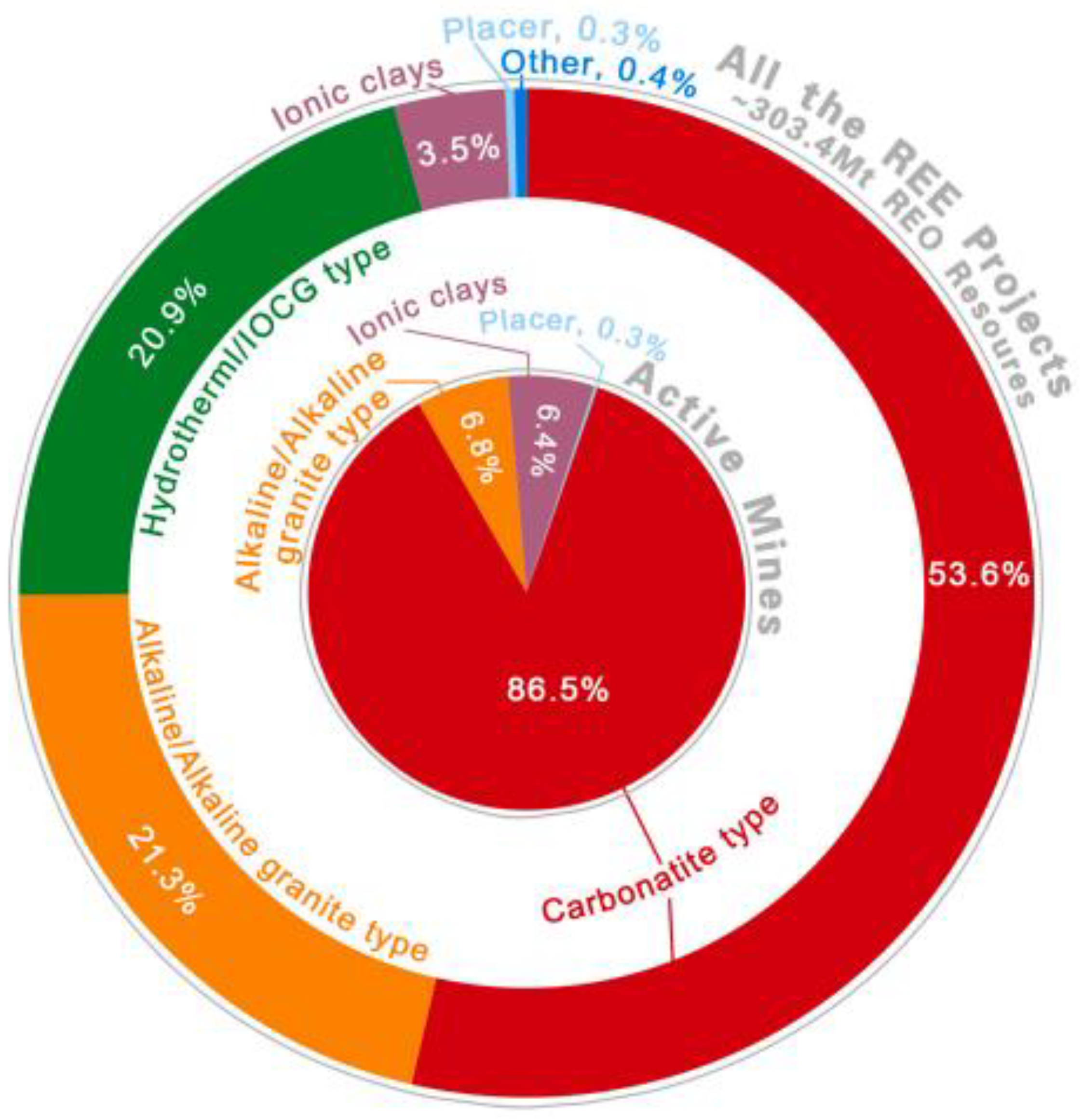
Figure 2.
Global mine production of rare earth metals in different countries (USGS, 2015).
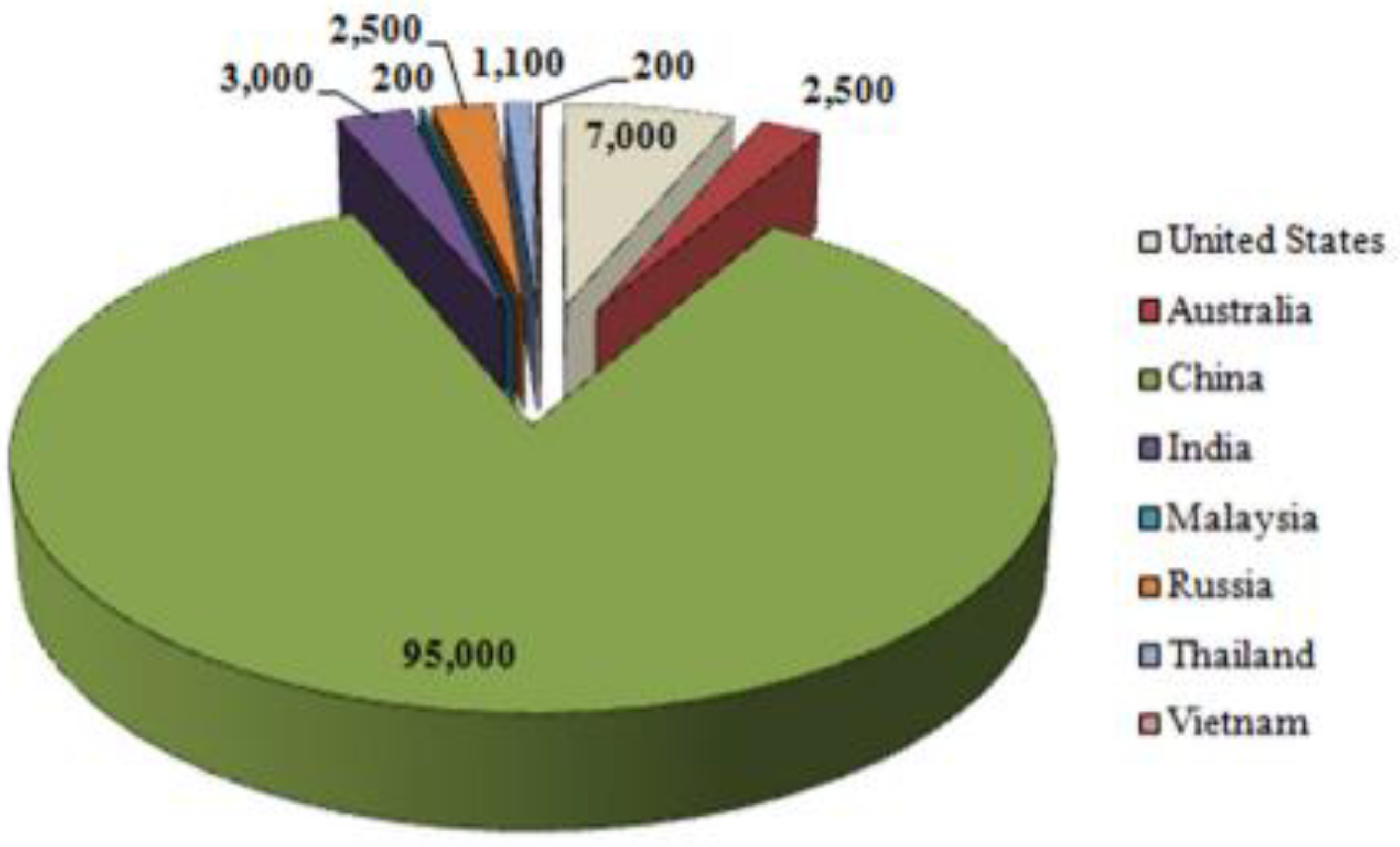
Figure 3.
Distribution of REEs in Bastnasite (Chen, 2011; Jordens et al., 2013).
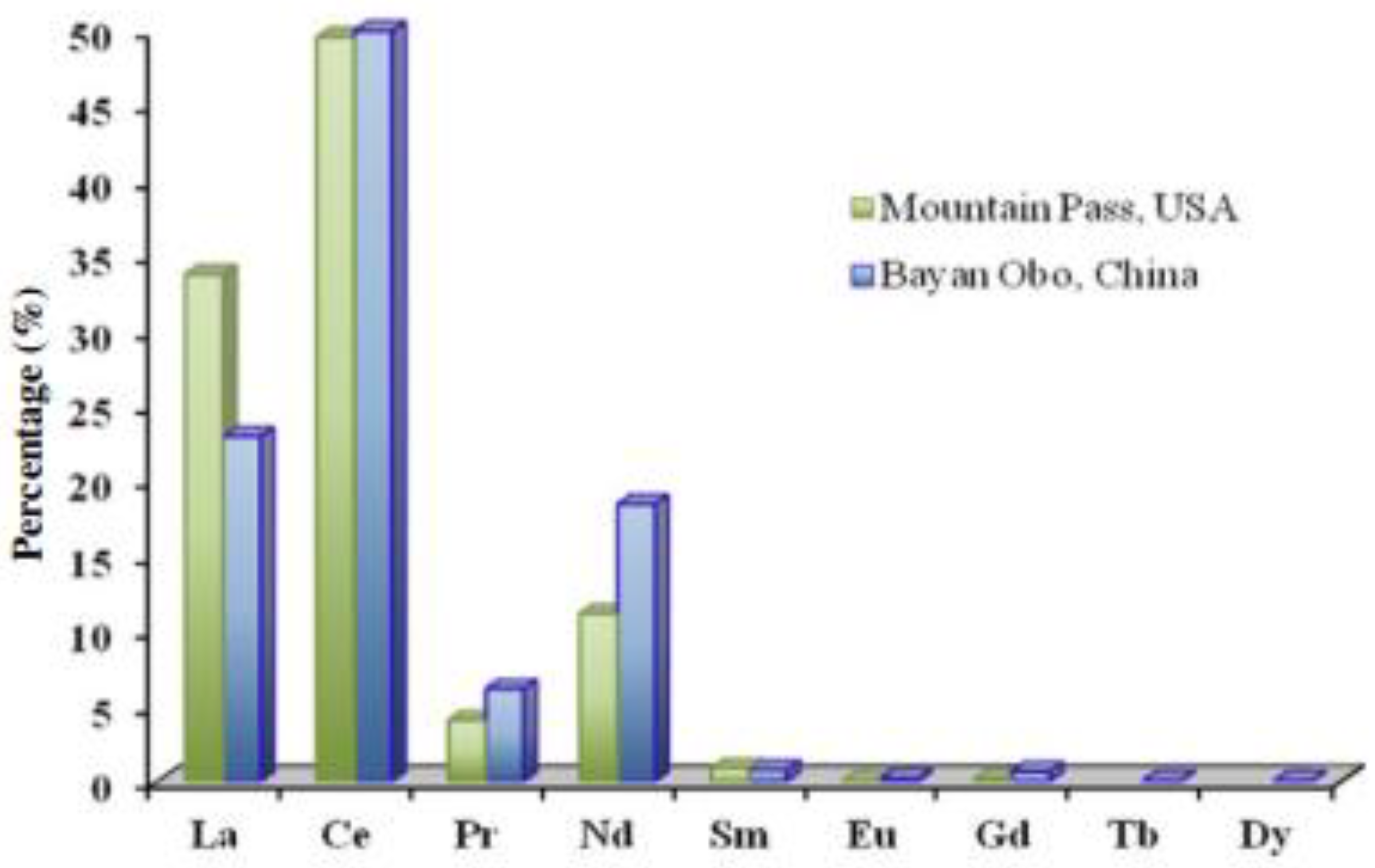
Figure 4.
Indicators of generation and disposal of CFA in the developed countries (Dmitry et al., 2022).
Figure 4.
Indicators of generation and disposal of CFA in the developed countries (Dmitry et al., 2022).
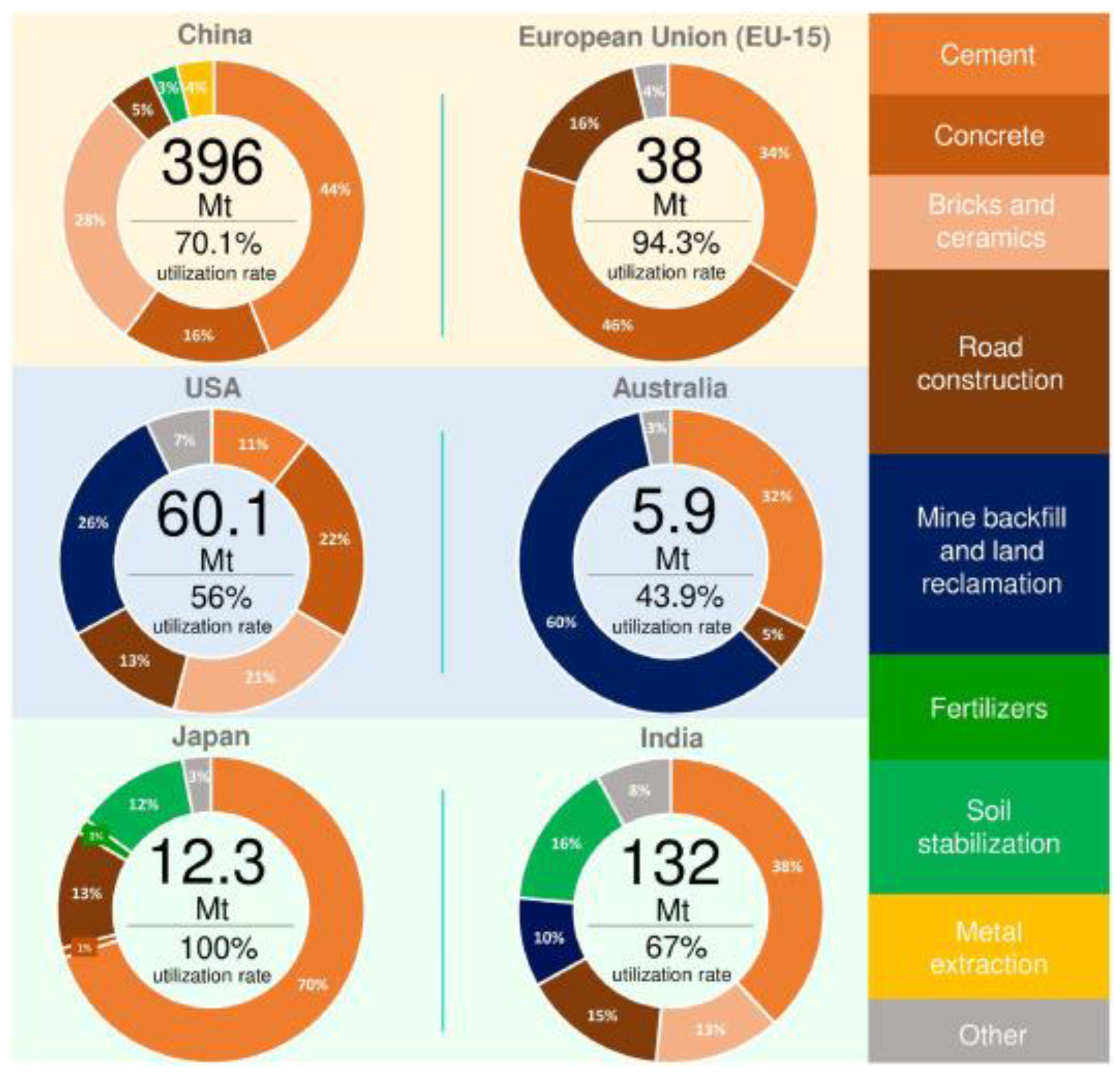
Molecular structure of methane sulfonic acid.
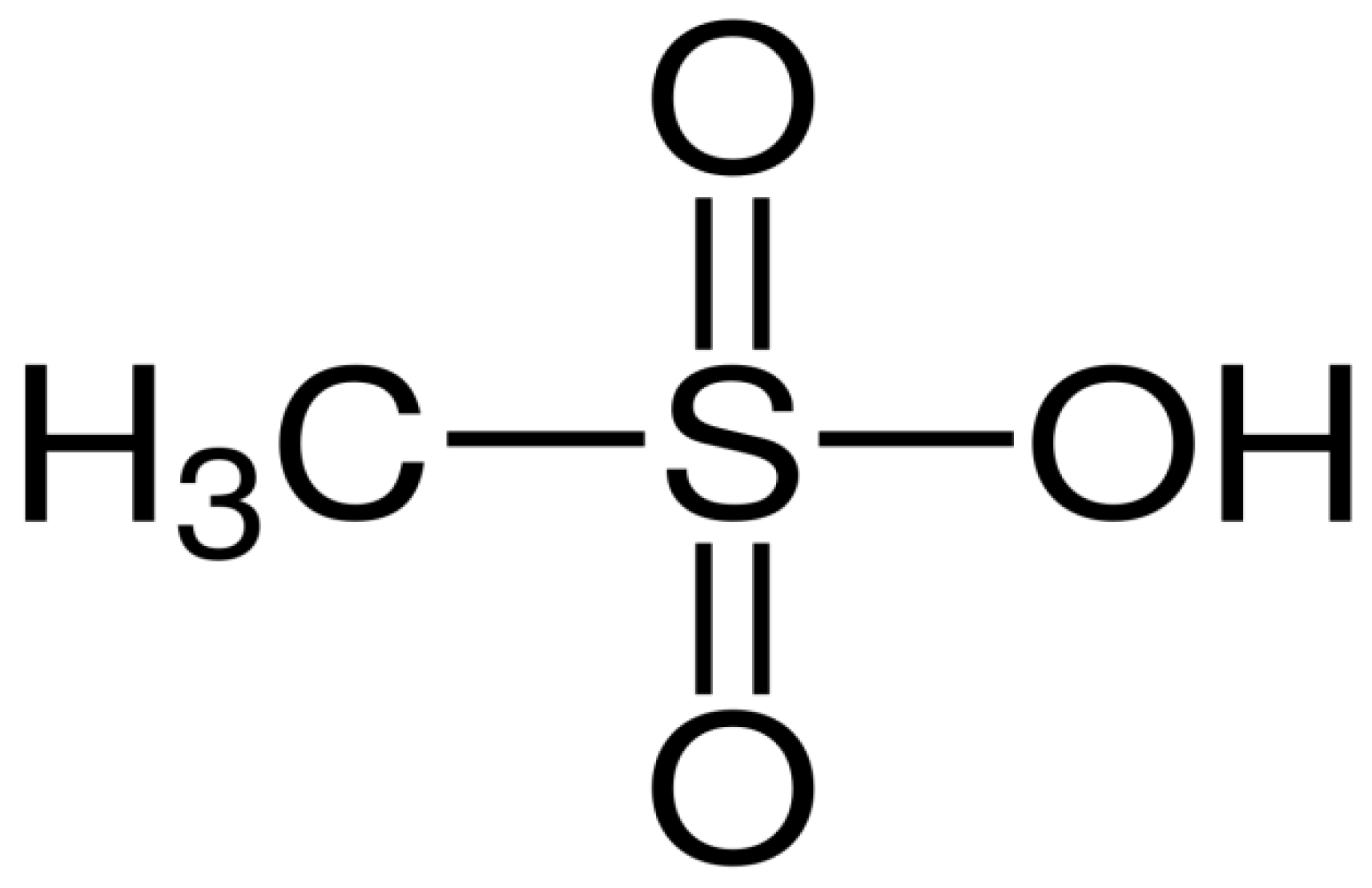
Global market insight and share of MSA.
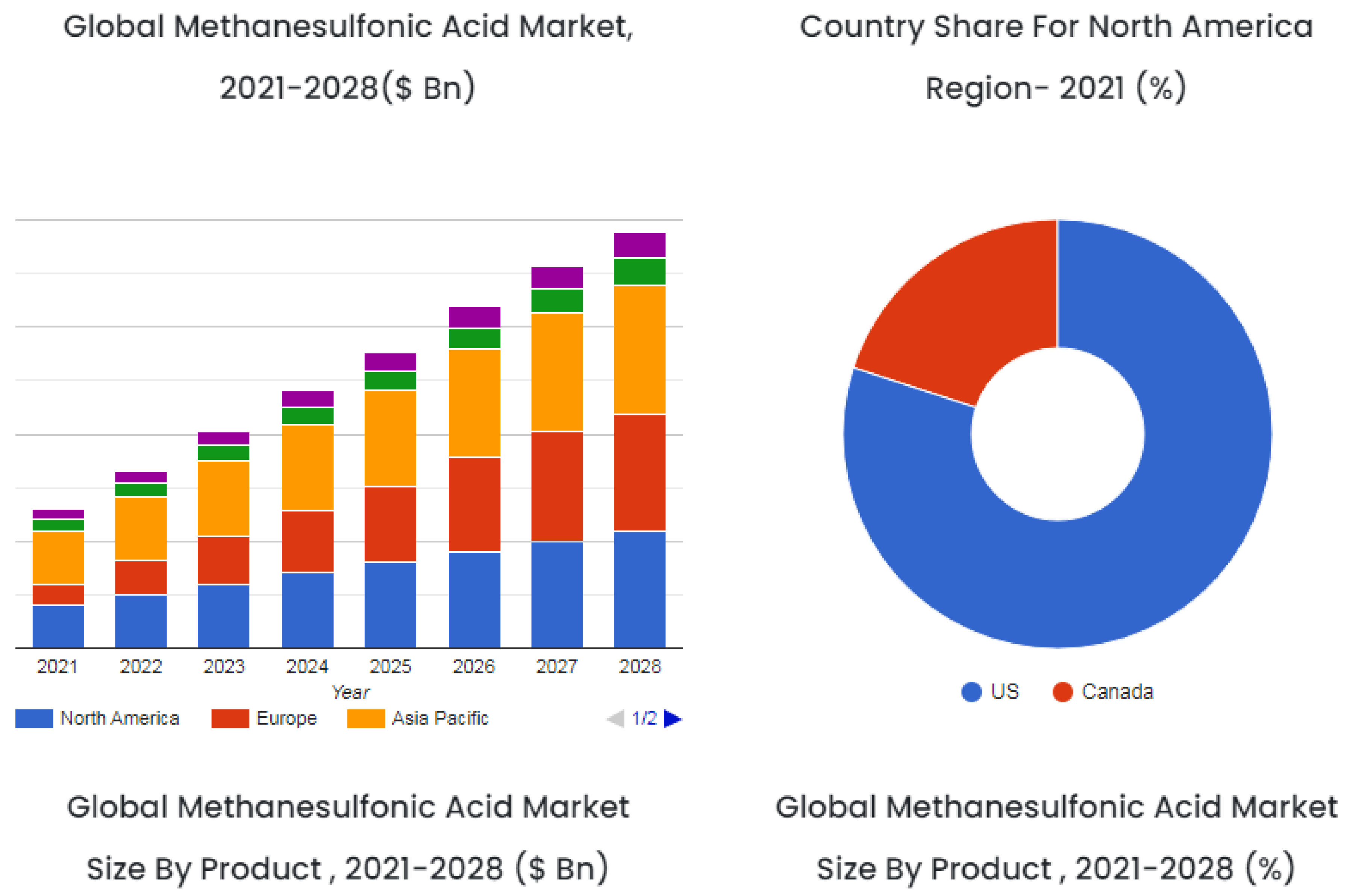

Table 1.
Major oxides of bottom and fly ash (Hauashdh et al., 2020).
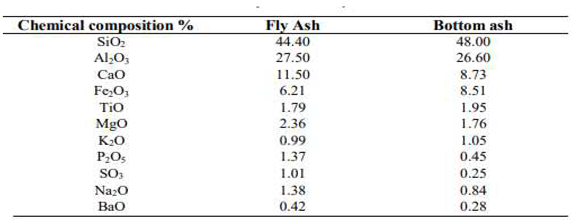
Table 2.
MSA applications (Fortune, 2020).
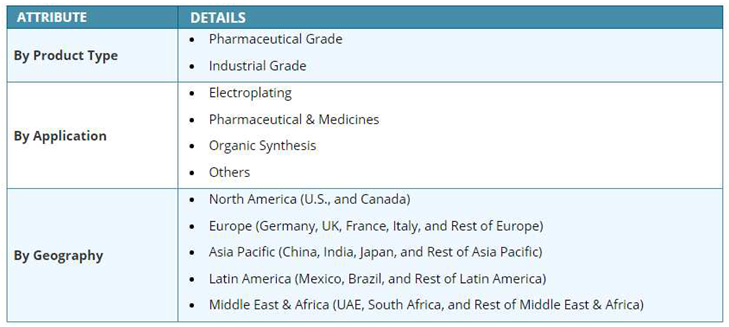
Disclaimer/Publisher’s Note: The statements, opinions and data contained in all publications are solely those of the individual author(s) and contributor(s) and not of MDPI and/or the editor(s). MDPI and/or the editor(s) disclaim responsibility for any injury to people or property resulting from any ideas, methods, instructions or products referred to in the content. |
© 2023 by the authors. Licensee MDPI, Basel, Switzerland. This article is an open access article distributed under the terms and conditions of the Creative Commons Attribution (CC BY) license (http://creativecommons.org/licenses/by/4.0/).
Copyright: This open access article is published under a Creative Commons CC BY 4.0 license, which permit the free download, distribution, and reuse, provided that the author and preprint are cited in any reuse.


