

Submitted:
16 November 2023
Posted:
21 November 2023
You are already at the latest version
Abstract
Pluvial flooding (PF), triggered by intense short-duration rainfall events, poses a growing challenge in urban areas due to climate change and rapid urbanization. To mitigate the risk, it is imperative to identify flood-prone areas and implement mitigation strategies collaboratively with the public. This study aims to create a GIS-MCDA model of PF susceptibility zones based on topographical, environmental, and hydrological criteria and investigate the public perception of risk in Gospić. The survey included 5% of the city population (N=64), and data were obtained via face-to-face interviews. Five factors were examined: (F1) risk awareness, (F2) anthropogenic and (F3) natural causes of PF, (F4) potential consequences, and (F5) preparedness. All factors have moderate mean values, i.e., awareness, causes of PF, expectations of consequences, and preparedness is moderate. The reliability of questionnaire is very high (> 0.71). The PF susceptibility zones were derived with an accuracy of 76%. The most susceptible zone covers 10% of the city, including agricultural land, forests, meadows, and residential properties. Of all respondents, 36% live in the most flood-prone area. In conclusion, mitigation measures for decision-makers were proposed. Results from this research can be a starting point for further research in Croatia and guidelines for decision-makers in implementing a risk mitigation strategy.
Keywords:
Susceptibility
; Pluvial flood
; Risk perception
; Local community
1. Introduction
Nowadays, the impact of climate change on the environment is increasing evidently. Altered precipitation patterns, frequent floods, rising sea levels, and extreme weather events have already begun to affect local communities [1]. The higher frequency and intensity of rainfalls increase the severity of pluvial flood issues. PF is triggered by short-duration intensive rainfall and occurs when the amount of water surpasses urban drainage systems' capacity and the soil's ability for absorption [2]. The issue is most pronounced in urban areas with insufficient urban drainage systems and a high percentage of impervious surfaces. European regions are experiencing an increased frequency of PF, and examples of multiple-affected cities are the city of Rome [3], Palermo [4], Poreč [5], Pariz, London, Berlin [6], and Gospić [7]. PF is called an 'invisible hazard' because it can occur in areas far removed from water bodies, where flooding is not typically expected [2]. This type of flood is complex to predict, and without implementing adequate long-term mitigation measures, it cumulatively causes massive material damage to local communities [8,9].
Comprehensive Flood risk management (FRM) includes identifying flood-prone areas, mapping historical flood locations, communicating the risk with residents, and implementing long-term mitigation measures [8,10]. Susceptibility mapping is typically used to identify prone areas, i.e., to assess the predisposition of the area to the hazard occurrence without predicting the exact time of the event or assessing the damage [11]. The most common predisposing factors of PF are the topographical, hydrological, climatological, environmental, and anthropogenic characteristics of drainage basins [10,12]. Collecting and maintaining accurate historical flood location data supports more precise susceptibility modeling. It provides a valuable foundation for informed decision-making and disaster preparedness [10]. In addition, the perception of flood risk is an essential component of FRM plans and is considered a broader aspect of the social construct of risk [13,14]. It has been analyzed in various research papers [8,15,16], identifying its key determinants and influence on individual behaviors and attitudes. Understanding the perception is crucial for effective risk communication, providing insights into residents' preparedness, and helping identify potential community vulnerabilities and disparities [17]
Croatia has been continuously impacted by heavy rainfall in specific regions; however, there is still a lack of scientific research, legal regulations, and guidelines for PF management [18]. Furthermore, no official and systematic data collection system is in place to record the critical locations and impacts of PF. Therefore, this research aims to contribute to understanding PF in Croatia by modeling the susceptibility zones and analyzing the risk perception among the population of Gospić. The questions structured in this study reflect critical aspects of awareness and preparedness, with the primary purpose of uncovering how city residents perceive the causes of threats, how informed and prepared they are, and which mitigation measures are crucial to implement. This research was carried out as part of the Interreg - PEPSEA (Protecting the Enclosed Parts of the Adriatic Sea from Pollution) project. It studies PF susceptibility using a public perception survey, historical PF data, remote sensing data, and GIS. Results from this research can be a starting point for further research in Croatia and guidelines for decision-makers in implementing a risk mitigation strategy.
1. Study area
The city of Gospić (Figure 1) is located at 44° N latitude and 15° E longitude in the central part of the Lika river basin [7]. Gospić, with a population of around 11,464 residents [19], exhibits a blend of land use patterns featuring a predominantly rural landscape (agriculture and forestry). The whole drainage basin of Gospić encompasses an area of 238 km2. The hydrography of the basin includes the Novčica River with tributaries Bogdanica, Lika, Jadova, and Otešica [20]. Winters in this region are moderately cold and influenced by cold continental air masses from the interior [21]. There are two rainfall maxima: primary in late autumn and secondary in the spring. Regarding the river water level, significant seasonal variations are noticed, i.e., high water level occurs in winter and extremely low (nearly dries up) in summer [7].
Gospić has experienced multiple instances of pluvial and riverine floods, as evidenced by developing a pluvial flood cadastre within the framework of the STREAM project (Figure 1). Most are flooded agricultural fields, roads, and house basements. This comprehensive dataset underscores the pressing need for effective flood risk management and mitigation strategies in the region.
2. Materials and Methods
This research aims to contribute to understanding PF in Croatia by modeling the PF susceptibility zones and analyzing the risk perception among the residents of Gospić. The methodology can be divided into two main parts: 1) GIS-Multi-Criteria Decision Analysis (GIS-MCDA) and 2) survey-based public perception research. Each approach consists of a series of sequential steps presented in Figure 2.
2.1. Public perception of pluvial floods risk
The survey research process comprises several steps: 1) questionnaire construction and 2) survey administration to the selected sample population through face-to-face interviews 3) data entry, database creation, and geocoding, 4) statistical analysis, and 5) interpretation (Figure 2). The database was created based on a public perception survey conducted in October 2022. The survey included 5% of the city population (N=64), and data were obtained via face-to-face interviews using standardized questionnaires identical to the one used in the paper of Šiljeg et al. from 2021, which is applied in the study area of Poreč City (Croatia). To ensure the representative nature of the research sample, the selection process involved stratification based on relevant demographic variables (Figure 3). This step aimed to account for variations in perceptions and experiences related to PF. Exclusion criteria were defined to maintain data integrity. Respondents who refused to complete the questionnaire were excluded from the study. The addresses of respondents were geocoded using Google Earth mapping tools and inserted into the GIS.
2.2. Questionnaire design
To assess the awareness and preparedness of Gospić residents regarding pluvial flooding, a standardized questionnaire consisting of 46 items was employed. The questionnaire was structured into five factors, drawing from the paper of [5].
- -
- F1 Awareness of the Pluvial Flood Risk: Questions were focused on familiarity with PF and evaluating the risk level associated with various facets, such as respondents' homes, drinking water sources, agricultural areas, urban infrastructure, material property, tourism, and others. A Likert scale ranging from 1 (insignificant) to 5 (high) was utilized.
- -
- F2 Anthropogenic Causes of Pluvial Floods: The respondents' perceptions of human-induced causes of PF were explored, particularly urbanization, excessive concrete construction, lack of green spaces, inadequate pumping stations, and un-maintaining of stormwater drainage systems. Participants rated their agreement on a scale from 1 (absolute disagreement) to 5 (absolute agreement).
- -
- F3 Natural Causes of Pluvial Floods: Respondents also evaluated the level of influence of natural factors such as topographic conditions, soil characteristics, and climate change.
- -
- F4 Consequences of Pluvial Floods in the Future: This section gauged participants' expectations regarding the future impact of PF. They provided opinions about the potential increase in the frequency of heavy rainfall events. Furthermore, they expressed expectations of material damage, awareness, and financial investments in flood prevention over the next decade.
- -
- F5 Preparedness for Pluvial Floods: The third section focused on respondents' knowledge of how to respond during PF and their level of preparedness. Participants self-evaluated their preparedness on a scale of 1 (insufficient) to 5 (excellent). Additionally, they expressed their views on various PF-related factors and their perceived roles and responsibilities in prevention and protection.
To better understand created factors, socio-demographic data were collected: gender, age, employment, education level, type of residential property (building or house), ownership status (owner or else), the purpose of the property, total housing financial income, elevation of property, living floor, surrounding infrastructure, and ownership of the basement.
2.1.1. Statistical methods
Statistical analyses (descriptive and inferential) were performed in SPSS Statistics (26.0) software. The descriptive statistic (mean, standard deviation) was presented to understand the variability and significance within the factors. Additionally, minimum and maximum values were included to understand the spread better. To ascertain whether the measurement scales are viable instruments for gauging the attitudes and opinions of respondents, Cronbach's Alpha coefficient was calculated [22]:
is the number of items on the scale.
is the variance of each item.
is the total variance of all the items.
The distribution of the variables was examined using the Kolmogorov-Smirnov and Shapiro-Wilk tests. The Shapiro–Wilk test is appropriate for small sample sizes (<50) but can also handle larger sample sizes, while the Kolmogorov–Smirnov test is used specifically for samples larger than 50 [23]. The null hypothesis for both tests states that data are taken from the normally distributed population. To correct the significance value, the Lilliefors Significance Correction is used.
The type of distribution has determined whether to use parametric or non-parametric tests to compare two or more independent variables with socioeconomic traits. Chi-square was used to examine the differences between categorical variables from a random sample to evaluate the fit between expected and observed results.
3. GIS-MCDA pluvial flood susceptibility model
The GIS MCDA model relies on various spatial data layers, each contributing to assessing PF susceptibility. Criteria were depicted based on relevant literature [3,10,24] and represent the topographical, hydrological, and environmental characteristics of drainage basin; elevation (ELV), slope (SLO), planar curvature (PLAN), stream distance (SD), stream power index (SPI), land cover (LULC), road distance (RD), Normalized Difference Vegetation Index (NDVI) and historical PF density (FD) (Figure 3).
Criteria were derived in ArcMap using the Spatial Analyst toolbox. Morphometric and hydrological criteria were derived from a digital terrain model (DTM) created from high-resolution WorldView2 satellite imagery. WV-2 multispectral imagery was used to derive LULC and NDVI. LULC was created using supervised classification.
Figure 4.
Generated GIS-MCDA criteria.
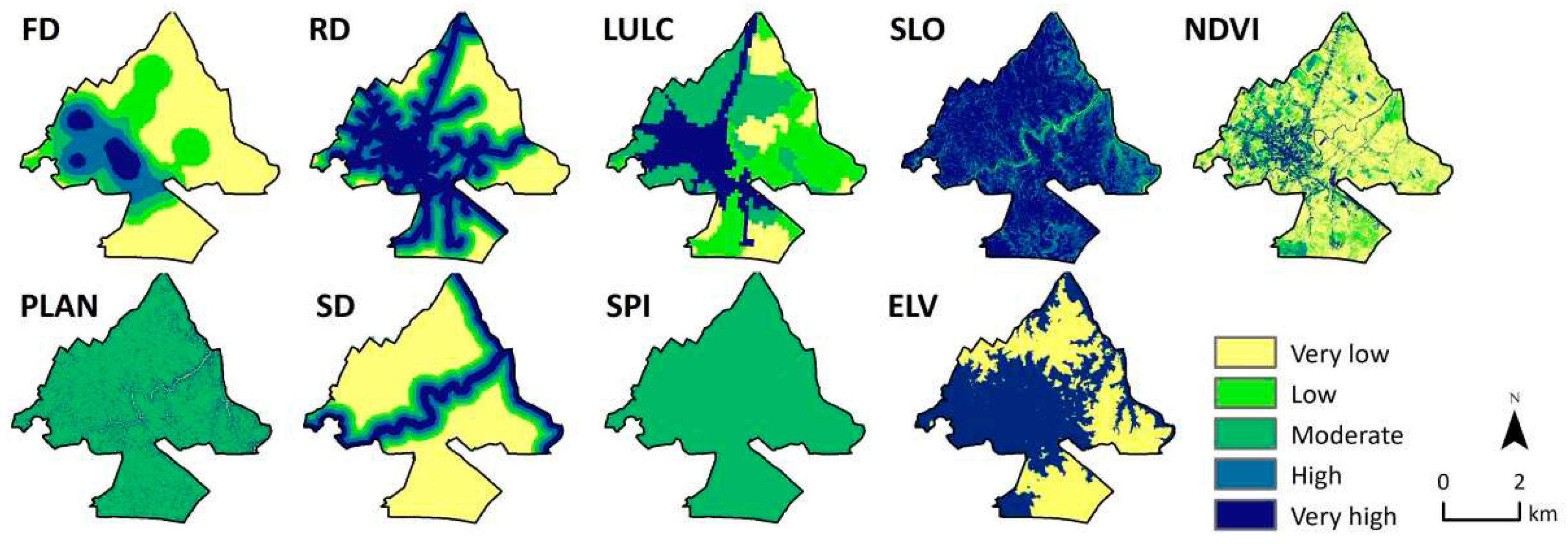
Standardization of criteria was applied from 1 (very low susceptibility) to 5 (very high susceptibility) using the Jenks classification method. An Analytical Hierarchical Process (AHP) was used to calculate the weights for each criterion, reflecting their respective contributions to PF susceptibility. The model's accuracy was validated based on historical flood data using the confusion matrix.
Historical pluvial flood data
Historical PF data were collected from various sources, including public fire brigades, civil protection agencies, municipal institutions, and internet sources. The database for Gospić consists of 26 critical locations, including the ground floor of houses, basements, parking places, streets, and agricultural areas. In these locations, frequent firefighting interventions, such as water pumping and the construction of check dams.
4. Results and discussion
4.1. Public perception of risk
4.1.1. Characteristics of population
The gender distribution within the population was evenly split, with 54% of the respondents being male, while 46% were female. The respondents represented a range of age groups, with the most significant proportion (78%) falling within the age group of 18 to 59. This suggests a diverse age distribution within the sample. Educational backgrounds within the population showed variation that a small fraction (2%) of respondents had not completed elementary school, while a substantial proportion (46%) had completed university education.
The majority (72%) of respondents are employed, 15% are retired, 7% are unemployed, and the rest are students. This reflects the diverse workforce representation in the sample. Income levels in the respondents' households varied, with approximately 52% reporting average monthly incomes between 550 and 1500 euros. About 14% of respondents had incomes below 550 euros. Furthermore, a significant number (72%) of respondents resided in single-family houses; 52% had basements. Regarding the surroundings of their homes, 70% of the respondents reported that their residences are by green spaces, indicating a prevalence of nature over impermeable surfaces. Personal experience with PF showed 20% of respondents in the form of property damage within the last 20 years. Regarding neighborhood incidents, 44% of respondents reported that PF had occurred in their streets or neighborhoods, while 30% had no prior experience with such flood events.
4.2. Public perception of risk
4.2.1. Statistical Analysis
Cronbach's Alpha value for the observed factors is higher than 0.7, suggesting a solid internal consistency within each factor, so grouping is based on predefined categories (Table 1). Awareness of PF (F1) has the highest reliability of 0.9. Slight differences can be noticed by examining central tendencies and variations within the observed factors.
The overall awareness (F1) among respondents is moderate (2.77), but maximum values showed that some respondents have a high level (5) of awareness. Generally, they showed low familiarity (1.42) with the concept of PF, with a standard deviation of 0.497. In addition, respondents often confuse the concepts of pluvial and fluvial floods, frequently equating them. The majority (73%) believe they do not live in an area at high risk of PF. However, they are moderately concerned regarding material property (3.28), urban infrastructure (3.20), and agricultural areas (3.20). There is less concern about risk for tourism (2.15), cultural heritage (2.38), and potential secondary effects like soil erosion or landslides (2.4). To better understand these findings, it is crucial to explain that Gospić is not highly urbanized, and agricultural lands predominate within its drainage basin. Given its location along a river that flows through the city, the local population is well-acquainted with the occasional flooding of these arable areas. Moreover, Gospić is not a tourist-centric city; its residents do not currently derive significant income from tourism, so the potential repercussions of PF are expected to be insignificant. The risk to respondents' homes is estimated as relatively low (2.37), but the max values showed that 12.3 % of respondents perceive a very high (5) risk to their homes.
F2 has the highest average value (3.318), showing an awareness of human activities contributing to floods. This factor also displays a relatively low standard deviation (0.75), indicating that responses are closely clustered around the mean. The leading causes of PF are the outdated stormwater drainage system (4.41) and the lack of maintenance of the stormwater drainage system (4.1). Additionally, some respondents have further emphasized that in their streets, manholes are often blocked by leaves and branches, causing frequent flooding during moderate rainfall. The field survey also confirms this. Compared to this, a moderate problem is seen with excessive concrete (3.35) and urbanization (3.11), while population density has very little or no influence (2.03). This perception by the population aligns with the fact that the settlement area is not densely built and is a demographically depressed area with a significant proportion of elderly residents, characterized by depopulation processes (DZS, 2021).
The overall perception of F3 is moderate, with a mean score of 3.06. According to the respondents, soil type (2.54) and topographic conditions (2.65) are perceived to be moderately susceptible to pluvial floods. Respondents associate the occurrence of PF with climate change, with the highest mean score of 3.86 with a standard deviation of 1.223, showing consistency.
Considering F4, respondents generally hold moderate expectations regarding the increase in heavy rainfall frequency (3.26), material damages to urban areas (3.15), public awareness (2.88), and financial investments (2.72) in PF prevention over the next ten years. The increased damage to respondents' homes is 2.55, with a standard deviation 1.358. However, while some anticipate lower future changes, others have higher expectations, as reflected by the varying standard deviations.
F5 was assessed through the degree of agreement with specific statements. Notably, 60% of the respondents have not insured their property against floods. Regarding the statement that decision-makers have taken adequate measures for pluvial flood protection, respondents generally disagree (2.15) and believe that certain institutions should do more in the context of prevention. The awareness of how to behave in case of hazard is moderate (2.89), with a relatively high standard deviation (1.425). This means that some respondents may be more informed and prepared than others. Additionally, respondents neither agree nor disagree (3.03) with the statement that there are sufficient manholes and drainage channels in their streets. However, a notable group strongly agreed about the insufficiency of drainage systems and the lack of manholes in their streets (20%). Furthermore, most respondents (73%) believe they are ill-equipped to defend against flooding independently and express a lack of confidence in the adequacy of risk mitigation measures taken by decision-makers. This underscores the need for improved flood risk communication and infrastructure measures.
Kolmogorov-Smirnov and Shapiro-Wilk tests were used to assess the normality of the distribution of variables. Results suggest that regarding the F1, F2, F3, and F5, there is no sufficient evidence to claim that the data are not normally distributed (Table 2). However, results for F4 suggest that the data may not be normally distributed, so non-parametric tests that are not sensitive to normality assumptions were used.
Mann-Whitney U, Wilson W, and Kruskal-Wallis H tests were used to determine significant differences in the observed indicators. Results show no statistically significant differences in the observed factors based on age or education level, financial income per month, and ownership of the basement. However, there is a statistically significant difference in F5 (0.048) based on gender, with male participants showing higher preparedness. There is also a statistically significant difference in F5 based on employment status (0.033). The ranks are higher for unemployed persons. Significance is also observed in F1 awareness of PF based on the type of object the respondent is living in. The respondents who are living in family houses have lower awareness.
The Chi-square test assessed the statistical significance of the relationship between various categorical variables concerning different statements or assertions. In the case of the following assertions, no significant associations were found with the tested variables:
- -
- Assessment of the threat to respondents' homes
- -
- Familiarity with the concept of PF
- -
- Willingness to invest more personal financial resources in improving drainage systems.
- -
- Taken preventive measures on personal property in the last 10 years.
- -
- The impact of PF on the quality of life
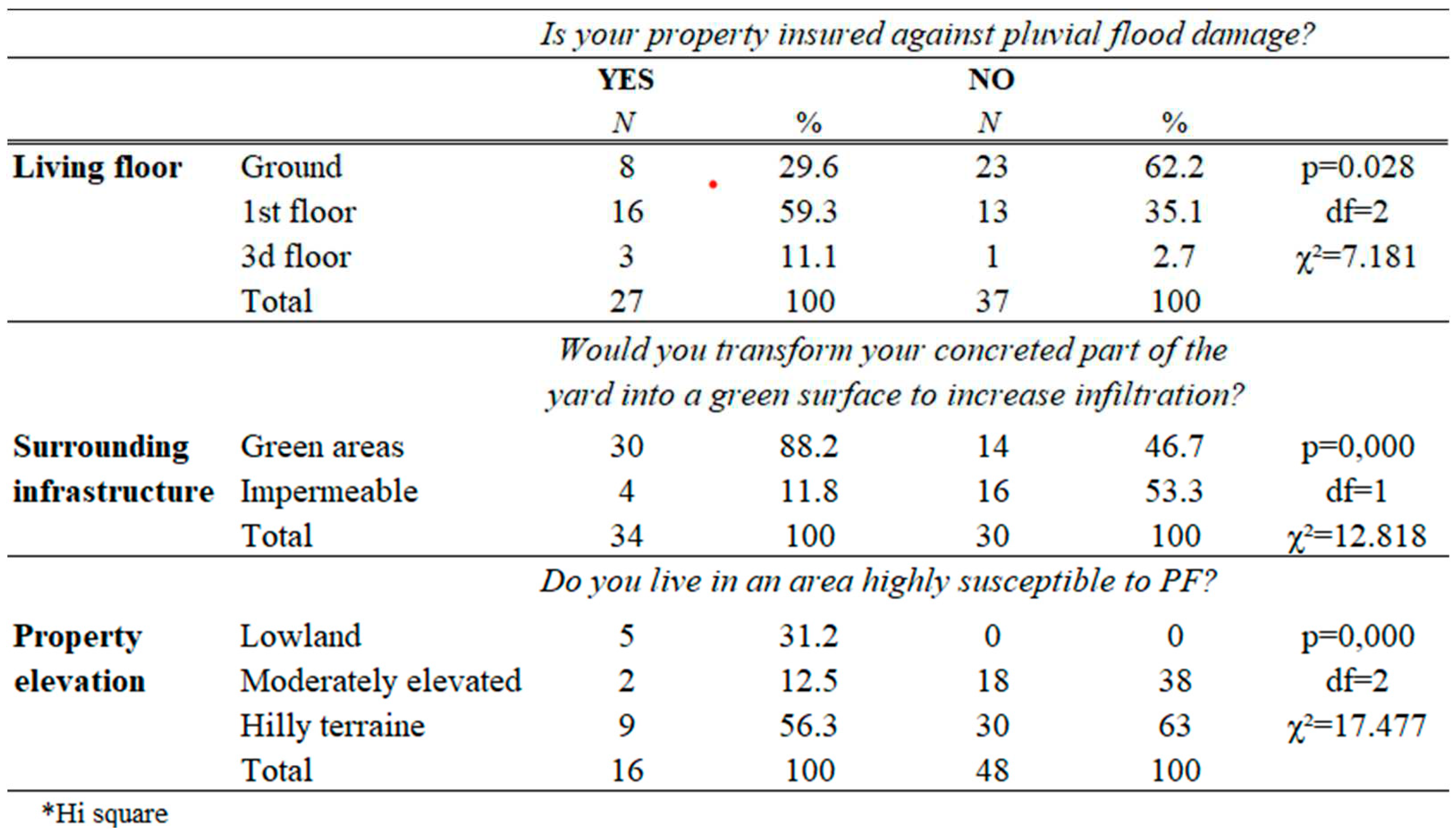
However, Table 3 presents the results of the Chi-square tests that indicated significant relationships between certain categorical variables. An analysis of property insurance against PF damage revealed a significant association with the living floor type. Specifically, residents on the 1st floor were more likely to have flood insurance than those on the 2nd and 3rd floors.
The assessment of the willingness to transform concrete yard areas into green surfaces showed a significant relationship with the type of surrounding infrastructure, i.e., residents who already live near green spaces are more inclined to embrace such transformations. The evaluation of PF susceptibility based on property elevation demonstrated a significant association with higher ranks for people living in elevated and hilly areas.
Compared to the study conducted by Šiljeg et al. in 2021, it is evident that the public awareness of flood risk in the population of Gospić is lower than that of the respondents in Poreč. However, the level of preparedness is similar in both cities. In both cases, survey participants expressed doubt regarding the adequacy of measures taken by decision-makers. Respondents in both cities also pointed out the issue of inadequate maintenance of stormwater drainage systems. In Poreč, statistical significance was observed concerning gender and the perception of anthropogenic causes.
4.3. GIS-MCDA pluvial flood susceptibility
The GIS-MCDA model of PF susceptibility exhibited a high accuracy and precision of 76%, a recall of 100%, and an F1-score of 89.29%. Moreover, comparing these results with the 2023 study by Krvavica et al., which centered on modeling potential flood depths and risk, a significant correspondence is noticed. The high susceptibility zones closely matched regions with substantial flood depth in their model.
GIS-MCDA revealed that the most prevalent within Gospić City is a moderate susceptibility zone to PF, covering approximately 35% of the area (Figure 5). These areas include various land uses, residential, commercial, and industrial. High susceptibility zones comprise 10% of the city and predominantly comprise agricultural land, forests, and meadows. However, in this zone are also some urban parts, which include specific streets and residential properties. The most susceptible streets are Katarine Zrinski, Žabička, Smiljanska and Budačka. Still, the susceptibility is not uniform along their entire lengths, i.e., the highest susceptibility is concentrated in specific sections characterized by low-incline, concave terrain with small sinks. Several residential properties along these streets have experienced firefighting interventions focused on removing the water buildup in basements and lower-level areas of these houses.
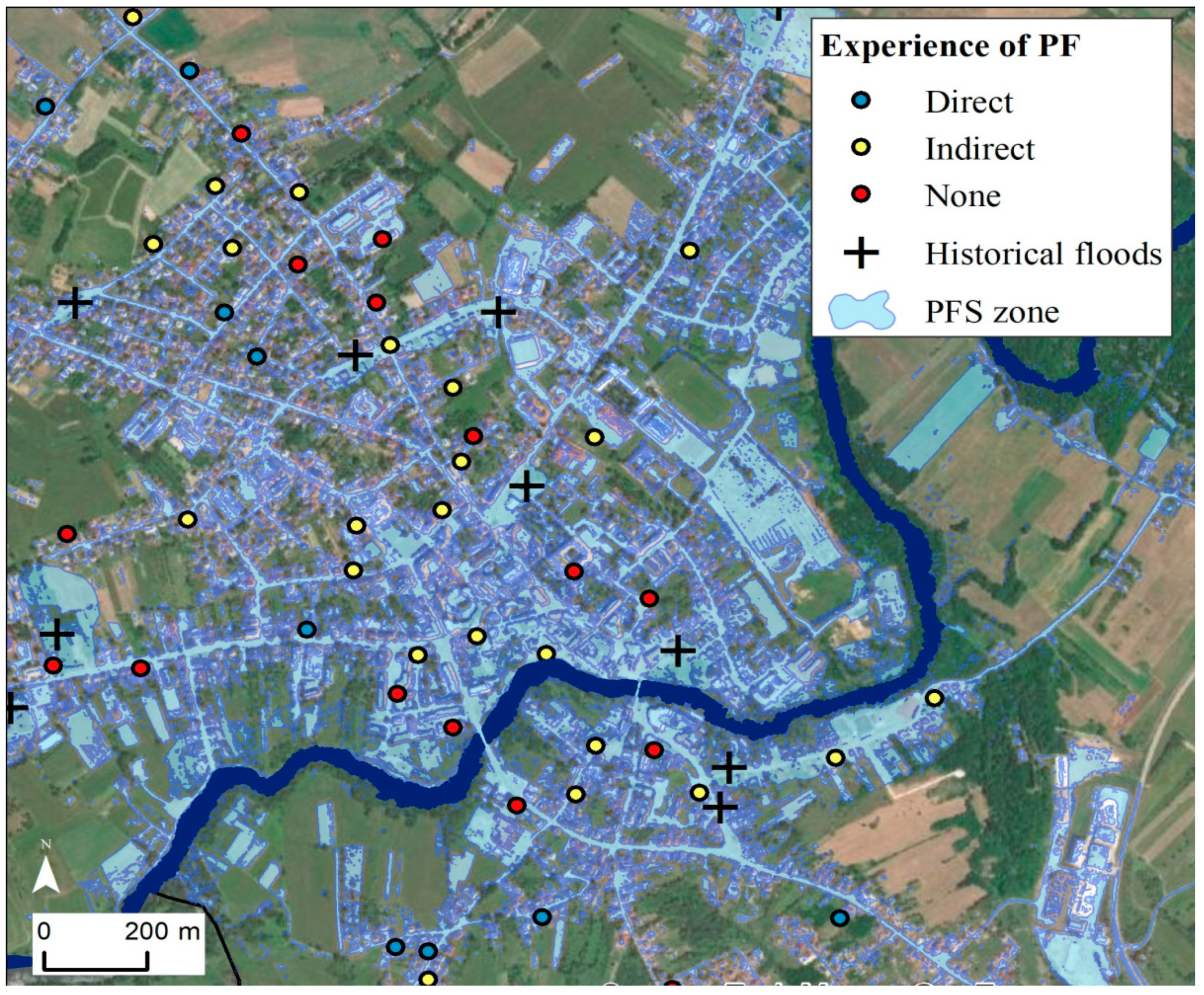
Comparing respondents' locations with PF zones, it is noticed that 36% reside within the area characterized by the highest susceptibility to pluvial floods. Among these respondents, 17% have a direct experience with flooding. In comparison, 46% have an indirect experience, i.e., they are acquainted with someone residing in the same city or street who has encountered PF-related issues.
Figure 6.
Previous expirience of pluvial floods.
5. Conclusions
The GIS-MCDA model indicates that most of the study area falls within zones of moderate susceptibility to PF, with a 10% coverage of very high susceptibility areas, mainly comprising agricultural land, meadows, forests, and some residential properties. Notably, 36% of the surveyed individuals reside in the highest susceptibility zones, with 17% reporting property damage within the past decade.
Statistical analysis has demonstrated robust internal consistency within each factor of the questionnaire. All factors have moderate mean values, i.e., awareness, causes of PF, expectations of consequences, and preparedness are moderate. Notably, the factor with the lowest mean value is awareness of the risk, characterized by a limited familiarity with the concept of PF and a low-risk assessment of their homes and properties. Given Gospić's location near a river, residents often conflate the idea of pluvial and fluvial floods, expressing more significant concern about river overflow. Anthropogenic causes, with the highest mean score and low variability, are perceived as the primary contributors to PF.
Most respondents believe they are ill-equipped to defend against flooding independently and express a lack of confidence in the adequacy of risk mitigation measures taken by decision-makers. Still, 60%, of which 36% live in the most susceptible zone, have not insured their properties against floods. Property insurance has uncovered a significant association with the living floor, i.e., individuals residing on the 1st floor are more likely to possess flood insurance. Additionally, significant differences in preparedness are notable based on gender and employment status, with male and unemployed participants showing higher levels. Furthermore, residents residing near existing green spaces seem more inclined to embrace specific preventive measures.
The prevailing attitude is that decision-makers have inadequately addressed mitigation measures and that certain institutions must take more proactive roles in prevention and public awareness efforts. highlighted critical concerns, including the aging and lack of maintenance of stormwater drainage systems. Also, there are deficiencies in the existing legislative framework for spatial planning in Croatia, allowing construction permits to be issued irrespective of the natural flood-prone conditions.
Considering these findings, we recommend the following actions for decision-makers:
- -
-
Invest in the restoration and enhancement of drainage systems.
- Maintain existing infrastructure, including manholes and drainage channels, regularly.
- Identify flood-prone areas within the administrative unit.
- Systematic documentation of pluvial flood events in the form of pluvial flood cadastres.
- Implement amendments to urban planning documents to regulate construction in flood-prone areas.
- Improve communication regarding flood risks and protective infrastructure measures.
- Undertake structural measures, such as canal construction and riverbed regulation.
These measures are crucial in bolstering the preparedness and protection of Gospić against pluvial floods and heightening awareness and readiness among its residents regarding the risks and consequences associated with flooding.
References
- Banholzer, S.; Kossin, J.; Donner, S. The Impact of Climate Change on Natural Disasters. In Reducing Disaster: Early Warning Systems for Climate Change; 2014; pp. 21–49. ISBN 978-94-017-8597-6. [Google Scholar]
- Houston, D.; Werritty, A.; Bassett, D.; Geddes, A.; Hoolachan, A.; McMillan, M. Pluvial (Rain-Related) Flooding in Urban Areas: The Invisible Hazard; Joseph Rowntree Foundation, 2011. [Google Scholar]
- Di Salvo, C.; Ciotoli, G.; Pennica, F.; Cavinato, G.P. Pluvial Flood Hazard in the City of Rome (Italy). J. Maps 2017, 13, 545–553. [Google Scholar] [CrossRef]
- Francipane, A.; Pumo, D.; Sinagra, M.; La Loggia, G.; Noto, L.V. A Paradigm of Extreme Rainfall Pluvial Floods in Complex Urban Areas: The Flood Event of 15 July 2020 in Palermo (Italy). Nat. Hazards Earth Syst. Sci. 2021, 21, 2563–2580. [Google Scholar] [CrossRef]
- Siljeg, S.; Milosevic, R.; Pandja, L. Public Perception of the Urban Pluvial Floods Risk-Case Study of Porec (Croatia). J. Geogr. Inst. Jovan Cvijic SASA 2022, 72, 147–158. [Google Scholar] [CrossRef]
- Feng, Y.; Sester, M. Extraction of Pluvial Flood Relevant Volunteered Geographic Information (VGI) by Deep Learning from User Generated Texts and Photos. ISPRS Int. J. Geo-Inf. 2018, 7, 39. [Google Scholar] [CrossRef]
- Krvavica, N.; Šiljeg, A.; Horvat, B.; Panđa, L. Pluvial Flash Flood Hazard and Risk Mapping in Croatia: Case Study in the Gospić Catchment. Sustainability 2023, 15, 1197. [Google Scholar] [CrossRef]
- Netzel, L.M.; Heldt, S.; Engler, S.; Denecke, M. The Importance of Public Risk Perception for the Effective Management of Pluvial Floods in Urban Areas: A Case Study from Germany. J. Flood Risk Manag. 2021, 14, e12688. [Google Scholar] [CrossRef]
- Douglas, I.; Garvin, S.; Lawson, N.; Richards, J.; Tippett, J.; White, I. Urban Pluvial Flooding: A Qualitative Case Study of Cause, Effect and Nonstructural Mitigation: Urban Pluvial Flooding. J. Flood Risk Manag. 2010, 3, 112–125. [Google Scholar] [CrossRef]
- Pham, B.T.; Phong, T.V.; Nguyen, H.D.; Qi, C.; Al-Ansari, N.; Amini, A.; Ho, L.S.; Tuyen, T.T.; Yen, H.P.H.; Ly, H.-B.; et al. A Comparative Study of Kernel Logistic Regression, Radial Basis Function Classifier, Multinomial Naïve Bayes, and Logistic Model Tree for Flash Flood Susceptibility Mapping. Water 2020, 12, 239. [Google Scholar] [CrossRef]
- Swain, K.C.; Singha, C.; Nayak, L. Flood Susceptibility Mapping through the GIS-AHP Technique Using the Cloud. ISPRS Int. J. Geo-Inf. 2020, 9, 720. [Google Scholar] [CrossRef]
- Khosravi, K.; Shahabi, H.; Pham, B.T.; Adamowski, J.; Shirzadi, A.; Pradhan, B.; Dou, J.; Ly, H.-B.; Gróf, G.; Ho, H.L.; et al. A Comparative Assessment of Flood Susceptibility Modeling Using Multi-Criteria Decision-Making Analysis and Machine Learning Methods. J. Hydrol. 2019, 573, 311–323. [Google Scholar] [CrossRef]
- Siegrist, M.; Gutscher, H. Natural Hazards and Motivation for Mitigation Behavior: People Cannot Predict the Affect Evoked by a Severe Flood. Risk Anal. 2008, 28, 771–778. [Google Scholar] [CrossRef] [PubMed]
- Renn, O. Concepts of Risk: An Interdisciplinary Review Part 1: Disciplinary Risk Concepts. GAIA - Ecol. Perspect. Sci. Soc. 2008, 17, 50–66. [Google Scholar] [CrossRef]
- Lechowska, E. What Determines Flood Risk Perception? A Review of Factors of Flood Risk Perception and Relations between Its Basic Elements. Nat. Hazards 2018, 94, 1341–1366. [Google Scholar] [CrossRef]
- Kellens, W.; Terpstra, T.; De Maeyer, P. Perception and Communication of Flood Risks: A Systematic Review of Empirical Research. Risk Anal. 2013, 33, 24–49. [Google Scholar] [CrossRef] [PubMed]
- Schmitt, T.G.; Scheid, C. Evaluation and Communication of Pluvial Flood Risks in Urban Areas. WIREs Water 2020, 7, e1401. [Google Scholar] [CrossRef]
- Cibilić, A.; Barbalić, D.; Rubinić, J.; Karleuša, B.; Krvavica, N. Heavy Rain Flood Risk Management – RAINMAN Project; 2019.
- Popis 2021. Available online: https://dzs.gov.hr/naslovna-blokovi/u-fokusu/popis-2021/88 (accessed on 24 October 2023).
- Pejnović, D. Režim tekućica kao indikator općih hidrogeografskih obilježja Like. Hrvat. Geogr. Glas. 1991, 53., 41–55. [Google Scholar]
- Pejnović, D. Prilog poznavanju obilježja klime i klimatska regionalizacija Like. Acta Geogr. Croat. 1990, 25., 1–21. [Google Scholar]
- Cronbach, L.J. Coefficient Alpha and the Internal Structure of Tests. Psychometrika 1951, 16, 297–334. [Google Scholar] [CrossRef]
- Mishra, P.; Pandey, C.; Singh, U.; Gupta, A.; Sahu, C.; Keshri, A. Descriptive Statistics and Normality Tests for Statistical Data. Ann. Card. Anaesth. 2019, 22, 67. [Google Scholar] [CrossRef] [PubMed]
- Vojtek, M.; Vojteková, J. Flood Susceptibility Mapping on a National Scale in Slovakia Using the Analytical Hierarchy Process. Water 2019, 11, 364. [Google Scholar] [CrossRef]
Figure 1.
Study area - Gospić.
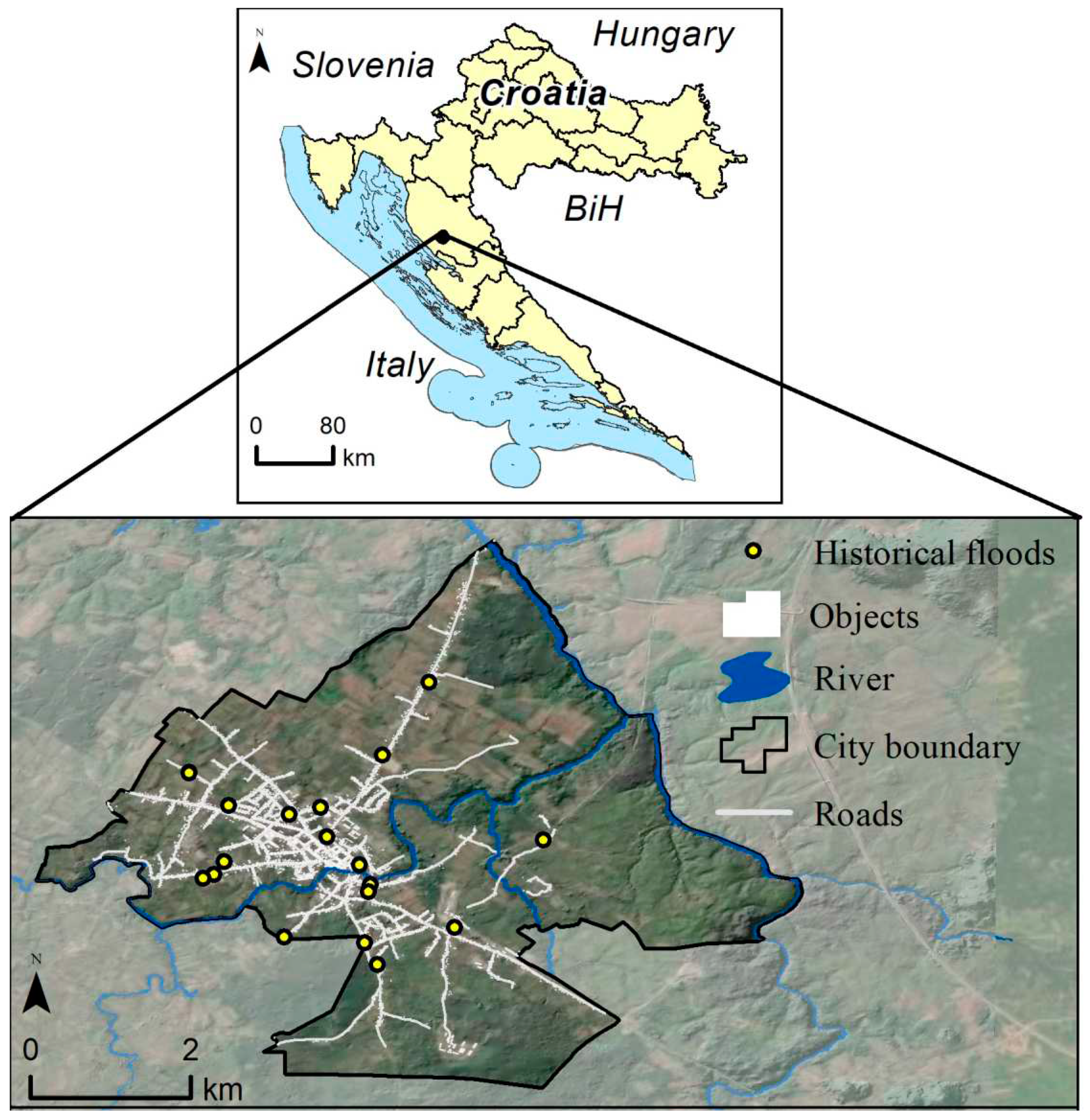
Figure 2.
Methodology workflow.
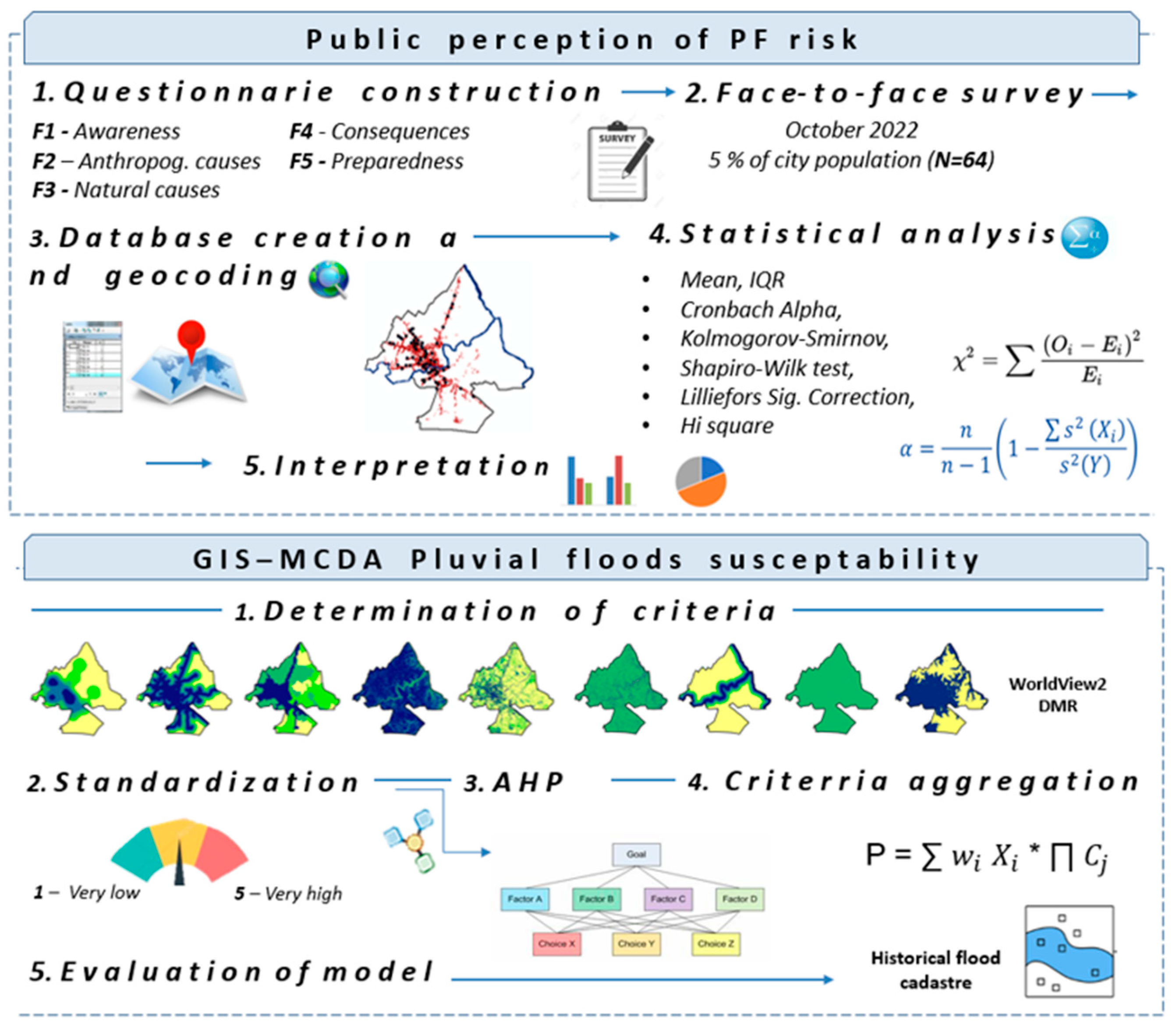
Figure 3.
Face-to-face interwieves.

Figure 5.
GIS-MCDA Pluvial Flood Susceptibility Model.
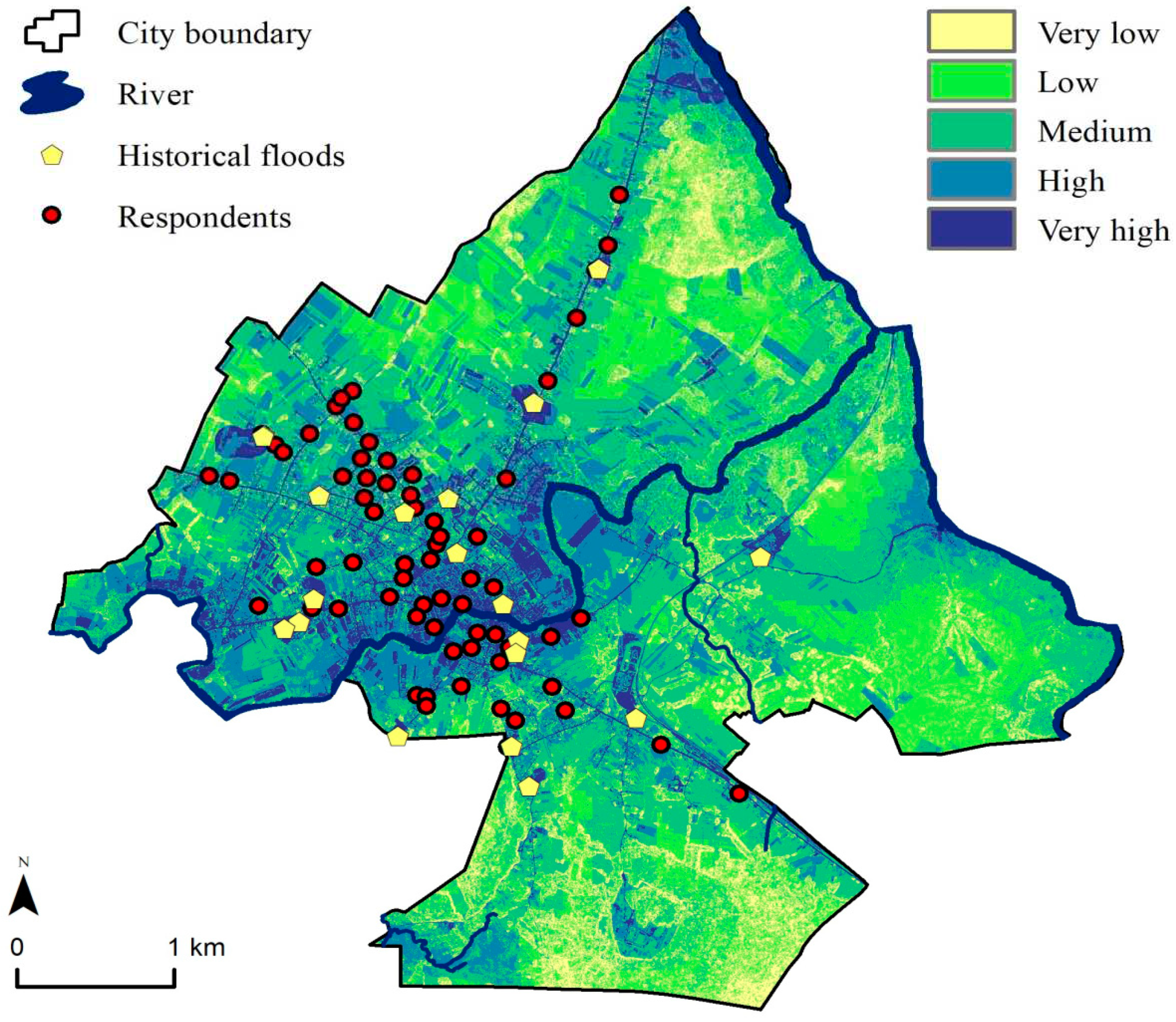

Table 1.
Mean values by factors (median) and the indicator of their dispersion.
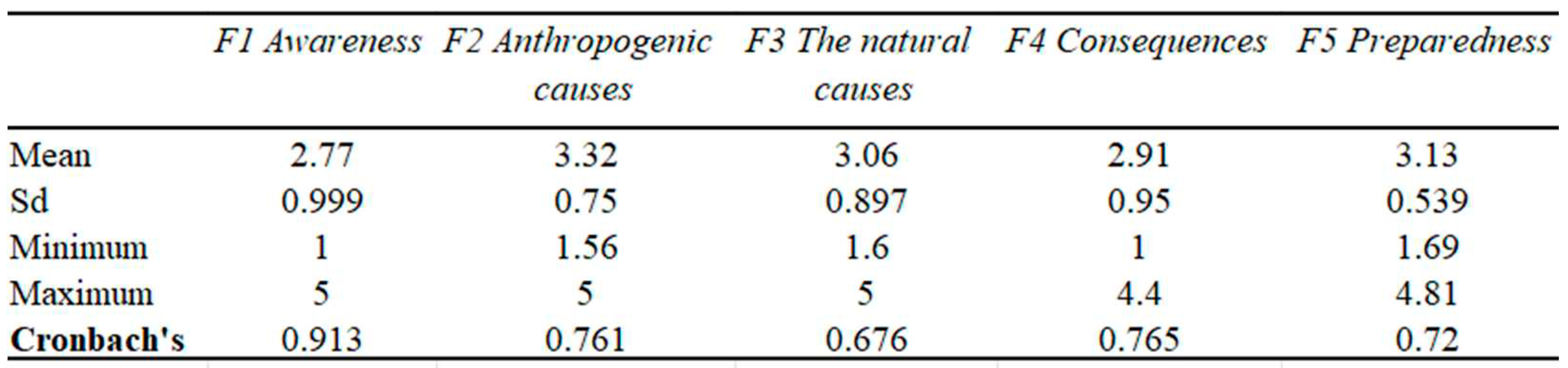 |
Table 2.
Distribution normality testing.
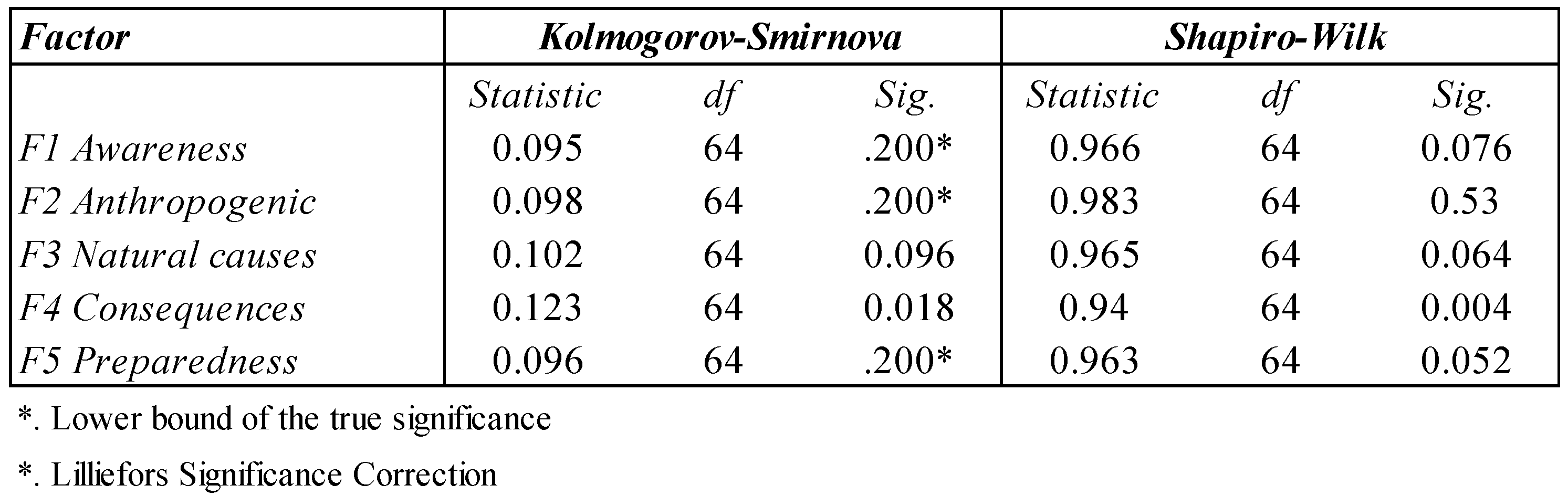 |
Table 3.
Hi square - statisticly significant values.
 |
Disclaimer/Publisher’s Note: The statements, opinions and data contained in all publications are solely those of the individual author(s) and contributor(s) and not of MDPI and/or the editor(s). MDPI and/or the editor(s) disclaim responsibility for any injury to people or property resulting from any ideas, methods, instructions or products referred to in the content. |
© 2023 by the authors. Licensee MDPI, Basel, Switzerland. This article is an open access article distributed under the terms and conditions of the Creative Commons Attribution (CC BY) license (http://creativecommons.org/licenses/by/4.0/).
Copyright: This open access article is published under a Creative Commons CC BY 4.0 license, which permit the free download, distribution, and reuse, provided that the author and preprint are cited in any reuse.


