

Submitted:
15 November 2023
Posted:
16 November 2023
You are already at the latest version
Abstract
MoS2 lithium-based grease is suitable for lubrication protection between bearings at high temperatures and loads due to its excellent tribological properties. However, there is little research on the influence of different addition methods of MoS2 additive on the tribology and corrosion properties of lithium grease. In this work, vegetable oil with low toxicity, high biodegradation rate, and low cost was selected as the base oil, lithium 12-hydroxystearate as the thickener, and MoS2 as the additive. The effects of different adding modes of MoS2 on the tribology and corrosion properties of lithium grease were studied. The experimental results showed that adding 0.01wt% MoS2 before thickening was more conducive to improving the tribological properties of lithium grease. The average friction coefficient was 0.034, and the average spot diameter was reduced by 0.16mm. After grinding and adding 0.01wt% MoS2, the corrosion inhibition efficiency of the steel sheet was as high as 96.97%. The main reason was that the longer stirring and grinding were conducive to the uniform distribution of MoS2 in the grease, and the protective film formed by MoS2 and GCr15-bearing steel improved the lubrication performance and corrosion inhibition performance of the friction system.
Keywords:
MoS2
; Lithium base grease
; addition method
; Friction
; corro
1. Introduction
Grease is a common lubricant composed of base oil and thickener and is widely used in machinery lubrication due to its unique properties. It is often the lubricant of choice for rolling bearings, plain bearings, slider bearings, gears, pivots, couplings, guides, pin bushings, and sliding contacts [1]. Greases have good sealing ability, are leak-resistant, have corrosion resistance, and require little maintenance [2]. Grease occupies an important position in the national economy and plays an important role in maintaining the normal operation of various mechanical equipment, reducing friction and wear during operation, and extending the service life of mechanical equipment [3].
At present, there are five main types of base oils for the production of biodegradable fats and oils: highly unsaturated vegetable oil, low-viscosity polyalphaolefin, polyethylene glycol, dibasic acid ester, and polyol ester. The main advantages of vegetable oil are low toxicity, high biodegradation rate, low cost, and renewable [4].
In general, various types of greases can be used for bearing lubrication. The low-performance calcium and sodium grease is cheap, but the lubrication effect is not as good as the high-performance grease, and the grease change cycle is short. For bearings of working conditions with general speed, low load, and low working temperature, calcium base or compound calcium base grease can be used. Sodium base grease can be used in environments with slightly higher working temperatures and no water and wet circumstances. Calcium and sodium base grease can be used in environments with water and wet. Ball-bearing grease can be used for equipment with general speed and heavy working load, as its mechanical stability and colloidal stability are better than calcium and sodium base greases[5] . Compared with other soap-based greases, lithium-based greases can still exert excellent lubrication performance under extremely harsh operating conditions.
In the field of lubrication engineering, the tribological behavior of grease is largely determined by the performance of additives. The main function of additives in grease is to improve and enhance the performance [6], and the addition of different additives will lead to differences in the performance of the same grease. For low-speed and heavy load conditions, lithium-based grease containing MoS2 exhibits good tribological properties. MoS2 is a two-dimensional layered structure formed by an S-Mo-S atomic covalent bond, and the layers are connected by weak van der Waals forces, and the molecular layers are easy to slide so that they show excellent frictional properties [7], and have been widely used in the field of solid lubrication [8]. In addition, compared with other lubricants, a series of lubricants containing MoS2 displays tribological advantages. Research has found that MoS2 is prone to react with non-ferrous metals such as iron substrates, generating friction films containing iron sulfide and its oxides, metal oxides, and disulfides [9], thus exhibiting excellent low friction and wear resistance. Therefore, MoS2 is commonly used as an additive and is widely used in lubricating oils or greases to reduce friction and wear [10].
2. Experimental Part
2.1. Experimental Materials and Characterization
Main materials and instruments: Molybdenum disulfide (MoS2, AR), lithium dodecyl stearate, Cornoil, nitrogen, petroleum ether (60-90), anhydrous ethanol (AR), deionized water, three-neck flask, magnetic Stirrer, three-roll grinder (S65, China Changzhou Caobao Machinery Co., LTD.), vertical universal friction and wear testing machine (MMW-1B), GCr15-bearing steel ball (diameter 10mm, hardness HRC62-65).
MoS2 powder, produced by Tianjin Zhiyuan Chemical Reagent Co., LTD. The morphology of the samples was observed by Zeiss SU8010 scanning electron microscope (SEM). The powder samples were ultrasonically dispersed on the silicon wafer with anhydrous ethanol, and then gold was sprayed after drying. Figure 1 is the SEM image of MoS2 powder. It can be seen from SEM that MoS2 is a lamellar structure. Because the layered structure of MoS2 is only affected by weak van der Waals forces between layers, it is prone to sliding. This results in lubricants containing MoS2 typically exhibiting good friction reduction and wear resistance [11].
2.2. Preparation of Grease
The specific preparation method of grease is as follows: 150 g of corn oil was heated in an oil bath to 110℃. In the atmosphere of nitrogen, 25 g of thickening agent (12-hydroxystearate lithium) was gradually added to corn oil for thickening treatment. After stirring the reactant for 1 h, the temperature was raised to 180℃ for 1h, and finally, the temperature was raised to 210℃ for 40 min. After that, the reaction was cooled naturally in the oil bath. The cooled grease was then ground 5-10 times by a three-roll grinder to obtain the samples of the greases used in the following experiments.
In this study, MoS2 additives with different mass fractions (ω) were added to the prepared grease samples in different ways. The addition methods were divided into the following four types: (1) Adding additives directly during the thickening process, and the method of adding additives was called “Method A”. (2) Additives were added during three-roll grinding, this method was referred to as “Method B”. (3) After adding additives during the thickening process, the sample was ground with three-rollers for 5-10 times, and the method of adding additives was labeled as “Method C”. (4) The MoS2 additive was added 20 min before thickening, and the resulting grease was ground 5-10 times with a three-roll grinder. This method was recorded as “Method D”.
2.3. Performance Test
2.3.1. Physical and Chemical Properties of Grease
Following the test method specified in the GB/T4929 standard, the drop point tester (Shanghai Fine Analysis Instrument Manufacturing Co., LTD., SYD-4929) was used to determine the drop point of the prepared lithium greases. According to the national standard GB/T269, the cone penetration tester (Beijing Luchen Weiye Instrument Equipment Co., LTD., ZRD-3) was used to measure the cone penetration of the prepared lithium greases.
2.3.2. Tribological Properties
The tribological properties of MoS2 in grease were investigated by a vertical universal friction and wear testing machine. According to the national standard GB-T3142-1982, the high load and high speed test conditions of 392 N, 1450 rpm, and 60 min were adopted, and the friction coefficient was measured and recorded by the mechanical sensor in the friction and wear testing machine in real-time. Before the test, the steel ball and the oil box were ultrasonically cleaned with petroleum ether for 30 min, and the test room temperature was 25±5℃. The experiment was repeated three times under the same conditions to ensure the accuracy of the test results. After the friction experiment, the diameter of the abrasion spot was measured by an optical microscope.
2.4. Analysis of Wore Surfaces
The surface morphology of the steel ball was analyzed by scanning electron microscopy (SEM) of Zeiss SU8010. Before the SEM examination, the test balls were ultrasonically cleaned twice with petroleum ether for about 15 min each time. XPS is a highly sensitive ultramicroscopic surface analysis technology, which can be used to achieve qualitative and semi-quantitative analysis of the composition elements, chemical states, chemical bonds, and charge distribution on the surface of samples according to the peak shape, position, and intensity of different characteristic peaks in XPS spectra. Therefore, XPS was also used for the analysis of worn surfaces in this study. The XPS excitation source used was Al Ka rays (hv = 1486.68 eV), with a working voltage of 15 kV and a filament current of 10 mA. The signal was accumulated for 5-10 cycles. The energy that passed the test was 50 eV, with a step size of 0.05 eV, and the energy of C1s = 284.80 eV was used as the reference standard.
2.5. Corrosion Test
This study investigated the corrosion resistance of lubricating greases prepared by adding different amounts of MoS2 additives in different ways on iron sheets. The performance of corrosion resistance was quantified by the weight loss of the steel plate.
Before the test, the 20×15×3mm GCr15-bearing steel plate was polished with 320#, 800#, 1000#, 1500# and 2000# sandpaper in turn. Then ultrasonic cleaning was carried out with deionized water and anhydrous alcohol respectively to remove the iron filings on the surface of the steel plate. After the steel plates were naturally air-dried, they were buried in different greases. After 15 days, the steel plates were removed and cleaned with petroleum ether and anhydrous ethanol and then dried in air. The front and back mass of the steel plate was recorded, and the corrosion resistance of different greases can be analyzed according to the quality difference of each steel plate.
3. Results and Discussion
3.1. Physical and Chemical Properties of Grease
Table 1 shows the drop point and cone penetration of lithium grease after adding MoS2 additive with different mass fractions in different ways. It can be seen from the data in Table 1 that after adding MoS2 additives with different mass fractions (ω) in different ways, the drop point of the grease was improved. The coning degree of the prepared lithium grease meets the coning degree requirements of No.4 greases (175~205). Table 1 shows that when MoS2 was added, the drop point and cone penetration of the grease changed, indicating that the addition of MoS2 may have a certain effect on the colloidal structure of lithium grease [12].
3.2. Soap Fiber Structure of Lithium Lipids
Figure 2 shows the SEM images of the soap fiber structure of Blank grease and lithium-based lubricating grease prepared by adding MoS2 through the “Method D” under the friction test conditions of 392 N, 1450 r/min, and 60 min before and after friction. By comparison, it can be found that the network structure of soap fiber of blank lithium-based grease was sparse before and after the friction. The more compact the soap fiber structure, the higher the drop point of the grease, the better the colloidal stability[13]. The soap base structure of “Method D” had small pores and strong oil absorption capacity, so it can act on the friction pair for a long time and play a role in reducing friction and anti-wear.
3.3. Tribological properties
3.3.1. Friction Reduction Performance
Under the experimental conditions of 392 N, 1450 rpm, room temperature, and 60 min, the friction reduction and anti-wear properties of MoS2 greases prepared in different ways were estimated. Figure 3 and Figure 4 show the friction coefficient relationship curve and average friction coefficient of MoS2 greases with different mass fractions prepared by different addition methods. As can be seen from the friction coefficient curve of Figure 3(a) and Figure 4(a), when the content of MoS2 was 0.01% and 0.03%, the friction coefficient relationship curve changes like a peak after a stable period, which may be because the additive content was small, and can not play the role of lubrication for a long time during the friction process. The friction coefficient curve corresponding to 0.05wt% MoS2 content begins to stabilize after about 500 s, and the average friction coefficient (Figure 3a) was the smallest, with an average friction coefficient of 0.037, indicating that 0.05wt% was the best content when MoS2 was added by “Method A”.
Figure 3(b) and Figure 4(b) show that when MoS2 was added by the “Method B”, the average friction coefficient of the prepared grease under experimental conditions first decreased and then increased. By comparing the friction coefficient curves in Figure 3(b), it can be seen that the optimal addition amount of MoS2 additive in the grease prepared by this method was 0.03wt%. The average friction coefficient of MoS2 grease at the optimal concentration is 0.040, which decreases by 13.0% compared with the blank group.
The above two methods can improve the anti-friction performance of grease, but “Method B” requires less optimal additive content. The average friction coefficient corresponding to the optimal content of “Method A” is smaller than that of “Method B”. Therefore, “Method C” combines the above two methods.
It can be seen from Figure 3(c) and Figure 4(c) that the friction coefficient of MoS2 grease prepared by the “Method C” was generally stable under experimental conditions, and gradually decreased over time. The three-roll grinding process in the “Method C” may help the MoS2 to be more evenly distributed in the grease, thereby reducing friction for longer. By comparing the friction coefficient curves of Figure 3(c), it can be found that the optimal MoS2 additive content of MoS2 grease prepared by the “Method C” was 0.05wt%, and the corresponding average friction coefficient was 0.039. When compared with the average friction coefficient of 0.045 in the blank group, it can be found that the friction coefficient was reduced by 15.2%.
“Method C” and “Method D” are different in the addition time of additives. It can be seen from Figure 3(d) and Figure 4(d) that when MoS2 was added by the “Method D”, the friction coefficient curves of MoS2 grease with different mass fractions were stable, and the optimal content of MoS2 corresponding to this method was 0.01wt%, and its average friction coefficient was 0.034. This was a 26.1% reduction compared to the blank group.
Compared with four different MoS2 adding methods, it can be found that the friction coefficient of grease obtained by the “Method D” was the most stable, the average friction coefficient was reduced the most, and the required optimal MoS2 content was lowest. This may be due to the longest reaction time between the additive and the base oil, which was more conducive to the uniform mixing of the additive in the grease so that the friction reduction effect can be effectively achieved for a longer time. The lubricating grease prepared by this method can achieve a good lubrication effect based on a very low additive content of 0.01wt%.
3.3.2. Anti-Wear Performance
Figure 5 shows the average wear diameter of MoS2 greases with different mass fractions prepared by different addition methods under the test conditions of 392 N and 1450 rpm. From Figure 5a, it can be seen that the average wear spot diameter corresponding to the lubricating grease prepared by the “Method A” shows that the optimal MoS2 content was 0.05wt%, at which point the minimum average wear spot diameter was 0.50 mm. From Figure 5b, it can be seen that the wear spot diameter caused by MoS2 lubricating grease prepared by the “Method B” shows a trend of first decreasing and then increasing with the increase of MoS2 content, and the optimal content of additives required for the lubricating grease prepared by this method was 0.03wt%. From the average wear spot diameter in Figure 5c, it can be observed that the optimal amount of MoS2 added to the lubricating grease prepared by the “Method C” was also 0.05wt%. When the MoS2 content was 0.01wt%, a small amount of MoS2 could not effectively resist wear during the friction process. When the amount of MoS2 exceeded 0.03wt%, due to the low surface tension and hydrophilic properties of the MoS2 sliding layer [14], MoS2 particles may be unevenly dispersed in the lubricating grease, resulting in a gradual increase in wear spot diameter. Figure 5d shows the corresponding wear spot diameter of the lubricating grease prepared using the “Method D”. From Figure 5d, it can be seen that the lubricating grease configured with 0.01wt% MoS2 exhibits the smallest average wear spot diameter, which was reduced by 0.16 mm compared to the blank group without MoS2.
3.4. SEM Analysis of Worn Surfaces
Figure 6 shows the SEM images of wear spots corresponding to blank lubricating grease and lubricating grease with the optimal mass fraction of MoS2 added in different ways. From Figure 6a, it can be seen that the wear surface corresponding to the blank grease exhibits obvious friction marks, with wide and large furrows on the wear marks. The wear marks on the steel ball surface (Figures 6b-e) corresponding to the lubricating grease containing the MoS2 additive become relatively less obvious, and the surface becomes smoother. This may be because MoS2 has a layered structure that is easy to slide, so it can form a stable film on the rubbing surface under friction conditions, thereby achieving an anti-wear effect.
By comparing Figures 6(b-e), it can be found that the MoS2 grease prepared by the “Method D” shows the shallowest wear marks and the smoothest grinding surface, indicating that the grease prepared by this addition method has the best anti-wear effect. This may be because the addition of MoS2 before thickening allows MoS2 and the base oil to be in contact and mixed for a longer period, and may also have a longer chemical reaction. Moreover, this method adopted a three-roller grinder for grinding, which allows MoS2 to be more evenly distributed in the lubricating grease. Therefore, the MoS2 lubricating grease prepared by the “Method D” exhibits the smallest wear spot diameter and the least obvious friction marks.
3.5. XPS Analysis of Worn Surfaces
In order to reveal the lubrication mechanism of MoS2 as an additive in lithium grease, the chemical state of elements on the surface of the abrasive spot was analyzed by XPS. Figure 7 shows the XPS spectra of C1s, O1s, Fe2p, S2p, and Mo3d on the wear surface of steel balls caused by lithium-based grease with 0.01% MoS2.
The peaks with binding energies of 284.8, 284.98 and 287.18 eV in the C1s spectra (Figure 7b) correspond to C-C, C-O-C [15] and C=O [16] bonds, respectively. The binding energies of O1s (Figure 7c) at 529.37 and 531.81 eV peaks correspond to metal oxides (Fe2O3) and C-O bonds, respectively [17]. The binding energies of Fe2P (Figure 7d) at 706.30 and 711.76 eV peaks correspond to FeS2 and Fe2O3, respectively[18]. The 709.64 and 723.19 eV correspond to Fe 2P3/2 and Fe 2P1/2 of FeO, respectively. The peaks of the S2p-XPS spectra (Figure 7e) at 161.50 and 168.60 eV correspond to MoS2[19]/FeS2 and Metal sulfate, respectively. The peaks at 232.68 and 235.83 eV in the Mo3d-XPS spectra (Figure 7f) correspond to MoO2 and MoO3, respectively[20]. The appearance of MoO2 and MoO3 indicates that the MoS2 additive has been oxidized during the friction process, that is, MoS2 may partially undergo tribochemical reactions during the friction process.
3.6. Results of Corrosion Test
To explore the corrosion performance of MoS2-lithium grease on metal under natural conditions, the corrosion test was conducted with the GCr15-bearing steel sheet. Table 2 shows the quality changes of the steel sheets before and after 15 days.
The corrosion rate of MoS2 grease on bearing steel can be calculated according to the following formula [21]:

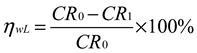
Where Δm represents weight loss, A is the surface area of the bearing steel, t is the time of the steel plate buried in the grease, CR represents the corrosion rate, CR0 and CR1 represent the corrosion rate with and without additives, respectively.
Figure 8 shows the corrosion rate of GCr15-bearing steel sheets buried in MoS2 lubricating grease with different mass fractions prepared by different addition methods for 15 days. Compared with the blank group without MoS2, it can be found that the addition of MoS2 additive reduces the corrosion rate of bearing steel in the natural environment, indicating that the addition of MoS2 effectively slows down the corrosion process of bearing steel.
However, as the addition of additives changes, the content of MoS2 with the best corrosion inhibition efficiency also changes. The optimal corrosion inhibition efficiency of MoS2 by the “Method A” was found at 0.01wt% MoS2 content. When MoS2 was added by the “Method B”, the optimal corrosion inhibition efficiency occurred when the MoS2 content was 0.01wt%. When MoS2 was added by the “Method C”, the optimal additive content for corrosion inhibition efficiency was 0.07wt%. When the “Method D” was adopted to add MoS2, 0.03wt% MoS2 exhibited the best corrosion inhibition efficiency. This change may be due to the varying degree of uniform distribution of MoS2 in the lubricating grease when added in different ways, resulting in different corrosion results. The data in Table 2 and Figure 8 both show that when the “Method B” was used to add 0.01wt% MoS2, the configured grease had the lowest corrosion rate on the bearing steel, that is, the corresponding corrosion inhibition efficiency was the highest, reaching 96.97%.
The SEM image of the GCr15-bearing steel sheet embedded in 0.01% MoS2 lubricating grease for 15 days is shown in Figure 9. Figure 9a shows that no obvious surface coverings or corrosion pits were found on the surface of the original bearing steel sheet. However, the surface of the bearing steel corresponding to the blank grease without MoS2 showed obvious corrosion, with an unsmooth surface and severe corrosion pits (Figure 9b). Figure 9c is the SEM diagram of the surface of the steel sheet caused by 0.01wt% MoS2 grease prepared by the “Method A”. It can be seen that corrosion pits appear in a small part of the surface of the steel sheet under such circumstances. When 0.01wt% MoS2 was added using the “Method B”, the resulting grease causes the slightest corrosion on the surface of the steel sheet (Figure 9d). When 0.01wt% MoS2 grease was prepared by “Method C”, the corrosion test results in uneven corrosion on the surface of the steel sheet, as shown in Figure 9e. As can be seen from Figure 9f, the grease prepared by adding MoS2 additive with the method of “Method D” will cause local corrosion on the surface of the steel sheet. From Figures 9 (c-f), it can be found that MoS2 grease has a certain corrosion effect on the steel surface, which may be because the S element in MoS2 can combine with the Fe element in the bearing steel to produce iron sulfide and other products [9], so MoS2 has a certain corrosion effect, and the surface of the steel sheet was therefore pitted. However, by comparing Figure 9b and Figures 9 (c-f), it can be found that after the addition of MoS2 additive, the corrosion phenomenon on the surface of the bearing steel was slowed down in different forms, indicating that MoS2 has a certain corrosion inhibition effect.
To better demonstrate the morphology and roughness of GCr15-bearing steel sheets after corrosion experiments, three-dimensional (3D) morphology studies were also conducted on the corroded steel sheets. Figure 10 shows the 3D morphology of the steel sheet after being embedded in 0.01% MoS2 grease for 15 days.
From Figure 10a, it can be observed that the surface roughness of the original bearing steel was 0.034 μm. After 15 days of embedding with blank lubricating grease without MoS2, the surface roughness of the bearing steel was the highest, reaching 0.223 μm (Figure 10b). Figure 10c illustrates that the surface roughness of the corroded steel plate corresponding to the lubricating grease prepared by the “Method A” was 0.113 μm. Figure 10d shows that the roughness of the corroded steel surface corresponding to the lubricating grease prepared by the “Method B” was 0.047 μm. Figure 10e and 10f represent the 3D images of the corroded steel surface corresponding to the lubricating grease prepared by the “Method C” and the “Method D”, respectively, with a surface roughness of 0.193 μm and 0.054 μm.
Comparing Figure 10b and Figures 10 (c-f), it can be found that regardless of the method of adding 0.01wt% MoS2, the formulated lubricating grease will reduce the surface roughness of bearing steel after corrosion. The adoption of the “Method B” resulted in the maximum reduction of surface roughness (Figure 10d) by 0.176 μm. The method of “Method C” (Figure 10e) with the least reduction in surface roughness resulted in a reduction of only 0.03 μm. The 3D morphology in Figure 10 is in good agreement with the SEM results in Figure 9. This further indicates that adding MoS2 additive can slow down the corrosion rate of bearing steel and can protect the corrosion of the device for a long time under natural conditions.
4. Conclusions
The effects of MoS2 addition methods on the tribological and corrosion properties of MoS2-containing lithium grease were investigated in this study. Based on the above analysis, the following conclusions can be drawn:
1. When MoS2 was used as an additive in lithium-based greases, it exhibited ideal friction reduction and anti-wear effects and corrosion inhibition performance.
2. The content of additive MoS2 was 0.01%, the friction coefficient of “Method D” was the most stable, the average friction coefficient was 0.034, and the average spot diameter was reduced by 0.16mm. “Method B” had the highest corrosion inhibition efficiency (96.97%).
3. The soap base porosity of “Method D” is small, and the ability to wrap the base oil and MoS2 is strong, so that it can play the role of anti-friction and anti-wear for a long time. MoS2 lithium grease has good anti-corrosion properties, which may be “Method B” can evenly distribute MoS2 on the surface of the grease, so that the protective film formed by MoS2 and GCr15-bearing steel can effectively slow down the corrosion effect of lithium-based grease on steel.
Acknowledgments
The authors acknowledge the financial support provided by the National Natural Science Foundation of China (51965020; 52201160); Jiangxi Natural Science Foundation of China (20232ACB204001; 20232BAB204008; 20232BAB212007; 20212BBE53041, 20224BAB204048, 20224ACB204014).
References
- Lugt, P. A Review on Grease Lubrication in Rolling Bearings. Tribology Transactions 2009, 52, 470–480. [Google Scholar] [CrossRef]
- Gurt, A.; Khonsari, M. The Use of Entropy in Modeling the Mechanical Degradation of Grease. Lubricants 2019, 7. [Google Scholar] [CrossRef]
- Jiang, M.; Guo, X.; Dong, J.; Chen, G. Study on the lithium complex grease. Lubrication Engineering(China) 2000, 25–28. [Google Scholar]
- Lligadas, G.; Ronda, J.C.; Galià, M.; Cádiz, V. Renewable polymeric materials from vegetable oils: a perspective. Materials Today 2013, 16, 337–343. [Google Scholar] [CrossRef]
- Chen, X.; Chen, G. Analysis of lithium molybdenum disulfide base grease and its application in roll bearing. Science & Technology Information (China), 2013. [Google Scholar]
- Cheng, S.; Guo, X.; Jiang, M.; He, Y. Research progress of lithium complex grease. Contemporary Chemical Industry(China) 2018, 47, 152–158. [Google Scholar] [CrossRef]
- Rapoport, L.; Bilik, Y.; Feldman, Y.; Homyonfer, M.; Cohen, S.R.; Tenne, R. Hollow nanoparticles of WS2 as potential solid-state lubricants. Nature 1997, 387. [Google Scholar] [CrossRef]
- Li, J.; Wang, Y.; Liu, D.; He, K.; Lu, L. Research progress on the properties and application of molybdenum disulfide. Powder Metallurgy Technology(China) 2021, 39, 471–478. [Google Scholar] [CrossRef]
- Niste, V.B.; Ratoi, M. Tungsten dichalcogenide lubricant nanoadditives for demanding applications. Materials Today Communications 2016, 8, 1–11. [Google Scholar] [CrossRef]
- Wu, Z. Synthesis of molybdenum (tungsten) disulfide nanostructures and their properties[D]. Central South University, 2012.
- Cheng, Y. Preparation and tribological properities of space lubricating grease containing MoS2 nanoparticles[D]. Hefei University of Technology, 2012.
- Wang, W.; Tian, S.; Sun, H. Influence of base oil and additives on microstructure of grease. Petroleum Products Application Research(China) 2015, 33, 26–34. [Google Scholar] [CrossRef]
- Xie, X. Experimental study on soap fiber structure affection the performance of grease[D]. Harbin Institute ofTechnology, 2008.
- Yuan, s. Study on the surface modification and friction properties of molybdenum disulfide. Modern Salt and Chemical Industry(China) 2019, 46. [Google Scholar] [CrossRef]
- Kosynkin, D.V.; Higginbotham, A.L.; Sinitskii, A.; Lomeda, J.R.; Dimiev, A.; Price, B.K.; Tour, J.M. Longitudinal unzipping of carbon nanotubes to form graphene nanoribbons. Nature 2009, 458, 872–876. [Google Scholar] [CrossRef] [PubMed]
- Liang, Y.; He, X.; Chen, L.; Zhang, Y. Preparation and characterization of TiO2–Graphene@Fe3O4 magnetic composite and its application in the removal of trace amounts of microcystin-LR. RSC Advances 2014, 4, 56883–56891. [Google Scholar] [CrossRef]
- Horikawa, T.; Sakao, N.; Sekida, T.; Hayashi, J.i.; Do, D.D.; Katoh, M. Preparation of nitrogen-doped porous carbon by ammonia gas treatment and the effects of N-doping on water adsorption. Carbon 2012, 50, 1833–1842. [Google Scholar] [CrossRef]
- Xiang, S.; Long, X.; Zhang, Q.; Ma, P.; Yang, X.; Xu, H.; Lu, P.; Su, P.; Yang, W.; He, Y. Enhancing Lubrication Performance of Calcium Sulfonate Complex Grease Dispersed with Two-Dimensional MoS2 Nanosheets. Lubricants 2023, 11, 336. [Google Scholar] [CrossRef]
- Fan, X.; Li, W.; Li, H.; Zhu, M.; Xia, Y.; Wang, J. Probing the effect of thickener on tribological properties of lubricating greases. Tribol. Int. 2018, 118, 128–139. [Google Scholar] [CrossRef]
- Jiang, H.; Hou, X.; Ma, Y.; Su, D.; Qian, Y.; Ahmed Ali, M.K.; Dearn, K.D.J.W. The tribological performance evaluation of steel-steel contact surface lubricated by polyalphaolefins containing surfactant-modified hybrid MoS2/h-BN nano-additives. Wear 2022, 504–505. [Google Scholar] [CrossRef]
- Zhu, Y.; Sun, Q.; Wang, Y.; Tang, J.; Wang, Y.; Wang, H. Molecular dynamic simulation and experimental investigation on the synergistic mechanism and synergistic effect of oleic acid imidazoline and l-cysteine corrosion inhibitors. Corrosion Science 2021, 185, 109414. [Google Scholar] [CrossRef]
Figure 1.
SEM image of MoS2 powder.
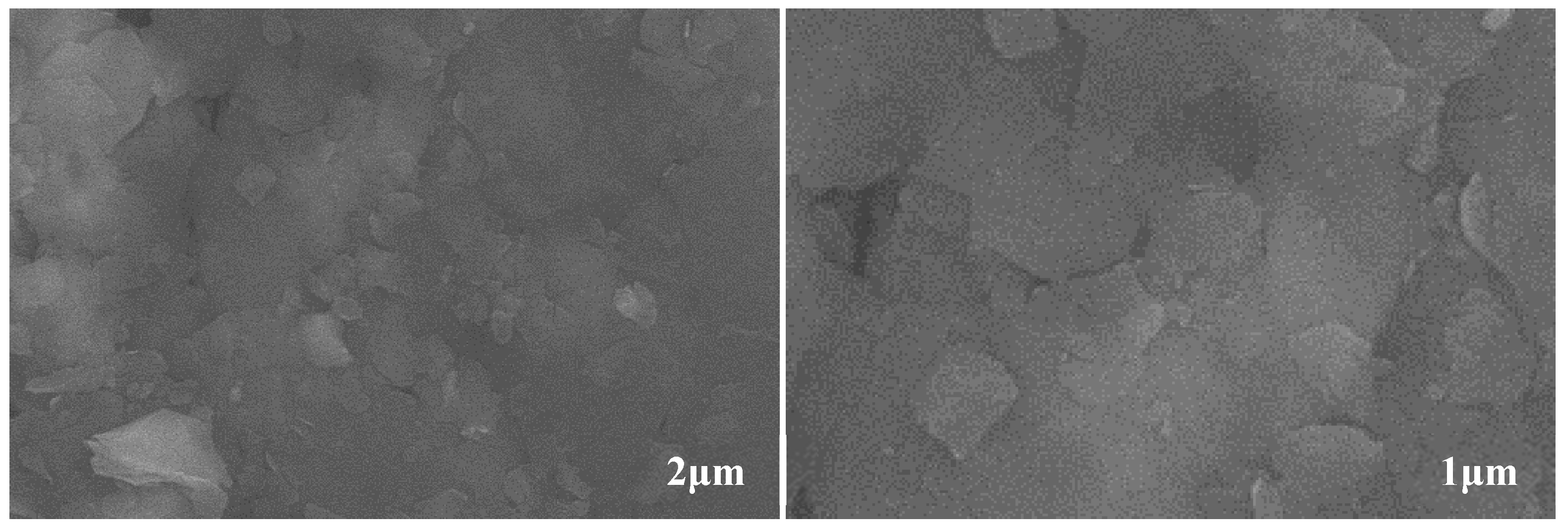
Figure 2.
SEM image of soap fiber structure of Blank grease and lithium grease with 0.01wt% MoS2 by the “Method D” before and after friction. (392 N, 1450 rpm, 60 min).
Figure 2.
SEM image of soap fiber structure of Blank grease and lithium grease with 0.01wt% MoS2 by the “Method D” before and after friction. (392 N, 1450 rpm, 60 min).
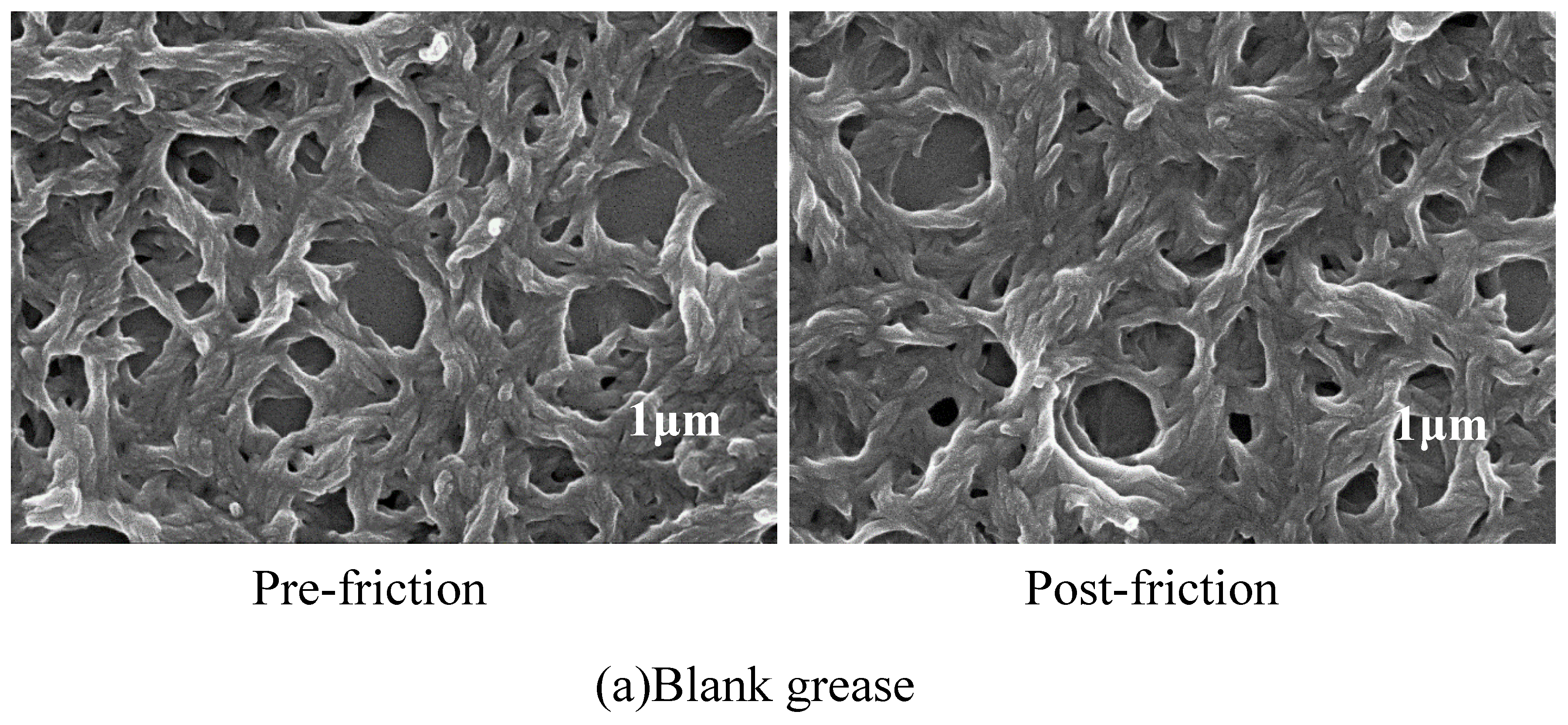
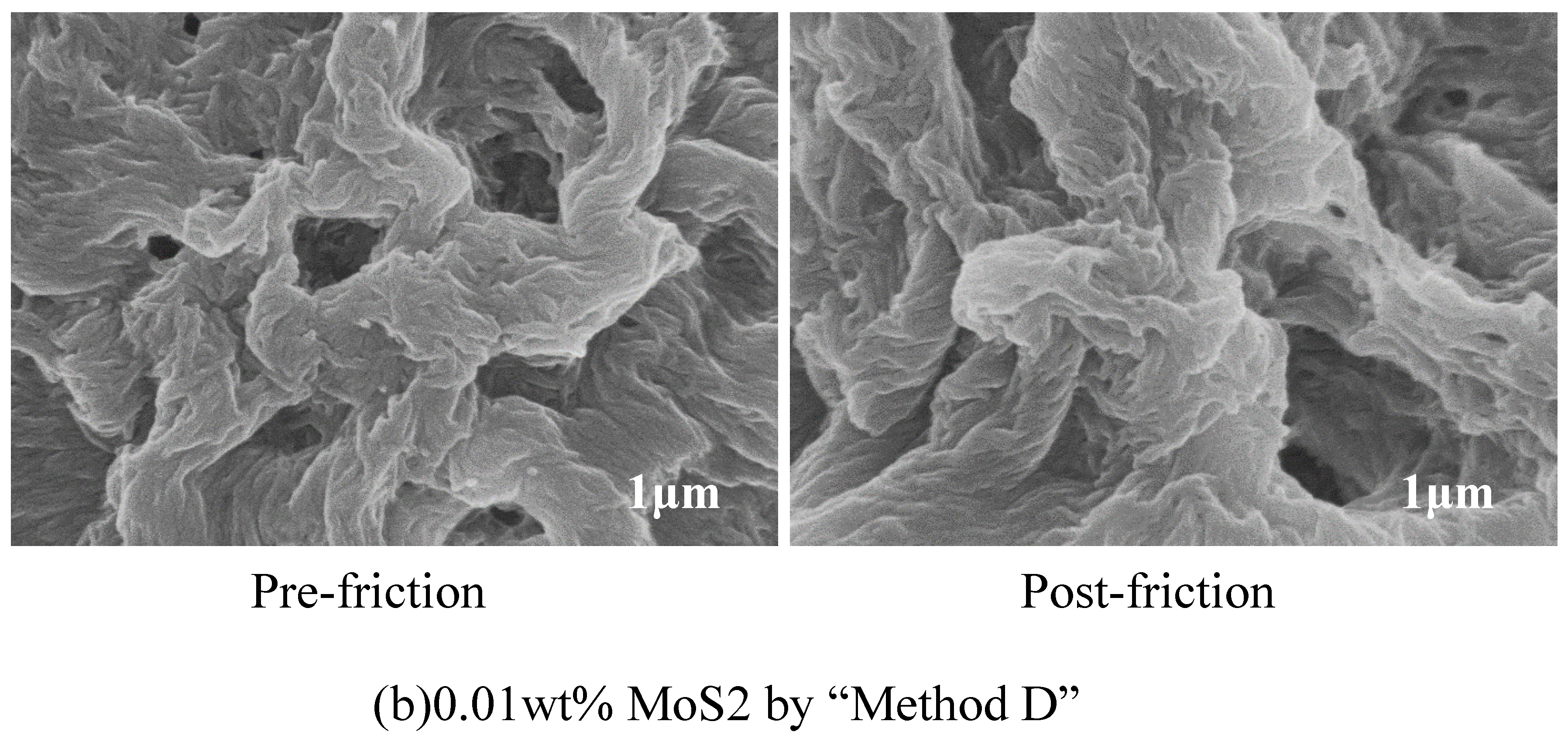
Figure 3.
Friction coefficient curves of MoS2 greases prepared by different addition methods with variable amounts of MoS2. (a) Method A, (c) Method C, (b) Method B, (d) Method D. (392 N, 1450 rpm, 60 min).
Figure 3.
Friction coefficient curves of MoS2 greases prepared by different addition methods with variable amounts of MoS2. (a) Method A, (c) Method C, (b) Method B, (d) Method D. (392 N, 1450 rpm, 60 min).
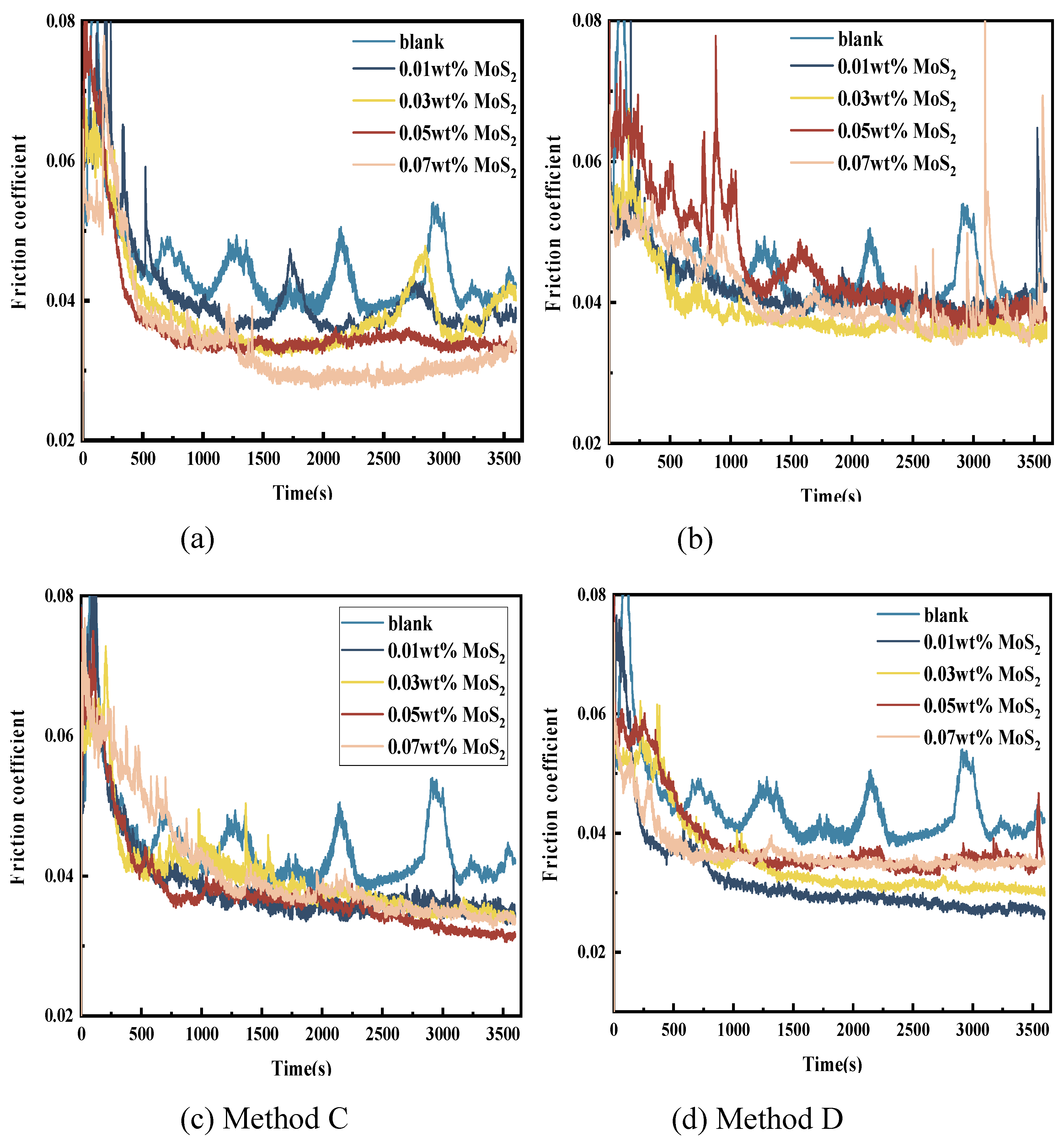
Figure 4.
Friction coefficient of MoS2 greases prepared by different addition methods with variable amounts of MoS2. (a) Method A, (b) Method B, (c) Method C, (d) Method D. (392 N, 1450 rpm, 60 min).
Figure 4.
Friction coefficient of MoS2 greases prepared by different addition methods with variable amounts of MoS2. (a) Method A, (b) Method B, (c) Method C, (d) Method D. (392 N, 1450 rpm, 60 min).
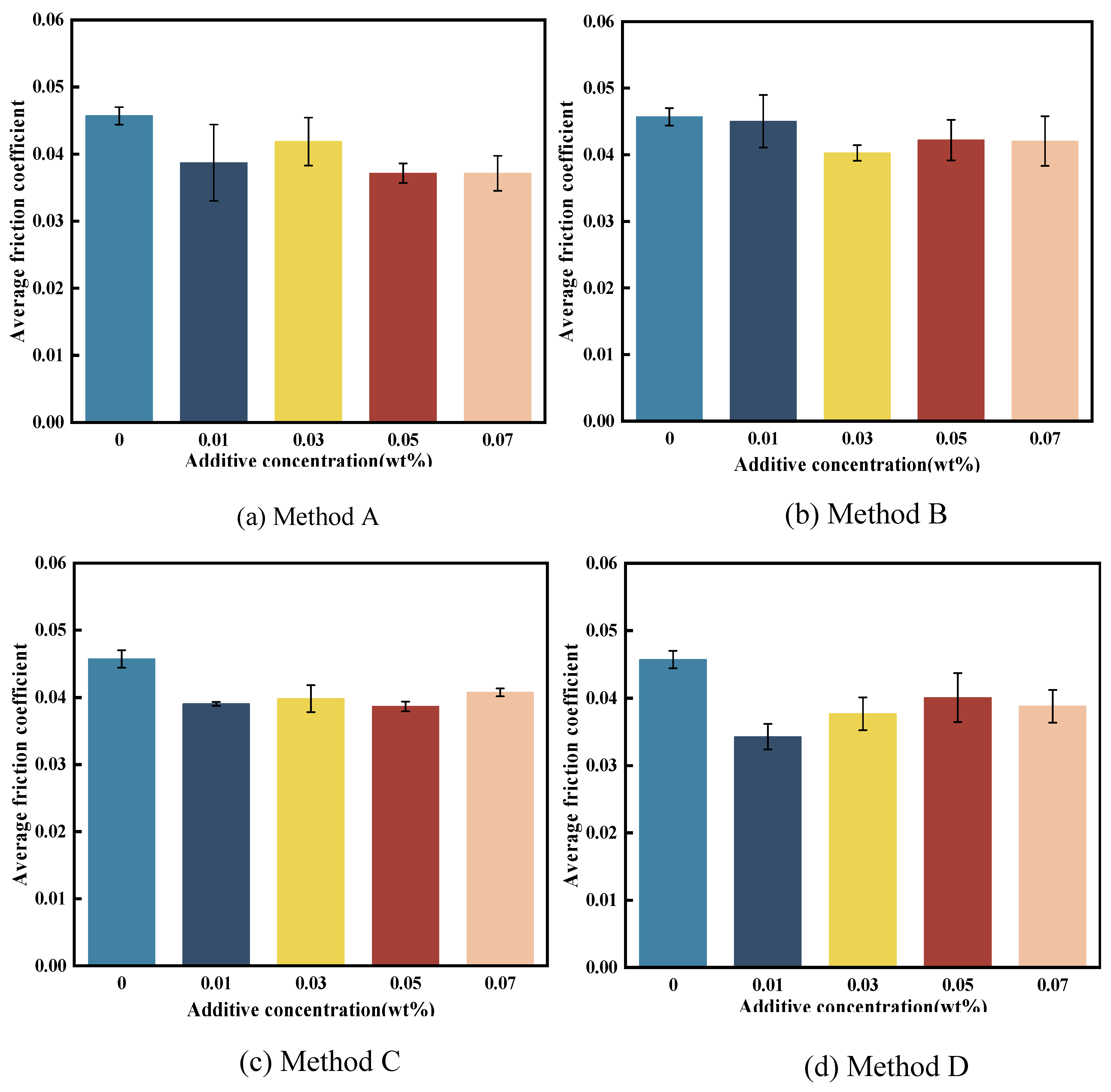
Figure 5.
Wear spot diameter of MoS2 greases prepared by different addition methods with variable amounts of MoS2. (a) Method A, (b) Method B, (c) Method C, (d) Method D.(392 N, 1450 rpm, 60 min).
Figure 5.
Wear spot diameter of MoS2 greases prepared by different addition methods with variable amounts of MoS2. (a) Method A, (b) Method B, (c) Method C, (d) Method D.(392 N, 1450 rpm, 60 min).
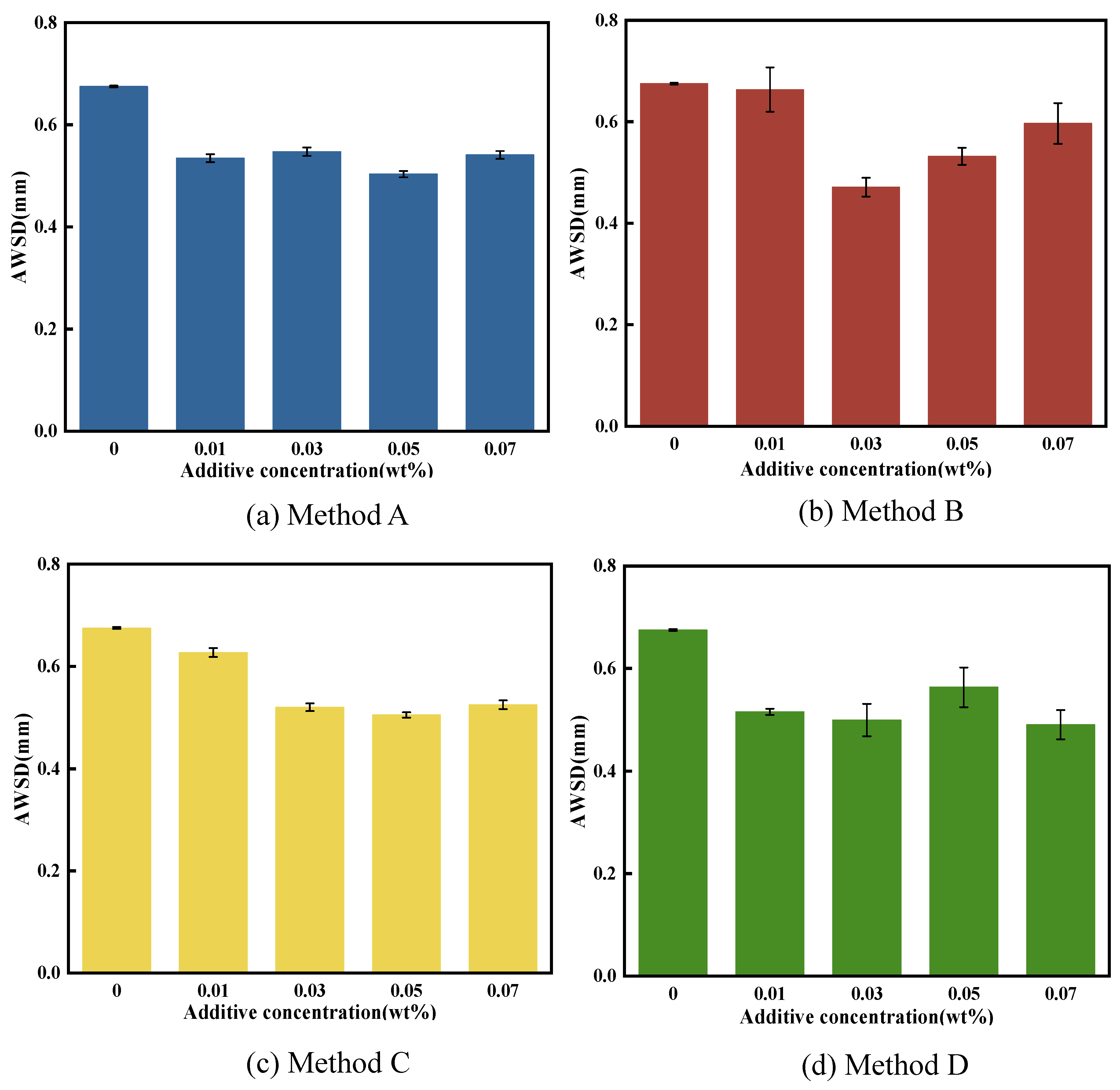
Figure 6.
SEM images of worn surfaces (a) blank group, (b) Method A with 0.05wt% MoS2, (c) Method B with 0.03wt% MoS2, (d) Method C with 0.05wt% MoS2, (e) Method D with 0.01wt% MoS2. (392 N, 1450 rpm, 60 min).
Figure 6.
SEM images of worn surfaces (a) blank group, (b) Method A with 0.05wt% MoS2, (c) Method B with 0.03wt% MoS2, (d) Method C with 0.05wt% MoS2, (e) Method D with 0.01wt% MoS2. (392 N, 1450 rpm, 60 min).
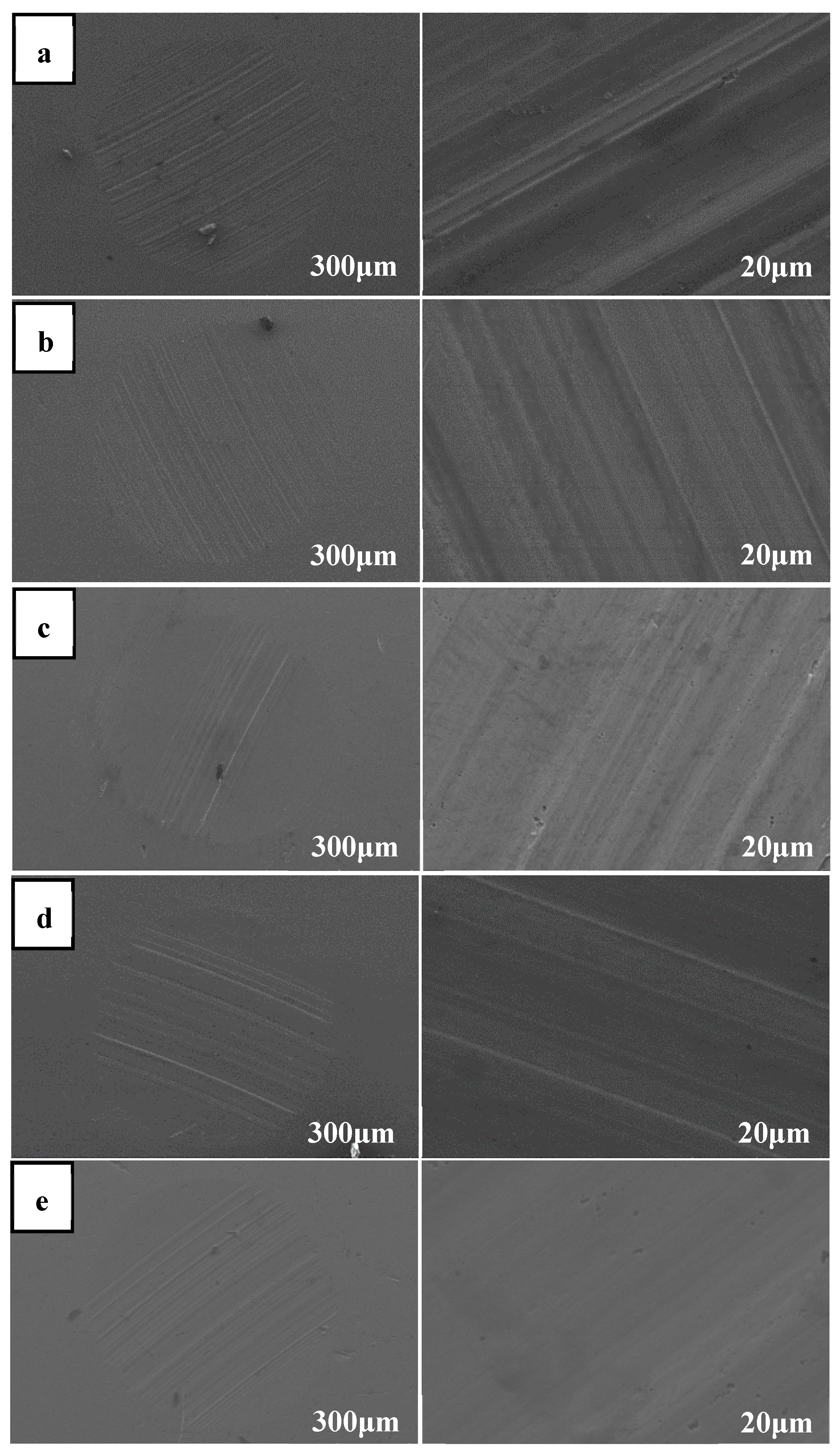
Figure 7.
XPS spectra of the worn surface caused by 0.01wt% MoS2 lithium grease prepared by “Method D”.
Figure 7.
XPS spectra of the worn surface caused by 0.01wt% MoS2 lithium grease prepared by “Method D”.
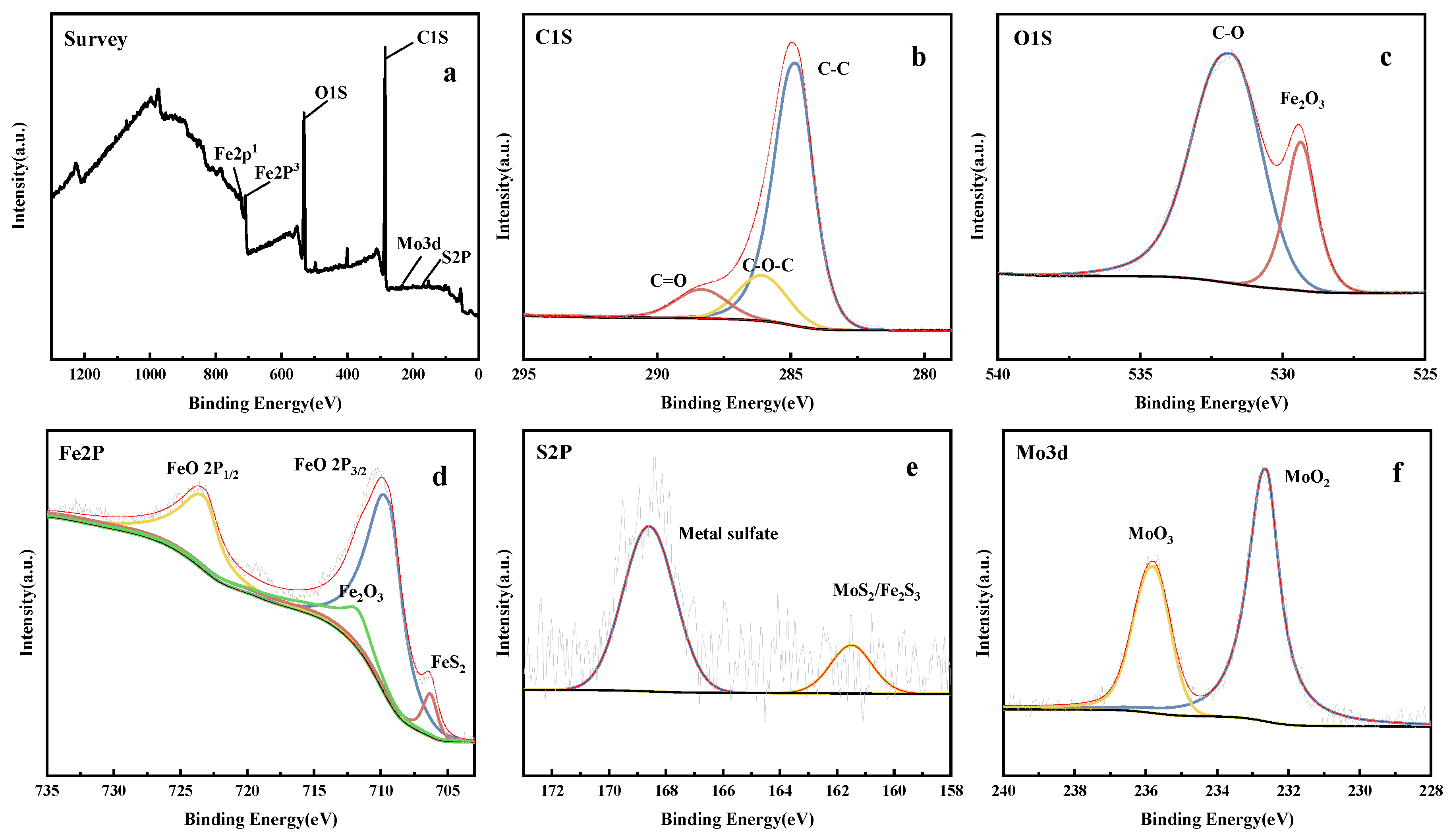
Figure 8.
Corrosion rate and corrosion inhibition efficiency of GCr15-bearing steel plate buried in MoS2 greases with different mass fractions prepared by varying addition methods.
Figure 8.
Corrosion rate and corrosion inhibition efficiency of GCr15-bearing steel plate buried in MoS2 greases with different mass fractions prepared by varying addition methods.
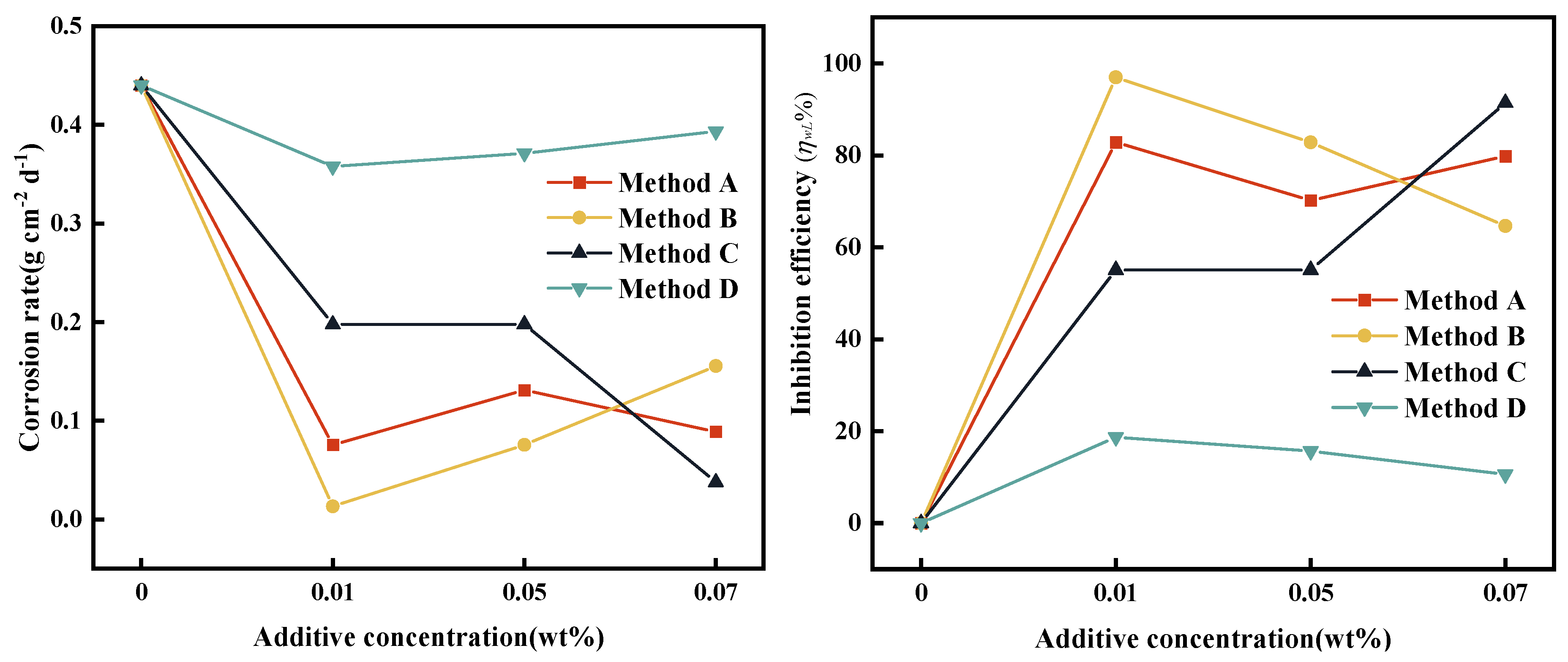
Figure 9.
SEM image of GCr15 steel sheet embedded with 0.01wt% MoS2 lubricating grease prepared by different addition methods after 15 days (a) original steel surface (b) blank grease (c) Method A (d) Method B (e) Method C (f) Method D.
Figure 9.
SEM image of GCr15 steel sheet embedded with 0.01wt% MoS2 lubricating grease prepared by different addition methods after 15 days (a) original steel surface (b) blank grease (c) Method A (d) Method B (e) Method C (f) Method D.
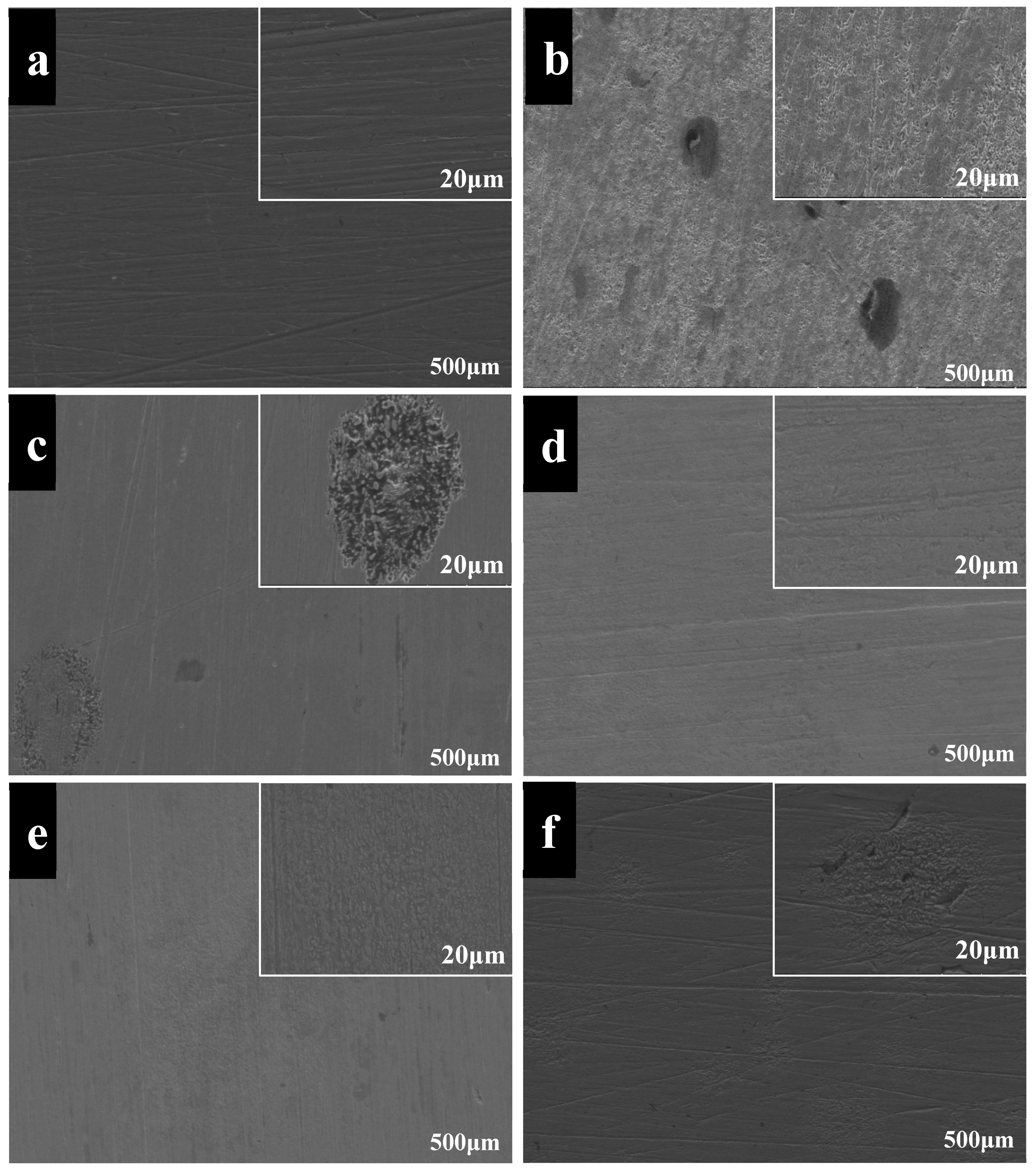
Figure 10.
3D morphology of GCr15-bearing steel sheet embedded in 0.01wt% MoS2 lubricating grease prepared by different methods for 15 days (a) original steel sheet, (b) blank lubricating grease without MoS2, (c) Method A, (d) Method B, (e) Method C, (f) Method D.
Figure 10.
3D morphology of GCr15-bearing steel sheet embedded in 0.01wt% MoS2 lubricating grease prepared by different methods for 15 days (a) original steel sheet, (b) blank lubricating grease without MoS2, (c) Method A, (d) Method B, (e) Method C, (f) Method D.
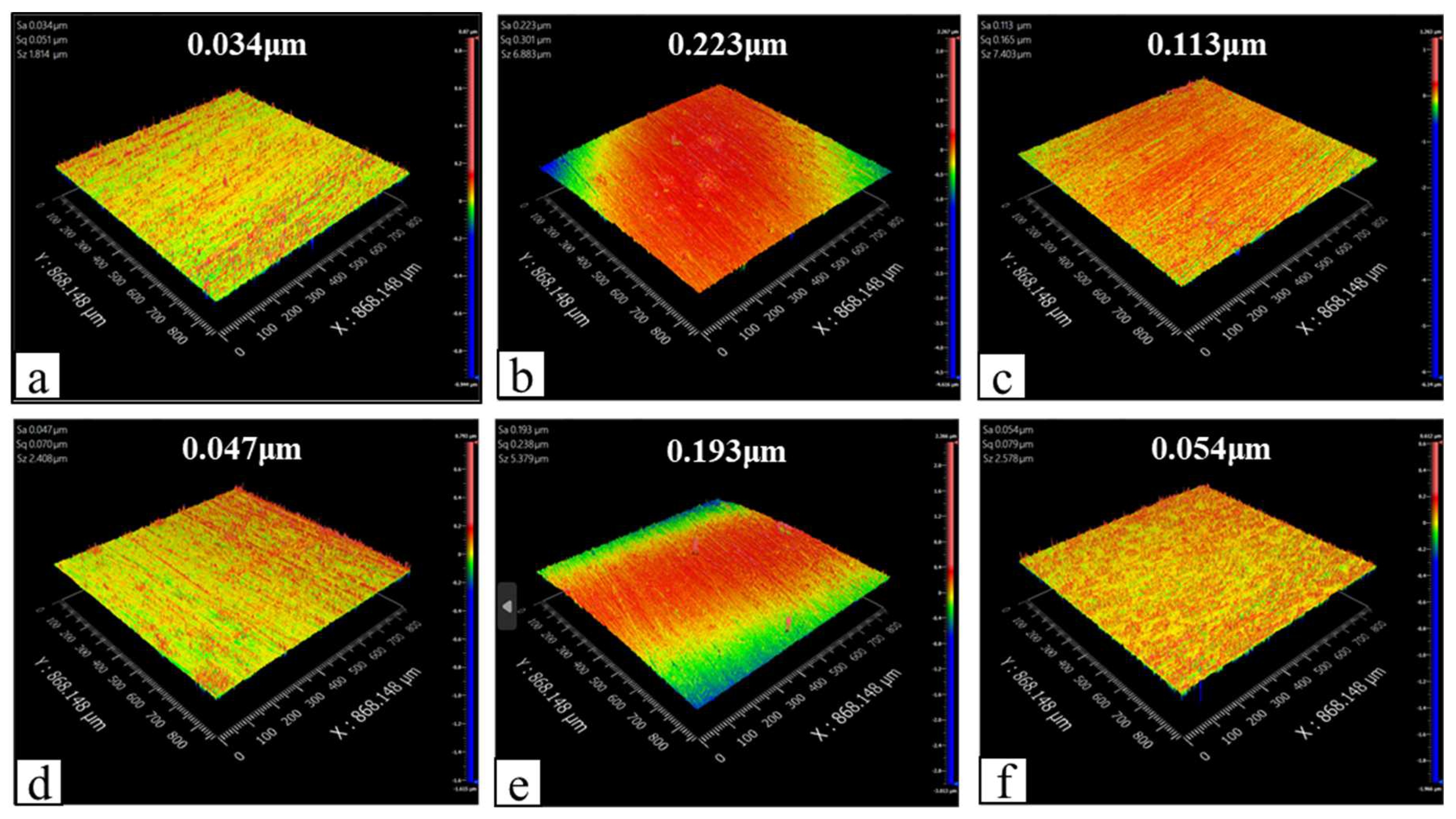

Table 1.
Dropping point and cone penetration of greases produced by different addition methods of MoS2 with different mass fractions (ω).
Table 1.
Dropping point and cone penetration of greases produced by different addition methods of MoS2 with different mass fractions (ω).
| Addition method | ω (wt%) | |||||
| 0 | 0.01 | 0.03 | 0.05 | 0.07 | ||
| Dropping point (℃) |
Method A | 196.5 | 197 | 197 | 202 | 202 |
| Method B | 202 | 202 | 200 | 199 | ||
| Method C | 197 | 197.5 | 198 | 198 | ||
| Method D | 203 | 199 | 200 | 201 | ||
| Cone penetration (0.1 mm) |
Method A | 180.6 | 186.1 | 202.8 | 198.1 | 181.6 |
| Method B | 202.4 | 201.2 | 180 | 192.2 | ||
| Method C | 175.7 | 202.3 | 186.9 | 180.4 | ||
| Method D | 184.6 | 187.5 | 198.2 | 180.5 | ||
Table 2.
Mass change (△m, g) of GCr15-bearing steel plate after 15 days of exposure to MoS2 lubricating grease.
Table 2.
Mass change (△m, g) of GCr15-bearing steel plate after 15 days of exposure to MoS2 lubricating grease.
| Addition method | Mass change (△m, g) | ||||
| ω (wt%) | |||||
| 0 | 0.01 | 0.03 | 0.05 | 0.07 | |
| Method A | 0.0198 | 0.0034 | 0.0109 | 0.0059 | 0.0040 |
| Method B | 0.0198 | 0.0006 | 0.0083 | 0.0034 | 0.0070 |
| Method C | 0.0198 | 0.0089 | 0.0032 | 0.0089 | 0.0017 |
| Method D | 0.0198 | 0.0161 | 0.0158 | 0.0167 | 0.0177 |
Disclaimer/Publisher’s Note: The statements, opinions and data contained in all publications are solely those of the individual author(s) and contributor(s) and not of MDPI and/or the editor(s). MDPI and/or the editor(s) disclaim responsibility for any injury to people or property resulting from any ideas, methods, instructions or products referred to in the content. |
© 2023 by the authors. Licensee MDPI, Basel, Switzerland. This article is an open access article distributed under the terms and conditions of the Creative Commons Attribution (CC BY) license (http://creativecommons.org/licenses/by/4.0/).
Copyright: This open access article is published under a Creative Commons CC BY 4.0 license, which permit the free download, distribution, and reuse, provided that the author and preprint are cited in any reuse.


