
Submitted:
07 November 2023
Posted:
08 November 2023
You are already at the latest version
Abstract
Traditional shipping ships abbreviated as Pelra have a different character from conventional ships. Hypothetically, the application of Safety Management System (SMS) on Pelra is influenced by technical and non-technical factors. These factors are control variables and determinants of action priorities if SMS is applied to the safety of traditional shipping, so that it has implications as a basis for formulating and developing safety policies for traditional shipping transportation in an effort to reduce the risk of accidents. This research uses Structural Equation Modeling by analyzing expert opinions. The results of the analysis show that technical and non-technical factors have a direct and interconnected effect on Pelra safety management. The dominant influences are non-technical factors of authority and responsibility of the company and crew as well as the feasibility of ship construction as technical and environmental factors..
Keywords:
safety management
; traditional shipping
; technical
; non-technical factors
1. Introduction
Pelra has been used for centuries for trade and transport needs in Indonesia. The shipping pattern of the Pelra fleet connecting growth centers on small and remote islands makes it very much needed until today. Although in recent years the Pelra fleet has developed and experienced a change in function from transporting goods to Pelra ships for tourism needs. Facts show that the Pelra fleet has experienced a significant decline in its national role compared to 20-30 years ago. The main obstacles faced are from the decrease in cargo, limited wood material as the main material for the construction of the traditional shipping fleet, which has implications for the low level of safety due to the many accidents in traditional shipping transportation [1].
As a non-convention vessel mandated to fulfil safety standards[2], Pelra is obliged to comply with and implement safety policies. But until now, the implementation of a safety management system (SMS) has not been implemented. In fact, the potential for accidents and ship damage is very large, especially for ships sailing in Eastern Indonesian waters with high wave characteristics. Data shows that in 2015-2020 there were 880 cases of ship accidents in Indonesia, and 10% of the total was Pelra ship accidents. Therefore, the application of SMS is expected to reduce safety risks in Pelra ship operations.
In general, the reference aspects in the application of SMS, especially conventional ships, are divided into non-technical factors and technical factors. In the non-technical aspect, the human error factor is an important concern in the operation of the ship due to the lack of awareness and understanding of the crew of the shipping safety factors. Sometimes ignoring environmental factors, the ability to understand the situation, accuracy in taking emergency action, not being able to use safety and communication equipment properly, and lack of understanding in reading the shipping channel. This is in line with human error theory which states that most accidents occur due to human error, whether intentional or unintentional. Therefore, vocational schools should be designed to minimise the possibility of human error[3,4].
Another factor is the responsibility of the company or ship owner in the implementation of ship safety management. Companies must ensure that they provide adequate resources to fulfil ship safety management needs and ensure that all crew members understand and can follow established safety procedures [5]. Companies should ensure that vessels and equipment used in ship operations meet the necessary safety standards and undergo regular maintenance and testing. Companies should also have clear policies on ship safety management and ensure that they are consistently applied. In addition, companies should ensure that effective data collection, risk analysis and incident reporting mechanisms are in place to support continuous ship safety management [6].
In the technical aspect, ship construction and stability factors are very important in SMS. Ship construction must fulfil the standards and regulations set by regulatory bodies and must be done correctly with materials that meet the right requirements and good ship building construction processes. Likewise with ship stability, where the ship must be designed and constructed in order to maintain stability during the voyage under various weather conditions and different loads [7]. It is necessary to calculate the ship's weight point, centre of buoyancy pressure and metacentre point that affect ship stability. Loading factors in relation to stability must comply with ship safety regulations and standards. Therefore, the maintenance and regularity of ship construction and stability maintenance is very important to ensure that the ship can operate safely and effectively.
SMS for domestic vessels is regulated [8] on ship safety management, covering several functions such as safety and environmental protection policies, corporate responsibility and authority, designated persons ashore, resources and personnel, ship operation, emergency preparedness, reporting and analysis of non-conformities, accidents and dangerous occurrences, maintenance of ships and equipment, documentation, and company audits, reviews and evaluations. These rules are the reference in the implementation of SMS for ships in Indonesia. However, these conditions and aspects cannot be directly adopted in the implementation of Pelra SMS, because it has different ship characteristics.
Therefore, the output of the Pelra SMS should be to provide an assurance that ships are operated and in a safe working environment by providing practical SOPs. It is necessary to evaluate all possible risks to the ship, crew and environment, and establish appropriate countermeasures to address these risks. Improve vessel safety management skills, including preparation for emergency situations relating to safety and environmental protection. In this context, this study aims to find out what factors and how much influence they have on the implementation of SMS in the Pelra fleet. This research is expected to serve as a guideline in developing SMS concepts and policies for Pelra ships based on these influencing factors.
2. Research Methods
2.1. Population Type and Sample
This research is a cross sectional study, analyzing the factors of Safety Management System (SMS) elements if applied to traditional shipping sea transportation, using Structural equation modeling (SEM) method, a multivariate statistical analysis that integrates regression analysis, factor analysis, and path analysis. The application of SEM in transportation research has been used, among others; sea transportation network integration [9], accessibility and connectivity[10], bus public transportation[11], aviation service quality [12], and quality of goods distribution services[13]. The data analyzed are the answers to the questionnaire of respondents who are experienced in the field of marine transportation safety. The questionnaire was distributed online through Google docs, containing research variable factors, measuring answers using a Likert scale, namely; value 5 = strongly agree, 4 = agree, 3 = moderately agree, 2 = disagree, and 1 = disagree, and conducted a reliability test and validity test on all variables. The population sample used was 265 respondents to fulfill the minimum SEM requirement of 200 people[14]. Informants were selected using purposive sampling technique, consisting of 90% men and 10% women, 32.4% high school education, 39.7% Bachelor and Diploma and 27.9% postgraduate, 38.9% of respondents aged 30 to 40 years, 45.3% aged 41 to 50 years and above 51 years as much as 15.8%, respondents with work experience of 5 to 10 years as much as 45.7%, 11 to 15 years of work experience as much as 31% and those with work experience above 15 years as much as 23.3%, other informant characteristics as in Table 1.
2.2. Research Variables
The identification of research variables consists of latent variables and manifest variables, sourced from literature studies and in-depth interviews with the delphi method that have an influence on improving the performance of Pelra Vocational Schools as in Table 2.
2.3. Conceptual Framework and Hypothesis
According to [15] that safety culture is built due to knowledge and frequent safety training. However, these two things can only be implemented if there is compliance with safety aspects. In addition, safety performance will improve if supported by good policies and institutions [16].
In this study, the aspects of safety knowledge, safety training, safety policy, and institutions which are latent variables consist of nine factors and are derived into manifest variables consisting of technical / environmental factors and non-technical factors. The shape of the structural model (Y) is; Y = f (X1, X2, X3, X4, X5, X6, X7, X8, X9), where the measurement model isX1 = f (X1.1, X1.2, X1.3, X1.4, X1.5, X1.6, X1.7, X1.8, X1.9, X1.10, X1.11); X2 = f (X2.1, X2.2, X2.3, X2.4, X2.5, X2.6); X3 = f (X3.1, X3.2, X3.3, X3.4); X4 = f (X4.1, X4.2, X4.3); X5 = f (X5.1, X5.2, X5.3); X6 = f (X6.1, X6.2, X6.3); X7 = f (X7.1, X7.2, X7.3, X7.4, X7.5, X7.6); X8 = f (X8.1, X8.2, X8.3, X8.4); dan X9 = f (X9.1, X9.2, X9.3, X9.4). The relationship between technical and non-technical variables based on the structural model and measurement model can be seen in the conceptual framework of Figure 1.
Based on the relationship between variables in the SEM conceptual framework, the hypotheses (H1 to H9) have a direct and positive effect on improving Transportation Safety performance (H0). Thus, the formulation of the research hypothesis is [(H1 to H9) = (H0)]
3. Results and Discussion
3.1. Statistical Test of Data and Measurement Model
The consistency of the questionnaire reliability obtained Cronbach's alpha (CA) value is in the range of 0.73 - 0.86, quite good and reliable as a measuring tool. The results of the validity test on 44 indicators with a confidence level of 95% have a value of r count = 0.232, meaning that all indicators are valid, the data normality test with the critical ratio skewness value criterion is ± 1.98 at a significance level of 0.03, the data is normally distributed, the critical ratio skewness value and the kurtosis ratio are between -2 to +2 [17]. The outliers test results show a significant value of p<0.001 so that there are no outlier observations. Furthermore, the multicollinearity test shows the value of the determinant of sample covariance matrix of 4.438, far from zero so it can be concluded that there are no multicollinearity and singularity problems in the analyzed data.
To ensure the reliability and validity of the proposed model, a separate Confirmatory Factor Analysis (CFA) was conducted. The analysis results in table 3 show that the composite reliability value of each construct reliability (CR) of each manifest variable is above the acceptable threshold of >0.7 [18], the factor loading value is also above >0.5 [19] and all average variance extracted (AVE) values are above the acceptable threshold (>0.5) as proposed [20]. Therefore, it can be confirmed that the proposed CFA model has high reliability. In addition, testing the discriminant validity by comparing the correlation coefficients between the constructs using the square root of AVE values in table 3 shows that the discriminant validity of the proposed model is also fulfilled as all the square root of AVE values are greater than the corresponding correlation coefficients between the constructs as suggested [20]. This indicates that all manifest variables have a significant effect on each latent variable. CFA validation of measurement model analysis can be seen in appendix 1.
3.2. Structural Model Analysis
To evaluate the quality of the model, goodness of fit (GOF) tests were conducted including sig-probability, RMSEA, GFI, AGFI, CMIN/DF, TLI, and CFI using the standardized cut off criteria values listed in Table 4. The initial hypothesis of the structural model is that all latent variables (i.e. X1 to X9) have a significant influence directly on the application of SMS in Pelra sea transportation (see Figure 1). The results of the initial model test showed that the GOF value did not meet the criteria (not good) so that modifications to the structural model were made. testing and estimating a new model by changing the path between latent variables and other latent variables, connecting one latent variable to another latent variable, or connecting one manifest variable to another manifest variable, until the most optimal model could be found [21].
From the many modifications, the best structural model is found in Figure 2. The modification is done by changing the path that initially all latent variables have a direct effect on SMS, to latent variables that not only have a direct effect but also have an indirect effect. The safety and navigation equipment variable (X9) is influenced by the company's responsibility and authority variable (X1) and the crew's responsibility and authority variable (X2) and then affects the implementation of SMS. Variable X1 directly affects variables X3, X7, and X9, while variable X2 directly affects variables X4, X5, X6, X8, and X9. Variables X1 and X2 influence each other. Meanwhile, SMK is directly influenced by all latent variables, namely X1, up to X9. The complete structural model diagram can be seen in Figure 2, while the GOF value of the model can be seen in Table 3.
The model fit test results in table 3 show that the modified model is quite good as in figure 2, because all test criteria, including sig-probability, RMSEA, GFI, AGFI, and CMIN/DF, meet the specified requirements. Although there are two test variables whose values are below the cut off value limit, namely TLI and CFI (marginal fit acceptance), this model is still acceptable because the range of values is still quite close to the cut off limit [22]. According to [17], if two or more test criteria show that the model fits the existing data, it can be concluded that the model is good.
3.3. Model Interpretation
The results of testing the suitability of the SEM model show that the significance of the relationship affects directly or indirectly, and provides an overview of how much influence between latent variables are on the implementation of Pelra SMS. as the estimated value in Table 4 shows how much correlation between variables.
Based on the estimated value that reflects the level of positive and significant influence on the implementation of SMS on Pelra vessels as in Table 4, it is in the range of 50.3% to 84.2%. Thus, the hypothesis [(H1 to H9) = (H0)] based on the SEM model fit test indicates that the latent variables (X1 to X9) have a direct effect on the application of SMS. It was found that the crew responsibility and authority variable (X2) is in the first place, and the second place is the employer responsibility and authority variable (X1). Construction variables, ship stability, safety and navigation equipment, ship maintenance, administration and documentation, emergency preparedness, and resources and personnel variables follow this. Variable X2 with manifest variables explained by indicators X2.1, X2.2, X2.3, X2.4, X2.5, and X2.6 as much as 84.2%. Administration and documentation variables (X5) have a positive and significant effect on applying SMK on Pelra vessels (H5 = accepted). Variable X5 can be explained by indicators X5.1, X5.2, and X5.3 as much as 50.3%.
From the estimate values in Table 5, the level of influence of each factor on the application of SMS is ranked from the highest influence to the lowest, namely the factors of crew responsibility and authority (X2), company responsibility and authority (X1), ship construction (X7), ship stability (X8), safety and navigation equipment (X9), ship maintenance (X6), resources and personnel (X3), emergency preparedness (X4), and administration and documentation (X5), the order of influence is shown in Figure 3.
3.4. Implications of Non-Technical and Technical Aspects of SMS Implementation
The non-technical aspect of crew responsibility and authority (X2) is the most significant variable affecting the implementation of Pelra SMS. This is because the captain's role is very important in coordinating activities while at sea. Responsible for the safety of the crew and the safety of the ship, as well as determining technical policies during the voyage including when the ship experiences emergency conditions[23]. The crew at sea who ensure the ship is in a seaworthy condition by carrying out regular maintenance, carrying out the loading process of goods that affect the stability of the ship, and must understand safety aspects and navigational activities. Likewise, land personnel, whose role is very significant, organize and coordinate safety implementation activities before the ship sails. Currently, the initial competence of Pelra ships is considered inappropriate and lagging behind in mastering technology so it has a strong correlation with the occurrence of accidents [24]. This is also in line with the research of[25] which explains that 54.7% of Pelra crew members have poor competence.
The second most influential variable on Pelra SMS is the variable of responsibility and authority of the company or ship owner. Pelra is still managed traditionally (kinship relations) placing the ship owner as the owner of the capital ‘punggawa darat’ as the most respected person, responsible for financing ship operations and ensuring the lives of crew members[23]. The provision of competent ship personnel resources in accordance with the requirements of the legislation is the responsibility of the company which until now is still difficult to fulfill. Likewise, the provision of modern safety and navigation equipment and the certainty of ship construction are in accordance with the standards of the Indonesian Classification Bureau (ICB).
The company's main problem in organizing Pelra is the cost factor. Pelra's market share has decreased significantly, so revenue from ship transportation is not balanced with the number of costs, both variable costs and fixed costs [26]. On the other hand, the company is responsible for providing resources and personnel who have educational requirements, and experience at sea so that understanding of shipping safety increases even though the consequence is the provision of decent salaries [28]. Likewise, the provision of safety and navigation equipment is quite expensive, and must carry out regular ship maintenance considering that the Pelra fleet is mostly old.
Theoretically, these findings support the theory of safety levels that can be implemented in Pelra maritime transport. The variables formed reflect the high influence of human error (crew) and company management in the implementation of Pelra's SMS. The ability of the crew must be in line with the company's ability to manage safety management, especially in relation to attitudes and behaviors that form a safe culture. However, the fact is that the inclusion of all variables found in the implementation of Pelra SMS will be faced with obstacles in the field. Especially the seriousness of the company/ship owner in implementing SMS because it will have cost consequences, amid Pelra's inability to compete with conventional ships that take Pelra's cargo market share [29].
Technical Aspects (Ship Construction and Stability), the results of SEM analysis show that the construction variable (X7) also has a direct and positive effect on the implementation of SMS, while it also affects the ship stability variable (X8). These conditions result in ship construction is very important in realizing SMS, and the feasibility of dynamic stability is related to the shape and size of the ship. Loading on the Pelra ship construction system greatly affects the longitudinal and transverse strength of the ship which is critical to the influence of waves. The results of research[24] show that the transverse and longitudinal strength of ships under the size of 150 GT has complied with the established regulations and even impressed over scantling 20-50%. Likewise, 360 GT ships are estimated to be very strong to withstand stresses in ship construction with values in the range of 2-11 kg /cm2, far below the permissible stresses of wood building materials, and deflection/deflection in the range of 0.005 - 0.025 mm [23]. Even so, these vessels still do not fulfill the technical requirements to ensure safety because their construction design still follows the traditional way. Some parts of the ship that are very risky include the connection system, hull tightness, transverse watertight bulkheads, reinforcement of the engine foundation, reinforcement of deck and deck house construction, and reinforcement of the hatch area when receiving hydrostatic loads.
Previous research also found that the transverse bulkhead separating the engine room and hatch and separating the bow and hatch in the construction system had not been made watertight, so that this often made the entry of water into the ship which had the potential to sink. In the construction of reinforcing the engine foundation in several ships, especially <150 GT, it is still found that it is not strong enough to accept the vibration of the propulsion engine. In addition, the deck house reinforcement construction that receives external / wind loads and accommodation loads is relatively smaller than the robustness of the ship's construction. Damage to the deck building construction is mostly due to collisions, ship and dock collisions when the ship is moored at the dock [23].
From the aspect of stability[24] have conducted stability calculations on Pelra cargo vessels of 104 GT, 136 GT, and 150 GT with the highest percentage of accidents. The results showed that the ship met the technical seaworthiness criteria based on stability, especially from the aspects of stability curve area, GZ righting arm, and metacenter height (MG) required by IMO. This is in line with the results of research[23] on a 360 GT ship where the feasibility of stability is considered good in Beaufort wind conditions 4, 5, and 6. On the conversion ship from a general cargo pinisi to a live aboard tourist pinisi, stability is also obtained that meets IMO criteria up to a wave height condition of 3.12 m [30,31]. Likewise, the results of stability calculations on the Ratana Pinisi tourist ship obtained the KG weight point, GM point, and maximum GZ when heeling with 100% full load conditions, and 50% consumables still meet the stability criteria, wind moments still meet the stability standards on the Beaufort 4 wind scale, but if the Beaufort 5 wind scale will experience interference/failure.
The findings of the technical aspects of stability will have implications for the implementation of SMS Pelra, especially on coastal and inter-island shipping in underdeveloped, outermost, frontier, and border areas ‘3TP’ which are estimated to have natural sea conditions on a wind scale ranging from Beaufort 4-6. The weather information system is very important so that it becomes the basis for the implementation of the voyage. In addition, supervision must be carried out on the type of cargo transported, considering that in some areas the Pelra fleet also transports dangerous goods and motorized vehicles. Likewise, the supervision of the procedure for the preparation of goods often does not heed the safety aspects. The crew's lack of understanding of ship hydrodynamics, poor loading arrangements, and loading too many goods result in the ship being over-drafted and having a small reversing moment. This results in the ship losing stability during bad weather and then sinking[24].
4. Conclusion
Traditional shipping Vessels have an important role in improving connectivity and distribution of goods to inland areas in Indonesia. Pelra includes non-convention vessels that have not implemented SMS, so accident cases occur every year, especially vessels <150 GT. Problems from technical and non-technical aspects have an impact on the application of SMS which affects the performance of seaworthiness and safety of Pelra ships. Technical factors and non-technical factors are interconnected and jointly affect the application of Pelra SMS. However, the most dominant factors are the variables of authority and responsibility of crew and company, and ship construction. Other variables that influence are stability, safety and navigation equipment, emergency preparedness, administration and documentation, ship maintenance, and personnel resources.
Theoretically, this finding can be a basis for consideration in the preparation of the concept of safety management on non-convention wooden ships such as Pelra by adopting all influential variables, including the concept of policy systems, information and reporting systems, operational systems, risk management systems, supervision systems, maintenance systems, and crew training systems. These findings also have implications for the increased burden on ship-owners because they must provide competent crew, ensure the ship is technically feasible (construction and stability), able to identify risks to minimize emergencies, able to provide safety and navigation equipment in accordance with international regulations, and must carry out regular ship maintenance.
Author Contributions
Conceptualization, A.W. and M.Y.J., methodology, A.W. and M.Y.J.; validation, A.W., M.Y.J., T.R. and J.M.; formal analysis, A.W.; data curation, A.W. and T.R.; writing—original draft preparation, A.W. and J.M.; writing—review and editing, A.W. All authors have read and agreed to the published version of the manuscript.
Funding
This research received no external funding.
Institutional Review Board Statement
Determination of Indicators of Implementation of Sea Transportation Safety Management System for Traditional Shipping Based on Delphi Approach was conducted according to the guidelines of the Declaration of Helsinki and approved by the Ethics Committee for the Social Humanities (protocol code 512/KE.01/SK/10/2022 and date of approval 12 October 2022).
Informed Consent Statement
Informed consent was obtained from all subjects involved in the study.
Data Availability Statement
The data presented in the current study are available upon request from the corresponding author.
Conflicts of Interest
The authors declare no conflict of interest.
Appendix 1 Overall measurement model convergent validation results
| Latent and manifest variables | FL | SE | CR | AVE | CA |
| Corporate responsibility and authority (X1) | 0.91 | 0.69 | 0.77 | ||
| X1.1 | 0.67 | 0.033 | |||
| X1.2 | 0.76 | 0.021 | |||
| X1.3 | 0.82 | 0.024 | |||
| X1.4 | 0.65 | 0.019 | |||
| X1.5 | 0.85 | 0.042 | |||
| X1.6 | 0.66 | 0.040 | |||
| X1.7 | 0.84 | 0.032 | |||
| X1.8 | 0.70 | 0.081 | |||
| X1.9 | 0.67 | 0.022 | |||
| X1.10 | 0.72 | 0.041 | |||
| X1.11 | 0.78 | 0.039 | |||
| Crew responsibilities and authority (X2) | 0.89 | 0.65 | 0.81 | ||
| X2.1 | 0.81 | 0.018 | |||
| X2.2 | 0.89 | 0.021 | |||
| X2.3 | 0.91 | 0.023 | |||
| X2.4 | 0.71 | 0.041 | |||
| X2.5 | 0.83 | 0.025 | |||
| X2.6 | 0.74 | 0.038 | |||
| Resources and personnel (X3) | 0.85 | 0.75 | 0.73 | ||
| X3.1 | 0.69 | 0.051 | |||
| X3.2 | 0.89 | 0.049 | |||
| X3.3 | 0.74 | 0.043 | |||
| X3.4 | 0.65 | 0.030 | |||
| Emergency readiness (X4) | 0.84 | 0.77 | 0.79 | ||
| X4.1 | 0.82 | 0.017 | |||
| X4.2 | 0.77 | 0.029 | |||
| X4.3 | 0.67 | 0.024 | |||
| Administration and Documentation (X5) | 0.79 | 0.68 | 0.74 | ||
| X5.1 | 0.61 | 0.043 | |||
| X5.2 | 0.72 | 0.053 | |||
| X5.3 | 0.76 | 0.033 | |||
| Ship maintenance (X6) | 0.81 | 0.64 | 0.75 | ||
| X6.1 | 0.68 | 0.041 | |||
| X6.2 | 0.77 | 0.047 | |||
| X6.3 | 0.79 | 0.028 | |||
| Ship Construction (X7) | 0.70 | 0.61 | 0.82 | ||
| X7.1 | 0.81 | 0.021 | |||
| X7.2 | 0.59 | 0.037 | |||
| X7.3 | 0.63 | 0.035 | |||
| X7.4 | 0.73 | 0.019 | |||
| X7.5 | 0.80 | 0.023 | |||
| X7.6 | 0.65 | 0.042 | |||
| Ship stability (X8) | 0.69 | 0.70 | 0.86 | ||
| X8.1 | 0.91 | 0.022 | |||
| X8.2 | 0.77 | 0.049 | |||
| X8.3 | 0.82 | 0.037 | |||
| X8.4 | 0.67 | 0.029 | |||
| Safety and navigation equipment (X9) | 0.73 | 0.64 | 0.82 | ||
| X9.1 | 0.78 | 0.021 | |||
| X9.2 | 0.89 | 0.047 | |||
| X9.3 | 0.76 | 0.046 | |||
| X9.4 | 0.66 | 0.033 | |||
| Description: FL = factor loading; SE = standard error; CR= Construct reability; AVE= Average variance extracted; CA = Cronbach’s alpha. | |||||
References
- Jinca, M.Y, & Humang, W.P, (2023) Transport planning and development of islands. Nas Media Pustaka.
- Minister of Transportation Regulation No. KM 65 Year 2009 on Indonesian-flagged Non Convention Vessel Standard.
- Dominguez-Péry, C., Vuddaraju, L. N. R., Corbett-Etchevers, I., & Tassabehji, R. (2021). Reducing maritime accidents in ships by tackling human error: a bibliometric review and research agenda. Journal of Shipping and Trade, 6, 1-32. [CrossRef]
- Zhang, Y., Zhan, Y., & Tan, Q. (2009). Studies on human factors in marine engine accident. In 2009 Second International Symposium on Knowledge Acquisition and Modeling (Vol. 1, pp. 134-137). IEEE.
- Theotokas, I. (2018). Management of shipping companies. Routledge.
- Håvold, J. I. (2005). Safety-culture in a Norwegian shipping company. Journal of safety research, 36(5), 441-458. [CrossRef]
- Bertram, V. (2011). Practical ship hydrodynamics. Elsevier.
- Minister of Transport Regulation No. PM 45 Year 2012 on Ship Safety Management.
- Humang, W. P., Hadiwardoyo, S. P & Nahry. (2019). Factors influencing the integration of freight distribution networks in the Indonesian archipelago: A structural equation modeling approach. Advances in Science, Technology and Engineering Systems, 4(3), 278-286. [CrossRef]
- Papaioannou, D., & Martinez, L. M. (2015). The role of accessibility and connectivity in mode choice. A structural equation modeling approach. Transportation Research Procedia, 10, 831-839. [CrossRef]
- Mokarami, H., Alizadeh, S. S., Pordanjani, T. R., & Varmazyar, S. (2019). The relationship between organizational safety culture and unsafe behaviors, and accidents among public transport bus drivers using structural equation modeling. Transportation research part F: traffic psychology and behaviour, 65, 46-55. [CrossRef]
- Rahman, F., & Rahman, M. M. (2023). Analyzing service quality of domestic airlines in an emerging country-Bangladesh by structural equation models. Journal of Air Transport Management, 107, 102346. [CrossRef]
- Chao, S. L., Yu, M. M., & Sun, Y. H. (2023). Ascertaining the effects of service quality on customer loyalty in the context of ocean freight forwarders: An integration of structural equation modeling and network data envelopment analysis. Research in Transportation Business & Management, 100955. [CrossRef]
- Lei, P. W., & Wu, Q. (2007). Introduction to structural equation modeling: Issues and practical considerations. Educational Measurement: issues and practice, 26(3), 33-43. [CrossRef]
- Ofori, E. K., Aram, S. A., Saalidong, B. M., Gyimah, J., Niyonzima, P., Mintah, C., & Ahakwa, I. (2023). Exploring new antecedent metrics for safety performance in Ghana’s oil and gas industry using partial least squares structural equation modelling (PLS-SEM). Resources Policy, 81, 103368. [CrossRef]
- Machfudiyanto, R. A., Latief, Y., Suraji, A., & Soeharso, S. Y. (2018). Improvement of policies and institutional in developing safety culture in the construction industry to improve the maturity level, safety performance and project performance in Indonesia. International Journal of Civil Engineering and Technology, 9(10), 1022-1032.
- Ghozali, I. "Structural equation models: concepts and applications with the Amos 16.0 programme". Diponegoro University Publishing Agency. 2013.
- Hair, J. F., Jr., Hult, G. T. M., Ringle, C. M., Sarstedt, M., Danks, N. P., & Ray, S. (2021). Partial least squares structural equation modeling (PLS-SEM) using R: A workbook. Springer Nature Switzerland AG.
- Hair, J. F., Black, W. C., Babin, B. J., & Anderson, R. E. (2014). Multivariate data analysis (7th ed.). Edinburgh Gate: Harlow: Pearson Education Limited. P: Gate: Harlow.
- Fornell, C., & Larcker, D. F. (1981). Evaluating structural equation models with unobservable variables and measurement error. Journal of Marketing Research, 18(1), 39–50. [CrossRef]
- Yoon, S., & Lee, T. (2022). Factors Influencing Military Nurses' Reporting of Patient Safety Events in South Korea: A Structural Equation Modeling Approach. Asian Nursing Research, 16(3), 162-169. [CrossRef]
- Bae, B. R. (2017). Structural equation modeling with Amos 24. Seoul: Chenngram Books, 76-309.
- Jinca M., Y. (2002). Sea Transport of Pinisi Motorised Sailboats, Makassar: Hasanuddin University Research Institute. Makassar.
- Malisan, J., Jinca, M. Y., Herman, P., & Abrar, S. (2013). Traditional shipping transport safety case study: Phinisi fleet (A study on stability, strength and human resources). International Refereed Journal of Engineering and Science (IRJES). 2319-1821.
- Widarbowo, D. (2006). Competency Analysis of People's Shipping Ship Crew Officers. Hasanuddin University, Makassar.
- Humang, W. P. (2021). Demand Model and Role of Stakeholders to Increase General Cargo Load of People's Shipping Transport. Transportation Research Journal, 33(1), 47-56.
- Nurwahida. (2013). Perceptions of Decision Making towards the Implementation of Safety management Standards for People's Shipping Vessels. Postgraduate UNHAS.
- Tajudin. 2009. Review of Shipping Court Decision and Criminal Liability in Ship Accidents in Relation to Law No. 8 Year 1981 on Criminal Procedure Code. Padjadjaran University. Bandung.
- Humang, W.P., Aspar, W.A.N., Upahita, D.P., Muharam, A., Bowo, P. B., & Puriningsih, F.S. (2023). Competitiveness of Traditional Shipping in Sea Transportation Systems Based on Transport Costs: Evidence from Indonesia. International journal of sustainable development and planning, 18 (2), 627-634. 1828. [Google Scholar] [CrossRef]
- Magfiroh, L. I. (2022). Conversion of general cargo pinisi ship into liveaboard tourism pinisi ship with manggarai cultural concept. Thesis. Surabaya State Shipbuilding Polytechnic.
- Santoso, D. B. B, (2007). Technical analysis of Pinisi ship conversion as tourism ship in Ambon-Kep. Banda shipping area. Thesis. Ten November Institute of Technology.
- Łosiewicz, Z., Nikończuk, P., & Pielka, D. (2019). Application of artificial intelligence in the process of supporting the ship owner’s decision in the management of ship machinery crew in the aspect of shipping safety. Procedia Computer Science, 159, 2197-2205. [CrossRef]
- Bowo, L. P., Furusho, M., & Mutmainnah, W. (2020). A New HEART–4M Method for Human Error Assessment in Maritime Collision Accidents. Transactions of Navigation, 5(2), 39-46.
- Antão, P., & Soares, C. G. (2019). Analysis of the influence of human errors on the occurrence of coastal ship accidents in different wave conditions using Bayesian Belief Networks. Accident Analysis & Prevention, 133, 105262. [CrossRef]
- Qiao, W., Liu, Y., Ma, X., & Liu, Y. (2020). A methodology to evaluate human factors contributed to maritime accident by mapping fuzzy FT into ANN based on HFACS. Ocean Engineering, 197, 106892.
- Chen, D., Pei, Y., & Xia, Q. (2020). Research on human factors cause chain of ship accidents based on multidimensional association rules. Ocean Engineering, 218, 107717. [CrossRef]
- Beşikçi, E. B. (2019). Strategic leadership styles on maritime safety. Ocean Engineering, 185, 1-11. [CrossRef]
- Kim, T. E., & Gausdal, A. H. (2017). Leading for safety: A weighted safety leadership model in shipping. Reliability Engineering & System Safety, 165, 458-466. [CrossRef]
- Das, T., Apu, N., Hoque, M. S., Hadiuzzaman, M., & Xu, W. (2017). Parameters affecting the overall performance of bus network system at different operating conditions: a structural equation approach. Transportation research procedia, 25, 5059-5071. [CrossRef]
Figure 1.
SEM conceptual framework.
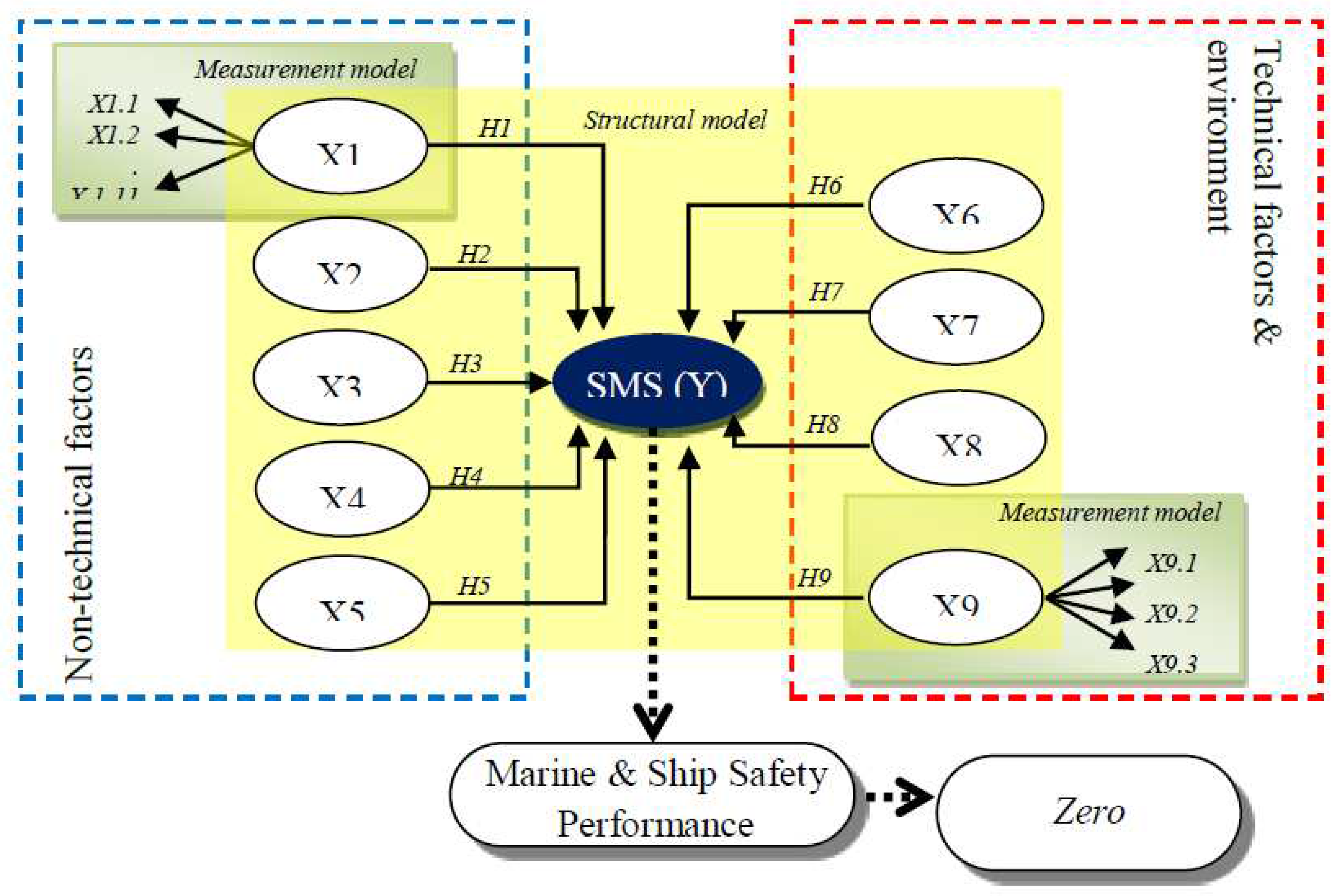
Figure 2.
Best Modified Full Structural Model Results.
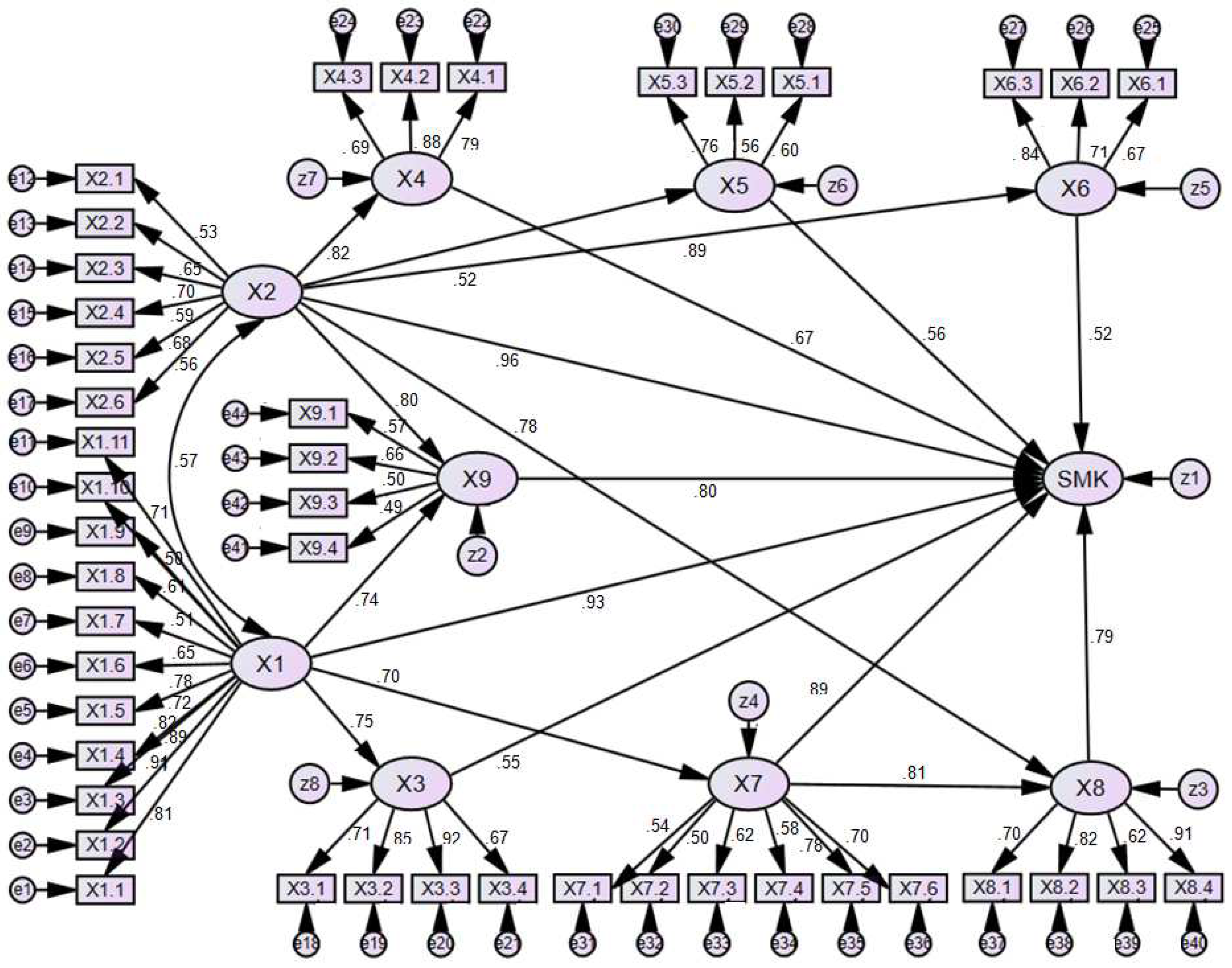
Figure 3.
Order of influence of each factor on the implementation of SMS Pelra.
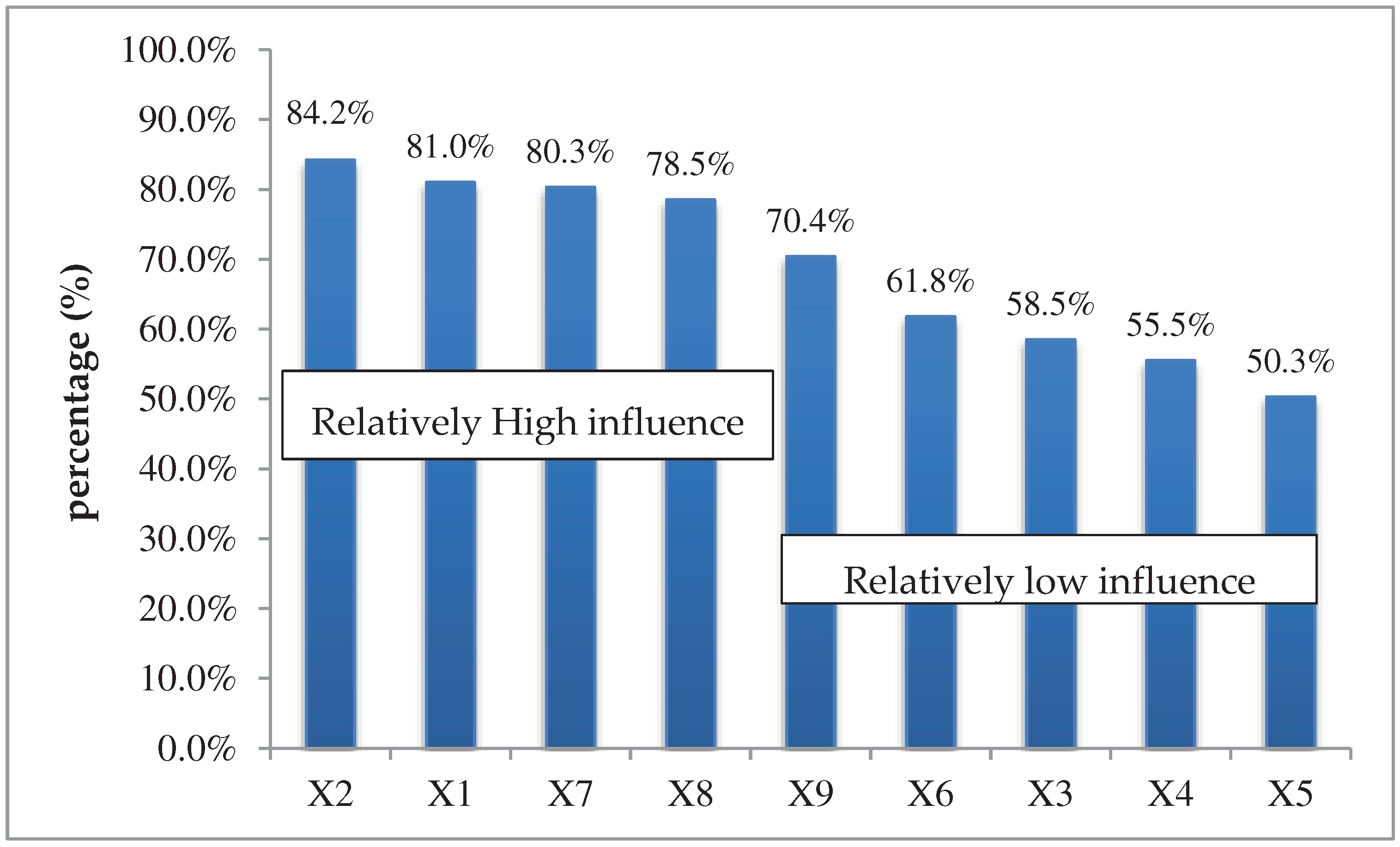

Table 1.
Characteristics of respondents according to Occupation.
| Characteristics | n | % | |
| Jobs - Academics - National SAR Agency (Basarnas) - Indonesian Classification Bureau (ICB) - Ditkapel Ministry of Transport - Shipping Court - Marine inspector - Entrepreneur/ship owner - Syahbandar |
30 44 7 6 12 29 78 59 |
11.3 16.6 2.6 2.3 4.5 10.9 29.4 22.3 |
Table 2.
Research variables.
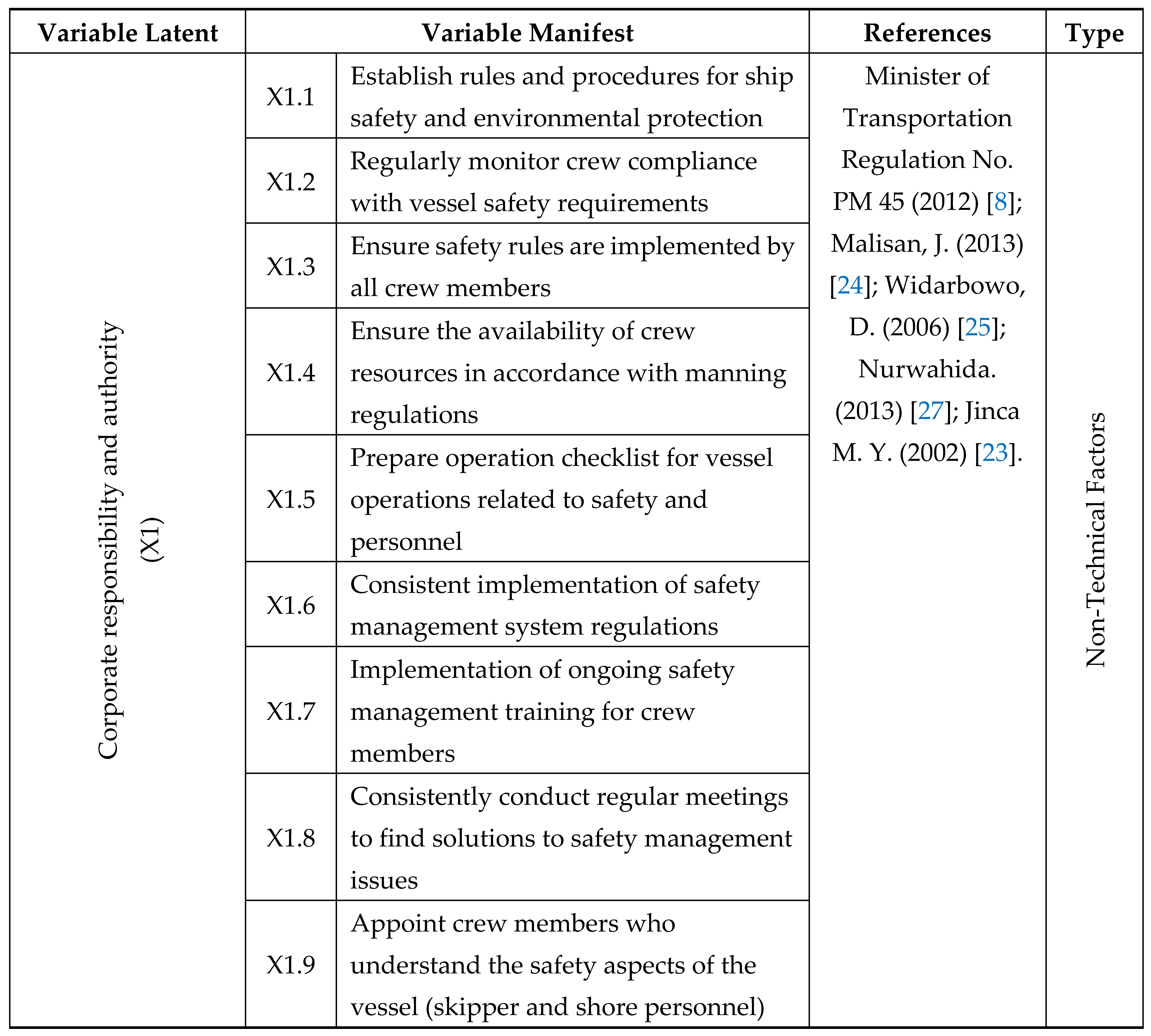
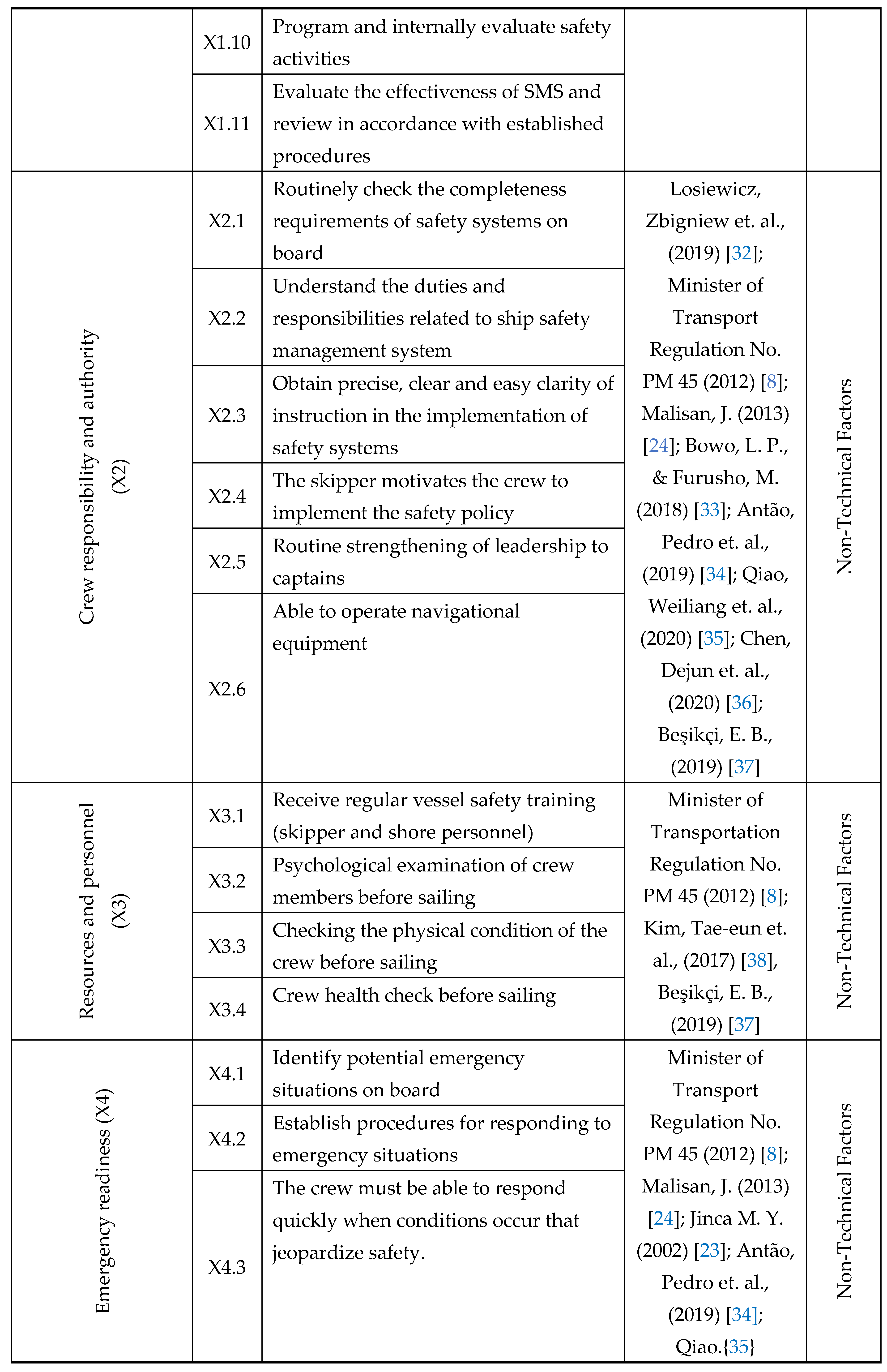
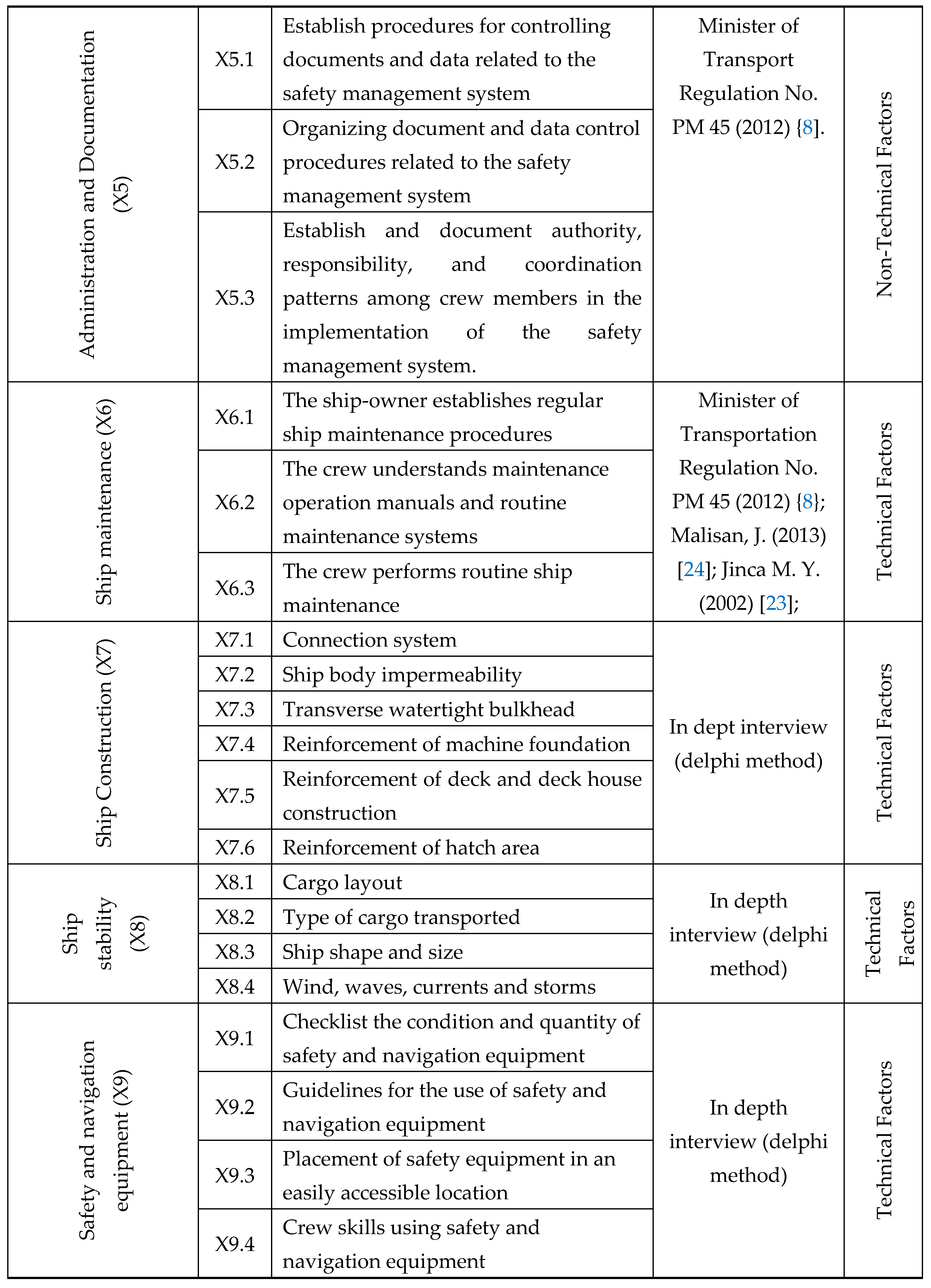
Table 3.
Full structural model test results.
| Test Criteria | Standardized cut-off criteria | GOF test results | Description | |
|---|---|---|---|---|
| Sig-Probability | ≥ 0,05 | 0.083 | Good fit | |
| RMSEA | ≤ 0,08 | 0.047 | Good fit | |
| GFI | ≥ 0,90 | 1.484 | Good fit | |
| AGFI | ≥ 0,90 | 0.915 | Good fit | |
| CMIN/DF | ≤ 2,00 | 1.720 | Good fit | |
| TLI | ≥ 0,95 | 0.945 | Marginal fit | |
| CFI | ≥ 0,95 | 0.921 | Marginal fit |
Description : GOF = goodness of fit; RMSEA= root mean square error of approximation; GFI = goodness of fit index; AGFI = adjusted goodness of fit index; CMIN/DF = the minimum sample discrepancy function; TLI = turker lewis index, CFI = goodness of fit index.
Table 4.
Results of SEM Model Fit Testing on the Application of Pelra Vocational Schools.
| Variables | Estimate | S.E | C.R | Description | Influence rating |
| X1 → X9 | 0.590 | 0.187 | 7.452 | significant | - |
| X1 → X3 | 0.506 | 0.023 | 8.704 | significant | - |
| X1 → X7 | 0.691 | 0.095 | 10.450 | significant | - |
| X2 → X4 | 0.703 | 0.150 | 8.054 | significant | - |
| X2 → X5 | 0.609 | 0.034 | 8.334 | significant | - |
| X2 → X6 | 0.534 | 0.090 | 3.903 | significant | - |
| X2 → X8 | 0.804 | 0.056 | 6.034 | significant | - |
| X2 → X9 | 0.690 | 0.056 | 12.434 | significant | - |
| X1 → SMS | 0.810 | 0.138 | 10.034 | significant | 2 |
| X2 → SMS | 0.842 | 0.084 | 6.430 | significant | 1 |
| X3 → SMS | 0.585 | 0.041 | 4.899 | significant | 7 |
| X4 → SMS | 0.555 | 0.039 | 6.346 | significant | 8 |
| X5 → SMS | 0.503 | 0.040 | 13.441 | significant | 9 |
| X6 → SMS | 0.618 | 0.042 | 14.434 | significant | 6 |
| X7 → SMS | 0.803 | 0.023 | 8.233 | significant | 3 |
| X8 → SMS | 0.785 | 0.076 | 7.034 | significant | 4 |
| X9 → SMS | 0.704 | 0.092 | 8.438 | significant | 5 |
Disclaimer/Publisher’s Note: The statements, opinions and data contained in all publications are solely those of the individual author(s) and contributor(s) and not of MDPI and/or the editor(s). MDPI and/or the editor(s) disclaim responsibility for any injury to people or property resulting from any ideas, methods, instructions or products referred to in the content. |
© 2023 by the authors. Licensee MDPI, Basel, Switzerland. This article is an open access article distributed under the terms and conditions of the Creative Commons Attribution (CC BY) license (http://creativecommons.org/licenses/by/4.0/).
Copyright: This open access article is published under a Creative Commons CC BY 4.0 license, which permit the free download, distribution, and reuse, provided that the author and preprint are cited in any reuse.


