
Submitted:
27 October 2023
Posted:
01 November 2023
You are already at the latest version
Abstract
Nudibranchs are marine gastropod mollusks that have been extensively studied for their poten-tial to yield new bioactive compounds. This review aims to share data about the chemical and biological activity of extracts and isolated compounds from nudibranchs. The systematic review followed the PRISMA (a systematic review protocol) and covers the studies from the literature published from January 1950 to September 2023, and various scientific databases, including Elsevier, web of science, ACS publications, Taylor and Francis, Wiley Online Library, MDPI, Springer and the Marine Pharmacology website. The results presented are based on the complete set of studies that met our inclusion criteria. Among the selected studies, chemical characteriza-tion was the focus in 79.6% of cases, while biological activity assessment accounted for 20.4%. Ten different types of biological activity assays were performed, with the most frequently studied activities being cytotoxicity (43.6%), antimycobacterial (43.6%), and ichthyotoxic (9.8%) effects. Most positive results obtained from these assays were related to antimycobacterial, cytotoxicity, and ichthyotoxic activities. Eight different types of metabolites were identified, with terpenes be-ing the most prevalent (78.5% of articles), followed by alkaloids (8.1%) and aromatic polyketides (4.7%). Gathering the existing evidence can aid in identifying research gaps and planning future investigations. Our findings indicate that certain nudibranch families, such as Cadlinidae, have received limited attention in terms of studies conducted, yet show promising results in terms of biological activities.
Keywords:
marine pharmacognosy
; natural products
; nudibranch
; terpenes
; alkaloids
1. Introduction
Marine organisms are an important source of bioactive products. Several chemical substances revealing biological activities have been isolated from marine invertebrates and have inspired the chemical synthesis of new drugs [1,2,3]. The development of new drugs and pharmaceutical products from marine organisms include the isolation, identification, and characterization of molecules; the characterization of its biological activities; computational chemistry studies; semi or total synthesis; chemical modifications; the expression of bioactive molecules and the production of pharmaceutical products on an industrial scale [4,5,6].
Nudibranchs are gastropod mollusks commonly referred to as sea slugs, and they exhibit a remarkable array of colors and shapes. Due to their unique capability to produce and accumulate diverse substances, these mollusks have become the focus of chemical studies aimed at isolating natural compounds [7,8]. Among the compounds isolated from nudibranch species, alkaloids and sesquiterpenes stand out. Many of these compounds have exhibited notable cytotoxic activity against tumor cell lines, along with various other biological activities [8,9,10,11,12,13].
Considering the facts outlined above, a systematic review of the current knowledge on chemical characterization and biological activity of extracts and isolated substances from nudibranchs may reveal important bias and gaps in marine natural products research. This information will enable researchers to gain insights into the current progress and advancements in the field. It will serve as a valuable resource to guide future research on this subject. We aim to address the following inquiries:
Is there a growing interest in nudibranch studies over time? (2) Which species and locations are the most extensively studied? (3) Are there specific species or families that frequently exhibit identified biological activity? (4) Is there a prevailing focus on biological activity or chemical characterization in the studies? (5) Is there a particular class of metabolites that dominates the research on the most studied species? (6) Which chemical characterization methods are most employed? (7) What are the primary and/or secondary metabolites that are frequently discovered? (8) Which types of biological activities are most frequently investigated?
2. Systemic analysis of secondary metabolites and biological activity of the extracts and compounds from nudibranchs
The review was conducted as a systematic review using including several databases such as Elsevier, web of science, ACS publications, Taylor and Francis, Wiley Online Library, MDPI, Springer and the Marine Pharmacology website to assess a sample of studies on chemical and biological activity of extracts or isolated substances from nudibranchs. Keywords used were “nudibranch * OR opisthobranch * OR “sea slug” AND “biological activit *” OR chemi * OR “secondary metaboli *” OR “defensive metaboli *” OR compound *” in the ‘‘Topic’’ search field. The search was completed in September of 2023, the timespan was for all years. Non-related publications were excluded by title, abstract or a careful reading of all text if necessary. To include a study in our survey, it had to: i) be conducted with primary data; ii) be done with nudibranchia; iii) carry out chemical characterization and/or biological activity investigation. Unavailable publications were searched for using the Google Scholar database and, if still missing, were requested from the authors. The inclusion and exclusion criteria were established in the final worksheet with subsequent calibration of the authors, where each author screened the first 10 articles, compared their worksheets and made the adjustments to standardize the selection of articles and the information extraction by the authors. After that, the total number of articles was distributed among the authors to extract the information.
The information extracted was regarding to i) bibliographic information: publication year, journal; ii) biological information: family, species, location; iii) chemical characterization: preservation, extraction, solvent, purification, identification technique, class of primary and / or secondary metabolites, isolated substances; iv) biological activity: type of tested biological activity, cells, result (IC50). The results are based on the total sample of studies provided by the ISI Web of Science database that matched our inclusion criteria. We conducted multiple counts per paper when needed (e.g. some studies have conducted more than one biological activity tests, chemical characterization method or was done with more than one species).
The availability of digitized articles has increased mainly since the 1990s, which indicates that this result may be reflecting an availability bias. The analysis of the cumulative number of articles on the subject revealed that publications growth is a function of time (1980 to 2013). Most papers were published in the Journal of Natural Products (20%) followed by Tetrahedron (12%) and Tetrahedron Letters (9%), but these journals published a huge spectrum of studies (chemical characterization, biological activity, biosynthesis an others). Regarding the focus of the studies, it is noted that most of the studies performed chemical characterization (75,7%; n = 2132) compared to biological activity (24,3%; n = 686). The analysis encompassed 96 species distributed among 21 families, with the three most extensively studied species being Armina babai (n = 150), Doriprismatica atromarginata (n = 146), and Phyllidiella pustulosa (n = 140).
Different methods of preservation were identified being freezing the most frequent about 62.6% of the articles, followed by sea water (15.9%) and ethanol (7.9%). The analyzes also concluded that four extraction methods were used, and the main techniques were maceration (49.8%), followed by ultrasound (46.3%). Acetone, methanol and ethanol were the most used solvent. Were identified 48 journal that published chemical and biological studies as described in the Table 1.
Among separation and purification techniques, the most frequently used was silica gel column chromatography (46.7%), followed by high-performance liquid chromatography (HPLC) (38.2%) and flash column chromatography (12.3%). From these techniques, eight metabolites were found, most of them terpenes in 78.5% of the articles, alkaloids in 8.1% and polyketides aromatics in 4.7%. Regarding biological activity, cytotoxicity (43.6%), antimycobacterial (43.6%), and ichthyotoxicity (9.8%) were the most evaluated. We also analyzed the frequency of positive results for biological activity by family using the extracts and isolated compounds. Most positive results were antimycobacterial, cytotoxicity and ichthyotoxicity biological activities. For these, Arminidae accounted for 99.2% of antimycobacterial positive results. For cytotoxicity Chromodorididae accounted for 42.5%, followed by Discodorididae with 28.3%, Phyllidiidae with 15.0% and Dorididae with 14.2%. When analyzing ichthyotoxicity, Polyceridae was the most promising family, accounting for 43.5% of positive results, followed by PhOf the Pyllidiidae with 28.3%, Chromodorididae with 21.7% and a last, Discodorididae with 6.5% (Figure 1).
Analyzing toxicity results by metabolite class, terpenes were the most frequently evaluated (n = 139), but positive results accounted for 59.0%, we believe that the high presence of these compounds in nudibranch show these results. Alkaloids emerged as the second most prevalent metabolite, with 79 assays conducted, of which 65.8% yielded positive results. Considering metabolites with more than 20 assays, polyketides showed the most promising result, with 78.6% of positive results, but with only 28 assays.
The interest in nudibranch research has greatly increased over the last three decades, and this increase has been higher than the scientific increase in pharmacology studies. It is plausible that this increase comes along with the attention to marine organisms in general. In comparison, terrestrial plants, for example, have a much longer history of research and therefore, there are comparatively less gaps to be filled. In addition, advances in techniques and equipment to underwater research facilitated the exploration of marine environments and organisms. Biologically, marine organisms exhibit a far greater diversity than their terrestrial counterparts, a characteristic that often translates into the discovery of more unique and distinct compounds.
Research on the biological activity of nudibranchs has predominantly focused on cytotoxicity and antimycobacterial assays, both of which have yielded promising results. While other assays have received limited research attention, they generally exhibit a higher proportion of positive results for biological activity, suggesting potential areas for further investigation. Among the seven types of assays with three or fewer studies, six have demonstrated promising outcomes. Particularly noteworthy is the antiplasmodial activity, as all three studies conducted in this area have reported positive results.
By categorizing the results of biological activity based on taxonomic groups at the family level, we can assess whether species from different families possess varying potential for biological activity. With the results found, two aspects should be highlighted: first, nudibranch species of the families Arminidae and Discodorididae have great potential to show positive biological activity results. Both groups are widely distributed over the world’s oceans. Secondly, the Cadinidae family constitutes an important gap to be filled as all ten studies found showed positive results for biological activity. Although there are fewer species in this family (c.a. 50), it is also globally distributed. The Polyceridae family, on the other hand, had more than 50 assays while 55,8% didn’t show positive results. The information provided by this analysis can aid researchers to direct efforts and resources to the most promising groups.
The lack of studies focusing on species in the Atlantic Ocean indicates a potential bias in our knowledge. The limited number of studies conducted in South America and Africa aligns with the overall pattern of scientific research in various fields, but the knowledge gap in North America is distinct [14]. Rectifying this geographical bias could aid in the discovery of new chemical compounds, even within the same species studied elsewhere.
The type of biological activity tested is not equally distributed across species and families. Nearly all antimycobacterial assays were done with Arminidae species. This bias can have a profound effect on results interpretation. On the other hand, the one publication tested 18 different bacteria and fungi [15]. This bias is not seen for other activities. Cytotoxicity assays, for example, were more evenly distributed across nudibranch families, therefore showing a wider range of species with toxic substances.
Methods of preservation are intended to retard biological action, to prevent chemical degradation of secondary metabolites and to reduce volatility of constituents. Methods of preservation are limited to amber or opaque bottles, pH control, filtration, chemical addition, refrigeration, and freezing. Samples should in general be preserved by more than one method: one optimal for morphological study of the taxon, the other optimal for genetic study [16]. Each preservation method has pros and cons, depending on what you need from the specimen.
Freezing is the easiest, most convenient, and least time-consuming method of preserving nudibranchs, as reported in more than 60% of the articles presented in this review. This technique could provide a safe haven for the broad range genetic material. The sampling and subsequent treatment to store the marines for metabolomic analyses can be performed in different ways, but the most used being freezing (directly upon collection or later), that is effective for DNA preservation, susceptible to power failures.
In recent years the techniques of extraction are developing rapidly and various media have been researched and improved; however, low yield and high cost are still a limiting factor. Extracts are reported to contain complex mixtures composed mainly of polysaccharides, proteins, polyphenols, and to extract metabolites without causing degradation, modern techniques, such as Microwave Assisted Extraction (MAE), Ultrasound-Assisted Extraction (UAE) and Supercritical Fluid Extraction (SFE) have advantages over traditional techniques [17].
The findings concerning the chemistry and chemical ecology of nudibranchs were organized in a secondary metabolites and biological activities. In this paper's discussion, the species are referenced and ordered according to the names used in the original publications, but it is important to note that a taxonomic revision being conducted.
3. Secondary metabolites isolated from Nudibranchs
Most of the compounds isolated from nudibranchs are secondary metabolites that play a fundamental role for their survival. These compounds are usually small molecules derived from the diet [18]. The ability to select bioactive molecules from nature has resulted in many compounds that hold the potential as new medicinal agents [19,20]. However, the small number of compounds derived from nudibranchs is a limiting factor in biological activity studies. Many metabolites are isolated in small quantities and not sufficient for tests, requiring the support of the chemical synthesis to obtain the amount of material needed for biological assay. This factor could have contributed to the limited number of studies on biological activities discovered in our review.
Nudibranchs produce toxic compounds, chemically classified as indole alkaloids and pyrrolic derivatives, and sesquiterpenes, which act as a defense mechanism against predators, being produced by the nudibranchs themselves or obtained from their prey and corals [7].
3.1. Alkaloids
Alkaloids are a huge class of metabolites and a large structural diversity and, therefore, a broad spectrum of biological activities [21]. Alkaloids are recognized for their important role in medicinal chemistry due to their broad spectrum of biological activities. This class of compounds evolved as a chemical defense mechanism against predators and are often highly potent and toxic molecules. Alkaloids are widely found in plants belonging to the families Apocynaceae, Loganiaceae, Solanaceae and Rubiaceae. In the marine environment, they have also been described in sponges, algae and mollusks, and some activities as antihypertensive, antitumor, and against neurological diseases were found [22,23,24,25].
Considering its wide distribution in marine invertebrates and their pharmacological potential, the alkaloids can be used as candidates to new medicines, being classified according to their chemical structure as piperidine, quinoline, isoquinoline, indole, among others [26].
3.1.1. Bis-pyrrole
According to the bibliographic survey, it was found that the subfamily Nembrothinae belongs to the Polyceridae family, contains three genera, Nembrotha, Tambja and Roboastra, all of which utilize a series of antimicrobial and cytotoxic alkaloids as tambjamines. Tambjamines are bis-pyrrole alkaloids isolated from marine sources and belong to the class of natural products derived from 4-methoxypyrrolic, which show promising immunosuppressive and cytotoxic properties due to their ability to intercalate DNA and their pro-oxidant activity [27].
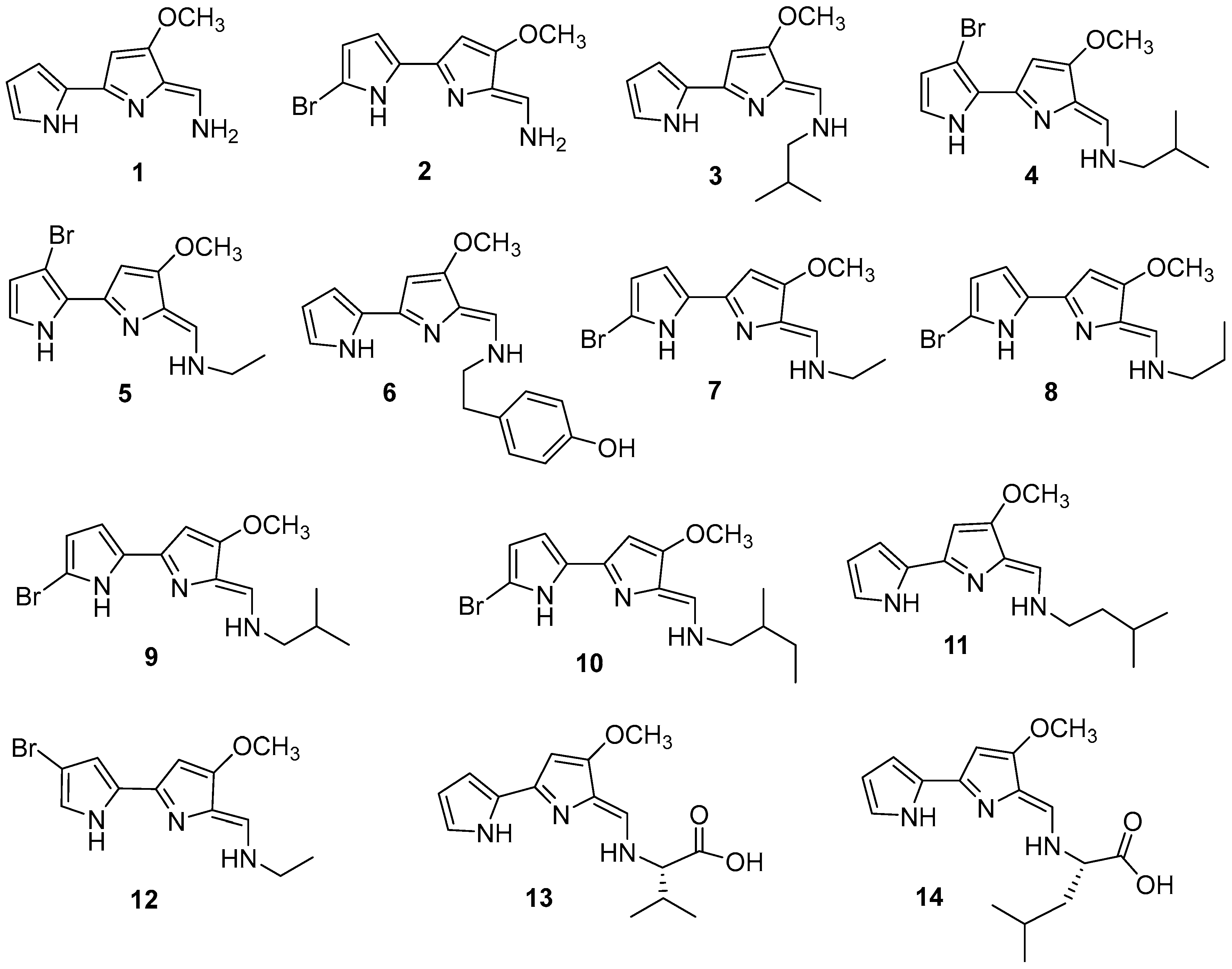
Among the few alkaloids (less than 30) isolated from nudibranchs, the tambjamines (A-N, 1-14) constitute a particular class originally isolated from Tambja abdere, T. eliora and Roboastra tigris, the latter being a carnivorous species that feeds on the two preceding species [28]. Tambjamines 1-4 were first isolated from the nudibranchs T. abdere, T. eliora, and R. tigris, as well as from the bryozoan Sessibugula transluscens. Subsequently, tambjamines 5 and 6 were reported from the ascidian Atapazoa sp. and from nudibranchs of the genus Nembrotha. Later, tambjamines 7−10 were isolated from the bryozoan Virididentula dentata. The structures of the metabolites were elucidated by interpretation of their spectral data [29].
According to Blackman & Li [30] the tambjamines 5, 7 and 9 were active in the brine shrimp bioassay, promoting significant mortality at 2.8 x 2.6~ and 3.6~ mmol/ml respectively. Granado et al. [31] reported the isolation of tambjamines A e D (1 e 4) from the nudibranch T. eliora, in addition, the cytotoxic for 4, against five types of human tumor cells (CEM, HL60, MCF-7 breast cell, HCT-8 colon cell and B16 murine melanoma cell), was observed. Cavalcanti et al. [27], showed the cytotoxic and genotoxic effects of 4 in a concentration-dependent manner in cultured V79 cells. Tambjamine D (4) seems to induce cell death through apoptosis and its pro-oxidant properties, as demonstrated by nitrite/nitrate production, contributing to its genotoxicity.
The chemical investigation of Azorean nudibranch mollusk – T. ceutae - reported by Carbone et al. [32], lead to the isolated a new member of the tambjamine type, tambjamine K (11). The structure of 11 was elucidated by the interpretation of the spectroscopic data as well as by the comparison with related compounds (1 e 2) and displayed high cytotoxicity against both tumor (CaCo-2 human epithelial colorectal adenocarcinoma cells, HeLa human cervical cancer cells, C6 rat glioma cells, H9c2 rat cardiac myoblast cells and 3T3-L1 murine fibroblasts) and non-tumor cells.
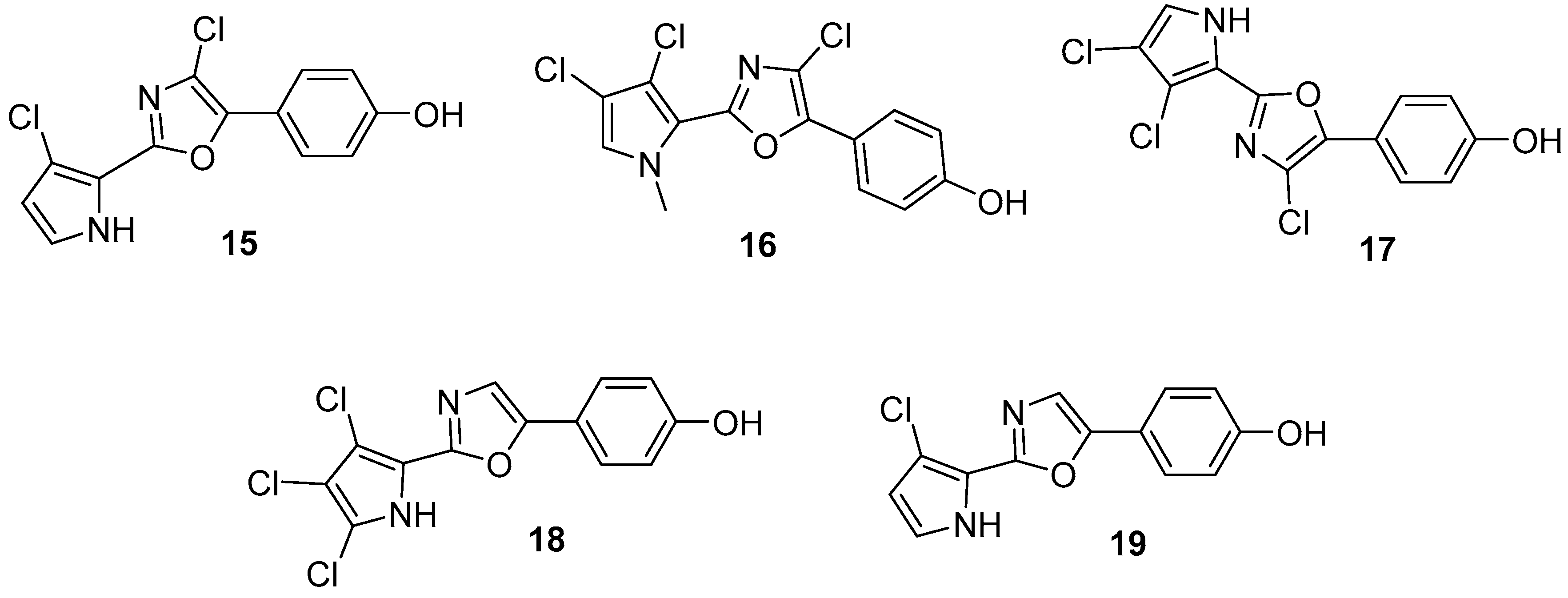
The first chemical study of the Indo-Pacific dorid nudibranch Aldisa andersoni, realized by Nuzzo et al. [33], resulted in the isolation of five chlorinated phenyl-pyrrollyloxazoles belonging to the phorbazole series. Two new molecules, 9-chloro-phorbazole D (15) and N1-methyl-phorbazole A (16), co-occurring with the known phorbazoles A, B and D (17-19), were characterized. The compounds were evaluated in vitro cytostatic effect of selected phorbazoles (15-16) in a small panel of tumor cells (A549 (NSCLC), MCF-7 (breast cancer), SKMEL-28 (melanoma), Hs683 (oligodendroglioma), U373 (glioblastoma), and has been measured for the first time.
3.1.2. Isoquinoline
These compounds are biogenetically derived from phenylalanine and tyrosine, which include an isoquinoline or a tetrahydroisoquinoline ring as a basic structural feature in their skeleton. This class have been widely used in folk medicine and the most knoledegement are berberine, palmatine, jatrorrhizine, papaverine, morphine, codeine, corydaline, emetine, sanguinarine and chelerythrine. The Marine world has been a source of search for compounds with similar chemical structures [34].
Discodorididae family yielded the most bioactive compound known as jorumycin (20), an isoquinoline alkaloid with potent antitumor activity (IC50 = 12.5 ng/mL) against cancer cell lines including P388, A549, HT29, and MEL28. The first isolation of this compounds was from Jorunna funebris collected in Mandapam, India. Notably, jorumycin possesses a saframycin-like structure akin to ecteinascidin (21), a marine compound as antitumor agents isolated from the tunicate Ecteinascidia turbinata and an approved drug. [35,36].
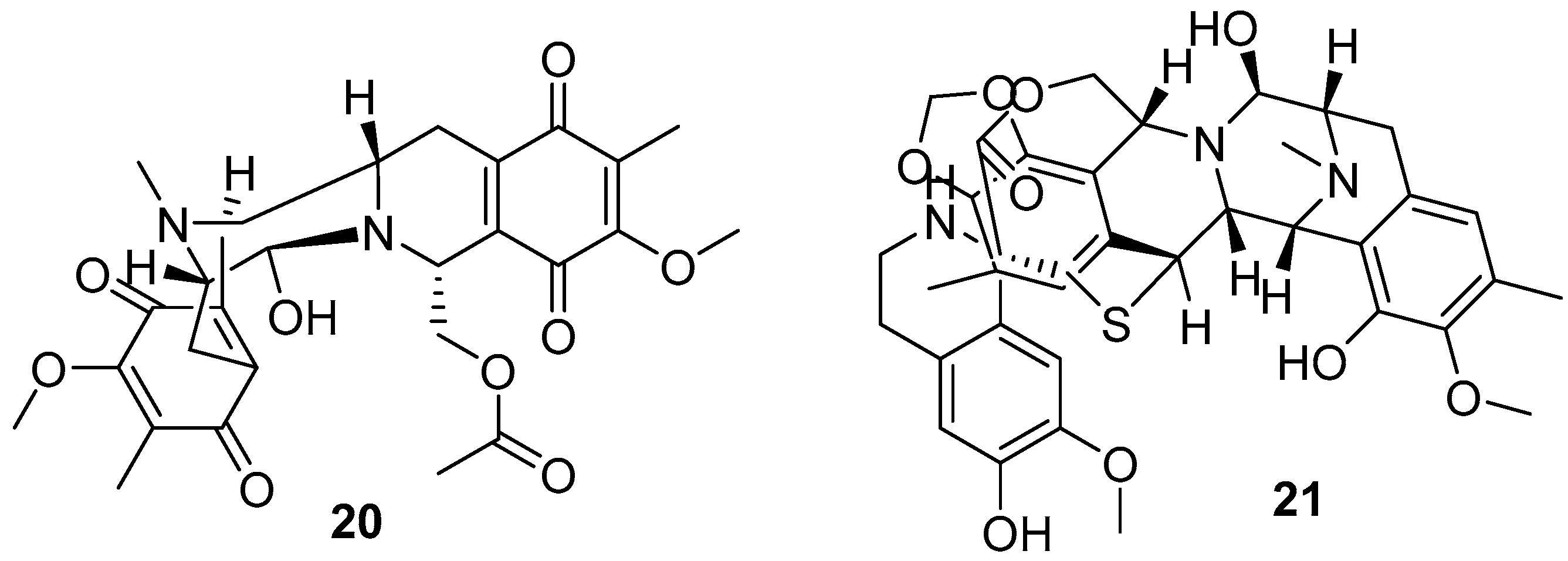
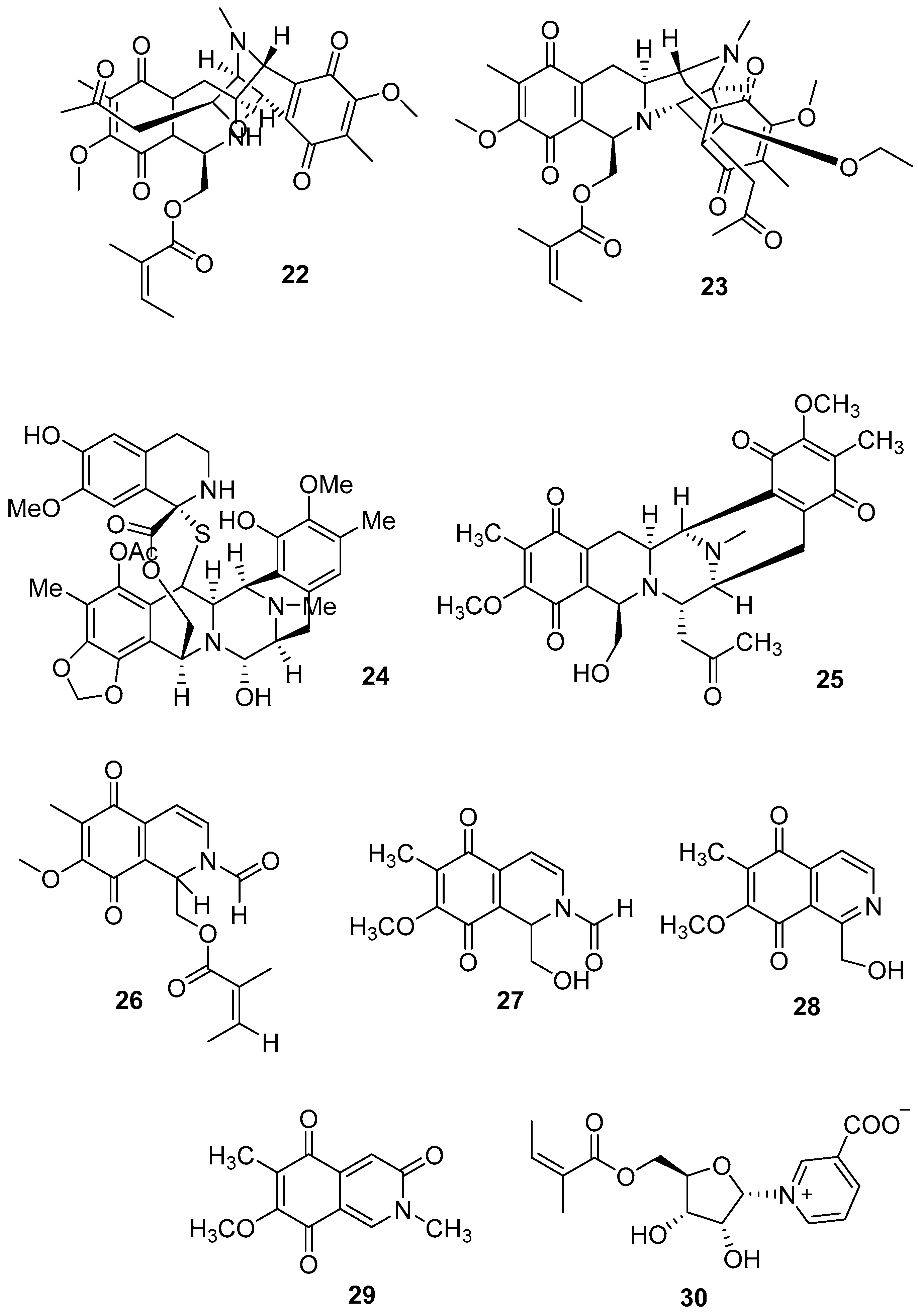
Huang et al. [37] realized a chemical investigation that results in the isolation of two new compounds, Fennebricin C (22) and fennebricin D (23), as well as six isoquinolinequinone alkaloids (renieramycin J (24), fennebricin A (25), N-formyl-1,2-dihydrorenierone (26), N-formyl-1,2-dihydrorenierol (27), renierol (28), mimosamycin (29)) from the sea nudibranch Jorunna funebris and its sponge-prey Xestospongia sp. The marine sponges of the genus Xestospongia are widely distributed in the South China Sea and they are known as one of the richest sources of diverse bioactive natural products, including brominated polyacetylenes and alkaloids, and the investigation of nudibranch J. funebris from the same location gave rise to five common isoquinolinequinones (26, 27, 28, 29), which further confirmed their predator–prey relationship in view of our previous studies and our observations during the collection of the animals [37].
Wu et al. [38] reported that the nudibranch J. funebris could accumulate and/or biochange the sponge-derived metabolites, especially those toxic isoquinoline alkaloids, as its own chemical defensive agents for surviving in the harsh marine living environment. The discovery of a previously unknown compound in J. funebris, named as neopetroside C (30). Furthermore, it was found that the nudibranch J. funebris can feed on more than one sponge species in order to acquire structurally diverse alkaloids to use as defense mechanisms for different purposes. In turn, these structurally characteristic alkaloids may act as chemical markers to aid in understanding the prey-predator relationship of marine mollusks and sponges [38].
3.2. Terpenoids
In marine environments, terpenes and their derivatives present as a series of diverse chemical structures with promising biological activities. Terpenes are hydrocarbons that represent a large family of natural compounds, which include metabolites biosynthesized from isoprene units. Most terpenoids have been identified in nudibranchs, anaspideans and sacoglossans, and fewer in pleurobranchoideans and pulmonates species [39].
The most frequent occurrence in nudibranchs are sesterterpenes, which clearly play an ecological role in the marine environment and make them potential medicines. Several terpenoid compounds such as eleutherobin, sarcodictiin and contignasterol derivatives, are at the preclinical or clinical studies [40].
Nudibranchs can obtain compounds from their food sources and store them unchanged, undergo transformations of the compounds or selectively sequester specific compounds. However, the distribution between the different classes of terpenes and their potential specificity towards certain phyla remain unclear. Transformation processes can involve modifying toxins into less harmful analogues during transport to storage sites or to improve their defensive capabilities [41]. Terpenes play a dominant role in interactions between sponges and opisthobranchs, to the extent that some authors propose considering metabolite content as a parameter in determining species taxonomy [42].
3.2.1. Sesquiterpenes
Sesquiterpenes are the largest class of natural terpenoids, showing structural diversity, including thousands of compounds and more than 100 different skeleton types. The vast majority of sesquiterpenes have "drug-like" chemical properties, including lipophilicity, reactivity of the alkylating center and favorable electronic characteristics, which has generated widespread interest in their study, given their promising biological activities [43].
In a chemical study conducted by Wu et al. [43], two nudibranch species from the South China Sea, Phyllidiella pustulosa and Phyllidia coelestis, along with their potential associated gray-sponge Acanthella cavernosa, were investigated. The study led to the isolation of cadinoid-type, xidaoisocyanate A (31), a new diterpenoid of kalihinano-type bisformamidokalihinol A (46), and 17 known nitrogenous terpenoids [halichon G (32), 10-isothiocyanato-4-cadinene (33), 10-formamido-4-cadinene (34), axiriabiline A (35), 11-formamido-7βH-eudesm-5-ene (36), Δ7,14-3-isocyanotheonellin (37), 3-isocyanotheonellin (38), theonellin formamide (39), theonellin isothyocianate (40), 7-isocyano-7,8-dihydro-α-bisabolene (41) 1-isothiocyanatoaromadendrane (42), axamide-2 (43), 9-thioocyanatopupukeanane isomers (44), axamide-3 (45), kalihinol A (47), 10β-formamido-5β-isothiocyanatokalihinol-A (48), 10β-formamido-5-isocyanatokalihinol-A (49)], in different functional groups, such as isocyanate, isothiocyanate, and formamide.
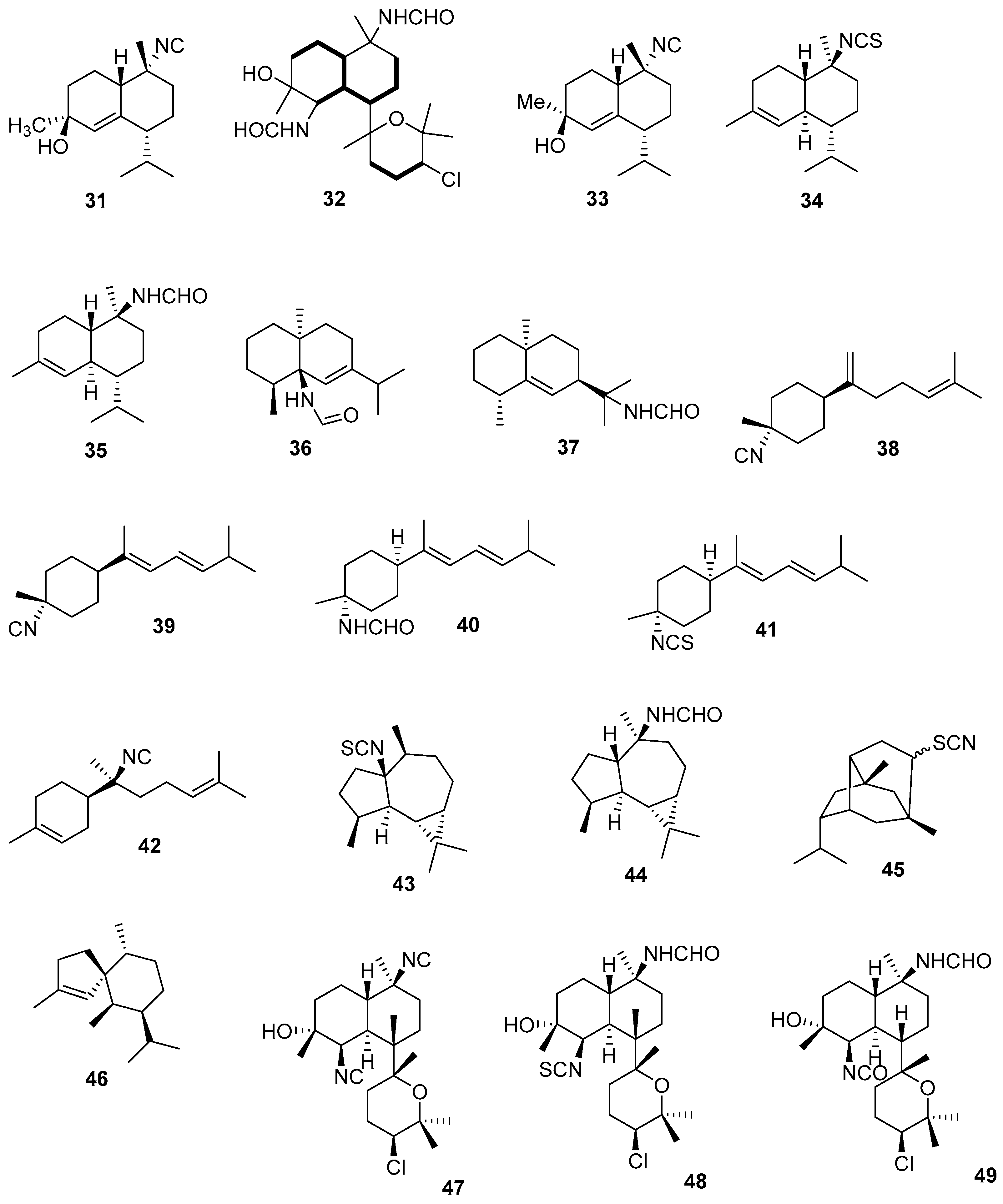
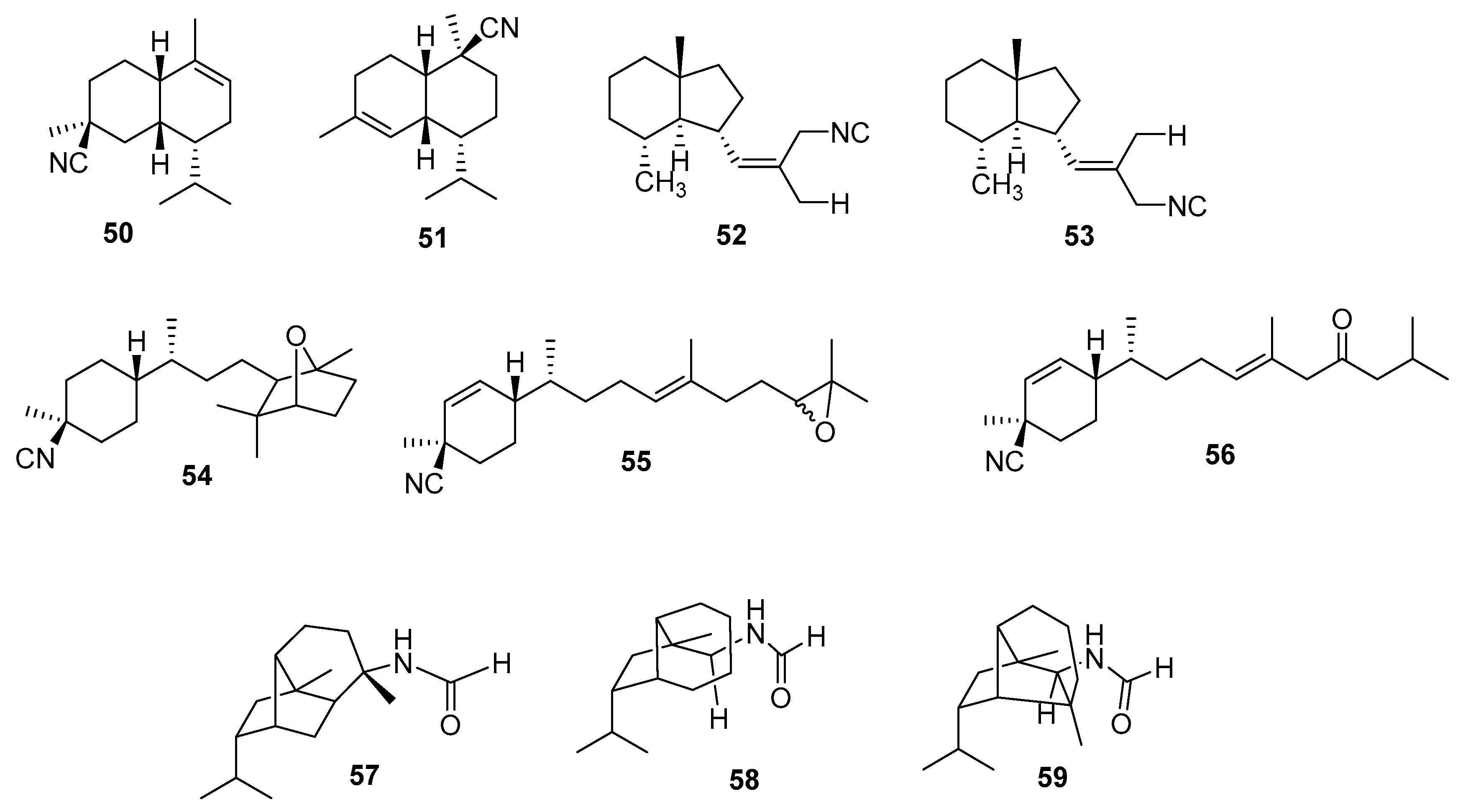
Chemical investigation of Phyllidiella pustulosa and Phyllidia ocellata collected in Queensland, Australia, provided new stereoisomers of (+)-(1S*,4S*,6S*,7R*)-4-isocyano-9-amorphene (50) and (−)-(1S*,6R*,7R*,10S*)-10-isocyano-4-amorphene (51), respectively. P. picta collected from Bali, Indonesia, in this same study, detected the presence of axane sesquiterpenoids pictaisonitrile-1 (52) and pictaisonitrile-2 (53) [10].
Three new isocyanoditerpenes (+)-Pustulosaisonitrile-1 (54), (+)-Pustulosaisonitrile-2 (55), (+)-Pustulosaisonitrile-3 (56)), reported by White et al. [44] and have been characterized from Australian specimens of the nudibranch P. pustulosa, collected in Southeast Queensland. Jaisamut et al. [45] investigated the nudibranch P. coelestis leading to the isolation of an unknown rearranged sesquiterpene called 1-formamido-10(1→2)-abeopupukeanane (57). Another bridging sesquiterpene, 2-formidopupukeanane (58), was reported for the first time in this study and their cytotoxic action. The chemical composition of the ethanolic extract of the nudibranch mollusk P. pustulosa was studied by Lyakhova et al. [46] leading to the identification of (+)-10(R)-isothiocyanoalloaromodendran (59).
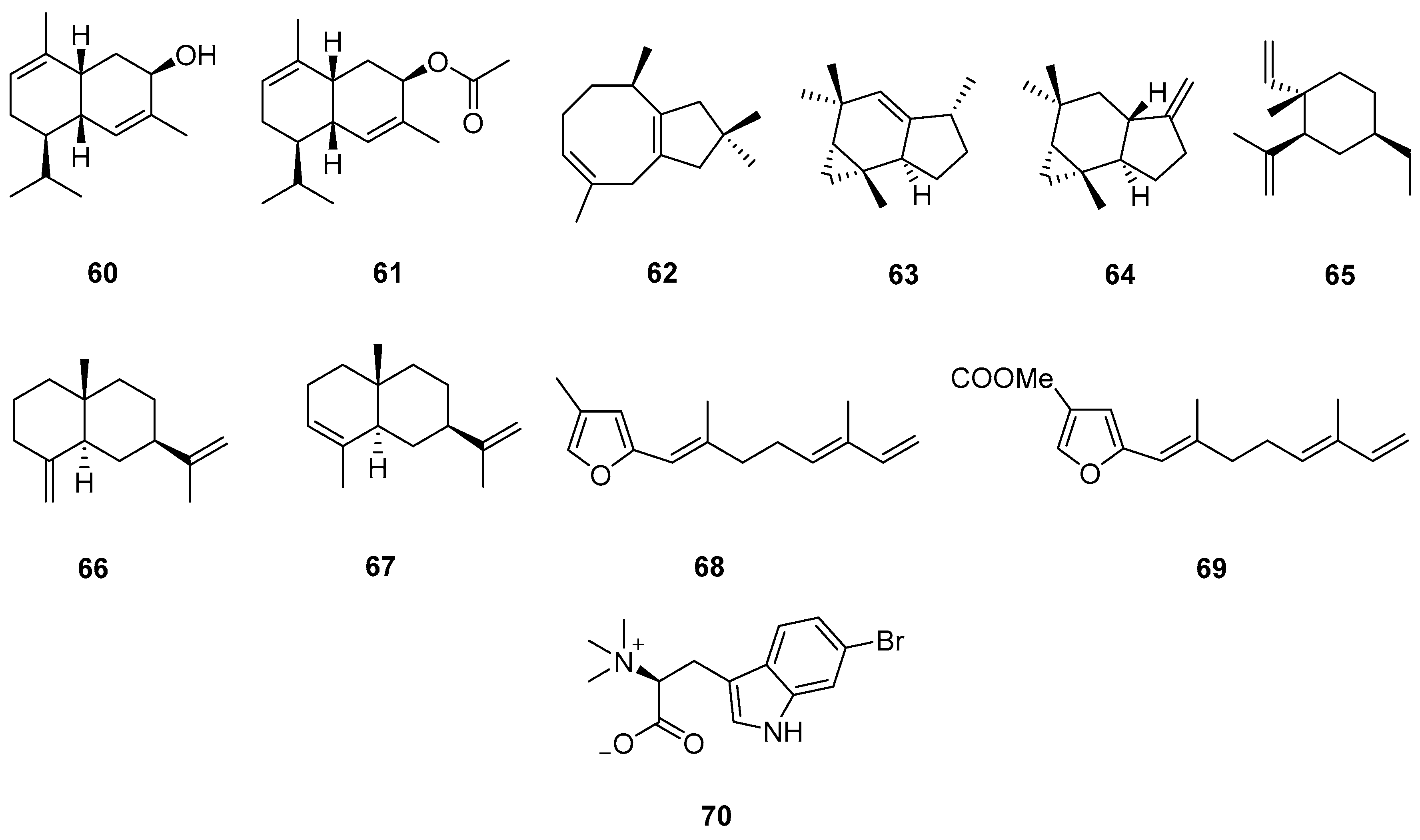
The Myrrhinidae family is worldwide distributed and from this family Affeld et al. [47] discovered new aeolidean species Phyllodesmium lizardensis, and leaded to the isolation of the new sesquiterpenes (+)-3β-hydroxy-α-muurolene (60) and (+)-3-β-acetoxy-α-muurolene (61). Chemical investigation of the secondary metabolite pattern of the aeolid nudibranch P. magnum collected from the South China sea by Mao et al. [48] resulted in the isolation of eight sesquiterpenes, exhibiting very different structural features, which included one asteriscane (62), two africanane (63-64), one elemane (65), two selinane (66-67), and two furano-sesquiterpenes (68-69). Among them, a new molecule (62) represents the fourth example of a rare asteriscane skeleton from a natural source. Appropriate defense mechanisms that include sequestration of chemicals and unusual feeding strategies (including energy supply via incorporation of photosynthetically active micro-algae of the genus Symbiodinium) appear to have influenced speciation and evolution of Phyllodesmium species. The chemical structures encountered in Phyllodesmium share many structural features. This may facilitate food switches to other closely related food items and in this way enhance speciation. The structural similarity or dissimilarity of particular slug metabolites also seems to suggest a closer, or more distant relationship of the respective Phyllodesmium taxa [49].
Kasherov et al. [50] established a connection between the activity of a compound isolated from the marine nudibranch mollusk Hermissenda crassicornis and L-6-bromohypophorine (6-BHP) (70), which shares an identical structure. Interestingly, 6-BHP was originally isolated from marine sponges Pachymatisma johnstoni several decades ago [51], and subsequently from Aplysina sp. [52], and the tunicate Aplidium conicum[53]. It has been observed that 6-BHP not only recognizes the human α7 nicotinic acetylcholine receptors (α7 nAChR) but also acts as an agonist. This paper provides a concise overview of the activities of various bromo-containing compounds sourced from the marine environment. It also demonstrates that the interaction of 6-BHP with the human α7 nAChR represents a rare instance where this activity has been characterized at the molecular level within this compound family.
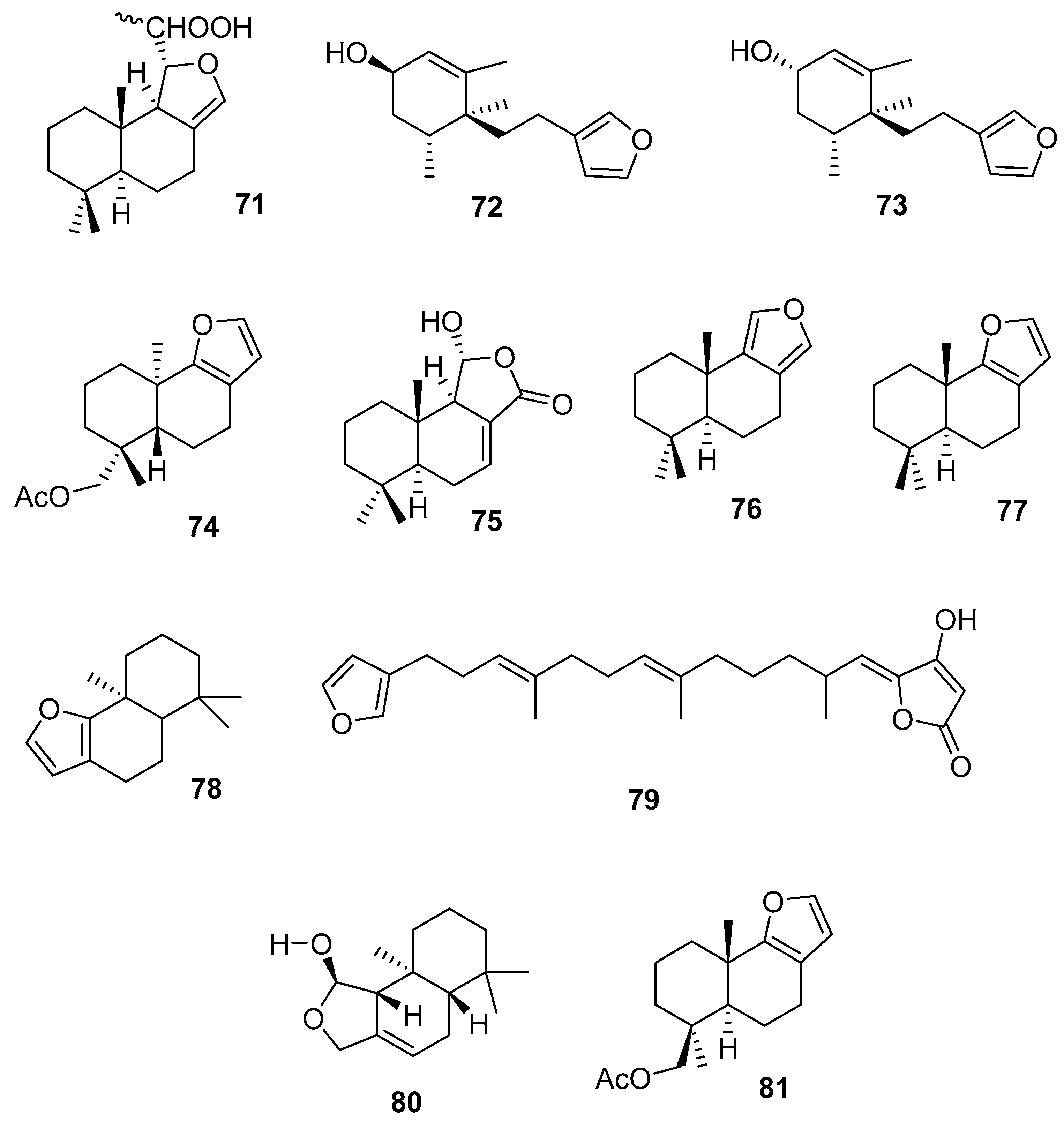
Two of the three genera that comprise the Dendrodoridae family have been chemically examined (Dendrodoris and Doriopsilla). The discovery of de novo synthesis of the drimane ester (71) in Dendrodoris limbata was the first proven example of biosynthesis in a nudibranch. Two new furanosesquiterpene alcohols, pelseneeriol-1 (72) and pelseneeriol-2 (73), have been isolated with known compounds, 15-acetoxy-ent-pallescensin-A (74), dendocarbin-A (75), euryfuran (76) and (71). Gaspar et al. [54] reports the first chemical study of the porostome nudibranch Doriopsilla pelseneeri collected in the Portuguese coast (Atlantic Ocean).
Three porostome nudibranchs, D. krebsii from Mexico, D. albopunctata from California and D. areolata from Portugal, have been chemically investigated by Gavagnin et al. [55]. The presence of sesquiterpenes of the drimane class in these mollusks has been checked and have shown to contain sesquiterpenes of ent-pallescensin-A series [pallescensin-A (77), ent-pallescensin-A (78), variabilin (79), isodrimeninol (80), 15-acetoxy-pallescensin-A (81)], co-occurring with drimane metabolites. Most of these sesquiterpenes are typical sponge metabolites, suggesting a dietary origin in the mollusks, even though de novo biosynthesis, rigorously demonstrated for some D. molluscs, may occur.
3.2.2. Diterpenes
Diterpenoids, are comprised of four isoprene units with the chemical structure C20H32, and several studies have demonstrated to be a promising class of molecules of secondary metabolites with a range of activity including antiviral, antibacterial, anticancer, and anti-inflammatory [56].
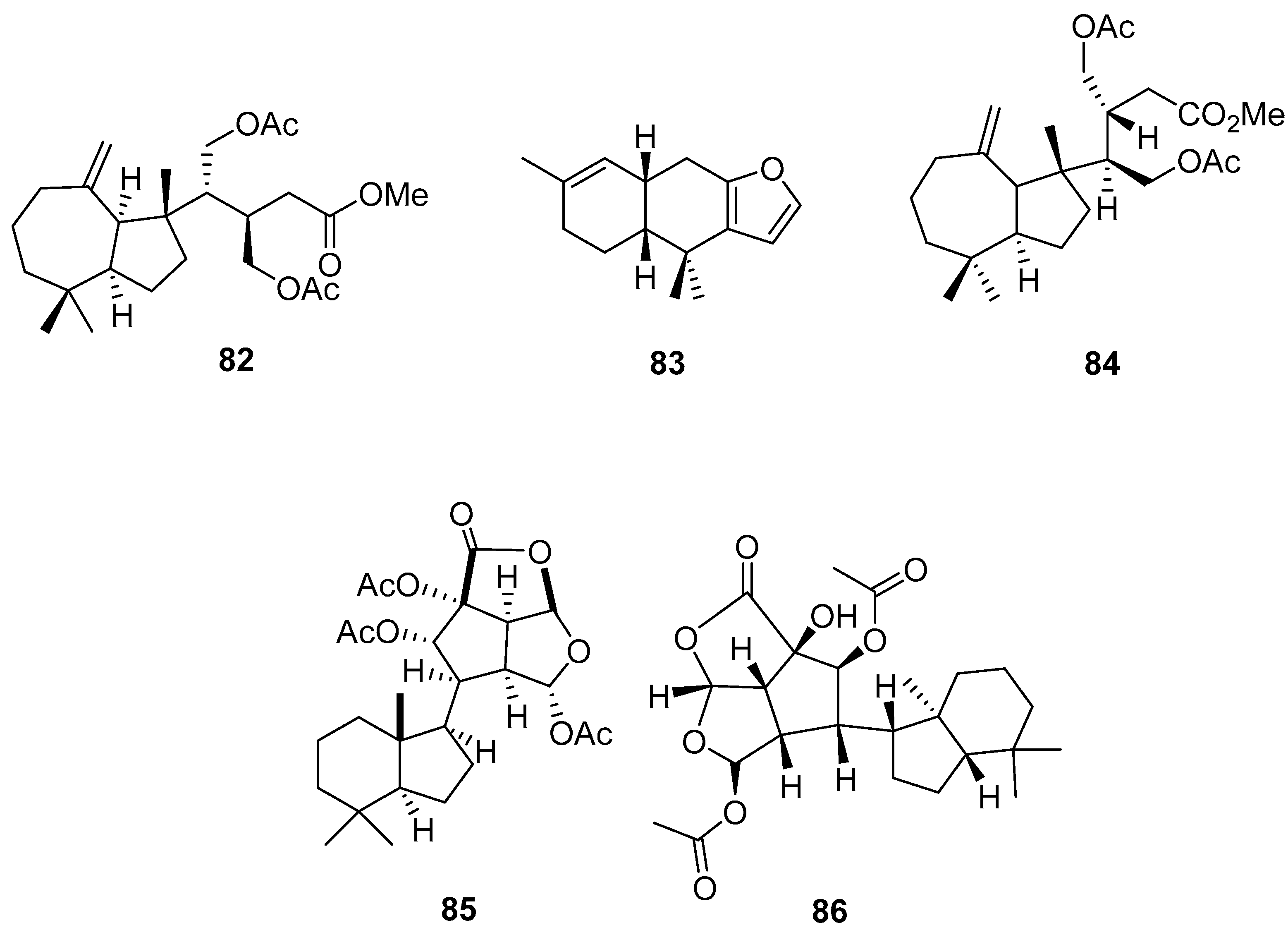
A (+)-Secoshahamin (82), previously isolated from a Japanese marine sponge [57], together with two unknown rearranged oxygenated diterpenes with highly rearranged carbon skeletons have been characterized from the Australian nudibranch species Goniobranchus geometricus by Forster et al. [58]. Mudianta et al. [59]. Showed the chemical investigation of an extract of nudibranch Hypselodoris infucata collected in Bali, and the extract contained (-)-furodisin (83), a furanoterpene that was isolated in this species for the first time [58]. Three diterpenes, chromodorolide D (84), chromodorolide B (85) and chromodorolide C (86) , were isolated from Chromodoris sp. from the coast of Okinawa [59].
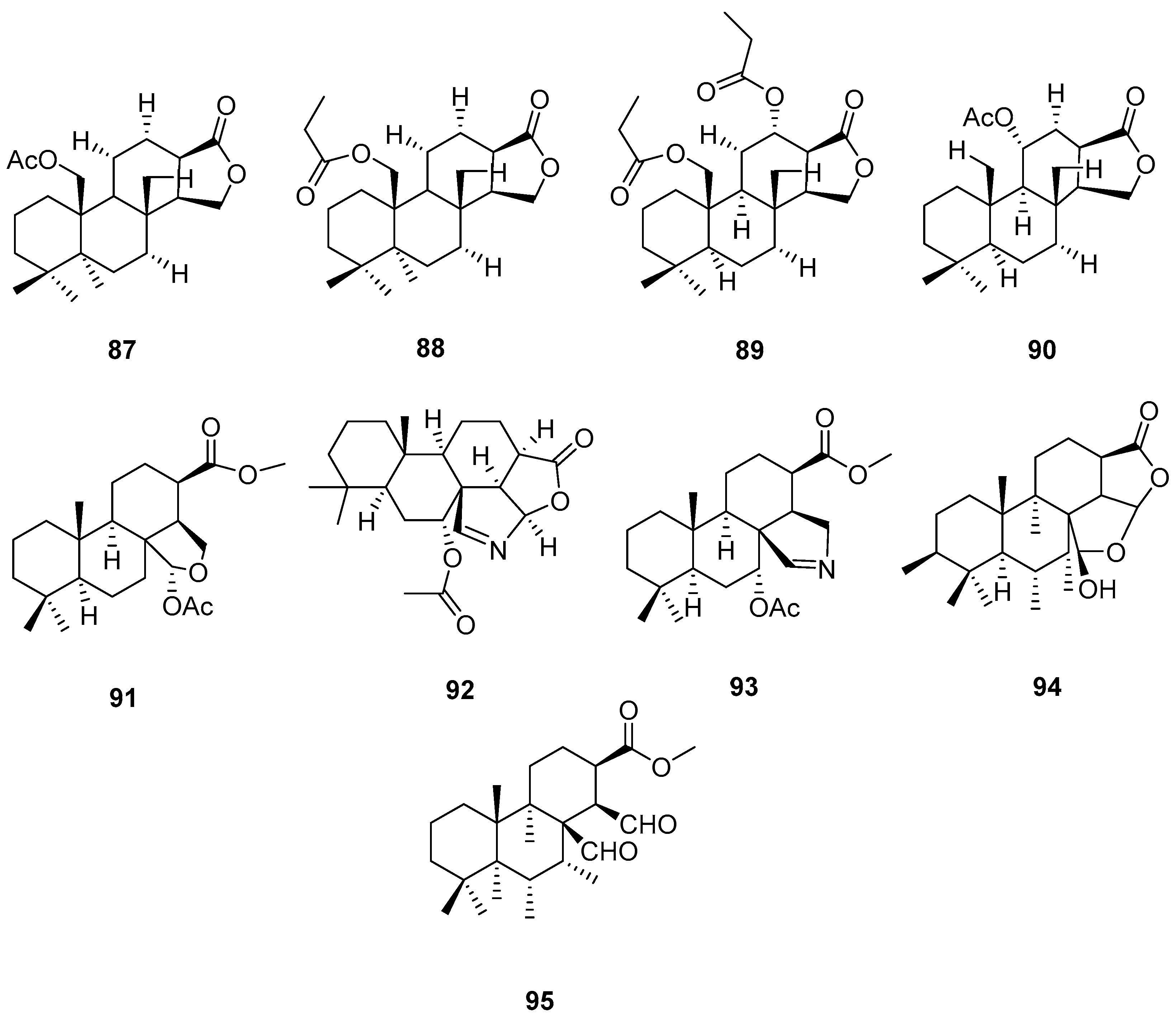
A single specimen of Chromodoris albopunctata, collected at the Inner Gneerings Reef, South East Queensland, was dissected to separate the internal organs, and a new metabolites, 20-acetoxyspongian-16-one (87), 20-oxyspongian-16-one propionate (88) and 12α,20-dioxyspongian16-one dipropionate (89) were isolated from the mantle extract; their structures were characterized using the relative configuration deduction from 2D NMR spectra [60]. In the same year Suciati et al. [61] reported six new diterpenes as known 11α-acetoxyspongian-16-one (90), methyl 15,17-epoxy-17α-acetoxy-ent-isocopalan16-oate (91), chromoculatimine A (92) and B (93), aplyroseol-19 (94), α-hydroxy-7α-butyryloxy-8β,14B-diformylpodocarpane-13β-carboxylate (95) isolated from two specimens of C. reticulata, obtained from the Gneerings Reef, in South East Queensland.
Chromodoris is the most examined of all nudibranch genera, with many reported studies over the years. A characteristic of Chromodorids species is their ability to sequester feeding-deterrent chemicals from their dietary sponges for use as a chemical defense. A very specialized diet among the three genera Hypselodoris, Chromodoris, and Glossodoris has been generally observed. In fact, each group of animals appears to feed only sponges accumulating specific secondary metabolites, which are generally furanosesquiterpenes for Hypselodoris, diterpenes for Chromodoris, and sesterterpenes for Glossodoris.
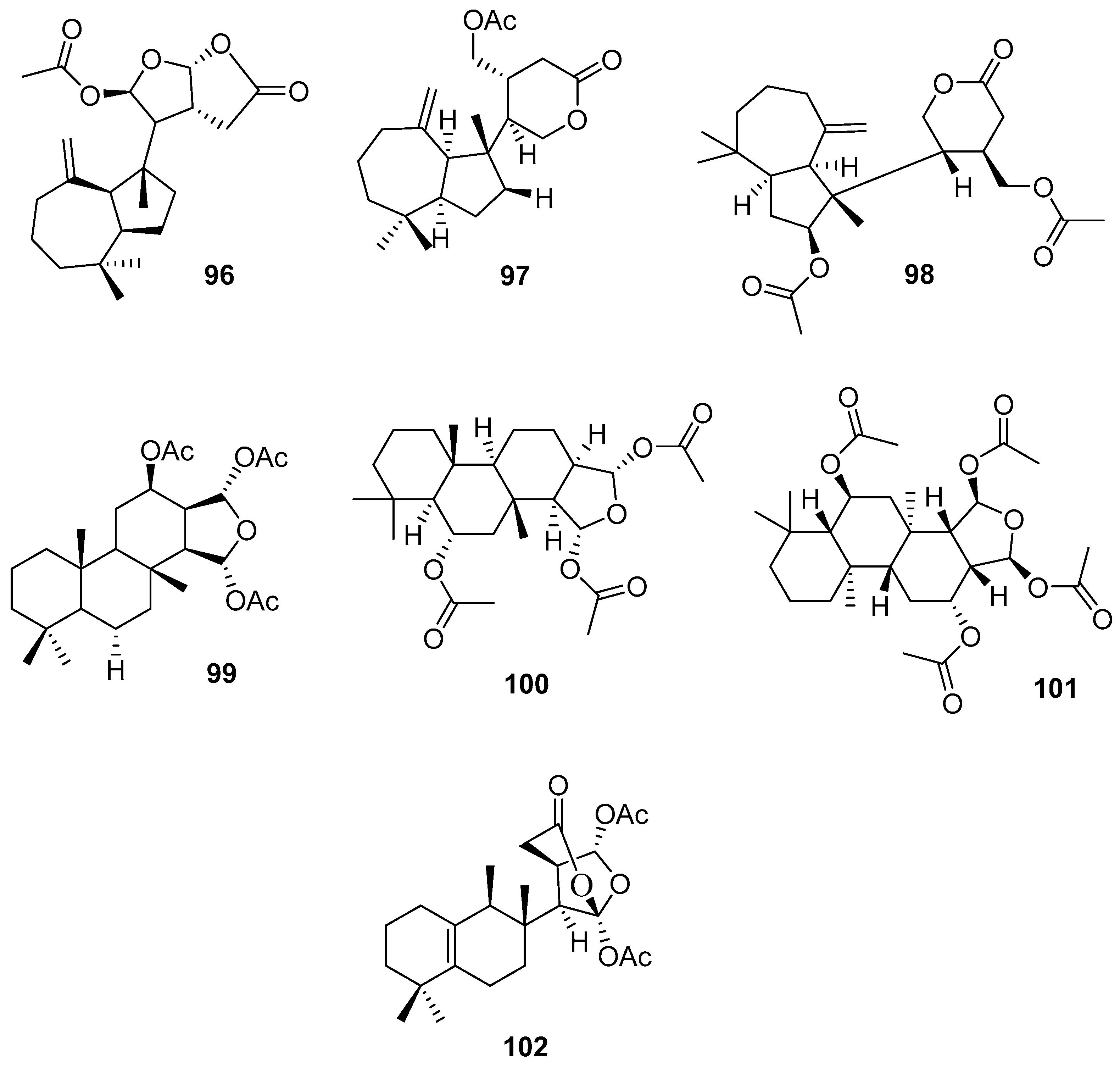
De Silva et al. [62] reported that the skin extracts of four species of Sri Lankan dorid nudibranchs belonging to the genus Chromodoris have been found to contain diterpenoids. Seven diterpenoids have been previously isolated from marine sponges or other nudibranchs, and three news diterpenoids, dendrillolide A (91), 12-desacetoxyshahamin C (97), and shahamin K (98), 12β,15α,16α-triacetoxyspongian (99), 6α,15α,16α-triacetoxyspongian (100), 6α,12β,15α,16α-tetraacetoxyspongian (101) and shahamin F (102).
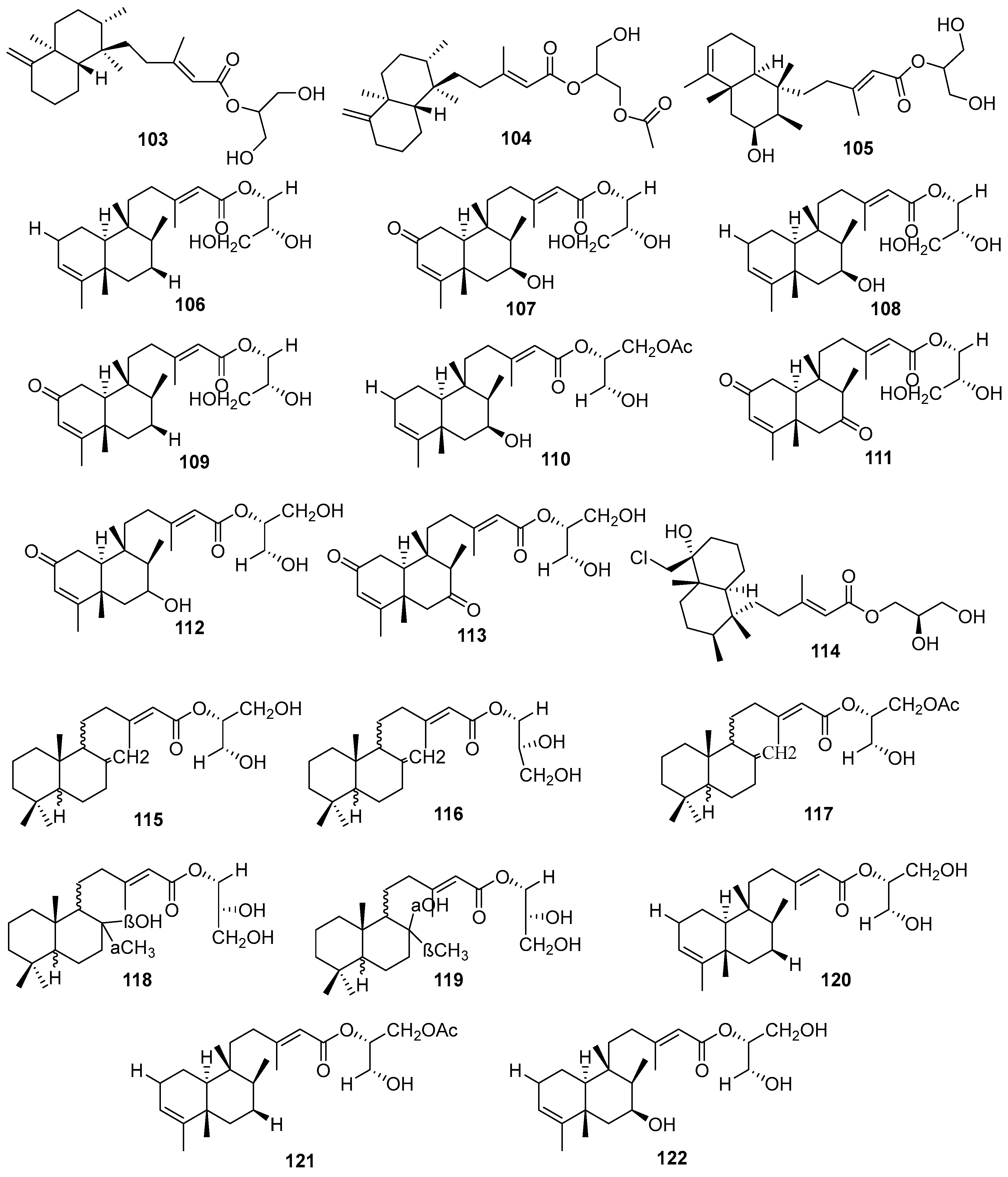
The chemical investigation of A. kerguelenensis from Palmer Station on the Western Antarctic Peninsula, by Diyabalanage et al. [63], revealed additional examples as palmadorins A-C (103-105), as the first three members of a new series of clerodane diterpenes. The Dorid Austrodoris kerguelenensis is the most common nudibranch species found in Antarctic waters. From coastline to continental shelf A. kerguelenensis has been collected from diverse habitats around the Antarctic continent, across the Scotia Arc and even into deeper waters off Argentina and Chile. The investigation has resulted in the isolation from this lipophilic extract, 16 new diterpene glycerides, palmadorins D-S (106-122), including one (palmadorin L, 114) that is the first halogenated diterpene from this well-studied nudibranch [64].
Cutignano et al. [65] have studied individuals from a sample of 21 specimens from two different geographical sites. NMR spectroscopy and LC–MS/MS analysis revealed a diterpene glyceride that shows a rare 9-epi-labdane (123) skeleton. The chemistry of diterpene glycerides from nudibranchs of the dorididae family have been documented as examples of de novo biosynthesis, and A. kerguelenensis, being reported as common and related to the ecology of these organisms.
Gavagnin et al. [66] isolated from the skin of the Antarctic nudibranch Austrodoris kerguelenensis two novel diterpenoid monoglyceryl esters, austrodorin-A (124) and austrodorin-B (125). Several terpenoid acylglycerols have been isolated from dorids in the last few years and most of these molecules have the terpenoid residue linked to the 1-sn position of glycerol, which is further esterified by an acetyl function at the 2-sn or 3-sn position. Biosynthesis de novo of diacylglycerols in dorid nudibranchs has also been recently demonstrated.
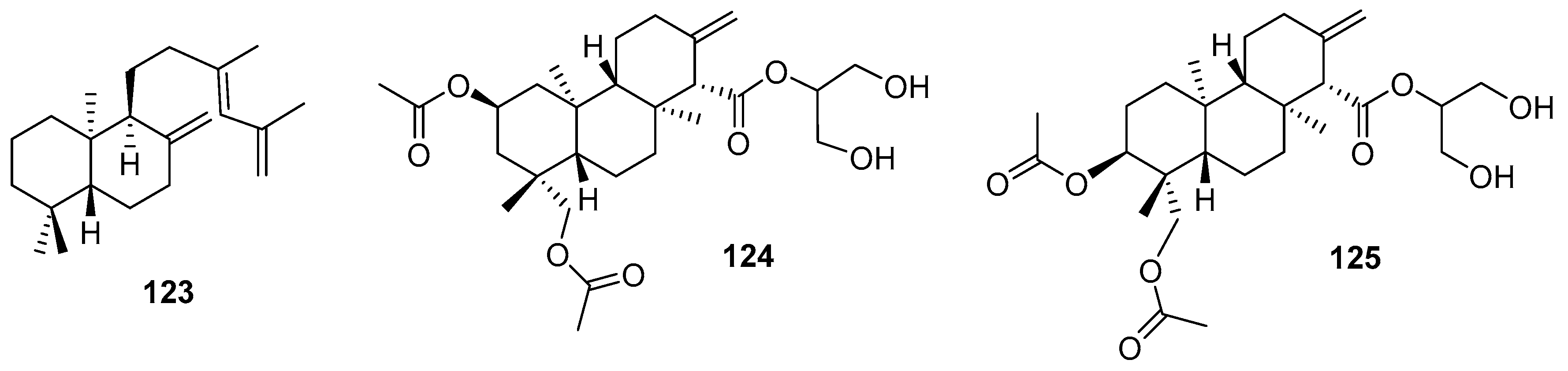
The biological role of diterpene esters in nudibranchs, which are present in the mantle tissue, is linked to providing protection, because they are toxic toward freshwater fish and deter feeding in marine fish.
3.2.3. Sesterterpenes and other compounds
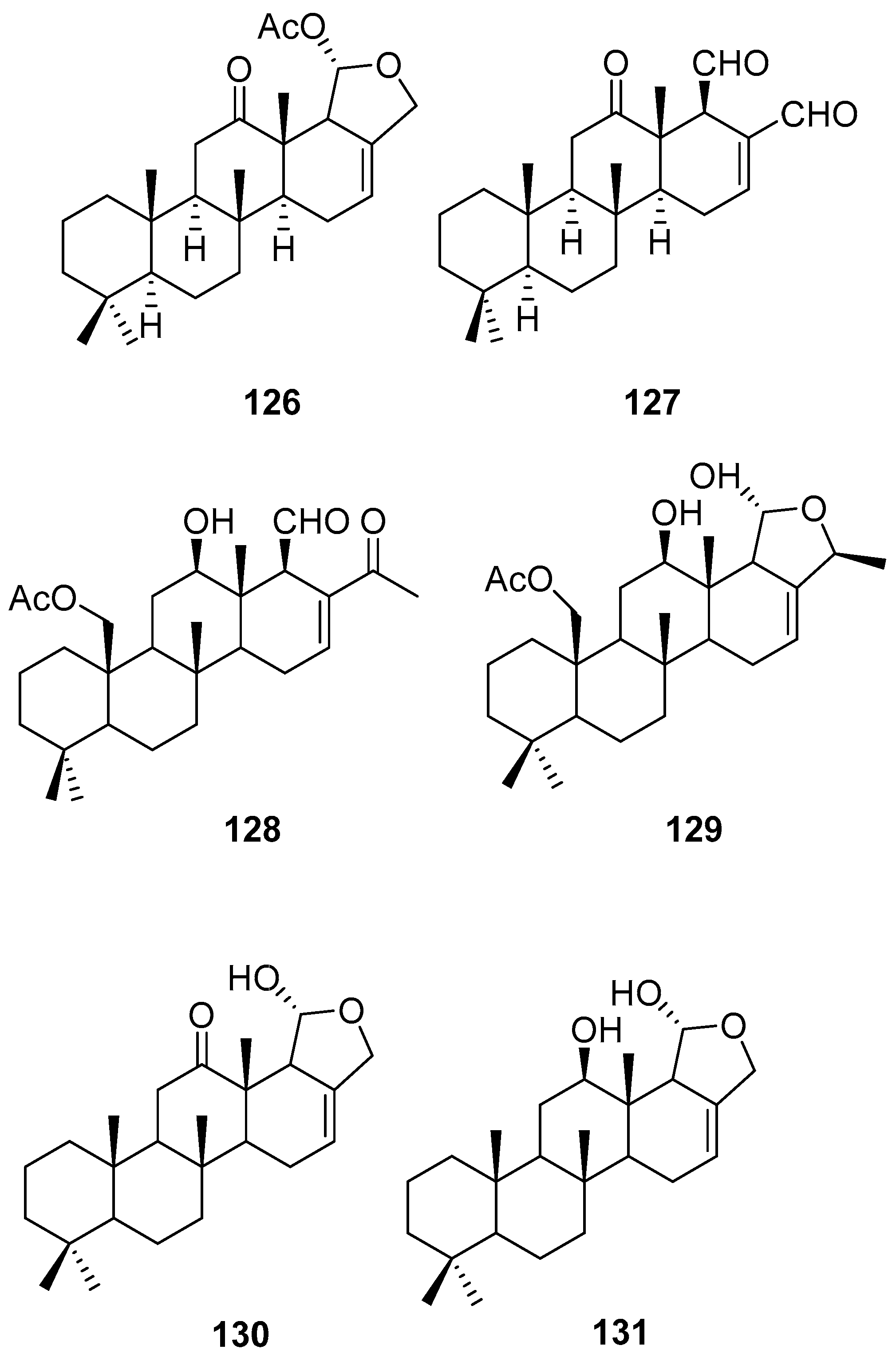
Chemical investigation of the nudibranch Glossodoris rufomarginata and its relationship with sponges provided additional evidence of the trophic interaction between them due to the presence of scalarans [67]. Two new scalaran sesterterpenes, 19-acetyl-12-deacetoxy-12-oxodeoxoscalarin (126) and 12-deacetoxy-12-oxo-scalaradial (127) (Figure 21), with a C-12 keto functionality, were characterized by Gavagnin et al., [68] using spectroscopic methods and chemical correlations.
Homoscalarane and scalarane have been isolated by Fontana et al. [69] from two species of Pacific Glossodoris nudibranchs (G. sedna and G. dalli); 12-deacetyl-23-acetoxy-20-methyl-12-epi-scalaradia (128) and 12-deacetyl-23-acetoxy-20-methyl-12-epideoxoscalarin (129) were characterized by spectroscopic analyzes. Fontana et al. [70] describe two scalaranes - 12-deacetoxy-12-oxo-deoxoscalarin (130) and 2,12-deacetyl-12-epi-deoxoscalarina (131) - that have been isolated from the dorid nudibranch G. atromarginata. These compounds showed selective cytotoxic activity against human thyroid carcinoma [70].
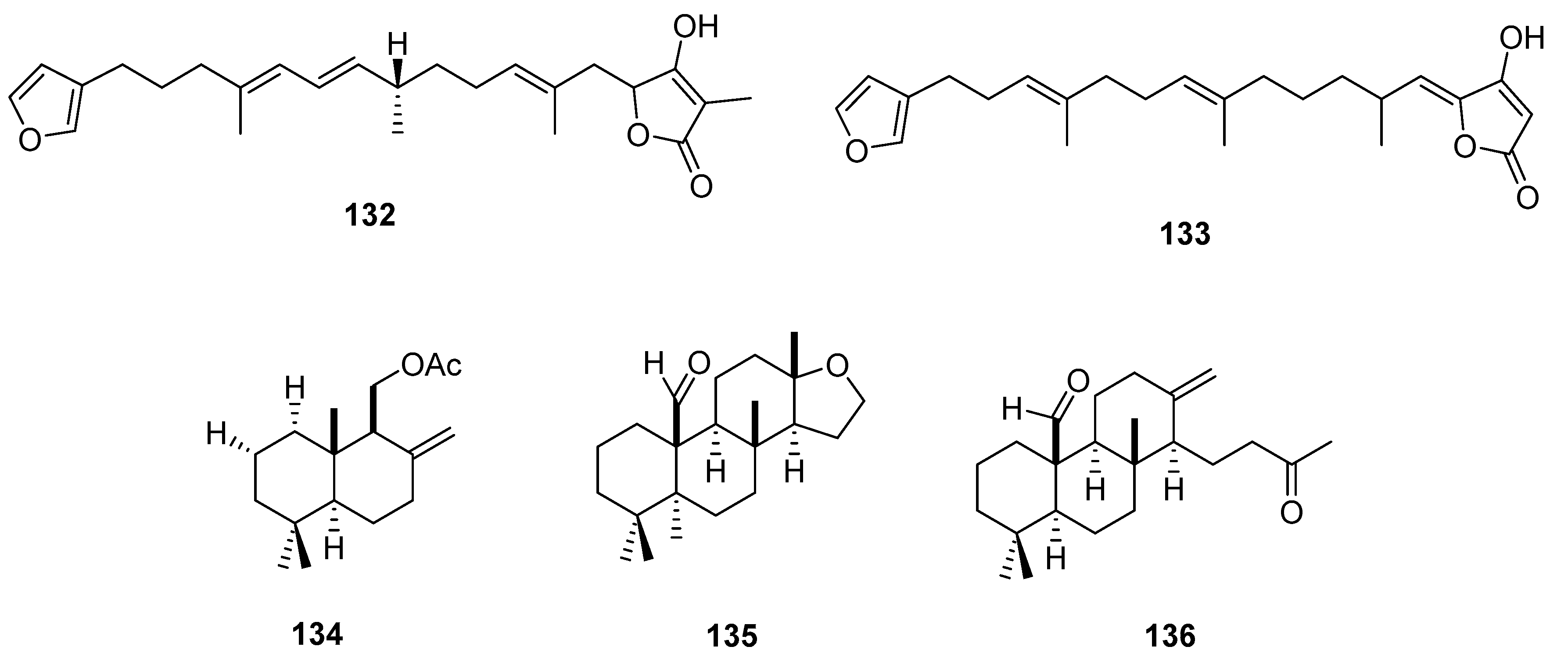
Marin et al. [71] collected Discodoris indecora from the Spanish coasts, a nudibranch that shows perfect camouflage over its prey, the sponge Ircinia variabilis. The shape and color of the nudibranch are remarkably similar to those of the sponge that is widespread in the shallow waters of the Mediterranean Sea. The nudibranchs retain pigments and metabolites derived from the sponge's diet, which show a metabolic pattern dominated by unusual molecules, the sesterterpenoids palinurin (132) and variabilin (133) , containing 25 carbons and exhibiting in the structure a furan-substituted β-ring and a tetronic acid.
The results of Kubanek et al. [72] showed that three terpenes, albicanyl acetate (134), cadlinaldehyde (135), and luteone (136), are synthesized de novo by Cadlina luteomarginata and the incorporation patterns are consistent with the biogenetic proposal that the new cadlinalane and luteane carbon skeletons are formed by degradation of a sesterterpenoid precursor. This represents the first demonstration of sesterterpenoid biosynthesis by a marine mollusk. Quantitative analysis has shown that only a small turnover of metabolites takes place during the feeding experiments, but that the newly formed molecules have extremely high levels of incorporation of labeled precursors.
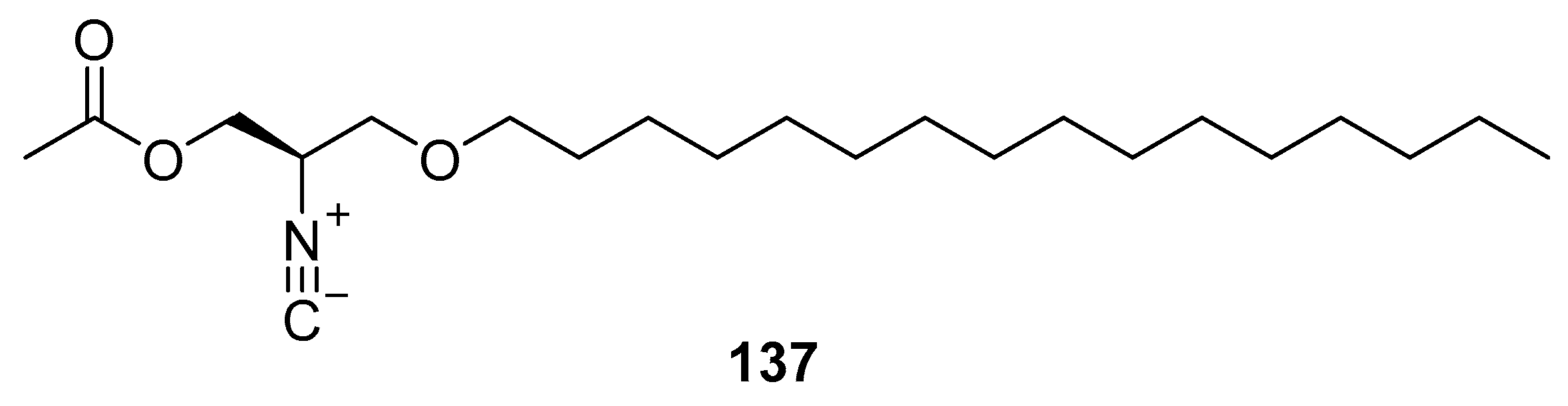
3.3. Lipid based on a 1,3-propanediol ether skeleton
Actinocyclidae is a small family comprising two genera, i. e. Actinocyclus and Haliaxa, and only one study has been conducted on a species in this family. The first chemical study of an Actinocyclidae nudibranch was performed by Manzo et al. [73] from Actinocyclus papillatus, collected in Wei Zhou Island (South China Sea), resulting in the isolation of (-)-actisonitrile (137), a lipid based on a 1,3-propanediol ether skeleton. The structure was established by spectroscopic methods and tested in preliminary in vitro cytotoxicity bioassays on mammalian tumor (H9c2 rat cardiac myoblast cells) and non-tumor cells [60].
3.4. Amino Acids
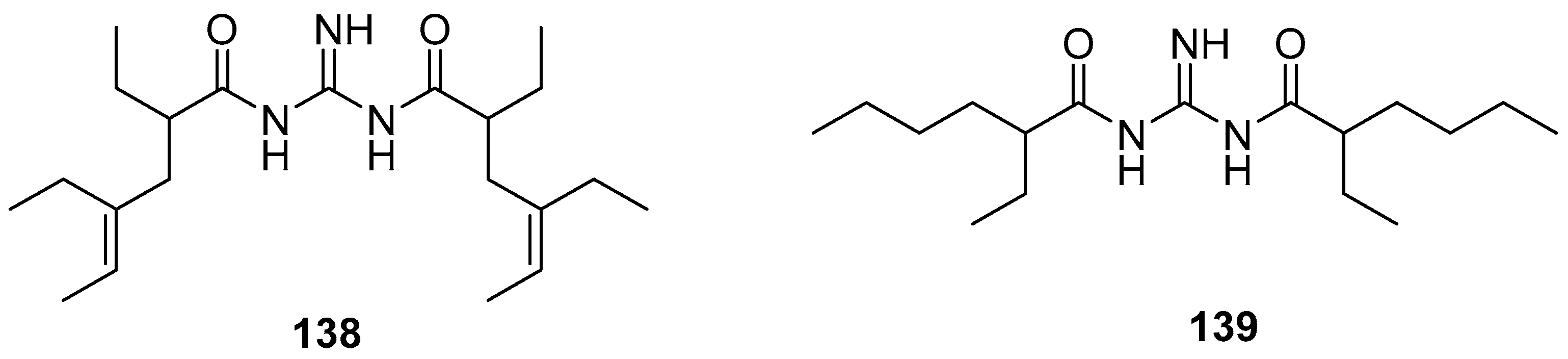
Two symmetrical diacylguanidines, namely triophamine (138) and limaciamine (139) [74], have been discovered for the first time in three nudibranchs, Thecacera pennigera, Polycera elegans and Plocamopherus maderae, collected at the East of Gran Canari (Canary Islands). These compounds were previously reported in Triopha catalinae, Polycera tricolor, and Limacia clavigera, that were collected in distinct geographical areas including British Columbia and Norway coasts and are taxonomically close. The unique occurrence of these metabolites exclusively in members of the Polycerinae and Triophinae subfamilies of Polyceridae nudibranchs suggests that these diacylguanidines serve as distinct chemical markers for this specific group of nudibranchs.
4. Biological /pharmacological activities of Secondary metabolites isolated from nudibranchs
From the emergence of public health threats, the increase in the incidence of serious and untreatable diseases, there is a continuous scientific effort to gain access to natural products with novel structures. However, screening programs show that if secondary metabolites are explored using approaches already in use and using easily accessible samples, such as plants, compounds are often rediscovered. In recent years, therefore, research efforts have focused on little-explored sources, such as the microbiomes of marine animals [75].
During the first decade of the 21st century, no less than 550-700 new compounds were reported from marine invertebrates, half of which were isolated from marine sponges, and around 15% of which were chemically identified during this period. To date, around 30,000-40,000 marine natural products (MNPs) have been identified, with most compounds showing cytotoxic and anticancer properties [76].
Nudibranchs are more than 6000 species of soft-bodied marine mollusks that use secondary metabolites for their chemical defense. The diversity of these metabolites and the responsibility of symbiotic microbes for the synthesis of these molecules are still being studied and have attracted the attention of natural product researchers due to the potential for discovery of bioactive metabolites, in conjunction with the interesting predator-prey chemical ecological interactions that are present. Toxic or unpalatable compounds derived from dietary sources or produced de novo are used by many taxa to reduce the risk of predation from nudibranchs mollusks, including alkaloids, diterpenes, and sesquiterpenes [13].
Nudibranchs have a great diversity, with terpenes being the however, there are many nudibranchs that have not yet been studied, and some of recent studies presented the chemical composition of terpene extracts from nudibranchs belonging to the genera Chromodoris and Hypselodoris [77].
Nudibranchs of the genus Chromodoris are the largest of the nudibranchs and are generally found in tropical coral reefs and subtropical coastal waters. They are brightly colored, with the aim of attracting predators, but the presence of color in the nudibranch is an indication of the existence of chemical substances that react when attacked. Previous studies have indicated that Chromodoris are trophic, i.e., by feeding on sponges, they accumulate bioactive metabolites, derived from terpenoids, making them a promising target for new research aimed at developing potential drugs [78].
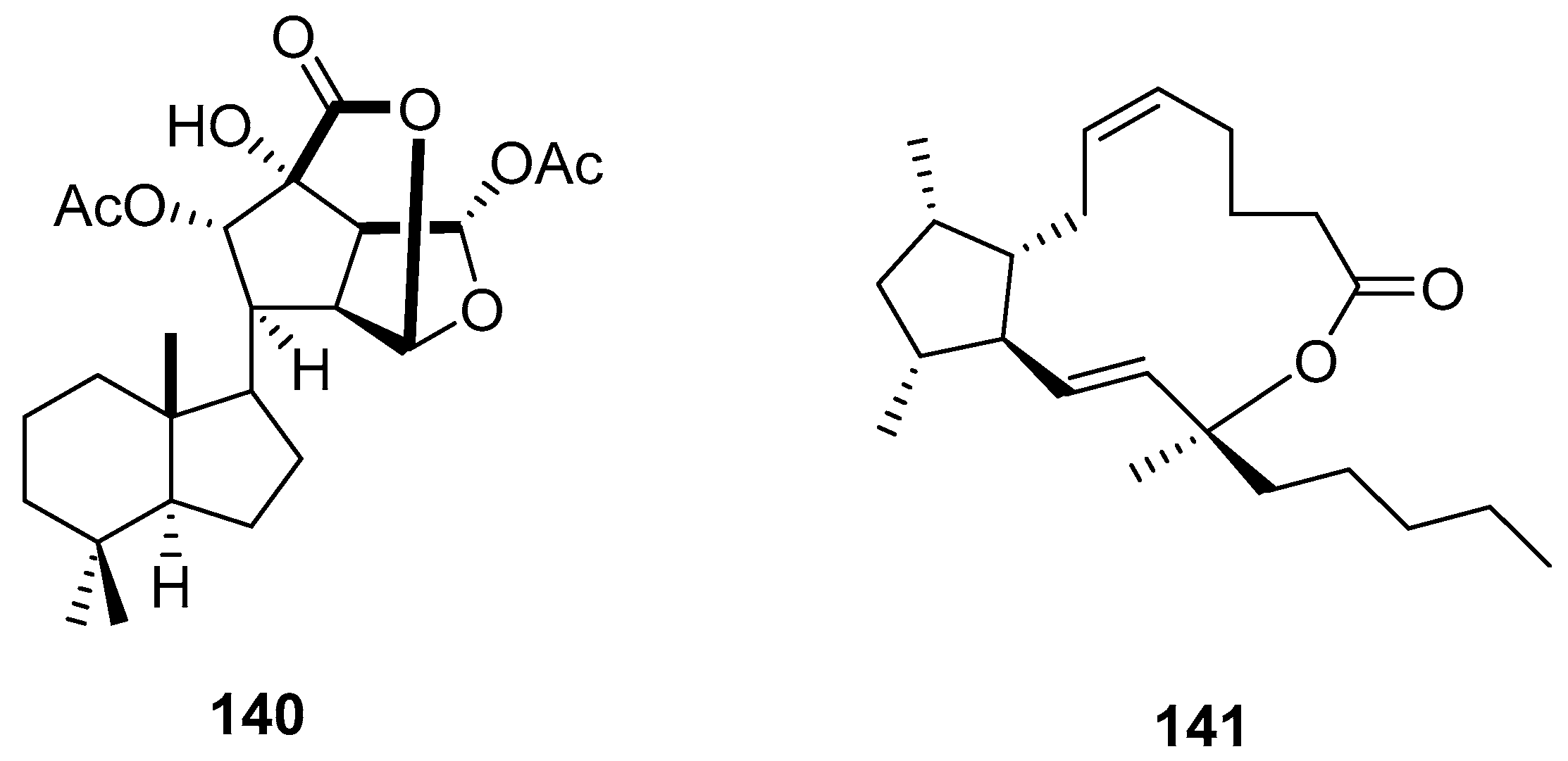
The Chromodorididae typically possess terpene metabolites that have potent bioactive properties, including cytotoxic, antitumor, feeding-deterrent, antibacterial and antifungal effects [79]. For example, Chromodorolide A (140) is reported to show activity against free-living larval stages of the parasitic nematodes Haemonchus contortus and Trichostrongylus colubriformis, in addition to cytotoxicity and antimicrobial effects [79,80].
The nudibranchs of the genus Hypselodoris are the brightest coloured nudibranchs and are often characterized by the presence of sesquiterpene metabolites containing a furan. Additionally, some species within this genus have also been reported to produce diterpenoids, as well as sesterpenoids [59]. Mudianta et al. reported that some terpenes, such as 76 and 83, isolated from Hypselodoris obscura and H. whitei, are suggested to be used as feeding deterrents against predators [77].
Okino et al. [81] suggested that sesquiterpenes present in the mucus may serve as antifouling agents to keep exposed surfaces free of epibionts, and that Phyllidia compounds also utilize a dense layer of calcareous spicules arranged on the mantle and foot, which provide structural support and make them difficult to eat, acting as a defense mechanism. The most detected secondary metabolites in the three analyzed Phyllidia genera are sponge-derived sesquiterpene isonitrile and related compounds, which agrees with chemical investigations prior to the Papu et al. [82] and a common feature of all chemically analyzed Phyllidia species is the presence of brominated natural products that have moderate polarity.
Wu et al. [43] realized a detailed chemical investigation of the collected two nudibranchs, P. pustulosa and P. coelestis and in a bioassay, the bisabolane-type sesquiterpenoids 38 and 40 exhibited cytotoxicity against several human cancer cell lines (A549, HT-29, SNU-398, and Capan-1). The cytotoxic activity of all these compounds was assessed against human cancer cell lines SNU-398 with IC50 values of 2.15, and 0.50 µM, respectively, demonstrating promising results. In addition, compound 38 also displayed broad cytotoxicity against the other three cancer cell lines, including A549, HT-29 and Capan-1, with IC50 values of 8.6, 3.35 and 1.98 µM, respectively.
A nudibranch that has attracted significant interest is Cadlina luteomarginata, as it is one of only two species of nudibranchs known to both sequester prey metabolites and biosynthesis its own natural products. To date, metabolites with 22 carbon skeletons, representing monoterpenes, sesquiterpenes, diterpenes, and degraded sesterterpenoids and diterpenoids have been isolated from C. luteomarginata. Their ecological roles are not well defined but have been shown to be moderately activating towards cellular processes that use the cyclic adenosine monophosphate (cAMP) signal pathway [66,72].
Three new isocyanoditerpenes (54−56) have been characterized from White et al. [46], and the major isocyanide 56 and synthetic diastereomers showed activity against Plasmodium falciparum malaria parasites at in vitro growth inhibition assay (IC50 ∼1 μM) [83]. Detailed investigation of the Antarctic nudibranch Austrodoris kerguelenensis revealed that palmadorins (103-106 and 115-117) inhibit human erythroleukemia (HEL) cells with low micromolar IC50’s, and 115 inhibits Jak2, STAT5, and Erk1/2 activation in HEL cells and causes apoptosis, at 5 mM. [63,64].
A trophic relationship between the nudibranch H. sanguineus and Chelonaplysilla sp. was suggested by Shen et al. [84] and a plausible biogenetic relationship between the diterpenoids isolated was proposed, along with the chemo-ecological implications of their co-occurrence in the two organisms investigated. In in vitro bioassays, echinoclerodane A exhibited a potent inhibitory effect (IC50=2.81 μM) on LPS-induced inflammatory response in RAW 264.7 macrophage cells and echinoclerodane A and oculatolide showed considerable antibacterial activities with MIC values ranging from 1.0 to 8.0 μg/mL.
Mollo et al. [85] has found toxic compounds with significant activity as feeding deterrents both in the cephalaspidean Haminoea cyanomarginata and in the nudibranch Melibe viridis. M. viridis mucous secretion procure ichthyotoxic prostaglandin E2-1,15-lactone (141) previously isolated from the Mediterranean Tethys fimbria in 1989. Stable isotope feeding studies using [1,2-13C2]-sodium acetate have shown that 2,6-dimethyl-5-heptenal, a putative defensive allomone, is produced by the Dendronotid nudibranch Melibe leonina via de novo biosynthesis [67]. This study is the first to show that a dendronotid nudibranch is capable of de novo terpene biosynthesis. The production of ichthyotoxic prostaglandin lactones through de novo biosynthesis has been reported in a dendronotid nudibranch, specifically T. fimbria. This finding represents the only other documented case of such biosynthesis in this nudibranch family, where these compounds are derived from fatty acid biosynthesis.
Ramya et al [15] evaluated biological properties of Armina babai in different extract (acetone, butanol, ethanol, hexane and methanol). Most potent extracts were purified, and the obtained results indicated the presence of potent antimicrobial compounds in sea slug. In the investigation, solvent extract of A. babai muscles samples evaluated against 10 different pathogenic bacteria (E.coli, K. oxytoca, K. pneumoniae, P. mirabilis, Pseudomonas sp., P. aeruginosa, S. paratyphi, S. typhi, S. aureus, V. cholerae, A. alternate, A. flavus, A. niger, C. albicans, C. tropicalis, E. floccosum, Mucor sp., Pencillium sp., Rhizopus sp., T. rubrum) and multi drug resistant bacterial strains and the positive active muscle extract was further subjected to TLC studies. All the solvent extracts of A. babai were insensitive against all the fungal strains used and it was evident that the results of primary screening, crude butanol extracts, appeared to be quite promising for their ability to inhibit the selected pathogenic bacteria.
5. Conclusions and perspectives
A significant number of studies have been conducted in the field of nudibranch research, primarily focusing on chemical characterization rather than biological activity of molecules. However, the results obtained from the investigations of biological activity have shown promising outcomes, particularly in terms of cytotoxicity and antimycobacterial effects. Upon examining the distribution of studies across species, families, and geographic regions, it becomes apparent that they are heavily concentrated in a few specific taxonomic groups and localities within the oceans. Additionally, most molecules elucidated through chemical characterization studies belong to the terpene class. It is worth noting that certain nudibranch families, such as Cadlinidae, have been subjected to relatively few studies; however, these limited investigations have revealed promising results in terms of biological activities.
Author Contributions
Conceptualization, R.R.B., R.R.B and D.S.A.C; methodology, N.M.M.E., D.S.A.C., R.R.B.; writing—original draft preparation N.M.M.E., D.S.A.C., R.R.B., R.R.B, B.A.S., V.O.S., N.F.P.; writing—review and editing, D.S.A.C., D.L.M., A.K.; supervision, D.S.A.C., A.K.; funding acquisition, D.S.A.C.Y.Y. All authors have read and agreed to the published version of the manuscript.
Funding
This research received no external funding. The APC was funded by Marine Drugs.
Acknowledgments
The authors many thanks professor Anake Kijjoa for all support in this review.
Conflicts of Interest
The authors declare no conflict of interest.
References
- Carroll, A.R.; Copp, B.R.; Davis, R.A.; Keyzers, R.A.; Prinsep, M.R. Marine natural products. Nat. Prod. Rep. 2020, 37, 175–223. [Google Scholar] [CrossRef] [PubMed]
- Yun, C.W.O.N.; Kim, H.J.O.O.; Lee, S.H.U.N. Therapeutic application of diverse marine-derived natural products in cancer therapy. Anticancer Res. 2019, 39, 5261–5284. [Google Scholar] [CrossRef] [PubMed]
- Ng, T.B.; Cheung, R.C.F.; Wong, J.H.; Bekhit, A.A.; Bekhit, A.E.D. Antibacterial products of marine organisms. Appl. Microbiol. Biotechnol. 2015, 99, 4145–4173. [Google Scholar] [CrossRef] [PubMed]
- Jimenez, P.C.; Wilke, D.V.; Branco, P.C.; Bauermeister, A.; Rezende-Teixeira, P.; Gaudêncio, S.P.; Costa-Lotufo, L.V. Enriching cancer pharmacology with drugs of marine origin. Br. J. Pharmacol. 2020, 177, 3–27. [Google Scholar] [CrossRef] [PubMed]
- Álvarez-Bardón, M.; Pérez-Pertejo, Y.; Ordóñez, C.; Sepúlveda-Crespo, D.; Carballeira, N.M.; Tekwani, B.L.; Murugesan, S.; Martinez-Valladares, M.; García-Estrada, C.; Reguera, R.M.; Balaña-Fouce, R. Screening marine natural products for new drug leads against trypanosomatids and malaria. Mar. Drugs. 2020, 18, 187. [Google Scholar] [CrossRef] [PubMed]
- Nweze, J.A.; Mbaoji, F.N.; Huang, G.; Li, Y.; Yang, L.; Zhang, Y.; Huang, S.; Pan, L.; Yang, D. Antibiotics development and the potentials of marine-derived compounds to stem the tide of multidrug-resistant pathogenic bacteria, fungi, and protozoa. Mar. Drugs. 2020, 18, 145. [Google Scholar] [CrossRef] [PubMed]
- Dean, L.J.; Prinsep, M.R. The chemistry and chemical ecology of nudibranchs. Nat. Prod. Rep. 2017, 34, 1359–1390. [Google Scholar] [CrossRef]
- Huang, R.Y.; Chen, W.T.; Kurtán, T.; Mándi, A.; Ding, J.; Li, J.; Li, X.W.; Guo, Y.W. Bioactive isoquinolinequinone alkaloids from the South China Sea nudibranch Jorunna funebris and its sponge-prey Xestospongia sp. Future Med. Chem. 2016, 8, 17–27. [Google Scholar] [CrossRef] [PubMed]
- Braga, R.R.; Iorio, N.L.P.P.; Póvoa, H.C.C.; Chianca, G.C.; Kachlicki, P.; Ożarowski, M.; Silva, V.O.; Félix, H.P.; Lopes, I.C.; Chaves, D.S.A. Composição química e atividade anticariogênica do nudibrânquio Tambja stegosauriformis. Rev. Virtual de Química 2019, 11, 1457–1466. [Google Scholar]
- Sim, D.C.M.; Wayan Mudianta, I.; White, A.M.; Martiningsih, N.W.; Loh, J.J.M.; Cheney, K.L.; Garson, M.J. New sesquiterpenoid isonitriles from three species of phyllidid nudibranchs. Fitoterapia 2018, 126, 69–73. [Google Scholar] [CrossRef]
- White, A.M.; Pierens, G.K.; Forster, L.C.; Winters, A.E.; Cheney, K.; Garson, M.J. Rearranged diterpenes and norditerpenes from three Australian Goniobranchus molluscs. J. Nat. Prod. 2016, 79, 477–483. [Google Scholar] [CrossRef] [PubMed]
- Forster, L.C.; Winters, A.E.; Cheney, K.L.; Dewapriya, P.; Capon, R.J.; Garson, M.J. Spongian-16-one diterpenes and their anatomical distribution in the Australian nudibranch Goniobranchus collingwoodi. J. Nat. Prod. 2017, 80, 670–675. [Google Scholar] [CrossRef] [PubMed]
- Winters, A.E.; White, A.M.; Dewi, A.S.; Mudianta, I.W.; Wilson, N.G.; Forster, L.C.; Garson, M.J.; Cheney, K.L. Distribution of defensive metabolites in nudibranch molluscs. J. Chem. Ecol. 2018, 44, 384–396. [Google Scholar] [CrossRef] [PubMed]
- Pyšek, P.; Richardson, D.M.; Pergl, J.; Jarošík, V.; Sixtová, Z.; Weber, E. Geographical and taxonomic biases in invasion ecology. Trends Ecol. Evol. 2008, 23, 237–244. [Google Scholar] [CrossRef] [PubMed]
- Ramya, M.S.; Sivasubramanian, K.; Ravichandran, S.; Anbuchezhian, R. Screening of antimicrobial compound from the sea slug Armina babai. Bangladesh J. Pharmacol. 2014, 9, 268–274. [Google Scholar] [CrossRef]
- Erngren, I.; Smit, E.; Pettersson, C.; Cárdenas, P.; Hedeland, M. The Effects of sampling and storage conditions on the metabolite profile of the marine sponge Geodia barretti. Front. Chem. 2021, 9, 659–662. [Google Scholar] [CrossRef] [PubMed]
- Flórez-Fernández, N.; Balboa, E.M.; Domínguez, H. Extraction and purification of fucoidan from marine sources. Encyclopedia of Mar. Biotechnol. 2020, 1093–1125. [Google Scholar] [CrossRef]
- Abdelrahman, S.M.; Dosoky, N.S.; Hanora, A.M.; Lopanik, N.B. Metabolomic Profiling and Molecular Networking of Nudibranch-Associated Streptomyces sp. SCSIO 001680. Molecules. 2022, 27, 4542. [Google Scholar] [CrossRef] [PubMed]
- Gerwick, W.H.; Moore, B.S. Lessons from the past and charting the future of marine natural products drug discovery and chemical biology. Chem. Biol. 2012, 19, 85–98. [Google Scholar] [CrossRef] [PubMed]
- Genoveffa, N.; Ciavatta, M.L.; Kiss, R.; Mathieu, V.; Leclercqz, H.; Manzo, E.; Villani, G.; Mollo, E.; Lefranc, F.; D'Souza, L.; Gavagnin, M.; Cimino, G. Chemistry of the nudibranch Aldisa andersoni: structure and biological activity of phorbazole metabolites. Mar. Drugs. 2012, 10, 1799–1811. [Google Scholar] [CrossRef]
- Kittakoop, P.; Mahidol, C.; Ruchirawat, S. Alkaloids as Important Scaffolds in Therapeutic Drugs for the Treatments of Cancer, Tuberculosis, and Smoking Cessation. Current Topics in Medicinal Chemistry. 2013, 14, 239–252. [Google Scholar] [CrossRef] [PubMed]
- Sagi, S.; Avula, B.; Wang, Y.H.; Khan, I.A. Quantification and characterization of alkaloids from roots of Rauwolfia serpentine using ultrahigh performance liquid chromatography-photo diode array-mass spectrometry. Anal. Bioanal. Chem. 2016, 408, 177–190. [Google Scholar] [CrossRef]
- El-Sayed, M.; Verpoorte, R. Catharanthus terpenoid indole alkaloids: biosynthesis and regulation. Phytochem. Rev. 2007, 6, 277–305. [Google Scholar] [CrossRef]
- Kochanowska-Karamyan, A.J.; Hamann, M.T. Marine indole alkaloids: potential new drug leads for the control of depression and anxiety. Chem Rev. 2010, 110, 4489–4497. [Google Scholar] [CrossRef] [PubMed]
- Tempone, A.G.; Pieper, P.; Borborema, S.E.T.; Thevenard, F.; Lago, J.H.G.; Croft, S.L.; Anderson, E.A. Marine alkaloids as bioactive agents against protozoal neglected tropical diseases and malaria. Natural Product Reports. 2021, 38, 2214–2235. [Google Scholar] [CrossRef] [PubMed]
- Liu, C.; Yang, S.; Wang, K.; Bao, X.; Liu, Y.; Zhou, S.; Liu, H.; Qiu, Y.; Wang, T.; Yu, H. Alkaloids from Traditional Chinese Medicine against hepatocellular carcinoma. Biomed Pharmacother. 2019, 120, 109543. [Google Scholar] [CrossRef] [PubMed]
- Cavalcanti, B.C.; Júnior, H.V.N.; Seleghim, M.H.R.; Berlinck, R.G.S.; Cunha, G.M.A.; Moraes, M.O.; Pessoa, C. Cytotoxic and genotoxic effects of tambjamine D, an alkaloid isolated from the nudibranch Tambja eliora, on Chinese hamster lung fibroblasts. Chem. Biol. Interact. 2008, 174, 155–162. [Google Scholar] [CrossRef] [PubMed]
- Avila, C.; Angulo-Preckler, C. Bioactive Compounds from Marine Heterobranchs. Marine Drugs 2020, 18, 657. [Google Scholar] [CrossRef] [PubMed]
- Takaki, M.; Freire, V.F.; Nicacio, K.J.; Bertonha, A.F.; Nagashima, N.; Sarpong, R.; Berlinck, R.G.S. Metabolomics Reveals Minor Tambjamines in a Marine Invertebrate Food Chain. Journal of Natural Products 2020, 84, 790–796. [Google Scholar] [CrossRef]
- Blackman, A.; Li, C. New Tambjamine Alkaloids From the Marine Bryozoan Bugula dentata. Australian Journal of Chemistry 1994, 47, 1625. [Google Scholar] [CrossRef]
- Granato, A.C.; Oliveira, J.H.H.L.; Seleghim, M.H.R.; Berlinck, R.G.S.; Macedo, M.L.; Ferreira, A.G.; Cavalcanti, B.C. Produtos naturais da ascídia Botrylloides giganteum, das esponjas Verongula gigantea, Ircinia felix, Cliona delitrix e do nudibrânquio Tambja eliora, da costa do Brasil. Quím. Nova, 2005, 28, 192–198. [Google Scholar] [CrossRef]
- Carbone, M.; Irace, C.; Costagliola, F.; Castelluccio, F.; Villani, G.; Calado, G.; Gavagnin, M. A new cytotoxic tambjamine alkaloid from the Azorean nudibranch Tambja ceutae. Bioorganic. Med. Chem. Lett. 2010, 20, 2668–2670. [Google Scholar] [CrossRef] [PubMed]
- Nuzzo, G.; Ciavatta, M.L.; Kiss, R.; Mathieu, V.; Leclercqz, H.; Manzo, E.; Cimino, G. Chemistry of the nudibranch Aldisa andersoni: structure and biological activity of phorbazole metabolites. Mar. Drugs. 2012, 10, 1799–1811. [Google Scholar] [CrossRef] [PubMed]
- Khan, A.Y.; Suresh Kumar, G. Natural isoquinoline alkaloids: binding aspects to functional proteins, serum albumins, hemoglobin, and lysozyme. Biophysical Reviews, 2015, 7, 407–420. [Google Scholar] [CrossRef] [PubMed]
- Fontana, A.; Cavaliere, P.; Wahidulla, S.; Naik, C.G.; Cimino, G.A. New antitumor isoquinoline alkaloid from the marine nudibranch Jorunna funebris. Tetrahedron, 2000, 56, 7305–7308. [Google Scholar] [CrossRef]
- Fisch, K.; Hertzer, C.; Böhringer, N.; Wuisan, Z.; Schillo, D.; Bara, R.; Schäberle, T. The potential of Indonesian heterobranchs found around Bunaken Island for the production of bioactive compounds. Mar. Drugs. 2017, 15, 384. [Google Scholar] [CrossRef]
- Huang, R.-Y.; Chen, W.-T.; Kurtán, T.; Mándi, A.; Ding, J.; Li, J.; Guo, Y.-W. Bioactive isoquinolinequinone alkaloids from the South China Sea nudibranch Jorunna funebris and its sponge-prey Xestospongia sp. Future Med. Chem. 2016, 8, 17–27. [Google Scholar] [CrossRef] [PubMed]
- Wu, Q.; Li, S.-W.; de Voogd, N.J.; Wang, H.; Yao, L.-G.; Guo, Y.-W.; Li, X.-W. Marine alkaloids as the chemical marker for the prey–predator relationship of the sponge Xestospongia sp. and the nudibranch Jorunna funebris. Mar. Life Sci. Technol. 2021, 3, 375–381. [Google Scholar] [CrossRef]
- Avila, C. Terpenoids in Marine Heterobranch Molluscs. Marine Drugs, 2020, 18, 162. [Google Scholar] [CrossRef]
- Gross, H.; König, G.M. Terpenoids from Marine Organisms: Unique Structures and their Pharmacological Potential. Phytochemistry Reviews, 2006, 5, 115–141. [Google Scholar] [CrossRef]
- Ianora, A.; Boersma, M.; Casotti, R.; Fontana, A.; Harder, J.; Hoffmann, F.; Pavia, H.; Potin, P.; Poulet, S.A.; Toth, G. The Htodum synthesis essay: New trends in marine chemical ecology. Estuar. Coast. 2006, 29, 531–551. [Google Scholar] [CrossRef]
- Chen, D.-L.; Wang, B.-W.; Sun, Z.-C.; Yang, J.-S.; Xu, X.-D.; Ma, G.-X. Natural Nitrogenous Sesquiterpenoids and Their Bioactivity: A Review. Molecules, 2020, 25, 2485. [Google Scholar] [CrossRef] [PubMed]
- Wu, Q.; Chen, W.-T.; Li, S.-W.; Ye, J.-Y.; Huan, X.-J.; Gavagnin, M.; Guo, Y.-W. Cytotoxic nitrogenous terpenoids from two South China sea nudibranchs Phyllidiella pustulosa, Phyllidia coelestis, and their sponge-prey Acanthella cavernosa. Mar. Drugs. 2019, 17, 56. [Google Scholar] [CrossRef] [PubMed]
- White, A.M.; Dao, K.; Vrubliauskas, D.; Könst, Z.A.; Pierens, G.K.; Mándi, A.; Vanderwal, C.D. Catalyst-controlled stereoselective synthesis secures the structure of the antimalarial isocyanoterpene pustulosaisonitrile-1. J. Org. Chem. 2017, 82, 13313–13323. [Google Scholar] [CrossRef] [PubMed]
- Jaisamut, S.; Prabpai, S.; Tancharoen, C.; Yuenyongsawad, S.; Hannongbua, S.; Kongsaeree, P.; Plubrukarn, A. Bridged tricyclic sesquiterpenes from the tubercle nudibranch Phyllidia coelestis Bergh. J. Nat. Prod. 2013, 76, 2158–2161. [Google Scholar] [CrossRef] [PubMed]
- Lyakhova, E.G.; Kolesnikova, S.A.; Kalinovskii, A.I.; Stonik, V.A. Secondary metabolites of the Vietnamese nudibranch mollusk Phyllidiella pustulosa. Chem. Nat. Compd. 2010, 46, 534–538. [Google Scholar] [CrossRef]
- Affeld, S.; Kehraus, S.; Wägele, H.; König, G.M. Dietary derived sesquiterpenes from Phyllodesmium lizardensis. J. Nat. Prod. 2009, 72, 298–300. [Google Scholar] [CrossRef] [PubMed]
- Mao, S.-C.; Gavagnin, M.; Mollo, E.; Guo, Y.-W. A new rare asteriscane sesquiterpene and other related derivatives from the Hainan aeolid nudibranch Phyllodesmium magnum. Biochem. Syst. Ecol. 2011, 39, 408–411. [Google Scholar] [CrossRef]
- Bogdanov, A.; Kehraus, S.; Bleidissel, S.; Preisfeld, G.; Schillo, D.; Piel, J.; König, G.M. Defense in the Aeolidoidean Genus Phyllodesmium (Gastropoda). J. Chem. Ecol. 2014, 40, 1013–1024. [Google Scholar] [CrossRef]
- Kasheverov, I.; Shelukhina, I.; Kudryavtsev, D.; Makarieva, T.; Spirova, E.; Guzii, A.; Tsetlin, V. 6-Bromohypaphorine from marine nudibranch mollusk Hermissenda crassicornis is an agonist of human α7 nicotinic acetylcholine receptor. Mar. Drugs. 2015, 13, 1255–1266. [Google Scholar] [CrossRef]
- Raverty, W.; Thomson, R.; King, T. Metabolites from the sponge Pachymatisma johnstoni; L-6-bromohypaphorine, a new amino-acid (and its crystal structure). J. Chem. Soc. 1977, 10, 1204–1211. [Google Scholar] [CrossRef]
- Aiello, A.; Borrelli, F.; Capasso, R. Conicamin, a novel histamine antagonist from the mediterranean tunicate Aplidium conicum. Bioorg. Med. Chem. Lett. 2003, 13, 4481–4483. [Google Scholar] [CrossRef] [PubMed]
- Kondo, K.; Nishi, J. Two new tryptophan-derived alkaloids from the Okinawan marine sponge Aplysina sp. J. Nat. Prod. 1994, 57, 1008–1011. [Google Scholar] [CrossRef] [PubMed]
- Gaspar, H.; Gavagnin, M.; Calado, G.; Castelluccio, F.; Mollo, E.; Cimino, G. Pelseneeriol-1 and -2: new furanosesquiterpene alcohols from porostome nudibranch Doriopsilla pelseneeri. Tetrahedron 2005, 61, 11032–11037. [Google Scholar] [CrossRef]
- Gavagnin, M.; Mollo, E.; Calado, G.; Fahey, S.; Ghiselin, M.; Ortea, J.; Cimino, G. Chemical studies of porostome nudibranchs: comparative and ecological aspects. Chemoecology 2001, 11, 131–136. [Google Scholar] [CrossRef]
- González, Y.; Torres-Mendoza, D.; Jones, G.E.; Fernandez, P.L. Marine Diterpenoids as Potential Anti-Inflammatory Agents. Mediators of Inflammation 2015, 1–14. [Google Scholar] [CrossRef]
- Uddin, M.H.; Hossain, M.K.; Nigar, M.; Roy, M.C.; Tanaka, J. New cytotoxic spongian-class rearranged diterpenes from a marine sponge. Chem. Nat. Compd. 2012, 48, 412–415. [Google Scholar] [CrossRef]
- Forster, L.C.; Pierens, G.K.; Garson, M.J. Elucidation of relative and absolute configurations of highly rearranged diterpenoids and evidence for a putative biosynthetic intermediate from the Australian nudibranch Goniobranchus geometricus. J. Nat. Prod. 2019, 82, 449–455. [Google Scholar] [CrossRef]
- Mudianta, I.W.; Martiningsih, N.W.; Prasetia, I.N.D.; Nursid, M. Bioactive terpenoid from the balinese nudibranch Hypselodoris infucata. Indones. J. Pharm. 2016, 27, 104–110. [Google Scholar] [CrossRef]
- Katavic, P.L.; Jumaryatno, P.; Hooper, J.N.A.; Blanchfield, J.T.; Garson, M.J. Oxygenated terpenoids from the Australian sponges Coscinoderma matthewsi and Dysidea sp. , and the nudibranch Chromodoris albopunctata. Aust. J. Chem. 2012, 65, 531. [Google Scholar] [CrossRef]
- Suciati, S.; Lambert, L.K.; Garson, M.J. Structures and anatomical distribution of oxygenated diterpenes in the Australian nudibranch Chromodoris reticulata. Aust. J. Chem. 2011, 64, 757. [Google Scholar] [CrossRef]
- De Silva, E.D.; Morris, S.A.; Miao, S.; Dumdei, E.; Andersen, R.J. Terpenoid metabolites from skin extracts of four Sri Lankan nudibranchs in the genus Chromodoris. J. Nat. Prod. 1991, 54, 993–997. [Google Scholar] [CrossRef]
- Diyabalanage, T.; Iken, K.B.; McClintock, J.B.; Amsler, C.D.; Baker, B.J. Palmadorins A−C, diterpene glycerides from the Antarctic nudibranch Austrodoris kerguelenensis. J. Nat. Prod. 2010, 73, 416–421. [Google Scholar] [CrossRef] [PubMed]
- Maschek, J.A.; Mevers, E.; Diyabalanage, T.; Chen, L.; Ren, Y.; McClintock, J.B.; Baker, B.J. Palmadorin chemodiversity from the Antarctic nudibranch Austrodoris kerguelenensis and inhibition of Jak2/STAT5-dependent HEL leukemia cells. Tetrahedron 2012, 68, 9095–9104. [Google Scholar] [CrossRef]
- Cutignano, A.; Zhang, W.; Avila, C.; Cimino, G.; Fontana, A. Intrapopulation variability in the terpene metabolism of the Antarctic opisthobranch mollusk Austrodoris kerguelenensis. Eur. J. Org. Chem. 2011, 27, 5383–5389. [Google Scholar] [CrossRef]
- Gavagnin, M.; De Napoli, A.; Castelluccio, F.; Cimino, G. Austrodorin-A and -B: first tricyclic diterpenoid 2′-monoglyceryl esters from an Antarctic nudibranch. Tetrahedron Lett. 1999, 40, 8471–8475. [Google Scholar] [CrossRef]
- Avila, C.; Paul, V.J. Chemical ecology of the nudibranch Glossodoris pallida: is the location of diet-derived metabolites important for defense? Marine Ecology Progress Series 1997, 150, 171–180. [Google Scholar] [CrossRef]
- Gavagnin, M.; Mollo, E.; Docimo, T.; Guo, Y.-W.; Cimino, G. Scalarane metabolites of the nudibranch Glossodoris rufomarginata and its dietary sponge from the South China sea. J. Nat. Prod. 2004, 67, 2104–2107. [Google Scholar] [CrossRef] [PubMed]
- Fontana, A.; Mollo, E.; Ortea, J.; Gavagnin, M.; Cimino, G. Scalarane and homoscalarane compounds from the nudibranchs Glossodoris sedna and Glossodoris dalli: Chemical and Biological Properties. J. Nat. Prod. 2000, 63, 527–530. [Google Scholar] [CrossRef]
- Fontana, A.; Cavaliere, P.; Ungur, N.; D’Souza, L.; Parameswaram, P.S.; Cimino, G. New scalaranes from the nudibranch Glossodoris atromarginata and its sponge prey. J. Nat. Prod. 1999, 62, 1367–1370. [Google Scholar] [CrossRef]
- Marin, A.; Belluga, M.D.L.; Scognamiglio, G.; Cimino, G. Morphological and chemical camouflage of the mediterranean nudibranch Dioscodoris indecora on the sponger Ircinia variabilis and Ircinia fasciculata. J. Molluscan Stud. 1997, 63, 431–439. [Google Scholar] [CrossRef]
- Kubanek, J.; Graziani, E.I.; Andersen, R.J. Investigations of terpenoid biosynthesis by the dorid nudibranch Cadlina luteomarginata. J. Org. Chem. 1997, 62, 7239–7246. [Google Scholar] [CrossRef] [PubMed]
- Manzo, E.; Carbone, M.; Mollo, E.; Irace, C.; Di Pascale, A.; Li, Y.; Gavagnin, M. Structure and synthesis of a unique isonitrile lipid isolated from the marine mollusk Actinocyclus papillatus. Org. Lett. 2011, 13, 1897–1899. [Google Scholar] [CrossRef] [PubMed]
- Carbone, M.; Herrero-Barrencua, A.; Ciavatta, M.L.; Castro, J.J.; Cervera, J.L.; Gavagnin, M. Occurrence of symmetrical diacylguanidines triophamine and limaciamine in three polyceridae species from Canary Islands: are they chemical markers of these nudibranchs? Biochem. Syst. Ecol. 2019, 83, 62–65. [Google Scholar] [CrossRef]
- Džunková, M.; La Clair, J.J.; Tyml, T.; Doud, D.; Schulz, F.; Piquer-Esteban, S.; Porcel Sanchis, D.; Osborn, A.; Robinson, D.; Louie, K.B.; Bowen, B.P.; Bowers, R.M.; Lee, J.; Arnau, V.; Díaz-Villanueva, W.; Stepanauskas, R.; Gosliner, T.; Date, S.V.; Northen, T.R.; Cheng, J.F.; Burkart, M.D.; Woyke, T. Synthase-selected sorting approach identifies a beta-lactone synthase in a nudibranch symbiotic bacterium. Microbiome 2023, 11, 130. [Google Scholar] [CrossRef] [PubMed]
- Izzati, F.; Warsito, M.F.; Bayu, A.; Prasetyoputri, A.; Atikana, A.; Sukmarini, L.; Putra, M.Y. Chemical Diversity and Biological Activity of Secondary Metabolites Isolated from Indonesian Marine Invertebrates. Molecules 2021, 26, 1898. [Google Scholar] [CrossRef] [PubMed]
- Mudianta, I.W.; White, A.M.; Suciati Katavic, P.L.; Krishnaraj, R.R.; Winters, A.E.; Garson, M.J. Chemoecological studies on marine natural products: terpene chemistry from marine mollusks. Pure and Applied Chemistry 2014, 86. [Google Scholar] [CrossRef]
- Kristiana, R.; Ayuningrum, D.; Yohanna, M.; Dirgantara, D.; Hanafi, M.; Radjasa, O.K.; Sabdono, A. Characterization and identification of antibacterial compound from Pseudoalteromonas piscicida associated with Chromodoris lochi. AIP Conference Proceedings 2120 2019, 080008, 1–7. [Google Scholar] [CrossRef]
- Avila, C. Natural products of opisthobranch molluscs: a biological review. Oceanography and Marine Biology: an Annual Review, 1995, 33, 487–559. [Google Scholar]
- Hirayama, Y.; Katavic, P.L.; White, A.M.; Pierens, G.K.; Lambert, L.K.; Winters, A.E.; Garson, M.J. New Cytotoxic Norditerpenes from the Australian Nudibranchs Goniobranchus Splendidus and Goniobranchus Daphne. Australian Journal of Chemistry 2016, 69, 136. [Google Scholar] [CrossRef]
- Okino, T.; Yoshimura, E.; Hirota, H.; Fusetani, N. New antifouling sesquiterpenes from four nudibranchs of the family Phyllidiidae. Tetrahedron 1996, 52, 9447–9454. [Google Scholar] [CrossRef]
- Papu, A.; Bogdanov, A.; Bara, R.; Kehraus, S.; König, G.M.; Yonow, N.; Wägele, H. Phyllidiidae (Nudibranchia, Heterobranchia, Gastropoda): an integrative taxonomic approach including chemical analyses. Org. Divers. Evol. 2022, 22, 585–629. [Google Scholar] [CrossRef]
- Andrews, K.T.; Walduck, A.; Kelso, M.J.; Fairlie, D.P.; Saul, A.; Parsons, P.G. Int. J. Parasitol. 2000, 30, 761−768. [Google Scholar]
- Shen, S.M.; Li, S.W.; Su, M.Z.; Yao, L.G.; Appendino, G.; Guo, Y.W. Structurally Diverse Diterpenoids from the Sanya Bay Nudibranch Hexabranchus sanguineus and Its Sponge-Prey Chelonaplysilla sp. Chem. Eur. J. 2023, 29, e202203858, 1–11. [Google Scholar] [CrossRef]
- Mollo, E.; Gavagnin, M.; Carbone, M.; Castelluccio, F.; Pozone, F.; Roussis, V.; Cimino, G. Factors promoting marine invasions: A chemoecological approach. Proc. Natl. Acad. Sci. 2008, 105, 4582–4586. [Google Scholar] [CrossRef] [PubMed]
Figure 1.
Relative frequency of biological activity result of the three most representative assays and for the respective nudibranch families. Numbers on the bars represent the amount of the extracts and isolated compounds analyzed.
Figure 1.
Relative frequency of biological activity result of the three most representative assays and for the respective nudibranch families. Numbers on the bars represent the amount of the extracts and isolated compounds analyzed.
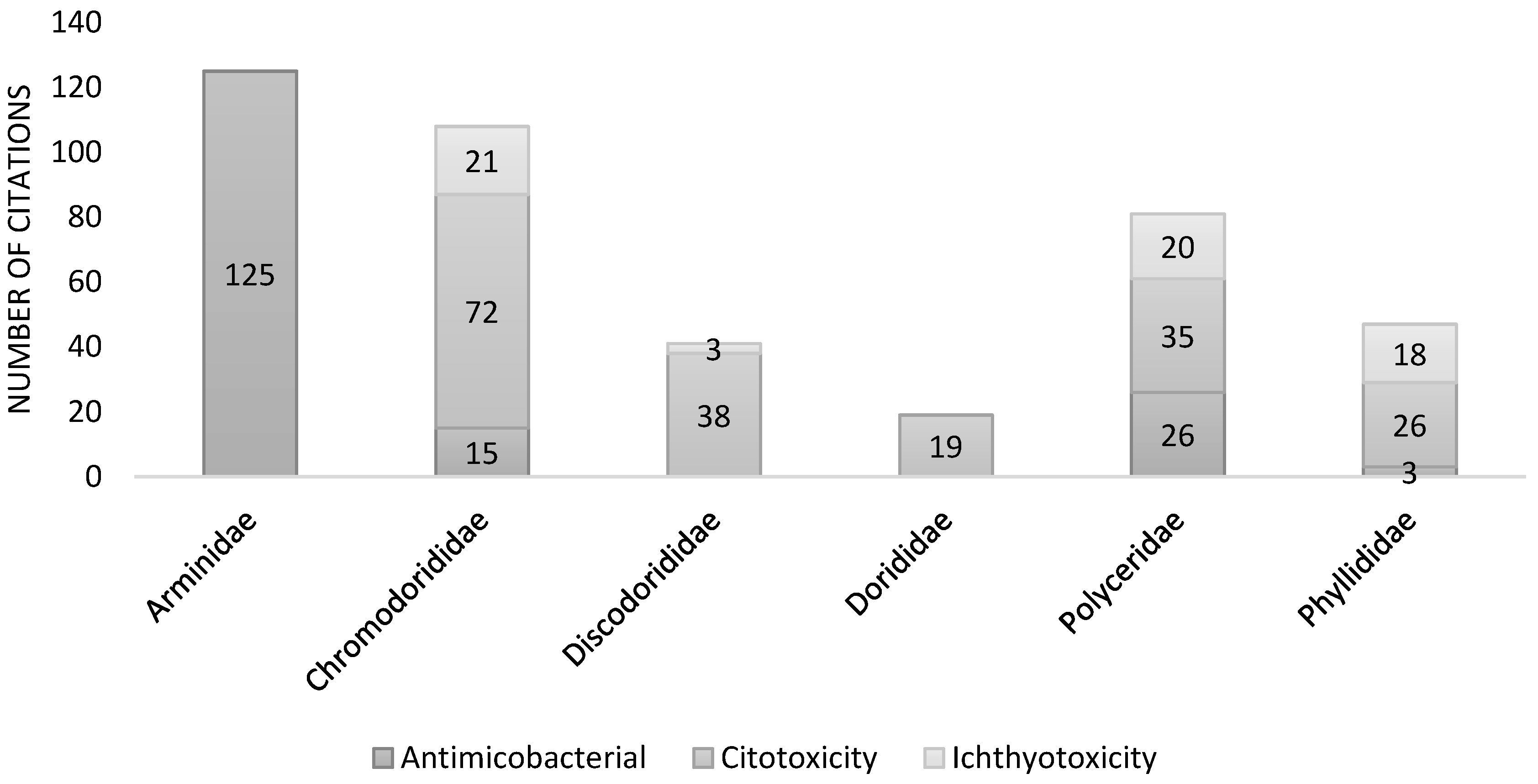

Table 1.
Number of journals that published studies contain chemical characterization 9extracts and/or isolated compounds) and biological activities.
Table 1.
Number of journals that published studies contain chemical characterization 9extracts and/or isolated compounds) and biological activities.
| Journal | Number of journal |
Chemical characterization* |
Biological Activity |
|---|---|---|---|
| Biochemical Systematics and Ecology | 2 | 2 | 0 |
| Journal Of Natural Products | 22 | 22 | 8 |
| Journal Of Molluscan Studies | 1 | 1 | 0 |
| Marine Drugs | 5 | 5 | 3 |
| Biological Sciences | 1 | 1 | 0 |
| Fitoterapia | 2 | 2 | 0 |
| Journal of Chemical Ecology | 7 | 7 | 2 |
| Journal of Organic Chemistry | 3 | 3 | 1 |
| Chemistry & Biodiversity | 1 | 1 | 0 |
| Beilstein Journal of Organic Chemistry | 3 | 3 | 1 |
| Plos One | 1 | 1 | 1 |
| Indonesian Journal of Pharmacy | 1 | 1 | 1 |
| Future Medicinal Chemistry | 1 | 1 | 1 |
| Natural Product Communications | 1 | 1 | 1 |
| Bangladesh Journal of Pharmacology | 1 | 0 | 1 |
| Tetrahedron | 11 | 11 | 4 |
| Chemistry of Natural Compounds | 2 | 2 | 1 |
| Quimica Nova | 3 | 3 | 2 |
| Australian Journal of Chemistry | 4 | 4 | 0 |
| European Journal of Organic Chemistry | 2 | 2 | 0 |
| Organic Letters | 1 | 1 | 1 |
| Bioorganic & Medicinal Chemistry Letters | 1 | 1 | 1 |
| Biological Bulletin | 1 | 1 | 0 |
| Chemical & Pharmaceutical Bulletin | 2 | 2 | 2 |
| Chemico-Biological Interactions | 1 | 0 | 1 |
| Proceedings of the National Academy of Sciences of the United States of America | 1 | 1 | 1 |
| Arkivoc | 1 | 1 | 0 |
| Chemoecology | 3 | 3 | 1 |
| Tetrahedron Letters | 8 | 8 | 1 |
| Marine Biology | 1 | 1 | 0 |
| Molecules | 1 | 1 | 1 |
| Journal Of Experimental Marine Biology and Ecology | 1 | 1 | 0 |
| Italian Journal of Zoology | 1 | 1 | 0 |
| Journal of Molluscan Studies | 1 | 1 | 1 |
| Canadian Journal of Chemistry-Revue | 1 | 1 | 0 |
| Experientia | 1 | 1 | 0 |
| Revista Virtual De Quimica | 1 | 1 | 1 |
| Magnetic Resonance in Chemistry | 1 | 1 | 0 |
| Biomolecules | 1 | 1 | 1 |
| Integrative and Comparative Biology | 1 | 1 | 0 |
| Peerj | 1 | 0 | 1 |
| Journal of Asian Natural Products Research | 1 | 1 | 1 |
| Chinese Journal of Chemistry | 1 | 1 | 0 |
| Organisms Diversity & Evolution | 1 | 1 | 0 |
| Diversity-Basel | 1 | 1 | 1 |
| Chemistry-A European Journal | 1 | 1 | 1 |
| Marine Genomics | 1 | 0 | 1 |
*Chemical Characterization (extracts and isolated compounds).
Disclaimer/Publisher’s Note: The statements, opinions and data contained in all publications are solely those of the individual author(s) and contributor(s) and not of MDPI and/or the editor(s). MDPI and/or the editor(s) disclaim responsibility for any injury to people or property resulting from any ideas, methods, instructions or products referred to in the content. |
© 2023 by the authors. Licensee MDPI, Basel, Switzerland. This article is an open access article distributed under the terms and conditions of the Creative Commons Attribution (CC BY) license (http://creativecommons.org/licenses/by/4.0/).
Copyright: This open access article is published under a Creative Commons CC BY 4.0 license, which permit the free download, distribution, and reuse, provided that the author and preprint are cited in any reuse.


