

Submitted:
26 January 2024
Posted:
29 January 2024
You are already at the latest version
Abstract
This paper introduces an innovative nanotechnology-based approach that provides a pathway to enhance the energy release efficiency of nanoenergetic materials (nEMs) by harnessing self-synchronized collective atomic vibrations and phonon wave resonance within the transition domains between nanocomponents, without altering the material composition. The key innovation involves incorporating finely-tuned 2D-ordered linear-chain carbon-based multilayer nano-enhanced interfaces as programmable nanodevices into the transition domains using advanced multistage processing and assembly techniques. These programmable nanodevices enable precise control over self-synchronized collective atomic vibrations and phonon wave propagation, leading to synergistic effects. To activate and optimize these effects, a combination of various methods is employed, including energy-driven initiation of allotropic phase transformations, surface acoustic wave-assisted micro/nano-manipulation, heteroatom doping, directed self-assembly using high-frequency electromagnetic fields, and data-driven inverse design approaches. By leveraging a data-driven inverse design strategy and uncovering hidden structure-property relationships, we maximize energy release efficiency using the carbon nano-materials genome approach derived from multifactorial neural network-based predictive models. This approach not only unlocks new functionalities in nEMs but also improves environmental performance and safety levels. By pioneering transformative pathways for nEMs through harnessing phonon wave resonance in low-dimensional nanocarbon transition interfaces, this research brings significant advancements in the field.
Keywords:
nano-energetic materials
; 2D-ordered linear-chain carbon
; multi-layered nano-interfaces
; self-synchronized collective atomic vibrations
; phonon wave resonance
; ion-assisted pulse-plasma assembling
; synergistic effects
; carbon nanomaterial genome approach
; data-driven inverse design
; energy release efficiency
Introduction
High-end nanoenergetic materials (nEMs) have recently garnered significant attention due to their unique properties and promising applications in areas such as energy storage, the development of new functional materials and high-energy additives, actuation in lab-on-a-chip devices, future energy generation and storage devices, autonomous micro-robotic systems, miniaturized thruster systems, and nano-electrokinetic thrusters. These nEMs are crucial for solid fuel propulsion systems as they offer lighter weight, greater energy yields, and minimal environmental impact compared to current solid fuel systems.
The main objective of nEMs is to efficiently release energy. This energy release happens through combustion and other processes on the nano-scale. Compared to their larger counterparts and conventional energetic materials, nEMs exhibit superior reaction rates and energy yields.
Recent advancements in understanding the physical and chemical properties of nanomaterials have led to improved energy yields and potential applications in miniature systems. Furthermore, by adjusting the composition at the nanoscale, it may be possible to achieve an unprecedented level of control over the energy release rate.
The development of nEMs has garnered significant attention from researchers aiming to enhance safety, energy release, ignition, and mechanical properties. Thanks to technological innovations in nanoscience and nanotechnology over the past two decades, substantial progress has been made in the development of new nEMs, [1]. The distinguishing feature of nEMs is the significant increase in specific surface area and the critical decrease in distances between nano-sized components. This leads to a drastic increase in chemical reaction rates, reduced ignition delay, and enhanced safety.
To unlock the additional energy potential of nEMs, it is crucial to convert all components into the same nano-sized state and ensure their uniform distribution throughout the system volume, [2,3,4]. One effective method for achieving efficient mixing is the use of a relatively new contactless technique called resonant acoustic mixing (RAM), which utilizes low-frequency and high-intensity acoustic energy to blend highly viscous materials. This technique not only facilitates effective mixing but also enhances process safety, allowing for a higher proportion of high-energy-density materials in the composition of nEMs, [5,6]. The blended nano-energetic composition can be utilized for vibration-assisted 3D printing (high-precision additive manufacturing) of high-end nEMs elements with the desired geometrical shapes, [7]. Various additive manufacturing technologies can be employed to produce energy materials with a controlled nanostructure and evenly distributed ingredients, [8]. The ability to adjust the energy release without altering the default formulation of the traditional method is also of great interest. Currently, there is a research trend focused on incorporating various nano-additives, such as nano-catalysts, into nEMs formulations to tailor their properties, enhance performance, promote safety, and fully utilize their potential features, [1].
In recent years, nanomaterials made from carbon have had a profound impact on the field of nanomaterials science, particularly those with low-dimensional allotropes. These low-dimensional carbon-based nanomaterials are highly versatile and can be used as fundamental building blocks to create a new generation of nanomaterials for various practical applications. Recent experiments have shown that incorporating nano-additives made from carbon allotropes into nEMs with enhanced properties has significant effects on their thermal decomposition, ignition, combustion, mechanical properties, thermal stability, combustion characteristics, and environmental safety, [9]. In some cases, these functionalized nano-additives made from carbon allotropes can also act as self-assembly-directing agents for the nano-components within the reaction zones of the nEMs. According to experimental studies, the addition of graphene-based nano-additives to nEMs compositions increases the burning rate by approximately 8-10 times, [10].
Among the carbon-based catalytic additives that have shown promise in enhancing performance are functionalized graphene-based fibers (FGFs), [9,10] and modified thermally expandable graphite-based fibers, [11]. When FGFs are added to nEMs compositions, the orientation of the fiber array can be utilized to improve thermal conductivity in reaction zones and enhance mechanical properties.
With our innovative approach, we aim to unleash the complete potential of nEMs and lay the foundation for groundbreaking advancements in this field. Through the skillful manipulation of nano-interfaces, it becomes possible to elevate both the combustion capabilities and mechanical characteristics of nEMs, all while preserving the fundamental constituents that define their composition.
2. Carbyne-Enriched Nanostructures: A Promising Approach for Nanoenergetic Materials
Acknowledged as the ultimate objective of low-dimensional carbon allotropes, carbyne stands as an authentic one-dimensional chain comprised solely of carbon atoms. This elongated linear arrangement of carbon atoms, with sp1 hybridization [12], presents itself in two distinct forms: the α-phase, known as polyyne [chemical structure (–С≡С)n], characterized by alternating single and triple bonds, and the β-phase, referred to as cumulene [chemical structure (=C=C)n], which exclusively consists of double bonds. In a linear chain carbon, the electronic structure has two types of bonds. The (σ)-bond contributes to mechanical stability. The (π)-bond is responsible for electrical properties through delocalizing (π)-electrons along the chain.
Nevertheless, the growth of macroscopic carbyne crystals encounters inherent instability and high reactivity, limiting their practical utilization. An innovative approach has recently emerged to combat the reactive nature of carbyne chains. This method involves employing ion-assisted pulse-plasma deposition to encapsulate aligned linear carbon atom chains, often denoted as monatomic carbon filaments, within an amorphous carbon matrix, [13]. The resulting nano-matrix is aptly named, "2D-ordered linear-chain carbon" due to its achieved spatial topology, [13]. Figure 1 and Figure 2 present schematic diagrams illustrating the pulse-plasma growth process of the 2D-ordered linear-chain carbon, providing a visual representation of this process.
The structural arrangement of a 2D-ordered linear-chain carbon nano-matrix can be described as a hexagonal array distributed across two dimensions. This array comprises parallel carbon chains interconnected by van der Waals forces, all oriented perpendicular to the substrate surface, [13,14]. The interaction between individual carbon atom wires within this nano-matrix is weak, primarily due to the influence of van der Waals forces. Consequently, the properties of these nano-matrix structures are predominantly dictated by the characteristics of the individual carbon atom wires. Figure 3 provides a visual representation of the geometric features of a segment within the structure of a 2D-ordered linear-chain carbon.
Additionally, the structure showcases a vacant functional nanocavity, enabling the potential incorporation of heteroatoms. The carbon chains, with their sp-hybridization, exhibit oscillatory behavior comparable to flexible guitar strings.
Similar to tuning a guitar string, their vibrational characteristics depend on factors like length and tension. Figure 3 demonstrates the lateral and longitudinal oscillations of the carbon chains, with red arrows depicting the bond length alternation mode (chain stretching) and blue arrows representing the chain bending mode.
Interestingly, due to the significant interchain distance (5 Å), the frequencies of these vibrations within the carbon chains are approximately four times lower than those involving stretching at the C-C bond scale (1.3 Å).
The nano-matrix composed of 2D-ordered linear-chain carbon boasts a multi-cavity structure. This structure has currently unoccupied functional nanocavities. These nanocavities offer the opportunity to incorporate atom clusters comprising diverse chemical elements, as well as catalytic agents.
Due to the significant interchain distance (5 Å), the frequencies of these vibrations in the carbon chains are four times lower compared to modes involving stretching at the C-C bond scale (1.3 Å). These findings help elucidate the presence of both low-frequency and high-frequency bands commonly observed in typical experimental Raman spectra (Figure 4).
Typically, the Raman spectra of carbyn-enriched nanomaterials display prominent G and D bands within the range of 1200-1700 cm−1, similar to those observed in amorphous carbon. Furthermore, an additional band around the 2100 cm−1 region is detected in the spectra. The peaks, with their maximums located at frequencies of 1310 cm−1 (D-line) and 1520 cm−1 (G-line), are characteristic of most carbon structures and correspond to carbon bonds of various types (sp2, sp3). The D-line ("disorder") signifies the existence of defects or broken bonds within the studied structure, while the G-line ("graphite") is an indicator of sp2-hybridized atoms, [15]. The prominent occurrence of a Raman band at approximately 2040 cm−1, attributed to the carbon triple bond, is widely recognized as a compelling piece of evidence supporting the existence of sp-bonds, [16,17]. In nano-materials that possess a high concentration of carbyne, it is expected that the intensity of this particular band would be comparable to, or potentially greater than, the contribution from the amorphous component.
To quantitatively characterize the proportion of sp-hybridized carbon within the amorphous carbon thin film matrix, we utilize the intensity ratio of specific Raman peaks. In particular, we measure the ratio of the peak intensity associated with sp-hybridized carbon chains (at 2040 cm−1) to the peak intensity corresponding to the presence of graphite bonds in the structure (known as the G-line at 1520 cm−1) in the Raman spectra. This ratio, referred to as Isp/IG, provides us with a reliable means of assessing the relative abundance of sp-hybridized carbon within the overall amorphous carbon thin film matrix. By utilizing this methodology, we can gauge the degree of sp-hybridization and assess the quality and composition of the synthesized linear carbon chains in our research.
3. Phonon Wave Excitation in Multilayered Nano-Interfaces: Exploring Phenomena and Unveiling Implications
We have encountered the ultimate thresholds of energy release achievable through conventional chemical formulations that exclusively capitalize on the potent energy locked within the chemical bonds of CHNO (carbon, hydrogen, nitrogen, oxygen) compounds. This has been observed in the realms of propellant and pyrotechnic developments. The atomic level is where the source of physicochemical properties, nano-topology, and functionality lies for energetic materials. In recent years, nanoscale objects have emerged as a distinct form of matter with unique structural, physicochemical, and functional properties, offering numerous promising applications. The advancements in scanning transmission electron microscopy have opened up new possibilities for imaging individual phonon modes and specific vibrational characteristics of impurities and dopants at the nanoscale, [18,19,20].
Phonons, which represent the vibrations of atoms in solids, play a crucial role in shaping the physical properties of nanomaterials. Visualizing individual phonon modes, low-energy phonon and plasmon excitations with high spatial resolution through vibrational spectroscopy provides fresh insights into the interaction between plasmons and molecular vibrations. It also offers valuable knowledge about interfacial thermal and electrical transfer phenomena, [18,19]. There are two types of observed excitations: collective and local. Collective excitation refers to the collective vibration of atoms in nanolayers, while local excitation occurs when an individual atom in nanolayers vibrates locally.
Recent advances in imaging techniques like electron microscopy have enabled visualization of phonon modes and dynamics at the nanoscale. This has led to the discovery of "phonon waves", which are collective excitations of atoms that can propagate through materials like a wave, [20]. Phonon waves arise from the atomic vibrations in one region of a nanostructure "driving" the atoms in adjacent regions to vibrate coherently. Phonon waves refers to collective excitations of atoms that can propagate through materials like a wave, arising when atomic vibrations in one region of a nanostructure "drive" atoms in adjacent regions to vibrate in a coordinated manner. So, phonon waves can transmit through subsequent layers of a nanostructure by this "domino effect". Phonon waves determine important nanomaterial properties like thermal and electrical conductivity, as they mediate energy transfer.
As per this finding, phonons possess the ability to produce a wave that can transition through successive materials, commonly referred to as a coherent effect. This phenomenon elucidates the distinctive characteristics displayed by nanoscale interfaces, distinguishing them from the surrounding nanomaterials. The interactions of phonons with one another, as well as their interactions with electrons or photons, actively contribute to the enhancement, dissipation, and transmission of energy within nanomaterials. Phonon wave propagation and resonance can be controlled. This control allows material properties to be tuned. Multilayer nanostructures provide an ideal platform.
The arrangement of atoms at the atomic level and the chemical composition of the nano-interface connecting two materials have a profound influence on atomic vibrations, [21]. Within multilayer nanomaterials, the phonon waves found in transitional regions of these structures can effectively trigger collective vibrational interactions with related nanomaterials at the nanoscale, [20,22]. In simpler terms, it is possible to attain desired properties in nanomaterials. This is achieved by appropriately adjusting the coupling between layers or components, the number of interacting layers, and their thicknesses, [22]. In the case of nanolayers smaller than 10-20 nm, the vibrational behavior of the outermost atomic layers plays a crucial role in determining the overall material properties. The magnitude of these vibrations is substantial and has a significant impact on the material's characteristics.
The carbyne-enriched multilayer nano-enhanced interfaces are advanced nano-oscillatory systems that feature customizable parameters. The nano-size scale of these interfaces plays a crucial role in their oscillatory behavior. At the nanoscale, quantum and surface effects become prominent, leading to interesting and tunable oscillatory phenomena. Configurable parameters indicate that the interfaces can be adjusted, modified, or tailored according to specific requirements.
Phonon wave resonance in multilayers refers to the exciting phenomenon of phonon waves being specifically activated at the resonant frequencies of a nano-system. This fascinating phenomenon can be effectively achieved in multilayer thin films through cleverly engineering the thicknesses and spacings of the different layers.
At these resonant frequencies, the phonon wavelength aligns perfectly with the geometry of the multilayer structure, giving rise to standing waves and significantly amplifying the vibration amplitudes. This constructive interference and resonance play a crucial role in selectively impeding or augmenting the transport of phonon waves at specific frequencies. By skillfully adjusting the parameters of the multilayers, such as thicknesses and spacings, it becomes possible to tailor the phonon densities of states and group velocities, ultimately exercising control over crucial properties like thermal conductivity and energy exchange.
One particularly intriguing example of this phenomenon is observed in multilayer carbyne-based thin films, like the 2D-ordered linear-chain carbon structures. These unique materials offer a remarkable platform for implementing phonon engineering aided by resonance effects. Through careful manipulation of the multilayer structure, researchers can optimize the resonance conditions, opening up new possibilities for precise control and manipulation of phonon wave propagation.
By manipulating the characteristics of nano-interfaces, it becomes possible to improve both the combustion performance and mechanical attributes of nEMs, all while keeping their fundamental constituents intact. The capability to govern collective atomic vibrations opens up avenues for accurately programming the physicochemical properties of transition interfaces in nEMs components. The resonance of phonon waves introduces a novel potential for regulating vibrational interactions and energy transfer within the nanoscale reaction regions of these materials.
Increasing the interfacial contact area and reducing the diffusion distance between reactants are key factors that can significantly enhance heterogeneous reactions. To achieve this, recent research has demonstrated the use of layered nano-interfaces, comprising densely packed nano-components, [23,24,25]. This innovative approach has proven to be more effective in accelerating flame propagation compared to uniformly distributed nano-components. The underlying mechanism involves exciting the inhomogeneity of localized micro-combustion waves.
The synergy achieved by incorporating nano-enhanced interfaces in multi-layered nano-systems presents exciting possibilities for manipulating the distribution of internal space charges. It also offers the opportunity to precisely control the energy distribution within these interfaces, thereby facilitating enhanced heat transfer into the energy release zones of nEMs. The exceptional properties exhibited by these nano-enhanced interfaces, especially when connecting nanocomponents with different properties, unlock unprecedented and improved multifunctional capabilities.
Central to our concept is the utilization of multilayer 2D-ordered linear-chain carbon-based nano-interfaces, which play a vital role in programming collective atomic vibrations at the interfaces of nEMs nano-components.
Employing 2D-ordered linear-chain carbons enables us to initiate and precisely control atomic vibrations. This allows programming synergistic effects across nano-interfaces. In turn, this unlocks substantial enhancements in nEMs performance.
By incorporating the vibrational properties of 2D-ordered linear-chain carbon-based nano-enhanced interfaces into the nanocomponents of nEMs at the nanoscale, modifications in the vibrational interactions and energy transfer within the reaction zones of the nEMs can be achieved.
The precise adjustment of the collective atomic vibrations, nanoarchitecture, and functionality of the 2D-ordered linear-chain carbon-based nano-enhanced interfaces enables the extraction of additional energy from the nEMs systems and consequently enhances their performance. Various carbon-based allotropes like FGFs, multi-walled carbon nanotubes, or modified thermally expandable graphite-based fibers, which act as catalytic nano-additives, can be employed in the composition of the nEMs.
4. Enhancing Energy Extraction from Nanoenergetic Materials: a Multistage Technological Process
In order to achieve precise and predictive control over the excitation and adjustment of transition interfaces and synergistic effects arising from collective atomic vibrations, we propose the incorporation of 2D-ordered linear-chain carbon-based multilayer nano-enhanced interfaces into the transition domains of nEMs nanocomponents. This integration will be performed through a carefully designed multistage technological process. These multilayer nano-enhanced interfaces will serve as nanocarriers, allowing for heteroatom doping and facilitating the generation of collective atomic vibrations. Moreover, they will act as transmission nano-links, enabling efficient vibrational interaction, energy transfer, and mass exchange between nEMs nanocomponents, while also enhancing the transfer of heat waves.
The devised multistage technological process incorporates downsizing all components to the nanoscale. It leverages ion-assisted pulse-plasma-driven techniques for functionalization and assembly. These techniques are applied to diverse carbon-based nanocomponents and catalytic nano-additives featuring multilayer nano-enhanced interfaces.
RAM is an integral part of the implementation of our proposed concept. It plays a crucial role in achieving the necessary interaction and homogeneity among the nano-components of the nEMs. By employing RAM technology during the mixing process, we ensure the proper integration of these components and facilitate the implementation of phonon wave resonance. This innovative technique is essential and cannot be substituted by traditional mixing methods.
The application of high-precision additive manufacturing techniques has opened up immense possibilities for the intentional design of artificially structured multi-layered nano-systems. These techniques facilitate the creation of intricate geometries and enable the seamless integration of diverse materials with arbitrary distributions within these geometries. Consequently, this enables the realization of unique combinations of physicochemical properties, [7,26]. Notably, additive manufacturing facilitates the synthesis of components with multiple materials, leading to enhanced functionality and novel material compositions. By incorporating 3D printing, we further enhance the interaction among the nano-components and enable the effective implementation of phonon wave resonance.
The properties and synergy effects induced by incorporating nano-enhanced interfaces will have significant implications for the functionalities and characteristics of engineered multi-layered nano-systems. These interfaces will act as amplifiers of vibrational interactions, energy and electrical transfer, carriers for incorporating heteroatom doping in additives, delicate connections to external electromagnetic fields, and will empower nano-systems to monitor their structural health. By considering the approaches mentioned above, a schematic representation of the suggested technological sequence for harnessing additional energy from nEMs is presented in Figure 5. This process involves the predictive manipulation of vibrational interactions and energy exchange within the nano-scale reaction zones.
5. Precise Tuning of Multilayer Nano-Interfaces Characteristics
The design of interfaces, particularly on a nanoscale level, plays a crucial role in driving the advancement of sophisticated functional nanomaterials and devices. These advancements aim to harness and convert chemical energy into various other forms such as mechanical energy and kinetic energy flow. Additionally, they enable precise control over the movement of matter and energy, allowing for programmable manipulation, [27].
We consider a collection of interacting nano-enhanced interfaces to be programmable nanodevices that function as intelligent gateways and amplifiers for weak signals. These nanodevices facilitate communication and enhance signal strength among the nanocomponents in nEMs through the precise excitation and self-synchronization of collective atomic vibrations, as well as the controlled propagation of phonon waves.
The advantage offered by 2D-ordered linear-chain carbon-based multilayer nano-enhanced interfaces lies in their capacity to incorporate neighboring layers of nanomaterials within their composition, as well as clusters comprising atoms from diverse chemical elements. This integration enables the creation of complex multifunctional architectures, facilitating synergistic interactions and enhanced performance across the nanomaterial system, encompassing enhancements in mechanical strength, electronic conductivity, and catalytic activity.
An essential role of 2D-ordered linear-chain carbon-based multilayer nano-enhanced interfaces is to strategically regulate the collective atomic vibrations occurring at the transition domains of the nEMs nanocomponents. By doing so, these interfaces can successfully program the energy exchange and properties exhibited by the nanocomponents within the transition domains.
By considering a range of distinct characteristics exhibited by the 2D-ordered linear-chain carbon-based multilayer nano-enhanced interfaces, we have successfully devised a collection of tools that enable predictive manipulation of their collective atomic vibrations. These tools have been instrumental in enhancing the performance capabilities of nEMs and unlocking novel functionalities previously unexplored. The toolkit we have developed comprises the following components, which are described in the following sections.
5.1. Energy-Driven Initiation of Nano-Pattern Formation and Allotropic Phase Transformations
Our research has demonstrated that the application of energy-driven excitation can lead to the development of intricate nano-scale patterns within reaction zones of energetic materials, [28,29]. In transient and unstable combustion modes, energy and mass transfer primarily occur within these intricate micro- and nano- patterns within the reaction zones.
Acoustic waves and electro-magnetic radiation can be generated by oscillating networks of micro- and nano-scale structures. Figure 6 showcases images that illustrate the activation of micro-structures on the burning surface of composite solid propellants under a pressure of 0.1MPa (with a frame rate of 11,000 frames per second), [30].
In the initial frame, a solid propellant pellet is depicted. Following frames demonstrate the activation of distinctive patterns on the burning surfaces of pellets, which incorporate various additives. These additives include spherical aluminium, flake aluminium, nano-aluminium with particle sizes measuring 80 nm, as well as aluminium/polytetrafluoroethylene (Al/PTFE) combinations with weight ratios of 90/10 and 70/30. All frames were captured under identical exposure settings at a pressure of 0.1 MPa.
It is crucial to highlight that the energy and mass transfer in the reaction zones primarily occur through these micro- and nano-patterns. These patterns form interconnected networks that exhibit oscillatory behavior, generating acoustic waves and electromagnetic radiation.
By precisely manipulating the characteristics of nano-interfaces, we gain the ability to control the activation of micro- and nano-patterns within the reaction zones, leading to efficient regulation of energy and mass transfer. The programmable stimulation of nano-scale patterns not only grants control over the architectural arrangement but also facilitates enhanced energy exchange in these reaction zones, thereby unleashing additional energy at the nano-level.
To accomplish the intentional integration of diverse hybridized nanocarbons into a cohesive substance, we implement an energy-driven approach to initiate allotropic phase transformations. This involves the simultaneous use of electron beam and ion irradiation on the nanocarbons.
The underlying mechanism responsible for this phenomenon is attributed to the interplay between the formation and breakage of carbon bonds with varying hybridizations. Specifically, ion irradiation primarily encourages the formation of sp1 bonds, while concurrent electron irradiation enhances the prevalence of sp3 bonds within the material. Moreover, our combination of electron beam and ion irradiation techniques serves as a controlled method for initiating the formation of nano-patterns at interfaces on the nano-scale.
In addition, the results obtained in [31] demonstrated the possibility of direct "writing" of various chemically bonded carbons using femtosecond laser pulses: local phase transformations on the graphite surface strongly depend on the energy flux density of femtosecond pulses.
5.2. Enhancing Nano-Manipulation Through Multi-Functional Piezoelectric Surface Acoustic Wave Engineering
Planar nano-interfaces act as a foundational structure that can be customized or converted into 3D-shaped nano-interfaces. By employing techniques based on surface acoustic waves (SAW), the predictive transformation of flat nano-enhanced interfaces into intricate geometric 3D-shaped nano-interfaces becomes achievable. The conversion of flat nano-enhanced interfaces into 3D-shaped nano-interfaces introduces entirely novel possibilities for programming interactions within nEMs reaction zones. The utilization of piezoelectric SAW effectively induces standing waves, which stimulate collective atomic vibrations in thin film systems with multiple layers, while simultaneously initiating self-synchronization of these vibrations. By exciting SAW within the ultrasonic range, the penetration process of atom clusters from adjoining nanomaterials into the structure of 2D-ordered linear-chain carbon-based nano-interfaces can be activated. In particular, our approach involves growing 2D-ordered linear-chain carbon-based multilayer nano-enhanced interfaces on substrates that are piezoelectric-based and acoustically stimulated.
5.3. Enhancing Directed Self-Assembly Through Electromagnetic Fields
The utilization of high-frequency external electromagnetic fields presents a promising opportunity to amplify the vibrational interactions and energy exchange that occur during the formation of multilayer nano-enhanced interfaces. Recent experimental research conducted at Rice University has uncovered a fascinating phenomenon, offering valuable insights into a potential pathway for achieving direct self-assembly of low-dimensional nanocarbon allotropes, [32]. This significant breakthrough demonstrates that not only nanocarbon allotropes but also various other nanomaterials possess the remarkable capability to undergo self-assembly, even over significant distances. In particular, a revolutionary discovery known as Teslaforesis fundamentally transforms the physical mechanism responsible for the growth of elongated carbon chains within the matrix of 2D-ordered linear-chain carbon-based nanomaterials.
5.4. Incorporation of piezoelectric nanomaterial clusters
Incorporating piezoelectric nanomaterial clusters enables a transformation. This transformation changes the arrangement of 2D-ordered linear-chain carbon-based multilayer nano-enhanced interfaces into efficient piezoelectric nanogenerators. These nanogenerators offer precise control over the distribution of electric charges within the nanostructures' growing zone.
For example, piezoelectric nanomaterials such as lithium atoms or zinc oxide (ZnO) nanoclusters can be utilized for this purpose. It is worth noting that this effect can be reversed as well - applying an electric field to a piezoelectric nanogenerator will cause it to deform or change shape.
In Figure 7, a visual representation is provided to showcase the smart gateway between nanocomponents in nEMs. Its purpose is to activate and finely tune these components in order to facilitate synergistic effects. These effects involve the self-synchronization of collective atomic vibrations, propagation of phonon waves, and exchange of energy.
The architecture, geometry, chemistry, and external inputs applied to the carbyne-enriched nano-interfaces allows us to initiate and fine-tune atomic vibrations, which is key to controlling energy transfer between nEMs components.
Here is some more detail on how the proposed carbyne-enriched nano-interfaces could be tailored to initiate and control atomic vibrations:
- The nano-interfaces are made from 2D-ordered linear-chain carbon, which contains networks of aligned carbon chains. These carbon chains can oscillate and vibrate laterally like flexible strings;
- By carefully selecting the length and tension of the carbon chains, their resonant vibration frequencies can be tuned. This helps synchronize vibrations across the nano-interface;
- Incorporating piezoelectric nanomaterial clusters like lithium or ZnO introduces strain on the carbon chains when an electric field is applied. This strain stimulates controlled atomic vibrations;
- Defects can be introduced in the carbon chain structure to influence vibrational modes. The defects act like plucking or strumming the chains;
- Alternating single and triple bonds in the carbon chains creates bond length variations that promote atomic vibrations;
- The nano-interface thickness and spacing between components can be optimized to align with phonon wavelengths, amplifying resonance effects. By adjusting the number of layers, layer thicknesses, and interlayer coupling, the vibrational modes can be suitably modified;
- Applying external energy like electron beams, ion radiation, or high-frequency electromagnetic fields imparts energy that excites atomic vibrations in the carbon nano-interfaces;
- SAW transmitted to the nano-interfaces generate standing waves that synchronize atomic vibrations.
6. Harnessing Big Data and AI for Predictive Nanoenergetic Materials Design
The emergence of a new era in nanomaterials research and design has been facilitated by the availability of vast amounts of big data generated through advanced experimental and computational techniques. This has paved the way for a data-driven approach that utilizes artificial intelligence (AI) and machine learning, leading to a paradigm shift in the exploration and design of nanomaterials, [33].
One prominent feature of 2D-ordered linear-chain carbon-based multilayer nano-enhanced interfaces is their ability to precisely adjust and optimize their nanoarchitectures and physicochemical properties. However, achieving such fine-tuning through conventional trial and error methods is exceedingly difficult without the use of advanced materials informatics techniques, [34].
To achieve predictive enhancement of energy release in the multistage technological chain (Figure 5), we leverage the unique structural and physicochemical properties of 2D-ordered linear-chain carbon-based multilayer nano-enhanced interfaces. This cutting-edge nanoscale approach, known as data-driven-based inverse design, relies on the analysis of nanomaterials datasets using data and deep materials informatics to guide the design process. Experimental data serves as a valuable resource for extracting new knowledge within this research field, [35].
The predictive approach employed to enhance energy release involves incorporating comprehensive experimental data and making precise adjustments to the collective atomic vibrations, nanoarchitecture, and properties of the 2D-ordered linear-chain carbon-based multilayer nano-enhanced interfaces integrated into the transition domains of the nEMs nanocomponents.
The foundation of the data-driven inverse design strategy for 2D-ordered linear-chain carbon-based multilayer nano-enhanced interfaces, with the goal of enhancing energy release properties, lies in the implementation of the data-driven carbon nanomaterials genome approach. This approach utilizes predictive models based on neural networks that incorporate various factors. These models are developed using extensive experimental data that capture key fingerprints, also known as "descriptors," reflecting the fundamental physical and chemical laws. These models formalize the relationships between structure and properties, governing the growth and properties of the nano-enhanced interfaces, which are crucial for maximizing energy release efficiency.
6.1. Unleashing the Power of Data: Carbon Nanomaterials Genome Approach
The idea of harnessing the power of data through the carbon nanomaterials genome approach is intricately linked to the inception of the "Materials Genome" concept, originally introduced in the United States in 2011 as part of the Materials Genome Initiative (MGI), [36]. Building on this foundation, a group of scientists from Canada and the United States took the initiative in 2015 to establish the Nanomaterials Genome Initiative (NMGI), [37].
The concept of materials genome technology represents a highly innovative approach to materials research, far surpassing the traditional trial-and-error method. This approach leverages state-of-the-art experimental techniques alongside efficient data management and computational tools. Through the utilization of these tools, the collected data is thoroughly analyzed, enabling the identification of potential relationships between material parameters and material properties. Consequently, this advanced methodology expedites the discovery of the most efficient and optimal materials. The carbon nanomaterials genome encompasses a comprehensive compilation of intrinsic physical, chemical, and structural attributes and their intricate interdependencies. These factors collectively ascertain the distinctive traits and capabilities exhibited by carbon nanomaterials. Any modification, no matter how minor, of these parameters can induce significant changes in the diverse properties and functionalities exhibited by carbon nanomaterials.
In order to formally elucidate the comprehensive range of physical, chemical, and structural properties of carbon nanomaterials, as well as their intricate interdependencies, we employ an advanced system of multi-factor neural network-based predictive models. These sophisticated models allow for the systematic analysis, processing, and generalization of large datasets encompassing both experimental and computational information.
By encompassing various parameters, we are able to discern the intricate connections and interactions between these parameters and the ultimate properties exhibited by carbon nanomaterials. Our primary goal is to reveal the latent potential inherent in carbon nanomaterials by unearthing new associations between growth mechanisms and target properties. Through this approach, we seek to activate and explore the uncharted genetic code of carbon nanomaterials, ultimately unlocking their hidden capabilities.
In the concept of the carbon nanomaterials genome, each carbon nanomaterial possesses a unique signature comprising distinct properties and characteristics that are interconnected. This notion of the carbon nanomaterials genome acts as a catalyst for the development of new modifications of multifunctional carbon nanomaterials, offering a distinct combination of properties. The spatial shaping processes involved in the growth of carbon nanostructures from high-temperature carbon plasma adhere to universal templates. The geometric forms of these nanostructures are influenced by the vibrational state of carbon plasma molecules, making the spectra of molecular vibrations a crucial parameter for characterizing their properties. Raman vibrational spectroscopy are utilized to measure these spectra, providing essential and universally applicable information about each specific carbon nanomaterial.
The concept of the data-driven carbon nanomaterials genome, along with the methodology developed for its application, serves as a catalyst. It enables exploring the optimal technological parameters and growth modes for carbon nanostructures. The goal is synthesizing nanostructures with the desired topological and physicochemical properties.
6.2. Revealing Hidden Structure-Property Links Through Data Mining
By employing a data-driven approach to inverse design, we establish links between essential modes, technological variables, and the growth of 2D-ordered linear-chain carbon-based multilayer nano-enhanced interfaces using ion-assisted pulse-plasma techniques.
This innovative methodology empowers us to pinpoint the ideal combinations of nanoarchitecture and physicochemical properties, granting us meticulous command over the distinctive attributes of the nanostructures.
To establish connections between various factors, a set of multifactorial neural network-based predictive models is utilized. These models are meticulously created by utilizing extensive experimental data and are tailored to capture vital attributes referred to as "descriptors". These descriptors encapsulate the fundamental principles governing the nano-system at a physical and chemical level.
In light of this, we have devised strategies to carefully select pivotal descriptors that accurately portray the connections between different modes, ion-assisted pulse-plasma growth parameters, and the resulting structural and physicochemical properties of synthesized carbon nanostructures. These strategies play a critical role in the successful implementation of the carbon nanomaterials genome concept.
Developing the concept of the carbon nanomaterials genome entails a crucial element of accurately selecting descriptors or features for modeling. These descriptors play a significant role in characterizing the investigated nanomaterials while demonstrating established correlations between target properties and other material properties. There are two distinct categories of descriptors that hold importance: numerical and categorical.
The identification and characterization of key descriptors call for a comprehensive analysis of experimental data. This analysis takes into account various factors that impact the growth process of 2D-ordered linear-chain carbon-based nano-enhanced interfaces. Descriptors function as an informative resource, allowing for predictive capabilities, [38]. The accuracy and quality of predicted outcomes heavily depend on the number and quality of the identified descriptors.
The exploration of novel linkages between grows methods and sought-after attributes of carbon nanomaterials opens up avenues to unlock the untapped potential encoded within their inherent properties, steering the development of more productive and sophisticated nanomaterials.
The activation of the genome of carbon nanomaterials becomes possible by introducing changes to the conditions and variables governing their growth process, encompassing factors like duration, temperature, pressure, and the proportions of reactive gases. By deviating from conventional protocols, fresh connections can arise among atoms and structures, instigating consequential modifications in vital targeted characteristics of carbon nanomaterials. These characteristics encompass the capacity for electrical conductivity, optical qualities, and catalytic efficiency.
In our pursuit of unlocking the untapped capabilities of carbon nanomaterials, we utilize innovative technological methods that can be seen as a way to activate their genome. This involves employing a range of approaches to precisely stimulate and fine-tune the effects and interactions at the nano-interface level.
Our objective is to uncover the hidden potential by exploring phenomena such as collective atomic vibrations, propagation of phonon waves, and energy exchange within the complex 3D-shaped nano-enhanced interfaces. To gain a deeper understanding of the vibrational characteristics involved, we have ingeniously combined multiple methodologies into a cohesive fusion.
We have devised a unique approach that combines various techniques to achieve our objectives. These methods comprise using energy of electron beam and ion irradiation for allotropic phase changes, nano-manipulation with the help of SAW while utilizing ion-assisted pulse-plasma functionalization, incorporating foreign atoms to modify the characteristics of the material, inducing controlled self-assembly through the use of high-frequency electromagnetic fields, and employing data-driven reverse engineering techniques.
To further support our research, we have created a comprehensive collection of multifactorial neural network predictive models. These models utilize advanced data mining techniques, including feed-forward neural networks, deep learning neural networks, and multiple adaptive regression splines.
The key steps in using the data-driven carbon nanomaterials genome approach and multifactorial neural network predictive models for the inverse design of 2D-ordered linear-chain carbon nano-enhanced interfaces include:
(i) comprehensive data collection encompassing growth parameters, modes, and resulting nanostructure properties;
(ii) extensive data analysis to identify numerical and categorical descriptors serving as informative predictors;
(iii) development of predictive models via neural networks that capture descriptor-property connections;
(iv) continuous model refinement based on new insights;
(v) inverse mapping from target properties to required descriptors and growth conditions;
(vi) experimental validation by synthesizing predicted nanostructures; and
(vii) iterative model enhancement incorporating new validation data.
The iterative cycling between modeling, experiments, and refinement facilitates incremental improvements in the predictive capabilities and inverse design precision. This iterative, data-driven approach facilitates the revelation of concealed growth-property linkages, thus enabling the precise tuning of 2D-ordered linear-chain carbon nano-enhanced interfaces to exhibit desired structural and functional characteristics.
The cutting-edge approach for constructing multifactorial neural network-based predictive models relies on the utilization of deep learning neural networks (Deep Learning). This advanced technique facilitates accurate extrapolation of identified dependencies and effectively addresses forecasting challenges. A notable implementation of this approach can be found in the renowned Data Science software plat-form, PolyAnalyst, developed by LLC Megaputer Intelligence, [39]. PolyAnalyst, an acclaimed Data Science platform, sets the industry benchmark for extracting valuable insights from vast volumes of structured and unstructured data.
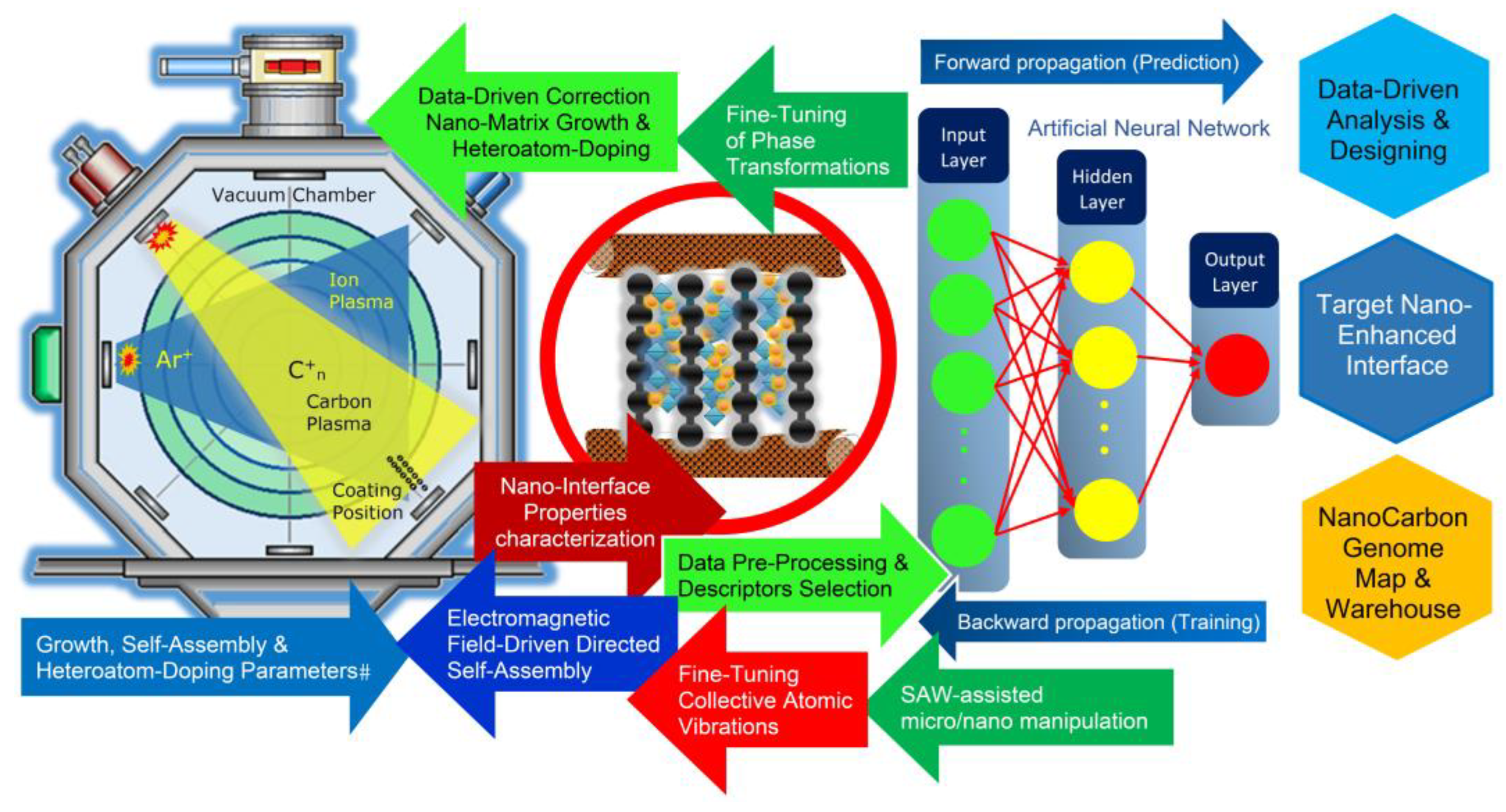
The process of observing and modifying key descriptors and connections, which we then incorporate into our data-driven inverse design nanoscale approach, is illustrated in Figure 8.
7. Discussion
This study introduces an innovative approach to enhancing energy release in nEMs by harnessing interfacial phonon engineering: by precisely controlling and harnessing collective atomic vibrations and phonon wave resonance. The core finding is that incorporating 2D-ordered linear-chain carbon nano-interfaces allows initiating and precisely tuning collective atomic vibrations to program synergistic effects between components. This enables unlocking additional energy without altering the chemical composition.
These outcomes validate and extend previous research showing nanostructured additives and interfaces can beneficially modulate nEMs performance and properties [9,10,11]. However, our approach advances the field by actively controlling, rather than passively altering, interfacial vibrational modes. This transforms the nano-interfaces into “smart” programmable devices with tunable architecture and dynamics.
A major implication is the potential to push energetic performance boundaries solely through nanoscale engineering, without modifying chemical formulations. This challenges conventional paradigms by demonstrating that energy outputs can be substantially enhanced by nano-architectures and confined geometries alone. Our computational models provide an exciting predictive toolkit for optimizing the assembly and tuning of these nano-enhanced interfaces.
The customized control over vibrational energy transfer opens up bespoke design of energetic responses tailored to applications from propulsion to explosives [1]. By combining multiscale modeling with data-driven materials informatics, the models enable programming interface configurations to precise performance criteria.
This work lays the foundation for several promising research directions. One is extending the principles of directed assembly and vibrational control to additive manufacturing of 3D nanoenergetic systems [7,8]. This could enable unparalleled control over internal nanostructures and energy release profiles.
Further elucidating the fundamental mechanisms of interfacial phonon engineering in nanoconfined domains is also key. While this study demonstrates the potential for tuning energy release, future efforts should clarify details of the phonon behaviors and propagation. Expanding the nano-interface concepts across multiple length scales is warranted.
The synergistic integration of nano-engineering, data science, and interfacial physics opens the door to transformative advances in energetic materials. By actively controlling energy transfer through coherent excitations, this pioneering work establishes a framework for the next-generation of smart programmable nanoenergetics.
8. Conclusions
This study puts forward an innovative nanotechnology-driven strategy for enhancing energy release in nanoenergetic systems. The core innovation entails incorporating specially engineered nano-interfaces constructed from 2D-ordered linear-chain carbon into the transition regions between reactive components. These tailored nano-interfaces can initiate and precisely control interfacial atomic vibrations. This enables programming synergistic phonon effects to amplify energy release, without altering the chemical composition.
The paper proposes a multistage technical approach to fabricating and integrating the nano-interfaces using advanced nanomanufacturing techniques. A combination of external energy inputs precisely tunes the collective vibrations within the nano-interfaces to optimize energy transfer between components.
Additionally, a data-driven inverse design paradigm leverage materials informatics to uncover hidden structure-property relationships within the nano-interfaces. This facilitates the optimization of interface architecture and properties to maximize energy release efficiency.
Overall, this pioneering work introduces a forward-looking nanotechnology-powered pathway to unlock the full potential of nanoenergetic systems. It lays the groundwork for transformative advances through targeted nano-engineering of interfacial vibrational excitations. If experimentally validated, these innovations could enable unprecedented energetic performance and customizability for critical applications.
Author Contributions
Conceptualization, A.L.; methodology, A.L. and O.G.; validation, A.L. and O.G.; formal analysis, A.L. and O.G.; investigation, A.L. and O.G.; resources, A.L. and O.G.; data curation, A.L. and O.G.; writing—original draft preparation, A.L.; writing—review and editing, A.L.; visualization, A.L.; supervision, A.L.; project administration, A.L. and O.G.; funding acquisition, A.L. and O.G. All authors have read and agreed to the published version of the manuscript.
Funding
This research work is jointly supported and funded by the Scientific and Technological Research Council of Turkey (TÜBİTAK) and the Russian Foundation for Basic Research (RFBR) - Russian Center of Scientific Information (RCSI) according to the research project № 20-58-46014.
Institutional Review Board Statement
Not applicable.
Informed Consent Statement
Not applicable.
Data Availability Statement
Not applicable.
Acknowledgments
The publication cost of this paper was covered by funds from the Russian Foundation for Basic Research (RFBR) - Russian Center of Scientific Information (RCSI) according to the research project No. 20-58-46014.
Conflicts of Interest
The authors declare no conflict of interest.
Abbreviations
| AI | Artificial intelligence |
| CAW | Carbon-atom wire |
| nEM | Nanoenergetic material |
| IG | The peak intensity corresponding to the presence of graphite bonds |
| in the structure in the Raman spectra | |
| ISP | The peak intensity associated with sp-hybridized carbon chains |
| in the structure in the Raman spectra | |
| RAM | Resonant acoustic mixing |
| SAW | Surface acoustic wave |
| Sp hybridization | Linear structure in molecules |
References
- Pang, W.; DeLuca, L.T. Nano and Micro-scale Energetic Materials: Propellants and Explosives, 1st ed.; Wiley-VCH GmbH: Weinheim, Germany, 2023; 784 p.
- Daniel, M.; Hart, A.; Provatas, A. Transformative Energetics: A Pathway to Next Generation Munitions. In Proceedings of the Australian Explosive Ordnance Safety Symposium (PARARI 2017), UNSW Canberra, Australia, 21-23 Nov. 2017.
- Cumming, A.S. Advanced processing - the changing face of manufacturing. Propellants Explos. Pyrotech. 2020, 45(1), 7-8. [CrossRef]
- Haiyang, W.; Jiang, Y.; Wang, Y.; Kline, D.J.; Zheng, X.; Zachariah, M.R. Do we need perfect mixing between fuel and oxidizer to maximize the energy release rate of energetic nanocomposites? Appl. Phys. Lett. 2023, 122(1), 011901. [CrossRef]
- Andrews, M.; Collet, C.; Wolff, A.; Hollands, C. Resonant acoustic mixing: processing and safety. Propellants Explos. Pyrotech. 2020, 45(1), 77-86. [CrossRef]
- Wright, C.; Wilkinson, P.; Gaulter, S.; Fossey, D.; Burn, A.; Gill, P. Is resonant acoustic mixing (RAM) a game changer for manufacturing solid composite rocket propellants? Propellants Explos. Pyrotech. 2022, 47, e202100146. [CrossRef]
- Gunduz, I.E.; McClain, M.S.; Cattani, P.; Chiu, G.T-C.; Rhoads, J.F.; Son, S.F. 3D printing of extremely viscous materials using ultrasonic vibrations. Addit. Manuf. 2018, 22, 98-103. [CrossRef]
- Chen, N.; He, C.; Pang, S. Additive manufacturing of energetic materials: tailoring energetic performance via printing. Mater. Sci. Technol. 2022, 127, 29-47. [CrossRef]
- Yan, Q.L.; Gozin, M.; Zhao, F.Q.; Cohen, A.; Pang, S.P. Highly energetic compositions based on functionalized carbon nanomaterials. Nanoscale 2016, 8, 4799-4851. [CrossRef]
- Gao, H.; Zheng, Y.; Cao, X.; Wang, B.; Nan, F. Function and action mechanism of carbon nanomaterials used in propellants. Phys. Conf. Ser. 2021, 012018. [CrossRef]
- Elanjickal, S.; Gany, A. Enhancement of the fuel regression rate in hybrid propulsion by expandable graphite additive. Combust. Sci. Technol. 2020, 192(7), 1253-1273. [CrossRef]
- Casari, C.S.; Milani, A. Carbyne: from the elusive allotrope to stable carbon atom wires. MRS Commun. 2018, 8(2), 207-219. [CrossRef]
- Flood, P.; Babaev, V.; Khvostov, V.; Novikov, N.; Guseva, M. Carbon material with a highly ordered linear-chain structure. In Polyynes: Synthesis, Properties, and Applications; Cataldo, F., Ed.; Taylor & Francis Group: Didcot, UK, 2005; pp. 219–252. [CrossRef]
- Streletskii, O.A.; Khvostov, V.V.; Novikov, N.D.; Guseva, M.B.; Aleksandrov, A.F. Secondary-emission properties of the 2D-ordered linear chain carbon films. Commun. Technol. Electron. 2012, 57, 424-428. [CrossRef]
- Pimenta, M.A.; Dresselhaus, G.; Dresselhaus, M.S.; Cançado, L.G.; Jorio, A.; Saito, R. Studying disorder in graphite-based systems by Raman spectroscopy. Phys. Chem. Chem. Phys. 2007, 9(11), 1276-1290. [CrossRef]
- Milani, A.; Tommasini, M.; Russo, V.; Li Bassi, A.; Lucotti, A.; Cataldo, F.; Casari, C.S. Raman spectroscopy as a tool to investigate the structure and electronic properties of carbon-atom wires. Beilstein J. Nanotechnol. 2015, 6, 480–491. [CrossRef]
- Shi, L.; Rohringer, P.; Suenaga, K. et al. Confined linear carbon chains as a route to bulk carbyne. Nature Mater. 2016, 15, 634–639. [CrossRef]
- Gadre, C.A.; Yan, X.; Song, Q., et al. Nanoscale imaging of phonon dynamics by electron microscopy. Nature 2022, 606, 292-299. [CrossRef]
- Kumar, V.; Camden, J.P. Imaging vibrational excitations in the electron microscope. Phys. Chem. C 2022, 126(40), 16919-16927. [CrossRef]
- Hoglund, E.R.; Bao, D.L.; O'Hara, A., et al. Emergent interface vibrational structure of oxide superlattices. Nature 2022, 601, 556-561. [CrossRef]
- Hage, F.S. Nanoscale map shows how interfaces impede vibrations. Nature 2022, 606, 252-253. [CrossRef]
- Appleget, C.D.; Riano, J.S.; Hodge, A.M. An overview of nano multilayers as model systems for developing nanoscale microstructures. Materials 2022, 15(1), 382. [CrossRef]
- Kwon, J.; Ducéré, J.M.; Alphonse, P., et al. Interfacial chemistry in Al/CuO reactive nanomaterial and its role in exothermic reaction. ACS Appl. Mater. Interfaces 2013, 5(3). [CrossRef]
- Shi, A.; Zheng, H.; Chen, Z.; Zhang, W.; Zhou, X.; Rossi, C.; Shen, R. Exploring the interfacial reaction of nano Al/CuO energetic films through thermal analysis and Ab initio molecular dynamics simulation. Molecules 2022, 27, 3586. [CrossRef]
- Lorena, M.; Nanayakkara, C.E.; Veyan, J.-F., et al. Enhancing the reactivity of Al/CuO nanolaminates by Cu incorporation at the interfaces. ACS Appl. Mater. Interfaces 2015, 7(22), 11713-11718. [CrossRef]
- Yang, W.; Hu, R.; Zheng, L.; Yan, G.; Yan, W. Fabrication and investigation of 3D-printed gun propellants. Mater. Des. 2020, 192, 108761. [CrossRef]
- Levchenko, I.; Baranov, O.; Riccardi, C., et al. Nanoengineered carbon-based interfaces for advanced energy and photonics applications: a recent progress and innovations. Adv. Mater. Interfaces 2023, 10, 2201739. [CrossRef]
- Lukin, A.N. Universal law of the spatial-periodic nano- and micro- structures excitation during the transient combustion of energetic materials. Int. J. Energ. Mater. Chem. Propuls. 2007, 6(1), 119-142. [CrossRef]
- Lukin, A.N., The instability of physical fields in the liquid-viscous layer during the burning of energetic materials. Int. J. Energ. Mater. Chem. Propuls. 2008, 7(3), 223-252. [CrossRef]
- Sippel, T.R.; Son, S.F.; Groven, L.J. Aluminum agglomeration reduction in a composite propellant using tailored Al/PTFE particles. Combust. Flame. 2014, 161(1), 311-321. [CrossRef]
- Hu, A.; Rybachuk, M.; Lu, Q.-B.; Duley, W.W. Direct synthesis of 𝑠𝑝-bonded carbon chains on graphite surface by femtosecond laser irradiation. Appl. Phys. Lett. 2007, 91(13) 131906. [CrossRef]
- Bornhoeft, L.R.; Castillo, A.C.; Smalley, P.R.; Kittrell, C.; James, D.K.; Brinson, B.E.; Rybolt, T.R.; Johnson, B.R.; Cherukuri, T.K.; Cherukuri, P. Teslaphoresis of carbon nanotubes. ACS Nano 2016, 10, 4873–4881. [CrossRef]
- Zhou, T.; Song, Z.; Sundmacher, K. Big data creates new opportunities for materials research: a review on methods and applications of machine learning for materials design. Eng. 2019, 5(6), 1017-1026. [CrossRef]
- Fang, J.; Xie, M.; He, X., et al. Machine learning accelerates the materials discovery. Mater. Today Commun. 2022, 33, 104900. [CrossRef]
- Yang, R.X.; McCandler, C.A.; Andriuc, O., et al. Big data in a nano world: a review on computational, data-driven design of nanomaterials structures, properties, and synthesis. ACS Nano 2022, 16(12), 19873-19891. [CrossRef]
- DePablo, J.; Jones, B.; Kovacs, C.; Ozolins, V.; Ramirez, A. The materials genome initiative: the interplay of experiment, theory, and computation. Curr. Opin. Solid State Mater. Sci. 2014, 18(2), 99-117. [CrossRef]
- Qian, C.; Siler, T.; Ozin, G. Exploring the possibilities and limitations of a nanomaterials genome. Small 2015, 11(1), 64-69. [CrossRef]
- Yan, X.; Sedykh, A.; Wang, W., et al. Construction of a web-based nanomaterial database by big data curation and modeling-friendly nanostructure annotations. Nat Commun. 2020, 11, 2519. [CrossRef]
- Ananyan, S.M.; Sazonov, D.S.; Slynko, Y.N.; Solomatin, E.B. Analytical Platform PolyAnalyst: Architecture, Functionality, Application Practice, 1st ed.; LLC "Hot Line - Telecom": Moscow, Russia, 2023; 232 p., (in Russian). [CrossRef]
Figure 1.
Schematic diagram illustrating the general layout of the experimental setup for the pulse-plasma deposition reactor, showcasing the overall configuration.
Figure 1.
Schematic diagram illustrating the general layout of the experimental setup for the pulse-plasma deposition reactor, showcasing the overall configuration.
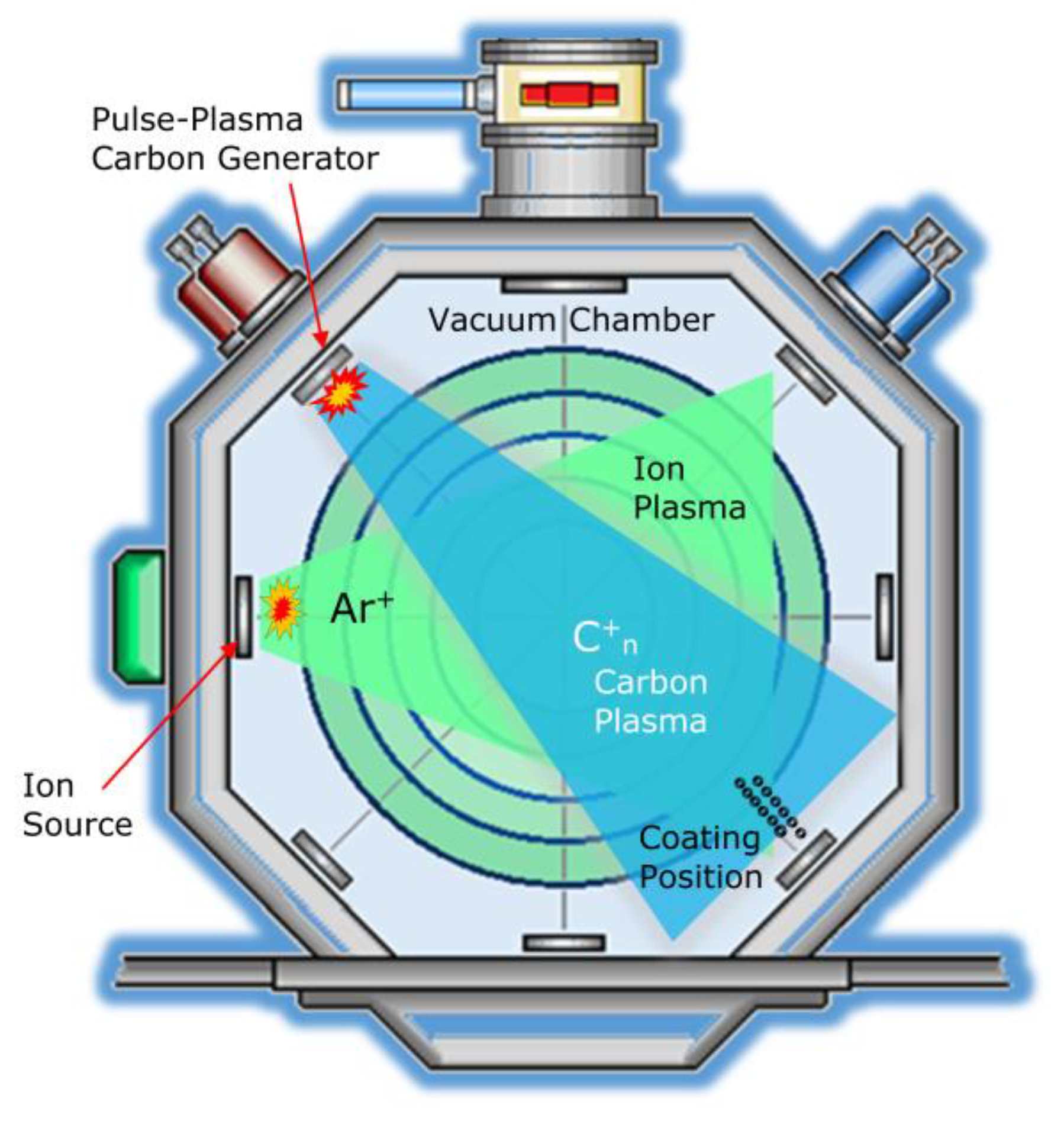
Figure 2.
Schematic diagram illustrating the configuration of the enhanced integrated into the experimental reactor setup: 1 – cylindrical cathode for the main discharge (composed of high-purity graphite as the evaporated material); 2 – anode for the main discharge; 3 – plasma neutralization and final focusing system employing a solenoid; 4 – anode for the second auxiliary discharge; 5 – cathode for the ignition phase; 6 – anode for the ignition phase; 7 – dielectric insulator; 8 – holder for the substrate.
Figure 2.
Schematic diagram illustrating the configuration of the enhanced integrated into the experimental reactor setup: 1 – cylindrical cathode for the main discharge (composed of high-purity graphite as the evaporated material); 2 – anode for the main discharge; 3 – plasma neutralization and final focusing system employing a solenoid; 4 – anode for the second auxiliary discharge; 5 – cathode for the ignition phase; 6 – anode for the ignition phase; 7 – dielectric insulator; 8 – holder for the substrate.
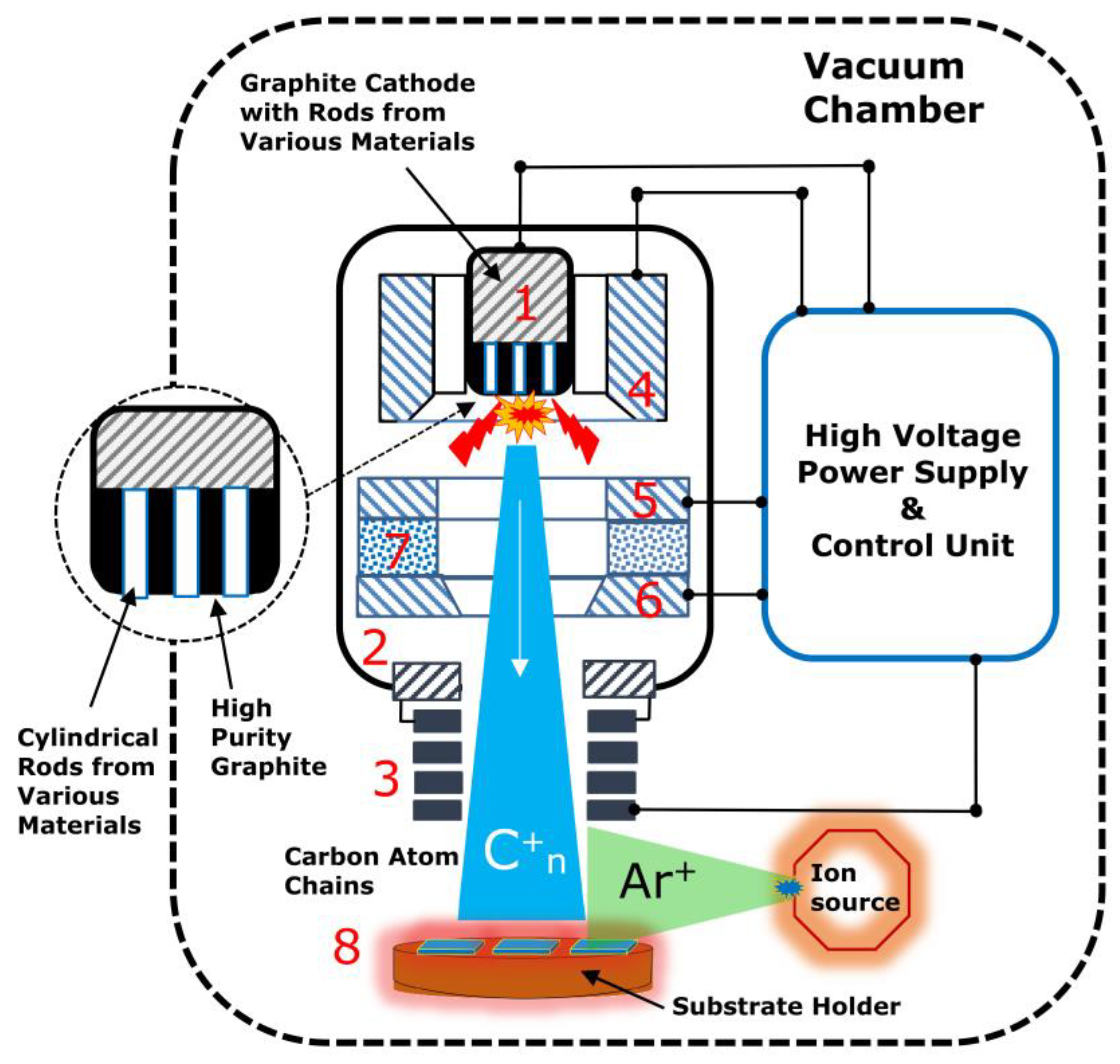
Figure 3.
The diagram illustrates a visual representation of a fragment within a carbon structure, arranged in a linear chain formation in a two-dimensional pattern.
Figure 3.
The diagram illustrates a visual representation of a fragment within a carbon structure, arranged in a linear chain formation in a two-dimensional pattern.
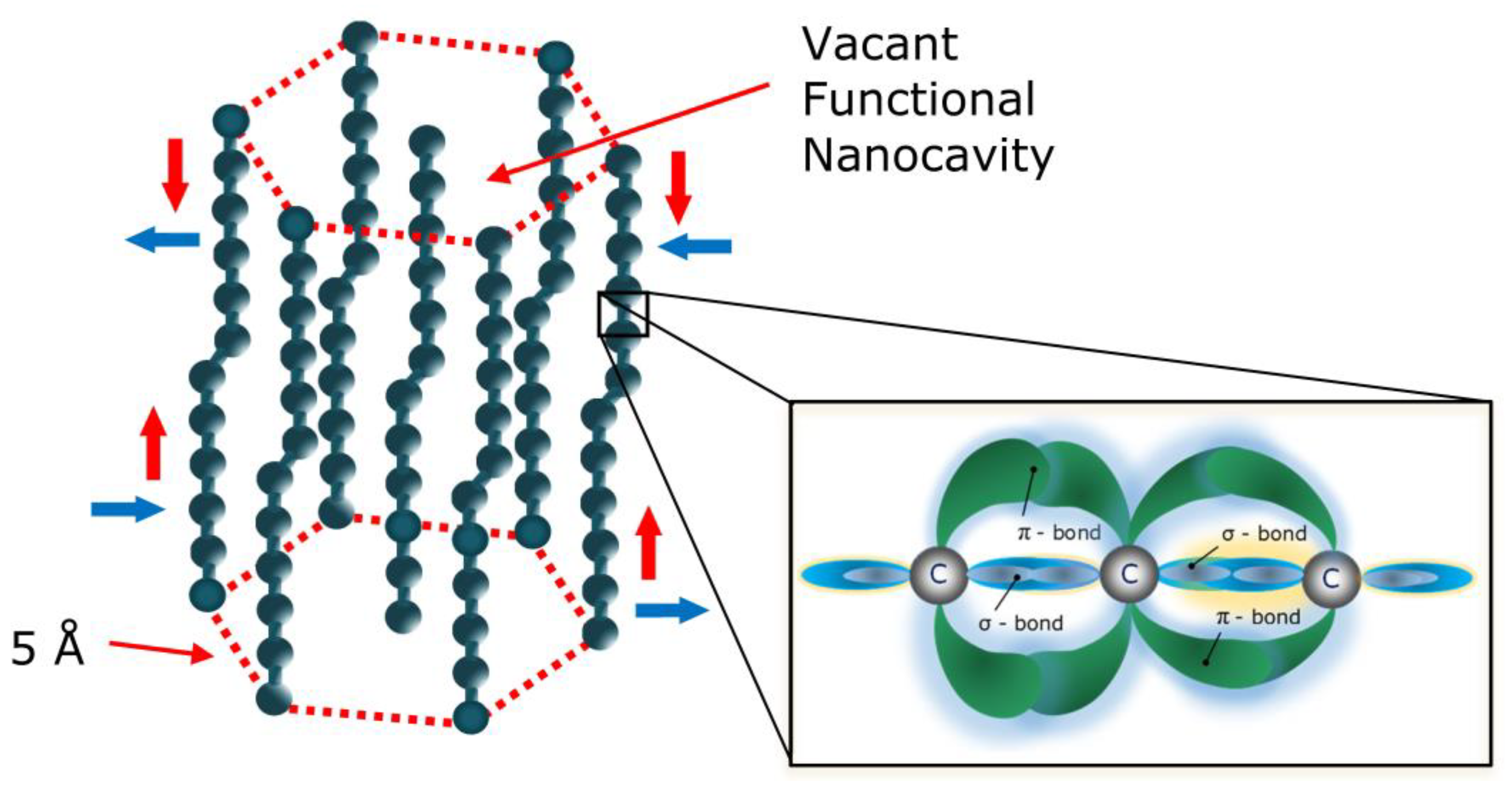
Figure 4.
The characteristic Raman spectra obtained experimentally from a thin film of 2D-ordered linear-chain carbon.
Figure 4.
The characteristic Raman spectra obtained experimentally from a thin film of 2D-ordered linear-chain carbon.

Figure 5.
A multi-stage technological sequence for extracting excess energy from nEMs.
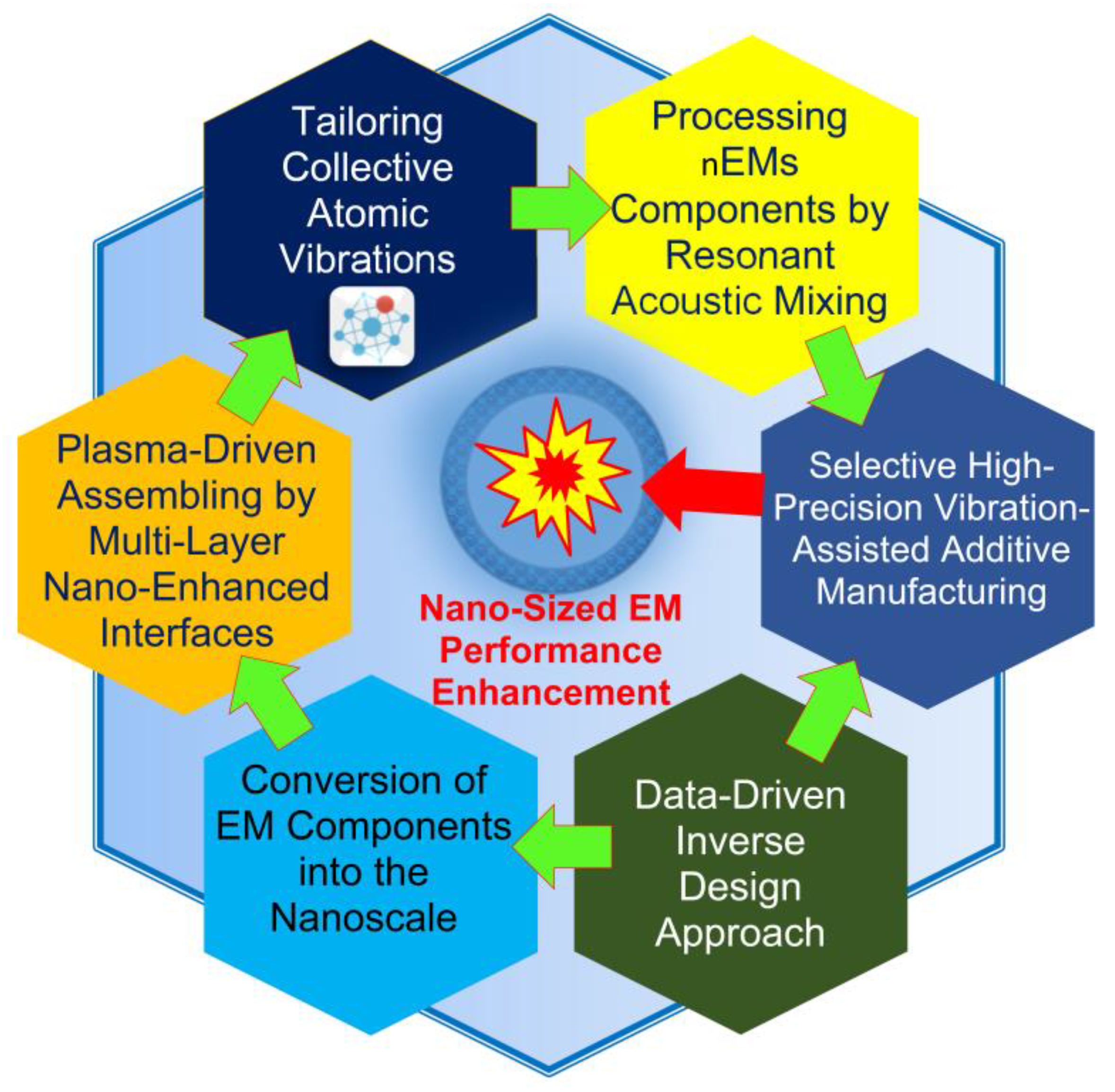
Figure 6.
Illustration depicting the stimulation of micro-structures occurring on the surface of the solid propellant as it undergoes combustion, [30].
Figure 6.
Illustration depicting the stimulation of micro-structures occurring on the surface of the solid propellant as it undergoes combustion, [30].
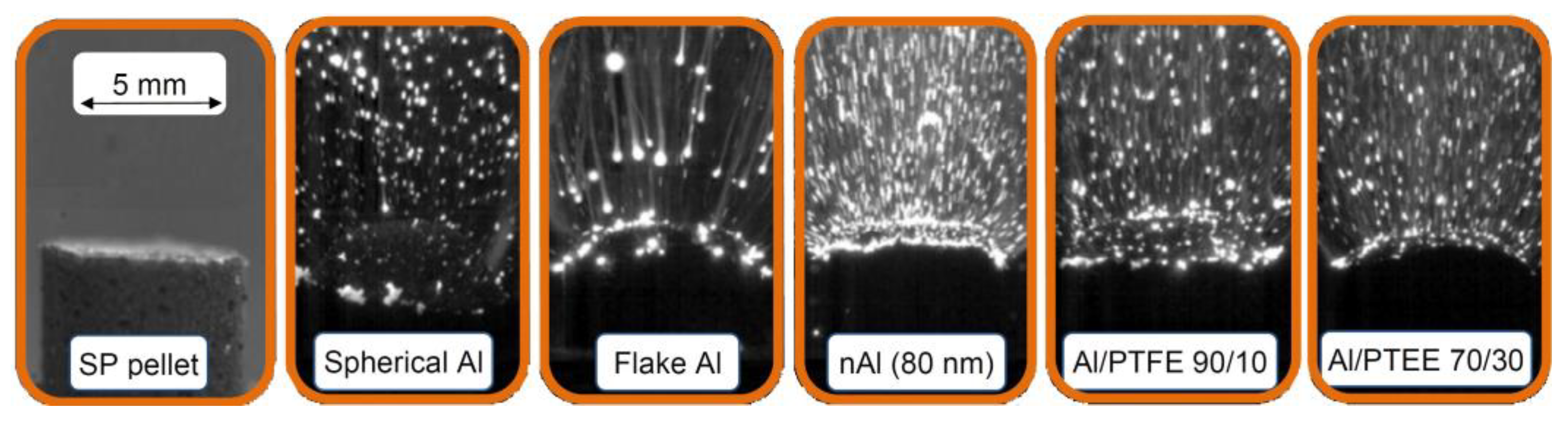
Figure 7.
Diagram illustrating the intelligent interface connecting nEMs nanocomponents, enabling their activation and precise modulation of synergistic effects, such as the autonomous synchronization of collective atomic vibrations, resonance of phonon waves, and efficient exchange of energy.
Figure 7.
Diagram illustrating the intelligent interface connecting nEMs nanocomponents, enabling their activation and precise modulation of synergistic effects, such as the autonomous synchronization of collective atomic vibrations, resonance of phonon waves, and efficient exchange of energy.
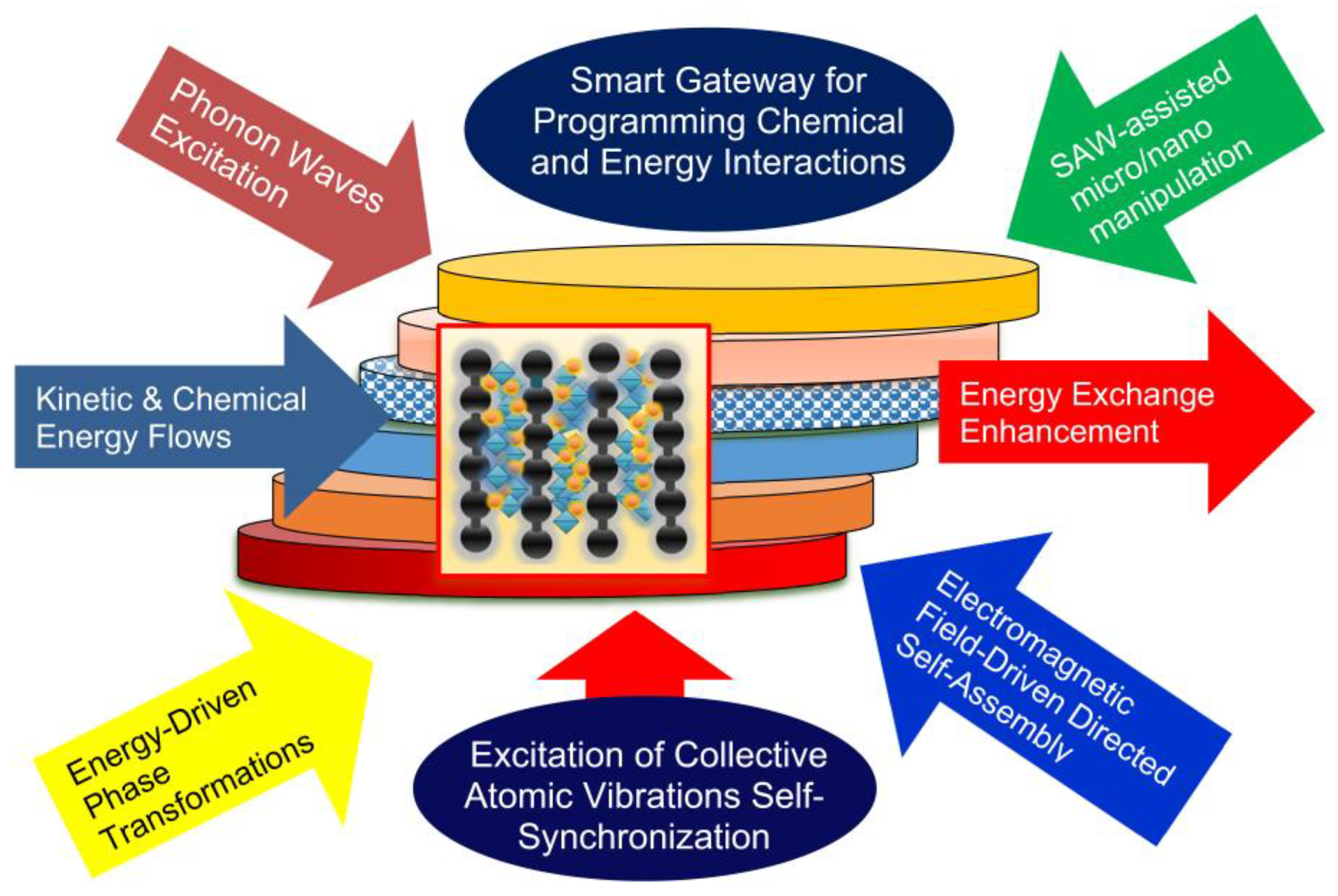
Figure 8.
A data-driven inverse design strategy for fine-tuning the properties of 3D-shaped nano-enhanced interfaces.
Figure 8.
A data-driven inverse design strategy for fine-tuning the properties of 3D-shaped nano-enhanced interfaces.
Disclaimer/Publisher’s Note: The statements, opinions and data contained in all publications are solely those of the individual author(s) and contributor(s) and not of MDPI and/or the editor(s). MDPI and/or the editor(s) disclaim responsibility for any injury to people or property resulting from any ideas, methods, instructions or products referred to in the content. |
© 2024 by the authors. Licensee MDPI, Basel, Switzerland. This article is an open access article distributed under the terms and conditions of the Creative Commons Attribution (CC BY) license (http://creativecommons.org/licenses/by/4.0/).
Copyright: This open access article is published under a Creative Commons CC BY 4.0 license, which permit the free download, distribution, and reuse, provided that the author and preprint are cited in any reuse.


