

Submitted:
22 October 2023
Posted:
23 October 2023
You are already at the latest version
Abstract
The use of nitrogen fertilizers can be a source of environmental pollution; the use of or-ganomineral fertilizers can become a nutritional source for crops, ensuring sustainability in the production system. Another alternative approach is through the inoculation and co-inoculation of microorganisms. The objective was to evaluate the development, nutrition, and agronomic yield of common bean through fertilization with organomineral formula "FMO" derived from sewage sludge biosolids, combined with Rhizobium tropici inoculation and co-inoculation with Azospirillum brasilense techniques. Three bean cultivars from different commercial groups, Pérola, BRS Esteio, and BRS Pitanga, were tested. They were subjected to organomineral fertilizer application, orga-nomineral fertilizer application combined with seed inoculation with R. tropici and re-inoculation; seed co-inoculation with R. tropici + A. brasilense prior to sowing, and foliar re-inoculation with R. tropici + A. brasilense. Seed inoculation, combined with foliar re-inoculation at the V4 stage, resulted in higher productivity of common bean. The combination of R. tropici with co-inoculation with A. brasilense generally led to increased productivity compared to mineral nitrogen fertilization. The use of organomineral fertilizer alone enabled gains in development, as well as productivity. The Pérola bean cultivar showed better adaptation to the applied treatments.
Keywords:
Sewage sludge
; BNF
; sustainable production
; Phaseolus vulgaris L.
1. Introduction
The bean plant, like most crops, needs the soil to be prepared, that is, it can provide the plant with all the nutrients necessary for development. To meet this need of the plant, the most used macronutrients are nitrogen (N), phosphorus (P), and potassium (K). N stands out because it is the nutrient most required by plants, and tropical soils have little availability due to theirenvironmental dynamics.
Nitrogen fertilizers, mainly urea, are widely used in agriculture. However, these fertilizers have a high production cost and high energy consumption, constituting a large emitter of greenhouse gases (CO2) since the mineral nitrogenous compounds derived from ammonia, obtained through the Haber-Boash process, which uses as base the nitrogen gas (N2) from the air and hydrogen (H) that comes from burning fossil fuels [1], being extremely harmful to the environment.
Furthermore, Brazil is dependent on importing more than 80% of the fertilizers (NPK) used in the country. The use of these products directly accompanies and interferes with national agricultural expansion, leading to the emergence of new technologies and the use of biological fertilizers to boost the billionaire fertilizer market. With this demand, Brazil implemented the National Fertilizer Plan through Decree no. 10,991 of 2022, intending to increase national production, consequently leading to a decrease in imports and, at the same time, increasing the competitiveness of national agribusiness.
In this way, products that allow the variation of the source of nitrogen fertilization in search of more sustainable means to become essential for the current scenario. Thinking about it, an alternative would be the use of sewage sludge generated in the treatment process of this affluent, called biosolid, which after going through decontamination processes and enriched with small doses of mineral fertilizers, is called Organomineral Formulated (OMF). This by-product has proven to be a viable source for replacing traditional fertilizer, in addition to being a way of sustainably reusing waste [2].
Another alternative to meet the demand for N in crop nutrition is Biological Nitrogen Fixation (BNF), a method predominantly used in fabaceae, including common bean. This process occurs through the inoculating bacteria that can promote plant benefits through establishing a symbiosis. For BNF to occur in the bean plant satisfactorily, it is necessary to observe soil fertility along with its pH, in addition to adequate humidity and temperature, care with the use of fungicides and insecticides in seed handling and storage of the product [3].
One of the main species capable of nodulating common bean is Rhizobium tropici [4,5]. This species can fix the N found in the atmosphere through inoculation and make it available to the plant [6].Using inoculation and reinoculation with R. tropici as a nitrogen source for the bean cultivar BRS Valente [7], obtained a grain yield of 2,827 kg ha-1. Despite the various benefits BNF provides, the bean producer has some resistance to the use of inoculation, due to limited knowledge of the subject, making it difficult to adopt the technique.
An alternative that has been widely studied to improve the efficiency of BNF is the combination with bacteria that promote growth of the root system, such as Azospirillum brasilense, through a co-inoculation process. Studies involving co-inoculation of common bean [8,9,10], in general, prove the efficiency of the combination of inoculation techniques and co-inoculation concerning mineral nitrogen fertilization. However, investigative studies involving the combination of inoculation or co-inoculation associated with applying organomineral fertilizer in bean crop nutrition are non-existent.
In this way, considering the problems of using mineral fertilizers, the present study aimed to evaluate the performance of the inoculation of Rhizobium tropici associated with the co-inoculation of Azospirillum brasilense using organomineral fertilizer derived from sewage sludge as fertilization in nutrition, development, and common bean yield.
2. Materials and Methods
2.1. Study area description
The experiment was conducted in the 2021 winter season in the experimental area of the Goiás State Agency for Technical Assistance, Rural Extension, and Agricultural Research - EMATER, located in Anápolis-GO, Brazil, whose geographic coordinates are 16°20'44.27” S, 48°52'44.67” W, and an average altitude of 1032m [11]. The climate in the region is humid tropical, Aw-type, characterized by a dry winter and a rainy summer, with an average annual precipitation of 1600mm, according to the Köppen classification.
The soil in the area is characterized as dystrophic Red Latossol (Oxisol), sampled in the 0-20 cm layer. The chemical characteristics of the soil can be found in the supplementary material (Table S1).
2.2. Origin and characterization of organic waste
The residue used as an organic base in the OMF formulation was produced from sanitized sewage sludge. The initial composition of the sewage sludge had 70% moisture and 30% solids. This material went through chemical processes incorporating 30% of hydrated lime on the solid part existing in the centrifuge, still wet, and incorporated using a concrete mixer. Subsequently, the material was packed in rectangular containers of galvanized zinc (30x30x100cm), covered by a transparent canvas with a thickness of 200 microns, and exposed to sunlight and ultraviolet rays for 15 days for thermal treatment. After removing the canvas, the material underwent a drying process in the open air for 30 days, stabilizing at 20% humidity [12].
2.3. Formulation of the organomineral fertilizer
The organomineral formula (OMF) was prepared based on the chemical composition of the sewage sludge and to meet the needs of the common bean crop for the yield of 2500 to 3000 kg ha-1. The organomineral preparation was conducted to meet the need for 10 kg ha-1 of nitrogen, 90 kg ha-1 of phosphorus, and 50 kg ha-1 of potassium at planting and an organic base that guarantees the minimum of 8% of organic carbon required in the composition of the OMFs. The characterization of sewage sludge can be found in the supplementary material (Table S2).
To meet these requirements, the organomineral formula obtained was 02–18–10. The amount needed to obtain the formulation is: 3.7 kg of urea as a source of nitrogen; 38.4 kg of MAP as a source of phosphorus; 17.2 kg of KCl as a source of potassium, and 40.7 kg of treated sewage sludge.
2.4. Experimental design and treatments
A randomized block design was used. The treatments were arranged in a 3x4+3 factorial scheme with four replications. The treatments with the use of organomineral fertilizer at the sowing were the following: three contrasting bean cultivars in terms of grain colors, namely: Cultivars (Pérola – carioca bean group, BRS Esteio – black bean group, and BRS Pitanga –purple bean group), submitted to fertilization with organomineral without inoculation and co-inoculation techniques, fertilization with organomineral associated with seed inoculation with R. tropici before sowing and re-inoculation in topdressing; co-inoculation of seeds with R. tropici + A. brasilense before sowing and re-inoculation in topdressing of R. tropici + A. brasilense, control treatment without any fertilization, inoculation, and co-inoculation, and the additional treatment characterized by meeting the nutritional needs of the three cultivars exclusively via mineral fertilization.
The amount applied in the sowing fertilization of the organomineral formulation 02-18-10 (600 kg ha-1) for the cultivars was calculated to meet the nutritional need to obtain a grain yield of 2500 - 3000 kg ha-1 based on the results of soil analysis. A liquid inoculant based on R. tropici was used at a dose of 150 mL 50 kg-1 of seeds and 150 L ha-1 in topdressing at the V4 stage. The root growth regulator Azospirillum brasilense was applied in the seed treatment at a dose of 100 mL 50 kg-1 of seeds and 100 mL ha-1 in topdressing at the V4 stage. The control did not receive any inoculant or fertilizer. The treatments with the organomineral formula as fertilization did not receive topdressing fertilization due to its combinations with the inoculation and co-inoculation techniques. The dose of 400 kg ha-1 of mineral formula 5-25-15 and the topdressing fertilization of 50 kg ha-1 of N at stage V3, using urea as source, used in the additional treatment was calculated to obtain the same grain yield, 2500- 300 kg ha-1, considered in treatments that had OMFas fertilization.
The inoculation and co-inoculation of the seeds of the treatments that received them were carried out just before sowing, with no seed treatment being carried out to avoid death of the inoculated bacteria. Reinoculation in topdressing was carried out with a backpack sprayer with a capacity of 20 L, using a fan-type nozzle, with a jet directed towards the soil at the base of the plants, always carried out in the late afternoon, aiming at better inoculation efficiency. The inoculants were diluted according to the recommendations of the manufacturer in an aqueous solution to deliver a final volume of 150 L ha-1.
2.5. Experimental unit and crop treatments
The experimental area consisted of plots with four rows of 5m each, spaced 0.5m apart. The two central rows were used for the evaluations in each experimental plot. The beginning and end (0.5m) of the plot were used to conduct plant development analyses at the R1 stage - full flowering and the rest reserved for evaluation of yield and its components. The sowing of the cultivars was carried out using 12 plants per meter, dispensing with thinning for all cultivars.
Irrigation was carried out by sprinkling on alternate days in the morning to meet the crop needs. The crop treatments employed were those commonly applied to common bean through monitoring the crop, using the boom sprayer, and recommended products.
2.6. Development analysis
Five plants were randomly collected from the central rows (0.5 m at each end) with a hoe for the development analyses.After the applications of the treatments of reinoculation in topdressing, ten plants were collected to conduct the following evaluations: Leaf Area (LA), Leaf Area Index (LAI), Plant Height (PH), Main Root Length (MRL), Shoot Dry Mass (SDM), and Root Dry Mass (RDM).
The LA was obtained by removing the leaves from the plants, passed through the portable meter model CI-202 Portable Leaf Area Meter from the brand CID Bio-Science. The leaf area index (LAI) was obtained by the ratio between the sum of the leaf area of a plant and the soil surface it occupies. Equation 1:
LAI=(LA*FS)/10.000
Wherein: LAI = Leaf Area Index; LA = Average Leaf Area (m²) and FS = Final stand of plants per hectare.
The Plant Height (PH) was obtained with the aid of a tape measure, it was measured between the base of the plant and the apical end of the main stem of the plant in cm. Main Root Length (MRL) was also obtained with a tape measure, measuring the length of the main root in cm. The Shoot Dry Mass (SDM) and Root Dry Mass (RDM) were obtained by separating the organs of the plants into roots, stem, leaves, and pods, packed in kraft paper bags, and then placed in the greenhouse at 75oC until reaching a constant weight, then weighing them on a precision scale (0.01g) to obtain the dry mass [13].
2.7. Analysis of yield and its components
The yield components were analyzed based on data from ten plants collected in each experimental unit at the time of harvest, evaluating the Number of Pods per Plant (NPP), an average obtained based on counting the number of pods obtained from the ten plants collected. The average number of grains per pod (NGP) is based on the number of grains obtained from the total pods of the ten plants. The 100-grain weight (W100) was obtained using random samples of 100 grains from the ten plants. Grain yield (YIELD) obtained by harvesting and threshing the rest of the plants collected in the plot, weighing their grains with 13% moisture on a 0.01g precision scale; the result was extrapolated to kg ha-1.
2.8. Statistical analysis
Data were initially submitted to tests of homogeneity of variances and normality of residues by Levene and Shapiro Wilk tests, respectively. Then, the analysis of variance of the data was conducted, and the means of the factorial were compared by the Tukey test and the additional treatment by the Dunnet test at 5% probability. The R software was used in the analyses.
3. Results and Discussion
3.1. Development analysis
The result of the analysis of variance (Table 1) shows the variables that were influenced by the tested treatments. Good experimental precision was observed for most variables, according to the coefficient of variation (C.V) values obtained when compared to the values cited by [14]: low - when less than 10%; medium between 10 and 20%; high between 20 and 30%; and very high if greater than 30%, that is, the higher the C.V value, the lower the experimental precision. Despite the high variability observed for the result of the LA analysis, it was possible to detect the difference between the treatments for LA and LAI.
Comparing the response between the treatments for LA, it is observed that the treatment with inoculation of R. tropici presented a higher mean (1,232.71 cm² cm²) concerning the treatments with co-inoculation of R. tropici + A. brasilense (994.76 cm² cm²) and with only fertilization with organomineral at the base (920.98 cm² cm²), however, did not differ statistically (Figure 1).
Reinoculation provided greater development for LA, which may be related to the symbiosis promoted by the inoculants added to the crop. Studying different combinations of inoculants in the common bean crop [15], found an approximate value of 1,380 cm² cm² for LA inoculation with R. tropici, a result similar to that found in this study, where R. tropici provided 1,232.71cm² cm² of LA.
The relationship between treatments and cultivars for LAI showed no significant difference for Pérola and Pitanga cultivars. The results for the BRS Esteio cultivar (Figure 2) showed positive responses to the treatments, which did not present a significant difference except for the control treatment. The highest average, in this case, was represented by the co-inoculation treatment of R. tropici + A. brasilense (3.6).
The response of the LAI variable depends on the number of trifoliate leaves per plant that will be formed by increasing the leaf area, allowing the plant to take better advantage of the incidence of light, and this whole process is only possible if the plant is well nourished and nitrogen is a nutrient essential in vegetative development [16]. In general, there was an increase in the LAI after reinoculation, this result was also observed by [17].
There was no significant difference in plant height (PH) for BRS Esteio and BRS Pitanga cultivars. The cultivar Pérola using the organomineral treatment without any inoculation, had better PH, 30% more than the control treatment (Figure 3).
The use of an organomineral formula based on biosolids in the bean crop also promoted an increase in plant height according to [18]. These authors observed a 67% increase in PH in relation to the control. This type of fertilizer, composed of organic matter, is rich in humic substances, allowing the release of negative charges capable of controlling the adsorption of phosphorus and other cationic nutrients by iron and aluminum oxides, thus providing nutrients to plants.
Phosphorus, in addition to being a component of several biochemical reactions in plants, is also part of the composition of the ATP molecule, which is of paramount importance for the execution of photosynthetic activity [19]. The predominant humic substances in the organomineral fertilizer may be related to the PH additions verified in the Pérola cultivar.
The Root Length (RL) differed among the studied cultivars, with the highest average observed in the Pérola cultivar (Figure 4). [20] investigated the genetic variation response of the bean plant using fertilizers containing ammonium polyphosphate, single superphosphate, biostimulants, and micronutrients. In their results, it was possible to perceive the influence of genetic variability on the response to the analyzed parameters, including root length. This allows us to conclude that the Pérola and Pitanga cultivars demonstrated better adaptation in relation to RL for the applied treatments.
The results of shoot dry mass (SDM) for the cultivar Pérola (Figure 5a) were influenced by the treatments, and the highest mean was observed in the R. tropici treatment (4.08g plant-1). For the cultivar BRS Esteio (Figure 5b), it was verified that there was a significant difference only for the control treatment. BRS Pitanga (Figure 5c) showed a similar result for the Pérola cultivar, emphasizing the R. tropici treatment (3.38g plant-1), which provided a greater accumulation of SDM.
The root dry mass (RDM) differed significantly for all cultivars. The Pérola cultivar obtained the best response to the isolated addition of the organomineral (2.1g plant-1) (Figure 5d); BRS Esteio showed no statistical difference in this parameter for the treatment with inoculation of R. tropici (Figure 5e). Co-inoculation with A. brasilense resulted in a mean value lower than the other treatments for BRS Pitanga (1.48g plant-1) (Figure 5f).
Differences were detected by [21] among bean cultivars when evaluating biomass accumulation due to seed inoculation with two strains of Rhizobium. They observed that the use of the inoculant influenced biomass accumulation, concluding that the use of inoculated strains provided greater nitrogen availability, with an increase ranging from 15 to 20% in SDM.
This same percentage is found when comparing the inoculation for the Pérola cultivar, which increased SDM by 20% compared to the isolated use of organomineral fertilization. In a study developed by [22], the amount of SDM was influenced by the reinoculation of R. tropici, corroborating the results found in this study. The increase in bean plant SDM through inoculation was also noted by [23]. Therefore, it can be observed that the use of inoculants can assist in plant development.
The accumulation of RDM may be related to the genetic trait of the cultivar and the morphological growth characteristics of the different genotypes. The evaluation of the organomineral formula associated with the application of R. tropici and co-inoculated with the Bradyrhizobium strain for bean did not find significant differences for these treatments, according to [24]. The result was similar to that of the Pérola and BRS Pitanga cultivars. Considering the response variation between cultivars, it may indicate that the response of organomineral fertilization on the root system varies according to the cultivar used [25].
SDM showed a significant difference for all additional factors. Mineral fertilization for the Pérola cultivar (Figure 6a) showed a significant difference, the highest average for the Pérola cultivar was associated with the treatment with the exclusive use of the organomineral (2.1g plant-1), which provided an increase of 30% in the dry mass compared to to the use of mineral fertilizer (1.48g plant-1).The comparison of the additional treatment BRS Pitanga (Figure 6b) also showed a lower result than the other treatments, except for the controls.
For the RDM variable, the additional treatment of the Pérola cultivar showed a significant difference (1.48gplant-1) compared to the Pérola-organo treatments (2.1g plant-1) and which increased the RDM by 30% (Figure 6c). The additional factor BRS Pitanga (Figure 6d) differed statistically and with a higher average (1.9g plant-1) from the BRS cultivar treatment Pitanga - R tropici + A. brasilense (1.48g plant-1).
The SDM showed, in general, a better response for treatments with inoculation of R. tropici and co-inoculation of A. brasilense, which is identified with the result of [26], who analyzed the response of inoculation and co-inoculation of R. tropici and A. brasilense for bean cultivation, also obtained better results for the combination of inoculation via seed with R. tropici and two doses of A. brasilense applied via foliar. [27] observed an increase in SDM for common bean when using the co-inoculation of R. tropici and A. brasilense, corroborating the results found in this study.
Analyzing these results, it is possible to observe that for the RDM, the treatment that stood out the most, with results similar to or superior to mineral fertilization, was organomineral. Obtaining the agronomic response of using organomineral fertilizer compared to mineral fertilizer in bean cultivation, [28] observed that the best results for RDM were obtained at dosages of 100 and 150% of the organomineral fertilizer compared to the tested mineral fertilizer.Likewise, in a study with corn, [29]also obtained better RDM results for the use of the organomineral compared to the NPK source used as a reference. These studies corroborate the answers found in this research, proving that the use of the organomineral can be enough to increase the RDM.
3.2. Components and grain yield
The analysis of variance evidenced significance for all variables (Table 2). As for experimental precision, it can be verified that, in general, good precision in obtaining the data of the variables studied, except for the number of pods per plant (NPP), which presented a value superior to 30% when compared to the values considered by [14]: low, when less than 10%; medium, between 10 and 20%; high, between 20 and 30%; and very high if greater than 30%. Despite this, it was possible to detect a significant difference between treatments for NPP.
The number of grains per pod (NGP) did not present a significant difference, a result also found by [30] who, studying the efficiency of inoculation and co-inoculation of R. tropici and A. brasilense in common bean, did not reach significance for that variable. According to the authors, this fact is linked to the high genetic heritability of the cultivars. On the other hand, the 100-grain weight (W100), despite being a variable predominantly influenced by the genetic part and the NGP results, differed depending on the treatments.
The Pérola cultivar produced the highest NPP (11.38), differing from the other studied cultivars (Figure 7a). Comparing the development of two bean cultivars with four nitrogen doses, [31]also observed the influence of the cultivar factor on NPP and the interaction between cultivars and nitrogen doses.Also, for this study, the cultivar that presented the best performance was the IAC Imperador, with an average of 13 pods per plant, however, it did not show a response to the fertilizer dosages. Although lower than that found in this research, this result shows an influence of treatments for the studied cultivars.
The NPP differed only from the control treatment regarding applied treatments (Figure 7b). The organomineral, R. tropici + A. brasilense, and R. tropici treatments provided increases of 54%, 51%, and 47%, respectively, for this variable.
A similar result, compared to the treatments, was also found by [32], whose data differed only from the control treatment. This is due to the symbiosis between the inoculating bacteria and the plant being able to increase the yield components. In a study evaluating the inoculation of different strains in common bean seeds, [33] obtained superior results for the NPP and NGP components when the seeds were inoculated with R. tropici and in combination with other strains. [28] observed that the use of oganomineral was able to increase the bean yield components. It stands out for the NPP, the most significant result was fertilization with organomineral in 200 kg ha-1. In this study, it was possible to notice the influence of treatments compared to the control, which increasedNPP.
Comparing the cultivars for W100, there was a significant difference between them. The Pérola cultivar had the \highest average (31.19g), and the BRS Esteio cultivar had the lowest average (26.56g) (Figure 8a). For the comparison between treatments, the use of the organomineral (30.08g) and the use of R. tropici + A. brasilense (29.67g) did not differ from each other, and the lowest result was verified in the control treatment (27.08g) (Figure 8b).
Analyzing the results found for W100 to the comparison between cultivars, it is possible to verify that there is a difference in their adaptation, either by the type of treatment applied or under the influence of seasonality and soil type, among other issues that the genetic difference of the bean plant interferes with the results that will be found. [34]showed that there are bean cultivars that are better adapted to rhizobian inoculation, in the same way, that there are also soils that are not adapted to this practice. [35] could observe a difference between commercial bean cultivars, that is, cultivars considered more efficient for BNF that responds to native or exogenous rhizobia and others that adapt only to nitrogen fertilization. Therefore, it is likely that the cultivar BRS Esteio did not adapt to the inoculated treatments and presented inferior results.
The application of treatments significantly influenced the grain weight, a result also observed by [36], who found a statistical difference for W100 of the beans using different combinations of R. tropici and A. brasilense. Similarly, [37], while testing the effects of R. tropici re-inoculation, also found a statistical difference for this variable. Also, according to [19], W100 may be related to the type of management used and environmental conditions, which can directly influence the outcome of the variable, even with the high heritability conferred upon it.
The yield (YIELD) differed between the genotypes and the treatments studied, with emphasis on the Pérola cultivar whose yield averages with the addition of organomineral, R. tropici + A. brasilense, and R. tropici, in that order, were respectively 68%, 61%, and 58% higher than the control (Figure 9a). Among the BRS Esteio (Figure 9b) and BRS Pitanga (Figure 9c) cultivars, differences were also detected between the treatments, with the R. tropici, organomineral, and R. tropici + A. brasilense treatments providing increases in grain yield of the cultivar BRS Esteio in 76%, 73%, and 70%, and in 71%, 76% and 60% for BRS Pitanga, respectively, compared with the control.
It is also noteworthy that the highest yield averages were obtained in the Pérola and BRS Esteio cultivars, averages higher than the national average obtained in the 2020/2021 harvest, around 1.0 ton. ha-1 [38]. On the other hand, the lowest yield was verified in the cultivar BRS Pitanga in response to the treatments. In addition, the response to the addition of organomineral fertilizer alone or as a base in the treatments that received the microorganisms R. tropici seed and R. tropici + A. brasilense in topdressing stood out.
Comparing different dosages of organomineral formulated with biosolid and with filter cake for bean yield, [18]obtained an increase of 46% for treatment with biosolids, at a dose of 50%, to the cake of filter. In the present study, the use of the organomineral increased the yield by 68% compared to the control. The fact that this material presents a positive result, according to the result found in this research, may be related to the availability of N, P, and K that promote the mineralization and decomposition of organic matter [18].
It was observed by [32] that inoculation with R. tropici did not statistically differ from co-inoculation with A. brasilense. Both treatments differed from the control and provided higher yields. This same response was found in this study. [26], while studying different inoculant doses in common bean plants, concluded that both combinations of R. tropici and A. brasilense and the combination of A. brasilense inoculated and sprayed resulted in significantly higher grain yields compared to single inoculations. Similar results were obtained for the cultivars BRS Esteio and BRS Pitanga.
The yield compared with the additional treatmentof cultivar Pérola (Figure 10a) showed a statistical difference for the control treatment of the Pérola cultivar. The treatment with mineral fertilizer showed the best result (1466.0 kg ha-1). Even though there was no difference, the Pérola-organomineral treatment (1931.3 kg ha-1) obtained a grain yield 24% higher than mineral fertilization.
Compared with the treatments of cultivar BRS Esteio (Figure 10b), there was no significant difference between the treatments, except for the control treatment, which presented a lower yield. With R. tropici, even though it was not significantly different, grain yield increased by 12%. The additional factor cultivar BRS Pitanga (Figure 10c) differed from treatments of cultivar Pitanga with organomineral fertilizer and R tropici + A. brasilense, presenting lower yields than mineral fertilization. There was no difference only for cultivar BRS Pitanga with R. tropici. This result shows that the treatments could not provide the same yield of the mineral fertilizer for this cultivar. This shows that the BRS Pitanga cultivar is less resistant to pests and diseases and, at the same time, is less compatible with inoculation.
Observing the influence of organomineral use on bean production compared to mineral fertilization, [28] obtained as a result the highest grain productivity for the organomineral treatment. This led to the conclusion that there is possibly greater nutritional availability for this type of agricultural fertilizer, resulting in positive outcomes.
In a study comparing organomineral with mineral fertilizers in industrial tomato cultivation, [39] achieved greater yield by using organomineral fertilization, which presented a yield performance 65.42% higher than the other treatments. These results are in part consistent with those obtained in this research about the increase in yields of bean cultivars generated by fertilization with organomineral fertilizer based on sewage sludge at the base associated with inoculation of seeds with R. tropici and reinoculation associated with co-inoculation with R. tropici + A. brasilense in topdressing at the R4 stage.
4. Conclusions
The inoculation applied via seed, associated with the re-inoculation in topdressing at the V4 stage, makes it possible to obtain the highest grain yield of the common bean crop and may replace the use of mineral nitrogen fertilizer.
The combination of R. tropici with the co-inoculation of A. brasilense, in general, provides yield increases compared to mineral fertilization. The isolated use of the organomineral allows gains for the development of the common bean, in addition to the grain yield and its components, making it an alternative source for fertilization.
The bean cultivar Pérola shows higher grain yield with organomineral fertilizer associated with inoculation with R. tropici before sowing and co-inoculation with A. brasilense in topdressing at the V4 stage, compared to the response capacity of the cultivars BRS Esteio and BRS Pitanga.
Considering the benefits of using alternative nutrition techniques for mineral fertilization, the use of organomineral formula associated with symbiotic bacteria and growth promoters can promote benefits for agriculture, ensuring its sustainable development.
Author Contributions
Conceptualization, D.R.R. and G.C.S.T.; methodology, C.C.S.T.; software, D.R.R.; validation, D.R.R.; formal analysis, D.R.R. and I.R.T.; investigation, G.C.S.T.; resources, G.C.S.T.; data curation, D.R.R., G.R.S. and B.B.A.R.; writing—original draft preparation, D.R.R. and G.C.S.T.; writing—review and editing, I.R.T.; visualization, I.R.T.; supervision, C.C.S.T.; project administration, G.C.S.T.; funding acquisition, G.C.S.T. All authors have read and agreed to the published version of the manuscript.
Funding
Graduate Program Master in Agricultural Engineering—UEG; Financial Resource from Call No. 21/2022; Term of Commitment No. 000036040537; Process SEI No. 202200020020855.
Data Availability Statement
The data presented in this study are available on request from the corresponding author.
Acknowledgments
Acknowledgments: Special thanks to EMATER (Technical Assistance and Rural Extension Company) and to everyone involved in carrying out the experiment.
Conflicts of Interest
The authors declare no conflict of interest.
References
- Menegat, S.; Ledo, A.; Tirado, R. Greenhouse gas emissions from global production and use of nitrogen synthetic fertilisers in agriculture. Sci. Rep. 2022, 12, 14490. [Google Scholar] [CrossRef]
- Kominko, H.; Gorazda, k.; Wzorek, Z.; Wojtas, K. Sustainable management of sewage sludge for the production of organo-mineral fertilizers. Waste and biom. valor. 2018, 9, 1817–1826. [Google Scholar] [CrossRef]
- Soumare, A.; Diedhiou, A.G.; Thuita, M.; Hafidi, M.; Ouhdouch, Y.; Gopalakrishnan, S.; Kouisni, L. Exploiting biological nitrogen fixation: a route towards a sustainable agriculture. Plants 2020, 9, 1011. [Google Scholar] [CrossRef]
- Tullio, L.D.; Nakatani, A.S.; Gomes, D.F.; Ollero, F.J.; Megias, M.; Hungria, M. Revealingthe roles of y4wF andtidC genes in Rhizobiumtropici CIAT 899: biosynthesisofindole compoundsandimpactonsymbioticproperties. Arch. Micro. 2019, 201, 171–183. [Google Scholar] [CrossRef]
- Hungria, M.; Vargas, M.A.T. Environmental factors affecting N2 fixation in grain legumes in the tropics, with an emphasis on Brazil. Field Crops Res. 2000, 65, 151–16. [Google Scholar] [CrossRef]
- Hungria, M.; Campo, R.J.; Mendes, I.C. A importância do processo de fixaçãobiológica do nitrogênio para a cultura da soja: componenteessencial para a competitividade do produtobrasileiro, 1st ed.; Embrapa Soja: Londrina, B rasil, 2007; pp. 9–80. [Google Scholar]
- Sousa, W.S.; Teixeira, I.R.; Campos, T.S.; Silva, G.C.; Silva, M.B.; Moreira, S.G. Supplementaryreinoculation in top dressingof in common beancrop: effectsonnodulation, morphology, andgrain yield. Journal of Plant Nutrition 2021, 45, 1–7. [Google Scholar]
- Steiner, F.; Ferreira, H.C. P.; Zuffo, A. M. Canco-inoculationofRhizobiumtropiciandAzospirillumbrasilensein crease common beannodulationandgrainyield? Semina Ciênc. Agrár 2019, 40, 81–98. [Google Scholar] [CrossRef]
- Souza, J.E.B.; Ferreira, E.P.B. Improving sustainability of common bean production systems by co-inoculating rhizobia and azospirilla. Agric. Ecos. and Environ. 2017, 237, 250–257. [Google Scholar] [CrossRef]
- Peres, A. R.; Rodrigues, R.A.F.; ARF, O.; Portugal, J.R.; Corsini, D.C.D.C. Co-inoculationofRhizobiumtropiciandAzospirillumbrasilense in common beansgrownundertwoirrigationdepths. Revista Ceres. 2016, 63, 198–207. [Google Scholar]
- Google Earth. Google Earth Pro. Accessed on: June 11, 2021. 11 June.
- Moraes, E.R. Aplicação de Fertilizanteorganomineral de lodo de esgoto e bioestimulantenacana-de-açúcar. 2017. 84p. Dissertation (Doctorate in Agronomy) – Federal University of Uberlândia, Minas Gerais, 2017.
- Borges, B.M.M.N.; et al. Methods of determination dry matter and macronutrient content in lettuce leaves. Revista Trópica 2011, 5, 12–16. [Google Scholar]
- Pimentel-Gomes, F. Curso de estatística experimental, 13rd ed.; Piracicaba: Nobel, 1990; 468p. [Google Scholar]
- Moreira, L.P.; Oliveira, A.P.S.; de Brito Ferreira, E.P. Nodulation, contributionofbiological N2 fixation, andproductivityofthe common bean (PhaseolusvulgarisL.) inoculatedwithrhizobiasolates. Austr. J. Crop Science 2017, 11, 644–651. [Google Scholar] [CrossRef]
- Marschner, P. Rhizospherebiology. In Marschner's mineral nutrition o fighterplants, 3rd ed.; Academic Press: Australia, 2011; pp. 369–388. [Google Scholar]
- Barros, R.L.N.; Oliveira, L.B.; Magalhães, W.B.; Pimentel, C. Growthanyieldof common bean as affectedbyseedinoculationwithrhizobiumandnitrogenfertilization. Exper. Agric. 2016, 54, 16–30. [Google Scholar] [CrossRef]
- Silva, H.C.; Lima, L.C.; Camargo, R.; Lana, R.M.Q.; Lemes, E.M.; Cardoso, A.F. Effectsoforganomineralfertilizersformulatedwithbiosolidsandfiltercakeon common beanyieldcrop (Phaseolusvulgaris L.). Aust. J. Crop Science 2019, 13, 1566–1571. [Google Scholar] [CrossRef]
- Silva, J.A.L.; Neves, J.A. Componentes de produção e suascorrelaçõesemgenótipos de feijão-caupiemcultivo de sequeiro e irrigado. Revista Ciênc. Agro 2011, 42, 702–713. [Google Scholar] [CrossRef]
- Nadeem, M.A.; Karaköy, T.; Yeken, M.Z.; Habyarimana, E.; Hatipoğlu, R.; Çiftçi, V.; Nawaz, M.A.; Sönmez, F.; Shahid, M.Q.; Yang, S.H.; Chung, G.; Baloch, F.S. Phenotypic characterization of 183 Turkish common bean accessions for agronomic, trading, and consumer-preferred plant characteristics for breeding purposes. Agronomy 2020, 10, 272. [Google Scholar] [CrossRef]
- Favero, V.O.; Carvalho, R.H.; Leite, A.B.C.; Santos, D.M.T.; Freitas, K.M.; Boddey, R.M.; Xavier, G.R.; Rumjanek, N.G.; Urquiaga, S. Bradyrhizobium strains from Brazilian tropical soils promote increases in nodulation, growth and nitrogen fixation in mung bean. Appl. Soil Ecol. 2022, 175, 104461. [Google Scholar] [CrossRef]
- FIORI, A.K.; Gutuzzo, G.O.; Sanzovo, A.W.S.; Andrade, D.S.; Oliveira, A.L.M.; Rodrigues, E.P. Effects of Rhizobium tropiciazide-resistant mutants on growth, nitrogen nutrition and nodulation of common bean (Phaseolus vulgaris L.). Rhizosphere 2021, 18, 100355. [Google Scholar] [CrossRef]
- Oliveira, A.P.S.; Sousa, C.M.; Ferreira, E.P.D.B. Performance of inoculated common bean in response to different cover crops and desiccation times. Revista Caatinga 2017, 30, 642–652. [Google Scholar] [CrossRef]
- SÁ, G.C.R.; Carvalho, C.L.M.; Hungria, M.A.; Nogueira, M.A.; Heinrichs, R.; Soares Filho, C.V. Biomass yield, nitrogen accumulation and nutritive value of Mavuno grass inoculated with plant growth-promoting bacteria. Commu. in Soil Sci. and Plant Analy. 2019, 50, 1931–1942. [Google Scholar] [CrossRef]
- Freitas, A.P.; Silva, A.B.; Santi, A.; Magalhães, M.O.L.; Silva, G.B. Produção de mudas de alfaceemsubtrato sob doses de fertilizanteorganomineral. Enciclopédia Biosfera 2019, 16, 728–737. [Google Scholar] [CrossRef]
- Filipini, L.D.; Pilatti, F.K.; Meyer, E.; Ventura, B.S.; Lourenzi, C.R.; Lovato, P.E. Application of Azospirillum on seeds and leaves, associated with Rhizobium inoculation, increases growth and yield of common bean. Arch. Microb. 2021, 203, 1033–1038. [Google Scholar] [CrossRef]
- De Souza, J.E.B.; De Brito, E.P.F. Improving sustainability of common bean production systems by co-inoculating rhizobia and azospirilla. Agric. Ecos. Envir. 2017, 237, 250–257. [Google Scholar] [CrossRef]
- MUMBACH, Gilmar L. et al. Agronomic efficiency of organomineral fertilizer in sequential grain crops in southern Brazil. Agronomy Journal 2020, 112, 3037–3049. [CrossRef]
- Santos, J.K.F.; Cabral Filho, F.R.; Bastos, A.V.S.; Cunha, F.N.; Teixeira, M.B.; Silva, E.C.; Santos, E.A.; Vidal, V.M.; Morais, W.A.; Avila, R.G.; et al. Acúmulo de material seca e nutrients pelomilhocultivado sob doses de formulados NPK mineral e organomineral. Research Society and Development 2021, 10, e35010515126. [Google Scholar] [CrossRef]
- Barbosa, C.K.R.; Reis, J.N.; Brigante, G.P.; Silva, K.; Junior, F. Adubaçãonitrogenada, inoculação e coinoculaçãonacultura do feijoeiro-comum. Caderno de Ciências Agrárias Minas Gerais 2020, 12, 1–6. [Google Scholar]
- BETTIOL, J.V.T.; Filla, V.A.; Leal, F.T.; Coelho, A.P.; Meirelles, F.C.; Lemos, L.B. Sustainable production of common beans: inoculation, co-inoculation and mineral fertilization in early-cycle cultivars. Journal of Plant Nutrition 2020, 44, 16–28. [Google Scholar] [CrossRef]
- Schossler, J.H.; Meert, L.; Rizzardi, D.A.; Michaloviez, L. Componentes de Azospirillumbrasilense. Revista Scientia Agraria 2016, 17, 10–15. [Google Scholar]
- Yadegari, M. Inoculationofbean (Phaseolusvulgaris) seedswithRizobiumphaseoliandplantgrowthpromotingrhizobacteria. Advan. in Envir. Biol. 2014, 8, 419–424. [Google Scholar]
- Chekanai, V.; Chikowo, R.; Vanlauwe, B. Response of common bean (Phaseolusvulgaris L.) tonitrogen, phosphorusandrhizobiainoculationacrossvariablesoils in Zimbabwe. Agric. Ecos.andEnvir 2018, 266, 167–173. [Google Scholar] [CrossRef]
- Yagi, R.; Andrade, D.S.; Waureck, A.; Gomes, J.C. Nodulações e produtividades de grãos de feijoeirosdiante da adubaçãonitrogenadaou da inoculação com Rhizobium freirei. Rev.Bras. de Cien do Solo 2015, 39, 1661–1670. [Google Scholar] [CrossRef]
- MORTINHO, E.S.; Jalal, A.; Oliveira, C.E.S.; Fernandes, G.C.; Pereira, N.C.M.; Rosa, P.A.L.; Nascimento, V.; de Sá, M.E.; Teixeira Filho, M.C.M. Co-inoculations with Plant Growth-Promoting Bacteria in the Common Bean to increase efficiency of NPK fertilization. Agronomy 2022, 12, 1325. [Google Scholar] [CrossRef]
- Shumet, S.T.; Ayalew, T.; Roro, A.G.; Beshir, H.M. Intercropping and Rhizobium Inoculation Affected Microclimate and Performance of Common Bean (Phaseolus vulgaris L.) Varieties. Scientifica 2022, 2022, 1–12. [Google Scholar] [CrossRef] [PubMed]
- CONAB. Safrabrasileira de grãos. 2022. Available online: https://www.conab.gov.br/info-agro/safras/serie-historica-das-safras/itemlist/category/905-feijao (accessed on 8 June 2022).
- Peres, L.A.C.; Terra, N.F.; Rezende, C.F.A. Produtividade do tomate industrial submetidoàadubaçãoorganomineralemcobertura. Braz. Jour. of Devel. 2020, 6, 10586–10599. [Google Scholar] [CrossRef]
Figure 1.
Leaf area (LA) of bean plants according to the treatments with organomineral fertilizer, seed inoculation with R. tropici, co-inoculation with A. brasilense, and the control treatment. Means followed by the same letter do not differ statistically by the Tukey test at 5% probability.
Figure 1.
Leaf area (LA) of bean plants according to the treatments with organomineral fertilizer, seed inoculation with R. tropici, co-inoculation with A. brasilense, and the control treatment. Means followed by the same letter do not differ statistically by the Tukey test at 5% probability.
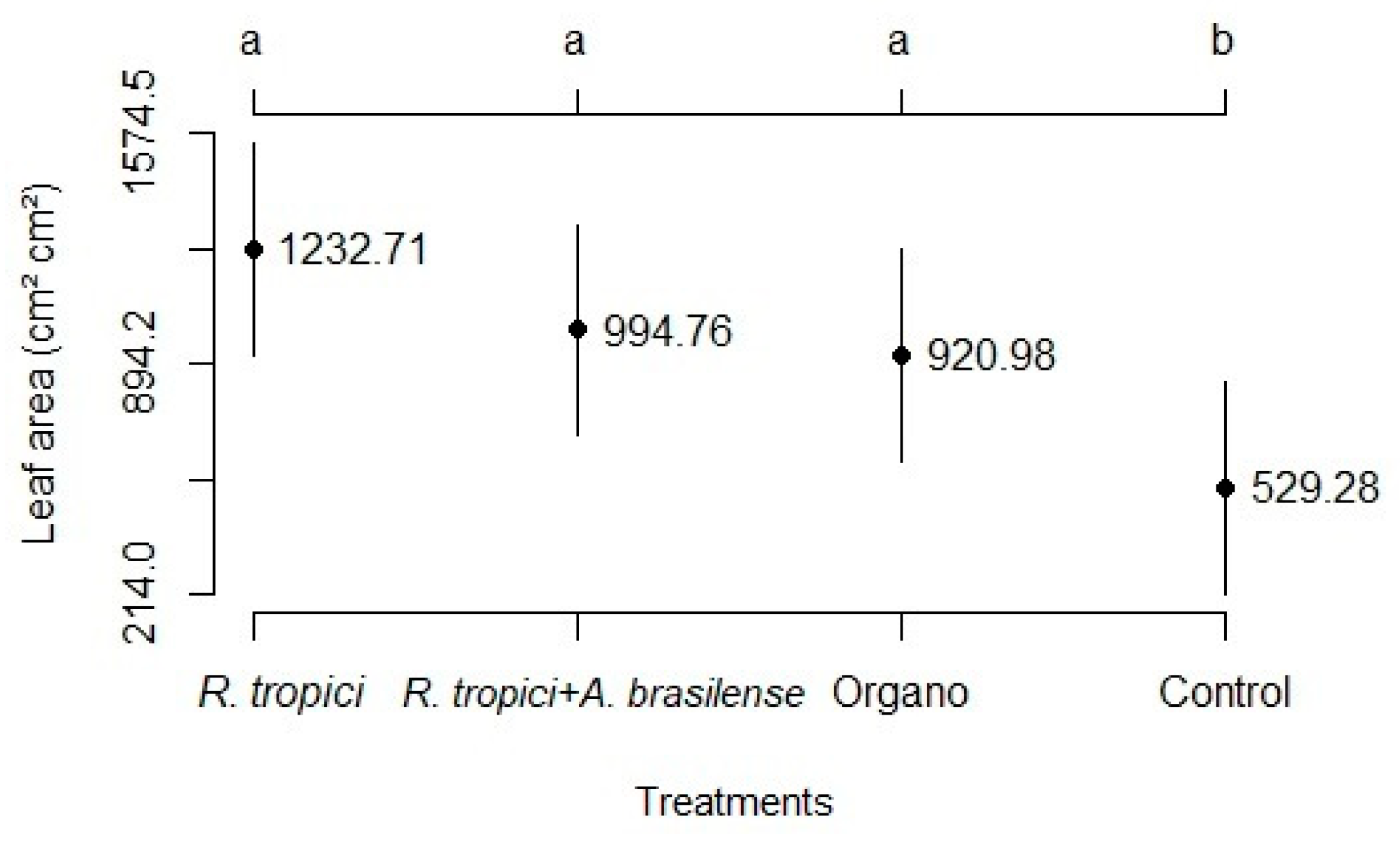
Figure 2.
Leaf area index (LAI) of BRS Esteio cultivar according to the treatments with organomineral fertilizer, seed inoculation with R. tropici, co-inoculation with A. brasilense, and the control treatment. Means followed by the same letter do not differ statistically by the Tukey test at 5% probability.
Figure 2.
Leaf area index (LAI) of BRS Esteio cultivar according to the treatments with organomineral fertilizer, seed inoculation with R. tropici, co-inoculation with A. brasilense, and the control treatment. Means followed by the same letter do not differ statistically by the Tukey test at 5% probability.
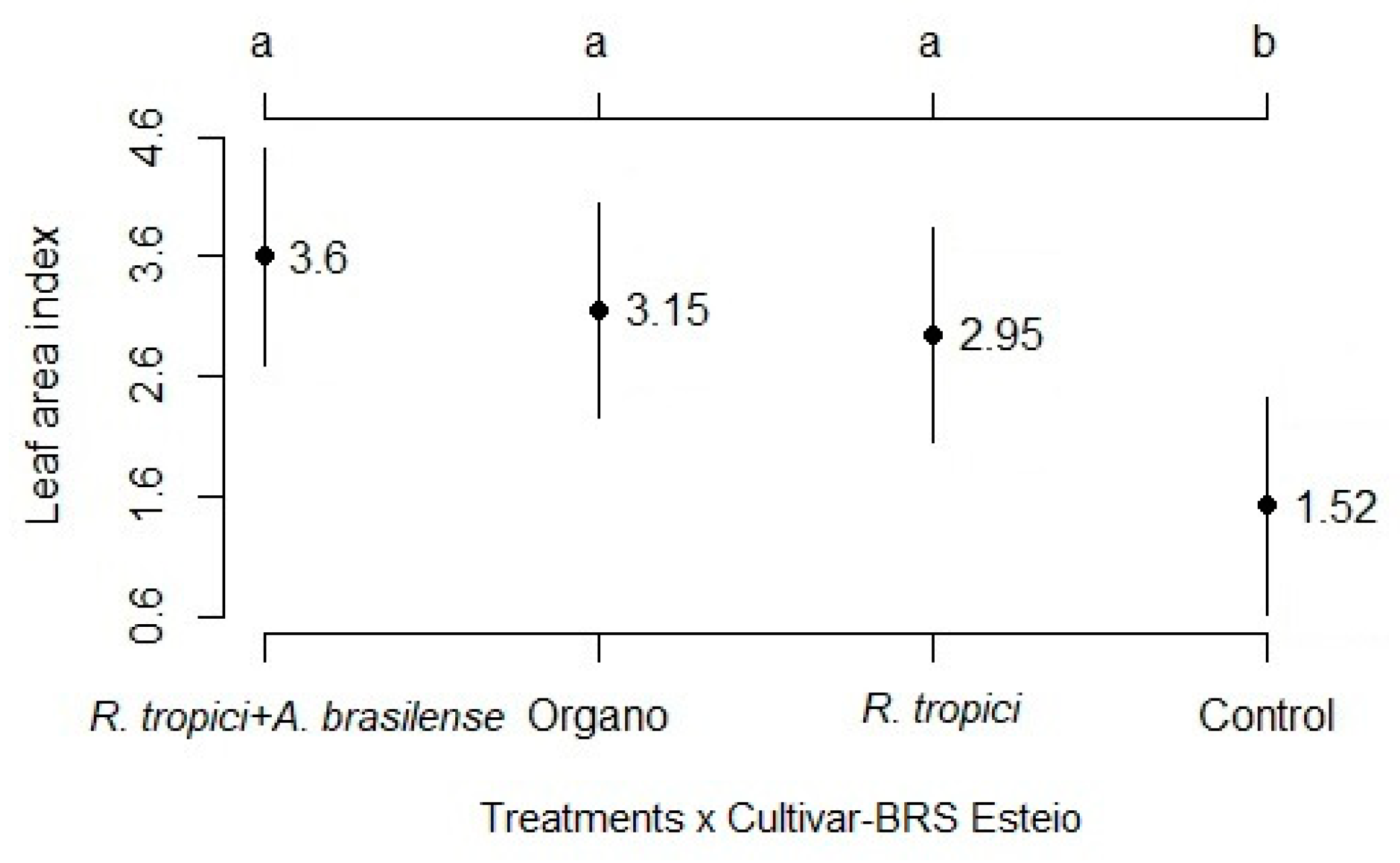
Figure 3.
Plant height (PH) of bean cultivar Pérola according to the treatments with organomineral fertilizer, seed inoculation with R. tropici, co-inoculation with A. brasilense, and the control treatment. Means followed by the same letter do not differ statistically by the Tukey test at 5% probability.
Figure 3.
Plant height (PH) of bean cultivar Pérola according to the treatments with organomineral fertilizer, seed inoculation with R. tropici, co-inoculation with A. brasilense, and the control treatment. Means followed by the same letter do not differ statistically by the Tukey test at 5% probability.

Figure 4.
Root length (RL) of bean plants according to the treatments with organomineral fertilizer, seed inoculation with R. tropici, co-inoculation with A. brasilense, and the control treatment. Means followed by the same letter do not differ statistically by the Tukey test at 5% probability.
Figure 4.
Root length (RL) of bean plants according to the treatments with organomineral fertilizer, seed inoculation with R. tropici, co-inoculation with A. brasilense, and the control treatment. Means followed by the same letter do not differ statistically by the Tukey test at 5% probability.

Figure 5.
Shoot dry mass (SDM) and root dry mass (RDM) of bean cultivars Pérola (a and d), BRS Esteio (b and e), and BRS Pitanga (c and f) according to the treatments with organomineral fertilizer, seed inoculation with R. tropic, co-inoculation with A. brasilense, and the control treatment. Means followed by the same letter do not differ statistically by the Tukey test at 5% probability.
Figure 5.
Shoot dry mass (SDM) and root dry mass (RDM) of bean cultivars Pérola (a and d), BRS Esteio (b and e), and BRS Pitanga (c and f) according to the treatments with organomineral fertilizer, seed inoculation with R. tropic, co-inoculation with A. brasilense, and the control treatment. Means followed by the same letter do not differ statistically by the Tukey test at 5% probability.
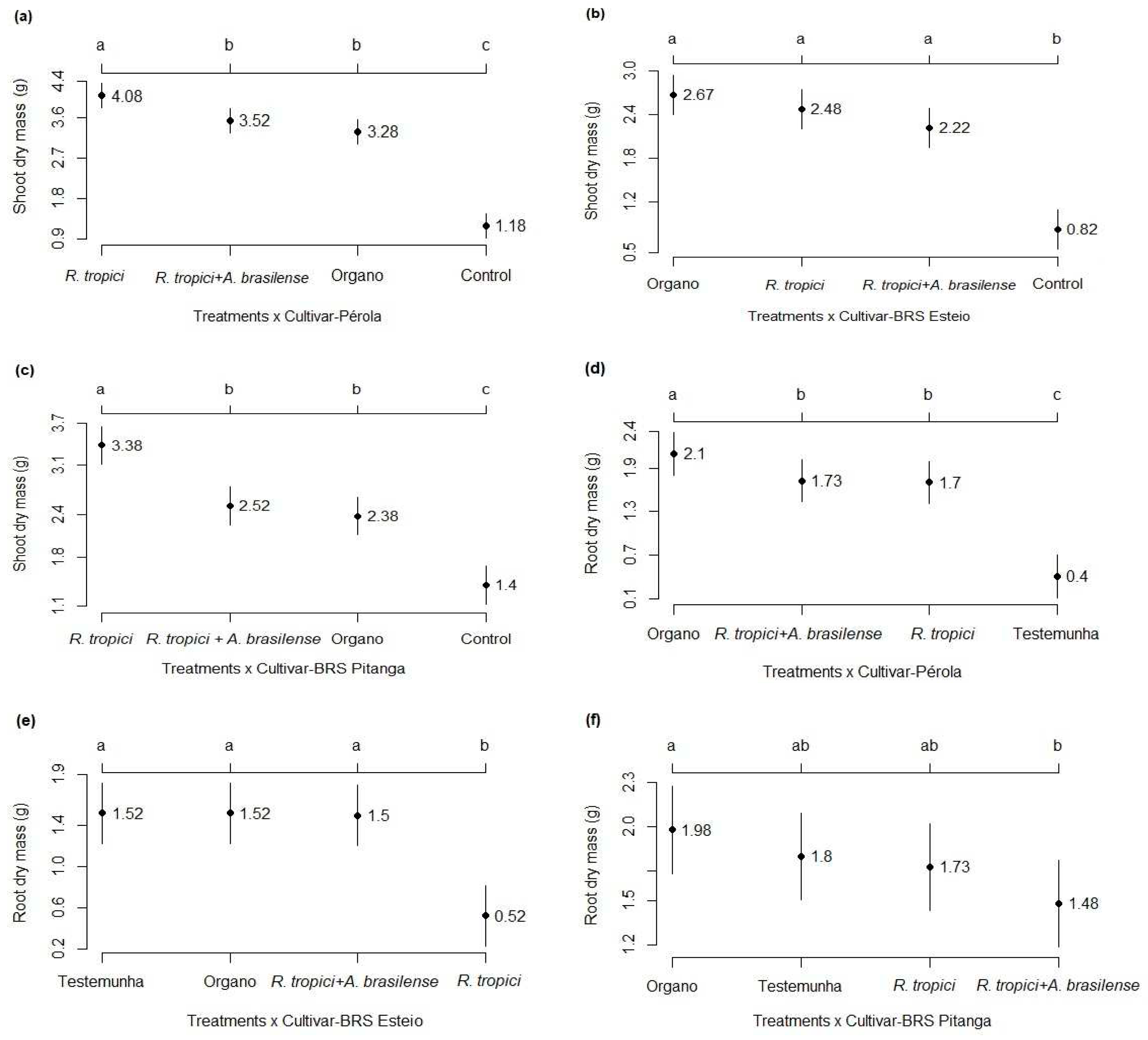
Figure 6.
Shoot dry mass (SDM) and root dry mass (RDM) of additional treatment of cultivars Pérola (a and c) and BRS Pitanga (b and d) compared with the respective treatments. Means followed by “*” differ statistically by the Dunnet test at 5% probability and “ns” for non-significant results.
Figure 6.
Shoot dry mass (SDM) and root dry mass (RDM) of additional treatment of cultivars Pérola (a and c) and BRS Pitanga (b and d) compared with the respective treatments. Means followed by “*” differ statistically by the Dunnet test at 5% probability and “ns” for non-significant results.
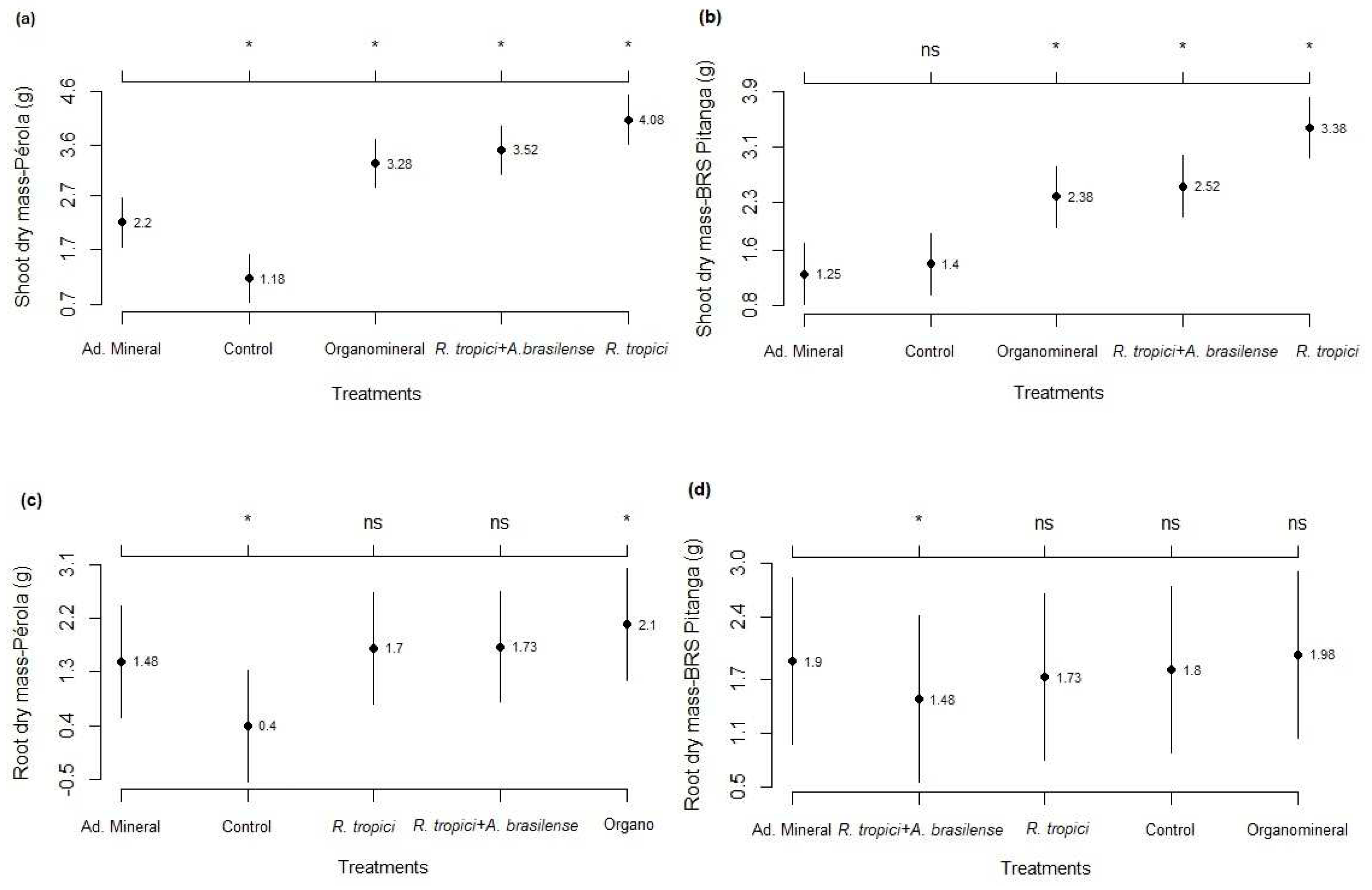
Figure 7.
Number of pods per plant (NPP) according to cultivars (a) and treatments (b) with organomineral fertilizer, seed inoculation with R. tropici, co-inoculation with A. brasilense, and the control treatment. Means followed by the same letter do not differ statistically by the Tukey test at 5% probability.
Figure 7.
Number of pods per plant (NPP) according to cultivars (a) and treatments (b) with organomineral fertilizer, seed inoculation with R. tropici, co-inoculation with A. brasilense, and the control treatment. Means followed by the same letter do not differ statistically by the Tukey test at 5% probability.
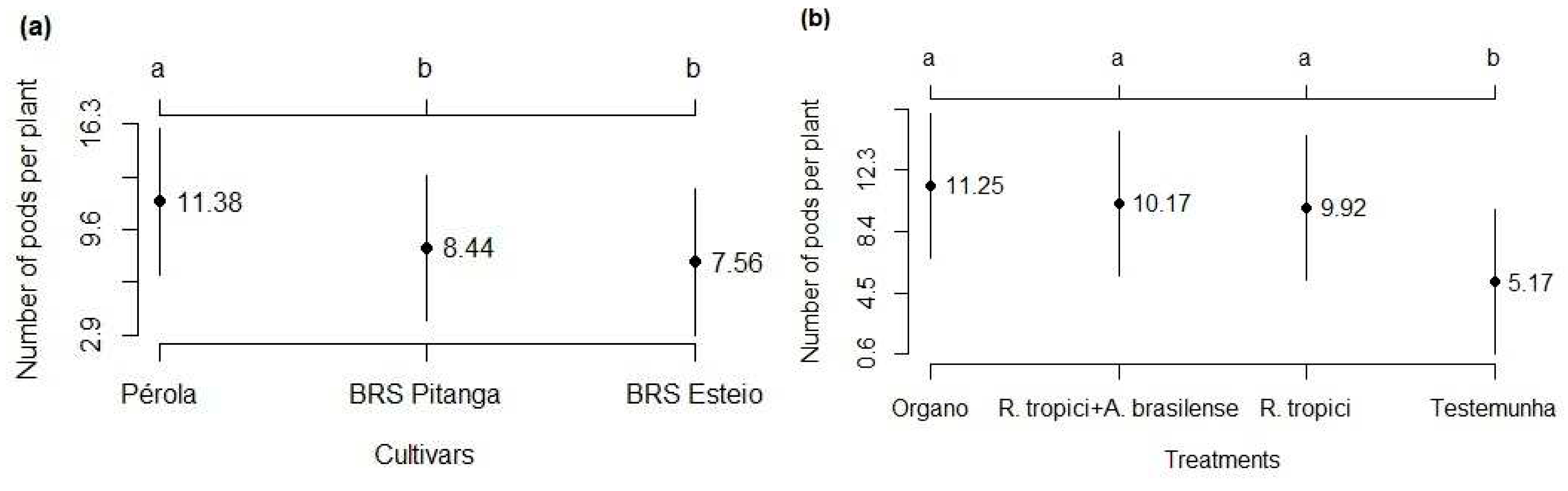
Figure 8.
100-grain weight (W100) according to cultivars (a) and treatments (b) with organomineral fertilizer, seed inoculation with R. tropici, co-inoculation with A. brasilense, and the control treatment. Means followed by the same letter do not differ statistically by the Tukey test at 5% probability.
Figure 8.
100-grain weight (W100) according to cultivars (a) and treatments (b) with organomineral fertilizer, seed inoculation with R. tropici, co-inoculation with A. brasilense, and the control treatment. Means followed by the same letter do not differ statistically by the Tukey test at 5% probability.

Figure 9.
Grain yield of bean cultivars Pérola (a), BRS Esteio (b), and BRS Pitanga (c) according to the treatments with organomineral fertilizer, seed inoculation with R. tropici, co-inoculation with A. brasilense, and the control treatment.Means followed by the same letter do not differ statistically by the Tukey test at 5% probability.
Figure 9.
Grain yield of bean cultivars Pérola (a), BRS Esteio (b), and BRS Pitanga (c) according to the treatments with organomineral fertilizer, seed inoculation with R. tropici, co-inoculation with A. brasilense, and the control treatment.Means followed by the same letter do not differ statistically by the Tukey test at 5% probability.
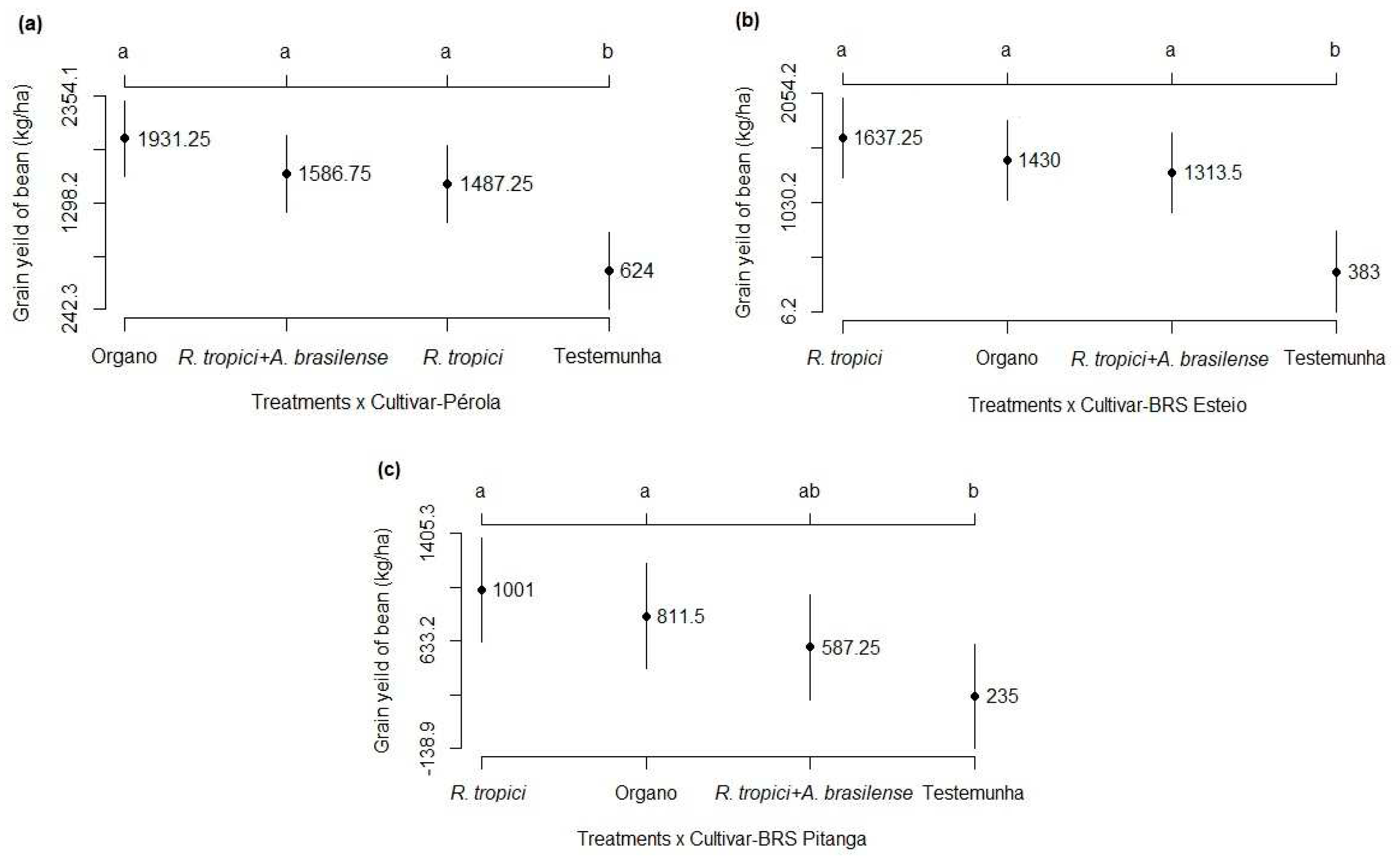
Figure 10.
Means of the additional YIELD factor for Pérola (a) BRS Esteio (b) BRS Pitanga (c) cultivars compared with the respective treatments. Means followed by “*” differ statistically from each other by the Dunnet test at 5% probability and “ns” for non-significant results.
Figure 10.
Means of the additional YIELD factor for Pérola (a) BRS Esteio (b) BRS Pitanga (c) cultivars compared with the respective treatments. Means followed by “*” differ statistically from each other by the Dunnet test at 5% probability and “ns” for non-significant results.
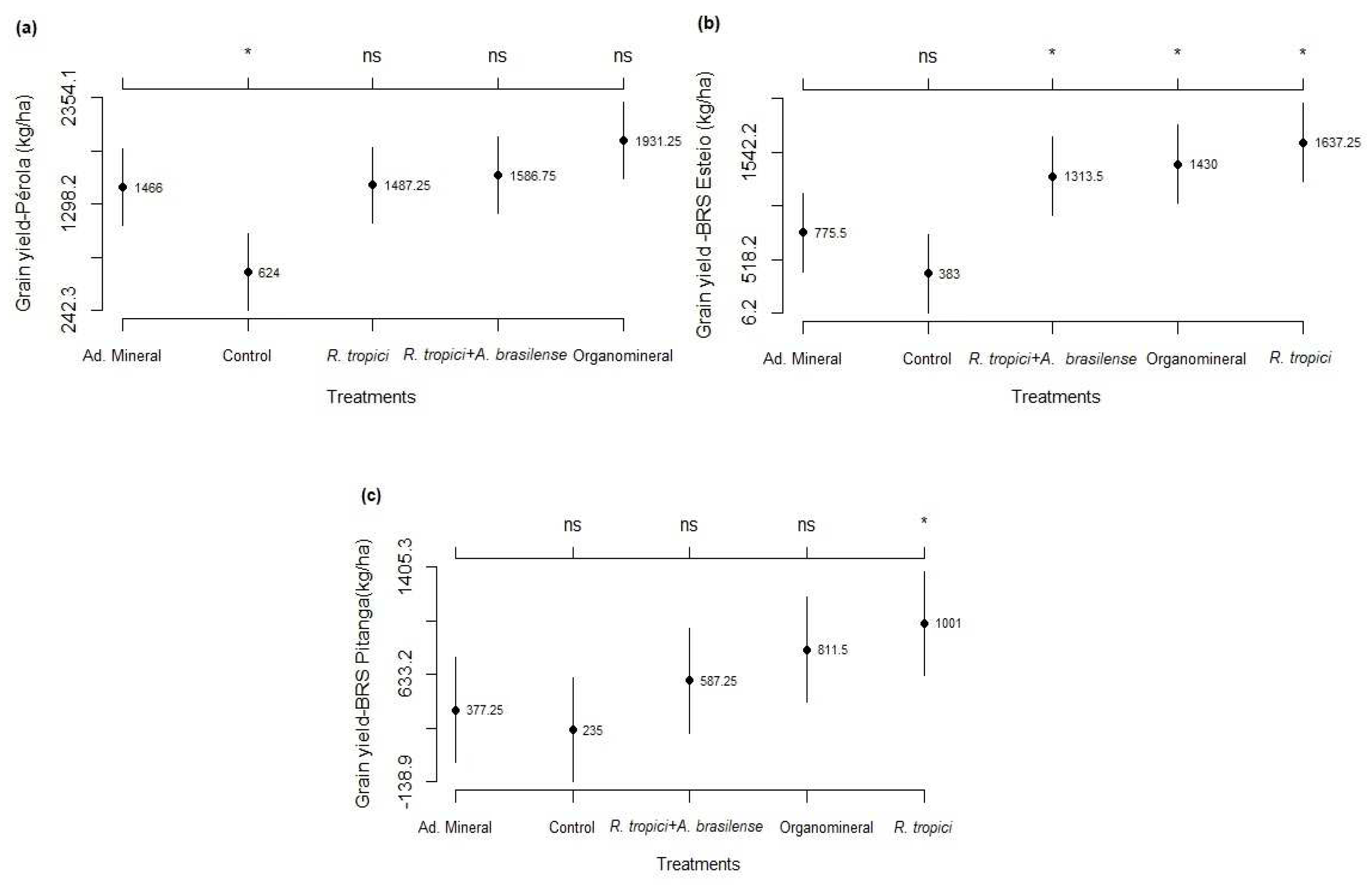

Table 1.
Results of analysis of variance for the performed on bean cultivars submitted to different forms of inoculation with R. tropici and co-inoculation with A. brasilense.
Table 1.
Results of analysis of variance for the performed on bean cultivars submitted to different forms of inoculation with R. tropici and co-inoculation with A. brasilense.
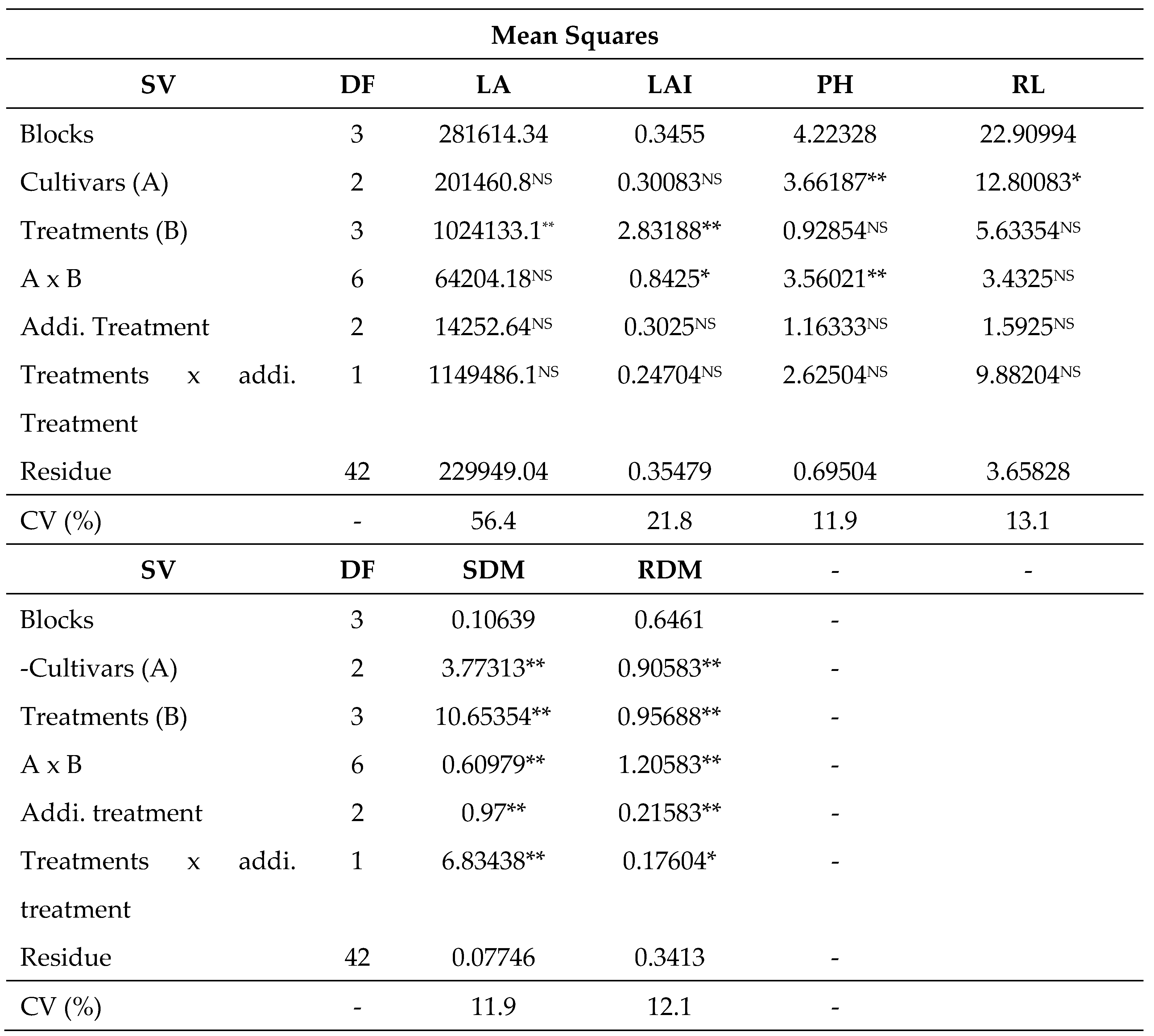
** significant at 1% probability by the F-test. * significant at 5% probability by the F-test. NS not significant by the F-test. LA – Leaf area; LAI – Leaf area index; PH – Plant height; RL – Root length; SDM – Shoot dry mass; RDM – Root dry mass.
Table 2.
Results of analysis of variance its components and yield in common bean cultivars subjected to different forms of inoculation with R. tropici and co-inoculation with A. brasilense.
Table 2.
Results of analysis of variance its components and yield in common bean cultivars subjected to different forms of inoculation with R. tropici and co-inoculation with A. brasilense.
| Mean Squares | ||||||
|---|---|---|---|---|---|---|
| SV | DF | NPP | NGP | W100 | YIELD | |
| Blocks | 3 | 1.03889 | 2.53333 | 55.0666 | 62777 | |
| Cultivars (A) | 2 | 63.8125** | 0.8125NS | 85.5625** | 2374793.58** | |
| Treatments (B) | 3 | 87.5833** | 0.22222NS | 21.3611** | 2536109.13** | |
| A x B | 6 | 1.39583NS | 0.03472NS | 8.84028NS | 182579.44* | |
| Addi. Treatment | 2 | 12.25NS | 0.25NS | 36.0833** | 1213846.58** | |
| Treatments x Addi. treatment | 1 | 54.15NS | 0NS | 40.0166NS | 434435.51** | |
| Residue | 42 | 8.2508 | 0,27143 | 4.79286 | 56048.44 | |
| CV (%) | - | 33.2 | 17.3 | 7.6 | 22.6 | |
** significant at 1% probability by the F test. * significant at 5% probability by the F test. NS not significant by the F test. NPP – Number of pods per plant; NGP – Number of grains per pod; W100 – 100-grain weight; YIELD – Yield.
Disclaimer/Publisher’s Note: The statements, opinions and data contained in all publications are solely those of the individual author(s) and contributor(s) and not of MDPI and/or the editor(s). MDPI and/or the editor(s) disclaim responsibility for any injury to people or property resulting from any ideas, methods, instructions or products referred to in the content. |
© 2023 by the authors. Licensee MDPI, Basel, Switzerland. This article is an open access article distributed under the terms and conditions of the Creative Commons Attribution (CC BY) license (http://creativecommons.org/licenses/by/4.0/).
Copyright: This open access article is published under a Creative Commons CC BY 4.0 license, which permit the free download, distribution, and reuse, provided that the author and preprint are cited in any reuse.


