

Submitted:
12 October 2023
Posted:
13 October 2023
You are already at the latest version
Abstract
Load shifting is one of the demand side management (DSM) strategies to support the efficiency in the electricity grid during the peak hours demand. Load shifting at the appliance level is interesting to review since the appliance usage is one of the main inputs in the load profile analysis. More review studies in load shifting at the appliance level are required as it is a specific issue of load profile research body, and still limited studies are available at this moment. It is also essential to focus on the appliance usage patterns to better understand the impacts and characteristics of the individual appliance. The existing studies in load shifting have applied common structured literature reviews, and our study addresses the transparency of each stage and sub-stage of the selection of the final list studies. The finding shows that efficiency has been achieved in the installed capacity reduction, cost including emission reductions, and peak consumption reduction. The most applied method in the load shifting at the appliance level is by developing the load shifting optimisation algorithms. This work contributes to provide a transparent process of applying a systematicity literature review, where it becomes a source of knowledge and grounded theory. It contributes to a limited and specific research of load shifting at the appliance level by highlighting and discussing the key findings for the readers. In specific, it contributes to improve energy efficiency by presenting the load shifting methods at the appliance level and identifying the controllable and uncontrollable appliances. This detail review study at the appliance level can make valuable contributions to support decision and policy-making by illuminating new dynamic system in load shifting area in specific, and demand side management in general for energy efficiency.
Keywords:
load shifting 1
; controllable appliance 2
; un-controllable appliance 3
; HEMS 4
; systematicity and transparency review 5
; DSM
; CITIES 6
; PEDs 7
1. Introduction
Demand Side Management (DSM) strategies play a significant role in the energy efficiency with a substantial reduction in the installed capacity [1,2,3,4]. DSM is the designed action to manage the utility activities include planning, implementation and monitoring the energy consumption in an efficient way and maintaining the stability of the grid [5]. It may influence the time pattern and utility’s load which can be controlled by the load management [2], as a specific branch of DSM [2] or it allows the customer to control the peak load demand [6]. One of the load management strategies in DSM is load shifting (Figure 1). Load shifting is considered as a technique to shift the peak hours demands to the off-peak hours demands by reallocating the load demand [6] without changing the total energy consumption [7], which can also reduce the cost [1,6,8,9,10,11,12,13,14,15] as well as the capacity of the electricity grid. In practice, load shifting is a “process where consumers time-shift demand, either through behaviour change or automation, in response to particular conditions within the electricity system, and is therefore a potential solution to equilibrate the network” [16]. The fundamental step in achieving load shifting is by involving and motivating consumers [1,10] that underlines the importance of focusing on the residential sector. In the load shifting at the appliance level, some studies have grouped the appliances based on the operation time: Controllable and uncontrollable load appliances [1,17,18]. Controllable load appliances are considered “the operation may be controlled and also interrupted as the loads can resume at a later time without much negative consequence or inconvenience for the users” [19]. The examples of controllable load appliances are air conditioners (AC), electric water heaters (EWH), electric vehicle (EV) charging, pool pump, washing machines, dishwashers and freezers [1,19]. While uncontrollable load appliances are considered “the operation of these loads should not be altered at any time as they are highly important for the users” [19]. The examples of uncontrollable appliances are lighting systems, computers, televisions, hairdryers and entertainment devices [17,18,19].
Based on the review result, AC and EWH are the most simulated appliances, which is inline with the study in [20], where AC and EWH, are included in the selected electrical appliances to be analysed because they are used in all seasons. It makes it interesting to review the load shifting at the appliance level as the review study serves as the fundamental and benchmark tool for analysing, summarising or synthesising the existing literature [21]. It is also essential to conduct a review study on load shifting at the appliance level since the review studies about load shifting are not as extensively conducted as those that focused on load profiles analyses [17,22,23,24,25,26,27,28,29,30,31]. Therefore, it is important to contribute a review study in this area as the load shifting at the appliance level is even a more specific issue, and still limited studies are available, as those reviews on load profile studies. The existing studies in relation to load shifting, such as in [7,15] or using the term load scheduling in [32], are beneficial as grounded knowledge, in which most of them have not applied the common guidelines for a structured literature review.
This work is part of the CITIES and EUDP, Det Energiteknologiske Udviklings- og Demonstrationsprogram, Danish participation in IEA Annex 83 – Positive Energy Districts (PEDs) research bodies. In CITIES project, it is conducted under the CITIES work package 1: Energy Services and Demand. CITIES is a research project for the smart energy system and smart cities, which was funded by Innovation Fund Denmark [33]. While EUDP, Det Energiteknologiske Udviklings- og Demonstrationsprogram, Danish participation in IEA Annex 83 – Positive Energy Districts (PEDs) project has “the overarching goal of Annex 83 to develop the needed information and guidance for the planning and implementation of Positive Energy Districts (PEDs) including both technical and urban planning perspectives, i.e., including economic, social and environmental impact assessment for various alternative development paths” [34]. Therefore, research on modelling and analysis of the residential electricity load profile will contribute to the energy demand specific areas: neighbourhood, district, city or region and, in specific, the CITIES and PEDs research projects. One of the fundamental steps in the projects is to understand the residential electricity consumption behaviour by synthesising the local load profile at the city level [28,35]. Residential sector is of great importance where it contributes approximately 30% to the global electricity demand [2]. The detailed understanding of the load profile plays a vital role for modelling decentralised energy systems such as Positive Energy Districts. Moreover, the load shifting is one of the strategies in controlling the load profile as proposed by Gellings (1985) in figure 1. In consequence, load shifting is part of our research body in the Demand Side Management for the residential sector (Figure 1). In our previous works that inline with synthesising the residential electricity load profiles [28,35,36,37], we have identified that appliance usage is mainly used to synthesise the domestic load profiles. It is in accordance with what has been revealed in [15] that there is a need to study the electrical appliance consumption pattern as part of DSM models. It is also essential to focus on the appliance usage patterns to better understand the impacts and characteristics of the individual appliance as mentioned in [38]. In addition, this review work at the appliance level is beneficial to support the decision makers in allocating the renewable energy capacities investment for residential sector at the local level [39].
Furthermore, our work proposes a structured literature review and addresses the transparency of each stage and sub-stage of selecting the final list studies. Transparency is one of the main attributes besides systematic and comprehensive ones in a high quality review [40]. It is claimed as an important element of scientific activity [41], therefore a review study should be as transparent as possible [42,43]. A transparent review will provide a clear procedure for each step in the review process, which improves any replicability by other researchers [21,40]. Moreover, it enhances the clear connection among the research question and purpose, the analysis and synthesis of the review [21], and also explains any conflicting results [42,43]. Therefore, in this study, the twin concept of systematicity and transparency proposed by [44] is selected and applied to review the residential electricity load shifting at the appliance level. Our review provides the analysis based on the criterion: research objective, methods, validation, result, time resolution data and year of publication.
The objective of this review is to present the knowledge in residential electricity load shifting at the appliance level, which focuses on the research purpose, simulated appliance(s), applicable methods, validation, results, time resolution data and year of publication, by conducting a structured systematic and transparent literature review. Furthermore, the contributions of this work are twofold: First, it provides a transparent process of applying a systematicity literature review. Second, it becomes a source of knowledge and grounded theory, where it contributes to a limited and specific research of load shifting at the appliance level by highlighting and discussing the key findings for the readers: the proposed methods and/or models, research aims, implications, data characteristics, validation method, etc. Third, it contributes to improve energy efficiency by presenting the load shifting method at the appliance level and identifying the controllable and uncontrollable appliances that applied the methods.
The remainder of this paper is organised as follows: Section 2 presents the methodology of the twin concepts review based on [44]: Systematicity and transparency; Section 3 describes the application of the adopted twin concepts; Section 4 discusses the analysis; Section 5 summarises and concludes the review and highlights the research implication.
2. Review method
In this work, the twin concept of systematicity and transparency proposed in [44] are selected to be applied in order to have a high quality review process and result. The concept has six generic review steps in which each step has combined the systematicity and transparency aspects as listed in Table 1: Developing a review plan, searching the literature, selecting studies, assessing quality, extracting data and analysing. The generic steps are commonly used in conducting a standalone literature review [44]. Moreover, we add our contribution in order to provide transparent results in numbers and judgements of each stage and sub-stage which is also required.
3. Application of the Twin Concepts Review: Systematicity and Transparency
In this stage, a twin concept is adopted and applied to review the residential electricity load shifting at the appliance level. The six steps based on [44] are conducted and elaborated in the following sub-stages.
3.1. Developing a Review Plan
Formulating a research question is essential as the basis for developing a review plan. In this study, the research question is: What are the applicable methods of load shifting at the appliance level in the residential sector? It serves as the fundamental source of knowledge in the load shifting interest area. The objective of this work is to provide a systematic and transparent standalone literature review on residential electricity load shifting at the appliance level. Furthermore, the research plan of the systematicity and transparency review is constructed in Table 2 based on the instantiations guidelines proposed in [44].
3.2. Searching the Literature
The searching of literature is completed in the Web of Science (WoS) database, which is a global citation database that provides access to multiple databases with over 171 million record references [45]. Furthermore, as mentioned, the aim of this review is to identify the methods of the residential electricity load shifting at the appliance level. Therefore, the main phrase is defined in the searching: Residential electricity load shifting.
TS = residential electricity load shifting
In WoS search, TS refers to the topic, where it is searched within the title, abstract, author keywords and keywords plus®. The keywords plus® field is searched within a record, where the data includes the words or phrases that frequently appear in the titles of an article’s references, but do not exist in the title of the article itself [46,47]. We search this phrase not with the additional term “at the appliance level” that we specificallyfocus on, because in the preliminary brief study, most of the studies are specifically mentioned which appliance(s) they are focused on in their TS. This more generic level in searching will also minimise the exclusion of the potentially related works. As a result of this initial search, this query has 421 related documents that consist of: 235 articles, 13 reviews, 2 early access, 1 book chapter and 170 proceeding papers. The publication years of the documents are enclosed in Figure 2, where 2018 is the most published year with 70 documents, slightly followed by 2017 with 68 articles. The oldest article is published in 1991, followed by 1998 and 1999, with each year havingone document. Figure 2 shows that the load shifting has gained momentum in the last decade, where the most significant period is from 2017 to 2018.
3.3. Selecting Studies
Selecting studies based on the clear inclusion and exclusion criterion were conducted. The detailed result is provided to ensure the transparency of each sub-stage.
Screening 1: Language
The first screening is the document’s language, where English, the main universal language of science, is selected as the inclusion. From the initial result, all 408 documents are written in English. Thus, no document is excluded.
Included: 421 English documents
Excluded: 0 non-English document
Screening 2: Publication stage
The second screening is the publication stage. From the 408 English documents, there are 406 documents in the final stage and have been published, and the rest 2 documents, are in the early access stage. Early access is defined as an article that has been published electronically by a journal. This type of article is also known as “article in press”[45]. In this case, we selected the final stage publication since the early access document is not assigned yet to a defined volume and issue.
Included: 419 final stage documents
Excluded: 2 early access documents
Screening 3: Document type
The third screening is a document type. From the 419 final stage documents, there are 235 articles, 13 reviews, 1 book chapter and 170 proceeding papers. In this case, we focused on the articles only as the review usually will not present any new information on a subject [45] but they are useful as grounded theories in our research background.
Included: 235 articles
Excluded: 13 reviews, 1 book chapter and 170 proceeding papers
Selecting Subject Areas
Furthermore, some subject areas are not relevant in this study and thus are excluded from the last 235 included articles. In WoS, there are five broad research area categories: Arts and humanities, life sciences and biomedicine, physical sciences, social sciences and technology, each of which has specific research area terms listed under the broad areas [45]. In our work, we select the following specific area: energy fuels (145 articles), engineering (120 articles), automation control systems (5 articles), environmental sciences ecology (33 articles), operations research management science (5 articles), construction building technology (31 articles), science technology (31 articles), thermodynamics (29 articles) and computer science (14 articles). In fact, one article can link to several specific areas; therefore, the sum of the articles of all specific areas will be different from the total of our last collection study, which in this case were 235 articles. Therefore, after selecting the relevant subject areas above, we find that there are 228 articles included, and 7 articles excluded.
Included: 228 relevant articles
Excluded: 7 not-relevant articles
3.4. Assessing Quality
We assess the quality of the 228 articles to ensure the quality assurance. Therefore, we limit the scope only to peer reviewed journals. The 228 article sources are published in 74 journals. Therefore, we visit each journal to identify the peer review process. In this stage, all articles are based on peer reviewed journals. It accordance with WoS all articles are subject to peer review as most journals in the WoS core collection are peer reviewed. However, WoS does not specifically mention the journals’ peer review status [48].
Included: 228 peer reviewed articles
Excluded: 0 article
Furthermore, the title and abstract reading of each peer-reviewed article has been conducted, which provides a clear understanding and a deeper assessment of the focus of the article [49]. In this sub-stage, we first sort the articles based on the relevance of WoS. The records are sorted in descending order in a ranking system based on the following consideration fields: Title, abstract, keywords and Keywords Plus®. The title and keywords fields are weighted slightly more than the abstract and Keywords Plus® fields. Most of the 228 collected articles are focused on load shifting. However, as our focus is on the load shifting at the appliance level, we excluded the not-relevant load-shifting topics. Therefore, it has resulted in the 27 peer reviewed articles.
Included: relevant content of load shifting at the appliance level = 27 articles
Excluded: Load shifting but not specific at the appliance level = 201 articles
The following are the topics and the number of excluded articles where some topics are categorised into the related group. The related group here means that the studies are also closely-related with the load shifting, but load shifting is not their main discussion or the purpose of these studies. The topic’s list is sorted by the largest number of articles:
- Economics cover price, electricity rate structure, electricity tariff, incentive, economic optimisation, peak-off-peak-load shifting, customer satisfaction: 71 articles.
- Demand Side Management (DSM) include segmentation based on Demand Response (DR) program, smart-grid, micro-grid system: 49 articles.
- Technical aspect including control, electricity infrastructure, intelligent building, building thermal model, grid’s inverter size and grid architecture: 28 articles.
- Storage or the use of battery storage system: 16 articles.
- Environmental issues include emission, sustainability, Renewable Energy (RE) sources and RE penetration: 9 articles.
- Social practice includes flexibility to shift demand: 8 articles.
- Out of load shifting in the residential sector include manufacture, industrial, lighting road, commercial and transport: 6 articles.
- Load profile model or synthesised load profile: 4 articles.
- Policy: 4 articles.
- Real time electricity consumption: 3 articles.
- Scenario of future electricity demand: 2 articles.
- Out of load shifting scope about building material: 1 article.
The paper reading of these 27 peer reviewed articles is conducted to emphasise that the article has been discussed and provided the load-shifting data description at the appliance level besides mentioning it in the abstract, research objective and conclusion. These 27 articles derived from 25 journals, where 2 articles are conference proceeding papers that have been invited to the journals. Technically, the 27 articles have received a temporary ID with the format A for the article, followed by the number. Therefore, the temporary ID starts from A1 to A27. Furthermore, 10 articles are excluded from the final collection with the following reasons.
Included: 17 articles
Excluded: 10 articles
The excluded articles:
- A1 [50] provided a series of analyses based on consumption data for appliance electrification efforts but it does not specifically discuss the load shifting or mention the specific appliance.
- A2 [51] discussed the Non-instrusive load monitoring (NILM) based at the appliance level with the focus on disaggregating the power consumption profiles of the appliances: Oven, microwave, kitchen outlets, dishwashers and refrigerators.
- A3 [52] proposed the methodologies that capture the variation in sequences of activities that occur on peak-on electricity demand, and introduced a set of analytical tools to examine the time use survey (TUS) data in the energy demand side. This paper is beneficial as the ground theories of our review.
- A4 [53] focused on the thermal energy storage, which offers the load shifting from the off-peak hours through sensible and/or latent methods.
- A10 [54] investigated the impact of load shedding strategies on a block of multiple buildings.
- A13 [55] has been retracted, which proposed a simple algorithm of the water pumps operational efficiency during the peak hours.
- A14 [56] discussed the load shifting at the grid level.
- A15 [57] presents the thermal flexibility of the building and a thermal energy storage (TES) for the generation of domestic hot water (DHW) with the purpose of shifting the operation of the heat pump to the times of PV-generation.
- A17 [3] discussed the load shifting at the grid level.
- A21 [58] proposed the multi-objective model predictive control strategy at the grid level.
As a result, after the paper reading, 17 articles were selected in the final collection to be extracted and synthesised. These 17 articles have mentioned and discussed the specific appliance(s) as the application of the load shifting term. These articles are published in 12 journals which are derived from 6 publishers. From these 17 articles, there are 2 conference papers that were invited to be published in the journals.
3.4. Extracting Data
Data extraction is carried out to provide information on how the primary studies were conducted. In this work, data from the final list studies are extracted: The research objective, methodology, dedicated appliance(s), result, time resolution, limitation, validation of the proposed method and year of publication. Appendix 2 provides more detailed information of data extraction of the final list studies. Additionally, the overview of the load profile methods and their appliances is presented in the methods mapping (Figure 3). The map shows that the methods in the final list studies can be categorised into eight groups, where the load shifting optimisation algorithms are the most proposed method in the final list studies. Furthermore, most of the final studies (a2, a4, a5, a6, a9, a12, a13, a14, a17) have proposed Home Energy Management System (HEMS) based models or methods that applied smart control with comfort aspects, smart control scheduling, and physical settings with a mathematical model. HEMS is described as a system that consist of hardware, software, network, data and process to monitor energy data and control the energy usage in a building within a household. The objectives of HEMS are to increase awareness in energy consumption and achieve more energy efficiency. HEMS allows “optimal scheduling of each electrical appliance and distributes generator according to an objective function (e.g., the energy cost) predefined by customer or an aggregator and according to some external information (e.g., weather, electricity price, incentive signal, etc.) in order to help residential customers to efficiently manage their energy consumption” [59] cited in [8]. The rest of the methods such as: fuzzy logic model (a16), clustering technique (a3), DSM-based model (a15) and stochastic thermal model (a10), each is proposed by a single study which applies to a single appliance.
4. Analysis and Discussion
In this section, the proposed methods and/or models, research aims and implications of the final list studies will be identified to answer the fundamental research question: What are the applicable methods of load shifting at the appliance level in the residential sector? In particular, to support the fundamental knowledge of the research question, this study will also present the data characteristics, validation method and data quality scores of each article. The data quality scores are presented in Table 5 in order to quantify the quality of information in relation to the research questions of this review.
Data synthesis is charaterised in three main forms: quantitative, qualitative and integrative (Mixed) [44], where the data extraction ended with 17 articles as shown in Table 3. According to the data extraction, improving efficiency is the most common research aim of the final list studies. It is either efficiency in reducing the peak load [60,61,62,63], or shifting the coincidental and substantial peak load demand [64,65,66], or achieving more energy conservation [38]. Furthermore, the methods of using the load shifting algorithms in the studies mostly can be applied to multi-appliances, where more than five appliances are being simulated simultaneously. For instance, the appliances being analysed simultaneously in [67] are: AC, water cooler, refrigerator, washing machine, clothes dryer, water motor, EWH, electric iron and oven. According to [1] load shifting has gained attention, where each study prefers to provide its own algorithm rather than use the available modelling tools.
The HEMS based models are also suitable for the simulation of certain appliance and multi-appliances simultaneously [8,38,60]. In addition, the smart control with comfort aspects has been applied to some representative appliances in [63], and a dedicated appliance like AC in [64,68]. The physical settings with mathematical models have been used to simulate multi-appliances [69] and a single appliance, in this case: AC [61]. Other methods such as the DSM-based model [65], stochastic thermal model [62], fuzzy logic model and clustering technique [70] have been applied to simulate a single appliance either an AC or an EWH.
It is shown that AC is being discussed in the majority of the final list studies: In total 12 studies, where six of them have solely analysed the AC as a single object in the discussion. The reason might be in line with [71] cited in [1] that the AC is mainly selected as a shiftable load because at the peak electricity demand period it contributes a significant share about 10-35% in the residential sector. EWH was also simulated in nine studies, where three of them have dedicated EWH as a single appliance in their studies. In addition, the simulation of multi-appliances are being analysed in eight studies. Table 4 categorises and lists the controllable and un-controllable appliances based on the data extraction of the load shifting methods of the final list studies.
Furthermore, most of the studies simulated the load shifting in hourly resolutions, where two studies provide the simulation in 30 minutes and 12 minutes. In context of energy efficiency and green transition, having a high resolution load profile will increase the share of renewable energy (RE) feed-in [72]. Moreover, the results obtained in the final list studies show that efficiency is being achieved in most studies that accord with the most research studies purpose. Most results have shown that the efficiency share is being achieved in the installed capacity reduction [1,2,62], cost [8,18,61,63,67,70] including emission reductions [69], and peak consumption reductions [64,65,66,68]. However, the centralised AC in [64] increases the total energy consumption by 13.3%. The result in [60] shows the significant contribution of the smart appliances. Demand flexibility is achieved in [20] and conservation behaviour in [38].
Most of the results from the final list studies are validated in a comparison with other studies, techniques or scenario [1,2,8,20,61,67]. Some studies have been tested on more than one case or model [18,62,64,70], and some studies compared with the real data [68,69]. Performance evaluation is conducted in [63]. The rest of the studies are validated based on their proposed methods by case study demonstration.
Implications for future studies are identified such as the use of distributed renewable systems in the load shifting and the application of multi-scale control approaches. In relation with the thermodynamical aspects, it is interesting to enclose more comfort factors in improving the degree of preciseness and include thermal insulation as a part of the designed DSM. There are 5 studies simulated in the United States, 3 studies in Australia, 1 study each in The Netherlands, China, South Africa, Turkey and the remaining five studies are not specified. The years of publication span from 1991 to 2019, where the load shifting gaining momentum starting from year 2017. The studies in the 1990s were specifically focused on AC in 1991 and EWH in 1999.
In addition, from the excluded studies after the title and abstract reading sub-stage in assessing quality, it can be identified that most studies addressed the load shifting topic in relation with economics aspects either price, electricity rate structure, electricity tariff, incentive, economic optimisation, or customer satisfaction of the load shifting programs. It follows with the more technical aspect, which are the applications of DSM include segmentation based on DR program, smart-grid and micro-grid systems.
It can be concluded that there are two main process categories which apply to our review work based on the twin concepts: Normative and subjective judgements. Normative processes occur in Selecting studies stage and assessing quality: peer review checks, where the inclusions and exclusions are based on defined criterion or rules. These normative processes mostly can be done automatically via WoS’ internal features, except for checking the peer reviewed journals where at this moment should be done manually, as WoS does not provide the peer review status of the journals. The remaining steps are subjective judgements, where the researchers have to judge the inclusion and exclusion of the final list studies based on title and abstract reading, and paper reading, which may be revisited several times.
As mentioned, a basic data quality score was created to measure the quality of the information. It encompassed ten measurable attributes, as shown in Table 5: Research objective, approach, method, result, limitation, model’s input, data resolution, validation, simulated appliance and country, where the method or model was simulated. It is important to recognise the simulation’s location in order to have a deeper understanding of the data characteristics and the developed model, whether it is applicable to a specific region or can be applied to other region in general. The availability of each attribute in the final selected articles is uniformly weighted, where each attribute gets one score. Table 5 shows the distribution scores for the 17 final articles. According to the data quality score, ten articles are recommended to be in the priority review list as they completely addressed all the eleven attributes. Three of the 17 articles did not clearly identified the validation method applied in their researches and five of the 17 did not specify the simulation’s location. The lowest score was article a16 that has nine score, because it did not clearly mention where the simulation was done and did not informed how the method was validated.
5. Conclusions
This work has applied a structured literature review based on the twin concepts of systematicity and transparency. It reveals that t providing transparent results at each stage and sub-stage is essential. Therefore, such detailed information of the reviewed studies is provided to ensure transparency, such as: The number of excluded and included studies, and judgement behind the exclusion. The finding shows consistency between the research aim of the most final list studies in the literature review, and their statistical results, where efficiency has been achieved in the installed capacity reduction, cost including emission reductions, and peak consumption reduction.
The most applied method in the load shifting at the appliance level is by developing load shifting algorithms. The algorithms are mostly applied in the load shifting simulations that involve multi-appliances. Furthermore, AC is being selected as the most discussed shiftable load in the final list studies, followed by EWH. Most results are validated with a comparison to other studies or scenario and real data. All of the final list studies provide the simulation in high resolution data, which is essential in the load shifting work that requires to obtain near real-time data in high resolution: hourly, 30 minutes and 12 minutes. Moreover, to quantify the quality of the information, a basic data quality score was created. It comprises ten measurable attributes: Research objective, approach, method, result, limitation, model’s input, data resolution, validation, simulated appliance and country, where the method or model was simulated. The availability of each attribute in the final selected articles is uniformly weighted. Based on the quantification of data quality score, ten articles are recommended to be in the priority review list. It means 58 percent of the final list studies have completely addressed all the elevent attributes. While the rest six studies have missing an attribute information and only a study that did not identified the information of two attributes.
In addition, based on this review work, specifically in the inclusion and exclusion of the final list studies stage, it can be categorised into two types: Normative judgement, which is based on the defined criterion or rules, and subjective judgement. Furthermore, our work identifies that the load shifting is gaining momentum in these recent years, starting from the year 2017.
Our work is replicable and beneficial to the researchers as source of knowledge in the residential electricity load shifting at the appliance level. This detail review work at the appliance level can make valuable contributions to support decision and policy-making by illuminating new dynamic system in load shifting area in specific and demand side management in general for energy efficiency. It will also contribute to the energy incentive programs and other economic policies. Futhermore, as an implication, a review on the load shifting satisfaction model is an interesting future work.
Author Contributions
Conceptualisation, P.S.N., A.K., P.D.K.M. and R.B.; the method, data curation and analysis of the study, P.D.K.M. and A.K.; original draft, P.D.K.M. and A.K.; writing, review and editing; A.K., P.D.K.M., R.B. and P.S.N.; supervision, R.B. and P.S.N.; project administration, A.K. and funding acquisition, P.S.N. All authors have read and agreed to the published version of the manuscript.
Funding
The research described in this paper is being conducted as part of the CITIES Project, funded by Innovations Fund Denmark under contract: 1305-00027B and a PhD fellowship within the CITIES project at Denmark Technical University (DTU) funded by the Indonesia Endowment Fund for Education (LPDP: Lembaga Pengelola Dana Pendidikan) under Letter of Guarantee: Ref:S-1401/LPDP.3/2016. This publication was supported by EUDP, Det Energiteknologiske Udviklings- og Demonstrationsprogram, Danish participation in IEA Annex 83 – Positive Energy Districts (PEDs), under contract: 64020-1007.
Data Availability Statement
The data presented in this study are available in the article.
Acknowledgments
We acknowledge CITIES research center, PEDs project and other partners for the large-scale inputs. We thank John Soucy for proofreading our manuscript.
Conflicts of Interest
The authors declare no conflict of interest. The funders had no role in the design of the study; in the collection, analyses or interpretation of the data; in the writing of the manuscript or in the decision to publish the results.
Appendix A

Table 6.
The final list studies’ article.
| ID | Article's Title |
|---|---|
| a1 | Ali, S.M.H.; Lenzen, M.; Tyedmers, E. Optimizing 100%-renewable grids through shifting residential water-heater load. Int. J. Energy Res. 2019, 1479–1493. |
| a2 | Gercek, C.; Reinders, A. Smart appliances for efficient integration of solar energy: A Dutch case study of a residential smart grid pilot. Appl. Sci. 2019, 9 |
| a3 | Patteeuw, D.; Henze, G.P.; Arteconi, A.; Corbin, C.D.; Helsen, L. Clustering a building stock towards representative buildings in the context of air-conditioning electricity demand flexibility. J. Build. Perform. Simul. 2019, 12, 56–67. |
| a4 | Khan, Z.A.; Khalid, A.; Javaid, N.; Haseeb, A.; Saba, T.; Shafiq, M. Exploiting Nature-Inspired-Based Artificial Intelligence Techniques for Coordinated Day-Ahead Scheduling to Efficiently Manage Energy in Smart Grid. IEEE Access 2019, 7, 140102–140125. |
| a5 | Li, K.; Zhang, P.; Li, G.; Wang, F.; Mi, Z.; Chen, H. Day-Ahead Optimal Joint Scheduling Model of Electric and Natural Gas Appliances for Home Integrated Energy Management. IEEE Access 2019, 7, 133628–133640. |
| a6 | Goldsworthy, M.J.; Sethuvenkatraman, S. The off-grid PV-battery powered home revisited; the effects of high efficiency air-conditioning and load shifting. Sol. Energy 2018, 172, 69–77. |
| a7 | Muhammad, S.; Ali, H.; Lenzen, M.; Huang, J. Shifting air-conditioner load in residential buildings: benefits for low-carbon integrated power grids. IET Renew. Power Gener. 2018. |
| a8 | Hafeez, G.; Javaid, N.; Iqbal, S.; Khan, F.A. Optimal residential load scheduling under utility and rooftop photovoltaic units. Energies 2018, 11, 1–27. |
| a9 | Setlhaolo, D.; Sichilalu, S.; Zhang, J. Residential load management in an energy hub with heat pump water heater. Appl. Energy 2017, 208, 551–560. |
| a10 | Han, X.; Zhou, M.; Li, G.; Lee, K.Y. Stochastic unit commitment ofwind-integrated power system considering air-conditioning loads for demand response. Appl. Sci. 2017, 7. |
| a11 | Park, L.; Jang, Y.; Bae, H.; Lee, J.; Park, C.Y.; Cho, S. Automated energy scheduling algorithms for residential demand response systems. Energies 2017, 10, 1–17 |
| a12 | Kantor, I.; Rowlands, I.H.; Parker, P. Aggregated and disaggregated correlations of household electricity consumption with time-of-use shifting and conservation. Energy Build. 2017, 139, 326–339 |
| a13 | Liu, M.; Quilumba, F.; Lee, W.J. A Collaborative Design of Aggregated Residential Appliances and Renewable Energy for Demand Response Participation. IEEE Trans. Ind. Appl. 2015, 51, 3561–3569 |
| a14 | Cole, W.J.; Rhodes, J.D.; Gorman, W.; Perez, K.X.; Webber, M.E.; Edgar, T.F. Community-scale residential air conditioning control for effective grid management. Appl. Energy 2014, 130, 428–436 |
| a15 | Atikol, U. A simple peak shifting DSM (demand-side management) strategy for residential water heaters. Energy 2013, 62, 435–440. |
| a16 | Lameres, B.J.; Nehrir, M.H.; Gerez, V. Controlling the average residential electric water heater power demand using fuzzy logic. Electr. Power Syst. Res. 1999, 52, 267–271. |
| a17 | Reddy, T.A.; Norford, L.K.; Kempton, W. Shaving residential air-conditioner electricity peaks by intelligent use of the building thermal mass. Energy 1991, 16, 1001–1010. |
Appendix B
Table 7.
The data extraction of the final list studies’ where it includes research objective, method, simulated appliance, time resolution, result and in which country the simulation is done.
Table 7.
The data extraction of the final list studies’ where it includes research objective, method, simulated appliance, time resolution, result and in which country the simulation is done.
| ID | Research Objective | Method | Dedicated or Simulated Appliance | Time Resolution | Result | Country |
|---|---|---|---|---|---|---|
| a1 | To analyse potential capacity reductions in a renewable-only grid that can be achieved through load-shifting | Load-shifting algorithm to simulate the capacity reduction/optimization of the 100%-renewable electricity grid | EWH | Hourly | The installed capacity of 100% renewable electricity grid in Australia can be reduced between 4 and 20% by applying 1 to 18 hours of load shifting on residential water heaters the total electricity demand in Australia). | Australia |
| a2 | To evaluate the smart homes efficiency, their ability to reduce peak electricity purchase, effects on self-sufficiency and on the local use of solar electricity. | Detailed monitoring data: Power Matching City (PMC). An energy management software has been used to operate power flows | Smart appliances: washing machines, dishwashers, and smart hybrid heat pumps (SHHP) with a condensing boiler. | Hourly | Smart appliances significantly contributed to load shifting in peak times. cleaning practices are potentially highly flexible for residential | The Netherlands |
| a3 | To apply an aggregation method to effectively characterize the electrical energy demand of air-conditioning (AC) systems in residential buildings under flexible operation | Cluster-centre aggregation (CCA): Clustering techniques to aggregate a large and diverse building stock of residential buildings to a smaller, representative ensemble of buildings | AC | 5-minute or 60-minute resolution | Reached demand flexibility of good agreement between the energy demand predicted by the aggregated model and by the full model during normal operation (normalized mean absolute error, NMAE, below 10%), even with a small number of clusters (sample size of 1%) | USA |
| a4 | To shift the electricity load from On-peak to Off-peak hours according to the load curve for electricity. | MBBSO (an extensionof existing algorithm BSO) and MBHBCO (Hybrid version of MBBSO and MOCSO) algorithms to optimize the searchspace for load shifting under DR. | Multi-appliances | Hourly | Results reveal that coordination based day-ahead scheduling is more effective in reducing the electricity cost and PAR as compared to without coordination. | Not mentioned |
| a5 | To consider the interaction between electric and natural gas appliances in households, a day-ahead optimal joint scheduling model of electric and natural gas appliances for HEMS is proposed | HEMS model based on different types of appliances | Multi-appliances | Hourly | Save the total energy costs up to 30% for customers whilst ensuring their satisfaction levels | China |
| a6 | To analyse the effect of high efficiency AC and load shifting | The sub-circuit load, ambient temperature and irradiance data were combined with mathematical models of a crystalline silicon PV array and lithium-ion battery storage system | AC | 30 minutes | Improve the economics considerably, even accounting for the fact that the appliance efficiency improvements also lower the grid connected electricity costs | Australia |
| a7 | To present a simulation of low-carbon electricity supply by demonstrating the benefit of load shifting in residential buildings for downsizing renewable electricity grids | Novel Load-shifting algorithm for AC | AC | Hourly | Reduce 14% installed capacity requirements in renewable electricity grid due to 1 hour of load shifting | Australia |
| a8 | To focus on the problem of load balancing via load scheduling under utility and rooftop photovoltaic (PV) units to reduce electricity cost and peak to average ratio (PAR) in demand-side management | Shift-load algorithm: genetic algorithm (GA), binary particle swarm optimization (BPSO), wind-driven optimization (WDO), and our proposed genetic WDO (GWDO) algorithm. | Multi-appliances | 12 minutes | Reduced electricity cost and PAR by 22.5% and 29.1% in scenario 1, 47.7% and 30% in scenario 2, and 49.2% and 35.4% in scenario 3, respectively, as compared to unscheduled electricity consumption. | Not mentioned |
| a9 | To formulate a practical optimal control model for ED within a hub with modelling of appliances with a heat pump and coordination of all considered resources. | The optimal control model with sub-mathematical models | Multi-appliances | Hourly | Achieved cost saving due to appliance shifting is affected by the disparity between the peak and off-peak price, which in this case is 30%. CO2 signal could give customers a motivation to shift or reduce loads during peak hours reductions. | South Africa |
| a10 | To introduce air-conditioning loads (ACLs) as a load shedding measure in the DR project. | A two-stage stochastic unit commitment (UC) model to analyze the ACL users’ response in the wind-integrated power system | AC | Hourly | System peak load can be effectively reduced through the participation of ACL users in DR projects | Not mentioned |
| a11 | To estimate a user’s convenience without configuring the convenience for fully-automated energy scheduling | Energy scheduling optimization model and an algorithm to automatically search the preferred time for each type of appliance | Multi-appliances | Hourly | Significantly reduce the electricity bill by 10% and satisfy the user convenience | Not mentioned |
| a12 | To show which groups of appliances are responsible for observed shifts in usage times or conservation | Monitored data are checked for quality and periods of missing data are filled according to the household consumption near the gap in data and weather normalisation is considered | Multi-appliances | Hourly | Conservation behaviour is found in two of 18 households and is correlated to the consumption pattern of air conditioning units, major and discretionary loads | Canada |
| a13 | To shift the coincidental peak load to off-peak hours to reap financial benefits | Aggregated appliances operation strategy: smart control with comfort aspect | Representative appliances: AC/Heater, clothes dryer and refrigerator | Hourly | The results show that by doing load control and utilizing renewable resources, the total cost can be reduced significantly | USA |
| a14 | To achieve substantial reductions in peak electricity demand | Reduced-order modelling strategy and an economic model predictive control approach | AC | Hourly | The centralised, coordinated control of residential air conditioning systems reduces overall peak by 8.8% but increases total energy consumption by 13.3%. Decentralized control reduces overall peak by 5.7%, demonstrating that the value of information sharing for peak reduction is 3.1%. | USA |
| a15 | To avoid the peak hours | EWH peak shift DSM model | Water heater | Hourly | An effective way of shifting the load from peak hours to off-peak hours | Turkey |
| a16 | To shift the average power demand of residential electric water heaters from periods of high demand for electricity to off-peak periods. | Fuzzy logic-based variable power control strategy and Gaussian (bell-shape) membership functions for the input variables demand and temperature and the output signal (power) | Water heater | Hourly | Reduced the peaks of average residential water heater power demand profile and shift them from periods of high demand for electricity to low demand periods using the proposed customer-interactive DSM strategy. | Not mentioned |
| a17 | To predict the thermal performance of the residence when the air-conditioner is switched off and illustrate the validity of such simplified estimates with monitored data from an actual residence. | Peak-shaving strategies using building thermal mass | AC | Hourly | Reduced the peak load using the intelligent building thermal mass | USA |
References
- Muhammad, S.; Ali, H.; Lenzen, M.; Huang, J. Shifting air-conditioner load in residential buildings: benefits for low-carbon integrated power grids. IET Renew. Power Gener. 2018. [Google Scholar]
- Ali, S.M.H.; Lenzen, M.; Tyedmers, E. Optimizing 100%-renewable grids through shifting residential water-heater load. Int. J. Energy Res. 2019, 1479–1493. [Google Scholar] [CrossRef]
- Ampimah, B.C.; Sun, M.; Han, D.; Wang, X. Optimizing sheddable and shiftable residential electricity consumption by incentivized peak and off-peak credit function approach. Appl. Energy 2018, 210, 1299–1309. [Google Scholar] [CrossRef]
- Sinha, A.; De, M. Load shifting technique for reduction of peak generation capacity requirement in smart grid. 1st IEEE Int. Conf. Power Electron. Intell. Control Energy Syst. ICPEICES 2016 2017.
- Gelazanskas, L.; Gamage, K.A.A. Demand side management in smart grid: A review and proposals for future direction. Sustain. Cities Soc. 2014, 11, 22–30. [Google Scholar] [CrossRef]
- Rozali, N.E.M.; Alwi, S.R.W.; Manan, Z.A.; Klemeš, J.J.; Hassan, M.Y. Cost-effective load shifting for hybrid power systems using power pinch analysis. Energy Procedia 2014, 61, 2464–2468. [Google Scholar] [CrossRef]
- Sharda, S.; Singh, M.; Sharma, K. Demand side management through load shifting in IoT based HEMS: Overview, challenges and opportunities. Sustain. Cities Soc. 2021, 65, 102517. [Google Scholar] [CrossRef]
- Li, K.; Zhang, P.; Li, G.; Wang, F.; Mi, Z.; Chen, H. Day-Ahead Optimal Joint Scheduling Model of Electric and Natural Gas Appliances for Home Integrated Energy Management. IEEE Access 2019, 7, 133628–133640. [Google Scholar] [CrossRef]
- Bandyopadhyay, A.; Leibowicz, B.D.; Beagle, E.A.; Webber, M.E. As one falls, another rises? Residential peak load reduction through electricity rate structures. Sustain. Cities Soc. 2020, 60, 102191. [Google Scholar] [CrossRef]
- Ferraz, B.P.; Pereira, L.A.; Lemos, F.; Haffner, S. Residential Demand Response Based on Weighted Load Shifting and Reduction Target. J. Control. Autom. Electr. Syst. 2020, 31, 422–435. [Google Scholar] [CrossRef]
- Torriti, J. Price-based demand side management: Assessing the impacts of time-of-use tariffs on residential electricity demand and peak shifting in Northern Italy. Energy 2012, 44, 576–583. [Google Scholar] [CrossRef]
- Fehrenbach, D.; Merkel, E.; McKenna, R.; Karl, U.; Fichtner, W. On the economic potential for electric load management in the German residential heating sector - An optimising energy system model approach. Energy 2014, 71, 263–276. [Google Scholar] [CrossRef]
- Economics, E. Household Response to Incentive Payments for Load Shifting: A Japanese Time-of-Day Electricity Pricing Experiment Author (s): Isamu Matsukawa, Hiroshi Asano and Hitoshi Kakimoto Published by: International Association for Energy Economics Stable URL. 2000, 21, 73–86.
- Shirazi, E.; Jadid, S. Cost reduction and peak shaving through domestic load shifting and DERs. Energy 2017, 124, 146–159. [Google Scholar] [CrossRef]
- Ozoh, P.; Apperley, M. Simulating electricity consumption pattern for household appliances using demand side strategies - a review. ACM Int. Conf. Proceeding Ser. 2015, 65–71. [Google Scholar]
- Yilmaz, S.; Weber, S.; Patel, M.K. Who is sensitive to DSM? Understanding the determinants of the shape of electricity load curves and demand shifting: Socio-demographic characteristics, appliance use and attitudes. Energy Policy 2019, 133, 110909. [Google Scholar] [CrossRef]
- Hoogsteen, G.; Molderink, A.; Hurink, J.L.; Smit, G.J.M. Generation of flexible domestic load profiles to evaluate Demand Side Management approaches. In Proceedings of the 2016 IEEE International Energy Conference, ENERGYCON 2016; IEEE, 2016; pp. 1–6.
- Park, L.; Jang, Y.; Bae, H.; Lee, J.; Park, C.Y.; Cho, S. Automated energy scheduling algorithms for residential demand response systems. Energies 2017, 10, 1–17. [Google Scholar] [CrossRef]
- Yildiz, B.; Bilbao, J.I.; Dore, J.; Sproul, A.B. Recent advances in the analysis of residential electricity consumption and applications of smart meter data. Appl. Energy 2017, 208, 402–427. [Google Scholar] [CrossRef]
- Khan, Z.A.; Khalid, A.; Javaid, N.; Haseeb, A.; Saba, T.; Shafiq, M. Exploiting Nature-Inspired-Based Artificial Intelligence Techniques for Coordinated Day-Ahead Scheduling to Efficiently Manage Energy in Smart Grid. IEEE Access 2019, 7, 140102–140125. [Google Scholar] [CrossRef]
- Templier, M.; Paré, G. A framework for guiding and evaluating literature reviews. Commun. Assoc. Inf. Syst. 2015, 37, 112–137. [Google Scholar] [CrossRef]
- Richardson, I.; Thomson, M.; Infield, D.; Clifford, C. Domestic electricity use: A high-resolution energy demand model. Energy Build. 2010, 42, 1878–1887. [Google Scholar] [CrossRef]
- Chuan, L.; Ukil, A. Modeling and Validation of Electrical Load Profiling in Residential Buildings in Singapore. IEEE Trans. Power Syst. 2015, 30, 2800–2809. [Google Scholar] [CrossRef]
- Widén, J.; Lundh, M.; Vassileva, I.; Dahlquist, E.; Ellegård, K.; Wäckelgård, E. Constructing load profiles for household electricity and hot water from time-use data-Modelling approach and validation. Energy Build. 2009, 41, 753–768. [Google Scholar] [CrossRef]
- Widén, J.; Wäckelgård, E. A high-resolution stochastic model of domestic activity patterns and electricity demand. Appl. Energy 2010, 87, 1880–1892. [Google Scholar] [CrossRef]
- Sandels, C.; Widén, J.; Nordström, L. Forecasting household consumer electricity load profiles with a combined physical and behavioral approach. Appl. Energy 2014, 131, 267–278. [Google Scholar] [CrossRef]
- Pflugradt, N.; Muntwyler, U. Synthesizing residential load profiles using behavior simulation. Energy Procedia 2017, 122, 655–660. [Google Scholar] [CrossRef]
- Kewo, A.; Manembu, P.D.K.; Nielsen, P.S. Synthesising residential electricity load profiles at the city level using a weighted proportion (wepro) model. Energies 2020, 13. [Google Scholar] [CrossRef]
- Paatero, J. V.; Lund, P.D. A model for generating household electricity load profiles. Int. J. Energy Res. 2006, 30, 273–290. [Google Scholar] [CrossRef]
- McKenna, E.; Thomson, M. High-resolution stochastic integrated thermal-electrical domestic demand model. Appl. Energy 2016, 165, 445–461. [Google Scholar] [CrossRef]
- Fischer, D.; Härtl, A.; Wille-Haussmann, B. Model for electric load profiles with high time resolution for German households. Energy Build. 2015, 92, 170–179. [Google Scholar] [CrossRef]
- Shareef, H.; Ahmed, M.S.; Mohamed, A.; Al Hassan, E. Review on Home Energy Management System Considering Demand Responses, Smart Technologies, and Intelligent Controllers. IEEE Access 2018, 6, 24498–24509. [Google Scholar] [CrossRef]
- Centre for IT-Intelligent Energy Systems - CITIES. Available online: https://smart-cities-centre.org/ (accessed on 2 May 2021).
- EUDP Danish participation in IEA Annex 83 – Positive Energy Districts. Available online: https://eudp.dk/en/node/15980 (accessed on 11 October 2023).
- Kewo, A.; Manembu, P.D.K.; Nielsen, P. . A Rigorous Standalone Literature Review of Residential Electricity Load Profiles. Energies 2023, 16, 4072. [Google Scholar] [CrossRef]
- Kewo, A.; Manembu, P.; Nielsen, P.S. Data Pre-processing Techniques in the Regional Emissions Load Profile Case. In Proceedings of the The International Conference on Control, Decision and Information Technologies; 2019.
- Manembu, P.; Kewo, A.; Liu, X.; Nielsen, P.S. Multi-grained Household Load Profile Analysis using Smart Meter Data: The Case of Indonesia. 2018 2nd Borneo Int. Conf. Appl. Math. Eng. BICAME 2018 2018, 213–217.
- Kantor, I.; Rowlands, I.H.; Parker, P. Aggregated and disaggregated correlations of household electricity consumption with time-of-use shifting and conservation. Energy Build. 2017, 139, 326–339. [Google Scholar] [CrossRef]
- Wimmler, C.; Hejazi, G.; De Oliveira Fernandes, E.; Moreira, C.; Connors, S. Impacts of Load Shifting on Renewable Energy Integration. Energy Procedia 2017, 107, 248–252. [Google Scholar] [CrossRef]
- Greyson, D.; Rafferty, E.; Slater, L.; MacDonald, N.; Bettinger, J.A.; Dubé, È.; MacDonald, S.E. Systematic review searches must be systematic, comprehensive, and transparent: A critique of Perman et al. BMC Public Health 2019, 19, 1–6. [Google Scholar] [CrossRef] [PubMed]
- Bartol, T.; Budimir, G.; Dekleva-Smrekar, D.; Pusnik, M.; Juznic, P. Assessment of research fields in Scopus and Web of Science in the view of national research evaluation in Slovenia. Scientometrics 2014, 98, 1491–1504. [Google Scholar] [CrossRef]
- Liberati, A.; Altman, D.G.; Tetzlaff, J.; Mulrow, C.; Gøtzsche, P.C.; Ioannidis, J.P.A.; Clarke, M.; Devereaux, P.J.; Kleijnen, J.; Moher, D. The PRISMA statement for reporting systematic reviews and meta-analyses of studies that evaluate health care interventions: explanation and elaboration; 2009; Vol. 62; ISBN 2006062298.
- Oxman, A.D. Checklists for review. Syst. Rev. 1998, 75–85. [Google Scholar]
- Paré, G.; Tate, M.; Johnstone, D.; Kitsiou, S. Contextualizing the twin concepts of systematicity and transparency in information systems literature reviews. Eur. J. Inf. Syst. 2016, 25, 493–508. [Google Scholar] [CrossRef]
- Web of Science Core Collection Help. Available online: https://images.webofknowledge.com/WOKRS533JR18/help/WOS/hs_sort_options.html (accessed on 6 April 2021).
- Web of Science Core Collection Help. Available online: https://images.webofknowledge.com/images/help/WOS/hs_advanced_fieldtags.html (accessed on 18 April 2021).
- KeyWords Plus generation, creation, and changes. Available online: https://support.clarivate.com/ScientificandAcademicResearch/s/article/KeyWords-Plus-generation-creation-and-changes?language=en_US (accessed on 18 April 2021).
- Web of Science Core Collection: Explanation of peer reviewed journals. Available online: https://support.clarivate.com/ScientificandAcademicResearch/s/article/Web-of-Science-Core-Collection-Explanation-of-peer-reviewed-journals?language=en_US (accessed on 19 April 2021).
- Tureczek, A.M.; Nielsen, P.S. Structured Literature Review of Electricity Consumption Classification Using Smart Meter Data. Energies 2017, 10, 1–19. [Google Scholar] [CrossRef]
- Fournier, E.D.; Cudd, R.; Federico, F.; Pincetl, S. Implications of the timing of residential natural gas use for appliance electrification efforts. Environ. Res. Lett. 2020, 15. [Google Scholar] [CrossRef]
- Optimization, S.E. Residential Household Non-Intrusive Load. IEEE Trans. Consum. Electron. 2020, 66, 233–241. [Google Scholar]
- Torriti, J. Temporal aggregation: Time use methodologies applied to residential electricity demand. Util. Policy 2020, 64, 101039. [Google Scholar] [CrossRef]
- Teamah, H.M.; Lightstone, M.F. Numerical study of the electrical load shift capability of a ground source heat pump system with phase change thermal storage. Energy Build. 2019, 199, 235–246. [Google Scholar] [CrossRef]
- Pajot, C.; Delinchant, B.; Maréchal, Y.; Frésier, D. Impact of heat pump flexibility in a French residential eco-district. Buildings 2018, 8, 1–14. [Google Scholar] [CrossRef]
- Ahmad, H.; Atikol, U. A simple algorithm for reducing the operation frequency of residential water pumps during peak hours of power consumption. Energy Sci. Eng. 2018, 6, 253–271. [Google Scholar] [CrossRef]
- Li, Y.; Gao, W.; Ruan, Y.; Ushifusa, Y. Grid load shifting and performance assessments of residential efficient energy technologies, a case study in Japan. Sustain. 2018, 10. [Google Scholar] [CrossRef]
- Toradmal, A.; Kemmler, T.; Thomas, B. Boosting the share of onsite PV-electricity utilization by optimized scheduling of a heat pump using buildings thermal inertia. Appl. Therm. Eng. 2018, 137, 248–258. [Google Scholar] [CrossRef]
- Baeten, B.; Rogiers, F.; Helsen, L. Reduction of heat pump induced peak electricity use and required generation capacity through thermal energy storage and demand response. Appl. Energy 2017, 195, 184–195. [Google Scholar] [CrossRef]
- Wang, F.; Zhou, L.; Ren, H.; Liu, X.; Shafie-khah, M.; Catalão, J.P.S. Multi-objective optimization model of source-load-storage synergetic dispatch for building energy system based on tou price demand response. 2017 IEEE Ind. Appl. Soc. Annu. Meet. IAS 2017 2017, 2017-Janua, 1–10.
- Gercek, C.; Reinders, A. Smart appliances for efficient integration of solar energy: A Dutch case study of a residential smart grid pilot. Appl. Sci. 2019, 9. [Google Scholar] [CrossRef]
- Goldsworthy, M.J.; Sethuvenkatraman, S. The off-grid PV-battery powered home revisited; the effects of high efficiency air-conditioning and load shifting. Sol. Energy 2018, 172, 69–77. [Google Scholar] [CrossRef]
- Han, X.; Zhou, M.; Li, G.; Lee, K.Y. Stochastic unit commitment ofwind-integrated power system considering air-conditioning loads for demand response. Appl. Sci. 2017, 7. [Google Scholar] [CrossRef]
- Liu, M.; Quilumba, F.; Lee, W.J. A Collaborative Design of Aggregated Residential Appliances and Renewable Energy for Demand Response Participation. IEEE Trans. Ind. Appl. 2015, 51, 3561–3569. [Google Scholar] [CrossRef]
- Cole, W.J.; Rhodes, J.D.; Gorman, W.; Perez, K.X.; Webber, M.E.; Edgar, T.F. Community-scale residential air conditioning control for effective grid management. Appl. Energy 2014, 130, 428–436. [Google Scholar] [CrossRef]
- Atikol, U. A simple peak shifting DSM (demand-side management) strategy for residential water heaters. Energy 2013, 62, 435–440. [Google Scholar] [CrossRef]
- Lameres, B.J.; Nehrir, M.H.; Gerez, V. Controlling the average residential electric water heater power demand using fuzzy logic. Electr. Power Syst. Res. 1999, 52, 267–271. [Google Scholar] [CrossRef]
- Hafeez, G.; Javaid, N.; Iqbal, S.; Khan, F.A. Optimal residential load scheduling under utility and rooftop photovoltaic units. Energies 2018, 11, 1–27. [Google Scholar] [CrossRef]
- Reddy, T.A.; Norford, L.K.; Kempton, W. Shaving residential air-conditioner electricity peaks by intelligent use of the building thermal mass. Energy 1991, 16, 1001–1010. [Google Scholar] [CrossRef]
- Setlhaolo, D.; Sichilalu, S.; Zhang, J. Residential load management in an energy hub with heat pump water heater. Appl. Energy 2017, 208, 551–560. [Google Scholar] [CrossRef]
- Patteeuw, D.; Henze, G.P.; Arteconi, A.; Corbin, C.D.; Helsen, L. Clustering a building stock towards representative buildings in the context of air-conditioning electricity demand flexibility. J. Build. Perform. Simul. 2019, 12, 56–67. [Google Scholar] [CrossRef]
- Newsham, G.R.; Birt, B.J.; Rowlands, I.H. A comparison of four methods to evaluate the effect of a utility residential air-conditioner load control program on peak electricity use. Energy Policy 2011, 39, 6376–6389. [Google Scholar] [CrossRef]
- Anvari, M.; Proedrou, E.; Schäfer, B.; Beck, C.; Kantz, H.; Timme, M. Data-driven load profiles and the dynamics of residential electricity consumption. Nat. Commun. 2022, 13, 1–12. [Google Scholar] [CrossRef]
Figure 1.
Load shifting research topic in the Demand Side Management research area (Author own drawing. The six basic load-shaping icons were adopted from Gellings, 1985).
Figure 1.
Load shifting research topic in the Demand Side Management research area (Author own drawing. The six basic load-shaping icons were adopted from Gellings, 1985).
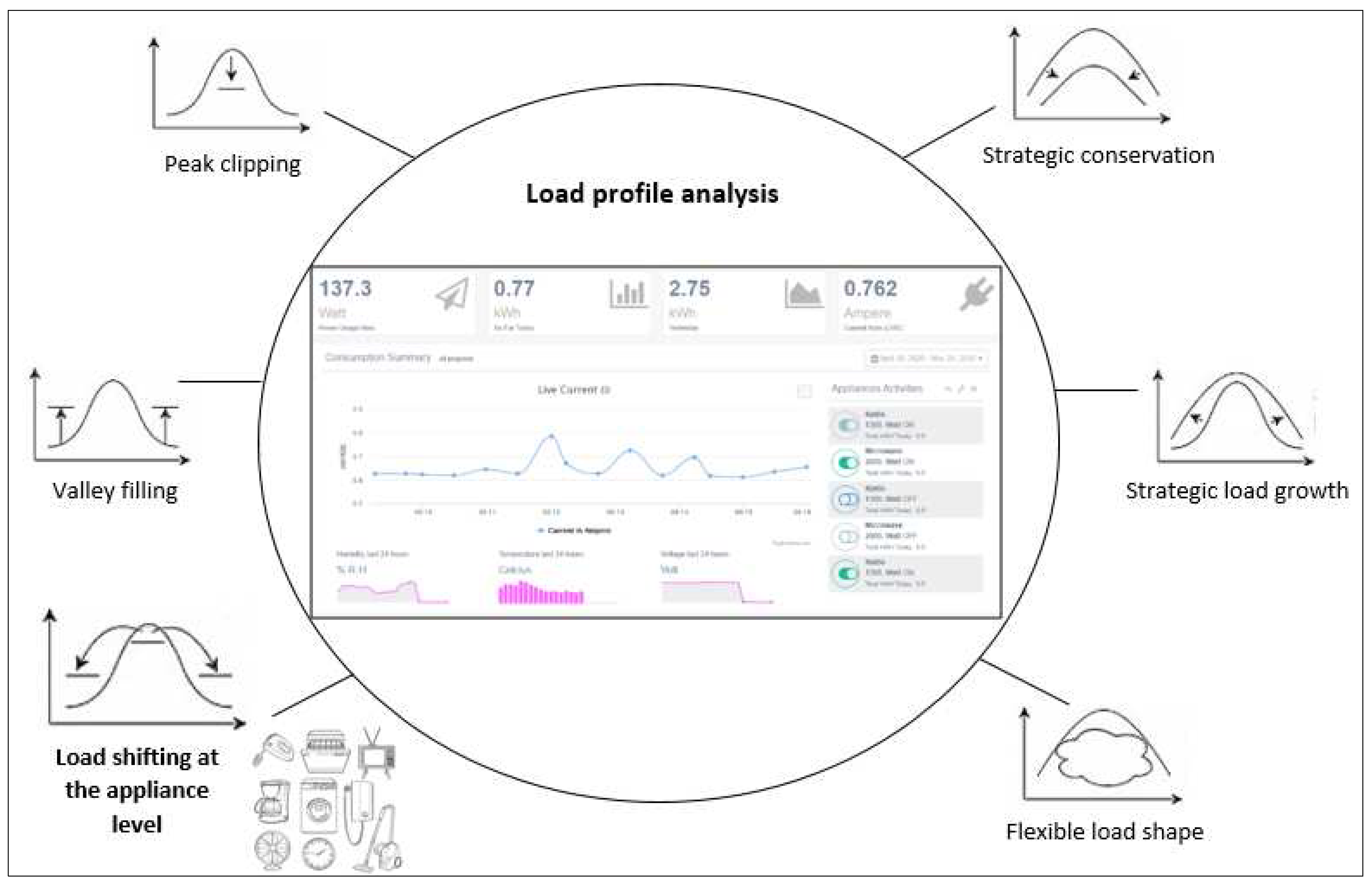
Figure 2.
Year of publication of the initial searched result which starts from 1991 to 2021.
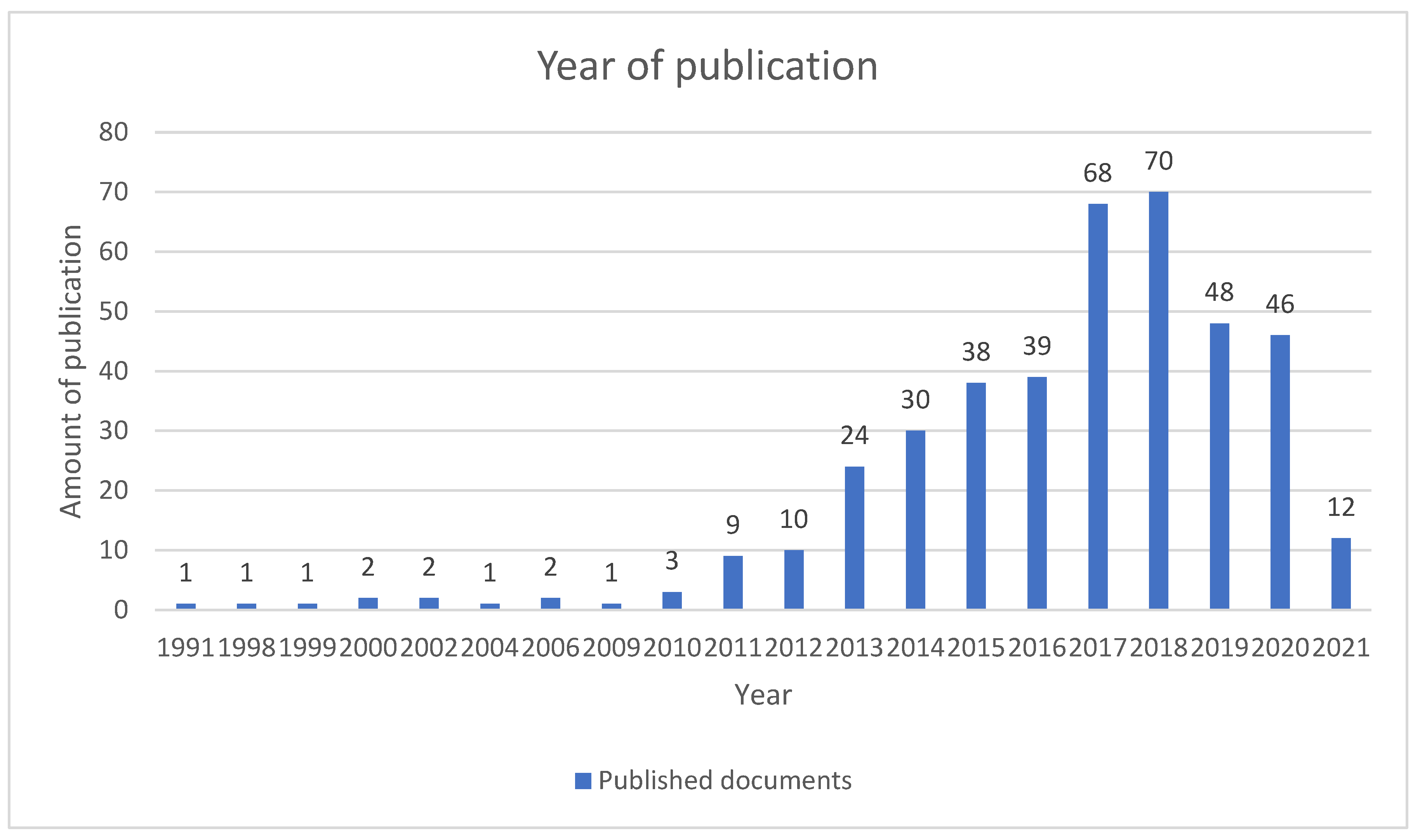
Figure 3.
The mapping of the methods and dedicated appliance(s) proposed in the final list studies. See the article’s ID in Appendix A.
Figure 3.
The mapping of the methods and dedicated appliance(s) proposed in the final list studies. See the article’s ID in Appendix A.
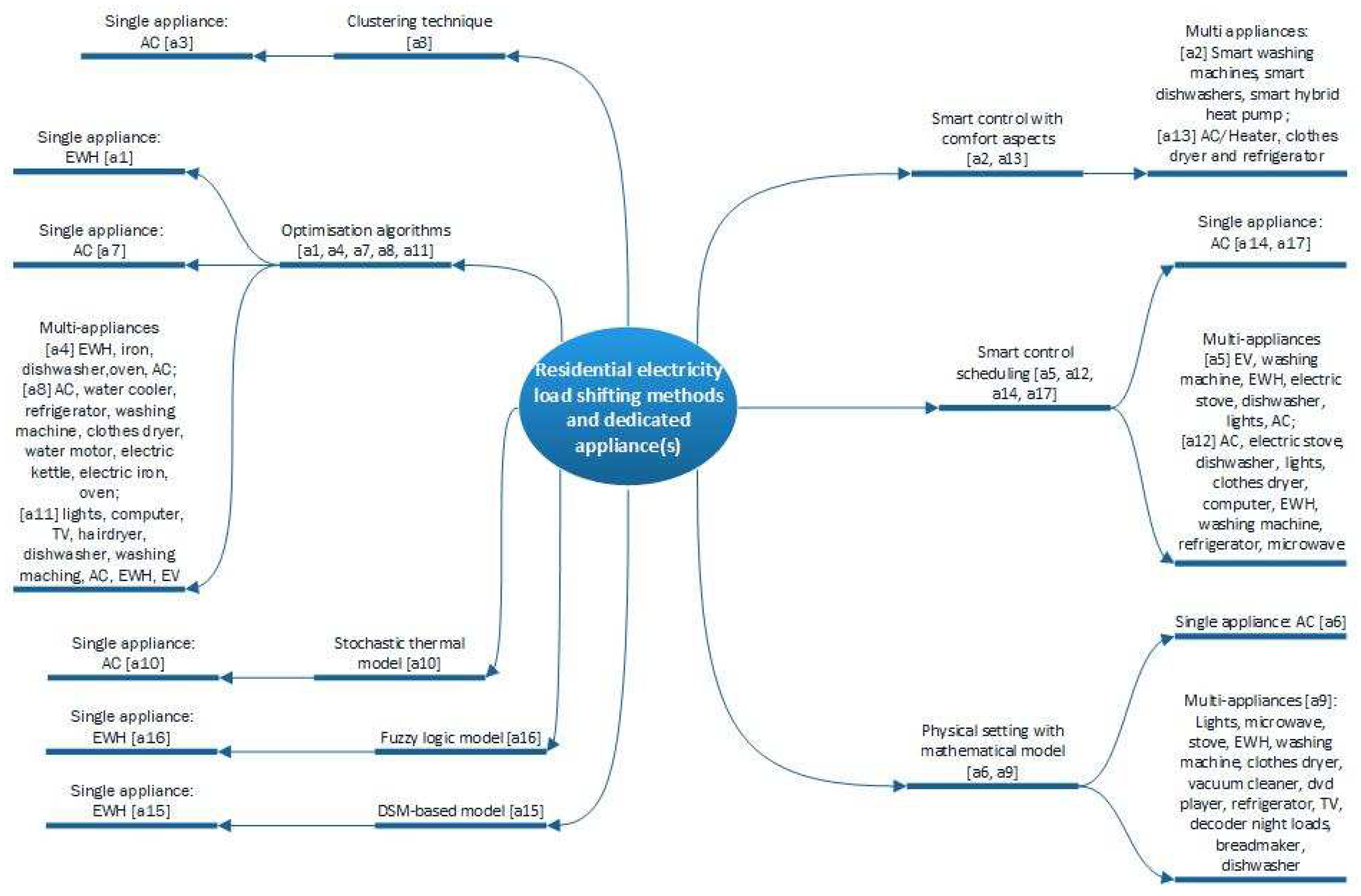
Table 1.
Instantiations of systematicity and transparency based on the concepts proposed in [44].
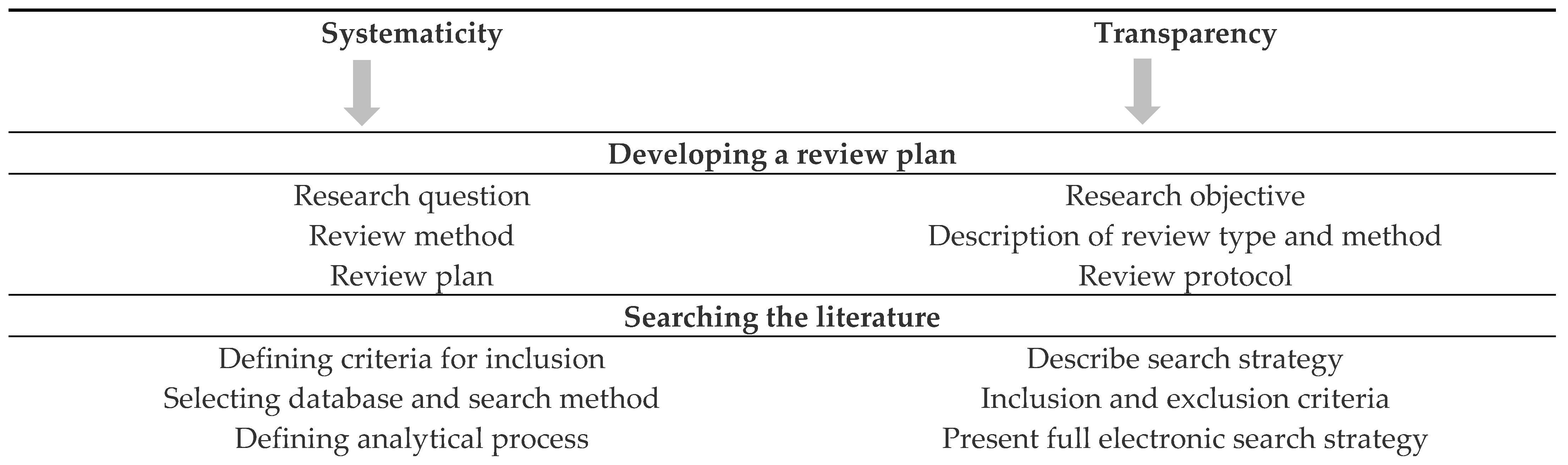
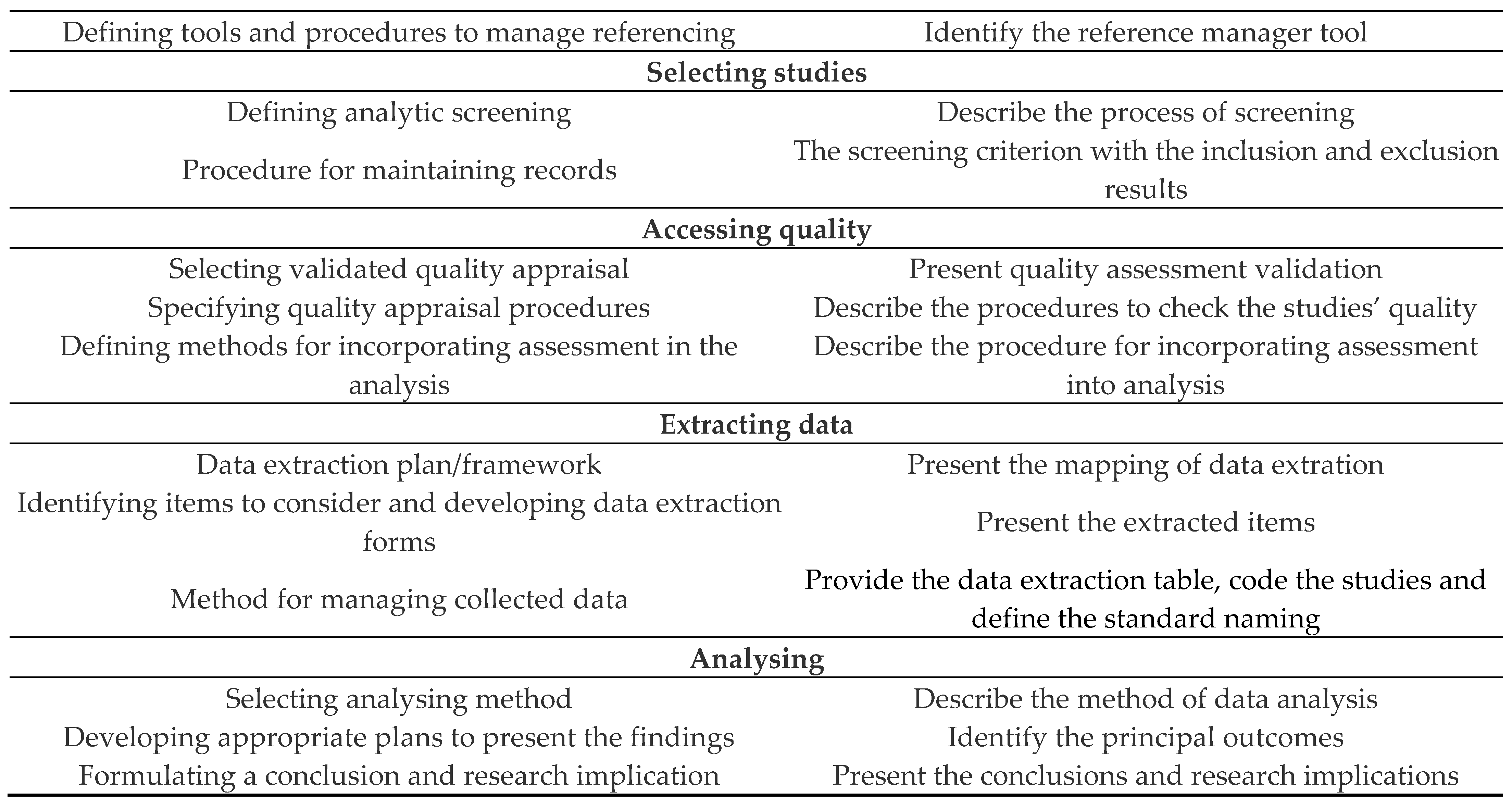
Table 2.
The twin concepts of systematicity and transparency in reviewing the residential electricity load shifting at the appliance level.
Table 2.
The twin concepts of systematicity and transparency in reviewing the residential electricity load shifting at the appliance level.
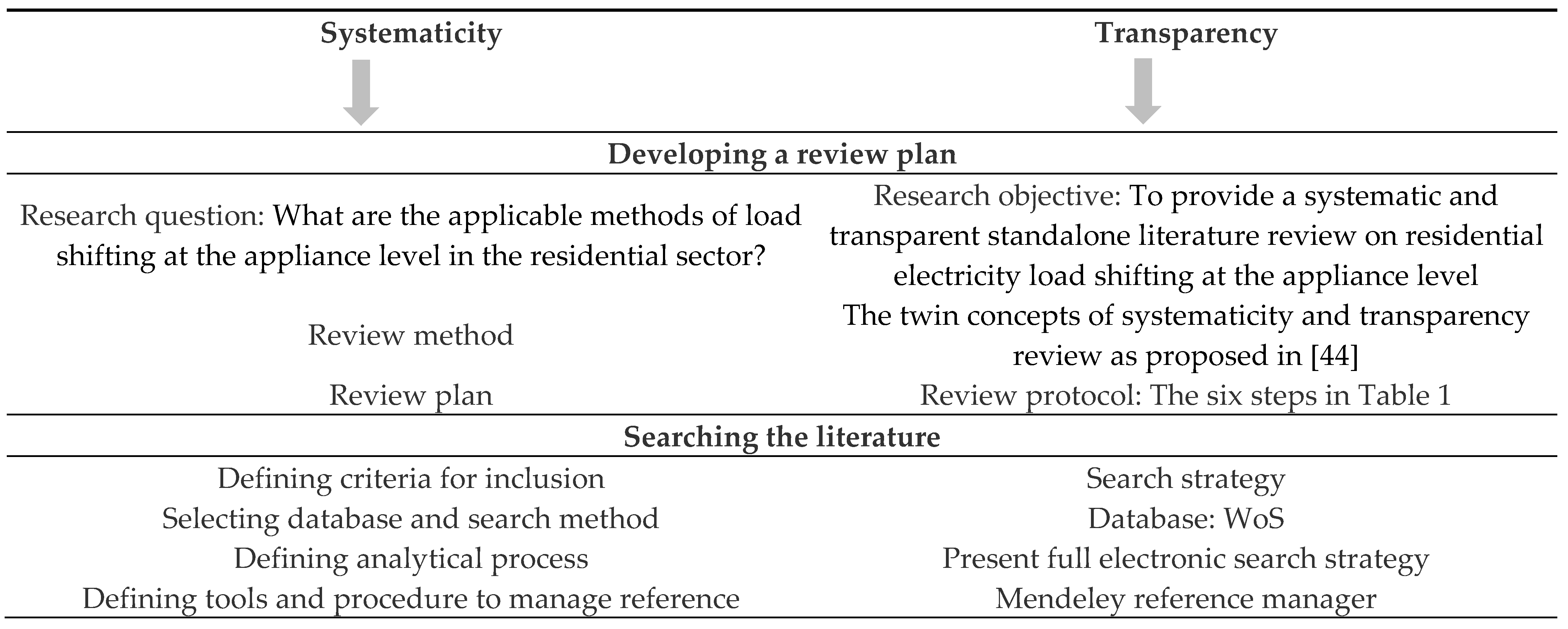
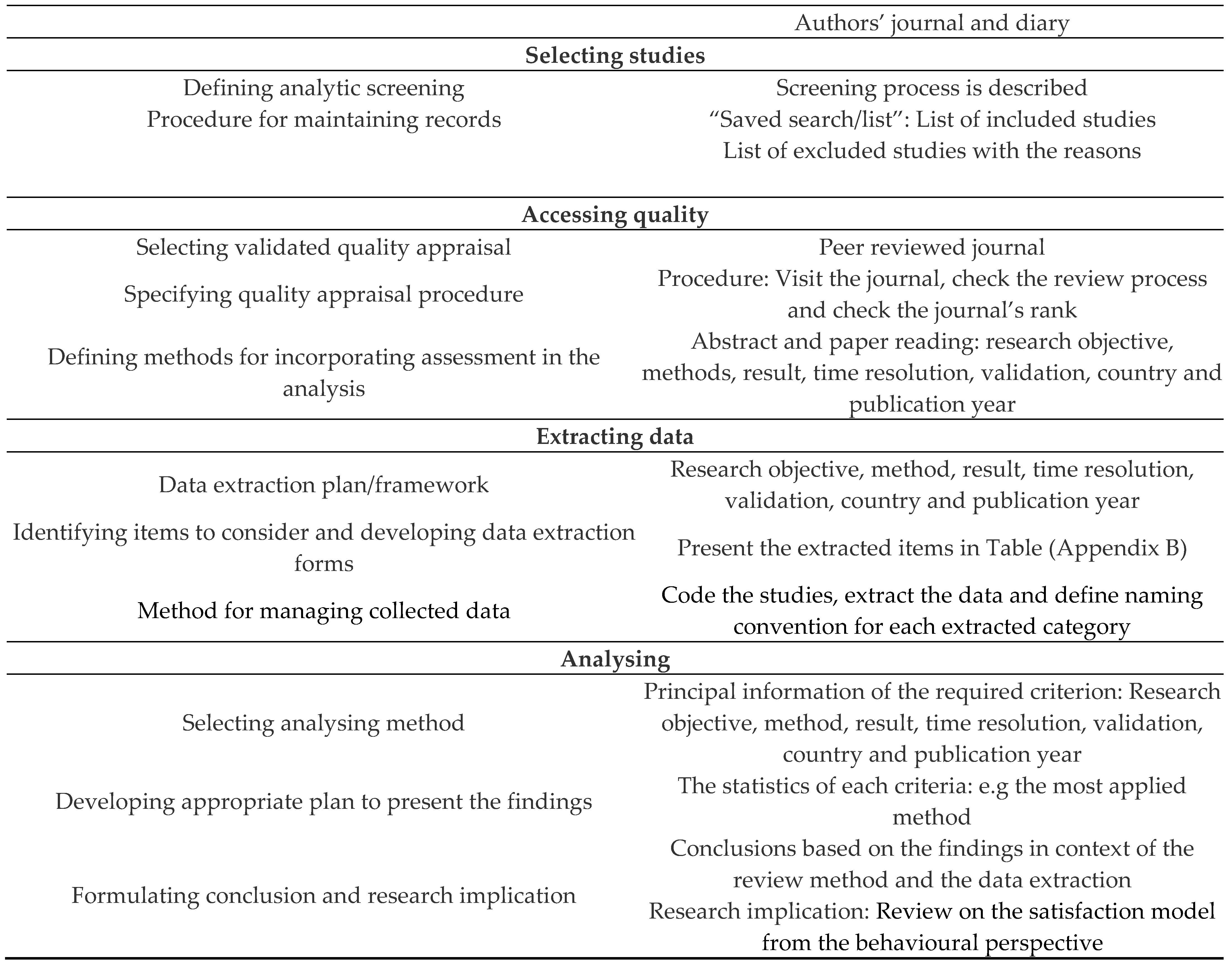
Table 3.
Waterfall statistics showing how many articles were included and excluded in the process.
| Waterfall Statistics | Bulk | Reduced |
|---|---|---|
| Initial searched | 421 | - |
| Screening 1: Language | 421 | 0 |
| Screening 2: Publication stage | 419 | 2 |
| Screening 3: Document type | 235 | 184 |
| Selecting subject areas | 222 | 7 |
| Accessing quality 1: peer-review article | 228 | 0 |
| Accessing quality 2: title and abstract reading | 27 | 201 |
| Accessing quality 3: Paper reading | 17 | 10 |
| Final number of the selected studies | 17 | - |
Table 4.
Applicable load shifting methods based on the appliance’s operation time.
| Load Shifting Method | Appliance’s Operation Time | |
|---|---|---|
| Controllable | Un-Controllable | |
| Optimisation algorithms | EWH, AC, washing machine, dishwasher, refrigerator | Lighting, oven, computers, TV, blender, hairdryer, electric stove |
| Clustering technique | AC | - |
| Smart control with comfort aspects | AC, heater, washing machine,dishwasher, clothes-dryer, refrigerator | - |
| Stochastic thermal model | AC | |
| Fuzzy logic | EWH | |
| Smart control scheduling | Washing machine, dishwasher, hybrid heat pump | Lighting, TV, electric stove, computer |
| Physical setting with mathematical model | EWH, AC, washing machine, dishwasher, refrigerator | Lighting, TV, electric stove |
| DSM-based model | AC | - |
Table 5.
Basic data quality score of the final articles.
| Article ID | Objective | Approach | Method | Result | Limitation | Model’s Input | Time Resolution | Validation | Simulated appliance | Country/Region | Score |
|---|---|---|---|---|---|---|---|---|---|---|---|
| a1 | 1 | 1 | 1 | 1 | 1 | 1 | 1 | 1 | 1 | 1 | 11 |
| a2 | 1 | 1 | 1 | 1 | 1 | 1 | 1 | 1 | 1 | 1 | 11 |
| a3 | 1 | 1 | 1 | 1 | 1 | 1 | 1 | 1 | 1 | 1 | 11 |
| a4 | 1 | 1 | 1 | 1 | 1 | 1 | 1 | 1 | 1 | 0 | 10 |
| a5 | 1 | 1 | 1 | 1 | 1 | 1 | 1 | 1 | 1 | 1 | 11 |
| a6 | 1 | 1 | 1 | 1 | 1 | 1 | 1 | 1 | 1 | 1 | 11 |
| a7 | 1 | 1 | 1 | 1 | 1 | 1 | 1 | 1 | 1 | 1 | 11 |
| a8 | 1 | 1 | 1 | 1 | 1 | 1 | 1 | 1 | 1 | 0 | 10 |
| a9 | 1 | 1 | 1 | 1 | 1 | 1 | 1 | 1 | 1 | 1 | 11 |
| a10 | 1 | 1 | 1 | 1 | 1 | 1 | 1 | 1 | 1 | 0 | 10 |
| a11 | 1 | 1 | 1 | 1 | 1 | 1 | 1 | 1 | 1 | 0 | 10 |
| a12 | 1 | 1 | 1 | 1 | 1 | 1 | 1 | 0 | 1 | 1 | 10 |
| a13 | 1 | 1 | 1 | 1 | 1 | 1 | 1 | 1 | 1 | 1 | 11 |
| a14 | 1 | 1 | 1 | 1 | 1 | 1 | 1 | 1 | 1 | 1 | 11 |
| a15 | 1 | 1 | 1 | 1 | 1 | 1 | 1 | 0 | 1 | 1 | 10 |
| a16 | 1 | 1 | 1 | 1 | 1 | 1 | 1 | 0 | 1 | 0 | 9 |
| a17 | 1 | 1 | 1 | 1 | 1 | 1 | 1 | 1 | 1 | 1 | 11 |
Disclaimer/Publisher’s Note: The statements, opinions and data contained in all publications are solely those of the individual author(s) and contributor(s) and not of MDPI and/or the editor(s). MDPI and/or the editor(s) disclaim responsibility for any injury to people or property resulting from any ideas, methods, instructions or products referred to in the content. |
© 2023 by the authors. Licensee MDPI, Basel, Switzerland. This article is an open access article distributed under the terms and conditions of the Creative Commons Attribution (CC BY) license (http://creativecommons.org/licenses/by/4.0/).
Copyright: This open access article is published under a Creative Commons CC BY 4.0 license, which permit the free download, distribution, and reuse, provided that the author and preprint are cited in any reuse.


