

Submitted:
12 October 2023
Posted:
13 October 2023
You are already at the latest version
Abstract
Art organizations are increasingly focusing on enhancing the visitor experience to attract a wider audience. The aim objective of this study was to explore the key factors that influence the visitor experience of offline art exhibitions and to use a mixed methods to data collection and analysis. The research process was divided into three stages. In the first stage, we conducted semi-structured interviews with 12 respondents by dividing the exhibition experience into three time periods: pre, during, and post-visit. We extracted seven factors affecting visitor experience through qualitative content analysis including marketing, motivation, physical environment, exhibit quality, participation, technology and service facilities; in the second stage, we developed an assessment scale and pretested it; in the third stage, we collected 725 questionnaires to validate the factors of visitor experience in art exhibitions. The results of linear regression analyses showed that all seven key factors had a significant impact on visitor experience. This study constructed a scale to assess the factors of art exhibition experience, which provides theoretical sup-port for in-depth study of art exhibition experience and useful guidance for planning and design-ing art exhibitions to improve the quality of visitors' experience of art exhibitions.
Keywords:
offline art exhibitions
; visitor experience
; influencing factors
; mixed methods
; multiple linear regression
1. Introduction
The concept of exhibition has evolved over time, but it usually refers to the presentation of carefully selected objects to audiences on a specific occasion [1]. In general, we divide exhibitions into cultural and commercial categories, including long-term and short-term [2]. The scope of cultural exhibitions includes museums, art galleries, historical sites and other forms of culture and art [3]. Art exhibitions occupy an important place in the category of cultural exhibitions. In recent years, museums and other cultural and artistic institutions have become increasingly keen to organize art exhibitions of various types and contents [4], which not only provide a platform for artists to display their works, but also provide audiences with opportunities to experience art. However, in the face of competition from the urban leisure industry [3]and the challenging task of attracting and sustaining audiences, art organizations have had to start focusing on the experiential aspects of exhibitions [5]. With advances in internet technology and artificial intelligence, art exhibitions are moving towards being more interactive, participatory and inclusive, which includes the use of sound, light and electronic elements to create scenarios in a given space that are different from reality in order to enhance the audience's sensory experience [6,7]. In addition, audiences' interactions while viewing artworks can alter the art experience [8]. Packer and Ballantyne in their study found that factors such as activities, events, environments provided by the organization and visitors' personal prior experiences, interests, expectations and motivations can influence the visitor's experience [9]. Nonetheless, there is a lack of comprehensive research on the factors that influence visitors' exhibition experience. Therefore, the main objective of this study is to comprehensively explore the factors that influence visitors' experience of visiting art exhibitions.
Some scholars have argued that there is a difference between the museum experience and the exhibition experience, but also recognized that the exhibition experience is part of the museum experience [10]. The focus of this study is on the visitor experience associated with art exhibitions, so the many previous studies on the museum experience can provide useful references and guidance for an in-depth exploration of the art exhibition experience. King et al. combined the existing knowledge of the visitor experience of museum exhibitions with the concept of the user experience to propose a model of the Museum Exhibition User Experience (MEUX) and the key concepts of visitor factors that influence the experience are summarized [11]. Market research in the cultural sector has also recognized the importance of the exhibition environment for visitors to museums and other cultural attractions [12,13]. Atmospheric elements that have been tested by scholars in their research include layout, location of exhibits, music, colors, lighting and aroma, which are significant to a wide range of visitors [14]. In addition, some researchers recognize that expert information systems that incorporate a wide range of innovative tools, digital technologies and outcome strategies can also improve service quality and enhance the visitor experience [7]. Despite the variety of studies on museums, exhibitions and visitor experience conducted by these excellent researchers, the literature dedicated to exploring the art exhibition experience is relatively small and not comprehensive enough. Therefore, it is necessary to take a more holistic view of the exhibition experience when examining the factors that influence the visitor experience of art exhibitions [15].
We found many demonstrations of the concept of a chronological order of experience by examining a large body of literature. Weaver emphasized the importance of the overall visitor experience from exposure to the advertisements to arriving at the venue and taking away impressions and souvenirs when leaving the exhibition [16]. Other scholars in their research have proposed 18 audience experience factors (AEFs) for exhibitions through a systematic literature review and categorized these into pre, during, and post- experience [17]. In view of these previous studies and in order to understand the art exhibition experience more comprehensively. This study systematically investigated the key factors affecting the experience from the visitor's perspective in conjunction with the temporal dimension of the experience. The temporal dimension of experience covers the complete process from the initial stage of acquiring information about the exhibition, extending to the on-site viewing of the exhibition and then continuing until the visitor leaves the exhibition site and returns to his or her daily life. In order to better parse this process, we divide it into three experiential stages: pre, during, and post-visit. This division helps to identify and study the impact of each stage in the visitor experience more clearly.
There is an urgent need for cultural organizations to develop a deep understanding of audience needs in a competitive environment in order to provide a more engaging and unique visitor experience that attracts more visitors and contributes to the sustainability of cultural activities. However, most of the past studies have focused on one aspect of the experience and there is still a research gap in the systematic study of visitor experience. This study aims to comprehensively explore the key factors that influence visitors' art exhibition experience to fill this research gap. This study covers a wide range of art exhibitions including offline art exhibitions offered by museums, galleries and other arts and cultural organizations. A mixed research methodology was employed. We categorized the visitor experience of art exhibitions into three stages, extracted seven key factors influencing the experience and constructed a scale for assessing the factors influencing the visitor experience of art exhibitions. We delve into various aspects affecting the visitor experience, providing deeper insights into the art exhibition field, helping to broaden our understanding of the visitor experience and providing new directions for further research to explore. In practice, this study helps art exhibition organizations to clearly identify the needs and preferences of visitors at different stages of the exhibition process so that they can better meet their expectations and create a more satisfying art exhibition experience. This will help attract more visitors and bring greater success and sustainable development to arts and cultural organizations.
The remainder of the paper is structured as follows. Section 2 reviews the relevant literature on art exhibitions, visitor experience and experience influencing factors. Section 3 details the research methodology and presents the findings. Section 4 discusses the results of the data analysis and the theoretical and practical implications of the findings, summarizing the limitations of the study and making advice for future research. Section 5 is the conclusion.
2. Literature review
2.1. Art Exhibition
Exhibitions can be defined as a way of organizing and visualizing ideas, things and bodies of knowledge in space with origins dating back to the Age of Enlightenment usually in the form of physical objects [18]. It has been argued that the main purpose of exhibitions is to "surprise" visitors by providing them with hitherto unknown artistic experiences [19]. Furthermore, Dziekan states that the term exhibition refers to an event with a specific place and time [20]. Formal art exhibitions are usually associated with the Académie des Beaux-Arts, which since 1667 has organized public exhibitions known as Salons, which were designed to present the work of renowned artists and to follow academic norms [21]. Thus, art exhibitions as well as research centers were built to present art and handicrafts to the public [22]. Furthermore, Simmel considered art exhibitions as an inevitable extension and product of the professionalization of modern art [23]. Whereas, Widjono considers exhibition as an interactive activity between art and visitors in the art ecosystem [24]. Art exhibitions were usually held in traditional museums and galleries in the past, but as forms of artistic creation continue to evolve and diversify, new venues for exhibitions are being sought as well as new concepts and ways of organizing exhibitions are being experimented with [25]. Nowadays, many external companies or community groups also organize various types of art exhibitions [11]. They plan their exhibitions by creating a whole set of products about the exhibition in order to attract a wider audience to visit the physical exhibitions [3]. Widjono believes that art exhibitions are closely related to two key elements, namely works of art and exhibition space because in the past exhibitions were usually held in specific locations and spaces [24]. With the advancement of technology and the emergence of more inclusive art forms, art exhibitions are no longer restricted to specific physical spaces and geographical areas but can be organized and visited on a wider scale.
For the purposes of this paper, we define an art exhibition as a thematic exhibition of art activities or artworks in a dedicated physical space. Paintings, sculptures, photographs, videos, AI digital art and other forms of visual artworks are the core elements of the exhibition.
2.2. Visitor Experience
In numerous domains, including tourism, gastronomy, the hospitality industry, and the arts, the terminology "experience" is frequently employed to delineate their respective offerings and services. [26]. Previous research has delved into the definition and identification of user experience elements [27]. As early as 1963, Clawson proposed a five-stage model of the stages of the "entertainment experience" including the anticipation, going to the site, the live event, the return trip, and the reminiscence stage [28].The interactive experience model proposed by Falk and Dierking emphasizes that the experience is a process, which includes a pre-event, during, and post-event and they argue that the visitor experience is an interaction between three contexts: the individual, the socio-cultural context and the physical environment [29]. Packer and Ballantyne through an extensive review of the literature on visitor experience, defined visitor experience as an individual's immediate or sustained, subjective and personal response to activities, events outside of his or her everyday environment and constructed a multifaceted model of visitor experience in relation to a variety of environments [9]. After synthesizing previous research, scholars have proposed a simple definition of experience: experience is a composite that includes cognitive, emotional, sensory and intentional responses, which are influenced by a variety of factors pre, during, and post-purchase, due to individual differences ultimately influencing different outcomes associated with consumers and brands [30].
However, experiences should not only be seen as memorable events that happened in the past [31], but it is also necessary to see them as something unforeseen in the future and to take into account the preparatory activities that visitors can engage in before the experience takes place [32]. An experience is a mixed feeling that contains both emotional and mental elements [33]. Therefore, one's experience is influenced by a variety of factors, which makes the study of the experience of art exhibitions quite challenging. Such research not only involves tangible aspects such as the environment and exhibits, but also covers intangible elements such as emotions and memories evoked during the visit.
According to Falk and Dierking, the visitor experience is not static but a dynamic process that includes experiences pre, during, and post-visit. and they emphasize the holistic nature of the experience [29]. We adopt this dynamic experiential process to define the visitor experience of an art exhibition in a broad sense. This experience ranges from the visitor's intention to visit, to the perception, emotion, cognition and interaction with the artwork, the exhibition site and related information experienced during the exhibition process to the subjective perception and reaction at the end of the visit.
2.3. Influencing Factors of Visitor Experience of Art Exhibition
This paper was searched by using keywords such as museum, exhibition, art exhibition, experience and influencing factors on Google Scholar, Web science. Relevant literature on visitor experience in museums, exhibitions and other leisure environments was analyzed in depth to summarize the influencing factors on visitor experience in previous studies. As modern museums have multiple functions such as collection, research, exhibition, education and leisure [34]. And in this context, exhibitions are an integral part of museums and art exhibitions are a more specific area of exhibitions. Therefore, most of the experiential factors we found in the museum exhibition literature also apply to the experiential influences on art exhibitions. When we describe and analyze the influencing factors of the visitor experience, these findings are not conflicting but complementary.
Some researchers have done some studies related to the experience factors of museums or exhibitions. They have suggested that factors such as social, personal background or physical characteristics affect the visiting experience [29,35]. In addition, the spatial organization of museums and its impact on visitors has been the subject of extensive research [36]. Scholars have found through qualitative research that the physical environment is one of the most important dimensions for measuring the quality of the experience, while atmosphere has been widely recognized as a key component of the quality of the experience in a variety of leisure environments [37,38]. Falk and Dierking acknowledged that the physical environment of a museum has been recognized as an important aspect of the visitor experience [15]. Therefore, creating a beautiful physical environment can stimulate positive emotions in the customer's experience. Lighting, color, type and quantity in exhibition halls play an important role in visual conditions, which are used to interpret and enhance works of art and have a significant impact on the visitor experience [39,40]. Other scholars have also suggested that good lighting is positively correlated with revisit intentions [12]. As technology evolves, new technologies are also widely used in art galleries, museums and art exhibition [41] and play a crucial role in supporting visitors and enhancing their experience [7]. Research has investigated VR as a new form of edutainment in art museums [42] and how VR elements can be added to provide a more intimate and immersive visitor experience [43]. In addition, interaction design can have a significant impact on the overall visual experience [44]. Scholars have also identified museum food venues and their offerings and design are important and integral elements of the visiting experience [45,46]. These studies above have analyzed the factors of visitor experience from a single dimension and have not comprehensively examined the factors influencing the art exhibition experience.
Other researchers have studied museum and exhibition visiting behavior from a marketing perspective, where individual museum visiting behavior in Bangladesh was investigated and seven dominant factors were found to strongly influence visitors' museum visits, namely motivational, services, promotional, learning, aesthetic, archaeological and cultural values [47].Samdanis states that marketing analytics driven by the power of big data have also enhanced the understanding of audience behavior pre, during, and post-visit [41]. Other scholars have compared the impact of features, services, benefits and the time or type of visit on young people's participation in exhibitions from a marketing perspective [46].
Although a number of scholars have conducted a variety of studies on museums, exhibitions and visitor experience. Few scholars have comprehensively explored the influencing factors of experience in the entire process pre, during, and post-visit. Drawing on previous studies, we extracted the influencing factors of visitors' experience of art exhibitions through the method of qualitative interview, constructed the dimensions of the experience of offline art exhibitions and designed a questionnaire that contained 35 questions. Through correlation analysis and multiple linear regression analysis, we addressed the following questions:
RQ1: What are the factors that influence the experience throughout the process of visiting an offline art exhibition?
RQ2: To what extent does each factor influence the visitor's experience of the art exhibition?
3. Methods and Results
This study used an exploratory sequential mixed research methodology with three main stages. In the first stage, qualitative data was used to analyze potential influencing factors with the goal of clarifying and defining influencing factors to address the research questions. In the second stage, a scaled questionnaire was designed and pre-tested for further data collection based on the preliminary qualitative data. In the third stage, we examined seven factors influencing the art exhibition experience through a large sample survey using linear regression analysis (Figure 1).
Mixed-methods research is a research approach that collects and collates both qualitative and quantitative data and the design of this approach may include philosophical assumptions and theoretical frameworks [48]. Exploratory research methods begin with a qualitative study in which the researcher examines participants' perspectives and then uses the results of the data analyzes to develop scales. Mixed-methods research takes full advantage of combining qualitative and quantitative research while alleviating the limitations of a single research method [49]. Thus, it can help us to understand the difficulties and themes of the study more thoroughly.
3.1. The First Research Stage
3.1.1. Interviewees
12 respondents were recruited for this stage (Table 1). All of them had visited different forms of art exhibitions and had done so at least twice in 2023 including both free and paid exhibitions, covering a wide range of artistic content such as paintings, sculptures, photographs and digital art. This is to better describe the experience at the exhibition.
3.1.2. Data Collection
Interview outline. We devised a series of questions to assist visitors in recalling their experiences during the art exhibition including their deepest impressions before, during and after the visit. We also explored the factors that influenced their experience and how they evaluated the exhibition. Question 1 was designed to find out how often respondents visited and whether they had more experience of answering the following questions. Question 2 was why respondents visit art exhibitions. Question 3 was to find out who the respondent visited with. Respondents were then asked to describe their experiences before the visit (Questions 4,5,6), during the visit (Questions 7,8,9) and after the visit (Questions 10,11,12) as well as good or bad experiences. 13 and 14 were questions that asked for a deeper understanding and evaluation of the art exhibition. These questions helped to identify specific influences that affect visitors' offline art exhibition experiences and to what extent.
Interview process. 10 respondents were interviewed individually and the other two were interviewed individually via online means. Before starting the interviews, we explained to all respondents that the purpose of this study was to investigate the factors influencing the offline art exhibition experience. They always had the option to end the interview if special circumstances existed. Furthermore, we made it clear that the results of the interviews would be handled confidentially and that if they were quoted in the study, numbers would be used in place of their identities. We carefully recorded and audio-recorded each interview. Additional questions were asked in order to gain a fuller understanding of their perspectives. The length of the interviews varied between 20 and 45 minutes.
3.1.3. Results
The goal of this method is to systematically analyze the raw data from the verbatim interviews to identify categories and themes within them and organically collate the large amount of textual data into concise summaries of the key findings, further refining and abstracting the data as the analysis proceeds [50,51]. The aim of this process is to provide an in-depth description of the phenomenon under study, ultimately generating descriptive concepts or categories that will lead to a more holistic understanding of the object of study [52].
In order to fully understand the participants' interviews, we first transcribed the audio transcripts into text and combined them with handwritten notes. These interview transcripts were then read repeatedly and segmented into meaningful units, followed by a coding exercise to provide descriptive labels for these units as condensed representations. Finally, we expanded these codes and created different types of categories. This analytical process is an ongoing one, involving iterative coding and categorization work, after which we revisit the raw data to reflect on and interrogate our initial analysis.
Based on the above qualitative content analysis process, seven key factors influencing visitors' art exhibition experience were extracted: pre-visit (marketing and motivation), during visit (physical environment, exhibit quality, participation and technology) and post- visit (service facilities). A selection of samples from the large amount of raw interview data was used to demonstrate our qualitative content analysis process. Table 2 shows Summary of the qualitative content analysis.
Marketing is closely related to visitors' knowledge of the art exhibition. During our interviews, we found that many visitors were attracted to art exhibitions by promotional materials such as video advertisements, posters and public numbers. Moreover, many visitors would obtain detailed information about the exhibition in advance through the official accounts including the location, time, theme, content and information about the participating artists. Most visitors chose to purchase tickets through WeChat or official accounts and individual interviewees mentioned that they would be dissatisfied if the exhibition publicity did not match the actual exhibition content.
Motivation is the main factor that drives visitors to art exhibitions. In the interviews, respondents described in detail the various reasons why they came to visit art exhibitions. Some were attracted by the latest technology and the latest works of the artists. One respondent also mentioned that "the exhibition center is a good place to relax and unwind with family and friends". Two other respondents stated that they were influenced by the positive comments about the exhibition on social media and therefore decided to visit. In order to limit the number of research questions and to ensure that the most prominent and prevalent motivations were represented. The five most frequently mentioned motivations among the respondents were selected for analysis.
Physical environment is the first important factor that visitors feel when they enter the exhibition hall. It includes not only the overall layout of the exhibition hall and the way it is guided, but also the various visual, auditory, tactile and gustatory effects provided to the visitors. The atmosphere of the exhibition halls was the most frequently mentioned item by the interviewees. They generally agreed that visiting an art exhibition is not just about appreciating the paintings, but also includes factors such as the lighting, music and colors in the exhibition, which all have a significant impact on the overall experience. Order and movement within the exhibition halls were also of great concern to visitors. One concern mentioned by most interviewees in their interviews was the lack of clear delineation of art exhibition areas.
Exhibit quality, as the fourth influencing factor, is at the heart of any art exhibition. Many viewers come to offline art exhibitions mainly to see the original artwork in person. They can really feel the details of the artwork only on the spot. In our interviews, we found that most respondents were interested in the creativity, diversity and artistic value of the exhibits. Some emphasized the consistency of the narrative between the exhibits and the theme of the exhibition.
Another influencing factor we identified in our interviews was participation. A number of respondents in the interviews indicated that they visit art exhibitions with family or friends and enjoy the special activities that they are able to participate in. These activities included stamping in the exhibition halls, collecting labels for their work, doing DIY projects and getting souvenirs. They expect to take away meaningful souvenirs from the exhibition as a reminder of their visit. One of the painters we interviewed emphasized the importance of opening ceremonies and networking events. He believed that these activities not only helped to understand the artworks more deeply, but also to communicate with others to gain new knowledge.
Technology was a topic that received a lot of attention with younger respondents showing a keen interest in new technologies and interactive methods in the exhibition. two respondents believed that the introduction of new technologies such as head-mounted devices and interactive operating devices would enhance the exhibition experience. The majority of respondents said they preferred to use new technologies such as e-guides, scanning QR codes and multimedia to better understand the artworks.
The last factor extracted was service facilities. Every respondent emphasized that the periphery of the exhibition halls should be equipped with necessary service facilities, such as washrooms, catering services and rest areas. Most of the visitors would go to the gift shop at the end of their visit and they were very concerned about the design and price of the art derivatives. On the side, the free Wi-Fi and charging devices provided in the pavilion were very convenient for many visitors. It is worth mentioning that two visitors mentioned that the exhibitions they had visited had special feedback areas, which provided visitors with a time and space to reflect on the exhibitions.
We interviewed 12 interviewees who shared their experiences from planning a visit, visiting the site and the end of the whole visiting process. We extracted seven key influencing factors that were most frequently mentioned by the interviewees through qualitative content analysis of these interviews. These factors provide a solid basis for the development of our new evaluation tool.
3.2. The Second Research Stage
We designed 35 projects based on the seven influences extracted in the first stage, which represent the seven dimensions of the influences mentioned above (Appendix A). We invited 2 exhibition curators and 2 UX design experts to participate in the discussion to ensure the quality and applicability of these items. We finally selected these 35 items as test items after several rounds of in-depth discussions and careful refinement. Each item was equipped with a five-point Likert scale (1=Strongly Agree, 5=Strongly Disagree) to assess visitors' attitudes and perceptions of each item. A five-point Likert scale was used as the measurement tool, which is based on the assumption that attitudes are assessable and that the strength of attitudes is a linear, continuous unity that ranges from strongly disagree to strongly agree [53]. This scale has been widely used to measure respondents' attitudes.
15 experienced art exhibition visitors were first recruited to pilot the questionnaire before the test items were heavily surveyed. Suggestions from the participants were taken into account and the questionnaire was partially modified to make it easier for the respondents to understand. Then 116 questionnaires were pre-distributed through an online survey platform (Questionnaire Star), which 100 valid questionnaires were selected. The pre-test data were not included in the final data analysis in order to assess the reliability and validity of the questionnaire structure. We used SPSS to conduct exploratory factor analysis (EFA) on the collected data. Table 3 and Table 4 results show that the Cronbach's Alpha value for all variables is 0.958, the Kaiser-Meyer-Olkin (KMO) value is 0.884 and the p-value in the Bartlett's test of sphericity is less than the significance level of 0.05, indicating that the data is suitable for factor analysis. The structural reliability of this questionnaire is good and suitable for formal questionnaire follow-up.
3.3. The Third Research Stage
3.3.1. Participants and Data Collection
The formal questionnaire was collected through a Chinese platform specializing in online questionnaire services (Questionnaire Star). We asked participants whether they had visited an offline art exhibition in the last year before answering the questionnaire and those who had not could not continue to answer the questionnaire. Each user who completed the questionnaire was rewarded with a 3 RMB WeChat bonus as a token of our appreciation for their time and honesty in answering each question. A total of 812 completed questionnaires were collected. We finally collected 725 valid questionnaires excluding those with obvious contradictions, giving the same answer consecutively, choosing contradictory answers before and after and taking less than 90 seconds to complete the questionnaire.
Demographic Information
In this study, the data of 725 valid samples were analyzed demographically (Table 5) and then processed using SPSS software. In terms of gender, there were 321 males (44.3%) and 404 females (55.7%). In terms of age, 175 participants (24.1%) were aged 25-34, 229 participants (31.6) were aged 35-44 and 118 participants (16.3%) were aged 45-54. These three age groups dominated the sample. In terms of educational background, there were 239 college participants (33.0%) and 366 undergraduate participants (50.5%). These analyses are in line with other scholars' surveys on art exhibition visitors, in which he found that a large proportion of the visiting population were adults aged 25-44 and that art visitors were more educated [54]. In terms of occupation, 288 participants (39.7%) were company employees, 158 participants (21.8%) were freelancers and 108 participants (14.9%) were institution workers. 81.7% of the participants had monthly incomes of more than 3,000 RMB. In terms of frequency of visit, 91.3% of the participants visited the exhibition more than 2 times in the last year.
3.3.2. Results
At this stage, we used multiple linear regression analysis to examine the questionnaire data in depth. This approach consisted of four main steps that were interrelated and together formed the framework of our analysis. Firstly, we conducted reliability and validity analyses to ensure the reliability and validity of the measurement instrument. Next, we examined the kurtosis and skewness of the data to understand the distributional characteristics of the data. Then, we conducted correlation analyses to explore the relationship between different factors. Finally, we applied linear regression analyses to gain insight into the extent to which each factor influences the visitor experience.
Reliability and Validity Analysis
In the first step, we performed a reliability and validity analysis of the data. In order to assess the reliability of the questionnaire, we used the Cronbach's Alpha (CA), which is one of the widely used statistical tools in social and scientific fields [55]. It is commonly used in mathematical and statistical analyses of questionnaires containing indicators of Likert scales in order to assess the internal consistency of the scale. In general, the higher the value of Cronbach's Alpha, the higher the reliability of the scale. In basic research, a reliability of 0.80 or higher is usually required; while in exploratory research, a reliability level of 0.70 is acceptable [56]. In addition, we used the Kaiser-Meyer-Olkin (KMO) value to validate the validity of the questionnaire to verify whether the indicators in it were correlated with each other in terms of internal consistency. If the KMO value is higher than 0.8, it means that the questionnaire has high validity [56].
Table 6 presents the reliability and validity results of the questionnaire data. The Cronbach's Alpha (CA) for all variables exceeded 0.8, which indicates that the data has excellent reliability. We also assessed the validity of the data using KMO and AVE, and the KMO values for all dimensions exceeded 0.8, which indicates that the data have good structural validity. Furthermore, we conducted a convergent validity test and the results of the study showed that the average variance extracted (AVE) exceeded 0.5 for all dimensions [57], which indicated that the data had good internal validity.
Descriptive Analysis
In the next step, we will conduct a descriptive analysis of each item to understand the distribution of each variable. In this analysis, we focus on several key metrics, including Average Value (AVG), Standard Deviation (SD), Kurtosis, and Skewness. These indicators will help us to get a fuller picture of the characteristics and distribution of the variables. Table 7 summarizes the results of the descriptive analysis. We can see that the mean and standard deviation of the indicators are within reasonable limits and the kurtosis and skewness of the data are within acceptable limits, which indicates that the distribution of the measurement items is relatively even and the data are suitable for use in multiple regression analyses.
Correlation Analysis
Linear Regression Analysis
Linear regression analysis is used to investigate the extent to which one or more independent variables affect the dependent variable [55]. Table 9 shows the results of the multiple linear regression analysis and the results show that the R2 value is 0.369 which is a good fit. In social science research, when some or most of the explanatory variables are statistically significant, an R2 value between 0.10 and 0.50 is acceptable [59]. If all the VIF values are lower than 5, the model has no multicollinearity problem and the model is well constructed; on the contrary, if the VIF is greater than 5, the model is poorly constructed [60]. In this study, all the VIFs of the model are lower than 5, so the model is well constructed. Meanwhile, the model passed the F-value test (F=59.855, p<0.05), which indicates that at least one of the seven independent variables can explain the variation of the dependent variable. The autocorrelation D-W ratio of the model was 1.902 with a range of 1.5 to 2.5, the model developed in this study was not affected by cointegration by the VIF and DW tests and the combination of t-tests and significance showed that the model was reliable. Finally, the correlation coefficients of our regression show that variables 1-7 all have a significant effect on the tourist experience.
4. Discussion
This section reviews the influencing factors that emerged from the research and discusses the findings from Stages 1 and 3, suggesting some theoretical and practical insights. Research limitations and recommendations for future research are also included.
4.1. Analysis of Influencing Factors of Visitor Experience
In the first stage of the study, a qualitative content analysis approach was used. Seven key factors involved in the three different stages of visiting an art exhibition were extract through semi-structured interviews to support further research. In the second stage, we designed a questionnaire containing 35 items based on these seven factors, which were pre-tested. We validated the categorization of these seven factors through exploratory factor analysis and conducted reliability and validity tests. In the third stage, we conducted an extensive survey and used correlation analysis and linear regression analysis to further explore the findings.
Pre-visit motivation has the greatest impact on the visitor's experience. Other scholars have argued that motivation is the dominant and intrinsic factor in visiting art exhibitions, while marketing is an extrinsic factor [47]. In our study, we found that the reasons why people choose to visit art exhibitions include both intrinsic motivations, such as aesthetic pursuits, leisure needs, desire to learn and curiosity as well as extrinsic factors, such as recommendations from friends and family members or advertising. This is in line with previous research on motivation to visit art museums or exhibitions [61,62,63]. Falk argues that motivational factors are related to identity [54]. We did not divide the groups in our study and only the five most mentioned motivations were selected in this study. Moreover, it was found that the same person would have multiple motivations to visit art exhibitions, suggesting that people's expectations and experiences of the exhibitions are Multiplicity. Marketing is the second influence on pre-visiting. Effective marketing strategies, such as compelling adverts and social media campaigns, help to shape initial perceptions and expectations. This is in common with previous research in museum marketing [19,61]. The marketing and promotion of museum exhibitions is 90% content-driven [54], however, many art organizations hold their exhibitions in cultural and art centers or other commercial spaces and it is more important for visitors to know the details of the exhibition information (ticketing routes, exhibition venues, arrival routes and time of operation, etc.) before their visit. Meanwhile, the publicity content of the exhibition does not match with the reality, which will leave visitors with a negative experience. Therefore, accurate and detailed promotional information will enhance the experience of art exhibitions.
During visit we clearly identified four key influences. Firstly, exhibit quality had the greatest impact on the experience of the art exhibition. The creativity, diversity, artistic value and aesthetic value of the exhibits all have an impact on the visitor's experience, which is consistent with previous studies [64,65]. Meanwhile, the measure of quality of exhibits is not limited to a particular work, but various elements are expected to harmonize with each other to achieve a narrative unity between the exhibits and the theme of the exhibition. Secondly, participation is the second key influence in art exhibitions. It is influenced by the experience, knowledge and preferences of the viewer and is an interaction that occurs between the visitor and the exhibition space, participation allows the visitor to be more than just a spectator, but can contribute content to the exhibition and form an exchange of information with other viewers and with society [64,66]. Our findings are in line with previous work [67,68]. It is worth noting that there are individual differences in audience participation, such as, a companion visitor may want to be more involved, whereas a solo visitor prefers quiet viewing. Many visitors want to leave the exhibition with tangible gains from their participation. Third, technology is the third important factor affecting experience in art exhibitions. The introduction of new technologies has enriched the way exhibitions present artworks. In modern exhibitions, multimedia environments have become mainstream, utilizing tools such as new haptic technologies, VR, AR, PDAs, etc. to enhance visitors' experience of visual art and exhibitions [69,70,71,72], and our study is in line with them. The introduction of these new technologies not only provides visitors with more information and experience, but also inspires them to integrate more deeply into the exhibition. However, it should be noted that specialized visitors were concerned that too much technological interaction would interfere with their immersion in the exhibition, and therefore a balance in the use of technology is needed. Finally, the physical environment is the fourth influence on the experience. Elements of the physical environment such as layout, lighting, smell, and sound atmosphere directly shape the visitor's sensory experience, a view supported by previous research [64,73,74]. In addition, good building appearance and landscaping can attract visitors to stay longer. Therefore, the physical environment is not a good or bad localized environment, but an amalgamation of multi-sensory experiences. A cleverly designed physical environment can improve the quality and length of stay of the overall experience.
Post-visit the impact of service facilities was more pronounced. We found that items such as rest areas, gift shops, and dining venues were items that visitors focused on when seeking comfort and relaxation, which is consistent with previous studies [8,75,76]. Many art organizations now hold temporary exhibitions. Facilities such as rest areas and catering not only provide a place for visitors to relax between exhibitions, but also increase the amount of time visitors spend in a cultural institution. In addition, when the visit is over, the exhibition feedback area can provide visitors with comments on the exhibition, as well as the ability to see what others have said about the exhibition. Although not a core experience of the exhibition, the quality and accessibility of the service facilities can significantly influence the visitor's impression of the cultural institution as a whole. This may influence their willingness to visit in the future as well as spread word of mouth about the cultural institution.
The experience of an art exhibition cannot be limited to the moments of the live visit, but also covers the expectations and preparations before the visit, as well as the reflections and memories after the visit. Studying the entire experience process helps us to fully understand the needs, expectations and feelings of visitors at different stages. An in-depth study of pre-visit factors helps art exhibition curators and exhibition managers to better understand how to trigger visitors' interest in advance. At the same time, research into the experience during the visit can help improve the layout, interactivity and presentation of information to ensure that visitors have the best possible experience at the exhibition. Post-visit research, on the other hand, can provide valuable information for feedback and improvement. It enables researchers and curators to pinpoint which stage may be problematic or could be improved by categorizing the experiential process into different stages. This helps to identify challenges and opportunities that may arise pre, during and post-visit, thereby improving overall exhibition quality and visitor satisfaction.
4.2. Implications
The findings of this study have important scientific implications. We used an exploratory sequential mixed methods approach to delve deeper into the factors that contribute to visitors' experiences at art exhibitions, leading to a more comprehensive understanding of the interaction between visitors and art exhibitions. In addition, we successfully constructed a new scale for assessing visitors' art exhibition experience. The results show that marketing, motivation, physical environment, exhibit quality, participation, technology and service facilities all have a significant impact on the visitor experience and these results are consistent with existing research. The division of the seven factors and the construction of the scale make a theoretical basis for further research. It helps scholars to study the theory of cultural consumption and experience economy in depth, and promotes the academic development of related fields.
This study focuses on visitors' experiences at different stages of an art exhibition. Effective marketing is crucial in attracting visitors before the visit. Factors such as the content, theme, location and price of the exhibition will have a direct impact on whether visitors decide to visit. Therefore, art exhibition organizations need to carefully plan promotional activities and design exhibitions that meet visitors' expectations. Exhibit quality is the number one influence on the experience, with creativity, value, variety and narrative all affecting the visitor's experience of the exhibition. The physical environment, participation and technology can also greatly enhance the visitor experience. Service facilities have the least impact on the experience and are not central to the experience. However, good service facilities allow visitors to relax and rest after the exhibition and can increase satisfaction with the overall exhibition process. These studies provide key insights for curators and managers of arts and cultural organizations on how to design and promote exhibitions.
The results of this study also reveal some policy implications. Art exhibitions are an important means of cultural expression, conveying the richness and diversity of culture by showcasing artworks from different eras and regions. China has organized an increasing number of art exhibitions in recent years, which not only provide audiences with opportunities to learn about different cultures and arts, but also promote cultural exchange and tourism. Our research can provide substantial support for the formulation of cultural policies to improve the quality and attractiveness of art exhibitions, enhance the competitiveness of the cultural industry as well as the social influence of culture and art thereby promoting the sustainable development of the cultural industry.
4.3. Limitations and future research directions
There are several limitations to this study. Firstly, we did not conduct an in-depth study of a specific type of art exhibition case study and therefore did not investigate the factors influencing the visitor experience of a specific exhibition. Different types of art exhibitions may have different influencing factors and our study focuses on a wide range of art exhibition experience factors. Secondly, there are differences in the development of the art sector in different regions. For example, China's major cities such as Beijing, Shanghai and Shenzhen usually invest more resources in art exhibitions, including funding, venues and designers to provide a higher quality exhibition experience. Exhibitions in larger cities are also more diverse and innovative and are more likely to attract artists from different backgrounds. As a result, there are individual differences in the factors that influence the experience of visitors to different levels of art exhibitions in different regions.
Future research can be conducted on specific art exhibition cases to reveal the impact of different types of exhibitions on visitor experience through in-depth analysis and evaluation. With the rapid development of digital technology, online art exhibitions have become an important trend in the art field. The experiential factors of online exhibitions can be explored in the future.
5. Conclusions
A mixed-methods approach was adopted for this study. The aim was to explore in depth the factors influencing the visitor experience of art exhibitions in order to gain a more comprehensive understanding of the process of visitor experience when visiting art exhibitions. In the first stage, through semi-structured interviews, we extracted seven key factors: marketing, motivation, physical environment, exhibit quality, participation, technology, and service facilities. In the second stage, we developed and tested measurement scales based on the experience of visitors to art exhibitions. In the third stage, a questionnaire was used to test the seven influencing factors on a large sample. The results of the study show that pre-visit marketing and motivation, during the visit exhibit quality, participation, technology and physical environment and pos-visit service facilities significantly influence the visitor experience. This study has three contributions. Firstly, the delineation of the seven factors and the establishment of the scale provided a theoretical foundation for research in the related fields of art exhibitions and visitor experience, which will help to further promote research in the related fields and explore new research directions. Secondly, the seven influencing factors clearly define their roles in the experience process, which provides guidance for art exhibition organizations to improve their exhibitions and services according to the influencing factors at different stages. Finally, the findings of this study also provide useful references for policy makers in exhibition design and planning. As visitors' needs continue to change, art exhibition organizations will pay more attention to visitors' experience, and our study can help them better meet these needs. In summary, the results of this study have important implications for academics, art exhibition organizations and policy makers.
Author Contributions
Conceptualization, L.C. ; methodology, J.X.; software, L.C.; validation, L.C., J.X.; formal analysis, J.X.; investigation, L.C.; resources, L.C.; data curation, J.X.; writing—original draft preparation, L.C.; writing—review and editing, L.C.; visualization, J.X.; supervision, Y.P. All authors have read and agreed to the published version of the manuscript.
Funding
This research received no external funding.
Institutional Review Board Statement
Not applicable.
Informed Consent Statement
Informed consent was obtained from all subjects involved in the study.
Data Availability Statement
All data generated or analyzed during this study are included in this article. The raw data are available from the corresponding author upon reasonable request.
Acknowledgments
The authors would like to thank all those who supported us in this work. Thanks to the reviewers for their comments and efforts to help improve the paper.
Conflicts of Interest
The authors declare no conflict of interest.
Appendix A
Original items for influencing factors of visitor experience in offline art exhibitions
Marketing
1. I can easily buy tickets for the exhibition.
2. The adverts and posters of the exhibition attracted me.
3. I obtained information about the exhibition through various channels.
4. I found the exhibition's publicity introduction quite comprehensive and not exaggerated.
5. I could easily find the exhibition venue and found it conveniently located.
Motivation
6. I am interested in the content (theme/artist) of the exhibition.
7. I want to improve my artistic aesthetic quality.
8. I want to see high-tech and diverse exhibitions.
9. I have seen good reviews of the exhibition on social media.
10. I want to go to the exhibition with my family and friends to relax.
Physical Environment
11. It was easy for me to find the entrance and the exhibition areas were clearly delineated.
22. I think the layout of the exhibition hall and the placement of the exhibits are reasonable.
13. I found the background music and lighting enhanced the atmosphere of the exhibition hall.
14. I found the environment of the exhibition hall very clean and the flow of people well controlled.
15. I found the exterior architecture and landscaping of the exhibition hall very attractive.
Exhibit Quality
16. I think the works in the exhibition have deep artistic significance and unique creativity.
17. I saw many original works by famous artists.
18. I was attracted by the diversity and types of exhibits.
19. I think the artworks in the exhibition hall are of high artistic value.
20. I thought the exhibits were in keeping with the theme of the exhibition
Participation
21. There are special events in the exhibition hall that I can participate in with my friends and family.
22. I can participate in discussions about the exhibition with other visitors.
23. I can create my own work inspired by the exhibition.
24. I can take away small cards and stamps about the works in the exhibition as a souvenir.
25. The interactive activities and drama in the exhibition hall attracted me.
Technology
26. The Touchscreen and HMD in the exhibition make it easier for me to interact with the artworks.
27. I think the audio, video or VR technology in the exhibition communicates the message of the artwork better.
28. The technology provides personalized suggestions based on my interests.
29. I think the technology ensures accessibility for all viewers, including those with physical or speech disabilities.
30. I feel that technology such as VR and AR allows me to become more immersed in the artwork.
Service Facilities
31. I found the surrounding facilities such as rest areas, toilets and catering to be very good.
32. I found the feedback area outside the showroom where I could comment on the exhibition.
33. I found the restaurants and cafes outside the exhibition halls reasonably priced and tasty.
34. I found the souvenirs in the gift shop reasonably priced and relevant to the theme of the exhibition.
35. I felt safe with the free Wi-Fi and charging facilities provided.
References
- Davies, S.M. The Co-Production of Temporary Museum Exhibitions. Museum Management and Curatorship 2010, 25, 305–321. [CrossRef]
- Rockel, R. Exhibition Design. In Designer Profile 2010/2011 Volume/01: Germany Austria Switzerland Industrial Design & Exhibition Design; Rockel, R., Ed.; Birkhäuser: Basel, 2010; pp. 152–173 ISBN 978-3-0346-0440-6.
- Dernie, D. Exhibition Design; Laurence King Publishing, 2006; ISBN 978-1-85669-430-8.
- Camarero, C.; Garrido-Samaniego, M.J.; Vicente, E. Determinants of Brand Equity in Cultural Organizations: The Case of an Art Exhibition. The Service Industries Journal 2012, 32, 1527–1549. [CrossRef]
- Bourgeon-Renault, D.; Urbain, C.; Petr, C.; Le Gall-Ely, M.; Gombault, A. An Experiential Approach to the Consumption Value of Arts and Culture: The Case of Museums and Monuments. International Journal of Arts Management 2006, 9, 35–47.
- Guo Y.; Kang T.; Luo J.; Tang X. The Impact and Implication of New Media on the Pattern Development of Art Exhibitions and Art Appreciation.; Atlantis Press, January 17 2022; pp. 788–793.
- Cuomo, S.; De Michele, P.; Galletti, A.; Ponti, G. Visiting Styles in an Art Exhibition Supported by a Digital Fruition System. In Proceedings of the 2015 11th International Conference on Signal-Image Technology & Internet-Based Systems (SITIS); November 2015; pp. 775–781.
- Carbon, C.-C. Art Perception in the Museum: How We Spend Time and Space in Art Exhibitions. i-Perception 2017, 8, 2041669517694184. [CrossRef]
- Packer, J.; Ballantyne, R. Conceptualizing the Visitor Experience: A Review of Literature and Development of a Multifaceted Model. Visitor Studies 2016, 19, 128–143. [CrossRef]
- Kirchberg, V.; Tröndle, M. Experiencing Exhibitions: A Review of Studies on Visitor Experiences in Museums. Curator: The Museum Journal 2012, 55, 435–452. [CrossRef]
- King, E.; Smith, M.P.; Wilson, P.F.; Stott, J.; Williams, M.A. Creating Meaningful Museums: A Model for Museum Exhibition User Experience. Visitor Studies 2023, 26, 59–81. [CrossRef]
- Heritage/Cultural Attraction Atmospherics: Creating the Right Environment for the Heritage/Cultural Visitor - Mark A. Bonn, Sacha M. Joseph-Mathews, Mo Dai, Steve Hayes, Jenny Cave, 2007 Available online: https://journals.sagepub.com/doi/abs/10.1177/0047287506295947 (accessed on 24 September 2023).
- Kottasz, R. Understanding the Influences of Atmospheric Cues on the Emotional Responses and Behaviours of Museum Visitors. Journal of Nonprofit & Public Sector Marketing 2006, 16, 95–121. [CrossRef]
- Forrest, R. Museum Atmospherics: The Role of the Exhibition Environment in the Visitor Experience. Visitor Studies 2013, 16, 201–216. [CrossRef]
- Falk, J.H.; Dierking, L.D. Learning from Museums: Visitor Experiences and the Making of Meaning; AltaMira Press, 2000; ISBN 978-0-7591-1719-8.
- Weaver, S. Creating Great Visitor Experiences: A Guide for Museums, Parks, Zoos, Gardens & Libraries; Routledge: New York, 2016; ISBN 978-1-315-43141-3.
- Wang, N.; Xia, L. Human-Exhibition Interaction (HEI) in Designing Exhibitions: A Systematic Literature Review. International Journal of Hospitality Management 2019, 77, 292–302. [CrossRef]
- Smeds, K. On the Meaning of Exhibitions : Exhibition Èpistèmes in a Historical Perspective. Designs for Learning 2012, 5, 50–72.
- Uusitalo, L.; Pusa Pusa, S. & Uusitalo. L. (2014), Creating Brand Identity in Museums: A Case Study. International Journal of Arts Management 17: 1 (Fall), 18-30. International Journal of Arts Management 2014, 17, 18–30.
- Dziekan, V. Virtuality and the Art of Exhibition: Curatorial Design for the Multimedial Museum; Intellect, 2012; ISBN 978-1-84150-669-2.
- The Decline and Fall of the Paris Salon : A Study of the Deinstitutionalization Pro Cess of a Field Configuring Event in the Cultural Activities | Cairn.Info. Available online: https://www.cairn.info/revue-management-2011-1-page-436.htm (accessed on 24 September 2023).
- Rujibhong, S. Interior Space Allocation and Environmental Control of Visible Art Storage in Thailand: Effect on Audience Reaction. Procedia - Social and Behavioral Sciences 2012, 68, 269–280. [CrossRef]
- Simmel, G. On Art Exhibitions. Theory, Culture & Society 2015, 32, 87–92. [CrossRef]
- Widjono R.A. Analysis of User Experience in Virtual Art Exhibition During Pandemic.; Atlantis Press, December 3 2020; pp. 93–99.
- Wojtowicz-Jankowska, D. In Search of a New Exhibition Space. Procedia Engineering 2016, 161, 307–312. [CrossRef]
- Lin, C.J.; Cheng, L.-Y. An Integrated Model of Service Experience Design Improvement. The Service Industries Journal 2015, 35, 62–80. [CrossRef]
- Park, J.; Han, S.H.; Kim, H.K.; Oh, S.; Moon, H. Modeling User Experience: A Case Study on a Mobile Device. International Journal of Industrial Ergonomics 2013, 43, 187–196. [CrossRef]
- Clawson, M. LAND AND WATER FOR RECREATION; OPPORTUNITIES, PROBLEMS, AND POLICIES.. 1963.
- Falk, J.H.; Dierking, L.D. The Museum Experience Revisited; Routledge, 2016; ISBN 978-1-315-41784-4.
- Godovykh, M.; Tasci, A.D.A. Customer Experience in Tourism: A Review of Definitions, Components, and Measurements. Tourism Management Perspectives 2020, 35, 100694. [CrossRef]
- Ruiz-Alba, J.L.; Nazarian, A.; Rodríguez-Molina, M.A.; Andreu, L. Museum Visitors’ Heterogeneity and Experience Processing. International Journal of Hospitality Management 2019, 78, 131–141. [CrossRef]
- Buhalis, D.; Foerste, M. SoCoMo Marketing for Travel and Tourism: Empowering Co-Creation of Value. Journal of Destination Marketing & Management 2015, 4, 151–161. [CrossRef]
- Shaw, C.; Ivens, J. Building Great Customer Experiences; Palgrave Macmillan UK: London, 2002; ISBN 978-1-4039-3949-4.
- Sheng, C.-W.; Chen, M.-C. A Study of Experience Expectations of Museum Visitors. Tourism Management 2012, 33, 53–60. [CrossRef]
- Kirchberg, V.; Tröndle, M. The Museum Experience: Mapping the Experience of Fine Art. Curator: The Museum Journal 2015, 58, 169–193. [CrossRef]
- Behavioral Sciences | Free Full-Text | Walk, Look, Remember: The Influence of the Gallery’s Spatial Layout on Human Memory for an Art Exhibition. Available online: https://www.mdpi.com/2076-328X/4/3/181 (accessed on 10 October 2023).
- Chang, T.-Y.; Horng, S.-C. Conceptualizing and Measuring Experience Quality: The Customer’s Perspective. The Service Industries Journal 2010, 30, 2401–2419. [CrossRef]
- Lin, I.Y. Evaluating a Servicescape: The Effect of Cognition and Emotion. International Journal of Hospitality Management 2004, 23, 163–178. [CrossRef]
- L’éclairage Dynamique, Un Dispositif de Médiation. Le Cours d’action Pour Évaluer l’influence de La Lumière Sur l’expérience Visiteur Au Musée. Available online: https://journals.openedition.org/activites/5598 (accessed on 24 September 2023).
- Wahab, M.H.A.; Zuhardi, A.F.A. Human Visual Quality: Art Gallery Exhibition. Procedia - Social and Behavioral Sciences 2013, 101, 476–487. [CrossRef]
- Samdanis, M. The Impact of New Technology on Art. In; 2016; pp. 164–172 ISBN 978-1-84822-091-1.
- Lepouras, G.; Vassilakis, C. Virtual Museums for All: Employing Game Technology for Edutainment. Virtual Reality 2004, 8, 96–106. [CrossRef]
- Parker, E.; Saker, M. Art Museums and the Incorporation of Virtual Reality: Examining the Impact of VR on Spatial and Social Norms. Convergence 2020, 26, 1159–1173. [CrossRef]
- Hinrichs, U.; Schmidt, H.; Carpendale, S. EMDialog: Bringing Information Visualization into the Museum. IEEE Transactions on Visualization and Computer Graphics 2008, 14, 1181–1188. [CrossRef]
- Museum Foodservice Offers – Experience Design Dimensions - McIntyre - 2008 - Journal of Foodservice - Wiley Online Library. Available online: https://onlinelibrary.wiley.com/doi/full/10.1111/j.1745-4506.2008.00098.x (accessed on 25 September 2023).
- Gofman, A.; Moskowitz, H.R.; Mets, T. Marketing Museums and Exhibitions: What Drives the Interest of Young People. Journal of Hospitality Marketing & Management 2011, 20, 601–618. [CrossRef]
- Kamal, M.; Pramanik, S.A. Identifying Factors Influencing Visitors to Visit Museums in Bangladesh and Setting Marketing Strategies for Museums 2016.
- Toward a Definition of Mixed Methods Research - R. Burke Johnson, Anthony J. Onwuegbuzie, Lisa A. Turner, 2007 Available online: https://journals.sagepub.com/doi/abs/10.1177/1558689806298224 (accessed on 25 September 2023).
- McKim, C.A. The Value of Mixed Methods Research: A Mixed Methods Study. Journal of Mixed Methods Research 2017, 11, 202–222. [CrossRef]
- Erlingsson, C.; Brysiewicz, P. A Hands-on Guide to Doing Content Analysis. African Journal of Emergency Medicine 2017, 7, 93–99. [CrossRef]
- Three Approaches to Qualitative Content Analysis - Hsiu-Fang Hsieh, Sarah E. Shannon, 2005. Available online: https://journals.sagepub.com/doi/abs/10.1177/1049732305276687 (accessed on 8 October 2023).
- The Qualitative Content Analysis Process - Elo - 2008 - Journal of Advanced Nursing - Wiley Online Library. Available online: https://onlinelibrary.wiley.com/doi/full/10.1111/j.1365-2648.2007.04569.x (accessed on 25 September 2023).
- de Winter, J.; Dodou, D. Five-Point Likert Items: T Test Versus Mann–Whitney–Wilcoxon. Practical Assessment, Research and Evaluation 2010, 15.
- Falk, J.H. Identity and the Museum Visitor Experience; Routledge, 2016; ISBN 978-1-315-42704-1.
- Bonett, D.G.; Wright, T.A. Cronbach’s Alpha Reliability: Interval Estimation, Hypothesis Testing, and Sample Size Planning. Journal of Organizational Behavior 2015, 36, 3–15. [CrossRef]
- Roberts, P.; Priest, H. Reliability and Validity in Research. Nursing Standard 2006, 20, 41–46.
- Wu, J.-H.; Chen, Y.-C.; Lin, L.-M. Empirical Evaluation of the Revised End User Computing Acceptance Model. Computers in Human Behavior 2007, 23, 162–174. [CrossRef]
- Gogtay, N.; Thatte, U. Principles of Correlation Analysis.
- Ozili, P.K. The Acceptable R-Square in Empirical Modelling for Social Science Research. In Social Research Methodology and Publishing Results: A Guide to Non-Native English Speakers; IGI Global, 2023; pp. 134–143 ISBN 978-1-66846-859-3.
- Carlucci, F. Econometric Methods, Third Edition, By J. Johnston. (McGraw-Hill, New York, 1984, Pp. Vii + 568, ISBN 0-07-032685, $28.95. Journal of Applied Econometrics 1988, 3, 249–254. [CrossRef]
- Cotter, K.N.; Fekete, A.; Silvia, P.J. Why Do People Visit Art Museums? Examining Visitor Motivations and Visit Outcomes. Empirical Studies of the Arts 2022, 40, 275–295. [CrossRef]
- Axelsen, M.; Arcodia, C. Conceptualising Art Exhibitions as Special Events. Journal of Convention & Event Tourism 2005, 6, 63–80. [CrossRef]
- Debenedetti, S. Investigating the Role of Companions in the Art Museum Experience. International Journal of Arts Management 2003, 5, 52–63.
- Skydsgaard, M.A.; Møller Andersen, H.; King, H. Designing Museum Exhibits That Facilitate Visitor Reflection and Discussion. Museum Management and Curatorship 2016, 31, 48–68. [CrossRef]
- Perry, D.L. What Makes Learning Fun?: Principles for the Design of Intrinsically Motivating Museum Exhibits; Rowman Altamira, 2012; ISBN 978-0-7591-2128-7.
- Dindler, C.; Iversen, O. Motivation in the Museum - Mediating Between Everyday Engagement and Cultural Heritage; 2009;
- Simon, N. The Participatory Museum; Museum 2.0, 2010; ISBN 978-0-615-34650-2.
- Black, G. The Engaging Museum: Developing Museums for Visitor Involvement; 0 ed.; Routledge, 2012; ISBN 978-0-203-55927-7.
- Macdonald, S.; Basu, P. Exhibition Experiments; John Wiley & Sons, 2008; ISBN 978-0-470-69536-4.
- Vi, C.T.; Ablart, D.; Gatti, E.; Velasco, C.; Obrist, M. Not Just Seeing, but Also Feeling Art: Mid-Air Haptic Experiences Integrated in a Multisensory Art Exhibition. International Journal of Human-Computer Studies 2017, 108, 1–14. [CrossRef]
- Tesoriero, R.; Gallud, J.A.; Lozano, M.; Penichet, V.M.R. Enhancing Visitors’ Experience in Art Museums Using Mobile Technologies. Inf Syst Front 2014, 16, 303–327. [CrossRef]
- He, Z.; Wu, L.; Li, X. (Robert) When Art Meets Tech: The Role of Augmented Reality in Enhancing Museum Experiences and Purchase Intentions. Tourism Management 2018, 68, 127–139. [CrossRef]
- Avraamidou, L.; Osborne, J. The Role of Narrative in Communicating Science. International Journal of Science Education 2009, 31, 1683–1707. [CrossRef]
- Spence, C. Scenting the Anosmic Cube: On the Use of Ambient Scent in the Context of the Art Gallery or Museum. i-Perception 2020, 11, 2041669520966628. [CrossRef]
- Mortensen, C.H.; Rudloff, M.; Vestergaard, V. Communicative Functions of the Museum Lobby. Curator: The Museum Journal 2014, 57, 329–346. [CrossRef]
- Choi, S. Relational Aesthetics in Art Museum Education: Engendering Visitors’ Narratives through Participatory Acts for Interpretive Experience. Studies in Art Education 2013, 55, 51–63. [CrossRef]
Figure 1.
The process of the research.
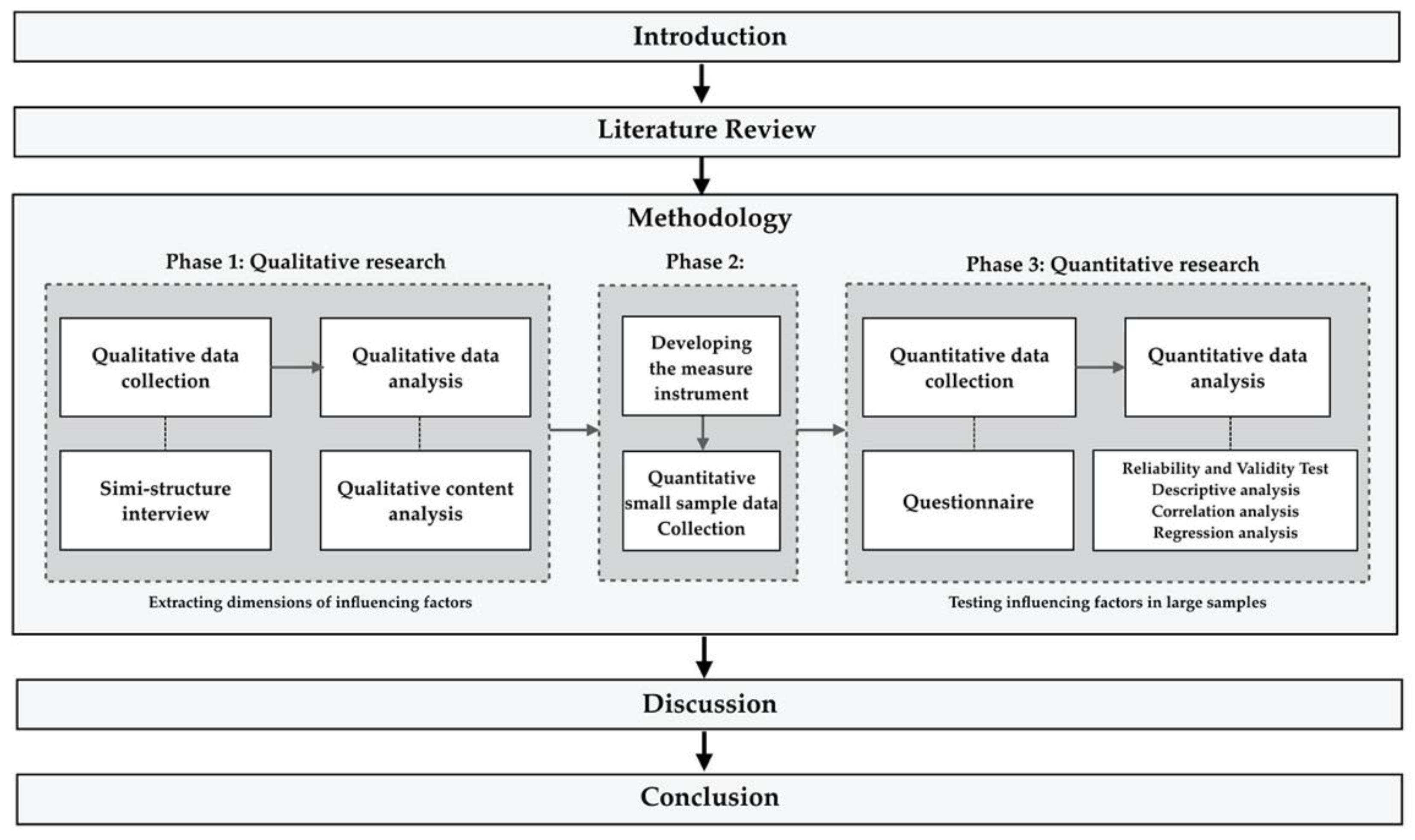

Table 1.
The demographic information of research interviewees in stage one.
| No. | Gender | Vocation | Times of visits to art exhibitions in 2023 |
| 1 | Female | Office clerk | 3-4 |
| 2 | Female | Self-employment | 3 |
| 3 | Male | Illustrator | 20-30 |
| 4 | Female | Teacher | 4-5 |
| 5 | Male | Teacher | 3-4 |
| 6 | Male | Student | 4 |
| 7 | Female | Retired people | 5 |
| 8 | Male | Painter | 10 |
| 9 | Female | Student | 3-4 |
| 10 | Male | Manager | 3 |
| 11 | Male | Freelance designer | 2-3 |
| 12 | Female | Teacher | 7-8 |
Table 2.
Summary of the qualitative content analysis.
| Meaning Units | Condensed Meaning Units | Codes | Categories |
|---|---|---|---|
| It's very convenient for me to buy tickets through WeChat or public account. | Buy tickets on WeChat and public account. | Ticket business | Marketing |
| These will make me feel very safe, such as the visitor route, the exact location, the exhibition time, and the closing day are clearly informed in the exhibition publicity. | The detailed exhibition information makes me feel safe. | Detailed exhibition information | |
| I saw video ads, posters, photos, etc. on various social platforms that attracted me to visit. | Exhibition promotion, social platform. | Channel of publicity | |
| I will first understand how the publicity introduces the exhibition, the exhibition theme, the artist before visiting. | Publicity and presentation of the exhibition. | Content of propaganda | |
| Some exhibitions are not true to their name, such as the exhibition of famous artists, and the result is that there are few exhibits, 80% of the works may be others, resulting in a bad experience. | Misbranding can make for a bad experience | Information authenticity | |
| I want to feel the atmosphere in the art hall because the exhibits are integrated with the exhibition hall. | I want to feel the artistic atmosphere in the exhibition hall. | Relax and leisure | Motivation |
| I accompany my friends and family to the exhibition because the exhibition hall is a good place to have a date, spend a weekend or have some free time. | Exhibition hall is a good place to spend free time. | ||
| I hope to see high-level art works to improve my artistic aesthetic quality and understand the trend of art. | See high level works of art, improve the aesthetic. | Aesthetic | |
| I read the promotion of the exhibition on the Internet and when I see other people's reviews of the exhibition are better. | Online reviews of the exhibition are good. | Good comments from others | |
| I am curious about the artists' latest works and new exhibition forms in the exhibition. | I can see the latest works and new exhibition forms. | Curiosity | |
| I can see the original works of the artists, the details and learn from them up close in the exhibition. | I can see the artist's original work. | Learning | |
| I am more satisfied with the orderly admission, the exhibition process, the movement line is relatively clear. | The exhibition flow and movement line are clear. | Exhibition hall order | PhysicalEnvironment |
| The exhibition is not only the layout of the works, but also the lighting, music, color and volume of the venue should serve the theme atmosphere of the exhibition. | The layout and atmosphere of the exhibition. | Atmosphere | |
| It is not allowed to bring water or food into an art exhibition. There are no special areas such as sitting areas, dining areas. study areas, waiting areas, etc., rather than just art exhibition areas. | There is no specific regional division. | Section of exhibition hall | |
| Some popular exhibitions have a lot of visitors queuing up and can't see the paintings well because of the noisy environment. | The exhibition is crowded and noisy. | Exhibition hall environment | |
| If there is a focus on the design of the exterior building, as well as the layout and landscape design outside the exhibition hall, I will be more willing to visit for a longer time. | Exhibition hall appearance architectural design, landscape design. | Exterior and landscape design | |
| I can see the details of the original work in the exhibition, the brushstrokes and no chromatic aberrations. | Details of the original can be seen at the scene. | Artist's original work | Exhibit Quality |
| Sometimes a solo exhibition by a famous artist is not entirely his work, but will fill the rest with less well-known works. | Individual exhibitions are filled with other people's exhibits. | The artistic value | |
| I am deeply impressed by these works because they are not only beautiful but also can trigger my thinking about art and let me feel a unique creativity and emotional expression. | Artistic works of unique creativity and emotional expression. | The creativity | |
| I like to see all forms of art, sculpture, painting, installation, etc. Sometimes one form can be a little monotonous. | Types and diversity of exhibits | Diversity | |
| The exhibits should be consistent with the whole theme of the exhibition to ensure that the exhibition has a coherent narrative rather than just looking at one painting. | The exhibits should fit the theme of the whole exhibition. | The exhibits fit the theme | |
| There are interactive devices or events in the exhibition where I can control or influence the artwork. | Device and activities in exhibition | Special activities | Participation |
| If there is a place for children to draw, so that they can copy, children can have the opportunity to learn. | A place for the child to copy | Family participation | |
| If the artist's works can be combined with me in some way or I can DIY my own works based on the original painting style, it will feel more interesting. | I can do it. | DIY | |
| The depth and content of the opening ceremony, the sense of ceremony and participation, being able to discuss the exhibition with others, I really enjoyed this moment. | A sense of ritual and participation. | Social engagement | |
| There are stamps, souvenirs, sending fans and other extension of art in the exhibition which is attractive. | An extension of art to take away. | Tangible gain | |
| Multimedia interaction is a way for me to get a clearer and deeper understanding of the theme of the exhibition. | Multimedia interaction is a channel to learn about the subject. | Multimedia interaction | Technology |
| Immersive digital art exhibitions are much more attractive than traditional art exhibitions and I would like to see multiple forms of exhibitions. | Digital immersion exhibition | Digital technology | |
| Not limited to the physical exhibition hall in the space, you can also see the virtual. | Physical and virtual exhibition coexist. | VR | |
| In the exhibition hall, there are auxiliary technologies and devices such as electronic guides, scanning QR code, mobile phone mini program tips, audio guides, etc. | There are technologies that assist the experience. | Multiple technologies | |
| It is better to have devices, such as head-mounted devices, interactive operations. | There are devices to interact with the exhibits. | Device interaction | |
| There is free Wi-Fi signal in the exhibition hall, and there are also places to charge electronic devices, so I can keep in touch with the outside world and feel safe. | Wi-Fi and charging facilities are available in the exhibition hall. | Additional service | Service Facilities |
| Some exhibitions are not humanized, because sometimes its graphic space or the surrounding construction is not very convenient, there is no rest, dining area, etc. | The construction around the exhibition is not convenient. | Off-site supporting facilities | |
| I will go to gift shops or bookstores and choose some beautifully designed and reasonably priced art derivatives to keep as souvenirs. | The design and price of art derivatives. | Artistic derivative | |
| The food and drinks available in the dining area are overpriced and some of the food is not delicious. | Prices and quality of the dining area | Dining area | |
| There will be a thinking area after the exhibition, and if you have any questions about the exhibition, you can write them down and post them on the display wall. | Reflection feedback area after exhibition. | Feedback region |
Table 3.
The reliability analysis.
| Cronbach's Alpha | Cronbach's Alpha Based on Standardized Items | N of Items |
| 0.958 | 0.959 | 35 |
Table 4.
The validity analysis.
| Kaiser-Meyer-Olkin Measure of Sampling Adequacy. | 0.884 | |
|---|---|---|
| Bartlett's Test of Sphericity | Approx. Chi-Square | 2700.214 |
| df | 595 | |
| Sig. | 0.000 | |
Table 5.
The demographic information of research participants in stage three (N=725).
| Variables | Content | Frequency | N (%) |
|---|---|---|---|
| Gender | Male | 321 | 44.3% |
| Female | 404 | 55.7% | |
| Age | 18~24 | 77 | 10.6% |
| 25~34 | 175 | 24.1% | |
| 35~44 | 229 | 31.6% | |
| 45~54 | 118 | 16.3% | |
| 56~64 | 98 | 13.5% | |
| 65 and above | 28 | 3.9% | |
| Education | Junior school | 22 | 3.0% |
| High school | 63 | 8.7% | |
| Junior college | 239 | 33.0% | |
| Undergraduate | 366 | 50.5% | |
| Graduate and above | 35 | 4.8% | |
| Occupation | Freelance | 158 | 21.8% |
| Retired | 28 | 3.9% | |
| Student | 47 | 6.5% | |
| Public servant | 75 | 10.3% | |
| Employees | 288 | 39.7% | |
| Institutional staff | 108 | 14.9% | |
| Unknow | 21 | 2.9% | |
| Monthly income | Below 3000 | 133 | 18.3% |
| 3000-5000 | 179 | 24.7% | |
| 5000-10000 | 278 | 38.3% | |
| 10000 and above | 135 | 18.6% | |
| Art exhibition visiting times per year | 1 time | 63 | 8.7% |
| 2-3 times | 172 | 23.7% | |
| 4-7 times | 305 | 42.1% | |
| Above 7 times | 185 | 25.5% | |
| Total | 725 | 100.00 | 100.00% |
Table 6.
Reliability and validity analysis.
| Constructs | No. of Items | CA | AVE | KMO |
|---|---|---|---|---|
| Marketing | 5 | 0.874 | 0.576 | 0.880 |
| Motivation | 5 | 0.885 | 0.571 | 0.883 |
| Physical Environment | 5 | 0.886 | 0.583 | 0.886 |
| Exhibit Quality | 5 | 0.887 | 0.584 | 0.884 |
| Participation | 5 | 0.879 | 0.570 | 0.879 |
| Technology | 5 | 0.890 | 0.583 | 0.890 |
| Service Facilities | 5 | 0.872 | 0.561 | 0.878 |
| Overall items | 35 | 0.940 | 0.946 |
Note:CA=Cronbach's alpha; AVE=Average Variance Extracted.
Table 7.
Descriptive analysis of the constructs.
| Constructs | AVG | SD | Kurtosis | Skewness |
|---|---|---|---|---|
| Marketing | ||||
| Q7-1 | 2.67 | 1.140 | -1.032 | 0.146 |
| Q7-2 | 2.65 | 1.147 | -1.029 | 0.194 |
| Q7-3 | 2.69 | 1.127 | -1.169 | 0.072 |
| Q7-4 | 2.62 | 1.136 | -1.189 | 0.138 |
| Q7-5 | 2.60 | 1.123 | -0.986 | 0.232 |
| Motivation | ||||
| Q8-1 | 2.71 | 1.180 | -1.128 | 0.073 |
| Q8-2 | 2.70 | 1.148 | -1.021 | 0.117 |
| Q8-3 | 2.69 | 1.162 | -1.099 | 0.130 |
| Q8-4 | 2.68 | 1.174 | -1.088 | 0.166 |
| Q8-5 | 2.71 | 1.192 | -1.119 | 0.108 |
| Physical Environment | ||||
| Q9-1 | 2.70 | 1.140 | -1.076 | 0.085 |
| Q9-2 | 2.65 | 1.136 | -1.038 | 0.202 |
| Q9-3 | 2.65 | 1.187 | -1.125 | 0.144 |
| Q9-4 | 2.64 | 1.130 | -0.970 | 0.218 |
| Q9-5 | 2.61 | 1.153 | -1.100 | 0.153 |
| Exhibit Quality | ||||
| Q10-1 | 2.71 | 1.152 | -1.040 | 0.095 |
| Q10-2 | 2.71 | 1.150 | -1.155 | 0.085 |
| Q10-3 | 2.71 | 1.164 | -1.036 | 0.147 |
| Q10-4 | 2.71 | 1.174 | -1.122 | 0.099 |
| Q10-5 | 2.72 | 1.145 | -1.046 | 0.118 |
| Participation | ||||
| Q11-1 | 2.75 | 1.175 | -1.152 | 0.030 |
| Q11-2 | 2.77 | 1.143 | -1.149 | -0.075 |
| Q11-3 | 2.72 | 1.156 | -1.172 | 0.003 |
| Q11-4 | 2.69 | 1.132 | -1.070 | 0.084 |
| Q11-5 | 2.70 | 1.153 | -1.127 | 0.083 |
| Technology | ||||
| Q12-1 | 2.72 | 1.182 | -1.162 | 0.099 |
| Q12-2 | 2.64 | 1.158 | -1.157 | 0.108 |
| Q12-3 | 2.69 | 1.162 | -1.120 | 0.115 |
| Q12-4 | 2.69 | 1.148 | -1.075 | 0.089 |
| Q12-5 | 2.64 | 1.172 | -1.080 | 0.206 |
| Service Facilities | ||||
| Q13-1 | 2.69 | 1.156 | -1.122 | 0.095 |
| Q13-2 | 2.74 | 1.143 | -1.088 | 0.047 |
| Q13-3 | 2.71 | 1.114 | -1.131 | 0.004 |
| Q13-4 | 2.67 | 1.140 | -1.036 | 0.158 |
| Q13-5 | 2.68 | 1.139 | -1.069 | 0.116 |
Note: AVG= Average value; SD= Standard deviation.
Table 8.
The result of Pearson correlation coefficient analysis (N=725).
| AVG | SD | 1 | 2 | 3 | 4 | 5 | 6 | 7 | 8 | |
|---|---|---|---|---|---|---|---|---|---|---|
| 1.Visitor Experience | 2.713 | 0.9709 | 1 | |||||||
| 2.Marketing | 2.646 | 0.9253 | 0.411** | 1 | ||||||
| 3.Motivation | 2.698 | 0.9692 | 0.439** | 0.390** | 1 | |||||
| 4.Physical Environment | 2.650 | 0.9528 | 0.409** | 0.374** | 0.414** | 1 | ||||
| 5.Exhibit Quality | 2.713 | 0.9602 | 0.439** | 0.348** | 0.408** | 0.430** | 1 | |||
| 6.Participation | 2.727 | 0.9451 | 0.426** | 0.375** | 0.385** | 0.425** | 0.409** | 1 | ||
| 7.Technology | 2.677 | 0.9703 | 0.424** | 0.405** | 0.434** | 0.383** | 0.370** | 0.413** | 1 | |
| 8.Service Facilities | 2.698 | 0.9261 | 0.403** | 0.380** | 0.426** | 0.369** | 0.398** | 0.387** | 0.442** | 1 |
Note:** p<0.05.
Table 9.
The result of Multiple linear regression analysis.
| Coefficient | t Value | p Value | 95%CI | VIF | |
|---|---|---|---|---|---|
| Constant | 0.775 | 2.665 | 0.085~0.560 | ||
| Marketing | 0.132 | 3.762 | 0.000*** | 0.066~0.211 | 1.401 |
| Motivation | 0.141 | 3.858 | 0.000*** | 0.069~0.213 | 1.518 |
| Physical Environment | 0.098 | 2.722 | 0.007*** | 0.028~0.173 | 1.485 |
| Exhibit Quality | 0.160 | 4.463 | 0.000*** | 0.091~0.233 | 1.464 |
| Participation | 0.131 | 3.623 | 0.000*** | 0.061~0.207 | 1.477 |
| Technology | 0.118 | 3.237 | 0.001*** | 0.047~0.190 | 1.521 |
| Service Facilities | 0.090 | 2.486 | 0.013** | 0.020~0.169 | 1.488 |
| R2 | 0.369 | ||||
| Adjusted R2 | 0.363 | ||||
| F value | F=59.855,p=0.000 | ||||
| Dependent viable: | Visitor Experience | ||||
Note: D-W value: 1.902 *** p<0.01, ** p<0.05.
Disclaimer/Publisher’s Note: The statements, opinions and data contained in all publications are solely those of the individual author(s) and contributor(s) and not of MDPI and/or the editor(s). MDPI and/or the editor(s) disclaim responsibility for any injury to people or property resulting from any ideas, methods, instructions or products referred to in the content. |
© 2023 by the authors. Licensee MDPI, Basel, Switzerland. This article is an open access article distributed under the terms and conditions of the Creative Commons Attribution (CC BY) license (http://creativecommons.org/licenses/by/4.0/).
Copyright: This open access article is published under a Creative Commons CC BY 4.0 license, which permit the free download, distribution, and reuse, provided that the author and preprint are cited in any reuse.


