

Submitted:
23 July 2025
Posted:
24 July 2025
You are already at the latest version
Abstract
This paper charts AI's transformative path toward advancing sustainability within art museums, introducing a human–AI compass as a conceptual framework for navigating its integration. It advocates for human-centric AI that optimizes operations, modernizes collection management, and deepens visitor engagement—anchored in meaningful human–technology synergy and thoughtful human oversight. Drawing on extensive literature review and real-world museum case studies, the paper explores AI’s multifaceted impact across three domains. Firstly, it examines how AI improves operations, from audience forecasting and resource optimization to refining marketing, supporting conservation, and reshaping curatorial practices. Secondly, it investigates AI's influence on digital collection management, highlighting its ability to improve organization, searchability, analysis, and interpretation through automated metadata and advanced pattern recognition. Thirdly, the study analyzes how AI elevates the visitor experience via chatbots, audio guides, and interactive applications, leveraging personalization, recommendation systems, and co-creation opportunities. Crucially, this exploration acknowledges AI's complex challenges—financial, technical, environmental, ethical, societal, and practical-operational—underscoring the indispensable role of human judgment in steering its implementation. The human-AI compass offers a balanced, strategic approach for aligning innovation with cultural sensitivity, inclusivity, and sustainability. The study provides valuable insights for researchers, practitioners and policymakers, enriching the broader discourse on AI's growing role in the art and cultural sector.
Keywords:
artificial intelligence
; sustainability
; art museums
; human–AI collaboration
; AI integration challenges
; AI ethics
1. Introduction
Artificial Intelligence (AI) has rapidly expanded in the 21st century, with bibliometric analyses indicating a research surge from the 1990s to 2019 [1,2]. More specifically, publications and articles on AI applications in museums have significantly increased since 2010, particularly from China, Italy, and the United States, with a sharp rise in output from 2019, peaking in 2023 [3].
The evolving symbiotic synergy between humans and AI is catalyzing the transformation of critical sectors, driving efficiency, innovation, and competitiveness, while unlocking new opportunities for sustainable growth and societal progress [4].
Over the past decade, AI has been recognized as "critical to operational efficiency" and "a customer service imperative," prompting substantial investments from emerging tech companies [5]. AI's impact on economic development—manifested through improved decision-making, accelerated innovation and more effective social governance— alongside increasing global research on its economic applications underscore AI’s growing role in shaping the future economy [6].
This trend is further supported by bibliometric analyses of AI publications backing the Sustainable Development Goals (SDGs)—particularly SDG 11, which aims to enhance urban environments and cultural aspects. This highlights AI’s transformative potential in advancing sustainability, and driving overall development [7].
In cultural institutions, while AI-driven personalization significantly enhances visitor engagement, satisfaction, and brand perception [8], AI remains primarily an enabling tool and not a main driver for increased attendance with its adoption heavily reliant on a country's digitization policies and funding [9].
AI's self-learning and self-improving abilities make it well-suited for museum environments, where continuous performance improvement and responsiveness to user needs are essential [10]. As such, AI plays an increasingly vital role in helping museum better understand their audiences and improve overall management across functions ranging from trend analysis and targeted marketing to edutainment, exhibit modernization, and audiences’ engagement, especially among younger generations like Gen Z [10,11,12,13,14,15].
On the other hand, AI systems still face significant limitations, including mechanical AI’s inability to grasp context, thinking AI’s inherent opacity and biases, and feeling AI’s lack of true emotional understanding [16]. Despite its innovative potential and transformative applications across cultural sector that contribute to economic and broader sustainability goals, multifaceted challenges hinder AI’s widespread implementation, underscoring the necessity of safeguarding cultural sensitivity, fostering interdisciplinary collaboration and developing robust ethical guidelines adapted to museum contexts [14,15,17,18].
The tension between AI innovation and responsible application is particularly pronounced in art museums, where AI is redefining how art is exhibited, experienced, interpreted, curated, preserved, and even created [17,19,20]. A prime example is Dataland, an AI-centered digital creativity museum opening in Los Angeles in 2025, aiming to merge artistic expression with ethical data use and a sustainable future [21].
Responding to growing academic interest in AI's role within museums, this article addresses the fragmented understanding of how its diverse applications can advance sustainability goals, critically engaging with inherent ethical, institutional, and human-centered implementation challenges. Focusing on three key areas—operational efficiency, collection management, and visitor experience—it offers an integrated perspective on AI’s potential and limitations, arguing that, while innovative, it is not a universal solution and must be strategically and meaningfully embedded within the values and specific needs of each cultural institution. Its core contribution lies in outlining a framework for the responsible and sustainable AI adoption in the museum sector.
2. From AI Definition to Museum Practice: A Brief Overview
Artificial Intelligence refers to the capacity of computational systems to exhibit or replicate "intelligent behavior" [22], encompassing human-like abilities such as reasoning, performing physical tasks, and engaging in emotional interaction [16], or, as Sheikh et al. define, complex human skills like perception, cognition, and decision-making [23].
In a more precise definition, the European Commission’s High-Level Expert Group on Artificial Intelligence (AI HLEG) describes AI as “systems that display intelligent behavior by analyzing their environment and taking actions –with some degree of autonomy– to achieve specific goals” [24]. However, while AI excels at structured tasks and struggles with human-like abilities, as per Moravec's paradox, ongoing technological advancements constantly redefine its boundaries and definitions, turning past breakthroughs into commonplace achievements [23,25].
Since the mid-20th century, AI has evolved through waves of enthusiasm and retreat [23], now advancing to multiagent systems capable of tackling complex tasks [20]. Machine learning (ML), a key data analysis method, empowers systems to learn from large datasets without explicit programming [26,27] primarily via unsupervised and supervised learning [2]. In museums, AI utilizes descriptive and predictive analytics, leveraging ML techniques to interpret data and provide contextual insights [12].
Similarly, generative AI (GenAI), which has surged since 2021, is increasingly enabling new forms of creative expression and visual storytelling within museum settings [28]. GenAI automates the creation of high-quality digital content (text, images, music) by leveraging advanced AI systems and large-scale models that interpret human intent, enabling fast and efficient generation [29]. By 2025, its use has expanded beyond technical tasks to include emotional support, personal organization, self-discovery and growth, sparking both excitement and concern over its impact on human cognition, privacy, and societal dynamics [30].
Overall, in the museum context, working in concert with human creativity and emotional nuance, modern AI integrates mechanical, analytical, affective and creative intelligence. It automates tasks using techniques such as classification, clustering, and content generation, recognizes patterns and supports decision-making through machine learning (ML), neural networks, and deep learning (DL), while simultaneously interacting with humans via intelligent voice recognition, Natural Language Processing (NLP), sentiment analysis, chatbots, virtual agents, and multimodal interfaces [10,11,16,31].
3. Methods
To investigate the dynamics of human–AI synergy on museum operations, collection management, and visitor experience, along with the associated challenges it entails, we employed the method of an extended literature review, complemented by secondary data classification, analysis, and interpretation techniques. Τhe methodological design was structured around the following research questions, which guided the scope, source selection, and analytical focus of the study:
- In what ways can AI improve art museum operations (e.g., management, strategy, visitor services, core technical processes) contributing to their resilience and sustainability?
- How is AI applied to optimize collection management in art museums?
- How can AI enhance the visitor experience in art museums to renew interest in art and its context through exhibits and exhibitions?
- What challenges arise from integrating AI in art museum settings, and how can these be effectively addressed within a human-centered cultural management framework?
The primary tool for data collection was Google Scholar, which provided access to articles from major academic publishers such as ACM, Elsevier, MDPI, SAGE, Springer Nature, Wiley-Blackwell, EDP Sciences, Emerald Publishing Limited, Taylor & Francis (Rutledge), and IEEE, as well as scientific conference proceedings (e.g., MuseWeb and EVA), academic books or chapters. Relevant sources were identified through targeted keyword searches, including combinations such as "AI" AND "museums", "AI" AND "sustainability" AND "museums", "AI" AND "museum operations", "AI" AND "museum collections", and "AI" AND "visitor engagement".
The literature search focused on the last decade (2015–2025), to capture the evolving discourse and experimentation around AI in the museum sector, following its rise in 2015 fueled by technological breakthroughs [32]. Special emphasis was placed on the most recent five years (2021–2025), due to the rapid advancement of GenAI and its innovative applications in art [33].
While peer-reviewed academic literature forms the study's foundation, the fast-evolving nature of AI in museums necessitated a multi-layered approach, strategically supplementing scholarly work with carefully curated, practice-oriented sources. Chosen based on strict criteria for source reliability and relevance, these materials ensure a comprehensive and current understanding of AI integration in museums, grounding theoretical analysis in cutting-edge practice while maintaining academic rigor.
Therefore, we incorporated institutional and professional sources like museum reports, applied case studies, and consultancy briefings, which offer valuable perspectives on operational realities and experimental applications often not yet reflected in academic publications. To contextualize these developments within broader ethical and strategic frameworks, the study also draws on select policy documents and guidelines from international and regulatory bodies such as ICOM, UNESCO, the OECD, and the EU (e.g., the AI Act). These sources offer critical perspectives on governance, ethical adoption, and definitional clarity within the cultural heritage sector.
Finally, reputable media coverage—from outlets like The Guardian, The New York Times, and Artnet News—is used to trace the visibility, reception, and societal impact of AI in museums. This real-time documentation, critically integrated alongside academic and institutional literature, grounds theoretical analysis in contemporary developments, real-world applications, and public discourse.
The most significant findings from the literature review, focusing on both theoretical and practical applications of AI in museums, are presented in a visual format (Table 1) to enhance clarity and provide an accessible overview. The sources—48 in total (Table 1—45)—are listed in ascending chronological order, outlining the benefits and challenges for cultural institutions where AI has been or may be applied. Notably, 30 of these date from the period 2021–2025.
Furthermore, Table 1 includes two dedicated sections (Table 1, entries 46-47) for AI-powered Chatbots and Other AI-driven Visitor Experiences, where the identified advantages and obstacles of these interactive implementations are thematically grouped and highlighted. It is particularly significant that 28 out of the 32 total publications underpinning these thematic groupings fall within the 2021–2025 period, underscoring the contemporary relevance and rapid advancement in these specific areas.
4. AI-Enhanced Operational & Strategic Efficiency
Evolving from a "nice-to-have" to a "must-have," AI now offers museums a competitive edge by enhancing decision-making, planning, and scheduling through advanced analytics in operations, visitor services, and financial management [20,34]. This transformative impact is also evident in national initiatives in countries like China and Korea, where AI drives the modernization of existing museums and the creation of new ones, from architectural planning to construction [35].
In the realm of museum marketing, AI enables data-driven personalization and strategic outreach, by allowing institutions to analyze visitor data and segment audiences based on demographics and behavior for targeted engagement and customized experiences [36,37]. As Huang and Rust [16] highlight, AI enhances marketing effectiveness by automating routine tasks, processing large datasets for informed decision-making, and analyzing human interactions and emotions, ultimately improving research, planning, and execution across the marketing mix.
Moreover, AI-driven data analytics enhance museum services by analyzing visitor patterns, such as popular exhibits, peak hours, and common pathways, to predict flows, prevent overcrowding, reduce wait times, and optimize educational programs and exhibition layouts for improved visitor comfort and satisfaction [14,37]. Additionally, AI facilitates personalized content and interactive, audience-centered exhibits, transforming museum experiences from static, one-size-fits-all presentations into dynamic, personalized, and data-driven engagements [37].
Beyond visitor experience, AI streamlines operations and resource management by analyzing ticketing, attendance, and membership trends, optimizing fundraising efforts, and minimizing e-commerce redundancies [32]. Through efficient resource allocation, and data-informed forecasting, museums can reduce operational costs, and strategically adapt to evolving conditions, thereby supporting long-term financial stability and institutional resilience [36,37].
A notable example of Artificial Intelligence application is the predictive model developed by the National Gallery in 2019, aimed at estimating visitor numbers and categorizing ticket buyer types (Figure 1). However, based on pre-pandemic data, the model lost accuracy after 2020 due to drastic shifts in visitor behavior caused by the COVID-19 crisis. The museum reverted to traditional statistical methods while initiating the collection of updated post-pandemic data. This case highlights the need for continuous model adaptation and sufficient time investment in gathering high-quality data to ensure the effective use of AI (National Gallery staff, personal communication, May 2025).
By synergistically applying AI capabilities such as dataset correlation and sentiment analysis [12], cultural organizations optimize internal operations and visitor engagement, fostering efficiency and responsiveness. Leveraging data, such as visitor feedback, behavioral metrics, and chatbot interactions, museums continuously refine exhibits and services, personalize experiences, inform strategic decisions, and adapt offerings to evolving audience interests [34,37].
The Van Gogh Museum in Amsterdam exemplifies this approach, partnering with Eraneos to deploy an AI-powered tool that analyzes roughly 1,500 monthly visitor comments in over 100 languages using NLP and ML, categorizing sentiment and themes for actionable insights without requiring in-house AI expertise [38]. Further demonstrating AI's diverse analytical applications, the Museum of Modern Art (MoMA) leverages visitor feedback for signage, The Broad in Los Angeles monitors engagement metrics to streamline operations, and the Art Institute of Chicago (AIC) employs AI to analyze visitor flow and dwell times to strategically tailor exhibitions [39].
As part of broader efforts to optimize both visitor engagement and exhibition design, AI-powered Mobile Eye Tracking (MET), which combines gaze tracking, object recognition, and convolutional neural networks (CNNs), maps visitor attention across artworks and exhibits, optimizes spatial layouts, detects social interactions, and delivers real-time personalized guides, thereby supporting data-informed, visitor-centered curation and evaluation [40,41,42]. Additionally, AI solutions increasingly bolster art museum security, utilizing facial recognition technology (FRT) for enhanced surveillance and theft deterrence [20].
Furthermore, AI accelerates research by analyzing data for scientific purposes. For example, FRT applied to portraits helps distinguish sitters, identify artistic styles, and resolve identity uncertainties [43], while DL at the Smithsonian accurately identifies plants and fish, reducing reliance on microscopy or DNA testing [44].
In art museums, AI advances authentication by detecting subtle, invisible details for more precise validation [20]. By analyzing high-level features like brushstrokes and aesthetics, it provides objective insights into an artist's signature, supporting attribution efforts at institutions like the Rijksmuseum [39,45]. Additionally, AI tools utilizing CNNs and hyperspectral imaging combat forgery with high precision by replicating expert analyses and improving reliability through multivariate spectral data, even without matching databases [45,46].
Similarly, Frank & Frank [47] proposed leveraging s CNNs to detect forgeries, attribute works, and uncover multiple creators’ contributions (Figure 2). Their system deconstructs and reconstructs images using mathematical sequences, generating individual probability maps to form attribution hypotheses. Importantly, the authors stress that these computational tools’ accuracy and reliability depend on close collaboration with human expertise and connoisseurship, serving as a complement to, not a replacement of, traditional methods [47].
In addition, AI significantly enhances conservation by monitoring artwork conditions, identifying restoration needs, and revealing features for better preservation [20]. It supports artifact reconstruction through digitization, analysis, and visualization via ML and computer vision [37]. For example, the Smithsonian employs AI-driven predictive maintenance with sensors and ML to anticipate equipment failures, reducing downtime and costs [44]. Similarly, the Van Gogh Museum uses AI to restore faded paintings [38], while the Rijksmuseum combines ultra-high-resolution imaging—such as the 717-gigapixel scan of The Night Watch—with analytical tools to detect material changes like pigment degradation and lead soap formation [9,48].
Finally, AI is increasingly reshaping the very core of exhibition development, influencing curatorial practices from conceptualization and design to interpretation and narrative shaping. This evolution enhances accessibility and deepens audience engagement by merging AI’s analytical capabilities with human creative insight. A prime example is the AI Connections Table—developed at the Henry Ford Museum by Bluecadet and creative technologist Weili Shi—which uses pattern recognition to link artworks and generate thematic content, combining AI-generated insights with curator validation to ensure contextual accuracy, cultural relevance and interpretive depth [49].
In art museums, this approach becomes more experimental and conceptual. In an early 2020 effort, the exhibition KUNST(re_public) at HALLE 14—Center for Contemporary Art Leipzig was algorithmically curated using network science and word embeddings. Though coherent and engaging, it lacked a distinct curatorial voice, highlighting both the creative potential and limits of AI [50].
Likewise, at the Nasher Museum of Art, AI was directly involved in curatorial decision-making, using ChatGPT to select works, generate descriptions, and identify thematic links, tasks traditionally performed by curators, ultimately reaffirming the irreplaceable value of human expertise in interpretation and nuance [51]. Additionally, at the Lowe Art Museum’s Fool Me Once, AI contributed to both art production, as it generated artworks blended with human-made pieces, and interactive interpretation, challenging viewer perceptions of authenticity and creativity through the display [52,53].
Overall, currently more promising than proven, AI-assisted curation has the potential to flourish within a dynamic human–AI partnership, sparking fresh perspectives, transforming art engagement, and opening new pathways for curatorial judgment and reflection on interpretation, value, and the curator’s evolving role.
5. AI-Driven Management of Digital Collections: From Tags to Tales
AI technology enhances digital record preservation in art museums by ensuring efficient storage, retrieval, and long-term protection of historical documents and artifacts [20]. Beyond preservation, AI revolutionizes digital collection management through analysis, interpretation, narrative development, contextual insights, and latent space exploration.
Increasingly applied in cultural heritage for large-scale image analysis [54], AI streamlines content management and information retrieval by automating metadata tagging for enhanced discovery via visual search and NLP, while also improving asset organization, detecting duplicates, facilitating selection and editing, and ensuring quality through explicit content identification [52,55].
These AI capabilities largely stem from computer vision advancements, particularly the significant surges driven by ML and breakthroughs in DL and Convolutional Neural Networks (CNNs) since the 2000s. This evolution revolutionized image recognition, enhancing applications like exhibit categorization and immersive learning [56,57,58].
In art collections, AI-generated descriptive text adds value by analyzing themes, visual elements (e.g., color, technique, style), and emotions (Figure 3). This automation transforms untitled or obscure artworks into accessible, searchable assets for curators, researchers, and visitors [18,32,59].
This echoes the Rijksmuseum Amsterdam's Rijksstudio, which utilizes ML and color-based image retrieval to enhance visitor exploration and interaction [60,61]. Similarly, since 2016, the Harvard Art Museums have pioneered computer vision through platforms like AI Explorer (Figure 4) and IIIF Explorer, which allow users to navigate AI-generated tags, captions, and recognition types [18,62]. These tools demonstrate AI’s ability to interpret visual art, create new metadata, and provide innovative ways for non-specialists to engage with art collections (ibid.).
Major art museums, including MoMA, the Met, Tate, SFMOMA, Carnegie, the Princeton University Art Museum, and the Smithsonian, along with many European institutions (e.g., German-speaking museums), are increasingly leveraging AI technologies like ML and computer vision to improve the interoperability, analysis and accessibility of their digital archives and metadata [18,25,63]. Such advancements are especially impactful for institutions with large collections such as the Met, which holds hundreds of thousands of works, by saving experts and researchers’ time and resources, while streamlining organization and discoverability through automated tagging and metadata generation in collaboration with data scientists [45,64,65].
Innovative approaches integrate ML with semantic reasoning—exemplified by Bobasheva et al.’s [66] enhancement of France’s national repository, Joconde—to streamline analysis, improve content-based search, and automate artwork annotation, enriching curatorial knowledge. Semantic AI search refines online collections by emphasizing context and meaning, enabling more intuitive art discovery, as demonstrated by the Norway National Museum [67]. Similarly, the London Museum harness AI not only for descriptive text and inclusive language, but also to reveal deeper, latent relationships between objects and narratives, moving beyond keyword matching toward richer, contextual connections [52].
AI also explores cross-collection insights, revealing cultural and historical connections. The Massachusetts Institute of Technology’s (MIT), MosAIc algorithm uses DL to identify visual and thematic similarities across mediums, regions, and eras, enhancing art historical understanding by revealing cross-cultural correlations in The Met and the Rijksmuseum collections [68]. Likewise, MoMA and Google apply AI to analyze over 30,000 exhibition photos, linking past exhibitions to current holdings and enhancing cataloging and accessibility [69].
As exploration capabilities push the boundaries of knowledge and imagination, art museums are harnessing AI-driven approaches to redefine engagement, as shown by the Barnes Foundation’s use of computer vision to uncover hidden links between seemingly unrelated artworks [70]. Similarly, The Met, collaborating with Microsoft and MIT, leveraged neural networks to map artworks into latent spaces, generating surreal yet plausible variations between actual and imagined realities [71,72]. Despite their innovation, such initiatives must remain contextually meaningful offering fresh perspectives on cultural heritage and enriching art history—lest they be reduced to “nothing more than a few weak software freebies for personal data and unpaid labor” [73].
Continuing these generative explorations, GenAI is also expanding the boundaries of artistic reinterpretation and creative expression. At the AIC, an experimental hackday project employed a browser extension– powered by Replicate's Python interface and the Midjourney diffusion model–to generate alternative versions of collection images from textual prompts and alt text, fostering creative engagement and blurring lines between creation, curation, and audience participation [74].
As AI and large-scale collection data management become increasingly central to both analysis and artistic creation [19], a new postmodern shift emerges that prioritizes the analysis, reinterpretation, and reassembly of accumulated cultural data over the invention of radically new forms [75]. Artists increasingly explore this terrain through GenAI tools like generative adversarial networks (GANs), where intellectual insight, human sensitivity, and machine-assisted imagination converge to open new avenues for reshaping cultural heritage.
Notable examples include Jake Elwes's Latent Space, Helena Sarin's Latentscapes, and Mario Klingemann's Memories of Passerby [76]. Similarly, Refik Anadol Studio’s Latent Being, and Machine Hallucinations—including works such as Unsupervised—navigate latent spaces to transform vast datasets into immersive, continuously evolving visual and auditory experiences [77,78,79].
6. Optimizing Visitor Experience through AI
6.1. AI-powered Chatbots
Identified as the most widely adopted museum tool in 2021 (34), AI-powered chatbots revolutionize museum experiences by personalizing content, offering artwork recommendations, answering visitor inquiries and providing scalable, real-time multilingual support that enhances accessibility and inclusivity for international visitors, breaking down language barriers [37,80]. Since the early 21st century, chatbots have evolved from simple infobots for guidance to advanced AI systems incorporating gamification and interactive engagement [81].
The evolution from basic guidance to more sophisticated engagement tools underscores the growing potential of AI chatbots in cultural institutions. IRIS+, an AI-powered digital assistant developed at the Museum of Tomorrow in Rio de Janeiro (Figure 5), exemplifies how chatbots can foster deeper engagement and inspire social and environmental action, directly aligning with the museum's core philosophy and objectives [82,83].
Experiments at the Swedish National Museum and the National Museum of Korea demonstrated that AI chatbots enhance visitor engagement by offering interactive, on demand information, assisting with wayfinding, and creating emotional connections with exhibits. Furthermore, they support learning by adapting content to individual preferences through natural language interactions [84,85].
A notable pre-pandemic example of AI chatbot integration for virtual exploration and visit planning in art museums is the Petit Palais Museum's Ask Sarah (2018), which provided information on hours, prices, access, and exhibitions via Facebook Messenger [86]. During the COVID-19 pandemic, museums increasingly leveraged AI for remote audience engagement, exemplified by the AIC's launch of an Alexa Conversations-powered voice app offering immersive exploration of over 300 artworks through voice commands and categorized audio commentary [87].
Particularly noteworthy is the use of AI chatbots to enhance the in situ museum experience. Early examples include the Akron Art Museum's Dot (2018), which provided Facebook Messenger tours and informed future exhibitions [39,88]. Similarly, the Pinacoteca de São Paulo's 2017 debut of The Voice of Art, likely the first use of IBM Watson’s AI, offered immediate, personalized responses to smartphone-based artwork questions [89,90,91].
Cultural heritage organizations increasingly adopt chatbots to create gamified experiences that engage younger, digitally-savvy audiences. A standout example is the Chat Game in Milan’s House Museums, where AI characters guide visitors through puzzles and artworks, offering a fun, educational experience, especially for teenagers [92,93]. The transformative impact of conversational AI on museum visits is further exemplified by the Musée National des Beaux-Arts du Québec’s (MNBAQ) 2020 collaboration with Ask Mona. Their AI chatbot offers personalized insights into artwork history and context via text or voice using images [94,95], inspiring over 200 museums, including the Centre Pompidou and the Louvre, to adopt similar AI-powered solutions for instant interactions and virtual tours [96,97].
Art museums are increasingly incorporating chatbots for virtual interactions with historical figures, leveraging archival records such as personal letters. A recent example is the Met's collaboration with OpenAI to create a chatbot representing 1930s socialite Natalie Potter for visitors to explore her life, and the story behind her wedding dress in the Sleeping Beauties: Reawakening Fashion exhibition [98,99].
Beyond traditional chatbots, modern art museums are embracing advanced AI-based applications that combine conversation, storytelling, avatar design, and multimedia to deepen engagement and emotional resonance. Deepfakes exemplify this trend by transforming passive observation into interactive experiences, as demonstrated in the Dalí Museum's Dalí Lives exhibition in Florida [100]. This AI installation uses ML and computer vision to recreate Dalí’s voice, expressions, and movements—trained on archival footage and mapped onto a performer—enabling visitors to interact with a lifelike virtual Dalí through selfies and conversations (Figure 6), fostering immediacy, emotional connection, and amusement [101,102,103].
Similarly, the Hello Vincent (Bonjour Vincent) project at the Musée d'Orsay’s 2024 "Van Gogh in Auvers-sur-Oise" exhibition featured an evolving AI chatbot that simulated conversations with Van Gogh based on 900 of his letters (Figure 7). Developed over eight months by the Paris-based tech firm Jumbo Mana, the avatar served as a cultural mediator, offering visitors a personalized and immersive experience that deepened their engagement with the artist’s life and work [104,105].
6.2. Other AI-Driven Visitor Experiences
AI-driven recommendation systems, originally popularized in e-commerce [32], are now widely adopted by online museum platforms to personalize merchandise suggestions based on user preferences, browsing behavior, or purchasing history, enhancing the digital retail experience [106,107,108]. Often integrated with IoT and data analytics, these systems also elevate on-site experiences through user profiling, real-time tracking, and adaptive content delivery, offering tailored suggestions, navigation assistance, personalized tours, interactive exploration, and immersive storytelling, aiming to enhance accessibility, engagement, and visitor satisfaction [11,20,32,37,52,63,109,110].
Conversely, anti-recommendation systems broaden user perspectives by intentionally diverging from past preferences and familiar content, mapping unexplored exhibits to promote serendipitous discoveries and encourage open-ended exploration [111].
Reinforced by AI recommendation systems, audio guide apps and artwork analysis platforms are transforming the museum experience. Notable examples include Cheng Shiu University's Automatic Exhibition Guide System [17], which uses FRT and real-time tracking for tailored content delivery, and the Hilversum Media Museum's AI-driven personalization based on visitor profiles, such as photo, email, and preferences [96,112,113,114]. The Prado Museum’s FrAI Angelico project further exemplifies inclusive innovation, utilizing AI to analyze and describe artworks, offer tailored tours for visually impaired visitors, and support art research [115,116].
AI revolutionizes online museum experiences, by enhancing educational outreach and making exhibits more engaging and interactive for visitors [9]. Institutions like the British Museum, the Smithsonian, and the Louvre exemplify this by customizing content and boosting accessibility through virtual guides, image recognition, immersive technologies, and multilingual support, while refining visual design with adaptive interfaces and intelligent algorithms that seamlessly integrate virtual elements for greater coherence [117,118]. This is particularly effective in AI-generated virtual artwork records, facilitating immersive 3D modeling, tours, and Augmented Reality (AR) experiences, that allow exploration of artworks from various angles and lighting conditions [20].
Additionally, AI-powered sensory technologies, such as holographic nano-touch membranes and ultrasonic haptic feedback, further enhance virtual engagement by permitting users to feel virtual shapes and interact tactilely with simulated environments [13]. Likewise, sensor-driven haptic and interactive AI devices, supported by ML and databases, deliver personalized, multi-layered content that significantly amplifies visitor understanding, satisfaction, and engagement time in museums compared to traditional technologies [14]. (Figure 8).
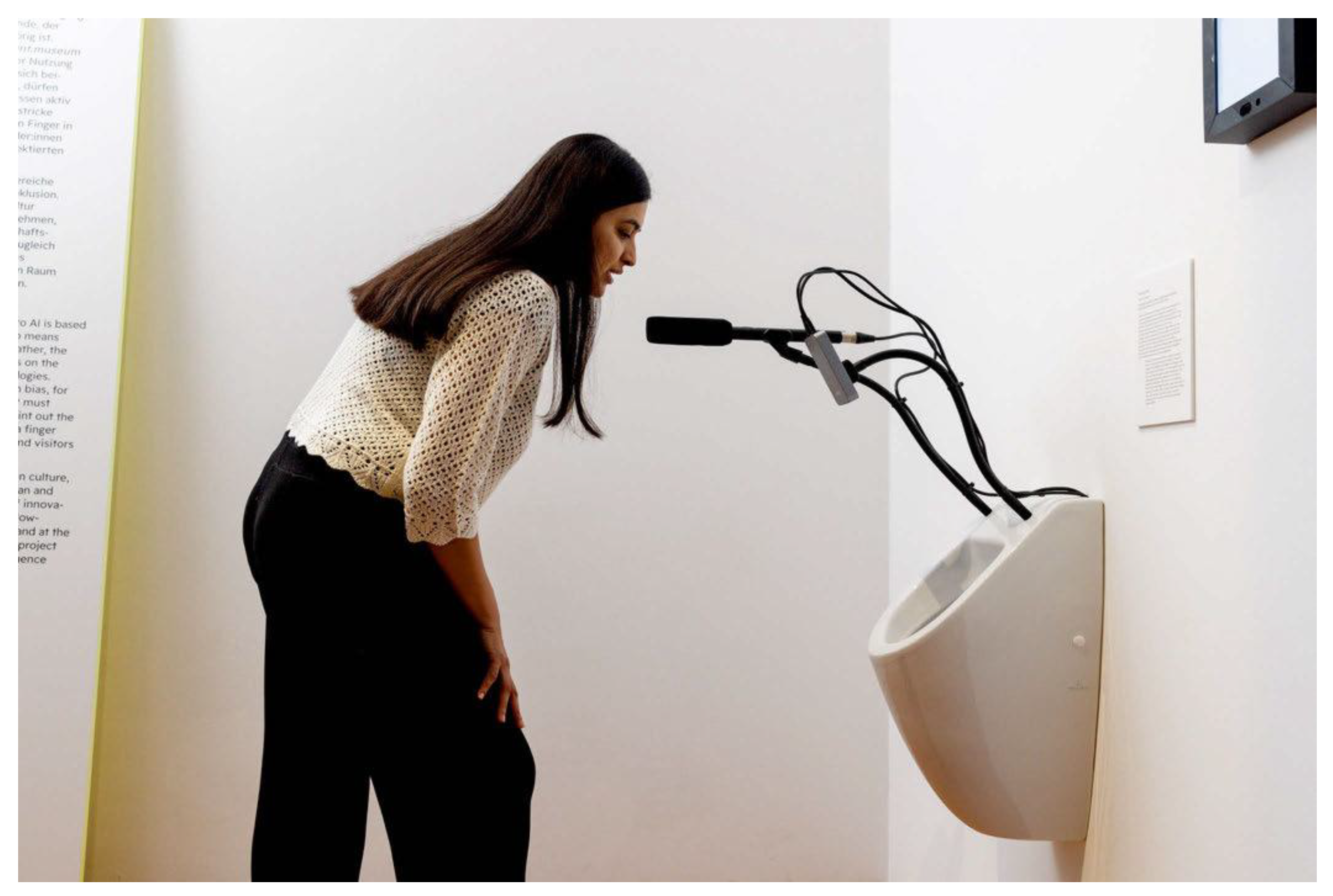
In recent years, museums, especially art museums, have increasingly embraced GenAI to create cutting-edge interactive experiences that blend art, technology, and public engagement. A notable example is Hofmann and Preiß’s Wishing Well (2022–2023), developed through the “intelligent.museum” project, a collaboration between ZKM–Center for Art and Media Karlsruhe and Deutsches Museum Nuremberg [119]. This Duchamp-inspired installation transforms visitors’ spoken wishes into AI-generated images, turning prompt engineering into a participatory artistic act. By fostering human–AI co-creation and media literacy, it also highlights ethical issues—such as data bias and artist consent—emphasizing the need for responsible AI use in cultural institutions (ibid.).
Figure 9.
Yannick Hofmann, Wishing Well, 2022-2023. Installation view in the intelligent.museum is around the corner exhibition (ZKM | Karlsruhe, 2023) © intelligent.museum (Photo: Felix Gruenschloss, source: 119). [Courtesy of ZKM | Center for Art and Media Karlsruhe].
Figure 9.
Yannick Hofmann, Wishing Well, 2022-2023. Installation view in the intelligent.museum is around the corner exhibition (ZKM | Karlsruhe, 2023) © intelligent.museum (Photo: Felix Gruenschloss, source: 119). [Courtesy of ZKM | Center for Art and Media Karlsruhe].
The growing demand for AI-driven interactive environments that enable deeper, personalized experiences is exemplified by the MIT Museum’s Collaborative Poetry (2022), an installation by Bluecadet and Weili Shi. Using OpenAI’s GPT-3, it empowered visitors to co-create poems with a neural network, generating a flowing tapestry of verses that cultivated an ongoing human-machine creative dialogue [120,121,122,123].
In the same vein of encouraging active visitor participation, the Dubai Art Museum animates visitors’ scanned drawings onto a safari stage, creating a real-time co-creative dialogue between human creativity and AI-generated visuals [124,125]. Similarly enhancing sensory immersion and emotional engagement, the Van Gogh Museum, in collaboration with Dutch consultancy Magnus, implemented an AI-powered portrait generator that transformed visitor photos into personalized artworks replicating Van Gogh’s brushstrokes, color palette, and techniques, offering both educational value and a memorable souvenir [126].
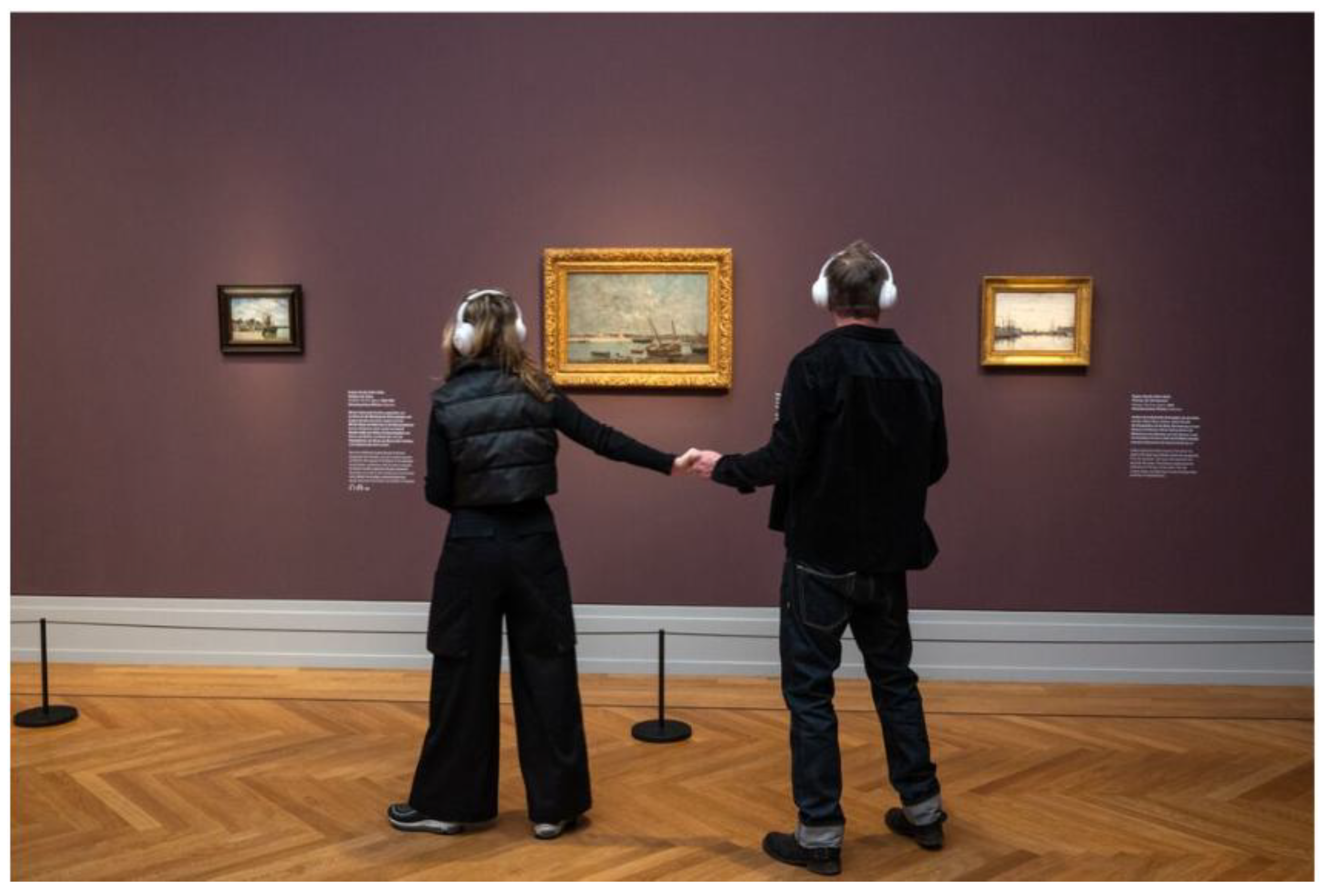
Other pioneering AI-driven museum experiences encompass the Music Walks project at the Museum Barberini in Potsdam, set to launch later this year (personal communication, 128). Developed with composer Henrik Schwarz and supported by the Hasso Plattner Institute, this initiative uses Bluetooth beacons, smartphone sensors, and an AI audio engine to generate real-time soundscapes that adapt to the museum’s Impressionist works, enhancing their emotional impact and enriching visitors’ multisensory engagement [127,128].
Figure 10.
Screenshot: Individuals exploring the Music Walks experience at the Museum Barberini, utilizing the app as part of the celebration of 150 years of Impressionism. (Photo: Sebastian Bolesch, source 128). [Courtesy of Museum Barberini].
Figure 10.
Screenshot: Individuals exploring the Music Walks experience at the Museum Barberini, utilizing the app as part of the celebration of 150 years of Impressionism. (Photo: Sebastian Bolesch, source 128). [Courtesy of Museum Barberini].
7. Navigating Challenges with a Human-AI Compass
As discussed in previous chapters, AI’s application in art museums is gaining momentum and finding diverse uses, but remains fraught with significant challenges. Financial and logistical barriers such as high implementation costs, ongoing infrastructure demands, staff training, time investment, and limited in-house expertise often hinder widespread adoption [17,20,25,32,41,52,80]. As a result, experimental initiatives—like the aforementioned Voice of Art—frequently remain fragmented or short-lived due to budget limitations, highlighting the need for sustained funding and long-term strategic planning to support continuous innovation [91].
Equally critical are the ethical concerns surrounding AI in cultural institutions, which risk compromising fairness, inclusivity, and accountability. Key issues include ambiguity around copyright and ownership of AI-generated content, unclear lines of responsibility, and algorithmic biases—such as cultural misrepresentation or gender stereotyping that may result in offensive outputs or the erasure of minority voices [37,44,52,63,80,129].
Particularly within art museums and painting collections, AI systems trained on existing datasets and built on opaque algorithms risk reinforcing discriminatory language, Eurocentrism, and entrenched patriarchal, colonial, and capitalist power structures, undermining accountability, and public trust [55]. To counter this, museums are urged to adopt a critical, transparent, and socially conscious approach that prioritizes equity over mere efficiency. This includes embracing data solidarity, openly sharing datasets, and aligning AI practices with critical social research and movements to challenge, rather than perpetuate, systemic bias (ibid.).
Inclusivity and accessibility gaps further complicate implementation. For instance, the Pinacoteca de São Paulo’s AI chatbot, which operated solely in Portuguese, inadvertently excluded Brazil’s deaf community, whose primary language is Libras (Brazilian Sign Language) [90].
Ethical concerns also arise from collaborations between major museums and tech companies, raising questions around brand alignment, mission integrity, and the risk of brandwashing. As Villaespesa and Murphy [36] argue, museums must apply the same ethical scrutiny to tech partnerships as they do to donor relationships, to protect their mission and public trust.
AI-driven applications also face notable technical and performance hurdles. Among these are the need for advanced chatbot training to handle diverse and nuanced visitor queries, and the shortcomings of current 3D modeling tools in conveying artistic depth and achieving real-time responsiveness [97,117]. Hardware limitations further hinder AI performance, necessitating ongoing technological improvements for smoother integration [13,44].
Moreover, while ML models excel at pattern recognition via bottom-up analysis of low-level features like pixels or tokens, they often lack holistic contextual understanding, which constrains their capacity to build complex representations or derive meaning in the way human cognition can [59]. GenAI adds new challenges, most notably through hallucinations—instances where models confidently produce incorrect or fabricated content as if it was factual [80].
These reliability concerns are especially visible in computer vision's struggle to interpret symbolic elements and historical context. Notable misinterpretations— such as the misidentification of young boys in dresses as girls at The Met [65]—or the FrAI Angelico project's erroneous identification of mobile phones in Renaissance paintings [116], illustrate the need for deeper cultural awareness in AI systems.
Similarly, AI-powered chatbots used in interactive guides and gamified experiences often fail to maintain contextual awareness, emotional sensitivity, and alignment with art museums’ pedagogical goals [92]. The inherently rich and multifaceted nature of art intensifies implementation complexity [20]. In fields like art authentication and interpretation, AI’s effectiveness remains limited without human support, still lacking the conceptual depth and nuance offered by human expertise [20,32,47,65,116].
Successfully navigating these challenges requires robust human oversight, interdisciplinary collaboration, high-quality and inclusive datasets, and close human–AI integration. Even minor inaccuracies in human annotations, for instance, can significantly skew ML accuracy [66]. Within this framework, what is needed is a human–AI compass, guided by ethical governance, with its needle steadfastly pointing to the human as the lodestar—the anchor and touchstone of every direction and decision. This human-centric approach, which prioritizes a museum's mission, identity, and curatorial vision over mere technological novelty, remains a prerequisite to ensure educational and cultural integrity [129].
More broadly, recognizing AI as a set of advanced algorithms necessitates that museums critically assess input and output data to ensure alignment with their mission [25,36]. This calls for interdisciplinary expertise—particularly from the humanities—and collaboration among art history, social studies, and computer science, to support ethical implementation, social fairness, and the creation of explainable AI applications [55]. Employing diverse datasets, ethical AI frameworks, and staff training can further enhance fairness and inclusivity [37].
The necessity of human verification for all AI-generated content is also crucial due to concerns about homogenization of knowledge [129]. In contrast, technocentrism risks undermining authenticity and limiting AI’s potential as a force for sustainability and inclusivity [17,130]. Overreliance on technological solutions driven by corporate marketing, geopolitical rivalries between powers like the US and China, and concentrated control in elite tech hubs like Silicon Valley poses major challenges to the inclusive and critical use of AI in museums [131]. Thus, viewing AI challenges through a behavioral lens is crucial, as it shifts the focus from AI as a mere technological tool to its profound influence on human experience, psychology, and social interaction [132]. .
AI adoption also presents serious privacy and security concerns, inherent in the collection and storage of personal data [37]. The increasing use of AI systems with real-time geolocation and FRT poses acute risks for vulnerable populations like children [80] and necessitates robust data protection measures, including encryption, secure networks, access controls, ethical consent, and transparent privacy policies to safeguard visitor information, prevent misuse, and maintain trust [20,37,43]. Even when legally permissible, such technologies can be ethically questionable, requiring museums to consider professional standards alongside the law [36].
Environmental sustainability is another critical concern. The high energy demands of training large AI models contribute to significant carbon emissions and resource depletion. These issues are compounded by social injustices and labor exploitation, notably the precarious working conditions for miners extracting rare minerals for AI hardware and the low-paid, often outsourced data labeling work in developing countries [59,131].
In terms of societal implication, especially regarding human relationships and social dynamics, museum professionals and researchers warn that AI tools could overstimulate visitors or disrupt meaningful interactions within the museum environment, potentially diminishing the authenticity of museum experience [80,129]. These apprehensions mirror broader safety test findings indicating that users can form strong emotional attachments to AI, leading to possible addiction, emotional dependency, and associated psychological and ethical risks [52].
In response, scholars advocate for museums to engage openly and accountably with AI’s societal impacts by offering public programs that promote transparency, critical dialogue, and ethical reflection on emerging technologies [36]. As trusted public institutions, museums are uniquely positioned to advance AI literacy by enabling visitors to actively explore and demystify the technology’s black box, through experiential learning and critical engagement with issues such as accountability, authenticity, and diversity [18,59].
By promoting AI ethics education, and active participation in governance, museums can lead the ethical and sustainable adoption of AI in culture. Such ethical governance entails leveraging their high-quality cultural data and embracing soft ethics public discourse to shift from experimental to strategic AI adoption, aligning technological advancements with human-centered values and the long-term heritage preservation goals [25,80]. In this light, AI implementation becomes not merely a technical upgrade, but a strategic institutional decision requiring a shift in mindset and redesigned processes [34,118].
This proactive museum role is vital, as, according to Bunz [59], AI’s overwhelming complexity—rooted in technical, ethical, environmental, and socioeconomic challenges—often deters critical engagement. This vacuum allows profit-driven interests to dominate, risking the undermining of public infrastructure and democratic values, the exclusion of citizen participation, and the surrender of AI's future to those motivated by financial gain. Hence, critique must evolve into an active, participatory, and collaborative practice that unites scientists, artists, citizens, and institutions to collectively shape AI as a force for societal good [59].
Ultimately, this evolving role situates museums as democratic spaces of resistance and reflection. As Sterling [133] observes, in a world gripped by a 'polycrisis' of authoritarian resurgence and the erosion of democratic values, museums must actively uphold principles like diversity, inclusion, participation, sustainability, and justice to help resist global democratic backsliding.
8. Results-Discussion
The literature review on AI integration in museums highlights its broad application across multiple functional areas. AI supports a wide array of museum activities—from collection preservation, research, and curation to interpretation, display, and collections management, and from marketing, fundraising, and administration to public engagement, education, and even art creation—demonstrating its pervasive and growing role in the sector (Table 1).
AI plays a key role in enhancing museums’ economic sustainability by optimizing operations, improving efficiency, and reducing costs. By automating and streamlining core functions—such as visitor flow, staffing, ticketing, exhibit management, cataloging, and visitor services—AI enables more effective resource allocation and significantly lowers operational time and overheads.
These efficiencies not only improve internal workflows but also enhance visitor satisfaction and engagement. In turn, this can lead to increased attendance, memberships, and revenue—key pillars of a sustainable and resilient business model. As museums adapt to changing cultural and technological landscapes, AI empowers them to operate more cost-effectively, respond to audience needs, and ensure long-term financial viability (Table 1: 2–4, 6, 10–16, 18–20, 26–27, 31–37.8, 39, 43).
Beyond economic benefits, AI also contributes to environmental sustainability by improving resource efficiency, accelerating digital preservation, reducing waste, conserving resources, and minimizing reliance on printed materials. While not directly explicit in the examined literature (except where a museum's mission is clearly environmentally oriented, see Table 1:18), AI's environmental sustainability contributions are often implicitly supported by its capacity for optimization and digital transformation.
However, AI's primary and most profound contribution to museums lies in their inherent domain of cultural sustainability, where it strengthens heritage preservation, broadens access, and encourages active participation. It supports cultural conservation and research, deepens exploration and visual storytelling, and fuels creativity, delivering personalized, immersive experiences through intelligent navigation, recommendations, and real-time interaction (Table 1: 1-47). As a result, AI helps safeguard art and cultural heritage, increases its visibility and educational value, and makes it more navigable to both researchers and the public. It also expands audience relevance, particularly among younger generations, while reinforcing institutional identity and cultural branding.
Finally, AI advances social sustainability, by enhancing accessibility for all—including individuals with disabilities—through features like audio descriptions and personalized guidance. It fosters community engagement via interactive tools, facilitates global connections and supports collaborative, lifelong learning. Additionally, AI promotes social awareness, broadens inclusive access to cultural heritage, and encourages mindful, stress-reducing practices, collectively contributing to a more informed, engaged, and connected society (Table 1: 2, 4, 8-9, 11, 13, 15-18, 21, 25, 26, 28, 30-35, 37-43, 46-47).
This aligns with the evolving role of museums, increasingly recognized as welfare hotspots, gateways to social cohesion, and facilitators of sustainability, as they redefine their mission and purpose [134,135]. Reflecting this shift, museums are transforming from static temples, where visitors passively admire artifacts, to dynamic forums of knowledge, serving as interactive spaces for intercultural dialogue, critical reflection, and engagement with contemporary issues [136], a transformation further supported by emerging, cutting-edge technologies [137]. Ultimately, being socially engaged—and thus mobilizing both individual and collective intelligence—is a defining feature of modern museum smartification [138].
While AI's assistive capabilities are vast and its creative potential as boundless as human imagination, its integrations in museums presents a range of complex challenges that demand thoughtful solutions (Table 1). The study identified key obstacles, primarily in economic and technical-operational domain, alongside conceptual, methodological, and domain-specific issues [12,47,54,66,70]. It also highlighted ethical-cultural concerns [52,63] and mindset-related barriers [15,34].
For AI to fully benefit museums and cultural institutions, scholars emphasize the critical need for clear regulatory and ethical frameworks to guide its responsible implementation, as current legislative infrastructure remains insufficient [18]. Recognizing this gap, global communities and cultural organizations are actively developing strategies to address it.
Key initiatives include AI4People's ethical framework [139] which proposed five guiding principles—beneficence, non-maleficence, autonomy, justice, and explicability—for a "Good AI Society," and the IEEE's Ethically Aligned Design principles [140]. On a broader scale, UNESCO’s Recommendation on the Ethics of Artificial Intelligence [141] provides a global blueprint prioritizing human rights, fairness, and accountability.
Regionally, the EU’s AI Act [142]—the first comprehensive AI regulation—establishes a general framework that adopts a risk-based regulatory approach with horizontal principles for the responsible AI development across all sectors. In the same vein, the Alan Turing Institute’s SAFE-D Principles—focusing on Sustainability, Accountability, Fairness, Explainability, and Data stewardship—offer practical guidance for responsible AI throughout a project's lifecycle [80,143], while the Museums Association’s guide specifically addresses ethical AI integration in museums, addressing transparency, data quality, and the mitigation of historical biases such as colonialism [144].
While not sufficient on their own to fully address the complex challenges posed by AI's integration into our everyday cultural expression and lives, such frameworks and regulations are nonetheless essential. They provide a vital foundation and a necessary first step in navigating this evolving landscape—one that must remain firmly guided by human values and ethical responsibility.
Despite recurring waves of hype, AI—born of human intellect—learns, imitates, and is destined to surpass us in numerous ways. Yet, it lacks the depth of human experience and the innate perception of the world. At this stage, AI is emerging as a new communication language, gradually woven into daily life, scientific progress, and artistic expression. As we shape and refine this language, our relationship with it reflects our worldview and vision for humanity’s future.
In this context, the synergy between ML algorithms and human insight is crucial for ensuring accuracy, reliability, and a human-centered perspective. This balance is especially critical in art museums, where curatorial judgment, historical awareness, cultural sensitivity, and multi-dimensional interpretation are key to preserving the integrity and meaning of cultural narratives and symbolism.
9. Conclusions
AI technologies are revolutionizing art museum operations by enhancing management efficiency, resource allocation, and workflows. They support strategic planning and advance core technical and scientific functions such as conservation, authentication, and curation. At the same time, AI fosters adaptive, audience-centered practices that strengthen institutional resilience and sustainability across all areas of museum operations.
AI also streamlines collection management and analysis, improving organization, accessibility, searchability, connectivity, and learning potential. Furthermore, it expands the boundaries of artistic creation. By increasing productivity and reducing waste, time, and costs, AI plays a vital role in promoting sustainable practices in the management and development of museum collections.
In parallel, AI is reshaping the museum experience itself, making it more dynamic, interactive, and personalized. This drives greater visitor engagement, satisfaction, and attendance. Acting as a knowledge mediator, educational tool, and curatorial assistant, AI fosters deeper audience connections, stimulates intellectual curiosity, and enables immersive, reflective experiences through storytelling, exploration, and co-creation.
However, the implementation of AI in art museums remains fragmented and largely experimental. Its advancement is constrained by financial and human resource limitations, ethical concerns, operational hurdles, environmental impact, and technical challenges—particularly in maintaining contextual accuracy and cultural sensitivity. As AI becomes an increasingly central communication tool, its integration must align with a museum’s overarching strategy. This integration should be guided by human-centered design, strategic foresight, responsiveness to diverse audiences, and continuous human oversight.
While AI continues to evolve and emulate aspects of human capability, it remains fundamentally distinct from human nature. Unlocking its powerful assistive and creative potential in the cultural sector depends on synergistic collaboration with human expertise. This synergy helps prevent new barriers and ensures that AI contributes meaningfully to a sustainable, participatory future that deepens engagement with art and cultural heritage while honoring their complexity and richness.
Ultimately, realizing these benefits requires a guiding ethical framework. A human–AI compass—anchored in responsible governance cultural sensitivity, and a commitment to public trust—must orient AI integration in art museums toward outcomes that uphold human values preserve interpretive depth, and enrich the evolving dialogue between technology and the arts.
Author Contributions
Conceptualization, C.A.; methodology, C.A.; investigation, C.A.; writing—original draft preparation, C.A.; writing—review and editing, C.A.; supervision E.P. All authors have read and agreed to the published version of the manuscript.
Funding
This research received no external funding.
Data Availability Statement
No new data were created or analyzed in this study. Data sharing is not applicable to this article.
Acknowledgments
We extend our sincere gratitude to the National Gallery London, the Harvard Art Museums, the Museum of Tomorrow in Rio de Janeiro, and ZKM | Center for Art and Media Karlsruhe, as well as to researchers Steve Frank, Andrea Frank, and Brendan Ciecko, the partnering companies Jumbo Mana and Goodby, Silverstein & Partners, and artist Yannick Hofmann for their invaluable contributions to this research. We are especially grateful for the generous provision of data, photographic material, and access to resources that significantly enriched our analysis. Their collaboration was instrumental to the success of our project.
Conflicts of Interest
The authors declare no conflicts of interest.
Appendix A
Table A1

Table A1.
AI in Museums – Benefits, Challenges, and Sustainability Impact.
| A/O | Author(s) / Source | AI Benefits in Museums | Sustainability Impact | AI Challenges in Museums |
|---|---|---|---|---|
| 1 | [43] | FRT enables quantitative analysis, sitter identification, artist style characterization, objective feature comparison, and statistically robust research in art collections. | Cultural sustainability | FRT in art is challenged by artistic distortions, limited data samples, and the influence of stylistic conventions. |
| 2 | [32] | AI aids in analyzing and categorizing collection data.Machine vision improves object identification, pattern recognition, and sentiment analysis. It optimizes ticketing, attendance prediction, membership engagement, and fundraising. It enhances e-commerce through personalized recommendations. | Cultural/ economic/ social sustainability | Requirements include substantial resources, time, tools, and expertise for data structuring and system training. |
| 3 | [44] | At the Smithsonian, AI accelerates botanical research by using DL to identify specimens, detect contamination, and differentiate similar species—streamlining data sorting and allowing scientists to focus on complex research, enhancing productivity. | Economic/ cultural sustainability |
Opaque decision-making, hard-to-verify outcomes, and limited effectiveness in complex genetic analysis, requiring further refinement for broader scientific use. |
| 4 | [64] | Google’s BigQuery dataset of The Met’s public domain artworks enabled advanced image analysis via Cloud Vision API—supporting tasks like recognition, color sorting, and landmark detection—to improve metadata, enhance digital access, and optimize collection management. | Cultural/social/ economic sustainability | |
| 5 | [76] | AI exploration of latent space reveals hidden visual possibilities, enabling smooth shifts between abstraction and realism and expanding creative potential in machine-generated art. | Cultural sustainability | AI art faces challenges in controlling outputs, balancing human and machine creativity, managing tensions between large-scale models and artistic control, and adapting to rapid technological change. It also challenges traditional concepts of authenticity, authorship, and originality, requiring ethical, explainable, context-aware results and ongoing long-term maintenance. |
| 6 | [39] | AI at museums like MoMA, the Broad, and AIC analyzes visitor data to optimize exhibitions, improve ticket distribution, and boost engagement. | Cultural/ economic sustainability |
|
| 7 | [70] | AI uncovers surprising links between unrelated artworks, broadening perspectives and deepening understanding of collections | Cultural sustainability | Challenges in AI-driven art interpretation include frequent misclassification, limited contextual and historical understanding, tension with curatorial authority due to disparities between human and AI perspectives, and disruption of traditional notions of artistic intent and expertise. |
| 8 | [83] | The Museum of Tomorrow’s IRIS+ system uses AI to personalize visitor interactions, promote social and environmental initiatives, enhance accessibility, and continually improve engagement through data analysis, for more tailored experiences. | Social / environmental sustainability | |
| 9 | [72] | AI Analyzes a diverse artwork dataset and generates imaginative variations, expanding creative possibilities. Through open data, it fosters global engagement with art via innovative digital tools. | Cultural/social sustainability |
|
| 10 | [54] | AI improves searchability of large image collections by enhancing metadata and optimizing information retrieval. | Cultural/ economic sustainability |
Difficulties include managing data ambiguity, ensuring precision, and achieving context-specific customization. |
| 11 | [111] | Anti-recommendation systems promote discovery and serendipity, exposing visitors to diverse content and enriching cultural experiences by reducing echo chambers. | Cultural/social sustainability |
|
| 12 | [12] | AI enhances visitor experiences with personalized recommendations and interactive assistance, while streamlining collection management through clustering and automating repetitive tasks. | Cultural/ economic sustainability |
Requires accurate, representative data and clear task definitions; integrating AI into museum workflows remains complex. |
| 13 | [65] | The Met’s Open Access program and public API allow developers and researchers to interact with its collection data, enabling innovations like training computer vision models for artwork tagging. | Cultural/social/ economic sustainability |
Art interpretation subjectivity, limited training data, diverse collections, and gender identification complexity. |
| 14 | [63] | AI improves object discoverability and cataloging by enriching metadata and accelerating large dataset analysis, enhancing research efficiency and visual interpretation. | Cultural/ economic sustainability |
Risk of bias (gender, cultural inaccuracies) and offensive outcomes; requires careful monitoring for ethical, accurate AI use in cultural contexts. |
| 15 | [40,41,42] | Integrating AI with MET in museums enhances data analysis, personalizes visitor experiences, optimizes exhibit design, and detects social interactions, delivering insights that boost engagement and streamline operations. | Cultural/social/ economic sustainability |
Current eye-tracking systems face technical limits. MET systems struggle with cost and accuracy in dynamic settings. |
| 16 | [36] | AI provides solutions to museum challenges through efficient data analysis, accurate attendance forecasting, and metadata creation. It supports strategic planning in pricing, marketing, and operations, driving audience growth and engagement. Partnerships with tech companies grant access to advanced tools. By being transparent about AI use and offering public programs, museums can enhance visitor literacy and critically engage with AI’s societal impact. | Cultural /economic /social sustainability |
Ethical and governance concerns include questionable practices, brandwashing, and lack of regulation. Data and algorithmic issues involve bias and insufficient training data. Operational challenges require human quality assurance and aligning AI with the museum’s mission, balancing commercial goals with scholarship and critical dialogue. |
| 17 | [49] | AI uncovers new connections between museum objects, complementing curation and enriching the narrative, while making complex themes accessible to diverse audience and enhancing engagement. | Cultural/social sustainability |
Balancing human and AI roles alongside AI’s physical limitations. |
| 18 | [117] | Integrating AI in smart museums enables intelligent, human-centered displays that boost engagement and accessibility. It streamlines exhibit layout, route planning, and real-time audience analysis for precise artifact presentation. | Cultural/social/ economic sustainability |
AI-driven 3D modeling may lack artistic nuance, while optimization algorithms require refinement for real-time precision and fluid interaction. |
| 19 | [46] | AI enhances painting and calligraphy authentication by combining hyperspectral imaging with convolutional neural networks for faster, more accurate forgery detection. | Cultural/ economic sustainability |
|
| 20 | [34] | AI modernizes visitor experiences through personalization and NLP chatbots, enriches education through interactive storytelling and feedback analysis, and enhances operational efficiency via visitor flow prediction and resource allocation. It supports data-driven decisions, improves knowledge management through integrated learning frameworks, and provides security and behavioral insights via visitor tracking and social interaction mapping. | Cultural/ economic sustainability |
Key challenges include ethical concerns, the need for strategic AI integration, process redesign, financial constraints, staff mindset shifts and skill gaps, and the technical complexity of integrating Big Data, ML, NLP, and neural networks. |
| 21 | [13] | AI-powered digital design enables museums to create visually compelling and aesthetically pleasing spaces.AI enhances the interactive experience of museum visitors, allowing them to engage more deeply with the cultural content, creating a more immersive and participatory learning environment. | Cultural/social sustainability |
Requires ongoing hardware and technological advancements for optimal performance and integration. |
| 22 | [66] | It helps museum curators improve cultural metadata quality and information retrieval by automating artwork annotation, refining search results, and using semantic reasoning with ML for more accurate predictions. | Cultural/ economic sustainability |
Challenges include ensuring annotation accuracy and efficiency, limitations of iconographic thesauruses for diverse artworks, difficulties in applying ML algorithms to art collections, and complexities in integrating semantic and visual data. |
| 23 | [47] | AI-generated "probability maps" improve art authentication by detecting forgeries and attributing works accurately, using CNN technology for precise visual pattern and brushstroke analysis, enhancing scholarly understanding. | Cultural/economic sustainability |
There is a need to combine AI methods with traditional scientific analysis and human expertise, requiring careful and often complex integration. |
| 24 | [78] | In art, AI creates dynamic, data-driven works that explore new perceptions and abstractions, creating novel forms and visuals that push traditional boundaries. | Cultural sustainability |
|
| 25 | [59] | AI (ML) systems enable art museums to uncover patterns in cultural data through methods like “distant seeing,” optimize archival resource use, and promote public education and AI literacy by serving as testbeds for diverse audiences. | Cultural / social sustainability |
Challenges include labor exploitation, environmental harm, limited public involvement, and the overwhelming complexity of AI that discourages critical understanding and engagement. |
| 26 | [14] | AI interactive systems, powered by database management, enhance in-depth exhibition design, offer diverse personalized experiences, boost visitor satisfaction, optimize museum management (visitor flow, resource use), and promote cultural value transmission. | Economic/social/ cultural sustainability |
|
| 27 | [38,48] | AI aids in preserving aging and fading artworks, as demonstrated by the Rijksmuseum and the Van Gogh Museum. | Cultural economic sustainability |
|
| 28 | [55] | AI enhances access and discoverability, improves data handling efficiency, and fosters innovative learning and interaction methods. | Social/cultural sustainability | AI faces critical concerns including reinforcement of power structures like Eurocentrism and bias, unchecked tech solutionism, knowledge concentration, environmental impacts, and a need for transparency due to hidden labor, biased data, and poor documentation. |
| 29 | [131] | AI boosts knowledge discovery by uncovering complex patterns, fuels innovation with advanced data processing, and enriches cultural engagement through new ways to explore archives and art. | Cultural sustainability | Environmental impact covers energy use, carbon footprint, resource extraction, and exploitation. AI embeds biases and ethical concerns reflecting its creators’ values. There’s also a risk of tech solutionism and power concentration (e.g., Silicon Valley), highlighting the need for equity and decolonization. |
| 30 | [119] | AI enriches visitor experience by sparking creativity, enabling human-AI co-creation, and encouraging public dialogue. | Social/ cultural sustainability | Ethical issues include training data concerns, missing artist consent and compensation, loss of curatorial control, and GenAI “hallucinations.” |
| 31 | [35] | AI improves visitor services and education, enhances museum experiences, optimizes management and workflows, boosts collection care, and advances research and analysis. | Cultural /social/ economic sustainability | Unaddressed biases reinforce structural racism, colonialism, and gender inequality; AI-powered chatbots and robots risk replacing curatorial and service staff; and unequal global development leads to dominance by select countries and companies. |
| 32 | [15] | AI helps museums strengthen visitor relationships by personalizing experiences, aiding navigation, and providing real-time answers to art-related questions. | Social/ cultural/ economic sustainability |
Underuse of interactive AI leads to one-way social media communication and low user engagement, limiting meaningful visitor interactions. |
| 33 | [67] | At Nasjonalmuseet, AI boosts digitization, accessibility, and relevance through semantic search, contextual understanding, advanced image analysis, feedback-driven refinement, and open-source AI. | Cultural/social/ economic sustainability |
Challenges include content sensitivity, multilingual ambiguities, slow performance, and reliance on commercial AI models misaligned with cultural heritage needs. |
| 34 | [45] | AI tools are reshaping fine arts by enabling rapid creation, analysis, and transformation of artworks, while challenging traditional views of human creativity. | Cultural/social/ economic sustainability |
|
| 35 | [20] | AI enhances museum experiences through customization, interactive content, real-time insights, and immersive engagement, while also improving data analytics, digital preservation, security, curatorial decision-making, conservation tracking, and visitor behavior analysis. | Cultural/social/ economic sustainability |
AI implementation faces challenges like interpretation difficulties, lack of expertise, restricted data access (due to privacy, security, and quality), high infrastructure costs, privacy concerns, and ethical issues like bias, transparency, and consent. |
| 36 | [8] | AI-driven personalization enhances visitor engagement and satisfaction, improves brand perception of heritage sites, supports cultural heritage preservation, and increases visitor duration. | Cultural /economic sustainability | Data privacy and security concerns. |
| 37 | [25] | AI empowers museums to integrate into digital knowledge cultures, create immersive hybrid experiences, foster public dialogue and ethical reflection on AI, enhance education for critical engagement with AI tools, and advance collection analysis through sophisticated image and context recognition—strengthening their cultural and educational mission. | Cultural /social /economic sustainability | Ethical concerns (privacy, bias, data accuracy, agency, inclusion), misalignment of AI pace with museum workflows, skepticism and hesitation, loss of contextual data in ML preparation, hallucinations, and the need to adapt education and publications for AI tools. |
| 38 | [80] | AI enhances visitor engagement through chatbots and robot critics, automates content creation and recommendations, supports research and analytics for collections, and enables creative content like text-to-image and voice generation. | Cultural /social sustainability | AI adoption in museums faces resource constraints, algorithmic errors, ownership and copyright issues of AI-generated content, bias amplification, oversimplification, minority erasure, AI hallucinations, risks to vulnerable groups (e.g., via geolocation, FRT), and uncertain long-term impacts. |
| 39 | [37] | AI optimizes operations and strategy by analyzing visitor behavior, refining exhibition design, managing crowds, allocating resources, and forecasting attendance. It enhances visitor engagement with personalized recommendations and virtual assistants, advances heritage preservation via digitization and reconstruction, expands audience reach by promoting inclusivity and global collaboration, and sustains relevance by driving innovation and addressing public needs. | Cultural /social / economic sustainability | Ethical concerns include data privacy, algorithmic bias, and accessibility; integration challenges involve technical barriers, high costs, and the need for skilled staff. |
| 40 | [52] | AI automates metadata tagging, enhances search and discovery, and offers personalized recommendations. It improves accessibility for people with disabilities, supports mindfulness to reduce stress, and fosters engagement by enabling visitor interaction and contribution to exhibits. | Cultural/social sustainability |
Challenges include reliability, biased outputs, privacy concerns, ethical use, need for skilled human oversight, resource demands for AI training, scarce in-house expertise, and high implementation costs. |
| 41 | [3] | AI transforms collection management and experience design, personalizes visitor journeys, and preserves cultural treasures via advanced digitization. It boosts engagement, streamlines operations, promotes inclusivity, and reinforces museums’ roles as stewards of knowledge, culture, and education, reshaping museum-public relationships for continued relevance and innovation in the digital age. | Cultural/social sustainability |
Ethical concerns include biases, transparency, accountability, and privacy, with implications for human rights, dignity, cultural values, and social responsibility. There are risks of reinforcing inequalities or distorting cultural representation, highlighting the need for robust ethical frameworks. |
| 42 | [118] | AI personalizes online experiences, boosts interactivity through gamification, AR/3D, and simulations, improves accessibility with image recognition and multilingual support, enhances artistic design, deepens educational storytelling, and drives data-informed curation. | Cultural/social sustainability | Data privacy concerns (e.g., GDPR compliance in the British Museum case), bias in narratives requiring adaptability, and ethical responsibility in AI deployment through strategic oversight. |
| 43 | [129] | AI transforms museum collection management and visitor experiences by enhancing accessibility and personalization, optimizing operations, preserving cultural heritage, ensuring ongoing relevance and innovation, and fostering critical public dialogue while enriching educational and cultural engagement. | Cultural/social/economic sustainability | Implementing AI in museums faces challenges including skepticism about its necessity and impact, operational and ethical issues such as bias, lack of transparency, overstimulation, and inclusivity paradoxes, fear rooted in low AI literacy and concerns over replacing human expertise, and limited research on AI’s actual benefits and risks, which may impede effective adoption and competitive advantage. |
| 44 | [17] | AI-powered Automatic Exhibition Guide Systems provide personalized audio-visual guides on mobile devices, boosting visitor engagement. | Cultural/social sustainability |
High costs and ongoing maintenance requirements. |
| 45 | [9] | Enhances digital storytelling AI enhances online visitor experiences, supports collection management, and enriches digital storytelling. |
Cultural sustainability | No direct effect on visitation rates has been observed. Challenges include data privacy, algorithmic bias, historical data accuracy, reliance on funding and digitization policies, limited regional adoption, and the need for qualitative, longitudinal research. |
| 46 | AI-powered Chatbots [84,85,87,88,90,91,92,95,97,98,99,100,101,102,103,104,105] | AI chatbots enhance visitor accessibility, engagement, and satisfaction through personalized, on-demand assistance. They offer real-time support for wayfinding, exhibitions, and services, integrate gamification, and provide deeper historical insights. Supporting educational goals, they blend learning with entertainment, while virtual conversations with historical figures create immersive, emotional, and cognitive experiences. | Cultural/social sustainability |
Concerns include understanding diverse queries, budget constraints, limited human-like comprehension, contextual sensitivity, lack of full accessibility in one-size-fits-all solutions, privacy issues, and AI output bias. |
| 47 | Other AI-driven Visitor Experiences [51,53,74,96,112,113,114,116,120,121,123,124,125,126,127] | AI-powered interactive museum implementations enrich visitor experiences with dynamic, co-created content tailored to individual preferences, empowering visitors. They turn static exhibits into immersive, multisensory interactions that inspire creativity, motivate participation, and deepen emotional and cognitive engagement. | Cultural/ social sustainability |
AI implementation faces challenges including high costs, reliability, transparency, data privacy, bias, cultural context understanding, art misinterpretation, and over-reliance on AI. |
References
- Tang, X., Li, X., Ding, Y., Song, M., & Bu, Y. (2020). The Pace of Artificial Intelligence Innovations: Speed, Talent, and Trial-and-Error. J. Informetrics, 14(4). [CrossRef]
- Russell, S., & Norvig, P. (2021). Artificial intelligence. In E. N. Zalta & U. Nodelman (Eds.), The Stanford Encyclopedia of Philosophy (Fall 2021 Edition). Available online: https://plato.stanford.edu/entries/artificial-intelligence/ accessed on 24 Mai 2025).
- Siri, A. (2024). Emerging Trends and Future Directions in Artificial Intelligence for Museums: A Comprehensive Bibliometric Analysis Based on Scopus (1983-2024). Geopolitical, Social Security and Freedom Journal, 7 (1). [CrossRef]
- Mossavar-Rahmani, F., Zohuri, B. (2024). ChatGPT and beyond the Next Generation of AI Evolution (A Communication). Journal of Energy and Power Engineering 18, 146-154. [CrossRef]
- PwC. (2017). A Decade of Digital: Keeping Pace with Transformation. Global Digital IQ Survey; 2017. Available online: https://www.pwc.com/ee/et/publications/pub/pwc-digital-iq-report.pdf (accessed on 10 March 2025).
- Qin, Y., Xu, Z., Wang, X., Skare, M. (2023). Artificial Intelligence and Economic Development: An Evolutionary Investigation and Systematic Review. J Knowl Econ 15, 1736–1770. [CrossRef]
- Singh, A., Kanaujia, A., Singh, V. K., & Vinuesa, R. (2023). Artificial intelligence for Sustainable Development Goals: Bibliometric patterns and concept evolution trajectories. Sustainable Development, 32(1), 724–754. [CrossRef]
- Saihood, G.S.W., Haddad, A.T.H., & Eyada, F. (2023). Personalized Experiences Within Heritage Buildings : Leveraging AI For Enhanced Visitor Engagement. 2023 16th International Conference on Developments in eSystems Engineering (DeSE), 474-479, Istanbul, Turkiye, 474-479. [CrossRef]
- Kiourexidou, M., & Stamou, S. (2025). Interactive Heritage: The Role of Artificial Intelligence in Digital Museums. Electronics, 14(9), 1884. [CrossRef]
- Huang, M.-H., Rust, R.T. (2018). Artificial Intelligence in Service. Journal of Service Research, 21(2), 155-172. [CrossRef]
- Nisiotis, L., Alboul, L. (2021). Initial Evaluation of an Intelligent Virtual Museum Prototype Powered by AI, XR and Robots. In: International Conference on Augmented Reality, Virtual Reality and Computer Graphics. Lecture Notes in Computer Science, 290-305. [CrossRef]
- Summers, K. (2019). Magical Machinery? What AI can do for museums. American Alliance of Museums. Available online: https://www.aam-us.org/2019/05/03/magical-machinery-what-ai-can-do-for-museums/ (accessed on 12 March 2025).
- Wang, B. (2021). Digital design of Smart Museum based on Artificial Intelligence. Mobile Information Systems, 2021, 1–13. [CrossRef]
- Cai, P., Zhang, K., & Pan, Y. (2023). Application of AI Interactive Device Based on Database Management System in Multidimensional Design of Museum Exhibition Content. [CrossRef]
- Longo, M.C., Faraci, R. (2023). Next-Generation Museum: A Metaverse Journey into the Culture. Sinergie Italian Journal of Management, 41(1), 147–176. [CrossRef]
- Huang, M.-H., & Rust, R. T. (2020). A strategic framework for artificial intelligence in marketing. Journal of the Academy of Marketing Science, 49(1), 30–50. [CrossRef]
- Huang, P.-C., Li, I.-C., Wang, C.-Y., Shih, C.-H., Srinivaas, M., Yang, W.-T., Kao, C.-F., & Su, T.-J. (2025). Integration of Artificial Intelligence in Art Preservation and Exhibition Spaces. Applied Sciences, 15(2), 562. [CrossRef]
- Villaespesa, E., Murphy, O. (2021) This is not an apple! Benefits and challenges of applying computer vision to museum collections. Museum Management and Curatorship, 36(4), 362-383. [CrossRef]
- Cetinic, E., She, J. (2021). Understanding and Creating Art with AI: Review and Outlook. ACM Transactions on Multimedia Computing, Communications, and Applications (TOMM) 18: 1-22. [CrossRef]
- Rani, S., Dong J., Dhaneshwar S., Siyanda X., Prabhat R. S. (2023). Exploring the Potential of Artificial Intelligence and Computing Technologies in Art Museums. ITM Web of Conferences 53. [CrossRef]
- Beckett, L. (2024). World’s first AI art museum to explore ‘creative potential of machines’ in LA. The Guardian. Available online: https://www.theguardian.com/us-news/2024/sep/25/ai-art-museum-los-angeles-dataland (accessed on 10 March 2025).
- Oxford English Dictionary (OED). (2023). Artificial intelligence. [CrossRef]
- Sheikh, H., Prins, C., Schrijvers, E. (2023). Artificial Intelligence: Definition and Background. In: Mission AI. Research for Policy. Springer, Cham (pp. 25-37). [CrossRef]
- HLEG. High-Level Expert Group on Artificial Intelligence. (2019). A definition of AI: Main capabilities and scientific disciplines. European Commission. Available online: https://ec.europa.eu/newsroom/dae/document.cfm?doc_id=56341 (accessed on 10 March 2025).
- Thiel, S. (2023). Managing AI Developing Strategic and Ethical Guidelines for Museums. In S. Thiel & J. Bernhardt (Eds.), AI in Museums. Reflections, Perspectives and Applications (Edition Museum 74, pp 83-98). Transcript. [CrossRef]
- Samuel, A. (1959). Some Studies in Machine Learning Using the Game of Checkers. IBM Journal 3(3): 210–229. Available online: https://ieeexplore.ieee.org/document/5392560 (accessed on 16 March 2025).
- Koza, J.R., Bennett, F.H., Andre, D., Keane, M.A. (1996). Automated Design of Both the Topology and Sizing of Analog Electrical Circuits Using Genetic Programming. In: Gero, J.S., Sudweeks, F. (eds) Artificial Intelligence in Design ’96. Springer, Dordrecht. [CrossRef]
- Avlonitou, C., Papadaki, E. (2025) AI: An Active and Innovative Tool for Artistic Creation. Arts 2025, 14(3), 52; [CrossRef]
- Cao, Y., Li, S., Liu, Y., Yan, Z., Dai, Y., Yu, P.S., & Sun, L. (2023). A Comprehensive Survey of AI-Generated Content (AIGC): A History of Generative AI from GAN to ChatGPT. [CrossRef]
- Zao-Sanders, M. (2025). Generative AI: How People Are Really Using Gen AI in 2025. Harvard Business Review. Available online: https://hbr.org/2025/04/how-people-are-really-using-gen-ai-in-2025 (accessed on 30 Mai 2025).
- Ao, X., Du, S., & Tian, X. (2023). The application status and development trends of intelligent voice recognition systems in museums. In G. Grigoras & P. Lorenz (ed.), Proceedings of the 3rd International Conference on Artificial Intelligence, Big Data and Algorithms (CAIBDA 2023), Zhengzhou, China, 103-112. [CrossRef]
- Ciecko, B. (2017). Examining the Impact of Artificial Intelligence in Museums. MW17: MW 2017. Available online: http://mw17.mwconf.org/paper/exploring-artificial-intelligence-in-museums/ (accessed on 10 March 2025).
- Maerten, A-S., Soydaner, D. (2023). From paintbrush to pixel: A review of deep neural networks in AI-generated art. [CrossRef]
- Vidu, C., Zbuchea, A., Pinzaru, F. (2021). Old meets new: integrating Artificial Intelligence in museums’ management practices. Strategica. Shaping the Future of Business and Economy. 830-844. Available online: https://strategica-conference.ro/wp-content/uploads/2022/04/63-1.pdf (accessed on 10 March 2025).
- Hufschmidt, I. (2023). Troubleshoot? A Global Mapping of AI in Museums. In S. Thiel & J. Bernhardt (Eds.), AI in Museums. Reflections, Perspectives and Applications (Edition Museum 74, 131-149). Transcript. [CrossRef]
- Villaespesa, E. & Murphy, O. (2020). The Museums + AI Network - AI: A Museum Planning Toolkit. [CrossRef]
- Falola, T. (2024). Leveraging Artificial Intelligence and Data Analytics for Enhancing mseum experiences: Exploring historical narratives, visitor engagement, and digital transformation in the age of innovation. International Research Journal of Modernization in Engineering Technology and Science, 6(1), 4221-4236. https://www.doi.org/10.56726/IRJMETS49059.
- Consultancy.eu. (2023). AI tool helps Van Gogh Museum sieve through visitor feedback. Available online: https://www.consultancy.eu/news/9635/ai-tool-helps-van-gogh-museum-sieve-through-visitor-feedback?utm_source (accessed on 14 March 2025).
- Levere, J.L. (2018). Artificial Intelligence, Like a Robot, Enhances Museum Experiences. New York Times. Available online: https://www.nytimes.com/2018/10/25/arts/artificial-intelligence-museums.html (accessed on 10 March 2025).
- Santini, T., Brinkmann, H., Reitstätter, L., Leder, H., Rosenberg, R., Rosenstiel, W., & Kasneci, E. (2018). The art of pervasive eye tracking: unconstrained eye tracking in the Austrian Gallery Belvedere. In Proceedings of the 7th Workshop on Pervasive Eye Tracking and Mobile Eye-Based Interaction (PETMEI '18). Association for Computing Machinery, New York, NY, USA, Article 5, 1–8. [CrossRef]
- Garbutt, M., East, S., Spehar, B., Estrada-Gonzalez, V., Carson-Ewart, B., & Touma, J. (2020). The embodied gaze: exploring applications for Mobile Eye Tracking in the art museum. Visitor Studies, 23(1), 82-100. [CrossRef]
- Reitstätter, L., Brinkmann, H., Santini, T., Specker, E., Dare, Z., Bakondi, F., Miscená, A., Kasneci, E., Leder, H., & Rosenberg, R. (2020). The Display Makes a Difference: A Mobile Eye Tracking Study on the Perception of Art before and after a Museum’s Rearrangement. Journal of Eye Movement Research, 13(2), 1-29. [CrossRef]
- Srinivasan, R., Rudolph, C., & Roy-Chowdhury, A.K. (2015). Computerized Face Recognition in Renaissance Portrait Art: A quantitative measure for identifying uncertain subjects in ancient portraits. IEEE Signal Processing Magazine, 32, 85-94. [CrossRef]
- Smith, R.P. (2017). How artificial intelligence could revolutionize museum research. Smithsonian Magazine. Available online:https://www.smithsonianmag.com/smithsonian-institution/how-artificial-intelligence-could-revolutionize-museum-research-180967065/ (accessed on 10 March 2025).
- Oksanen, A., Cvetkovic, A., Akin, N., Latikka, R., Bergdahl, J., Chen, Y., & Savela, N. (2023). Artificial intelligence in fine arts: A systematic review of empirical research. Computers in Human Behavior: Artificial Humans, 1(2), Article 100004. [CrossRef]
- Tang, X., Zhang, P., Du, J., & Xu, Z. (2021). Painting and calligraphy identification method based on hyperspectral imaging and convolution neural network. Spectroscopy Letters, 54(9), 645–664. [CrossRef]
- Frank, S. J., & Frank, A. M. (2022). Complementing connoisseurship with artificial intelligence. Curator: The Museum Journal, 65(4), 835–868. [CrossRef]
- Rijksmuseum. (2022). Rijksmuseum Publishes 717-Gigapixel Photograph of “The Night Watch”. Available online: https://www.rijksmuseum.nl/en/press/press-releases/rijksmuseum-publishes-717-gigapixel-photograph-of-the-night-watch (accessed on 24 Mai 2025).
- Engdahl, E. (2021). Past Forward. Activatint The Henry Ford Archive of Innovation: A Table of Digital Connections. The Henry Ford website. Available online: https://www.thehenryford.org/explore/blog/a-table-of-digital-connections (accessed on 17 March 2025).
- Ohm, T. (2023). Algorithmic exhibition-making. Curating with networks and word embeddings. In S. Thiel & J. Bernhardt (Eds.), AI in Museums. Reflections, Perspectives and Applications (Edition Museum 74, 209-215). Transcript. [CrossRef]
- Nasher Museum. (2023). Behind the Scenes of an AI-generated Exhibition. Available online: https://nasher.duke.edu/stories/behind-the-scenes-of-an-ai-generated-exhibition/ (accessed on 14 March 2025).
- Osterman, M (2024). Dreaming of AI: Transforming Museum Experiences. BPOC's Website [Video]. Youtube. Available online: https://www.youtube.com/watch?v=yATltB9mjAw (accessed on 16 March 2025).
- Rogers, J. (2024). AI art show shakes up perceptions of art and technology. University of Miami. Available online: https://news.miami.edu/as/stories/2024/04/ai-art-show-shakes-up-perceptions-of-art-and-technology.html (accessed on 17 March 2025).
- Engel, C. & Mangiafico P. & Issavi, J. & Lukas, D. (2019). Computer vision and image recognition in archaeology. In Proceedings of the Conference on Artificial Intelligence for Data Discovery and Reuse (AIDR '19). Association for Computing Machinery, New York, NY, USA, Article 5, 1–4. [CrossRef]
- Fuchsgruber, L. (2023). Dead End or Way Out? Generating Critical information about painting collections with AI. In S. Thiel & J. Bernhardt (Eds.), AI in Museums. Reflections, Perspectives and Applications (Edition Museum 74, pp 65-72). Transcript. [CrossRef]
- LeCun, Y., Bengio, Y., & Hinton, G. (2015). Deep learning. Nature, 521(7553), 436–444. [CrossRef]
- Khanam, R., Hussain, M., Hill, R., & Allen, P. (2024). A Comprehensive Review of Convolutional Neural Networks for Defect Detection in Industrial Applications. IEEE Access, 12, 94250-94295. [CrossRef]
- Wen, J., Ma, B. (2024). Enhancing museum experience through deep learning and multimedia technology. Heliyon 10(12). e32706. [CrossRef]
- Bunz, M. (2023). The Role of Culture in the Intelligence of AI. In S. Thiel & J. Bernhardt (Eds.), AI in Museums. Reflections, Perspectives and Applications (Edition Museum 74, pp 23-29). Transcript. [CrossRef]
- Boztas, S. (2024). Rijksmuseum launches AI tool to help make connections in 800,000-strong collection. The “art explorer” project allows the Dutch museum's vast holdings to be more searchable. The Art Newspaper. Available online: https://www.theartnewspaper.com/2024/11/29/rijksmuseum-takes-first-steps-in-ai-to-help-make-connections-in-800000-strong-collection (accessed on 30 Mai 2025).
- Rijksmuseum. (2025). Art Explorer. Available online: https://www.rijksmuseum.nl/nl/collectie/kunstverkenner (accessed on 24 Mai 2025).
- Harvard Art Museums. (2025). Explore. AI at Harvard Art Museums. Available online: https://ai.harvardartmuseums.org/explore (accessed on 31 Mai 2025).
- Ciecko, B. (2020). AI Sees What? The Good, the Bad, and the Ugly of Machine Vision for Museum Collections. MW20:MW2020. Available online: https://mw20.museweb.net/paper/ai-sees-what-the-good-the-bad-and-the-ugly-of-machine-vision-for-museum-collections/ (accessed on 12 March 2025).
- Robinson, S. (2017). When art meets big data: Analyzing 200,000 items from The Met collection in BigQuery. Available online: https://cloud.google.com/blog/products/gcp/when-art-meets-big-data-analyzing-200000-items-from-the-met-collection-in-bigquery (accessed on 16 March 2025).
- Choi, J. (2020). Engaging the Data Science Community with Met Open Access API. Available online: https://www.metmuseum.org/perspectives/met-api-computer-learning (accessed on 10 March 2025).
- Bobasheva, A., Gandon, F., & Precioso, F. (2022). Learning and reasoning for cultural metadata quality: Coupling symbolic AI and machine learning over a semantic web knowledge graph to support museum curators in improving the quality of cultural metadata and Information Retrieval. Journal on Computing and Cultural Heritage, 15(3), 1–23. [CrossRef]
- Nasjonalmuseet. (2023). Semantic search in an online collection. Nasjonalmuseet beta. Available online: https://beta.nasjonalmuseet.no/2023/08/add-semantic-search-to-a-online-collection/ (accessed on 17 March 2025).
- Barandy, K. (2020). MIT develops MosAIc algorithm to find hidden connections between art across cultures. Available online: https://www.designboom.com/art/mit-csail-mosaic-algorithm-art-hidden-connections-08-10-2020/ (accessed on 8 March 2025).
- MoMA. (n.d.). Identifying art through machine learning. The Museum of Modern Art. Available online: https://www.moma.org/calendar/exhibitions/history/identifying-art (accessed on 15 March 2025).
- Jones, B. (2018). Computers saw Jesus, graffiti, and selfies in this art, and critics were floored. Digital Trends. Available online: https://www.digitaltrends.com/computing/philadelphia-art-gallery-the-barnes-foundation-uses-machine-learning/ (accessed on 12 March 2025).
- Fenstermaker, W. (2019). How Artificial Intelligence Sees Art History. Available online: https://www.metmuseum.org/perspectives/articles/2019/2/artificial-intelligence-machine-learning-art-authorship (accessed on 10 March 2025).
- Kessler, M. (2019). The Met x Microsoft x MIT:A Closer Look at the Collaboration. The Met Blog. Available online: https://www.metmuseum.org/blogs/now-at-the-met/2019/met-microsoft-mit-reveal-event-video (accessed on 10 March 2025).
- Schneider, T. (2019). The Gray Market: How the Met’s Artificial Intelligence Initiative Masks the Technology’s Larger Threats (and Other Insights). Artnet News. Available online: https://news.artnet.com/news/metropolitan-museum-artificial-intelligence-1461730 (accessed on 10 March 2025).
- Burghardt, S. (2023). Alt-ering the Art Institute of Chicago. Available online: https://blog.cogapp.com/alt-ering-the-art-institute-of-chicago-60317e4b5363 (accessed on 14 March 2025).
- Manovich, Lev. (1999). Avant-Garde as Software. Available online: https://manovich.net/index.php/projects/avant-garde-as-software (accessed on 1 June 2025).
- Elliott, L. (2018). Mario Klingemann. Memories of Passersby I (Companion Version), 2018. Available online: https://daily.xyz/artwork/0x123456/2?originId=10061 (accessed on 16 March 2025).
- Anadol. R. (2022). Space in the Mind of a Machine: Immersive Narratives. Architectural Design, 92(3), 28-37. [CrossRef]
- MoMA (2022).Refik Anadol on AI, algorithms, and the machine as Witness. Magazine moma. Available online: https://www.moma.org/magazine/articles/821 (accessed on 15 March 2025).
- Blanco, A.D., Kroupi, E., Soria-Frisch, A., Gazzaley, A., Anadol, R., Maiques, A., Ruffini, G. (2024). Exploring the Neural Impact of AI-Generated Art at MoMA: An EEG Study on Refik Anadol’s Unsupervised. [CrossRef]
- Boiano S., Borda A., Gaia G., Di Fraia, G. (2024). Ethical AI and Museums: Challenges and new directions. Proceedings of EVA London 2024 (EVA 2024).
- Varitimiadis, S., Kotis, K.I., Skamagis, A., Tzortzakakis, A., Tsekouras, G.E., & Spiliotopoulos, D. (2020). Towards implementing an AI chatbot platform for museums. International Conference on Cultural Informatics, Communication & Media Studies 1(1). [CrossRef]
- Merritt, E. (2018). IRIS part two: How to embed a museum’s personality and values in AI. American Alliance of Museums. Available online: https://www.aam-us.org/2018/06/19/iris-part-two-how-to-embed-a-museums-personality-and-values-in-ai/ (accessed on 16 March 2025).
- Morena, D. (2018). IRIS+ Part One: Designing + Coding a Museum AI. American Alliance of Museums website. Available online: https://www.aam-us.org/2018/06/12/iris-part-one-designing-coding-a-museum-ai/ (accessed on 16 March 2025).
- Noh, Y.-G., & Hong, J.-H. (2021). Designing Reenacted Chatbots to Enhance Museum Experience. Applied Sciences, 11(16), 7420. [CrossRef]
- Wang, H. (2024). Enhancing art museum experience with a chatbot tour guide (Master's thesis, KTH Royal Institute of Technology). DiVA Portal. Available online: https://www.diva-portal.org/smash/get/diva2:1885513/FULLTEXT01.pdf (accessed on 14 March 2025).
- Museums of the City of Paris. (2018). Chatbot: Paris Musées launches a conversational interface to direct visitors. Available online: https://www.parismusees.paris.fr/en/news/chatbot-paris-musees-launches-a-conversational-interface-to-direct-visitors (accessed on 10 March 2025).
- Nunez, C. (2021). Making an art collection browsable by voice. Available online: https://www.amazon.science/latest-news/art-institute-of-chicago-alexa-conversations-art-museum-skill (accessed on 16 March 2025).
- Gerber, K. (2018). Tour Akron Art Museum with Dot the Chatbot. Available online: https://www.theformgroup.com/articles/2018/10/17/tour-akron-art-museum-with-dot-the-chatbot (accessed on 10 March 2025).
- The Voice of Art. (2018). IBM Watson Video. Connexis Digital Mentors Channel. [Video]. YouTube. Available online: https://www.youtube.com/watch?v=ogpv984_60A (accessed on 10 March 2025).
- Cecilia, A. (2022). The Voice of Art: IBM Watson Artificial Intelligence at a Brazilian Museum. Available online: https://anacecilia.digital/en/the-voice-of-art-ibm-watson-artificial-intelligence-at-a-brazilian-museum/ (accessed on 10 March 2025).
- Vicelli, P., Kunsch, A., K. (2024). A Voz da Arte – Projeto de Inteligência Artificial feito em parceria com a IBM. Pinacoteca de São Paulo. Available online: https://pinacoteca.org.br/blog/bastidores/a-voz-da-arte-o-projeto-de-ia-entre-pina-e-ibm/ (accessed on 16 March 2025).
- Gaia, G., Boiano, S., Borda, A. (2019). Engaging Museum Visitors with AI: The Case of Chatbots. In: Giannini, T., Bowen, J. (eds) Museums and Digital Culture. Springer Series on Cultural Computing. Springer, Cham. [CrossRef]
- Case Museo Di Milano. (n.d.). Chat Game nelle case museo. Available online: https://casemuseo.it/chat-game-nelle-case-museo/ (accessed on 10 March 2025).
- Ask Mona. (2024). Revolutionizing the Museum Experience: The Conversational Agent at MNBAQ. Available online: https://www.askmona.fr/en/article-revolutionizing-the-museum-experience-the-conversational-agent-at-mnbaq (accessed on 12 March 2025).
- Raymond, M-H. (2024). The growing use of AI in museums and cultural venues. Available online: https://iatourisme.com/en/the-growing-use-of-ai-in-museums-and-cultural-venues/ (accessed on 17 March 2025).
- Asharq Al-Awsat. (2024). Parisian Museums Use AI, Immersive Tech to Lure Young Audience. Available online: https://english.aawsat.com/culture/4821701-parisian-museums-use-ai-immersive-tech-lure-young-audience (accessed on 10 March 2025).
- Deakin, T. (2022). A Conversational AI Guide at Centre Pompidou. Available online: https://www.museumnext.com/article/a-conversational-ai-guide-at-centre-pompidou/?utm_source (accessed on 10 March 2025).
- Open AI. (2024). Collaborating with The Met to Awaken “Sleeping Beauties” with AI. Available online: https://openai.com/index/the-met-museum/ (accessed on 14 March 2025).
- The Met. (2024). Sleeping Beauties: Reawakening Fashion. Available online: https://chatnataliepotter.metmuseum.org/visit (accessed on 10 March 2025).
- Prelević, I.,S., Zehra, Z. (2023). Aesthetics of deepfake – Sphere of art and entertainment industry. Facta Universitatis, Series: Visual Arts and Music, 9(2), 87–100. [CrossRef]
- Lee, D. (2019). Deepfake Salvador Dalí takes selfies with museum visitors. It’s surreal, all right. Available online: https://www.theverge.com/2019/5/10/18540953/salvador-dali-lives-deepfake-museum (accessed on 14 March 2025).
- Richardson, J. (2019). Art meets Artificial Intelligence as museum resurrects Salvador Dalí. Available online: https://www.museumnext.com/article/dali-lives-art-meets-artificial-intelligence/ (accessed on 17 March 2025).
- Mihailova, M. (2021). To Dally with Dalí: Deepfake (Inter)faces in the Art Museum. Convergence, 27(4), 882-898. [CrossRef]
- Boucheyras, T. (2024). Grâce à l'intelligence artificielle, cette entreprise permet de discuter avec des personnages historiques. https://france3-regions.franceinfo.fr/grand-est/bas-rhin/strasbourg-0/grace-a-l-intelligence-artificielle-cette-entreprise-permet-de-discuter-avec-des-personnages-historiques-2900885.html.
- Open Culture. (2024). “Hello Vincent”: A Generative AI Project Brings Vincent Van Gogh to Life at the Musée D’Orsay. Available online: https://www.openculture.com/2024/02/hello-vincent.html?utm_source (accessed on 12 March 2025).
- Louvre Shop. (n.d.). Available online: https://boutique.louvre.fr/en/ (accessed on 17 Mai 2025).
- V&A Shop. (2025). Victoria and Albert Museum. Available online: https://www.vam.ac.uk/shop (accessed on 30 Mai 2025).
- The MET store. (2025). The Metropolitan Museum of Art. Available online: https://store.metmuseum.org/ (accessed on 30 Mai 2025).
- Kosmopoulos, D., & Styliaras, G. (2018). A survey on developing personalized content services in museums. Pervasive and Mobile Computing, 47, 54–77. [CrossRef]
- Dossis, M.F., Kazanidis, I., Valsamidis, S.I., Kokkonis, G., Kontogiannis, S. (2018). Proposed open source framework for interactive IoT smart museums. In Proceedings of the 22nd Pan-Hellenic Conference on Informatics (PCI '18). Association for Computing Machinery, New York, NY, USA, 294–299. [CrossRef]
- Frost, S., Thomas, M.M., & Forbes, A.G. (2019). Art I Don’t Like: An Anti-Recommender System for Visual Art. MW19:MW2019. Available online: https://mw19.mwconf.org/paper/art-i-dont-like-an-anti-recommender-system-for-visual-art/ (accessed on 15 March 2025).
- TBIH. IMAGINES. (2024). Media Museum at Sound & Vision. [Video]. YouTube. Available online: https://www.youtube.com/watch?v=9XTHYKCTXPc (accessed on 17 March 2025).
- SEGD (Society for Experiential Graphic Design), 2023. MIT Museum. Available online: https://segd.org/projects/mit-museum/ (accessed on 17 March 2025).
- Deakin, T. (2023). This New Museum In The Netherlands Has Embraced Gamification For Learning. Available online: https://www.museumnext.com/article/new-museum-gamification-for-learning/?utm (accessed on 10 March 2025).
- Barcelona Supercomputing Center (BSC). (2023). BSC and Prado Museum teach AI to view and interpret works of art. Available online: https://www.bsc.es/news/bsc-news/bsc-and-prado-museum-teach-ai-view-and-interpret-works-art (accessed on 15 March 2025).
- HPC. (2023). BSC and Prado Museum Teach AI to View and Interpret Works of Art. Available online: https://www.hpcwire.com/off-the-wire/bsc-and-prado-museum-teach-ai-to-view-and-interpret-works-of-art/ (accessed on 10 March 2025).
- Sha, Y., Zhang, S., Feng, T., & Yang, T. (2021). Research on the intelligent display of cultural relics in smart museums based on intelligently optimized Digital Images. Computational Intelligence and Neuroscience, 2021(1). [CrossRef]
- Zhao, J., & Yezhova, O. (2024). Strategy of design online museum exhibition contents from the perspective of artificial intelligence. Art and Design, (2), 80–89. [CrossRef]
- Hofmann, Y., Preiß, C. (2023). Say the Image, Don’t Make It. Empowering human-AI co-creation through the interactive installation Wishing Well. In S. Thiel & J. Bernhardt (Eds.), AI in Museums. Reflections, Perspectives and Applications (Edition Museum 74, pp 245-255). Transcript. [CrossRef]
- MIT Museum. (2022). New MIT Museum Opens to the Public October 2, 2022. Available online: https://mitmuseum.mit.edu/announcements/press-release-september-8-2022 (accessed on 14 March 2025).
- Shi, W. (n.d.) AI: Mind the Gap. Available online: https://shi-weili.com/ai-mind-the-gap (accessed on 14 March 2025).
- Bluecadet. (n.d.) Essential MIT. Available online: https://www.bluecadet.com/work/mit-museum (accessed on 14 March 2025).
- Hewitt, D. (2023). The MIT Museum’s Collaborative Poetry: Co-Creating Verses with AI. Available online: https://thenextarchives.com/ideas/the-mit-museums-collaborative-poetry-co-creating-verses-with-ai/ (accessed on 17 March 2025).
- Timeline. (2024). Tech That Animates Drawings With AI At Dubai Art Museum. [Video]. YouTube. Available online: https://www.youtube.com/watch?v=id2ydJUCPes (accessed on 12 March 2025).
- Tathastu Buddy. (2024). Revolutionizing Art: Dubai Museum Showcases Stunning AI-Driven Paintings and Animations. Where Creativity Meets Technology: Explore the Future of Art Through AI Innovations. Available online: https://www.tathastulifestyle.com/tecnology-in-art/revolutionizing-art-dubai-museum-showcases-stunning-ai-driven-paintings-and-animations/ (accessed on 17 March 2025).
- Consultancy.eu. (2021). Magnus helps Van Gogh Museum launch a WeChat app. Available online: https://www.consultancy.eu/news/6611/magnus-helps-van-gogh-museum-launch-a-wechat-app (accessed on 14 March 2025).
- Charr, M. (2024). How AI and a Superstar DJ are Transforming Visits at the Museum Barberini. Available online: https://www.museumnext.com/article/how-ai-and-a-superstar-dj-are-transforming-museum-visits-at-the-museum-barberini/ (accessed on 10 March 2025).
- Museum Barberini, Potsdam. (2025). The Museum Barberini Celebrates 150 Years of Impressionism. Available online: https://www.museum-barberini.de/en/mediathek/15875/the-museum-barberini-celebrates-150-years-of-impressionism (accessed on 17 March 2025).
- Derda, I., Predescu, D. (2025): Towards humancentric AI in museums: practitioners’ perspectives and technology acceptance of visitor-centered AI for value (co-)creation. Museum Management and Curatorship, 1–23. [CrossRef]
- Grba, D. (2022). Deep Else: A Critical Framework for AI Art. Digital 2 (1): 1-32. [CrossRef]
- Hajri, O. (2023). The hidden costs of AI. Decolonization from practice back to theory. In S. Thiel & J. Bernhardt (Eds.), AI in Museums. Reflections, Perspectives and Applications (Edition Museum 74, pp 57-64). Transcript. [CrossRef]
- Gillard, A., Levy, C.F., Nannini, L., Gåtam, N., King, A., Tylstedt, B., Upadhyaya, N. (2024). Living with AI – Critical Questions for the Social Sciences and Humanities: Reboot: Ethical AI Through a Behavioral Lens. 2023 WASP-HS Conference. Available online: https://framerusercontent.com/assets/qfNomBmpxNQfXH00CnehKOk5hH0.pdf (accessed on 15 Mai 2025).
- Sterling, C. (2024). Museums after progress. Museums & Social Issues, 18(1–2), 1–6. [CrossRef]
- ICOM-OECD. (2019). Culture and local development: Maximizing the impact. Guide for local governments, communities and museums. Available online: https://icom.museum/wp-content/uploads/2019/08/ICOM-OECD-GUIDE_EN_FINAL.pdf (accessed on 12 March 2025).
- ICOM (2022). ICOM approves a new museum definition. International Council of Museums. Available online: https://icom.museum/en/news/icom-approves-a-new-museum-definition/ (accessed on 10 March 2025).
- Cameron, D. (2004). The museum, a temple or the forum. In G. Anderson (Ed.), Reinventing the museum: Historical and contemporary perspectives on the paradigm shift (pp. 61–73). Altamira Press. Available online: https://www.elmuseotransformador.org/wp-content/uploads/2021/06/The-Museum-A-Temple-or-the-forum.pdf (accessed on 10 Mai 2025).
- Hite, R., Childers, G., Hoffman, J. (2024). Cultural-historical activity theory as an integrative model of socioscientific issue based learning in museums using extended reality technologies. Int J Sci Educ Part B. 2024:1-6. [CrossRef]
- Avlonitou, C, Papadaki, E and Kavoura, A. (2025). How Smart Can Museums Be? The Role of Cutting-Edge Technologies in Making Modern Museums Smarter . F1000Research 2025, 14:480. [CrossRef]
- Floridi, L., Cowls, J., Beltrametti, M. et al. (2018). AI4People—An Ethical Framework for a Good AI Society: Opportunities, Risks, Principles, and Recommendations. Minds & Machines 28, 689–707. [CrossRef]
- IEEE Global Initiative on Ethics of Autonomous and Intelligent Systems. (2019). Ethically Aligned Design: A vision for prioritizing human well-being with autonomous and intelligent systems (First Edition). IEEE Standards Association. Available online: https://standards.ieee.org/content/ieee-standards/en/industry-connections/ec/autonomous-systems.htm (accessed on 30 Mai 2025).
- Unesco. (2021). Ethics of Artificial Intelligence. The Recommendation. Available online: https://www.unesco.org/en/artificial-intelligence/recommendation-ethics (accessed on 14 March 2025).
- European Parliament, (2023). EU AI Act: first regulation on artificial intelligence. Available online: https://www.europarl.europa.eu/topics/en/article/20230601STO93804/eu-ai-act-first-regulation-on-artificial-intelligence (accessed on 10 March 2025).
- Leslie, D., Rincón, C., Briggs, M., Perini, A.,Jayadeva, S., Borda, A., Bennett, SJ. Burr, C.,Aitken, M., Katell, M., Fischer, C., Wong, J., and Kherroubi G. I. (2023). AI Fairness in Practice.The Alan Turing Institute. [CrossRef]
- MA. Museum Association. (2024). Guide An ethical approach to AI. Available online: https://www.museumsassociation.org/museums-journal/in-practice/2024/05/guide-an-ethical-approach-to-ai/# (accessed on 17 March 2025).
Figure 1.
Screenshot of the National Gallery’s visitor prediction model (Source: 36). [Courtesy of the National Gallery].
Figure 1.
Screenshot of the National Gallery’s visitor prediction model (Source: 36). [Courtesy of the National Gallery].
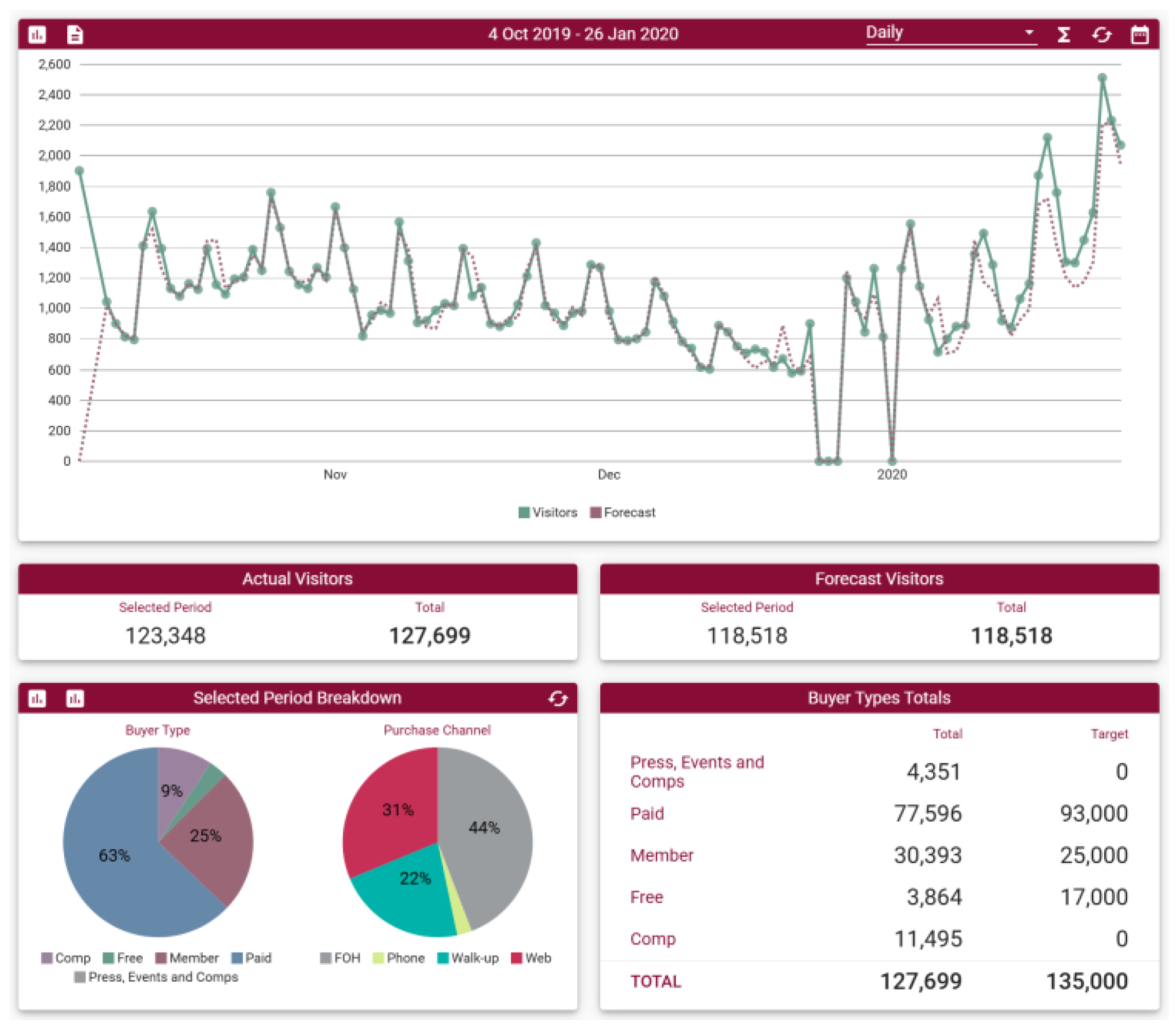
Figure 2.
Probability map of Leonardo da Vinci’s Salvator Mundi (c. 1499–1510) in 350 × 350 tiles. Photo by Steven J. Frank (Source: 47). Colors show attribution: blue (e.g., blessing hand) = not Leonardo; red/yellow (e.g., face) = Leonardo. [Courtesy of Steve and Andrea Frank].
Figure 2.
Probability map of Leonardo da Vinci’s Salvator Mundi (c. 1499–1510) in 350 × 350 tiles. Photo by Steven J. Frank (Source: 47). Colors show attribution: blue (e.g., blessing hand) = not Leonardo; red/yellow (e.g., face) = Leonardo. [Courtesy of Steve and Andrea Frank].

Figure 3.
AI analysis of emotional states in portraiture: Picasso’s Femme aux Bras Croisés (1901), private collection, and Rembrandt’s Bust of a Laughing Young Man (1629), Rijksmuseum (Source: 32). [Courtesy of Brendan Ciecko].
Figure 3.
AI analysis of emotional states in portraiture: Picasso’s Femme aux Bras Croisés (1901), private collection, and Rembrandt’s Bust of a Laughing Young Man (1629), Rijksmuseum (Source: 32). [Courtesy of Brendan Ciecko].
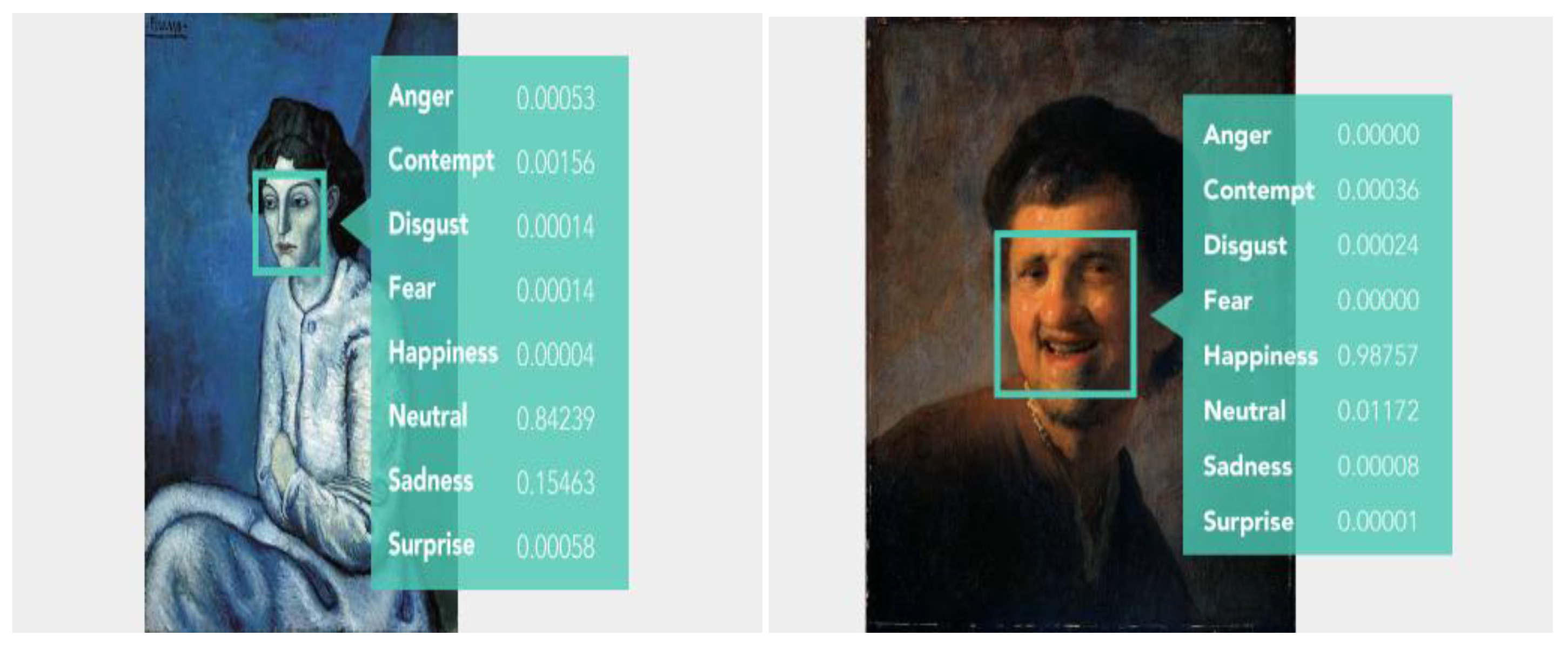
Figure 4.
Screenshot from the Harvard Art Museums' AI Explorer, showcasing innovative AI tools for collection exploration. (Source: 62). [Courtesy of the Harvard Art Museums].
Figure 4.
Screenshot from the Harvard Art Museums' AI Explorer, showcasing innovative AI tools for collection exploration. (Source: 62). [Courtesy of the Harvard Art Museums].
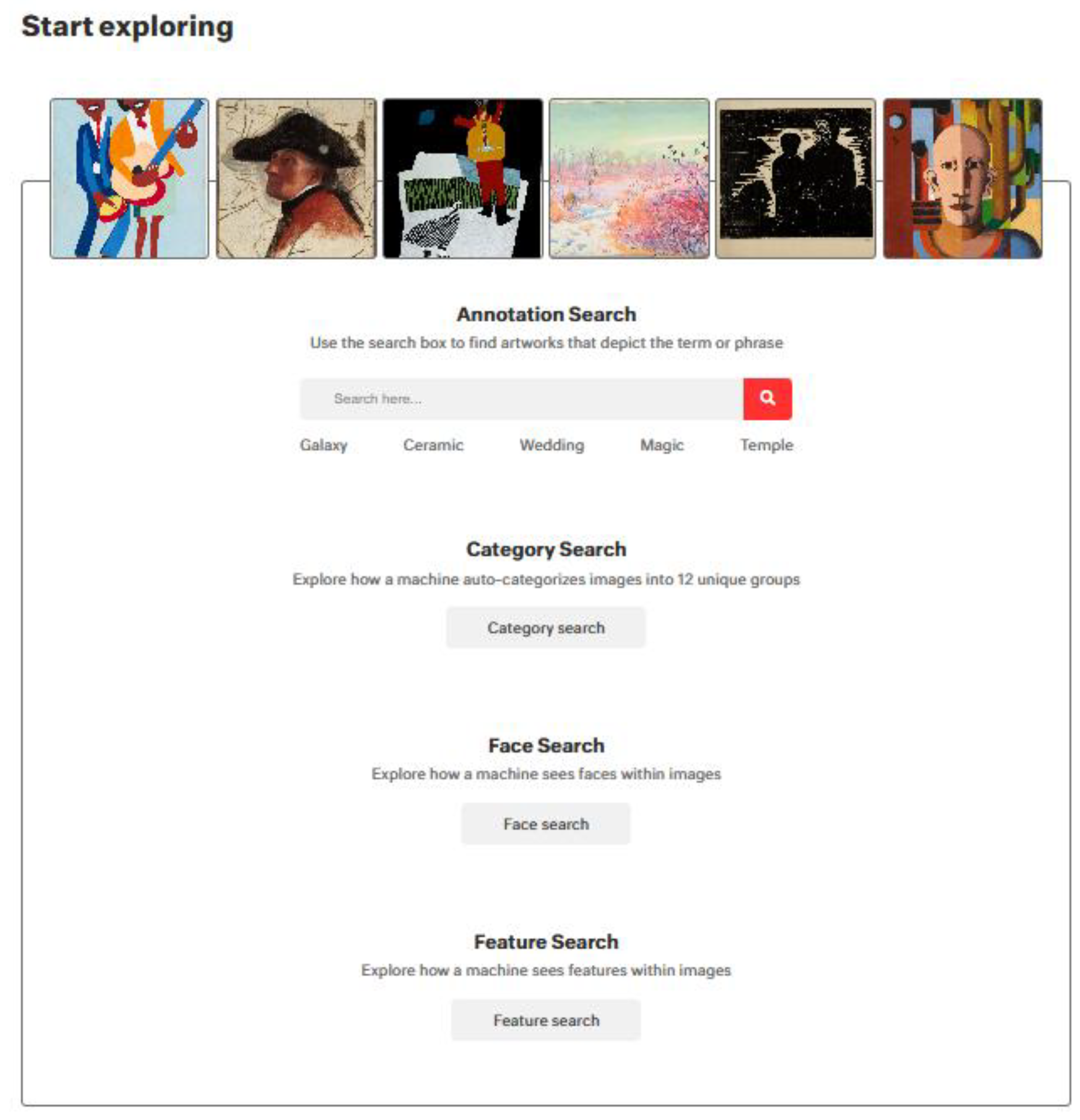
Figure 5.
Visitors with headphones interact with IRIS+ at the Museum of Tomorrow. (Source: 82). [Courtesy of Museu do Amanhã].
Figure 5.
Visitors with headphones interact with IRIS+ at the Museum of Tomorrow. (Source: 82). [Courtesy of Museu do Amanhã].
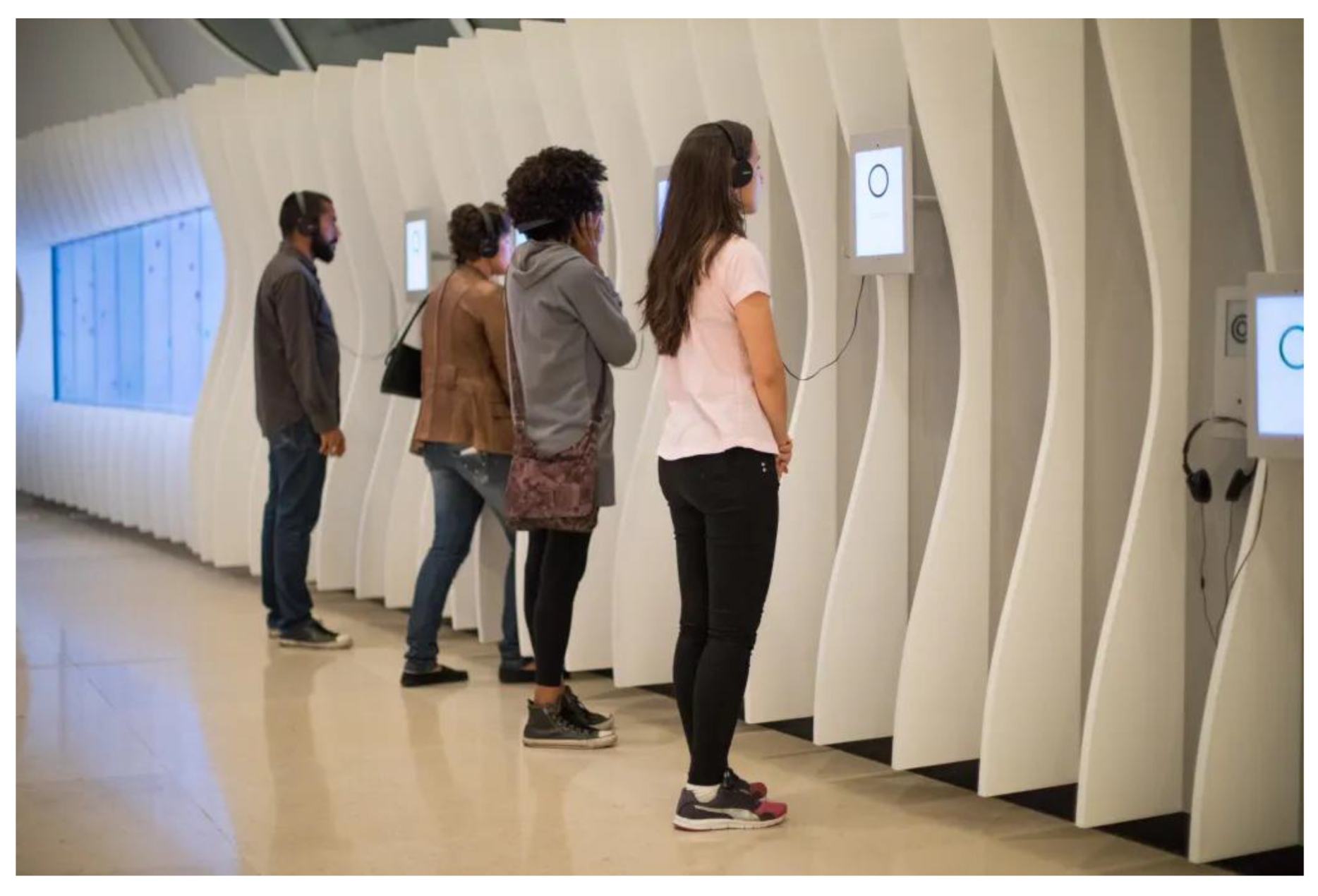
Figure 6.
Screenshot of digital Dalí interacting with visitors at the Dalí Lives exhibition, created in collaboration with Goodby, Silverstein & Partners (GS&P), at The Dalí Museum, St. Petersburg, Florida. (Source: 101). [Courtesy of Goodby Silverstein & Partners].
Figure 6.
Screenshot of digital Dalí interacting with visitors at the Dalí Lives exhibition, created in collaboration with Goodby, Silverstein & Partners (GS&P), at The Dalí Museum, St. Petersburg, Florida. (Source: 101). [Courtesy of Goodby Silverstein & Partners].
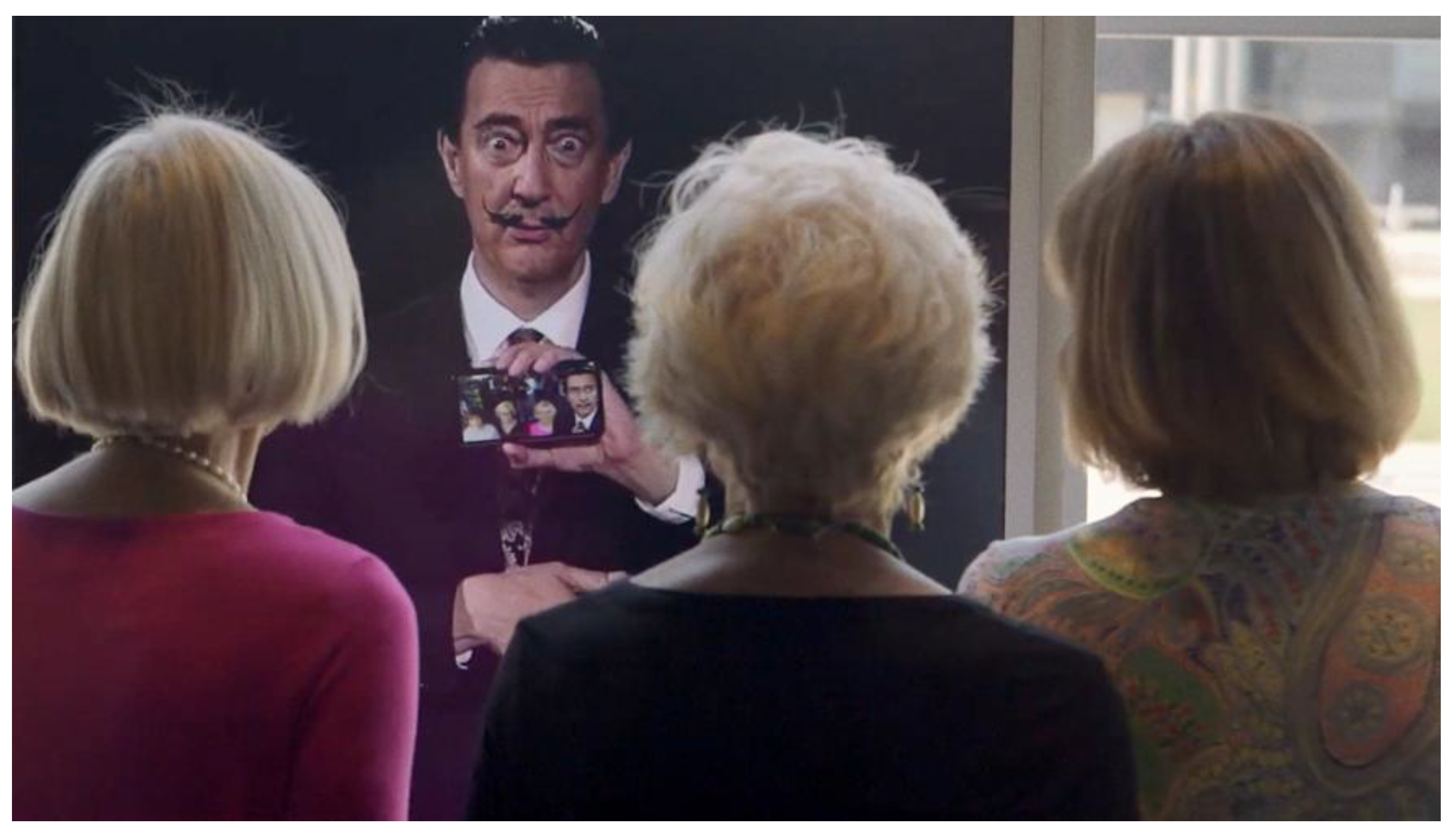
Figure 7.
Screenshot from the Bonjour Vincent application, developed by Jumbo Mana, allowing visitors to converse with an AI-powered Van Gogh at the Musée d'Orsay's "Van Gogh à Auvers-sur-Oise" exhibition. (Source: 104). [Courtesy of Jumbo Mana].
Figure 7.
Screenshot from the Bonjour Vincent application, developed by Jumbo Mana, allowing visitors to converse with an AI-powered Van Gogh at the Musée d'Orsay's "Van Gogh à Auvers-sur-Oise" exhibition. (Source: 104). [Courtesy of Jumbo Mana].
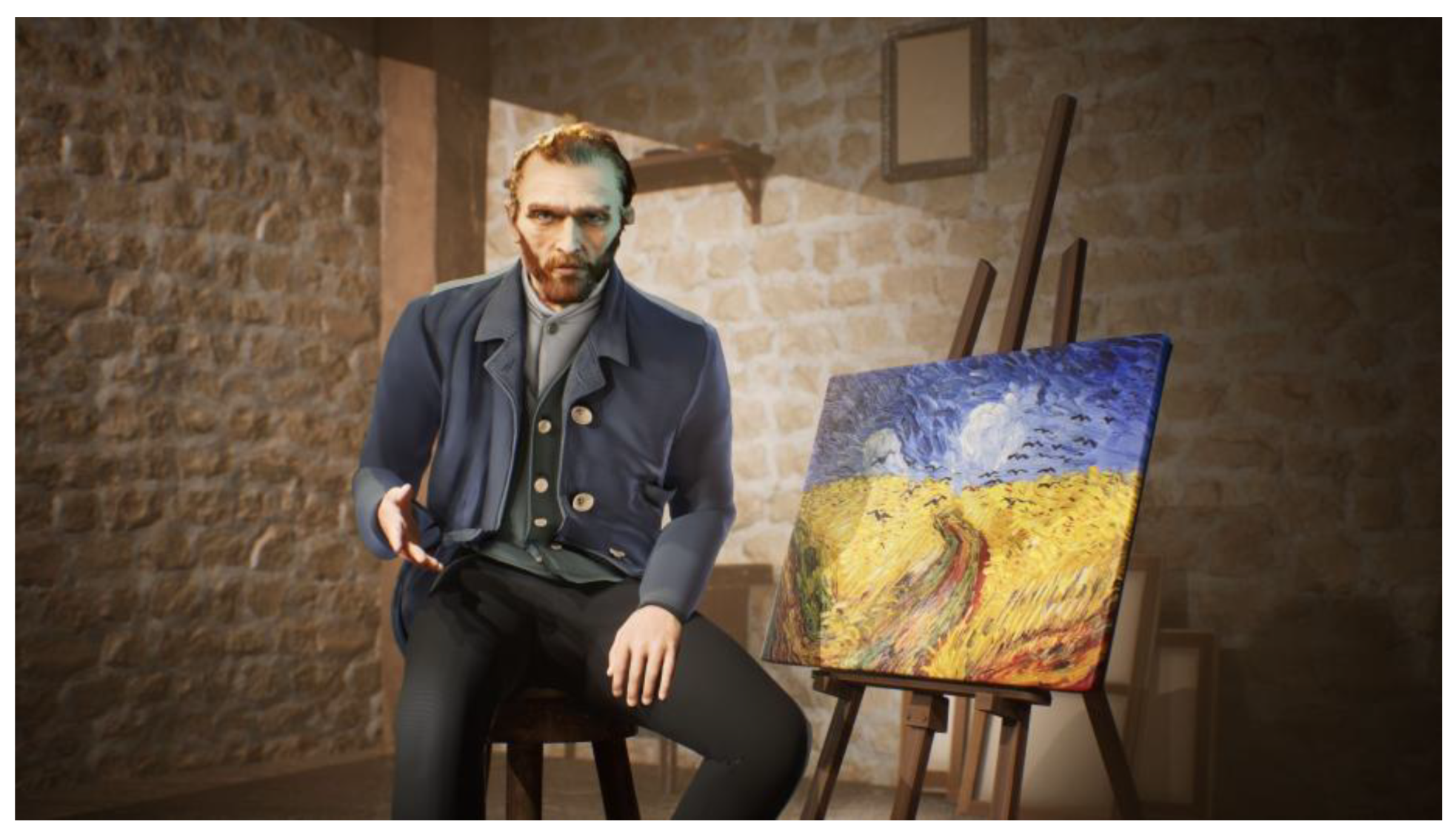
Figure 8.
Comparative analysis of visitor engagement: AI-powered recommendation system (a) vs. traditional museum layout (b) (Source: 14).
Figure 8.
Comparative analysis of visitor engagement: AI-powered recommendation system (a) vs. traditional museum layout (b) (Source: 14).
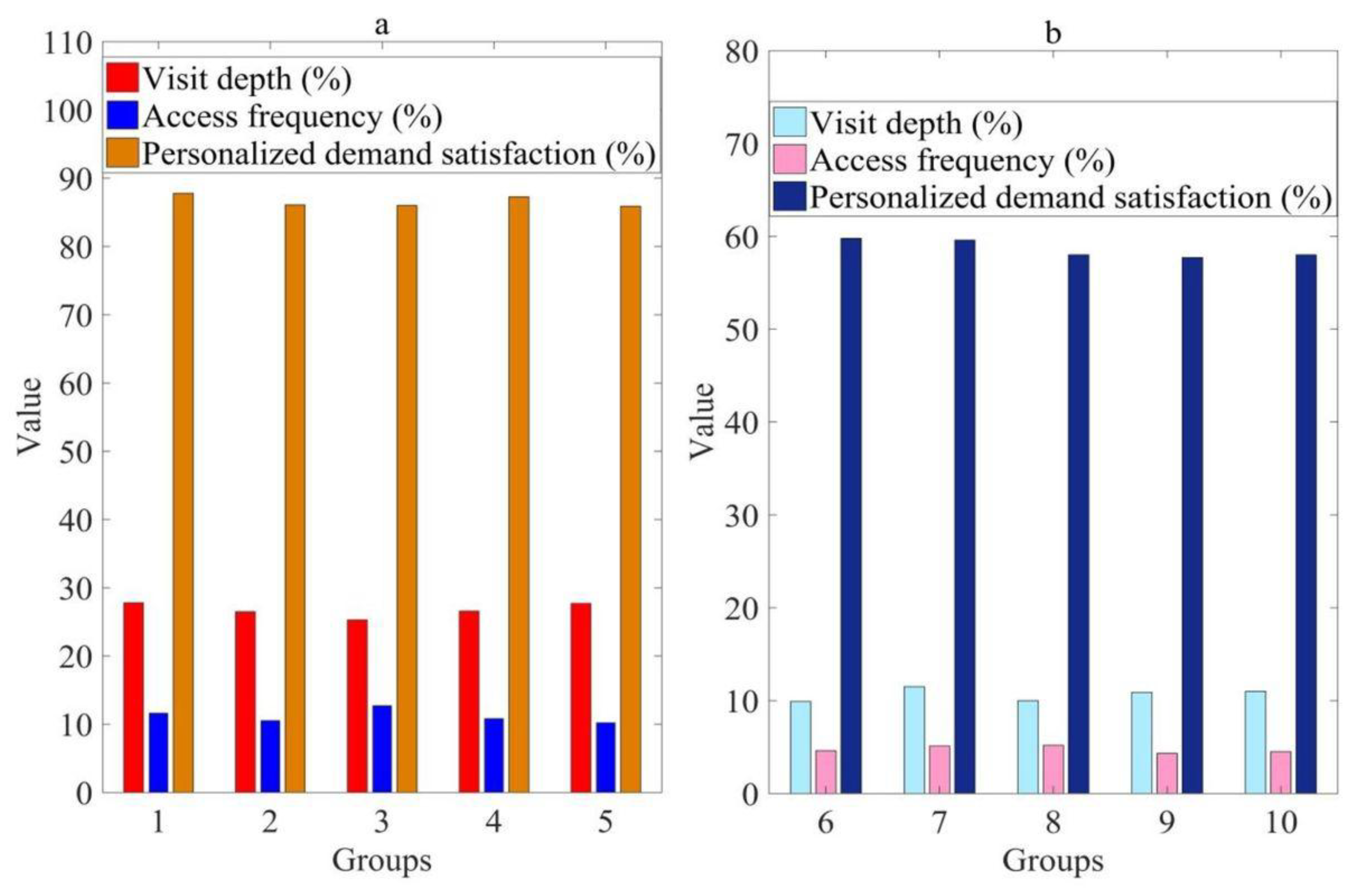
Disclaimer/Publisher’s Note: The statements, opinions and data contained in all publications are solely those of the individual author(s) and contributor(s) and not of MDPI and/or the editor(s). MDPI and/or the editor(s) disclaim responsibility for any injury to people or property resulting from any ideas, methods, instructions or products referred to in the content. |
© 2025 by the authors. Licensee MDPI, Basel, Switzerland. This article is an open access article distributed under the terms and conditions of the Creative Commons Attribution (CC BY) license (http://creativecommons.org/licenses/by/4.0/).
Copyright: This open access article is published under a Creative Commons CC BY 4.0 license, which permit the free download, distribution, and reuse, provided that the author and preprint are cited in any reuse.


