

Submitted:
11 October 2023
Posted:
12 October 2023
You are already at the latest version
Abstract
Sous-vide is a process in which food is vacuum-sealed and prepared in a water bath, heated to a precise temperature, and circulated in a sous-vide machine. This cooking technique is increasingly common in homes and catering establishments due to its simplicity and affordability. However, manufacturers' and chefs' recommendations for low-temperature and long-term sous-vide cooking in media raise food safety concerns, particularly when preparing beef tenderloin. In this study, Salmonella enterica was found to be inactivated by heat and sage essential oil (EO) in beef tenderloin from musculus psoas major that had undergone sous-vide processing. To determine whether heat treatment was likely to increase the sous-vide efficiency, S. enterica and sage EO were mixed. After being vacuum-packed and injected with S. enterica, the samples were cooked sous-vide for the prescribed time at 50, 55, 60, or 65 °C. On days 1, 3, and 6, the amounts of S. enterica, total bacteria, and coliform bacteria were measured in both groups of sous vide beef tenderloin. Mass spectrometry was used to identify bacterial strains on various days and categories. Each day that was measured, the test group exposed to a temperature of 50 °C for 5 minutes had a higher number of all microbiota. The most isolated microorganisms from the control and treated groups were Pseudomonas fragi, and in the treated group also S. enterica. It has been shown that adding sage essence oil (EO) in combination with the sous-vide gastronomic method leads to the stabilization and safety of beef tenderloin.
Keywords:
Salvia officinalis essential oil
; beef tenderloin (musculus psoas major)
; sous-vide
; Salmonella enterica
; antimicrobial effect
; novel application
; active substance
1. Introduction
The cooking technique known as sous vide, or "under vacuum", involves vacuum-sealing of uncooked food and heating it in a temperature-controlled hot water bath [1]. Contrary to other cooking techniques, sous vide uses uniform heat conduction while the food is submerged to achieve a precise level of doneness throughout the result. Due to the availability of numerous cookers that are accessible, user-friendly, and reasonably priced, sous vide cooking has grown significantly in popularity over the past ten years [2].
Salmonella enterica and other dangerous germs are occasionally present in raw meat. Combining information from numerous surveys, it was discovered that 3.8 % of raw (mainly minced) beef and 1.3 % of cold beef carcasses were contaminated with Salmonella [3]. Controlling these infections is crucial for ensuring food safety, especially regarding raw products with long shelf lives, like the marinated meats mentioned by Kargiotou et al. [4]. Adequate chilling inhibits the growth of Salmonella [5]. Between 80 and 90 % of salmonellosis cases in industrialized nations are linked to consuming foods with animal products [6,7]. The gastrointestinal tract of animals is known to be colonized by Salmonella without any clinical or pathologic-anatomic symptoms [7,8,9]. As a result, during slaughter, carcasses may get tainted with Salmonella. The primary means of transmission for this foodborne disease are contaminated raw or undercooked red meats. Although official meat inspection is done correctly in the slaughterhouse, it is likely Salmonella is frequently not found on the surface of (and deeper inside) the corpses [9].
During their manufacturing, sale, and distribution, raw and/or processed foods are vulnerable to contamination [10]. As a result, preservatives are currently required in order to stop the spread of food deterioration bacteria in the food sector [11]. Although a few commercially available food preservatives contain essential oils (EOs), relatively few investigations of the activity of EOs in foods had been published before the early 1990s [12]. In general, a reduction in the pH of the food, a rise in storage temperature, and an increase in oxygen content in the packing all increase bacteria's susceptibility to the antibacterial effect of EOs. The physical structure of food may limit the antibacterial activity of EO. Furthermore, it has been demonstrated that several EOs are superior bactericidal agents to the widely applied preservatives for meat applications [13].
The aims of this study were (i) to determine the antimicrobial activities of EO extracted from the Salvia officinalis; (ii) to assess the efficacy of these EO, as antimicrobial after their conservation at 6 °C for 6 days; (iii) to test the antibacterial activity of these EO against foodborne pathogen, belonging to Salmonella genus, inoculated in sous-vide beef meat as well.
2. Results
2.1. Number of Bacteria in Log CFU/g
Inadequate heat treatment is the most fundamental problem with sous vide procedures at low temperatures. In our study, day 1 was used to analyze the total number of bacteria in the control, sage EO, and S. enterica-treated groups. The total count of bacteria varied between 2.15±0.006 (65 °C, 10 min) and 3.76±0.08 log CFU/g (50 °C, 5 min) in the control groups and between 1.02±0.02 (65 °C, 10 min) and 3.27±0.12 log CFU/g (50 °C, 5 min) in the treated groups (Table 1). During a longer time at a temperature of 65 °C, the numbers were already zero. The coliforms bacteria were zero in all groups. The number of Salmonella counts (Figure 1) was found only in control groups at 50 °C.
Table 2 displays the impact of sage EO for each temperature treatment on day 3 sous-vide beef samples. The average counts obtained in samples with or without sage EO over time and under the heat treatment are displayed in this table. The samples heated to 50 °C for 5 minutes had a higher total count of bacteria. In the control groups, the total number of bacteria ranged from 3.63±0.06 to 4.41±0.14 log CFU/g. Coliforms bacteria were only in groups with 50 °C temperature and ranged from 2.49±0.06 to 3.35±0.03 log CFU/g (Table 3). The group treated with sage EO and S. enterica ranged from 2.08±0.03 to 4.52±0.06 log CFU/g. Salmonella counts ranged from 2.19±0.02 to 2.82±0.06 log CFU/g (Figure 2).
The total count of bacteria (Table 4) varied between 4.24±0.06 (60 °C, 20 min) and 5.20±0.04 log CFU/g in the control groups and between 2.66±0.03 (60 °C, 20 min) and 4.70±0.06 log CFU/g (50 °C, 5 min) in the treated groups. On day 6, the quantity of coliforms bacteria (Table 5) varied between 2.19±0.02 (60 °C, 20 min) and 2.9±0.07 log CFU/g (50 °C, 5 min) in the control groups and between 3.22±0.06 log CFU/g (50 °C, 20 min) and 3.47±0.07 log CFU/g (50 °C, 5 min) in the treatment groups. The number of S. enterica in treated groups ranged from 2.72±0.05 to 3.62±0.05 log CFU/g (Figure 3).
2.2. Isolated Bacteria from Beef Meat
From sous vide beef meat from the control and treatment groups of samples, a total of 413 isolates were found. From the control group of samples, 8 families, 14 genera, and 20 species were isolated (Figure 4). In this investigation, Pseudomonas fragi (17 %), Proteus vulgaris (8 %), and Pseudomonas cedrina (8 %) were the most isolated species. The sous vide beef meat treatment group contained 9 families, 12 genera, and 27 species (Figure 5). S. enterica, which was included in this group, was the most isolated species (21 %). From the treated group, Pseudomonas fragi (13 %), Pseudomonas veronii (6 %), and Pseudomonas putida (5 %), were the other bacterium species most frequently isolated.
3. Discussion
Both consumers and food processors have indicated a wish to employ less synthetic chemicals to preserve food. Many ailments and conditions can benefit from using medicinal plants as a potential option [14,15,16,17,18]. Extracts and EOs from common culinary herbs, spices, and aromatic plants that exhibit pronounced antibacterial action have recently attracted much attention. According to Marino et al. [19], such compounds can stop or slow the growth of bacteria that produce toxins and/or pathogens in food. In our research antimicrobial effect of sous vide and sage EO was evaluated against S. enterica. The microbiological safety of foods continues to be a top concern for consumers, regulatory bodies, and the food industry globally despite the variety of preservation strategies available. In recent years, numerous large-scale outbreaks of Salmonella have been a significant cause of food poisoning globally [20]. Antibiotics are a key tactic for eliminating these bacteria, and they are frequently used therapeutically and preventatively to treat and prevent salmonellosis in humans and animals. The use of antibiotics, however, inevitably leads to the development of drug resistance, and recent research has revealed an increase in the prevalence of Salmonella, which is resistant to antibiotics in both humans and animals [21]. New, effective, and secure treatments for salmonellosis are thus required.
Sage has been valued as a spice from the beginning of time. Like now, ancient Egyptians, Greeks, and Romans extensively used this plant in their cuisine. To make meat products last longer, sage was included in fresh cuisine. Sage leaves are utilized as a flavoring ingredient in many Mediterranean cuisines today. Fresh or dried Salvia officinalis leaves are used as a seasoning, garnish, or appetizer in Italian soups, meat, chicken dishes, pasta, and potatoes. Sage leaves added to sliced potatoes help them bake up crispy. People often drink sage tea made from fresh leaves, which is thought to help heal stomach issues. According to sage added to vinegar, these conditions include diabetes, hormonal issues [22], stomach aches, flushing, depression [23], and excessive sweating [24].
Sous vide cooking is still quite popular for preparing various food products, including meat. The examination of low-temperature sous vide cooking is the result of growing concern over the incorrect application of this cooking technique. In this experiment, sous vide cooking effectively reduced the total count of bacteria, coliform bacteria, and Salmonella present. Salmonella-inoculated chicken breasts were sous vide cooked, and the D-values at 55 °C for control samples were 47.65±3.68 min and 34.12±1.73 min for samples marinated in acidic teriyaki sauce [25]. In samples of ground beef inoculated with E. coli O157:H7, sous vide was able to produce a D-value of 67.79±5.48 min [26], and a D-value of 33.62 min [27] in samples inoculated with L. monocytogenes. After being vacuum-packed and injected with L. monocytogenes, the samples were cooked sous vide for the prescribed time at 50, 55, 60, or 65 °C. The amount of L. monocytogenes, the total bacterial count, and the number of coliform bacteria were measured in both groups of sous vide beef tenderloin on days 0, 3, 6, 9, and 12. L. monocytogenes, coliform bacteria, and total bacterial count all increased. Each day that was measured, the test group that had been exposed to a temperature of 50 °C for 5 minutes had a higher total bacterial count [28].
Game meat samples inoculated with L. monocytogenes produced D-values at 50 °C of 100.2±13.3 min for wild boar and 49.2±2.0 min for roe deer [29], demonstrating that goods can be safely cooked at temperatures lower than 54.4 °C. The significant variation in D-values between the wild boar and roe deer employed in this study again emphasizes the significance of product validation. Holding temperature and time combinations are insufficient to obtain the requisite microbial lethality safety, and there is also a risk of residual thermo-tolerant microorganisms growing. Studies [30,31,32,33,34] show that spore germination can occur in sous vide cooked meat products. However, these experiments used high-temperature heat treatments between 62 °C and 100 °C followed by extended refrigeration and/or temperature abuse storage over several days and weeks.
To increase the safety of the meat product during storage, Šojic et al. [35] evaluated the efficacy of S. officinalis herbal dust (a by-product of the food industry) essential oil (0.05–0.1 L/g) against microbial development in fresh pork sausages. At 0.05 L/g, adding this essential oil decreased the microbiological growth in fresh pig sausages while having no adverse effects on the meat product's sensory qualities.
It is a global issue that more and more germs are resistant to antibiotics and more tolerant of the current preservation procedures. Food processors and consumers are becoming more interested in switching from synthetic preservatives to natural plant-derived antimicrobial preservatives to preserve food [36,37,38,39,40]. It has been demonstrated that the antibacterial properties of herbs, spices, and their essential oils exert antimicrobial activity against food spoilage and microorganisms present in food [41,42]. Salvia plants' antibacterial properties may impact the incidence of vulnerable and resistant foodborne pathogens. Therefore, essential oils and extracts could be employed as alternatives to the growing usage of synthetic preservatives to improve microbiological food safety. According to studies by Abdelkader et al. [43] and Miladinovic [44], S. officinalis essential oil has been shown to have antibacterial activity against Escherichia coli, Salmonella enteritidis, Bacillus cereus, Bacillus subtilis, Candida albicans, Staphylococcus aureus, and Aspergillus niger.
The most isolated species in our study was Pseudomonas fragi in both groups, from the exception S. enterica inoculated in the treated groups. In the study by Gál et al. [45], Kocuria salcida, Pantotea agglomerans, Hafnia alvei, and Pseudomonas fragi were the most isolated species. From the treated groups, P. fragi, Lysinibacillus xylanitaticus, H. alvei, and Pseudomonas graminis, were the other bacterial species most frequently isolated. The composition of the raw meat microbiota agrees with previous reports of the bacterial genera found on raw beef and equipment used for processing beef cuts [46,47,48,49].
4. Materials and Methods
4.1. Inoculum Preparation
Salmonella enterica subsp. enterica CCM 4420 was used for the experiment. The microbial inoculum was cultivated for 24 h on Muller Hinton agar (MHA, Oxoid, Basingstoke, UK) at 37 °C. The inoculum was adjusted to optical density 0.5 McFarland standard (1.5×10⁸ CFU/mL) and 100 μL was added to the meat samples.
4.2. Essential Oil
Salvia officinalis EO, which was created by steam distilling of dry top, was obtained from Hanus s.r.o. in Nitra, Slovakia. For the duration of the analyses, it was kept at 6 °C in the dark. The main components in S. officinalis EO were identified using gas chromatography/mass spectrometry (GC/MS) and gas chromatography (GC-FID). These chemicals included α-thujone (24.6%), camphor (20.6%), 1,8-cineole (12.1%), and α-humulene [28].
4.3. Sample of Beef Meat preparation
Beef thigh meat samples (muscles psoas major) were used in this experiment. The meat sample was acquired from breading Charolais purchased from an authorized merchant, according to the information on the label made in the Czech Republic. The meat samples were safely and hygienically transported to the microbiological laboratory, where they were stored at 6 °C until the analyses were performed. Samples were transported from the authorized store to the laboratory in less than 120 minutes. The meat was diced, and samples weighing 5 g were treated with 2 % Salvia officinalis EO solutions, dissolved in sunflower oil, and vacuum packaged using a vacuum packer (Concept, Choce, Czech Republic). High-quality sunflower oil from a licensed vendor was purchased. There were 480 different beef samples analyzed in total. In our experiment were provided in the way described below:
BM: Fresh beef meat was vacuum-sealed in polyethylene bags and kept at 4 °C for anaerobic storage before being heated to 50–65 °C for 5–25 minutes.
BMSEEO: Fresh beef meat was vacuum-packed into polyethylene bags, treated with S. enterica and 2 % sage EO, and kept anaerobically at 4 °C for 5 to 25 minutes.
Raw uncooked beef was used to prepare the control samples on day zero. The samples were given the essential oil, and maceration was carried out for 24 hours on them. The CASO SV1000 sous vide machine was used to cook the samples.
4.4. Samples Cultivation
Microbiological tests were conducted at 6 °C on days 1, 3, and 6. Samples of 5 g were diluted in an Erlenmeyer beaker with 45 mL of a 0.1 % sterile saline solution. The samples were homogenized for 30 minutes in the shaking incubator (Burgwedel, Germany, GFL 3031). These microbial species were assessed: Coliforms were found in the coliform bacterial culture medium Violet Red Bile Lactose Agar (VRBL, Oxoid, Basingstoke, UK), which was incubated at 37 °C for 24 to 48 hours. Total viable counts (TVC) were grown on Plate Count Agar (PCA; Oxoid, Basingstoke, UK), which was incubated at 30 °C for 48–72 hours. Xylose Lysine Deoxycholate Agar (XLD; Oxoid, Basingstoke, UK), which was incubated at 37 °C for 24–48 hours. Eight colonies per Petri dish were briefly re-inoculated on Trypton Soya agar (TSA; Oxoid, Basingstoke, UK) for 24 °C.
4.5. Identification of Bacteria with Mass Spectrometry
Microorganisms isolated from beef meat samples were identified using the MALDI-TOF (Matrix-Assisted Laser Desorption / Ionization Time of Flight) MS Biotyper (Bruker, Daltonics, Bremen, Germany) and reference libraries.
4.6. MALDI-TOF Matrix Solution Preparation
A stock solution was produced, and it became an organic material. The standard solution comprised 2.5 % trifluoroacetic acid, 47.5 % water, and 50 % acetonitrile. To make 1 mL of stock solution, 500 mL of pure 100 % acetonitrile, 475 mL of purified water, and 25 mL of pure 10 0% trifluoro-acetic acid were mixed. In a 250 mL Eppendorf flask, the organic solvent was prepared and mixed with the "HCCA matrix portioned". The ingredients for the matrix were all purchased from Lambda Life in Bratislava, Slovakia.
4.7. Identification of MICROORGANISMS
Samples were created following the earlier guidelines [45]. Eight different colonies from the Petri dish were selected. The biological substance was moved from a Petri dish to an Eppendorf flask with 300 mL of distilled water, mixed, and then 900 mL of ethanol was added. The mixture was then centrifuged using a ROTOFIX 32A, made by Ites in Vranov, Slovakia, for two minutes at 10.000 g. After discarding the supernatant, the precipitate was removed from the Eppendorf tube and allowed to dry at room temperature (20 °C). Next, 30 mL of 70 % formic acid and 30 mL of acetonitrile were applied to the particle. The mixture was then centrifuged at 10.000 g for 2 minutes. One mL of liquid was used to coat a MALDI plate, and one mL of MALDI matrix solution was added after that. The samples were dried before being analyzed in a MALDI-TOF mass spectrometer (Bruker, Daltonics, Bremen, Germany) for the identification of microorganisms. Mass spectra were generated automatically using the microflex LT MALDI-TOF mass spectrometer (Bruker Daltonics, Bremen, Germany), which was configured to operate in the linear positive mode with a mass range of 2.000-20.000 Da. The instrument was calibrated using the Bruker bacterial test standard. The outcomes of the mass spectra were examined using the MALDI Biotyper 3.0 software (Bruker Daltonics, Bremen, Germany). The following were the identification criteria: Scores between 2.300 and 3.000 denoted highly probable species identification; 2.000 and 2.299 secured genus identification with probable species identification; 1.700 and 1.999 denoted probable genus identification; and a score of less than 1.700 was regarded as an unreliable identification.
4.8. Statistical Analyses
Each test and analysis was performed three times. Microsoft Excel calculated microbial counts' mean and standard deviation (SD). Before Tukey's test, a one-way analysis of variance (ANOVA) was performed using Prism 8.0.1 (GraphPad Software, San Diego, CA, USA) with a significance level of 0.05. SAS® software version 8 was used for data analysis.
5. Conclusions
The study tested the antimicrobial effects of Salvia officinalis essential oil combined with the sous-vide technique against foodborne pathogen belonging to Salmonella enterica in beef tenderloin. Intact beef samples that were inoculated with Salmonella enterica were safely reheated using sous vide cooking at 50, 55, 60, and 65 °C for 5, 10, 15, and 20 minutes, respectively. Salmonella enterica levels, total bacterial counts, and coliform counts in the beef kept at 50 °C for 5, 10, 15, and 20 minutes did not fall to levels that could be considered safe. To consider this product safe to eat, an additional step of heat killing or cooking at a higher temperature using the sous vide method must be used. The combined sage EO with sous vide treatment is a good alternative for storing beef samples at 6 °C.
Author Contributions
Conceptualization, R.G. and M.K.; methodology, R.G., N.Č. and M.K..; data curation, R.G., N.Č., and M.K.; writing—original draft preparation, R.G., N.Č., P.M., and M.K.; writing—review and editing, R.G., N.Č., P.M., and M.K.; supervision, M.K.; project administration, M.K. All authors have read and agreed to the published version of the manuscript.
Funding
This work was supported by the grant APVV SK-BY-RD-19-0014, "The formulation of novel compositions and properties study of the polysaccharides based edible films and coatings with antimicrobial and antioxidant plant additives". This research was funded by the Internal Grant Agency of the Faculty of Technology, Tomas Bata University in Zlin, ref. No. IGA/FT/2023/007 as well.
Institutional Review Board Statement
Not applicable.
Informed Consent Statement
Not applicable.
Data Availability Statement
The data presented in this study are available on request from the corresponding author.
Acknowledgments
The authors thank David Dohnal (Přerov, the Czech Republic) for editing the manuscript.
Conflicts of Interest
The authors declare no conflict of interest.
References
- Baldwin, D.E. Sous Vide Cooking: A Review. Int. J. Gastron. Food Sci. 2012, 1, 15–30, doi:10.1016/j.ijgfs.2011.11.002. [CrossRef]
- Hunt, H.B.; Watson, S.C.; Chaves, B.D.; Sullivan, G.A. Inactivation of Salmonella in Nonintact Beef during Low-Temperature Sous Vide Cooking. J. Food Prot. 2023, 86, 100010, doi:10.1016/j.jfp.2022.11.003. [CrossRef]
- Rhoades, J.R.; Duffy, G.; Koutsoumanis, K. Prevalence and Concentration of Verocytotoxigenic Escherichia Coli, Salmonella Enterica and Listeria Monocytogenes in the Beef Production Chain: A Review. Food Microbiol. 2009, 26, 357–376, doi:10.1016/j.fm.2008.10.012. [CrossRef]
- Kargiotou, C.; Katsanidis, E.; Rhoades, J.; Kontominas, M.; Koutsoumanis, K. Efficacies of Soy Sauce and Wine Base Marinades for Controlling Spoilage of Raw Beef. Food Microbiol. 2011, 28, 158–163, doi:10.1016/j.fm.2010.09.013. [CrossRef]
- Pal, A.; Labuza, T.P.; Diez-Gonzalez, F. Comparison of Primary Predictive Models to Study the Growth of Listeria Monocytogenes at Low Temperatures in Liquid Cultures and Selection of Fastest Growing Ribotypes in Meat and Turkey Product Slurries. Food Microbiol. 2008, 25, 460–470, doi:10.1016/j.fm.2008.01.009. [CrossRef]
- Berends, B.R.; Van Knapen, F.; Mossel, D.A.A.; Burt, S.A.; Snijders, J.M.A. Impact on Human Health of Salmonella Spp. on Pork in The Netherlands and the Anticipated Effects of Some Currently Proposed Control Strategies. Int. J. Food Microbiol. 1998, 44, 219–229, doi:10.1016/S0168-1605(98)00121-4. [CrossRef]
- Wong, T.L.; Nicol, C.; Cook, R.; Macdiarmid, S. Salmonella in Uncooked Retail Meats in New Zealand. J. Food Prot. 2007, 70, 1360–1365, doi:10.4315/0362-028X-70.6.1360. [CrossRef]
- Botteldoorn, N.; Heyndrickx, M.; Rijpens, N.; Grijspeerdt, K.; Herman, L. Salmonella on Pig Carcasses: Positive Pigs and Cross Contamination in the Slaughterhouse. J. Appl. Microbiol. 2003, 95, 891–903, doi:10.1046/j.1365-2672.2003.02042.x. [CrossRef]
- Meyer, C.; Thiel, S.; Ullrich And, U.; Stolle, A. Salmonella in Raw Meat and By-Products from Pork and Beef. J. Food Prot. 2010, 73, 1780–1784, doi:10.4315/0362-028X-73.10.1780. [CrossRef]
- Lebelo, K.; Malebo, N.; Mochane, M.J.; Masinde, M. Chemical Contamination Pathways and the Food Safety Implications along the Various Stages of Food Production: A Review. Int. J. Environ. Res. Public. Health 2021, 18, 5795, doi:10.3390/ijerph18115795. [CrossRef]
- Davidson, P.M.; Taylor, T.M.; Schmidt, S.E. Chemical Preservatives and Natural Antimicrobial Compounds. In Food Microbiology; Doyle, M.P., Buchanan, R.L., Eds.; ASM Press: Washington, DC, USA, 2014; pp. 765–801 ISBN 978-1-68367-058-2.
- Himanshu; Lanjouw, P.; Stern, N. How Lives Change; Oxford University Press, 2018; ISBN 978-0-19-880650-9.
- Skandamis, P.; Tsigarida, E.; Nychas, G.-J.E. The Effect of Oregano Essential Oil on Survival/Death of Salmonella Typhimurium in Meat Stored at 5°C under Aerobic, VP/MAP Conditions. Food Microbiol. 2002, 19, 97–103, doi:10.1006/fmic.2001.0447. [CrossRef]
- Salehi, B.; Zucca, P.; Sharifi-Rad, M.; Pezzani, R.; Rajabi, S.; Setzer, W.N.; Varoni, E.M.; Iriti, M.; Kobarfard, F.; Sharifi-Rad, J. Phytotherapeutics in Cancer Invasion and Metastasis: Phytotherapeutics in Cancer Invasion and Metastasis. Phytother. Res. 2018, 32, 1425–1449, doi:10.1002/ptr.6087. [CrossRef]
- Chaachouay, N. Ethnobotanical and Ethnopharmacological Study of Medicinal and Aromatic Plants Used in the Treatment of Neurological Disorders in the Moroccan Rif. J. Integr. Med. 2020, 8, doi:10.30564/jim.v8i1.571. [CrossRef]
- Snow Setzer, M.; Sharifi-Rad, J.; Setzer, W. The Search for Herbal Antibiotics: An In-Silico Investigation of Antibacterial Phytochemicals. Antibiotics 2016, 5, 30, doi:10.3390/antibiotics5030030. [CrossRef]
- Bagheri, G.; Mirzaei, M.; Mehrabi, R.; Sharifi-Rad, J. Cytotoxic and Antioxidant Activities of Alstonia Scholaris, Alstonia Venenata and Moringa Oleifera Plants From India. Jundishapur J. Nat. Pharm. Prod. 2016, 11, doi:10.17795/jjnpp-31129. [CrossRef]
- Nikoli, B.; Miti-ulafi, D.; Vukovi-Gai, B.; Kneevi-Vukevi, J. Molecular Mechanisms of Action of Antimutagens from Sage (Salvia Officinalis) and Basil (Ocimum Basilicum). In Mutagenesis; Mishra, R., Ed.; InTech, 2012 ISBN 978-953-51-0707-1.
- Marino, M.; Bersani, C.; Comi, G. Impedance Measurements to Study the Antimicrobial Activity of Essential Oils from Lamiaceae and Compositae. Int. J. Food Microbiol. 2001, 67, 187–195, doi:10.1016/S0168-1605(01)00447-0. [CrossRef]
- Hayouni, E.A.; Chraief, I.; Abedrabba, M.; Bouix, M.; Leveau, J.-Y.; Mohammed, H.; Hamdi, M. Tunisian Salvia Officinalis L. and Schinus Molle L. Essential Oils: Their Chemical Compositions and Their Preservative Effects against Salmonella Inoculated in Minced Beef Meat. Int. J. Food Microbiol. 2008, 125, 242–251, doi:10.1016/j.ijfoodmicro.2008.04.005. [CrossRef]
- O’Brien, T.F. Emergence, Spread, and Environmental Effect of Antimicrobial Resistance: How Use of an Antimicrobial Anywhere Can Increase Resistance to Any Antimicrobial Anywhere Else. Clin. Infect. Dis. 2002, 34, S78–S84, doi:10.1086/340244. [CrossRef]
- Karamanos, A.J. Cultivation and Breeding. In: Kintzios, S.E. (Ed.), The Cultivation of Sage. Sage; 14th ed.; Taylor & Francis e-Library: Amsterdam, 2000.
- Sensoy, N.D. Obtaining of Natural Antioxidant from Sage Leaves (Salvia Officinalis) with Supercritical Carbon Dioxide Extraction (M. Sc. Thesis).; Gazi University, Institute of Science and Technology: Ankara, 2007.
- Mohammad, S.M. A Study on Sage (Salvia Officinalis). J. Appl. Sci Res. 2011, 7, 1261–1262.
- Karyotis, D.; Skandamis, P.N.; Juneja, V.K. Thermal Inactivation of Listeria Monocytogenes and Salmonella Spp. in Sous-Vide Processed Marinated Chicken Breast. Food Res. Int. 2017, 100, 894–898, doi:10.1016/j.foodres.2017.07.078. [CrossRef]
- Juneja, V.K.; Bari, M.L.; Inatsu, Y.; Kawamoto, S.; Friedman, M. Thermal Destruction of Escherichia Coli O157:H7 in Sous-Vide Cooked Ground Beef as Affected by Tea Leaf and Apple Skin Powders. J. Food Prot. 2009, 72, 860–865, doi:10.4315/0362-028X-72.4.860. [CrossRef]
- Juneja, V.K.; Osoria, M.; Tiwari, U.; Xu, X.; Golden, C.E.; Mukhopadhyay, S.; Mishra, A. The Effect of Lauric Arginate on the Thermal Inactivation of Starved Listeria Monocytogenes in Sous-Vide Cooked Ground Beef. Food Res. Int. 2020, 134, 109280, doi:10.1016/j.foodres.2020.109280. [CrossRef]
- Kačániová, M.; Galovičová, L.; Valková, V.; Ďuranová, H.; Borotová, P.; Štefániková, J.; Vukovic, N.L.; Vukic, M.; Kunová, S.; Felsöciová, S.; et al. Chemical Composition and Biological Activity of Salvia Officinalis Essential Oil. Acta Hortic. Regiotect. 2021, 24, 81–88, doi:10.2478/ahr-2021-0028. [CrossRef]
- Abel, T.; Boulaaba, A.; Lis, K.; Abdulmawjood, A.; Plötz, M.; Becker, A. Inactivation of Listeria Monocytogenes in Game Meat Applying Sous Vide Cooking Conditions. Meat Sci. 2020, 167, 108164, doi:10.1016/j.meatsci.2020.108164. [CrossRef]
- Smith, C.J.; Olszewska, M.A.; Diez-Gonzalez, F. Selection and Application of Natural Antimicrobials to Control Clostridium Perfringens in Sous-Vide Chicken Breasts. Int. J. Food Microbiol. 2021, 347, 109193, doi:10.1016/j.ijfoodmicro.2021.109193. [CrossRef]
- Nissen, H.; Rosnes, J.T.; Brendehaug, J.; Kleiberg, G.H. Safety Evaluation of Sous Vide-Processed Ready Meals. Lett. Appl. Microbiol. 2002, 35, 433–438, doi:10.1046/j.1472-765X.2002.01218.x. [CrossRef]
- Hyytiä-Trees, E.; Skyttä, E.; Mokkila, M.; Kinnunen, A.; Lindström, M.; Lähteenmäki, L.; Ahvenainen, R.; Korkeala, H. Safety Evaluation of Sous Vide-Processed Products with Respect to Nonproteolytic Clostridium Botulinum by Use of Challenge Studies and Predictive Microbiological Models. Appl. Environ. Microbiol. 2000, 66, 223–229, doi:10.1128/AEM.66.1.223-229.2000. [CrossRef]
- Cosansu, S.; Juneja, V.K. Growth of Clostridium Perfringens in Sous Vide Cooked Ground Beef with Added Grape Seed Extract. Meat Sci. 2018, 143, 252–256, doi:10.1016/j.meatsci.2018.05.013. [CrossRef]
- Lindström, M.; Mokkila, M.; Skyttä, E.; Hyytiä-Trees, E.; Lähteenmäki, L.; Hielm, S.; Ahvenainen, R.; Korkeala, H. Inhibition of Growth of Nonproteolytic Clostridium Botulinum Type B in Sous Vide Cooked Meat Products Is Achieved by Using Thermal Processing but Not Nisin. J. Food Prot. 2001, 64, 838–844, doi:10.4315/0362-028X-64.6.838. [CrossRef]
- Šojić, B.; Pavlić, B.; Zeković, Z.; Tomović, V.; Ikonić, P.; Kocić-Tanackov, S.; Džinić, N. The Effect of Essential Oil and Extract from Sage (Salvia Officinalis L.) Herbal Dust (Food Industry by-Product) on the Oxidative and Microbiological Stability of Fresh Pork Sausages. LWT 2018, 89, 749–755, doi:10.1016/j.lwt.2017.11.055. [CrossRef]
- Bor, T.; Aljaloud, S.O.; Gyawali, R.; Ibrahim, S.A. Antimicrobials from Herbs, Spices, and Plants. In Fruits, Vegetables, and Herbs; Elsevier, 2016; pp. 551–578 ISBN 978-0-12-802972-5.
- Gyawali, R.; Ibrahim, S.A. Natural Products as Antimicrobial Agents. Food Control 2014, 46, 412–429, doi:10.1016/j.foodcont.2014.05.047. [CrossRef]
- Gyawali, R.; Hayek, S.A.; Ibrahim, S.A. Plant Extracts as Antimicrobials in Food Products. In Handbook of Natural Antimicrobials for Food Safety and Quality; Elsevier, 2015; pp. 31–47 ISBN 978-1-78242-034-7.
- Raeisi, S.; Ojagh, S.M.; Sharifi-Rad, M.; Sharifi-Rad, J.; Quek, S.Y. Evaluation of Allium Paradoxum (M.B.) G. Don. and Eryngium Caucasicum Trauve. Extracts on the Shelf-Life and Quality of Silver Carp ( Hypophthalmichthys Molitrix ) Fillets during Refrigerated Storage: RAEISI et Al. J. Food Saf. 2017, 37, e12321, doi:10.1111/jfs.12321. [CrossRef]
- Raeisi, S.; Sharifi-Rad, M.; Quek, S.Y.; Shabanpour, B.; Sharifi-Rad, J. Evaluation of Antioxidant and Antimicrobial Effects of Shallot (Allium Ascalonicum L.) Fruit and Ajwain (Trachyspermum Ammi (L.) Sprague) Seed Extracts in Semi-Fried Coated Rainbow Trout (Oncorhynchus Mykiss) Fillets for Shelf-Life Extension. LWT - Food Sci. Technol. 2016, 65, 112–121, doi:10.1016/j.lwt.2015.07.064. [CrossRef]
- Longaray Delamare, A.P.; Moschen-Pistorello, I.T.; Artico, L.; Atti-Serafini, L.; Echeverrigaray, S. Antibacterial Activity of the Essential Oils of Salvia Officinalis L. and Salvia Triloba L. Cultivated in South Brazil. Food Chem. 2007, 100, 603–608, doi:10.1016/j.foodchem.2005.09.078. [CrossRef]
- Dorman, H.J.D.; Deans, S.G. Antimicrobial Agents from Plants: Antibacterial Activity of Plant Volatile Oils. J. Appl. Microbiol. 2000, 88, 308–316, doi:10.1046/j.1365-2672.2000.00969.x. [CrossRef]
- Abdelkader, M.; Ahcen, B.; Rachid, D.; Hakim, H. Phytochemical Study and Biological Activity of Sage (Salvia Officinalis L.). Int. J. biol. Life Agric. Sci. 2015, 7.0, doi:10.5281/zenodo.1326832. [CrossRef]
- Miladinovic, D.; Lj, M. Antimicrobial Activity of Essential Oil of Sage from Serbia. Facta Univ. - Ser. Phys. Chem. Technol. 2000, 2, 97–100, doi:.
- Gál, R.; Čmiková, N.; Prokopová, A.; Kačániová, M. Antilisterial and Antimicrobial Effect of Salvia Officinalis Essential Oil in Beef Sous-Vide Meat during Storage. Foods 2023, 12, 2201, doi:10.3390/foods12112201. [CrossRef]
- Youssef, M.K.; Gill, C.O.; Yang, X. Storage Life at 2 °C or −1.5 °C of Vacuum-Packaged Boneless and Bone-in Cuts from Decontaminated Beef Carcasses: Storage Life of Vacuum-Packaged Beef Primals from Decontaminated Carcasses. J. Sci. Food Agric. 2014, 94, 3118–3124, doi:10.1002/jsfa.6659. [CrossRef]
- Youssef, M.K.; Gill, C.O.; Tran, F.; Yang, X. Unusual Compositions of Microflora of Vacuum-Packaged Beef Primal Cuts of Very Long Storage Life. J. Food Prot. 2014, 77, 2161–2167, doi:10.4315/0362-028X.JFP-14-190. [CrossRef]
- Yang, X.; Tran, F.; Wolters, T. Microbial Ecology of Decontaminated and Not Decontaminated Beef Carcasses. J. Food Res. 2017, 6, 85, doi:10.5539/jfr.v6n5p85. [CrossRef]
- Wang, H.; He, A.; Yang, X. Dynamics of Microflora on Conveyor Belts in a Beef Fabrication Facility during Sanitation. Food Control 2018, 85, 42–47, doi:10.1016/j.foodcont.2017.09.017. [CrossRef]
Figure 1.
Number of S. enterica (log CFU/g) on day 1 in group treated with sage EO.
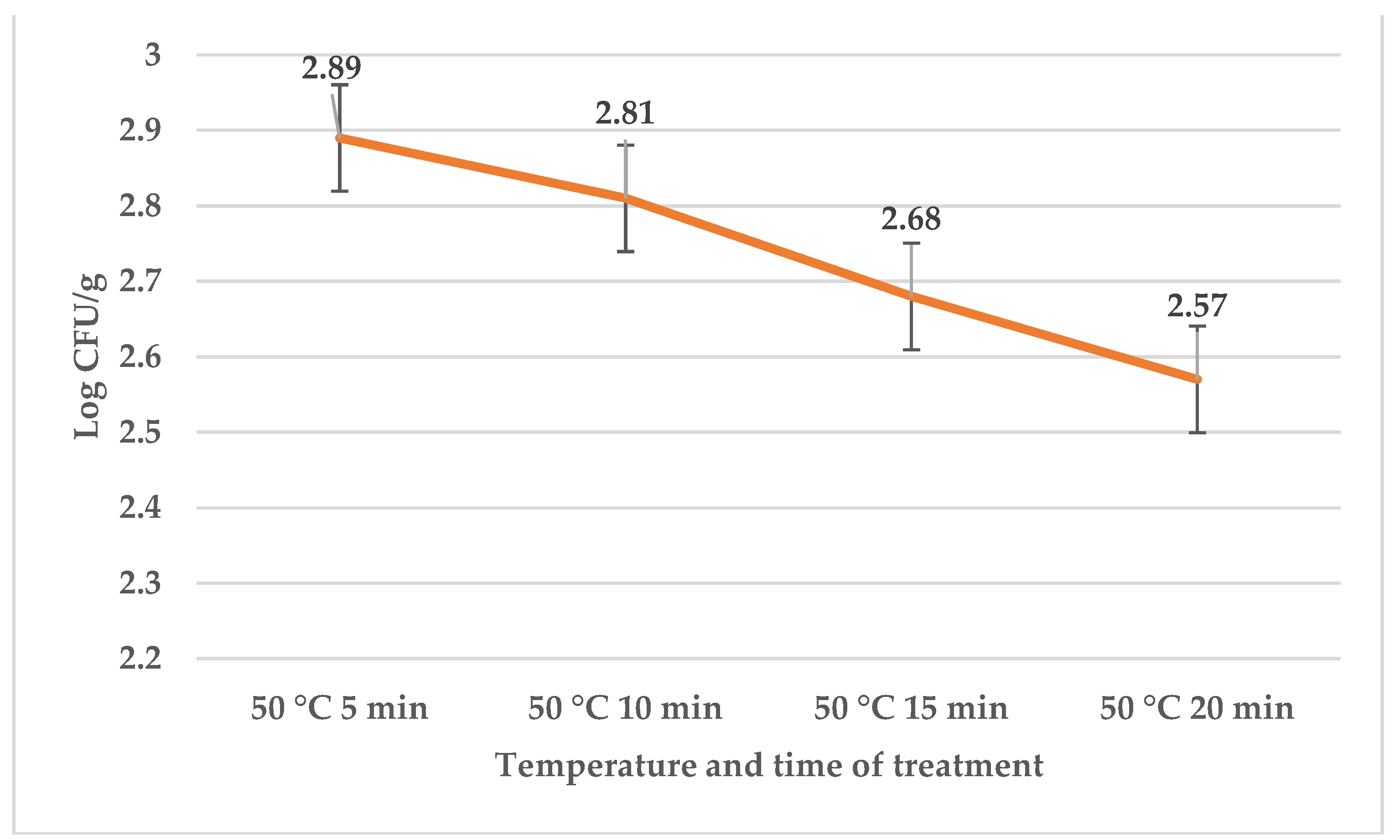
Figure 2.
Number of S. enterica (log CFU/g) on day 3 in the group treated with sage EO.
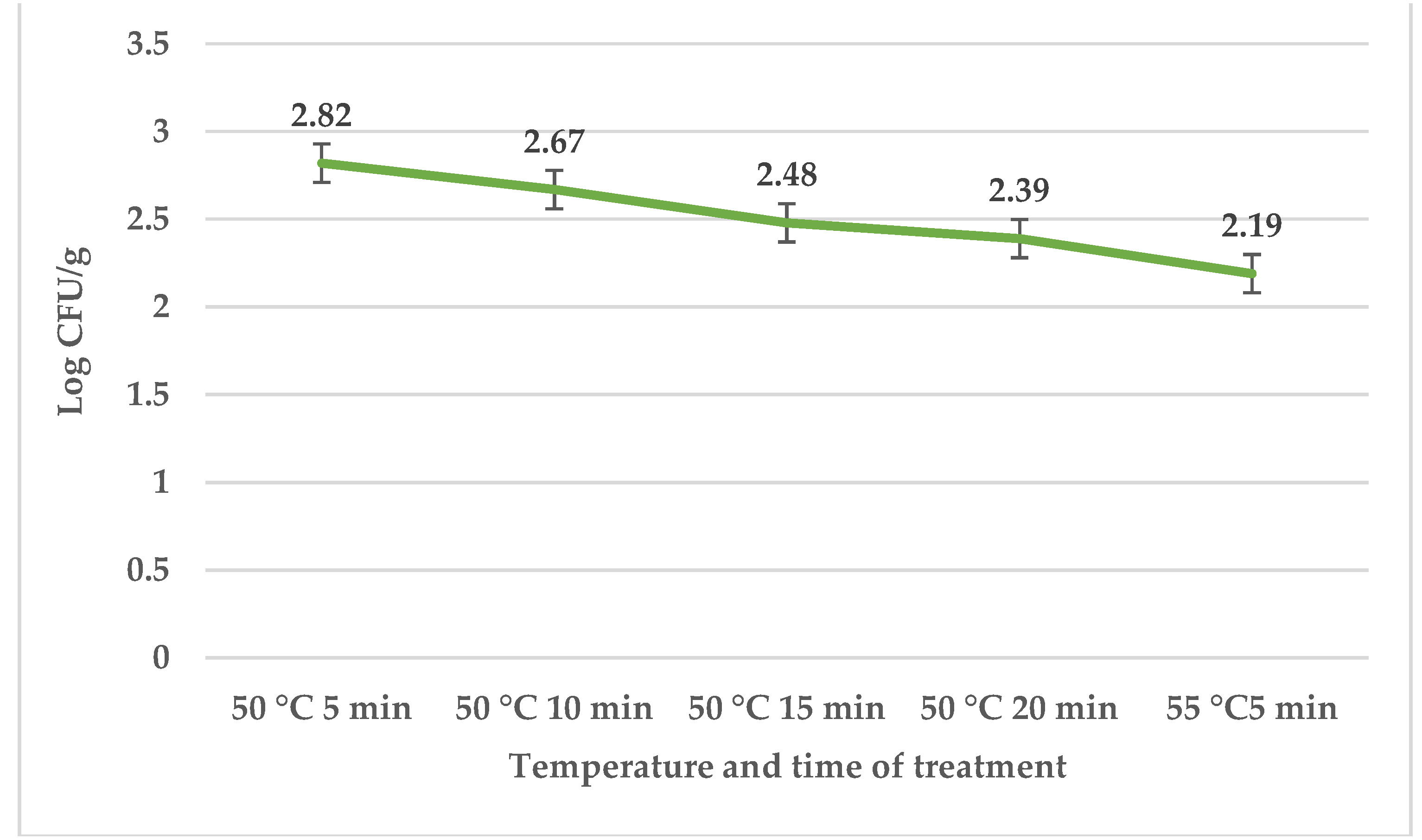
Figure 3.
Number of S. enterica (log CFU/g) on day 6 in group treated with sage EO.
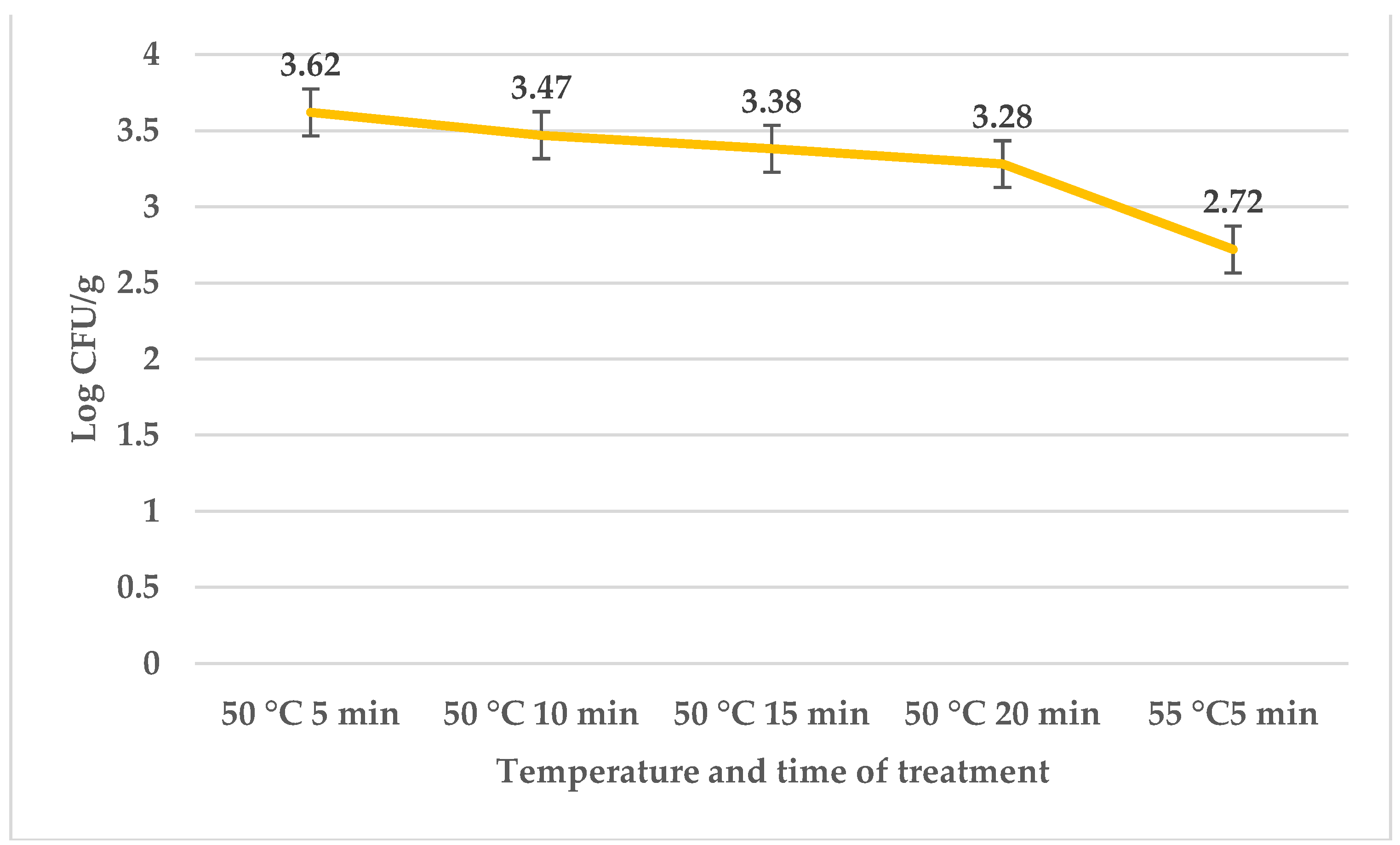
Figure 4.
Krona chart of isolated species of bacteria from the control groups.
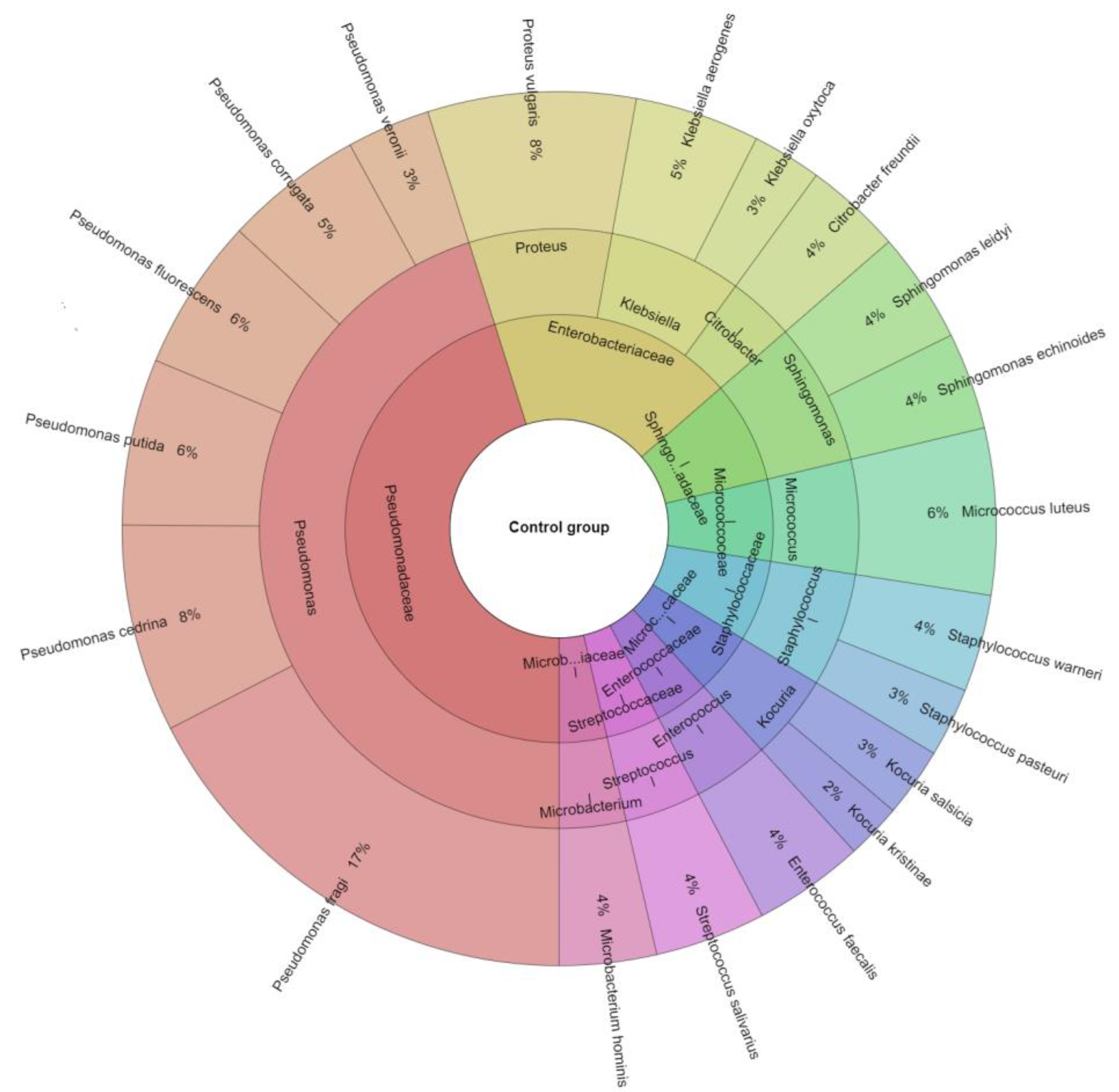
Figure 5.
Krona chart of isolated species of bacteria from the treated groups.
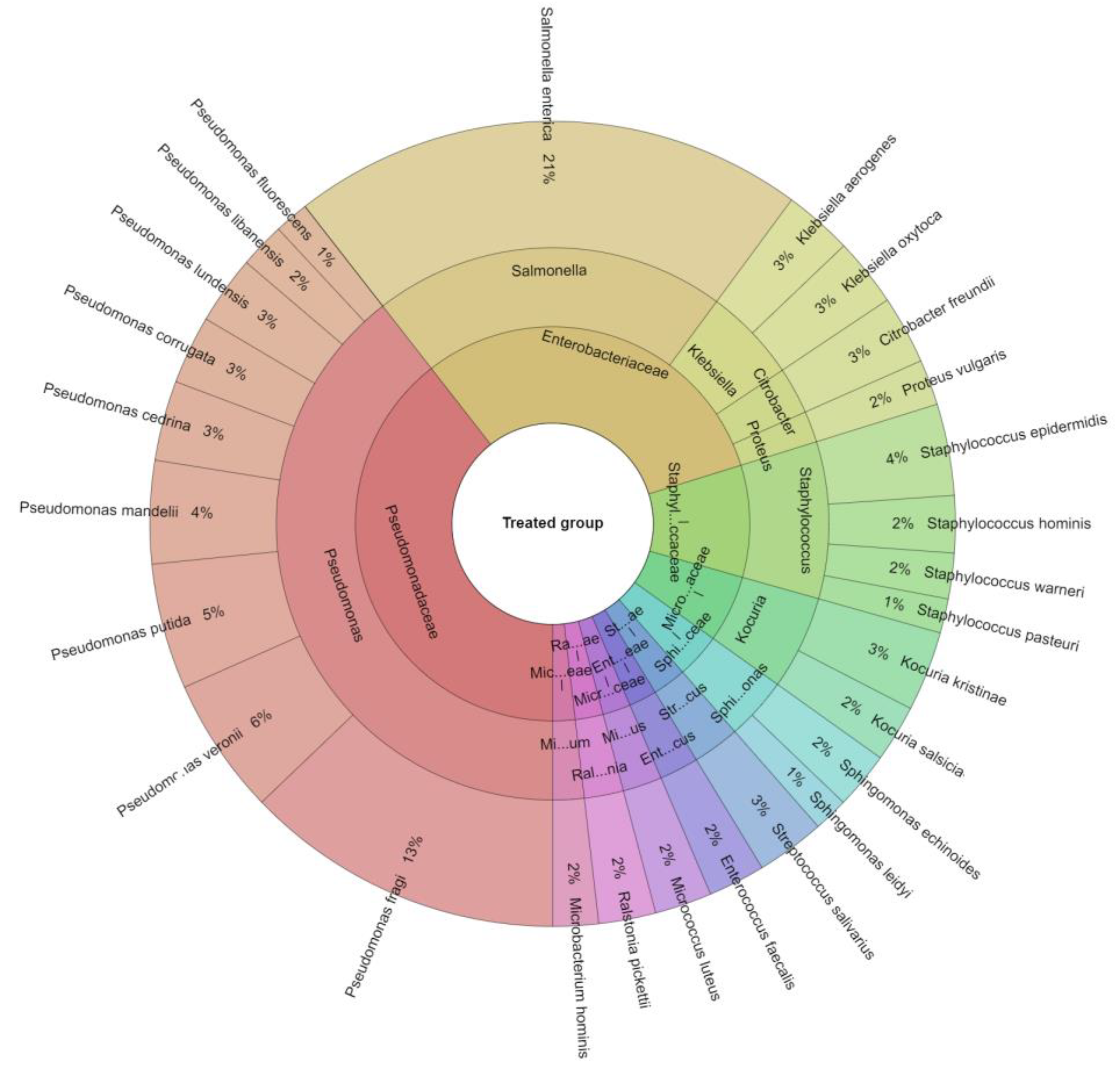

Table 1.
The total count of bacteria in the control groups and groups treated with sage EO and S. enterica (log CFU/g) in 1. day.
Table 1.
The total count of bacteria in the control groups and groups treated with sage EO and S. enterica (log CFU/g) in 1. day.
| Treatment | Temperature (°C) | Time (min) | Average | SD | P value |
|---|---|---|---|---|---|
| BM | 50 | 5 | 3.76 | 0.08 | 4.114x10⁻³ |
| BMSEEO | 50 | 5 | 3.27 | 0.12 | |
| BM | 50 | 10 | 3.63 | 0.17 | 2.110x10⁻³ |
| BMSEEO | 50 | 10 | 2.90 | 0.06 | |
| BM | 50 | 15 | 3.35 | 0.09 | 3.302x10⁻⁴ |
| BMSEEO | 50 | 15 | 2.72 | 0.04 | |
| BM | 50 | 20 | 3.35 | 0.05 | 3.219x10⁻² |
| BMSEEO | 50 | 20 | 2.58 | 0.05 | |
| BM | 55 | 5 | 3.28 | 0.05 | 1.814x10⁻² |
| BMSEEO | 55 | 5 | 2.47 | 0.05 | |
| BM | 55 | 10 | 3.16 | 0.02 | 1.315x10⁻² |
| BMSEEO | 55 | 10 | 2.22 | 0.05 | |
| BM | 55 | 15 | 3.08 | 0.04 | 1.230x10⁻² |
| BMSEEO | 55 | 15 | 2.15 | 0.03 | |
| BM | 55 | 20 | 2.94 | 0.05 | 8.874x10⁻³ |
| BMSEEO | 55 | 20 | 1.94 | 0.05 | |
| BM | 60 | 5 | 2.68 | 0.07 | 5.179x10⁻² |
| BMSEEO | 60 | 5 | 1.68 | 0.07 | |
| BM | 60 | 10 | 2.62 | 0.04 | 2.366x10⁻² |
| BMSEEO | 60 | 10 | 1.62 | 0.04 | |
| BM | 60 | 15 | 2.35 | 0.06 | 1.631x10⁻² |
| BMSEEO | 60 | 15 | 1.35 | 0.06 | |
| BM | 60 | 20 | 2.17 | 0.03 | 7.026x10⁻³ |
| BMSEEO | 60 | 20 | 1.17 | 0.03 | |
| BM | 65 | 10 | 2.03 | 0.006 | 1.527x10⁻³ |
| BMSEEO | 65 | 10 | 1.02 | 0.02 |
BM: fresh beef meat was vacuum packaged into polyethylene bags, stored anaerobically at 6 °C and treated with 50-65 °C for 5-10 min; BMSEEO: fresh beef meat treated with S. enterica and 2 % of sage EO was vacuum packaged into polyethylene bags, stored anaerobically at 6 °C and treated with 50-65 °C for 5-10 min.
Table 2.
The total count of bacteria in the control groups and groups treated with sage EO and S. enterica (log CFU/g) on day 3.
Table 2.
The total count of bacteria in the control groups and groups treated with sage EO and S. enterica (log CFU/g) on day 3.
| Treatment | Temperature (°C) | Time (min) | Average | SD | P value |
|---|---|---|---|---|---|
| BM | 50 | 5 | 4.41 | 0.14 | 3.003x10⁻¹* |
| BMSEEO | 50 | 5 | 4.52 | 0.06 | |
| BM | 50 | 10 | 4.36 | 0.05 | 4.214x10⁻² |
| BMSEEO | 50 | 10 | 4.45 | 0.03 | |
| BM | 50 | 15 | 4.28 | 0.04 | 3.377x10⁻² |
| BMSEEO | 50 | 15 | 4.40 | 0.06 | |
| BM | 50 | 20 | 4.17 | 0.04 | 2.279x10⁻² |
| BMSEEO | 50 | 20 | 4.44 | 0.12 | |
| BM | 55 | 5 | 4.08 | 0.03 | 5.406x10⁻⁴ |
| BMSEEO | 55 | 5 | 4.31 | 0.02 | |
| BM | 55 | 10 | 3.95 | 0.03 | 1.253x10⁻⁴ |
| BMSEEO | 55 | 10 | 2.50 | 0.17 | |
| BM | 55 | 15 | 3.79 | 0.12 | 1.413x10⁻² |
| BMSEEO | 55 | 15 | 2.16 | 0.01 | |
| BM | 55 | 20 | 3.63 | 0.06 | 7.191x10⁻³ |
| BMSEEO | 55 | 20 | 2.08 | 0.03 |
BM: fresh beef meat was vacuum packaged into polyethylene bags, stored anaerobically at 6 °C and treated with 50-55 °C for 5-25 min; BMSEEO: fresh beef meat treated with S. enterica and 2 % of sage EO was vacuum packaged into polyethylene bags, stored anaerobically at 6 °C and treated with 50-55 °C for 5-25 min. *The data are not statistically significant at the 95% significance level.
Table 3.
Coliform bacteria in the control groups and groups treated with sage EO and S. enterica (log CFU/g) on day 3.
Table 3.
Coliform bacteria in the control groups and groups treated with sage EO and S. enterica (log CFU/g) on day 3.
| Treatment | Temperature (°C) | Time (min) | Average | SD | P value |
|---|---|---|---|---|---|
| BM | 50 | 5 | 2.81 | 0.05 | 5.500x10⁻² |
| BMSEEO | 50 | 5 | 3.35 | 0.03 | |
| BM | 50 | 10 | 2.49 | 0.06 | 2.833x10⁻² |
| BMSEEO | 50 | 10 | 3.23 | 0.02 |
BM: fresh beef meat was vacuum packaged into polyethylene bags, stored anaerobically at 6 °C and treated at 50 °C for 5-10 min; BMSEEO: fresh beef meat treated with S. enterica and 2 % of sage EO was vacuum packaged into polyethylene bags, stored anaerobically at 6 °C and treated at 50 °C for 5-10 min.
Table 4.
The total count of bacteria in the control groups and groups treated with sage EO and S. enterica (log CFU/g) on day 6.
Table 4.
The total count of bacteria in the control groups and groups treated with sage EO and S. enterica (log CFU/g) on day 6.
| Treatment | Temperature (°C) | Time (min) | Average | SD | P value |
|---|---|---|---|---|---|
| BM | 50 | 5 | 5.20 | 0.04 | 2.519x10⁻⁴ |
| BMSEEO | 50 | 5 | 4.70 | 0.06 | |
| BM | 50 | 10 | 5.08 | 0.01 | 1.213x10⁻⁴ |
| BMSEEO | 50 | 10 | 4.59 | 0.06 | |
| BM | 50 | 15 | 4.93 | 0.06 | 5.822x10⁻⁴ |
| BMSEEO | 50 | 15 | 4.57 | 0.03 | |
| BM | 50 | 20 | 4.83 | 0.04 | 1.144x10⁻² |
| BMSEEO | 50 | 20 | 4.54 | 0.11 | |
| BM | 55 | 5 | 4.72 | 0.04 | 3.776x10⁻⁴ |
| BMSEEO | 55 | 5 | 4.42 | 0.03 | |
| BM | 55 | 10 | 4.52 | 0.06 | 1.357x10⁻⁴ |
| BMSEEO | 55 | 10 | 3.55 | 0.10 | |
| BM | 55 | 15 | 4.36 | 0.04 | 1.004x10⁻⁴ |
| BMSEEO | 55 | 15 | 3.25 | 0.12 | |
| BM | 55 | 20 | 4.24 | 0.06 | 5.148x10⁻³ |
| BMSEEO | 55 | 20 | 2.66 | 0.03 |
BM: fresh beef meat was vacuum packaged into polyethylene bags, stored anaerobically at 6 °C and treated at 50-55 °C for 5-20 min; BMSEEO: fresh beef meat treated with S. enterica and 2 % of sage EO was vacuum packaged into polyethylene bags, stored anaerobically at 6 °C and treated at 50-55 °C for 5-20 min.
Table 5.
Coliform bacteria in the control groups and groups treated with sage EO and S. enterica on day 6
Table 5.
Coliform bacteria in the control groups and groups treated with sage EO and S. enterica on day 6
| Treatment | Temperature (°C) | Time (min) | Average | SD | P value |
|---|---|---|---|---|---|
| BM | 50 | 5 | 2.90 | 0.07 | 4.896x10⁻⁴ |
| BMSEEO | 50 | 5 | 3.47 | 0.07 | |
| BM | 50 | 10 | 2.67 | 0.10 | 3.394x10⁻⁴ |
| BMSEEO | 50 | 10 | 3.37 | 0.05 | |
| BM | 50 | 15 | 2.37 | 0.05 | 1.369x10⁻² |
| BMSEEO | 50 | 15 | 3.28 | 0.04 | |
| BM | 50 | 20 | 2.19 | 0.02 | 1.707x10⁻² |
| BMSEEO | 50 | 20 | 3.22 | 0.06 |
BM: fresh beef meat was vacuum packaged into polyethylene bags, stored anaerobically at 6 °C and treated at 50 °C for 5-20 min; BMSEEO: fresh beef meat treated with S. enterica and 2 % of sage EO was vacuum packaged into polyethylene bags, stored anaerobically at 6 °C and treated at 50 °C for 5-20 min.
Disclaimer/Publisher’s Note: The statements, opinions and data contained in all publications are solely those of the individual author(s) and contributor(s) and not of MDPI and/or the editor(s). MDPI and/or the editor(s) disclaim responsibility for any injury to people or property resulting from any ideas, methods, instructions or products referred to in the content. |
© 2023 by the authors. Licensee MDPI, Basel, Switzerland. This article is an open access article distributed under the terms and conditions of the Creative Commons Attribution (CC BY) license (http://creativecommons.org/licenses/by/4.0/).
Copyright: This open access article is published under a Creative Commons CC BY 4.0 license, which permit the free download, distribution, and reuse, provided that the author and preprint are cited in any reuse.