

Submitted:
10 October 2023
Posted:
13 October 2023
You are already at the latest version
Abstract
The pursuit of sustainable wellbeing is one of the research objectives of positive experience design. Driven by this goal, the purpose of this paper is to provide an impact-centered sustainable positive experience design model. Firstly, the literature review method was used to define the research status and concept of impact-centered sustainable design. Secondly, an impact-centered sustainable positive experience design model was constructed, and relevant formulas for concept generation and concept evaluation were proposed. Thirdly, design verification was conducted through a workshop. Finally, the Technology Acceptance Model (TAM) questionnaire was used to evaluate and discuss the design model. An impact-centered sustainable positive design model was proposed, which includes the important impact dimensions of sensory experience and meaningful experience on users’ quality of life at different levels: healthy living (pleasure index, health behavior), harmonious community (social connectivity, social contribution), and livable environment (living environment, environmental contribution). Based on positive experience related theory, this study takes long-term impacts as the starting point for sustainable positive experience design, which helps designers to generate design concepts from a systematic and long-term perspective.
Keywords:
Impact-centered design
; sustainable design
; positive experience
; design model
1. Introduction
In response to the shift in human development patterns following globalization, the United Nations' Sustainable Development Goals (SDG) called for development to address broader societal needs while addressing climate and environmental change [1]. Society, economy and environment are the three pillars of the sustainability. It means that sustainable development pursues a win-win situation of "economic growth" and "social and ecological development" [2]. Over the past few decades, the search for a more sustainable approach to development has become increasingly important in international politics and economics [3]. Social attention to sustainability has also promoted the transformation of design ideas. More design methods that consider social and ecological sustainability have emerged, such as nature-centered design [4], life-centered design [5] and value sensitive design [6]. Under this background, human-centered design is increasingly showing its limitations in the aspect of sustainability.
In the field of positive experience design, researchers have been exploring how design can contribute to sustainable human well-being and achieve long-term goals. In recent studies, the user-centered research perspective has gradually changed, and scholars are beginning to explore how to design long-range positive impacts to achieve the long-term personal and social well-being of users. For example, Kermavnar has designed a serious game about COVID-19 knowledge to influence users' behaviors and attitudes through short-term experiences [7]. In a framework of AI systems established by Maden to support community well-being, more attention is paid to influencing residents' happiness through community construction [8]. However, under a logical frame that is user-centered, there are no systematic design tools to help designers design from an impact perspective. Therefore, this paper attempted to construct an impact-centered sustainable positive experience design model that integrates the system of user and environment into the design scope, providing a systematic design approach to achieving sustainable well-being.
The following sections of this paper are structured as follows. At first, relevant research on positive experience design and the related literature on impact-centered design are reviewed briefly. Then, in the first part of the study, an impact-centered sustainable positive experience design model is constructed exploratively. Based on the existing theories, the corresponding design algorithms are proposed. Next, the second study conducts a feasibility verification and limitation analysis of the model through a design workshop. Finally, we discuss the academic and practical implications of this study, and summarize the contribution and future directions.
2. Literature Review
2.1. Positive Experience Design
Positive Experience Design, derived from positive psychology, is a possibility-driven positive value-creation activity that provides pleasant and meaningful interactive experiences for individuals and communities via innovative products, services, and systems, thereby promoting individual wellbeing, community prosperity, and building a flourishing future [9]. To meet the needs of users and optimize the experience process, scholars have developed a series of design models around positive experience design, as shown in Table 1.
Desmet brought eight mood types into the two-factor mood model to help designers identify and describe user’s mood and carry out the design related to mood regulation [10]. Peters believed that encouraging users to accomplish tasks and develop behavioral habits can improve their happiness of life, and developed the METUX (Motivation, Engagement & Thriving in User Experience) model to help designers measure the basic psychological needs that support user behavior [11]. Wiese built a multi-stage design framework for sustainable well-being, providing a visual design path for creating positive activities through product interactions to achieve users’ happiness [12]. Wu contributed a positive experience design model for intelligent products of the IoT, which covers the design path from pleasurable experiences to personal significance and group relationships [13]. Chen developed an emotional interaction design framework model for children's application development, guiding designers to enrich users' pleasure and cognition from the perspective of enhancing users' emotional experiences [14]. In a model designed for temporal harmony, Perrino revealed the potential impact of thoughts, feelings and behaviors on users' current positive experience within the positive experience cycle, inspiring designers to improve positive experience from the perspective of changing users' cognitive memory and future plans [15]. So far, the design model related to positive experience are mainly focused on users’ perception, and are committed to providing positive experiences for individuals or groups through product interaction, so as to influence their mood, behavior, attitude and cognition, and improve subjective well-being.
2.2. Impact-centered Design
As early as the 1990s, American psychologist Urie Bronfenbrenner noted that there is a two-way, dynamic interaction between individuals and their living environments. Furthermore, recent studies have demonstrated that environmental problems, social and economic changes will affect the health and well-being of individuals [16]. In order to achieve sustainable well-being, researchers begin to pay attention to the relationship between the users and the external environments. For instance, Norman proposed the concept of humanity-centered design, which focuses on the long-term impact between human societies and ecosystems [17]. More-than-human-centered design is a design field that focuses on the interdependence of human and biological systems and seeks design methods that harmonize positive human experiences with the needs of the environment [18]. Besides, sustainable design emphasizes the integrated consideration of social, environmental and economic impacts in the design of products, systems or services, balancing human needs with the environmental and ethical concerns [19]. Therefore, Fokkinga believed that designers need to consider creating positive impacts on individual and social well-being in addition to users' goals, feelings, abilities and practices, and defined this coherent design intention as “impact-centered design” [20].
The Oxford Dictionary defines "impact" as the powerful effect that something has on somebody or something. In order to illustrate the link between technical characteristics and happiness factors, Calvo divided the key factors affecting happiness into ego, sociability and detachment [21]. For the design methodology, Cloutier considered that personal well-being is related to environmental conditions and social connections, and proposed the Sustainability Through Happiness Framework (STHF), which is based on the vision of future happiness for sustainable design [22]. Weijs-perrée found that transient experiences depend on the objective features of the environment and the subjective characteristics of the individual, and the short-lived experiences ultimately influence the individual's sense of well-being through long-term experience [23]. In impact-centered design process, designers need to comprehensively consider the interaction between users, society and the environment, and take the positive impact as the design goal. The impact can be further divided into two dimensions: 1. short-term impacts: changing users’ behaviors, attitudes, emotions, etc. through a short experience; 2. long-term impacts: making long-term impacts on users or stakeholders through sustainable experiences, and its combined effect gradually changes the quality of life and social well-being. Shaping prolonged positive impacts can provide users with a more sustainable sense of well-being, and long-term impacts should be the main design goal during the impact-centered design process.
Table 2 presents some research details on impact-centered design.
3. Study 1: Construction of Design Model
3.1. Construction Process
The Wheel of Life is a visualization tool for real-time self-assessment and adjustment of lifestyle that focuses on the movements and changes of various important factors in life at different times, thus helping users maintain a balance between career and life [24]. The balanced wheel can be used to clarify future directions and goals. In impact-centered design, combined with the balanced wheel tool, the different influence dimensions are viewed as important factors in the design, which can present the ratio and variation relationships of the various impact objectives.
Xin divides the design objects of experience design into three parts: expectation, event and impact. The three parts are interactional and inseparable. Events are guided from expectations, and the participants influence the development of events [25]. The purpose of using the Wheel of Life is to maintain a dynamic balance, and the balance relationship needs to be evaluated from a long-term perspective. when certain factors in the Wheel of Balance change significantly, designers need to make appropriate adjustments to stabilize the balance. Therefore, in the above balanced wheel model, the lines of "Current Value", "Ideal Value" and "Impact Value" are set respectively, as shown in Figure 1."Current Value" shows the user's current life status; "Ideal Value" represents the user's expectations for the ideal life. The difference between the two reflects the degree of design involvement. In the design iteration process, the "Influence Value" line can be drawn several times in the model for designers to observe the change state of each dimension and the impact relationships, and the design can be adjusted by reference to the impact relationship.
In the research field of positive experience design, Desmet proposed a framework for positive experience design that includes three parts: design for pleasure, design for personal significance, and design for virtue. Design for pleasure focuses on the present pleasure feeling; design for personal significance is mainly to encourage users to achieve long-term goals; design for virtue is a morally meaningful experience that supports altruistic behaviors and thoughts [26]. Social ecologist researchers consider that human development involves the interaction between humans and the environment and further divides the environment into a physical environment and a social environment [27].
Based on the research in the above two fields, the impact target can be deconstructed and reconstructed from the social ecological system level (individual, society, environment) and experience level (sensory experience, meaningful experience), and the impact target can be divided into six dimensions: pleasure index, health behavior, social connectivity, social contribution, living environment and environmental contribution, and there is a dynamic relationship between the six dimensions. As shown in Figure 2, the six influence dimensions were substituted into the balance wheel model to generate an impact-centered sustainable positive experience design model.
3.2. Definition of Elements
3.2.1. Pleasure Index
Pleasure is a state of feeling happy and satisfied, including not only satisfying the user's sensory stimuli, but also the sense of happiness brought to the user by meeting actual needs and achieving deep goal pursuits. Jordan compartmentalized pleasure into four categories: physical pleasure derived from sensory stimulation; social pleasure derived from social relationships and interactions; psychological pleasure derived from cognitive responses and related to the psychological needs of product use; the pleasure of thought that comes from pursuing values and enjoying them [28]. Blythe defined pleasure as both sensory stimulation and self-realization pleasure, and found that the process of satisfying needs can provide users with sustained pleasure [29]. Park discovered that hedonic pleasure can bring immediate happiness and satisfaction in experience, while self-expression and self-realization can give individuals greater meaning and satisfaction [30]. Therefore, the pleasure index can be obtained through the present pleasure experience and the realization of meaning pursuit, that is, pleasure is directly affected on the sensory level and indirectly affected by the goal fulfillment.
3.2.2. Health Behavior
Health behaviors are the activities that people engage in to maintain physical and mental health. The scope of current research on behavior change technique covers direct interventions on the physical and psychological level of individuals, as well as indirect interventions on social and environmental conditions. This means that designers are required to take measures to change the user's current physical and mental state or create certain external environmental support. George divided interventions in the field of behavioral science into targeted measures for specific populations and interventions at the social, environmental and policy levels [31]. The Behavior Change Wheel (BCW) model proposed by Michie suggests that designers can conduct comprehensive intervention from the aspects of ability, opportunity and motivation to promote individual behavior change [32]. Nielsen extended the model and proposed six design directions for changing user behavior: cognition, ability, motivation, timing, social and physical context [33].
3.2.3. Social Connectivity
A social group is a group composed of individuals with certain social relationships or other associations. Individuals in social groups need to assume corresponding roles in the community and maintain social connectivity through participation in interactive communication. Maintaining certain social connectivity can provide users with positive physical conditions and mental feelings. Longa's research found that the impact of interpersonal emotional contact can promote a sense of coexistence and social connectivity between individuals and help them overcome the sense of loneliness at the sensory level [34]. Seabrook identified positive social media interactions, social support, and feelings of social connectivity as impact factors for mental health and life satisfaction [35]. The degree of social connectivity can be improved by participating in various social activities or maintaining social communication and interaction, which can serve as a predictor of personal physical and psychological health and a motivation for users to actively participate in activities.
3.2.4. Social Contribution
Social contribution is an altruistic activity that people take part in to enhance the well-being of others or promote social progress. Engaging in social contribution activities not only brings a brief pleasure experience, but more importantly, it is a kind of satisfaction for self-identification and realization of personal significance [26]. Wu's research revealed that participation in volunteer activities can improve the life satisfaction and mental health of volunteers, while their motivation for participation is affected by the social environment and their physical status [36]. Cady classified the motivations for participating in social service into three types: self-efficacy, collective efficacy, and perceived support. Therefore, designers can enhance the willingness of users to participate in social contributions by changing users' intrinsic motivation or external environment [37]. For example, a community governance pattern (community garden) encourages users to engage actively in community construction and contribute to the sustainable development of the community through the form of co-construction and sharing.
3.2.5. Living Environment
The living environment where users live is the place and other things to which they are exposed in their daily activities, which not only directly influences the physical health of users, but also indirectly changes their behavior and psychological feelings, ultimately affecting the individual's long-term well-being.
Socio-ecological research has identified different environmental characteristics as “stress generators”, which means that better the environment can have a positive impact on users' mental health and personal performance. Shabalin believed that when designing and adjusting the living environment, the physical health, needs and psychological factors of the user should be considered [38]. Veen proved that the promotion of residents' physical health, social cohesion or psychological well-being are important evaluation indicators of urban greenfield planning [39]. The environment provides human beings with positive values such as comfort, social connectivity and neighborhood satisfaction, which will affect the building of people's overall life satisfaction and happiness [40]. Therefore, the quality of living environment can be regarded as one of the indicators of the evaluation of individual and social well-being.
3.2.6. Environmental Contribution
Environmental contribution is an altruistic, socially and environmentally sustainable act. Lee discovered that people's environmental concerns have a dual meaning. On the one hand, consumers are genuinely concerned about environmental degradation; on the other hand, they want to be seen as environmentally responsible and thus create a better image for themselves [41]. Song identified such impure altruism as the result of the duality of altruism and egoism [42]. Chen demonstrated that self-identification for environmental contribution is conducive to forming self-norms, and that such and identity is influenced by social reputation and peer behavior [43]. Individual environmental contribution behavior is an activity of meaningful and virtuous value, which is influenced by individual subjective norms and social indirect norms. Although altruism has different purposes, it turns out to be a contribution to the sustainable development of the environment.
3.3. Design Algorithm
3.3.1. Concept Generation Algorithm
In the above design model, designers can synthesize the "Current Value", "Ideal Value" and positive story to analyze the user's values and futuristic visions, which can serve as a reference for the determination of the design direction. The final output concept is a combination of design attributes related to six impact dimensions and other design attributes. Each concept with an unlimited number of attributes related to each impact dimension. Therefore, the equation (1) can explain the concept generation for impact-centered sustainable positive experience design.
In this equation, Ui is the design concept, FP represents pleasure index related design attributes; FH represents health behavior related design attributes; FS represents social connectivity related design attributes; FC represents social contribution related design attributes; FE represents living environment related design attributes; FG represents environmental contribution related design attributes; μt represents other design attributes.
3.3.2. Concept Evaluation Algorithm
As the above model and concept generation equation have been noted, for the evaluation of the design concept, each type of design attribute has a certain weight according to the user values. Thus, based on the values of the target user, a two hierarchical evaluation system of goal layer and criterion layer (6 impact dimensions) can be constructed, and the weight value of six evaluation indicators can be provided from the perspective of the selected user group. According to the analytical hierarchy process (AHP), the goal layer is first recorded as set A, that is, A stands for the user's ideal living state. The criterion layer is listed as C = (C1, C2, C3, C4, C5, C6), and C represents the evaluation criterion of the user's ideal life state, of which C1 is the pleasure index; C2 is the health behavior; C3 is the social connectivity; C4 is the social contribution; C5 is the living environment; and C6 is the environmental contribution. The object user is invited to score each criterion from 1 to 7 and mark it as the "Impact Value" curved line in the above model, accordingly building the corresponding indicator judgment matrix:
In the above matrix, aij represents the ratio between user's rating (ai) for rule i and the rating (aj) for rule j, as shown in equation (3):
Secondly, in order to solve the weight of the indicators, the geometric average method is used to make a single hierarchical arrangement:
1. Calculate the sixth root of the accumulation of each row in the judgment matrix, and make a 6-dimensional vector :
2.Then, the vector is normalization processed and convert to several weight values:
Finally, match the weight of each indicator with the corresponding design attribute, and the concept evaluation equation is deduced:
The practical design practice is a process of multiple scheme iterations, and the above formula can be used repeatedly for evaluation and redesign. In the later period, the score of each index remains relatively equal and stable.
4. Study 2: Design Workshop
In order to verify the feasibility of the model, an 8-week design practice was organized in the form of a workshop. The usability and ease of use of the model was evaluated based on the design output and the designers’ feedback.
4.1. Participants
52 students majoring in product design were recruited from a university in Shanghai and divided into 13 groups. These participants were recruited from a design course and they volunteered to attend this workshop. Before the study, they have possessed a certain understanding of the background of positive experience design and the general design process.
4.2. Materials
This study required designers to use this model to assist design throughout the workshop. At first, the design model proposed in this study was introduced by the researchers. As shown in Figure 3, an integration framework of impact-centered sustainable positive experience design model was provided for participants to record the design process. The framework is divided into five parts: dilemma conflicts, positive story, concept visualization, experience evaluation and the impact-centered design model. With the theme "Intelligent Home-based Sustainable Care for the Elderly", participants used the tool to generate concepts and evaluate results.
In order to further verify the feasibility of the model, the researchers invited participants to evaluate the model through a questionnaire survey after the workshop. The questions were derived from the technology acceptance model (TAM) proposed by Fred D. Davis. TAM is a tool used to measure user acceptance of a certain technology, in which perceived usefulness (PU) and perceived ease of use (PE) are the two main factors determining technology acceptance. The TAM questionnaire adopts a 7-level scale, with the options from "-3" to "+3" representing "strongly disagree" to" strongly agree".
4.3. Procedure
This design workshop consists of four phases: defining the dilemma conflicts and positive story, generating the design concepts, evaluating the experience and visualizing the design results.
Figure 4 shows some photos of the workshop.
Phase 1: Firstly, 13 groups discussed the design theme. Through an in-depth interview with a typical user, they acquired his or her core value, thereby identifying the main conceptual direction related to intelligent home-based products for the elderly. Secondly, referring to the design model, the groups invited their interviewees to perform a six-dimensional rating of their current and ideal living conditions. The polylines of "Current Value" and "Ideal Value" were drawn respectively on the model. Finally, on the basis of the survey and analysis, group members generated personas and positive stories.
Phase 2: Each group conducted a design analysis based on positive stories and model diagrams, choosing a dimension that has the most significant impact on the user’s life (the largest ideal value) from the six design dimensions as the basic direction to develop the concept. Each participant in each group generated a concept around this group's topic selection and related impact dimensions.
Phase 3: Concepts were evaluated between the groups. Firstly, the members of the two groups were assigned the identities of "designers" and "judges" respectively. Members of the "designers" group described their design concepts to members of the "judges" group in turn, and each member of the "judges" group scored each design concept from 1 to 7 based on six dimensions. Then the two groups switched identities and repeated the process above. By averaging, the score of each concept in six dimensions was calculated, and the optimal concept in each dimension stood out by comparison. Finally, the optimal concept of each dimension is deconstructed and integrated into a final concept.
Phase 4: Under the guidance, participants integrated and elaborated on the final design concept. Then, they visualized the design scheme through 3D software modeling and model-making.
4.4. Result
4.4.1. Design Result
In this workshop, each group focused on the theme of "Intelligent Home-based Sustainable Care for the Elderly", carried out design practice based on the most significant impact target expected by target users, modified and improved the design scheme by comprehensively considering other impact dimensions in the process. Finally, 13 groups of impact-centered design schemes were generated.
Part of the design schemes are shown in Figure 5.
All groups can complete the design practice well with the model. Taking the design scheme of "Meta-universe Family Tree" as an example, the process of guiding participants to complete the product design through the impact-centered sustainable positive experience design model is illustrated.
The design process for this group is shown in Figure 6.
Phase 1 (Definition of dilemma conflicts and positive story): The group participants interviewed the target user (Grandma Wang, who values tradition) and recorded her daily activities and common objects. Within the survey, some important information and a core value of the user can be extracted, and the "Current Value" line of the user's current life state in six impact dimensions and the "Ideal Value" line of the user's ideal life state in six impact dimensions were drawn on the model.
Phase 2 (Concept generation): According to the concept generation algorithm in 3.3.1, each designer thought out a concept by referring to the positive story and the drawn model. Impact goals such as "pleasure index" and "social connectivity" were taken into account to improve Grandma Wang's happiness in life. At the same time, it is necessary to pay attention to the impact on the user’s behavior and the living environment.
Phase 3 (Concept visualization): After concept mutual evaluation, the group integrated all of the concepts into the "Meta-universe Family Tree", which combines physical products with online meta-universe space to provide a new way for the connection and interaction between the young and the old, aiming to enhance the pleasure and well-being of the elderly.
Phase 4 (Experience evaluation): Designers used the impact-centered sustainable positive experience design model to design a meta-universe family tree for traditional elderly people who value their families: Through the conceptual reconstruction of an old idiom, “Though a tree grows ever so high, the falling leaves return to the ground,” and the interactive innovation of the visual meta-universe family tree, "social connectivity" is established for family members. Through a novel interactive mode of plug-in synchronization data and the concept innovation of digital homing pigeons delivering blessings, the "pleasure index" can be increased. After model-making and design evaluation, the design achieved the ideal impact goals. Taking the impact relationship between the pleasure index and social connectivity as the starting point of design, the pleasure index is improved by enhancing the contact between the user and her family. At the same time, the motivation of users to maintain social connectivity is enhanced.
As shown in Figure 7, phased outcomes were filled in an integration framework of impact-centered sustainable positive experience design model, which provided guidance for subsequent redesign.
As confirmed by the above study, participants can generate a series of differential design concepts according to the different impact dimensions in the model. On the basis of understanding the model, designers can apply this model to complete relevant design practices.
4.4.2. Feedback
Questionnaires were given to participants after the workshop. Participants evaluated the model according to their actual feelings during the design practice, and finally received a total of 40 valid questionnaires.
The specific data analysis results are as shown in Table 3.
The average values of the two evaluation aspects of this design model: perceived usefulness (1.792) and perceived ease of use (1.863), which are close to 2. Namly, participants expressed "agreement" in both evaluation aspects, indicating the usefulness and ease of use of the model. Among all the items, “my interaction with this model is clear and understandable” (PE3) scored 2.100, indicating that this model has a good visualization effect and a clear step description. However, the standard deviations of this model in the two evaluation aspects: perceived usefulness (1.160) and perceived ease of use (1.082), are both large, showing that participants have certain deviations in the use of the model and the understanding of some model elements. Notably, the standard deviations of "Using this model makes my job easier" (PE4) and "This model is flexible in interaction" (PU5) are 1.231. In order to explore the underlying reasons, the researchers asked the participants for specific comments. The later analysis concluded that the model has the following limitations. Firstly, designers need to have a certain understanding of the model before applying it to design. Secondly, the understanding of "social contribution" and "environmental contribution" may have some ambiguity. Finally, under some design themes, the design dimension that is suitable for the design is rather rigid, thus the applicability of the model is relatively low. Therefore, in-depth and visualized explanations of the model should be made up in the future to avoid users' difficulty in learning the model and ambiguity of the model. Besides, it is essential to explain the steps and elements of the model in detail, such as by providing some specific cases or images for each impact dimension to help users understand.
5. Discussion
This paper constructs an impact-centered sustainable positive experience design model to guide designers to carry out impact-centered design practices. The research shows that the model is feasible in practical practice. Although there are some limitations in the interpretation and applicability of this model, the overall results of the study clearly show that the model helps to inspire designers.
From a long-term and systematic perspective, current design decisions and behaviors may have potentially long-term impacts on society and ecosystems [17]. Under the influence of the sustainable trend, users' demand for environmentally friendly products is growing. Therefore, it is necessary for us to consider the future impact of our activities in order to sustain the finite resources available to meet the needs of future generations [44]. Although the consideration of environmental and moral responsibility has been involved in some research on design methodology [45], there is no comprehensive design model. In addition, positive design is a concept that focuses on the realization of long-term goals, which is consistent with the pursuit of sustainability development goals at the social and environmental level. Therefore, the model we are constructed is not only an extension of positive design research, but more importantly provides a design tool for sustainable design that is mutually beneficial to humans and the environment.
In the field of positive experience, this study included researches on the dimensions of pleasure and meaning like other literatures. However, the uniqueness of this study lies in: At first, the design perspective was shift from the relationship between products and user to the relationship between products, human and environment. As a result, the connection between people and the external environment is strengthened and expanding the scope of influence. Next, meaning-driven design emphasizes the enhancement of user happiness through the meaningful connection between products and users [46]. While impact-centered design pays more attention to the sustainability of happiness. Therefore, impact-centered design is not limited to the one-way influence between individuals and the external environment, but pays more attention to the bidirectional impact mechanism between individuals and the environment and the sustainable dynamic relationship of influence.
In terms of guiding practice, the constructed model provides designers with a systematic tool for conceptualizing and evaluating designs. Furthermore, the model is designed for sustainable positive experience and well-being, leading designers to promote user well-being on a social and environmental level. This will not only help broaden the design thinking of designers, but also provide users with a more sustainable and significant sense of well-being. Moreover, from the perspective of sustainability, the design practice guided by the impact-centered sustainable positive experience model includes consideration of future development and the ecological environment.
6. Conclusions
The contributions of this study are as follows: (1) it extends the design impact from the user level to the social and environmental level. On this basis, six impact-centered design dimensions are proposed; (2) an impact-centered sustainable positive experience design model is constructed, in which "Current Value", "Ideal Value" and "Impact Value" are set respectively to help designers carry out impact-centered design practices. Additionally, an integration framework of impact-centered sustainable positive experience design model is established, which provides convenience for designers to determine design directions, divergent and evaluate design concepts in the design process. (3) 52 participants were invited to use the model for design practice and evaluate the model, which proved the feasibility and effectiveness of the model.
The research shows that impact-centered design is a design thinking that pays more attention to the long-term and dynamic impacts and the interdependency of various elements in the design process. In terms of the long-term impact, the model takes the user's future vision as the design objective and focuses more on user's long-term goals. Moreover, the process of design evaluation and iteration also reflects the long-term impact. In terms of the interadependency of the impact elements, according to the social-ecological perspective, this paper holds that the impact elements have mutual influence relationship. In other words, when the design of an impact dimension has a negative impact on another impact dimension. In the long period, the negative reaction of the impact dimension on the design goal will cause a long-term negative cycle. Therefore, designers need to consider the six impact dimensions in the design process comprehensively. In addition, the balance relationship that needs to be maintained in the impact-centered design is a dynamic balance. Although the "Impact Value" set in the model was for the consideration of the dynamic nature of the impact, the dynamic nature of the impact has not been studied in detail. Therefore, we envision the following plans: (1) add a detailed explanation and description of the model and its elements in addition to the limitations of the study; (2) conduct a future research on the relationship between the impact dimensions, and develop a dynamic tool to reflect the influence relationship; (3) based on the dynamic impacts and the impact-centered sustainable positive experience design model, the corresponding design strategies will be developed for related design themes.
Author Contributions
Conceptualization, WU C.; methodology, WANG X.; investigation, WU C.; writing—original draft preparation, WANG X.; writing—review and editing, WU C.; visualization, WANG X.; supervision, WU C. All authors have read and agreed to the published version of the manuscript.
Funding
This research was funded by Humanities and Social Sciences Pre-Research Project [107-10-0108013], and Municipal level key courses in Shanghai universities [107-10-0108072].
Institutional Review Board Statement
Not applicable.
Informed Consent Statement
Informed consent was obtained from all subjects involved in the study.
Data Availability Statement
All data generated or analyzed during this study are included in this article. The raw data are available from the corresponding author upon reasonable request.
Acknowledgments
The authors would like to thank all the participants in this study for their time and willingness to share their experiences.
Conflicts of Interest
The authors declare no conflict of interest concerning the research, authorship, and publication of this article.
References
- United Nations. Sustainable Development Goals. 2015. Available online: http://www.un.org/sustainabledevelopment/sustainable-development-goals/ (accessed on 2 December 2022).
- Purvis, B.; Mao, Y.; Robinson, D. Three Pillars of Sustainability: In Search of Conceptual Origins. Sustain. Sci. 2019, 14, 681–695. ] ]. [CrossRef]
- Schönborn, A.; Junge, R. Redefining Ecological Engineering in the Context of Circular Economy and Sustainable Development. Circ. Econ. Sust. 2021, 1, 375–394. [CrossRef]
- Van der Ryn, S. Nature-Centered Design. In Design for an Empathic World; Island Press: Washington, DC, USA, 2013; pp. 47–70.
- Borthwick, M.; Tomitsch, M.; Gaughwin, M. From Human-Centred to Life-Centred Design: Considering Environmental and Ethical Concerns in the Design of Interactive Products. J. Responsible Technol. 2022, 10, 100032. [CrossRef]
- Borning, A.; Muller, M. Next Steps for Value Sensitive Design. In Proceedings of the SIGCHI Conference on Human Factors in Computing Systems, New York, USA, 05 May 2012; pp. 1125–1134. [CrossRef]
- Kermavnar, T.; Visch, V.T.; Desmet, P.M.A. Games in Times of a Pandemic: Structured Overview of COVID-19 Serious Games. JMIR Serious Games 2023, 11, e41766. PubMed. [CrossRef]
- van der Maden, W.; Lomas, D.; Hekkert, P. A Framework for Designing AI Systems That Support Community Wellbeing. Front Psychol. 2023, 13, 1011883. [CrossRef]
- Wu, C. Product Service and Positive Experience Design; China Textile Press: Beijing, China, 2022; pp. 43–45.
- Desmet, P.M.A. Design for Mood: Twenty Activity-Based Opportunities to Design for Mood Regulation. Int. J. Des. 2015, 9, 1–19.
- Peters, D.; Calvo, R.A.; Ryan, R.M. Designing for Motivation, Engagement and Wellbeing in Digital Experience. Front Psychol. 2018, 9, 797. [CrossRef]
- Wiese, L.; Pohlmeyer, A.E.; Hekkert, P. Design for Sustained Wellbeing through Positive Activities—A Multi-Stage Framework. Multimodal Technologies and Interaction 2020, 4, 71. [CrossRef]
- Wu, C.; Xu, H.; Liu, Z. The Approaches of Positive Experience Design on IoT Intelligent Products. KSII Trans. Internet Inf. Syst. 2021, 15, 1798–1813. [CrossRef]
- Chen, K. An Interactive Design Framework for Children’s Apps for Enhancing Emotional Experience. Interact. Comput. 2022, 34, 85–98. [CrossRef]
- Perrino, C.H.; Burmester, M. Designing for Temporal Harmony: Exploring the Well-Being Concept for Designing the Temporal Dimension of User Experience. Multimodal Technologies and Interaction 2020, 4, 1–28. [CrossRef]
- Zhao, W.; Chang, M.; Yu, L. Health and Human Wellbeing in China: Do Environmental Issues and Social Change Matter?. Front Psychol. 2022, 13, 860321. [CrossRef]
- Norman, D.A. Design for a Better World: Meaningful, Sustainable, Humanity Centered. The MIT Press: Cambridge, UK, 2023; pp.181–186.
- Poikolainen Rosén, A.; Normark, M.; Wiberg, M. Towards More-Than-Human-Centred Design: Learning from Gardening. n: Introducing an Integrated Framework of the Psychological and Behavioral Effects of Design. Int. J. Des. 2022, 16, 21–36.
- Kristensen, H.S.; Remmen, A. A framework for sustainable value propositions in product-service systems. J. Cleaner Prod. 2019, 223, 25-35. [CrossRef]
- Fokkinga, S.F.; Desmet, P.; Hekkert, P. Impact-Centered Design: Introducing an Integrated Framework of the Psychological and Behavioral Effects of Design. Int. J. Des. 2020, 14, 97–116.
- Calvo, R.A.; Peters, D. Positive Computing: Technology for Wellbeing and Human Potential; MIT Press: Cambridge, UK, 2014; pp.133–136.
- Cloutier, S.; Pfeiffer, D. Happiness: An Alternative Objective for Sustainable Community Development. In Handbook of Community Well-Being Research; Springer: Berlin, Germany, 2017; pp.85–96. [CrossRef]
- Weijs-Perrée, M.; Dane, G.; van den Berg, P.V.D.; van Dorst, M.V. A Multi-Level Path Analysis of the Relationships between the Momentary Experience Characteristics, Satisfaction with Urban Public Spaces, and Momentary- and Long-Term Subjective Wellbeing. Int. J. Environ. Res. Public Health 2019, 16, 3621. [CrossRef]
- Majumder, S.; Chowdhury, S.; Dey, N.; Santosh, K. Balance Your Work-Life: Personal Interactive Web-Interface. Int. J. Interact. Multimed. Artif. Intell. 2021, 7, 90–96. [CrossRef]
- Xin, X. From User Experience to Experience Design. Packag. Eng. 2019, 40, 60–67.
- Desmet, P.M.A.; Pohlmeyer, A.E. Positive design: An introduction to design for subjective well-being. Int. J. Des. 2013, 7, 5–19.
- Bornstein, D.; Davis, W. The Transportation Profession's Role in Improving Public Health. ITE J.-Inst. Transp. Eng. 2014, 84, 19–24.
- Jordan, P.W. The four pleasures. In Designing Pleasurable Products: An Introduction to the New Human Factors; CRC Press: London, UK, 2000; pp.11–57.
- Blythe, M.; Monk, A. The Semantics of Fun: Differentiating Enjoyable Experiences. In Funology2: From Usability to Enjoyment; Springer: Berlin, Germany, 2018; pp.91–100.
- Park, S.; Ahn, D. Seeking Pleasure or Meaning? The Different Impacts of Hedonic and Eudaimonic Tourism Happiness on Tourists’ Life Satisfaction. Int. J. Environ. Res. Public Health 2022, 19, 1162. [CrossRef]
- George, K.; Koula, A.; Michelle, H. Belinda B. Theoretical and Methodological Approaches in Designing, Developing, and Delivering Interventions for Oral Health Behaviour Change. Community Dentist. Oral Epidemiol. 2023, 51, 91–102. [CrossRef]
- Michie, S.; Atkins, L.; West, R. The Behaviour Change Wheel: A Guide to Designing Interventions. Implement. Sci. 2011, 6, 42.
- Nielsen, C.K.; Daalhuizen, J.; Cash, P. Defining the Behavioural Design Space. Int. J. Des. 2021, 15, 1–16.
- Longa, L.D.; Valori, I.; Farroni, T. Interpersonal Affective Touch in a Virtual World: Feeling the Social Presence of Others to Overcome Loneliness. Front Psychol. 2022, 12, 795283. [CrossRef]
- Seabrook, E.; Kern, M.T. Rickard N. Social Networking Sites, Depression, and Anxiety: A Systematic Review. JMIR Mental Health 2016, 3, e50. [CrossRef]
- Wu, Y.; Li, C. Helping Others Helps? A Self-Determination Theory Approach on Work Climate and Wellbeing among Volunteers. Appl. Res. Qual. Life 2019, 14, 1099–1111. [CrossRef]
- Cady, S.H.; Brodke, M.H.; Kim, J.; Shoup, Z.D. Volunteer Motivation: A Field Study Examining Why Some Do More, While Others Do Less. J. Community Psychol. 2018, 46, 281–292. [CrossRef]
- Shabalin, V. Psychology and Psychopathology of the Elderly. Int J Culture Mental 2018, 11, 62–67. [CrossRef]
- Veen, E.J.; Ekkel, E.D.; Hansma, M.R.; de Vrieze, A.G.M. Designing Urban Green Space (UGS) to Enhance Health: A Methodology. Int. J. Env. Res. Pub. Health 2020, 17, 5205. [CrossRef]
- Han, M.J.N.; Kim, M.J. Green Environments and Happiness Level in Housing Areas toward a Sustainable Life. Sustainability 2019, 11, 4768. [CrossRef]
- Lee, J.; Jung, B.; Chu, W. Signaling Environmental Altruism through Design: The Role of Green Cue Prominence in Hybrid Cars. Int. J. Des. 2015, 9, 79–91.
- Song, S.; Kim, Y. Doing Good Better: Impure Altruism in Green Apparel Advertising. Sustainability 2019, 11, 5762. [CrossRef]
- Chen, K.; Ren, C.; Gu, R.; Zhang, P. Exploring Purchase Intentions of New Energy Vehicles: From the Perspective of Frugality and the Concept of “Mianzi”. J. Cleaner Prod. 2022, 230, 700–708. [CrossRef]
- Ameli, M.; Mansour, S.; Ahmadi-Javid, A. A sustainable method for optimizing product design with trade-off between life cycle cost and environmental impact. Environ. Dev. Sustain. 2017, 19, 2443–2456. [CrossRef]
- Li, J.; Li, Y.; Song, H.; Fan, C. Sustainable value creation from a capability perspective: How to achieve sustainable product design. J. Cleaner Prod. 2021, 312, 127552. [CrossRef]
- Wu, C.; Wang, W. Meaning-driven design Framework for Cultural and Creative Products of MuseumJ. Packag. Eng. 2023, 44, 246–254. [CrossRef]
Figure 1.
The balanced wheel model of impact.
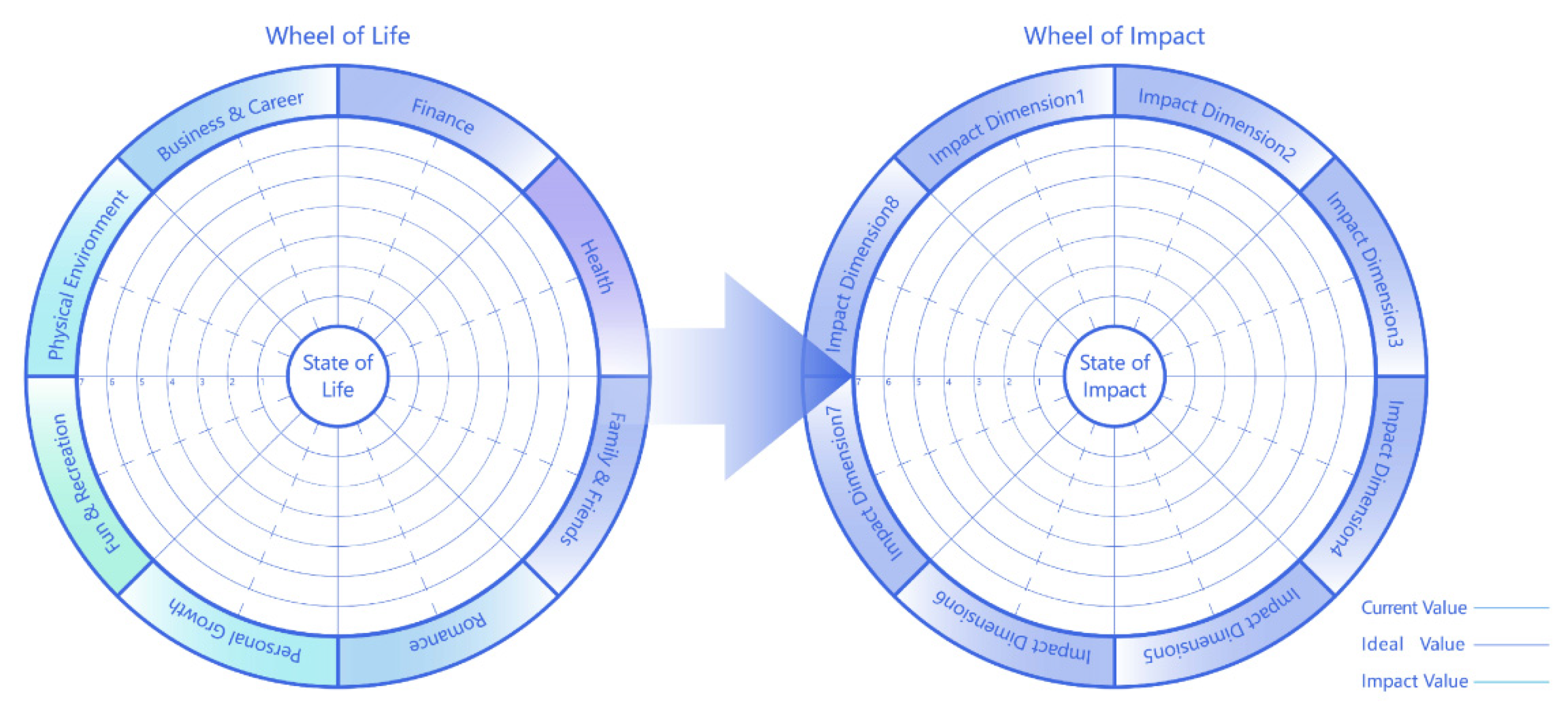
Figure 2.
Impact-centered sustainable positive experience design model.
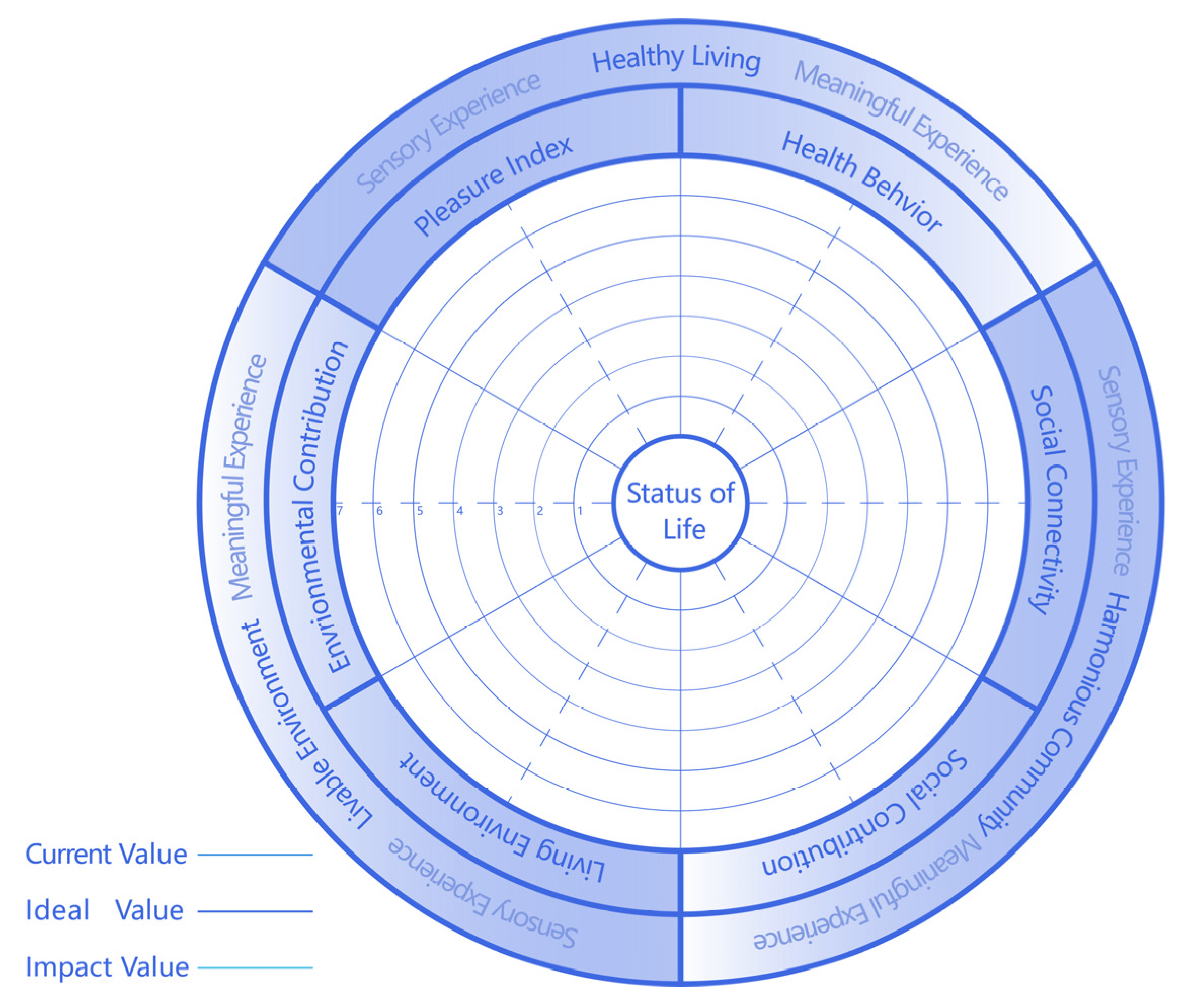
Figure 3.
Integration framework of impact-centered sustainable positive experience design model.
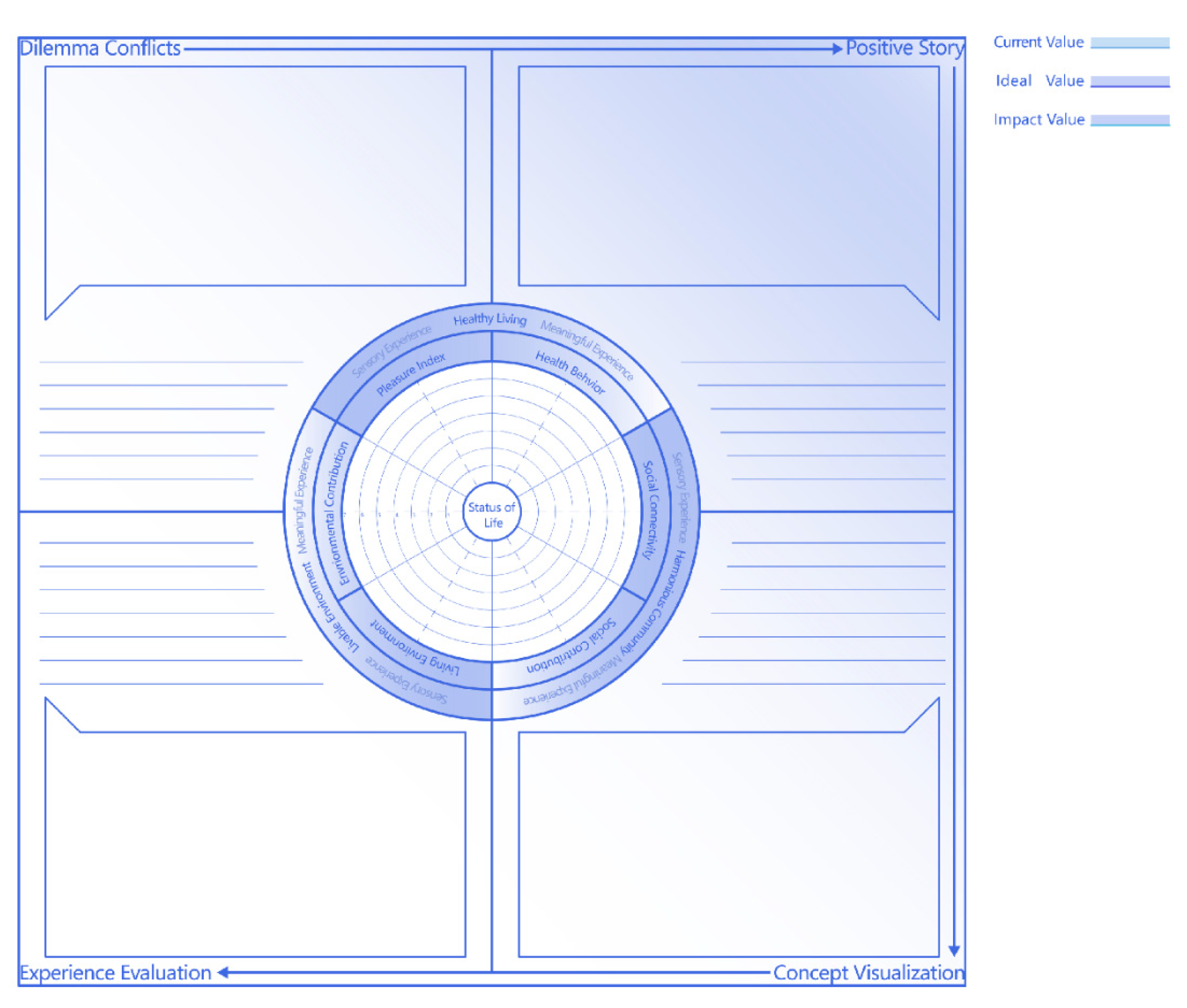
Figure 4.
Workshop design process.
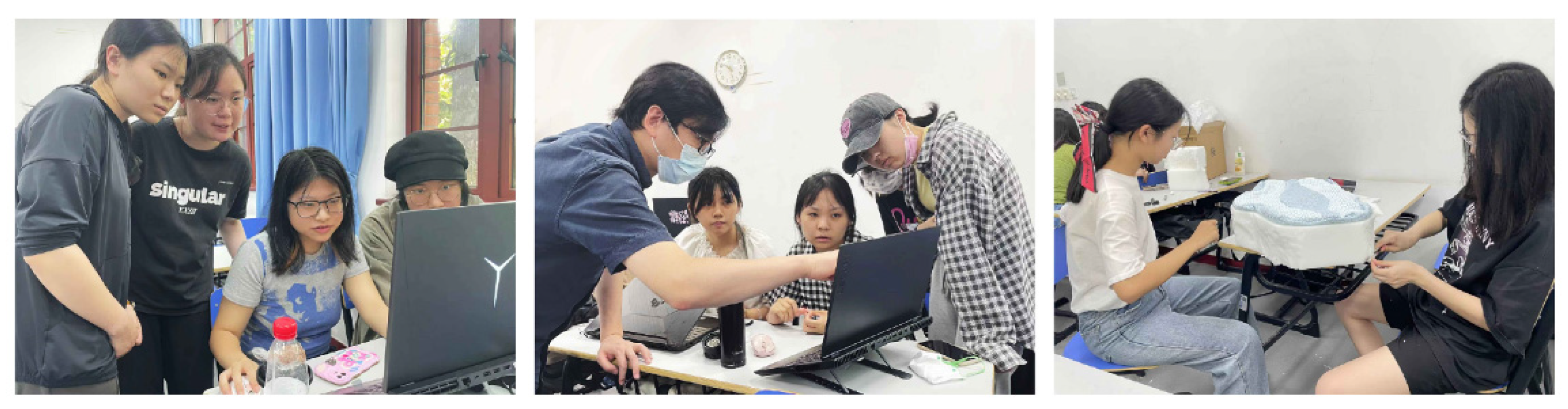
Figure 5.
Parts of design results of the workshop.

Figure 6.
The design process of the “Metaverse Family tree”.
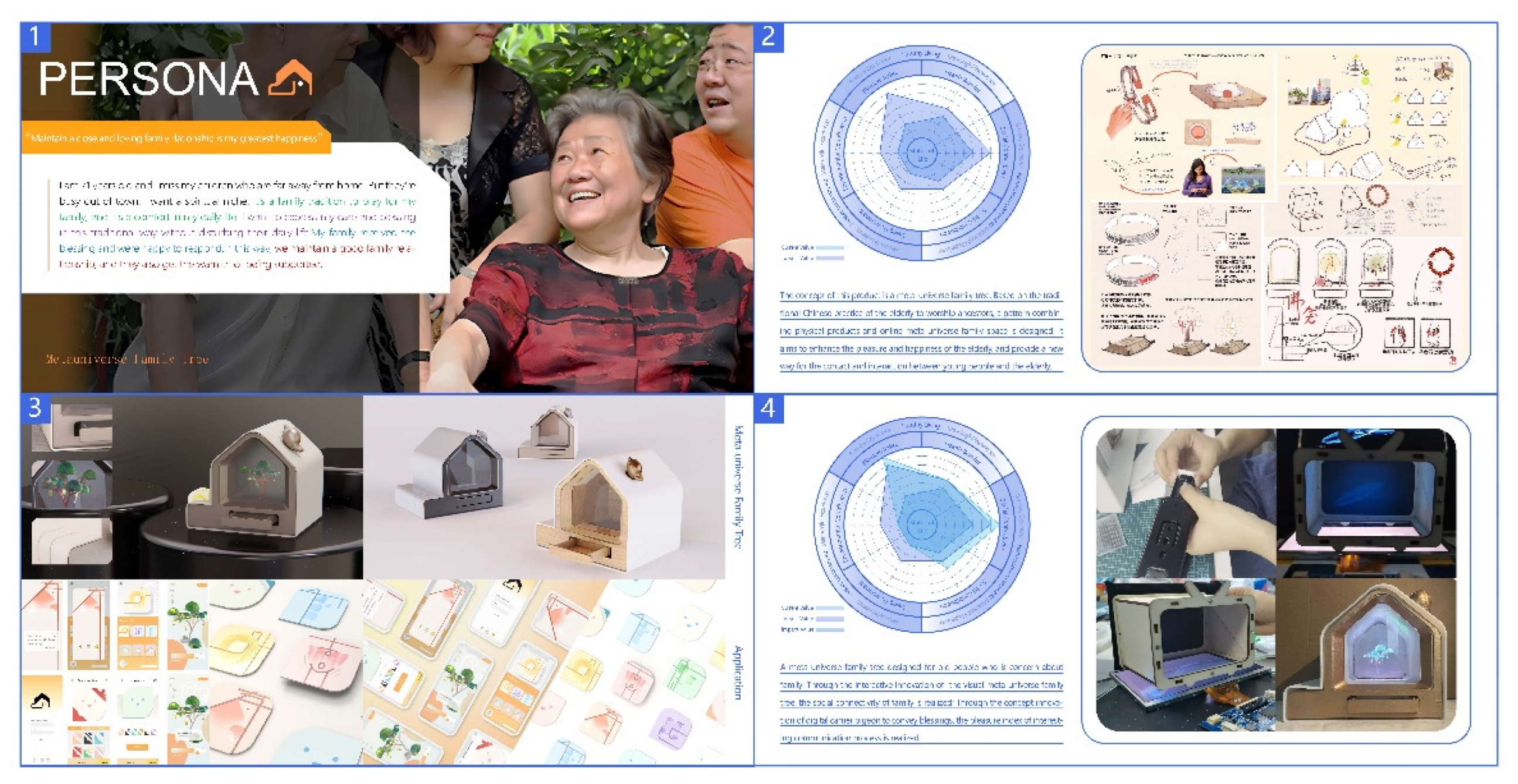
Figure 7.
The design framework of the “Metaverse Family tree”.
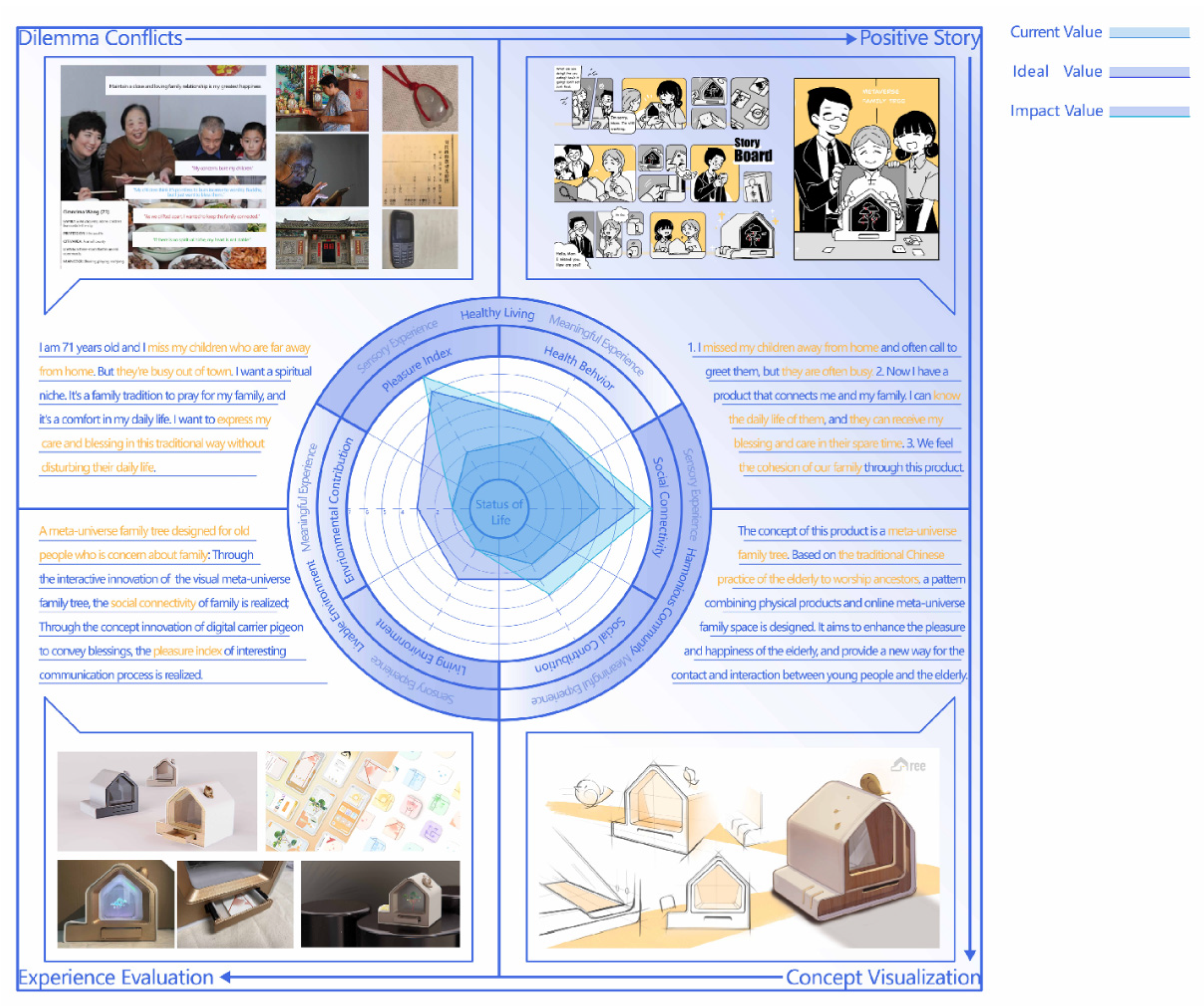

Table 1.
Related literatures of positive experience design.
| Authors | Contributions | Source |
|---|---|---|
| Desmet P.M.A. | Regulating mood: the two-factor mood model helps designers identify and describe users’ mood to develop design related to mood regulation. | [10] |
| Peters D., et al. | Changing behavior: the METUX model helps designers measure and design basic psychological needs related to user behavior. | [11] |
| Wiese L., et al. | Enhancing motivation: the multi-stage design framework model provides a visual design method to achieve user happiness through the provision of positive activities. | [12] |
| Wu C., et al. | Enriching experience: the positive experience design model of IoT intelligent products guides designers to design for individual pleasure experience, personal goal realization, group need satisfaction, and group relationship harmony. | [13] |
| Chen, K. | Improving cognition: the emotional interaction design framework model guides designers to improve user awareness. from the perspective of enhancing user emotional experience. | [14] |
| Perrino C. H., et al. | Continuation of the positive experience cycle: the model designed for temporary harmony guides designers to design positive experiences from the perspective of changing the user's cognitive memory and future plans. | [15] |
Table 2.
Related literatures of design impact.
| Authors | Contributions | Source |
|---|---|---|
| Norman, D.A. | Humanity-centered design: long-term impacts between humans, societies and ecosystems should be viewed from a long-term and systematic perspective. | [17] |
| Poikolainen Rosén, A., et al. | More-than-human-centered design: human experience and organisms systematically interact to achieve ecological sustainability. | [18] |
| Kristensen, H. S., et al. | Sustainable value propositions in product-service systems: social, environmental and economic impacts need to be integrated into the design process of products, systems or services. | [19] |
| Fokkinga, S. F., et al. | An impact-centered design framework was established, including the direct and indirect psychological, social, and behavioral effects resulting from the interaction of people and products. | [20] |
| Calvo, R. A., et al. | Divide the main factors in technology that influence happiness into three categories: personal experience, social relationships, and altruism. | [21] |
| Cloutier, S., et al. | Environmental conditions and social connections influence individuals' feelings of well-being. Therefore, an approach to system design based on a vision of the future was proposed. | [22] |
| Weijs-perrée, M., et al. | Transient experiences are influenced by the objective characteristics of the environment and the subjective characteristics of the individuals, and ultimately affect the individual's happiness through long-term impacts. | [23] |
Table 3.
Impact-centered sustainable positive experience design model elements.
| Dimensions of Impact | Explanation | Relationships |
|---|---|---|
| Pleasure index | Evaluation of the state of self-happiness and self-satisfaction | 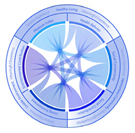 |
| Health behavior | Activities to maintain physical and mental health. | |
| Social connectivity | The interaction between members of a group. | |
| Social contribution | Altruistic activities at the social level. | |
| Living environment | Places of daily activities and other things in places. | |
| Environmental contribution | Altruistic behavior that is socially and environmentally sustainable. |
Table 3.
Evaluation and analysis of the Questionnaire.
| Number | Scale Items | Average Value | Standard Deviation |
|---|---|---|---|
| Perceived usefulness | 1.792 | 1.160 | |
| PU 1 | Using this model allows me to work more quickly | 1.900 | 1.105 |
| PU 2 | Using this model can improve my job performance | 1.700 | 1.203 |
| PU 3 | Using this model can increase my productivity | 1.825 | 1.217 |
| PU 4 | Using this model can improve effectiveness | 1.875 | 1.114 |
| PU 5 | Using this model makes my job easier | 1.650 | 1.231 |
| PU 6 | This model is useful in my work | 1.800 | 1.091 |
| Perceived ease of use | 1.863 | 1.082 | |
| PE 1 | This model is easy to learn | 1.850 | 1.051 |
| PE 2 | This model is controllable | 1.775 | 0.947 |
| PE 3 | My interaction with this model is clear and understandable | 2.100 | 1.128 |
| PE 4 | This model is flexible in interaction | 1.650 | 1.231 |
| PE 5 | This model is easy to become skillful | 1.825 | 1.035 |
| PE 6 | This model is easy to use | 1.975 | 1.097 |
* In the table, PU = perceptive usefulness, PE = perception ease of use.
Disclaimer/Publisher’s Note: The statements, opinions and data contained in all publications are solely those of the individual author(s) and contributor(s) and not of MDPI and/or the editor(s). MDPI and/or the editor(s) disclaim responsibility for any injury to people or property resulting from any ideas, methods, instructions or products referred to in the content. |
© 2023 by the authors. Licensee MDPI, Basel, Switzerland. This article is an open access article distributed under the terms and conditions of the Creative Commons Attribution (CC BY) license (http://creativecommons.org/licenses/by/4.0/).
Copyright: This open access article is published under a Creative Commons CC BY 4.0 license, which permit the free download, distribution, and reuse, provided that the author and preprint are cited in any reuse.


