

Submitted:
10 October 2023
Posted:
11 October 2023
You are already at the latest version
Abstract
Population growth and the need for increased agricultural productivity pose a global problem. Therefore, the development of green compounds to ensure agricultural sustainability becomes an urgent necessity. Surfactant compounds hold significant commercial importance due to their diverse industrial uses. However, the synthetic origin of these agents limits their commercial application due to their toxicity. As a result, extensive research has focused on the production of microbial-originated green surfactants, known as biosurfactants, over the past fifteen years. These biomolecules not only offer a green alternative for agriculture but also exhibit reduced toxicity and excellent stability under specific environmental conditions. Biosurfactants can lower surface tension more effectively than synthetic surfactants. With properties such as detergency and foam formation, biosurfactants are suitable for various agricultural applications, particularly in pesticide and agrochemical formulations. They can function as biopesticides to manage pests, pathogens, phytopathogenic fungi, and weeds due to their antimicrobial activity. Moreover, plants can benefit from biosurfactant molecules and the microorganisms as nutrients. They can also aid efficiently in the distribution of micronutrients and metals in the soil. They also stimulate plant immunity and are utilized for soil hydrophilization to ensure proper moisture levels and uniform fertilizer distribution. This review aims to provide valuable insights into the role and properties of biosurfactants as agricultural adjuvants, fostering the development of sustainable formulations to replace chemical surfactants used in pesticides.
Keywords:
biosurfactants
; sustainable agriculture
; adjuvant
; pesticide
; plant pathogen
; remediation
1. Introduction
The demand for food and agricultural products has significantly increased since the 1990s due to population growth, urbanization, rising income, and production incentives. According to the United Nations' average projection, the population is expected to reach around 10 billion people by 2050. As a result, international agreements, and regulatory frameworks for sustainable development in the coming decades have been established to promote the sustainable use of natural resources, mitigation of climate change impacts, and sustainable utilization of their components, among others. Many efforts are being made to intensify and sustainably meet the world's agricultural production needs to accommodate the population expansion. It will be necessary to increase current food production levels in a manner that is more than proportional to population growth in order to provide an adequate diet for a larger human population [1,2].
The incorporation of new laboratory techniques, statistics, computer science, and genetically modified crops has driven recent agricultural advancements, resulting in a significant increase in productivity per hectare for various crops. In this context, combating pests and weeds through the use of pesticides is of utmost importance in modern agricultural practices [3,4].
Agrochemicals used worldwide are chemical substances that can control biological weeds or unwanted plants (herbicides) [5], protect agricultural products against fungi (fungicides) [6], and combat pests such as rodents and insects (pesticides) [7]. Among the top five most widely used agrochemicals, glyphosate and 2,4-D herbicides hold the first and second positions. Glyphosate was already banned in Germany and Australia in 2008 due to its potential link to cancer in children [8].
The use of agrochemicals brings significant problems as they are non-biodegradable and pose great difficulty in breaking down into non-toxic elements. Many of these products are discharged into bodies of water, leading to the contamination of fish through bioaccumulation in their tissues or maintaining their presence in food items such as vegetables [5,9,10]. There are reports of workers directly involved in handling these agrochemicals in crops who have developed various illnesses, with many of them resulting in death due to their high toxicity [11].
Given this scenario, one of the strategies employed has been the development of genetically modified crops to reduce the use of agrochemicals. Genetically modified crops are organisms that have been genetically altered to enhance productivity and/or exhibit resistance to pathogens [12]. However, even with the use of genetically modified crops, there hasn't been a decrease in the use of agrochemicals but rather an increase. While these crops may be resistant to specific pathogens, they have become more susceptible to other injuries, leading to a significant rise in the demand for agrochemicals [13]. Since it is no longer possible to remove genetically modified foods from the market due to the high demand for food worldwide, government agencies have decided to invest in environmental policies and increase the demand for natural agricultural defenses.
Thus, the search for bioproducts or green products for the development of agrochemicals becomes necessary to reduce the presence of toxic agrochemicals in agribusiness [9].
One of the main representatives of natural agriproducts is natural agricultural defenses. These are biologically derived agrochemicals that can be obtained from plant extracts, fungal or bacterial extracts, and similar sources. Due to their natural origin, these defenses exhibit reduced toxicity and high biodegradability [14,15,16].
Agrochemical formulations require the use of surfactants, which are essential for their preparation, maintenance of physical stability, and enhancement of biological performance. Chemical surfactants are widely used in agriculture as aids in agricultural production [17,18].
Therefore, the importance of sustainability using renewable resources and product improvement brings forth the possibility of replacing chemical surfactants with their biological counterparts. Green surfactants are amphiphilic and antimicrobial substances that can be extracted from plants and/or obtained through the metabolism of microorganisms (biosurfactants) or through chemical synthesis using natural extracts (natural-based surfactants) [19,20,21,22].
These biomolecules, due to their desirable characteristics for agro-industrial activities, have been investigated for use as biopesticides, biofertilizers, biostimulants, bio dispersants, and bioremediators of soil, among other applications. However, compared to research in environmental, health, cosmetic, and food-related fields, studies on the use of biosurfactants in agriculture are still relatively limited [14,16,23,24,25].
Given the above issues and the scarcity of Information regarding the utilization of biosurfactants in agriculture, this review aims to describe the importance of microbial surfactants in the agricultural sector.
2. General Aspects of Global Agricultural Activity
With the exponential growth of the world population starting from 1900s (Figure 1), there was a need to increase food production due to the rising demand for food, as illustrated in Figure 2. As a result, it has been necessary to boost production and/or minimize crop losses caused by fungi, pests, and weeds, for which pesticides, chemical substances designed for biological control of microorganisms, macroorganisms, and competing plants begun to be used. At the same time, the development of genetically modified organisms (GMOs) and genetically modified foods, which aimed to enhance resistance against pathogens and/or increase productivity, was also intensified with the goal of reducing pesticide usage [12].
However, with the use of GMOs, the use of pesticides increased up to approximately 250 tons. This occurred because GMOs exhibited increased resistance against certain pathogens but became more susceptible to others, thereby not reducing this practice [26]. The adoption of herbicide-resistant crop technology in the United States resulted in a significant rise in herbicide usage, totaling 239 million kilograms (527 million pounds). Conversely, the implementation of Bacillus thuringiensis crops resulted in a 56 million-kilogram (123 million pounds) reduction in insecticide use. Consequently, the overall pesticide consumption in the country increased by approximately 183 million kilograms (404 million pounds), equivalent to a 7% increment [27].
3. Pesticides
3.1. Agricultural Defensives
Pesticides are chemical compounds used to control pests in a generalized way, most of which have a long degradation time and are highly toxic to humans and other animals [9]. Many of the problems caused by pesticides occur due to incorrect use and exceeding the allowed concentration, and some studies have already shown that this is indirectly affecting pollinating animals [10]. The low biodegradability of pesticides leads to their accumulation in riverbeds and an increase in their presence in a single food item. These factors contribute to the contamination of fishery resources, and humans can be indirectly affected by consuming these contaminated foods [5]. Pesticides include herbicides, fungicides, and insecticides products.
Herbicides are pesticides used to control competing or undesirable vegetation (weeds). Since it is not possible to target only one type of vegetation in crops, it is recommended to use herbicides with different actions against various types of vegetation. However, this strategy is environmentally harmful because the herbicide mixture can be carried into riverbeds, especially when applied near the roots. Furthermore, they are the type of pesticide that affects mammals the most [5,28].
Fungicides are pesticides used to combat fungi that attack plant species, thus being among the major pathogens of crops. They represent 30% of all pesticides in the current global market. The most common fungicide is Cu, a heavy metal that can contaminate water and is toxic to living beings in high amounts [6]. Fungicides are the main cause of poisoning in pollinating insects [29].
Insecticides, the last category of pesticides, are used to control pests, mainly insects, which use crops as a food source, breeding ground, and development site. Due to their accumulation on the surface of foods, they have a large impact on humans that can absorb them [7,30].
The increase in crop yield associated with the "green" revolution was partly made possible by using chemical products for pest control. Concerns regarding the harmful effects of pesticides on the environment and human health have prompted the creation of new pesticide registration procedures, such as the Food Quality Protection Act in the USA. The implementation of new regulations has resulted in a decrease in the availability of synthetic pesticides in the field of agriculture. New pesticides, both synthetic and natural, are being developed to compensate for lost compounds due to new registration requirements. [3].
3.2. Biological Control
Unlike pesticides, biological control utilizes nature itself to achieve control. As a result, it does not impact the environment, although it may not have the same efficiency as a pesticide and requires certain special conditions for its application [9]. Biological control can be carried out with parasitoids, predators, and entomopathogens. Parasitoids are introduced by inoculating insect larvae into the eggs of a pest, where they feed, develop, and then emerge as adults. An example is Trichogramma pretiosum, which parasitizes moth eggs [31]. One of the oldest methods for pest control involves introducing a predator into the same environment as the pest so that it can use it as a food. Harmonia axyridis (ladybug) is a good example, as it feeds on Myzus persicae (aphid) [32,33]. Entomopathogens, on the other hand, are fungi or bacteria that attack pests (insects or microorganisms). This method is not common but, in some cases, it proves to be the most efficient [34].
3.3. Agricultural Biodefensives
Agricultural biodefensives include bioherbicides, biofungicides, and biopesticides. Bioherbicides use organic products, such as fungus extract [16], oil extract [23], fruit enzyme [15], and other biological materials. Biofungicides are a group of agricultural biodefensives based on competing fungi that do not affect the development of the agricultural product [24]. The use of seeds as biofungicides has also been described [25,35]. Finally, biopesticides are the most used agricultural biodefensives to replace pesticides. Like other agricultural biodefensives, they are derived from plant or microorganism extracts, fruits, crustaceans, seeds and tree saps, cellular mass, among other natural substances. Their use has significantly increased in North America in recent years [14].
3.3.1. Formulation of Agricultural Biodefensives
Formulations of agricultural biodefensives can either be diluted in water or other solvents or can be applied as such. Formulations for dilution in water can be sold as Emulsifiable Concentrate (EC), in the form of emulsions with small amounts of water, giving them a milky appearance [36,37], or as Suspension Concentrate (SC), which are inert and stable and need to be shaken before application [38], or as Soluble Powder (SP) [39], or as Wettable Powder (WP), which is very similar to SP but does not dissolve in water when applied, requiring agitation during application [40], or as Microencapsulated, which is a specific characteristic of WP as it is not in direct contact with water but encapsulated for continuous and controlled release over time during application [41] . Formulations for dilution in other solvents are marketed in high concentrations and need to be diluted in oils or organic solvents [42]. Formulations for direct application are provided in the form of Dry Powder (DP), which are essentially applied in mixture with inert powders such as talc and clay when water spraying can damage the area or agricultural products [43], in the form of Granules (GR), which are similar to dry powder but consist of larger granular solids (ranging from 0.3 to 0.6 mm) for slower and continuous release of the biodefensive [44], or in the form of Baits, which are composed of even larger granular solids than the GR formulations and are intended to be consumed by pests [45].
3.3.2. Agricultural Adjuvants as Activators or Enhancers of Agricultural Defensives
The market offers many solutions and products to ensure application quality, reduce losses, and increase the efficiency of phytosanitary management. Adjuvants encompass a wide range of chemical substances that are commonly included in spray tanks to enhance the efficacy and application efficiency of pesticides. Their primary function is to improve the performance and mode of application of the pesticide [46].
Agricultural adjuvants have a long history dating back to the 18th and 19th centuries. During this time, various additives such as resins, molasses, flour, pitch, and sugar were combined with sulfur, arsenates, lime, and copper to enhance "adhesion" and improve biological performance by altering the chemical and physical features of the applied mixture. [3,47]. Research indicates that adjuvants can influence various factors in pesticide applications. The main points are related to altering solution properties, increasing biological efficacy, and improving operational performance. Benefits such as increased wetting, better spreading on leaves, greater efficiency, and speed of active ingredient absorption on the target (crop, weeds, and insects) can be achieved using adjuvants [48].
It should be noted that there are many barriers involved in agricultural pesticide applications. Regarding plants, leaf surfaces have waxes that are difficult to wet and prevent liquid entry into the plant. These waxes are primary obstacles to the deposition, retention, spread, and penetration of agrochemical droplets. Adjuvants can overcome these impediments and increase deposition, spread, absorption, and penetration of products into the plant [49,50,51].
As for climatic barriers, several factors can negatively affect applications. Deviation from the trajectory, preventing the droplets from reaching the target, is mainly related to droplet size and wind speed. Environmental conditions greatly influence the outcome of the operation, so it is necessary to understand the spectrum of sprayed droplets, adjusting not only their diameter but also seeking other tools. Adjuvants such as oils can be an alternative to achieve greater leaf penetration, while surfactants reduce evaporation, and nozzle selection helps in producing more suitable droplets [52].
The portfolio of adjuvants available on the market is extensive and mainly includes mineral and/or vegetable oils, silicones, surfactants, emulsifiers, nitrogen, phosphorus, organic resins, EDTA, and essential oils, among others. Therefore, it is essential to classify them according to their benefits. Several authors define adjuvants as utility or activator-based [53,54].
3.3.3. Utility Adjuvants
Adjuvants for utilities can alter the spray solution's physical properties [55], improving the quality, viscosity, and surface tension of the droplets. Their main effects include reducing foam formation, cation sequestration, dispersing action, and pH reduction and buffering, among others.
3.3.4. Activator or Enhancer Adjuvants
Activator adjuvants enhance the biological and chemical efficacy of applied products, application quality, droplet size, and spreading, and may provide some resistance to rain [55]. The main products and their effects include surfactants, which ensure droplet spreading on leaves; emulsifiers, nitrogen fertilizers, and oils that increase the speed of product absorption; wetting agents, which reduce evaporation; and adhesives, which prevent runoff and ensure better adhesion to leaves. Activator adjuvants also modify the deposition of the spray on plant foliage and increase movement on the leaf surface for greater absorption in specific areas [53,55].
Three factors are important in the selection of adjuvants, namely (i) plant (species, phenological stage, and location), (ii) application (method, timing, and environmental conditions), and (iii) biological target (weed, insect, and disease). The need for adjuvants is directly related to the pesticide used and the objectives of the application. In a study, Xu et al. [48] tested Concentrated Vegetable Oil (CVO), Methylated Seed Oil (MSO), Non-Ionic Surfactant (NIS), and a Surfactant and Oil Mixture (SOM). The addition of adjuvants to the spray solution led to a significant reduction in droplet contact angle, resulting in increased spreading and wet area. The authors noted that the quality of applications varied depending on the plant species and type of adjuvant used. Overall, SOM and NIS enhanced droplet spreading and maintained the evaporation time of droplets on leaf surfaces, and after evaporation chemical residues formed ring-shaped accumulations. Droplets with oil-based adjuvants exhibited residual distribution with more uniform deposition. According to Yu et al. [56], droplet size and relative humidity significantly affect droplet evaporation time and coverage area as well as evaporation and deposition dynamics. In an environment with 30% to 90% relative humidity, the addition of surfactants increased the evaporation time of droplets and their coverage area by 4.5 to 10.1 times on hairy leaves and by 3.4 to 4.1 times on waxy leaves.
4. Surfactants
Agrochemical formulations require surfactants for physical stability and biological efficiency [3].
Research suggests that less than 0.1% of pesticides utilized for weed and pest control hit their intended targets. Most of these chemicals are lost due to factors such as spray drift, off-target deposition, runoff, and photodegradation [57].
Agrochemical products use around 230,000 tons of surfactants annually, typically in formulations containing 1-10% of one or more surfactants. As a plasticizer, the surfactant softens the crystalline waxes on the cuticle, thereby increasing the mobility of agrochemicals through the cuticular membrane [3,58].
Surfactants of various types are being employed in the pesticide production industry [59]. In particular, they are commonly used in pesticide formulations, which, however, leads to their accumulation in the soil, thus affecting texture, color, and plant growth. These hazardous chemicals are also leached from the soil into groundwater [60], persist in the soil for years, can spread through the air and water, and can even be found on the outer surfaces of fruits and vegetables. Synthetic surfactants are also considered powerful organic contaminants in the soil [61].
Given the negative effects of pesticides and surfactants used in pesticides, environmentally friendly biosurfactants should be used to replace the hazardous synthetic ones in the multibillion-dollar pesticide industry, reducing contamination [62].
Depending on the characteristics of their molecule, surfactants can reduce surface tension and solubilize water in oil or oil in water since these molecules have a hydrophilic part and a hydrophobic part, allowing water encapsulation within an oily substance or vice versa, forming a structure known as amphiphilic [63,64].
The best method for characterizing a surfactant is to measure the attractive forces among liquid molecules, thereby assessing the surfactant's ability to influence surface and interfacial tensions. Effective surfactants reduce surface tensions, facilitating interactions between molecules with different polar features [65]. The Critical Micelle Concentration (CMC) is defined as the minimum surfactant concentration required to reach the lowest surface tension. Upon reaching the CMC, the amphiphilic molecules aggregate with the hydrophilic portions positioned outward and the hydrophobic portions inward [66]. After reaching CMC, no further addition of surfactant will result in an additional reduction in surface tension. Thus, surfactants with a lower CMC are preferably used compared to those with higher CMC values [64].
Surfactants can be divided into two categories: chemical surfactants and green surfactants. Green surfactants are further divided into two subclasses: biosurfactants and biobased surfactants [20].
4.1. Chemical Surfactants
Chemical surfactants originate from petrochemicals and dominate the global surfactant market, accounting for 90% of it [67]. Due to their large-scale production, chemical surfactants are more competitively priced compared to natural surfactants. However, despite their high surface activity and lower cost, they pose various problems due to their high toxicity and long degradation time [68]. There are four types of surfactants categorized by the nature of their hydrophilic group: anionic, cationic, nonionic, and amphoteric [65].
According to Xu et al. [48], surfactants reduce the surface tension of droplets on leaf surfaces, ensuring greater coverage and foliar absorption. Their concentration greatly influences the efficacy of agrochemical applications. For instance, increasing surfactant concentration from 0.01% to 1% promoted better foliar absorption of products; however, for some surfactants, higher concentrations can have a negative effect on chemical absorption [52].
Anionic surfactants often include sulfonate, sulfate, or carboxylate groups, with counterions such as sodium or calcium. Among them, linear alkylbenzene sulfonates (LAS) are extensively produced worldwide as household cleaning detergents and calcium LAS is used as an adjuvant in many agrochemical formulations [69].
In nonionic surfactants, the hydrophilic behavior is achieved through polymerized glycol ether or glucose units. [70]. They are predominantly synthesized by adding ethylene oxide or propylene oxide to fatty alcohols, alkylphenols, amines, acids, or fatty acid amides. Nonionic surfactants find significant applications as emulsifiers, detergents, dispersants, and wetting agents, and a substantial portion of them are employed as adjuvants in agrochemical formulations.
Cationic surfactants, which have hydrophilic portions formed by quaternary ammonium ions, have gained importance due to their bacteriostatic properties and are applied as disinfectants and antiseptics in personal care products. They are also used as textile softeners, flotation agents, and corrosion inhibitors due to their high adsorptivity [3].
Amphoteric surfactants are water soluble and compatible with other surfactants, as they possess both cationic and anionic groups in their structure, which make them zwitterionic compounds. Their charge changes with pH, influencing detergency and foam formation, among other properties. They have properties that closely resemble those of nonionic surfactants and are commonly used in shampoos, but are starting to be employed also in agrochemical formulations [69].
4.2. Biobased Surfactants
The term biobased surfactants refers to green surfactants synthesized through chemical or enzymatic processes using renewable raw materials. The main resources used for their synthesis are vegetable oil triacylglycerides, methyl esters of fatty acids, fatty alcohols, fatty acids, glycerol, carbohydrates, and amino acids. Triglycerides form the hydrophobic moiety, while sugars or amino acids and peptides act as the hydrophilic ones [71]. Although biobased surfactants are still relatively new, they have already shown excellent results in various applications [19,20,69].
4.3. Biosurfactants
Biosurfactants constitute a subclass of green surfactants of biological origin, which can be obtained from plant extracts, roots, fruits, or through the metabolic transformation of microorganisms, especially bacteria, and yeasts [72,73]. Microbial biosurfactants are the most efficient and widely studied and possess the same specifications as chemical surfactants, but exhibit biodegradability, reduced toxicity, and biocompatibility [21,74].
Biosurfactants have diverse industrial applications, ranging from petroleum and cleaning products to cosmetics, textiles, food, and agriculture. In the agricultural sector, biosurfactants can be used in the formulation of biopesticides, biofertilizers, and biostimulants [67,75,76].
At present, biosurfactants make up only 10% of the world's total surfactant production, which is around ten million tons annually. However, if synthetic surfactants were replaced with biosurfactants, it could reduce CO2 emissions by 8% over the long term. This would prevent the release of roughly 1.5 million tons of CO2 into the atmosphere [65,71]. The first studies in the field of microbial biosurfactant research occurred in the 1960s, and since then, research has led to the commercialization of numerous products containing them. In the last decade, studies focused on biosurfactant production have intensified due to their efficiency and biocompatibility [64].
Currently marketed biosurfactants have a higher production cost compared to their synthetic counterparts, despite their high efficiency [77]. On the other hand, this cost can be reduced through the selection of more suitable substrates during fermentation, that is, with lower cost, and the selection of microbial strains with greater capacity for biosurfactant production [78]. In most cases, strains produce a mixture of different biosurfactants. However, for certain applications in the food, medical, and pharmaceutical industries, a high level of purity is necessary, which can be a limiting factor for their use. Therefore, it's crucial to develop strategies that facilitate the production and large-scale application of biosurfactants [22]. The microbial source and molecular structure are the most important criteria for classifying biosurfactants, the main classes of which are glycolipids, lipopeptides, phospholipids, polymeric biosurfactants, particulate biosurfactants, and fatty acids. Biosurfactants are categorized into low and high molecular weights based on their average molecular weight, which ranges from 500 to 1500 Da. Low molecular weight biosurfactants have the ability to reduce surface tension efficiently, while higher molecular weight biosurfactants are commonly used for stabilizing oil-water emulsions [65]. Biosurfactants such as proteins, lipoproteins, polysaccharides, and lipopolysaccharides, which are of high molecular weight, are commonly referred to as emulsifiers [79], while the low molecular weight ones, which include glycolipids, lipopeptides, and phospholipids, are considered the classic biosurfactants [63].
Glycolipids have been extensively studied among the different types of biosurfactants. The structure of glycolipids consists of a hydrophilic carbohydrate moiety connected to hydrophobic fatty acid chains of different lengths via an ester group [80]. These glycolipids are commonly characterized based on the structure of their carbohydrate fraction, with sophorolipids, rhamnolipids, mannosylerythritol lipids, and trehalolipids, being the most investigated subclasses.
Rhamnolipids consist of one or two fatty acids attached to one or two rhamnose sugar molecules The primary source of rhamnolipids is the Gram-negative bacterium known as Pseudomonas aeruginosa, although subsequent research has shown that other bacterial species are actively producing rhamnolipid-type biosurfactants [81]. Rhamnolipids are a class of biosurfactants with unique characteristics that depend on the strain, carbon source, and cultivation conditions. Various renewable materials such as exhausted oils or waste from the food industry can be used as carbon sources for their production. Rhamnolipids can lower the air-water surface tension from 72 mN/m to around 30 mN/m, as well as the water-oil interfacial tension from 43 mN/m to around 1 mN/m. The CMC of pure rhamnolipids and their mixtures largely depends on the chemical composition of the constituents and ranges from 50 to 200 mg/L [75].
Sophorolipids consist of a sophorose head, in which two glucose units are connected by a β-1,2 bond, and a long-chain fatty acid (hydroxyl) tail connected by a glycosidic bond. These biosurfactants, which are generally synthesized by yeasts such as Starmerella bombicola [82], have a surface tension of around 33 mN/m and an interfacial tension of about 5 mN/m in n-hexadecane and water. S. bombicola is considered one of the most productive strains, being capable of producing about 300 g/L of sophorolipids [83,84].
Trehalolipids, which contain the disaccharide trehalose linked to a fatty acid (mycolic acid), are mainly produced by species of the genera Nocardia, Rhodococcus, Mycobacterium, and Corynebacterium and have high structural diversity [85]. Trehalolipids produced by Rhodococcus erythropolis and Arthrobacter spp. can decrease surface and interfacial tensions to 25-40 and 1-5 mN/m, respectively [75].
Pseudozyma antarctica yeast produces Mannosylerythritol lipids (MEL) in large quantities from vegetable oils. MELs are made up of mannose and fatty acid and can be further classified based on the hydrophobic chain length, degree of saturation, and acetylation at positions C4 and C6 of the monosaccharide [67].
There are different types of low molecular weight biosurfactants, such as lipopeptides, phospholipids, and polymeric surfactants. One of these is Surfactin, which is produced by the Gram-positive bacterium Bacillus subtilis. Surfactin is a cyclic lipopeptide that contains seven hydrophobic amino acids with a length of 13 to 15 carbon atoms. It also has a mixture of seven amino acids, which are L-asparagine (Asn), L-leucine (Leu), glutamic acid (Glu), L-leucine (Leu), L-valine (Val), and two D-leucines, connected through a lactone bond [86]. It is widely recognized that Surfactin is among the most powerful biosurfactants on record, and due to its antibacterial, antiviral, and antifungal activities, is widely used in various applications; it is also utilized as an efficient stabilizer, emulsifier, and surface modifier in the food industry [87]. Due to its ability to reduce surface tension to 27 mN/m at a concentration of less than 5% [88] and its low CMC, it is explored in different applications [89].
Phospholipidic biosurfactants are produced during the growth of yeasts and bacteria on n-alkanes, including Acinetobacter spp. and Thiobacillus trioxidans. Liposan and emulsan are examples of polymeric biosurfactants. These compounds are good emulsifiers and can be also synthesized by bacteria and yeasts of the Candida genus [67,82]. The literature describes the use of liposan as an emulsifier in the food and cosmetic industries [78].
Biosurfactants and synthetic surfactants share several properties such as reducing surface tension, foam-forming capacity, emulsification, stabilization ability, solubility, and detergent activity. However, biosurfactants possess some properties listed below that make them more appealing than their synthetic counterparts [75]:
- Surface activity: Surfactant efficiency is measured by CMC, which ranges from 1 to 2000 mg/L based on molecular structure, as discussed earlier [65]. An optimal biosurfactant can reduce the surface tension of water from 72 to 30-35 mN/m and the interfacial tension of oil and water from 40 to 1 mN/m [90]. Compared to synthetic surfactants, most microbial surfactants have lower surface and interfacial tensions and CMC values, making them more effective.
- Temperature, pH, and ionic strength tolerance: Several biosurfactants remain effective in adverse conditions, such as high temperatures, pH range of 3-12, and up to 10% saline concentration, while synthetic surfactants are inactivated by ≥ 2% NaCl [75].
- Specificity: The high diversity of molecules, each with its own complexity and specific functional groups, confers particular/specific activities to biosurfactants. Like synthetic surfactants, biosurfactants show the ability to self-aggregate and form micelles, which increase their specificity and allow them to have different morphological structures. In addition, their ability to create spherical, rod-shaped, and vesicle-like structures has caught the attention of various industries like food, cosmetics, and pharmaceuticals. They also have the potential in detoxifying pollutants and demulsifying industrial emulsions [75].
- Biocompatibility and digestibility: The composition of biosurfactants makes them more biodegradable and biocompatible than their chemical counterparts under variations in temperature, pH, and degradation time [91].
Biosurfactants, by solubilizing pollutants, also enhance biodegradability. Studies conducted on seawater samples simulated a bioremediation process, demonstrating oil degradation rates greater than 90% in the presence of the biosurfactant together with its producing species [92]. The literature also discusses the role of biosurfactants as supporting the biodegradation of heavy oil in contaminated soils [93]. Regarding digestibility, the chemical structure of microbial surfactants, which mainly includes glycolipids and lipopeptides, makes them important compounds for use in the food, pharmaceutical, and cosmetic industries [94].
Synthetic surfactants are used in remediation and wastewater treatment; therefore, they can be released into industrial wastewater. When this industrial effluent is intentionally or accidentally discharged into a natural body of water, its presence can pose a threat to marine and freshwater ecosystems. When the concentrations of surfactants released into the environment reach high levels, they will accumulate in animals up to toxic levels through the food chain, eventually affecting humans through food consumption [95,96]. In contrast, biosurfactants are less toxic to aquatic fauna and flora, since they are products of microbial fermentation, in addition to being more easily degraded by microorganisms in soil and aquatic environments [97]. The biocompatibility of these compounds has increasingly attracted industries seeking to replace synthetic surfactants with green surfactants.
Biosurfactants are produced by excretion or cell adhesion. The primary function of biosurfactants is to reduce surface tension between phases, making insoluble substrates more available for absorption and metabolism by microorganisms. Different mechanisms of substrate absorption are described, namely direct absorption of hydrocarbons dissolved in the aqueous phase, interaction with emulsified droplets, and direct contact between cells and large hydrocarbon droplets. In addition to emulsifying the carbon source, biosurfactants are also involved in microbial cell adhesion to hydrocarbons, i.e., biosurfactant excretion after adsorption of microbial cells onto insoluble substrates allows them to grow on these carbon sources [21].
Achieving the highest possible production of biosurfactants is difficult due to various factors that affect microbial growth and metabolism during fermentation. Numerous studies have attempted to identify the ideal combination of substrates for a specific culture medium, which can enhance intracellular diffusion and the synthesis of desired compounds [75]. To optimize biosurfactant production with the selected microorganism, defining culture conditions is crucial. Factors to be considered include carbon and nitrogen sources, concentration of the lipophilic substrate, inoculum size, micronutrients, temperature, aeration rate, pH, , and agitation [90]. While most biosurfactant-producing microorganisms produce these compounds under restrictive conditions, e.g., after depletion of an important nutrient, the phase in which the highest yield is achieved (exponential or stationary growth phase) should also be investigated. Statistical methods can optimize the physicochemical parameters of the fermentation process. This allows for the study of how different variables interact and helps find the most cost-effective conditions for maximum biosurfactant production [98].
Therefore, to cheaply produce biosurfactants, production needs to be associated with downstream processing and explore alternatives to improve production using genetically modified microbial strains, innovative statistical approaches (e.g., surface methodology), and techniques based on Artificial Intelligence (AI) such as Artificial Neural Intelligence coupled with Genetic Algorithm (ANN-GA). Genetically modified microbial strains, cheap substrates, optimized media, enhanced fermentation process, and downstream processing and purification of final products using well-developed static models can be biological and engineering solutions from the commercial point of view to achieve economically sustainable large-scale industrial production of biosurfactants [99].
The generation of agro-industrial by-products is rapidly increasing. In 2019, the industrial activities linked to bioethanol production, animal slaughter, cassava, palm oil, and milk processing resulted in over four billion liters of wastewater [100]. Therefore, it is urgent to reduce the impacts caused by these and other effluents by utilizing them in processes capable of generating other products. The food industry should be explored in terms of utilizing its waste, effluents, and by-products [75,100]. Microbial fermentation can be utilized to produce biosurfactants from various industrial wastes. Studies have shown that biosurfactants can be obtained from different substrates, including solvents, hydrophobic mixtures, hydrocarbons, dairy products, and vegetable oils. The literature describes various residual products used in biosurfactant production, including vegetable oils, oily effluents, animal fat, starchy effluents, vegetable cooking oil waste, vegetable fat, laundry detergent, corn steep liquor (corncob), dairy industry waste (whey), molasses, cassava, flour mill effluents, petroleum distillery waste, and glycerol [75].
The increasing production costs associated with microbial surfactants compared to synthetic surfactants can be overcome by using raw materials obtained from other industrial processes [101]. In fact, the implementation of biosurfactant production on an industrial scale can become economically viable with the use of agro-industrial by-products [75]. The use of low-cost raw materials obtained from other industrial processes, however, needs to be evaluated to provide the necessary amounts and types of nutrients to microorganisms, maintaining a balance of carbohydrates and lipids so that microbial metabolism occurs appropriately for the production of the target surfactant. These raw materials also need to provide substantial amounts of micronutrients including iron, magnesium, phosphorus, manganese, and sulfur, which can further reduce the cost associated with the production process.
In selecting components for production, considerations such as nutritional content, waste availability, transportation and storage costs, pretreatment requirements, and waste purity should be taken into account. Each type of raw material has unique characteristics that affect how microorganisms interact with it. This is why some microorganisms may be able to produce effective biosurfactants from a certain raw material while others cannot [102].
The reuse of industrial waste to produce valuable compounds is essential for both economic benefits and waste management. On the other hand, the utilization of industrial waste cannot solely rely on the low cost of these raw materials, i.e., the availability, stability, and variability of each component should be also considered. Variability is an important limit to industrial use since the structures and properties of biomolecules must remain well-defined and constant, requirements that cannot always be guaranteed when using these substrates.
4.3.1. Application of Biosurfactants in the Agricultural Industry and Trends
Biosurfactants have diverse uses in agriculture, including improving the quality of soil and promoting plant growth. They can also enhance the biodegradation of pollutants and increase beneficial interactions between autochthonous microbes and plants, thanks to their antimicrobial properties [65,103]. Biosurfactants can replace the aggressive synthetic surfactants currently used in the pesticide industries, as they can act as carbon sources for microbes inhabiting the soil, which also helps to remove them from the soil [14,15,23,25,47]. Figure 3 shows the possible applications of biosurfactants in the agricultural sector.
Biosurfactants have shown great potential in the agricultural area, and trends in the application of biosurfactants are constantly evolving. Some of the most recent trends are shown in Table 1.
4.3.1.1. Soil Quality Enhancement through Soil Amendments
Organic and inorganic pollutants affect soil productivity and cause abiotic stress in cultivated plants. Bioremediation processes are recommended to improve the quality of soils contaminated with hydrocarbons and heavy metals. Microorganisms producing biosurfactants and/or biosurfactants themselves can be used to remove hydrocarbons as well as heavy metals [113]. Biosurfactants enhance the bioavailability and biodegradation of hydrophobic compounds, and soil washing and combined cleaning technologies employing biosurfactants have been employed for the effective removal of hydrocarbons and metals, respectively [47,63].
Soil washing has become an appealing technology with the use of surfactant agents, especially for hydrophobic contaminants that adhere to soil particles' surfaces and typically have low solubility in water. Surfactants can be added to solubilize soil contaminants. Anionic, cationic, zwitterionic, and non-ionic surfactants have been applied for soil remediation [114].
To successfully implement enhanced remediation of surfactant-contaminated soils, several factors must be considered, including surfactant adsorption behavior in soil, their capacity to solubilize/elute target contaminants, and their toxicity and biodegradability. Economic factors such as surfactant cost and extent of contaminated soil should also be considered. Ideally, in addition to strong contaminant desorption capacity, an ideal surfactant should be efficient and effective, meaning it should have a low CMC and function at a low dose for washing solutions to reduce remediation costs and further ensure process economy [114].
Biosurfactants can improve the degradation of chemical insecticides in agricultural soils. [47]. There are reports suggesting the role of biosurfactants in improving the health of agricultural soil through soil remediation processes. Examples include surfactin-supported pesticide biodegradation [115] and hydrocarbon degradation supported by glycolipids [116]. Burkholderia species isolated from oil-contaminated soil produce biosurfactants that could potentially remediate pesticide contamination. [117]. Thus, biosurfactants have the potential to enhance soil quality, making them a valuable addition to agriculture. Soil pollution caused by metal salt-based fungicides, sewage, and sludge reduction techniques in agricultural fields can lead to the presence of heavy metals. While these metals are essential micronutrients for plant growth and physiological processes, high concentrations can cause harm to plants, damaging their roots and foliage. Unlike organic contaminants in soil, heavy metals are mainly removed from the soil through complexation associated with surfactants and ion exchange [118]. The usefulness of surfactants in remediating heavy metal-contaminated soils is primarily based on their ability to form complexes with metals. Anionic surfactants, through ionic bonds, form complexes that are usually stronger than the metal's bonds with soil complexes, leading to desorption of the metal-surfactant complex from the soil matrix into the solution due to reduced interfacial tension. Cationic surfactants, on the other hand, can compete with charged ions on negatively charged surfaces through ion exchange. Metallic ions can also be removed from the soil surface by surfactant micelles [113,119].
In more detail, ionic surfactants remove heavy metal by the following sequence: (1) biosurfactant complexation with the metal through sorption of the biosurfactant to the soil surface, (2) desorption of the metal from the soil into the solution, and (3) association of the heavy metal with surfactant micelles, i.e., heavy metals are trapped in the micelles through electrostatic interactions and can be simply recovered by membrane separation techniques [118]. Several studies have highlighted the abilities of biosurfactants produced by Bacillus sp., Pseudomonas sp., and Acinetobacter sp. in removing heavy metals from soil and accelerating pesticide biodegradation [119]. Rhamnolipids and surfactins can remove metals such as Mg, Ca, Cd, Ni, Mn, Ba, Cu, Li, and Zn from the soil [120]. Synthetic surfactants are also used to remove nonpolar organic compounds from the soil. However, these surfactants are required in high concentrations and can affect microbial biodegradation [121].
Micronutrients present in the soil are essential for plant physiological processes, contributing to hormonal metabolism, protein synthesis, improvement of plant defense mechanisms, and maintenance of biological membranes, among others [122,123,124]. Many chemical fertilizers have been administered to maintain nutrient supply for plant growth, but they often become unavailable due to complexation with soil particles. Nevertheless, these chemical fertilizers can damage the physical structure, chemical balance, and biological activities of soils, and their activities are influenced by soil ionic charge and pH [18,125].
Therefore, biosurfactants can enhance the availability of metals to plants grown in soil by reducing interfacial tension and increasing the solubility and mobility of ionic nutrients, leading to increased uptake by plants [21,113]. When anionic biosurfactants form stabilizing forces with complexes, they become stronger than metal complexes with soil particles. This results in the desorption of metals from the soil matrix, allowing mixing at the soil-water interface and making them more available to soil microflora and plant roots. In contrast, cationic biosurfactants follow the ion exchange mechanism and replace charged metal ions that are bound to soil particles due to their higher affinity for them. [18,76].
Glycolipids, particularly sophorolipids, rhamnolipids, trehalolipids, and MEL, are the most studied surfactants in metal complex formation [75,118]. Surfactin, for example, enhances nutrient acquisition through emulsification and supports surface colonization through biofilm formation. These biosurfactants have been reported to increase the capacity of colonizing plant roots by Bacillus amyloliquefaciens in Arabidopsis thaliana [126] and wheat by B. subtilis strains [127].
4.3.1.2. Adjuvants for Plant Pathogen Elimination
Microbial surfactants often have antimicrobial properties, measured by the Minimum Inhibitory Concentration (MIC), which is the lowest concentration needed to prevent pathogen growth [20]. Several biosurfactants show antimicrobial activity against plant pathogens, including Gram-positive and Gram-negative bacteria and yeasts, making them promising biomolecules for sustainable agriculture [76]. The nature of the biosurfactant defines its antimicrobial activity. In a comparative study among some biosurfactants, the biosurfactant from P. aeruginosa UCP 0992 was the most efficient in inhibiting Staphylococcus aureus and Escherichia coli (MIC: 20 μg/mL), while the biosurfactants from P. aeruginosa UCP 0992 and Candida bombicola URM 3718 showed similar effects on Streptococcus mutans (MIC: 20 μg/mL). The biosurfactants from P. aeruginosa UCP 0992, Bacillus cereus UCP 1615, and C. bombicola URM 3718 exhibited the same effect against Candida albicans (MIC: 40 μg/mL) [128,129]. In another study, the biosurfactant from Candida sphaerica UCP 0995 did not show antimicrobial activity against other Candida species or bacteria (E. coli, P. aeruginosa, and B. subtilis), but exhibited bacteriostatic activity against S. aureus and Klebsiella pneumoniae [130]. Luna et al. [131] investigated the antimicrobial activity of the same biosurfactant against different fungal and bacterial species and obtained positive results. Rufisan, a microbial surfactant obtained from C. lipolytica UCP 0988 in a refinery waste-supplemented medium, demonstrated excellent antimicrobial potential against various Streptococcus species at concentrations above its critical micelle concentration as well as anti-adhesive activity against most tested microorganisms [132,133].
The use of chemical surfactants and biosurfactants in agriculture helps control microbes that affect plant growth through various methods, including parasitism, antibiosis, competition, induced systemic resistance, and hypovirulence. This enhances the activities of beneficial microbes and their products [134]. The insecticidal activities of surfactants have been shown in multiple in vitro and in situ studies [47]. The combination of surfactants with the fungus Myrothecium verrucaria has been used to prevent the spread and eradicate weed species that affect land productivity and have negative effects on biodiversity [135]. They have also been used to inhibit the production of aflatoxins by Aspergillus sp. that infect cotton, peanut, and maize crops during storage [136]. Thus, both synthetic and biological surfactants play diverse roles in the elimination of phytopathogens, directly or indirectly, and in different processes related to agriculture.
Isolates of biosurfactant-producing Pseudomonas and Bacillus strains exhibited biocontrol capacity against phytopathogens [137]. It has been demonstrated that rhamnolipids can inhibit plant pathogens that have developed resistance to chemical pesticides [138], as well as insecticidal potential. For instance, Kim et al. [139] isolated a biosurfactant from a Pseudomonas strain that showed insecticidal activity against green peach aphids (Myzus persicae). Pseudomonas putida, a plant growth promoter, produces biosurfactants that cause lysis of cucumber pathogen zoospores [140]. The Bacillus strains produced a lipopeptide biosurfactant that inhibited the growth of phytopathogenic fungi from the Fusarium and Aspergillus genera [141]. The Brevibacillus brevis HOB1 strain produced a surfactin with strong antibacterial and antifungal properties that can be explored for phytopathogen control [142]. The antifungal properties of biosurfactants obtained from Pseudomonas fluorescens strains are well-described in the literature [143]. The pathogen Colletotrichum gloeosporioides, which attacks papaya leaves, was successfully controlled by the biosurfactant from Bacillus subtilis isolated from soil [144]. The above examples demonstrate that green biosurfactants are well-documented in the literature for promoting plant growth due to their effects on various pathogens. Microbial surfactants have the potential to replace chemical pesticides and insecticides in agriculture. In addition to these anti-phytopathogenic properties, biosurfactants can accelerate the composting process by providing favorable conditions for microbial growth, offering an additional advantage of using these green surfactants. Biosurfactants with antagonistic properties against phytopathogens can also affect other flora in the system. Therefore, to obtain an attractive green surfactant with specificity against phytopathogens, the chemical structure of the biosurfactant can be varied by altering production strategies [47].
4.3.1.3. Adjuvants for Seed Germination and Plant Growth
Plants that are sensitive to hazardous substances can be used as bioindicators to measure seed germination, root growth, and seedling growth. Seed germination testing is widely employed to assess the phytotoxicity of any substance. In general agricultural practices, biosurfactants have been shown to effectively promote seed germination [75]. Although most biosurfactants have demonstrated stimulating effects on plant growth, some studies also highlighted inhibitory actions [145].
The biosurfactant derived from C. sphaerica UCP0995 did not exhibit toxicity towards the seeds of Solanum gilo, Brassica oleracea, Lactuca sativa L., and B. oleracea L. Except for B. Oleracea L., the other species also exhibited increased root elongation and seed germination in the presence of increasing concentrations of the biosurfactant [146]. On the other hand, the isolated biosurfactant inhibited the germination of Cichorium intybus seeds with increasing concentration, while root growth was not affected. According to a study, Solanum gilo seeds had 100% germination when treated with biosurfactant extracts at a concentration of 200 mg/L, whereas no germination occurred at 400 and 600 mg/L concentrations. This indicates an inhibitory effect at higher concentrations [130]. Silva et al. [147], who conducted phytotoxicity experiments on B. oleracea at 175, 350, 520, and 700 mg/L of a biosurfactant from P. aeruginosa UCP 0992 cultivated on glycerol as a substrate, observed no inhibitory effect on seed germination, indicating safety regarding this plant species. A study on the influence of rhamnolipids (0.25-1.00 g/L) on the germination of sunflower, lettuce, soybean, and corn seeds demonstrated an increase of up to 75.50% in the germination rate of lettuce seeds, a stimulation of corn and sunflower seeds germination at a concentration of 0.25 g/L, but no influence on that of soybean [148]. Finally, the germination index was used by Santos et al. [149] to evaluate the phytotoxicity of the lipopeptide biosurfactant produced by Streptomyces sp. DPUA1566 on L. sativa L. and B. oleracea. Under all tested conditions, seed germination was stimulated, and growth of leaves and elongation of secondary roots were observed.
4.3.1.4. Adjuvants for Beneficial Microbe Interactions
For rhizobacteria to provide beneficial effects to plants, it is crucial their interaction with plant surfaces. Microbial factors such as biofilm formation on the root surface, motility, and release of quorum-sensing signal molecules are necessary to establish an association with the plant. Rhizobacteria rely on quorum-sensing molecules such as N-acyl-homoserine lactone (AHL) to produce antifungal compounds. Research indicates that these molecules are more abundant in the rhizosphere, the area surrounding plant roots, emphasizing their importance in the establishment of beneficial microorganisms on the root surface. Dusane et al. [150] found that Pseudomonas spp. rhamnolipids regulate quorum sensing. Biosurfactants are also known to influence the motility of microorganisms as well as biofilm formation [151], therefore, they play an important role for microbes to establish a beneficial association with plant roots and enhance plant growth. Moreover, these biosurfactants produced by soil microorganisms enhance the bioavailability of hydrophobic molecules that serve as nutrients, ensure soil wetting, and support the appropriate dispersal of chemical fertilizers in the soil, thereby aiding in promoting plant growth [47].
4.3.2. Producing Biosurfactant-Based Biopesticides for the Agricultural Industry
The process of obtaining biopesticides using biosurfactants involves several steps, which may vary according to the source of biosurfactants and the type of biopesticide to be produced. Some of the most common steps are: (i) Selection of the best biosurfactant source, with microorganisms able to sporulate being usually the most suitable, (ii) Biosurfactant isolation from the selected source and its purification for further use, which involves growing the source under conditions suitable for biosurfactant production and separating it from cells and other cellular components, (iii) Biopesticide formulation, which may involve mixing of the isolated biosurfactant with other components such as preservatives and adjuvants to enhance the effectiveness of the product, (iv) Efficacy tests using the formulated biopesticide against pests or diseases to be controlled, which are usually performed both in lab-scale and in the field to assess its effectiveness under actual growing conditions, (v) Large-scale production, in case the efficacy tests were successful, of both the biosurfactant and biopesticide formulation, and (vi) Biopesticide registration and regulation by the competent authorities, which implies providing product safety and efficacy data, as well as compliance with environmental and food safety regulations [3,59,104,111,152].
There are only a few patents that pertain to the direct use of biosurfactants for producing agro-products, as shown in Table 1. This is largely because of the difficulty in creating a viable bioformulation and the need for ample financial resources, qualified personnel, and extensive testing prior to launching the product on the market [153]. Additionally, the high production cost of formulations containing biosurfactants must be taken into consideration.

Table 1.
Patents that mention biosurfactants and/or biosurfactant-producing microorganisms as ingredients for the formulation of agrochemicals used in various applications.
Table 1.
Patents that mention biosurfactants and/or biosurfactant-producing microorganisms as ingredients for the formulation of agrochemicals used in various applications.
| Product | Specifications | Country | Patent ID/year |
|---|---|---|---|
| Biopesticide | Biopesticide compositions and/or biopesticide formulations obtained from Eucalyptus species. The addition of rhamnolipid biosurfactant was cited in the composition of one of the formulations. | Australia | WO2011/013133A3/ 2011 |
| Biocontrol agent | Application of microorganisms as biological control agents, more specifically the Serratia plymuthica strain A30, BCCM Deposit Nº. LMG P-26170, which is capable of degrading acyl-homoserine lactones and producing biosurfactants. | The Netherlands | EP2663659B1/2013 |
| Biopesticides | The invention relates to methods for pest (nematodes) control by a microbial rhamnolipid biosurfactant, implying providing the microbial biosurfactant to pests in such an amount that pests are controlled. | United States | EP1750738B1/ 2007 |
| Insecticide | Obtaining an insecticide that contains biosurfactant in its formulation. Preferably, the biosurfactant is a glycolipid, a glycoside, or their derivatives. | France | EP3122186B1/2017 |
| Additive | A method of producing surfactin, a lipopeptide produced by Bacillus subtilis and its application in aquafeeds to reduce the occurrence of mold contamination. | Taiwan | EP3039968B1/2016 |
| Additive | A rhamnolipid is implemented to replace a chemical surfactant to be adopted as the additive of the pesticide, the fertilizer, and the feed additive so as to ensure significant effects. | China | CN103070167B/ 2010 |
| Biofertilizers, biostimulants, bio dispersants, and other applications | Formulations comprising microbes and/or their growth by-products to be used to improve fertility, salinity, water retention, and other soil characteristics, as well as to control pests and stimulate plant growth. In certain of them, growth by-products are biosurfactants. | United States | WO2021030385A1/2020 |
| Bioremediators of soil | The invention reveals a type of method in which the surfactant repairs the soil contaminated with organochlorine pesticides, removing more than 85% of the pesticides, making the soil reach the environmental safety standard. The operation is simple, economical and efficient and can be applied on a large scale in the repair of soils contaminated with organic pollutants. | China | CN104923558B/2015 |
| Enhancers of fertility and health of soil, pesticides, plant immune modulators, and/or plant growth stimulants | Microbe-based formulations for restoring soil health and controlling pests. They can comprise one or more biosurfactants (glycolipids and/or lipopeptides). | United States | WO2021030385A1/2021 |
| Fruit preservative | The invention belongs to the technical field of food preservation and relates to a sophorolipid fruit preservative and a method for prolonging the preservation life of fruits. By microbiological fermentation technology, a sophorolipid was obtained, which was used in the preparation of a solution (3 mg/mL) sprayed evenly on the fruits to prevent fruit corrosion, maintain freshness and extend the shelf life of fruits at room temperature. | China | CN101886047B/2010 |
| Biofertilizers, biostimulants | Use of sophorolipids to increase the yield of agricultural crops. | Germany | DE102014209346A1/2014 |
| Biopesticide | Sophorolipid agricultural antibiotic and an application thereof to control fungal diseases of crops. | China | CN104178537A/2014 |
5. Concluding Remarks and Future Perspectives
Surfactants are necessary as adjuvants for fungicides, insecticides, and herbicides, as discussed earlier. The synthetic surfactants currently used in agricultural pesticides act as emulsifiers, dispersants, and wetting agents, enhancing their efficiency. Additionally, they are also used in the formulation of insecticides in modern agriculture as they possess defensive properties.
Various types of surfactants, including anionic, cationic, amphoteric, and non-ionic, are currently being used in various pesticide manufacturing industries. However, it is important to note that the surfactants present in pesticide formulations accumulate in the soil and affect the texture, color, and growth of plants. These harmful pesticides are also leached from the soil into groundwater. Pesticide residues can persist in soil for years and spread through air and water. Additionally, they can remain on the surface of vegetables and fruits.
Given the harmful effects of pesticides and their associated surfactants, it is crucial to utilize environmentally safe surfactants as alternatives in the pesticide industries, thereby mitigating environmental pollution. The use of soil bacteria that can utilize chemical surfactants in agricultural soil as a carbon source could be another alternative to solve such an environmental problem. Nishio et al. [154] report that bacteria belonging to Pseudomonas sp. and Burkholderia sp. are capable of degrading surfactants. Effective formulation technologies are needed in agrochemical industries to widely use biosurfactant-based products in agriculture.
Despite the advantages of biosurfactants, the use of these biocompatible adjuvants in the agricultural and agrochemical industries is still limited. The exact function of surfactants as facilitators of biocontrol is not yet well understood and requires further investigation. Such studies will help replace synthetic surfactants and aggressive chemicals with green surfactants. Investments to reduce the production costs of biosurfactants and enable market application of these biomolecules are essential not only in agriculture but also in other industrial sectors. The use of agricultural waste for the overproduction of biosurfactants also requires further in-depth studies. The chemical composition of biocontrol potential biosurfactants can also be altered with changes in the production process (medium, cultivation conditions, etc.). This approach can lead to the biosynthesis of highly specific surfactants for a particular application. The presence of biosurfactants and/or their producing bacteria in the rhizosphere indicates the potential of these biomolecules in sustainable agriculture. However, few genera of microorganisms have been explored in the literature as producers of biosurfactants for agricultural applications.
Therefore, research in green surfactants should be seen not only as an alternative, but mainly as a priority in preventing the negative effects caused by synthetic surfactants used in many commercial sectors, including the agrochemical industries. Joint knowledge in several areas, such as microbiology, molecular biology, biochemistry, environmental science and engineering, are essential for technological advances in the inclusion of these green molecules in the global market.
Author Contributions
Conceptualisation, L.A.S. and M.G.C.S.; validation, L.A.S. and A.C.; writing—original draft preparation, L.A.S., F.C.G.A., A.O.M. and M.G.C.S.; writing—review and editing, L.A.S., A.C. and M.G.C.S.; visualisation, A.C. and L.A.S; supervision, L.A.S.; project administration, L.A.S.; funding acquisition, L.A.S. All authors have read and agreed to the published version of the manuscript.
Funding
This study was funded by the following Brazilian fostering agencies: Foundation for the Support of Science and Technology of the State of Pernambuco (FACEPE), the National Council for Scientific and Technological Development (CNPq) and the Coordination for the Improvement of Higher-Level Education Personnel (Grant n. Finance Code 001).
Acknowledgments
The authors are grateful to Centro de Ciências e Tecnologia of Universidade Católica de Pernambuco (UNICAP) and Instituto Avançado de Tecnologia e Inovação (IATI), Brazil.
Conflicts of Interest
The authors declare that they have no known competing financial interests or personal relationships that could have appeared to influence the work reported in this paper.
References
- Mrabet, R. Sustainable agriculture for food and nutritional security. In Sustainable Agriculture and the Environment; Elsevier, 2023; pp. 25–90. [CrossRef]
- Rebolledo-Leiva, R.; Moreira, M.T.; González-García, S. Progress of social assessment in the framework of bioeconomy under a life cycle perspective. Renew. Sustain. Energy Rev. 2023, 175, 113162. https://doi.org/10.1016/J.RSER.2023.113162. [CrossRef]
- Castro, M.J.L.; Ojeda, C.; Cirelli, A.F. Advances in surfactants for agrochemicals. Environ. Chem. Lett. 2014, 12, 85–95. https://doi.org/10.1007/S10311-013-0432-4/METRICS. [CrossRef]
- Tudi, M.; Ruan, H.D.; Wang, L.; Lyu, J.; Sadler, R.; Connell, D.; Chu, C.; Phung, D.T. Agriculture development, pesticide application and its impact on the environment. Int. J. Environ. Res. Public Health 2021, 18, 1–24. [CrossRef]
- Dehnert, G.K.; Freitas, M.B.; Sharma, P.P.; Barry, T.P.; Karasov, W.H. Impacts of subchronic exposure to a commercial 2,4-D herbicide on developmental stages of multiple freshwater fish species. Chemosphere 2021, 263, 127638. https://doi.org/10.1016/J.CHEMOSPHERE.2020.127638. [CrossRef]
- Zhang, C.; Zhou, T.; Xu, Y.; Du, Z.; Li, B.; Wang, J.; Wang, J.; Zhu, L. Ecotoxicology of strobilurin fungicides. Sci. Total Environ. 2020, 742, 140611. https://doi.org/10.1016/J.SCITOTENV.2020.140611. [CrossRef]
- Calista, N.; Haikael, M.D.; Athanasia, M.O.; Neema, K.; Judith, K. Does Pesticide exposure contribute to the growing burden of non - communicable diseases in Tanzania. Sci. African 2022, 17, e01276. https://doi.org/10.1016/J.SCIAF.2022.E01276. [CrossRef]
- Carrança Thaís Agrotóxico mais usado do Brasil está associado a 503 mortes infantis por ano, revela estudo - BBC News Brasil Available online: https://www.bbc.com/portuguese/brasil-57209799 (accessed on May 18, 2023).
- Campanhola, C.; Bettiol, W. Métodos alternativos de controle fitossanitário.; Campanhola, C., BETTIOL, W. (Ed. )., Eds.; Jaguariúna: Embrapa Meio Ambiente, 2003.: Jaguariúna, SP, 2003; ISBN 85-85771-22-4.
- Ward, L.T.; Hladik, M.L.; Guzman, A.; Winsemius, S.; Bautista, A.; Kremen, C.; Mills, N.J. Pesticide exposure of wild bees and honey bees foraging from field border flowers in intensively managed agriculture areas. Sci. Total Environ. 2022, 831, 154697. https://doi.org/10.1016/J.SCITOTENV.2022.154697. [CrossRef]
- Rigotto, R.M.; Vasconcelos, D.P. e; Rocha, M.M. Pesticide use in Brazil and problems for public health. Cad. Saude Publica 2014, 30, 1360–1362. https://doi.org/10.1590/0102-311XPE020714. [CrossRef]
- Jhansi Rani, S.; Usha, R. Transgenic plants: Types, benefits, public concerns and future. J. Pharm. Res. 2013, 6, 879–883. https://doi.org/10.1016/J.JOPR.2013.08.008. [CrossRef]
- Rauchecker, M. The territorial and sectoral dimensions of advocacy – The conflicts about pesticide use in Argentina. Polit. Geogr. 2019, 75, 102067. https://doi.org/10.1016/j.polgeo.2019.102067. [CrossRef]
- Bailey, K.L.; Boyetchko, S.M.; Längle, T. Social and economic drivers shaping the future of biological control: A Canadian perspective on the factors affecting the development and use of microbial biopesticides. Biol. Control 2010, 52, 221–229. https://doi.org/10.1016/J.BIOCONTROL.2009.05.003. [CrossRef]
- Cavalcante, B.D. arc. M.; Scapini, T.; Camargo, A.F.; Ulrich, A.; Bonatto, C.; Dalastra, C.; Mossi, A.J.; Fongaro, G.; Di Piero, R.M.; Treichel, H. Orange peels and shrimp shell used in a fermentation process to produce an aqueous extract with bioherbicide potential to weed control. Biocatal. Agric. Biotechnol. 2021, 32, 101947. https://doi.org/10.1016/J.BCAB.2021.101947. [CrossRef]
- Ulrich, A.; Lerin, L.A.; Camargo, A.F.; Scapini, T.; Diering, N.L.; Bonafin, F.; Gasparetto, I.G.; Confortin, T.C.; Sansonovicz, P.F.; Fabian, R.L.; et al. Alternative bioherbicide based on Trichoderma koningiopsis: Enzymatic characterization and its effect on cucumber plants and soil organism. Biocatal. Agric. Biotechnol. 2021, 36, 102127. https://doi.org/10.1016/J.BCAB.2021.102127. [CrossRef]
- Mann, R..; Bidwell, J.. The acute toxicity of agricultural surfactants to the tadpoles of four Australian and two exotic frogs. Environ. Pollut. 2001, 114, 195–205. https://doi.org/10.1016/S0269-7491(00)00216-5. [CrossRef]
- Sangwan, S.; Kaur, H.; Sharma, P.; Sindhu, M.; Wati, L. Routing microbial biosurfactants to agriculture for revitalization of soil and plant growth. In New and Future Developments in Microbial Biotechnology and Bioengineering; Elsevier, 2022; pp. 313–338. [CrossRef]
- Medeiros, A.O.; Da Gloria C. Da Silva, M.; Almeida, D.G.; Meire, H.M.; Da Silva, M.E.P.; Brasileiro, P.P.F.; Sarubbo, L.A. Incorporation of Natural Surfactants in Natural Resin-based Coatings and Analysis of Rheological Behaviour to Obtain Natural Antifouling Agents. Chem. Eng. Trans. 2020, 79, 193–198. https://doi.org/10.3303/CET2079033. [CrossRef]
- Farias, C.B.B.; Almeida, F.C.G.; Silva, I.A.; Souza, T.C.; Meira, H.M.; Soares da Silva, R. de C.F.; Luna, J.M.; Santos, V.A.; Converti, A.; Banat, I.M.; et al. Production of green surfactants: Market prospects. Electron. J. Biotechnol. 2021, 51, 28–39. https://doi.org/10.1016/j.ejbt.2021.02.002. [CrossRef]
- Rocha e Silva, N.M.P.; Meira, H.M.; Almeida, F.C.G.; Soares da Silva, R. de C.F.; Almeida, D.G.; Luna, J.M.; Rufino, R.D.; Santos, V.A.; Sarubbo, L.A. Natural Surfactants and Their Applications for Heavy Oil Removal in Industry. Sep. Purif. Rev. 2019, 48, 267–281. https://doi.org/10.1080/15422119.2018.1474477. [CrossRef]
- Sivapathasekaran, C.; Sen, R. Origin, properties, production and purification of microbial surfactants as molecules with immense commercial potential. Tenside, Surfactants, Deterg. 2017, 54, 92–104. https://doi.org/10.3139/113.110482. [CrossRef]
- Maldaner, J.; Oliveira, M.N.; De Alexandria Santos, D.; Simote Silva, S.Y.; Da Cruz Silva, S.; Da Costa Lima, T.; Da Silva, M.L.; Lima Silva, H.T.; Siqueira-Silva, D.H.; Pauli kist Steffen, G.; et al. Bioherbicide and anesthetic potential of Aniba canelilla essential oil, a contribution to the demands of the agricultural sector. Biocatal. Agric. Biotechnol. 2022, 42, 102353. https://doi.org/10.1016/j.bcab.2022.102353. [CrossRef]
- Serrano-Carreón, L.; Aranda-Ocampo, S.; Balderas-Ruíz, K.A.; Juárez, A.M.; Leyva, E.; Trujillo-Roldán, M.A.; Valdez-Cruz, N.A.; Galindo, E. A case study of a profitable mid-tech greenhouse for the sustainable production of tomato, using a biofertilizer and a biofungicide. Electron. J. Biotechnol. 2022, 59, 13–24. https://doi.org/10.1016/j.ejbt.2022.06.003. [CrossRef]
- Shokouhi, D.; Seifi, A. Organic extracts of seeds of Iranian Moringa peregrina as promising selective biofungicide to control Mycogone perniciosa. Biocatal. Agric. Biotechnol. 2020, 30, 101848. https://doi.org/10.1016/j.bcab.2020.101848. [CrossRef]
- Mertens, M. Genetic engineering: modified crops, more pesticides Available online: https://eu.boell.org/en/PesticideAtlas-genetic-engineering (accessed on May 23, 2023).
- Benbrook, C.M. Impacts of genetically engineered crops on pesticide use in the U.S. -- the first sixteen years. Environ. Sci. Eur. 2012, 24, 24. https://doi.org/10.1186/2190-4715-24-24. [CrossRef]
- Ruuskanen, S.; Fuchs, B.; Nissinen, R.; Puigbò, P.; Rainio, M.; Saikkonen, K.; Helander, M. Ecosystem consequences of herbicides: the role of microbiome. Trends Ecol. Evol. 2023, 38, 35–43. https://doi.org/10.1016/j.tree.2022.09.009. [CrossRef]
- Rondeau, S.; Raine, N.E. Fungicides and bees: a review of exposure and risk. Environ. Int. 2022, 165, 107311. https://doi.org/10.1016/j.envint.2022.107311. [CrossRef]
- Treviño, M.J.S.; Pereira-Coelho, M.; López, A.G.R.; Zarazúa, S.; dos Santos Madureira, L.A.; Majchrzak, T.; Płotka-Wasylka, J. How pesticides affect neonates? - Exposure, health implications and determination of metabolites. Sci. Total Environ. 2023, 856, 158859. https://doi.org/10.1016/j.scitotenv.2022.158859. [CrossRef]
- Roltsch, W.J.; Bürgi, L.P.; Tomic-Carruthers, N.; Rugman-Jones, P.F.; Stouthamer, R.; Mills, N.J. Mortality of light brown apple moth egg masses in coastal California: Impact of resident Trichogramma parasitism and predation. Biol. Control 2021, 152, 104465. https://doi.org/10.1016/j.biocontrol.2020.104465. [CrossRef]
- Oerke, E.C. Crop losses to pests. J. Agric. Sci. 2006, 144, 31–43. https://doi.org/10.1017/S0021859605005708. [CrossRef]
- He, D.-C.; He, M.-H.; Amalin, D.M.; Liu, W.; Alvindia, D.G.; Zhan, J. Biological Control of Plant Diseases: An Evolutionary and Eco-Economic Consideration. Pathogens 2021, 10, 1311. https://doi.org/10.3390/pathogens10101311. [CrossRef]
- Ramírez-Camejo, L.A.; Bayman, P.; Mejía, L.C. Drosophila melanogaster as an emerging model host for entomopathogenic fungi. Fungal Biol. Rev. 2022, 42, 85–97. https://doi.org/10.1016/j.fbr.2022.09.001. [CrossRef]
- dos Santos Gomes, A.C.; da Silva, R.R.; Moreira, S.I.; Vicentini, S.N.C.; Ceresini, P.C. Biofungicides: An eco-friendly approach for plant disease management. Encycl. Mycol. 2021, 641–649. https://doi.org/10.1016/B978-0-12-819990-9.00036-6. [CrossRef]
- Arthurs, S.; Dara, S.K. Microbial biopesticides for invertebrate pests and their markets in the United States. J. Invertebr. Pathol. 2019, 165, 13–21. https://doi.org/10.1016/J.JIP.2018.01.008. [CrossRef]
- Gouli, V. V.; Marcelino, J.A.P.; Gouli, S.Y. Microbial formulations for control of noxious organisms. In Microbial Pesticides; Elsevier, 2021; pp. 193–247. [CrossRef]
- do Nascimento, J.; Cristina Goncalves, K.; Pinto Dias, N.; Luiz de Oliveira, J.; Bravo, A.; Antonio Polanczyk, R. Adoption of Bacillus thuringiensis-based biopesticides in agricultural systems and new approaches to improve their use in Brazil. Biol. Control 2022, 165, 104792. https://doi.org/10.1016/j.biocontrol.2021.104792. [CrossRef]
- Bapat, M.S.; Singh, H.; Shukla, S.K.; Singh, P.P.; Vo, D.V.N.; Yadav, A.; Goyal, A.; Sharma, A.; Kumar, D. Evaluating green silver nanoparticles as prospective biopesticides: An environmental standpoint. Chemosphere 2022, 286, 131761. https://doi.org/10.1016/J.CHEMOSPHERE.2021.131761. [CrossRef]
- Kumar, K.K.; Sridhar, J.; Murali-Baskaran, R.K.; Senthil-Nathan, S.; Kaushal, P.; Dara, S.K.; Arthurs, S. Microbial biopesticides for insect pest management in India: Current status and future prospects. J. Invertebr. Pathol. 2019, 165, 74–81. https://doi.org/10.1016/j.jip.2018.10.008. [CrossRef]
- Feng, J.; Wang, R.; Chen, Z.; Zhang, S.; Yuan, S.; Cao, H.; Jafari, S.M.; Yang, W. Formulation optimization of D-limonene-loaded nanoemulsions as a natural and efficient biopesticide. Colloids Surfaces A Physicochem. Eng. Asp. 2020, 596, 124746. https://doi.org/10.1016/J.COLSURFA.2020.124746. [CrossRef]
- Riyanto; Mulwandari, M.; Asysyafiiyah, L.; Sirajuddin, M.I.; Cahyandaru, N. Direct synthesis of lemongrass (Cymbopogon citratus L.) essential oil-silver nanoparticles (EO-AgNPs) as biopesticides and application for lichen inhibition on stones. Heliyon 2022, 8, e09701. https://doi.org/10.1016/j.heliyon.2022.e09701. [CrossRef]
- Wu, H. qu; Sun, L. li; Liu, F.; Wang, Z. Ying; Cao, C. Wang Preparation of dry flowable formulations of Clonostachys rosea by spray drying and application for Sclerotinia sclerotiorum control. J. Integr. Agric. 2018, 17, 613–620. https://doi.org/10.1016/S2095-3119(17)61811-2. [CrossRef]
- Brar, S.K.; Verma, M.; Tyagi, R.D.; Valéro, J.R. Recent advances in downstream processing and formulations of Bacillus thuringiensis based biopesticides. Process Biochem. 2006, 41, 323–342. https://doi.org/10.1016/J.PROCBIO.2005.07.015. [CrossRef]
- Werner, S.J.; DeLiberto, S.T.; Mangan, A.M.; Pettit, S.E.; Ellis, J.W.; Carlson, J.C. Anthraquinone-based repellent for horned larks, great-tailed grackles, American crows and the protection of California’s specialty crops. Crop Prot. 2015, 72, 158–162. https://doi.org/10.1016/J.CROPRO.2015.03.020. [CrossRef]
- Adetunji, C.O.; Jeevanandam, J.; Inobeme, A.; Olaniyan, O.T.; Anani, O.A.; Thangadurai, D.; Islam, S. Application of biosurfactant for the production of adjuvant and their synergetic effects when combined with different agro-pesticides. In Green Sustainable Process for Chemical and Environmental Engineering and Science; Elsevier, 2021; pp. 255–277. [CrossRef]
- Sachdev, D.P.; Cameotra, S.S. Biosurfactants in agriculture. Appl. Microbiol. Biotechnol. 2013, 97, 1005–1016. https://doi.org/10.1007/s00253-012-4641-8. [CrossRef]
- Xu, L.; Zhu, H.; Ozkan, H. E.; Bagley, W. E.;. Derksen, R. C; Krause, C. R. Adjuvant Effects on Evaporation Time and Wetted Area of Droplets on Waxy Leaves. Trans. ASABE 2010, 53, 13–20. https://doi.org/10.13031/2013.29495. [CrossRef]
- Gaskin, R.E.; Murray, R.J.; Krishna, H.; Carpenter, A. Effect of adjuvants on the retention of insecticide spray on cucumber and pea foliage. New Zeal. Plant Prot. 2000, 53, 355–359. https://doi.org/10.30843/NZPP.2000.53.3608. [CrossRef]
- Ramsey, R.J.L.; Stephenson, G.R.; Hall, J.C. A review of the effects of humidity, humectants, and surfactant composition on the absorption and efficacy of highly water-soluble herbicides. Pestic. Biochem. Physiol. 2005, 82, 162–175. https://doi.org/10.1016/j.pestbp.2005.02.005. [CrossRef]
- Kudsk, P.; Mathiassen, S.K. Analysis of adjuvant effects and their interactions with variable application parameters. Crop Prot. 2007, 26, 328–334. https://doi.org/10.1016/j.cropro.2005.06.012. [CrossRef]
- Wang, C.J.; Liu, Z.Q. Foliar uptake of pesticides—Present status and future challenge. Pestic. Biochem. Physiol. 2007, 87, 1–8. https://doi.org/10.1016/J.PESTBP.2006.04.004. [CrossRef]
- Stock, D. and G.B. Physicochemical Properties of Adjuvants: Values and Applications. Weed Technol. 2000, 14, 798–806.
- Tu, M.; Hurd, C.; Randall, J.M.; Rice, B. Weed Control Methods Handbook; The Nature Conservancy, 2001; ISBN 5032301221.
- L. Hazen, J. Adjuvants: Terminology, Classification, and Chemistry on JSTOR. In Weed Technology; 2000; Vol. 14, pp. 773–784.
- Yu, Y.; Zhu, H.; Ozkan, H. E.; Derksen, R. C.; Krause C. R. Evaporation and Deposition Coverage Area of Droplets Containing Insecticides and Spray Additives on Hydrophilic, Hydrophobic, and Crabapple Leaf Surfaces. Trans. ASABE 2009, 52, 39–49. https://doi.org/10.13031/2013.25939. [CrossRef]
- Pimentel, D. Amounts of pesticides reaching target pests: Environmental impacts and ethics. J. Agric. Environ. Ethics 1995, 8, 17–29. https://doi.org/10.1007/BF02286399. [CrossRef]
- Schönherr, J.; Baur, P.; Uhlig, B.A. Rates of cuticular penetration of 1-naphthylacetic acid (NAA) as affected by adjuvants, temperature, humidity and water quality. Plant Growth Regul. 2000, 31, 61–74. https://doi.org/10.1023/A:1006354732358. [CrossRef]
- Mulqueen, P. Recent advances in agrochemical formulation. Adv. Colloid Interface Sci. 2003, 106, 83–107. https://doi.org/10.1016/S0001-8686(03)00106-4. [CrossRef]
- Blackwell, P.S. Management of water repellency in Australia, and risks associated with preferential flow, pesticide concentration and leaching. J. Hydrol. 2000, 231–232, 384–395. https://doi.org/10.1016/S0022-1694(00)00210-9. [CrossRef]
- Petrović, M.; Barceló, D. Analysis and fate of surfactants in sludge and sludge-amended soils. TrAC Trends Anal. Chem. 2004, 23, 762–771. https://doi.org/10.1016/j.trac.2004.07.015. [CrossRef]
- Reddy, S.; Verma, V.; Srivastava, N. Marine Biosurfactants. In Marine Surfactants; Reddy, S., Verma, V., Srivastava, N., Eds.; CRC Press: Boca Raton, 2022; pp. 255–269.
- Almeida, D.G.; da Silva, M. da G.C.; do Nascimento Barbosa, R.; de Souza Pereira Silva, D.; da Silva, R.O.; de Souza Lima, G.M.; de Gusmão, N.B.; de Queiroz Sousa, M. de F.V. Biodegradation of marine fuel MF-380 by microbial consortium isolated from seawater near the petrochemical Suape Port, Brazil. Int. Biodeterior. Biodegradation 2017, 116, 73–82. https://doi.org/10.1016/j.ibiod.2016.09.028. [CrossRef]
- Silva, I.A.; Almeida, F.C.G.; Souza, T.C.; Bezerra, K.G.O.; Durval, I.J.B.; Converti, A.; Sarubbo, L.A. Oil spills: impacts and perspectives of treatment technologies with focus on the use of green surfactants. Environ. Monit. Assess. 2022, 194, 143. https://doi.org/10.1007/s10661-022-09813-z. [CrossRef]
- Sarubbo, L.A.; Silva, M. da G.C.; Durval, I.J.B.; Bezerra, K.G.O.; Ribeiro, B.G.; Silva, I.A.; Twigg, M.S.; Banat, I.M. Biosurfactants: Production, properties, applications, trends, and general perspectives. Biochem. Eng. J. 2022, 181, 108377. https://doi.org/10.1016/j.bej.2022.108377. [CrossRef]
- Eras-Muñoz, E.; Farré, A.; Sánchez, A.; Font, X.; Gea, T. Microbial biosurfactants: a review of recent environmental applications. Bioengineered 2022, 13, 12365–12391. https://doi.org/10.1080/21655979.2022.2074621. [CrossRef]
- Ribeiro, B.G.; Guerra, J.M.C.; Sarubbo, L.A. Biosurfactants: Production and Application Prospects in the Food Industry. Biotechnol. Prog. 2020. https://doi.org/10.1002/btpr.3030. [CrossRef]
- Paulino, B.N.; Pessôa, M.G.; Mano, M.C.R.; Molina, G.; Neri-Numa, I.A.; Pastore, G.M. Current status in biotechnological production and applications of glycolipid biosurfactants. Appl. Microbiol. Biotechnol. 2016, 100, 10265–10293. https://doi.org/10.1007/s00253-016-7980-z. [CrossRef]
- Hayes, D.G.; Smith, G.A. Biobased Surfactants: Overview and Industrial State of the Art. Biobased Surfactants Synth. Prop. Appl. 2019, 3–38. https://doi.org/10.1016/B978-0-12-812705-6.00001-0. [CrossRef]
- Fernández Cirelli, A.; Ojeda, C.; Castro, M.J.L.; Salgot, M. Surfactants in sludge-amended agricultural soils: a review. Environ. Chem. Lett. 2008, 6, 135–148. https://doi.org/10.1007/s10311-008-0146-1. [CrossRef]
- Kandasamy, R.; Rajasekaran, M.; Venkatesan, S.K.; Uddin, M. New Trends in the Biomanufacturing of Green Surfactants: Biobased Surfactants and Biosurfactants. In ACS Symposium Series; American Chemical Society, 2019; Vol. 1329, pp. 243–260.
- Bezerra, K.G.O.; Rufino, R.D.; Luna, J.M.; Sarubbo, L.A. Saponins and microbial biosurfactants: Potential raw materials for the formulation of cosmetics. Biotechnol. Prog. 2018. https://doi.org/10.1002/btpr.2682. [CrossRef]
- Zahed, M.A.; Mohammad, ·; Matinvafa, A.; Azari, · Aryandokht; Mohajeri, L. Biosurfactant, a green and effective solution for bioremediation of petroleum hydrocarbons in the aquatic environment. Discov. Water 2022 21 2022, 2, 1–20. https://doi.org/10.1007/S43832-022-00013-X. [CrossRef]
- Silva, M. da G.C.; de Medeiros, A.O.; Sarubbo, L.A. Biosurfactant: A Biodegradable Antimicrobial Substance. In Biodegradable Materials and Their Applications; Inamuddin, T.A., Ed.; Wiley, 2022; pp. 471–486.
- Santos, D.; Rufino, R.; Luna, J.; Santos, V.; Sarubbo, L. Biosurfactants: Multifunctional Biomolecules of the 21st Century. Int. J. Mol. Sci. 2016, 17, 401. https://doi.org/10.3390/ijms17030401. [CrossRef]
- Silva, M. da G.C.; Sarubbo, L.A. Synthetic and biological surfactants used to mitigate biofouling on industrial facilities surfaces. Biointerface Res. Appl. Chem. 2022, 12, 2560–2585. https://doi.org/10.33263/BRIAC122.25602585. [CrossRef]
- Mohanty, S.S.; Koul, Y.; Varjani, S.; Pandey, A.; Ngo, H.H.; Chang, J.-S.; Wong, J.W.C.; Bui, X.-T. A critical review on various feedstocks as sustainable substrates for biosurfactants production: a way towards cleaner production. Microb. Cell Fact. 2021, 20, 120. https://doi.org/10.1186/s12934-021-01613-3. [CrossRef]
- Fenibo, E.O.; Ijoma, G.N.; Selvarajan, R.; Chikere, C.B. Microbial Surfactants: The Next Generation Multifunctional Biomolecules for Applications in the Petroleum Industry and Its Associated Environmental Remediation. Microorg. 2019, Vol. 7, Page 581 2019, 7, 581. https://doi.org/10.3390/MICROORGANISMS7110581. [CrossRef]
- Rocha e Silva, F.C.P.; Rocha e Silva, N.M.P.; Luna, J.M.; Rufino, R.D.; Santos, V.A.; Sarubbo, L.A. Dissolved air flotation combined to biosurfactants: a clean and efficient alternative to treat industrial oily water. Rev. Environ. Sci. Bio/Technology 2018, 17, 591–602. https://doi.org/10.1007/s11157-018-9477-y. [CrossRef]
- Abdel-Mawgoud, A.M.; Lépine, F.; Déziel, E. Rhamnolipids: Diversity of structures, microbial origins and roles. Appl. Microbiol. Biotechnol. 2010, 86, 1323–1336. https://doi.org/10.1007/S00253-010-2498-2/TABLES/2. [CrossRef]
- Twigg, M.S.; Tripathi, L.; Zompra, A.; Salek, K.; Irorere, V.U.; Gutierrez, T.; Spyroulias, G.A.; Marchant, R.; Banat, I.M. Identification and characterisation of short chain rhamnolipid production in a previously uninvestigated, non-pathogenic marine pseudomonad. Appl. Microbiol. Biotechnol. 2018, 102, 8537–8549. https://doi.org/10.1007/S00253-018-9202-3. [CrossRef]
- Rawat, G.; Dhasmana, A.; Kumar, V. Biosurfactants: the next generation biomolecules for diverse applications. Environ. Sustain. 2020, 3, 353–369. https://doi.org/10.1007/s42398-020-00128-8. [CrossRef]
- Wang, H.; Roelants, S.L.K.W.; To, M.H.; Patria, R.D.; Kaur, G.; Lau, N.S.; Lau, C.Y.; Van Bogaert, I.N.A.; Soetaert, W.; Lin, C.S.K. Starmerella bombicola: recent advances on sophorolipid production and prospects of waste stream utilization. J. Chem. Technol. Biotechnol. 2019, 94, 999–1007. https://doi.org/10.1002/JCTB.5847. [CrossRef]
- Fei, D.; Zhou, G.W.; Yu, Z.Q.; Gang, H.Z.; Liu, J.F.; Yang, S.Z.; Ye, R.Q.; Mu, B.Z. Low-Toxic and Nonirritant Biosurfactant Surfactin and its Performances in Detergent Formulations. J. Surfactants Deterg. 2020, 23, 109–118. https://doi.org/10.1002/JSDE.12356. [CrossRef]
- Rawat, G.; Dhasmana, A.; Kumar, V. Biosurfactants: the next generation biomolecules for diverse applications. Environ. Sustain. 2020, 3, 353–369. https://doi.org/10.1007/s42398-020-00128-8. [CrossRef]
- Drakontis, C.E.; Amin, S. Biosurfactants: Formulations, properties, and applications. Curr. Opin. Colloid Interface Sci. 2020, 48, 77–90. https://doi.org/10.1016/J.COCIS.2020.03.013. [CrossRef]
- Sałek, K.; Euston, S.R. Sustainable microbial biosurfactants and bioemulsifiers for commercial exploitation. Process Biochem. 2019, 85, 143–155. https://doi.org/10.1016/j.procbio.2019.06.027. [CrossRef]
- Datta, P.; Tiwari, P.; Pandey, L.M. Oil washing proficiency of biosurfactant produced by isolated Bacillus tequilensis MK 729017 from Assam reservoir soil. J. Pet. Sci. Eng. 2020, 195, 107612. https://doi.org/10.1016/J.PETROL.2020.107612. [CrossRef]
- Carolin C, F.; Kumar, P.S.; Ngueagni, P.T. A review on new aspects of lipopeptide biosurfactant: Types, production, properties and its application in the bioremediation process. J. Hazard. Mater. 2021, 407, 124827. https://doi.org/10.1016/J.JHAZMAT.2020.124827. [CrossRef]
- Twigg, M.S.; Baccile, N.; Banat, I.M.; Déziel, E.; Marchant, R.; Roelants, S.; Van Bogaert, I.N.A. Microbial biosurfactant research: time to improve the rigour in the reporting of synthesis, functional characterization and process development. Microb. Biotechnol. 2021, 14, 147–170. https://doi.org/10.1111/1751-7915.13704. [CrossRef]
- Rodríguez-López, L.; Rincón-Fontán, M.; Vecino, X.; Moldes, A.B.; Cruz, J.M. Biodegradability Study of the Biosurfactant Contained in a Crude Extract from Corn Steep Water. J. Surfactants Deterg. 2020, 23, 79–90. https://doi.org/10.1002/jsde.12338. [CrossRef]
- Silva, E.J.; Correa, P.F.; Almeida, D.G.; Luna, J.M.; Rufino, R.D.; Sarubbo, L.A. Recovery of contaminated marine environments by biosurfactant-enhanced bioremediation. Colloids Surf. B. Biointerfaces 2018, 172, 127–135. https://doi.org/10.1016/j.colsurfb.2018.08.034. [CrossRef]
- Chaprão, M.J.; da Silva, R. de C.F.S.; Rufino, R.D.; Luna, J.M.; Santos, V.A.; Sarubbo, L.A. Production of a biosurfactant from Bacillus methylotrophicus UCP1616 for use in the bioremediation of oil-contaminated environments. Ecotoxicology 2018, 27, 1310–1322. https://doi.org/10.1007/s10646-018-1982-9. [CrossRef]
- Adu, S.A.; Naughton, P.J.; Marchant, R.; Banat, I.M. Microbial Biosurfactants in Cosmetic and Personal Skincare Pharmaceutical Formulations. Pharm. 2020, Vol. 12, Page 1099 2020, 12, 1099. https://doi.org/10.3390/PHARMACEUTICS12111099. [CrossRef]
- Ivanković, T.; Hrenović, J. Surfactants in the environment. Arh. Hig. Rada Toksikol. 2010, 61, 95–110. https://doi.org/10.2478/10004-1254-61-2010-1943. [CrossRef]
- Silva, R. de C.F.S.; Almeida, D.G.; Rufino, R.D.; Luna, J.M.; Santos, V.A.; Sarubbo, L.A. Applications of biosurfactants in the petroleum industry and the remediation of oil spills. Int. J. Mol. Sci. 2014, 15, 12523–12542. [CrossRef]
- Badmus, S.O.; Amusa, H.K.; Oyehan, T.A.; Saleh, T.A. Environmental risks and toxicity of surfactants: overview of analysis, assessment, and remediation techniques. Environ. Sci. Pollut. Res. 2021, 28, 62085–62104. https://doi.org/10.1007/s11356-021-16483-w. [CrossRef]
- Brasileiro, P.P.F.; De Almeida, D.G.; De Luna, J.M.; Rufino, R.D.; Dos Santos, V.A.; Sarubbo, L.A. Optimization of biosurfactant production from Candida guiliermondii using a Rotate Central Composed Design. Chem. Eng. Trans. 2015, 43, 1411–1416. https://doi.org/10.3303/CET1543236. [CrossRef]
- Ambaye, T.G.; Vaccari, M.; Prasad, S.; Rtimi, S. Preparation, characterization and application of biosurfactant in various industries: A critical review on progress, challenges and perspectives. Environ. Technol. Innov. 2021, 24, 102090. https://doi.org/10.1016/J.ETI.2021.102090. [CrossRef]
- Martinez-Burgos, W.J.; Bittencourt Sydney, E.; Bianchi Pedroni Medeiros, A.; Magalhães, A.I.; de Carvalho, J.C.; Karp, S.G.; Porto de Souza Vandenberghe, L.; Junior Letti, L.A.; Thomaz Soccol, V.; de Melo Pereira, G.V.; et al. Agro-industrial wastewater in a circular economy: Characteristics, impacts and applications for bioenergy and biochemicals. Bioresour. Technol. 2021, 341, 125795. https://doi.org/10.1016/j.biortech.2021.125795. [CrossRef]
- Jimoh, A.A.; Lin, J. Biosurfactant: A new frontier for greener technology and environmental sustainability. Ecotoxicol. Environ. Saf. 2019, 184, 109607. https://doi.org/10.1016/j.ecoenv.2019.109607. [CrossRef]
- Vieira, I.M.M.; Santos, B.L.P.; Ruzene, D.S.; Silva, D.P. An overview of current research and developments in biosurfactants. J. Ind. Eng. Chem. 2021, 100, 1–18. https://doi.org/10.1016/j.jiec.2021.05.017. [CrossRef]
- Rostás, M.; Blassmann, K. Insects had it first: surfactants as a defence against predators. Proc. R. Soc. B Biol. Sci. 2009, 276, 633–638. https://doi.org/10.1098/rspb.2008.1281. [CrossRef]
- Fukuoka, T.; Yoshida, S.; Nakamura, J.; Koitabashi, M.; Sakai, H.; Abe, M.; Kitamoto, D.; Kitamoto, H. Application of Yeast Glycolipid Biosurfactant, Mannosylerythritol Lipid, as Agrospreaders. J. Oleo Sci. 2015, 64, 689–695. https://doi.org/10.5650/jos.ess15017. [CrossRef]
- Trinchera, A.; Baratella, V. Use of a Non-Ionic Water Surfactant in Lettuce Fertigation for Optimizing Water Use, Improving Nutrient Use Efficiency, and Increasing Crop Quality. Water 2018, 10, 613. https://doi.org/10.3390/w10050613. [CrossRef]
- Abagandura, G.O.; Park, D.; Bridges, W.C. Surfactant and irrigation impacts on soil water content and leachate of soils and greenhouse substrates. Agrosystems, Geosci. Environ. 2021, 4, 1–11. https://doi.org/10.1002/agg2.20153. [CrossRef]
- Hassan, M.N.; Namood-e-Sahar; Zia-Ul-Husnain Shah, S.; Afghan, S.; Hafeez, F.Y. Suppression of red rot disease by Bacillus sp. based biopesticide formulated in non-sterilized sugarcane filter cake. BioControl 2015, 60, 691–702. https://doi.org/10.1007/s10526-015-9673-4. [CrossRef]
- Ławniczak, Ł.; Marecik, R.; Chrzanowski, Ł. Contributions of biosurfactants to natural or induced bioremediation. Appl. Microbiol. Biotechnol. 2013, 97, 2327–2339. https://doi.org/10.1007/s00253-013-4740-1. [CrossRef]
- Luzuriaga-Loaiza, W.P.; Schellenberger, R.; De Gaetano, Y.; Obounou Akong, F.; Villaume, S.; Crouzet, J.; Haudrechy, A.; Baillieul, F.; Clément, C.; Lins, L.; et al. Synthetic Rhamnolipid Bolaforms trigger an innate immune response in Arabidopsis thaliana. Sci. Rep. 2018, 8, 8534. https://doi.org/10.1038/s41598-018-26838-y. [CrossRef]
- Nguyen, B.V.G.; Nagakubo, T.; Toyofuku, M.; Nomura, N.; Utada, A.S. Synergy between Sophorolipid Biosurfactant and SDS Increases the E ffi ciency of P. aeruginosa Bio fi lm Disruption. 2020. https://doi.org/10.1021/acs.langmuir.0c00643. [CrossRef]
- 111. Karamchandani, B.M.; Pawar, A.A.; Pawar, S.S.; Syed, S.; Mone, N.S.; Dalvi, S.G.; Rahman, P.K.S.M.; Banat, I.M.; Satpute, S.K. Biosurfactants’ multifarious functional potential for sustainable agricultural practices. Front. Bioeng. Biotechnol. 2022, 10. https://doi.org/10.3389/fbioe.2022.1047279. [CrossRef]
- Liu, Z.; Li, Z.; Zhong, H.; Zeng, G.; Liang, Y.; Chen, M.; Wu, Z.; Zhou, Y.; Yu, M.; Shao, B. Recent advances in the environmental applications of biosurfactant saponins: A review. J. Environ. Chem. Eng. 2017, 5, 6030–6038. https://doi.org/10.1016/J.JECE.2017.11.021. [CrossRef]
- Sales da Silva, I.G.; Gomes de Almeida, F.C.; Padilha da Rocha e Silva, N.M.; Casazza, A.A.; Converti, A.; Asfora Sarubbo, L. Soil Bioremediation: Overview of Technologies and Trends. Energies 2020, 13, 4664. https://doi.org/10.3390/en13184664. [CrossRef]
- Mao, X.; Jiang, R.; Xiao, W.; Yu, J. Use of surfactants for the remediation of contaminated soils: A review. J. Hazard. Mater. 2015, 285, 419–435. https://doi.org/10.1016/j.jhazmat.2014.12.009. [CrossRef]
- Mata-Sandoval, J.C.; Karns, J.; Torrents, A. Influence of Rhamnolipids and Triton X-100 on the Biodegradation of Three Pesticides in Aqueous Phase and Soil Slurries. J. Agric. Food Chem. 2001, 49, 3296–3303. https://doi.org/10.1021/jf001432w. [CrossRef]
- Odukkathil, G.; Vasudevan, N. Enhanced biodegradation of endosulfan and its major metabolite endosulfate by a biosurfactant producing bacterium. J. Environ. Sci. Health. B. 2013, 48, 462–469. https://doi.org/10.1080/03601234.2013.761873. [CrossRef]
- Wattanaphon, H.T.; Kerdsin, A.; Thammacharoen, C.; Sangvanich, P.; Vangnai, A.S. A biosurfactant from Burkholderia cenocepacia BSP3 and its enhancement of pesticide solubilization. J. Appl. Microbiol. 2008, 105, 416–423. https://doi.org/10.1111/J.1365-2672.2008.03755.X. [CrossRef]
- Sarubbo, L.A.; Rocha, R.B.; Luna, J.M.; Rufino, R.D.; Santos, V.A.; Banat, I.M. Some aspects of heavy metals contamination remediation and role of biosurfactants. Chem. Ecol. 2015, 31, 707–723. https://doi.org/10.1080/02757540.2015.1095293. [CrossRef]
- Pacwa-Płociniczak, M.; Płaza, G.A.; Piotrowska-Seget, Z.; Cameotra, S.S. Environmental Applications of Biosurfactants: Recent Advances. Int. J. Mol. Sci. 2011, 12, 633–654. https://doi.org/10.3390/ijms12010633. [CrossRef]
- Mulligan, C.N.; Wang, S. Remediation of a heavy metal-contaminated soil by a rhamnolipid foam. Eng. Geol. 2006, 85, 75–81. https://doi.org/10.1016/j.enggeo.2005.09.029. [CrossRef]
- Colores, G.M.; Macur, R.E.; Ward, D.M.; Inskeep, W.P. Molecular Analysis of Surfactant-Driven Microbial Population Shifts in Hydrocarbon-Contaminated Soil. Appl. Environ. Microbiol. 2000, 66, 2959. https://doi.org/10.1128/AEM.66.7.2959-2964.2000. [CrossRef]
- Reid, R.; Hayes, J. Mechanisms and control of nutrient uptake in plants. Int. Rev. Cytol. 2003, 229, 73–114. https://doi.org/10.1016/S0074-7696(03)29003-3. [CrossRef]
- Mitra, G.N. Regulation of Nutrient Uptake by Plants; Springer India: New Delhi, 2015; ISBN 978-81-322-2333-7.
- Adhikari, S.; Anuragi, H.; Chandra, K.; Tarte, S.H.; Dhaka, S.R.; Jatav, H.S.; Hingonia, K. Molecular basis of plant nutrient use efficiency - concepts and challenges for its improvement. Sustain. Plant Nutr. 2023, 107–151. https://doi.org/10.1016/B978-0-443-18675-2.00001-8. [CrossRef]
- Osman, K.T. Plant Nutrients and Soil Fertility Management. In Soils; Springer Netherlands: Dordrecht, 2013; pp. 129–159.
- Dietel, K.; Beator, B.; Budiharjo, A.; Fan, B.; Borriss, R. Bacterial Traits Involved in colonization of Arabidopsis thaliana roots by Bacillus amyloliquefaciens FZB42. Plant Pathol. J. 2013, 29, 59–66. https://doi.org/10.5423/PPJ.OA.10.2012.0155. [CrossRef]
- Le Mire, G.; Siah, A.; Brisset, M.-N.; Gaucher, M.; Deleu, M.; Jijakli, M. Surfactin Protects Wheat against Zymoseptoria tritici and Activates Both Salicylic Acid- and Jasmonic Acid-Dependent Defense Responses. Agriculture 2018, 8, 11. https://doi.org/10.3390/agriculture8010011. [CrossRef]
- Farias, C.B.B.; Almeida, F.C.G.; Silva, I.A.; Souza, T.C.; Meira, H.M.; Soares da Silva, R. de C.F.; Luna, J.M.; Santos, V.A.; Converti, A.; Banat, I.M.; et al. Production of green surfactants: Market prospects. Electron. J. Biotechnol. 2021, 51, 28–39. https://doi.org/10.1016/J.EJBT.2021.02.002. [CrossRef]
- Resende, A.H.M.; Farias, J.M.; Silva, D.D.B.; Rufino, R.D.; Luna, J.M.; Stamford, T.C.M.; Sarubbo, L.A. Application of biosurfactants and chitosan in toothpaste formulation. Colloids Surfaces B Biointerfaces 2019, 181, 77–84. https://doi.org/10.1016/j.colsurfb.2019.05.032. [CrossRef]
- Sobrinho, H.B.S.; Luna, J.M.; Rufino, R.D.; Porto, A.L.F.; Sarubbo, L.A. Assessment of toxicity of a biosurfactant from Candida sphaerica UCP 0995 cultivated with industrial residues in a bioreactor. Electron. J. Biotechnol. 2013, 16. https://doi.org/10.2225/vol16-issue4-fulltext-4. [CrossRef]
- Luna, J.M.; Rufino, R.D.; Sarubbo, L.A.; Rodrigues, L.R.M.; Teixeira, J.A.C.; de Campos-Takaki, G.M. Evaluation Antimicrobial and Antiadhesive Properties of the Biosurfactant Lunasan Produced by Candida sphaerica UCP 0995. Curr. Microbiol. 2011, 62, 1527–1534. https://doi.org/10.1007/s00284-011-9889-1. [CrossRef]
- Rufino, R.D.; Luna, J.M.; Sarubbo, L.A.; Rodrigues, L.R.M.; Teixeira, J.A.C.; Campos-Takaki, G.M. Antimicrobial and anti-adhesive potential of a biosurfactant Rufisan produced by Candida lipolytica UCP 0988. Colloids Surfaces B Biointerfaces 2011, 84, 1–5. https://doi.org/10.1016/j.colsurfb.2010.10.045. [CrossRef]
- Rufino, R.D.; de Luna, J.M.; de Campos Takaki, G.M.; Sarubbo, L.A. Characterization and properties of the biosurfactant produced by Candida lipolytica UCP 0988. Electron. J. Biotechnol. 2014, 17, 34–38. https://doi.org/10.1016/j.ejbt.2013.12.006. [CrossRef]
- Kim, P.I.; Bai, H.; Bai, D.; Chae, H.; Chung, S.; Kim, Y.; Park, R.; Chi, Y.-T. Purification and characterization of a lipopeptide produced by Bacillus thuringiensis CMB26. J. Appl. Microbiol. 2004, 97, 942–949. https://doi.org/10.1111/j.1365-2672.2004.02356.x. [CrossRef]
- Boyette, C.D.; Lynn Walker, H.; Abbas, H.K. Biological Control of Kudzu ( Pueraria lobata ) with an Isolate of Myrothecium verrucaria. https://doi.org/10.1080/09583150120093031 2010, 12, 75–82. https://doi.org/10.1080/09583150120093031. [CrossRef]
- Rodriguez, S.B.; Mahoney, N.E. Inhibition of Aflatoxin Production by Surfactants. Appl. Environ. Microbiol. 1994, 60, 106–110. https://doi.org/10.1128/aem.60.1.106-110.1994. [CrossRef]
- Krzyzanowska, D.M.; Potrykus, M..; Golanowska, M..; Polonis, K.A..; Gwizdek-Wisniewska, E..; Lojkowska, and Jafra, S. Rhizosphere bacteria as potential biocontrol agents against soft rot caused by various Pectobacterium and Dickeya spp. strains. J. Plant Pathol. 2012, 94, 367–78.
- Vatsa, P.; Sanchez, L.; Clement, C.; Baillieul, F.; Dorey, S. Rhamnolipid Biosurfactants as New Players in Animal and Plant Defense against Microbes. Int. J. Mol. Sci. 2010, 11, 5095. https://doi.org/10.3390/IJMS11125095. [CrossRef]
- Kim, S.K.; Kim, Y.C.; Lee, S.; Kim, J.C.; Yun, M.Y.; Kim, I.S. Insecticidal Activity of Rhamnolipid Isolated from Pseudomonas sp. EP-3 against Green Peach Aphid (Myzus persicae). J. Agric. Food Chem. 2011, 59, 934–938. https://doi.org/10.1021/jf104027x. [CrossRef]
- Kruijt, M.; Tran, H.; Raaijmakers, J.M. Functional, genetic and chemical characterization of biosurfactants produced by plant growth-promoting Pseudomonas putida 267. J. Appl. Microbiol. 2009, 107, 546–556. https://doi.org/10.1111/j.1365-2672.2009.04244.x. [CrossRef]
- Velho, R. V.; Medina, L.F.C.; Segalin, J.; Brandelli, A. Production of lipopeptides among Bacillus strains showing growth inhibition of phytopathogenic fungi. Folia Microbiol. (Praha). 2011, 56, 297–303. https://doi.org/10.1007/S12223-011-0056-7. [CrossRef]
- Haddad, N.I.A.; Wang, J.; Mu, B. Isolation and characterization of a biosurfactant producing strain, Brevibacilis brevis HOB1. J. Ind. Microbiol. Biotechnol. 2008, 35, 1597–1604. https://doi.org/10.1007/S10295-008-0403-0. [CrossRef]
- Nielsen, T.H.; Sørensen, J. Production of Cyclic Lipopeptides by Pseudomonas fluorescens Strains in Bulk Soil and in the Sugar Beet Rhizosphere. Appl. Environ. Microbiol. 2003, 69, 861–868. https://doi.org/10.1128/AEM.69.2.861-868.2003. [CrossRef]
- Kim, P. Il; Ryu, J.; Kim, Y.H.; Chi, Y.-T. Production of biosurfactant lipopeptides Iturin A, fengycin and surfactin A from Bacillus subtilis CMB32 for control of Colletotrichum gloeosporioides. J. Microbiol. Biotechnol. 2010, 20, 138–45.
- Stahlman, P.W.; Currie, R.S.; El-Hamid, M.A. Nitrogen Carrier and Surfactant Increase Foliar Herbicide Injury in Winter Wheat ( Triticum aestivum ). Weed Technol. 1997, 11, 7–12. https://doi.org/10.1017/S0890037X00041257. [CrossRef]
- Luna, J.M.; Rufino, R.D.; Sarubbo, L.A.; Campos-Takaki, G.M. Characterisation, surface properties and biological activity of a biosurfactant produced from industrial waste by Candida sphaerica UCP0995 for application in the petroleum industry. Colloids Surf. B. Biointerfaces 2013, 102, 202–209. https://doi.org/10.1016/J.COLSURFB.2012.08.008. [CrossRef]
- Silva, S.N.R.L.; Farias, C.B.B.; Rufino, R.D.; Luna, J.M.; Sarubbo, L.A. Glycerol as substrate for the production of biosurfactant by Pseudomonas aeruginosa UCP0992. Colloids Surf. B. Biointerfaces 2010, 79, 174–83. https://doi.org/10.1016/j.colsurfb.2010.03.050. [CrossRef]
- Luiz, V.; Lovaglio, R.B.; Tozzi, H.H.; Contiero, J. Rhamnolipids : A New Application in Seeds Development. 2015, 1, 100–106.
- Santos, A.P.P.; Silva, M.D.S.; Costa, E.V.L.; Rufino, R.D.; Santos, V.A.; Ramos, C.S.; Sarubbo, L.A.; Porto, A.L.F. Production and characterization of a biosurfactant produced by Streptomyces sp. DPUA 1559 isolated from lichens of the Amazon region. Brazilian J. Med. Biol. Res. 2018, 51. https://doi.org/10.1590/1414-431x20176657. [CrossRef]
- Dusane, D.H.; Zinjarde, S.S.; Venugopalan, V.P.; McLean, R.J.C.; Weber, M.M.; Rahman, P.K.S.M. Quorum sensing: implications on rhamnolipid biosurfactant production. Biotechnol. Genet. Eng. Rev. 2010, 27, 159–184. https://doi.org/10.1080/02648725.2010.10648149. [CrossRef]
- Ron, E.Z.; Rosenberg, E. Natural roles of biosurfactants. Minireview. Environ. Microbiol. 2001, 3, 229–236. https://doi.org/10.1046/j.1462-2920.2001.00190.x. [CrossRef]
- Bejarano, A.; Puopolo, G. Bioformulation of Microbial Biocontrol Agents for a Sustainable Agriculture. Prog. Biol. Control 2020, 21, 275–293. https://doi.org/10.1007/978-3-030-53238-3_16. [CrossRef]
- Kumar, S.; Diksha; Sindhu, S.S.; Kumar, R. Biofertilizers: An ecofriendly technology for nutrient recycling and environmental sustainability. Curr. Res. Microb. Sci. 2022, 3, 100094. https://doi.org/10.1016/j.crmicr.2021.100094. [CrossRef]
- Nishio, E.; Ichiki, Y.; Tamura, H.; Morita, S.; Watanabe, K.; Yoshikawa, H. Isolation of Bacterial Strains that Produce the Endocrine Disruptor, Octylphenol Diethoxylates, in Paddy Fields. Biosci. Biotechnol. Biochem. 2002, 66, 1792–1798. https://doi.org/10.1271/bbb.66.1792. [CrossRef]
Figure 1.
World population growth between 1950 and 2050 (Source - https://www.canr.msu.edu/news/feeding-the-world-in-2050-and-beyond-part-1).
Figure 1.
World population growth between 1950 and 2050 (Source - https://www.canr.msu.edu/news/feeding-the-world-in-2050-and-beyond-part-1).
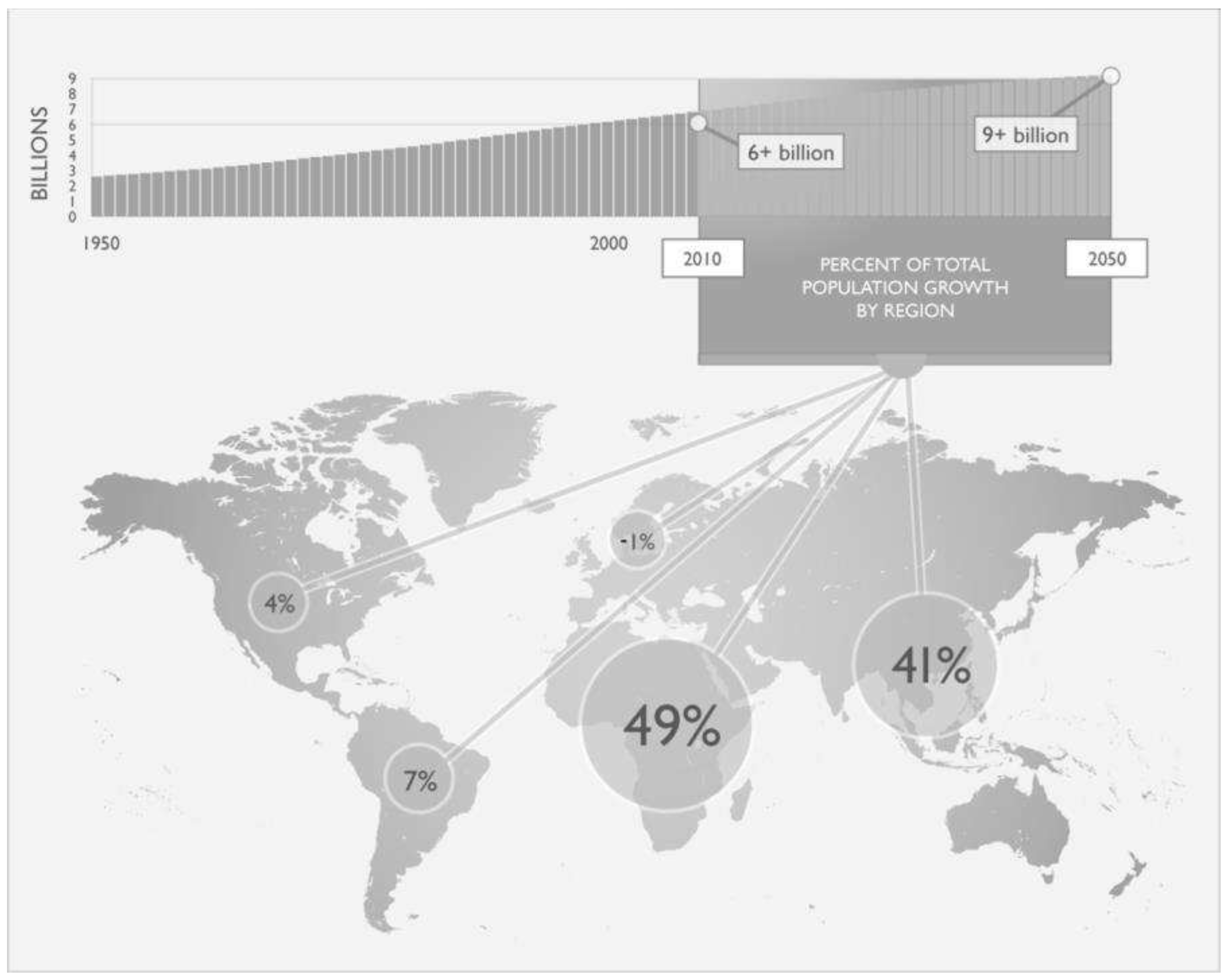
Figure 2.
Global food demand until 2050. (Source - https://earthbound.report/2012/04/12/feeding-the-world-in-2050/).
Figure 2.
Global food demand until 2050. (Source - https://earthbound.report/2012/04/12/feeding-the-world-in-2050/).
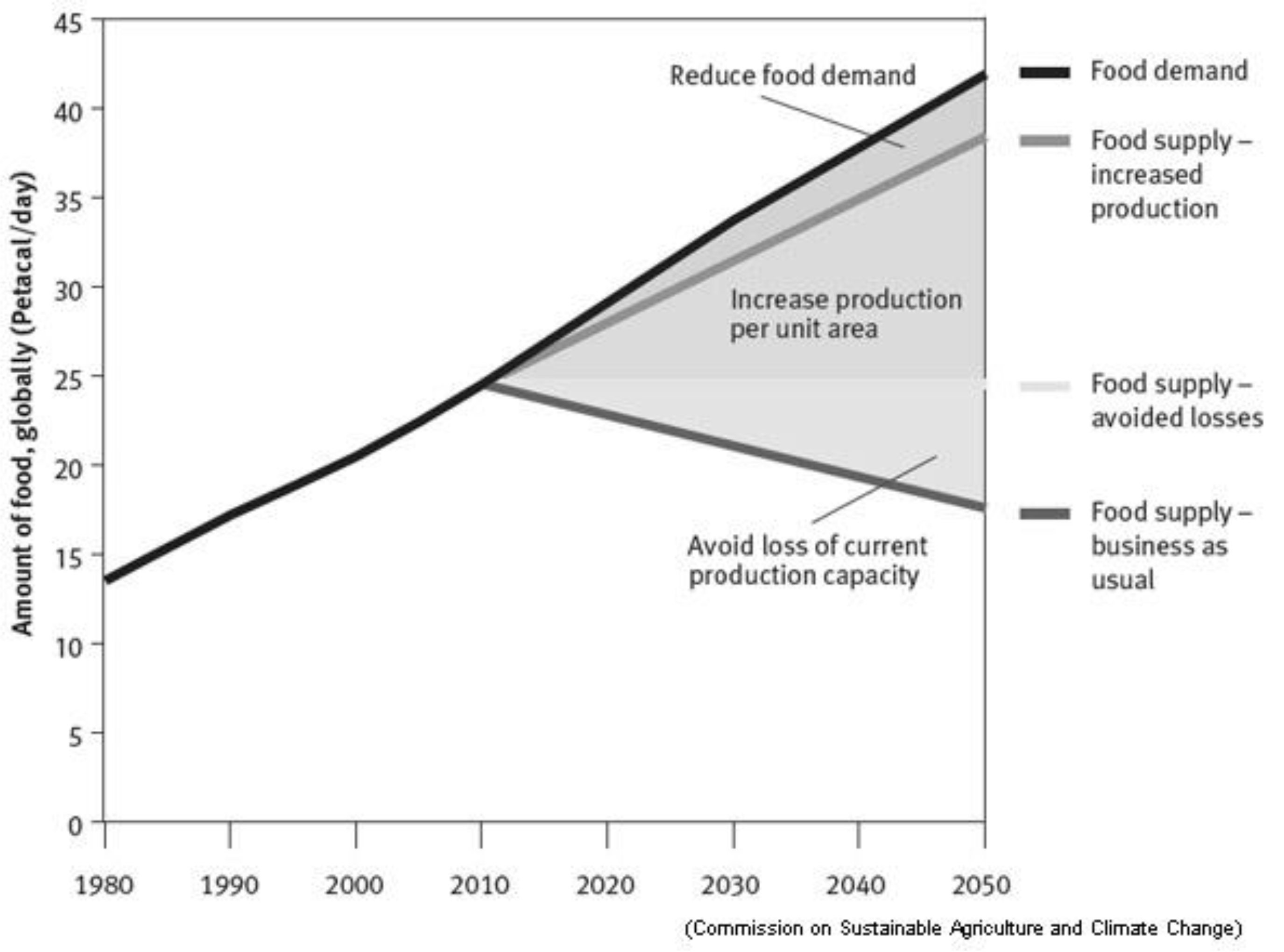
Figure 3.
Possible applications of biosurfactants in the agricultural sector.
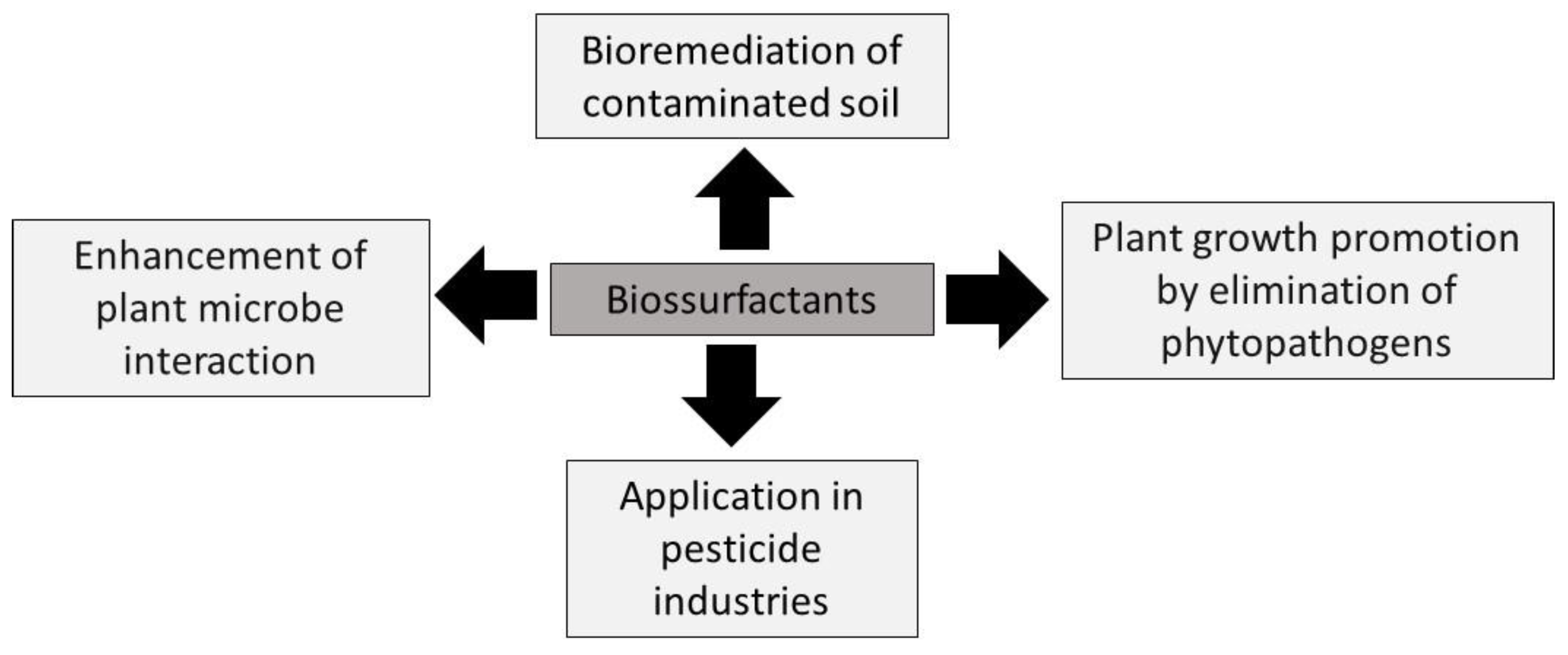
Table 1.
Trends in the application of biosurfactants in agriculture and other promising applications in related fields.
Table 1.
Trends in the application of biosurfactants in agriculture and other promising applications in related fields.
| Trends in biosurfactant application in agriculture | Other promising applications of biosurfactants in agriculture |
|---|---|
| Development of more effective and affordable biopesticides and biofertilizers [104]. | Utilization of biosurfactants in irrigation systems [105,106]. |
| Biocontrol of plant pathogens [107]. | Use of biosurfactants to enhance biofuel production [108]. |
| Stimulation of plant growth [109]. | Removal of biofilms in irrigation systems [110]. |
| Stabilization of pesticide and fertilizer emulsions [111]. | Application of biosurfactants for remediation of contaminated soils [112]. |
| Enhancement of herbicide and foliar nutrient absorption [104]. |
Disclaimer/Publisher’s Note: The statements, opinions and data contained in all publications are solely those of the individual author(s) and contributor(s) and not of MDPI and/or the editor(s). MDPI and/or the editor(s) disclaim responsibility for any injury to people or property resulting from any ideas, methods, instructions or products referred to in the content. |
© 2023 by the authors. Licensee MDPI, Basel, Switzerland. This article is an open access article distributed under the terms and conditions of the Creative Commons Attribution (CC BY) license (http://creativecommons.org/licenses/by/4.0/).
Copyright: This open access article is published under a Creative Commons CC BY 4.0 license, which permit the free download, distribution, and reuse, provided that the author and preprint are cited in any reuse.


