

Submitted:
06 October 2023
Posted:
10 October 2023
You are already at the latest version
Abstract
Pasture-based production systems are predominant in major beef-producing countries, however, these systems lack validated protocols to assess animal welfare under commercial conditions. The objective of this study was to validate an animal welfare protocol for fattening Zebu cattle farms in tropical pasture systems. The initial protocol was developed with the participation of producers, professionals, the general public, and the Colombian health authority, through workshops with a participatory approach and collaborative knowledge management. The validation was carried out in 24 pasture-based commercial Zebu cattle farms in the middle Magdalena region of Colombia. Visits were made with an average duration of 2.5 hours, which included the evaluation of 788 fattening cattle. The protocol evaluated animal-based, resource-based, and livestock management indicators through a questionnaire-guided interview to evaluate cattle handling and health, animal-based measurements, and documentation management. A protocol validation process was carried out by selecting indicators that remained unchanged, adjusting those that were feasible to implement, and eliminating inadequate or unnecessary indicators. The application of the protocol demonstrated that there are valid and feasible measures to include in the evaluation protocols of pasture-based fattening systems. Likewise, the active participation of producers is crucial to achieving a greater commitment to the implementation of this protocol.
Keywords:
Animal wellbeing
; Beef cattle
; Good Health
; Welfare assessment
1. Introduction
Intensification of animal production has increased public awareness of environmental conservation, health, and welfare, aimed at promoting food safety, food security, and sustainable food production [1,2]. Consumers perceive pasture-based livestock production as natural and ethical, thereby better for animal welfare, compared to confined systems [3,4]. Likewise, consumers are willing to pay more for milk and meat from pasture-raised cattle [5]. The increasing focus on ensuring that animals have "lives worth living" makes pasture-based production systems essential for cattle to develop positive emotions, favoring their natural behavior [6,7]. Similarly, cattle have a greater preference for natural pasture-based environments [8], in which they develop a more efficient immune system [9], can exercise more, maintain social cohesion, present less risk of hoof injuries, lameness, culling and mortality, but a higher risk of internal parasitism, biosecurity problems (greater contact with wild animals) [6,10] and thermal comfort [3,4], among other.
Protocols have been proposed to assess the welfare of cattle in confinement (Welfare Quality®, AssureWel, and others), but few are aimed at evaluating extensive or pasture-based Zebu beef cattle farms [11], which address all the welfare challenges that animals must face in these systems. Worldwide, studies show that a large proportion of dairy cows are raised in systems with access to pasture for at least part of the year, as is the case for 90% of cows in France, 95 to 100% in Ireland, 99% in Australia and New Zealand [12,13]; but these systems differ in the management of fattening cattle in tropical systems. Additionally, some of the measures used for animal welfare assessment under confinement conditions (e.g. lameness score, social behavior), are relevant also for grazing cattle [14]; however, it is not feasible to transfer assessment protocols developed for intensive systems to grazing systems, because each system needs a specific protocol and the proposed indicators are not necessarily suitable, relevant, feasible or measurable under grazing conditions [14,15]. Therefore, protocols with an evidence-based approach are needed to assess animal welfare in extensive fattening systems in tropical climates [2].
Pasture-based or forage-based production systems predominate in the main beef-producing countries such as the USA (West), Brazil, Argentina, Australia, New Zealand, Canada, and Uruguay, in some European countries such as France, United Kingdom and Ireland, and in sub-Saharan Africa [16]. Colombian cattle ranching is distributed among 633,841 farms (n= 29,301,392 animals) [17], contributes 6% of the national gross domestic product and generates 810,000 direct jobs. Fattening cattle represents 20% of the inventory and is managed under grazing conditions [18]. Currently, the National Animal Welfare Council and the Technical Committee on Production Animals were formed [17], which, jointly with producers' unions, academia, governmental entities, and citizen participation, prepared the manual and methodology for the evaluation of animal welfare conditions in cattle and buffalo farms (Resolution 0253 of 2020) [19]. However, the protocol has not been validated and implemented under commercial conditions. The objective of this study was to validate the protocol for the evaluation of animal welfare in fattening systems under pasture conditions and to propose other indicators or methodologies to complement the evaluation. The proposed protocol can be an evaluation reference for extensive and pasture-based systems in other countries with similar characteristics.[17].
2. Materials and Methods
2.1. Ethical Consideration
The study was carried out under commercial farm conditions and the researchers participated in the process solely as observers. All procedures related to the use and care of the animals strictly followed the Colombian regulation norm, Resolution 001634-2010 as stated by the Colombian Agricultural Institute [20]. Permission to conduct the study was approved by the Ethics Committee for Animal Experimentation (Act 30/12/2021, -Activities with minimal risk) at the University of Caldas. Farmers were fully informed about the purpose of the study, and they read/listened and signed an informed consent form and authorization to allow us to use the data.
2.2. Development of the Evaluation Protocol
The bovine and buffalo evaluation protocol was developed in its initial phase as an initiative of the Colombian Federation of Cattle Breeders and the National Livestock Fund (FEDEGAN-FNG) with the participation of an international expert in animal welfare. The second phase was developed with the objective of socialization, adjustment, and initial validation of the protocol, through the implementation of "workshops with a participatory approach and knowledge management" [21], which took into account: a) the tacit knowledge acquired through life/work experiences and oral traditions; and b) the explicit knowledge based on the scientific knowledge of validated protocols such as Welfare Quality® [22]. Six national workshops were held, involving professionals and producers from the departments of Antioquia, Córdoba, Meta, Vichada, Guaviare, Arauca, Casanare, Atlántico, Magdalena, Cesar, Guajira, Bolívar, Sucre, Santander, Tolima, Huila, Cauca, Valle del Cauca, Caldas, Risaralda, Quindío, Boyacá, Cundinamarca and Nariño. In the third phase, the regulatory entity and a committee of experts evaluated and complemented the protocol proposal for its implementation in Colombian bovine and buffalo production [17].
2.3. Farm Sample
The study was conducted in 24 commercial pasture-based Zebu beef farms in the Magdalena Medio region in Colombia, South America, visited between April and July 2022 (Table 1). Herd size ranged from 20 to 1,300 animals, with an average age and weight at slaughter of 2.6 ± 0.1 and 503.3 ± 8.4 kg, respectively.
The animals were located in the Magdalena Medio region (low tropic), which corresponds to an extensive mid-Andean valley in central Colombia, formed by the Magdalena River and distributed in the departments of Antioquia, Bolivar, Boyacá, Cesar, Caldas, and Santander. This cattle-grazing area is considered promising for achieving livestock production in harmony with forests and wetlands [18] (Figure 1). Rotational grazing was carried out on improved grass pastures of Brachiaria decumbens, Brachiaria humidicola, Dichanthium aristatum Benth, Megathyrsus maximus, among others. In addition, natural grasses, native legumes, and native trees (Xylopia amazonica, Clathorotropis brachypetala, Lecythis sp.). The beef cattle belonged to commercial Zebu cattle crosses and some producers were making F1 crosses with Bos taurus breeds. The entire production process was carried out on pasture. The farms raised the beef calves "at full milk" up to 9 m, with average weights of 240 kg. The calves were raised and fattened on nearby farms of the same owners or were marketed through auctions and livestock markets, to complete their production cycle on the buyers' farms in the same region. The animals were kept in groups without social mixing during the entire fattening process [18].
2.4. Animal of Animal Welfare
A trained veterinarian applied the animal welfare assessment protocol to Zebu fattening cattle in pasture-based systems (n = 24 farms). Table 2 presents an overview of the indicators proposed in the original protocol organized into four domains (good nutrition, suitable environment, optimal health, and appropriate behavior).
The information was obtained through documentary evaluation (review of procedures, records), and a structured interview guided by means of a questionnaire with the owner or administrator of the farm to evaluate the health and general management of the cattle. The following, amongst others, were documented: water, feed, and mineralized salt supply; routine management practices; painful procedures (dehorning, castration, hoof trimming), personnel expertise, use of analgesia, anesthesia, age of the cattle when the procedure was performed; vaccination; diseases observed in the animals; mortality (frequent causes); culling (% and causes); average weight and age at slaughter; animals that required special care (%, causes), and handling of sanitary and production records.
A visit was made on horseback (minimum two pastures per farm) to evaluate by direct observation the cattle in the pastures and the environmental conditions, forage supply, access to water and shade, and general condition of the pastures and fences. A proportional random sampling was performed according to the total number of cattle in the herd, to evaluate animal-based measures (body condition, presence of lesions and inflammations, presence of biting flies, ticks, worms, lameness), taking into account the following criteria: (a) herd with 1000 animals, 5% of the population [23]. To evaluate the reaction of the animals to humans, the evaluator observed the behavior of the cattle when the handler entered the pasture on horseback (calm, excitable). The cattle handler was then asked to interact with a group of cattle in the pastures to evaluate the human-animal interaction (interactions used by the handler and the response of the animals), and the reaction of the animals was generally recorded as positive, negative, or neutral [23].
Visits averaged 2.5 hours in duration. After completing the farm visits, a critical evaluation of the indicators proposed in the protocol was carried out with the participation of two international experts, and the final protocol was adjusted.
Figure 2 presents an overview of the typical grazing conditions in the Colombian Magdalena Medio, the crossbreeds of Zebu cattle in the area, and the interaction of the cattle with the handler.
2.5. Statistical Analysis
Software Stata Version 13.0 (College Station, Texas, USA) was used for all the statistical analyses. Spearman's coefficient was used to identify measures with a strong association (ρ ≥ 0.8). A probability level of P < 0.05 was chosen as the limit for statistical significance in all tests.
After the visits, the three authors divided the protocol indicators into four groups, according to the feasibility of their application, following the guidelines proposed by Kaurivi et al. [15]: a) indicators that remained unchanged in the final protocol, b) indicators that were not feasible in all farms, but were considered necessary and adequate to be maintained in an adjusted form in the final protocol, c) indicators that were not feasible in all farms or that were considered unnecessary or inadequate; these measures were eliminated from the final protocol and d) indicators significantly correlated with other measures, which could be evaluated by a common indicator.
3. Results
A total of 788 fattening cattle were evaluated in the pastures to validate the animal-based measures. Table 3, Table 4 and Table 5 describe the reasons why each indicator was classified in each of the proposed categories (included in the protocol without modification, included with adjustments, not included).
In general, the exclusion or modification of indicators from the protocol was associated with different explanations: the difficulty of measuring them on all farms, animal welfare implications not very applicable to the fattening production system under pasture conditions, time and space limitations, measures requiring specialized evaluations and adjustments to place the indicator in a category, where it was more feasible to evaluate it [15]. Eight indicators were excluded from the protocol due to factors such as, it was not feasible to evaluate them under grazing conditions due to the physical risk to the evaluators, low frequency in this type of system and the measures corresponded to indicators of good farming practices. Table 5 describes each of the indicators and the justification for their elimination.
Likewise, when performing the correlation analysis of the indicators, it was found that when inquiring about the method used to perform painful practices (castration, tagging, dehorning), these were highly correlated (ρ ≥ 0.8; P < 0.01) with the use of analgesia and anesthesia, therefore, it would be sufficient to only ask about the method applied for each procedure; but due to the ease of obtaining the information by means of an interview, we decided to keep the indicator in the protocol without modifications (Table 3). There were weak, but statistically significant correlations between handler age (ρ = -0.46, P = 0.02), time of experience working with cattle (ρ = 0.37, P = 0.04), body condition 1 (ρ = 0.46, P = 0.04), body condition 3 (ρ = 0.49, P = 0. 01), body condition 5 (ρ = -0.51, P < 0.01), % animals with mild lameness (ρ = 0.54, P = 0.04) and % animals with obvious lameness (ρ = 0.491, P = 0.04), associated with the type of interaction observed between handlers and beef cattle (positive, indifferent).
4. Discussion
In the United Kingdom and Germany, the beef industry is at the forefront in adopting welfare outcome measures as part of its farm assurance scheme [28,29]. The Colombian Federation of Cattle Breeders- FEDEGAN- proposed the evaluation protocol under validation in this study. These on-farm assurance program initiatives indicate the commitment of producers to manage their animals according to animal welfare standards, which then allows them to access certain markets [30], sell their products to more demanding retailers [31], change management routines [32], monitor and evaluate changes in practice, target interventions based on results [33], and comply with the requirements of sanitary legislation (Resolution 0253 of 2020) [34]. These evaluation schemes favor active participation and a long-term commitment to improvement by producers and greater adherence to animal welfare audit protocols [29,35].
4.1. Protocols Characteristics
The evaluation of animal welfare in grazing-based bovine herds requires protocols that are valid (adequately measure what they are supposed to measure), reliable (correctly quantify the evaluated characteristic), feasible (applicable under the same conditions), repeatable (obtain the same results in any context), practical to measure in the field and stable over time because they can contribute to improving the quality standards of the productive processes [33,36]. However, there is a high variability in the grazing environment, and it is necessary to use sufficiently flexible protocols that can be adapted to local conditions [37].
4.2. Good Nutrition
This protocol evaluates the criteria of "absence of hunger and thirst" through direct observation of the accessibility, availability, quality and quantity of forage and water in the pastures [18]. In Colombia and other countries with a wealth of natural water, there is an abundant supply of water sources such as rivers, natural wells, and springs, which are used for livestock consumption, an aspect that is present in the Magdalena Medio region. However, despite their ecological importance, cattle ranchers are transforming these ecosystems and have suggested the adoption of water collection, storage, and conduction systems, so that each pasture has a drinking trough, to prevent cattle from entering riverbeds and thus preserve and recover the riverside areas, marshes, wetlands, rivers, micro basins and conserve wildlife and fish [18,38]. The inclusion of this indicator of accessibility to food and water, as described in the original protocol, is suggested because it is supported by scientific evidence [39,40], and because of the difficulty of performing measurements proposed by other authors that we do not consider relevant such as: counting the number of working water points (especially in natural water troughs), flow rate, length of water troughs, classification of water troughs as safe or unsafe (slip hazards, presence of risks, bearing capacity of the soil, etc.), observation of competitive behavior of cattle in front of water sources and cleanliness of water (absence of odors and strange colors) [15,39,41].
Furthermore, other authors have proposed different alternatives: a) evaluation of the distance traveled by the animals to access water, because it has been suggested that if the water supply sources are located more than 250 m away, cattle decrease their water consumption [14], however, the Colombian Magdalena Medio region has a permanent supply of green forage, which decreases fresh water consumption by animals; b) how access to water is managed during grazing [39] and c) feeding strategies to check that the pasture provides sufficient nutrients during grazing (bromatological analysis) [14].
In the interviews conducted for the validation of the protocol, the existence of water treatment systems and bromatological analysis of pasture were inquired about, which are infrequent practices among producers (<5%), taking into account that this region is rich in water sources, producers obtain it from natural sources, as previously indicated. Regarding the bromatological analysis of grasses and legumes to determine supplementation needs, there are no laboratories in the area to perform the tests and there are other indicators such as body condition and daily weight gain of the animals that are more efficient. However, it is important to keep in mind that strategic nutritional supplementation can contribute to reducing deficiencies in the quantity and quality of feed based on pasture or forage and contribute to obtaining higher productive yields, therefore, in a more advanced phase of implementation of the protocols, these criteria could be included [16].
Body condition scoring is an effective measure of medium-term energy balance and is proposed as a unique indicator to assess nutritional performance on dairy farms in New Zealand [40] and considered feasible in this protocol with animal sampling. This procedure was performed on horseback to get close proximity to the cattle and is considered efficient by other authors [14]. Optionally, the measurement of body condition could be performed in the pen during the vaccination process of the animals or by monitoring the batches in the slaughterhouses, through the evaluation of hot and cold carcass yield, as has been proposed in swine in Colombia [42].
4.3. Good Environment
One of the most complex aspects to evaluate quantitatively is the comfort of fattening cattle, because grazing conditions are variable, do not remain stable over time, and can fluctuate due to weather conditions, animal management, pasture quality, and pasture rotation, among others; These aspects, in turn, induce variations in resting areas, feed availability, distances to be covered, forage quality and quantity, soil quality and susceptibility to heat stress, among others [40,43]. One of the most complex aspects to evaluate quantitatively is the comfort of fattening cattle, because grazing conditions are variable, do not remain stable over time, and can fluctuate due to weather conditions, animal management, pasture quality, and pasture rotation, among others; These aspects, in turn, induce variations in resting areas, feed availability, distances to be covered, forage quality and quantity, soil quality and susceptibility to heat stress, among others. Colombia is developing an industry technical standard that establishes environmental requirements for the livestock industry and the creation of an environmental seal in response to market demands for the adoption of sustainable practices through the management of good irrigation practices, planting, land management, waste management, good livestock practices, and social responsibility with employees (NTC 6550/2021, ICONTEC) [44]. This policy is based on the establishment of silvopasture systems and forest conservation on cattle ranches as a strategy and opportunity for environmental offsetting [18].
In this study, comfort was assessed by direct observation of the resources available to help cattle cope with heat or cold stress (e.g., the presence of trees in the pasture, silvopasture systems), which is considered valid in pasture-based systems [40] and is valuable to producers as it provides protection against extreme climates and contributes to wildlife conservation [45]. Other indicators have been suggested such as: a) the evaluation of the cleanliness of the animals' hind quarters and the percentage of dirty animals [41], but these indicators are not very applicable when the animals are free in the pastures, due to the difficulty of observation; however, it is considered valuable because the presence of mud or manure, are risk factors for the presentation of lameness [10,46] b) Use of sensors to evaluate animal behavior during long-term grazing (an option that would be valid, if the evaluation is performed for research purposes); c) evaluation of resting behavior (animals lying outside or inside the resting or shaded area) [41]; d) measurement of clinical signs of heat stress (such as panting) [6], but a single evaluation is not considered representative of the entire pasture [3] and requires additional time for evaluation.
The proposed protocol for beef cattle evaluated comfort around resting through the observation of pasture conditions (presence of floodable areas). In this particular case, the Magdalena Medio region has 70% of hilly areas and the remaining 30% corresponds to floodable forests of the Magdalena River, rich in native legumes, natural succession trees, and a high biodiversity of wild species [18,47]. The implementation of this indicator is suggested because it is easy to measure and we followed up on the foot lesions of animals from the evaluated farms during post-mortem inspection in two slaughterhouses (unpublished results) and found a high frequency of lesions related to pasture moisture conditions, such as heel erosion and abnormal claw shapes (asymmetric claws and corkscrew claws), results that coincide with those described by Bautista-Fernández et al., [48] in Mexico and by Moreira et al., [46], in Brazil.
These lesions cause pain, decreased feed intake, and significant economic losses [49]. In addition, this indicator is associated with the thermal comfort of the animals, the presence of lameness, and other abnormalities of the hooves. This finding could lead to the strengthening of sanitary programs for the monitoring and treatment of heel erosion and hoof problems, an activity that was routinely carried out in the region, according to the information provided by the interviewees.
The protocol proposed the evaluation of the general resting conditions of the animals in clean and dry places and the adaptations made by the owners to provide greater comfort to the animals (environmental enrichment, and protection against wind, among others), but we considered its evaluation complex due to: a) additional time would be required to visit all the pastures and observe the resting behavior of cattle; b) environmental enrichment strategies and protection against wind are naturally included in the pasture environment [45] and this indicator applies more to stabling conditions.
4.4. Good Health
Information related to the management of painful procedures was obtained by means of an interview, as proposed in the Welfare Quality® protocol, a validated and easy-to-apply methodology [22]. However, the evaluation of the expertise of the personnel to perform painful procedures is not considered feasible, because it is complex to measure in a single visit to the farm. During the protocol validation and implementation process, it was observed that cattle castration and dehorning are common livestock practices that are frequently performed without pain mitigation, results that are consistent with other studies [50]. It has been reported that the use of analgesics, anesthetics, and anti-inflammatory drugs is a more frequent practice in adult cattle than in suckling and newborn calves, according to studies conducted in Brazil [51]. It is suggested the implementation of promotion and continuing education programs by veterinarians, producer organizations, and state institutions, among others, to promote pain mitigation practices; as well as, the development of research to evaluate their efficacy in reducing pain-induced distress and post-treatment responses of cattle (e.g. inflation after surgical dehorning) [51].
Gross mortality was evaluated as the percentage of animals that died from all causes (disease, accident, no specific cause) during the last year, as indicated by the Welfare Quality® protocol. [22]. Respondents reported percentages below 1% gross mortality, coinciding with results obtained in studies conducted in pasture-based dairy systems [6,52]. It is suggested that the indicator called "complementary care", which corresponds to the % of sick or injured cattle that do not receive timely treatment and attention (separation of the herd, provision of soft bedding, access to water and feed, treatment), be retained without modification because during the visits it was observed that cattle handlers daily check the health conditions of the animals and implement the relevant sanitary measures. In contrast, it is suggested the elimination of the indicator called "% of discarded animals", which is carried out through a planned decision, taking into account age, slaughter on the farm, and euthanasia procedure performed by a veterinarian or humane culling because these are infrequent activities on fattening farms and humane culling on the farm is not a routine practice. This indicator applies more to breeding and milk production.
If an assessment protocol is to be widely used, it must include individual assessments that are practical to measure within the system being assessed, and it must be feasible within a reasonable time frame [40]. The latter is particularly important in a pasture-based system, as many animal-based assessments can only be measured while milking or performing a medical procedure on beef cattle (vaccination, drug administration), as this is the only time when they can be closely and systematically observed, an aspect that limits their implementation. In this study, the evaluation of animal-based measures (ectoparasite infestation, the presence of inflammations and lesions) was made difficult by the dispersion of animals in the pasture, and even in some cases, it was considered unsafe, to perform an approach to fattening cattle at a distance of 2 m, as is done in dairy cattle [53]. In New Zealand, it has been recommended to obtain information through guided interviews on the prevalence of problems caused by ectoparasites and control strategies (rotational grazing, integrated parasite control, etc.) [15], an aspect that we suggest is feasible to implement.
Several authors indicate that lameness is more frequent in feedlots [2], an aspect that has been widely demonstrated, however, the observation of lameness in pasture-based dairy systems [10] was common in our study because the Magdalena Medio region is rich in water sources and in areas of floodable forest [47], for this reason, this evaluation was included in the protocol. This information can be obtained through interviews and review of records. This can also be evaluated during the visit to the pasture on the day of the audit, by having the handler move the cattle.
Other specific risks for fattening cattle on pasture that could be inquired by interview is the presence of photosensitized animals (frequent in some regions of Colombia) [54], ingestion of toxic plants [55], gastrointestinal parasites (e.g. Ostertagia ostertagi) and the strategies used for their control [52], hemiparasites (Anaplasma marginale, Babesia bigemina, B. bovis, Tryapanosoma sp.) [56,57], predation-related mortality especially for fattening cattle during breeding and rearing [55], and snakebites [27].
Venomous snakebites are a potentially fatal health problem in humans and animals in tropical areas, with cattle and buffalo reported to be the most affected animal species [27]. Studies conducted in Costa Rica, have reported high prevalences due to Bothrops asper (family Viperidae) bites (9% in cattle), which are distributed in tropical and subtropical rainforests from northeastern Mexico to the Pacific lowlands of Colombia and Ecuador (altitude between 0 and 1,500 m.a.s.l.) [26]. The proposed indicators were included because of their high reporting in the evaluated area and in other tropical regions of the world.
4.5. Appropriate Behavior
Grazing is part of the natural behavior of cattle, which is reflected in greater social cohesion and permanent affiliative interactions, which reduce aggression, stereotypies, and stress in cattle under grazing conditions, compared to those kept in confinement [9,52]. Pastures provide cattle with greater opportunities for exercise, access to varied feed sources, the ability to select feed according to their preferences, and low competition for resources [9,58].
The protocol validated in this study evaluated the quality of human-animal interaction by observing in the paddock the positive behaviors of beef cattle, during interaction with handlers (reaction and interaction), as has been proposed in dairy cattle on pasture [40,41,59]. This study inquired about the practices used by handlers in order to reduce animal fear responses and improve human-animal interaction during routine handling, an indicator that is considered valid, as significant correlations have been revealed between the practices reported by handlers and behavioral responses of beef cattle [60].
In cases where the objective of the evaluation of human-animal interaction on farms is the improvement of management, decrease of the risk of occupational accidents and promote the welfare of beef cattle, we suggest the evaluation of the quality of human-livestock interaction during the routine vaccination process on the farm (official control diseases), as has been done in fattening farms in Brazil [61] and in Zebu fattening cattle in Colombian slaughterhouses and cattle markets [62]. Likewise, studies conducted in beef herds in French farms successfully validated the assessment of human-animal interaction by means of the behavioral test of animals' reactions to humans (an avoidance test) and found a significant association with the practices reported by cattle farmers through a semi-structured interview based on three aspects: (a) general description of farm and herd management practices (grazing period, discarding and selling animals), (b) organization of work with cattle (frequency of herd monitoring, hoof trimming, feeding organization, type of herd monitoring in pastures) and (c) handler's relationship with cattle (number of accidents with cattle, value of having a good farmer-cattle relationship, methods that facilitate cattle handling) [60].
The evaluation of the presence of stereotypies in this protocol was considered not very applicable to evaluate in grazing cattle because its estimation requires the elaboration of a previous ethogram and a prolonged observation process and these are more useful to evaluate in stabled cattle [63]. On the other hand, it was considered relevant to evaluate the proportion of personnel with certified training in animal welfare and good management practices, because it is a requirement of the Colombian sanitary legislation () directed to all animal handlers in logistic chains (farm, transport, livestock markets); in addition, studies conducted in Brazil in pasture fattening cattle farms found that training cattle handlers through an effective, practical and periodic strategy, promotes positive human-animal interactions [61], improving the quality of life of both handlers and livestock [64,65].
5. Conclusions
The proposed protocol for the evaluation of fattening Zebu cattle under pasture conditions included animal-, resource-, and management-based evaluations, along with record-related evaluations. Although it is considered ideal for protocols to be based primarily on animal-based measurements, which allow for the estimation of actual welfare status in animal behavior, health, and body condition, resource-based and management-based measures are based on science and expert experience, making them feasible to implement. Despite the lack of representativeness of the evaluated farms of all existing types of fattening cattle on pasture, the proposed protocol yielded valid information to propose it as feasible, simple, and representative of animal welfare conditions in these systems. The proposed protocol is expected to be suitable for use at the farm level for comparative evaluation, allowing the monitoring of the progress of each farm and the certification of standards required by sanitary legislation.
Author Contributions
Conceptualization, M.H.R., J.A.S. and J.B.-M.; Methodology M.H.R. and J.B.-M.; Data Collection, J.B.-M.; Analysis, J.B.-M. and M.H.R.; Writing—Original Draft Preparation, M.H.R. and J.B.-M.; Writing—Review and editing, M.H.R. and J.A.S.; Writing—final draft preparation, M.H.R., J.A.S. and J.B.-M.; Funding Acquisition, M.H.R. All authors have read and agreed to the published version of the manuscript.
Funding
This research was funded by the Colombian Federation of Ranchers (FEDEGAN) and the Vice-Rectorate for Research and Postgraduate Studies at the University of Caldas.
Institutional Review Board Statement
All procedures related to the use and care of the animals strictly followed the Colombian regulation norm, Resolution 001634-2010 as stated by the Colombian Agricultural Insti-tute [20]. Permission to conduct the study was approved by the Ethics Committee for An-imal Experimentation (Act 30/12/2021, -Activities with minimal risk) at the University of Caldas.
Informed Consent Statement
Farmers were fully informed about the purpose of the study, and they read/listened and signed an informed consent form and authorization to allow us to use the data.
Data Availability Statement
Data will be made available on request.
Acknowledgments
The authors thank the Federación Colombiana de Ganaderos (FEDEGAN) for funding the research and allowing us to participate in the development and validation of the pasture-based animal welfare assessment protocol for fattening cattle. We would also like to thank the Vice-Rectory of Research and Graduate Studies of the Universidad de Caldas for funding the research. We would also like to acknowledge all the producers who made every effort to implement the protocol and improve the welfare of their animals.
Conflicts of Interest
The authors declare no conflict of interest. The funders had no role in the design of the study; in the collection, analyses, or interpretation of data; in the writing of the manuscript; or in the decision to publish the results.
References
- del Campo, M.; Manteca, X.; de Lima, J.M.S.; Brito, G.; Hernández, P.; Sañudo, C.; Montossi, F. Effect of Different Finishing Strategies and Steer Temperament on Animal Welfare and Instrumental Meat Tenderness. Animals 2021, 11, 859. [Google Scholar] [CrossRef] [PubMed]
- Racciatti, D.S.; Bottegal, D.N.; Aguilar, N.M.; Menichelli, M.L.; Soteras, T.; Zimerman, M.; Cancino, A.K.; Marcoppido, G.A.; Blanco-Penedo, I.; Lloveras, J.P.; et al. Development of a welfare assessment protocol for practical application in Argentine feedlots. Appl. Anim. Behav. Sci. 2022, 253. [Google Scholar] [CrossRef]
- Beggs, D.; Jongman, E.; Hemsworth, P.; Fisher, A. The effects of herd size on the welfare of dairy cows in a pasture-based system using animal- and resource-based indicators. J. Dairy Sci. 2019, 102, 3406–3420. [Google Scholar] [CrossRef] [PubMed]
- Alonso, M.E.; González-Montaña, J.R.; Lomillos, J.M. Consumers’ Concerns and Perceptions of Farm Animal Welfare. Animals 2020, 10, 385. [Google Scholar] [CrossRef] [PubMed]
- Stampa, E.; Schipmann-Schwarze, C.; Hamm, U. Consumer perceptions, preferences, and behavior regarding pasture-raised livestock products: A review. Food Qual. Prefer. 2020, 82, 103872. [Google Scholar] [CrossRef]
- Mee, J.; Boyle, L. Assessing whether dairy cow welfare is “better” in pasture-based than in confinement-based management systems. New Zealand Veter- J. 2020, 68, 168–177. [Google Scholar] [CrossRef]
- Mandel, R.; Bracke, M.B.; Nicol, C.J.; Webster, J.A.; Gygax, L. Dairy vs beef production – expert views on welfare of cattle in common food production systems. Animal 2022, 16, 100622. [Google Scholar] [CrossRef]
- Lee, C.; Fisher, A.D.; Colditz, I.G.; Lea, J.M.; Ferguson, D.M. Preference of beef cattle for feedlot or pasture environments. Appl. Anim. Behav. Sci. 2013, 145, 53–59. [Google Scholar] [CrossRef]
- Di Grigoli, A.; Di Trana, A.; Alabiso, M.; Maniaci, G.; Giorgio, D.; Bonanno, A. Effects of Grazing on the Behaviour, Oxidative and Immune Status, and Production of Organic Dairy Cows. Animals 2019, 9, 371. [Google Scholar] [CrossRef]
- Hund, A.; Logroño, J. C.; Ollhoff, R. D.; Kofler, J. Aspects of lameness in pasture based dairy systems. Vet. J. 2018, 244, 83–90. [Google Scholar] [CrossRef]
- Kirchner, M.; Westerath, H.S.; Knierim, U.; Tessitore, E.; Cozzi, G.; Winckler, C. On-farm animal welfare assessment in beef bulls: consistency over time of single measures and aggregated Welfare Quality® scores. Animal 2014, 8, 461–469. [Google Scholar] [CrossRef] [PubMed]
- Smid, A.-M.C.; Weary, D.M.; von Keyserlingk, M.A.G. The Influence of Different Types of Outdoor Access on Dairy Cattle Behavior. Front. Veter- Sci. 2020, 7, 257. [Google Scholar] [CrossRef] [PubMed]
- van den Pol-van Dasselaar, A.; Hennessy, D.; Isselstein, J. Grazing of Dairy Cows in Europe—An In-Depth Analysis Based on the Perception of Grassland Experts. Sustainability 2020, 12, 1098. [Google Scholar] [CrossRef]
- Aubé, L.; Mialon, M.; Mollaret, E.; Mounier, L.; Veissier, I.; Roches, A.d.B.D. Review: Assessment of dairy cow welfare at pasture: measures available, gaps to address, and pathways to development of ad-hoc protocols. Animal 2022, 16, 100597. [Google Scholar] [CrossRef]
- Kaurivi, Y.B.; Laven, R.; Hickson, R.; Parkinson, T.; Stafford, K.J. Developing an Animal Welfare Assessment Protocol for Cows in Extensive Beef Cow–Calf Systems in New Zealand. Part 1: Assessing the Feasibility of Identified Animal Welfare Assessment Measures. Animals 2020, 10, 1597. [Google Scholar] [CrossRef] [PubMed]
- Greenwood, P.L. Review: An overview of beef production from pasture and feedlot globally, as demand for beef and the need for sustainable practices increase. Animal 2021, 15, 100295. [Google Scholar] [CrossRef]
- ICA, I.C.A.; FNG, F.; Agrosavia; Asobufalos; R, M.Q.; Medrano Galarza, C. Metodología para la evaluación de bienestar animal en las especies bovina y bufalina; 2022.
- FEDEGÁN Ganadería Colombiana: Hoja de Ruta 2018 – 2022 Available online: http://static.fedegan.org.co.s3.amazonaws.com/publicaciones/Hoja_de_ruta_Fedegan.pdf (accessed on Nov 2, 2022).
- ICA, I.C.A. Censos Pecuarios Nacional Available online: https://www.ica.gov.co/areas/pecuaria/servicios/epidemiologia-veterinaria/censos-2016/censo-2018#:~:text=La población de equinos en,%2C3%25%2C son hembras. (accessed on Jan 5, 2023).
- ICA, I.C.A. RESOLUCIÓN 1634 DE 2010 Available online: https://icbf.gov.co/cargues/avance/docs/resolucion_ica_1634_2010.htm (accessed on Aug 5, 2022).
- Barnes, T.S.; Alvaran, P.J.J.; Lantican, T.L.D.; Lapuz, E.L.; Ignacio, C.; Baluyut, A.S.; Parke, C.R.; Palaniappan, G.; Cameron, D.; Ancog, R.C.; et al. Combining conventional and participatory approaches to identify and prioritise management and health-related constraints to smallholder pig production in San Simon, Pampanga, Philippines. Prev. Veter- Med. 2020, 178, 104987. [Google Scholar] [CrossRef] [PubMed]
- Welfare Quality “Welfare Quality Applied to Dairy Cows,” Assessment protocol for cattle. Welfare Quality® Consortium, Lelystad, Netherlands. Available online: http://www.welfarequalitynetwork.net/en-us/reports/assessment-protocols. (accessed on Aug 1, 2020).
- FEDEGÁN- FNG, F.N.D.G. Protocolo de Medición de Bienestar Animal. Metodol. PARA LA MEDICIÓN INDICADORES BIENESTAR Anim. EN Bov. Y BUFALINOS 2021, 72.
- Vaz, R.Z.; Dutra, M.M.M.; Bethancourt-Garcia, J.A.; Pascoal, L.L.; Vaz, F.N.; Sartori, D.B.S.; Reis, N.P.; Restle, J. Intrinsic and environmental factors in the pre-slaughter behavior of beef cattle. J. Veter- Behav. 2023, 63, 48–54. [Google Scholar] [CrossRef]
- Rault, J.-L.; Waiblinger, S.; Boivin, X.; Hemsworth, P. The Power of a Positive Human–Animal Relationship for Animal Welfare. Front. Vet. Sci. 2020, 7, 590867. [Google Scholar] [CrossRef] [PubMed]
- Rodríguez, C.; Estrada, R.; Herrera, M.; Gómez, A.; Segura, .; Vargas, M.; Villalta, M.; León, G. Bothrops asper envenoming in cattle: Clinical features and management using equine-derived whole IgG antivenom. Veter- J. 2016, 207, 160–163. [CrossRef]
- Bolon, I.; Martins, S.B.; Ochoa, C.; Alcoba, G.; Herrera, M.; Boyogueno, H.M.B.; Sharma, B.K.; Subedi, M.; Shah, B.; Wanda, F.; et al. What is the impact of snakebite envenoming on domestic animals? A nation-wide community-based study in Nepal and Cameroon. Toxicon: X 2021, 9-10, 100068. [Google Scholar] [CrossRef]
- Hockenhull, J.; Main, D.C.J.; Mullan, S. ‘Would it sell more pork?’ Pig farmers’ perceptions of Real Welfare, the welfare outcome component of their farm assurance scheme. Animal 2019, 13, 2864–2875. [Google Scholar] [CrossRef]
- Uehleke, R.; Seifert, S.; Hüttel, S. Do Animal Welfare Schemes Promote Better Animal Health? An Empirical Investigation of German Pork Production. Livest. Sci. 2021, 247, 104481. [Google Scholar] [CrossRef]
- Mariottini, F.; Giuliotti, L.; Gracci, M.; Benvenuti, M.N.; Salari, F.; Arzilli, L.; Martini, M.; Roncoroni, C.; Brajon, G. The ClassyFarm System in Tuscan Beef Cattle Farms and the Association between Animal Welfare Level and Productive Performance. Animals 2022, 12, 1924. [Google Scholar] [CrossRef]
- Pandolfi, F.; Stoddart, K.; Wainwright, N.; Kyriazakis, I.; Edwards, S.A. The ‘Real Welfare’ scheme: benchmarking welfare outcomes for commercially farmed pigs. Animal 2017, 11, 1816–1824. [Google Scholar] [CrossRef] [PubMed]
- Kirchner, M.K.; Westerath-Niklaus, H.S.; Knierim, U.; Tessitore, E.; Cozzi, G.; Vogl, C.; Winckler, C. Attitudes and expectations of beef farmers in Austria, Germany and Italy towards the Welfare Quality® assessment system. Livest. Sci. 2014, 160, 102–112. [Google Scholar] [CrossRef]
- Hernandez, R.O.; Sánchez, J.A.; Romero, M.H. Iceberg Indicators for Animal Welfare in Rural Sheep Farms Using the Five Domains Model Approach. Animals 2020, 10, 2273. [Google Scholar] [CrossRef]
- Ministerio de Agricultura y Desarrollo Rural Resolución 253 del 2020 Available online: https://fenavi.org/wp-content/uploads/2020/10/RESOLUCION-0253-DE-2020.pdf.
- Kirchner, M.; Westerath, H.S.; Knierim, U.; Tessitore, E.; Cozzi, G.; Pfeiffer, C.; Winckler, C. Application of the Welfare Quality® assessment system on European beef bull farms. Animal 2014, 8, 827–835. [Google Scholar] [CrossRef] [PubMed]
- Knierim, U.; Winckler, C.; Mounier, L.; Veissier, I. Developing effective welfare measures for cattle. In Understanding the behaviour and improving the welfare of dairy cattle; Endres, M., Ed.; Burleigh Dodds Science Publishing: Cambridge, UK, 2021; pp. 81–102. [Google Scholar]
- Marcone, G.; Carnovale, F.; Arney, D.; De Rosa, G.; Napolitano, F. A simple method for on-farm evaluation of sheep welfare using animal-based indicators. Small Rumin. Res. 2022, 208, 106636. [Google Scholar] [CrossRef]
- Mora-Fernández, C.; Peñuela-Recio, L.; Castro-Lima, F. State of the knowledge of the flooded savanna ecosystems of Orinoquia Colombiana. 2015, 19, 253–271.
- Kaurivi, Y.B.; Laven, R.; Hickson, R.; Stafford, K.; Parkinson, T. Identification of Suitable Animal Welfare Assessment Measures for Extensive Beef Systems in New Zealand. Agriculture 2019, 9, 66. [Google Scholar] [CrossRef]
- Sapkota, S.; Laven, R.; Müller, K.; Kells, N. Animal Welfare Assessment: Can We Develop a Practical, Time-Limited Assessment Protocol for Pasture-Based Dairy Cows in New Zealand? Animals 2020, 10, 1918. [Google Scholar] [CrossRef]
- Hernandez, A.; Berg, C.; Eriksson, S.; Edstam, L.; Orihuela, A.; Leon, H.; Galina, C. The Welfare Quality® assessment protocol: how can it be adapted to family farming dual purpose cattle raised under extensive systems in tropical conditions? Anim. Welf. 2017, 26, 177–184. [Google Scholar] [CrossRef]
- Hernandez, R.O.; Romero, M.H.; Sanchez, J.A. Assessment of slaughterhouse-based measures as animal welfare indicators in fattening pigs. Front. Anim. Sci. 2023, 4. [Google Scholar] [CrossRef]
- Veissier, I.; Van Laer, E.; Palme, R.; Moons, C.P.H.; Ampe, B.; Sonck, B.; Andanson, S.; Tuyttens, F.A.M. Heat stress in cows at pasture and benefit of shade in a temperate climate region. Int. J. Biometeorol. 2017, 62, 585–595. [Google Scholar] [CrossRef] [PubMed]
- ICONTEC Certificación Sello Ambiental Colombiano – Criterios para la ganadería sostenible bovina y bufalina – NTC 6550. Available online: https://www.icontec.org/eval_conformidad/certificacion-sello-ambiental-colombiano-criterios-para-la-ganaderia-sostenible-bovina-y-bufalina-ntc-6550/ (accessed on Feb 2, 2023).
- Mills, K.E.; Payne, P.R.; Saunders, K.; Zobel, G. “If you were a cow, what would you want?” Findings from participatory workshops with dairy farmers. Animal 2023, 17, 100779. [Google Scholar] [CrossRef] [PubMed]
- Moreira, T.F.; Nicolino, R.R.; Meneses, R.M.; Fonseca, G.V.; Rodrigues, L.M.; Filho, E.J.F.; Carvalho, A.U. Risk factors associated with lameness and hoof lesions in pasture-based dairy cattle systems in southeast Brazil. J. Dairy Sci. 2019, 102, 10369–10378. [Google Scholar] [CrossRef] [PubMed]
- Calle D, Z.; Murgueitio R, E. Ganaderos aliados de la biodiversidad en el Magdalena Medio Available online: https://static.fedegan.org.co/Revistas_Carta_Fedegan/149/33GANADERÍA Y AMBIENTE GANADEROS ALIADOS DE LA BIODIVERSIDAD EN EL MAGDALENA MEDIO.pdf (accessed on Nov 5, 2022).
- Bautista-Fernández, M.; Estévez-Moreno, L.; Losada-Espinosa, N.; Villarroel, M.; María, G.; De Blas, I.; la Lama, G.M.-D. Claw disorders as iceberg indicators of cattle welfare: Evidence-based on production system, severity, and associations with final muscle pH. Meat Sci. 2021, 177, 108496. [Google Scholar] [CrossRef]
- Chapinal, N.; Baird, L.; Machado, L.P.; von Keyserlingk, M.; Weary, D. Short communication: Risk of severe heel erosion increased with parity and stage of lactation in freestall-housed dairy cows. J. Dairy Sci. 2010, 93, 3070–3073. [Google Scholar] [CrossRef]
- Becker, J.; Reist, M.; Friedli, K.; Strabel, D.; Wüthrich, M.; Steiner, A. Current attitudes of bovine practitioners, claw-trimmers and farmers in Switzerland to pain and painful interventions in the feet in dairy cattle. Veter- J. 2013, 196, 467–476. [Google Scholar] [CrossRef]
- Canozzi, M.E.A.; Borges, J.A.R.; Barcellos, J.O.J. Attitudes of cattle veterinarians and animal scientists to pain and painful procedures in Brazil. Prev. Veter- Med. 2020, 177, 104909. [Google Scholar] [CrossRef]
- Arnott, G.; Ferris, C.P.; O’connell, N.E. Review: welfare of dairy cows in continuously housed and pasture-based production systems. Animal 2017, 11, 261–273. [Google Scholar] [CrossRef] [PubMed]
- Medrano-Galarza, C.; Zuñiga-López, A.; E García-Castro, F. Evaluación de bienestar animal en fincas bovinas lecheras basadas en pastoreo en la Sabana de Bogotá, Colombia. Rev. MVZ Córdoba 2020, 25, e1708–e1708. [Google Scholar] [CrossRef]
- Cardona-Álvarez, J.; Vargas-Vilória, M.; Paredes-Herbach, E. Clinical and histopathological study of the phototoxic dermatitis in Zebu calves in grazing of Brachiaria decumbens. Rev. MVZ Córdoba 2016, 21, 5366–5380. [Google Scholar] [CrossRef]
- Molle, G.; Cannas, A.; Gregorini, P. A review on the effects of part-time grazing herbaceous pastures on feeding behaviour and intake of cattle, sheep and horses. Livest. Sci. 2022, 263, 104982. [Google Scholar] [CrossRef]
- de Mello, V.V.C.; Ramos, I.A.d.S.; Herrera, H.M.; Mendes, N.S.; Calchi, A.C.; Campos, J.B.V.; Macedo, G.C.; Alves, J.V.A.; Machado, R.Z.; André, M.R. Occurrence and genetic diversity of hemoplasmas in beef cattle from the Brazilian Pantanal, an endemic area for bovine trypanosomiasis in South America. Comp. Immunol. Microbiol. Infect. Dis. 2019, 66, 101337. [Google Scholar] [CrossRef] [PubMed]
- Romero, A.R.d.S.; Nascimento, A.V.D.; Oliveira, M.C.d.S.; Okino, C.H.; Braz, C.U.; Scalez, D.C.B.; Cardoso, D.F.; Cardoso, F.F.; Gomes, C.C.G.; Caetano, A.R.; et al. Genetic parameters and multi-trait genomic prediction for hemoparasites infection levels in cattle. Livest. Sci. 2023, 273. [Google Scholar] [CrossRef]
- Roca-Fernández, A.I.; Ferris, C.P.; González-Rodríguez, A. Short communication. Behavioural activities of two dairy cow genotypes (Holstein-Friesian vs. Jersey x Holstein-Friesian) in two milk production systems (grazing vs. confinement). Span. J. Agric. Res. 2013, 11, 120. [Google Scholar] [CrossRef]
- Ebinghaus, A.; Ivemeyer, S.; Rupp, J.; Knierim, U. Identification and development of measures suitable as potential breeding traits regarding dairy cows’ reactivity towards humans. Appl. Anim. Behav. Sci. 2016, 185, 30–38. [Google Scholar] [CrossRef]
- Destrez, A.; Haslin, E.; Boivin, X. What stockperson behavior during weighing reveals about the relationship between humans and suckling beef cattle: A preliminary study. Appl. Anim. Behav. Sci. 2018, 209, 8–13. [Google Scholar] [CrossRef]
- Ceballos, M.C.; Sant'Anna, A.C.; Boivin, X.; Costa, F.d.O.; Carvalhal, M.V.d.L.; da Costa, M.J.P. Impact of good practices of handling training on beef cattle welfare and stockpeople attitudes and behaviors. Livest. Sci. 2018, 216, 24–31. [Google Scholar] [CrossRef]
- Leon, A.F.; Sanchez, J.A.; Romero, M.H. Association between Attitude and Empathy with the Quality of Human-Livestock Interactions. Animals 2020, 10, 1304. [Google Scholar] [CrossRef] [PubMed]
- Meneses, X.C.A.; Park, R.M.; Ridge, E.E.; Daigle, C.L. Hourly activity patterns and behaviour-based management of feedlot steers with and without a cattle brush. Appl. Anim. Behav. Sci. 2021, 236, 105241. [Google Scholar] [CrossRef]
- Wagner, K.; Brinkmann, J.; March, S.; Hinterstoißer, P.; Warnecke, S.; Schüler, M.; Paulsen, H.M. Impact of Daily Grazing Time on Dairy Cow Welfare—Results of the Welfare Quality® Protocol. Animals 2017, 8, 1. [Google Scholar] [CrossRef] [PubMed]
- Rault, J.-L.; Hintze, S.; Camerlink, I.; Yee, J.R. Positive Welfare and the Like: Distinct Views and a Proposed Framework. Front. Veter- Sci. 2020, 7, 370. [Google Scholar] [CrossRef]
Figure 1.
Geographic area evaluated in the study (Magdalena medio, Colombia, South America).
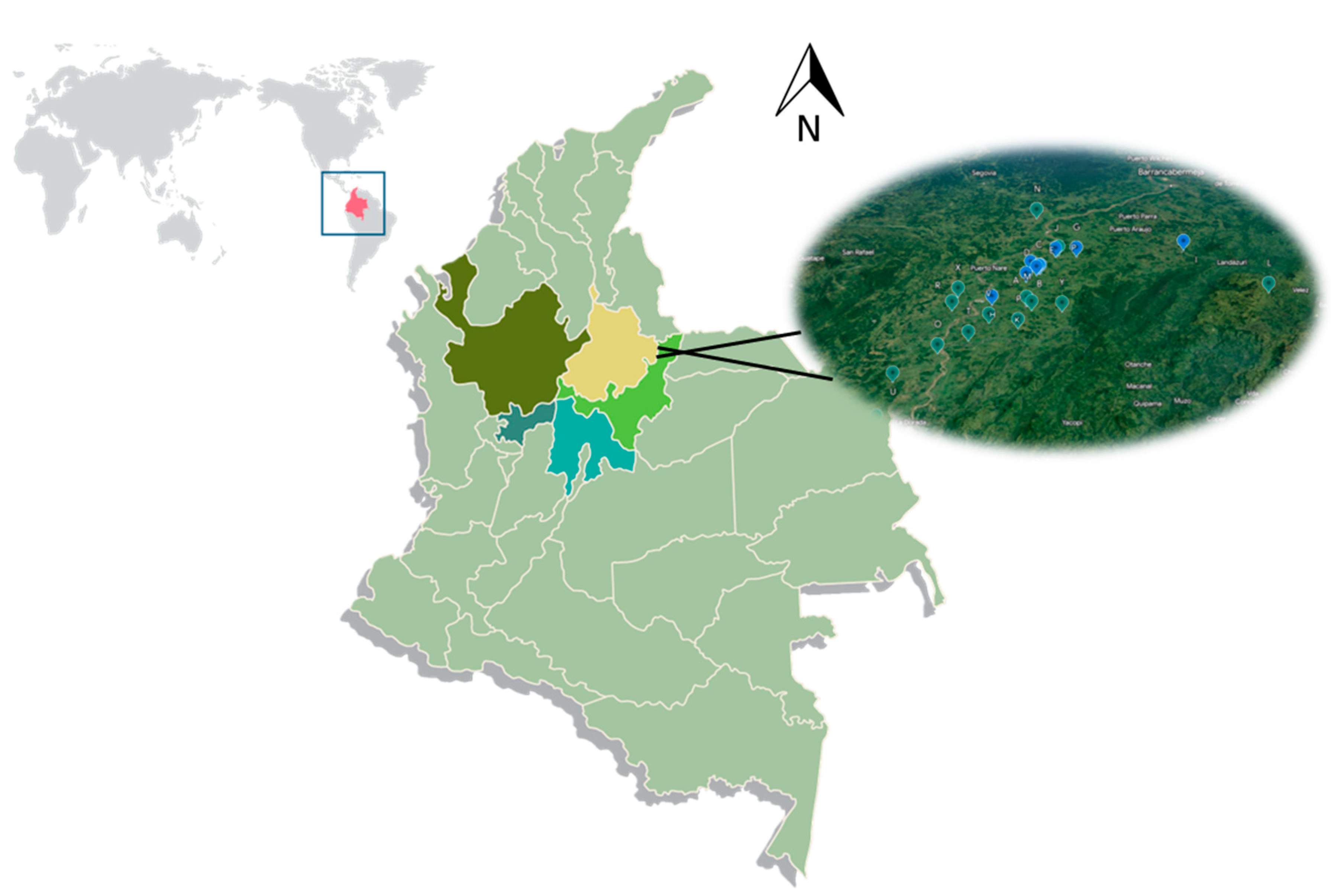
Figure 2.
Grazing conditions in the middle Colombian Magdalena. a) Thermal comfort. b) Supply of mineralized salt. c) Reaction of animals to humans. d) Interaction with humans.
Figure 2.
Grazing conditions in the middle Colombian Magdalena. a) Thermal comfort. b) Supply of mineralized salt. c) Reaction of animals to humans. d) Interaction with humans.
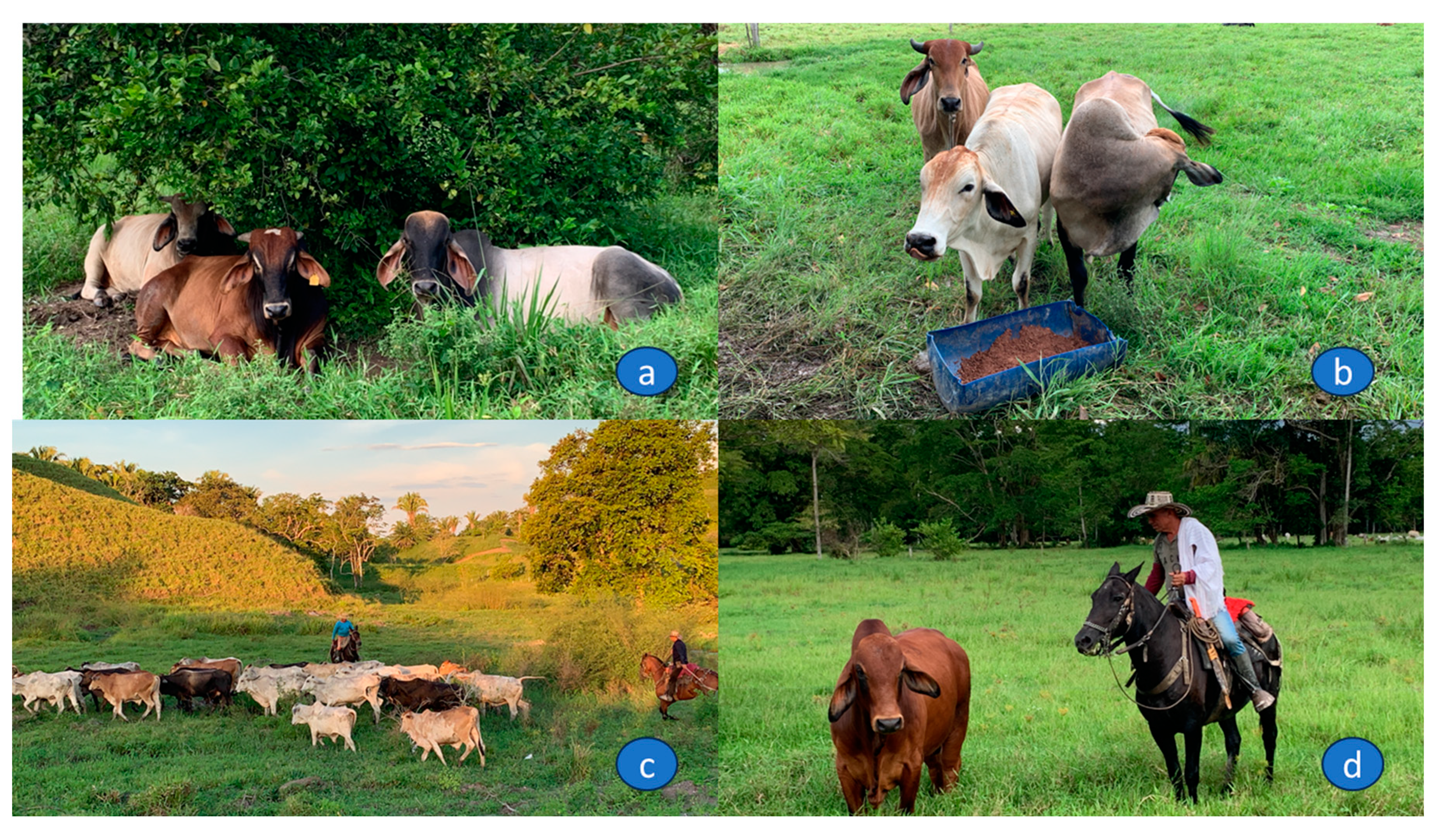

Table 1.
Description of farms evaluated in the Magdalena Medio regions (Colombia, South America).
| Farm | Altitud | Livestock numbers | Animals Evaluated | Extension (ha) |
|---|---|---|---|---|
| 1 | 6°9´26´´N | 535 | 40 | 333 |
| 2 | 6°7´58´´N | 1100 | 55 | 600 |
| 3 | 6°7´58´´N | 1100 | 55 | 600 |
| 4 | 6°7´58´´N | 500 | 40 | 600 |
| 5 | 6°16'4''N | 1300 | 65 | 750 |
| 6 | 6°7´58´´N | 1100 | 55 | 600 |
| 7 | 6°15'32''N | 580 | 40 | 370 |
| 8 | 5°56'32''N | 620 | 40 | 375 |
| 9 | 6°29´37´´N | 1150 | 58 | 523 |
| 10 | 6°15'20''N | 398 | 30 | 382 |
| 11 | 5°55´34´´N | 165 | 30 | 1200 |
| 12 | 5°59´28´´N | 36 | 20 | 100 |
| 13 | 5°56'4''N | 1200 | 60 | 1500 |
| 14 | 6°36´10´´N | 103 | 30 | 1200 |
| 15 | 5°42'32''N | 76 | 20 | 190 |
| 16 | 5°58´34´´N | 39 | 20 | 240 |
| 17 | 5°29’15’’N | 20 | 10 | 300 |
| 18 | 5°54'41''N | 20 | 10 | 30 |
| 19 | 5°27'41''N | 24 | 10 | 13 |
| 20 | 5°45'45''N | 73 | 20 | 2250 |
| 21 | 5°36´11´´N | 47 | 20 | 410 |
| 22 | 5°50´55´´N | 53 | 20 | 100 |
| 23 | 5°59´16´´N | 76 | 20 | 170 |
| 24 | 5°54´15´´N | 47 | 20 | 119 |
Table 2.
General description of measures assessment in the Colombia beef farms in pasture-based systems protocol.
Table 2.
General description of measures assessment in the Colombia beef farms in pasture-based systems protocol.
| Principle | Welfare Criteria | Animal welfare measure/indicator | Method of assessment |
|---|---|---|---|
| Good feeding | |||
| Absence of hunger | Access and availability of grass | Interview | |
| Quality and quantity of grass | Direct observation | ||
| Supplementation based on bromatological analysis | Documentary record | ||
| Food storage | Direct observation | ||
| Body condition score | Animal-based indicator (animal sampling) |
||
| Absence of thirst | Access of water | Interview and direct observation | |
| Availability of water in drinkers and natural sources | |||
| Ad libitum | |||
| Water treatment/physicochemical and microbiological analysis | |||
| Appropriate environment | Thermal comfort | Subjective assessment of shade in the paddocks | Interview/ direct observation |
| General condition of the paddocks | |||
| General condition of the facilities and fences | |||
| Adaptations that provide comfort to animals (scrapers, draught protection, watering and shade feeders) | |||
| Comfort around resting | Animal rest (clean and dry) | ||
| Good health | Painful procedures | Tagging/disbudding/castration | Interview |
| Specify age at painful procedures | |||
| Procedure and with/without use of analgesia and or anaesthetic | |||
| Staff expertise | |||
| Absence of disease | Abrasions/swelling/hairless | Animal-based indicators (animal sampling) | |
| Presence of biting flies | |||
| Presence of Dermatobia hominis/ticks/worms | |||
| Lameness | |||
| Animals requiring complementary care | Calculation/interview |
||
| Mortality rate | |||
| Culling rate | |||
| Use of veterinary medicinal products | Evaluation of the drug storage area and good drug management practices | Direct observation/ records |
|
| Procedures and documentary records | Direct observation/ records Registration of treatment of cattle by a veterinarian and current health plan |
||
| Appropriate Behaviour | Human-animal interaction | Animal reaction to human | Animal-based indicators (animal sampling) |
| Human-animal interaction | |||
| Stereotypes | |||
| Knowledge and training in animal welfare | Interview - % people with certified training |
Table 3.
Measures assessed as feasible for inclusion in the final protocol without change.
| Welfare Criteria | Welfare measures/indicator | Method of assessment | |
|---|---|---|---|
| Absence of hunger | Access and availability of grass | Subjective assessment of grass in the paddocks (type and availability during the year) as enough or insufficient. Interview and direct observation |
|
| Body condition score (thin animals) | % thin animals in the herd, based on score ≤ 4 on 1-5 scales Categorical scale according to the proportion of animals with score ≤ 4 to assign total score (0-8). |
||
| Absence of thirst | Access to water in drinkers and natural sources | Subjective assessment of availability of natural water sources/drinkers as enough or insufficient. | |
| Quality/Ad libitum/restriction of water | Interview/direct observation as enough or insufficient. |
||
| Thermal comfort | Shade and adaptations that provide comfort to animals (trees) | Subjective assessment of shade in the paddocks (presence of trees, shrubs, galleys). |
|
| Presence of hazards | Fence status | Subjective assessment of fence condition in the visited pastures (intact, free from sharp elements or any other conditions that may cause harm or injury to the animals). |
|
| Absence of pain from management procedures | Ear tagging, disbudding/castration | Record age and use of local anaesthetic during questionnaire-guided interview. |
|
| Absence of disease and pain | Lameness (animal based-indicator) | At pasture % of cattle with uneven weight-bearing on a limb that is immediately identifiable and/or obviously shortened stride. Categorical scale: No lameness (0): normal displacement and poise Mild lameness (1): abnormality in displacement or aplombs Severe lameness (2): arching of the back. % cattle with severe lameness (≤ 5%, > 5%, ≤ 10%, > 10%) |
|
| Mortality rate (%) | Interview/registers/calculation % Numbers of accidental deaths and deaths/slaughter (either on-farm or sent off-farm) due to disease were combined. (Excellent: ≤ 2%, High: 2.1-3%, Medium: 3.1-5%, Low > 5% or no records) |
||
| Complementary Care | Animal-based indicator (sampling) % sick or injured animals not receiving timely treatment and care (herd separation, provision of soft beds, access to water and food, treatment) 1. Excellent 2 – High 2.1-5% Medium > 5% Low |
||
| Human-animal interaction | Reaction of animals to humans (Calm/excitable) | Animal sampling (animal-based indicator) Subjective evaluation of beef cattle behavior when the rider enters the environment where the animals are located (reaction and movement of the animals) Categories: Calm-quiet (static animals, with little or no resistance to being approached) Excitable (constant, vigorous movement, attempting to escape, very agitated and frightened) [24]. |
|
| Interaction with humans (positive/negative/neutral) | Animal sampling (animal-based indicator) Subjective evaluation of the animal's orientation response to the handler Categories [25]: Positive: the posture of the head, ears and body relaxed, shows interest in the handler. Negative: vigilance, avoidance, flight. Neutral: Head in normal position and ears upright while looking at handler, continuous rumination. |
||
| Knowledge and training | Formal training in animal welfare | Interview - % people with certified training in animal welfare (y/n, 100%, < 50%, ≥ 50%) |
|
Table 4.
Welfare measures included in the protocol after adjustments, including the rationale for change and the changes that were made.
Table 4.
Welfare measures included in the protocol after adjustments, including the rationale for change and the changes that were made.
| Welfare Criteria | Welfare measures | Method of assessment | Reason for difficulty | Adjustment of measures |
|---|---|---|---|---|
| Conforte around resting | HAZARDS | General condition of the paddocks Direct observation/interview |
The protocol did not include categorical measurement scales and the presence of other hazards reported in other extensive production systems | Subjective evaluation of paddocks, including the identification of flood-prone areas and potential hazards within pastures such as steep hills, cliffs, gullies, and sinkholes. Also, noting the presence of hazardous objects or debris. Categorical scale required. |
| Presence of ectoparasites | Presence of biting flies (Tabanus Stomoxys calcitrans) | Animal based indicators/animal sampling Presence of biting flies on head, back, belly and legs (and/n, 50 insects) |
These indicators are not practical to measure in pastures, animals are required to be restricted from movement | Interview on the prevalence of ectoparasites, problems caused and control strategies. |
| Dermatobia hominis/ticks/worms |
Dermatobia hominis (y/n, ≥ 5 insects) % of animals with ticks % of animals with myiasis % of animals with ticks % of animals with horseflies |
There is a risk of injury to the evaluator and additional stress to the cattle | ||
| Presence of gticks | Direct observation of infestation on ears, groin, base of tail and udder (y/n, presence at least two of them) | |||
| Infestation by fly larvae | Direct observation of the infestation (y/n, presence at least one of them) |
|||
| Disease history | Hemoparasites (Babesia sp., Anaplasma marginale, Trypanosoma sp.) | % of animals with clinical signs, diagnosis and treatment for hemoparasites | During the interviews the producers and/or administrators reported frequent health problems due to blood parasite infestation | Interview on the prevalence of blood parasites, results of diagnostic tests, problems caused and control strategies |
| Disease history | snake bites Poisoning with poisonous plants Presence of predators Photodermatitis |
% of cattle that died on the farm during the last 12 m due to snake bites % cattle that died on the farm during the last 12 m due to predators % cattle that died on the farm during the last 12 m due to ingestion of toxic plants % cattle that died on the farm during the last 12 m due to thunderstorms % cattle that died on the farm during or subjected to autanasia the last 12 m due to accidents % cattle who became ill/treated during the last 12 months by photosensitization |
Tropical conditions favor the presence of toxic plants, problems with thunderstorms, venomous snake bites and accidents due to the topography of the terrain [26,27]. | Interview on the prevalence of problems caused and control strategies |
Table 5.
Welfare measures removed from the protocol after feasibility testing on 25 beef farms.
| Welfare Criteria | Welfare measures/indicator | Method of assessment | Reason for removal |
|---|---|---|---|
| Absence of hunger | Supplementation based on bromatological analysis | Interview | Producers do not perform this practice routinely because they do not have specialized laboratories in the area and the measurement of the animals' body condition is a more effective measure. Can be considered in systems that use strategic nutritional supplementation |
| Absence of thirst | Water treatment and laboratory analysis (physiochemical and microbiological) | Interviews/records | It is not a viable practice when working with natural sources. In many regions on the farms there is no supply of drinking water for humans and the water is obtained from wells. |
| Comfort | Adaptations that provide comfort to animals (environmental enrichment) | Interview/direct observation | Environmental enrichment is not feasible to apply under conditions of natural pastures typical of the tropics, because they are abundant and varied. |
| HAZARDS | Overall state of facilities designed to facilitate handling and prevent accidents. |
Direct observation | The protocol does not include any measurements within pens to assess ease of handling. Management of cattle in pens is primarily focused on compulsory vaccination procedures. |
| Absence of disease and pain | Abrasions/swelling/hairless (y/n) |
Animal-based indicator Direct observation in the standing animal from a distance of no more than 2 m, of the presence of areas of alopecia or scars greater than 2 cm, dividing the animal into three zones: a) head and neck, b) body-trunk; c) front and rear limbs |
Difficulty in measuring and risk to the observer. Low frequency of this type of injury was reported under natural grazing conditions. |
| Disposal | % discard/records/calculation Criteria: discard of the herd through a planned decision, age, slaughter on the farm, euthanasia procedure performed by a veterinarian, humanitarian slaughter (≤ 15%/ > 15%) |
Indicator with low frequency in the evaluated farms Slaughtering cattle on the farm is not a routine practice |
|
| Use of veterinary medicinal products | Direct observation/ records Drug Storage Area Assessment Registered with the competent Entity Storage Conditions Validity Veterinary prescription |
It is part of good primary production practices and no report was found on its use to evaluate animal welfare. | |
| Procedures and documentary records | Direct observation/ records Record of treatment of cattle by a veterinarian Written health plan signed with a veterinarian with current professional registration |
Disclaimer/Publisher’s Note: The statements, opinions and data contained in all publications are solely those of the individual author(s) and contributor(s) and not of MDPI and/or the editor(s). MDPI and/or the editor(s) disclaim responsibility for any injury to people or property resulting from any ideas, methods, instructions or products referred to in the content. |
© 2023 by the authors. Licensee MDPI, Basel, Switzerland. This article is an open access article distributed under the terms and conditions of the Creative Commons Attribution (CC BY) license (http://creativecommons.org/licenses/by/4.0/).
Copyright: This open access article is published under a Creative Commons CC BY 4.0 license, which permit the free download, distribution, and reuse, provided that the author and preprint are cited in any reuse.


