
Submitted:
04 October 2023
Posted:
06 October 2023
You are already at the latest version
Abstract
Climate Change is the most serious planetary emergency of our time. Carbon emissions secondary to the healthcare industry account for about ten percent of all emissions in the United States. Health professionals, therefore, need to understand how they can make a difference in their profession, by understanding the health-related impacts of climate change and the importance of healthcare sustainability. An 8-week telementoring Climate Change Healthcare Sustainability ECHO series was developed to educate healthcare professionals in these topics such as the health-related effects of climate change, healthcare sustainability, quality healthcare and carbon accounting. A total of 376 participants from throughout the US and 16 other countries- completed this 8-week series and received no-cost continuing medical education credits. The evaluation consisted of pre and post Zoom polls, weekly post-session surveys and the registration demographics. Participants were primarily physicians and public health professionals who significantly improved their knowledge and communication skills after the course as compared to starting the training.
Keywords:
Climate Change
; Healthcare Sustainability
; Carbon Emissions
; Planetary Health
; Telementoring
; Decarbonization
Introduction:
Most credible scientists around the globe consider climate change to be the planet’s greatest threat [1]. Extreme heat and air pollution alone cost millions of lives each year, while extreme weather events continue to increase in frequency and severity [2,3,4]
The last eight years represent the hottest years on record since the pre-industrial revolution [5].
The leading global professional organizations for physicians, nursing and public health have declared the climate crisis to be a public health emergency [6]. Additionally, most medical societies have recommended, or even mandated, the development of curricula to train their learners [7].
The healthcare sector is one of parts of today’s society contributing to carbon emissions around the globe contributing to the warming planet. In the United States specifically, approximately ten percent of total carbon emissions are a byproduct of the healthcare industry [8]. Education in healthcare sustainability, therefore, is critically important for health professionals given this planetary health crisis.
Project ECHO developed an eight-week telementoring Healthcare Sustainability ECHO series with the goal of increasing health professionals’ knowledge, self-efficacy, and communication skills in order to teach their patients and community members the importance of decarbonization.
Materials and Methods
The ECHO Model
Project ECHO began in 2003 to provide just-in-time knowledge to rural health professionals. This model was proven to increase the capacity of health professionals working to provide better care to their patients and communities where they live [9]. Project ECHO is a synchronous telementoring learning program that freely shares up-to-date best practices information, using case-based learning with the goal of improving lives around the world [10]. This year, the ECHO model was used over four million times in 48 U.S. states and in over 195 countries to address urgent public health challenges, such as substance use disorder, chronic pain, diabetes, climate change and autism [10,11].
Climate Change and Human Health ECHO- Healthcare Sustainability Series
The Healthcare Sustainability ECHO series consisted of weekly one-hour live virtual telementoring sessions conducted over eight weeks. The only exception was the final (eighth session), which was 90 minutes long.
See Table 1.
The weekly sessions were open to all health professionals, including physicians, nurses, public health professionals, and community health workers. Six of the eight sessions consisted of two brief (15–25 minute) evidence-based didactic lectures, including moderated question and answer sessions. One of the sessions included a simulated case. The last session was a 90-minute panel discussion including presentations by health professionals who participate in a variety of climate-related non-profit organizations. Project ECHO’s dedicated librarian entered evidence-based journal articles and other pertinent resources into the online platform chat box that the subject matter experts discussed during the session presentations. Course presentation slides, video recordings, and digital librarian resources were also made available each week to the participants on the Project ECHO CCHH webpage. A total of 8 1/2 hours of no-cost continuing education units (CEU) were offered to each participant and CEUs could be collected at individual sessions. Course participants also received a certificate of completion if they attended at least seventy-five percent of the sessions (six out of eight) in the series.
Attendance and Registration
Participants registered prior to the program via an online survey (Zoom) and provided demographic information (gender, age, race/ethnicity, location, and scope of practice). Attendance data were tracked using reports generated by the Zoom platform. Unique attendees were defined as people who attended at least once and for at least 10 minutes. Registration and attendance data were linked together using name and email.
Zoom Poll
Zoom polling was used at the first and last session to measure the participants immediate pre and post responses to their self-efficacy and knowledge. The two questions were:
1. “Please choose your level of agreement with the following statement: I understand ways to reduce greenhouse gas emissions in the healthcare sector”.
2. “Please choose your level of confidence for the following statement: I am confident that I can take effective action(s) that support reducing greenhouse gas emissions in my workplace”.
Response options ranged from strongly agree to strongly disagree for level of understanding, and completely confident to not confident for level of self-efficacy.
Post-Session Evaluation
During the last 10 minutes of each session, participants were invited to complete a post-session evaluation survey, which was linked to their acquisition of CEUs. The evaluation questions included whether the objectives of the course were met, whether the content was evidence-based, and if participants were able to ask questions to the course facilitators during the session. Additionally, participants were asked if they are likely to use the knowledge they obtained, and if they felt they were better able to communicate after the training. The options for responding to these evaluation questions ranged from strongly agree to strongly disagree. Lastly, participants were asked what changes they might consider making to their practice after the training. These responses were grouped into broad categories (e.g., improve my health education techniques; increase my climate change education to my patients, etc.) The eight most common response categories are reported.
Curriculum Development and Case Simulation
The 8-week healthcare sustainability evidenced-based curriculum was developed by the course speakers. The content was developed as an introductory course for health professionals to teach: the science of climate change, the most important health-related effects of climate change, (including extreme heat and air pollution), and the basic elements of decarbonization (including carbon counting and how health professionals can affect change in their workplace).
The case simulation, which occurred during the sixth week of the Climate Change ECHO: Healthcare Sustainability series, was developed to demonstrate the importance of communication aspects in the hospital setting. The scenario involved a first-year medical resident who disagreed with the hospital’s decision to transition from paper back to cloth patient gowns. The scene began with the medical resident speaking with the Hospital’s Head of Sustainability as she evidence that cloth gowns are just as sanitary as paper and much safer for the environment. The resident remained skeptical and requested to speak with the Physician leading the Division of Infection Protection Control (IPC). The IPC doctor corroborated the Sustainability Officer’s information, and added additional data illustrating both the safety and economic benefits of cloth gowns. By the end of the conversation, the resident felt satisfied and embraced the decision.
This live case simulation was led and developed by professional actor and simulated patient educator (John—Michael Maury) who also portrayed the role of the medical resident during the simulation. The other two roles were portrayed by Healthcare Sustainability ECHO facilitators.
Results
Demographics and Attendance
During the eight-week Climate Change ECHO: Healthcare Sustainability series, there were a total of 376 unique participants, with most attending for many multiple sessions. There were 986 non-unique attendances for this program. Many of the Zoom registration items were elective, including gender, race/ethnicity and geographic location. Hence 36-58 percent of the participants elected not to fill out this information. However, the Zoom registration data that was collected reveals that 30 percent of the participants were female, 12 percent were male and 1 percent was gender non-conforming. Regarding race/ethnicity, the collected information reveals that 26 percent of the participants were white, 6 percent were Hispanic, 3 percent were African/American, 3 percent were Asian, and 1 percent was American Indian/Alaska Native. Nearly half of the participants who reported their scope of work, identified themselves as physicians (16%), public health professionals (10%), nurses (7 percent), or educators (4 percent). Lastly, there were over 200 participants from throughout the US, and over 38 international participants from over 16 countries.
See Table 2
Certificate of Completion
The Climate Change ECHO: Healthcare Sustainability series course offered a certificate for participants who completed at least 75% (six out of eight sessions) of the course. Approximately 11% (42 of the 376 unique attendees) completed at least six of the Healthcare Sustainability ECHO sessions. Within one week of the course completion, each of these participants was sent a Certificate of Completion.
Post-Session Evaluation
On average, 40 participants completed the post-session evaluation survey each week. Overall, participants stated that the course improved their knowledge by 93%, their skills by 25%, and their performance at work by 16 percent. When participants rated their knowledge of each topic before, versus after, they attended the session, their knowledge increased on average from 7% to 32% in terms of understanding very well or significantly. When asked what they will use what they learned in the sessions, 70% of the participants responded with a very good (4) or excellent (5) score on the Likert Scale (1-5). Eighty-five percent of participants reported that they intended to both apply the knowledge they acquired and that they were better able to communicate with other interprofessional team members. See Table 3.
Zoom Polls
As mentioned in the Materials and methods section, two zoom poll questions were delivered to the participants during Session 1 and Session 8 (the first and last sessions). During Session 1, a total of 107 participants answered the zoom polls, while 69 answered them in Session 8. Thirty- one participants answered both session’s polls.
When asked, “Please choose your level of agreement with the following statement: I understand ways to reduce greenhouse gas emissions in the healthcare sector”, a significant (p= 0.013) number of participants increased their knowledge at the end of the eight-week course compared to the beginning. When asked, “Please choose your level of confidence for the following statement: I am confident that I can take effective action(s) that support reducing greenhouse gas emissions in my workplace, there was not a significant change in self-efficacy (p= 0.829).
See Table 4.
Discussion
The eight-week Climate Change ECHO: Healthcare Sustainability series program was one of the first no-cost introductory virtual programs to train 376 interprofessional clinicians, public health professionals, and educators from throughout the US and 16 other countries. Because the US emits approximately 10 percent of its carbon emissions in the healthcare industry, it is crucial that health professionals take an active leadership role in mitigating this significant burden on the environment.
The Climate Change ECHO: Healthcare Sustainability series participants were not only able to receive no-cost continuing education credits, but many obtained a certificate of participation (if they attended at least six sessions). The weekly ECHO sessions provided mitigation strategies teaching health professionals about many aspects of reducing carbon emissions. For instance, presentations included why it is important for health professionals not to use certain anesthetics and inhalers, given rationale and supplying the communication strategy needed for clinicians to have with their hospital administrators and with their patients. Another example was showcasing a simulated case to demonstrate the importance of reusable gowns –to protect the environment from healthcare waste.
The Zoom poll results demonstrated that participants significantly increased knowledge based on the pre-post Zoom poll questions, however a significant change in self-efficacy was not found. Although the Zoom polls for self-efficacy was not significant, the post-session surveys did suggest that the participants found this program to be very beneficial in terms of communication skills. Eighty-five percent of participants (57% rated 4/5, and 28% rated 5/5) stated that they are better able to communicate/collaborate with members of multidisciplinary teams. See Table 3.
In addition, most participants improved knowledge, skills and performance -based on the post-session surveys. These post-session surveys widely suggested that the vast majority of participants increased their knowledge, while many increased their skills and performance. Most participants also stated that they would use what they learned from the training.
The Joint Commission, one of the world’s largest healthcare quality improvement organizations, recently developed a voluntary Sustainable Healthcare Certification. [12] Given this recent development by the Joint Commission, the authors believe that additional Climate Change ECHO: Healthcare Sustainability series will have continued, and even additional value.
Limitations
Project ECHO is a voluntary program, which is always no-cost to the participant, and there are never incentives to participate in the evaluations. To this end, it is strictly voluntary for participants to complete the post-session surveys and Zoom polls. Hence the reduced percentage of respondents reflects the voluntary nature of these ECHO activities.
Similarly, the authors believe that some of the evaluation outcomes may have been difficult to interpret given the missing data. The Zoom registration includes a few required elements, therefore many participants choose not to fill out certain elements in order to participate in the ECHO session.
Conclusions
The Climate Change ECHO: Healthcare Sustainability series was a successful no-cost eight-week telementoring course for a diverse group of 376 health professionals. The outcomes suggest that the participants improved their knowledge and communication skills. It is possible that a second training may improve participants’ self-efficacy and skills in greater depth. As the climate crisis continues, so does the need for additional training opportunities for health professionals.
References
- Poushter, Jacob, Moira Fagan, and Sneha Gubbala. “Climate change remains top global threat across 19-country survey.” Pew Research Center (2022).
- Liu, Z., Anderson, B., Yan, K. et al. Global and regional changes in exposure to extreme heat and the relative contributions of climate and population change. Sci Rep 7, 43909 (2017). [CrossRef]
- Orru, H., Ebi, K.L. & Forsberg, B. The Interplay of Climate Change and Air Pollution on Health. Curr Envir Health Rpt 4, 504–513 (2017). [CrossRef]
- Howe, P.D., Boudet, H., Leiserowitz, A. et al. Mapping the shadow of experience of extreme weather events. Climatic Change 127, 381–389 (2014). [CrossRef]
- https://public.wmo.int/en/media/press-release/past-eight-years-confirmed-be-eight-warmest-record, Accessed Aug 30, 2023.
- Maibach, Edward, Howard Frumkin, and Samantha Ahdoot. “Health professionals and the climate crisis: trusted voices, essential roles.” World Medical & Health Policy 13.1 (2021): 137-145. [CrossRef]
- Wellbery C, Sheffield P, Timmireddy K, Sarfaty M, Teherani A, Fallar R. It’s Time for Medical Schools to Introduce Climate Change Into Their Curricula. Acad Med. 2018 Dec;93(12):1774-1777. [CrossRef]
- Eckelman, Matthew J., et al. “Health Care Pollution And Public Health Damage In The United States: An Update: Study examines health care pollution and public health damage in the United States.” Health Affairs 39.12 (2020): 2071-2079. [CrossRef]
- Arora, Sanjeev, et al. “Academic health center management of chronic diseases through knowledge networks: Project ECHO.” Academic medicine: journal of the Association of American Medical Colleges 82.2 (2007). [CrossRef]
- https://hsc.unm.edu/echo/, Accessed Sept 3, 2023.
- Arora S, Kalishman S, Dion D, et al. Partnering urban academic medical centers and rural primary care clinicians to provide complex chronic disease care. Health Aff. 2011;30(6):1176–1184. [CrossRef]
- https://www.jointcommission.org/what-we-offer/certification/certifications-by-setting/hospital-certifications/sustainable-healthcare-certification/, Accessed Oct 1, 2023.

Table 1.
Climate Change ECHO: Healthcare Sustainability Series Curriculum.
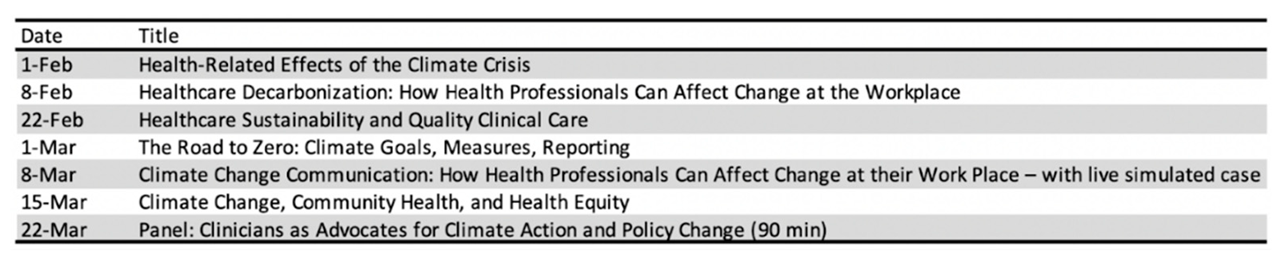 |
Table 2.
Demographics.
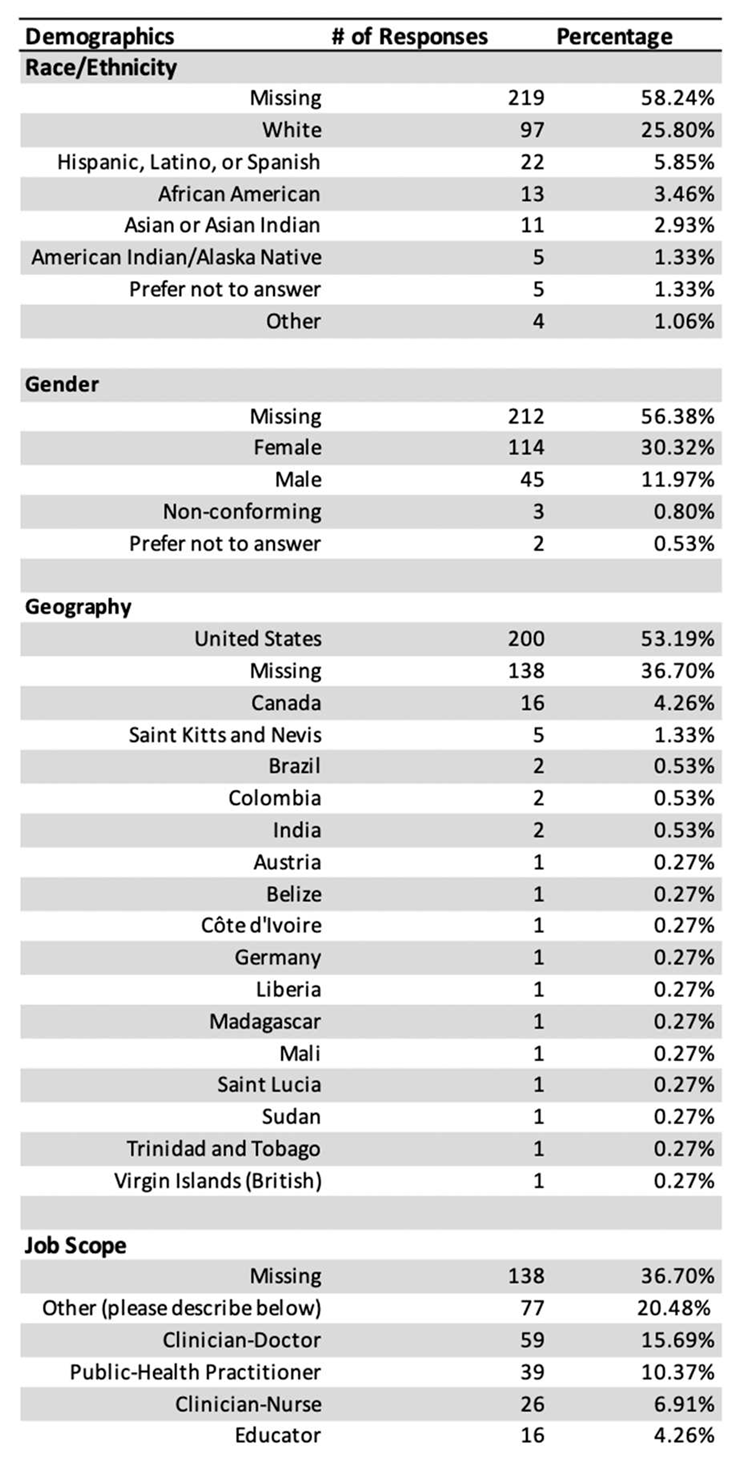 |
Table 3.
Post Session Survey Results.
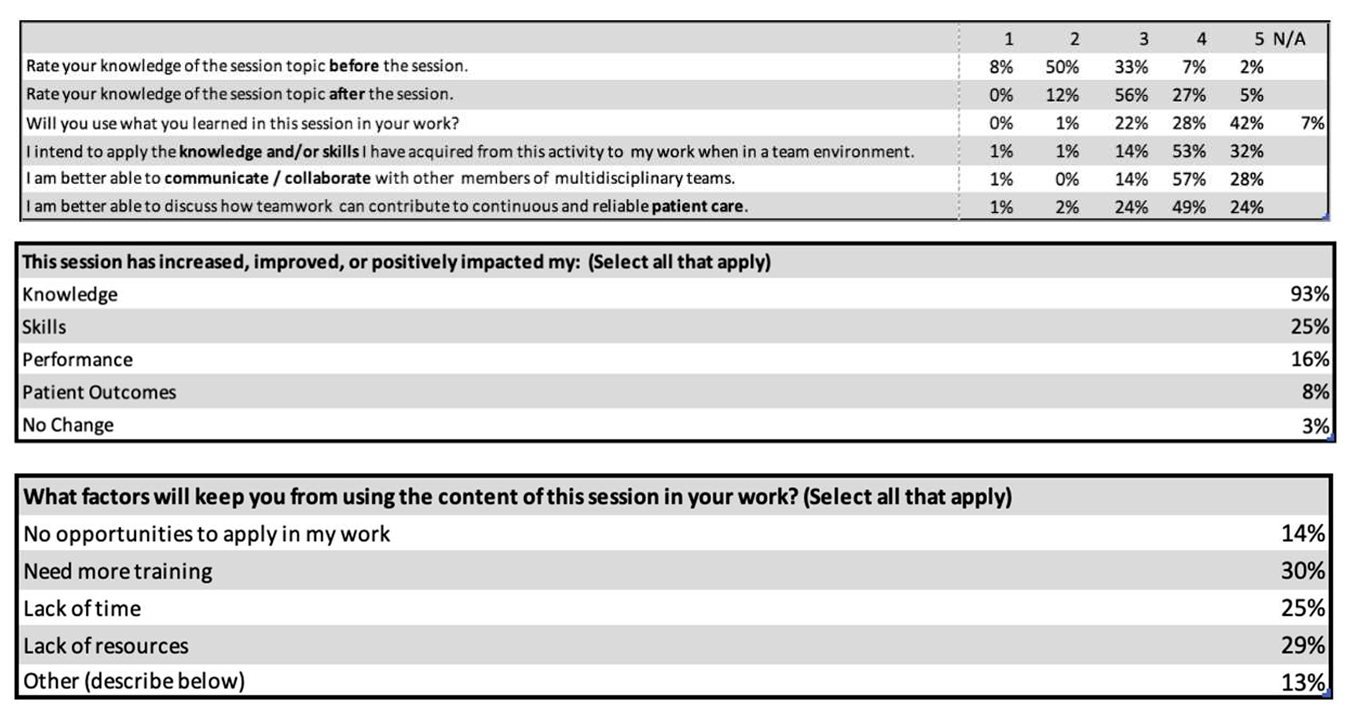 |
Table 4.
Zoom Poll. Zoom poll analysis of the pre-zoom and post-zoom responses for the Climate Change and Human Health ECHO conducted on February 1, 2023 (pre-zoom) and March 22, 2023 (post-zoom). Table A. Pre- and post-responses to the question: “Please choose your level of agreement with the following statement: I understand ways to reduce greenhouse gas emissions in the healthcare sector” for the participants who answered both surveys in Climate Change and Human Health ECHO, February 1, 2023 (pre-zoom) and March 22, 2023 (post-zoom).
Table 4.
Zoom Poll. Zoom poll analysis of the pre-zoom and post-zoom responses for the Climate Change and Human Health ECHO conducted on February 1, 2023 (pre-zoom) and March 22, 2023 (post-zoom). Table A. Pre- and post-responses to the question: “Please choose your level of agreement with the following statement: I understand ways to reduce greenhouse gas emissions in the healthcare sector” for the participants who answered both surveys in Climate Change and Human Health ECHO, February 1, 2023 (pre-zoom) and March 22, 2023 (post-zoom).
| Pre-zoom N=31 n (%) |
Post-Zoom N=31 n (%) |
|
|---|---|---|
| Strongly agree | 4 (12.9%) | 6 (19.3%) |
| Agree | 15 (48.4%) | 21 (67.8) |
| Neither agree nor disagree | 7 (22.6%) | 4 (12.9%) |
| Disagree | 5 (16.1%) | 0 (0.0%) |
| Strongly disagree | 0 (0.0%) | 0 (0.0%) |
p-value from Wilcoxon signed rank test = 0.01251 (significant).
Table 4.
B. Pre- and post-responses to the question: “Please choose your level of confidence for the following statement: I am confident that I can take effective action(s) that support reducing greenhouse gas emissions in my workplace.” for the participants who answered both surveys in Climate Change and Human Health ECHO, February 1, 2023 (pre-zoom) and March 22, 2023 (post-zoom).
Table 4.
B. Pre- and post-responses to the question: “Please choose your level of confidence for the following statement: I am confident that I can take effective action(s) that support reducing greenhouse gas emissions in my workplace.” for the participants who answered both surveys in Climate Change and Human Health ECHO, February 1, 2023 (pre-zoom) and March 22, 2023 (post-zoom).
| Pre-zoom N=31 n (%) |
Post-Zoom N=31 n (%) |
|
|---|---|---|
| Completely confident | 2 (6.5%) | 3 (9.7%) |
| Fairly confident | 12 (38.7%) | 10 (32.3%) |
| Slightly confident | 5 (16.1%) | 5 (16.1) |
| Somewhat confident | 9 (29.0) | 12 (38.7%) |
| Not at all confident | 3 (9.7%) | 1 (3.2%) |
p-value from Wilcoxon signed rank test = 0.8287 (Not significant).
Disclaimer/Publisher’s Note: The statements, opinions and data contained in all publications are solely those of the individual author(s) and contributor(s) and not of MDPI and/or the editor(s). MDPI and/or the editor(s) disclaim responsibility for any injury to people or property resulting from any ideas, methods, instructions or products referred to in the content. |
© 2023 by the authors. Licensee MDPI, Basel, Switzerland. This article is an open access article distributed under the terms and conditions of the Creative Commons Attribution (CC BY) license (http://creativecommons.org/licenses/by/4.0/).
Copyright: This open access article is published under a Creative Commons CC BY 4.0 license, which permit the free download, distribution, and reuse, provided that the author and preprint are cited in any reuse.


